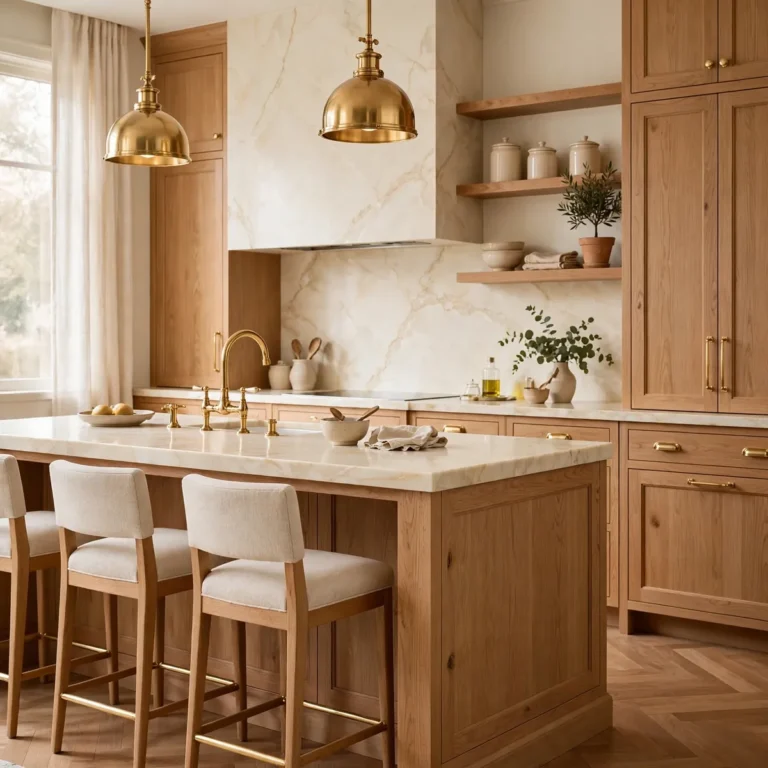
25 Luxurious Coffee Bar Ideas to Make Your Mornings Feel Like a Ritual
Twenty-five luxurious coffee bar ideas — from built-in marble nooks
A great home coffee bar comes down to four things: a dedicated zone with its own counter space, a machine you actually enjoy using, closed storage for beans and tools, and a water source close by. Get those right and everything else — the styling, the lighting, the jars — is the fun part. These 25 ideas cover built-ins, carts, corners, and full stations for kitchens, bedrooms, offices, and even patios.
Start by deciding how much room you can give it: a full cabinet run for the serious espresso drinker, a cart or corner for everyone else. Either way, treat it as part of your larger kitchen design — the same finishes and lighting language that shape your kitchen decor ideas will make the coffee zone feel intentional instead of improvised.
A Built-In Nook: One of the Smartest Coffee Bar Ideas for Small Kitchens
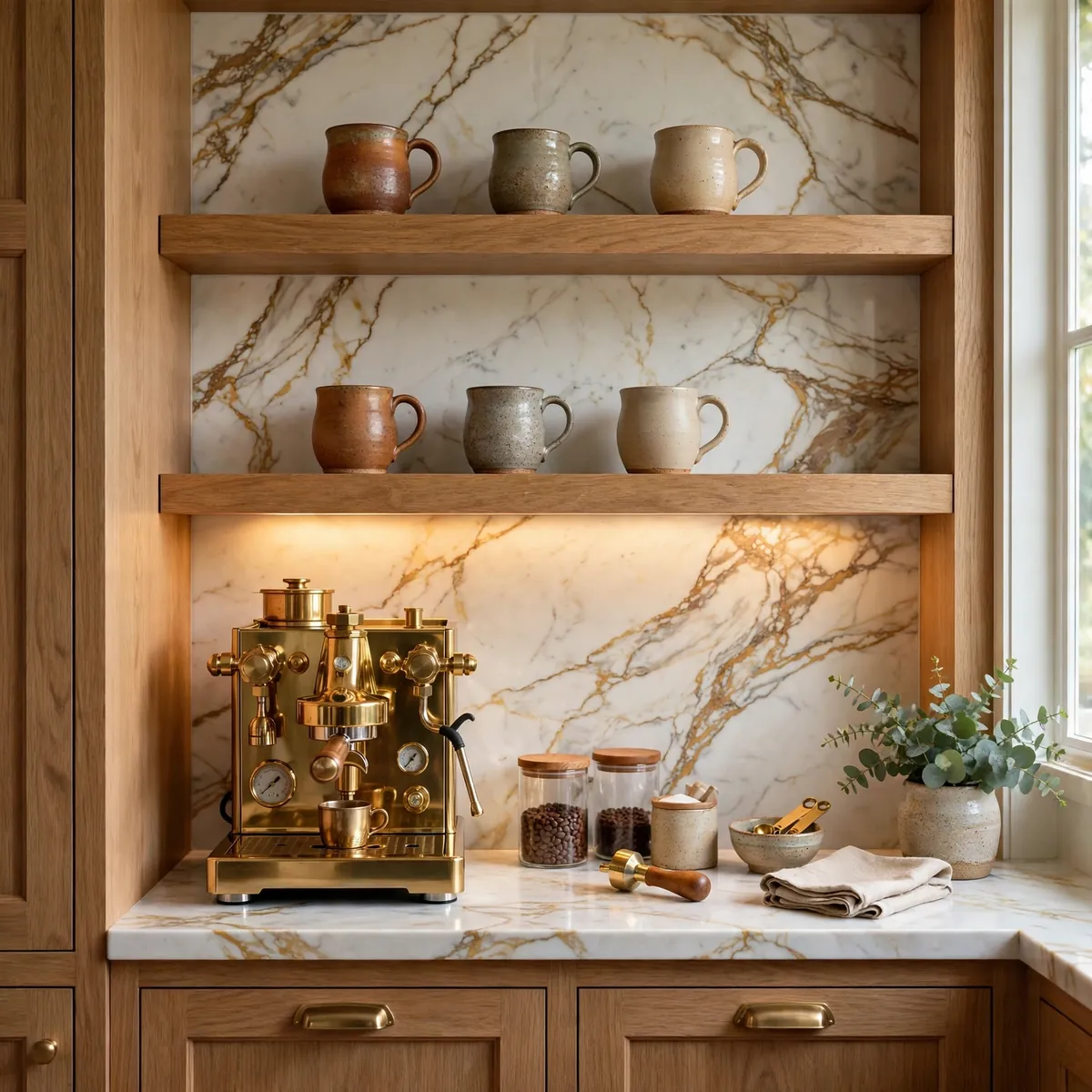
Claim a 60 to 90 cm stretch of counter — ideally near the sink for easy refills — and give it a proper backsplash. Marble or marble-look tile does two jobs here: it protects the wall from daily splashes and instantly signals “this is a station, not clutter.” Add one floating oak shelf for mugs and a warm under-cabinet light, and the whole zone reads as built-in even if the machine just sits on the counter. Best for: small kitchens where every centimeter counts. Weakness: it permanently eats counter space, so commit only if you brew daily.
- Keep the machine’s depth under 40 cm so the nook doesn’t crowd the walkway.
- A dimmable puck light under the shelf costs little and makes morning brewing feel calm.
- Store beans in the canister, not the hopper, to keep them fresh longer.
A Rolling Brass Cart Turned Into a Luxe Espresso Station
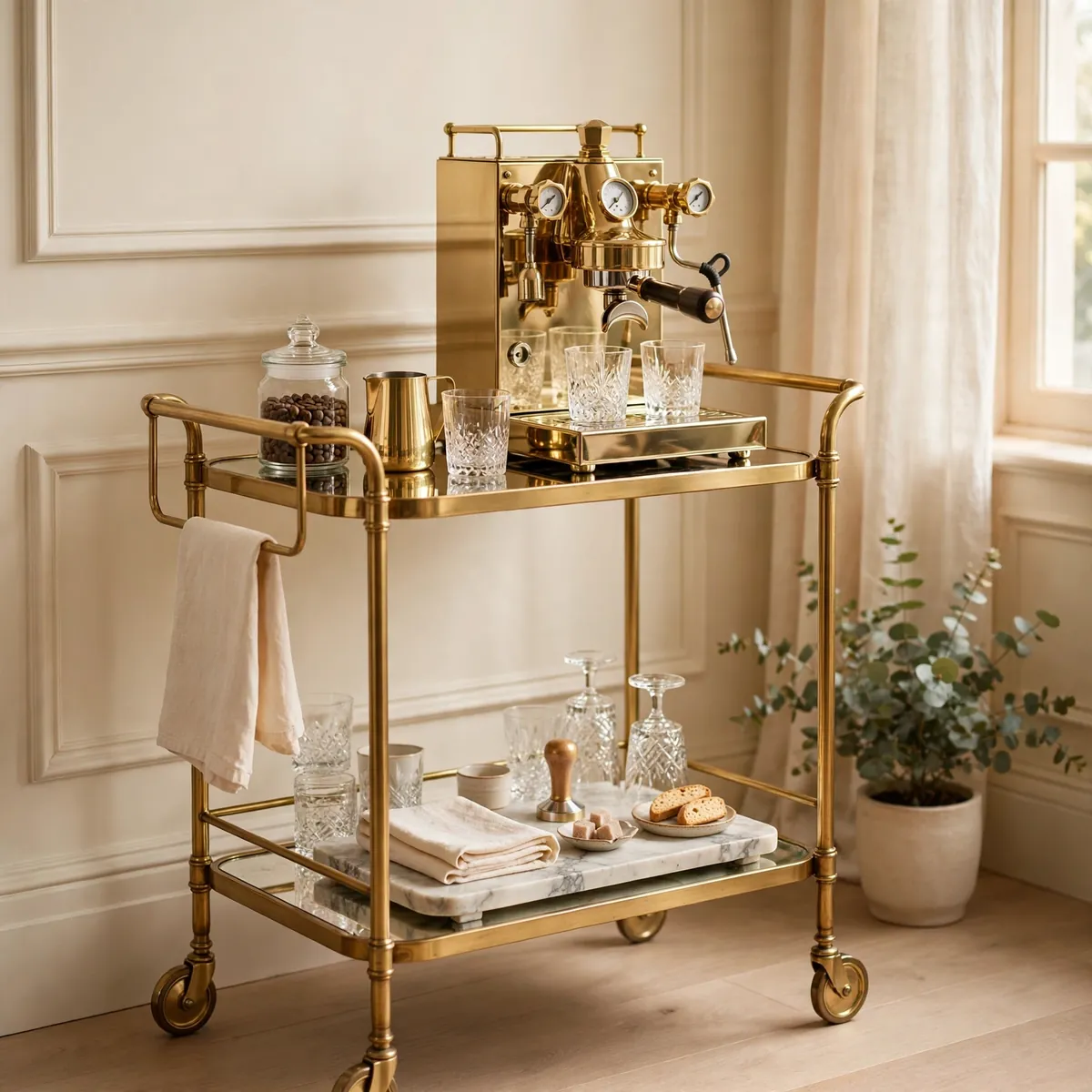
A two-tier brass bar cart is the fastest way to get a coffee bar with zero renovation. Style the top tier as the work surface — machine on a marble tray, small stack of cups, a carafe of water — and let the lower tier hold beans, filters, and a folded linen. The wheels are the real luxury: roll it to the dining table for brunch, tuck it beside the sofa for a slow Sunday, then park it against the wall when guests arrive. Best for: renters and anyone who rearranges often. Weakness: carts wobble, so choose one with locking casters and a rigid frame.
- A marble or stone tray under the machine catches drips and protects the cart finish.
- Lock both casters before pulling a shot — vibration plus wheels is a spill waiting to happen.
- Keep a small lidded bin on the lower tier for used pods or grounds.
The Dark Academia Corner With Moody Shelves and a Brass Lamp
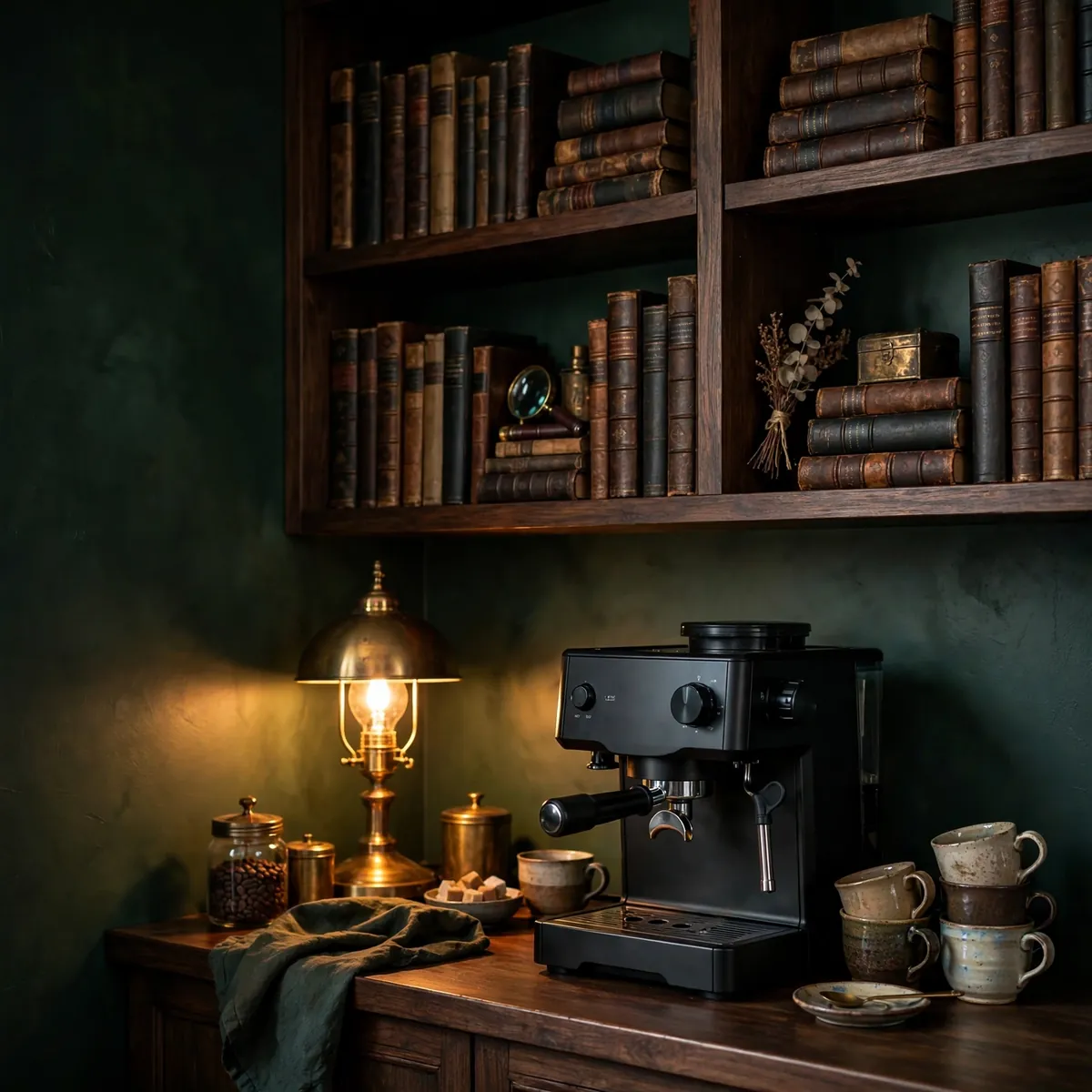
Paint one corner deep green or espresso brown, hang two dark walnut shelves, and let a brass pharmacy lamp do the heavy lifting. This look is for people who want their coffee ritual to feel like a private study session: leather-bound books you never open, a matte black machine, vintage cups collected from flea markets. The moody palette hides coffee stains and fingerprints better than any white kitchen ever will, which is a genuine practical win. Best for: readers, night owls, and anyone whose kitchen already leans traditional. Weakness: dark corners need deliberate lighting or they feel gloomy by day.
- Use 2700K warm bulbs; cool light kills the cozy effect instantly.
- Mix one shelf of books with one shelf of cups so it reads “library,” not “storage.”
- A small brass tray corrals the tamper, distributor, and cloth in one spot.
Floating Shelves With Backlit Apothecary Canisters
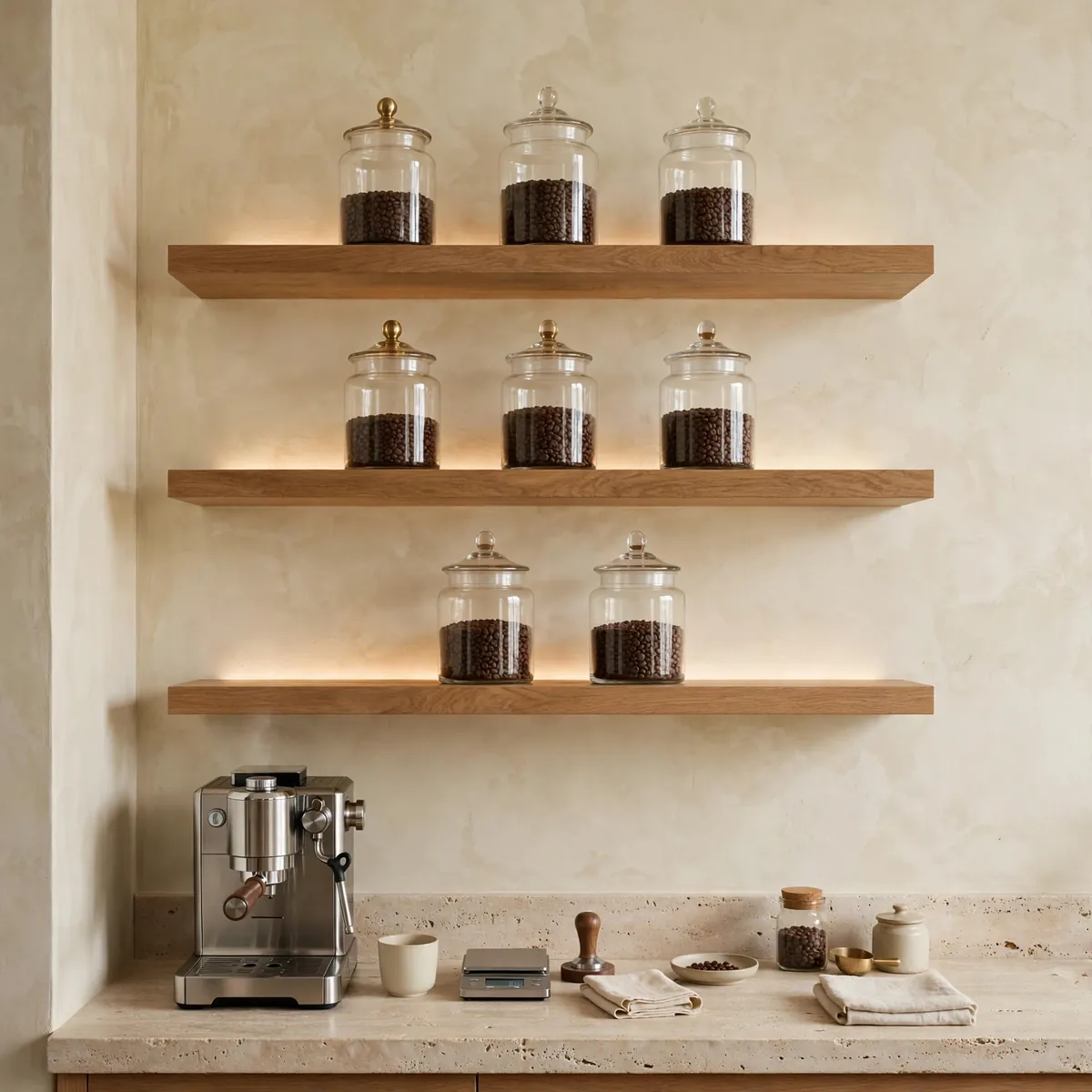
Two or three floating oak shelves above a stone counter turn bean storage into the decor. Fill tall glass apothecary jars with different roasts — a light Ethiopian, a dark Italian, decaf for evenings — and add a slim LED strip behind the lowest shelf so the jars glow from behind. It is genuinely useful: you can see at a glance what you have, and guests can pick their own roast. Best for: households with multiple coffee drinkers who like variety. Weakness: glass jars need airtight lids and a spot away from direct sun, or the beans stale faster.
- Choose jars with silicone-sealed lids, not decorative cork, for real freshness.
- Label each jar with the roast date on a small tag — beans peak within a month.
- Run the LED on a timer plug so the glow greets you before you wake fully.
A Scandinavian Corner in White Oak and Soft Morning Light
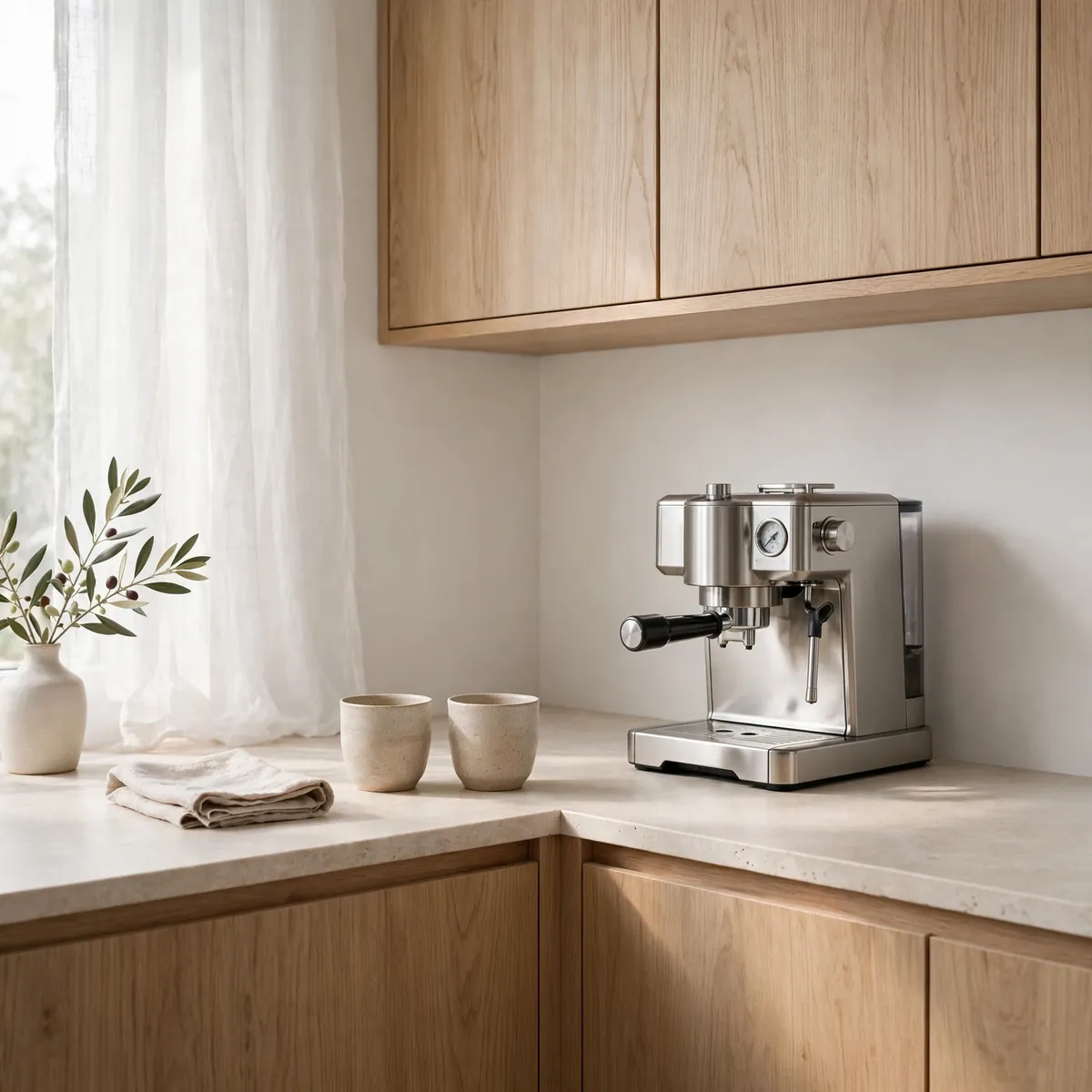
If visual noise stresses you out, this is your setup. A single white oak cabinet, a light stone top, one good machine, two cups — nothing else on the counter. The Scandinavian approach works because it treats the coffee bar as a calm moment rather than a display: pale wood and daylight do all the decorating, so you never need to style it. Best for: minimalists and small bright kitchens. Weakness: storage is tight, so beans, filters, and tools need a drawer directly below.
- Keep the palette to two materials (oak + stone) so it stays serene, not bland.
- A sheer curtain softens direct sun that would otherwise heat the machine.
- Hide the grinder in the cabinet; only the machine earns counter space.
A Waterfall Marble Countertop With a Dual-Boiler Espresso Machine
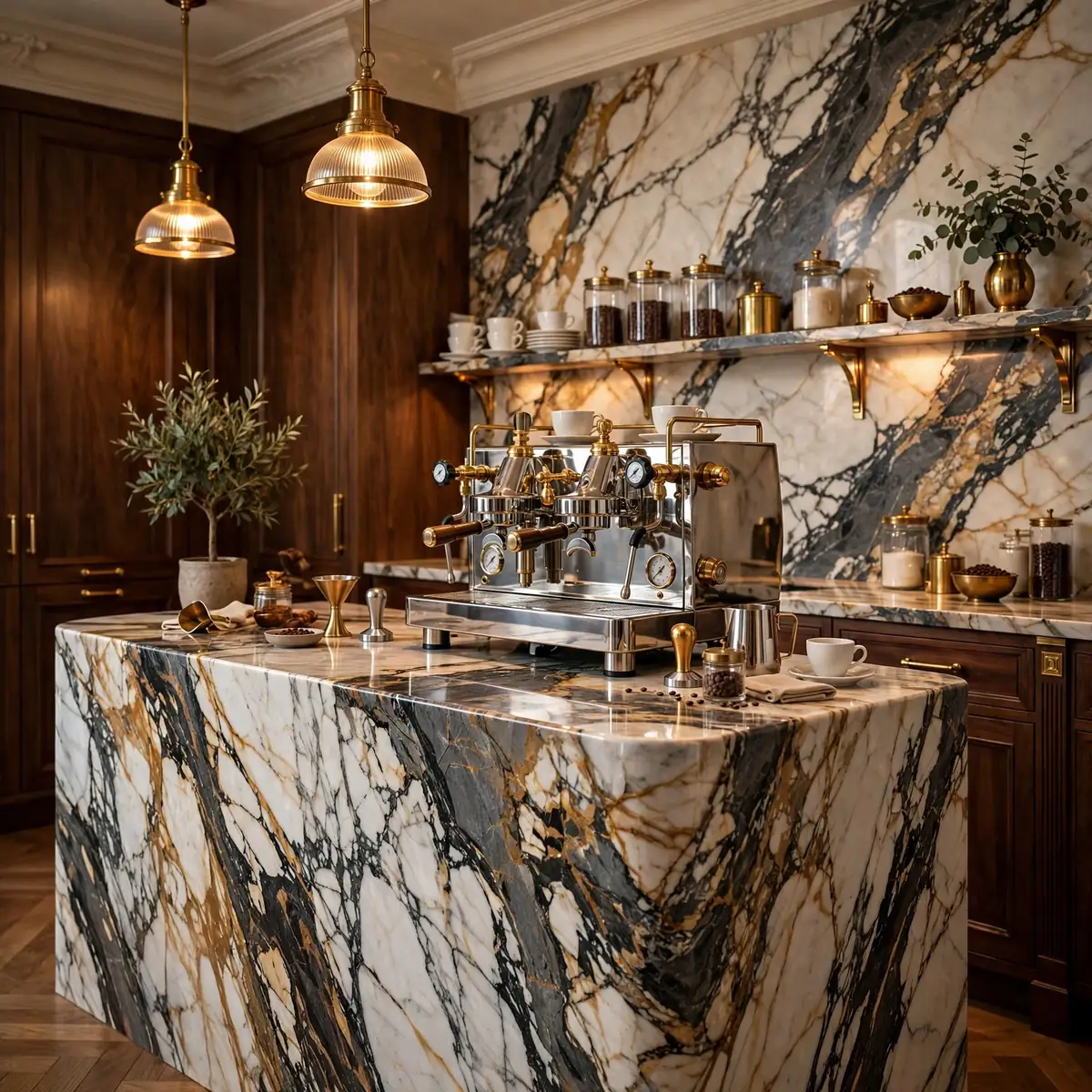
This is the flagship version: a freestanding island or console where the marble runs down both sides like a waterfall, topped with a proper dual-boiler machine. Dual boilers let you pull a shot and steam milk at the same time, which matters if you make two or three milk drinks back to back. The stone is the statement, so keep everything else quiet — brushed steel, one brass detail, no clutter. Best for: serious home baristas with the budget to match. Weakness: real marble stains and etches, so seal it yearly and wipe spills fast; this is a commitment piece, not a casual corner.
- Honed marble hides etching better than polished — ask your fabricator.
- Leave 15 cm behind the machine for the portafilter handle swing.
- A plumbed-in machine avoids the refill tank entirely if your budget stretches.
The Apothecary Wall for Every Bean and Blend You Own
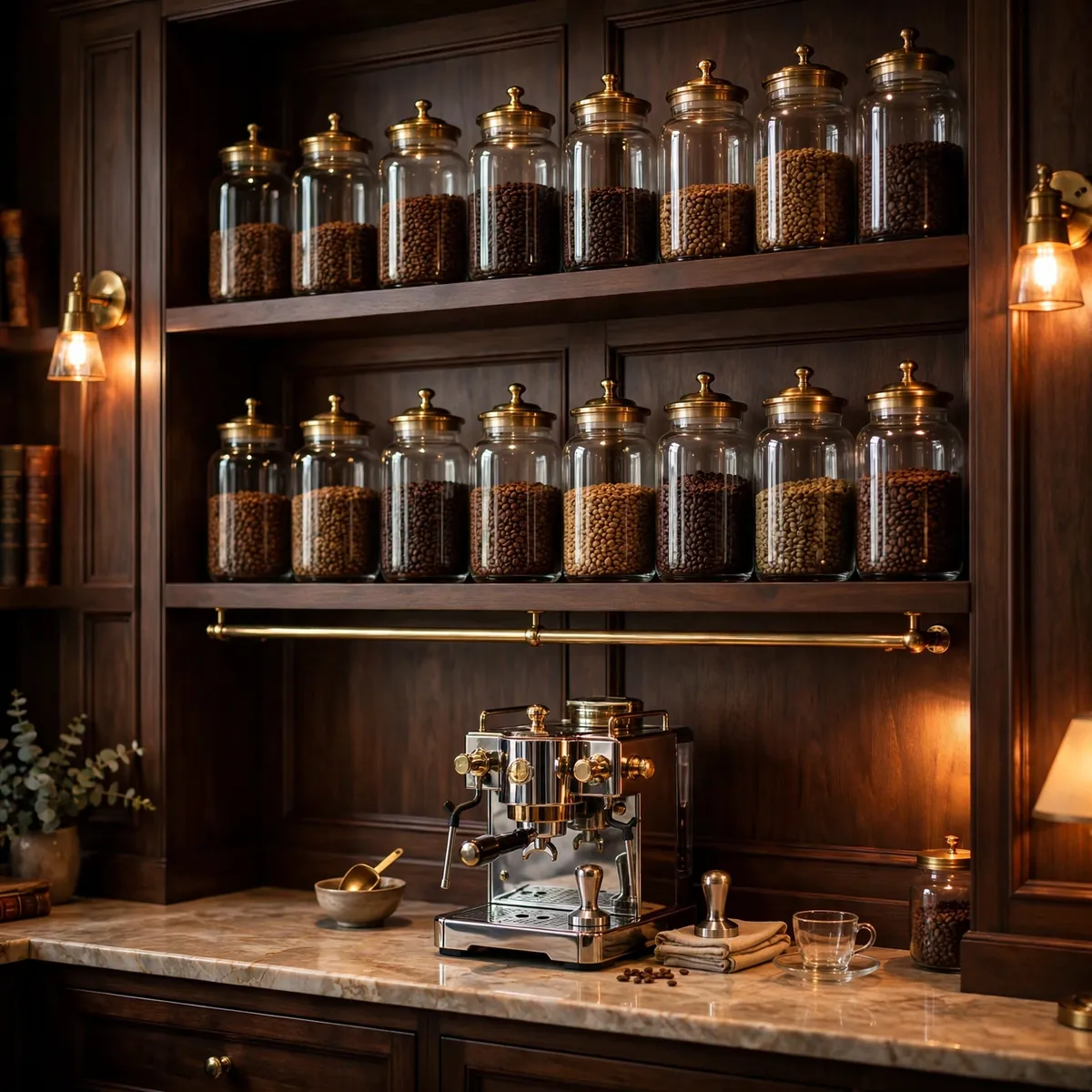
If you buy beans the way other people buy books — more than you can finish — give them a wall. A bank of uniform glass jars on dark wood shelves with small handwritten tags turns a stockpile into a collection, and the visual order stops it from looking like hoarding. The practical payoff: when every roast is visible and dated, you actually rotate through them instead of discovering a stale bag at the back. Best for: collectors and anyone who brews pour-over or French press alongside espresso. Weakness: it only works if you commit to the uniform jars; mixed packaging ruins the effect.
- Decant beans the day you buy them and note the roast date on the tag.
- Keep the wall away from the stove — heat is the enemy of stored beans.
- Buy one jar size in bulk (about 500 g) for a clean, even grid.
Industrial Loft Shelving in Black Steel and Reclaimed Wood
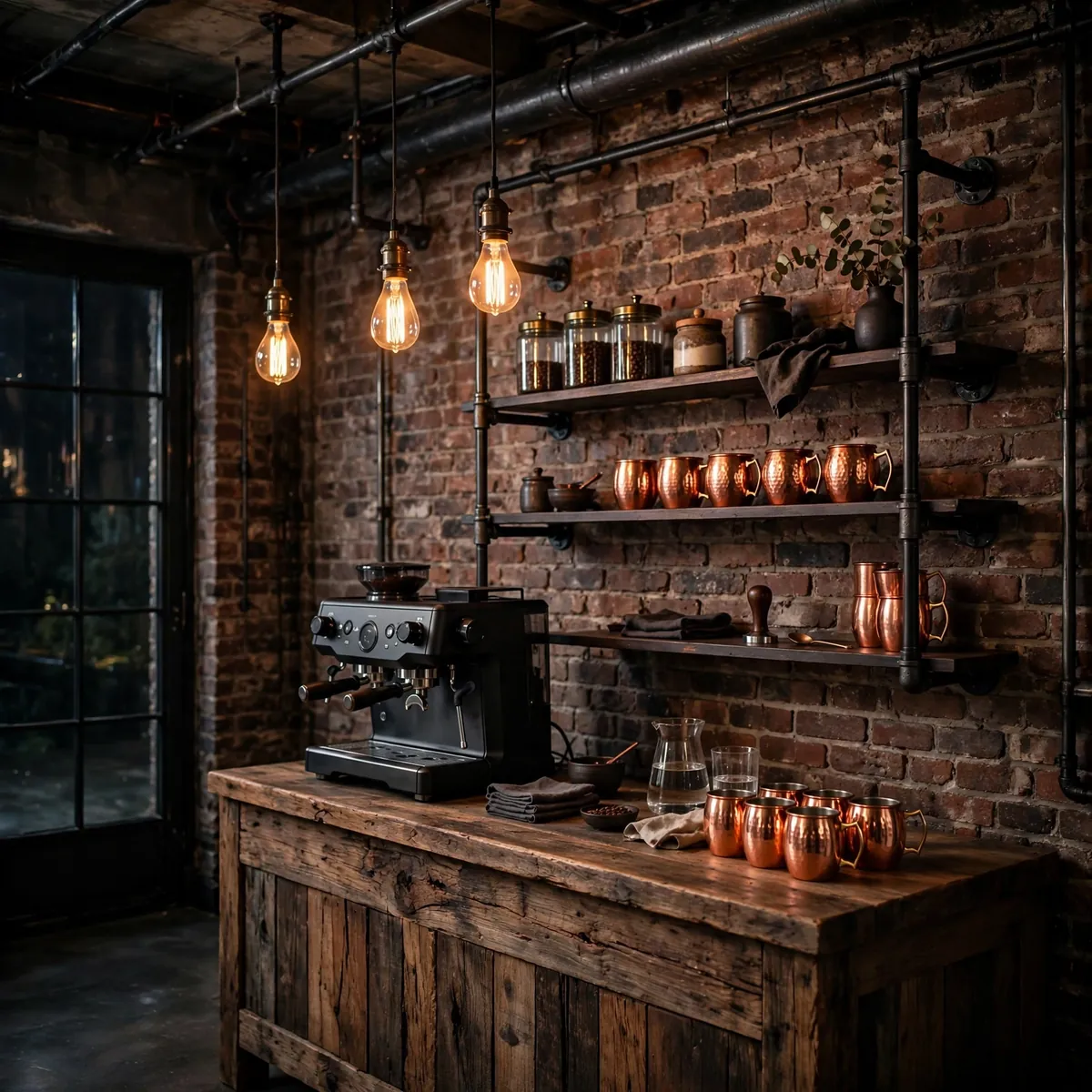
Black steel pipe brackets, a thick reclaimed wood shelf or counter, Edison bulbs overhead, brick behind it all — the industrial coffee bar is about honest materials that age well. Coffee stains on reclaimed wood just add patina, and steel shelving holds serious weight: grinder, machine, a dozen copper mugs, no sagging. This style suits open-plan lofts and converted spaces where a dainty cart would look lost. Best for: loft dwellers and anyone who wants indestructible styling. Weakness: it reads cold without warm light and wood tones, so don’t skip the bulbs and textiles.
- Seal reclaimed wood with food-safe oil so spills wipe off instead of soaking in.
- Copper or brass mugs add the warmth black steel needs.
- Anchor pipe brackets into studs — a loaded shelf is heavier than it looks.
A Parisian Bistro Corner With Marble, Brass, and a Café Chair
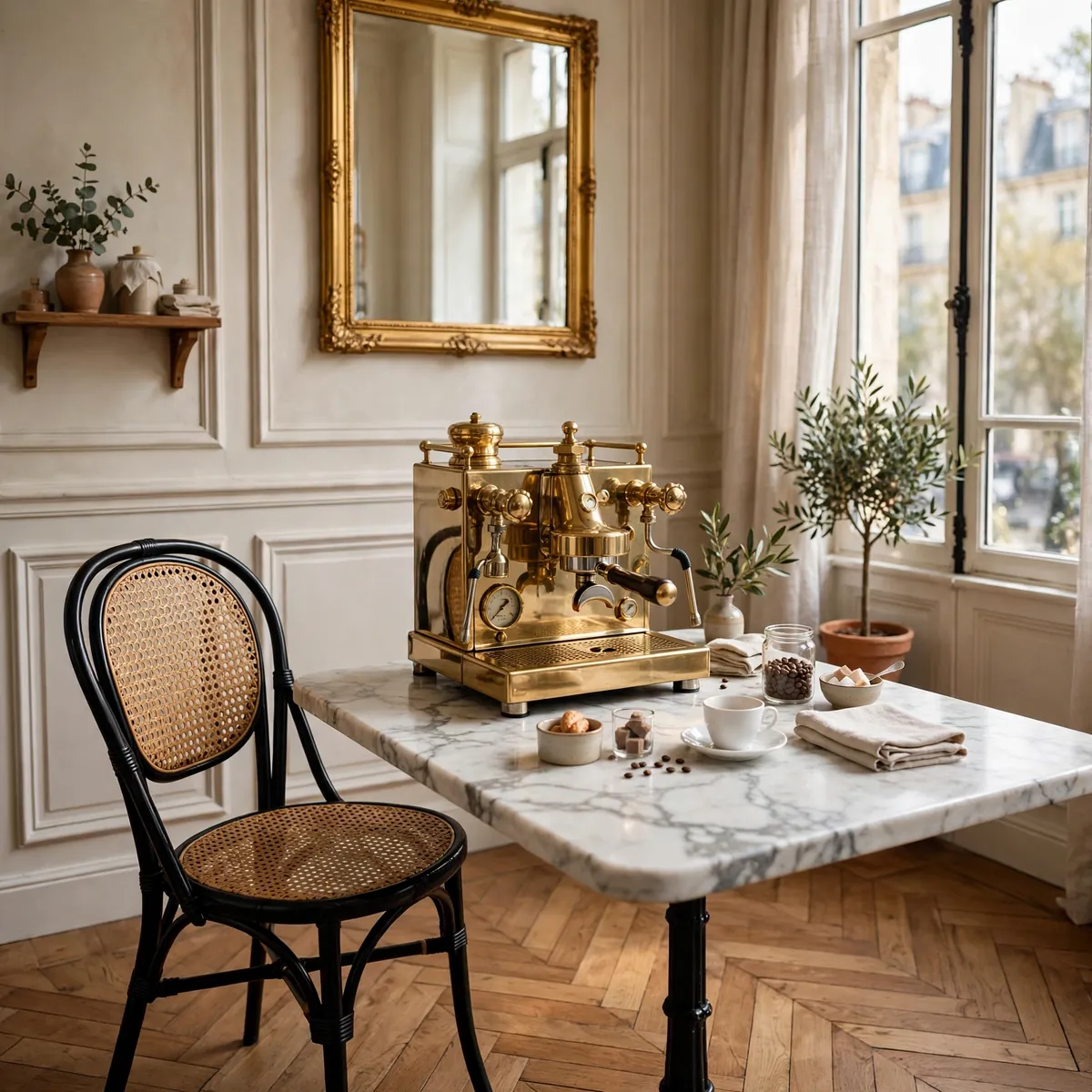
Steal the layout of a corner café: a small round marble table, one proper bistro chair, a brass-trimmed machine, and a mirror on the wall to bounce the light. This isn’t just styling — having a real seat at your coffee bar changes how you use it, turning a grab-and-go habit into a ten-minute morning pause. The French formula (marble + brass + black accents) is forgiving because the pieces are widely available secondhand. Best for: romantics and small dining nooks that double as work corners. Weakness: round tables offer little prep space, so this suits simple brews over full espresso rituals.
- A wall mirror doubles the sense of space in a tight corner.
- Keep the chair count to one or two — this is a perch, not a dining set.
- Brass machines need weekly polishing or they dull; factor in the upkeep.
The Farmhouse Hutch Turned Coffee Cupboard
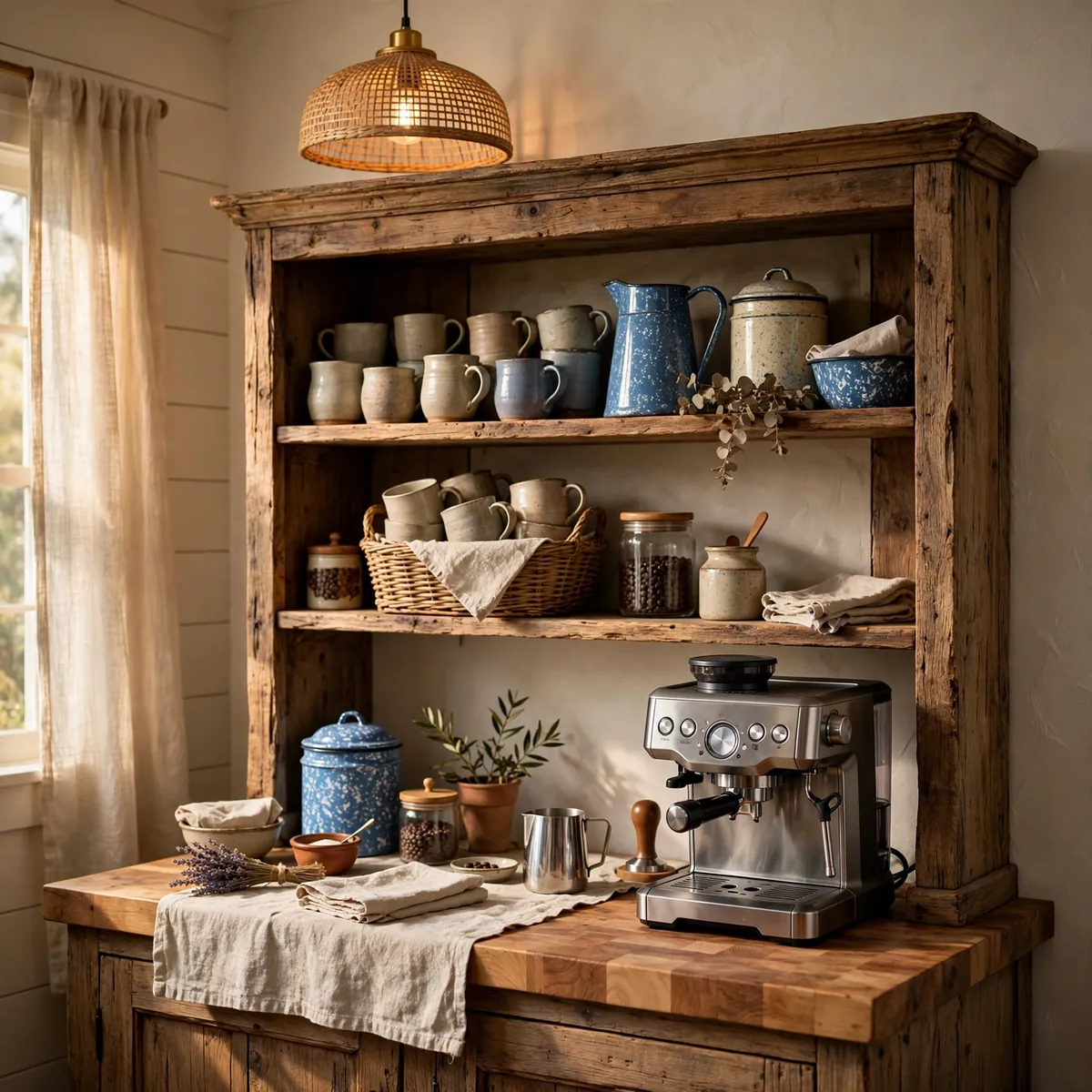
An old wooden hutch — the kind with open shelves on top and cupboards below — makes a near-perfect coffee bar with almost no modification. The top holds mugs and jars in plain sight, the middle shelf is your work surface, and the cupboards swallow the grinder, spare filters, and the bag of decaf. Because it is furniture, not a renovation, it works in dining rooms, living rooms, and anywhere a built-in can’t go. Best for: farmhouse and cottage styles, and anyone who wants charm over sleekness. Weakness: most hutches are shallow, so measure your machine’s depth before committing.
- Line the work shelf with a washable runner to protect old wood.
- Drill a discreet hole in the back panel for the power cord.
- Keep daily mugs on the open shelves and formal sets in the cupboard.
The Butler’s Pantry Bar Hidden Behind Pocket Doors

If you have a butler’s pantry or a wide hallway cabinet, line it with a marble counter, glass-front uppers for cups, and a machine on the work surface — then close the pocket doors and the whole thing vanishes. The genius is twofold: guests see a clean kitchen while you keep a fully stocked station, and the enclosed space contains steam and noise. This is the closest a regular home gets to a hotel back-bar. Best for: entertainers and open-plan homes where clutter travels fast. Weakness: enclosed spaces need ventilation, so leave a gap or crack a door when steaming milk.
- Add an outlet strip under the upper cabinets — one machine plus grinder plus kettle needs three sockets.
- Glass fronts keep cups dust-free while showing off the collection.
- A motion-sensor puck light means the bar lights itself when the doors slide open.
The Under-Stair Nook Turned Espresso Alcove
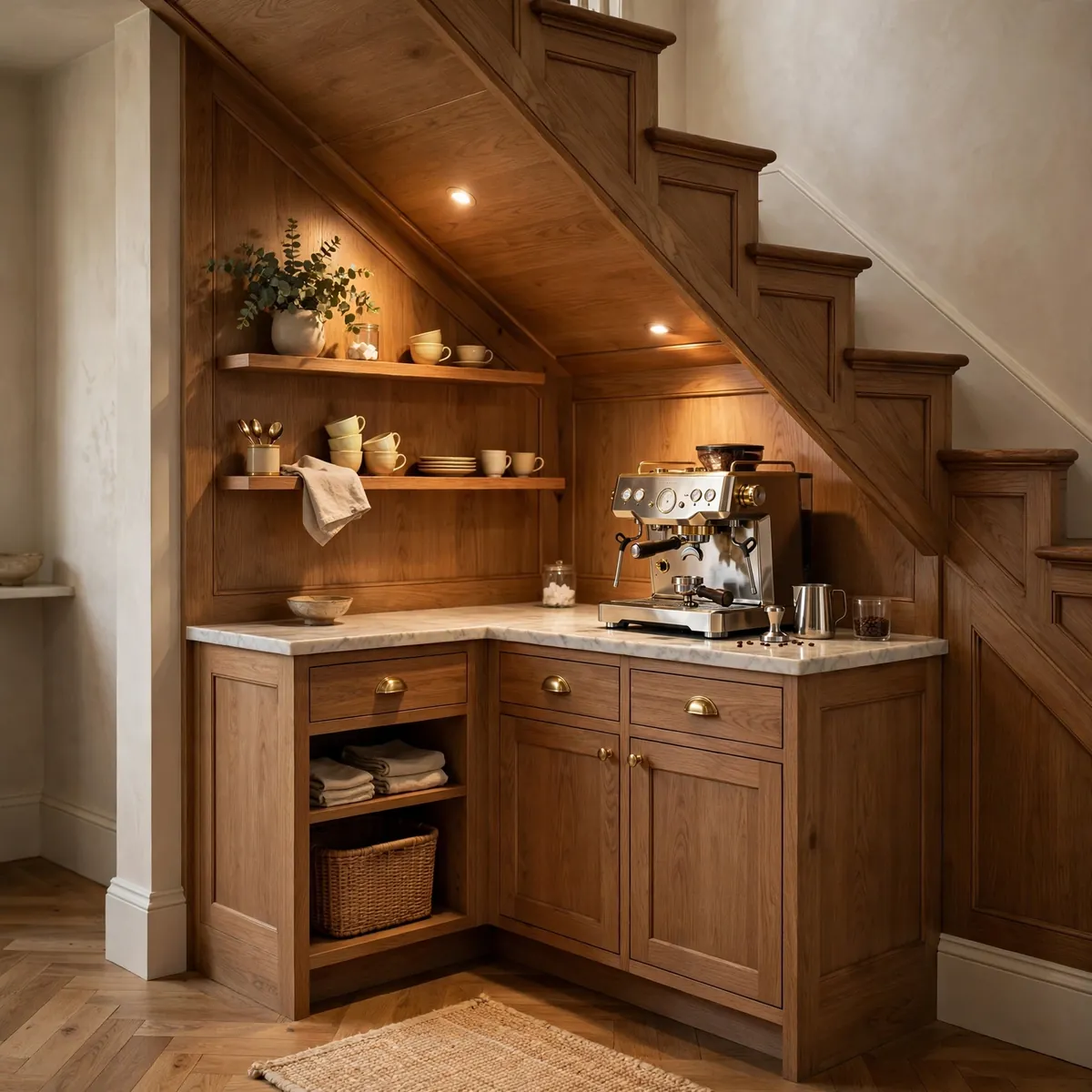
The space under the stairs is usually dead storage; a coffee alcove gives it a job. Fit the tallest section with the machine counter and use the sloping sides for shallow shelves, drawers, and a pull-out bin. Recessed spotlights are non-negotiable here — without them the alcove feels like a cave. The angled ceiling actually helps: it makes the station feel tucked-in and intentional rather than improvised. Best for: homes where the kitchen is maxed out and every niche counts. Weakness: plumbing is rarely nearby, so plan on a tank machine and a nearby bathroom tap for refills.
- Measure the headroom at the machine’s position — you need clearance to lift the tank lid.
- Use the deepest section for the machine and shallower zones for mug storage.
- A small rug runner softens the transition from hallway to alcove.
A Desk-Side Coffee Station for the Home Office
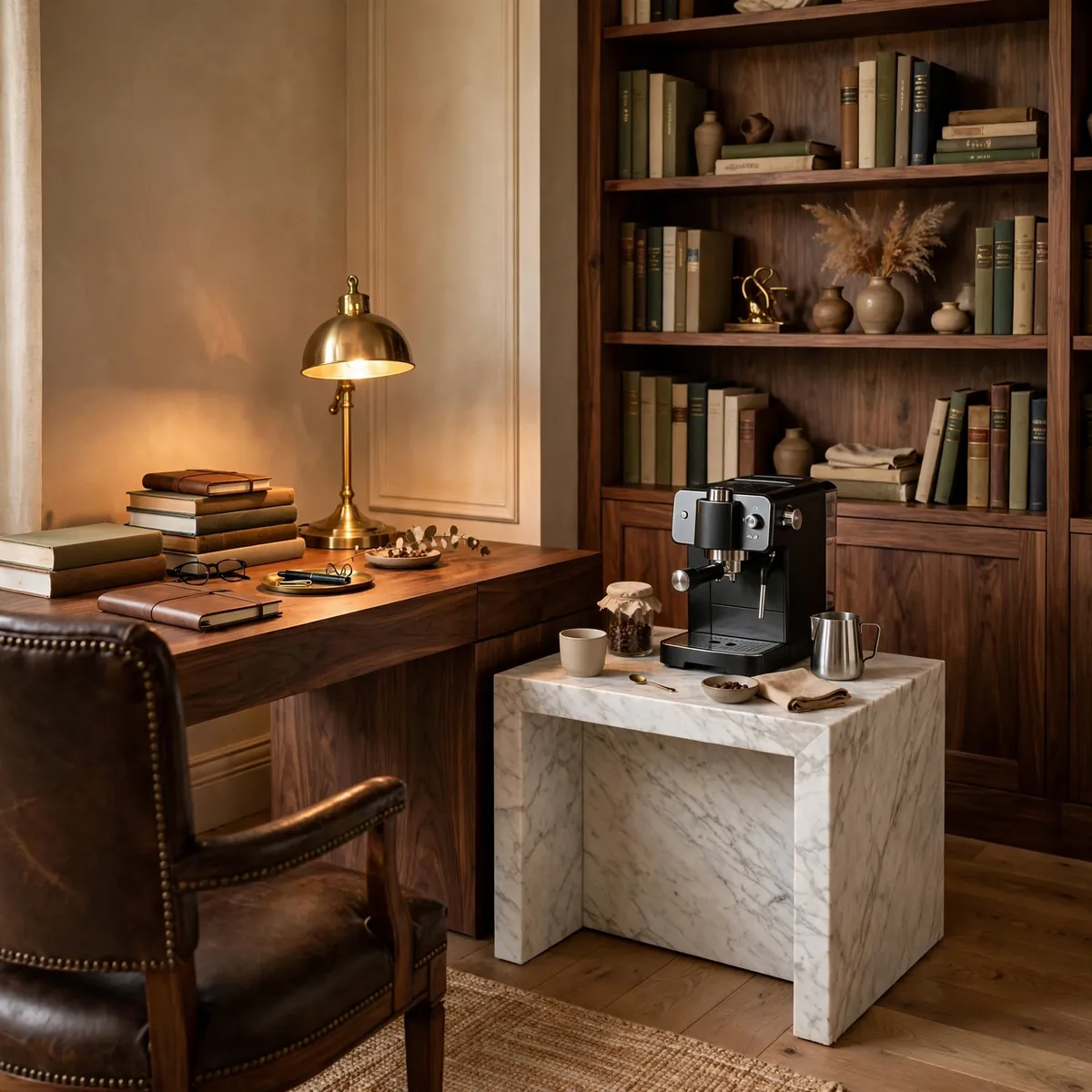
The average remote worker walks to the kitchen four or five times a day for coffee; a desk-side station gives you those hours back. You don’t need much: a compact console or sturdy side table, a pod or compact espresso machine, and a lidded carafe so water stays fresh through the day. Keep it off the actual desk — steam and paperwork don’t mix — but within arm’s reach. Best for: people who work from home full-time. Weakness: it’s tempting to let it become the only movement you get, so treat the refill walk as a deliberate break.
- A spill-proof travel lid on your cup protects the laptop during desk deliveries.
- Descale monthly; office machines work harder than kitchen ones.
- Keep a small trash bin beside the console for pods and stirrers.
The Suite-Style Bedroom Coffee Station, Hotel Edition

Copy what good hotels do: a dresser or console with a marble top, a compact machine, two proper porcelain cups, and a small tray with sugar and spoons. Waking up to coffee without leaving the bedroom is a genuine quality-of-life upgrade, especially on weekends. Use a quiet machine — pump noise at 6 a.m. matters when someone is still asleep — and a kettle-based setup if your partner is a light sleeper. Best for: primary suites and guest rooms that want to feel like a boutique stay. Weakness: no nearby water means daily carafe refills, so build that into your evening routine.
- Choose a machine under 60 decibels if the bedroom is shared.
- A marble or stone top protects the dresser from heat and drips.
- Stock the tray weekly like a hotel would — fresh sugar, clean spoons, new pods.
Navy and Gold: A Regal Coffee Bar With a Mirrored Tray
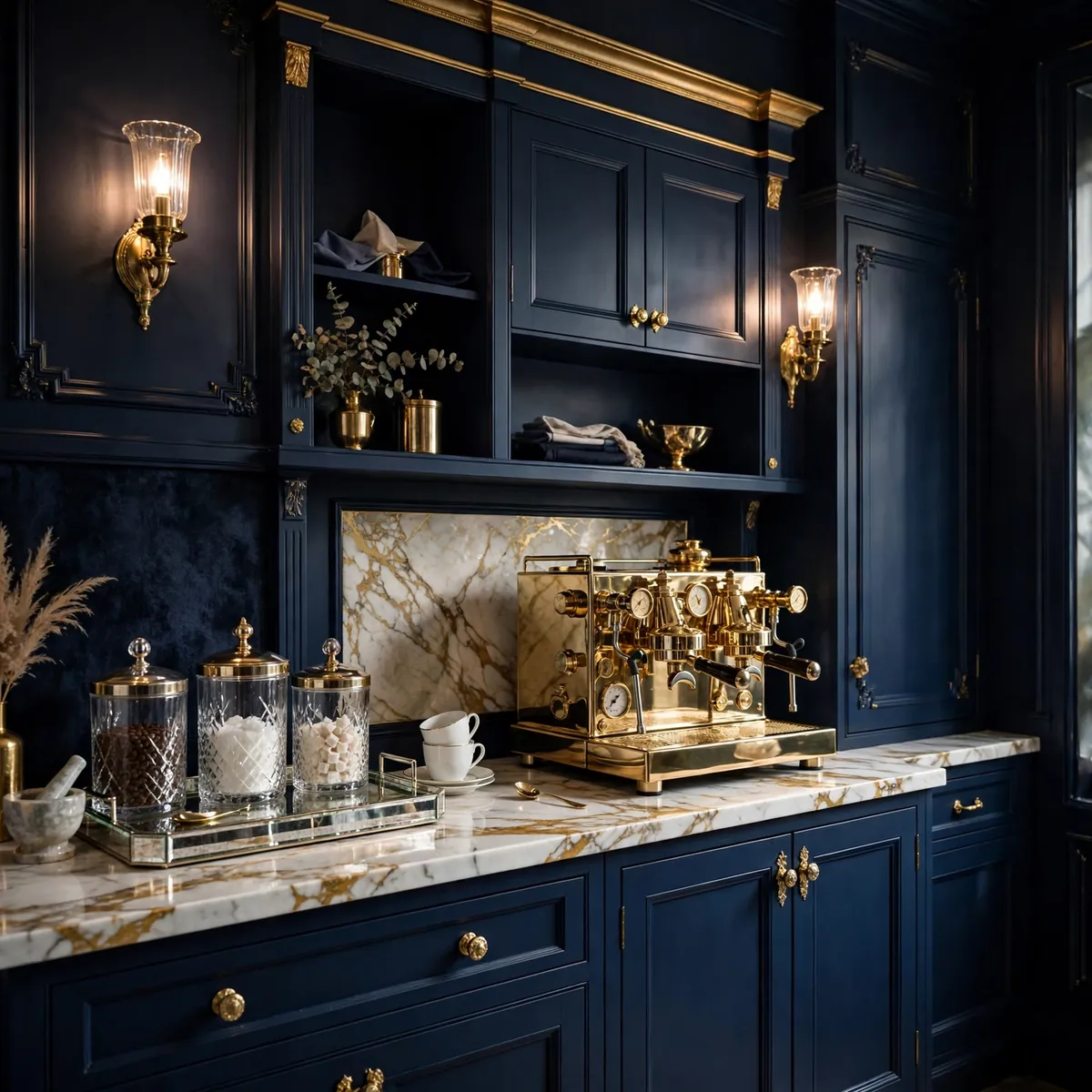
Deep navy cabinetry with brass hardware and a mirrored tray is the fastest route to a coffee bar that looks expensive. Navy recedes visually, which makes small stations feel larger, while brass and mirror bounce light around the machine area — important because good task lighting is what separates a styled bar from a dark corner. This palette pairs naturally with walnut, marble, and black, so it rarely clashes with an existing kitchen. Best for: traditional and transitional kitchens that want drama without a full remodel. Weakness: navy shows dust, and mirrored trays show every fingerprint; this one asks for weekly wiping.
- Use a microfiber cloth on the mirrored tray — paper towels leave streaks.
- One statement sconce or picture light above the station completes the look.
- Keep the machine stainless or black so the brass stays the accent, not the crowd.
The Fold-Down Wall Cabinet for Small Apartments
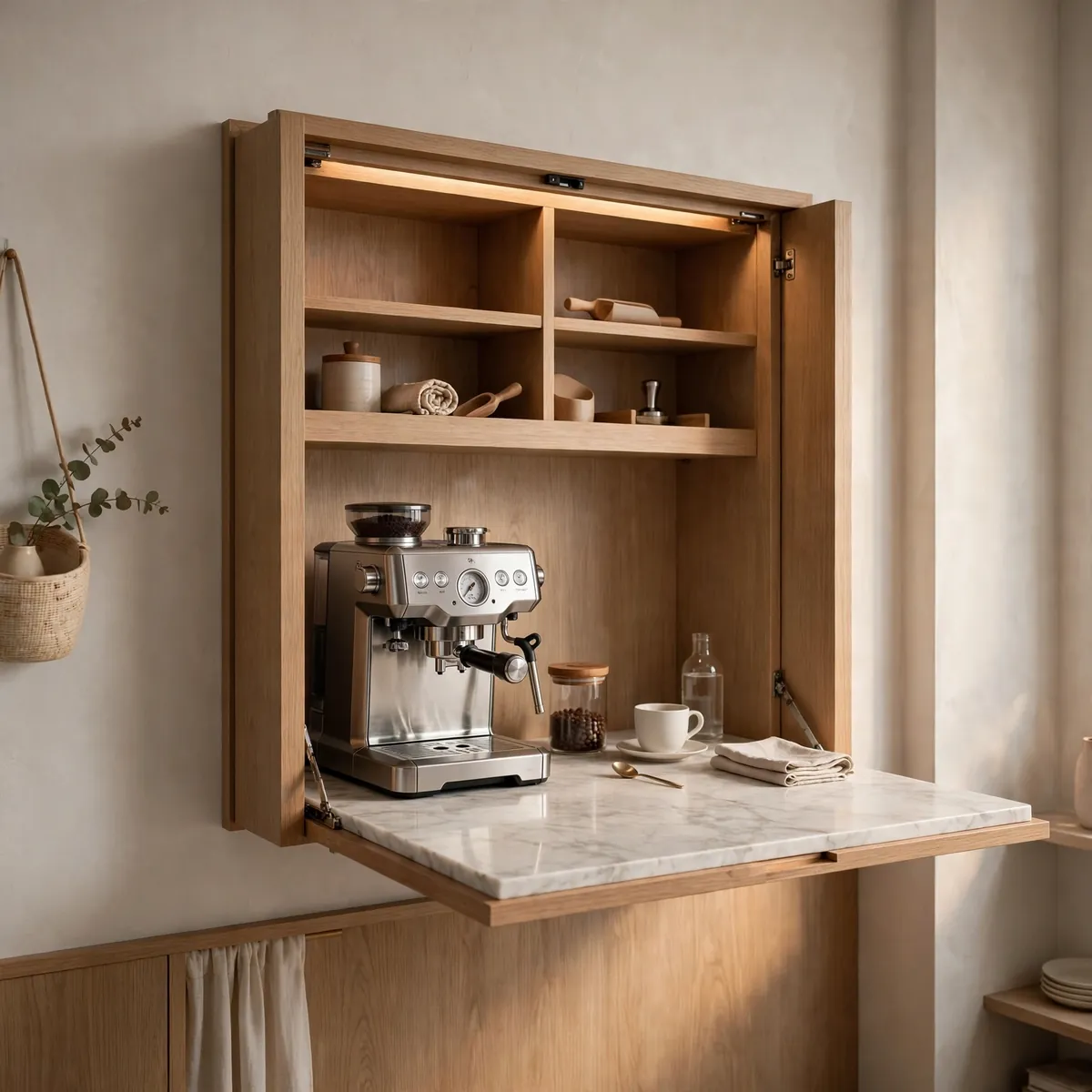
A wall-mounted cabinet whose front folds down into a work surface gives you a full coffee bar in zero floor space. Closed, it looks like an ordinary cabinet; open, the drop-down door becomes the counter and the interior holds the machine, cups, and beans. The engineering matters: rated hinges and a solid wall anchor, because a loaded espresso machine is heavy. Best for: studio apartments and galley kitchens where counter space is sacred. Weakness: the folded-down surface is small, so this suits pod or compact machines rather than full espresso setups.
- Mount into studs or masonry — drywall anchors alone won’t hold a machine’s weight.
- Choose a machine with a front-loading water tank; top-loading lids need clearance you won’t have.
- Add a magnetic strip inside the door for a tamper and scoop.
A Japandi Corner in Warm Wood and Natural Stone
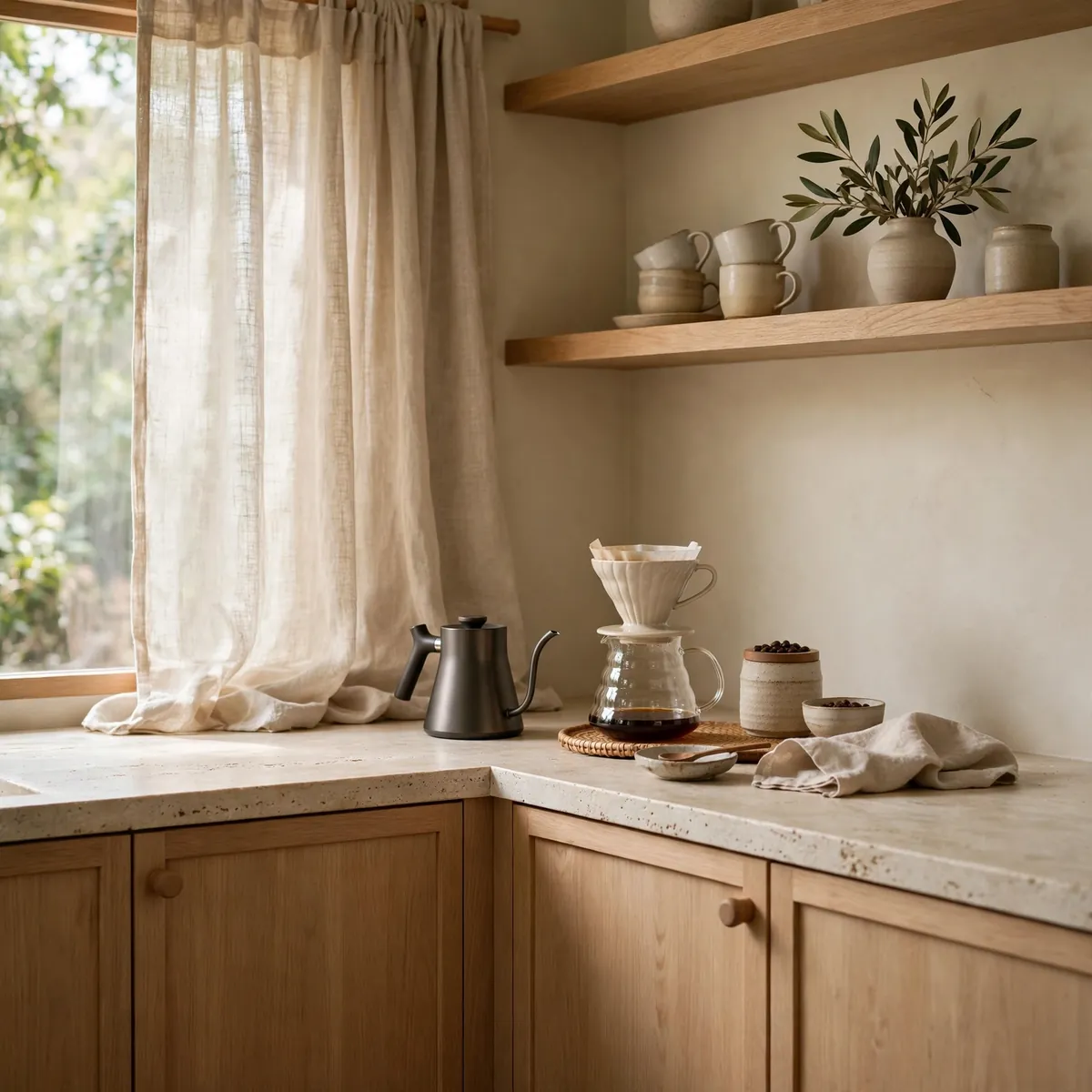
Japandi — Japanese minimalism meets Scandinavian warmth — is tailor-made for slow coffee rituals. A low warm-wood cabinet, a natural stone top, and a pour-over setup instead of a bulky machine: the whole station is about the process, not the hardware. Because there is so little equipment, every piece has to earn its place, which forces a calm, edited look almost automatically. Best for: pour-over and slow-brew lovers who find espresso machines visually noisy. Weakness: it is a one-brew-method station; if you also want lattes, you’ll need a separate milk setup.
- A gooseneck kettle and a ceramic dripper are the only tools this style needs.
- Keep the palette to warm wood, stone, and linen — no chrome, no color.
- One small plant softens the geometry without adding clutter.
The Glam Mirrored Console With Crystal Canisters
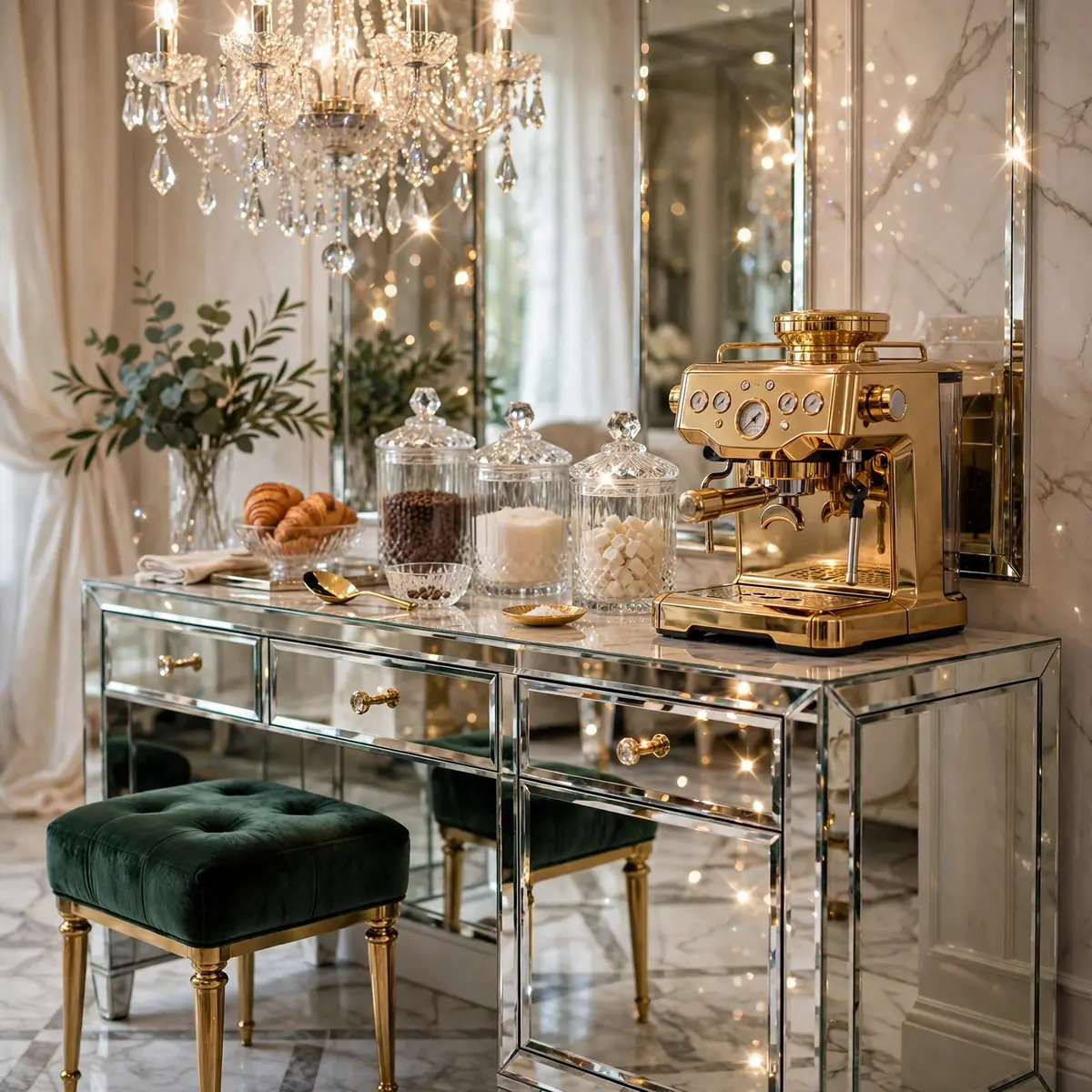
A mirrored console, crystal canisters, and a gold machine make the coffee bar the jewelry of the room. Mirrored furniture reflects light and doubles the visual footprint of your styling, which is why this works even in smaller living rooms — the station reads as decor first, appliance second. Lean into the glamour with a velvet stool and real crystal; this is not the look for hiding the machine. Best for: maximalists and living-room coffee bars that need to impress. Weakness: mirrored surfaces and crystal demand constant polishing, and the look tips into gaudy if you add one shiny thing too many.
- Limit the palette to mirror, gold, and one neutral (cream or champagne).
- Crystal canisters need airtight lids to actually keep beans fresh — pretty alone isn’t enough.
- A small tray under the machine protects the mirrored top from heat rings.
An Outdoor Coffee Bar Built for the Patio
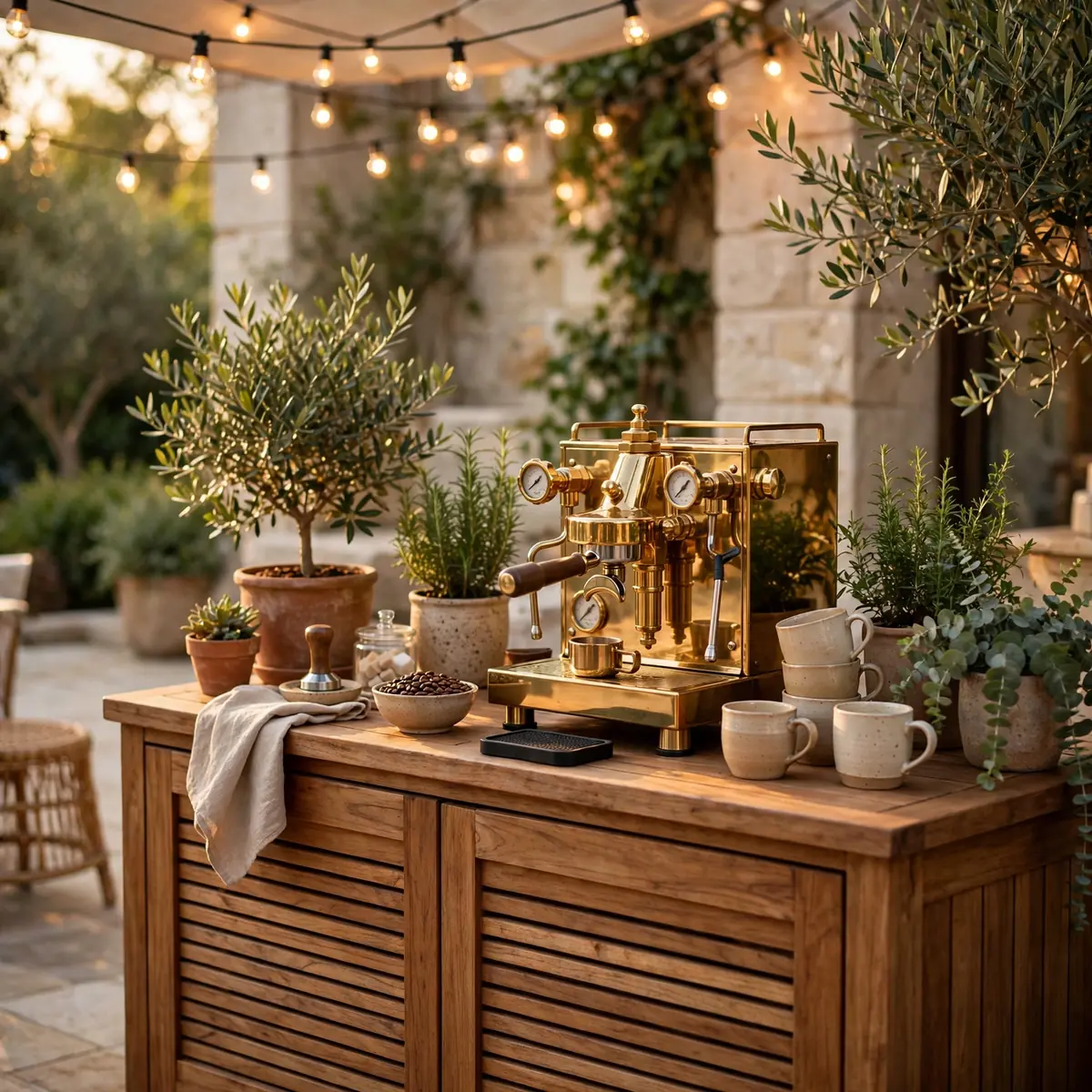
Morning coffee tastes better outside, so build the bar where the light is. A weatherproof teak or powder-coated console, a machine you can carry in during storms, and string lights for early mornings make a patio station genuinely usable — not just a pretty prop. The practical rules: everything must survive humidity, the electrics need a covered GFCI outlet, and beans stay indoors (heat and light destroy them fast). Best for: warm climates and anyone with a covered patio or balcony. Weakness: you’ll be hauling the machine in and out with the weather unless you invest in a proper outdoor-rated cover.
- Teak weathers to silver beautifully and needs almost no maintenance.
- Keep beans, grinder, and milk inside; carry out only what’s needed per session.
- A fitted waterproof cover extends the machine’s life more than any other single purchase.
The Dual-Purpose Cart: Coffee by Day, Cocktails by Night
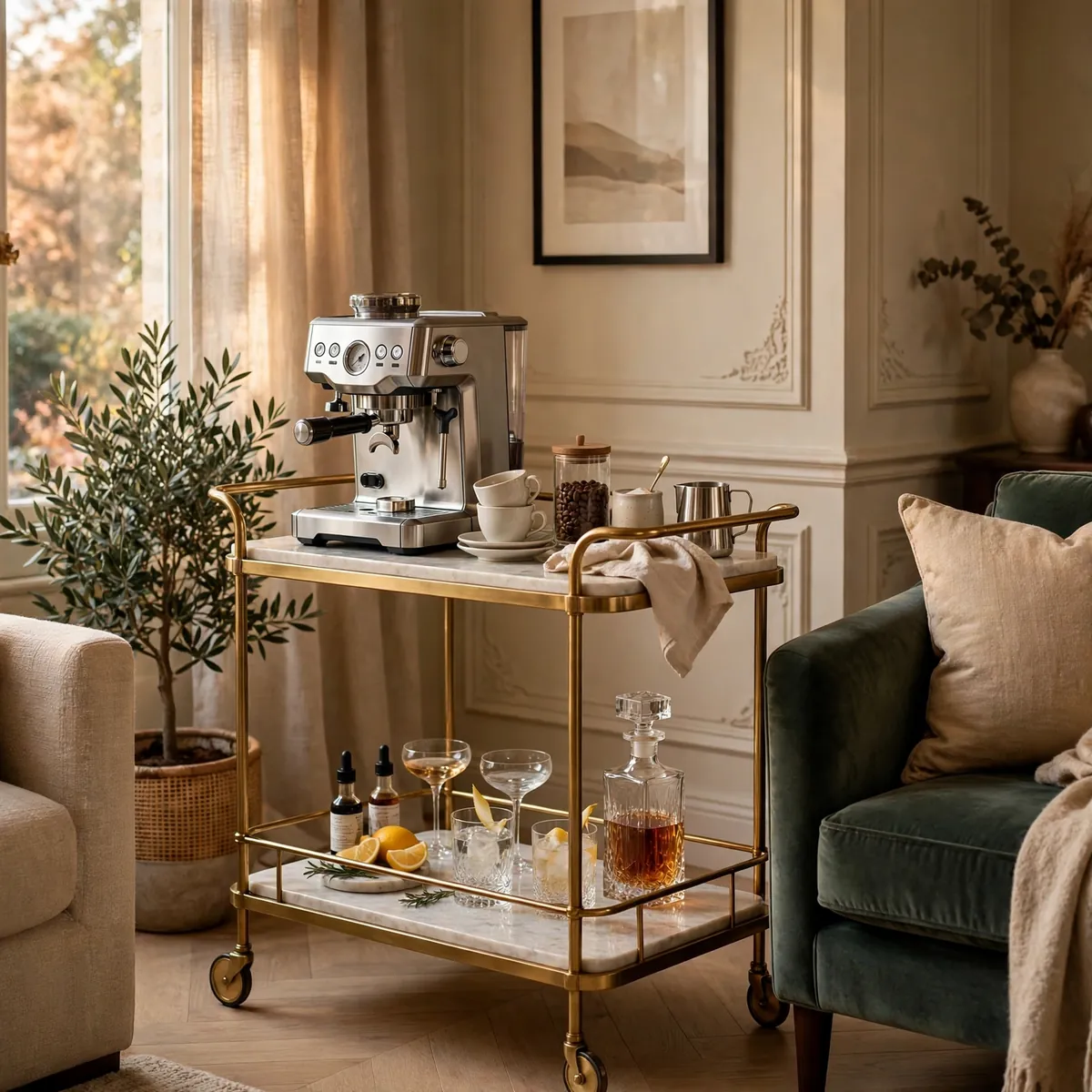
One cart, two identities: espresso machine and cups on the top tier for the morning, decanter and cocktail glasses below for the evening. This is the most space-efficient luxury on the list because the footprint serves double duty, and the styling transition is as simple as swapping the tray contents. It works best with a compact machine and a cart with a proper lower shelf — wobbly two-tier trolleys can’t handle a loaded decanter. Best for: small living rooms and anyone who entertains. Weakness: you will rearrange it twice a day, so keep both setups minimal or the ritual becomes a chore.
- Use one marble tray for the coffee kit so the swap takes thirty seconds.
- Keep cocktail tools in a lidded box on the lower tier to avoid dust.
- Lock the casters permanently — a dual-purpose cart gets bumped more than most.
A Bookshelf Conversion With a Built-In Machine Bay
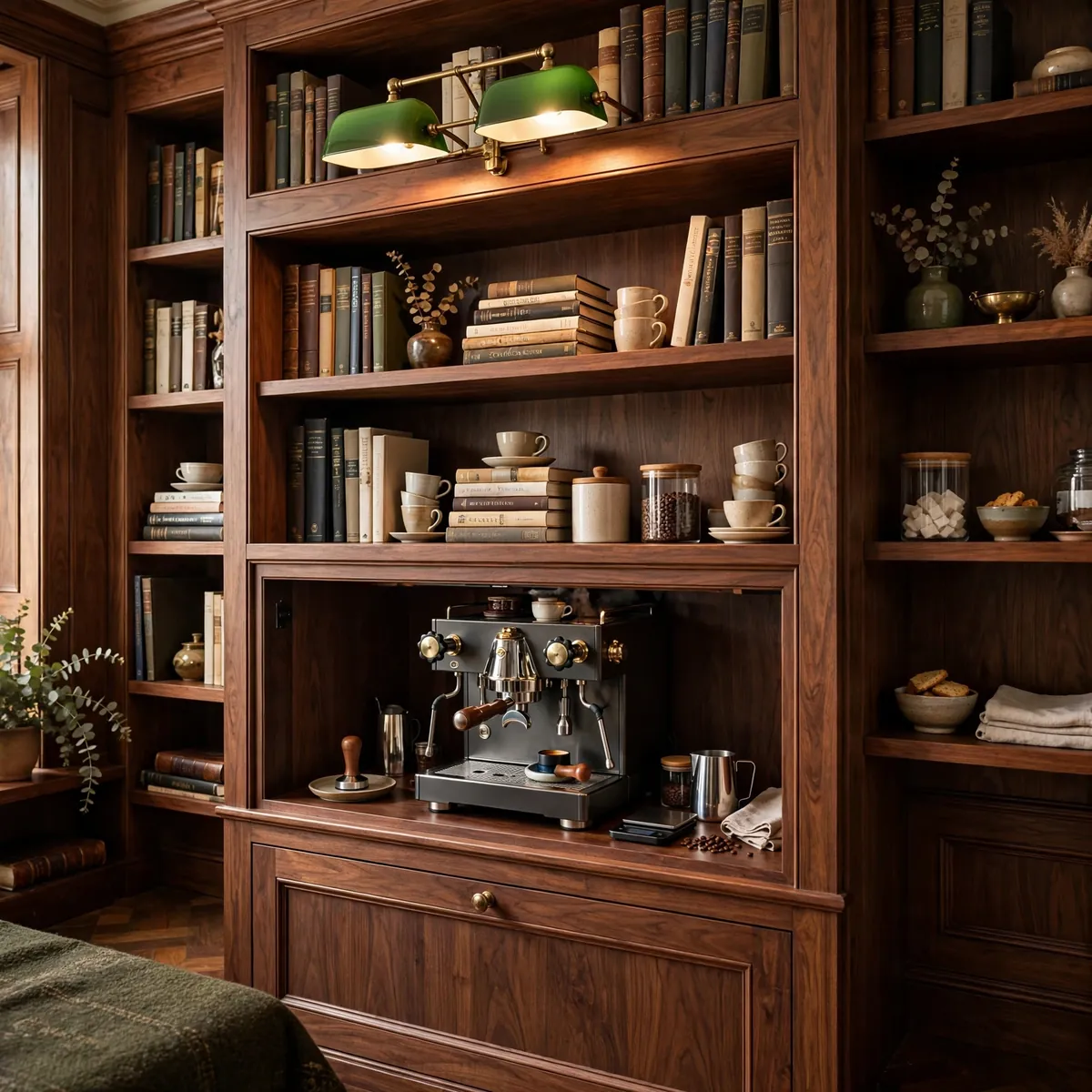
Got a tall bookcase you no longer love? Remove two shelves to create a machine-height bay, add a heat-proof shelf liner, and you have a coffee armoire. The shelves above hold cups and coffee books; the cabinet below hides the grinder and supplies. Because bookcases are deep (usually 30 cm+), most compact machines fit without sticking out. A brass picture light or library lamp on top finishes the “gentleman’s study” effect. Best for: living rooms and studies where a kitchen-style station would look wrong. Weakness: bookcase wood isn’t heat-proof, so a stone or metal tray under the machine is mandatory, not optional.
- Choose a bookcase at least 30 cm deep so the machine sits fully inside.
- A battery picture light avoids running wires to the bookcase.
- Keep the heaviest items low so the tall unit stays stable.
The Family Hot Cocoa Station With Kid-Height Storage
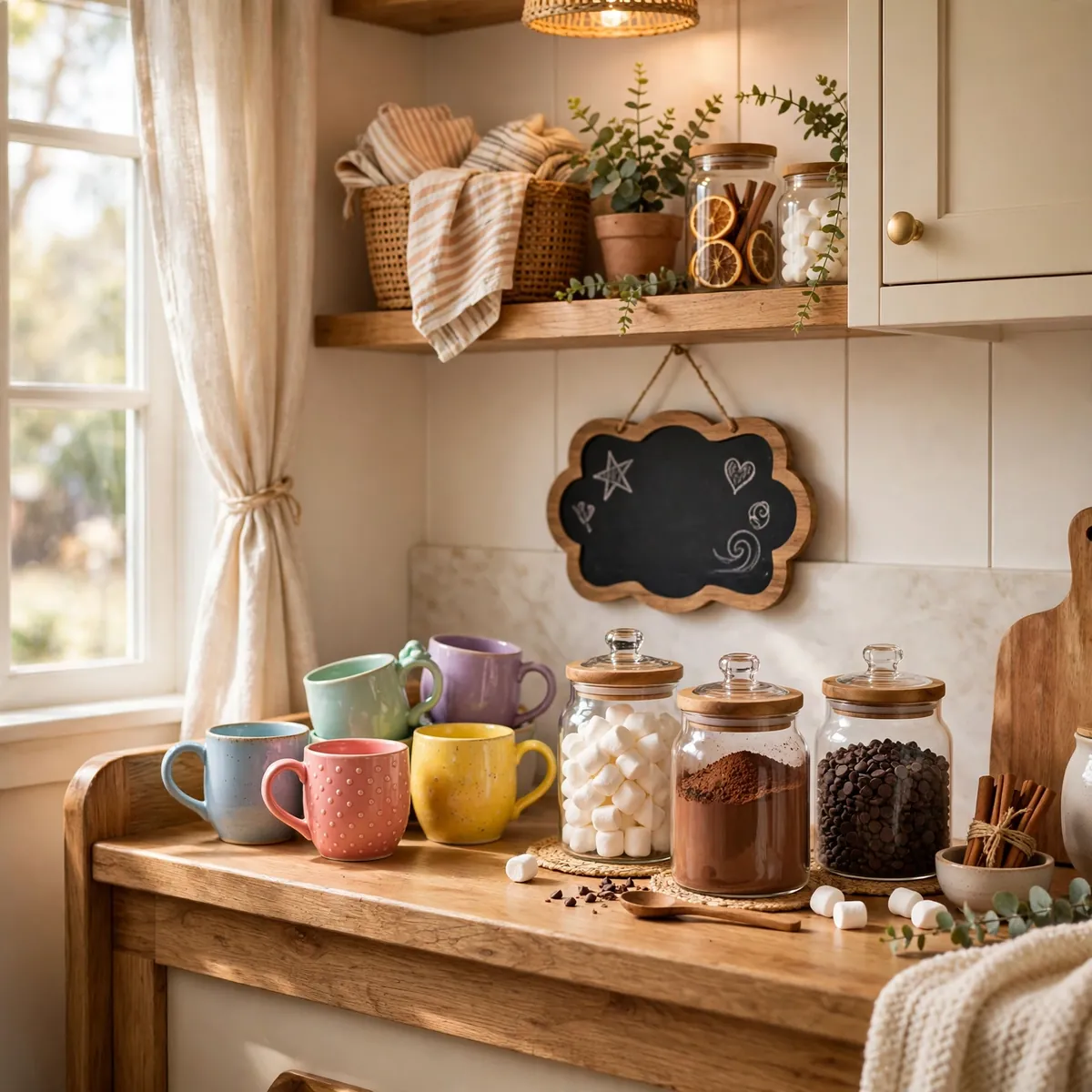
Not every household runs on espresso. A low counter or sideboard stocked with cocoa, marshmallows, kid-sized mugs, and a kettle gives children their own ritual while the adults keep the real machine. Put everything at a height kids can reach safely, use shatterproof mugs, and keep the hot water in adult hands only. The styling can be cheerful — color is welcome here — without looking cheap if you stick to ceramic and wood. Best for: families with young kids who want to join the morning ritual. Weakness: sugary stations need more cleaning, and it may outgrow its cuteness as kids age.
- Use melamine or bamboo kids’ mugs — ceramic chips too easily at this height.
- Pre-portion cocoa into small jars so kids can “make” their own with supervision.
- Wipe down the station nightly; cocoa dust gets everywhere.
Backlit Glass Shelves for Evening Glow

Most coffee bars are designed for mornings, but this one is built for the evening — which is when it doubles as the room’s mood lighting. Glass shelves with LED strips recessed behind them turn your cups, decanters, and jars into a glowing display, and the effect is genuinely architectural: the light washes down the wall and makes even a simple espresso machine look like a gallery piece. During the day it reads as an elegant open-shelf bar; at night, with the overheads off, it becomes the warmest corner in the house. This works particularly well in open-plan living rooms where the coffee bar sits in sight of the sofa, because the glow contributes to the whole room’s atmosphere rather than just the station. It also solves a real problem — dark corners that look dead after sunset — without adding a single floor lamp. Best for: open-plan homes and anyone who entertains in the evening. Weakness: glass shelves show dust and fingerprints from across the room, and the LEDs need a driver and a plan for hiding the wiring, so it’s more of a project than a styling trick.
- Use 2700K LED strips for a warm glow; 3000K and above looks commercial.
- Hide the driver in the cabinet below and run the strip on a smart plug.
- Tempered glass shelves, at least 8 mm thick, for anything holding weight.
A Mediterranean Corner in Terracotta and Limewash
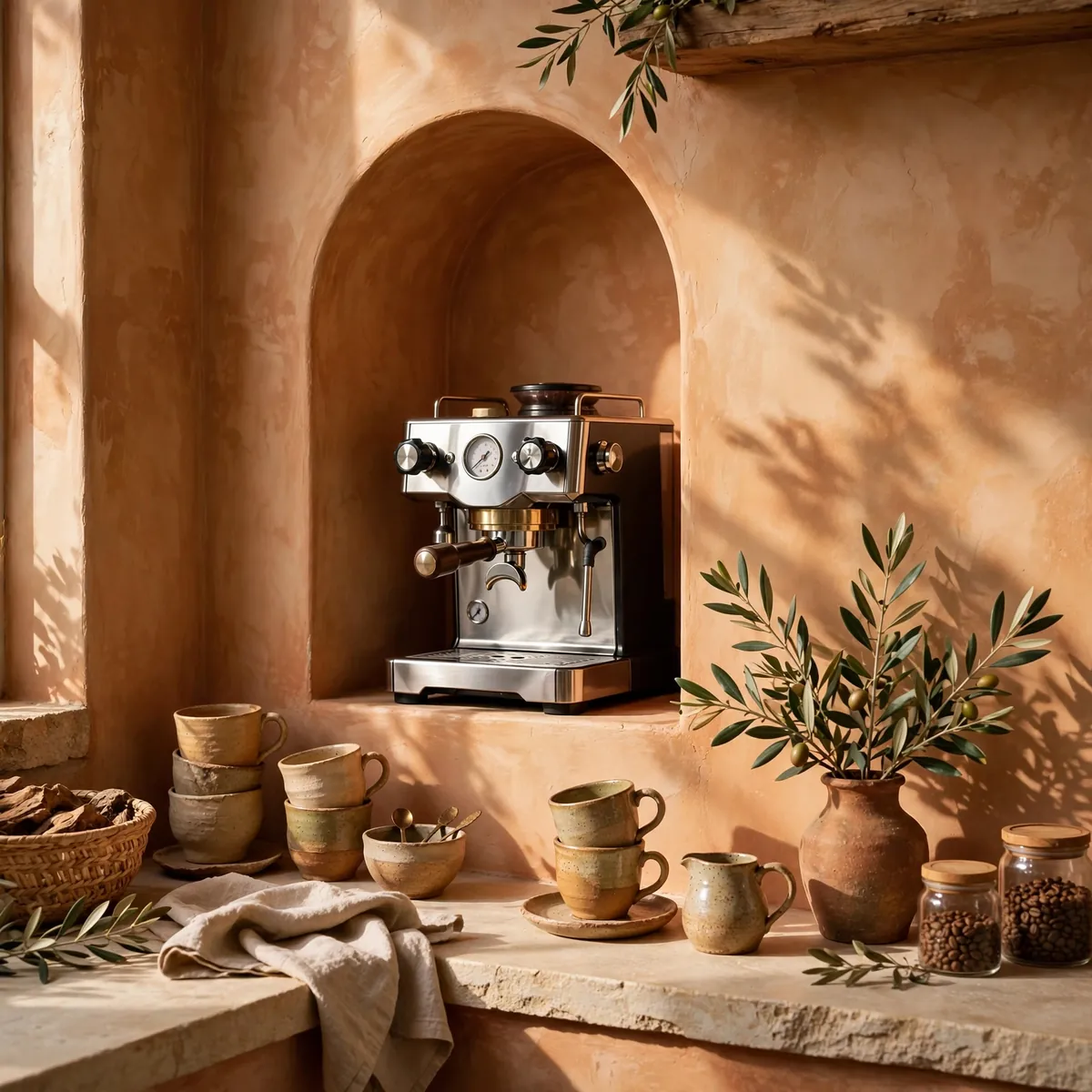
Terracotta limewash walls, an arched niche, handmade ceramics, an olive branch in a clay vase — the Mediterranean coffee corner feels like a holiday home. The arched niche is the clever part: it frames the machine like art and keeps the counter visually uncluttered. Limewash paint gives walls a soft, chalky movement that flat paint can’t, and it hides the small splashes and marks a coffee zone inevitably collects. Best for: sunlit kitchens and anyone drawn to warm, earthy interiors. Weakness: the niche needs building (or a convincing faux arch), so this is a weekend project at minimum.
- Limewash needs two coats and a large brush — the texture is the point.
- Handmade ceramics in sand and clay tones keep the palette cohesive.
- An olive branch lasts weeks in water and costs almost nothing.
The All-Black Monochrome Station
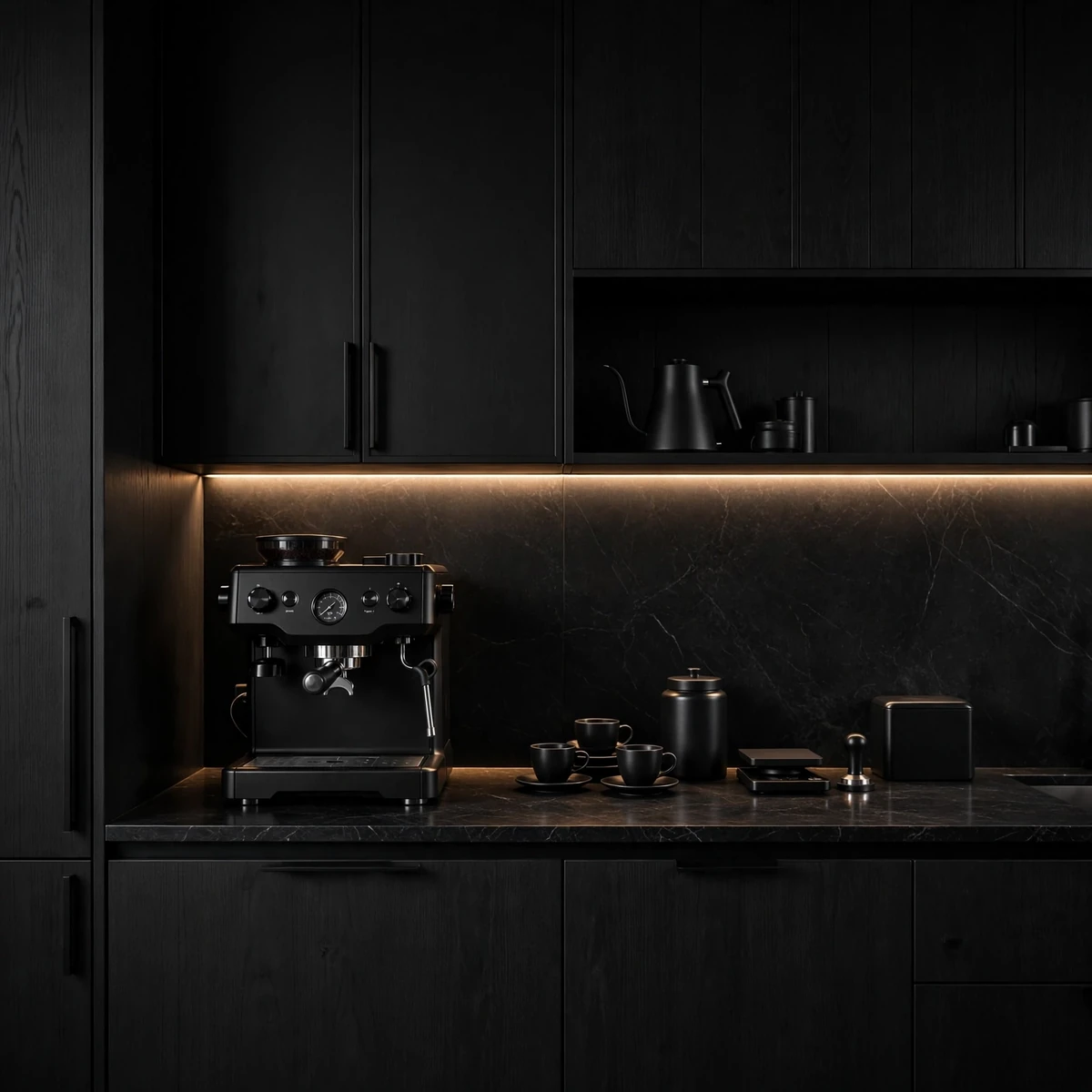
Black cabinetry, black marble, black machine, black cups — the monochrome station is the boldest look on this list and, done right, the most striking. Black makes a small station feel intentional rather than cramped, and it turns the machine into a sculpture. The non-negotiable: warm under-cabinet lighting, because black without light is just dark. Matte finishes show fewer fingerprints than gloss, which matters when everything is one color. Best for: modern kitchens and anyone who wants maximum drama from minimum square footage. Weakness: dust shows instantly on black, so this is a high-maintenance beauty — commit to a weekly wipe-down.
- Matte black hides fingerprints; save gloss for one accent only.
- Warm 2700K underlighting is mandatory — cool light on black looks flat.
- One wood or brass element (a tray, a shelf) stops it feeling severe.
FAQs
How much does a home coffee bar cost to set up?
A cart-based station with a decent machine starts around a few hundred dollars; a built-in nook with stone and lighting runs into the low thousands. The machine is the biggest variable — budget for the best grinder you can afford, since grind quality affects taste more than the machine’s price tag.
Where should I put a coffee bar in a small kitchen?
Claim 60 to 90 cm of counter near the sink for easy refills, or go vertical with a fold-down wall cabinet. Carts and under-stair nooks work when the kitchen itself has no room to spare.
Do I need to plumb in an espresso machine?
No. Most home machines use a refillable tank, which is fine for one to four drinks a day. Plumbing is worth it only if you make many milk drinks daily or hate refilling the tank.
Conclusion
The best coffee bar is the one you’ll actually use every morning — so pick the idea that fits your space, your brew method, and how much maintenance you’ll honestly do. Start with the machine, the water, and the storage; the styling will follow. And whichever of these 25 you build, give it good light: a well-lit corner makes even the simplest setup feel like a ritual worth waking up for.