25 Apartment Living Room Ideas That Make a Rental Feel Like Home
Smart layouts, renter-friendly upgrades, and right-size furniture that turn a small apartment living room into a space that feels bigger, brighter, and truly yours.
These apartment living room ideas are for anyone working with a rental, a studio, or a living room that just isn’t very big. The honest answer is that a great small living room comes from layout and proportion, not from buying more things — a right-size sofa, one large rug, and a few renter-friendly upgrades will do more than a room full of furniture ever could.
Layout is the highest-leverage move you can make, because most small living rooms feel cramped from bad arrangement rather than from actual size — furniture pushed flat against every wall, a rug that’s too small to anchor anything, walkways that force you to sidestep the coffee table. After the layout, scale matters: apartment-size sofas with slim arms and visible legs keep the room breathing instead of swallowing it whole, and pieces that do double duty earn every inch of floor they occupy.
Renters play by their own rules, so the best ideas here are the ones that don’t require drilling, painting, or risking a deposit — tension rods, removable wallpaper, leaning mirrors, and freestanding storage do the heavy lifting. If you’re in a studio, zoning tricks like rugs and open shelving can make one room read as two. Keep the palette calm, layer in texture instead of clutter, let light do its job, and the room stops feeling like a holding pattern and starts feeling like home.
Start with the biggest pieces and work down: get the sofa, rug, and layout right, and the styling almost takes care of itself. And once the living room feels settled, these apartment decor ideas for the whole rental will help you carry the same thoughtful approach into every other room.
The Best Apartment Living Room Ideas Start With the Right Layout

Before buying a single thing, tape out your layout on the floor with painter’s tape — the sofa footprint, the walkways, the swing of every door. Most small living rooms feel cramped because furniture fights the traffic path, not because the room is genuinely too small. A clear 30-inch walkway and a seating zone that faces one focal point will make even a 10-by-12 room feel deliberate. The limitation is patience: it’s tempting to skip this and order the sofa, but an hour with a tape measure saves months of regret.
- Keep main walkways at least 30 inches wide so traffic never squeezes past furniture.
- Face seating toward one focal point — TV, window, or fireplace — never split attention.
- Mark furniture footprints with painter’s tape before ordering anything.
Float the Sofa Off the Wall for Breathing Room
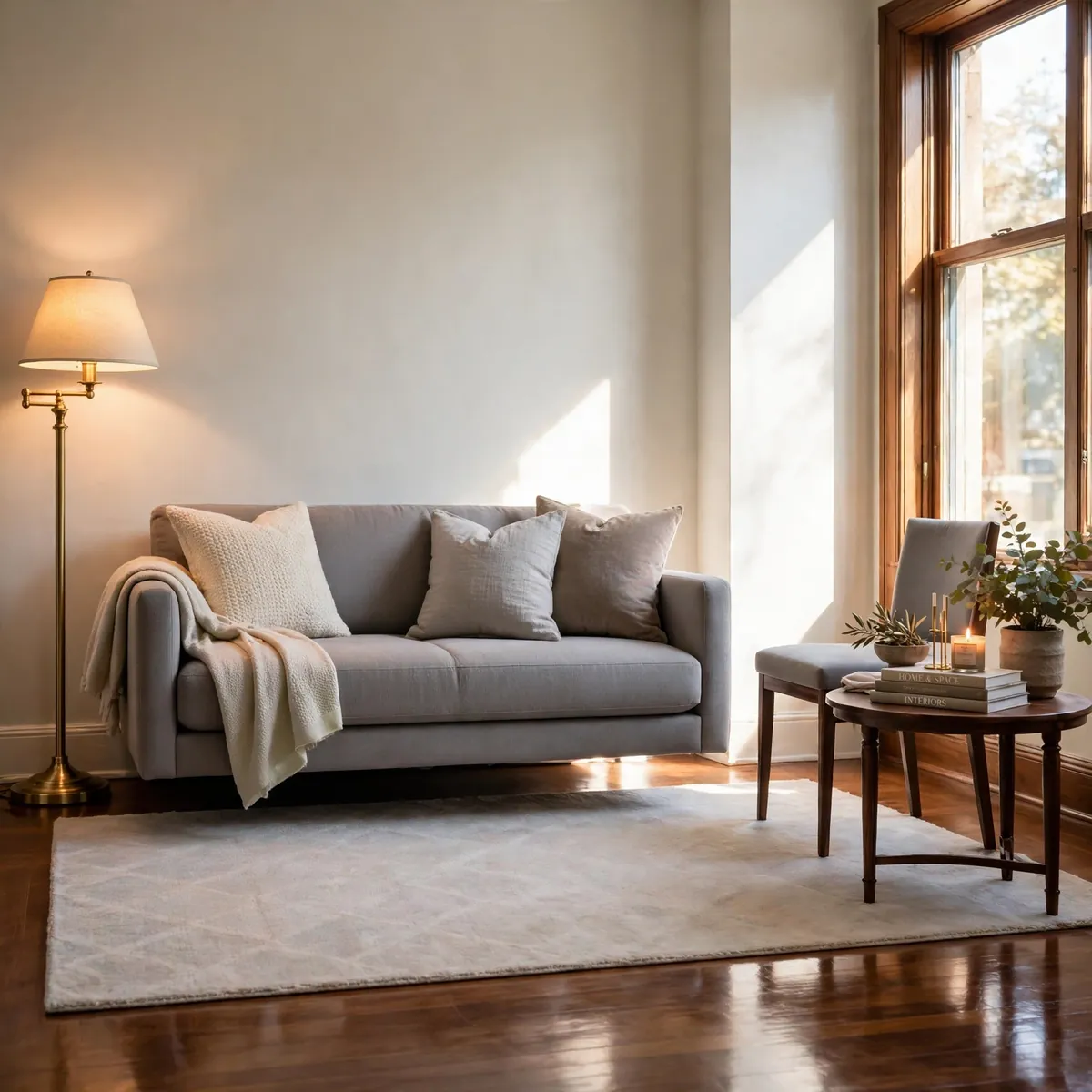
Pulling the sofa even four to six inches off the wall changes how the whole room reads. When everything hugs the perimeter, the middle of the room becomes dead space and the eye sees a waiting room, not a living room. A small gap behind the sofa creates a sense of depth, lets light move around the piece, and makes the arrangement look designed rather than shoved. The trick only works if you don’t lose your walkway — float the sofa, don’t block the path.
- Even 4 to 6 inches of space behind the sofa creates visible depth.
- Anchor the floated arrangement with a rug so it reads as one zone.
- Never float furniture into the main traffic path.
Choose a Low-Profile Sofa With Slim Arms
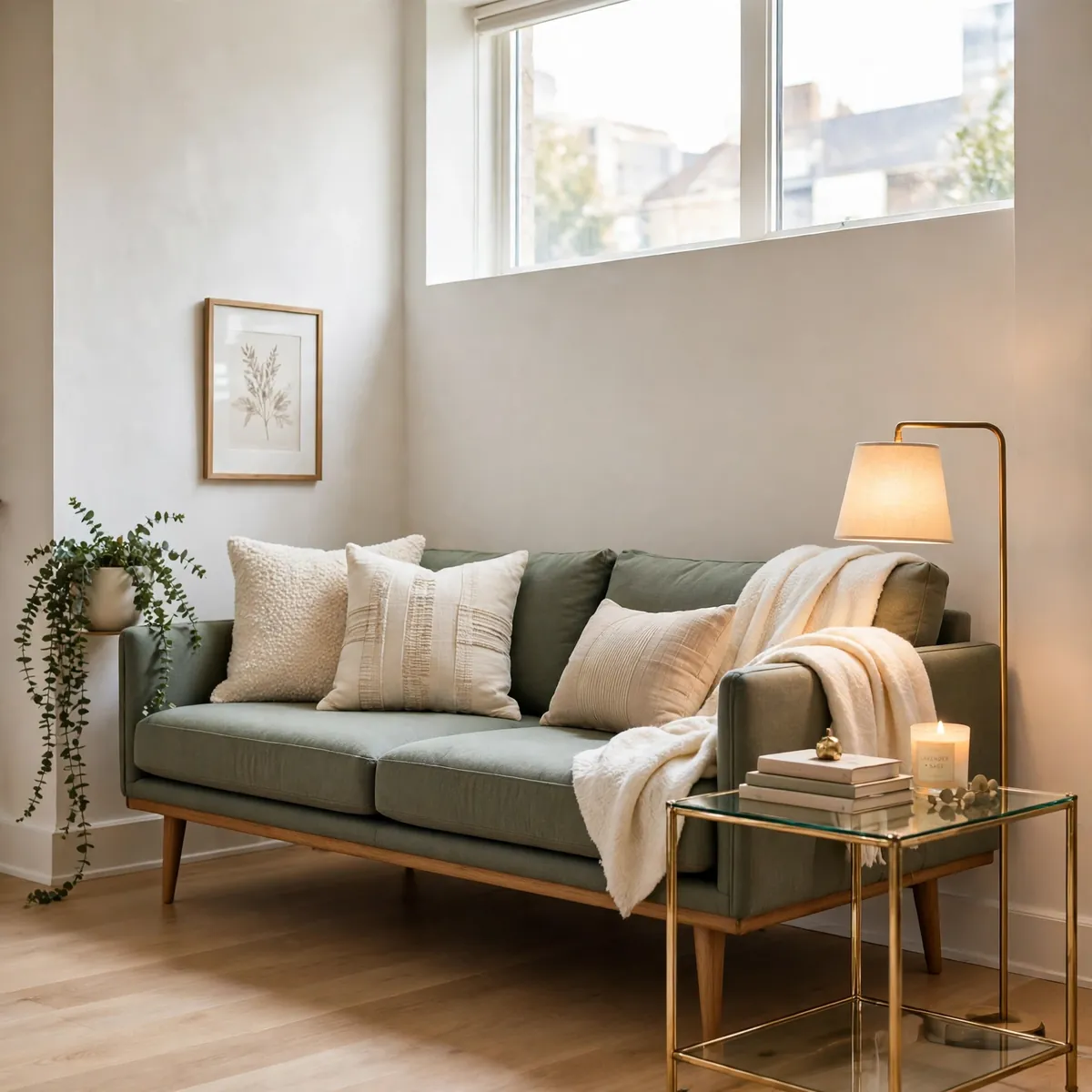
A bulky sofa eats visual space faster than anything else you can put in a small room. Slim arms, a low back, and raised legs keep sightlines open and let the ceiling feel taller than it is — the room reads as airy even when the square footage hasn’t changed. Look for apartment sofas in the 68 to 78 inch range rather than the standard 84-plus. The trade-off is real: slimmer sofas sometimes seat less deeply, so test the sit before you commit.
- Shop “apartment sofas” in the 68 to 78 inch range, not standard 84-plus.
- Raised legs let light pass under and make the piece feel lighter.
- Sit-test before buying — slim should not mean uncomfortable.
Zone an Open Plan With One Big Indigo Rug
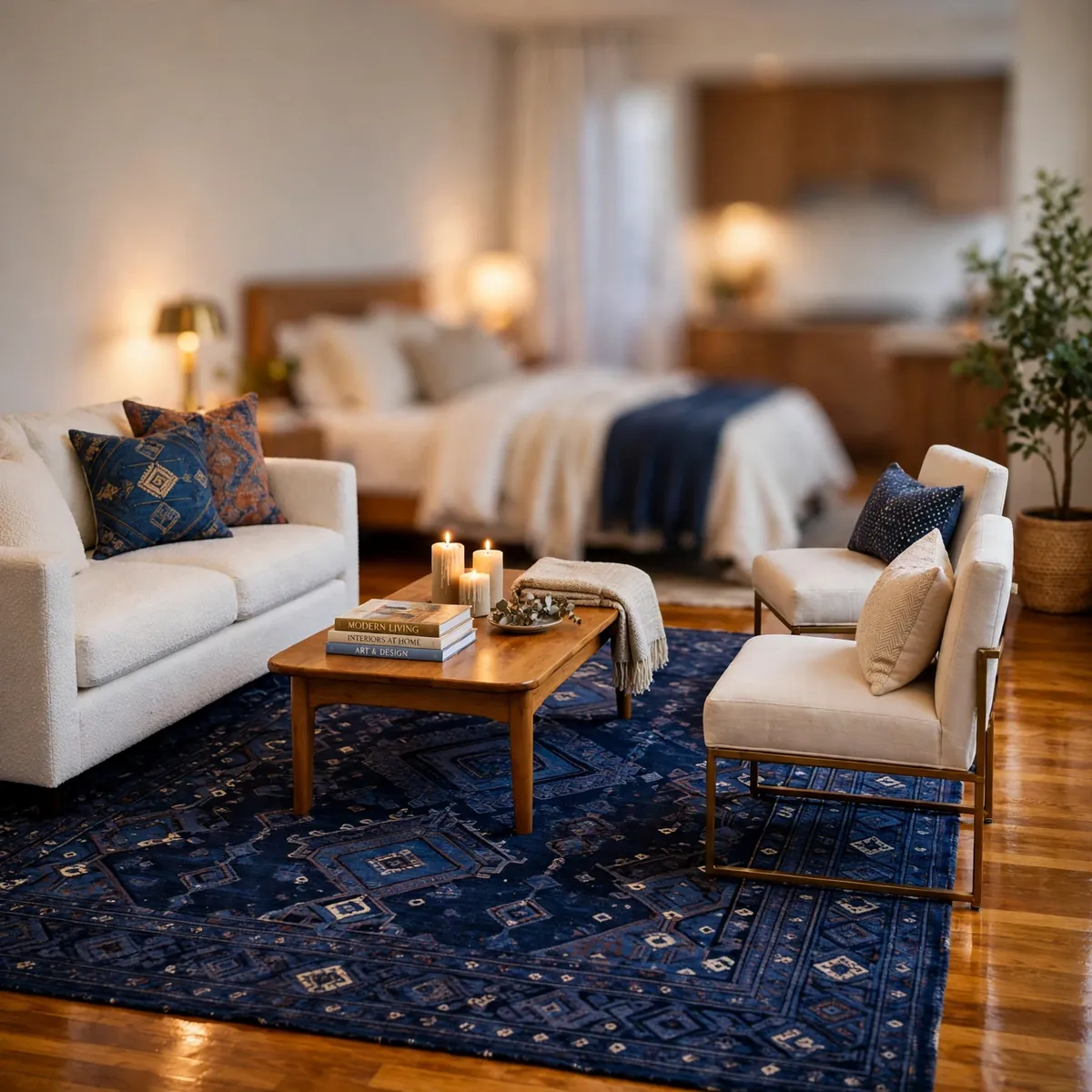
In a studio or open-plan apartment, a single large rug draws the boundary of the living room without a single wall. It tells the eye “this is the seating area,” and everything placed on it — sofa front legs, coffee table, chair — belongs to one conversation zone. Go as big as the room allows; a too-small rug makes furniture look scattered. In rentals this is pure gold because it’s completely reversible, and it also quiets hard floors.
- Size the rug so at least the front legs of all seating sit on it.
- One large rug zones better than two small ones.
- A deep indigo pattern hides everyday wear beautifully.
Layer a Smaller Patterned Rug Over a Neutral Base
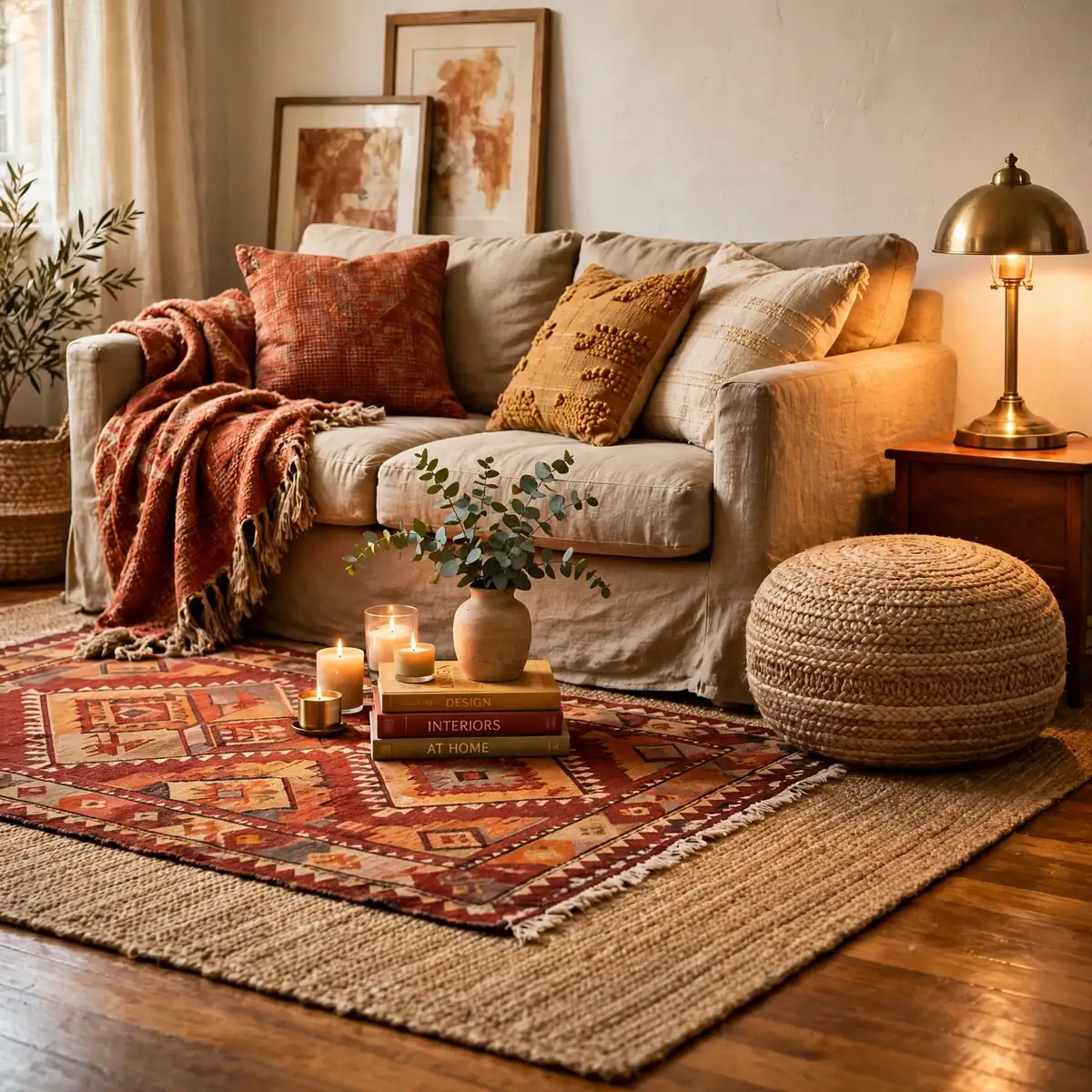
Start with a large, flat, inexpensive neutral rug — jute or a low-pile weave — then layer a smaller rug with pattern or color on top, angled slightly. You get the visual richness of a statement rug at a fraction of the price, and the top layer is easy to swap when you want a change. The catch is proportion: the base rug should be big enough to anchor the furniture, and the top rug should sit clearly on top of it, not half-on and half-off the floor. Done right, it looks collected and intentional; done wrong, it looks like a rug accident.
- Keep the base rug flat and neutral so the top layer can shine.
- Angle the top rug slightly for a relaxed, collected feel.
- Make sure the layered rug sits fully on the base, never half-off.
Buy Double-Duty Pieces That Earn Their Floor Space
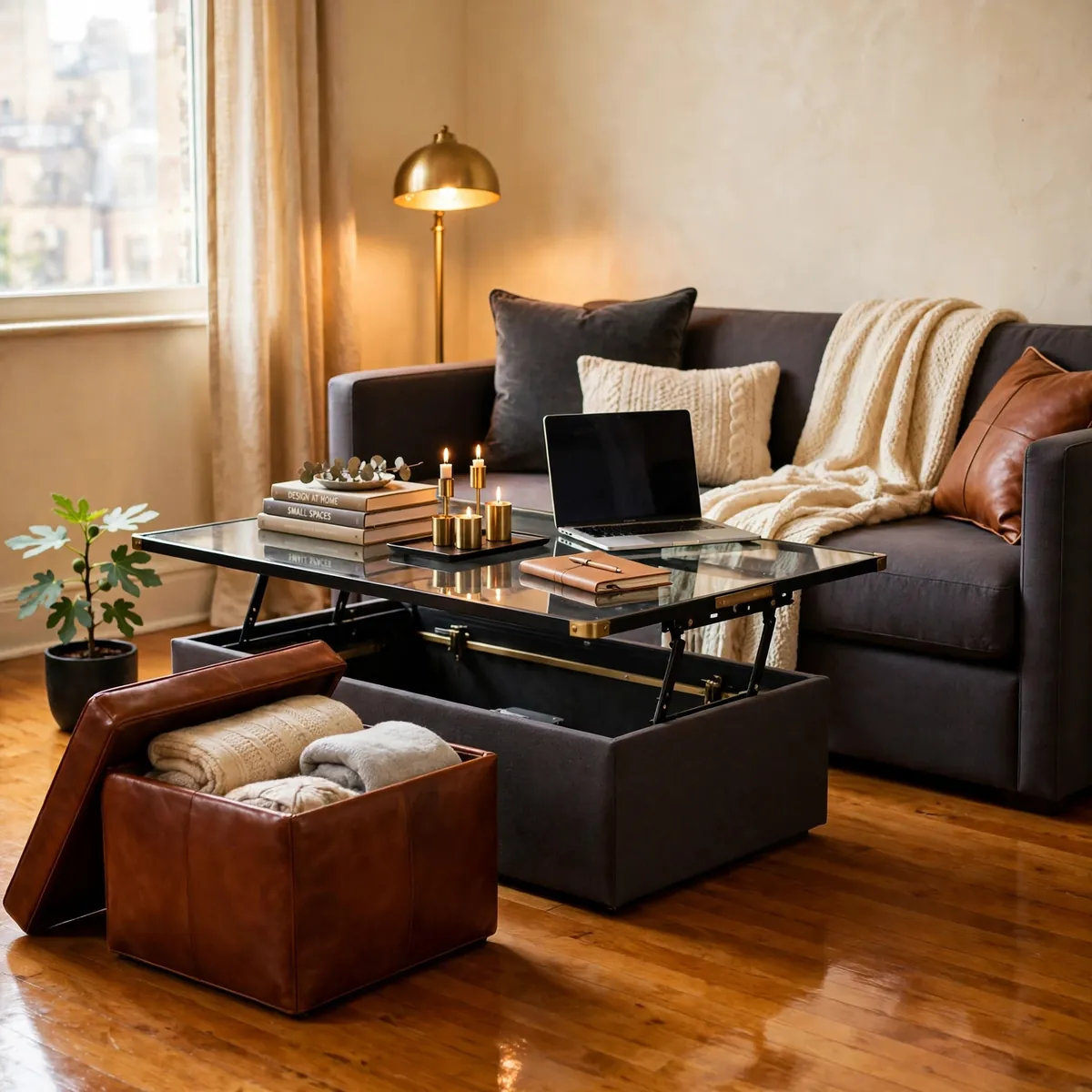
In an apartment, every piece of furniture should do at least two jobs. A storage ottoman is a footrest, extra seating, and a home for throws and board games. A lift-top coffee table becomes a work-from-home desk. A daybed-style sofa handles overnight guests without a guest room. Before anything new comes through the door, ask what problem it solves beyond looking nice — if the answer is nothing, it doesn’t earn the square footage.
- Give every new piece a two-job test before it enters the apartment.
- Storage ottomans hide the clutter that small rooms can’t absorb.
- A lift-top coffee table doubles as a laptop desk.
Swap the Coffee Table for Nesting Tables
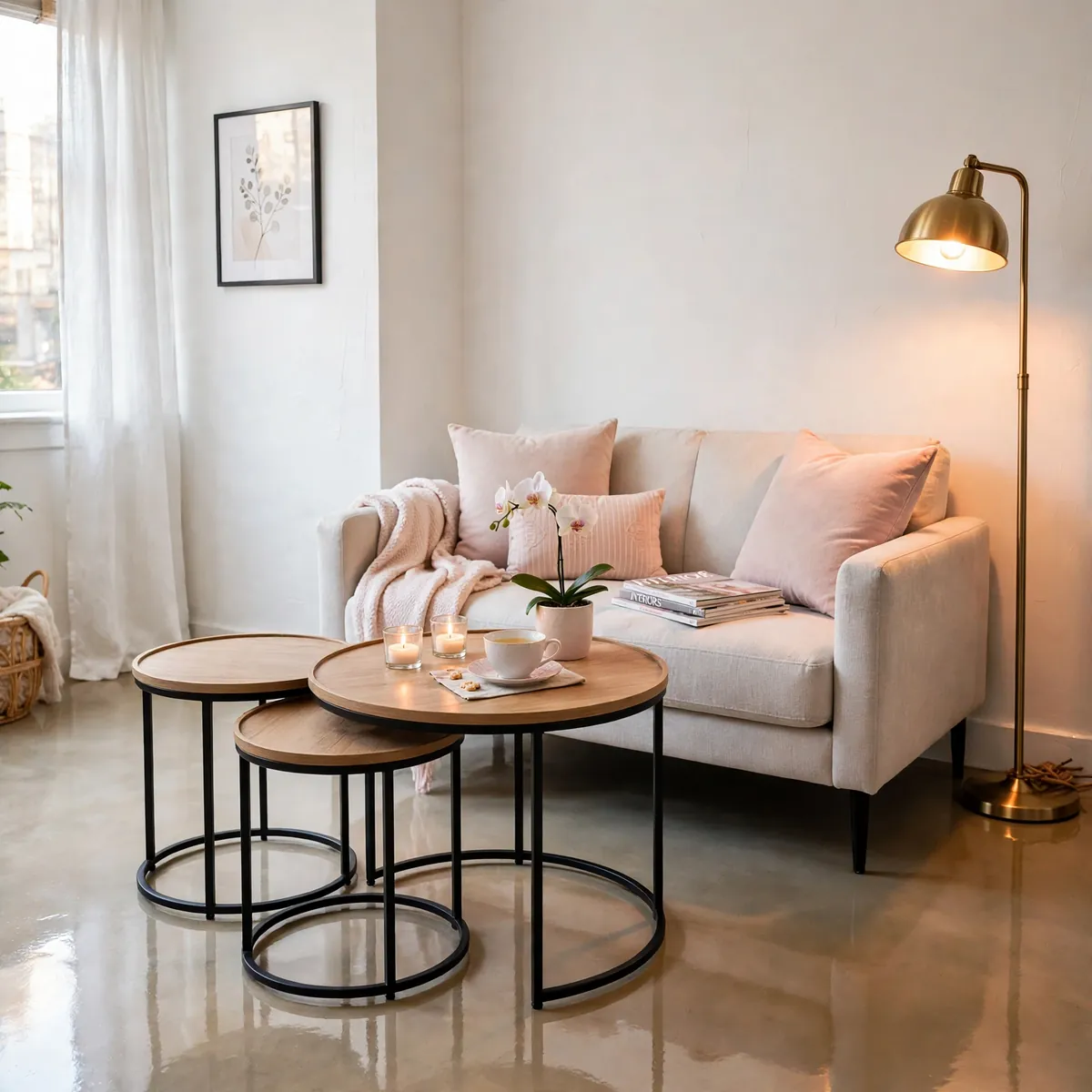
A full-size coffee table is one of the biggest space hogs in a small living room, and it’s usually only half-used. Nesting tables give you the same surface when you need it — pull one out for drinks on movie night — and tuck away to almost nothing the rest of the time. Choose a set with slim black metal frames and light wood tops so they disappear visually when nested.
- Pull out extra tables only when guests need surfaces.
- Slim frames keep nested tables visually light.
- Round tops are kinder to shins in tight walkways.
Use a Slim Console Behind the Sofa as a Command Center
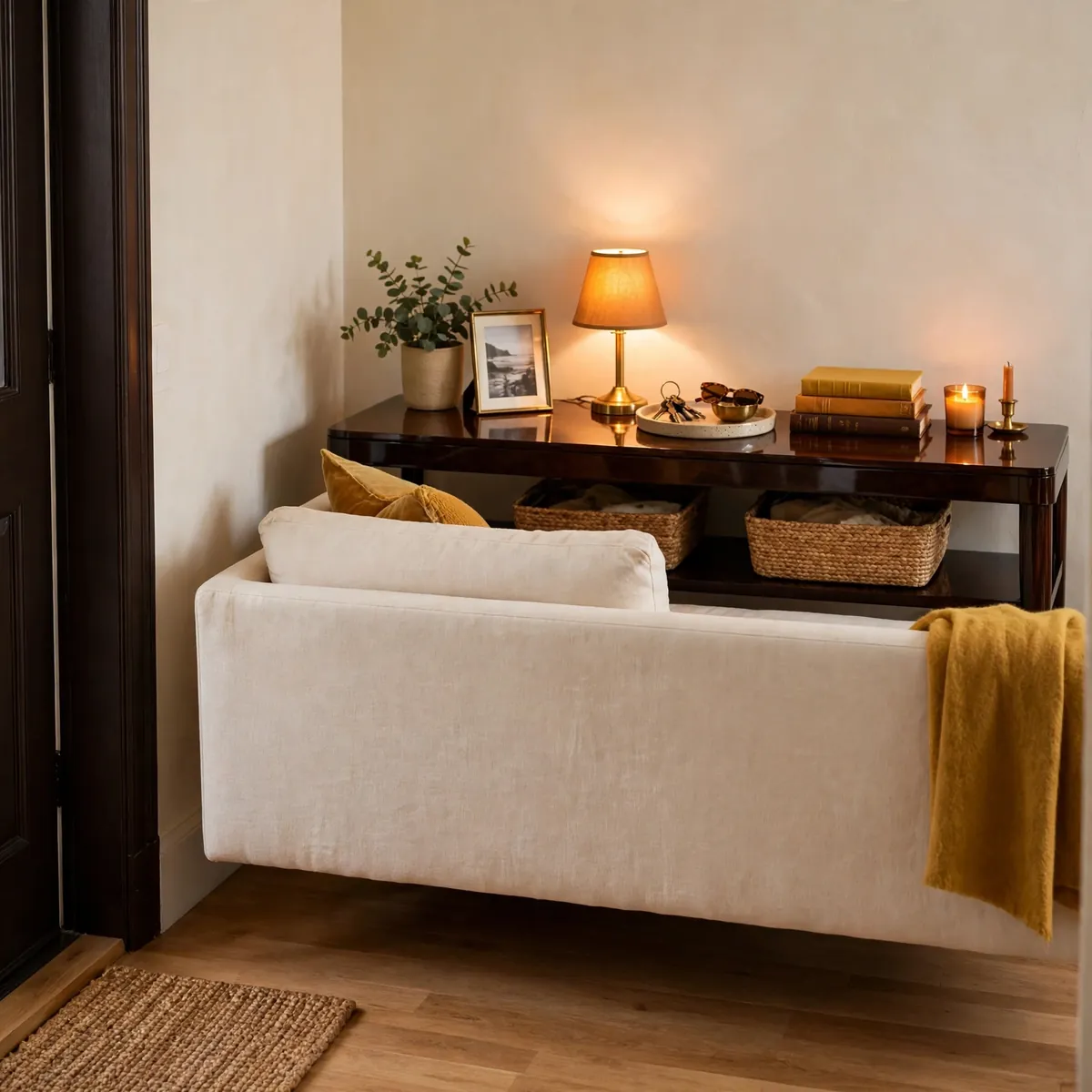
That gap behind a floated sofa is wasted space unless you claim it. A narrow console table — 10 to 12 inches deep — becomes a landing strip for keys, a charging station, or a mini library with a pair of lamps on top. It also gives the back of the sofa a finished look from the entry. Just keep it shallow enough that it never eats into your walkway.
- Stay under 12 inches deep so the console never blocks traffic.
- Add a small lamp to make the sofa-back vignette glow at night.
- Use baskets on the lower shelf for hidden storage.
Go Vertical With Tall, Narrow Shelving
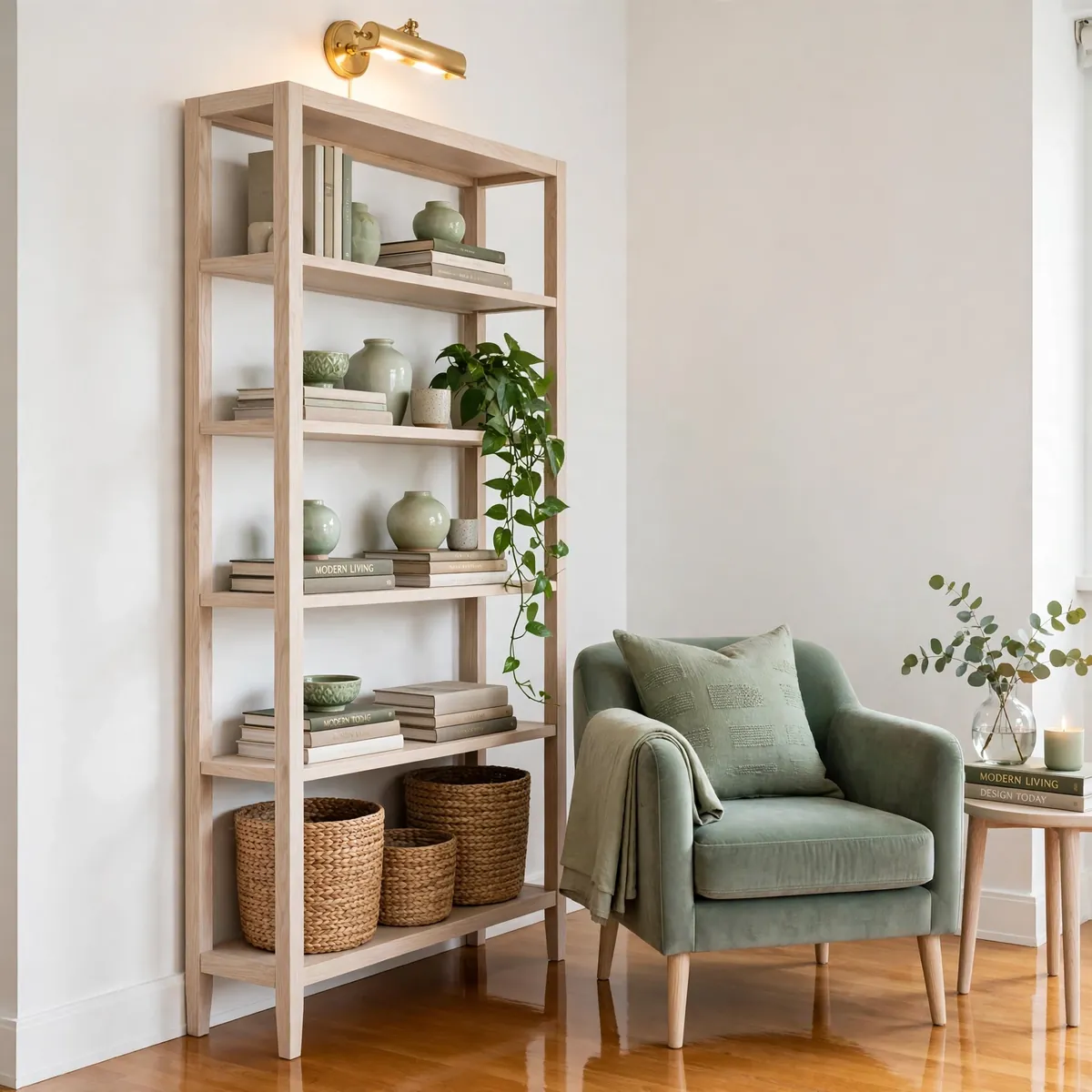
Floor space is limited; wall height usually isn’t. A tall, narrow bookcase draws the eye upward and makes the ceiling feel higher while holding as much as a wide, squat unit. Style the top two-thirds for looks and the bottom third for real life — baskets and closed boxes that hide the less photogenic stuff. Anchor tall pieces to the wall with removable adhesive or tension methods if your lease forbids drilling.
- Choose narrow and tall over wide and short for the same storage.
- Keep the prettiest styling at eye level and above.
- Hide everyday mess in baskets on the lowest shelves.
Replace the Footstool With a Storage Ottoman
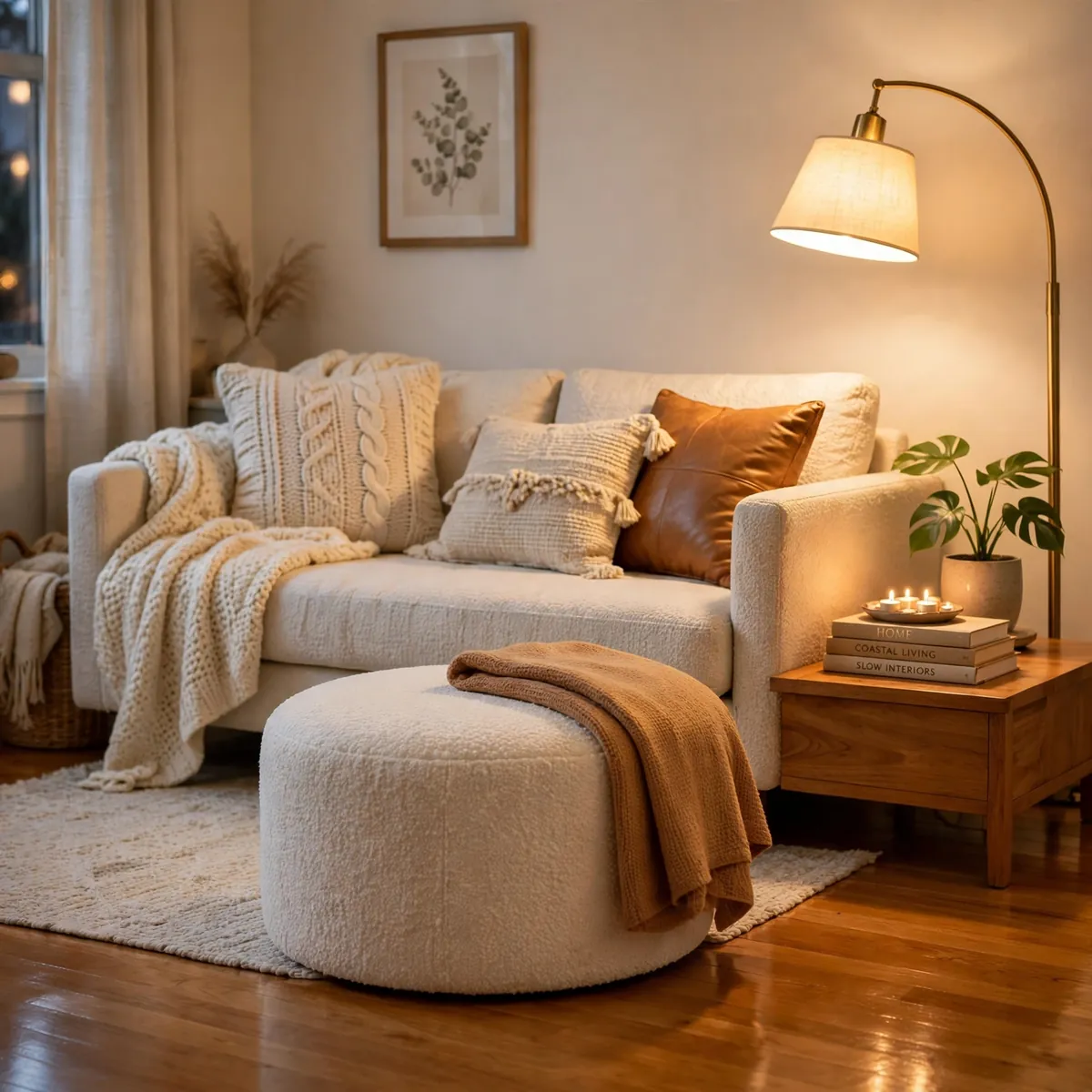
A storage ottoman in cognac leather or oatmeal bouclé is the hardest-working small-space piece there is: footrest by day, extra seat when friends visit, and a hidden home for the throws, remotes, and chargers that otherwise colonize every surface. Round ottomans are especially good in tight rooms because there are no corners to bump into. Size it to roughly two-thirds of your sofa’s width so it looks proportioned, not plonked.
- Round shapes move through tight rooms without bruised shins.
- Aim for about two-thirds of your sofa’s width.
- Stash throws inside so surfaces stay clear.
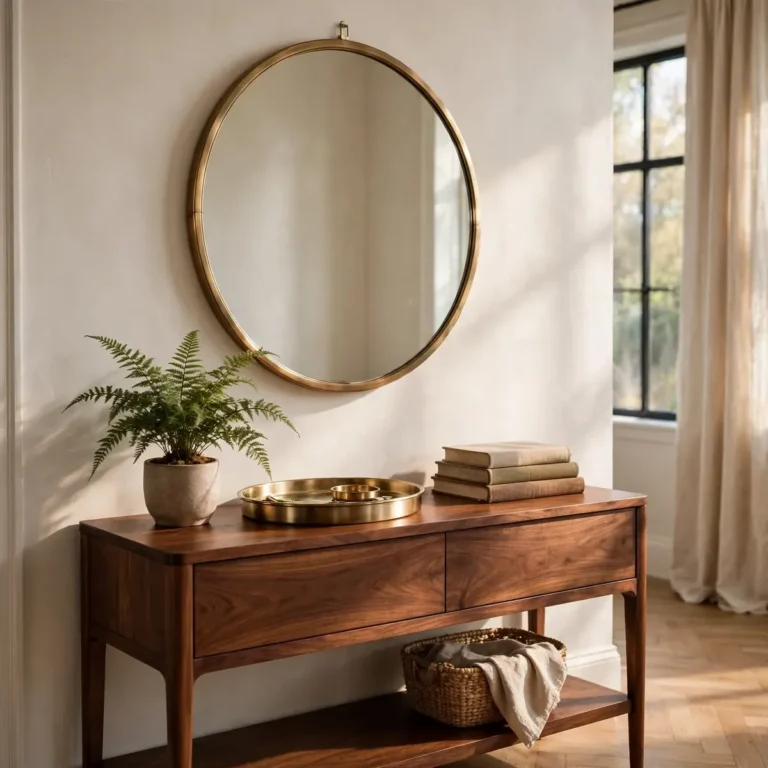
Hang One Large Mirror Opposite the Window
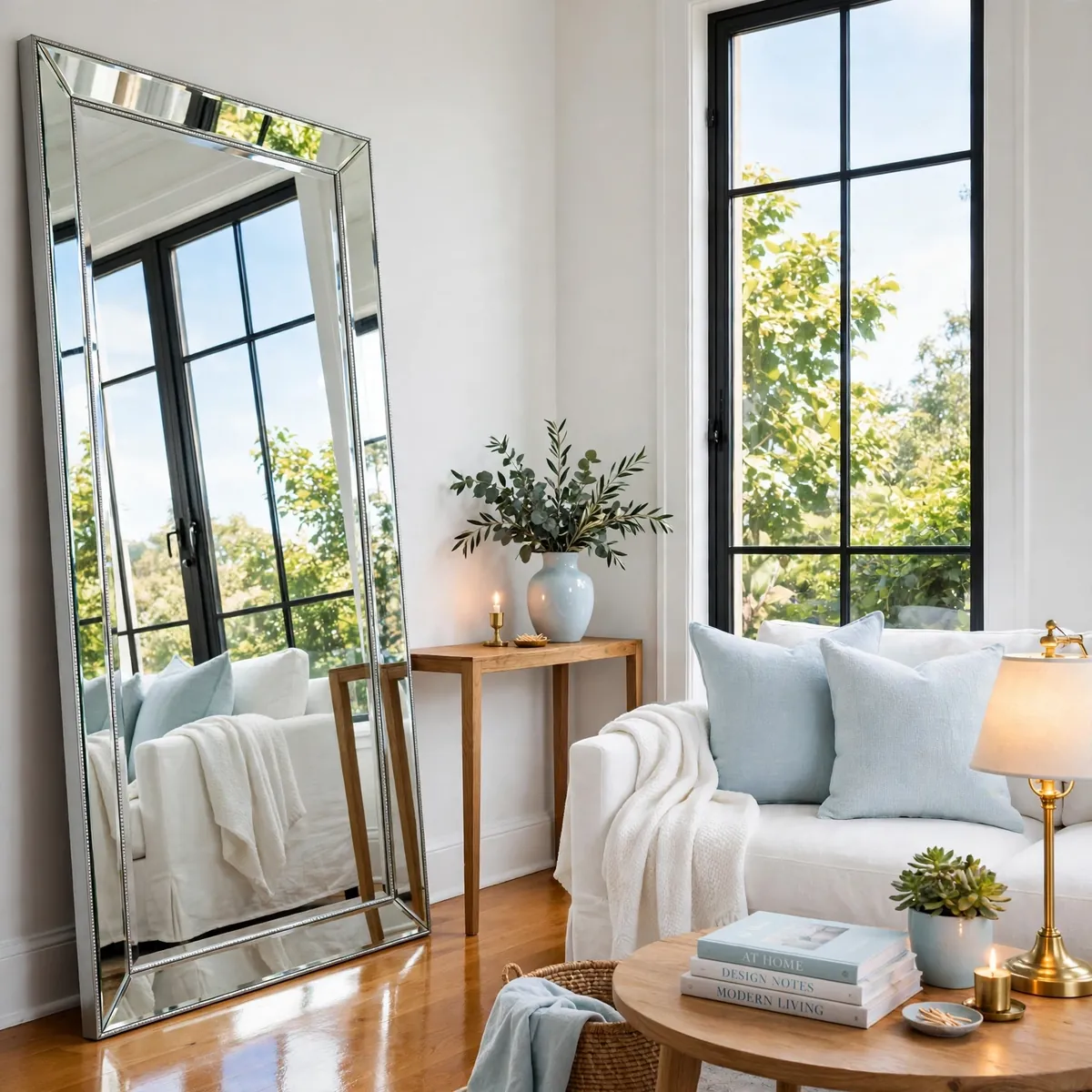
A big mirror opposite — or adjacent to — the main window doubles your natural light without a single new fixture. It bounces daylight deep into the room and gives the illusion of a second window, which is the closest thing to adding square footage for free. Go bigger than feels comfortable; a small mirror reads as decor, a large one reads as architecture. In a rental, a leaning floor mirror needs zero holes and does the same job.
- Go oversized — a small mirror won’t change the light meaningfully.
- A leaning floor mirror needs no drilling at all.
- Angle it to catch the window, not a blank wall.
Trade Heavy Curtains for Sheers on a Tension Rod
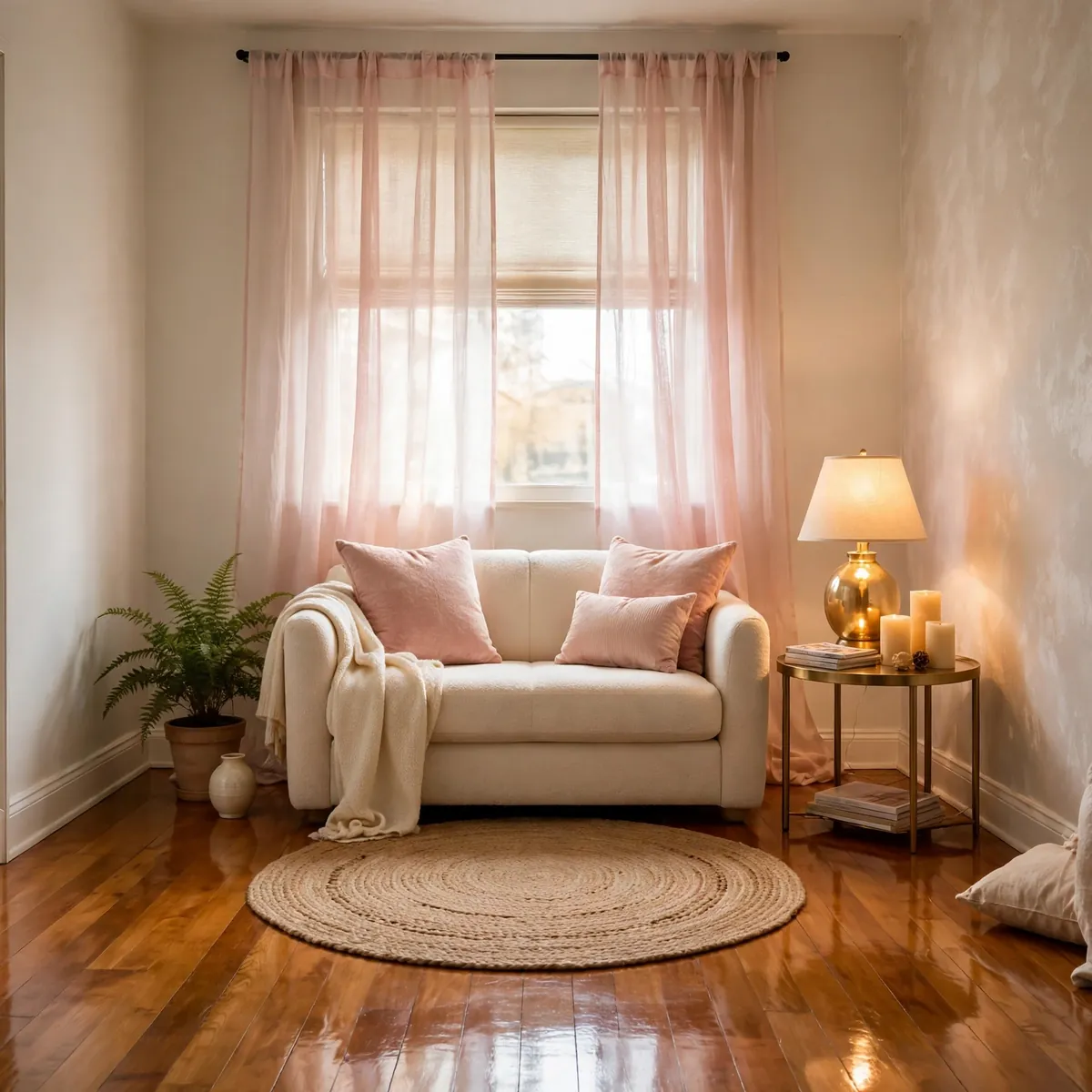
Heavy drapes swallow light and visual space, two things small apartments can’t spare. Sheer white or blush curtains on a tension rod — no drilling, no damage — filter daylight into a soft glow while keeping the room bright. Hang them as close to the ceiling as the rod allows; the extra height makes the window feel grander. The privacy trade-off is real at night, so layer a simple roller blind behind the sheers if your windows face the street.
- Tension rods install in minutes and leave zero marks.
- Hang sheers near the ceiling to stretch the window visually.
- Add a roller blind behind for nighttime privacy.
Add a Statement Light Without Touching the Wiring

Renters often inherit one sad ceiling fixture and assume they’re stuck with it, but lighting is the fastest mood upgrade in a small living room and none of it requires an electrician. A plug-in pendant with a long cord can hang from a small ceiling hook and a fabric drum shade instantly replaces the glare of a bare bulb. Plug-in wall sconces flank a sofa or artwork with zero wiring, and a tall arc floor lamp throws light exactly where the ceiling fixture can’t reach. What matters most is warmth: bulbs around 2700K make a small room feel cozy instead of clinical, and putting the main lights on dimmers — plug-in dimmers exist for lamps — lets one room shift from workday bright to evening soft. Layer three sources at different heights and the whole space gains a depth that flat overhead light can never give, which matters even more in a small room where every surface is close enough to notice.
- Plug-in pendants and sconces need no electrician and no wiring.
- Keep bulbs around 2700K for warmth, never cool white.
- Put lamps on plug-in dimmers for day-to-night flexibility.
Mount the TV and Float a Slim Console Beneath

A TV on a bulky stand eats a full two feet of floor depth; the same TV on the wall eats none. Mount it — most landlords allow a proper wall mount since the holes are small and easy to fill — and slide a slim floating or low console underneath for the boxes and remotes. The floor stays visible, the room feels wider, and the whole wall reads as designed rather than improvised. If drilling is truly off-limits, a tall, narrow media console in smoked oak gives a similar vertical line without touching the wall.
- Wall-mounting reclaims up to two feet of floor depth.
- Keep the console slim and low so the wall stays airy.
- Bundle cables in a sleeve for a clean floating look.
Try One Accent Wall in Removable Wallpaper
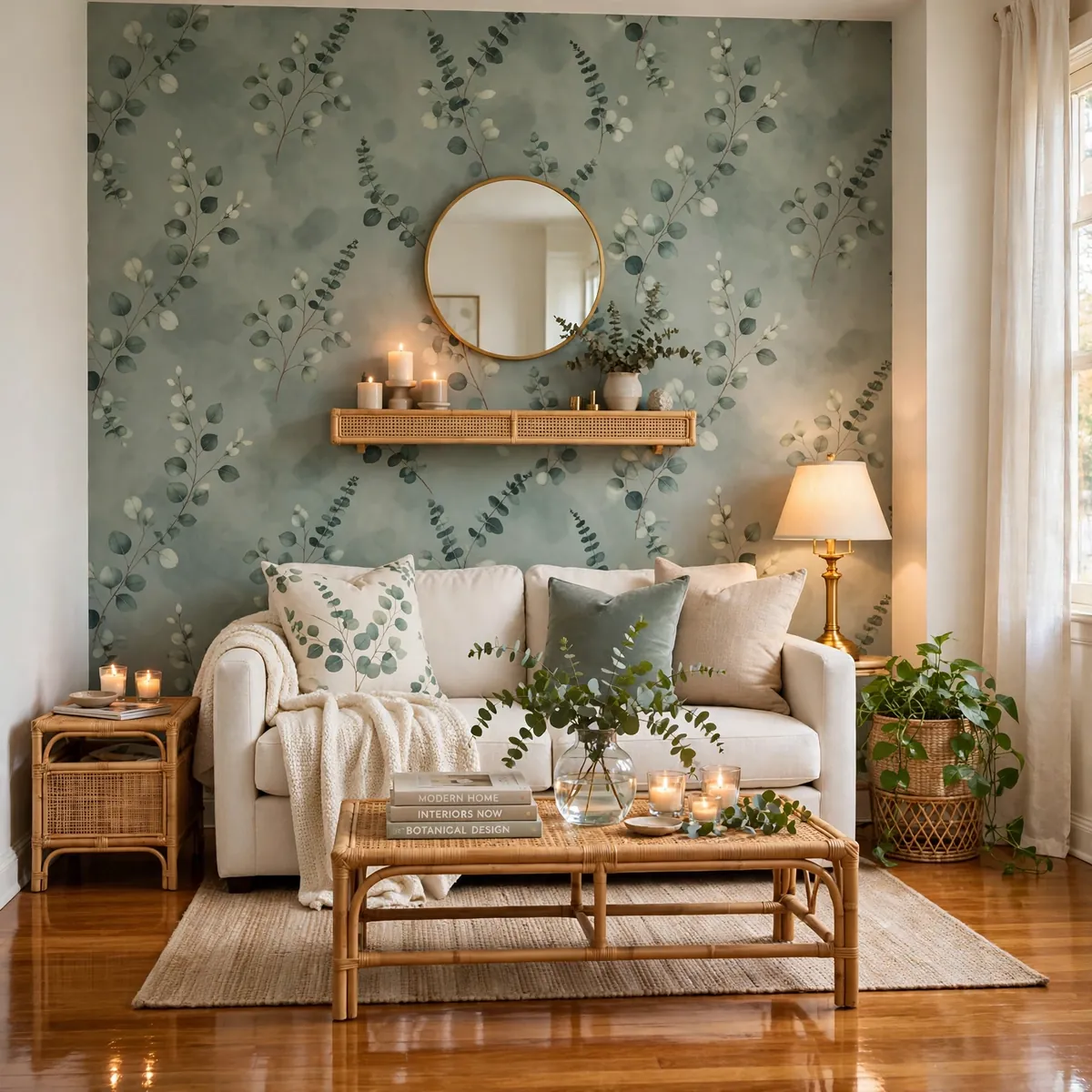
One wall in a muted eucalyptus print or a soft grasscloth texture gives a rental living room the depth that flat white walls can’t, and removable wallpaper peels off cleanly when you move. Limit it to a single wall — behind the sofa is the natural choice — so the room gains character without shrinking visually. The honest limitation is patience during installation: peel-and-stick rewards slow, careful smoothing and punishes rushing. Order one extra roll beyond your measurements; pattern matching eats more than you think.
- Limit wallpaper to one wall so the room keeps its sense of space.
- Order an extra roll — pattern matching uses more than expected.
- Smooth slowly from the center outward to avoid bubbles.
Carve a Reading Nook Out of the Awkward Corner
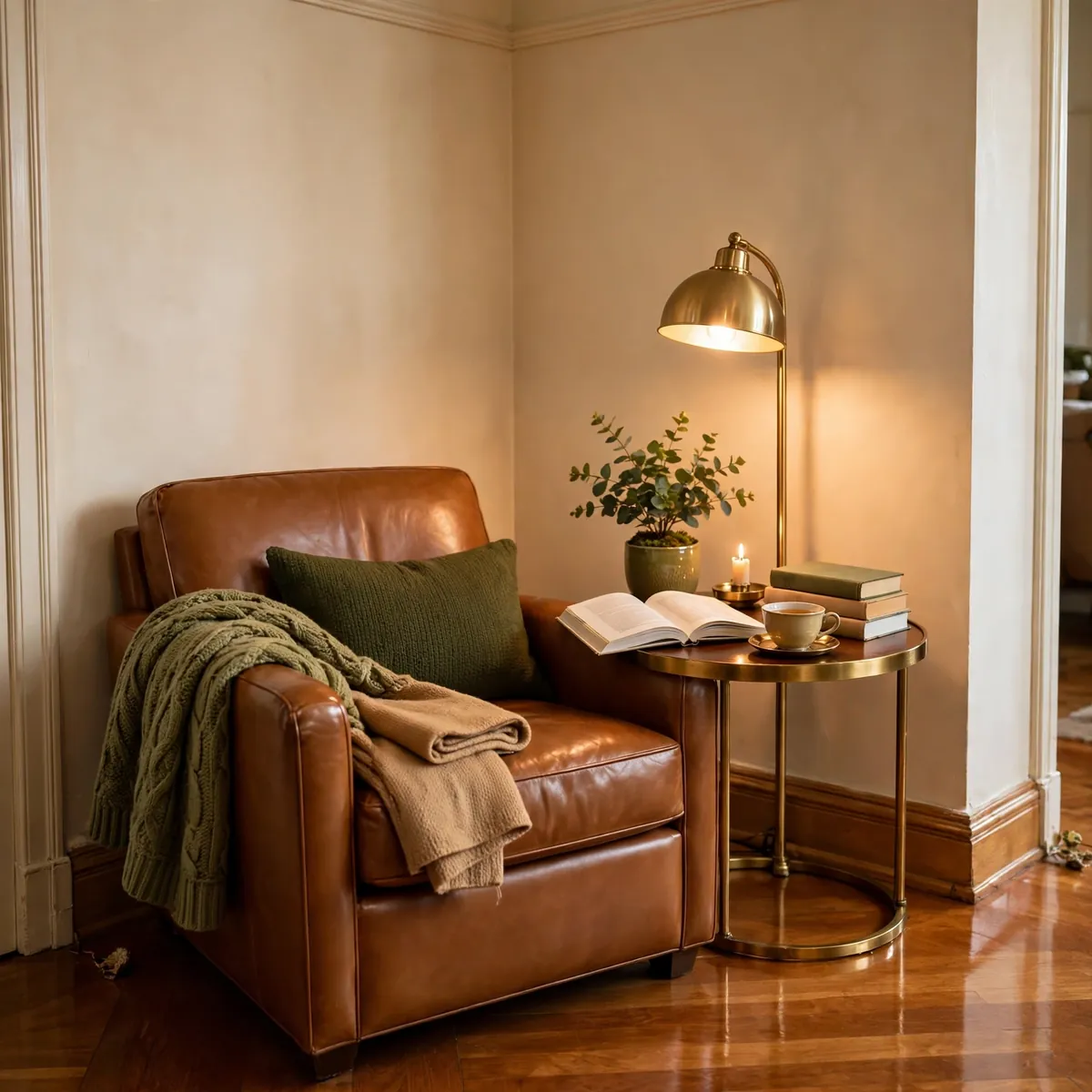
Every apartment living room has a corner that fits nothing — too small for the sofa arrangement, too visible to ignore. That’s your reading nook: one comfortable chair in burnt caramel or cream, a small side table, a floor lamp with warm light, and a throw. It turns dead space into the most-used seat in the house. Angle the chair slightly toward the room rather than flat against the wall; it looks intentional instead of exiled.
- Angle the chair toward the room, never flat into the corner.
- A floor lamp with warm light makes the nook inviting after dark.
- Keep the footprint tiny — chair, table, lamp, done.
Keep Decor Curated: Fewer, Better Pieces
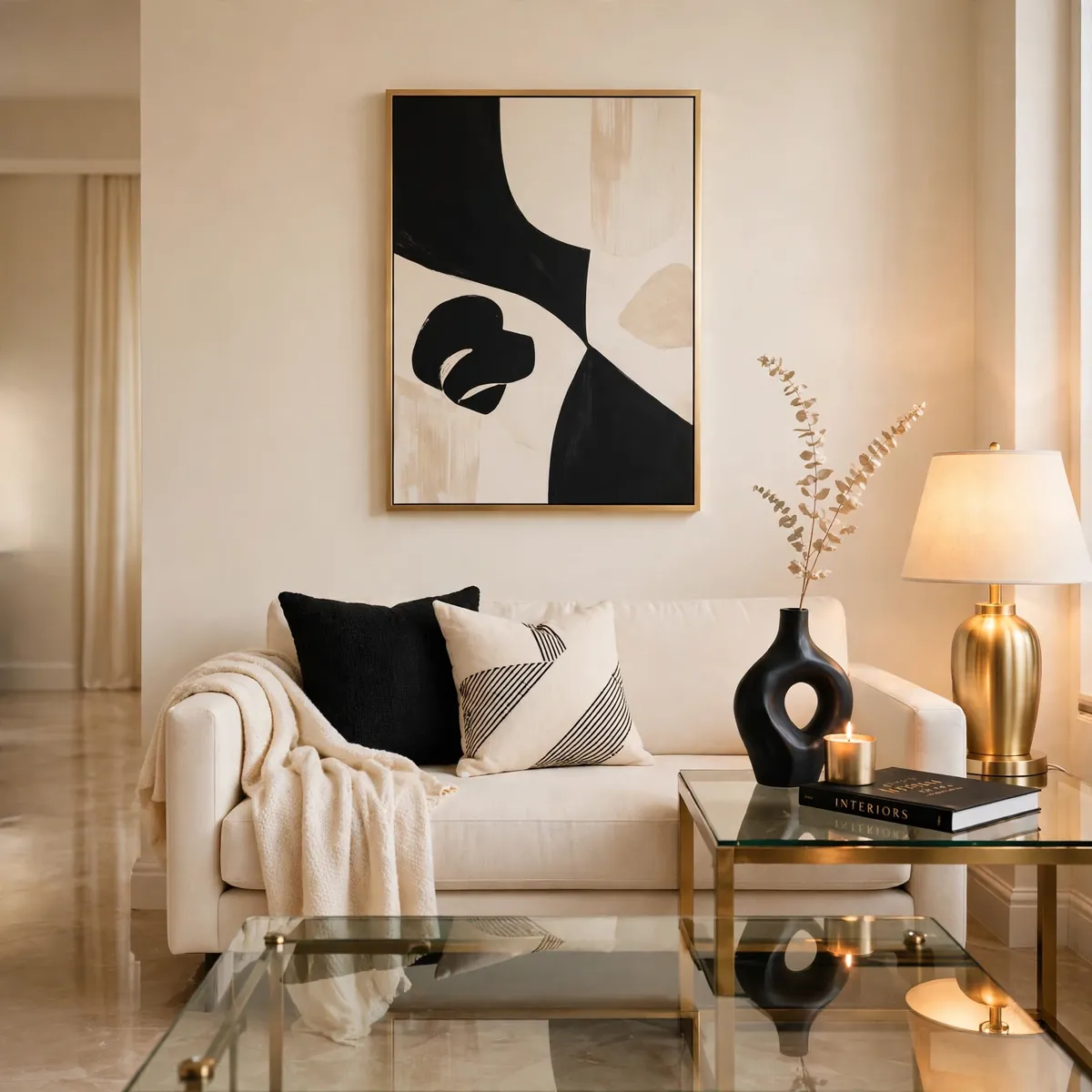
Small rooms punish clutter faster than large ones, so the rule is simple: fewer pieces, each one earning its place. One large art print beats five small frames; one sculptural vase beats a shelf of trinkets. This isn’t minimalism for its own sake — it’s giving each object enough breathing room to actually be seen. If you’re unsure about a piece, live without it for a week. If you don’t miss it, it didn’t belong.
- One large art print anchors better than five small frames.
- Give every object breathing room so it can be seen.
- Trial-remove anything doubtful for a week before deciding.
Style Shelves With Closed Storage Below, Open Above
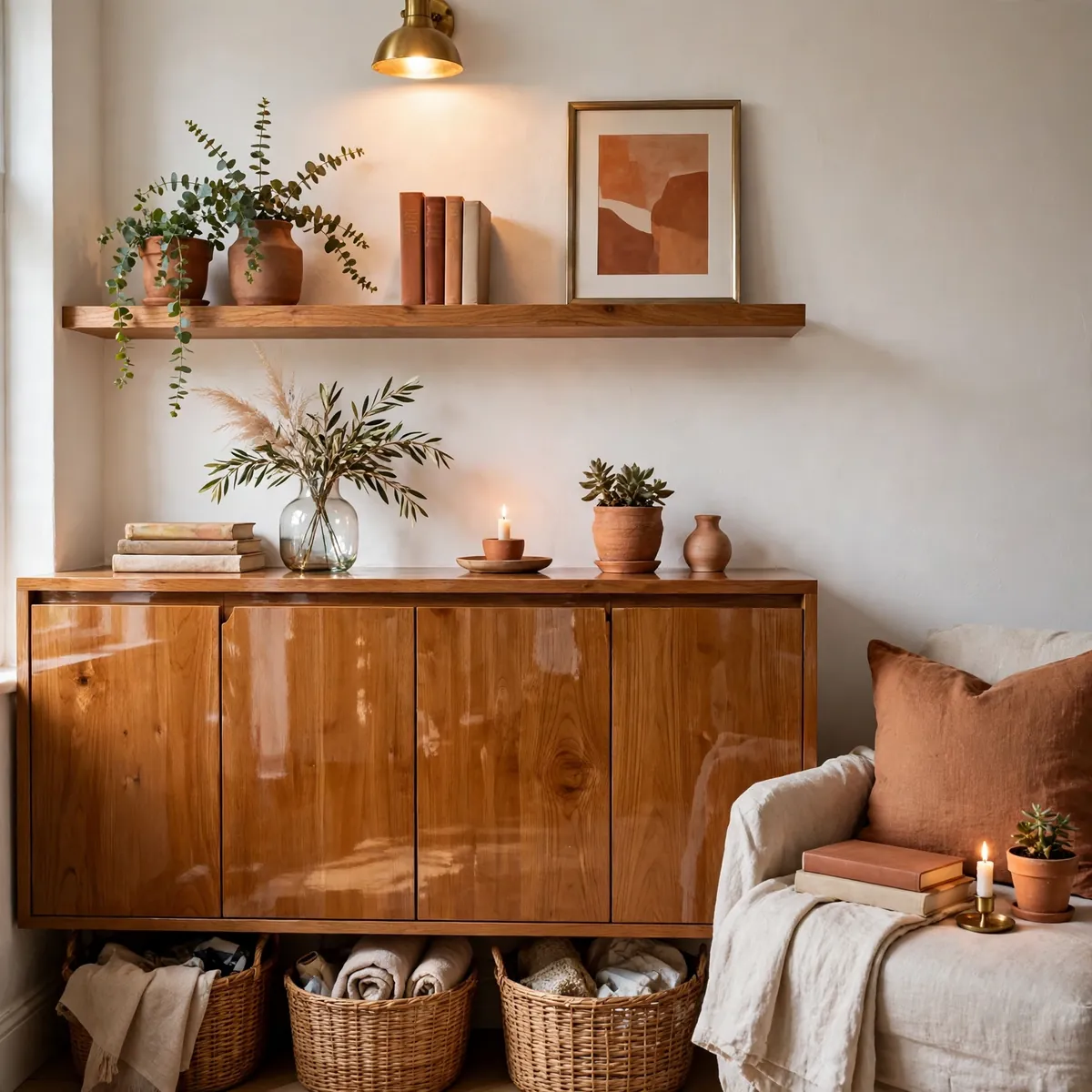
The prettiest small-space shelving follows a simple split: closed cabinets or baskets below for the messy reality of chargers, paperwork, and spare throws, and open shelves above for books, art, and a plant or two. You get the airy look of open shelving without the pressure to keep every inch camera-ready. Style the open part in odd-numbered groups — threes and fives — and leave some shelves half-empty. Negative space is what separates a styled shelf from a storage shelf, and in a small room that breathing room matters double.
- Hide daily mess behind closed doors or baskets on lower shelves.
- Style open shelves in odd-numbered groups of three or five.
- Leave some shelves half-empty for breathing room.
Hide Every Cord and Clutter Source
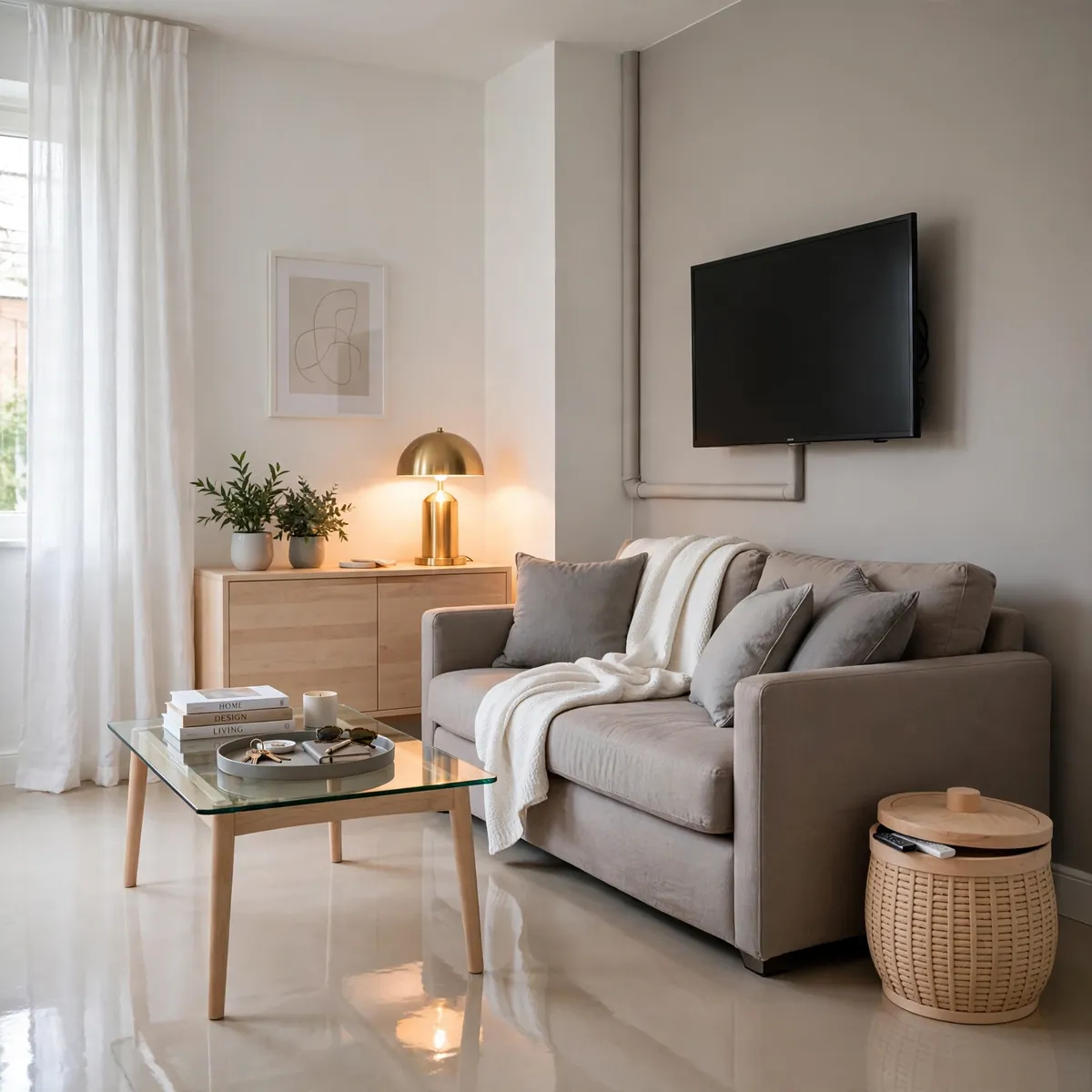
Nothing shrinks a small living room faster than visible chaos: TV cables, charging cords, the mail pile, the “I’ll deal with it later” corner. A cable sleeve behind the TV, a lidded basket by the sofa for remotes and chargers, and a single tray that corrals the daily clutter will make the same room feel noticeably calmer. This is the least glamorous idea on the list and one of the highest-impact — order comes before decor.
- Run TV and lamp cords through a sleeve matched to the wall.
- Give remotes and chargers one lidded basket, not five surfaces.
- Corral daily clutter on a single tray you can reset nightly.
Add One Bold Piece for Personality
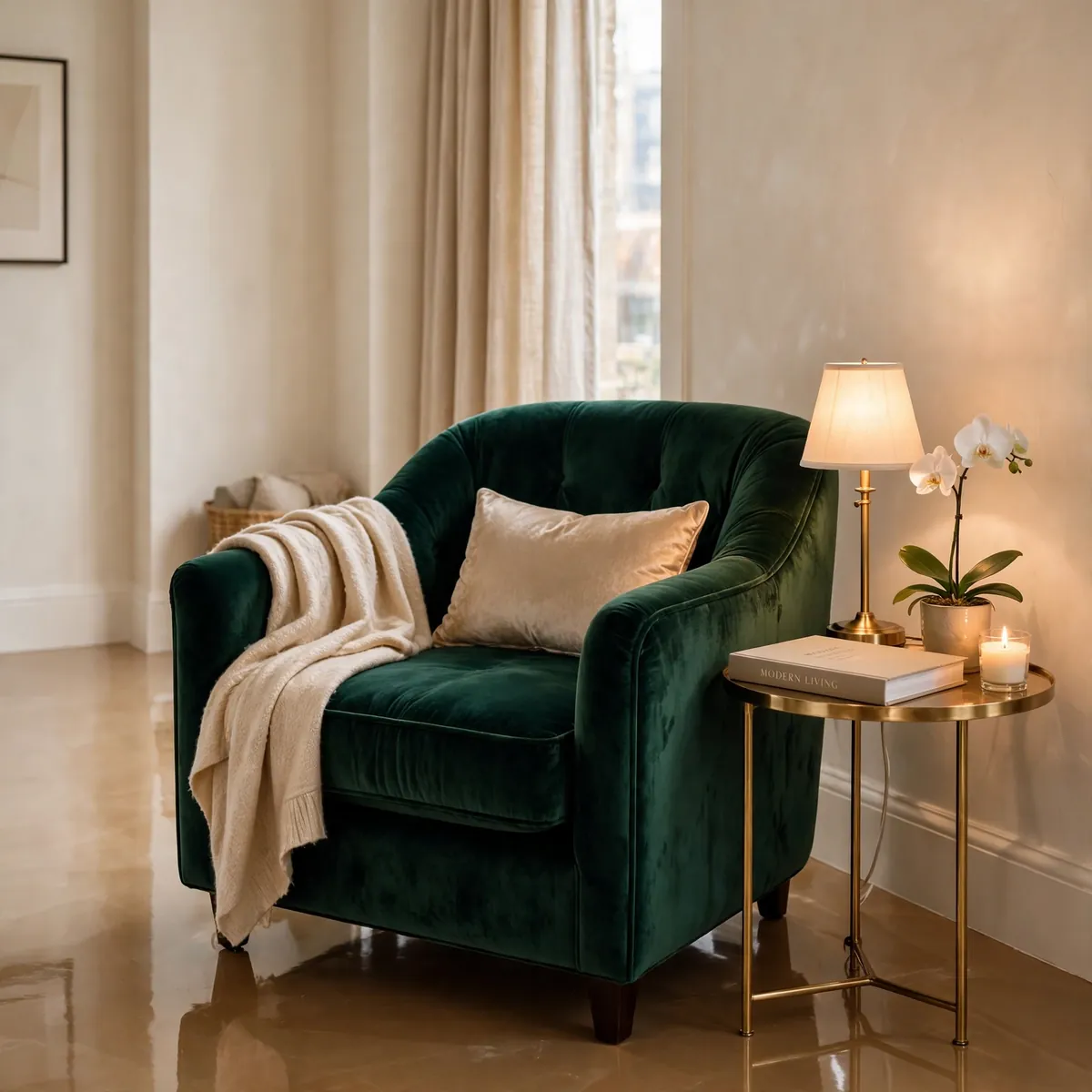
A room that’s all neutrals and good behavior can feel like a showroom rather than a home. One confident piece — an emerald velvet armchair, a gold-framed vintage print, a sculptural floor lamp — gives the room a pulse and something for the eye to land on. The key word is one: a single bold move reads as style, three reads as indecision. Pick the piece you’d keep if you moved tomorrow and build around it.
- Choose one statement piece, not three competing ones.
- Let the bold piece set one accent color for small accessories.
- Keep everything around it calm so it can shine.
Layer Warm Lighting at Three Heights
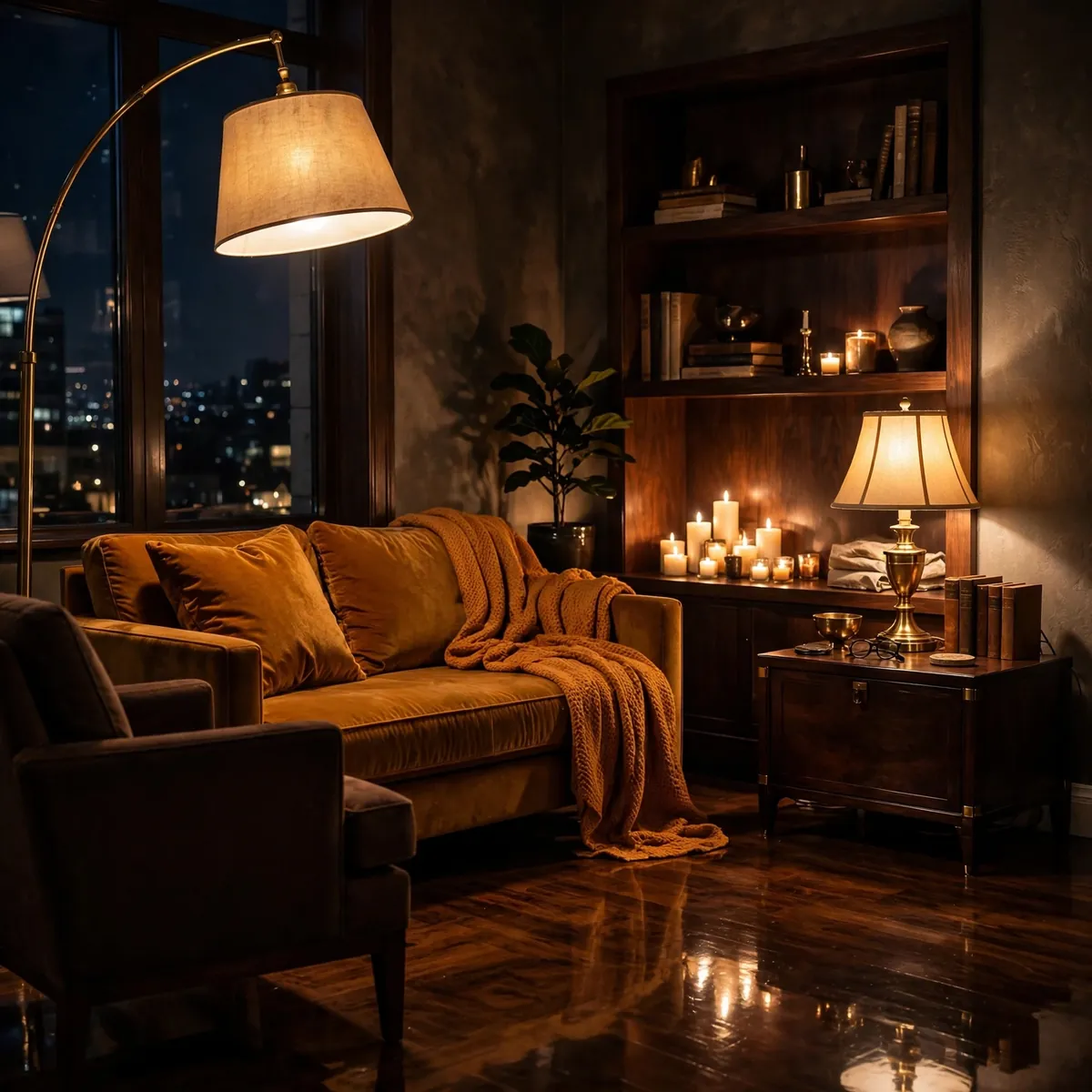
Small rooms lit by a single overhead fixture look flat no matter how nice the furniture is. Aim for light at three heights: something overhead or tall (floor lamp, pendant), something at seated eye level (table lamp on the console or side table), and something low (a candle cluster or small accent light on a shelf). Warm bulbs throughout — around 2700K — keep it cozy. Dimmers or smart bulbs let the same room handle work calls at noon and movie night at nine.
- Plan one light source high, one at eye level, one low.
- Warm bulbs everywhere — cool white flattens small rooms.
- Use dimmers or smart bulbs for day-to-night shifts.
Let One Big Plant Be the Focal Point
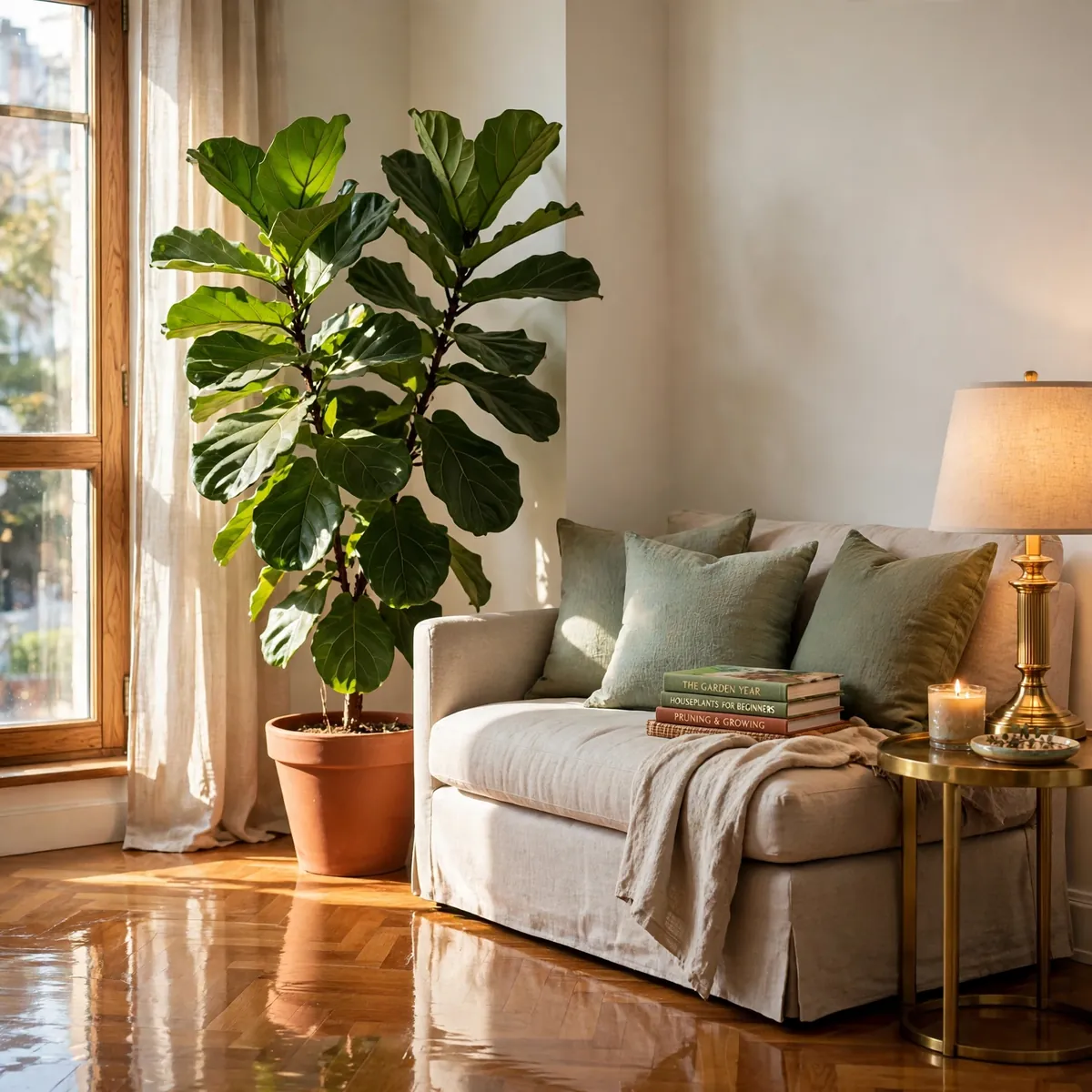
A single large plant — a fiddle-leaf fig, olive tree, or tall snake plant in a terracotta pot — does the work of three small decor objects with a fraction of the fuss. It adds height, life, and a shot of green that makes neutrals look richer, and it fills an empty corner better than any furniture can. Be honest about your light before you buy: a low-light apartment wants a ZZ plant or pothos, not a sun-hungry fig. Faux has gotten good enough that guests won’t check, but real plants earn their keep in how a room feels.
- Match the plant to your actual light, not your wishful light.
- One large plant beats five struggling small ones.
- A simple terracotta pot keeps the look natural and affordable.
Make a Studio Read as Two Rooms
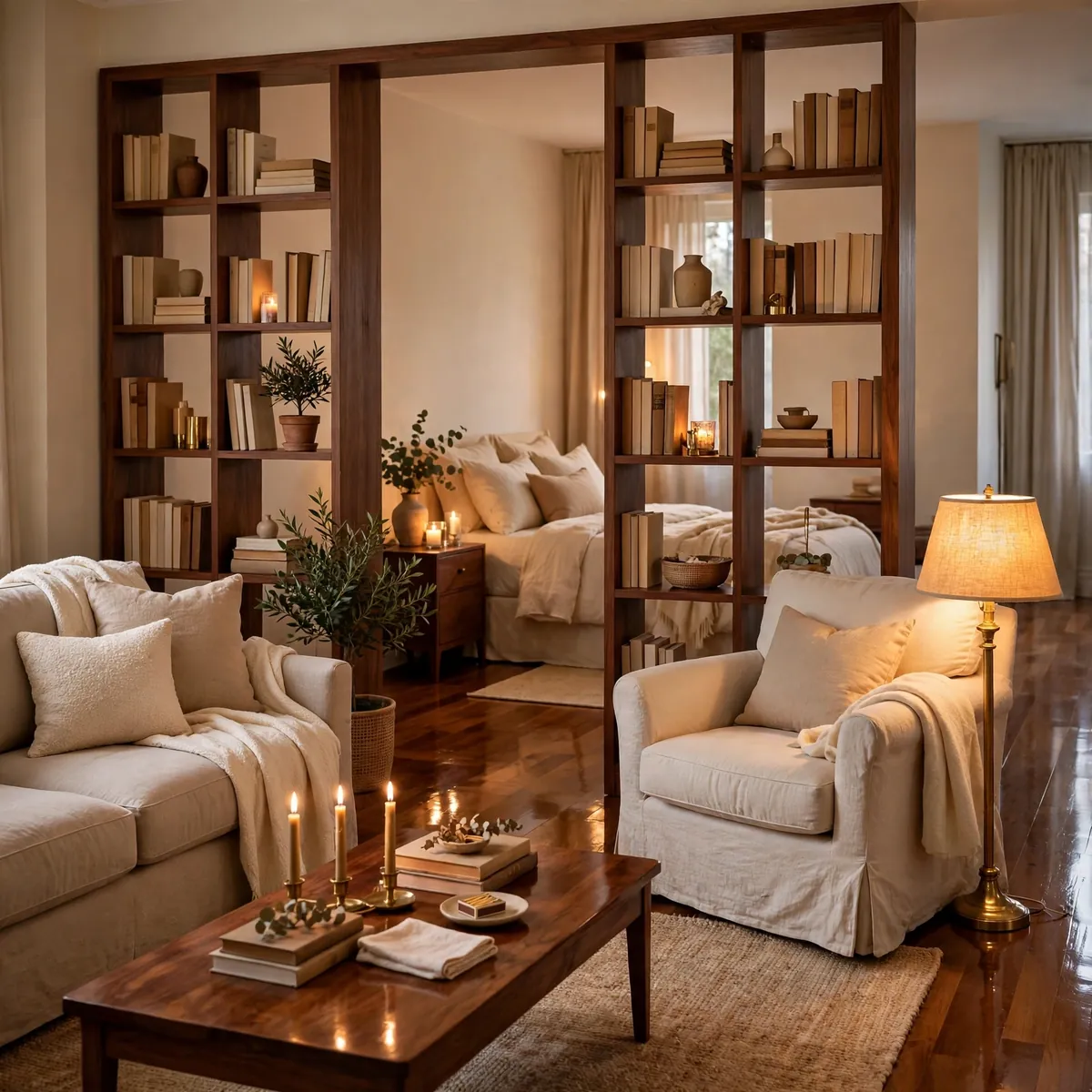
Studio apartments need the living area to feel separate from the sleeping area, and you don’t need walls to do it. An open bookshelf placed perpendicular to the wall works as a see-through divider that holds books on both sides. A rug under the seating zone plus a different rug or bare floor by the bed draws the boundary on the ground. Even a curtain panel on a ceiling track can close off the bed at night. The goal isn’t a wall — it’s a visual cue that tells your brain the workday is over and this part is for relaxing.
- Use an open bookshelf as a see-through room divider.
- Change the flooring treatment between zones — rug versus bare.
- A ceiling-track curtain can close off the bed at night.
Add Personal Touches That Say Home, Not Staging
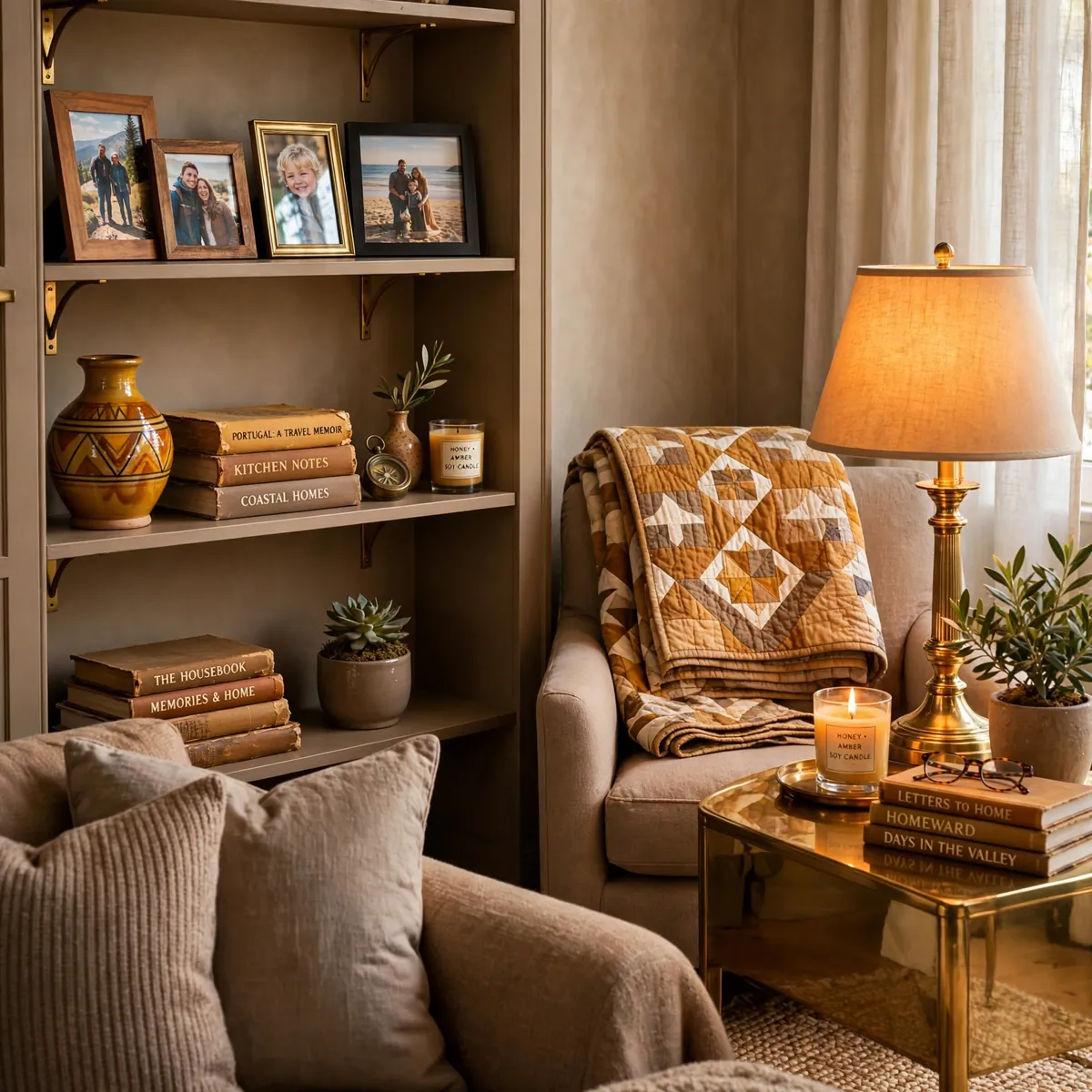
Rentals feel temporary when every surface looks like it came from the same store on the same day. Mix in the things that are actually yours — framed photos, a travel souvenir, books you’ve read, a quilt from family — and the room stops feeling like a listing and starts feeling like yours. Curate, don’t scatter: group personal pieces into one or two styled moments rather than spreading them across every surface. A rental becomes a home the moment it holds evidence of the person living in it.
- Group personal pieces into one or two styled moments.
- Mix in things with history — photos, travel finds, family pieces.
- Curate the personal, don’t scatter it across every surface.
Keep Walkways Clear and Intentional
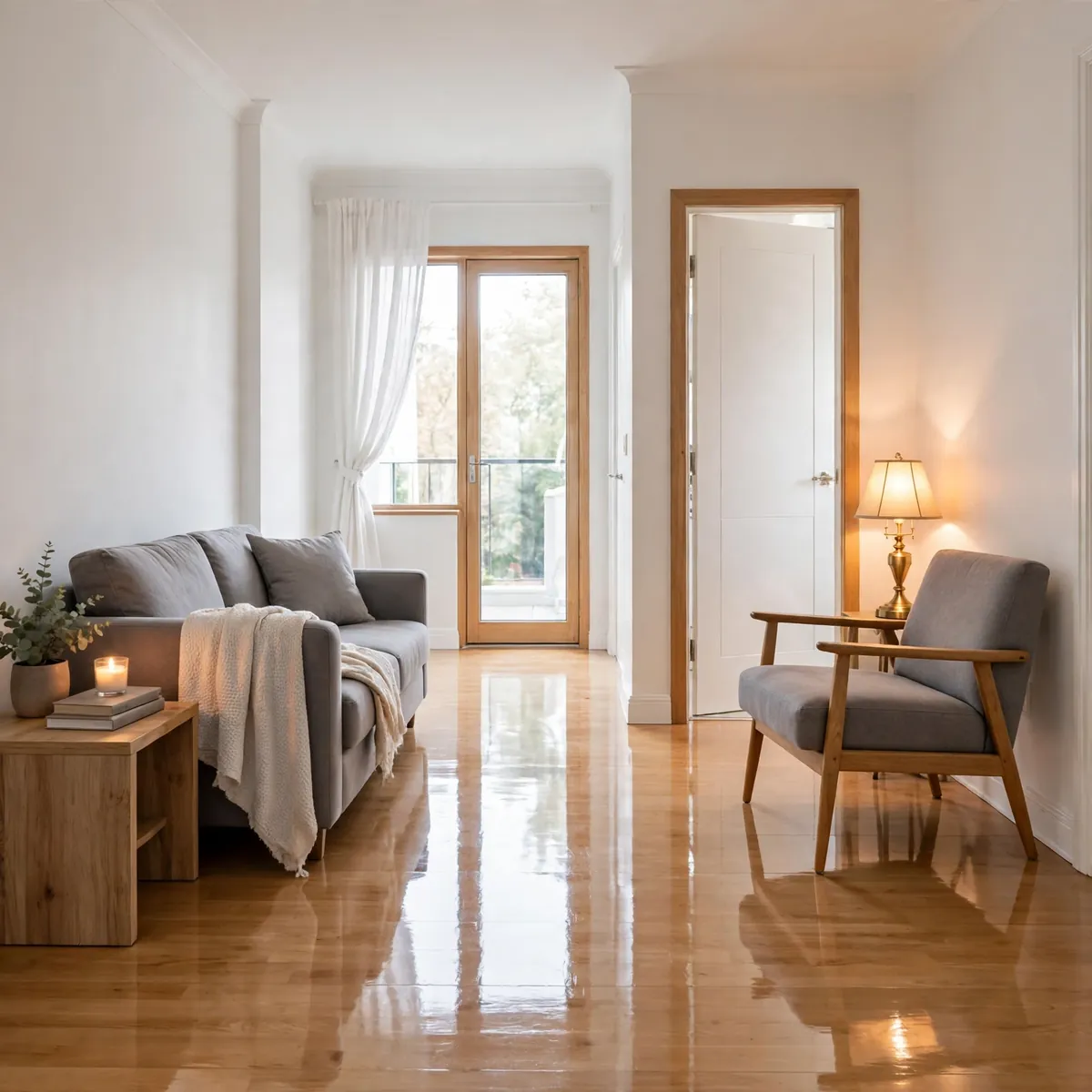
The final test of any small living room is movement: can you cross the room without sidestepping furniture, open every door fully, and reach the window without climbing over something? If not, something has to go — usually it’s the extra chair nobody sits in or the side table that’s really a junk drawer. A room you can move through easily feels bigger than a room with more stuff in it. Edit for flow first, and the style follows.
- Walk every path in the room — if you sidestep, something must move.
- Remove the chair nobody sits in before removing anything else.
- Edit for flow first; style follows movement.
FAQs
Can I float furniture in a really narrow apartment living room?
Yes, as long as you protect the walkway. Even four to six inches of space behind the sofa creates depth, and you don’t need a full walk-behind gap — the visual breathing room is the point. If floating costs you your main traffic path, keep the sofa on the wall and float a chair instead.
Are sectionals too big for small apartments?
Not always. A compact L-shaped sectional can actually define a seating zone more efficiently than a sofa plus two chairs, since it removes the gaps between pieces. The rule is circulation: if the sectional blocks a doorway, window, or walkway, it’s too big. Measure the chaise side especially — that’s the part that usually causes trouble.
How do I decorate a rental living room without losing my deposit?
Stick to reversible moves: tension rods for curtains, removable wallpaper for one accent wall, leaning mirrors and art, freestanding shelves, and large rugs. Where you must hang something, use small picture nails rather than anchors — they fill with a dab of spackle in seconds. Photograph every wall when you move in so you know exactly what “original condition” looked like.
Conclusion
A great apartment living room isn’t about square footage — it’s about decisions. Choose the layout before the furniture, let every piece earn its place, and use the renter-friendly tricks that add character without costing your deposit. Start with one change this weekend, whether that’s floating the sofa, hanging the mirror, or finally hiding the cords. Small rooms reward intention faster than big ones do, and yours is closer to finished than it feels.