25 Minimalist Living Room Ideas That Feel Warm, Calm and Beautifully Uncluttered
A restraint-first guide to calm, warm minimalism — fewer, better pieces, generous negative space and soft daylight, with a concrete example for every idea.
Minimalist living room ideas work when restraint is treated as design, not emptiness. The calmest rooms use fewer, better pieces, warm neutrals, clear walkways and soft daylight, so nothing competes for attention. Instead of stripping a room bare, you choose one strong sofa, one piece of art and one texture to repeat, then leave the rest of the space quiet. The result feels warm, uncluttered and easy to live in, because every object has a reason to stay.
This guide follows that rule idea by idea, so you can edit a busy room down without losing its warmth or personality. If you are still exploring styles before you edit, the living room decor ideas collection offers a broader starting point, and this post then shows you exactly what to keep, what to cut and what to replace.
Key Takeaways
What makes a minimalist living room feel warm instead of cold?
Warmth comes from warm neutrals, natural textures such as oak and linen, and layered lamp light, not from adding more objects.
How many statement pieces should a minimalist room have?
One strong piece per zone — one sofa, one artwork, one sculptural object per surface — is usually enough for the room to feel finished.
Is negative space really part of the design?
Yes, an intentionally empty wall or clear stretch of floor gives the eye a place to rest and makes the pieces you kept look more deliberate.
What is the easiest first edit in a cluttered living room?
Conceal the small visual noise first: cables, remotes, chargers and overflow storage, behind closed doors or inside a single basket.
How do you refresh a minimalist room without buying more decor?
Swap one thing with the season — a throw, a cushion cover or a vase of branches — and leave everything else exactly as it is.
| Area | Keep | Remove | Replace with |
|---|---|---|---|
| Walls | One large artwork and one empty wall | Small scattered frames | A single oversized canvas |
| Surfaces | One sculptural object per surface | Trays of small ornaments | A stone bowl or a plain vase |
| Storage | Closed, flush storage | Open piles and visible cables | Handle-free cabinets |
| Seating | One low, well-made sofa | Extra chairs that block walkways | A single wood accent chair |
| Light | Layered lamps at low height | A harsh central overhead light | Warm bulbs in two or three lamps |
| Textiles | One rug and one repeated texture | Mixed patterns and glossy throws | Flatweave wool and washed linen |
Start With a Warm-White Palette That Lets the Room Breathe
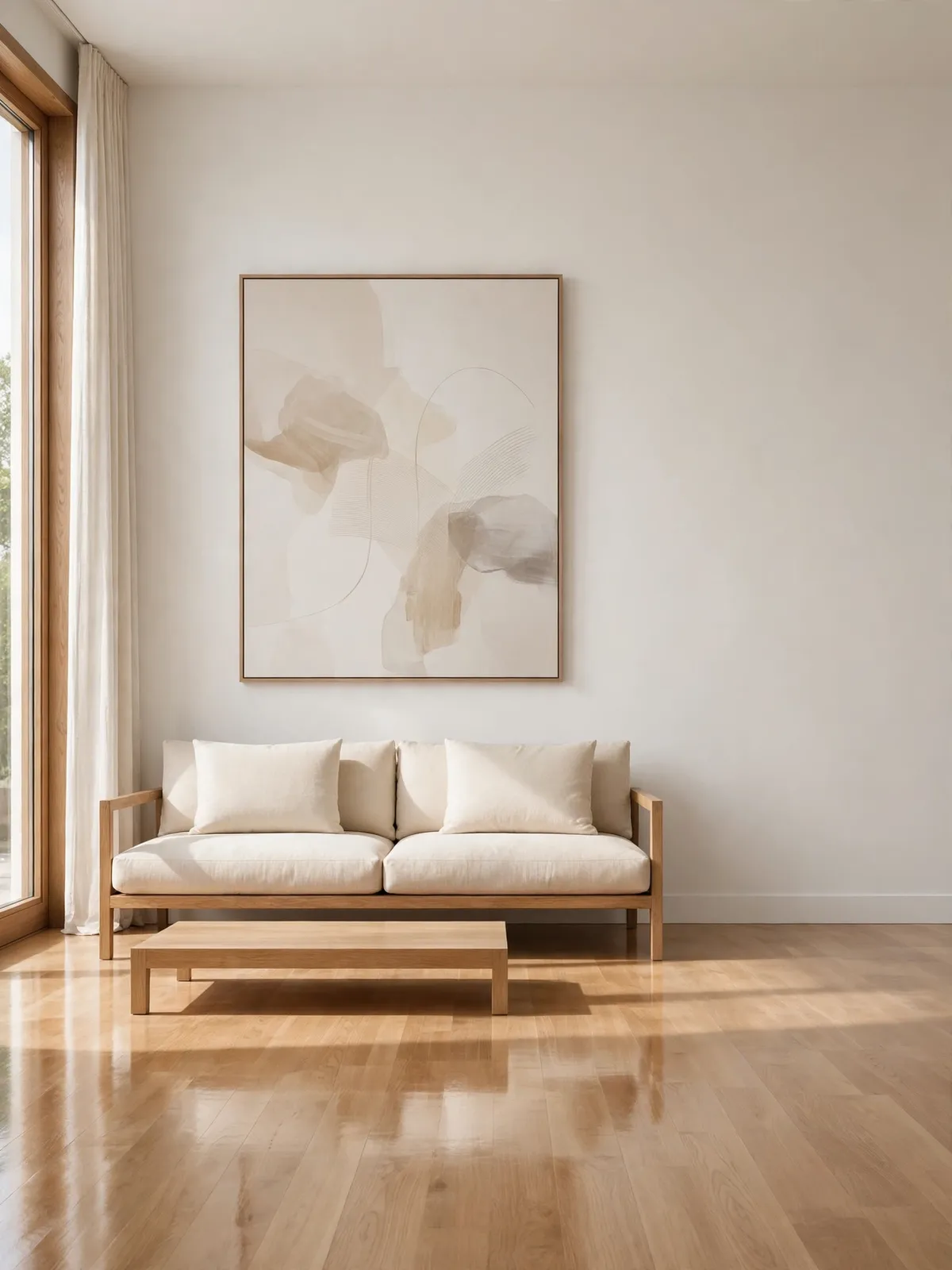
Paint the walls a warm white with a creamy undertone, such as a soft ivory, and repeat that tone on the sofa and rug so the room reads as one quiet field. A room in Leeds I picture here uses warm-white walls, an oat linen sofa and a pale oak floor, with no second wall colour competing for attention.
Quick tips:
- Choose warm white over bright white to avoid a clinical feel.
- Repeat the same neutral on at least two large surfaces.
- Test the paint in daylight before committing to the whole room.
Choose a Low Platform Sofa That Sits Light on Its Legs
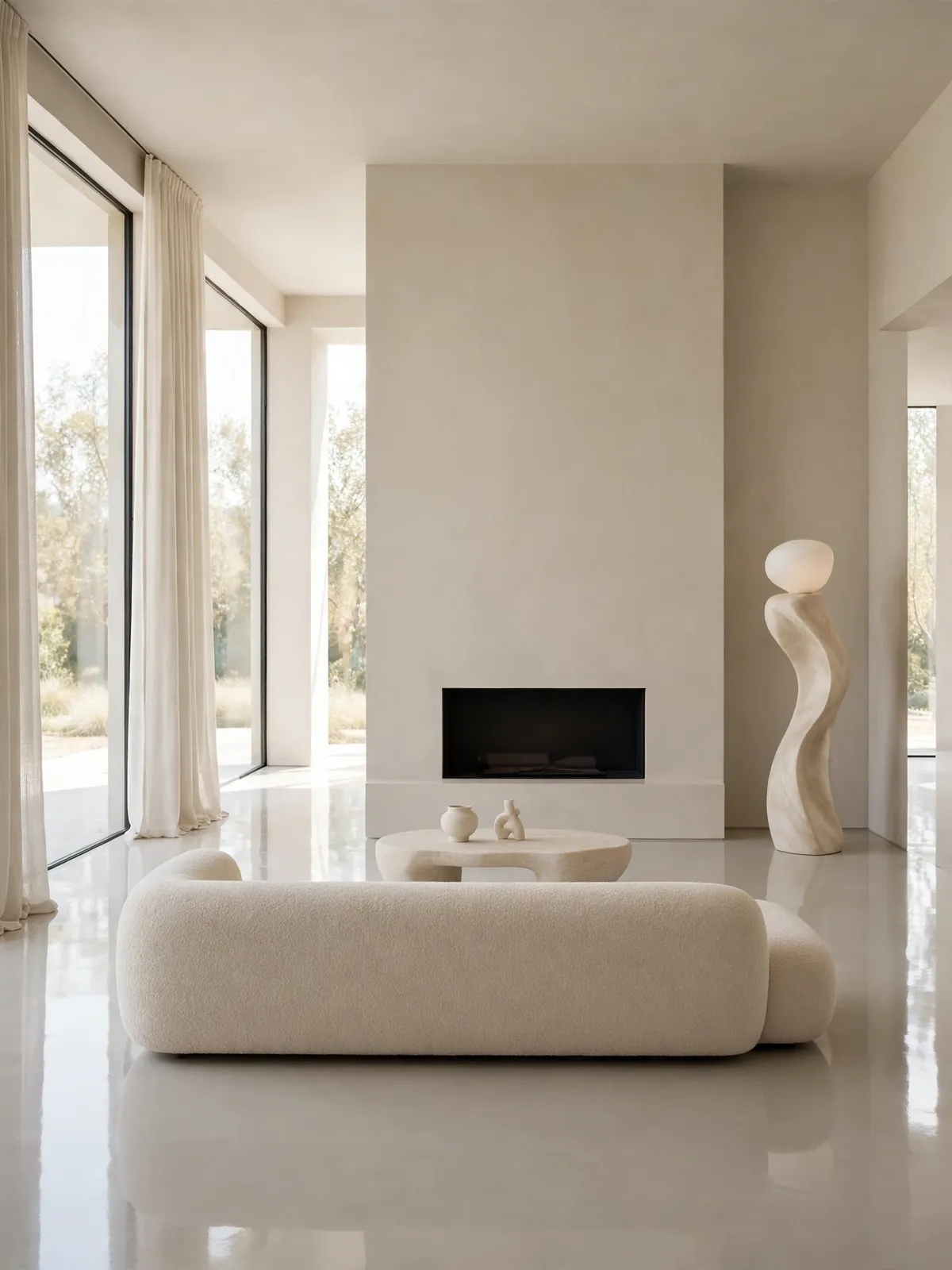
A low platform sofa with exposed legs keeps the floor visible and makes the whole room feel taller and lighter. For example, a three-seater in camel leather on slim walnut legs, paired with a single rust cushion, gives structure without visual weight.
Quick tips:
- Keep the seat height low and the backrest below window-sill level where possible.
- Leave at least a hand-width of floor visible beneath the sofa.
- Avoid a skirted base, which hides the legs and adds bulk.
Allow One Sculptural Object per Surface — and Nothing More
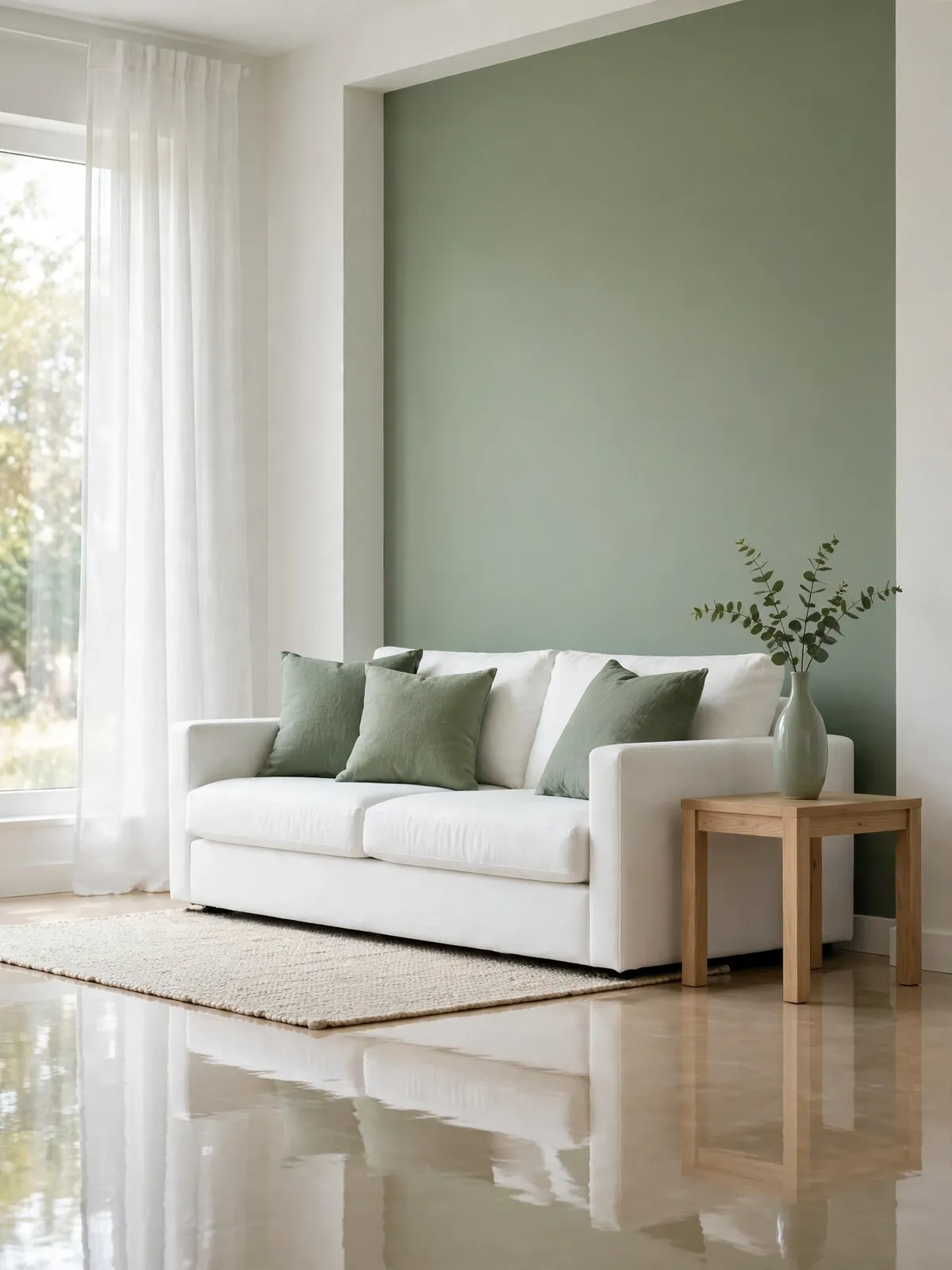
Limit each surface to one object with a strong shape, such as a single hand-thrown ceramic vessel in matte cream on a walnut sideboard. When that vessel is the only thing on the surface, its curve becomes the decoration.
Quick tips:
- Remove everything else first, then add back only one piece.
- Choose shape over pattern for the single object.
- If a surface collects clutter, give it a closed home elsewhere.
Hide Everything Behind a Flush, Handle-Free Storage Wall
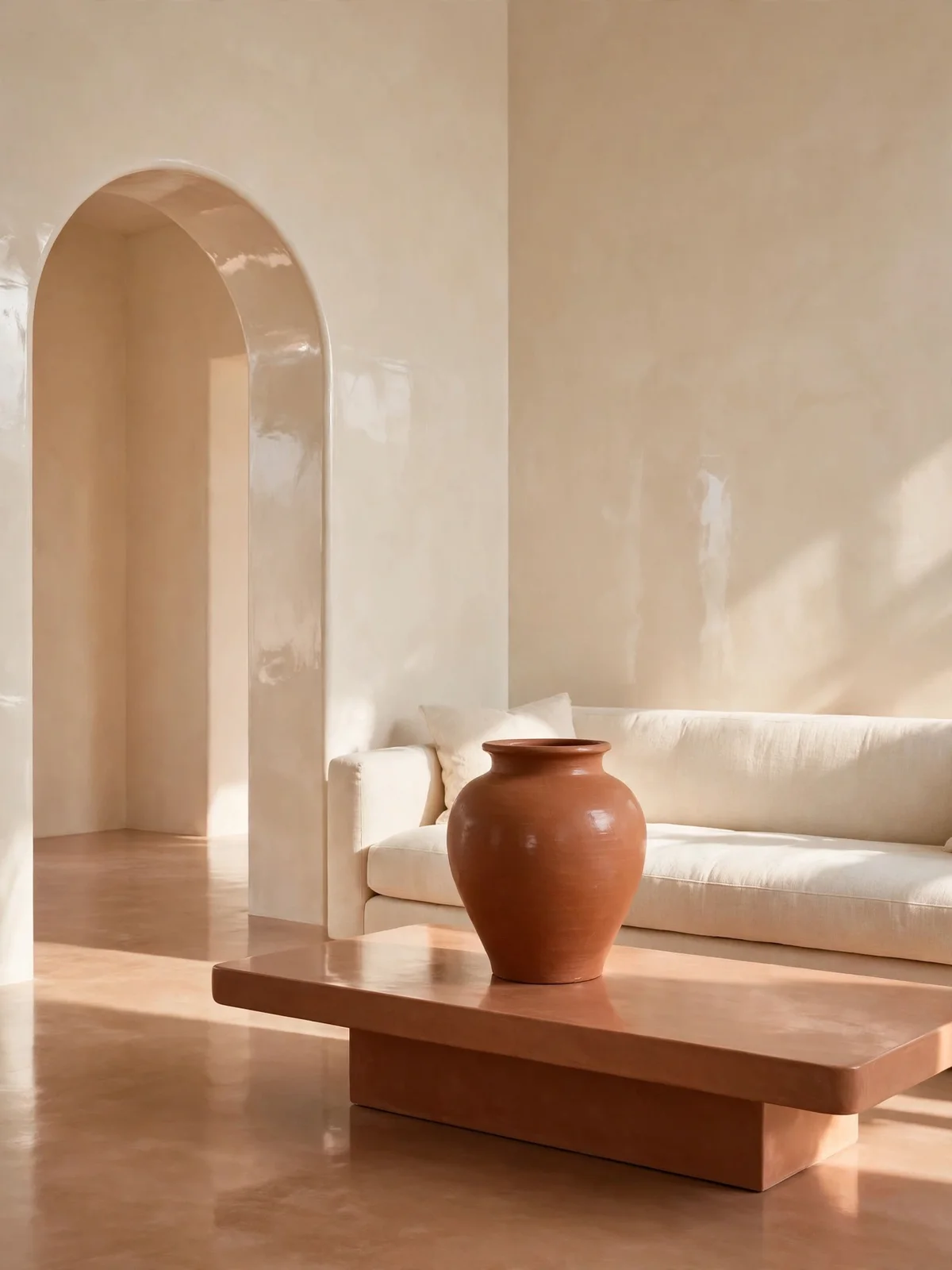
A floor-to-ceiling wall of flush cabinets in white oak veneer can hold books, games, chargers and spare throws behind doors with push-to-open fittings. The room then looks calm because the storage itself disappears into the wall.
Quick tips:
- Use push-to-open or recessed pulls to keep the front flat.
- Match the cabinet tone to the wall or to pale oak.
- Reserve one low drawer for remotes and chargers.
Leave Windows Bare Except for Sheer Linen That Softens Daylight
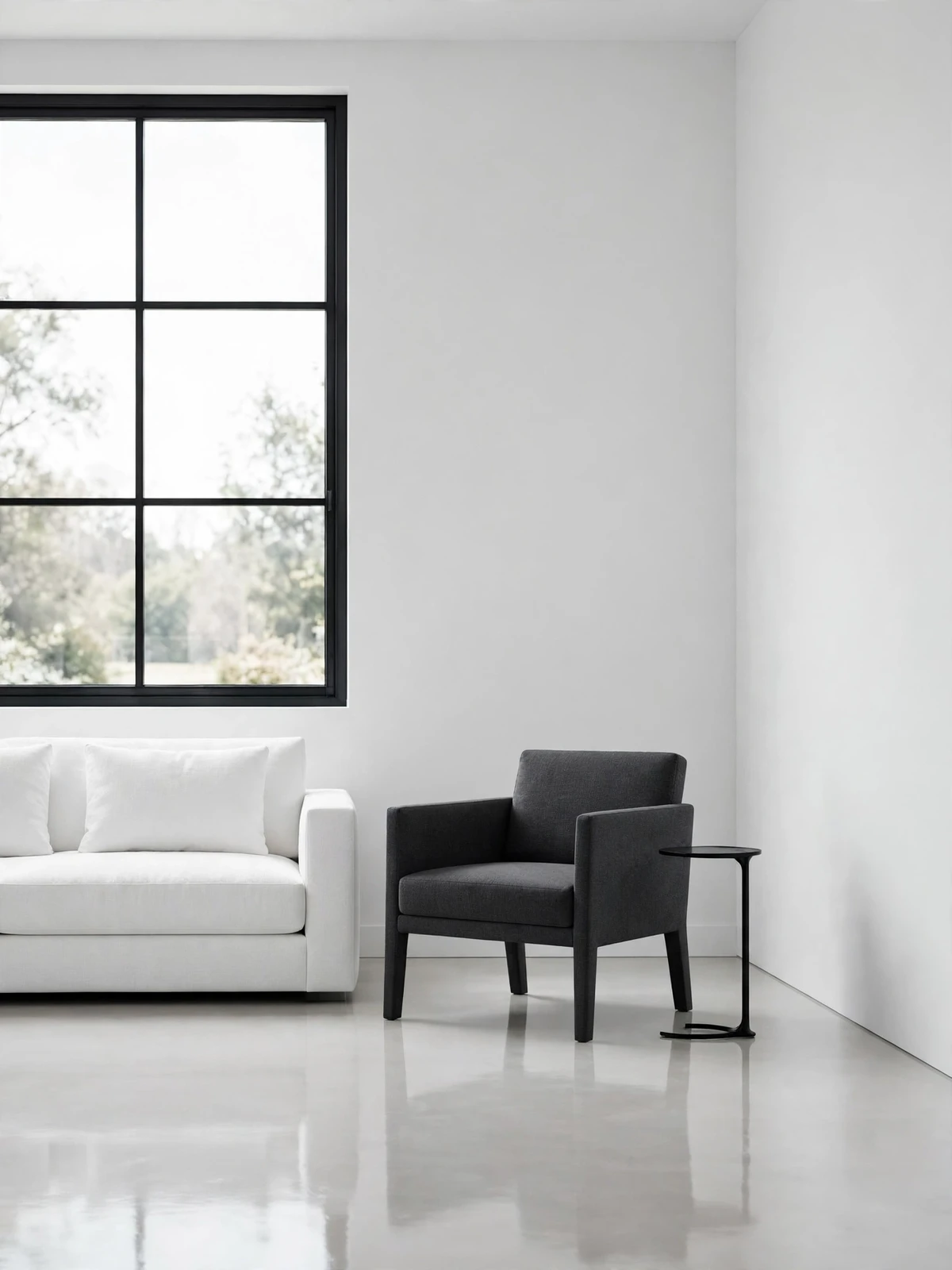
Sheer linen panels in soft white filter daylight without blocking it, so the room stays bright while glare is softened. A pair of floor-length sheers on a slim black rod, hung close to the ceiling, makes the window feel taller and the light feel gentle.
Quick tips:
- Skip heavy curtains and blinds in the main living window.
- Hang sheers high and wide so the glass stays fully exposed.
- Wash linen sheers regularly to keep the light clear.
Hang One Oversized Abstract Canvas on the Main Wall
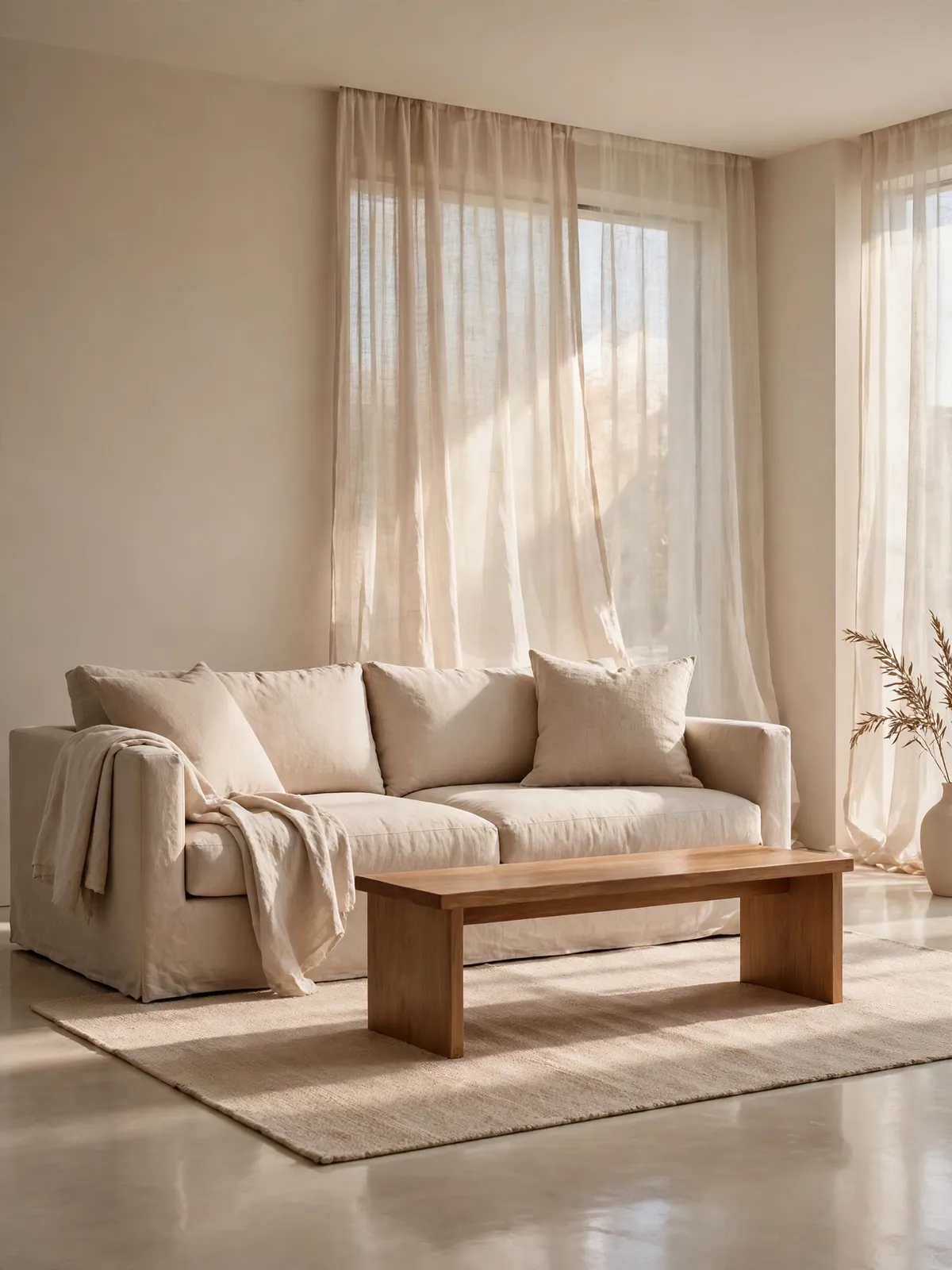
One canvas at least 120 centimetres wide, in terracotta, cream and sand brushstrokes, can carry a whole wall on its own. Hung above a low cream sofa with its centre at eye level, it gives the room a focal point without a gallery wall of small frames.
Quick tips:
- Go larger than you think — small art looks lost on a main wall.
- Keep the frame thin, natural wood or none at all.
- Leave clear wall space around the canvas on every side.
Keep One Wall Deliberately Empty for Breathing Room
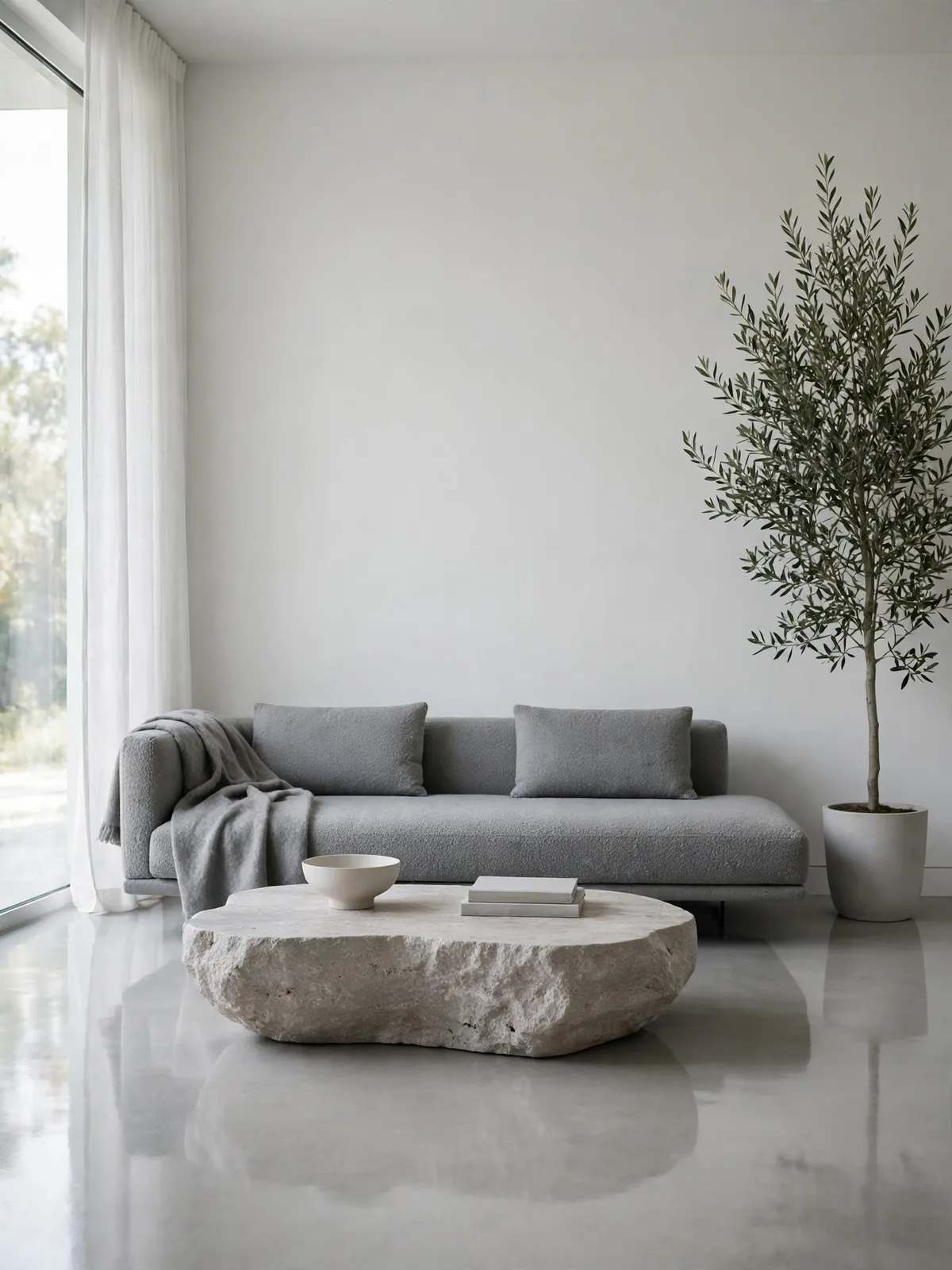
An empty wall is not a wall you forgot; it is a wall you chose to leave alone, and that choice changes how the whole room feels. When one wall holds nothing at all, the eye finally has somewhere to rest, the sofa and artwork on the opposite wall look more intentional, and the room feels larger even though nothing was added. A practical example is a living room where the wall behind the reading chair stays bare in warm greige plaster, while the sofa wall carries the single large canvas. That bare wall also makes cleaning easier, keeps the room quieter to look at in the evening, and gives you a clear surface to lean a floor lamp against without visual clutter. Treat the empty wall as a finished decision, not a gap waiting to be filled.
Quick tips:
- Pick the wall you see least from the doorway for the empty wall.
- Do not hang a clock or a small print there to fill it.
- Let a floor lamp or a plant stand beside it, not on it.
Layer One Colour Family Tone on Tone, Without Contrast
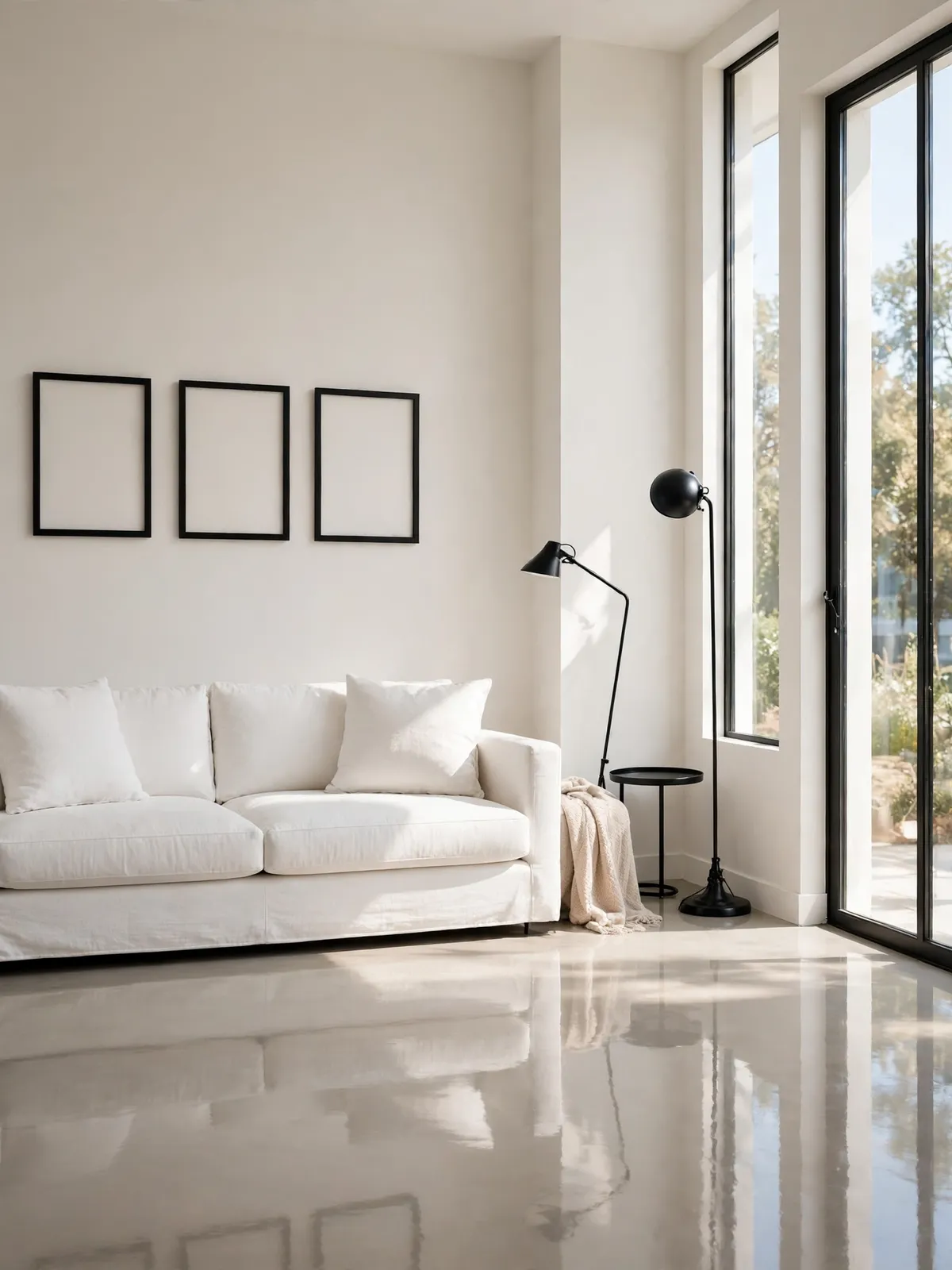
Choose one colour family, such as sage, and layer it from pale walls to a deeper moss sofa and a soft eucalyptus throw. The room feels rich because the tones vary, even though no contrasting colour interrupts the palette.
Quick tips:
- Use three tones of one colour: pale, mid and deep.
- Keep wood and metal finishes quiet so the colour does the work.
- Add contrast only through texture, not through a new colour.
Style Floating Shelves With Exactly Three Chosen Pieces
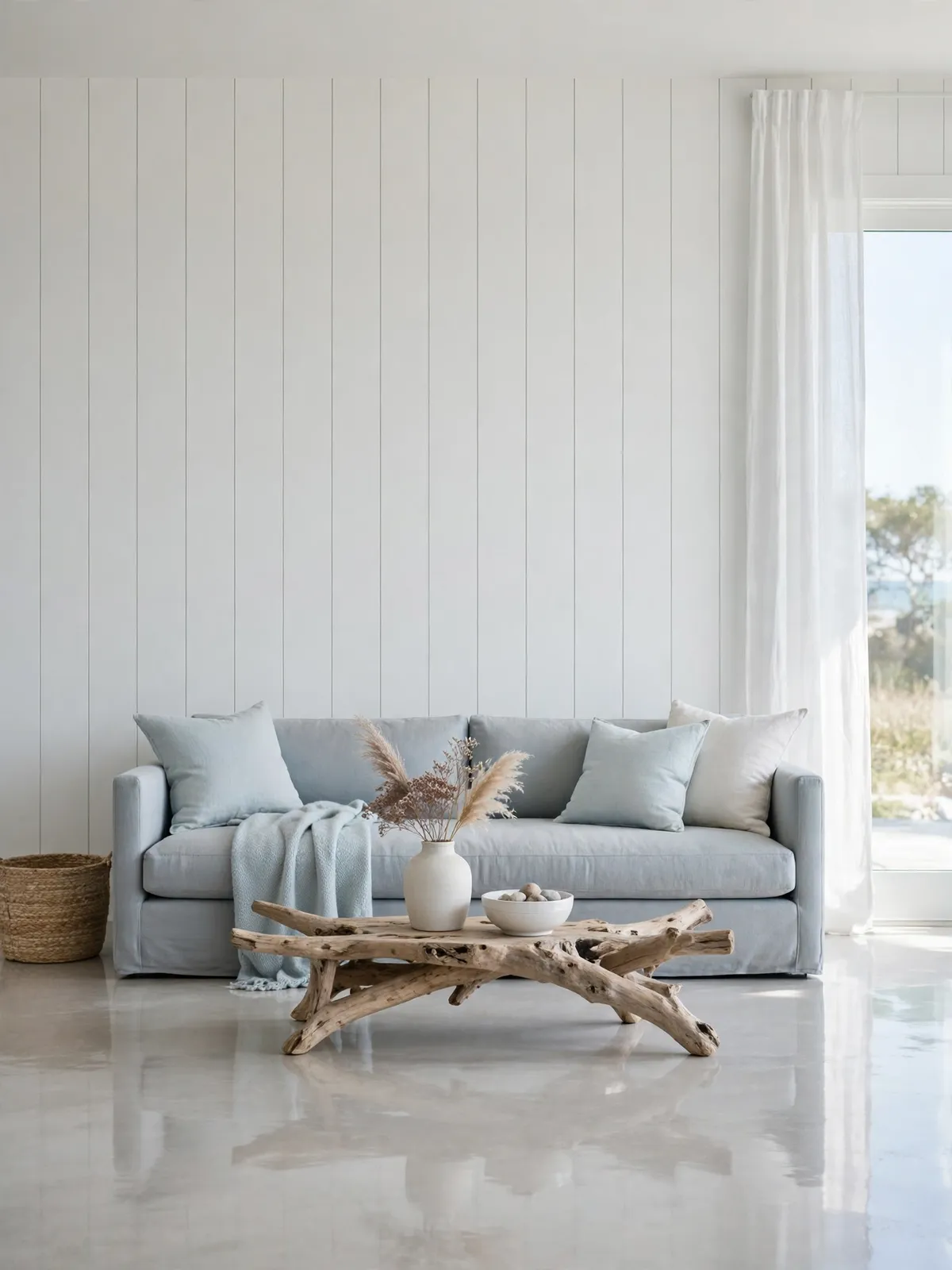
A single walnut shelf holds exactly three pieces in this idea: a small brass bowl, one linen-bound book and a short vase with an olive branch. Three is enough to look styled and few enough that each piece can be seen clearly.
Quick tips:
- Count before you style — three pieces, no extras creeping in.
- Vary height: one tall, one mid and one low piece.
- Leave empty shelf space on both sides of the group.
Float the Room on a Clear Glass Coffee Table
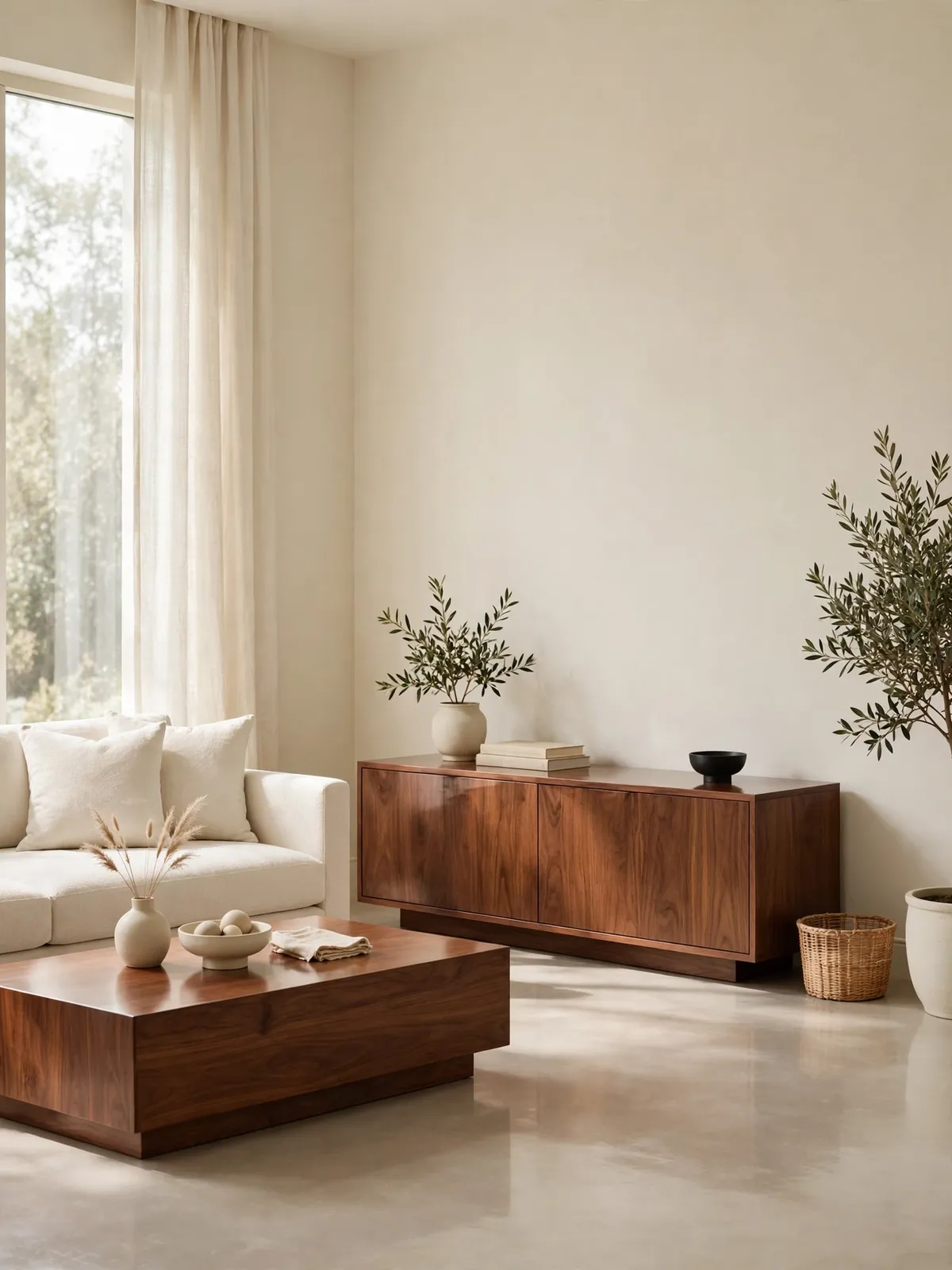
A rectangular glass coffee table with a slim brass frame lets the rug show through and keeps sightlines open across the room. Paired with a white sofa and a blush-beige rug, it holds a book and a cup without adding a heavy block in the middle of the floor.
Quick tips:
- Choose tempered glass with rounded corners for safety and softness.
- Keep only one or two items on the glass at a time.
- Wipe the glass often, since marks show more clearly.
Anchor a Corner With a Single Olive Tree in a Plain Planter
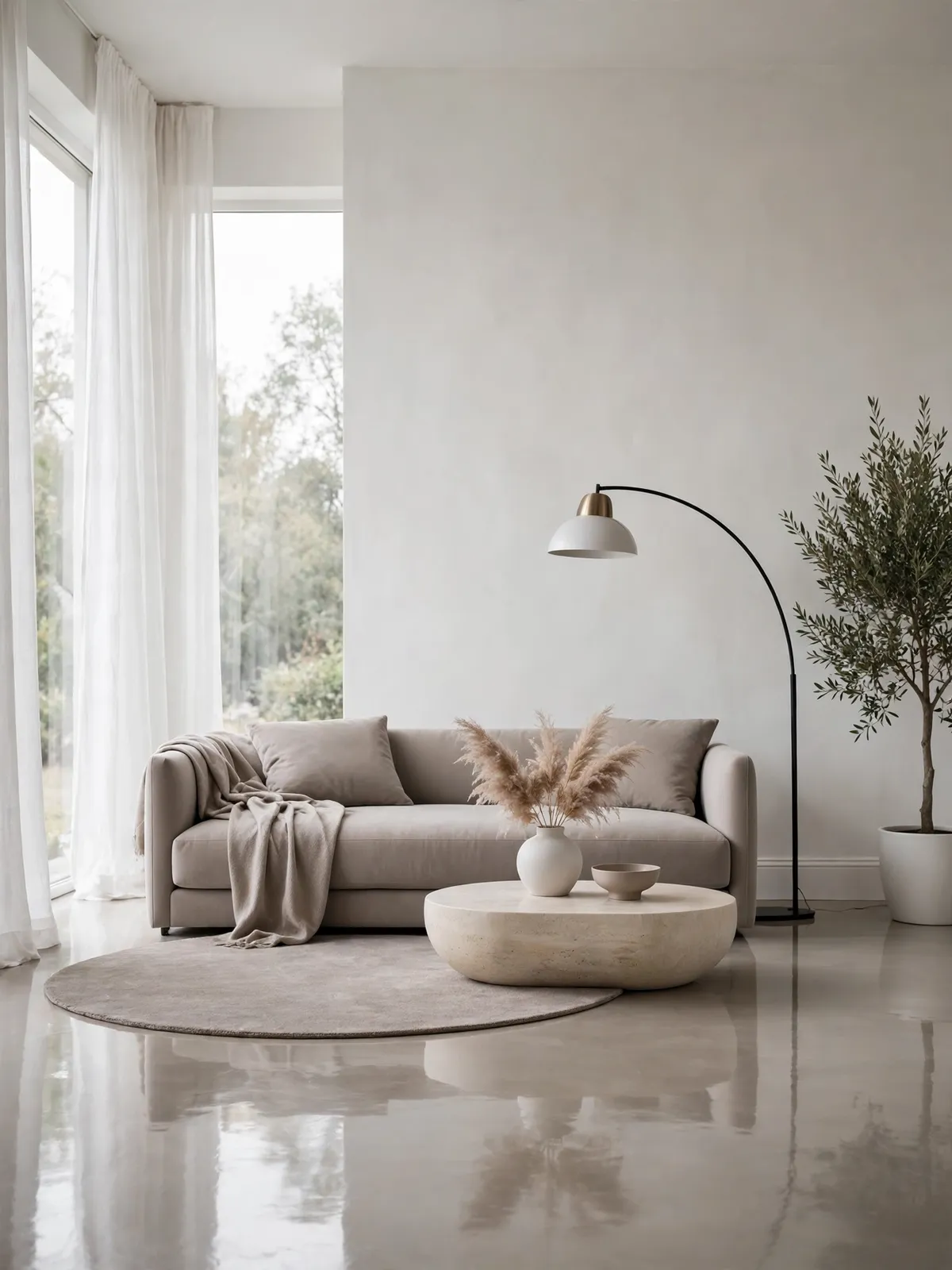
One olive tree, about 180 centimetres tall, in a plain terracotta planter gives a quiet corner height and life without a collection of small plants. Its silvery-green leaves soften a stone-coloured sofa and bring a natural shape into an otherwise straight-lined room.
Quick tips:
- Choose one tree, not a cluster of pots.
- Keep the planter plain and unpatterned.
- Rotate the tree occasionally so it grows evenly.
Make the TV Disappear Into a Cable-Free, Concealed Wall
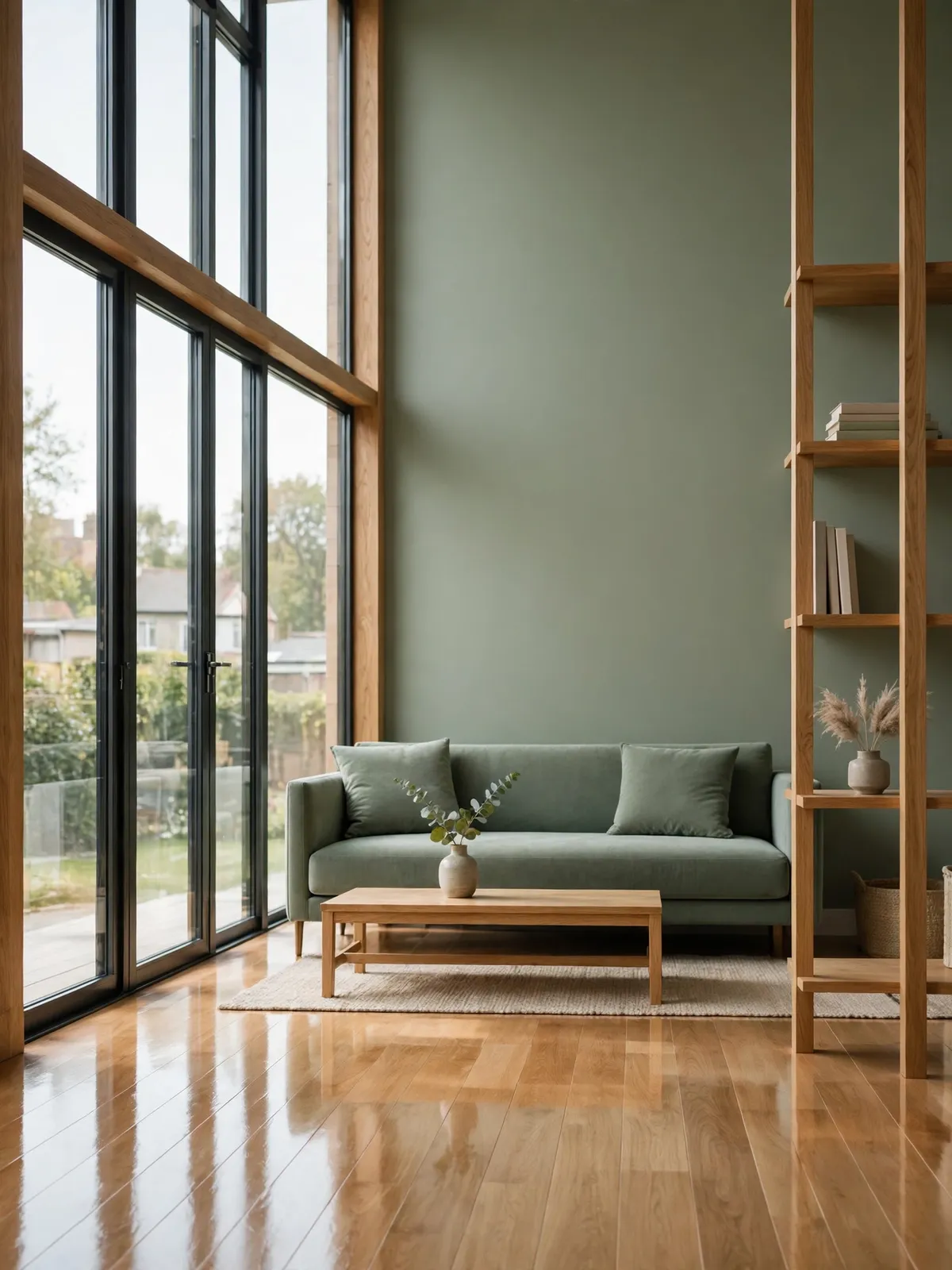
Mount the television on a pale oak panel wall, run every cable inside the wall or behind the panel, and hide the box and router inside a low charcoal console with a ventilated back. When the screen is off, the wall reads as quiet panelling rather than a tangle of technology.
Quick tips:
- Plan cable routes before mounting, not after.
- Keep the console doors closed when the television is off.
- Choose a screen size that fits the wall, not the largest available.
Go Japandi: Low Pale-Wood Furniture With Room to Breathe
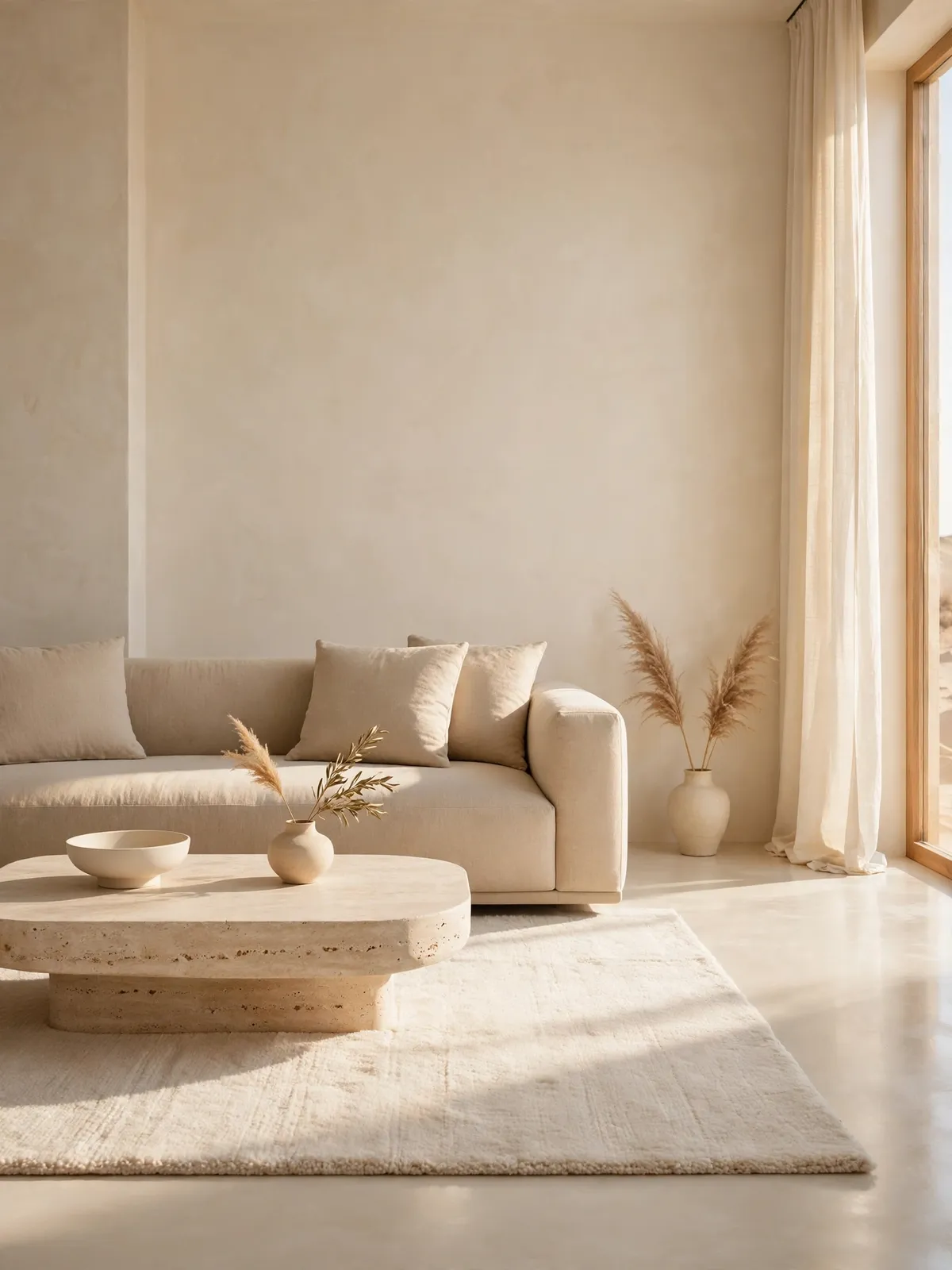
Japandi furniture stays low, pale and simply joined, such as a low ash-wood frame sofa with cream cushions and a matching low ash coffee table. The pale wood warms the room while the low height keeps the space open and calm.
Quick tips:
- Choose ash or pale oak over dark stained wood.
- Keep furniture legs short and profiles simple.
- Leave space between pieces instead of pushing them together.
Keep Every Finish Matte for a Soft, Glare-Free Room
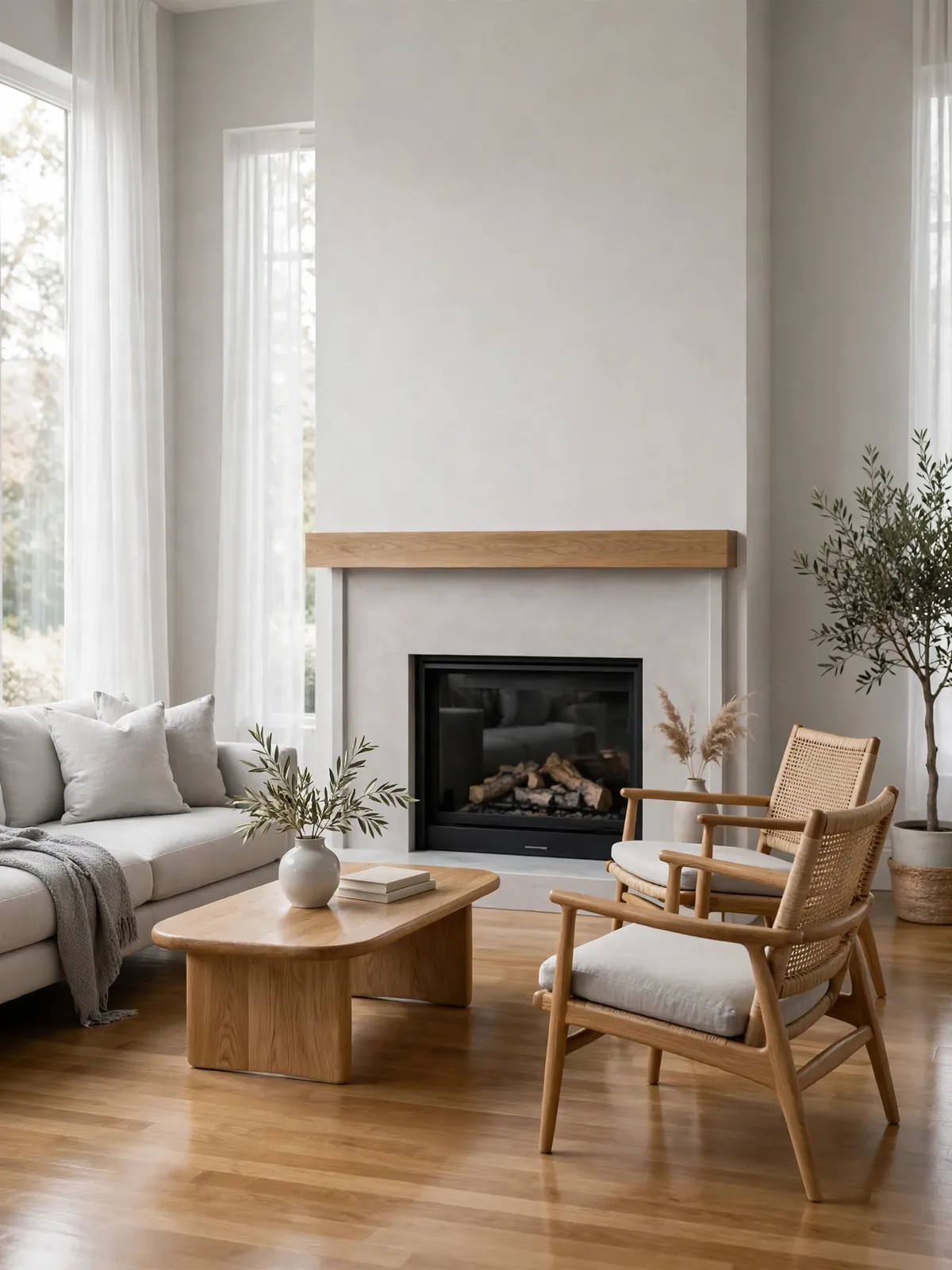
Matte paint, a matte ceramic vase in dusty blue and a washed linen sofa all absorb light instead of bouncing it back, so the room feels soft even in bright daylight. Gloss is removed from walls, tables and accessories alike, which stops reflections from competing with the furniture.
Quick tips:
- Choose eggshell or matte paint, never high gloss, on walls.
- Replace shiny accessories with chalky ceramic or stone.
- Check finishes in daylight, when glare is most obvious.
Build Bench Seating Into the Wall to Free the Floor
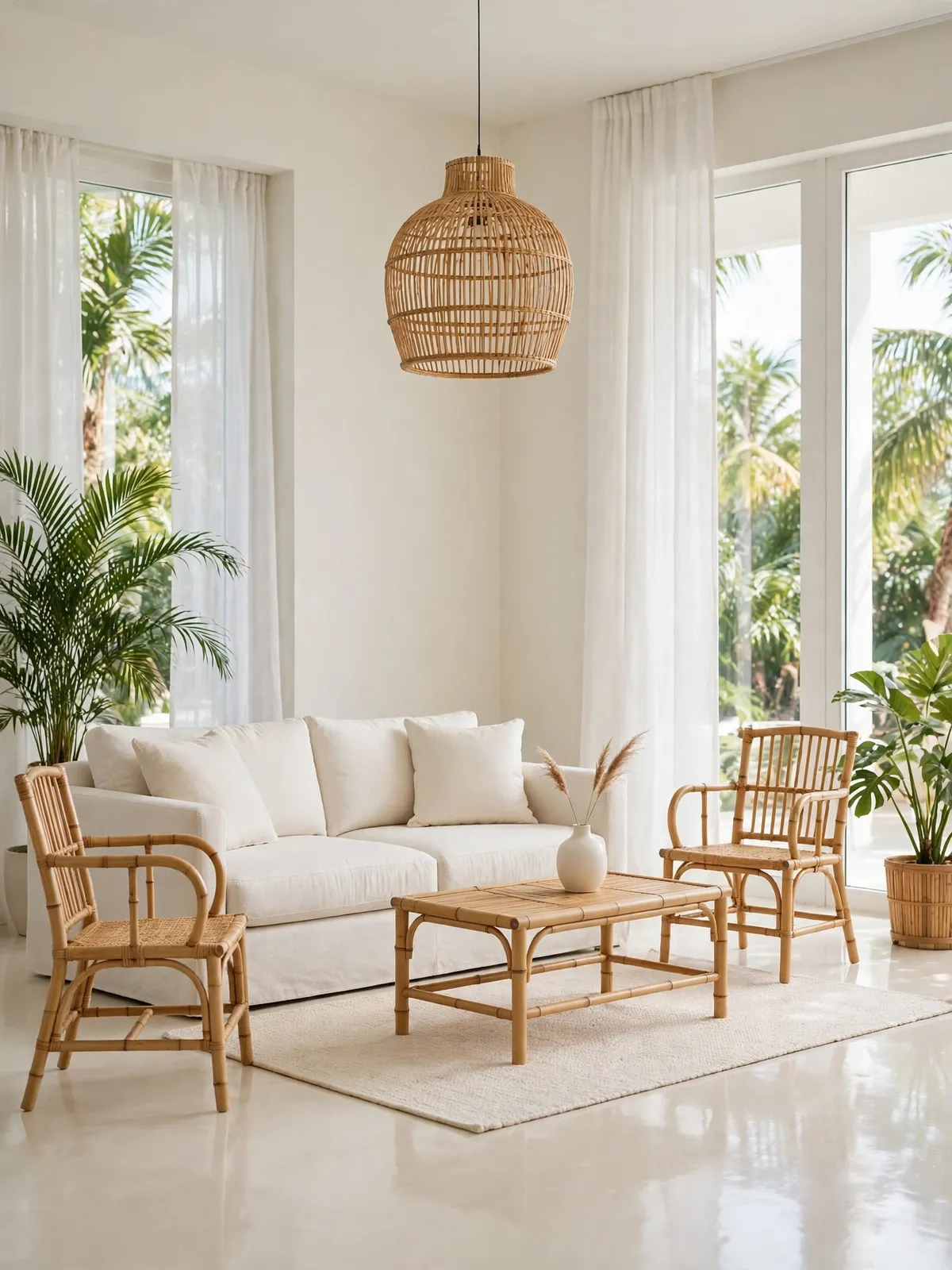
A built-in oak bench along one wall, topped with a cream cushion and a folded mustard throw, seats guests without adding another bulky chair to the floor plan. Storage drawers beneath the bench hold blankets, so the seating itself stays clean.
Quick tips:
- Build the bench to seat two people comfortably, not more.
- Keep the cushion in a single washable fabric.
- Use the space beneath for closed storage only.
Stick to Oak and Linen as Your Only Two Materials
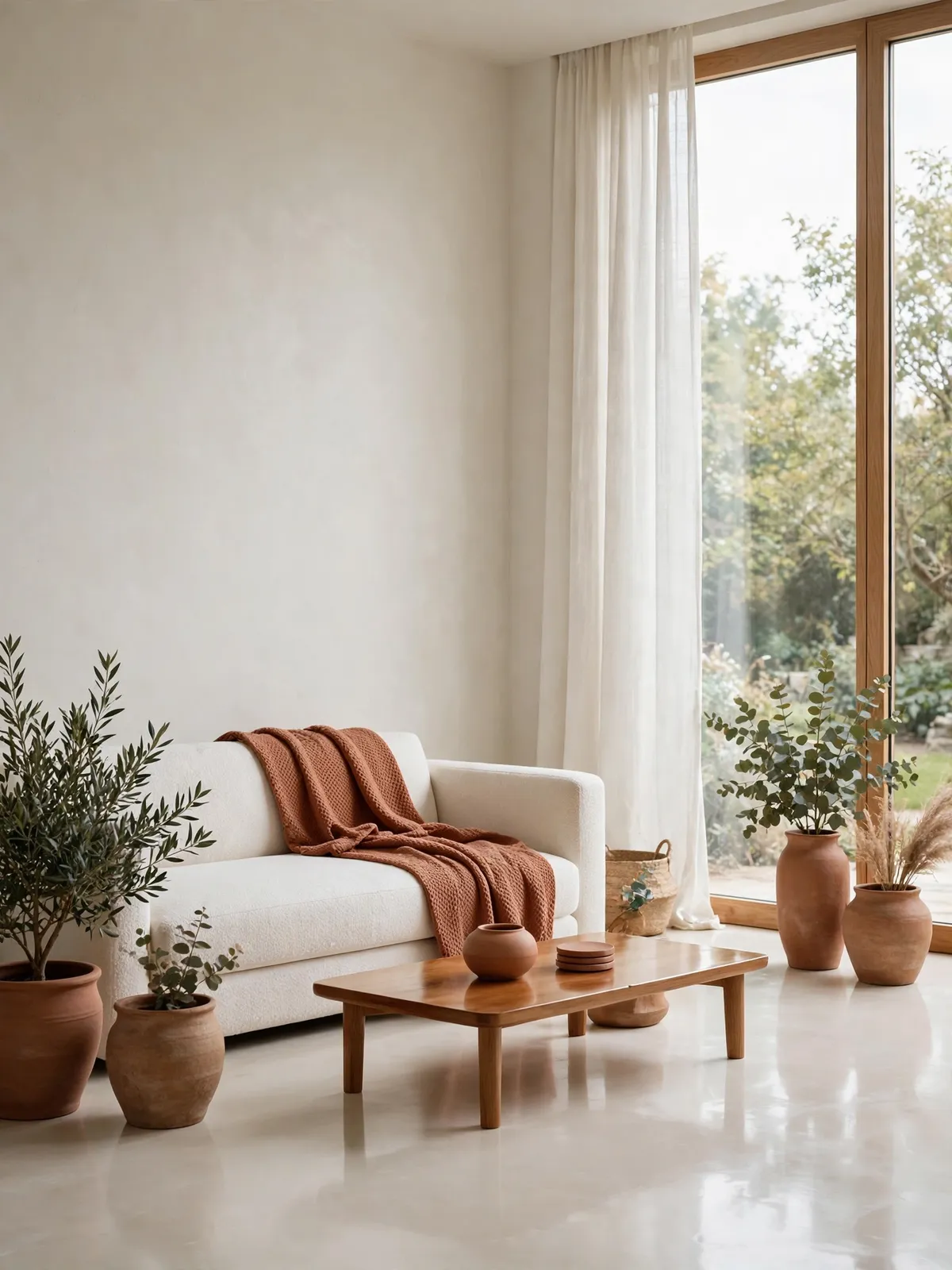
Limit the room to honey oak and natural flax linen, from the oak sofa frame to linen cushions and a single woven basket. With only two materials repeating, the room feels coherent even though the furniture shapes are simple.
Quick tips:
- Repeat oak in at least two pieces and linen in at least two textiles.
- Avoid introducing a third strong material such as chrome or marble.
- Let grain and weave provide the visual interest.
Refresh by Season With One Swap, Never an Addition
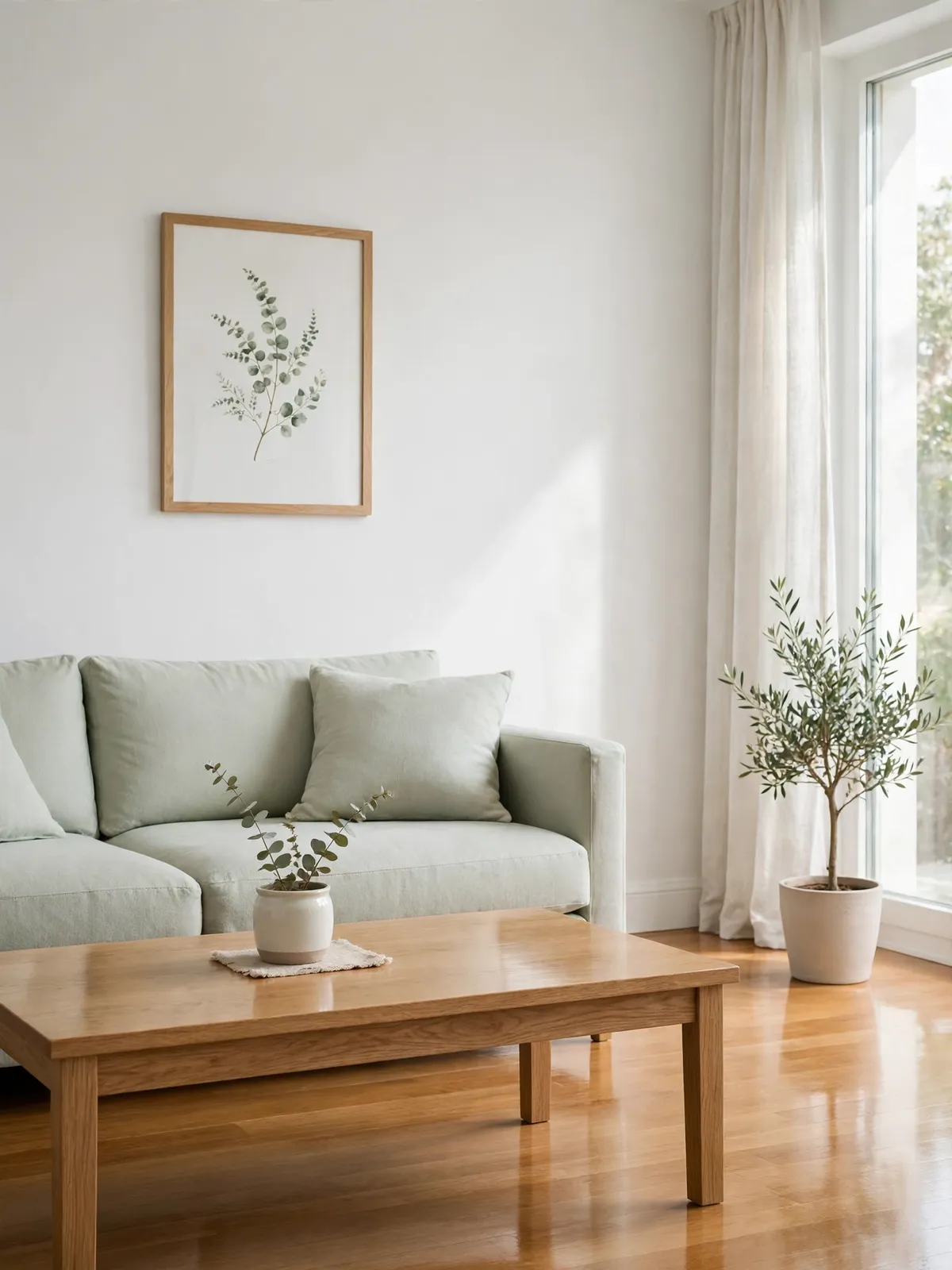
Each season, change exactly one thing, such as swapping a cream throw for a burnt-orange wool throw in autumn, and leave every other piece in place. The room feels new because the single change stands out, and nothing extra accumulates over the year.
Quick tips:
- Store the out-of-season piece away, do not keep both out.
- Choose the swap item before the season starts.
- Keep a short list of your four seasonal swaps for the year.
Protect Generous Walkways in a Clear, Open Floor Plan
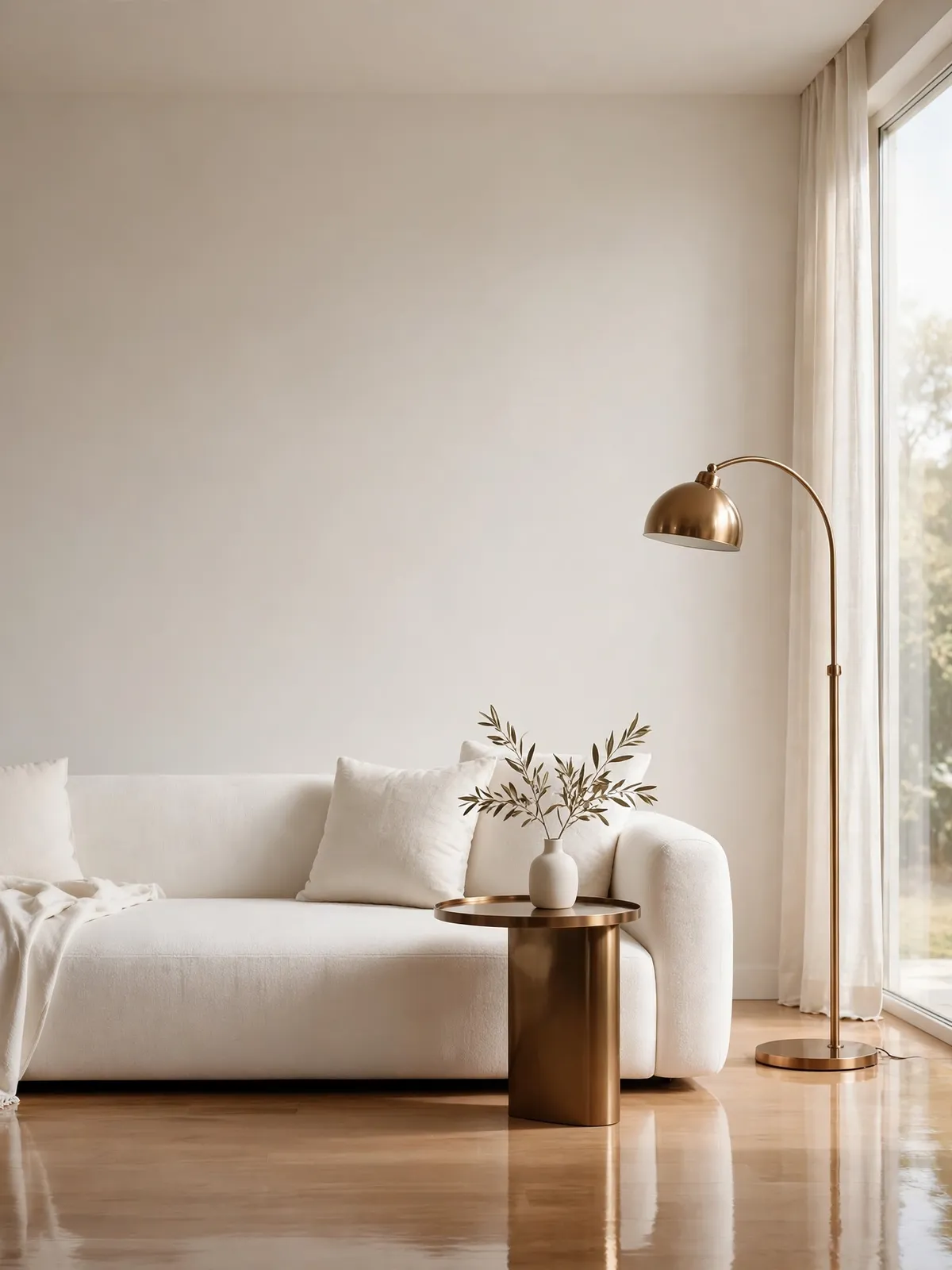
Keep main walkways at least 90 centimetres wide, with the sofa set well back from the rug edge so people can pass without shuffling sideways. A clear route from door to window makes even a modest room feel generous and easy to move through.
Quick tips:
- Measure walkways with a tape, not by eye.
- Move any chair that forces a detour around it.
- Keep the centre of the room open rather than filled.
Soften the Sofa With a White Linen Slipcover
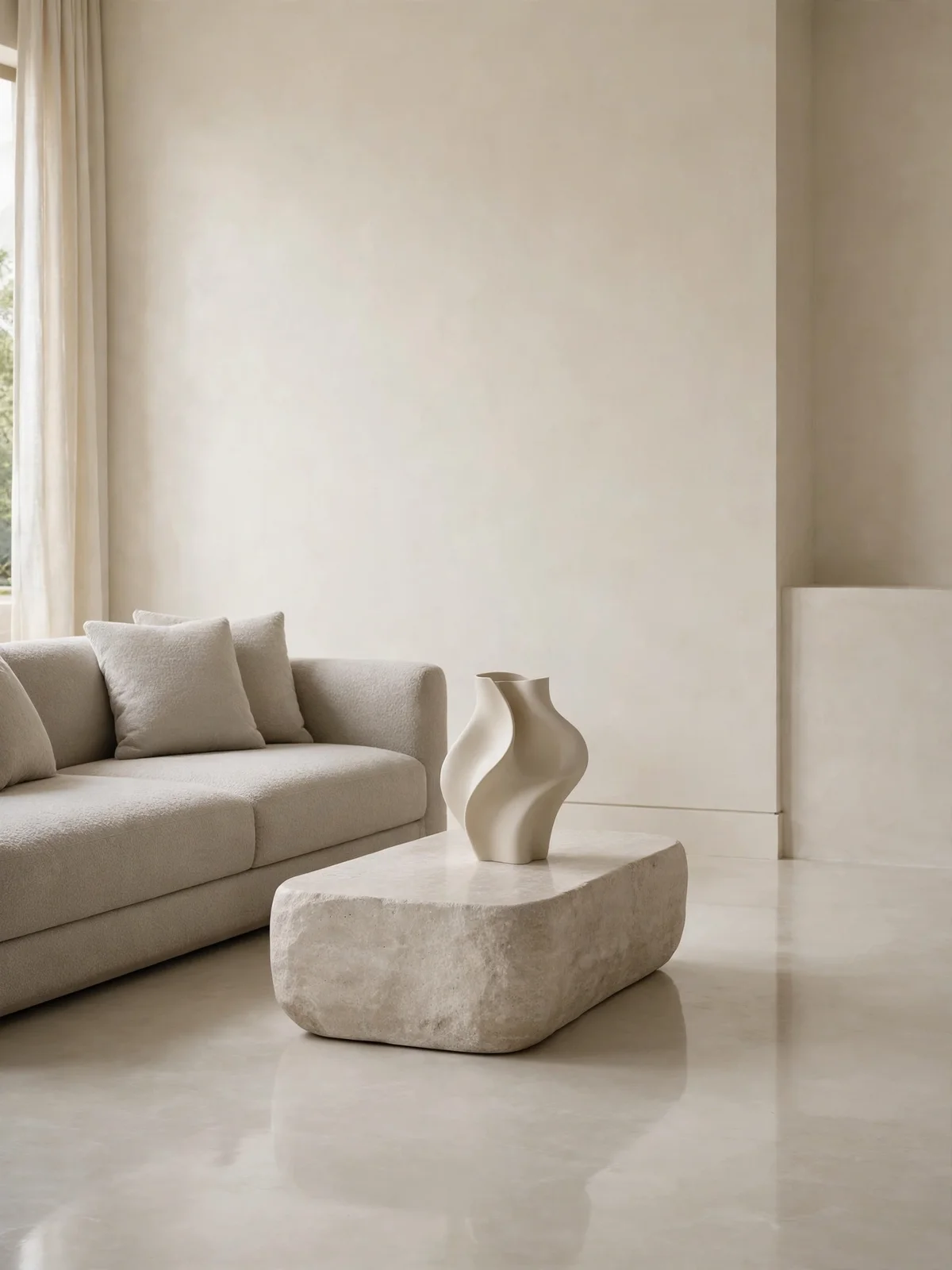
A white linen slipcover, slightly relaxed with soft creases, turns a structured sofa into something inviting and washable. In a room with a pale blue-grey rug and a single rattan chair, the slipcover keeps the palette light while forgiving everyday use.
Quick tips:
- Choose pre-washed linen so the fit stays relaxed, not stiff.
- Keep a second slipcover for washing days.
- Shake the cover out weekly to keep creases soft, not crushed.
Let a Single Stone Bowl Carry the Whole Coffee Table
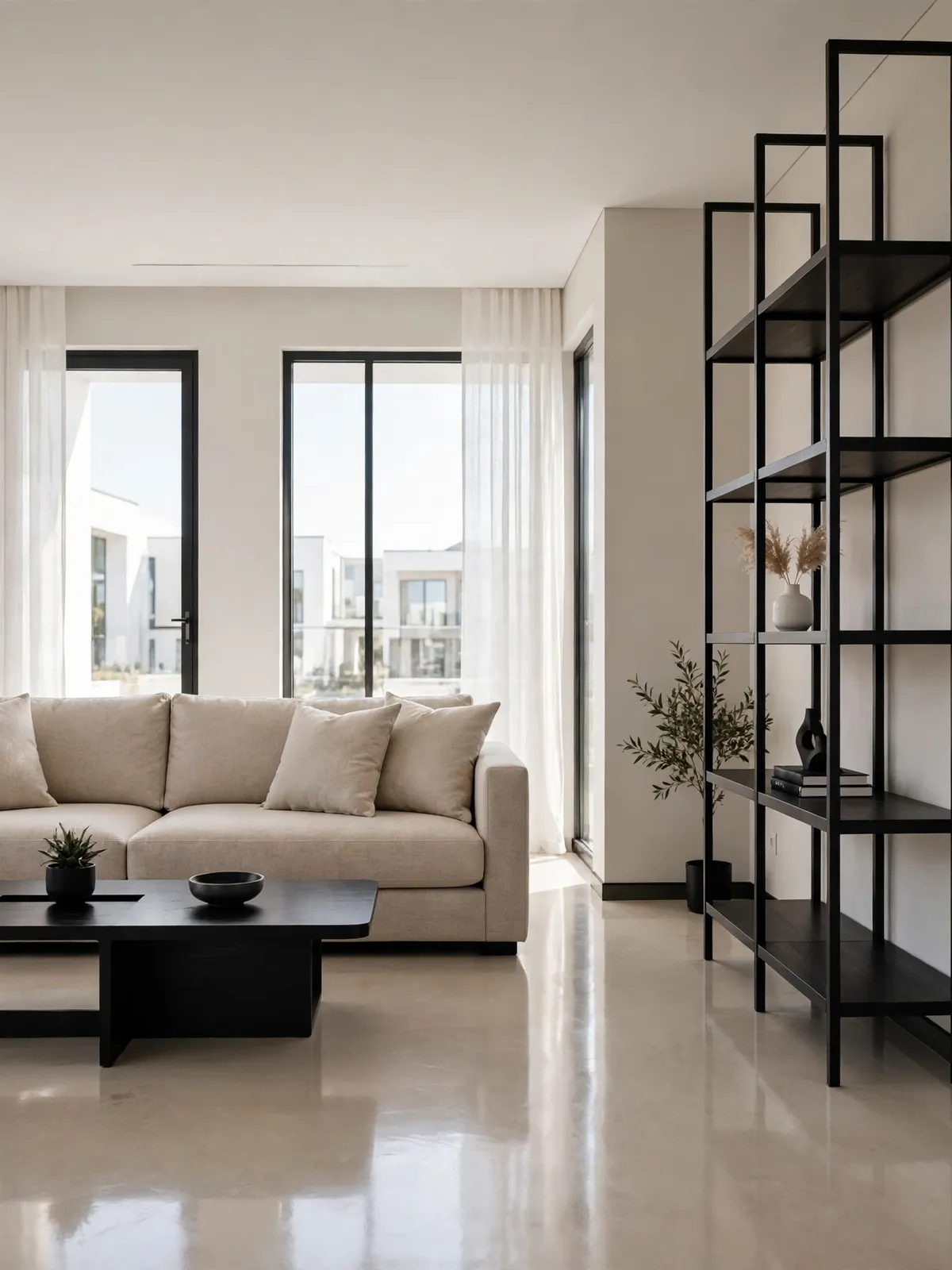
One travertine stone bowl, with its natural pits and sandy tone, is enough to finish a dark walnut coffee table on its own. Empty, it acts as sculpture; holding two or three pine cones in winter, it changes with the season without adding clutter.
Quick tips:
- Choose a bowl large enough to hold the table visually.
- Leave the bowl empty most of the time.
- Resist adding coasters, candles and books beside it.
Layer Lamp Light and Skip the Overhead Fixture Altogether
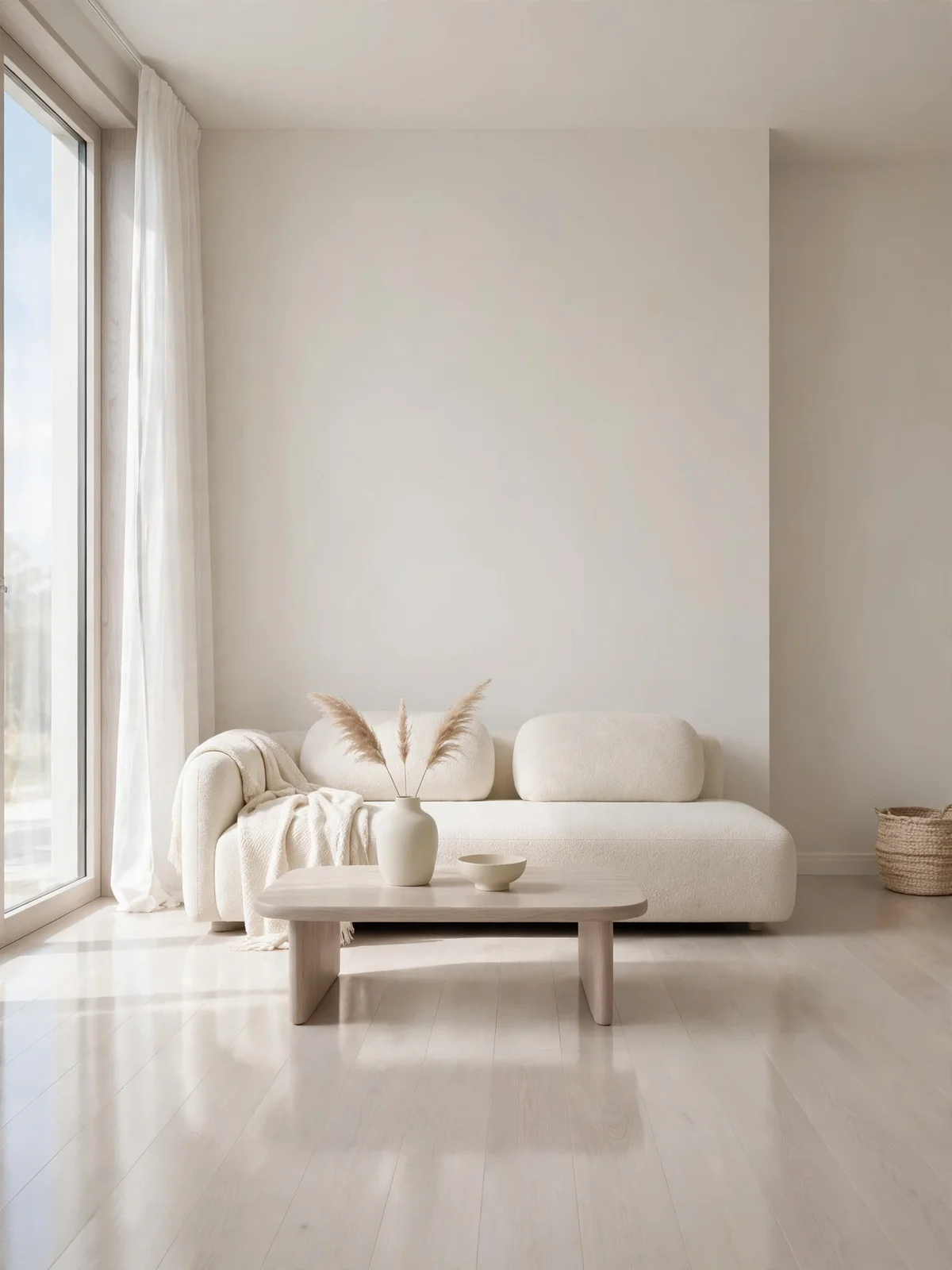
Two or three lamps at different heights, such as a warm amber ceramic table lamp beside the sofa and a tall arc lamp over a reading chair, create pools of soft light without a central ceiling fixture. A deep green sofa looks richer under warm lamp light than under a single bright overhead bulb.
Quick tips:
- Use warm bulbs around 2700 Kelvin for evening light.
- Place lamps at seating height, not above head height.
- Put lamps on dimmers where possible for softer evenings.
Ground the Room With a Flatweave Wool Rug in One Neutral
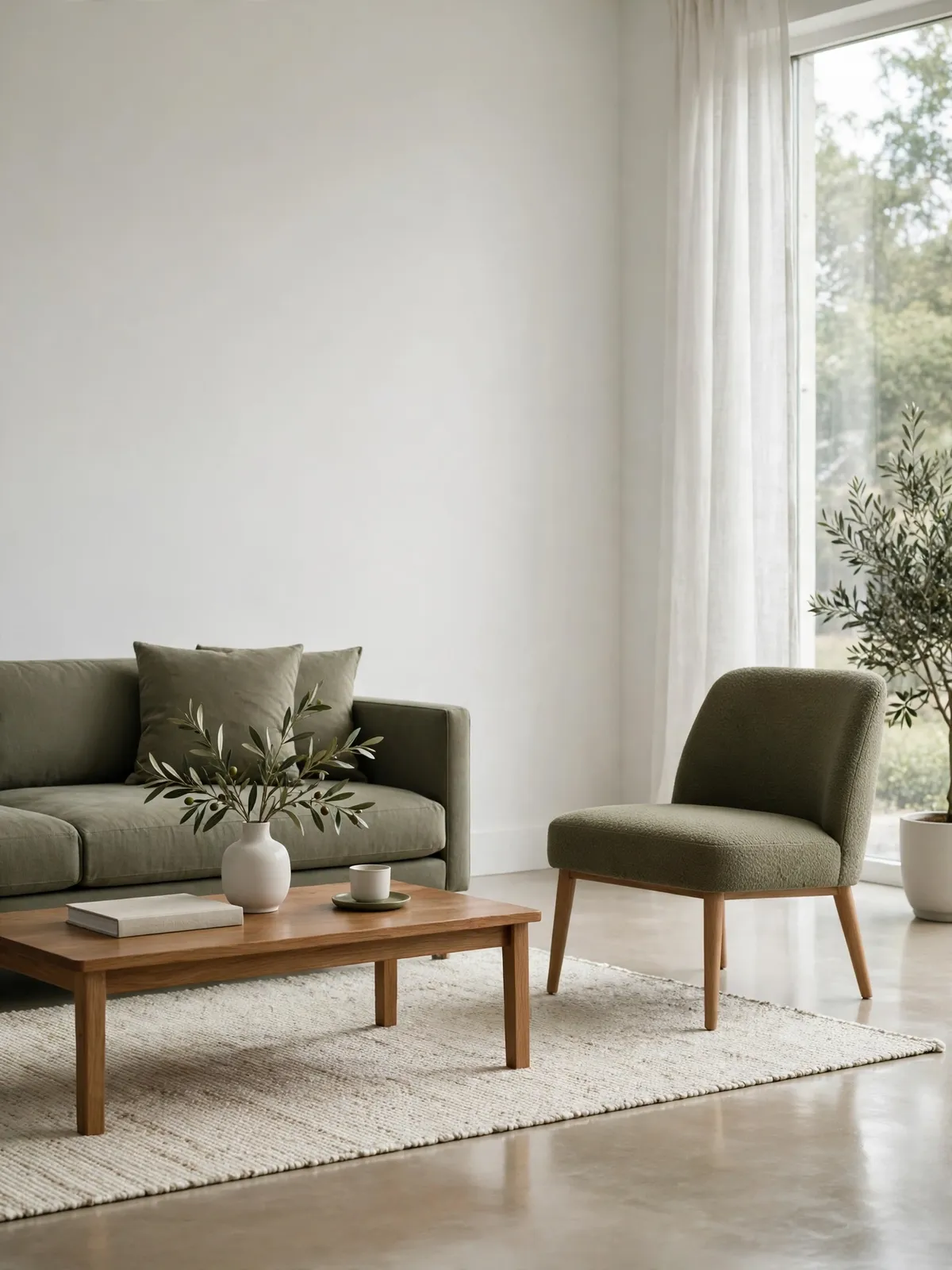
A flatweave wool rug in a single taupe tone, large enough for the front legs of the sofa and chairs to rest on it, anchors the seating area without a pattern fighting for attention. Its low pile keeps the room feeling flat, calm and easy to walk across.
Quick tips:
- Size the rug so front furniture legs sit on it.
- Choose flatweave over thick pile for a lower profile.
- Keep the rug to one tone, with no border pattern.
Edit the Books Down to a Single, Well-Chosen Shelf
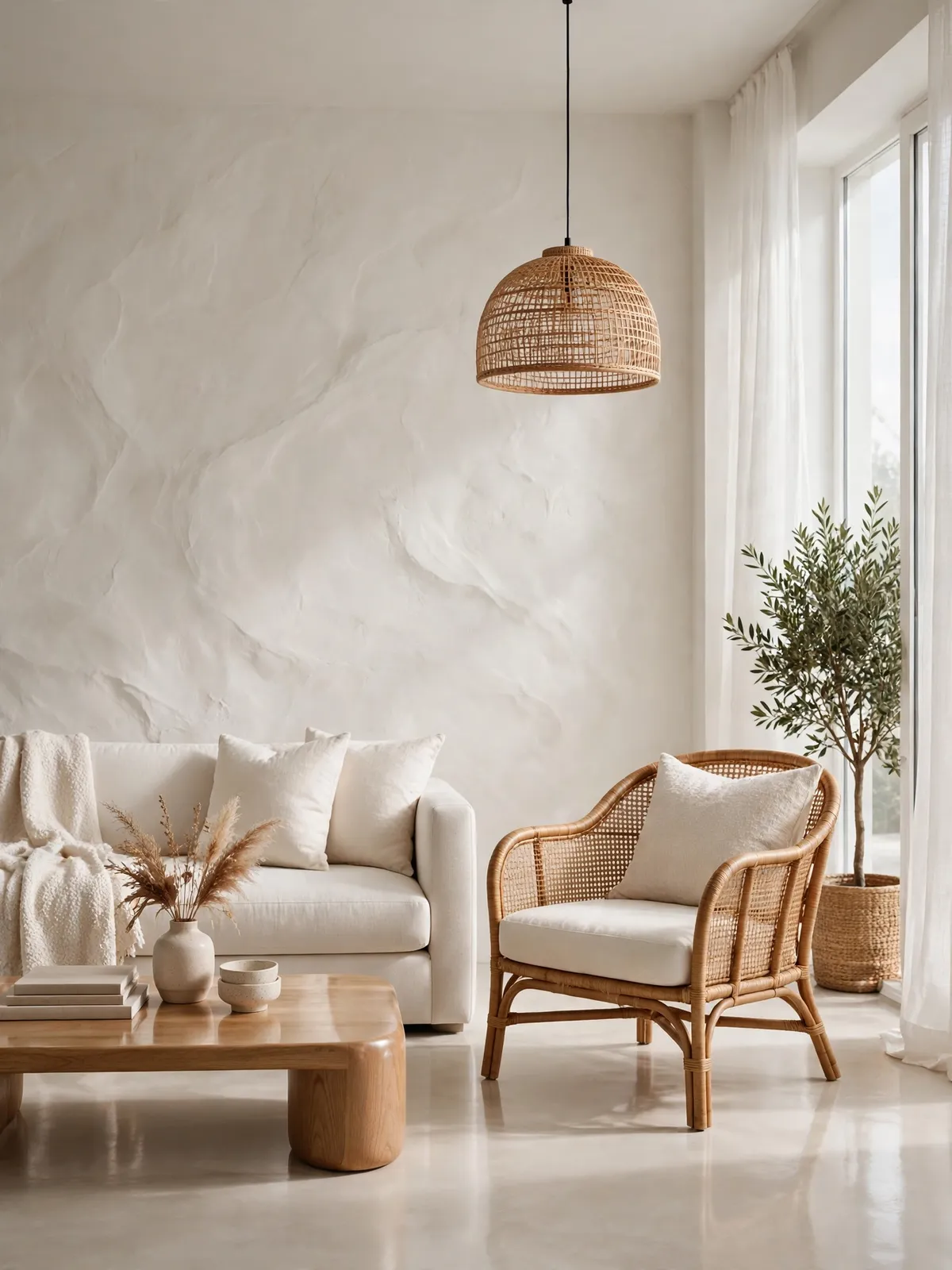
Keep one shelf of books you actually reread or love to display, such as a short row of deep navy and cream spines beside one ceramic sculpture, and move the rest to closed storage. A single edited shelf reads as a personal collection; a wall of crowded shelves reads as storage.
Quick tips:
- Apply a one-in, one-out rule for books on this shelf.
- Group books by tone rather than by strict size order.
- Leave breathing space at one end of the shelf.
Add Warmth With One Natural-Wood Accent Chair
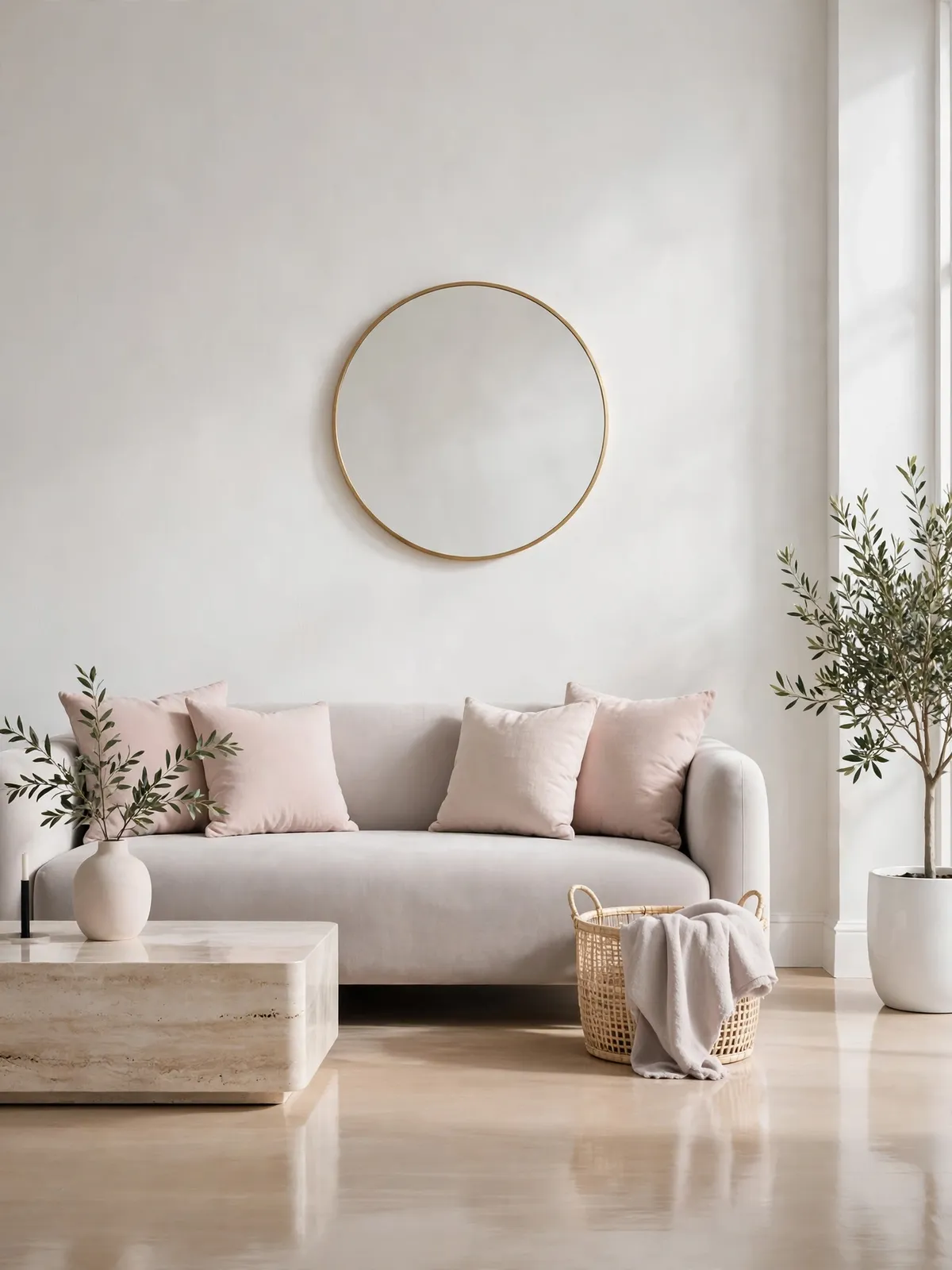
One teak accent chair with a cream cushion, placed at an angle to a soft grey sofa, adds warmth and a natural grain without a matching pair crowding the room. Its single presence gives guests a second seat while keeping the floor plan open.
Quick tips:
- Choose solid wood with a visible grain, not a painted finish.
- Angle the chair slightly toward the sofa for conversation.
- Keep the cushion in the room’s main neutral.
How minimalist living room ideas start at the window
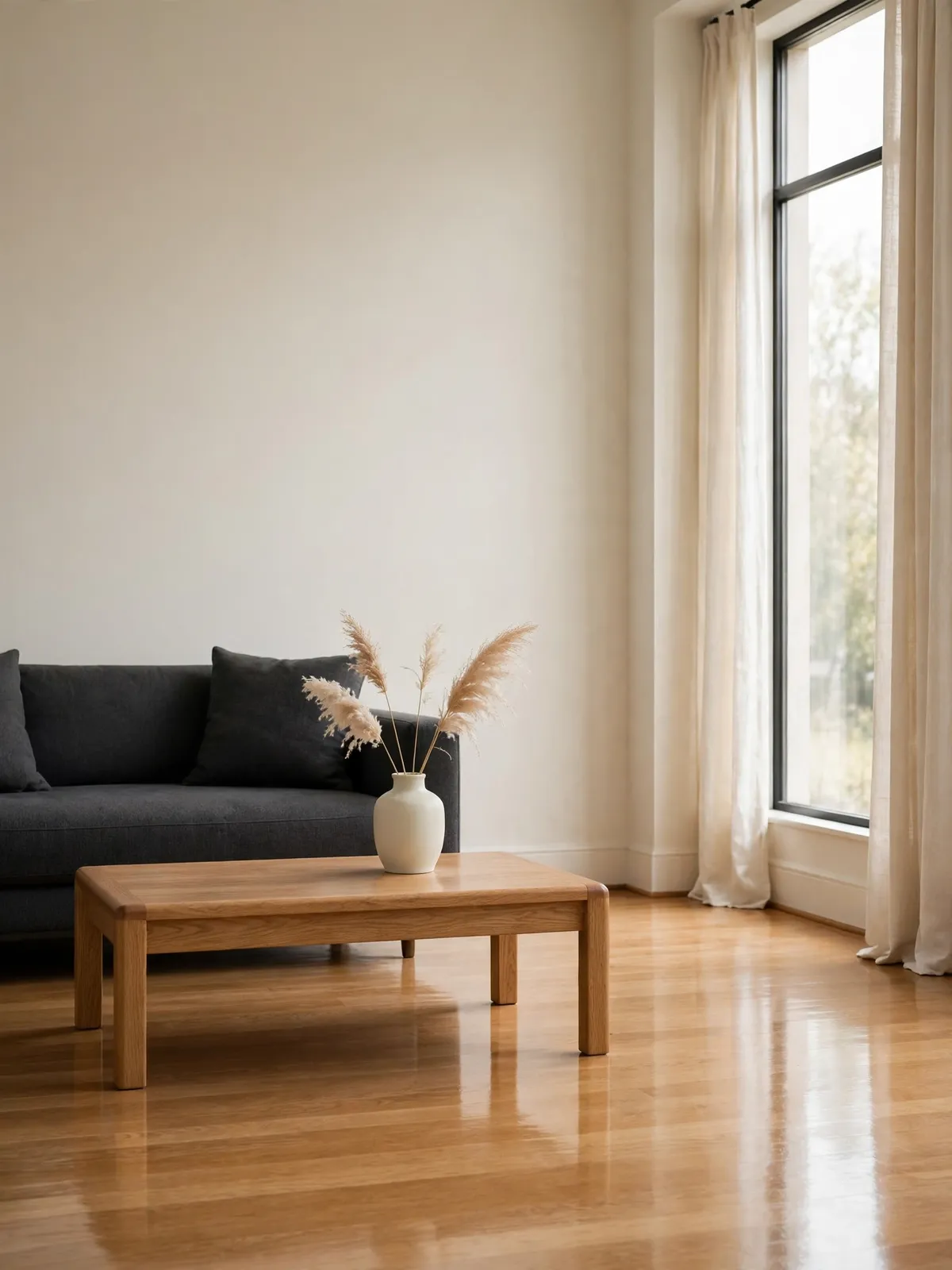
Arrange the sofa and reading chair around the largest window, so daylight falls on the seating first and the rest of the room is planned outward from that light. For example, a pale gold sofa facing the window, with a low table between sofa and glass, makes morning light the room’s main feature rather than a television wall.
Quick tips:
- Place main seating to face or sit beside the window, not with backs to it.
- Keep the window wall free of tall storage.
- Use mirrors sparingly, only to bounce light, not to double clutter.
FAQs
How do I make a minimalist living room feel warm instead of cold?
Use warm neutrals, natural textures and low lamp light as your warmth sources, and keep the room’s temperature in the materials rather than in extra objects. A warm-white wall, an oak frame and a wool throw will do more for cosiness than three additional decorative pieces.
How many decorative objects should a minimalist living room have?
Think in zones rather than a total count: one strong object per surface and one focal piece per wall is a practical guide. If you can name the purpose or the pleasure of each object without hesitating, the room is probably at the right level.
What colours work best for a minimalist living room?
Warm whites, soft greys, sage and warm sand tones work best because they stay quiet in daylight and in lamplight. Pick one family and layer its tones, then let wood and linen add the variation that a second bright colour would otherwise provide.
Can a small living room be minimalist without feeling empty?
Yes, if the small room keeps its furniture low, its walkways clear and its storage closed, because emptiness comes from unused floor, not from having few things. A well-sized rug and a single large artwork help a small room feel finished rather than bare.
How do I choose between keeping, removing or replacing a piece?
Keep it if you use it weekly or it clearly improves the room, remove it if it only fills space, and replace it only when the replacement does the same job with a quieter shape or a warmer material. If you cannot decide in a minute, store the piece for a month and notice whether you miss it.
Conclusion
Minimalism works when every choice is deliberate: one palette, fewer and better pieces, clear walkways, soft light and one empty space that lets the room breathe. Start with the single edit that bothers you most — the cables, the crowded shelf or the heavy curtains — and let that one calm change show you how little the room actually needs. Keep what you love, cut what only fills space, and the warm, uncluttered room underneath will finally have room to show itself.