20 Stunning Traditional Staircase Ideas That Bring Warmth, Craft and Timeless Elegance Home
A traditional staircase carries warmth, craft and memory in every detail, from a carved wooden handrail to patterned tiles on the risers. These 20 traditional staircase ideas cover wood, stone, iron, brass, colour and lighting, so you can choose a classic stair that suits your home, your budget and the way your family lives.
Traditional staircase ideas are worth your time because a classic stair does something a plain modern stair rarely does: it makes a home feel rooted, warm and lived-in from the first step. Carved wood, patterned tiles, wrought iron and brass all age gracefully, and a traditional stair grows more beautiful as the years pass rather than dating.
If you want to start with the detail you touch every day, these staircase railing ideas show how the right railing — wood, iron or glass — completes a traditional stair. The 20 ideas below cover handrails, risers, railings, walls, lighting and landings, so you can build or refresh a traditional staircase that feels timeless rather than old-fashioned.
Key Takeaways
What makes a staircase look traditional?
Natural materials, visible craft and warm colour make a staircase look traditional. Carved wood handrails, turned spindles, patterned tile risers, wrought iron scrollwork, brass fittings and muted heritage paint are the strongest signals. A traditional stair uses texture and detail to feel layered, while a modern stair usually relies on clean lines and plain surfaces.
How much does a traditional staircase cost?
A simple traditional stair with painted risers, a wooden handrail and a runner is the most affordable route, while carved stone balusters, custom ironwork and a full wooden spiral cost far more because they need skilled handwork. Always get a detailed quote that separates the structure, the railing, the treads and the installation before committing.
Are traditional staircases safe for children?
Yes, when the details are right. Baluster gaps should stay under 99 mm, treads need a non-slip surface, and a sturdy handrail at a comfortable height matters more than style. A runner adds grip and softens falls, closed risers suit homes with toddlers, and stair gates fit best on straight traditional stairs with solid newel posts.
How do I keep a traditional staircase from feeling dark or heavy?
Balance the dark wood and rich colour with light. Paint the walls a warm cream, add brass sconces or a pendant, keep one element pale — light spindles, a cream runner or a pale wall — and let daylight in through a landing window. Heavy detail feels grand when it has light and breathing room around it.
Can I make a modern staircase look traditional without rebuilding it?
Yes. Paint the risers in muted heritage tones, add a patterned runner with brass stair rods, swap plain balusters for turned spindles, fit a carved newel cap, and hang brass sconces on the stair wall. These five changes alone give a plain stair a traditional character without touching the structure.
A Carved Wooden Handrail With Turned Spindles
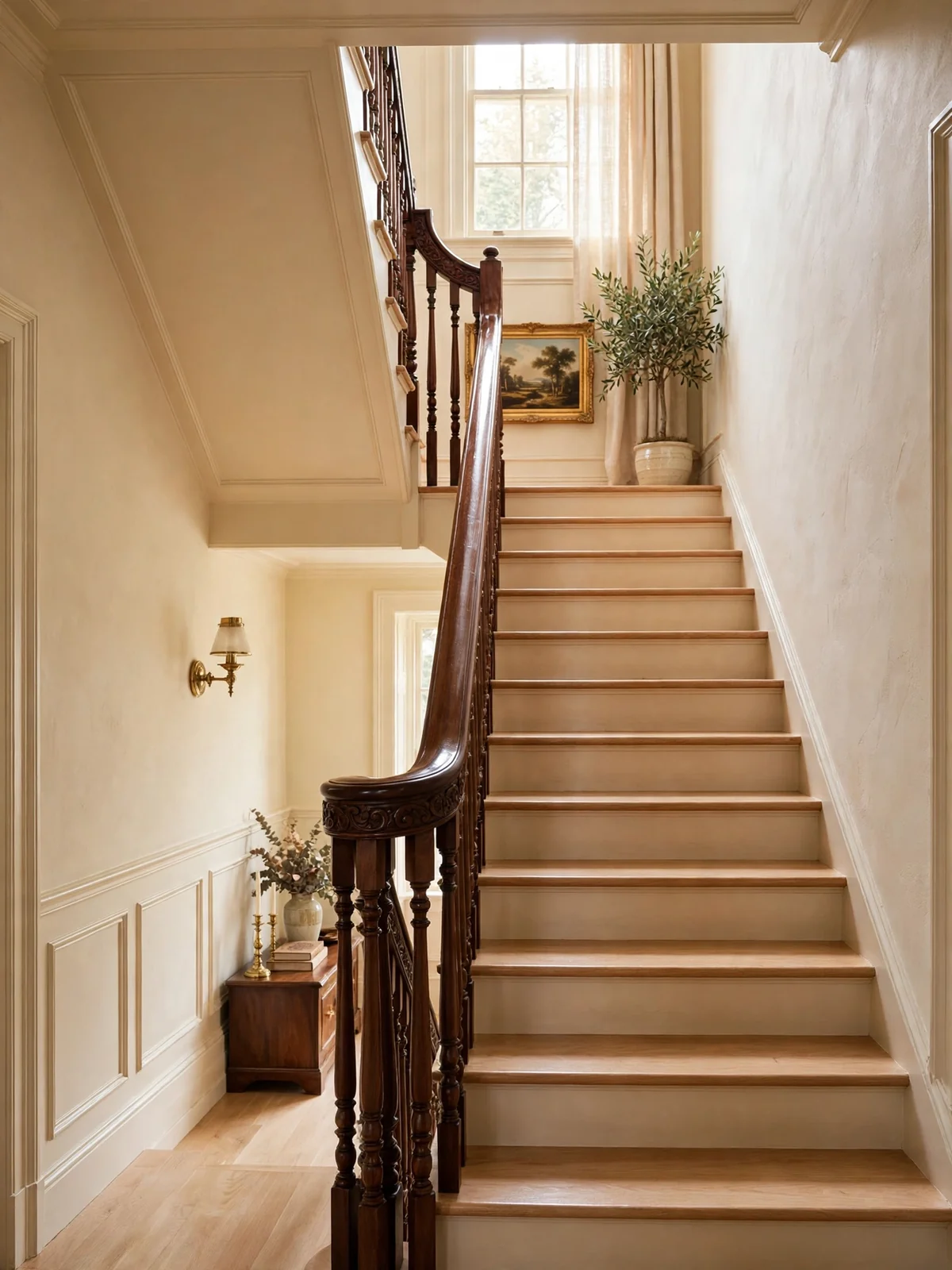
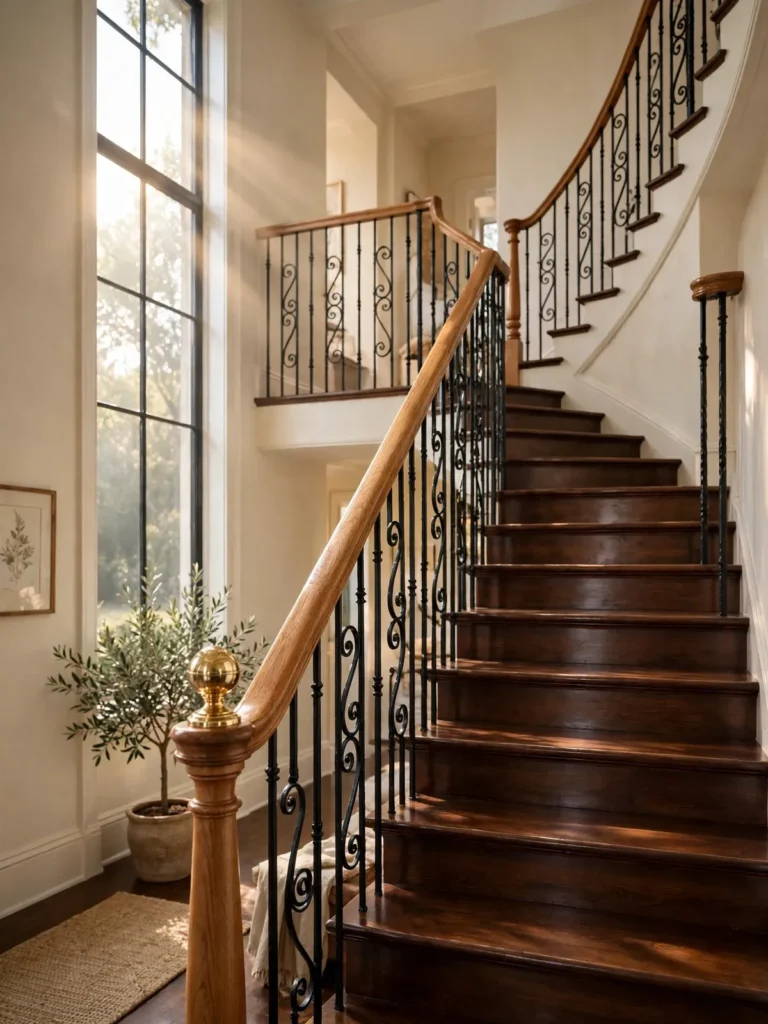
A carved wooden handrail with turned spindles is the single strongest traditional detail, because it is the part your hand touches every day and it shows craft in every curve. Here, a dark walnut handrail with a carved scroll profile runs above slim turned spindles, each shaped on a lathe, beside warm cream walls and pale oak treads. The handrail suits period homes and new homes that want heritage character, it feels solid and warm under the hand, and it instantly tells visitors the stair was made by someone who cared. The weakness is cost — real carving is skilled work — and plain spindles are a cheaper compromise that still reads traditional.
Quick tips:
- Choose walnut or mahogany for the richest carved detail.
- Keep spindles slim so the stair stays light, not heavy.
- Match the handrail timber to the treads for cohesion.
- Oil the handrail twice a year so it stays smooth.
Patterned Encaustic Tiles on the Risers
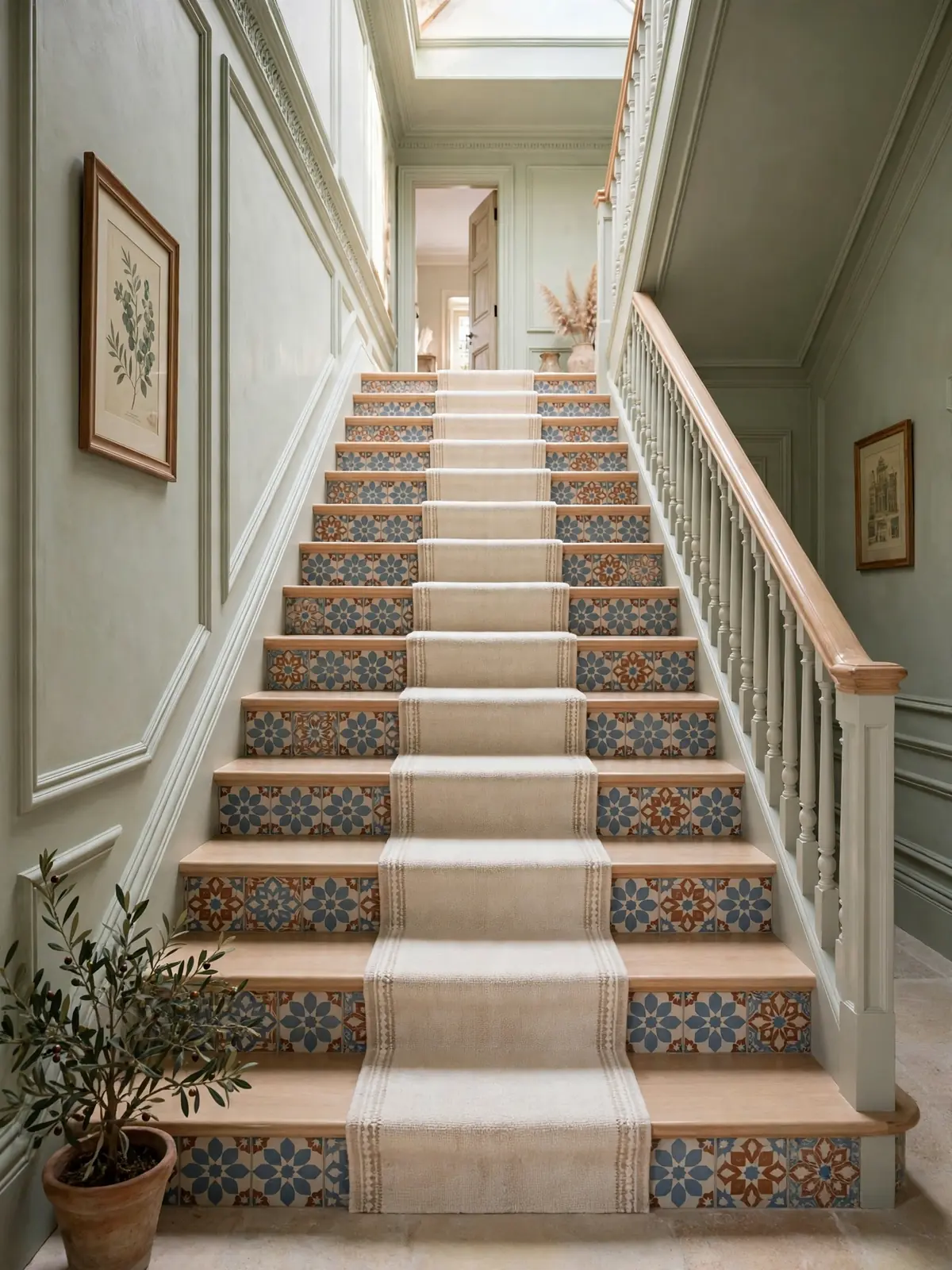
Patterned encaustic tiles on the risers turn each step into a small piece of art, because the pattern appears gradually as you climb and rewards a slow look. Here, muted blue and terracotta tiles with a faded geometric pattern cover the risers, while the treads stay plain pale wood so the tiles can breathe. The idea suits entryways and hallways where guests pause, it costs far less than a full rebuild, and it works on almost any straight stair. The weakness is that bold patterns can tire over time, so muted tones age better — and tiles need sealing in busy family homes where shoes scuff them daily.
Quick tips:
- Keep the treads plain so the tiles stay the feature.
- Choose muted blues or earthy terracotta for longevity.
- Seal the tiles so scuffs wipe off easily.
- Repeat one tile colour on a nearby cushion or frame.
Wrought Iron Railings With Floral Scrollwork
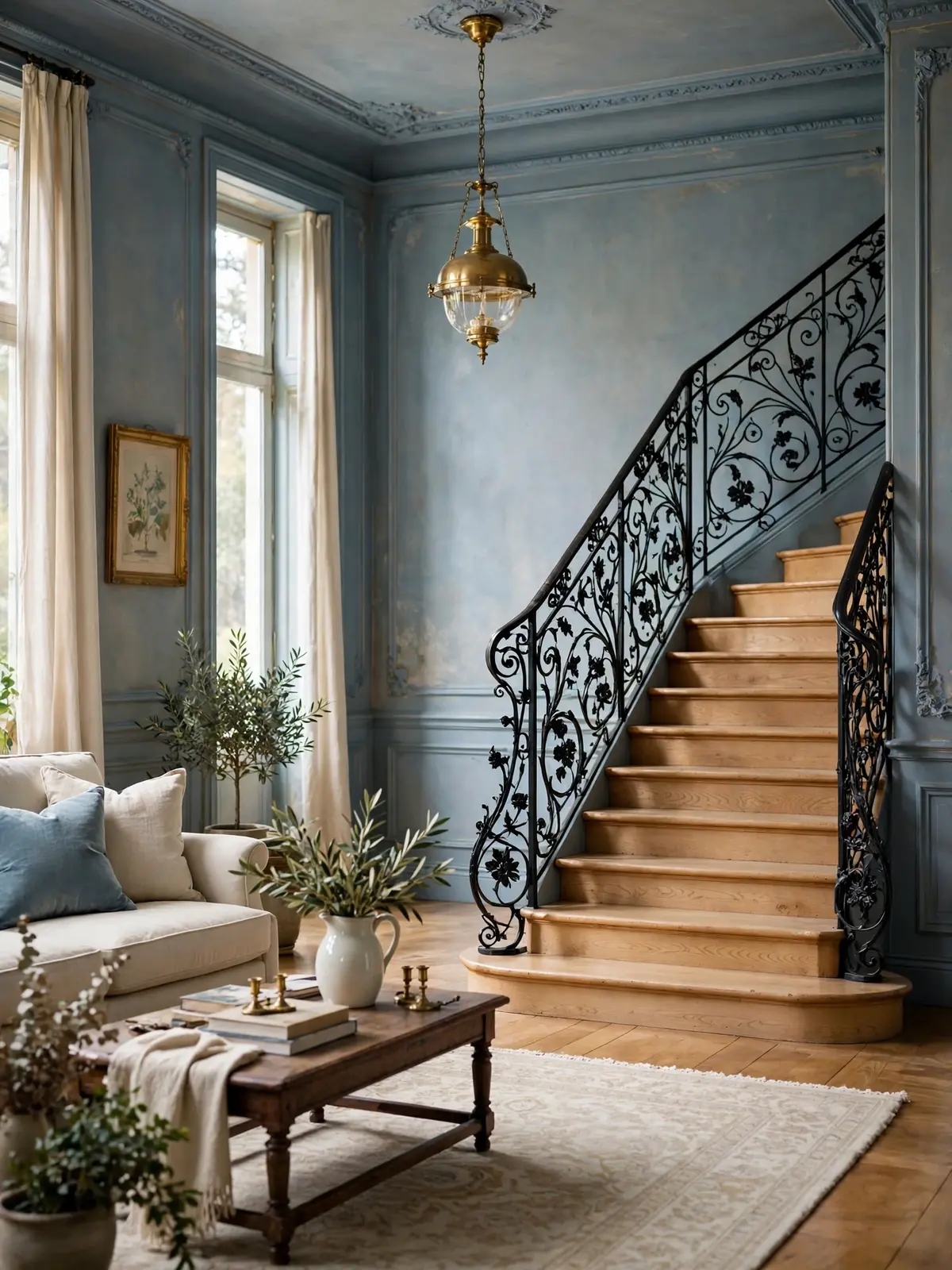
Wrought iron railings with floral scrollwork bring a romantic, handcrafted feel that plain steel can never match, because each scroll is shaped by hand and no two are exactly alike. Here, black iron vines and leaves curl between the handrail and the treads, paired with pale oak steps and soft dusty-blue walls. The railing suits homes with arched doorways and vintage furniture, it is strong and long-lasting, and it balances beautifully with warm wood. The weakness is that very intricate ironwork can feel heavy in a small hallway — keep the scrolls airy and open — and iron needs a clear coat or paint touch-ups to prevent rust in damp homes.
Quick tips:
- Keep the scrollwork open and airy, never dense.
- Pair iron with wooden treads to soften the metal.
- Seal the iron with a clear coat against rust.
- Match the iron colour to a light fixture nearby.
A Terracotta Base for Earthy Warmth
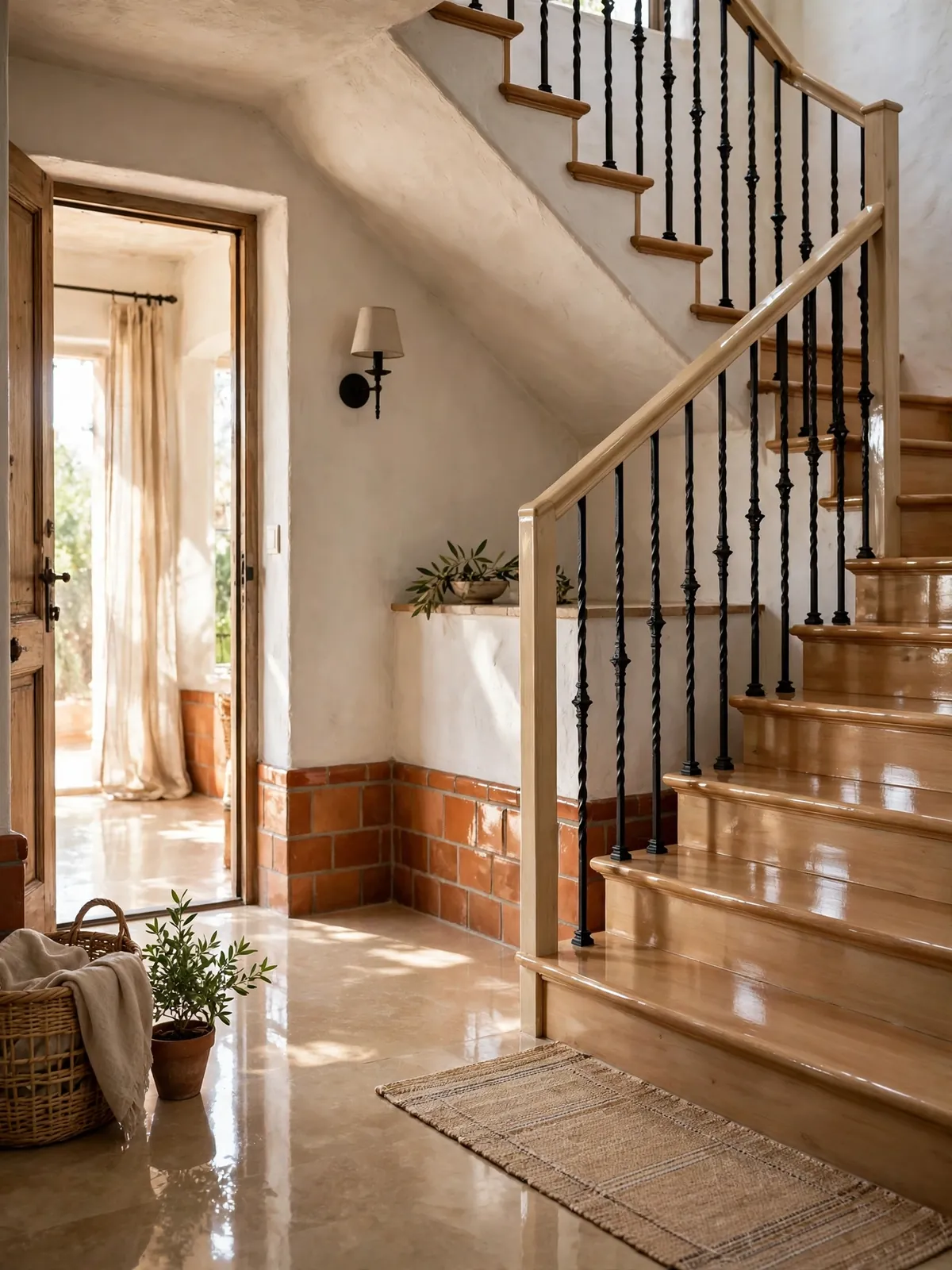
A terracotta base gives a traditional staircase an earthy, grounded warmth, because the warm clay colour makes the stair feel rooted like an old Mediterranean or country home. Here, terracotta tiles clad the wall beneath the stair, balanced by whitewashed walls above and pale wood treads. The idea suits rustic and farmhouse-style homes, it hides scuffs better than pale paint, and even a narrow terracotta strip changes the mood of a plain hall. The weakness is that terracotta can dominate a small space, so keep the rest of the palette pale — and seal the tiles, because unsealed clay stains easily.
Quick tips:
- Balance terracotta with whitewashed walls above.
- Seal terracotta tiles so they resist stains.
- Use a narrow strip if a full wall feels too much.
- Echo the terracotta in a pot or cushion nearby.
Brass Wall Sconces Along the Stair Wall
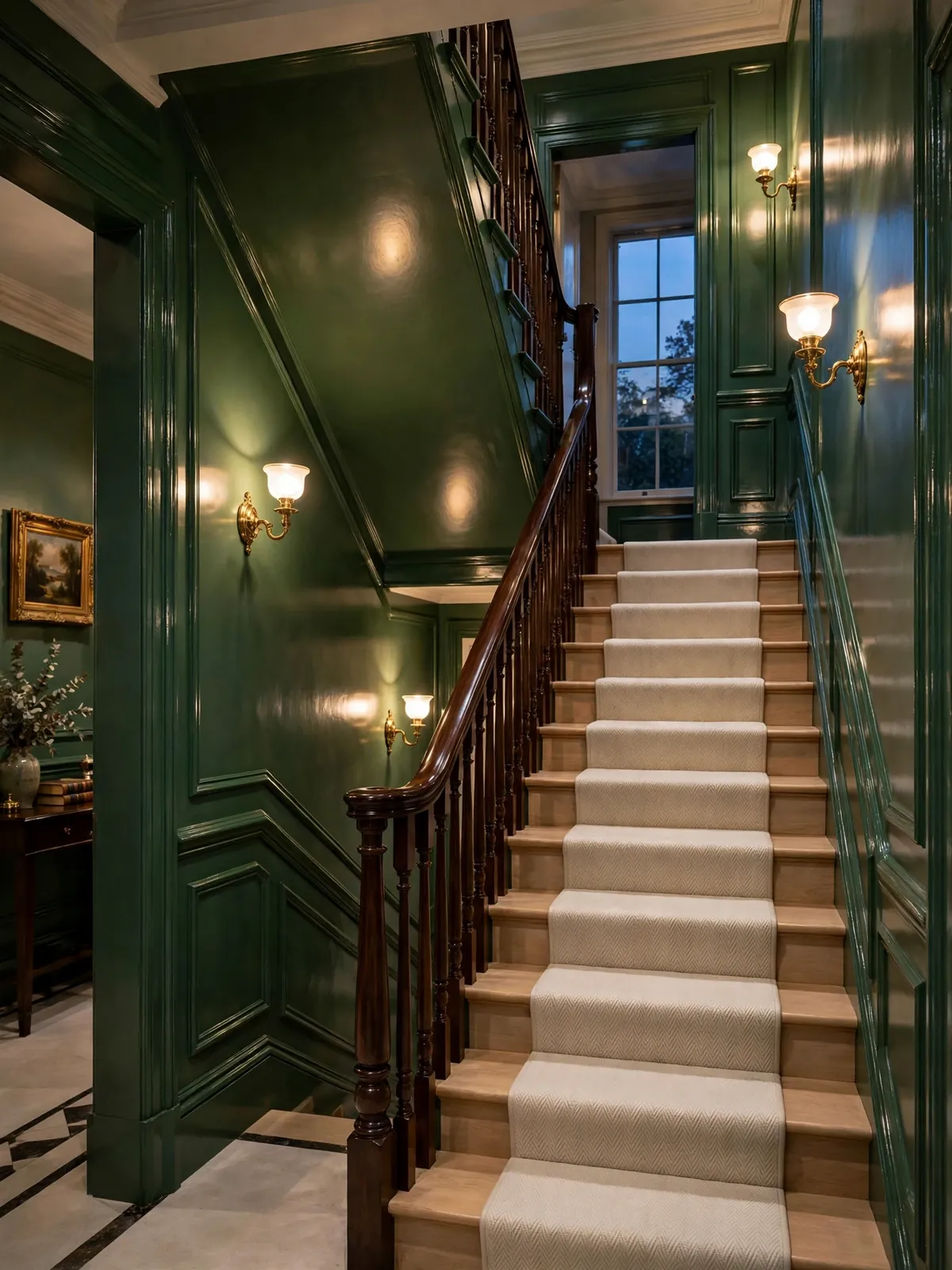
Brass wall sconces along the stair wall are the easiest way to make a traditional staircase feel grand after dark, because warm light on wood and brass creates a glow no ceiling light can copy. Here, paired brass sconces with fabric shades wash deep green walls in soft light, above a dark walnut handrail and a cream runner. The sconces suit any traditional stair, they make night-time trips safer, and they cost far less than rewiring a chandelier. The weakness is that sconces need wiring in the wall, so plan them during a renovation — and keep the shades simple, because fussy shades date quickly.
Quick tips:
- Space sconces evenly as the stair rises.
- Choose warm bulbs, about 2700K, for a heritage glow.
- Pair brass sconces with a brass newel cap.
- Put the sconces on a dimmer for evening control.
Polished Stone Steps With Natural Veining
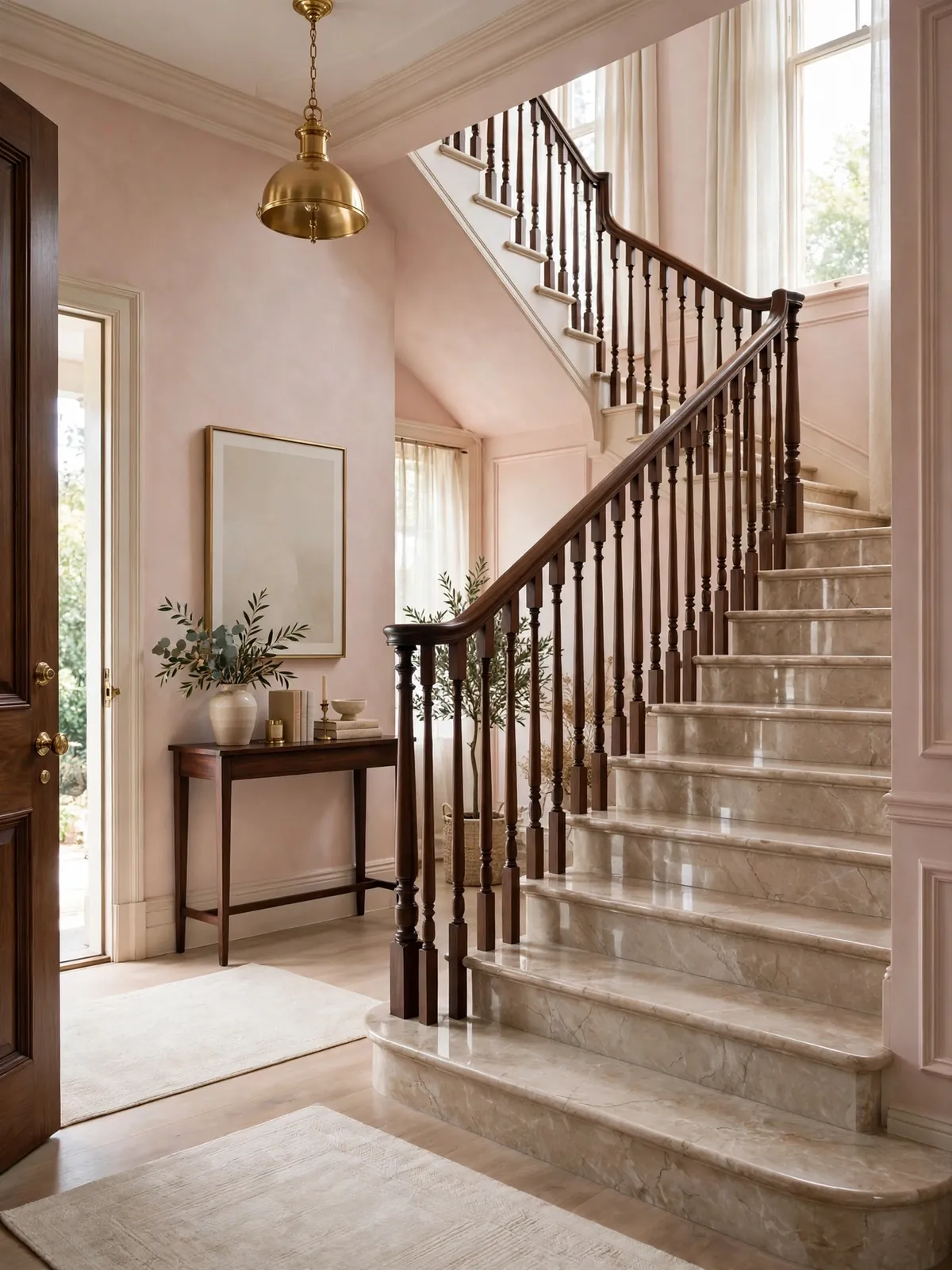
Polished stone steps with natural veining give a traditional staircase a quiet, permanent confidence, because stone feels like it has always been there and will outlast every other material in the house. Here, soft beige marble with grey veining forms the treads, paired with a dark walnut handrail and soft blush-pink walls. The idea suits grand entries and period homes, it stays cool in summer, and it pairs beautifully with wood. The weakness is cost and slipperiness — polished stone can be slick in socks, so a runner or a matte finish is wise in family homes — and stone is heavy, so the structure must be checked first.
Quick tips:
- Choose a matte finish if the stair is used in socks.
- Pair stone steps with a wooden handrail for warmth.
- Seal marble so it resists stains.
- Add a runner for grip in family homes.
A Gallery Wall of Heritage Frames
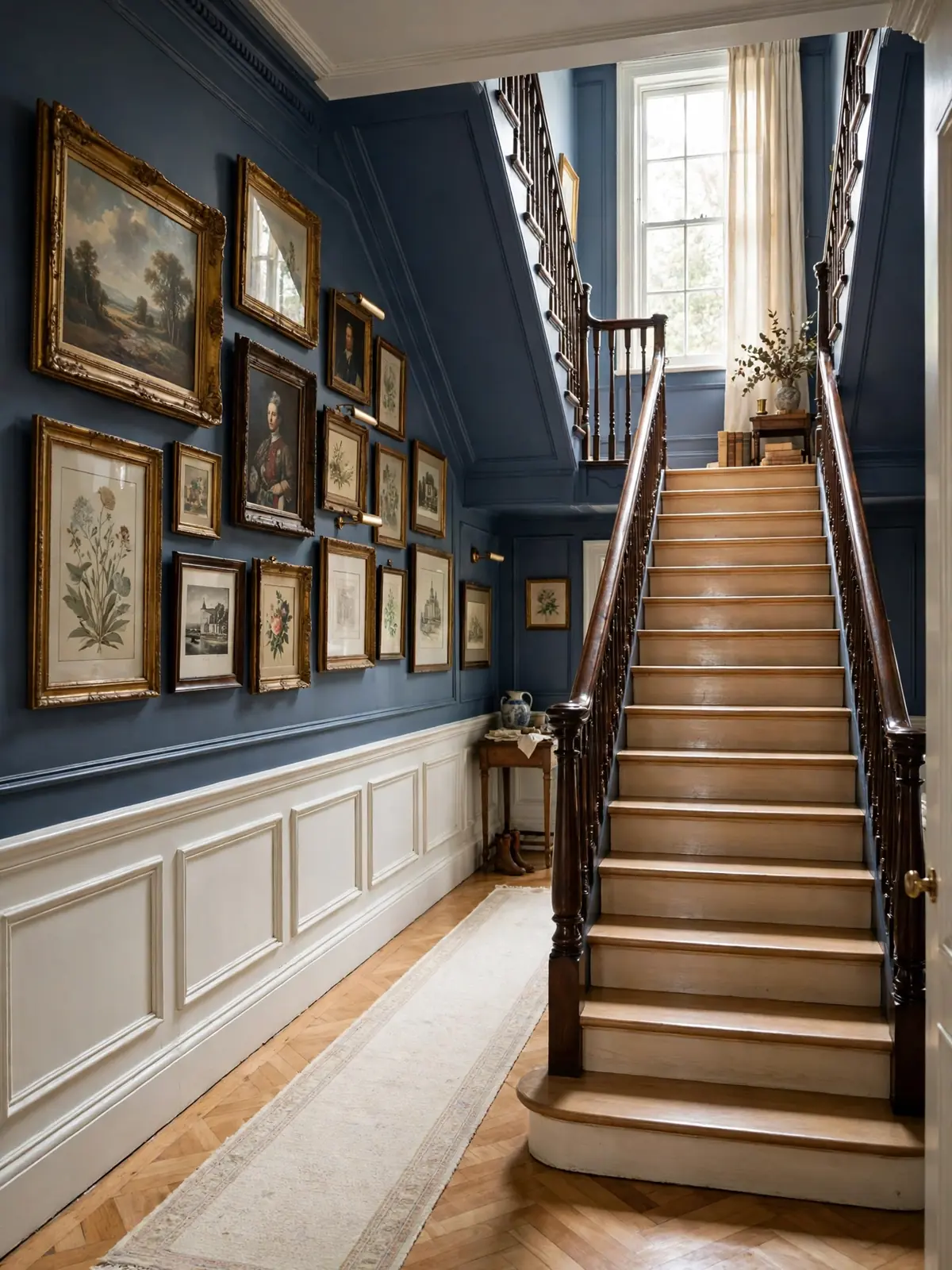
A gallery wall of heritage frames turns the stair wall into a family story, because the frames climb with the steps and every walk upstairs becomes a slow look back at memories. Here, carved wood and antique gold frames in mixed sizes hold old family photos and vintage prints, arranged along the slope of a stair with soft navy walls and pale oak treads. The idea suits any home with photos worth showing, it costs very little, and it fills a tall stair wall that is otherwise hard to decorate. The weakness is clutter — too many frames at random heights looks messy, so plan the layout on the floor first and keep spacing even.
Quick tips:
- Lay frames on the floor before hanging anything.
- Mix carved wood, antique gold and distressed finishes.
- Keep spacing even as the frames climb the slope.
- Use one frame colour twice for a thread of cohesion.
A Patterned Runner in Muted Persian Style
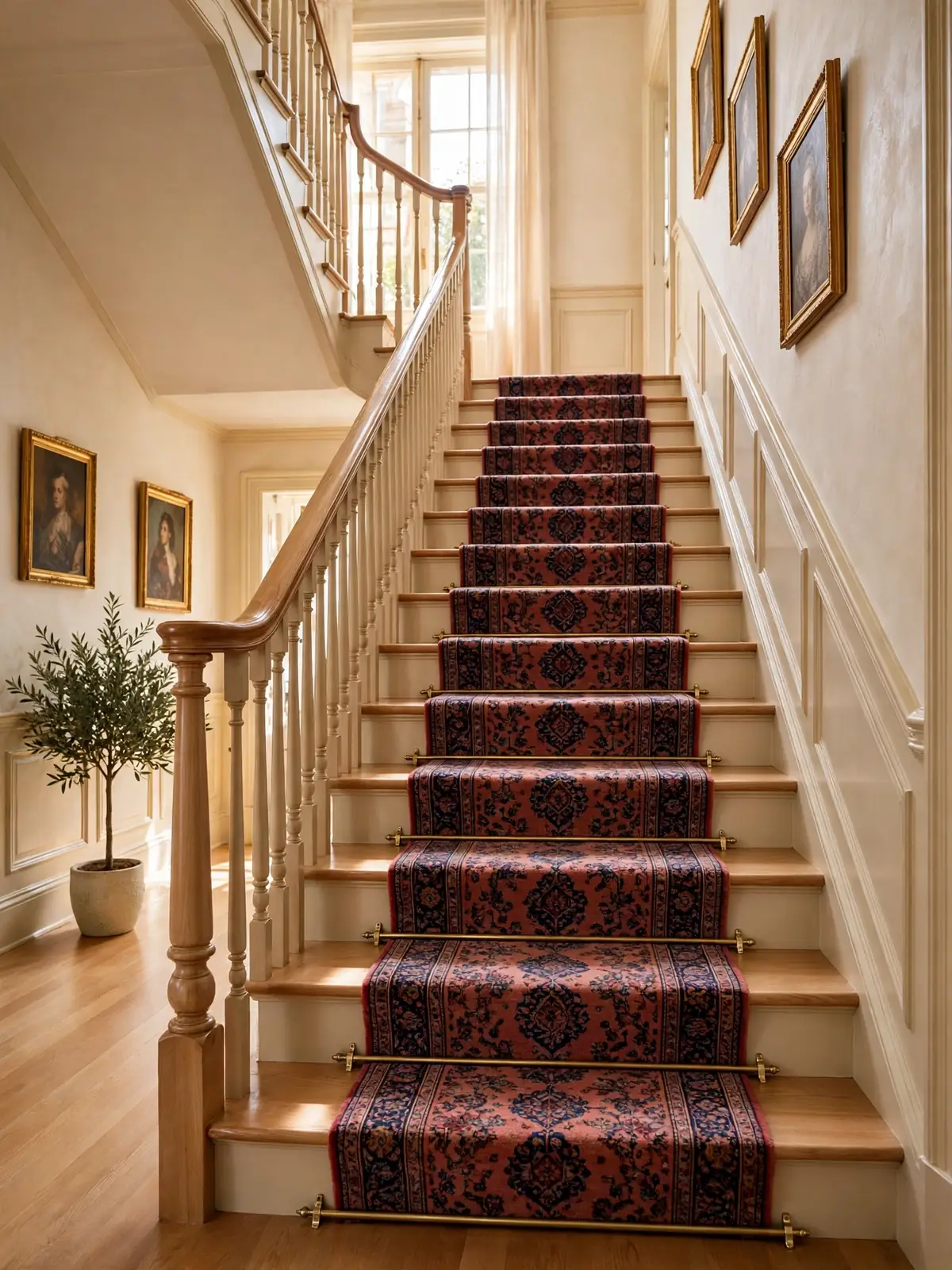
A patterned runner in muted Persian style is the simplest traditional upgrade, because it softens wood, quiets footsteps and adds colour in one move. Here, a deep red and navy runner with a faded medallion pattern runs down the centre of pale wood treads, held by brass stair rods, against soft cream walls. The runner suits family homes — it adds grip, protects the treads and muffles sound — and it is removable, so it is the lowest-risk traditional change you can make. The weakness is cleaning: a light runner shows dirt fast, so choose a low-pile, darker pattern and vacuum it weekly.
Quick tips:
- Choose a low-pile runner so it hugs the steps tightly.
- Use brass stair rods to hold the runner in place.
- Pick muted patterns that hide dust between cleans.
- Add anti-slip padding under the runner.
An Arched Opening at the Stair Entrance
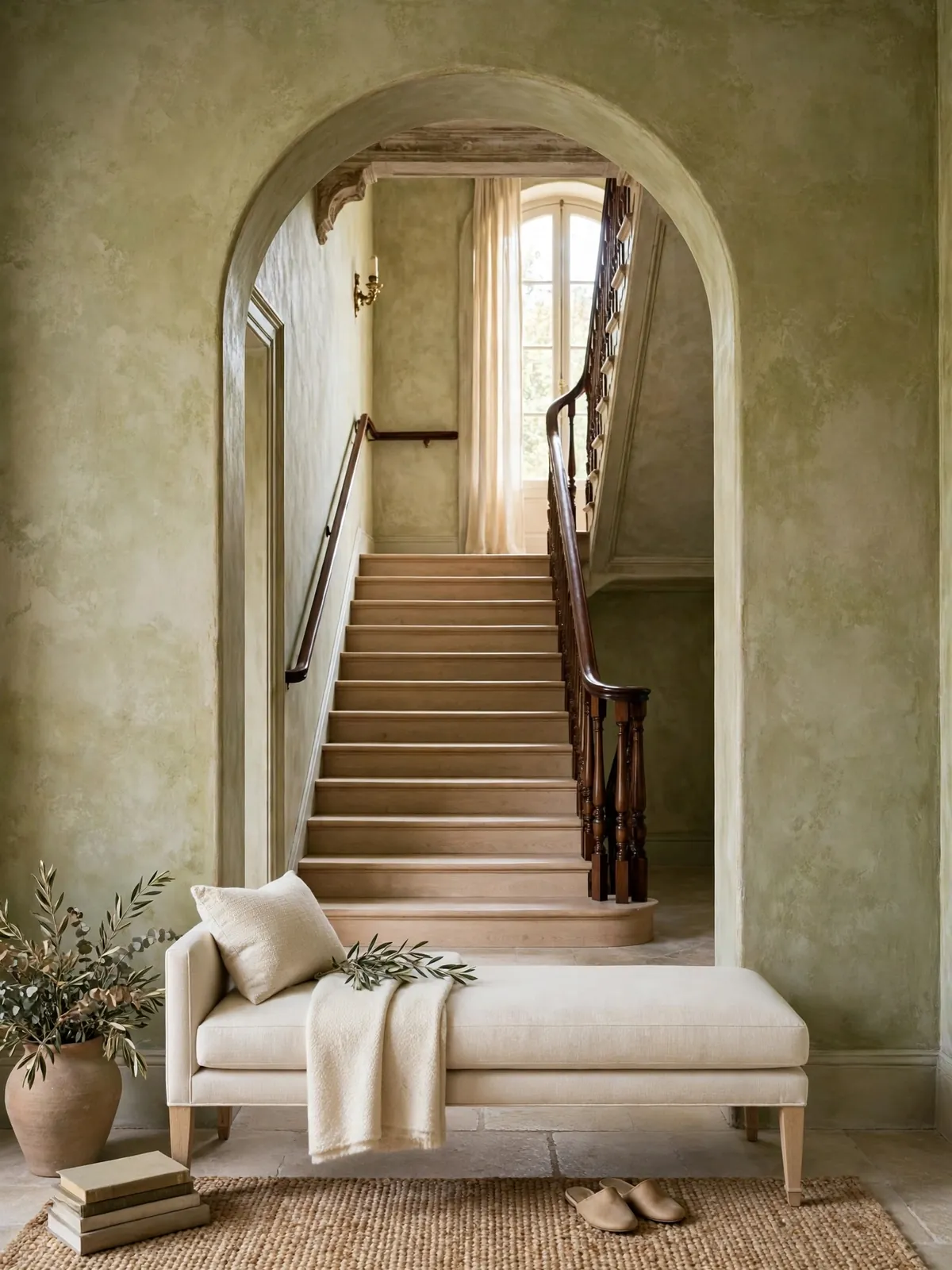
An arched opening at the stair entrance gives a traditional staircase an old-world frame, because the curve softens the hard lines of the stair and makes the whole entry feel like part of an older building. Here, a shallow arch with textured plaster in soft olive frames a stair with a dark walnut handrail and pale oak treads. The idea suits homes that want strong traditional character, it makes even a plain stair feel architectural, and a shallow arch works where a full one will not fit. The weakness is that arches are structural work — they need a builder, not a weekend — and they suit wider entries better than narrow ones.
Quick tips:
- Try a shallow arch if a full arch will not fit.
- Pair the arch with textured plaster for authenticity.
- Keep the wall colour pale so the arch stays light.
- Echo the curve in a mirror or artwork nearby.
Carved Stone Balusters for Grandeur
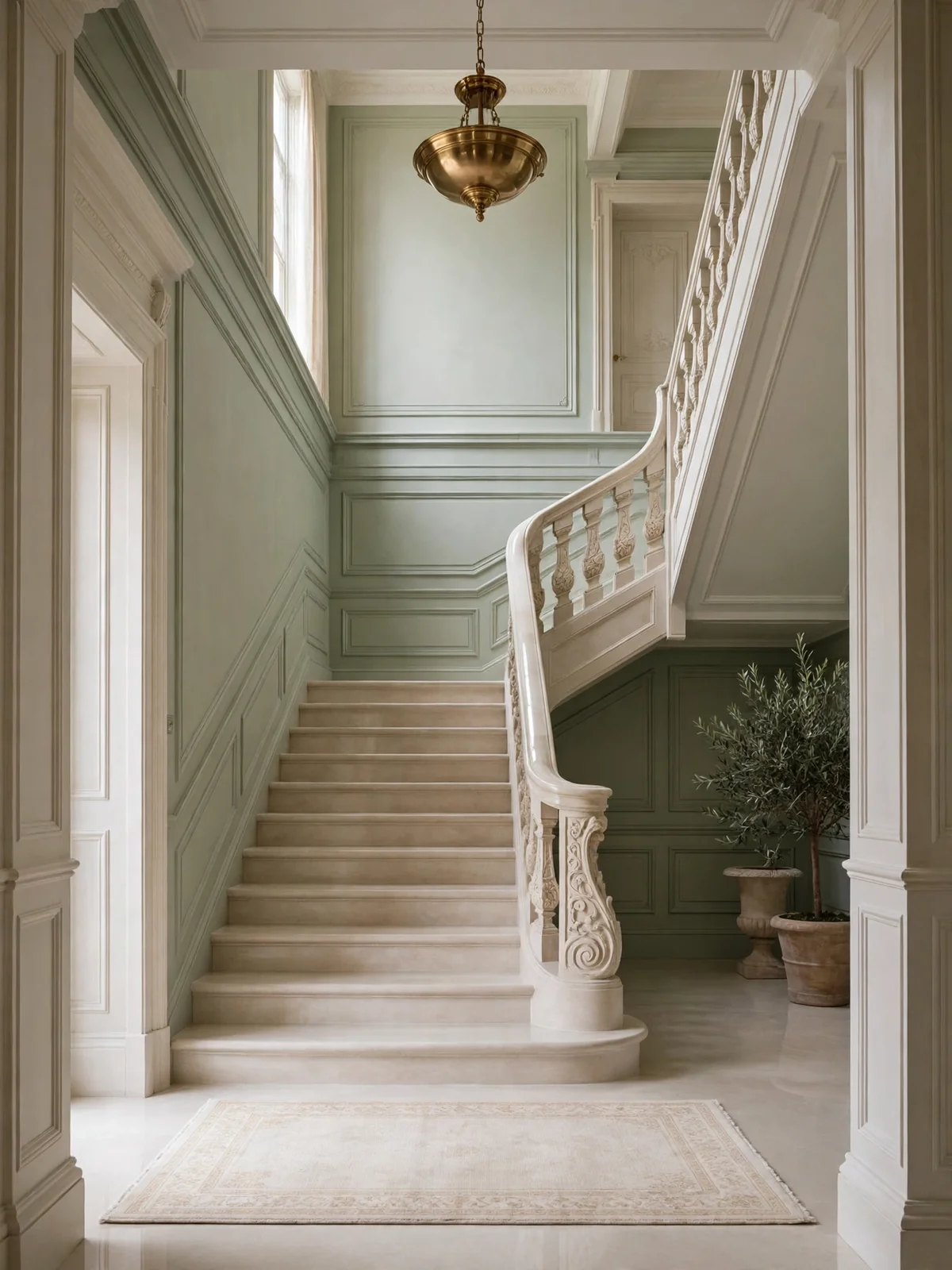
Carved stone balusters turn a staircase into something monumental, because stone carries weight and permanence that wood and iron cannot copy. Here, pale limestone balusters with simple floral carving stand between pale stone steps and a wooden handrail, against soft sage-green walls. The idea suits large entries and period homes, it feels unified when the balusters match the steps, and it becomes the room’s centrepiece. The weakness is cost and weight — carved stone is expensive and needs a strong structure — so it is best for grand homes, not compact ones, and simple carvings age better than fussy ones.
Quick tips:
- Keep carvings simple — geometric or floral, never fussy.
- Match the baluster stone to the steps for unity.
- Check the structure can carry the weight first.
- Use limestone or sandstone for a softer traditional feel.
Muted Heritage Paint on the Risers
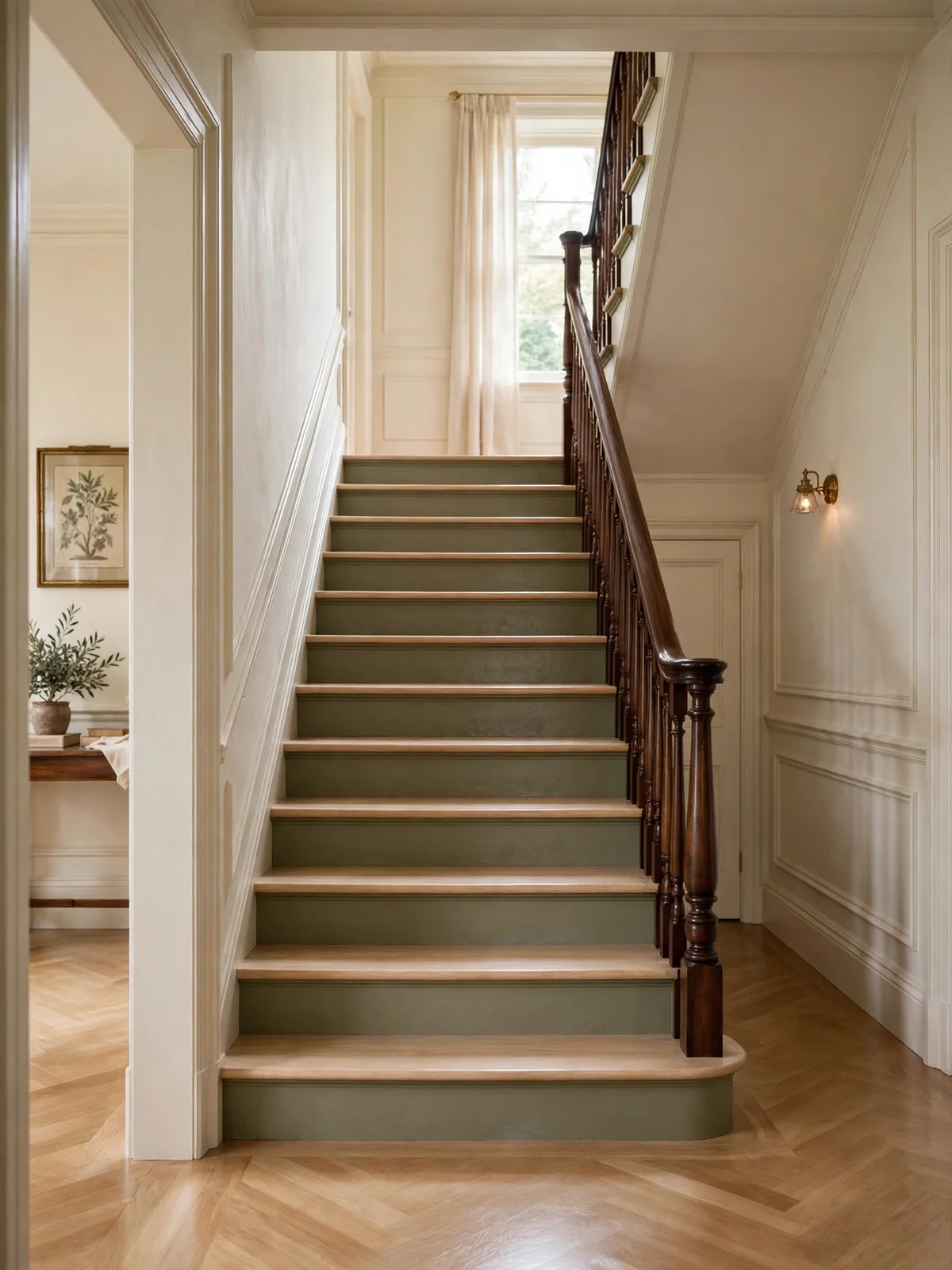
Muted heritage paint on the risers is the cheapest way to give a plain stair a traditional personality, because one tin of paint in olive, rust or indigo changes the whole staircase in an afternoon. Here, olive risers sit beneath pale oak treads, with a dark walnut handrail and soft cream walls keeping the look calm. The idea suits renters and renovators on a budget, it is fully reversible, and it pairs beautifully with a patterned runner. The weakness is durability — paint on risers scuffs where shoes kick — so use a tough satin finish and keep a small tin for touch-ups.
Quick tips:
- Use soft matte or satin paint, never glossy.
- Stick to earthy tones — olive, rust, indigo, faded blue.
- Keep the treads neutral so the colour pops gently.
- Keep a small tin aside for quick touch-ups.
Wooden Wainscoting Along the Stair Wall
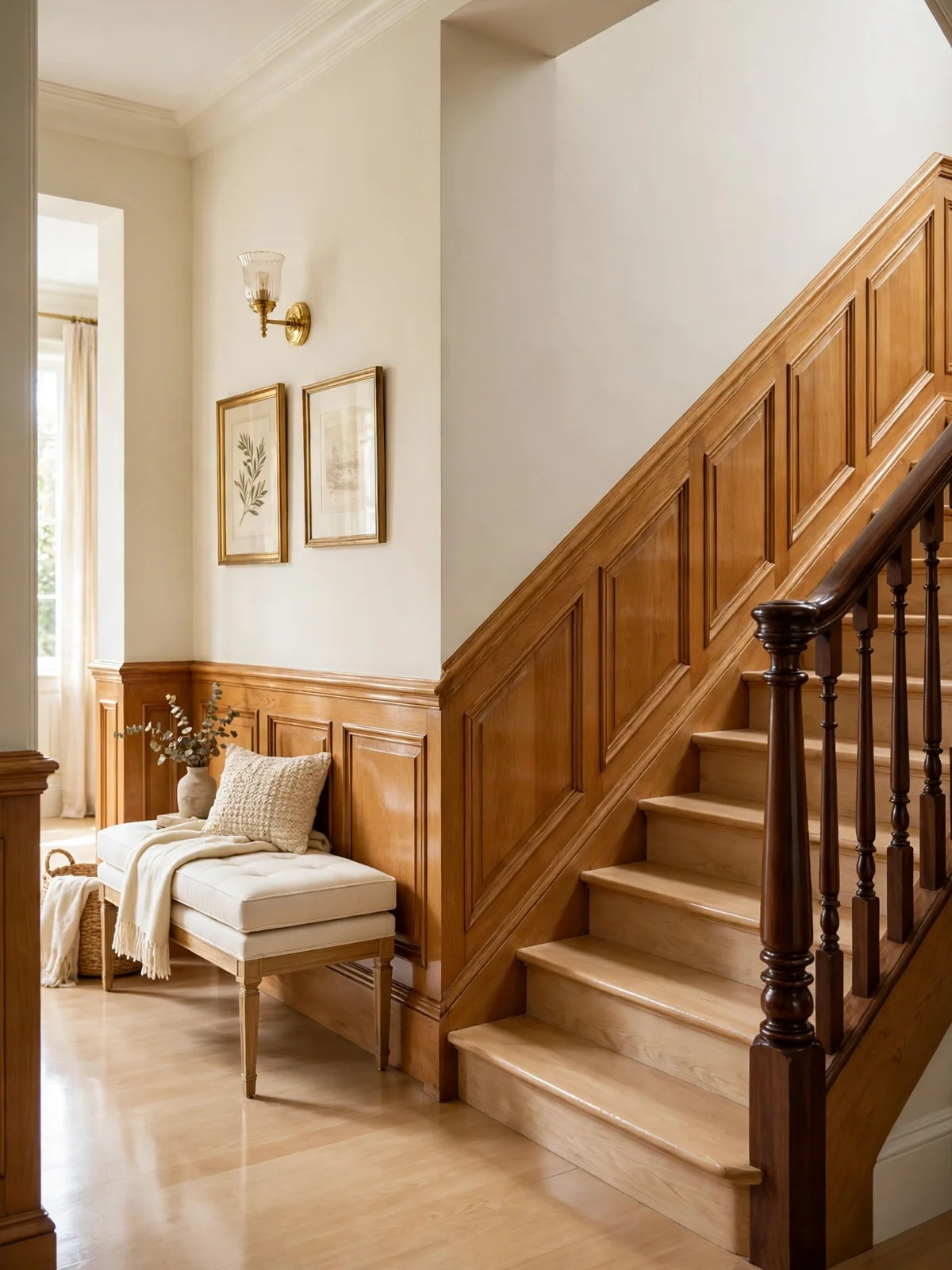
Wooden wainscoting along the stair wall gives a traditional staircase structure and depth, because the panels add rhythm to a flat wall and protect it from scuffs at the same time. Here, honey oak panels run halfway up the stair wall, matched to the handrail timber, with soft ivory walls above and pale oak treads. The idea suits narrow stairs where plain walls feel flat, it makes the stair feel finished and expensive, and it is practical in busy family halls. The weakness is that dark panelling can close in a narrow stairwell, so keep the wood tone warm and the upper wall pale.
Quick tips:
- Match the panel wood tone to the handrail.
- Keep the upper wall pale so the stair stays bright.
- Extend the panelling around the landing for continuity.
- Use a matte varnish so the wood ages gracefully.
Clay Tile Treads for Rustic Character
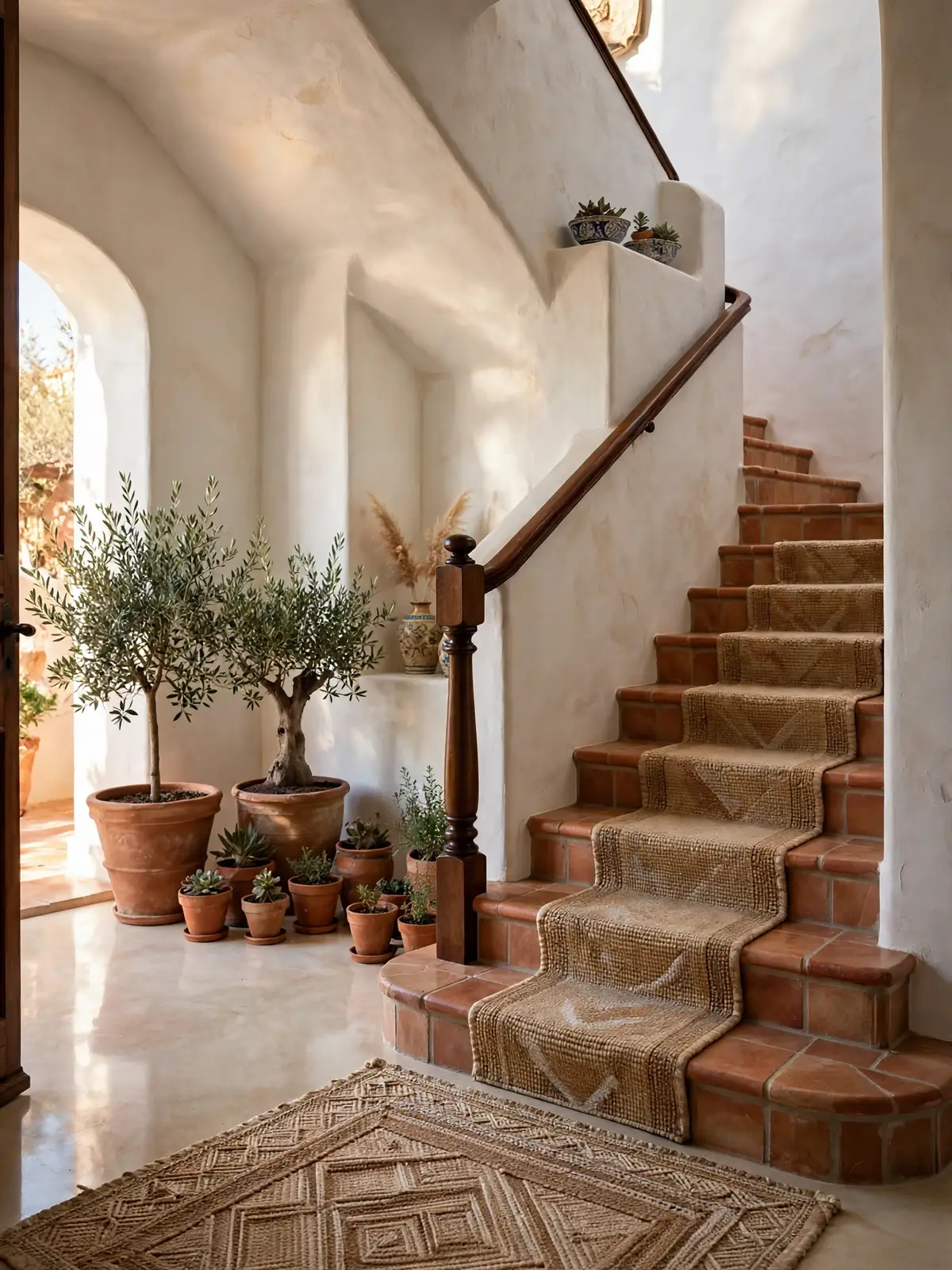
Clay tile treads give a traditional staircase a rustic, hand-made character, because the warm earthy texture and slight colour variation make every step feel crafted rather than manufactured. Here, terracotta clay tiles form the treads, paired with limewashed white walls and a dark wood handrail. The idea suits country homes and semi-covered stairwells, the texture adds grip, and it ages beautifully as the tiles mellow. The weakness is that clay tiles can chip at the edges in heavy traffic, so choose thick tiles and seal them — and they suit warm, dry halls better than damp ones.
Quick tips:
- Pair clay tiles with limewashed walls for a full rustic look.
- Seal the tiles so they resist stains and moisture.
- Choose thick tiles to resist chipping at the edges.
- Add a woven rug at the base for softness.
A Landing Seating Nook With a Wooden Bench
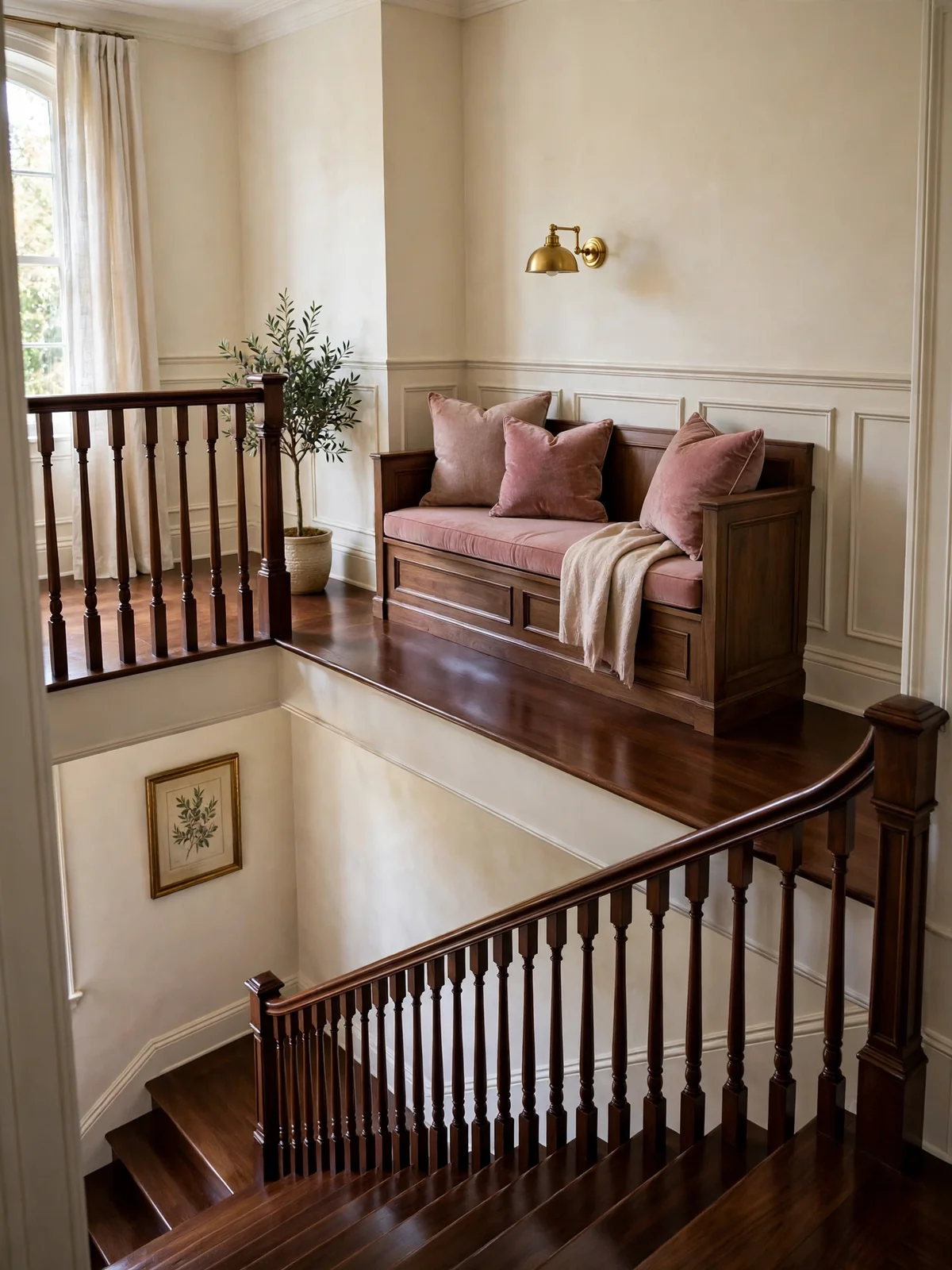
A landing seating nook turns a wasted pause point into the most charming spot in the house, because a small bench with cushions invites you to sit, read or simply look out of the landing window. Here, a wooden bench with dusty rose patterned cushions sits on a wide landing, with a small brass lamp and soft cream walls around it. The idea suits larger homes with wide landings, it makes the stair feel like a room rather than a corridor, and it is an easy weekend project. The weakness is space — a bench needs a landing at least a metre deep — and it can collect clutter, so keep the styling minimal.
Quick tips:
- Choose a bench that fits the landing without blocking the walk.
- Use patterned cushions in traditional fabrics.
- Add a small lamp for evening warmth.
- Keep the nook styled simply so it stays inviting.
A Full Wooden Spiral Staircase
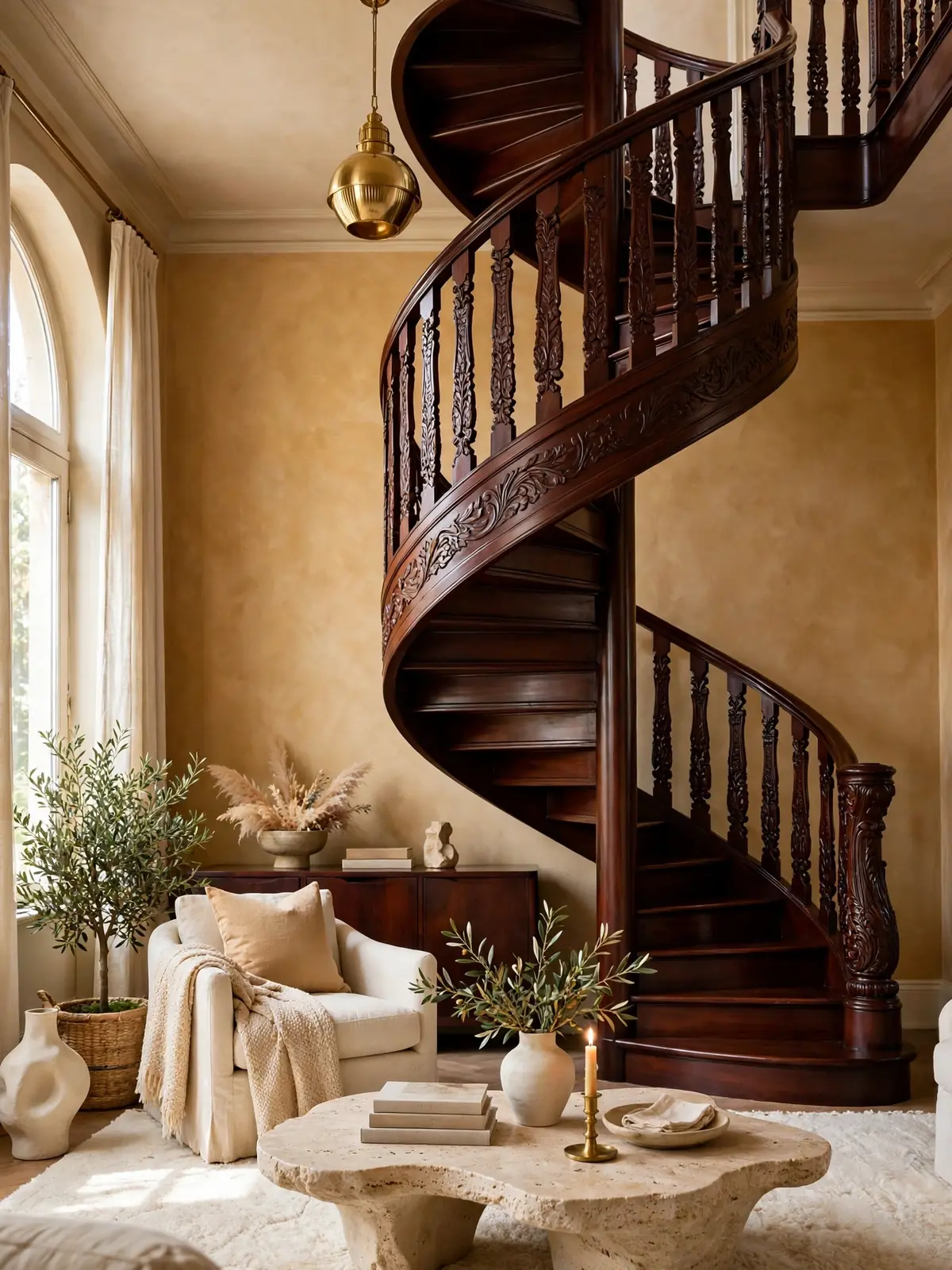
A full wooden spiral staircase feels magical and deeply traditional, because the curving wood wraps around you like a piece of sculpture and saves floor space at the same time. Here, a dark mahogany spiral with carved spindles climbs through a double-height living room, with soft amber walls and a cream rug below. The idea suits compact homes, duplex apartments and library corners, it becomes the room’s centrepiece, and it carries heritage character no straight stair can match. The weakness is practicality — steep spirals are hard to climb daily and impossible for moving furniture — so keep one straight stair elsewhere if you can.
Quick tips:
- Keep the spiral for light daily use, not the main stair.
- Add carved railings or turned spindles for tradition.
- Check tread depth — very steep spirals tire quickly.
- Hang a pendant above the spiral for drama.
Stained Glass at the Landing Window
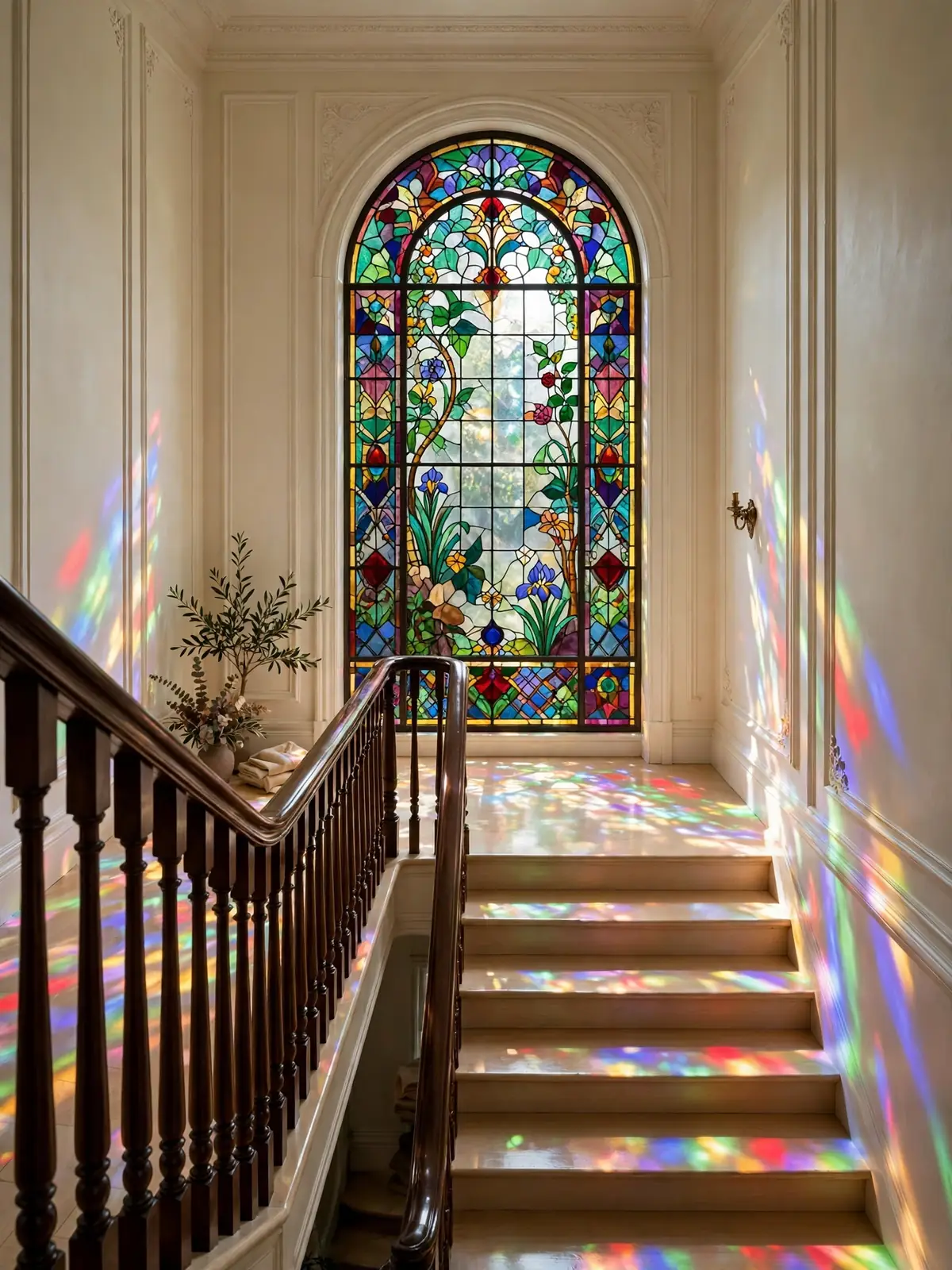
Stained glass at the landing window turns ordinary daylight into colour, because the glass throws jewel-toned patterns across the stair wall that shift through the day. Here, a floral stained glass panel in deep red, blue and gold fills the landing window, with soft cream walls and a dark walnut handrail below. The idea suits any stair with a window nearby, it needs no structural work, and even a small panel transforms the mood of the whole stairwell. The weakness is privacy and light — stained glass reduces clear daylight slightly — and real leaded glass is costly, so a good-quality film or a small panel is a sensible compromise.
Quick tips:
- Choose floral or geometric patterns for classic Victorian feel.
- Try one small panel first if full glass is too costly.
- Keep the surrounding walls pale so the colours glow.
- Clean stained glass gently with a soft cloth.
A Decorative Ceiling Medallion Above the Stairwell
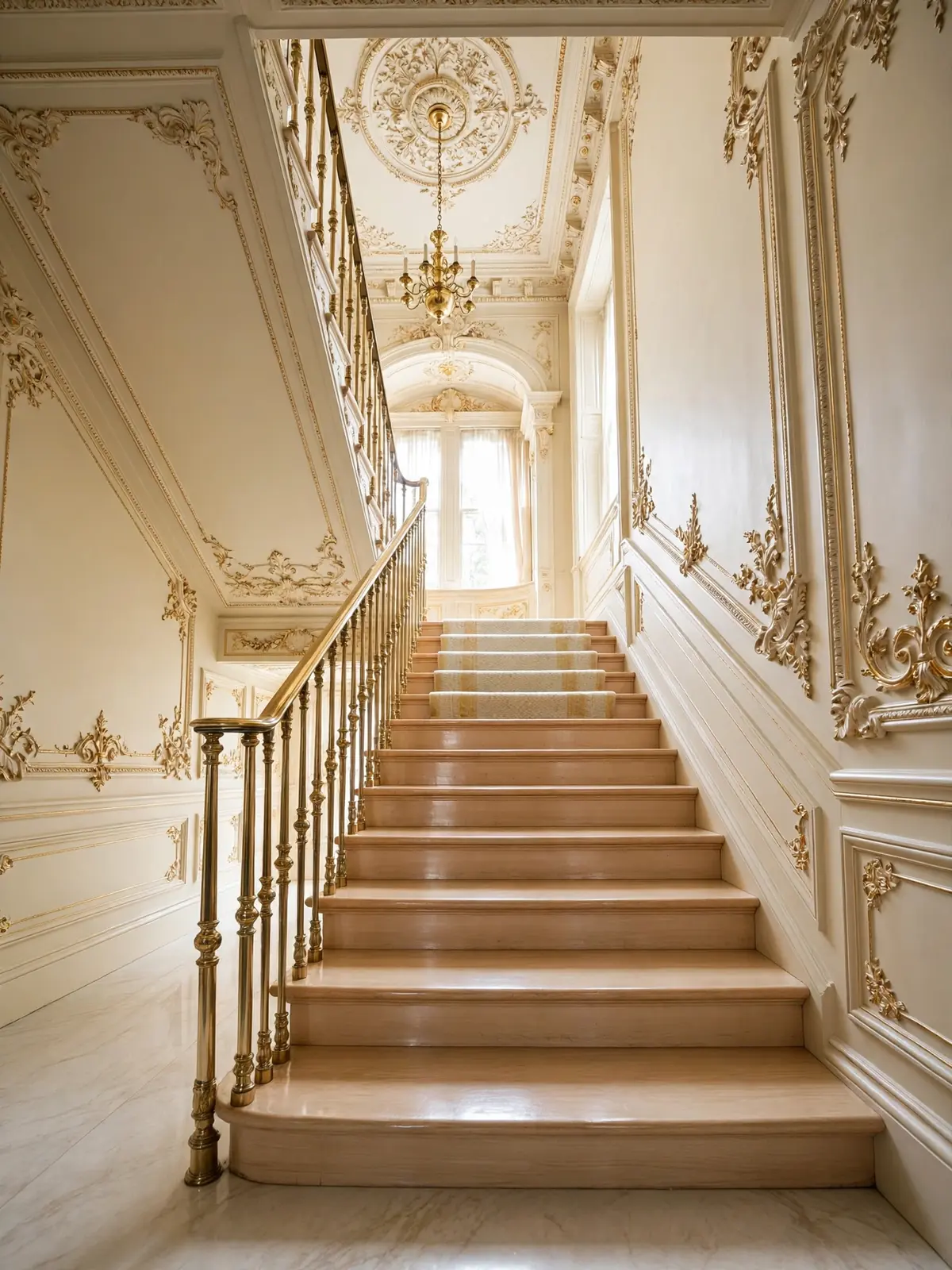
A decorative ceiling medallion above the stairwell is a detail most people never think of, yet it completes a traditional staircase, because it frames the light fixture and draws the eye up to the ceiling the Victorians always decorated. Here, an ivory plaster medallion with gold edging surrounds a brass chandelier above a stair with pale oak treads and soft cream walls. The idea suits any stairwell with a pendant or chandelier, it is a cheap weekend project, and it makes the stair feel finished. The weakness is scale — a medallion too small looks lost, too large looks heavy — so measure the chandelier and choose a medallion slightly wider than its canopy.
Quick tips:
- Choose a medallion slightly wider than the light canopy.
- Paint it ivory with a gold edge for a historic feel.
- Use adhesive and caulk for a clean, secure fit.
- Keep the chandelier simple so the medallion shines.
Damask Wallpaper on the Stair Wall
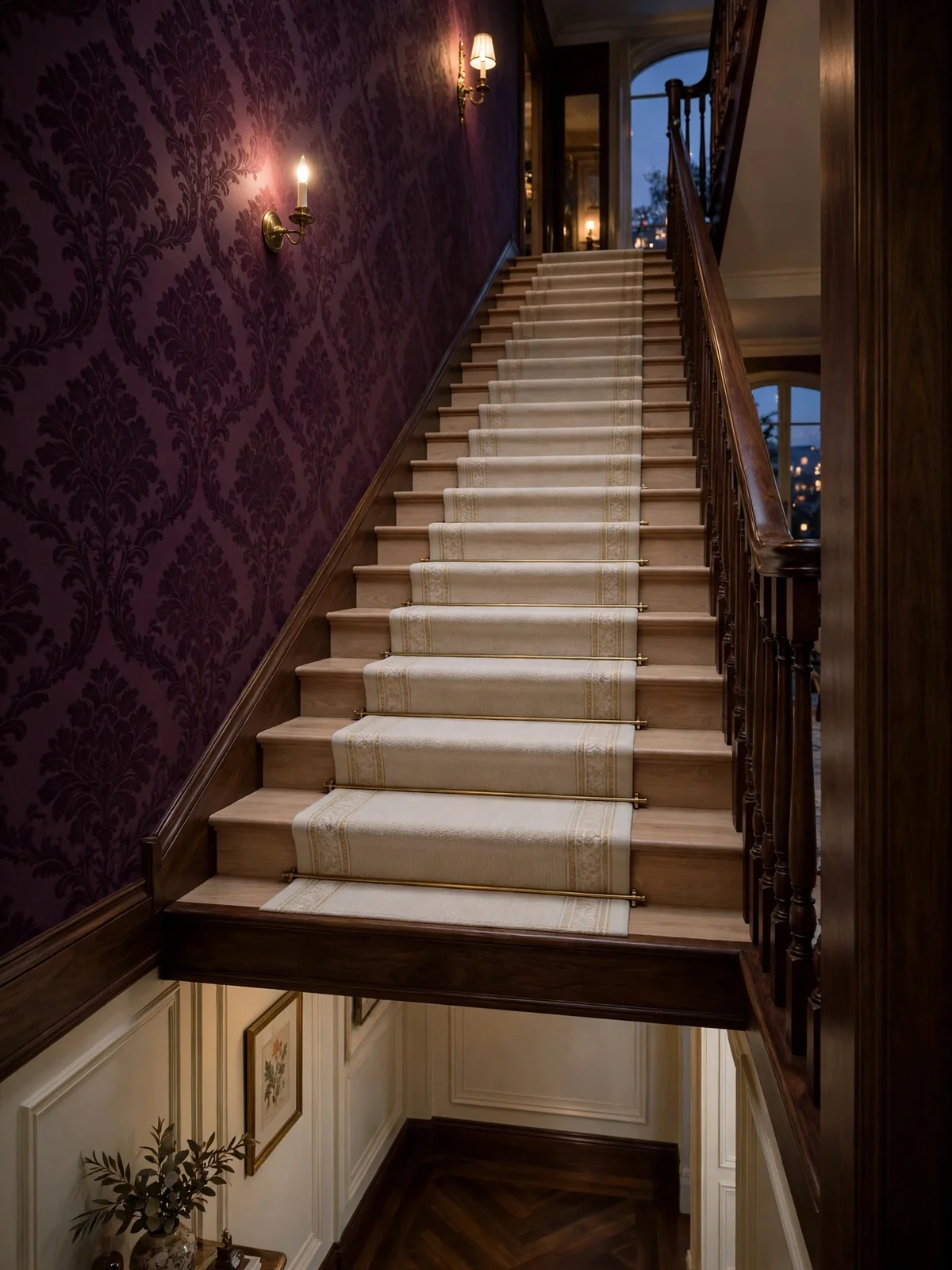
Damask wallpaper on the stair wall makes a traditional staircase feel unapologetically dramatic, because the large repeating pattern turns a plain wall into a showpiece. Here, deep plum damask with a soft sheen covers the stair wall, balanced by a dark walnut handrail, pale oak treads and a cream runner. The idea suits bold homeowners and grand entries, it hides wall imperfections, and it photographs beautifully. The weakness is commitment — damask is a strong pattern that dominates the hall — so keep the rest of the palette quiet and choose a matte finish, because glossy damask can feel dated.
Quick tips:
- Choose a matte finish for a more historic feel.
- Keep the pattern scale large enough for the tall wall.
- Align the pattern carefully at corners and edges.
- Balance damask with plain walls elsewhere in the hall.
Velvet Drapery Framing the Stair Window
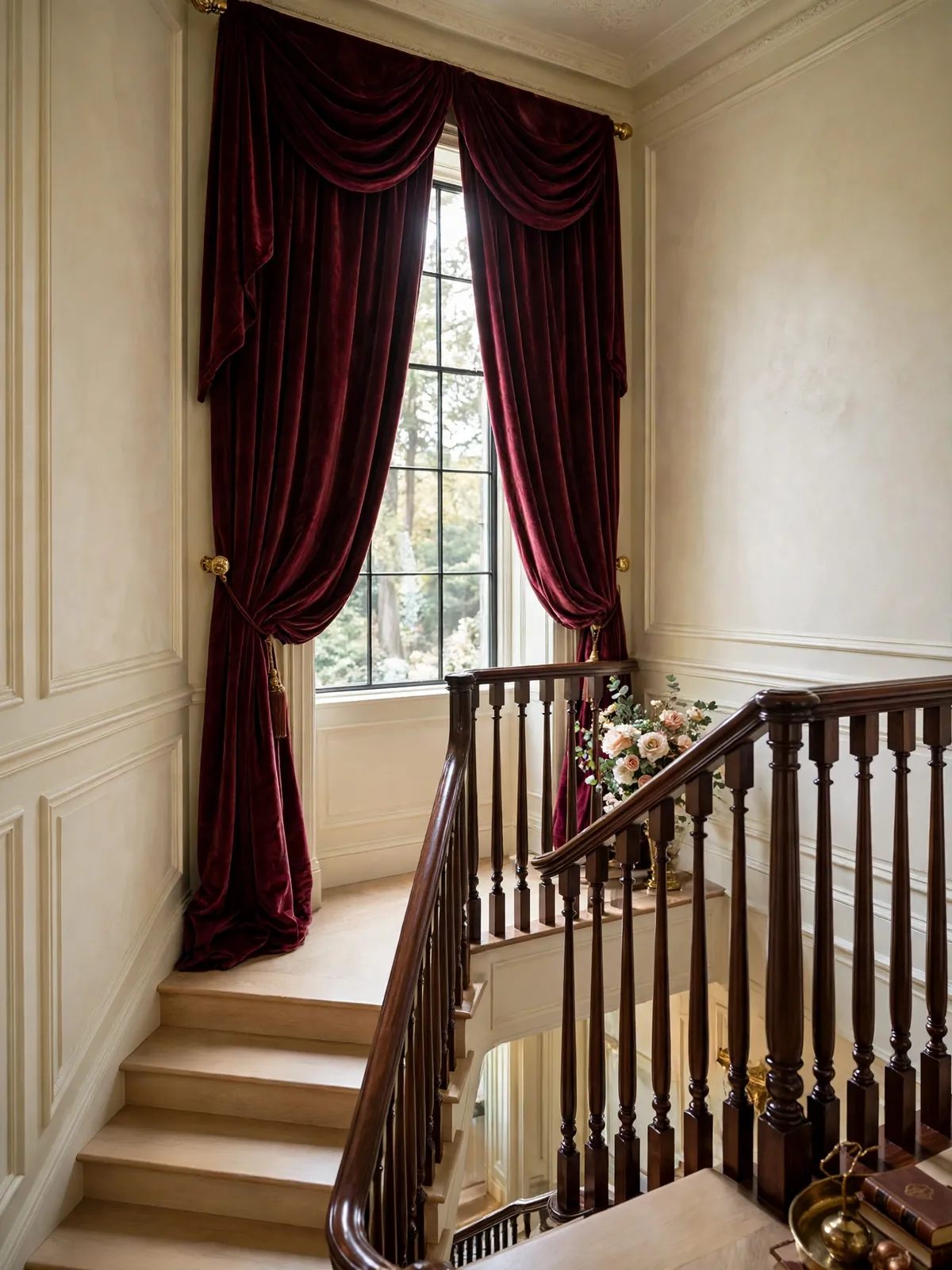
Velvet drapery framing the stair window adds theatre to a traditional staircase, because heavy fabric pooling slightly at the floor makes the stairwell feel like a grand house rather than a hallway. Here, deep burgundy velvet curtains with brass tiebacks frame a tall landing window, with soft cream walls and pale oak treads below. The idea suits homes with large stair windows, it insulates against draughts, and it brings colour and softness to hard wood and plaster. The weakness is upkeep — velvet collects dust and needs dry cleaning — and it can darken a small stairwell, so keep it for stairwells with generous light.
Quick tips:
- Let the velvet pool slightly at the floor for drama.
- Use brass tiebacks to hold the curtains in shape.
- Choose deep burgundy or emerald for Victorian luxury.
- Vacuum velvet gently to keep dust down.
Traditional Staircase Ideas That Make Heritage Feel Like Home
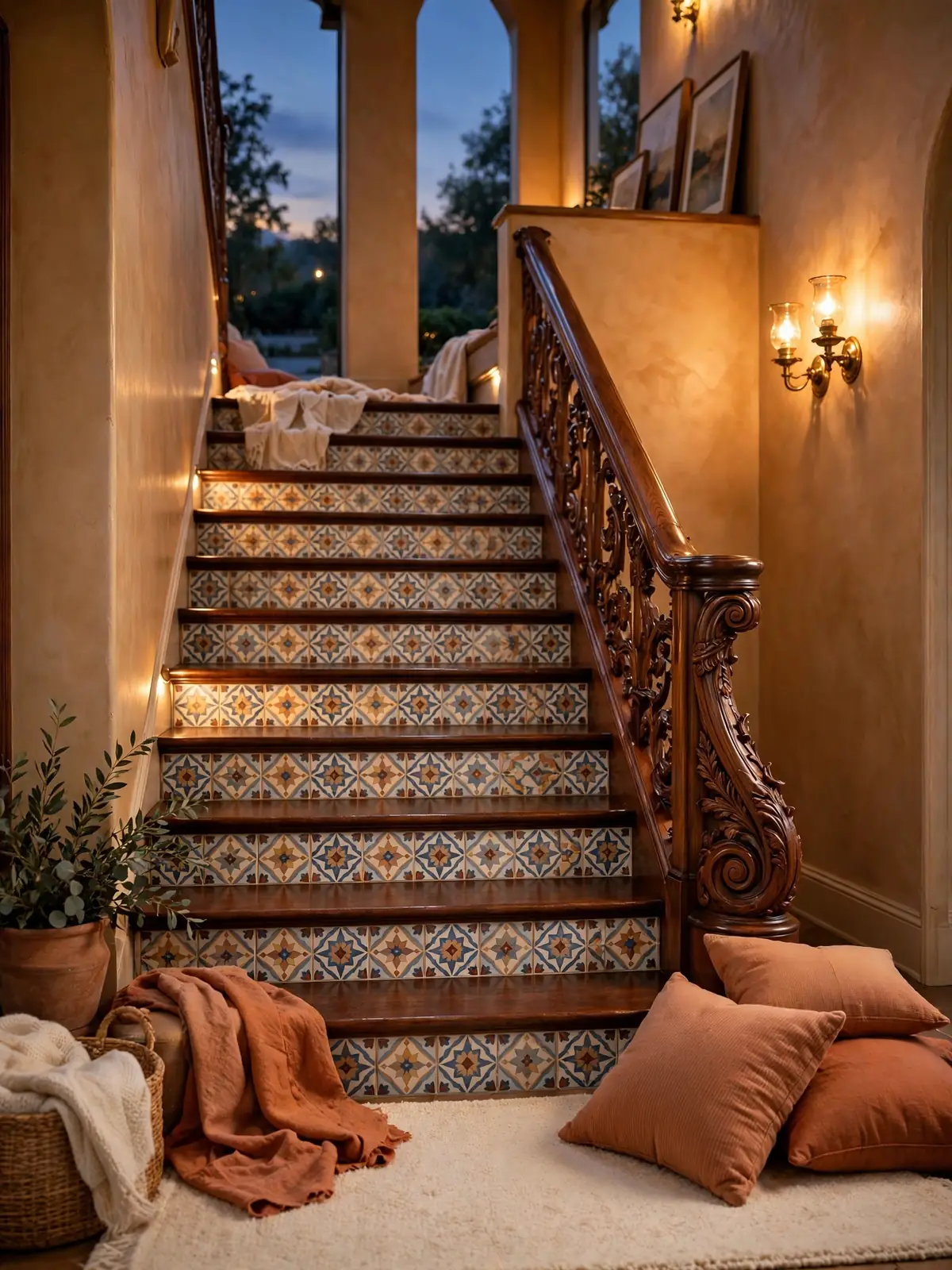
The last of these traditional staircase ideas is the principle behind them all: heritage feels like home when craft, warmth and light work together. Here, a carved walnut handrail, patterned tile risers, a cream runner and warm brass sconces come together on a stair with warm honey walls, a cream rug and terracotta cushions on a bench. The wood gives the stair its warmth, the tiles give it art, the brass gives it glow, and the textiles soften every hard edge — and that combination is the real lesson of a traditional staircase. Start with one idea, live with it, then add the next.
Quick tips:
- Warm wood with brass, textiles and soft light.
- Add one patterned element — tiles, runner or wallpaper.
- Keep one colour pale so the rich tones can breathe.
- Let the stair age — traditional materials only get better.
FAQs
How do I make a plain staircase look traditional on a budget?
Paint the risers in muted heritage tones, add a patterned runner with brass stair rods, and hang brass sconces on the stair wall. These three changes cost little, need no structural work, and give a plain stair a traditional character in a weekend. A carved newel cap or turned spindles can follow later when the budget allows.
What wood is best for a traditional staircase?
Oak, walnut and mahogany are the classic choices. Oak is durable and takes stain well, walnut gives the richest dark colour for carved handrails, and mahogany suits grand period homes. For painted traditional stairs, a good hardwood painted in cream or heritage tones works just as well and costs less.
Are patterned tile risers practical in a family home?
Yes, if you choose the right tiles and seal them. Encaustic-style tiles or glazed ceramic tiles wipe clean easily and resist scuffs, while unsealed tiles stain. Keep the pattern muted so it ages well, and keep the treads plain wood so the stair does not feel busy underfoot.
Can a traditional staircase work in a small home?
Yes. Choose one or two traditional details rather than all of them — a carved handrail, a patterned runner or brass sconces — and keep the walls pale and the spindles slim. A wooden spiral or a runner with light spindles suits small homes best, while carved stone balusters and heavy damask suit larger entries.
How do I maintain a traditional wooden staircase?
Dust the handrail and spindles weekly, oil the handrail once or twice a year so it stays smooth, and vacuum a runner weekly. Touch up painted risers promptly, check brass fittings yearly for tarnish, and reseal stone or tile risers every couple of years. Traditional materials reward simple, regular care.
Conclusion
A traditional staircase is more than a way upstairs: it is the backbone of a home’s character. Whether you choose a carved wooden handrail, patterned tile risers, wrought iron scrollwork, a terracotta base, brass sconces, stone steps, a gallery wall, a patterned runner or simply a coat of heritage paint on the risers, the best traditional staircase is the one that suits your home, your budget and the way your family lives. Start with the detail you touch every day, add warmth with wood and light, keep the safety details right, and your stair will feel like it has always belonged in your home.