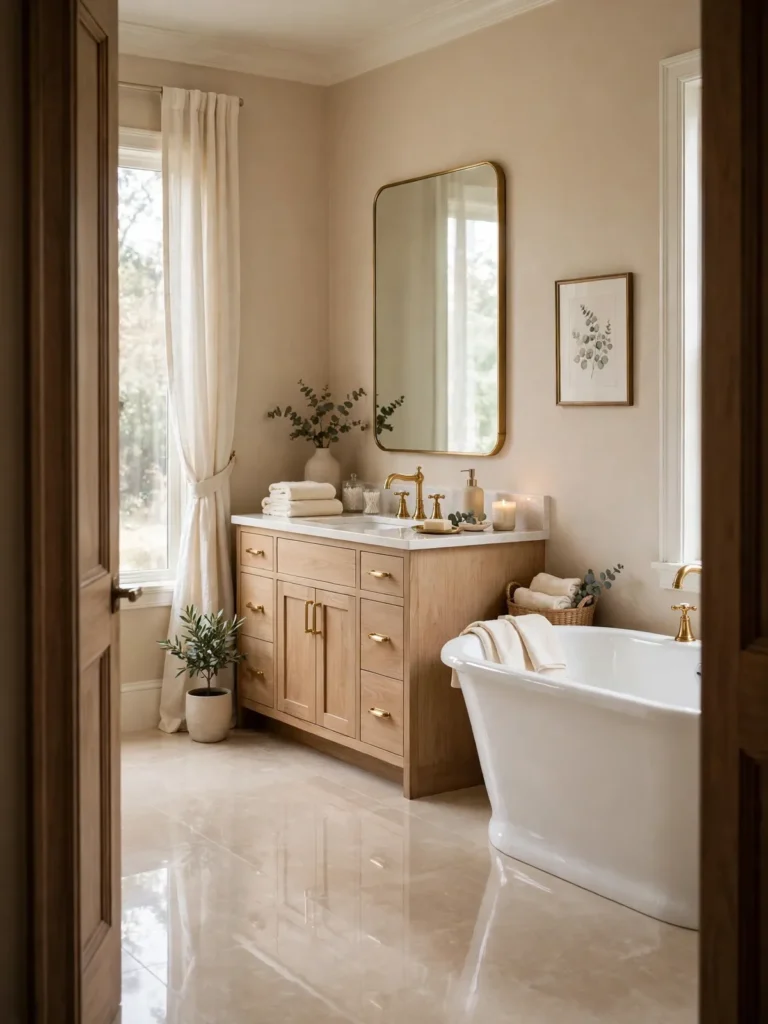
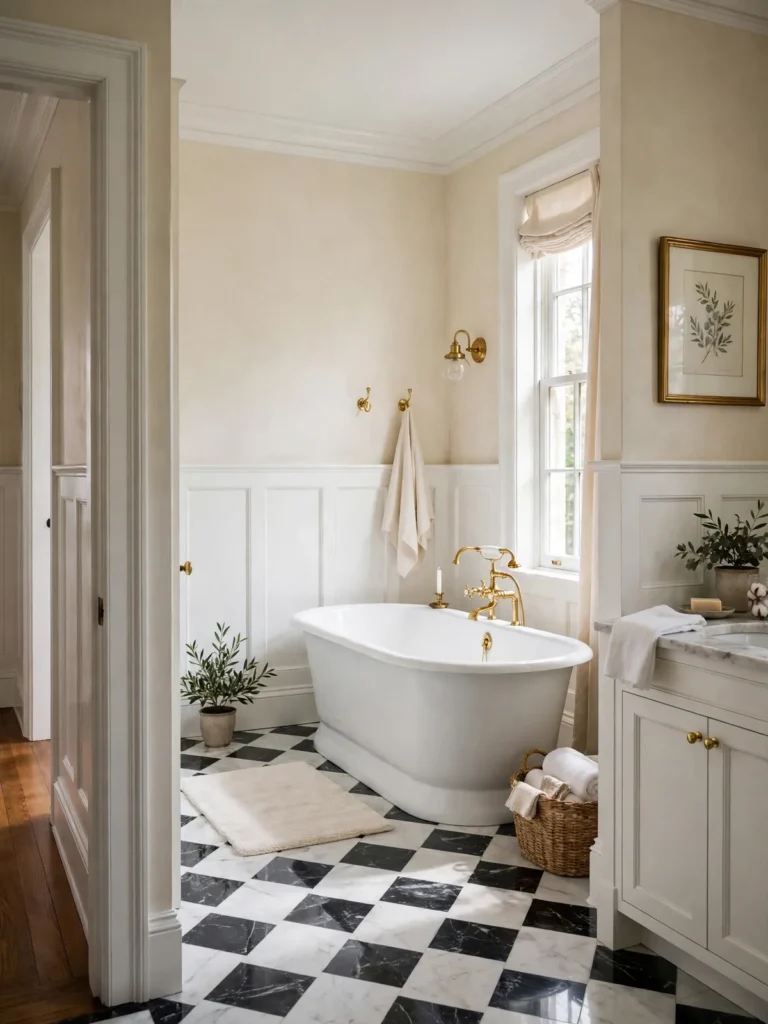
22 Stunning Spa Bathroom Ideas That Turn Your Home Into a Private Retreat
A spa bathroom is not about square footage or a big budget — it is about the feeling you get the moment you walk in. These 22 spa bathroom ideas cover soaking tubs, rain showers, steam, scent, sound, lighting, natural materials and small daily rituals, so you can turn an ordinary bathroom into a calm private retreat without a full renovation.
The best spa bathroom ideas work on all five senses at once: warm water on skin, soft light at the mirror, a calm scent in the air, a quiet room, and natural textures underfoot. A spa bathroom does not need a hotel budget — a freestanding tub, a rain shower head, warm dimmable lighting and a few rolled towels can change the whole feeling of the room.
If you want the room to feel luxurious as well as relaxing, these modern luxury bathroom ideas show how to layer premium finishes into the same calm mood. The 22 ideas below cover tubs, showers, steam, scent, sound, lighting and styling, with a style guide in the middle, so you can build a spa bathroom that fits your space, your budget and the way you actually unwind.
Key Takeaways
What makes a bathroom feel like a spa?
A bathroom feels like a spa when it works on all five senses — warm water, soft layered lighting, a calm scent, quiet, and natural textures like wood and stone. Pick one strong focal point, such as a freestanding tub or a rain shower, then layer the smaller comforts around it.
How can I create a spa bathroom on a budget?
Start with the changes that cost least and show most: warm bulbs, rolled towels in a basket, a candle or reed diffuser, a pebble or teak bath mat, and a rain shower head. Repaint in a warm neutral, and the room feels like a retreat before you spend anything on fixtures.
What colour is best for a spa bathroom?
Soft warm neutrals with one natural accent work best for a spa bathroom, because they calm the eye and suit every fixture. Warm white, sage, dusty blue or pale stone with teak, travertine or brushed brass accents feel serene; save dark moody colours for one feature wall or a single statement piece.
Do I need a big bathroom to make it spa-like?
No — a small bathroom can feel more spa-like than a large one, because a compact room is easier to warm, scent and light softly. Use a large mirror, pale walls, a floating vanity and a glass shower screen, and layer texture and scent instead of adding more fixtures.
How do I keep a spa bathroom relaxing every day?
Keep a small daily ritual: clear the counter, roll fresh towels, light a candle or start the diffuser, and run the shower for a minute before you step in. A weekly reset — clean the grout, wash the bath mat, refill the dispensers — keeps the room feeling like a spa rather than a chore.
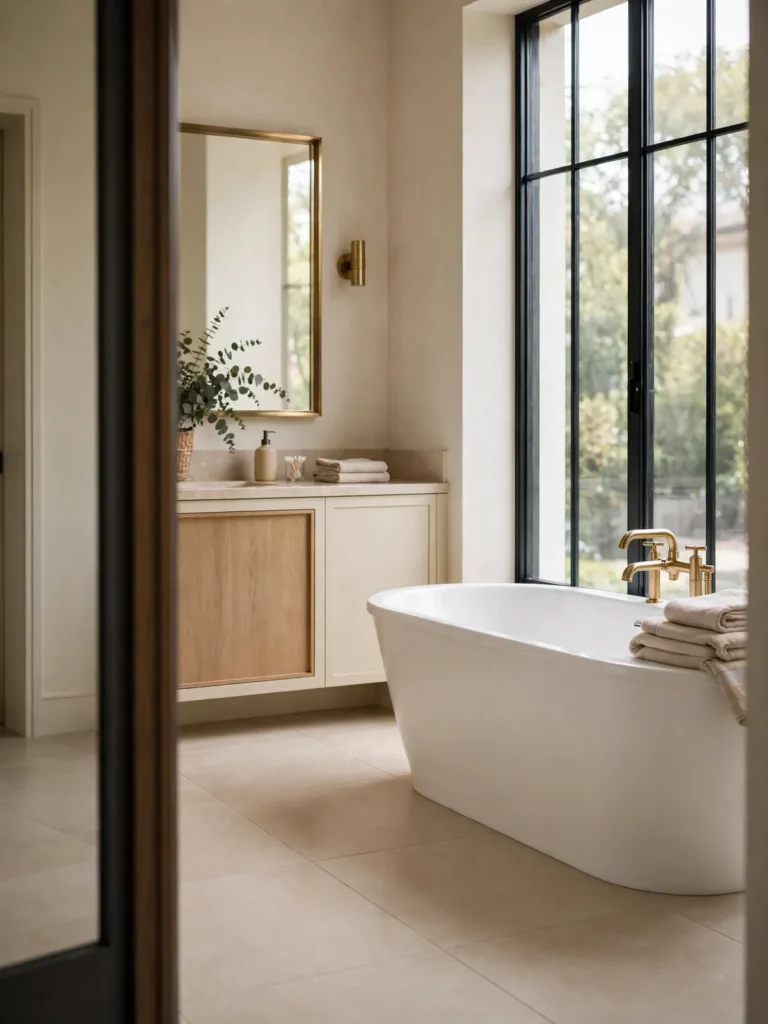
A Freestanding Oval Tub as the Room’s Centrepiece
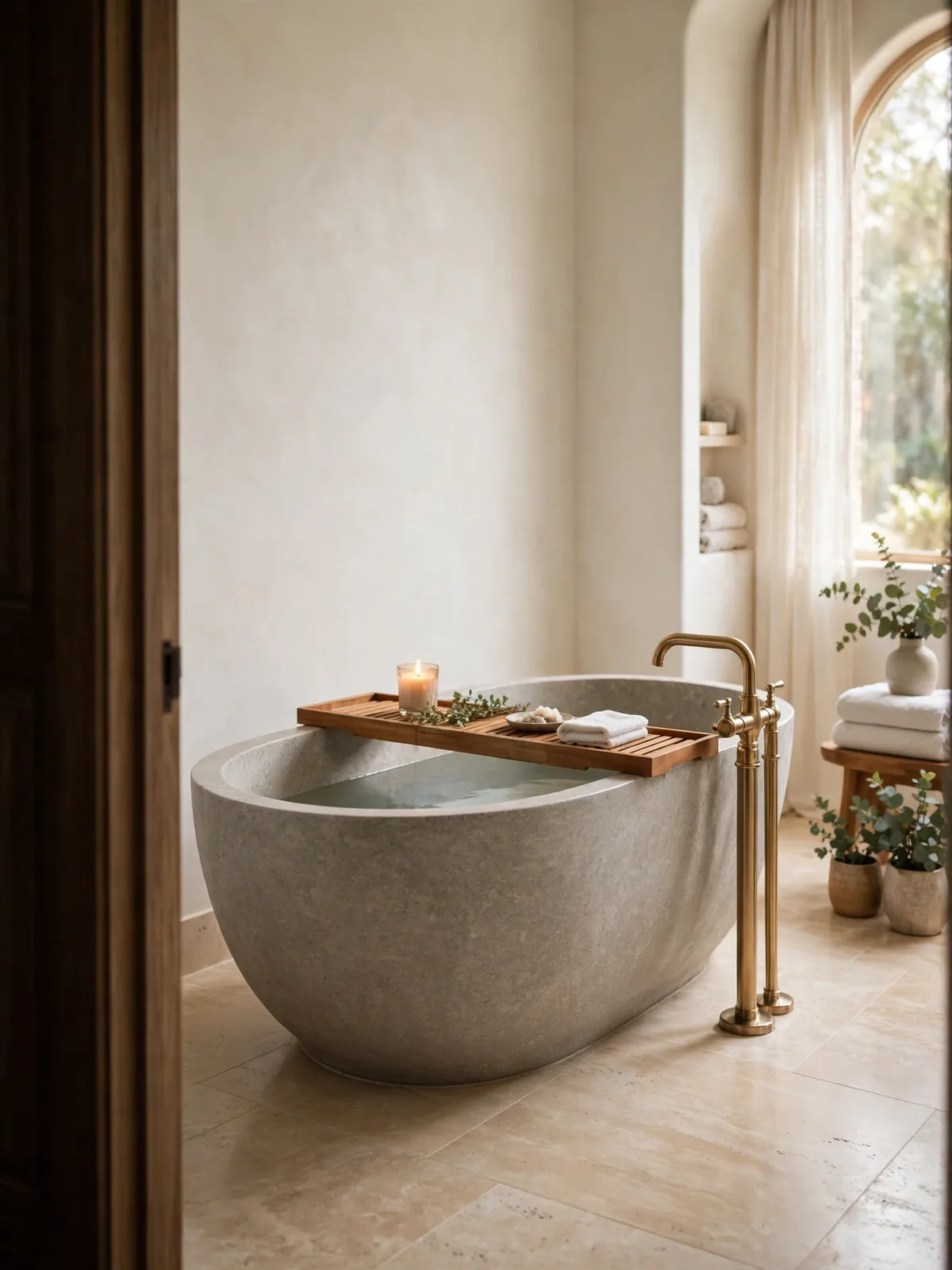
A freestanding oval tub turns a spa bathroom from a functional room into a retreat, because the tub stops being a fixture and becomes sculpture that the whole room is arranged around. Here, a white stone oval tub sits on a pale travertine floor against warm white walls, with a teak bath tray holding a candle and a brushed brass floor-mounted tap completing the scene. The design suits anyone who soaks to unwind, it becomes the room’s focal point on its own, and it photographs beautifully. The weakness is space and plumbing: a freestanding tub needs floor area and a floor-mounted tap, so it suits larger bathrooms or a renovation rather than a quick swap.
Quick tips:
- Give the tub breathing room on all sides so it reads as sculpture.
- Add a teak bath tray for a book, candle or glass.
- Choose a floor-mounted tap in brass or matte black.
- Check the floor can take the weight of a filled stone tub.
A Rain Shower Head That Feels Like Warm Summer Rain
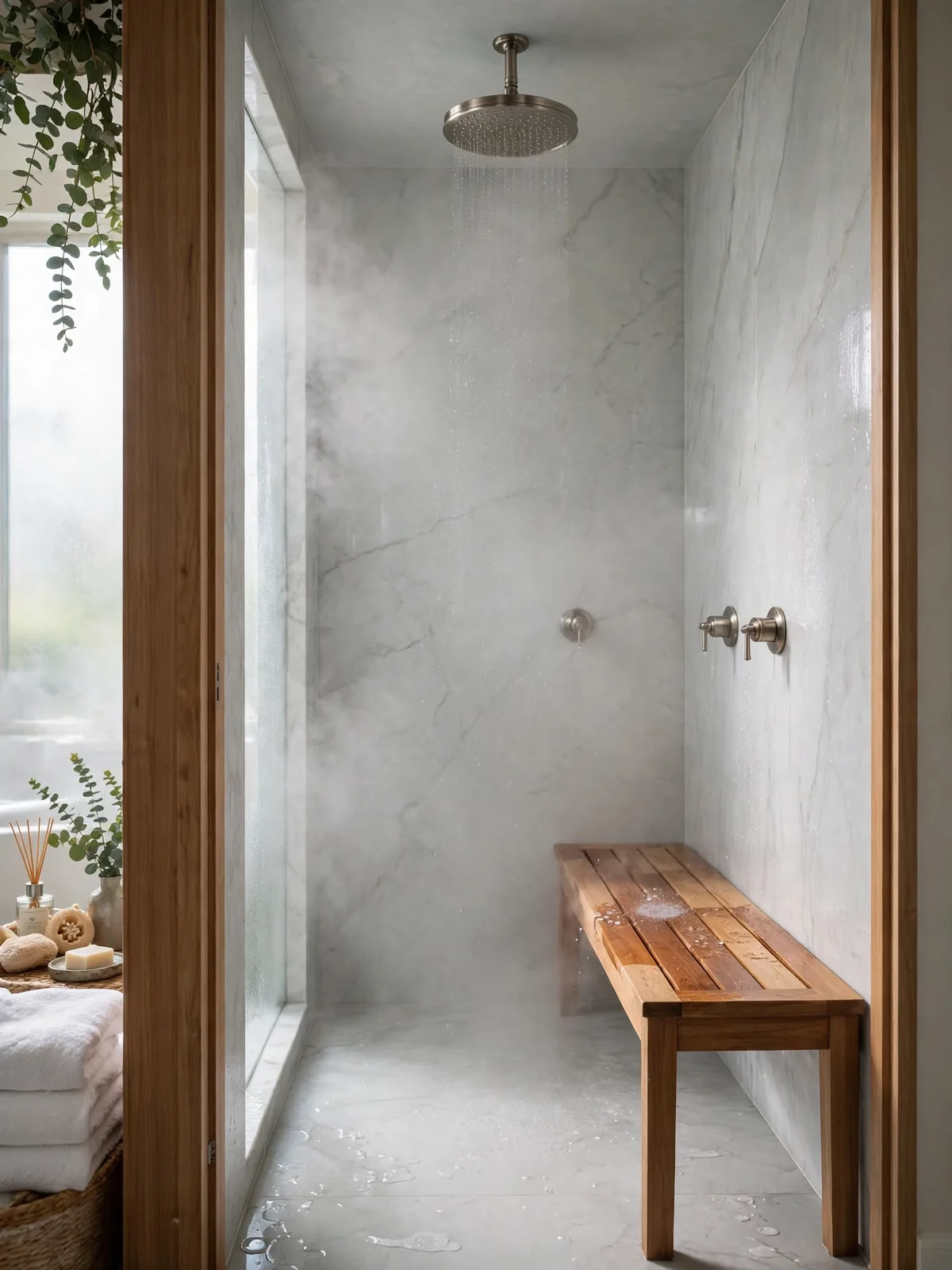
A rain shower head is the single most spa-like change you can make to a shower, because wide, gentle water falling from above feels completely different from a narrow jet hitting you from the side. Here, a large ceiling-mounted rain head pours over pale grey marble tiles, with a teak bench and brushed nickel fixtures warming the space. The design suits daily shower users who want a spa feeling without a tub, it is a straightforward swap in most bathrooms, and it pairs beautifully with a handheld head. The weakness is water pressure: a rain head needs good flow to feel generous, so check your pressure first or add a booster.
Quick tips:
- Mount the rain head on the ceiling, not the wall, for the full effect.
- Pair it with a handheld head on a slide bar.
- Check your water pressure before you buy.
- Choose a large head, at least 25 cm across, for even coverage.
Warm Layered Lighting Instead of One Harsh Ceiling Light
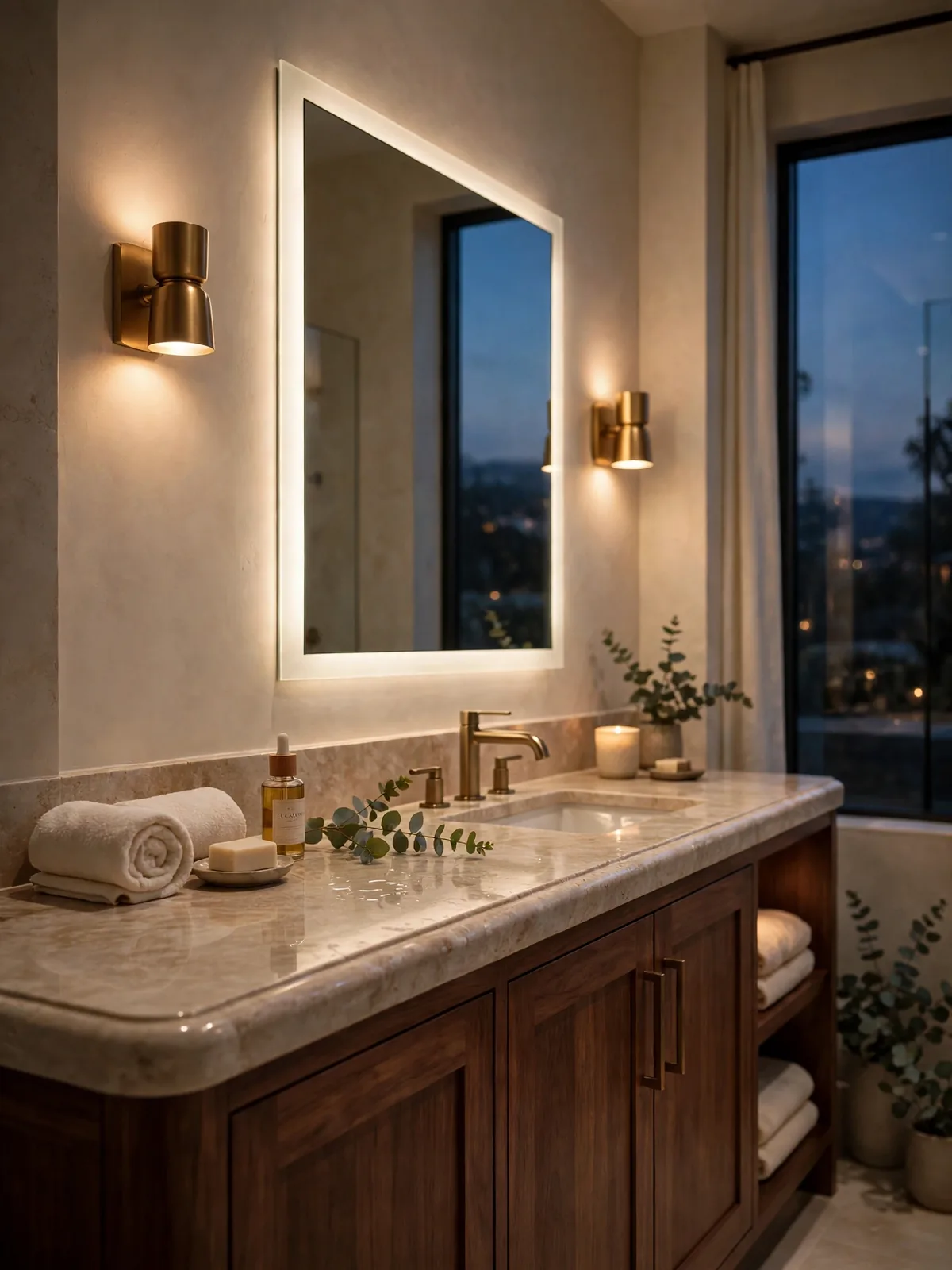
Layered lighting is what separates a spa bathroom from an ordinary one, because one harsh ceiling light flattens everything, while warm sconces, a backlit mirror and a dimmer let you set the mood for a morning rush or a slow evening soak. Here, dimmable sconces flank a backlit mirror above a stone vanity, with cream walls and walnut cabinetry glowing in the warm light. The design suits every spa bathroom, it flatters everyone who looks in the mirror, and it costs far less than new fixtures. The weakness is wiring: adding sconces or a dimmer in a finished wall needs an electrician, so plan it during a renovation or use plug-in options.
Quick tips:
- Use warm bulbs around 2700K for a flattering glow.
- Put the mirror light at face level, not above it.
- Add a dimmer so you can lower the light for a soak.
- Mix two or three light sources instead of one overhead fitting.
Natural Stone Tiles That Bring the Spa Home
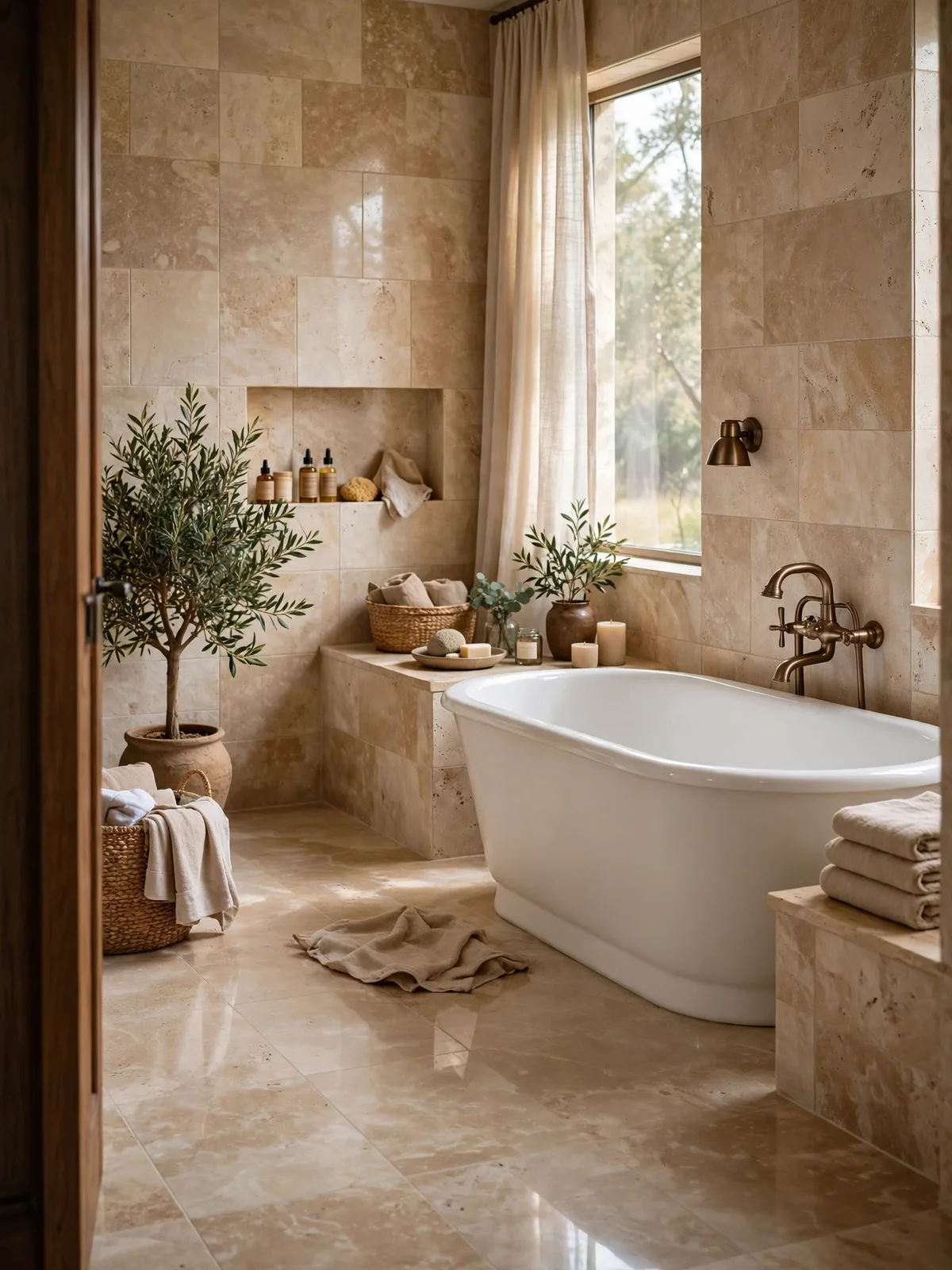
Natural stone tiles give a spa bathroom the grounded, earthy feeling that real spas are built on, because travertine, marble and slate carry variation and warmth that no printed tile can imitate. Here, warm beige travertine covers the walls and floor, with a white freestanding tub and brushed bronze fixtures completing the calm palette. The design suits anyone building a spa bathroom from scratch, it ages beautifully, and it works with every style from modern to rustic. The weakness is maintenance: natural stone needs sealing and gentle cleaners, so it suits owners who will look after it.
Quick tips:
- Seal natural stone when it is fitted and again every year.
- Use large-format tiles to reduce grout lines.
- Match the floor and wall stone for a seamless look.
- Use pH-neutral cleaners only, never bleach or vinegar.
A Teak Shower Bench for Comfort and Ritual
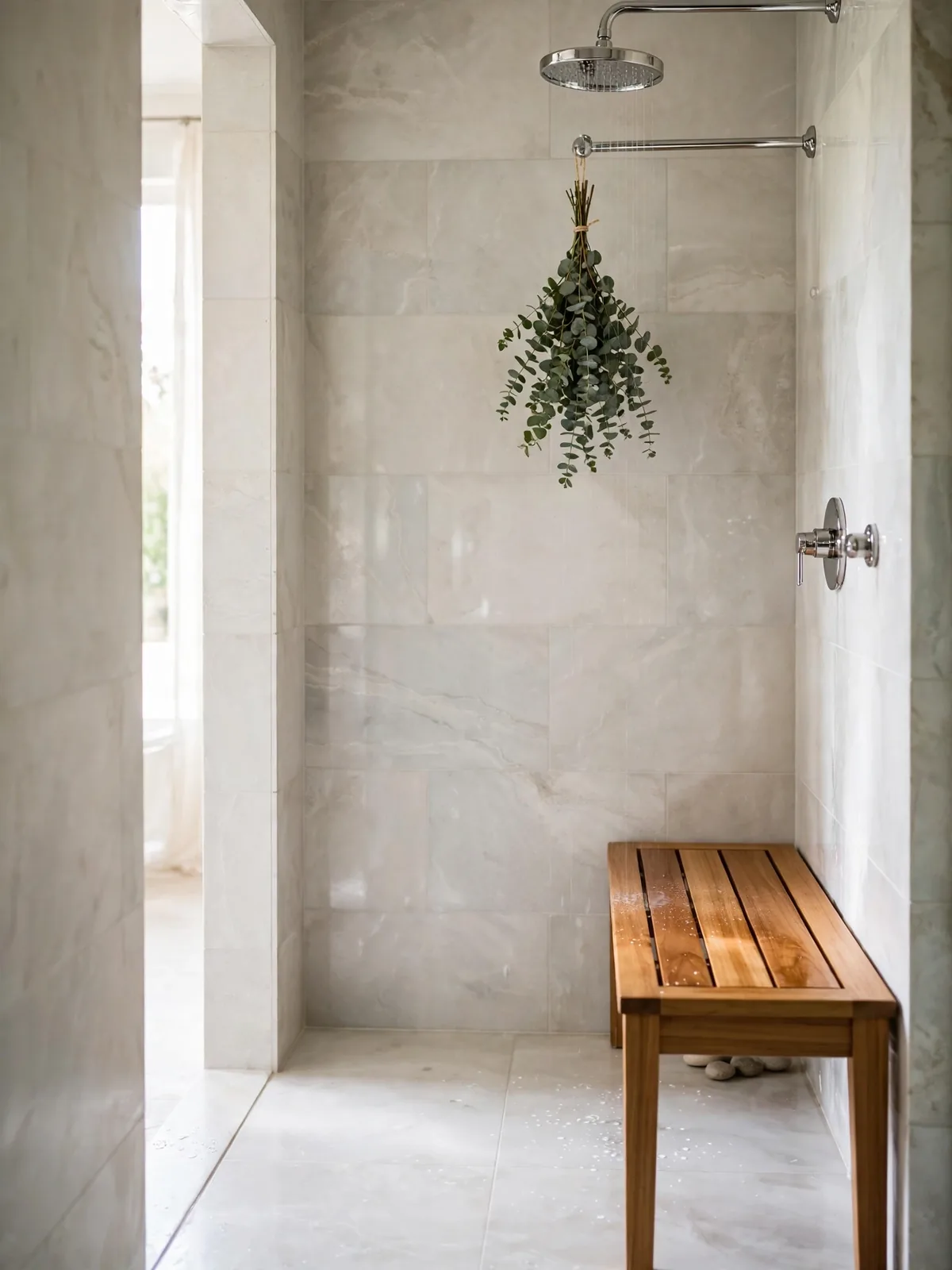
A teak shower bench turns a shower into a spa ritual, because it gives you somewhere to sit, to rest a leg while shaving, or to place a scrub and a candle while the steam builds. Here, a solid teak bench sits in a walk-in shower with pale stone tiles, a rain head and a bundle of eucalyptus hanging from the shower arm. The design suits walk-in showers and wet rooms, it helps older guests and anyone with sore knees, and teak handles water beautifully. The weakness is space: a bench needs a shower at least 120 cm wide, so measure before you commit.
Quick tips:
- Choose solid teak, which resists water and warms underfoot.
- Hang eucalyptus from the shower arm for scent in the steam.
- Keep the bench clear of bottles so it stays inviting.
- Oil the teak twice a year to keep it looking rich.
Rolled Towels in a Basket for an Instant Spa Display
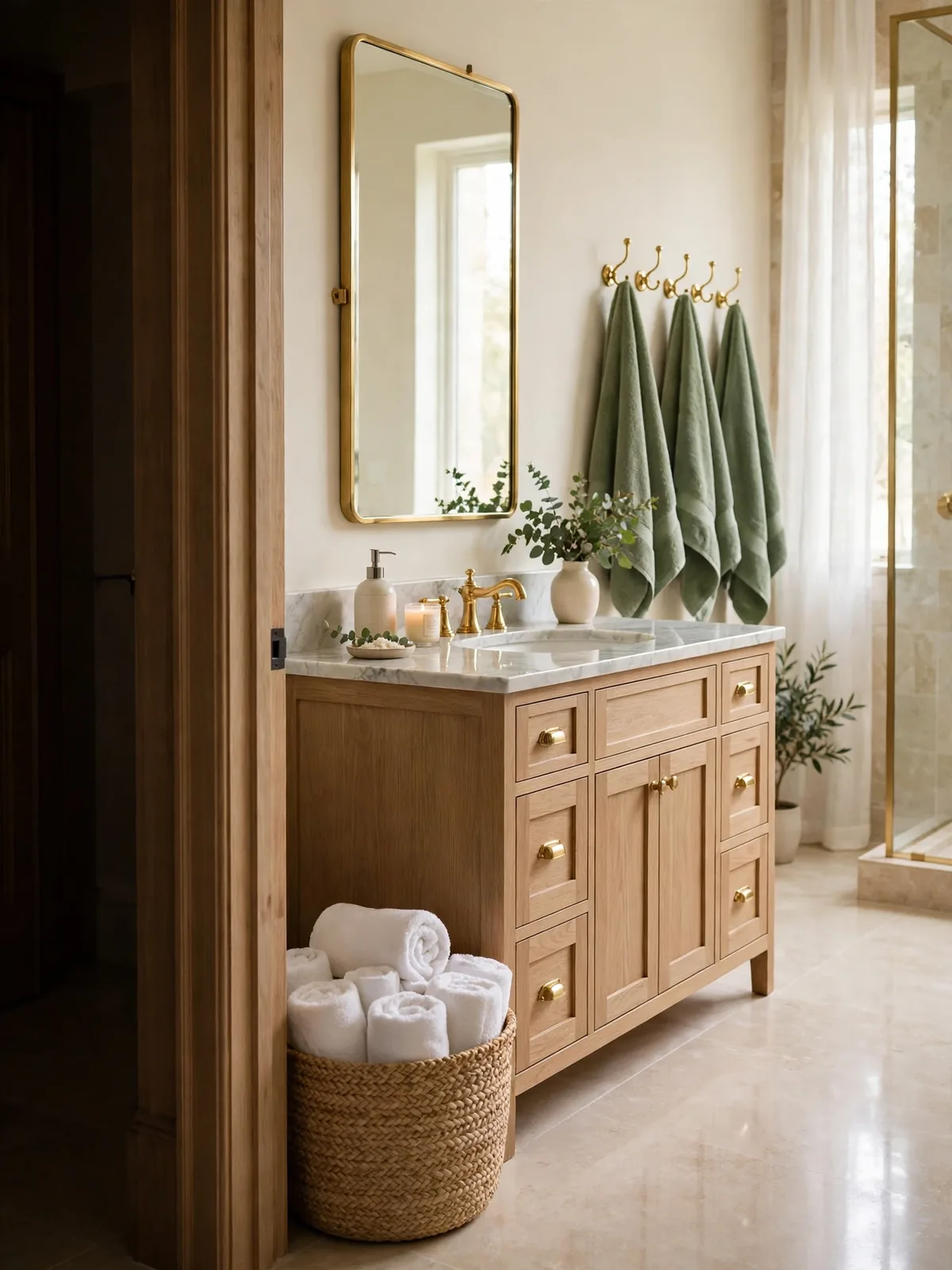
Rolled towels in a basket are the fastest spa signal in any bathroom, because a spa display tells you at a glance that there are plenty of clean, fluffy towels, and it costs almost nothing to create. Here, plush white towels rolled spa-style fill a woven seagrass basket beside a light oak vanity, with sage green hand towels and brass hooks completing the calm palette. The design suits every spa bathroom, it signals abundance, and it is easy to restock. The weakness is damp: towels left in a steamy room need air, so keep the basket away from the shower and wash the display towels regularly.
Quick tips:
- Roll towels spa-style so they look generous and neat.
- Keep the basket away from direct shower spray.
- Add one accent towel colour that matches the room.
- Wash display towels before every guest visit.
Eucalyptus and Greenery That Thrive in Steam
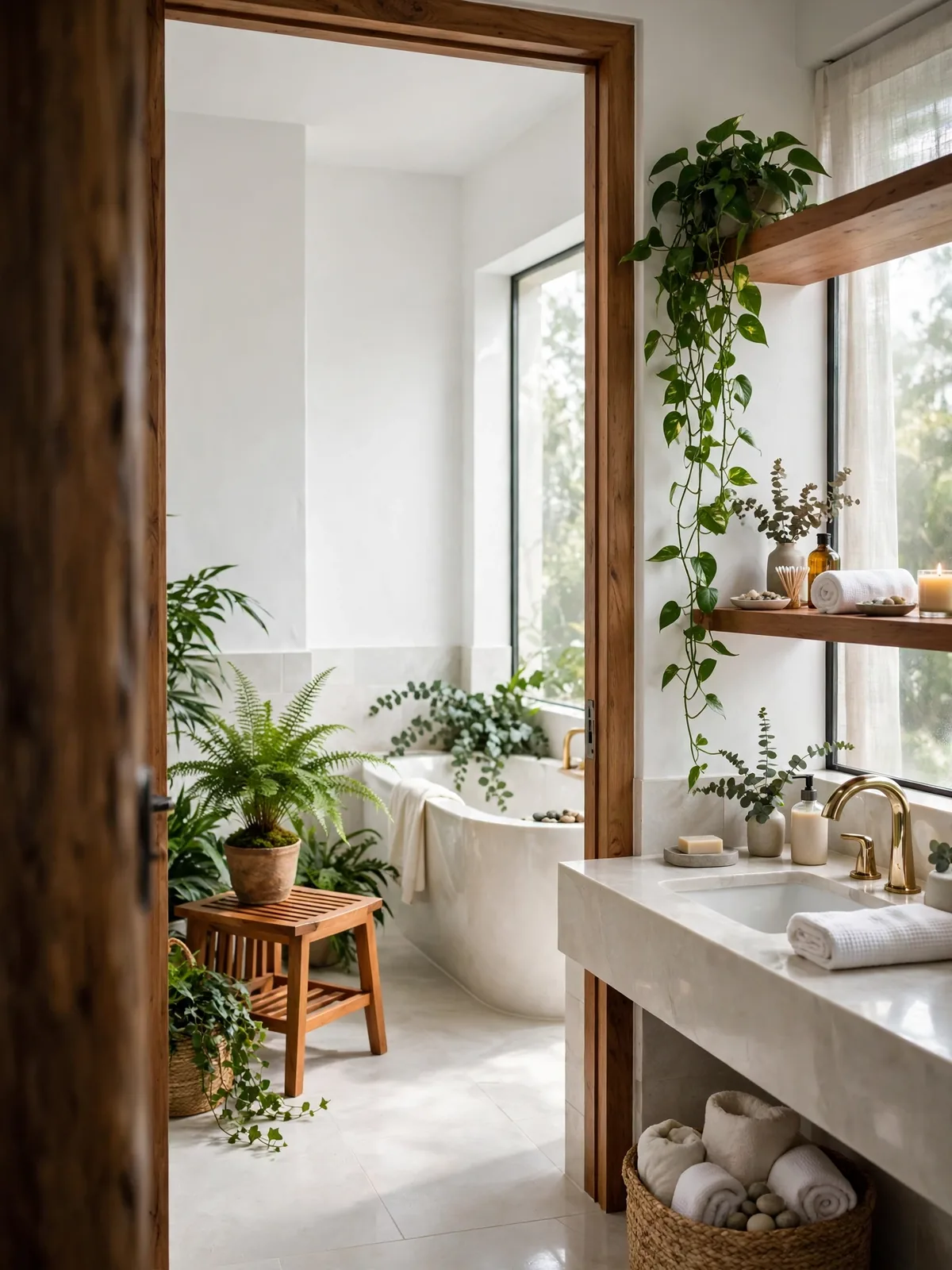
Plants turn a spa bathroom into a living retreat, because green against stone and white softens every hard surface, and humidity-loving plants actually thrive in the steam that would damage other decor. Here, a potted fern sits on a teak stool, trailing pothos spills from a shelf, and a small orchid rests on the vanity against white walls and pale stone tiles. The design suits bathrooms with a window, it adds scent and softness for very little money, and it makes the room feel alive. The weakness is light: most bathroom plants need at least some natural light, so choose low-light varieties or a good faux plant for a windowless room.
Quick tips:
- Choose humidity lovers like ferns, pothos and orchids.
- Hang eucalyptus in the shower for scent in the steam.
- Keep plants out of direct shower spray.
- Use a faux plant in a windowless bathroom.
A Backlit Mirror That Flatters and Glows
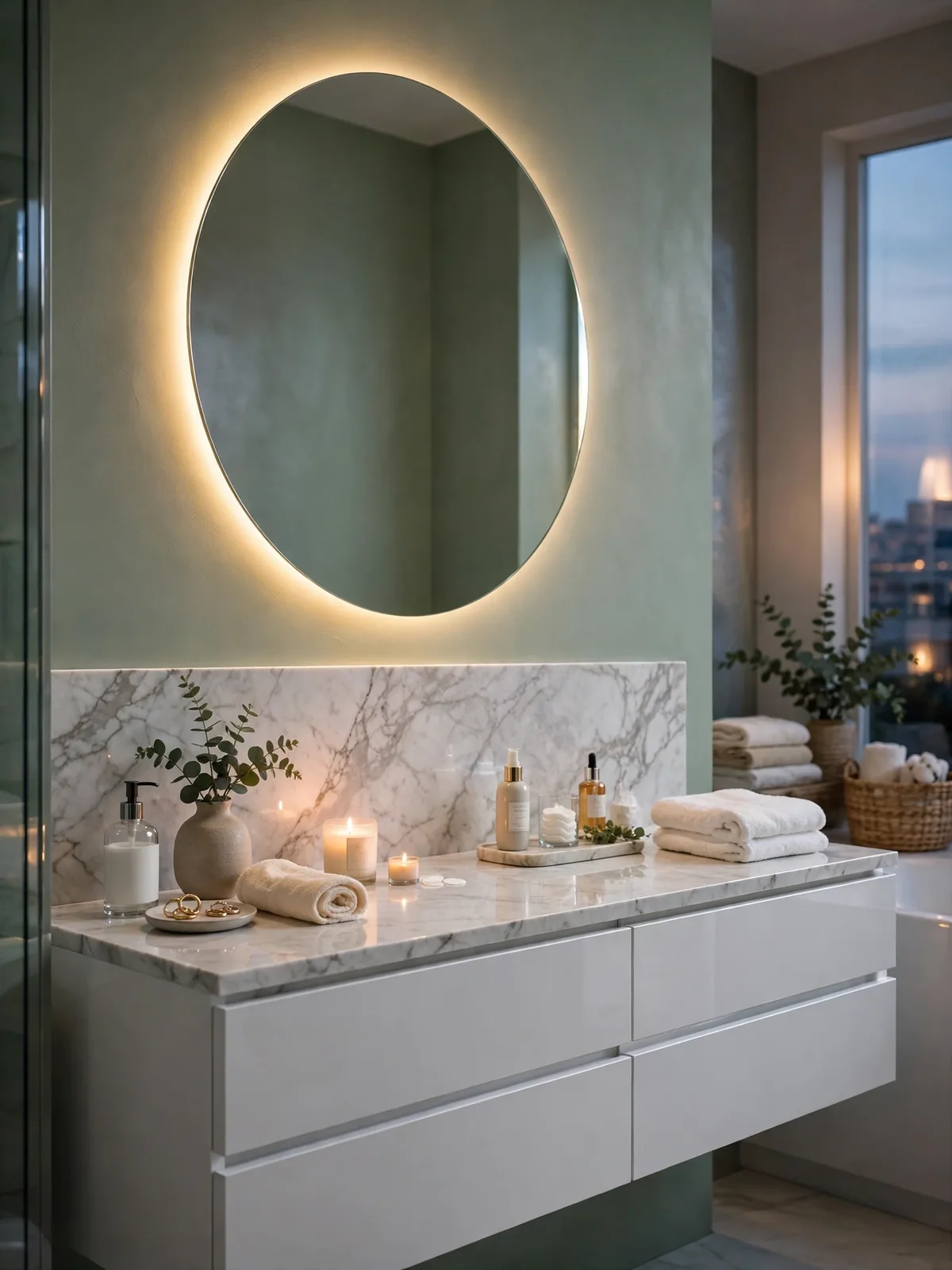
A backlit mirror changes a spa bathroom more than almost any other single swap, because it replaces harsh overhead light with a soft halo that makes both the room and the person in the mirror look better. Here, a large round mirror glows warmly above a white floating vanity, with a marble backsplash and sage green walls keeping the composition calm. The design suits any spa bathroom, it improves the light more than any overhead fitting, and it looks expensive for the cost of one mirror. The weakness is power: a backlit mirror needs a nearby supply, so check the wiring before you buy.
Quick tips:
- Choose a mirror with a dimmable backlight.
- Pick warm white light, around 2700K to 3000K.
- Match the mirror shape to the vanity width.
- Add a demister pad so the mirror stays clear after a shower.
Aromatherapy With Candles and a Reed Diffuser
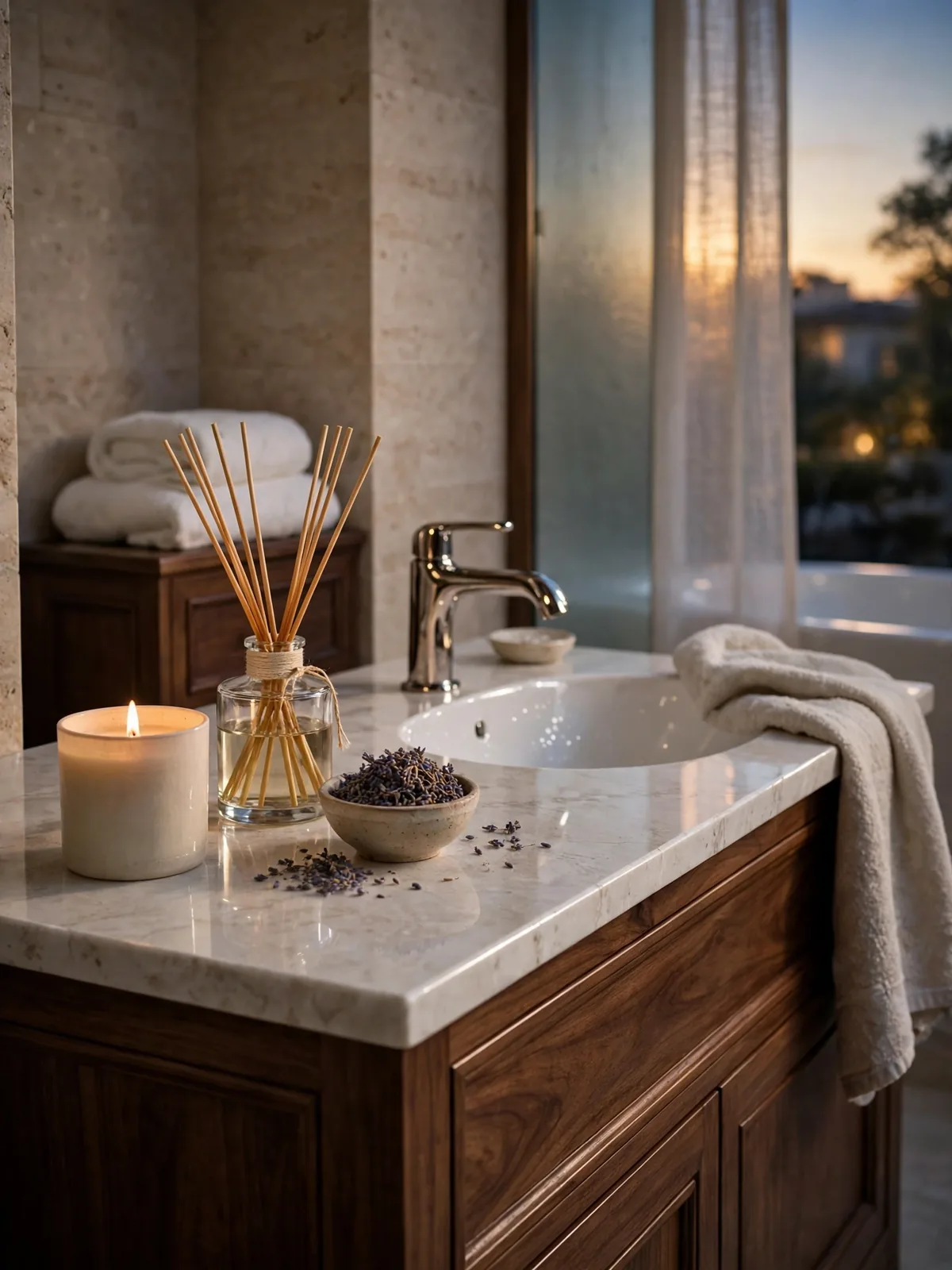
Scent is the sense most people forget in a spa bathroom, yet it is the one that tells your brain to relax the moment you walk in, because a calm fragrance turns an ordinary room into a ritual space. Here, a cream ceramic candle and a reed diffuser sit beside a small bowl of dried lavender on a white stone countertop, with a walnut vanity and soft evening light completing the mood. The design suits every spa bathroom, it costs very little, and it works even when the room is small. The weakness is safety and strength: never leave a candle burning unattended, and keep the scent gentle so it calms rather than overwhelms.
Quick tips:
- Choose calm scents like lavender, cedar, eucalyptus or fig.
- Use a reed diffuser for constant scent and a candle for rituals.
- Put the candle on a tray so wax never touches the counter.
- Keep scent away from the shower curtain and towels.
Heated Floors and a Towel Warmer for Warmth Underfoot
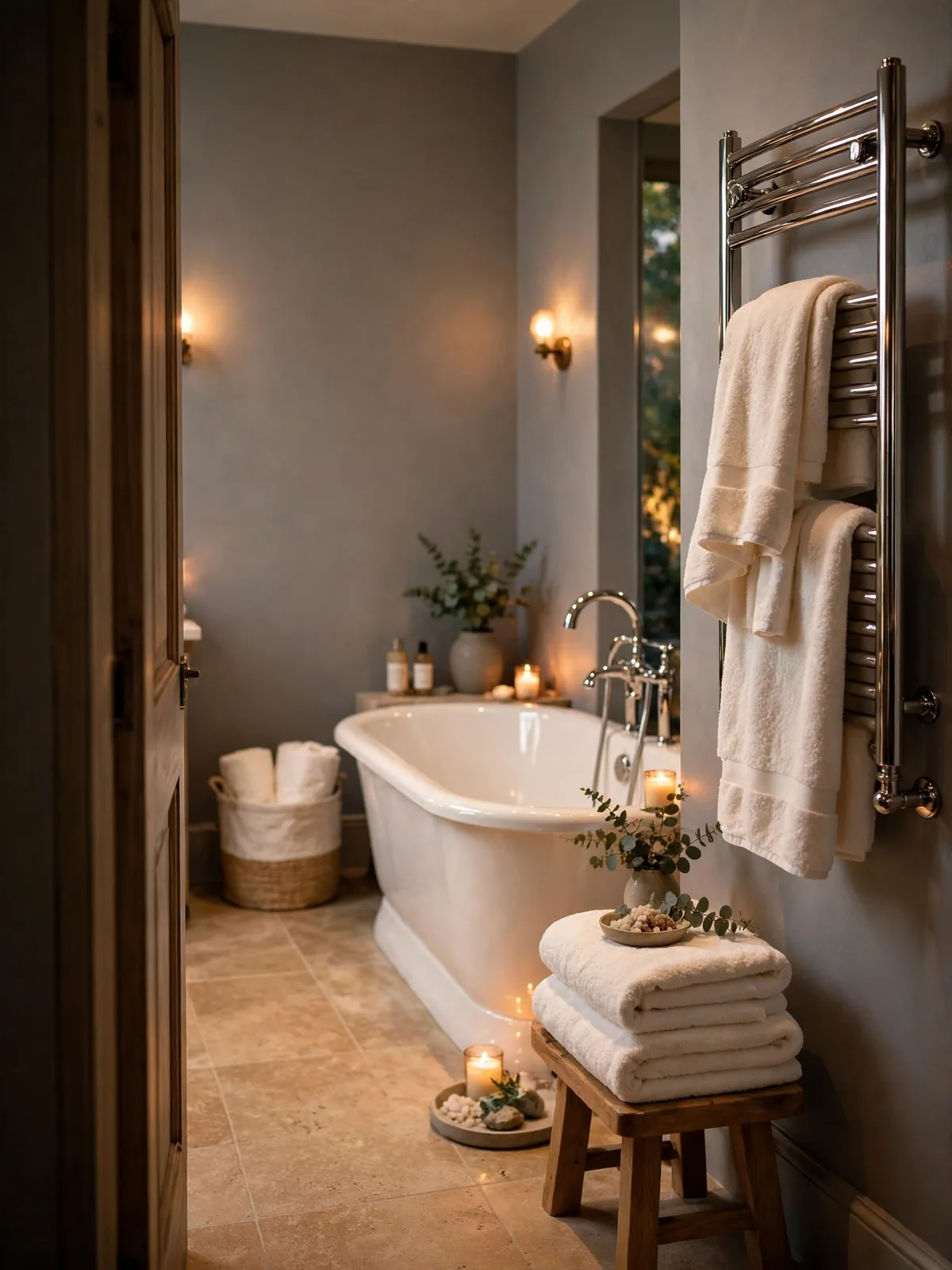
Warmth is the luxury guests feel before they see anything else, because stepping onto a heated floor and wrapping up in a warm towel after a shower is the single most hotel-like sensation a bathroom can offer. Here, a slim chrome heated rail holds fluffy cream towels against soft grey walls, with warm stone floor tiles and a white freestanding tub completing the spa scene. The design suits bathrooms used in cold months, it dries towels faster between uses, and it adds gentle heat to the whole room. The weakness is cost and installation: underfloor heating and a hardwired rail need a professional, so a plug-in towel warmer is the budget route.
Quick tips:
- Place the towel rail within reach of the shower or tub.
- Use a timer so the rail runs only before and after showers.
- Try a plug-in model first if you are unsure about the cost.
- Pair it with a thick bath mat for warmth underfoot.
A Pebble or Teak Bath Mat for Texture Underfoot
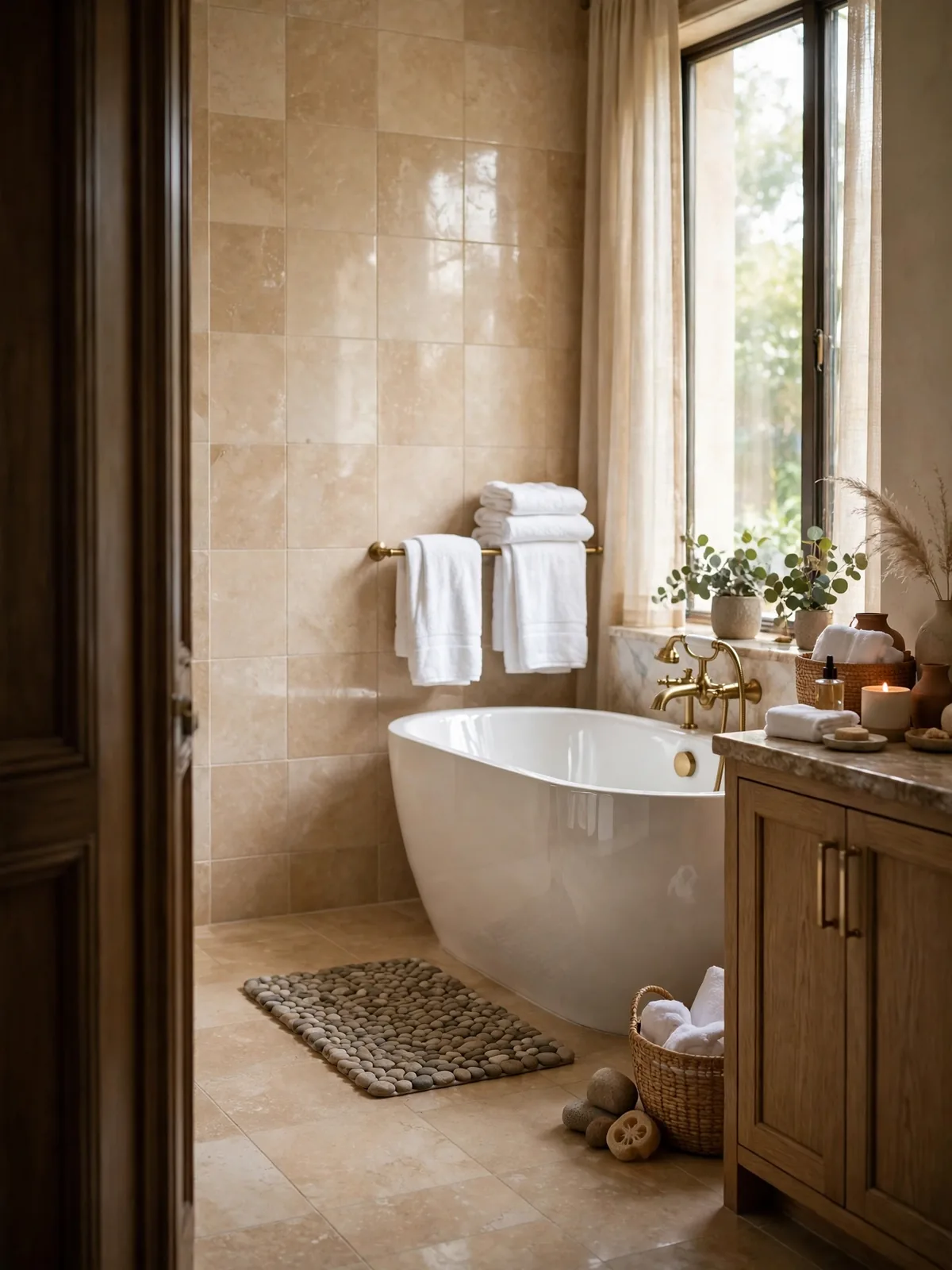
A pebble or teak bath mat changes how a spa bathroom feels underfoot, because stepping out of the shower onto smooth stones or warm wood is a small massage that ordinary bath mats never give. Here, a natural pebble mat sits beside a freestanding white tub on warm beige tiles, with white towels and brushed brass fixtures completing the palette. The design suits any spa bathroom, it is one of the cheapest upgrades on this list, and it adds natural texture without paint or tile. The weakness is cleaning: pebble mats trap water and teak needs oiling, so rinse and dry them regularly.
Quick tips:
- Choose a mat large enough for both feet plus a step.
- Rinse a pebble mat weekly so it stays fresh.
- Oil a teak mat twice a year.
- Keep a spare mat so you can swap it while one dries.
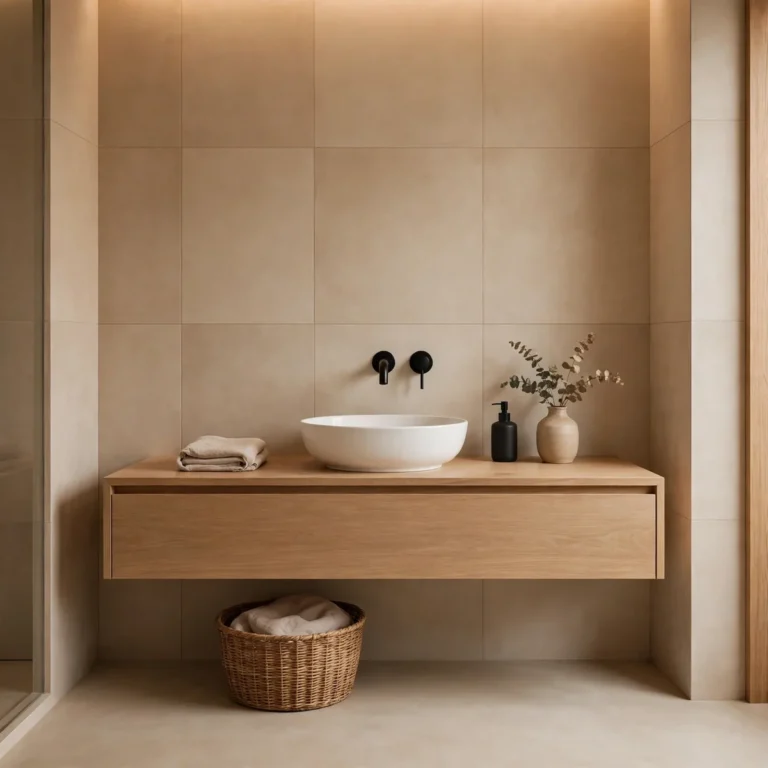
Choose a Spa Style That Fits Your Home
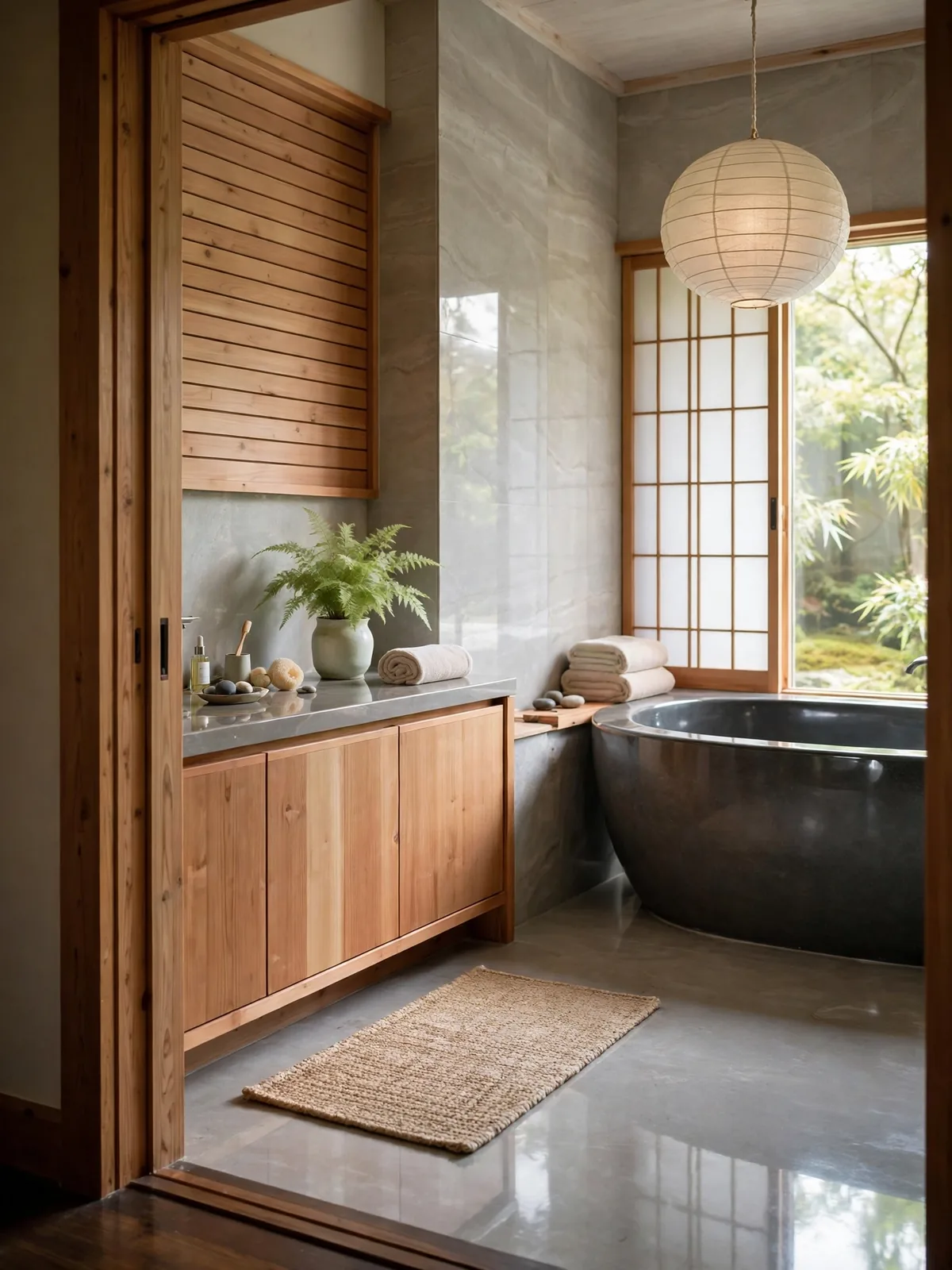
Choosing one clear spa style keeps a bathroom from becoming a random collection of nice things, because a defined palette and a matching set of fixtures make every later decision easy — if it does not fit the style, it does not go in the room. Here, a Japanese-inspired spa bathroom shows how it works: soft stone walls, light cedar wood, a deep soaking tub, a paper lantern light and one pale green plant, all pulling in the same direction. The design suits anyone starting a spa bathroom from scratch, it prevents expensive mismatches, and it makes the room feel intentional. The weakness is rigidity: a style that is too strict can feel like a theme park, so leave room for one personal item, like a framed print or a favourite candle.
Quick tips:
- Pick the style that matches the rest of your home.
- Write the palette down before you buy anything.
- Keep the fixtures in one finish throughout.
- Allow one personal item so the room does not feel staged.
| Spa bathroom style | Best for | Colours | Budget level |
|---|---|---|---|
| Japanese Zen | Small rooms, quiet mornings, deep soaks | Stone, cedar, white, pale green | Medium to high |
| Coastal Spa | Light-filled rooms, beach houses | Aqua, sand, white, driftwood | Low to medium |
| Modern Minimal Spa | Small rooms, easy cleaning | Grey, white, matte black | Low to medium |
| Rustic Woodland Spa | Family homes, relaxed evenings | Sage, oatmeal, oak, terracotta | Low to medium |
| Hotel Luxe Spa | Impressing guests, evening soaks | Cream, marble, brass, deep green | Medium to high |
A Steam Shower for a True Spa Experience at Home
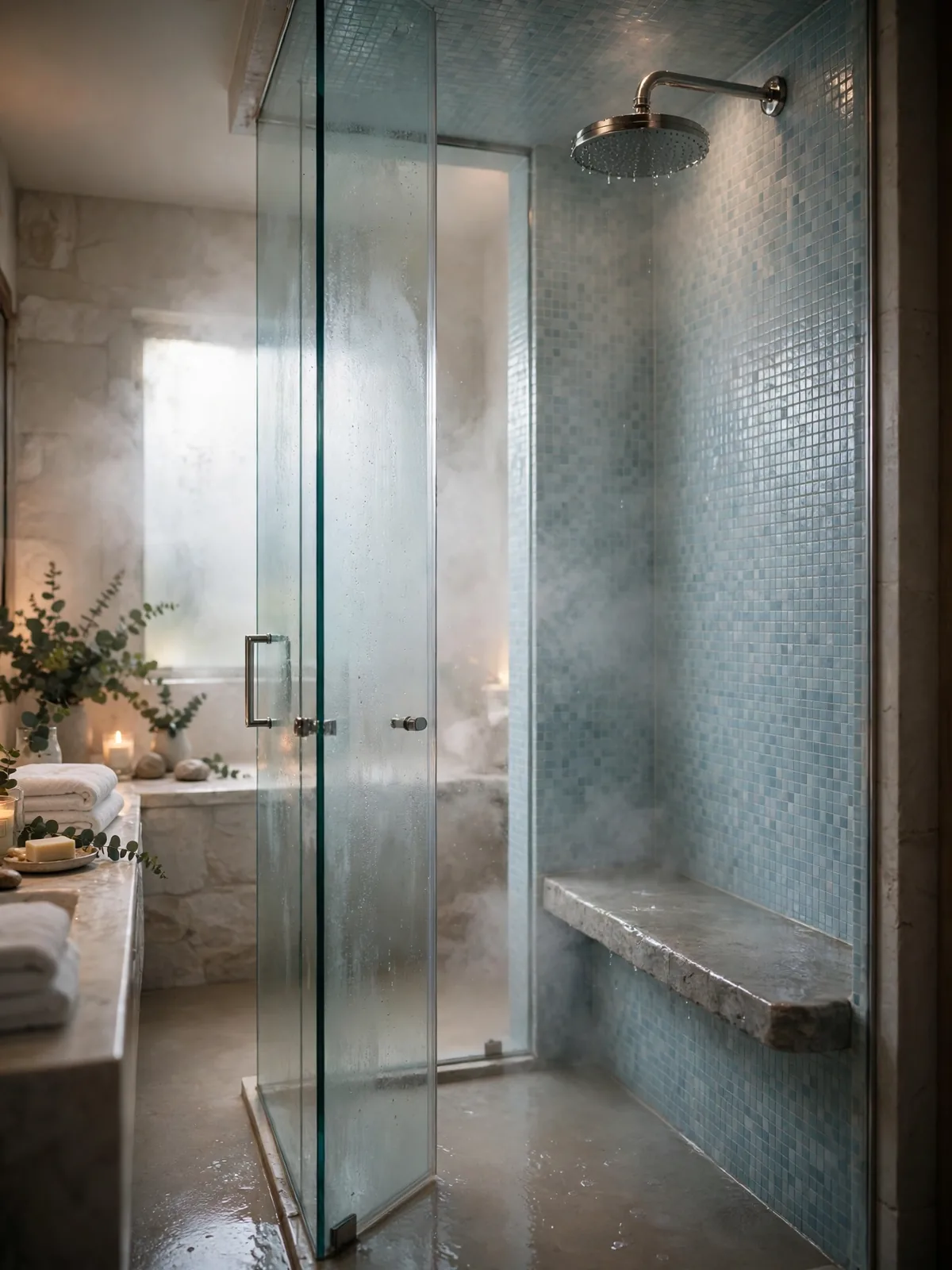
A steam shower is the closest thing to a real spa you can put in a home bathroom, because warm steam opens your breathing, relaxes muscles and turns an ordinary shower into a twenty-minute ritual. Here, a frameless glass steam shower with pale blue mosaic tiles and a built-in stone bench fills with soft steam under a rain head. The design suits anyone who uses the shower to unwind, it adds real wellness value, and it works in a walk-in shower footprint. The weakness is cost and sealing: a steam shower needs a fully sealed enclosure, a steam generator and good ventilation, so it is a renovation job rather than a weekend swap.
Quick tips:
- Seal the enclosure fully so steam stays inside.
- Add a built-in bench so you can sit in the steam.
- Ventilate the room well after each steam session.
- Keep a handheld shower for rinsing off after steaming.
A Deep Soaking Tub With a Bath Tray Ritual
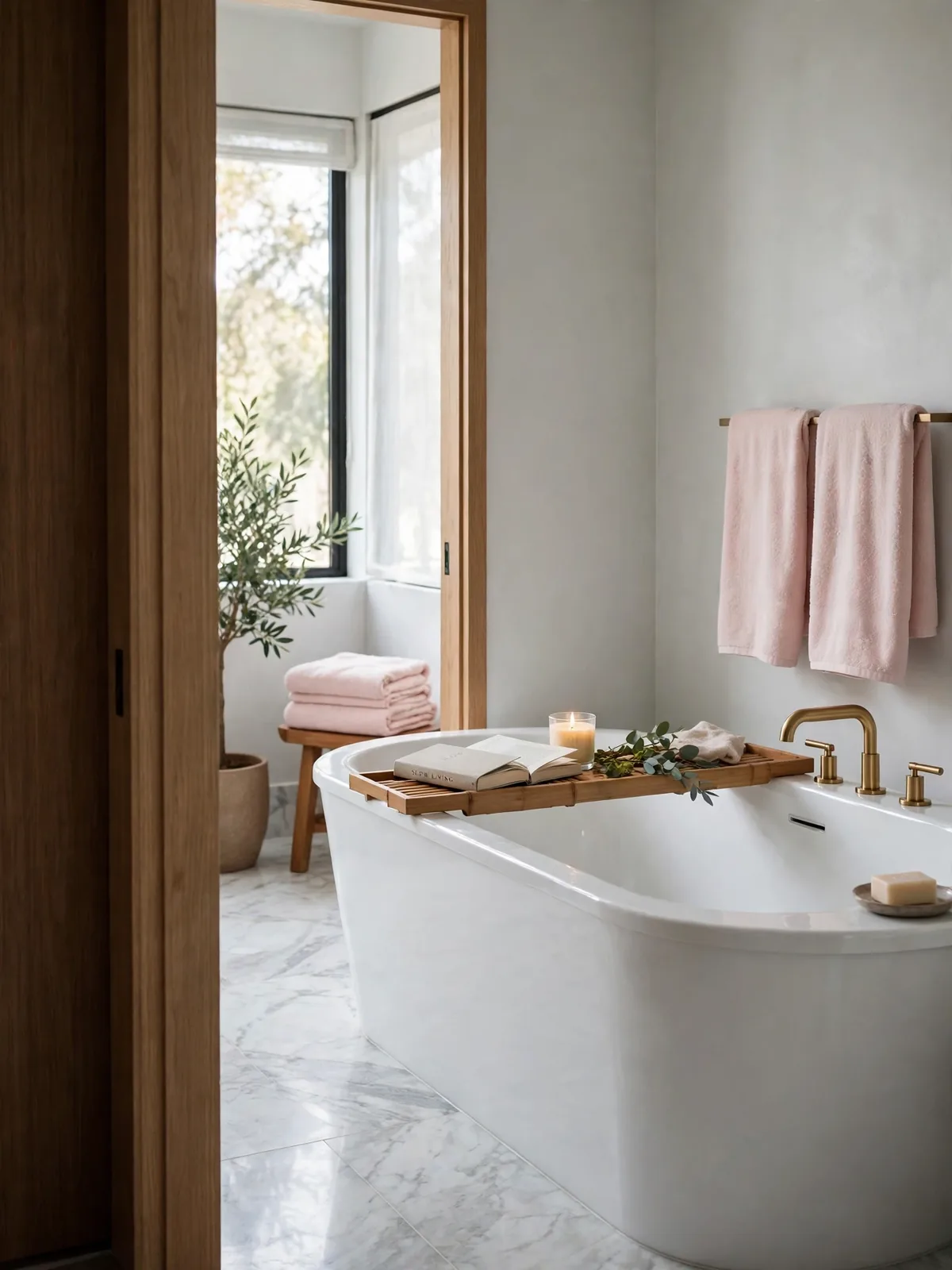
A deep soaking tub with a bath tray turns a quick wash into a slow ritual, because the tray holds everything a soak needs — a book, a candle, a glass — within reach, so there is no reason to climb out early. Here, a deep white soaking tub carries a bamboo tray with a book and a candle, with blush pink towels and pale grey walls keeping the room soft. The design suits anyone who soaks to unwind, it costs little once the tub is in place, and it is the detail guests photograph. The weakness is water and time: a deep tub uses more hot water and takes longer to fill, so it suits slow evenings rather than rushed mornings.
Quick tips:
- Choose a tray that spans the tub and holds a book safely.
- Keep a candle on the tray, never on the tub rim.
- Add bath salts or oils for a real spa scent.
- Leave the tray on the tub so the ritual is always ready.
Soft Textiles in One Calm Palette
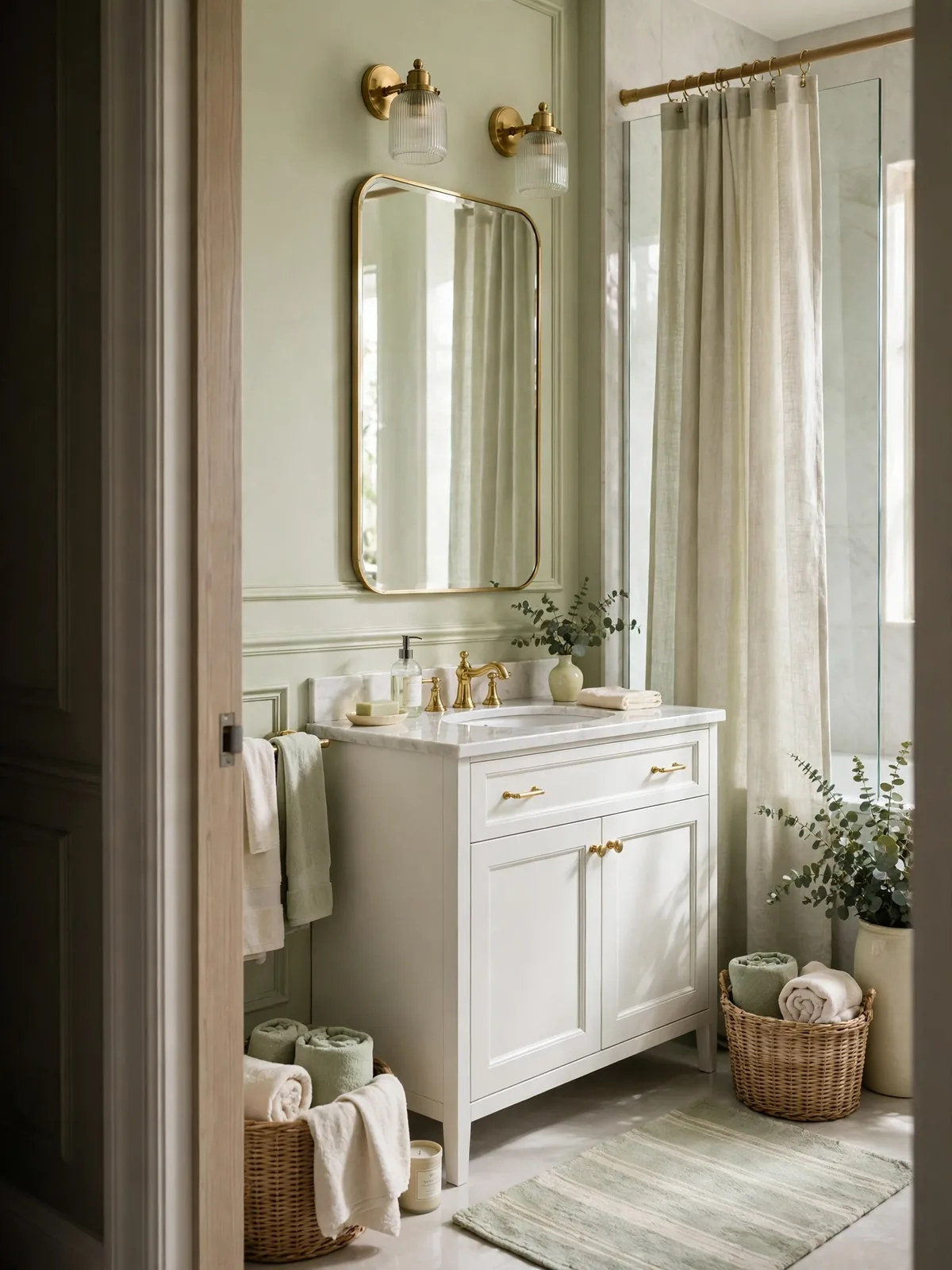
Soft textiles in one calm palette are what make a spa bathroom feel finished, because matching towels, a linen curtain and a woven basket tie the whole room together the way a rug ties a living room together. Here, cream and sage towels, a linen shower curtain and a woven basket sit against pale green walls and a white vanity. The design suits any spa bathroom, it is a one-afternoon change, and it adds colour and softness without paint. The weakness is laundry: pale textiles show marks, so keep a spare set and wash them often.
Quick tips:
- Pick one palette and repeat it in towels, curtain and mat.
- Choose linen or cotton for a natural feel.
- Keep a spare set of towels so one is always fresh.
- Fold and stack textiles neatly so the room stays calm.
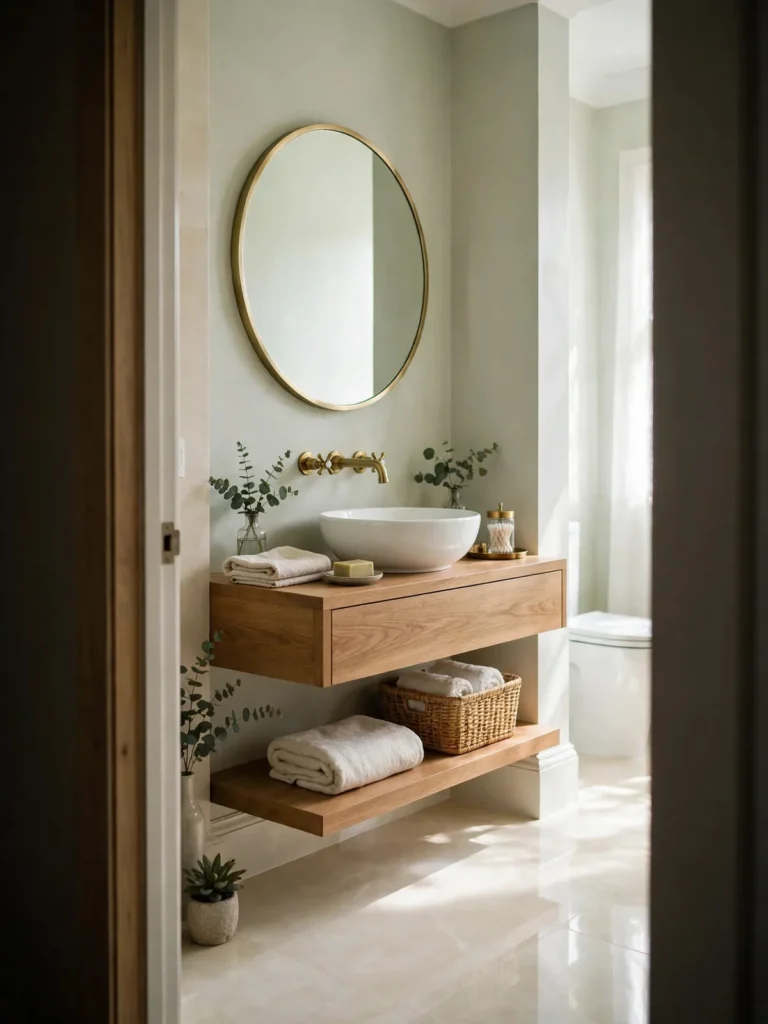
A Floating Vanity in Warm Wood for Lightness
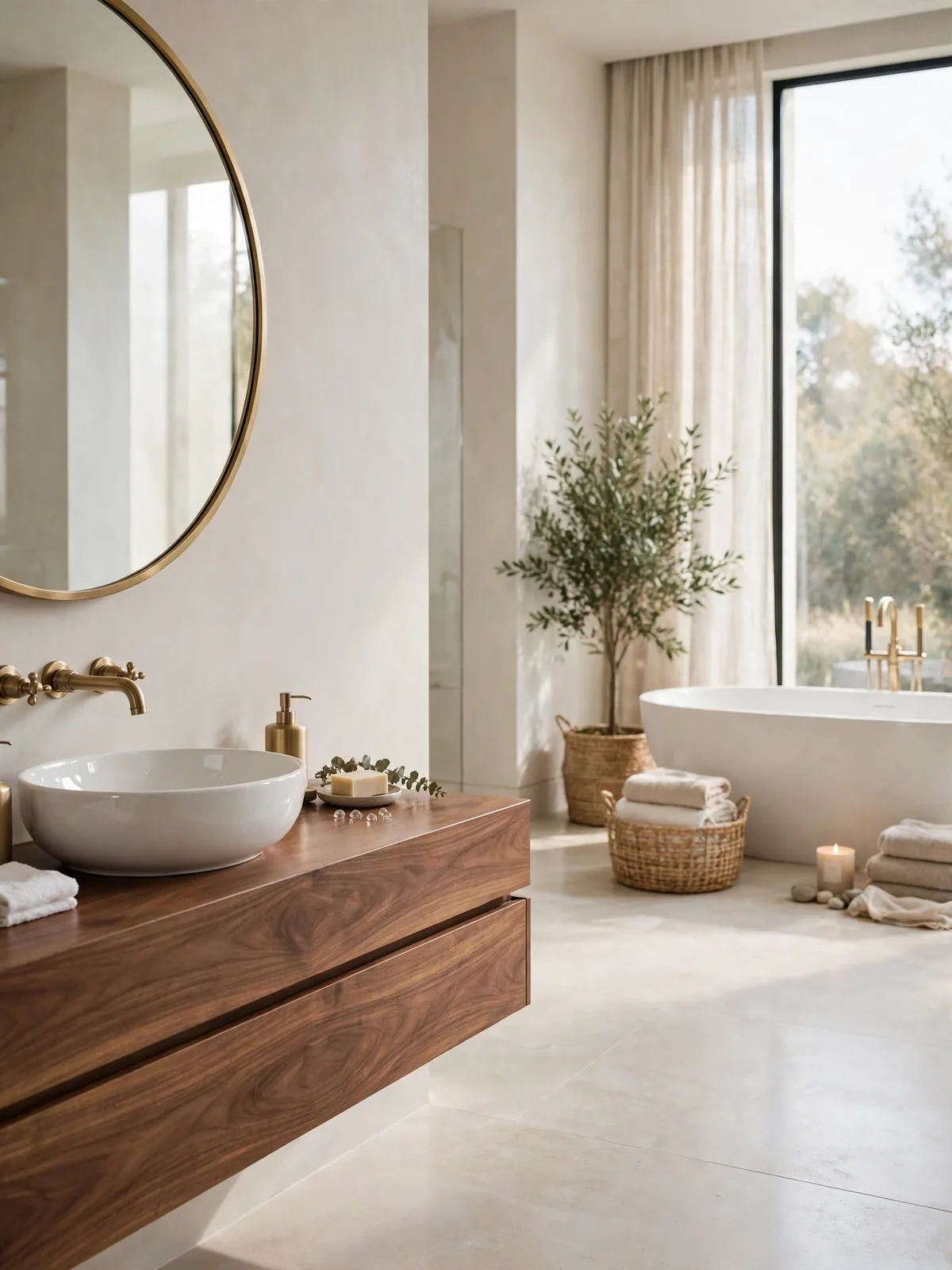
A floating vanity in warm wood gives a spa bathroom instant lightness, because lifting the cabinet off the floor shows more tile, makes the room feel larger, and turns the vanity into a piece of furniture rather than a box. Here, a walnut floating vanity carries a white vessel basin with brushed brass taps, beneath a large round mirror on a pale stone floor. The design suits small spa bathrooms, it makes cleaning the floor easy, and the warm wood softens all the hard surfaces. The weakness is storage: a floating vanity holds less than a full cabinet, so add a basket or shelf for backup supplies.
Quick tips:
- Let the vanity be the star and keep the rest simple.
- Use warm wood to soften stone and tile.
- Add a basket nearby for the storage it lacks.
- Seal the wood well, since vanities see daily splashes.
Sound That Helps You Switch Off
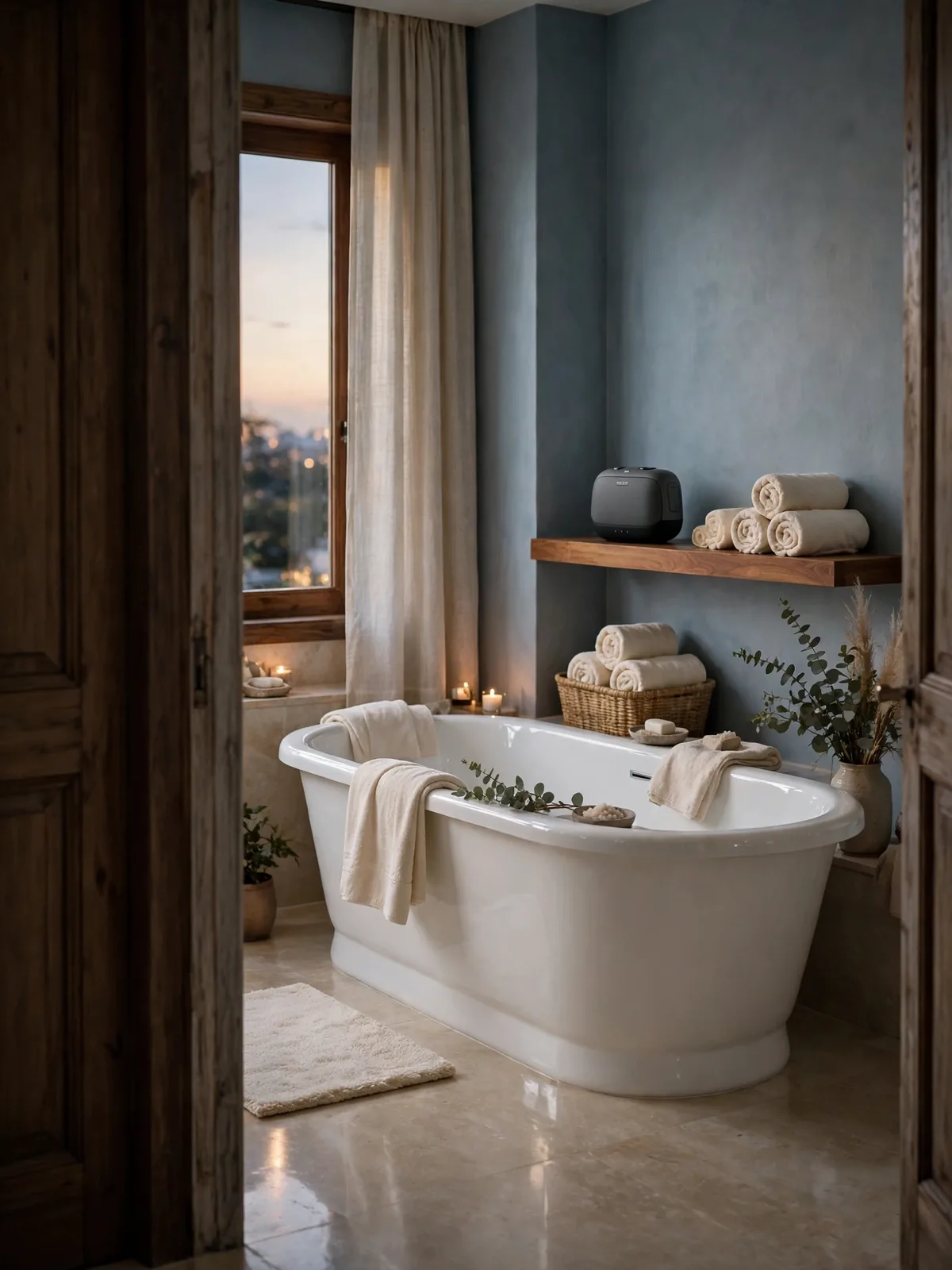
Sound is the spa element almost everyone forgets, yet a quiet room with soft music or running water is what makes a bathroom feel like an escape rather than just a pretty room. Here, a small waterproof speaker sits on a teak shelf beside a white freestanding tub, with dusty blue walls, rolled cream towels and soft evening light completing the calm scene. The design suits anyone who soaks or showers to unwind, it costs very little, and it turns a bath into a ritual. The weakness is moisture: electronics in a steamy room need waterproof ratings, so choose a speaker made for bathrooms.
Quick tips:
- Choose a waterproof speaker rated for bathroom use.
- Play calm music or nature sounds, never loud playlists.
- Keep the speaker on a shelf, away from direct spray.
- Try silence too — a quiet bathroom can be the most relaxing of all.
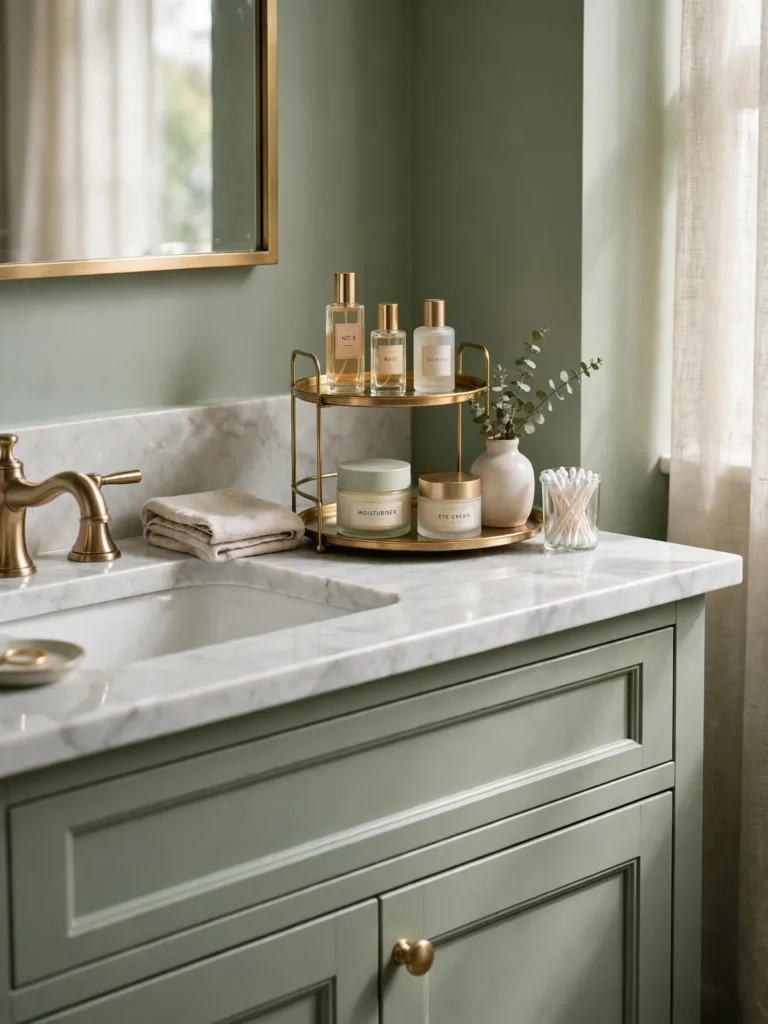
Matching Dispensers and a Tray for a Polished Counter
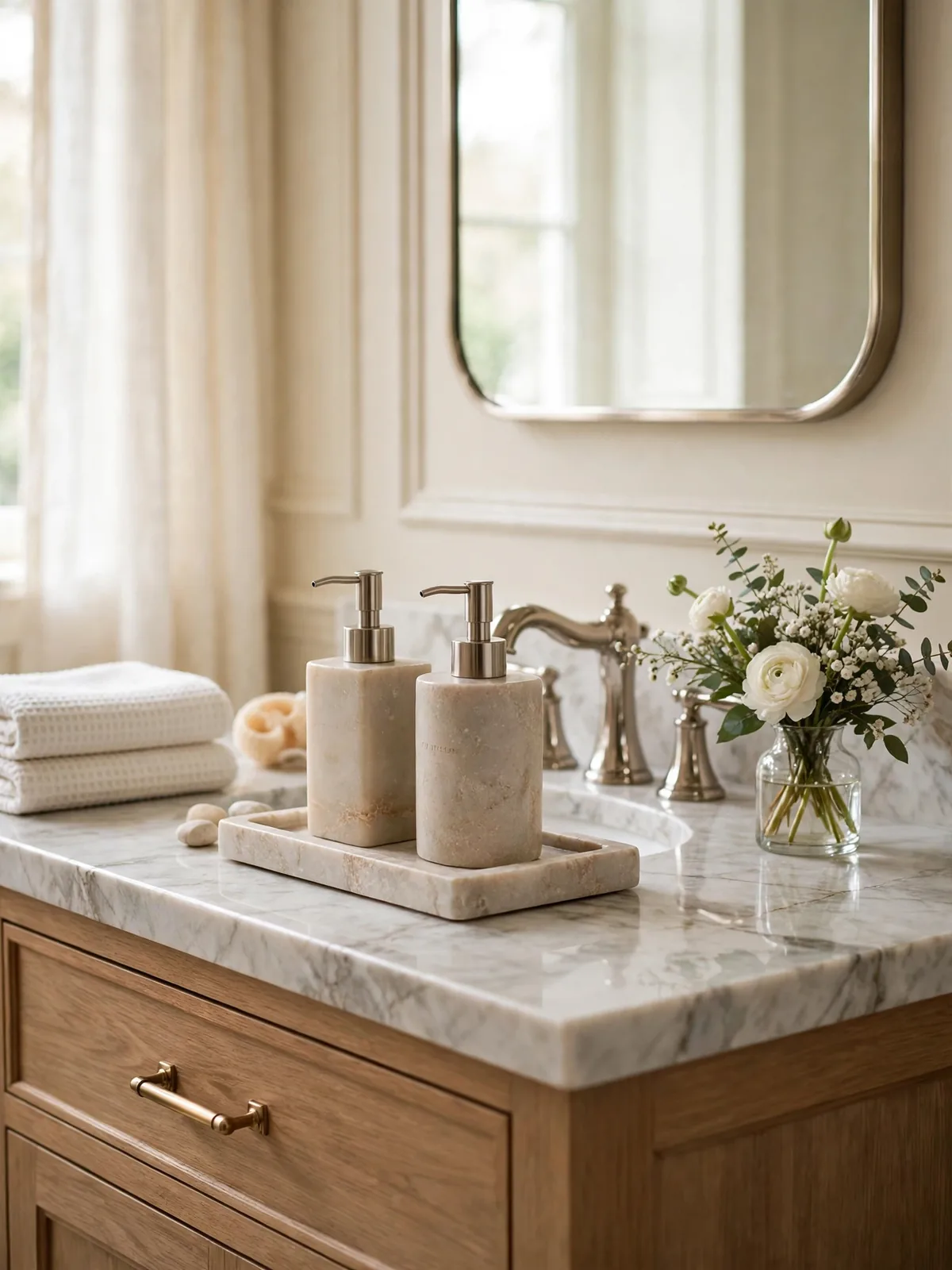
Matching dispensers on a tray polish a spa bathroom counter in the same way matching frames polish a wall, because two coordinated pieces look deliberate where a random plastic bottle looks like an afterthought. Here, stone soap and lotion dispensers sit on a marble tray with a tiny vase of white flowers, against cream walls and brushed nickel taps. The design suits any spa bathroom, it is a ten-minute change, and it is one of the cheapest upgrades on this list. The weakness is refilling: stone dispensers need regular topping up, so keep a spare bottle of soap and lotion hidden in the vanity.
Quick tips:
- Match the dispensers to the towel or wall colour.
- Choose stone, ceramic or glass over plastic.
- Keep refill bottles hidden inside the vanity.
- Add a matching tray underneath to catch drips.
A Small Spa Ritual Shelf With Salts, Oils and Scrubs
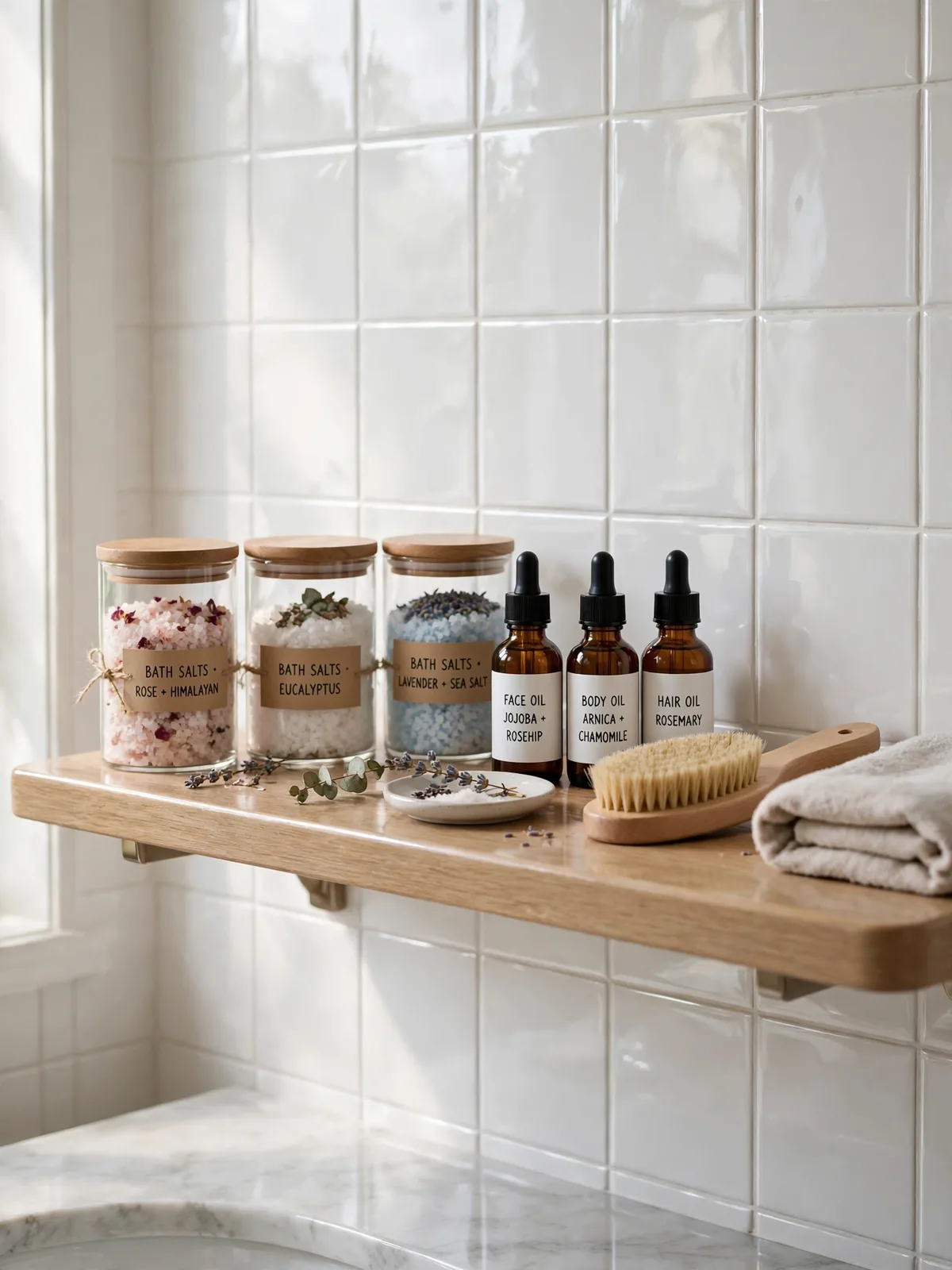
A small ritual shelf turns bath products from clutter into a spa display, because glass jars of salts, amber oil bottles and a natural body brush arranged neatly tell you the room is made for slow, caring routines. Here, a light oak shelf holds glass jars of bath salts, small amber bottles and a body brush against a white tiled wall. The design suits anyone who enjoys bath rituals, it keeps products visible and reachable, and it costs almost nothing to set up. The weakness is clutter: too many jars look like a shop shelf, so keep it to five or six products you actually use.
Quick tips:
- Limit the shelf to products you genuinely use.
- Use glass jars and amber bottles for a spa look.
- Label jars simply or leave them plain.
- Keep the shelf away from direct shower spray.
Frosted Glass and Soft Window Light for Privacy
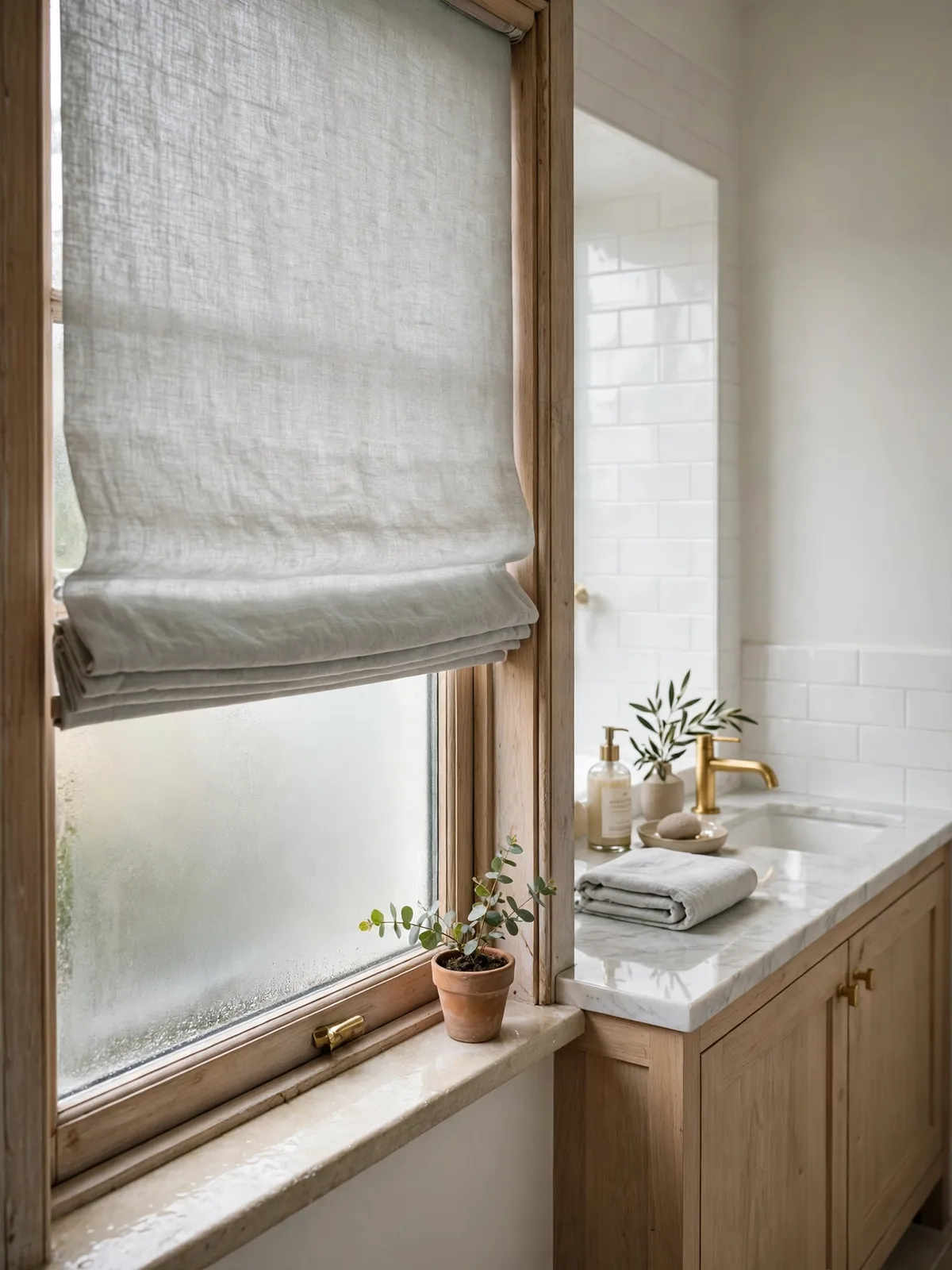
Privacy is the first thing you need before you can relax in a spa bathroom, and frosted glass or a soft linen blind blocks the view without blocking the daylight that makes the room feel calm. Here, a frosted window with a pale grey linen roller blind filters soft daylight over white tiled walls, with a light wood vanity and a small plant on the sill. The design suits any spa bathroom with a window, it is easy to fit, and it keeps the room bright. The weakness is damp: fabric blinds in a steamy room can mildew, so choose a moisture-resistant blind or frosted film for the lower half of the glass.
Quick tips:
- Choose a blind that lets light through but blocks the view.
- Use moisture-resistant fabric or frosted film.
- Fit the blind inside the window frame for a clean look.
- Check from outside at night that the room is truly private.
A Towel Ladder and Open Shelving for Spa Storage
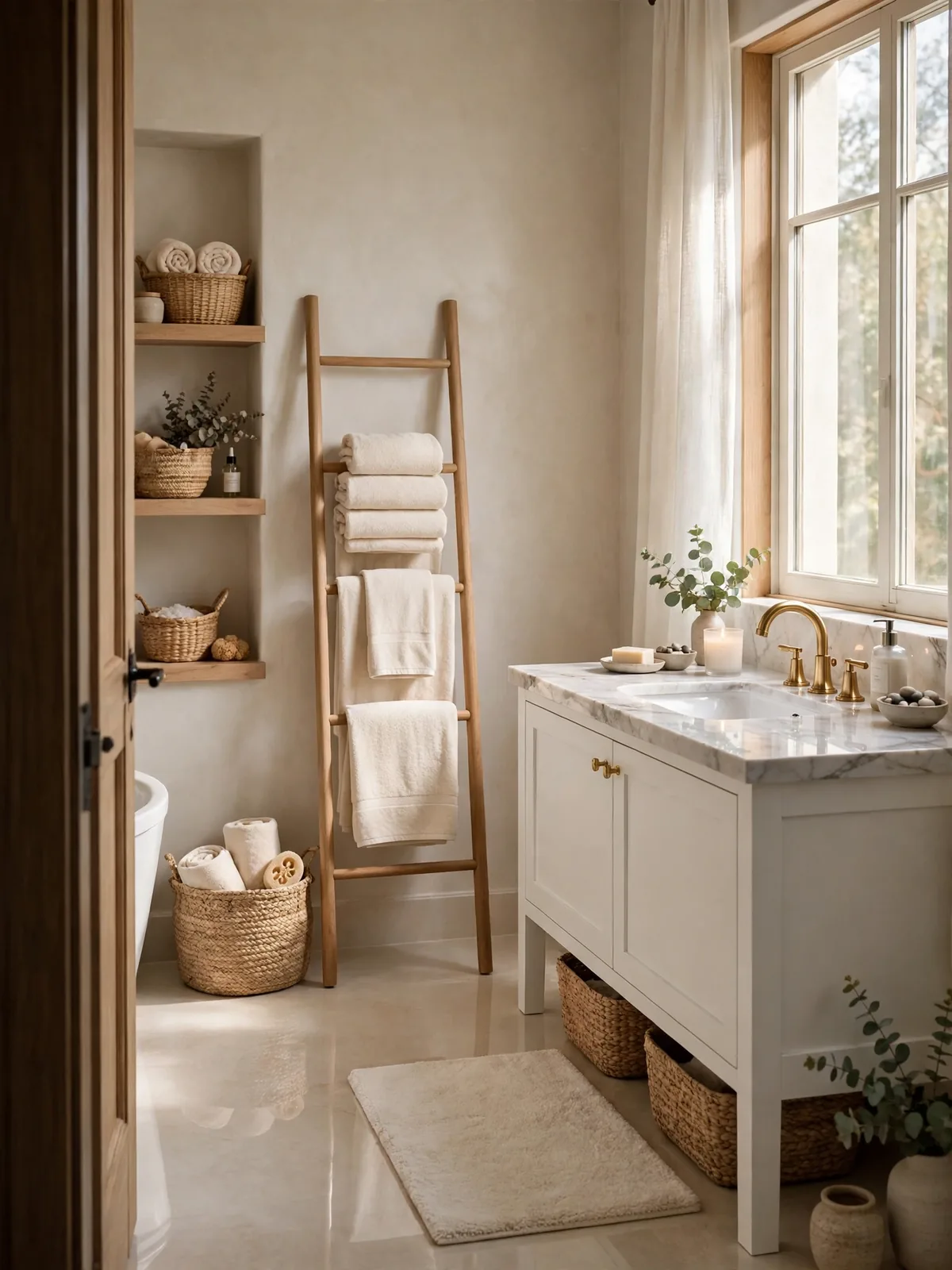
A towel ladder with open shelving works like a spa display in a bathroom, because towels and baskets arranged in the open show at a glance that everything is clean, plentiful and ready to use. Here, a wooden towel ladder holds folded cream towels beside open light oak shelves with woven baskets, against soft beige walls and a white vanity. The design suits spa bathrooms with a spare wall, it signals abundance, and it is easy to restock. The weakness is dust: open towels collect it, so keep the shelves away from the toilet and wash the display towels regularly.
Quick tips:
- Lean the ladder against a wall with space to reach towels.
- Use baskets on the shelves for smaller items.
- Keep the shelves away from the toilet for hygiene.
- Wash display towels before every guest visit.
Spa Bathroom Ideas That Pull the Whole Room Together
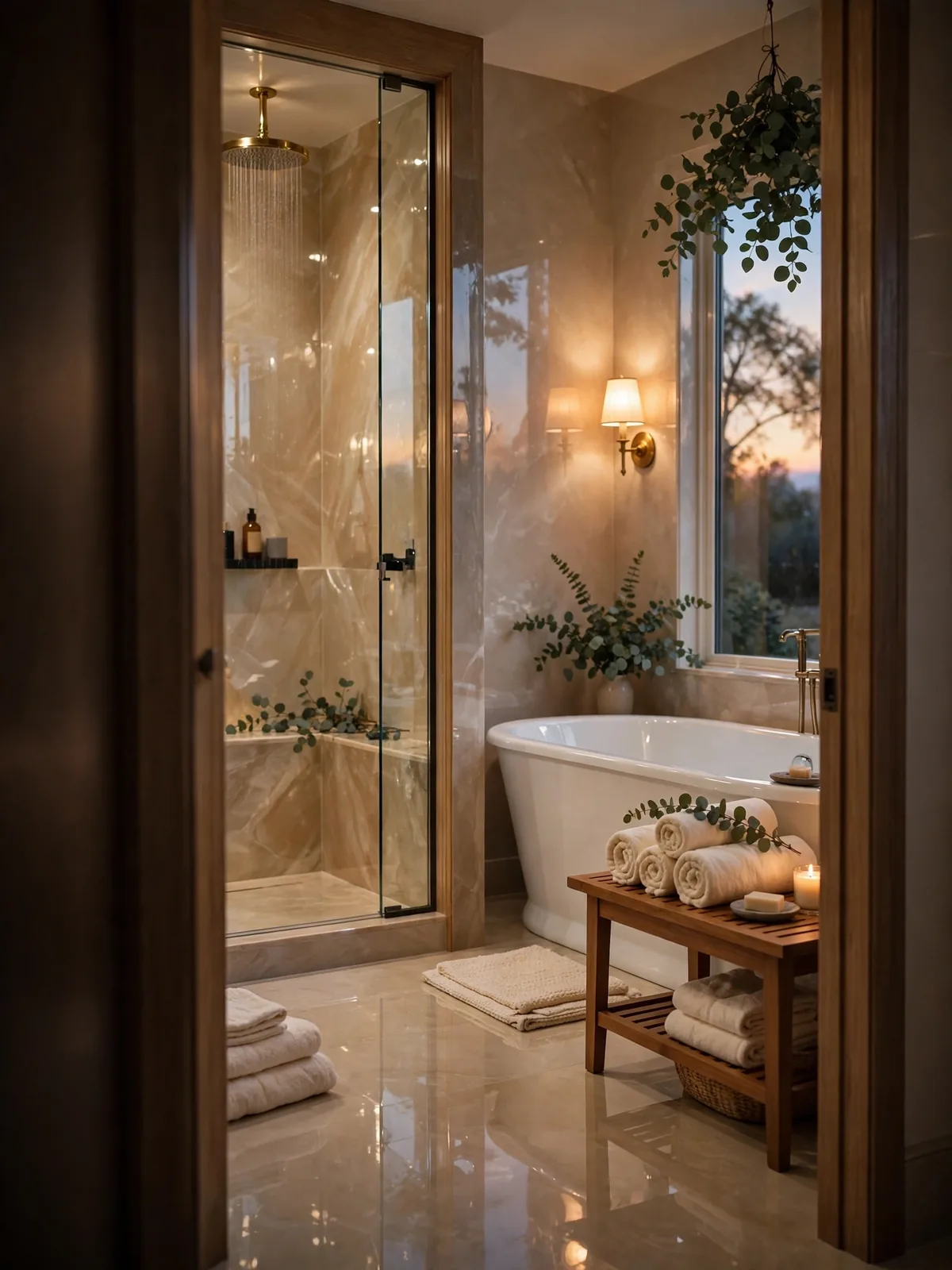
The last of these spa bathroom ideas is the principle behind them all, and it is worth stating plainly because it is the difference between a bathroom that looks good in a photograph and one that genuinely helps you unwind: a great spa bathroom is not one expensive feature, it is the combination of the right basics in the right places — a deep tub or a generous rain shower, warm dimmable light at the mirror, a calm scent in the air, soft natural textures underfoot, and one personal ritual like a bath tray or a favourite candle — working together so that you can walk in after a long day, close the door, and feel the outside world wait, and the room rewards you too, because a bathroom built in that order is easy to clean, easy to restock and easy to keep beautiful between uses. Here, a complete spa bathroom pulls it together — freestanding white tub, rain shower, warm sconces, rolled cream towels, eucalyptus and a teak bench — and nothing in the room is there by accident. The lesson is to start with your first five minutes: what you touch first, what you reach for, what you see in the mirror, and what you step onto when you leave the shower, then build outward from there, because a spa bathroom designed around those five minutes stays relaxing with very little effort, even in a small room, even on a modest budget, and even when you change only one thing at a time. Pick the three ideas from this list that solve your biggest problem first, add one luxury that makes you smile, and your bathroom stops being the room you rush through and becomes the room you look forward to.
Quick tips:
- Start with your first five minutes in the room.
- Fix the basics first, then add one luxury.
- Keep a restock checklist inside the vanity door.
- Refresh towels, scent and flowers before every soak.
FAQs
What is the cheapest way to make a bathroom feel like a spa?
The cheapest spa bathroom changes are warm bulbs, rolled towels in a basket, a candle or reed diffuser, a pebble or teak bath mat, and a rain shower head — together they cost less than a single fixture and change the whole feel of the room. Repaint in a warm neutral, clean the grout and add a plant, and the room feels like a retreat without any building work.
Should I choose a freestanding tub or a rain shower for a spa bathroom?
Choose a freestanding tub if you soak to unwind and have the floor space, because nothing relaxes like a deep bath with a tray and a candle. Choose a rain shower if you shower daily, have a smaller room, or want a spa feeling every morning. If you have room for both, the combination is the closest thing to a real spa at home.
How do I add steam to my bathroom without a full renovation?
Hang eucalyptus from the shower arm, run the shower hot for a minute with the door closed before you step in, and keep the room warm with a towel warmer or heated floor. A true steam shower needs a sealed enclosure and a generator, but this simple routine gives you most of the feeling for nothing.
What scent is best for a spa bathroom?
Calm, natural scents work best in a spa bathroom — lavender, eucalyptus, cedar, fig or linen — because they relax rather than overwhelm. Use a reed diffuser for constant gentle scent and a candle for soak-time rituals, and keep the strength low so the room smells clean and calm, not perfumed.
How do I make a small bathroom feel like a spa?
Use a large mirror, pale warm walls, a floating vanity and a glass shower screen so the eye travels further, then layer texture and scent instead of adding fixtures. A rain shower head, rolled towels, a candle and one plant can make a compact bathroom feel more spa-like than a large plain one.
Conclusion
A spa bathroom does not need a renovation to feel special — it needs the right basics, done thoughtfully. The 22 ideas above show that a freestanding tub or a rain shower, warm layered light, a calm scent, soft natural textures and one personal ritual can turn a plain bathroom into a private retreat. Start with what you touch in the first five minutes, pick one style and let it guide every choice, and keep a small daily ritual so the room is always ready. Do that, and your bathroom stops being the room you rush through and becomes the room you look forward to.