29 Brilliant Small Bedroom Ideas That Make Tiny Spaces Feel Bigger
A small bedroom can feel frustrating — until you stop fighting the size and start using it. These 29 small bedroom ideas cover light, layout, storage and texture, so a tiny room feels bigger, calmer and cosier, without a renovation or a big budget.
Small bedroom ideas work when every corner works harder without making the room feel crowded, and the trick is light, texture, storage and layout all pulling in the same direction. A tiny bedroom can look incredibly stylish once you stop fighting the size: hang the curtains floor to ceiling, choose a low-profile bed, bounce light with a mirror, and hide the clutter in matching baskets — and the 29 ideas below show exactly how, with a layout guide in the middle to help you pick the arrangement that fits your room.
If your small bedroom also needs to feel warm and inviting, these cozy bedroom ideas show how to layer softness into a compact space. Every idea includes a concrete example with real materials, colours and fixtures, so you can start with one change this weekend or plan a full refresh.
Key Takeaways
How can I make my small bedroom look bigger?
Make a small bedroom look bigger with pale walls and ceilings in similar shades, floor-to-ceiling curtains, a large mirror opposite the window, a low-profile bed, and a rug that extends past the bed. Keep the palette to two or three colours and the surfaces clear, and the room reads as one calm, open space instead of a crowded box.
What furniture is best for a small bedroom?
The best furniture for a small bedroom does more than one job: a bed with drawers underneath, a storage bench, a slim nightstand or floating shelf, and a tall narrow wardrobe instead of a wide one. Choose low-profile, light-wood pieces with slim legs, and leave at least sixty centimetres of walkway around the bed.
How do I add storage to a small bedroom without clutter?
Add storage to a small bedroom with hidden systems: matching baskets under the bed, a lift-up bed base, floating shelves above the bed, and vertical storage up to the ceiling. Keep everything behind doors or inside matching containers, because visible clutter is what makes a small room feel smaller.
What colours work best in a small bedroom?
Small bedrooms work best with a limited palette of two or three colours: one pale base like warm ivory or soft greige, one wood tone, and one soft accent like muted sage, dusty blue or warm clay. Low contrast between walls and ceiling makes the room feel taller, while dark or busy colours chop it up visually.
How do I decorate a small bedroom on a budget?
Decorate a small bedroom on a budget by starting with free changes: declutter ruthlessly, rearrange the bed to the longest wall, and hang the curtains higher. Then add a low-cost mirror, matching baskets, warm bulbs and one oversized print — each step is cheap, and together they make the room feel twice as big.
Small Bedroom Layouts at a Glance
| Small bedroom layout | Best for | Key trick | Budget level |
|---|---|---|---|
| Bed on the Long Wall | Square rooms, couples, symmetry | Matching sconces and shelves both sides | Low |
| Bed in the Corner | Narrow rooms, single sleepers, desk space | Slim headboard panels, one nightstand | Low |
| Bed Under the Window | Bright rooms, low ceilings, views | Low-profile frame, sheer curtains | Low to medium |
| Split Zones | Studio flats, work-from-home, guests | Rug to mark the sleep zone, rack divider | Low to medium |
| Loft and Vertical | Very tiny rooms, tall ceilings, students | Tall wardrobe, shelves to the ceiling | Medium |
Hang Floor-to-Ceiling Curtains to Fake Taller Ceilings
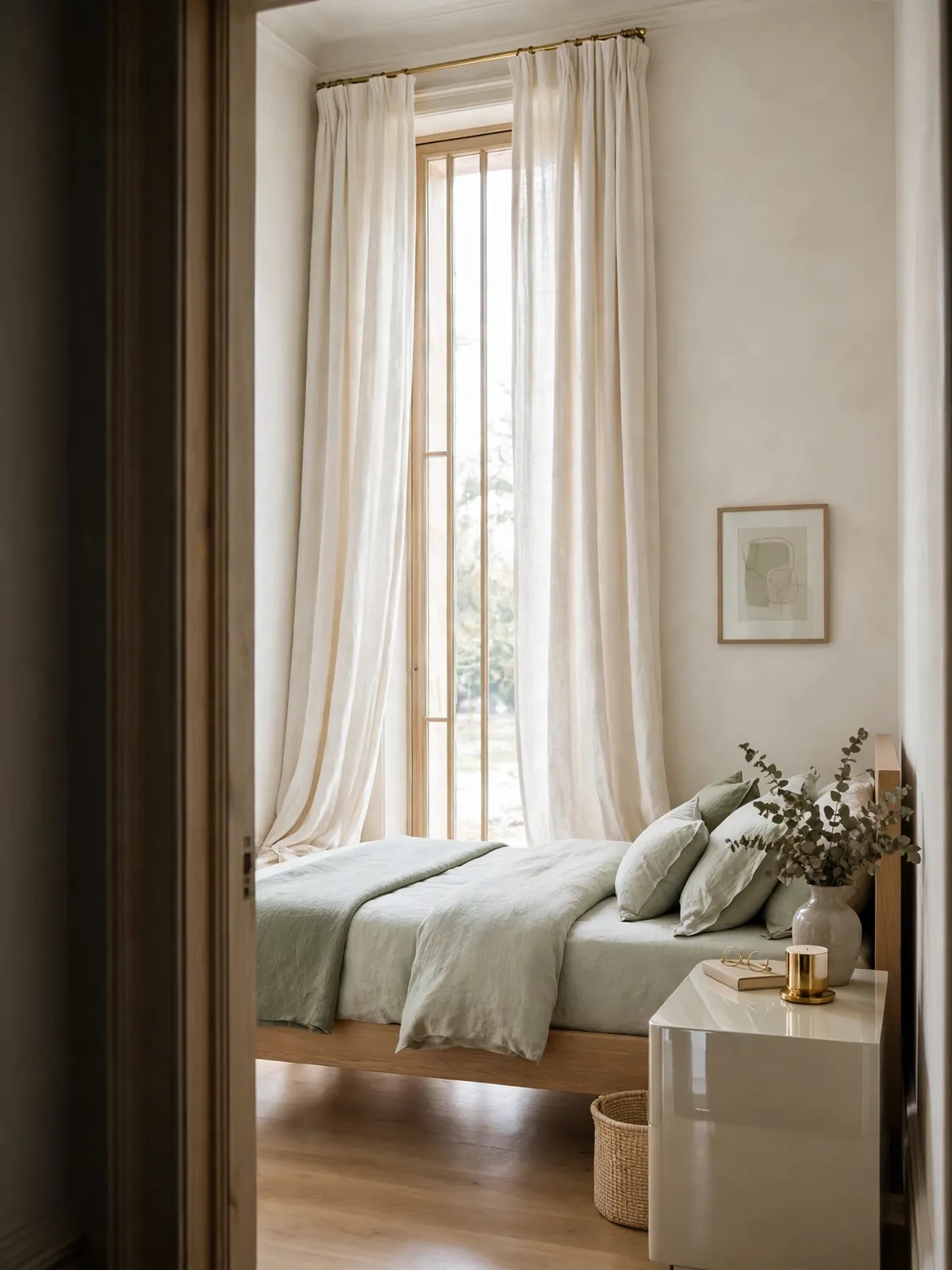
One of the easiest things you can do in a tiny bedroom is mount the curtains way above the window frame, almost near the ceiling, because long drapes draw the eye upward and instantly make the room look taller. Here, warm white linen curtains hang from a rod near the ceiling down to the floor, beside pale sage bedding and a light oak bed. The design suits any small bedroom, and even cheap curtains look expensive when they lightly touch the floor. The weakness is short curtains: curtains that stop at the sill cut the wall visually and make the room feel boxed in, so always measure to the floor.
Quick tips:
- Mount the rod close to the ceiling, not above the frame.
- Let the curtains just touch or slightly pool on the floor.
- Choose linen blends or airy cotton for a relaxed drape.
- Keep the curtain colour close to the wall colour.
Choose a Low-Profile Bed Frame to Open the Room
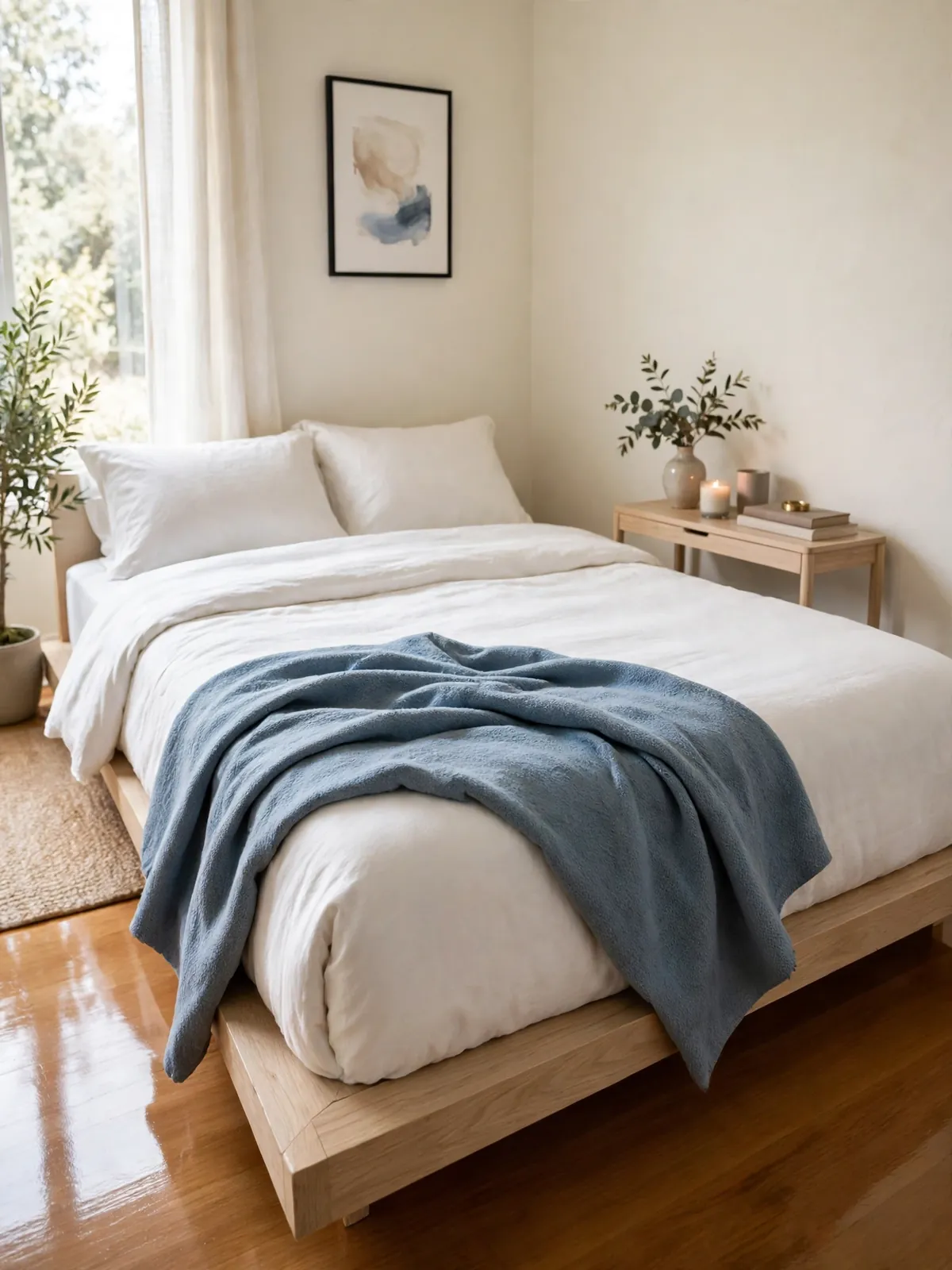
Tall bulky bed frames make small bedrooms feel crowded incredibly fast, while low-profile beds create more breathing room visually because they expose more wall area above the mattress. Here, a pale oak platform bed sits low against cream walls, dressed in white bedding with a dusty blue throw and a slim nightstand beside it. The design suits small bedrooms and rooms with lower ceilings especially well. The weakness is storage: a low bed leaves less room underneath, so pair it with a storage bench or baskets elsewhere in the room.
Quick tips:
- Choose a platform bed with slim legs or no headboard bulk.
- Keep the bedding light and airy for a relaxed look.
- Pair it with a slim nightstand, not a wide dresser.
- Leave wall space above the bed for art or shelves.
Use Mirrored Wardrobe Doors to Bounce Light Around
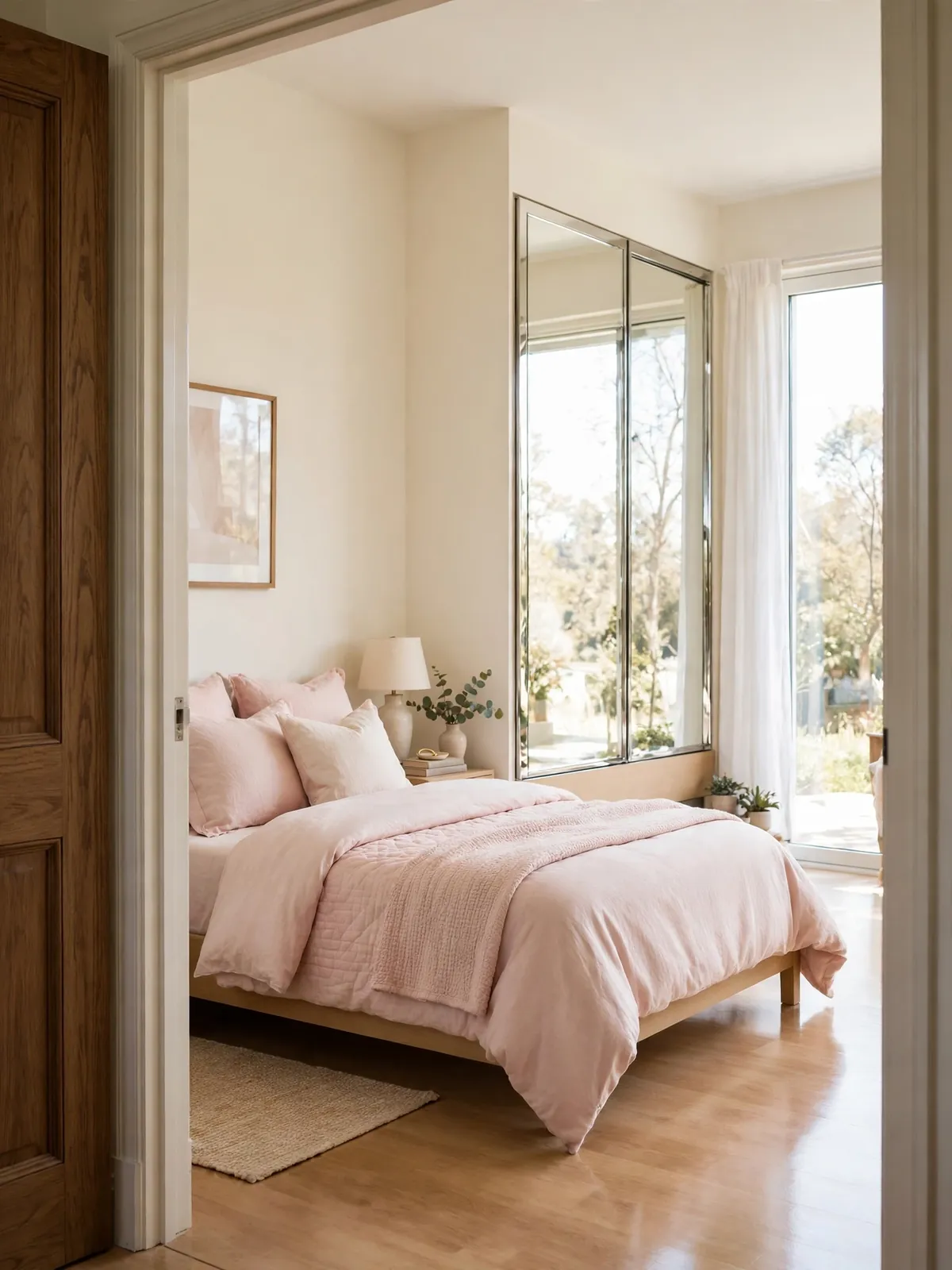
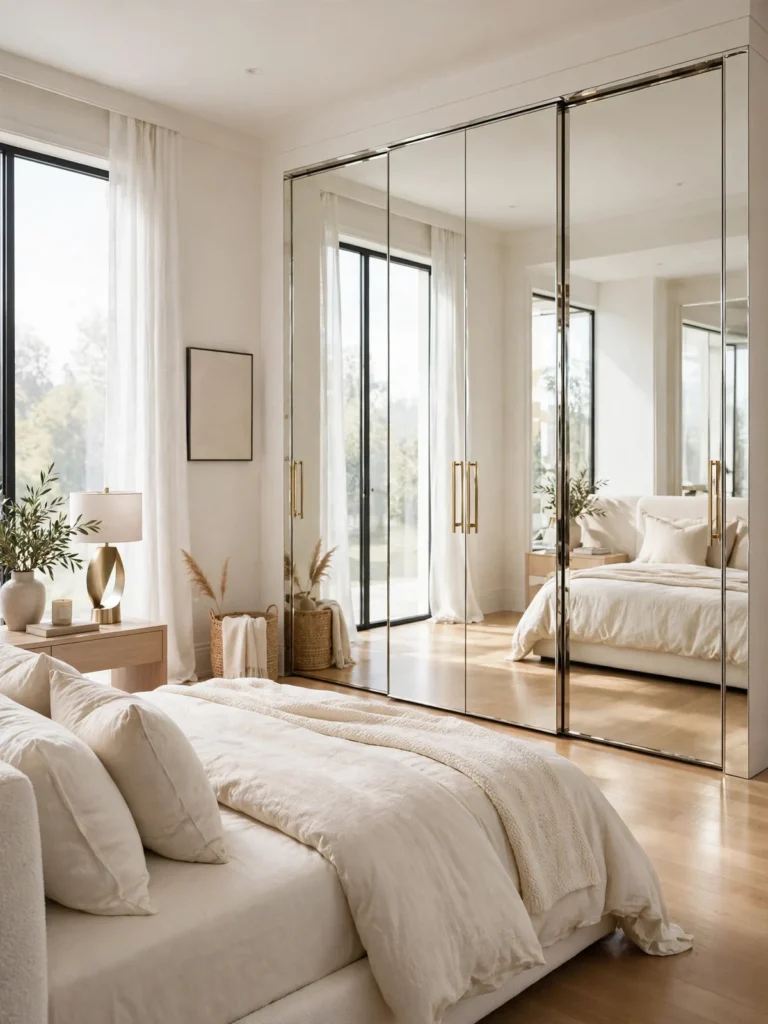
Mirrors are basically magic in small bedrooms, because a large mirrored wardrobe reflects both natural and artificial light and instantly opens the space visually, so instead of feeling like one giant bulky cabinet, the wardrobe almost disappears. Here, clear mirrored wardrobe doors reflect soft blush bedding, cream walls and a light wood floor across the whole room. The design suits small bedrooms that do not get much sunlight especially well. The weakness is tint: heavily tinted mirrors reflect less light and feel darker, so choose clear mirrors and keep them clean.
Quick tips:
- Choose clear mirrors, not heavily tinted ones.
- Place the wardrobe opposite or beside the window.
- Keep the mirror clean so the reflection stays bright.
- Use sliding doors to save the swing space.
Paint the Walls and Ceiling Similar Shades
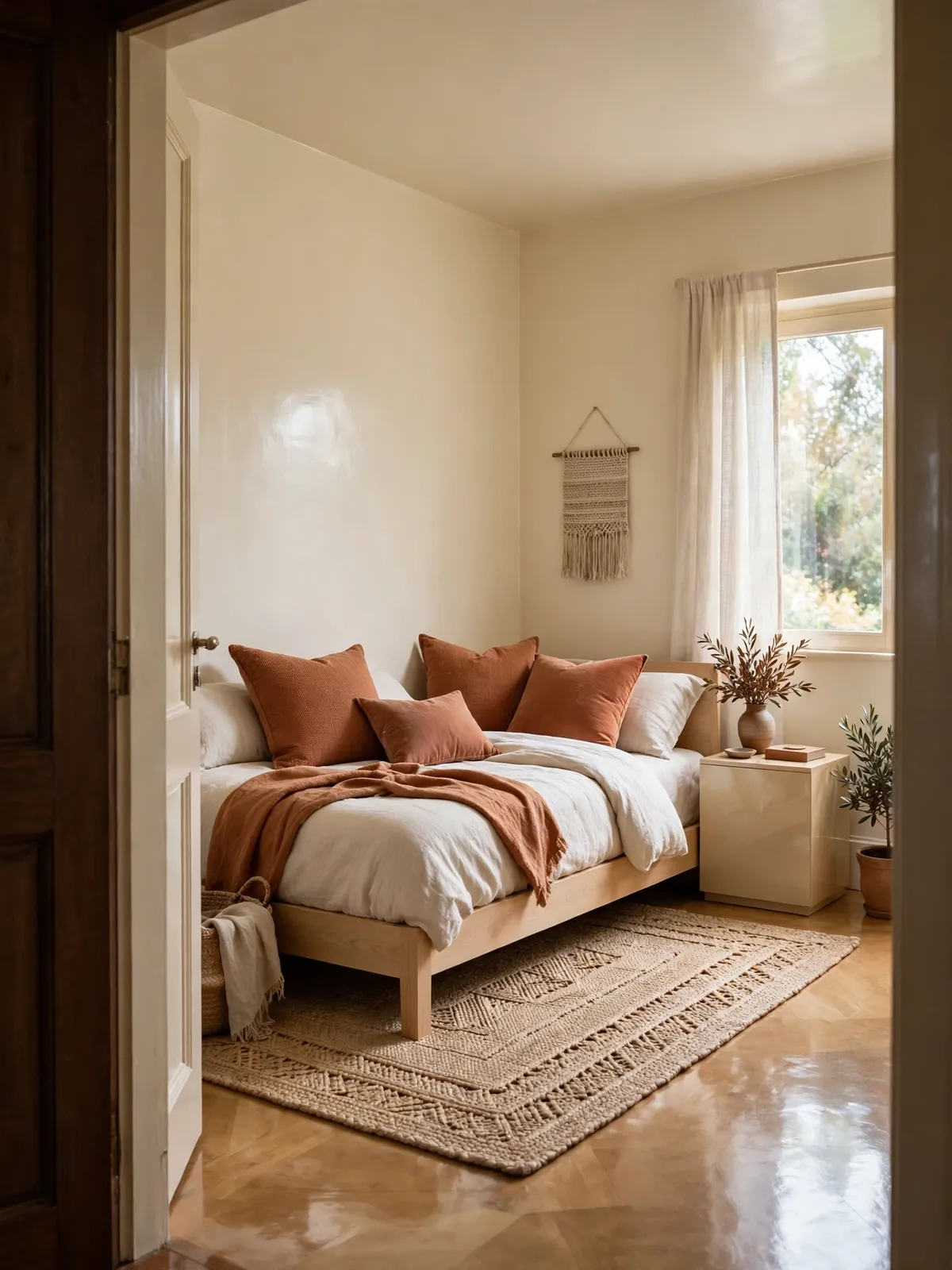
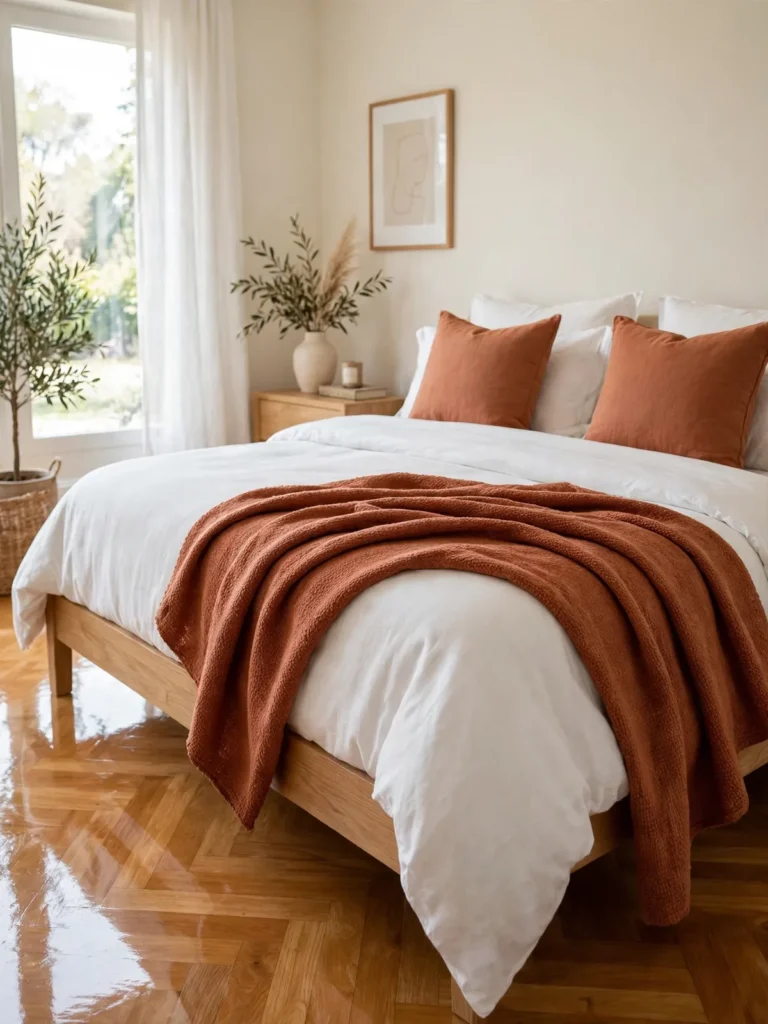
When walls and ceilings are dramatically different colours, a small room feels visually chopped up, but when both are similar tones, the eye moves smoothly around the space and the room suddenly feels taller and more cohesive. Here, warm ivory covers both the walls and the ceiling, with soft terracotta cushions, a light wood bed and a woven rug warming the palette. The design suits any small bedroom, and a satin or eggshell finish softly reflects light for extra brightness. The weakness is flatness: one colour everywhere can feel bland, so add texture through bedding, rugs and baskets.
Quick tips:
- Use satin or eggshell paint to softly reflect light.
- Keep the contrast between wall and ceiling very low.
- Add texture through bedding and rugs for depth.
- Try soft warm white, pale beige or muted sage.
Pick Furniture With Hidden Storage Inside
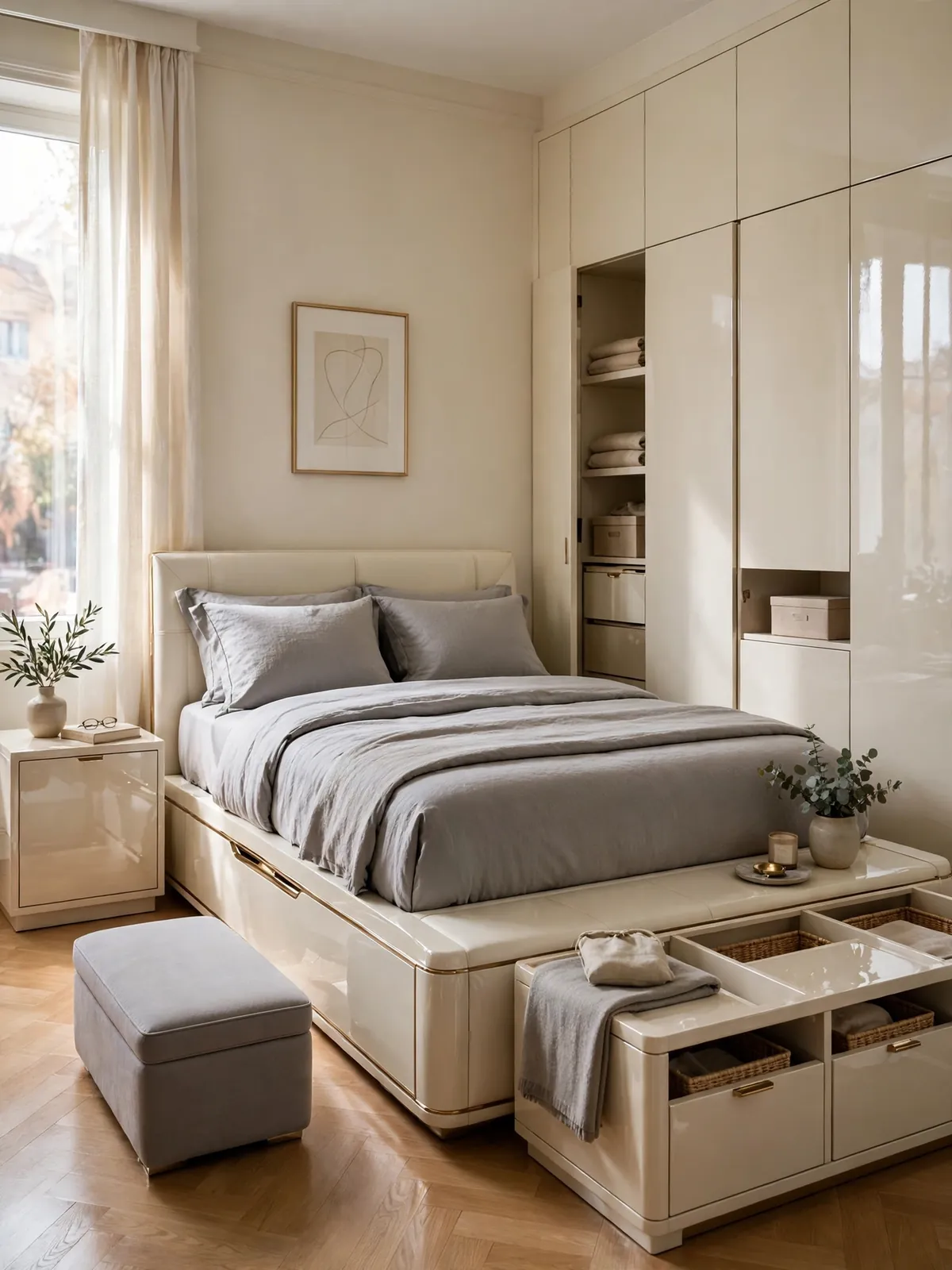
Small rooms get messy fast, which is why hidden storage becomes your best friend: storage ottomans, lift-up beds, benches with compartments and under-bed drawers hold far more than people realise, and the room instantly feels calmer when everything has a place. Here, a lift-up bed base, a storage ottoman and a bench with compartments hide extra bedding and winter clothes, under soft grey bedding and cream walls. The design suits any small bedroom, and unlike open shelves, concealed storage keeps visual clutter under control. The weakness is oversizing: a huge storage bench in a tiny room defeats the purpose, so measure first and choose slim pieces.
Quick tips:
- Choose a lift-up bed base for bulky seasonal items.
- Use a storage ottoman for extra bedding.
- Avoid oversized storage benches in tiny rooms.
- Keep under-bed storage hidden behind the bed skirt.
Stack Lighting at Different Heights
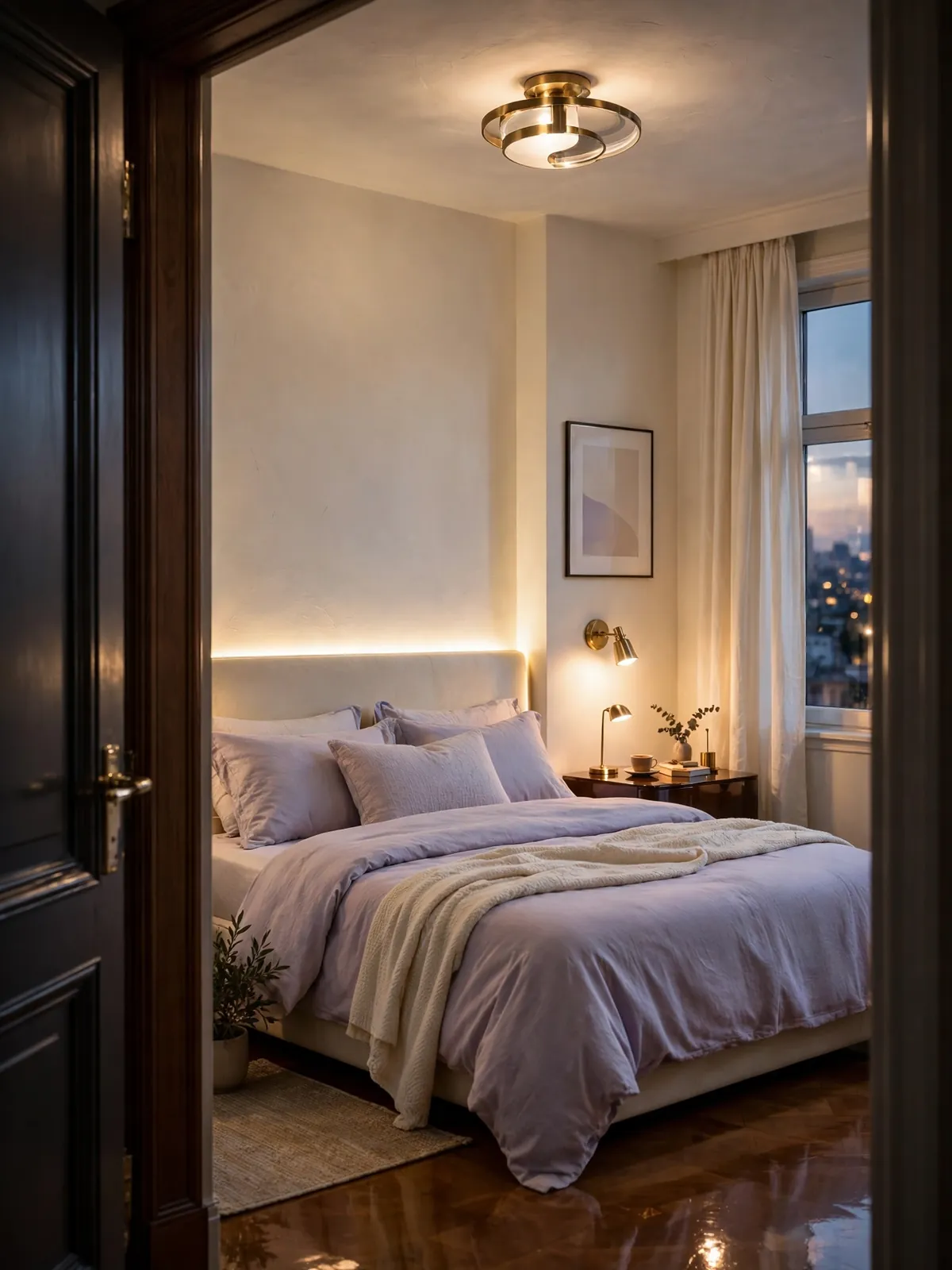
Small bedrooms often rely on one sad ceiling light, but layered lighting changes everything, because mixing a ceiling light, bedside sconces, a tiny lamp and a soft LED strip behind the headboard makes the room feel warmer and more dimensional. Here, four light heights work together over soft lavender bedding and cream walls in the evening. The design suits any small bedroom, and affordable warm-toned lighting creates the boutique-hotel feeling without designer prices. The weakness is harshness: one bright overhead bulb flattens the room, so put the ceiling light on a dimmer and use warm bulbs everywhere.
Quick tips:
- Layer ceiling, bedside, accent and reading light.
- Choose warm bulbs around 2700K throughout.
- Add a dimmer to the ceiling light for evenings.
- Use LED strips behind the headboard for a soft glow.
Swap Bulky Headboards for Slim Upholstered Panels
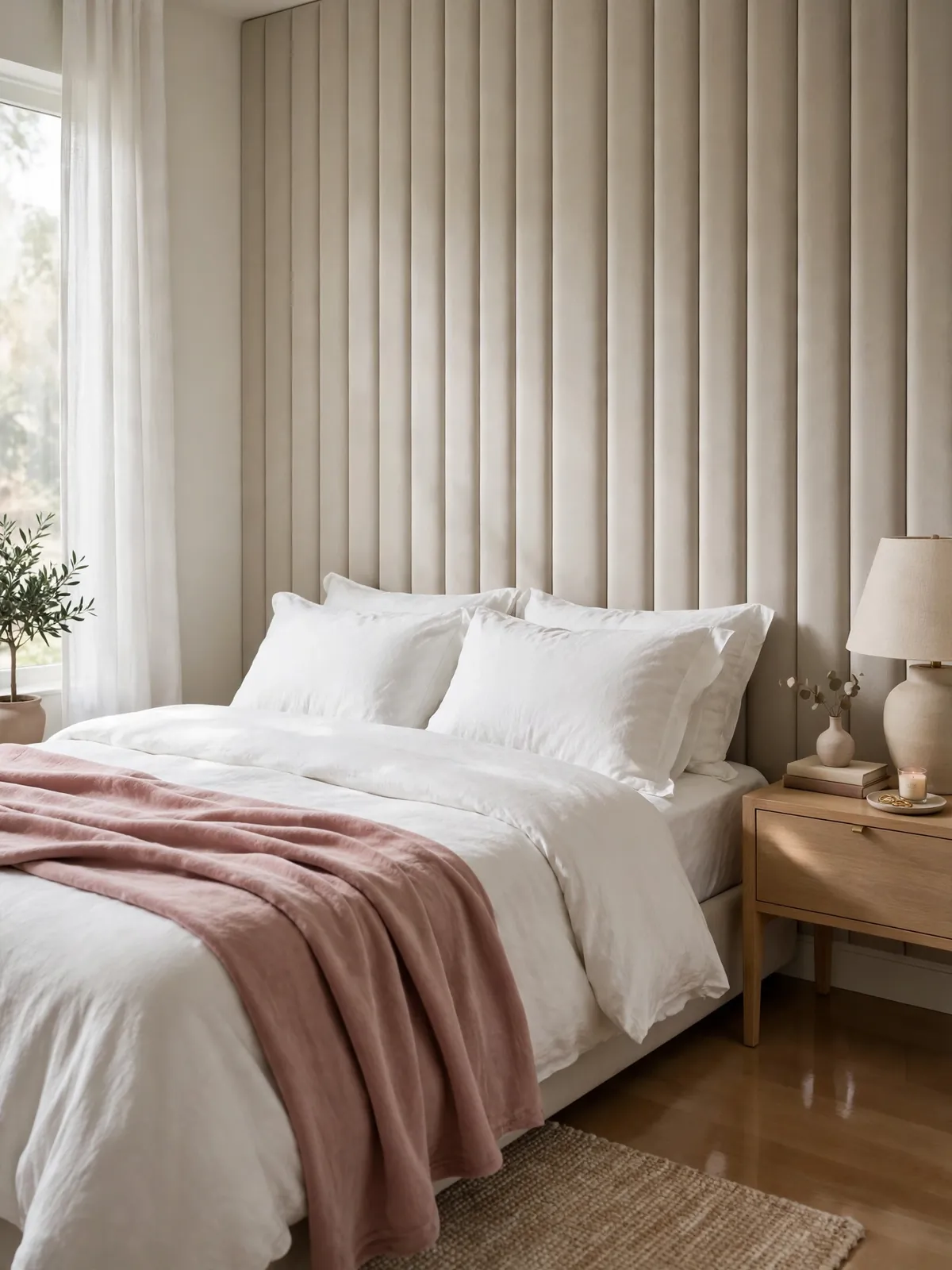
Large wooden headboards can visually overpower a tiny bedroom fast, while soft upholstered panels feel lighter and still add comfort and texture — and vertically channelled panels subtly make the ceiling appear taller too. Here, slim oatmeal panels rise behind white bedding and a dusty rose throw, with a light wood nightstand beside the bed. The design suits small bedrooms crowded with storage furniture especially well, and reading in bed becomes far more comfortable. The weakness is installation: panels need secure fixing, so use foam panels wrapped in fabric or peel-and-stick padded tiles for a renter-friendly version.
Quick tips:
- Choose vertical channelling to fake taller ceilings.
- Try peel-and-stick padded tiles for rentals.
- Keep the panels slim so they do not eat floor space.
- Match the panel colour to the bedding for calm.
Tuck Storage Baskets Neatly Under the Bed
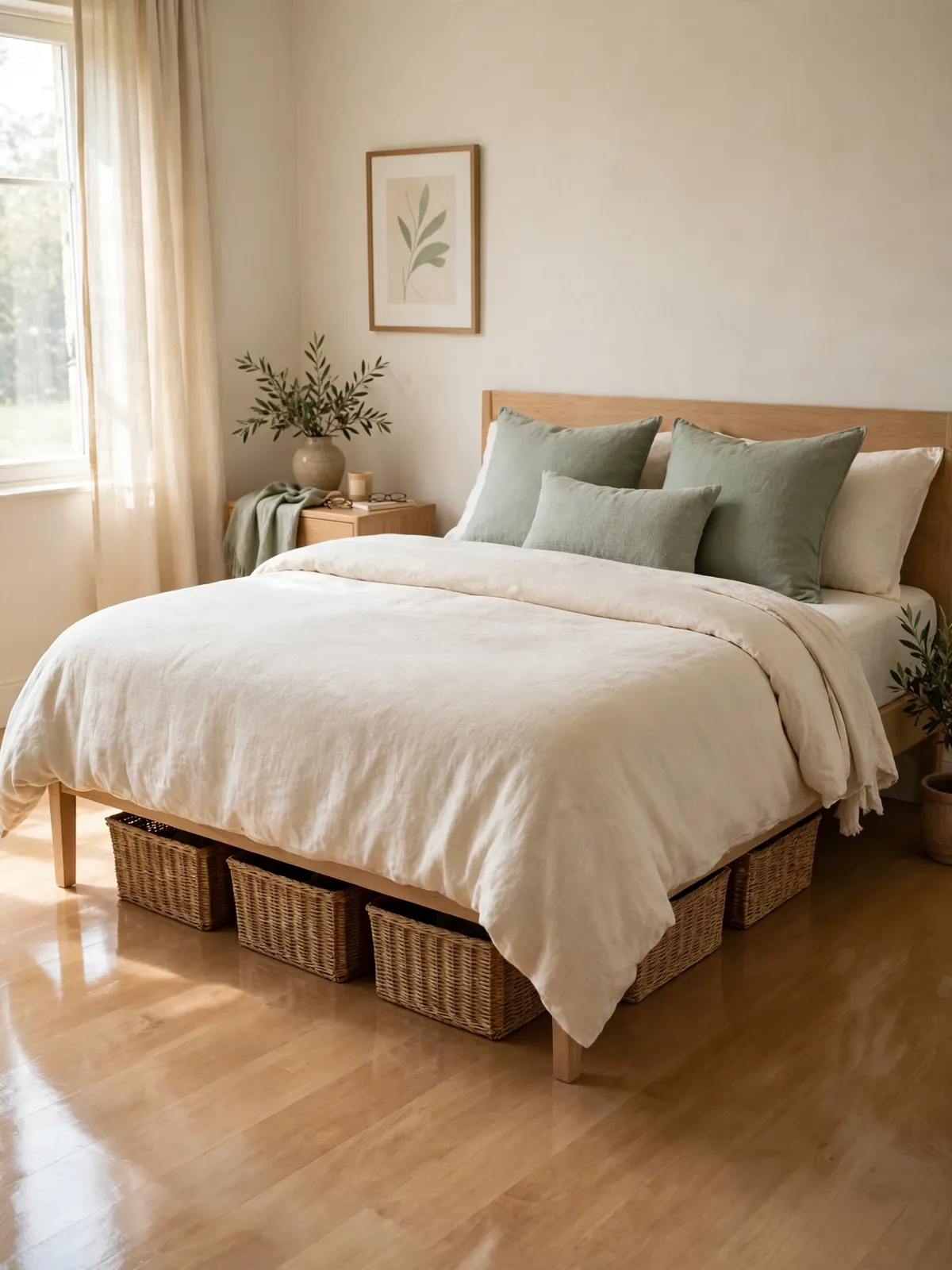
Under-bed space is criminally underused in most bedrooms, and once you switch from shoving random things underneath to matching baskets and rolling bins, everything looks calmer instantly — the key is making the storage feel intentional. Here, matching woven baskets sit neatly under a bed dressed in cream bedding and soft sage cushions, on a light wood floor. The design suits any small bedroom, and seasonal clothes, extra blankets, shoes and spare pillows fit perfectly underneath. The weakness is dust: open baskets collect it, so choose baskets with lids or dust covers for linens.
Quick tips:
- Use matching baskets or bins for a calm look.
- Add bed risers if you need extra height.
- Label baskets for seasonal items.
- Use dust covers for linens stored underneath.
Keep the Colour Palette Intentionally Limited
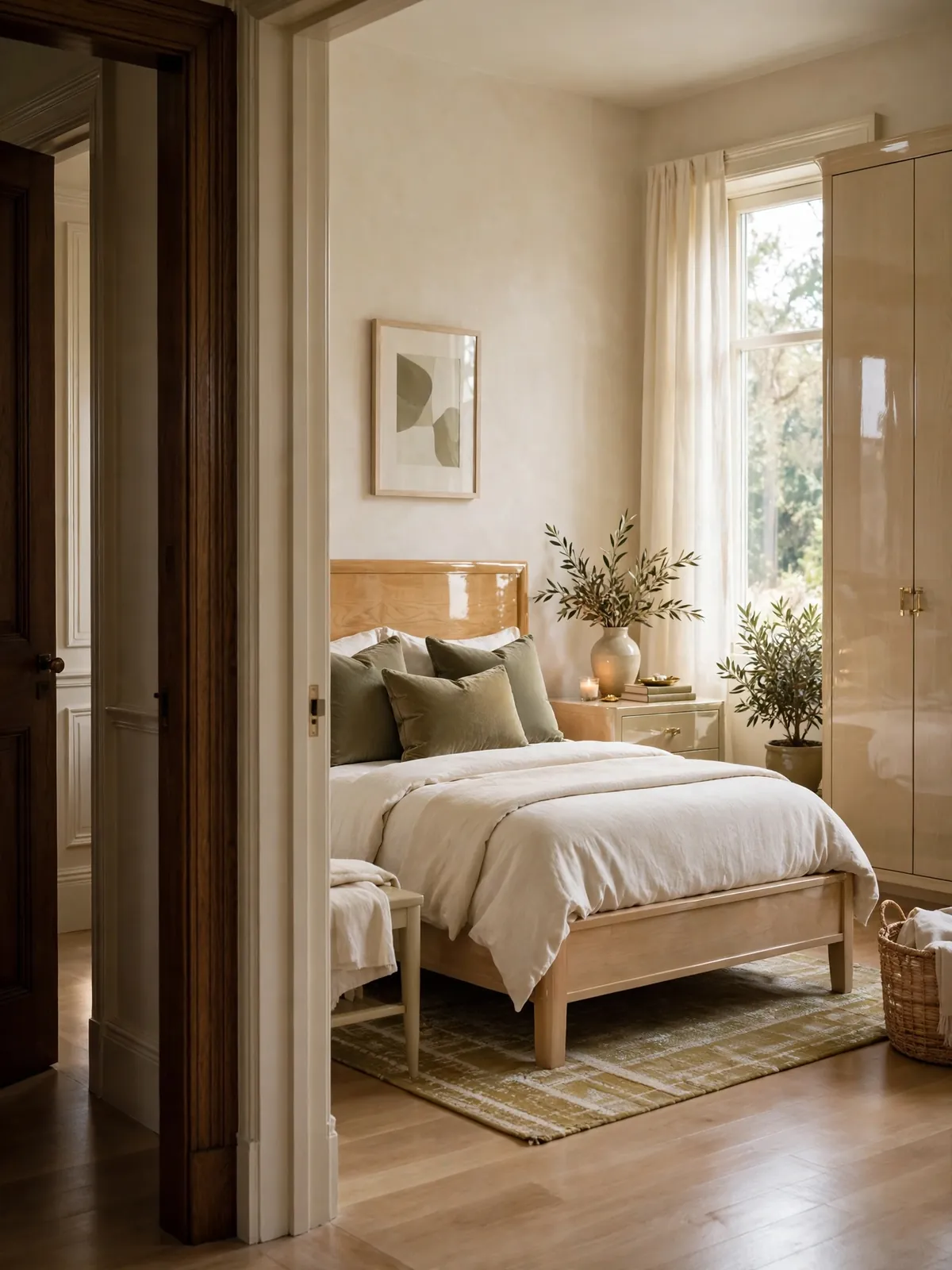
Tiny bedrooms feel calmer when colours stay cohesive, and that does not mean everything must be beige — limiting the palette to two or three main tones keeps the room from feeling visually noisy. Here, warm ivory, muted olive and pale oak work together, with olive cushions on ivory bedding and oak furniture throughout. The design suits any small bedroom, especially one that already contains a lot of furniture. The weakness is monotony: one base with no accent feels flat, so add a single softer accent like muted olive, dusty blue or warm clay.
Quick tips:
- Start with one base neutral, then add one soft accent.
- Repeat each colour at least twice in the room.
- Swap stark white for warm ivory, bright red for terracotta.
- Keep the wood tone consistent throughout.
Add One Oversized Artwork Instead of Many Small Frames
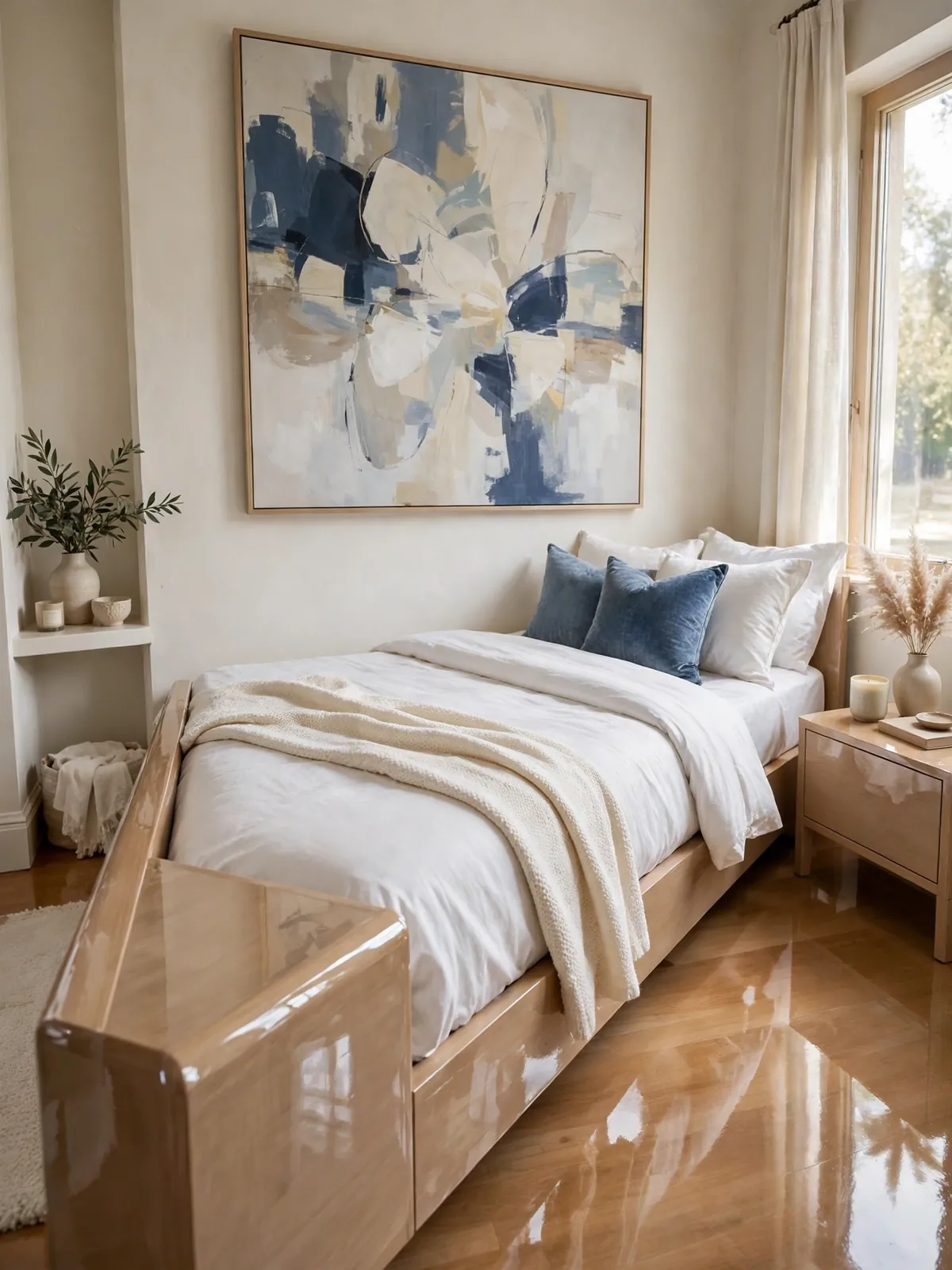
Lots of small decor pieces make tiny bedrooms feel busy very quickly, while one larger statement piece usually works better, because it creates focus without overwhelming the space. Here, one oversized abstract canvas in soft navy and cream hangs above white bedding, with a light wood frame and a slim nightstand below. The design suits any small bedroom wall, and abstract art, calming landscapes or soft minimalist prints all work beautifully. The weakness is scale: a canvas that is too small for the wall looks lost, so size it to about two-thirds the width of the bed.
Quick tips:
- Size the art to two-thirds the width of the bed.
- Hang it fifteen centimetres above the headboard.
- Choose soft earthy tones for a calm feel.
- Lean a large canvas for a relaxed, no-drill look.
Replace Heavy Wardrobes With an Open Clothing Rack
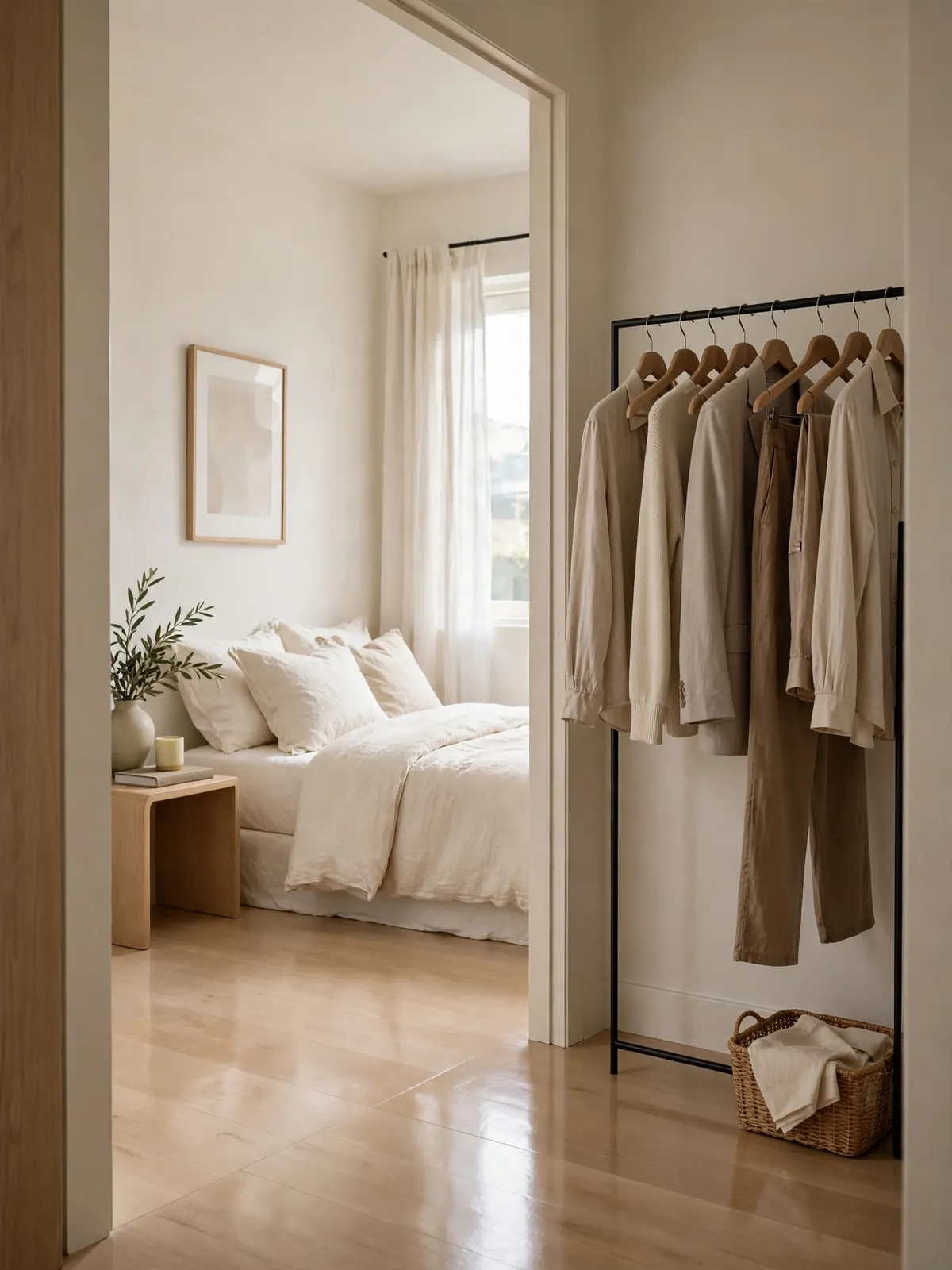
In ultra-small bedrooms, replacing a giant wardrobe with a sleek clothing rack can free up visual space dramatically, because removing bulky cabinetry makes the room feel twice as open. Here, a slim black metal rack holds coordinated neutral clothes on matching hangers, beside cream bedding and a light wood floor. The design suits minimalists, capsule wardrobes and airy apartment bedrooms best. The weakness is clutter: an overcrowded rack looks messy fast, so keep it curated with neutral hangers, coordinated tones and limited visible items.
Quick tips:
- Use matching neutral hangers for a tidy look.
- Keep the rack curated, never overcrowded.
- Coordinate clothing tones for a calm display.
- Add a small shelf above for folded items.
Create a Cozy Reading Nook Beside the Bed
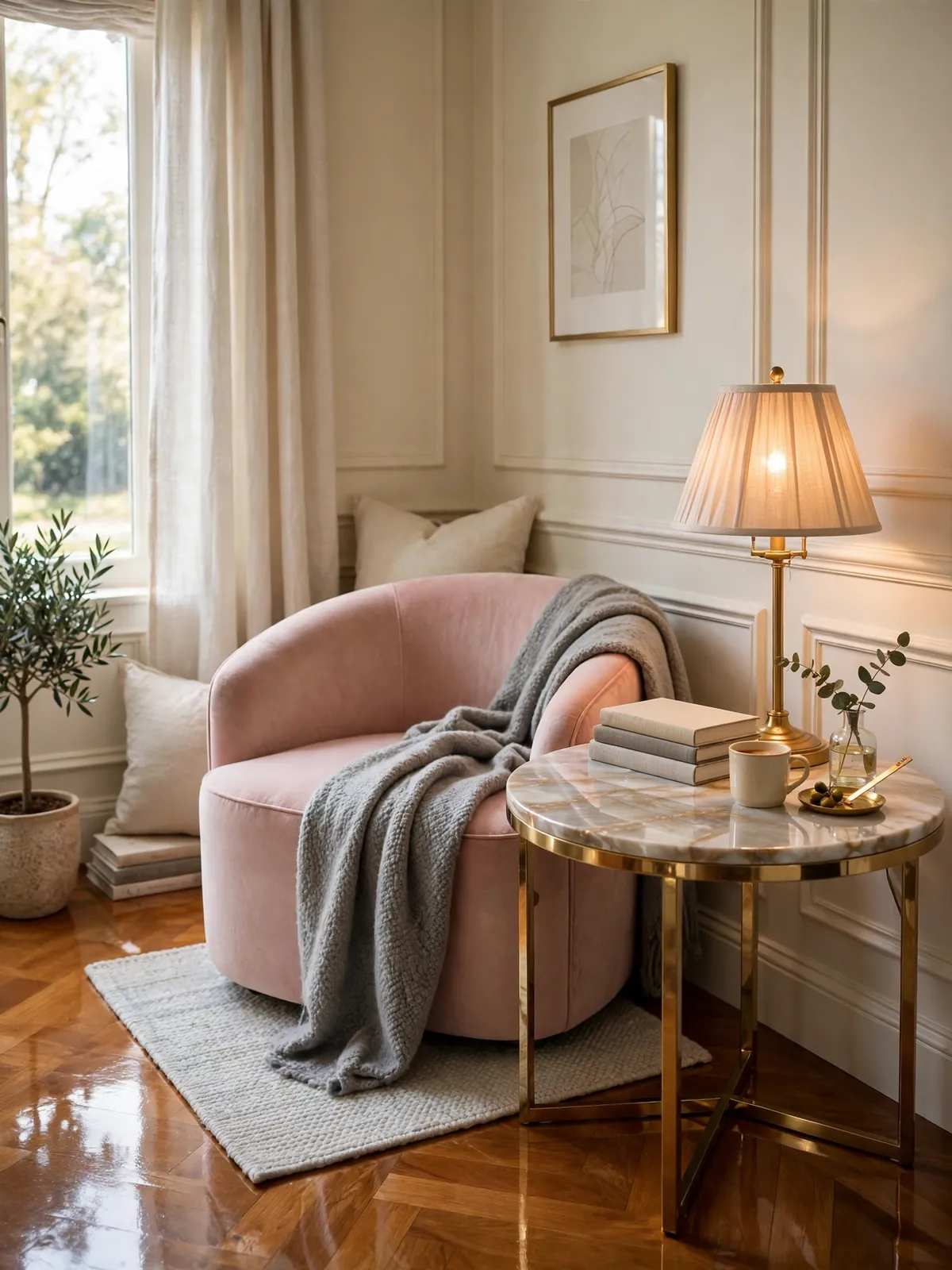
Tiny bedrooms can still feel layered and personal without overcrowding, and a small reading corner using just a compact chair, a soft throw and warm lighting makes even a tiny corner feel intentional. Here, a curved blush armchair sits beside a small side table with a warm reading lamp and a soft grey throw, against cream walls. The design suits small bedrooms with one spare corner, and a curved chair softens all the straight furniture lines. The weakness is size: an oversized armchair swallows a small room, so choose a compact chair with slim legs and keep the table tiny.
Quick tips:
- Use a compact curved chair with slim legs.
- Add a floating shelf if there is no room for a table.
- Choose a warm lamp that flatters, not a harsh one.
- Drape one throw over the chair arm for softness.
Add Texture Instead of Adding More Furniture
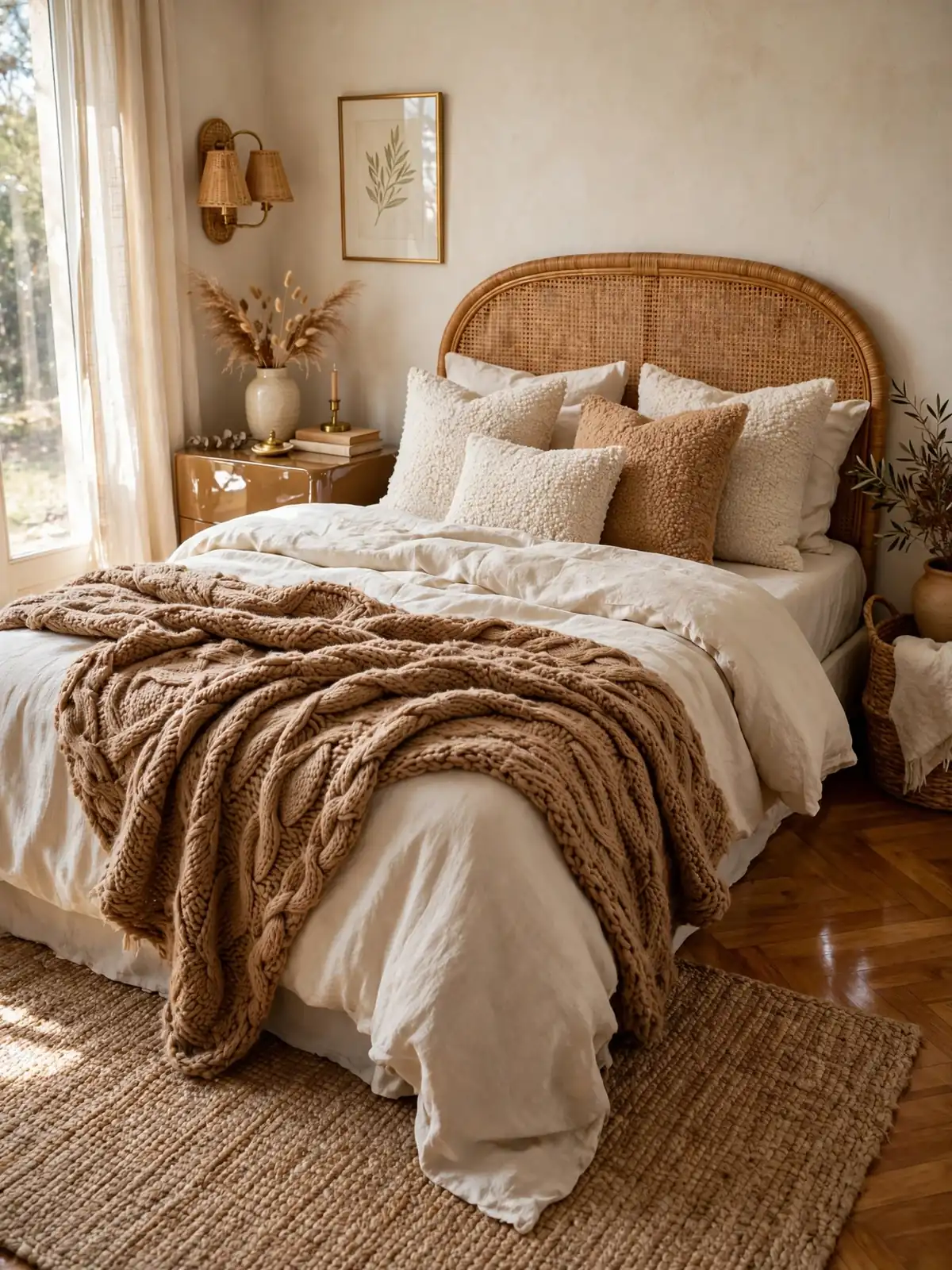
When a small bedroom feels boring, most people try adding more stuff — another chair, more shelves, extra decor — but that usually just makes the room feel tighter, while texture works better. Here, boucle cushions, a chunky knit throw, a woven rattan headboard, linen bedding and a jute rug build a soft caramel and cream palette that feels luxurious with very few pieces in the room. The design suits small bedrooms most of all, and it photographs beautifully too. The weakness is sameness: one texture repeated everywhere feels flat, so mix at least three — something soft, something woven and something smooth.
Quick tips:
- Mix three textures: soft, woven and smooth.
- Layer boucle, linen and knit in one palette.
- Use a woven headboard or basket for natural texture.
- Keep the colour palette calm so texture does the work.
Build Symmetry Even in Awkward Layouts
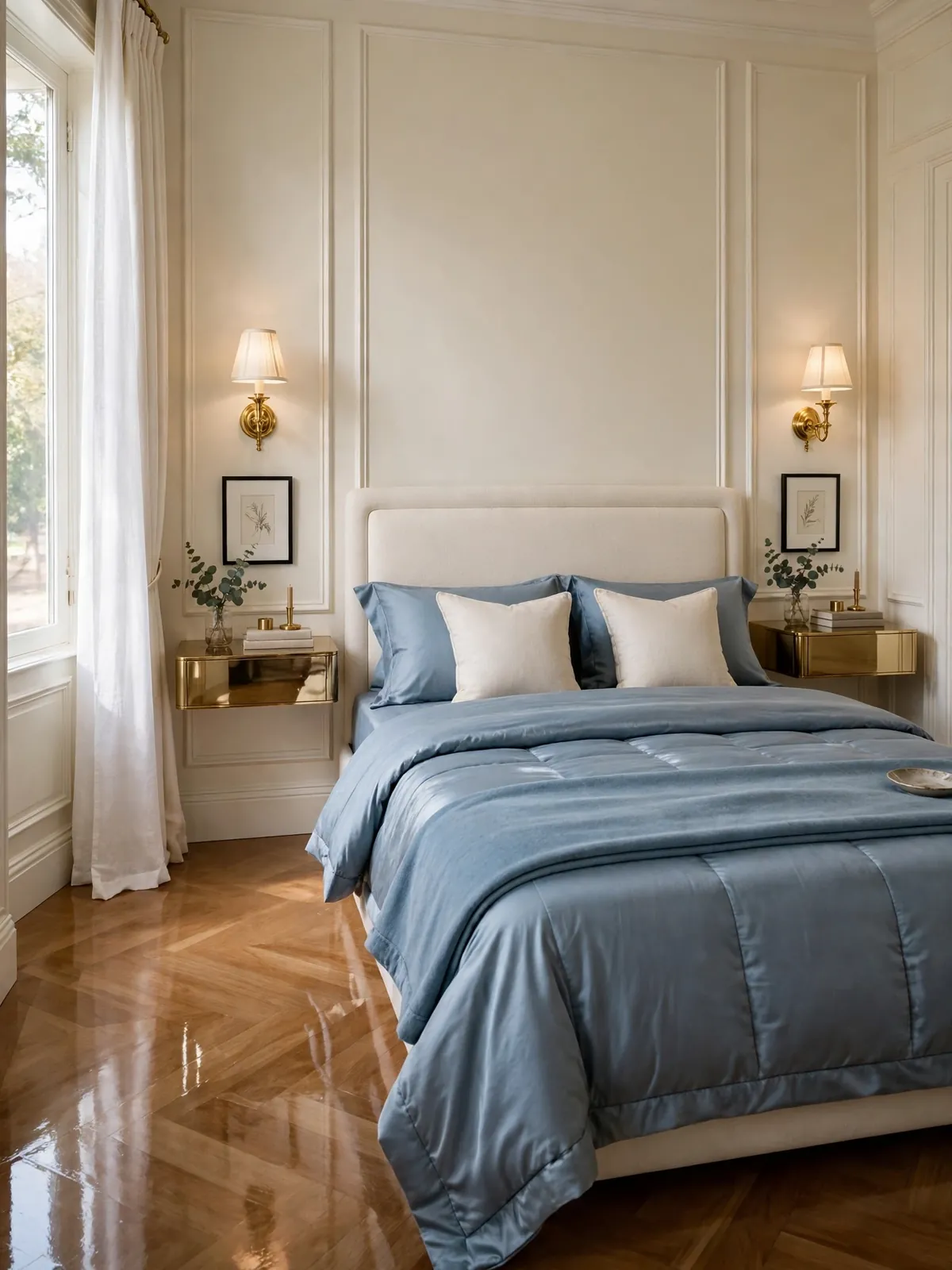
Small bedrooms often have weird layouts — off-centre windows, random closet placement, tiny wall sections — but creating small moments of symmetry helps the room feel calmer visually. Here, matching brass sconces, balanced pillows and identical bedside shelves create order over soft dusty blue bedding and cream walls, even though the window sits off-centre. The design suits any awkward small bedroom, and balance subtly tricks the eye into seeing the room as more organised. The weakness is overdoing it: perfect symmetry on every surface feels stiff, so keep the symmetry to the bed wall and let the rest of the room relax.
Quick tips:
- Repeat shapes and materials on both sides of the bed.
- Use matching bedside lighting for instant balance.
- Keep decor visually balanced, not identical everywhere.
- Avoid oversized mismatched furniture on one side.
Use Multifunctional Furniture Everywhere You Can
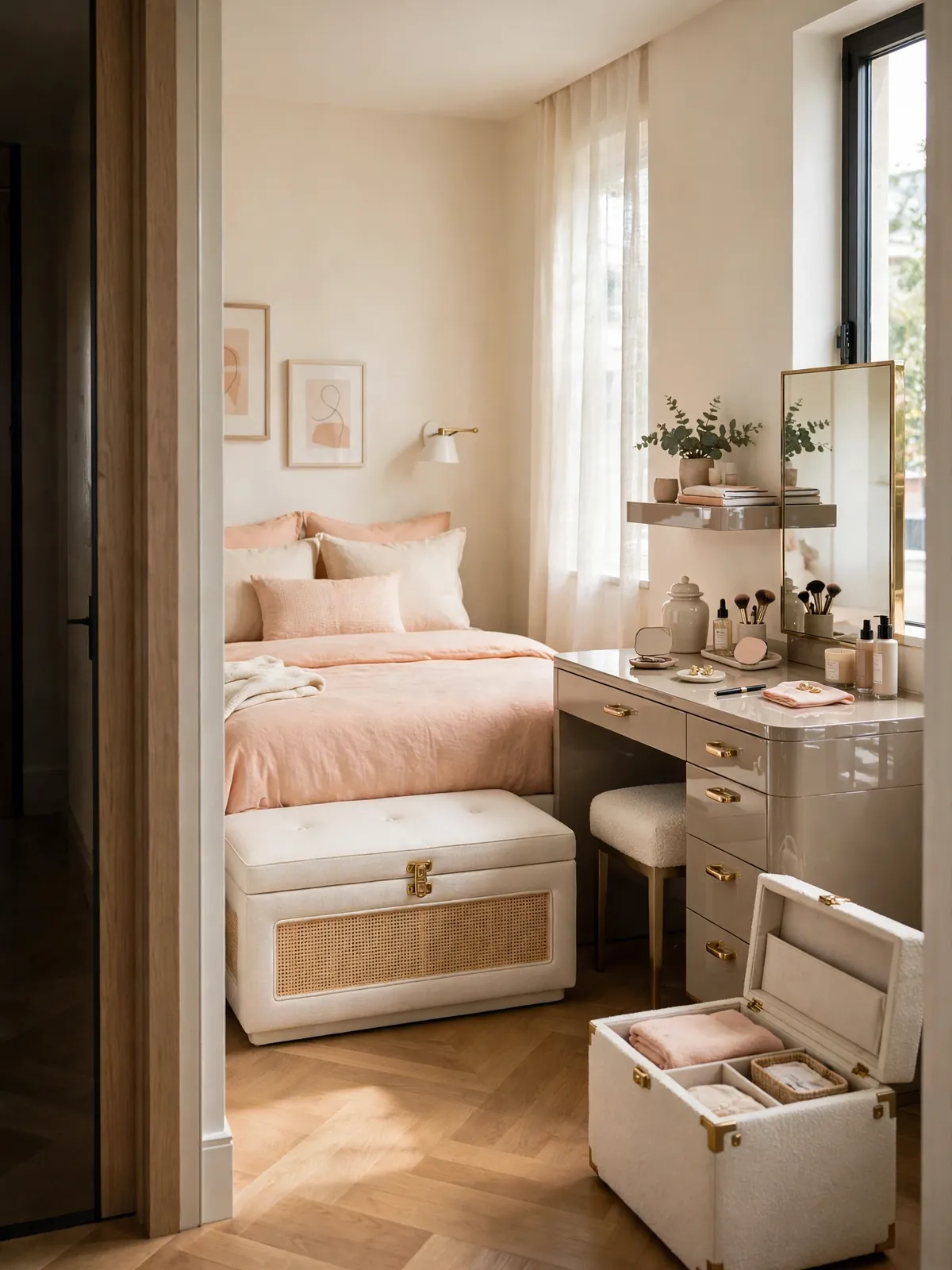
In really small bedrooms, every furniture piece should ideally serve more than one purpose, because storage benches, desks doubling as vanities, ottomans with compartments and beds with drawers underneath all make life easier without overcrowding the room. Here, a storage bench, a slim desk that doubles as a vanity and an ottoman with compartments work around soft peach bedding and cream walls. The design suits studio apartments, shared bedrooms and tiny urban homes best. The weakness is compromise: a desk that is also a vanity does neither job perfectly, so choose pieces where both functions genuinely work.
Quick tips:
- Prioritise flexibility over single-purpose pieces.
- Choose a desk that doubles as a vanity.
- Use ottomans with compartments for hidden storage.
- Fewer pieces means less visual clutter overall.
Mount Floating Shelves Above the Bed
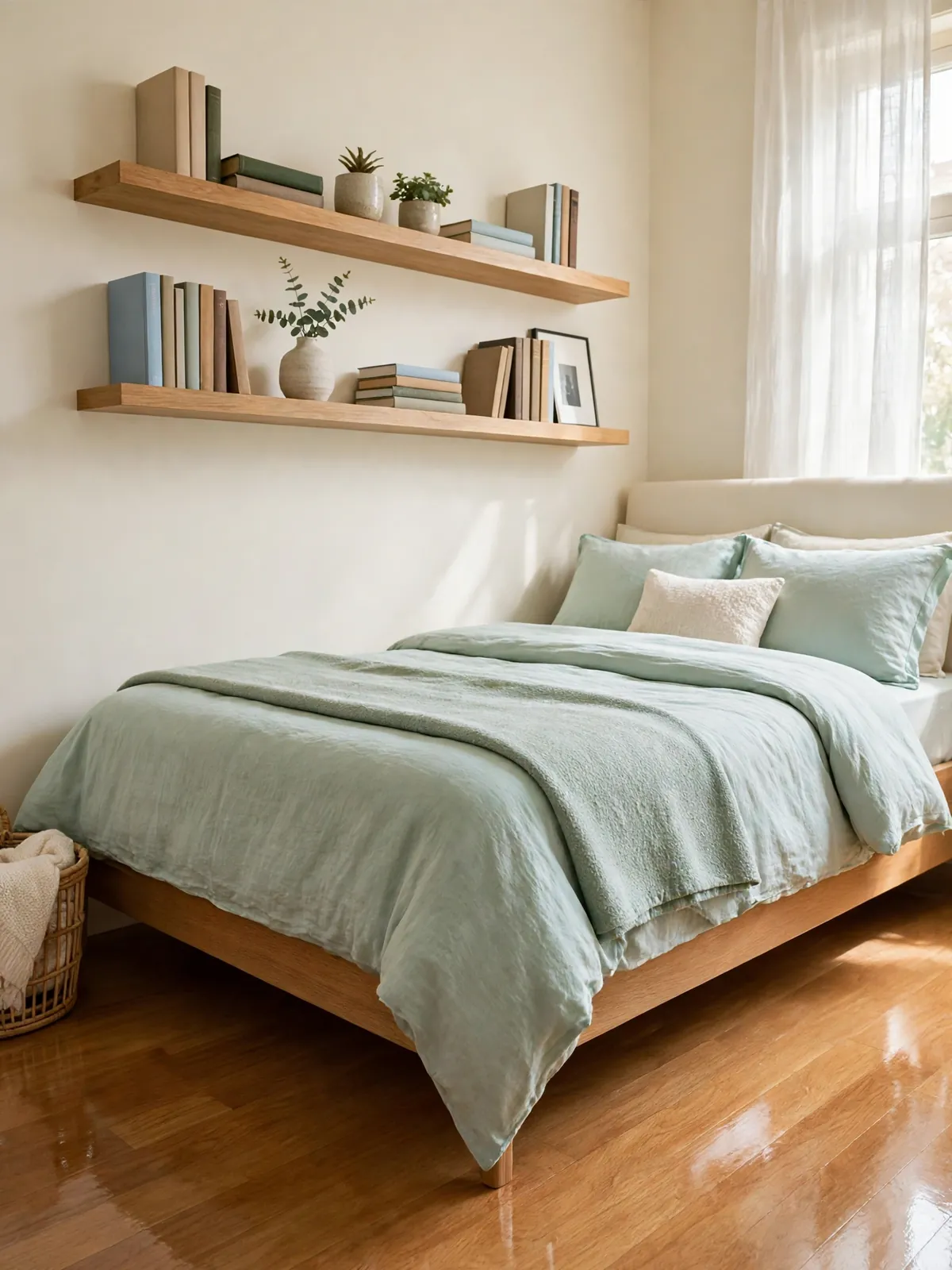
Floating shelves above the bed give a small bedroom wall storage that doubles as decoration, because they draw the eye upward and free the floor for the pieces that actually need to stand on it. Here, two floating oak shelves hold books, a small plant and a ceramic vase over soft mint bedding and cream walls. The design suits small bedrooms with no room for a bookcase, and it makes the room feel taller. The weakness is weight: shelves above a bed must be fixed securely into studs, so keep heavy items low and light decor up high.
Quick tips:
- Fix shelves securely into wall studs above the bed.
- Mix books, plants and one decorative object.
- Leave empty space between items for a calm look.
- Keep heavy items on lower shelves for safety.
Choose a Slim Nightstand or a Floating Shelf
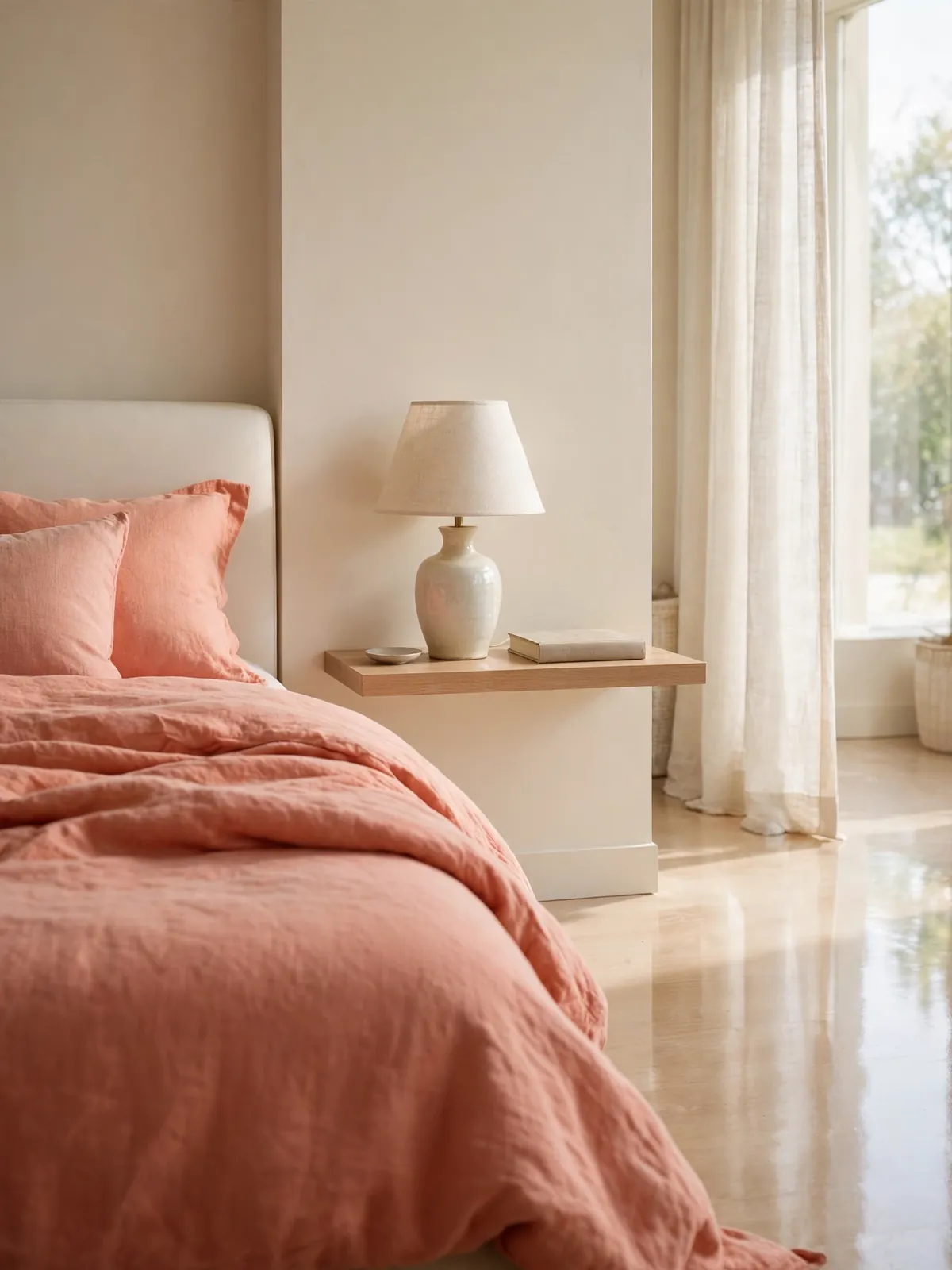
A wide nightstand eats precious floor in a small bedroom, while a slim nightstand or a floating shelf holds the lamp, the book and the phone with a fraction of the footprint. Here, a slim floating oak shelf beside the bed holds a ceramic lamp and a small book, with soft coral bedding, cream walls and a light wood floor around it. The design suits narrow bedrooms where every centimetre counts. The weakness is storage: a floating shelf holds almost nothing, so keep a basket under the bed for the items that used to live in the nightstand drawer.
Quick tips:
- Choose a floating shelf to free the floor completely.
- Keep the surface to lamp, book and phone only.
- Match the shelf wood to the bed frame.
- Add a small basket under the bed for drawer items.
Use a Daybed That Works Day and Night
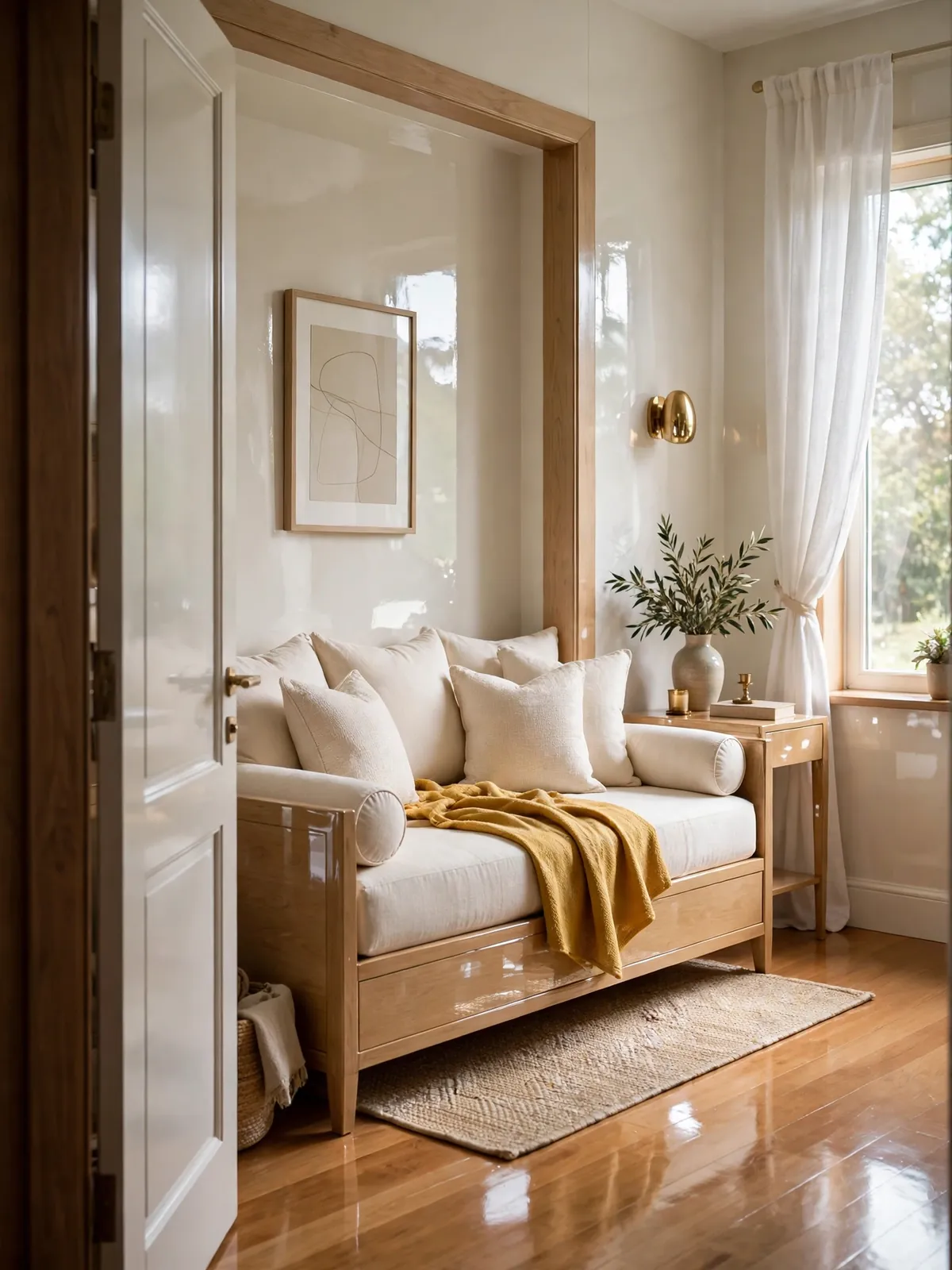
A daybed is the hardest-working piece in a small bedroom, because by day it reads as a sofa with cushions and a throw, and by night it is a proper bed — one piece of furniture doing two jobs in the same footprint. Here, a light wood daybed is styled with cream cushions, a mustard throw and bolster pillows against a pale wall. The design suits studio flats, guest rooms and teenagers’ bedrooms best. The weakness is comfort: a thin daybed mattress feels like a sofa, so invest in a proper thick mattress and a good topper.
Quick tips:
- Invest in a thick mattress and a good topper.
- Style it with cushions and a throw by day.
- Choose a frame with drawers underneath for storage.
- Keep the bedding simple so the day look stays tidy.
Slide a Narrow Desk Into a Corner
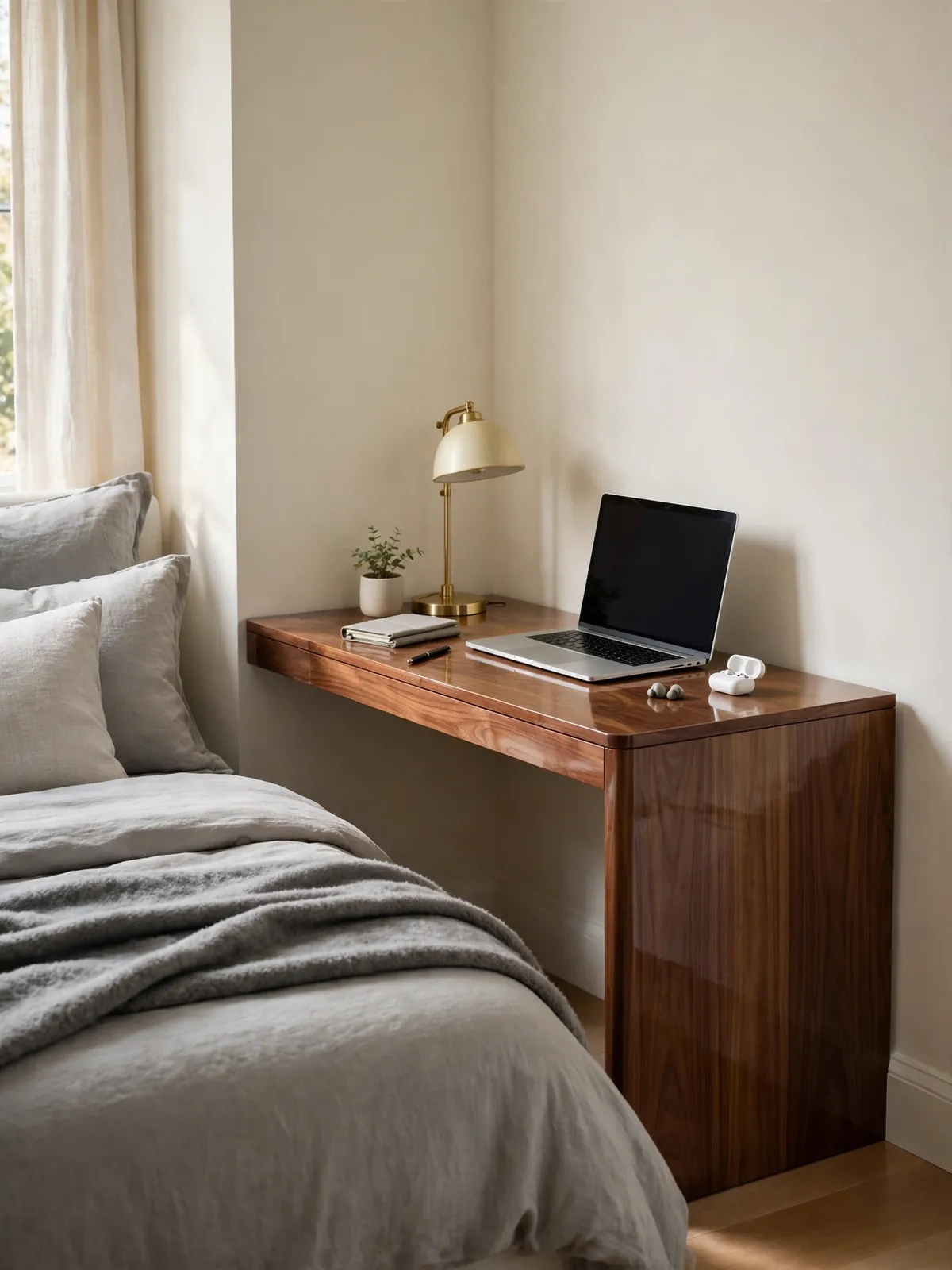
Even the smallest bedroom can hold a workspace if the desk is narrow and the corner is used well, because a slim desk tucked into a corner gives you a dedicated spot without dominating the room. Here, a slim walnut desk with a small lamp, a laptop and a tiny plant sits in the corner beside soft grey bedding and cream walls. The design suits work-from-home bedrooms and students’ rooms. The weakness is sprawl: a desk in a bedroom invites clutter, so keep it to the laptop, the lamp and one plant, and clear it every evening.
Quick tips:
- Choose a slim desk that fits the corner exactly.
- Keep the desk to laptop, lamp and one plant.
- Add a floating shelf above for books and files.
- Clear the desk every evening to protect sleep.
Hang a Wall-Mounted Reading Light
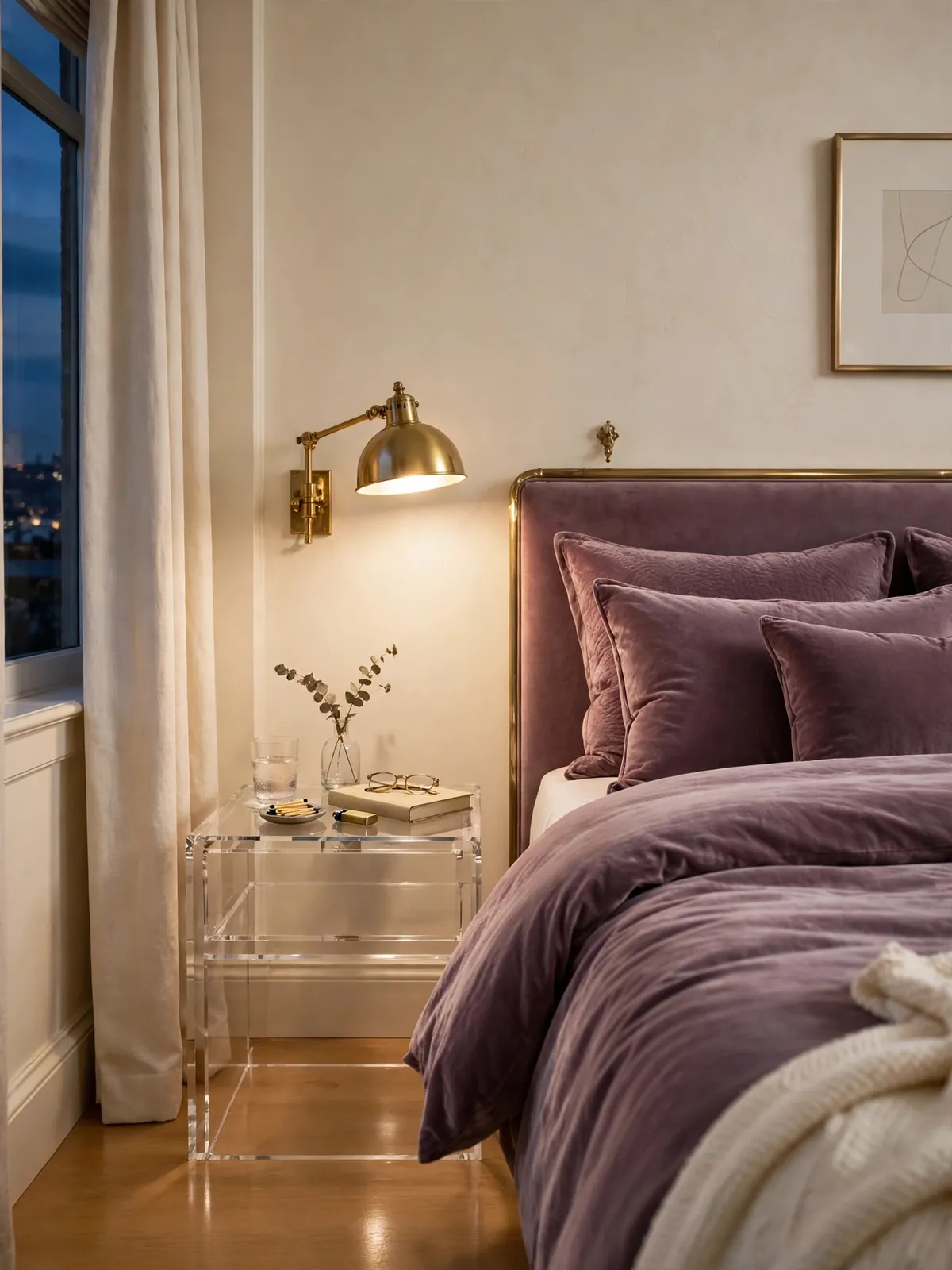
A wall-mounted reading light frees the nightstand completely, because the light lives on the wall instead of taking up the only surface beside the bed, and a swing-arm version aims exactly where you need it. Here, a brass swing-arm light glows beside soft plum bedding and cream walls, with a clear nightstand below in the evening. The design suits small bedrooms where the nightstand is barely wide enough for a phone. The weakness is installation: hardwired lights need an electrician, so plug-in swing-arm lights give the same look with no wiring work.
Quick tips:
- Choose a swing-arm light for reading flexibility.
- Try plug-in versions to avoid rewiring.
- Mount it at eye level when sitting up in bed.
- Use a warm bulb for a soft evening glow.
Pick a Rug That Fits, Not One That Floats
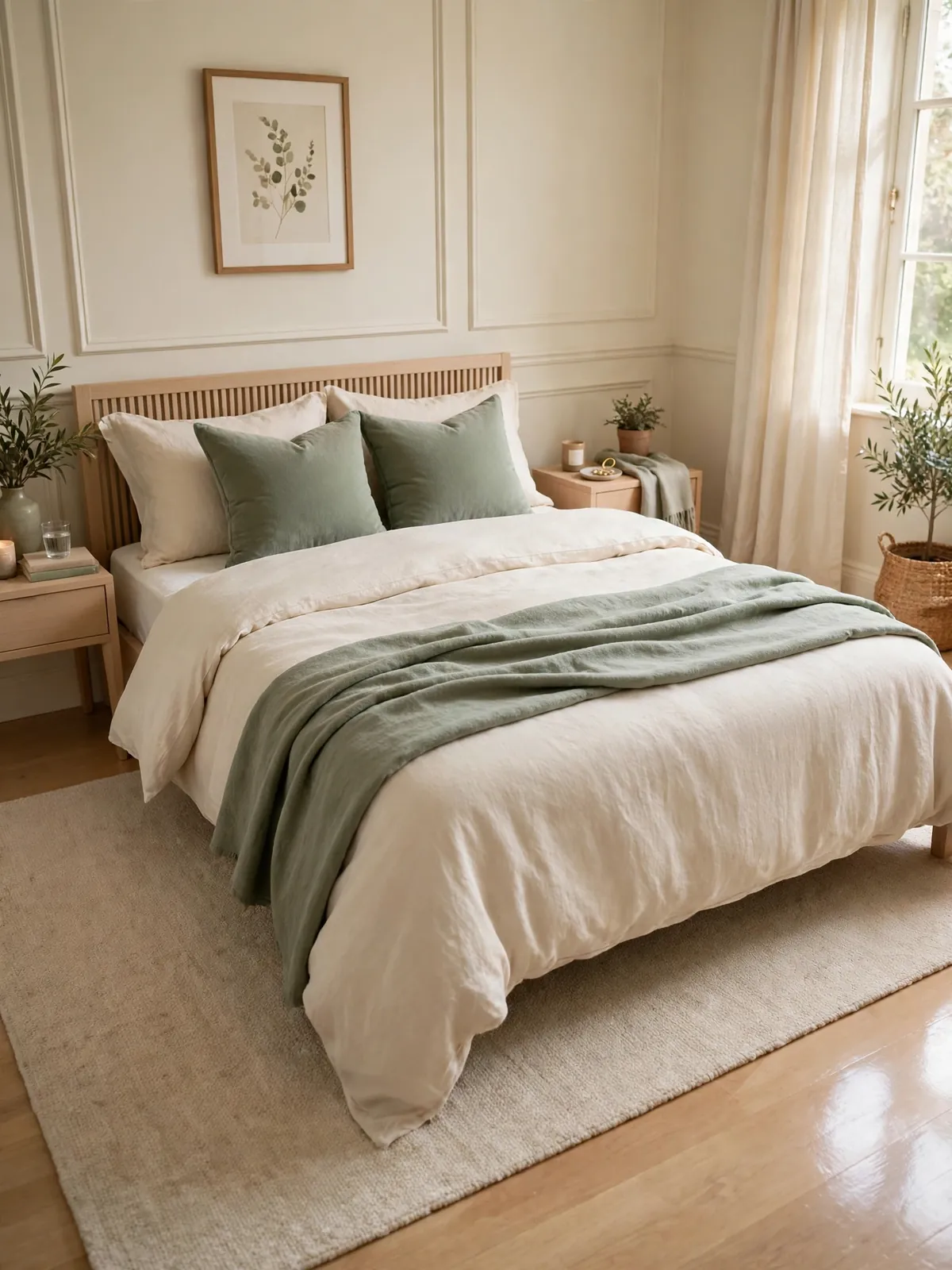
In a small bedroom, rug size matters more than rug pattern, because a rug that extends past the bed ties the furniture together, while a small rug floating in the middle of the floor looks like a mat and chops the room up. Here, a soft beige rug runs under the bed and out both sides, beneath cream bedding and soft sage cushions on a light wood floor. The design suits any small bedroom with hard floors. The weakness is overhang: a rug that nearly touches the walls makes the room feel smaller, so leave a border of bare floor visible around it.
Quick tips:
- Extend the rug sixty centimetres past the bed sides.
- Leave a border of bare floor visible around the rug.
- Choose a low-pile rug that is easy to vacuum.
- Keep the rug colour calm so the bed stays the focus.
Use Vertical Storage Up to the Ceiling
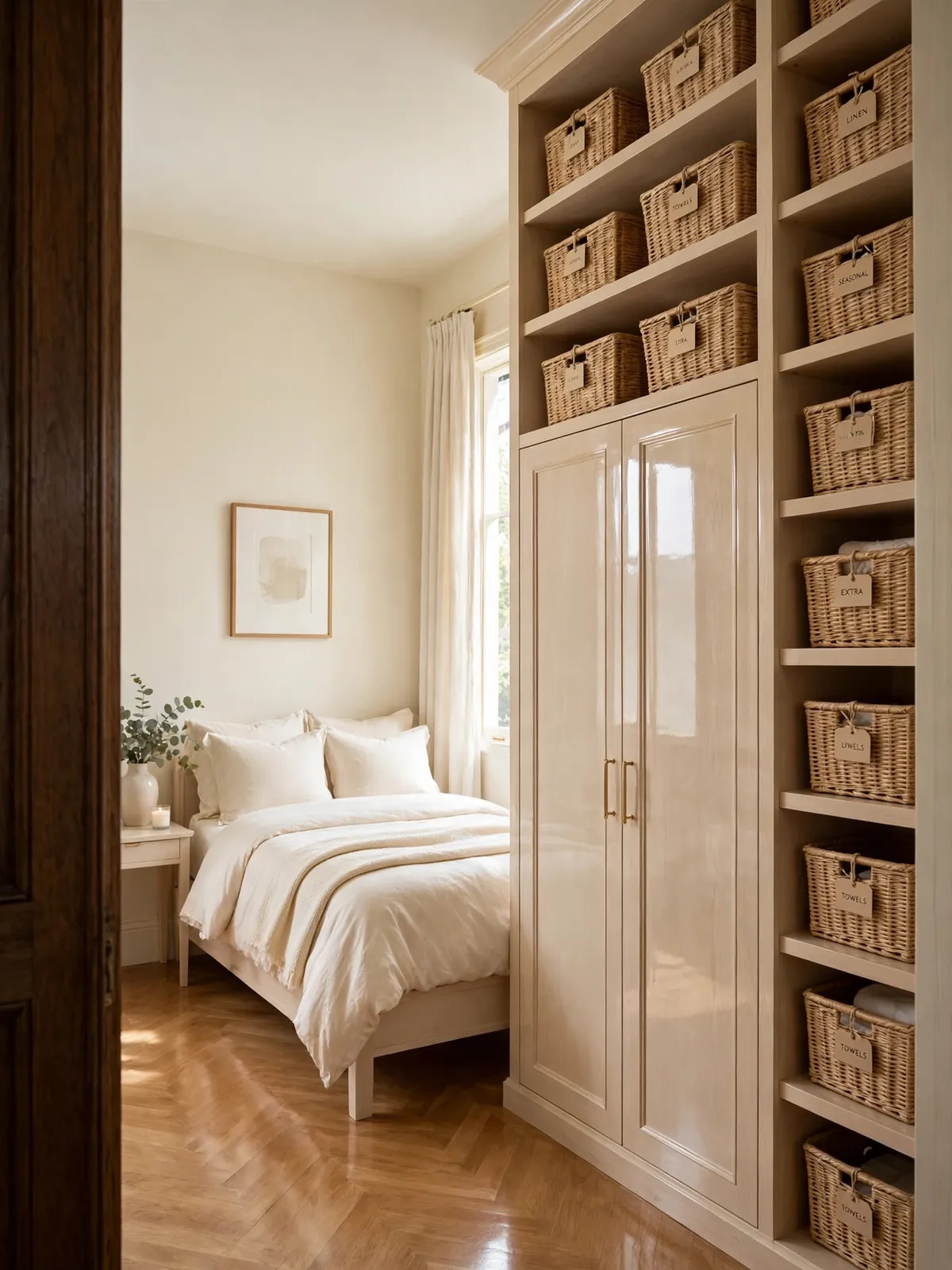
When floor space runs out, the only way left is up, and tall narrow storage — a wardrobe that reaches the ceiling, high shelves with matching baskets — uses the empty air above eye level that most bedrooms waste. Here, a pale wood wardrobe runs floor to ceiling with high shelves holding matching baskets, beside soft ivory bedding and cream walls. The design suits small bedrooms with high ceilings especially well. The weakness is reach: the top shelves are only useful for things you rarely need, so keep seasonal items up high and daily items at arm level.
Quick tips:
- Use tall narrow units instead of wide low ones.
- Keep seasonal items on the highest shelves.
- Use matching baskets so high storage looks tidy.
- Add a small step stool that tucks away neatly.
Keep the Bedding Light and Simple
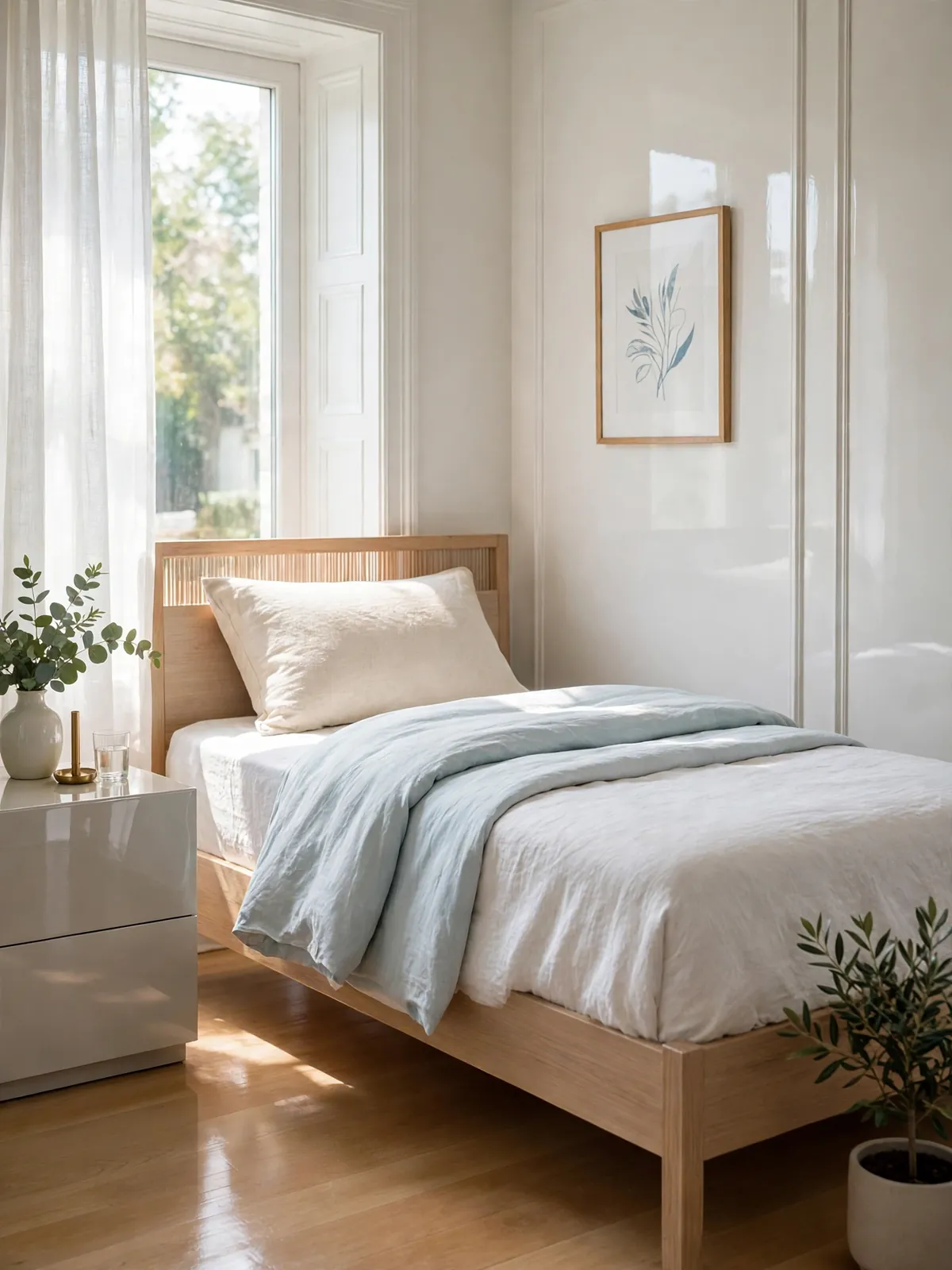
Heavy, dark bedding makes a small bedroom feel smaller, while light and simple bedding — white linen sheets, a pale blue duvet, one cream cushion — makes the bed feel airy and the whole room feel bigger. Here, a light wood bed is dressed in white linen and a pale blue duvet with a single cream cushion, and nothing else competes for attention. The design suits any small bedroom, and pale bedding is also the easiest to refresh with one new cushion colour. The weakness is stains: white bedding shows every mark, so choose washable linen or cotton and keep a spare set ready.
Quick tips:
- Choose white or pale bedding as the base.
- Keep decorative cushions to one or two.
- Use washable linen or cotton for easy care.
- Add colour through one throw, not the duvet.
Add a Slim Bench With Storage at the Foot
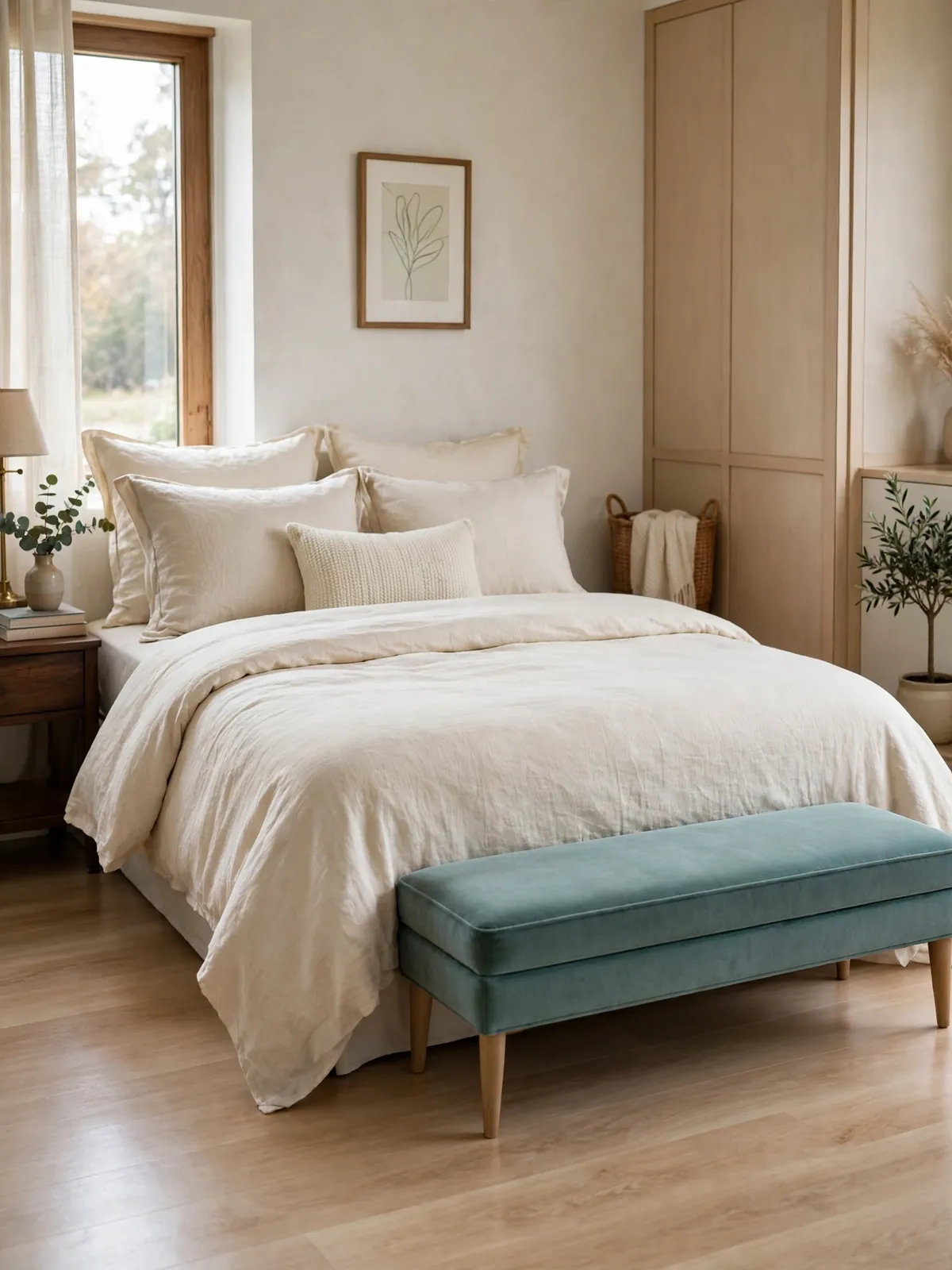
A slim storage bench at the foot of the bed finishes a small bedroom the way a period finishes a sentence, and it hides extra blankets inside while giving you a place to sit. Here, a slim soft teal bench sits at the foot of a bed dressed in cream bedding, on a light wood floor. The design suits small bedrooms with at least sixty centimetres of walkway past the bed. The weakness is bulk: a wide or tall bench blocks the room, so choose the slimmest bench that still holds a blanket and a few books.
Quick tips:
- Leave sixty centimetres of walkway past the bench.
- Choose the slimmest bench that still stores a blanket.
- Pick upholstery in the room’s accent colour.
- Keep the bench lower than the mattress for balance.
Use Light Wood and Pale Finishes Throughout
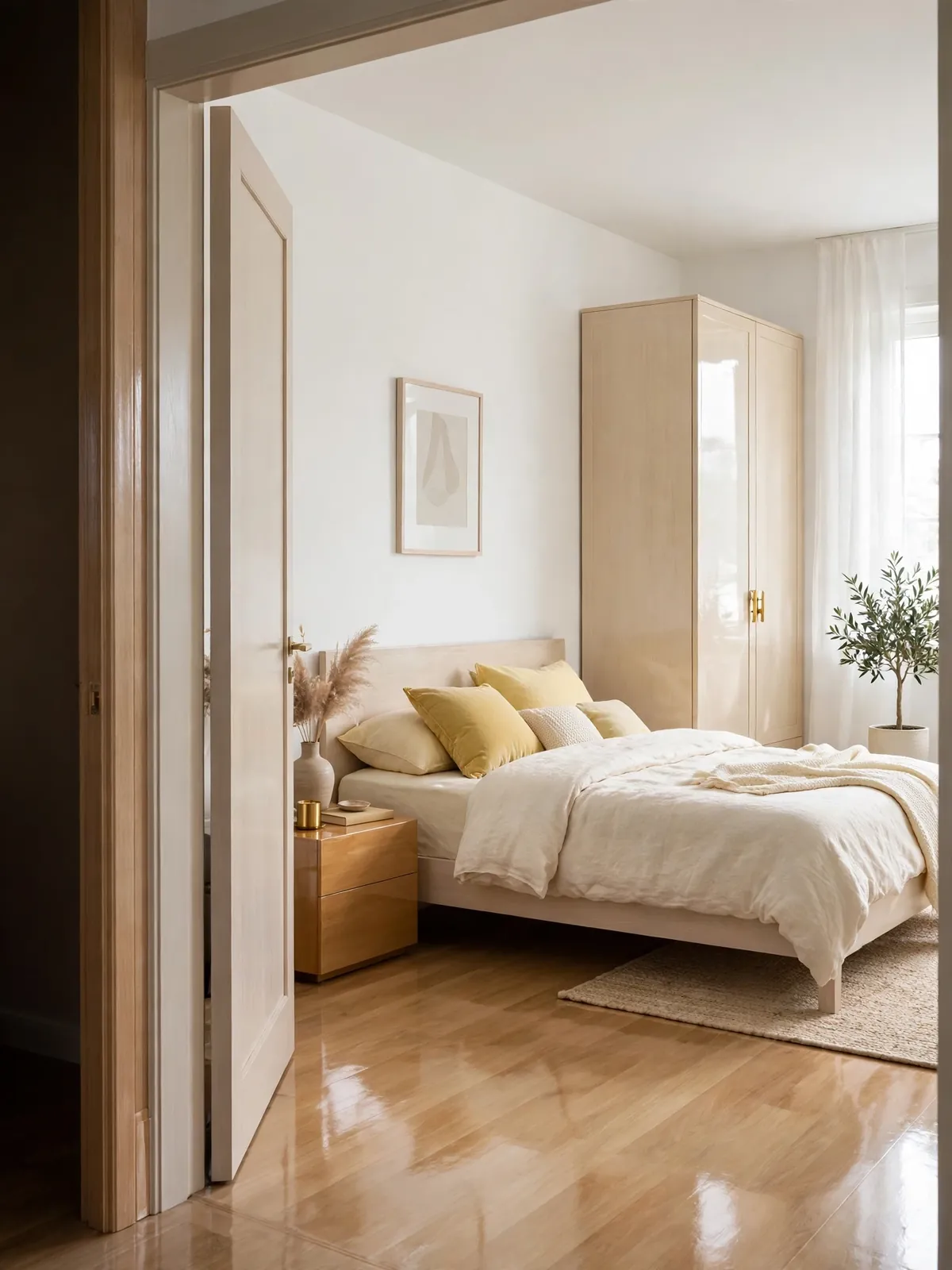
Light wood and pale finishes make a small bedroom feel brighter, because pale oak, white walls and cream bedding reflect light instead of absorbing it, and the whole room reads as one airy space. Here, a pale oak bed and wardrobe sit against white walls, with cream bedding and soft yellow cushions warming the palette. The design suits small, dim or north-facing bedrooms especially well. The weakness is coldness: all pale surfaces can feel stark, so add one warm texture — a knit throw, a woven basket or a wooden tray — to keep the room cosy.
Quick tips:
- Choose pale oak or birch for the main furniture.
- Keep walls white or warm ivory for reflection.
- Add one warm texture to stop the room feeling stark.
- Match the wood tone across all the furniture.
Hide the Clutter With Matching Baskets
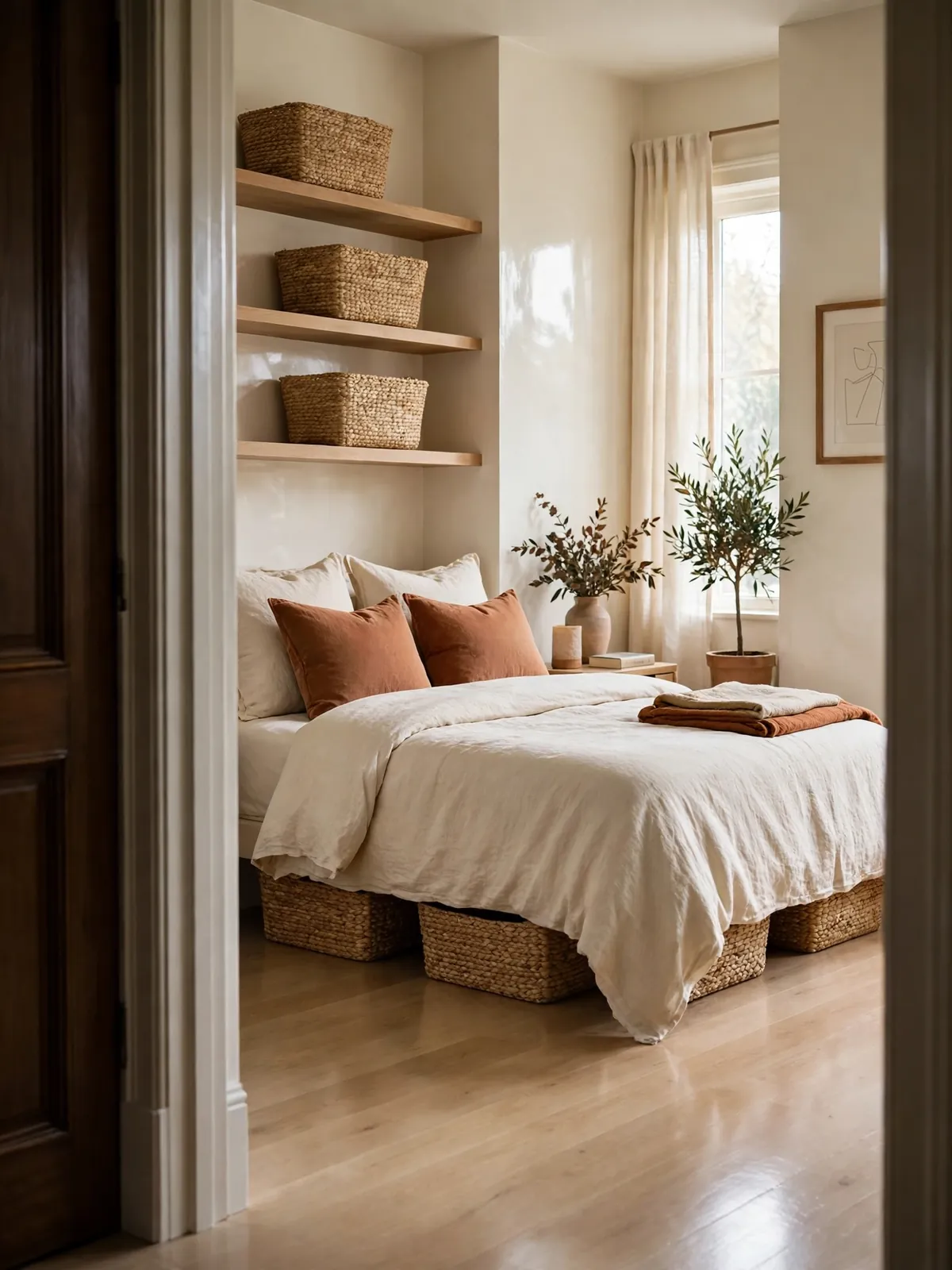
Matching baskets are the simplest clutter system for a small bedroom, because one set of identical baskets on the shelves, under the bed and in the wardrobe turns random piles into a calm, intentional system. Here, matching seagrass baskets sit on the shelves and under the bed, beside cream bedding and soft rust cushions on a light wood floor. The design suits any small bedroom, and it costs very little. The weakness is labelling: identical baskets all look the same, so add small tags or keep one basket per category so you can find things without emptying them all.
Quick tips:
- Use one matching set across the whole room.
- Label baskets or keep one per category.
- Choose lids for baskets that hold linens.
- Keep the baskets the same size for a tidy look.
Choose a Round Mirror to Soften Hard Corners
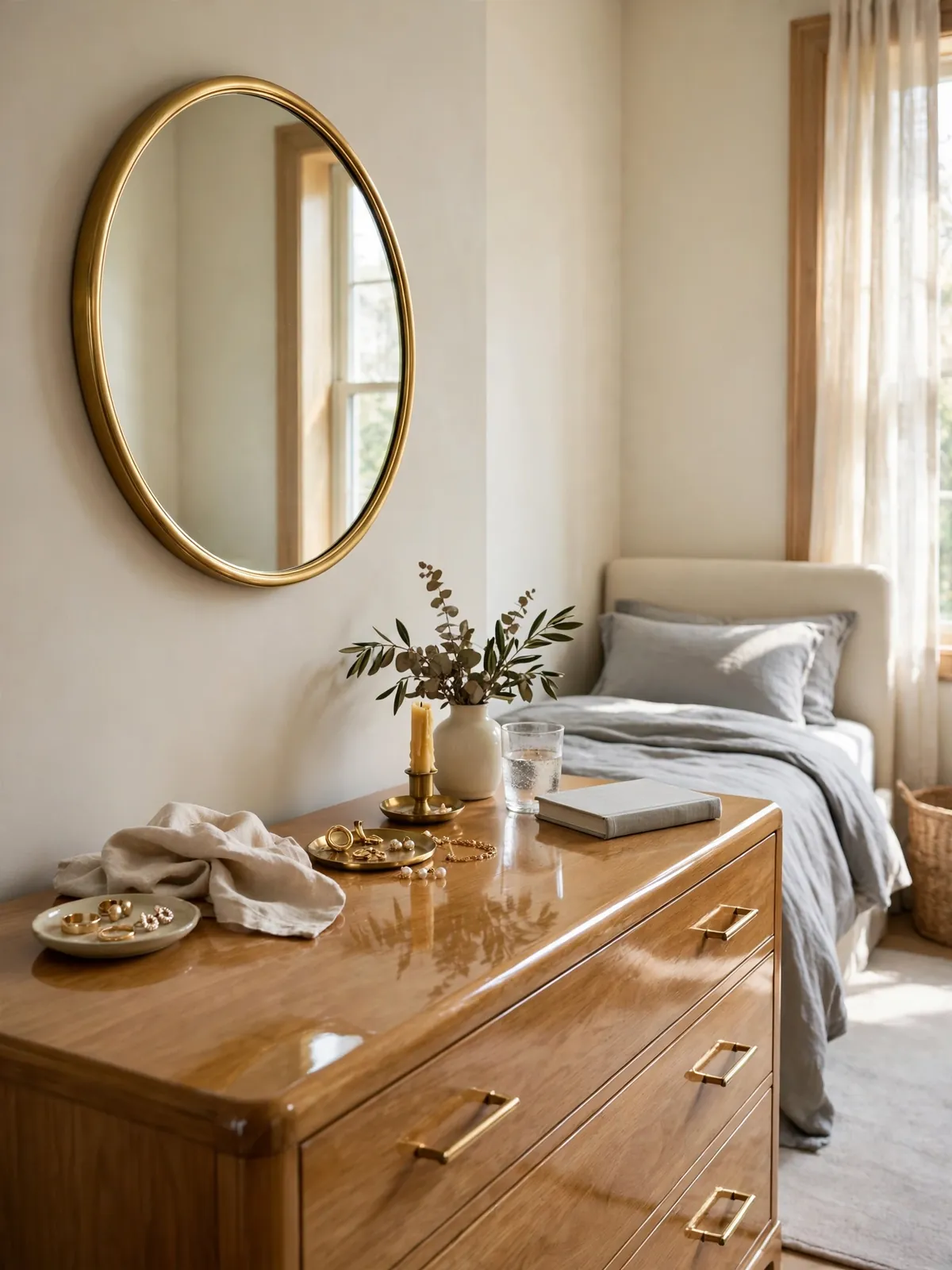
Small bedrooms are full of rectangles — the bed, the wardrobe, the door, the shelves — and a round mirror softens all those straight lines while bouncing light around the room. Here, a round brass-framed mirror hangs above a light oak dresser, reflecting soft grey bedding and cream walls. The design suits any small bedroom, and a round shape also makes the wall feel less boxy. The weakness is size: a tiny round mirror above a wide dresser looks lost, so choose a mirror about two-thirds the width of the furniture below it.
Quick tips:
- Size the mirror to two-thirds the dresser width.
- Choose a brass or black frame to match the room.
- Hang it at face level, not too high.
- Place it opposite the window to bounce the most light.
Declutter Ruthlessly and Leave Breathing Room
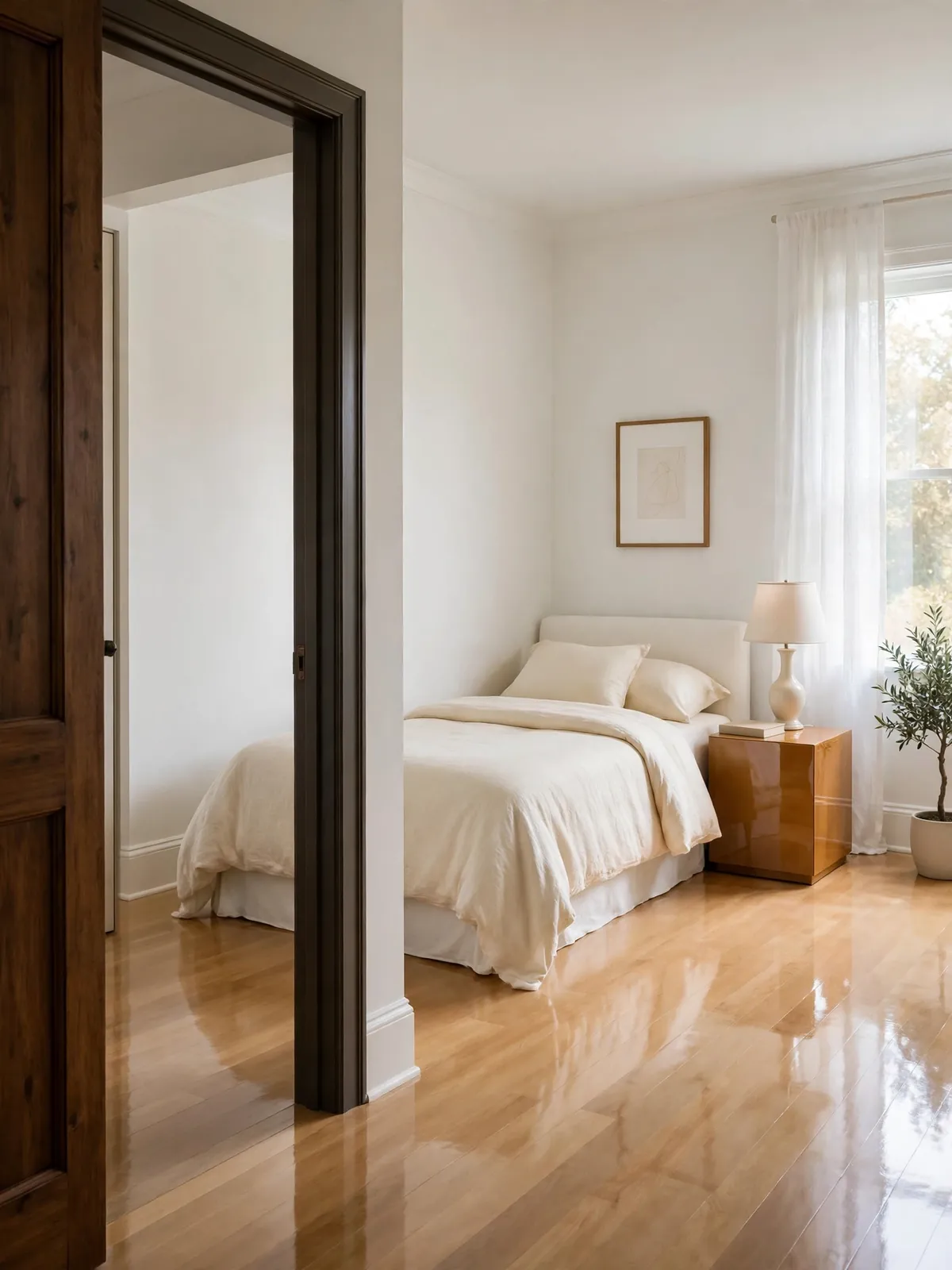
Honestly, this might be the most important idea of all, because no amount of decorating can fully fix a room that feels overcrowded with unnecessary stuff — small bedrooms need breathing room, and empty space is not wasted space. Here, a small bedroom shows how little it takes: clear surfaces, one lamp, one book, cream bedding, soft white walls and a light wood floor, with nothing extra anywhere. The design suits every small bedroom, and unlike expensive renovations, decluttering costs absolutely nothing. The weakness is upkeep: tiny bedrooms collect visual clutter fast, so do a mini declutter reset every few weeks.
Quick tips:
- Remove one thing before adding anything new.
- Do a mini declutter reset every few weeks.
- Keep surfaces to three objects at most.
- Give every item a home, or give it away.
Small Bedroom Ideas That Make a Tiny Room Feel Like Home
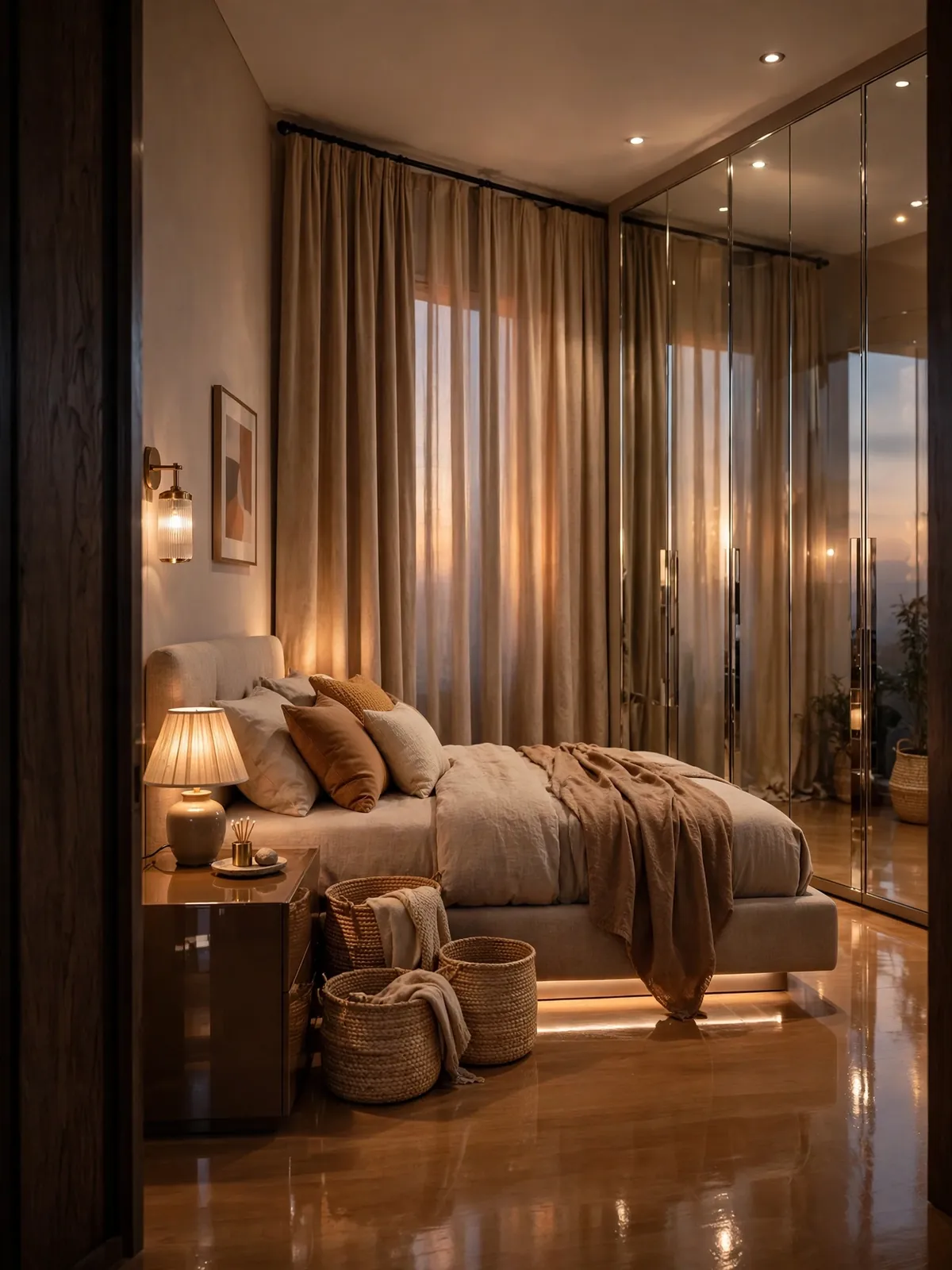
The last of these small bedroom ideas is the principle behind them all, and it is worth stating plainly because it is the difference between a tiny bedroom that feels like a storage cupboard and one that feels like home: a great small bedroom is not one expensive feature, it is the layering of the right space-saving choices — curtains hung floor to ceiling so the room looks taller, a low-profile bed that shows more wall, a mirrored wardrobe that bounces the light around, walls and ceiling in similar shades so the eye moves smoothly, furniture with hidden storage so the clutter disappears, lighting at different heights so the room feels dimensional, one oversized artwork instead of ten small frames, texture doing the work that more furniture never could, and matching baskets that turn random piles into a calm system — working together so that nothing crowds and everything belongs, and the room rewards the owner too, because a small bedroom built on a limited palette and multifunctional furniture is easy to live with, easy to tidy and easy to refresh with a new cushion colour or a different plant, even on a modest budget, and even when you change only one thing at a time. Here, a cream and sage small bedroom pulls it together — floor-to-ceiling curtains, a low bed, a mirrored wardrobe, layered lighting and matching baskets — and nothing in the room is there by accident. The lesson is to start with the biggest decisions first: pick the layout, pick the palette, choose the bed, then the storage and the lighting, and layer the small personal details last, because a small bedroom built in that order stays beautiful with very little effort, and it gives you room to evolve, swapping a rust cushion for a dusty blue one or a travel photo for a handmade vase, without ever moving a wall. Pick the three ideas from this list that solve your biggest problem first, add one luxury that makes you smile, and your small bedroom stops being the room you apologise for and becomes the calmest room in the house.
Quick tips:
- Start with the biggest decisions: layout, palette, bed.
- Fix the storage first, then add one luxury.
- Layer texture and light before any bold colour.
- Refresh cushions and baskets to update the room without renovating.
FAQs
How can I make my small bedroom look bigger?
Make a small bedroom look bigger with pale walls and ceilings in similar shades, floor-to-ceiling curtains, a large mirror opposite the window, a low-profile bed and a rug that extends past the bed. Keep the palette to two or three colours, the surfaces clear and the furniture slim, and the room reads as one calm, open space instead of a crowded box.
What is the best bed for a small bedroom?
The best bed for a small bedroom is a low-profile platform bed, because it exposes more wall above the mattress and makes the room feel taller and more open. Choose one with drawers or a lift-up base underneath for hidden storage, keep the bedding light and simple, and pair it with a slim nightstand rather than a wide dresser.
How do I fit storage into a small bedroom?
Fit storage into a small bedroom with hidden systems: matching baskets under the bed, a lift-up bed base, a storage bench, floating shelves above the bed and tall narrow storage up to the ceiling. Keep everything behind doors or inside matching containers, because visible clutter is what makes a small room feel smaller than it is.
What colours make a small bedroom feel bigger?
Pale colours make a small bedroom feel bigger: warm ivory, soft greige, pale beige and muted sage on the walls and ceiling, with light wood furniture and one soft accent. Low contrast between walls and ceiling makes the room feel taller, while dark or busy colours chop it up visually and make it feel smaller.
Can a small bedroom still feel cosy?
Yes, a small bedroom can feel even cosier than a large one, because the small size wraps around you once the clutter is gone. Layer soft textures — linen bedding, a chunky knit throw, a plush rug — add warm lighting at different heights, and keep the palette warm with cream, terracotta or soft sage, and the room feels like a retreat.
Conclusion
A small bedroom does not need to be a problem to solve — it needs the right space-saving choices, layered thoughtfully. The 29 ideas above show that floor-to-ceiling curtains, a low-profile bed, a mirrored wardrobe, hidden storage, layered lighting and a limited palette can turn a tiny bedroom into a space that feels bigger, calmer and completely yours. Start with the layout, pick one palette and let it guide every choice, and leave breathing room so the room can feel open. Do that, and your small bedroom stays beautiful for years, with nothing more than a fresh cushion or a new basket to keep it feeling new.