25 Cantilever Staircase Ideas That Make Steps Look Like They Float
25 cantilever staircase ideas that make steps appear to float,
A cantilever staircase does something no ordinary stair can: each tread appears to float straight out of the wall, with no visible supports underneath. The effect is modern, sculptural, and a little magical — the staircase becomes architecture instead of just circulation.
The cantilever staircase ideas below cover materials, lighting, wall treatments, and styling, from warm floating oak to backlit glass. Note that true cantilever construction needs structural engineering and professional installation; the styling ideas here assume the structure is handled by experts.
The floating illusion lives or dies on what’s around the stairs. A calm, continuous wall behind the treads makes them read as floating; a busy wall breaks the spell. Keep the backdrop simple, the lighting warm, and the space beneath the stairs deliberately styled or deliberately empty. A dramatic wall is the fastest way to elevate floating treads — these accent wall staircase ideas pair beautifully with cantilever designs, giving each floating step a gallery-like backdrop without visual clutter.
Warm LED Strips Glowing Beneath Oak Treads
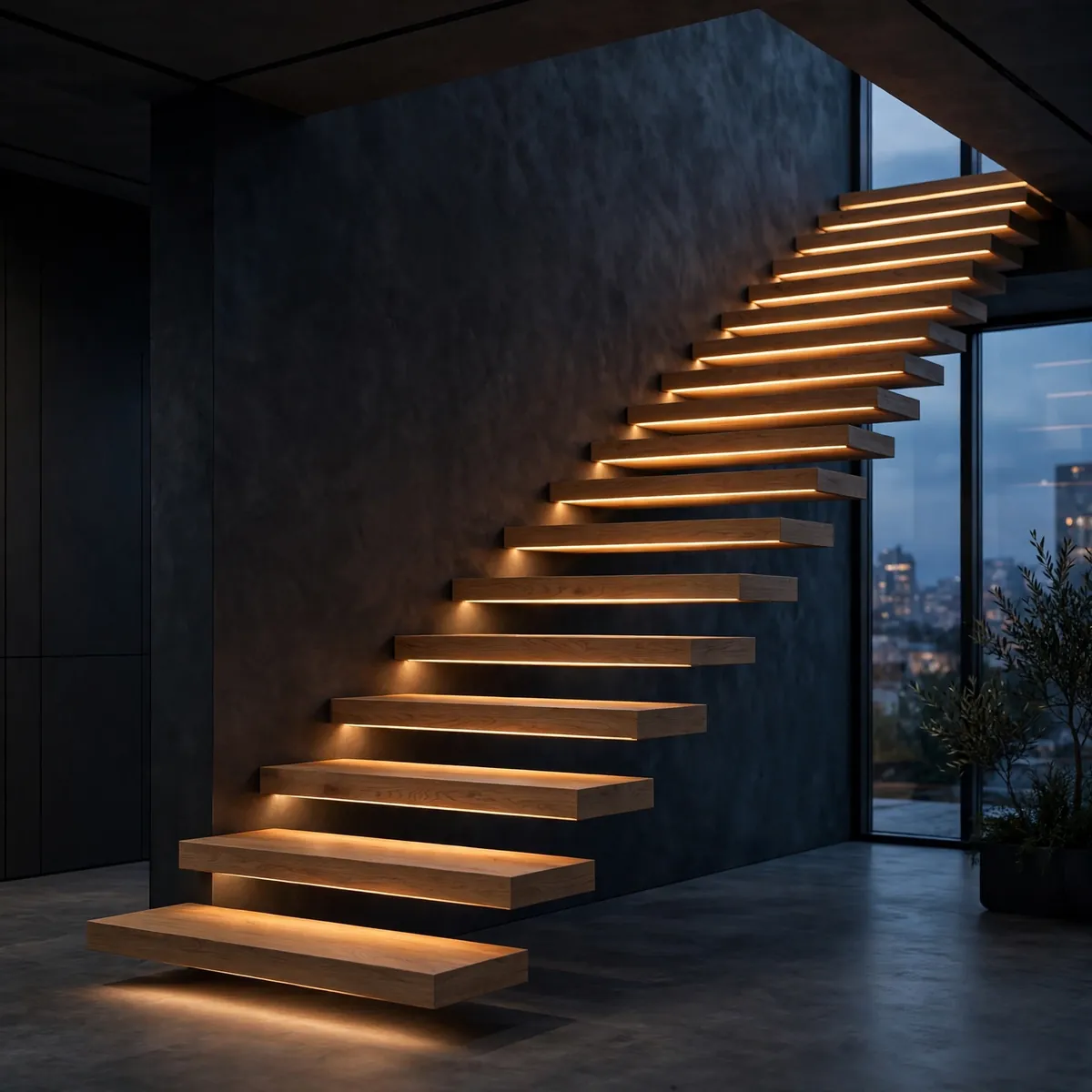
Warm LED strips recessed beneath each floating oak tread create a soft halo that separates every step visually, making the floating illusion even stronger after dark. The warm glow feels luxurious rather than technical — like the staircase is lit from within. Choose warm white around 2700K; cool white on wood can feel stark and commercial.
- Recess strips in a channel so no bare diodes are visible.
- Put the run on a dimmer for day-to-night flexibility.
- Hide drivers and wiring inside the supporting wall.
Matte Black Steel Treads With Hidden Brackets

Matte black steel treads give a cantilever staircase a bold, industrial-architectural identity. The dark metal reads as strong and intentional, especially against pale walls or concrete floors. Hidden brackets inside the wall preserve the floating illusion — no visible supports, just pure line. This suits lofts and modern extensions with an edge.
- Specify a matte powder-coat to avoid glare and fingerprints.
- Add a subtle anti-slip texture to steel treads.
- Keep the wall behind pale so the black treads read crisply.
Floating Oak Steps Beside a Double-Height Limewash Wall

Run floating oak treads beside a double-height limewash wall and the staircase becomes an installation piece. The vertical scale makes every step feel more sculptural, while the limewash’s soft movement keeps the composition warm rather than severe. This is the combination for entry foyers and double-height living rooms where you want one unforgettable architectural moment.
- Keep furniture away from the wall so the composition breathes.
- Light the wall with directional spots to emphasize texture.
- Choose oak with quiet grain so the wall stays the textural star.
Pale Travertine Wall Behind Walnut Treads

Walnut treads floating against a pale travertine wall pair rich dark wood with soft natural stone — a combination that feels expensive without trying. The stone’s subtle veining gives the eye something to explore while the floating steps stay the hero. Keep the palette restrained and let the two natural materials carry the whole stairwell.
- Seal travertine to protect it in a high-touch stairwell.
- Match walnut stain samples to the stone’s warm undertones.
- Avoid competing patterns nearby; two materials are enough.
Fully Concealed Supports for a True Floating Look
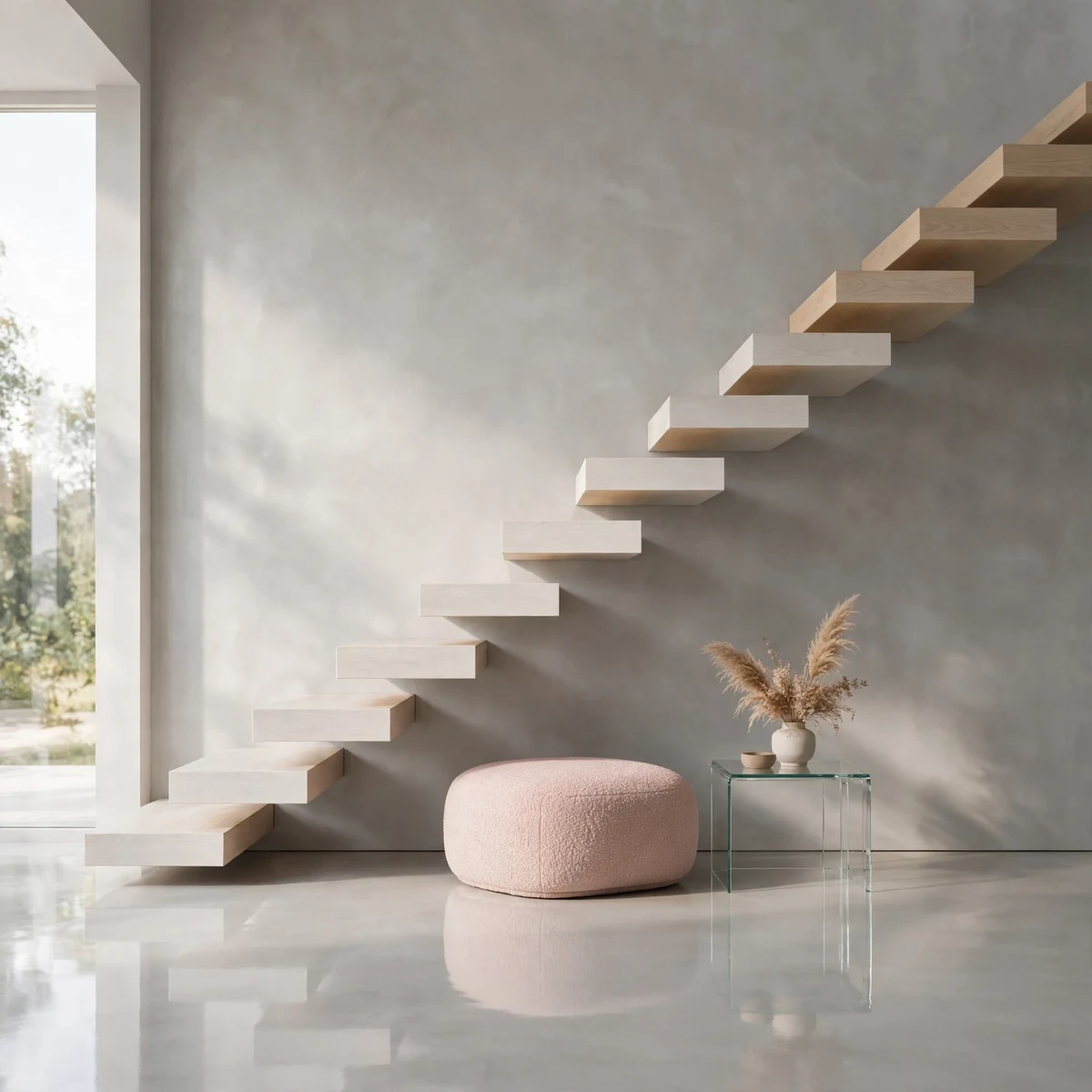
The gold standard of cantilever design is structural steel hidden entirely within the wall, so treads emerge seamlessly with no brackets or visible framing. When it’s done right, guests genuinely can’t figure out how the stairs stay up — and that mystery is the whole point. This is absolutely a professional-installation job; the engineering has to be calculated, not guessed.
- Hire a structural engineer before any design decisions.
- Confirm the wall can carry the load; not all walls qualify.
- Budget for steel fabrication — it’s the invisible luxury.
Clear Glass Treads With Anti-Slip Etching
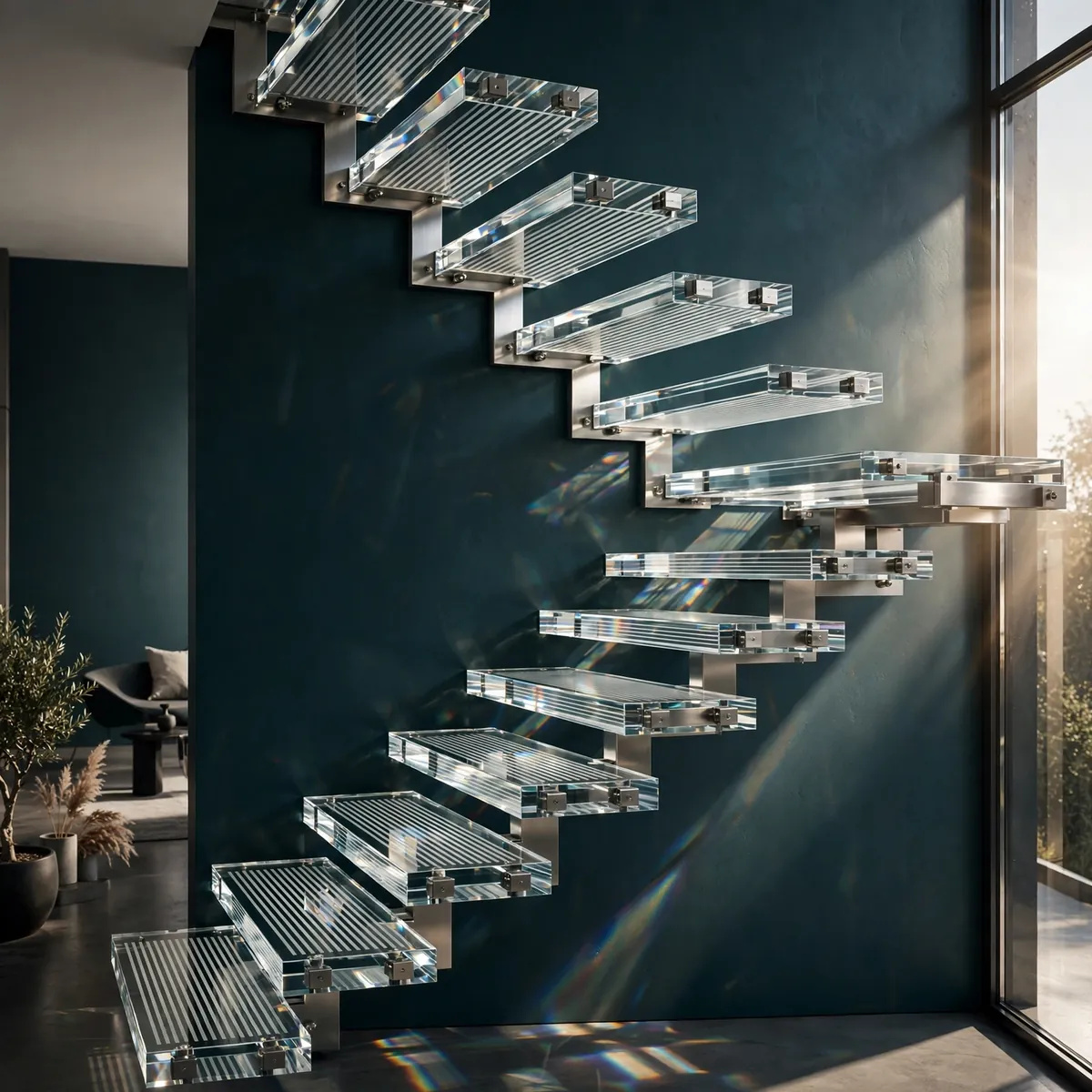
Glass treads take the floating illusion to its extreme — the staircase nearly disappears, reflecting light and views through itself. It feels futuristic and gallery-like, perfect for ultra-modern homes with clean lines. Anti-slip etching or fritting is non-negotiable for safety, and the glass must be thick laminated structural glass, never standard panes.
- Specify laminated structural glass of engineered thickness.
- Add anti-slip treatment; smooth glass treads are dangerous.
- Keep glass cleaner accessible — fingerprints show immediately.
Slim Black Handrail Floating Above Wood Steps
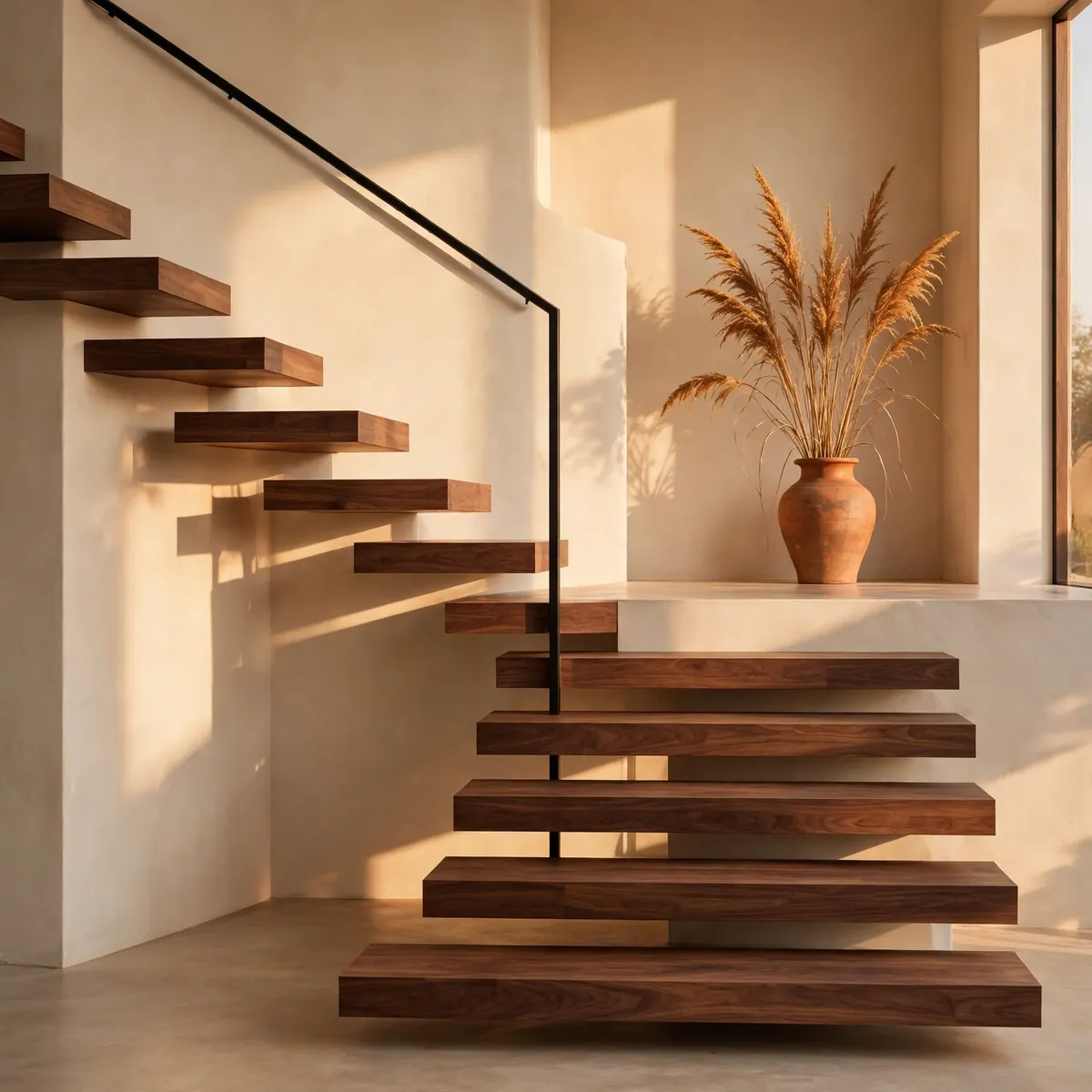
A slim matte black handrail running parallel to floating wooden treads adds definition without visual weight. It gives the eye a continuous line to follow up the stair while the steps themselves stay airy. Keep the rail profile as slim as possible — chunky rails fight the floating concept — and mount it on minimal black brackets that disappear against the wall.
- Keep the rail profile under two inches wide.
- Match the rail finish to tread brackets or lighting trim.
- Consider a wall-mounted rail to keep the open side clear.
Soft Greige Wall Making Treads Stand Out
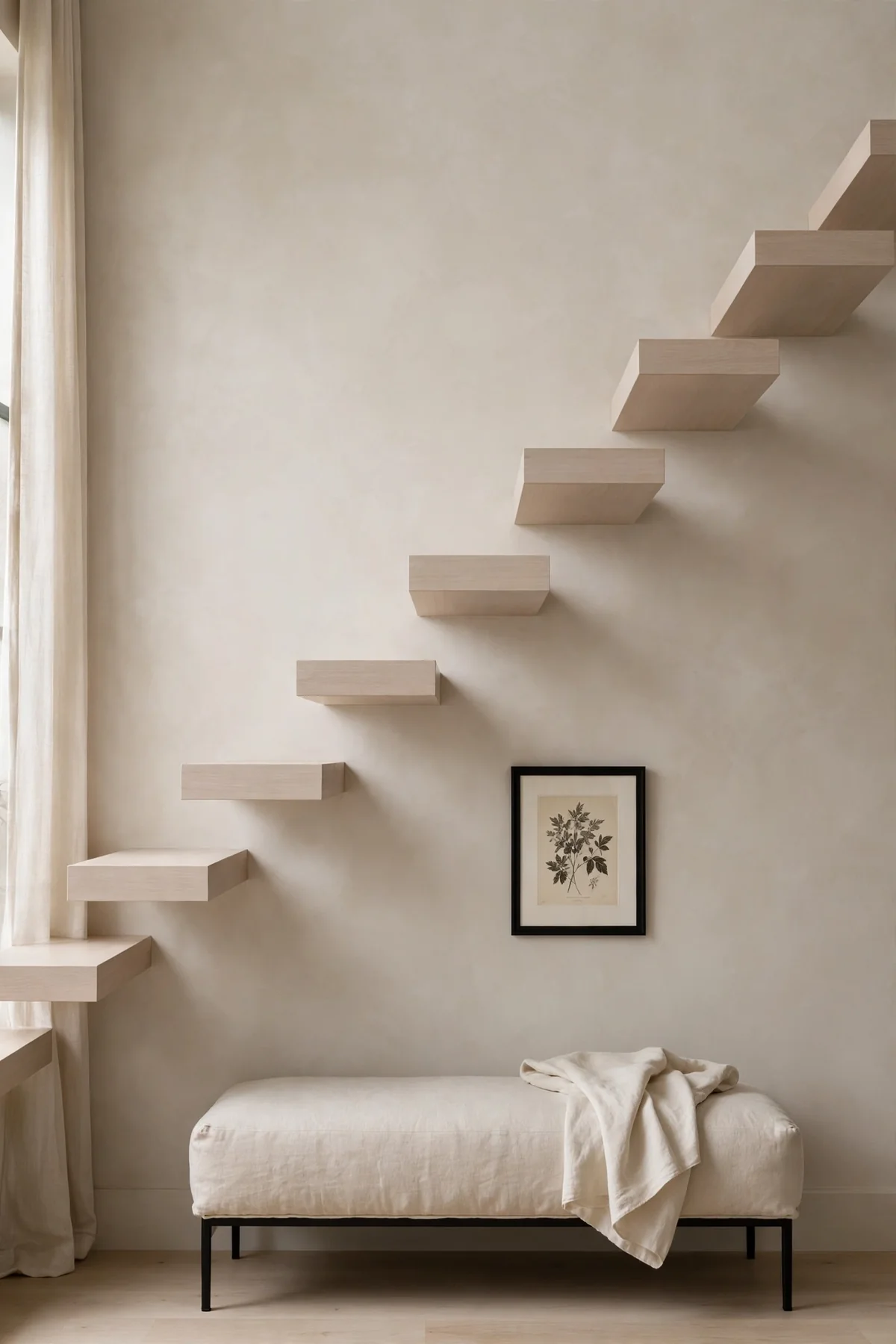
A soft greige wall behind floating treads adds warmth and gentle depth without the harshness of pure white. The treads stand out clearly, but the overall feeling stays calm and livable rather than gallery-cold. Greige photographs beautifully too, which matters if your staircase is the home’s most-photographed feature. Shift toward taupe for warmth or soft gray for coolness depending on your palette.
- Sample greige in the stairwell light; it shifts dramatically.
- Keep the finish matte to avoid glare behind the treads.
- Repeat the greige tone in nearby textiles for cohesion.
Leather Bench Tucked Under the Floating Steps
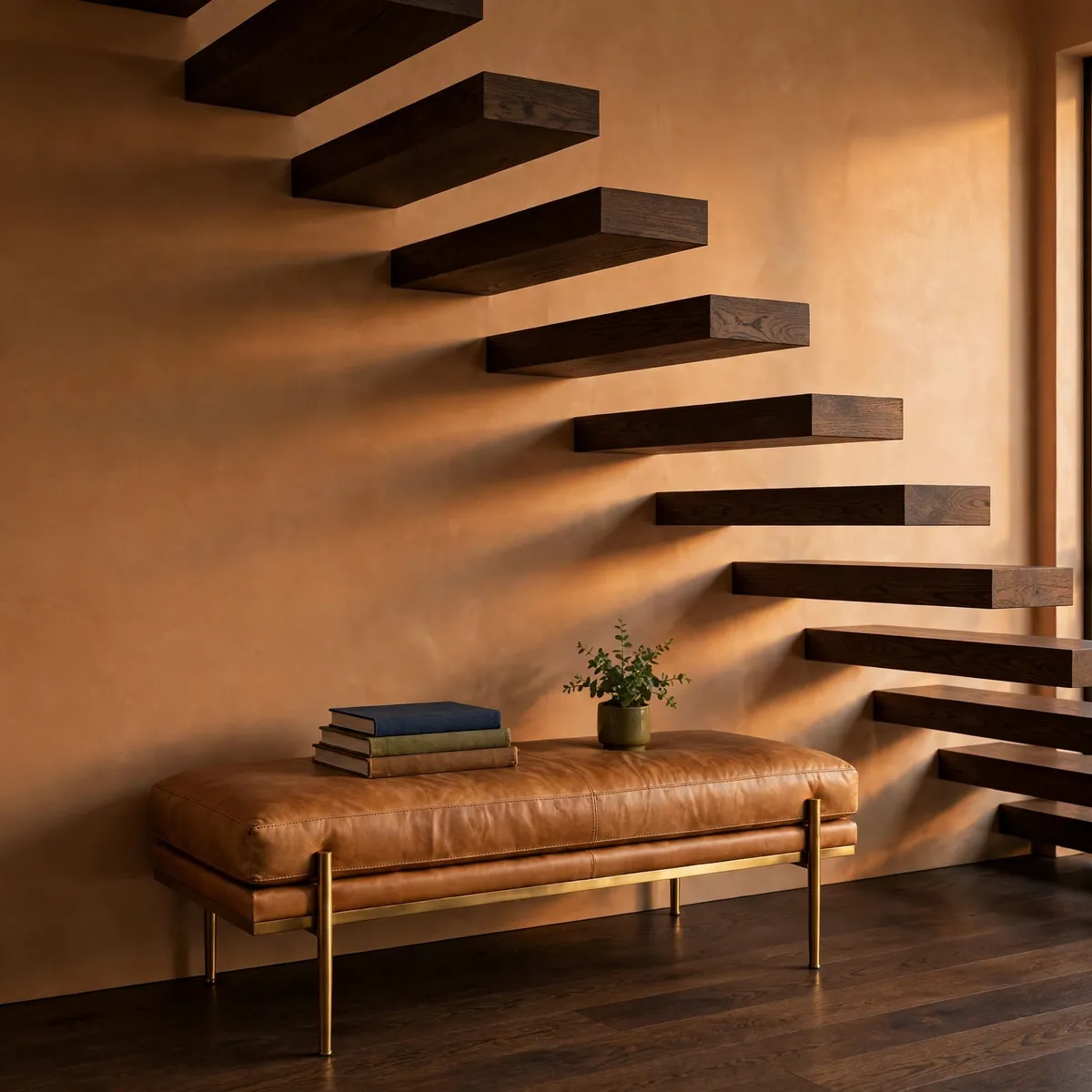
The open space beneath cantilever stairs is valuable real estate. A simple leather bench or upholstered seat tucked underneath adds function without cluttering the floating illusion — it grounds the composition while preserving openness. This works beautifully in foyers, giving guests a place to sit while keeping the staircase’s airy drama intact.
- Keep the bench low so it doesn’t visually block treads.
- Choose a bench narrower than the stair width.
- Leave clear walking space around it for safety.
Continuous Waterfall Grain in Smoked Oak

This is one of the most luxurious cantilever looks: wood treads cut so the grain appears to flow continuously from one step to the next, as if the staircase were carved from a single slab. Smoked oak makes the grain movement part of the visual story — deep, rhythmic, and unmistakably custom. It demands a skilled fabricator, but the result is the difference between a staircase and a heirloom. The continuous grain creates visual harmony that the eye reads as calm even though the material is rich; it works because repetition with variation feels designed rather than decorated. Pair it with a quiet wall — limewash, plaster, or plain matte paint — so nothing competes with the wood’s flow, and light it warmly from below so the grain glows after dark.
- Commission a fabricator experienced in grain-matched joinery.
- Book-match samples before approving the full run.
- Light from below to emphasize the grain’s movement.
White Pebble Bed Under the Floating Staircase
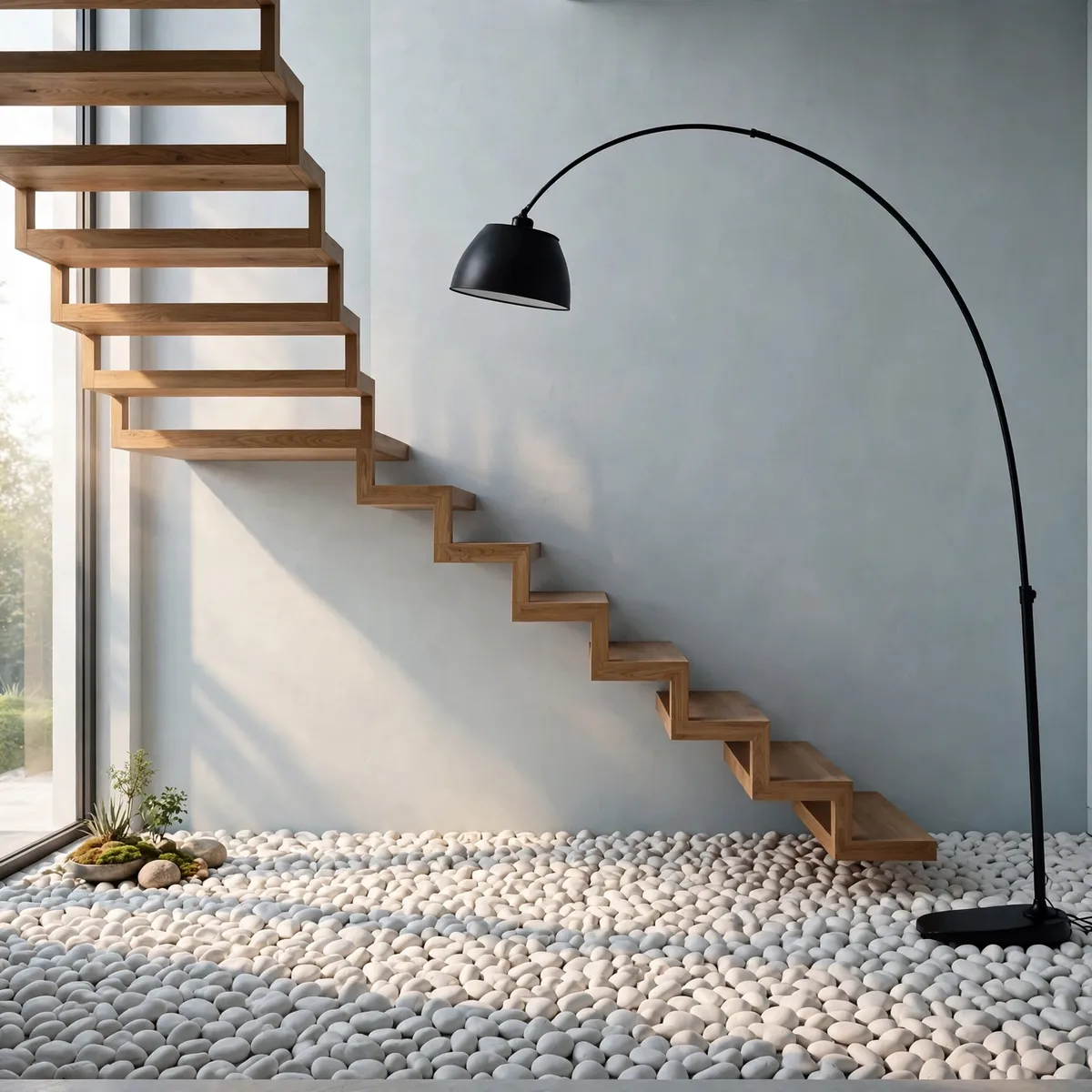
A narrow bed of white pebbles beneath the floating steps creates a zen, spa-like contrast — hard floating geometry above, soft natural texture below. Add a sculptural plant or two, like a snake plant or small olive tree, and the understair zone becomes a designed moment instead of dead space. Mix white pebbles with a few charcoal stones for depth.
- Contain pebbles with a slim metal or stone border.
- Choose low-maintenance plants for the low-light zone.
- Vacuum pebbles occasionally; dust settles visibly on white stone.
Smoked Glass Balustrade for a Moody Edge

Smoked glass panels as a balustrade keep the openness of glass while adding a moody, editorial depth that clear glass can’t offer. It suits darker interiors with black accents and warm wood — sophisticated without being cold. Don’t go too dark with the tint; you want atmosphere, not a wall.
- Choose a light smoke tint to preserve openness.
- Use minimal black clamps for a clean installation.
- Clean with glass cleaner; tint shows smudges.
Final Tread Extending Into a Display Ledge

Let the final tread extend outward into a shelf-like landing for books, a sculptural object, or a small plant. The staircase stops being just circulation and becomes integrated with the room’s design — almost built-in furniture. Keep the styling minimal so the staircase remains the hero; one beautiful object beats five small ones.
- Engineer the extended tread for the extra load.
- Style with one sculptural object, not a collection.
- Keep the ledge clear of daily clutter to preserve the effect.
Warm Teak Slats Rising Behind the Steps
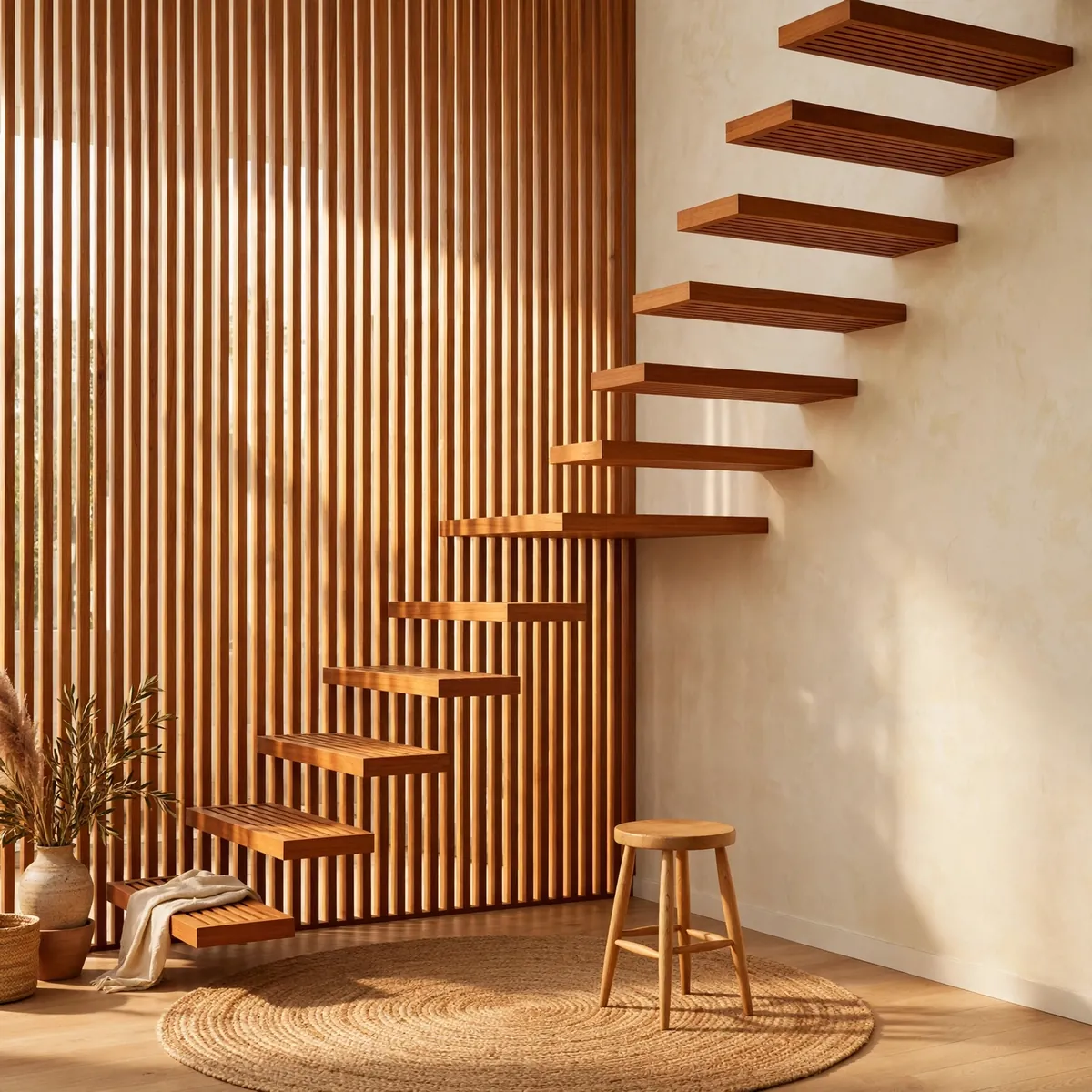
Vertical teak slats behind a cantilever staircase create incredible rhythm — the repeated lines echo the stair’s structure and make the space feel taller. The warm wood softens the modern geometry, landing the look in warm-minimal territory. It adds texture without heaviness, and the slats can cleverly conceal lighting or storage behind them.
- Space slats evenly; rhythm is the whole point.
- Finish teak to match or complement the treads.
- Run slats full height for maximum vertical drama.
Motion-Sensor Lights That Greet Every Step
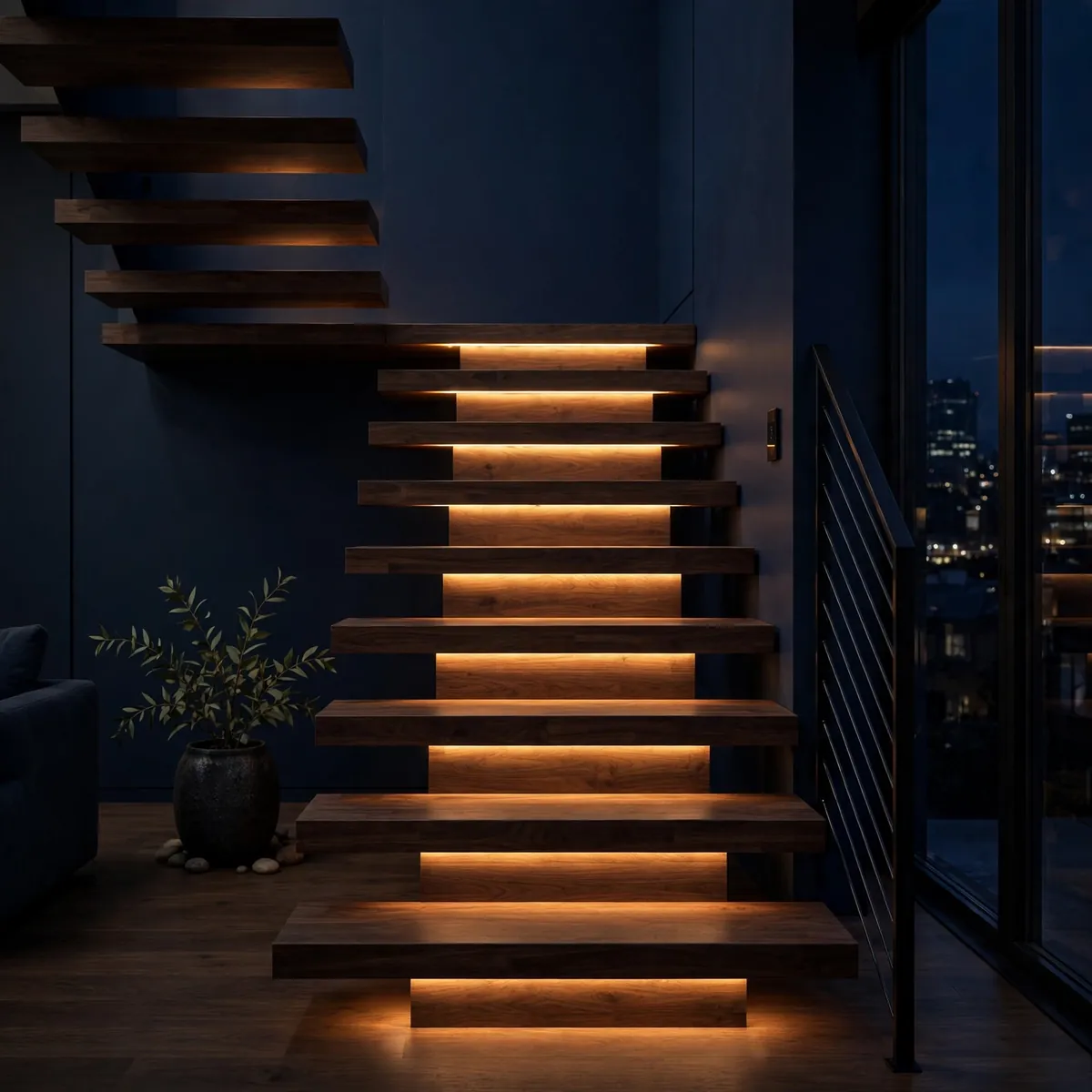
Motion-sensor step lighting turns the staircase into a responsive experience — lights bloom softly as you approach, then fade behind you. It feels smart, safe, and quietly luxurious, especially for families with nighttime stair traffic. Use warm diffused strips rather than direct spotlights to avoid harsh glare on the treads.
- Choose warm diffused strips over harsh spotlights.
- Set a gentle fade-out delay, not an abrupt off.
- Test sensor range so lights trigger before the first step.
Negative Space: Letting the Staircase Breathe

Sometimes the most powerful styling decision is restraint. Treat the cantilever staircase as sculpture: keep the surrounding area clear, give it space and light and attention, and resist filling the void beneath with furniture. Negative space is what makes floating treads read as art — clutter underneath visually anchors them back to earth.
- Resist filling the understair void; emptiness is the design.
- Use one dramatic pendant or art piece nearby, not five.
- Keep flooring continuous so the space flows uninterrupted.
White Oak Treads on a Charcoal Feature Wall
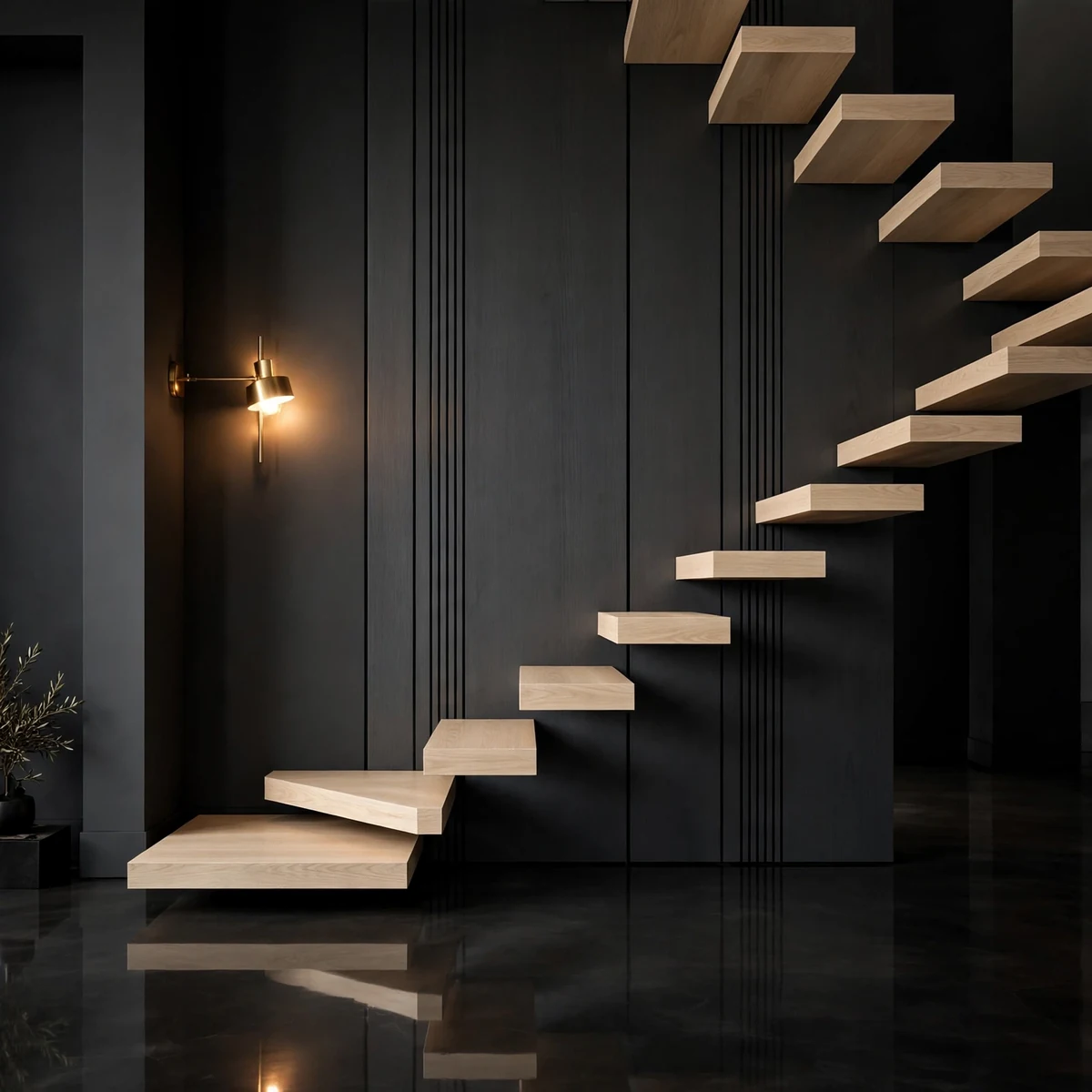
Pale white oak treads floating against a deep charcoal wall deliver maximum contrast with minimum fuss. The light steps seem to hover even more dramatically against the dark, and the pairing feels decisively modern. This needs good lighting — wash the charcoal wall with warm spots so it reads as rich rather than flat.
- Wash the dark wall with warm directional lighting.
- Keep oak treads pale with a matte clear finish.
- Add one warm accent nearby to soften the contrast.
Brass Inlay Strip Along Each Tread Edge
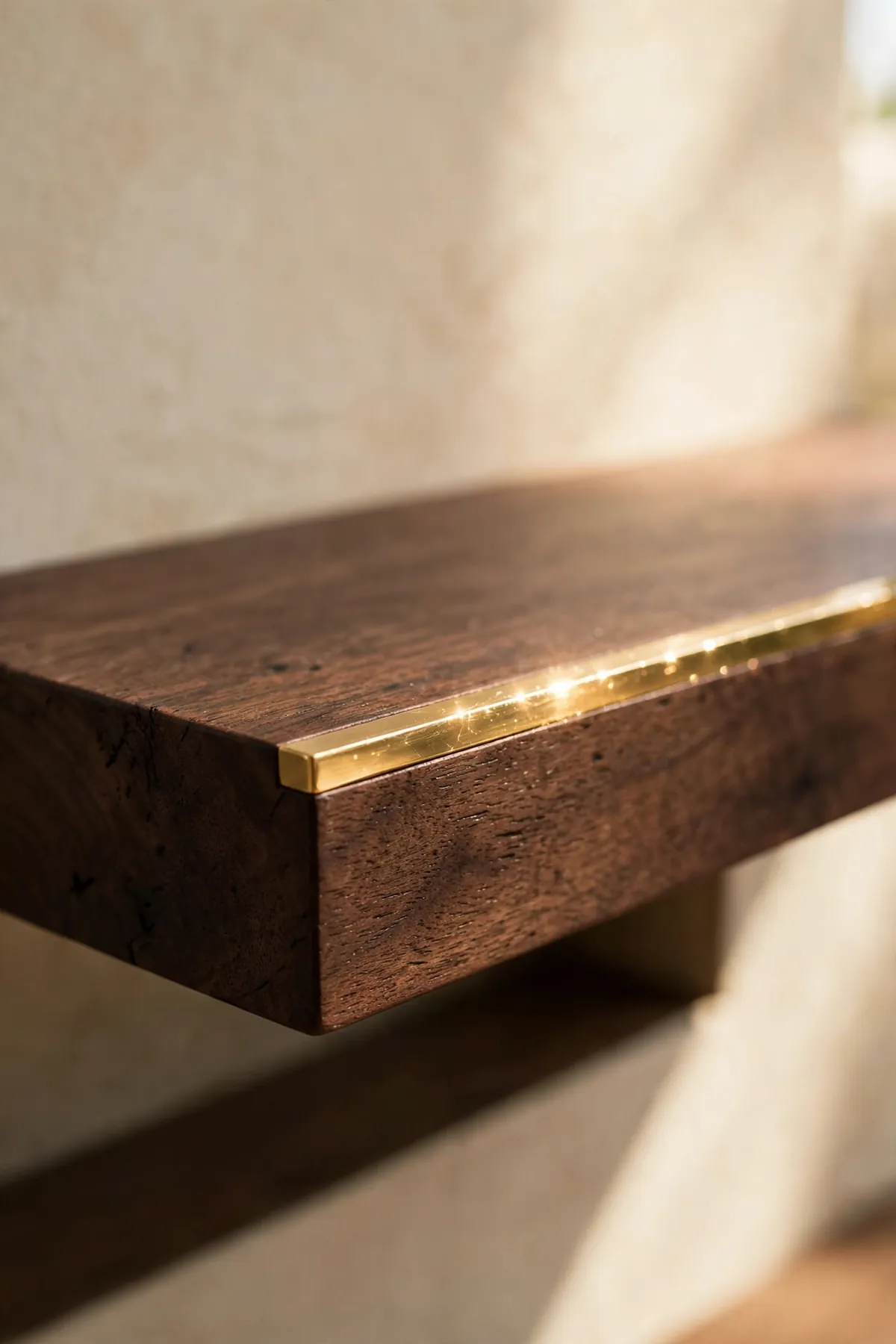
A slim brass inlay set into the front edge of each floating tread adds a jewelry line that catches light and defines every step. It’s a subtle luxury detail — felt more than noticed — that elevates wood treads from beautiful to bespoke. The brass also serves as a visual nosing, helping the eye register each step edge.
- Keep the inlay slim; a little brass goes a long way.
- Seal the inlay flush so it doesn’t catch feet.
- Match the brass tone to other metals in the space.
Floating Concrete Treads With Raw Texture

Cast concrete treads with a raw, board-formed texture bring brutalist honesty to the floating concept. The weight of the material contrasts beautifully with the weightlessness of the cantilever — heavy steps that somehow hover. Seal the concrete well; raw concrete stains. This suits industrial-modern homes with polished concrete floors.
- Seal concrete with a matte penetrating sealer.
- Confirm structural capacity; concrete treads are heavy.
- Pair with warm wood or leather to soften the rawness.
Curved Cantilever Steps Sweeping Around a Corner
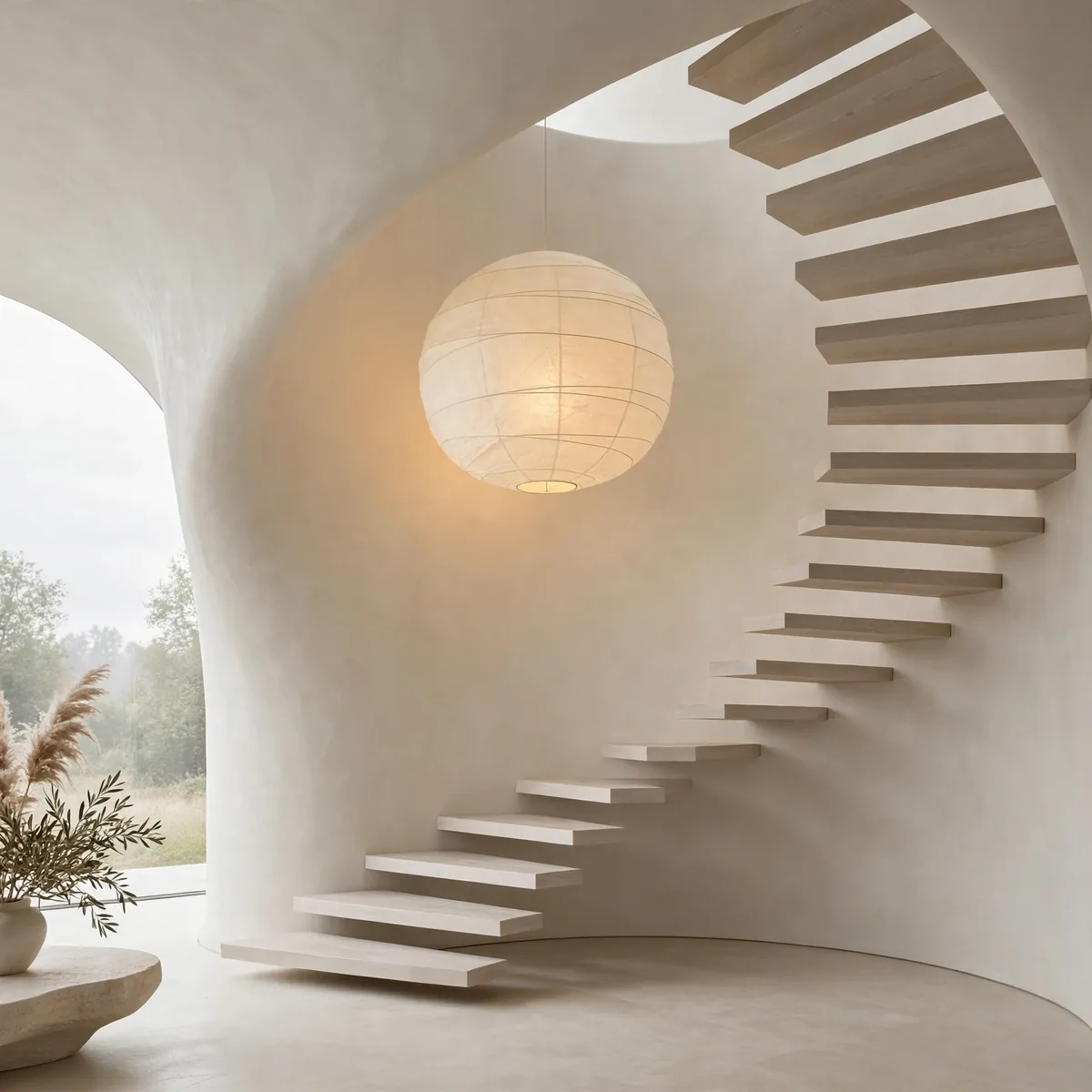
Cantilevered treads that curve around a corner turn the staircase into a sweeping sculptural gesture. The curve softens the modern geometry and makes the ascent feel choreographed rather than merely functional. This is a custom fabrication project through and through — but for the right double-height space, nothing else moves like it.
- Work with an architect experienced in curved stair geometry.
- Keep the wall behind the curve calm and continuous.
- Light the curve to emphasize its sweep at night.
Backlit Onyx Treads for Evening Drama
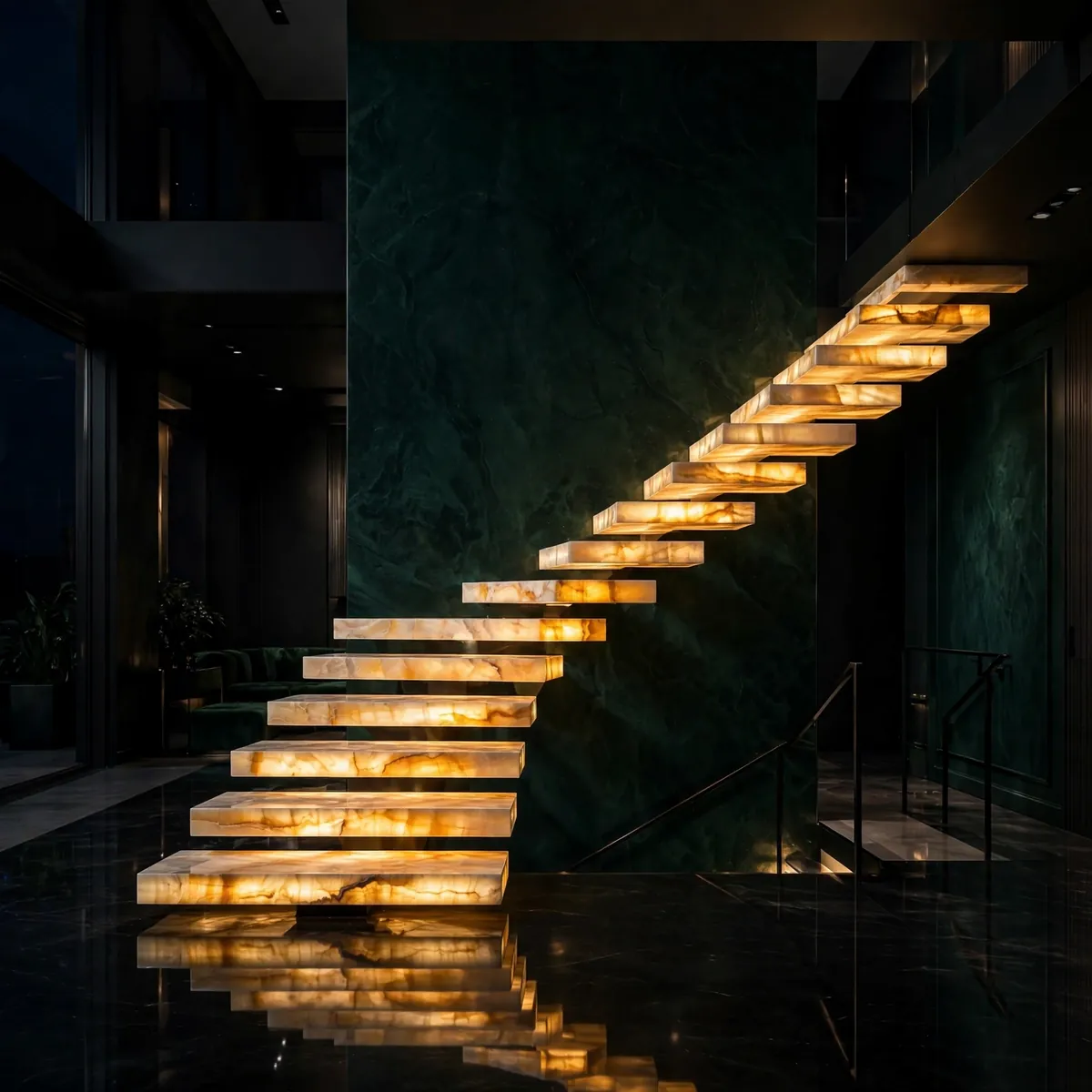
Backlit onyx or translucent stone treads glow from within when lit from below, turning the staircase into a lantern after dark. By day they’re elegant stone; by night they’re pure theater. It’s an unapologetically luxurious move that belongs in homes where the staircase is meant to be the evening’s main event.
- Use dimmable lighting to control the nighttime intensity.
- Choose stone slabs with interesting veining for the glow.
- Budget generously; this is a statement-level investment.
Floating Steps Over a Slim Reflecting Pool

A shallow indoor reflecting pool beneath floating steps doubles the architecture — every tread mirrored in still water below. It’s serene, dramatic, and unforgettable, borrowing the calm of a Japanese garden for the home’s core. This needs professional waterproofing and maintenance planning, but as a concept it redefines what a staircase can be.
- Plan waterproofing and filtration with professionals.
- Keep water shallow and still for the mirror effect.
- Maintain regularly; stagnant water ruins the serenity.
Reclaimed Timber Treads on a White Plaster Wall
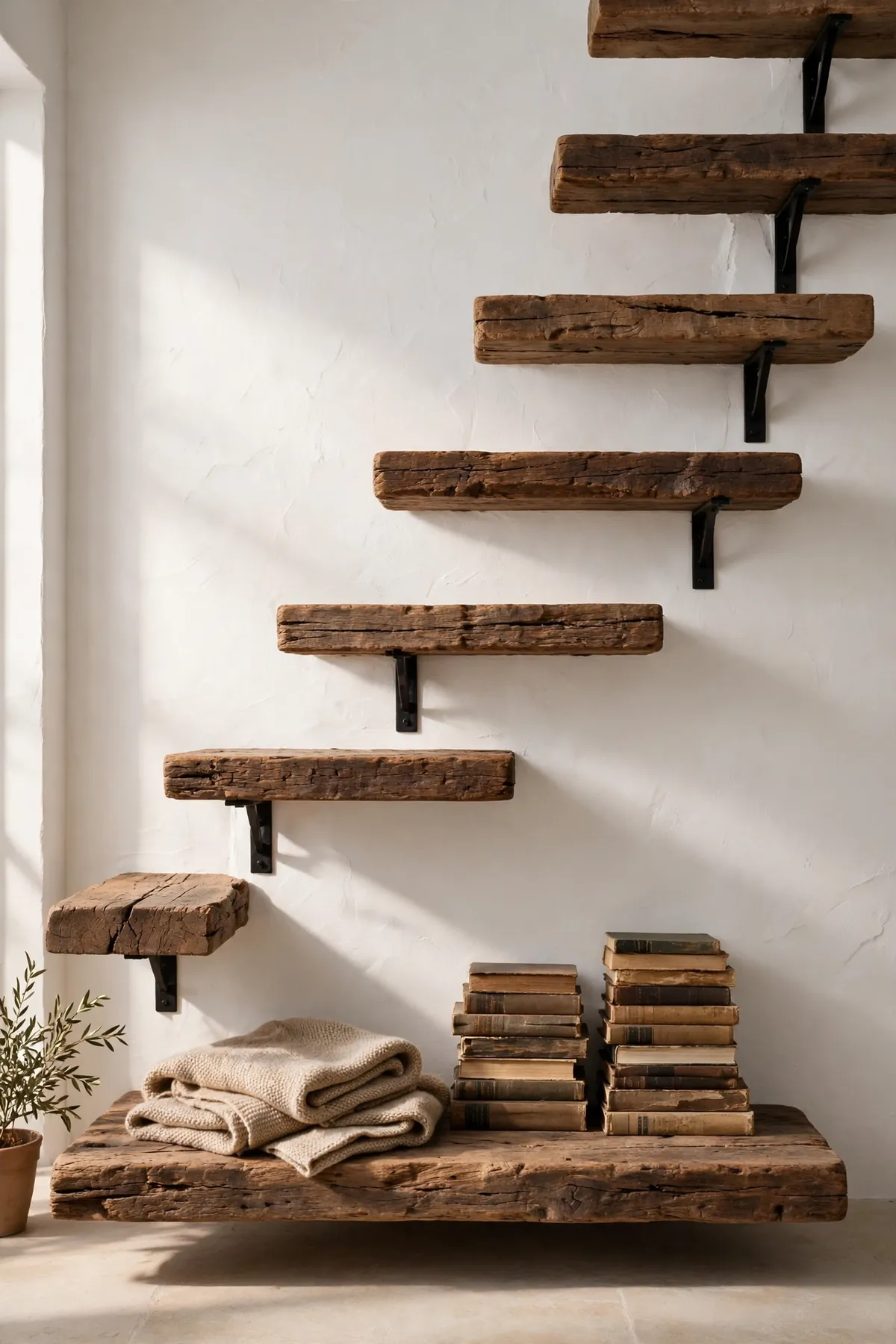
Reclaimed timber treads — full of saw marks, nail holes, and history — floating against a crisp white plaster wall pair raw character with clean modernity. The contrast between the wood’s story and the wall’s silence is deeply appealing. Seal the timber well and check each tread’s structural integrity; character is wonderful, weakness is not.
- Have reclaimed wood structurally graded before use.
- Seal thoroughly; old timber can be porous.
- Keep the plaster wall pure white for maximum contrast.
Cantilevered Reading Nook at the Mid Landing
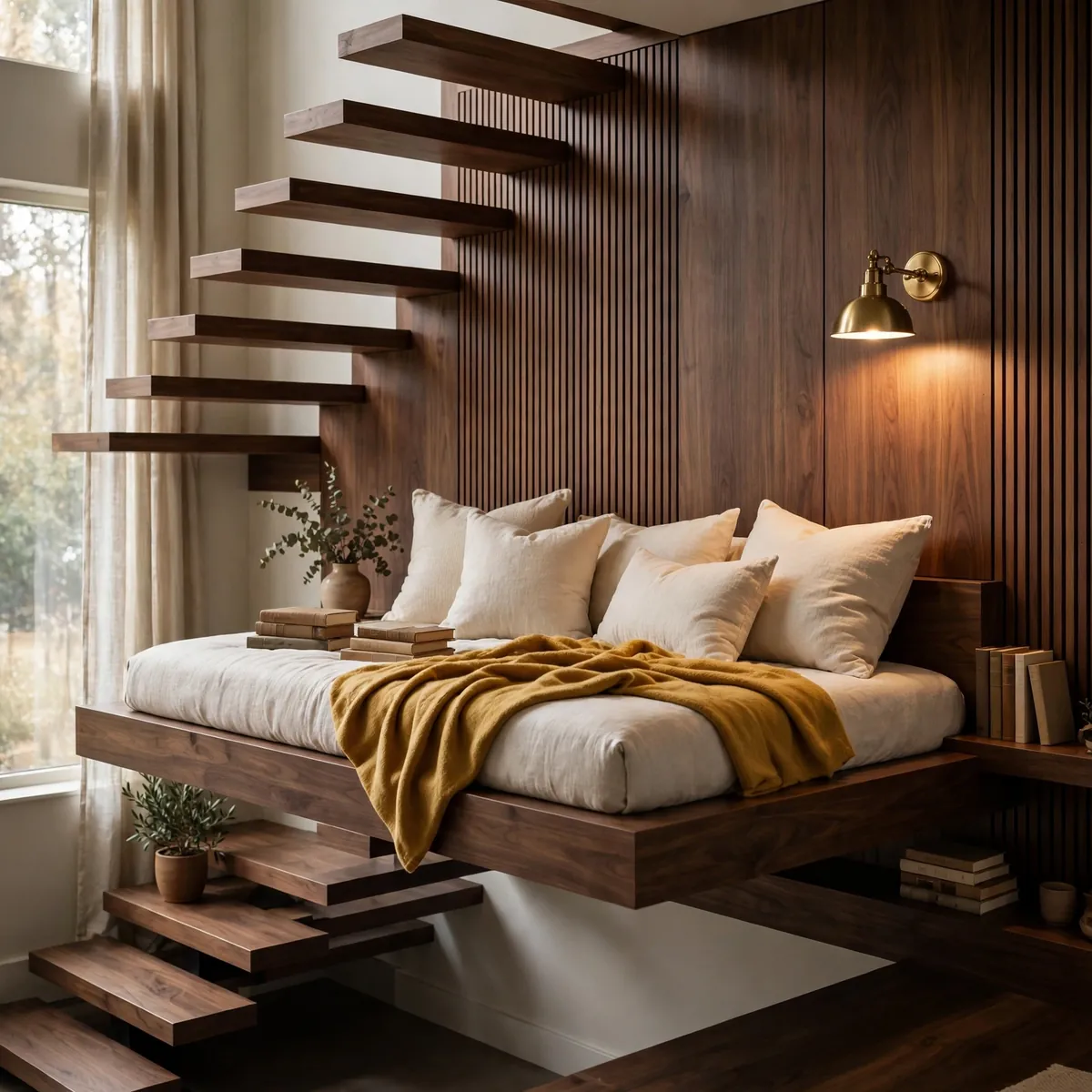
Extend the mid-landing into a cantilevered reading perch — a floating platform with a cushion, a wall-mounted reading light, and a view down the stairwell. The staircase becomes a destination, not just a route. It works best on wide stairs in homes where the landing has something worth looking at.
- Engineer the platform for seated loads, not just foot traffic.
- Add a wall-mounted light to avoid floor lamp clutter.
- Keep the perch styling simple: cushion, throw, book.
Sculptural Pendant Dropping Beside the Float

A single sculptural pendant dropping through the stairwell void beside the floating treads completes the composition — light as sculpture echoing stair as sculpture. Choose an organic or geometric form in a warm material, hang it off-center for artful asymmetry, and dim it low in the evening so the staircase lighting takes the lead.
- Hang the pendant off-center for a designed asymmetry.
- Size it generously; timid pendants vanish in stairwells.
- Put it on a separate dimmer from the step lighting.
FAQs
Are cantilever staircases safe?
Yes, when properly engineered. A structural engineer calculates the steel supports hidden in the wall, and professional installation is essential — this is never a DIY structural project.
How much does a cantilever staircase cost compared to a regular one?
Typically significantly more, because of the hidden structural steel, engineering fees, and precision fabrication. The exact premium depends on materials and span, so get quotes from specialists early.
Can I add a cantilever look to an existing staircase?
Not structurally without major work, but you can fake the feeling with floating-look open risers, wall-mounted treads on a new steel stringer, or styling that emphasizes horizontal lines and hidden lighting.
Conclusion
A cantilever staircase is architecture’s way of showing off — structure made visible by hiding it. Whether you choose warm floating oak, moody smoked glass, or backlit stone, the principle stays the same: keep the backdrop calm, light it warmly, and let the float do the talking. Get the engineering right, and the magic takes care of itself.