Cozy Living Room Design Ideas: 25 Ways to Make Your Space Feel Like Home
25 warm, practical ideas for making your living room feel
Coziness is a feeling you design, not a style you buy. These cozy living room design ideas build that feeling layer by layer — warm light instead of harsh overheads, textures you want to touch, seating arranged for real conversation, and colors that calm the room down.
There are 25 ideas below, from afternoon updates to bigger projects worth planning. Begin with whichever idea answers your room’s weakest point — usually the lighting, the seating, or a bare, echoing floor.
And if you want a second collection to browse alongside these plans, these cozy living room ideas pair well with the looks below — mix and match until the room feels like yours.
Cozy Living Room Design Ideas Start With a Warm Neutral Base

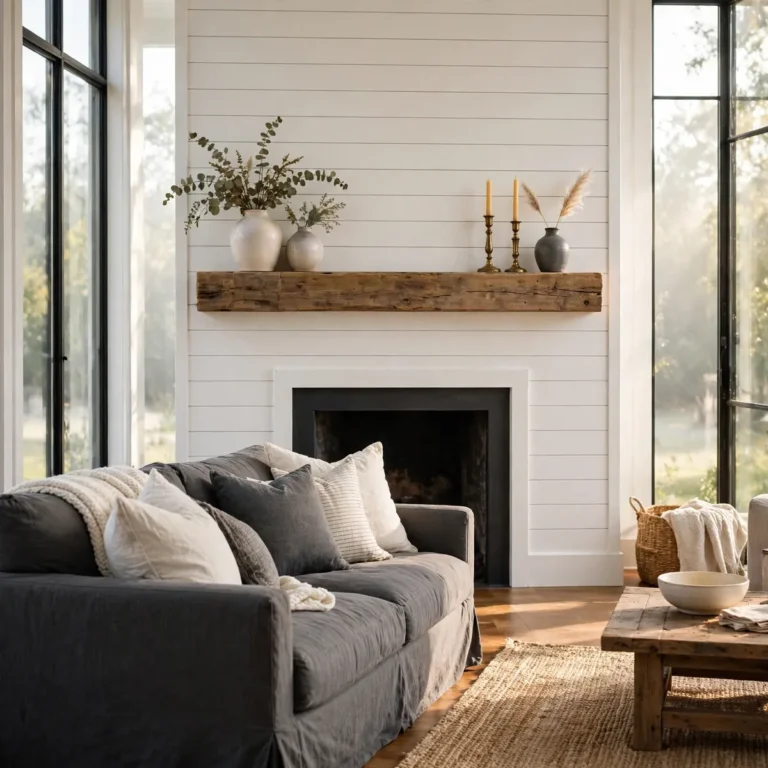
A warm neutral foundation is the fastest way to make a restless room feel calm. Creams, oatmeal, camel, and warm taupe quiet visual noise, so every texture and light source reads clearly. This suits open-plan spaces and living rooms that must flex between family time and guests. Its strength is longevity: neutrals rarely date, and seasonal swaps stay cheap. The weakness is flatness — one beige repeated everywhere looks dull, not cozy. Layer at least three tones and lean on texture: linen, wool, woven wood. Devoted color lovers may prefer to skip this and go moody instead.
- Layer at least three warm tones — cream, oatmeal, camel — instead of one flat beige.
- Keep big pieces neutral and add contrast through smaller accessories.
- Choose warm whites over stark white for walls, upholstery, and curtains.
Hang Curtains From Ceiling to Floor

Floor-to-ceiling curtains in warm ivory linen make windows look taller and the whole room feel softer. This is one of the best low-cost moves for living rooms with short or narrow windows, and renters can use tension or mounted rods without major work. The strength is instant height and softness. The weakness is maintenance: long curtains collect dust and pet hair, and they get dragged by toddlers and dogs. If that sounds like your household, choose a washable cotton and hem them to just kiss the floor.
- Mount the rod close to the ceiling and let the fabric just kiss the floor.
- Pick linen or cotton with movement, not stiff, shiny fabric.
- Extend the rod past the window frame so curtains frame the glass instead of covering it.
Anchor the Room With an Oversized Area Rug

A generously sized rug gathers scattered furniture into one conversation zone and adds warmth underfoot — a rust-patterned wool rug over a warm white base does both at once. This matters most when seating floats away from walls, as in open-plan rooms. The strength is instant zoning and softness. The weakness is cost and care: large wool rugs are an investment and heavy to clean. Near dining zones or busy paths, choose a low-pile weave, and consider layering a smaller patterned rug over a big natural-fiber base.
- Size the rug so the front legs of the sofa and chairs sit on it.
- Choose low-pile weaves near dining zones or high-traffic paths.
- Layer a smaller patterned rug over a large natural-fiber base for depth.
Mix Wood Tones Instead of Matching Them
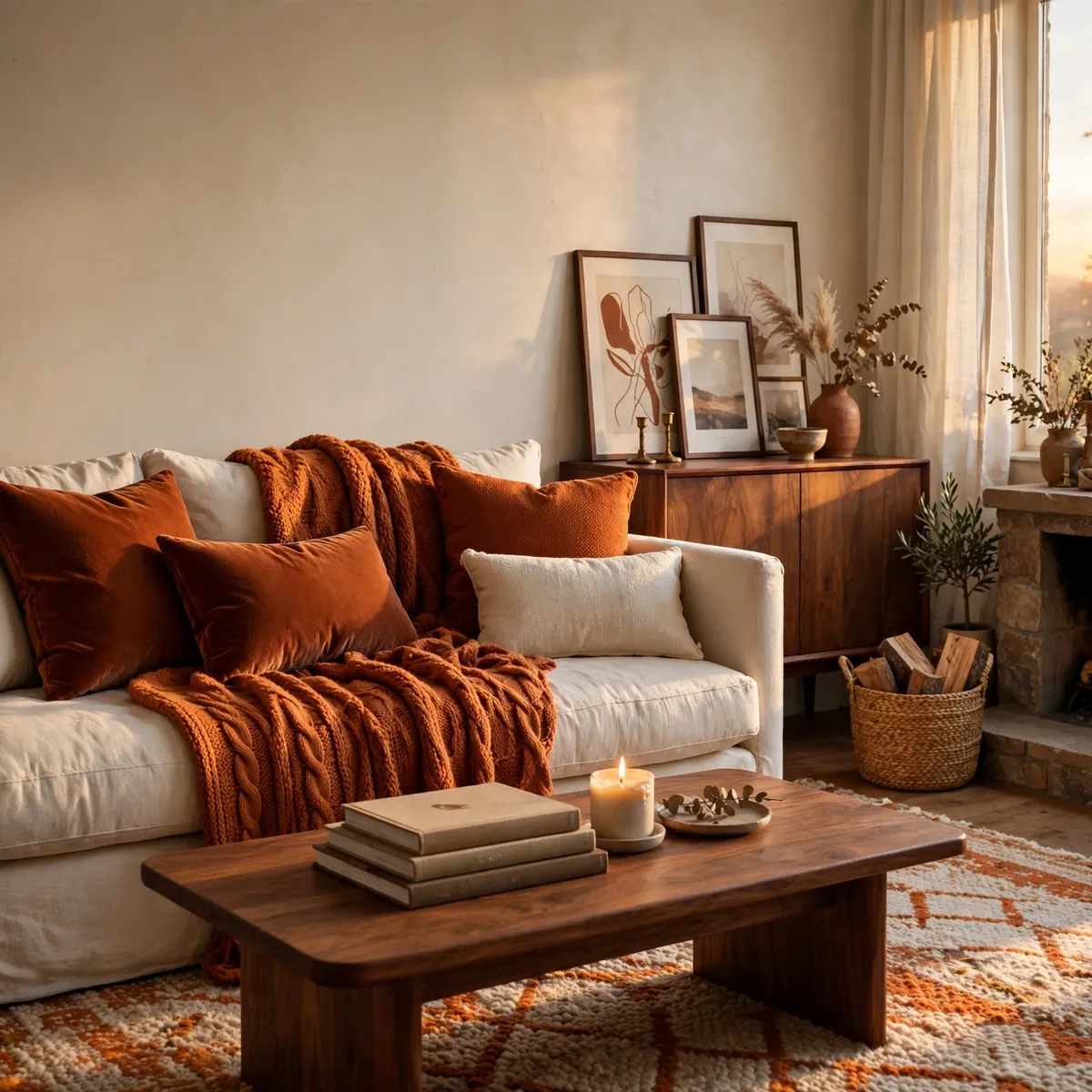
Wood brings instant warmth, and the pieces do not need to match — a honey oak coffee table can sit happily beside a dark walnut sideboard. This idea suits rooms that feel flat despite being fully furnished, because varied timber adds depth without introducing new colors. The strength is richness on a budget, since you can keep what you own. The weakness is the fine line between curated and accidental: repeat each wood tone at least twice around the room so the mix reads as intentional rather than leftover.
- Repeat each wood tone at least twice so the mix looks intentional.
- Pair smooth, polished finishes with rougher, rustic pieces for contrast.
- If the room still feels cold, add one wooden element before considering paint.
Wrap One Wall in a Deep, Moody Color

A deep forest green wall wraps a living room like a blanket, turning bright, echoing spaces into evening retreats. This is best for rooms with generous daylight, where darkness reads as drama rather than gloom. The strength is instant cocooning with a single tin of paint. The weakness is light dependence: in a dim, north-facing room the same color can feel cave-like, and it demands warm lighting to work. Always test large swatches at different times of day, and balance the depth with lighter upholstery and wood.
- 1. Test the color on a large board and check it in morning and evening light.
- 2. Paint the trim in the same shade for an enveloping, seamless effect.
- 3. Balance dark walls with warm lighting and lighter upholstery.
Arrange Seating for Conversation First
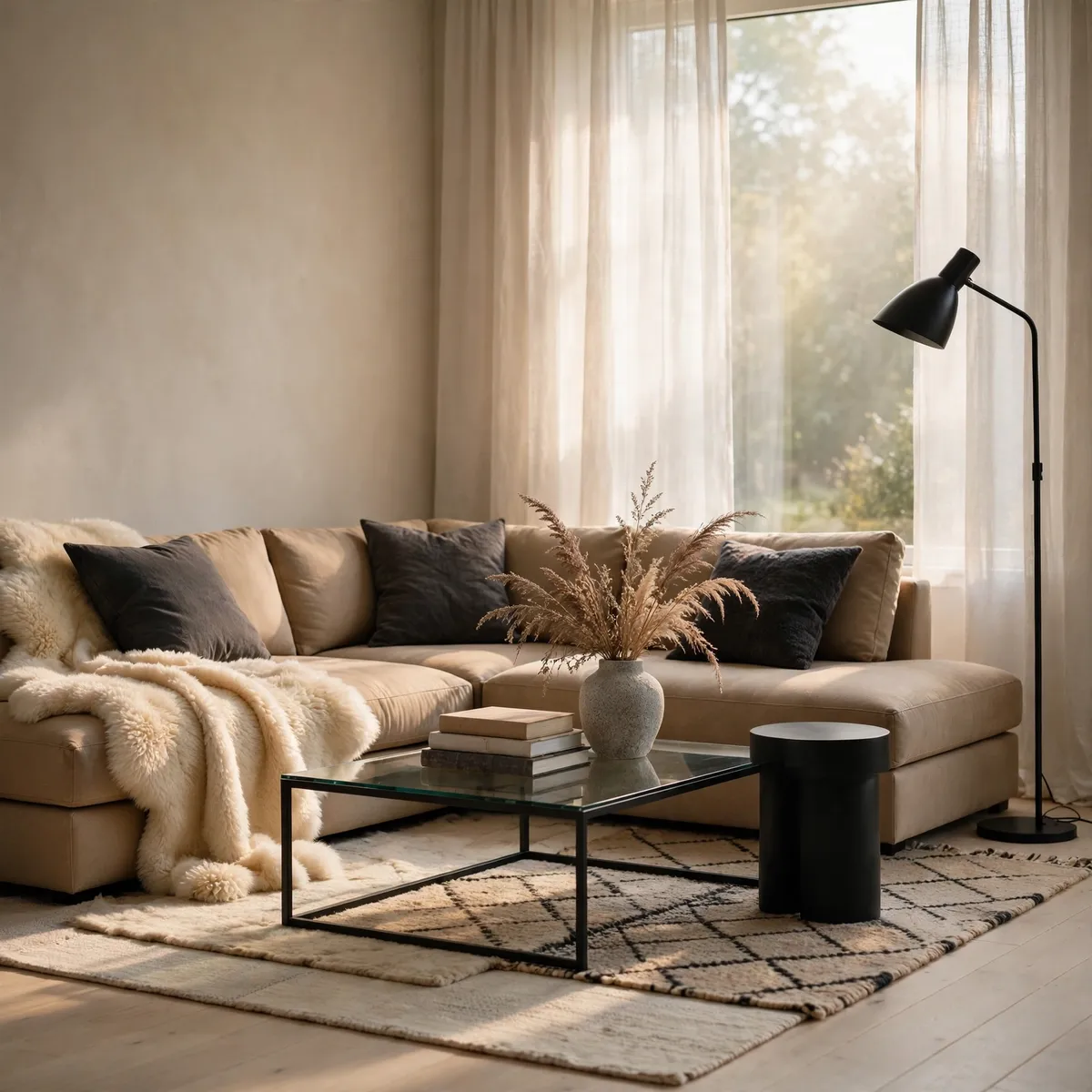
A cozy room invites people to talk, so pull chairs slightly toward the sofa instead of lining everything up to face one direction. Camel leather paired with cream boucle keeps the arrangement feeling warm rather than formal. This suits households that host often, and it makes even large rooms feel intimate. The strength is instant welcome — the layout itself tells guests how to use the space. The weakness is the television tug-of-war; in TV-first homes, try swivel chairs that turn both ways so nobody has to choose.
- 1. Angle chairs slightly toward the sofa instead of lining them all up.
- 2. In large rooms, build a central conversation zone and offset the TV.
- 3. Leave clear walkways so guests can join without squeezing past furniture.
Soften Hard Lines With Layered Greenery
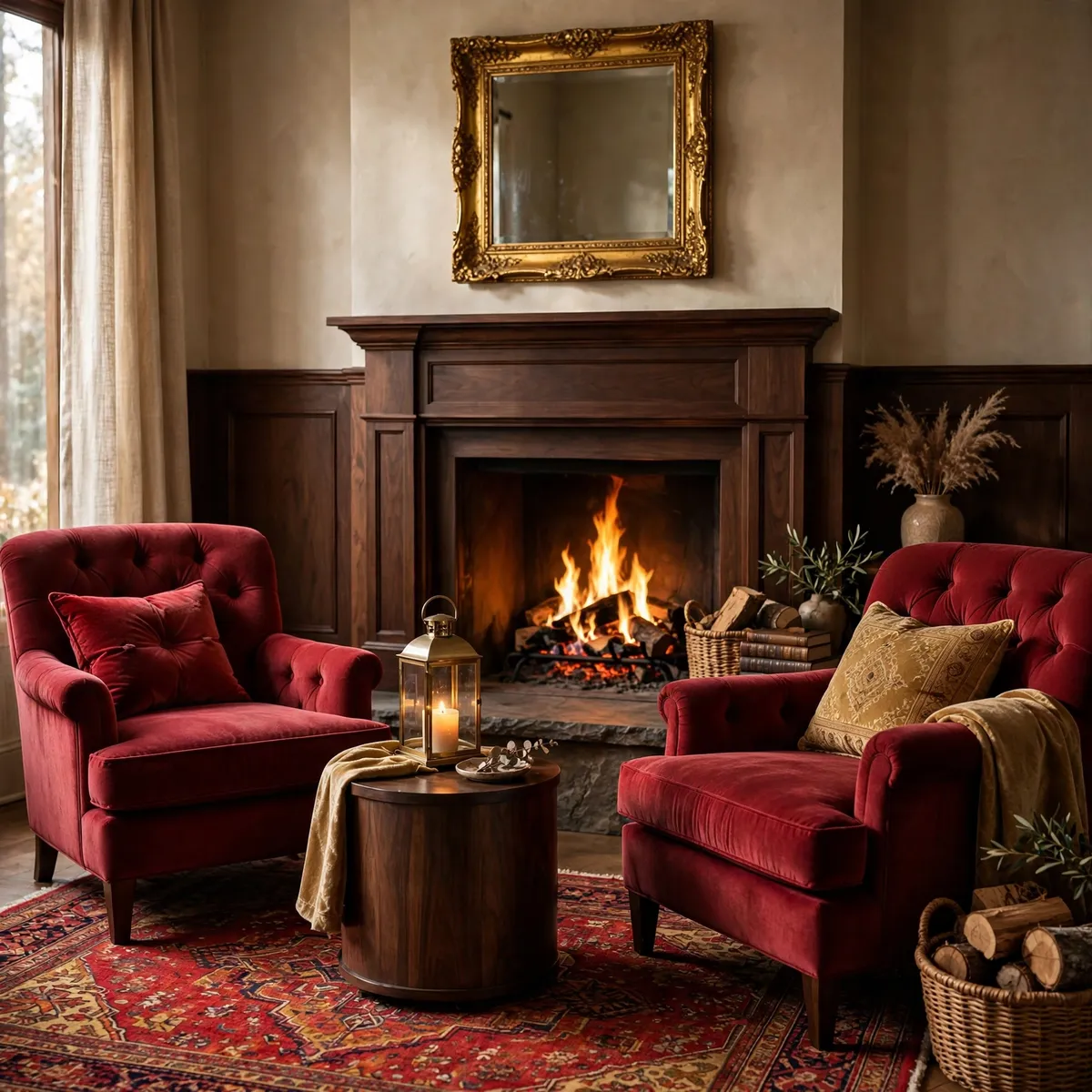
Plants soften architectural edges and add life that no object can fake — olive greens against black planters and teak furniture warm up even the most angular room. You do not need a jungle: one tall plant in an empty corner, a smaller one on a side table, and a trailing variety on a shelf is plenty. The strength is affordable softness with varied heights. The weakness is upkeep; in dark corners or busy households, realistic faux stems give the same silhouette with none of the watering schedule or guilt.
- Vary plant heights: one tall, one tabletop, one trailing from a shelf.
- Group small, inexpensive plants together for a fuller look.
- Choose realistic faux stems for dark corners where real plants fail.
Trade the Coffee Table for a Plush Ottoman
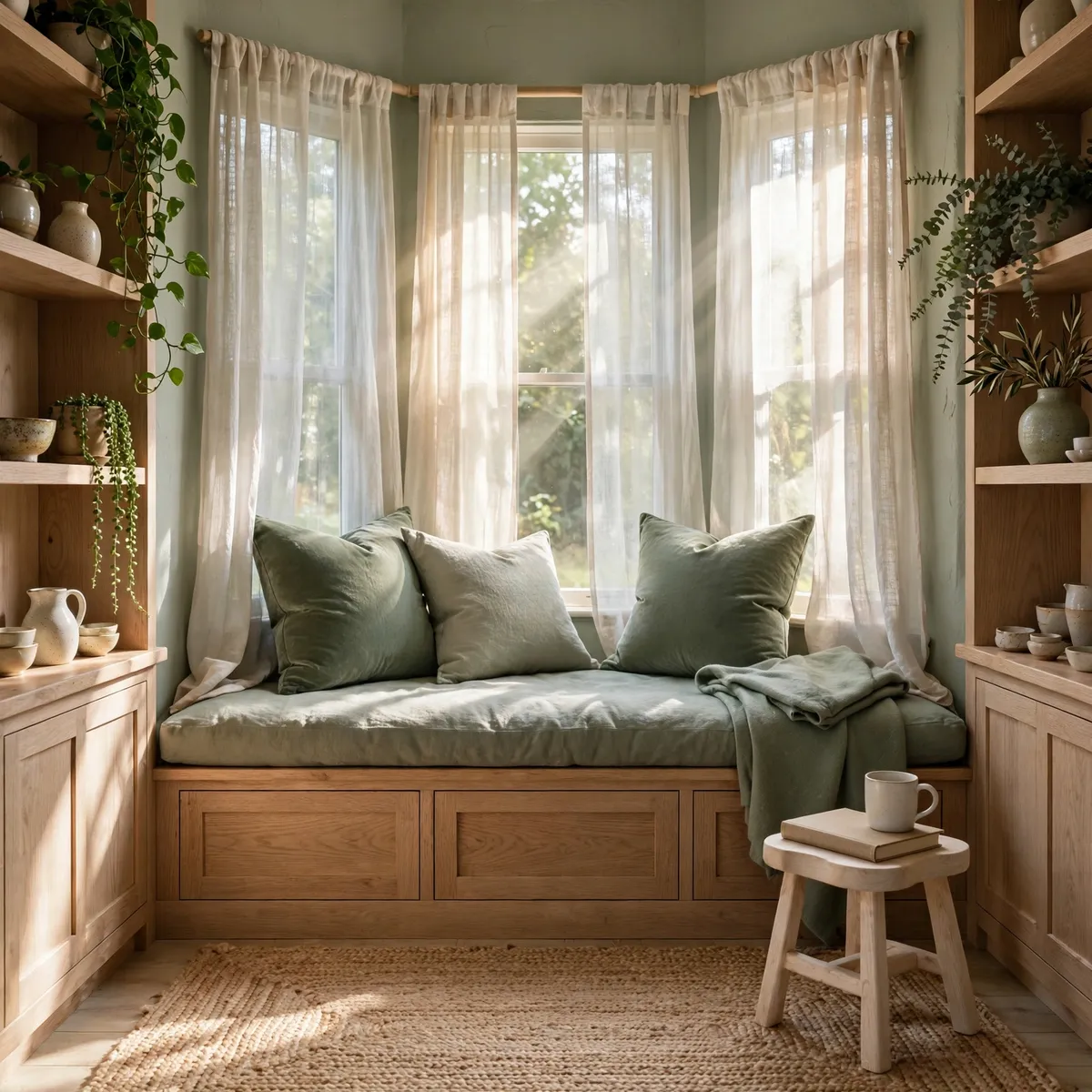
A large upholstered ottoman in cognac leather with an ivory throw gives you a footrest, extra seating, and a soft surface where a hard table used to be. This is ideal for families with young children — no sharp corners — and for anyone who likes to put their feet up. The strength is comfort-first versatility. The weakness is practicality: drinks need a tray for stability, and storage ottomans are heavy to shift. Round shapes work best in tight rooms, keeping traffic flowing around softened edges.
- Add a tray on top so drinks and books still have a stable surface.
- Pick a storage ottoman to hide blankets, games, and remotes.
- Choose round shapes in tight rooms with lots of foot traffic.
Build Pools of Light With Floor Lamps
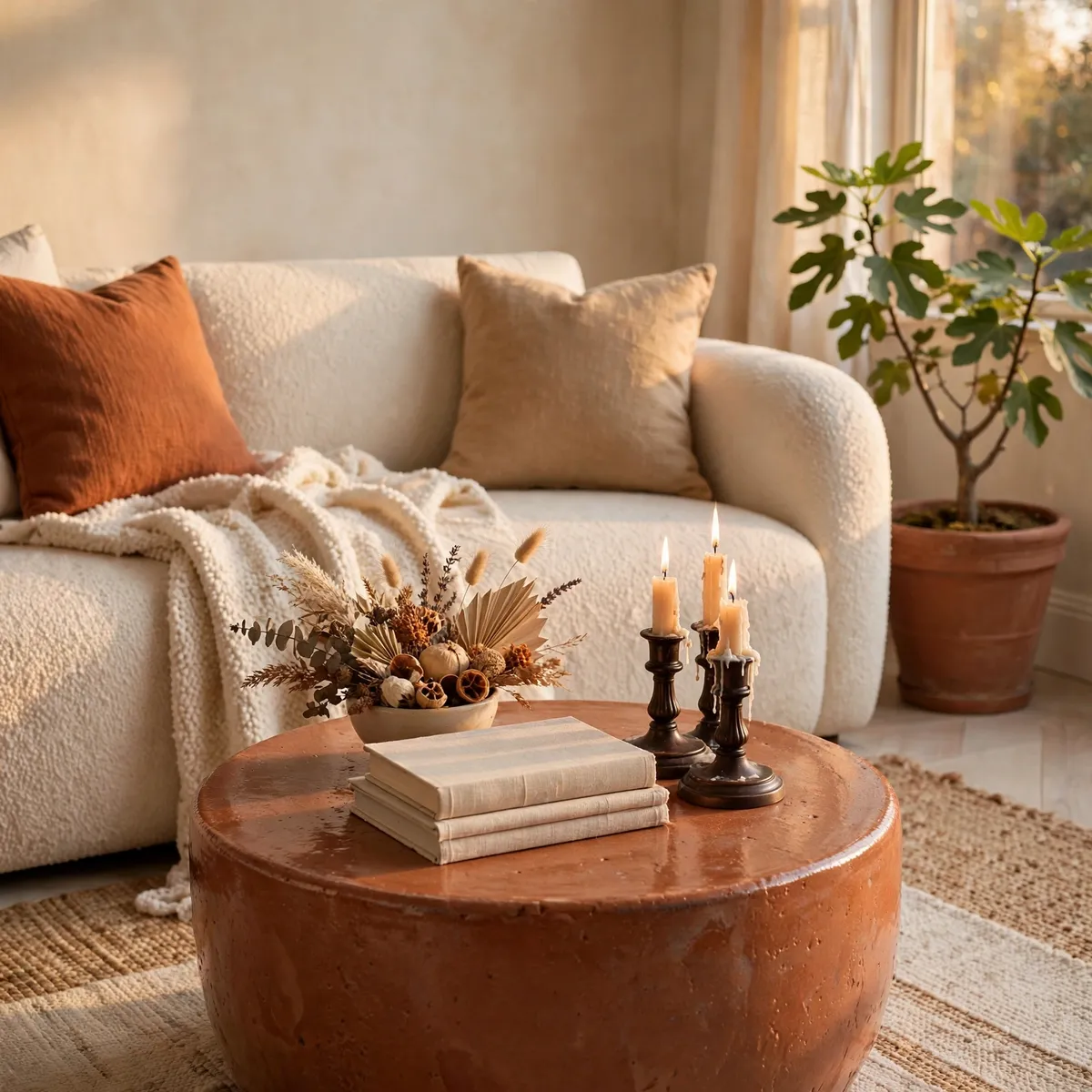
Rooms lit only by a ceiling fixture feel flat after dark; floor lamps with brushed brass stems and amber linen shades fix that by creating pools of warm light exactly where you sit. This is the single biggest upgrade for living rooms that feel fine by day but stark at night. The strength is atmosphere on demand, especially with dimmers. The weakness is logistics: lamps need nearby outlets, and cords must be routed safely along skirting or under rugs. Two lamps beat one — place them at opposite ends to balance the glow.
- Place one lamp beside the sofa and another near a reading chair or artwork.
- Choose warm-toned fabric shades that glow rather than glare.
- Put lamps on dimmers or smart plugs for easy evening scenes.
Try Warm Minimalism
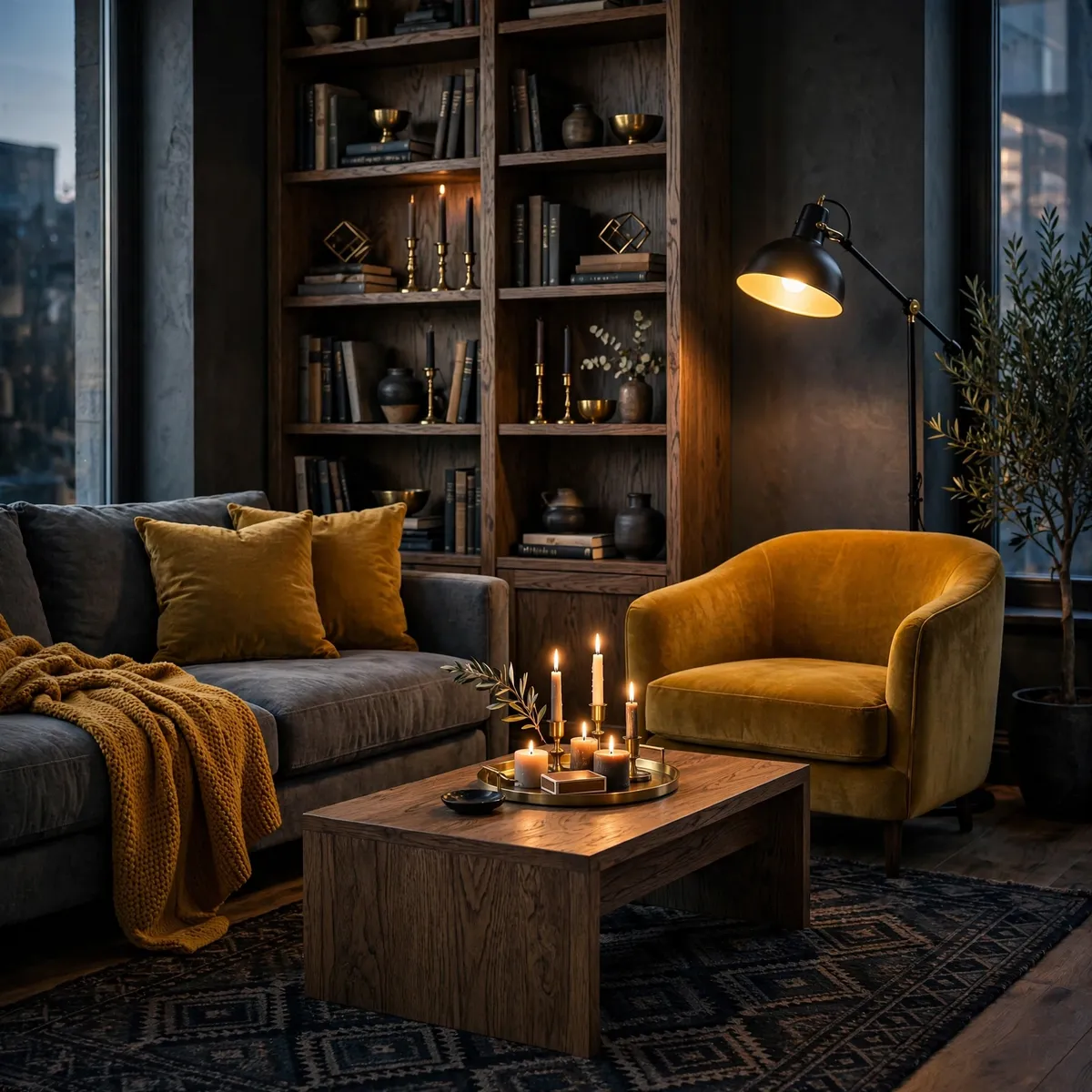
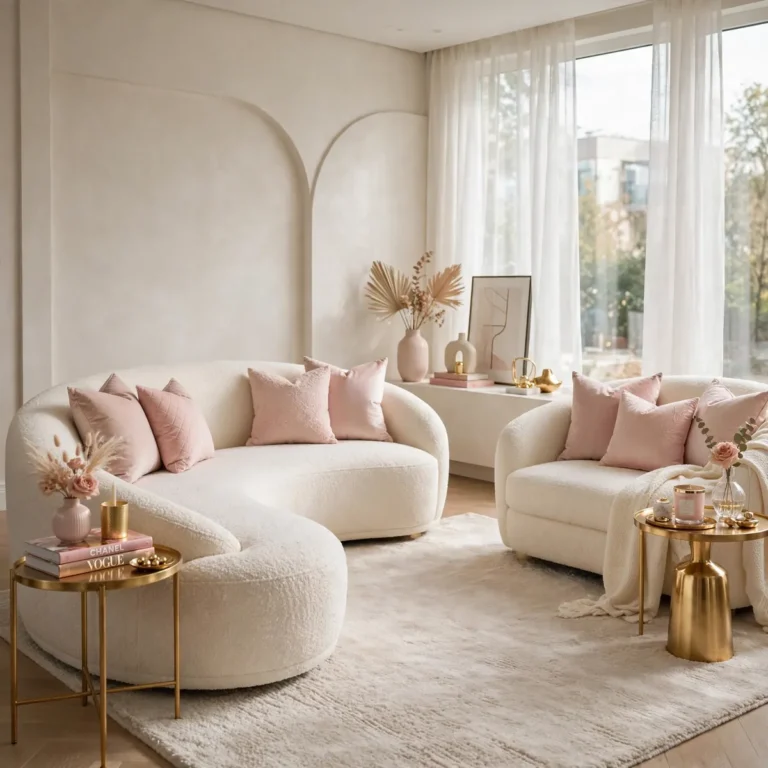
Minimalism can be deeply cozy when visual clutter is replaced with texture: a chalk white sofa, sand-toned rug, pale oak table, linen curtains, and one large artwork. This suits people who feel calmer with fewer things but still want a room that invites curling up. The strength is serenity — every piece earns its place. The weakness is the cold trap: skip the textures and the room reads as sparse rather than soothing. This is not the route for collectors or maximalists, who will feel happier with layered, fuller schemes.
- Swap visual clutter for texture: boucle, wool, linen, and raw wood.
- Keep the palette warm — stark white minimalism reads cold.
- Let one large artwork carry the room instead of many small objects.
Warm Up Neutrals With Earthy Accents

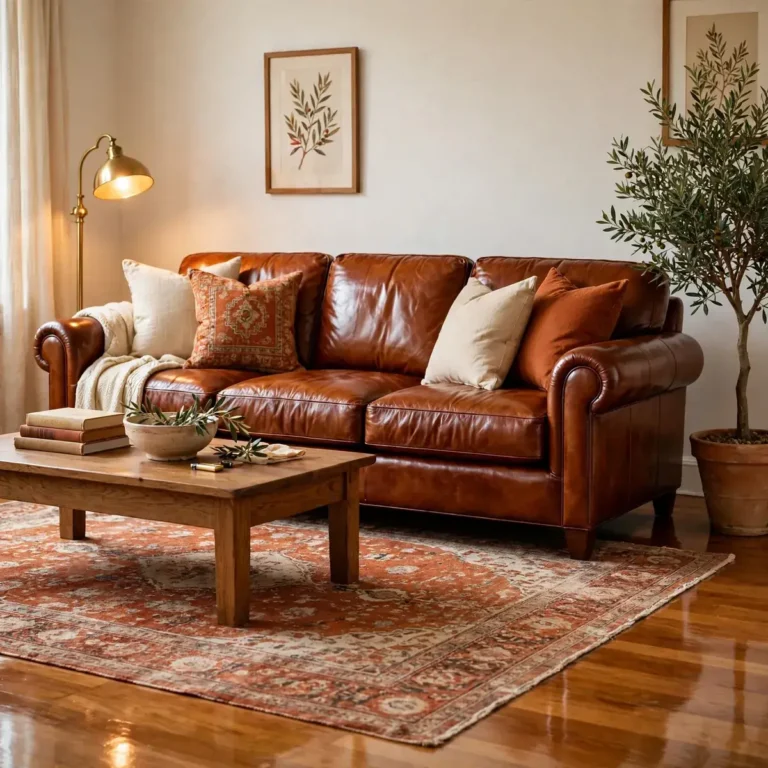
If your living room is already neutral, earthy accents in terracotta, clay, and olive add warmth without a repaint or new sofa. This is the lowest-commitment idea on the list — a cushion, a vase, and one piece of art can shift the whole mood. The strength is impact per pound spent. The weakness is muddiness: too many competing earth tones turn murky, so commit to one accent and repeat it. Repeating the chosen tone three times around the room creates cohesion without letting the color take over.
- 1. Start with a cushion, a vase, and one artwork in the same earthy tone.
- 2. Swap cool gray textiles for mushroom taupe and caramel versions.
- 3. Repeat your chosen accent three times around the room for cohesion.
Make the Fireplace the Heart of the Room

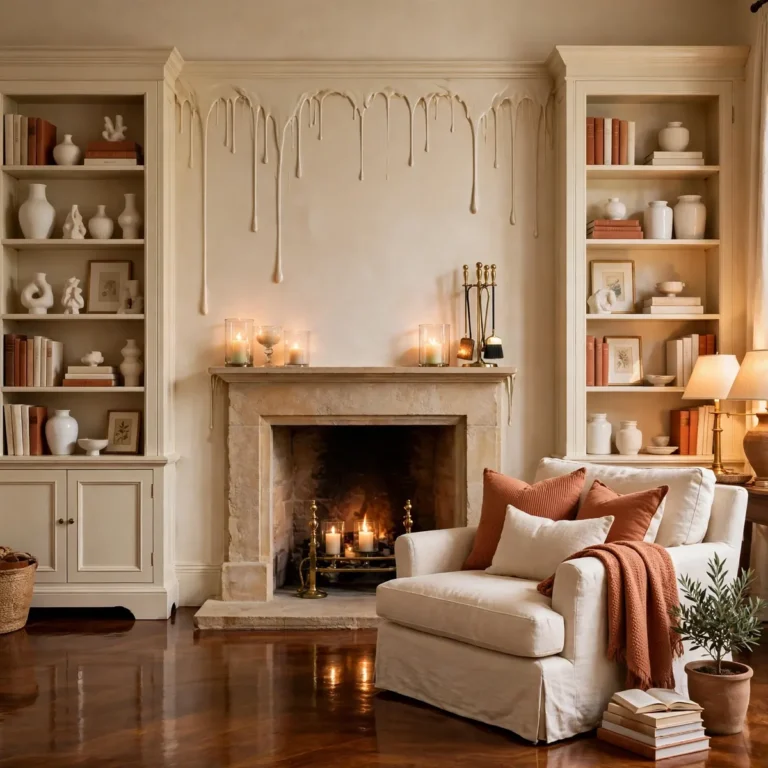
Few things gather a household like a real focal fire, so if you have a fireplace — limestone surround, matte black interior, brass tools — let it lead the layout instead of competing with the television. Angle the main seating toward the hearth and keep the mantel styling simple: one mirror or artwork, a pair of candlesticks, nothing fussy. This suits anyone who entertains or wants a natural evening ritual. The weakness is cost — a working chimney needs maintenance, and homes without one can use a ventless electric insert for the glow without any construction.
- Angle seating toward the fireplace, not just the television.
- Style the mantel simply: one mirror or artwork plus a pair of objects.
- No chimney? A ventless electric insert gives glow without construction.
Carve Out a Reading Nook
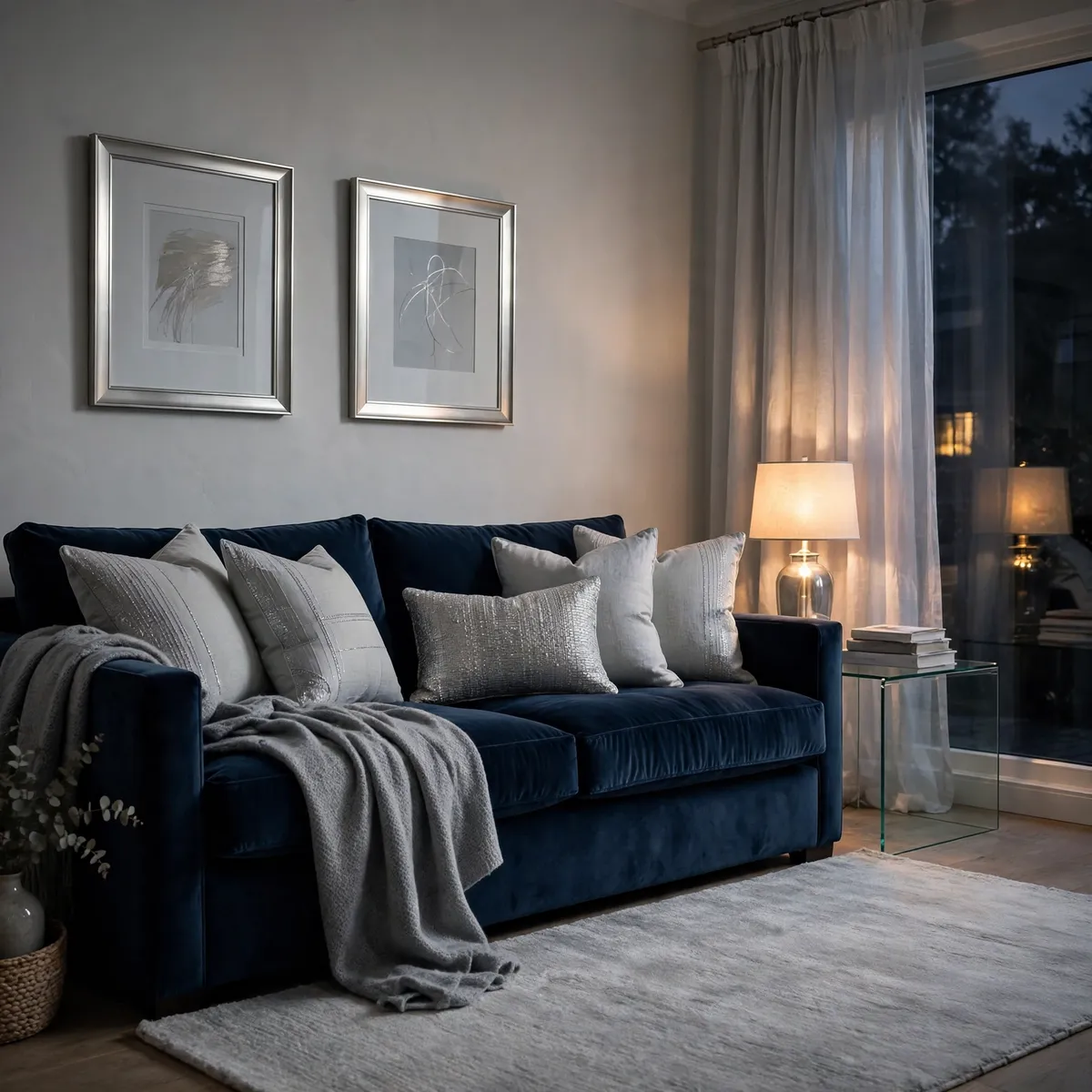
A reading nook turns an overlooked corner into the most fought-over seat in the house: a comfortable armchair in sage green, a walnut side table, a rust throw, and good light. This suits anyone with an awkward corner near a window that currently holds nothing. The strength is purpose — a dedicated spot for unwinding makes the whole room feel more considered. The weakness is light dependence; a nook tucked into a dark corner gets ignored. Place the chair where daylight actually falls, add a floor lamp for evenings, and the corner earns its keep daily.
- Place the chair where natural light falls during your reading hours.
- Add a small side table for a drink and a floor lamp for evenings.
- A soft throw and one cushion turn any chair into a destination.
Add a Window Seat
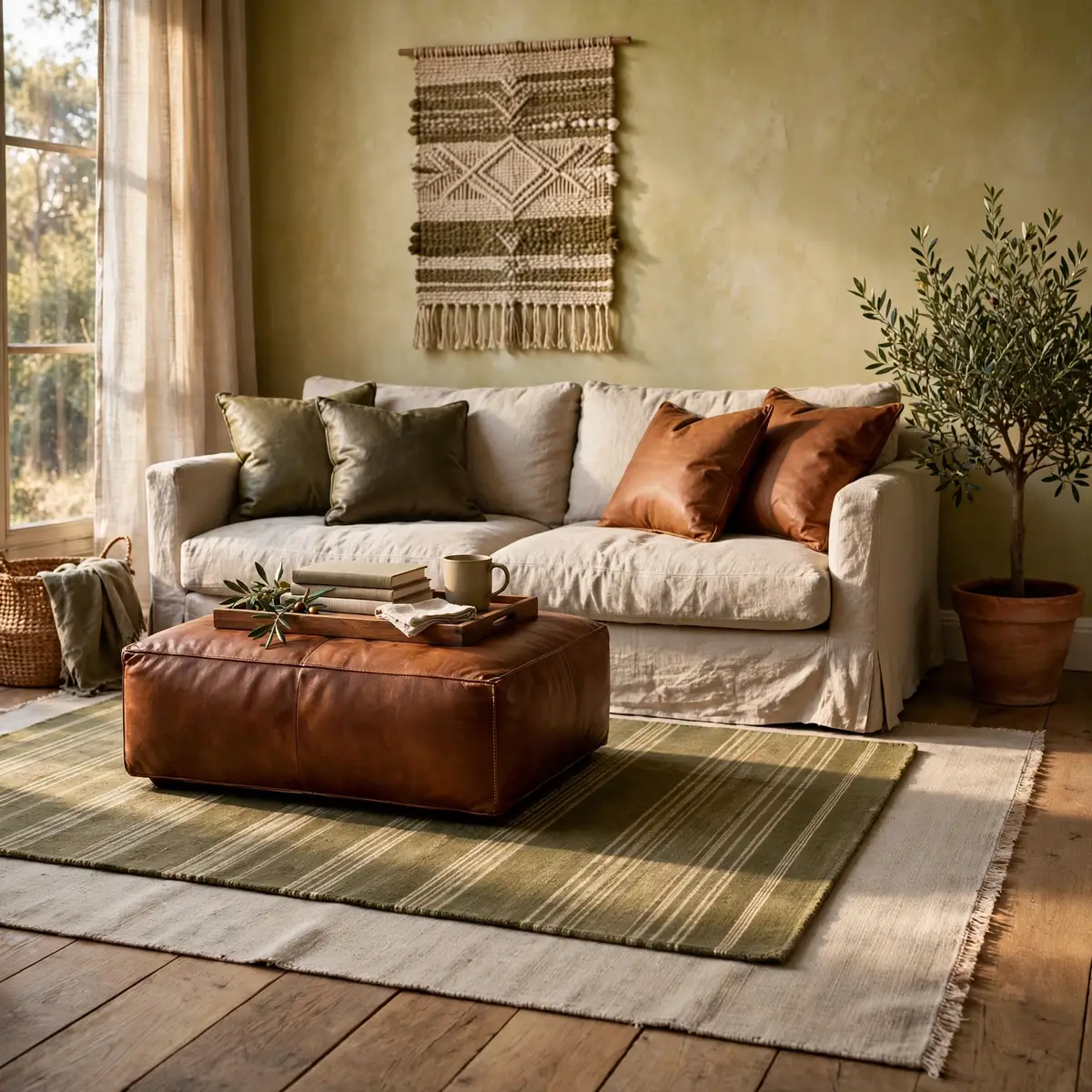
A built-in window seat in whitewashed oak with dusty blue and cream cushions adds seating, storage, and a sunny perch in one move. It suits wide windows with low sills, especially in family rooms where extra seats are always useful. The strength is triple duty: perch by day, storage inside, display surface on top. The weakness is cost and care — custom joinery is an investment, and sun plus dust punish delicate fabrics. Build storage into the base, choose washable covers, and the seat becomes the room’s hardest-working feature.
- Build storage into the base for blankets and seasonal cushions.
- Use washable cushion covers — window seats collect sun and dust.
- Add a slim bookshelf or picture ledge on the adjacent wall.
Layer Boucle Against Velvet
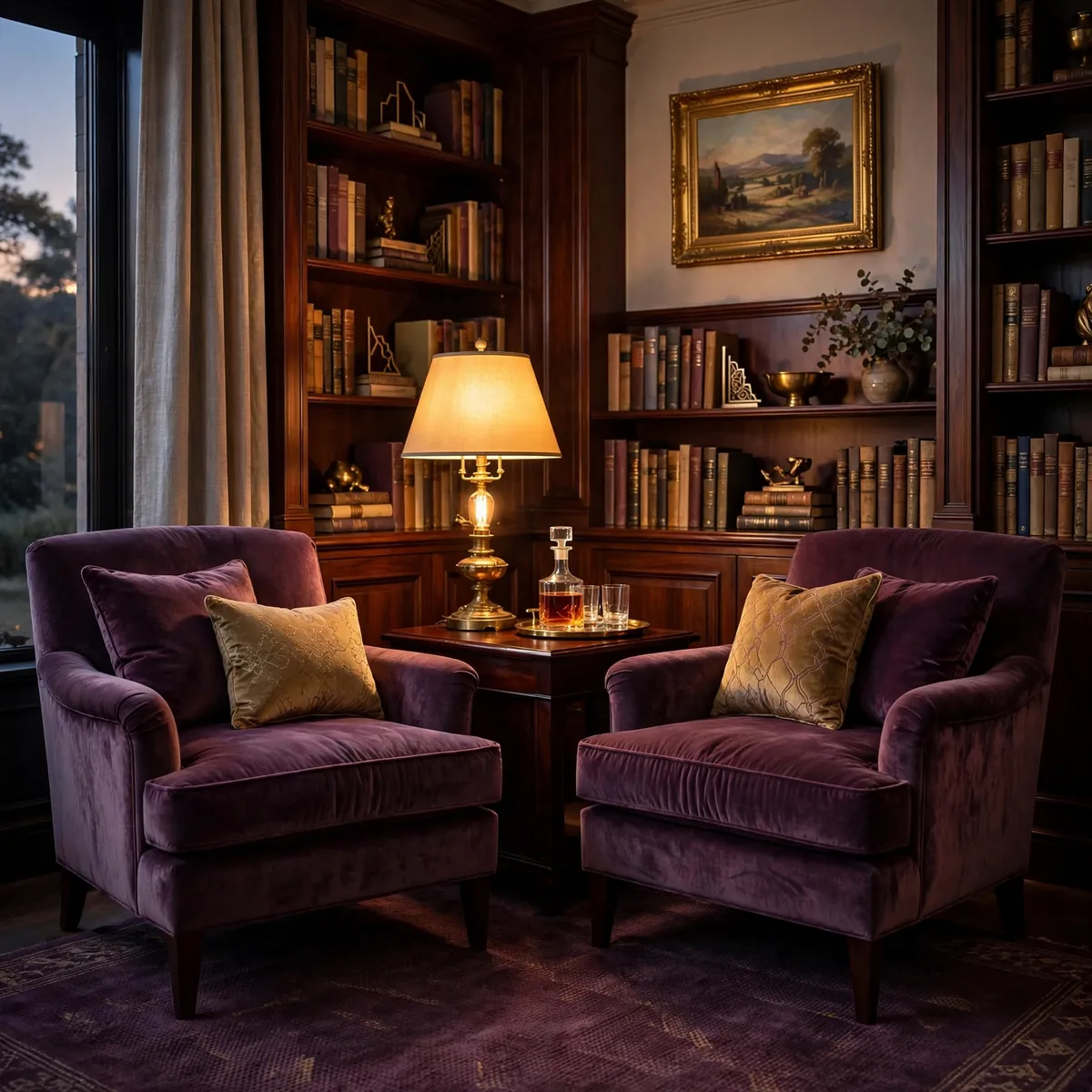
Texture does the heavy lifting in neutral rooms, and few pairings feel more luxurious than ivory boucle against chocolate velvet, warmed with a caramel throw. This suits sofas that look fine but feel flat — new cushions and a throw transform them without reupholstery. The strength is instant tactile richness. The weakness is maintenance: boucle loops snag on pet claws, and velvet shows pressure marks where people always sit. Keep boucle away from cats, rotate velvet cushions regularly, and repeat the velvet tone once more in drapes or a second cushion for cohesion.
- Pair nubby boucle with smooth velvet so each texture stands out.
- Keep boucle away from cats — claws snag the loops.
- Repeat the velvet color once more in the room, on a cushion or drape.
Style Bookshelves the Warm Way
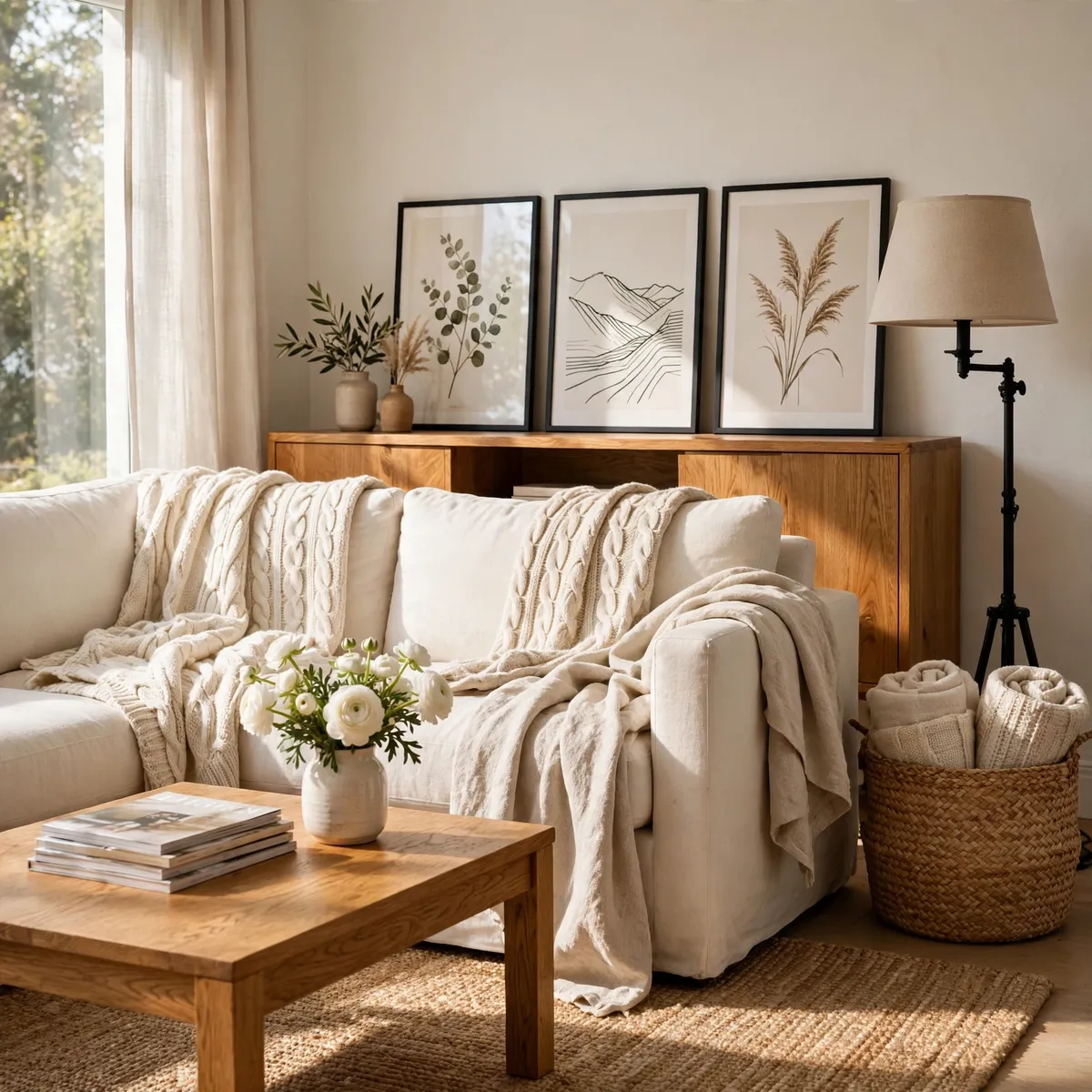
Walnut shelves dressed with books, cream ceramics, and amber glass bring personality and warmth to blank walls in a way flat art cannot. This suits readers and collectors whose living rooms need a personal layer. The strength is character — shelves tell your story while filling vertical space. The weakness is dust and clutter creep; overstuffed shelves read as storage, not styling. Leave a third of each shelf empty, group objects in odd numbers with varied heights, and limit each shelf to one small plant so greenery accents rather than overwhelms.
- Leave a third of each shelf empty so the display can breathe.
- Mix books with ceramics, framed photos, and one small plant per shelf.
- Group objects in odd numbers and vary their heights.
Hang a Warm-Toned Gallery Wall

A gallery wall in oak frames with cream mats and sepia-toned prints fills a large empty wall with personality while keeping the palette warm. This suits living rooms with one big blank expanse that a single artwork cannot cover. The strength is scale and story — a collection of meaningful images beats one oversized canvas. The weakness is planning: random hanging looks chaotic, and pieces hung too high disconnect from the furniture. Lay the arrangement on the floor first, photograph it, then hang with the center near eye level above the sofa or console.
- 1. Lay the arrangement on the floor and photograph it before hanging.
- 2. Keep the center of the grouping near eye level, not up by the ceiling.
- 3. Mix frame finishes but repeat each one at least twice.
Finish Evenings With Candles and Lanterns

Candlelight is the cheapest warmth money can buy: aged brass lanterns and beeswax candles in dark bronze holders turn an ordinary evening into an occasion. This suits anyone whose room feels finished by day but flat after dark. The strength is unbeatable atmosphere per pound — flickering light flatters every texture in the room. The weakness is safety; real flames and children, pets, or forgetfulness do not mix. Cluster candles at varied heights, never leave them unattended, and switch to good LED candles in busy households — the glow still transforms the room.
- Cluster candles in odd numbers at different heights for a collected look.
- Never leave real flames unattended — use LED candles around kids and pets.
- Place one lantern on the coffee table and one on a side table or shelf.
Switch Every Bulb to Warm White
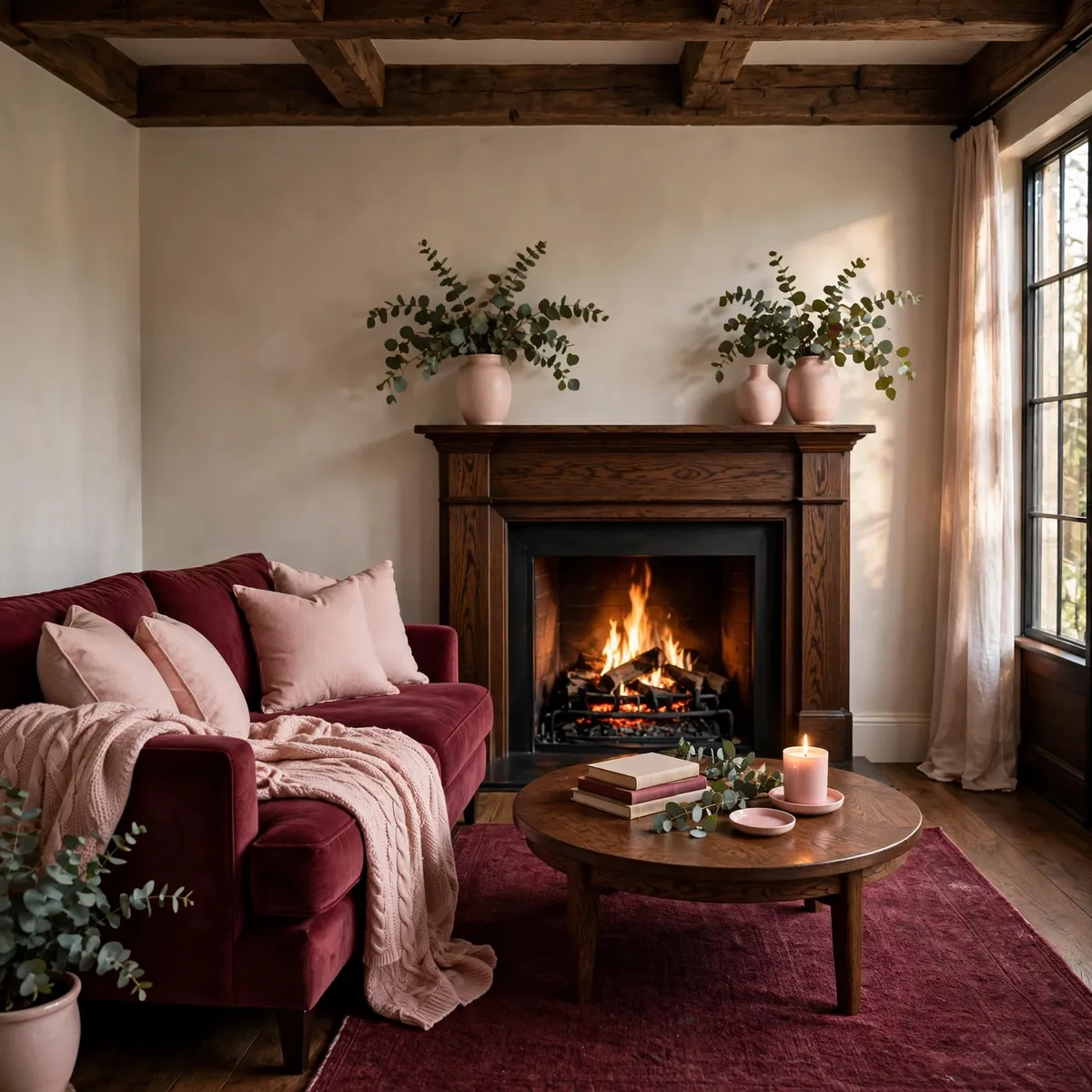
If your living room feels stark at night, check the bulbs before buying anything: cool-white light flattens warm decor, while 2700K warm white lets every texture glow. Opal glass pendants and bronze table lamps then do the rest. This is the fastest, cheapest fix on the list — an afternoon’s work with instant results. The strength is dramatic effect for almost no money. The weakness is task lighting; warm dim light is wrong for reading fine print or detailed hobbies. Match all visible bulbs to one warm tone, and keep a single brighter lamp in any genuine work corner.
- Look for 2700K on the box — that is the cozy warm-white range.
- Match all visible bulbs so the room glows one consistent color.
- Keep one brighter lamp in any real task zone, like a desk corner.
Color-Drench a Small Room in Muted Plum

Color drenching — walls, trim, and ceiling in one muted plum — wraps a small living room in a single enveloping tone that feels daring and deeply cozy at once. Brass lighting and cream upholstery keep the depth from going flat. This suits committed color lovers with compact rooms, where one continuous color makes boundaries blur and the space feel intentional. The strength is drama with cohesion. The weakness is reversibility: this is a weekend of painting to undo, so renters should skip it, and everyone should live with a large sample board for a few days first.
- Paint walls, trim, and ceiling the same plum for a true envelope.
- Add cream upholstery and brass so the depth has something to play against.
- Live with a large painted sample board for a few days first.
Turn Empty Corners Into Styled Vignettes

Dead corners make a room feel unfinished; a small vignette — mushroom taupe armchair or a caramel leather stool, a floor lamp, a side table with a book — turns them into destinations. This suits living rooms with awkward angles or space beside the fireplace that currently holds nothing. The strength is completeness: every corner earns its place and the room feels considered. The weakness is clutter creep, since styled corners attract stray objects. Combine seating or a plant with light and a surface, then edit seasonally so the vignette never becomes a dumping ground.
- Combine three things: something to sit on, a light source, and a surface.
- Use a tall plant when the corner is too tight for furniture.
- Edit the vignette seasonally so it never becomes a clutter corner.
Style the Coffee Table in Layers
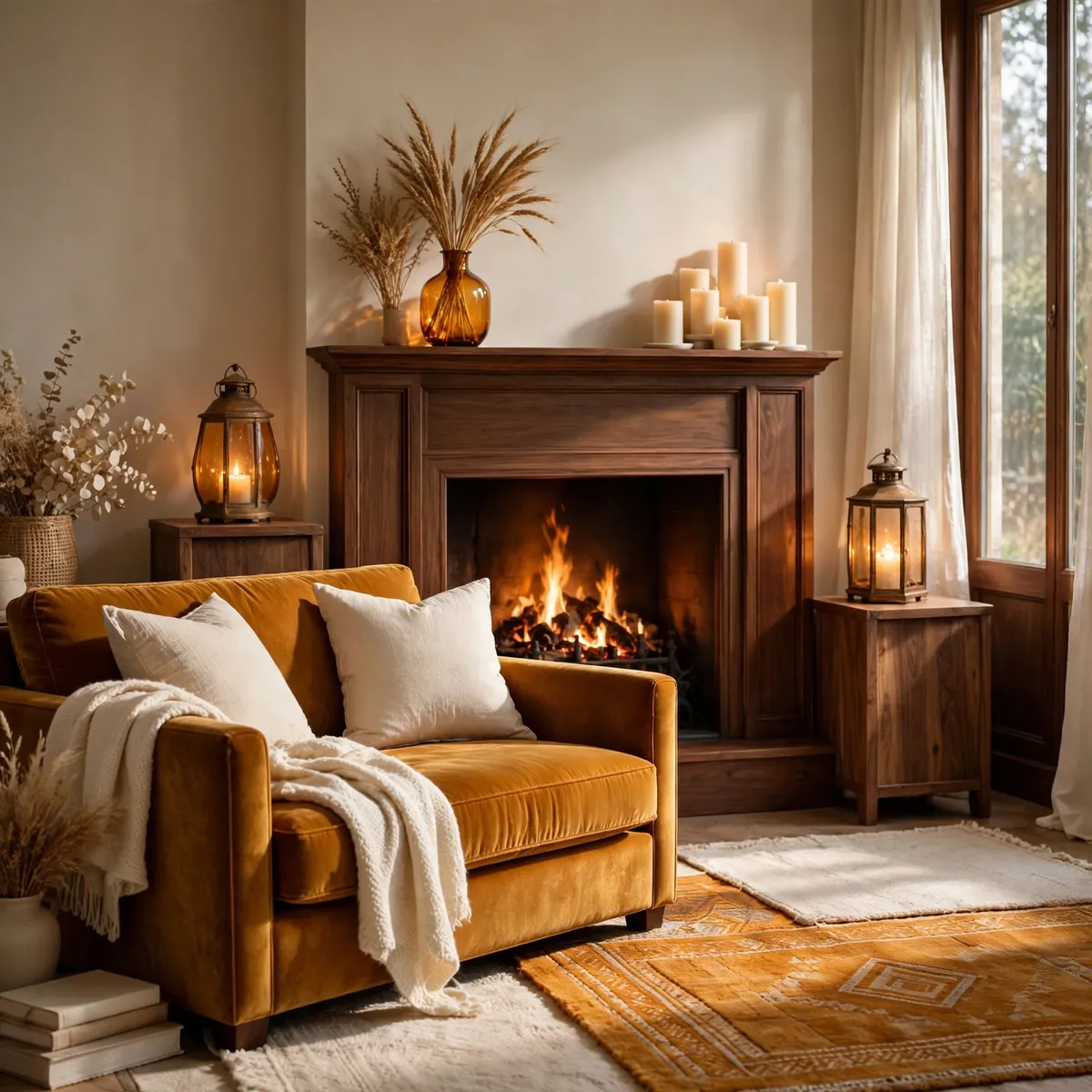
A bare coffee table makes even a furnished room look unfinished; layering — tray, stacked books, a small bowl or candle, one living stem — gives a travertine top with black metal legs the finished look it needs against cream upholstery. This suits anyone whose table currently holds only remotes. The strength is a styled surface that still works for daily life. The weakness is practicality in busy homes, where layers become obstacles. Start with a tray to corral everything into one zone and leave half the surface clear, so styling never fights function.
- 1. Start with a tray to corral everything into one tidy zone.
- 2. Stack two books, add a small bowl or candle, then one living stem.
- 3. Leave half the surface clear so the table still works for daily life.
Drape Throws Loosely, Never Folded Flat
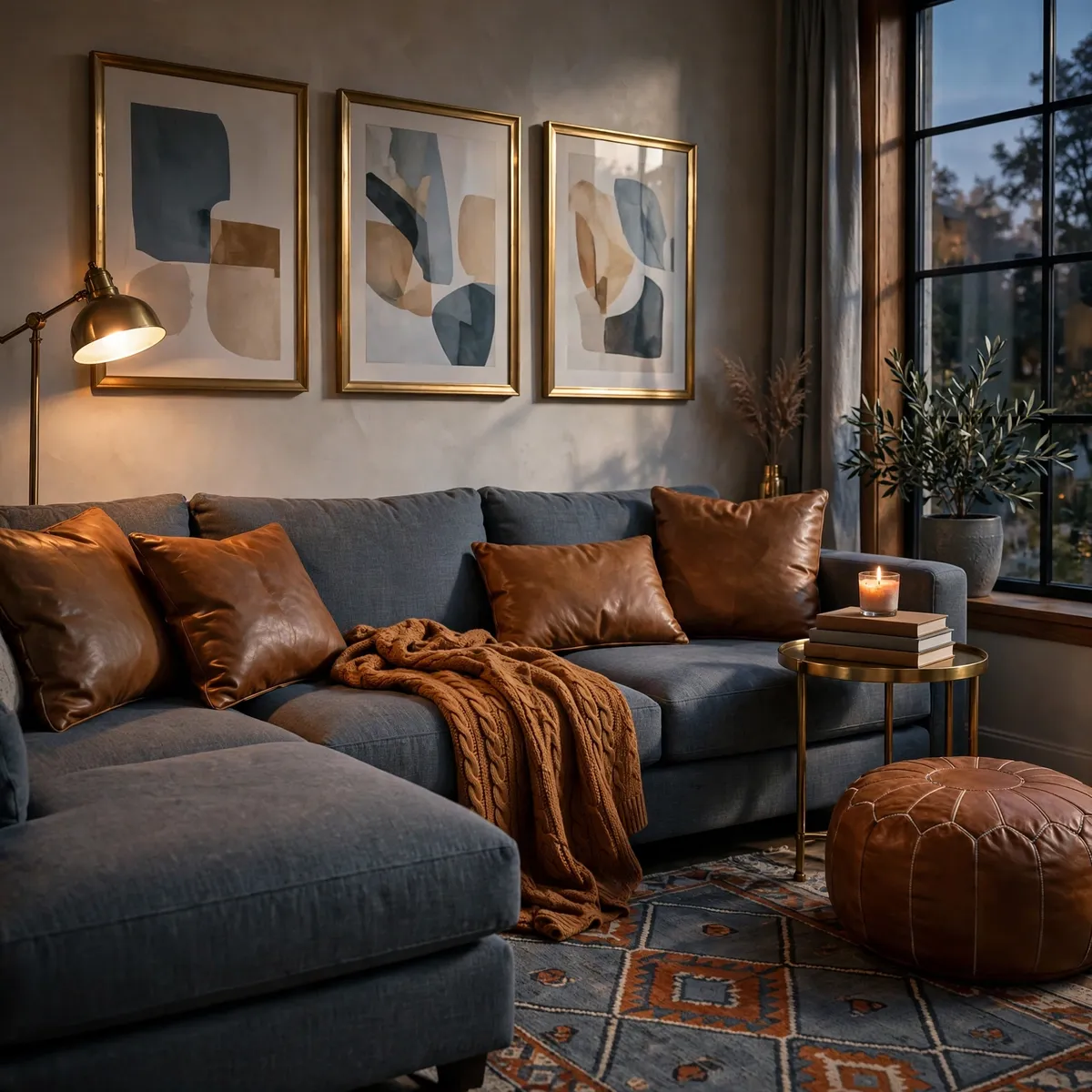
How a throw sits matters as much as the throw itself: a charcoal and natural wool throw with an ochre edge, tossed loosely over one sofa arm, reads relaxed and inviting where a perfect fold reads like a showroom. This suits sofas that look stiff despite good bones. The strength is instant lived-in softness for the price of a blanket. The weakness is gravity — smooth throws slide straight off leather. Choose textured wool or chunky knits for slippery sofas so the drape holds, and keep a second throw in a nearby basket for guests.
- Toss the throw over one arm or a corner — perfect folds read stiff.
- Choose textured wool or knit for leather sofas; smooth throws slide off.
- Keep a second throw in a basket nearby for guests.
Anchor a Floating Sofa With a Console Table

In open-plan rooms the sofa often floats mid-space with its back to the room, which can feel unresolved. A slim console in ebonized oak with brass lamps and amber glass behind it gives that back edge purpose — a place for light, books, and display. This suits open layouts where the sofa defines the living zone. The strength is definition plus a new home for a lamp, bringing warm light into the middle of the room. The weakness is space: skip this in tight rooms, since you need comfortable walking clearance behind the sofa for it to work.
- Keep the console near sofa-back height so it reads as one composition.
- Add a lamp on it to bring warm light into the middle of the room.
- Skip this in tight rooms — you need comfortable walking space behind.
Soften the Sound With Textiles

Coziness is partly acoustic: rooms with hard floors and bare walls echo, and echo reads as cold no matter how pretty the furniture. Layering greige and warm gray textiles — a thick rug, lined curtains, upholstered seating over light oak floors — absorbs that harshness. This suits new builds, rentals with hard flooring, and open plans where voices bounce. The strength is perceived warmth; a quieter room simply feels more intimate. The weakness is limits: textiles soften reflections but will not fix genuine noise problems. Start with the rug, since floors are the biggest culprit.
- If voices echo, add the rug first — floors are the biggest culprit.
- Hang lined curtains; the lining adds softness and sound absorption.
- Balance upholstered pieces against leather and wood, which reflect sound.
FAQs
Can a small living room feel cozy, or does coziness need a large space?
Small rooms often get cozy faster, because soft layers have less ground to cover. Focus on warm light, one good rug, and seating that fits the scale — oversized furniture in a compact room works against you. Lighter upholstery with warm accents keeps a small space feeling snug rather than cramped.
What is the quickest and cheapest way to make a living room cozier?
Change the light first. Swap cool-white bulbs for warm-white 2700K ones, add one floor lamp with a fabric shade, and drape a textured throw over the sofa. Those three changes cost little, take an afternoon, and transform how the room feels after dark.
How do I keep a cozy living room from looking cluttered?
Give every layer a job and edit often. Each throw, cushion, and object should add comfort, light, or meaning — if it does none of those, remove it. Trays, baskets, and storage ottomans hide the practical stuff so the soft layers can shine.
Conclusion
A cozy living room is built in layers, not bought in one trip. Begin with whatever your room lacks most — usually warmer light, softer seating, or something warm underfoot — then keep adding texture and glow until the space feels like the best seat in the house.