15 Earthy Pink Bedroom Ideas That Feel Warm, Grown-Up, and Beautifully Calm
FAQs
What colors go with an earthy pink bedroom?
Warm neutrals first: ivory, warm beige, oatmeal, and greige. Then grounding tones: terracotta, caramel, walnut, and natural oak. Green (from plants) is the best contrast color. Avoid cool grays, stark whites, and anything neon — they fight the palette’s warmth.
How do I keep a pink bedroom from looking too girly?
Anchor pink with weight: dark wood furniture, caramel leather, stone or travertine, and black or bronze hardware. Keep patterns minimal and lean on texture (linen, rattan, wool) instead of ruffles or florals. One leather or dark-wood piece usually shifts the whole room.
Does earthy pink work in a small bedroom?
Yes, but keep the pink concentrated rather than spread thin. One accent wall or a color-drenched treatment actually suits small rooms, since fewer visual breaks make the space feel larger. Avoid scattering small pink accessories everywhere — in tight rooms that reads as clutter fast.
Conclusion
An earthy pink bedroom works because its pinks behave like neutrals — warm, muted, and easy to live with. Whether you paint a single clay-toned wall, drench the whole room in dusty rose, or simply layer blush linen over warm ivory, the formula stays the same: muted pink, warm neutrals, natural texture, and one grounding element like wood or leather. Start with whichever idea fits your budget and your nerve, live with it for a week, and let the rest of the room follow.
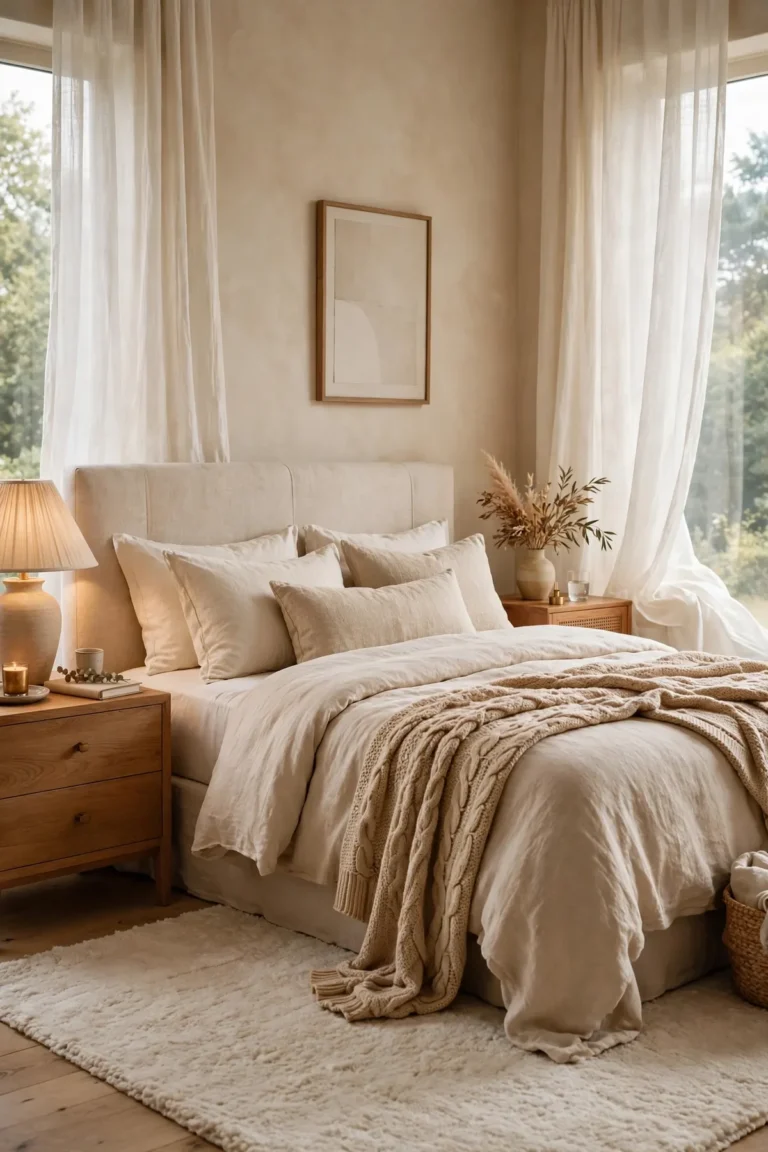
An earthy pink bedroom is a bedroom styled in muted, sun-baked pinks — clay, dusty rose, terracotta-blush — paired with warm neutrals and natural materials like linen, rattan, and wood. Unlike bubblegum or candy pink, these tones carry brown and terracotta undertones that read as grounded and mature, which is why they work so well in adult bedrooms. The palette feels like a desert sunset brought indoors: warm, calm, and quietly romantic.
The fastest route to this look is deciding where the pink lives — walls, bedding, or both — and anchoring it with warm neutrals so it never floats untethered. If you love the softness of pink but want the room to feel collected rather than sweet, this is one of the most forgiving palettes to work with, and it sits naturally alongside cozy bedroom ideas built on texture and warmth. These 15 ideas cover every route in, from a full color-drenched room to a single well-chosen throw.
Start With a Clay-Toned Accent Wall Behind the Bed
Painting one wall in a clay-toned pink is the highest-impact, lowest-risk entry into this palette. The wall behind the bed acts as a built-in headboard frame: it draws the eye, anchors the bed, and makes the whole room feel intentional. Choose shades with visible brown undertones — dusty rose, blush beige, clay pink — and avoid anything that reads neon or candy under daylight. In natural light, pink paints shift noticeably, so sample at least two candidates on the wall and check them morning and evening.
This approach suits renters and commitment-wary homeowners alike, because a single wall is easy to repaint and costs little. It works best in rooms with decent natural light; in very dark bedrooms, the same shade can read muddier than intended, in which case a slightly lighter blush works better. Pair it with cream or off-white bedding and let the wall carry the color story.
Quick tips:
- Sample paint on large swatches (at least 2×2 feet) and view them at different times of day.
- Matte or eggshell finish only — gloss makes pink look artificial.
- Keep the remaining walls warm white or beige so the accent wall has breathing room.
Color-Drench the Room in Dusty Rose for a Cocoon Feel
Color-drenching — painting walls, trim, ceiling, and even doors in one shade — turns a dusty rose bedroom into a cocoon. The trick works because removing contrast between surfaces erases visual boundaries, making the room feel both larger and more enveloping at once. It is the boldest move in this palette, but also the most forgiving: without white trim cutting lines across the walls, small imperfections and awkward corners simply disappear.
This idea belongs in rooms where you want maximum calm — a primary bedroom you retreat to, not a multipurpose space. It demands commitment, so it’s better for owners than renters, and it needs good lighting to avoid feeling flat; a single shade of pink in a dark room with one overhead light can feel cave-like. Warm bedside lamps and linen texture are the two companions that make drenching succeed.
Quick tips:
- Choose one mid-tone dusty rose and use it on walls, trim, and ceiling in different sheens (eggshell walls, satin trim).
- Add at least two warm light sources — drenching without layered lighting falls flat.
- Bring in wood and linen to reintroduce contrast the paint removed.
Layer an Earthy Pink Bedroom Palette in Clay, Blush, and Warm Ivory
If paint feels like too much, build the entire earthy pink bedroom through textiles instead. Start with warm ivory sheets as the base, add a dusty-rose duvet, then layer a terracotta or clay throw at the foot and two to three pillows that move between blush and deeper rose. The secret is a controlled gradient — light to dark within the same warm pink family — rather than scattering unrelated pinks around the room. Three tones maximum keeps the bed curated instead of chaotic.
Textile layering is the best idea for anyone who redecorates seasonally, because you can swap the throw and pillows in a weekend without touching anything permanent. Its weakness is that it demands discipline: every new pink item you buy should fit the existing gradient, or the bed slowly drifts toward clutter. Stick to linen, cotton, and woven knits for texture, and the result feels styled without trying.
Quick tips:
- Build the gradient dark-to-light: darkest tone at the foot, lightest near the headboard.
- Keep patterns to one piece (a subtle floral or stripe) and solids everywhere else.
- Natural textures (linen, washed cotton) keep pink feeling earthy rather than precious.
Choose Linen Bedding in Blush and Terracotta
Few materials suit this palette like linen. Its natural slub and relaxed wrinkle give earthy pink an organic, lived-in quality that crisp percale or sateen never will — sateen’s sheen can make pink look dressed-up and formal, while linen keeps it grounded. A dusty-rose linen duvet cover with terracotta pillow shams and neutral sheets is the core combination, and it’s worth investing in the duvet cover as the single hero piece.
Linen’s strength is texture and temperature regulation; its weakness is price and the fact that it always looks a little rumpled, which isn’t for everyone. If you prefer a tidier bed, a linen-look cotton blend gives most of the texture with less creasing. This idea is the right one for people who want pink in the bedroom every day without any renovation — bedding is removable, washable, and instantly swappable.
Quick tips:
- Wash linen with a gentle detergent and skip fabric softener to preserve its texture.
- Embrace the wrinkle — pressed linen defeats its purpose.
- One hero piece (duvet or quilt) plus neutrals beats an all-pink bed every time.
Anchor the Bed With a Dusty Rose Upholstered Headboard
When you’d rather have one decisive pink moment than pink scattered everywhere, an upholstered headboard in dusty rose does the job. It anchors the bed visually, softens the hardest line in the room, and reads as a deliberate design choice rather than a color experiment. Velvet or bouclé both work — velvet adds depth and a slight glow, while bouclé brings texture that suits the earthy register of this palette.
This is a strong pick for modern or minimal bedrooms that feel slightly cold: one warm, tactile piece changes the room’s temperature without adding clutter. The limitation is practical — upholstered headboards show dust and need occasional vacuuming, and lighter pinks can mark. Pair it with neutral walls and keep the rest of the pink restrained so the headboard stays the star.
Quick tips:
- A tall headboard (at least 48 inches) has more presence and suits high ceilings.
- Vacuum with an upholstery attachment monthly to keep fabric fresh.
- Keep wall art minimal above it — the headboard is the artwork.
Ground the Room With a Warm Wood Bed Frame and Rattan Details
Earthy pink needs grounding, and warm wood is the most reliable way to provide it. A bed frame in walnut, oak, or acacia gives the pink something solid to sit against — without wood, all-pink rooms can feel like they float. Rattan and cane details on nightstands, a bench, or a dresser extend the same warmth upward and sideways through the room, adding woven texture that flatters dusty rose beautifully.
The rule here is undertone matching: warm woods (honey, walnut, natural oak) harmonize with warm pinks, while cool gray-washed or whitewashed woods can clash with clay undertones. This idea is for anyone whose pink room feels sweet or unfinished — wood is the fastest way to make it feel adult. It’s also the most durable route: wood furniture outlasts every textile trend cycle.
Quick tips:
- Match wood undertones to your pink: warm woods with warm pinks, always.
- One rattan piece per room is enough; two or three turns the bedroom boho.
- Darker woods (walnut) add drama; lighter oaks keep the room airy.
Style Nightstands With Travertine, Brass, and Clay
Nightstands are where this palette gets its luxury finish. A small stack of travertine or marble, a brass lamp, and a handmade clay vase holding dried stems turn a bedside table into a composed vignette instead of a clutter catch-all. Stone brings a cool, weighty contrast that stops pink from feeling too soft; brass adds warmth and a jewelry-like gleam; clay keeps everything earthy and handmade.
This idea works in any bedroom because nightstands exist everywhere — it’s the smallest-scale way to test the palette before committing to paint or bedding. Its only real demand is restraint: a nightstand holds three objects well and five badly. Keep the lamp, one vessel, and one personal item (a book stack or small tray), and leave actual surface empty.
Quick tips:
- Lamp first — it sets the height everything else responds to.
- One stone, one metal, one ceramic: the material trio that never fails.
- Corral tiny items (glasses, lip balm) on a small tray so they read as styled.
Add Warmth With a Rattan Pendant or Clay-Base Lamp
Lighting decides whether earthy pink glows or falls flat, and the fixture matters as much as the bulb. A woven rattan pendant casts patterned, dappled light that flatters textured walls and linen bedding, while a table lamp with a handmade clay or ceramic base adds an earthy sculptural note at eye level. Either way, choose warm-white bulbs (around 2700K) — cool daylight bulbs drain the warmth straight out of dusty rose and make it look gray.
This is the idea most people skip and most rooms need. Overhead-only lighting is unflattering to every palette, but it particularly punishes muted pinks, which need warm side light to show their depth. The fix is cheap and renter-friendly: two bedside lamps or one pendant change the room more than most furniture swaps. Avoid chrome and cool-silver finishes; brass, bronze, clay, and wood all belong here.
Quick tips:
- 2700K warm-white bulbs are non-negotiable with this palette.
- A rattan pendant suits rooms with height; clay table lamps suit low ceilings.
- Put bedside lamps on dimmers — pink looks best in low, warm light.
Let Plants Soften the Pink With Green Contrast
Green is pink’s quiet best friend. A trailing pothos, an olive tree in a clay pot, or even a simple eucalyptus stem arrangement introduces the one color that makes dusty rose look richer by contrast. Without any green, an earthy pink bedroom can feel monochrome and slightly flat — plants break the pink field and add the organic, alive quality the whole palette is named for.
Choose terracotta or clay planters so the pots belong to the palette rather than interrupting it. This idea suits every version of the room, but it’s especially valuable in color-drenched or all-pink rooms where contrast is scarce. The honest caveat: if you can’t keep plants alive, dried stems (pampas, eucalyptus, wheat) give the same softening effect with zero maintenance, and they suit the dried-earth mood of the palette even better.
Quick tips:
- Terracotta pots keep planters inside the palette; white pots create a jarring break.
- One medium plant beats five tiny ones — scale matters more than quantity.
- Dried eucalyptus or pampas is the zero-maintenance alternative that still works.
Create a Reading Corner in Warm Neutrals With a Pink Throw
A small reading corner gives the bedroom a second moment beyond the bed, and it’s the perfect place for pink to appear as an accent rather than a field. A cream or oatmeal armchair, a warm wood side table, and a dusty-rose throw draped over the arm create a layered, intentional vignette. A floor lamp with a linen shade beside it completes the setup and makes the corner genuinely usable after dark.
This idea is best for medium and large bedrooms with an unused corner — forcing a reading nook into a tiny room just crowds it. Its strength is that it makes the room feel designed rather than merely furnished; bedrooms with one secondary zone always feel more considered. Keep the chair neutral and let the throw and a single cushion carry the pink, so the corner echoes the bed without copying it.
Quick tips:
- The chair should be genuinely comfortable — a beautiful-but-unusable corner is just clutter.
- A small rug under the chair defines the zone without a full room rug.
- Echo one pink tone from the bedding so the corner feels connected to the bed.
Hang Blush Curtains Layered Over Sheers
Windows are often the most under-styled surface in a pink bedroom, and layered curtains fix that. A dusty-rose or blush blackout curtain hung over a sheer ivory panel adds dimension, softens daylight into a warm glow, and gives the window the same layered treatment the bed gets. The double layer also reads as luxurious — single flat curtain panels can look unfinished by comparison.
This works especially well when the walls are neutral and the pink needs another place to live. Mount the rod high and wide — six inches above the frame and extending past each side — so the window looks larger and the curtains stack neatly when open. The weakness is cost: double rods and two curtain layers run more than a single panel, but the visual payoff is disproportionate.
Quick tips:
- Mount rods 4–6 inches above the frame and 4–6 inches wider on each side.
- Choose blackout lining for the pink layer if the room faces east — morning sun plus pink walls can overwhelm.
- Let curtains kiss the floor; puddling fabric suits this relaxed palette.
Build a Tone-on-Tone Art Wall in Muted Pinks
Instead of one statement piece, group several artworks in the pink family — dusty rose, mauve, terracotta blush — into a single gallery wall. Abstract prints, minimal line art, and soft landscape photography all work as long as every piece stays inside the muted-pink tonal range. Natural wood or slim brass frames tie the group together and keep it feeling warm rather than gallery-stark.
This idea shines above a dresser or on the wall opposite the bed, where it can be appreciated without competing with the headboard. It’s ideal for art lovers and renters (lean frames on a picture ledge to avoid nail holes). The discipline it requires is tonal: one hot-pink or neon piece in the mix will shout over everything else, so edit ruthlessly and keep every frame inside the earthy range.
Quick tips:
- Lay the arrangement on the floor and photograph it before hanging anything.
- Keep 2–3 inches between frames — tight grids feel busy, wide spacing feels calm.
- Mix frame finishes (wood + brass) but keep the art tones strictly in-family.
Introduce Caramel Leather for a Grown-Up Edge
Caramel or cognac leather is the ingredient that stops earthy pink from reading soft all the way through. A leather bench at the foot of the bed, a pair of leather-wrapped storage boxes, or even a single leather cushion introduces a rich, warm brown that shares pink’s warm undertones — the two colors harmonize instead of competing. Leather brings a tailored, slightly masculine note that balances the palette’s softness.
This is the idea for anyone worried the room feels too feminine or too young: one leather piece shifts the whole register toward grown-up. It ages beautifully, developing patina that suits the earthy mood even better over time. The caveat is proportion — leather should be an accent, not a theme. One bench or a few small goods; a full leather headboard plus leather bench plus leather chairs tips the room away from pink entirely.
Quick tips:
- Cognac and caramel tones harmonize with warm pinks; dark espresso leather can feel heavy.
- A bench at the foot of the bed is the classic placement — useful and visible.
- Let leather patina naturally; condition it lightly once a year, not monthly.
Finish the Floor With a Faded Clay-Tone Rug
A rug in faded terracotta, clay, or dusty rose grounds the entire room and gives pink a permanent home at floor level. Vintage-style or washed rugs work best — their faded, broken-in patterns keep the pink from feeling new or precious, and they hide wear gracefully. Size it generously: the rug should extend at least 18 inches beyond the bed on both sides so it frames the bed rather than peeking out from under it.
This is the foundation move — literally — for rooms where the walls stay neutral and pink lives in the soft furnishings. A rug ties the bed, nightstands, and any seating into one composition. Natural fibers (wool, jute with a pink overlay pattern) suit the earthy register best; avoid high-shine synthetic rugs, which clash with the palette’s matte, sun-baked mood.
Quick tips:
- Extend the rug 18–24 inches beyond the bed’s sides and foot.
- Faded, vintage-look patterns hide foot traffic better than solid pinks.
- Layer a smaller flatweave over a large jute rug for texture without bulk.
Swap Textures Seasonally to Keep Pink Fresh
The smartest long-term play with this palette is keeping the base neutral and rotating textures with the seasons. In cooler months, layer chunky knit throws in deep clay, velvet cushions in dusty rose, and a heavier rug; in warmer months, strip back to washed linen, light cotton, and a flatweave rug in pale blush. The pink stays, but its weight and temperature shift — the room feels fresh twice a year without repainting a single wall.
This idea is for anyone who gets bored easily or lives somewhere with real seasons. Its strength is economy: a throw and two cushion covers cost far less than new paint, and the ritual of the swap keeps the room feeling intentional. The discipline is storage — seasonal textiles need a clean, dry place to live off-season, so this only works if you have a closet shelf or under-bed space to spare.
Quick tips:
- Keep the base (walls, bed frame, rug) constant; swap only throws, cushions, and bedding layers.
- Go deeper and heavier in winter (clay, velvet), lighter and airier in summer (blush, linen).
- Store off-season textiles in breathable cotton bags, not plastic.
FAQs
What colors go with an earthy pink bedroom?
Warm neutrals first: ivory, warm beige, oatmeal, and greige. Then grounding tones: terracotta, caramel, walnut, and natural oak. Green (from plants) is the best contrast color. Avoid cool grays, stark whites, and anything neon — they fight the palette’s warmth.
How do I keep a pink bedroom from looking too girly?
Anchor pink with weight: dark wood furniture, caramel leather, stone or travertine, and black or bronze hardware. Keep patterns minimal and lean on texture (linen, rattan, wool) instead of ruffles or florals. One leather or dark-wood piece usually shifts the whole room.
Does earthy pink work in a small bedroom?
Yes, but keep the pink concentrated rather than spread thin. One accent wall or a color-drenched treatment actually suits small rooms, since fewer visual breaks make the space feel larger. Avoid scattering small pink accessories everywhere — in tight rooms that reads as clutter fast.
Conclusion
An earthy pink bedroom works because its pinks behave like neutrals — warm, muted, and easy to live with. Whether you paint a single clay-toned wall, drench the whole room in dusty rose, or simply layer blush linen over warm ivory, the formula stays the same: muted pink, warm neutrals, natural texture, and one grounding element like wood or leather. Start with whichever idea fits your budget and your nerve, live with it for a week, and let the rest of the room follow.