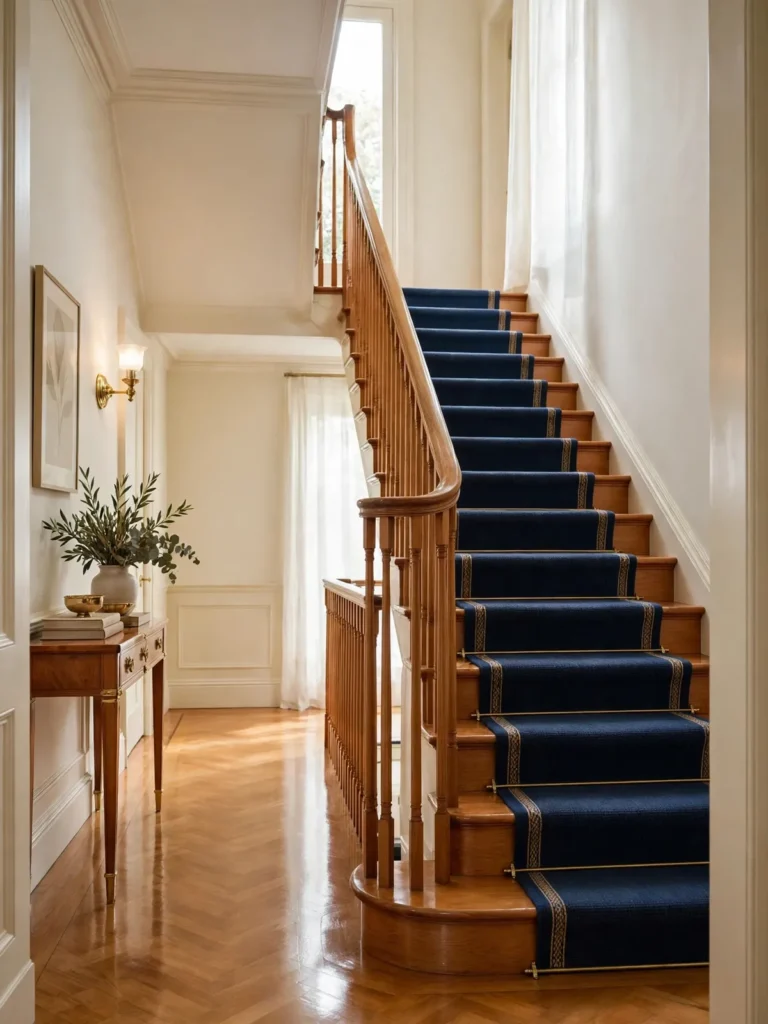
25 Floating Staircase Ideas That Make Your Home Feel Light, Open, and Beautifully Modern
A light-and-structure guide for floating staircases — 25 ideas in cantilevered treads, glass balustrades, steel spines, and hidden lighting, each with a concrete example and quick styling tips.
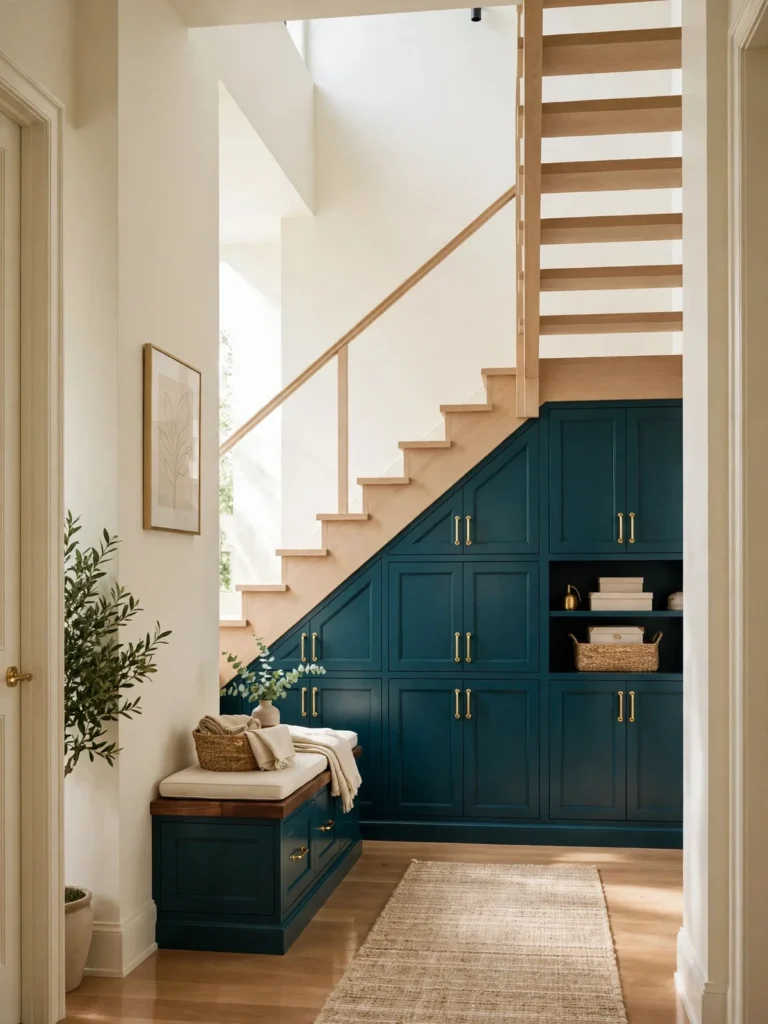
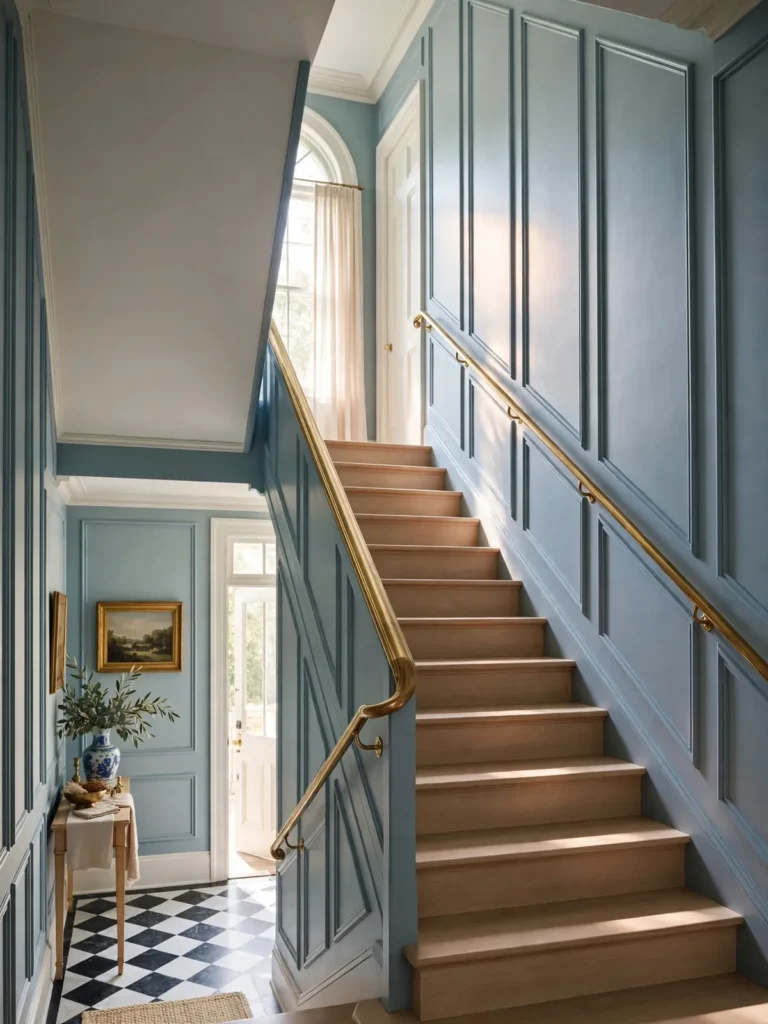
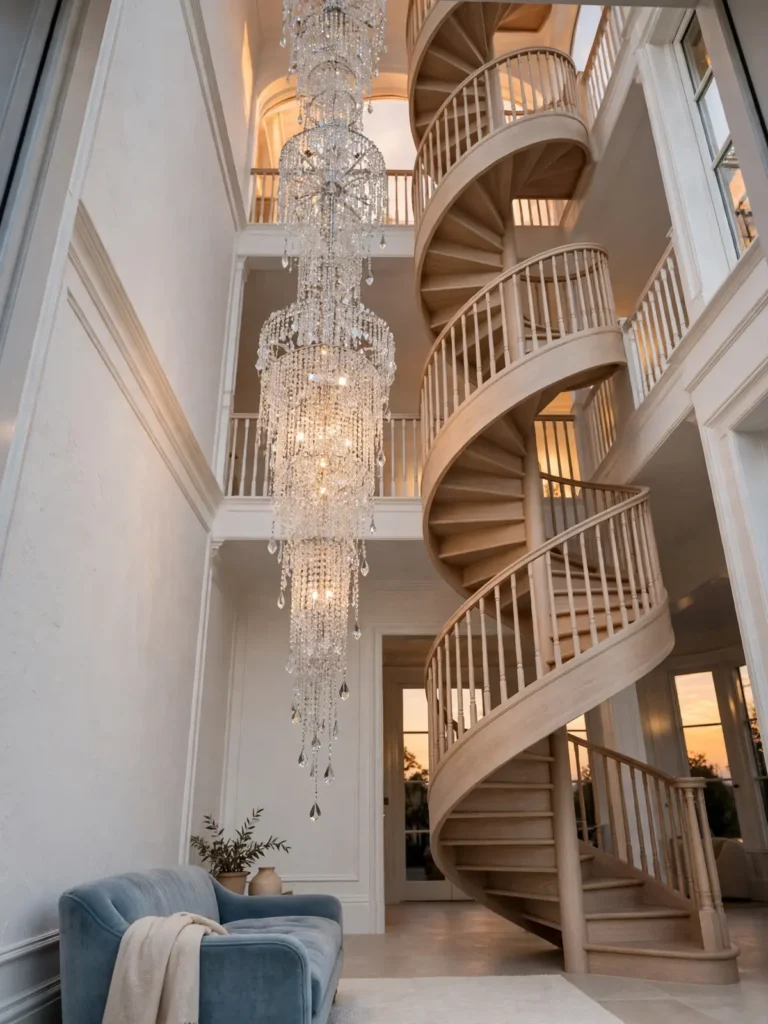
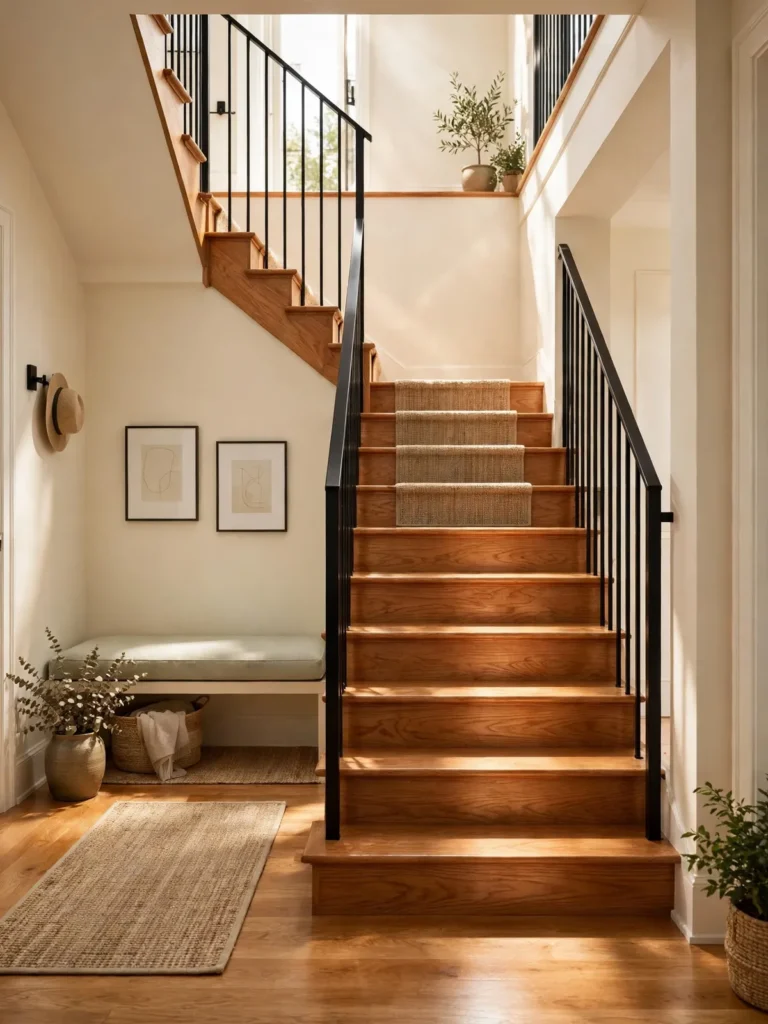
Floating staircase ideas work best when the staircase feels like it is barely there. Cantilevered treads, glass balustrades, a hidden steel spine, and soft light under each step build a stairway that opens up the room instead of filling it, while the open risers let daylight travel freely. This guide gives you 25 concrete ways to build that look, so every idea names a real material, structure, or finish you can picture in your own home.
Start with the structure — how the treads are supported and what the balustrade is made of — then let the lighting and the wall behind the stairs do the rest, and the staircase will read as sculpture rather than construction. If you want the open feeling carried through the ground floor, our modern living room ideas pair beautifully with these floating stairs, keeping the whole space light and uncluttered.
Key Takeaways
What makes a staircase a floating staircase?
The treads are supported without visible risers or a solid stringer — usually cantilevered from the wall or carried on a hidden steel spine — so each step appears to float in the air.
Are floating staircases safe?
Yes, when they are properly engineered — a structural engineer should design the support, and a balustrade or handrail is required where building codes demand one, especially in homes with children.
How much does a floating staircase cost?
More than a standard staircase, because the hidden steelwork and engineering cost more — get at least three quotes from specialists and ask each one to price the structure, treads, and balustrade separately.
What is the best tread material for a floating staircase?
Oak and walnut are the most popular for warmth, while marble, terrazzo, and steel suit more dramatic modern homes. Choose a material that matches the floor and the wall behind the stairs.
Can a floating staircase work in a small home?
Yes — floating stairs are ideal for small homes, because the open risers let light and sightlines pass through, making the room feel larger than a solid staircase would.
| Structure | Best treads | Feels like | Add this |
|---|---|---|---|
| Cantilevered from wall | Oak, walnut | Clean, architectural | Glass balustrade |
| Central steel spine | Walnut, steel | Sculptural, bold | LED under-tread |
| Hidden steel beam | Marble, terrazzo | Seamless, luxurious | Recessed wall light |
| Twin stringers | Ash, concrete | Industrial, honest | Matte black rail |
| Glass treads | Smoked glass | Dramatic, modern | Warm brass handrail |
| Slim profile | Pale ash | Minimal, airy | Slim steel handrail |
Floating Staircase Ideas Begin With Cantilevered Oak Treads
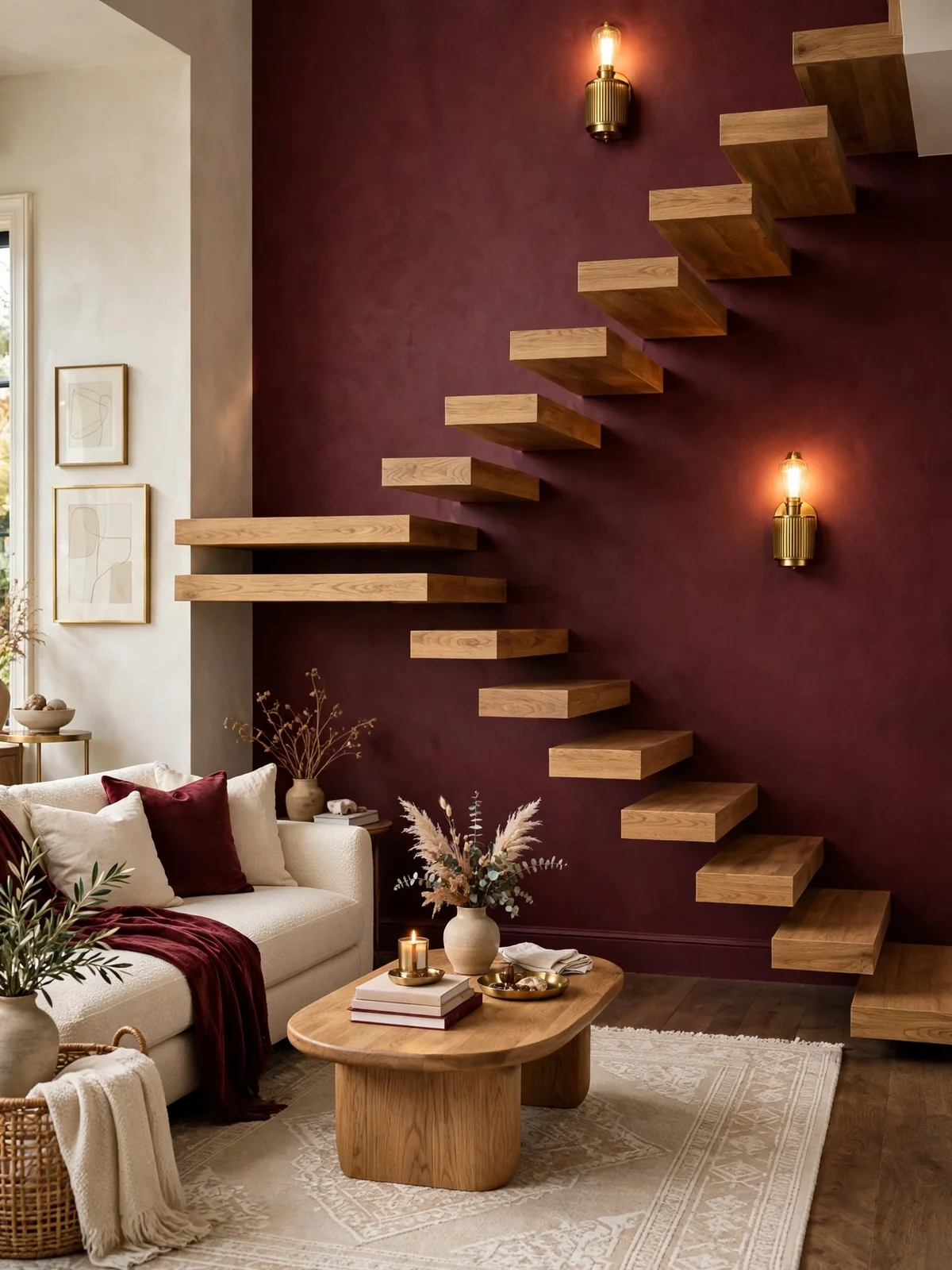
Picture thick oak treads cantilevered straight out of a crisp white wall, with no risers and no visible support, and a sage green armchair sitting in the open space below. The wood warms the white wall beautifully, and the open risers let the light travel straight through the staircase.
Quick tips:
- Use a structural engineer to design the cantilever fixing.
- Choose oak treads at least 40mm thick for a solid look.
- Keep the wall plain so the treads stay the focus.
A Frameless Glass Balustrade That Keeps the View Completely Open
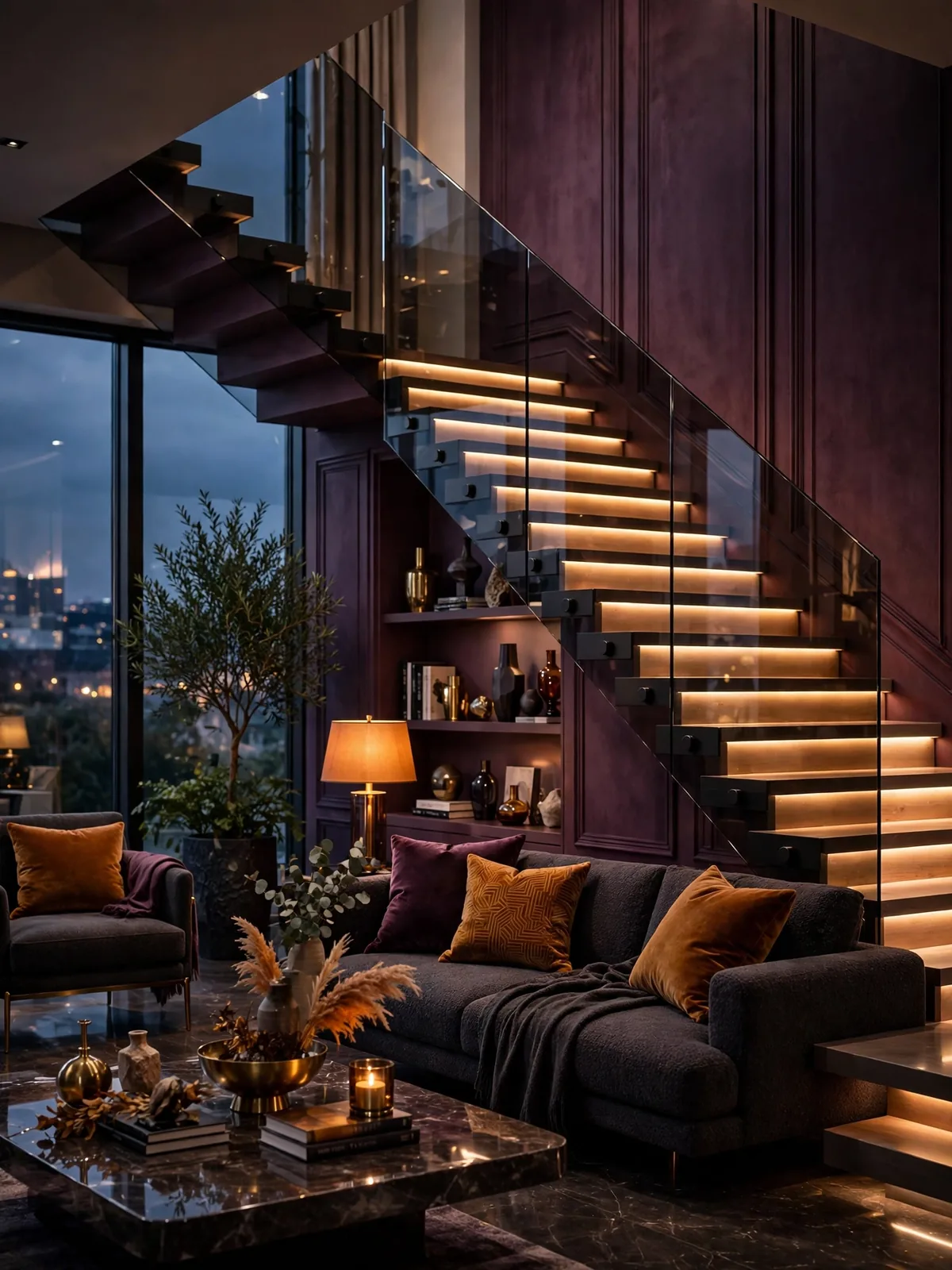
Fit a frameless glass balustrade beside floating walnut treads, and the staircase disappears into the room — light moves freely, sightlines stay open, and the treads look like they are floating in mid-air. A terracotta vase on the floor below adds a warm note that stops the glass and wood feeling cold.
Quick tips:
- Use low-iron glass to remove the green tint.
- Clean the glass with a squeegee, not paper towels.
- Keep the glass fixings minimal and hidden where possible.
LED Light Lines Under Every Tread for a Soft Night Glow
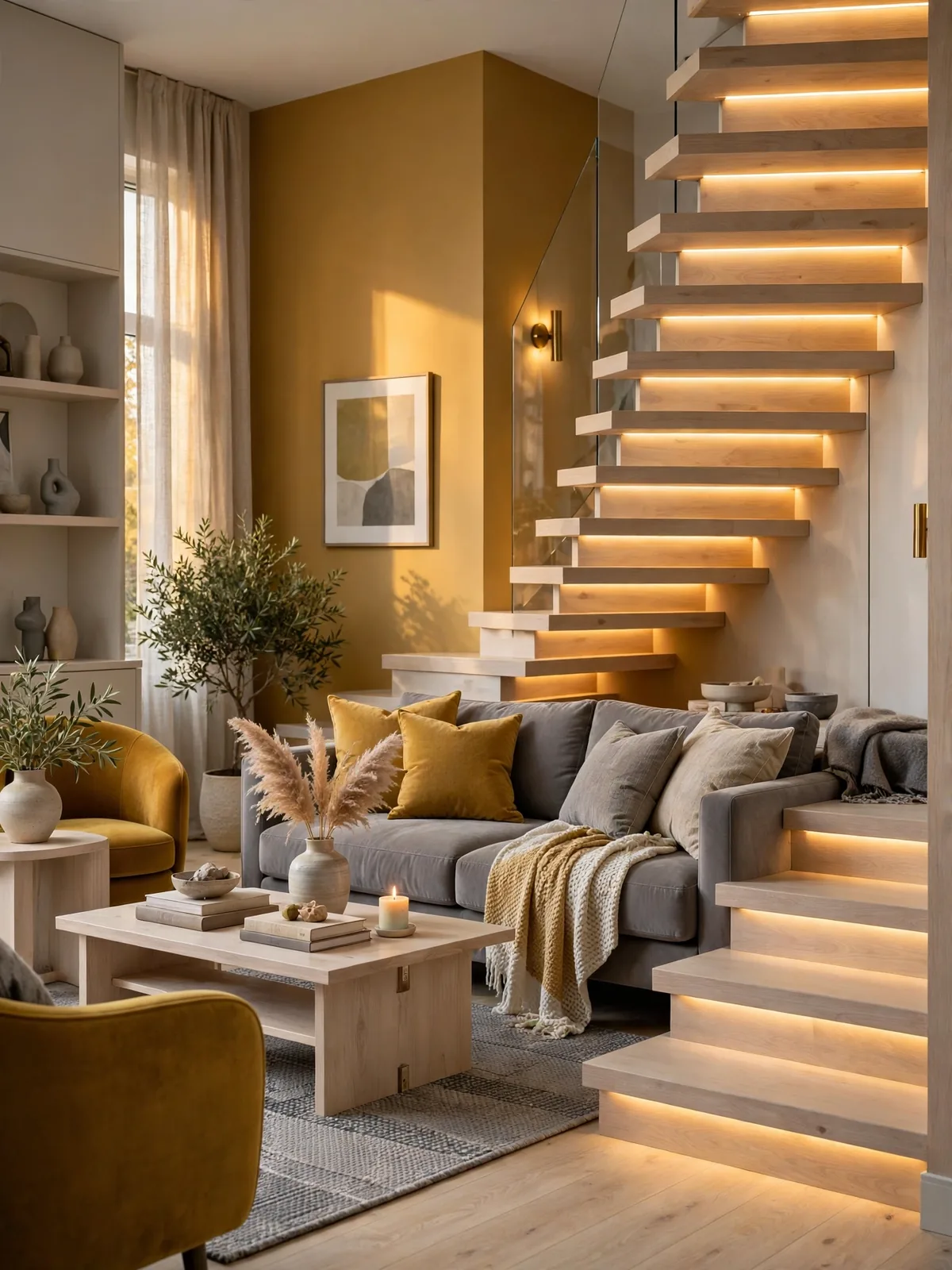
Run a thin LED line under every tread against a navy blue wall, and the staircase glows softly at night like a piece of light art. The blue wall makes each lit tread stand out sharply, while the warm white light keeps the glow inviting rather than clinical. Choose warm white LEDs, not cool white, because cool light turns a floating staircase into something that feels like an office corridor. Add a dimmer so the glow can sit low in the evening and brighten when someone actually climbs the stairs, and fit the strips into a recessed channel so no bare diodes are ever visible from below. The result is a staircase that guides you safely at night and looks extraordinary from the sofa.
Quick tips:
- Choose warm white LEDs, not cool white, for a cosy glow.
- Recess the strips so no bare diodes are visible.
- Put the lights on a dimmer for evening and night use.
A Central Steel Spine That Carries Slim Floating Treads
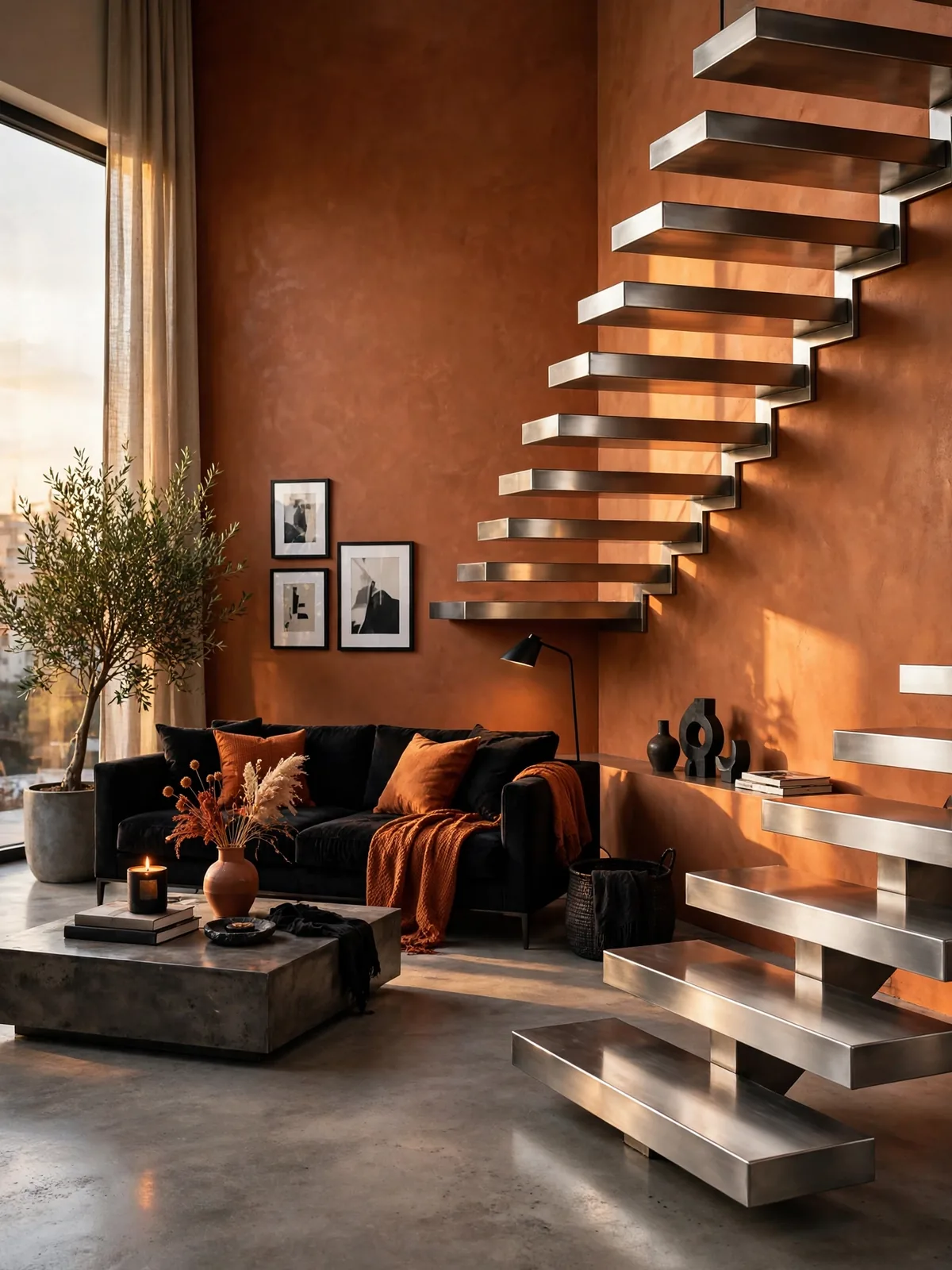
Build a central steel spine that carries slim floating treads, and the staircase becomes a piece of sculpture — one strong line down the middle, with steps fanning out on either side. A charcoal sofa nearby grounds the steel, so the whole room feels designed rather than industrial.
Quick tips:
- Paint the spine matte black for a clean, sharp line.
- Keep treads slim so the spine stays the visual anchor.
- Check the floor can carry the spine’s point load.
Thick Walnut Treads With Hidden Brackets and No Visible Support
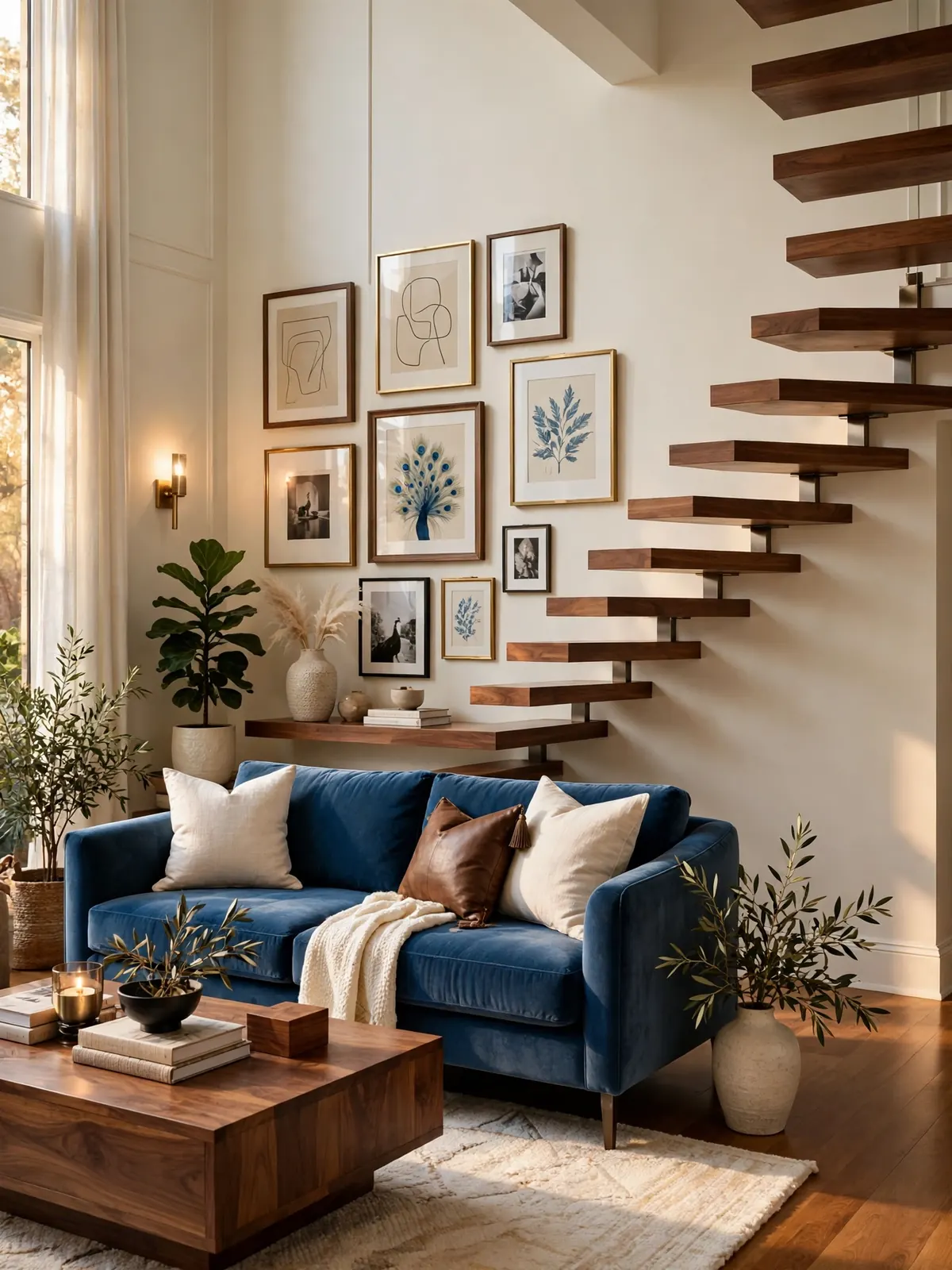
Choose thick walnut treads fixed with hidden brackets, and the staircase looks like solid wood floating in the air. Dusty blue artwork on the wall beside it gives the warm walnut a cool, calm contrast, and the hidden fixings keep the eye on the wood alone.
Quick tips:
- Ask the installer to hide every bracket inside the tread.
- Seal walnut with matte oil to keep its deep tone.
- Keep the wall art simple so the treads lead.
A Floating Stair With a Glass Landing That Lets Light Fall Through
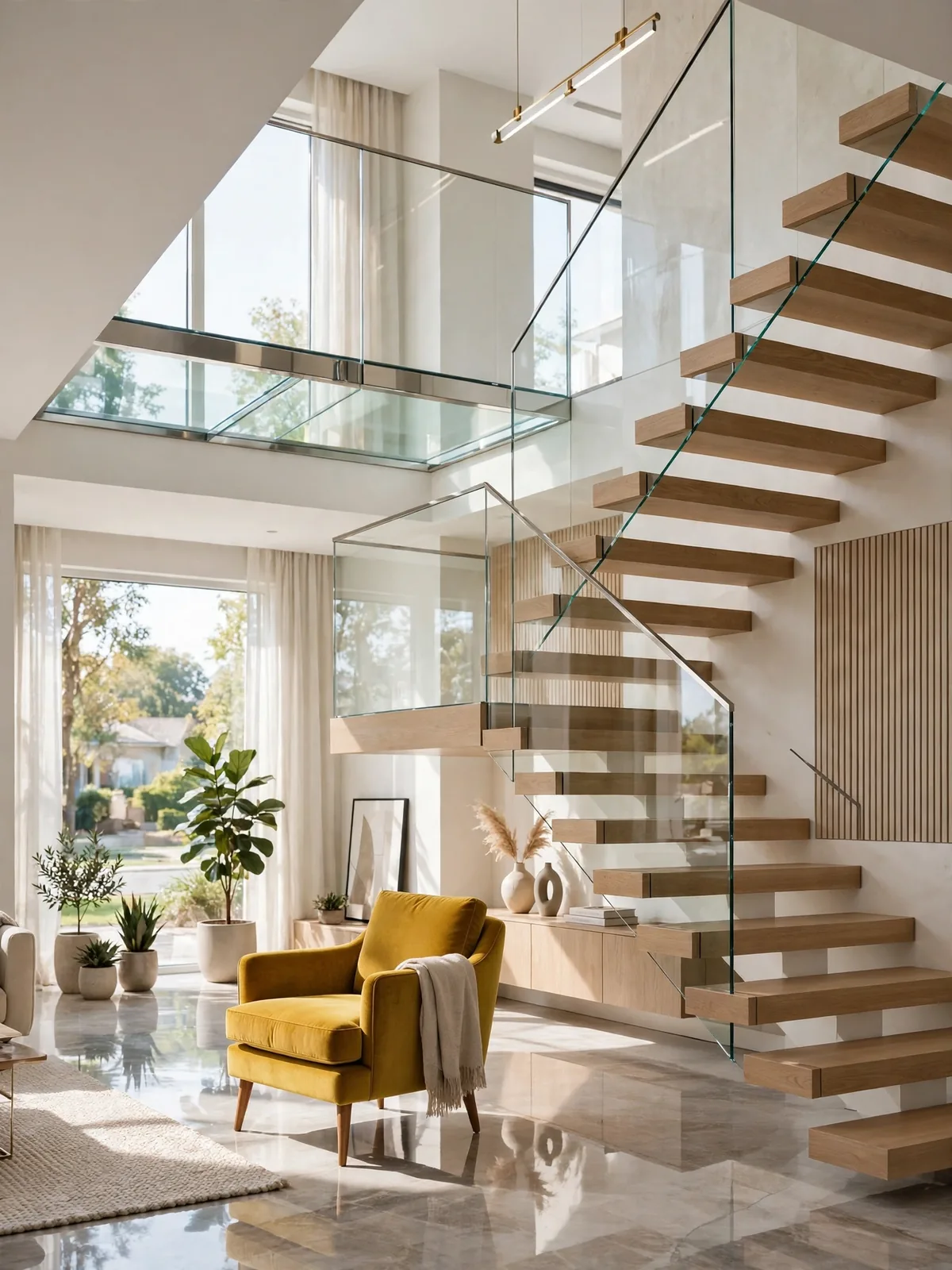
Add a glass landing at the turn of a floating stair, and daylight falls straight through it to the floor below. A mustard yellow chair sitting underneath catches that light beautifully, and the landing itself becomes a transparent platform that feels almost weightless.
Quick tips:
- Use toughened laminated glass for any glass landing.
- Keep the landing clear of clutter so light passes through.
- Add a slim handrail on the glass edge for safety.
Slim White Treads Against a Charcoal Wall for Sharp Contrast
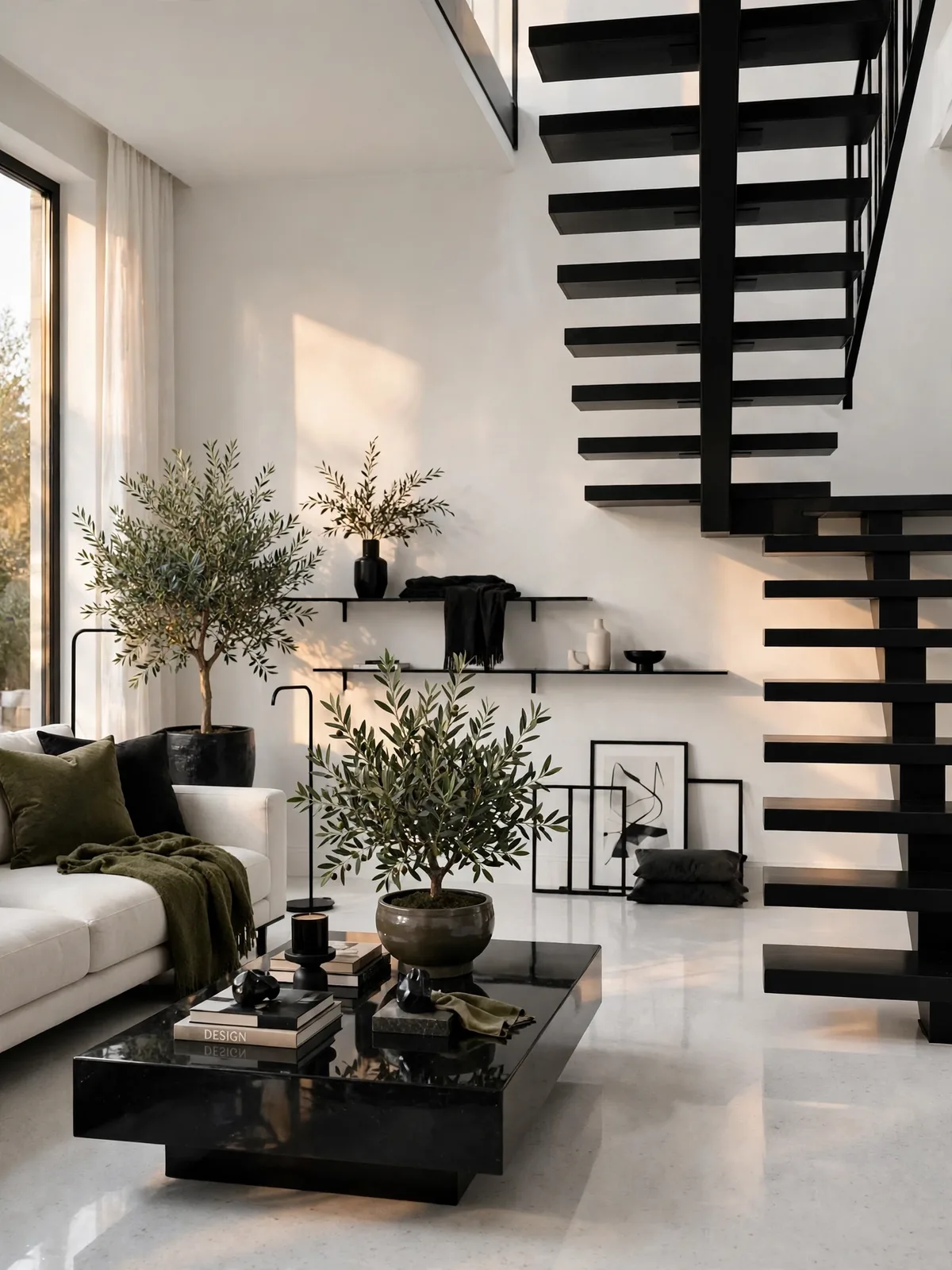
Fit slim white treads against a charcoal wall, and each step pops like a line of light on a dark canvas. A forest green plant at the base softens the sharp contrast, and the whole staircase reads as graphic art rather than construction.
Quick tips:
- Keep the charcoal wall matte so it does not reflect glare.
- Choose white treads with a wipeable finish for easy cleaning.
- Add one plant at the base to soften the graphic look.
A Floating Stair That Turns at a Right Angle With a Glass Corner
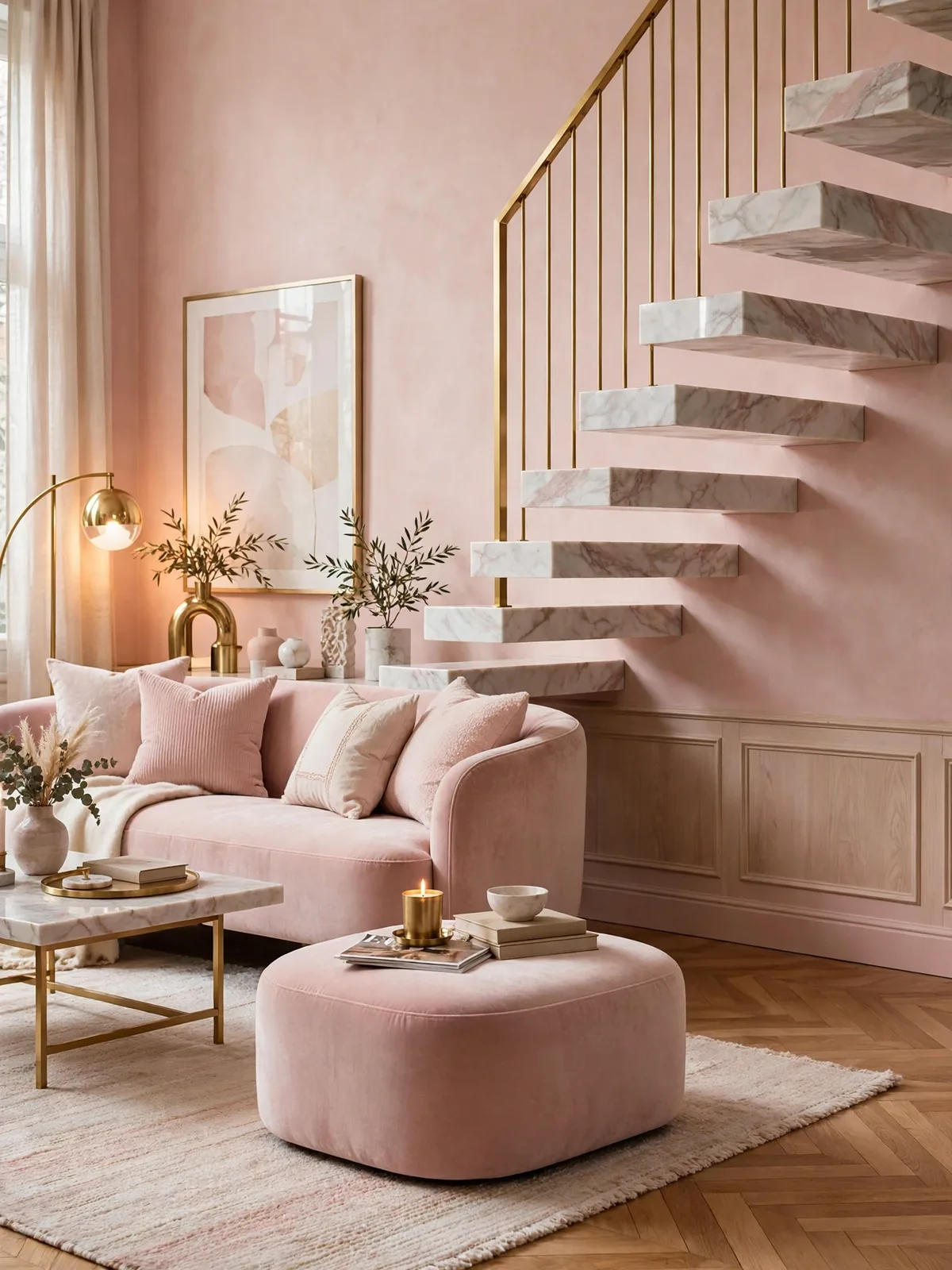
Design a floating stair that turns at a right angle with a glass corner panel, and the turn becomes the most interesting moment in the room. A blush pink rug below catches the light from the glass corner, and the whole stair feels like it was folded, not built.
Quick tips:
- Use a single glass panel at the corner for a clean turn.
- Keep the landing tread deeper than the others for comfort.
- Light the corner from above so the turn is clear at night.
Brushed Steel Treads With a Matte Black Spine
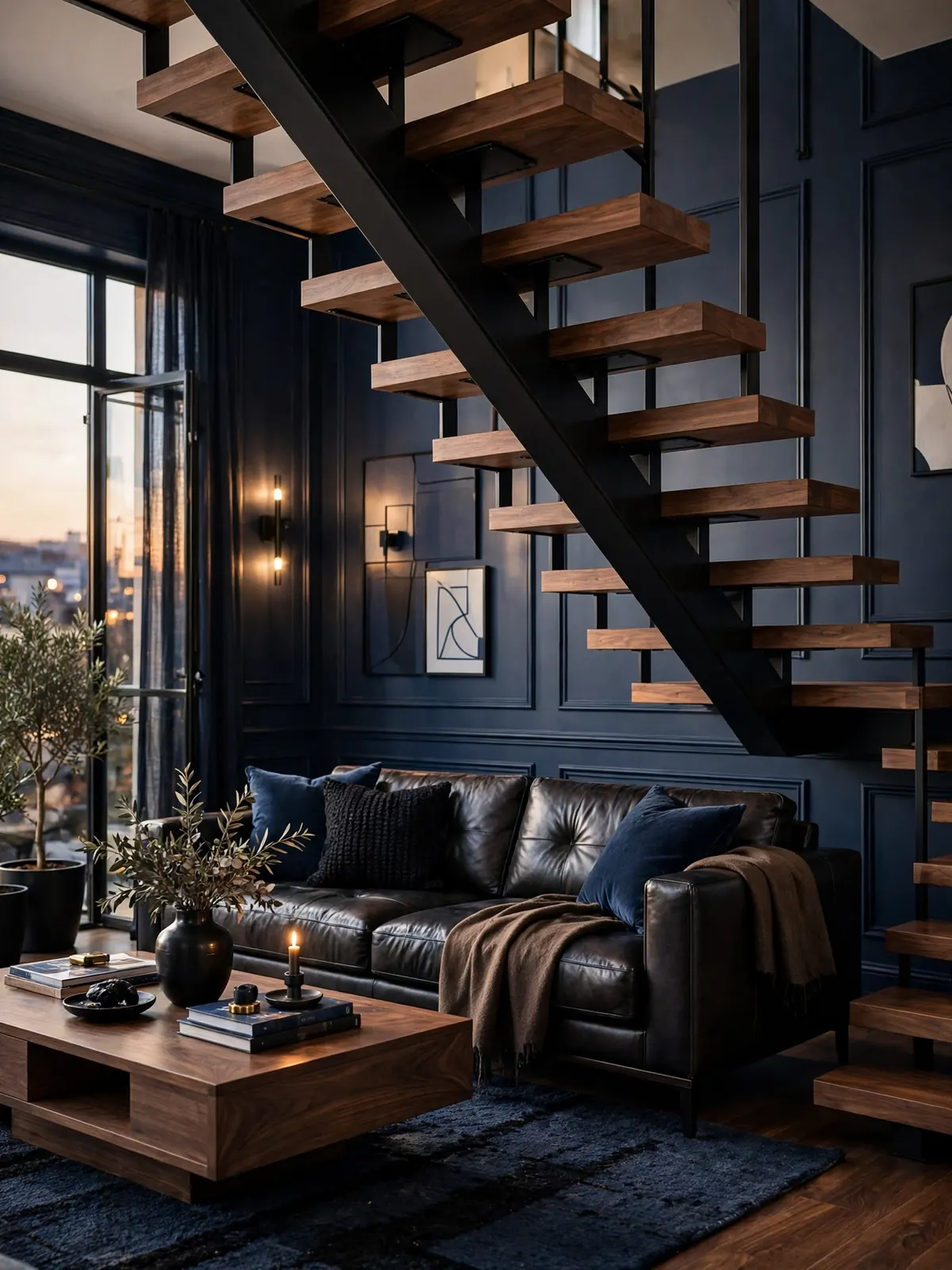
Choose brushed steel treads on a matte black spine, and the staircase feels like precision engineering made beautiful. Ochre artwork on the wall beside it warms the cool metal, so the stair reads as modern and inviting rather than cold.
Quick tips:
- Brush steel in one direction for a consistent finish.
- Wipe steel treads with a microfibre cloth to avoid streaks.
- Add a warm wall colour nearby to balance the metal.
A Floating Stair With Open Risers and a Handrail on One Side Only
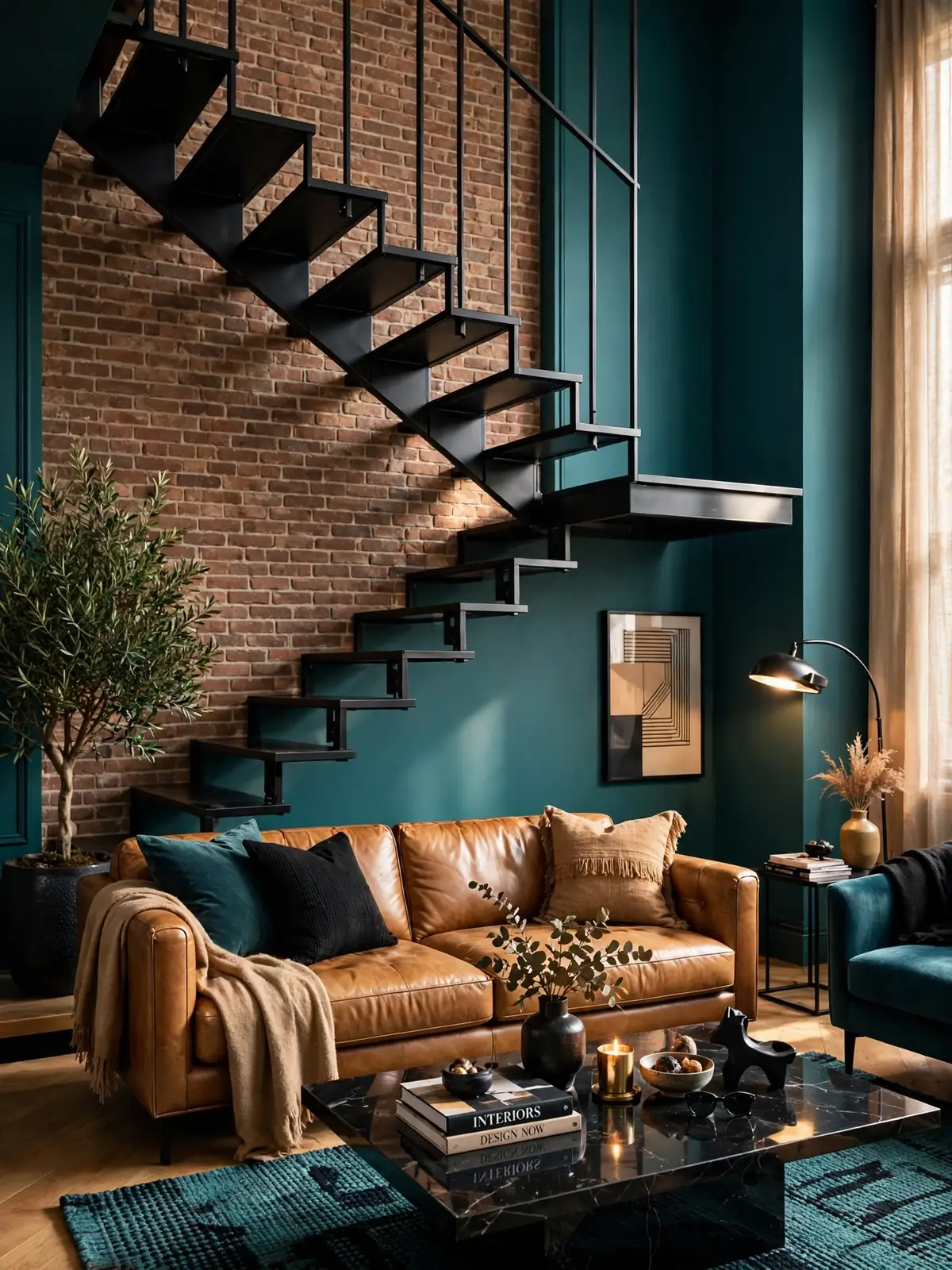
Fit a floating stair with open risers and a handrail on one side only, and the staircase feels as light as it can possibly be — one clean line of support, and nothing else. A teal sofa nearby gives the pale stair a rich colour anchor, and the open side lets the room breathe.
Quick tips:
- Check local codes — some require a handrail on both sides.
- Keep the handrail slim so it does not dominate the stair.
- Use the wall side for the handrail if the stair hugs a wall.
Terrazzo Treads That Bring Speckled Colour to a Minimal Stair
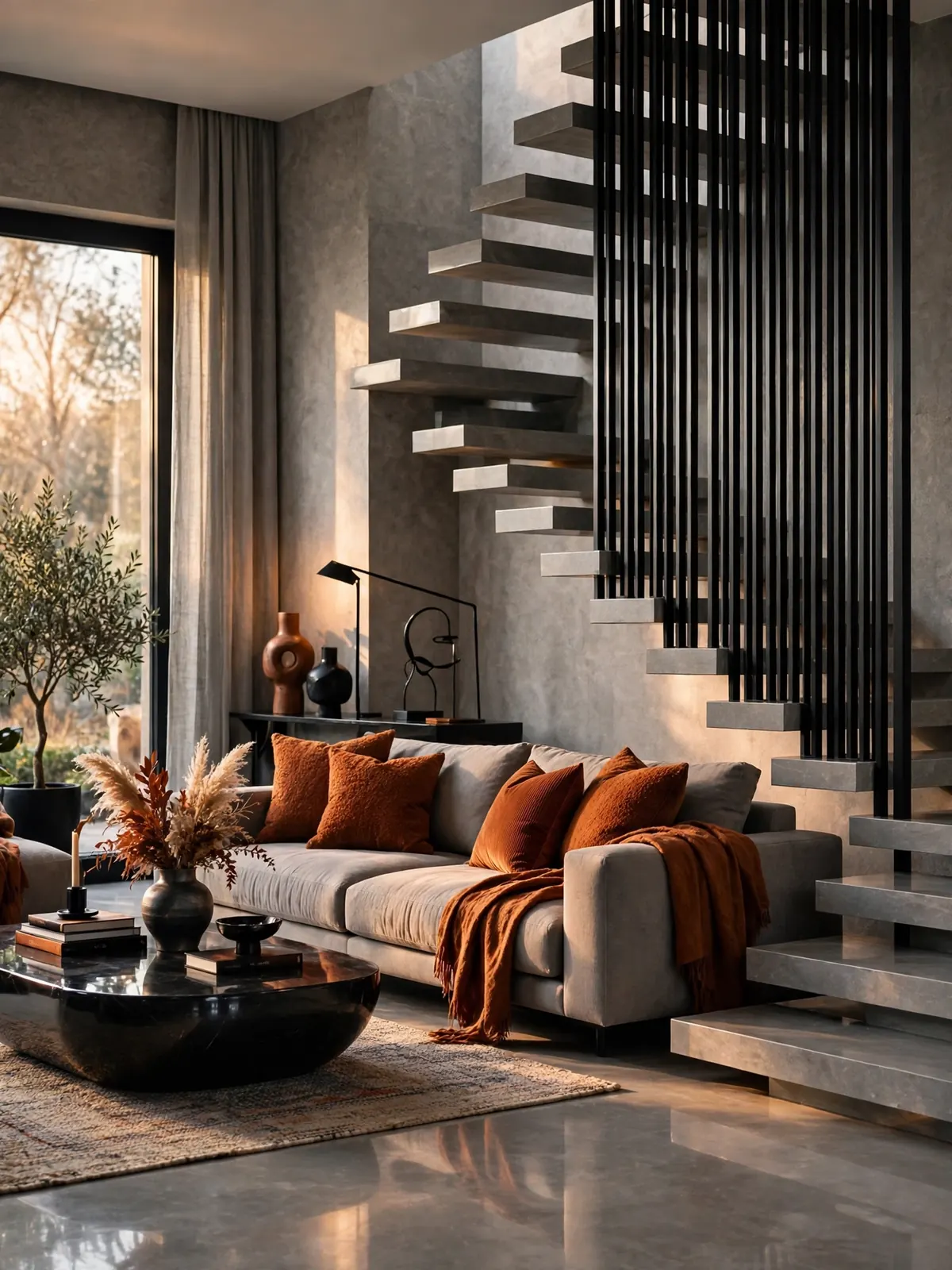
Choose terrazzo treads with speckled colour, and a minimal floating staircase gains a playful, crafted surface that no plain material can match. A rust red chair below picks up the warmest flecks in the terrazzo, tying the whole room together.
Quick tips:
- Seal terrazzo to protect it from stains.
- Choose a terrazzo with flecks that match your room’s palette.
- Keep the balustrade simple so the treads lead.
A Sculpture Plinth Beneath the Lowest Floating Tread
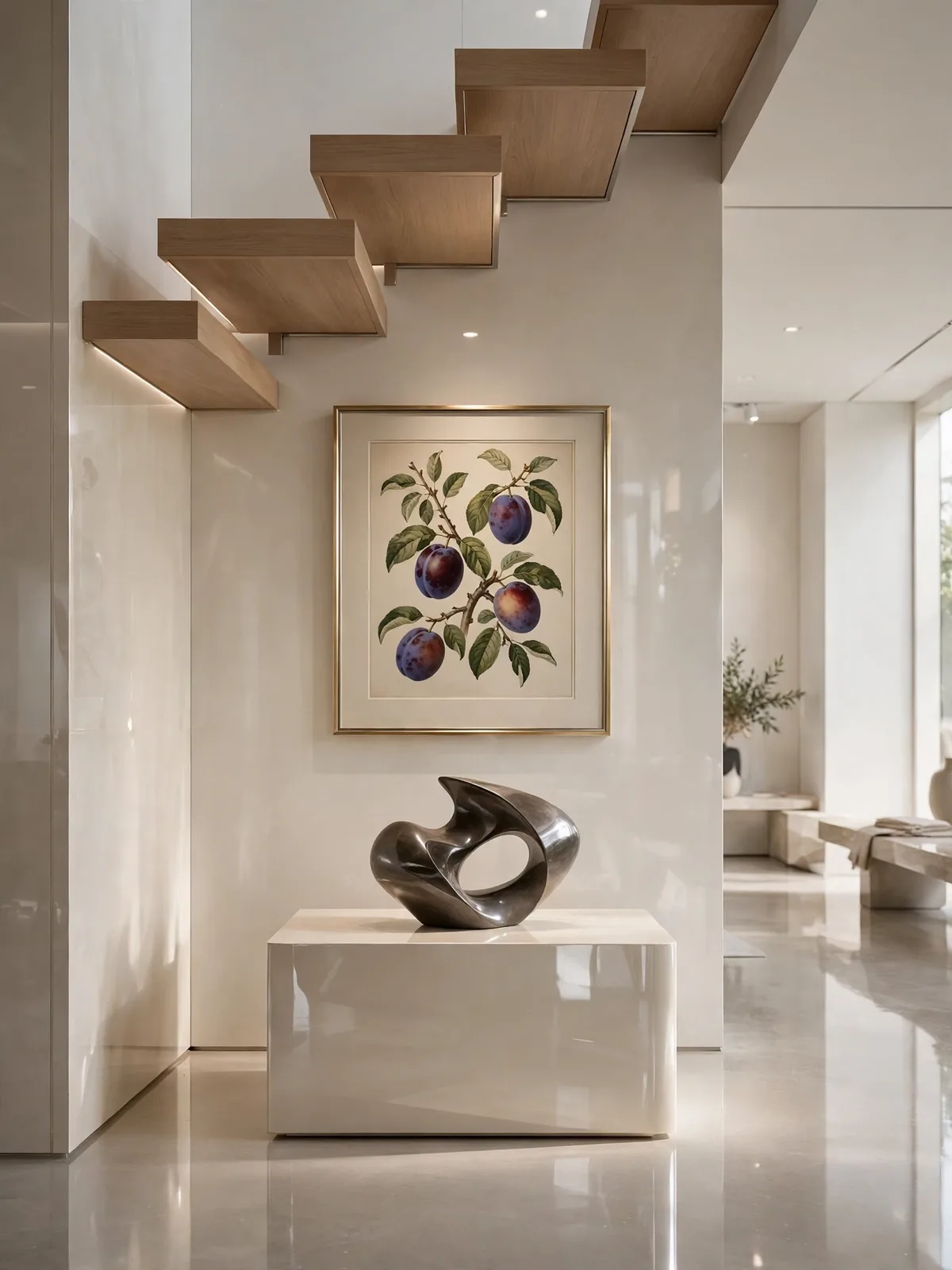
Place a sculpture plinth beneath the lowest floating tread, and the empty space under the stairs becomes a small gallery. Plum artwork on the wall above ties the plinth to the room, and the staircase itself frames the sculpture like a piece of architecture.
Quick tips:
- Keep the plinth low so it never blocks the first tread.
- Choose one sculpture, not a crowd of objects.
- Light the plinth from above for a gallery effect.
Pale Ash Treads Over a Polished Concrete Floor
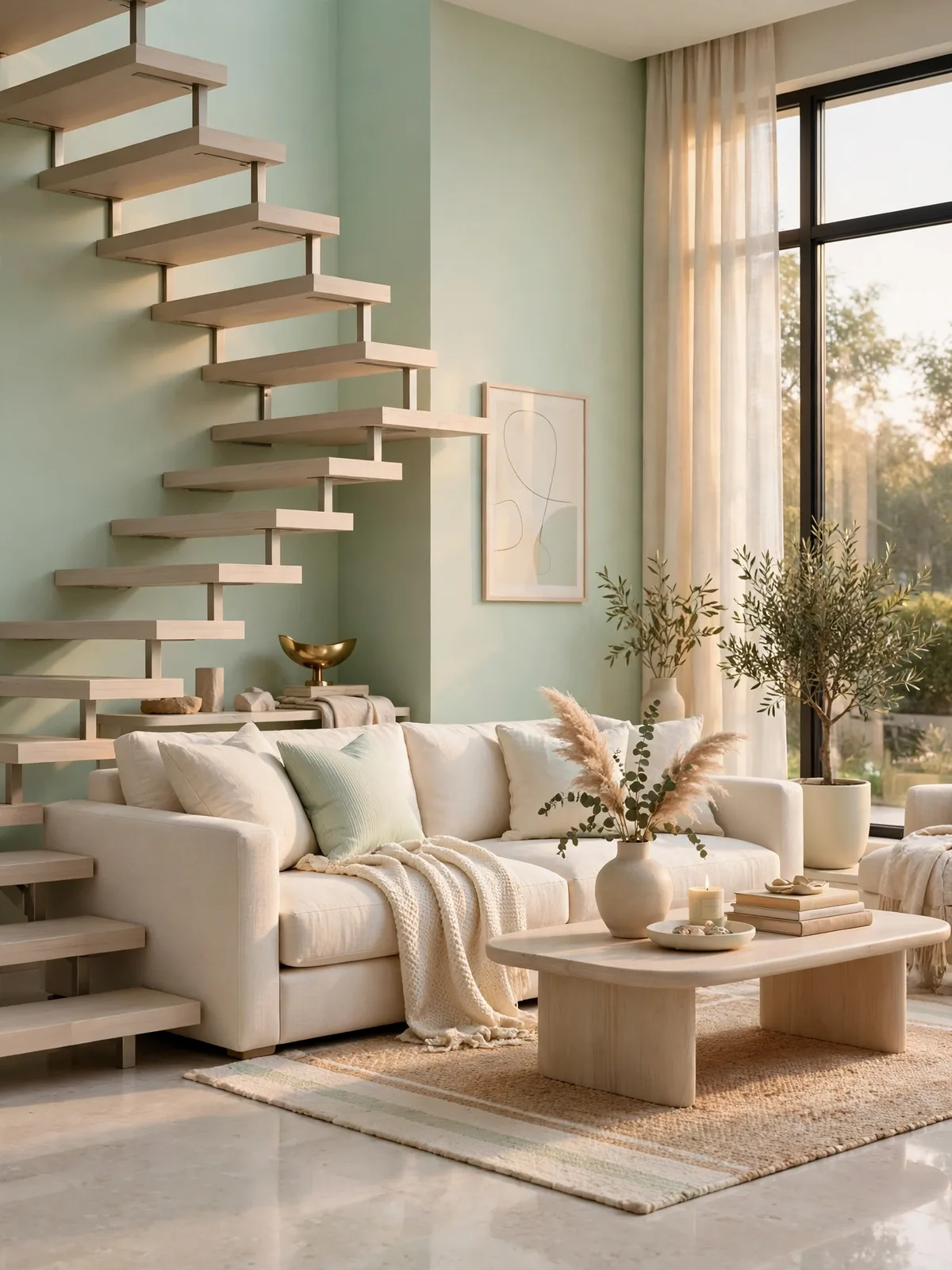
Lay pale ash treads over a polished concrete floor, and the staircase feels light and Scandinavian — pale wood floating above cool grey stone. An olive green sofa nearby warms the concrete, so the room feels calm rather than cold.
Quick tips:
- Seal the concrete floor to stop dust and stains.
- Choose ash with a pale, even grain for a clean look.
- Add a soft rug under the sofa to warm the concrete.
A Single Glass Panel as the Only Balustrade on a Floating Stair
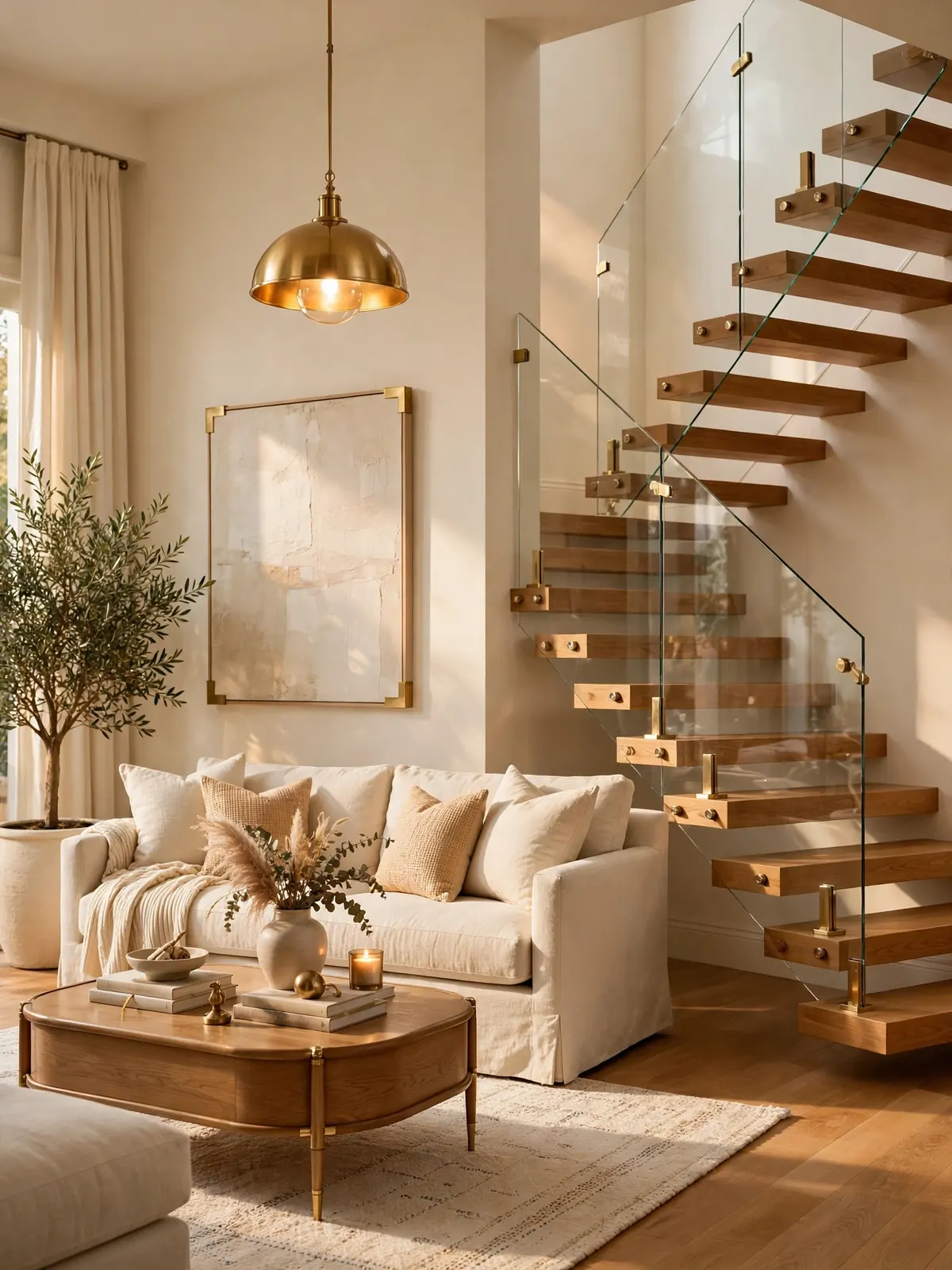
Use a single continuous glass panel as the only balustrade, and the floating stair keeps its cleanest possible line — one sheet of glass, no posts, no rails. Coral cushions on a chair nearby add a warm, human note to the cool glass and pale treads.
Quick tips:
- Use toughened laminated glass for a single-panel balustrade.
- Fix the panel into a recessed channel for a clean edge.
- Keep the glass spotless — fingerprints show on single panels.
Warm Under-Tread Lighting That Doubles as a Night Light for the Hall
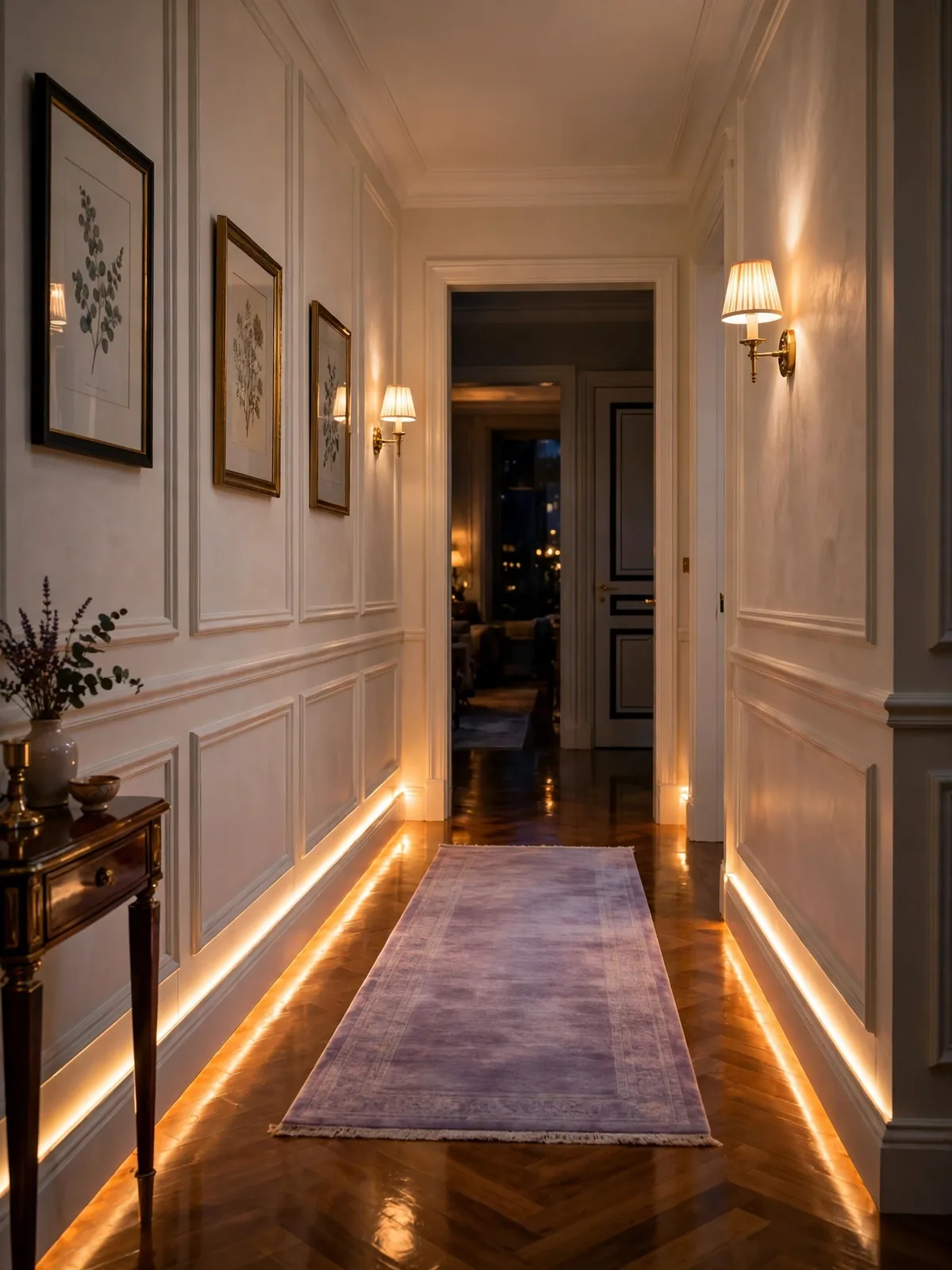
Fit warm under-tread lighting on a floating stair, and the hallway gains a night light that guides everyone safely without a single overhead bulb. A lavender runner at the base catches the warm glow, and the whole hall feels calm and welcoming after dark.
Quick tips:
- Put the lights on a motion sensor for night-time use.
- Keep the light warm — 2700K is the cosiest choice.
- Test the brightness at night before finalising.
A Floating Stair That Lands on a Mezzanine With a Glass Edge
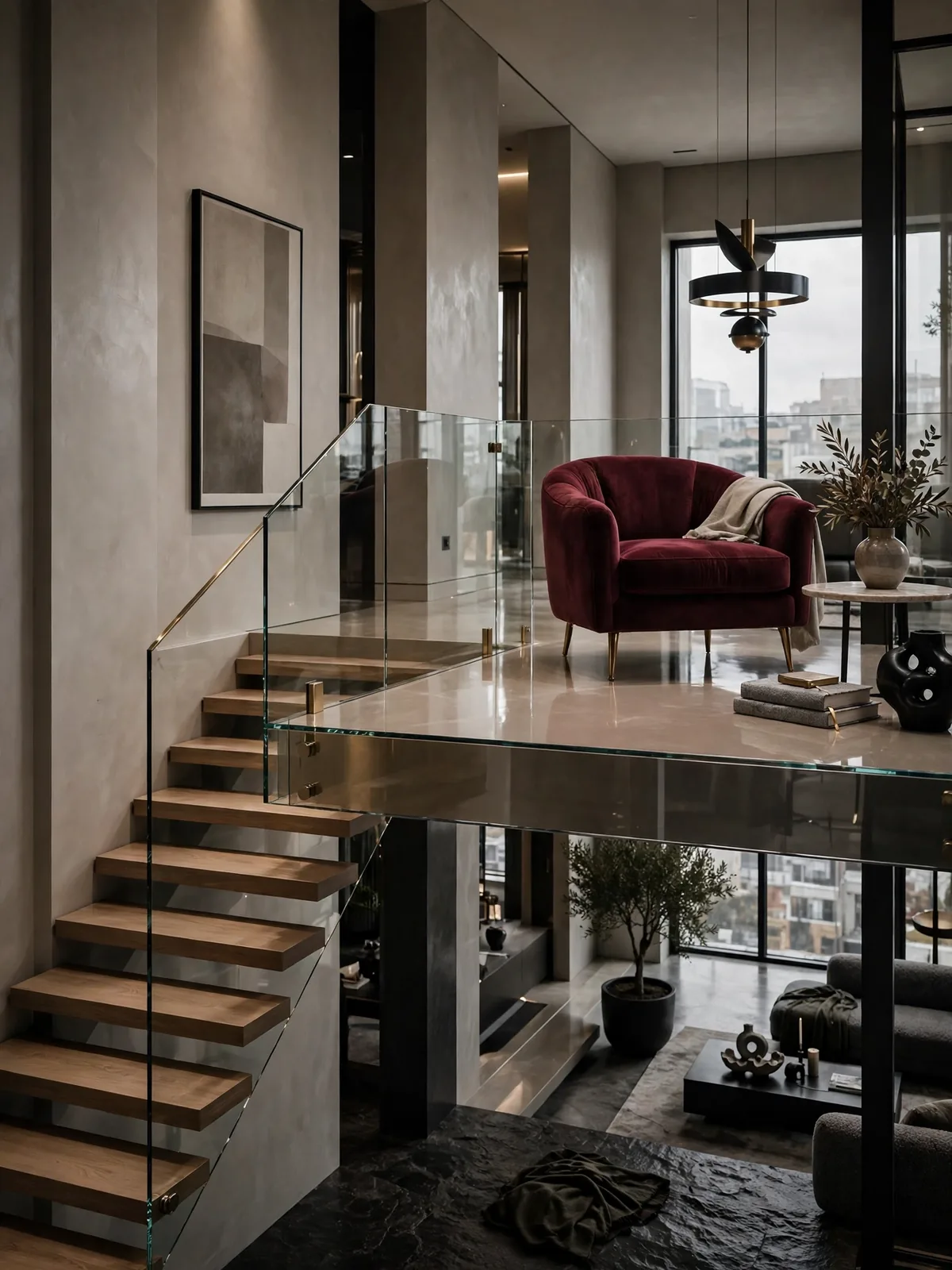
Run a floating stair up to a mezzanine with a glass edge, and the upper level feels like a balcony floating over the room below. A burgundy armchair on the mezzanine gives the glass edge a rich, warm counterpoint, and the whole space feels double-height and dramatic.
Quick tips:
- Use a glass edge on the mezzanine for an unbroken view.
- Check the mezzanine structure with an engineer first.
- Add a light on the mezzanine so it is usable at night.
Sculptural Curved Treads That Fan Out at the Base
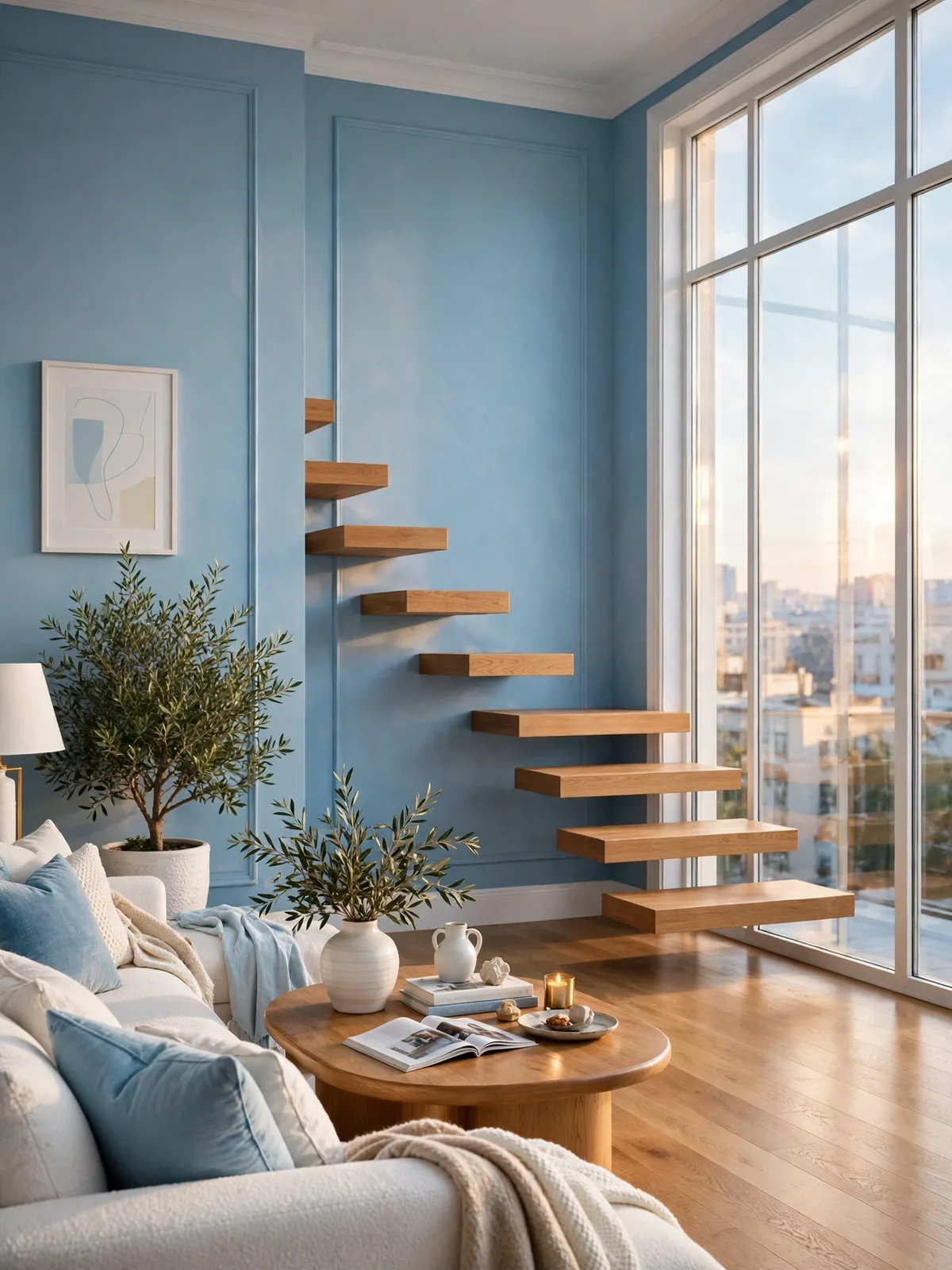
Shape the lowest treads into a gentle curve that fans out at the base, and the floating staircase starts like a sculpture rather than a set of steps. A sky blue wall behind it makes the pale treads glow, and the curve invites people to walk up rather than just climb.
Quick tips:
- Keep the curve to the lowest three treads for balance.
- Use a specialist joiner for curved tread work.
- Leave the floor clear around the curve so it can be seen.
A Floating Stair With No Handrail on the Wall Side for a Cleaner Line
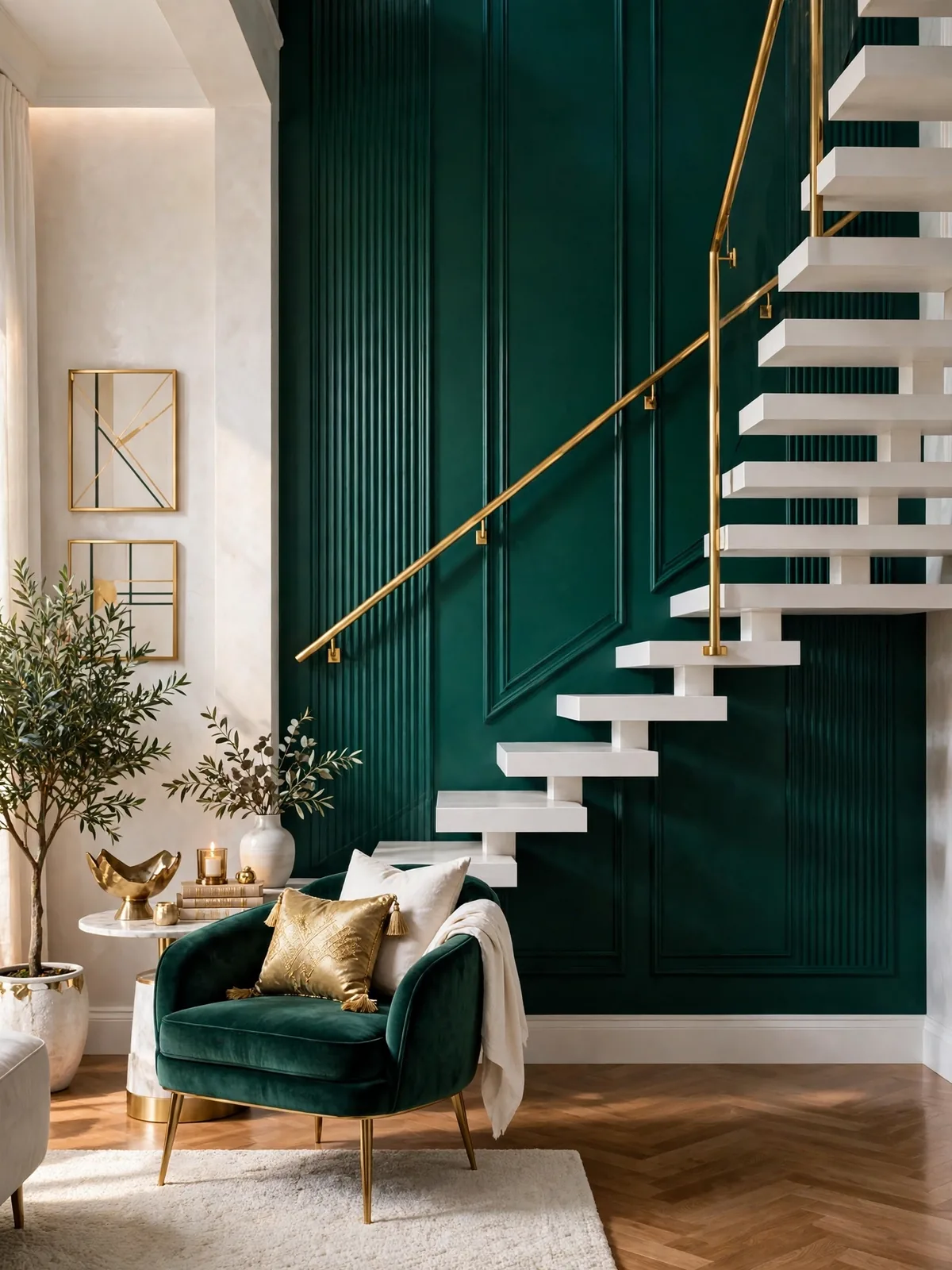
Leave the wall side of a floating stair without a handrail, and the staircase gains its cleanest possible line — treads floating from a bare wall, with nothing interrupting the view. Emerald green artwork on the wall gives the bare side a focal point, so the empty wall feels designed rather than unfinished.
Quick tips:
- Check local codes before omitting any handrail.
- Keep the wall side smooth and uncluttered.
- Add a handrail on the open side for safety.
Raw Concrete Treads With an Industrial Edge
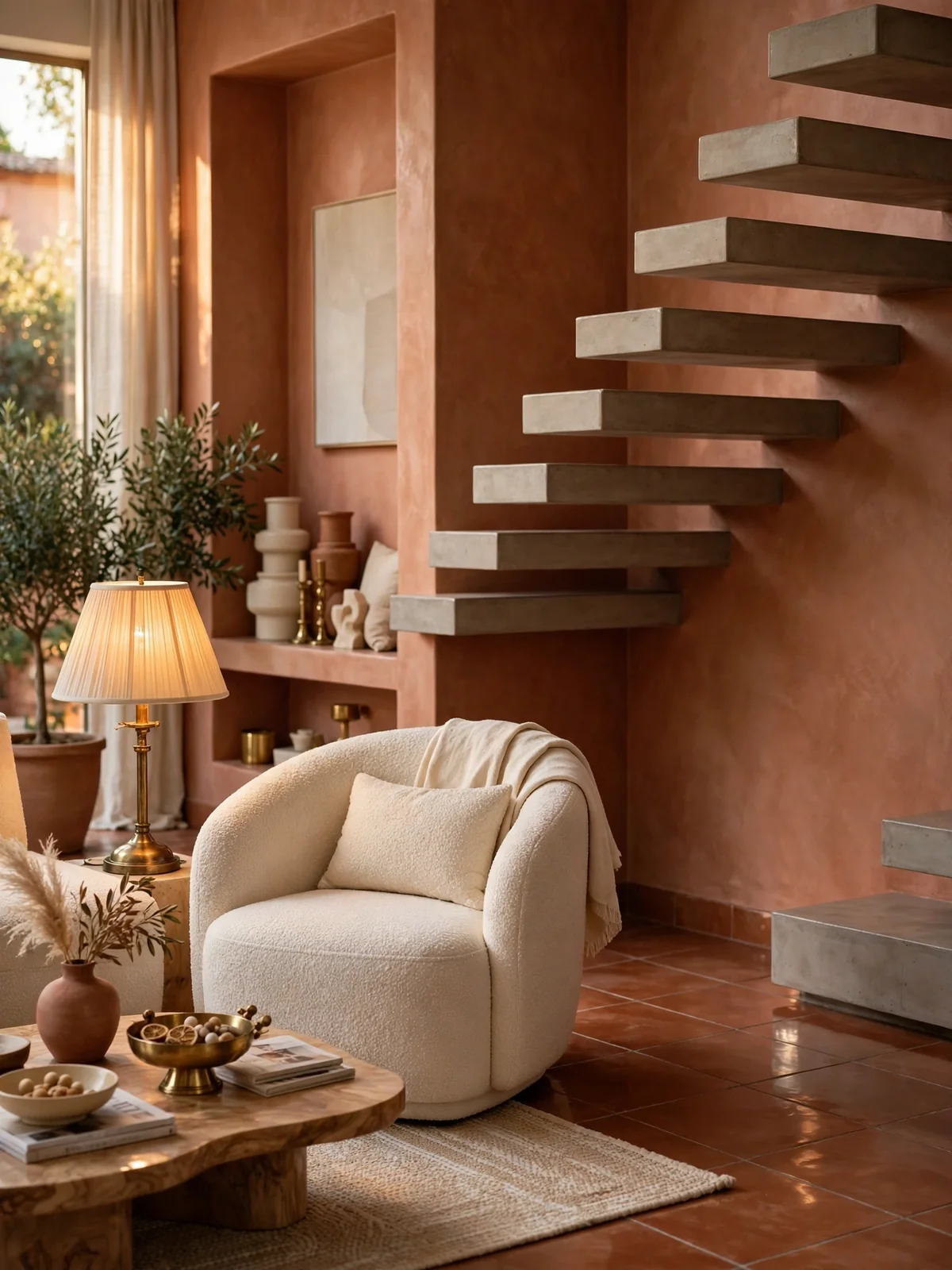
Choose raw concrete treads with a deliberately rough edge, and the floating staircase feels industrial and honest — a piece of the building’s structure left visible. A peach leather chair below warms the grey concrete, so the room feels designed rather than unfinished.
Quick tips:
- Seal raw concrete to stop dust without hiding the texture.
- Keep the treads’ edges crisp for a crafted look.
- Add warm leather or wood nearby to balance the concrete.
A Floating Stair Lit by a Skylight Directly Above
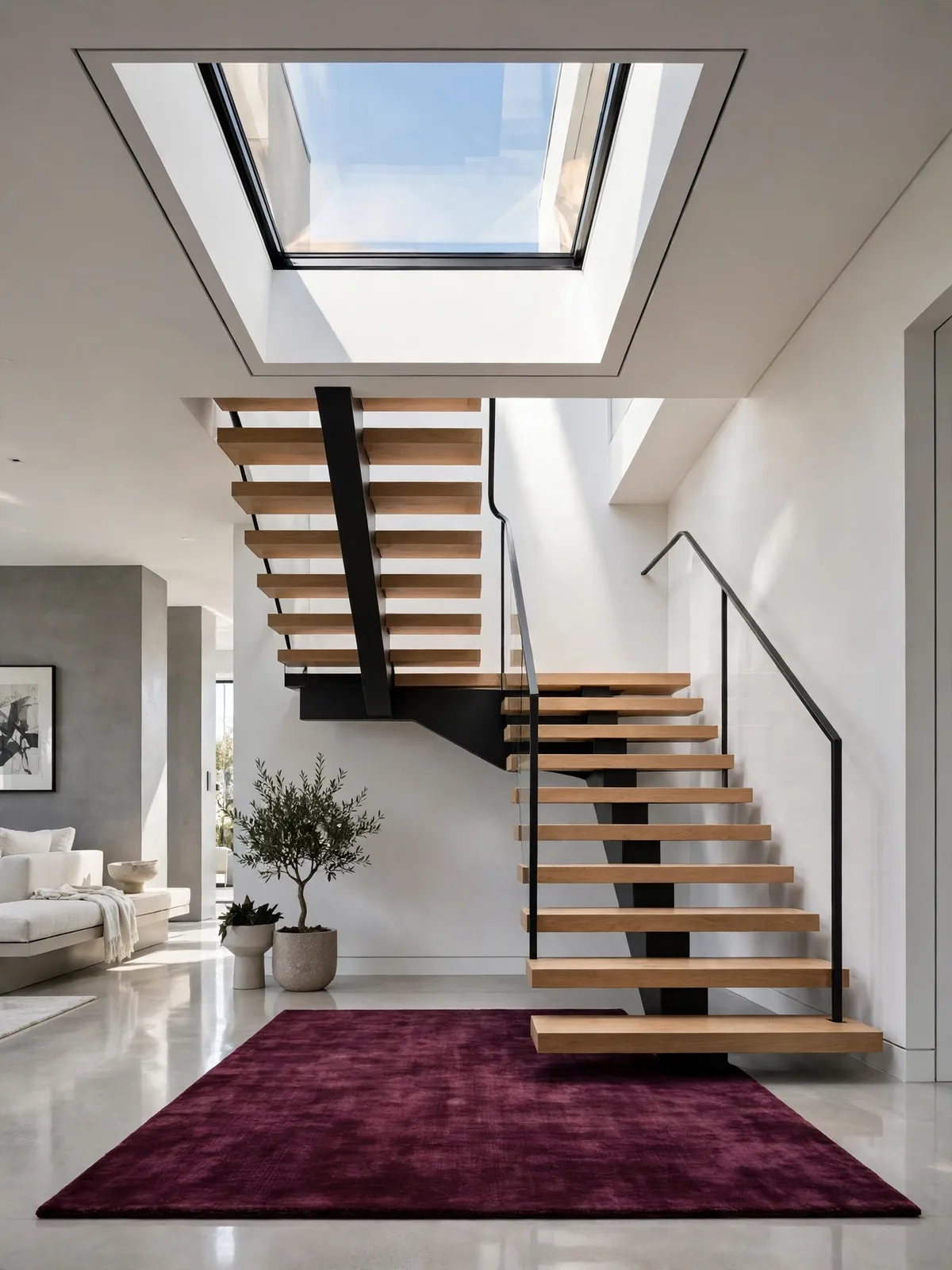
Place a skylight directly above a floating stair, and daylight pours down through the open risers all day long. An aubergine rug below catches the moving light, and the staircase becomes a sundial of sorts — different at every hour, beautiful at all of them.
Quick tips:
- Size the skylight to the stairwell, not the whole room.
- Add a blind on the skylight for hot summer days.
- Keep the treads pale so they bounce the skylight’s light.
A Slim Brass Handrail That Warms a Floating Stair
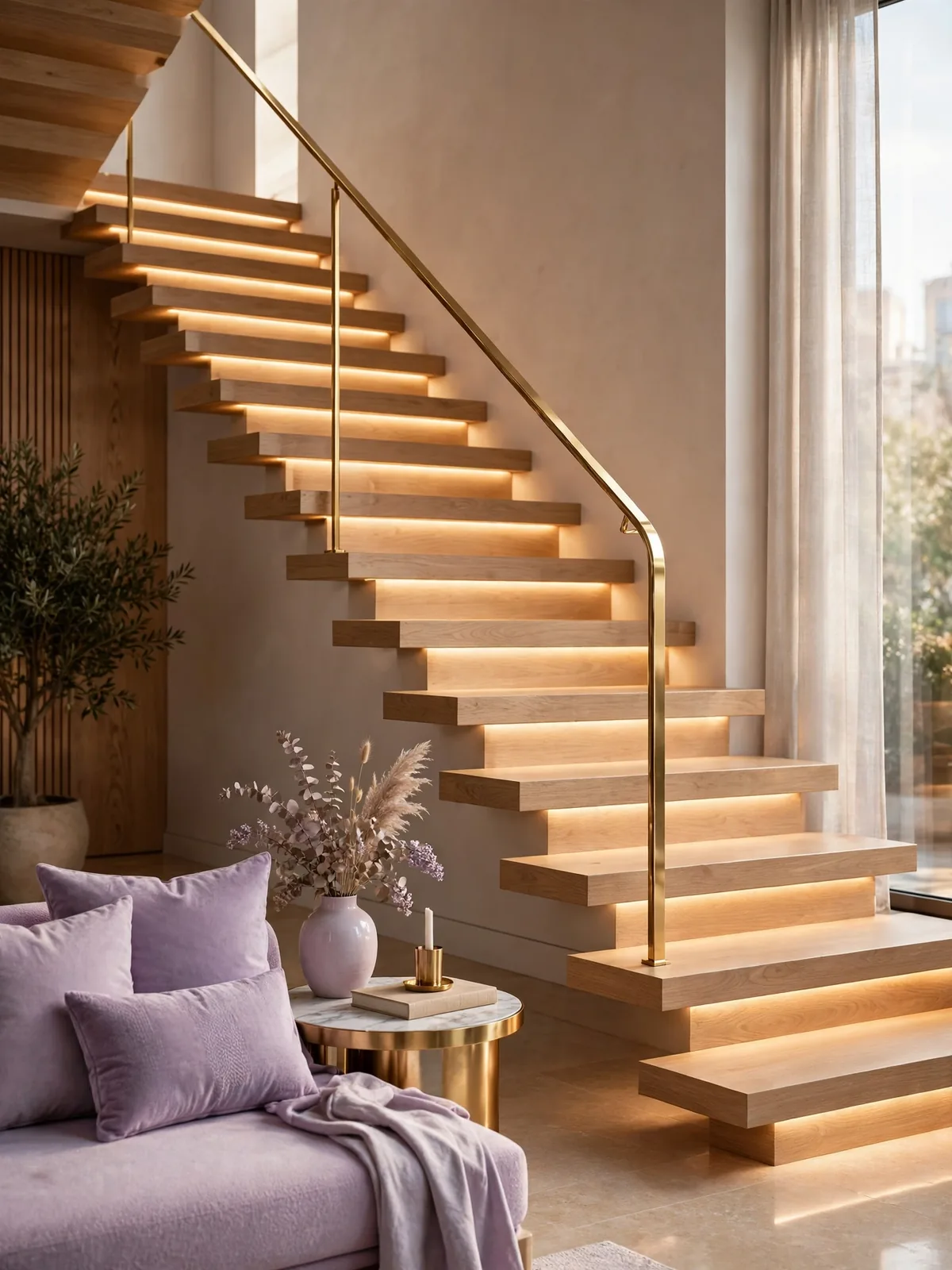
Fit a slim brass handrail on a floating stair, and the cool glass and pale treads gain a warm metallic thread that runs the whole climb. Lilac cushions on a chair nearby soften the brass, and the handrail becomes the jewellery of the staircase.
Quick tips:
- Choose brushed brass, not polished, for a calm finish.
- Keep the handrail slim so it does not fight the treads.
- Repeat the brass once more in a light or frame.
Floating Treads in Smoked Glass for a Bold Modern Statement
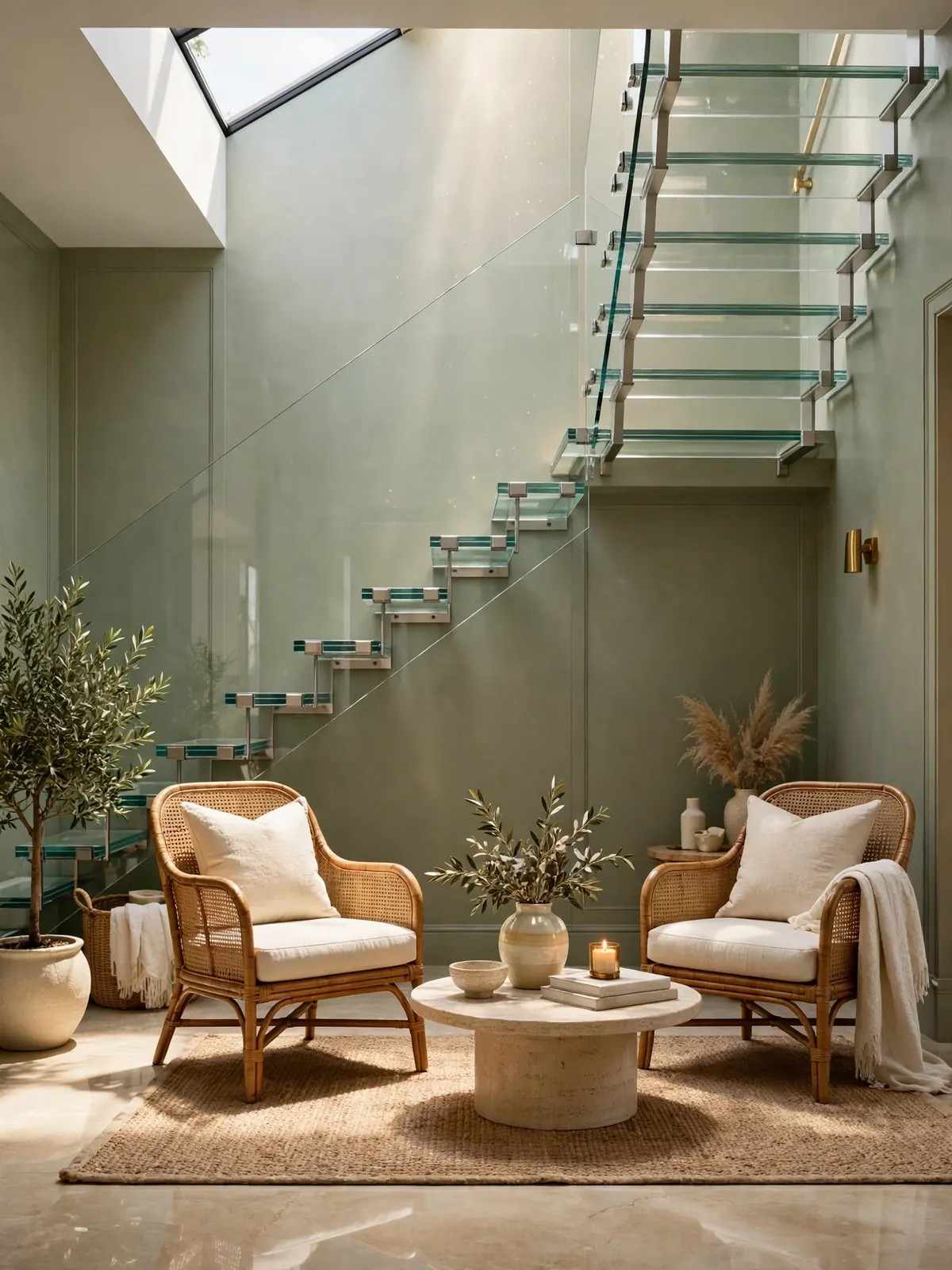
Choose floating treads in smoked glass, and the staircase becomes a bold, modern statement — dark, glossy steps floating against white walls and a honey-toned floor. The smoked glass is the bravest tread material there is, and it rewards that bravery with a look nothing else can match.
Quick tips:
- Use toughened laminated smoked glass for safety.
- Keep the floor pale so the dark treads stand out.
- Clean smoked glass regularly — dust shows on dark surfaces.
A Statement Rug Beneath the Floating Stair That Anchors the Void
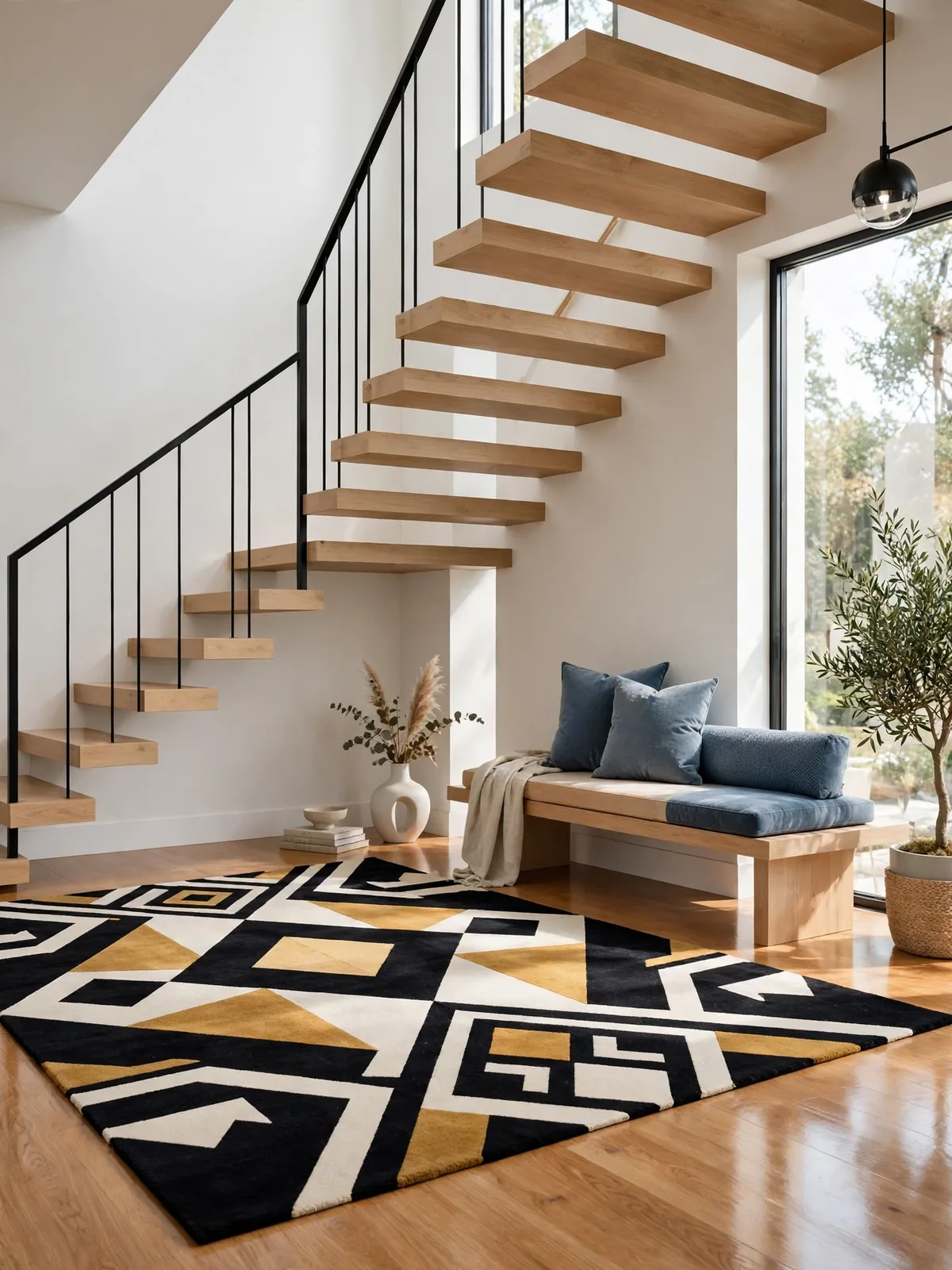
Lay a statement rug with a bold geometric pattern beneath the floating stair, with slate blue cushions on a bench nearby, and the open void under the treads gains a clear purpose. The rug anchors the stair visually, so the floating treads feel deliberate rather than suspended over empty floor.
Quick tips:
- Size the rug to the stair footprint, not the whole room.
- Choose a low pile so the rug sits flat underfoot.
- Echo one rug colour in a cushion or artwork nearby.
A Floating Stair That Doubles Back on Itself in a Compact Footprint
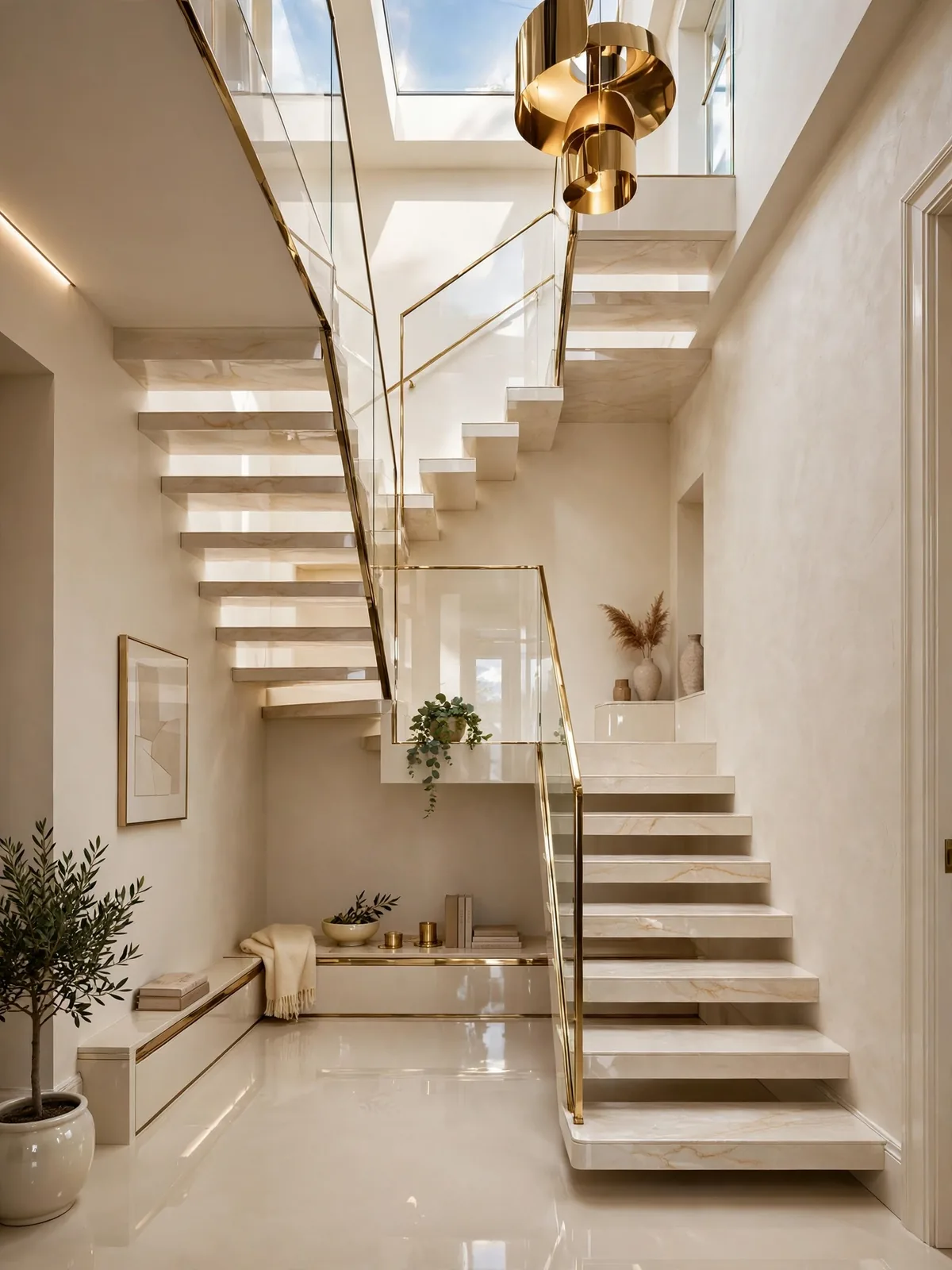
Design a floating stair that doubles back on itself, and a full flight fits into a compact footprint without losing the open, airy feeling. Cream walls keep the tight turn feeling bright, and the switchback landing becomes a natural pause point on the climb.
Quick tips:
- Keep the landing deep enough to turn comfortably.
- Light the turn well — switchbacks need extra light.
- Use the same tread material on both flights.
A Slim Console Table Floating Beneath the First Tread
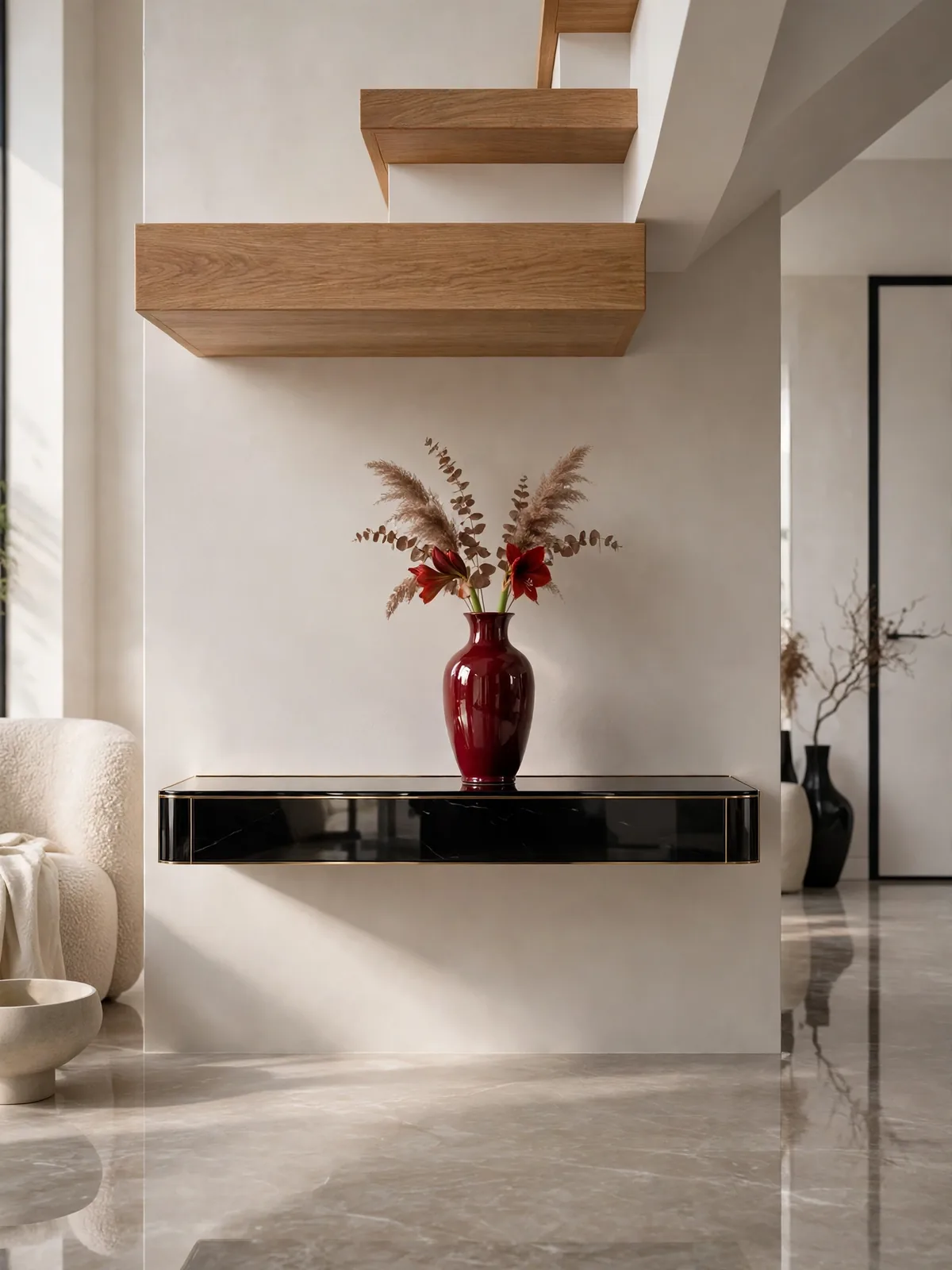
Mount a slim console table beneath the first tread, with a crimson vase on top, and the space under the floating stair gains a purpose without losing its openness. The console echoes the floating idea — a surface that hangs in the air — and the vase gives the whole staircase a finishing touch.
Quick tips:
- Keep the console slim so it never blocks the first step.
- Fix it firmly to the wall — it carries real weight.
- Style it with one object, not a crowd.
FAQs
How are floating staircases supported?
Most floating stairs are supported by a hidden steel spine, a cantilevered fixing inside the wall, or a concealed beam beneath the treads. A structural engineer designs the support, because the loads are carried very differently from a standard staircase.
Are floating stairs safe for children and pets?
They can be, with the right details — a balustrade or handrail where codes require one, narrow gaps between treads so small feet cannot slip through, and non-slip tread finishes. Talk to your builder about child-safety details before finalising the design.
What is the cheapest way to get a floating staircase look?
A slim-profile floating stair with timber treads and a simple steel spine is the most affordable route. Avoid marble, glass treads, and curved designs if budget matters, and get quotes from specialists rather than general builders.
Do floating staircases need a handrail?
Most building codes require a handrail or balustrade on at least one side, and always where the drop is significant. Some minimalist designs use a glass panel instead of a rail — check your local code before choosing.
Can I add a floating staircase to an existing home?
Yes, but it is a structural job, not a cosmetic one — the wall or floor must carry the hidden steelwork, so a structural engineer and a specialist installer are both essential. Retrofits cost more than building the stair into a new home.
Conclusion
A floating staircase works when the structure is honest and the details are light — start with how the treads are supported, choose a balustrade that disappears, and let soft under-tread light do the rest. Pick the idea that fits your home first, whether that is cantilevered oak, a central steel spine, or smoked-glass treads, and let that single structure lead the design. Done this way, a floating staircase never feels like a trend — it feels like your home was designed around light.