25 Clever Living Room Decor Tips for a Home You’ll Love Coming Back To
25 practical living room decor tips that go beyond “buy
The best living rooms rarely look “decorated” — they look considered. The secret isn’t buying more furniture or spending more money; it’s getting scale, placement, and light right before you add a single decorative object. These 25 living room decor tips focus on the decisions that actually change how a room feels: where furniture floats, how high curtains hang, how many light sources a corner needs, and when to stop adding things.
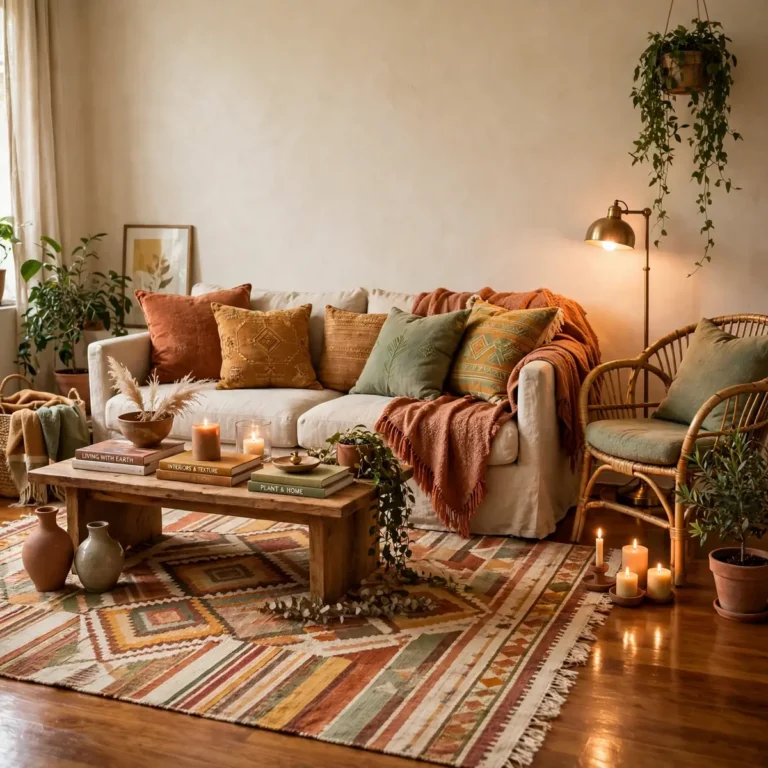
Use the tips in order if you’re starting from scratch, or cherry-pick the ones your room needs most. If your goal is warmth rather than a full restyle, begin with our cozy living room ideas to see how softness and texture do the heavy lifting, then come back and apply the layout and styling rules below.
Living Room Decor Tips: Start With the Right-Sized Rug
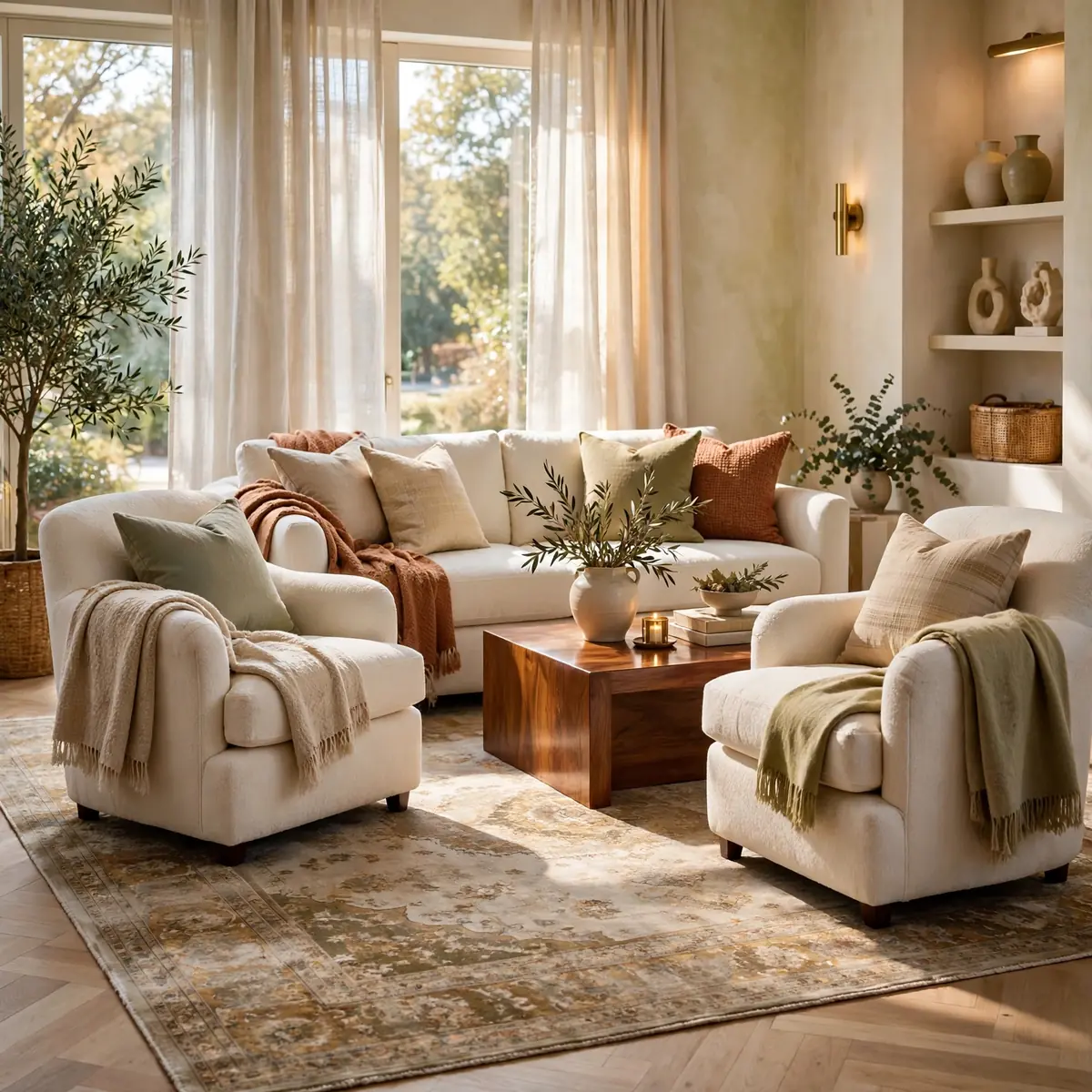
A rug that is too small is the single most common living room mistake, and it quietly makes everything in the room look cheap. The front legs of your sofa and chairs should always sit on the rug — for most living rooms, that means an 8×10 or 9×12, not the decorative 5×7 floating in the middle of the floor. The rug is your room’s foundation garment: it defines the seating zone, anchors the furniture, and makes a small room feel bigger by creating one unified block instead of scattered pieces.
- Front legs on, back legs off: at minimum, every front furniture leg should touch the rug.
- Leave 12–18 inches of bare floor between the rug edge and the walls.
- In an open-plan space, let the rug draw the boundary of the living zone.
Choose One Focal Point and Build Around It
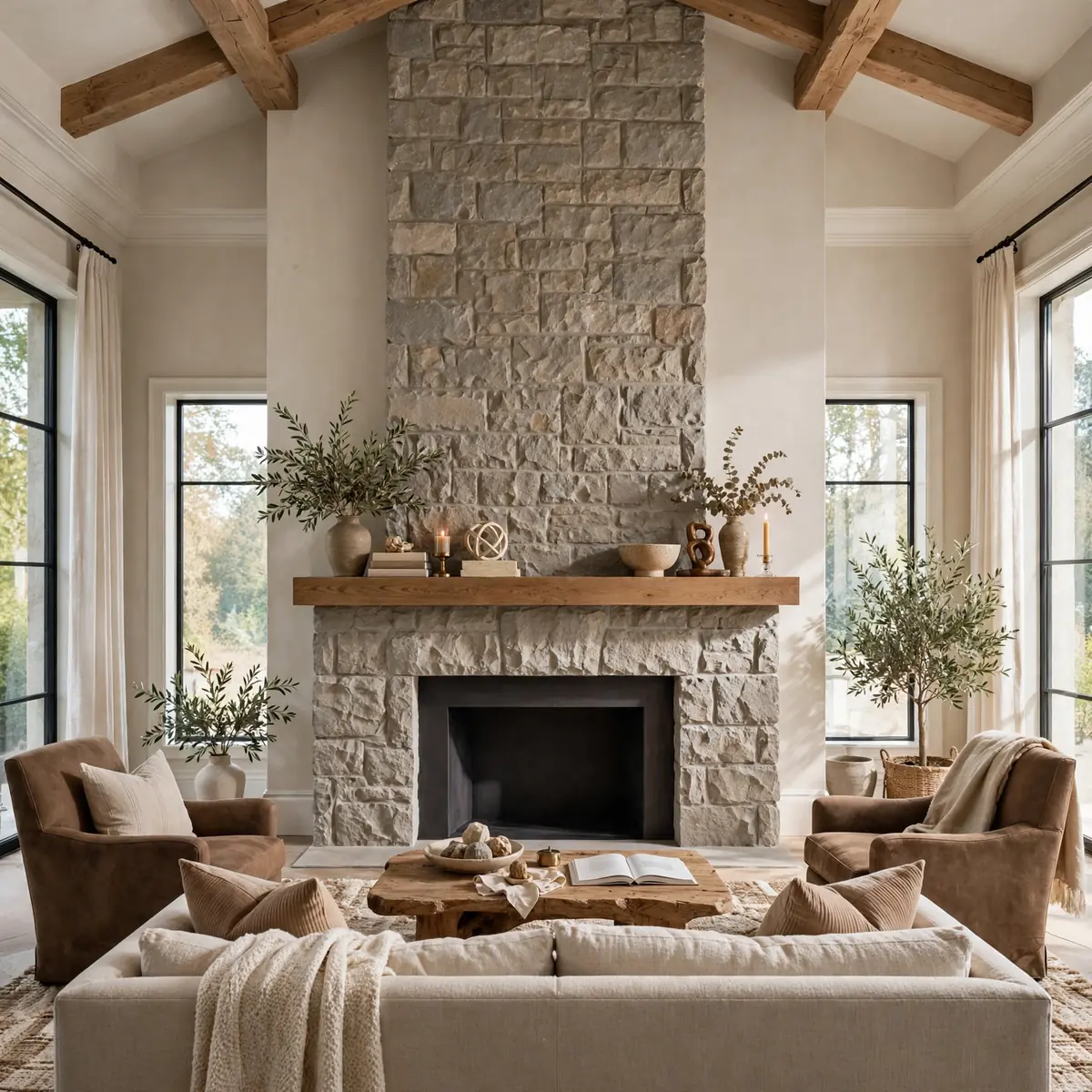
Every well-decorated living room has a clear answer to the question “where do I look first?” — a fireplace, a large window with a view, a big piece of art, or even the television if that’s honest about how the room is used. Once you name the focal point, arrange the largest pieces (sofa, then chairs) to face or support it, and everything else falls into place. Rooms that feel chaotic usually have three competing focal points; choosing one is the fastest way to calm them down.
- If there’s no natural focal point, create one with a bold art piece or a dramatic light fixture.
- Don’t hide the TV in a room designed around it — style the wall it sits on instead.
- The focal point gets the room’s best piece, not the leftover.
Hang Curtains High and Wide
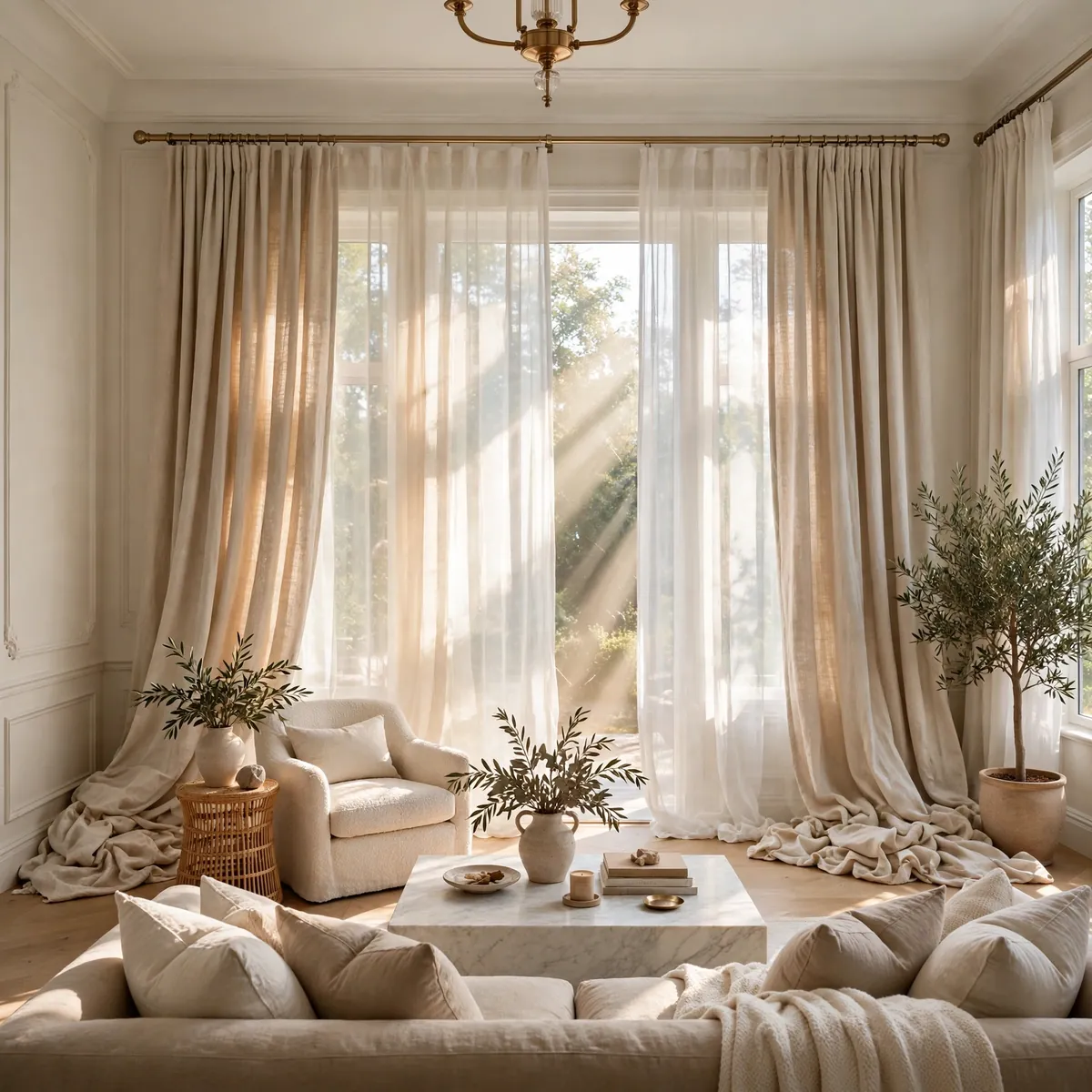
Mounting curtain rods just below the ceiling instead of right above the window frame is a stylist trick that costs nothing and changes everything. It draws the eye upward, making ceilings feel taller and windows feel grander than they are. Extend the rod 4–6 inches past each side of the window so the panels stack off the glass — you get more light in the day and the window reads twice as wide.
- Rod height: 4–6 inches below the ceiling line, or at the ceiling in rooms under 8 feet.
- Curtains should just kiss the floor or pool slightly — never hover.
- Linen or linen-look panels soften light without darkening the room.
Layer Light at Three Heights
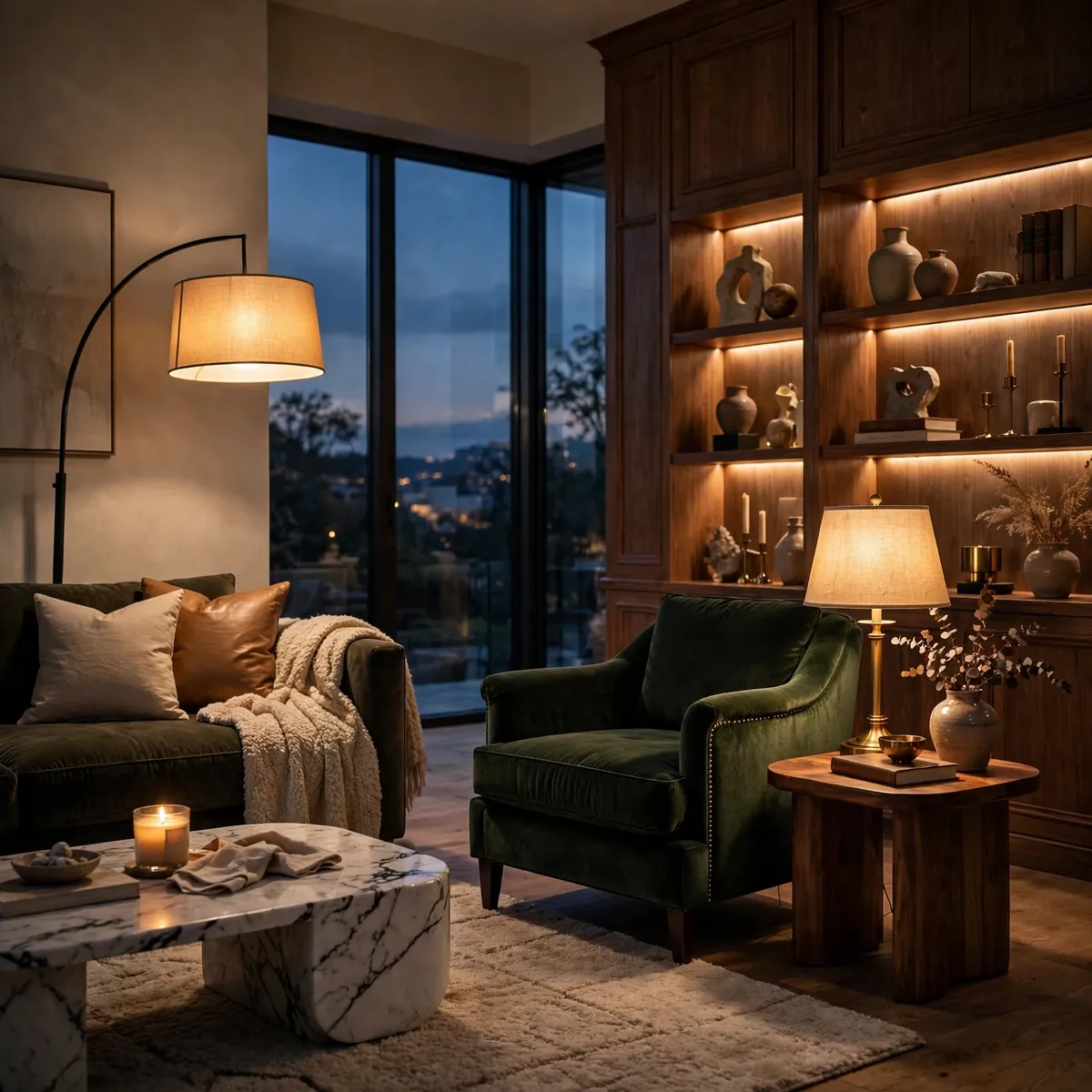
A single ceiling light flatters no one and no room. Designer-lit living rooms use three levels: ambient (a ceiling fixture or arc floor lamp for overall glow), task (a reading lamp beside a chair), and accent (a small lamp on a shelf or console to create depth). Turn on two or three small lamps in the evening instead of the overhead, and the same room instantly reads richer, calmer, and more expensive.
- Use warm bulbs (2700K) in every lamp for a consistent glow.
- Dimmers on at least one overhead fixture let you tune the mood.
- Every seating spot deserves a light source within arm’s reach.
Mix at Least Three Textures in Every Vignette
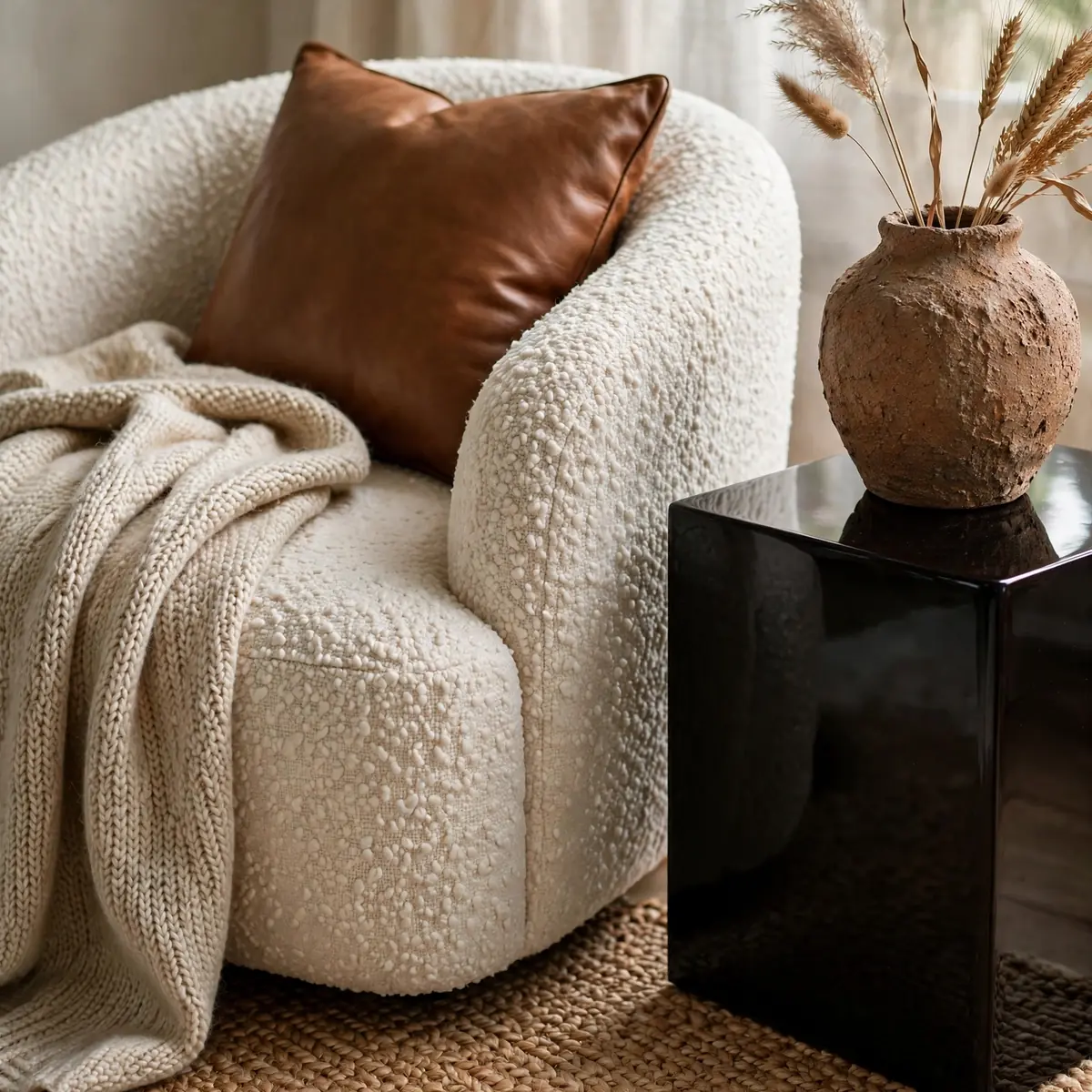
A room full of flat, similar surfaces looks dull even when the colors are right. Texture is what makes neutral rooms interesting without adding a single extra color: nubby bouclé next to smooth leather, a jute rug under a marble-topped table, a rough ceramic vase on a lacquered shelf. The eye registers this variety as richness. When a corner of your room feels “fine but flat,” texture — not color — is almost always what’s missing.
- Combine something soft (velvet, wool), something natural (wood, rattan, stone), and something smooth (metal, glass).
- A throw blanket is the cheapest texture injection in the room.
- Limit shine: one glossy accent per vignette keeps it from looking busy.
Go Big With One Art Piece Instead of Many Small Ones

A cluster of small frames often reads as visual clutter, while one large piece reads as confidence. As a rule of thumb, the art above a sofa should span roughly two-thirds the sofa’s width. Oversized art also solves the common problem of high, empty walls that small pieces can’t fill. If original art is out of budget, a large framed textile, a vintage rug hung as a tapestry, or an oversized mirror gives the same scale payoff.
- Hang art so its center sits at eye level — about 57 inches from the floor.
- A large thrifted frame with a new print inside is a budget-friendly oversized piece.
- One big piece per wall; don’t compete with the rug or the window beside it.
Float Furniture Off the Walls
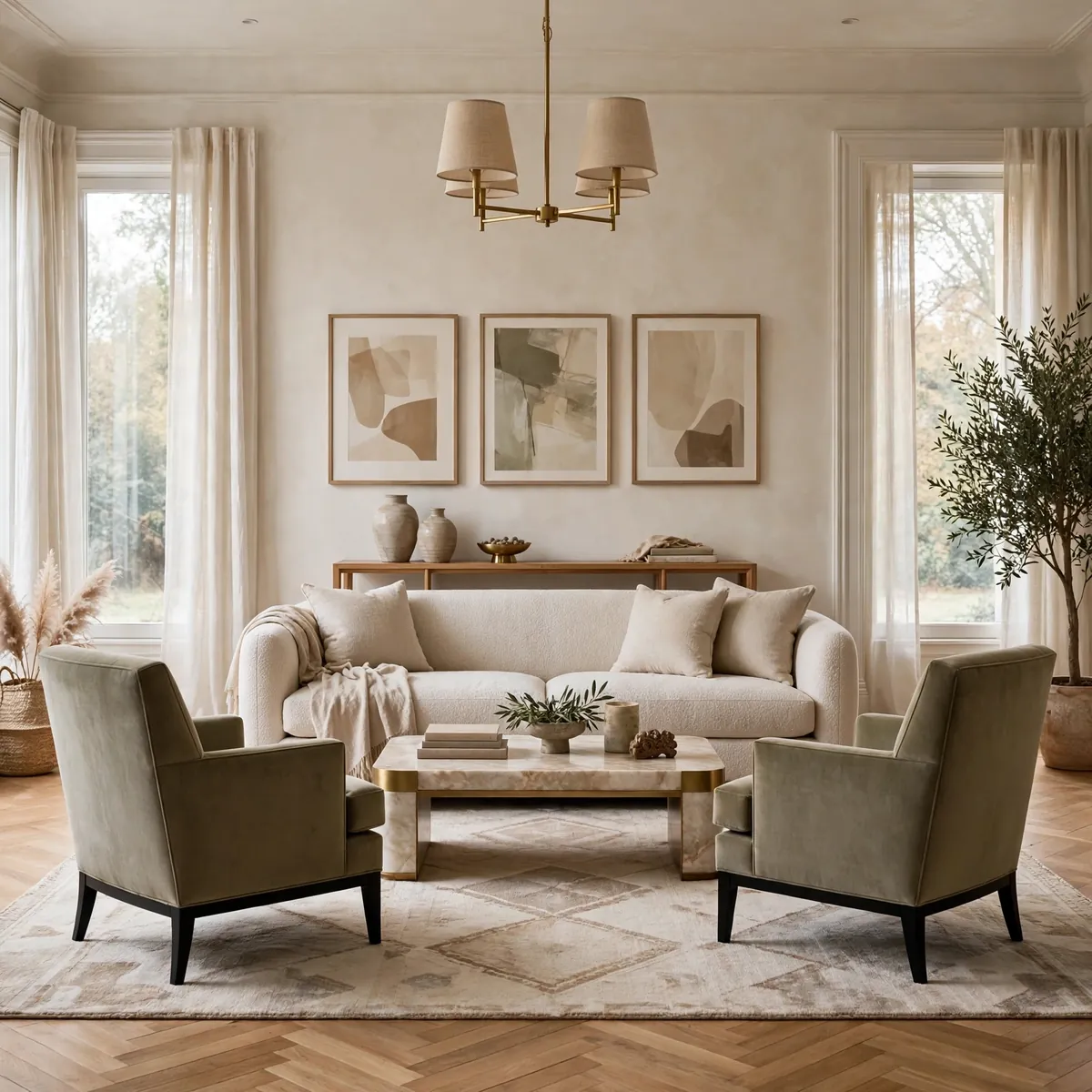
Pushing every piece against the wall is a small-room instinct that backfires: it leaves a dead pool of empty floor in the center and makes the room feel like a waiting area. Pulling the sofa even 3–4 inches off the wall — and grouping seating around a rug rather than the perimeter — creates a tighter, more intimate conversation zone. The walls behind become free for consoles, art, and plants instead of doubling as chair backs.
- In small rooms, floating just the front pair of chairs works too.
- Leave a walkway of at least 30 inches behind any floated piece.
- A console table behind a floated sofa adds a styling surface and finishes the look.
Layer Throw Pillows in Odd Numbers
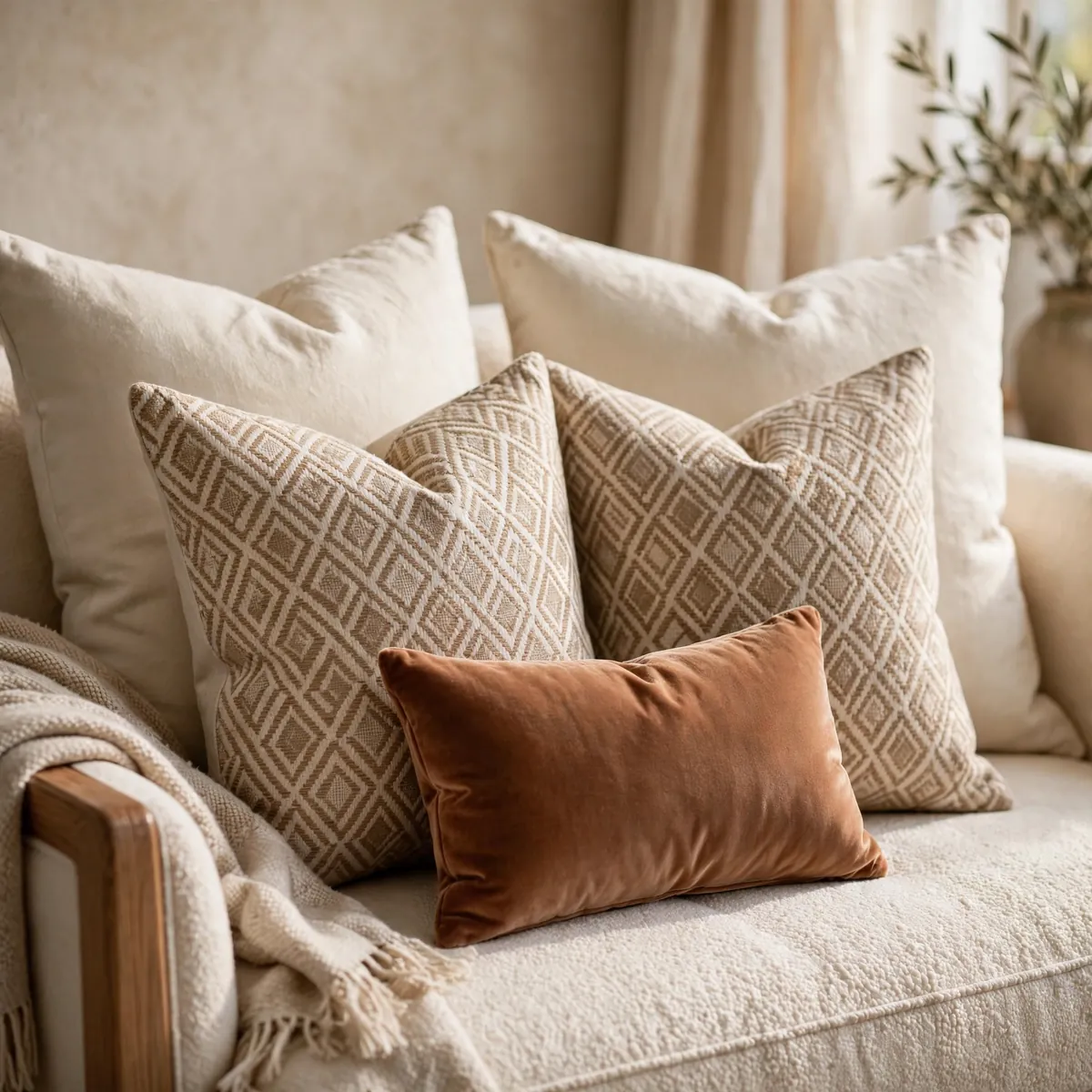
Pillows in pairs look like a hotel display; pillows in odd numbers look lived-in and intentional. Start with a large solid in back (22–24 inches), add a mid-size pattern in front, then finish with a small lumbar or a contrasting texture. Five pillows on a three-seat sofa is the sweet spot — enough to look styled, not so many that sitting down becomes a chore.
- Mix one solid, one pattern, one texture per color family.
- Down-blend inserts look plumper than the flat polyester ones pillows ship with.
- Refresh the look seasonally by swapping just the front two pillows.
Style Your Coffee Table in Trios
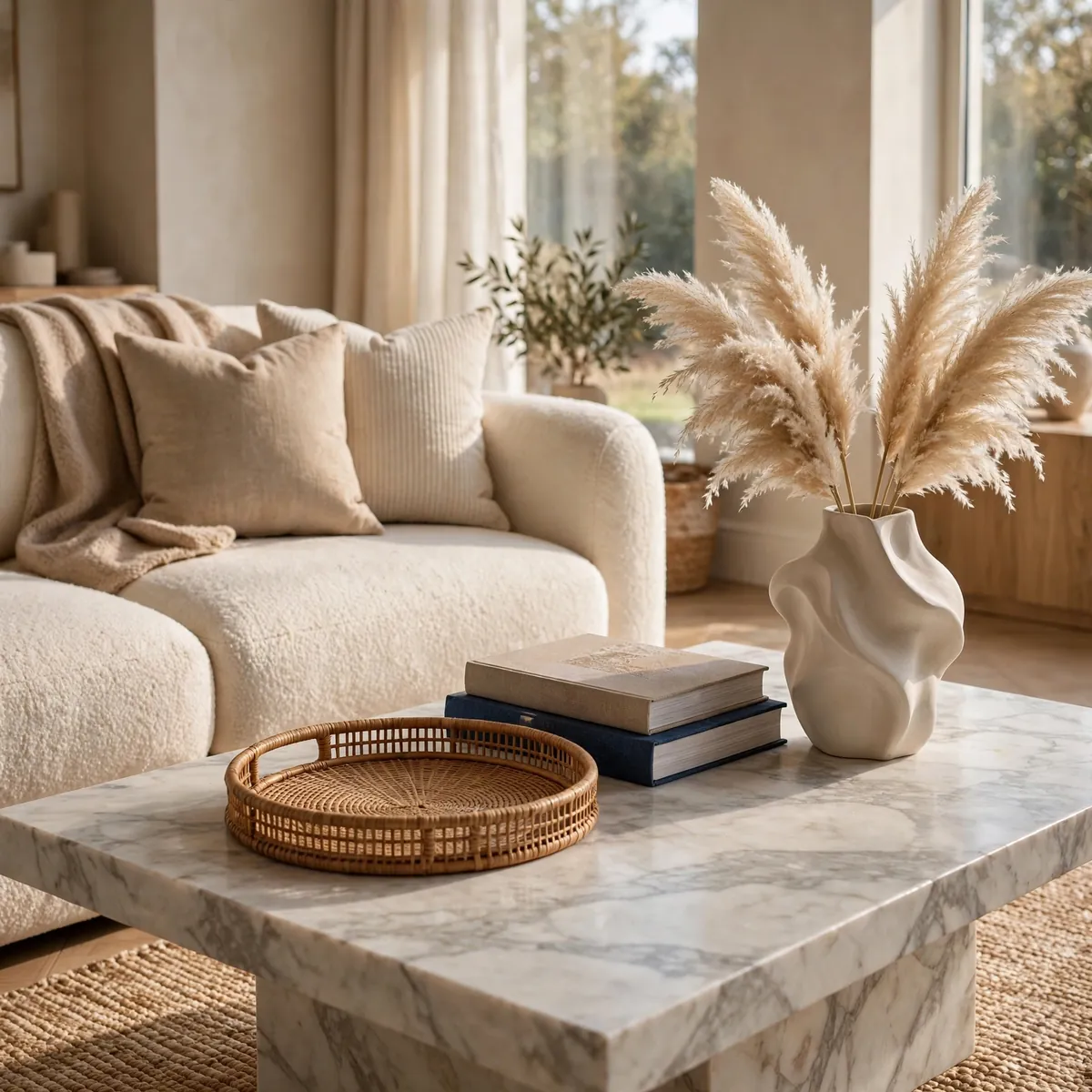
A coffee table with one lonely object looks unfinished; one packed with eleven looks like a jumble sale. The designer formula is a trio with height variation: a tray to corral everything, a stack of two or three books for a middle layer, and one sculptural object on top — a vase, a candle cluster, or a small bowl. Keep the surface at least a third clear so there’s still room for actual coffee.
- The tallest object should stay below sightlines from the sofa.
- Round tables suit triangular groupings; rectangular tables suit two clusters.
- A tray makes the whole arrangement look deliberate in one move.
Bring In Greenery at Different Heights
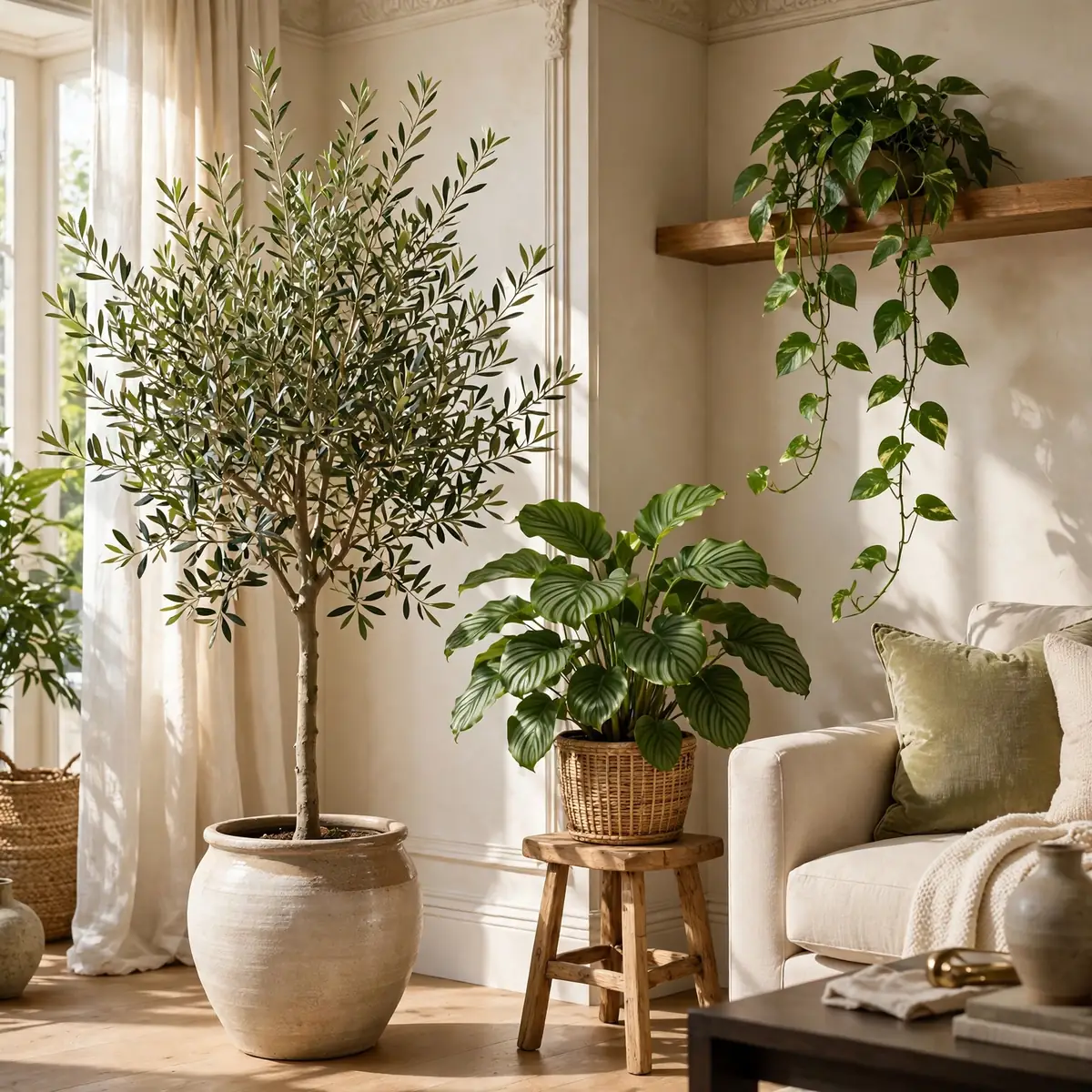
One plant on a shelf does nothing; plants at three different heights transform a room. A tall tree (olive, fiddle leaf, or bird of paradise) fills an empty corner and softens ceiling height, a mid-size plant sits on a stool or side table, and a trailing plant drapes off a shelf. This vertical spread mimics how rooms look outdoors and makes the whole space feel alive rather than furnished.
- Low light? Pothos, snake plants, and ZZ plants forgive nearly everything.
- Repeat the same pot style in different sizes for a curated look.
- Real beats fake — but one great faux stem beats a dying real one.
Use a Mirror to Borrow Light
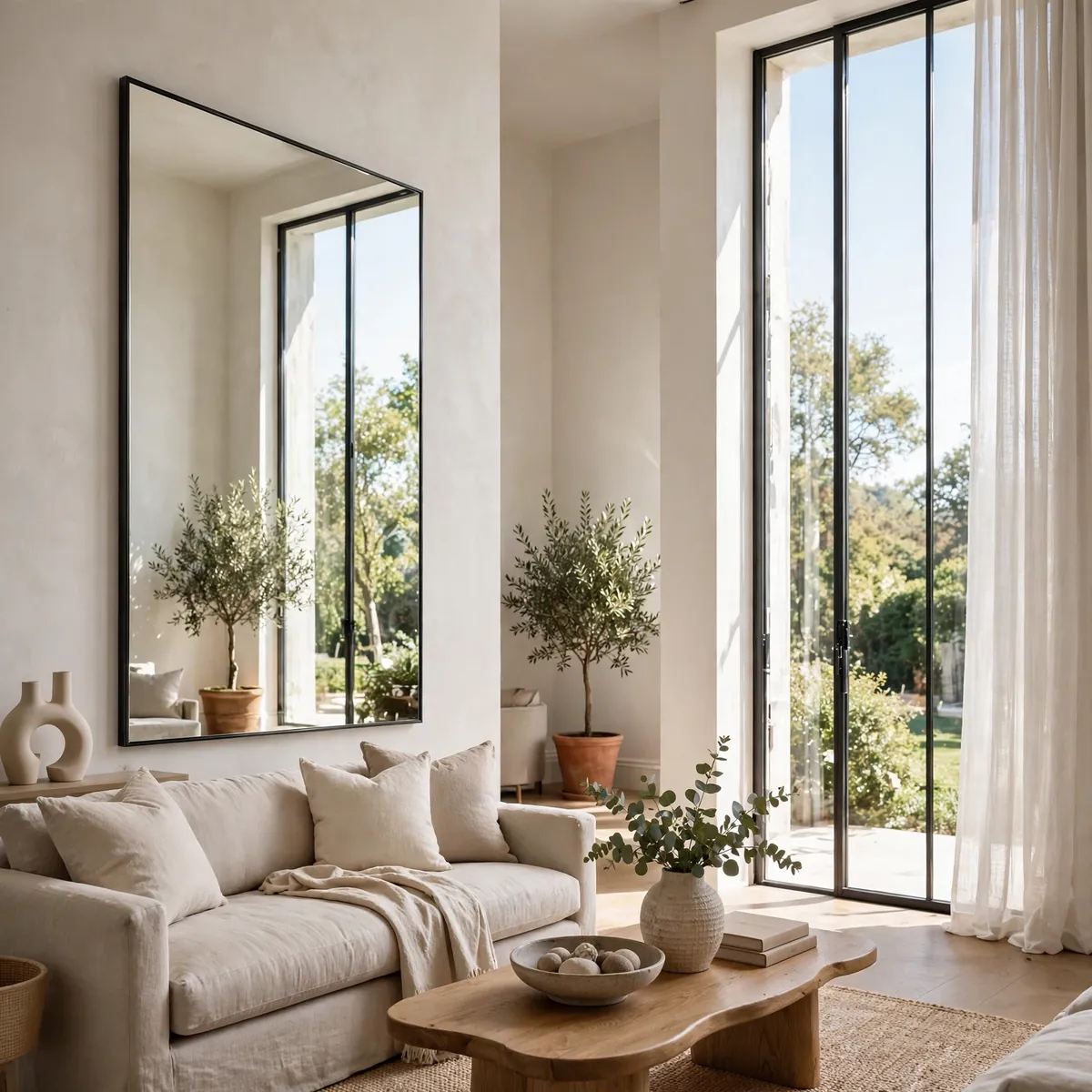
A mirror placed directly opposite or adjacent to a window bounces daylight deep into the room, effectively doubling your natural light for free. It also gives a small room the impression of more space because the eye reads the reflection as additional room. The trick is aiming it at something worth doubling — a window, a plant, a lit corner — not at a cluttered shelf or the television.
- Lean a large floor mirror in a dark corner for instant brightness.
- Keep the frame slim so the reflection reads as a window, not decor.
- Avoid mirrors that reflect the busiest wall; double the calm, not the chaos.
Commit to a Three-Color Palette
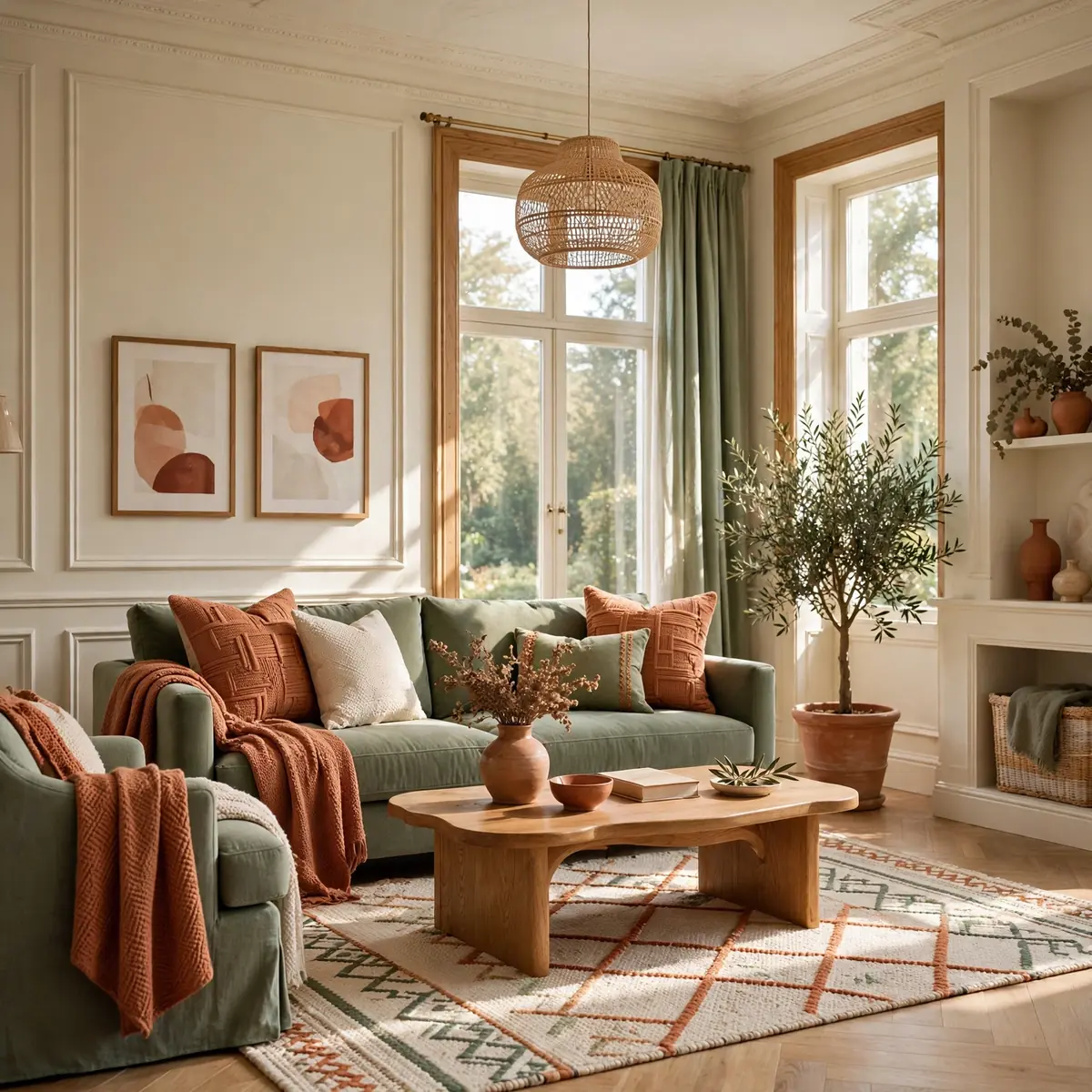
Rooms that look “put together” aren’t decorated with more colors — they’re decorated with fewer, used consistently. Pick a base (neutrals, about 60%), a secondary color (30%), and one accent (10%) that repeats in pillows, art, throws, and small objects. When every purchase passes through this filter, the room starts to harmonize on its own, and nothing looks like a random impulse buy.
- Pull the palette from your largest pattern — the rug or the main art piece.
- Neutrals count as the base; the accent should appear at least three times.
- Metallics and natural wood tones work as free neutrals alongside your three.
Carve Out a Reading Corner
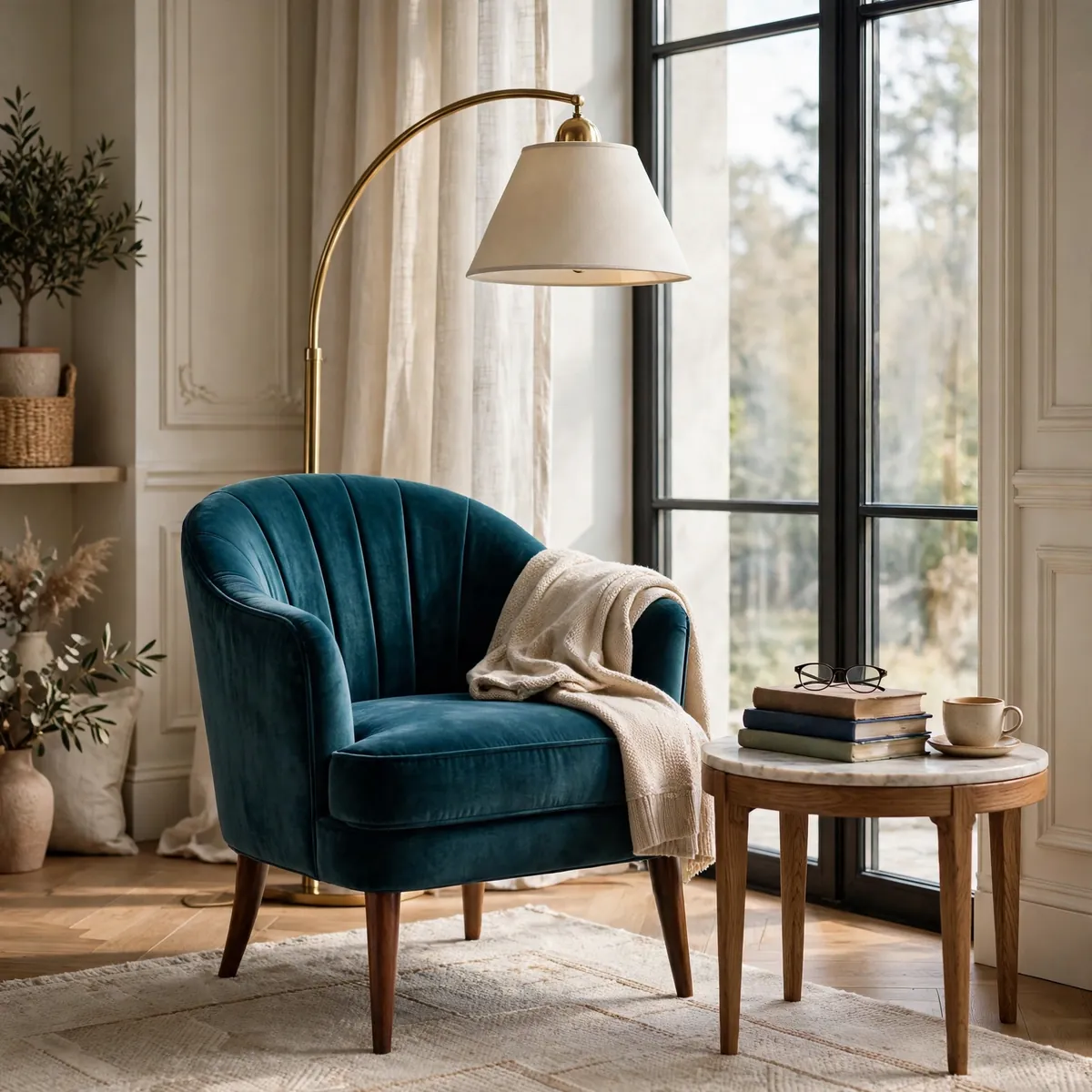
A dedicated reading corner — one good chair, one floor lamp, one small side table — makes a living room feel purposeful instead of generic. It gives the room a secondary use beyond TV and conversation, and it’s the spot guests gravitate to at parties. You don’t need much floor space: a 3×3-foot footprint near a window or a quiet wall is enough, and an accent chair in a contrasting fabric makes it look like a design decision rather than a leftover.
- Position the lamp behind and to the side of the chair for glare-free reading light.
- A small ottoman or footstool turns a corner chair into a lounge spot.
- Keep a folded throw on the chair arm so the corner always looks inviting.
Give Every Seat a Surface to Set Down a Drink
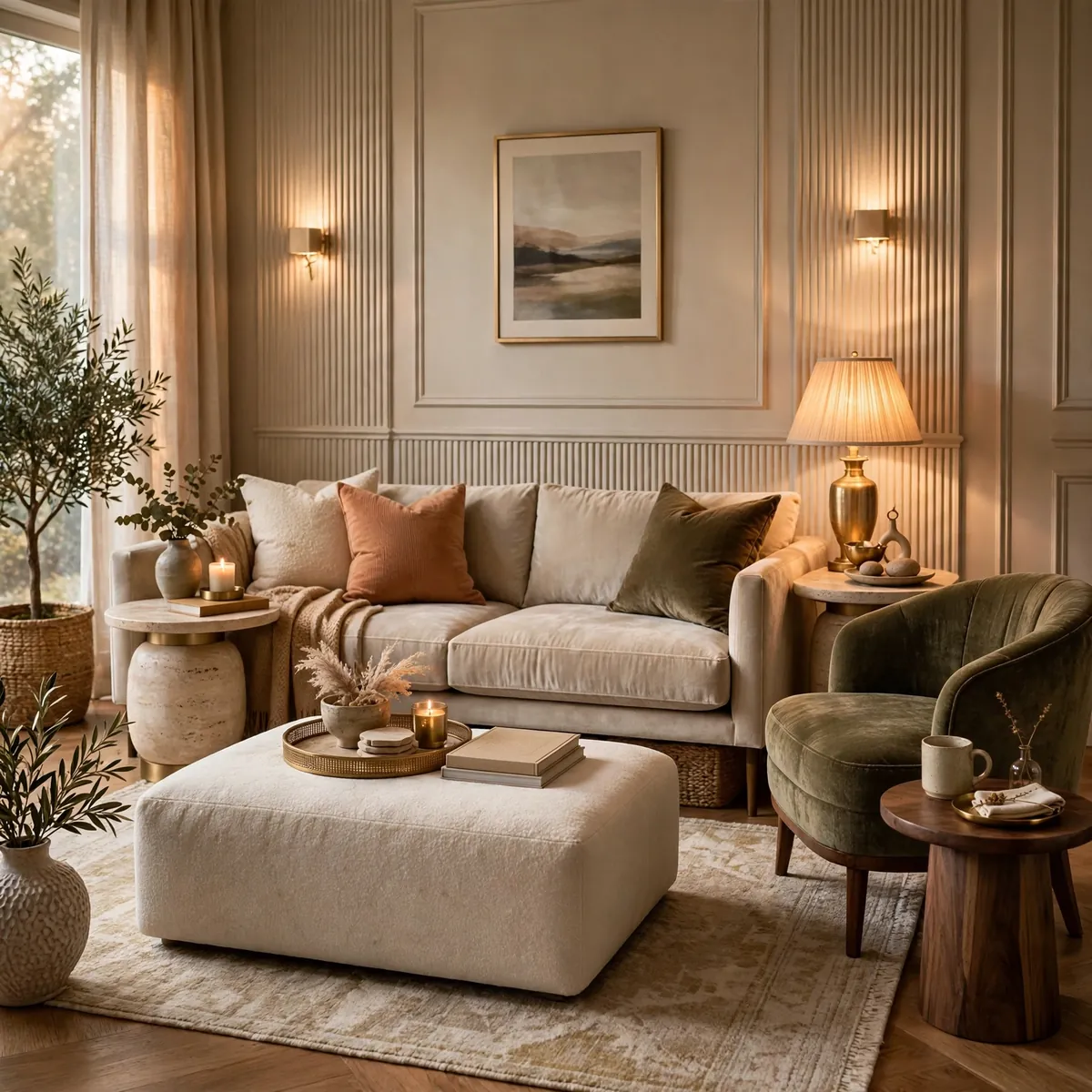
A living room feels considered when nobody has to balance a mug on a cushion. Every seat — sofa ends, accent chairs, even the chaise corner — should have a surface within easy reach: a side table, a C-table that slides over the sofa arm, or a wide ottoman with a tray. This one functional rule also fixes styling, because side tables become natural homes for lamps, small plants, and stacked books.
- Side table height should match the sofa arm within 2–3 inches.
- C-tables are a renter-friendly fix for sofas with no end space.
- Match or mix tables intentionally — matched pairs at each end, or a deliberate variety.
Warm It Up With Real Wood Tones
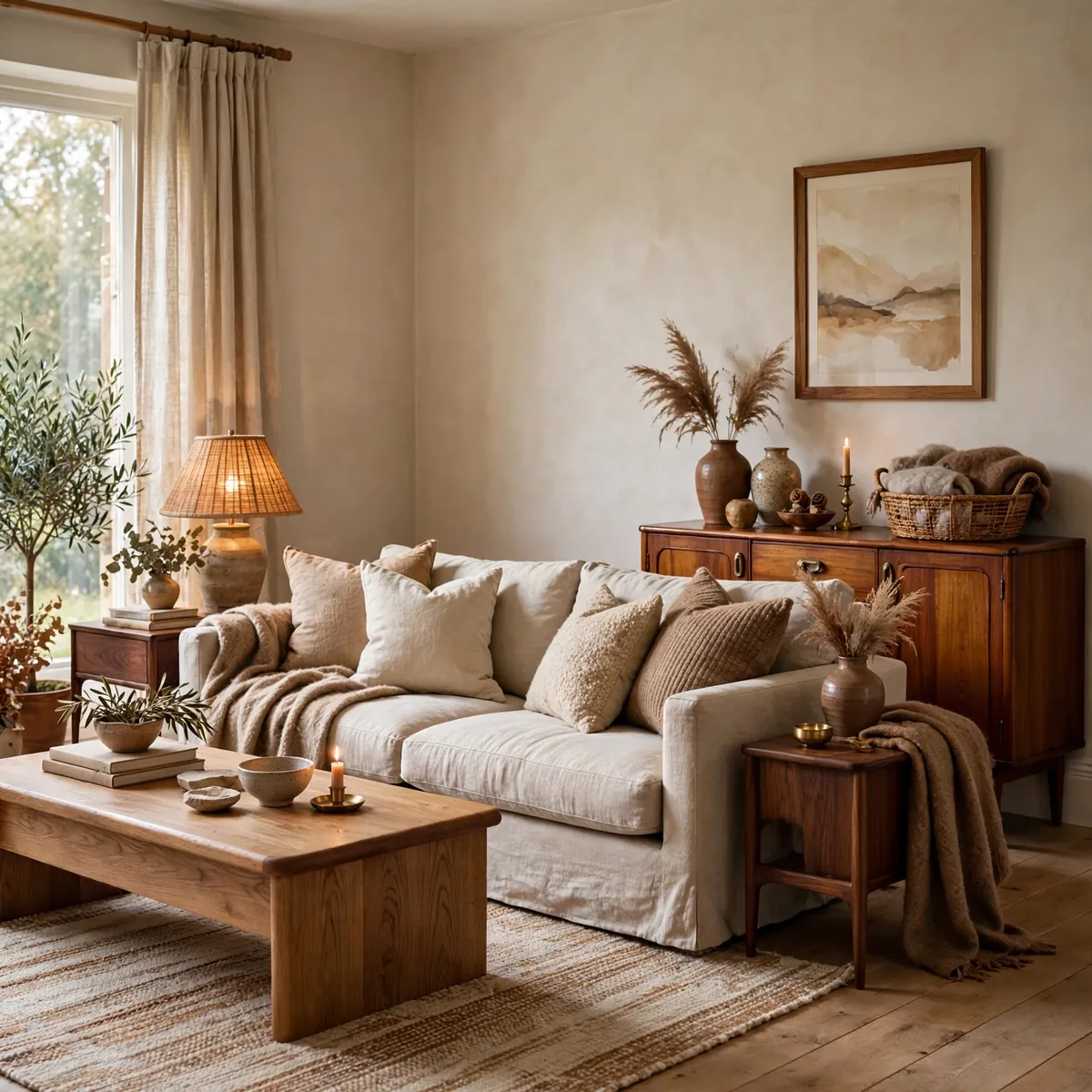
All-white, all-gray, or all-metal rooms feel cold because no material in them says “warm.” Introducing real wood — an oak coffee table, walnut side tables, a vintage teak sideboard — adds warmth that paint can’t replicate, and it makes the room feel layered over time rather than bought all at once. Wood also ages gracefully, so it forgives the wear a living room actually takes.
- One wood tone repeated twice looks intentional; five different woods look accidental.
- Medium tones (oak, walnut) bridge both warm and cool color schemes.
- Pair wood with a soft textile nearby to keep it from reading rustic.
Style Open Shelves With Breathing Room
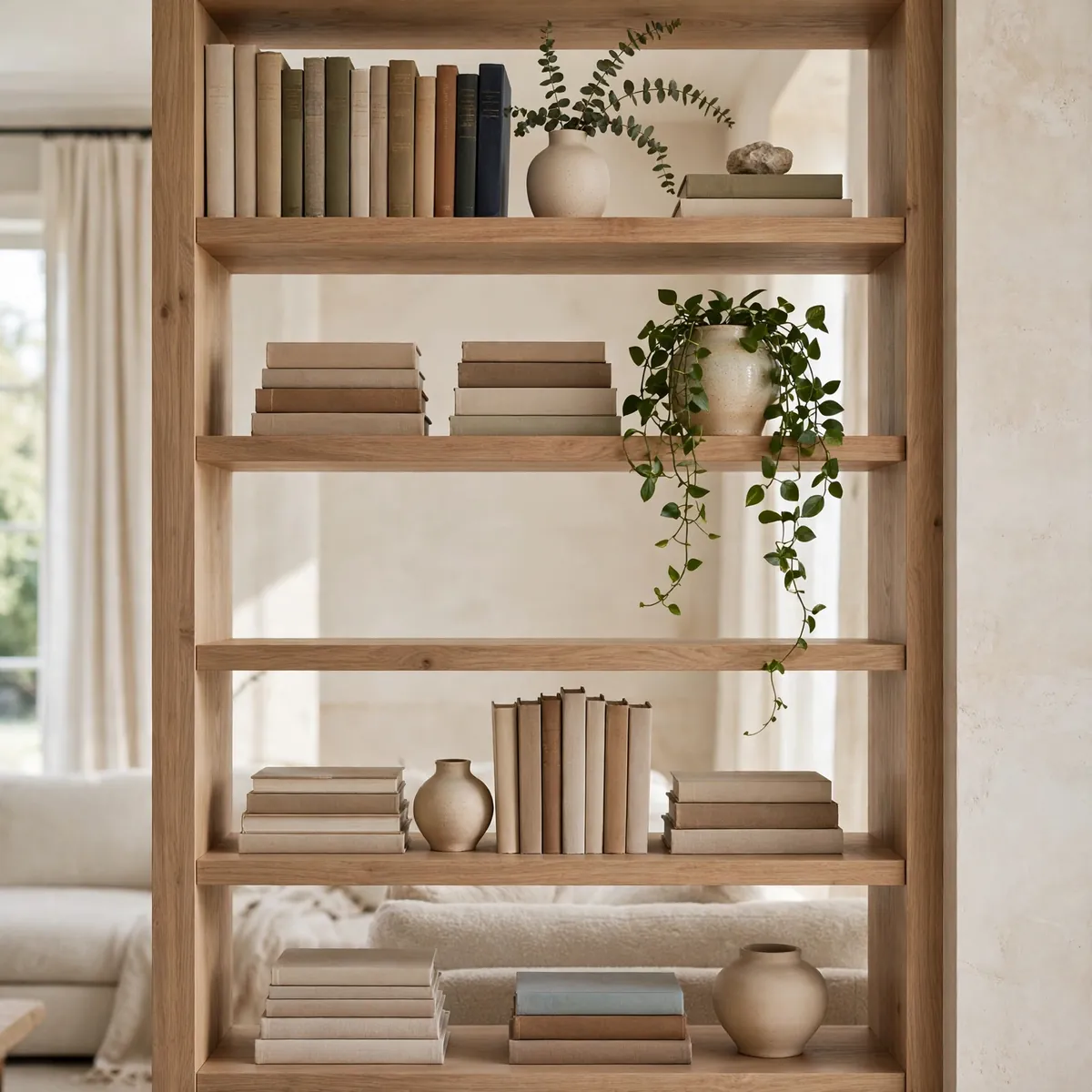
Shelves packed edge-to-edge read as storage, not decor. Leave roughly a third of every shelf empty so the objects that remain get to be seen. Group books in horizontal stacks and vertical rows, vary object heights, and let a trailing plant or a tall vase break the grid. Step back and squint: if every shelf looks the same density, you’ve overfilled.
- Edit first, then style — remove half, then arrange what’s left.
- Book spines facing out in random colors look busy; turn some stacks face-in for calm.
- One empty shelf in the whole bookcase is a power move — try it.
Break Up the Matchy-Matchy Set
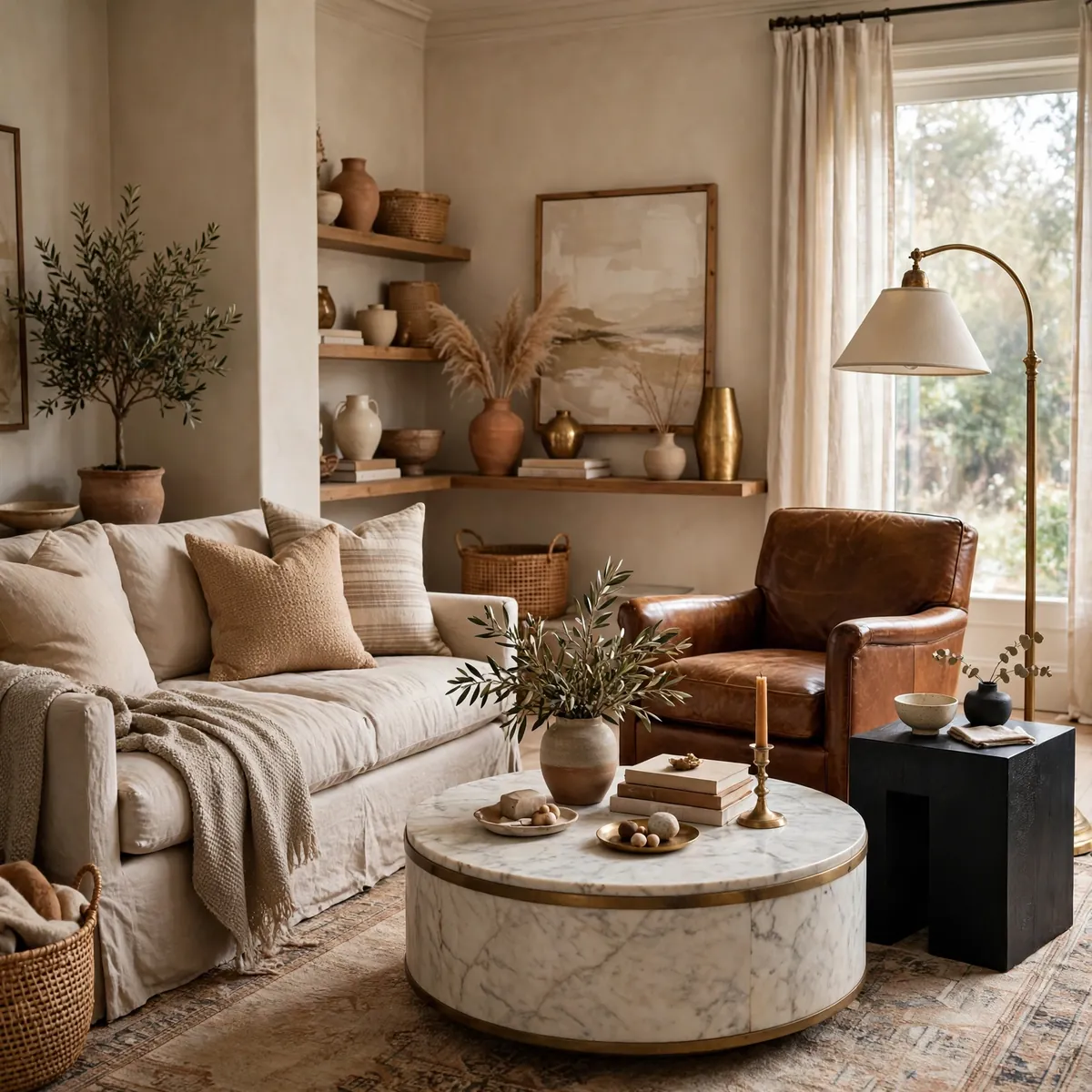
The matching five-piece furniture set is the fastest way to make a living room look like a showroom floor. Designer rooms mix: a linen sofa with leather chairs, a round coffee table with a rectangular console, brass beside matte black. The pieces share a color palette or an era, not a catalog. If you already own a matching set, swap just one piece — the coffee table is easiest — and the room instantly gains personality.
- Replace one matched piece at a time; you don’t need a full overhaul.
- Thrift stores and vintage shops are the best source for the odd piece.
- Keep the palette consistent so variety reads as curated, not chaotic.
Add Softness at Foot and Knee Level
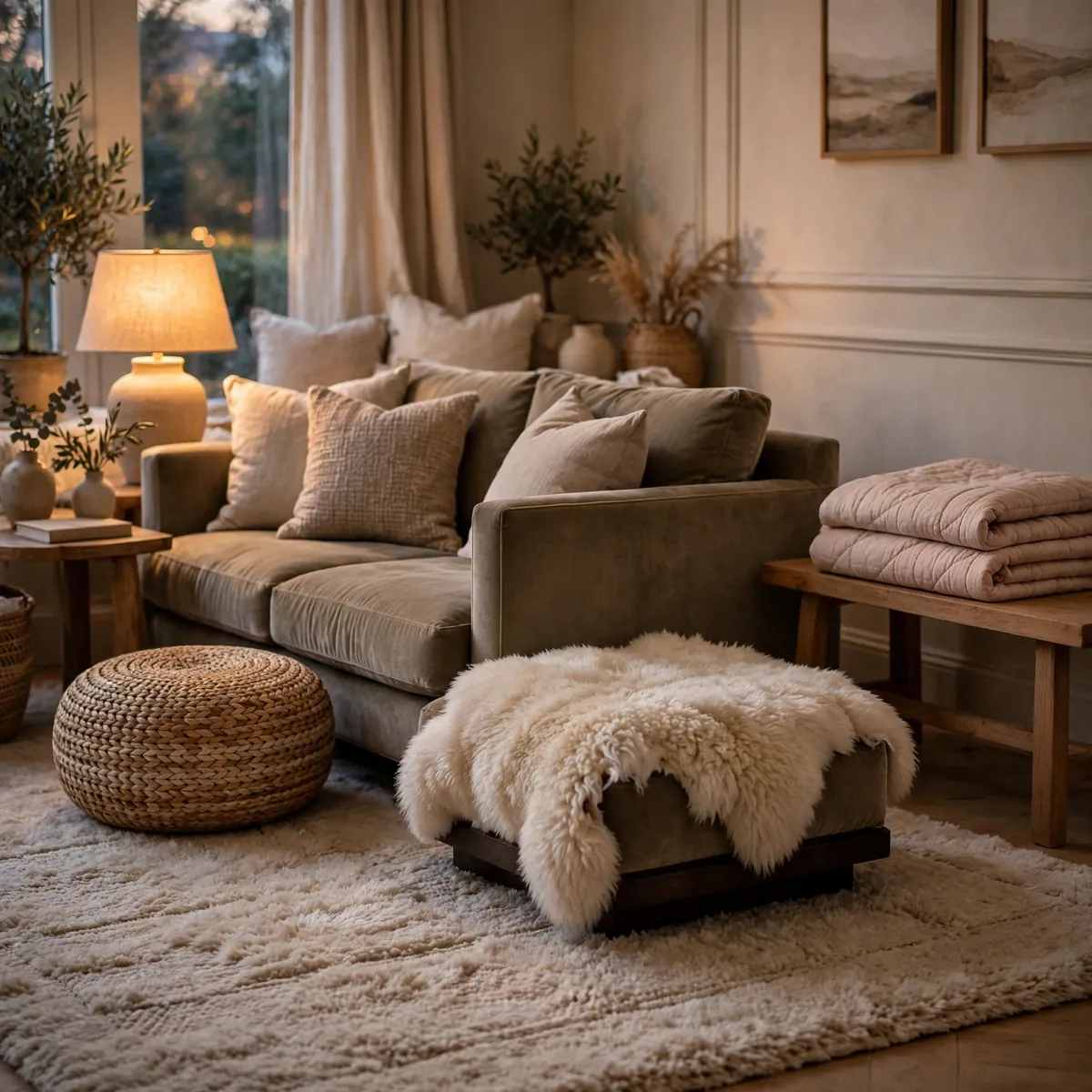
Living rooms are decorated mostly at eye level — art, shelves, curtains — while everything below the knee stays hard: bare floors, bare table edges, bare ottoman tops. Adding softness low down (a sheepskin draped on an ottoman, a folded quilt on a bench, a round pouf beside the sofa) makes the room physically inviting, especially for kids and for anyone who ends up sitting on the floor. Low softness is also what photographs as “cozy.”
- A pouf doubles as a footrest and emergency seating.
- Layer a washable throw on the ottoman so it stays usable daily.
- Round soft shapes contrast nicely with the room’s hard rectangles.
Make One Bold Move on a Wall or Ceiling
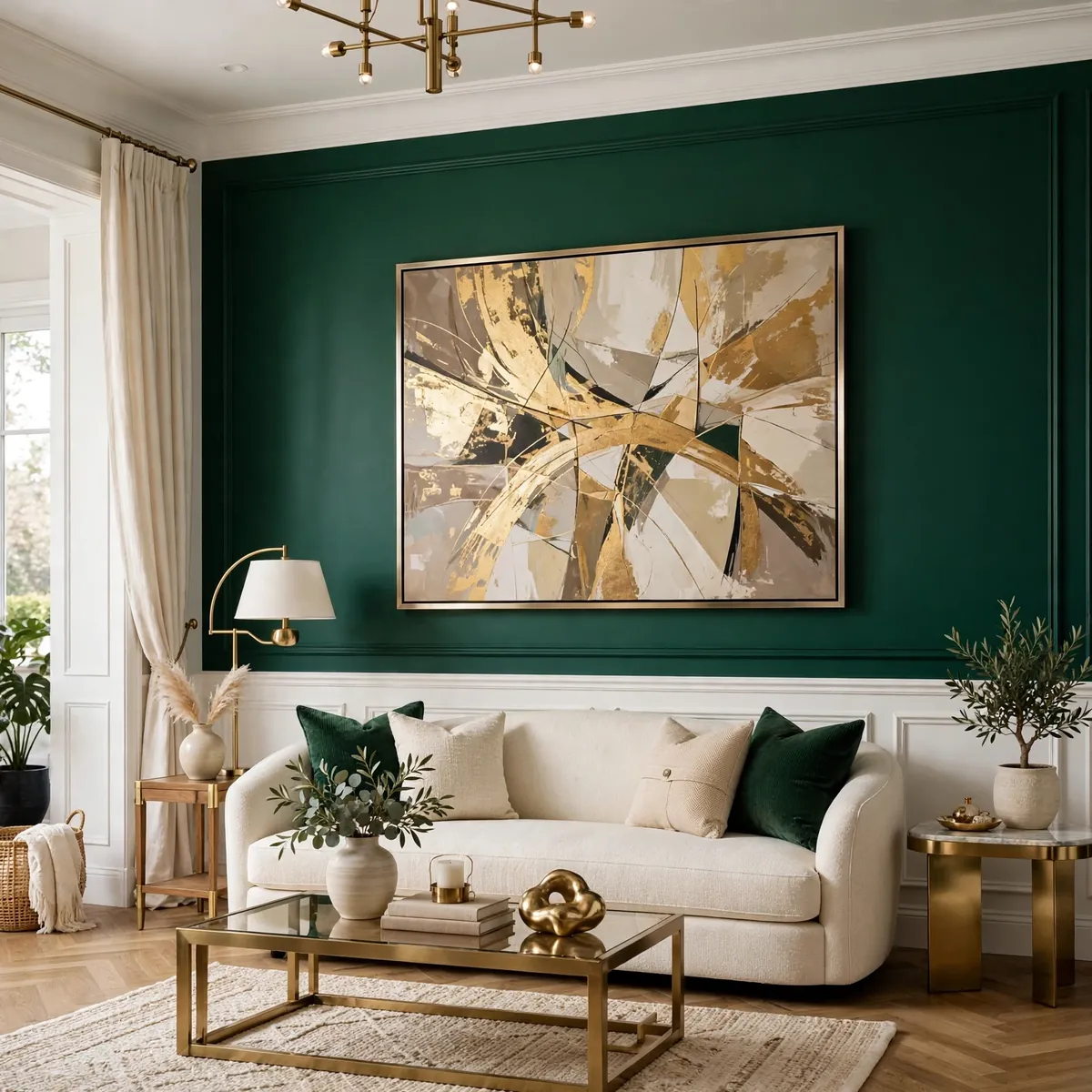
One confident choice beats ten timid ones. A single deep-green accent wall, a patterned wallpaper behind the sofa, or a painted ceiling in a soft tone gives the room a point of view that furniture alone can’t provide. Because it’s just one surface, it reads as bold without risking the whole room — and it’s the change guests actually comment on.
- The wall with the focal point (fireplace, main art) is the safest accent wall.
- Sample the paint at full size and check it in evening light before committing.
- Keep trim white or cream on an accent wall so the color looks crisp.
Display Something Personal — Then Edit Hard
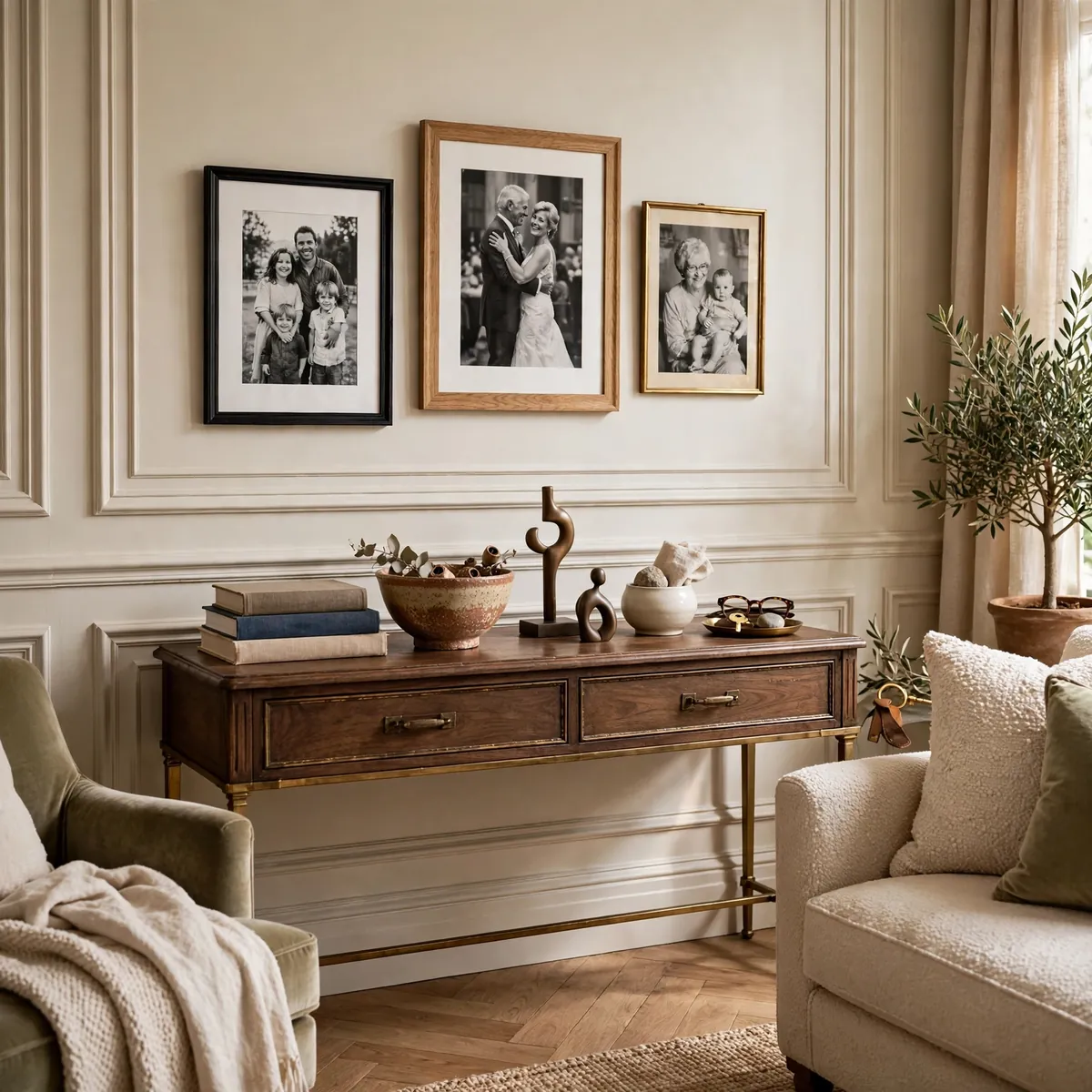
A room with zero personal objects feels like a staged listing; a room with every souvenir feels like a storage unit. The sweet spot is five to seven personal pieces total: framed photos, a travel find, a handmade object, a book that means something. Group them deliberately — a gallery shelf, one styled console — instead of scattering them, and the room gets a story without the clutter.
- Black-and-white prints of personal photos look cohesive in mixed frames.
- One shelf or one wall holds the personal collection; everywhere else stays neutral.
- Rotate personal pieces seasonally so they stay seen, not invisible.
Angle Seating Toward Conversation
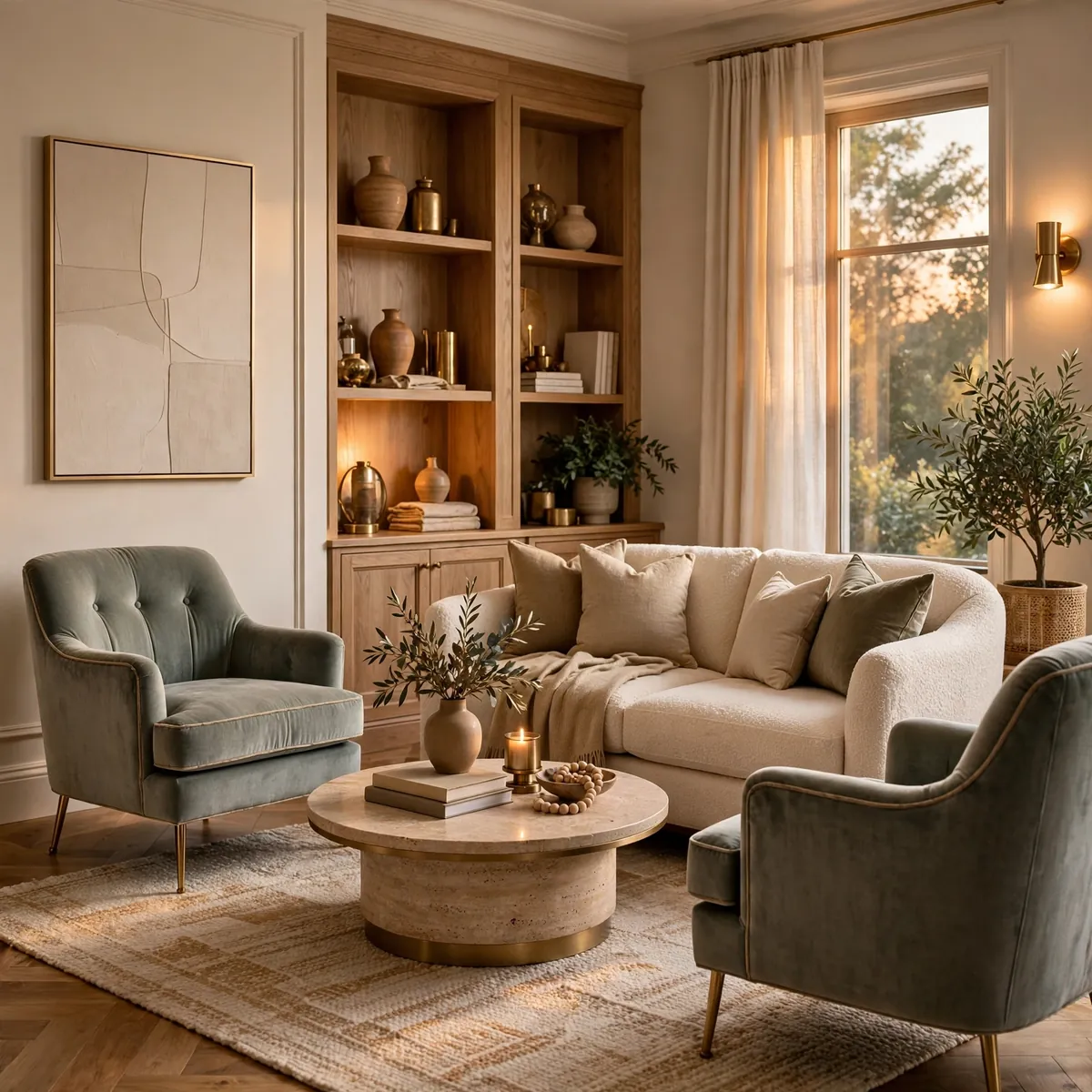
Furniture pushed in rows facing the television tells guests exactly what matters — and it isn’t them. Pulling accent chairs in at a slight angle toward the sofa, even in a TV room, creates a layout that works for both screen nights and actual conversation. Seats should sit close enough that people can talk without raising their voices — roughly 8 feet apart or less.
- A swivel chair solves the TV-versus-conversation dilemma permanently.
- In TV rooms, keep the chairs angled toward the sofa, not the screen.
- Two chairs facing each other with a small table between beats one row every time.
Measure Twice, Buy Once
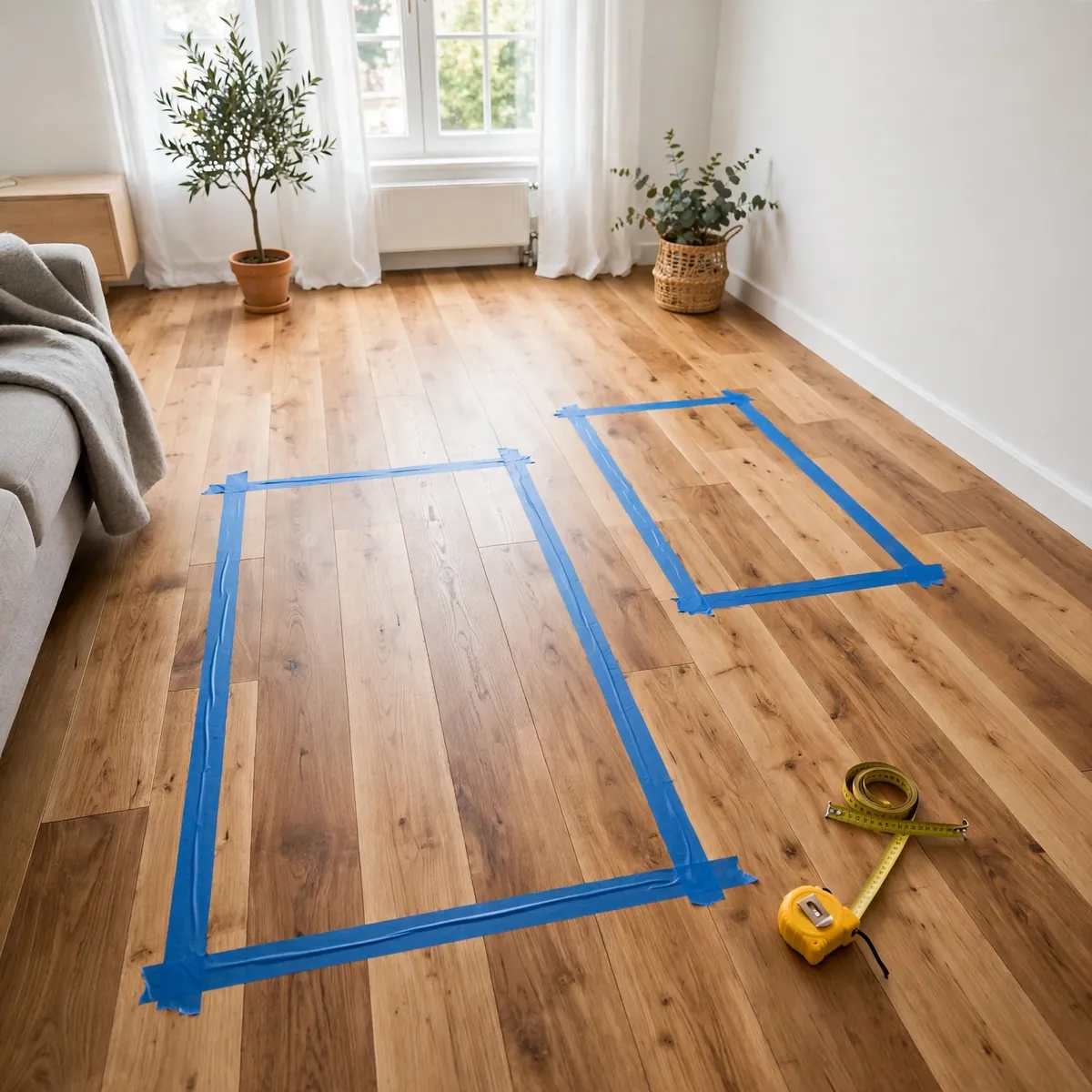
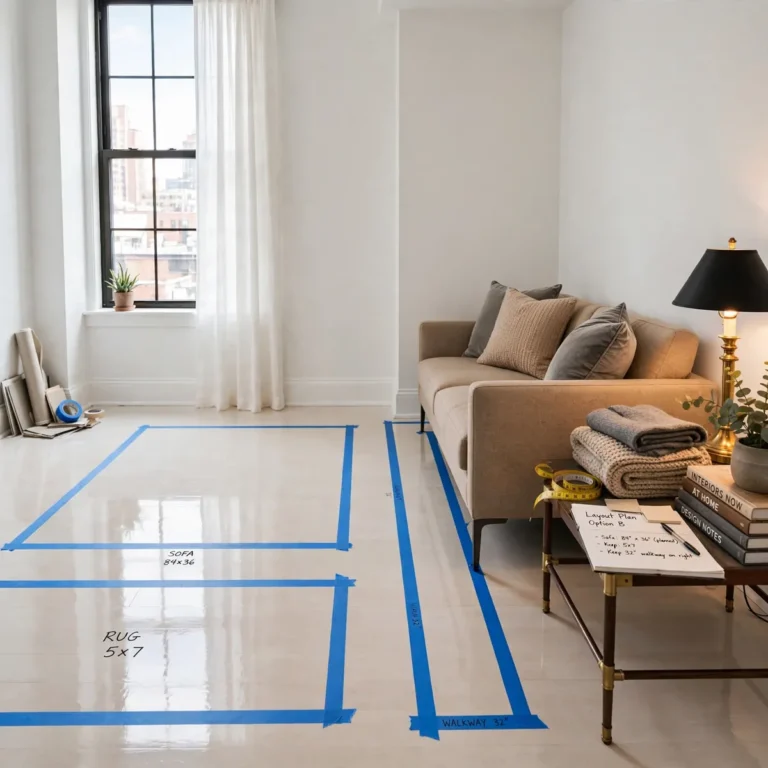
Most living room decor failures are measurement failures: the sofa that blocks a doorway, the coffee table you can’t walk around, the rug that ends inches short of the chairs. Before buying anything substantial, mark the footprint on the floor with painter’s tape and live with it for a day. It takes ten minutes and prevents the most expensive mistake in home decor — furniture that technically fits but functionally doesn’t.
- Leave 18 inches between the coffee table and the sofa for legroom.
- Keep 30–36 inches of walking space on the room’s main paths.
- Photograph the taped layout; photos reveal problems the eye misses.
Decorate for the Senses, Not Just the Eyes
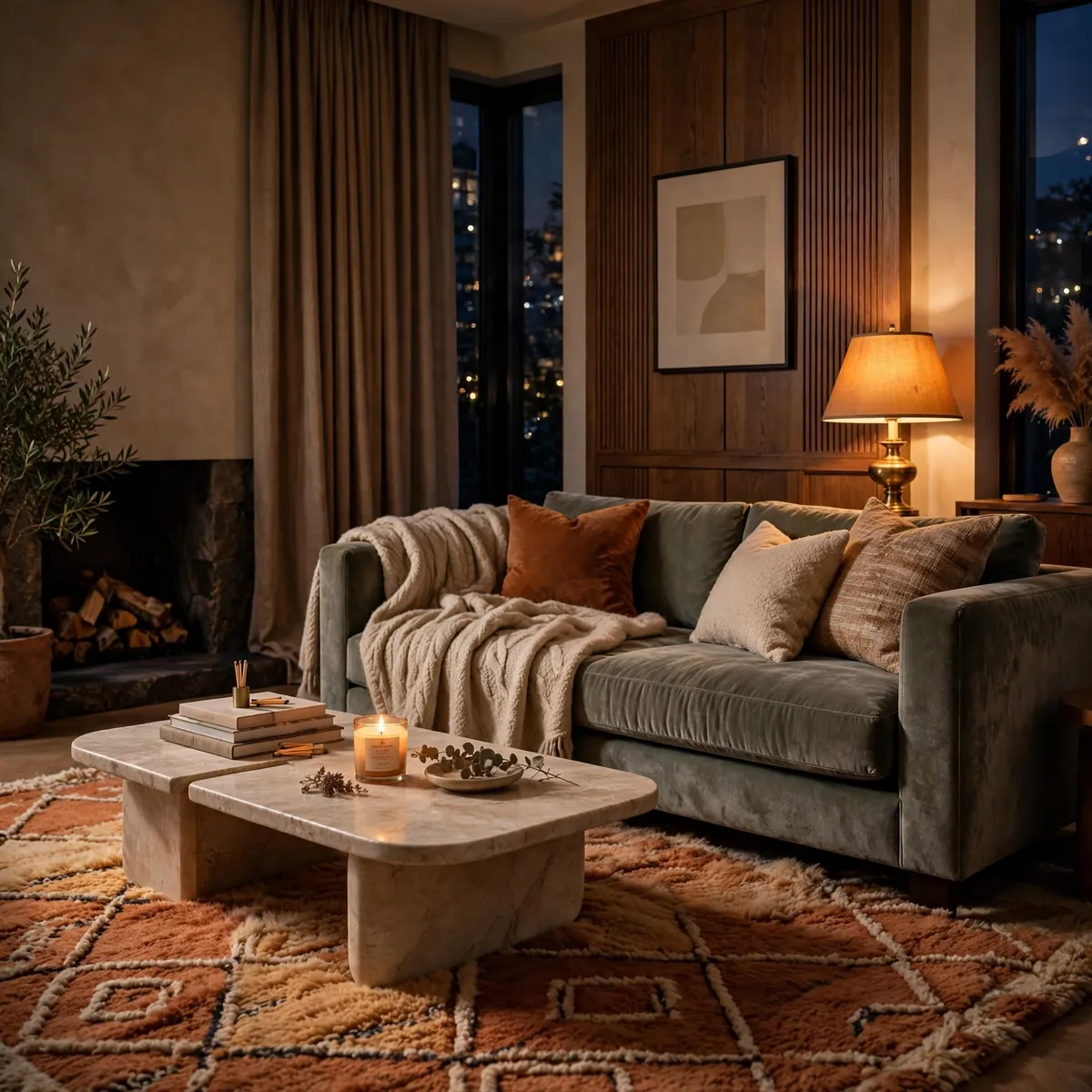
Guests judge a living room with more than their eyes: the scent when they walk in, the softness of the throw they reach for, the warmth of the light at 8 p.m. A signature candle, a genuinely soft throw, a rug that feels good under bare feet — these sensory layers are what make people say a room “feels amazing” without being able to explain why. Visual decor gets photographed; sensory decor gets remembered.
- One consistent scent per room beats a shelf of competing candles.
- Natural materials (wool, linen, wood) photograph and feel better than synthetics.
- Warm light after dark is a sensory choice, not just a lighting one.
Hide the Everyday Clutter in Pretty Storage
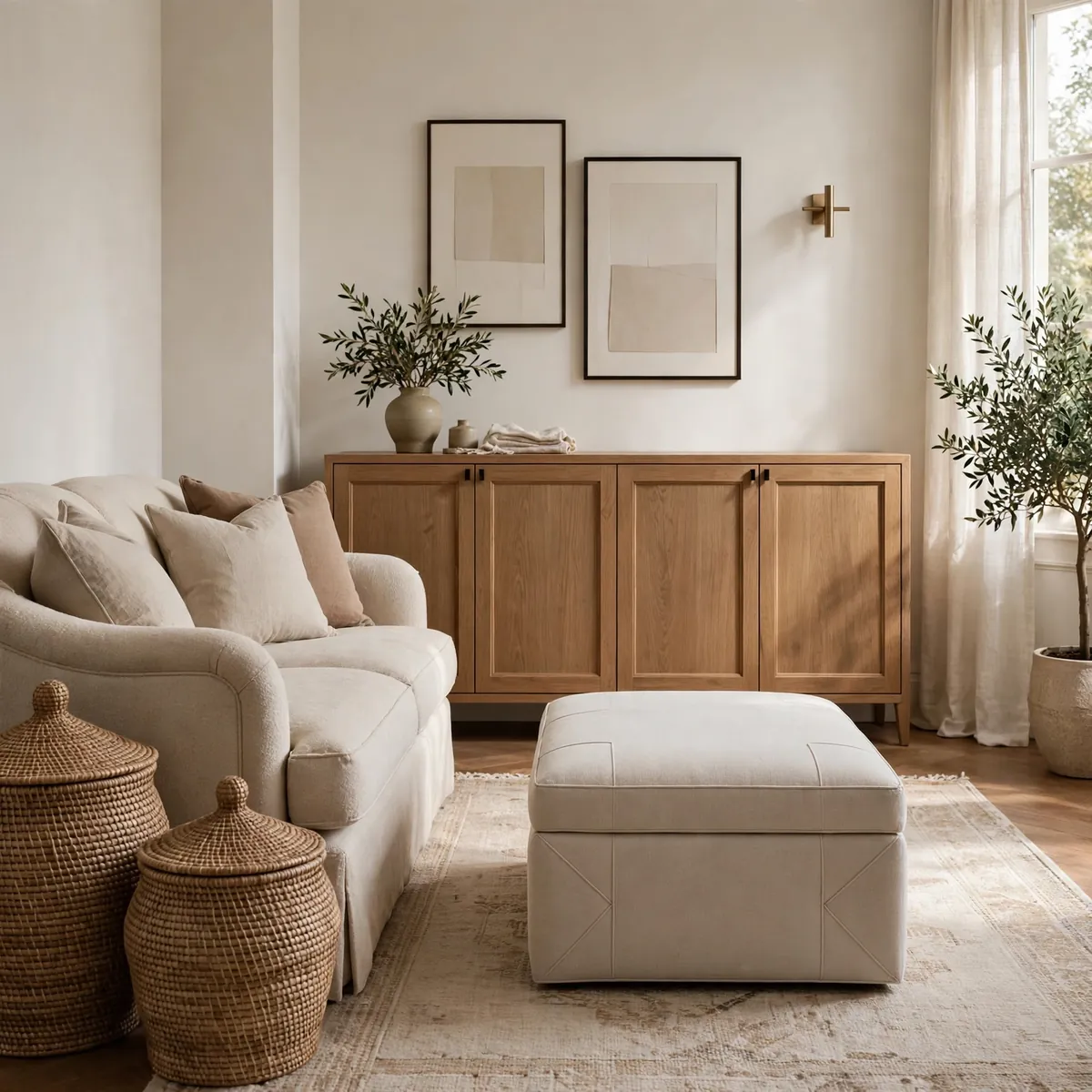
The real difference between a styled living room and a messy one is rarely the decor — it’s where the remotes, chargers, kids’ toys, and dog blankets go. Lidded baskets, a storage ottoman, and one closed cabinet swallow the everyday clutter that styling can’t fix. Once the clutter has a home, the decorative layer on top finally reads as intentional instead of fighting for attention.
- One large basket per seating area holds throws, remotes, and magazines.
- Lidded boxes on shelves hide chargers and small electronics.
- A console with doors beats an open one if your clutter is chronic.
Rotate One Small Thing Every Season
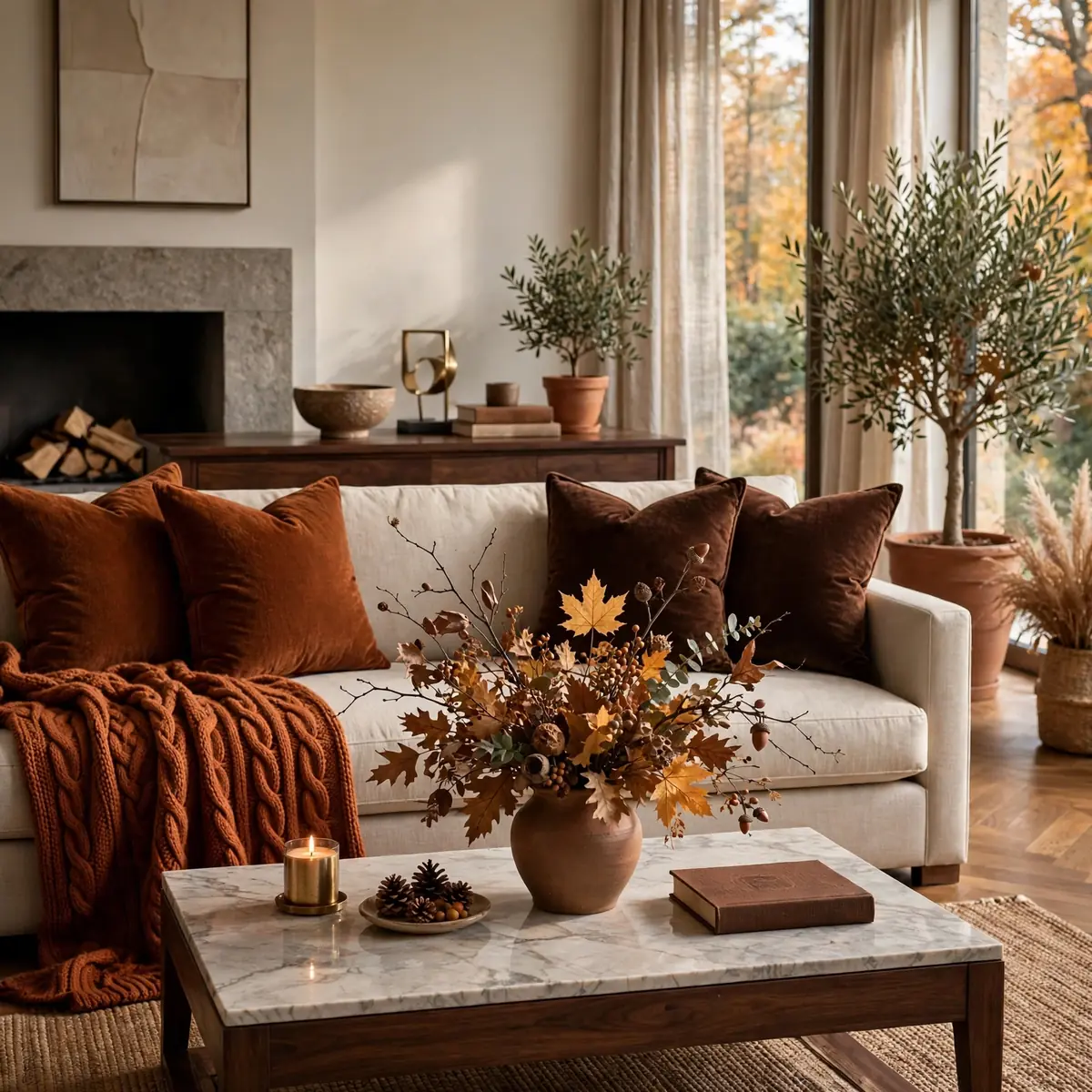
A living room that never changes starts to feel invisible, even a beautiful one. You don’t need a full redecorate — swapping one small thing each season keeps the room feeling fresh: spring pillows, summer’s lighter throw, autumn branches in the vase, winter’s heavier blanket. The rotation ritual also forces a regular edit, so clutter never gets a permanent lease on the shelves.
- Pillow covers and throws are the cheapest seasonal swap — store the off-season set in one bag.
- Branches, grasses, or dried flowers change the season for the price of a walk.
- Keep the big pieces constant so the room’s identity stays intact.
FAQs
How do I decorate my living room on a budget?
Start with the free moves: rearranging furniture toward a focal point, editing clutter, and hanging curtains high. Then spend on the highest-impact piece first — usually a correctly sized rug — and layer smaller updates over time.
What is the single most important living room decor rule?
Get the scale right. Furniture sized to the room, art sized to the wall, and a rug sized to the seating area fix more rooms than any color or accessory choice.
How many colors should I use in my living room?
Three is the sweet spot: a neutral base, a secondary color, and one accent repeated in at least three spots. Neutrals and wood tones don’t count against your three.
Conclusion
Great living rooms aren’t built in one shopping trip — they’re built in layers. Start with the decisions that shape the room (rug size, focal point, furniture placement), add the layers that shape the light and mood, and finish with the personal details that make it yours. Pick three tips from this list, apply them this weekend, and you’ll see your room differently on Monday — then keep going, one layer at a time.