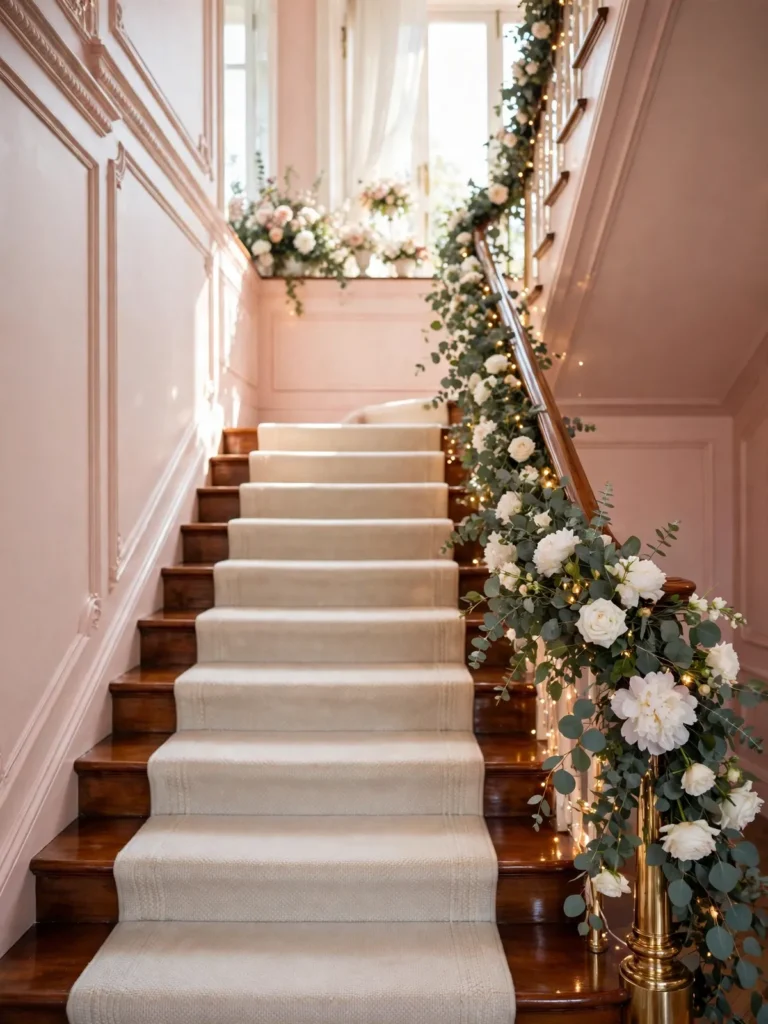
28 Gorgeous White Staircase Ideas That Feel Fresh, Bright and Beautiful
A white staircase can feel clean, calm and timeless — or like an unfinished afterthought, if it is not styled well. These 28 white staircase ideas cover paint, treads, runners, railings, lighting and colour pairings, so you can make your white stair feel fresh, bright and beautiful.
White staircase ideas are worth your time because a white stair is a blank canvas: it can feel like a dream or like an unfinished afterthought, and the difference is entirely in the styling. Paint, treads, runners, railings and lighting all decide whether white reads as fresh and bright or flat and cold.
If you love the brightness of white paired with glass, these glass staircase ideas show how glass railings keep a white stair open, airy and full of light. The 28 ideas below cover all-white stairs, wood treads, runners, shiplap, glass, lighting, black accents and coastal palettes, so you can choose a white staircase that suits your home and your life.
Key Takeaways
Are white staircases a good idea?
Yes, when they are styled well. White brightens tight entryways, makes ceilings feel taller, and acts like a giant reflector in homes that lack natural light. The risk is that white shows dirt and scuffs, so choose a durable paint, add a runner for protection, and keep a small tin for touch-ups.
What paint is best for a white staircase?
A durable satin or matte finish works best. Matte white feels modern and hides imperfections, while satin is easier to wipe clean. Avoid high gloss — it highlights scuffs and can feel slippery visually and literally. Use a tough trim paint on treads and handrails, and keep all the white shades consistent.
How do I keep a white staircase clean?
Wipe the handrail and treads weekly with a damp cloth, vacuum a runner weekly, and touch up scuffs promptly with a small brush. Choose a low-pile runner in a pattern that hides dust, and keep shoes off the white treads where you can. A matte finish hides marks better than gloss.
How do I stop a white staircase from feeling cold or stark?
Add warmth: natural wood treads, a warm wood handrail, a patterned runner, brass hardware, warm lighting and soft textiles nearby. White stairs with one warm element — wood, brass or a soft colour on the walls — feel bright and welcoming rather than clinical.
Can a white staircase work in a family home?
Yes, with the right choices. A runner adds grip and protects the treads, closed risers suit homes with toddlers, and a durable satin paint wipes clean. Choose a pattern that hides dirt, keep the balusters simple, and accept that white stairs need a little more upkeep than dark ones.
The Entire Staircase Painted Crisp White
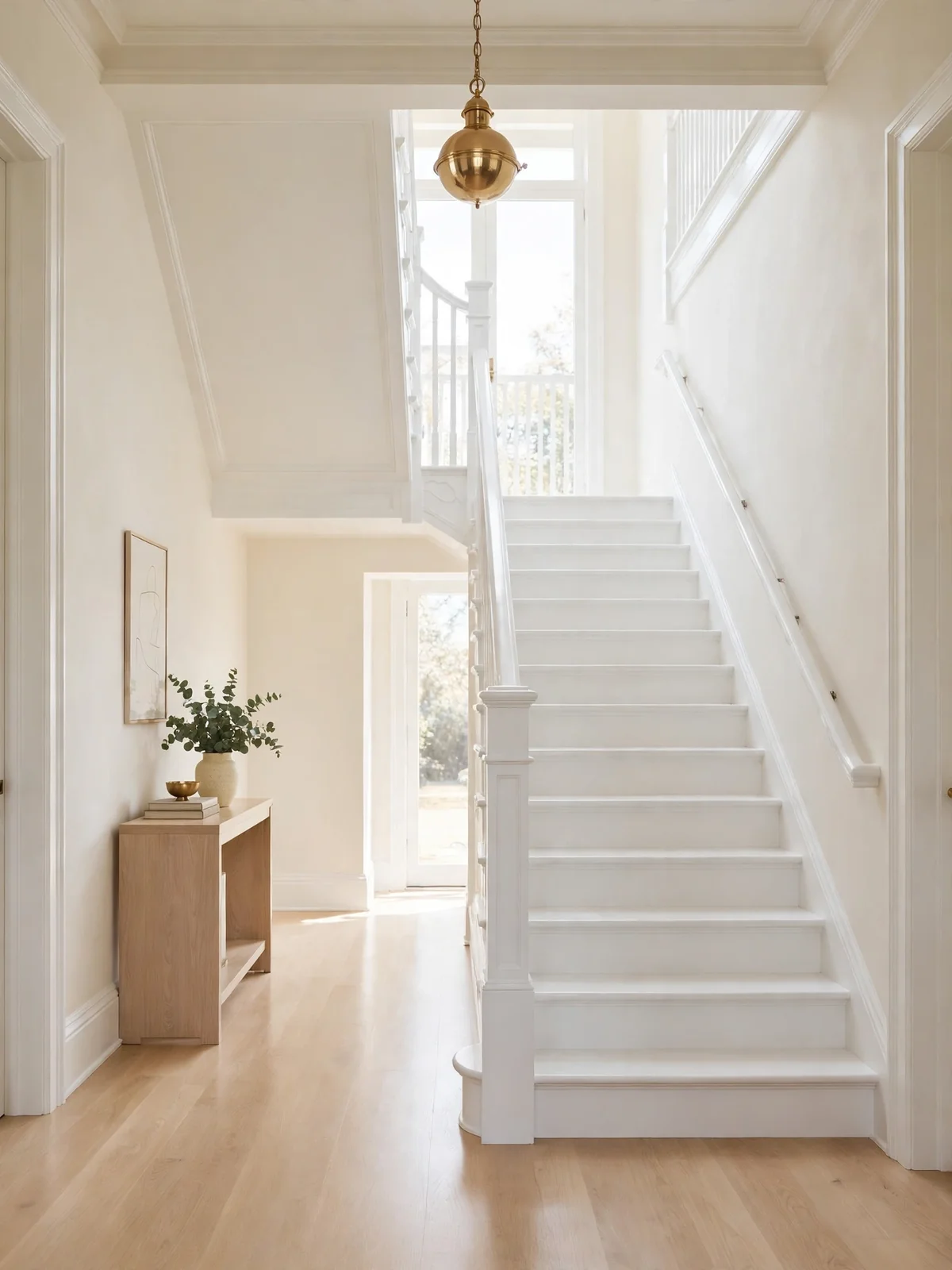
Painting the entire staircase crisp white is the boldest simple move, because one seamless colour with no contrast and no distractions creates a clean, airy flow. Here, the treads, risers, railing and balusters are all the same crisp white, with soft cream walls and a pale oak floor below. The idea suits homes that lack natural light — white acts like a giant reflector — and it instantly brightens tight entryways and makes ceilings feel taller. The weakness is that all-white shows every scuff, so use a durable satin paint and keep a small tin for touch-ups — and if you want minimal, start here, because white creates visual continuity and your eye travels smoothly upward without stopping at colour breaks.
Quick tips:
- Use a durable satin paint on treads and handrails.
- Keep all the white shades consistent.
- Choose crisp white for brightness, warm white for softness.
- Touch up scuffs promptly with a small brush.
White Risers With Natural Wood Treads
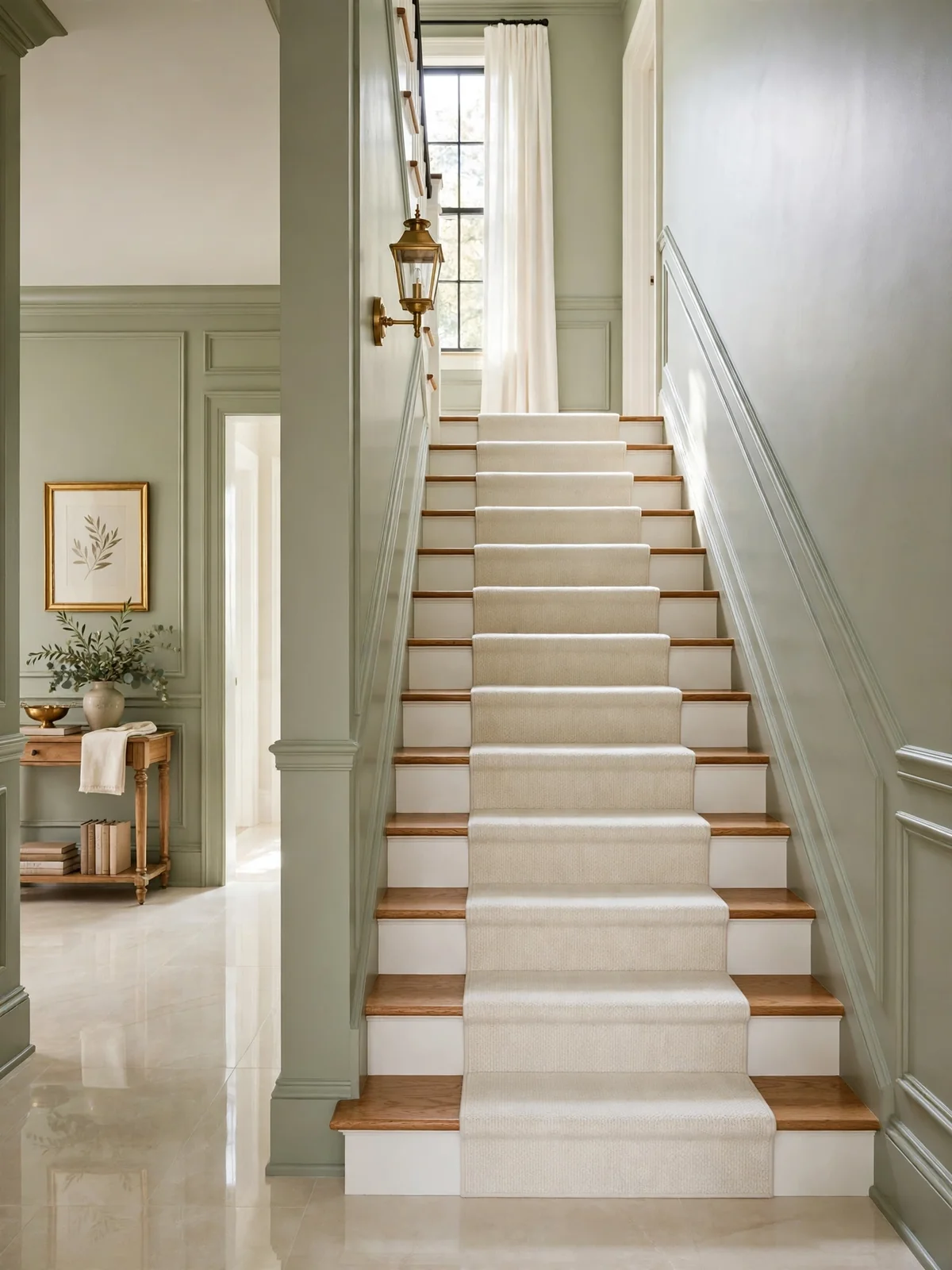
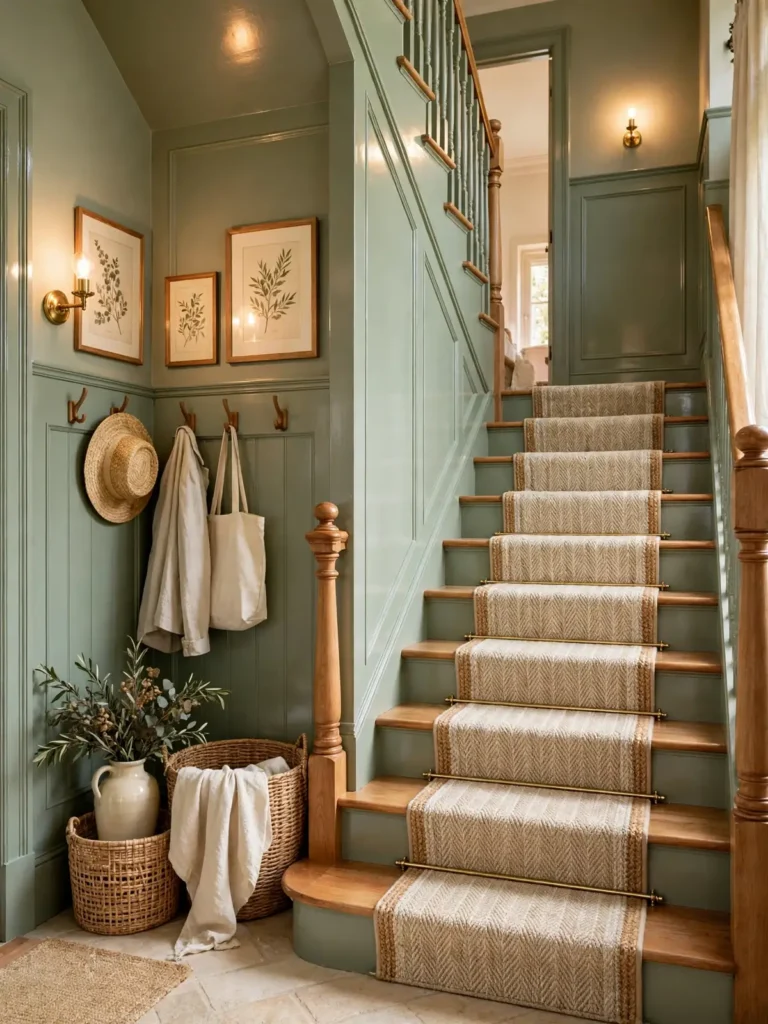
White risers with natural wood treads are the classic white staircase combination, because the warmth of oak or walnut balances the coolness of white beautifully. Here, white risers sit beneath warm oak treads, with soft sage-green walls and a cream runner. The idea suits farmhouse and modern homes alike, it works every time, and it gives you brightness and depth at once. The weakness is finish choice — high gloss on the white paint can feel slippery visually and literally — so choose a matte or satin finish on the white paint and let the wood bring the warmth.
Quick tips:
- Choose a matte or satin finish on the white paint.
- Use oak for warmth, walnut for richness.
- Add a runner for grip and protection.
- Match the tread timber to the handrail.
A Statement Runner Over White Steps
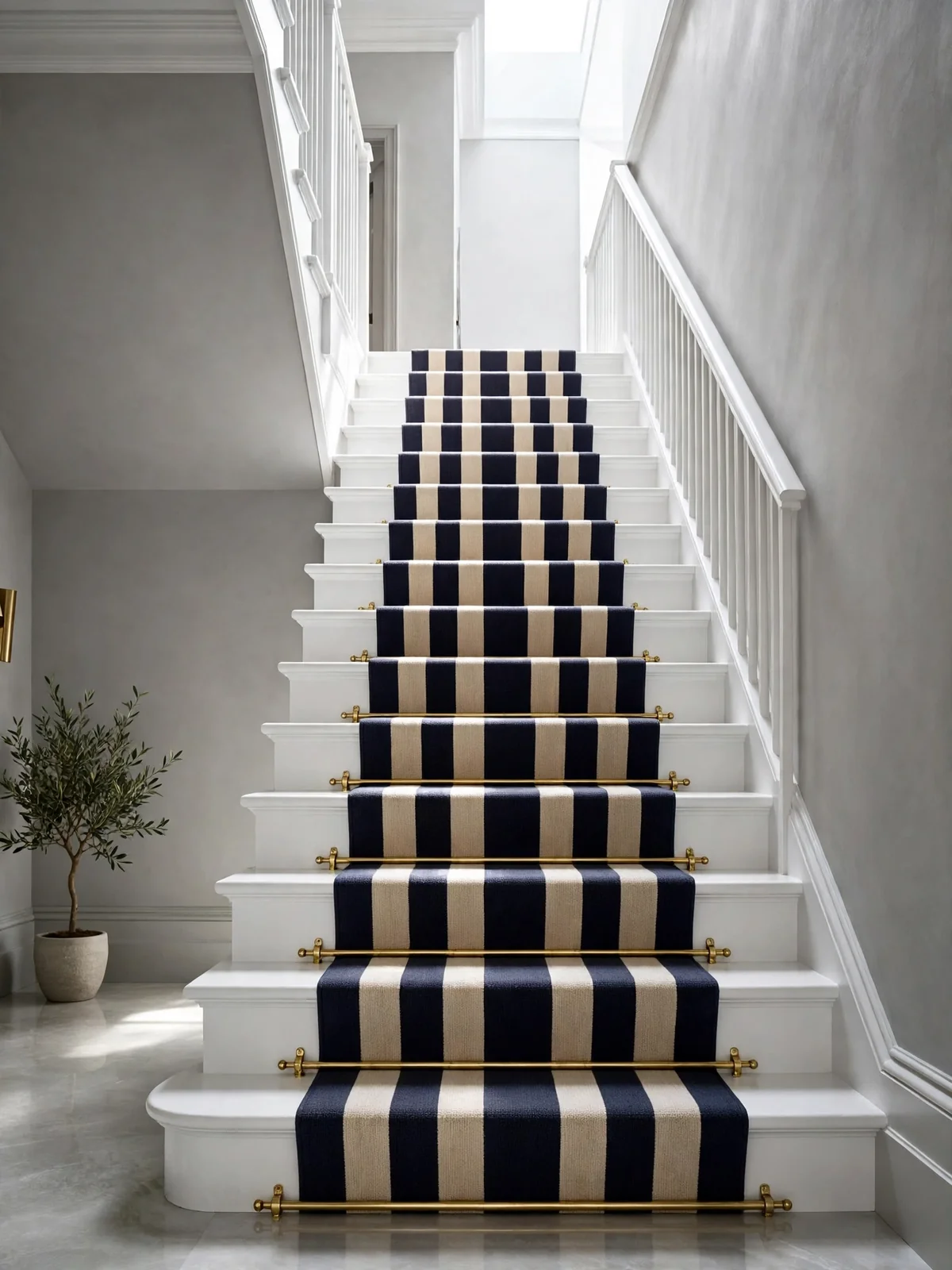
A statement runner over white steps turns a blank canvas into a design feature, because a bold patterned runner — stripes, geometric prints or muted florals — adds texture and colour in one move. Here, a navy and cream striped runner runs down the centre of white treads, held by brass stair rods, against soft grey walls. The idea suits any white stair, it adds texture, reduces slipping, and instantly makes the staircase feel intentional instead of plain. The weakness is that a runner needs carpet padding and proper fixing — so measure carefully, use stair rods or staples, and choose a pattern that hides dust between cleans.
Quick tips:
- Choose stripes, geometric prints or muted florals.
- Use carpet padding under the runner for comfort.
- Fix the runner with stair rods or staples.
- Pick a pattern that hides dust between cleans.
White Shiplap Along the Stair Wall
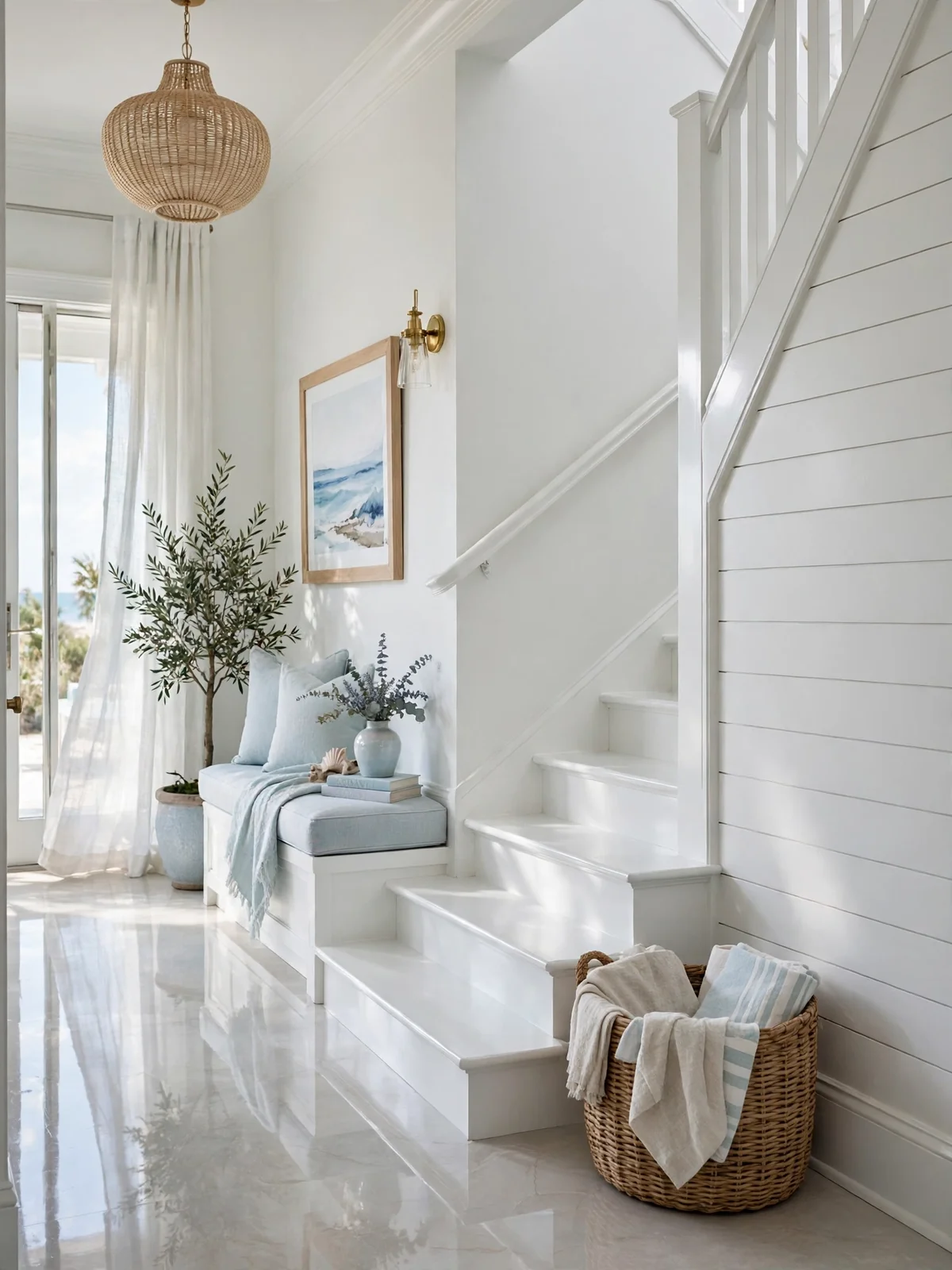
White shiplap along the stair wall brings a cosy coastal vibe, because the horizontal boards frame the stairs beautifully and add subtle texture without overwhelming the space. Here, white shiplap runs along the stair wall, with white treads, pale blue accents and a woven basket below. The idea suits beach-inspired and farmhouse homes, it keeps things calm and structured, and it is more about architectural interest than pattern. The weakness is direction — shiplap installed horizontally can make a narrow stair feel shorter — so install it vertically if your staircase is narrow, because it tricks the eye and makes the walls feel taller.
Quick tips:
- Install shiplap vertically in narrow staircases.
- Keep the shiplap white for a calm coastal feel.
- Add pale blue accents for a beach vibe.
- Seal the shiplap so it wipes clean easily.
A Sleek White Metal Railing
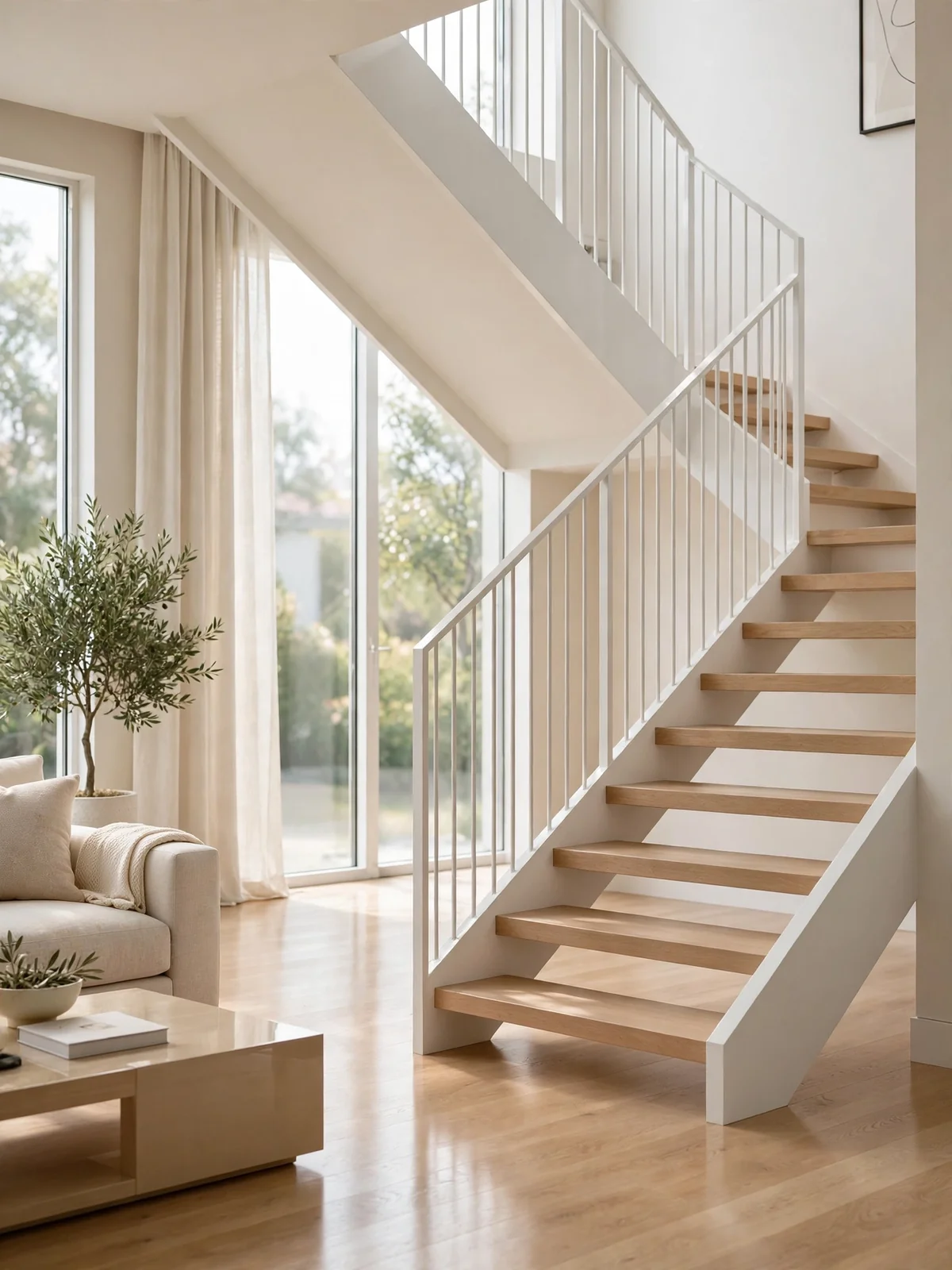
A sleek white metal railing proves wood is not your only option, because a white powder-coated metal railing looks sharp and modern, especially in contemporary spaces with clean lines and open layouts. Here, a thin white metal railing runs beside pale oak treads, with soft cream walls and a wood floor below. The idea suits modern homes, it feels light and minimal, and thin minimalist railings are having a moment while bulky balusters are not. The weakness is that white metal shows fingerprints and dust — so wipe it weekly — and it needs a powder-coated finish, because plain painted metal chips fast.
Quick tips:
- Choose a powder-coated finish for durability.
- Keep the railing thin for a minimalist look.
- Pair white metal with wood floors for contrast.
- Wipe the railing weekly to keep it bright.
Hidden LED Lighting Under Each Tread
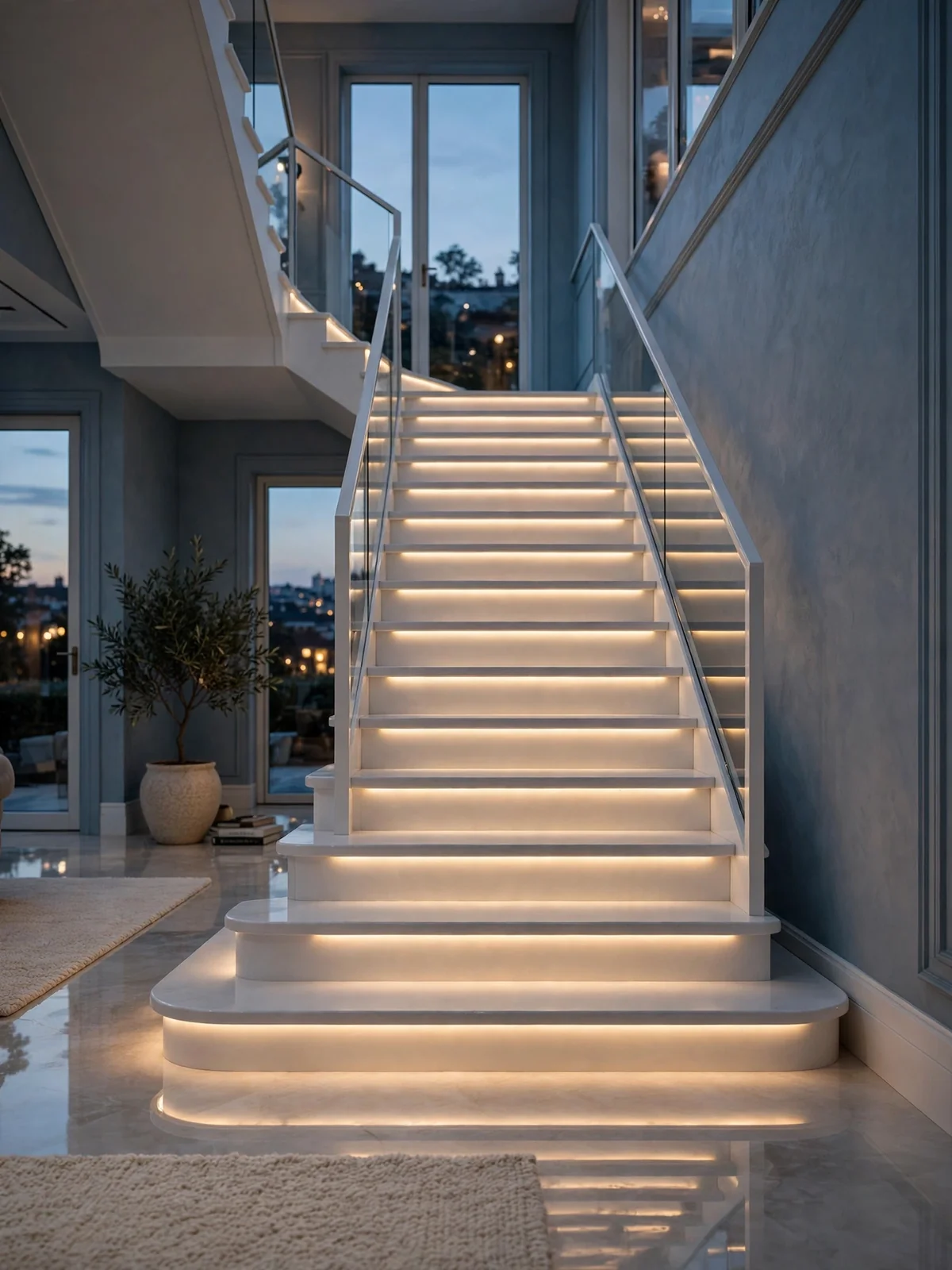
Hidden LED lighting under each tread is the most dramatic white staircase upgrade, because against white steps the glow feels almost floating — subtle but stunning. Here, warm LED strips glow beneath white treads, with soft dusty-blue walls and a cream rug below. The idea suits any white stair, it makes night-time trips safer, and it feels expensive because it kind of is — but it delivers. The weakness is wiring — the strips need power and a driver — so plan them during a renovation, and choose warm white LEDs, because cool light on white steps can feel clinical.
Quick tips:
- Choose warm white LEDs for a soft glow.
- Hide the strips under the tread nosing.
- Put the LEDs on a motion sensor for convenience.
- Plan the wiring during a renovation.
A Two-Tone White and Grey Palette
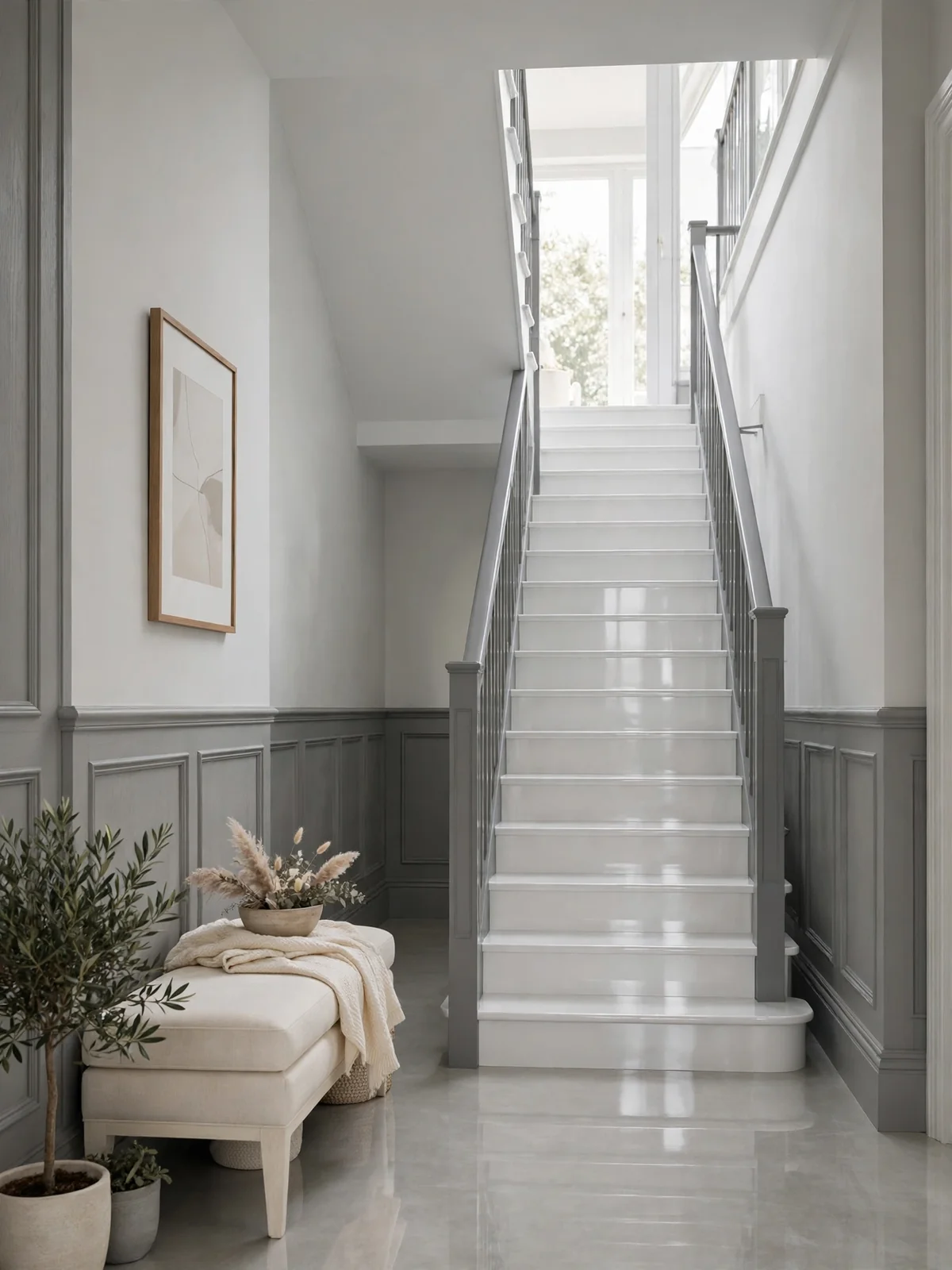
A two-tone white and grey palette suits anyone who finds pure white too stark, because white steps with soft grey walls or a grey handrail keep the staircase light while adding dimension. Here, white treads climb beside soft grey walls, with a grey handrail and a cream bench below. The idea suits modern townhomes, it feels calm and grounded, and grey tones ground the white without overpowering it. The weakness is that grey can feel cold in north-facing halls — so choose a warm grey with a hint of beige, and pair it with wood or brass to keep the stair feeling warm.
Quick tips:
- Choose a warm grey with a hint of beige.
- Pair white steps with a grey handrail for dimension.
- Add wood or brass to keep the stair warm.
- Keep the walls soft grey, not charcoal, for lightness.
Board and Batten for Subtle Texture
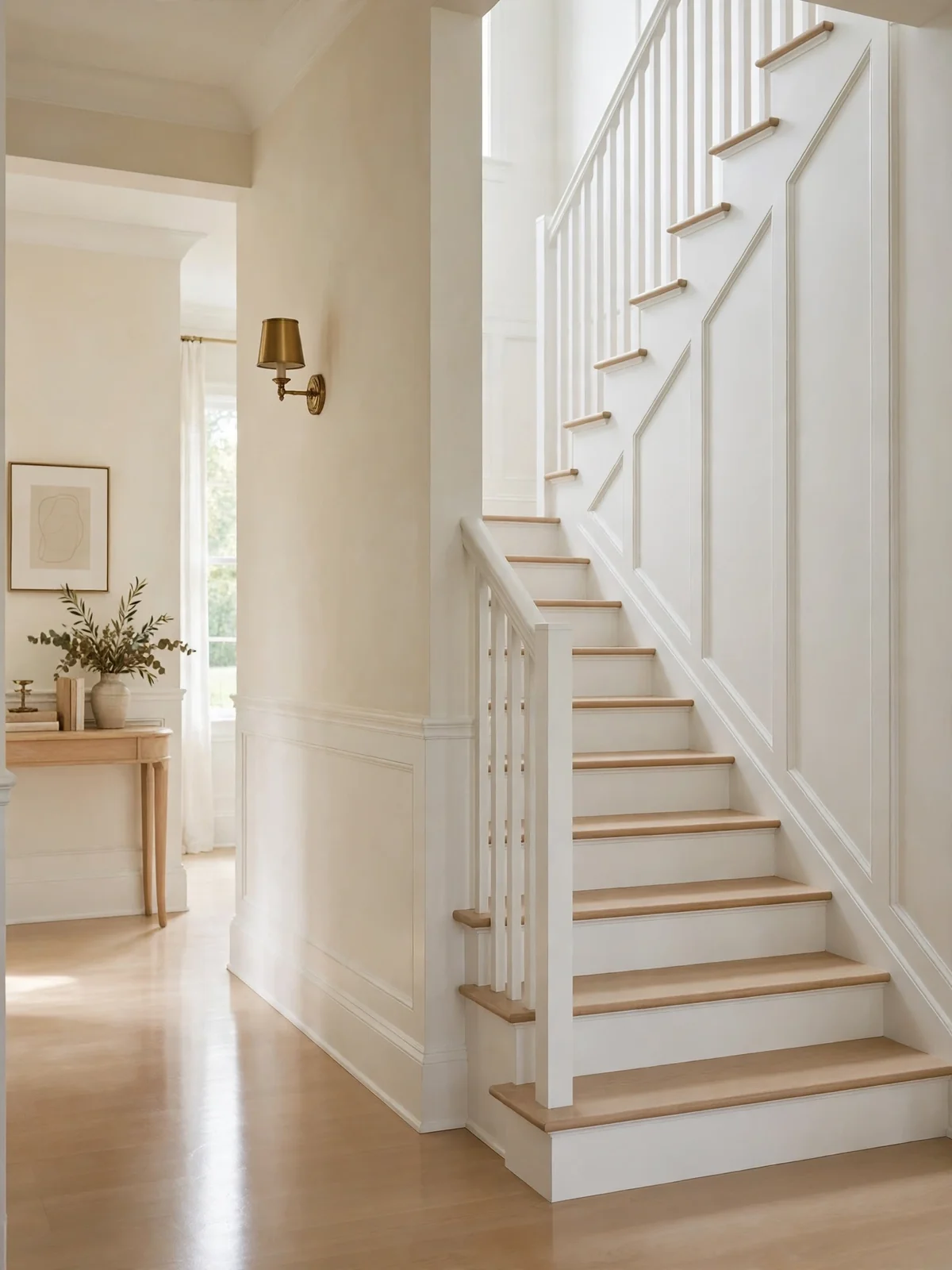
Board and batten for subtle texture gives a white staircase structure without adding colour, because white panelling along the stair wall makes everything look custom and adds shadow lines. Here, white board and batten panels run up the stair wall, with pale oak treads and a brass sconce. The idea suits farmhouse homes, transitional interiors and homes with higher ceilings, it feels like quiet luxury without trying too hard, and it is simple geometry with real impact. The weakness is that plain walls feeling flat is the problem it solves — so if the wall is already interesting, skip it — and the panelling needs precise measuring, because uneven panels show on a slope.
Quick tips:
- Measure the panels carefully for the slope.
- Paint the panelling the same white as the stairs.
- Keep the panelling simple — clean rectangles, no fuss.
- Add a brass sconce for warmth against the white.
Floating White Stairs With No Risers
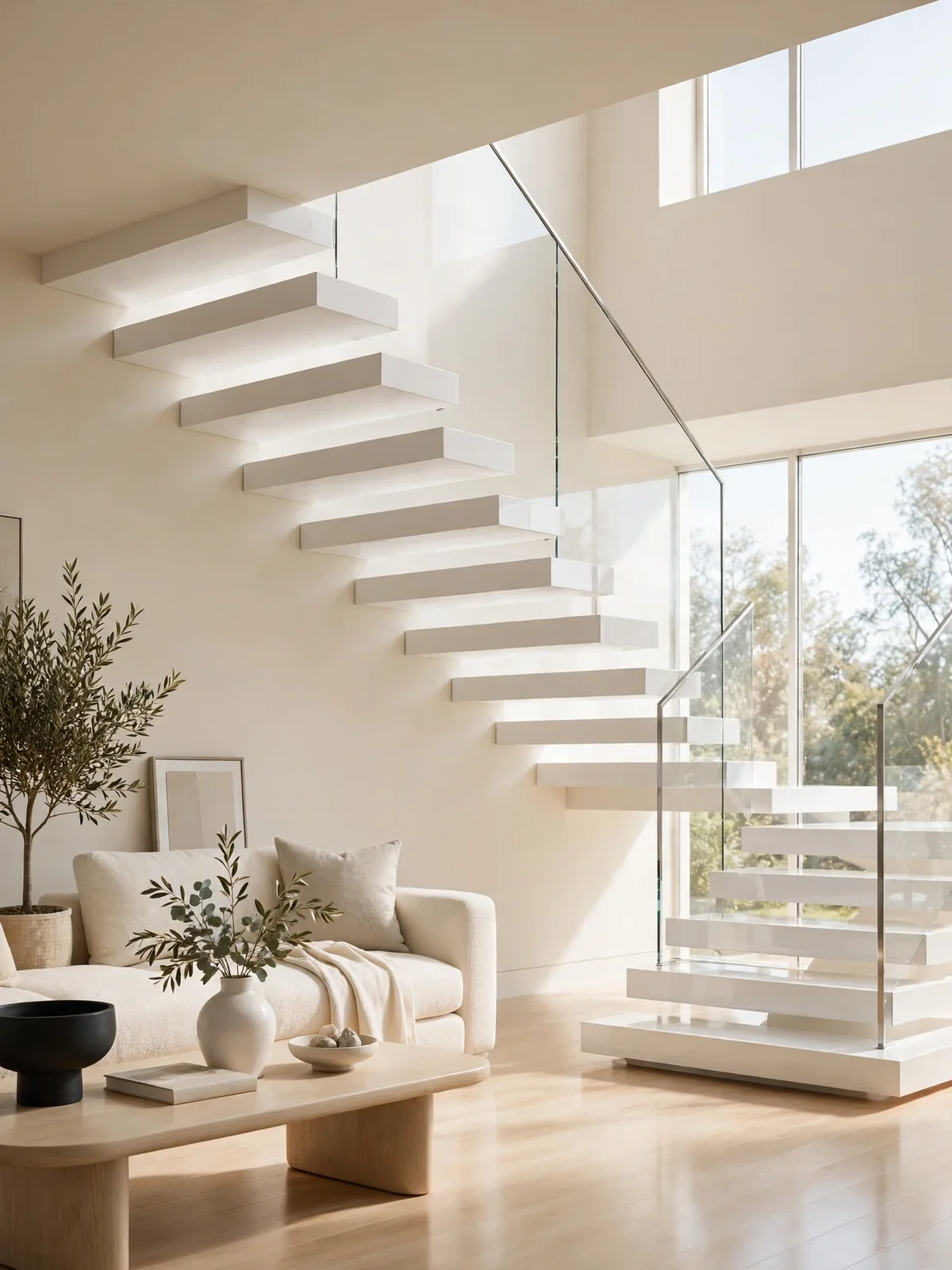
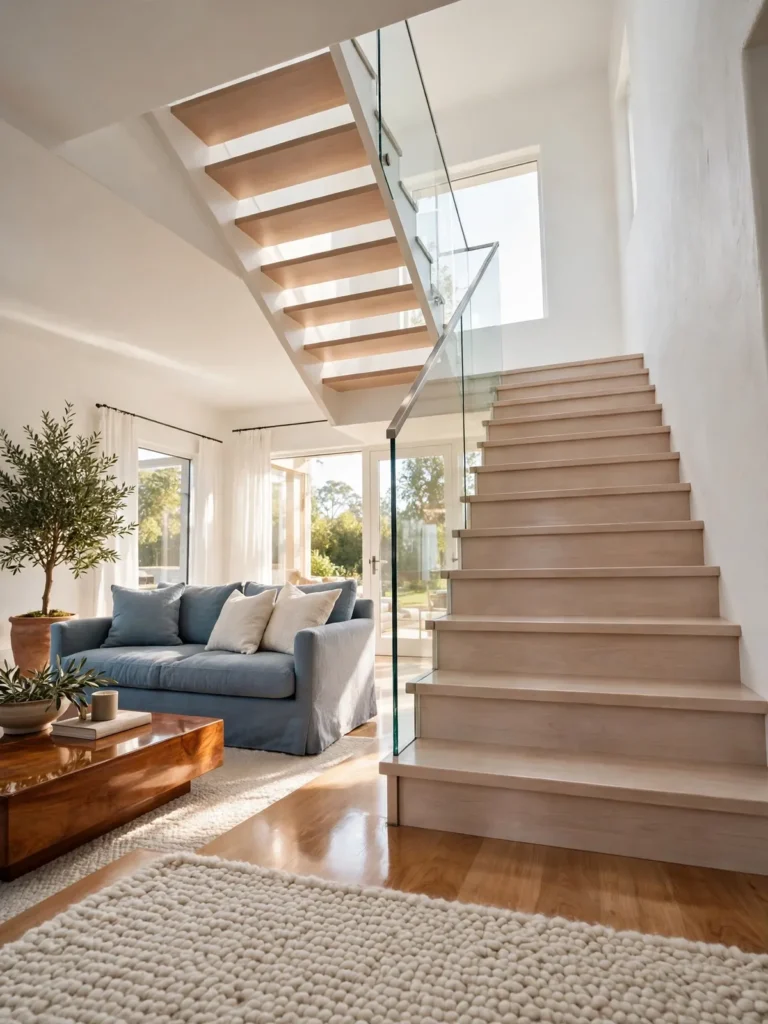
Floating white stairs with no risers are pure magic if you love a modern aesthetic, because sleek white slabs mounted to the wall look weightless, clean and architectural. Here, white floating treads climb a soft cream wall, with a glass railing keeping the space open. The idea suits modern homes, it makes small rooms feel larger, and it is airy and bold at the same time. The weakness is safety and cost — open risers are not ideal for toddlers, and floating stairs need a strong wall structure and a specialist installer — so check the building rules and the wall strength before committing.
Quick tips:
- Pair floating stairs with a glass railing for openness.
- Check the wall strength before installing.
- Avoid open risers in homes with toddlers.
- Keep the treads white and the wall pale for lightness.
A White Staircase With Glass Panels
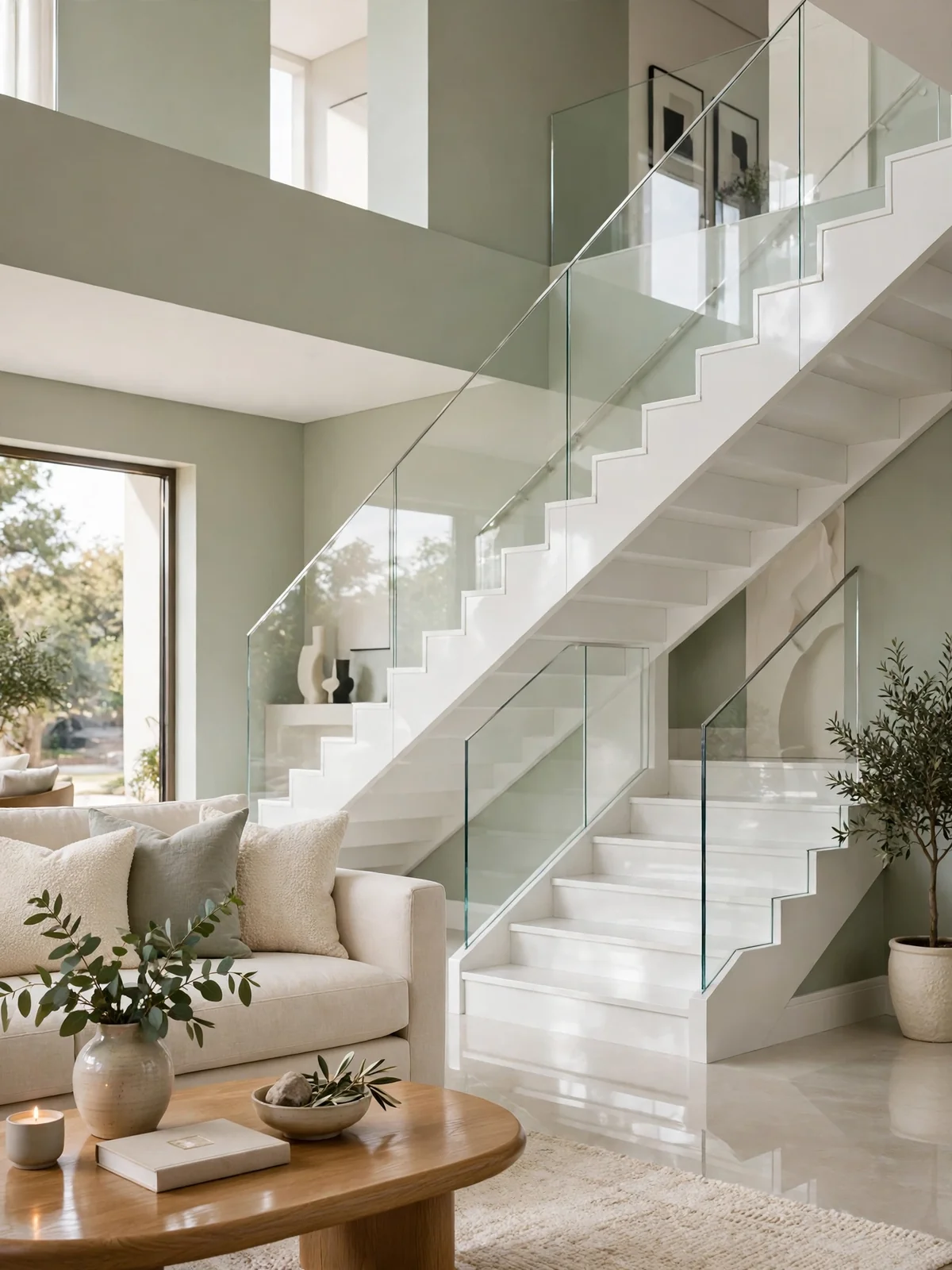
A white staircase with glass panels is instant sophistication, because the white keeps things bright and the glass keeps things open. Here, white treads climb beside clear glass panels, with soft sage-green walls and a cream sofa below. The idea suits smaller homes, it does not visually block anything, and it feels modern without being cold. The weakness is fingerprints — glass railings show every touch — so choose tempered glass for safety, keep a microfibre cloth nearby, and wipe the panels weekly.
Quick tips:
- Choose tempered glass for safety.
- Keep a microfibre cloth nearby for fingerprints.
- Pair white stairs with glass for maximum openness.
- Wipe the glass panels weekly.
Decorative White Spindles With Curves
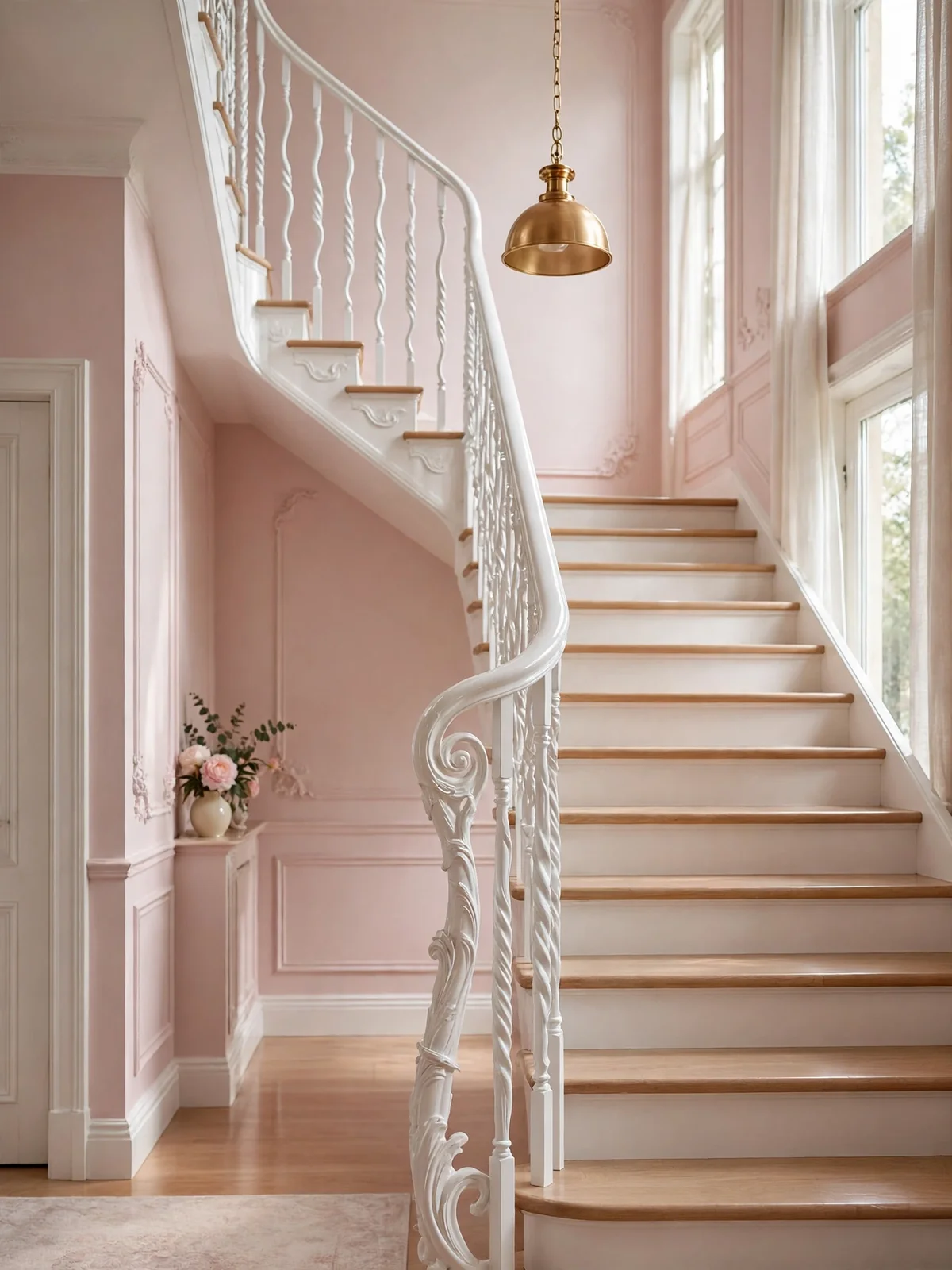
Decorative white spindles with curves add personality to a white staircase, because straight lines are great but curves soften the stair and make it feel romantic without being fussy. Here, white spindles with gentle twists and curves climb beside pale oak treads, against soft blush-pink walls. The idea suits traditional homes, it elevates the staircase beautifully, and it is a subtle detail with a big effect. The weakness is mixing — too many spindle styles in one stair looks messy — so choose one spindle style, match the hardware finishes, and avoid overly ornate designs in small spaces.
Quick tips:
- Choose one spindle style and stick to it.
- Avoid overly ornate spindles in small spaces.
- Match the hardware finishes across the stair.
- Keep the spindles white for a soft, romantic feel.
White Stairs With Bold Wallpaper Above
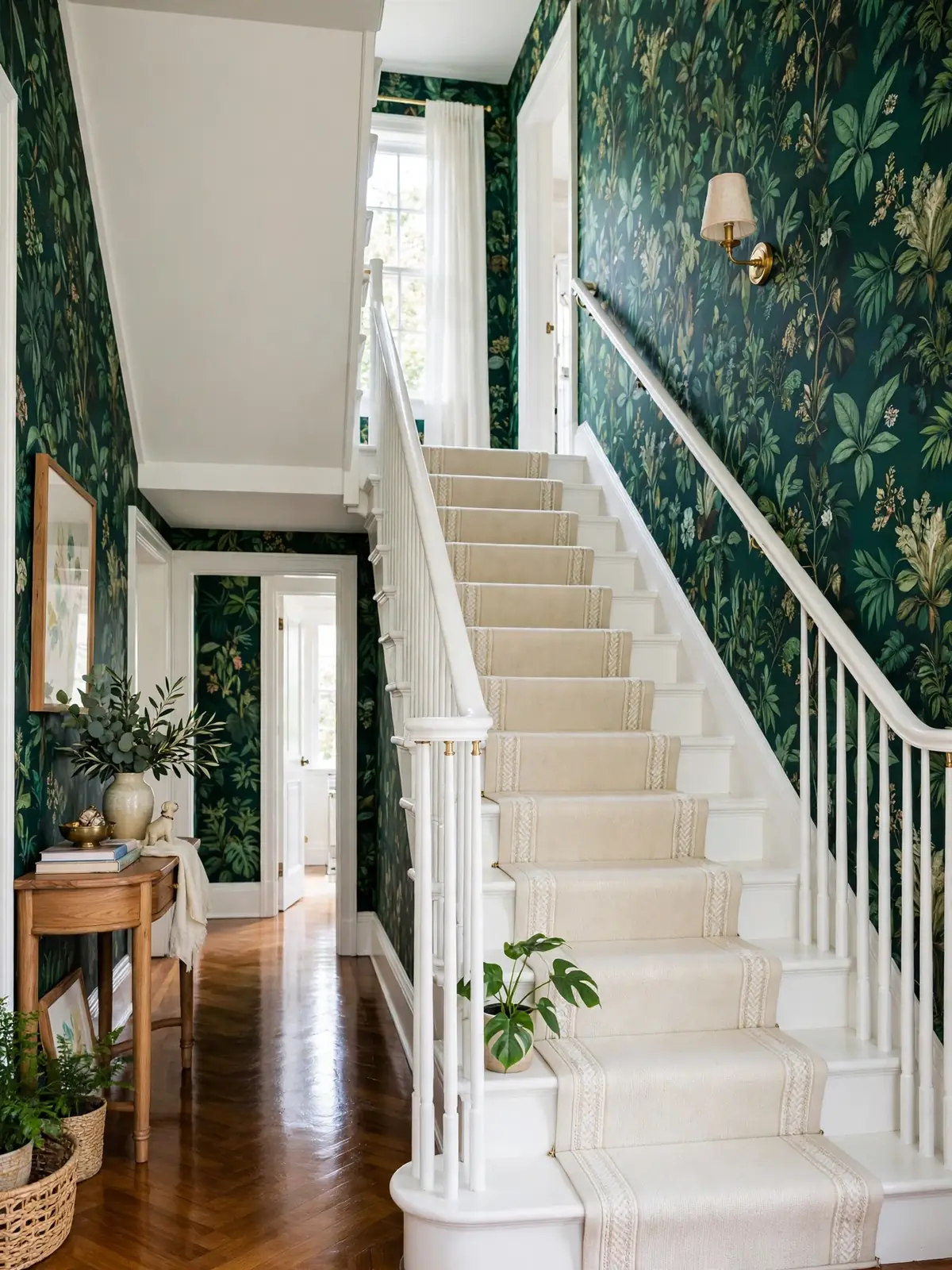
White stairs with bold wallpaper above create a perfect balance, because the staircase grounds the design while the wallpaper brings personality. Here, deep emerald botanical wallpaper covers the wall above white treads, with a brass sconce and a cream runner. The idea suits anyone who wants colour without painting the stair, it is playful and unexpected, and it photographs beautifully. The weakness is cohesion — wallpaper with no white element feels disconnected — so choose wallpaper with at least one white element so it ties back to the stairs, and keep the rest of the hall calm.
Quick tips:
- Choose wallpaper with at least one white element.
- Keep the rest of the hall calm so the wallpaper shines.
- Add a brass sconce for warmth against the bold wall.
- Use a large-scale pattern for tall stair walls.
A Handrail in a Contrasting Finish
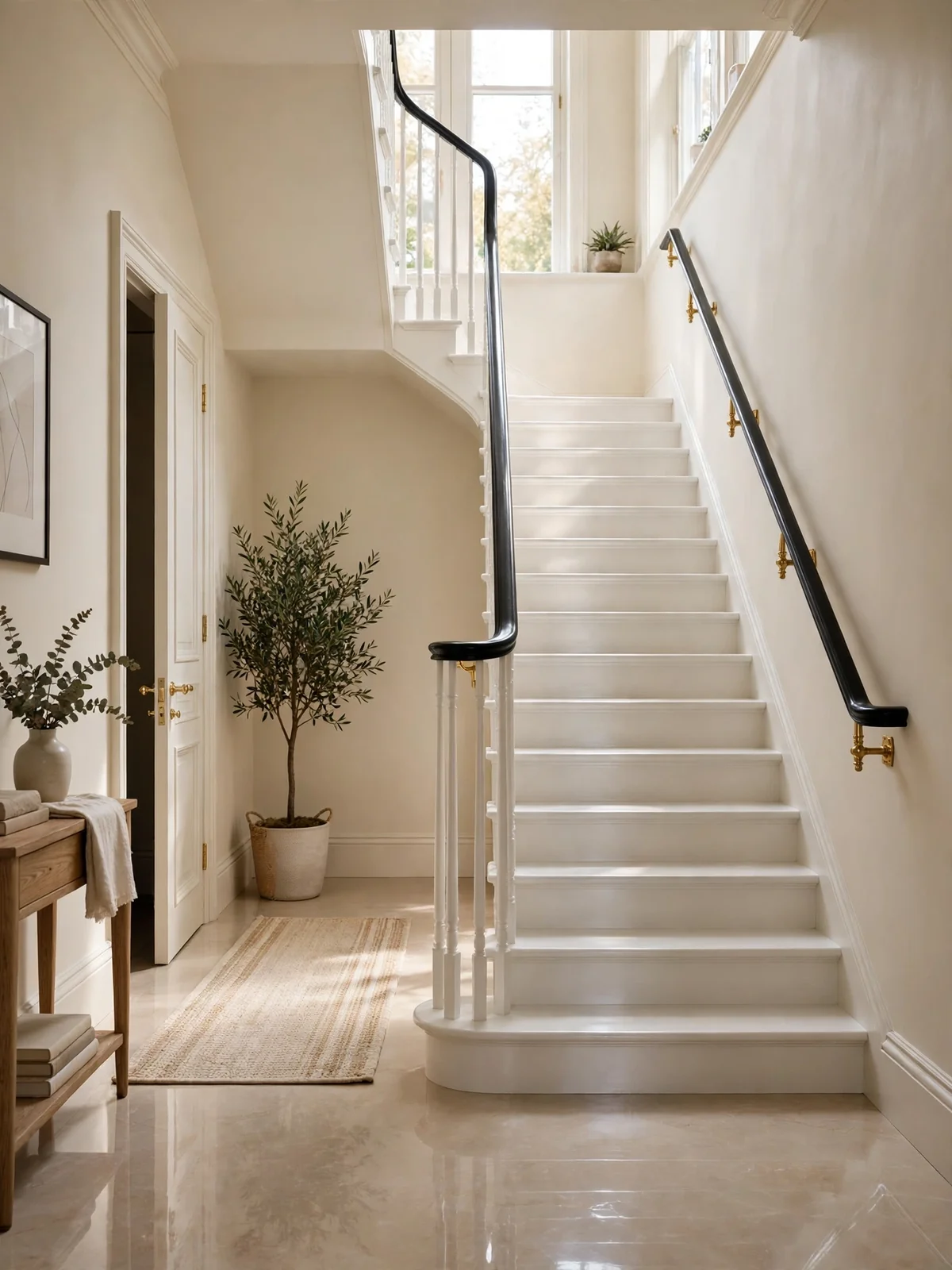
A handrail in a contrasting finish is the smallest change with the biggest impact on a white staircase, because one line of contrast — matte black, warm brass or rich walnut — can define the entire staircase. Here, a matte black handrail runs above white treads and spindles, with soft cream walls and brass brackets. The idea suits any white stair, it costs very little, and it is the upgrade for under a few hundred that changes the whole look. The weakness is that the contrast must be deliberate — a handrail that almost matches looks like a mistake — so choose a clearly different finish and keep the rest of the stair white.
Quick tips:
- Choose matte black, warm brass or rich walnut.
- Replace the handrail only — keep the rest white.
- Swap the brackets to match the new finish.
- Repaint the balusters if they clash with the handrail.
White Staircase Wainscoting for Depth
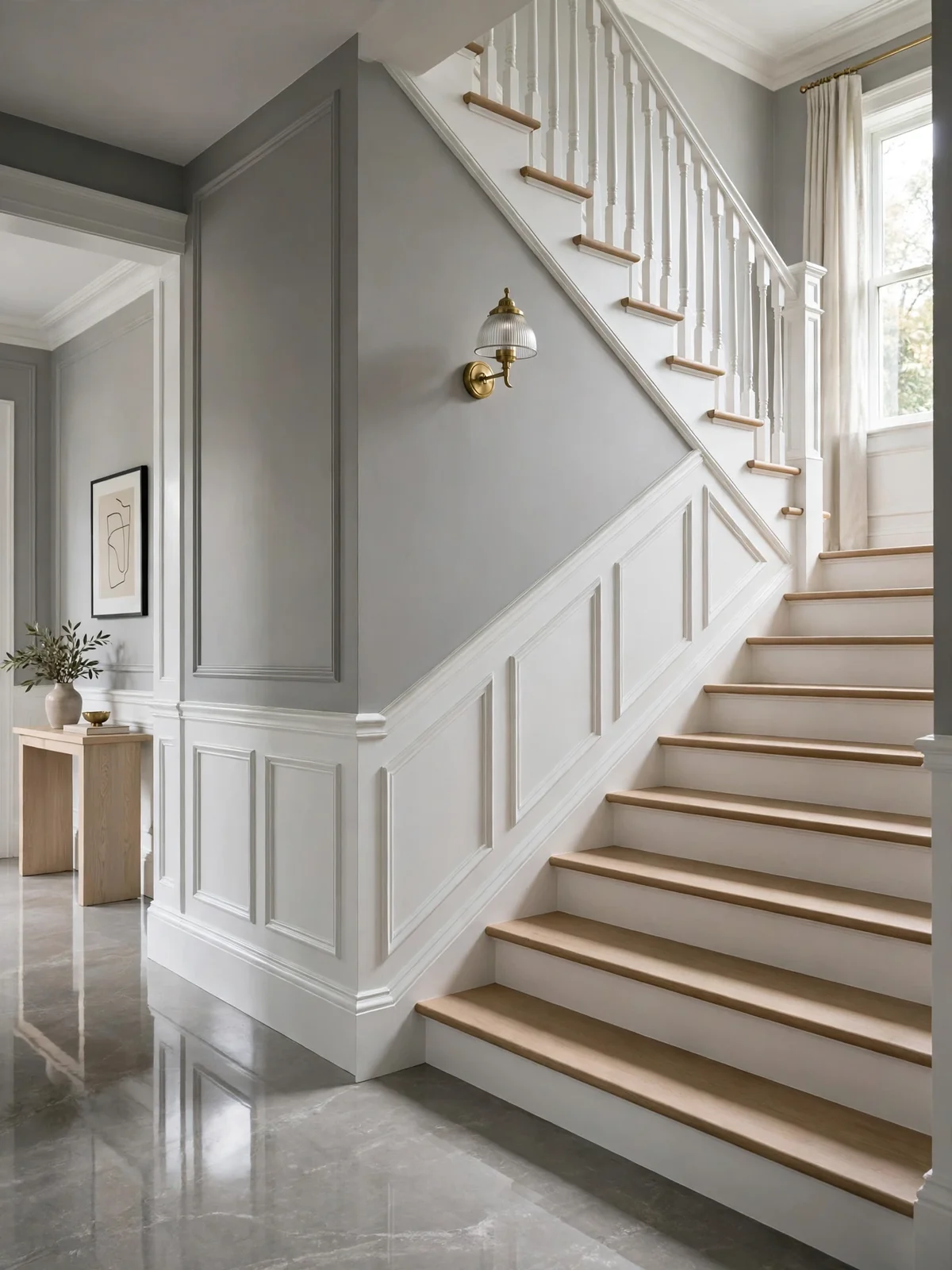
White staircase wainscoting adds depth without adding colour, because panel moulding along the stair wall, painted the same white as the stairs, creates shadow lines and a finished feel. Here, white wainscoting runs up the stair wall, with soft grey walls above, pale oak treads and a brass sconce. The idea suits lovers of classic interiors, anyone renovating an older home, and people who hate flat walls — it is structured, elegant and timeless. The weakness is that wainscoting needs precise measuring on a slope, so take your time with the angles and keep the panels the same white as the stairs for cohesion.
Quick tips:
- Paint the wainscoting the same white as the stairs.
- Measure the panels carefully for the slope.
- Keep the upper wall a soft contrasting tone.
- Add a brass sconce for warmth against the white.
Statement Lighting Above the White Staircase
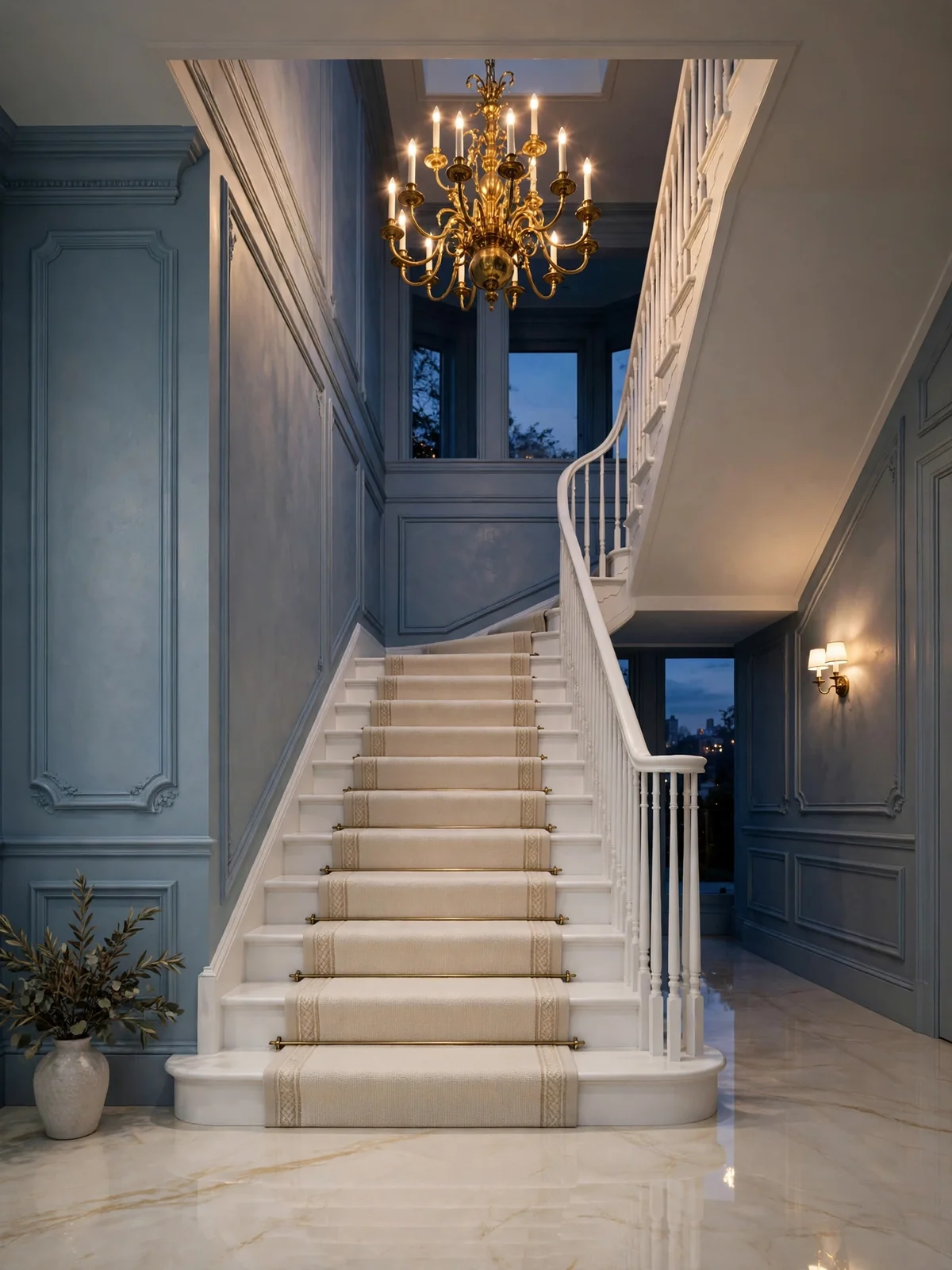
Statement lighting above a white staircase lets the light be the star, because white stairs act like a backdrop and a dramatic chandelier or pendant really pops against them. Here, a brass chandelier hangs above white treads, with soft dusty-blue walls and a cream runner below. The idea suits any white stair, it draws the eye upward and makes the staircase feel grand, and it needs only a few hours to install. The weakness is wiring — a chandelier may need rewiring — so check the ceiling fixing and the wiring before buying, and choose a fixture sized to the stairwell.
Quick tips:
- Choose a chandelier sized to the stairwell.
- Hang it low enough to be seen, high enough to walk under.
- Use warm bulbs so the white stairs glow softly.
- Keep the fixture simple if the stair is already detailed.
White Trim Details Framing the Staircase
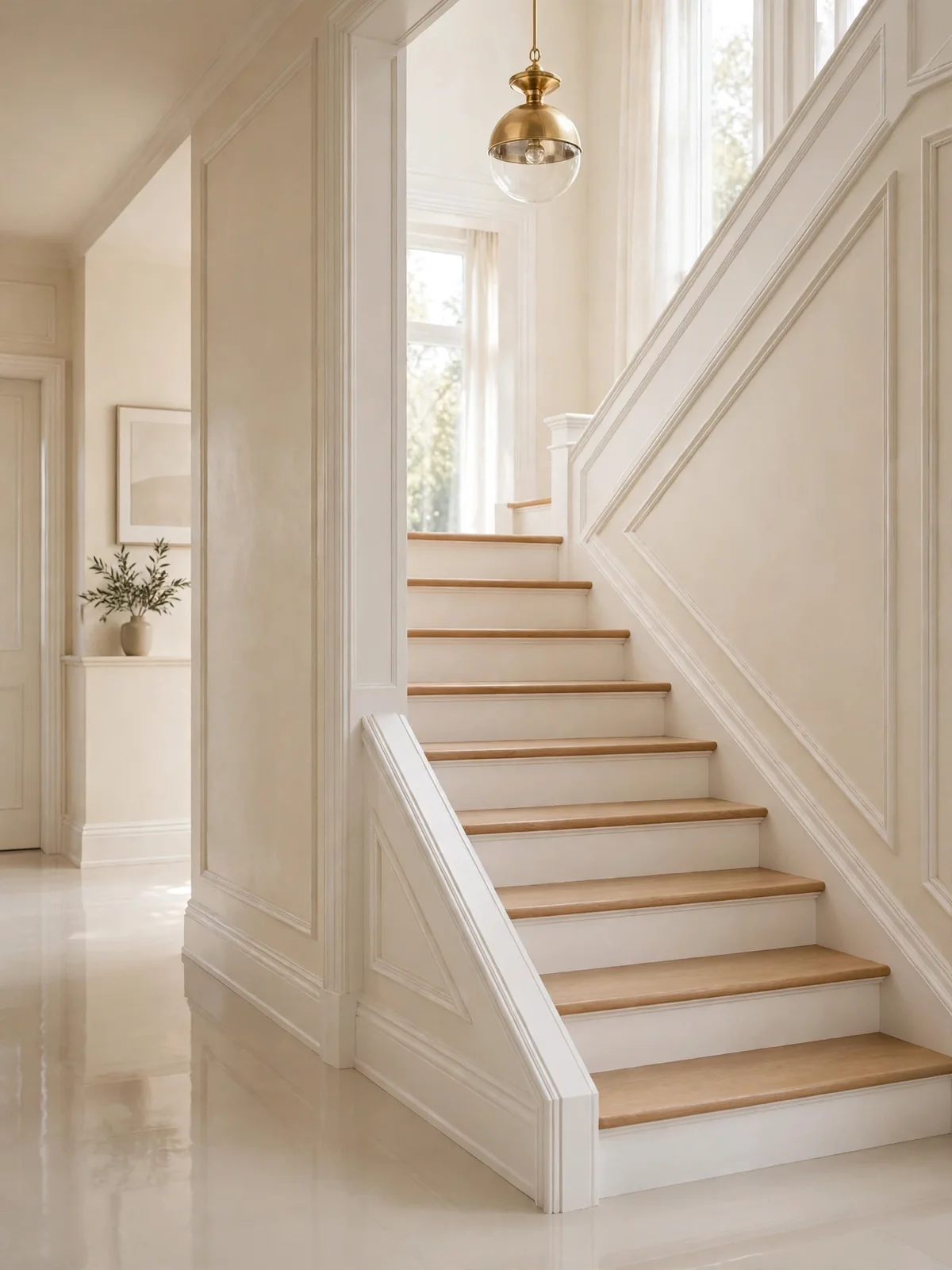
White trim details framing the staircase give the whole area a polished, finished feel, because thick white trim along the staircase edges and nearby door frames ties the space together. Here, thick white trim runs along the stair edges, with soft cream walls, pale oak treads and a brass pendant. The idea suits any home, it is subtle but it matters, and it costs very little. The weakness is shade matching — mixing whites is where most people go wrong — so keep all the trim shades consistent, and use the same white on the stair, the trim and the doors.
Quick tips:
- Keep all trim shades consistent — one white only.
- Use thick trim for a polished, finished feel.
- Match the trim white to the stair white.
- Paint the trim with a durable satin finish.
Matte White for a Modern Finish
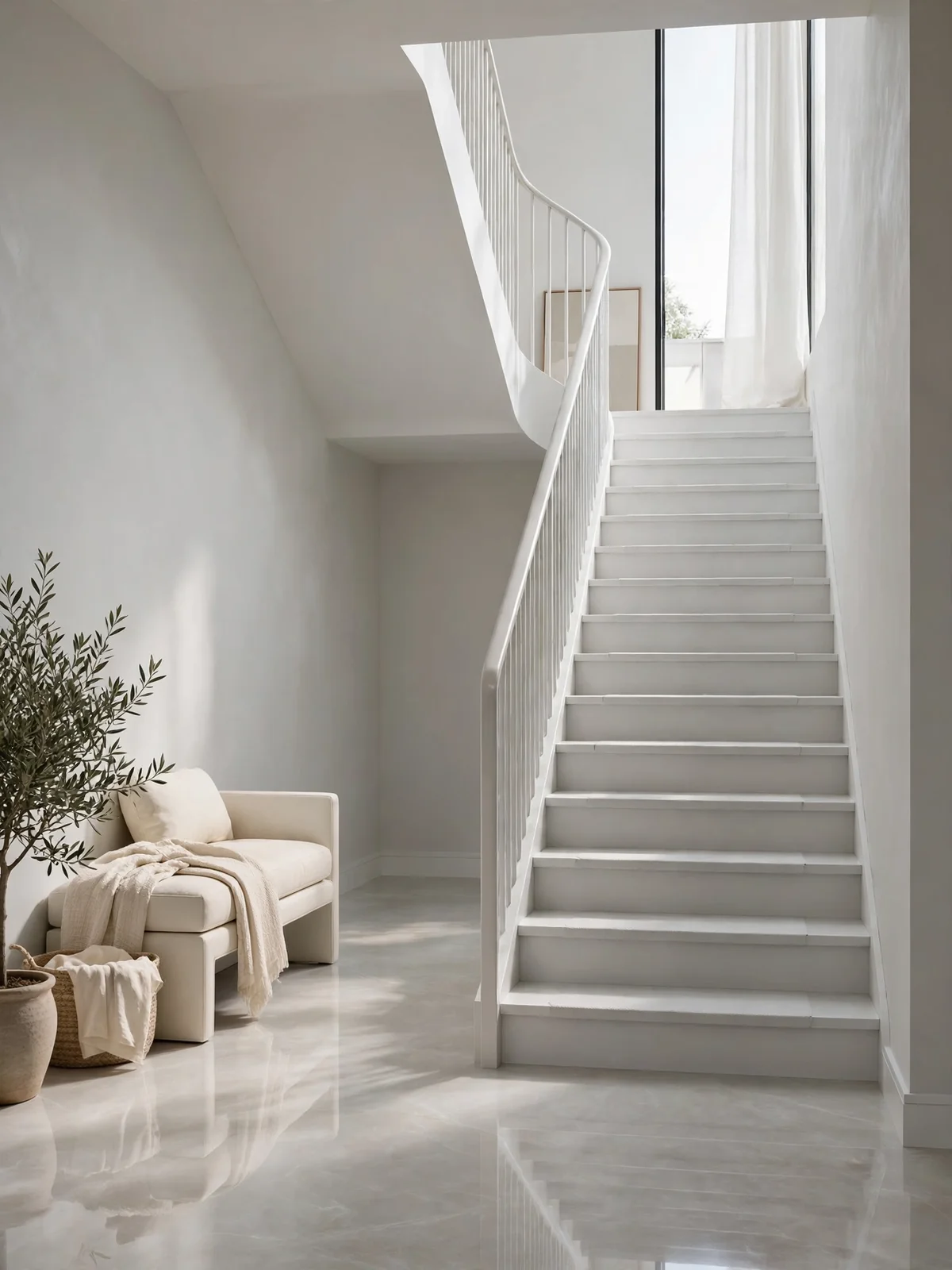
Matte white for a modern finish feels contemporary and soft, because glossy stairs can feel dated while matte paint hides imperfections better. Here, matte white treads and railing climb beside pale grey walls, with a cream bench below. The idea suits modern homes, it gives a calm, effortless vibe, and it is the most forgiving white finish. The weakness is cleaning — matte paint is harder to wipe clean than satin — so use a washable matte paint on the treads and handrails, and accept that matte shows fewer scuffs but needs gentler cleaning.
Quick tips:
- Use a washable matte paint on treads and handrails.
- Avoid high gloss — it highlights scuffs.
- Pair matte white with pale grey walls.
- Keep the finish consistent across the whole stair.
A Cosy Nook Beside the White Staircase
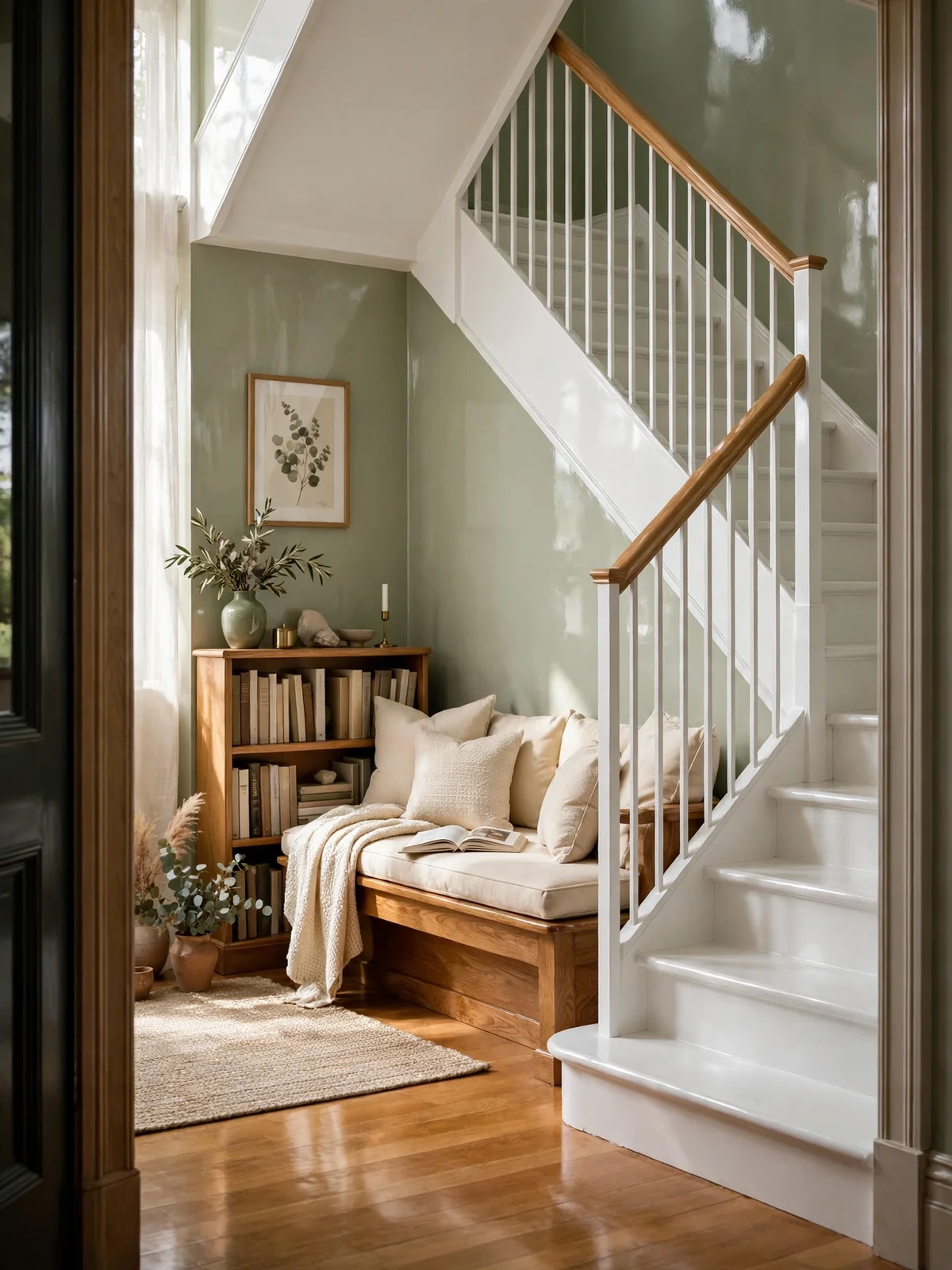
A cosy nook beside a white staircase turns a transition space into a destination, because a bench, throw pillows and a small bookshelf make the staircase feel integrated instead of isolated. Here, a wooden bench with cream cushions sits beside white treads, with soft sage-green walls and a small bookshelf. The idea suits entries with space beside the stair, it adds warmth to the white, and it makes the staircase feel like part of the room. The weakness is space — the nook needs enough room without blocking the walkway — so measure first and keep the styling minimal with soft throws, warm lighting and neutral cushions.
Quick tips:
- Measure the space so the nook never blocks the walkway.
- Use soft throws and neutral cushions for warmth.
- Add a small bookshelf for a lived-in feel.
- Keep the styling minimal so the white stairs shine.
A White Staircase With Black Accents
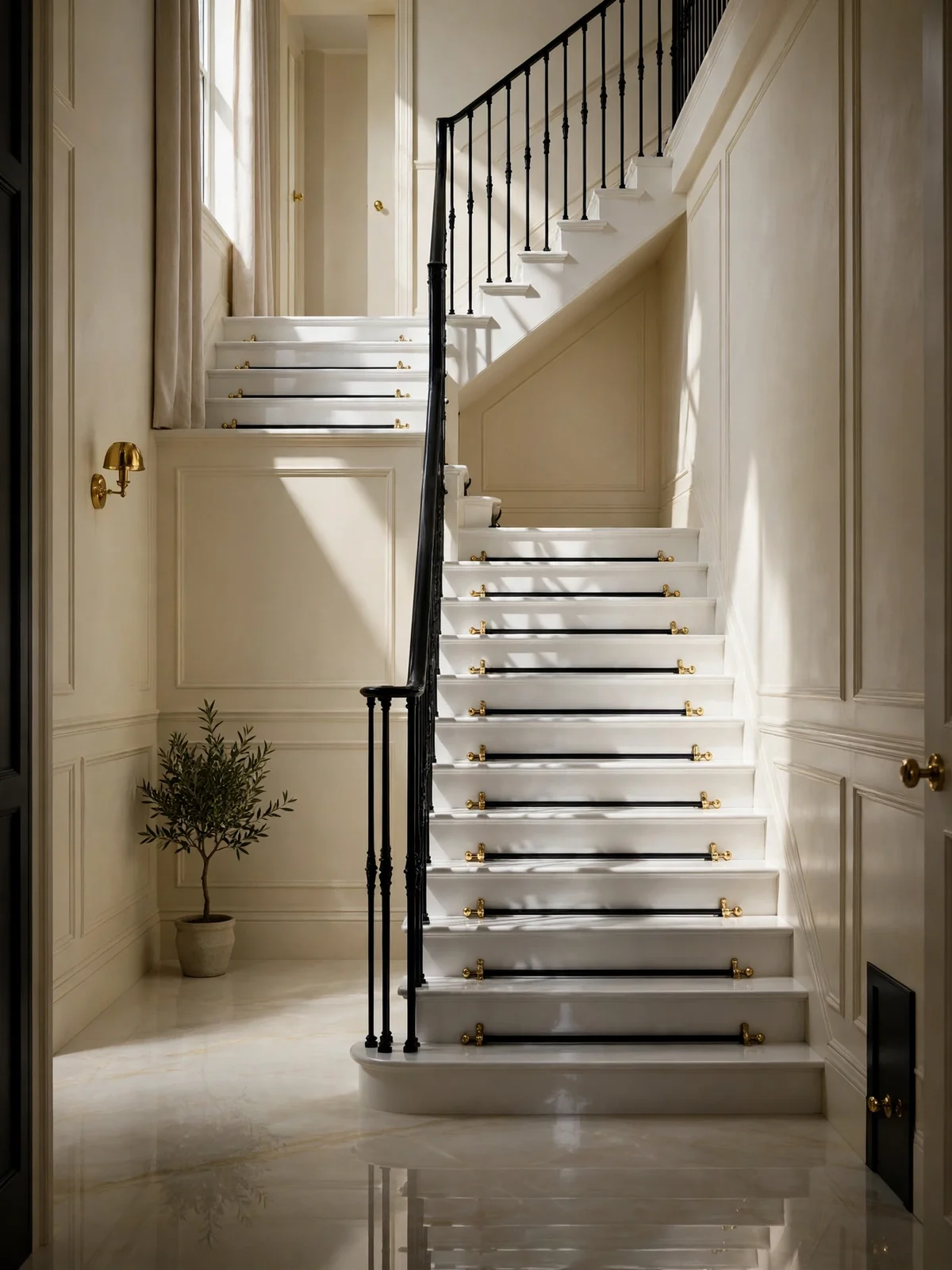
A white staircase with black accents is a classic combination that always works, because white steps with black balusters or black stair rods create bold, graphic contrast. Here, white treads climb beside black balusters, with soft cream walls, black stair rods and brass hardware. The idea suits modern and traditional homes alike, it is graphic, sharp and slightly dramatic, and crisp contrast never goes out of style. The weakness is balance — too many accent colours break the effect — so keep the walls neutral, add matching black hardware, and never mix glossy black with matte white.
Quick tips:
- Keep the walls neutral so the contrast shines.
- Add matching black hardware throughout.
- Never mix glossy black with matte white.
- Use black sparingly — balusters or rods, not both everywhere.
White Risers With Subtle Patterns
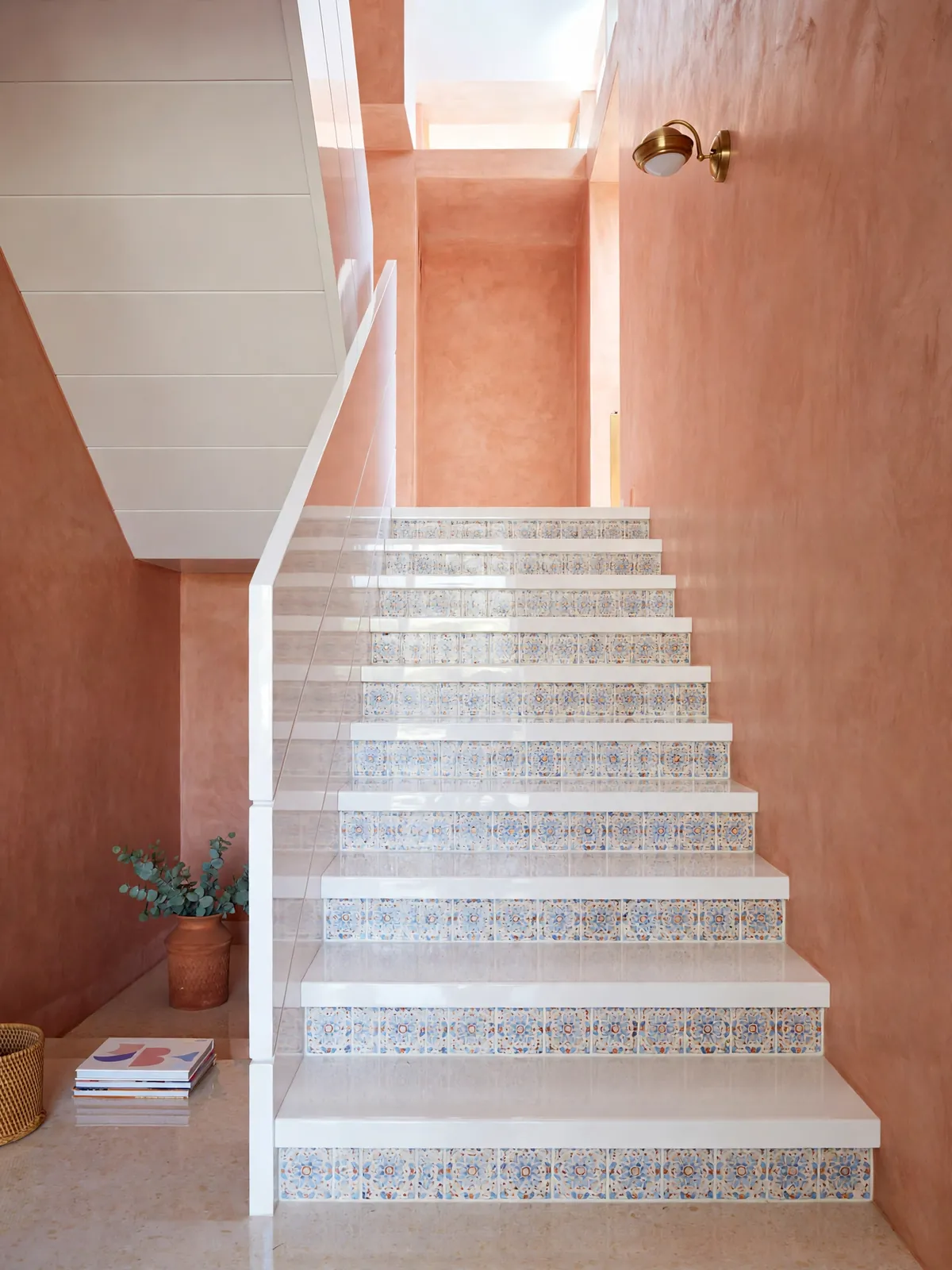
White risers with subtle patterns add character without overpowering the staircase, because patterned tiles or stencils on the risers give just a hint of design. Here, muted patterned tiles cover the white risers, with white treads and soft terracotta walls. The idea suits anyone who wants a white stair with personality, it is playful but controlled, and decorative risers date back centuries in Mediterranean homes. The weakness is overdoing it — nothing loud, just a hint — so keep the pattern subtle, seal the tiles, and let the white treads stay the star.
Quick tips:
- Keep the pattern subtle — nothing loud.
- Seal the tiles so scuffs wipe off easily.
- Keep the treads white so the risers stay the feature.
- Repeat one tile colour on a nearby cushion or frame.
White Staircase Panels With Subtle Moulding
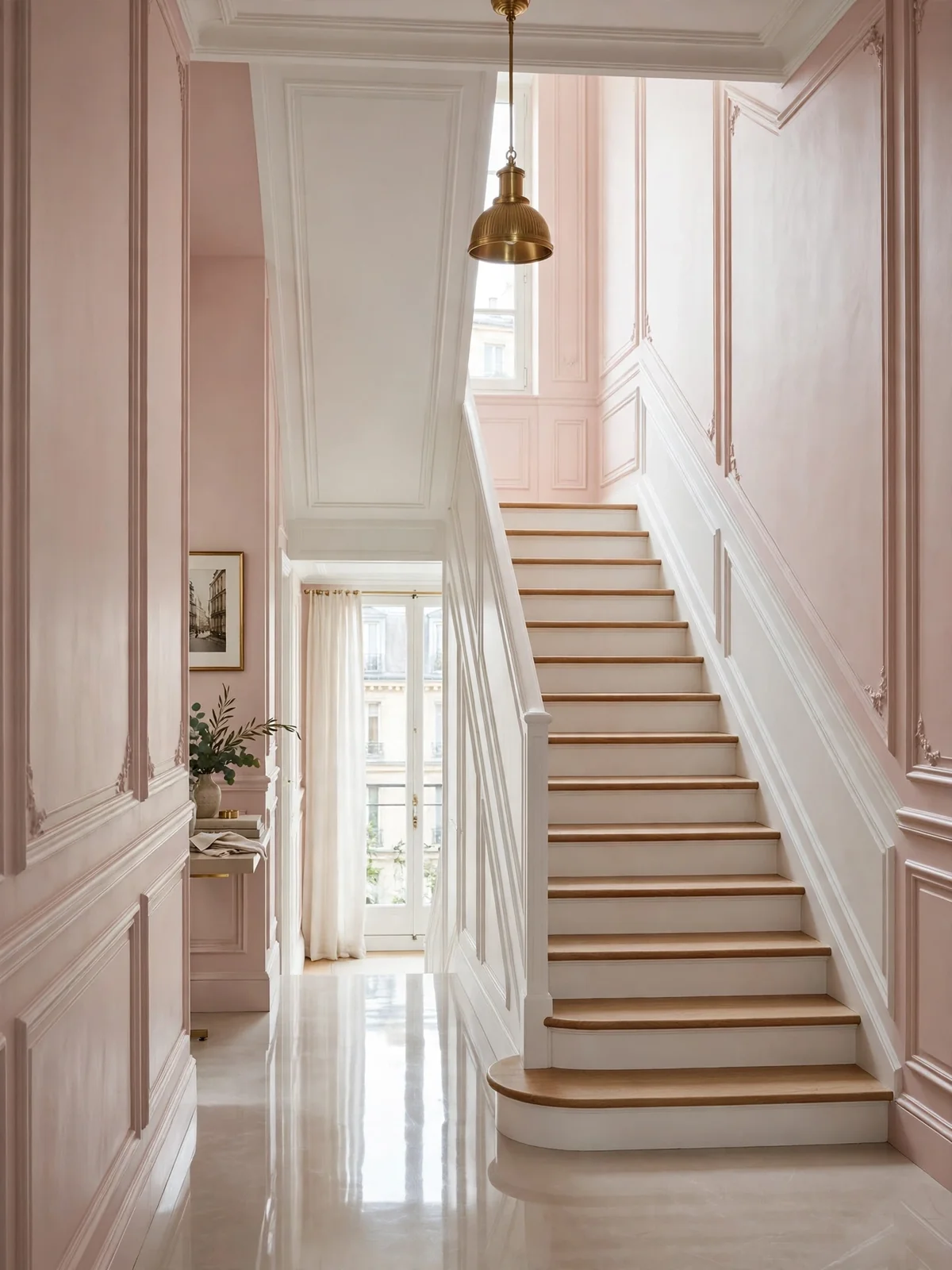
White staircase panels with subtle moulding give a white stair detail without colour, because moulding panels along the stair wall, painted white for cohesion, create shadow lines and depth. Here, white moulding panels run up the stair wall, with soft blush-pink walls, pale oak treads and a brass pendant. The idea suits transitional homes that mix old and new, it feels like Parisian apartment quiet elegance, and it is understated but rich. The weakness is that moulding needs precise measuring on a slope, so take your time with the angles and keep the panels the same white as the stairs.
Quick tips:
- Paint the moulding panels the same white as the stairs.
- Measure the panels carefully for the slope.
- Keep the panels simple — clean rectangles, no fuss.
- Add a brass pendant for warmth against the white.
A Coastal White and Light Blue Palette
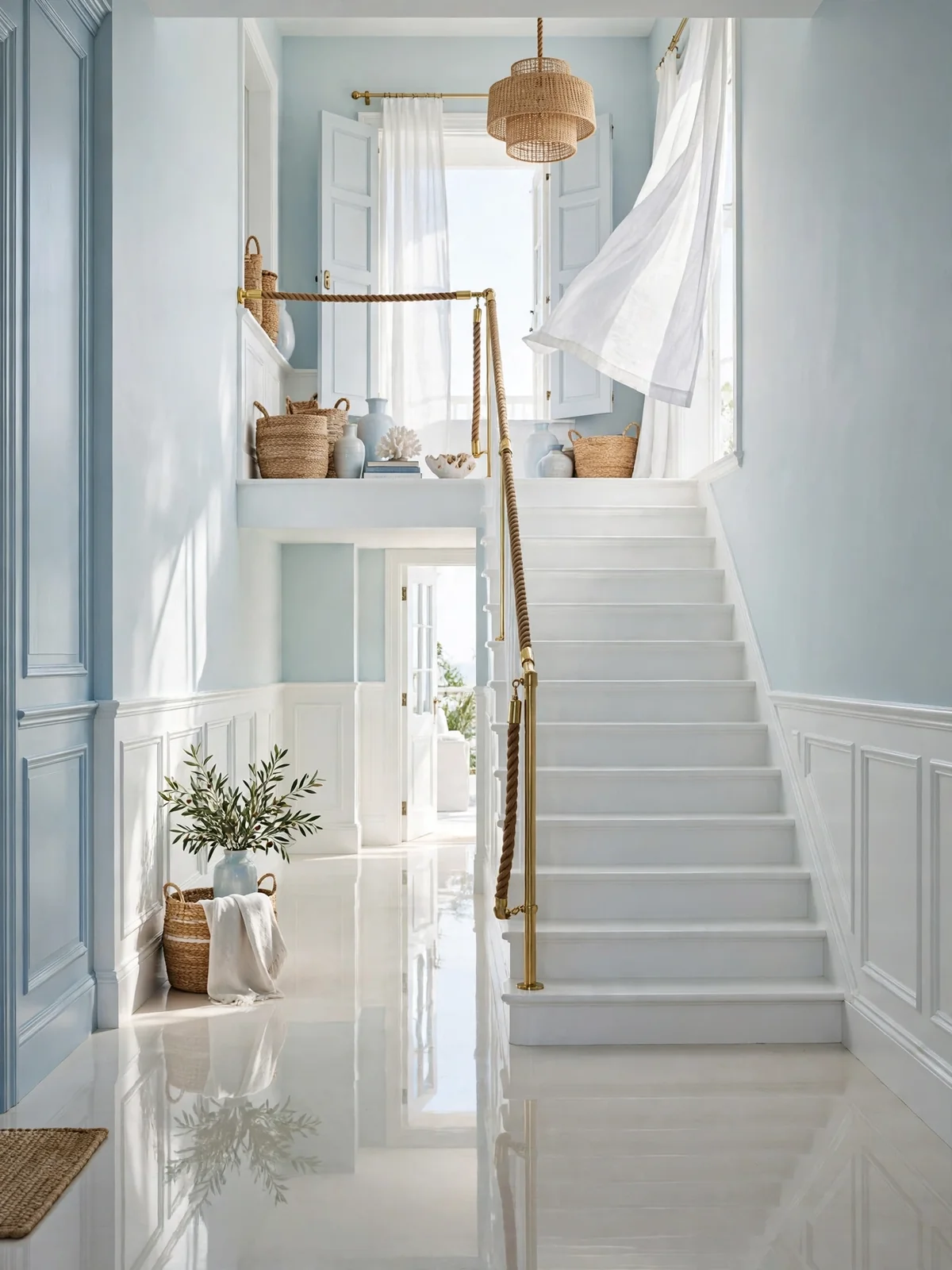
A coastal white and light blue palette gives a white staircase instant beach energy, because pale blue walls or accessories paired with white steps feel relaxed, breezy and always welcoming. Here, white treads climb beside pale blue walls, with rope details and woven accents. The idea suits coastal and beach-inspired homes, it keeps things soft and airy, and it is one of the easiest white staircase looks to achieve. The weakness is that pale blue can feel cold in north-facing halls — so choose a warm pale blue with a hint of grey, and add woven textures to keep the stair feeling warm.
Quick tips:
- Choose a warm pale blue with a hint of grey.
- Add rope details or woven accents for charm.
- Keep the treads white and the walls pale blue.
- Add a woven runner for texture and warmth.
Tall White Balusters for Drama
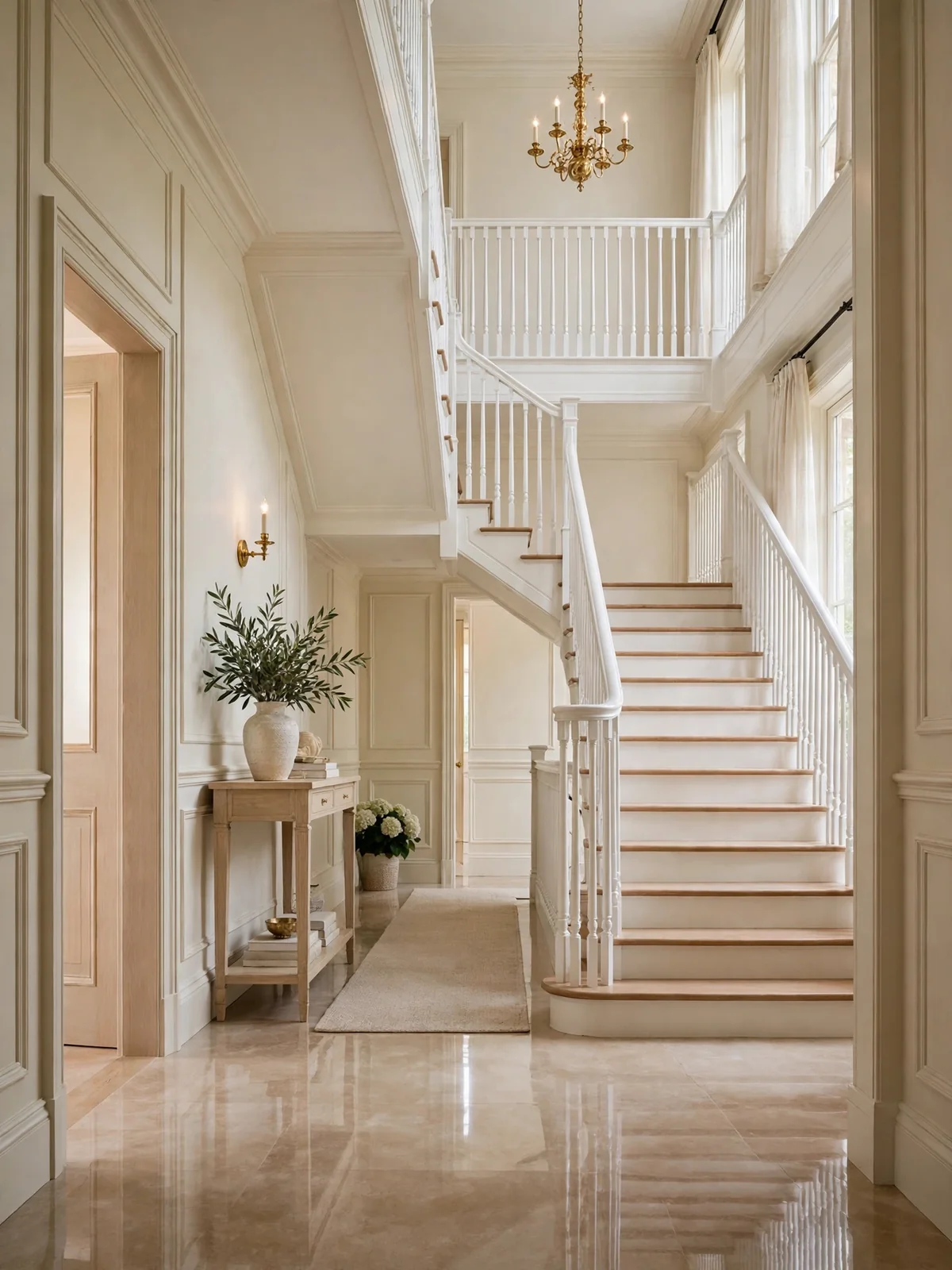
Tall white balusters for drama elongate the staircase visually, because extending the balusters higher than standard height makes the stair feel grander. Here, tall white balusters climb beside pale oak treads, with soft cream walls and a brass chandelier above. The idea suits homes with tall ceilings, it works best when you want subtle grandeur without adding ornate details, and white keeps it from feeling heavy. The weakness is proportion — balusters too tall look strange in a low-ceilinged hall — so save this idea for stairwells with generous height, and keep the lines simple for strong impact.
Quick tips:
- Save this idea for stairwells with tall ceilings.
- Keep the baluster lines simple for strong impact.
- Paint the balusters the same white as the stairs.
- Pair tall balusters with a statement light above.
Timeless White and Wood
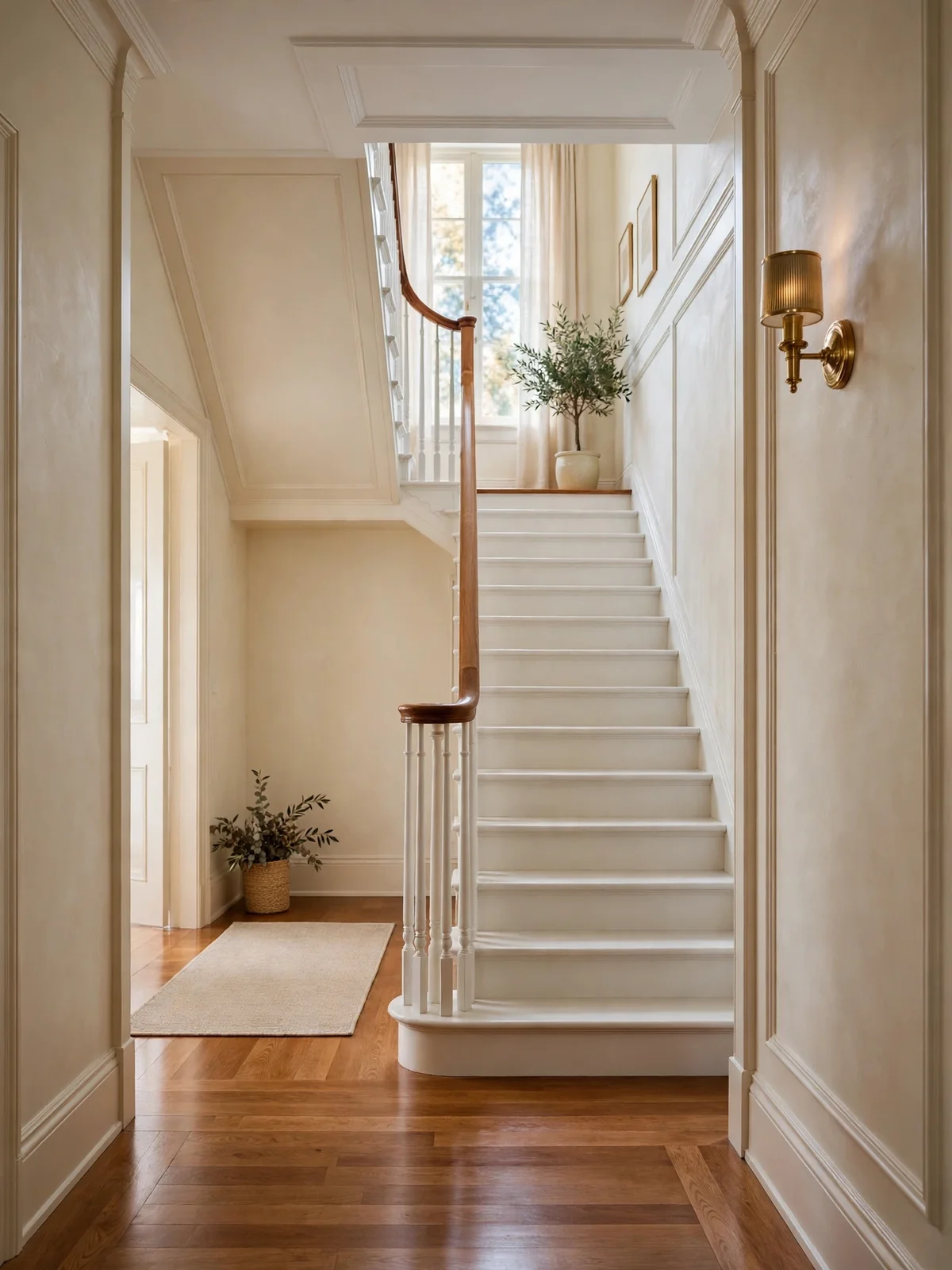
Timeless white and wood is the forever favourite, because a white staircase with a warm wood handrail — and maybe wood floors nearby — balances light and warmth perfectly. Here, white treads climb beside a warm walnut handrail, with soft cream walls and wood floors. The idea suits every home, it is timeless because the balance is perfect, and you can update the décor around it as trends change while the staircase still works. The weakness is that it is so familiar it can feel safe — so add one personal detail, a runner or a pendant, to make it yours.
Quick tips:
- Choose a warm wood handrail — walnut or oak.
- Match the handrail timber to the floor.
- Add one personal detail — a runner or a pendant.
- Keep the white crisp and the wood warm.
White Stairs With a Soft Sage Wall
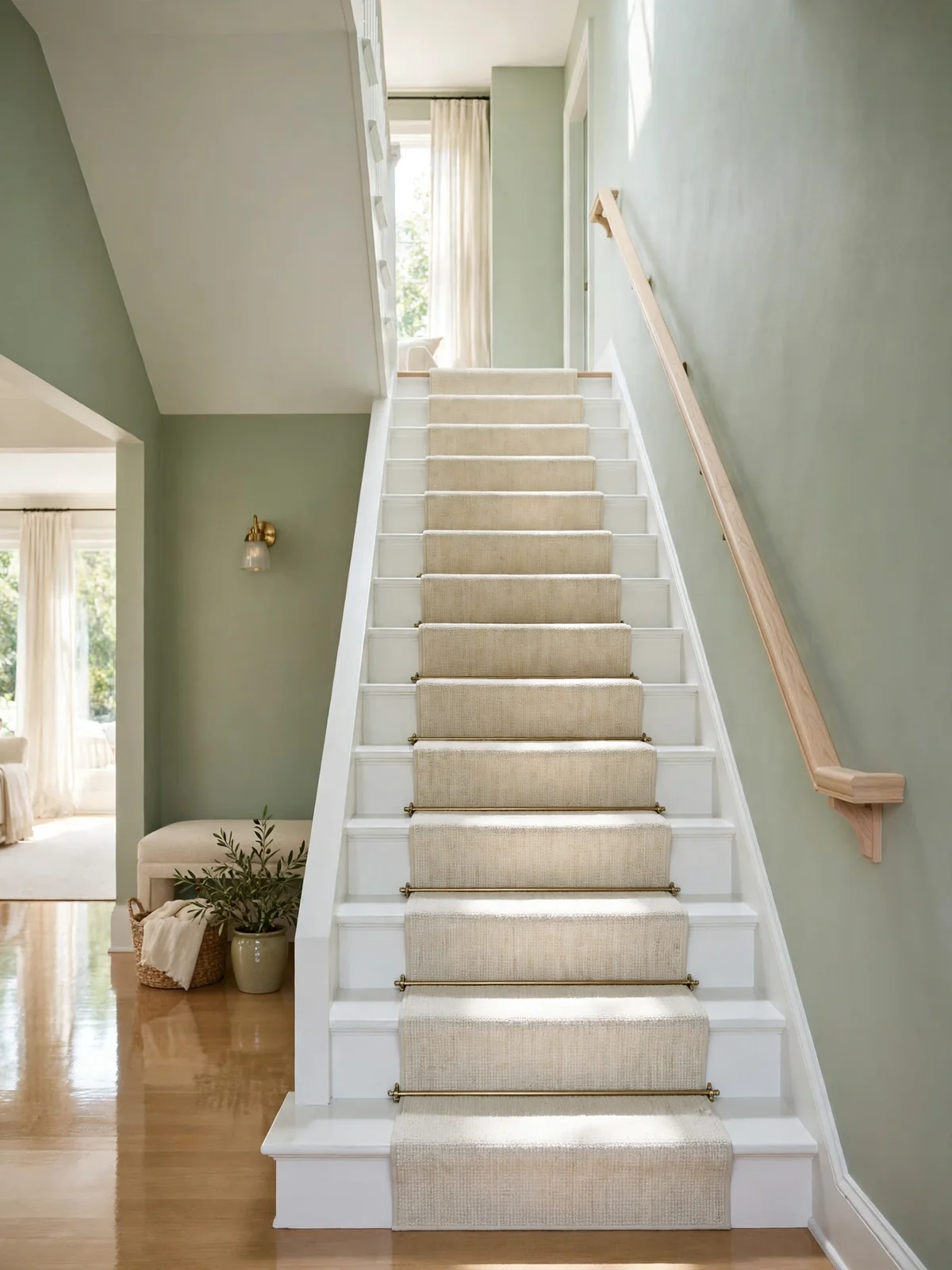
White stairs with a soft sage wall feel calm and fresh, because sage green is gentle enough to let the white shine while adding a hint of nature. Here, white treads climb beside soft sage-green walls, with a pale oak handrail and a cream runner. The idea suits modern and traditional homes alike, it feels fresh without being cold, and sage is one of the easiest colours to live with. The weakness is that sage can look grey in poor light — so test the paint in the stair light before committing, and choose a sage with a warm undertone for north-facing halls.
Quick tips:
- Test the sage paint in the stair light first.
- Choose a warm sage for north-facing halls.
- Pair sage walls with a pale oak handrail.
- Add a cream runner for warmth underfoot.
White Stairs With Warm Brass Hardware
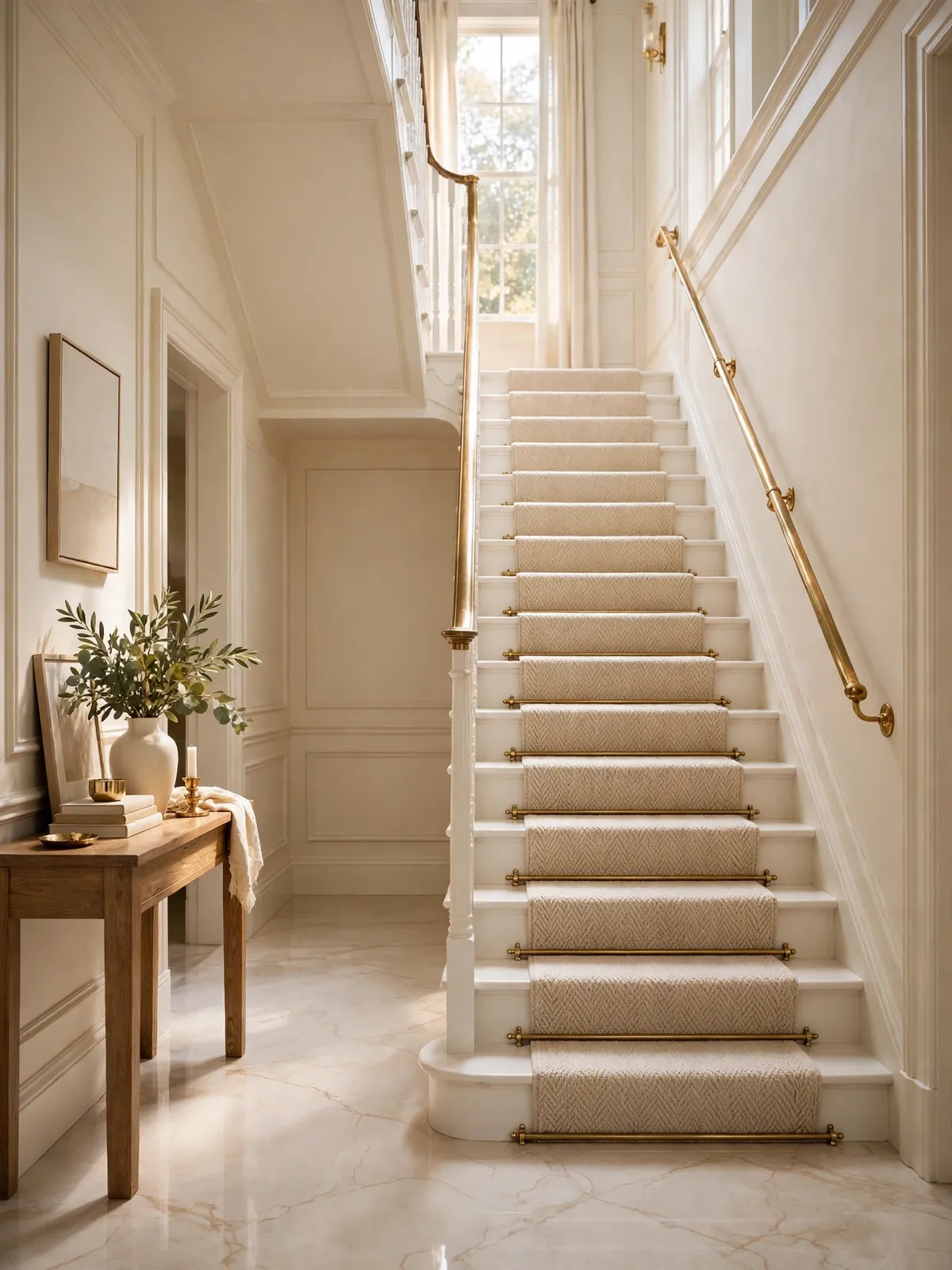
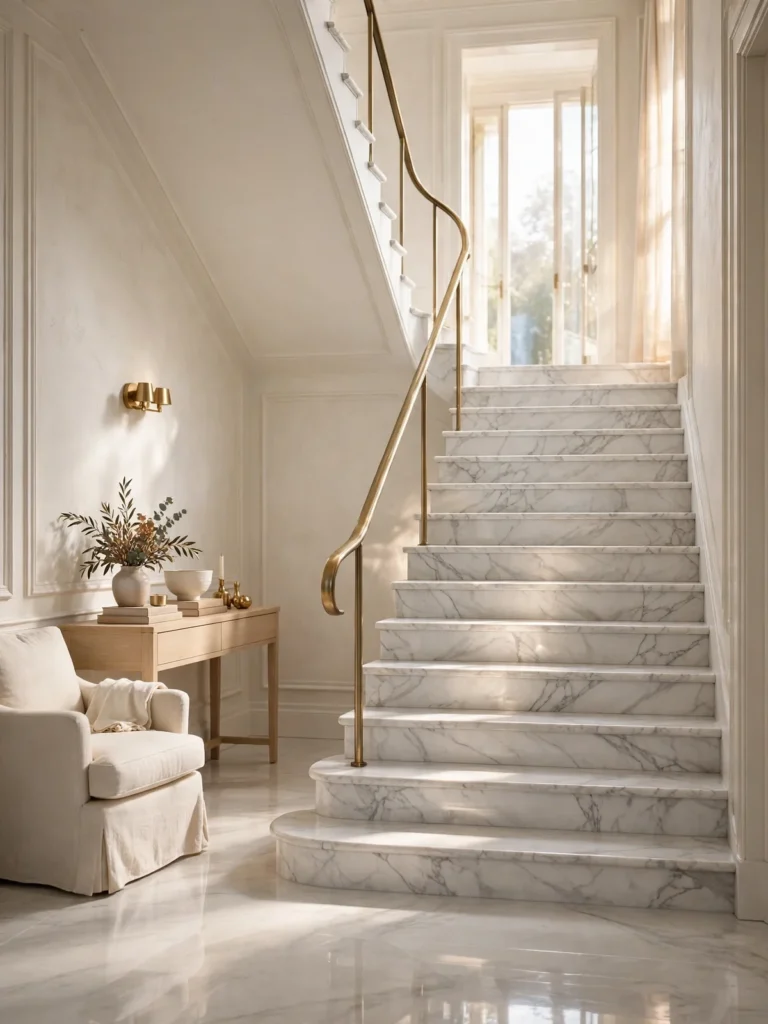
White stairs with warm brass hardware feel luxurious, because brass brackets, stair rods and sconces warm the white and add a jewellery-like shine. Here, white treads climb beside brass handrail brackets and brass stair rods, with soft ivory walls and a cream runner. The idea suits any white stair, it costs little, and brass is the fastest way to make white feel expensive. The weakness is upkeep — brass needs polishing to stay bright — so choose a lacquered brass that stays bright longer, or accept a monthly polish as part of the routine.
Quick tips:
- Choose lacquered brass to reduce polishing.
- Match the brass tone across brackets, rods and sconces.
- Pair brass with a cream runner for warmth.
- Polish the brass monthly to keep the shine.
White Stairs With a Pale Blush Runner
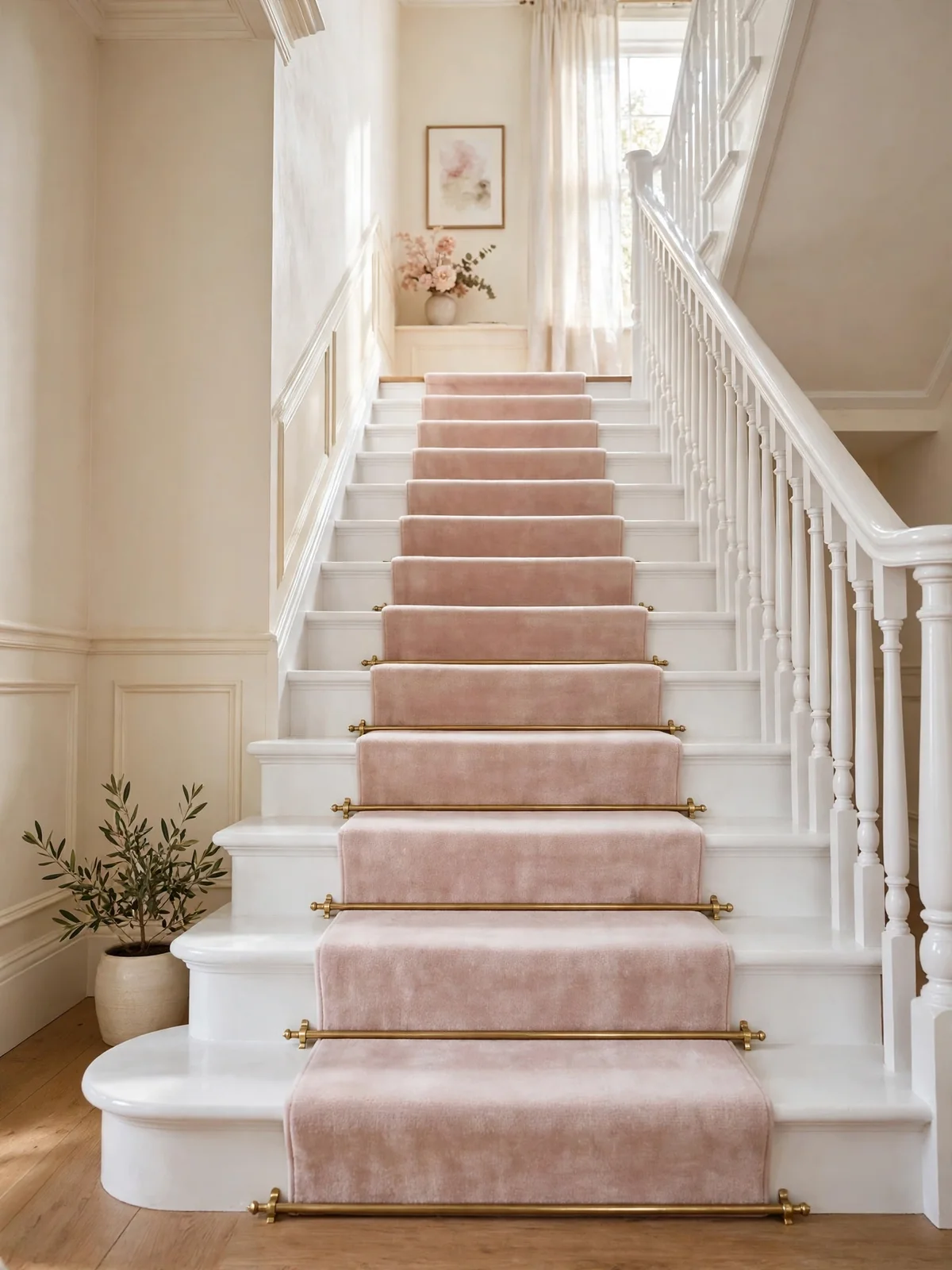
White stairs with a pale blush runner feel soft and romantic, because a blush-pink runner adds the gentlest hint of colour to a white stair. Here, a pale blush runner climbs white treads, held by brass stair rods, against soft cream walls. The idea suits bedrooms and romantic homes, it softens the white without overpowering it, and it adds grip and protection. The weakness is cleaning — a pale runner shows dirt fast — so choose a low-pile runner in a pattern that hides dust, and vacuum it weekly.
Quick tips:
- Choose a low-pile runner so it hugs the steps.
- Pick a pattern that hides dust between cleans.
- Use brass stair rods to hold the runner in place.
- Vacuum the runner weekly to keep it fresh.
White Staircase Ideas That Keep Bright Feeling Warm
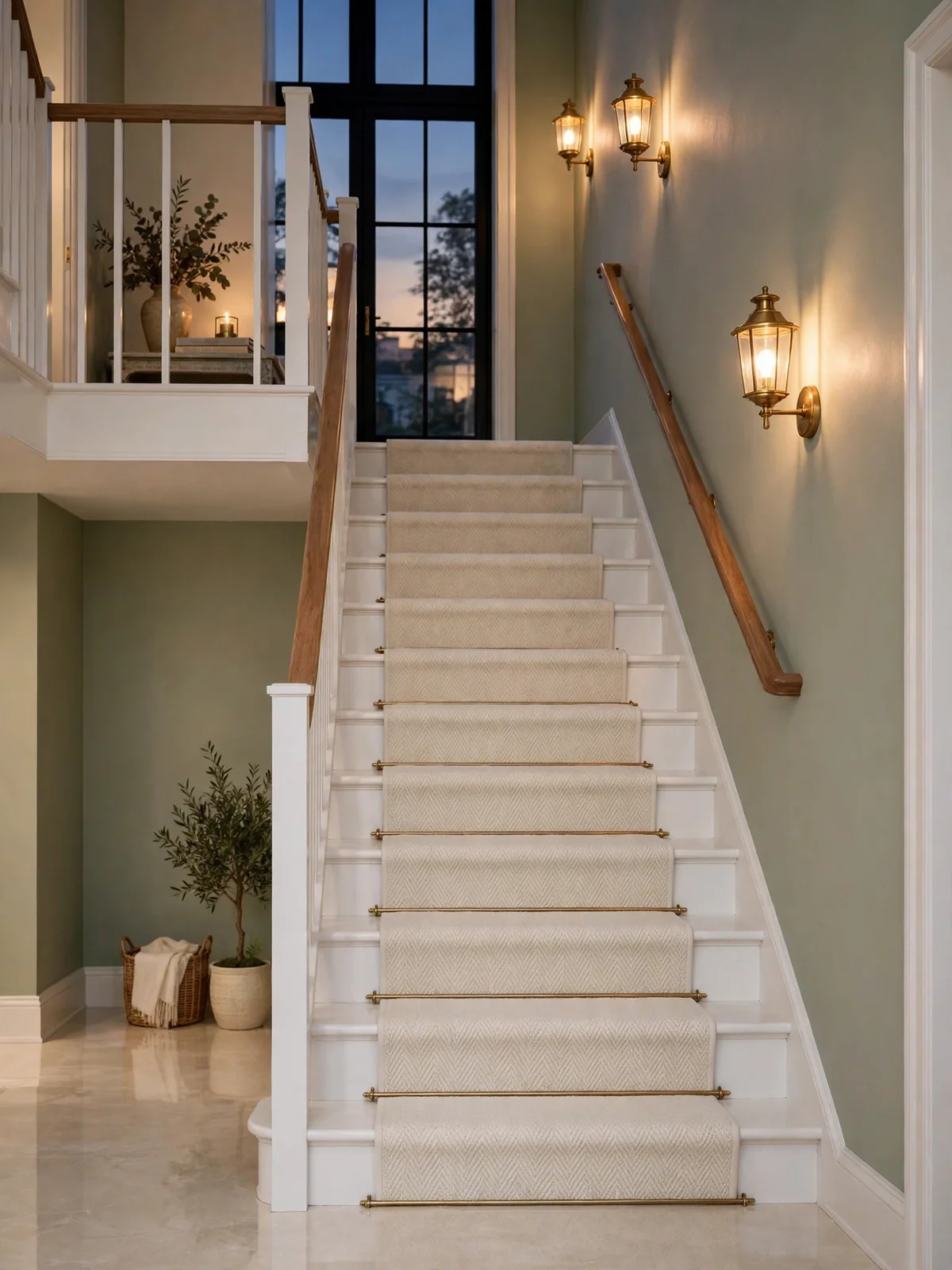
The last of these white staircase ideas is the principle behind them all: white stays bright and warm when it is balanced with wood, brass and soft colour. Here, white treads climb beside a warm wood handrail, with soft sage walls, a cream runner and brass sconces glowing in the evening. The wood gives the stair its warmth, the brass gives it shine, the sage gives it calm, and the runner gives it softness — and that balance is the real lesson of a white staircase. Start with one warm element, live with it, then add the next, and your white stair will feel fresh, bright and beautiful for years.
Quick tips:
- Balance white with one warm element — wood, brass or colour.
- Add a runner for warmth, grip and protection.
- Use warm lighting, about 2700K, for the stair.
- Keep the white shades consistent across the whole stair.
FAQs
What colour goes best with a white staircase?
Warm wood, brass, sage green, dusty blue, blush pink and soft grey all work beautifully with white stairs. Warm wood and brass add warmth, sage and dusty blue add calm, and blush adds romance. Keep the walls neutral or soft, and let one warm element — wood, brass or a runner — do the warming.
Are white stairs hard to keep clean?
They need a little more upkeep than dark stairs, but it is manageable. Wipe the handrail and treads weekly, vacuum a runner weekly, and touch up scuffs promptly. A durable satin or washable matte paint, a patterned runner and a small tin of touch-up paint make white stairs easy to live with.
Can I paint my existing staircase white?
Yes. Sand and prime the wood first, use a durable trim paint in satin or matte, and keep all the white shades consistent. Paint the risers and balusters first, then the treads and handrail, and let each coat dry fully. A runner added afterwards protects the fresh paint.
Do white staircases suit small homes?
Yes — white is one of the best choices for a small home, because it brightens tight entryways, makes ceilings feel taller, and reflects light. Keep the design simple, add a glass railing or a mirror to open the space further, and avoid heavy dark accents that close the stair in.
What is the best runner for a white staircase?
A low-pile runner in a pattern that hides dust — stripes, geometric prints or muted florals — in a colour from your palette. Navy and cream, sage and cream, or blush and cream all work well. Use carpet padding underneath and fix the runner with stair rods or staples so it stays safe.
Conclusion
White staircases are not boring. They are powerful, flexible and full of potential. Whether you go all-white minimal, add natural wood treads, layer a bold runner, fit glass panels, hang a statement light, add black accents or keep it coastal with pale blue, there is something here for every home. Pick one idea, try it, and let your white staircase be more than just a way up — let it be the brightest, warmest part of your home.