25 Japandi Living Room Ideas for a Calm, Warm, Minimal Home
25 practical Japandi living room ideas — the Japanese-Scandinavian fusion of low furniture, natural materials, wabi-sabi imperfection, and calm, uncluttered warmth.
Japandi living room ideas come from the fusion of two design cultures that share one belief: a calm room makes a calm mind. From Japan comes restraint, low-profile furniture, natural materials, and wabi-sabi — the appreciation of imperfection. From Scandinavia comes hygge warmth, soft textiles, and the insistence that minimalism should still feel cozy. The result is a living room that is edited but never empty, neutral but never cold.
Getting Japandi right is mostly about subtraction, not shopping. Before buying anything, the style asks you to remove what does not serve the room, unify the palette around warm whites, oatmeal, clay, and soft wood tones, and let texture — linen, wool, rattan, raw ceramic — do the decorating that color does in other styles. The 25 ideas below follow that order: first the bones (layout, palette, light), then the pieces, then the small rituals that make the style feel like a way of living rather than a showroom look. Each idea stands alone, so start wherever your room needs it most.
One thing worth knowing upfront: Japandi shares its love of natural materials and calm palettes with several other styles, so it helps to understand where the boundaries sit. If your taste leans toward the softer, more textural side of minimalism, these ideas will feel natural — and if you want to see how the same calm-materials language plays out in a smaller, harder-working space, these Japandi bathroom ideas show the style adapted to tile, steam, and tight footprints.
Japandi Living Room Ideas Begin with a Low-Profile Sofa
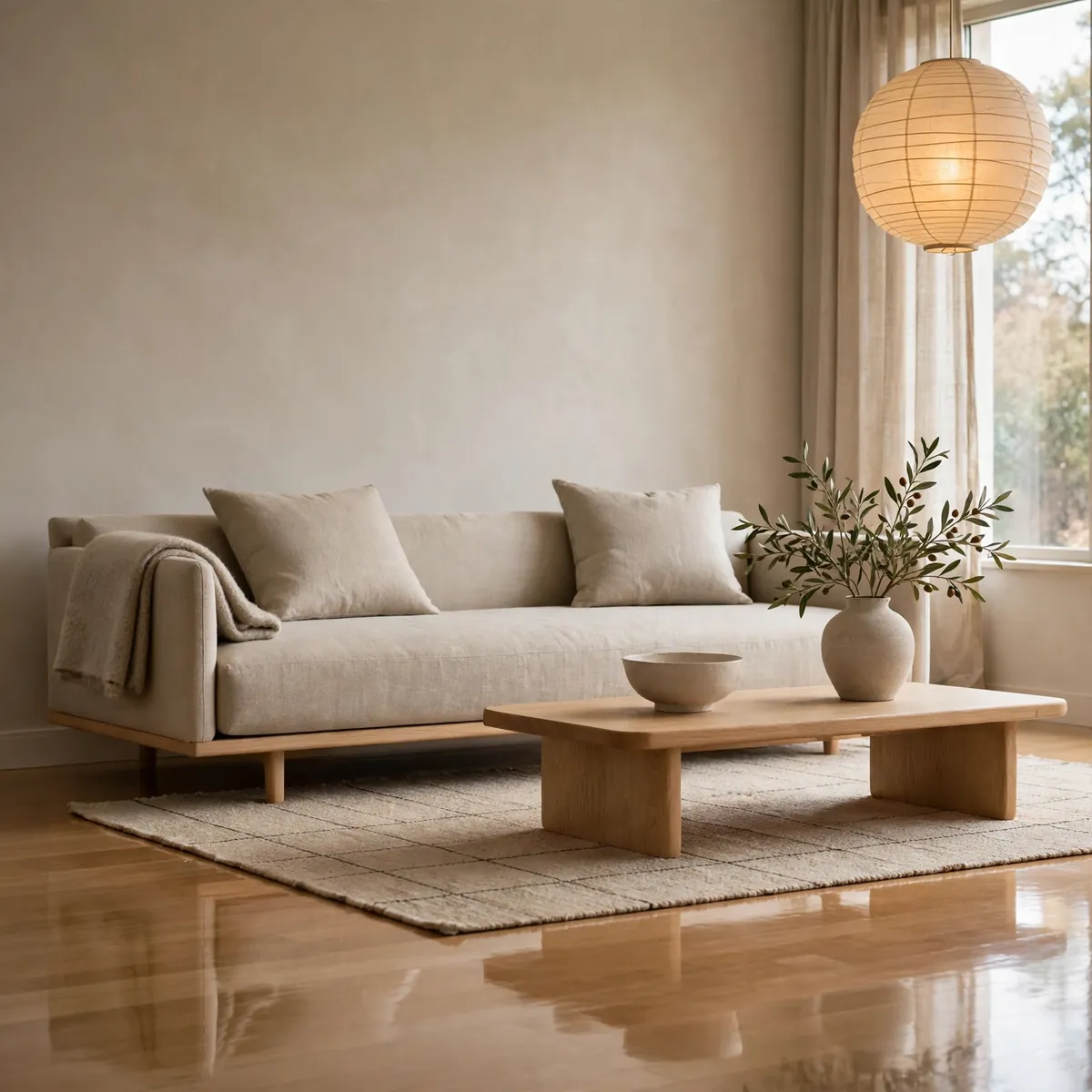
The single most Japandi move you can make is lowering your sightlines. A low-profile sofa — seat height around 35–40 cm — in oatmeal linen or warm greige wool instantly changes the room’s energy: ceilings feel taller, the layout feels grounded, and everything reads calmer. Keep the silhouette simple with straight lines and slim or hidden legs, and resist the urge to pile on cushions. Two or three in tonal shades are enough; Japandi comfort comes from the quality of the sit, not the quantity of the pillows.
- Low sofas suit rooms with low ceilings especially well.
- Linen-look performance fabrics handle real life better than pure linen.
- Keep cushions tonal; contrast comes from texture, not color.
Choose a Solid Oak Coffee Table with Honest Joinery
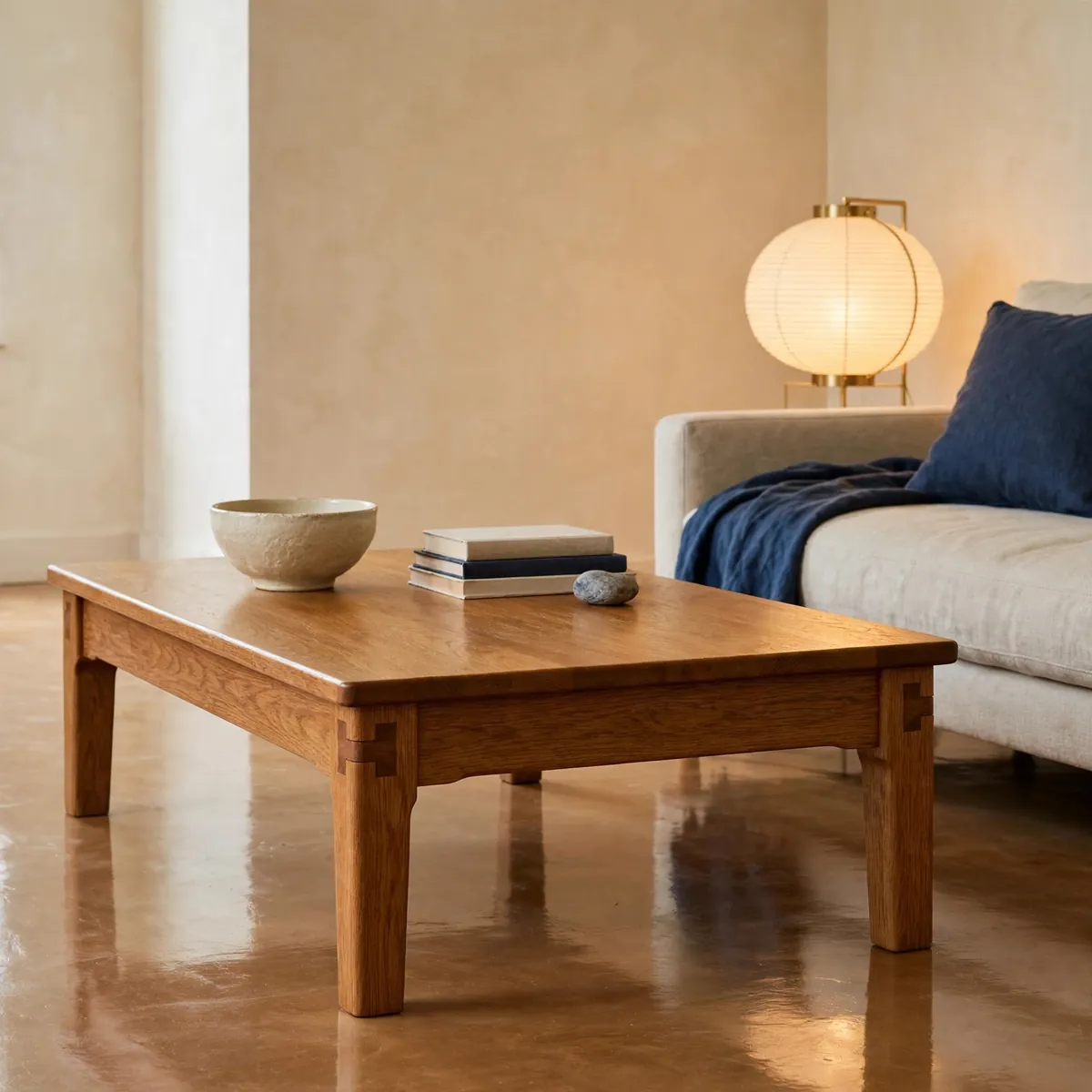
In Japandi, the coffee table is a craft object, not just a surface. Look for solid oak or ash with visible joinery, softly rounded edges, and a natural oil finish that lets the grain show. Keep the top deliberately sparse — a handmade ceramic bowl, one short stack of books, a small stone object — because the wood itself is the decoration. A lower-than-standard height (30–35 cm) keeps it in proportion with low seating and reinforces the grounded feel the style is built on.
- Oil finishes age more gracefully than lacquer in this style.
- Rounded edges are safer and softer-looking than sharp corners.
- Style with three objects maximum on the tabletop.
Ground the Room with a Flatweave Wool Rug
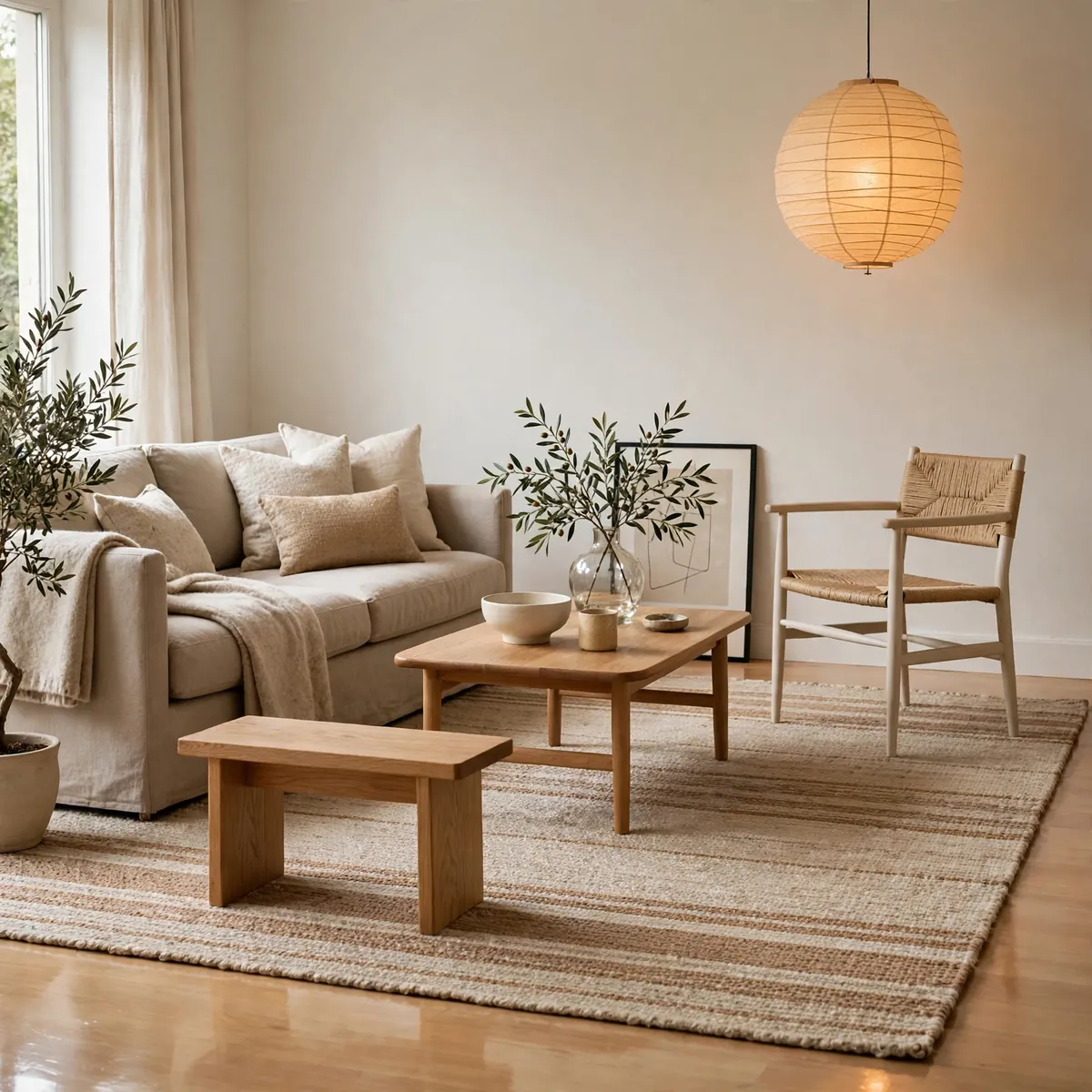
A flatweave or low-pile rug in undyed wool, jute, or a wool-jute blend gives a Japandi living room its soft foundation without adding visual noise. Choose warm ivory, natural oatmeal, or a subtle tone-on-tone stripe — pattern should whisper, not speak. Size it generously so all seating sits fully on it; a rug that floats disconnected from the furniture breaks the grounded, unified feeling the style depends on. Natural fibers also age with a patina that fits the wabi-sabi spirit perfectly.
- Natural fiber rugs are cooler underfoot; layer a wool throw nearby.
- A rug pad extends the life of flatweaves considerably.
- Vacuum without a beater bar to protect natural fibers.
Light the Room with a Paper Lantern Floor Lamp
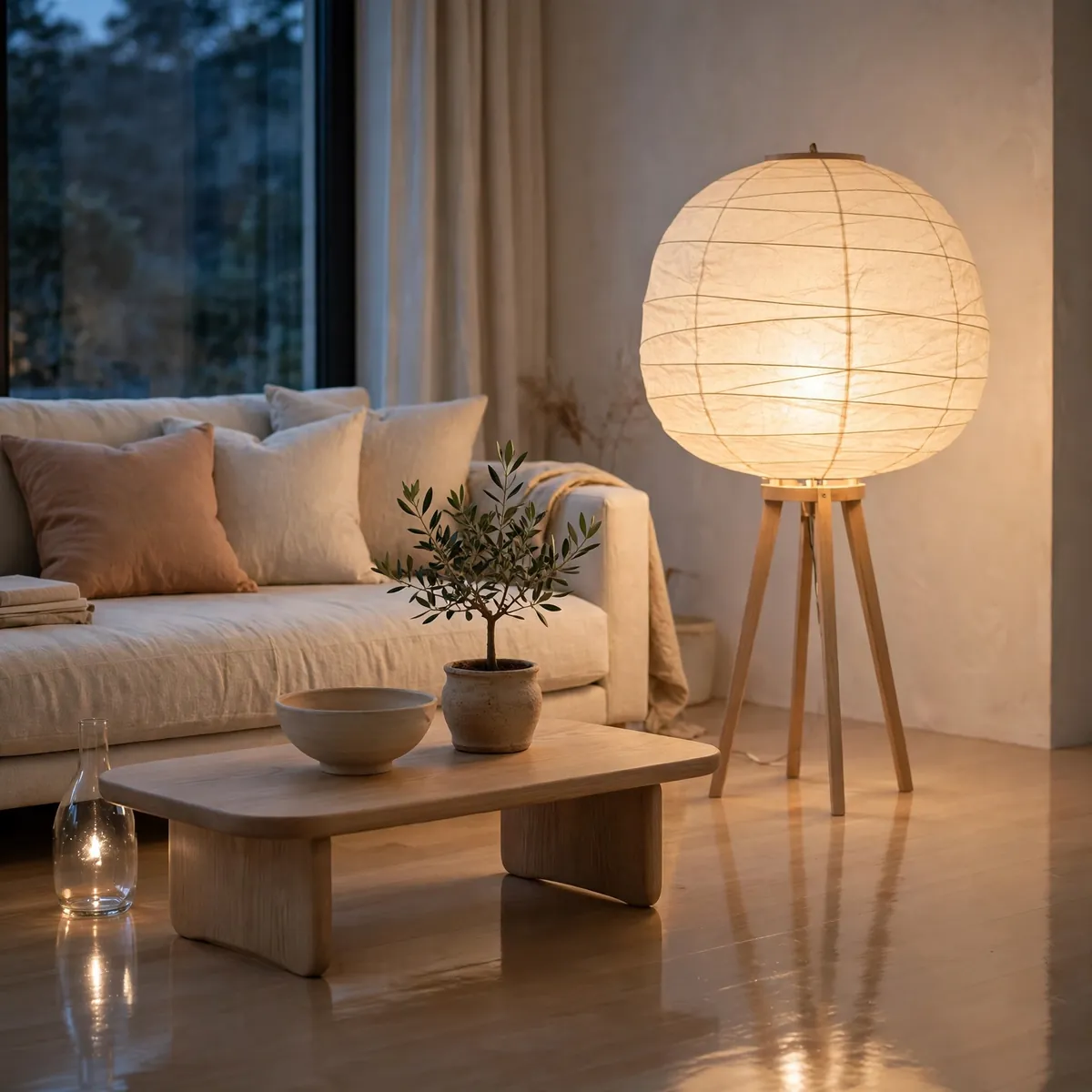
Few objects say Japandi like a washi-paper lantern lamp. The diffused glow flatters every material in the room, the organic rounded form softens all the straight lines, and at night it becomes a sculptural focal point without shouting. Place an arc or tripod paper floor lamp beside the sofa or in a reading corner, and fit it with a warm 2700K bulb on a dimmer. Paper shades need a little respect — keep them away from radiators and direct splashes — but their light quality is unmatched by any fabric shade.
- Keep paper shades clear of heat sources and high-traffic bumps.
- 2700K bulbs preserve the lantern’s warm glow.
- Dust shades gently with a dry microfiber cloth.
Style a Wabi-Sabi Vignette of Handmade Ceramics
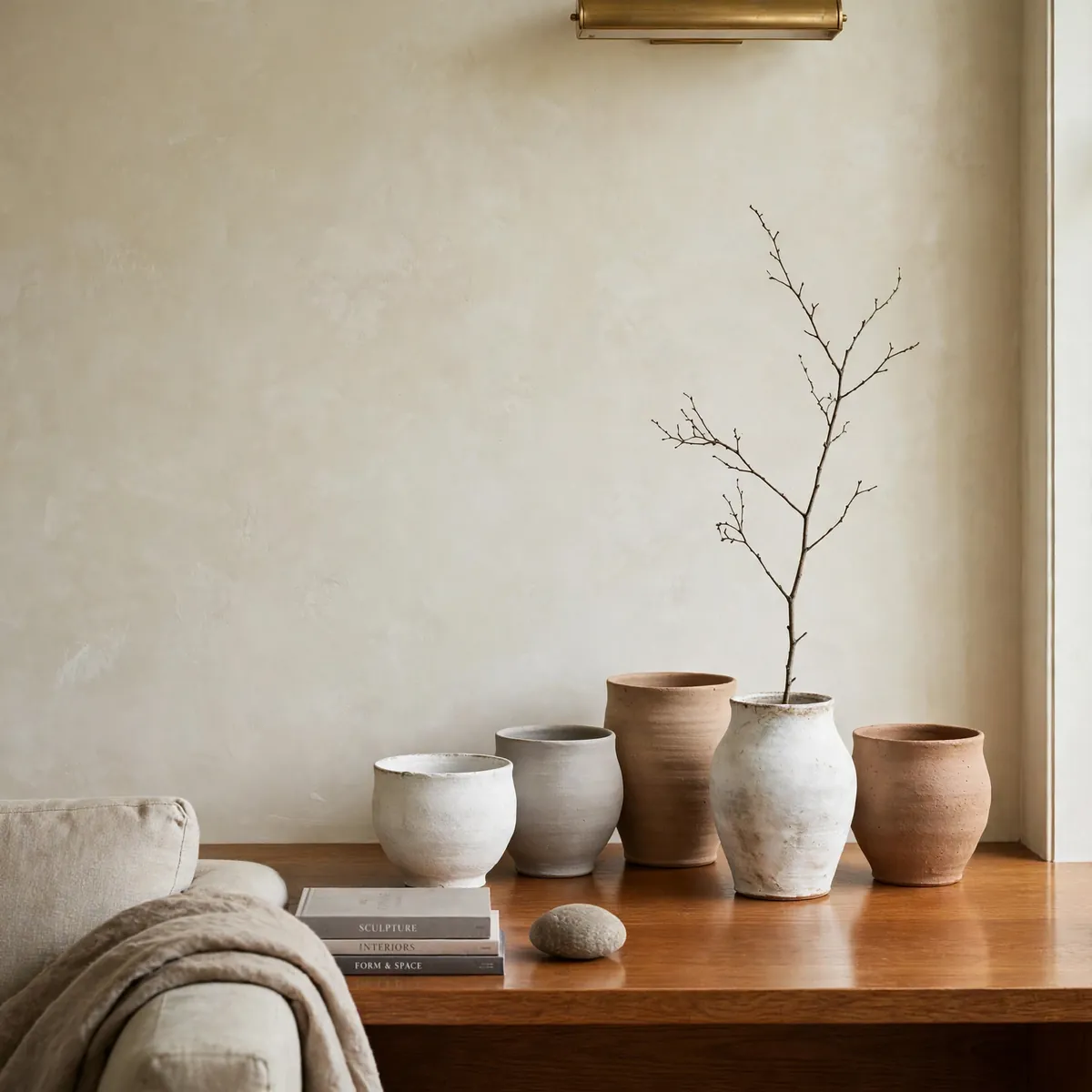
Wabi-sabi — finding beauty in imperfection — is the philosophical heart of Japandi, and handmade ceramics are its clearest expression. Gather three to five vessels in chalky white, soft grey, and clay tones: slightly uneven rims, visible throwing lines, matte glazes. Group them on a low shelf or the coffee table and leave them mostly empty, or with a single stem. The point is not a collection; it is a quiet reminder that handmade and imperfect beats factory-perfect in a calm room.
- Buy from local potters for genuinely unique pieces.
- Odd-numbered groupings look most natural.
- Leave vessels empty or with one stem — never full bouquets.
Wash One Wall in Muted Clay Limewash
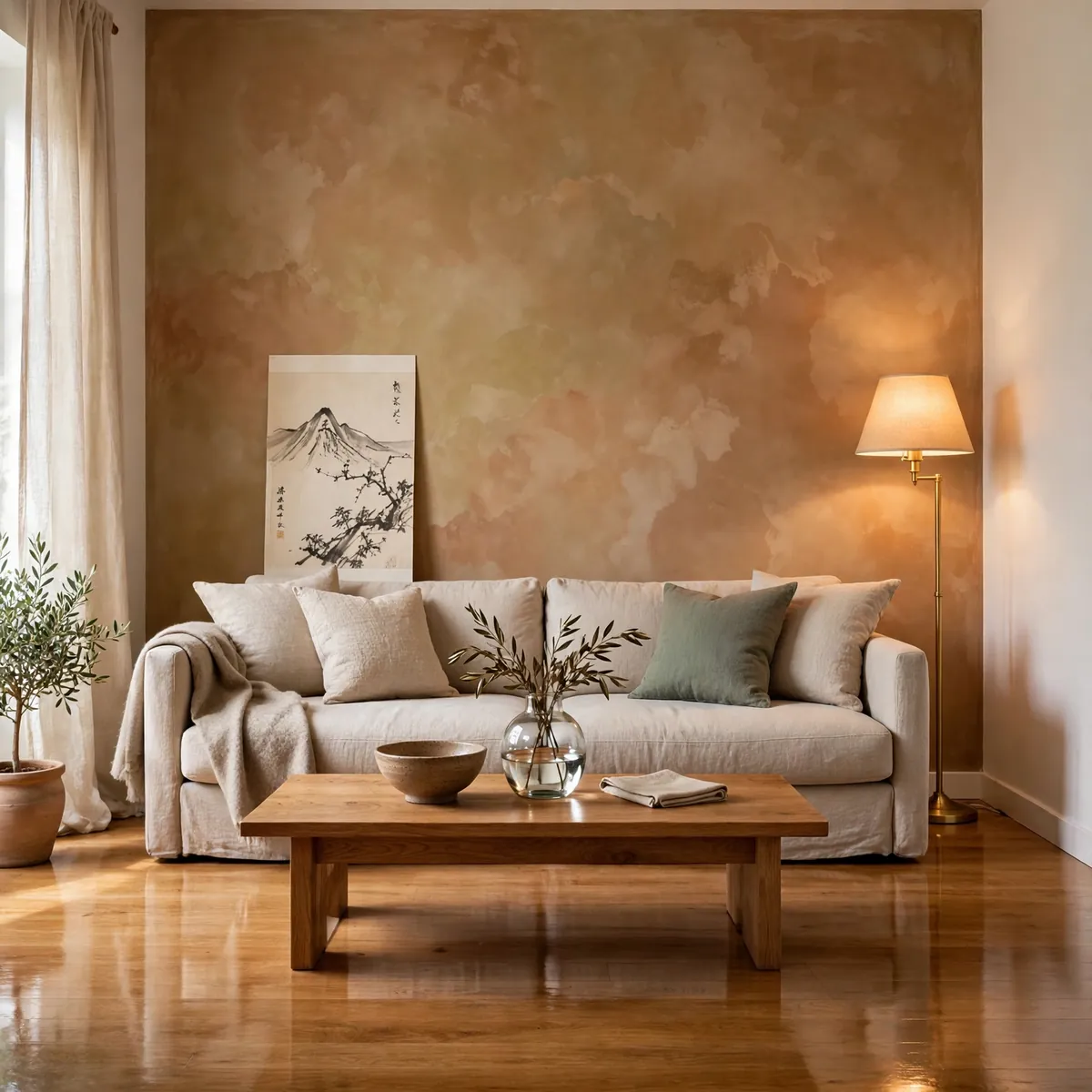
While most Japandi walls stay warm white, one wall in a muted clay, mushroom, or soft taupe limewash adds depth without breaking the calm. The mineral finish gives the wall a soft movement that flat paint cannot, and the earthy tone makes oak furniture and linen upholstery look richer by contrast. Keep the remaining walls warm white so the room stays light, and let the clay wall sit behind the sofa or the main art piece where it can act as a quiet backdrop rather than a feature shouting for attention.
- Test limewash in daylight and lamplight before committing.
- One tinted wall is enough; more risks heaviness.
- Keep trim and ceiling warm white for contrast.
Divide Space with a Shoji-Inspired Screen
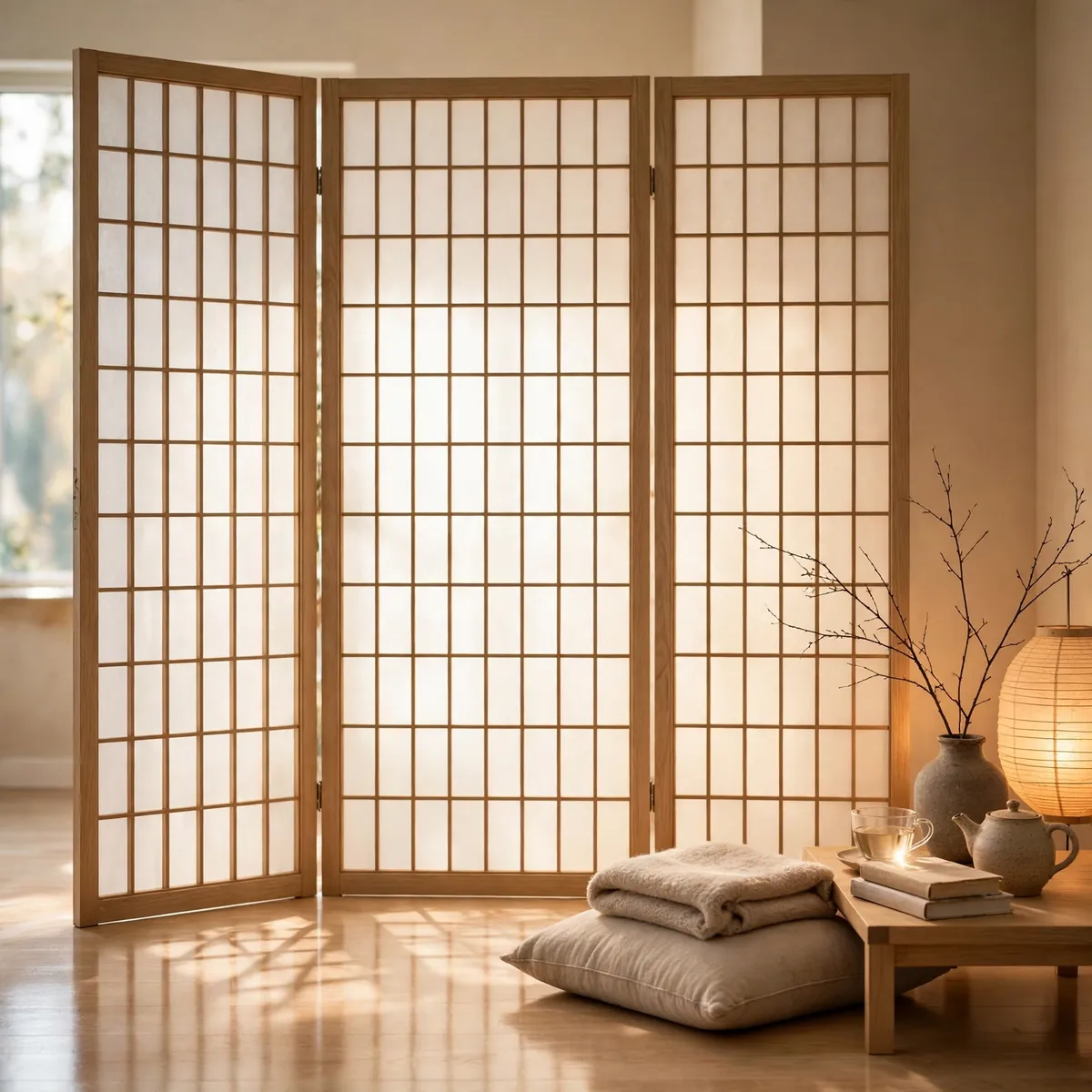
In open-plan rooms, a shoji-inspired screen — light wood frame with translucent panels — zones the living area without blocking light or airflow. Use it to shield a workspace corner, soften the view of a hallway, or create a backdrop behind a reading chair. The grid pattern adds the only geometry the room needs, and the diffused light through the panels is beautiful at every hour. Modern versions in oak with frosted acrylic panels are sturdier than traditional rice paper and far more forgiving in homes with kids or pets.
- Folding screens move with your needs; fixed ones feel architectural.
- Keep the screen’s wood tone consistent with other wood in the room.
- Translucent panels preserve light; opaque ones create real privacy.
Add One Sculptural Plant, Nothing More

Japandi greenery is disciplined: one plant, chosen for sculptural form, given room to breathe. A pruned olive, a single-stem fiddle-leaf, a bonsai on a low stand, or an architectural snake plant — each works because its silhouette reads like a living sculpture against the calm backdrop. Pot it in handmade ceramic or raw terracotta and give it negative space around it; a plant crowded by furniture loses its meditative quality. This restraint is what separates Japandi from boho-jungle styling, and it makes the one plant feel more precious.
- One statement plant per room is the Japandi rule.
- Match the pot to your ceramics for cohesion.
- Prune for shape; a wild plant breaks the calm.
Introduce Charcoal as Your Grounding Dark
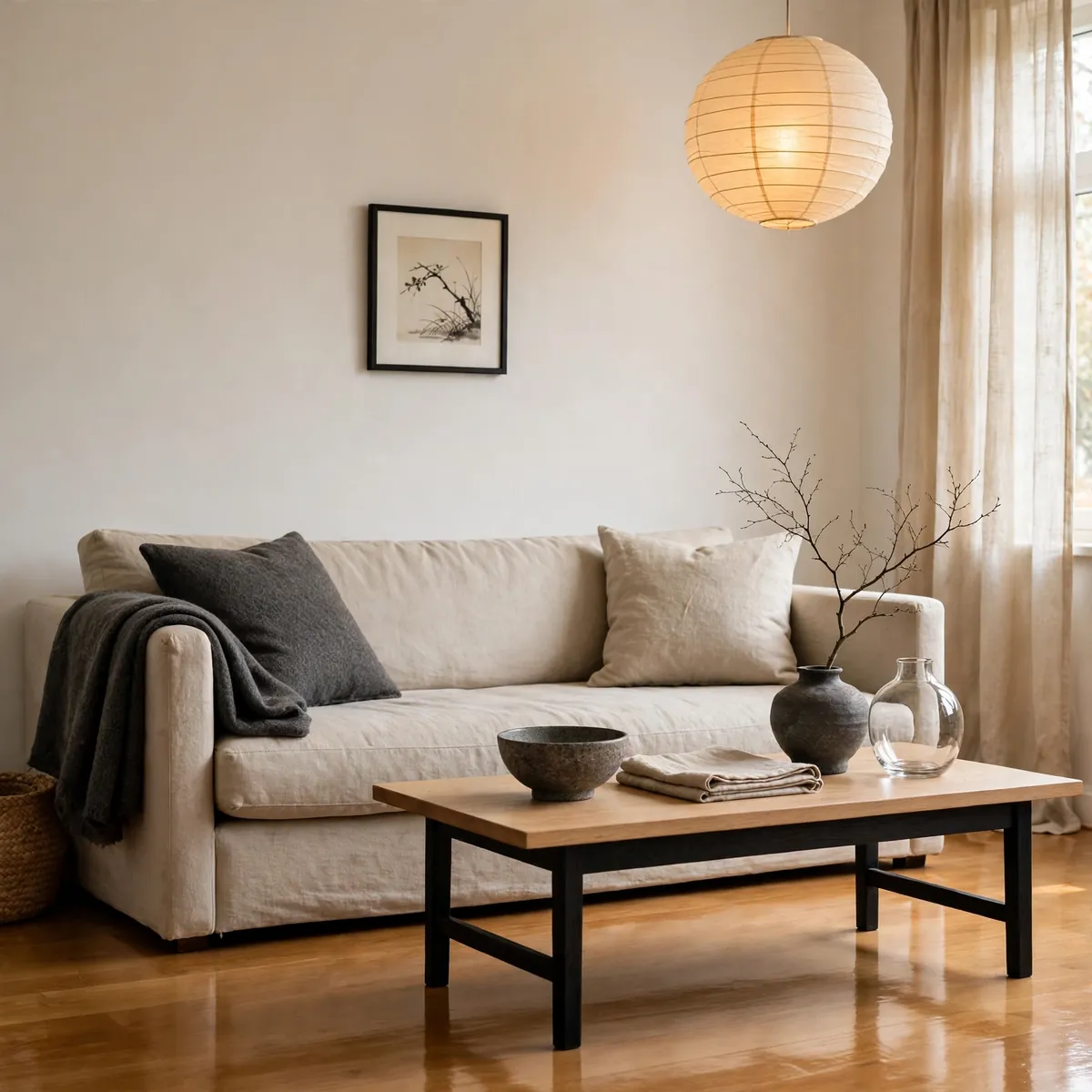
Every calm neutral scheme needs a dark note to keep it from floating away, and in Japandi that note is charcoal or soft black — never harsh jet black. A charcoal wool throw folded over the sofa arm, black-stained oak legs on the coffee table, a single ink-brush artwork: these small dark accents give the pale palette definition and a subtle Japanese graphic edge. The discipline is in the dosage — three to five small hits across the room, each one earning its place, so the darkness reads as punctuation rather than mood.
- Soft black and charcoal only; avoid glossy true black.
- Repeat the dark tone at least 3 times for intention.
- Balance each dark element with something soft nearby.
Keep Open Shelves 60 Percent Empty
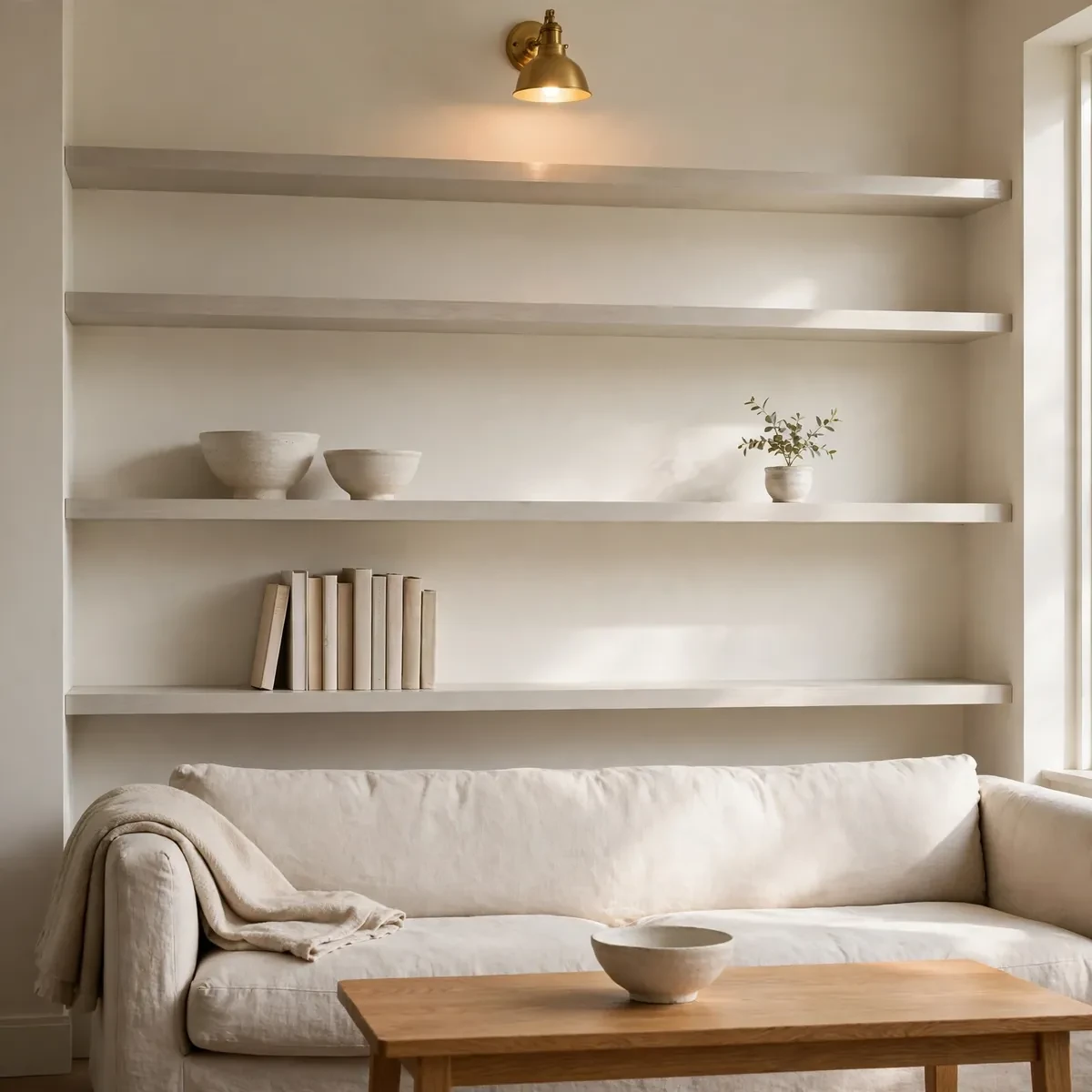
If you have open shelving, the Japandi standard is unforgiving and wonderful: roughly 60 percent of every shelf stays empty. What remains should be beautiful or useful — handmade bowls, a short row of books with calm spines, one small plant — each given breathing room so it reads as chosen rather than stored. This is the fastest diagnostic in the style: if your shelves are full, you do not have a styling problem, you have an editing problem. Remove half, live with it for two weeks, and only then decide what earns its way back. The empty space is doing real work, too. It lets light move through the shelving, keeps dusting manageable, and gives the eye the rest it needs in a room designed for unwinding. Closed storage elsewhere in the room absorbs everything the shelves release, which is why Japandi rooms always pair open display with generous hidden storage — the calm you see is funded by the order you don’t.
- Remove half the shelf contents before restyling anything.
- Group remaining items with space between each group.
- Closed storage elsewhere makes open calm possible.
Layer Cushions in Clay, Oatmeal, and Stone

Japandi cushions follow a strict recipe: solid colors only, natural fabrics, a palette pulled straight from the room. Clay, oatmeal, warm stone, muted sage — two or three cushions per sofa in linen or washed cotton, varying only in size and texture. No patterns, no slogans, no contrasting piping. The interest comes from the subtle differences between a nubby oatmeal weave and a smooth clay linen sitting side by side. Washable covers are the practical choice; the relaxed, slightly rumpled look of washed linen is authentically Japandi anyway.
- Solids only; let texture be the pattern.
- Vary size and weave, not color family.
- Washable linen covers age beautifully.
Place a Stoneware Floor Vase with Bare Branches

A tall stoneware or ceramic floor vase holding three to five bare branches — contorted hazel, pussy willow, dried eucalyptus — is pure Japandi poetry. It brings height and organic line into the room without the maintenance or visual busyness of a leafy plant, and the arrangement lasts for months. Choose branches with interesting silhouettes and let them arc naturally; the Japanese floral tradition behind this values asymmetry and empty space as much as the stems themselves. One vase, one corner, done.
- Cut stems at varying heights for natural asymmetry.
- Dried branches last months with zero care.
- Keep the vase matte and handmade-looking.
Build a Floor-Level Reading Corner
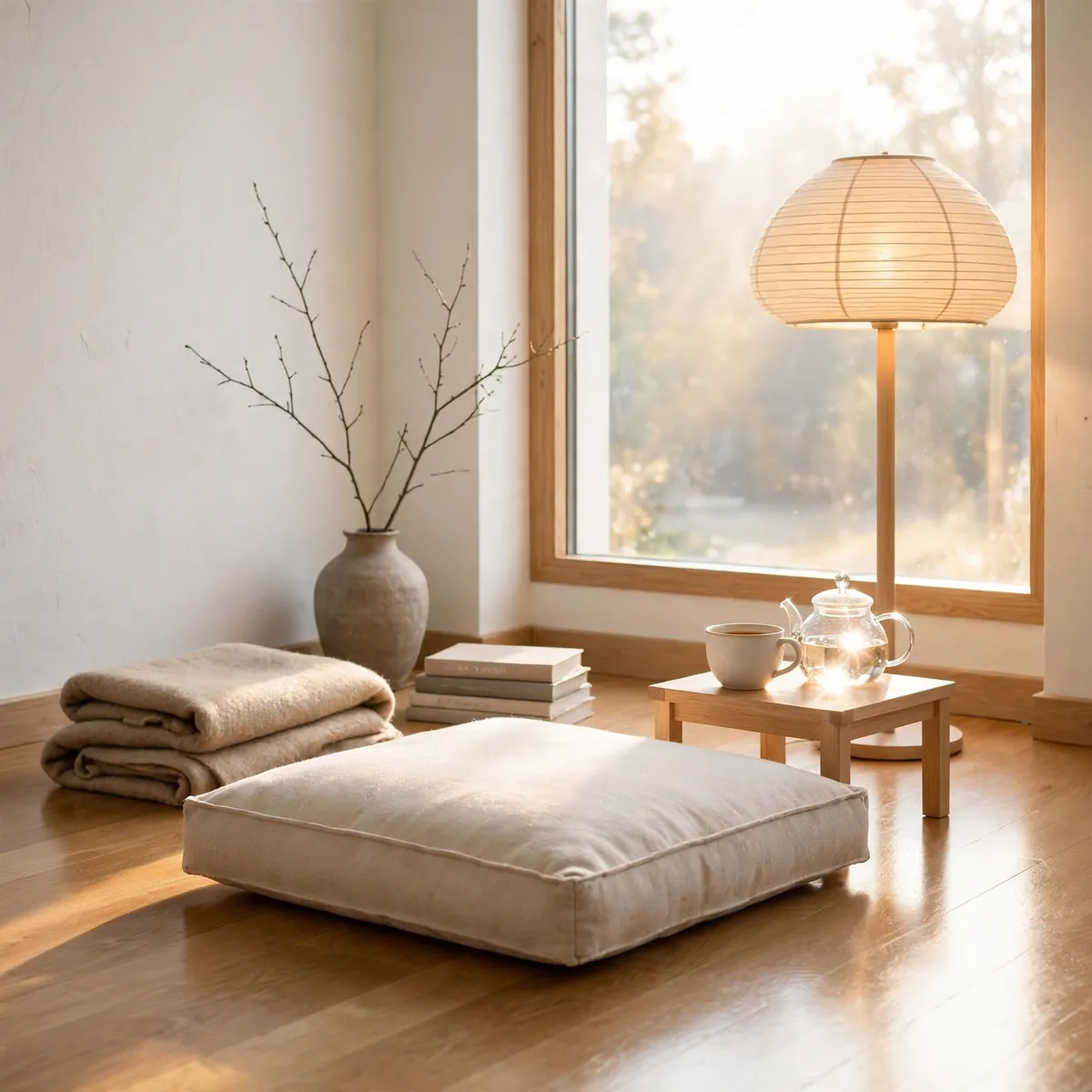
A Japandi reading corner strips the idea back to essentials: a thick floor cushion or low zabuton-style pad, a small low side table for tea, and a paper-shaded lamp at shoulder height. It is the most Japanese corner of the room and often becomes its most used — there is something about sitting low that slows you down. Place it near a window for daylight reading, keep a folded wool throw within reach, and resist adding anything else. The corner’s power is in its simplicity; every extra object dilutes it.
- A dense floor cushion beats a thin one for real comfort.
- Position the lamp to wash light over the shoulder.
- Keep books in a small stack, not a sprawling pile.
Hang Unlined Linen Curtains
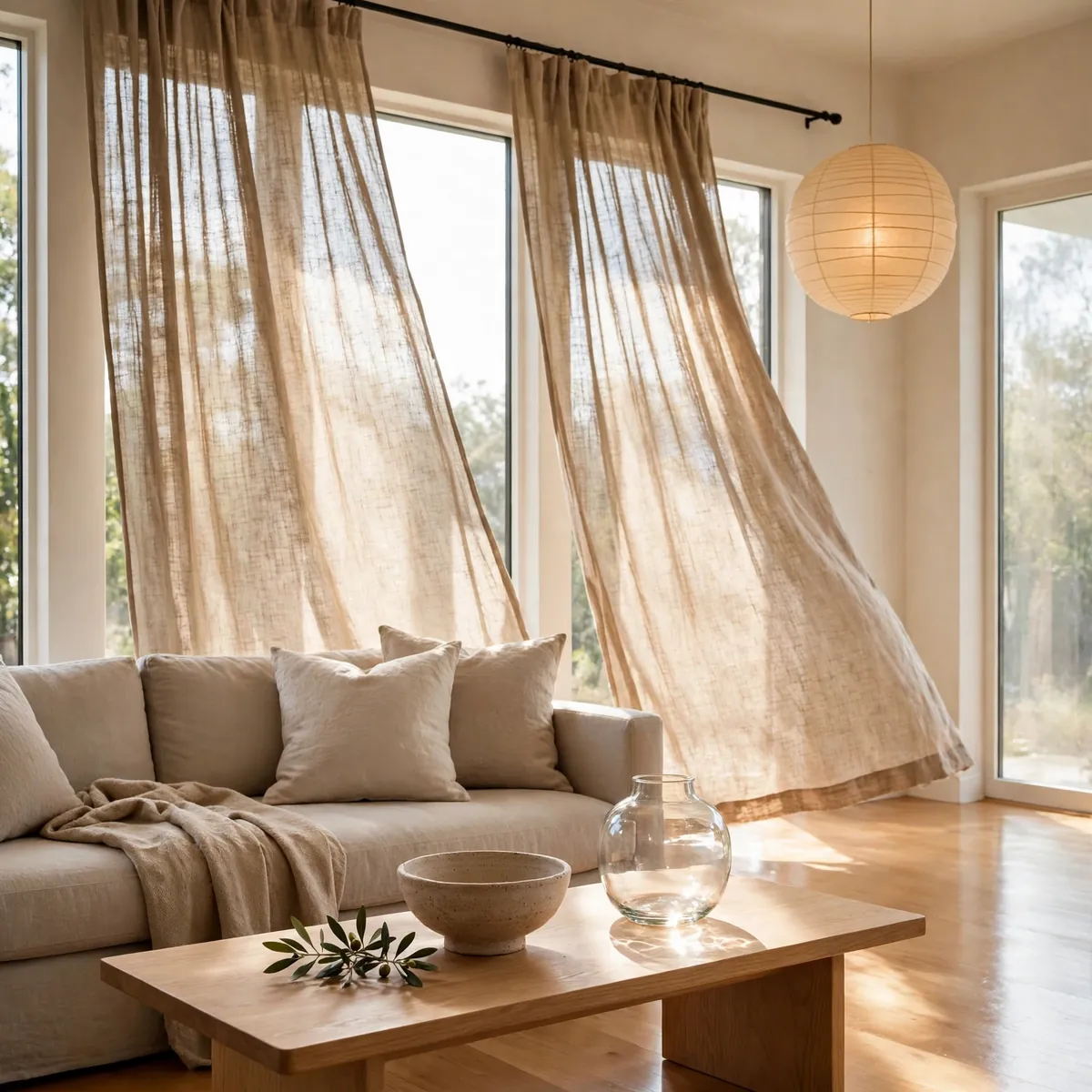
Unlined linen curtains in warm white or natural flax are the Japandi window treatment: they filter daylight into a soft glow, move gently with air currents, and their visible weave adds the texture the style runs on. Hang them high and wide so the windows feel generous, and let them fall just to the floor. Skip blackout linings and heavy headings — a simple pinch pleat or back tab keeps the line soft. The slight transparency is intentional; Japandi embraces natural light rather than blocking it.
- Unlined linen filters light beautifully; add blinds behind for privacy.
- Hang tracks or rods close to the ceiling for height.
- Expect natural wrinkling — it is part of the look.
Swap the Coffee Table for a Black-Stained Bench
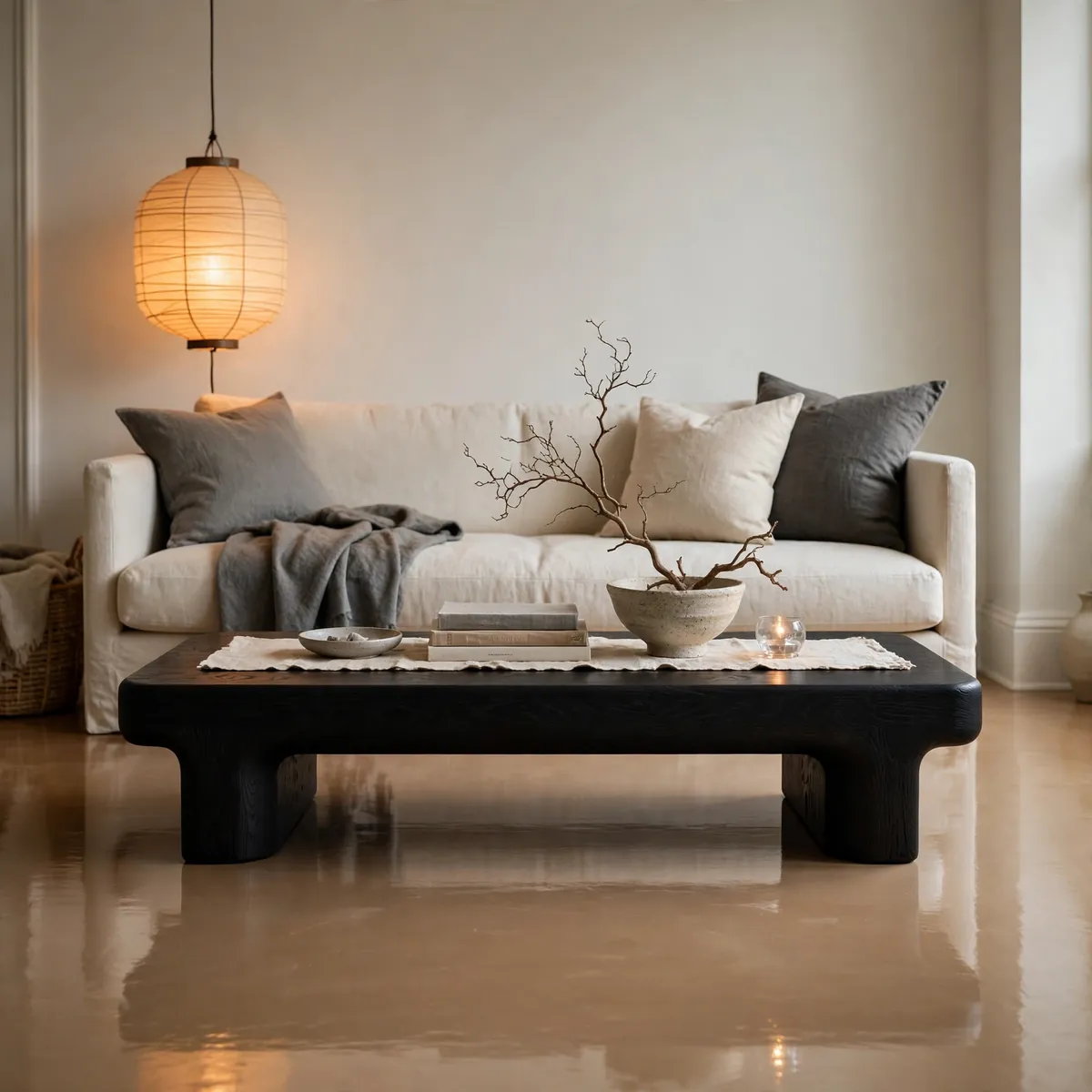
For a bolder Japanese lean, replace the conventional coffee table with a low black-stained oak bench. It is sculptural, graphic, and doubles as extra seating when guests overflow the sofa — a very Scandinavian practicality hiding inside a Japanese form. Style the top with a single long, low arrangement: a runner of linen, a ceramic dish, a small stack of books. The dark horizontal line grounds pale rooms dramatically, so keep everything else light to preserve the balance.
- 35–40 cm height keeps it in coffee-table territory.
- One long, low arrangement suits the bench shape best.
- Felt pads protect both bench and floor.
Banish Overhead Glare with Layered Warm Light
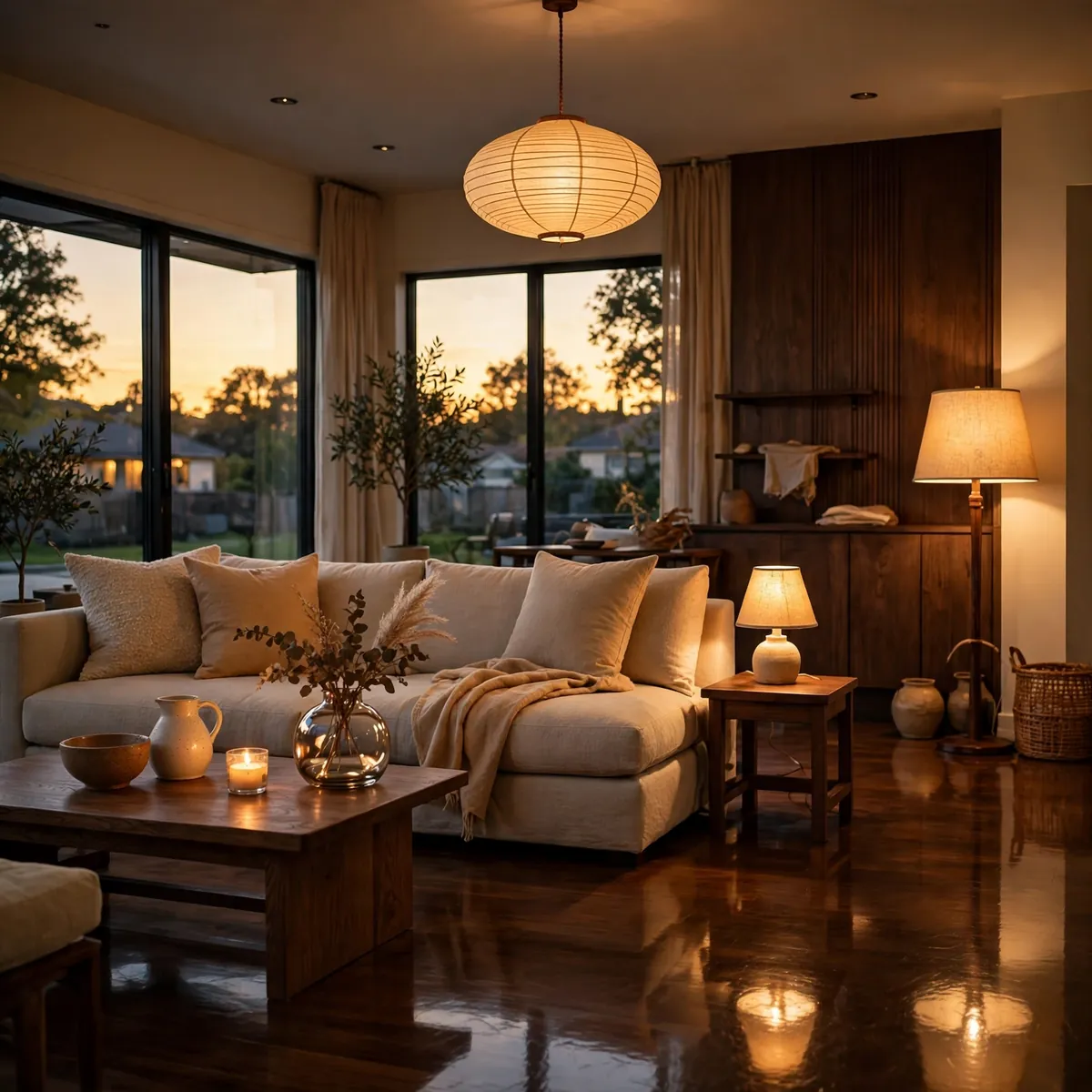
Harsh ceiling downlights are the enemy of Japandi calm. The style wants light that feels like late afternoon: warm (2700K or lower), diffused, and coming from multiple low sources rather than one bright overhead. Use paper pendants, fabric-shaded floor lamps, and small table lamps to build pools of warm light, and put the overheads on a dimmer for the rare moments you need them. In the evening, the room should glow rather than shine — if you can see the bulb, the shade is wrong.
- 2700K or warmer for every bulb in the room.
- Diffused shades only; no exposed bulbs.
- Dim the overheads to near-off in the evening.
Mix Pale Oak with Dark Walnut Wood Tones

Japandi rooms get their depth from mixing wood tones rather than matching them. Pale oak or ash for the larger pieces — coffee table, shelving, flooring — with darker walnut or black-stained accents in smaller doses: a side table, picture frames, the legs of a chair. The contrast keeps the pale woods from washing out and gives the room the tonal range it needs to feel rich without color. Let the largest wood surface set the dominant tone, then add the darker wood in two or three smaller pieces so the mix looks deliberate.
- Two wood tones is the sweet spot; three is the maximum.
- Let the floor or largest piece set the dominant tone.
- Repeat the darker wood at least twice.
Hang a Rattan Pendant Over the Seating Zone
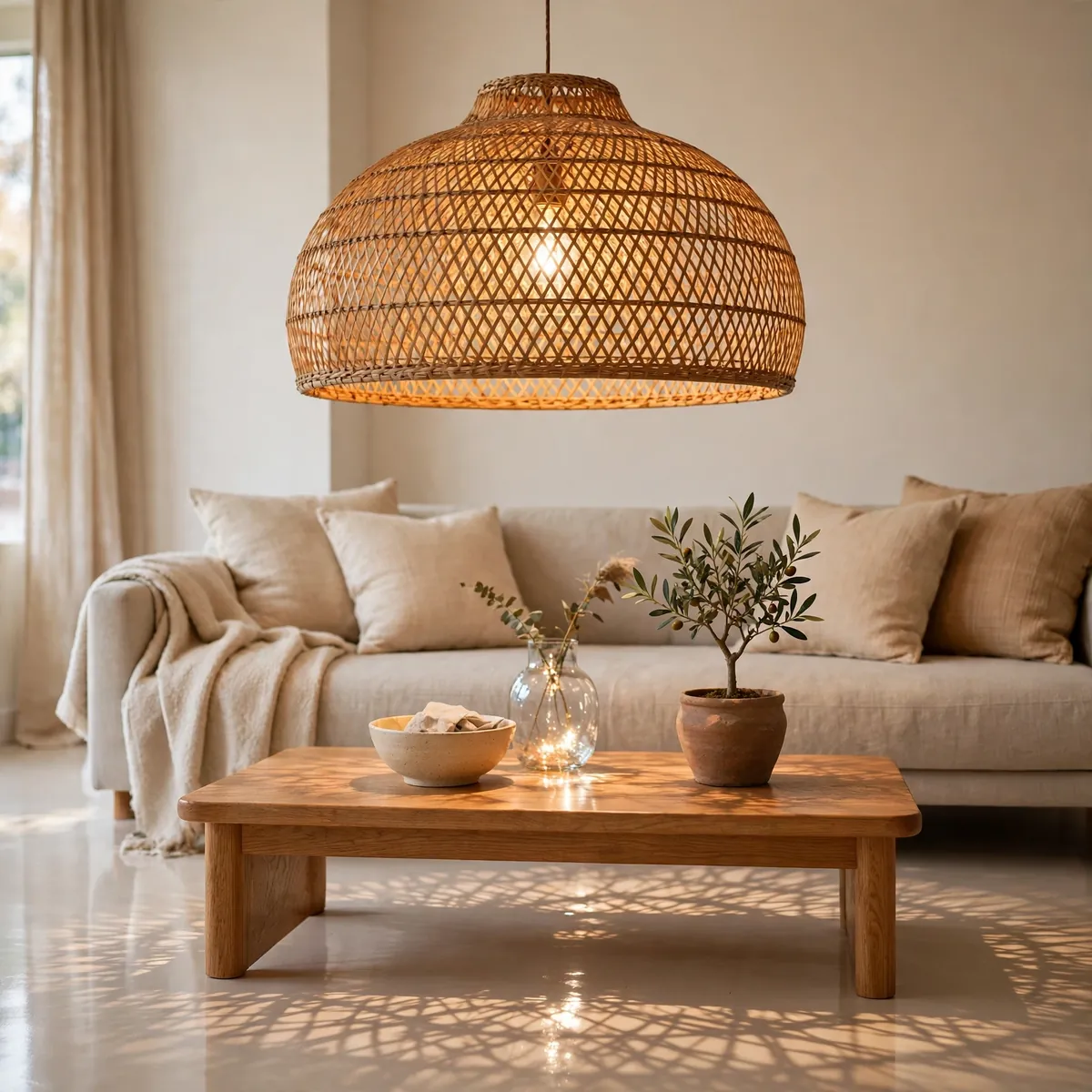
A handwoven rattan or bamboo pendant brings the one natural texture overhead lighting usually lacks. Its woven surface throws beautiful patterned shadows when lit, it reads warm and handmade even switched off, and its organic form softens the ceiling plane. Hang a single generous pendant — 50–60 cm diameter — centered over the coffee table, low enough to feel part of the seating arrangement. Keep the rest of the room’s lighting simple so the pendant remains the undisputed star after dark.
- One large pendant beats a cluster of small ones here.
- Hang low enough to join the seating zone visually.
- Dust woven shades with a soft brush, not water.
Edit the Bookshelf Down to What You Love
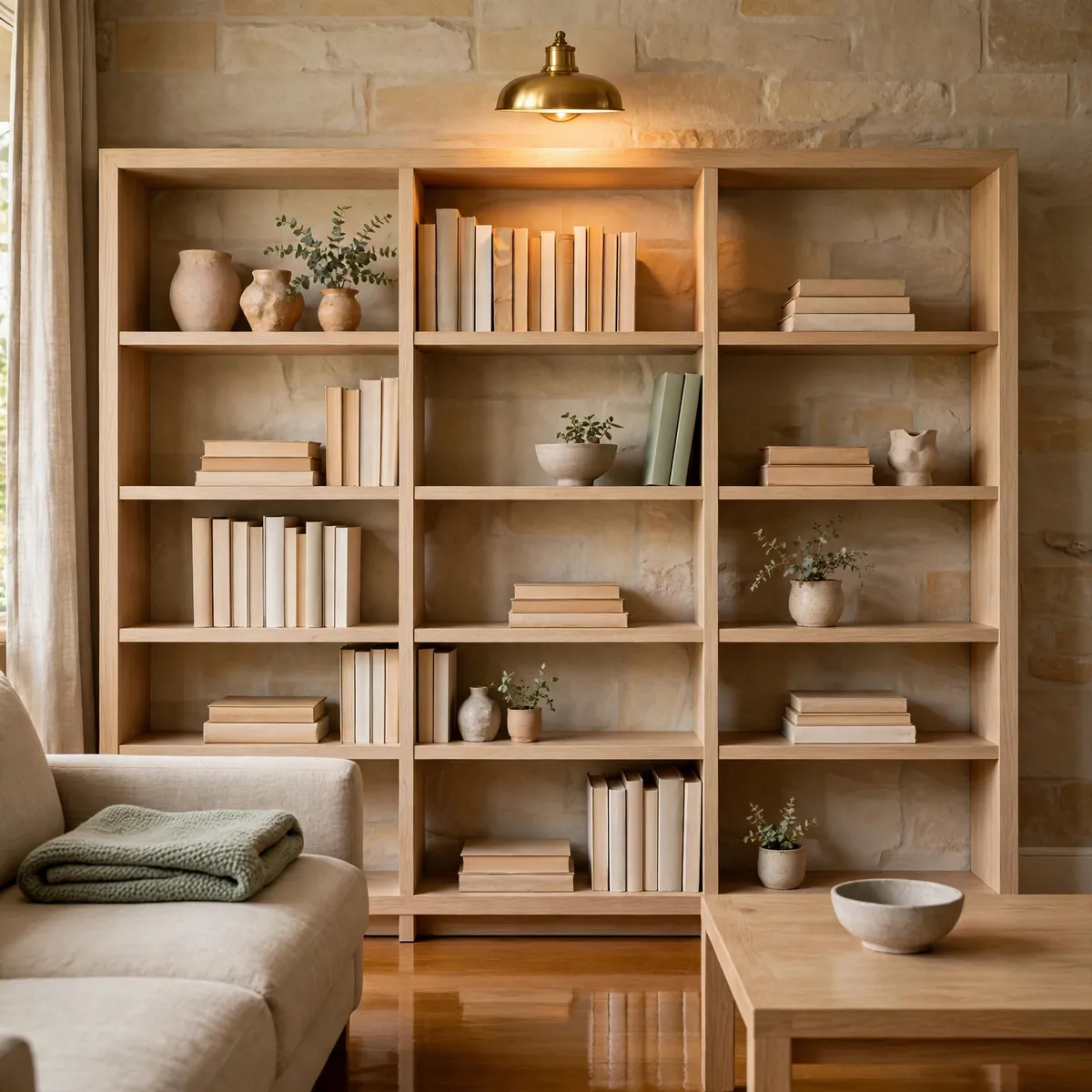
A Japandi bookshelf is a curated library, not an archive. Keep the books you genuinely love or reference, arrange them with breathing room — some vertical, some in short horizontal stacks — and intersperse a ceramic object or small plant every few sections. Remove dust jackets if the colors clash with the room; the calm spines underneath usually suit the palette better. What leaves the shelf does not have to leave the house — box the rest and store it out of sight. The shelf that remains will be the one guests actually browse.
- Keep books you love; box the rest out of sight.
- Mix vertical rows with short horizontal stacks.
- Leave every third section partly empty.
Hide Clutter in Woven Seagrass Baskets
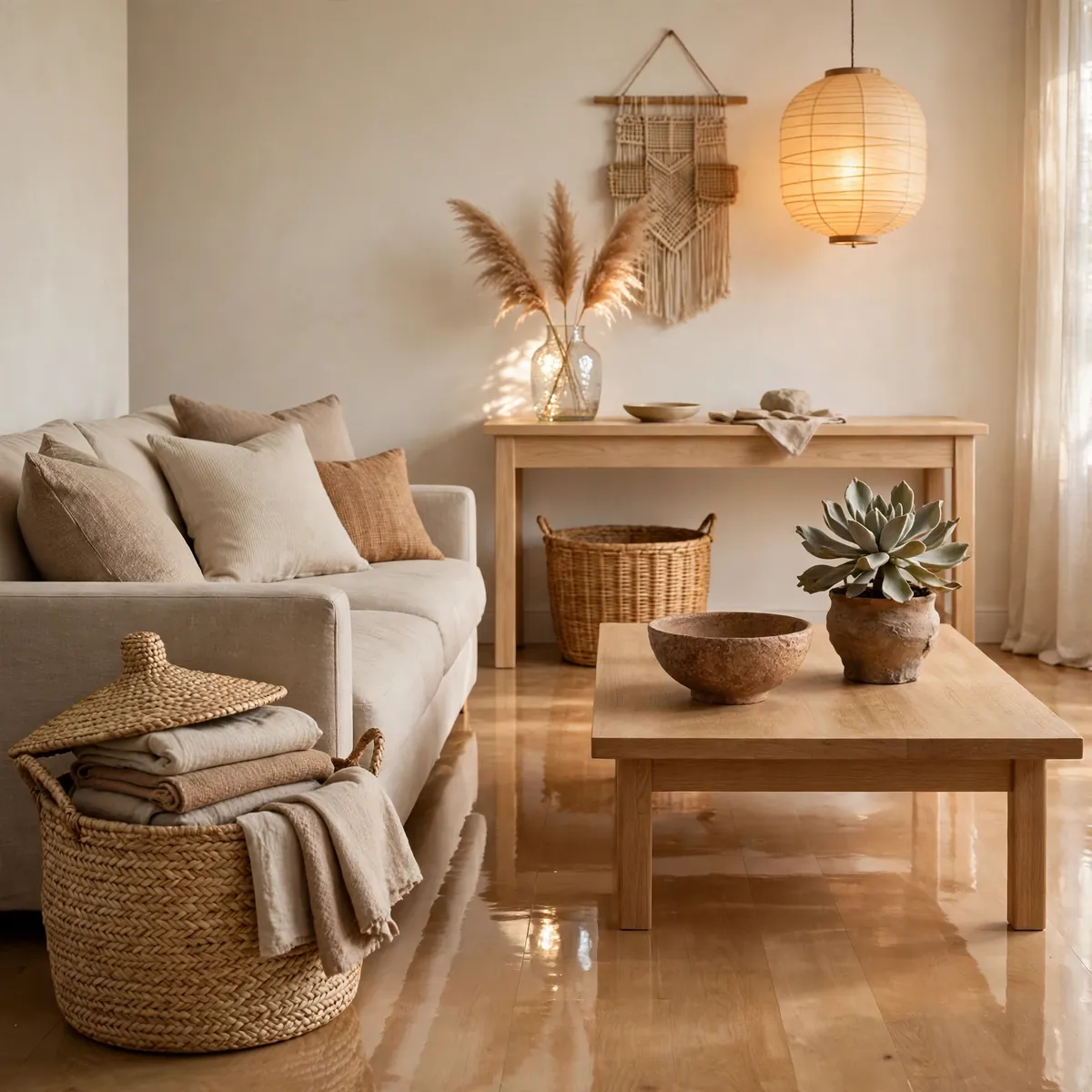
Every calm room has a secret, and in Japandi it is beautiful hidden storage. Large seagrass or rattan baskets with lids swallow throws, remote controls, chargers, and the general flotsam of daily life while adding natural texture to the room. Tuck one beside the sofa, one under the console, one in the reading corner. The woven texture keeps them firmly in the Japandi material palette, so unlike plastic boxes they never need hiding themselves — they are decor that happens to hold clutter.
- Lidded baskets hide clutter completely; open ones invite it.
- One basket per zone prevents the “basket farm” look.
- Natural weaves only; dyed baskets clash with the palette.
Hang One Large Artwork with Breathing Room
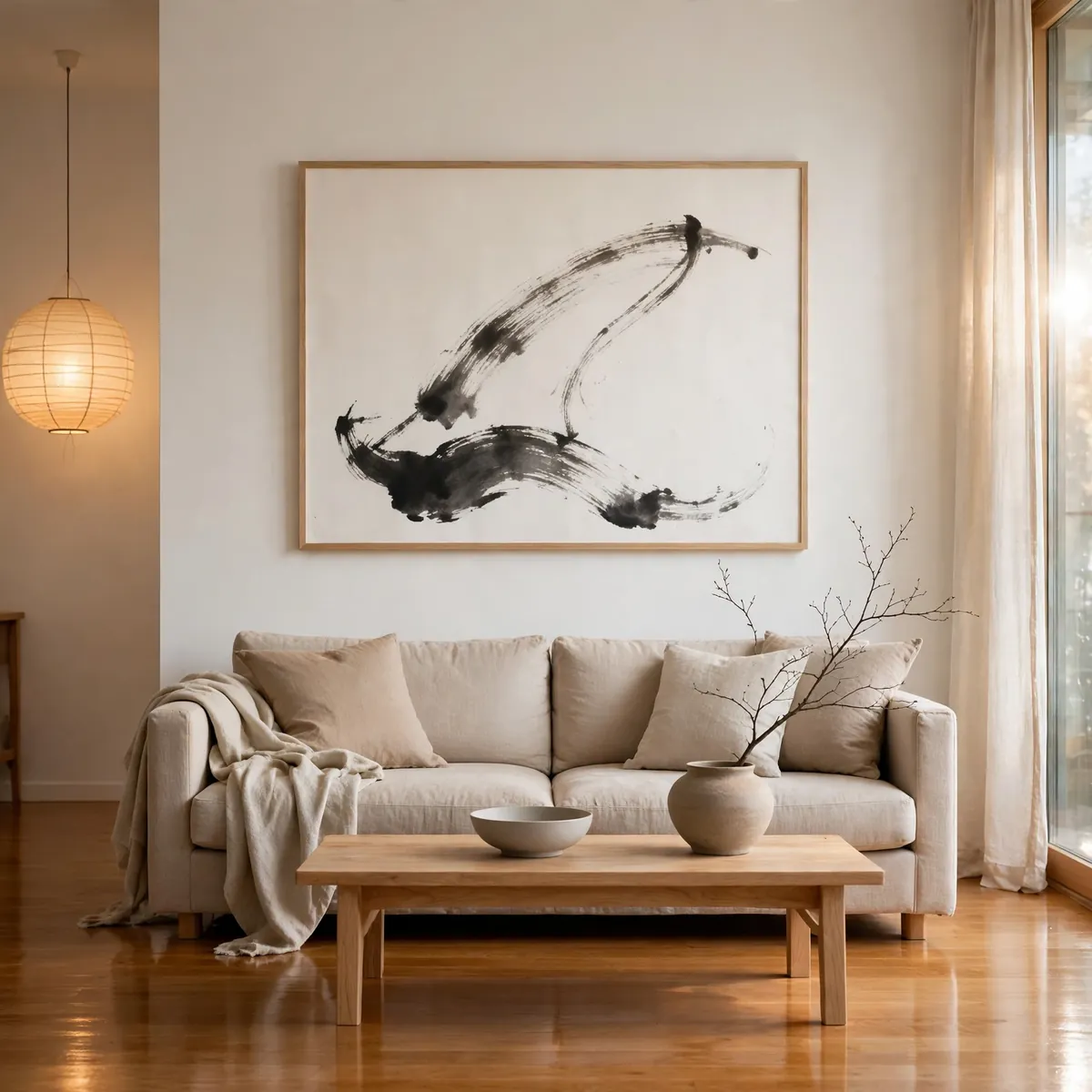
Japandi walls are mostly bare, which makes the one piece of art carry real weight. Choose a single large work — an abstract ink-brush piece, a soft landscape, a textural monochrome — with plenty of negative space in the composition itself, and give it an equally generous margin of empty wall around it. Hang it lower than gallery standard, centered for seated viewing. The empty wall is not unfinished; it is the frame. One confident piece in a calm room says more than a gallery wall ever could.
- One large piece beats several small ones in this style.
- Hang for seated eye level, roughly 140–150 cm center.
- Thin natural-wood or black frames suit the aesthetic.
Create a Small Tea Ritual Corner
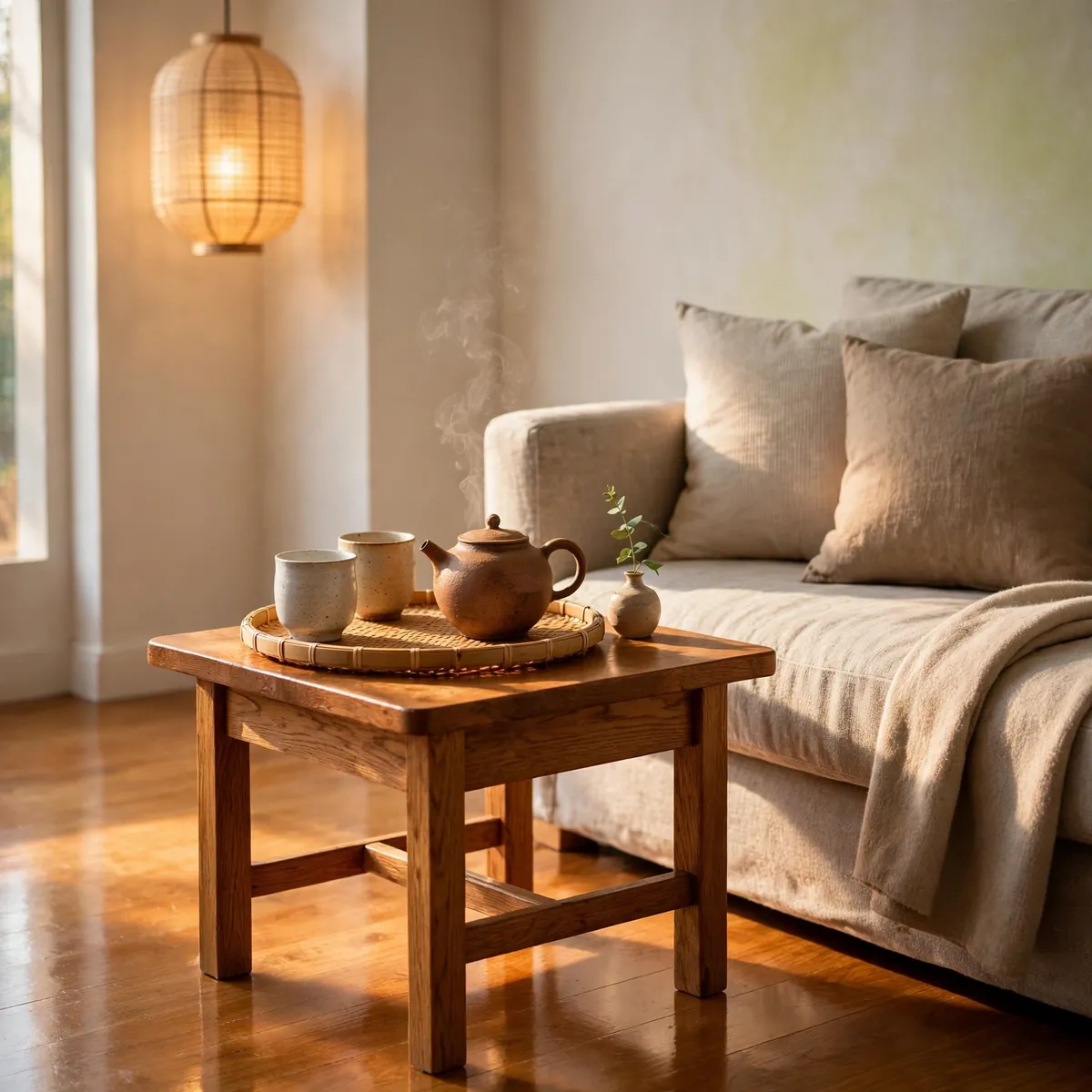
Japandi is a lifestyle as much as a look, and a tiny tea corner makes that tangible: a low side table or tray, a handmade teapot, two cups, nothing else. It gives the living room a purpose beyond sitting and screens — a reason to pause. You do not need a ceremony; the ritual is simply making tea and drinking it without your phone. Place the corner where afternoon light falls, keep the vessels handmade and mismatched in a considered way, and let this small station remind the whole room to slow down.
- Two cups, one pot, one tray — that is the whole station.
- Handmade vessels make the ritual feel special.
- Place where afternoon light lands for maximum calm.
Conceal Electronics Completely
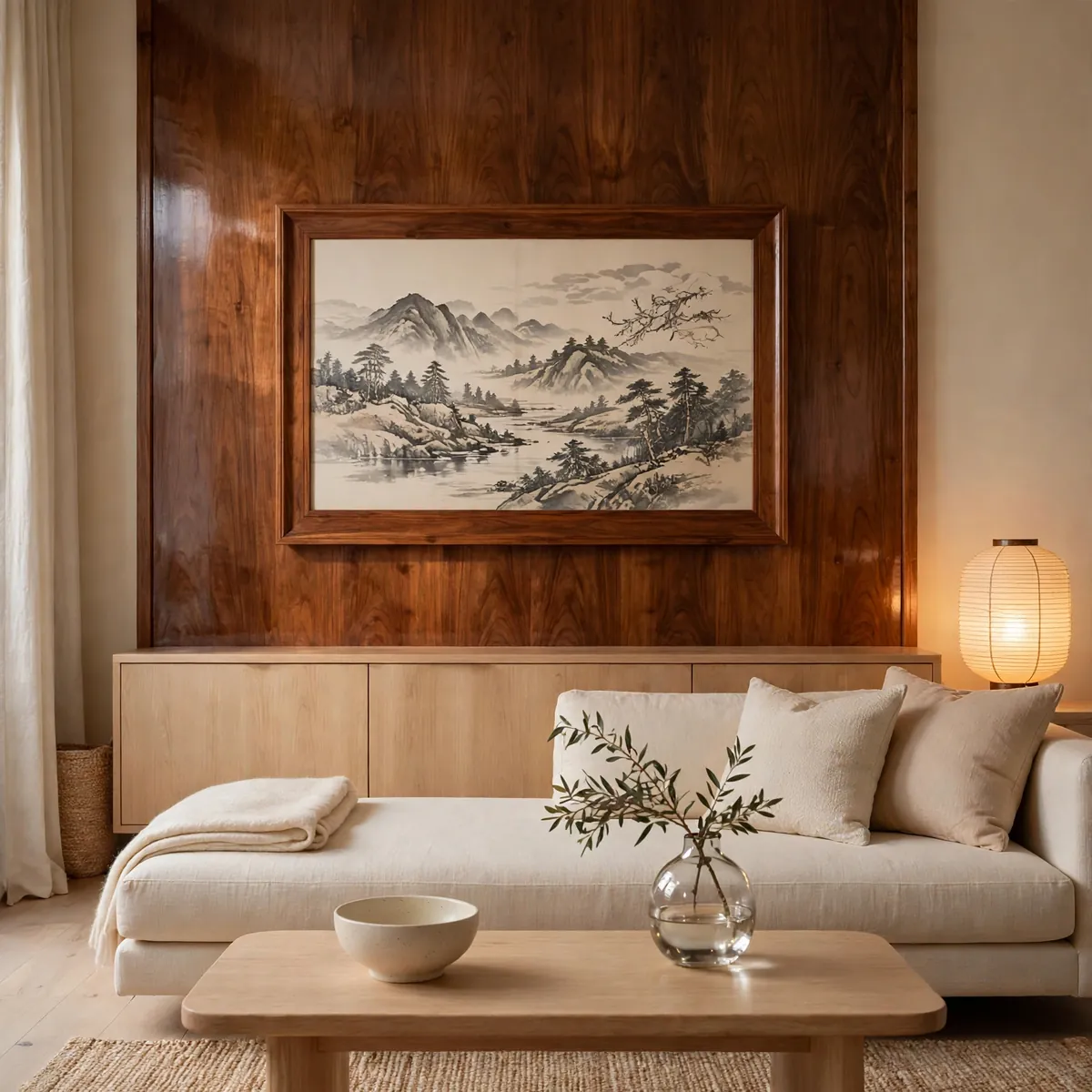
Nothing breaks Japandi calm faster than a black TV rectangle and its tangle of cables. The style’s answer is concealment: mount the TV on a walnut panel that reads as wall art when off, or choose a frame-style TV that displays calm artwork in standby. Hide every cable in trunking or behind the wall, stash boxes and consoles inside closed storage, and silence notification lights. The goal is a room where technology serves quietly and never performs — you should be able to forget the TV exists until movie night.
- Frame-style TVs double as art when idle.
- Route all cables behind walls or paintable trunking.
- Closed storage for every box, console, and charger.
Add a Stone or Gravel Tray Moment
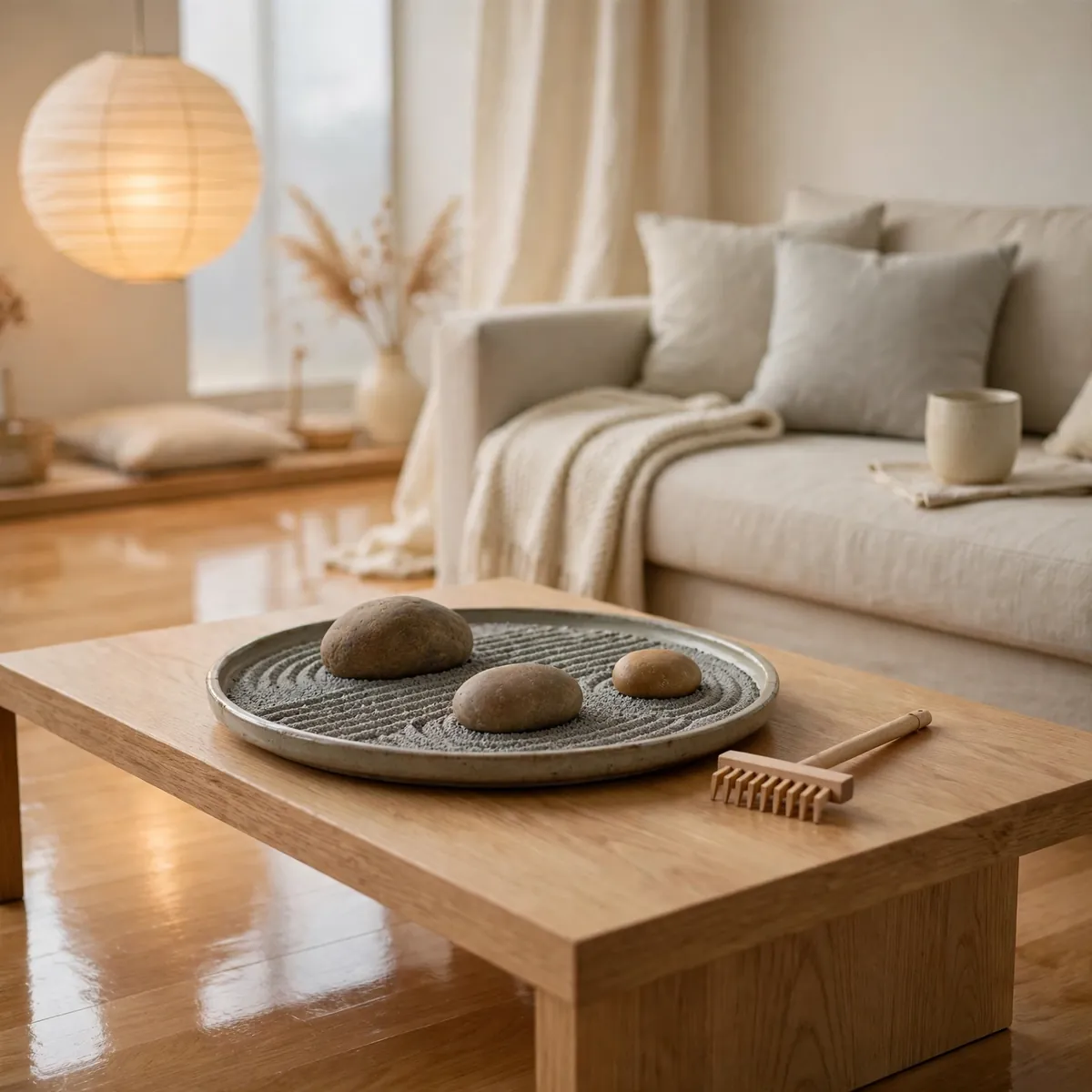
A shallow tray of raked gravel or smooth river stones on the coffee table or a low shelf is a direct nod to the Japanese rock garden — karesansui — scaled for a living room. It is the smallest possible garden: a ceramic or stone tray, fine gravel, three stones placed asymmetrically. Raking the gravel into simple lines is a genuine five-minute meditation, and the tray gives the room a contemplative focal point that no store-bought object can match. Keep it small and simple; this is about stillness, not landscaping.
- Three stones, placed asymmetrically, is the classic composition.
- Fine gravel rakes cleanly; coarse gravel fights you.
- Keep the tray small — it is a moment, not a feature.
Finish with Scent and a Sensory Layer

The final Japandi layer is invisible: scent. A single beeswax candle, a stick of subtle sandalwood incense, or a ceramic diffuser with hinoki or cedar oil completes the room the way lighting completes it visually. Keep it to one scent at a time and choose natural over synthetic — the goal is the faint smell of a forest temple or a wood workshop, not a perfume counter. Scent is processed by the oldest part of the brain, which is why this small addition changes how calm the room feels more than any object can.
- One natural scent at a time; never layer fragrances.
- Beeswax and wood-based scents suit the style best.
- Ventilate briefly after incense to keep the air fresh.
FAQs
What exactly is Japandi style?
Japandi is the fusion of Japanese and Scandinavian design. From Japan it takes minimalism, low-profile furniture, natural materials, and wabi-sabi (beauty in imperfection); from Scandinavia it takes hygge warmth, soft textiles, and livable comfort. The result is a calm, uncluttered room that still feels warm and human.
How is Japandi different from plain minimalism?
Minimalism is often about owning less and can look stark or showroom-like. Japandi adds warmth through natural texture, handmade imperfection, and cozy ritual — it is restrained but never cold, and every object should feel used and loved rather than merely displayed.
Can I do Japandi in a small living room or rental?
Yes — Japandi suits small spaces because it is built on editing and light colors. Start free: declutter, unify the palette with what you own, and give furniture breathing room. Then add low-cost layers like unlined linen curtains, a seagrass basket, and warm bulbs. Nothing structural is required.
Conclusion
A Japandi living room is not decorated; it is edited into being. Low furniture, honest wood, handmade ceramics, and warm diffused light do the work that color and pattern do elsewhere, and the calm you feel is the direct result of everything you chose not to include. Start with subtraction — clear the surfaces, unify the palette, lower the light — and add back only what serves the room. Done slowly, Japandi stops being a style and becomes a habit: less, but better, every day.