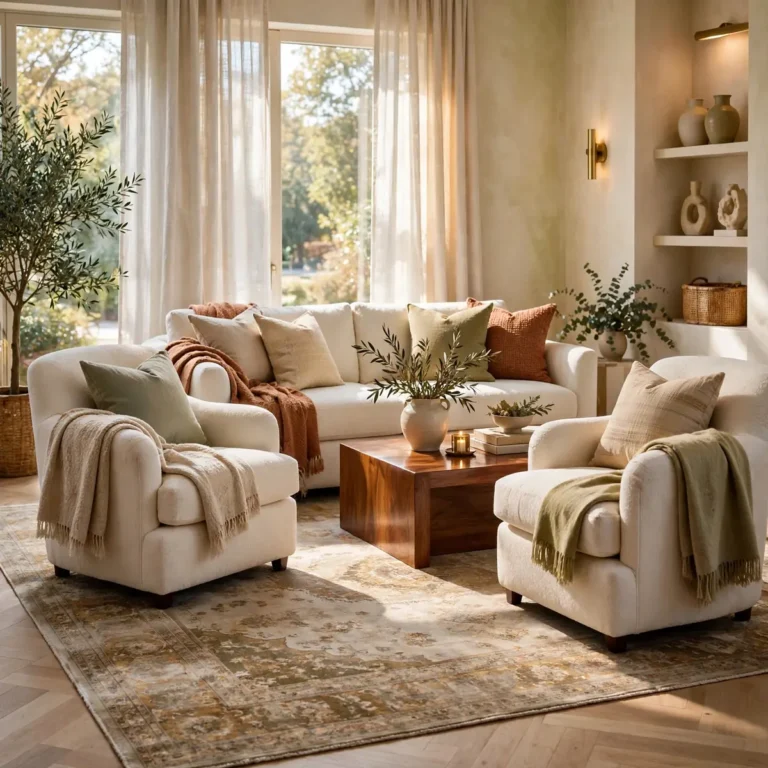
25 Living Room Bookshelves Ideas That Look Built-In and Polished
From budget built-in looks to ladder shelves and lighting tricks, these 25 ideas turn ordinary living room bookshelves into the most designed wall in the house.
Living room bookshelves ideas work best when you treat the shelf as a wall of design, not a storage unit. The fastest upgrade is almost never buying more decor — it is editing what is already there, then giving books and objects room to breathe so the whole wall reads as intentional.
A bookshelf becomes a design feature when three things line up: structure, styling, and light. Structure is the bones — a tall bookcase, a set of built-ins, floating shelves, or even a leaning ladder that borrows vertical space instead of demanding floor space. Styling is the balance between books and objects, the quiet discipline of leaving some shelves half-empty, and the choice to group spines by color or stack them horizontally so the wall never feels like a library sale. Light is the part most people skip: a single picture light, a strip of warm LEDs tucked under a shelf, or simply placing the unit where window light can reach the spines turns flat shelving into something with depth and shadow. Get these three right and a thirty-dollar bookcase can look like millwork — which is exactly what the twenty-five ideas below are built to do, one practical step at a time. And because every idea below was written for real living rooms — rented flats, family homes, open-plan spaces — you will find small-space solutions, budget built-in tricks, and styling rules that work whether your collection is twenty books or two hundred.
Before you start, decide whether your shelf is mainly storage, mainly display, or a mix of both — that one decision shapes everything from shelf height to how much empty space you protect. And if you are restyling the wider room around the new shelf wall, our living room decor tips guide shows how to keep the whole space feeling cohesive.
Built-Ins Flanking the Fireplace, Done the Easy Way
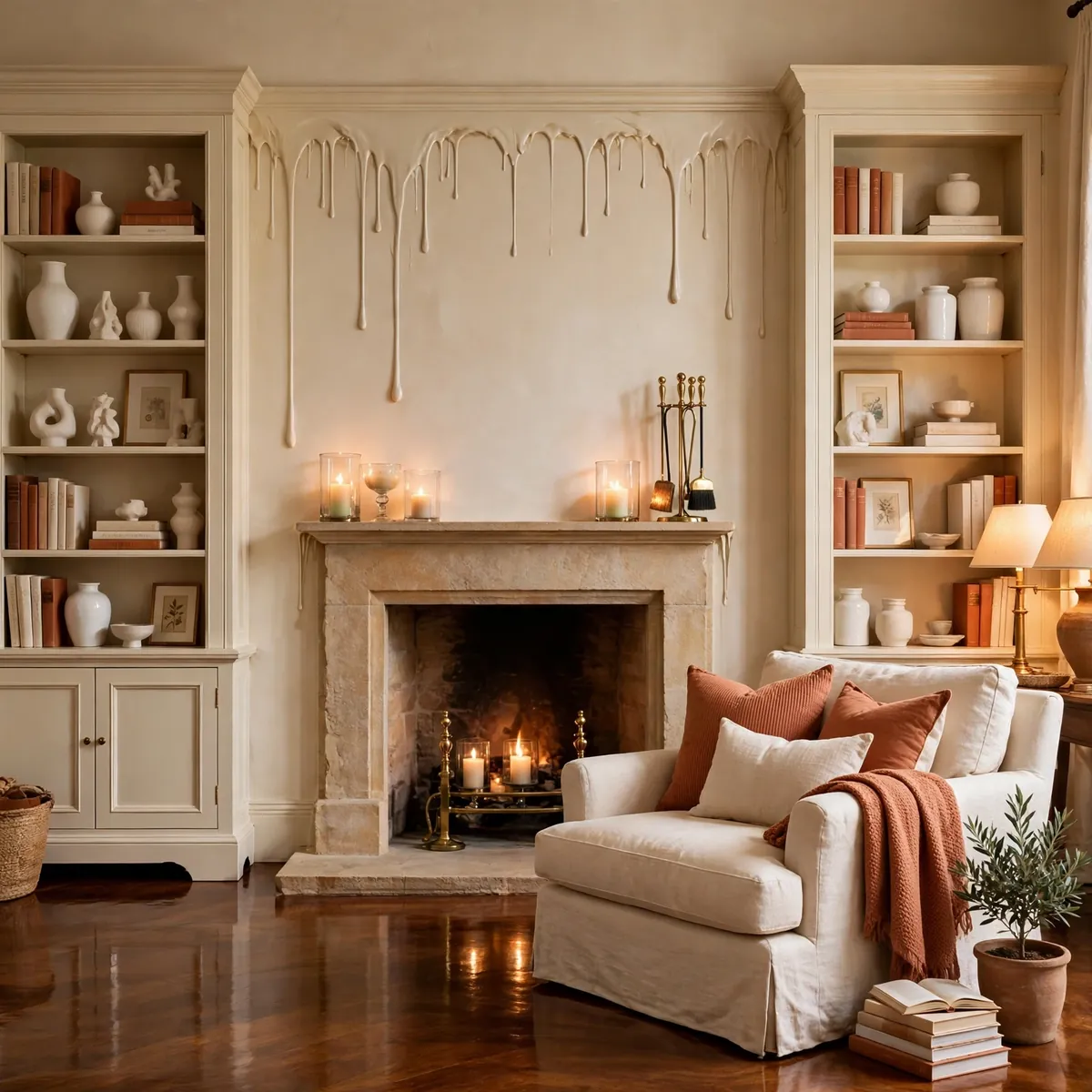
Nothing anchors a living room like matching bookcases on either side of a fireplace, and you do not need a carpenter to get the effect. Buy two identical tall bookcases, leave a small gap from the wall, and bridge them with painted trim along the tops, sides, and base — painted the same color as the wall, the units disappear into the architecture. Style the two sides as near-mirrors rather than exact twins: same rhythm of books and objects, different pieces, so it looks collected instead of catalog-bought.
- Paint the bookcases and the bridging trim one wall color for a seamless built-in illusion.
- Keep the bottom shelves functional (baskets, boxes) and the upper shelves display-only.
- Leave a two-finger gap between the case and the mantel so heat does not damage finishes.
A Single Tall Bookcase With a Leaning Library Ladder
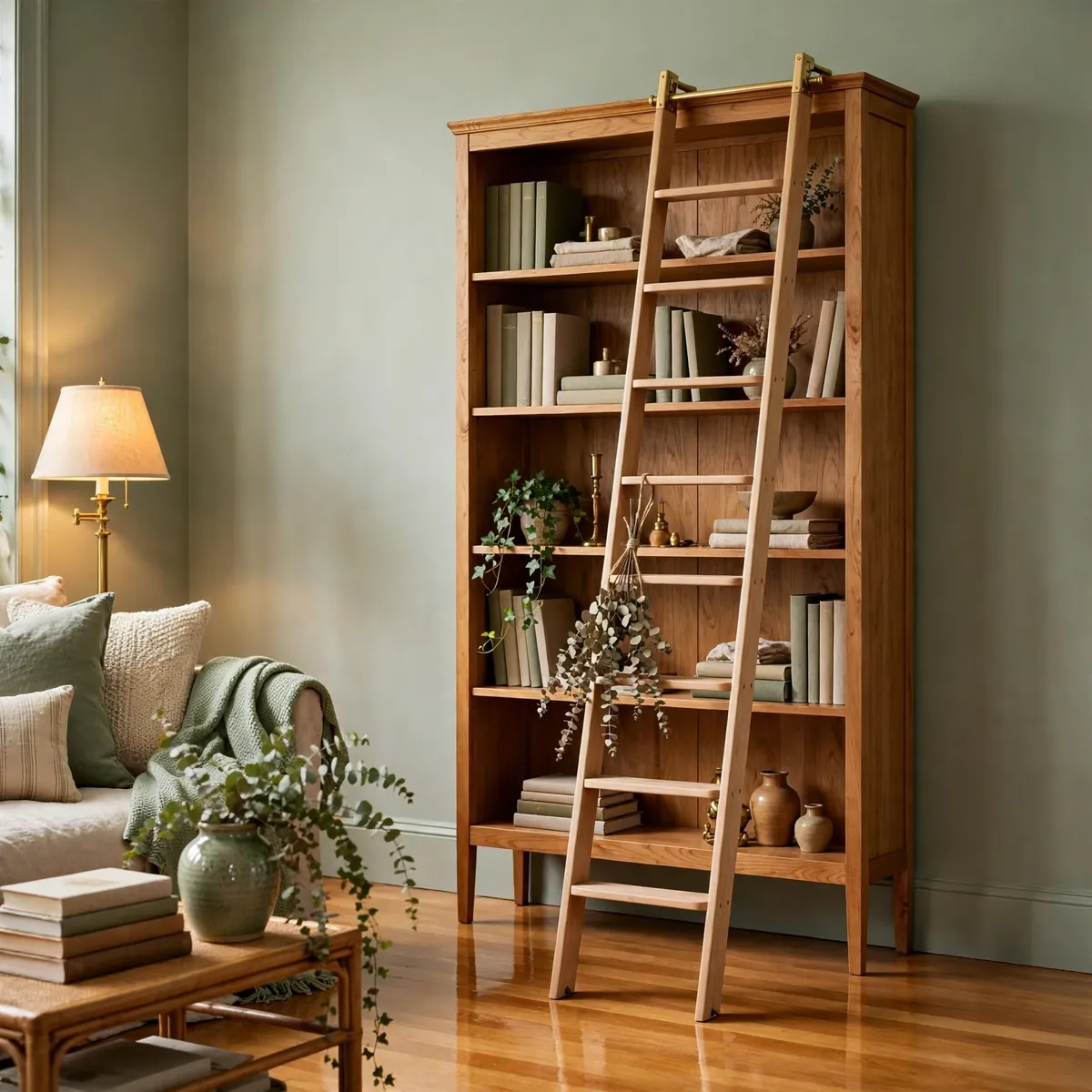
A slim decorative ladder leaned against a tall bookcase gives you the library romance of a rolling rail system at a fraction of the cost and zero drilling. The ladder does not need to reach anywhere functional — its job is visual: a long vertical line that breaks the blockiness of the shelf and draws the eye upward, making ceilings feel taller. Choose a wood-tone ladder slightly lighter than the bookcase so it reads as an accent rather than a match.
- Secure the ladder’s top hook or strap so it cannot slip when leaned.
- Use the ladder’s lower rungs to hang a small wreath or a length of dried eucalyptus.
- Keep the bookcase itself slim-profiled so the pair does not eat floor space.
Painted Back Panels for Instant Depth
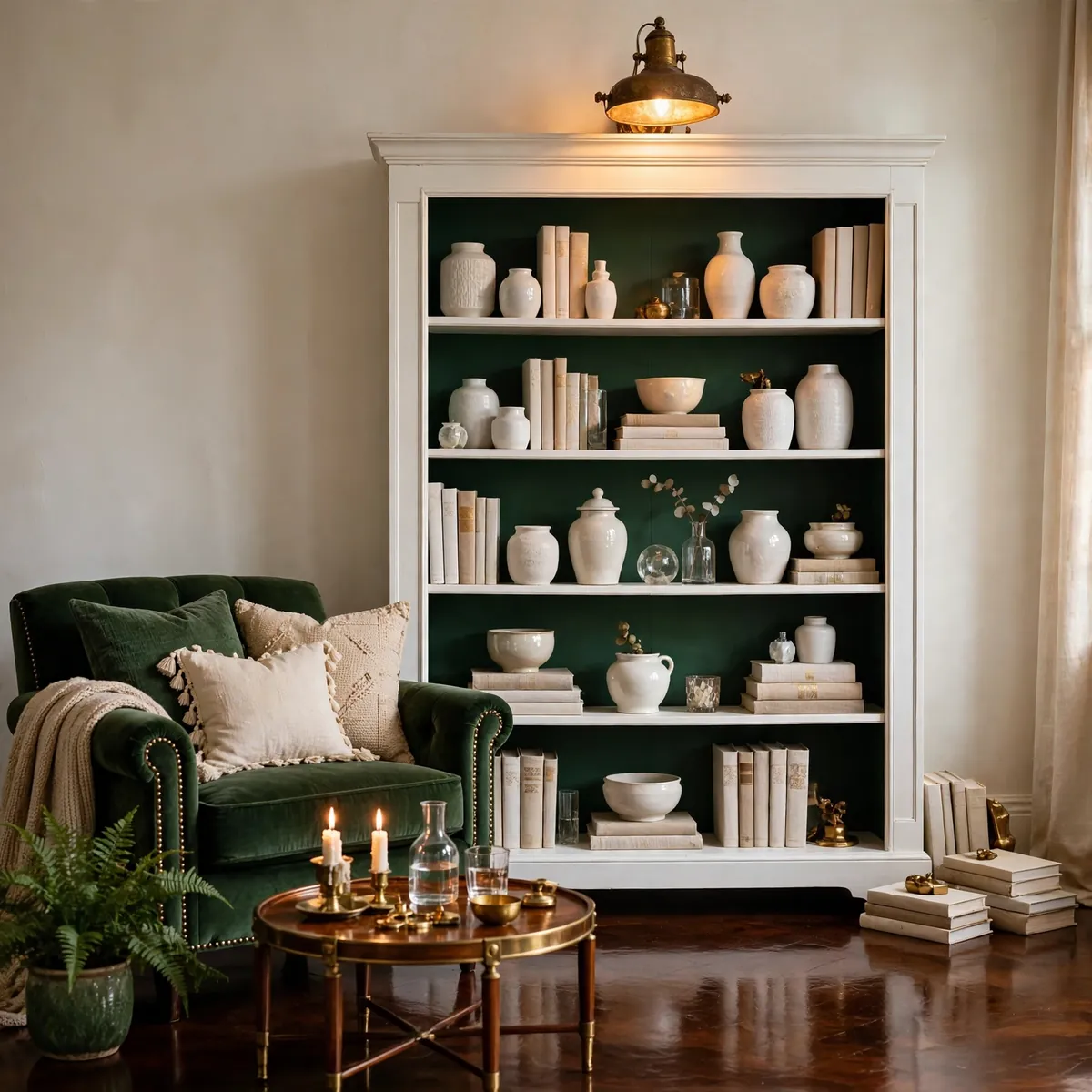
Painting only the back panel of a bookcase — deep green, inky blue, charcoal, or warm terracotta — is the highest-impact afternoon project in this list. The dark backing pushes everything forward visually: white ceramics turn crisp, book spines look richer, and the shelf reads as custom rather than flat-pack. If paint feels permanent, peel-and-stick wallpaper or grasscloth gives the same depth and peels off when you change your mind.
- Match the back color to an accent already in the room so it feels chosen, not random.
- Keep decor in lighter tones against a dark backing so objects stay visible.
- Paint one coat at a time and restyle shelves before the second coat dries for momentum.
Living Room Bookshelves Ideas for Open, Airy Styling
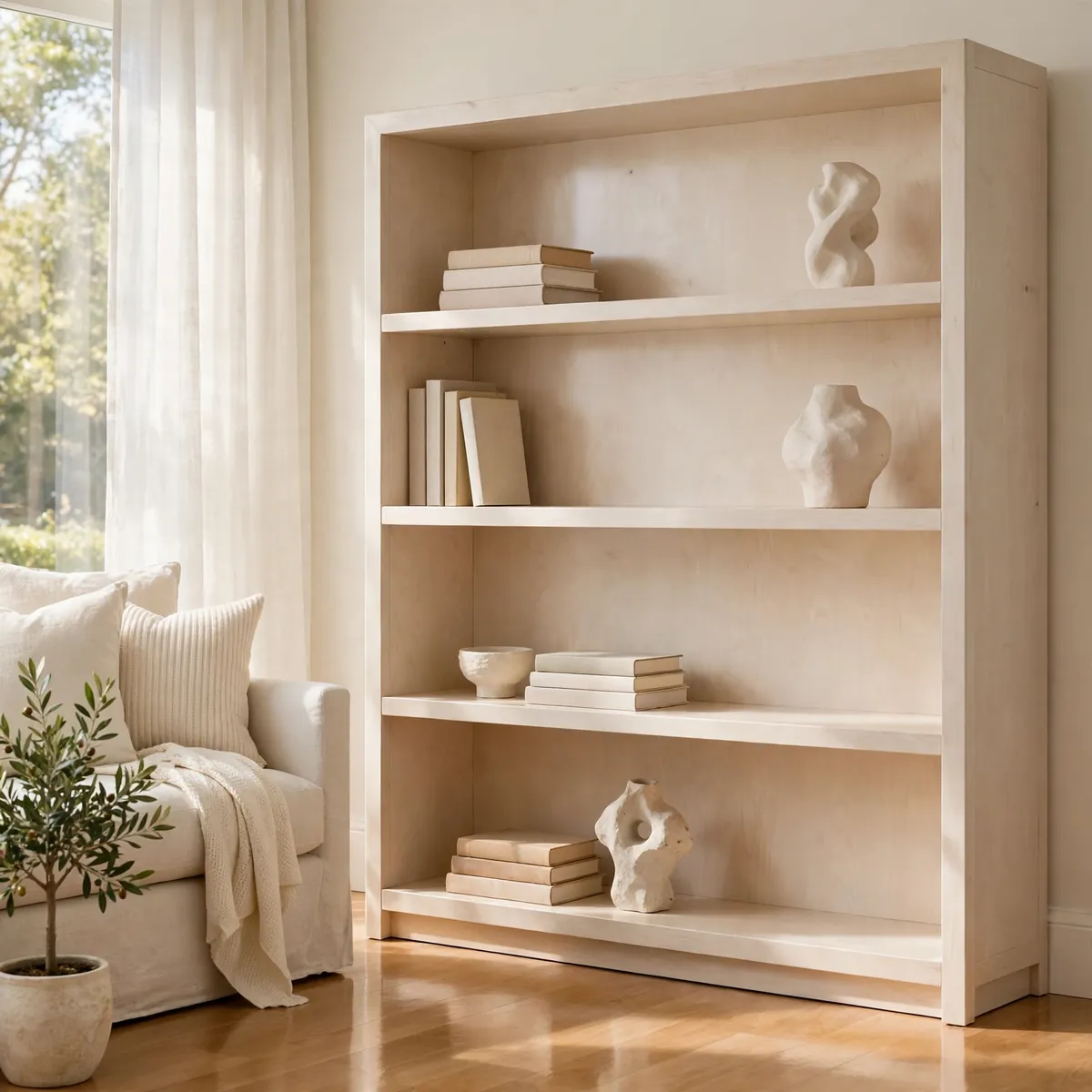
Open bookshelves look expensive when roughly a third of each shelf stays empty. That negative space is not wasted — it is what lets the eye rest between groups of books and objects, so the wall feels curated instead of crowded. A practical rhythm that works on almost any unit: books on one end, a low object or small stack on the other, and a clear gap in the middle. In open-plan living rooms this restraint matters even more, because the shelf wall is visible from the kitchen and hallway too.
- Cap each shelf at two to three groupings maximum, then stop adding.
- Photograph the shelf and review the photo — clutter shows up faster in pictures.
- Remove one object from every styled shelf as a final pass; the wall will thank you.
Horizontal Book Stacks That Break the Vertical Grid
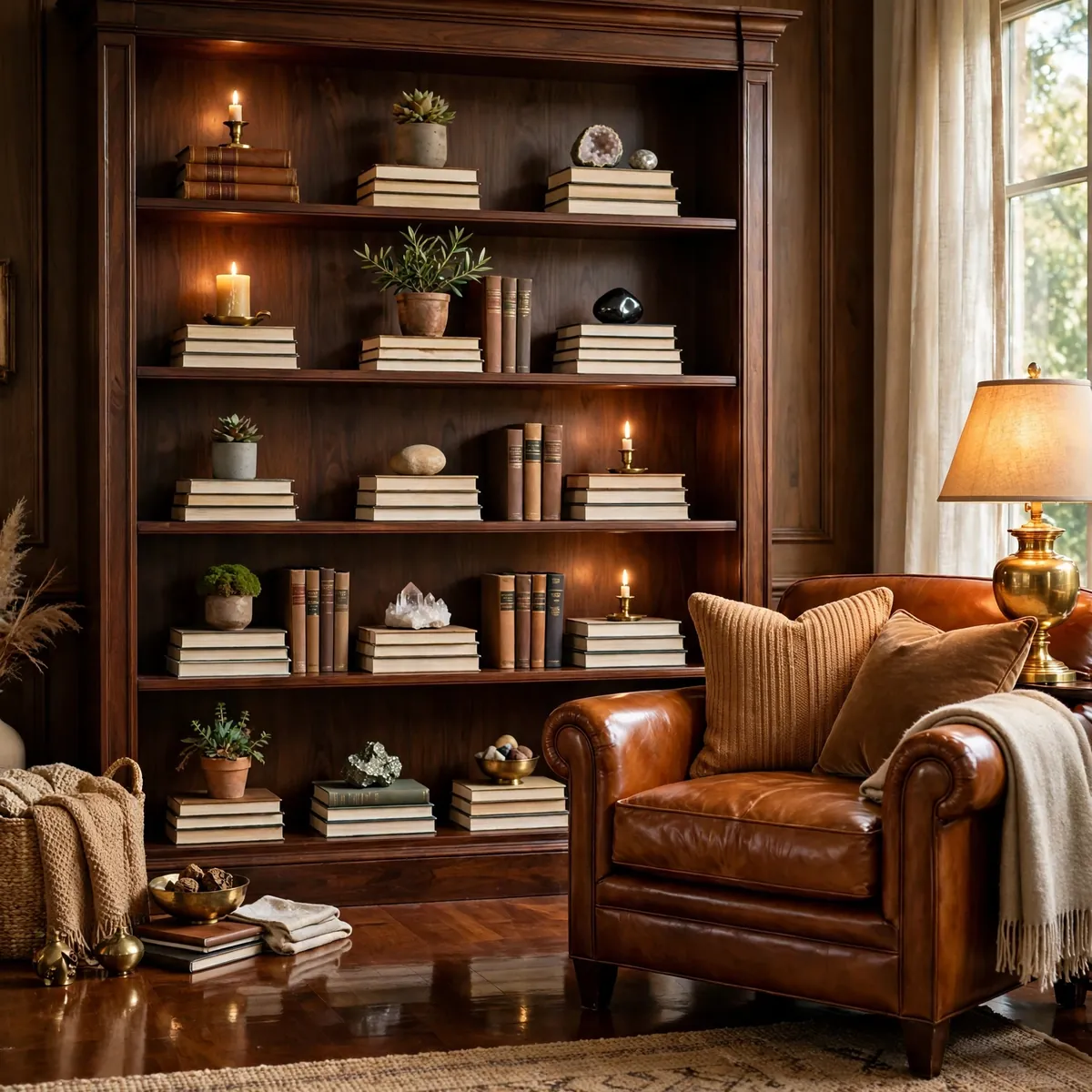
Rows of upright books are orderly but visually flat; laying some volumes horizontally breaks the grid and creates pedestals for small objects. A stack of three to five horizontal books capped with a candle, a small plant, or a stone object turns a book pile into a styled moment. Vary stack heights across shelves so the eye travels up and down instead of scanning a single horizon line.
- Keep horizontal stacks to five books or fewer so they stay stable and easy to dust.
- Use the largest book on the bottom and step sizes down for a natural taper.
- Put your heaviest, least-read volumes in stacks and your daily reads upright.
Color-Grouped Spines for a Calm, Cohesive Wall
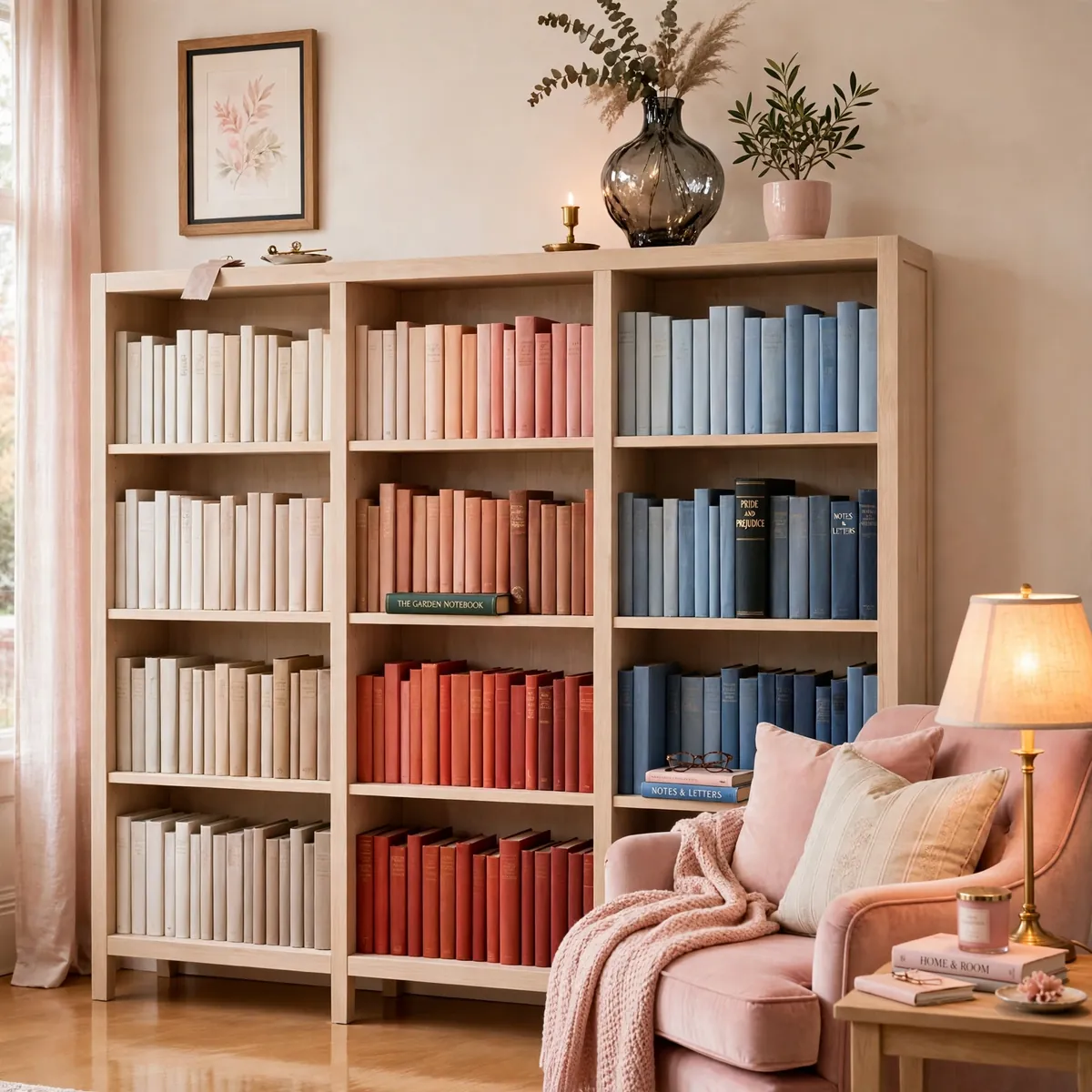
Grouping books by spine color — neutrals together, warm reds together, cool blues together — turns a chaotic library into a gradient that reads almost like art. You do not need a rainbow arrangement; even loose zones (dark spines here, light spines there) give the wall visual calm. This trick works best when the shelf itself is a single finish, because the books become the color story instead of competing with patterned wood or painted trim.
- Group within shelves rather than across the whole unit so nothing looks forced.
- Let a few favorite titles break the pattern; perfect order reads artificial.
- Face the most attractive spines outward on the lowest, most visible shelves.
The TV Wall That Doesn’t Look Like a TV Wall
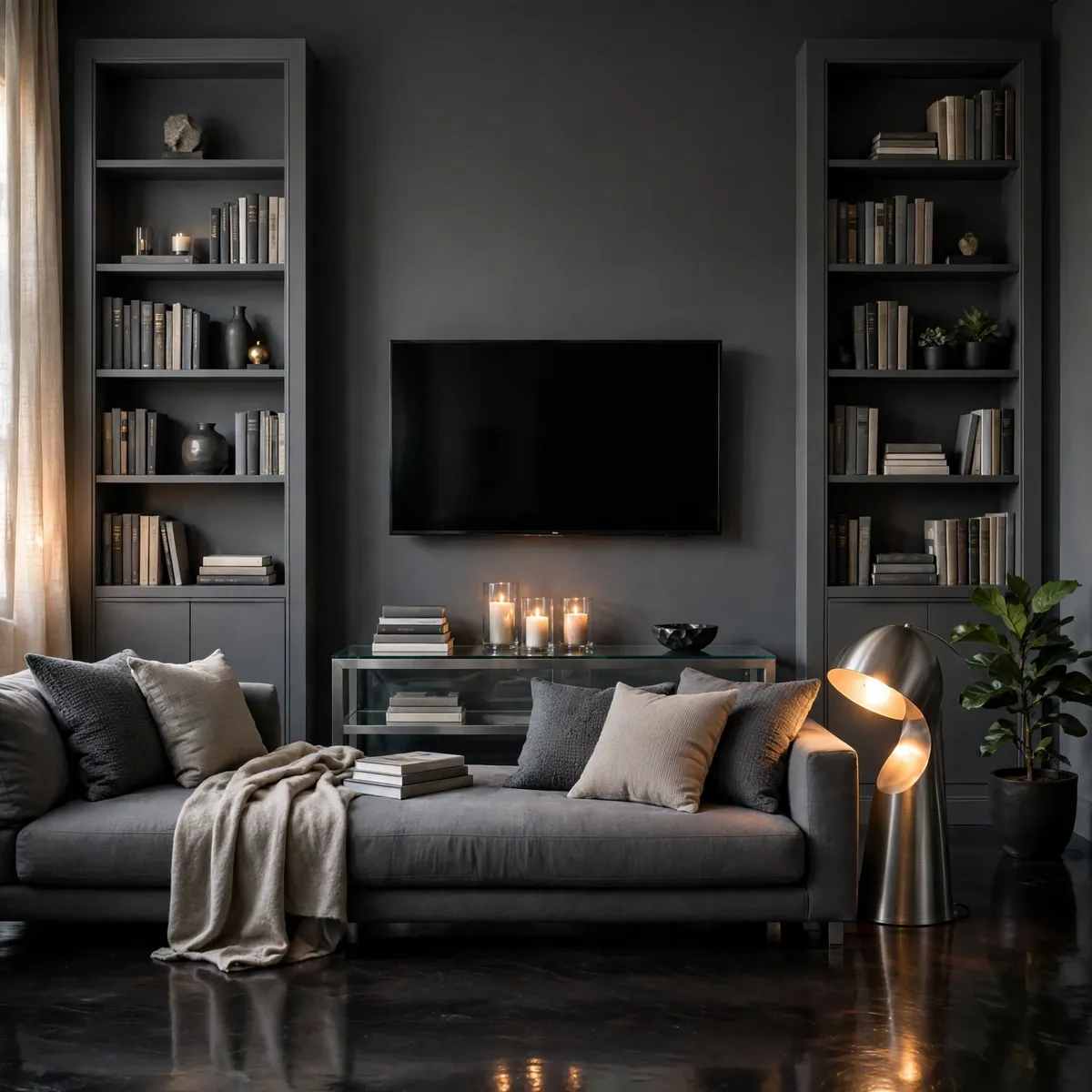
Centering the TV between two tall bookcases lets books and objects soften the black rectangle, so the screen stops dominating the room. Balance matters: keep the shelves directly beside the screen visually calm — books, not busy little objects — so nothing fights the picture when it is on. When it is off, the shelving around it carries the wall and the TV becomes just another panel in the composition.
- Route cables down behind the shelving so no cords dangle beside the screen.
- Leave the top shelves near the TV sparsely styled to avoid glare-catching clutter.
- Mount the TV so its center sits at seated eye level, not above the mantel.
Closed Cabinets Below, Open Shelves Above

The bottom two shelves of most bookcases become the clutter graveyard — remotes, chargers, board games — and the fix is simple: close them off. Budget options include cabinet inserts, cane-panel doors, or a linen curtain panel on a tension rod, all of which hide the mess and visually ground the unit. With the bottom handled, the open upper shelves can stay genuinely decorative, which makes the whole bookcase easier to maintain.
- Choose closed storage that spans the full width so it looks built in, not added on.
- Keep one low basket accessible for remotes instead of stacking them on a shelf.
- Label the inside of cabinet doors so the family keeps the system working.
A Slim Ladder Shelf for Narrow Walls

Ladder-style leaning shelves are the best bookshelf for narrow walls, tight corners, and rented flats where drilling is off the table. They take barely a foot of depth at the base and taper to almost nothing at the top, so they add vertical storage without eating floor space. Style the deep lower shelves with books and the shallow upper ones with small objects — the taper naturally enforces a light-up-top rhythm that always looks right.
- Anchor the top to the wall with a small bracket or strap; ladders tip easily.
- Put books only on the bottom two tiers where the shelf is deepest.
- Choose a ladder shelf no wider than your narrowest wall segment to keep it balanced.
Window-Adjacent Reading Corners Built From One Bookcase
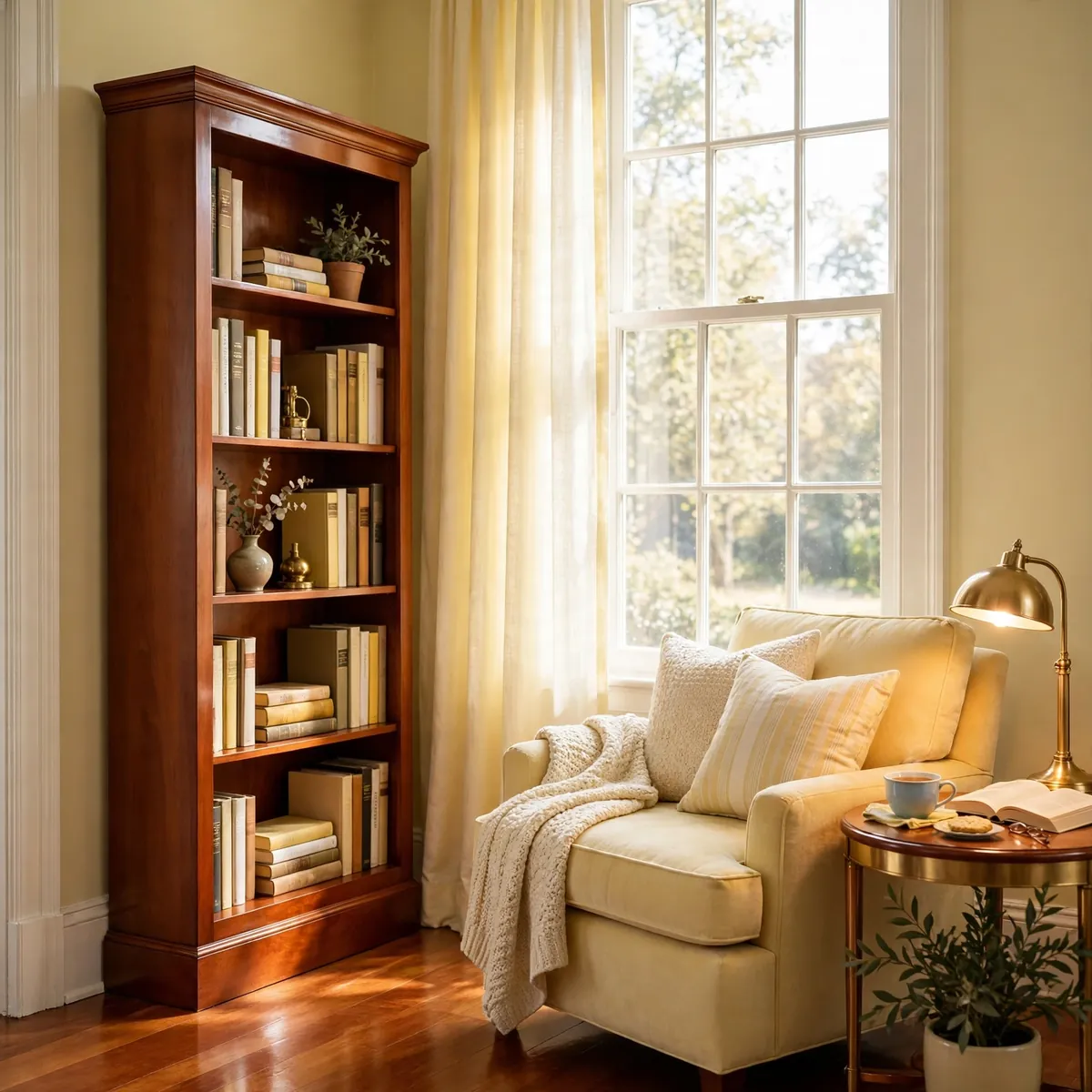
A single bookcase pushed beside a window, paired with a comfortable chair and a small side table, creates a reading corner that costs almost nothing beyond the furniture you already own. The shelf keeps books within arm’s reach, the daylight does the lighting work for free, and the arrangement turns a dead corner into the room’s most-used seat. Keep the bookcase narrow so it frames the window rather than blocking it, and reserve its lower shelves for the books you are actually reading now.
- Angle the chair toward the light so pages stay glare-free.
- Add a throw and a small basket for blankets to make the corner irresistible.
- Keep the window side of the bookcase styled lighter so daylight passes through.
Floating Shelves in a Staggered Cluster
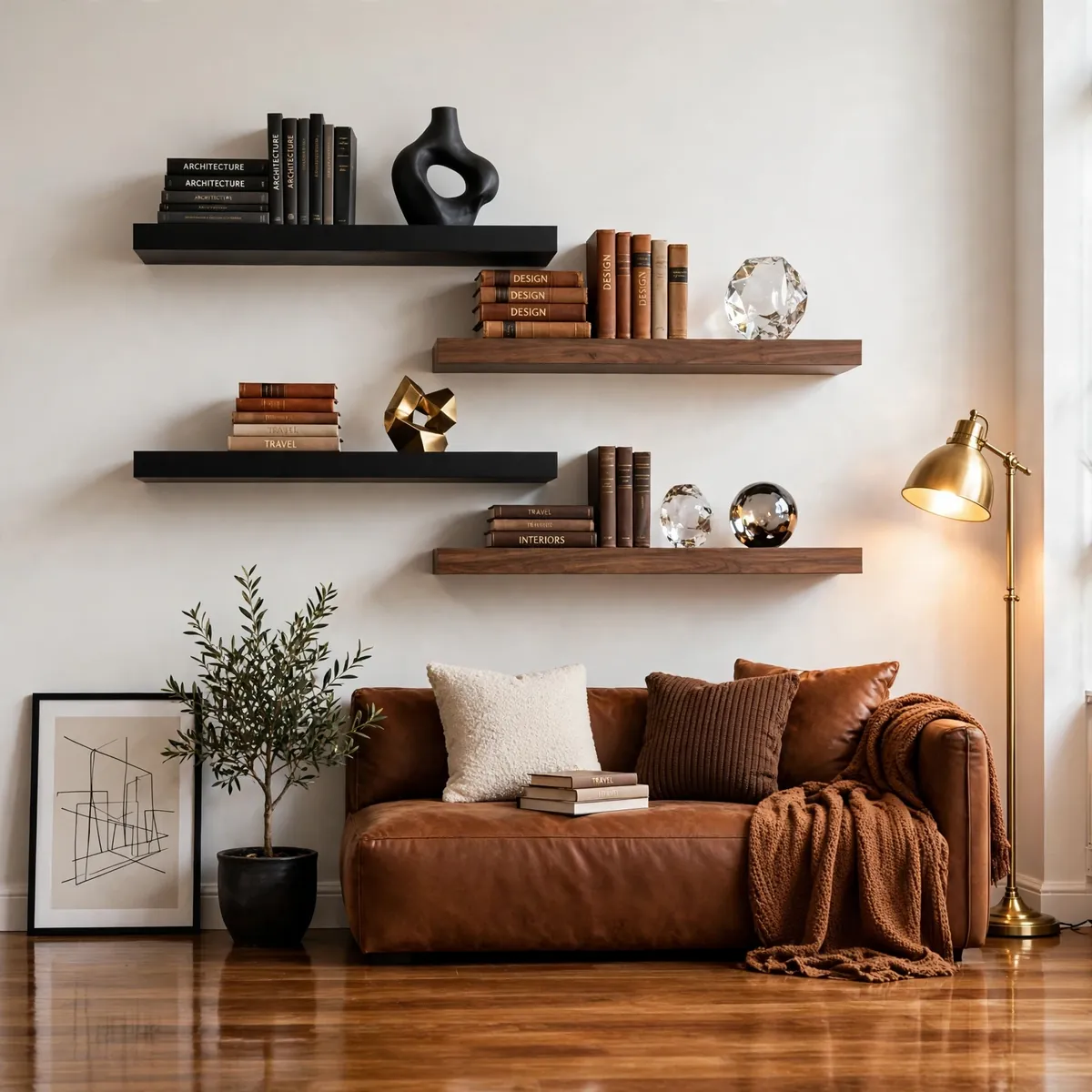
For rooms where a full bookcase feels heavy, a cluster of floating shelves in a staggered arrangement gives you bookshelf function with an architectural, gallery-like feel. The trick is spacing discipline: keep the vertical gap between shelves consistent and large enough for books, and let the horizontal offsets create rhythm. Style them minimally — this format punishes clutter, because every object is fully visible with no frame to contain it.
- Mount every shelf into studs or rated anchors; books are heavier than they look.
- Limit each shelf to one theme (cookbooks here, novels there) so the wall reads clearly.
- Leave one shelf nearly empty — a single sculptural object gives the cluster breathing room.
Picture Lights and LED Strips That Make Shelves Glow

Shelf lighting is the difference between a bookcase and a display — warm LED strips tucked under each shelf, or a picture light mounted above the unit, turn ordinary shelves into evening theater. Light gives books depth and shadow, makes objects look intentional, and lets the wall work after dark when the rest of the room softens. Battery-powered options exist for every budget, so even a rental bookcase can glow without touching the wiring.
- Use warm-white light (2700K) — cool white makes shelves feel like a store display.
- Aim lights at the shelves, not out into the room, to avoid glare.
- Put battery LEDs on a timer so they switch themselves on at dusk.
Wallpaper or Grasscloth Behind the Shelves
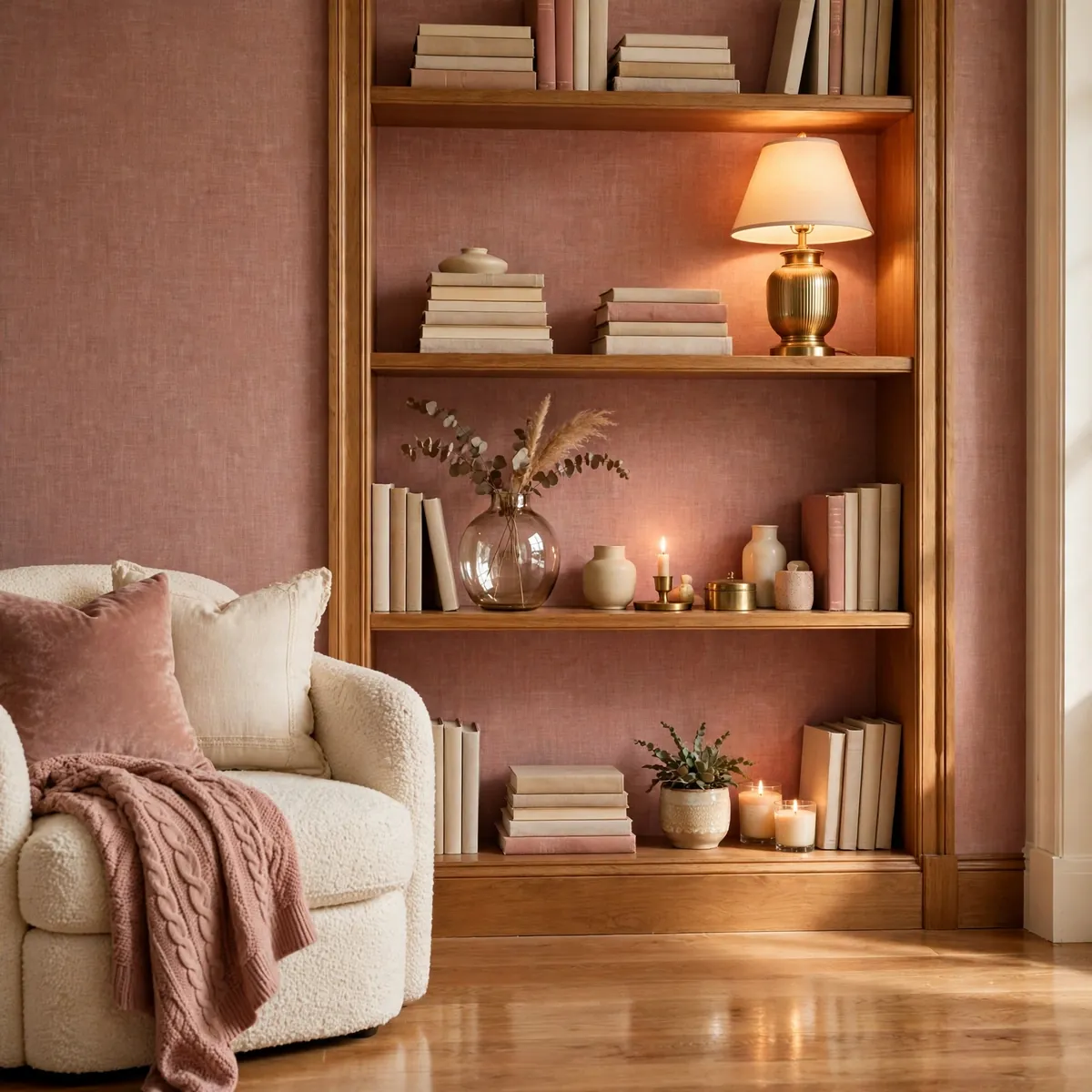
Lining the back panel with wallpaper — a soft stripe, linen texture, or muted botanical — adds a layer of pattern that paint alone cannot reach. This is the right move when the rest of the room is calm and the shelf needs to carry the personality; the pattern becomes the backdrop and lets you style the shelves with simpler objects. Peel-and-stick versions make this renter-friendly and fully reversible, which is why it shows up in so many well-photographed living rooms.
- Pick a pattern with a small repeat so it reads well behind objects, not behind them.
- Style minimally after papering — busy shelves plus busy backing equals noise.
- Carry the backing only through the display shelves; keep closed cabinets clean.
Mirrored Backs That Double Light and Space

Mirror backing inside a bookcase reflects daylight and lamplight back into the room, which makes small or dark living rooms feel noticeably brighter. It also visually doubles the depth of the shelf, so the wall reads larger than it is. The discipline this demands is real: mirrored backs punish clutter, so commit to fewer, larger objects and books with attractive spines if you choose this route.
- Use antiqued or smoked mirror to soften reflections and hide dust between cleanings.
- Keep the lowest shelf the simplest — it catches the most reflection.
- Check what the mirror reflects before styling; it will bounce the TV or hallway back at you.
The Whole Unit Painted One Deep, Moody Color
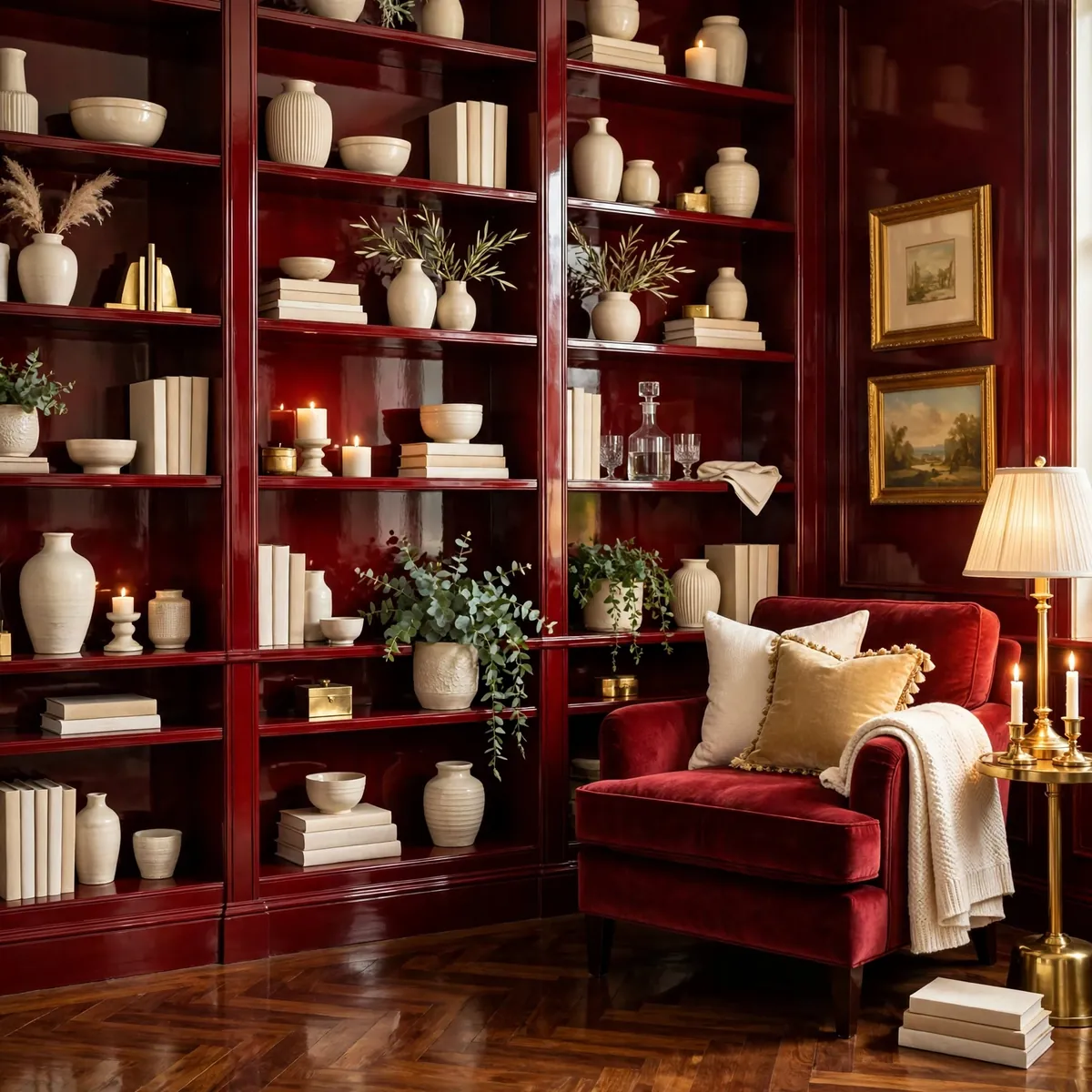
Painting an entire bookcase — frame, shelves, and backing — in one saturated color like forest green, oxblood, or ink navy turns a humble shelf into the room’s focal point. A monochrome finish makes the unit read as one sculptural object, which is why moody bookcases anchor dark-academia and modern traditional living rooms so well. As a bonus, dark shelves hide visual clutter far better than white ones ever do.
- Extend the same color to nearby trim or the wall behind for a fully integrated look.
- Keep some decor light-toned so objects do not vanish into the dark finish.
- Use a satin or eggshell paint — flat finishes show every fingerprint on shelving.
Built-Ins Around a Doorway or Arch
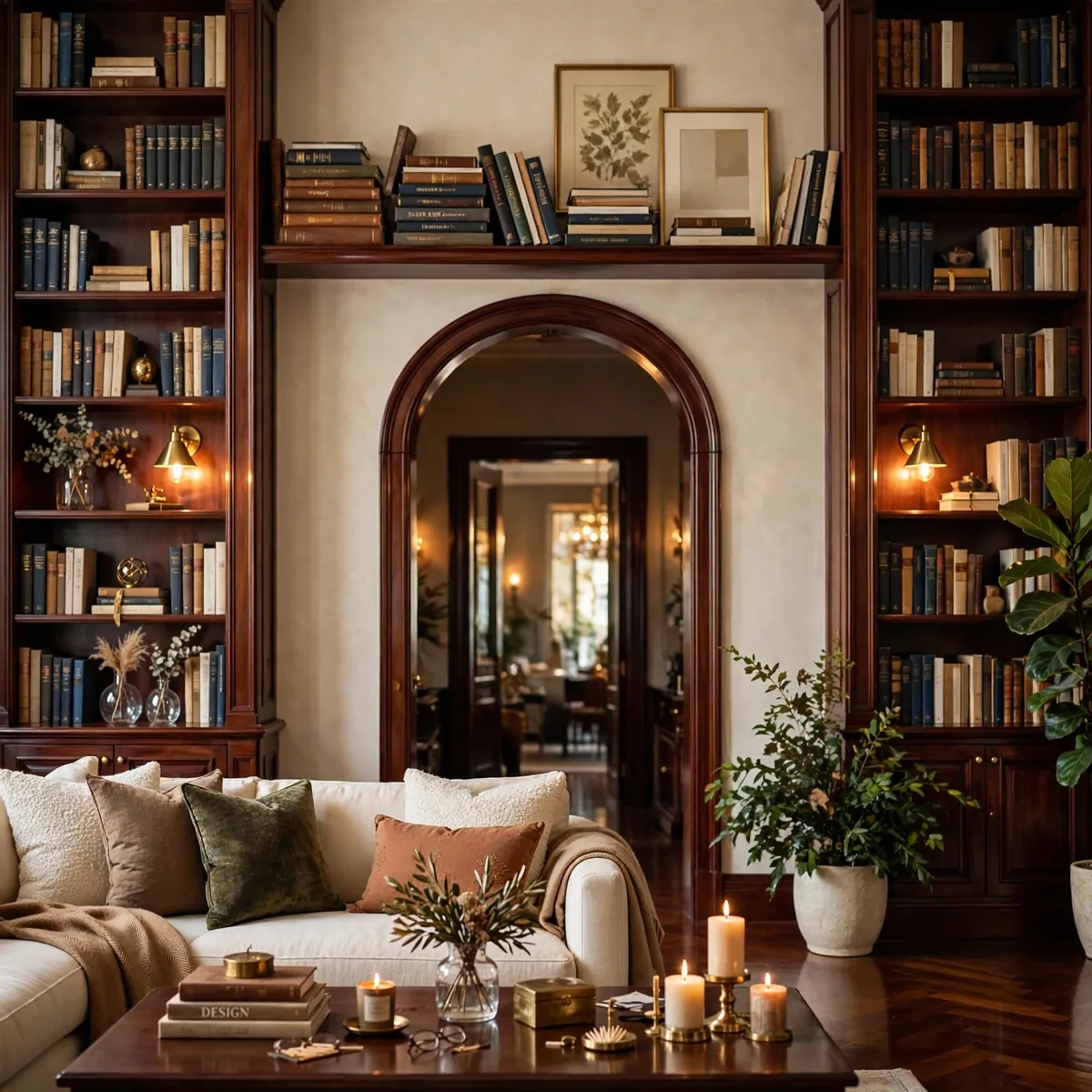
Flanking a doorway or archway with built-in bookshelves borrows an architectural moment most living rooms already have and turns it into library drama. A bridge shelf across the top of the door frame completes the look and holds oversized books or framed art. This works especially well in homes with generous ceiling height, where the vertical frame of books draws the eye up and makes the whole room feel grander.
- Keep the bridge shelf’s weight light and anchored — high shelves carry less safely.
- Style the door-flanking shelves as a pair, mirroring heights for symmetry.
- Leave the doorway clear of protruding objects; elbows will find them.
Greenery Woven Through the Shelves
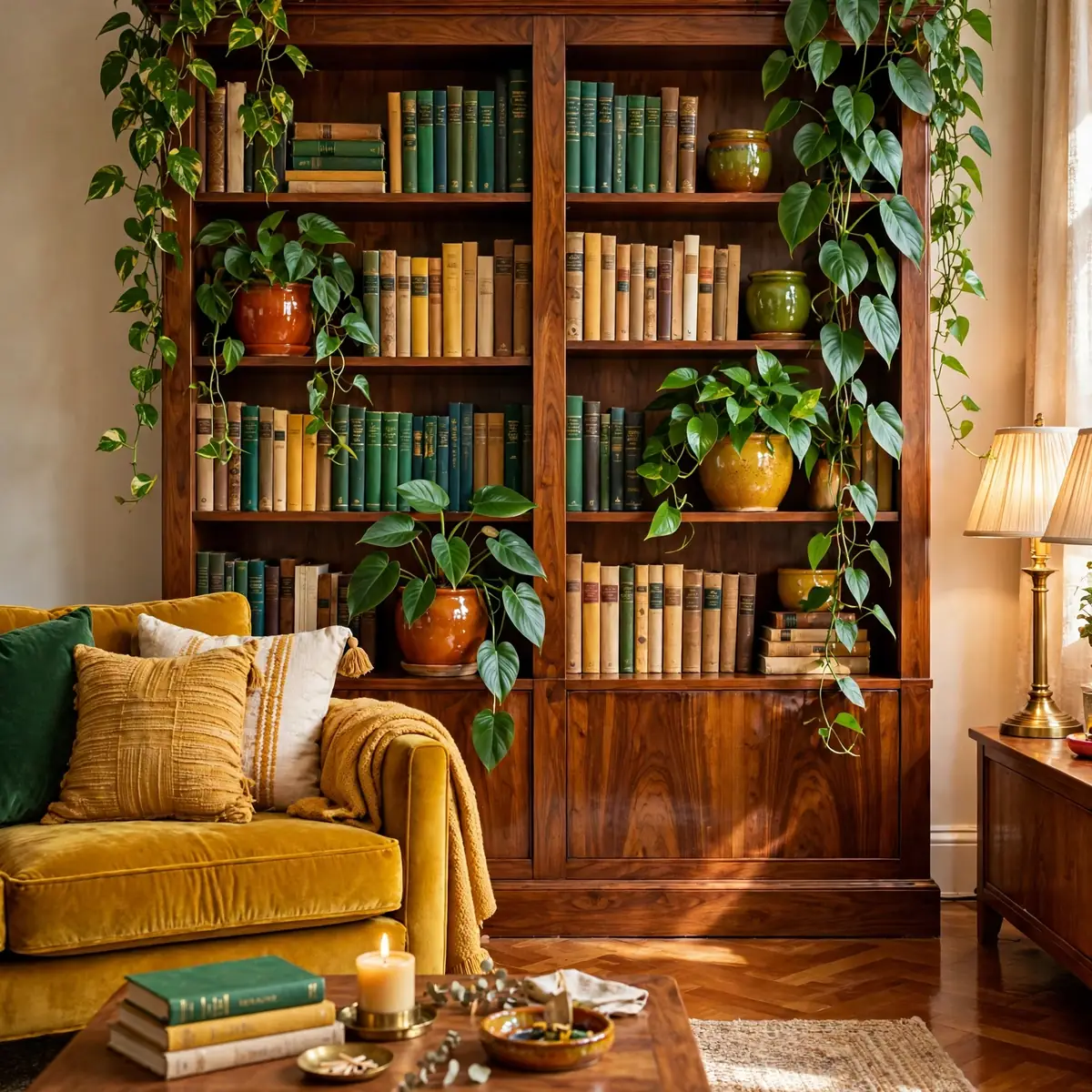
Trailing plants — pothos, philodendron, string of pearls — cascading over shelf edges add movement and life that books alone cannot provide. Green is also the cheapest styling color there is: a few trailing vines soften harsh right angles, break up long rows of spines, and make the whole wall feel alive. If real plants die on you, one or two high-quality faux trailers mixed with real ones is a strategy plenty of styled homes quietly use.
- Train trailing plants along a shelf edge or let them fall from the top shelf for maximum effect.
- Water over a tray so drips never reach books or wood finishes.
- Pair plants with ceramic pots in the room’s accent color to tie the wall together.
One Long, Low Bookcase Under a Big Window
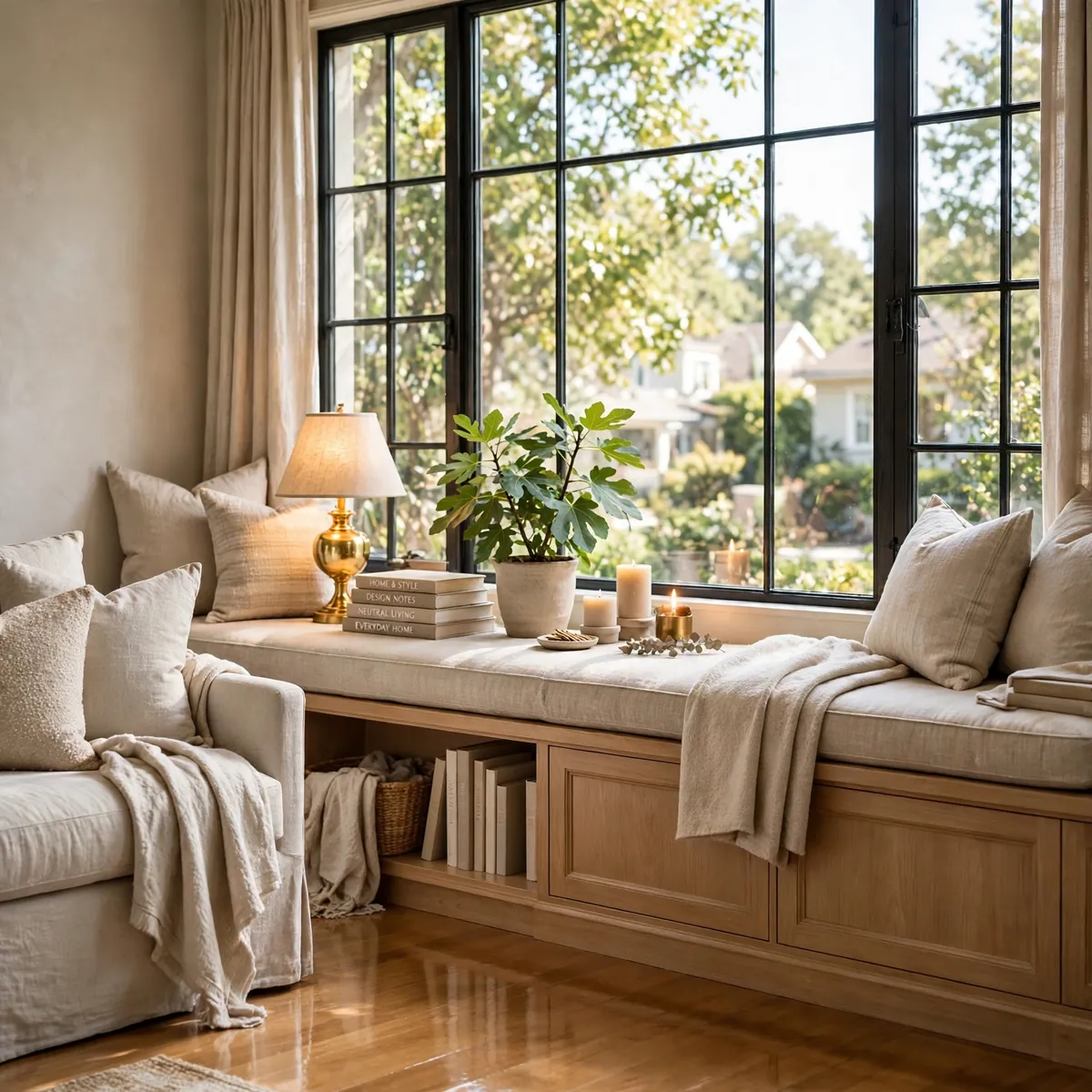
In living rooms where wall space is scarce, a long low bookcase running under a window gives you bookshelf storage without stealing the room’s best light or view. Top it with a narrow cushion and it doubles as a window seat; style the top surface like a console with a lamp, a stack of books, and one plant. This layout suits TV walls opposite the window and reading-heavy households where the collection is large but the walls are few.
- Keep the unit low enough that the windowsill clears it with room to spare.
- Use a cushion with a washable cover if the seat will actually be sat on.
- Leave walking clearance between the low bookcase and any furniture opposite it.
Basket and Box Storage That Looks Like Styling
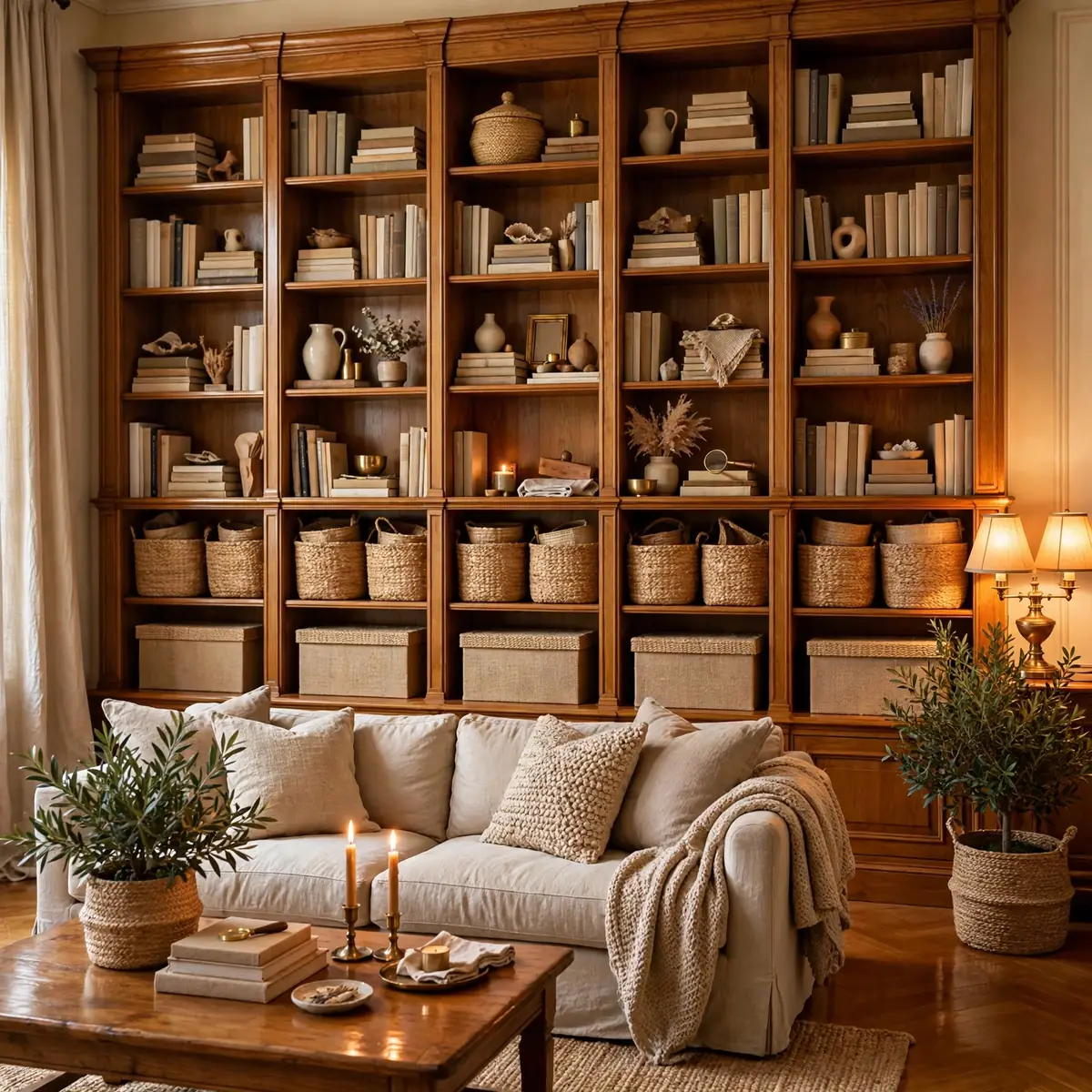
Woven baskets, fabric boxes, and wooden crates on the lower shelves hide the unphotogenic reality — cables, controllers, board games, kids’ craft supplies — behind texture that adds warmth instead of clutter. Choose baskets that fill their shelf bay fully so the row reads as intentional storage rather than stuffing. Natural materials like seagrass and linen earn their place visually; plastic bins with lids do not, so reserve those for closets.
- Match basket materials across the unit for a unified, collected look.
- Keep one open basket for daily items and closed ones for everything else.
- Pull baskets forward to the shelf edge so the row looks tidy from across the room.
A Reading Bench Built Into the Shelf Run
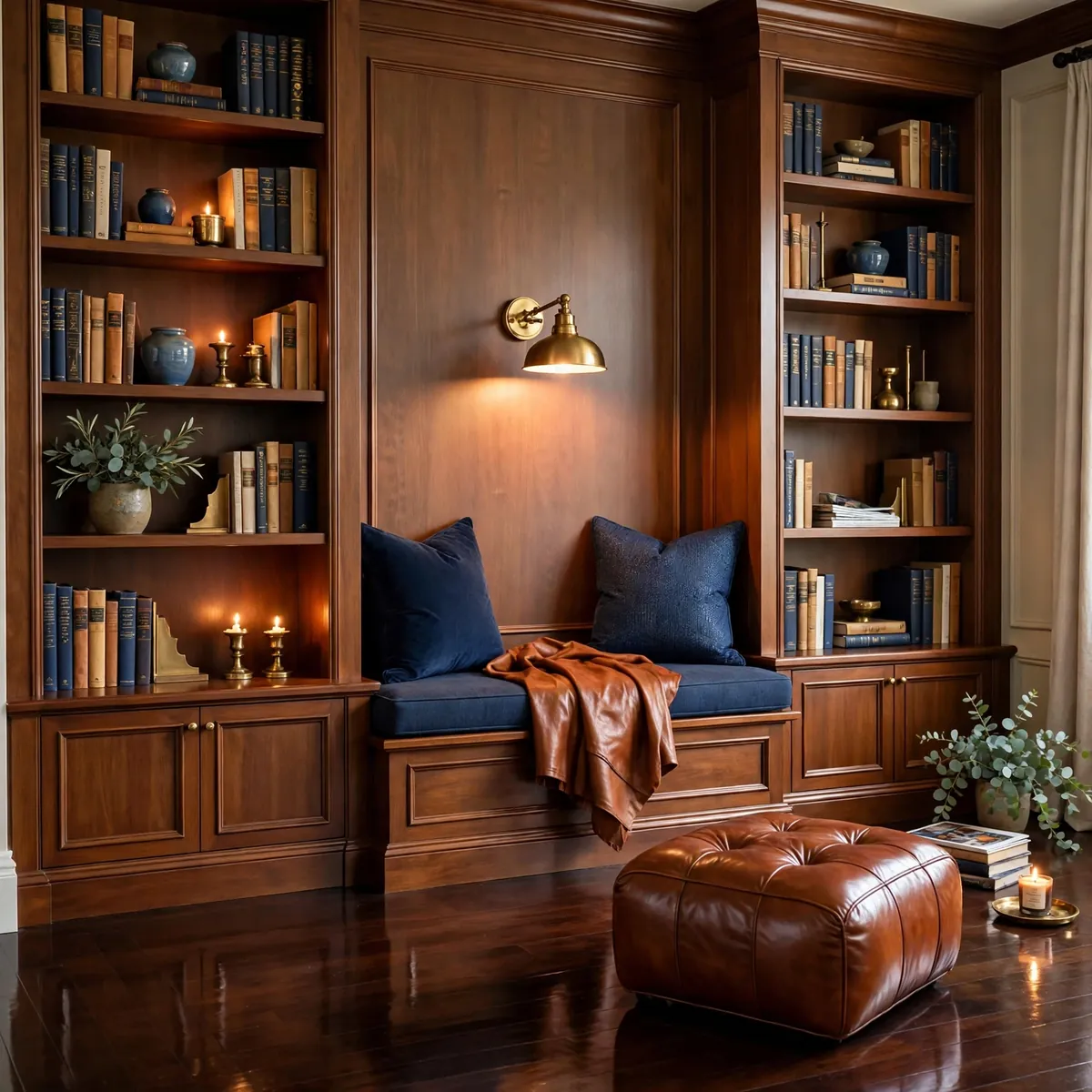
If your shelf wall has the width for it, leave a two-foot gap between bookcase sections and slot in a bench with cushions and a reading lamp — the bookshelf becomes a destination instead of storage. This is the idea that turns guests into lingering readers and children into book-borrowers. Even a slim bench works in smaller rooms as long as the shelf sections flanking it stay shallow enough to keep the footprint tight.
- Mount a small reading light above the bench so evenings work too.
- Keep a throw within reach; reading nooks live or die on coziness.
- Store current reads on the shelves immediately beside the bench for grab-and-go ease.
Contrasting Shelf Material for One Architectural Moment
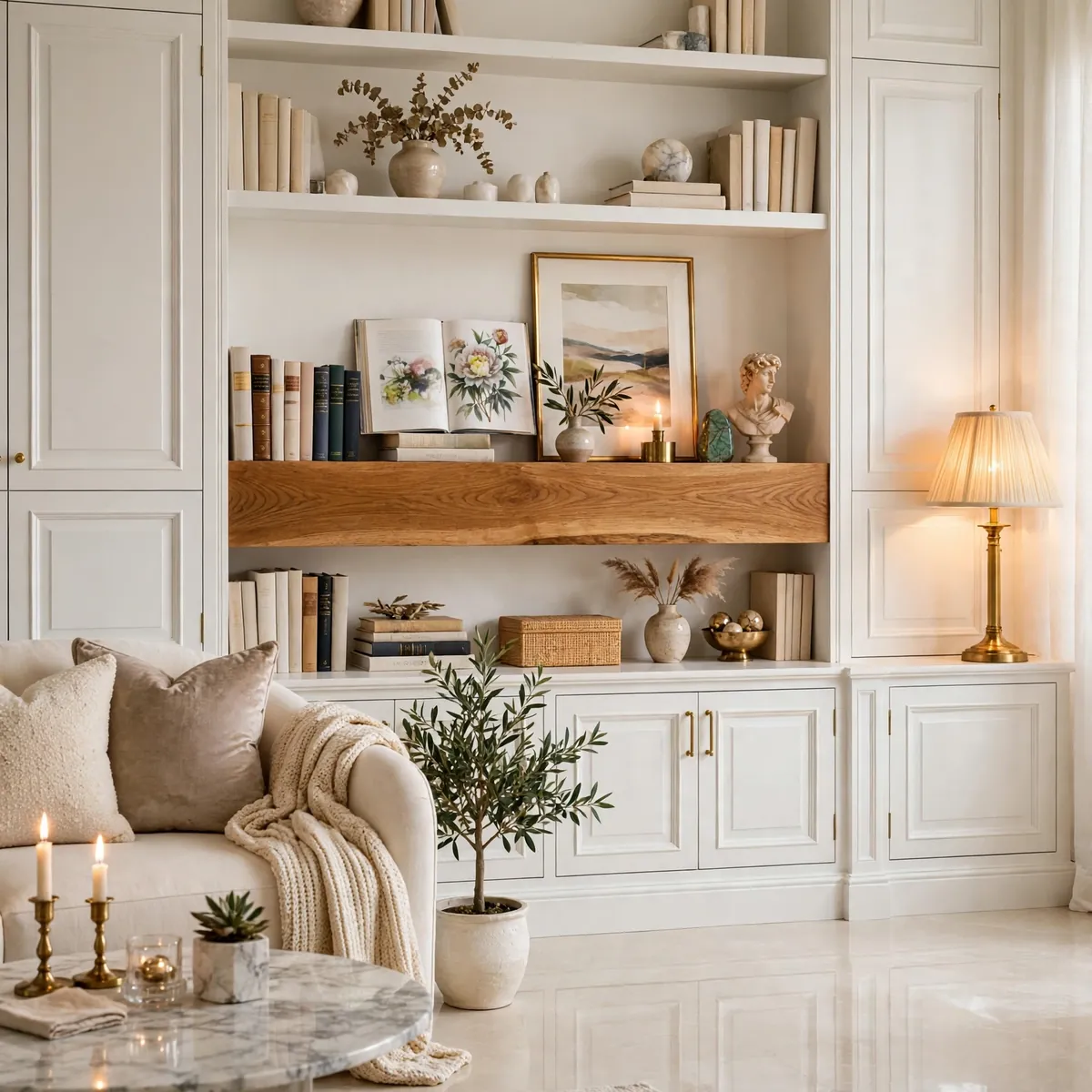
Swapping a single shelf — or a single shelf row — for a contrasting material like warm oak inside a painted unit, or marble inside white, creates a focal moment without a full renovation. That one variation draws the eye and gives the bookcase a custom, designed feel, as if the piece were built in layers. Use the contrast shelf for your strongest styling: the prettiest books, the best art, the objects you want noticed.
- Limit the contrast to one shelf or one horizontal band; more than that reads accidental.
- Choose materials that appear elsewhere in the room so the contrast feels connected.
- Seal porous materials like marble or raw wood before placing books on them.
Sculptural Objects as Conversation Starters
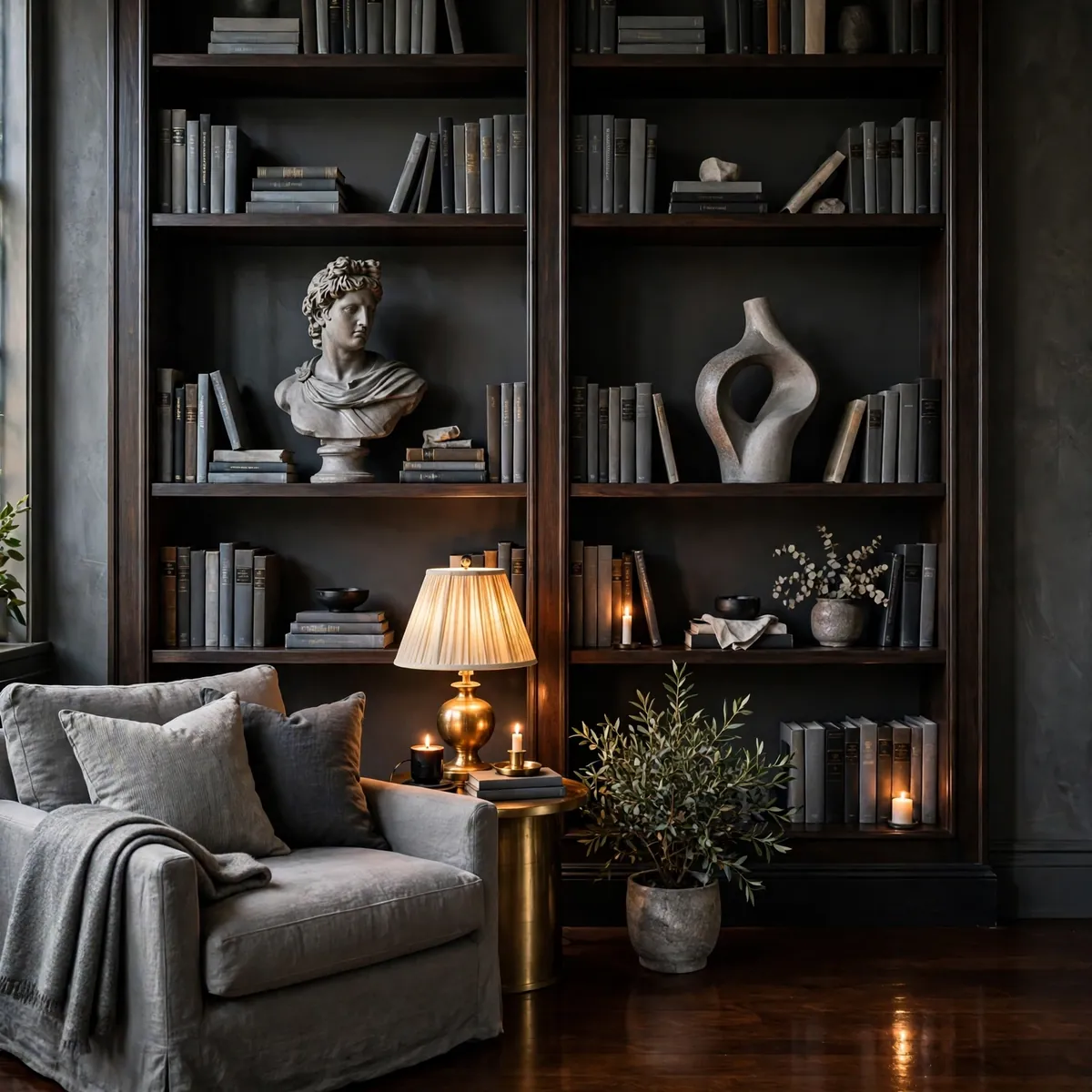
Every great shelf wall needs one or two objects that are not books at all — a stone bust, an abstract ceramic, a carved wooden figure — because personality lives in the unexpected. Place these at or near eye level where guests naturally look, and give them breathing room; a single striking object surrounded by space always beats five crowded ones. These are the pieces people ask about, and the shelf becomes a story instead of storage.
- One large sculptural piece per bookcase section is enough — restraint is the luxury.
- Let the object’s material echo another finish in the room for quiet cohesion.
- Rotate sculptural pieces seasonally so the wall never feels frozen in time.
Sliding Glass Doors for a Collected, Dust-Free Display
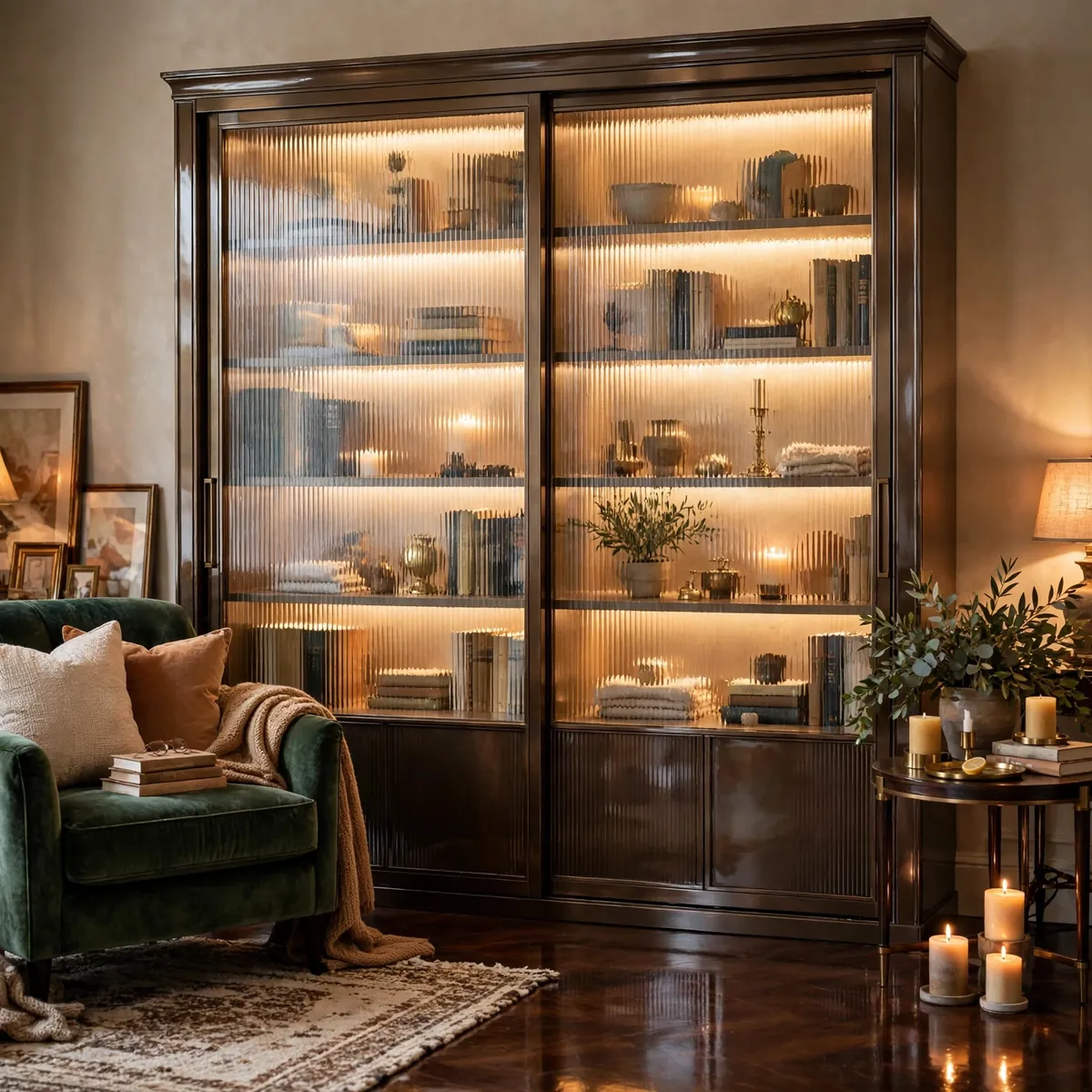
Glass-fronted shelves protect books and objects from dust while keeping everything visible, which makes them the right choice for formal living rooms and allergy-prone households. Clear glass keeps the look modern; reeded or fluted glass adds texture and softly blurs the contents, which forgives less-perfect styling. The trade-off is cost and the eternal hunt for fingerprints — a microfiber cloth lives permanently on top of the unit.
- Choose reeded glass if your styling is more “lived-in” than “gallery-perfect.”
- Keep the glass tracks clean so doors glide instead of sticking.
- Back glass-fronted shelves with good lighting so contents stay visible, not shadowy.
The Slow-Curated Shelf That Evolves Over Time
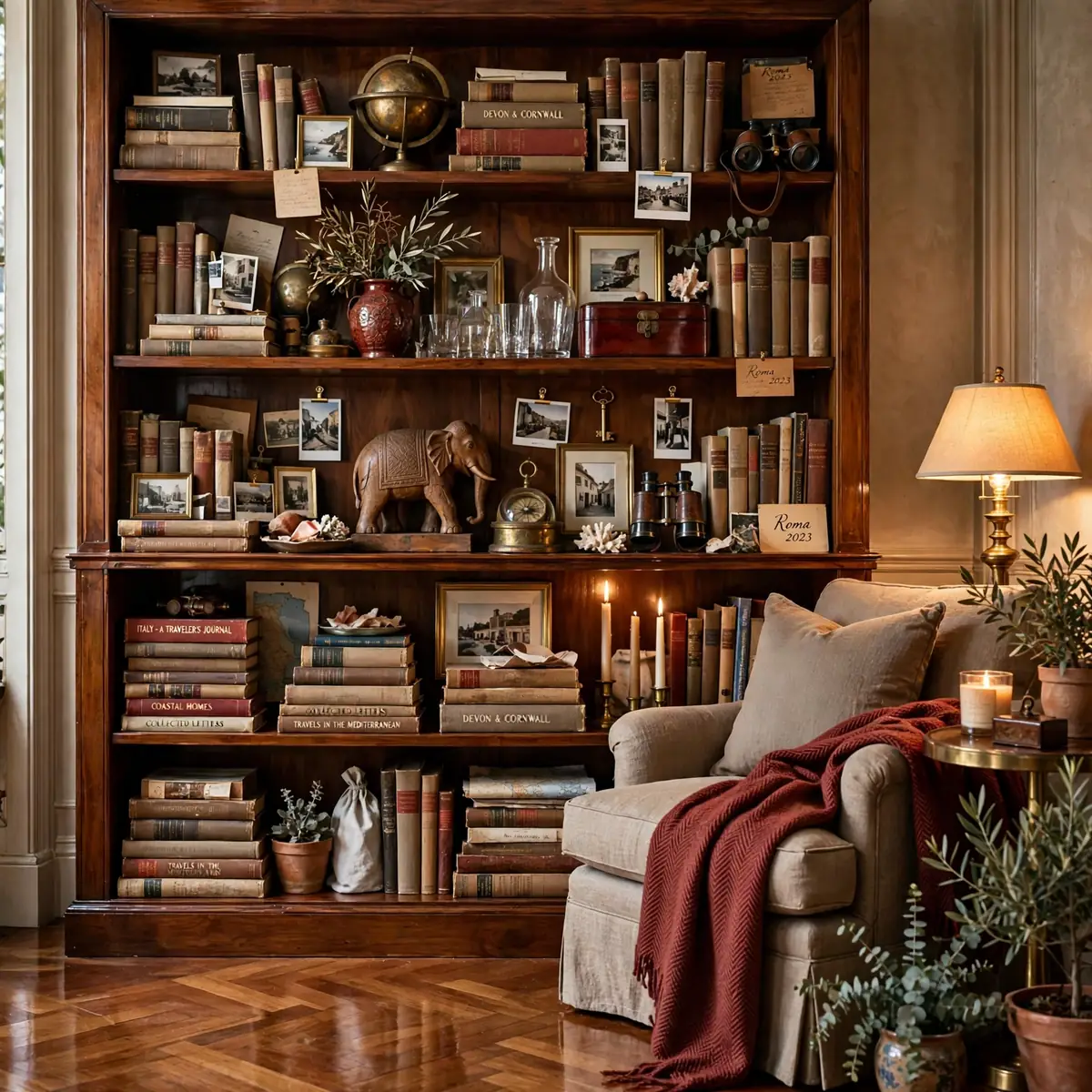
The most convincing shelf walls are never finished in a weekend. Curate slowly: buy books you actually read, bring objects back from trips, move things around when a room feels stale, and let the shelf evolve the way a wardrobe does. This approach costs the least, wastes nothing, and produces the layered, collected look that fast styling cannot fake. Some of the best shelf moments come from small accidents — shifting one object an inch, trying a plant where a vase was — so keep rearranging until it feels like you.
- Add one new piece at a time and live with it for a week before judging.
- Photograph the shelf every few months to see how your taste is evolving.
- Retire pieces that no longer fit; a curated shelf has exits as well as entrances.
Symmetrical Cube Shelving Styled Room by Room
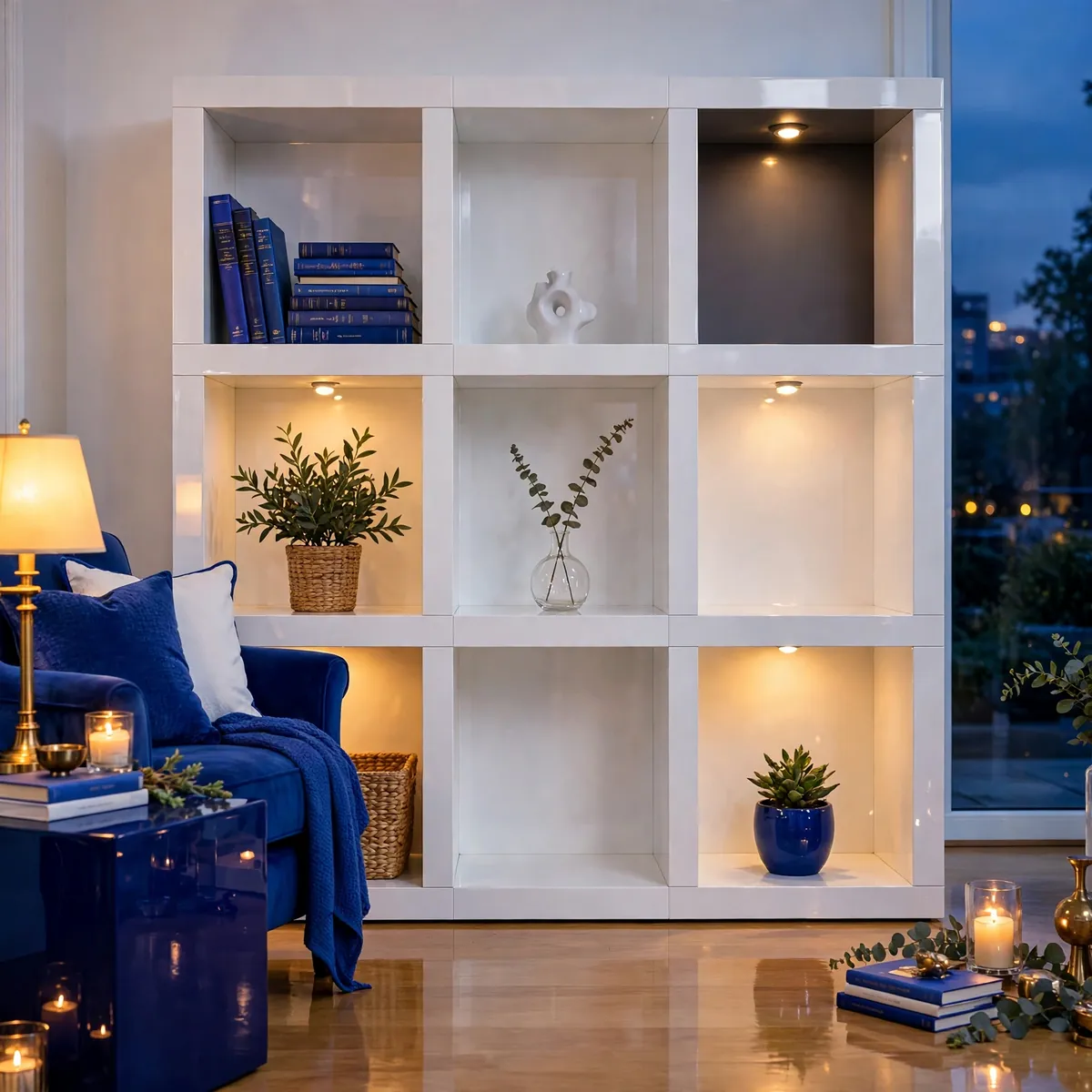
Cube shelving — the familiar grid of square compartments — gets unfairly dismissed as dorm furniture, but styled with discipline it becomes a serious design element. The grid is the design: treat each cube as its own small composition with one idea inside (a stack of books, one object, one plant, one basket), and keep the rhythm consistent across the unit. Color-grouped books inside the cubes and a few empty cubes for negative space turn the humble grid into a gallery wall made of storage.
- Assign each cube a single purpose so the grid reads as designed, not random.
- Leave at least three cubes empty or nearly empty to preserve the airy rhythm.
- Add small LED puck lights in a few cubes to make the grid glow in the evening.
FAQs
How many books should be on a living room bookshelf vs decor?
A reliable starting ratio is roughly two-thirds books to one-third objects, adjusted by how much the shelf is storage versus display. Keep one object per three to four books and protect visible empty space so the wall reads styled rather than stocked.
Are ladder shelves sturdy enough for real books?
Ladder shelves handle books on their deep lower tiers but were not built for heavy loads across every shelf. Keep hardcovers on the bottom two levels, paperbacks and objects higher up, and always anchor the top to the wall.
Conclusion
A great bookshelf wall comes from three decisions — honest structure, disciplined styling, and a little light — more than from any budget. Start with one idea, live with it for a week, and let the wall evolve into the room’s most personal feature.