30 Memory Foam Mattress Ideas for the Best Sleep of Your Life
A memory foam mattress can change how you sleep, but only if you pick the right firmness, thickness and cooling features for the way you actually sleep. These 30 memory foam mattress ideas cover firmness levels, toppers, pillows, protectors, budget picks and care, so you can build a bed that supports you properly night after night.
A memory foam mattress is worth it if you want pressure relief and undisturbed sleep, because the foam softens with your body heat and moulds around your shoulders and hips instead of pushing back against them. The trick is matching the mattress to the way you sleep: side sleepers need a softer surface, back sleepers need firmer support, and hot sleepers need cooling foam or breathable covers — and the 30 ideas below walk through every choice, from thickness and firmness to toppers, pillows and care.
If you want the whole room to feel as restful as the mattress, these cozy bedroom ideas show how to layer warmth and softness around your new bed. Every idea includes a concrete example with real materials, colours and fixtures, so you can shop with confidence instead of guessing.
Key Takeaways
What is the best memory foam mattress firmness?
The best memory foam mattress firmness for most sleepers is medium-firm, because it cushions the shoulders and hips while still keeping the spine supported. Side sleepers usually prefer a softer medium feel, back sleepers do well on medium-firm, and stomach sleepers need a firmer surface so the hips do not sink too far.
Is a memory foam mattress good for side sleepers?
A memory foam mattress is good for side sleepers because the foam moulds around the shoulder and hip, spreading pressure instead of concentrating it on two points. Choose a softer or medium memory foam mattress with a thick comfort layer, and pair it with a contoured pillow so the neck stays in line with the spine.
Do memory foam mattresses sleep hot?
Older memory foam mattresses could sleep hot, but modern ones use open-cell foam, gel infusions, breathable covers and ventilated designs to move heat away. Hot sleepers should choose a cooling gel or open-cell memory foam mattress, add breathable cotton sheets, and keep the bedroom cool at night.
How thick should a memory foam mattress be?
A memory foam mattress should be around 10 to 12 inches thick for most adults, because that depth gives enough comfort layers over a supportive base. Slimmer 8-inch mattresses suit children, guest rooms and lighter sleepers, while heavier sleepers usually feel better supported on a 12-inch or thicker mattress.
How long does a memory foam mattress last?
A memory foam mattress usually lasts for many years of nightly use when it is cared for properly, with a protector, a suitable base and regular rotation. Rotate it every few months, air it out, keep it dry and clean spills quickly, and replace it when it sags, loses support or leaves you waking up sore.
Memory Foam Mattress Types at a Glance
| Memory foam mattress type | Feel | Best for | Cooling | Budget level |
|---|---|---|---|---|
| Traditional memory foam | Deep sink-in hug | Pressure relief, side sleepers | Low | Low to medium |
| Gel-infused memory foam | Cool, cushioned | Hot sleepers, summer nights | Medium | Medium |
| Open-cell memory foam | Light, breathable | Hot sleepers, easy movement | Medium to high | Medium |
| Plant-based memory foam | Responsive, fresh | Greener homes, sensitive sleepers | Medium | Medium to high |
| Memory foam hybrid | Bouncy, supported | Couples, hot sleepers, back sleepers | High | Medium to high |
Start With a Medium-Firm Memory Foam Mattress for All-Round Support

A medium-firm memory foam mattress is the safest starting point if you are not sure what you need, because it balances cushioning with support in a way that suits most sleeping positions. Here, a thick mattress dressed in soft sage green bedding and cream linen pillows sits on a light oak frame, looking calm and inviting. The design suits couples who sleep differently, and it is the firmness most people settle on after trying softer and firmer options. The weakness is that it is a compromise: dedicated side sleepers may want softer, and heavier stomach sleepers may want firmer, so treat medium-firm as the starting point, not the final answer.
Quick tips:
- Choose medium-firm if you change position during the night.
- Look for a mattress with at least two comfort layers over a firm base.
- Lie on it for a few minutes in your usual sleeping position before deciding.
- Check the trial period so you can swap firmness if it feels wrong.
Choose a Plush Soft Memory Foam Mattress for Side Sleepers
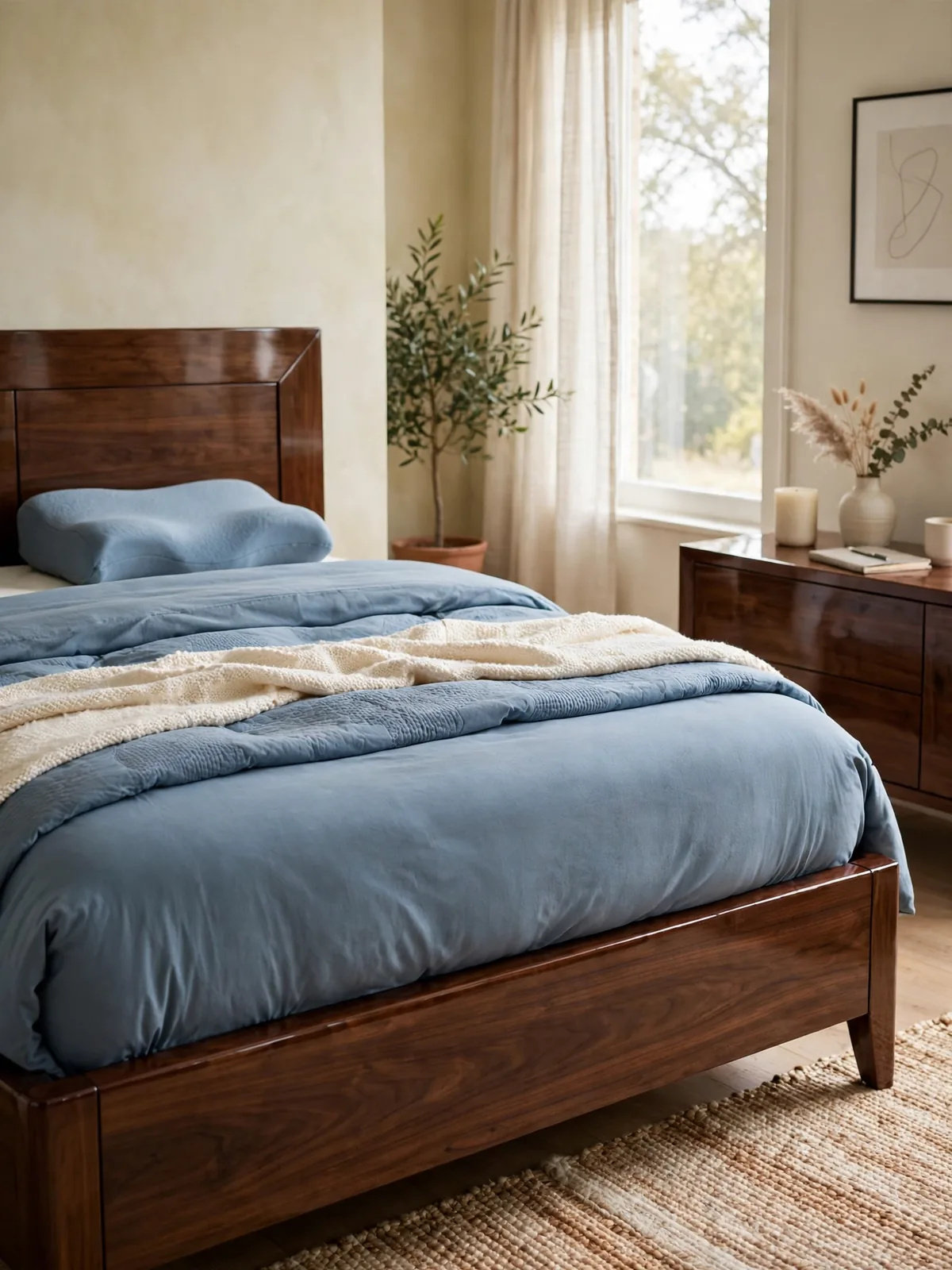
Side sleepers put most of their weight on one shoulder and one hip, so a plush soft memory foam mattress lets those pressure points sink in gently instead of aching by morning. Here, a soft mattress in dusty blue bedding with a contoured pillow and a cream throw on a walnut frame shows how inviting a side-sleeper setup can look. The design suits anyone who wakes with sore shoulders, and it works best with a pillow that fills the gap between ear and shoulder. The weakness is support: too soft and the spine sags, so choose plush only in the top layers, with a firmer base underneath.
Quick tips:
- Pick a soft or medium-soft top layer with a firm support base.
- Pair it with a contoured or high-loft pillow for neck alignment.
- Avoid very thin mattresses — side sleepers need depth to sink into.
- Test it lying on your side, not just sitting on the edge.
Pick a Firm Memory Foam Mattress for Back and Stomach Sleepers

Back and stomach sleepers need a surface that holds the spine level, and a firm memory foam mattress does exactly that by resisting deep sinking at the hips. Here, a firm mattress in crisp white bedding with charcoal grey cushions and a dark wood frame looks neat, structured and supportive. The design suits anyone who wakes with lower-back stiffness, and it pairs well with a low, flat pillow so the neck stays neutral. The weakness is pressure: a firm surface can feel hard on the shoulders if you roll onto your side, so keep a softer topper nearby if you change position.
Quick tips:
- Choose firm if you mostly sleep on your back or stomach.
- Use a low-loft pillow so your neck stays in line.
- Look for zoned support that is firmer under the hips.
- Give it a few nights — firm foam softens slightly as it warms.
Try a Cooling Gel-Infused Memory Foam Mattress for Hot Sleepers

If you wake up warm, a cooling gel-infused memory foam mattress is the first upgrade to consider, because tiny gel beads in the foam absorb heat from your body and release it slowly through the night. Here, a cool-looking bed in pale aqua bedding with white pillows and a light grey throw on a pale wood frame feels fresh and breezy. The design suits warm sleepers and warm climates, and it works even better with breathable cotton or bamboo sheets. The weakness is that gel alone is not a cure: a hot room or a heavy duvet can still make you warm, so pair the mattress with light bedding and good airflow.
Quick tips:
- Look for gel-infused or phase-change foam in the top layer.
- Pair it with breathable cotton or bamboo sheets.
- Keep the bedroom cool and the duvet light.
- Check whether the cover is removable and washable.
Go for a Thick 12-Inch Memory Foam Mattress for Deep Comfort
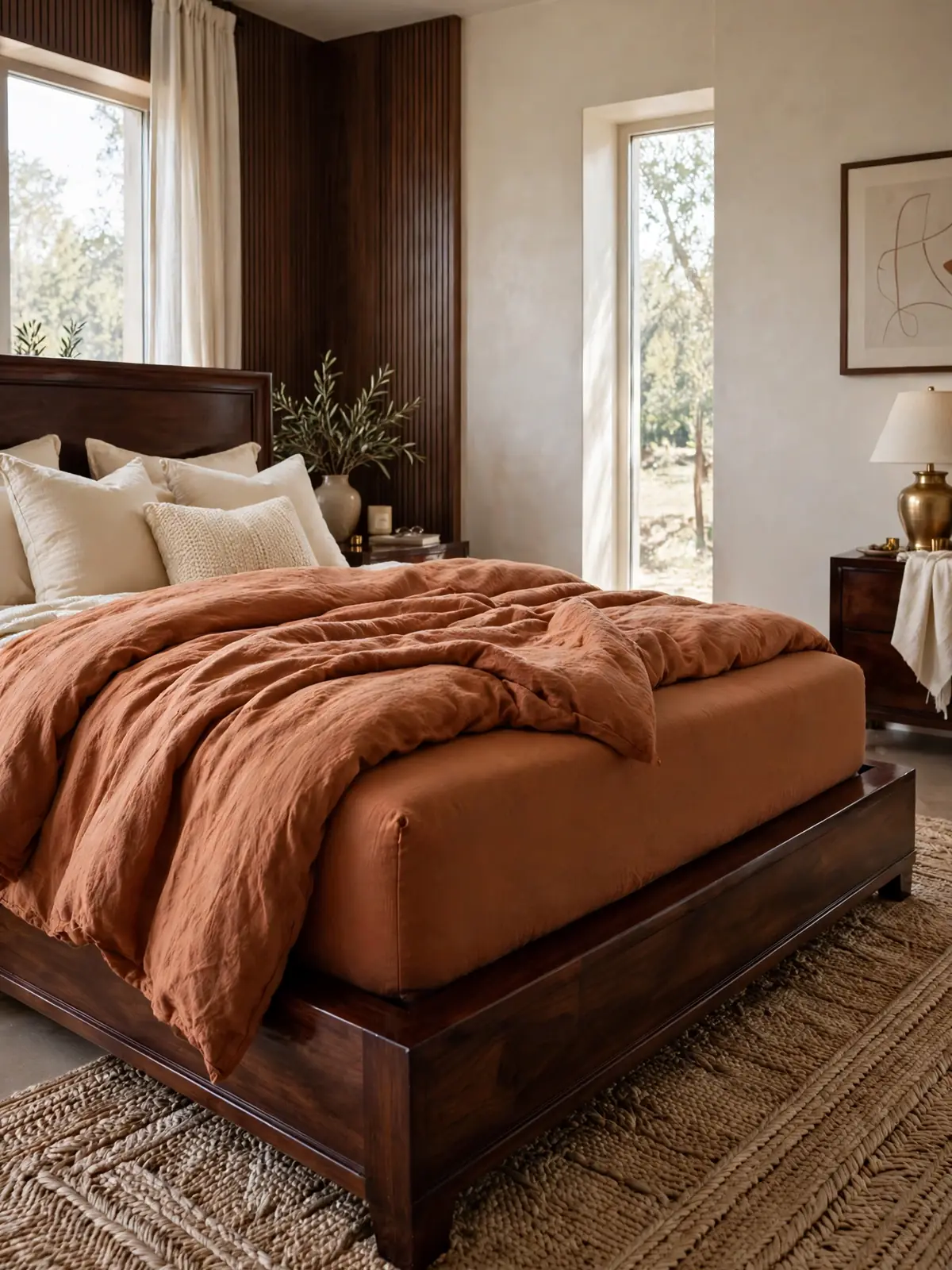
A thick 12-inch memory foam mattress gives you room for several layers — a soft comfort layer on top, a transition layer in the middle and a firm support base below — so it feels deep and cushioned without losing support. Here, a tall mattress in warm terracotta bedding with cream cushions on a dark walnut frame looks substantial and luxurious. The design suits heavier sleepers and anyone who likes a deep, sink-in feel, and it holds its shape well over time. The weakness is height: a thick mattress plus a tall frame can make the bed hard to climb into, so measure the total height and choose low-profile sheets.
Quick tips:
- Choose 12 inches or more if you like a deep, cushioned feel.
- Check the total bed height with your frame before buying.
- Look for at least three layers: comfort, transition and support.
- Use deep-pocket sheets that fit the full thickness.
Choose a Slim 8-Inch Memory Foam Mattress for Guest Rooms and Kids
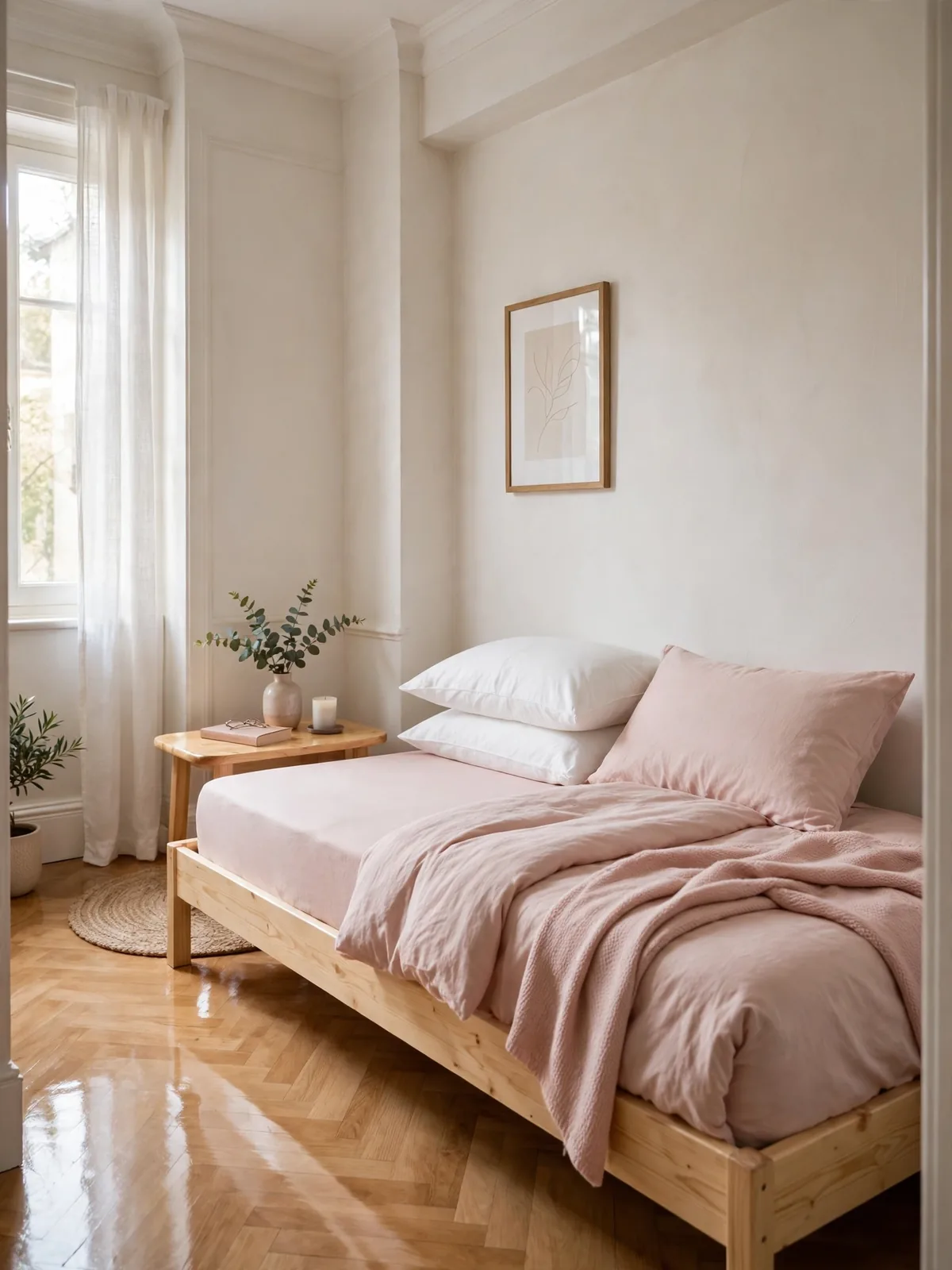
A slim 8-inch memory foam mattress is all you need for a guest room or a child’s bed, because lighter bodies do not sink as far and do not need the deep layers an adult mattress carries. Here, a slim mattress in soft blush pink bedding with white pillows on a light pine frame makes a small guest room feel sweet and welcoming. The design suits spare rooms, children’s rooms and bunk beds, and it costs less while still giving proper memory foam comfort. The weakness is durability under heavy use: an 8-inch mattress can bottom out under a heavier adult, so keep it for lighter sleepers and occasional guests.
Quick tips:
- Choose 8 inches for kids, teens and occasional guests.
- Check the weight guidance before buying for an adult.
- Pair it with a good pillow so the setup still feels complete.
- Add a topper later if a guest finds it too firm.
Add a Memory Foam Mattress Topper to Revive an Old Bed
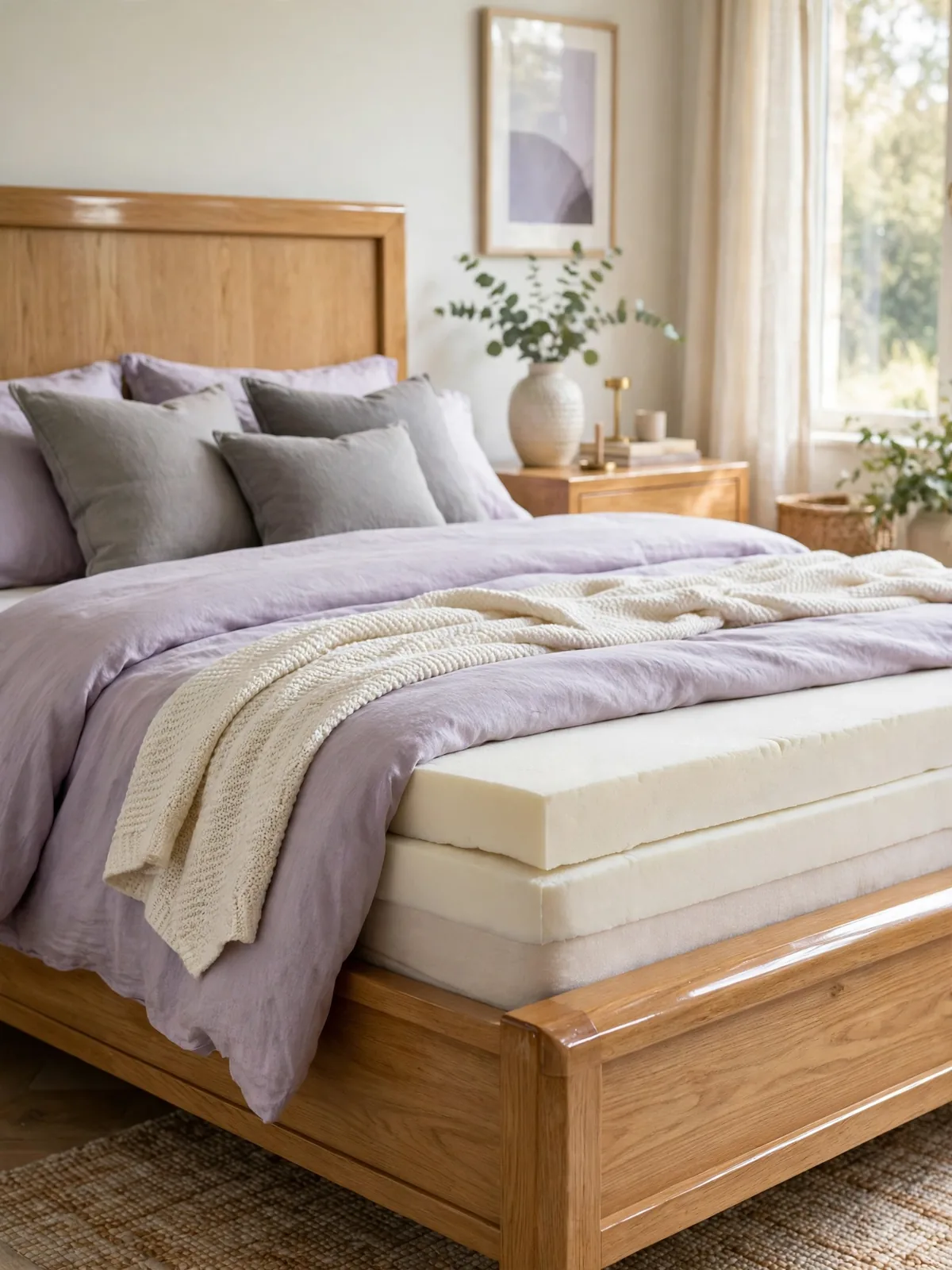
A memory foam mattress topper is the cheapest way to get memory foam comfort without buying a whole new mattress, because a two- or three-inch layer of foam softens a firm bed and cushions pressure points overnight. Here, a topper under soft lavender bedding with a cream throw and grey cushions on a light oak frame makes an older bed look and feel brand new. The design suits renters and anyone whose mattress is too firm, and it is easy to move between beds. The weakness is that a topper cannot fix a sagging mattress: if the base dips in the middle, the topper follows it down, so replace a sagging mattress instead.
Quick tips:
- Choose a 2- to 3-inch topper for a noticeable difference.
- Pick a softer topper to soften a firm mattress.
- Secure it with a fitted sheet or straps so it stays put.
- Air it out before first use to clear any new-foam smell.
Layer a Cooling Memory Foam Topper for Summer Nights

Summer nights call for a cooling memory foam topper, because a ventilated or gel-infused top layer pulls heat away from your body while the foam underneath still cushions your joints. Here, a summer bed in crisp white cotton sheets with pale mint cushions and a rattan headboard looks light, cool and easy to sleep in. The design suits warm bedrooms and anyone who overheats in summer, and it stores away flat when the weather cools. The weakness is seasonal: a cooling topper feels chilly in winter, so swap it for a plain foam or wool topper when the nights turn cold.
Quick tips:
- Choose ventilated or gel-infused foam for the top layer.
- Pair it with cotton or linen sheets, never heavy synthetics.
- Store it flat and dry when the season ends.
- Wash the cover regularly to keep it fresh.
Pair Your Mattress With a Memory Foam Pillow for Neck Support
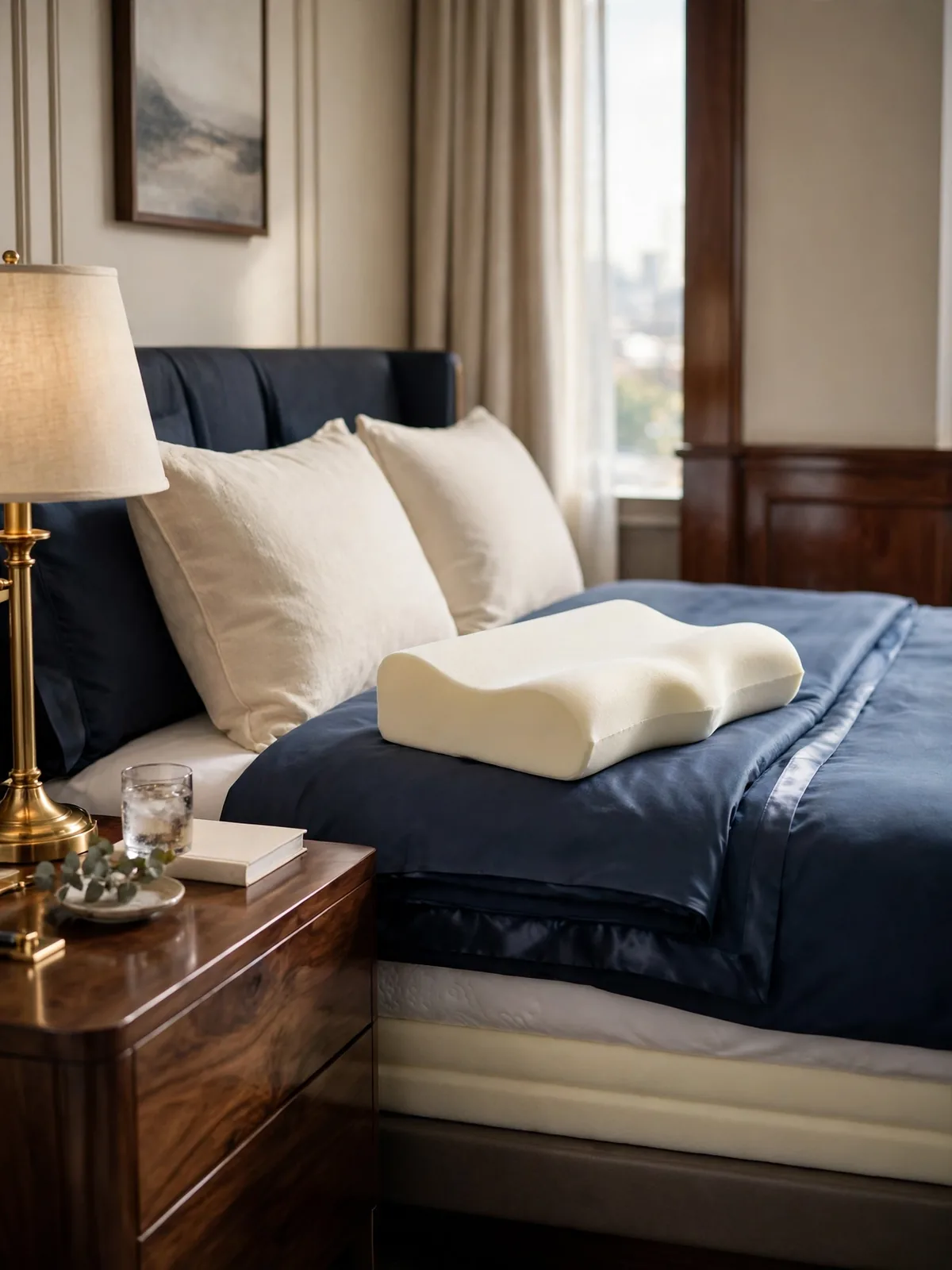
A mattress works best as a system, and a memory foam pillow completes it by moulding to the curve of your neck so your head stays supported all night. Here, a memory foam pillow sits on a bed dressed in soft navy bedding with cream pillows, beside a dark wood nightstand and a brass lamp. The design suits anyone who wakes with a stiff neck, and it works in every sleeping position because the foam adapts as you move. The weakness is height: a pillow that is too high or too low strains the neck, so choose the loft that matches how you sleep — low for stomach sleepers, high for side sleepers.
Quick tips:
- Match pillow loft to your sleeping position.
- Look for a pillow with a removable, washable cover.
- Replace the pillow when it stops springing back.
- Try a contoured shape if a standard pillow leaves your neck aching.
Use a Contoured Memory Foam Pillow for Side Sleepers
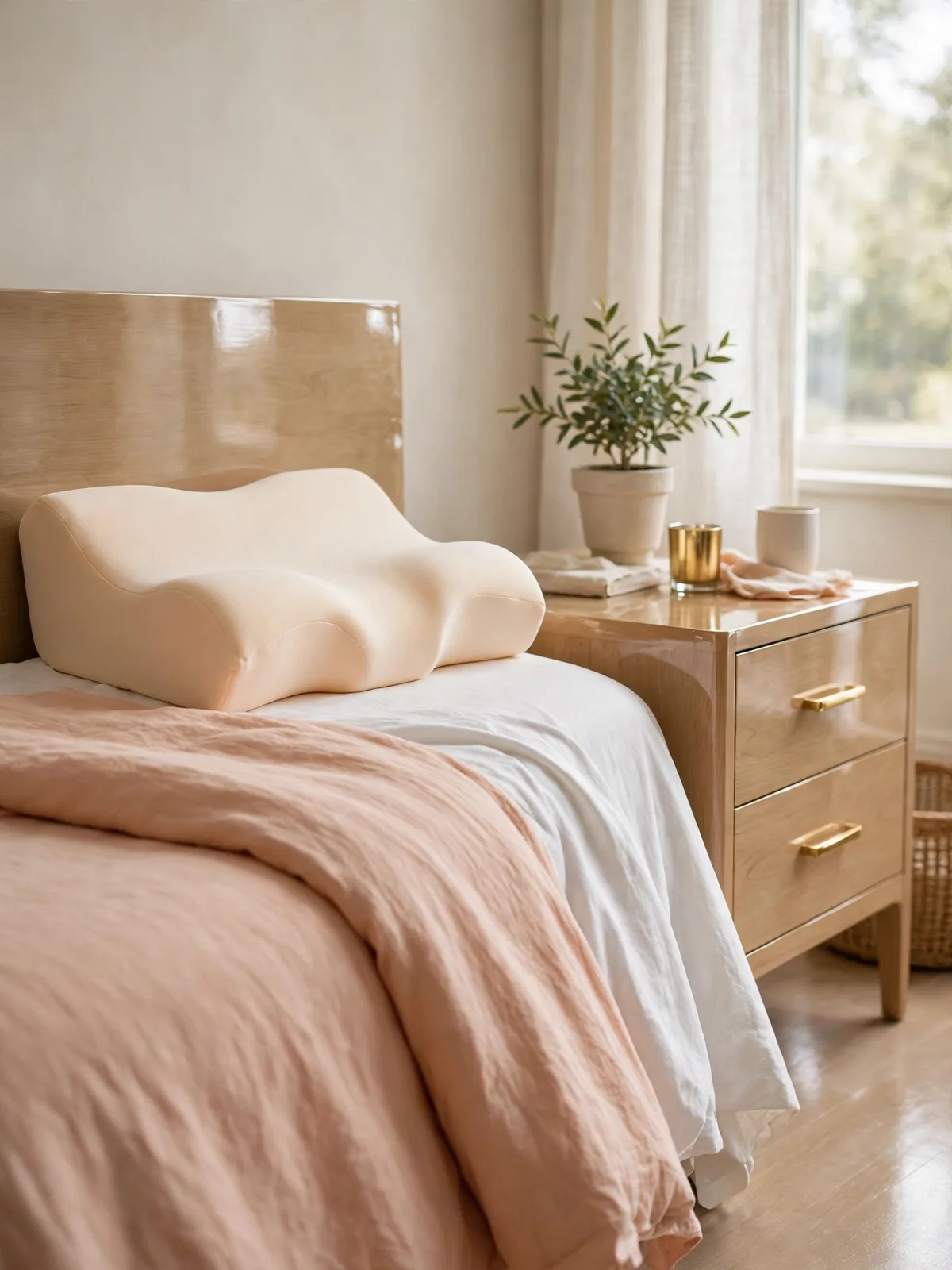
Side sleepers have a bigger gap to fill between ear and shoulder, and a contoured memory foam pillow fills it with a raised edge that cradles the neck while the centre dips for the head. Here, a contoured pillow on a bed in soft peach bedding with white sheets and a light wood nightstand shows a side-sleeper setup done properly. The design suits anyone who sleeps mostly on one side, and it keeps the spine straight through the night. The weakness is adjustment: a contoured shape feels strange for the first few nights, so give it a week before deciding it is not for you.
Quick tips:
- Place the higher edge under your neck, not your head.
- Give a contoured pillow a full week to feel natural.
- Pair it with a medium-soft mattress for the best pressure relief.
- Flip the pillow to the lower edge if you roll onto your back.
Protect Your Mattress With a Waterproof Memory Foam Protector

A waterproof protector is the simplest way to keep a memory foam mattress fresh, because it blocks spills, sweat and dust while letting the foam breathe underneath. Here, a neatly made bed in soft grey-green bedding with white pillows shows a protected mattress looking as clean as the day it arrived. The design suits every household, especially homes with kids or pets, and a good protector is silent and invisible under the sheets. The weakness is cheap protectors: plasticky ones crinkle, trap heat and ruin the foam feel, so choose a breathable, quiet fabric that fits the mattress depth.
Quick tips:
- Choose a breathable waterproof protector, not a plastic sheet.
- Make sure it fits the full depth of your mattress.
- Wash it regularly following the label instructions.
- Replace it if it tears — a torn protector protects nothing.
Choose a Memory Foam Mattress in a Box for Easy Delivery

A memory foam mattress in a box solves the hardest part of buying a mattress — getting it home — because the foam is compressed, rolled and packed into a box one person can carry up the stairs. Here, a boxed mattress beside a bed dressed in soft mustard bedding on a light oak floor shows how simple delivery can be. The design suits flats, narrow staircases and anyone without a large vehicle, and most boxed mattresses expand fully within a day. The weakness is the wait: the foam needs time to expand and air out, so unbox it in the morning and sleep on it the next night, not the same evening.
Quick tips:
- Unbox on the bed frame so you do not have to lift a full mattress.
- Give it up to a day to expand to its full thickness.
- Air the room out to clear the new-foam smell.
- Keep the box until you are sure you are keeping the mattress.
Look for Certified Safe Memory Foam Mattress Materials

When you shop for a memory foam mattress, the label matters as much as the feel, because certification marks show the foam has been tested for harmful substances and meets recognised safety standards. Here, a bright bedroom in natural cream bedding with soft beige cushions, a light wood frame and a potted plant shows the calm, healthy bedroom a well-chosen mattress belongs in. The design suits families and anyone sensitive to smells or chemicals, and certified foam usually comes with clear labelling you can check before buying. The weakness is jargon: labels differ between countries and brands, so look for the certification name itself rather than vague words like “natural” or “eco” on the packaging.
Quick tips:
- Check the product page for recognised foam safety certifications.
- Read the label, not just the marketing headline.
- Ask the seller if a certification claim is unclear.
- Air out any new mattress before sleeping on it.
Try a Zoned Memory Foam Mattress for Targeted Support

A zoned memory foam mattress divides the surface into sections — softer under the shoulders, firmer under the hips — so each part of your body gets the support it actually needs. Here, a bed in deep teal bedding with cream pillows, a walnut frame and brass sconces shows a tailored setup that looks as considered as it feels. The design suits people with lower-back aches and couples with different body shapes, and it keeps the spine level without making the whole mattress hard. The weakness is position: zones only work if you sleep in the middle of the bed, so restless sleepers who drift to the edges may not feel the benefit.
Quick tips:
- Check where the zones sit before buying.
- Choose zoned support if your lower back aches in the morning.
- Pair it with a pillow that matches your main sleeping position.
- Lie in your usual spot to test whether the zones line up.
Choose a Memory Foam Hybrid Mattress for Bounce and Breathability
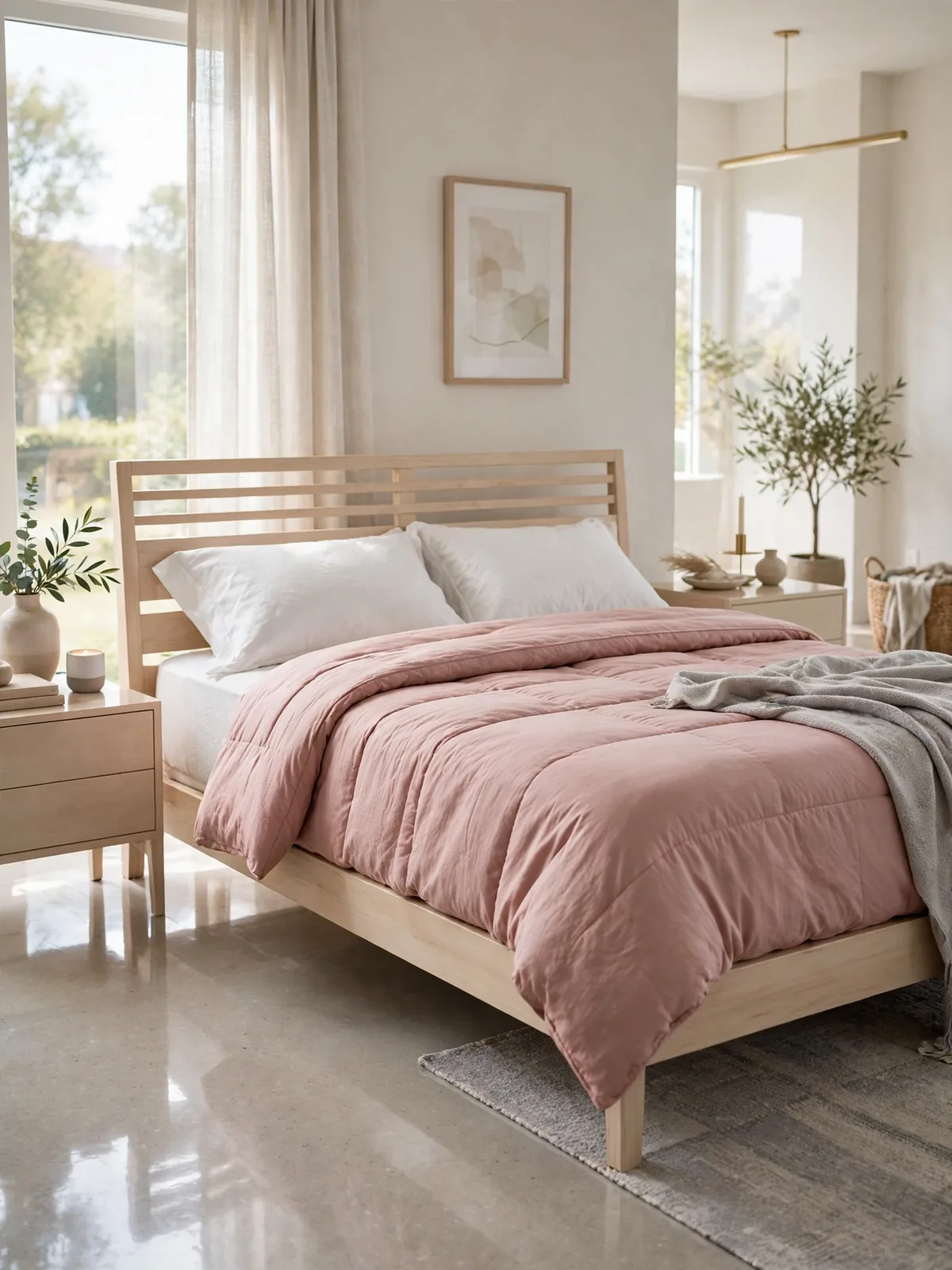
A memory foam hybrid mattress combines a foam comfort layer with a pocket-spring core, so you get the pressure relief of foam with the bounce, airflow and edge support of springs. Here, a hybrid bed in soft rose bedding with white pillows and a light grey throw on a pale wood frame looks fresh and balanced. The design suits hot sleepers who like foam comfort, and anyone who finds all-foam mattresses hard to move on. The weakness is weight and price: hybrids are heavier to move and usually cost more than all-foam mattresses, so check the delivery options before you order.
Quick tips:
- Choose a hybrid if you sleep hot but love foam comfort.
- Look for individually wrapped springs for better motion isolation.
- Check the weight if you need to move it upstairs.
- Use a slatted base with narrow gaps so the springs stay supported.
Go for a Copper-Infused Memory Foam Mattress for a Cooler Feel
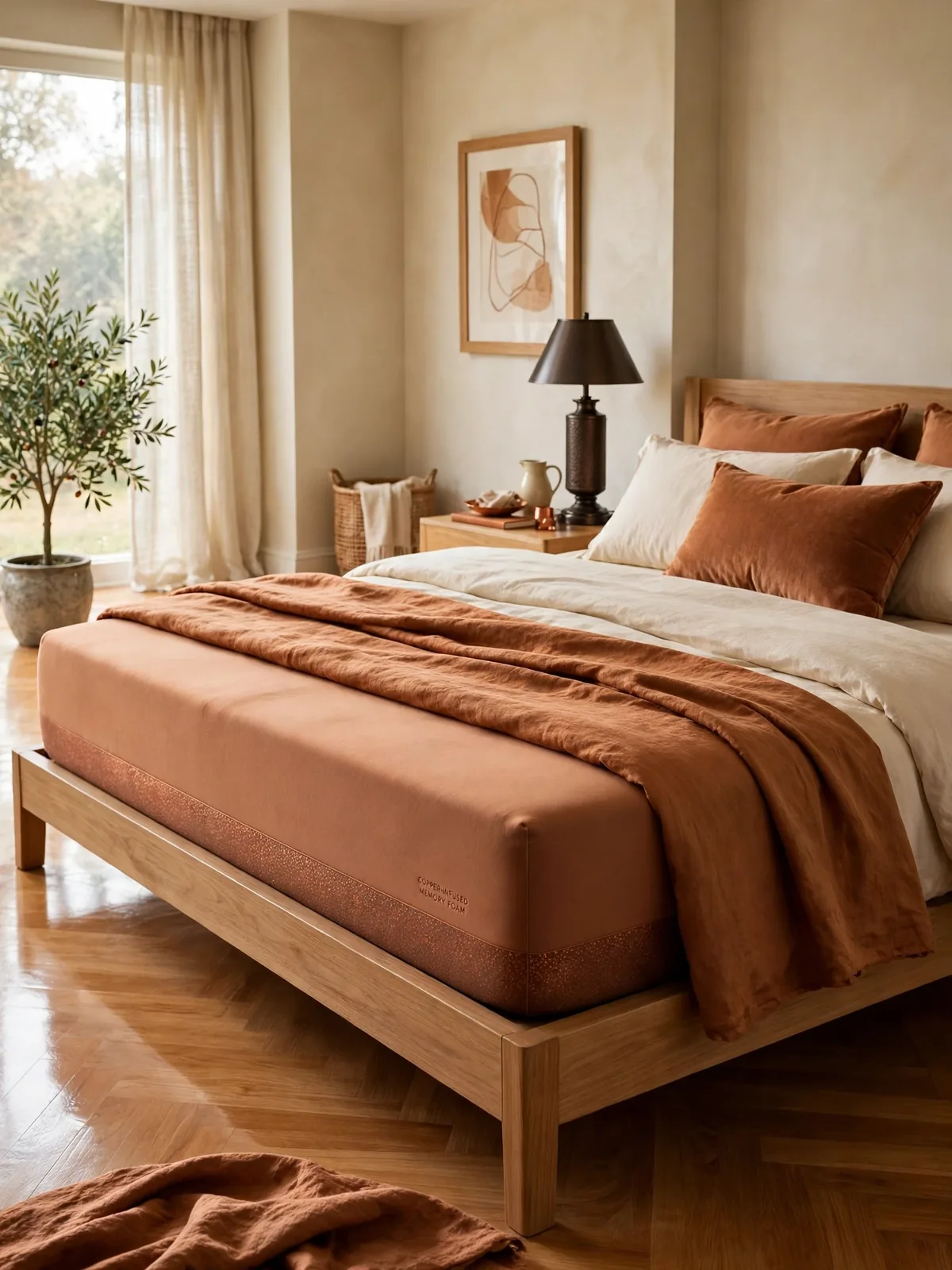
A copper-infused memory foam mattress adds tiny copper particles to the foam, which draw heat away from the body and give the surface a cooler, fresher feel through the night. Here, a bed dressed in warm copper-toned bedding with cream sheets and a dark bronze lamp on a light oak frame shows the modern, warm look this type of mattress suits. The design suits hot sleepers who want cooling without a cold, clinical feel, and it pairs well with light, breathable bedding. The weakness is expectation: copper helps with heat, but it is one feature among many, so check the foam density and cover too before deciding.
Quick tips:
- Treat copper infusion as a cooling bonus, not the whole reason to buy.
- Pair it with a breathable cover and cotton sheets.
- Compare it with gel and open-cell options before choosing.
- Check the trial period so you can test the cooling yourself.
Pick a Plant-Based Memory Foam Mattress for a Greener Bedroom

A plant-based memory foam mattress replaces some of the usual petroleum-based ingredients with plant oils, giving you the same moulding comfort with a smaller footprint and a fresher feel. Here, a bed in soft olive green bedding with natural linen pillows, a light wood frame and a leafy plant shows the calm, earthy bedroom this choice belongs in. The design suits anyone building a greener home, and plant-based foams often feel slightly more responsive and breathable. The weakness is price: plant-based foams usually cost more, so weigh the greener materials against your budget before you commit.
Quick tips:
- Read the label to see how much plant content the foam actually has.
- Expect a slightly more responsive, less sink-in feel.
- Pair it with natural fibre bedding for a fully green setup.
- Air it out well before first use.
Choose a Memory Foam Mattress for Couples With Motion Isolation
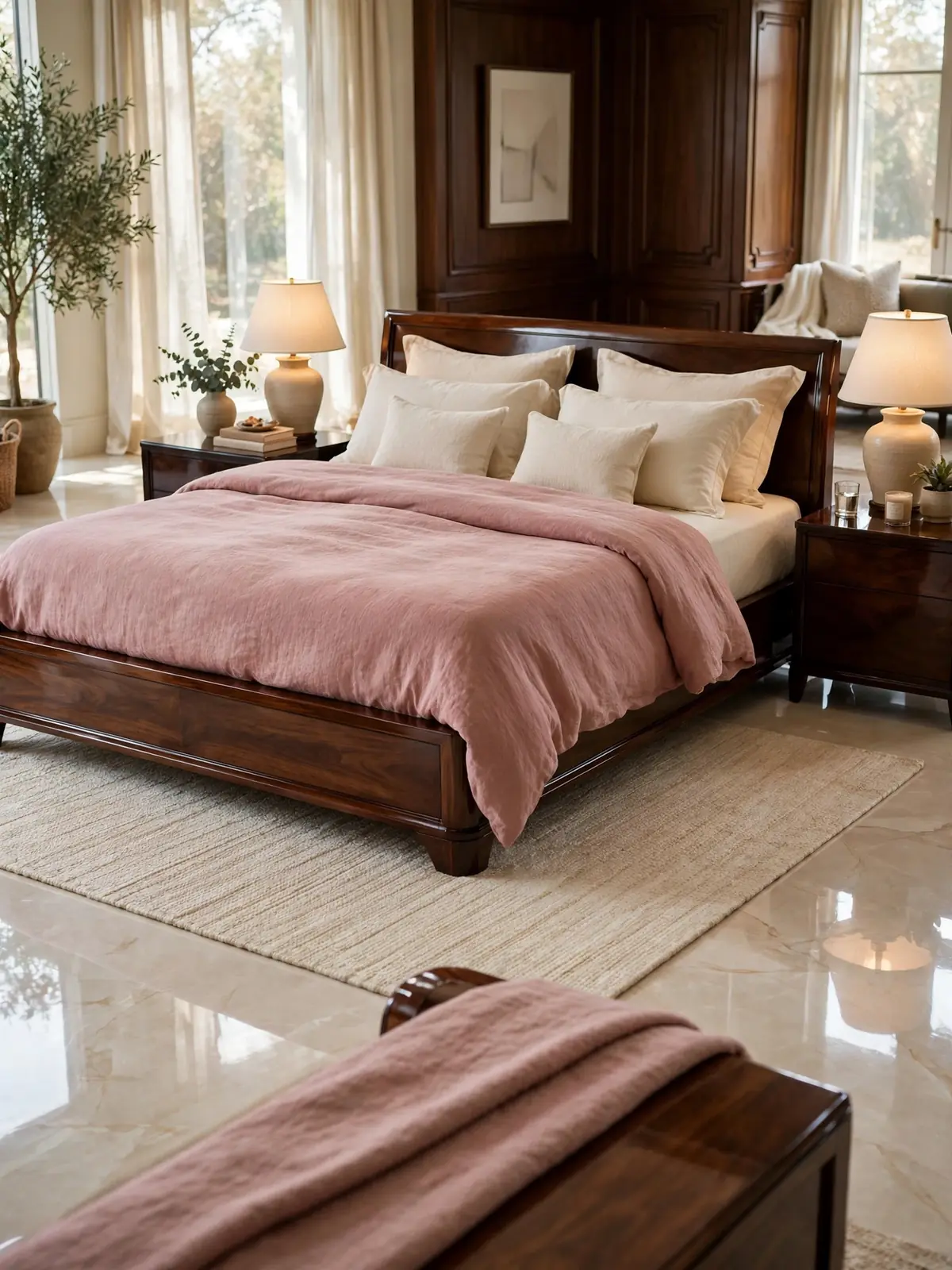
Couples sleep better on a memory foam mattress because the foam absorbs movement instead of passing it across the bed, so one partner turning over does not wake the other. Here, a king-size bed in soft dusty rose bedding with cream pillows, a dark wood frame and two matching bedside lamps looks peaceful and generous. The design suits light sleepers and couples on different schedules, and it works best on a larger mattress where each person has room to move. The weakness is the edges: all-foam mattresses can feel soft at the sides, so choose one with reinforced edges if you both sleep near them.
Quick tips:
- Choose a king size if you both move a lot in the night.
- Look for reinforced edges if you sleep near the sides.
- Test motion isolation by having one person move while the other lies still.
- Pair it with separate duvets if you prefer different warmth levels.
Use a Split Memory Foam Setup for Couples With Different Needs
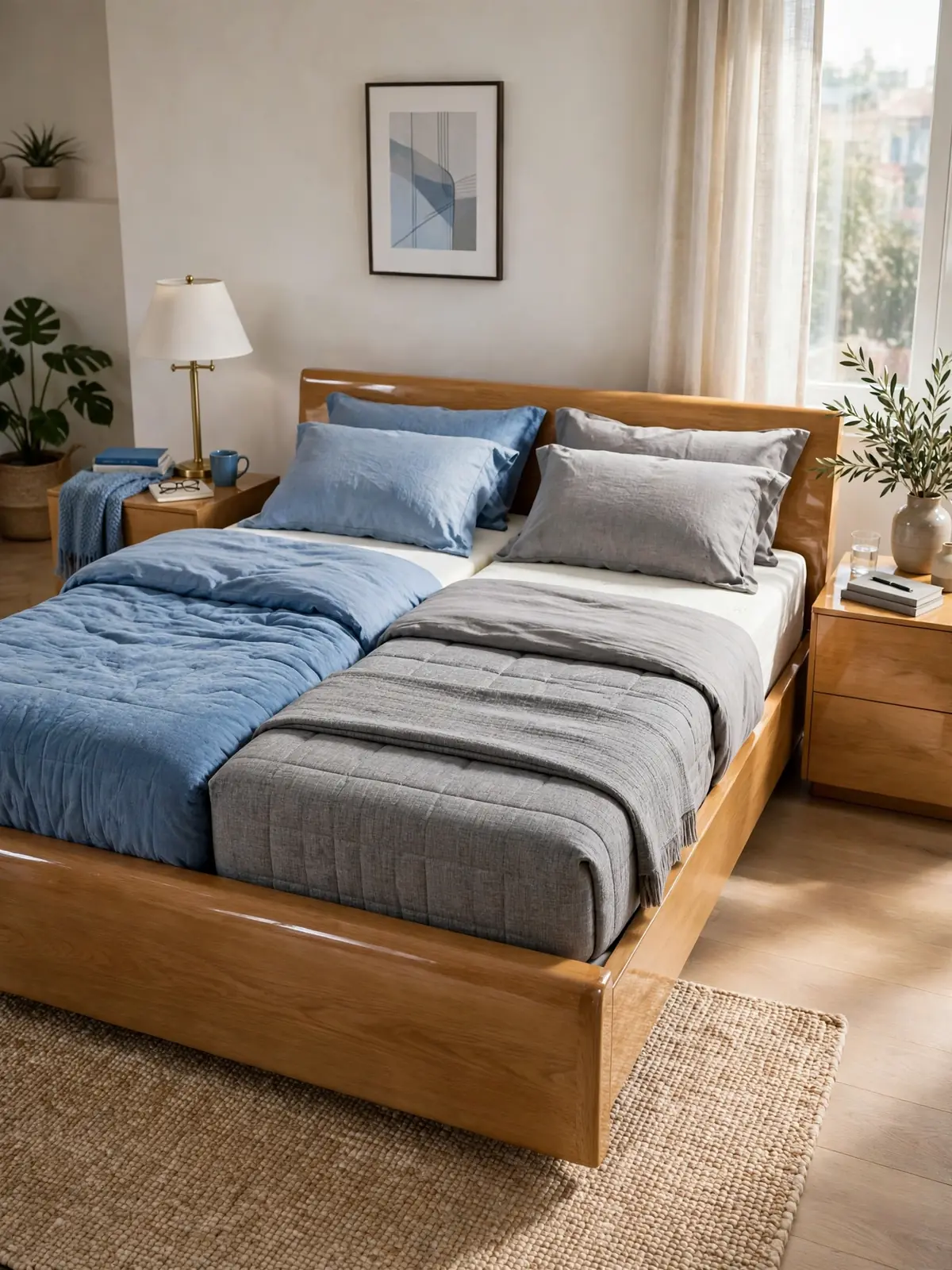
When two sleepers need different firmness, a split memory foam setup puts two single mattresses side by side on one frame, so each person gets their own comfort level without compromise. Here, one side dressed in soft blue bedding and the other in firm grey bedding on a shared light oak frame shows how neatly the solution works. The design suits couples where one is a side sleeper and the other sleeps on their back, and it makes replacing one side easy. The weakness is the join: a gap can open in the middle, so use a bridge pad or a fitted sheet that holds both mattresses together.
Quick tips:
- Use a mattress bridge or a deep fitted sheet to close the gap.
- Choose the same thickness on both sides so the surface stays level.
- Label each side so you remember which firmness is yours.
- Test both sides together before the trial period ends.
Add a Memory Foam Mattress for the Guest Room on a Budget

A guest room does not need the most expensive mattress, and a budget memory foam mattress gives visitors real pressure relief and comfort for far less than a premium model. Here, a cheerful guest bed in sunny yellow bedding with white pillows on a light pine frame shows that a budget setup can still feel welcoming. The design suits spare rooms and holiday homes, and a simple all-foam model is light and easy to set up. The weakness is longevity: budget foam can soften faster under daily use, so reserve it for guests and choose a thicker model for the main bedroom.
Quick tips:
- Choose a simple all-foam model for occasional use.
- Look for a decent trial period even on a budget mattress.
- Add a topper later if guests find it too firm.
- Dress it with fresh, good-quality bedding so it feels premium.
Choose a Memory Foam Mattress for a Small Bedroom or Studio

Small bedrooms suit memory foam well, because a double mattress gives full comfort without the bulk of a heavy spring bed, and a slimmer profile leaves room to move around it. Here, a compact double bed in pale lilac bedding with white cushions and a floating shelf shows a small room that still feels calm and finished. The design suits studios, box rooms and flats, and a boxed mattress is easy to carry up narrow stairs. The weakness is storage: a low, slim mattress leaves less room underneath, so pair it with a divan base or under-bed boxes.
Quick tips:
- Choose a double rather than a king in a small room.
- Pick a slimmer mattress so the bed does not dominate the space.
- Use a divan base for hidden storage underneath.
- Keep the bedding light so the room feels bigger.
Rotate Your Memory Foam Mattress Every Few Months
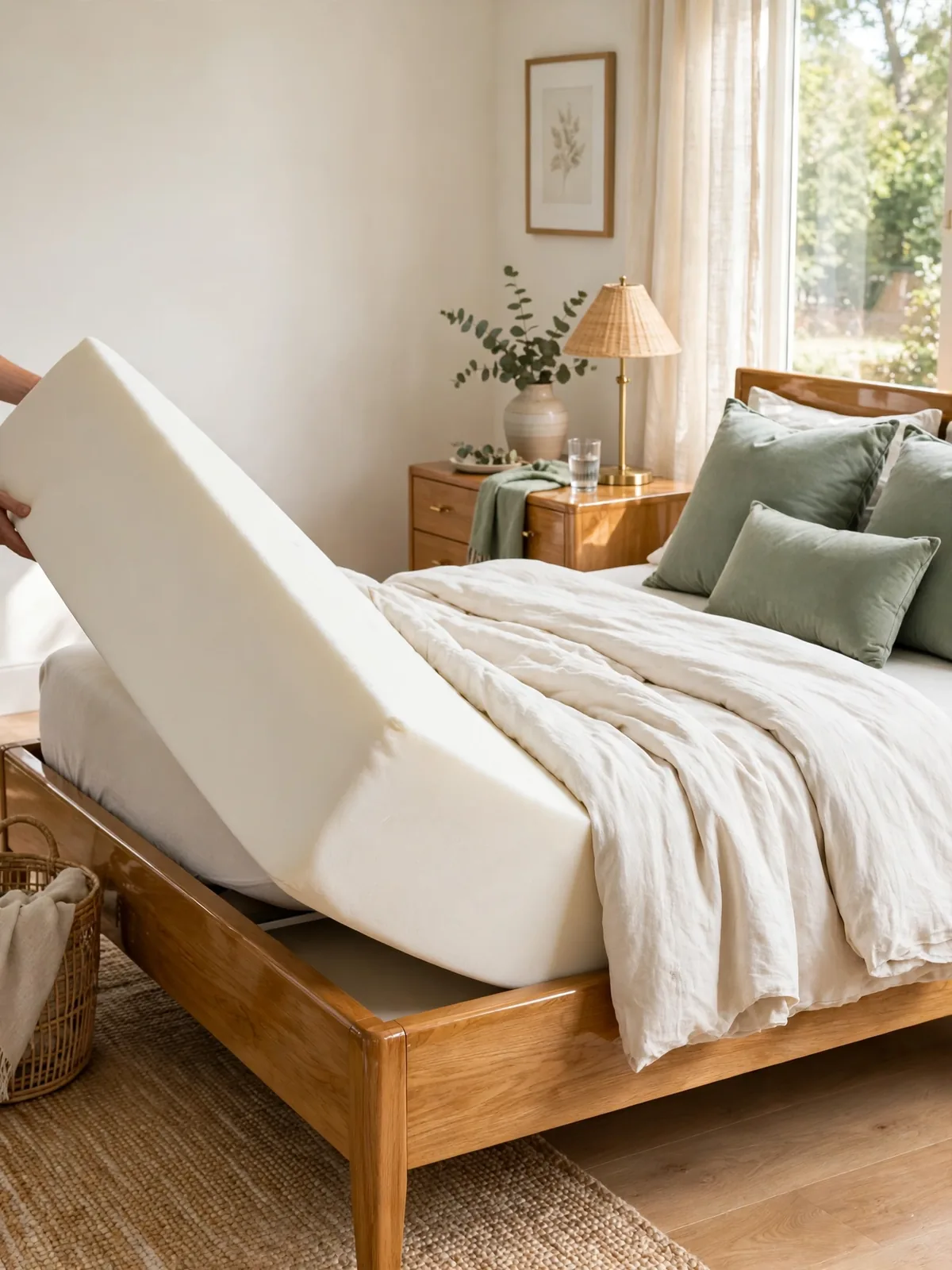
Rotating a memory foam mattress every few months spreads wear evenly, so the spot where you always sleep does not soften faster than the rest. Here, a mattress being turned on a light oak frame with soft cream bedding folded back and sage cushions shows simple care in action. The design suits every memory foam mattress, and it takes only a few minutes with two people. The weakness is forgetting: rotation only helps if you actually do it, so set a reminder for the start of each season and turn the mattress head to foot each time.
Quick tips:
- Rotate head to foot every three months.
- Never flip a mattress unless the maker says it is flippable.
- Do it with two people — foam mattresses are heavy.
- Check the care label for the maker’s own rotation advice.
Air Out a New Memory Foam Mattress Before First Use

A new memory foam mattress often carries a faint smell from manufacturing, and airing it out before first use clears it quickly so your first night smells like fresh bedding, not a factory. Here, an uncovered mattress on the frame with white sheets folded nearby and sheer curtains at an open window shows the simplest care step there is. The design suits every new foam mattress, and a day of fresh air is usually enough. The weakness is impatience: sleeping on it the same evening means breathing in the smell all night, so plan the delivery for a morning and sleep on it the next night.
Quick tips:
- Unbox in a well-ventilated room with the window open.
- Leave the mattress uncovered for several hours.
- Wash the sheets and cover before the first night.
- If the smell lingers, air it for a second day.
Use a Solid or Slatted Base Under a Memory Foam Mattress
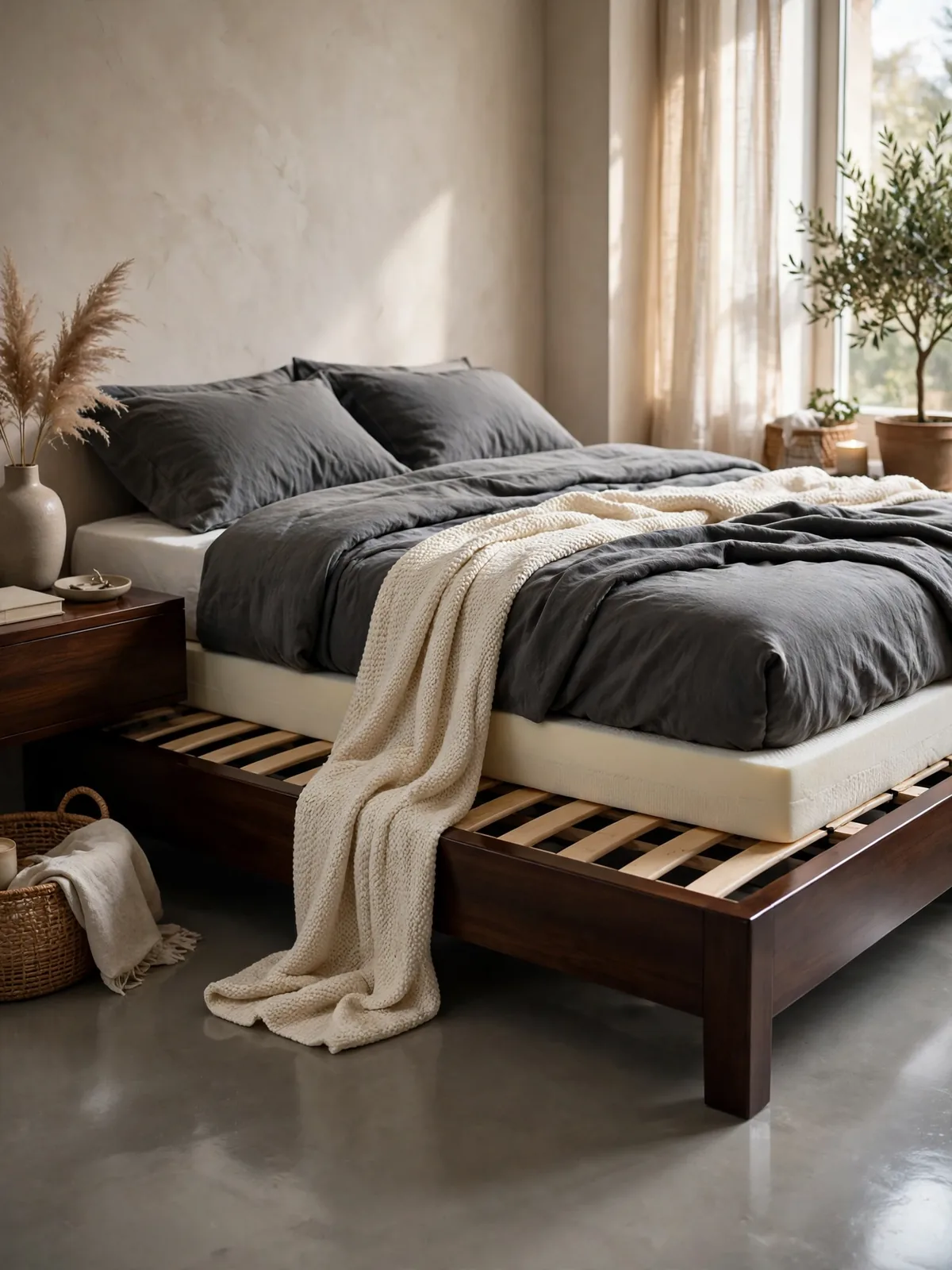
A memory foam mattress needs the right base, because a solid platform or closely spaced slats support the foam evenly, while wide gaps let it sag between the slats. Here, a slatted wooden base under a bed dressed in soft charcoal bedding with a cream throw and a dark wood frame shows a setup built to last. The design suits every memory foam mattress, and a good base also improves airflow underneath. The weakness is an old spring base: box springs flex too much for foam, so replace a spring base with a solid platform or slats spaced no more than a few inches apart.
Quick tips:
- Use a solid platform or slats spaced closely together.
- Replace a springy box spring before placing foam on it.
- Check the maker’s base requirements so the warranty stays valid.
- Add a bunkie board if your slats are too far apart.
Layer Memory Foam Bedding With Breathable Cotton Sheets

Memory foam feels its best under breathable cotton sheets, because cotton lets heat and moisture escape instead of trapping them against the foam. Here, a bed in crisp white cotton sheets with a soft sky-blue duvet and cream pillows on a light wood frame looks cool, clean and easy to sleep in. The design suits hot sleepers and anyone who wakes feeling clammy, and cotton sheets wash well and last for years. The weakness is care: cotton creases and needs washing more often than synthetics, so keep two sets in rotation and change them weekly.
Quick tips:
- Choose 100 percent cotton or cotton-blend sheets.
- Avoid heavy polyester sheets that trap heat on foam.
- Keep two sets so one is always clean and ready.
- Wash sheets weekly to keep the mattress fresh.
Add a Weighted Blanket Over Memory Foam for Deeper Sleep

A weighted blanket over a memory foam mattress adds gentle, even pressure that many people find calming, and the foam underneath cushions the body while the blanket settles it. Here, a deep burgundy bed with a weighted blanket and cream cushions on a dark walnut frame in soft evening light looks like a cocoon built for deep sleep. The design suits restless sleepers and anyone who likes to feel tucked in, and it pairs naturally with the hugging feel of foam. The weakness is heat and weight: a heavy blanket can feel too warm and too much to move under, so choose a lighter weight first and try it for a week.
Quick tips:
- Start with a lighter weighted blanket and build up if you like it.
- Choose a breathable cover so the blanket does not overheat you.
- Check that you can still turn over comfortably underneath it.
- Wash the cover regularly, following the label.
Choose a Memory Foam Mattress for Allergy-Friendly Sleep
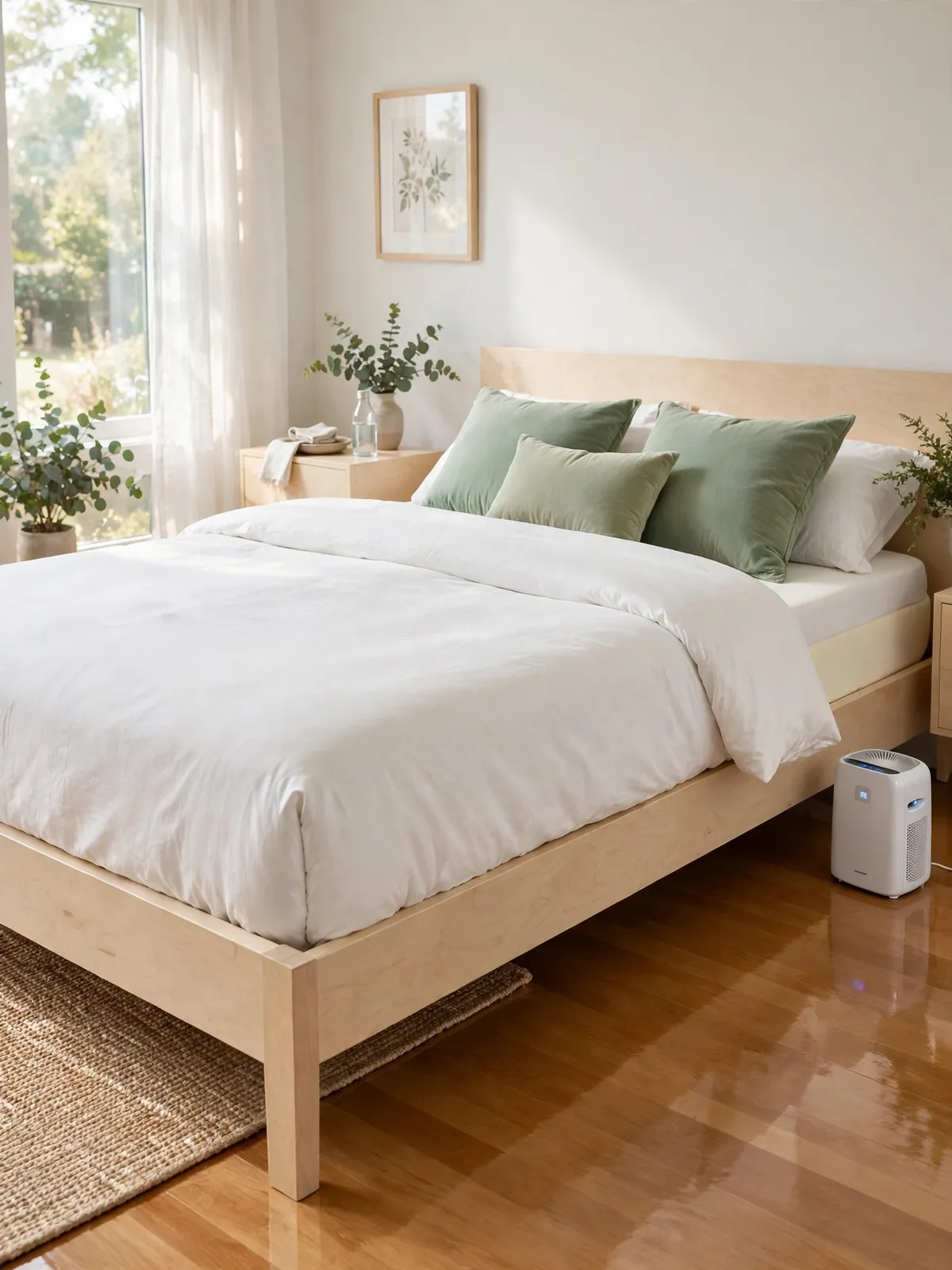
Memory foam suits allergy-prone sleepers because its dense structure gives dust mites fewer places to settle than a traditional spring mattress, and a washable protector adds another barrier. Here, a clean bright bedroom in hypoallergenic white bedding with soft green cushions, a light birch frame and a small air purifier shows a sleep setup built for easy breathing. The design suits anyone who wakes sneezing or congested, and it works best with washable bedding changed weekly. The weakness is that foam alone is not a cure: dust still gathers on pillows and covers, so wash bedding often and vacuum the mattress surface regularly.
Quick tips:
- Use a washable protector and wash it often.
- Change and wash bedding weekly.
- Vacuum the mattress surface when you change the sheets.
- Keep pets off the bed if allergies are a problem.
Pick a Memory Foam Mattress With a Removable Washable Cover

A removable, washable cover is one of the most practical features on a memory foam mattress, because it lets you wash away sweat, dust and spills instead of living with them. Here, a mattress with its cover half removed beside soft coral bedding folded back and cream pillows on a light oak frame shows easy care in action. The design suits families, pet owners and anyone who likes a truly fresh bed, and a clean cover makes the whole room smell better. The weakness is fit: a cover that is hard to remove or shrinks in the wash becomes a chore, so check the washing instructions and the zip quality before buying.
Quick tips:
- Check the cover is machine washable, not just spot-clean.
- Read the washing temperature on the label.
- Keep a spare cover so the bed is never out of action.
- Zip it fully closed so the foam stays protected.
Try a Memory Foam Mattress for a Child’s First Big Bed
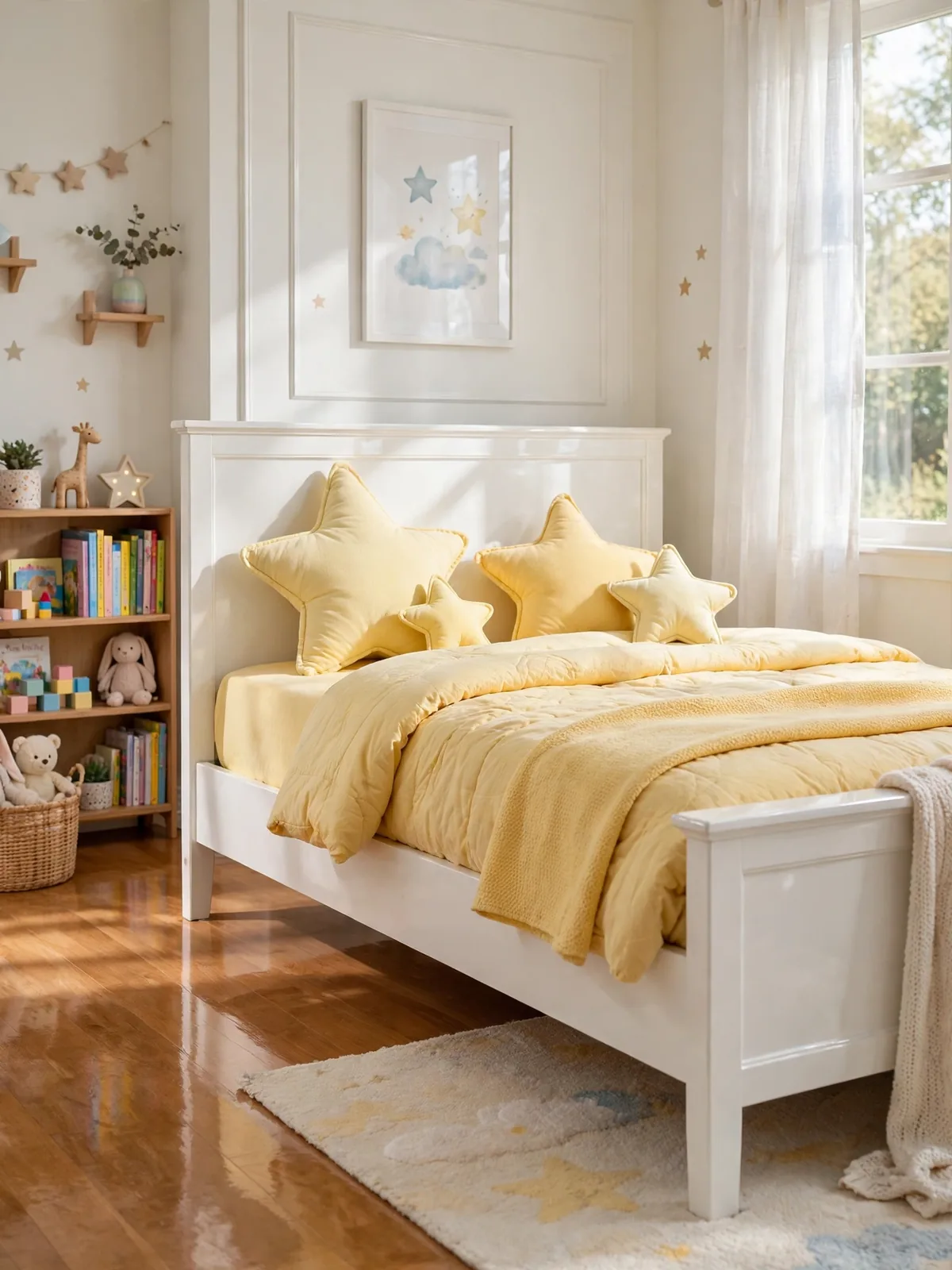
A child’s first big bed is a good place for memory foam, because the foam cushions small joints, stays quiet when they move, and has no springs to poke through or squeak. Here, a cheerful child’s room in soft yellow bedding with playful star cushions, a white frame and a small bookshelf shows a first big bed that feels safe and exciting. The design suits children moving up from a cot, and a medium-firm foam supports growing bodies well. The weakness is size: children grow fast, so buy a single that will last through the school years rather than a small bed they outgrow in a year.
Quick tips:
- Choose medium-firm foam to support a growing body.
- Use a waterproof protector for accidents and spills.
- Pick a single size that will last for years.
- Let your child choose the bedding so the new bed feels theirs.
Build Your Best Sleep Setup With Memory Foam From Bed to Pillow

The last of these memory foam mattress ideas is the principle behind them all, and it is worth stating plainly because it is the difference between buying a mattress and building a sleep setup that actually works night after night: the best sleep does not come from one expensive purchase, it comes from matching every layer to the way you sleep — a medium-firm mattress that supports your spine, a topper that softens the surface if you need it, a contoured pillow that keeps your neck in line, a breathable protector and cotton sheets that keep you cool, and a solid base underneath that holds it all level — working together so that nothing aches in the morning and nothing wakes you in the night, and the setup rewards you too, because memory foam chosen this way is easy to live with, easy to care for with a quick rotation every season and a wash of the cover, and easy to adjust later, swapping a topper for summer or a heavier blanket for winter, without ever buying a whole new bed. Here, a complete setup in layered plum bedding with a cream throw, brass lamps and a dark wood frame pulls it together — thick mattress, contoured pillow and soft topper in one calm, luxurious room — and nothing in the room is there by accident. The lesson is to start with the mattress itself: pick the firmness and thickness for your sleeping position, then add the pillow, the protector and the sheets around it, because a sleep setup built in that order stays comfortable for years, and it gives you room to change, trying a cooling topper in summer or a weighted blanket in winter, without ever starting from scratch. Pick the three ideas from this list that solve your biggest sleep problem first, add one luxury that makes bedtime feel special, and your bedroom stops being the room where you toss and turn and becomes the best-sleeping room in the house.
Quick tips:
- Start with firmness and thickness for your sleeping position.
- Add the pillow, protector and sheets around the mattress.
- Test cooling features in summer before committing.
- Rotate the mattress and wash the cover every season.
FAQs
What is a memory foam mattress good for?
A memory foam mattress is good for pressure relief, motion isolation and comfortable support, because the foam moulds around your shoulders and hips and absorbs movement instead of passing it across the bed. It suits side sleepers, couples and anyone who wakes with aches, and it works best when you match the firmness to your sleeping position.
How do I choose the right memory foam mattress firmness?
Choose memory foam mattress firmness by your sleeping position: side sleepers need a softer or medium feel so shoulders and hips can sink in, back sleepers do well on medium-firm, and stomach sleepers need a firm surface so the hips stay level. If you change position in the night, medium-firm is the safest all-round choice.
Do memory foam mattresses need a special base?
Memory foam mattresses need a solid, flat base — a solid platform or closely spaced slats — because wide gaps let the foam sag and a springy box spring flexes too much underneath. Check the maker’s base requirements before buying, since using the wrong base can affect both comfort and the warranty.
How do I stop a memory foam mattress sleeping hot?
Stop a memory foam mattress sleeping hot by choosing gel-infused or open-cell foam, adding a breathable cover, using cotton or linen sheets, and keeping the bedroom cool with light bedding. A cooling topper is a cheaper fix if you already own a mattress that runs warm.
Can I use a memory foam mattress topper on a spring mattress?
You can use a memory foam mattress topper on a spring mattress, and it is one of the cheapest ways to add foam comfort to a bed you already own. Choose a 2- to 3-inch topper, secure it so it stays in place, and remember it cannot fix a sagging mattress — if the base dips, the topper dips with it.
Conclusion
A memory foam mattress is not just a softer bed — it is a sleep system that works when every layer matches the way you sleep. The 30 ideas above show that the right firmness, the right thickness, a cooling top layer, a contoured pillow, a breathable protector and a solid base can turn restless nights into deep, comfortable sleep. Start with firmness and thickness for your sleeping position, add cooling and comfort layers around them, and care for the mattress with rotation and regular washing. Do that, and your memory foam mattress stays supportive and fresh for years, night after night.