19 Brilliant Bedroom Wardrobe Designs for a Calm, Expensive-Looking Room
A good wardrobe changes everything: you can have the prettiest bed and the softest lighting, but if the wardrobe looks bulky or messy, the whole bedroom feels unfinished. These 19 bedroom wardrobe designs cover doors, finishes, interiors, lighting and small-room solutions, so you can find a design that looks stylish and works for real life.
Bedroom wardrobe designs matter more than most people expect, because the wardrobe is usually the largest piece of furniture in the room, and a well-designed one makes the whole bedroom feel calm, polished and intentional — while a bulky, cluttered one undoes every other decorating choice. The secret is treating the wardrobe as part of the room’s architecture, not as a box pushed against the wall: choose doors that bounce light or add texture, keep the finish quiet, plan the interior before the exterior, and let the wardrobe disappear into the room instead of dominating it. The 19 designs below cover every situation, from mirrored doors for small rooms to dark wood for drama and rattan for warmth.
If you are refreshing the whole bedroom for the colder months, these christmas bedroom decor ideas show how to make the room feel warm and festive around your new wardrobe. Every design includes a concrete example with real materials, colours and finishes, so you can start with the change that suits your room and your budget.
Key Takeaways
What is the best wardrobe design for a small bedroom?
Floor-to-ceiling mirrored or matte white sliding doors work best in a small bedroom, because mirrors bounce light and make the room feel bigger, while matte white fronts blend into the wall and remove visual bulk. Add interior lighting and slim handles, and keep the top of the wardrobe clear so the room feels taller.
Should wardrobe doors be sliding or hinged?
Sliding doors suit small bedrooms because they need no swing space, while hinged doors suit larger rooms because they open fully and give easier access to the whole interior. If the room is tight, choose sliding or bi-fold doors; if you have space in front of the wardrobe, hinged doors with slim handles feel more premium.
How do I make a cheap wardrobe look expensive?
Make a cheap wardrobe look expensive with a matte finish, slim or hidden handles, panel molding on flat doors, warm interior lighting and matching storage boxes inside. Paint is the cheapest upgrade of all — a matte cream or soft grey repaint with new handles transforms a flat-pack wardrobe in a weekend.
What goes inside a well-designed wardrobe?
A well-designed wardrobe interior mixes hanging space, shelves, drawers and one or two specialist zones: double-hang rails for shirts, a long rail for dresses, shallow drawers for folded clothes, pull-out shoe shelves and a top shelf for out-of-season items. Add a motion-sensor LED strip so you can actually see everything.
How much does a new wardrobe cost?
A cosmetic wardrobe refresh — paint, new handles, interior lights and matching boxes — costs very little and changes the whole room. A mid-range freestanding or sliding-door wardrobe costs more, while a fitted floor-to-ceiling wardrobe with custom interiors and lighting is a major investment best planned in stages, one wall at a time.
Install Floor-to-Ceiling Mirrored Doors in Silver and Pale Grey
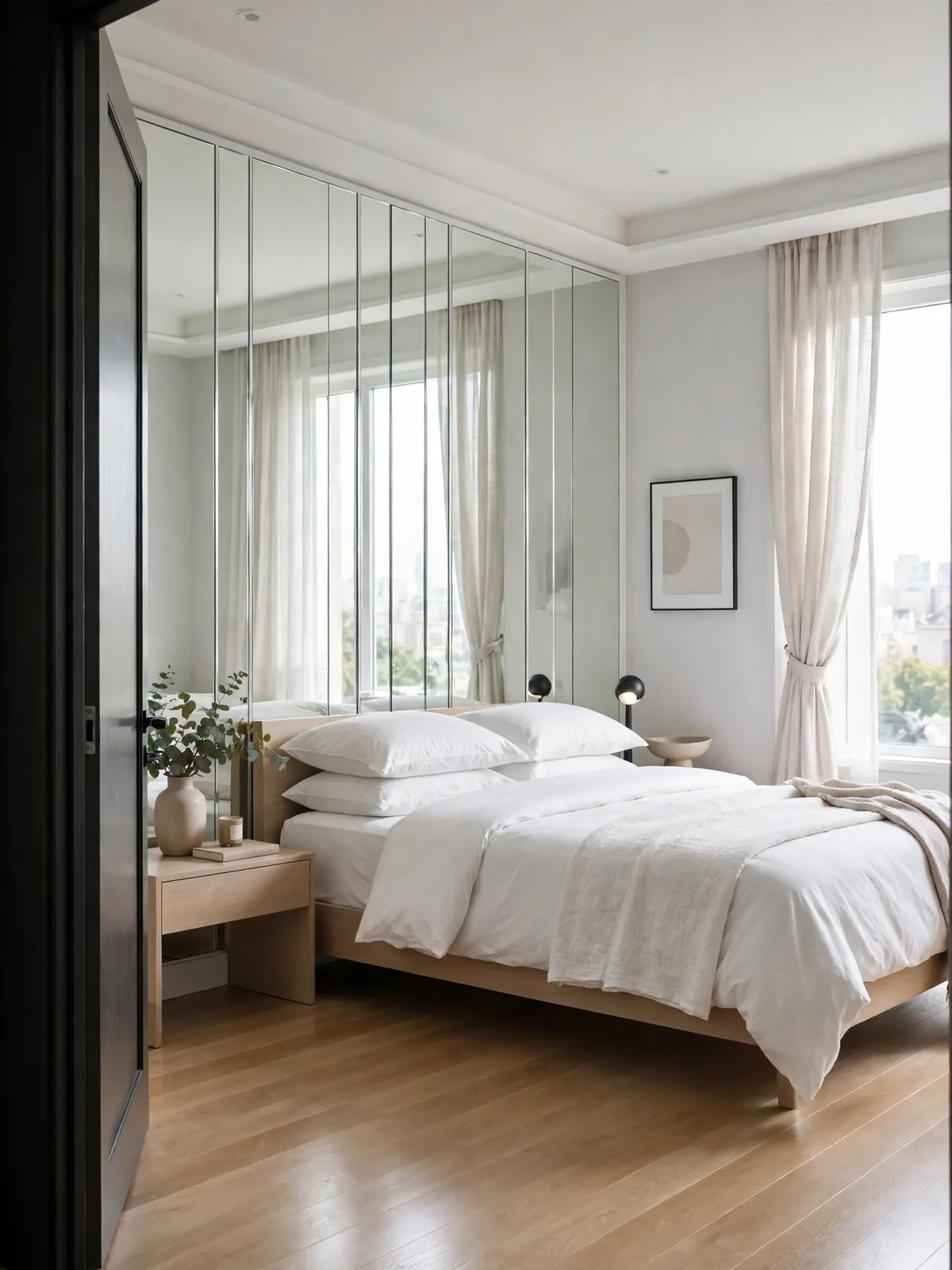
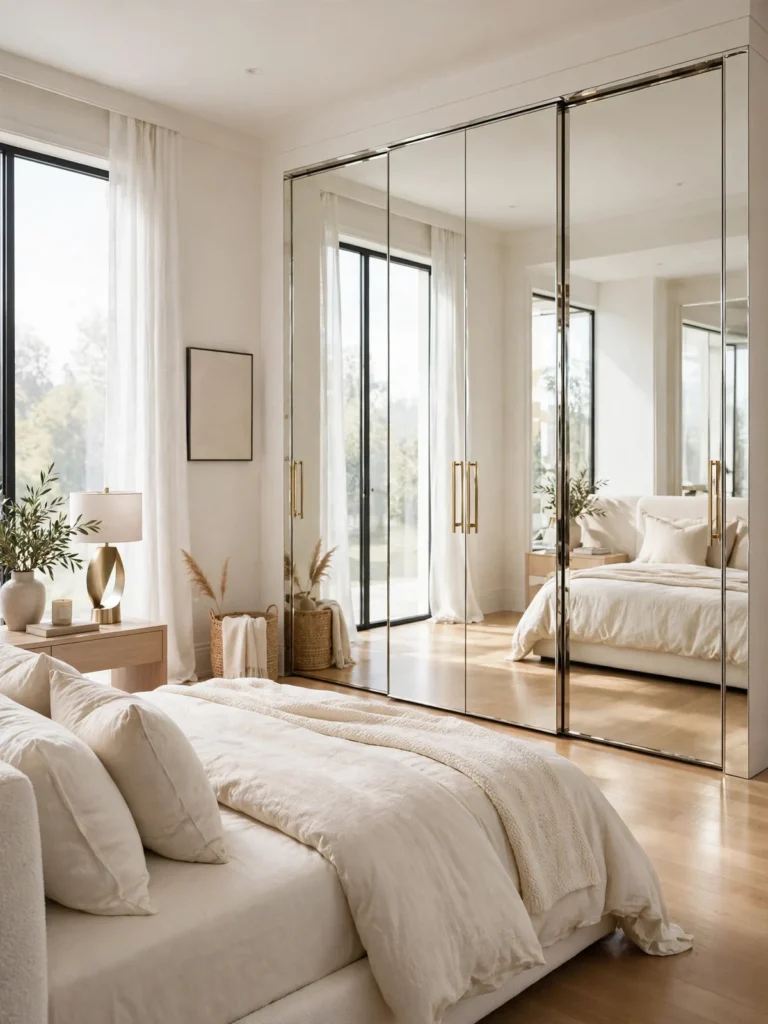
Floor-to-ceiling mirrored wardrobe doors are one of the best tricks for smaller bedrooms, because mirrors bounce light around the room and make everything feel bigger without adding a single decoration. Here, tall mirrored panels run the full height of a pale grey wall, reflecting white bedding and a light oak floor, so the wardrobe almost disappears instead of feeling like one huge heavy block. The design suits apartments and rooms with limited natural light best, and it works beautifully with a large rug and soft bedding. The weakness is fingerprints: mirrors show every smear, so choose slightly tinted or smoked mirror panels if you hate wiping them daily.
Quick tips:
- Choose slightly tinted mirrors to hide fingerprints.
- Run the mirrors full height for the biggest effect.
- Keep the wall opposite the mirrors pale and plain.
- Wipe the panels weekly with a microfibre cloth.
Choose Matte White Wardrobes With Hidden Handles
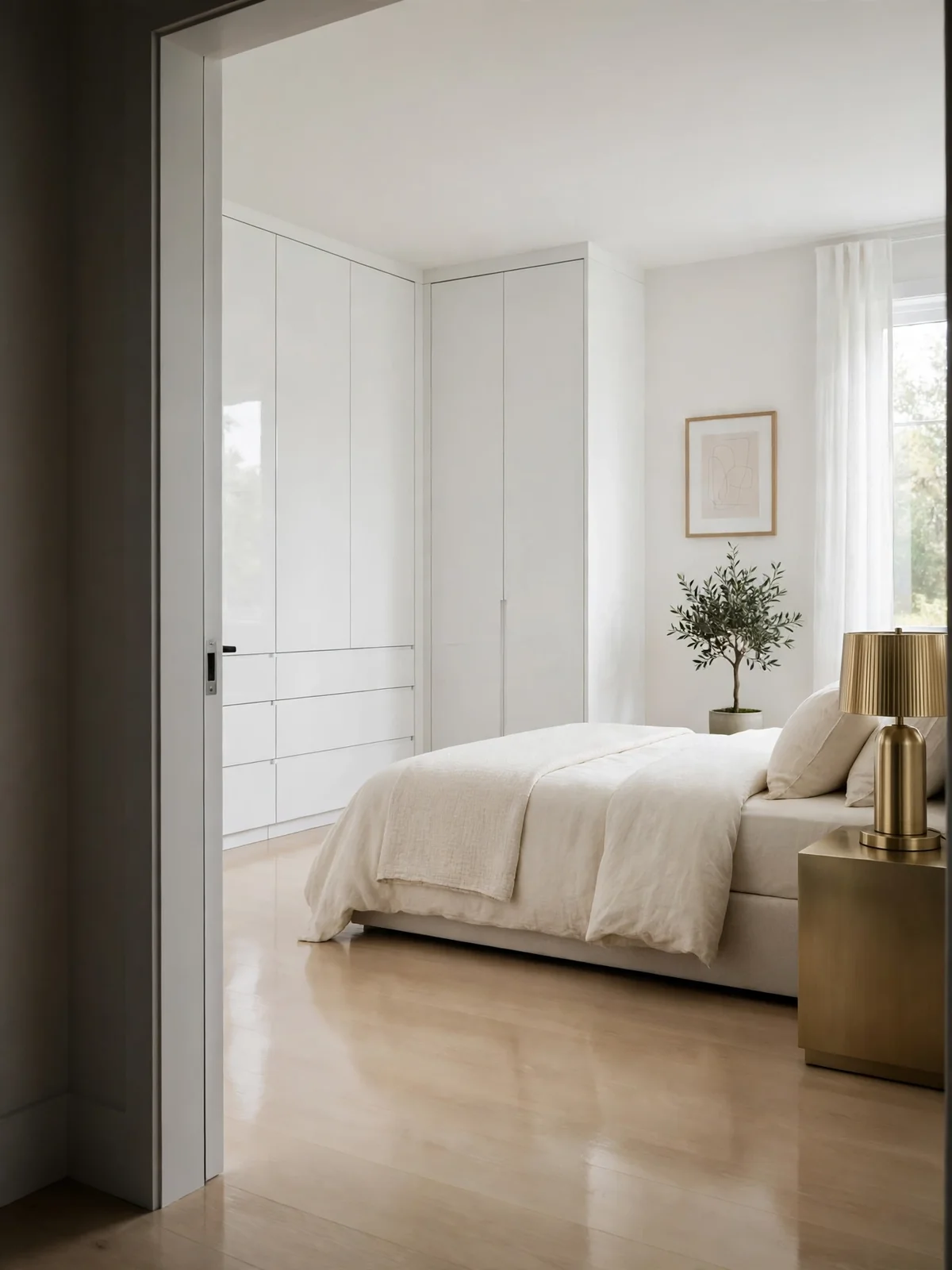
Matte white wardrobes with hidden handles create a fresh, uncluttered look that never feels outdated, because the seamless fronts blend into the wall and let the rest of the room — the bed, the rug, the light — take the attention. Here, matte white sliding doors with push-to-open mechanisms sit against soft white walls above a pale oak floor, with cream bedding and a brushed brass lamp warming the pale room. The design suits modern, Scandinavian and soft luxury bedrooms, and it is especially calming if visual clutter stresses you out. The weakness is finish: glossy white shows every mark and looks cheap, so insist on a true matte finish and keep the handles hidden.
Quick tips:
- Insist on a true matte finish, never glossy white.
- Use push-to-open or recessed handles for a seamless look.
- Keep the wall colour close to the wardrobe white.
- Add one warm wood tone nearby so the room feels warm.
Use Smoked Glass Doors for a Luxe Feel in Charcoal and Brass
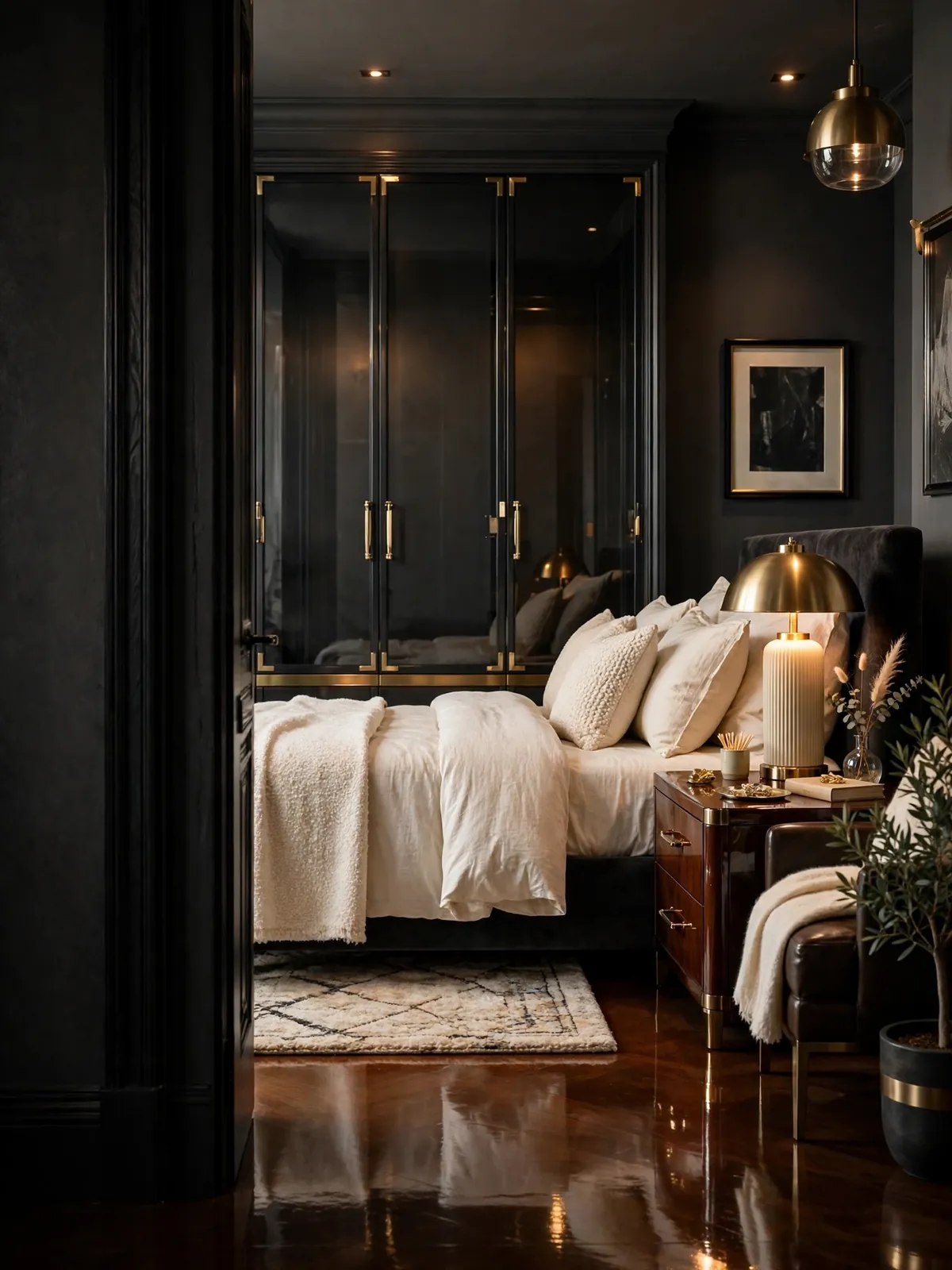
Smoked glass wardrobe doors look ridiculously sophisticated, especially in modern bedrooms with darker palettes, because they reflect light softly without the harshness of plain mirrors and partially hide clutter while still feeling airy. Here, smoked glass panels in slim black frames with brushed brass detailing sit against charcoal walls, with cream bedding and warm lighting softening the dark scheme. The design suits people who love modern luxury without flash, and it pairs beautifully with dark wood and brass. The weakness is tidiness: smoked glass hides mess only partly, so keep the interior organised with matching boxes.
Quick tips:
- Pair smoked glass with black frames or brushed gold.
- Keep the interior tidy with matching storage boxes.
- Add warm lighting inside so clothes stay visible.
- Balance dark doors with light bedding nearby.
Extend Your Wardrobe Into a Tiny Vanity Corner in Blush and Cream
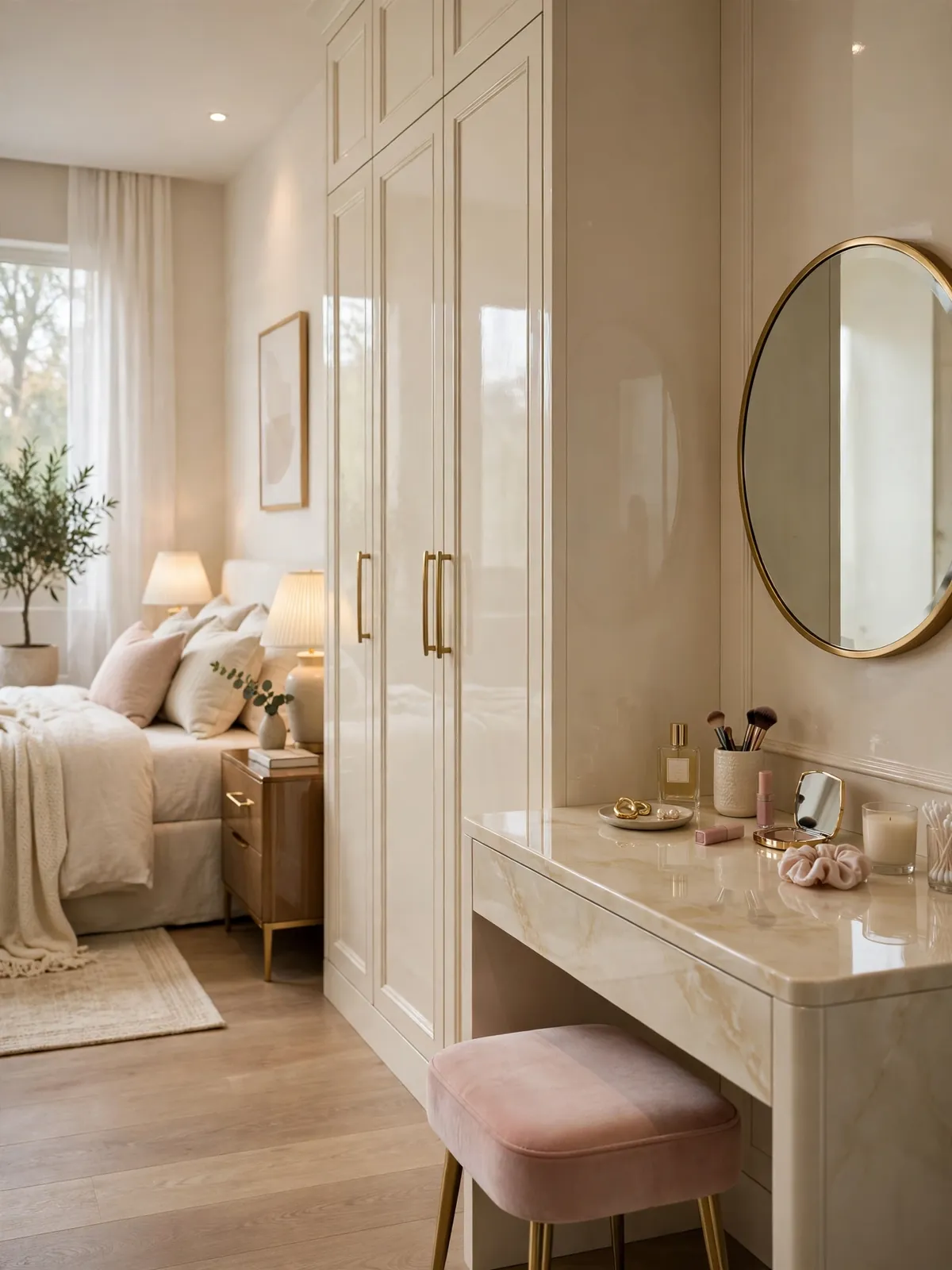
Extending one side of the wardrobe into a compact vanity setup is incredibly practical, because instead of placing a separate dressing table somewhere else, you gain a mirror, a floating shelf and soft lighting in a corner that would otherwise be wasted. Here, a cream wardrobe runs into a slim vanity with a round mirror, a blush pink stool and a warm LED wall light, creating a little personal corner within the bedroom. The design suits smaller bedrooms best, because it saves space while making the layout feel intentional. The weakness is depth: a vanity section made too deep looks clumsy, so keep it slim and let the mirror do the work.
Quick tips:
- Keep the vanity section slim, not full wardrobe depth.
- Use a round mirror to soften the straight lines.
- Add a warm LED wall light above the mirror.
- Choose a small stool that tucks away completely.
Combine Rattan Inserts With Wooden Frames in Light Oak
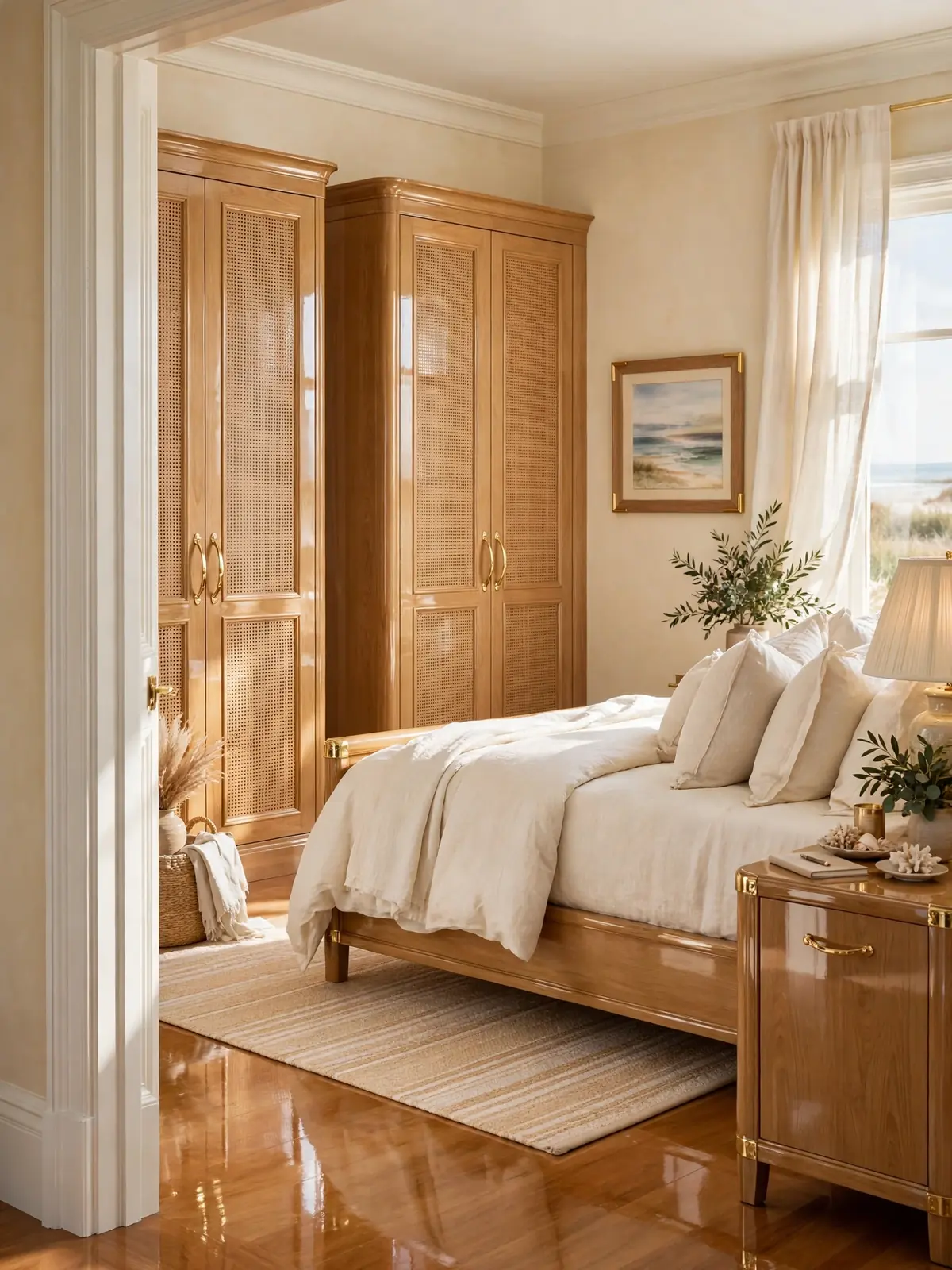
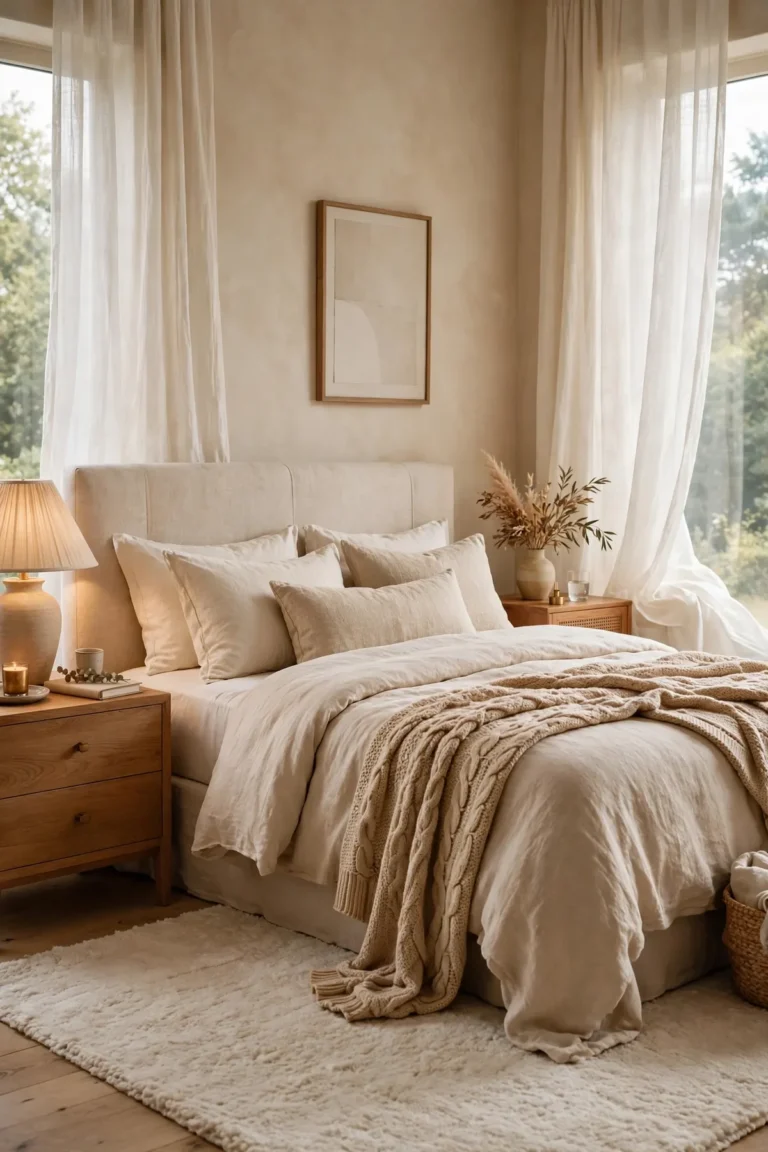
Rattan inserts soften heavy wooden wardrobes beautifully, because the woven cane adds texture and airiness to a large flat surface, and the natural material makes the bedroom feel relaxed and lived-in. Here, light oak wardrobe frames with woven rattan panels sit against warm cream walls, with cream linen bedding and brass handles completing a soft coastal look. The design suits neutral bedrooms with linen bedding and warm walls, and it gives the room personality without shouting. The weakness is dust: cane weave collects it, so vacuum the panels gently every few weeks.
Quick tips:
- Pair rattan with light oak or walnut frames.
- Keep the surrounding palette warm and neutral.
- Vacuum cane panels gently to remove dust.
- Use brass or matte black handles to finish the look.
Install Corner Wardrobes to Maximize Awkward Spaces in Soft Sage
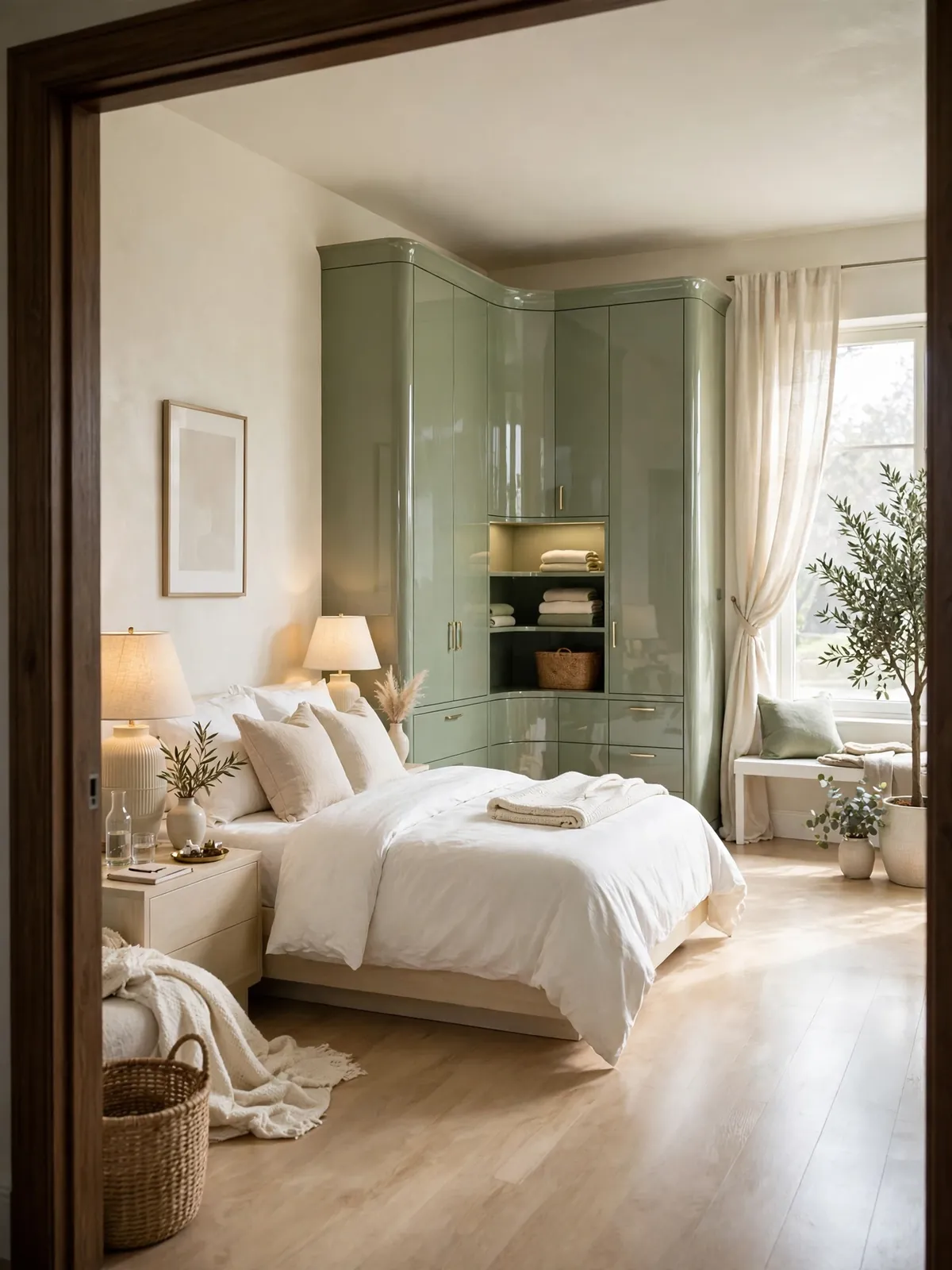
Corners are usually wasted in bedrooms, and a well-designed corner wardrobe can hold a surprising amount of storage while keeping the layout balanced, especially in oddly shaped rooms where a traditional wardrobe never quite fits. Here, an L-shaped corner wardrobe in soft sage fills an awkward corner, with cream walls, white bedding and a pale wood floor keeping the room light. The design suits rooms with alcoves, sloping ceilings or unusual layouts best, and it makes the room feel intentional instead of crowded. The weakness is access: deep corner sections hide clothes, so add a pull-out rail or a carousel inside.
Quick tips:
- Measure both wall lengths carefully before ordering.
- Choose L-shape or diagonal layouts to suit the room.
- Add interior lighting so deep corners stay usable.
- Use lighter colours to reduce visual heaviness.
Style Your Wardrobe With Soft Neutral Panel Molding in Creamy White
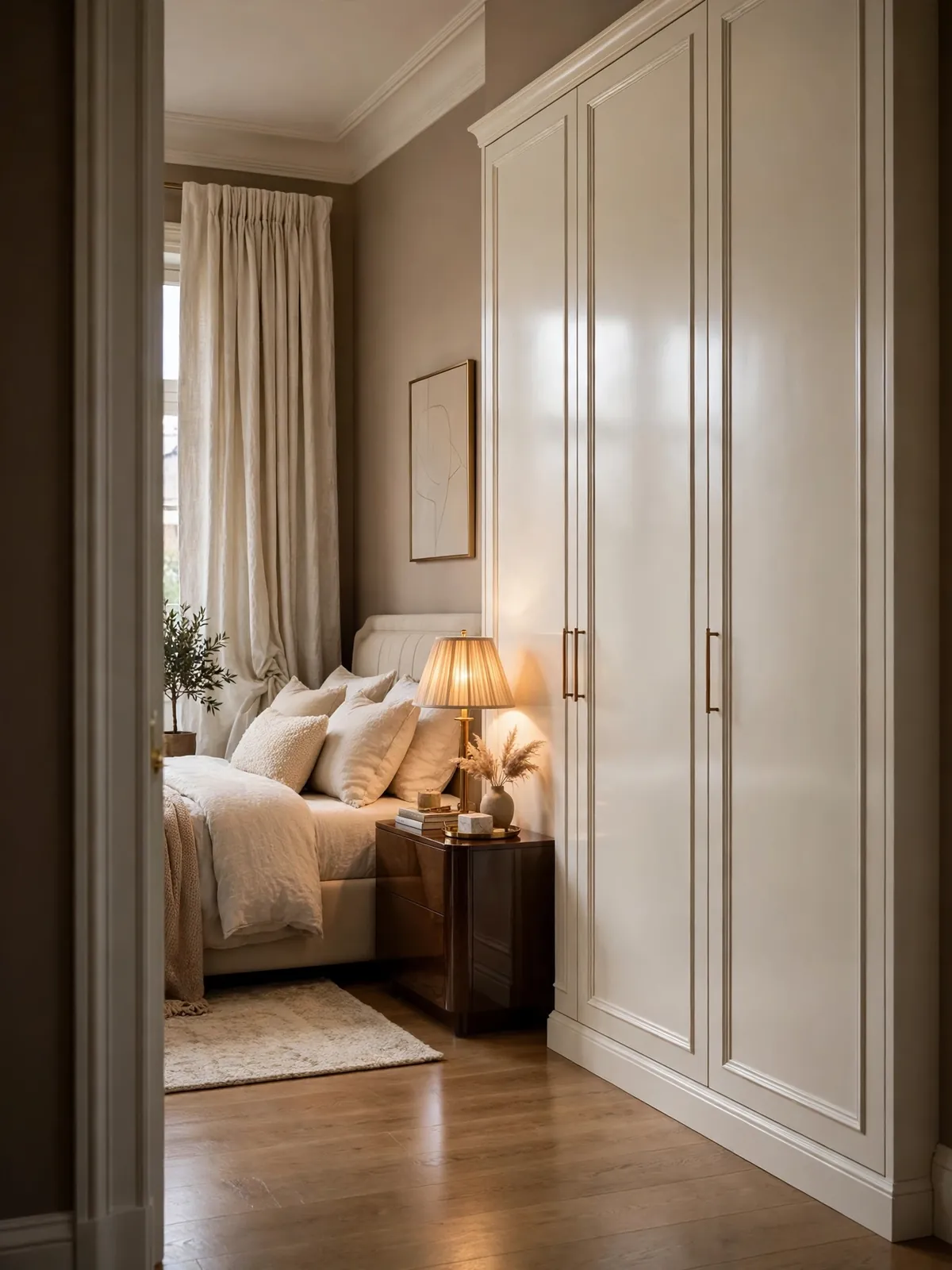
Panel molding instantly adds character, because even the plainest wardrobe doors start looking custom and elevated with thin framed detailing, and the effect is strongest when the molding is subtle rather than dramatic. Here, creamy white wardrobe doors with slim panel molding sit against mushroom walls, with warm bedside lighting and soft textured curtains completing a classic-modern look. The design suits cozy and classic-modern bedrooms beautifully, and paint changes everything: creamy whites, mushroom tones and muted taupes all make the molding stand out softly. The weakness is proportion: heavy, ornate molding on a small wardrobe looks fussy, so keep the trim thin and the finish matte.
Quick tips:
- Use thin trim molding, not heavy traditional profiles.
- Stick to matte paint finishes for an elegant look.
- Paint the wardrobe and the wall in related tones.
- Add warm bedside lighting to highlight the molding.
Create a Floating Wardrobe Effect With a Recessed Base in Walnut
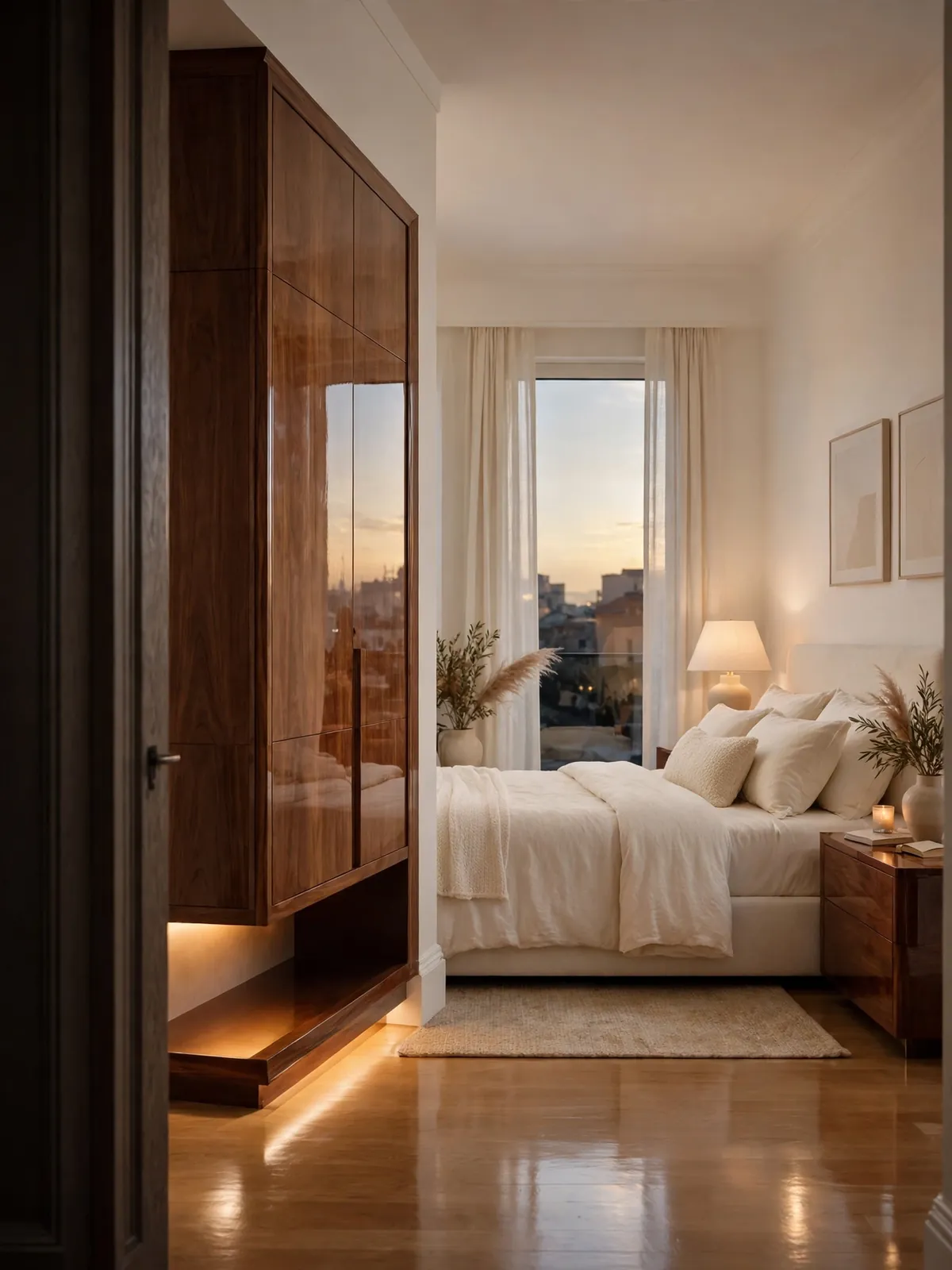
A floating wardrobe effect always looks expensive, because instead of extending fully to the floor, the base is recessed slightly underneath, so the wardrobe appears to float and the room feels lighter. Here, a walnut wardrobe with a recessed plinth and a soft LED strip underneath glows gently in the evening, against warm white walls and cream bedding. The design suits larger wardrobes best, because it removes some of that heavy furniture feeling, and it works in softer cozy spaces too. The weakness is depth: recess the base too deeply and the wardrobe looks unstable, so keep the recess subtle — about five centimetres — and let the light do the work.
Quick tips:
- Recess the base by about five centimetres only.
- Add a warm LED strip under the plinth.
- Put the strip on a motion sensor for night-time use.
- Keep the floor beneath the wardrobe clear and clean.
Blend Dark Wardrobes With Soft Cream Surroundings in Espresso and Ivory
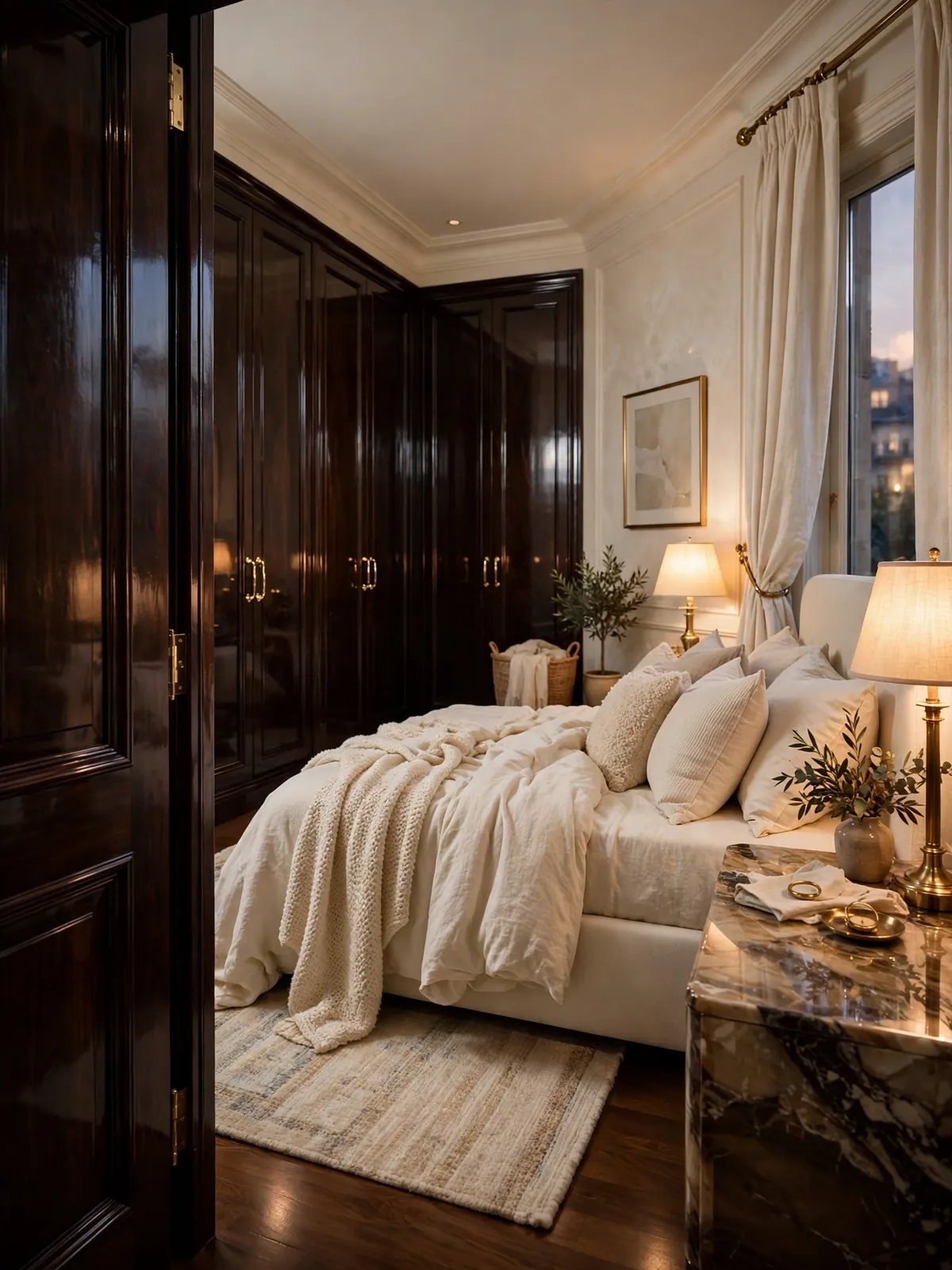
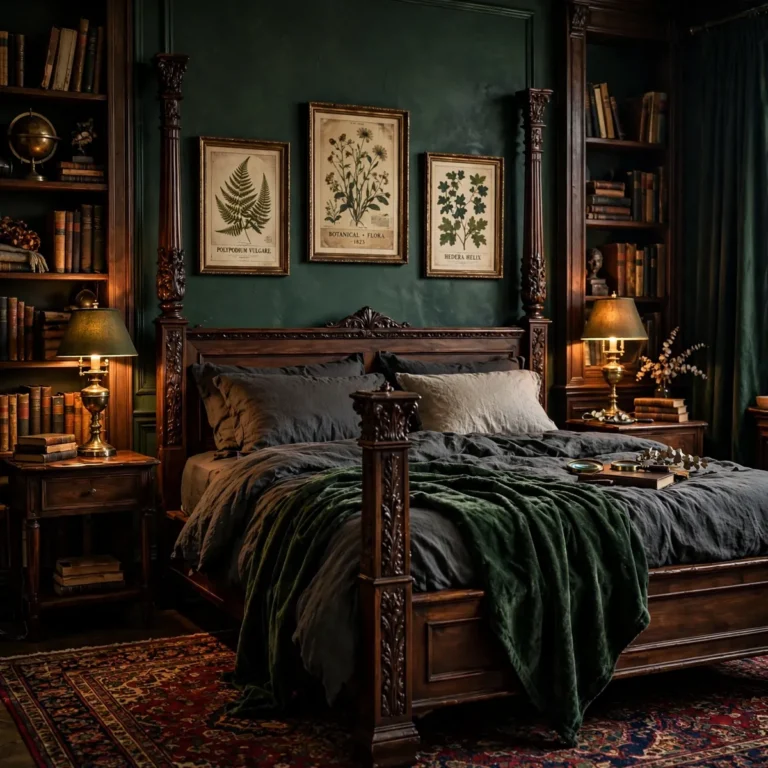
Dark wardrobes can absolutely work in bedrooms, because the key is balance: pair charcoal, espresso or deep walnut wardrobes with lighter walls, creamy bedding and soft textures nearby, and the contrast creates depth while the room stays cozy. Here, dark espresso wardrobes sit against ivory walls with cream linen bedding, a soft rug and warm lighting, feeling grounded and luxurious at the same time. The design suits larger bedrooms best, and darker wardrobes hide wear and fingerprints far better than light ones. The weakness is gloom: pair dark wardrobes with cold grey lighting and the room turns flat, so use warm bulbs and light bedding.
Quick tips:
- Use warm-toned lighting with dark wardrobes.
- Keep bedding and rugs light for contrast.
- Soften the look with linen curtains and a textured rug.
- Avoid making every surface in the room dark.
Choose Your Bedroom Wardrobe Design Before You Buy Anything
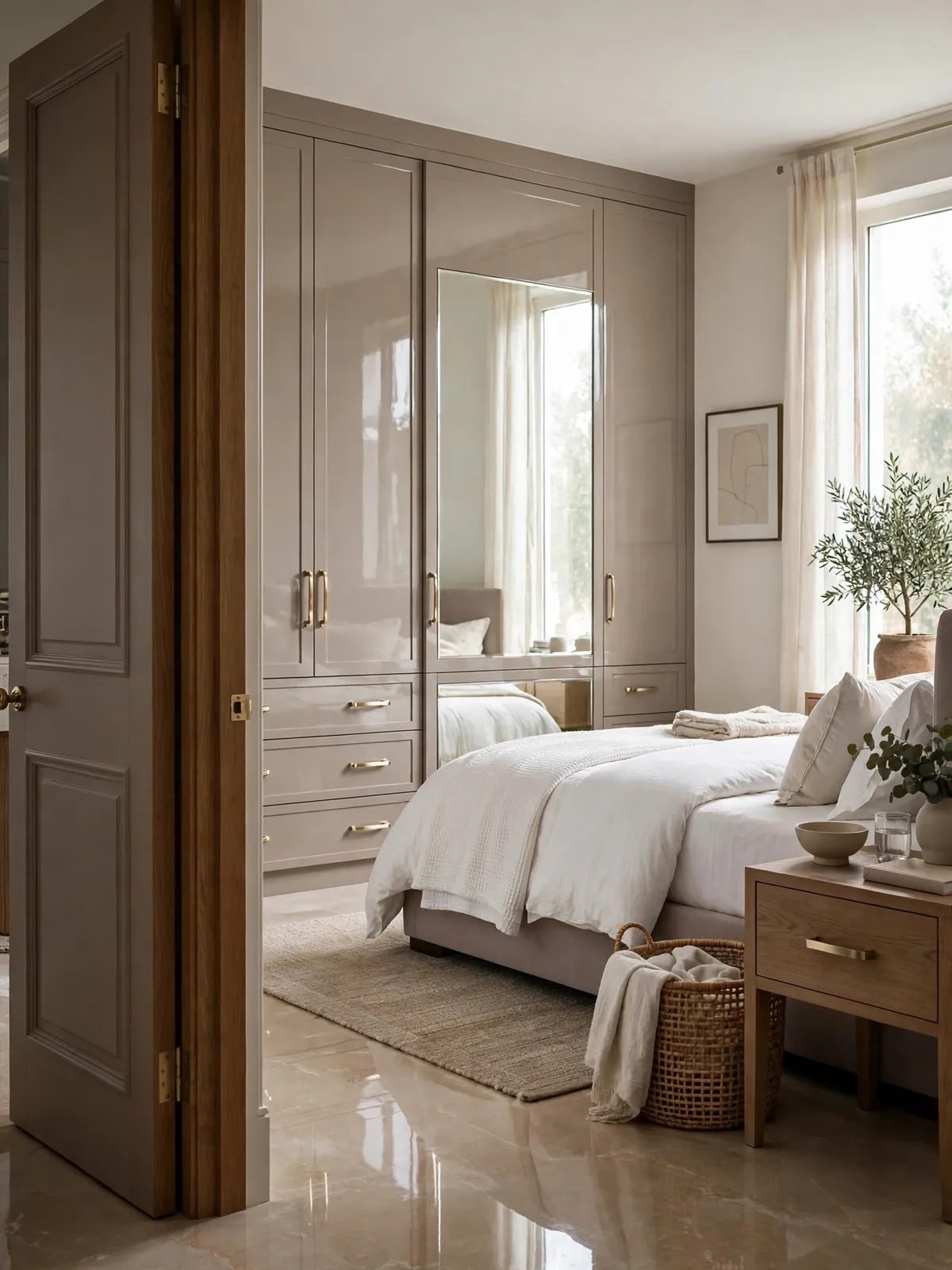
Choosing one clear bedroom wardrobe design before buying anything saves money and prevents the mismatched look that comes from a wardrobe that fights the rest of the room, because a defined design decides the doors, the finish and the interior for you. Here, a calm modern wardrobe wall in soft taupe shows how it works: white bedding, brushed brass handles, a large mirror and a woven basket, all pulling in the same direction. The design suits anyone replacing or refreshing a wardrobe from scratch, and it makes every later decision easy — if it does not fit the design, it does not go in the room. The weakness is rigidity: a design followed too strictly feels like a showroom, so leave room for one personal touch, like a favourite vase on top.
Quick tips:
- Pick the design that matches the rest of your bedroom.
- Write the finish and handle choice down before ordering.
- Keep the interior layout planned before the doors.
- Allow one personal touch so the room does not feel staged.
| Bedroom wardrobe design | Best for | Finish | Budget level |
|---|---|---|---|
| Mirrored Floor-to-Ceiling | Small rooms, low light, airy feel | Silver mirror, pale grey frame | Medium |
| Matte White Hidden Handles | Minimalists, timeless look, calm rooms | Matte white, push-to-open | Low to medium |
| Smoked Glass | Modern luxury, darker palettes | Smoked glass, black or brass frame | Medium to high |
| Rattan Inserts | Coastal, relaxed, textured rooms | Light oak, woven cane | Medium |
| Dark Wood With Cream | Large rooms, dramatic contrast | Espresso or walnut, ivory walls | Medium to high |
Turn One Wardrobe Section Into Hidden Shoe Storage in Taupe and Cream
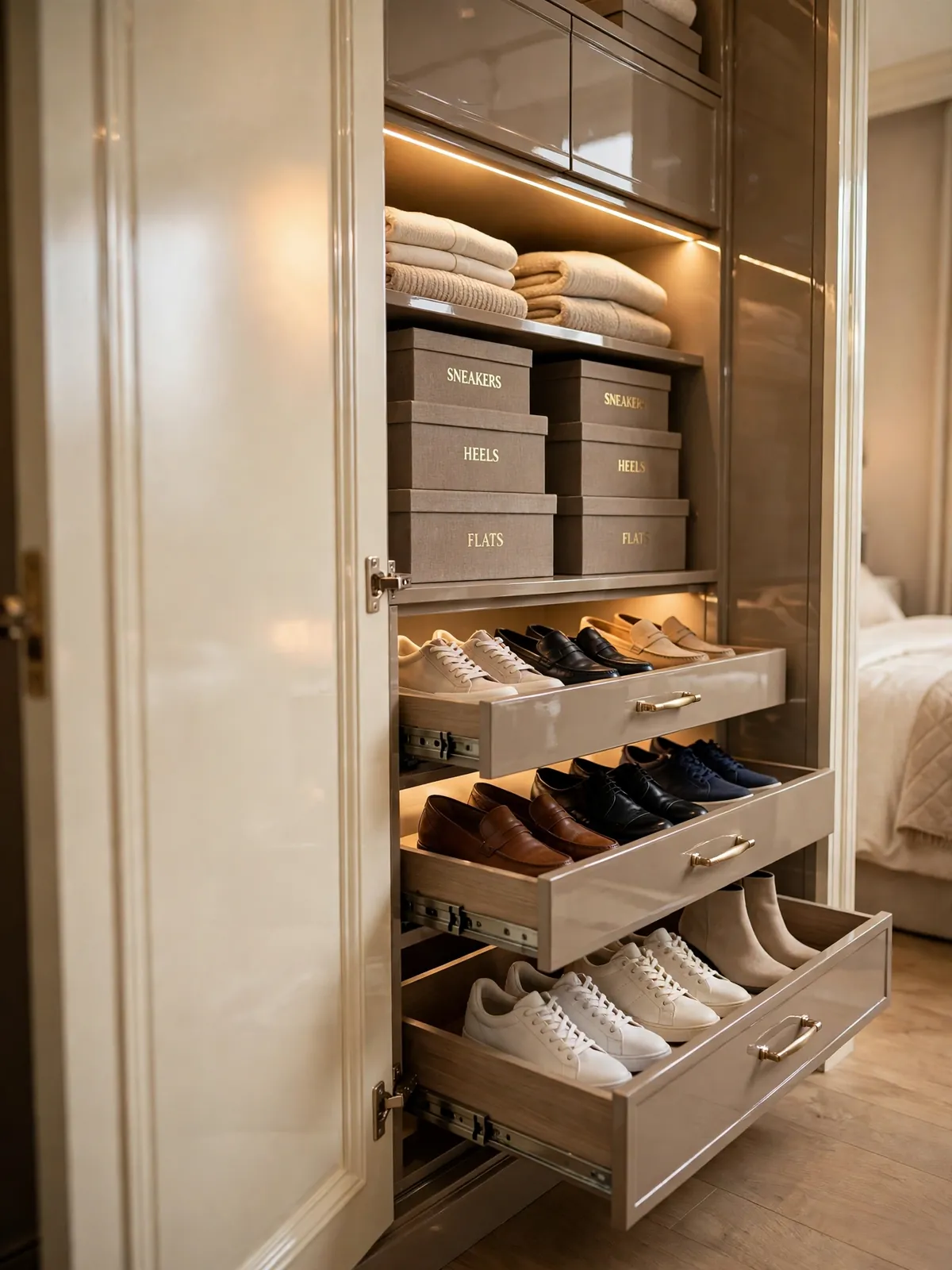
Hidden shoe storage sounds small until you experience how much calmer the bedroom feels afterward, because shoes scattered near the bed create visual clutter, while pull-out shelving inside the wardrobe keeps everything contained and frees up floor space. Here, a wardrobe section in taupe and cream holds pull-out shoe shelves with matching boxes, lit by a warm interior LED strip so every pair is easy to find. The design suits anyone whose shoes end up by the bed, and pull-out shelving makes finding the right pair easy in the morning rush. The weakness is depth: shoe shelves need enough depth for the largest pair, so measure your biggest shoes before ordering the unit.
Quick tips:
- Use pull-out shelves so no pair hides at the back.
- Measure your largest shoes before ordering.
- Keep the shoe section near the wardrobe door.
- Store out-of-season shoes in labelled boxes on top.
Add Ceiling Cove Lighting Above Your Wardrobe in Warm Gold and Cream
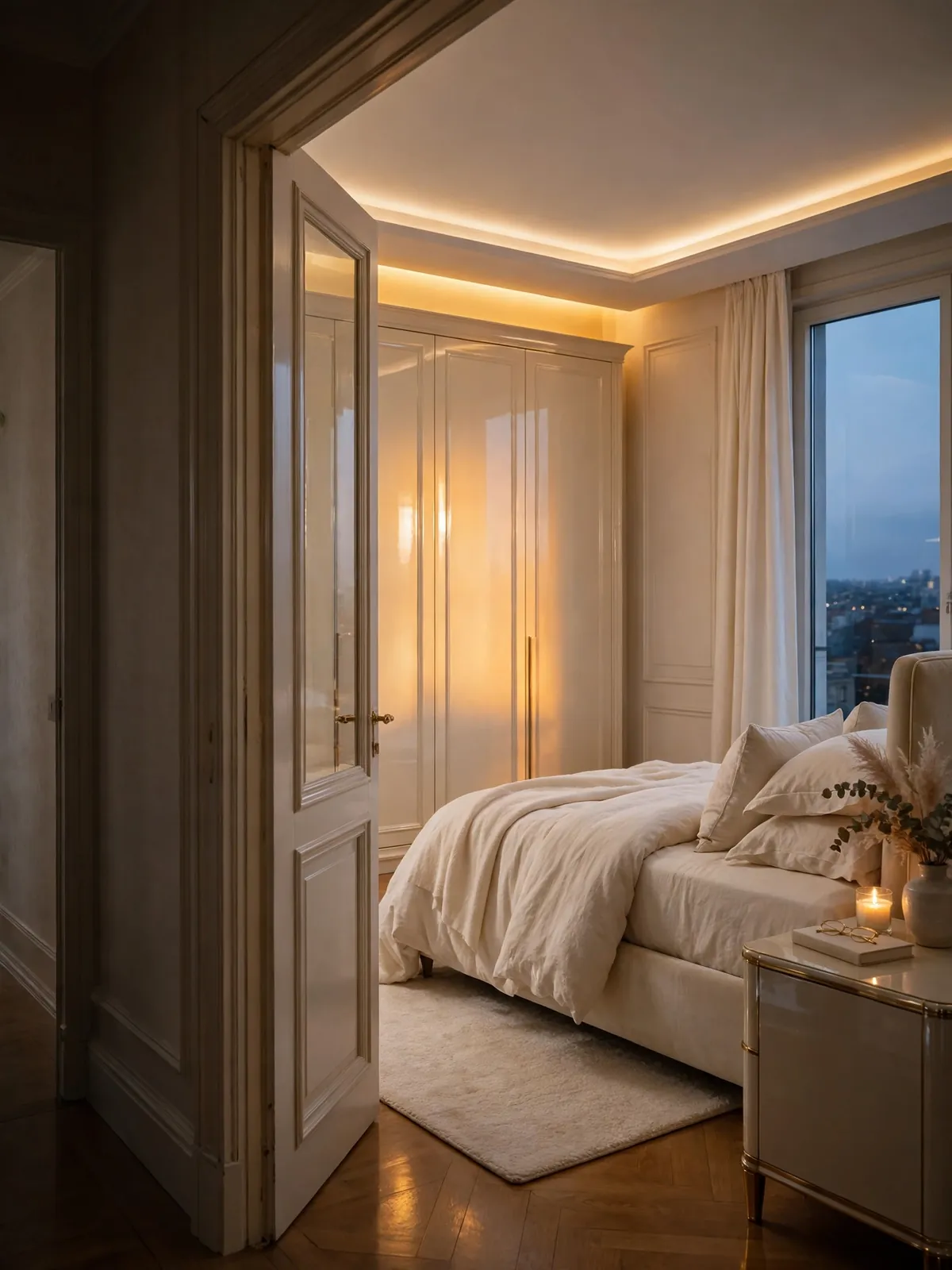
Ceiling cove lighting above a wardrobe creates a dreamy nighttime atmosphere, because instead of lighting the wardrobe directly, a soft glow washes down from the ceiling edge and makes the entire bedroom feel elevated and architectural. Here, a warm golden cove light runs along the ceiling above a tall cream wardrobe, with the glow reflecting softly off the doors and cream bedding below. The design suits taller wardrobes best, because it highlights vertical height beautifully, and it works wonderfully with mirrored doors. The weakness is glare: exposed strip lights look cheap, so use hidden LED channels and a warm colour temperature.
Quick tips:
- Use hidden LED channels, not exposed strips.
- Choose a warm golden white, around 2700K.
- Put the cove light on a dimmer for evenings.
- Pair it with mirrored doors for a gentle reflection.
Fit Sliding Barn Doors for a Relaxed Rustic Wardrobe in Weathered Grey
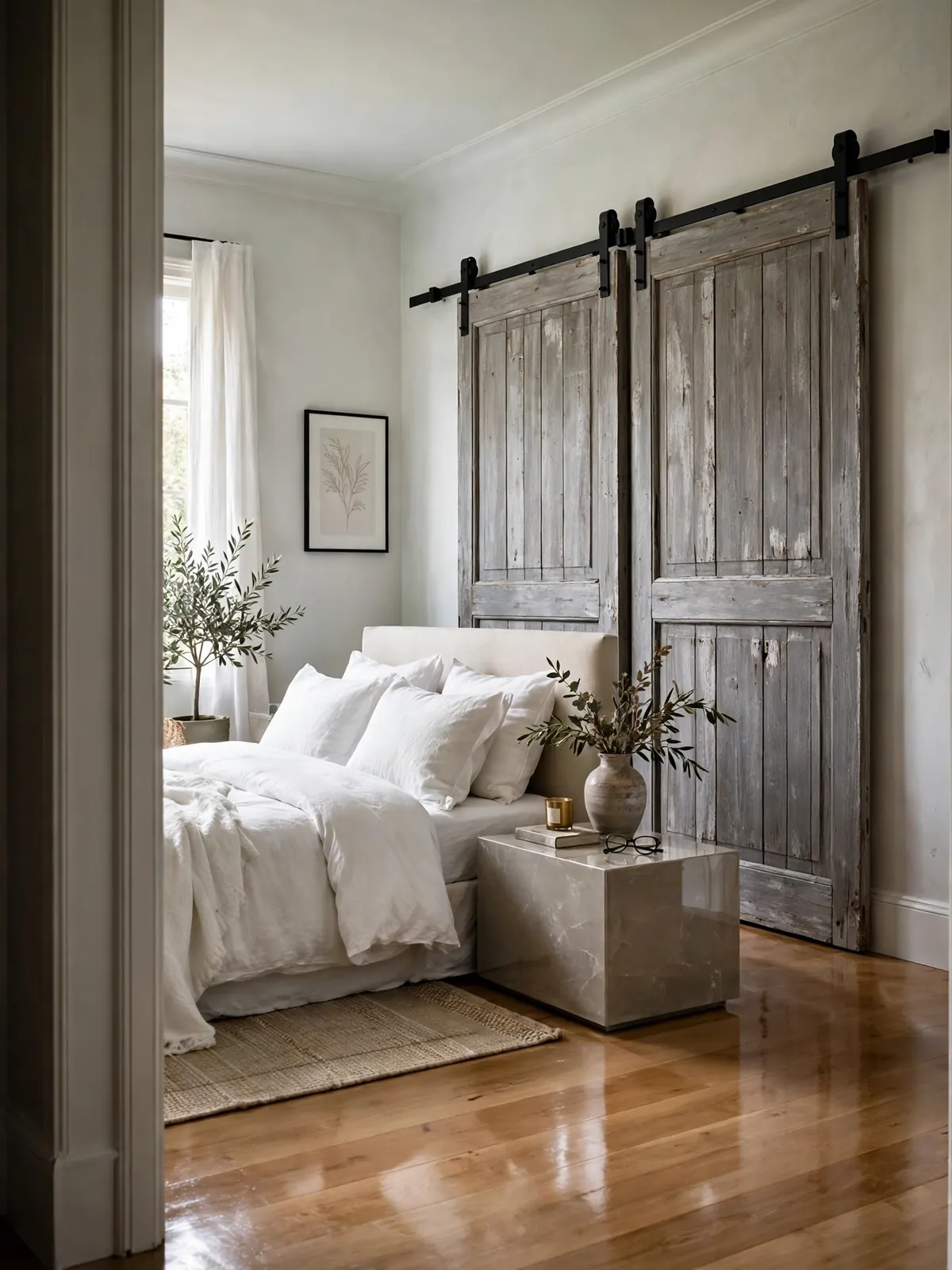
Sliding barn doors bring a relaxed, rustic character to a bedroom wardrobe, because the visible black metal rail and the weathered grey wood add texture and personality to what is usually the plainest wall in the room. Here, weathered grey barn doors slide on a matte black rail above a pale wood floor, with white bedding and pale walls keeping the room light. The design suits farmhouse, rustic and relaxed modern bedrooms, and sliding doors save the swing space that hinged doors need. The weakness is the gap: barn doors never seal as tightly as hinged doors, so they suit clothes storage better than rooms where dust is a problem.
Quick tips:
- Choose weathered grey or pale oak for the doors.
- Use a matte black rail for contrast.
- Keep the wall behind the doors pale and plain.
- Add soft-close rollers so the doors glide quietly.
Try an Open Wardrobe Rail for a Boutique Feel in Matte Black and Linen
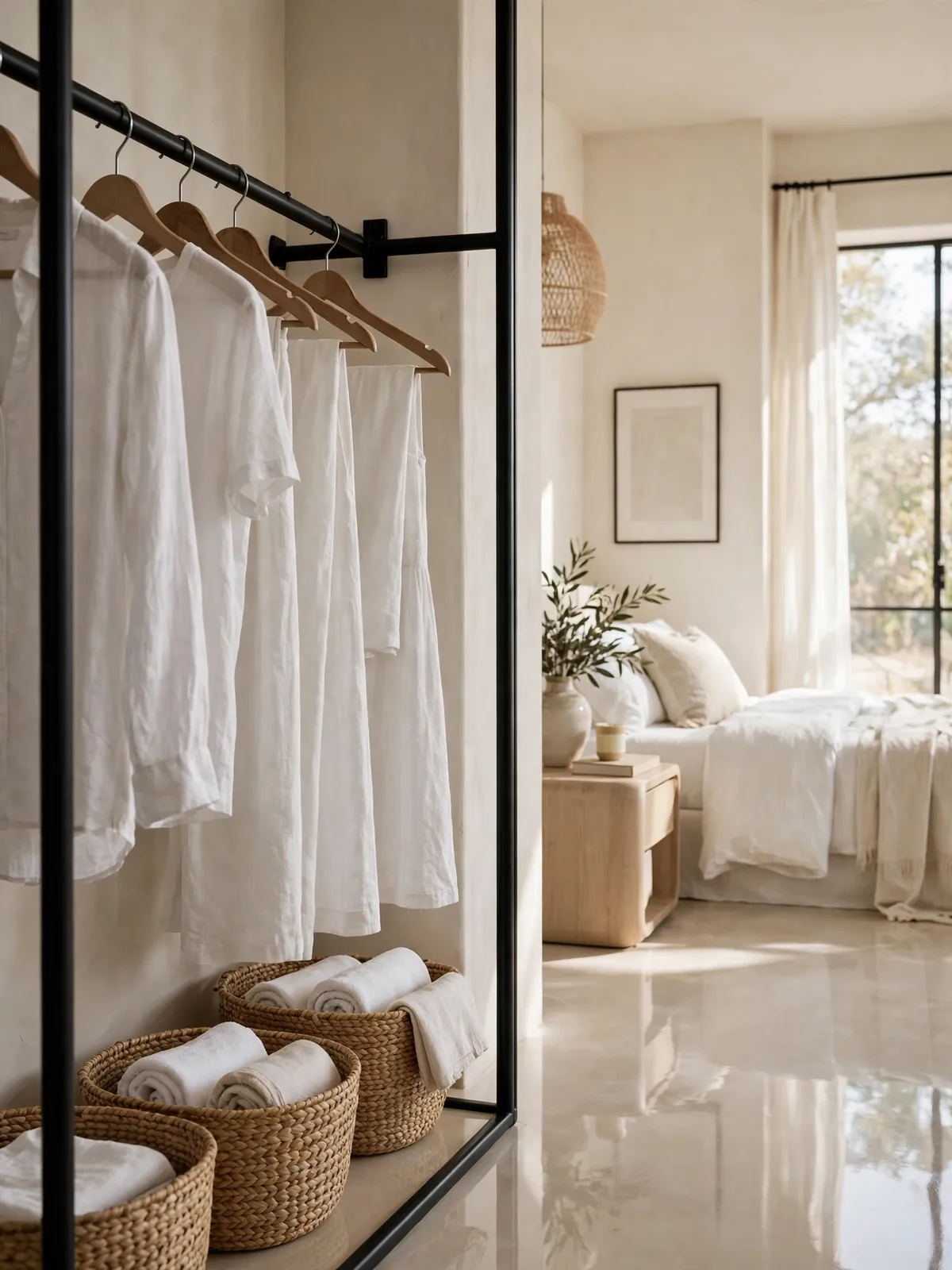
An open wardrobe rail gives a bedroom a boutique feel, because a curated row of clothes on wooden hangers, with woven baskets below and nothing hidden, turns storage into decoration — as long as the clothes on show are the ones you actually love. Here, a matte black rail holds linen white and cream clothes on matching wooden hangers, with woven baskets below for folded items and cream walls keeping the look calm. The design suits minimalists and small bedrooms where a full wardrobe would dominate, and it forces an honest edit of the wardrobe. The weakness is dust and visual noise: open rails show everything, so keep the hanging clothes to one palette and dust them weekly.
Quick tips:
- Use matching wooden hangers for a boutique look.
- Keep the hanging clothes to one calm palette.
- Store folded items in woven baskets below.
- Dust the rail and clothes weekly.
Plan the Interior First With Lighting and Organizers in Warm Wood and Brass
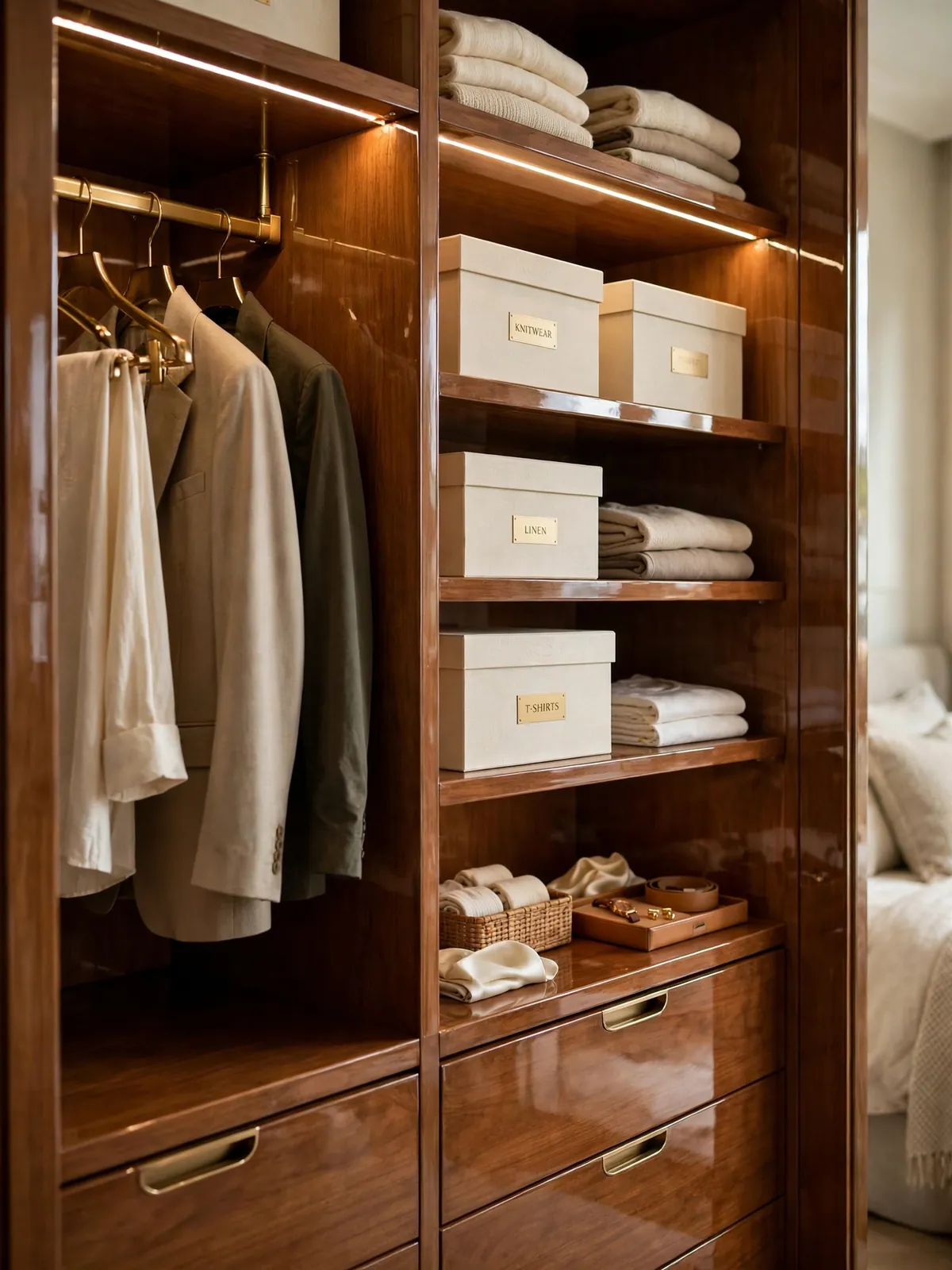
The outside of a wardrobe gets all the attention, but the interior decides whether you love using it, because a well-planned interior — double-hang rails for shirts, a long rail for dresses, shallow drawers, pull-out shoe shelves and warm LED lighting — makes every morning easier. Here, warm wood shelving with brass hanging rails and a motion-sensor LED strip holds neatly folded clothes and matching cream boxes, so everything is visible at a glance. The design suits every wardrobe, and it is worth planning the interior before choosing the doors. The weakness is over-planning: too many specialist inserts waste space, so start with rails, shelves and drawers, then add one specialist zone at a time.
Quick tips:
- Plan rails, shelves and drawers before choosing doors.
- Add a motion-sensor LED strip inside.
- Use matching boxes so the interior looks calm.
- Leave one shelf empty so the system can grow.
Go Two-Tone With Navy Doors and a Pale Oak Frame
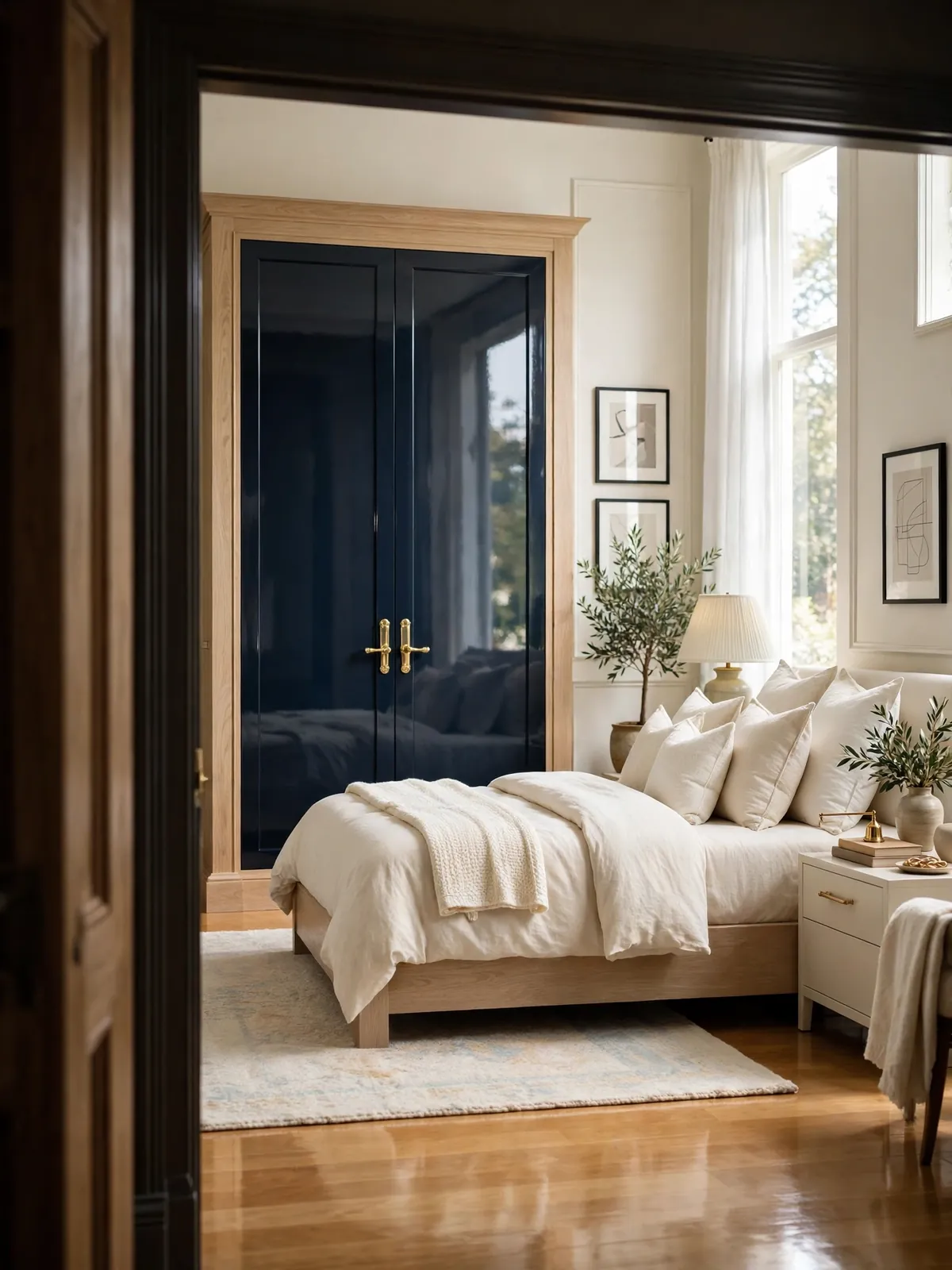
A two-tone wardrobe looks tailored and deliberate, because the contrast between deep navy doors and a pale oak frame breaks up a large flat surface and makes a standard wardrobe look custom. Here, deep navy sliding doors sit inside a pale oak frame with brass handles, against cream bedding and soft walls. The design suits modern and classic bedrooms that need one strong piece, and it works especially well when the navy is repeated in one cushion or throw. The weakness is balance: too much contrast on a huge wardrobe overwhelms a small room, so keep two-tone designs to medium and large bedrooms.
Quick tips:
- Repeat the door colour once in bedding or cushions.
- Keep the frame pale so the doors stay the focus.
- Use brass handles to warm the contrast.
- Try two-tone on one wardrobe wall only.
Build a Full Wardrobe Wall That Disappears in Greige and Brass
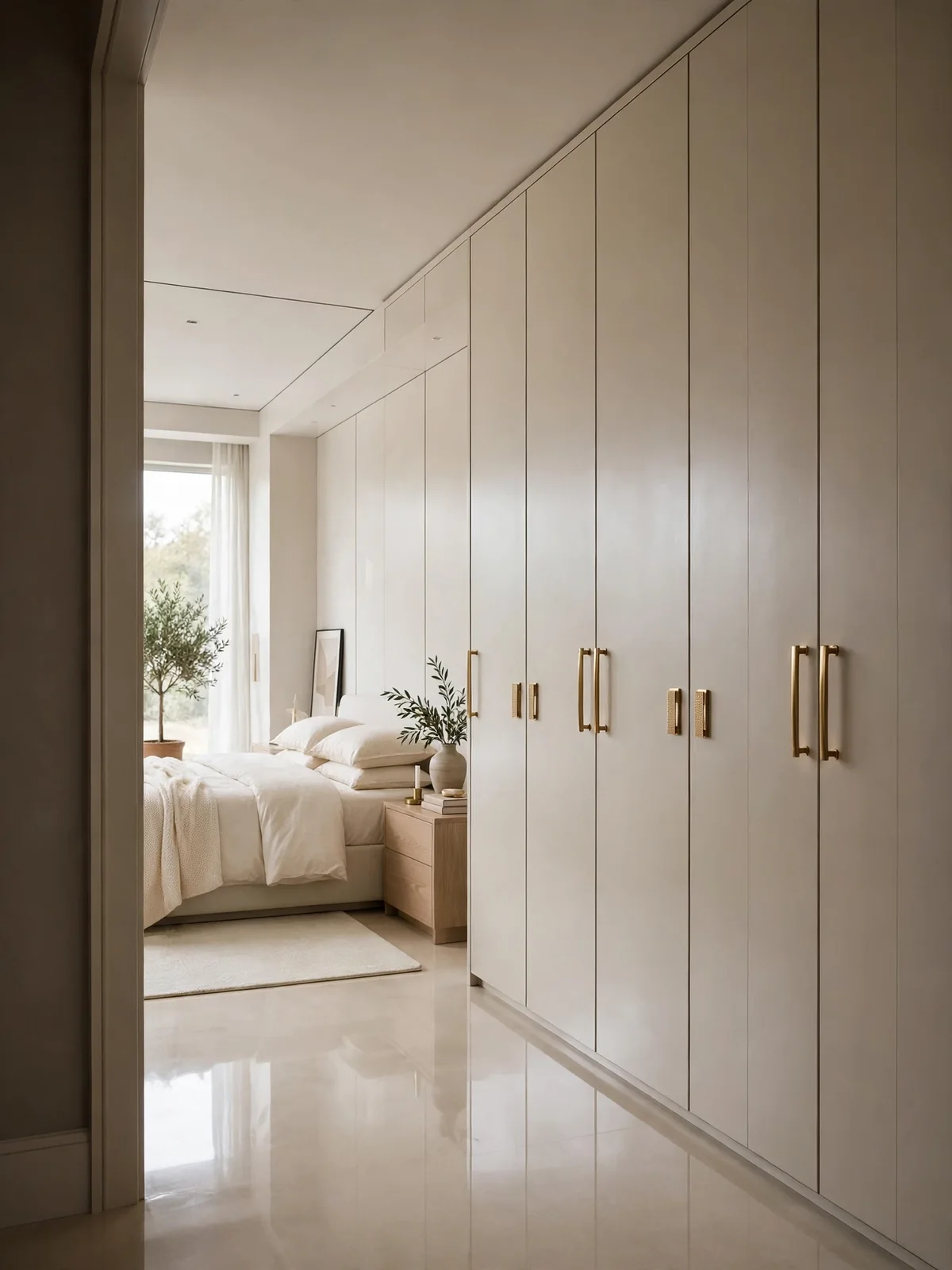
A full wardrobe wall is the most architectural of all bedroom wardrobe designs, because floor-to-ceiling doors in a quiet greige turn an entire wall into storage that reads as panelling rather than furniture. Here, soft greige doors run the full wall with slim brushed brass handles, beside cream bedding and a pale rug, so the wardrobe disappears into the architecture. The design suits bedrooms with a spare wall and lots to store, and it works best when the doors have no visible frames or gaps. The weakness is cost and commitment: a fitted wall is a major investment and hard to move, so be certain about the layout before ordering.
Quick tips:
- Choose a quiet greige that matches the walls.
- Use slim handles or push-to-open doors.
- Run the doors floor to ceiling with no gaps.
- Add interior lighting so the deep wall stays usable.
What Works for a Small Bedroom Wardrobe in Pale Blue and White?
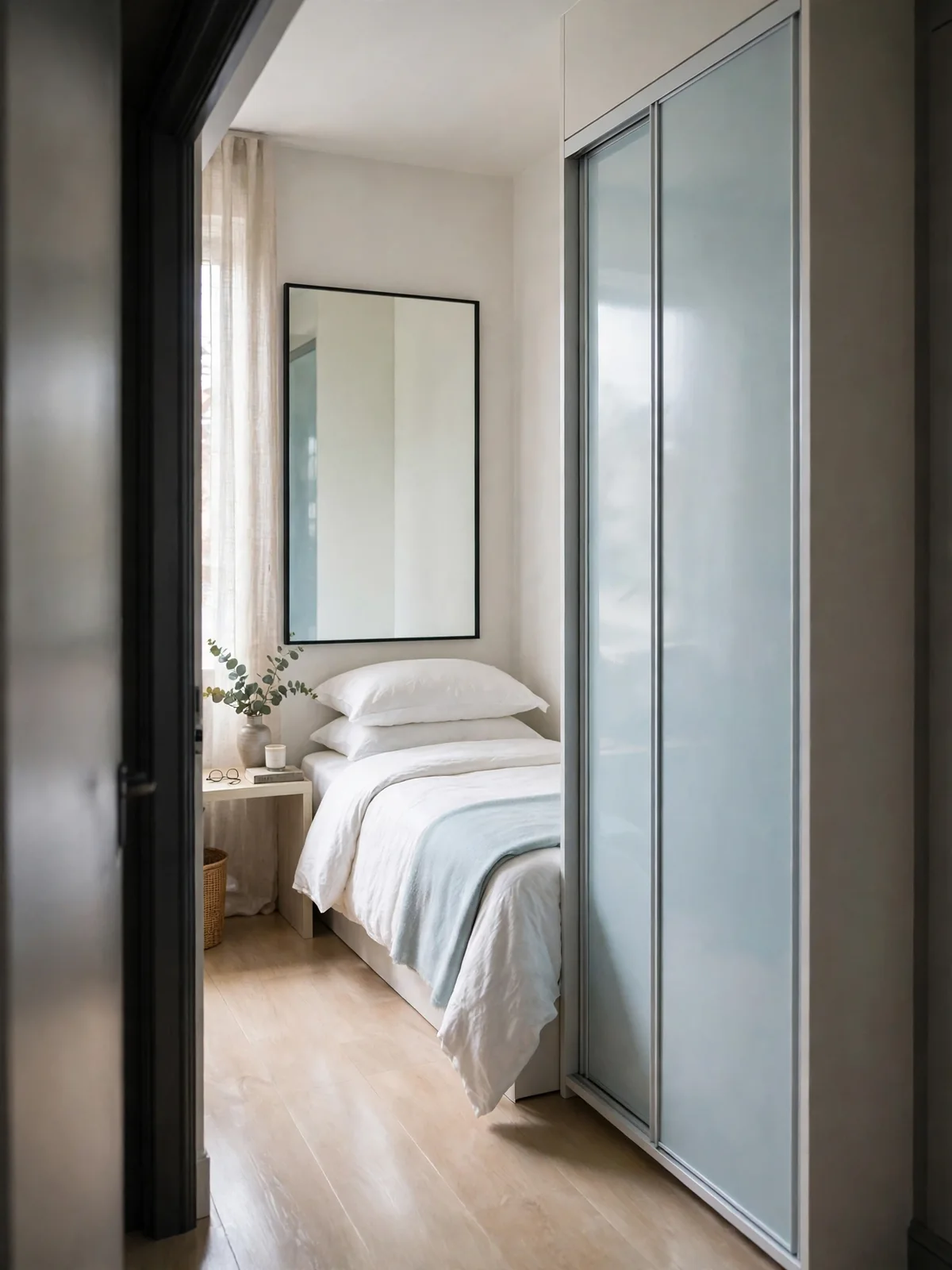
Small bedrooms need wardrobes that work harder, because every centimetre counts, and the best small-bedroom designs all do the same thing: they use sliding doors to save swing space, pale colours to remove visual weight, and the full wall height to store more without taking more floor. Here, a slim pale blue sliding-door wardrobe fills one wall of a small bedroom, with white bedding, a large mirror and a pale wood floor keeping the room bright. The design suits any bedroom under about 12 square metres, and it works because the wardrobe is shallow, pale and tall rather than deep, dark and wide. The weakness is depth: a wardrobe shallower than 55 centimetres will not fit hangers properly, so measure the hanging depth before ordering.
Quick tips:
- Choose sliding doors to save swing space.
- Use pale colours so the wardrobe feels light.
- Go floor to ceiling for extra storage.
- Keep hanging depth at 55 centimetres or more.
Bedroom Wardrobe Designs That Pull the Whole Room Together
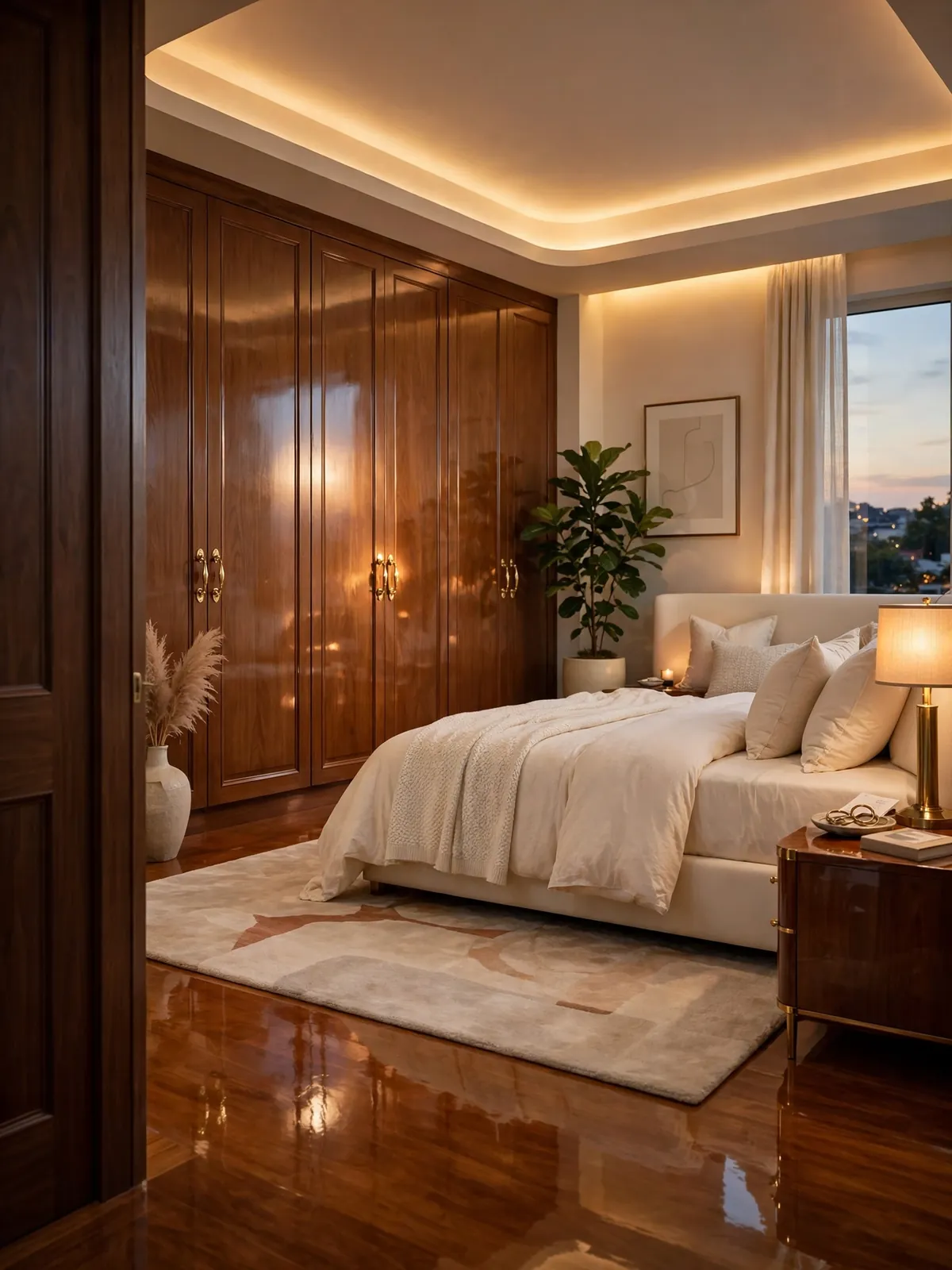
The last of these bedroom wardrobe designs is the principle behind them all, and it is worth stating plainly because it is the difference between a wardrobe that looks good in a photograph and one that makes the bedroom feel calm every single morning: a great wardrobe is not one expensive feature, it is the layering of the right quiet choices — doors that suit the room’s size, a finish that blends with the walls, an interior planned around how you actually dress, warm lighting inside and above, and handles that feel good in the hand — working together so that nothing shouts and everything belongs, and the room rewards the owner too, because a wardrobe built on warm walnut doors, cream walls, brass handles and soft cove lighting is easy to live with, easy to keep tidy and easy to refresh with new handles or new storage boxes, even in a small room, even on a modest budget, and even when you change only one thing at a time. Here, a warm walnut and cream bedroom pulls it together — floor-to-ceiling wardrobe doors, cream bedding, brass handles, soft cove lighting, a large rug and a leafy green plant — and nothing in the room is there by accident. The lesson is to plan the interior first, then choose the doors, then the finish, and add the lighting last, because a wardrobe built in that order stays useful with very little effort, and it gives you room to evolve, swapping rattan for glass or matte white for walnut, without ever rebuilding the wall. Pick the three designs from this list that solve your biggest problem first, add one luxury that makes you smile, and your wardrobe stops being the bulky box you apologise for and becomes the calmest wall in the house.
Quick tips:
- Plan the interior first, then the doors, then the finish.
- Fix the layout before spending on lighting.
- Keep the finish quiet and the handles consistent.
- Refresh handles and boxes to update the wardrobe without rebuilding.
FAQs
What is the best wardrobe design for a small bedroom?
Floor-to-ceiling mirrored or matte white sliding doors work best in a small bedroom, because mirrors bounce light and make the room feel bigger, while matte white fronts blend into the wall and remove visual bulk. Choose a slim wardrobe with at least 55 centimetres of hanging depth, go full height for storage, and keep the top clear so the room feels taller.
Should I choose sliding or hinged wardrobe doors?
Sliding doors suit small bedrooms because they need no swing space, while hinged doors suit larger rooms because they open fully and give easier access to the whole interior. If the room is tight, choose sliding or bi-fold doors; if you have space in front of the wardrobe, hinged doors with slim handles feel more premium and are easier to repair.
How can I make my wardrobe look more expensive on a budget?
Make a wardrobe look more expensive with a matte repaint, slim or hidden handles, thin panel molding on flat doors, warm interior LED lighting and matching storage boxes inside. Paint is the cheapest upgrade of all — a matte cream or soft grey repaint with new handles transforms a flat-pack wardrobe in a weekend for very little money.
What should I put inside my wardrobe?
A well-designed wardrobe interior mixes hanging space, shelves, drawers and one or two specialist zones: double-hang rails for shirts, a long rail for dresses, shallow drawers for folded clothes, pull-out shoe shelves and a top shelf for out-of-season items. Add a motion-sensor LED strip so you can see everything, and leave one shelf empty so the system can grow.
How do I keep a wardrobe organised long-term?
Keep a wardrobe organised by planning the interior around how you actually dress, using matching boxes and one colour of hanger, and doing a short seasonal edit twice a year. Store out-of-season clothes on the top shelf, keep daily items at eye level, and remove one item for every new one that comes in.
Conclusion
Bedroom wardrobe designs are not about buying the most expensive unit — they are about choosing doors, finishes and interiors that suit your room, your clothes and your mornings. The 19 designs above show that mirrored doors, matte white fronts, smoked glass, rattan inserts, clever interiors and warm lighting can turn a bulky box into the calmest wall in the bedroom. Plan the interior first, pick one design and let it guide every choice, and keep the finish quiet. Do that, and your wardrobe stays beautiful and useful for years, with nothing more than new handles or fresh storage boxes to keep it feeling new.