23 Brilliant Bedroom Styling Tips for a Room That Feels Like You
Styling a bedroom like a pro is less about money and more about order: pick a direction, repeat three colours, make the bed the star, and layer light and texture until the room feels finished. These 23 bedroom styling tips walk through every layer, from the headboard to the ceiling, with a concrete example for each one.
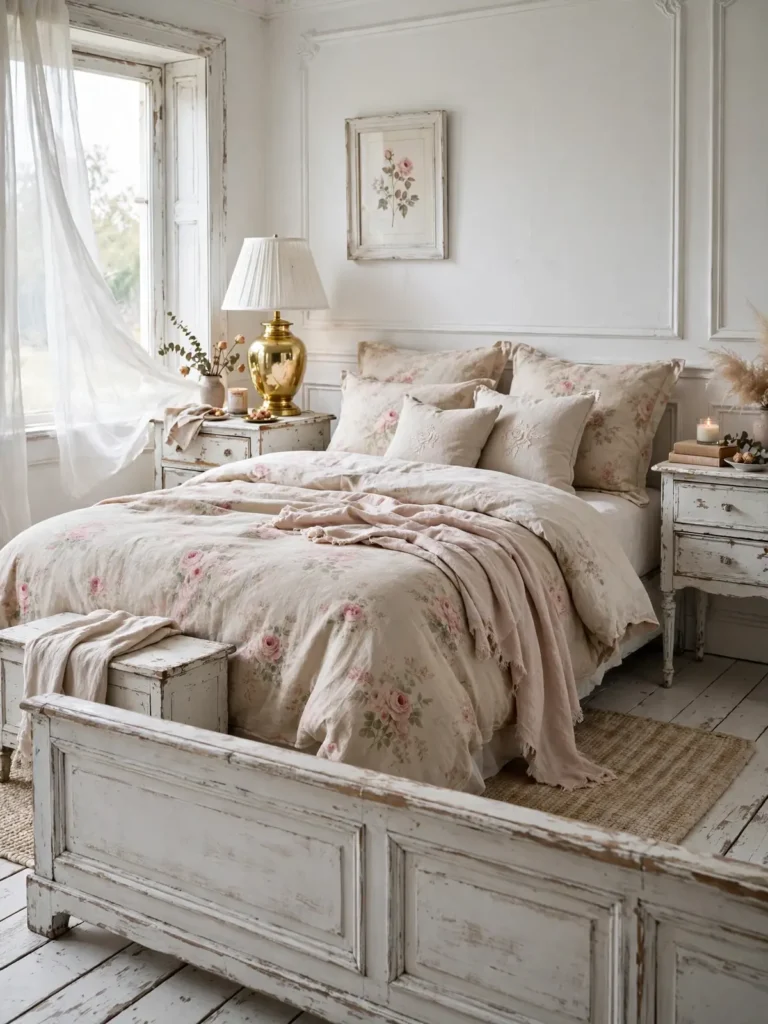
Bedroom styling tips work best when you follow them in order, and the order is simple: choose a style direction first, then a three-colour palette, then make the bed the focal point, because everything else in the room — the art, the lighting, the rug — should support the bed, not compete with it. A styled bedroom answers the question “how do I make my bedroom look like a designer did it?” in the first glance, and the 23 ideas below show exactly how, with a style guide in the middle to help you pick your direction.
If you want the room to feel extra warm and inviting as well as styled, these cozy bedroom ideas show how to layer softness into the same room. Every idea includes a concrete example with real materials, colours and fixtures, so you can start with one change this weekend or plan a full refresh.
Key Takeaways
What is the first step in styling a bedroom?
The first step in styling a bedroom is choosing a style direction — modern, cozy, glamorous, Scandinavian or boho — before buying anything, because the direction decides the palette, the furniture shapes and the accessories. Write down your three main colours and one style word, then check every purchase against them so the room pulls together instead of collecting random pieces.
How do I style my bedroom like a professional?
Style your bedroom like a professional by working in layers: make the bed the focal point with layered bedding and a statement headboard, add one large piece of art, layer lighting at three heights, ground the room with a rug, and finish with texture and one personal object. Professionals rarely buy more — they repeat colours, balance shapes and leave breathing room.
What colours work best for bedroom styling?
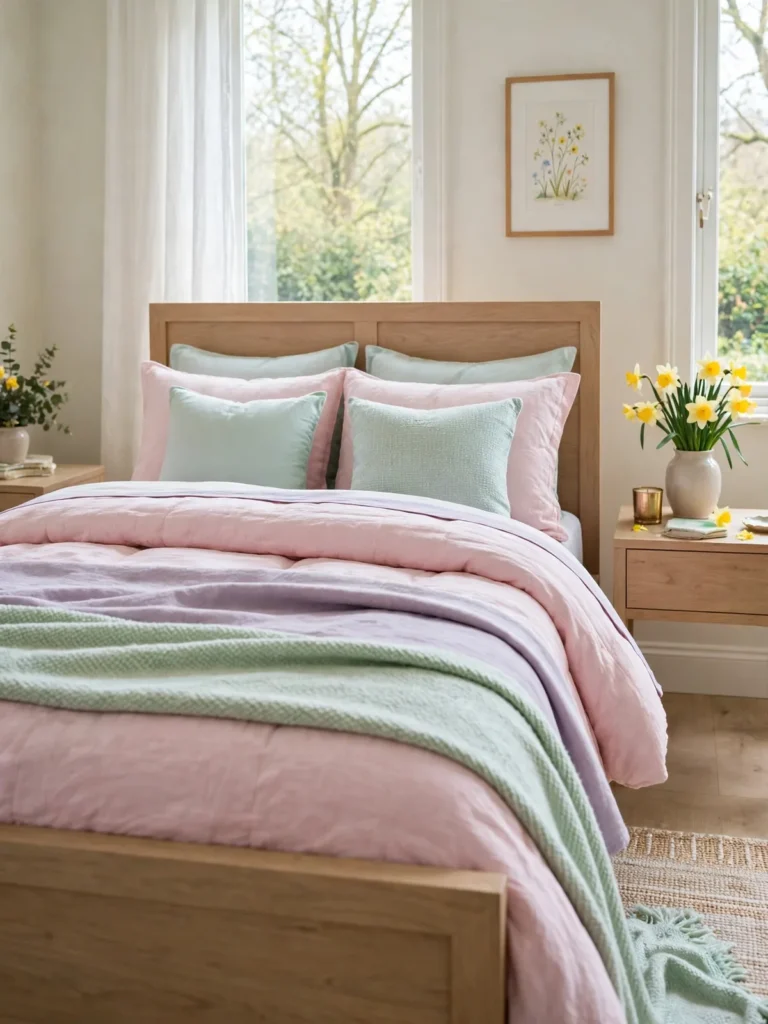
Bedroom styling works best with three colours: one main neutral for walls and bedding, one wood or metal tone, and one accent repeated in pillows, throws and art. Warm whites, sage, dusty blue, soft terracotta and gentle grey all work well, and a limited palette makes even budget furniture look intentional.
How can I style my bedroom on a budget?
Style your bedroom on a budget by starting with the cheapest layers first: rearrange the furniture, swap in warm bulbs, add a throw and two pillows, hang one large piece of art, and replace the drawer knobs. Paint one accent wall and dress the windows floor to ceiling, and the room looks redesigned for the price of a few small purchases.
What is the biggest bedroom styling mistake?
The biggest bedroom styling mistake is buying too many small decorative objects instead of one or two large ones, because tiny frames, small cushions and cluttered surfaces make a room feel busy and unfinished. Choose one oversized artwork, one generous rug and one statement light, keep surfaces mostly clear, and the room instantly looks calmer and more expensive.
Bedroom Styling Styles at a Glance
| Bedroom styling style | Best for | Colours | Budget level |
|---|---|---|---|
| Warm Modern | Small rooms, easy cleaning, timeless look | Sage, cream, oak, brushed brass | Low to medium |
| Scandinavian | Bright rooms, calm mornings, minimal living | White, pale wood, soft grey, black | Low to medium |
| Glamorous | Statement bedrooms, evening mood, luxury feel | Emerald, navy, velvet, gold | Medium to high |
| Cozy Rustic | Cold climates, layered bedding, relaxed weekends | Terracotta, cream, walnut, linen | Low to medium |
| Boho Collected | Creative homes, travel finds, relaxed layering | Clay, rattan, mustard, woven textures | Low to medium |
Start With a Style Direction Before You Buy Anything
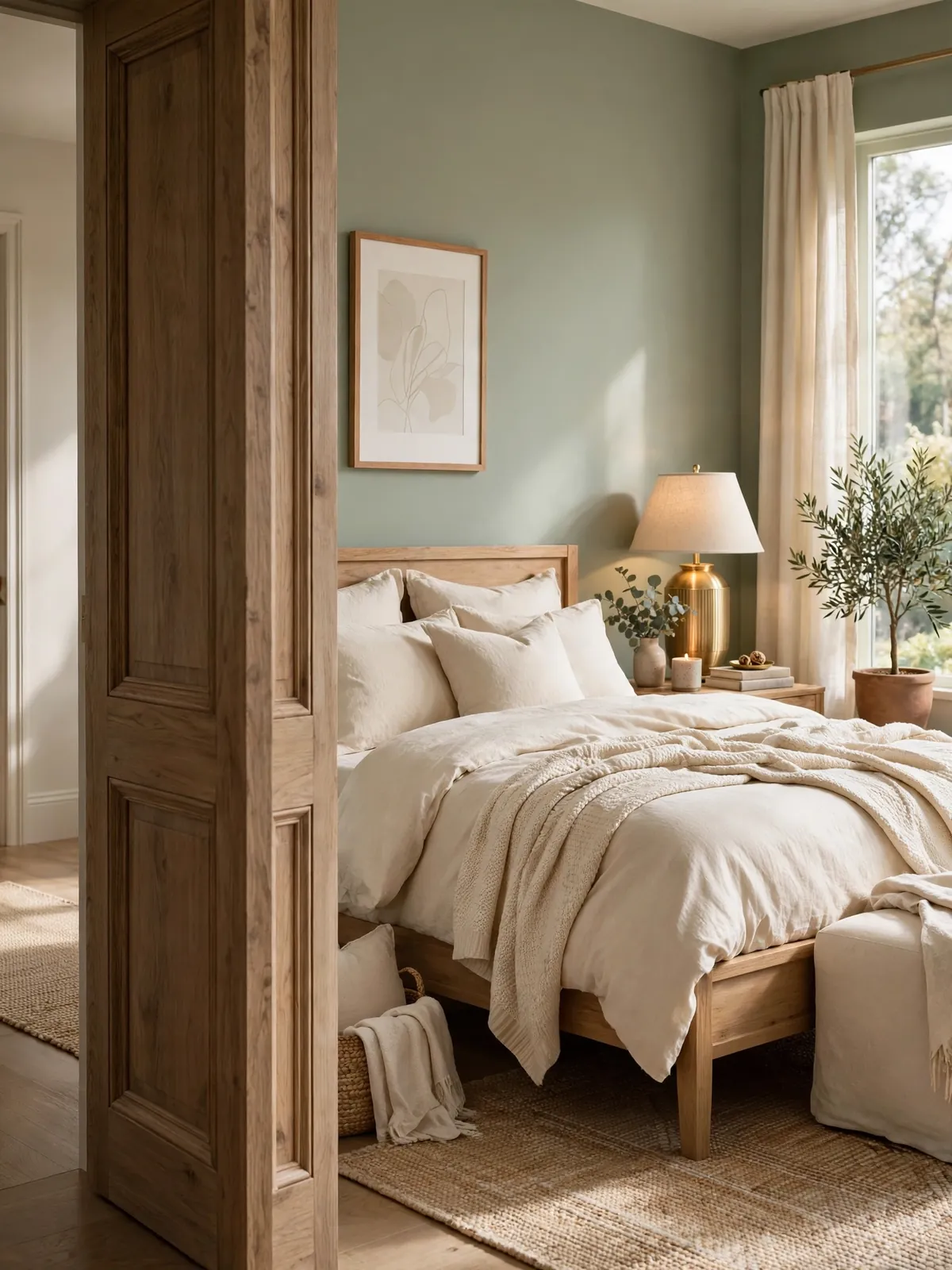
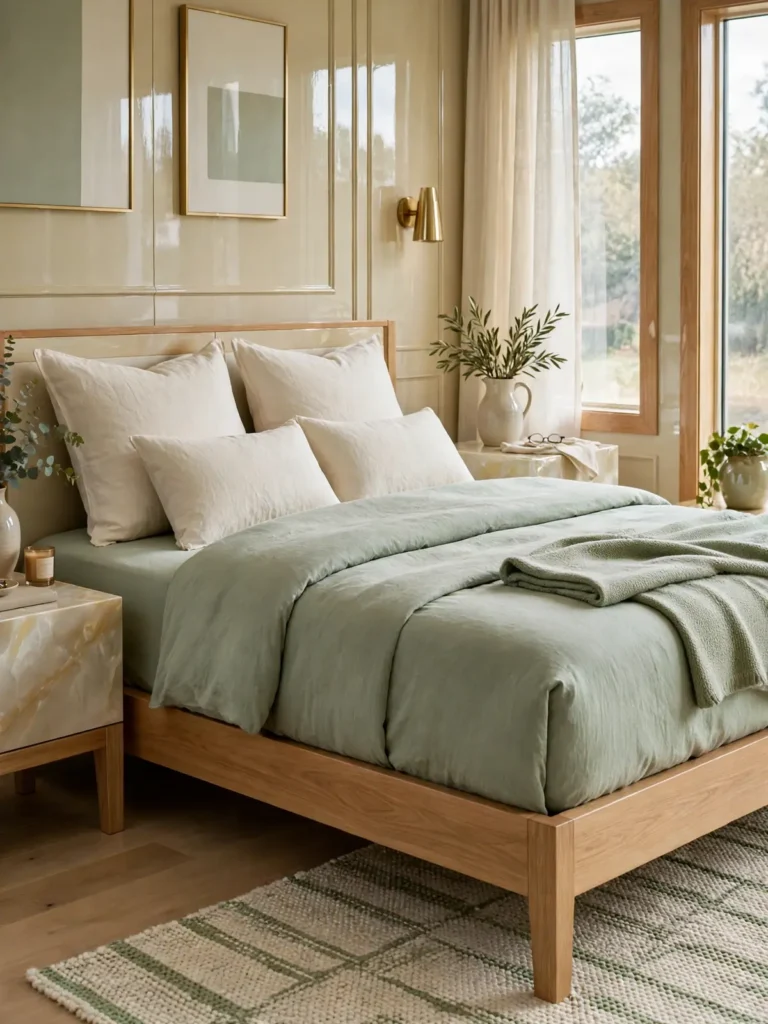
A style direction is the single decision that makes every later bedroom styling choice easy, because once you know the room is warm modern or relaxed Scandinavian, the palette, the furniture shapes and the accessories choose themselves. Here, a warm modern direction shows how it works: soft sage walls, a light oak bed frame, cream linen bedding, a brushed brass lamp and a woven rug all pulling in the same direction. The design suits anyone starting from a blank or mismatched room, and it costs nothing — it is a decision, not a purchase. The weakness is rigidity: a direction followed too strictly can feel like a showroom, so leave room for one personal item that breaks the rules.
Quick tips:
- Pick one style word and write it down before shopping.
- Choose three colours that fit that style and repeat them.
- Check every purchase against the style word first.
- Allow one personal item so the room does not feel staged.
Choose a Three-Colour Palette and Repeat It
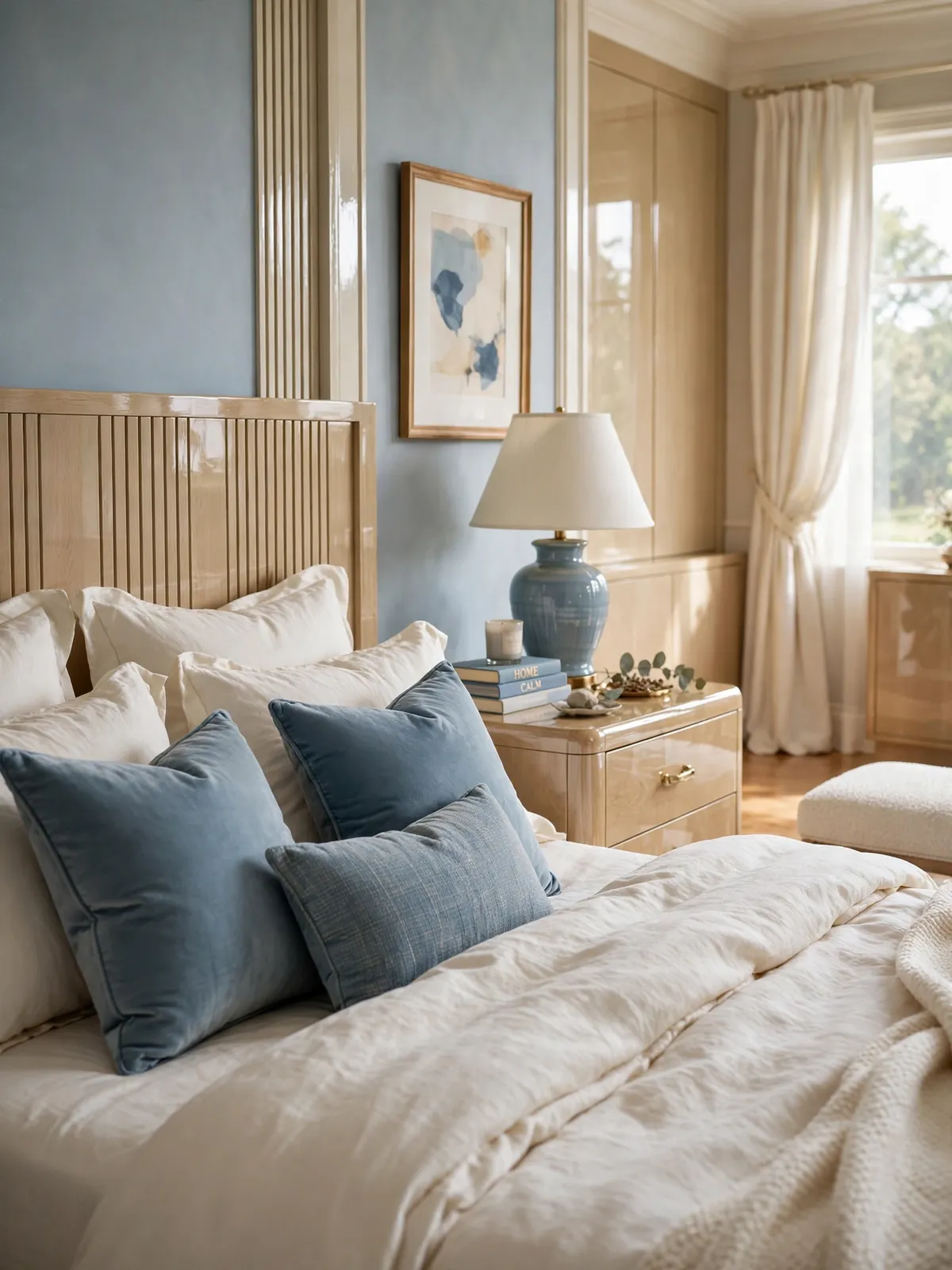
A three-colour palette is the designer’s shortcut to a room that looks intentional, because repeating the same three colours — one main neutral, one wood or metal tone, one accent — ties the bed, the art, the rug and the curtains together without any single colour shouting. Here, warm ivory walls and bedding meet dusty blue cushions and a throw, with pale oak nightstands warming the whole composition. The design suits any bedroom, especially rooms that currently feel random or cluttered, and it costs nothing to plan. The weakness is boredom: three colours used in exactly equal amounts can feel flat, so let one colour dominate, one support and one appear only in small accents.
Quick tips:
- Let one colour dominate about sixty percent of the room.
- Repeat the accent colour at least three times.
- Keep the wood or metal tone consistent throughout.
- Avoid adding a fourth colour until the room feels finished.
Make the Bed the Focal Point With Layered Bedding
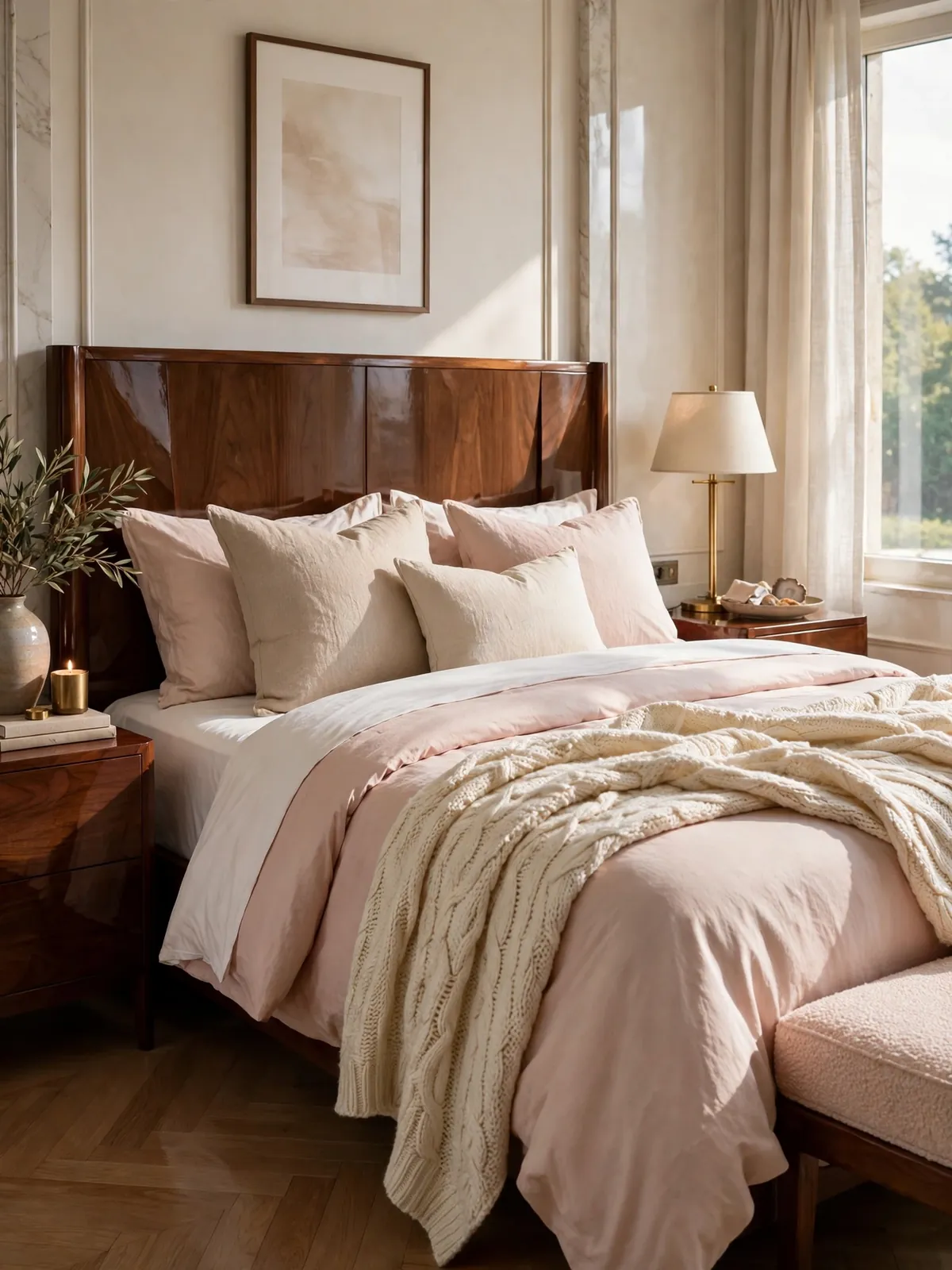
The bed is the largest piece of furniture in the room, so styling it well does more than any other single change, and layering is how you do it: crisp white cotton sheets, a soft blush duvet, a chunky cream knit throw folded at the foot and two linen cushions against a walnut headboard. The design suits every bedroom, and it works on any budget because bedding is the cheapest large surface to change. The weakness is over-layering: five throws and eight cushions make the bed look like a display, so keep the layers to three — sheets, duvet, one throw — and three or four cushions at most.
Quick tips:
- Start with crisp white or ivory sheets as the base.
- Add one throw folded across the foot of the bed.
- Use three or four cushions in two textures, not more.
- Tuck the duvet loosely for a relaxed, lived-in look.
Pick a Statement Headboard That Anchors the Room
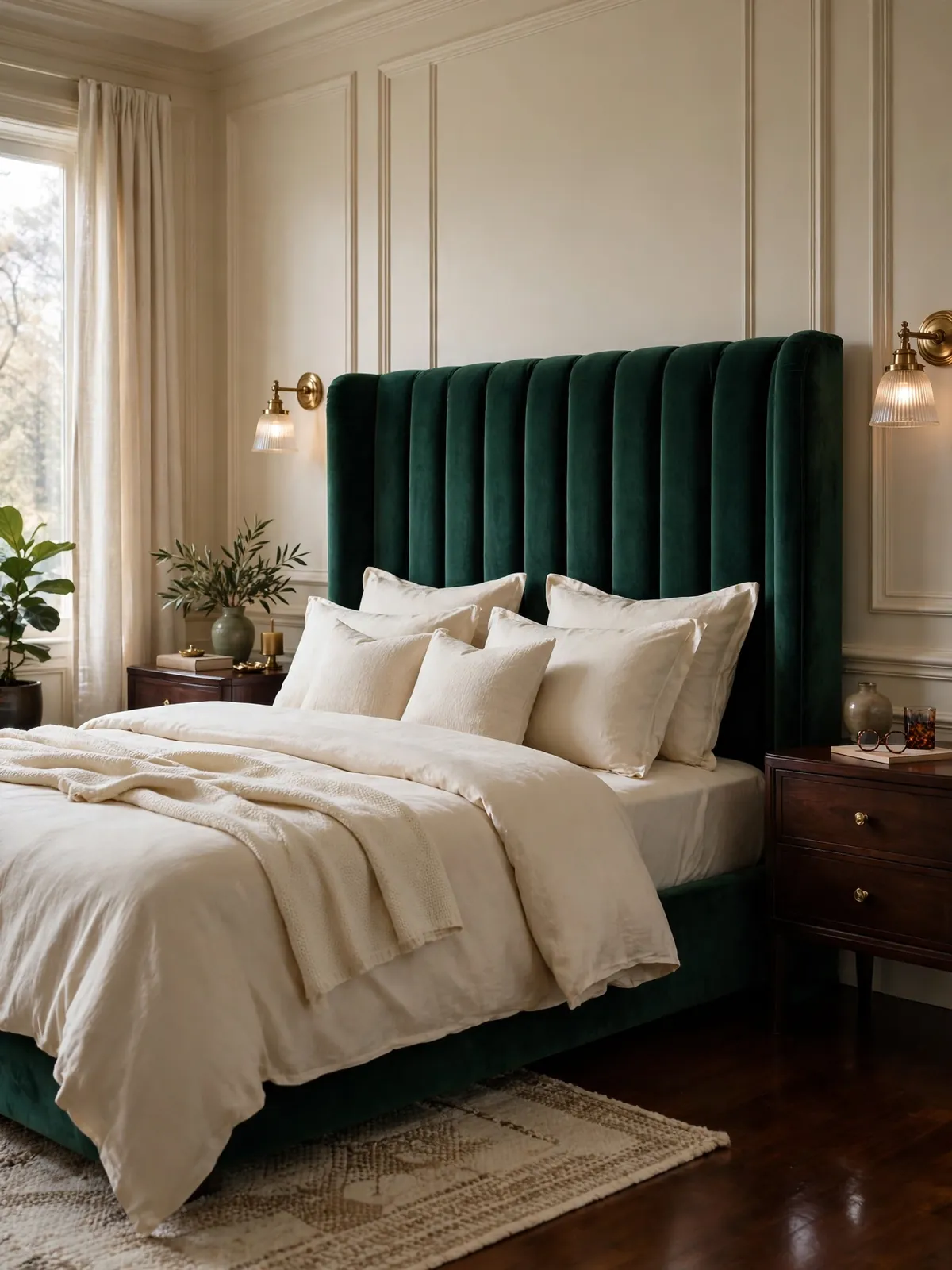
A statement headboard anchors the whole bedroom, because a tall, textured headboard gives the eye a place to land and makes even plain bedding look deliberate. Here, a deep emerald velvet headboard with vertical channel tufting rises behind cream bedding, flanked by brass wall sconces and dark wood nightstands. The design suits bedrooms with a plain wall behind the bed, and a tall headboard also makes low ceilings feel higher. The weakness is scale: a headboard that is too narrow for the bed looks lost, so choose one at least as wide as the mattress and tall enough to clear the pillows.
Quick tips:
- Choose a headboard at least as wide as the mattress.
- Velvet adds glamour; linen adds relaxed elegance.
- Keep the wall behind it plain so it stays the star.
- Pair it with sconces to free up nightstand space.
Layer Pillows and Throws Like a Designer
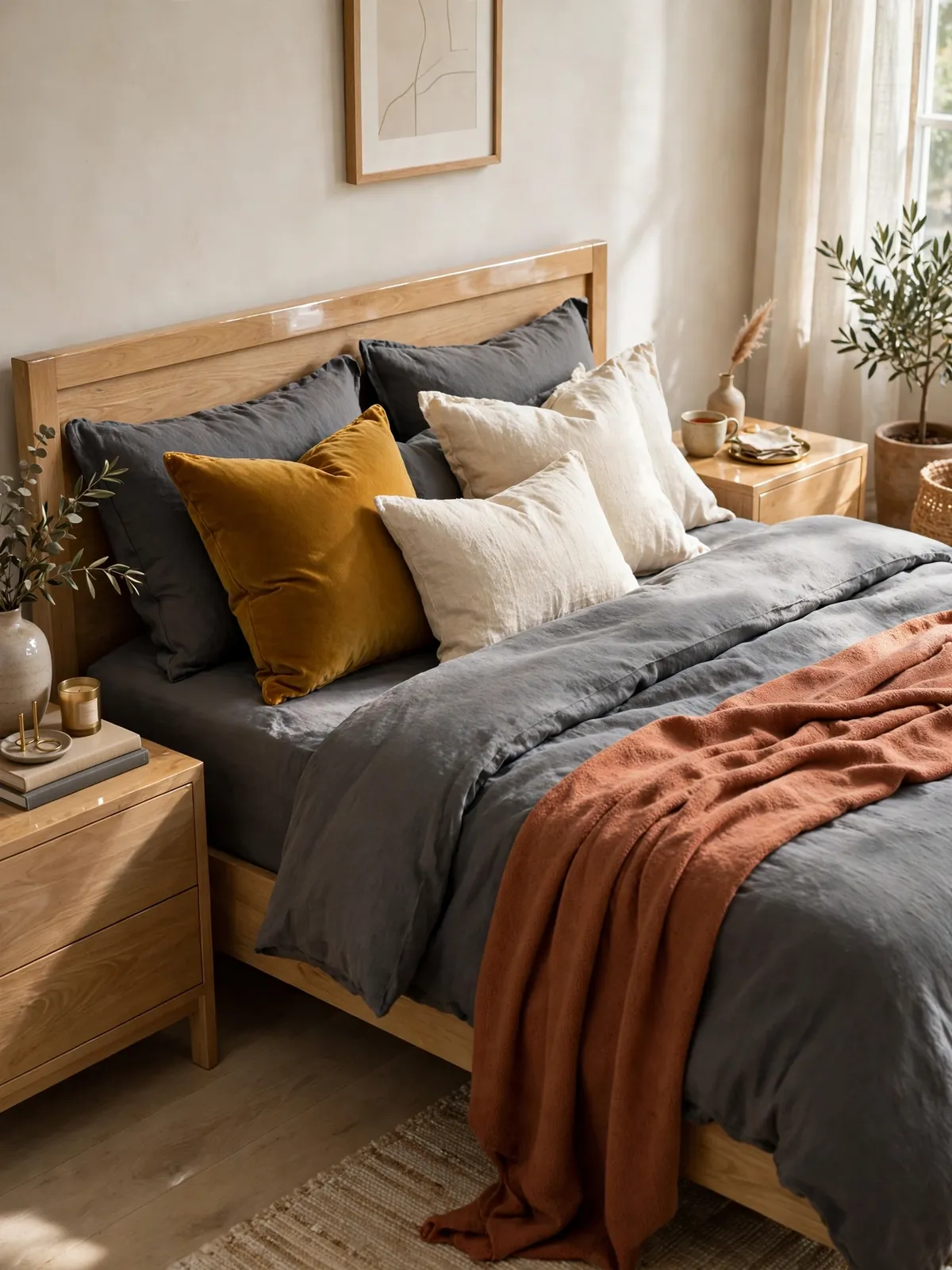
Designers layer pillows and throws by mixing texture, not just colour, and the formula is simple: two sleeping pillows in crisp linen, one velvet cushion in mustard, one linen cushion in cream, and a terracotta throw draped casually across the foot against charcoal grey bedding. The design suits any bed, and it is the fastest styling change you can make — ten minutes and the bed looks photographed. The weakness is excess: a bed buried in cushions is annoying to clear every night, so keep the decorative pillows to three or four and store them in a basket at bedtime.
Quick tips:
- Mix two textures, like velvet and linen, in one palette.
- Keep decorative cushions to three or four at most.
- Drape the throw casually, not folded ruler-straight.
- Store spare cushions in a basket beside the bed.
Add an Accent Wall Behind the Bed
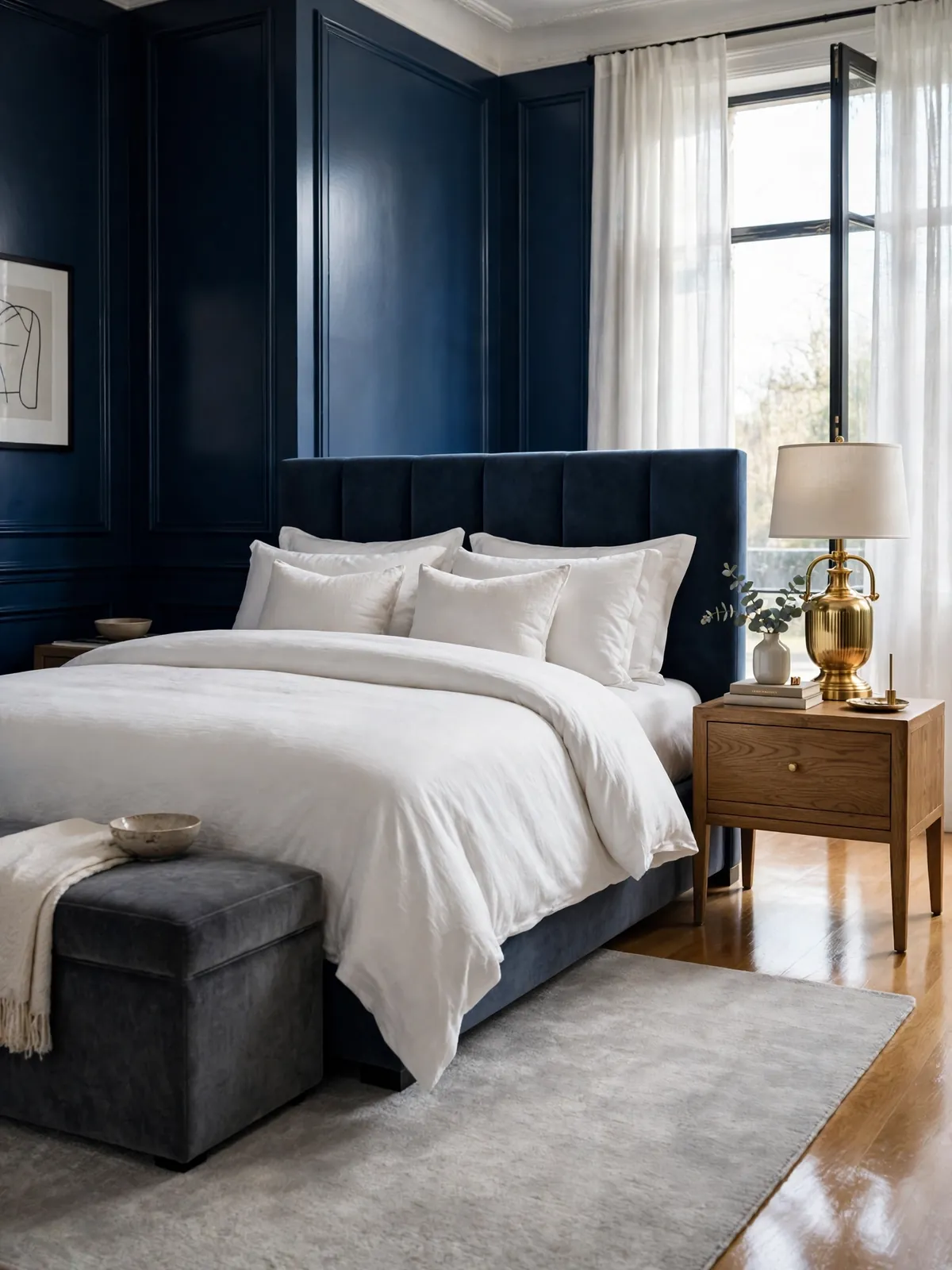
An accent wall behind the bed is the quickest way to give a bedroom a focal point, because one painted wall frames the headboard and makes the whole room feel designed, while the other three walls stay calm. Here, a deep navy wall sits behind white bedding and a brass lamp, with a light grey rug and an oak nightstand keeping the rest of the room soft. The design suits any bedroom, especially plain white rooms, and one wall of paint is a weekend job. The weakness is the wrong wall: painting a side wall splits the room visually, so always choose the wall the bed sits against.
Quick tips:
- Paint only the wall behind the bed, never a side wall.
- Choose a deep tone like navy, forest green or charcoal.
- Keep the other walls pale so the accent stays bold.
- Repeat the accent colour once in a cushion or throw.
Hang Oversized Art Instead of Many Small Frames
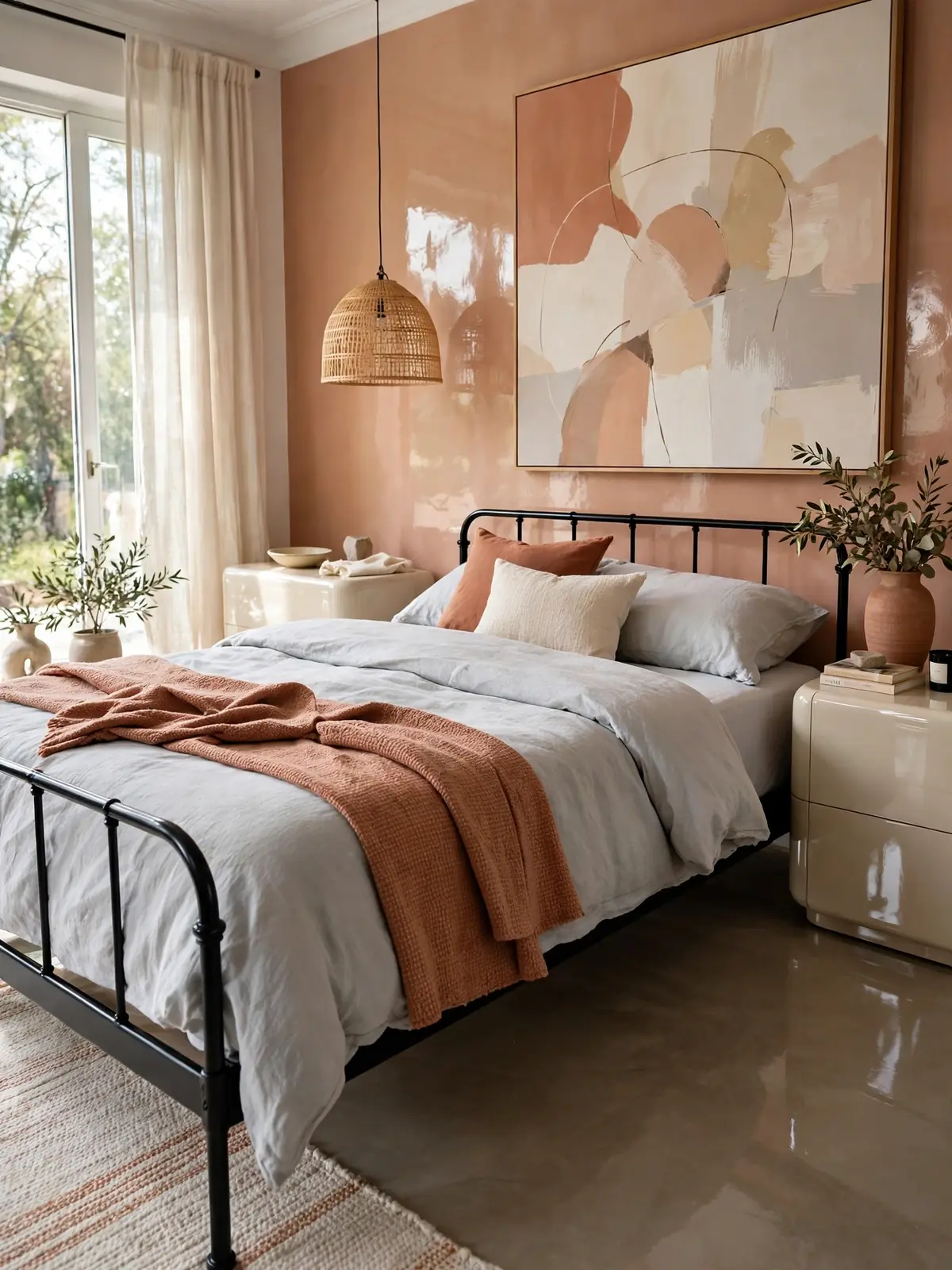
One oversized artwork does the work of ten small frames, because a single large canvas above the bed creates a clear focal point while a cluster of tiny pictures makes the wall look busy and the room feel smaller. Here, a large abstract canvas in soft terracotta and cream hangs above pale grey bedding, with a black metal frame and a rattan pendant light completing the composition. The design suits any bedroom wall, and a single large print is often cheaper than framing six small ones. The weakness is hanging height: art hung too high floats away from the bed, so centre it about fifteen centimetres above the headboard.
Quick tips:
- Size the art to about two-thirds the width of the bed.
- Hang it fifteen centimetres above the headboard.
- Choose colours already in the room’s palette.
- Lean a large piece against the wall for a relaxed look.
Style the Nightstands With Intention
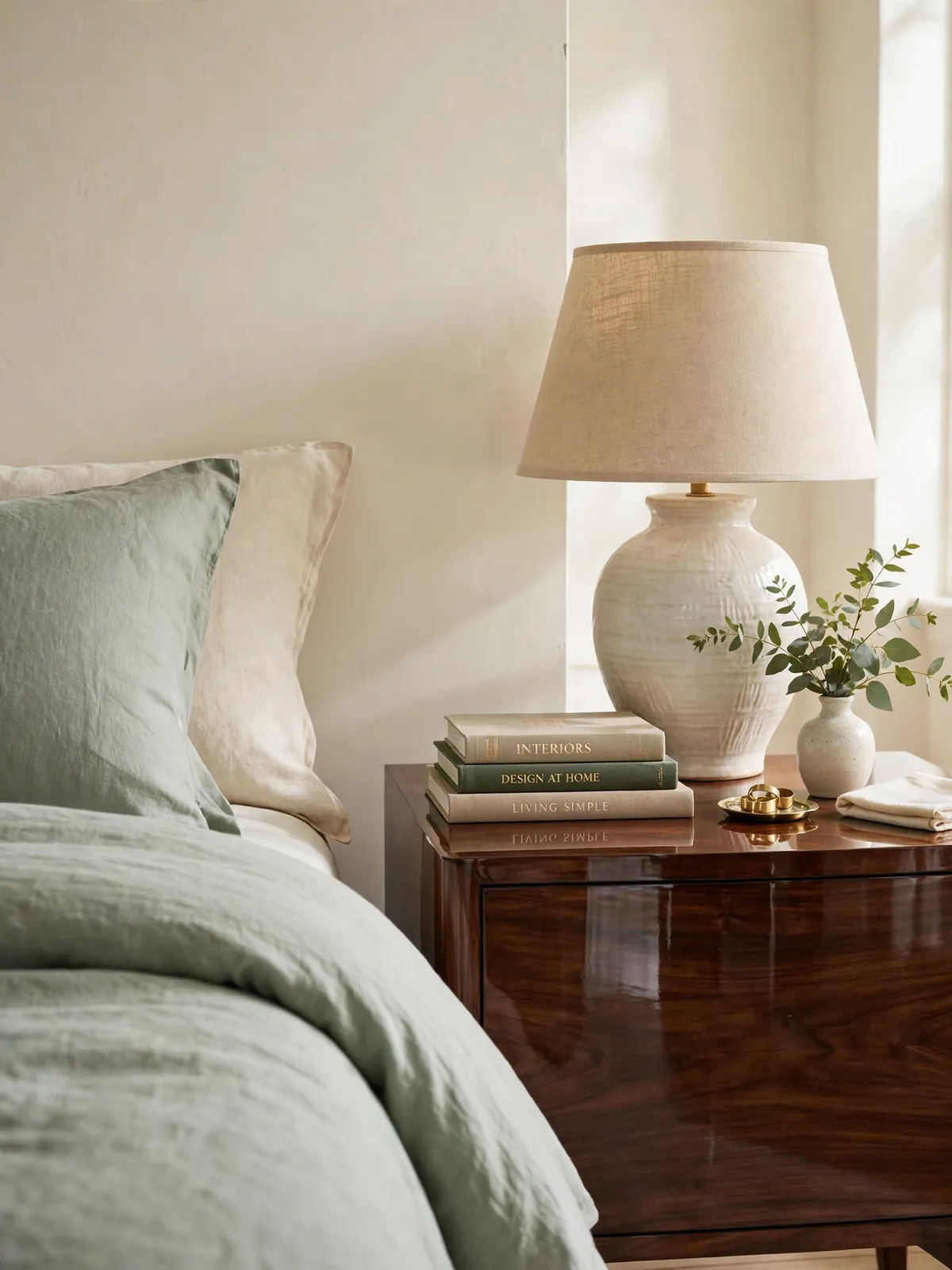
A styled nightstand follows a simple rule — lamp, one book stack, one small object — and the difference between that and a cluttered one is the whole feel of the room. Here, a walnut nightstand holds a ceramic lamp, a small stack of two books and a tiny vase of eucalyptus, with soft sage bedding beside it and nothing else on the surface. The design suits any bedroom, and it costs nothing if you shop your own shelves for the books and vase. The weakness is function creep: chargers, glasses, medicines and water bottles all migrate to the nightstand, so keep a small tray or a drawer for the practical items and leave the top styled.
Quick tips:
- Follow the rule: lamp, book stack, one small object.
- Use a tray to corral glasses and chargers.
- Keep the lamp height in proportion to the nightstand.
- Match or mirror the two nightstands for balance.
Layer Lighting at Three Heights
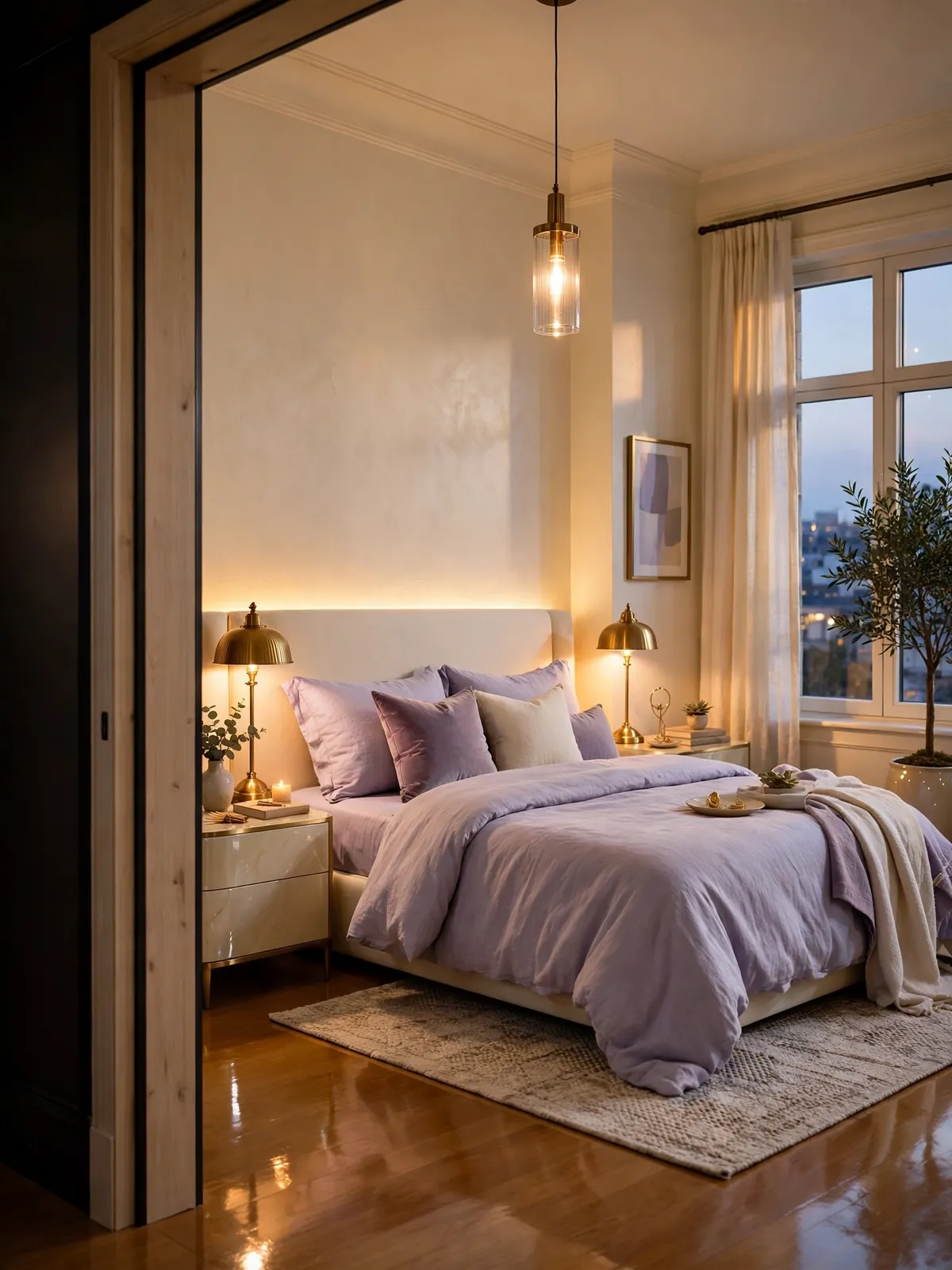
Layered lighting at three heights — ceiling, bedside and accent — is what makes a bedroom feel like a hotel, because a single overhead light flattens everything while warm light at different levels adds depth and lets you change the mood. Here, a ceiling pendant, two brass bedside lamps and a soft LED glow behind the headboard work together over soft lavender bedding and cream walls. The design suits every bedroom, and even affordable warm-toned fixtures create the effect. The weakness is bulb temperature: cool white bulbs make the room feel clinical, so choose warm bulbs around 2700K throughout.
Quick tips:
- Use three heights: ceiling, bedside and accent.
- Choose warm bulbs around 2700K everywhere.
- Add a dimmer to the ceiling light for evenings.
- Keep bedside lamps at the same height for balance.
Ground the Room With a Generous Rug
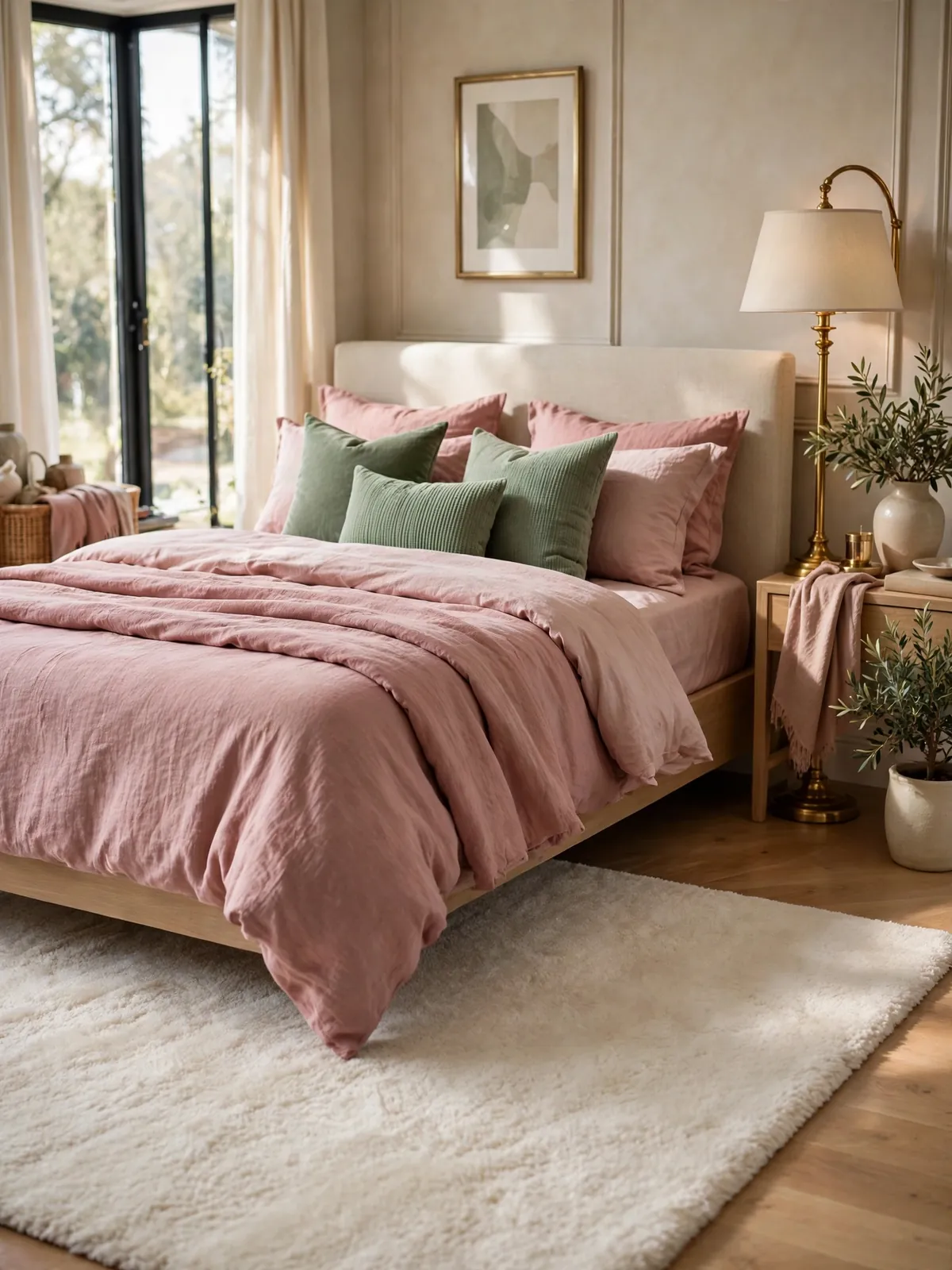
A generous rug grounds the bedroom, because a rug that extends well beyond the bed ties the furniture together and stops the bed looking like it is floating on a bare floor. Here, a large soft cream rug runs under the bed and out both sides, beneath dusty rose bedding, with a light oak floor, sage cushions and a brass floor lamp around it. The design suits any bedroom with hard floors, and it also softens first steps in the morning. The weakness is size: a rug that is too small looks like a mat, so choose one that extends at least sixty centimetres beyond each side of the bed.
Quick tips:
- Extend the rug at least sixty centimetres past the bed.
- Choose a low-pile rug that is easy to vacuum.
- Layer a smaller textured rug on top for extra cosiness.
- Keep the rug colour calm so the bed stays the focus.
Dress the Windows Floor to Ceiling
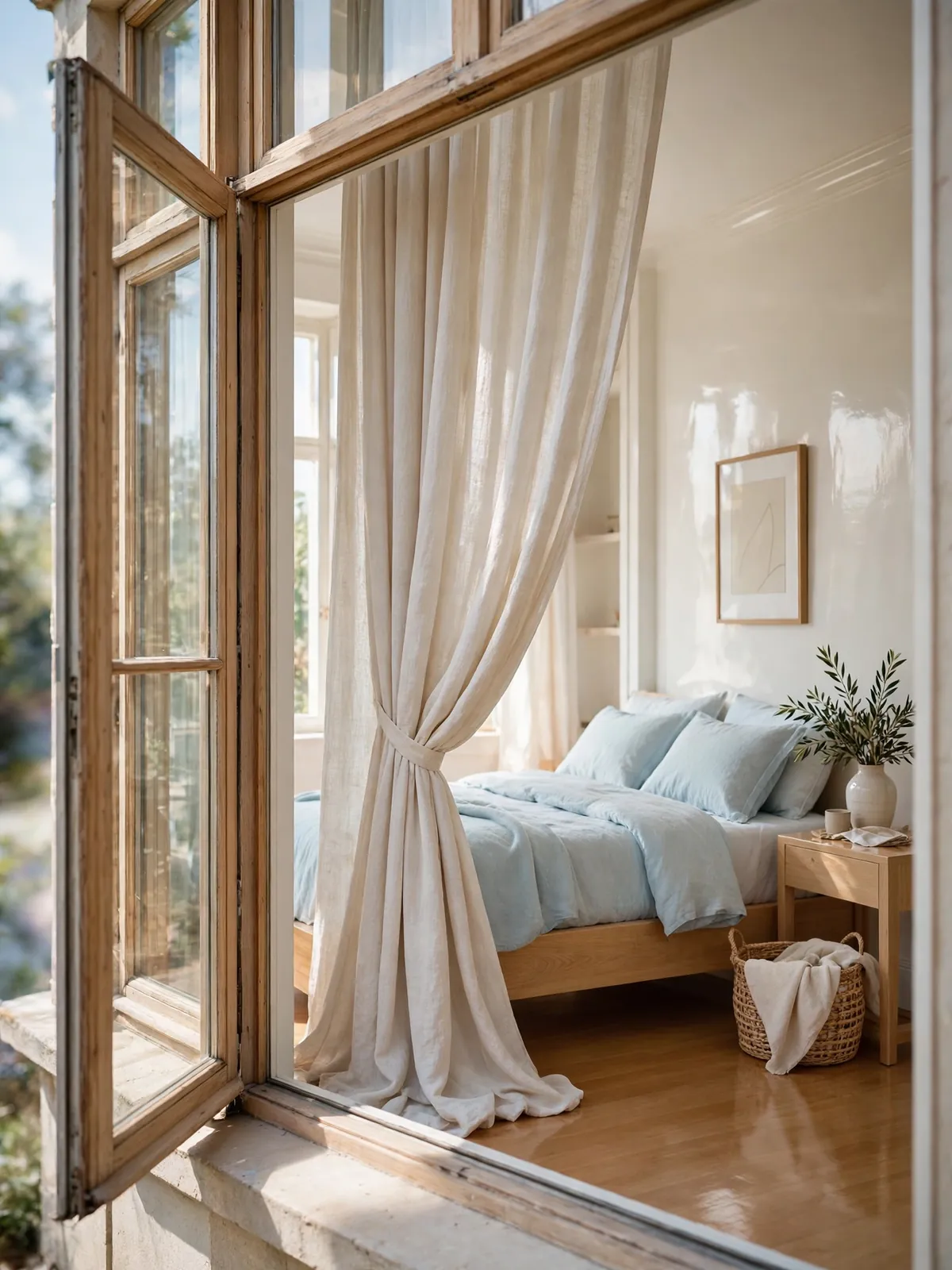
Floor-to-ceiling curtains make a bedroom feel taller and more expensive, because long drapes draw the eye upward and frame the window like architecture instead of cutting the wall in half. Here, warm white linen curtains hang from a rod mounted near the ceiling down to the floor, beside pale blue bedding, a light wood bed frame and a woven basket. The design suits any bedroom, and even inexpensive curtains look luxurious when they are long enough to pool slightly on the floor. The weakness is short curtains: curtains that stop at the sill chop the wall visually and make the room feel smaller, so always measure to the floor.
Quick tips:
- Mount the rod close to the ceiling, not above the frame.
- Let the curtains just touch or slightly pool on the floor.
- Choose linen or a linen blend for a relaxed drape.
- Layer sheers behind heavier curtains for day and night.
Add Texture Instead of More Furniture
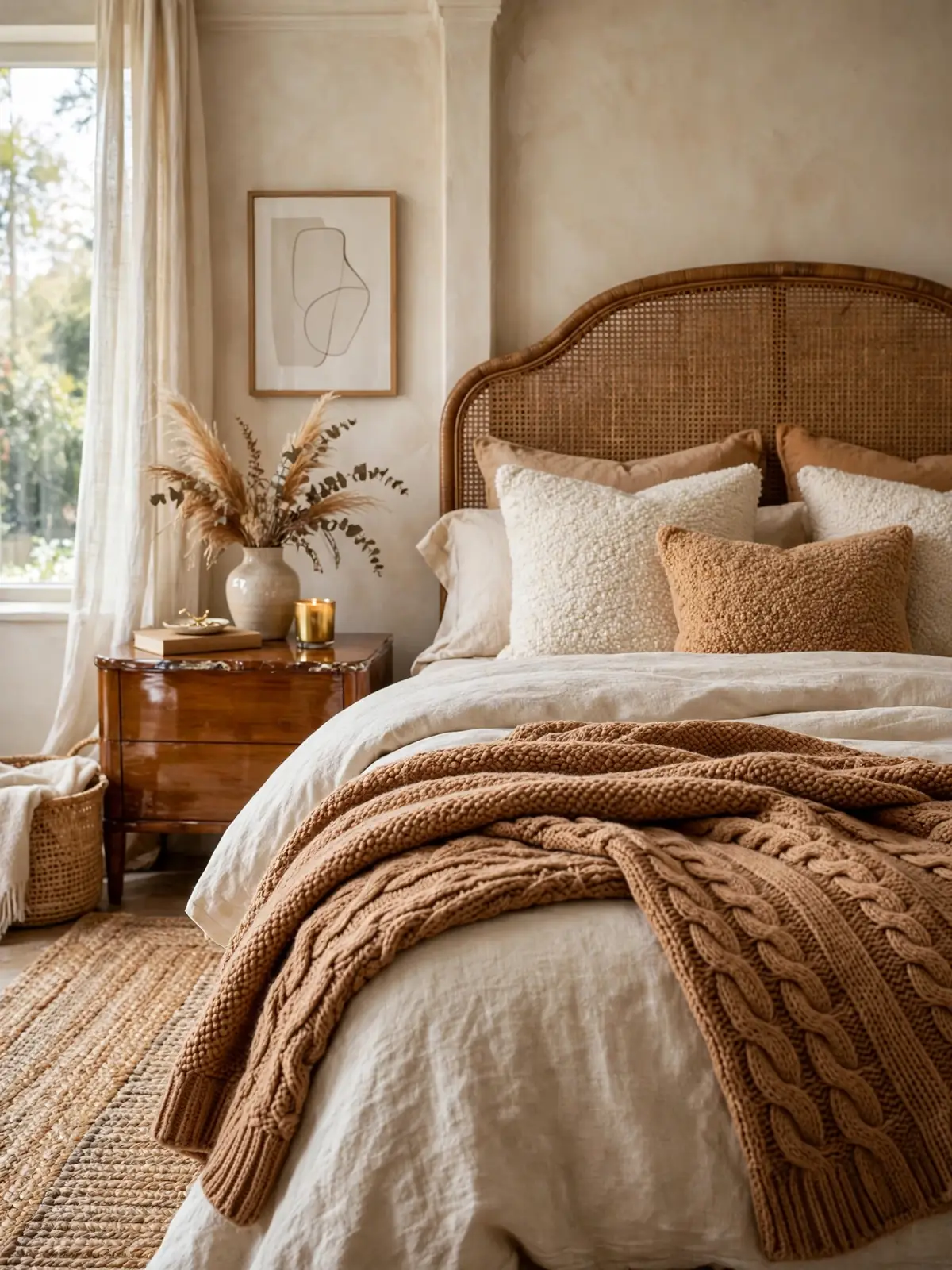
When a bedroom feels boring, the answer is usually texture, not more furniture, because layered fabrics, woven surfaces and soft rugs add richness without crowding the floor. Here, boucle cushions, a chunky knit throw, a woven rattan headboard, linen bedding and a jute rug build a soft caramel and cream palette that feels luxurious with very few pieces in the room. The design suits small bedrooms most of all, where every extra chair makes the room tighter. The weakness is sameness: one texture repeated everywhere feels flat, so mix at least three — something soft, something woven and something smooth.
Quick tips:
- Mix at least three textures: soft, woven and smooth.
- Layer boucle, linen and knit in one palette.
- Use a woven headboard or basket for natural texture.
- Keep the colour palette calm so texture does the work.
Bring in One Living Plant for Fresh Energy
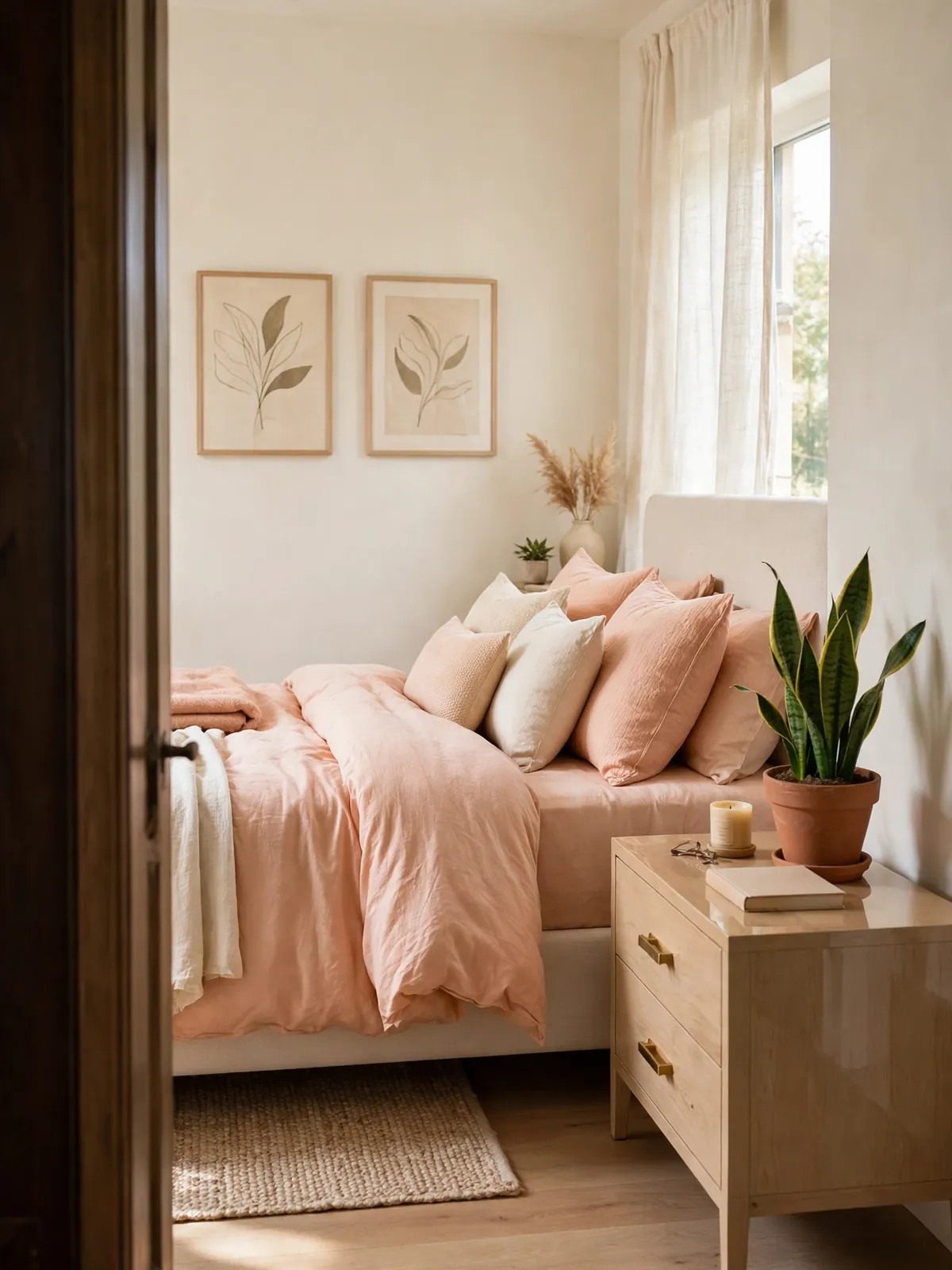
One living plant is the easiest way to add life to a styled bedroom, because green reads as a natural accent that works with every palette, and it keeps a calm room from feeling flat. Here, a tall snake plant in a terracotta pot stands beside the bed, against soft peach bedding, cream walls and a light wood nightstand. The design suits any bedroom with a little daylight, and low-maintenance plants like snake plants and pothos thrive on neglect. The weakness is light: a plant in a dark corner will struggle, so place it near the window or choose a good-quality faux plant instead.
Quick tips:
- Choose low-maintenance plants like snake plant or pothos.
- Use a terracotta or ceramic pot that suits the palette.
- Place the plant near the window, not in a dark corner.
- One large plant beats five tiny ones in a bedroom.
Create a Reading Nook in a Spare Corner
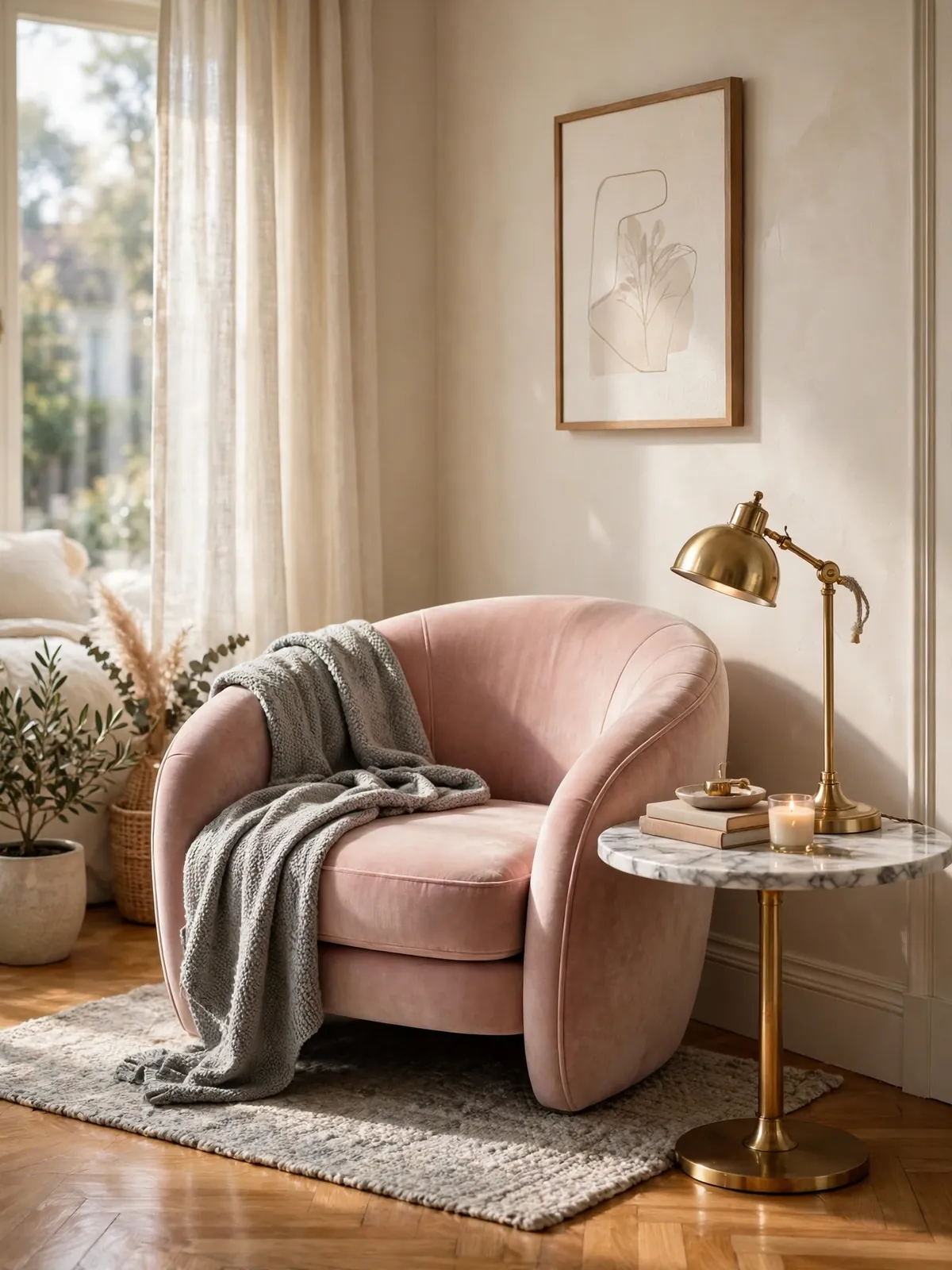
A reading nook turns a spare corner into the most loved spot in the bedroom, because a comfortable chair, a small table and a warm lamp make a corner feel intentional instead of empty. Here, a curved blush velvet armchair sits beside a small marble side table with a brass reading lamp and a soft grey throw, against cream walls. The design suits bedrooms with an unused corner, and it needs only three pieces. The weakness is size: an oversized armchair swallows a small bedroom, so choose a compact chair with slim legs and keep the table small.
Quick tips:
- Use a compact chair with slim legs in small rooms.
- Add a small side table for a book and a drink.
- Choose a warm lamp that flatters, not a harsh one.
- Drape one throw over the chair arm for softness.
Swap Basic Hardware for Statement Knobs
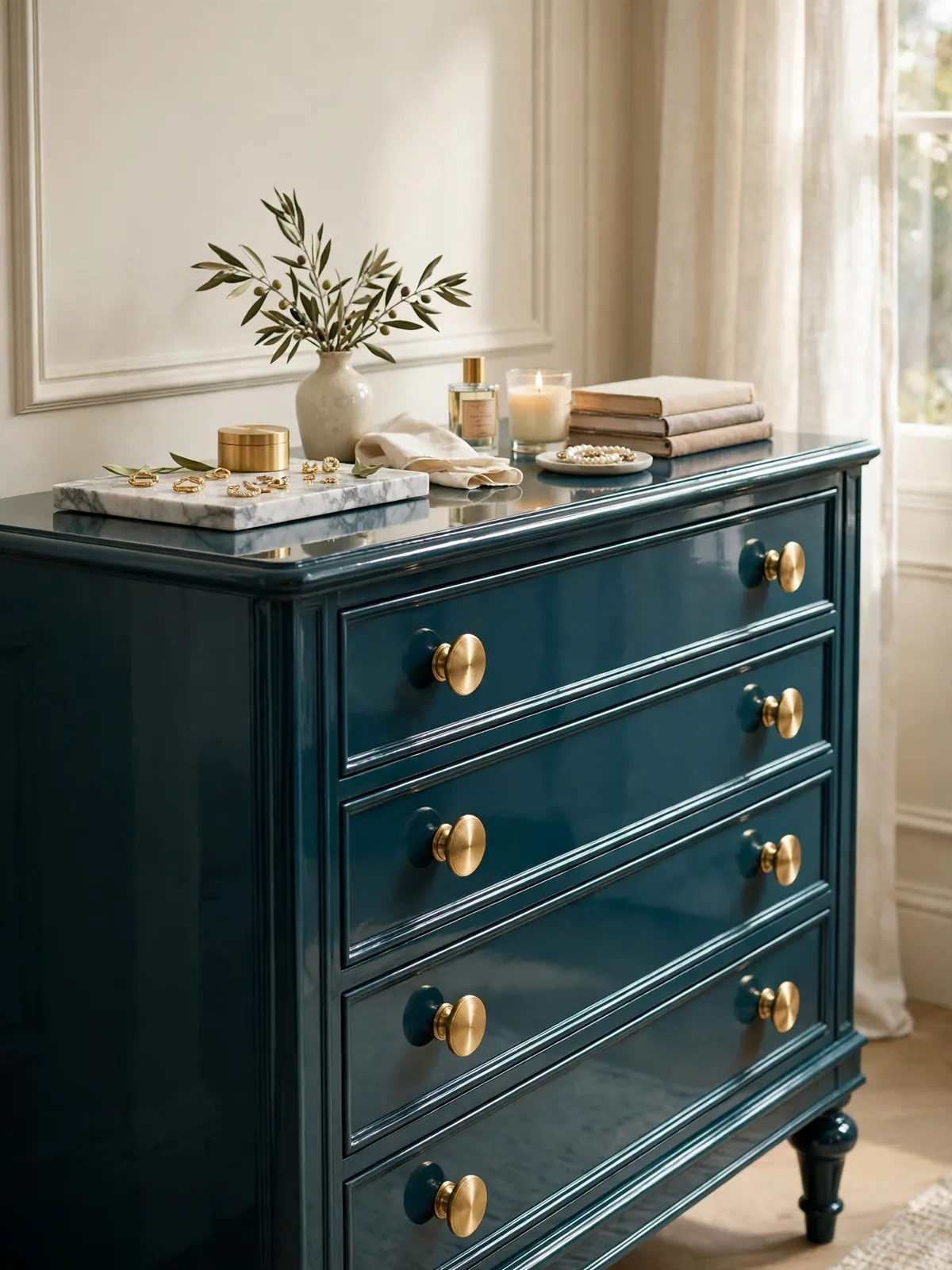
Swapping basic hardware for statement knobs is the fastest furniture makeover in a bedroom, because new brass, matte black or ceramic pulls make a plain dresser look custom for the price of a few small fittings. Here, brushed brass knobs transform deep teal painted drawers, with a marble tray and a small vase on top and cream walls behind. The design suits any bedroom with plain or dated furniture, and it is a one-hour job with a screwdriver. The weakness is mixing metals: brass knobs with chrome lamps and black hinges look accidental, so keep one dominant metal finish in the room.
Quick tips:
- Pick one metal finish and use it on all furniture.
- Brass warms pale rooms; matte black adds contrast.
- Measure the existing holes before buying replacements.
- Replace the nightstand knobs to match the dresser.
Use Mirrors to Double Light and Space
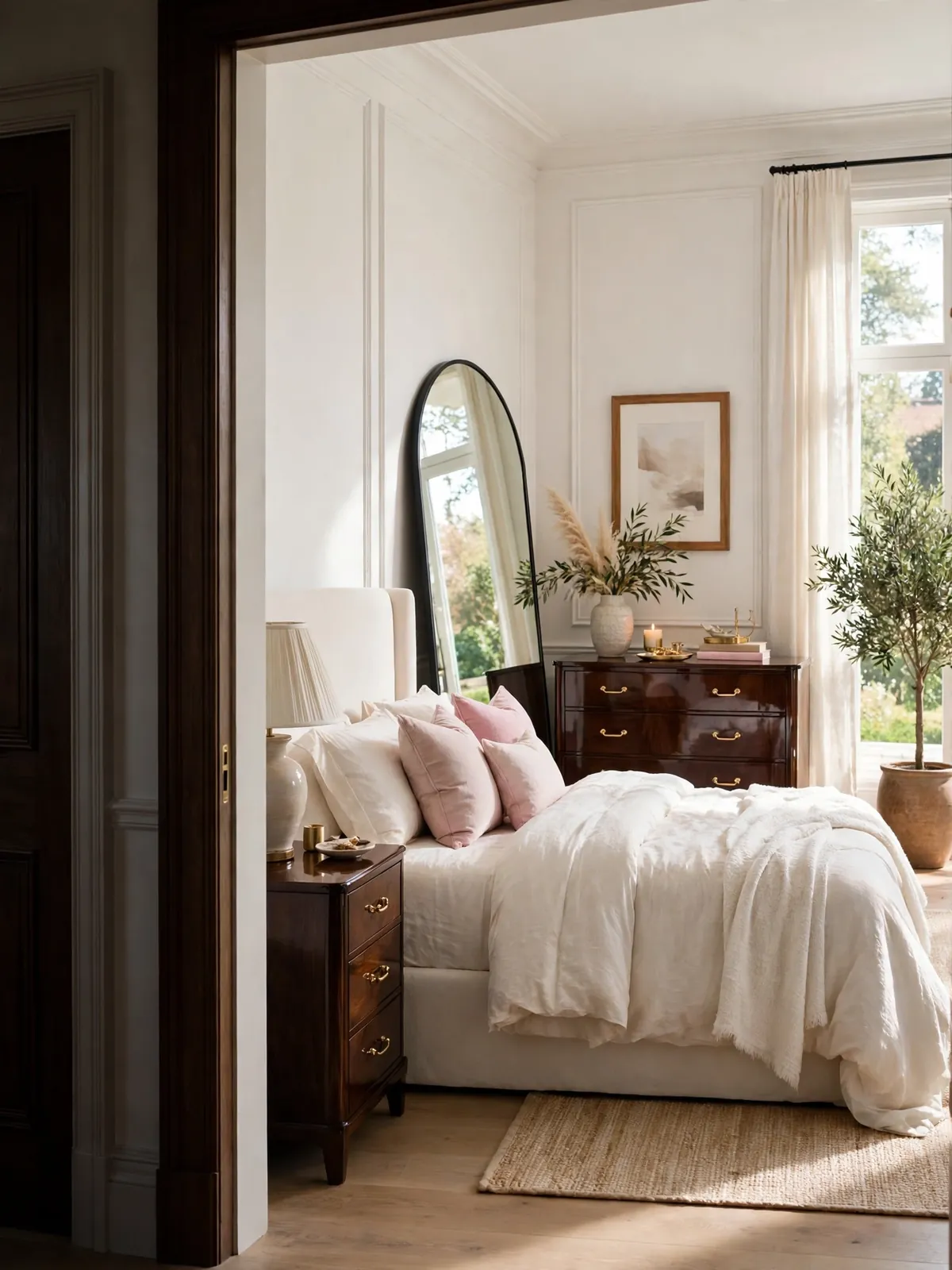
A large mirror doubles the light and the sense of space in a bedroom, because it reflects the window and the room back on itself, making even a small room feel open. Here, a tall arched floor mirror leans against the wall opposite the window, reflecting soft ivory bedding, pale pink cushions and a dark walnut dresser. The design suits small or dim bedrooms most of all, and leaning a mirror needs no drilling. The weakness is placement: a mirror facing the bed can disturb light sleepers, so angle it toward the window or the prettiest corner instead.
Quick tips:
- Place the mirror opposite or beside the window.
- Choose an arched or round shape to soften straight lines.
- Lean a floor mirror for a relaxed, no-drill look.
- Keep the mirror clean so the reflection stays bright.
Style Open Shelves With Restraint
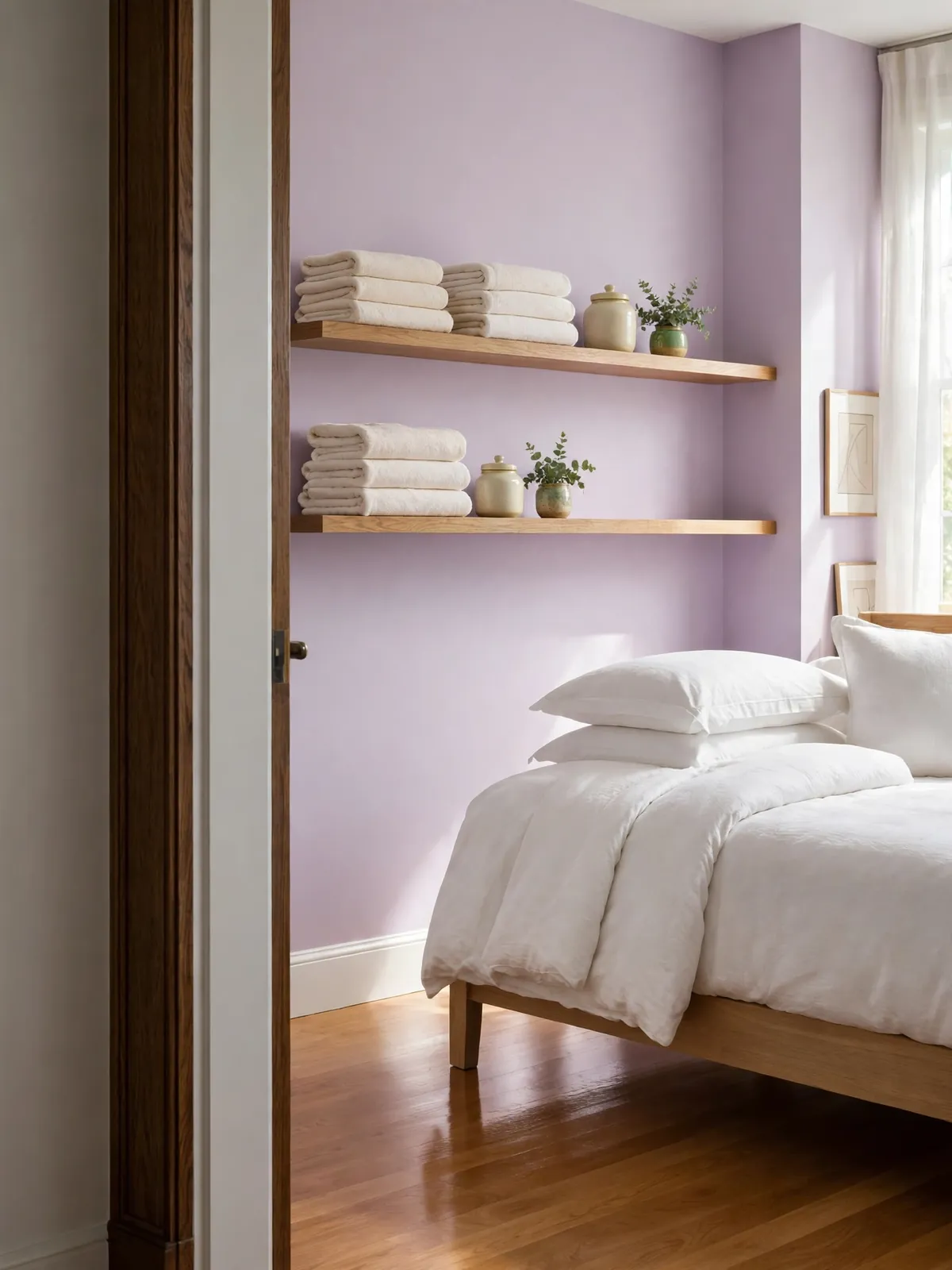
Open shelves make a bedroom feel warm and collected, but only when they are styled with restraint, because a shelf treated like extra storage looks cluttered while a shelf with three or four beautiful things looks intentional. Here, two slim oak shelves hold folded cream towels, a small ceramic jar and one tiny green plant against soft lilac walls, with white bedding below. The design suits bedrooms with a spare wall above a dresser or beside the bed, and it adds warmth for very little money. The weakness is dust: open shelves collect it fast, so keep them away from the window and dust them weekly.
Quick tips:
- Install one or two slim shelves, not a whole wall.
- Display only three or four objects per shelf.
- Mix heights: a tall vase, a low stack of books.
- Hide less attractive items in drawers or baskets.
Choose a Bench for the Foot of the Bed
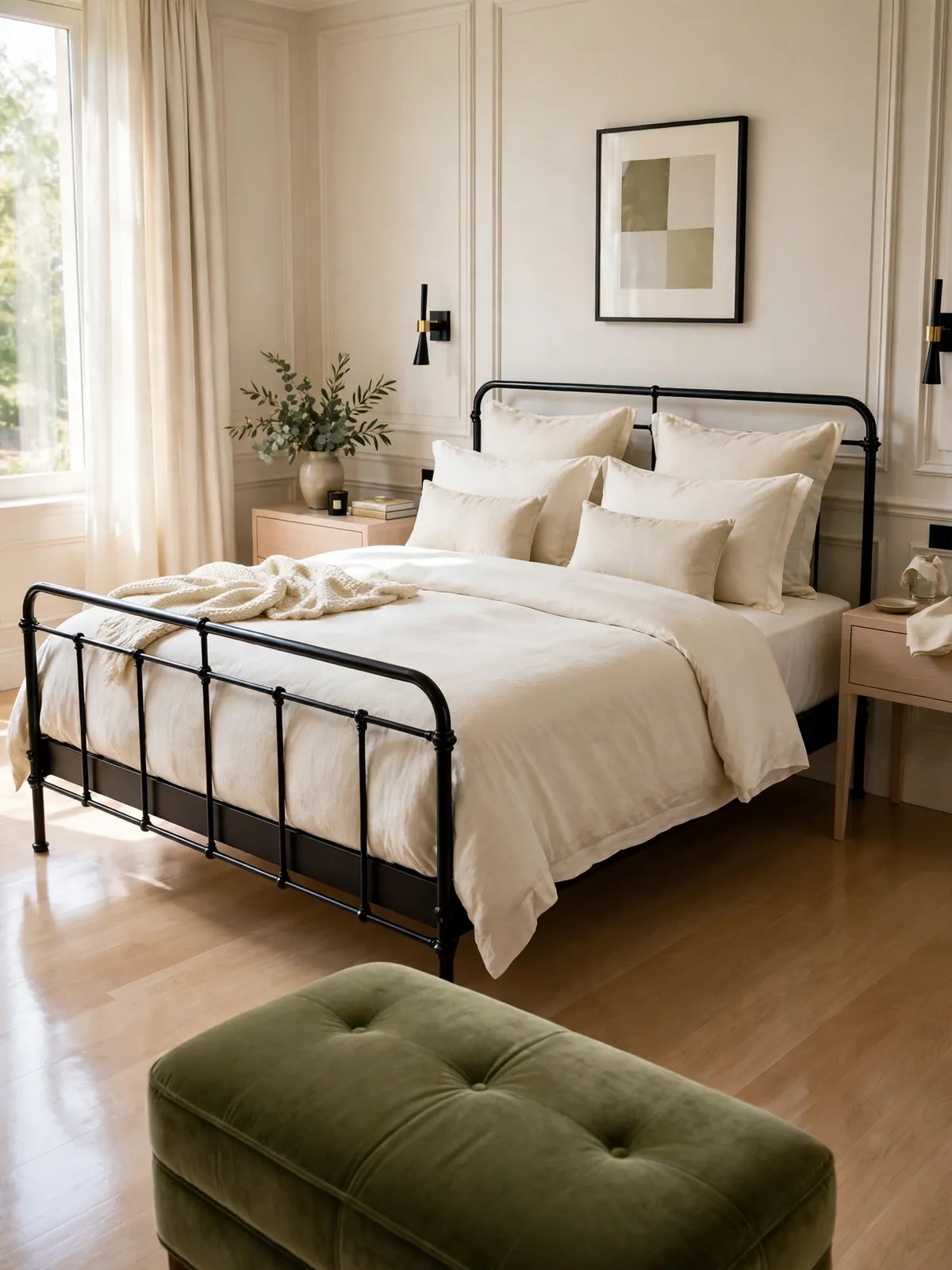
A bench at the foot of the bed makes a bedroom feel finished, because it closes the composition the way a period closes a sentence, and it is useful too — a place to sit, to lay out tomorrow’s clothes, or to stack a throw. Here, a soft olive green velvet bench sits at the foot of a bed dressed in cream bedding, on a light wood floor with a black metal frame. The design suits medium and large bedrooms best, and an upholstered bench adds hotel polish instantly. The weakness is space: in a small bedroom a bench blocks the walkway, so measure the gap and leave at least sixty centimetres to pass.
Quick tips:
- Leave at least sixty centimetres of walkway past the bench.
- Choose upholstery in the room’s accent colour.
- Use a storage bench to hide extra blankets.
- Keep the bench lower than the mattress for balance.
Keep Surfaces Clear and Calm
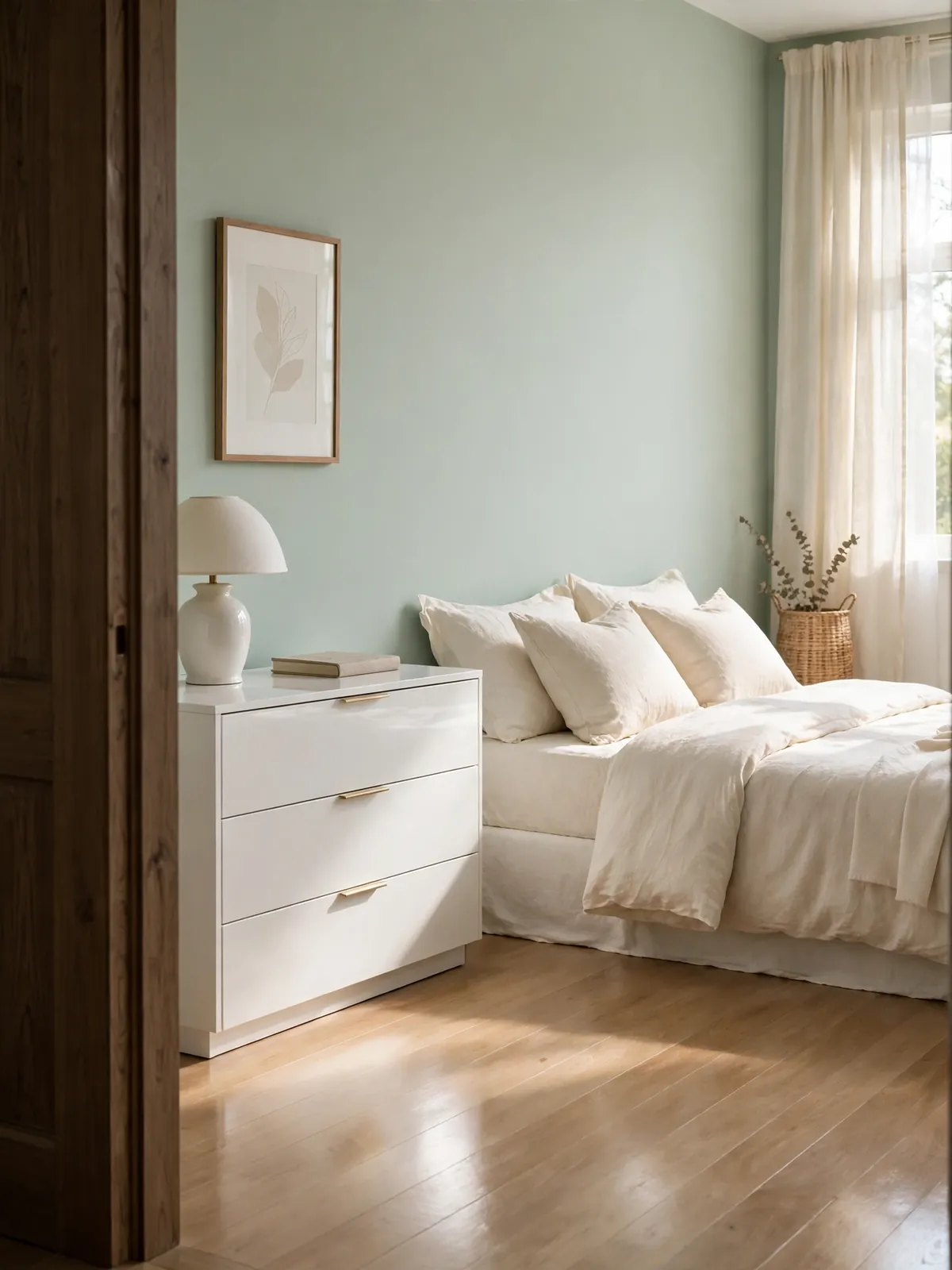
Clear surfaces are what make a styled bedroom feel calm, because a dresser with one lamp and one book reads as intentional while a dresser covered in bottles, papers and chargers reads as chaos, no matter how expensive the furniture is. Here, a white dresser holds just a ceramic lamp and a single book, beside cream bedding, soft mint walls and a light oak floor. The design suits every bedroom, and it costs nothing — it is editing, not buying. The weakness is discipline: surfaces refill themselves, so give every small item a home in a drawer or a basket and do a two-minute reset each evening.
Quick tips:
- Keep each surface to three objects at most.
- Give chargers and small items a drawer or basket.
- Do a two-minute surface reset every evening.
- Remove one thing before adding anything new.
Add a Pop of Colour in One Place Only
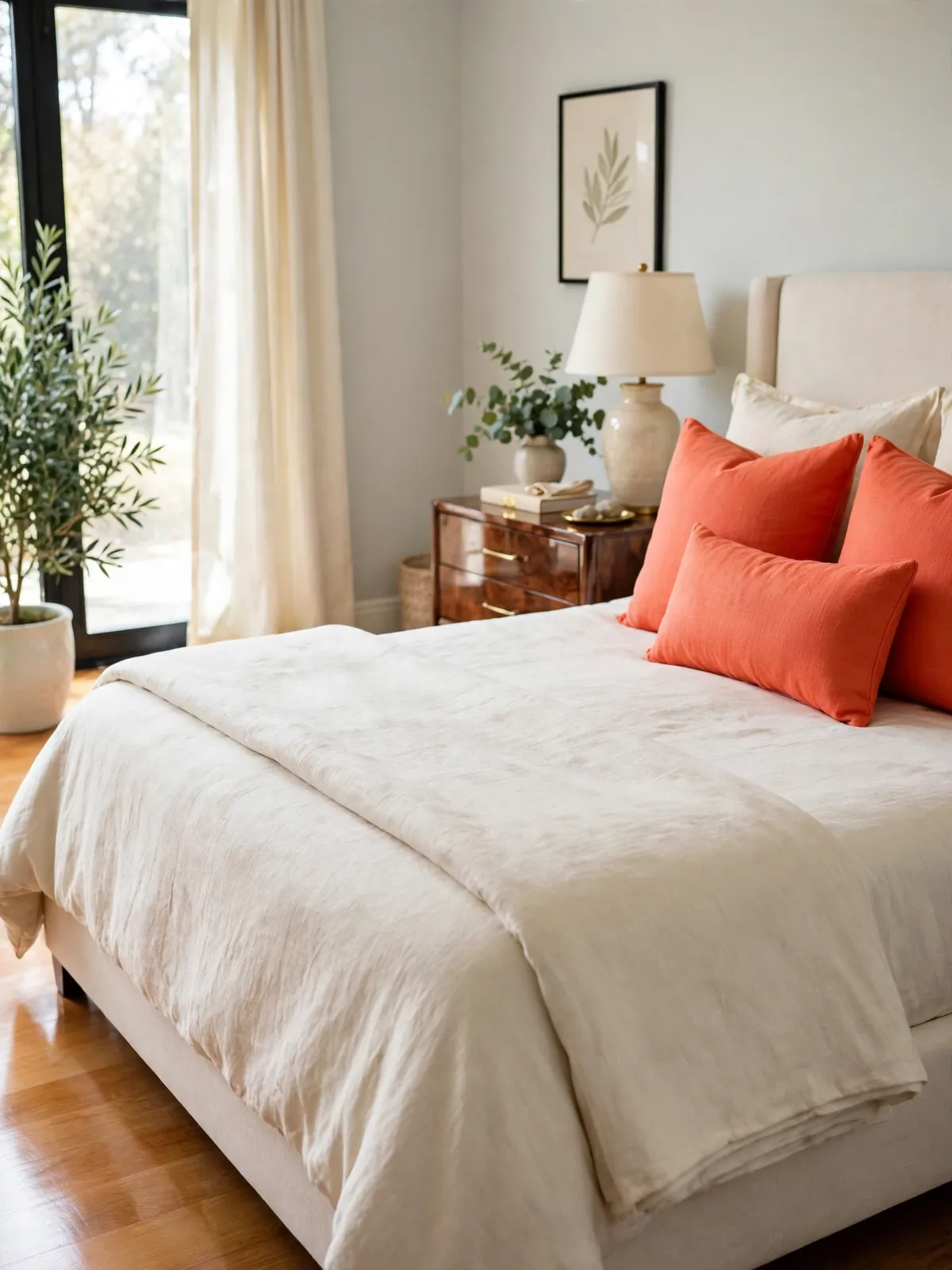
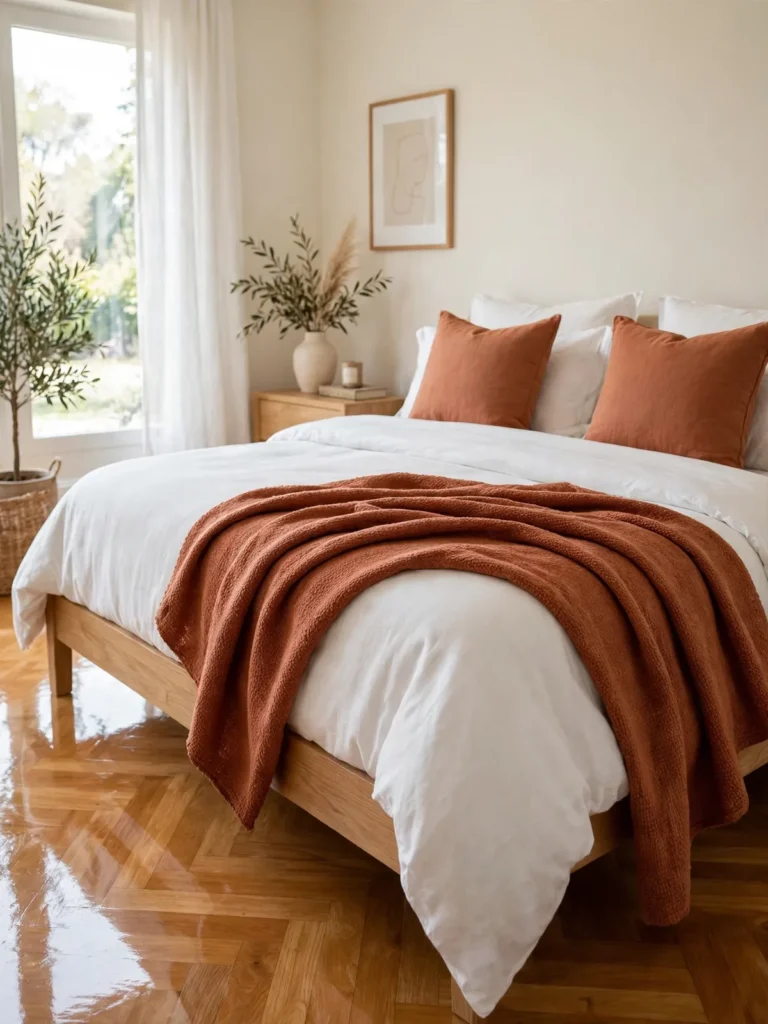
One pop of colour makes a neutral bedroom feel alive, because a single bold accent — coral orange cushions on a cream bed, for example — gives the eye a moment of joy while the rest of the room stays calm. Here, two coral cushions and a matching throw sit on cream bedding against pale grey walls, with a walnut nightstand grounding the composition. The design suits neutral bedrooms that feel a little flat, and cushions are the cheapest way to try a bold colour. The weakness is spreading it: the same coral on the cushions, the curtains, the rug and the art turns a pop into a theme, so keep the bold colour to one spot.
Quick tips:
- Choose one bold colour and one place to use it.
- Cushions and throws are the safest place to try it.
- Keep the rest of the room neutral so the pop shines.
- Change the accent with the seasons for a fresh feel.
Pay Attention to the Ceiling
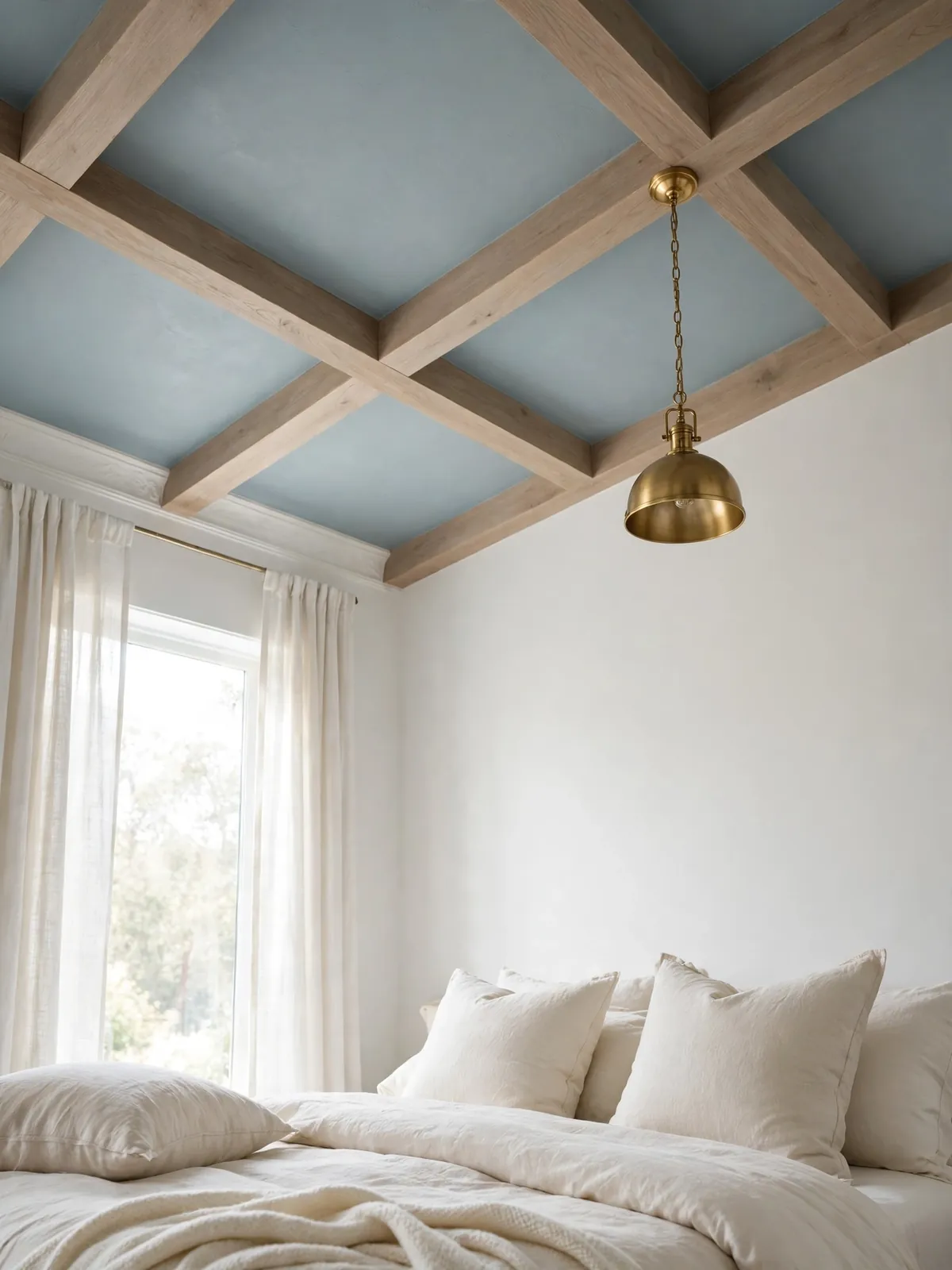
The ceiling is the most ignored surface in a bedroom, yet it is the first thing you see when you lie down, so a soft painted ceiling or a few pale wood beams can change the whole feel of the room for very little money. Here, a pale dusty blue ceiling sits above white walls, cream bedding and pale wood beams, with a brass pendant light hanging low over the bed. The design suits any bedroom, and it is especially effective in rooms with high ceilings that feel bare. The weakness is drama: a dark or busy ceiling in a low room makes it feel smaller, so keep the colour pale and the pattern subtle unless the ceiling is high.
Quick tips:
- Paint the ceiling a pale tint of the wall colour.
- Add slim wood beams for warmth in high rooms.
- Hang the pendant low enough to feel intimate.
- Keep the ceiling calm if the room is small or low.
Make It Personal With Meaningful Objects
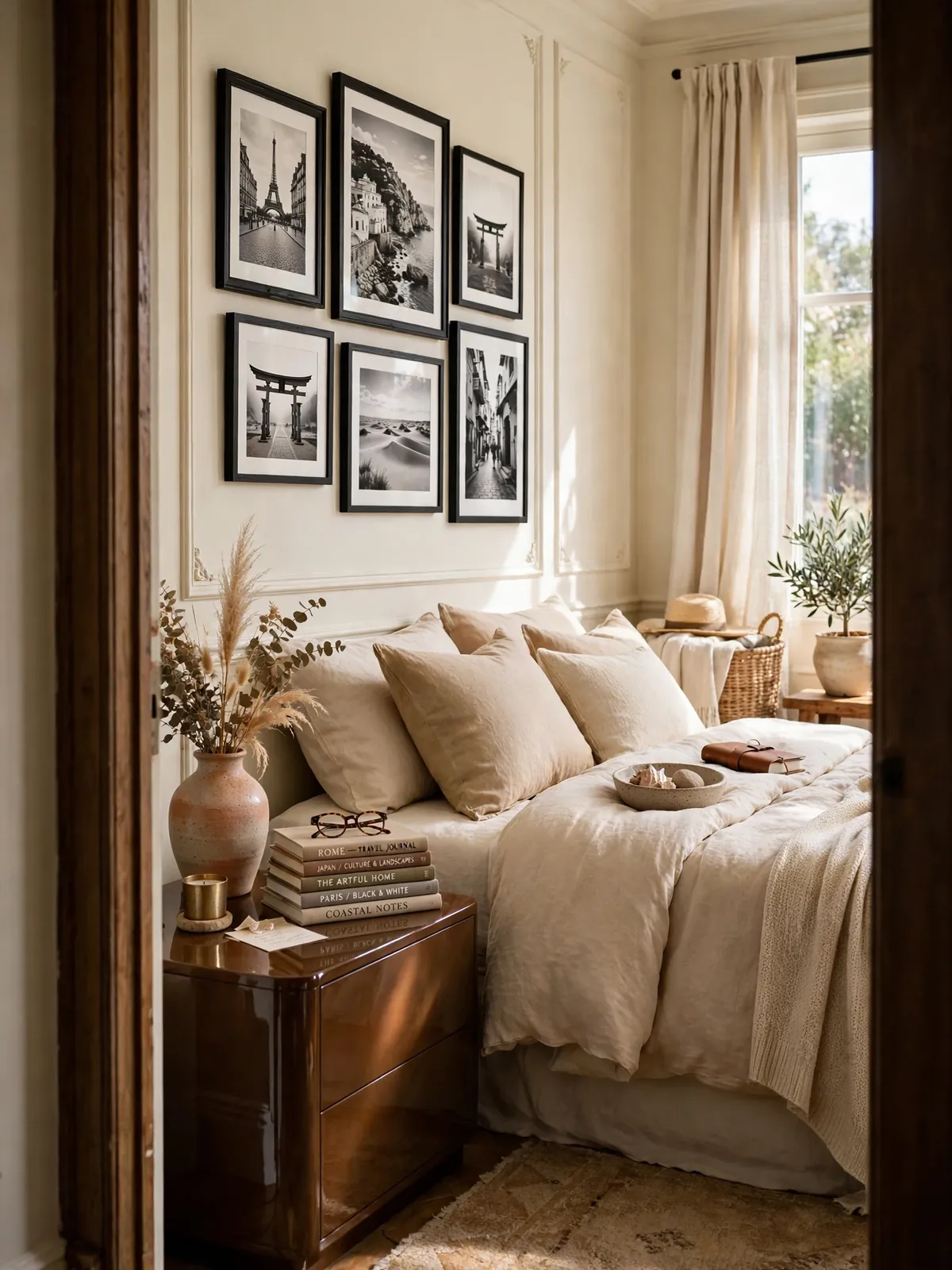
A bedroom styled only from a shop looks like a showroom, but one personal object — a framed travel photo, a handmade vase, a stack of favourite books — makes it feel like yours, and that is the difference between a styled room and a lived-in one. Here, framed black-and-white travel photos hang above a dresser, with a handmade ceramic vase and a stack of favourite books beside soft warm beige bedding and cream walls. The design suits every bedroom, and it costs nothing because the objects are already yours. The weakness is clutter: ten souvenirs on one shelf look like a gift shop, so choose two or three meaningful pieces and give each one space.
Quick tips:
- Choose two or three meaningful objects, not ten.
- Frame travel photos in black and white for cohesion.
- Give each personal object its own space to breathe.
- Rotate personal pieces seasonally to keep them fresh.
Bedroom Styling Tips That Pull the Whole Room Together
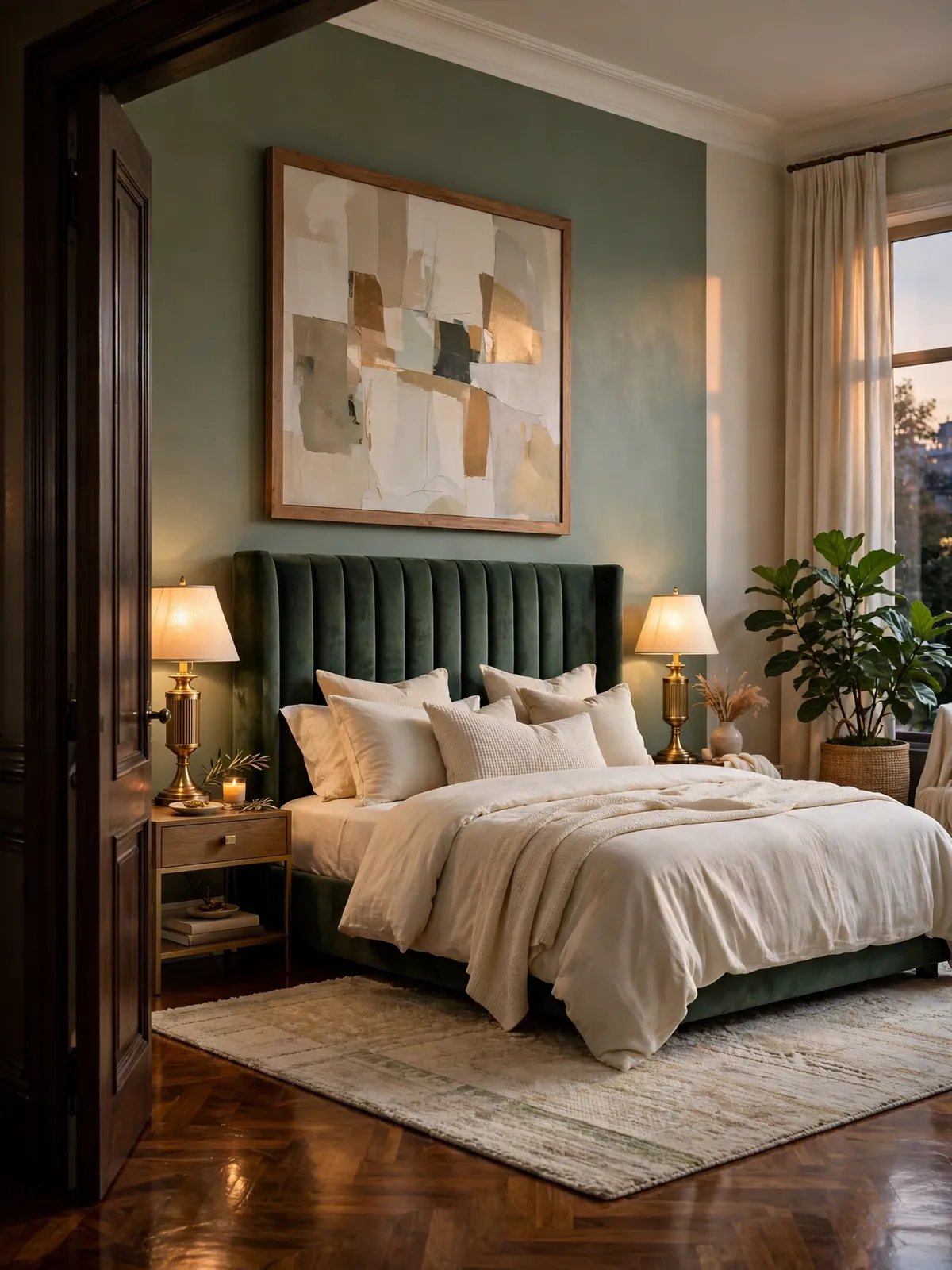
The last of these bedroom styling tips is the principle behind them all, and it is worth stating plainly because it is the difference between a bedroom that looks good in a photograph and one that feels calm every single morning: a great styled bedroom is not one expensive feature, it is the layering of the right quiet choices — a style direction chosen before anything is bought, a three-colour palette repeated around the room, the bed made the focal point with layered bedding and a statement headboard, one oversized artwork instead of ten small frames, lighting at three warm heights, a rug generous enough to ground the furniture, curtains that run floor to ceiling, and texture doing the work that more furniture never could — working together so that nothing shouts and everything belongs, and the room rewards the owner too, because a bedroom built on a clear direction and a limited palette is easy to live with, easy to tidy and easy to refresh with a new cushion colour or a different plant, even in a small room, even on a modest budget, and even when you change only one thing at a time. Here, a sage and cream styled bedroom pulls it together — layered bedding, a tall headboard, oversized art, brass lamps, a large rug and a leafy green plant — and nothing in the room is there by accident. The lesson is to start with the biggest decisions first: pick the style, pick the palette, style the bed, then the art and the lighting, and layer the small personal details last, because a bedroom built in that order stays beautiful with very little effort, and it gives you room to evolve, swapping a coral cushion for a mustard throw or a travel photo for a handmade vase, without ever repainting a wall. Pick the three ideas from this list that solve your biggest problem first, add one luxury that makes you smile, and your bedroom stops being the room you apologise for and becomes the calmest room in the house.
Quick tips:
- Start with the biggest decisions: style, palette, bed.
- Fix the basics first, then add one luxury.
- Layer texture and light before adding any bold colour.
- Refresh cushions and plants to update the room without renovating.
FAQs
What are the best bedroom styling tips for beginners?
The best bedroom styling tips for beginners are to pick one style direction, choose three colours and repeat them, make the bed the focal point with layered bedding, hang one large piece of art, and layer warm lighting at three heights. Start with the bed and the walls, then add the rug and the lighting, and finish with texture and one personal object — in that order, the room pulls together quickly.
How do I style my bedroom without spending a lot of money?
Style your bedroom cheaply by rearranging the furniture first, then swapping in warm bulbs, adding a throw and two cushions, hanging one large print, and replacing the drawer knobs. Paint one accent wall behind the bed and hang curtains floor to ceiling, and the room looks redesigned for the price of a few small purchases and a tin of paint.
What colours should I use when styling my bedroom?
Use three colours when styling a bedroom: one main neutral for the walls and bedding, one wood or metal tone, and one accent repeated in cushions, throws and art. Warm whites, sage, dusty blue, soft terracotta and gentle grey all work well, and a limited palette makes even budget furniture look intentional and calm.
How many pillows should I put on my bed?
Three or four decorative pillows are enough for a styled bed, plus the two sleeping pillows. Mix two textures, like velvet and linen, in the room’s palette, and add one throw draped across the foot. More than that looks like a display and is annoying to clear every night, so keep a basket beside the bed for the spares.
How do I make my bedroom feel like a hotel?
Make your bedroom feel like a hotel with crisp white or ivory bedding, a tall upholstered headboard, matching bedside lamps, a bench at the foot of the bed, and warm layered lighting. Keep the surfaces clear, add one large artwork and a generous rug, and the room feels polished and restful the moment you walk in.
Conclusion
Bedroom styling is not about buying more — it is about choosing a direction, repeating three colours, and layering the bed, the light and the texture until the room feels finished. The 23 tips above show that a statement headboard, layered bedding, one oversized artwork, warm lighting at three heights and a generous rug can turn a plain bedroom into a space that feels calm, personal and quietly luxurious. Start with the biggest decisions, pick one style and let it guide every choice, and add texture and personal objects before you reach for any bold colour. Do that, and your bedroom stays beautiful for years, with nothing more than a fresh cushion or a new plant to keep it feeling new.