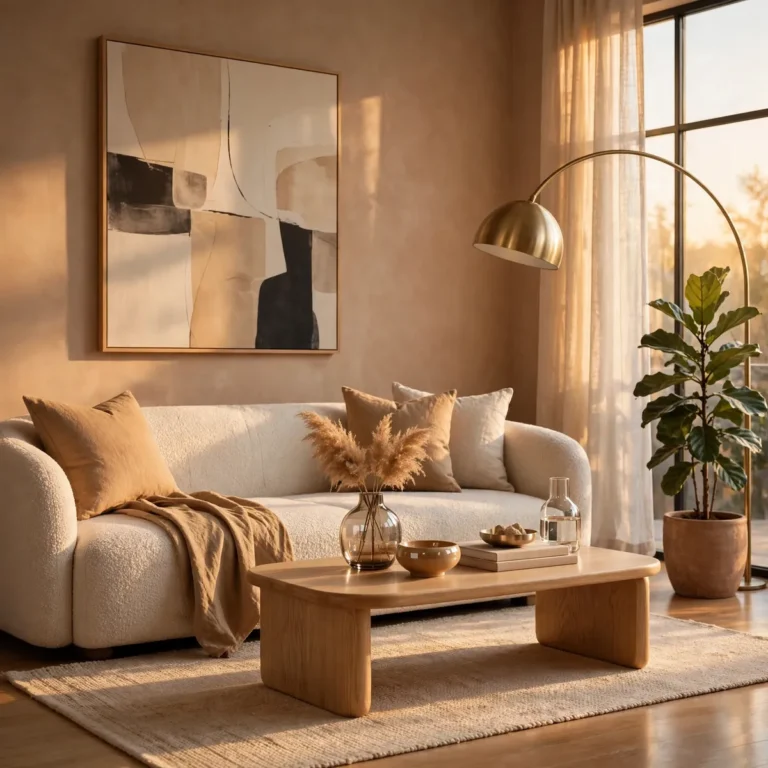
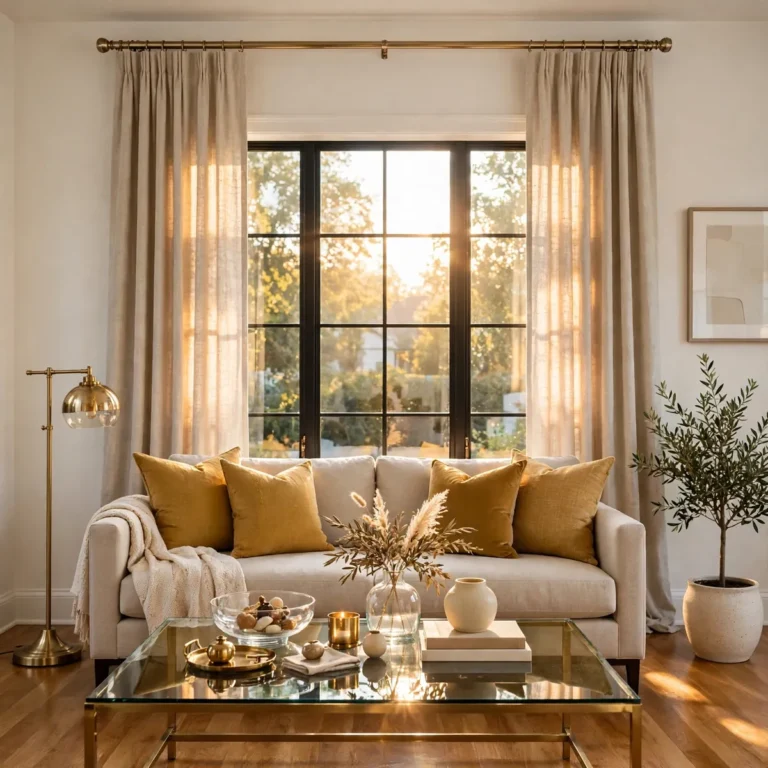
25 Living Room Staircase Ideas That Turn Your Stairs Into the Best Feature in the Room
A living-room-first guide to staircase design — 25 ideas that treat the stairs as a feature, from under-stair reading nooks and display niches to open risers, statement pendants, and clever room-divider layouts, each with a concrete room example and quick styling tips.
Living room staircase ideas work best when the stairs are designed as part of the living room, not as a hallway that happens to pass through it. Open risers, warm wood treads, a runner that echoes the rug, and lighting chosen for the room — not just the climb — turn a functional staircase into the feature your living room is built around. This guide gives you 25 concrete ways to do exactly that, so every idea names a real material, object, or finish you can picture in your own room.
Start by deciding whether the staircase should stand out or blend in, then let the under-stair space, the railing, and the lighting follow that one decision — and the whole room will feel planned rather than accidental. If you want the cosy side of the living room pushed further around the stairs, our cozy living room ideas pair beautifully with these staircase looks, adding softness and warmth without hiding the stairs away.
Key Takeaways
How do I make a staircase in the living room look intentional?
Treat it as furniture: match its materials to the sofa and coffee table, choose one clear role for it — feature, divider, or quiet blend — and style the under-stair space instead of leaving it empty.
What is the best use of the space under living room stairs?
A reading nook with a built-in bench, open shelving, or display niches work best, because they add daily use without closing the room off the way a cupboard wall would.
Should the staircase match the living room or contrast with it?
Either works, but pick one: matching wood and tones blends the stair in calmly, while one strong contrast — dark treads, a brass rail, a bold stringer — makes it a deliberate feature.
How do I light a staircase in a living room?
Layer it: a statement pendant over the stairwell for drama, wall sconces for warm evening light, and small step lights for safe night-time use.
Can a staircase divide a living room from a dining area?
Yes — an open balustrade or a half-height stair wall divides the zones visually while keeping light and conversation flowing, which a solid wall never does.
| Approach | Best when | Key pieces | Feels like |
|---|---|---|---|
| Open risers | Light, airy, open-plan rooms | Slim stringer, wood treads, minimal rail | Airy, modern, spacious |
| Stair as room divider | Living and dining share one room | Open balustrade, half wall, bench base | Defined, flowing, social |
| Under-stair nook | You need a reading or storage spot | Built-in bench, cushions, shelving | Cosy, useful, lived-in |
| Statement feature stair | The stair is the room’s centrepiece | Pendant light, contrast stringer, brass rail | Bold, designed, memorable |
| Tone-on-tone blend | Calm, minimal living rooms | Same paint, same wood, quiet rail | Calm, seamless, restful |
| Warm classic stair | Traditional or transitional rooms | Wood treads, runner, black metal rail | Warm, timeless, welcoming |
Open-Riser Living Room Staircase Ideas That Keep Your Room Light and Airy
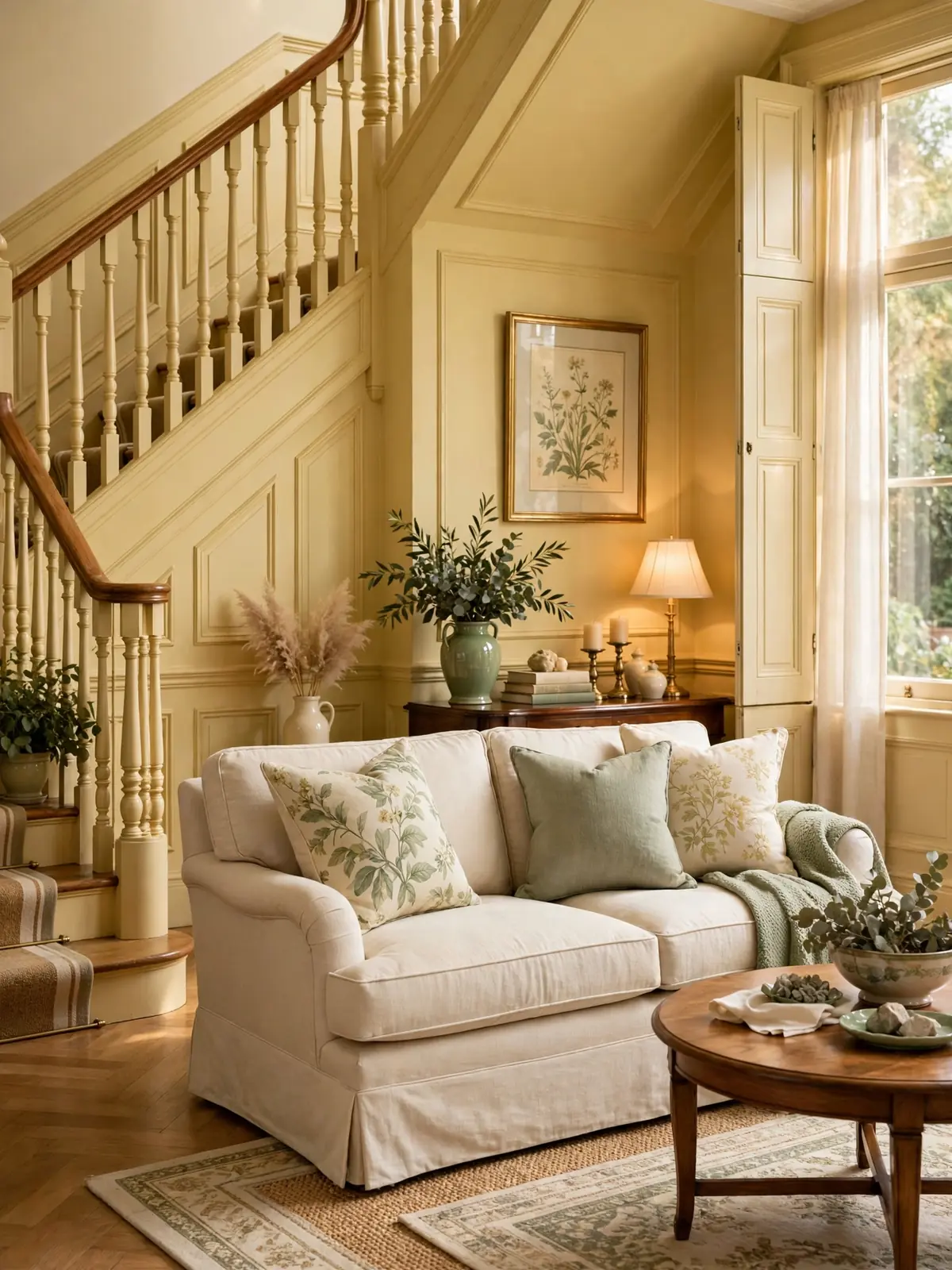
Picture open risers with pale oak treads and a slim white stringer, so daylight passes straight through the staircase instead of stopping at a solid wall. Pair them with a cream sofa dressed in sage green cushions, and the whole living room feels bigger and brighter at a glance.
Quick tips:
- Keep risers open only where building rules allow it.
- Choose pale treads to bounce the most light.
- Add a slim handrail so the openness still feels safe.
A Staircase That Works as a Room Divider Between Living and Dining
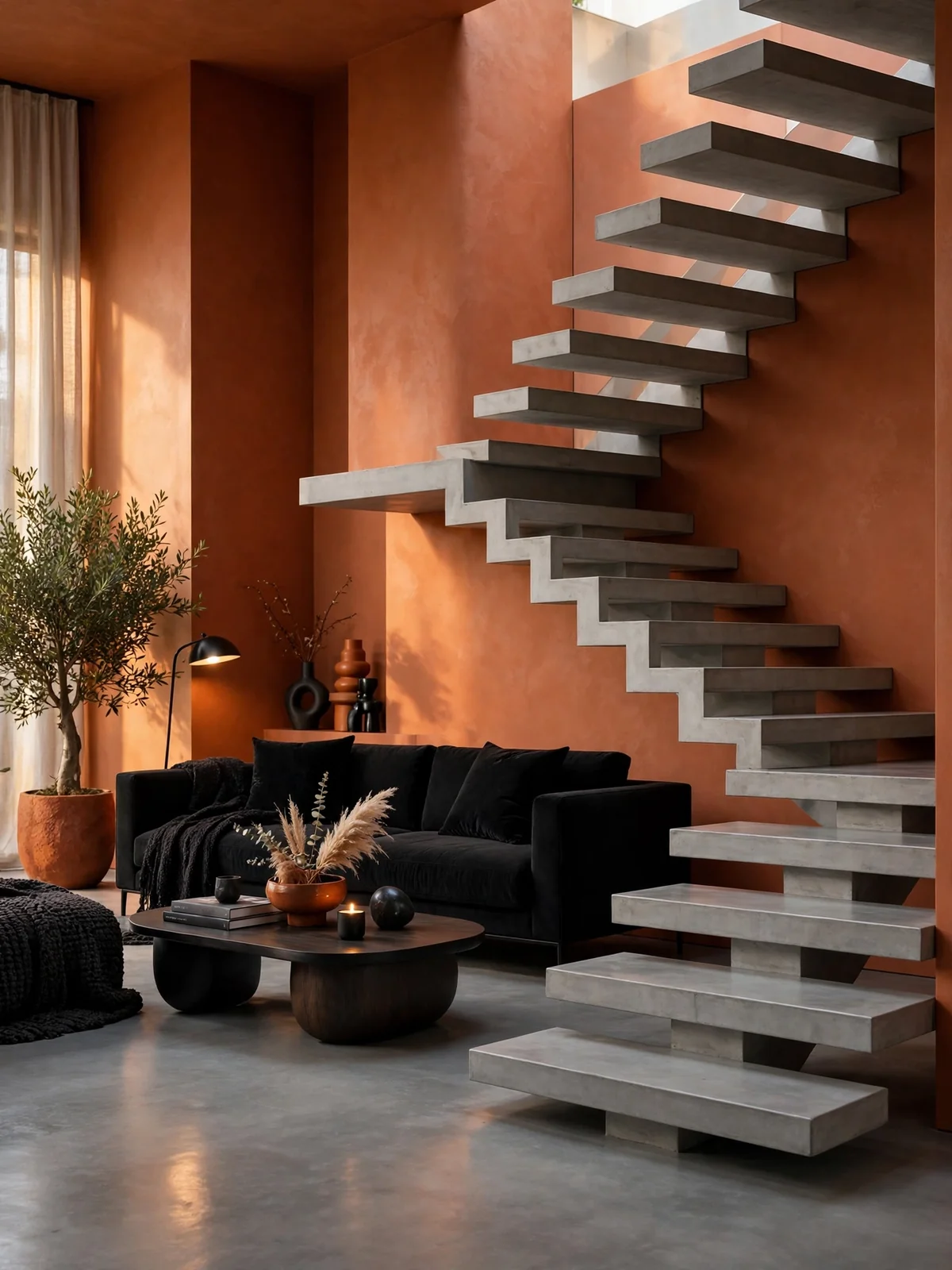
Let an open black metal balustrade turn the staircase into a gentle divider between the sofa area and a dining table with terracotta chairs. The zones read clearly, yet light and conversation flow straight through the railing.
Quick tips:
- Keep the balustrade open, not solid, to hold the light.
- Align the sofa back with the stair line for a clean divide.
- Repeat the railing colour once in a dining chair frame.
An Under-Stair Reading Nook With a Built-In Bench and Cushions
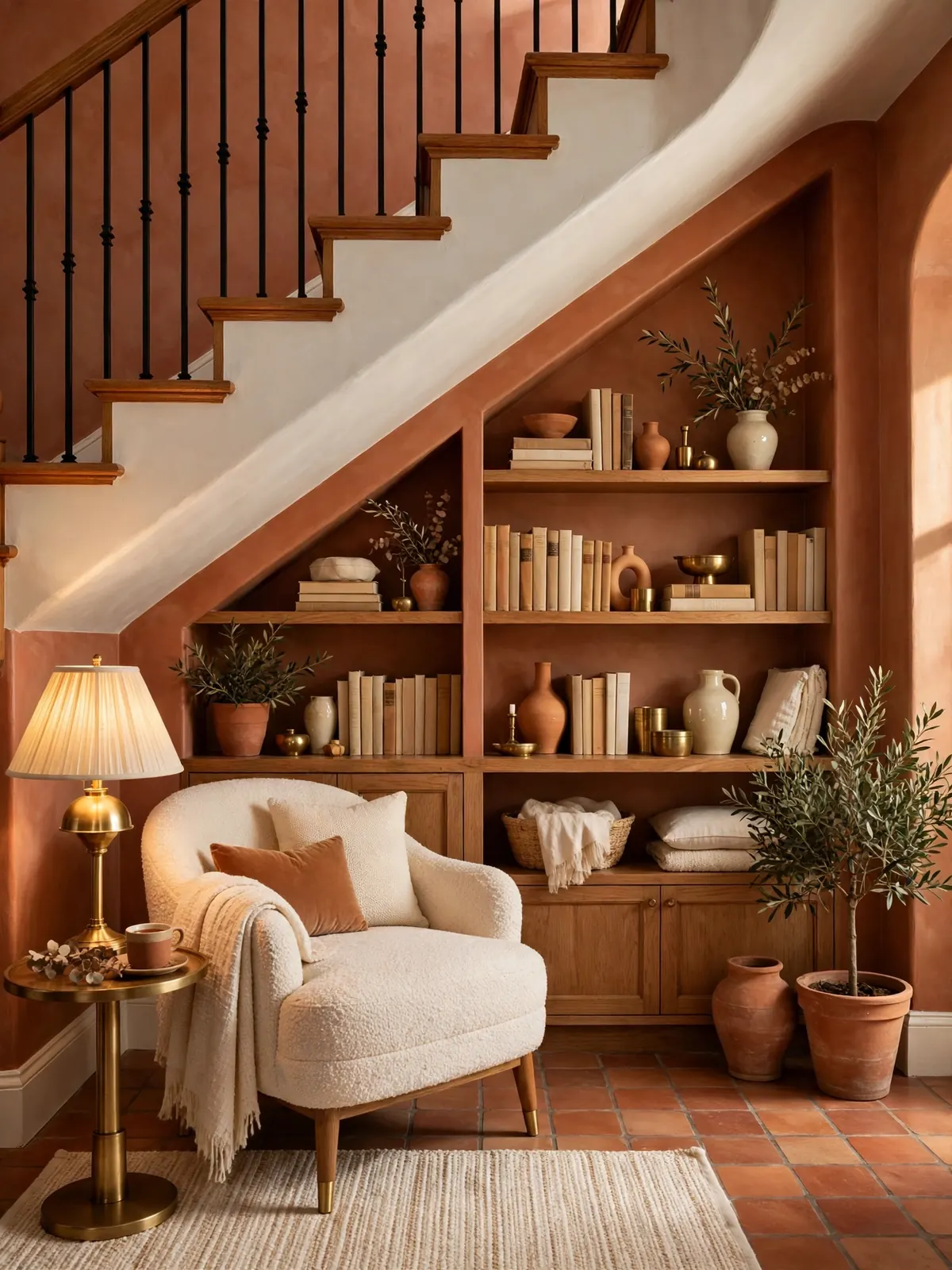
Build a low bench into the space beneath the stairs, dress it with dusty blue linen cushions and a cream knit throw, and you have a reading nook that feels designed rather than improvised. The bench should follow the slope of the stairs, deeper at the tall end where an adult can sit comfortably and shallower toward the low end, where a stack of books and a small plant can live instead. Mount a brass reading lamp on the stair wall above the bench so the light falls exactly where a book sits, and fit a narrow oak bookshelf along the side wall within arm’s reach, stocked with three or four favourite titles. Add a woven basket beneath the bench for blankets, and choose cushions in a washable linen because a nook this inviting gets used every single day. Finish with a small rug underfoot in a soft dusty blue pattern, and the corner beneath the stairs becomes the seat everyone in the house quietly competes for.
Quick tips:
- Build the bench to the stair slope, not a flat box.
- Use washable linen cushions for daily use.
- Keep the shelf narrow so the nook stays open.
Under-Stair Display Niches With Warm Spotlights for Vases and Art
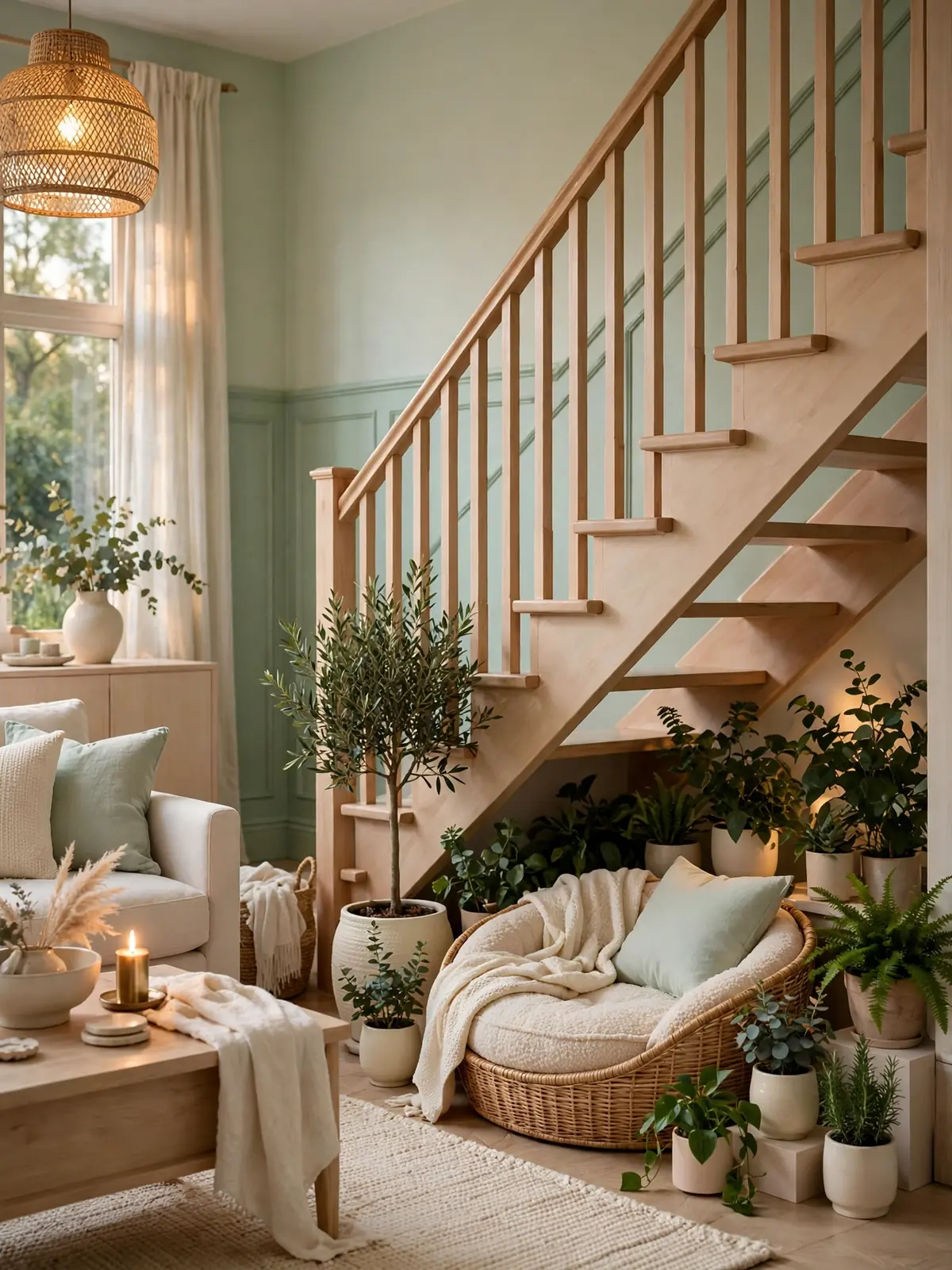
Cut shallow display niches into the under-stair wall, light each one with a warm spotlight, and fill them with plum ceramic vases and one small sculpture. The stairs gain a gallery of their own, and the plum vases give a pale room a rich, quiet accent.
Quick tips:
- Light each niche separately for a gallery feel.
- Keep objects to one per niche for calm.
- Echo the vase colour once in a cushion.
Open Under-Stair Shelving for Books, Baskets, and Display Pieces
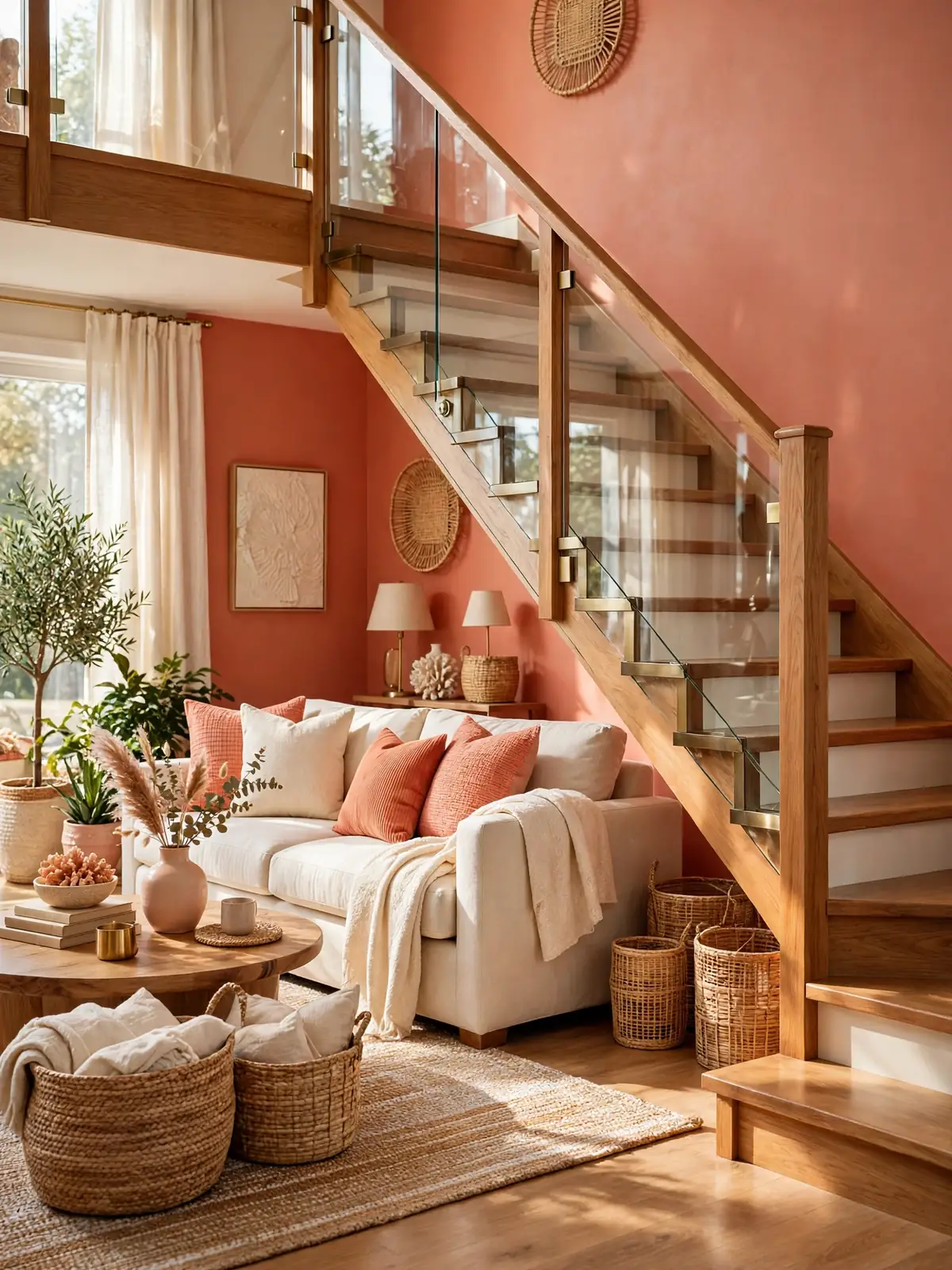
Fit open oak shelves beneath the stairs and fill them with books, woven baskets, and one rust ceramic bowl. The shelves turn dead space into the room’s most useful wall, and the rust bowl gives the oak a warm, deliberate accent.
Quick tips:
- Mix books, baskets, and one display piece per shelf.
- Leave one shelf partly empty for breathing room.
- Match shelf wood to the stair treads.
A Patterned Stair Runner That Echoes Your Living Room Rug
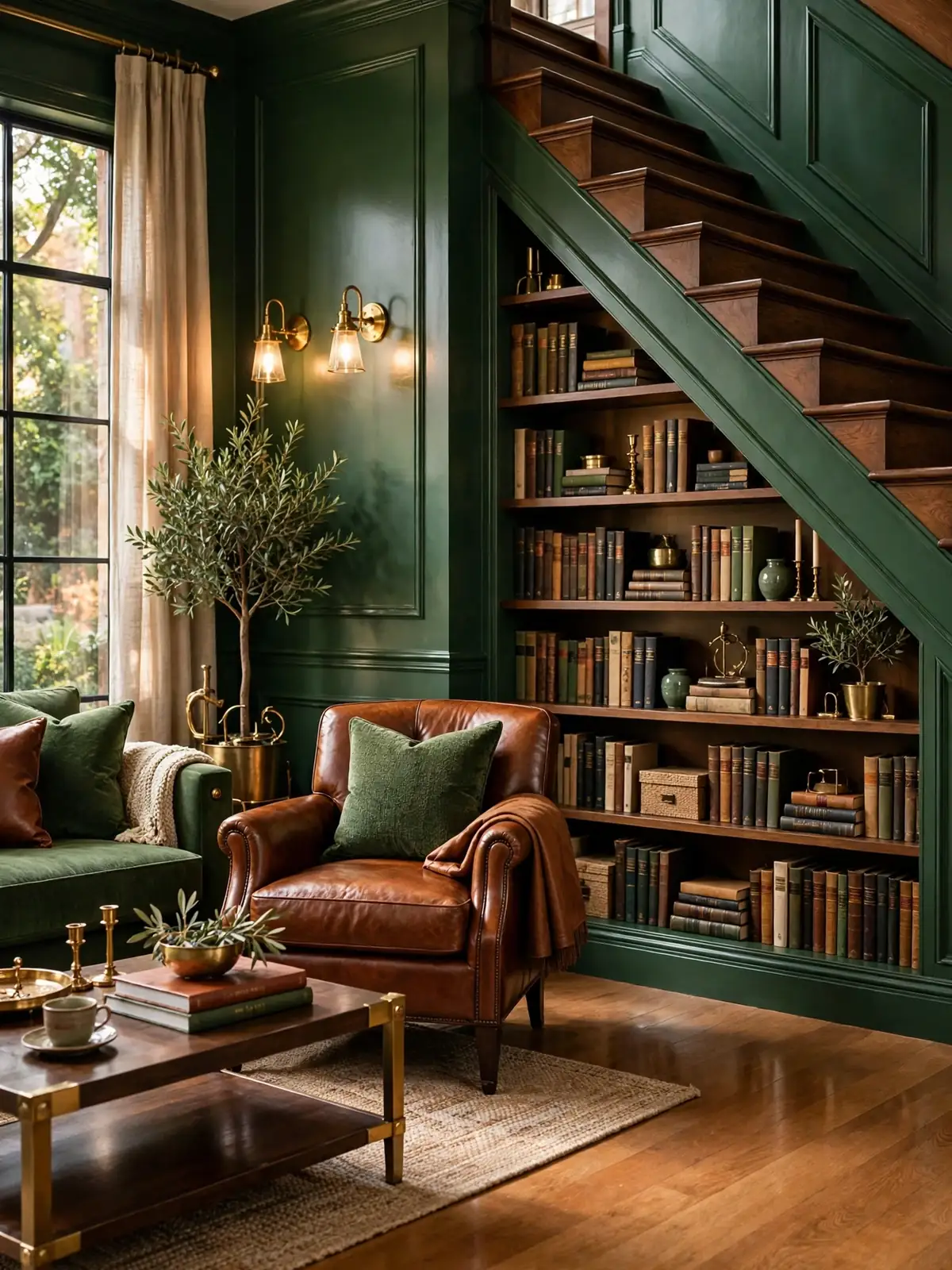
Lay a cream and forest green patterned runner up the stairs to echo the living room rug, and the two floors of the room feel stitched together. Brass stair rods add a tailored finish, and the pattern softens every footstep.
Quick tips:
- Match the runner pattern family to the rug, not exactly.
- Use low-pile runners for easy cleaning.
- Fit stair rods for a classic, finished look.
A Statement Pendant Hanging Over the Stairwell in the Living Room
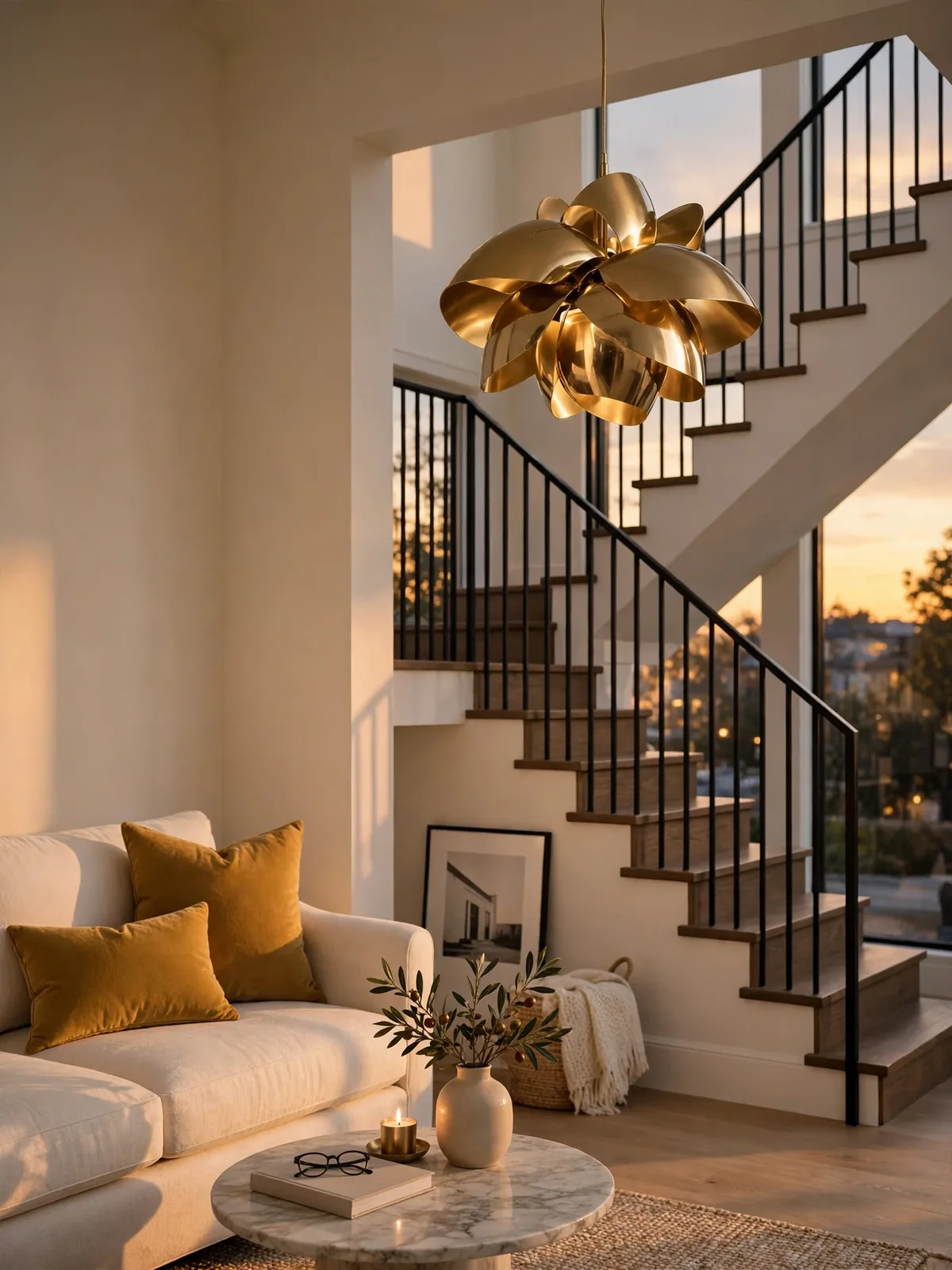
Hang a sculptural brass pendant low over the stairwell, and the staircase gains a piece of jewellery that anchors the whole living room. Mustard cushions on the cream sofa catch the warm light, so the pendant feels part of the seating area too.
Quick tips:
- Hang the pendant at the stairwell’s centre, not the room’s.
- Use a warm bulb for a golden evening glow.
- Keep the pendant slim so it never blocks the climb.
Slim Black Metal Balusters That Match Your Living Room Frames
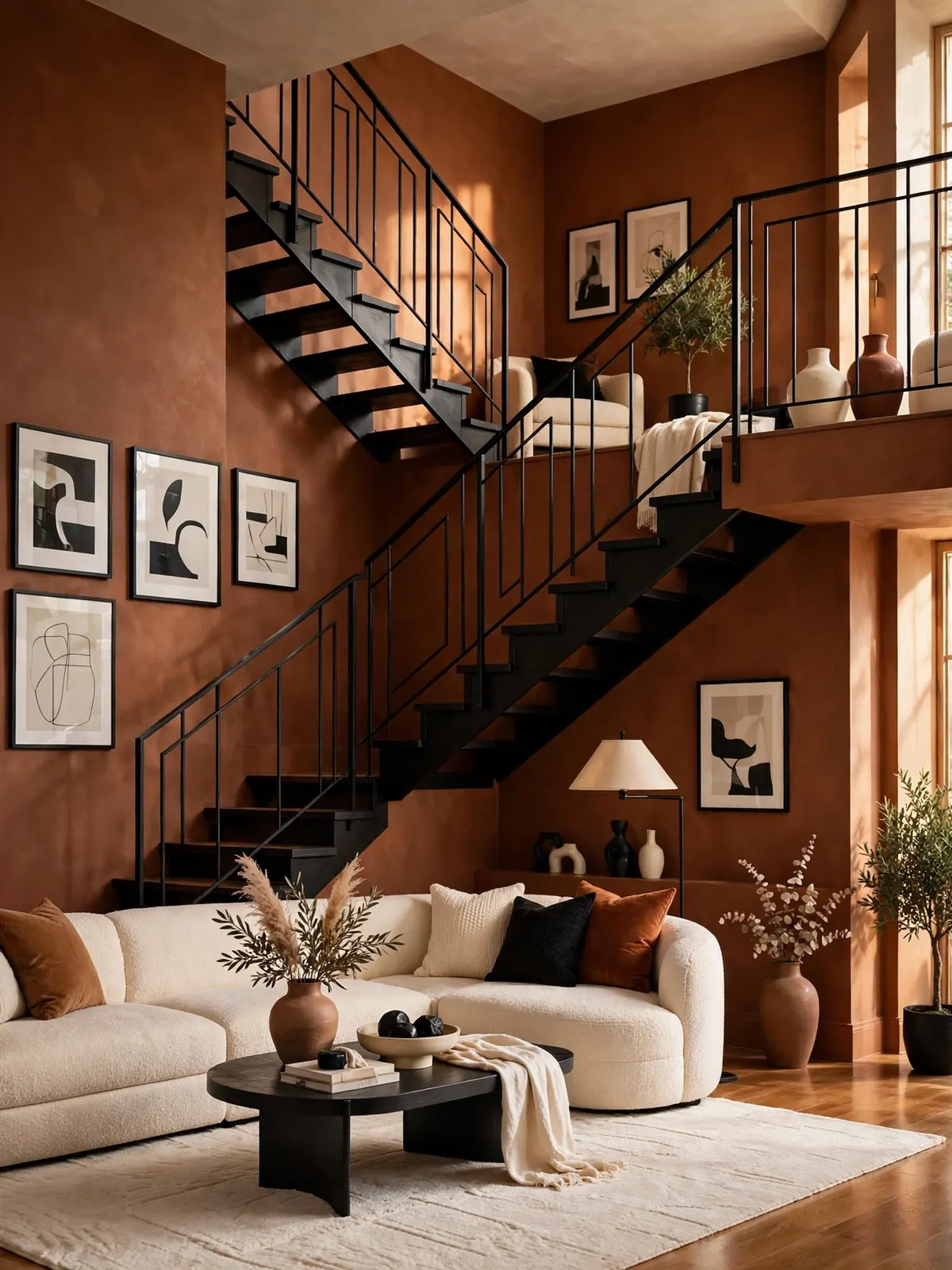
Choose slim black metal balusters and echo them with black picture frames on the living room wall, and the staircase reads as part of the room’s furniture. A burgundy leather chair nearby gives the black metal something rich to sit beside.
Quick tips:
- Keep black finishes matte for a soft edge.
- Repeat black in exactly three places for balance.
- Pair black metal with warm wood nearby.
Warm Wood Treads That Echo the Living Room Floor
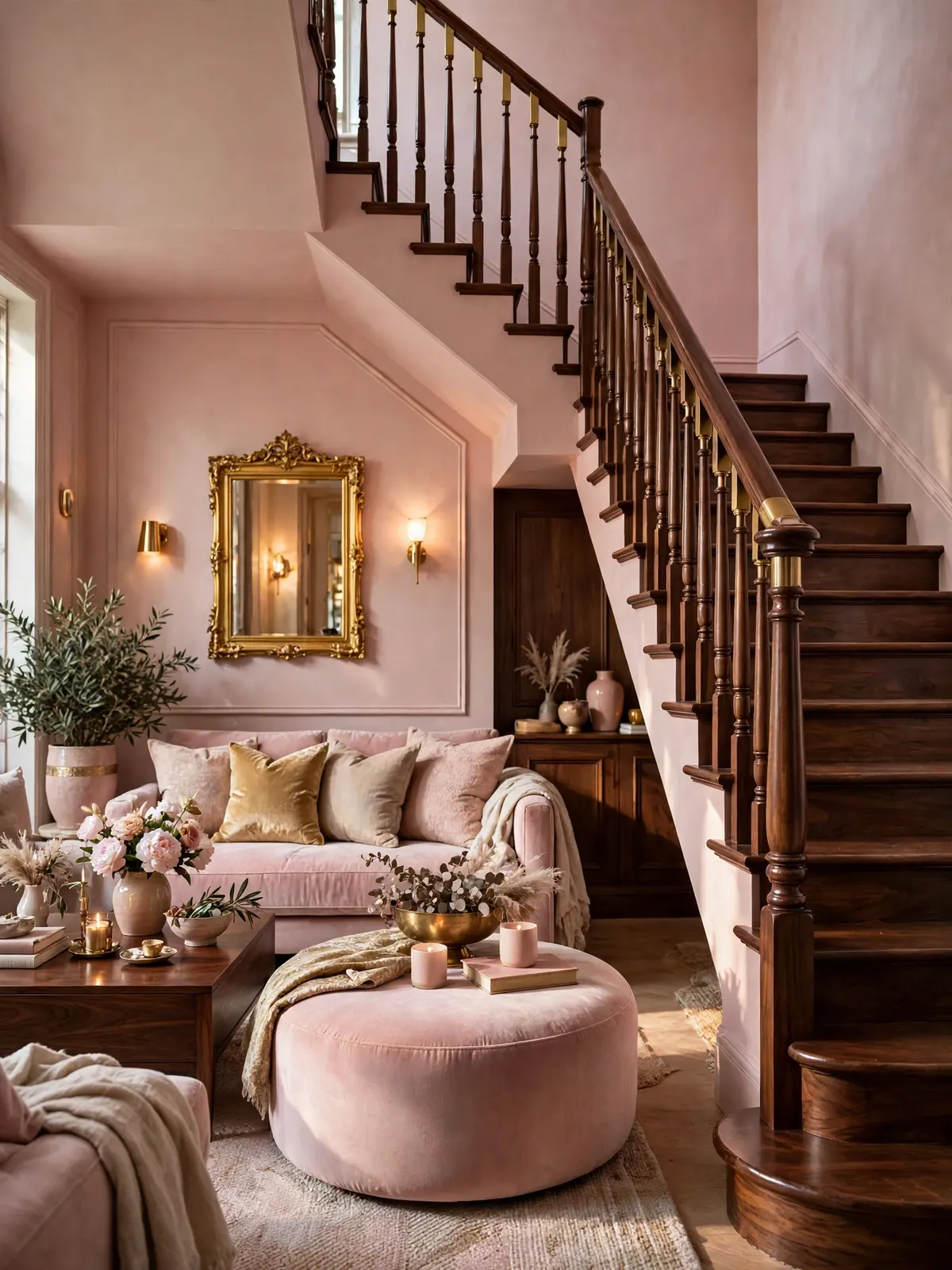
Run the same warm walnut across the stair treads and the living room floor, and the staircase feels like a continuation of the room rather than an interruption. A teal velvet armchair at the stair base adds a cool, luxurious contrast to all that warm wood.
Quick tips:
- Match tread wood tone to the floor, not just the species.
- Seal treads well in high-traffic homes.
- Add a rug at the stair base to soften the transition.
A Gallery Wall That Climbs the Staircase in Step With the Treads
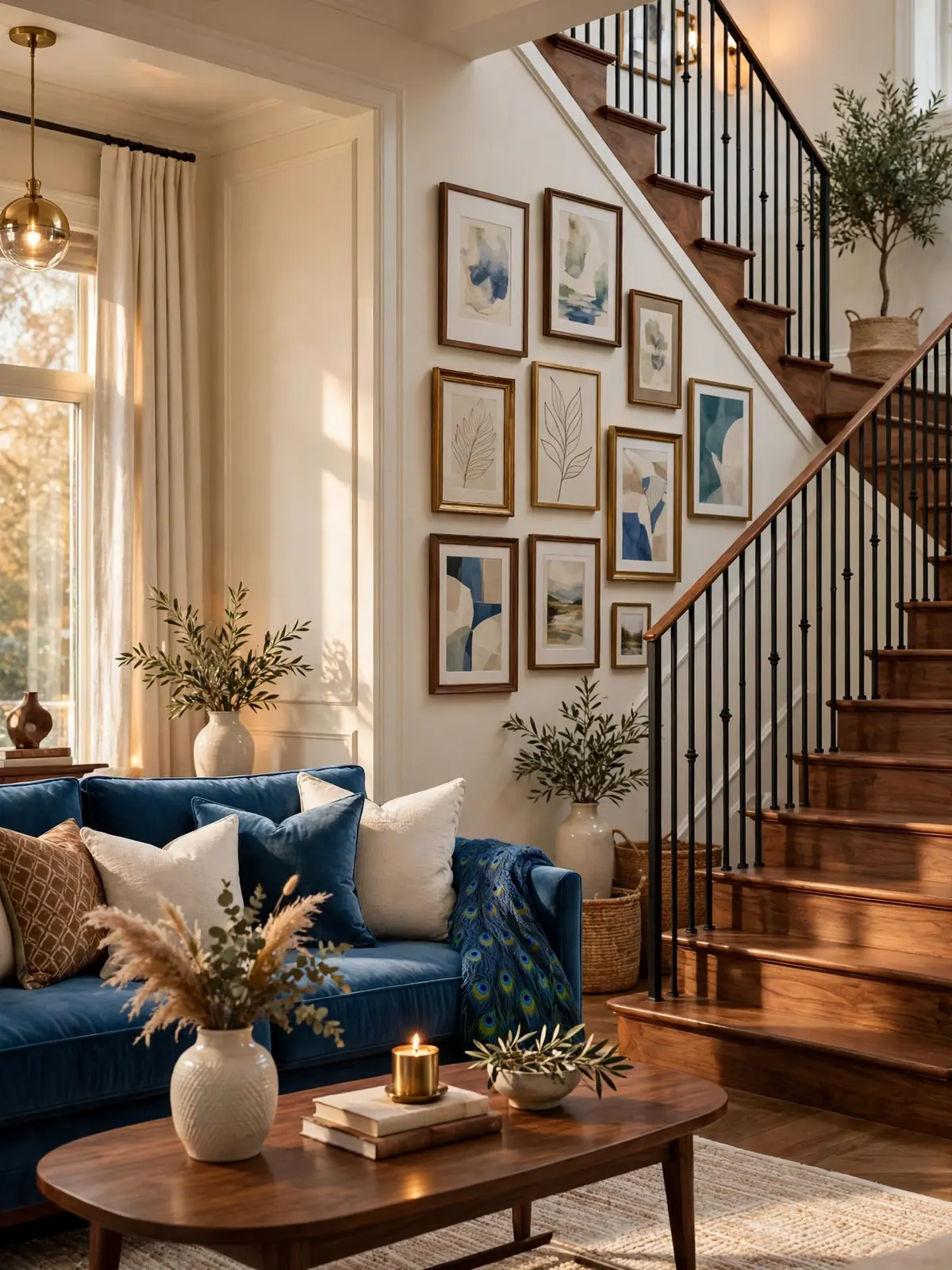
Hang framed prints up the stair wall so each frame steps upward with the treads, using sky blue frames against cream walls. The wall becomes a climb of its own, and the blue frames tie the staircase back to the living room palette.
Quick tips:
- Follow the stair angle with consistent spacing.
- Mix frame sizes but keep one frame colour.
- Start the lowest frame at eye level.
A Built-In Bench at the Base of the Stairs for Shoes and Bags
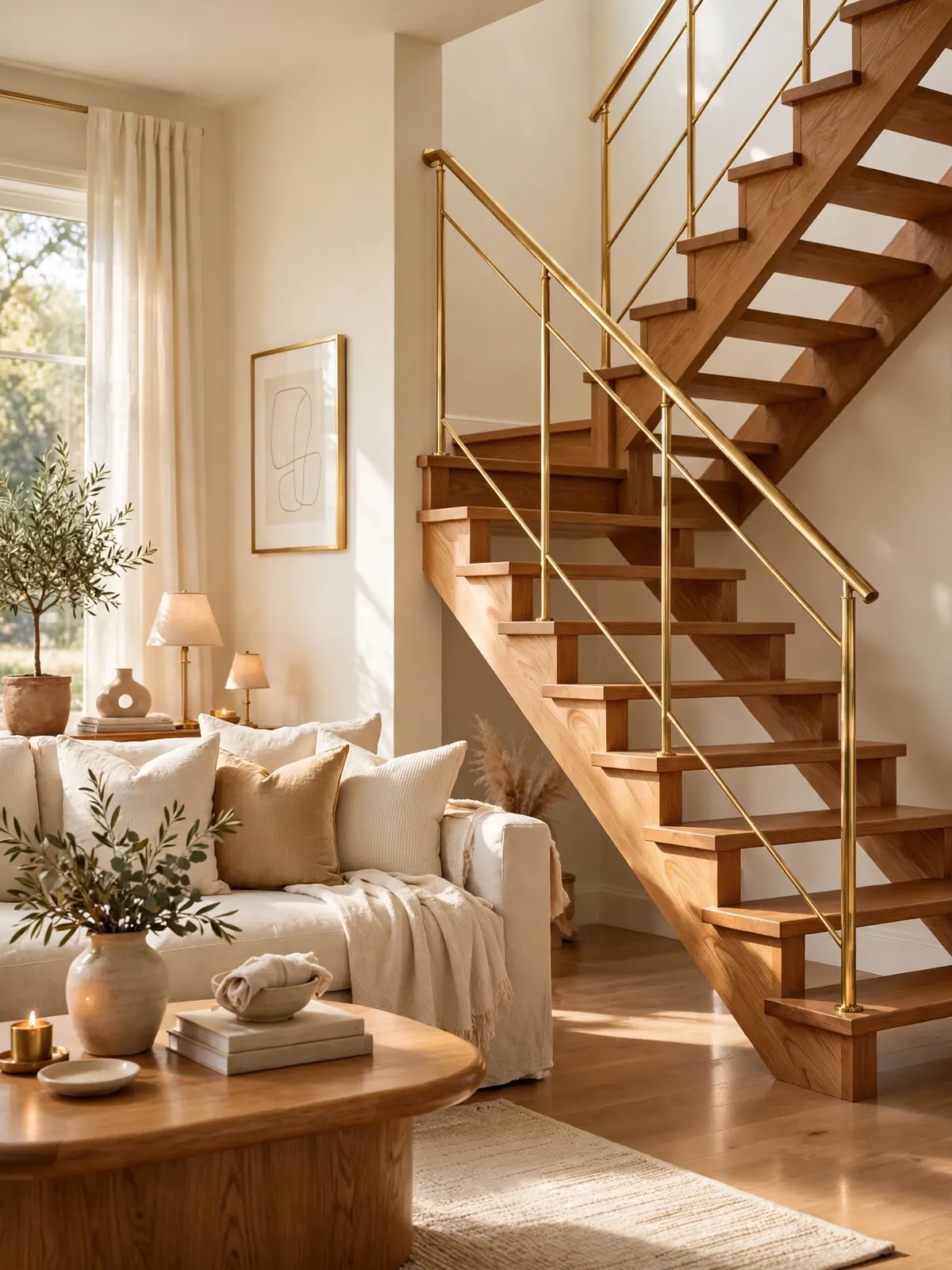
Build a low oak bench at the base of the stairs with woven baskets beneath for shoes and bags, topped with blush linen cushions. The landing becomes a practical pause point, and the blush cushions soften the joinery beautifully.
Quick tips:
- Size baskets to fit snugly under the bench.
- Add hooks above for coats and bags.
- Choose washable cushion covers for daily use.
A Tall Planter and Trailing Greenery at the Foot of the Stairs
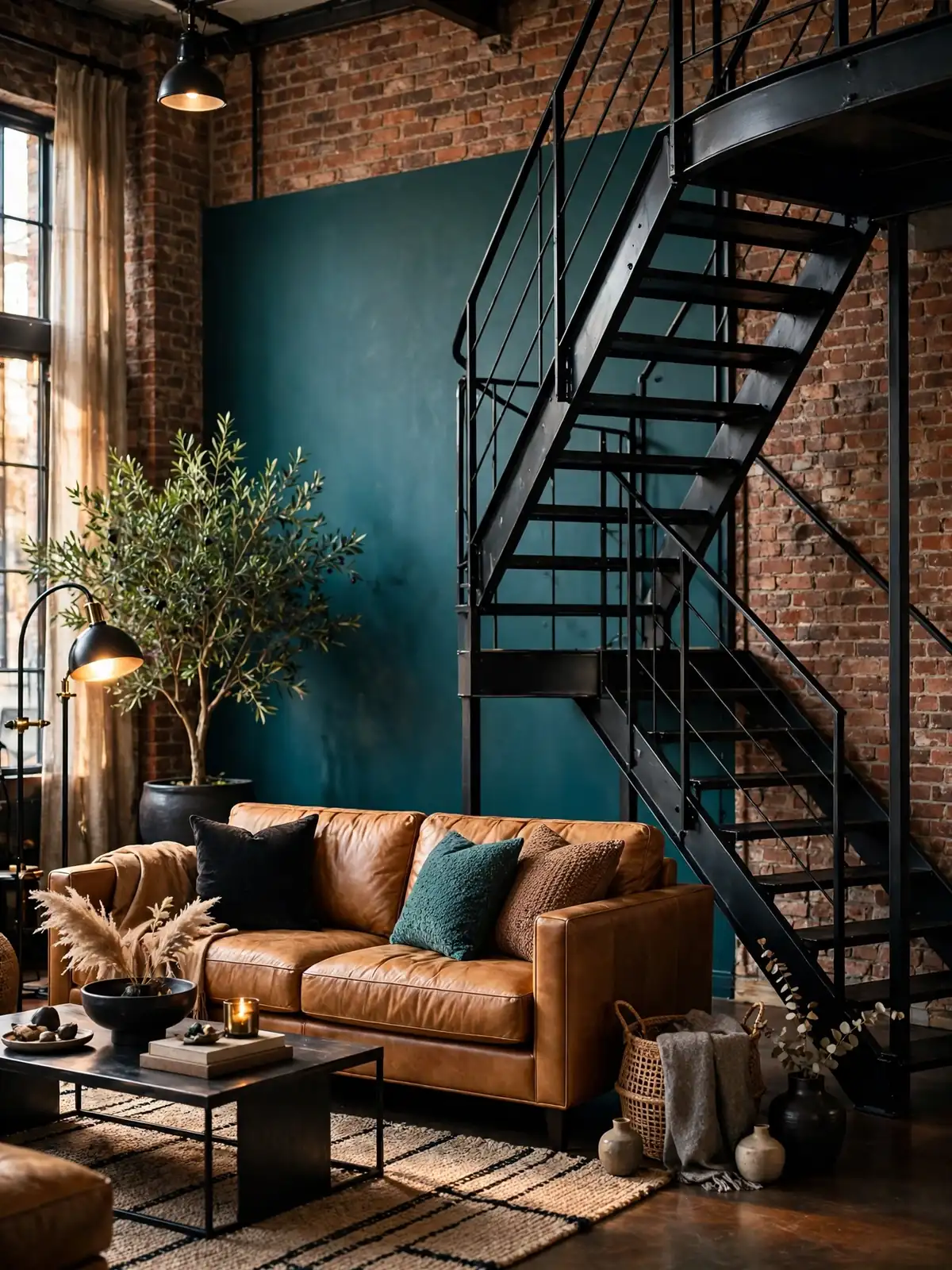
Place a tall olive tree in a clay pot at the foot of the stairs with trailing greenery spilling from a shelf above, and the hard lines of the staircase soften instantly. Mint cushions on the nearby sofa pick up the green, so the planting feels part of the room.
Quick tips:
- Choose one tall plant over many small ones.
- Use a clay or stone pot, not bright plastic.
- Keep trailing plants clear of the handrail.
A Large Mirror at the Stair Base That Doubles the Living Room Light
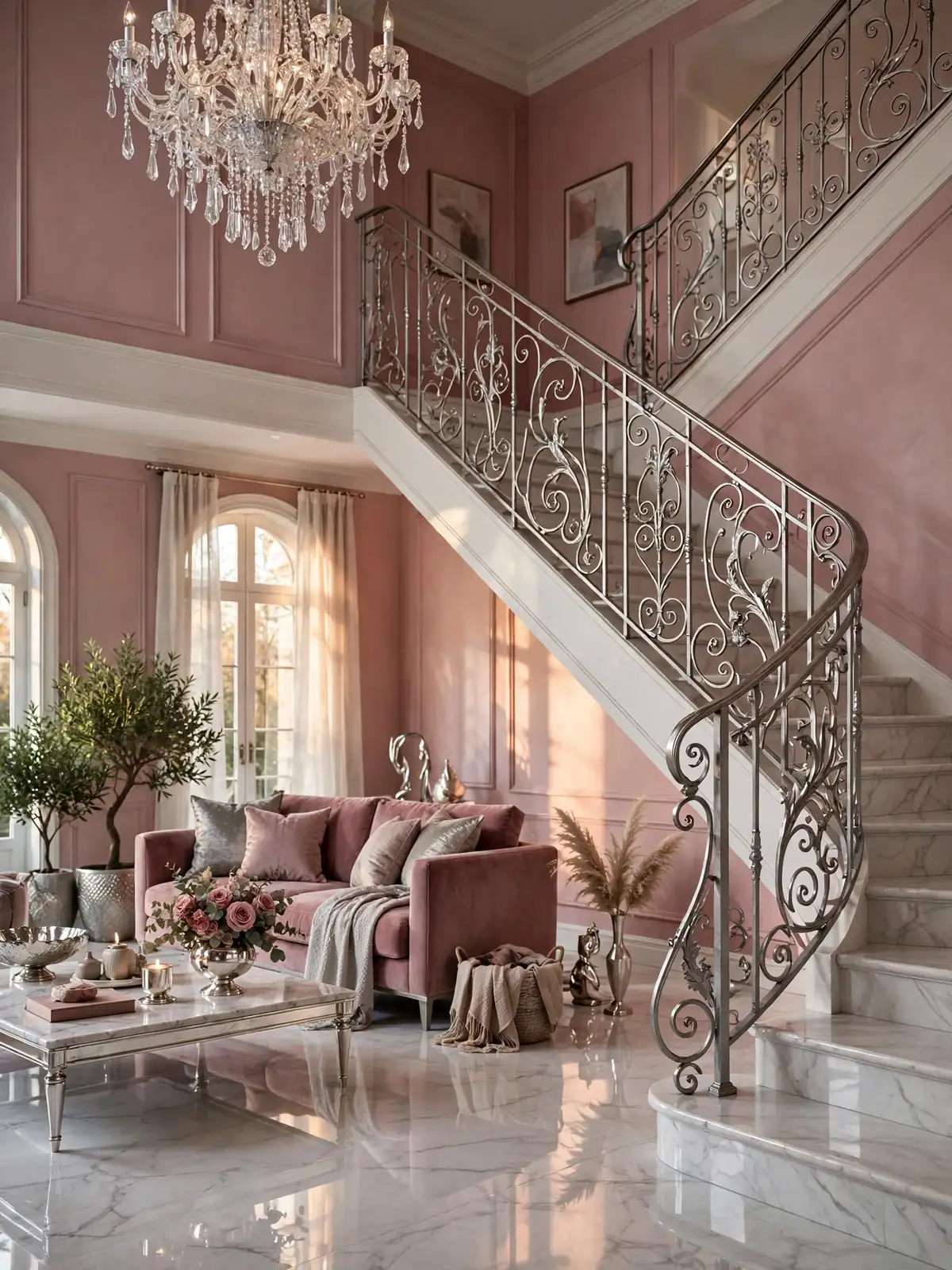
Lean a large arched mirror against the wall at the stair base, and daylight doubles across the living room while the staircase feels wider. A dusty rose throw on the cream armchair it reflects adds a gentle blush the mirror carries through the space.
Quick tips:
- Angle the mirror to reflect a window, not a blank wall.
- Fix it securely if children use the stairs.
- Keep the frame pale so the mirror stays soft.
A Contrasting Stringer That Defines the Staircase Zone
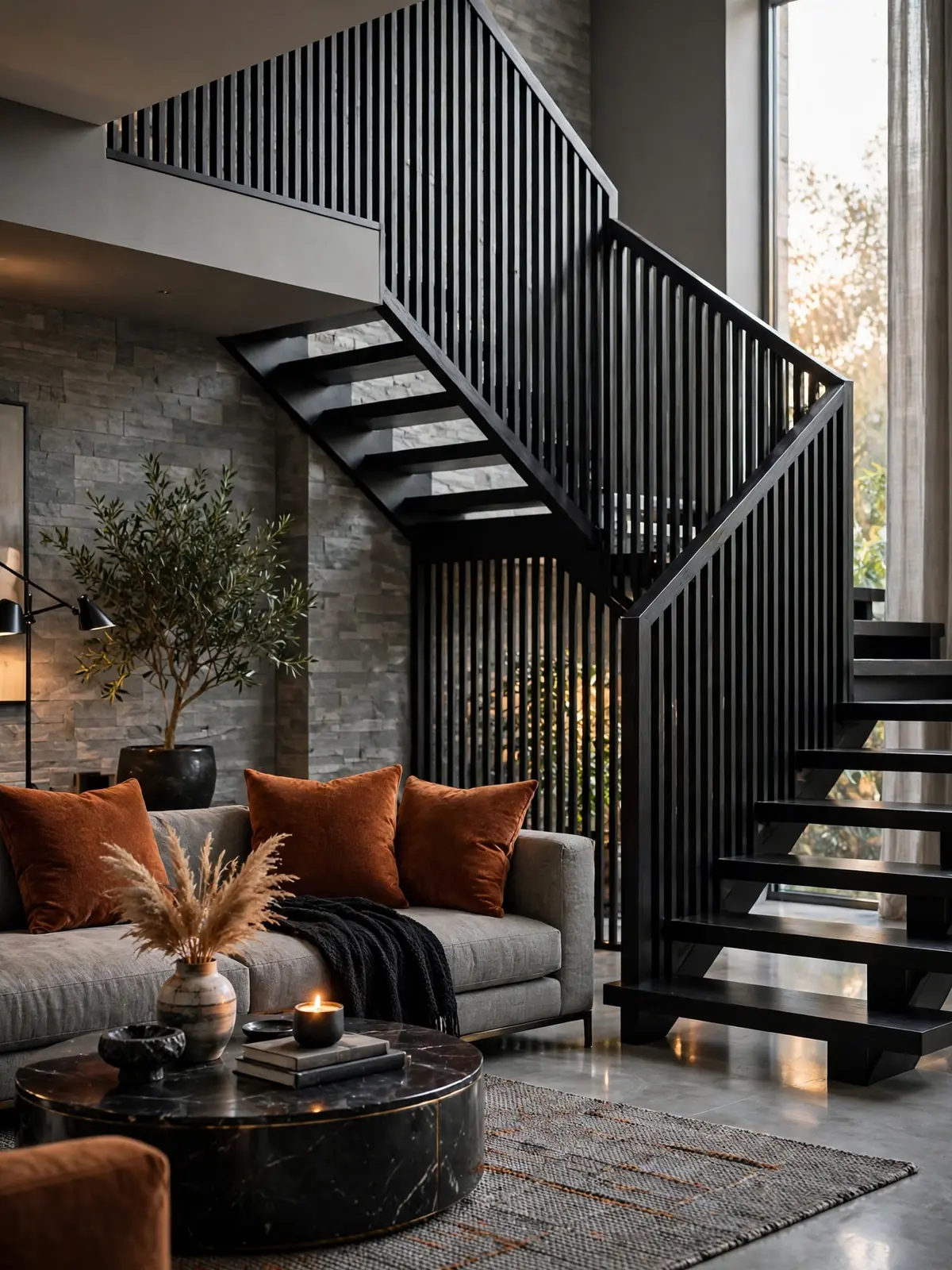
Paint the stair stringer deep charcoal against cream walls, and the staircase gains a bold outline that defines its zone without a single extra wall. Ochre cushions on the beige sofa warm up the contrast, so the charcoal feels graphic rather than harsh.
Quick tips:
- Paint only the stringer, not the treads, for restraint.
- Echo the stringer colour once in a frame or lamp base.
- Keep surrounding walls pale so the line stands out.
A Brass Handrail That Warms Up a Pale Living Room Staircase
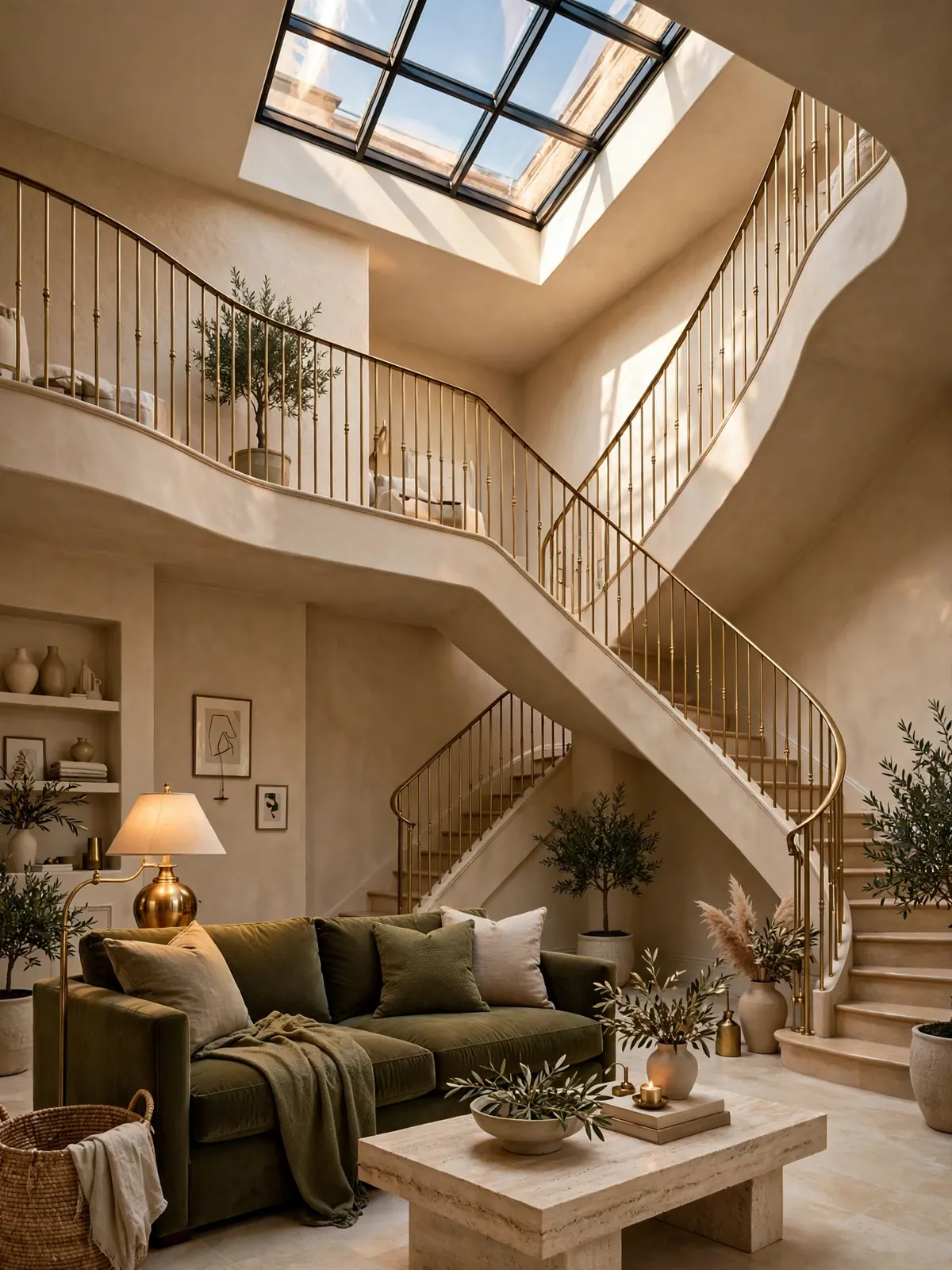
Fit a slim brass handrail along a pale staircase, and the metal warms the whole climb like jewellery on a plain dress. Lavender silk cushions on a greige sofa give the brass a cool, soft contrast to glow against.
Quick tips:
- Keep brass brushed, not shiny, for a calm look.
- Match the handrail finish to one other metal in the room.
- Clean brass gently to keep its warm tone.
Wall Sconces That Wash the Stair Wall With Warm Light
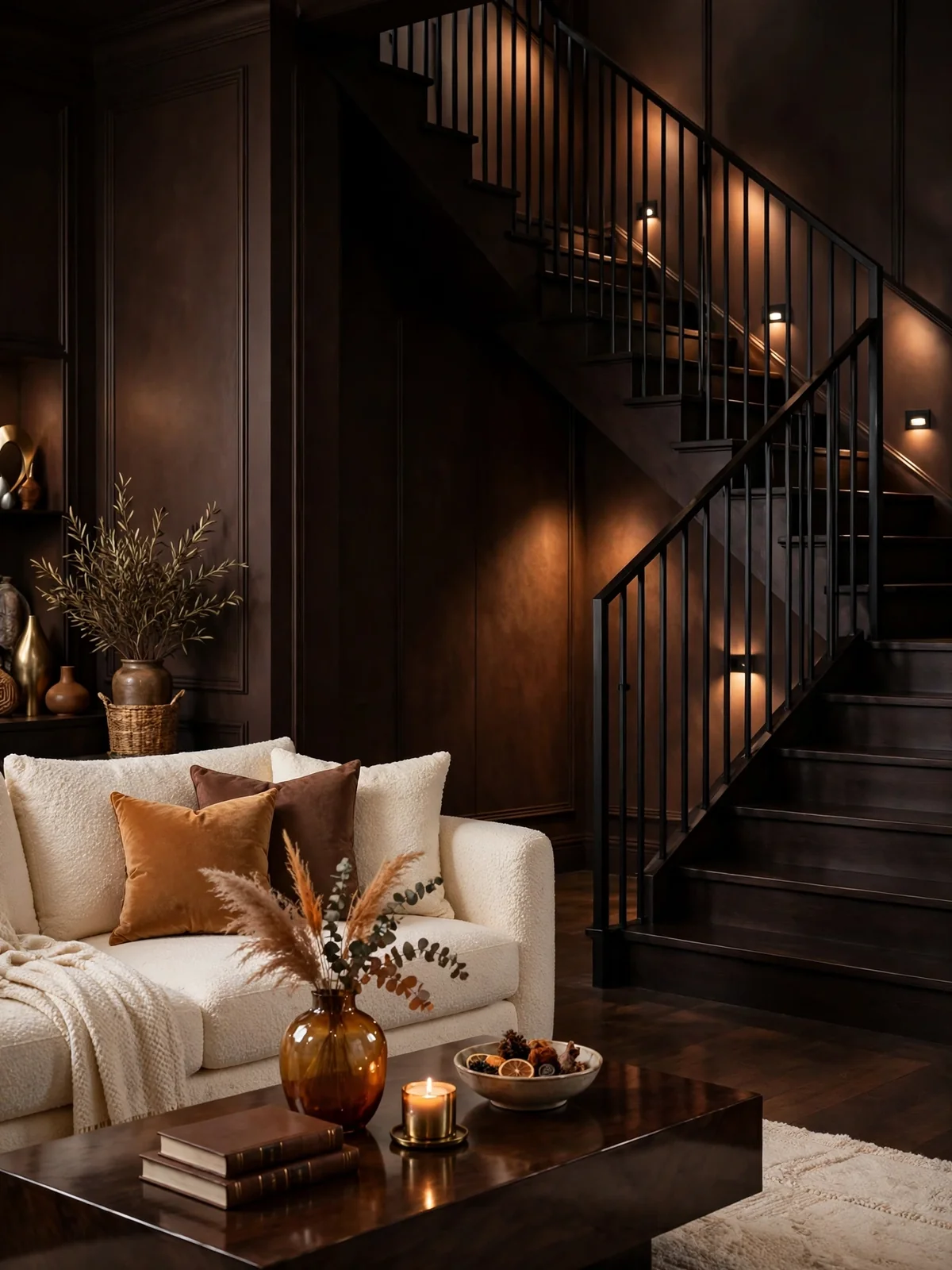
Mount warm wall sconces at intervals up the stair wall, and the climb glows softly in the evening instead of relying on one harsh ceiling light. Emerald cushions on the cream sofa catch that warm wash, adding depth without daytime boldness.
Quick tips:
- Space sconces evenly with the stair rise.
- Use warm bulbs throughout for a consistent glow.
- Put sconces on a dimmer for evening control.
An Armchair Angled Toward the Stairs So the Seating Flows Around Them
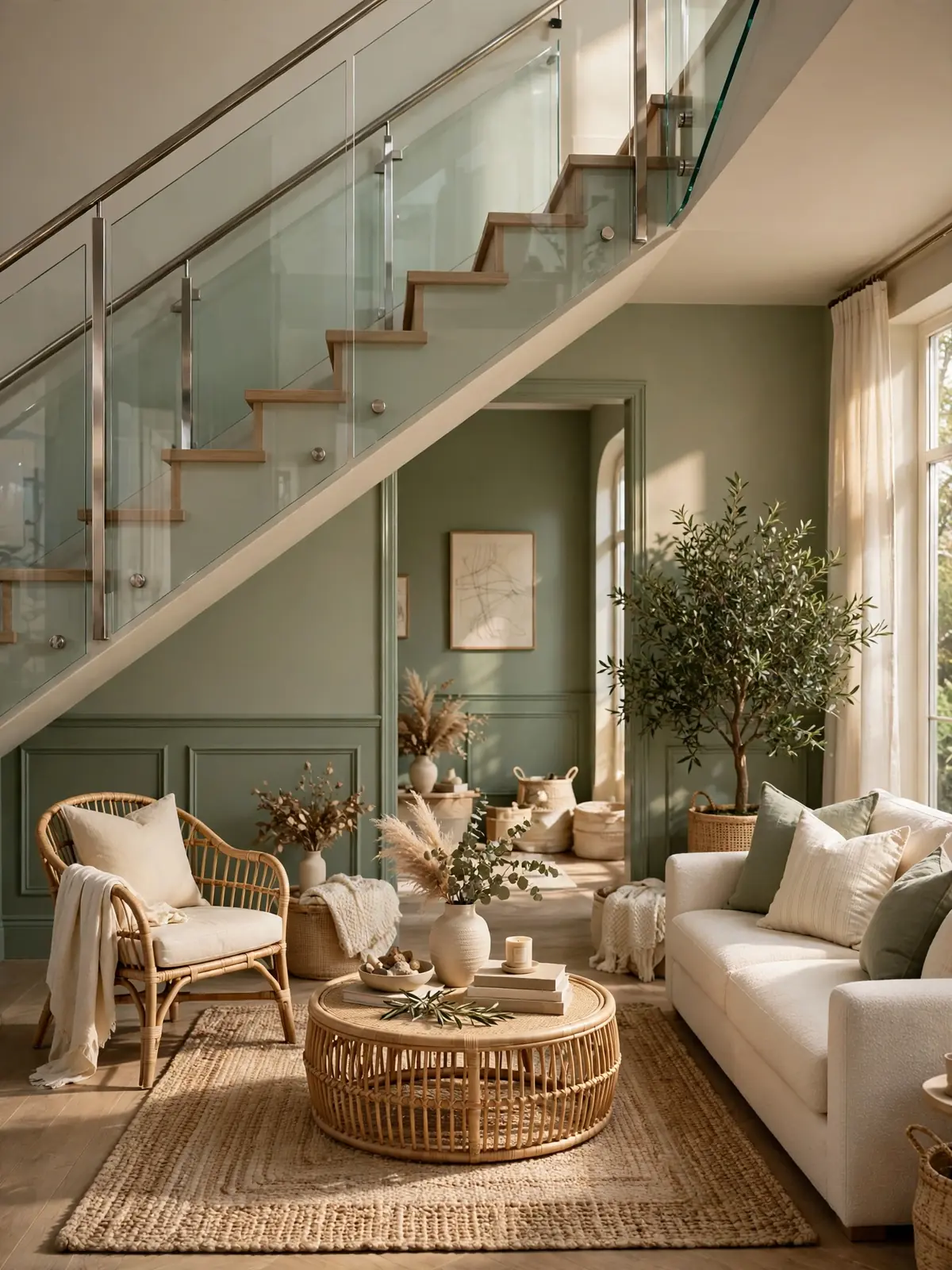
Angle a taupe armchair toward the staircase with a navy ceramic side table beside it, and the seating arrangement acknowledges the stairs instead of turning its back on them. The room’s flow feels natural, because the chair invites the eye — and the conversation — toward the stair feature.
Quick tips:
- Angle the chair about 45 degrees toward the stairs.
- Keep a clear walking path beside the chair.
- Repeat the chair colour once in a throw.
Matching Table Lamps at the Stair Base for a Balanced, Symmetrical Look
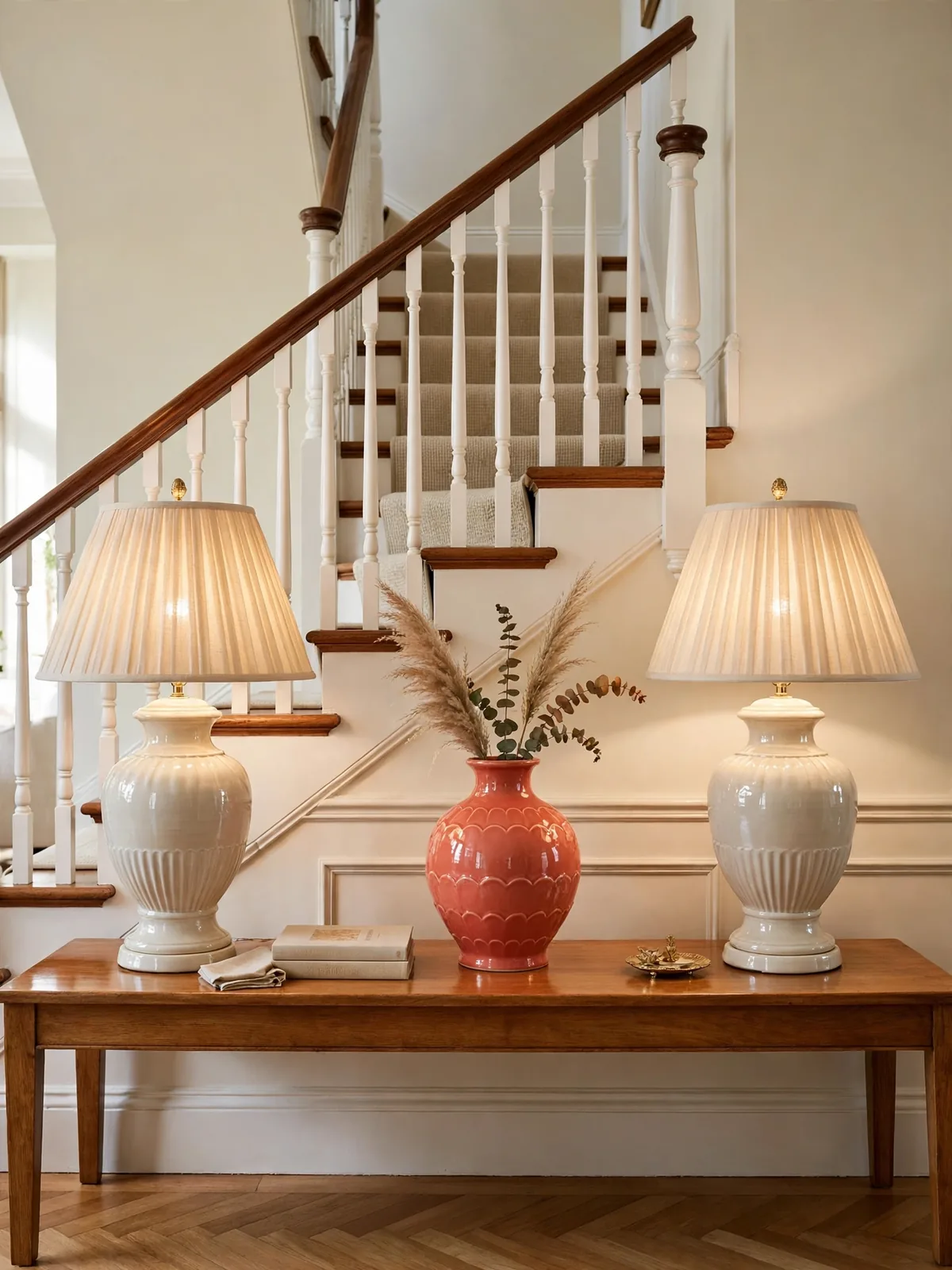
Place matching ceramic table lamps on consoles either side of the stair base, and the staircase becomes the calm centre of a symmetrical arrangement. A coral ceramic vase between them adds one warm accent that stops the symmetry feeling stiff.
Quick tips:
- Match lamp height and shade shape exactly.
- Keep the centrepiece lower than the lamps.
- Use warm bulbs in both lamps for balance.
A Landing Dressed Like a Mini Room With a Console and Art
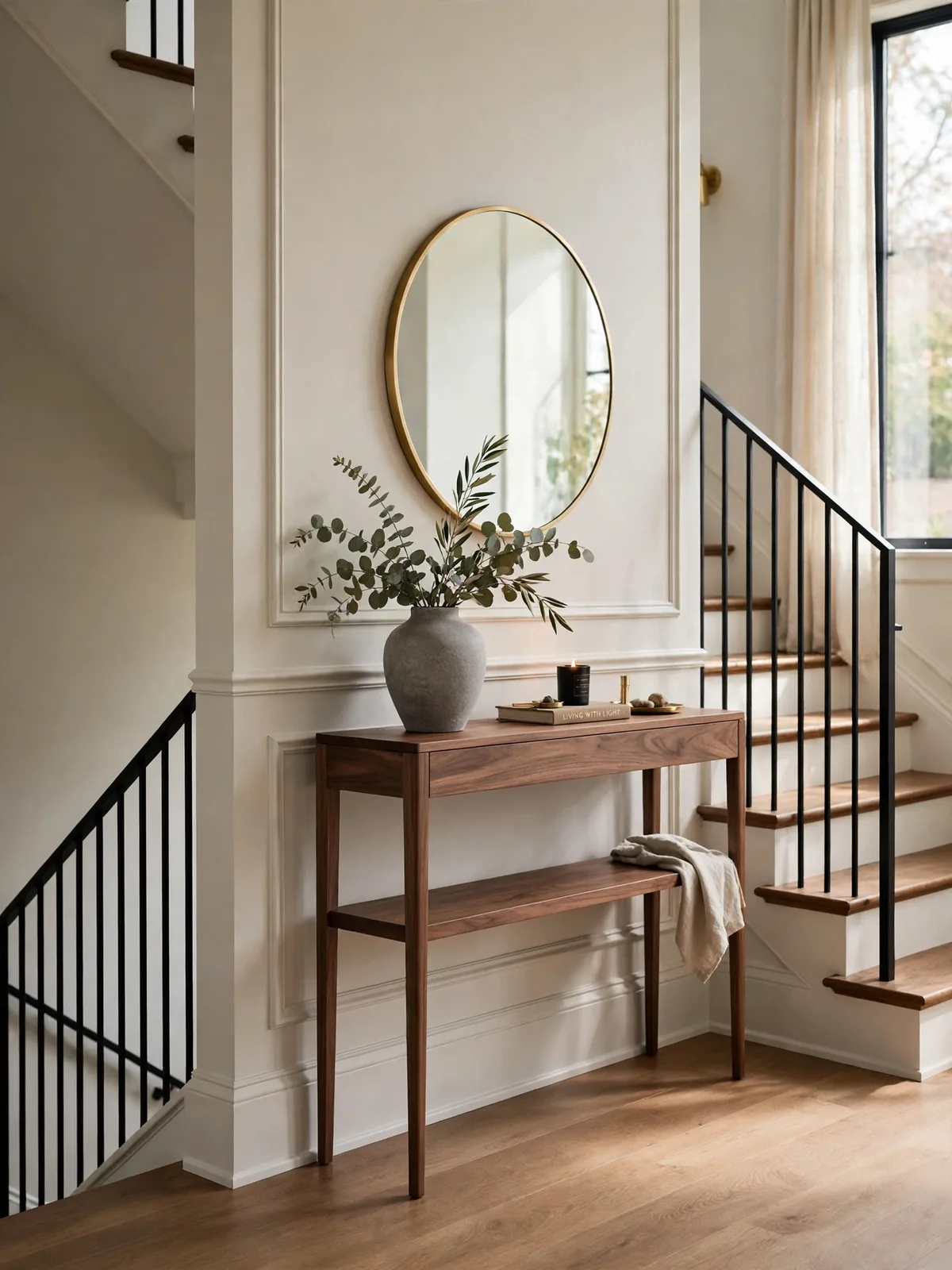
Dress the half-landing like a mini room — a slim walnut console, a round mirror above it, and a stone-grey vase — and the climb gains a pause point that feels intentional. The landing stops being leftover space and starts being a moment in the journey upstairs.
Quick tips:
- Keep the console slim so the landing stays passable.
- Hang the mirror at standing eye level.
- Style with one vase and one small stack of books.
An Under-Stair Drinks Cabinet That Doubles as a Living Room Bar Nook
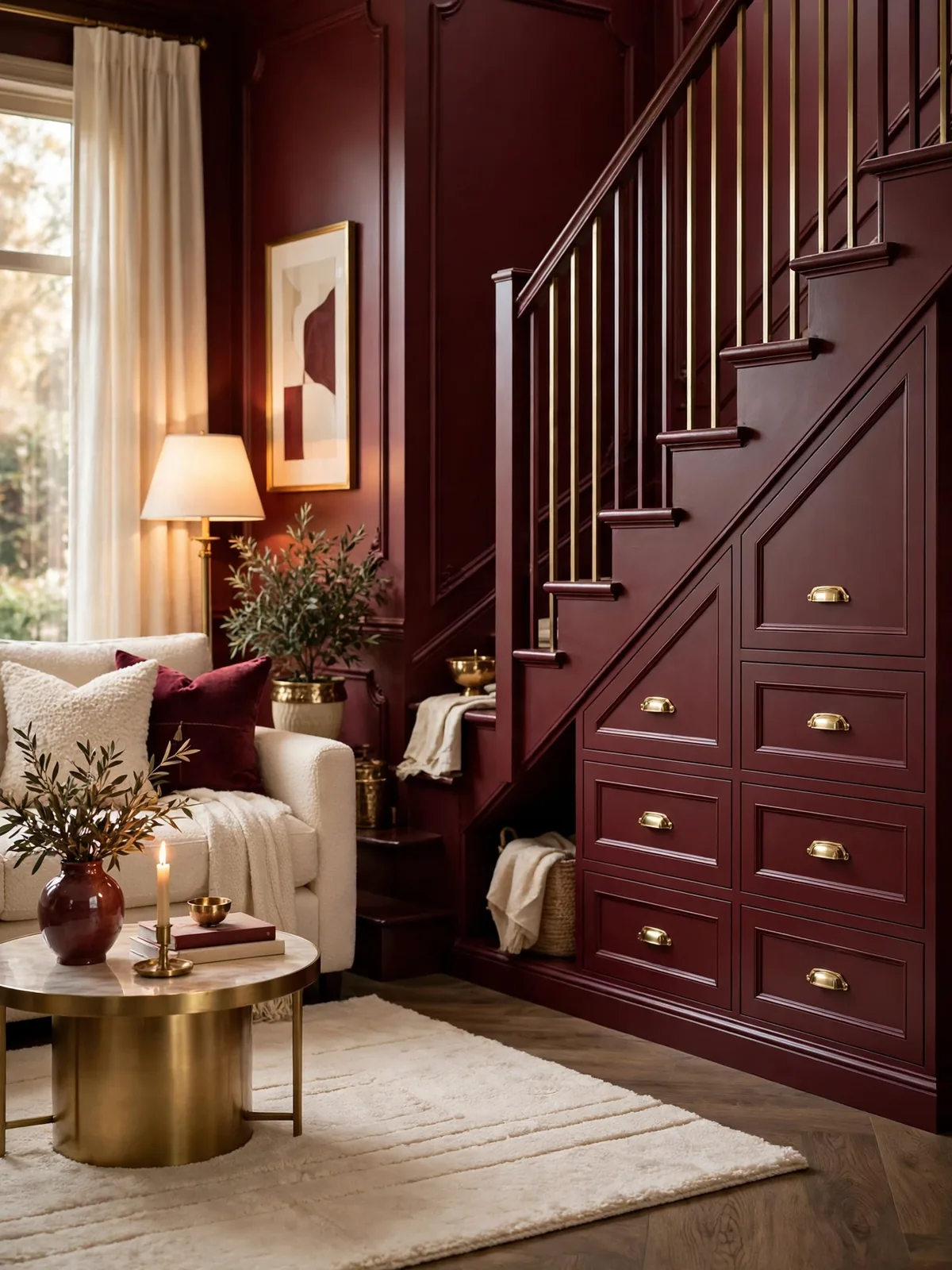
Fit a drinks cabinet into the under-stair space with glass shelves, brass handles, and two aubergine velvet stools pulled up beside it. The nook doubles as a living room bar for evenings, and the aubergine stools make the corner feel deliberately luxurious.
Quick tips:
- Add a small worktop for mixing and serving.
- Light the inside shelves for an evening glow.
- Keep glassware behind closed doors for calm.
A Cosy Pet Nook Tucked Beneath the Lowest Treads
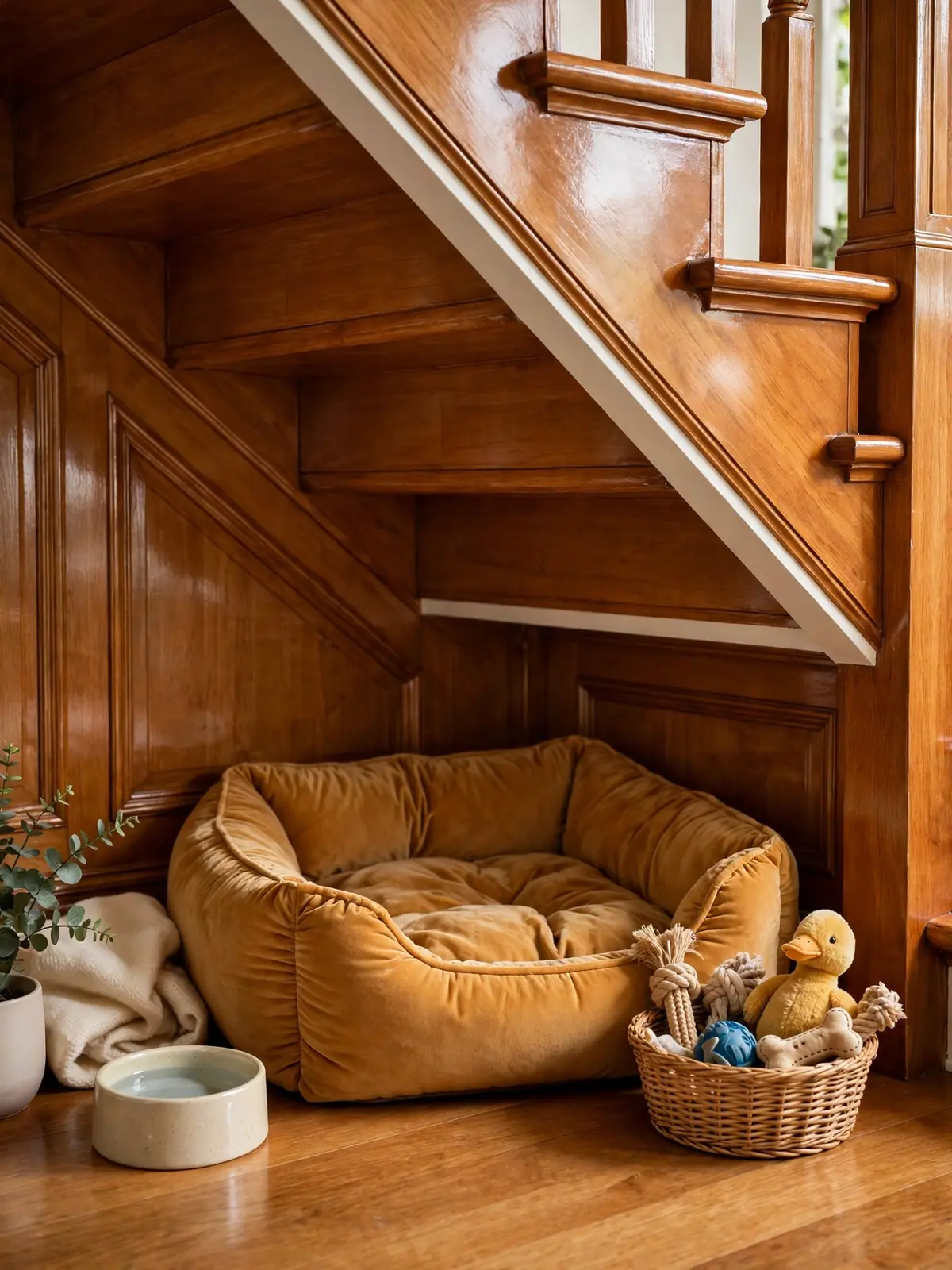
Tuck a plush honey-coloured pet bed beneath the lowest treads with a small basket of toys beside it, and the awkward low corner becomes the pet’s favourite spot. The nook keeps beds and toys out of the main seating area while giving the pet a den of its own.
Quick tips:
- Choose a washable bed cover for easy cleaning.
- Keep the nook open, not doored, so pets use it.
- Match the bed colour to the room palette.
A Window Seat on the Half-Landing With Linen Cushions
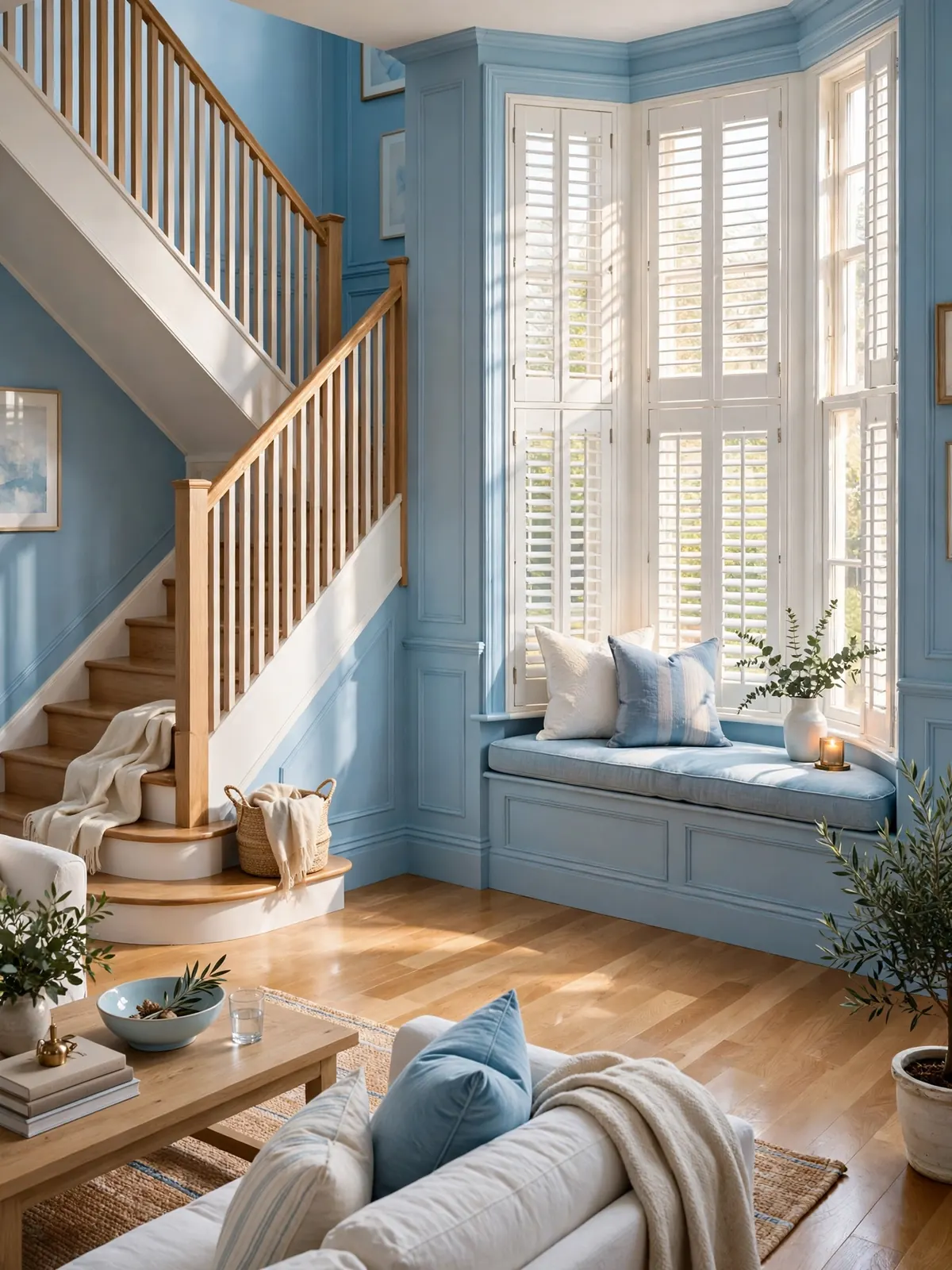
Build a window seat into the half-landing, dress it with peach linen cushions, and tuck a woven basket below for blankets. The landing becomes a sunny perch with a view over the living room, and the peach linen keeps the white joinery from feeling cold.
Quick tips:
- Add storage drawers beneath the seat.
- Use washable linen for daily-use cushions.
- Layer two cushion depths for back support.
Pull-Out Drawers Hidden Inside the Stair Treads
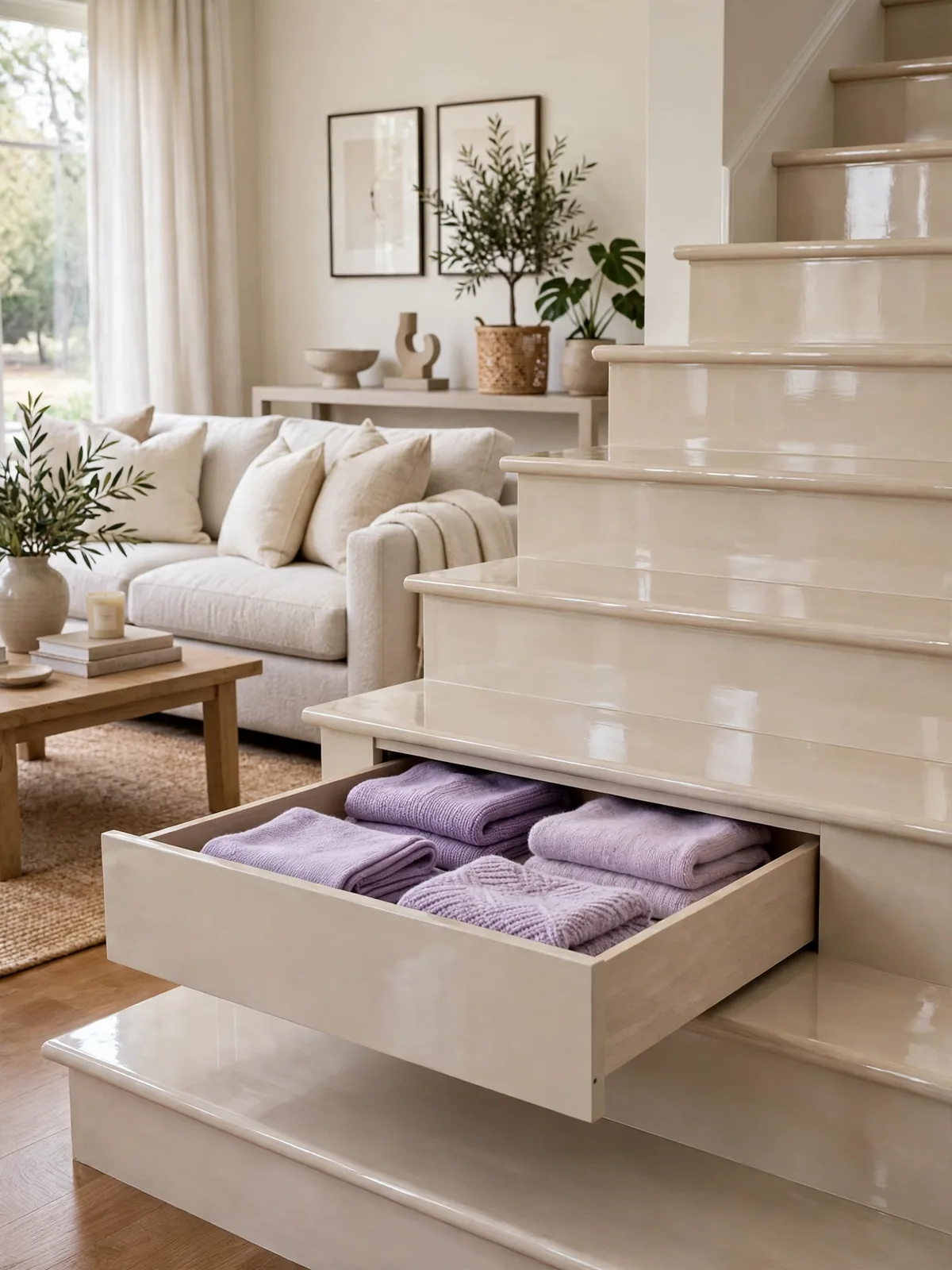
Hide pull-out drawers inside the stair treads themselves, and each step becomes secret storage for folded lilac throws, board games, and spare chargers. The drawers stay invisible when closed, so the staircase looks clean while quietly holding the clutter.
Quick tips:
- Use soft-close runners so drawers never slam.
- Label nothing — keep the front faces seamless.
- Store light items in tread drawers, not heavy ones.
A Tone-on-Tone Staircase That Blends Into a Calm Living Room
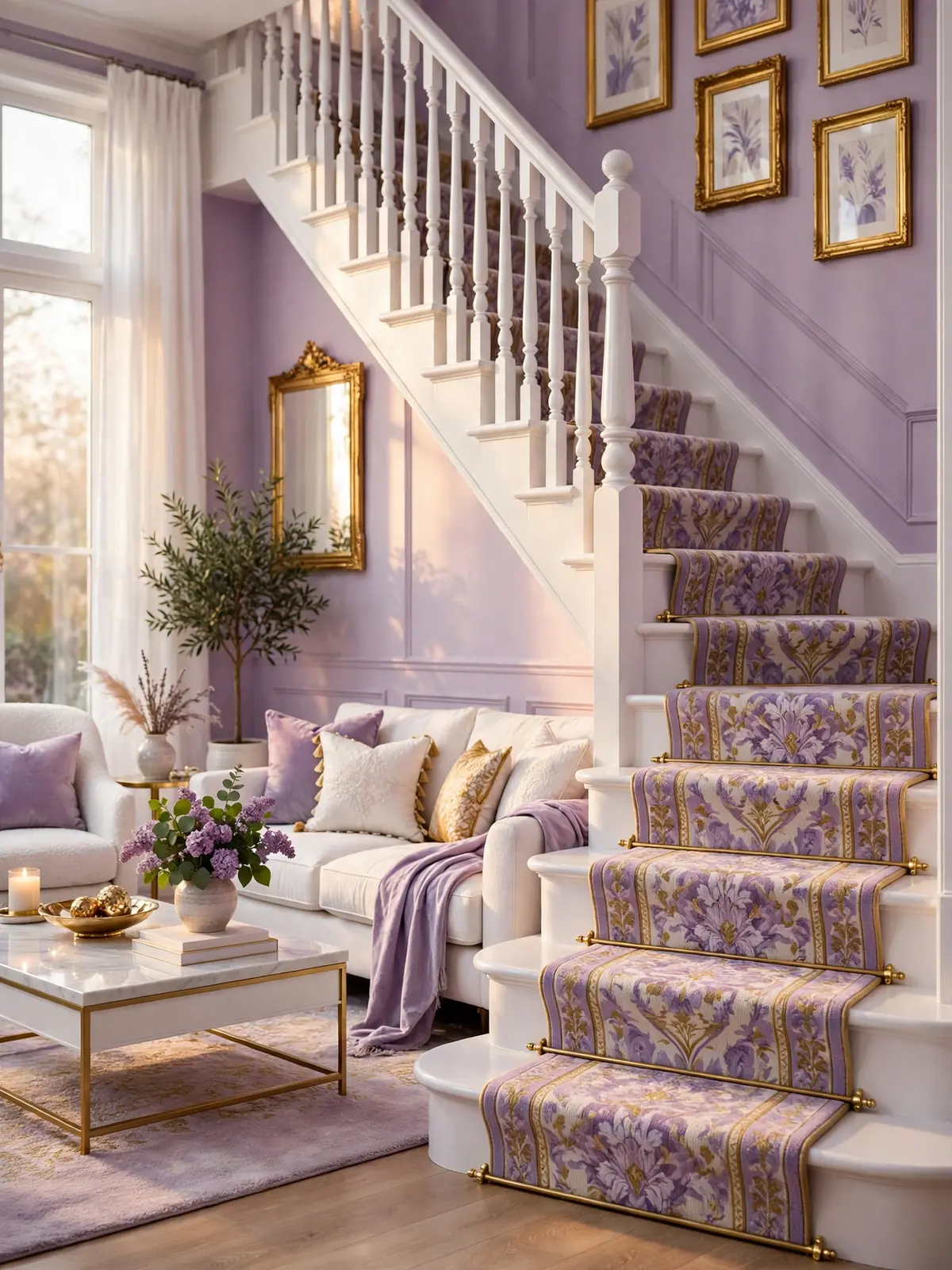
Paint the staircase the same warm white as the walls and add a cream runner, and the stairs melt into a calm living room instead of demanding attention. A lilac throw on a beige armchair adds the room’s only soft colour, so the quiet staircase feels like a choice, not an oversight.
Quick tips:
- Use the exact wall paint on the stair for a true blend.
- Keep the runner one shade warmer than the paint.
- Let one soft accent colour carry the room.
A Seasonal Display Ledge Along the Stair Wall You Can Restyle
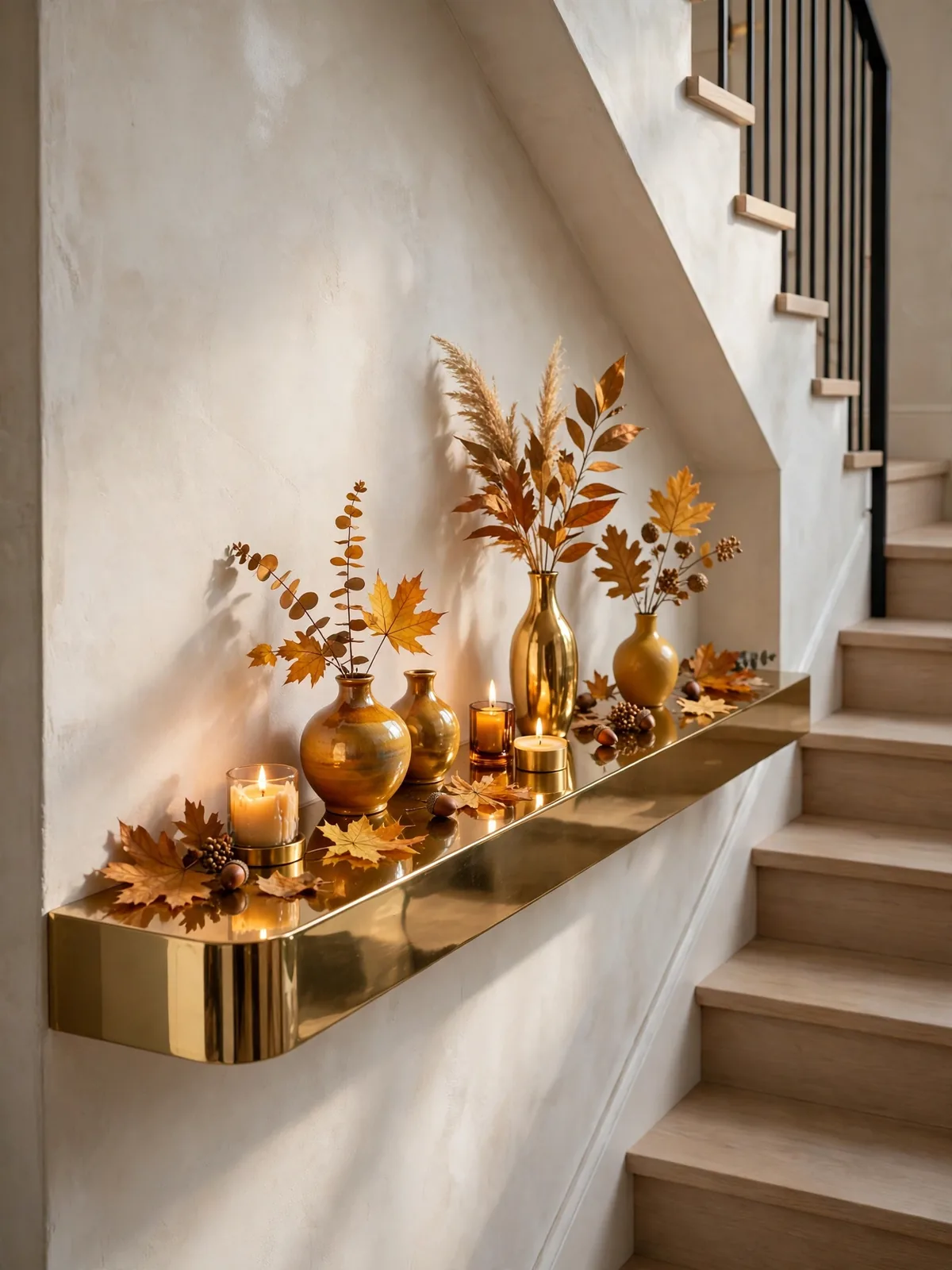
Fit a slim display ledge along the stair wall and style it with small vases, candles, and amber autumn leaves, then restyle it with fresh greenery when the season turns. The ledge lets the staircase change with the year without a single permanent change.
Quick tips:
- Keep the ledge slim so it never crowds the climb.
- Change only the small objects each season.
- Use battery candles for safe, flameless glow.
FAQs
How do I use the space under my living room stairs?
A reading nook with a built-in bench, open shelving, display niches, or a drinks cabinet all work well, because they add daily use without closing the room off. Choose the use your household actually needs — a bench for readers, shelves for books, a cabinet for entertaining — and build it to the stair slope so it looks made for the space.
Should a staircase in a living room be open or closed?
Open risers suit light, airy, open-plan living rooms because daylight passes through them and the room feels larger. Closed risers suit family homes and cosy rooms, because they feel solid, quiet, and safe underfoot — and they give you the under-stair space for storage or a nook.
What kind of runner works best on living room stairs?
A low-pile patterned runner that echoes your living room rug works best, because it ties the staircase to the room and stands up to daily traffic. Brass stair rods finish the look, and a runner in the rug’s colour family — rather than an exact match — keeps the pairing feeling designed, not duplicated.
How do I light a staircase that sits in my living room?
Layer three sources: a statement pendant over the stairwell for drama, wall sconces for warm evening light, and small step lights for safe night-time use. Put the sconces and pendant on dimmers so the stair lighting can match the living room’s mood after dark.
Can a staircase really divide a living room and dining room?
Yes — an open balustrade or a half-height stair wall divides the zones visually while keeping light, air, and conversation flowing between them. Align the sofa back with the stair line, repeat the railing colour once in the dining area, and the two zones will read as one planned room.
Conclusion
A living room staircase earns its place when it is designed as part of the room — open risers for light, warm wood that echoes the floor, a runner that ties to the rug, and an under-stair space with a real job to do. Pick the approach that fits your room first, whether that is a reading nook, a room-divider balustrade, or a statement pendant, and let that single decision lead the rest. Done this way, the staircase stops being something you walk past and becomes the feature your living room is remembered for.