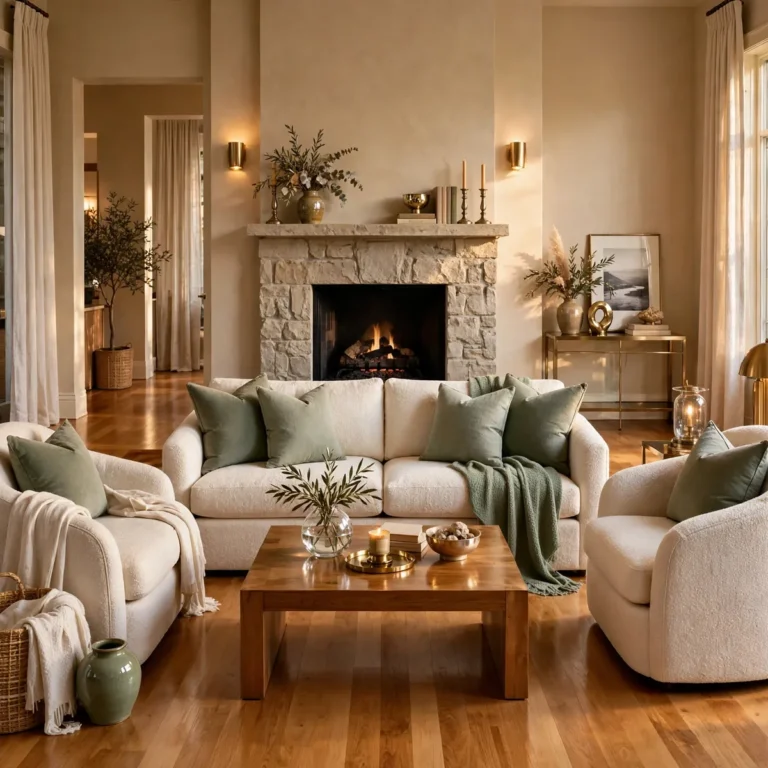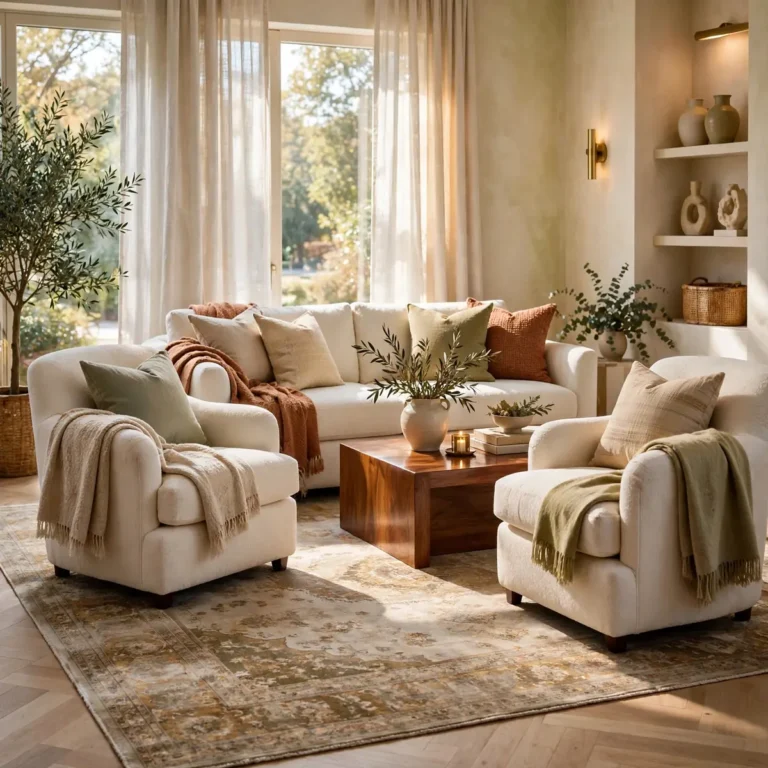
25 Living Room Curtains Ideas That Dress Your Windows Like a Designer
Curtains shape your living room’s light, privacy, and mood all at once. These 25 living room curtains ideas cover fabrics, header styles, layering, and hanging rules — everything windows need.
The best living room curtains ideas start with light and privacy: floor-length panels in linen or cotton for everyday rooms, sheers layered with drapes for day-to-night flexibility, and hardware mounted 4–6 inches above the frame and 8–12 inches wider on each side so windows look larger. Choose fabric by function — linen for airy light, velvet or blackout for TV glare and coziness — and finish every window with two panels, never one.
Curtains are one of the few decor moves that change a room’s light, acoustics, privacy, and style at the same time, which is why the details — fabric, header, length, and hanging height — matter as much as the color. For the room around the windows, our cozy living room design ideas show how soft furnishings build a warm, inviting living room that curtains complete. Below: the ideas, then the rules that make them work.
Key Takeaways
What curtain length looks best in a living room?
Floor-length — either “kiss” length (just touching the floor) or a slight “break” (half an inch pooling). Above-floor lengths make rooms look smaller and unfinished.
How wide should curtain panels be?
The combined panel width should be 1.5–2 times the window width for proper fullness — skimpy panels look cheap even in expensive fabric.
Where should I hang the curtain rod?
4–6 inches above the window frame (or near the ceiling for drama) and 8–12 inches wider than the frame on each side, so open panels clear the glass.
What is the best fabric for living room curtains?
Linen or cotton for everyday airy rooms; velvet for coziness, sound softening, and light control; sheers for daylight privacy. Layer sheers with drapes for both.
One panel or two per window?
Two panels per window, always — a single panel looks unbalanced and can’t dress the window symmetrically.
| Header style | Look | Best for | Notes |
|---|---|---|---|
| Pinch pleat | Tailored, structured folds | Traditional and transitional rooms | Classic default; works with linen and velvet |
| Ripple fold (S-fold) | Smooth continuous waves | Modern, minimalist, Scandinavian rooms | Needs a ceiling or wall track; most architectural look |
| Grommet top | Casual, even folds on a visible rod | Casual modern, industrial rooms | The rod becomes part of the design; choose it carefully |
| Back tab / hidden tab | Clean, flat front | Minimal and contemporary rooms | Hides the rod; panels glide less smoothly than ripple fold |
| Rod pocket | Gathered, relaxed | Cottage, farmhouse, traditional rooms | Least adjustable; best for stationary panels |
Floor-to-Ceiling Linen Drapes
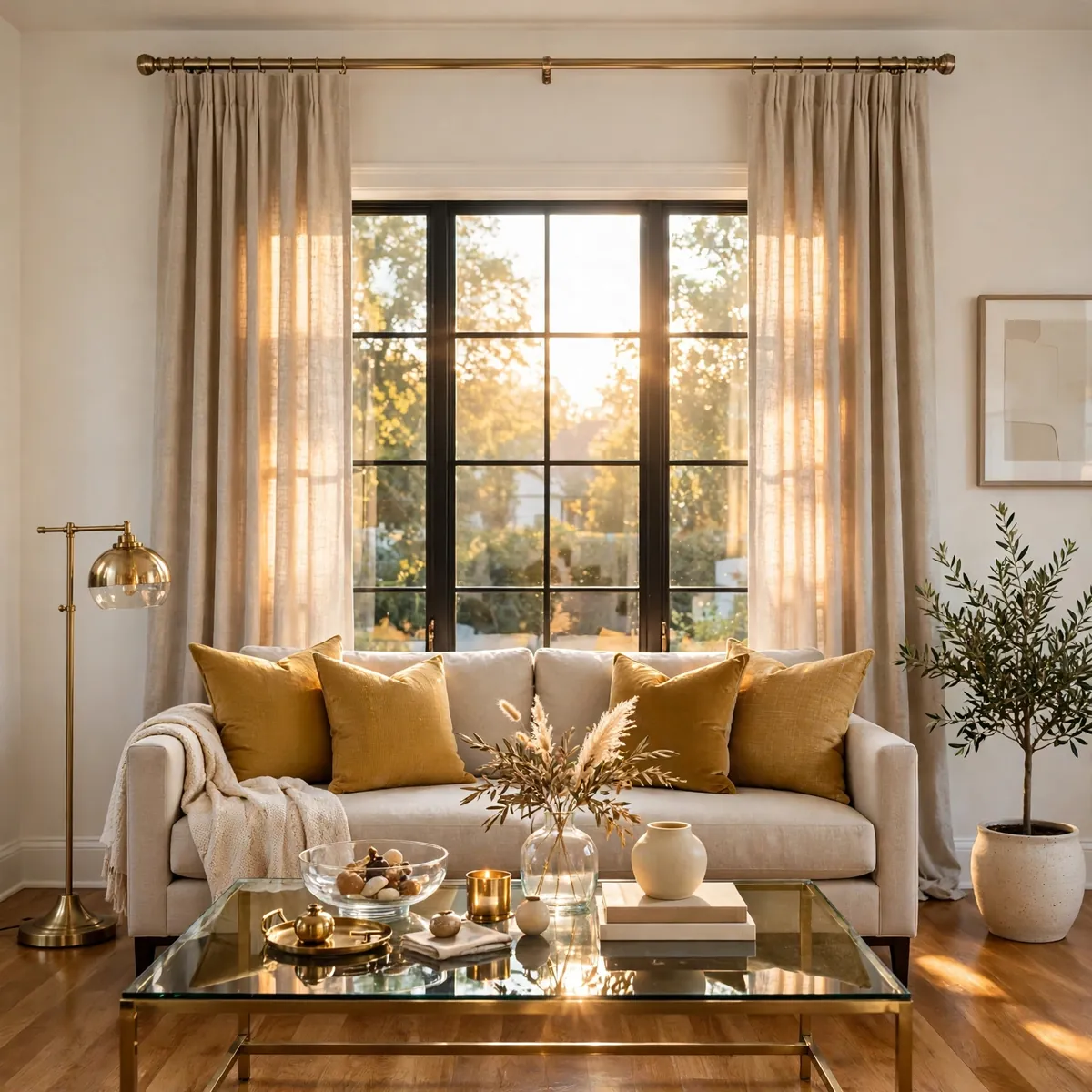
Floor-to-ceiling linen drapes are the modern living room default: the natural texture filters light softly while the full height makes walls look taller. In a bright living room with white walls and oak floors, oatmeal linen panels hung from just below the ceiling turn a standard window into an architectural feature.
Quick tips:
- Choose a “kiss” length (just touching) for clean rooms, a slight break for relaxed ones.
- Linen wrinkles naturally — embrace it as texture, don’t fight it with ironing.
- Line linen panels if the window gets harsh afternoon sun to protect the fibers.
Sheer White Panels for Soft Daylight

Sheer white curtains soften sunlight instead of blocking it, so the living room glows rather than darkens. In a street-facing living room, white voile sheers blur the view in from outside during the day while keeping the room bright — privacy without gloom.
Quick tips:
- Double up sheer panels for extra privacy while keeping the airy look.
- Sheers are ideal for small rooms; they add softness with zero visual weight.
- Wash sheers regularly — they show dust and yellowing faster than heavy fabrics.
Living Room Curtains Ideas: Layered Sheers Plus Blackout for Flexibility
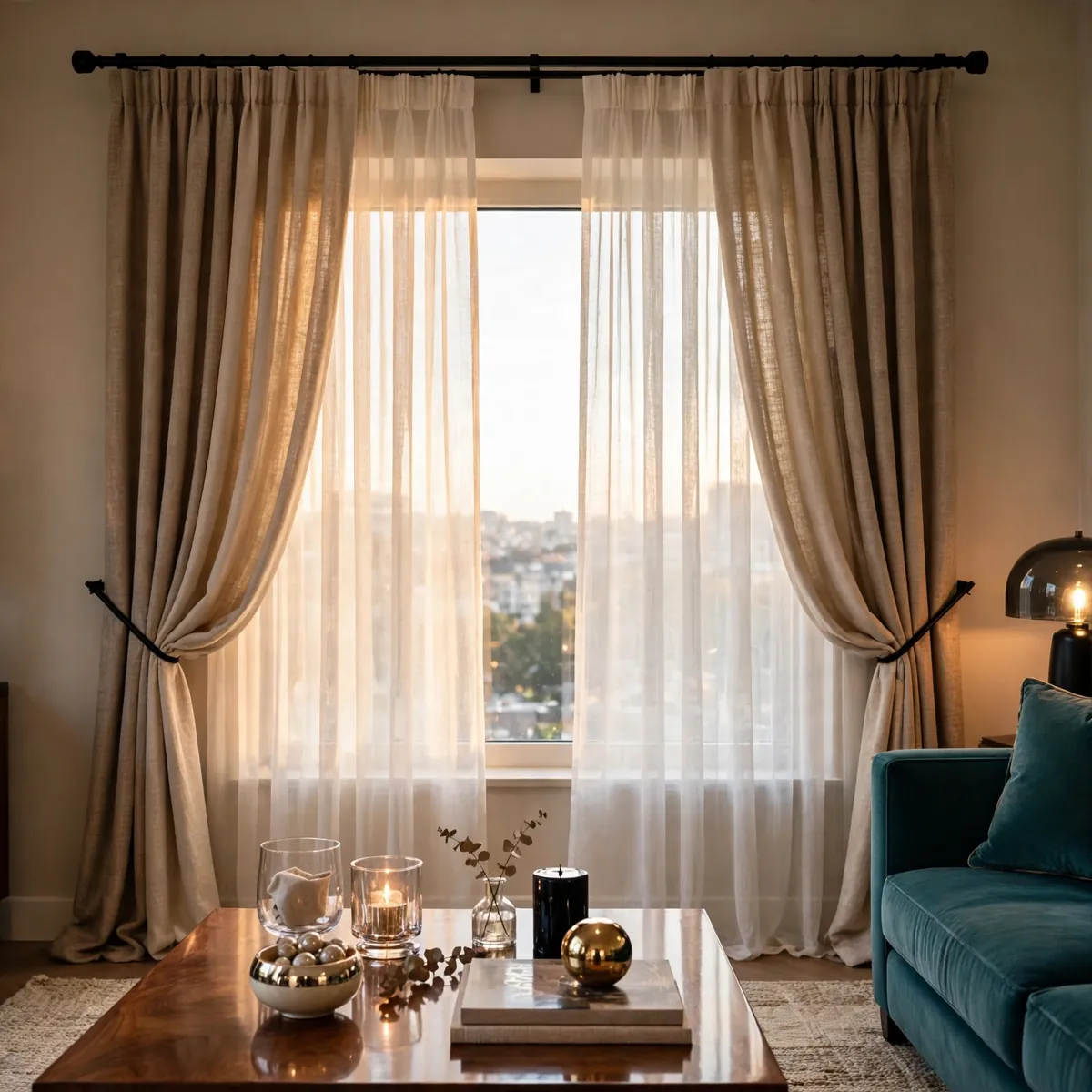
Layering sheers on an inner rod with heavier drapes on an outer rod gives day-to-night flexibility in one window. Keep it simple and tonal: ivory sheers closest to the glass for daytime glow, with warm greige blackout-lined drapes outside for movie nights and privacy after dark.
Quick tips:
- Keep both layers in the same color family for a cohesive, expensive look.
- A double rod or double track is essential — don’t try layering on a single rod.
- Sheers stay closed most days; drapes frame the window like artwork.
Ripple-Fold Panels on a Ceiling Track
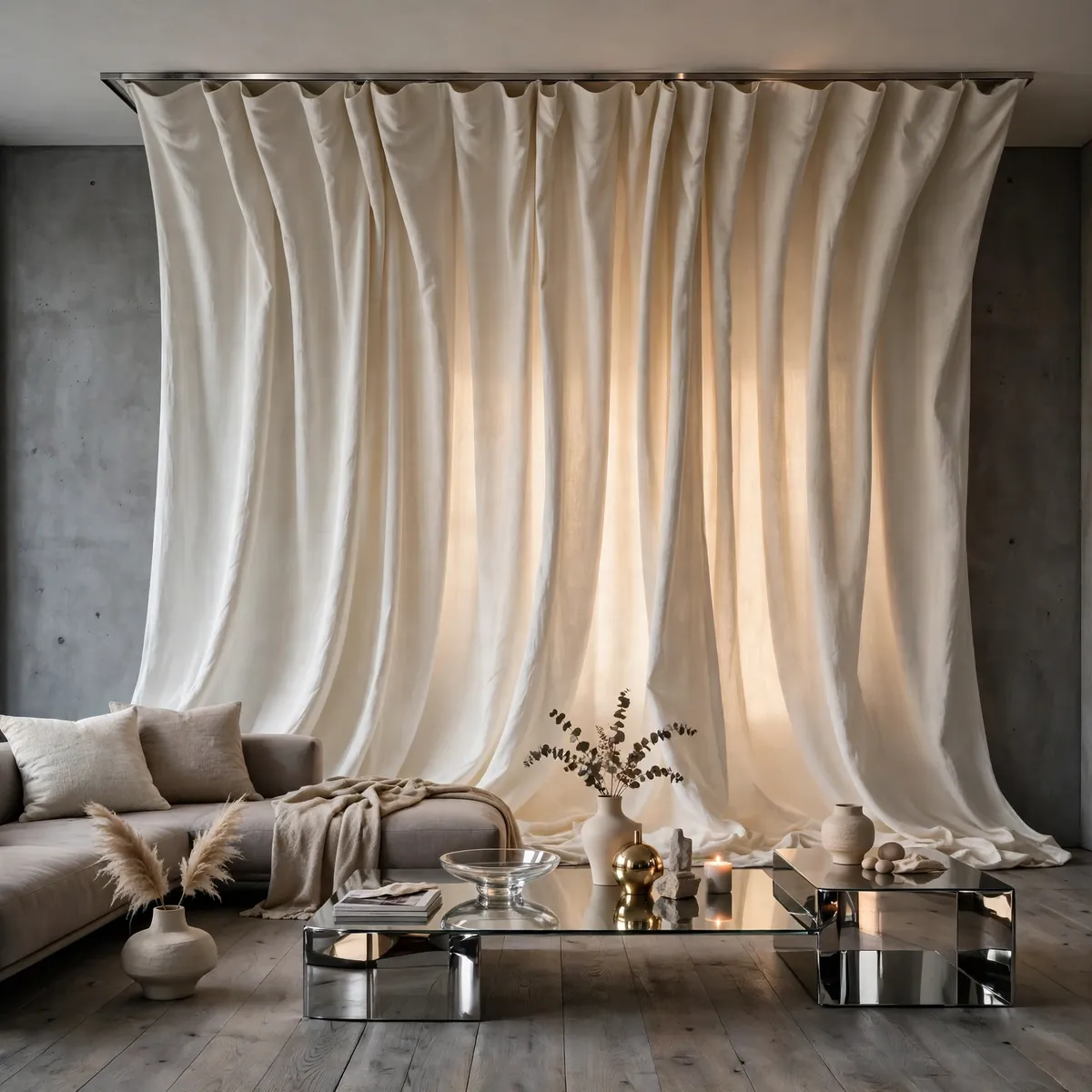
Ripple-fold drapery on a ceiling-mounted track is the most architectural modern look: the rod disappears and the fabric falls in smooth, continuous waves. In a minimalist living room with concrete-look walls, ceiling-track ripple-fold panels in warm white read as a soft wall of fabric rather than “curtains.”
Quick tips:
- Mount the track on the ceiling, not the wall, for the true wall-of-fabric effect.
- Ripple fold needs a track — it doesn’t work on standard rods.
- Consider a motorized track for wide spans; heavy ripple-fold panels get weighty.
Pinch-Pleat Drapes for a Tailored Look

Pinch pleats — small gathered folds sewn at the top — give curtains a tailored, permanent structure that suits traditional and transitional rooms. In a classic living room with a Chesterfield sofa, navy pinch-pleat velvet drapes bring formal polish that grommet panels never could.
Quick tips:
- Pinch pleat is the default for formal rooms; it always looks intentional.
- Use drapery hooks rather than clipping rings for the cleanest hang.
- Budget extra fabric — pleats consume more width than flat headers.
Velvet Curtains for Cozy Drama

Velvet curtains add richness, depth, and real light-blocking weight, making them the cozy-room power move. In a living room with a fireplace, forest-green cotton velvet floor-length panels turn winter evenings cinematic while softening street noise.
Quick tips:
- Cotton velvet looks richer and wears better than shiny polyester velvet.
- Velvet’s weight means sturdy rods and brackets — check weight ratings.
- Brush velvet panels occasionally to keep the pile even and dust-free.
Bold Patterned Curtains as the Statement
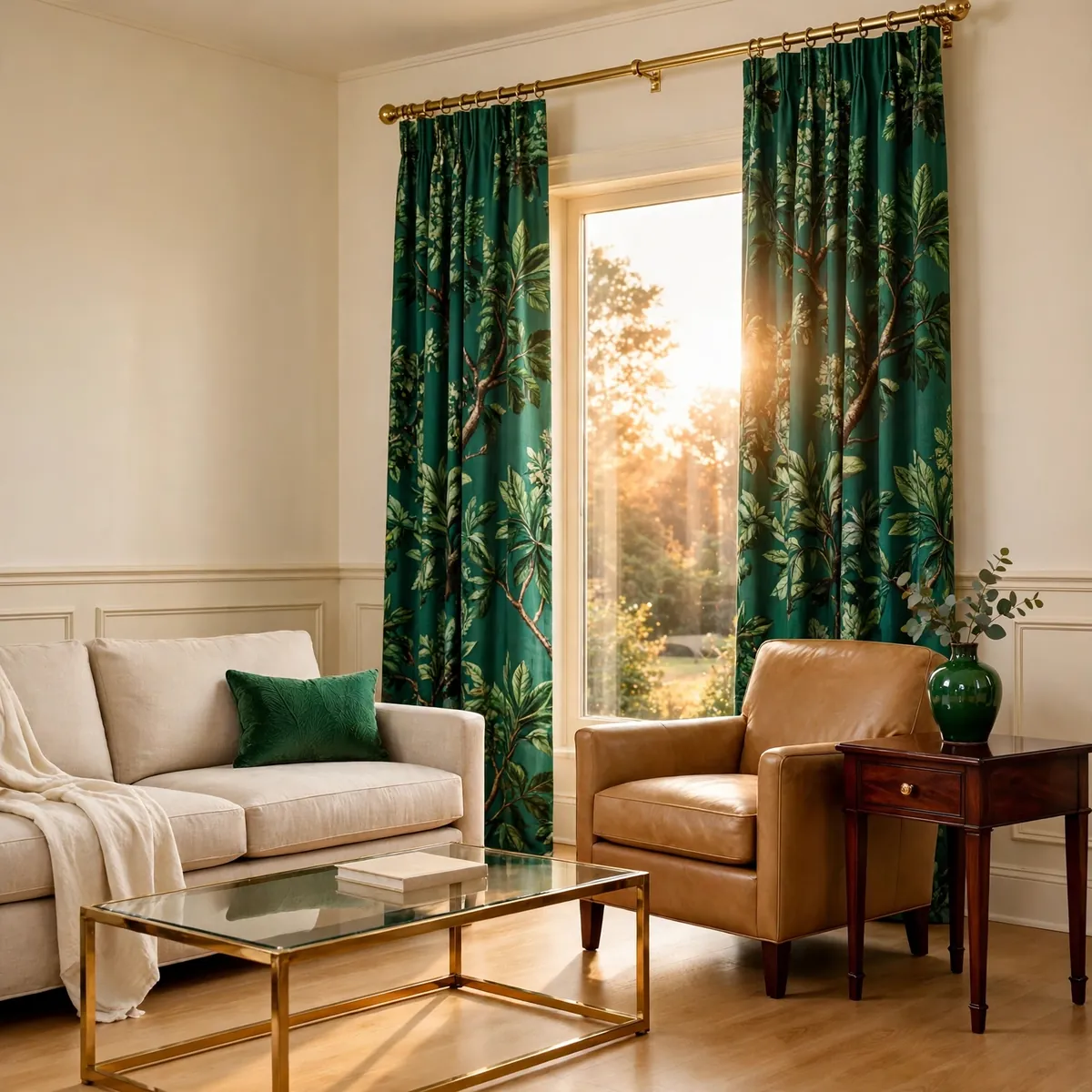
When the rest of the room is quiet, bold patterned curtains can carry the entire design. This is the “one loud thing” rule in action: in a neutral living room with a beige sofa and oak floors, large-scale emerald botanical-print curtains become the artwork, the color story, and the focal point — so everything else must stay calm, with the pattern’s green echoed only in two or three small accents like a throw pillow and a vase.
Quick tips:
- Let statement curtains be the only pattern at full volume in the room.
- Scale the print to the window — large prints for tall windows, smaller for short ones.
- Pull 2–3 accent colors from the pattern into cushions or art for cohesion.
Two-Tone Curtains for Subtle Contrast
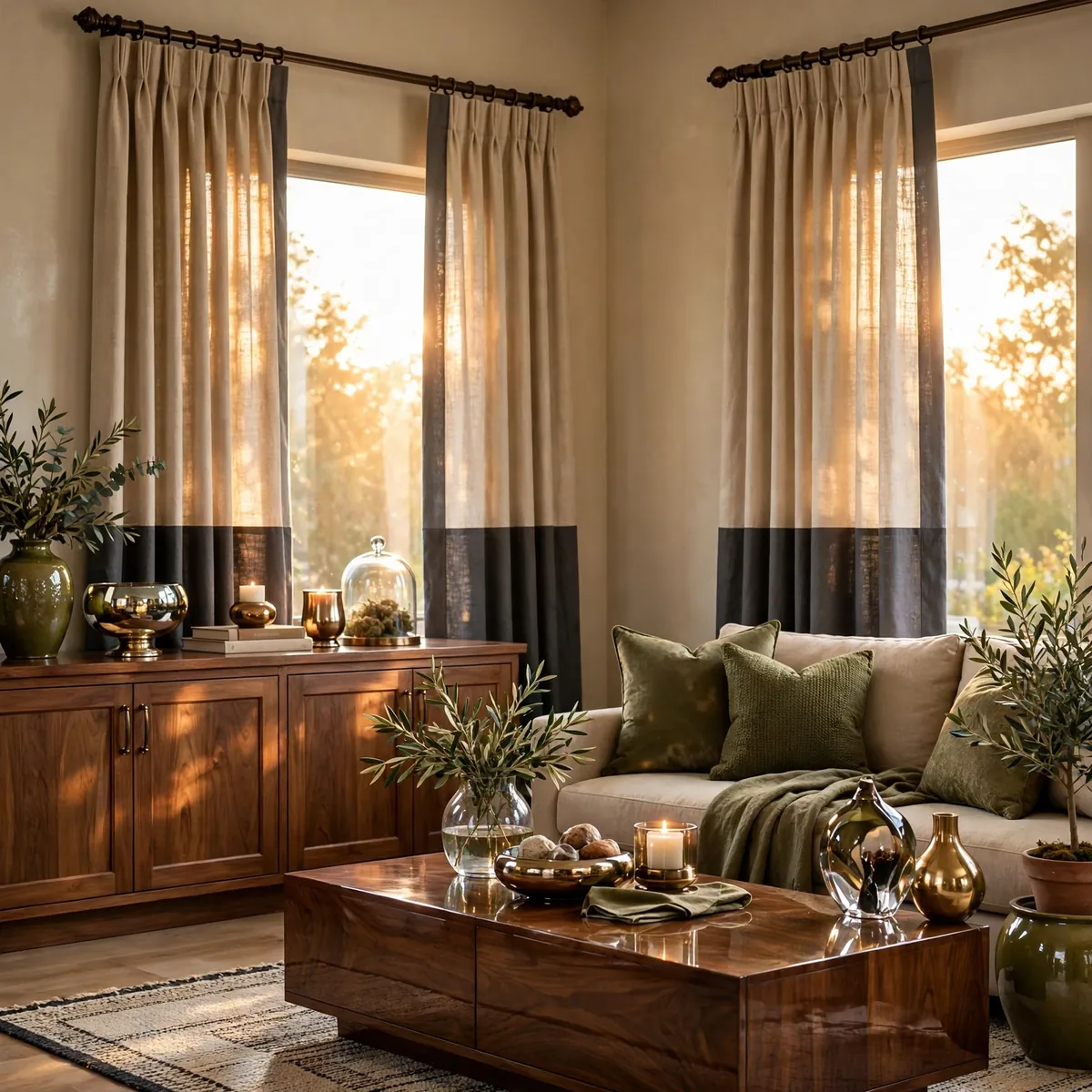
Two-tone curtains — a solid panel with a contrasting band, border, or dipped hem — add dimension without the commitment of full pattern. Beige linen panels with a wide charcoal bottom border give a tailored, designer feel to a transitional living room while staying firmly neutral.
Quick tips:
- Horizontal bands at the bottom elongate windows; vertical borders add height.
- Keep the two tones in the same temperature family (both warm or both cool).
- DIY-able: add a contrasting fabric band to ready-made panels with iron-on hem tape.
Curtains Matched to the Wall Color
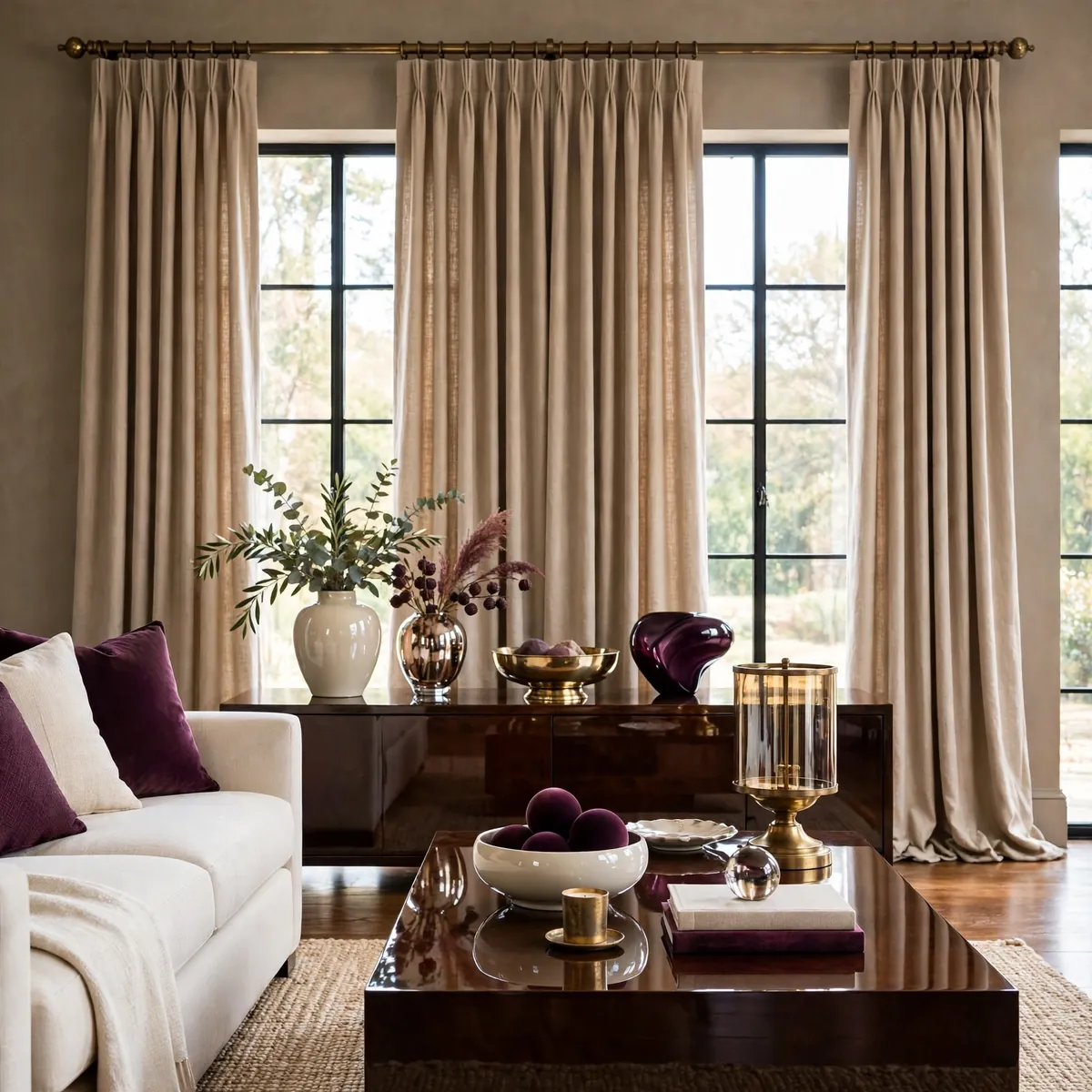
Matching curtains to the wall color is a designer trick for seamless, larger-feeling rooms: the eye doesn’t stop at contrast lines. In a living room with warm greige walls, greige linen curtains in a near-identical tone make the walls appear to continue, and the window wall feels twice as wide.
Quick tips:
- Match tone, not necessarily the exact shade — a whisper lighter or darker adds depth.
- This trick works hardest in small or dark living rooms.
- Add texture contrast (linen against flat paint) so the match doesn’t look flat.
High-Contrast Curtains Against Neutral Walls
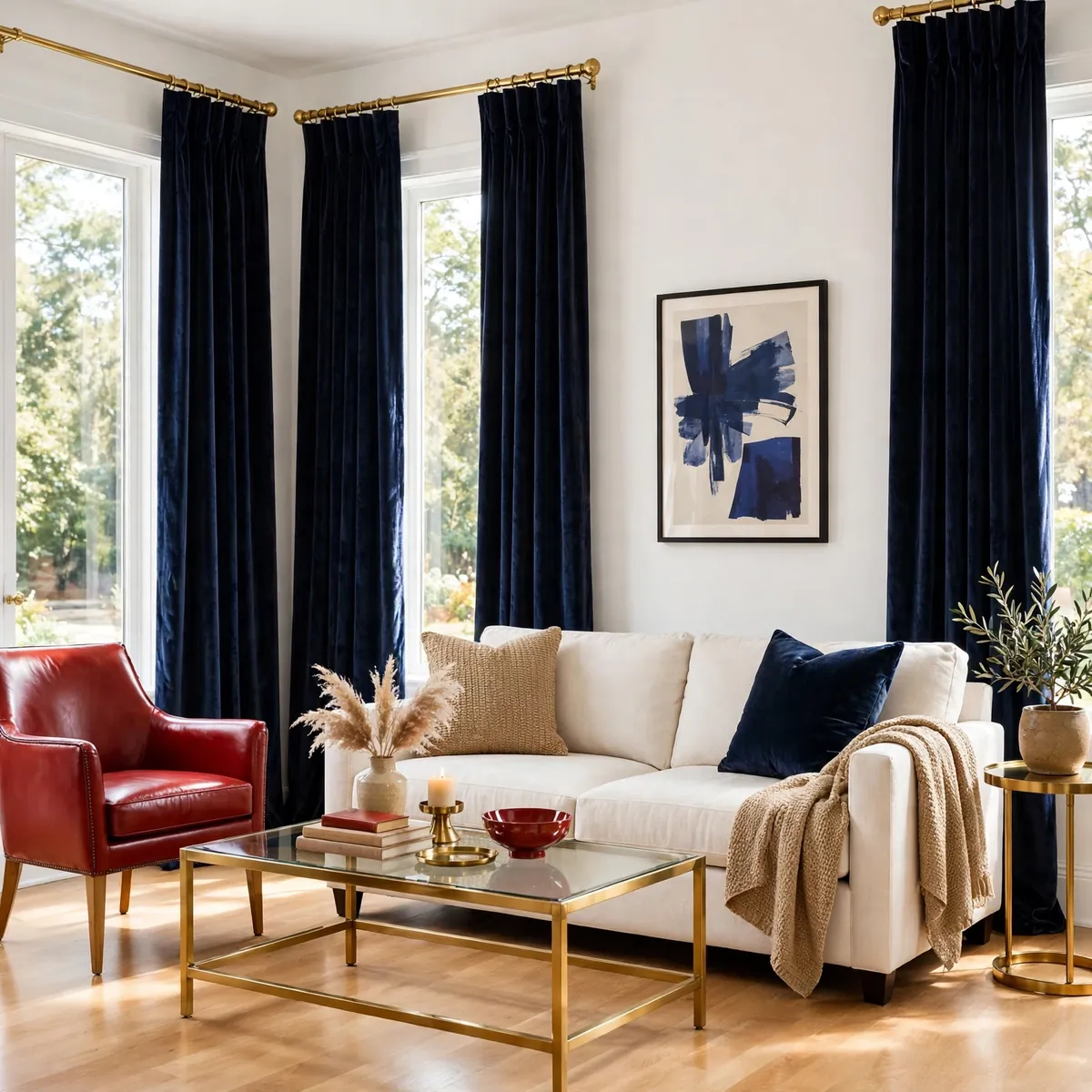
Deep, saturated curtains against pale walls create the kind of contrast that makes a room feel designed rather than decorated. Against white walls with light oak floors, ink-navy velvet panels frame the window like a painting and give the whole room a confident anchor.
Quick tips:
- Echo the curtain color in at least two other spots (art, cushions, a throw).
- High contrast suits rooms with good natural light; it can overwhelm dark rooms.
- Keep the curtain fabric solid — contrast plus pattern is usually too much.
Rods Mounted High and Wide
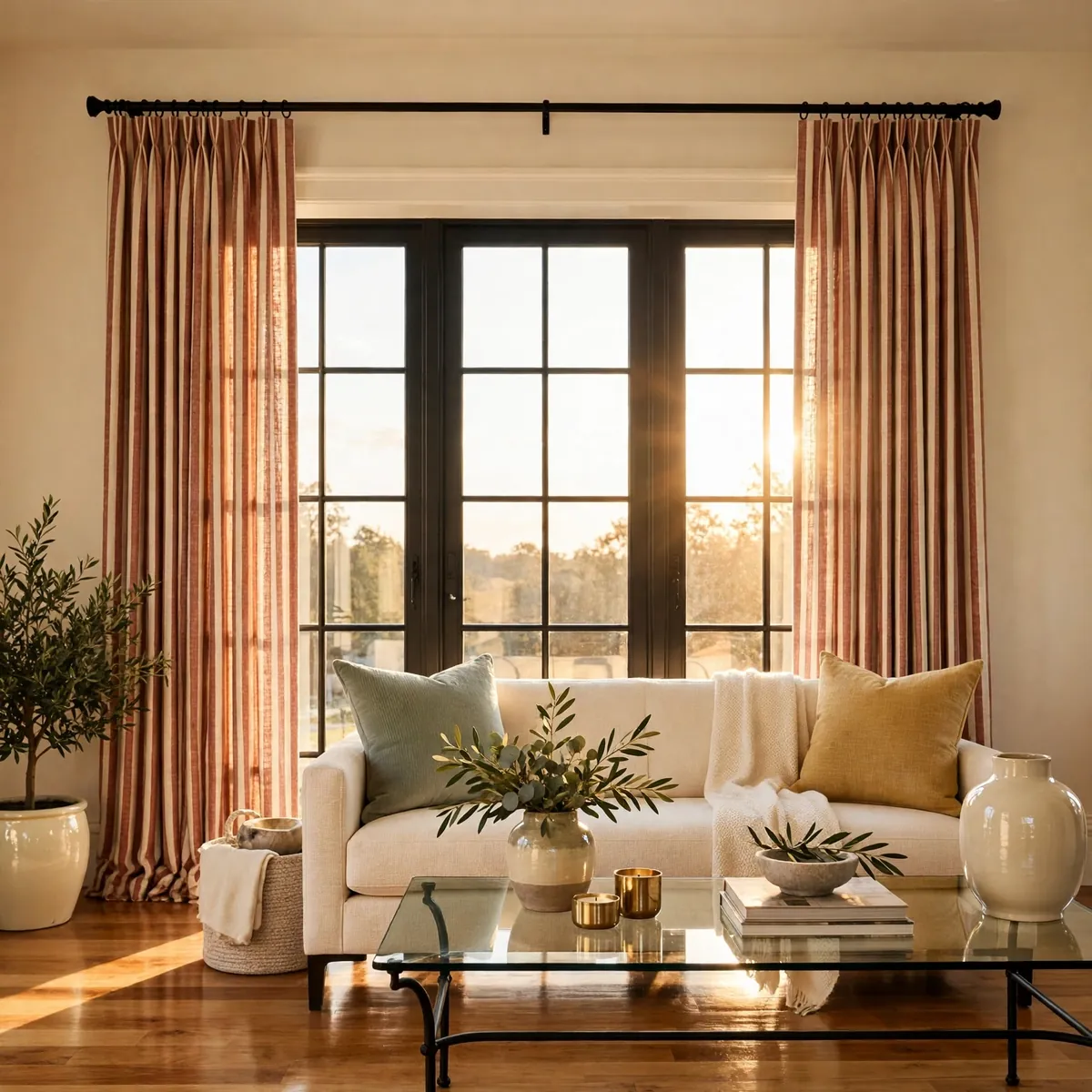
Mounting the rod 4–6 inches above the frame and 8–12 inches wider on each side is the single highest-impact curtain trick: windows look bigger and ceilings look taller. In a living room with a standard 5-foot window, a rod mounted near the ceiling and extended a foot each side makes the window read as grand.
Quick tips:
- When open, panels should stack on the wall, barely covering the glass.
- Use a level and measure twice — crooked rods ruin the whole effect.
- For very wide spans, add a center bracket to prevent rod sag.
Decorative Tie-Backs That Shape the Panels
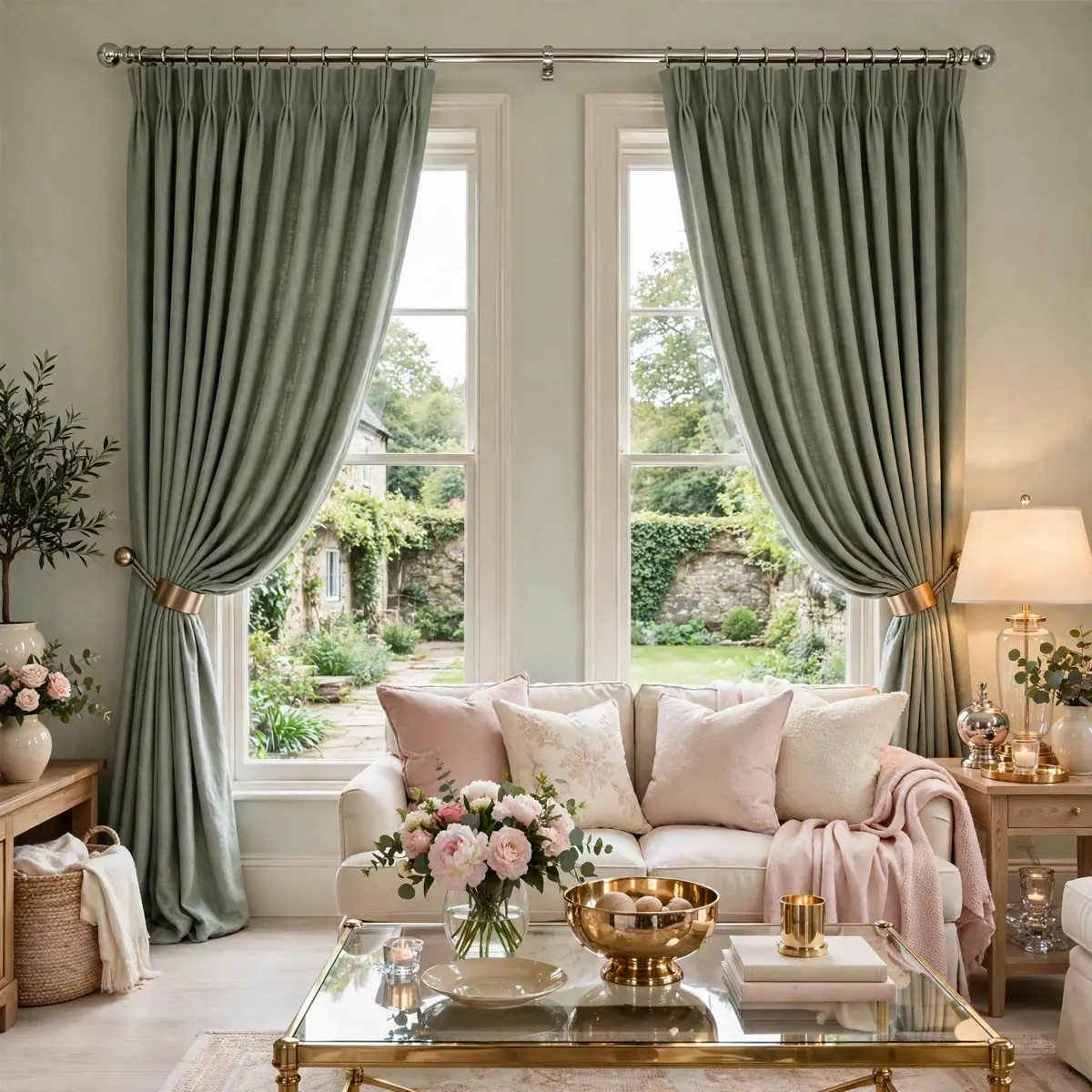
Tie-backs gather curtains to the sides, letting in more light while adding a styled, intentional shape. In a traditional living room, brushed-brass tie-backs holding back sage linen panels create elegant swags that frame the view like drapery in a country house.
Quick tips:
- Hold tie-backs at about two-thirds of the window height for classic proportions.
- Fabric ties look soft and relaxed; metal or rope ties add polish or rustic charm.
- Even simple tie-backs transform plain ready-made panels instantly.
Statement Rods as Window Jewelry
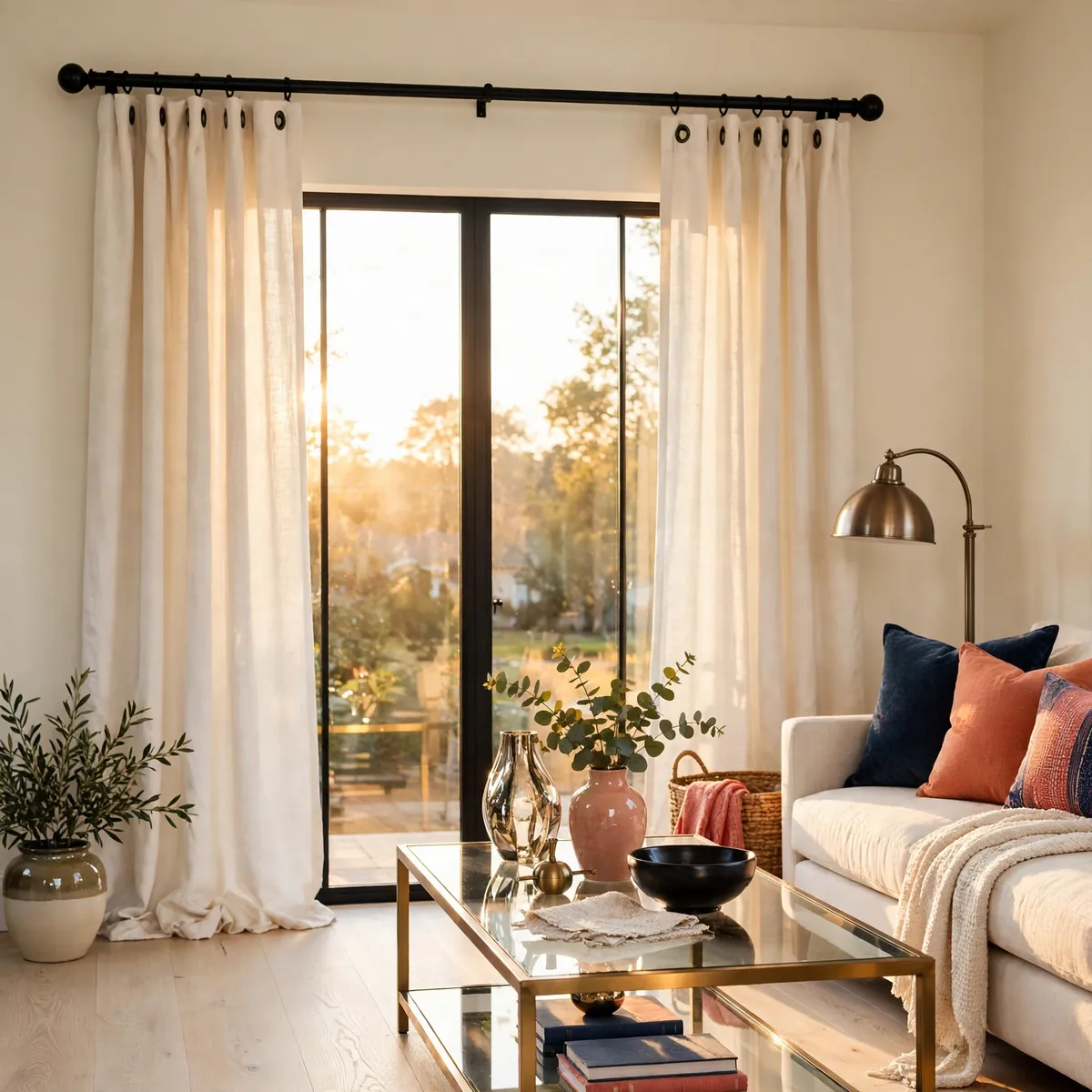
The rod is jewelry for the window — brushed brass, matte black, or turned wood finials elevate the whole treatment. In a modern living room with ripple-fold panels you’d barely notice the track, but with grommet or tab panels, a 1.5-inch matte-black rod with simple ball finials becomes part of the design.
Quick tips:
- Match rod metal to other hardware in the room (light fixtures, handles).
- Oversized finials suit tall windows; keep them simple on standard windows.
- Never let a sagging rod ruin good curtains — brackets every 4–5 feet.
Grommet-Top Panels for Casual Ease
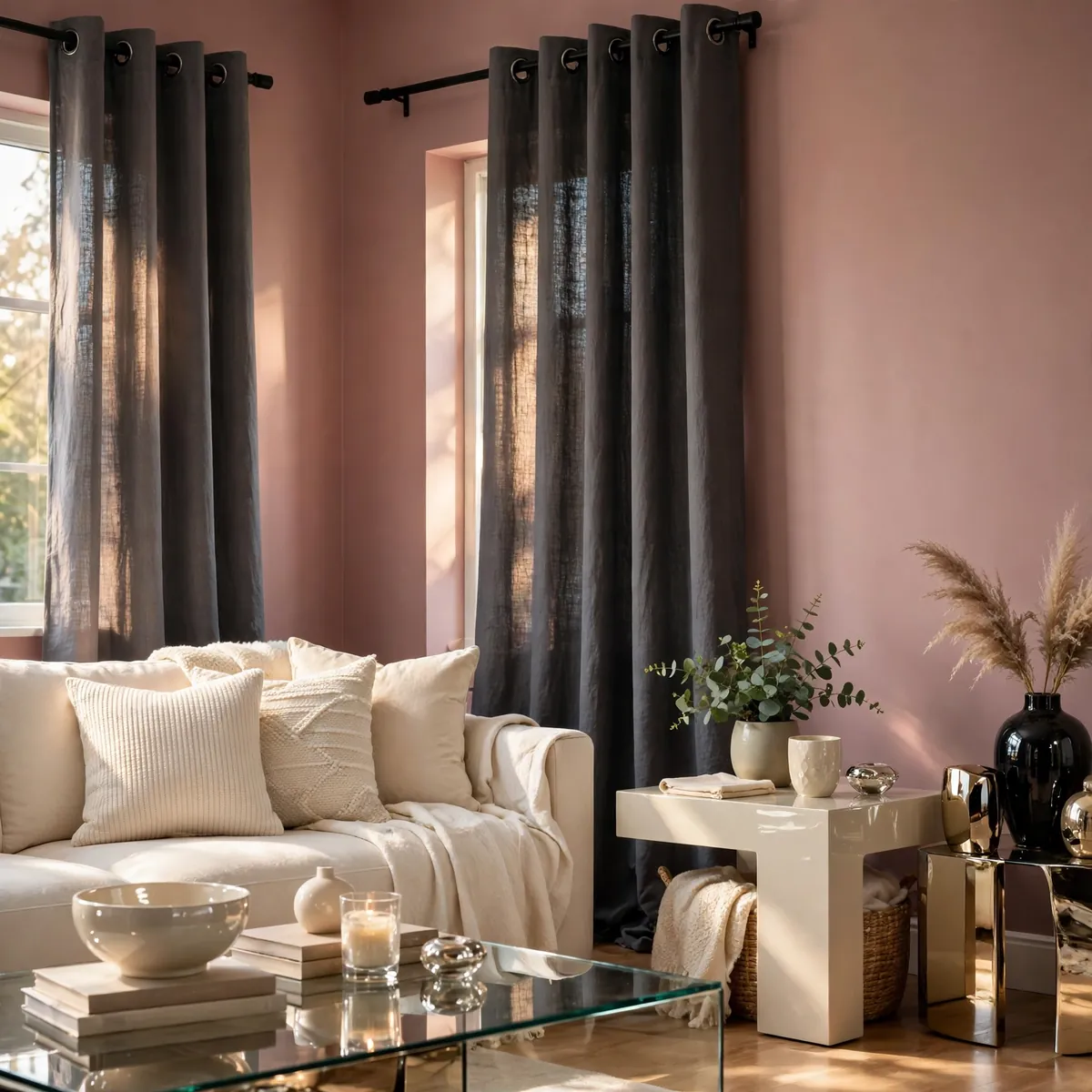
Grommet-top curtains — metal rings punched through the header — hang in easy, even folds and suit casual modern rooms. In a relaxed family living room, charcoal grommet linen panels on a black rod slide open and closed daily without fuss.
Quick tips:
- Grommets put the rod on display — choose a rod worth showing.
- They create deeper folds, so allow extra panel width for fullness.
- Skip grommets for formal rooms; the look reads inherently casual.
Earth-Tone Curtains That Ground the Room
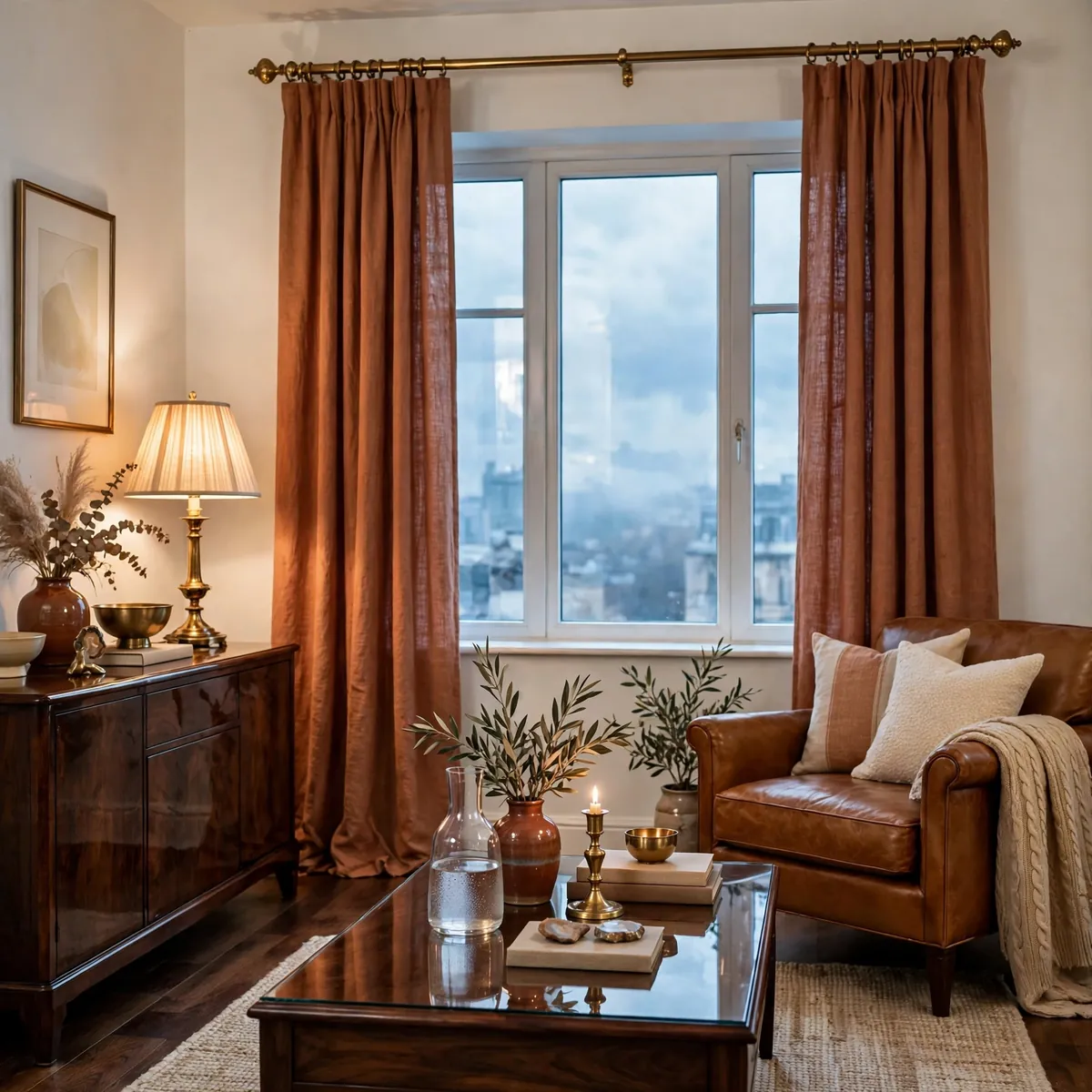
Earth tones — terracotta, olive, sand, clay — connect the living room to nature and warm up cool light. In a north-facing living room that gets bluish daylight, terracotta linen curtains add warmth the sun doesn’t, balancing the room’s color temperature.
Quick tips:
- Pair earth-tone curtains with wood furniture and warm metals for cohesion.
- In small rooms, choose the lighter earth tones (sand, clay) over deep ones.
- Olive and terracotta are the most forgiving across different wall colors.
Striped Curtains That Add Height

Vertical stripes on curtains emphasize height the way stripes do on clothing — the eye travels up. In a living room with 8-foot ceilings, cream-and-taupe ticking-stripe linen panels make the window wall feel noticeably taller.
Quick tips:
- Keep stripes tone-on-tone for subtlety, high-contrast for a bolder statement.
- Wide stripes suit large windows; narrow ticking stripes suit standard ones.
- Stripes pair best with solid upholstery — avoid competing patterns nearby.
Botanical and Floral Prints
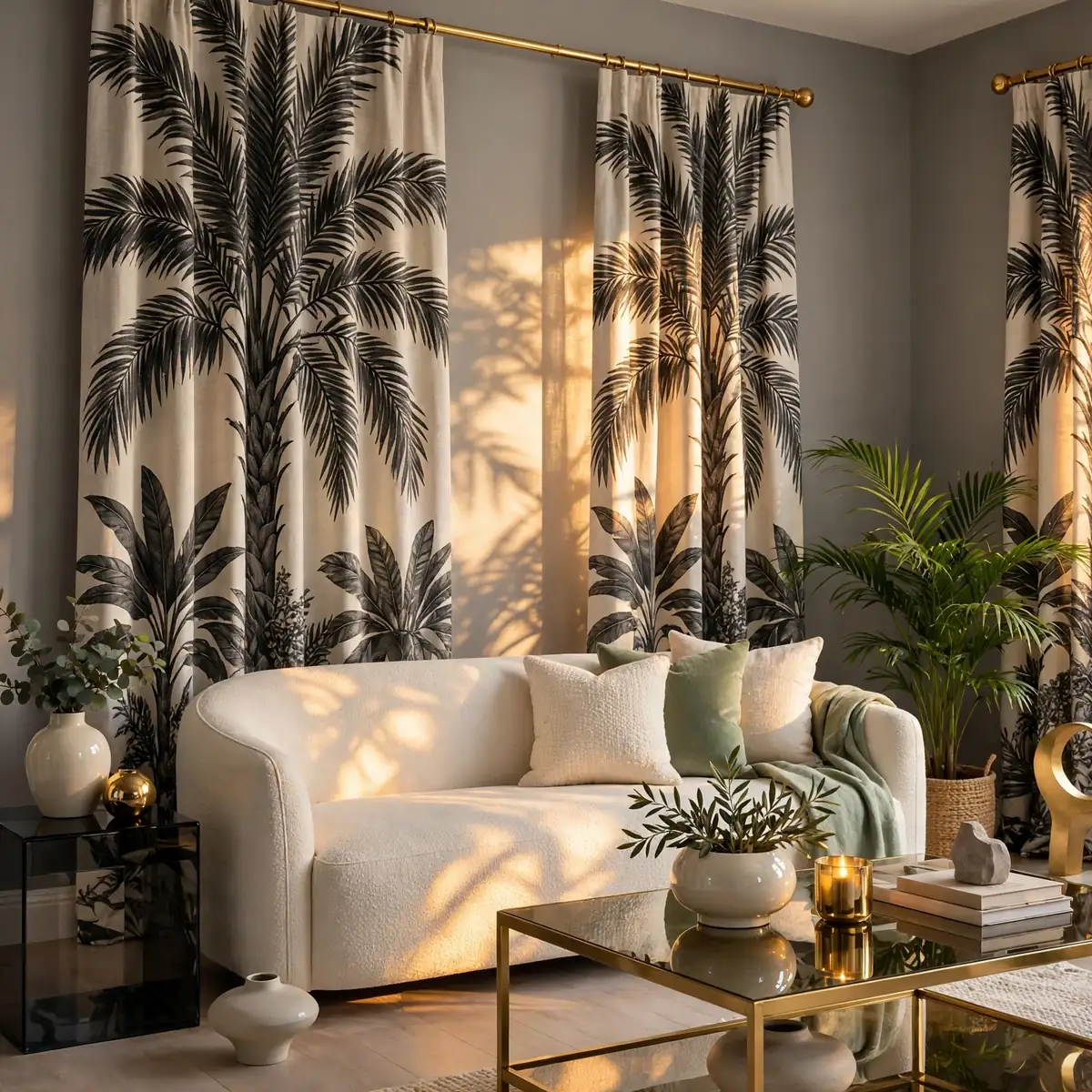
Botanical prints bring the outdoors in and soften modern rooms with organic shapes. In a contemporary living room with clean-lined furniture, oversized monochrome palm-print curtains add life without introducing a riot of color.
Quick tips:
- Monochrome or two-color botanicals are easier to live with than multicolor ones.
- Large-scale prints need tall windows; small prints suit cottage-style rooms.
- Repeat one green from the print in a real plant nearby for a layered effect.
Trim and Tassel Detailing

A tape trim, pom-pom edge, or tassel fringe along the leading edge turns plain panels into custom-looking drapery. On simple white linen curtains in a coastal living room, a natural jute tape trim down the inner edge adds crafted detail for very little cost.
Quick tips:
- Keep trims minimal — detail should whisper, not shout.
- Apply trim to the leading (inner) edge where the eye naturally falls.
- Iron-on trim tape makes this a no-sew upgrade on ready-made panels.
A Pelmet for a Structured Top
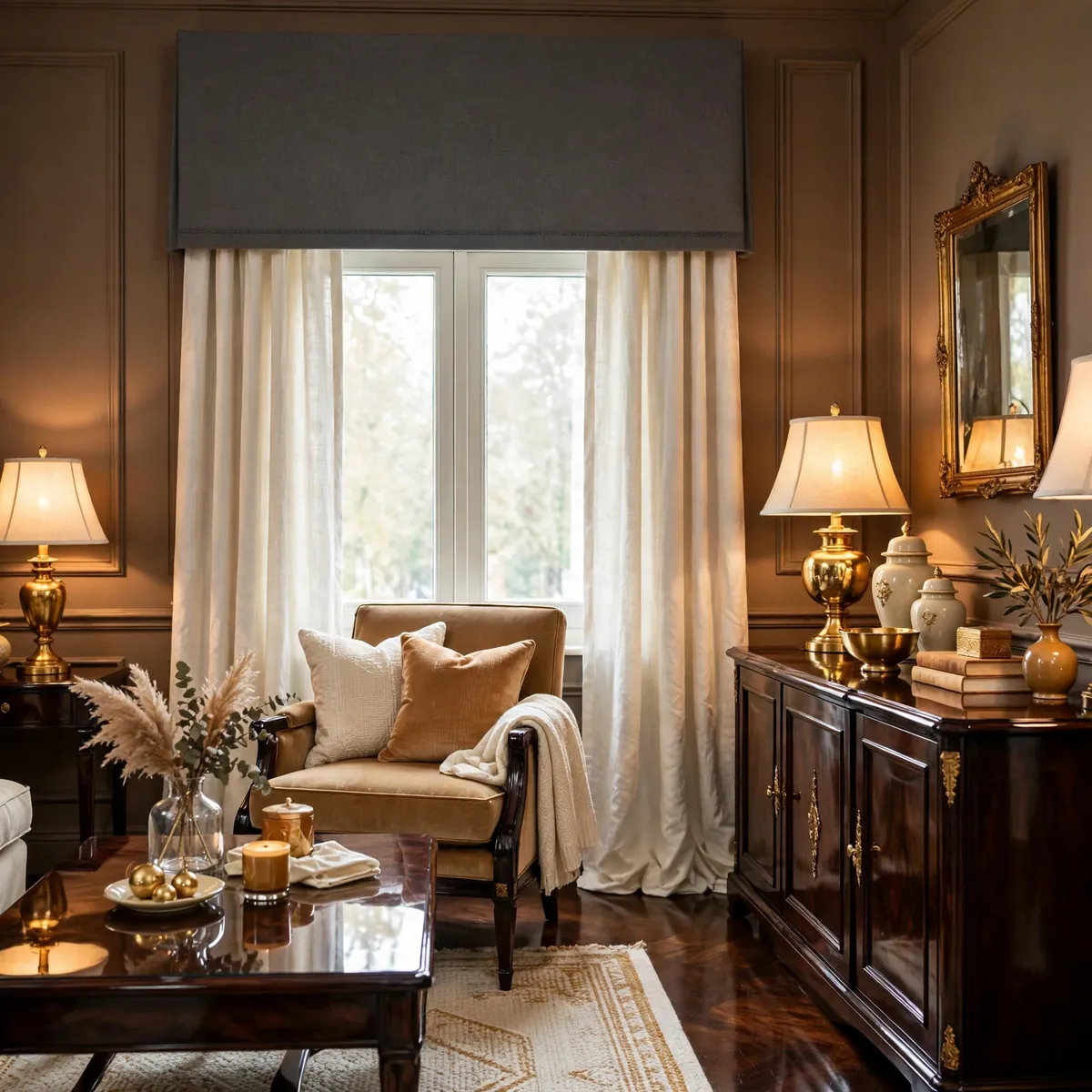
A pelmet — an upholstered board across the top of the window — hides hardware and gives curtains a tailored, architectural finish. In a traditional living room, a straight charcoal pelmet over ivory drapes frames the window crisply and hides a basic rod entirely.
Quick tips:
- Keep pelmets slim and straight for modern rooms; shaped edges suit traditional ones.
- Upholster in the curtain fabric for cohesion, or a contrast for a design moment.
- Pelmets also block light leakage at the top — a bonus for TV rooms.
A Modern Slim Valance

Valances are making a quiet comeback in cleaner, slimmer forms — a simple flat valance softens the window top without the fuss of old swags. In a transitional living room, a tailored oatmeal valance over relaxed linen panels adds a finished layer that feels current, not dated.
Quick tips:
- Keep modern valances flat, straight, and shallow — bulk is what dates them.
- Mount the valance high to preserve the tall-window illusion.
- Use valances alone on windows where full curtains would overwhelm.
Motorized Curtains for Large Windows

Motorized curtain tracks are the practical luxury for wide or tall windows where hauling heavy panels gets old. On a 12-foot sliding-door wall in an open-plan living room, a quiet motorized ripple-fold track opens the whole glass wall with one remote tap.
Quick tips:
- Plan for power — hardwired tracks need an outlet nearby; battery wands need recharging.
- Motorization suits heavy velvets and wide spans most; light panels rarely need it.
- Set schedules so curtains open with the morning and close at dusk automatically.
Curtains Layered Over Roman Shades
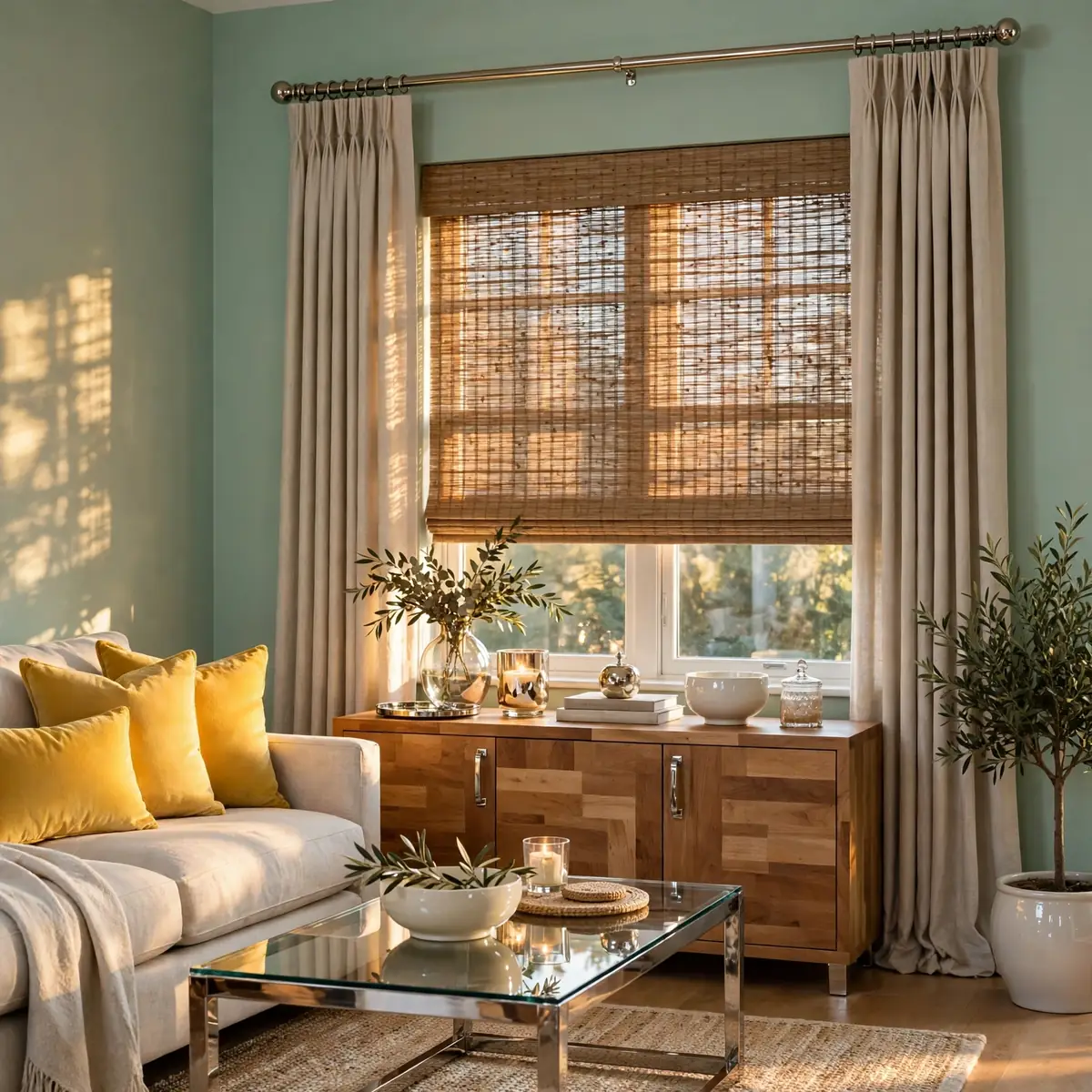
Pairing full curtains with fitted roman shades gives precise light control plus soft style: shades handle the sun, curtains handle the look. In a west-facing living room, woven wood roman shades filter harsh afternoon sun while oatmeal linen side panels frame the window decoratively.
Quick tips:
- Mount shades inside the frame, curtains outside — each does its job cleanly.
- Keep the shade’s color close to the curtain’s for a layered, tonal look.
- This combo is ideal for bedrooms-off-living spaces and street-facing rooms.
Seasonal Fabric Swaps

Swapping curtain fabrics with the seasons — light sheers for summer, heavier weaves for winter — refreshes the whole room for the cost of one textile. A living room that wears breezy white voile from May to September and switches to warm rust cotton twill for the colder months feels made-over twice a year.
Quick tips:
- Store off-season panels clean, folded, and in breathable bags.
- Keep the same rods and hardware year-round; only the panels change.
- Even swapping just the tie-backs or adding a winter throw reads as seasonal.
Blackout-Lined Linen for TV Rooms
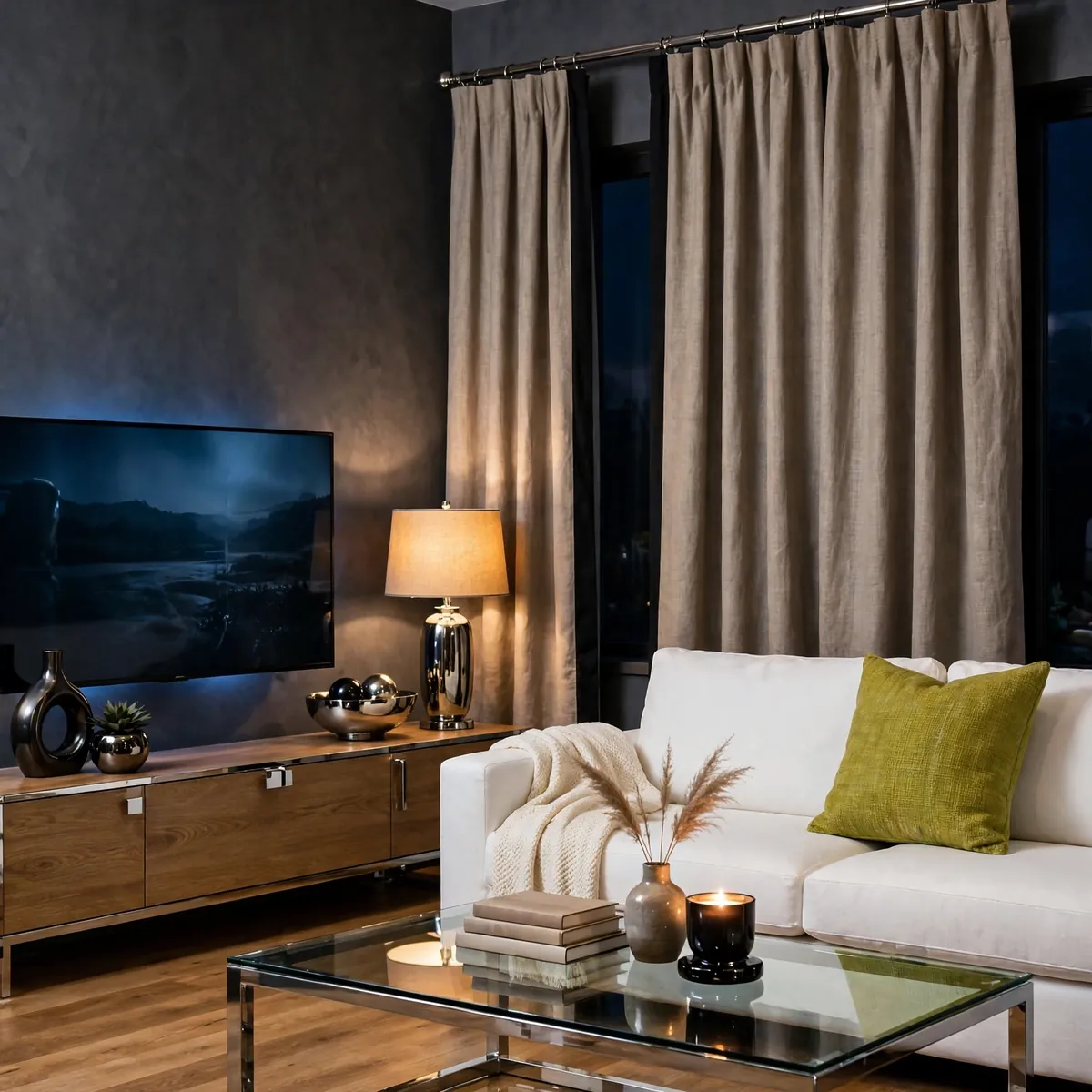
Blackout lining behind a beautiful face fabric gives light control without the “blackout curtain” look. In a living room that doubles as a movie room, natural linen curtains with hidden blackout lining kill screen glare on demand while looking like relaxed, expensive drapery the rest of the day.
Quick tips:
- Blackout lining also insulates — noticeable on drafty windows in winter.
- The lining adds weight, so confirm your rod and brackets are rated for it.
- Choose light-filtering (not full blackout) lining if you only need glare control.
Translucent Panels for Street-Facing Privacy
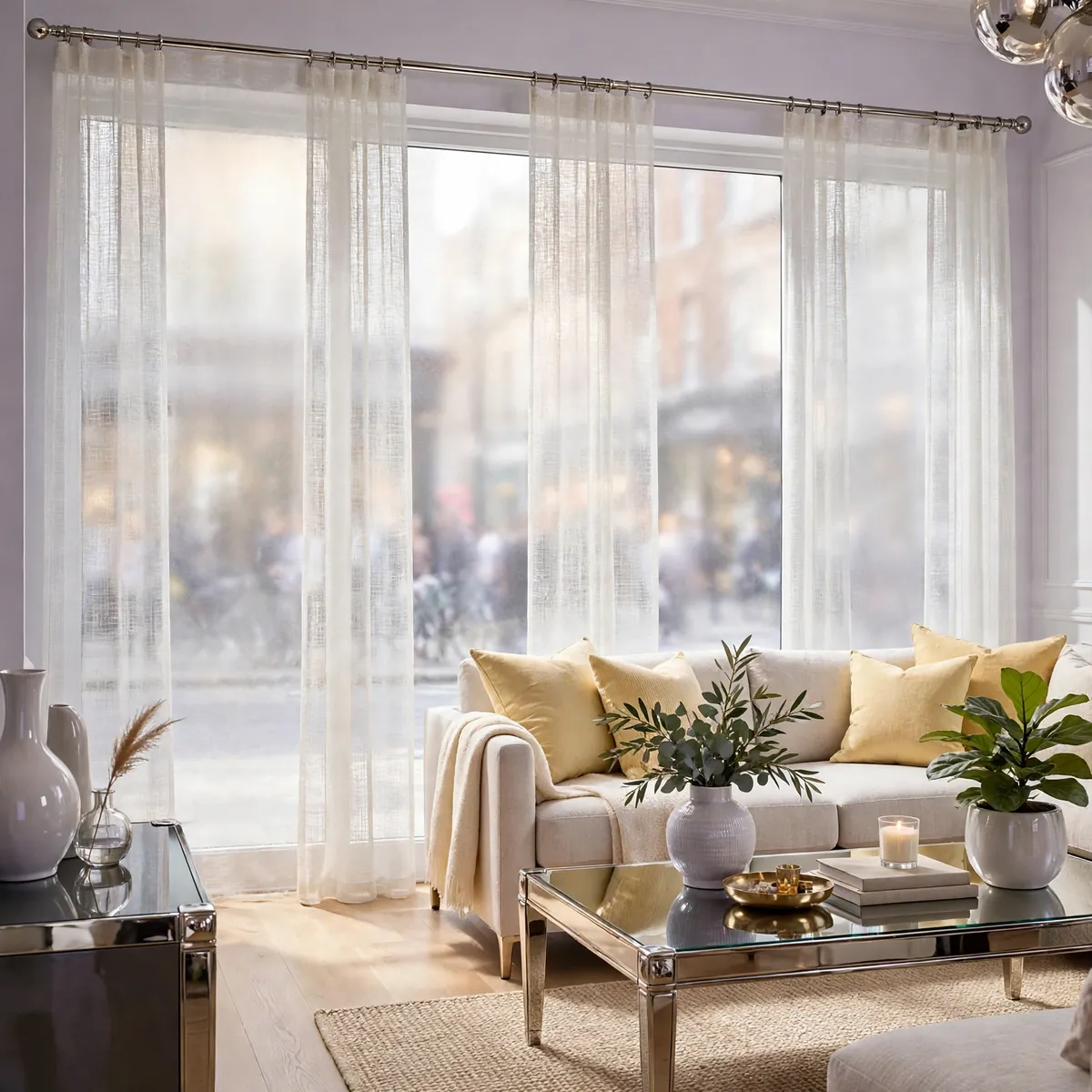
Translucent (light-filtering) panels blur the view in from the street while keeping the room bright — the privacy sweet spot for ground-floor living rooms. In a city living room facing the sidewalk, frosted-weave translucent panels in warm white keep neighbors’ eyes out and daylight in, no blinds needed.
Quick tips:
- Hold fabric up to a window before buying — “translucent” varies wildly by weave.
- Pair with heavier night drapes on a double rod for full evening privacy.
- Light-filled rooms always feel bigger, even when they aren’t.
FAQs
Should living room curtains touch the floor?
Yes — floor-length is the standard for a polished look. Choose “kiss” length (fabric just touching the floor) for a clean, tailored feel, or a slight “break” (about half an inch pooling) for relaxed elegance. Curtains that hover above the floor make the room look smaller and unfinished.
How can I make my living room look bigger with curtains?
Mount the rod 4–6 inches above the frame and 8–12 inches wider on each side, use floor-length panels, and choose light, neutral colors or sheers. Match curtains to the wall color for a seamless effect, and make sure open panels stack on the wall rather than covering the glass.
What is the best fabric for living room curtains?
Linen and cotton suit most living rooms — airy, textured, and versatile. Choose velvet for coziness, sound softening, and light control; sheers for daylight privacy; and blackout lining behind any face fabric for TV glare or street-facing windows.
Are sheer curtains good for living rooms?
Yes. Sheers provide soft, diffused daylight and mild daytime privacy while keeping rooms bright and airy. They work in almost every decor style and layer beautifully under heavier drapes for evening privacy.
What curtain header looks most modern?
Ripple fold (also called S-fold) on a ceiling-mounted track is the most modern look — smooth, continuous waves with hidden hardware. Pinch pleat is the tailored classic; grommet tops read casual. Avoid heavy gathered rod pockets and formal swags in contemporary rooms.
Conclusion
The right curtains do more than cover a window — they shape your living room’s light, privacy, acoustics, and mood in one move. Start with the rules that never fail: floor-length, two panels, rod high and wide, fabric matched to function. Then choose the idea that fits your room’s personality, from airy linen to dramatic velvet. Get those details right, and your windows will look designed, not just dressed.