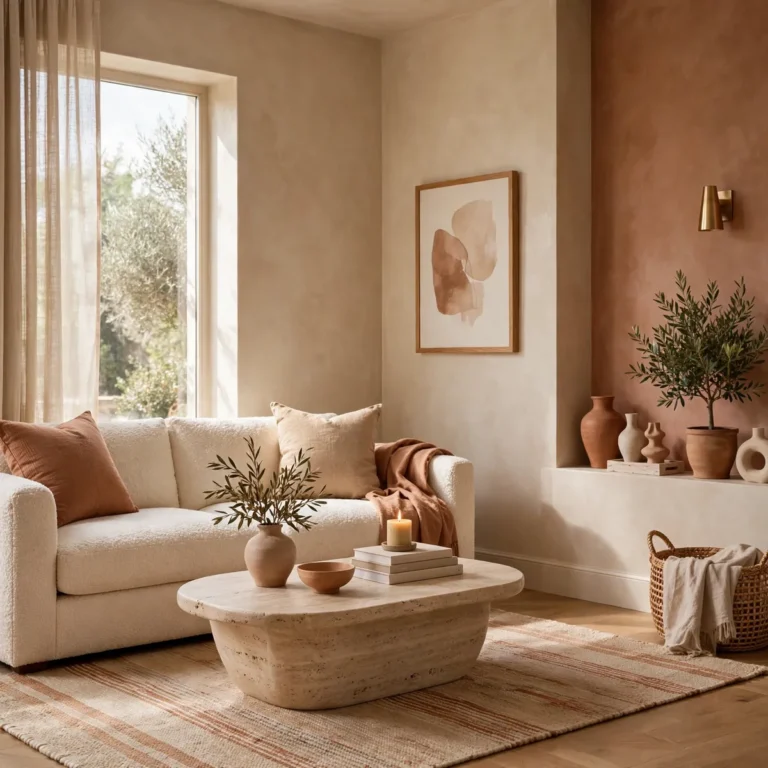
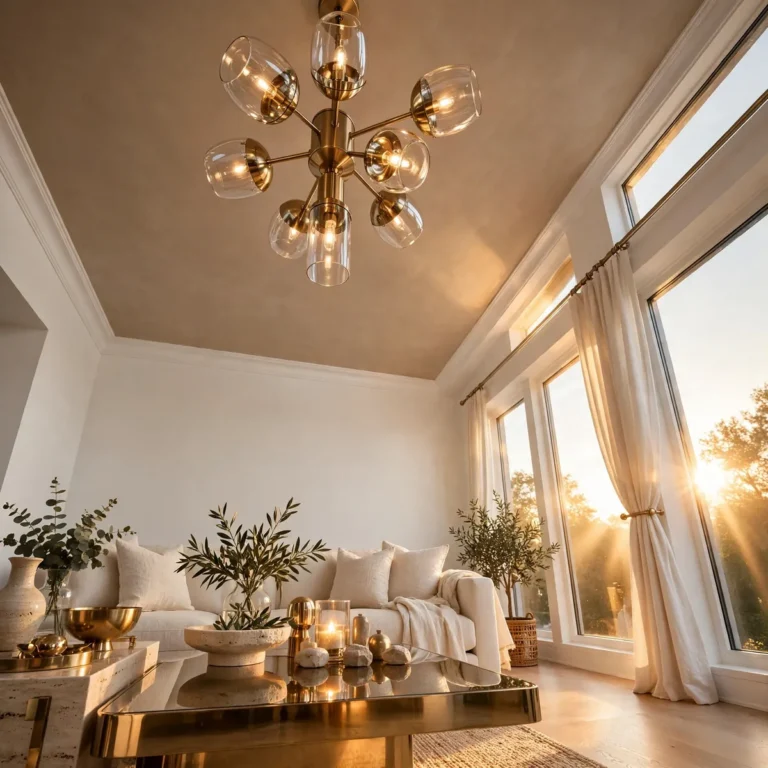
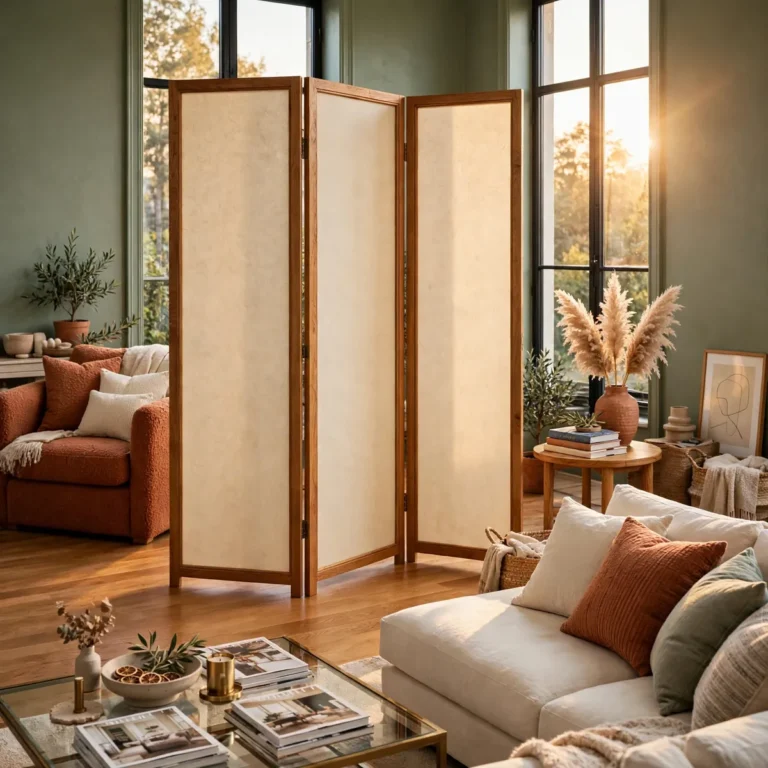
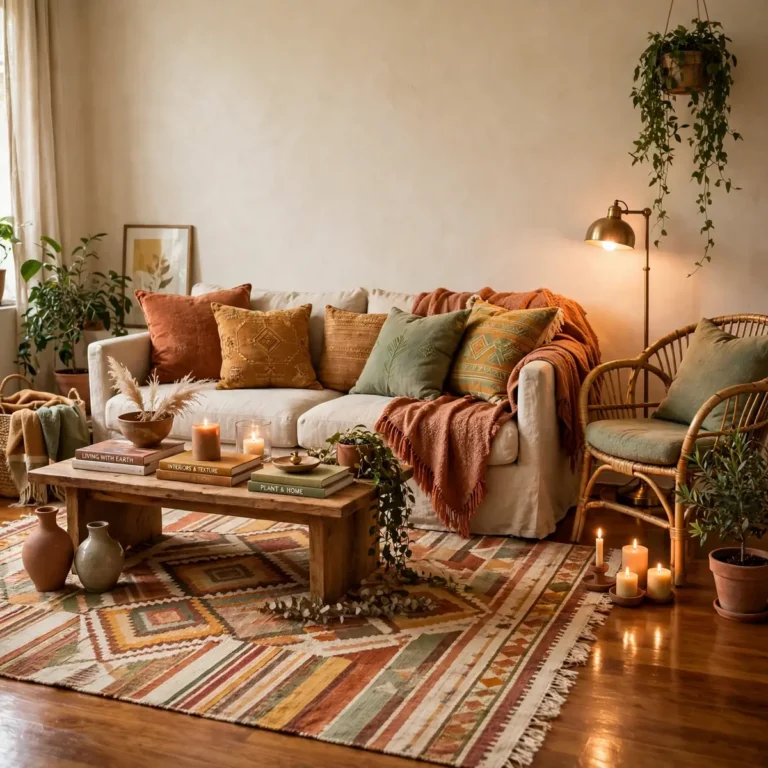
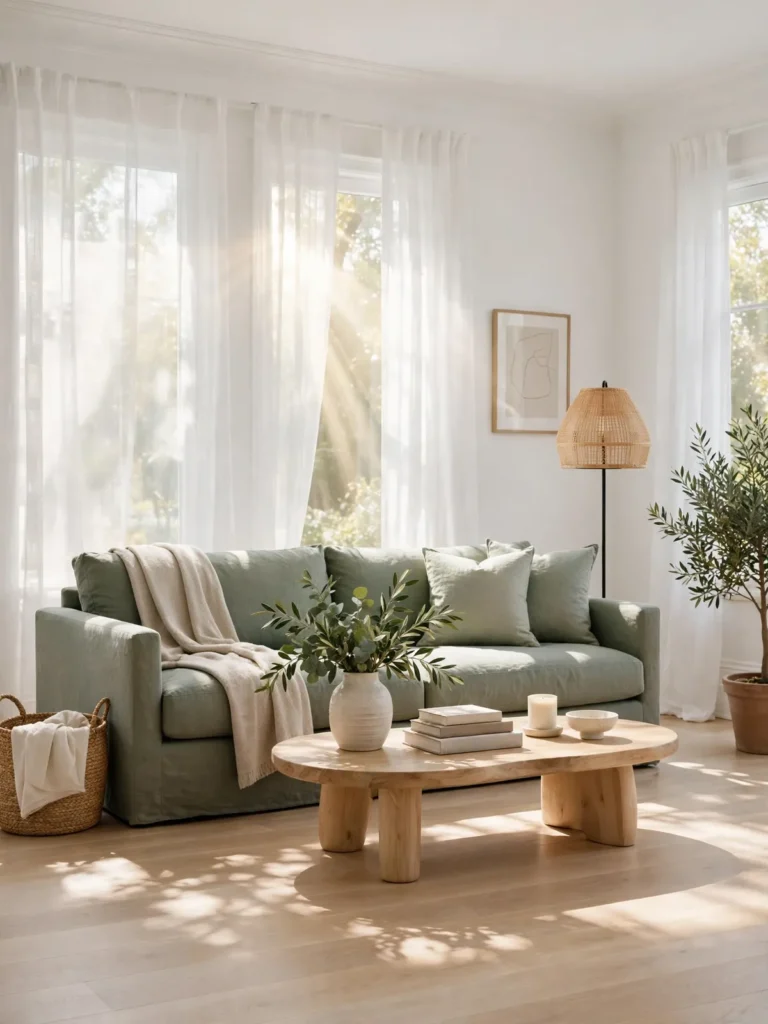
25 Living Room TV Wall Ideas That Make the Screen Look Intentional
Stop letting a blank wall and a floating screen ruin the room. These 25 living room TV wall ideas cover slat panels, gallery walls, floating consoles, hidden-TV tricks, bookshelves, and lighting that make the screen look designed-in.
The best living room TV wall ideas make the screen look intentional instead of bolted on: mount it on a wood-slat or stone accent wall, flank it with floating shelves or bookshelves, hide it behind sliding panels or an art-frame display when it is off, and finish with a floating console and invisible cables. Decide first whether the TV is the star or should disappear — that one choice drives everything else, from wall color to lighting.
Below are 25 ways to build the wall around your screen — panels, shelves, lighting, hidden-TV tricks, styling, and cable management. If you love the book-lined look, our living room bookshelves ideas goes deeper on styling shelves themselves; here the TV wall stays the focus, with the shelves playing a supporting role.
Key Takeaways
How high should I mount my TV on the wall?
Center the screen at seated eye level — about 42 inches from floor to screen center for most sofas. Above a fireplace usually lands too high; use a pull-down mount if that is your only spot.
What wall color makes a TV less noticeable?
Charcoal, near-black, or deep green matched close to the screen’s bezel. The TV melts into the wall when it is off instead of floating as a black rectangle on white.
How do I hide TV cables on the wall?
Paintable cord raceways for renters, in-wall cable kits for owned homes, or a floating console with cord cutouts that swallows everything. Plan cable paths before you mount.
Can a TV sit inside a gallery wall?
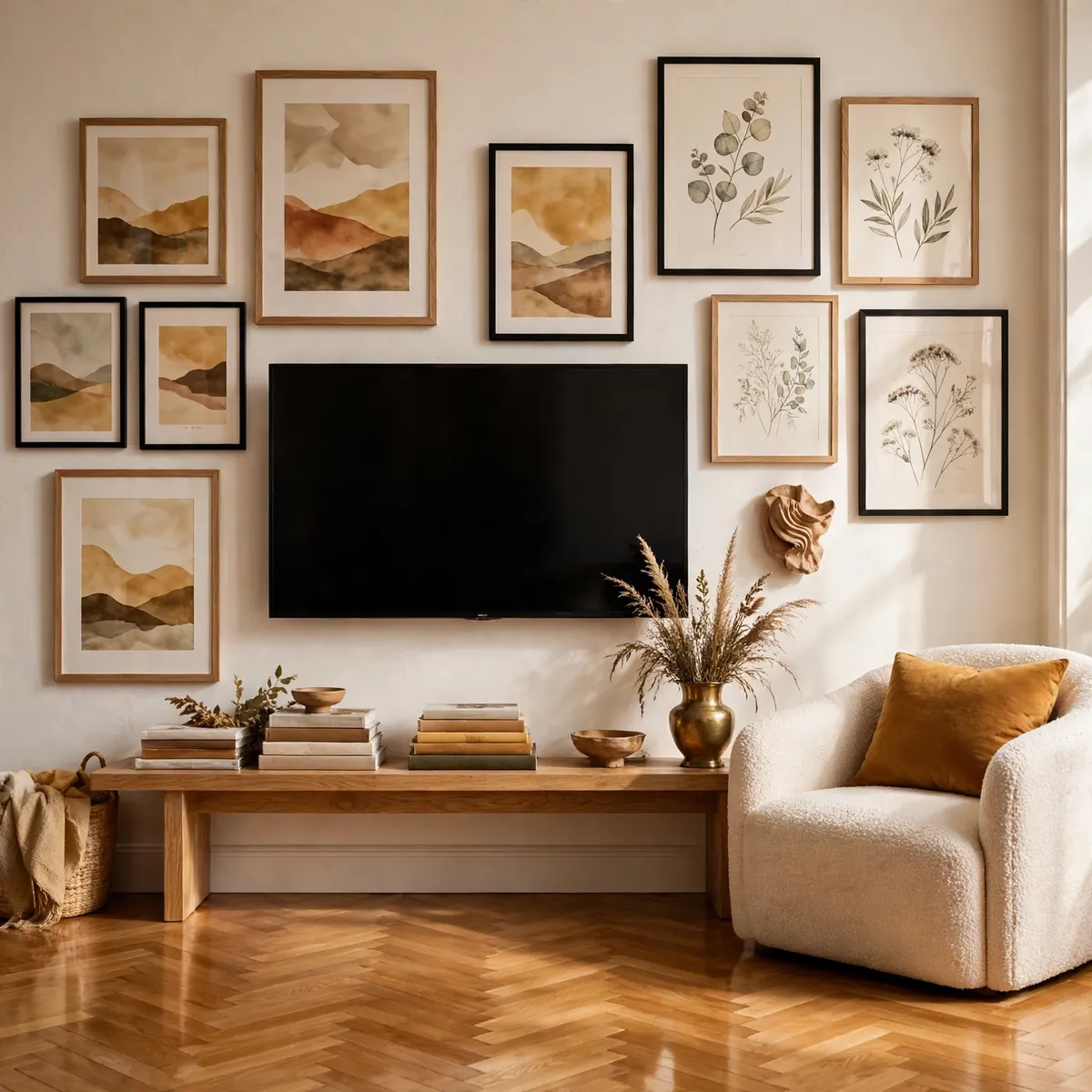
Yes — treat the screen as the largest frame in the arrangement, keep 2 to 3 inches between frames, and start the layout from the TV’s position rather than centering on the wall.
Should the TV go above the fireplace?
It can, but mind the height and the heat. Keep the mantel-to-screen gap generous, use a tilting mount, and confirm the fireplace manufacturer’s clearance rules first.
How do I make my TV look like art?
Use an art-frame style TV or frame a standard TV with slim molding, surround it with real artwork, and let it display art or photography when idle.
| Approach | Best room | Effort / cost | TV visibility |
|---|---|---|---|
| Wood slats or fluted panels | Modern, Scandinavian, Japandi | Weekend DIY, medium | Star of the wall |
| Black-on-black or dark accent wall | Movie-night rooms, modern | Paint weekend, low | Disappears when off |
| Gallery wall around the TV | Eclectic, collected homes | Weekend DIY, low–medium | One frame among many |
| Floating console + shelves | Small rooms, minimalists | Weekend DIY, low–medium | Clean and intentional |
| Full built-in media wall | Large rooms, forever homes | Pro install, high | Custom and seamless |
| Hidden TV (panels, cabinets, art-frame) | Formal living rooms | Medium–high | Gone on demand |
| TV + bookshelf combo | Readers, family rooms | Weekend to pro, medium | Blends into the library |
| Fireplace + TV combo | Cozy focal-point rooms | Pro, medium–high | Shared focal point |
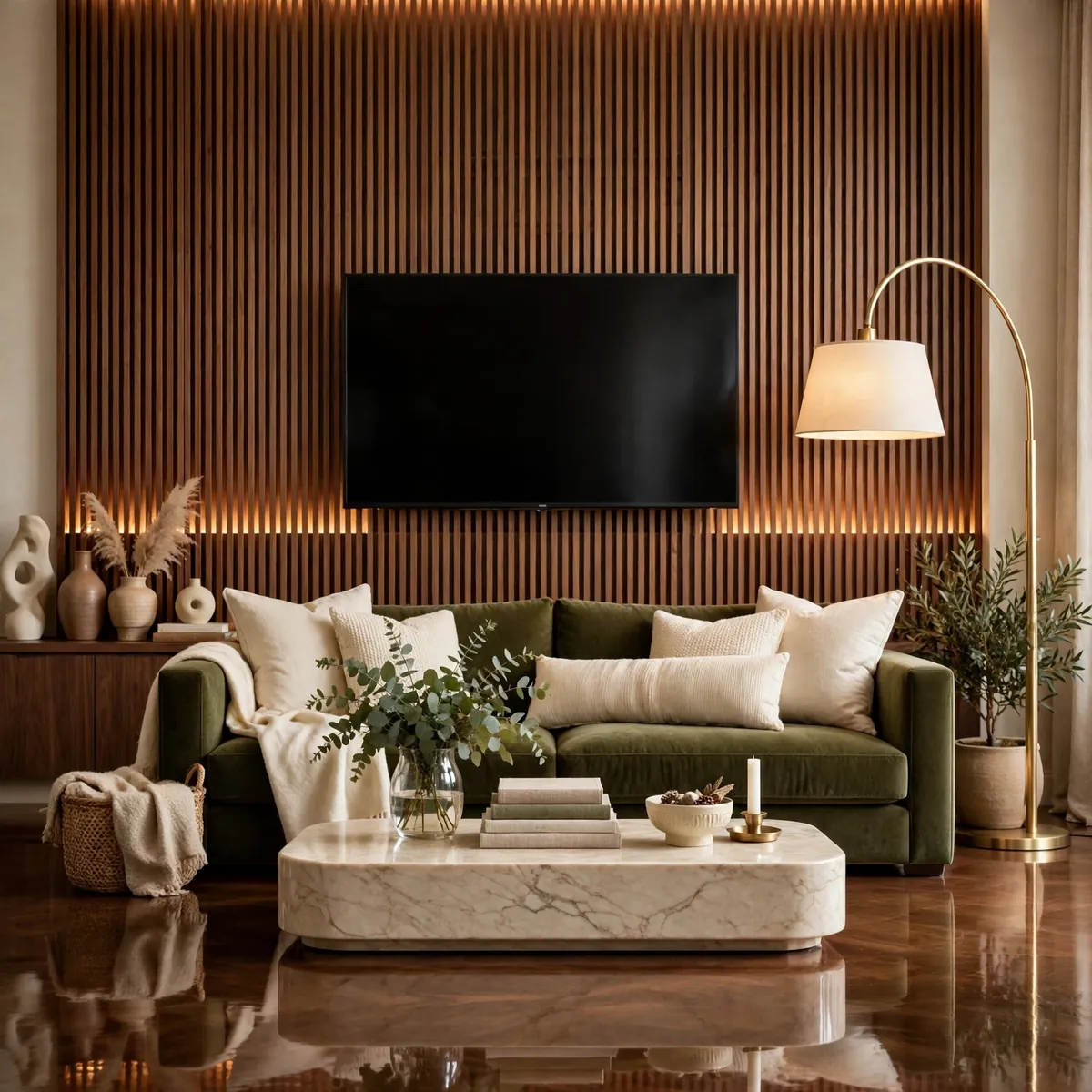
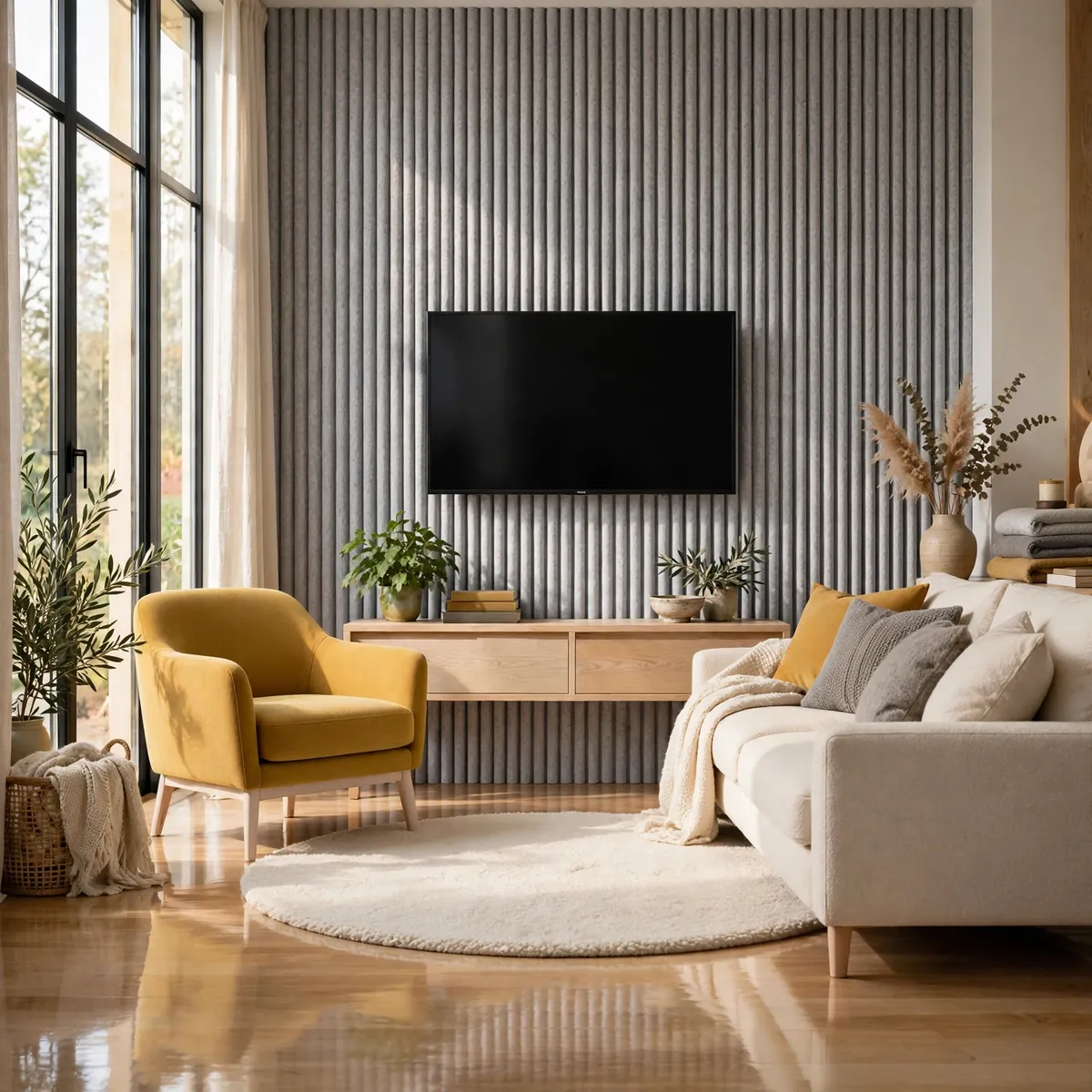
A Wood Slat Wall Behind the TV IMAGE_1: tmc-lrtv-01.webp
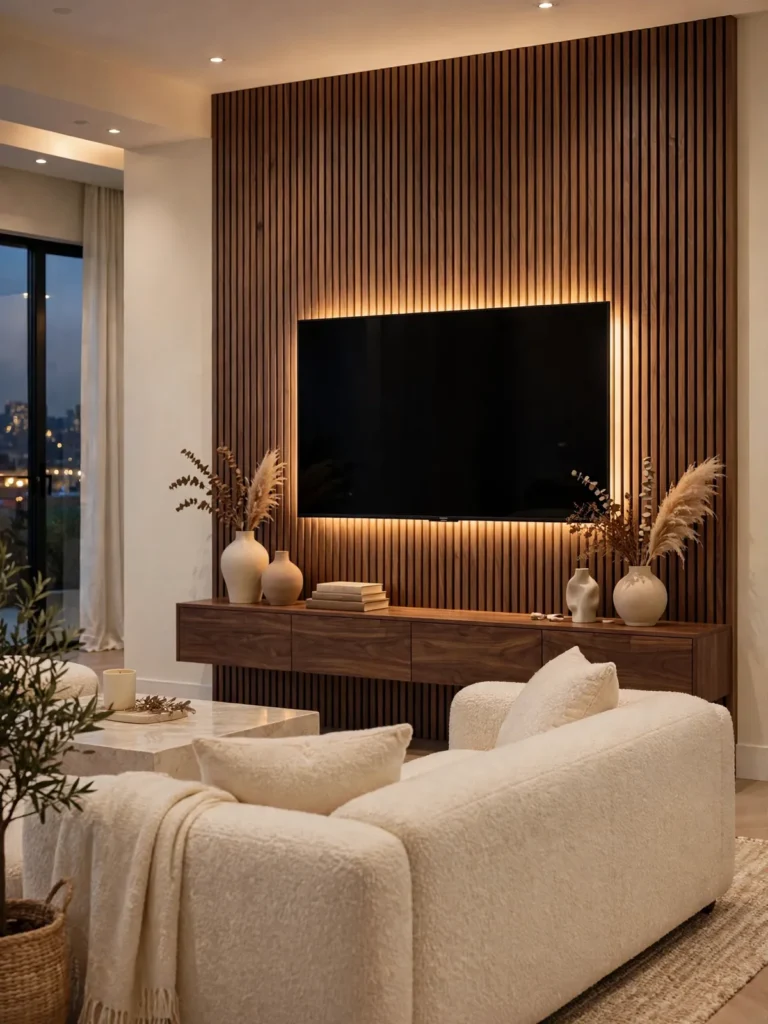
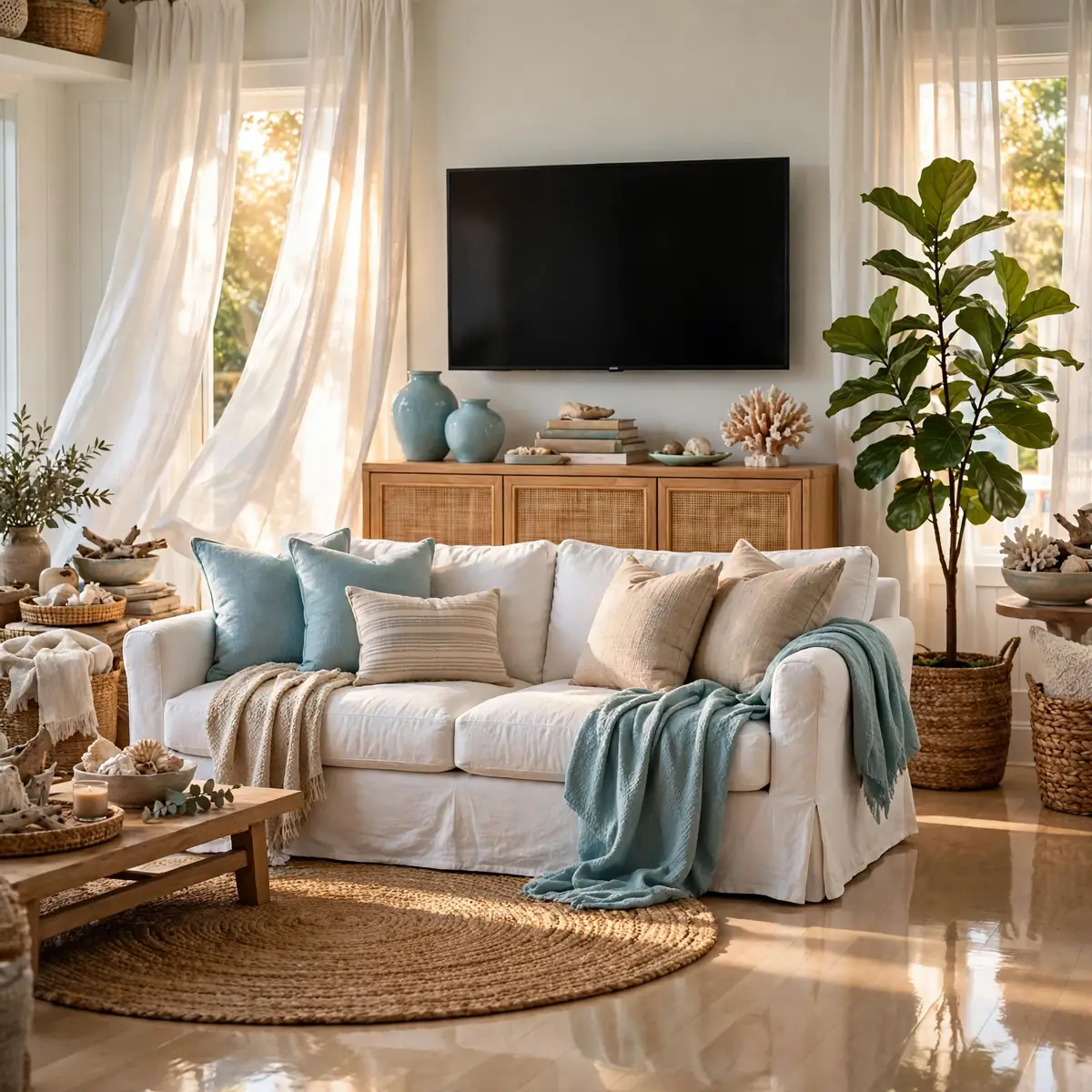
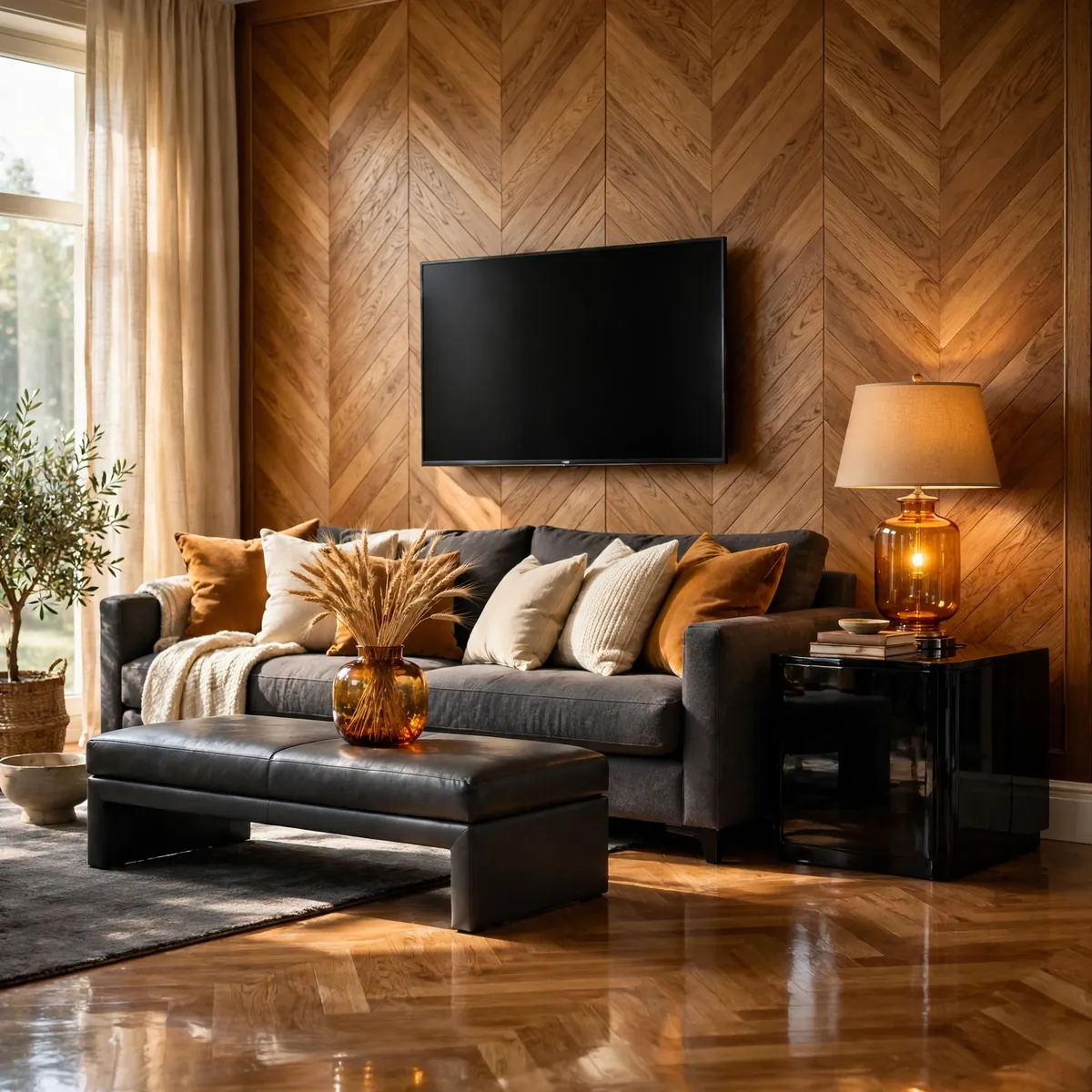
Vertical wood slats behind the TV add warmth, rhythm, and height in one move — the screen reads as part of the architecture. This is the idea that carries the whole list, so picture it fully: in a Scandinavian living room with pale oak floors and a low-profile cream sofa, a floor-to-ceiling wall of warm oak slats runs behind a 65-inch TV mounted at seated eye level, with a slim warm-white LED strip tucked into the shadow gap at the wall’s edge so the whole panel glows softly after dark. A floating walnut console below holds the soundbar and streaming box, its top styled with a single trailing pothos and a low stack of art books. The slats draw the eye upward, the wood warms the tech, and the TV stops being an appliance and becomes a framed picture on a crafted wall. Space the slats with narrow gaps over a dark backing board so the shadow lines give the wall its depth.
Quick tips:
- Mount the TV bracket to studs or solid backing, never to the slats alone.
- Run slats floor to ceiling — stopping at TV height chops the effect.
- Warm-white LED (2700K) keeps the wood cozy; cool white turns it clinical.
Living Room TV Wall Ideas: A Gallery Wall Built Around the Screen IMAGE_2: tmc-lrtv-02.webp
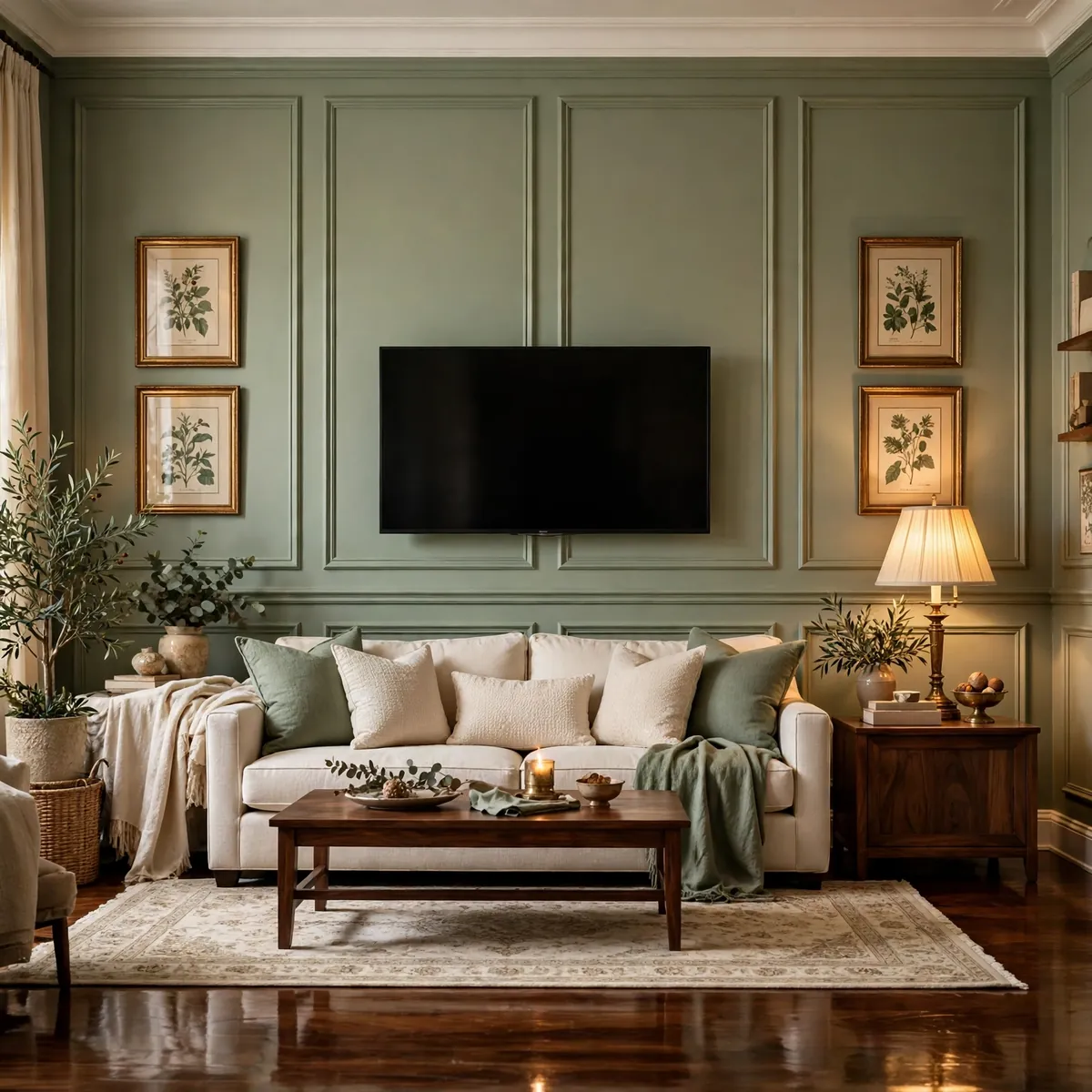
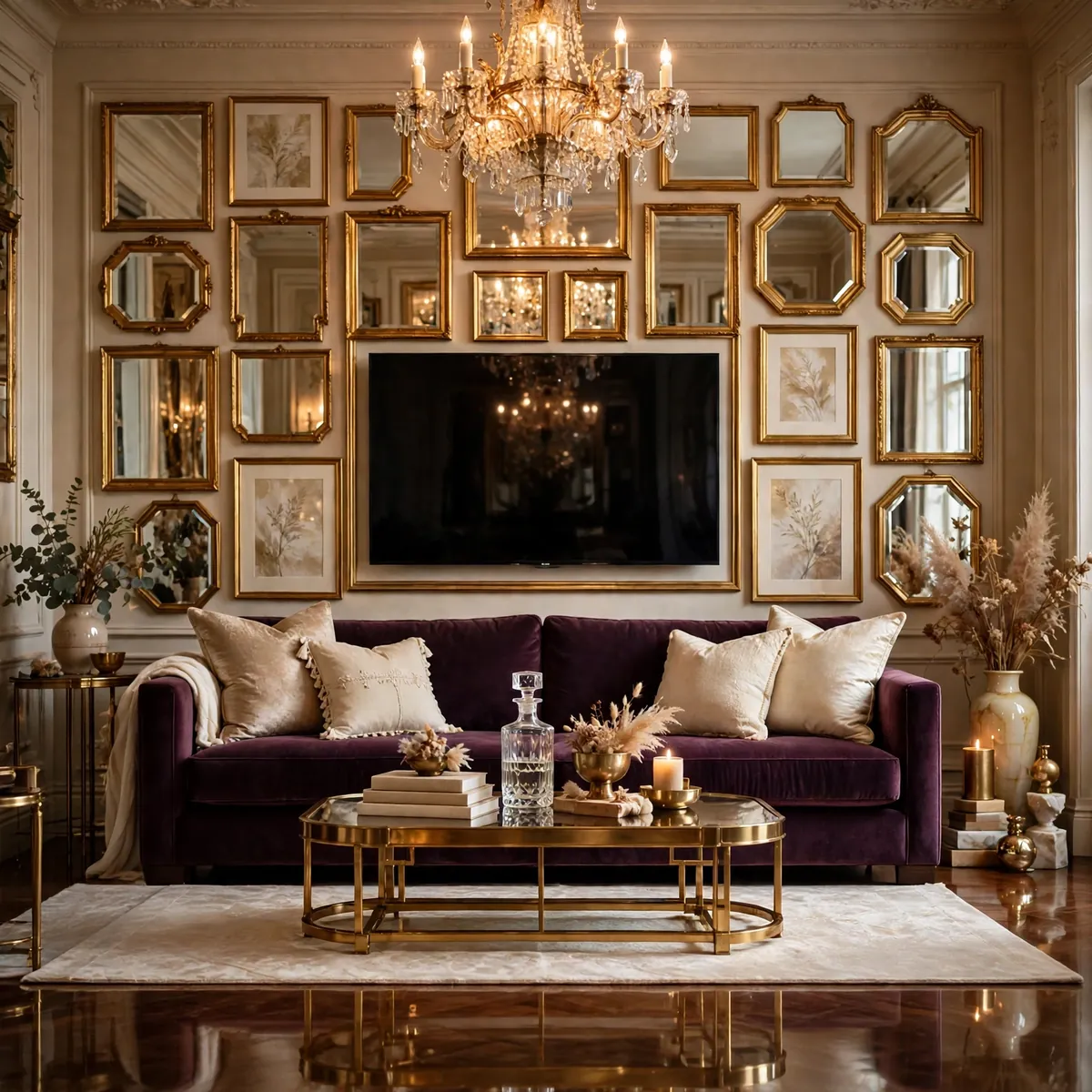
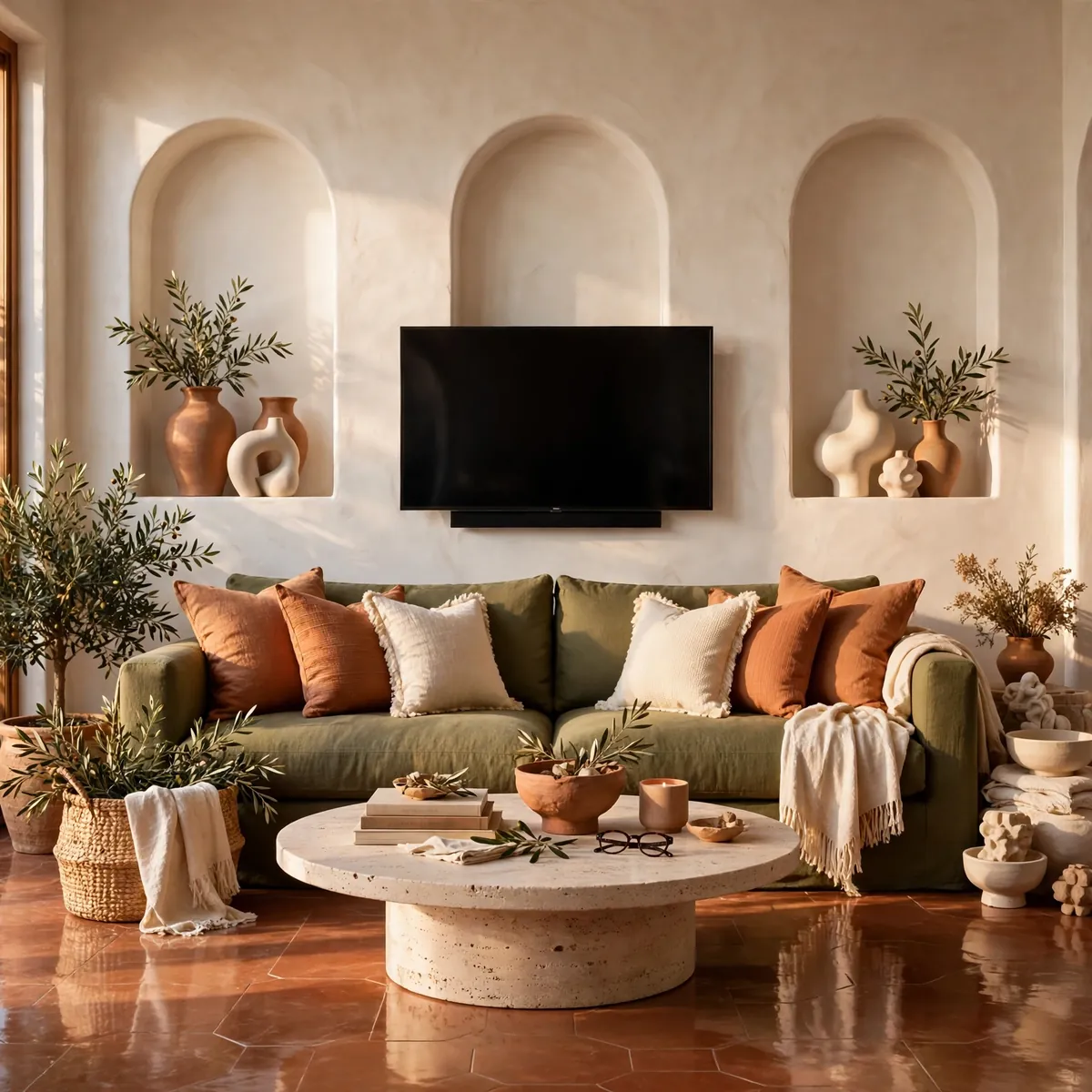
Treat the TV as the biggest frame in a gallery wall and the black rectangle stops dominating the room. In an eclectic living room with sage walls, hang a 55-inch TV slightly left of center, then build outward with eight mixed frames — botanical prints, a vintage map, two family photos, and a small brass mirror — keeping 2 to 3 inches between every piece.
Quick tips:
- Start the layout from the TV’s fixed position, not the wall’s center.
- Keep frame finishes to two (black and oak) so the mix feels curated, not chaotic.
- Use an art-frame style TV or screensaver art so the screen joins the gallery when idle.
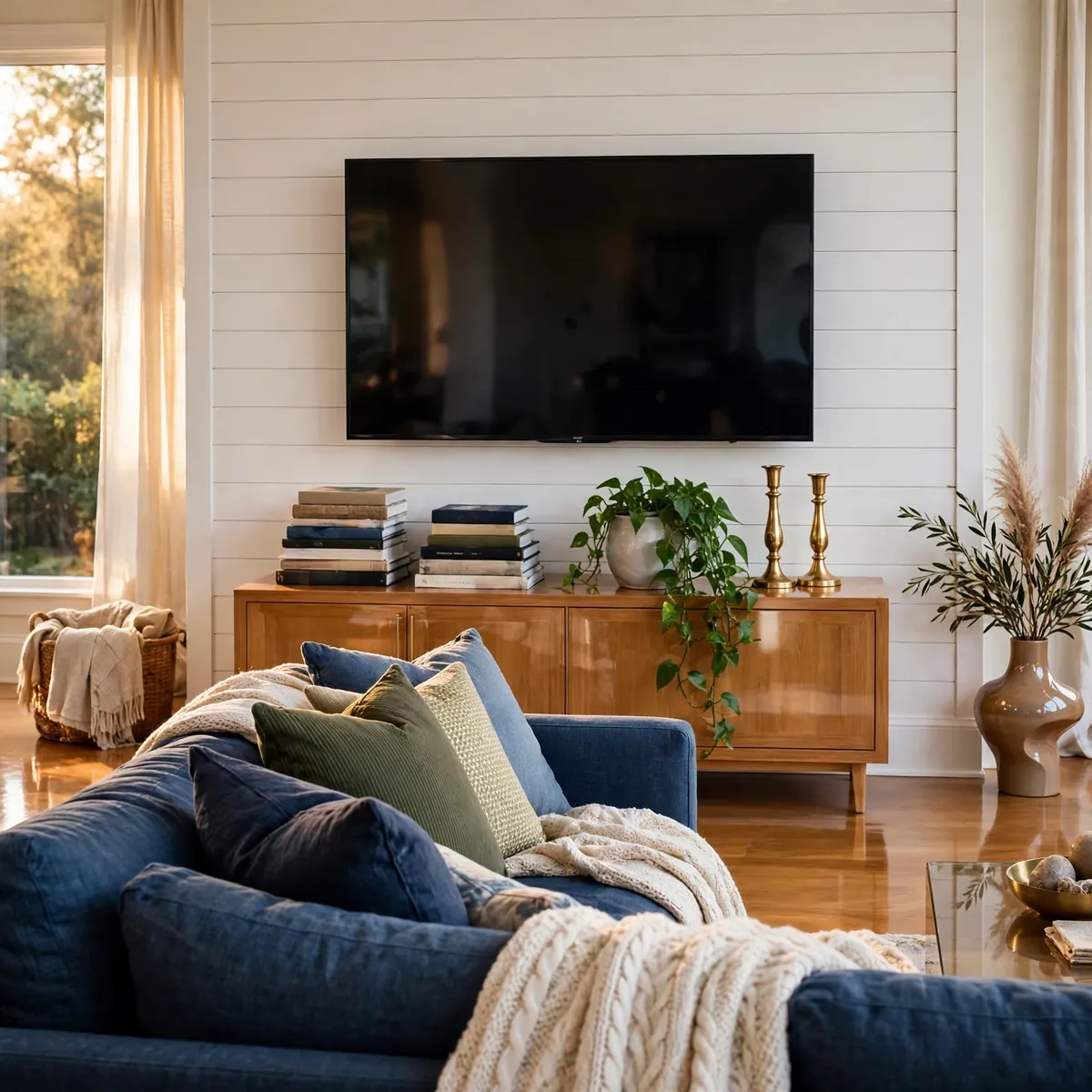
A Floating Media Console Under the TV IMAGE_3: tmc-lrtv-03.webp
A wall-mounted console floats the storage off the floor, keeping the TV wall light and easy to clean around. Try a 70-inch white oak floating console under a 65-inch TV in a minimalist living room, its two handleless drawers hiding remotes and consoles while the soundbar sits centered on top.
Quick tips:
- Size the console at least as wide as the TV, ideally 6 inches wider per side.
- Drill cord cutouts in the back panel before mounting so cables drop invisibly.
- Leave 8 to 12 inches between console top and TV bottom for visual breathing room.
Black-on-Black — Let the TV Disappear IMAGE_4: tmc-lrtv-04.webp
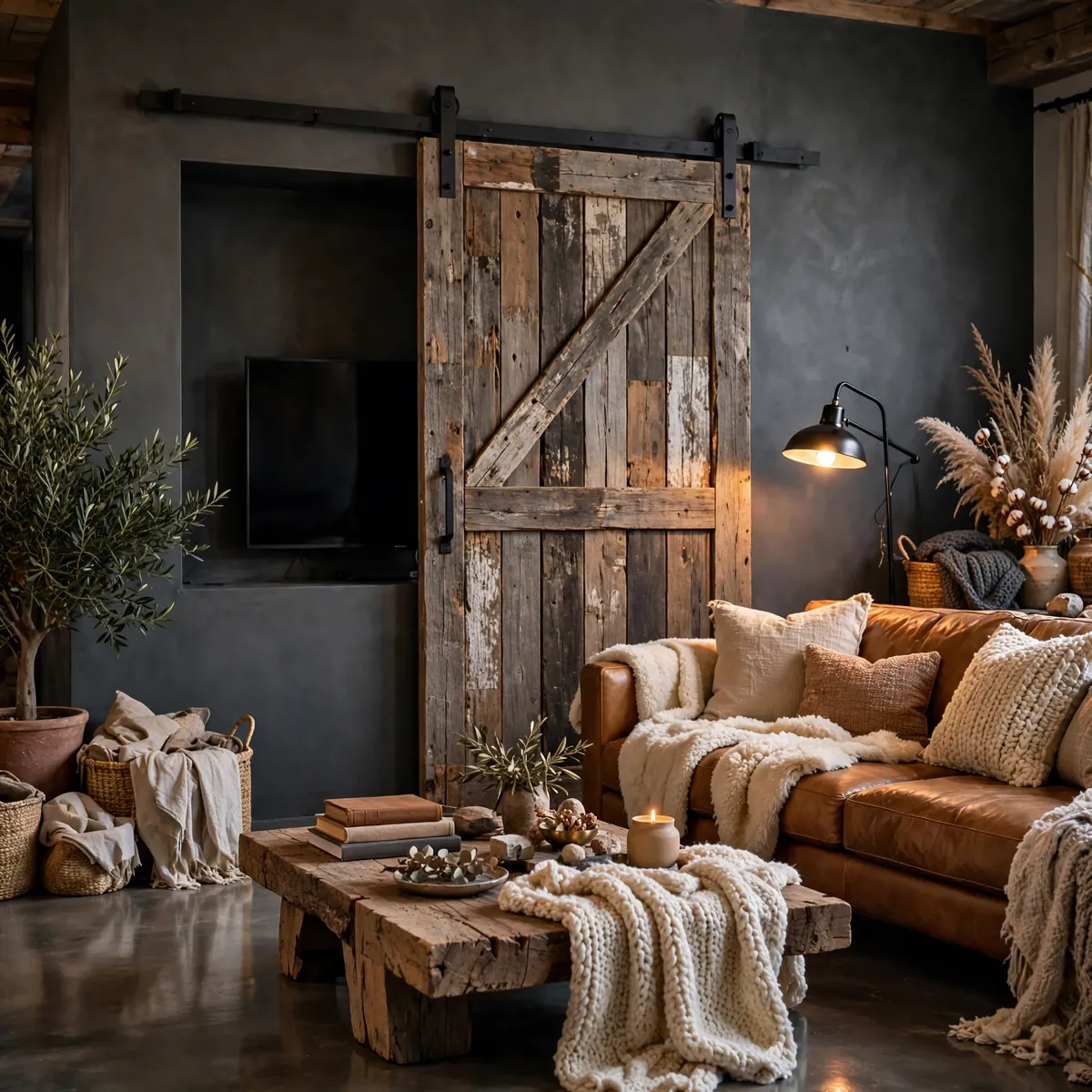
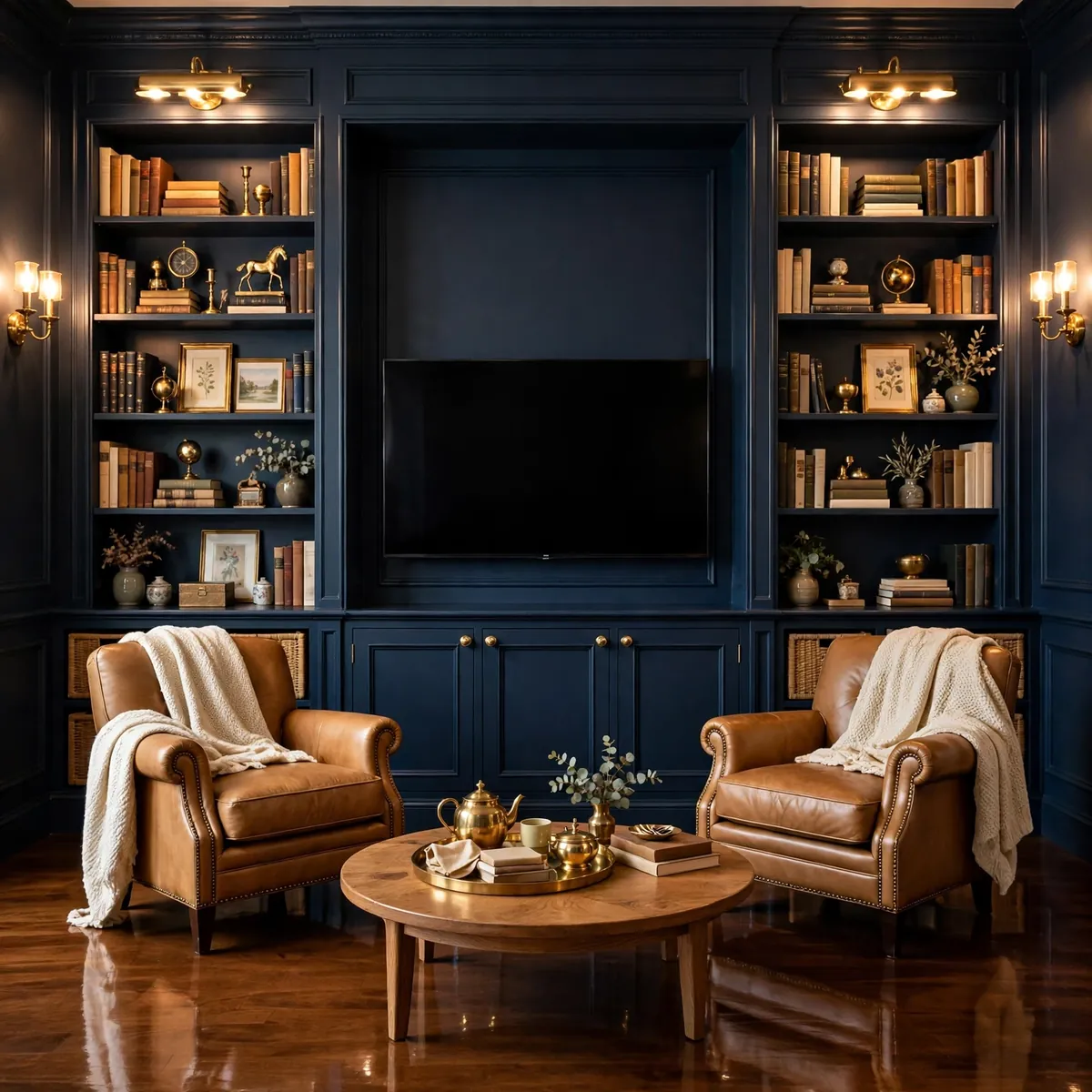
Paint the TV wall the same near-black as the screen and the TV vanishes when it is off. In a moody media room with charcoal walls, a black floating console, and cognac leather armchairs, the 75-inch screen becomes invisible until movie night — the wall reads as pure drama, not tech.
Quick tips:
- Use a matte or eggshell finish; gloss shows every imperfection on dark paint.
- Balance the darkness with warm lighting — wall washers or a brass floor lamp.
- Keep the other three walls light so the room does not feel like a cave.
A TV and Bookshelf Combo Wall IMAGE_5: tmc-lrtv-05.webp
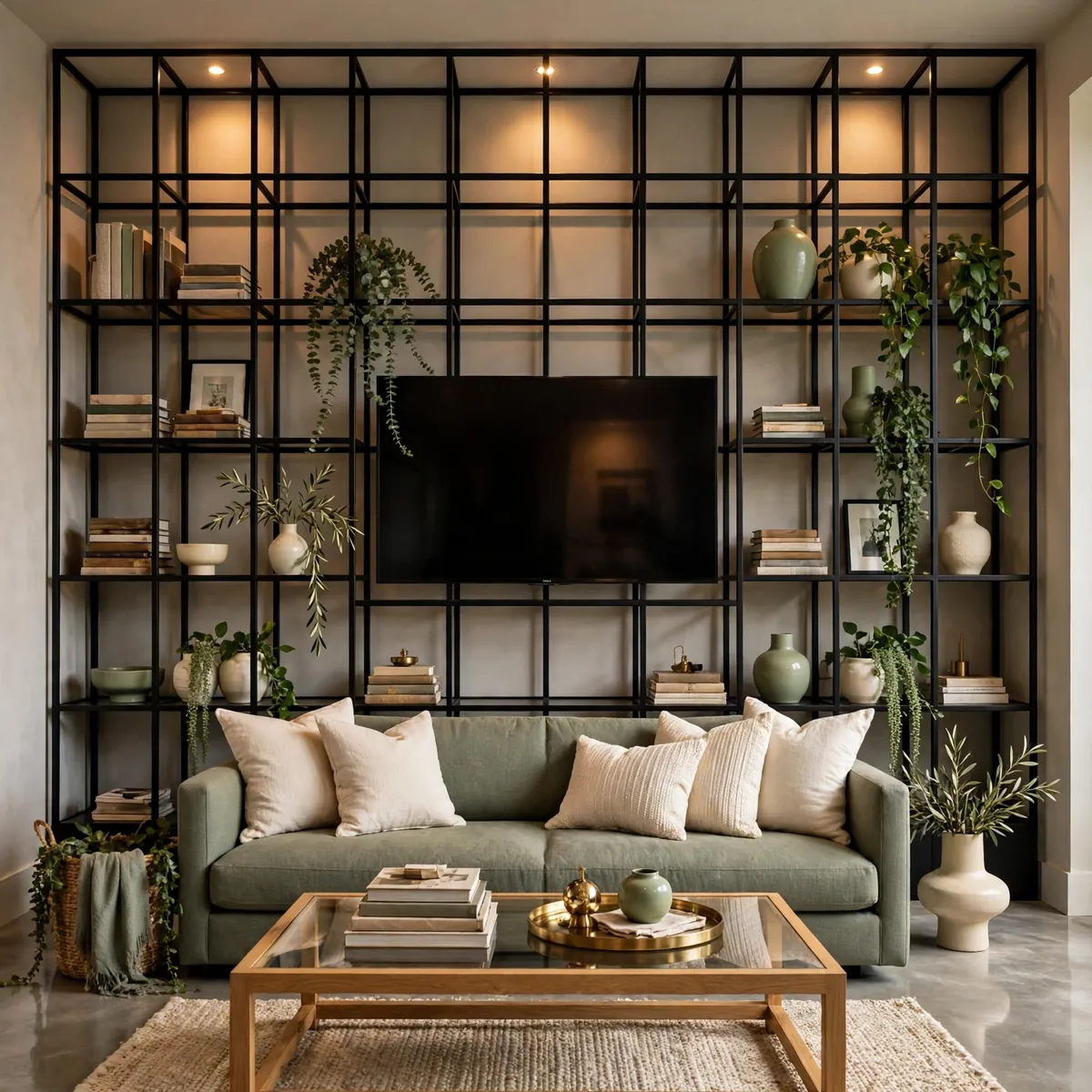
Flanking the TV with bookshelves turns the media wall into a library wall where the screen is just one element. Build or buy two tall white bookcases on either side of a 55-inch TV in a family living room, style the shelves with books, a few framed photos, and one trailing plant per case, and bridge the top with a single floating shelf.
Quick tips:
- Keep shelf styling to 60 percent books, 40 percent objects for a lived-in library feel.
- Align the TV’s center with the shelves’ middle shelf for a composed grid.
- Add picture lights or LED strips to the top shelf to spotlight the whole wall.
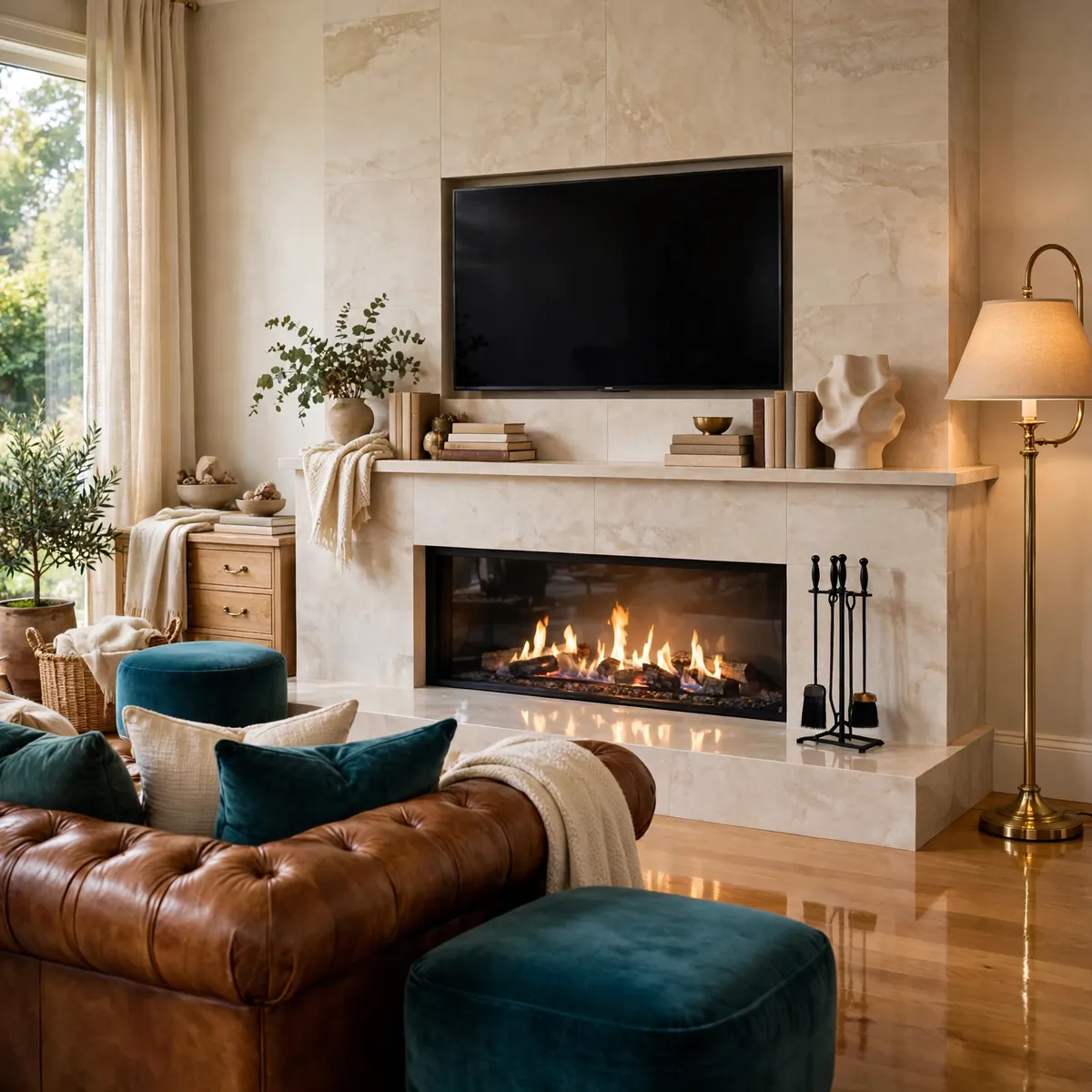
Fireplace and TV Sharing One Wall IMAGE_6: tmc-lrtv-06.webp
A linear electric fireplace under the TV creates a single cozy focal point — flame below, screen above. In a transitional living room, mount a 65-inch TV above a 60-inch linear electric fireplace set into a shiplap chimney breast, with the mantel shelf styled with two candlesticks and a small landscape print leaning against the wall.
Quick tips:
- Keep generous clearance between mantel and screen; check the fireplace maker’s specs.
- A tilting mount angles the screen down to counter the higher position.
- Run the fireplace’s flame-only mode in summer for ambiance without heat.
An Art-Frame TV That Looks Like Real Art IMAGE_7: tmc-lrtv-07.webp
Art-frame style TVs sit flush like a framed print and display artwork when idle — the closest thing to no TV at all. Hang one in a walnut frame on a gallery wall in a formal living room, surrounded by real framed prints, and guests will not spot the screen until it switches on.
Quick tips:
- A separate connection box (on art-frame models) hides in the console — plan for its cable.
- Matte-finish screens kill reflections that would give the TV away.
- Rotate the displayed art seasonally for a wall that always feels fresh.
Sliding Panels That Hide the TV Completely IMAGE_8: tmc-lrtv-08.webp
Sliding wood or fabric panels glide across to cover the TV when you want a screen-free room. Install a ceiling track with two wide oak-veneer panels in a calm Japandi living room; closed, the wall is pure wood texture, open, the TV is revealed for the evening.
Quick tips:
- Use lightweight panels — heavy ones strain the track and sag over time.
- Align panel edges with the wall’s panel joints so they vanish when closed.
- Push-to-open hardware avoids visible handles on the panels.
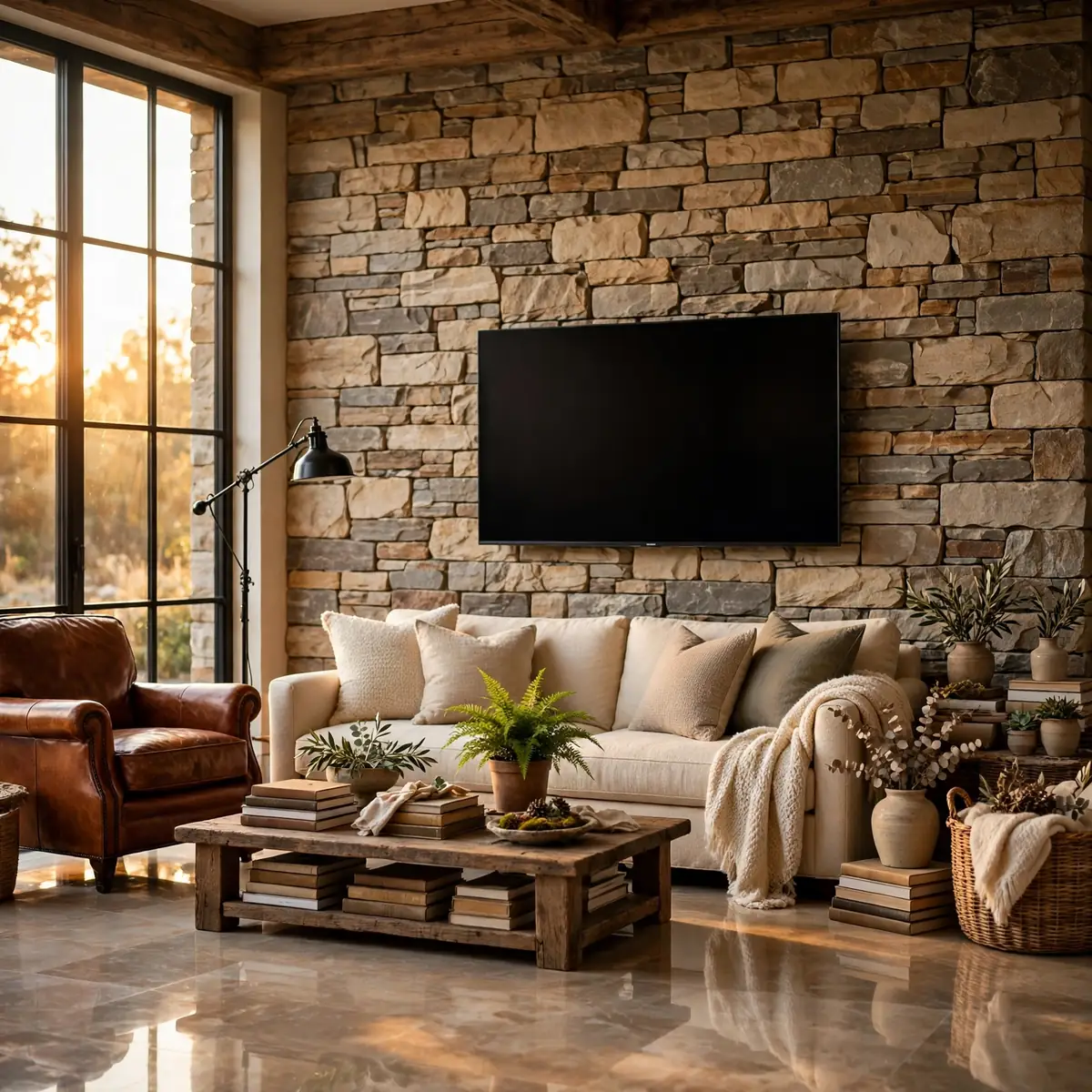
A Stone Veneer Accent Wall IMAGE_9: tmc-lrtv-09.webp
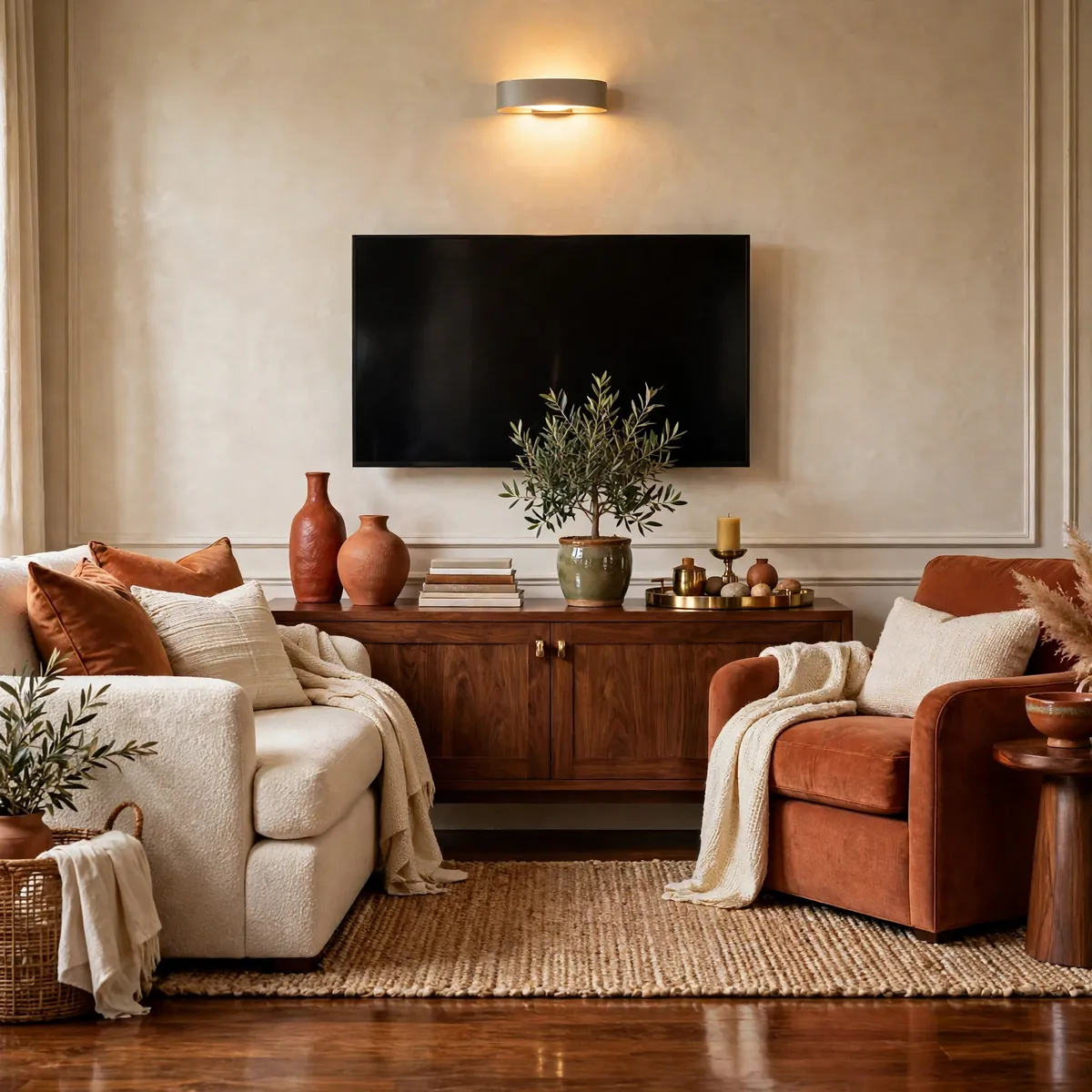
Stone veneer behind the TV brings natural texture and a sense of permanence. Mount a 65-inch TV on a stacked-stone veneer wall in a rustic-modern living room with leather armchairs and a cowhide rug, and add two black metal sconces flanking the screen for evening drama.
Quick tips:
- Choose honed or matte stone; polished stone throws screen glare.
- Seal natural stone veneer so dust wipes off easily.
- Keep the stone palette to one or two tones so the wall does not fight the screen.
A Floor-to-Ceiling Built-In Media Wall IMAGE_10: tmc-lrtv-10.webp
A full built-in — cabinets below, display niches beside, TV centered — makes the wall look architect-designed. In a large traditional living room, a white built-in spanning 14 feet with glass-front display cabinets flanking a 75-inch TV, closed storage below, and crown molding tying it to the ceiling reads as original millwork.
Quick tips:
- Include ventilated cabinets for game consoles and receivers — they run hot.
- Add dimmable lighting inside display niches for evening glow.
- This is a pro install; budget for it as a mini-renovation, not a weekend project.
LED Backlight Glow Behind the Screen IMAGE_11: tmc-lrtv-11.webp
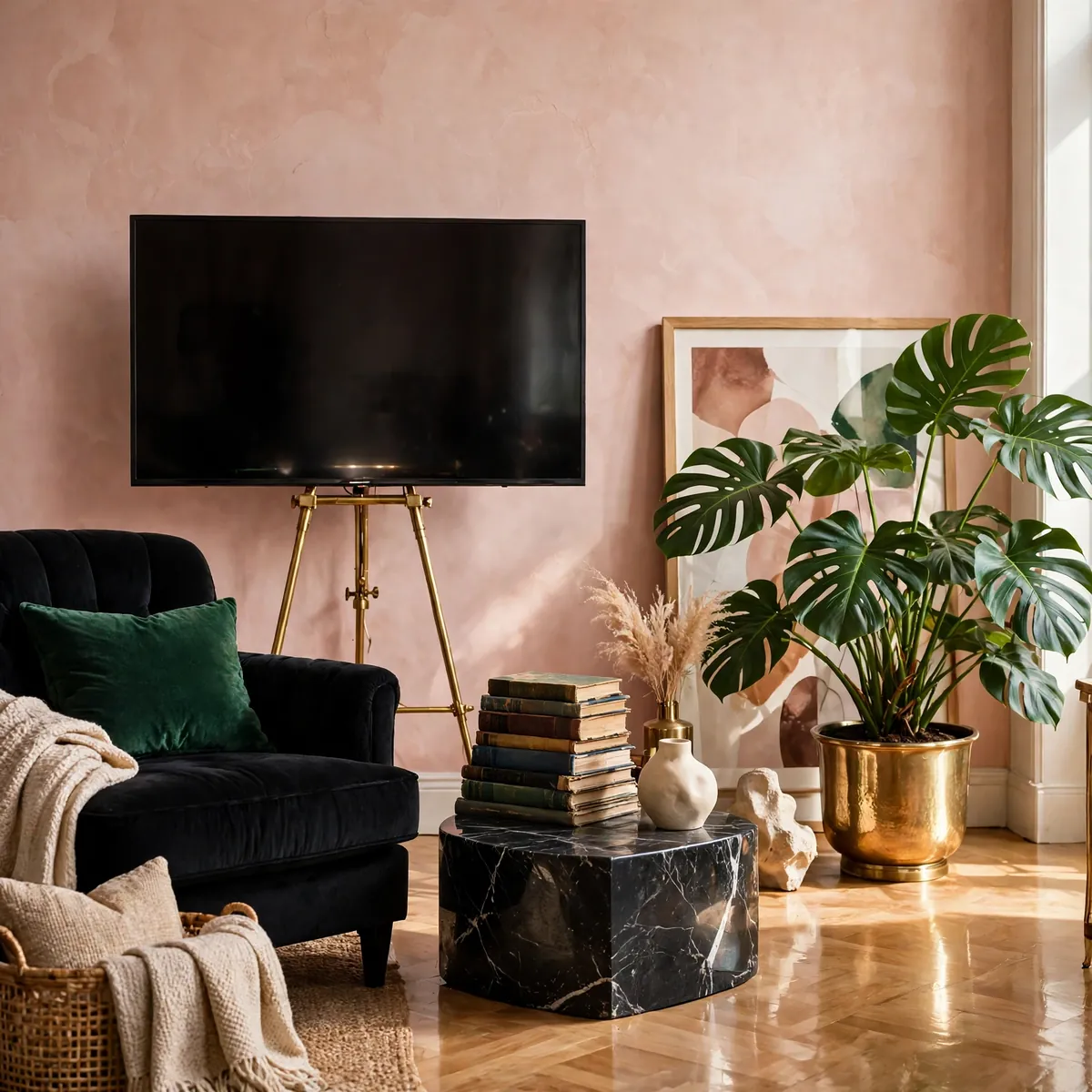
A soft LED strip behind the TV creates a halo that floats the screen off the wall and eases eye strain. Stick a warm-white bias-lighting strip to the back of a 55-inch TV in a dark-walled den, and the gentle glow around the screen makes late movies feel cinematic without a harsh bright rectangle.
Quick tips:
- Warm white (2700–3000K) flatters living rooms; avoid RGB rainbow modes for daily use.
- Keep the glow subtle — it should halo, not flood, the wall.
- USB-powered strips can draw power from the TV itself and switch with it.
Picture-Frame Molding Grid Behind the TV IMAGE_12: tmc-lrtv-12.webp
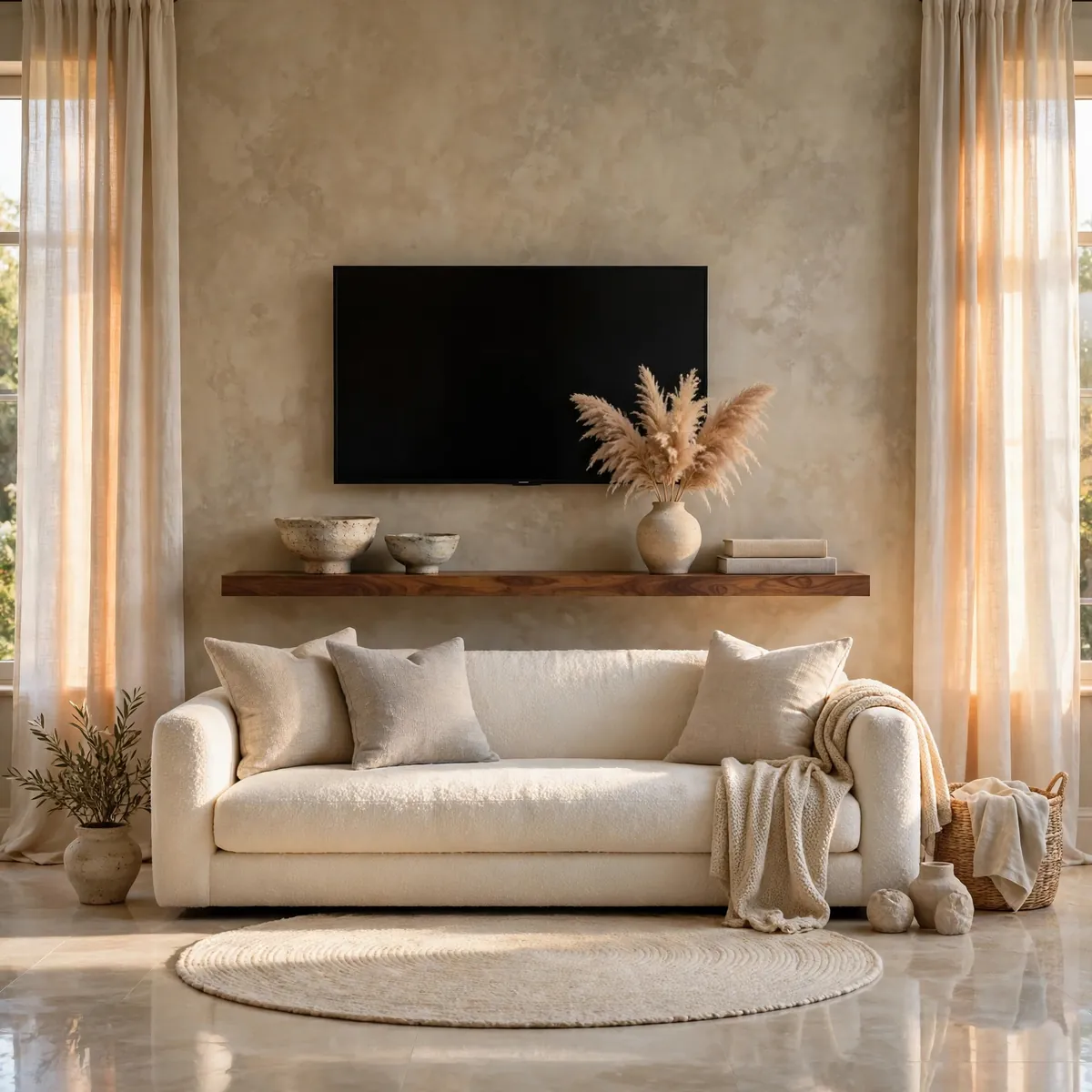
Thin molding rectangles on the wall behind the TV add tailored panel detail with almost no depth. In a classic living room with soft-white walls, a grid of six molding rectangles frames a 60-inch TV like the centerpiece of a paneled wall, painted the same white for quiet structure.
Quick tips:
- Center the TV within one large molding rectangle, not across the grid lines.
- Lightweight polyurethane molding installs with adhesive — no nails needed.
- Paint molding and wall one color for subtlety, or contrast for drama.
A Wallpapered Panel Behind the TV IMAGE_13: tmc-lrtv-13.webp
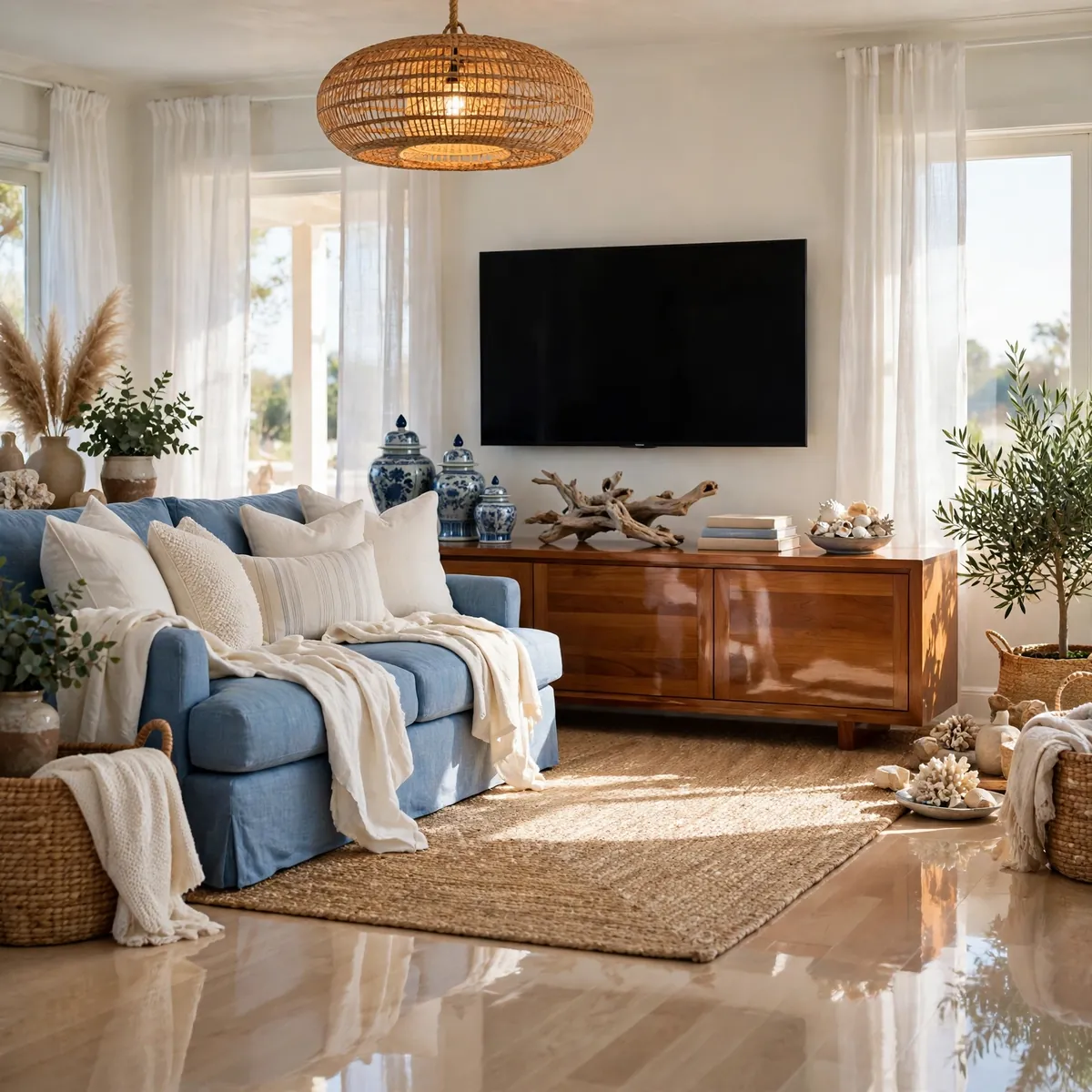
A bold wallpaper panel behind the TV turns the media zone into a designed feature. Frame a 6-foot-wide section of deep botanical wallpaper with slim black trim behind a 55-inch TV in a maximalist living room, and the screen becomes one dark element inside a lush pattern.
Quick tips:
- Limit wallpaper to the TV zone; wall-to-wall pattern plus a screen overwhelms.
- Peel-and-stick wallpaper makes this renter-friendly and reversible.
- Choose patterns with dark backgrounds so the TV blends rather than pops.
Floating Shelves Flanking the TV IMAGE_14: tmc-lrtv-14.webp
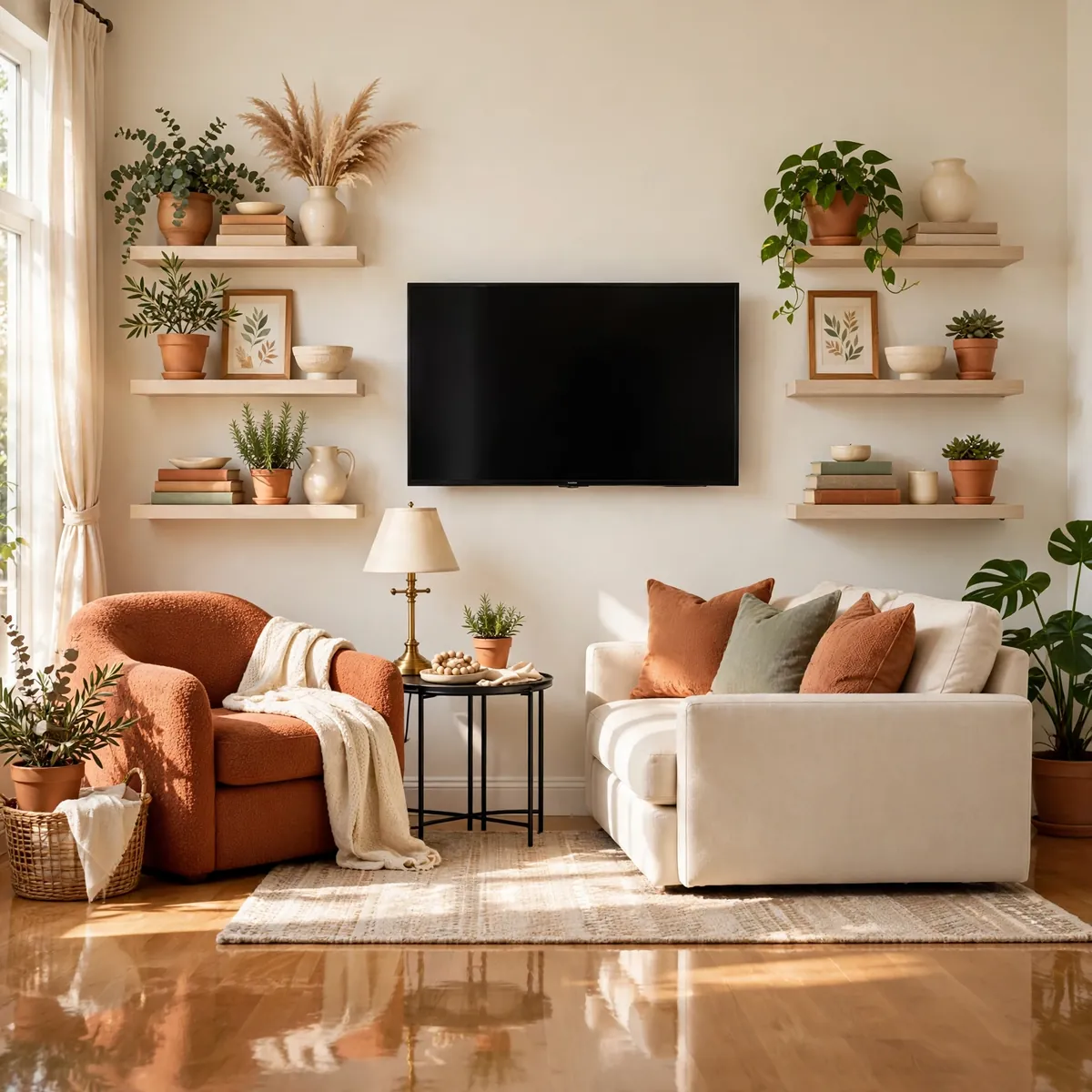
Two or three floating shelves on each side of the TV soften the tech with books, plants, and art. In a cozy modern living room, flank a 60-inch TV with two oak floating shelves per side — the left pair holding trailing pothos and ceramics, the right pair stacked art books and a framed print.
Quick tips:
- Keep shelf styling light and asymmetrical; heavy symmetry fights the screen.
- Anchor shelves into studs — books and ceramics get heavy fast.
- Leave the shelf nearest the TV’s top edge clear so nothing crowds the screen.
A Recessed Niche for a Flush TV IMAGE_15: tmc-lrtv-15.webp
Setting the TV into a shallow wall niche makes it sit flush like a framed picture. In a modern new-build living room, a 55-inch TV recessed into a plastered niche with a slim LED strip washing the niche’s inner edge looks custom and disappears into the architecture.
Quick tips:
- Plan the niche around your exact TV dimensions plus ventilation gaps.
- Run power and HDMI to the niche before the plastering is finished.
- Paint the niche interior a shade darker than the wall for subtle depth.
Limewash Texture Behind the Screen IMAGE_16: tmc-lrtv-16.webp
A limewashed wall behind the TV adds soft, cloudy movement that flat paint cannot match. In a Mediterranean-style living room with terracotta pots and linen slipcovered seating, a warm-white limewash wall behind a 60-inch TV gives the tech zone an artisanal, sun-baked backdrop.
Quick tips:
- Apply limewash in loose overlapping strokes — the mottling is the point.
- Matte mineral paint keeps the texture soft and glare-free behind the screen.
- Test a patch first; limewash dries lighter than it looks when wet.
A Cabinet That Swallows the TV Whole IMAGE_17: tmc-lrtv-17.webp
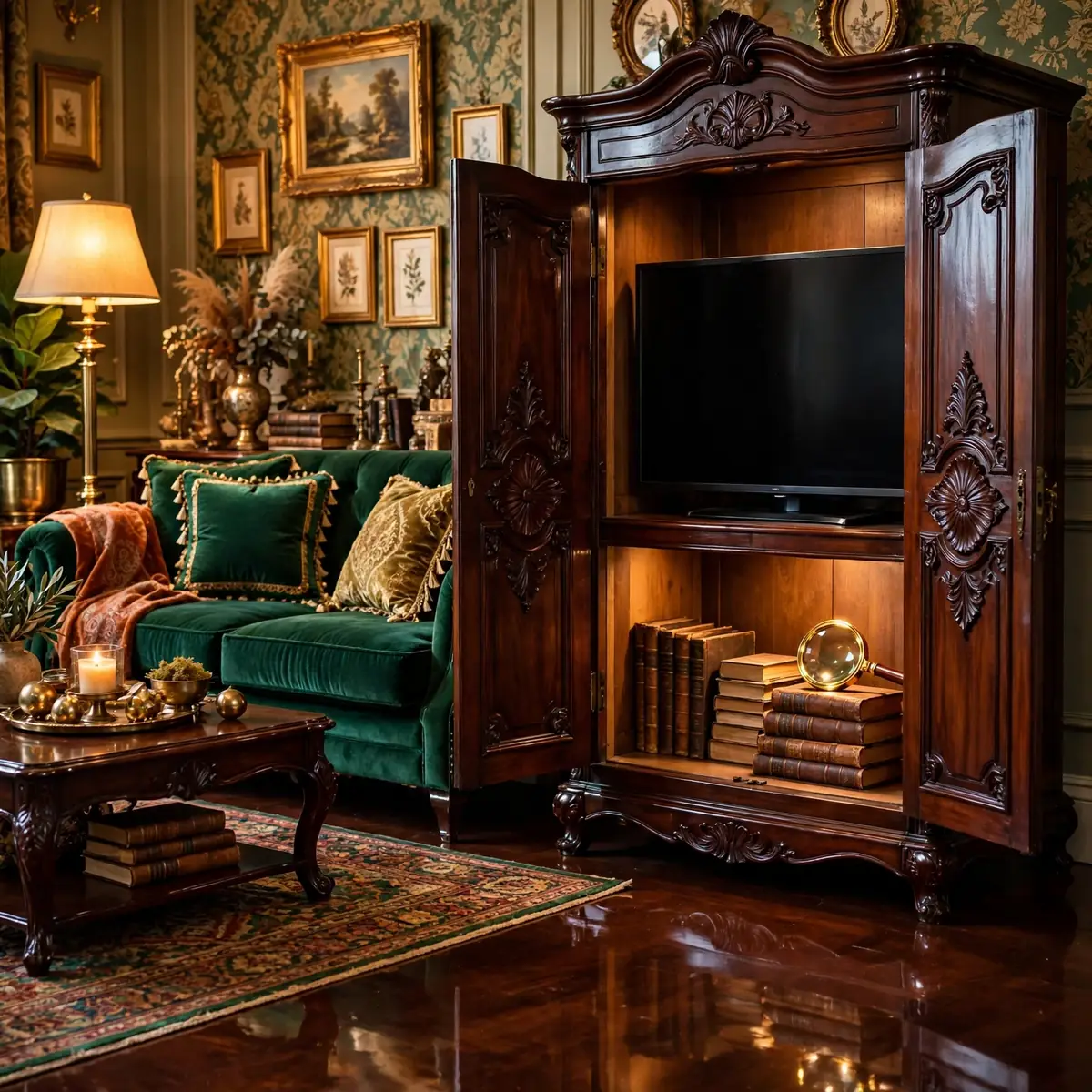
A lift-cabinet or TV armoire hides the screen inside furniture — press a button and it rises for viewing. Place a walnut TV lift cabinet at the foot of the bed-wall in a formal living room; closed, it is a handsome credenza styled with a vase and books, open, the 55-inch screen rises silently.
Quick tips:
- Lift mechanisms need a nearby outlet inside the cabinet — plan the wiring.
- Measure the TV’s full height plus the lift travel before buying the cabinet.
- Keep the cabinet top styling minimal so the rising TV clears everything.
Style the Soundbar as Part of the Wall IMAGE_18: tmc-lrtv-18.webp
Treat the soundbar as a design element, not an afterthought, and the whole setup looks composed. Mount a slim black soundbar directly below a 65-inch TV on a charcoal slat wall, centered and level, with its LED indicator dimmed — it reads as one horizontal line with the screen.
Quick tips:
- Wall-mount the soundbar rather than perching it on the console for a cleaner line.
- Match the soundbar finish to the TV bezel (black on black) for invisibility.
- Keep 2 to 4 inches between screen bottom and soundbar so they read as separate lines.
Cables Hidden in Painted Raceways IMAGE_19: tmc-lrtv-19.webp
Paintable cord raceways are the renter-friendly cable fix — they vanish against the wall. Run a slim white raceway from a wall-mounted TV down to the console in a crisp white living room, paint it the exact wall color, and the cable run disappears from every viewing angle.
Quick tips:
- Paint the raceway after installation for a seamless match.
- Bundle HDMI, power, and ethernet in one wider channel rather than three thin ones.
- For owned homes, an in-wall cable kit is cleaner — but check fire-blocking rules first.
A Picture Ledge Styled Around the TV IMAGE_20: tmc-lrtv-20.webp
A slim picture ledge above or beside the TV holds layered art you can swap without new holes. Mount a 5-foot oak ledge above a 55-inch TV in a relaxed living room, lean three framed prints and a small brass object along it, and the TV gains an artful crown that changes with your mood.
Quick tips:
- Keep the ledge 8 to 10 inches above the TV so frames do not crowd the screen.
- Lean, do not hang, the frames — the casual lean is the whole look.
- Limit the ledge to 3 to 5 pieces; more reads as clutter above a screen.
An Asymmetric, Off-Center TV Layout IMAGE_21: tmc-lrtv-21.webp
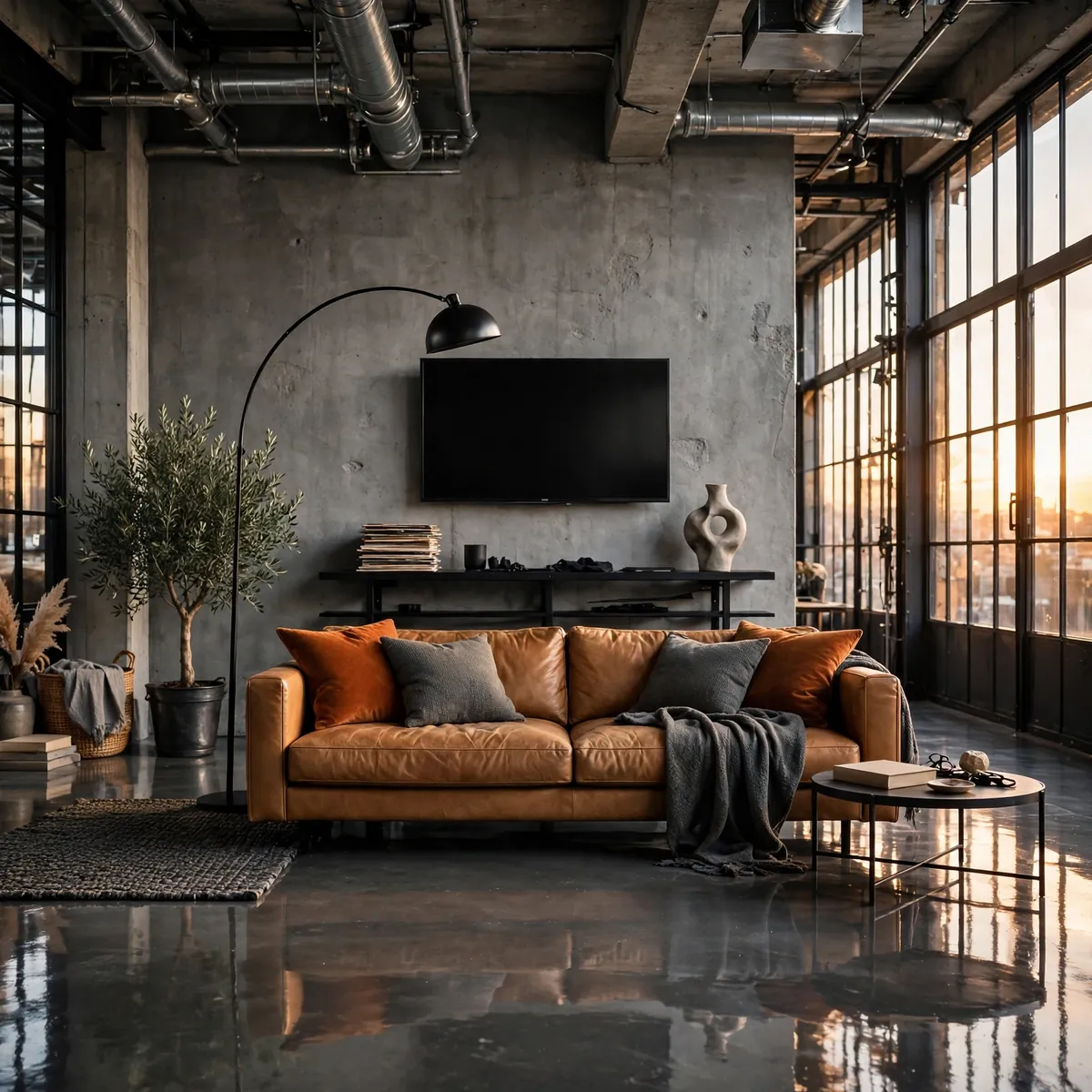
Mounting the TV off-center — with art or shelves balancing the other side — feels collected rather than installed. In a loft living room, hang a 60-inch TV left of center on a concrete-look wall, balance the right side with a tall fiddle-leaf fig and a leaning floor mirror, and anchor below with an extra-long low console spanning the whole arrangement.
Quick tips:
- Balance visual weight, not symmetry: a tall plant can offset a big screen.
- Use one long console under the whole composition to tie it together.
- This layout suits renters — it looks intentional without built-ins.
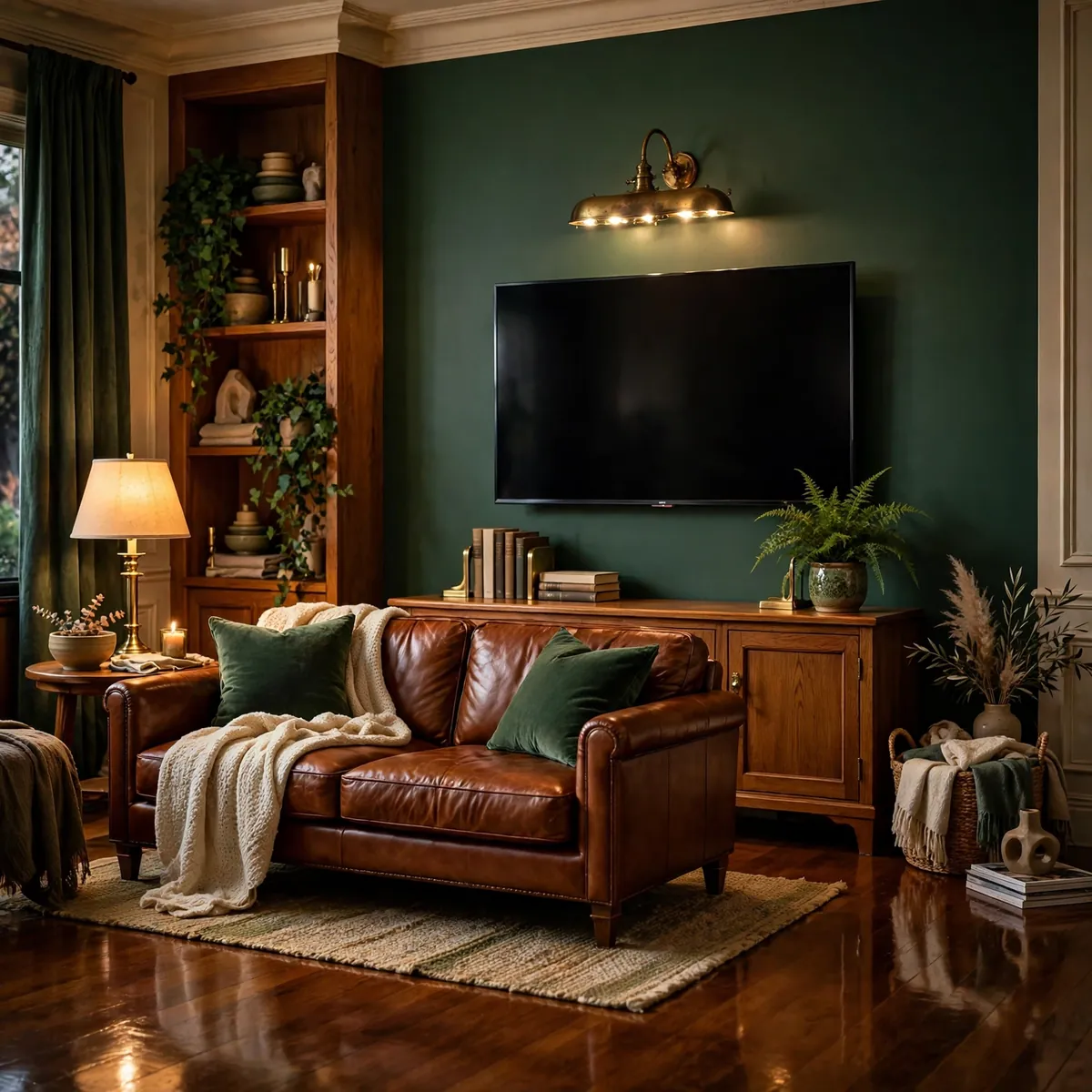
Sconces Flanking the TV for Evening Glow IMAGE_22: tmc-lrtv-22.webp
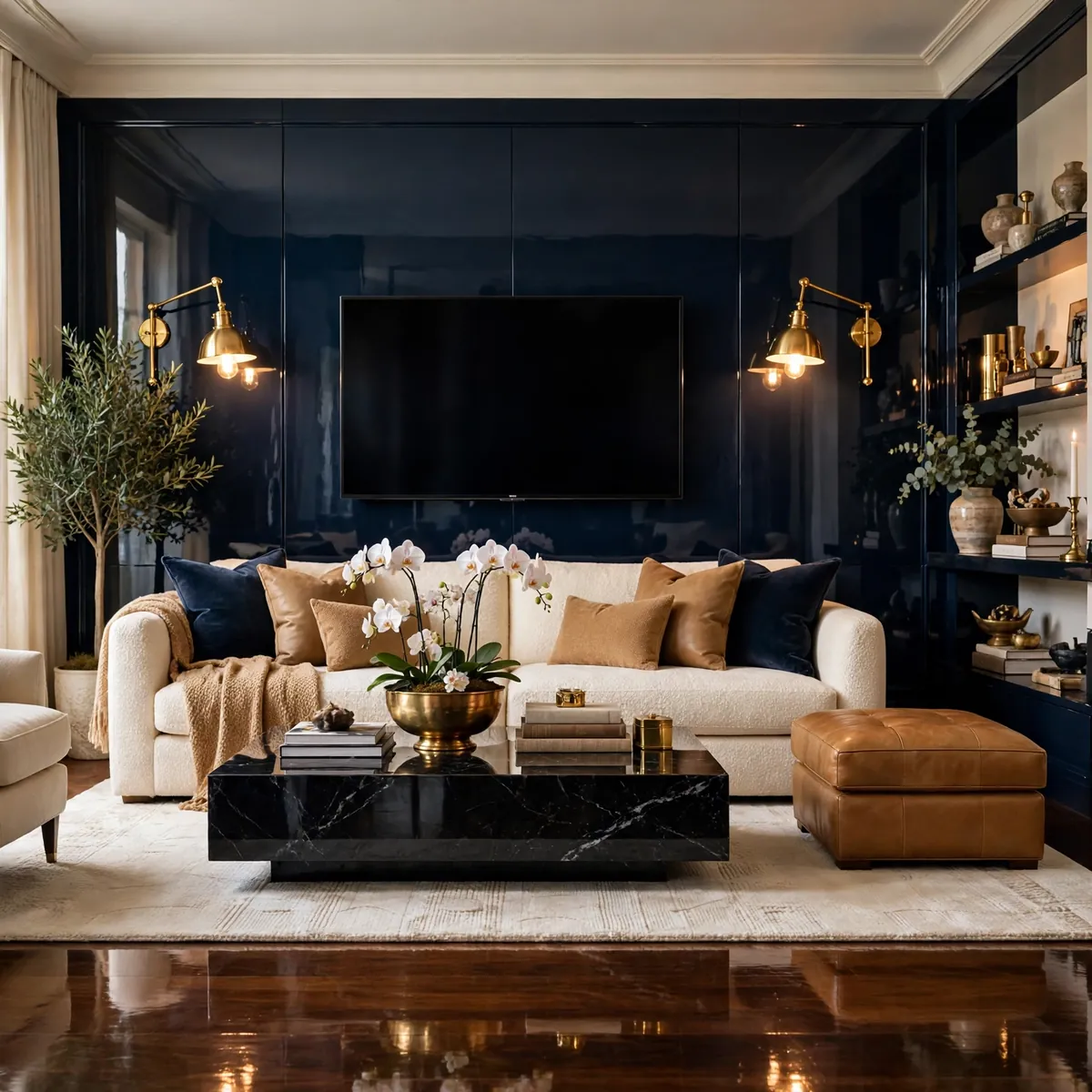
A pair of wall sconces beside the TV adds warm, glare-free light that makes movie nights feel designed. In a traditional living room, flank a 65-inch TV on a deep-green wall with two brass picture-style sconces, their warm pools of light framing the screen like theater curtains.
Quick tips:
- Choose shaded or upward-facing sconces — bare bulbs throw glare on the screen.
- Put sconces on a dimmer so they drop low during movies.
- Plug-in sconces with cord covers work where hardwiring is not an option.
A Corner TV Wall That Actually Works IMAGE_23: tmc-lrtv-23.webp
Awkward corners can host a TV beautifully with an angled console and a shaped wall treatment. In a small square living room, angle a corner console in warm oak, mount the 50-inch TV on an articulating arm, and paint the corner walls a soft sage — the TV tucks into dead space and the seating faces it naturally.
Quick tips:
- An articulating arm lets you pull the TV out and angle it for viewing.
- Treat both corner walls as one continuous design, not two separate walls.
- Keep the corner styling minimal — the angled TV is already the focal point.
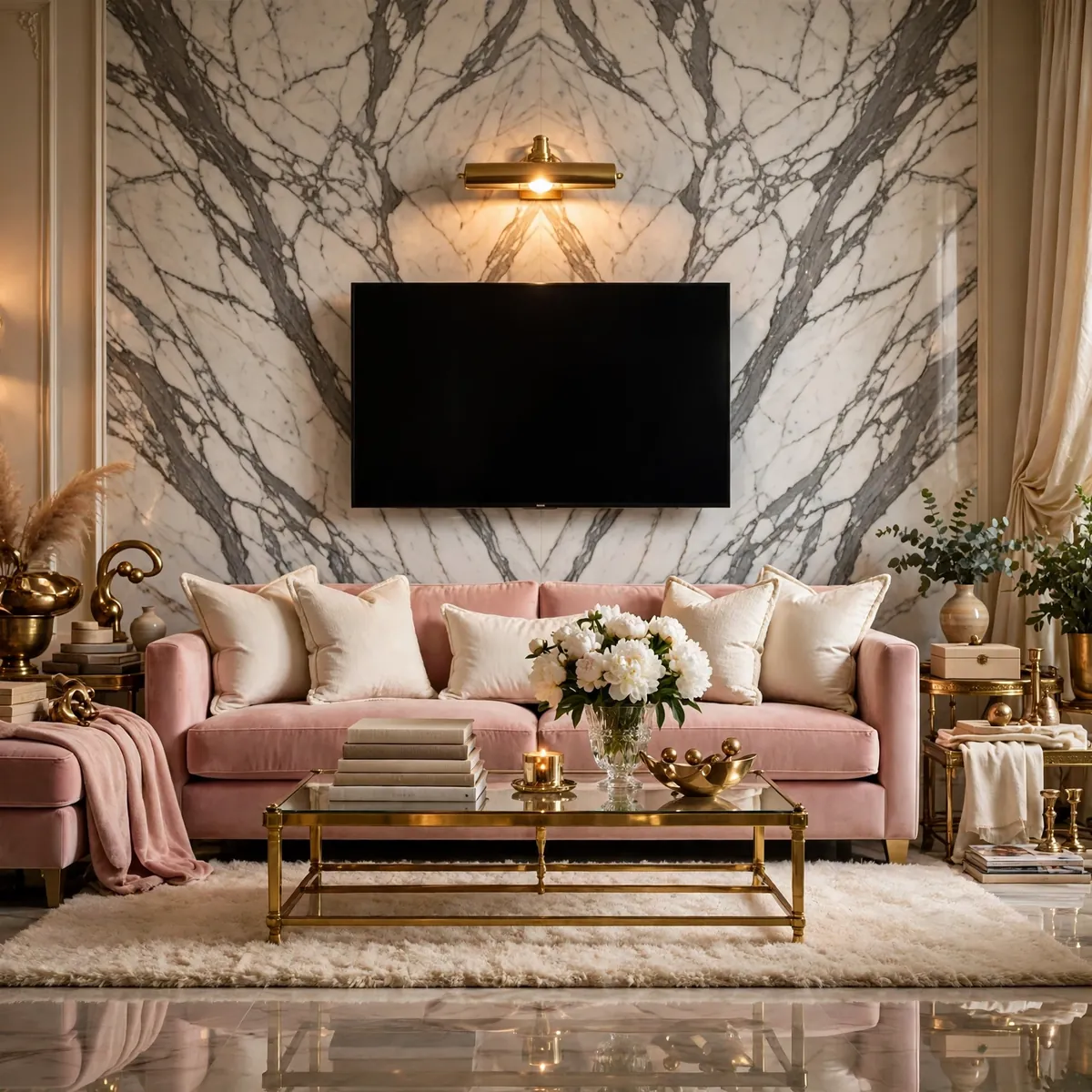
Brass Trim Lines on the TV Wall IMAGE_24: tmc-lrtv-24.webp
Thin brass inlay strips on the TV wall catch light and add quiet glamour around the screen. In a luxe living room with ivory walls, set slim brass lines in a large-scale grid behind a 65-inch TV, with a black floating console below — the wall shimmers subtly as you move through the room.
Quick tips:
- Keep everything else calm when metal shines — brass needs quiet surroundings.
- Adhesive metal trim strips give the look without metalwork.
- Warm metals suit warm rooms; chrome or nickel suits cool, modern palettes.
A Painted Arch Framing the TV Zone IMAGE_25: tmc-lrtv-25.webp
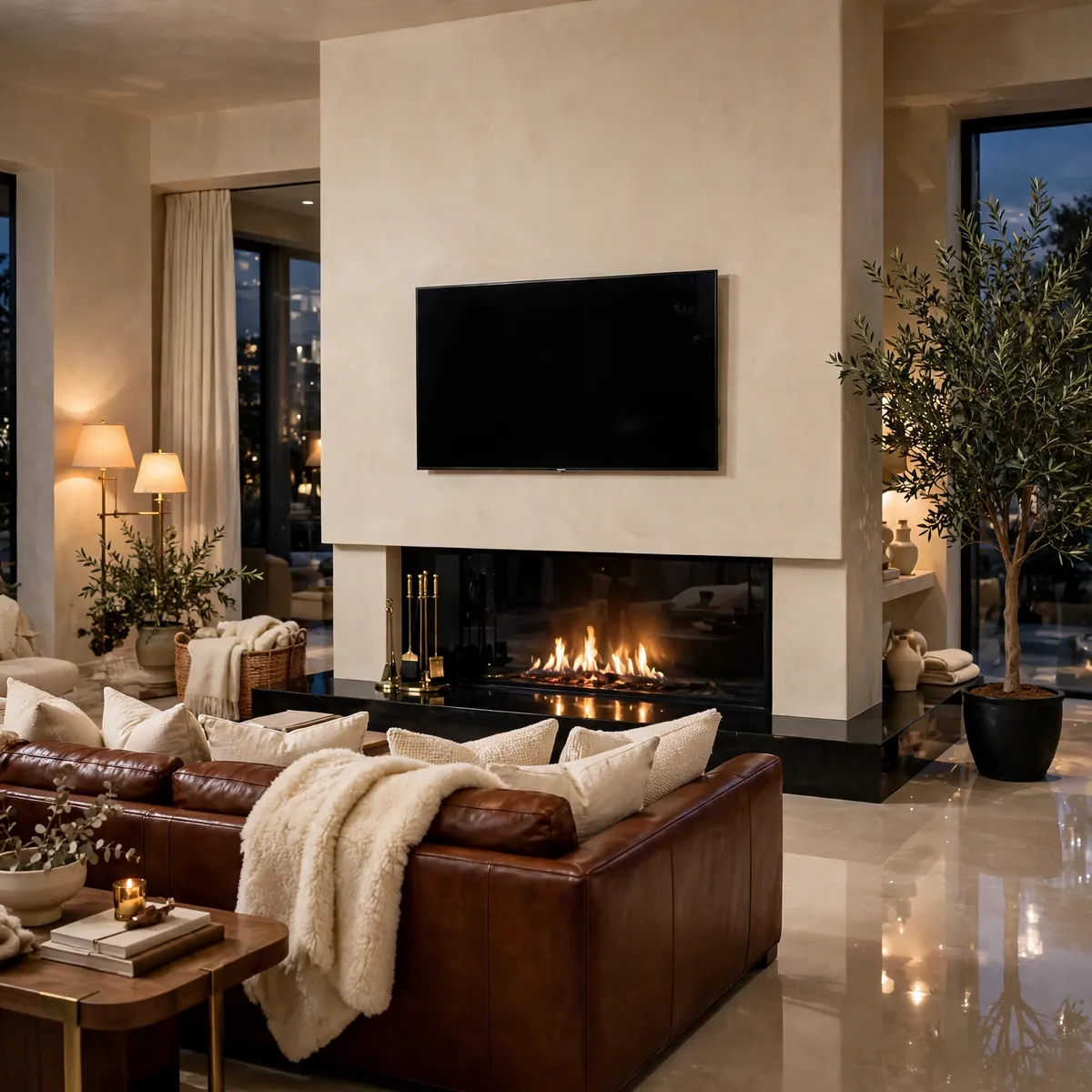
A painted arch on the wall behind the TV defines the media zone with nothing but paint. In a boho living room with terracotta and cream tones, paint a soft clay-colored arch framing a 55-inch TV and its floating console, echoing the arch in a nearby round mirror — the TV wall becomes a deliberate composition for the cost of a sample pot.
Quick tips:
- Use painter’s tape and a steady hand, or a large compass made from string and a pencil.
- Echo the arch color in two soft furnishings for cohesion.
- Arches suit low-commitment refreshes — one weekend, fully reversible.
FAQs
How high should I mount my TV on the living room wall?
Center the screen at seated eye level — about 42 inches from the floor to the middle of the screen for a standard sofa. Mounting too high is the most common mistake; if the TV must go above a fireplace, use a pull-down mount so it drops to eye level for viewing.
How can I hide the cables on my TV wall?
For renters, paintable cord raceways run cables down the wall invisibly. In owned homes, an in-wall cable kit routes everything behind the drywall. Either way, a floating console with rear cord cutouts swallows the boxes, remotes, and remaining wires.
Should I put my TV above the fireplace?
You can, but check two things: viewing height and heat. Above-fireplace mounting usually lands the screen too high for comfortable viewing, and heat plus soot can damage electronics. Keep generous clearance, use a tilting or pull-down mount, and follow the fireplace manufacturer’s specs.
What is the best wall color behind a TV?
A dark tone close to the screen’s bezel — charcoal, near-black, deep green — makes the TV disappear when it is off. If dark is not your style, any calm mid-tone works; avoid stark white, which frames the black screen like a hole in the wall.
Can I build a gallery wall around my TV?
Yes — treat the TV as the largest frame in the arrangement. Start the layout from the TV’s fixed position, keep 2 to 3 inches between frames, limit finishes to two, and let the TV display art when idle so it joins the gallery instead of interrupting it.
Conclusion
Your TV wall gets more eyeball time than any other wall in the house — it deserves design, not default. Pick the approach that matches your room and your tolerance for seeing the screen, mount at the right height, hide the cables, and light it for the evening. Do that, and the most-looked-at wall becomes the best-looking one too.