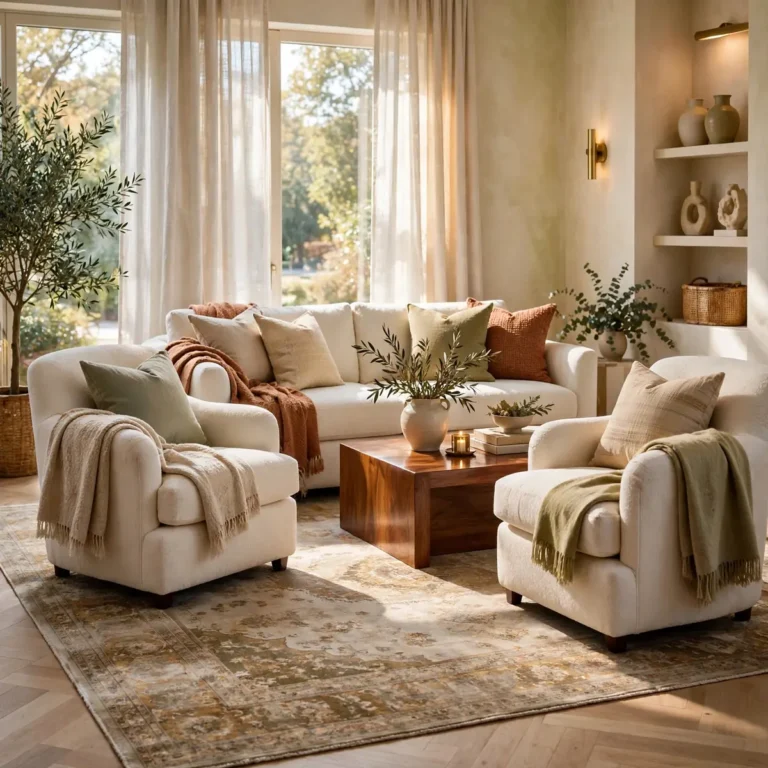
25 Modern TV Unit Ideas That Turn Your Media Wall Into the Best Seat in the House
A practical guide to choosing a TV unit that anchors the room, hides the clutter, and suits your screen size — with 25 original designs, a room-size picker table, and sizing tips.
The best modern tv unit ideas do more than hold a television — they turn the media wall into the room’s storage backbone and visual anchor. A well-chosen unit hides cables, gives every remote, console, and game controller a home, and makes the screen feel intentional rather than just parked on a wall. Before you buy, match the unit to your TV width, your wall length, and how much closed storage you actually need. A console that is too short makes even a beautiful TV look unbalanced, while a unit with no cable plan leaves wires on show no matter how expensive it looks. This guide walks through 25 designs, each with the room or screen size it suits, so you can pick with confidence.
Think of the unit first and the decoration second, because the unit decides where the TV sits, how high it hangs, and where everything plugs in. Once that backbone is right, styling becomes easy: a vase, a stack of books, and one piece of art are usually enough. For help pairing the furniture with the surface behind it, see how the wall treatment and the unit work together in living room tv wall ideas and then come back to choose the shape, finish, and storage mix that fits your room.
Key Takeaways
What size TV unit do I need for my TV?
Choose a console at least as wide as your TV, ideally 10 to 20 centimetres wider on each side, so the screen does not overhang the furniture.
Should a TV unit be wall-mounted or freestanding?
Wall-mounted floating units suit small rooms and clean looks, while freestanding consoles suit renters, heavier storage, and rooms where you want to move the unit later.
How do I hide TV cables completely?
Use a unit with an internal cable channel, a rear cut-out behind the TV, and a power point positioned directly behind the console so no lead drops to the floor.
What is the best height for a TV unit?
Aim for the centre of the screen at seated eye level, usually with the console top around 40 to 50 centimetres high for a standard sofa.
How much closed storage should a TV unit have?
Keep at least half the storage closed if you own consoles, routers, and chargers, and leave open shelves only for books and objects you are happy to dust.
| Room size | TV size | Best unit type |
|---|---|---|
| Small living room or studio | Up to 43 inches | Super-slim console or floating unit |
| Medium living room | 50 to 65 inches | Low long console or floating console with drawers |
| Large open-plan room | 65 to 75 inches | Wall-to-wall built-in or console with storage towers |
| Awkward corner or dual-zone room | Any size | Corner unit or swivel-mount unit |
| Statement living room | 75 inches and up | Marble media wall, bookshelf wings, or double-sided divider |
A Floating Walnut Console With Drawers You Never See
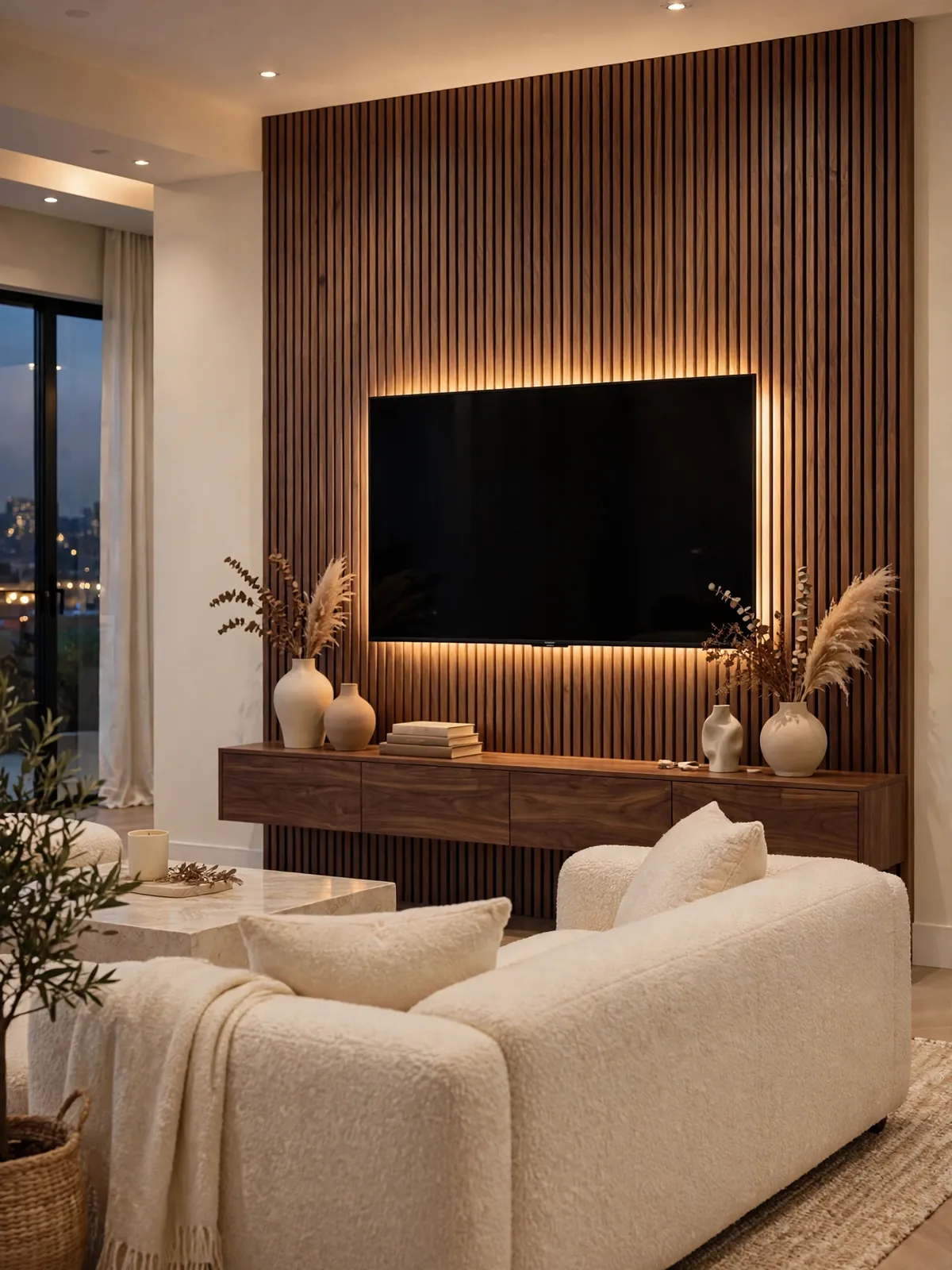
This floating walnut console suits a medium living room with a 55-inch TV, because the wall mounting frees floor space and keeps the room feeling open. A concrete example is a 180-centimetre walnut unit with two push-to-open drawers in a warm honey-brown finish, paired with a cream boucle sofa. The drawers swallow remotes, chargers, and spare batteries without a single handle breaking the clean front.
Quick tips:
- Keep the console 15 centimetres wider than the TV on each side for balance.
- Use push-to-open drawers if you want a truly handle-free front.
Modern TV Unit Ideas for a Full Wall-to-Wall Media Wall
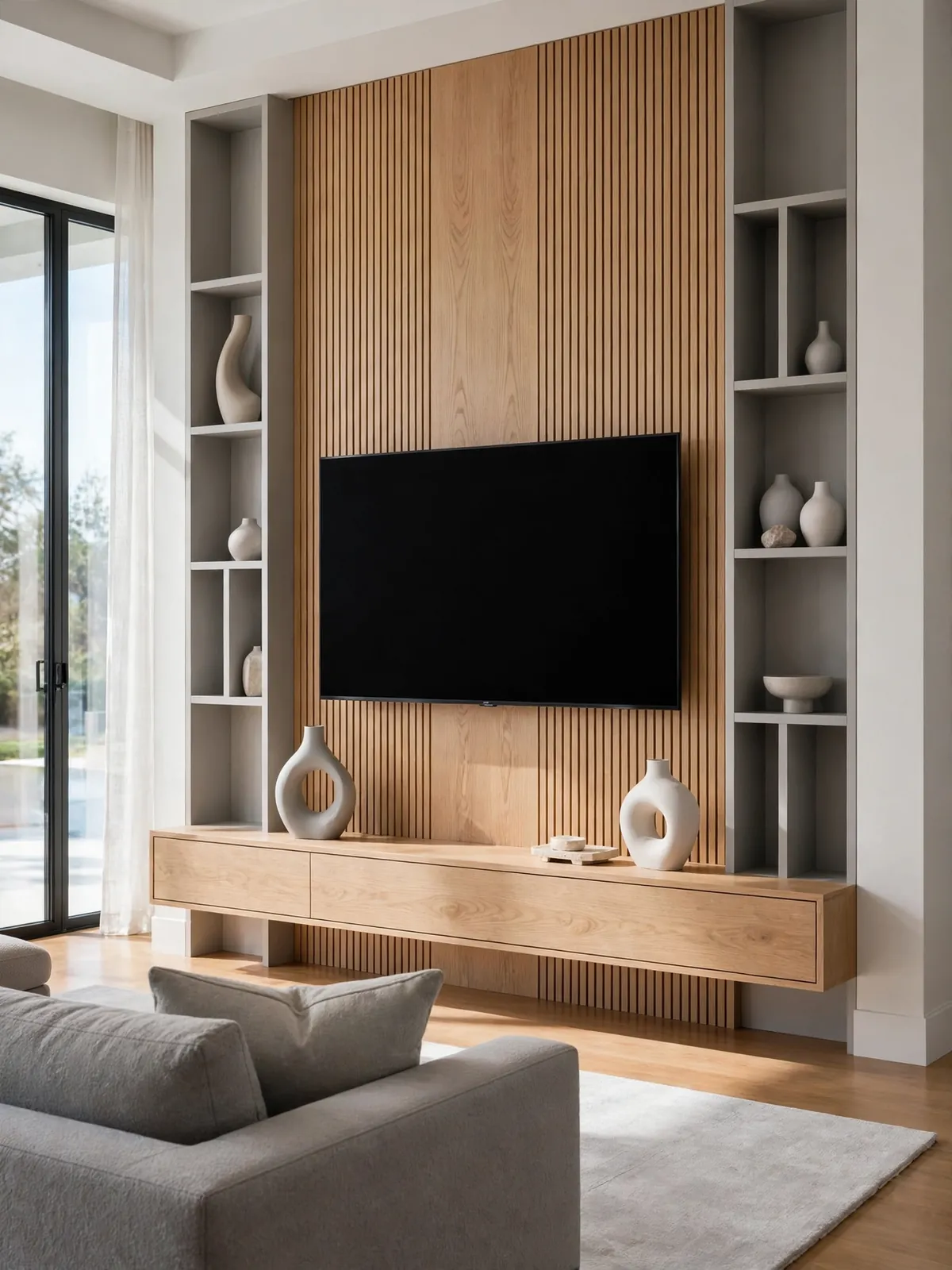
A wall-to-wall built-in is the right choice for a large living room with a 65-inch or 75-inch TV, because it turns the whole wall into one calm, fitted composition instead of a single piece of furniture floating in empty space. A concrete example is a pale oak built-in with sage green lower cabinets, closed cupboards on both sides of the screen, and a recessed TV niche that keeps the screen flush with the joinery. The symmetry makes a big screen feel designed rather than dominant, and the side cupboards take over the jobs of a separate bookcase and a games cupboard. This is also the best route when you want the television, the soundbar, the router, and the board games all hidden behind matching fronts. The result reads as architecture, not as electronics on display, which is why it suits open-plan rooms where the TV wall is visible from the kitchen and dining area too.
Quick tips:
- Measure the full wall first, then leave a small shadow gap at each edge for a fitted look.
- Keep one tall cupboard for oversized items like board games and blankets.
A Soft LED Halo Glowing Behind the Screen
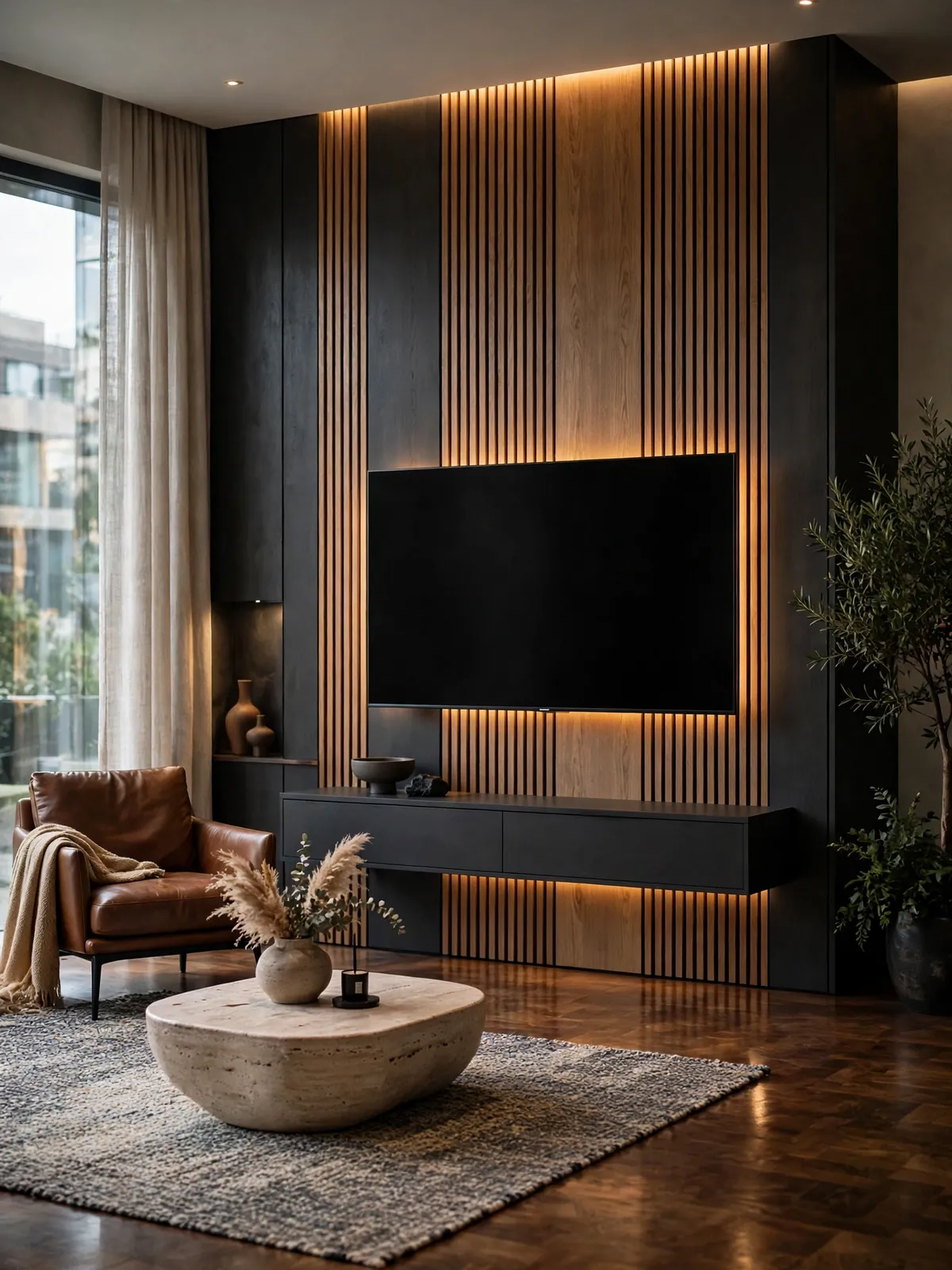
An LED halo suits any room where the TV is watched in the evening, because the soft glow reduces eye strain and makes the screen feel like it is floating. A concrete example is a warm-white LED strip fixed to the back of a 65-inch TV panel, set to a dim amber tone over a charcoal console. The effect is calm rather than nightclub-bright, and it doubles as gentle evening lighting when the TV is off.
Quick tips:
- Choose warm white over cool blue for a relaxed living room glow.
- Put the strip on a dimmer so movie nights stay soft, not harsh.
A Vertical Fluted Wood Panel Behind the TV
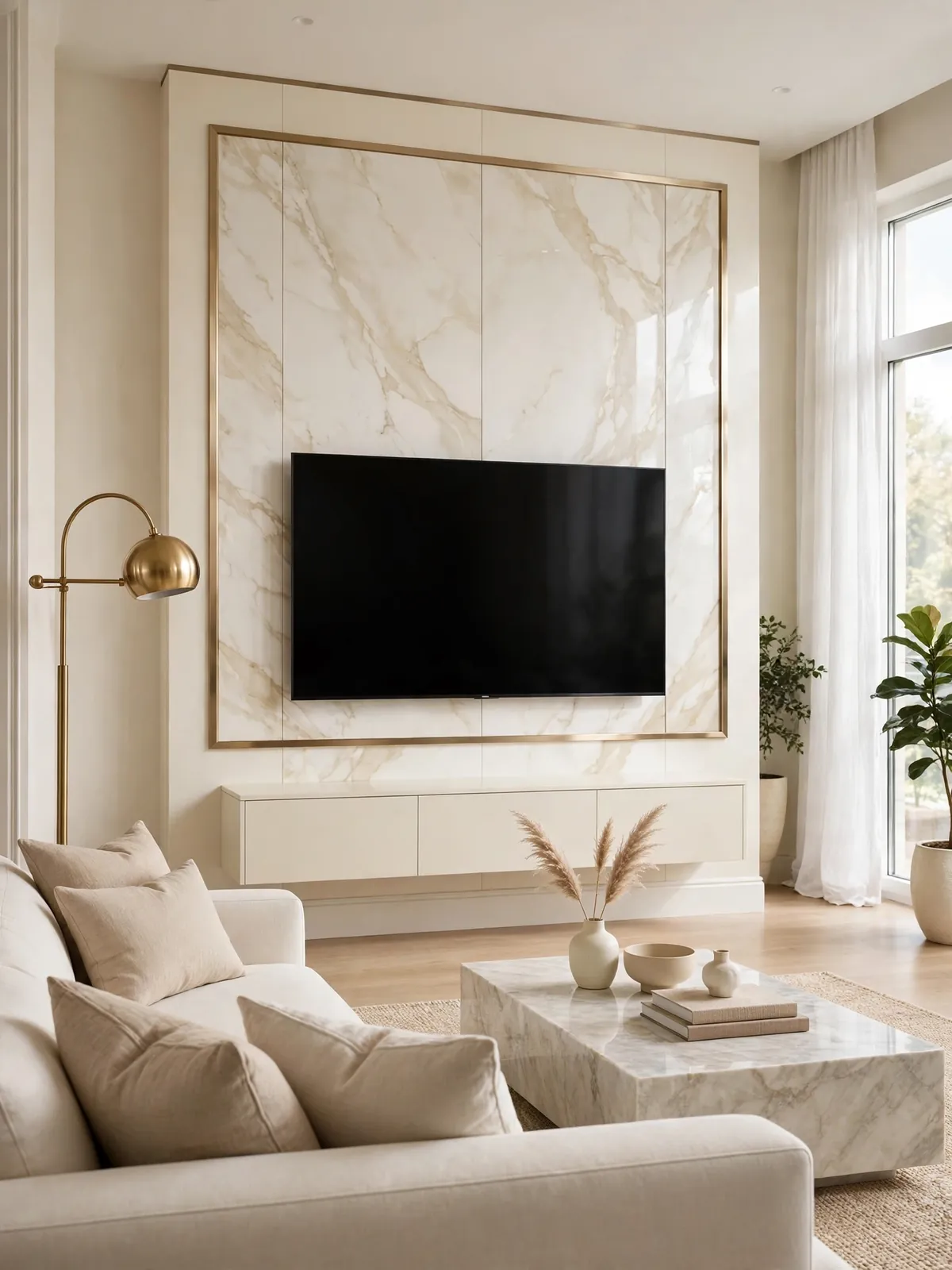
Fluted panels suit a medium room where the TV wall needs texture without a heavy built-in, especially with a 50-inch to 65-inch screen. A concrete example is a light oak fluted panel, 240 centimetres wide, mounted behind a low black console with a single terracotta vase on top. The vertical lines draw the eye upward and make a standard-height ceiling feel taller.
Quick tips:
- Run the fluting wider than the TV so the panel frames the screen.
- Match the panel tone to the console for a calm, joined-up look.
A Marble-Clad Feature Wall for the TV
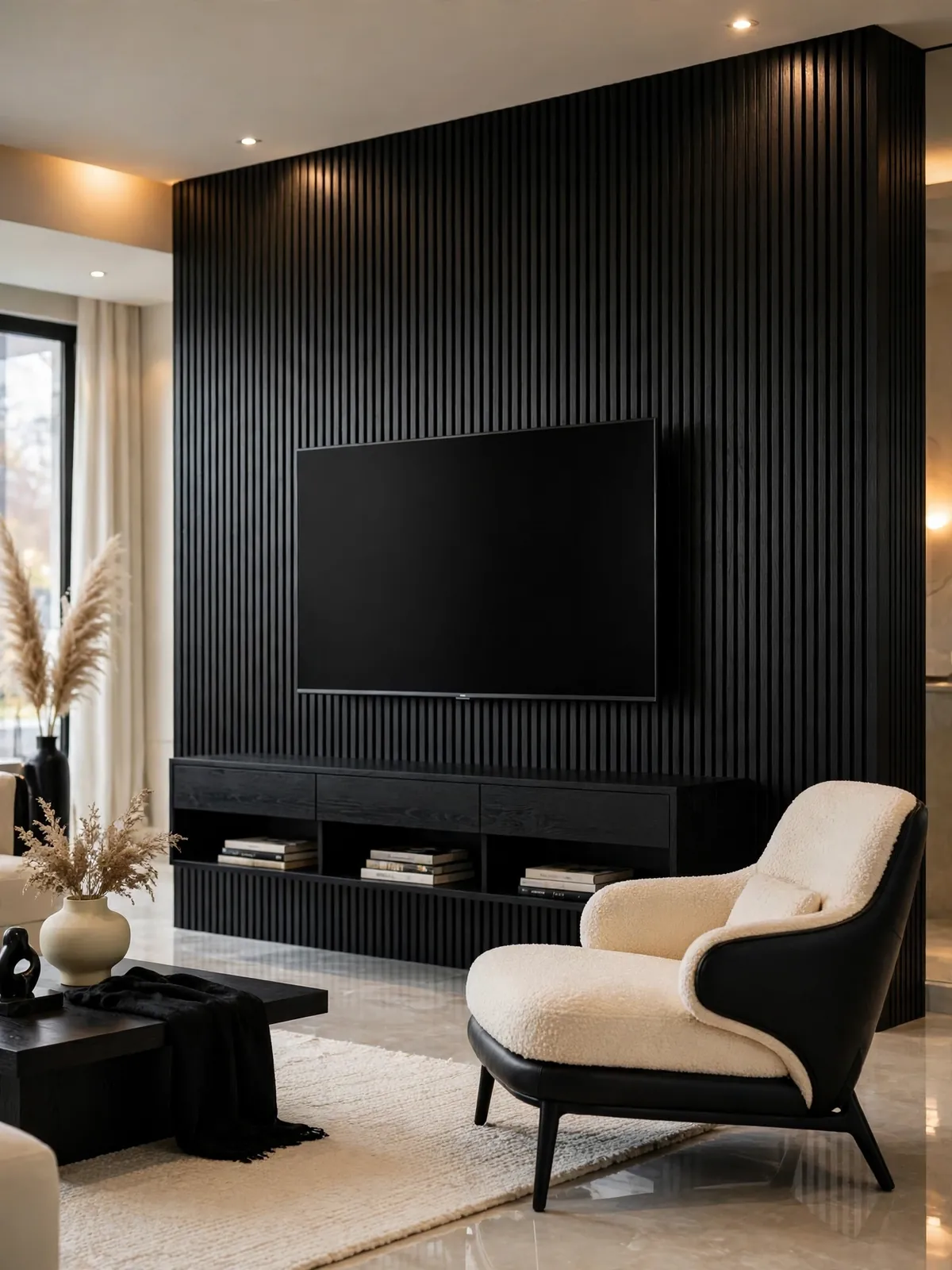
A marble-clad wall suits a large, formal living room with a 65-inch or larger TV, where the unit itself can stay simple and let the stone do the talking. A concrete example is a white marble-look porcelain panel with soft gold veining, paired with a low walnut console and a navy velvet sofa. The stone adds instant polish, while the plain console keeps the budget and the visual weight under control.
Quick tips:
- Use large-format panels to avoid busy grout lines behind the TV.
- Keep decor minimal so the veining stays the focal point.
A Low, Extra-Long Console Built for a Big Screen
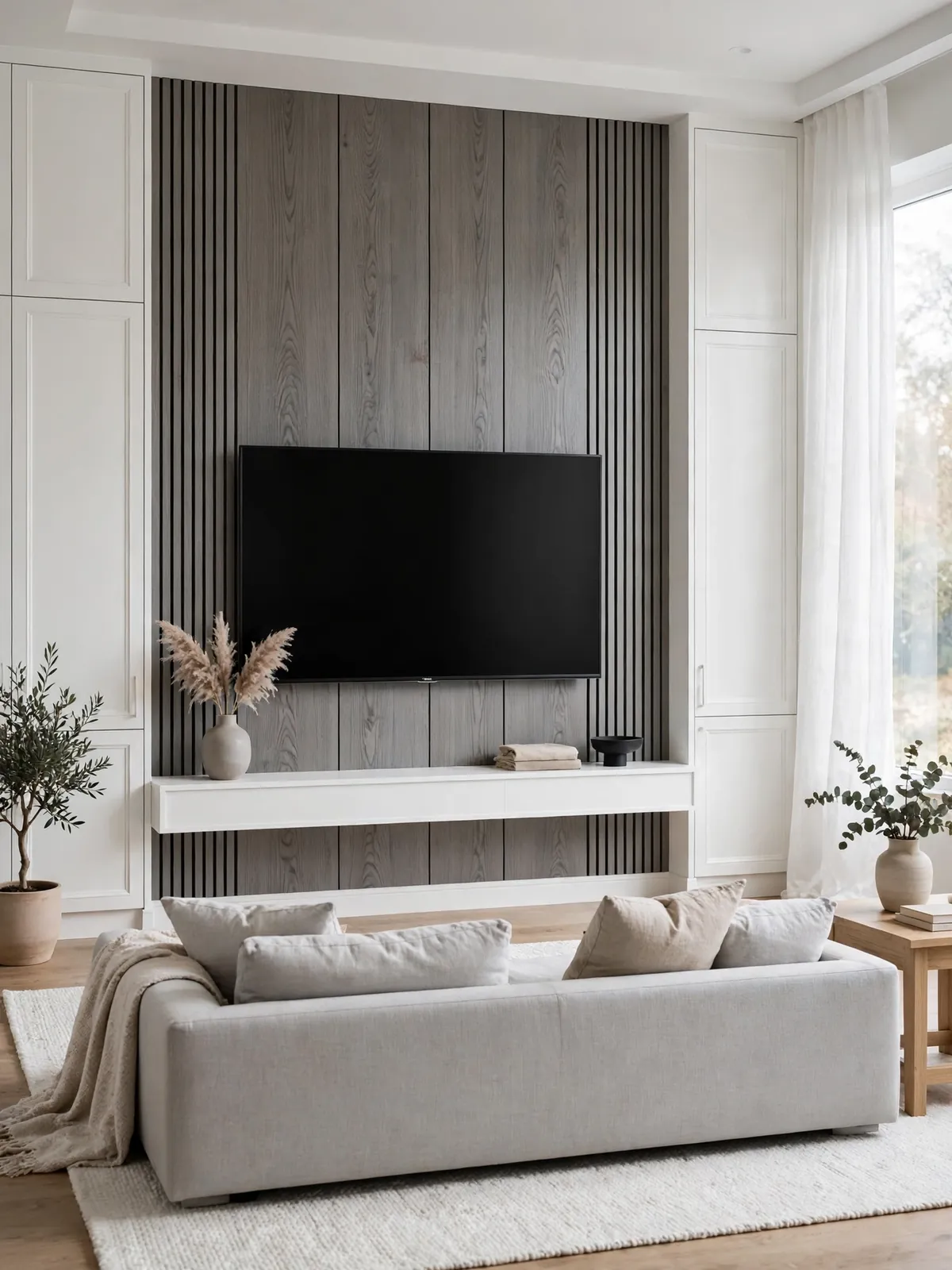
A low, long console is the safest match for a 75-inch TV in a wide living room, because a short unit under a huge screen always looks top-heavy. A concrete example is a 240-centimetre smoked oak console with four sliding doors, sitting low enough that the screen centre stays at seated eye level. The extra length also gives you room for a soundbar, a plant, and a stack of art books without crowding.
Quick tips:
- Aim for a console at least 20 centimetres wider than the TV on each side.
- Keep the console low so a large screen does not sit too high.
Open Shelving Balanced With Closed Cabinets
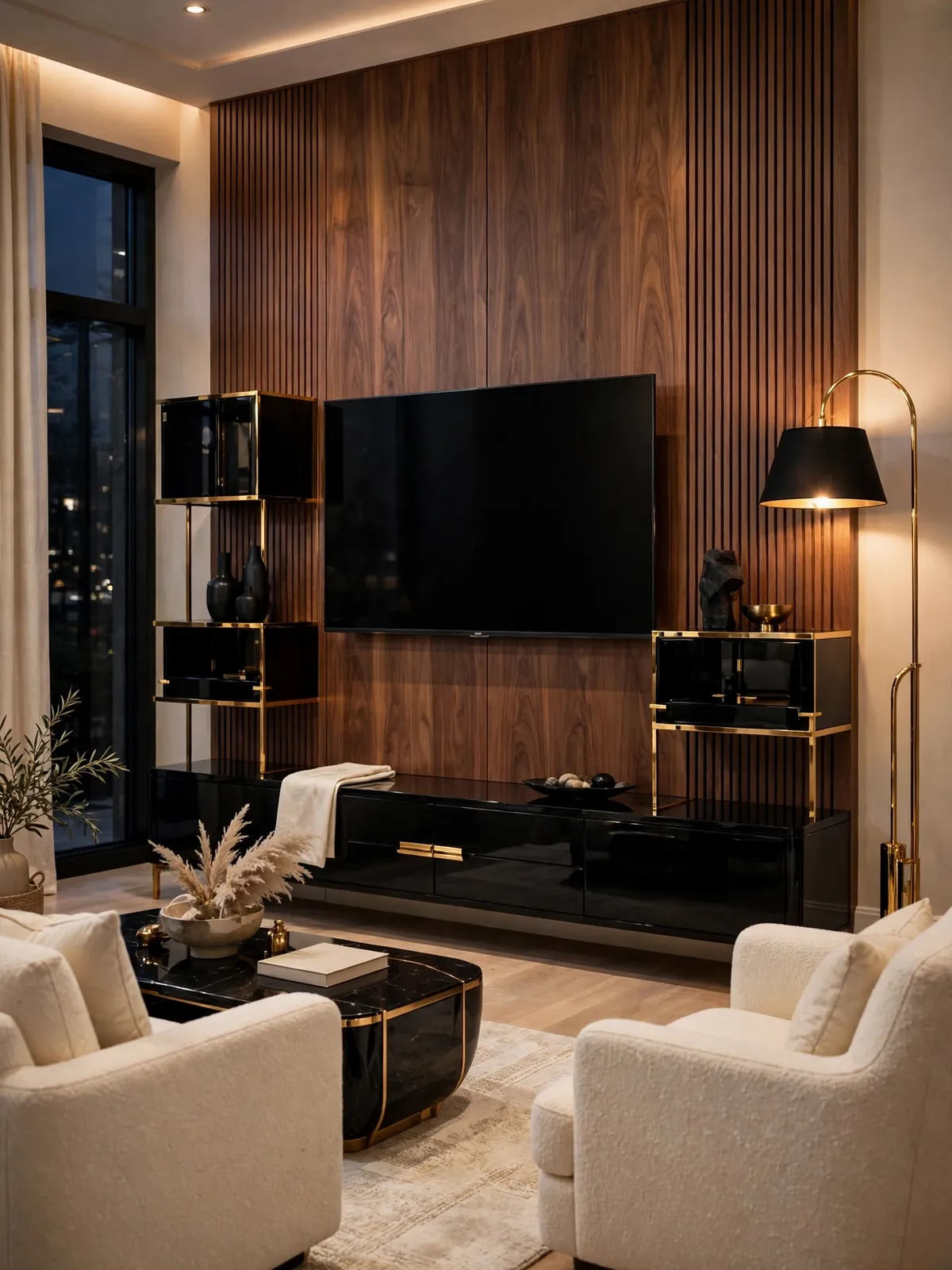
This mix suits a family living room with a 55-inch TV, where you want display space for books but closed doors for chargers and controllers. A concrete example is an oak unit with two open shelves above dusty-blue cabinets, the shelves styled with three books and one ceramic vase each. The closed base keeps the messy half invisible, while the open top keeps the unit feeling light.
Quick tips:
- Keep open shelves to one third of the unit to avoid visual clutter.
- Group shelf objects in odd numbers for a styled, not stuffed, look.
Tall Storage Towers Framing Both Sides of the Screen
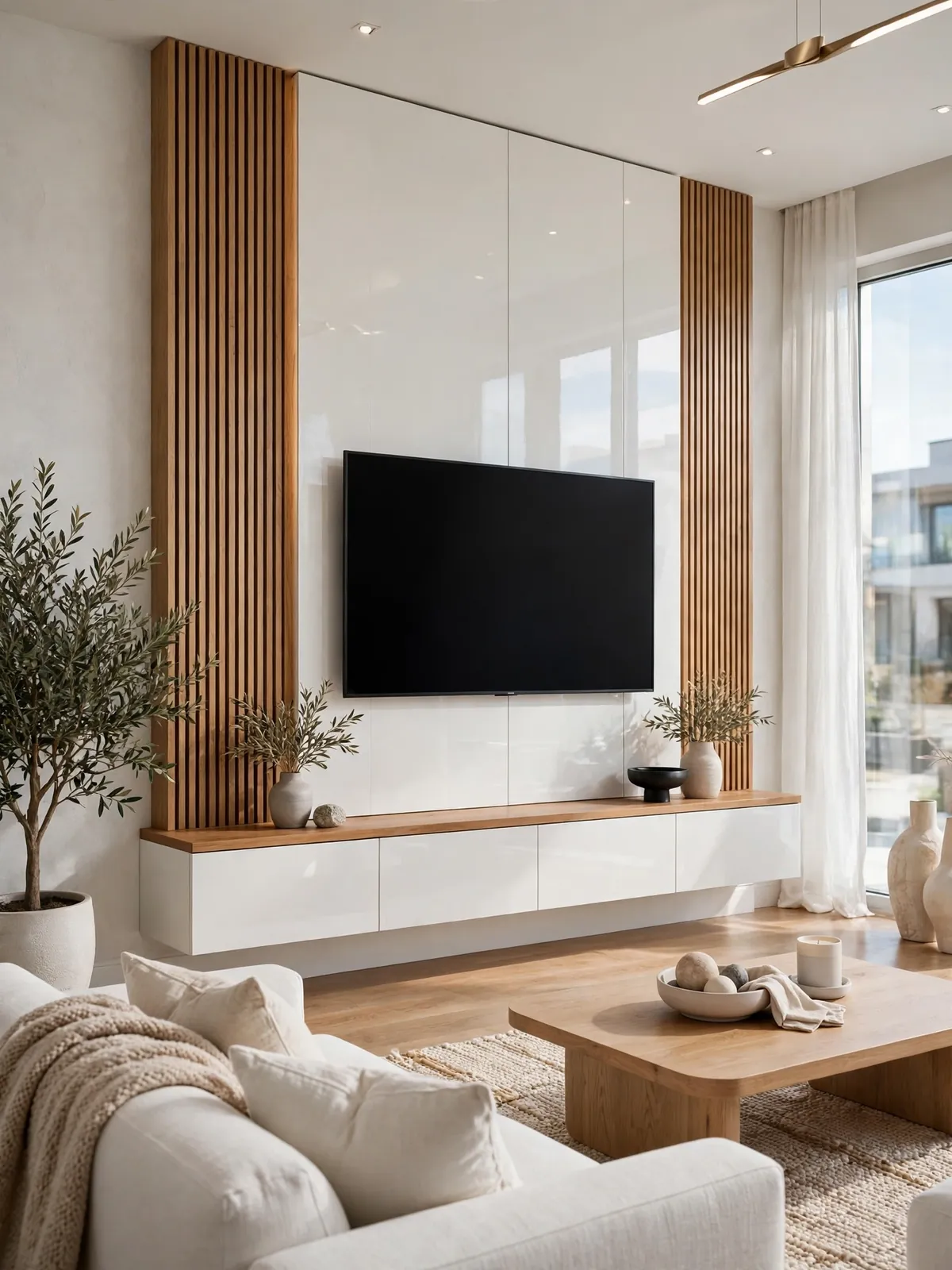
Storage towers suit a large wall with a 65-inch TV, where a console alone would leave empty wall on both sides. A concrete example is a pair of 200-centimetre towers in sage green and cream, with closed lower doors and one glass-fronted upper shelf for display. The towers anchor the screen and absorb the storage that would otherwise need a separate bookcase.
Quick tips:
- Keep tower depth the same as the console so the wall reads as one unit.
- Put heavy items low and display pieces at eye level.
A Smart Corner Unit for an Awkward Room Layout
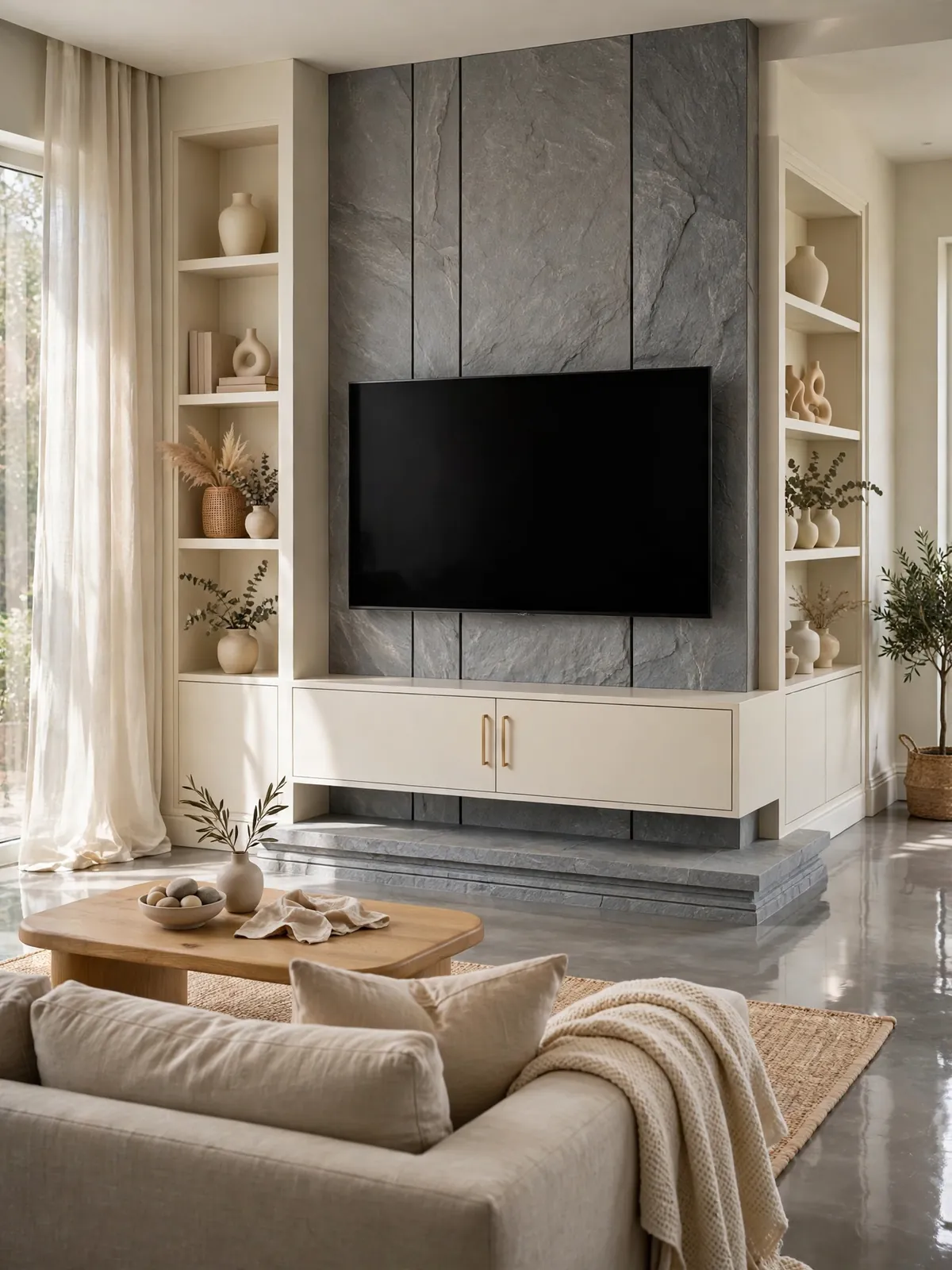
A corner unit is made for an awkward room where doors, windows, or a fireplace leave no clean flat wall for a standard console. A concrete example is an angled teak unit with a triangular top that holds a 50-inch TV, paired with a sofa turned at 45 degrees toward the corner. The angle creates a natural viewing triangle and frees the longest wall for seating or art.
Quick tips:
- Check the viewing angle from every seat before fixing the unit in place.
- Choose a unit with a cable hole at the back corner to avoid trailing leads.
A TV Neatly Integrated Above the Fireplace
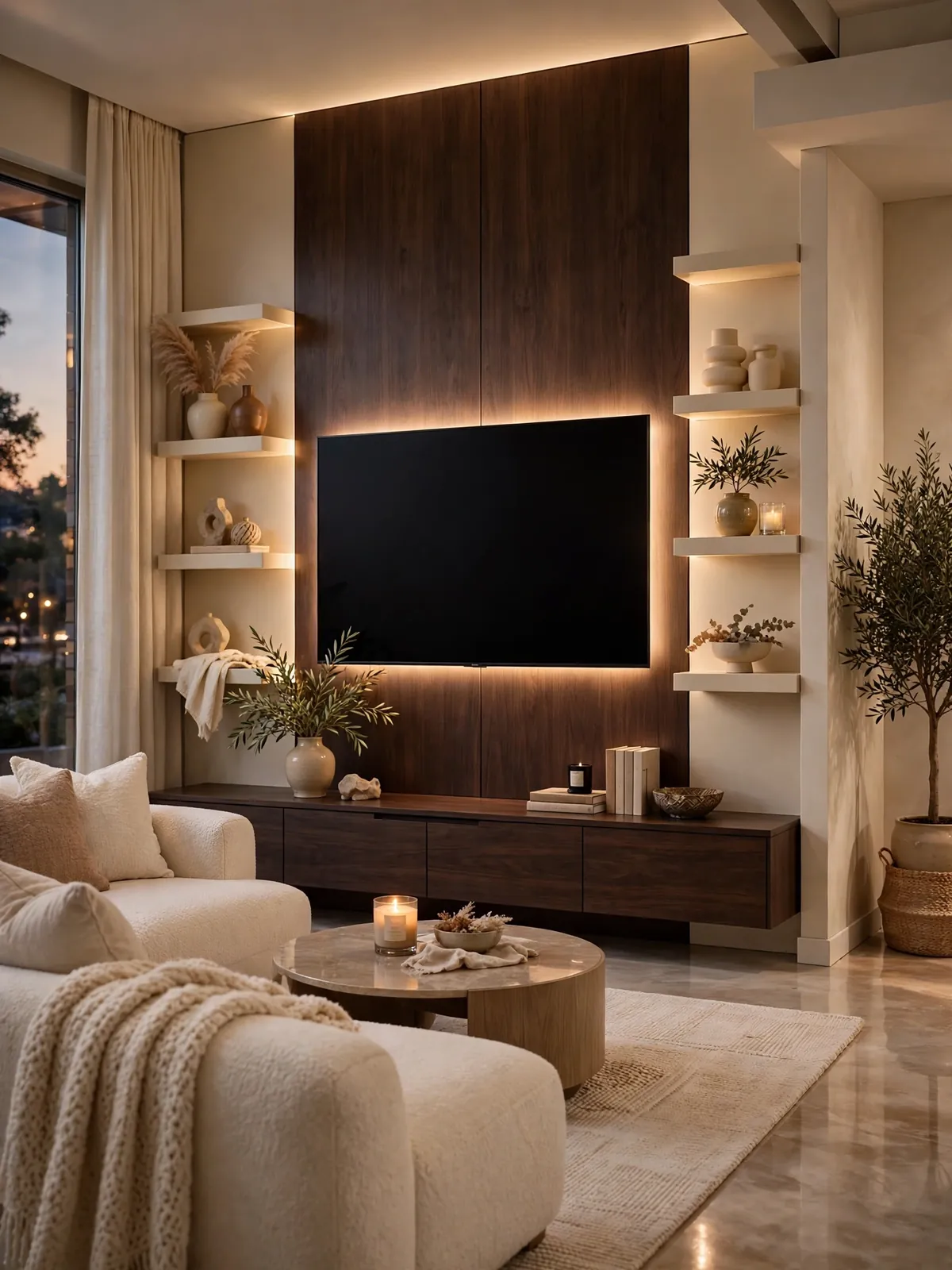
This layout suits a traditional living room where the fireplace is already the focal wall and a second focal point would compete with it. A concrete example is a 55-inch TV recessed above a white stone fireplace, with a slim black console below the mantel holding a soundbar. A heat shield and a pull-down mount keep the screen at a comfortable height and protect it from rising heat.
Quick tips:
- Use a pull-down mount if the fireplace puts the screen above eye level.
- Keep the mantel clear so the TV and fire share one calm focal wall.
Cable Channels Hidden Inside the Unit Itself
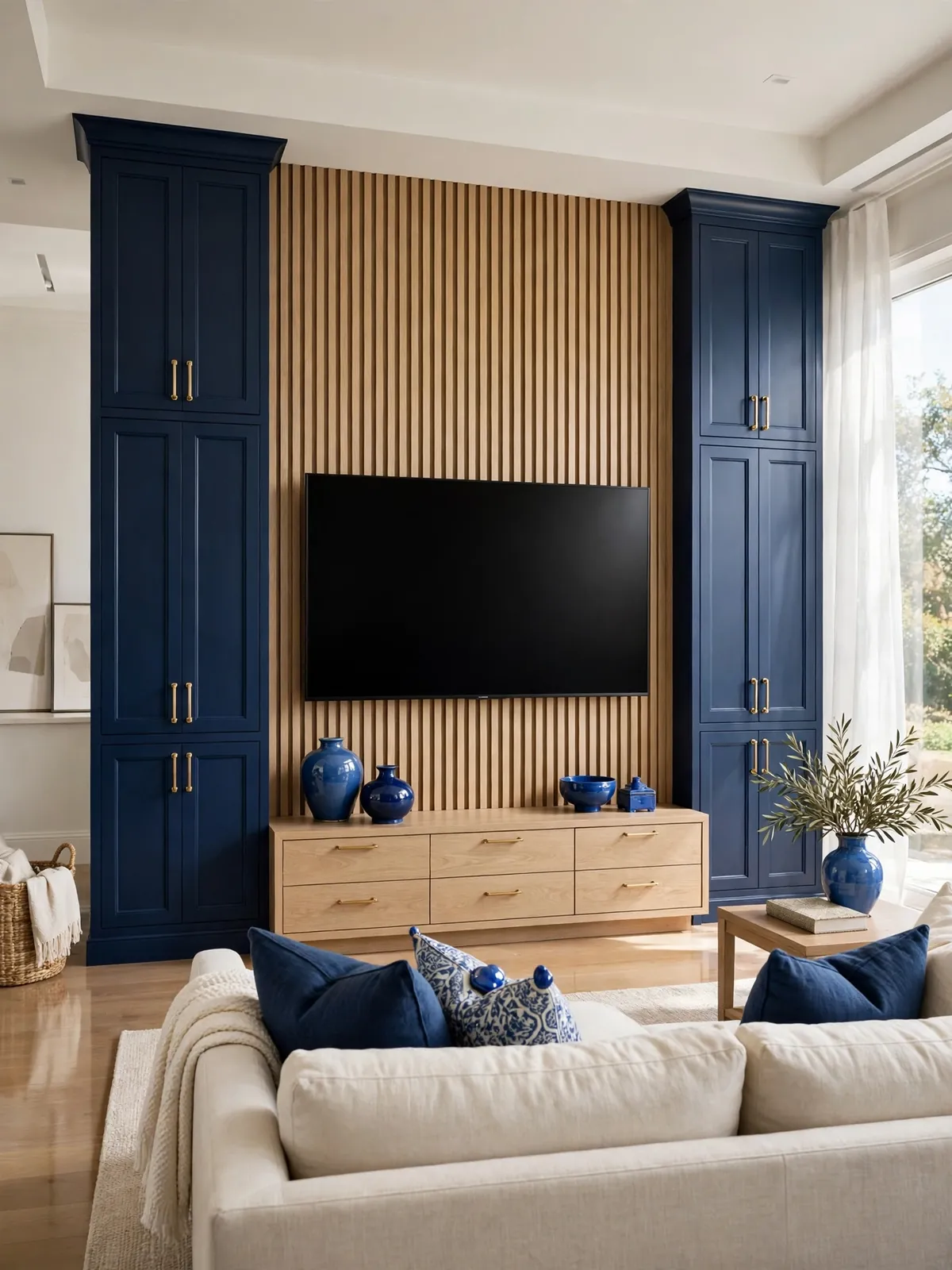
Hidden cable channels suit every room, but they matter most in a minimalist living room where a single trailing wire ruins the whole look. A concrete example is a grey lacquer console with a hollow rear spine, a brush-lined cable exit behind the TV, and a power strip mounted inside the cabinet. All leads drop inside the unit, so the wall and floor stay completely clear.
Quick tips:
- Plan one cable exit per device, not one shared hole for everything.
- Label plugs inside the cabinet to make future swaps painless.
A Dedicated Shelf for the Soundbar Below the Screen
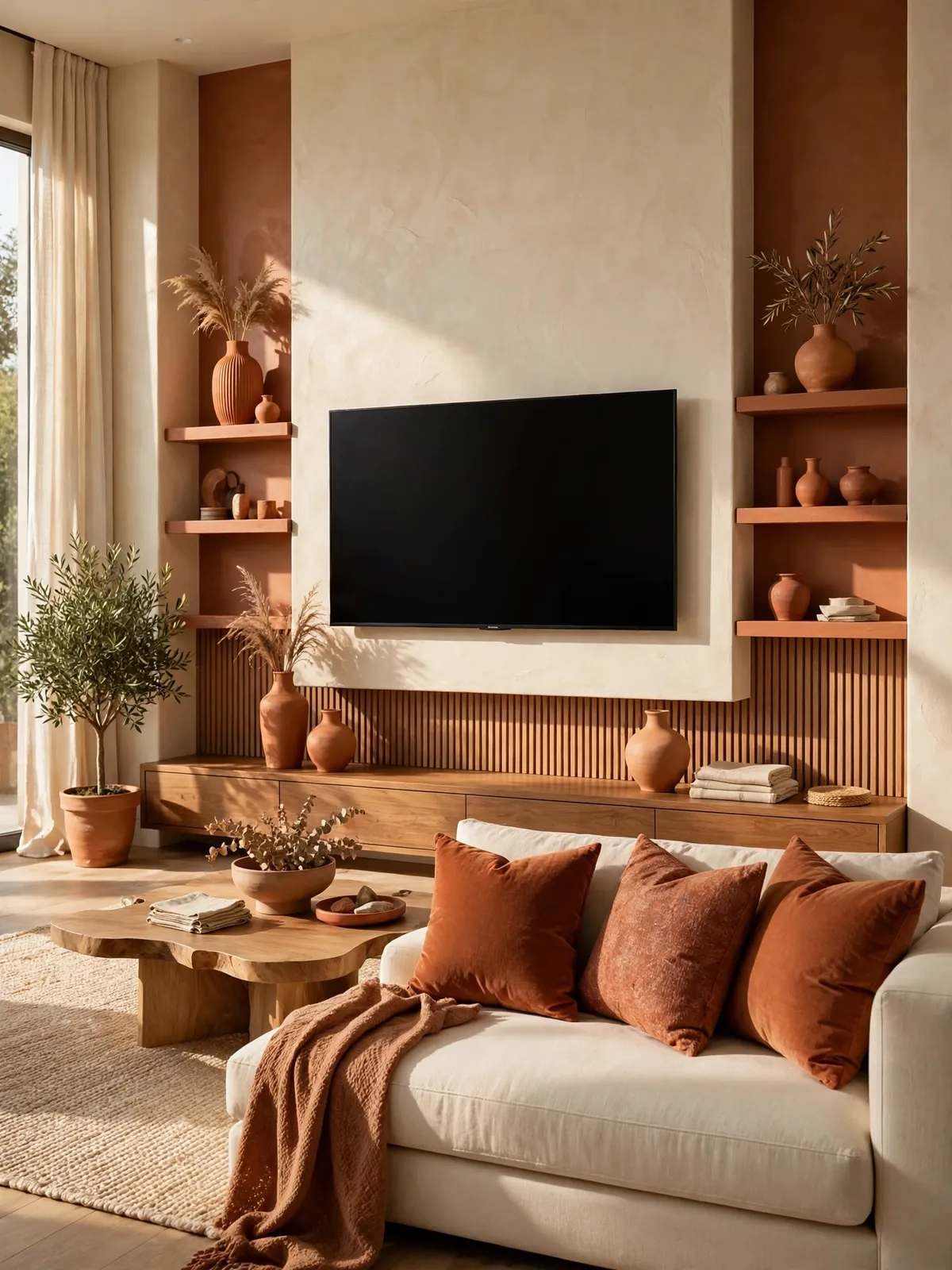
A soundbar shelf suits a movie-loving living room with a 55-inch to 75-inch TV, because a soundbar balanced on top of a console often blocks the remote sensor or the lower screen edge. A concrete example is a walnut unit with a recessed 90-centimetre shelf, sized for a standard soundbar, sitting directly below the screen. The sound stays clear and forward-facing, and the shelf keeps the bar dust-free and exactly centred.
Quick tips:
- Measure the soundbar first, then leave 5 centimetres of air on each side.
- Keep the shelf open at the front so sound is never muffled.
A Ventilated Drawer Made for Gaming Consoles
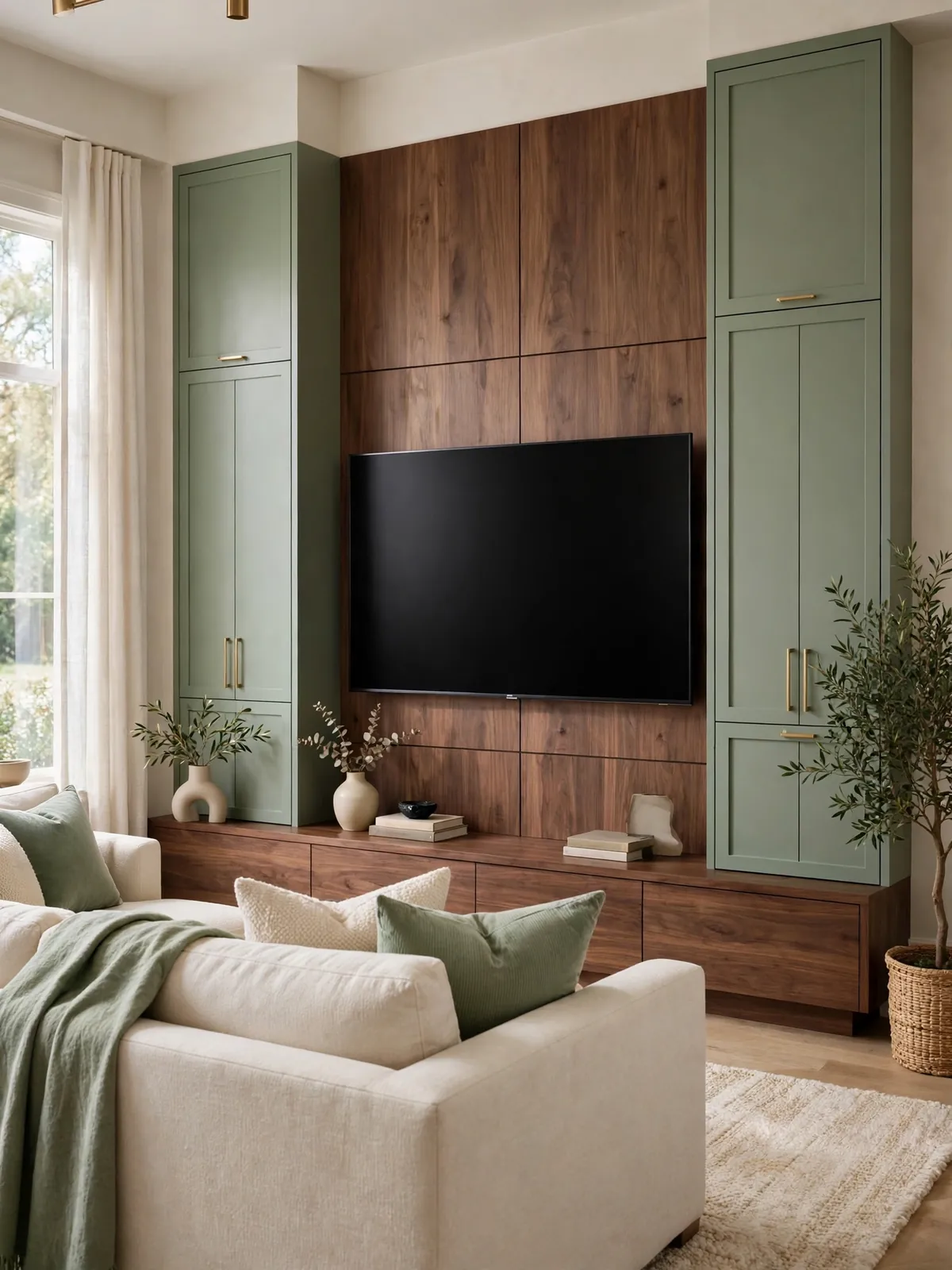
A ventilated drawer suits a household with one or two gaming consoles, where closed storage would otherwise trap heat and shorten the life of the machines. A concrete example is a black console drawer with rear ventilation slots and a mesh back panel, holding a games console and its controller charging dock. The drawer closes for a tidy look but still lets warm air escape at the back.
Quick tips:
- Never seal a console in a fully closed drawer without rear vents.
- Leave a finger-width gap behind the drawer for airflow.
A Two-Tone Unit in Warm Wood and Matte Black
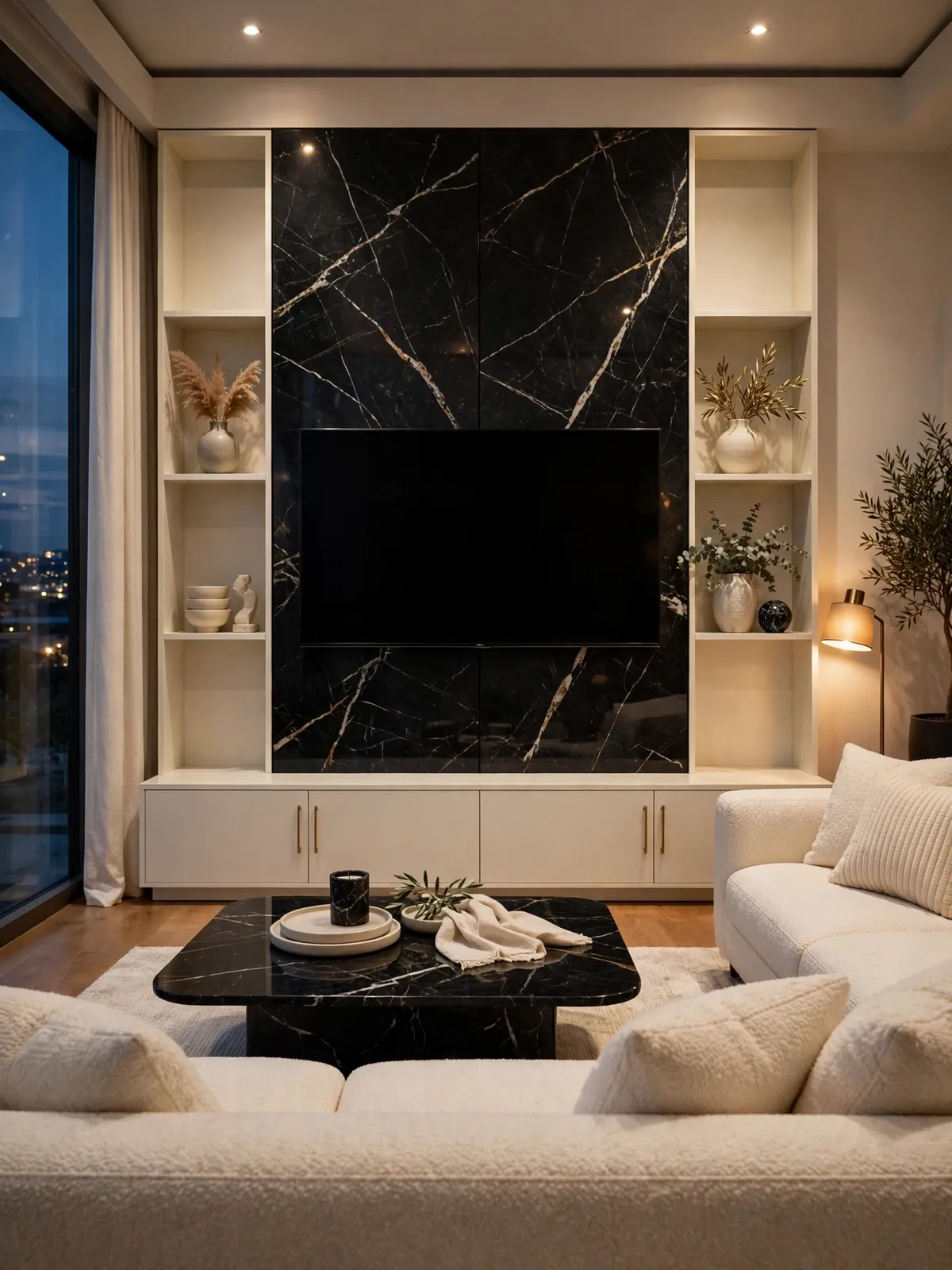
Two-tone units suit a contemporary living room with a 55-inch to 65-inch TV, where a single material would feel flat against a plain wall. A concrete example is a warm oak top and open shelves paired with matte black cabinet doors, styled with a rust-orange throw on a grey sofa. The wood warms the black, and the black grounds the wood, so the unit works with both light and dark sofas.
Quick tips:
- Let one tone dominate and use the second as an accent, not a half-and-half split.
- Repeat the black tone in a frame or lamp so the unit feels connected to the room.
A High-Gloss Lacquer Unit in White or Charcoal
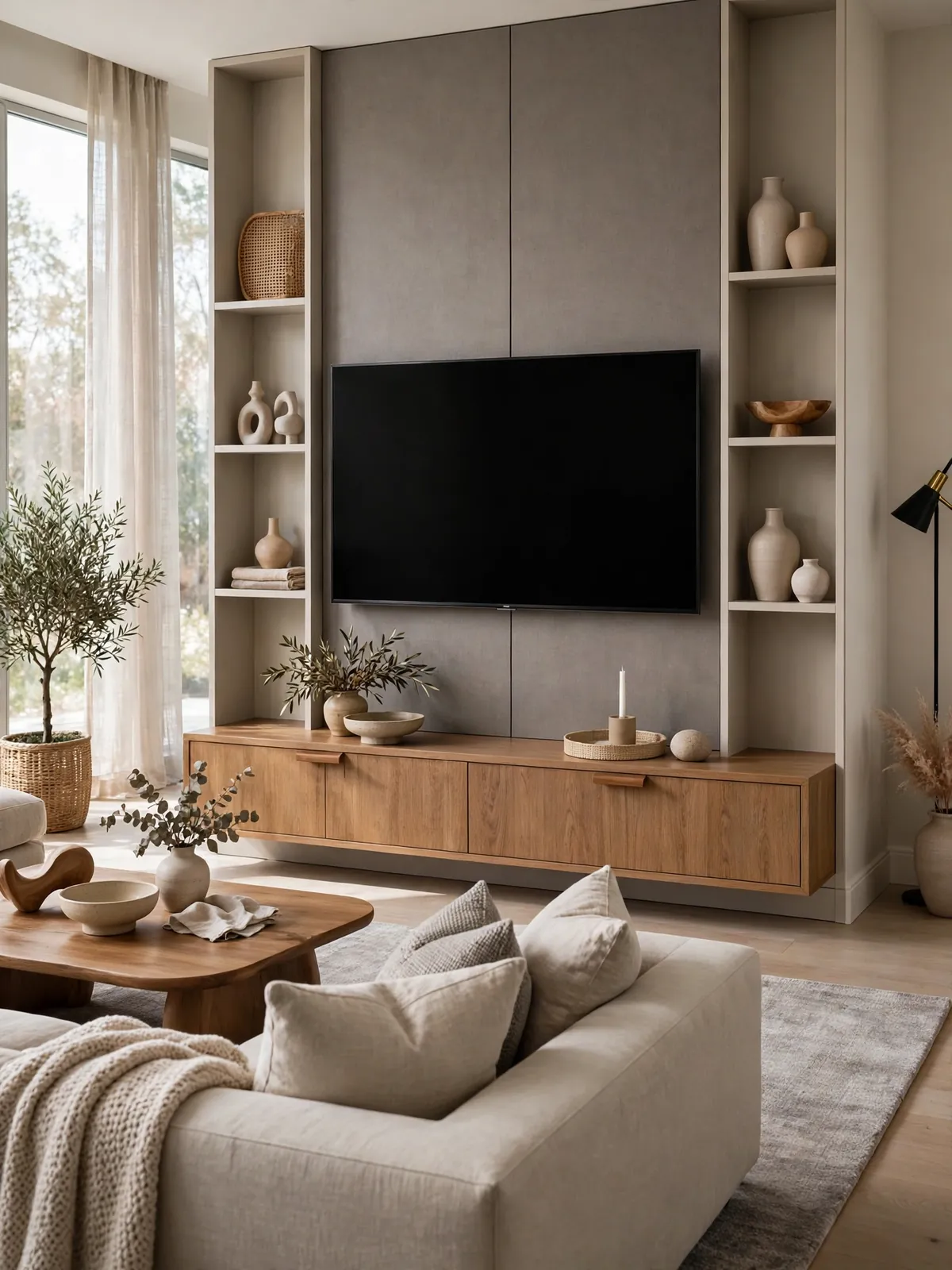
High-gloss lacquer suits a bright, modern living room where you want the unit to bounce light and feel polished rather than rustic. A concrete example is a high-gloss white lacquer console with a charcoal TV wall behind it, the gloss reflecting daylight across a room with a charcoal sofa. The shine makes a small room feel larger, but it does show fingerprints, so it suits homes without constant little hands on the doors.
Quick tips:
- Wipe gloss fronts with a microfibre cloth to avoid fine scratches.
- Pair gloss white with a dark wall so the unit does not wash out.
An Industrial Metal-Frame Unit With Wood Shelves
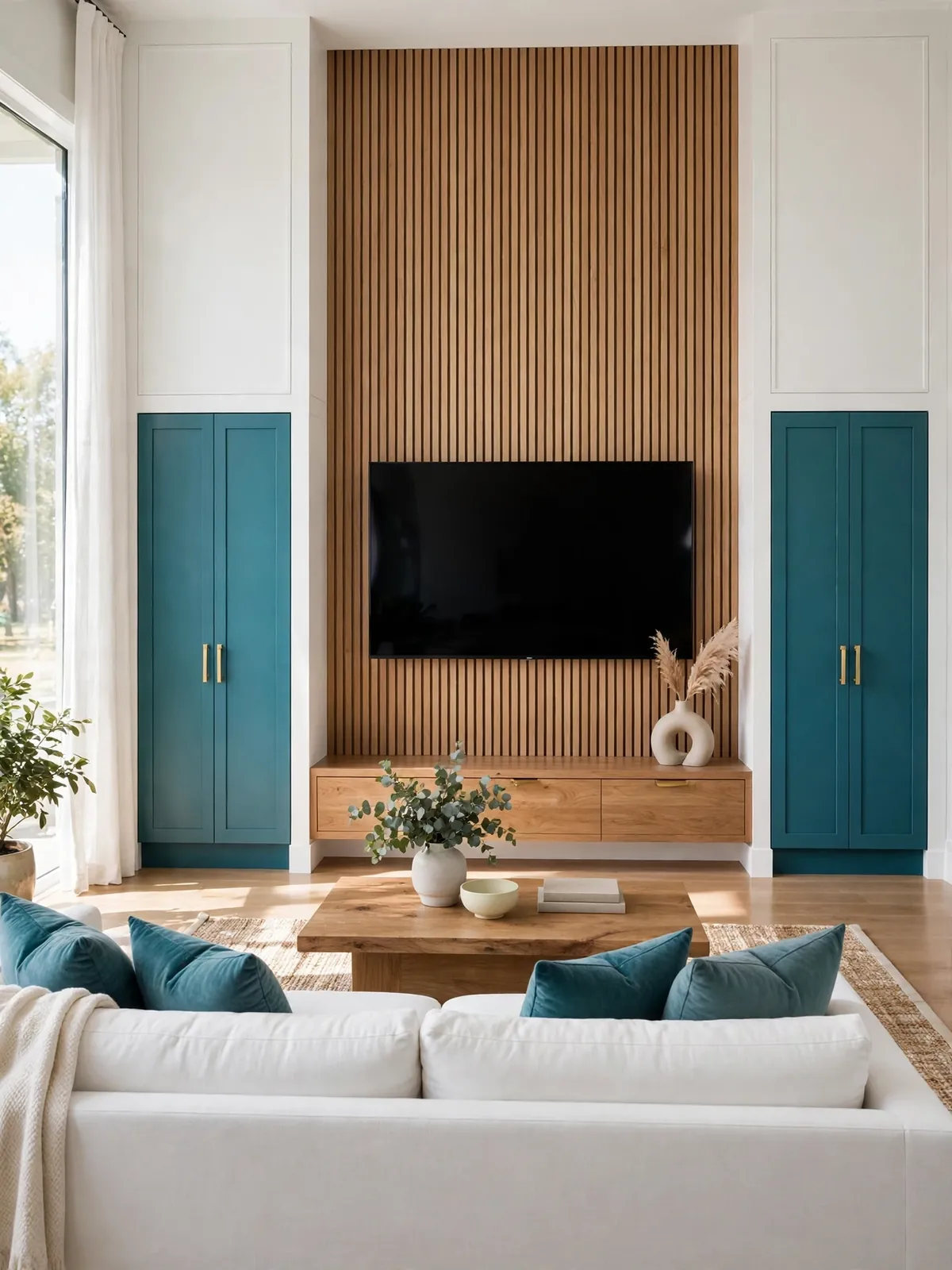
An industrial unit suits a loft-style or masculine living room with a 55-inch TV, where soft, all-wood furniture would feel out of place. A concrete example is a black metal-frame unit with three thick wood shelves, styled with a tan leather sofa against an exposed brick wall. The open frame keeps the unit airy while the wood shelves warm up the metal.
Quick tips:
- Check the frame weight rating if you plan to store heavy books below.
- Add a soft rug to balance the hard metal and brick textures.
A TV Unit With Bookshelf Wings on Both Sides
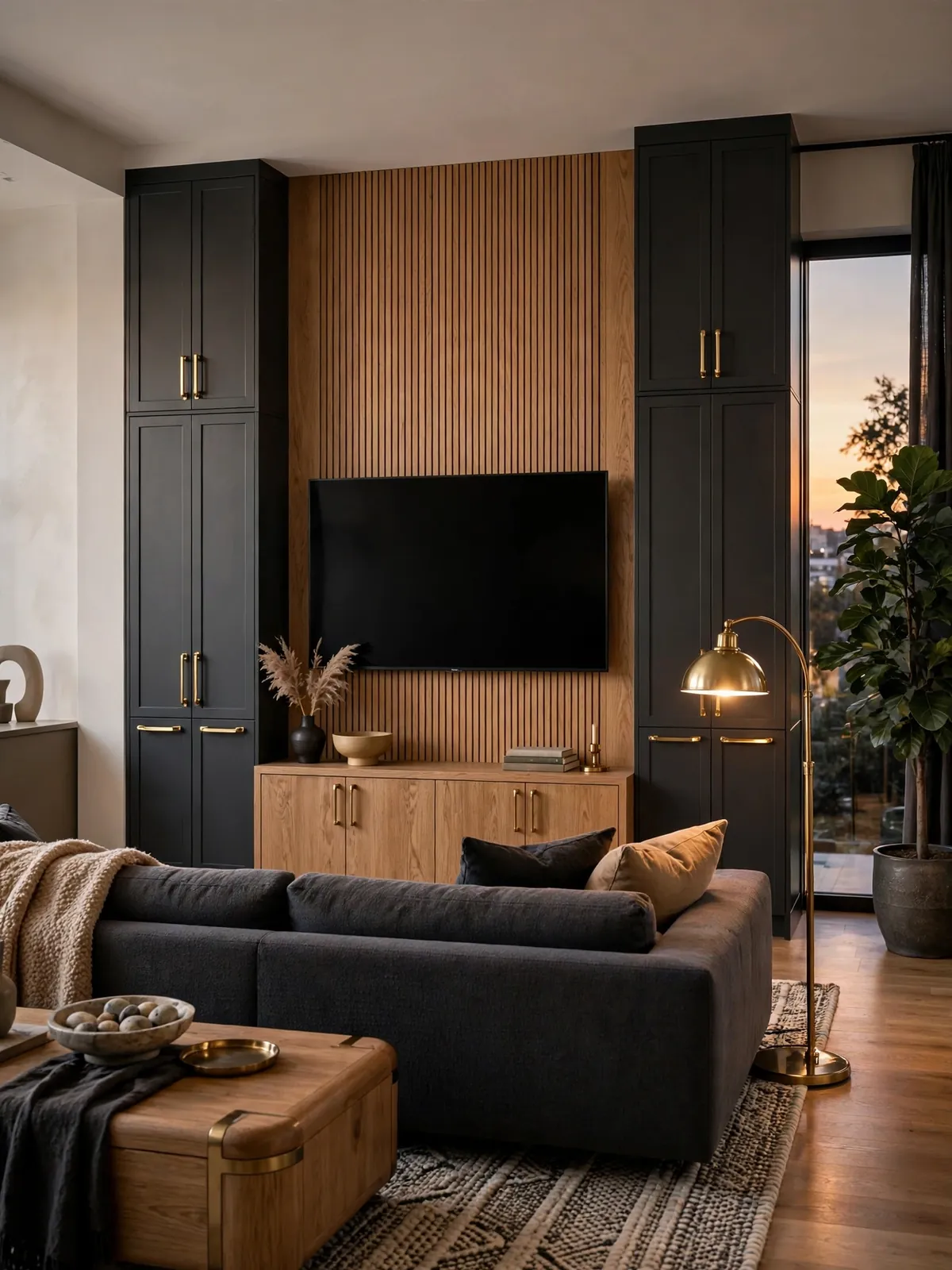
Bookshelf wings suit a reader’s living room with a large wall and a 55-inch to 65-inch TV, where books need a real home rather than a pile on the coffee table. A concrete example is a deep teal and natural oak unit with four shelves on each side of the screen, holding books, a trailing plant, and one framed photo per shelf. The wings turn the TV wall into a library wall, so the screen feels like part of a lived-in room.
Quick tips:
- Mix book heights and leave one empty gap per shelf for breathing room.
- Keep the shelves beside the TV symmetrical so the screen stays centred.
A Swivel-Mount Unit Serving Two Seating Zones
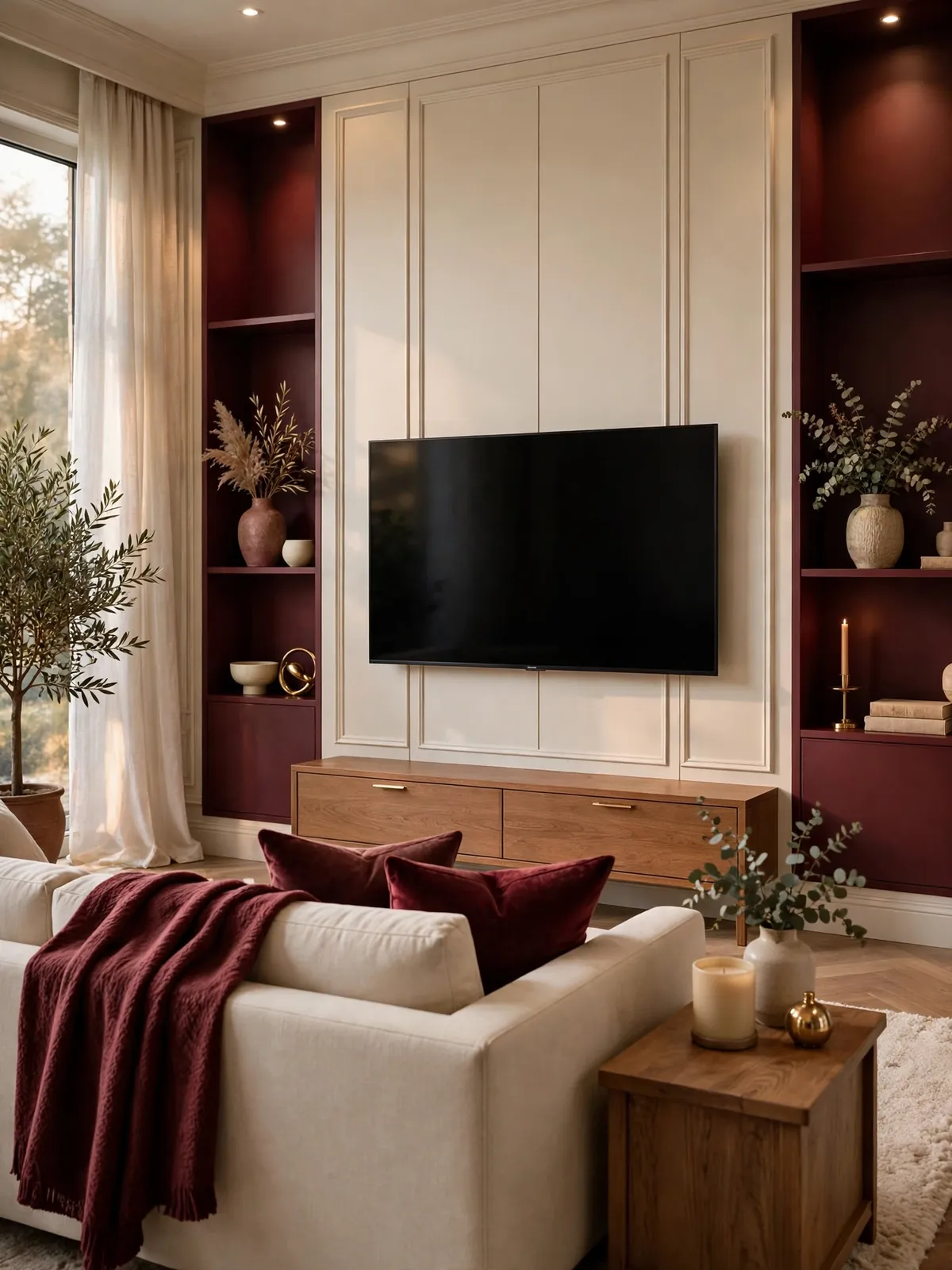
A swivel unit suits an open-plan room with two seating zones, such as a sofa area and a dining area sharing one TV wall. A concrete example is a light grey pedestal unit with a swivel bracket holding a 55-inch TV, able to turn 45 degrees toward the sofa for films and back toward the dining table for background viewing. One screen then serves both zones without a second television.
Quick tips:
- Test the full swivel range before fixing cables, so leads never pull tight.
- Anchor the pedestal to the floor if children or pets bump into it.
A Double-Sided Unit That Divides the Room
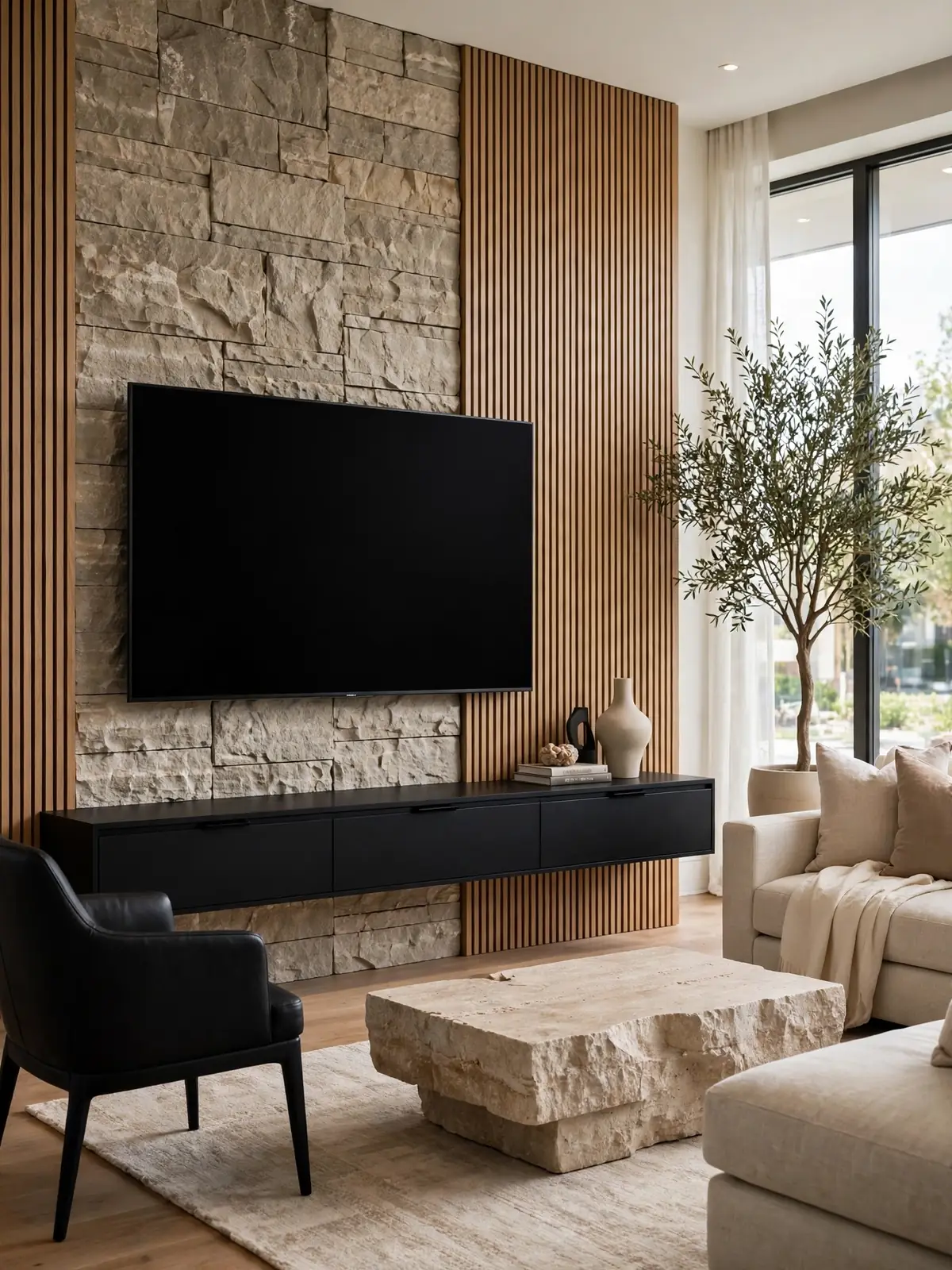
A double-sided unit suits a large open-plan room where you want a TV zone and a separate study or dining zone without building a wall. A concrete example is a cream and gold divider with the TV facing the sofa on one side and open shelving facing the dining side. The unit creates two rooms while keeping light and conversation flowing over the top.
Quick tips:
- Keep the divider below eye level from the far side so the room still feels open.
- Style the reverse side as carefully as the TV side, since both are visible.
A Frame-Style TV That Looks Like Art When Off
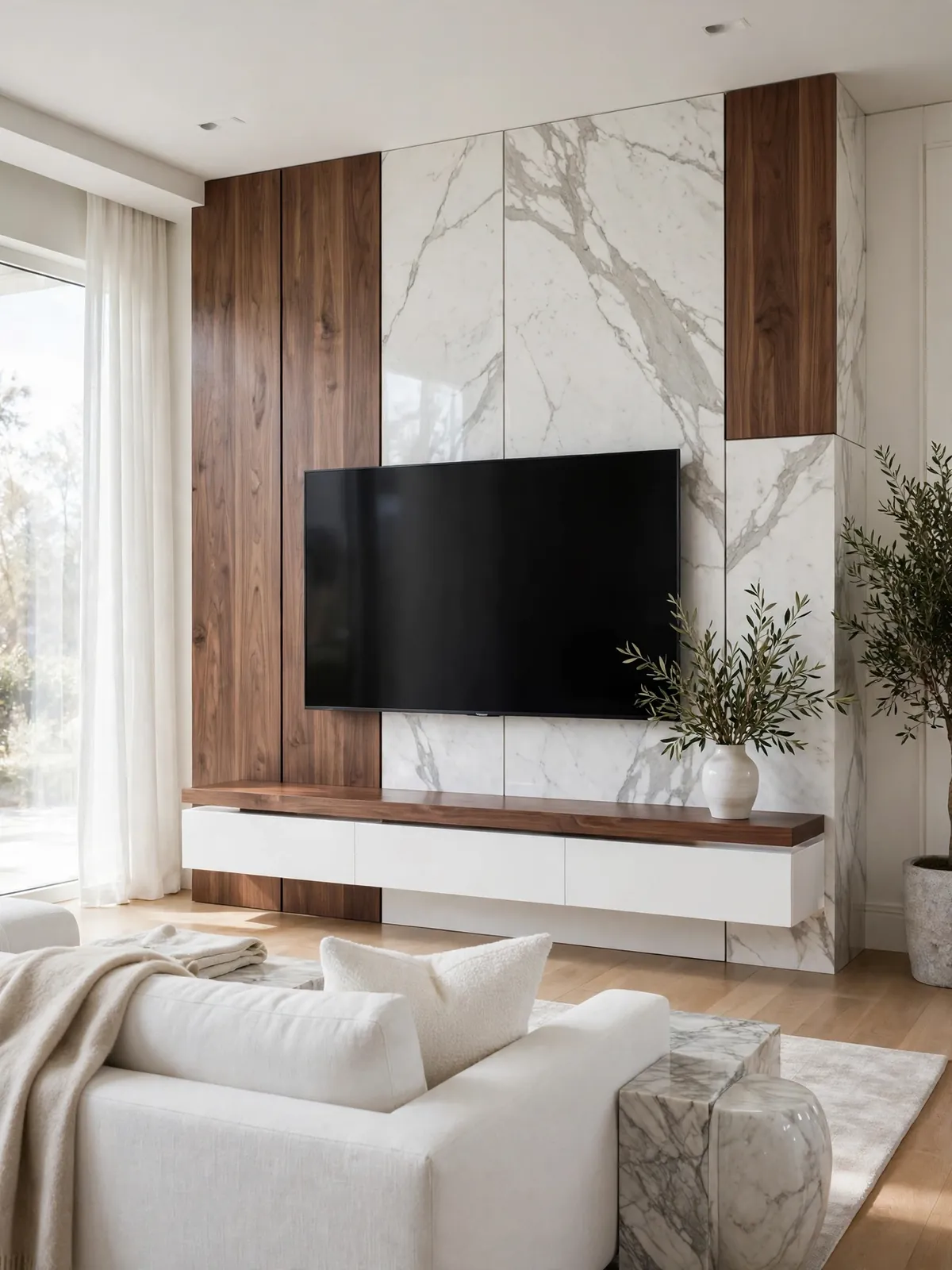
A frame-style TV suits a design-led living room where a black screen feels like a hole in the wall when it is switched off. A concrete example is a frame TV with a thin walnut frame, displaying a landscape artwork on standby, mounted above a matching walnut console on a soft lilac wall. Guests see art first and only realise it is a television when it turns on.
Quick tips:
- Choose a frame colour that matches your existing picture frames.
- Set the art mode brightness low so it reads as a print, not a screen.
An Under-Console LED Strip for a Floating Glow
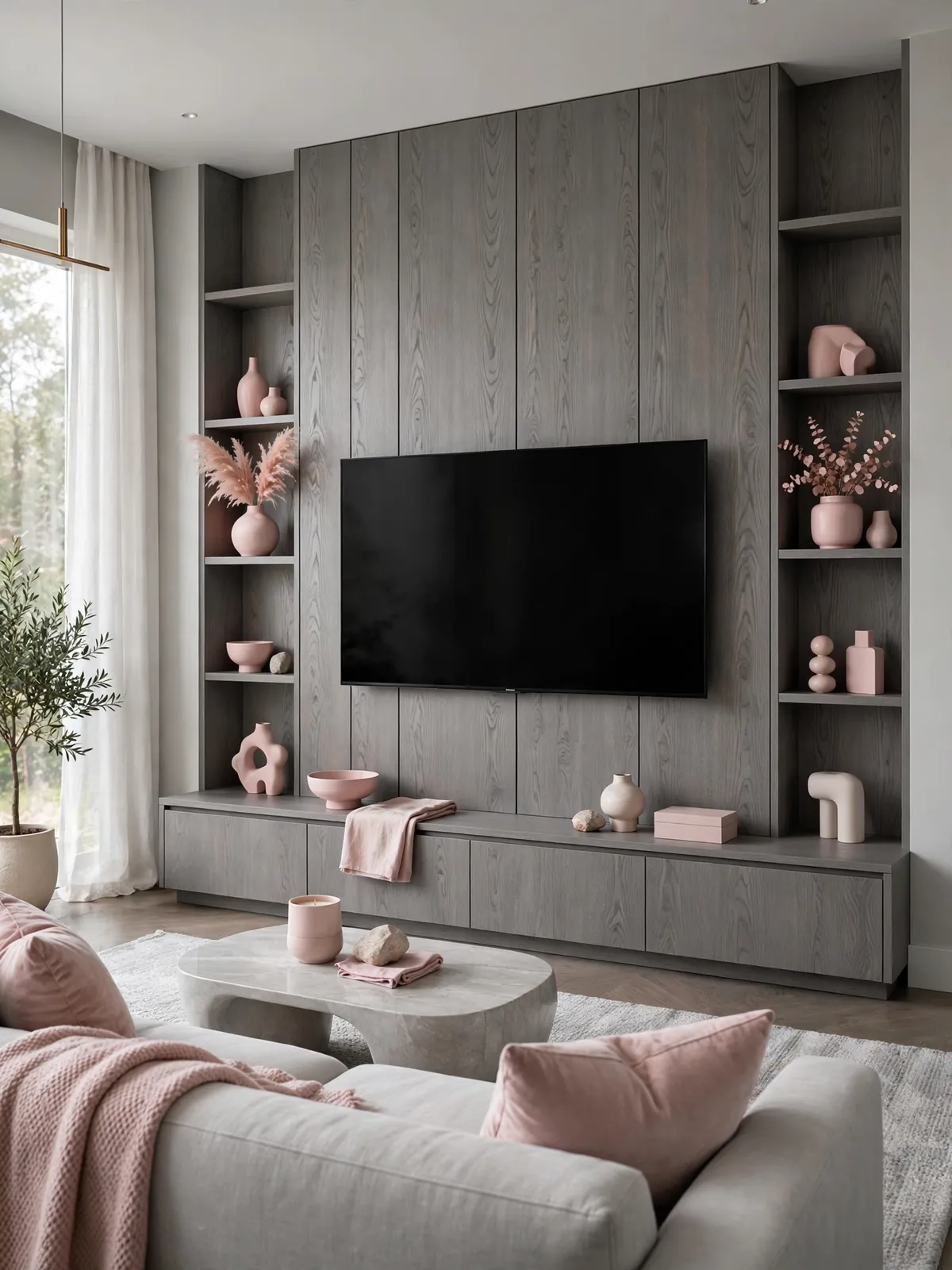
An under-console strip suits a small or evening-focused living room, where a floating glow makes a wall-mounted unit look lighter and more expensive. A concrete example is a warm-white LED strip fixed beneath a floating oak console, casting a soft pool of light onto a dark wood floor beside an emerald green sofa. The glow acts as a night light and makes the console appear to hover.
Quick tips:
- Hide the strip behind a small lip so you see glow, not the bulbs.
- Use warm white for living rooms and save colour-changing strips for playrooms.
A Mirrored-Panel Unit That Bounces Light Around
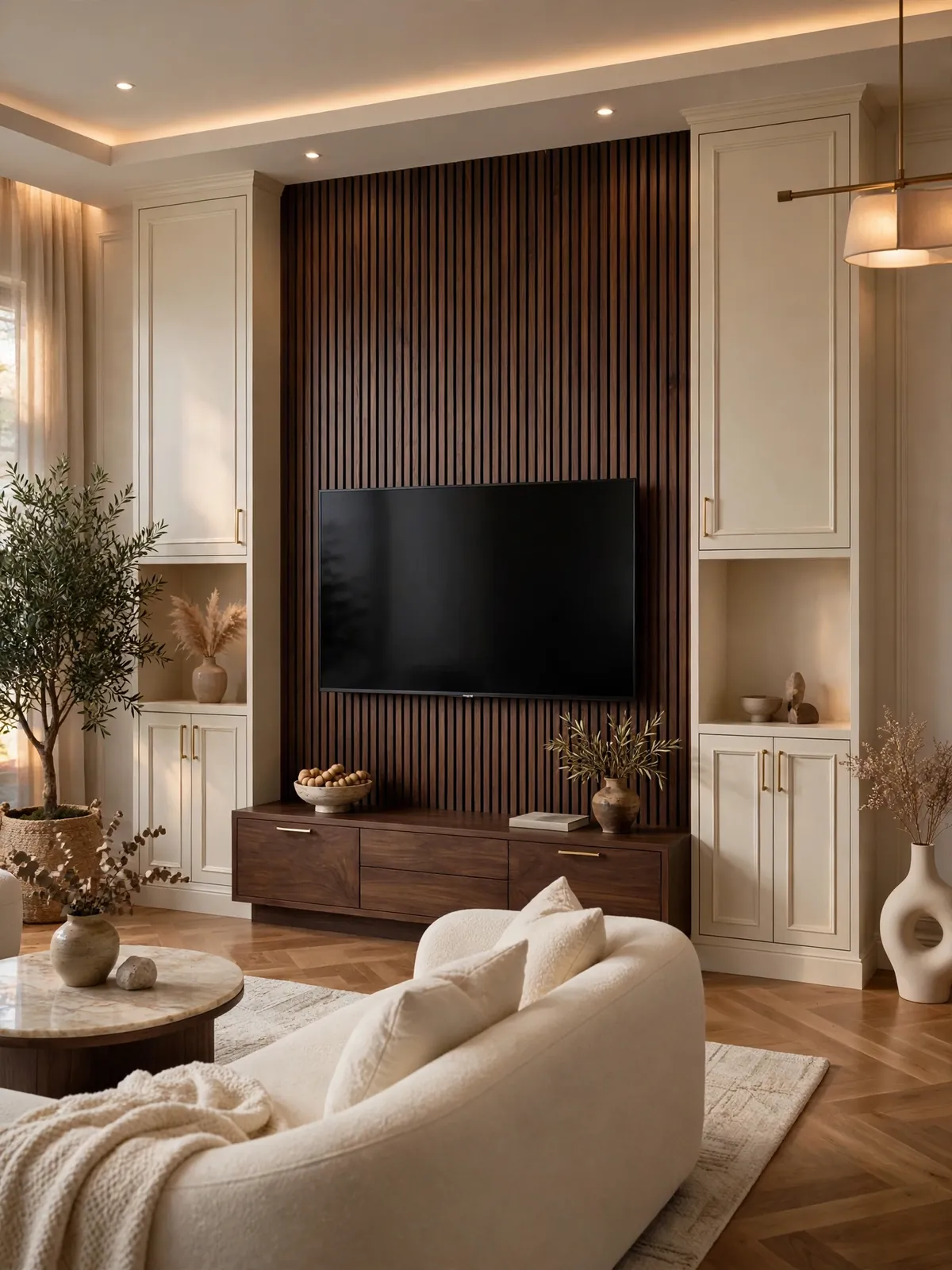
Mirrored panels suit a small or north-facing living room that needs more light, because the reflections double the daylight without adding another window. A concrete example is a silver-grey unit with mirrored door fronts beside a bright window, reflecting daylight across a room with a silver-grey sofa. The mirrors need regular wiping, but the brightness payoff is immediate in a darker room.
Quick tips:
- Angle mirrored doors away from direct TV glare to avoid reflections on screen.
- Keep mirrored fronts fingerprint-free with a quick weekly wipe.
A Reclaimed-Wood Rustic TV Unit With Character
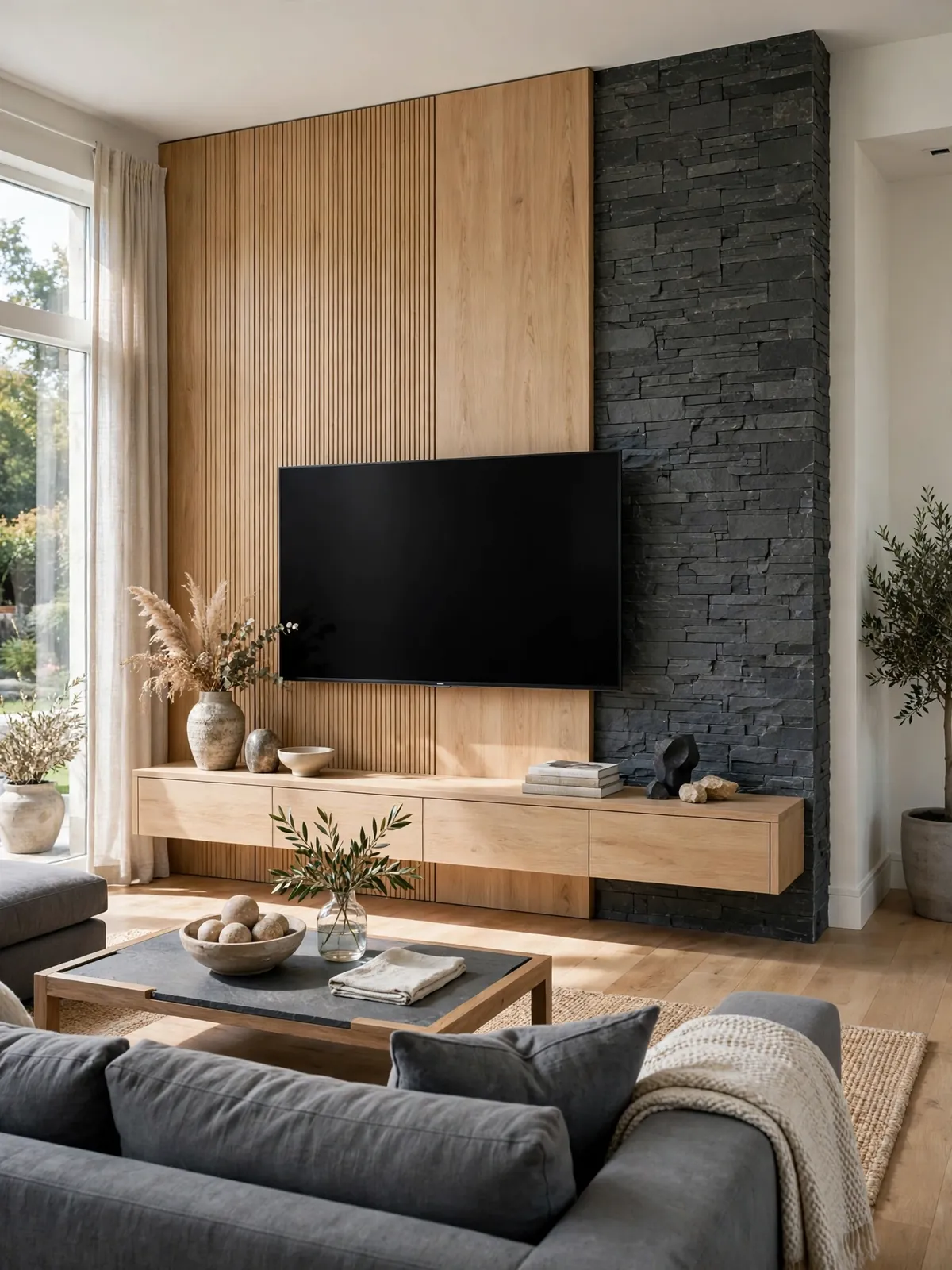
Reclaimed wood suits a farmhouse or rustic living room with a 50-inch to 65-inch TV, where a perfect, factory-fresh finish would feel too polished. A concrete example is a chunky reclaimed pine console with visible grain, knots, and a hand-waxed finish, paired with burnt-orange cushions on a linen sofa. Each board tells its own story, so no two units look quite the same.
Quick tips:
- Seal reclaimed wood well so old grain does not snag cloth or collect dust.
- Pair rustic wood with simple linen, not more rustic texture, to avoid overload.
A Handleless Minimalist White TV Unit
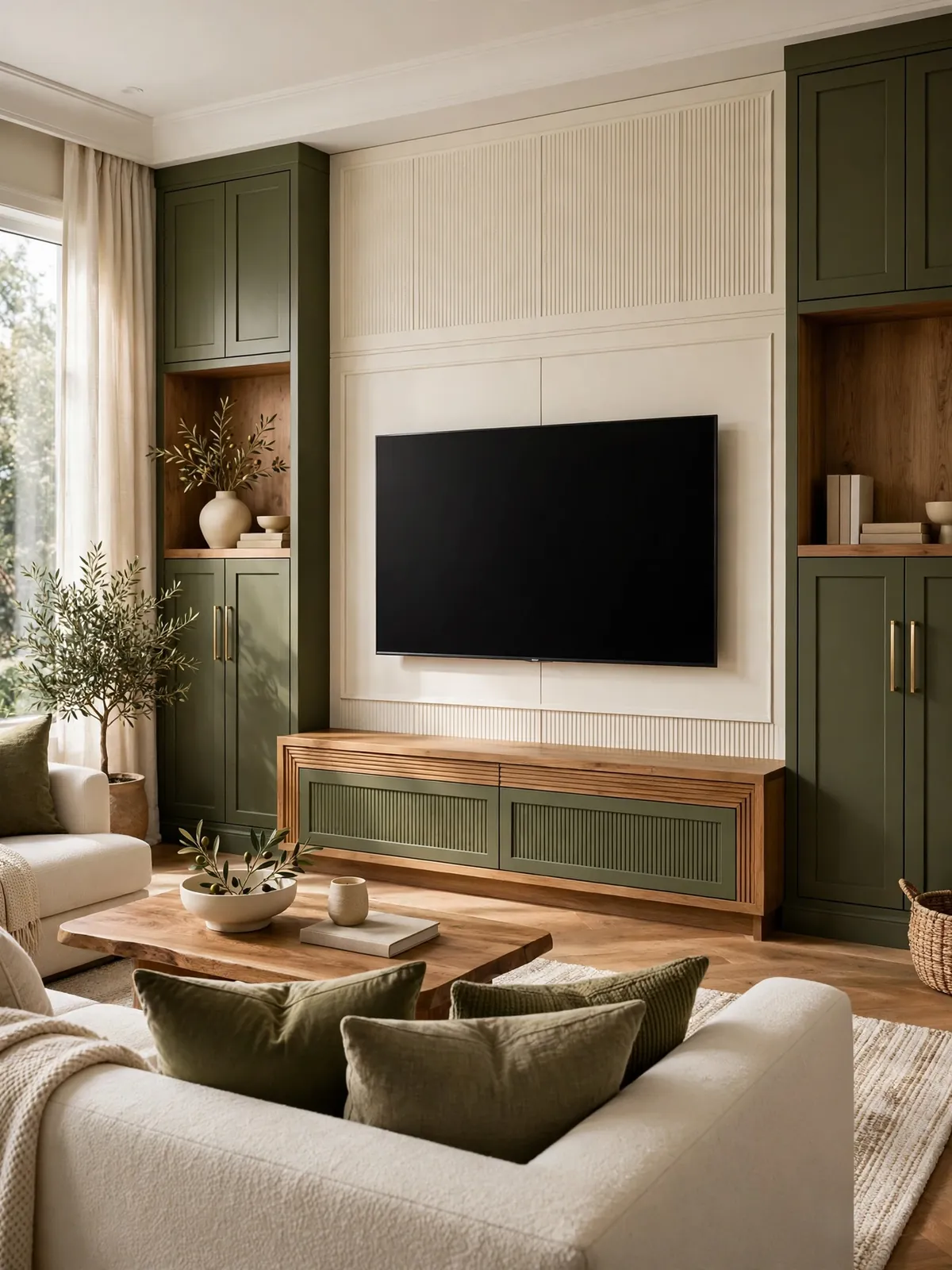
A handleless white unit suits a small, calm, or Scandinavian living room with a 43-inch to 55-inch TV, where visual quiet matters more than display. A concrete example is a matte white unit with push-to-open doors and no visible hardware, sitting under a TV on a pale mint wall. The blank front lets the screen, one plant, and one book do all the talking.
Quick tips:
- Choose matte over gloss for a softer minimalist look that hides fingerprints.
- Keep the top almost empty, since clutter cancels the minimalist effect.
A Super-Slim Console for a Small Living Room
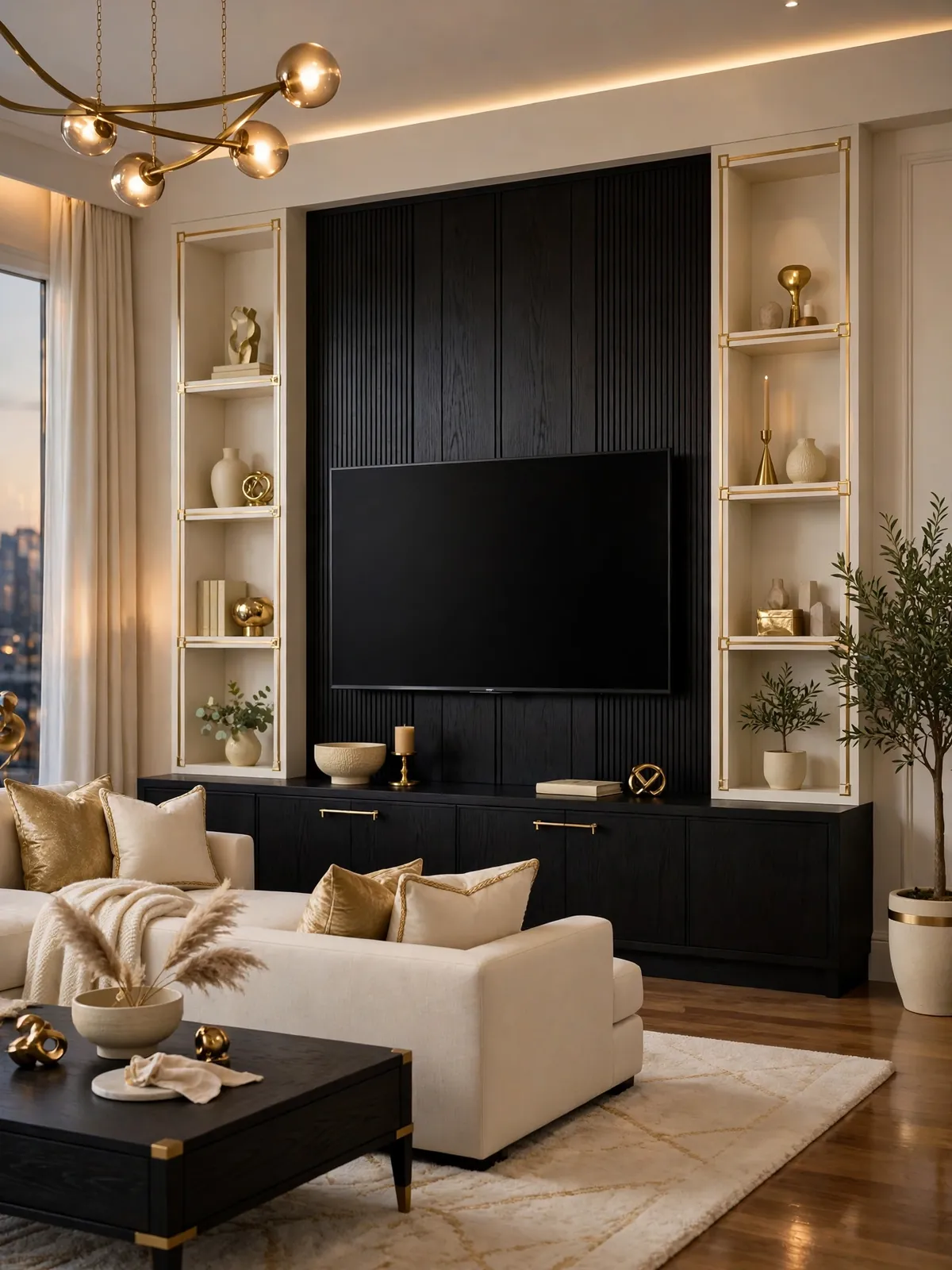
A super-slim console suits a studio or small apartment living room with a TV up to 43 inches, where a deep unit would eat into the walkway. A concrete example is a 30-centimetre-deep pale ash console with two shallow drawers, holding a soundbar and a streaming box without jutting into the room. The slim profile leaves floor space clear and keeps a compact room feeling airy rather than cramped.
Quick tips:
- Measure depth, not just width, before buying for a small room.
- Wall-mount the TV above a slim console to free even more floor space.
FAQs
How wide should a TV unit be compared to the TV?
Your console should be at least as wide as your television, and ideally a little wider on each side. That extra width stops the screen from looking top-heavy and gives you space for a soundbar, a plant, or a small stack of books without crowding the edges.
How do I hide cables behind a TV unit?
Start with a power point directly behind the unit, then use the unit’s internal cable channel or rear cut-out to route every lead inside the furniture. A brush-lined exit behind the TV keeps the drop invisible, and a power strip mounted inside the cabinet keeps chargers and adapters out of sight.
Can a TV go above a fireplace safely?
Yes, if the mantel shields the screen from direct heat and the viewing height stays comfortable. Use a thermometer check on the wall above the fire, add a heat shield if needed, and consider a pull-down mount so the screen can drop to eye level for viewing.
What is the best TV unit for a small living room?
A floating or super-slim console works best, because it leaves floor space clear and keeps the room feeling open. Choose a shallow depth, closed storage for clutter, and a light finish so the unit does not dominate a compact wall.
Do I need ventilation for a games console inside a TV unit?
Yes, games consoles generate significant heat and need airflow to run reliably. Choose a drawer or cabinet with rear vents or a mesh back, leave a gap behind the unit, and never seal a running console inside a fully closed box.
Conclusion
Choose the unit by size first, storage second, and finish last, and the media wall will take care of itself. A console wider than the screen, with closed storage for the messy half of modern living and a real plan for cables and heat, turns the television from an awkward black rectangle into the calm centre of the room. Pick one idea from this guide that fits your wall, your TV, and your daily habits, then style it lightly and let the unit do the work.