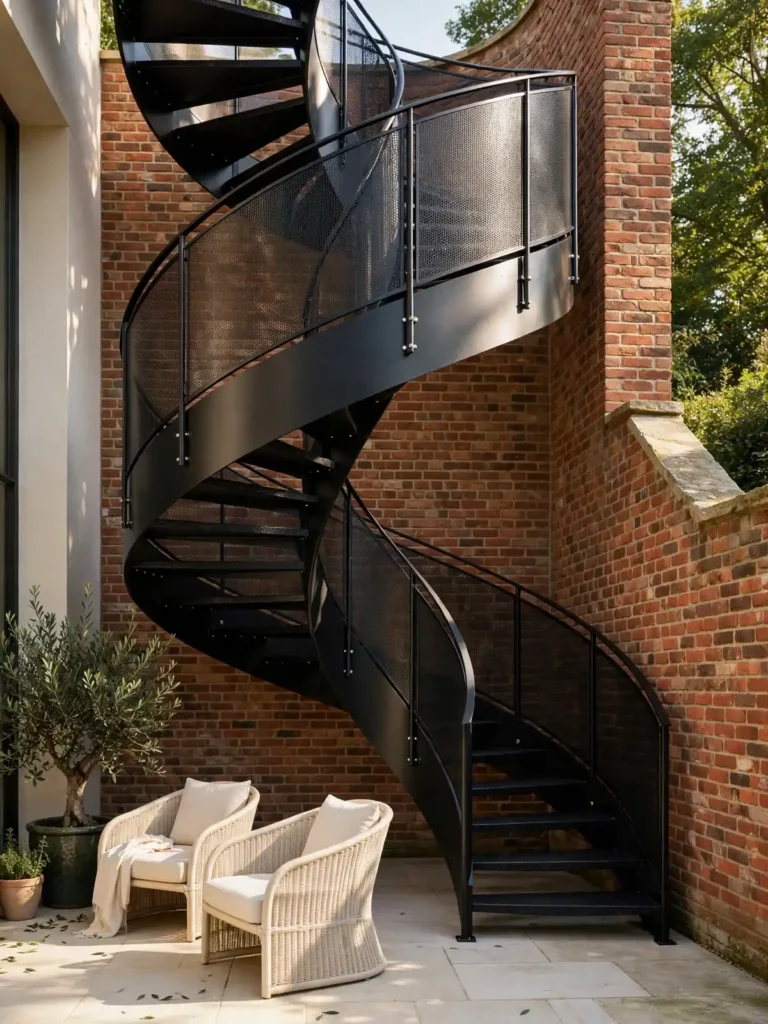
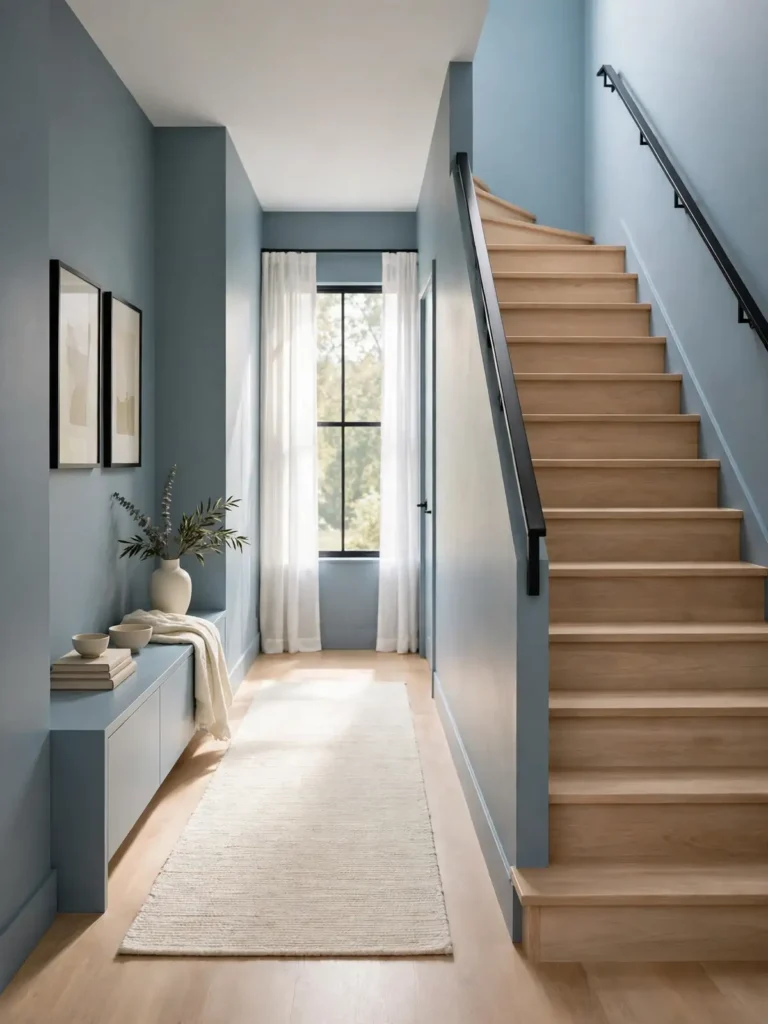
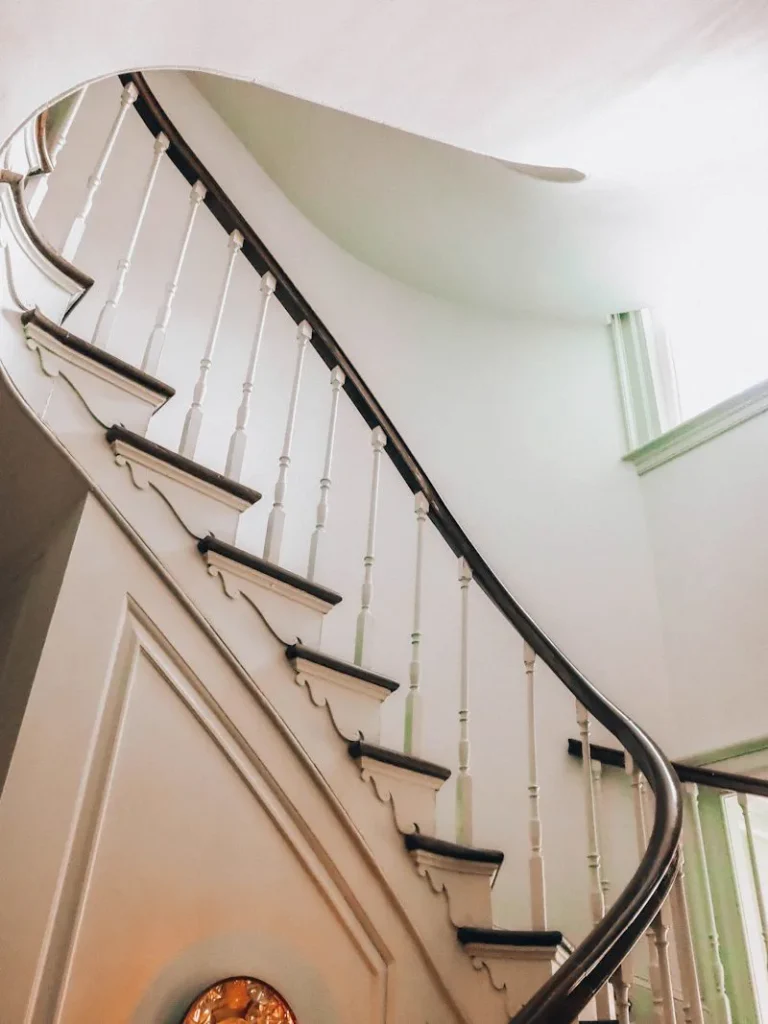
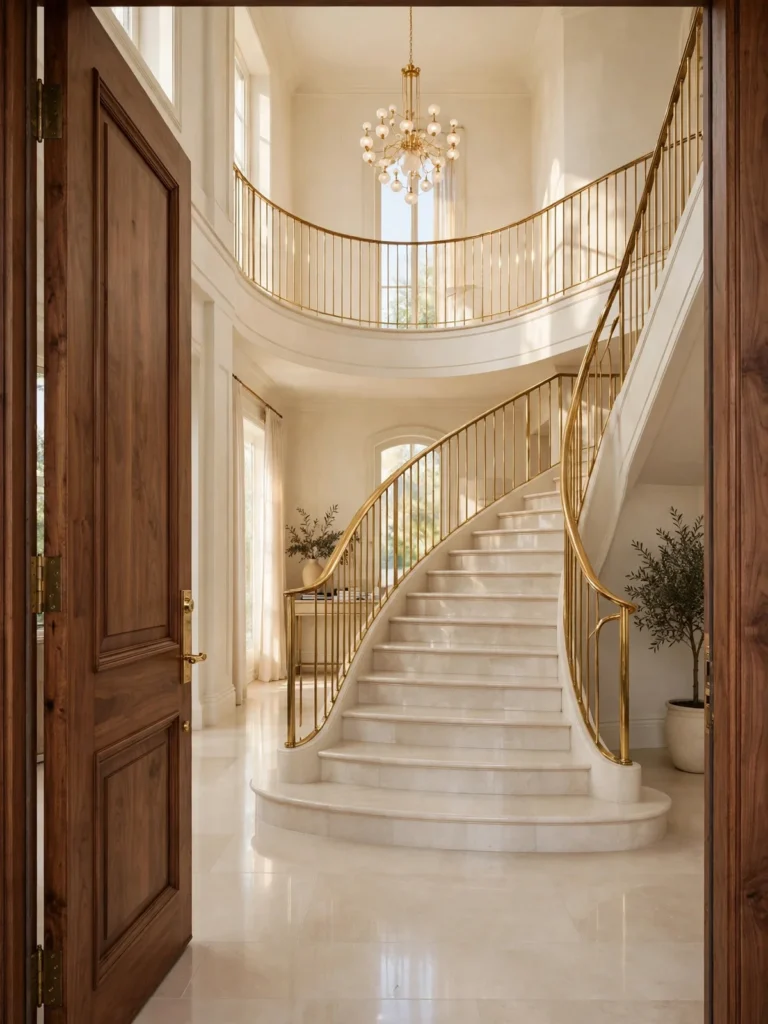
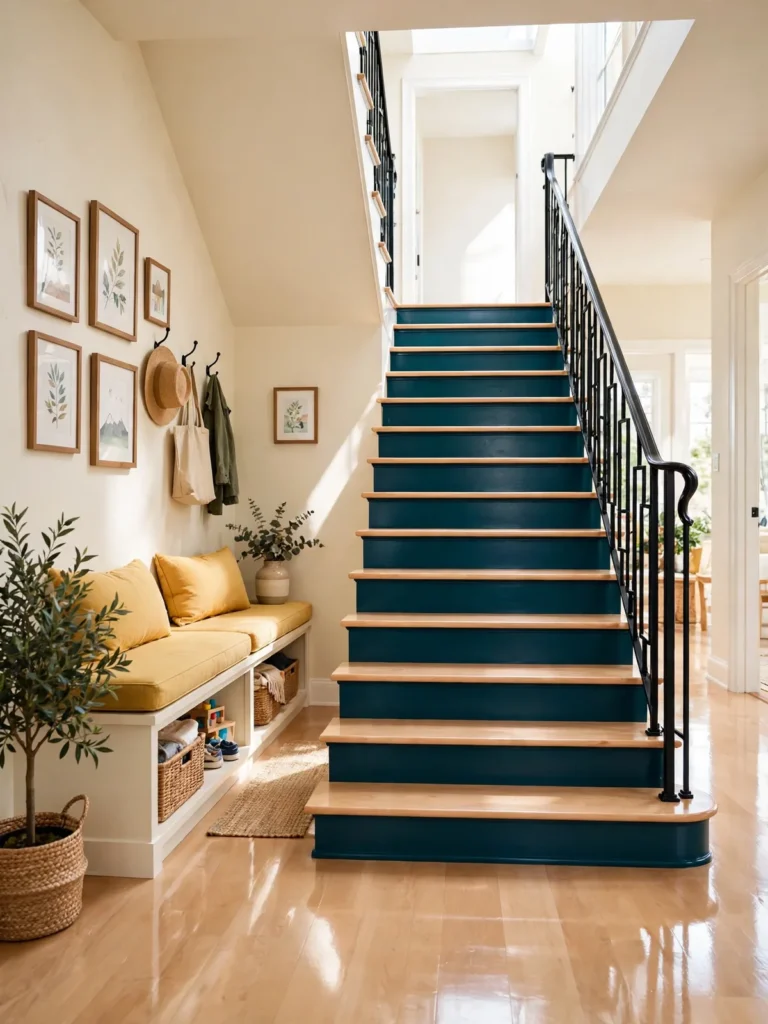
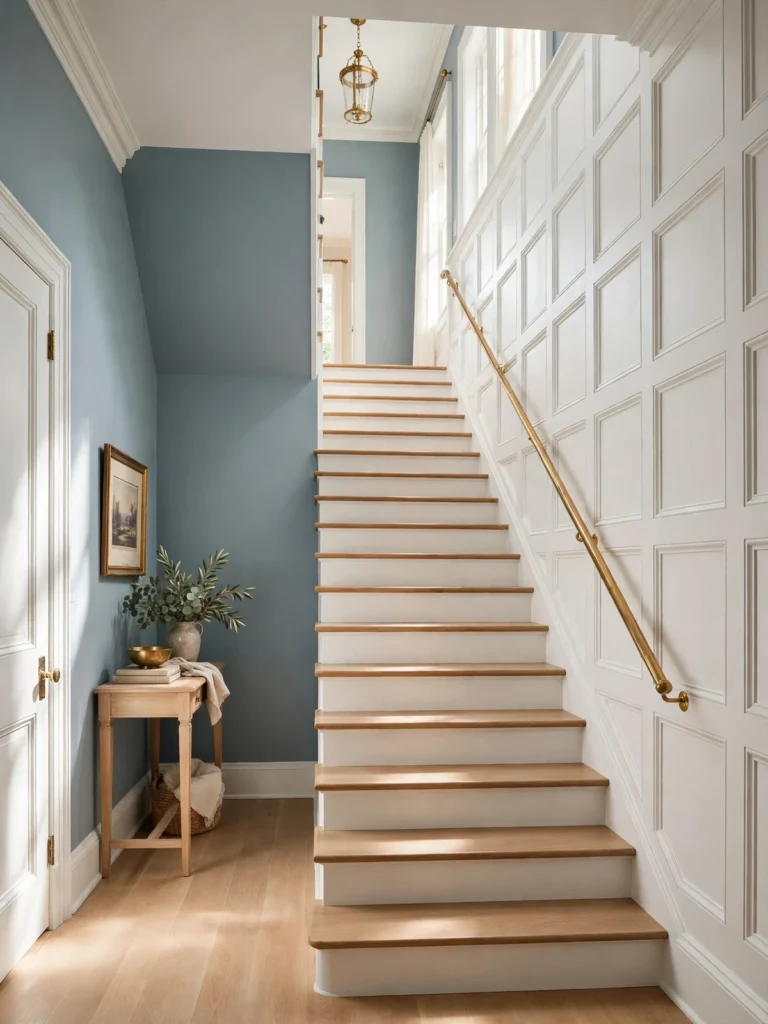
25 Stunning Staircase Painting Ideas That Instantly Transform Your Stairs Into the Best Feature in Your Home
Paint is the cheapest, fastest way to transform a staircase, and the stair wall is one of the best blank canvases in a home. These 25 staircase painting ideas show how ombré gradients, geometric murals, painted risers, colour blocking and clever finishes can turn a plain, overlooked stair into a bright, beautiful feature — whether your home is modern, farmhouse, traditional or somewhere in between.
Staircase painting ideas are the paint treatments that turn a plain flight of steps into a feature — the wall beside the stair, the risers beneath each tread, the balusters, the handrail and even the ceiling above it. The best staircase painting starts with the wall: a soft ombré gradient that fades from a deeper tone at the bottom to a lighter shade at the top makes even a small staircase feel taller and more open.
For a clean, light-led version of the same thinking, these staircase design ideas show how open risers, slim railings and pale timber keep a stair feeling bright and architectural. The 25 ideas below cover every part of the stair — its walls, its risers, its rails and its landings — so you can choose a painting project that suits your home, your budget and the way your family actually lives.
Key Takeaways
What is the easiest staircase painting idea for beginners?
Painting the risers in one bold colour is the easiest staircase painting idea. Mask the treads with painter’s tape, clean and lightly sand the risers, and apply two coats of durable satin paint. The whole flight takes one afternoon, and the change is dramatic.
What paint should I use on stairs?
Use a durable satin or semi-gloss paint on risers, balusters and handrails, because it wipes clean and resists scuffs. Use a matt or eggshell paint on the stair wall for a soft, modern finish. Always use floor paint, not wall paint, on any painted tread or painted runner.
What colour should I paint my staircase?
In a bright hallway, a deep colour — charcoal, navy, forest green or deep teal — looks dramatic and makes pale treads glow. In a dark hallway, keep the stair pale: white or cream risers, pale oak treads and a white balustrade reflect the most light. One bold colour on the risers is the safest way to add colour without darkening the stair.
How do I paint a staircase without making a mess?
Mask every tread with painter’s tape and paper, work from the top of the flight downward, and paint the risers first, then the balusters, then the wall. Keep a damp cloth nearby for drips, and let each coat dry fully before the family uses the stair.
Can I paint over a carpeted staircase?
Remove the carpet first — paint will not bond to carpet or to the glue beneath it. Once the carpet is off, sand the treads, fill any staple holes, prime the risers and paint them in your chosen colour. The result is a cleaner, brighter stair that is far easier to keep clean.
A Soft Ombré Gradient in Staircase Painting That Lifts the Whole Stairwell
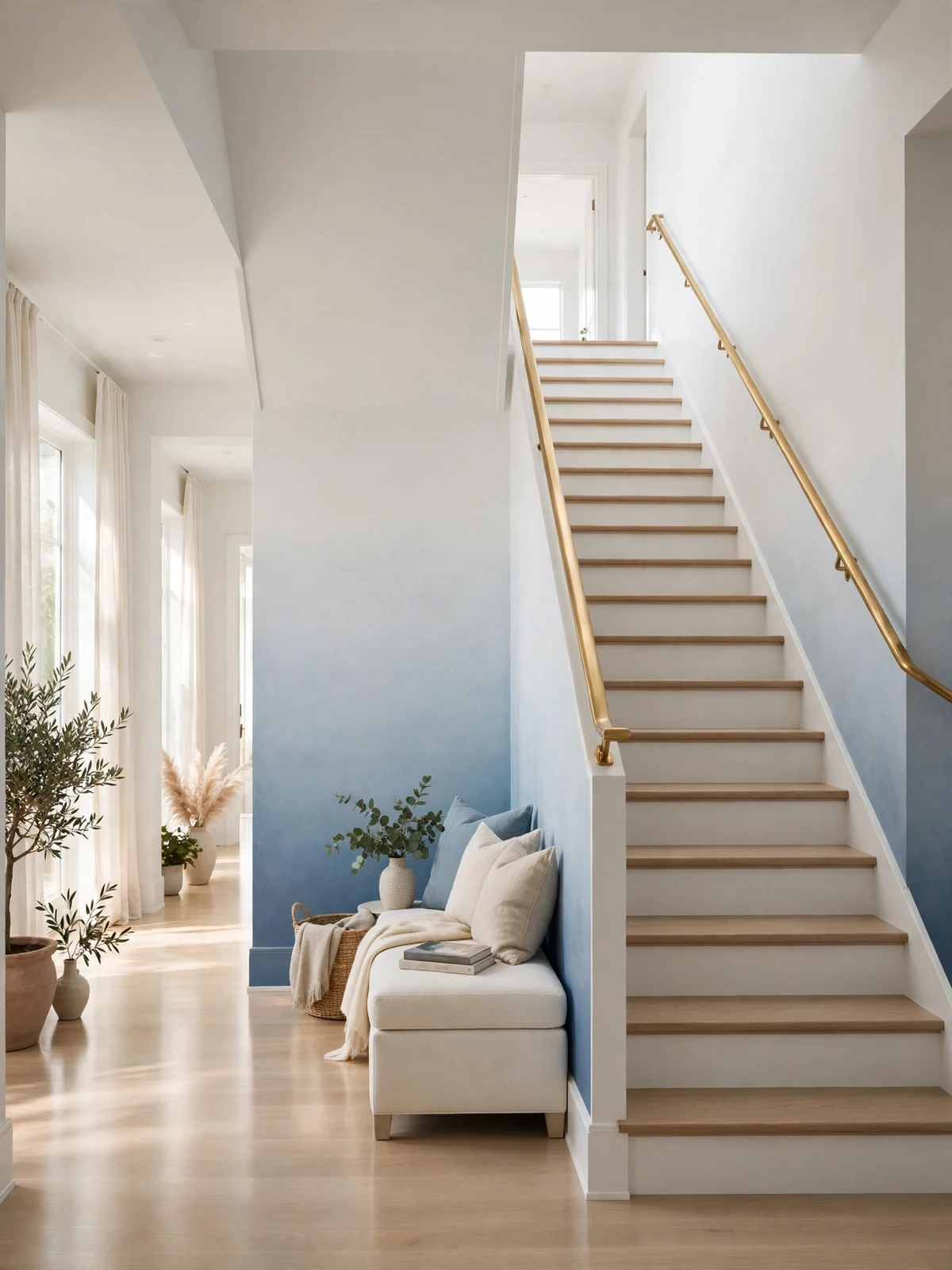
A soft ombré gradient is the staircase painting idea that feels most like magic, because the colour fades from a deeper tone at the bottom to a lighter shade at the top and your eye naturally follows the stairs upward. On this wall, dusty blue at the base melts through five blended bands into soft white at the landing, beside pale oak treads, each 950 mm wide, with a slim brass handrail running the full flight. A cream bench at the base keeps the hallway calm, and the gradient makes even a small staircase feel taller and more open.
Quick tips:
- Blend five or six bands of the same colour family for a smooth fade.
- Start darker at the bottom and lighten as you climb.
- Use a dry brush or a sponge to soften the joins between bands.
- Keep the treads pale so the gradient stays the feature.
A Bold Geometric Mural in Staircase Painting for a Modern Edge
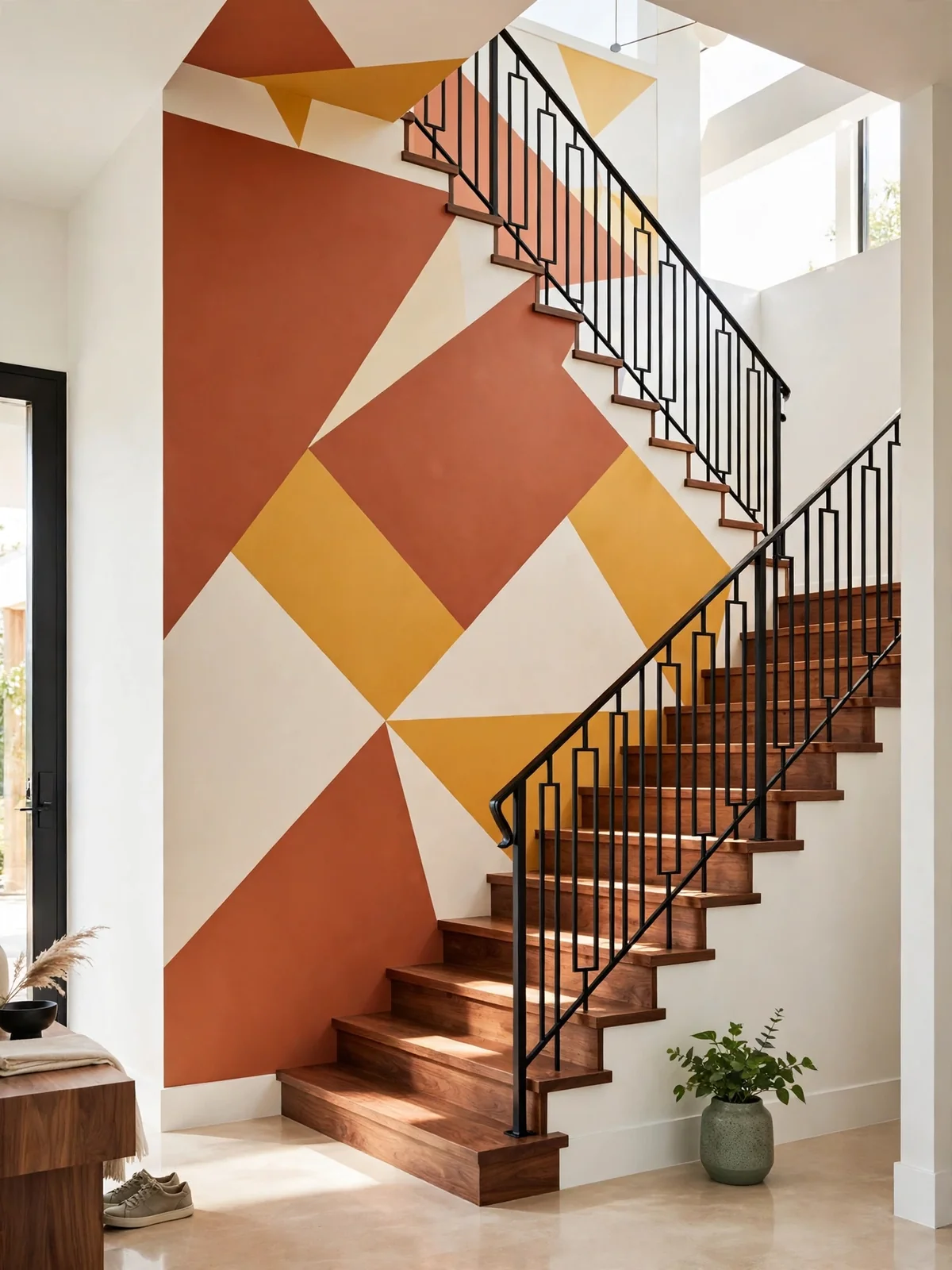
A bold geometric mural is the staircase painting idea for homes that want an edge, and painter’s tape makes it achievable even if you have never painted a mural before. On this wall, large triangles and arches in terracotta, mustard and cream climb beside warm walnut treads, each 950 mm wide, with a slim black iron handrail and a small green plant at the base. The three colours repeat in a steady rhythm, the lines are razor-sharp, and the stairwell feels like a gallery rather than a passage.
Quick tips:
- Stick to two or three colours so the mural never feels chaotic.
- Use painter’s tape and a spirit level for clean, straight lines.
- Plan the pattern on paper before you tape the wall.
- Keep the treads warm timber so the mural stays the feature.
Vertical Stripes in Staircase Painting That Elongate a Tight Stair
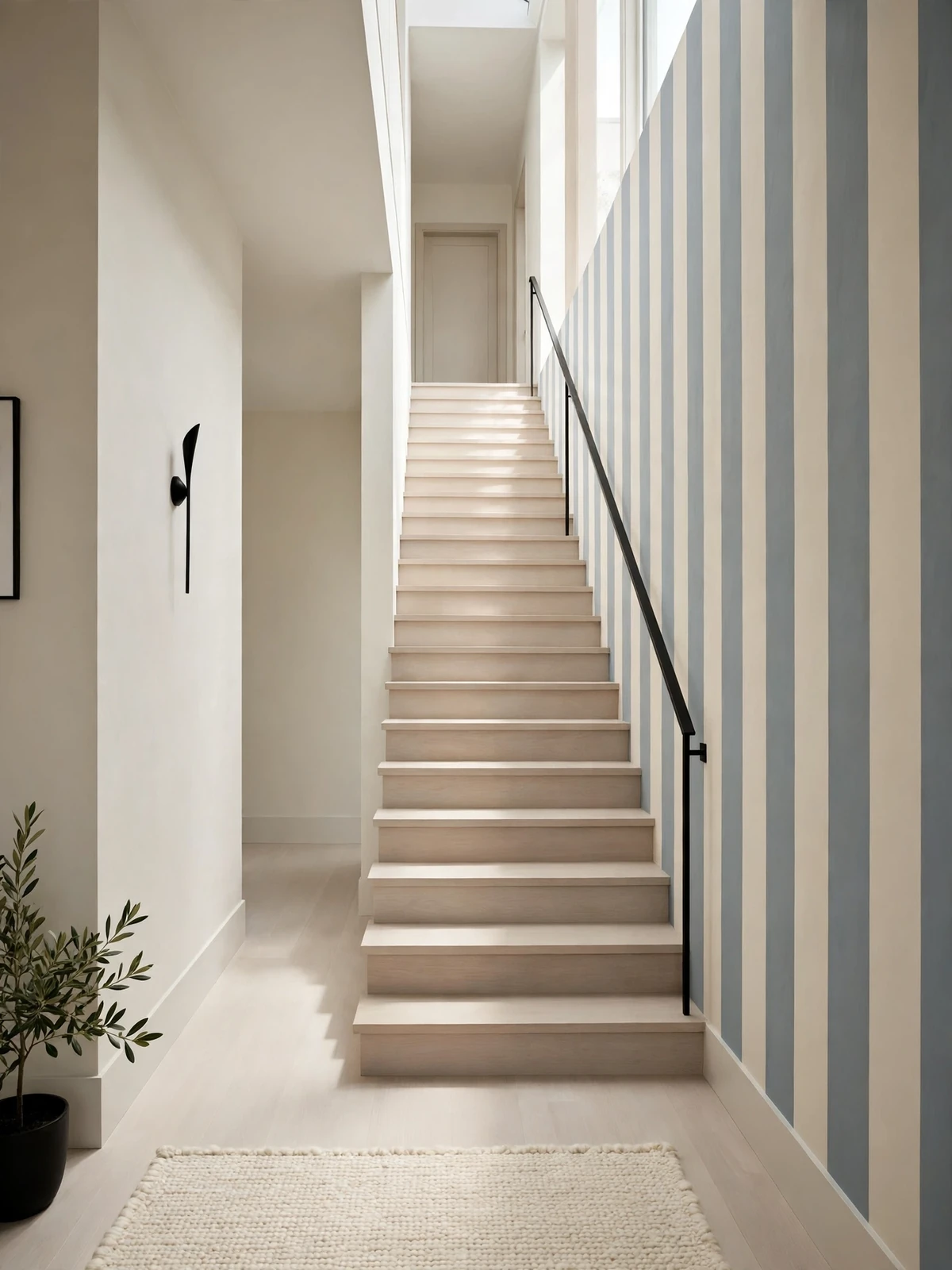
Vertical stripes are the simplest staircase painting trick that actually works, because the stripes draw the eye upward and make a low ceiling feel higher than it really is. On this wall, even 150 mm stripes in soft grey-blue and cream run floor to ceiling beside pale ash treads, each 900 mm wide, with a slim black handrail and a cream rug below. The tone-on-tone stripes feel elegant rather than loud, and the tight staircase suddenly feels taller and more generous.
Quick tips:
- Keep stripe widths consistent — uneven spacing looks messy.
- Use tone-on-tone stripes for elegance, contrast for drama.
- Measure and tape every stripe before you paint.
- Choose pale colours in a dark hallway so the stair stays bright.
A Half-Painted Wall in Staircase Painting With a Clean Horizontal Line
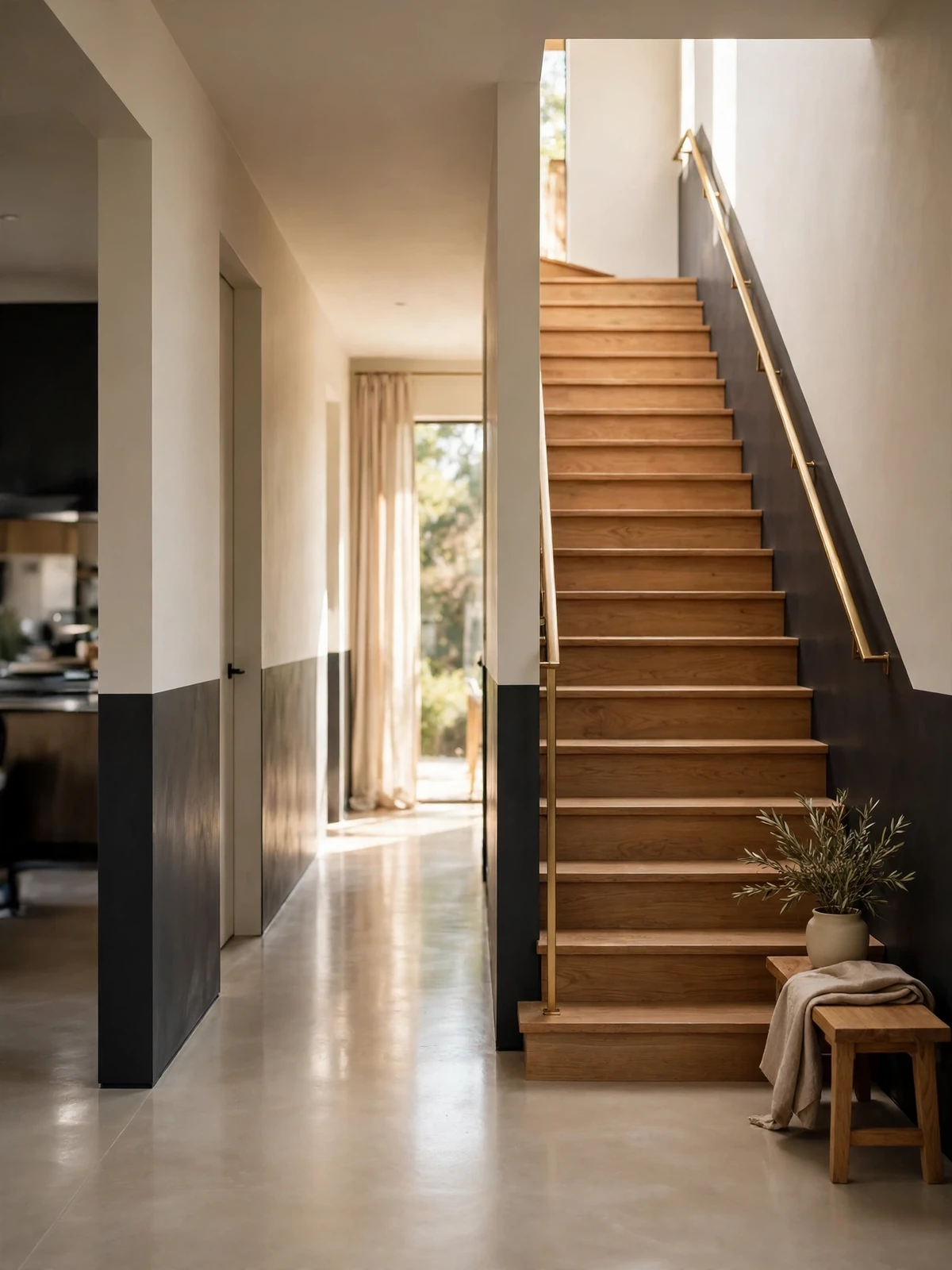
A half-painted wall is minimal but impactful in staircase painting — paint the bottom half in a rich colour and keep the top half light, and the space feels grounded without feeling dark. Here, deep charcoal covers the lower half of the wall beside honey oak treads, each 950 mm wide, with cream paint above and a slim brass handrail running along the join. A small wooden bench at the base keeps the hallway warm, and the horizontal line sits exactly at stair height, so the whole treatment feels seamless and intentional.
Quick tips:
- Align the painted section with stair height for a seamless finish.
- Choose a rich colour below — charcoal, olive or navy — and light above.
- Use a spirit level and tape for a razor-sharp horizontal line.
- Pair the dark lower wall with warm timber treads for balance.
A Storytelling Mural in Staircase Painting for Creative Homes
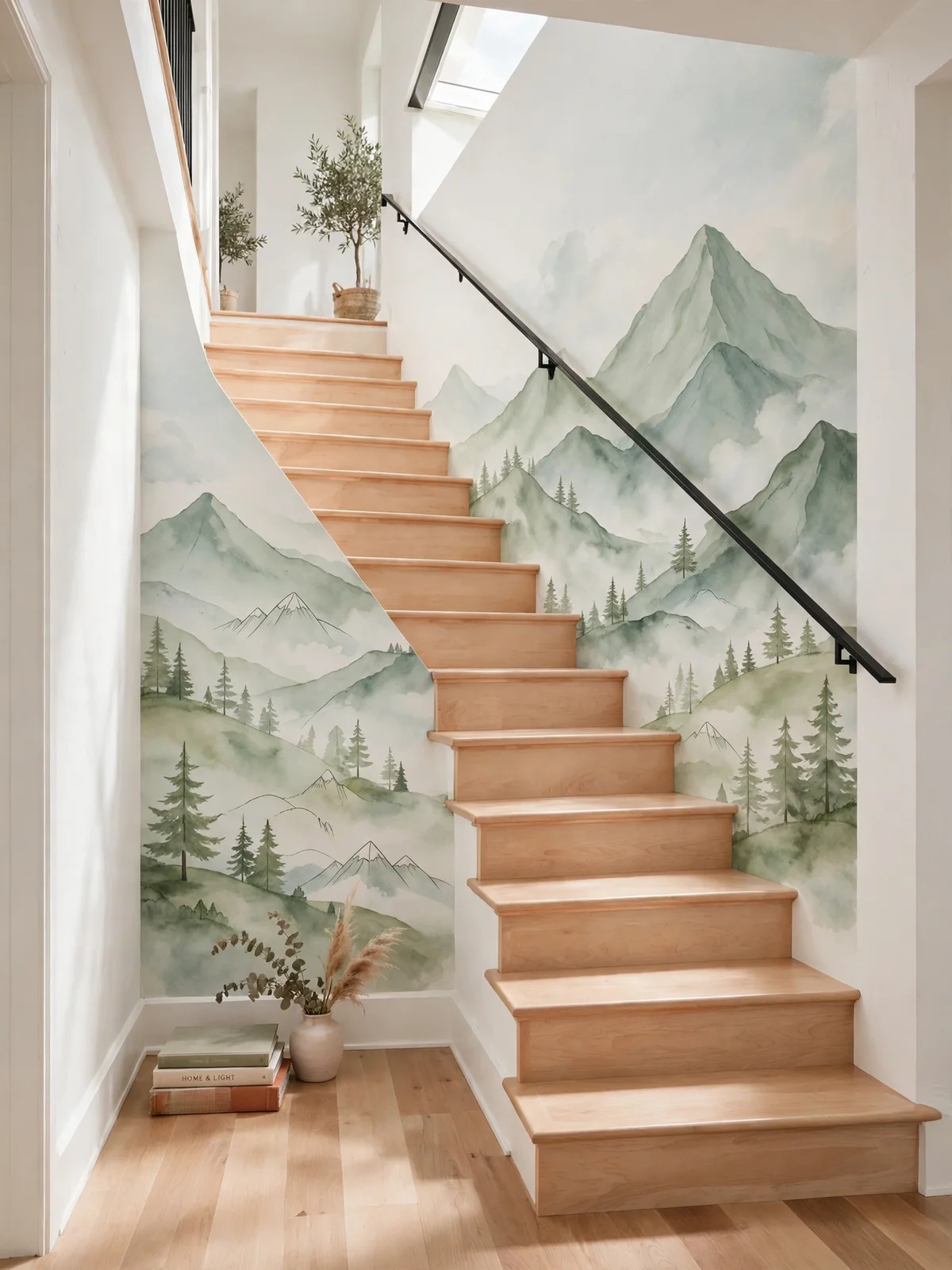
A storytelling mural is the staircase painting idea for creative souls — a nature scene, abstract waves or a soft mountain range that turns the climb into a small escape. On this wall, soft sage-green mountain peaks rise across two storeys beside pale maple treads, each 950 mm wide, with a slim black handrail and a small stack of books on the landing. The mural does not need to be perfect; it needs to feel personal, and every climb feels like a quiet walk through the landscape.
Quick tips:
- Choose a simple scene — mountains, waves or clouds — for a first mural.
- Sketch the design in chalk before you paint.
- Keep the palette to three soft colours for a calm, dreamy feel.
- Let the mural climb two storeys so it feels like a landscape, not a picture.
Colour Blocking in Staircase Painting That Defines the Stair Path
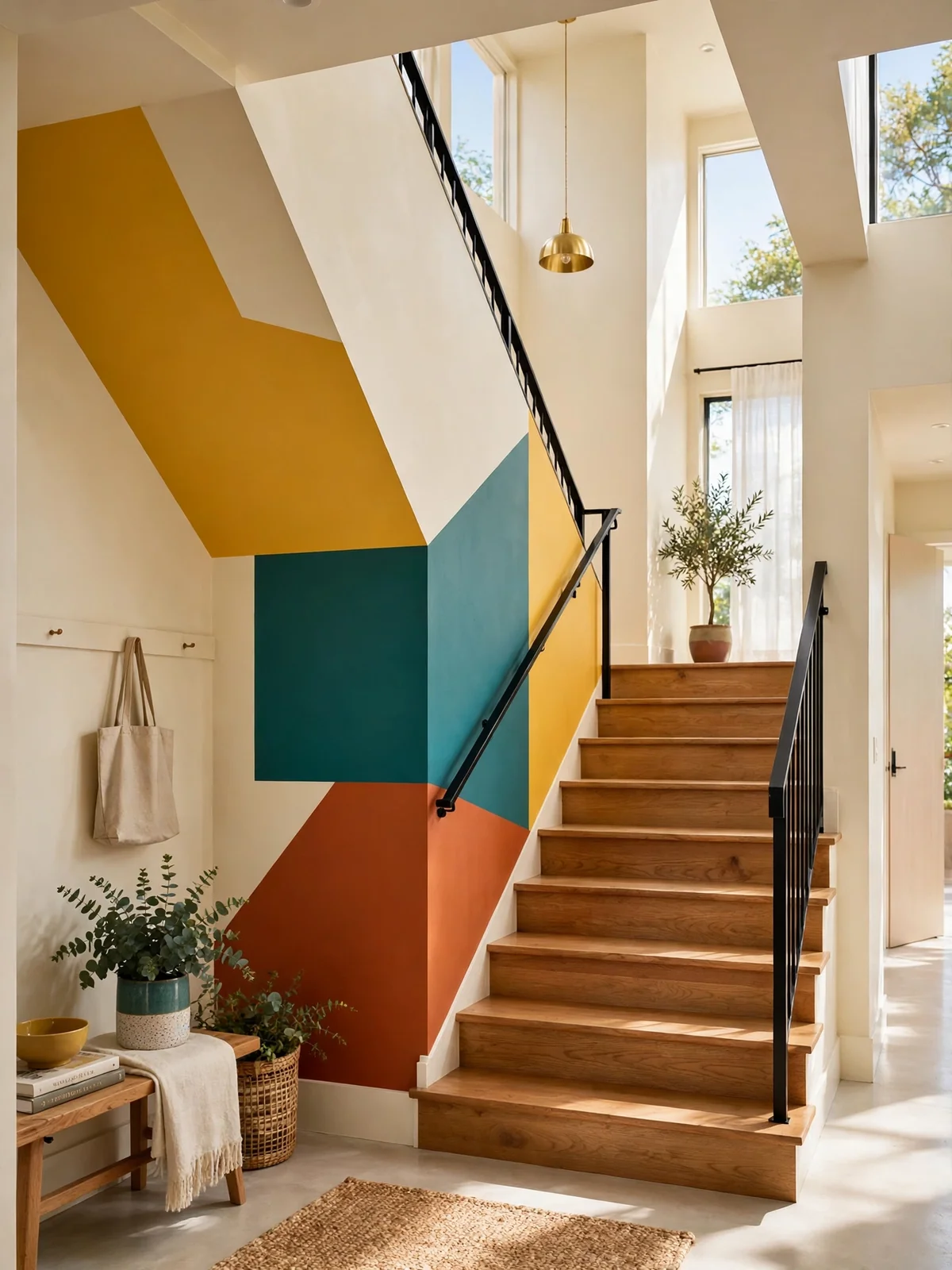
Colour blocking is a smart staircase painting move, because painted shapes that follow the angle of the staircase feel like guiding lines — the whole area feels designed, not accidental. On this wall, bold blocks of mustard, teal and rust follow the incline beside warm oak treads, each 950 mm wide, with a slim black handrail and a small brass pendant above the landing. One of the colours matches the cushions on the bench below, so the stair and the room feel connected.
Quick tips:
- Match one blocking colour to the decor nearby for cohesion.
- Use earthy tones for a grounded feel, or bold tones for drama.
- Tape every edge so the blocks have clean, sharp lines.
- Keep the shapes large and simple — small blocks feel fussy.
Alternating Colours on the Risers in Staircase Painting
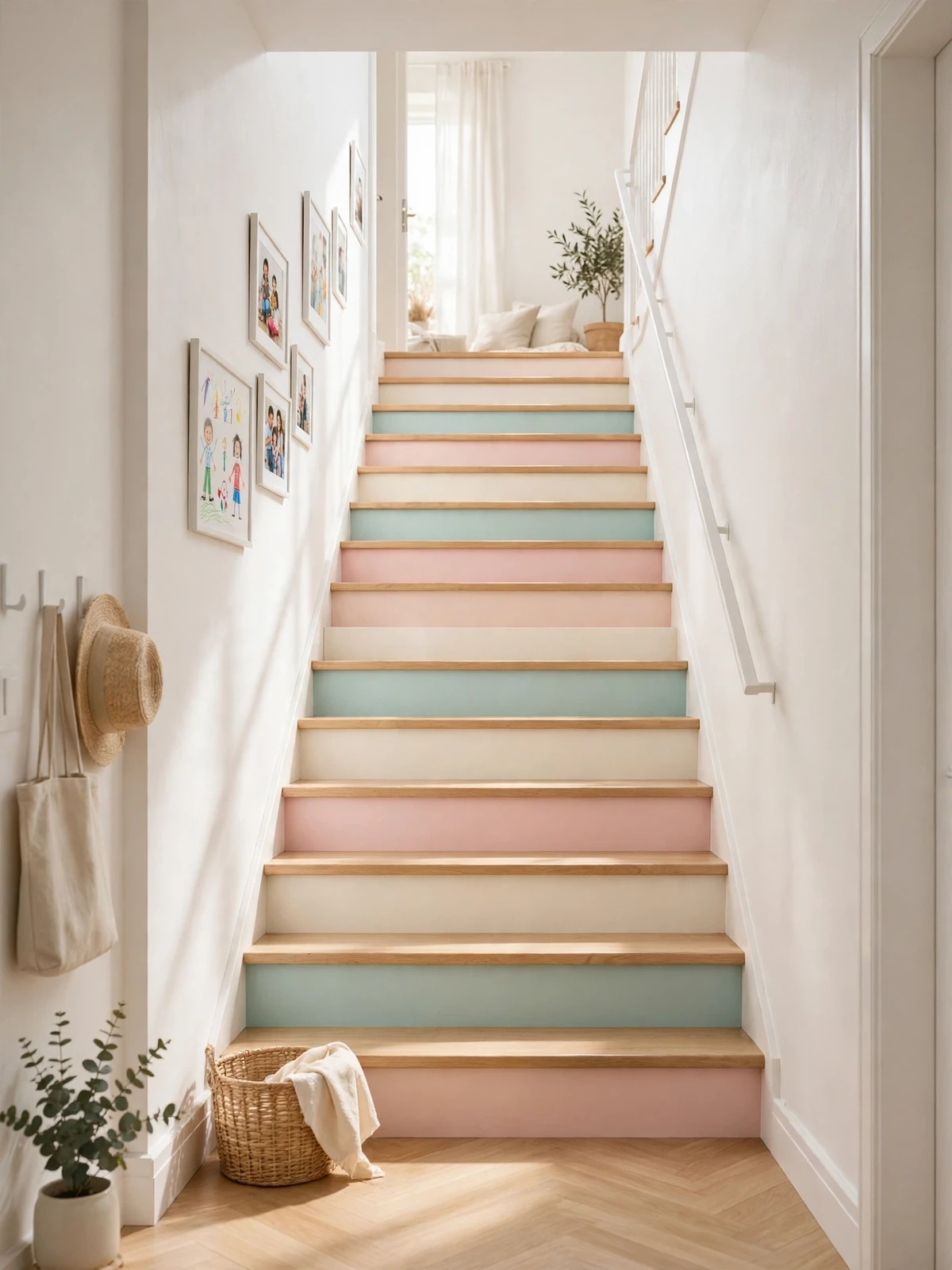
Painting each stair riser a different shade is the most playful staircase painting idea, and it adds personality without overwhelming the space. On this stair, the risers, each 175 mm high, alternate through soft mint, blush and cream beneath pale oak treads, each 950 mm wide, with a slim white handrail and a small woven basket at the base. The gradient grows slightly lighter with every step, so the climb feels like walking up through a soft sunrise.
Quick tips:
- Start with just three or four stairs if you are unsure — you can continue later.
- Use a soft gradient so each step is slightly lighter than the last.
- Keep the treads natural timber so the risers stay the feature.
- Use durable satin paint so the risers wipe clean.
A Monochrome Palette in Staircase Painting for a Chic, Calm Look
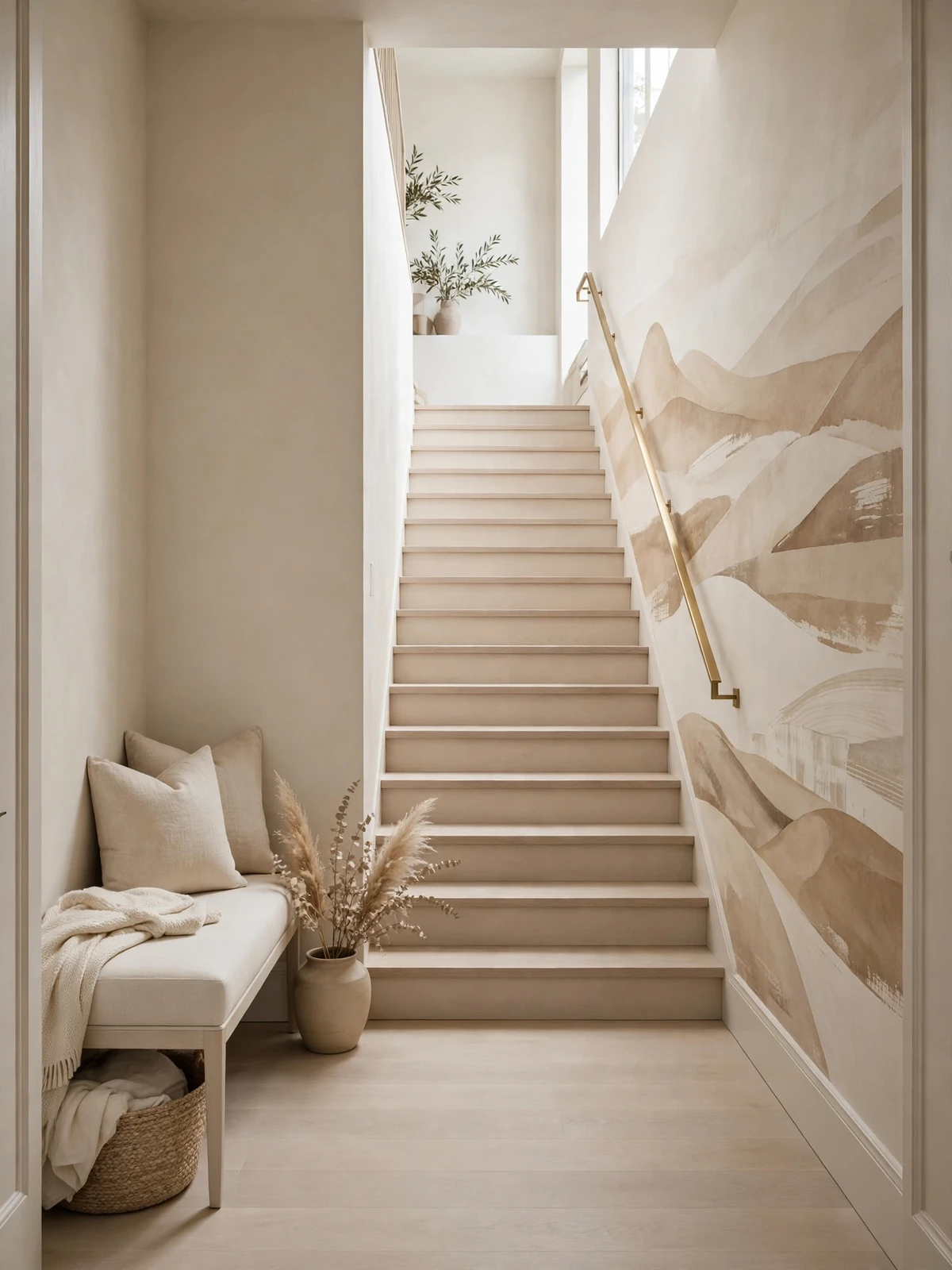
If bold is not your thing, a monochrome staircase painting is the answer — different shades of the same colour create depth without being loud, and the stair feels calm and put together. On this wall, warm beige, cream and tan bands layer softly beside pale ash treads, each 900 mm wide, with a slim brass handrail and a cream bench below. The palette is timeless, the stair feels warm, and nothing fights for attention.
Quick tips:
- Choose one colour family and layer three or four shades of it.
- Use the darkest shade lowest and the lightest highest.
- Pair a warm beige monochrome with cream and tan accents.
- Keep the handrail slim brass so it glows against the soft palette.
A Painted Faux Arch in Staircase Painting That Frames the Stair
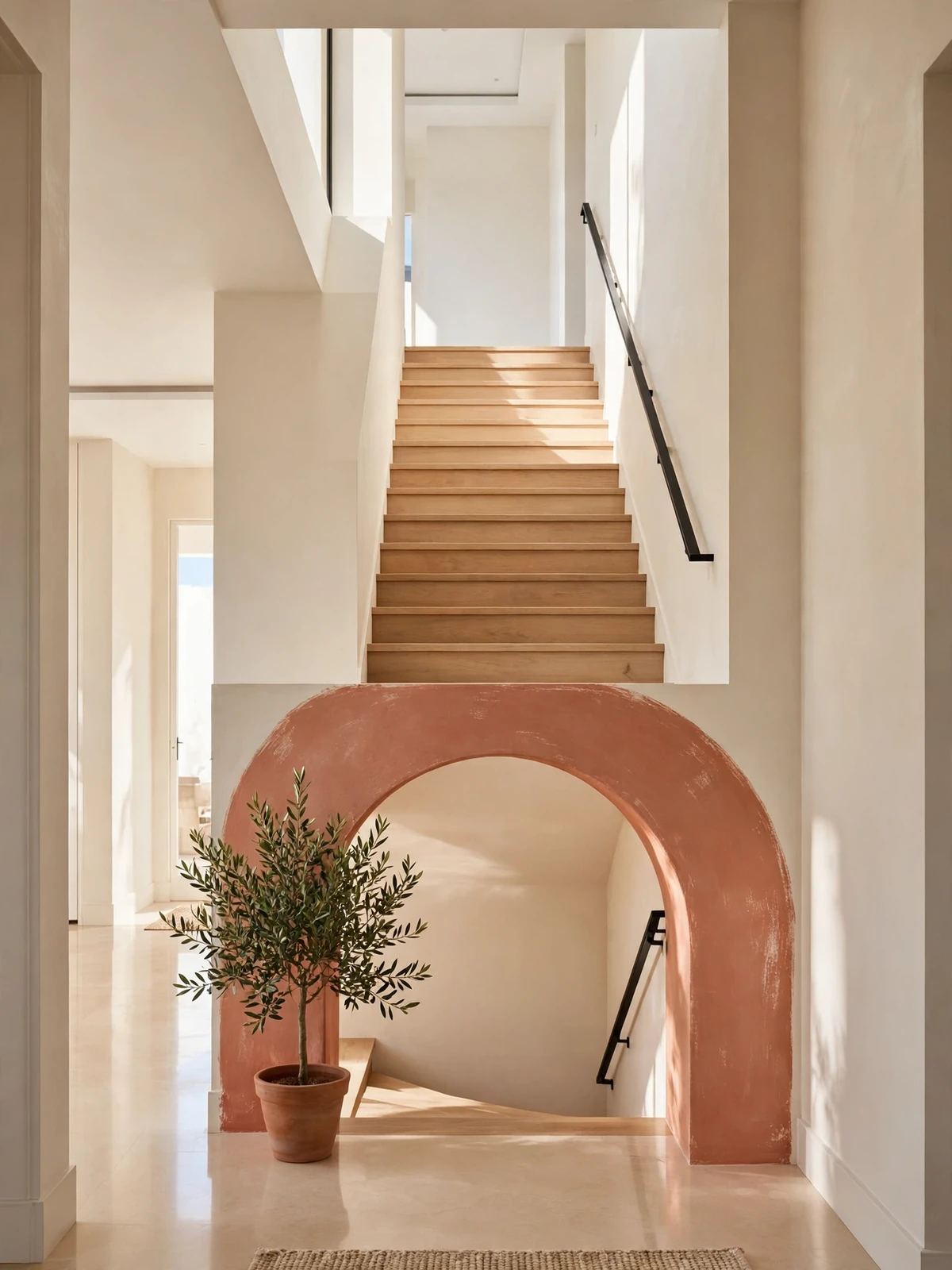
A simple painted arch can make a staircase feel architectural even when the wall is completely flat, and it is the staircase painting trick that feels like magic for the least effort. Here, a soft terracotta arch, 2 metres tall and 1.2 metres wide, is painted behind the lower steps beside pale oak treads, each 950 mm wide, with a slim black handrail and a small olive tree in a clay pot at the base. The arch frames the stair like a doorway, and the whole hallway feels designed rather than plain.
Quick tips:
- Paint the arch behind the lower steps or around a landing.
- Use a string and a pencil to draw a perfect arch curve.
- Choose a warm colour — terracotta, ochre or dusty rose — for the arch.
- Keep the rest of the wall plain so the arch stays the feature.
A Playful Polka Dot Pattern in Staircase Painting for Family Homes
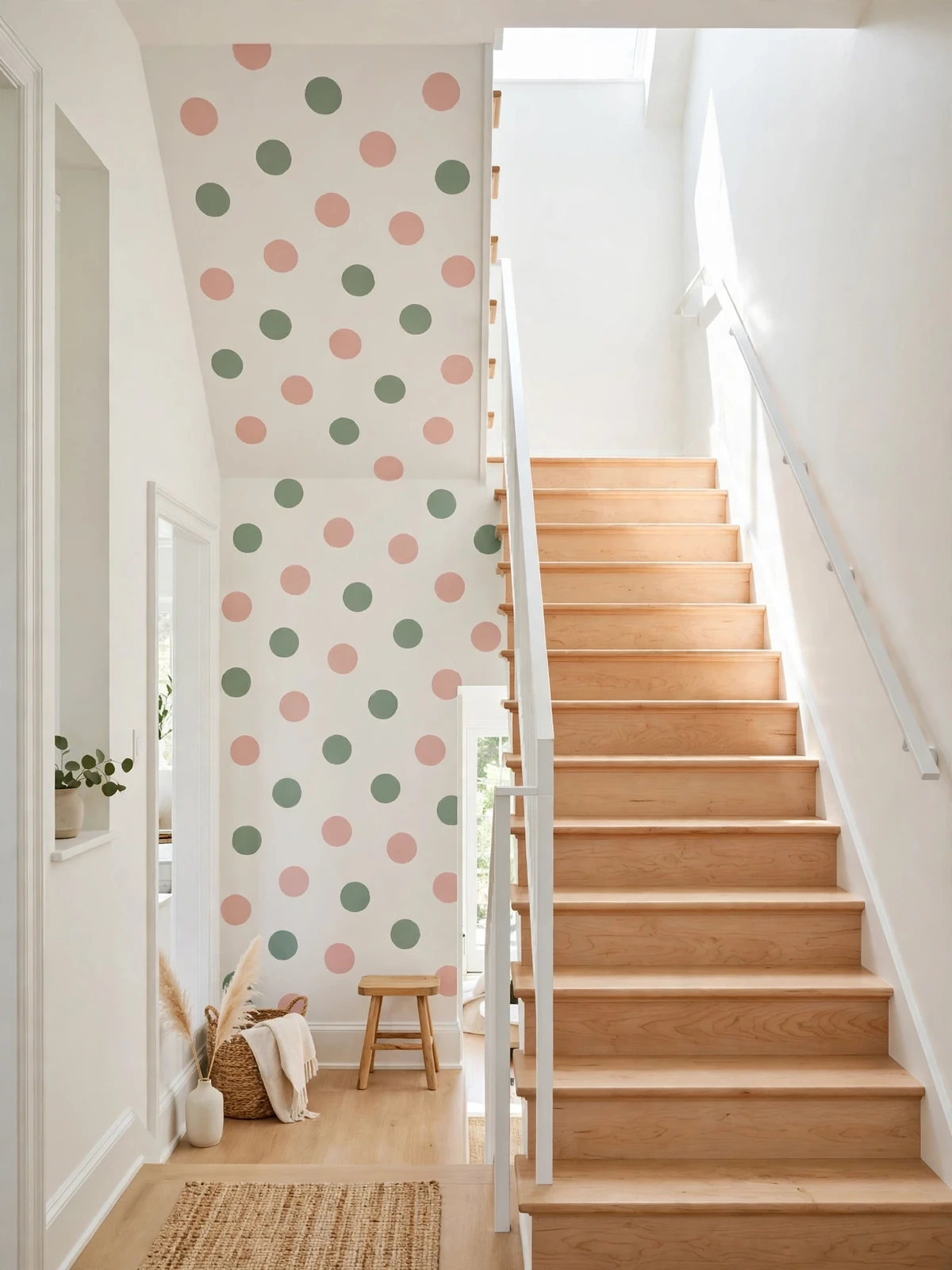
Small, evenly spaced dots in soft colours can make a staircase feel light and fun, and a polka dot staircase painting is the family-home idea that never feels childish when the palette stays subtle. On this wall, soft blush and sage dots, each 60 mm across and spaced 200 mm apart, climb beside pale maple treads, each 950 mm wide, with a slim white handrail and a small wooden stool at the base. The dots feel joyful without being loud, and the stairwell feels like a happy part of the house rather than a passage.
Quick tips:
- Choose two or three soft colours for the dots.
- Use a stencil so every dot is the same size and spacing.
- Keep the palette subtle — blush, sage and cream — for a grown-up feel.
- Maintain equal spacing so the pattern feels intentional.
A Gallery-Style Backdrop Wall in Staircase Painting in Deep Forest Green
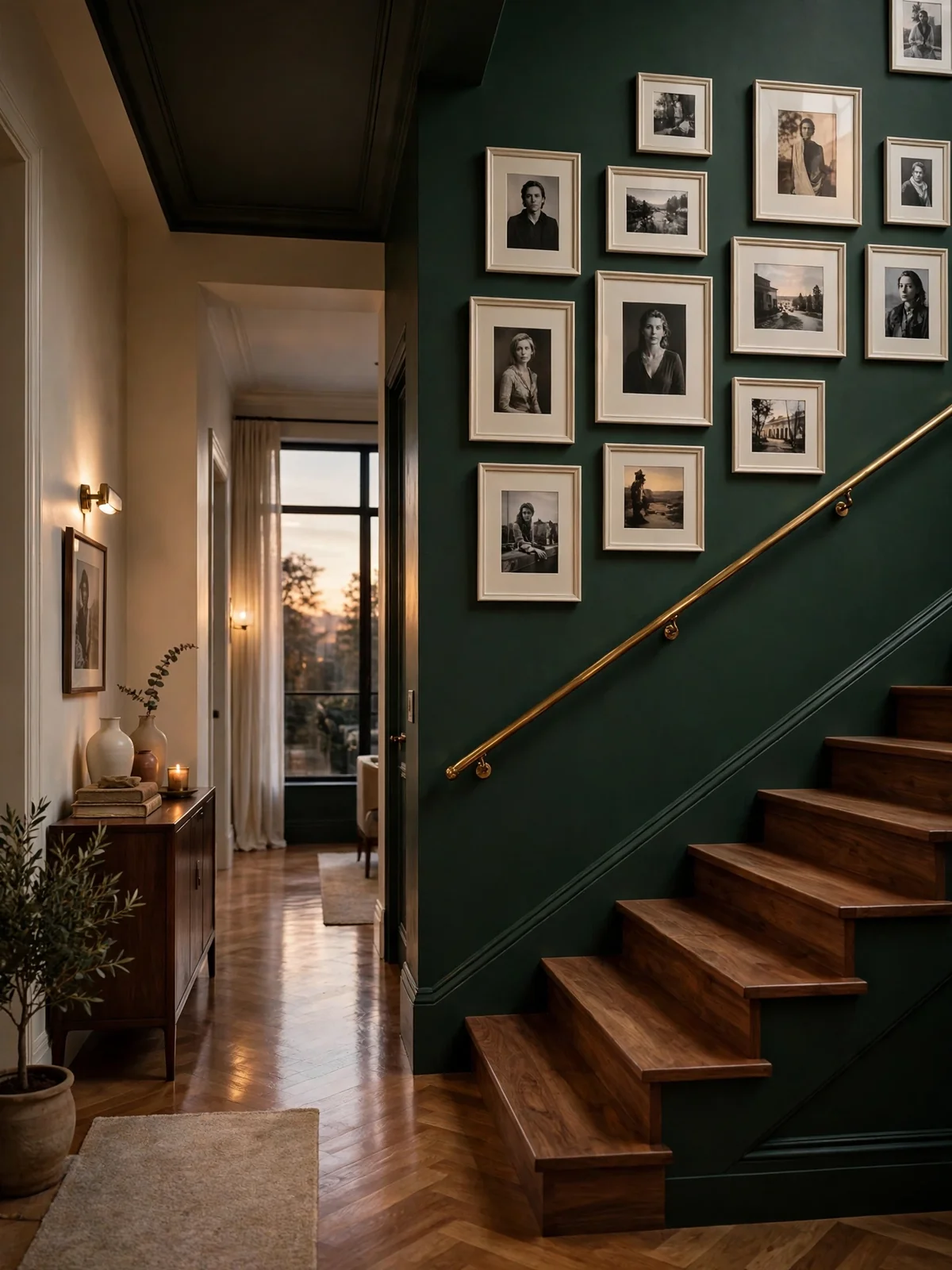
Instead of hanging art randomly, paint a backdrop first — a deep tone like forest green or navy creates the perfect canvas for frames, and suddenly even mismatched frames look curated. On this wall, deep forest green covers the full height of the stair beside warm walnut treads, each 950 mm wide, with a slim brass handrail and twelve framed photographs in cream mounts climbing the green in a loose diagonal. The green makes every frame pop, and the stairwell feels like a gallery designed by a professional.
Quick tips:
- Pick a bold base colour — forest green, navy or deep plum.
- Paint the entire stair wall and let it dry fully before hanging.
- Arrange the frames in a loose grid, then adjust the spacing.
- Use cream mounts so the photographs glow against the dark wall.
A Chalkboard Wall in Staircase Painting for Notes, Doodles and Quotes
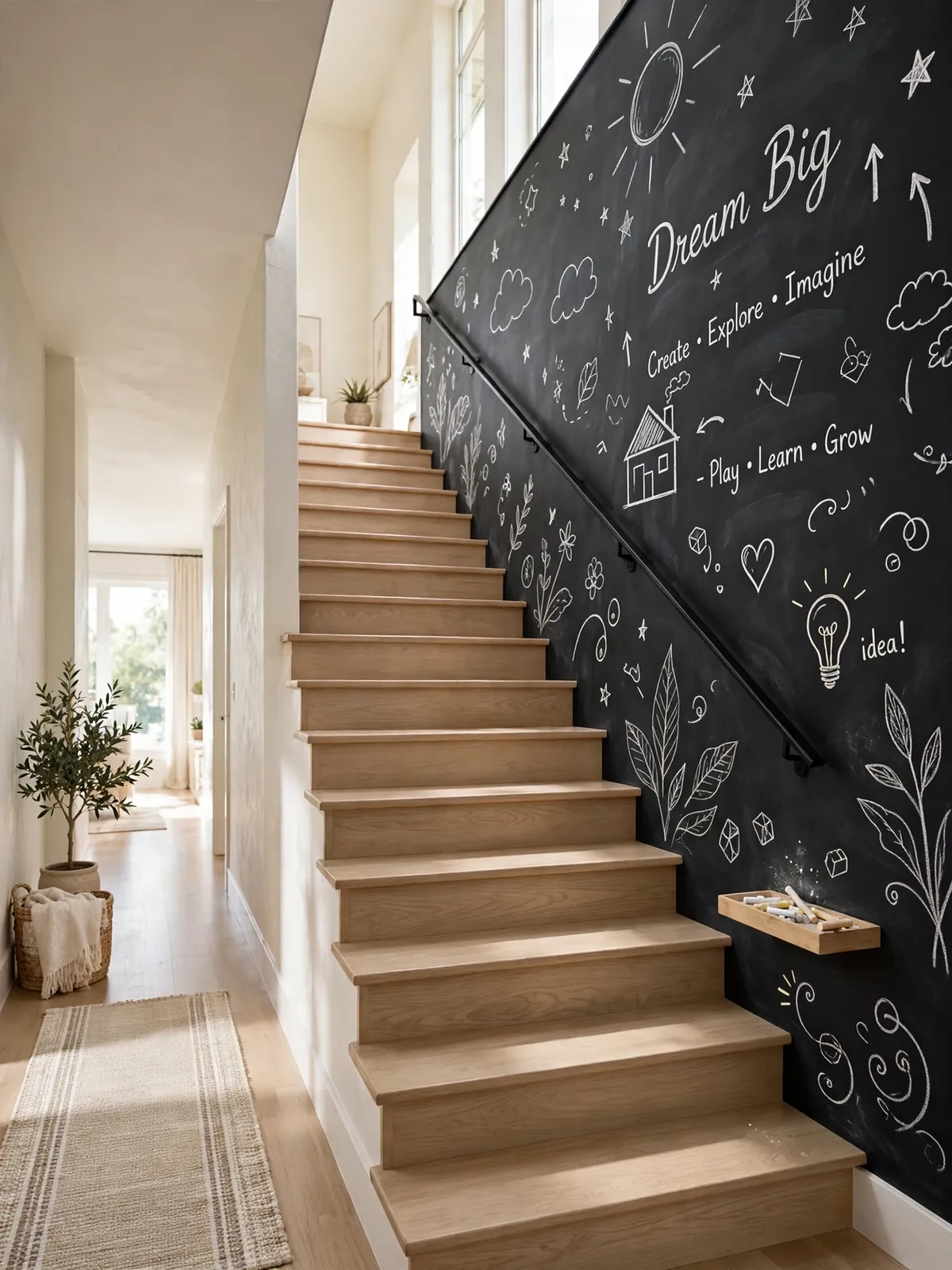
A chalkboard wall turns the staircase into an interactive surface — a place for doodles, quotes, shopping lists and children’s drawings that changes every week. On this wall, matte charcoal chalkboard paint covers the stair wall beside pale oak treads, each 950 mm wide, with white chalk doodles, a small wooden chalk tray on the landing, and a slim black handrail. The wall is always changing, the children love it, and the stairwell feels alive rather than finished.
Quick tips:
- Use proper chalkboard paint and apply two coats for a smooth surface.
- Keep a small chalk tray on the landing so chalk stays tidy.
- Wipe the wall with a damp cloth when you want a fresh start.
- Choose a chalkboard wall for family homes and creative spaces.
Earthy Tones in Staircase Painting for a Grounded, Natural Feel
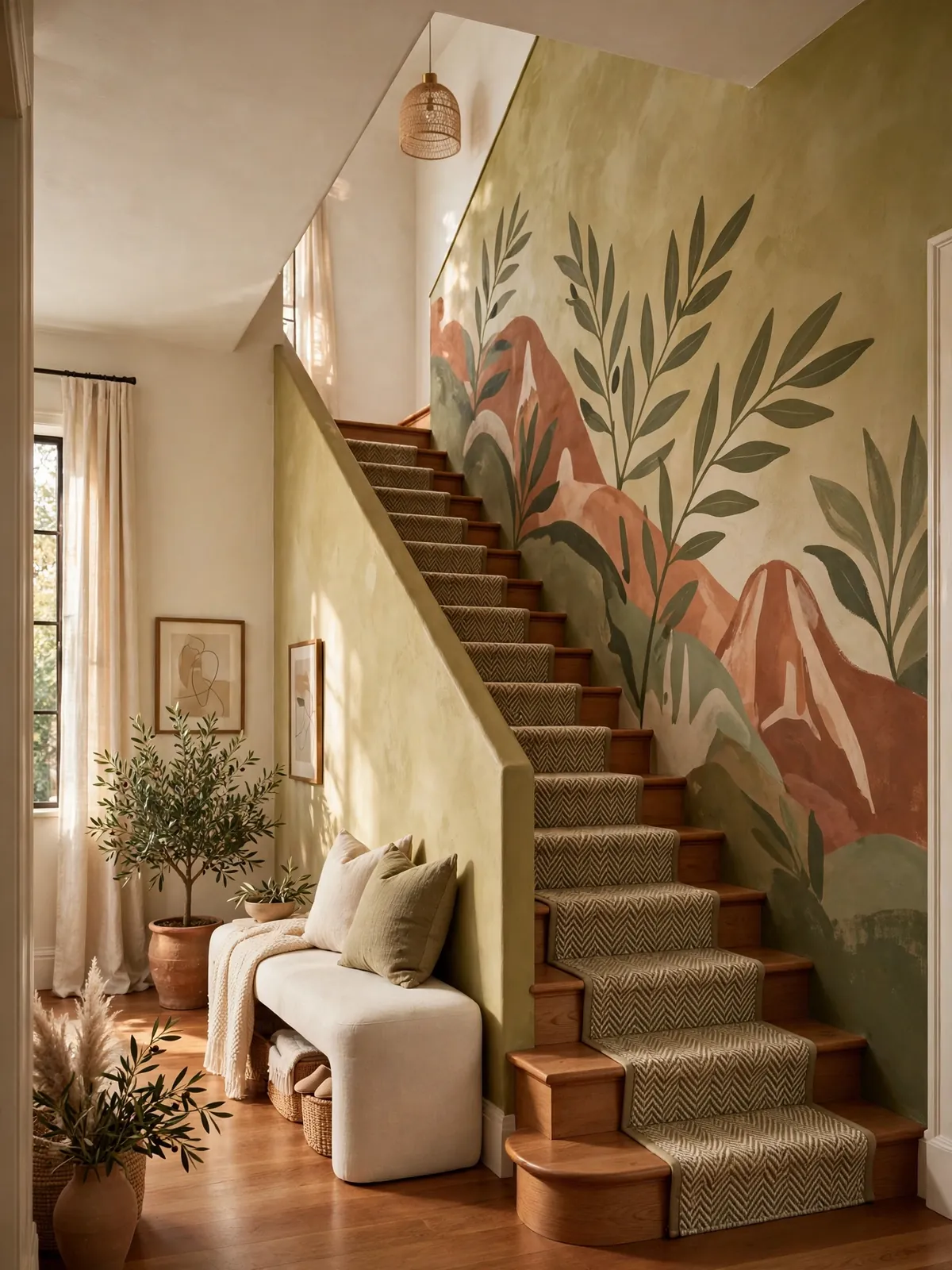
Terracotta, olive green and warm brown make a staircase feel cosy and connected to nature, and earthy staircase painting suits homes with wooden accents better than any bright colour. On this wall, warm terracotta covers the lower half and soft olive green the upper half beside warm oak treads, each 950 mm wide, with a woven runner down the centre and a cream bench at the base. The earth tones create a sense of stability and calm, which is exactly what a transitional space like a stair needs.
Quick tips:
- Choose earthy tones — terracotta, olive, warm brown — for a grounded feel.
- Pair earthy paint with warm timber treads and a woven runner.
- Keep the palette to two or three earthy colours for calm.
- Use matt paint so the earthy tones feel soft, not shiny.
Painted Step-Edge Lines in Staircase Painting for Rhythm and Structure
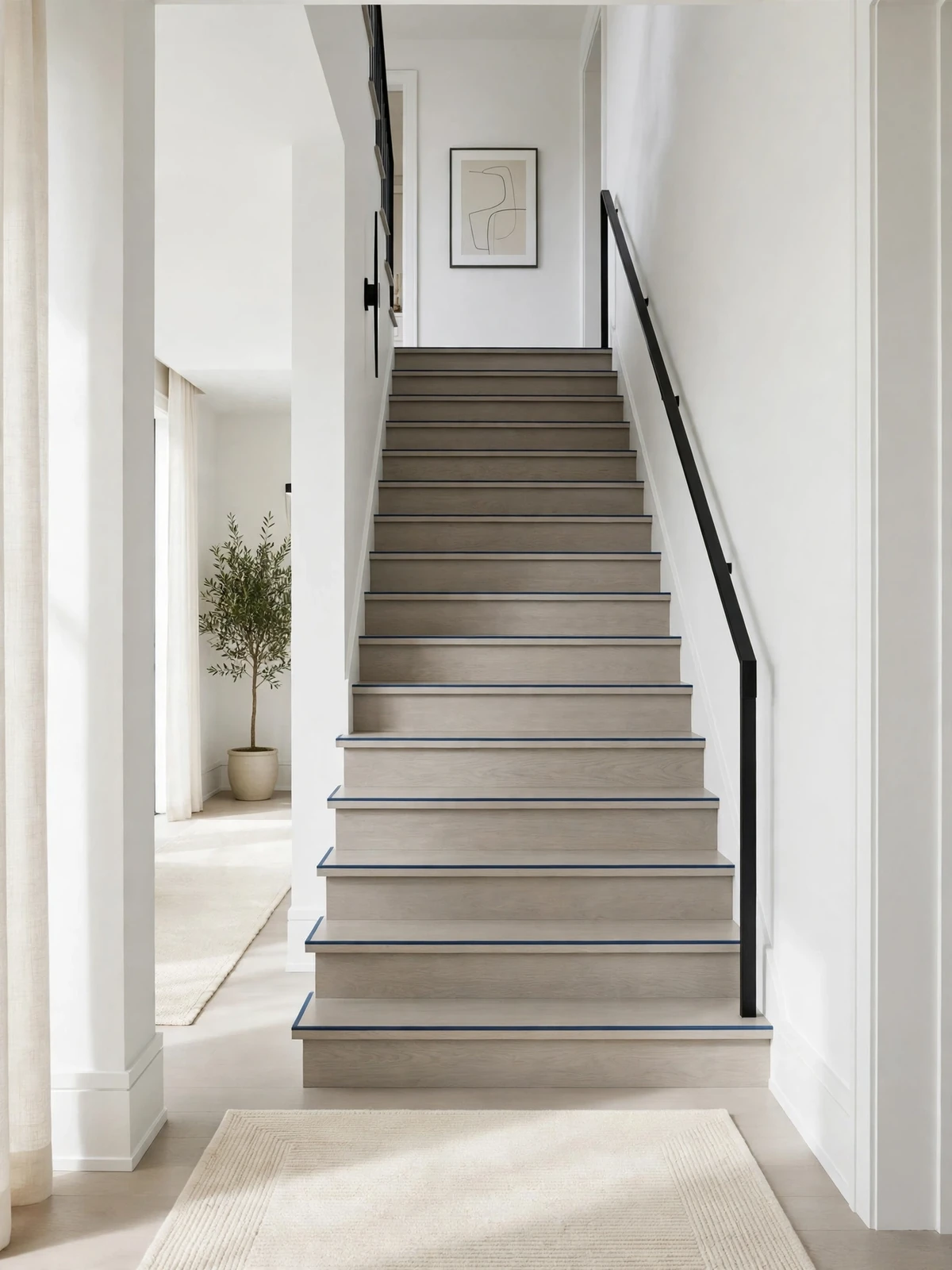
Painting thin lines along the edge of each step is the subtlest staircase painting idea, and it creates rhythm and structure — almost like outlining the staircase. On this stair, a thin navy line, 10 mm wide, runs along the nosing of each pale grey oak tread, each 950 mm wide, with white walls and a slim black handrail keeping the hallway crisp. The lines make every step edge easy to see at night, and the stair feels outlined, drawn and deliberate.
Quick tips:
- Use painter’s tape for clean, straight step-edge lines.
- Choose a dark line — navy, charcoal or black — on pale treads.
- Keep the lines thin, about 10 mm, so they read as detail.
- Use leftover paint from other rooms for a budget-friendly version.
Abstract Brush Strokes in Staircase Painting for an Artistic Feel
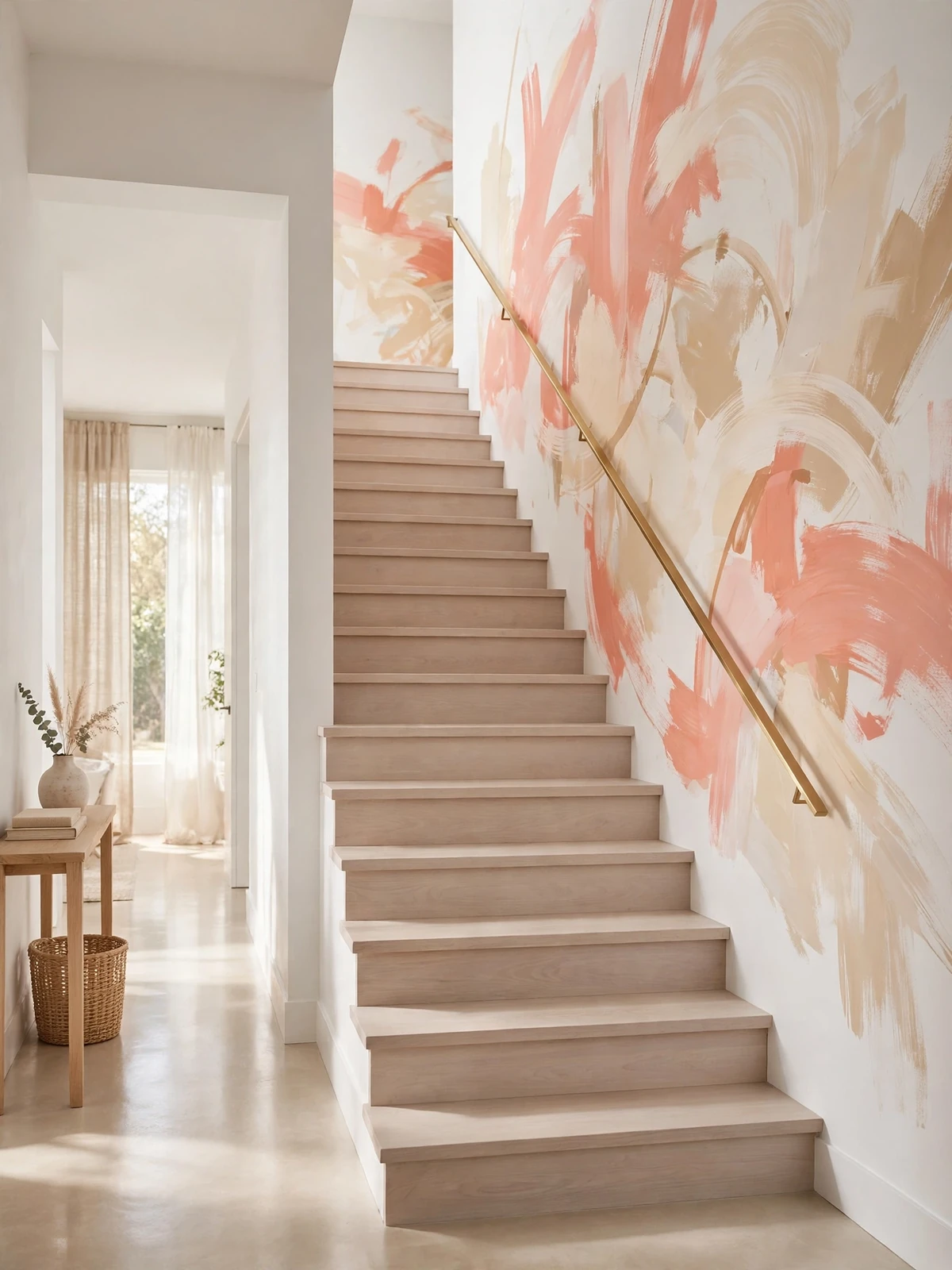
Abstract brush strokes are freedom in staircase painting — large, expressive strokes across the wall with no rules, just colour and movement. On this wall, sweeping coral and cream strokes, each made with a wide 100 mm brush, flow across the white wall beside pale ash treads, each 900 mm wide, with a slim brass handrail and a small ceramic vase on the landing. The strokes feel raw and personal, and the stairwell feels like a canvas rather than a corridor.
Quick tips:
- Use a wide brush — about 100 mm — for bold, expressive strokes.
- Limit the palette to two or three colours so the wall stays calm.
- Work from the top of the flight downward so drips fall onto wet paint.
- Step back often to check the balance of the composition.
A Seasonal Colour Shift in Staircase Painting That Keeps the Stair Fresh
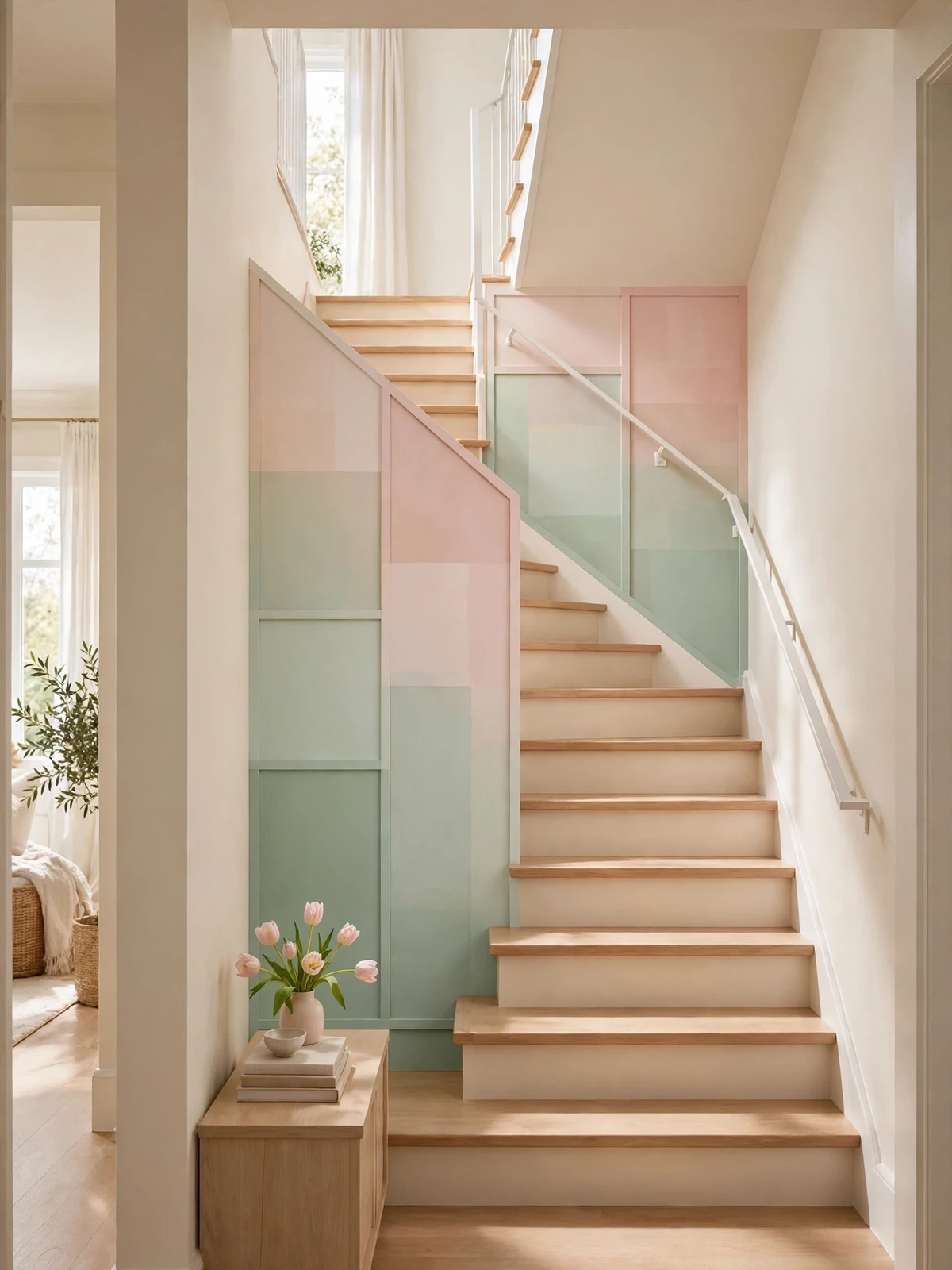
A seasonal colour shift keeps a staircase feeling fresh without a full redo — choose a base neutral wall, then repaint one accent panel seasonally: soft pastels in spring, warm tones in autumn. On this wall, soft mint and blush panels sit on a cream base beside pale oak treads, each 950 mm wide, with a slim white handrail and a small vase of tulips on the landing. The stair feels like it has a wardrobe change, and the house feels new again four times a year.
Quick tips:
- Keep the base wall neutral — cream or soft white — all year.
- Repaint one accent panel per season for a fresh feel.
- Choose pastels for spring and warm rust and mustard for autumn.
- Use sample pots so the seasonal change costs almost nothing.
A High-Gloss Painted Finish in Staircase Painting That Reflects the Light
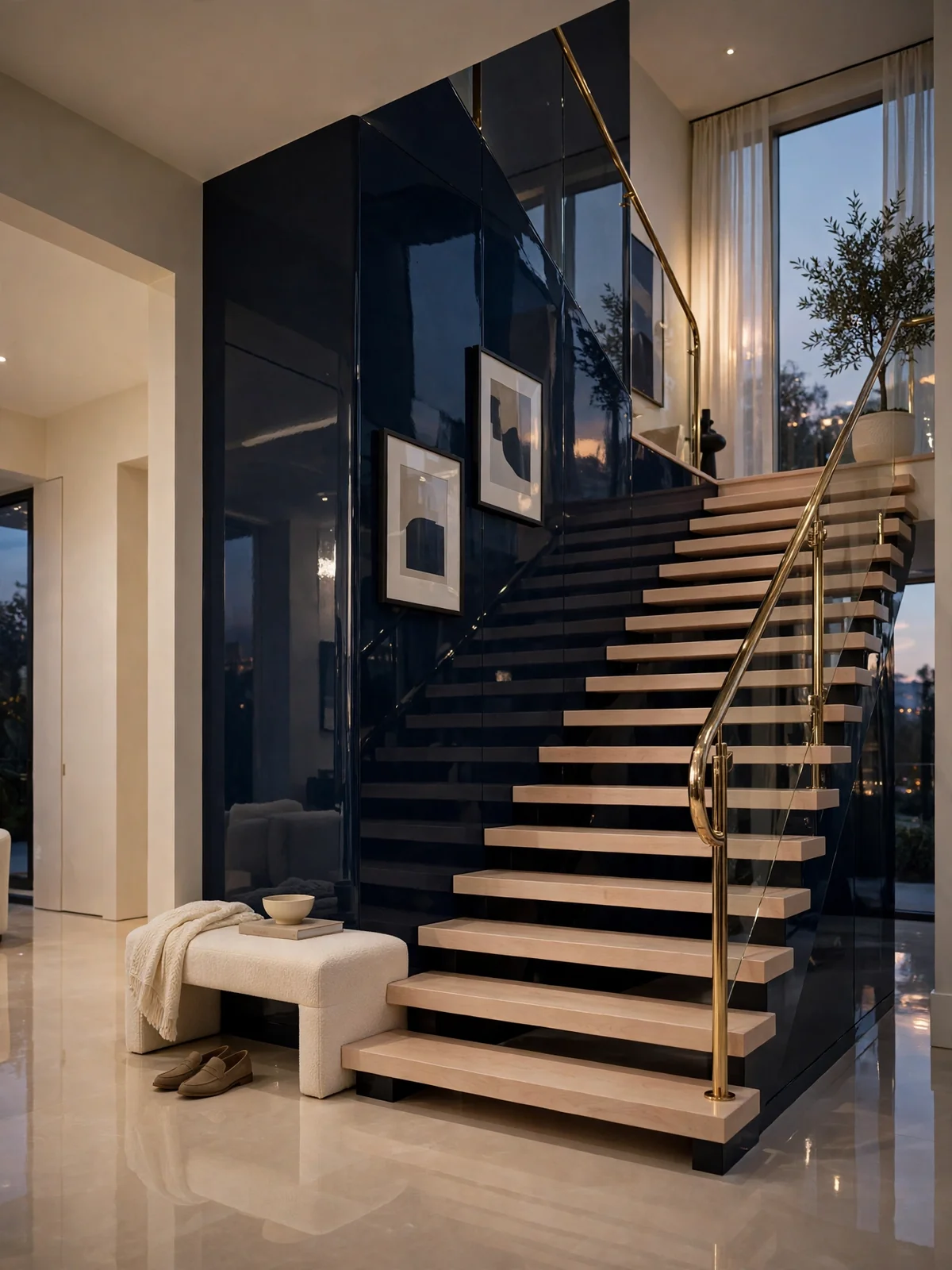
Matte is safe, but gloss is bold — a high-gloss staircase painting reflects light beautifully, especially in a narrow staircase, and it instantly elevates the space. On this wall, deep navy in a full gloss finish covers the stair wall beside pale maple treads, each 950 mm wide, with a slim brass handrail and a cream bench below. The gloss bounces the evening light around the stairwell, the navy looks almost liquid, and the narrow hallway feels brighter and more expensive than a matte wall ever could.
Quick tips:
- Prep the wall carefully — gloss shows every bump and brush mark.
- Use a foam roller for a smooth, even gloss finish.
- Choose gloss for modern homes and narrow staircases.
- Allow 24 to 48 hours of drying time before using the stair.
A Tonal Checkerboard Pattern in Staircase Painting for Classic Charm
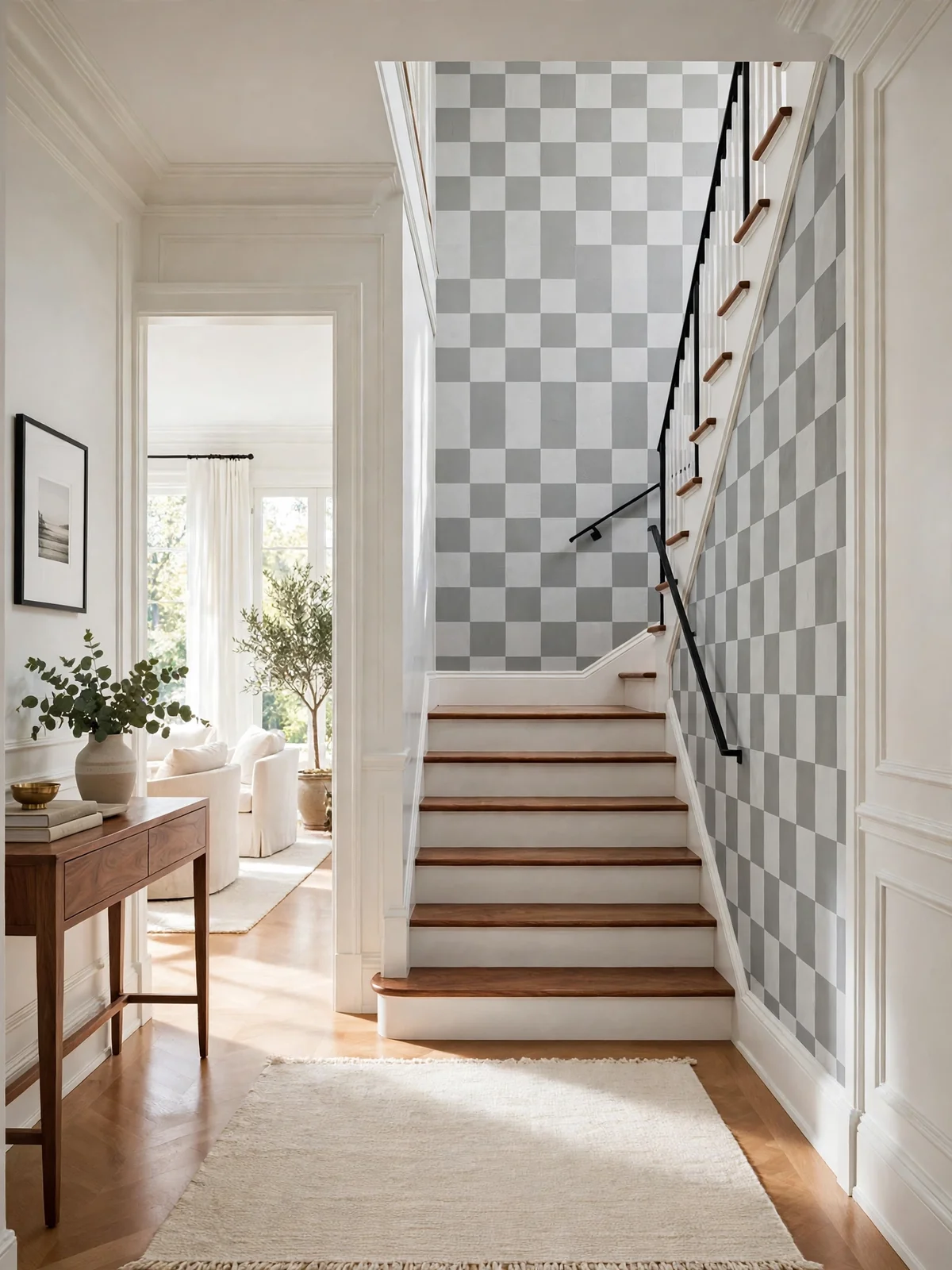
A tonal checkerboard feels classic but fresh in staircase painting — two shades of the same colour create a soft checkerboard effect that adds interest without being too loud. On this wall, 300 mm squares in soft grey and pale grey climb beside warm walnut treads, each 950 mm wide, with a slim black handrail and a cream rug below. The checkerboard is calmer than a high-contrast version, and the stairwell feels tailored rather than decorated.
Quick tips:
- Stick to one colour family for a calm checkerboard.
- Use 300 mm squares so the pattern reads well from below.
- Tape every square before painting for crisp edges.
- Choose two close shades — soft grey and pale grey — for subtlety.
A Bold Accent Landing Zone in Staircase Painting in Jewel Tones
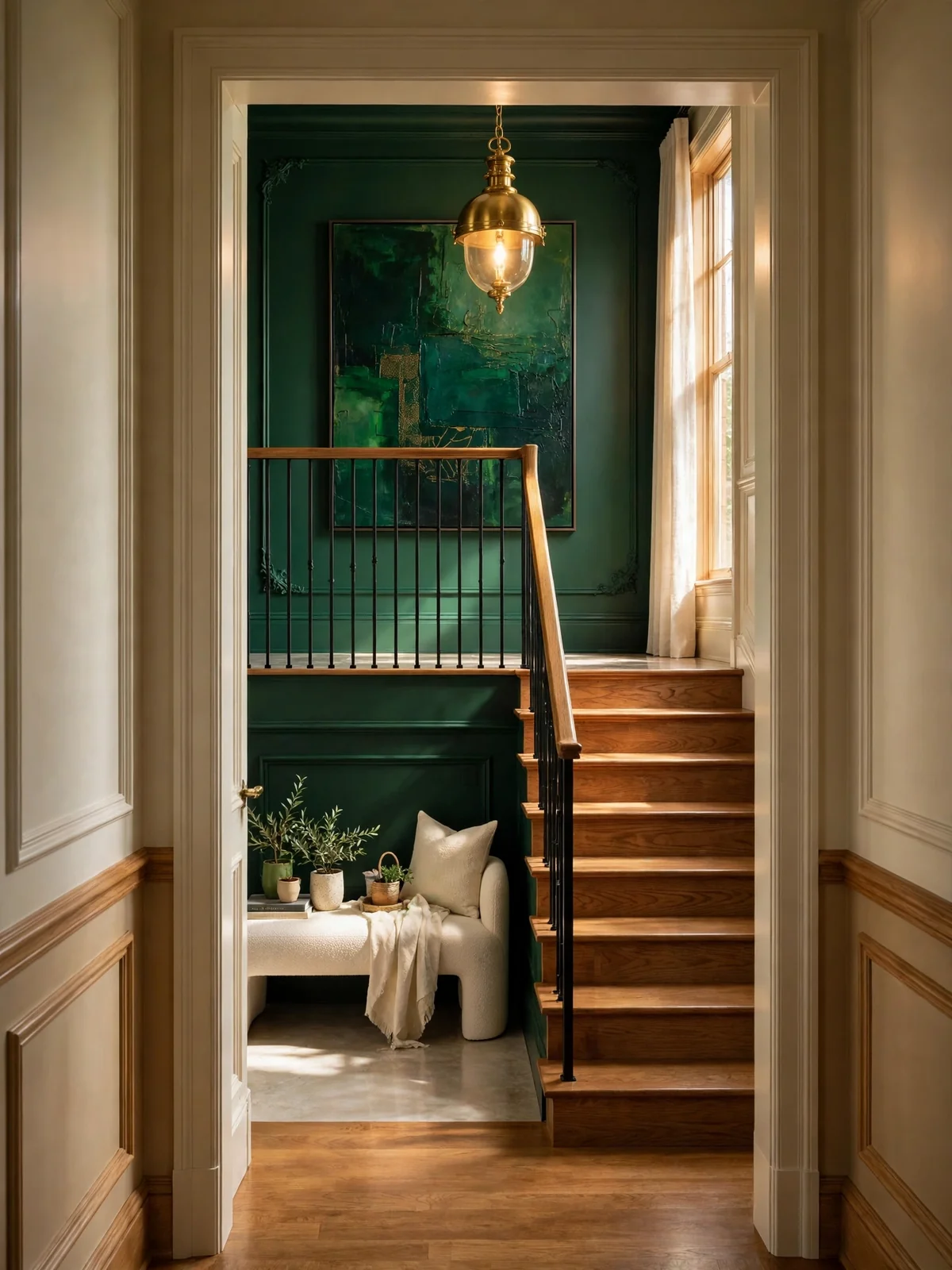
If your staircase has a landing, treat it like a moment — paint that section in a completely different colour, and the landing becomes a jewel in the middle of the climb. Here, deep emerald covers the landing wall, 1.2 metres square, beside warm oak treads, each 950 mm wide, with a small brass pendant hanging above and a cream bench below. The emerald breaks the monotony of the stair, adds personality, and makes the pause in the climb feel deliberate and luxurious.
Quick tips:
- Choose a jewel tone — emerald, sapphire or deep plum — for the landing.
- Paint only the landing section, not the whole stairwell.
- Hang a small pendant above the landing for warmth.
- Keep the rest of the stair wall neutral so the landing stays the moment.
A Crisp Fresh White Repaint in Staircase Painting That Resets the Stair
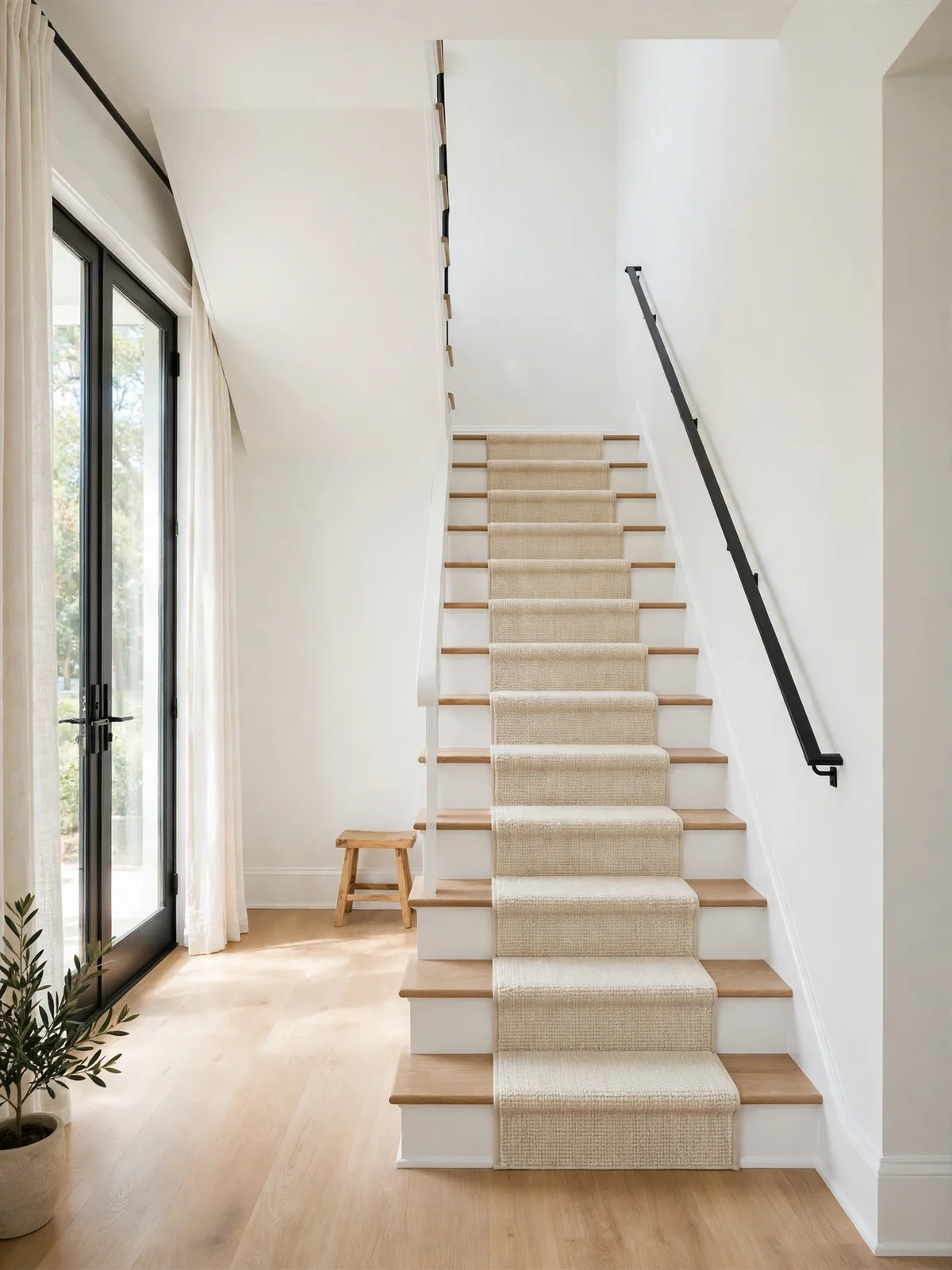
Sometimes simple wins in staircase painting — a fresh coat of white completely transforms a tired staircase, brightening everything and making the space feel clean and new. On this stair, crisp white covers the wall, the risers and the balusters beside pale oak treads, each 950 mm wide, with a slim black handrail and a cream runner softening the climb. White is not boring; it is a canvas, and the pale treads, the black rail and the cream runner are what make the white feel designed rather than empty.
Quick tips:
- Use a durable satin white on risers and balusters so they wipe clean.
- Paint the wall in a matt white for a soft, modern finish.
- Keep the treads natural timber so the white stays warm.
- Add one dark accent — a black handrail — so the white has contrast.
Staircase Painting Ideas With a Deep Charcoal Stairwell and Warm Timber Treads
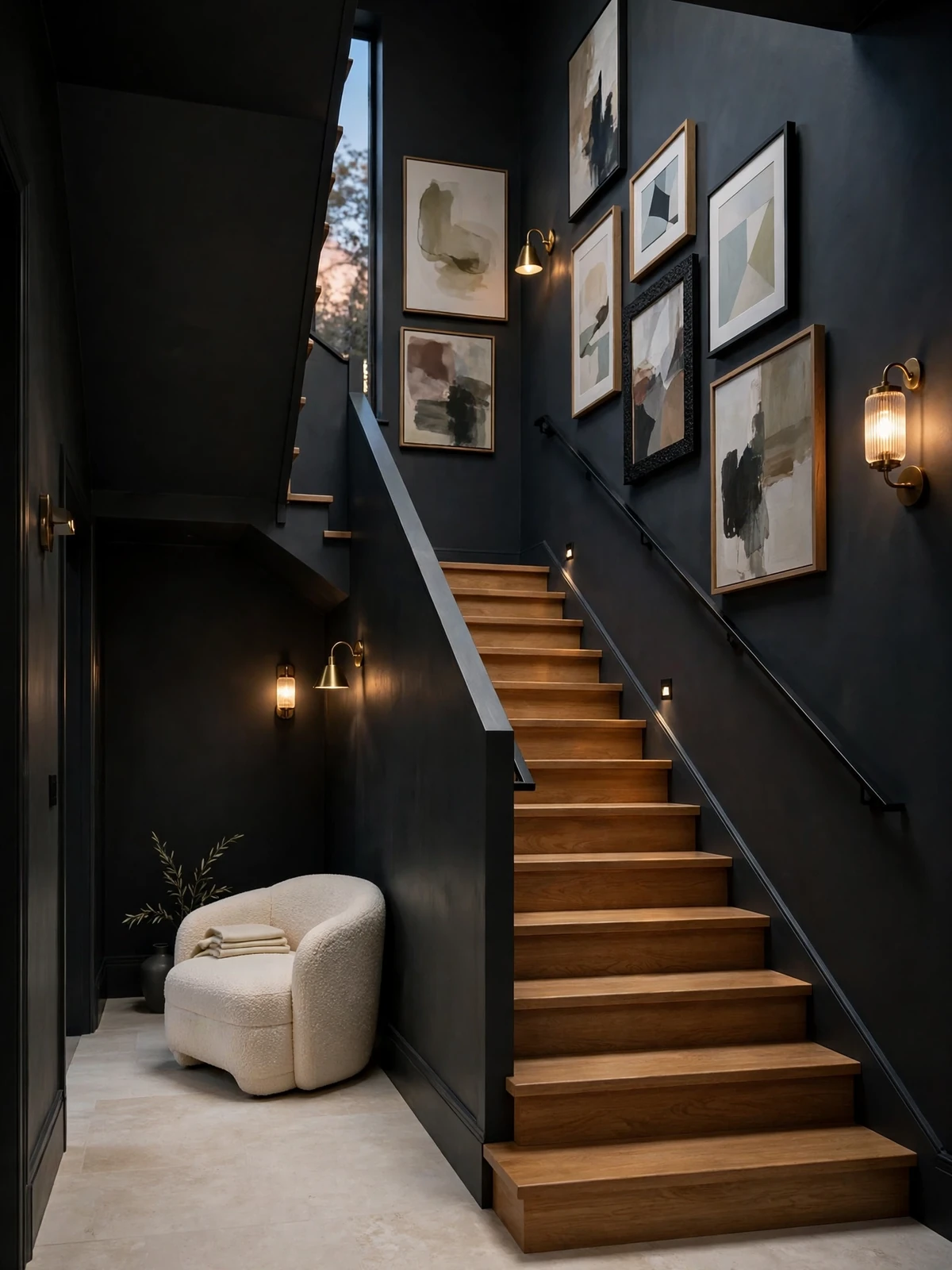
Dark walls make a staircase painting feel dramatic and cocooning, especially when warm timber treads glow against them, and a full charcoal stairwell is the boldest version of the idea. In this hallway, deep charcoal paint covers the stair walls from floor to ceiling, rising two storeys beside honey oak treads, each 900 mm wide, with a slim brass handrail and two brass wall sconces that wash warm light down the charcoal in the evening. A cream boucle armchair at the base and a pale stone floor keep the hallway from feeling closed in, while the dark walls make the timber look richer by contrast — and because the stair gets good daylight from a tall landing window, the charcoal never feels oppressive. The trick is balance: the walls are dark, but everything else is pale or warm — the treads are honey oak, the floor is pale stone, the armchair is cream, and the sconces are brass. The paint itself is a matt finish, which absorbs light softly instead of reflecting it harshly, and the stairwell feels like a cocoon rather than a cave. If your stairwell is dark already, keep the paint pale instead; but if daylight reaches the stair, a deep charcoal painting is the fastest way to make an ordinary flight feel like a designed, dramatic feature.
Quick tips:
- Paint the stair walls dark only when the stair gets good daylight.
- Use honey oak treads so the timber glows against the dark walls.
- Add brass sconces to warm the dark paint in the evening.
- Keep the floor pale so the hallway never feels closed in.
A Painted Botanical Border in Staircase Painting Along the Skirting
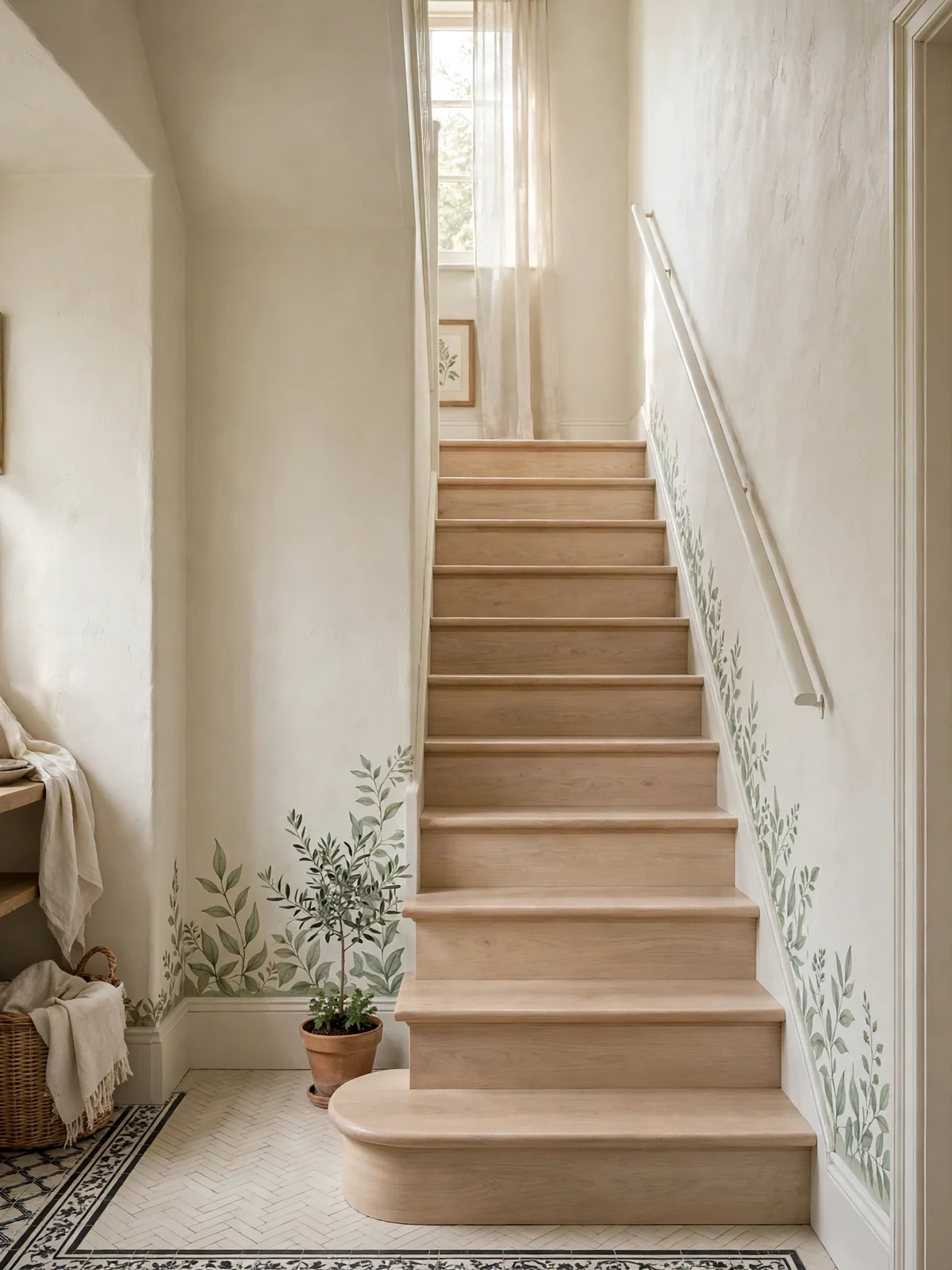
A painted botanical border along the skirting is the most delicate staircase painting idea — a ribbon of leaves and stems that runs with the stair like a garden path. On this wall, soft sage-green leaves, each painted freehand with a small 25 mm brush, climb the skirting beside pale ash treads, each 900 mm wide, with cream walls above and a slim white handrail. A small terracotta pot of herbs sits on the landing, and the border makes the stairwell feel like a cottage garden rather than a corridor.
Quick tips:
- Use a small brush, about 25 mm, for delicate leaves and stems.
- Keep the border to one colour — sage green — for a calm look.
- Paint the border along the skirting so it frames the stair.
- Practise the leaf shape on paper before painting the wall.
A Painted Stairwell Ceiling in Staircase Painting in the Same Colour as the Walls
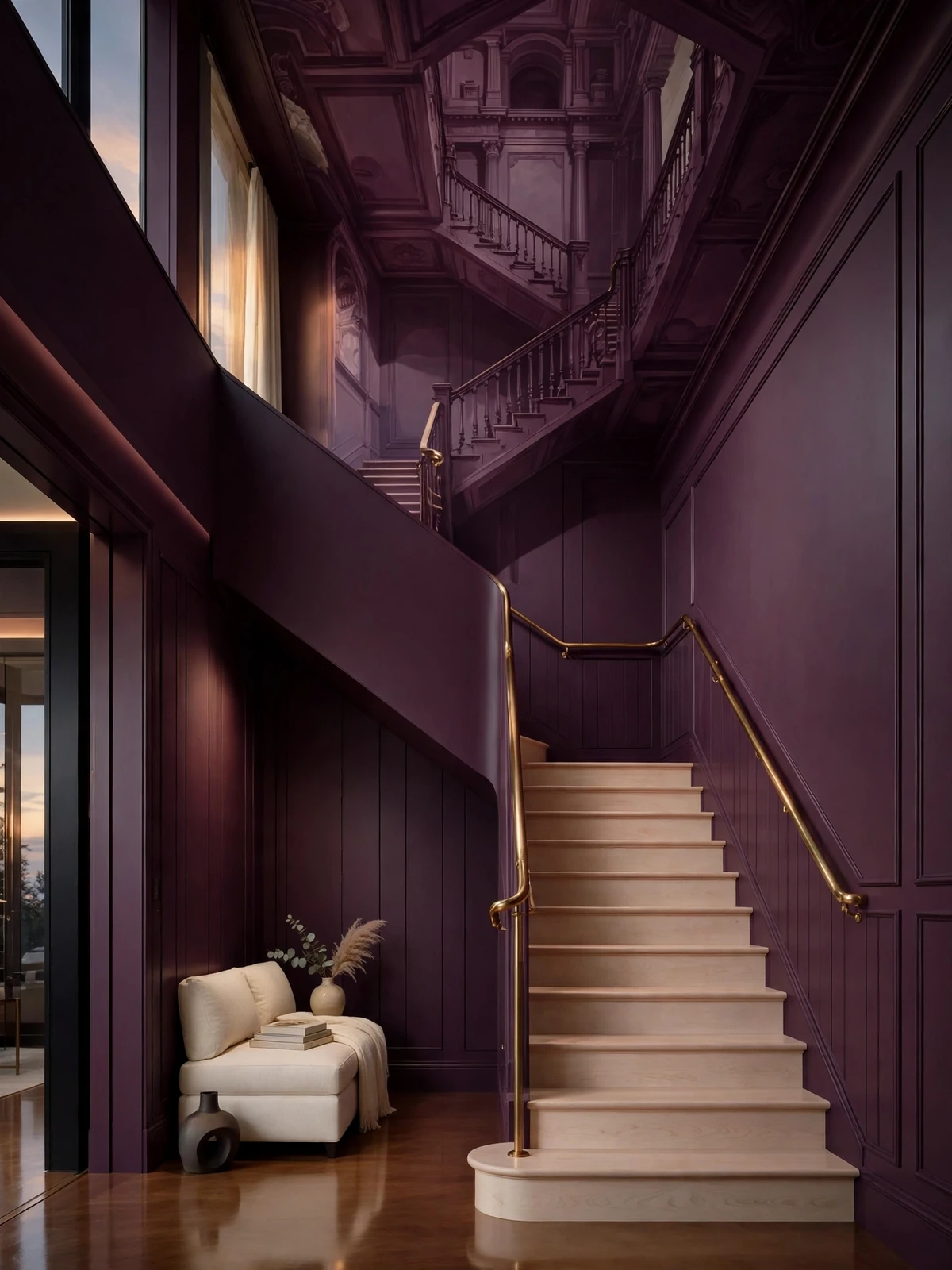
Painting the stairwell ceiling the same colour as the walls is the staircase painting idea that wraps the whole space — the colour drench makes the stairwell feel immersive, especially when the ceiling is high. Here, deep plum covers the walls and the sloped ceiling above pale maple treads, each 950 mm wide, with a slim brass handrail and a cream bench below. The wrapped colour makes the stairwell feel like a room of its own, moody and cosy, and the pale treads glow against the plum like a path through it.
Quick tips:
- Drench the walls and ceiling in one colour for a wrapped, cohesive feel.
- Choose a deep colour — plum, charcoal or forest green — for drama.
- Keep the treads pale so they glow against the dark walls.
- Use matt paint on the ceiling so it absorbs light softly.
Painted Numbered Risers in Staircase Painting for a Playful Family Stair
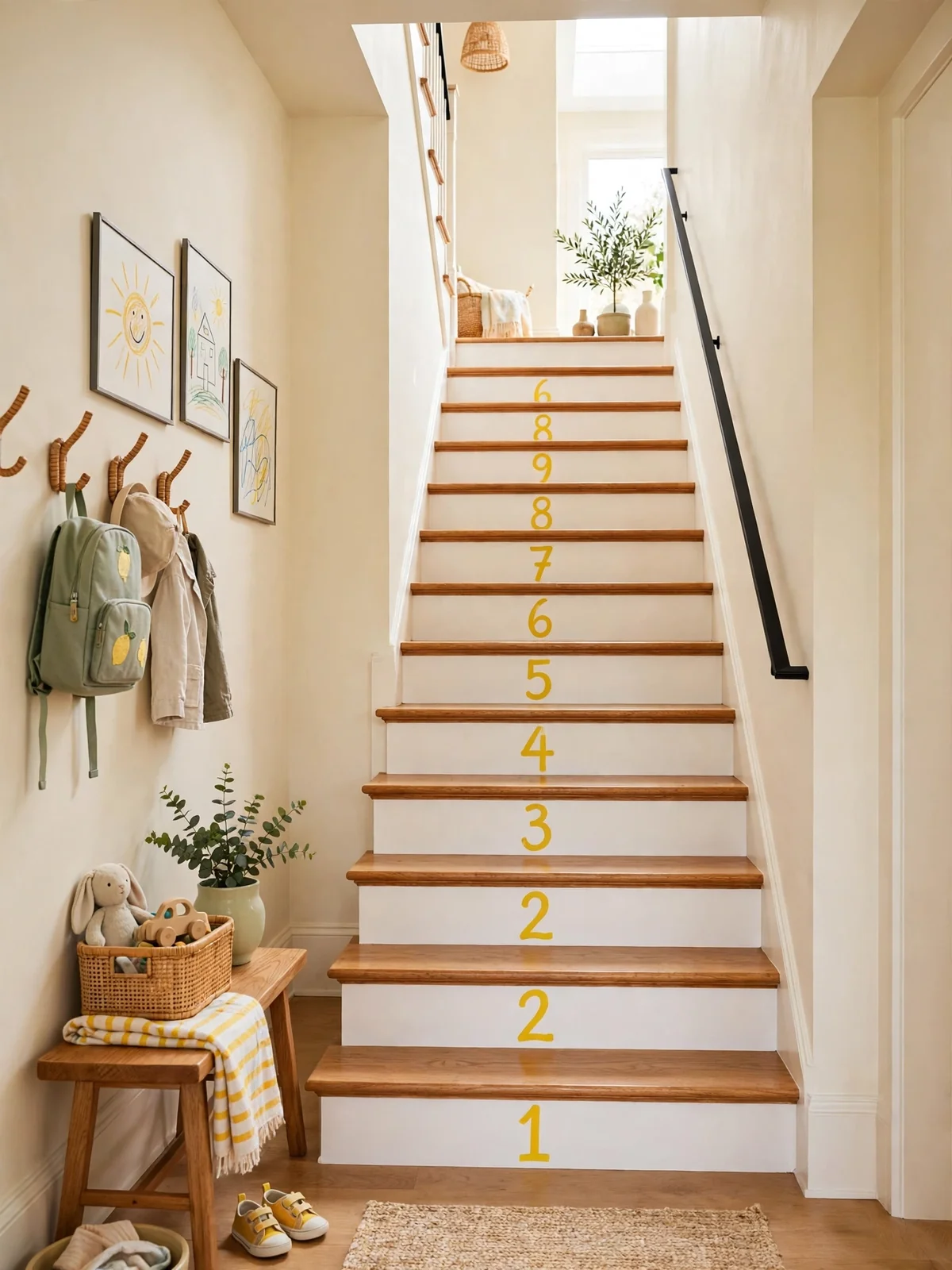
Numbered risers are the most playful staircase painting idea for a family home — each riser carries its step number in a cheerful colour, and children learn to count as they climb. On this stair, cheerful yellow numbers, each 100 mm tall, sit centred on white risers, each 175 mm high, beneath warm oak treads, each 950 mm wide, with cream walls and a slim black handrail. A small wooden bench at the base holds the family’s shoes, and the stairwell feels joyful without being messy, because the numbers are the only decoration on the flight.
Quick tips:
- Use a number stencil so every digit is the same size and style.
- Choose one cheerful colour — yellow, coral or teal — for the numbers.
- Centre each number on its riser for a tidy, deliberate look.
- Seal the numbers with a clear satin varnish so they survive footsteps.
A Painted Staircase That Turns the Climb Into the Best Part of the Day
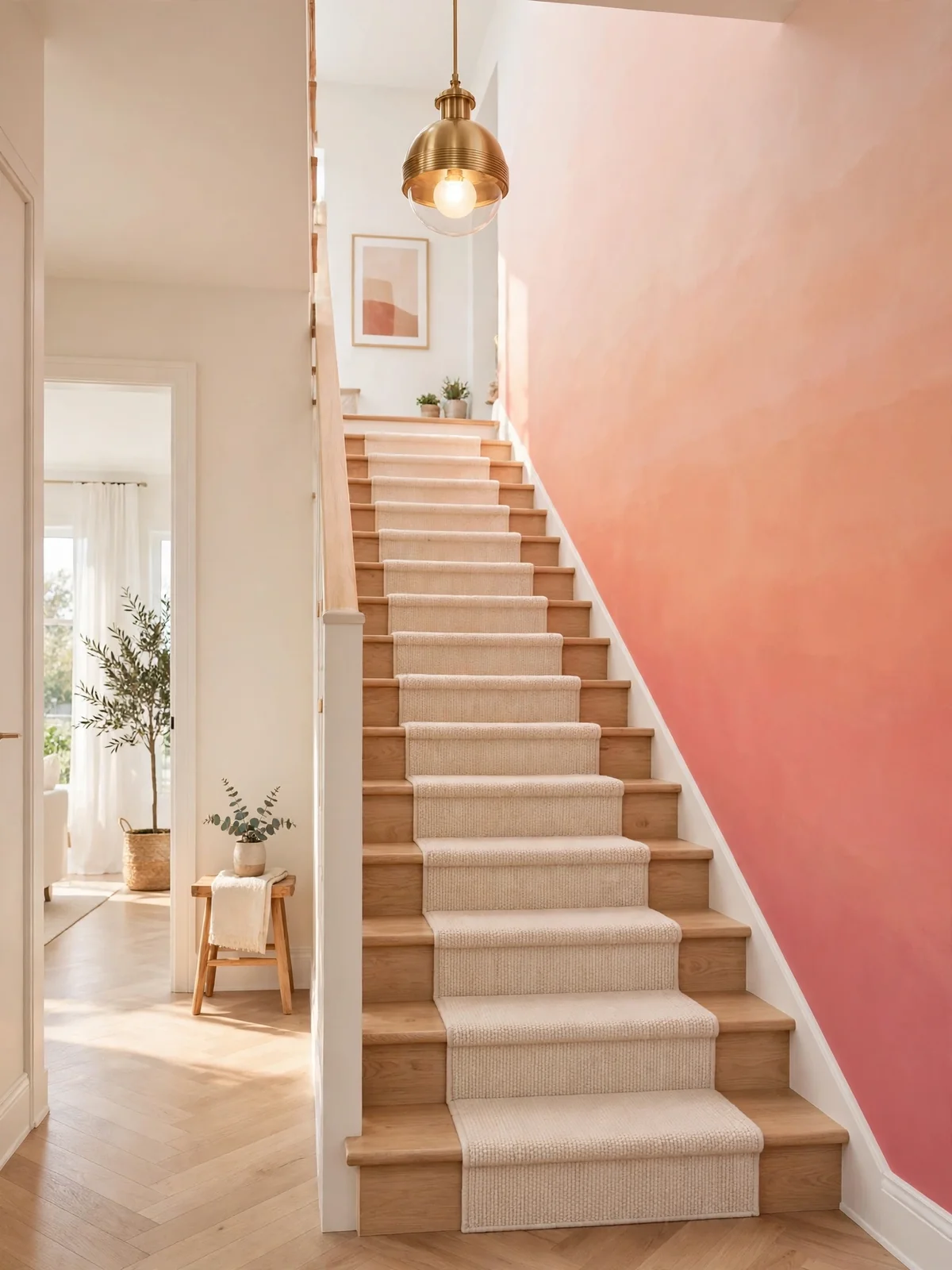
A painted staircase should turn the climb into the best part of the day, and a soft sunset ombré is the painting that does it — coral at the base fading to cream at the landing, like the sky at the end of a good day. In this home, the coral ombré climbs beside pale oak treads, each 850 mm wide, with a cream runner softening the climb, a slim brass pendant hanging above the landing, and a small wooden stool at the base. Soft white walls on the opposite side keep the hallway bright, and because every element is warm, pale or reflective, the stair feels like a sunrise you walk through twice a day.
Quick tips:
- Blend coral into cream for a sunrise ombré that feels joyful.
- Keep the treads pale oak so the ombré stays the feature.
- Hang one slim brass pendant to draw the eye upward.
- Keep the opposite wall plain so the painted wall carries the colour.
FAQs
How do I paint stair risers without getting paint on the treads?
Mask each tread with painter’s tape and paper, pressing the tape firmly along the edge where the tread meets the riser. Paint the risers with a small angled brush, working from the top of the flight downward, and remove the tape while the last coat is still slightly wet for the sharpest line.
What is the best paint finish for a staircase wall?
Use a matt or eggshell finish on the stair wall for a soft, modern look that hides small bumps. Use a durable satin or semi-gloss finish on risers, balusters and handrails, because those surfaces get touched and scuffed every day and need to wipe clean easily.
How long does it take to paint a staircase?
A riser-only paint job takes one afternoon, including prep. A full stairwell wall repaint takes one weekend: a day of prep, masking and priming, and a day of painting two coats. A mural or geometric pattern adds another day for taping and measuring, so plan for a long weekend.
Can I paint a staircase in a rental home?
Ask your landlord first, but most landlords welcome a fresh white repaint or a painted runner, because it improves the property. Bold murals and dark colours are harder to reverse, so keep rental painting neutral and removable — a painted runner on the treads can be sanded back, while a dark wall needs two coats of white to cover.
How do I choose a paint colour for my staircase?
Match the colour to the light and the rooms around the stair. Bright hallways suit deep colours — charcoal, navy, forest green or deep teal — while dark hallways need pale colours that reflect light. Test a sample pot on the wall and look at it morning and evening before committing to the whole flight.
Conclusion
Staircase painting is the cheapest, fastest way to transform a stair — and the stair wall is one of the best blank canvases in a home. Whether you choose a soft ombré gradient, a bold geometric mural, vertical stripes, colour blocking, painted risers, a faux arch, a checkerboard pattern, or simply a crisp fresh white repaint, the best staircase painting is the one that suits the light, the rooms around it and the way your family actually lives. Start with one wall, one colour, one idea — and let the stair become the feature it was always meant to be.