25 Living Room Center Table Ideas to Anchor Your Space Beautifully
Your center table anchors the whole living room. These 25 living room center table ideas cover table shapes, materials, clever alternatives, and styling tricks — sized and styled like a designer would.
The best living room center table ideas balance looks and daily life: a coffee table, cocktail ottoman, or nesting set sized about two-thirds of your sofa and placed 12–18 inches from it, leaving room for both styling and real use. Match the shape to your space — round for flow in small rooms, storage designs for family life, stone or wood for a statement — then style it with the rule of three: one tall piece, one horizontal piece, one sculptural piece.
This guide covers both halves of the decision — which center table to choose and how to style it once it is home. For the wider room around the table, our living room decor tips collect clever living room decor tips that pair well with everything here. Start with size and shape, because no amount of styling fixes a table that is wrong for the room.
Key Takeaways
What size should a living room center table be?
Aim for about two-thirds the length of your sofa, with a tabletop height within 1–2 inches of the seat height (usually 16–18 inches).
How far should the center table sit from the sofa?
12–18 inches — close enough to reach your coffee, far enough to walk past comfortably.
What is the easiest way to style a center table?
Start with a tray to create a zone, then apply the rule of three: one tall item, one horizontal item, one sculptural item.
Which center table suits a small living room?
Round, glass or acrylic, nesting, or storage-ottoman designs — they keep sightlines open and add function without bulk.
Should a center table have storage?
In family rooms and small spaces, yes — lift-top and storage-ottoman tables hide remotes, throws, and toys. In formal rooms, a sculptural table with no storage is fine.
| Table type | Best room size | Style fit | Budget |
|---|---|---|---|
| Rectangular wooden coffee table | Medium–large | Classic, farmhouse, transitional | Low–medium |
| Round coffee table | Small–medium | Modern, Scandinavian, family-friendly | Low–medium |
| Glass or acrylic table | Small | Modern, minimal, airy | Medium |
| Marble or travertine table | Medium–large | Luxe, contemporary, Mediterranean | High |
| Nesting tables | Small, flexible | Modern, eclectic | Low–medium |
| Cocktail or storage ottoman | Any, esp. family rooms | Cozy, traditional, glam | Medium |
| Lift-top coffee table | Small–medium | Practical, work-from-home | Medium |
| Live-edge wood slab | Medium–large | Rustic, Japandi, organic modern | Medium–high |
The Classic Rectangular Wooden Coffee Table
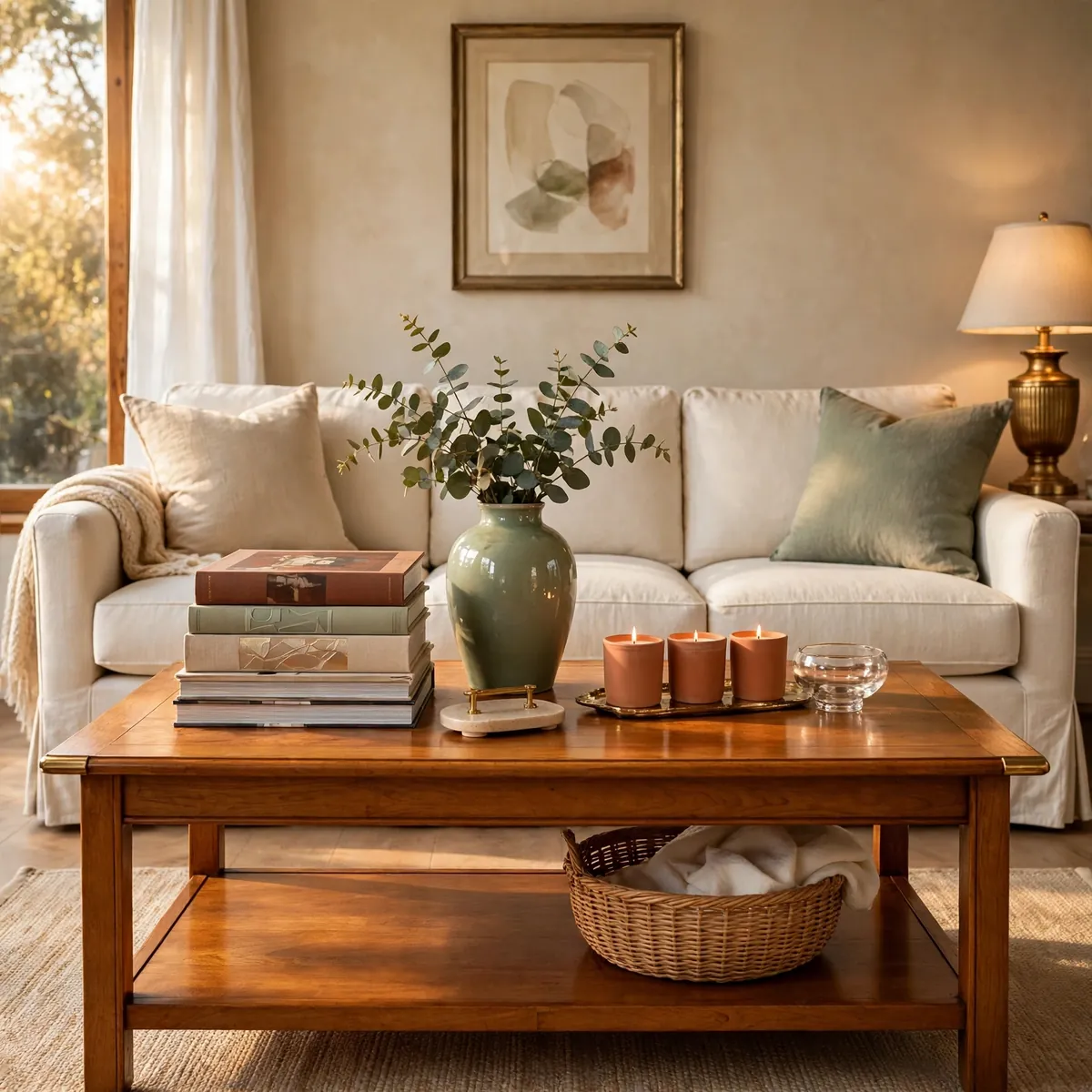
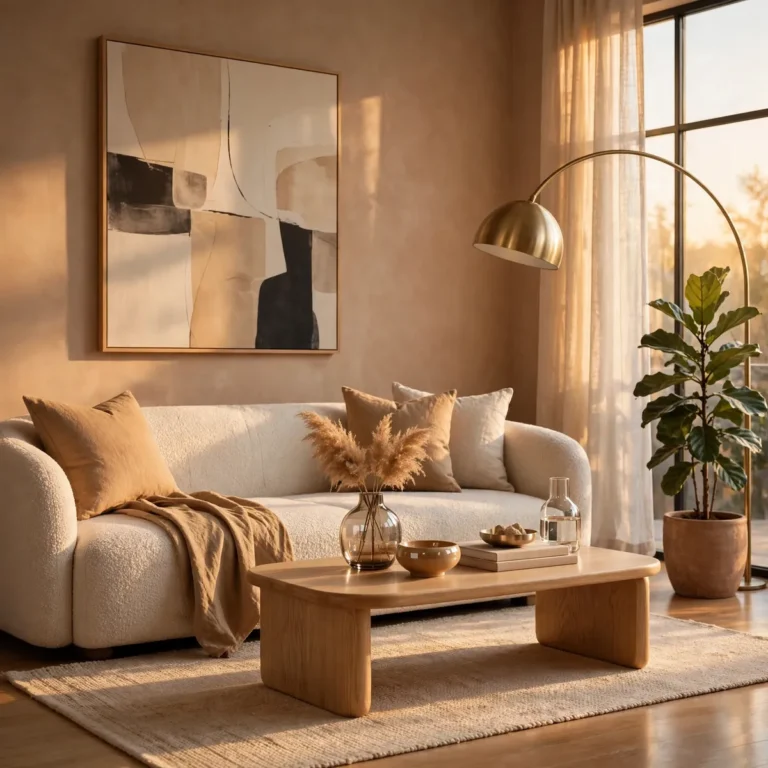
A rectangular wooden coffee table is the default for a reason: its long surface suits standard sofas and gives styling room to breathe. In a transitional living room with a three-seat linen sofa, a 48-inch oak coffee table with a lower shelf holds a stack of art books, a ceramic vase, and a candle trio with space to spare.
Quick tips:
- Keep the table about two-thirds your sofa’s length for balanced proportions.
- A lower shelf doubles display space and hides clutter in baskets.
- Medium wood tones (oak, walnut) age better than very dark or orange stains.
A Round Center Table for Easy Flow
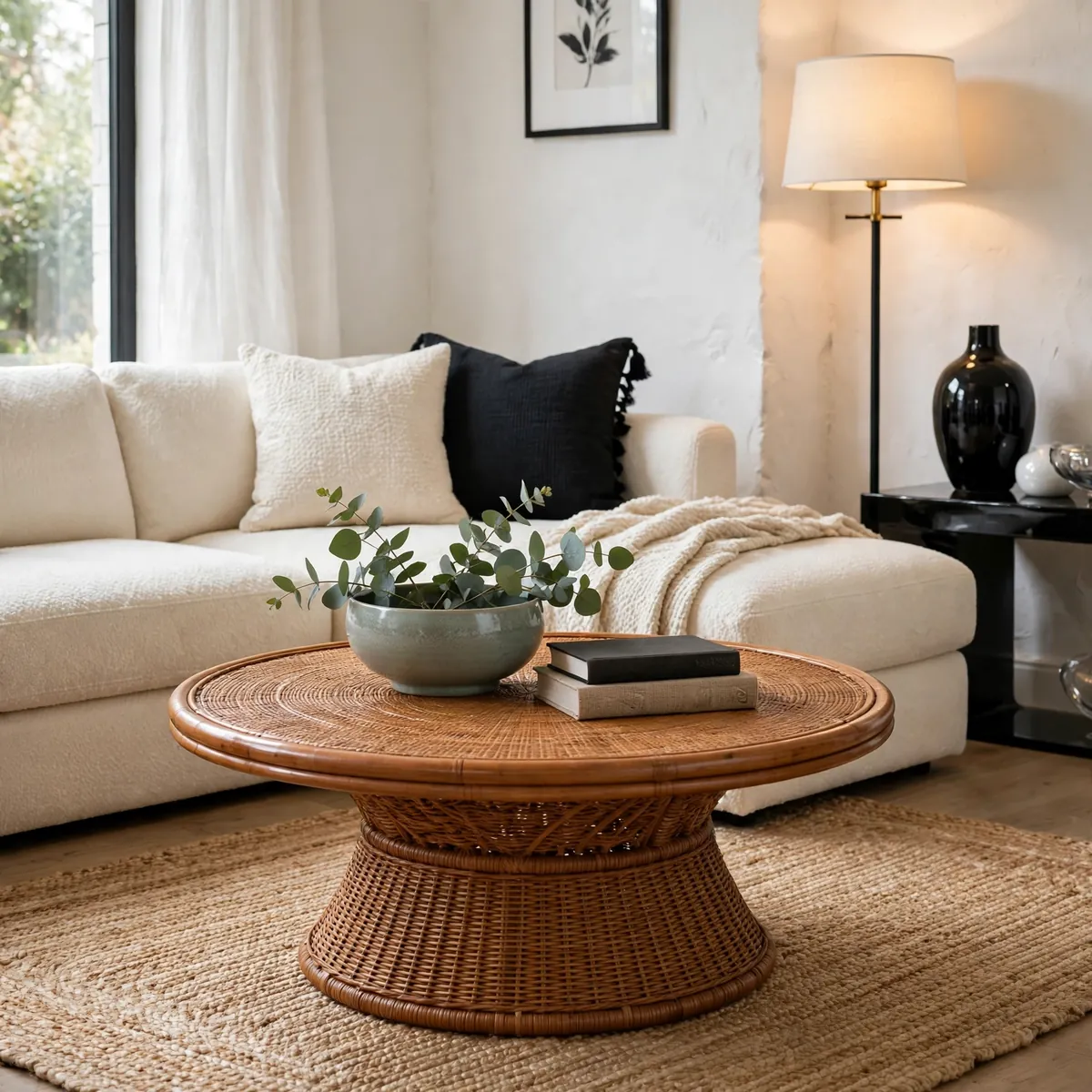
A round center table softens a boxy room and keeps traffic flowing, since there are no corners to bump into. In a compact living room with a small sectional, a 36-inch round rattan coffee table leaves walkways clear on all sides while giving the seating area a natural focal point.
Quick tips:
- Round tables suit sectionals and L-shaped seating especially well.
- Choose a diameter that leaves 12–18 inches of clearance all around.
- A pedestal base keeps legroom open underneath for tucked-in poufs.
Nesting Tables That Double Up
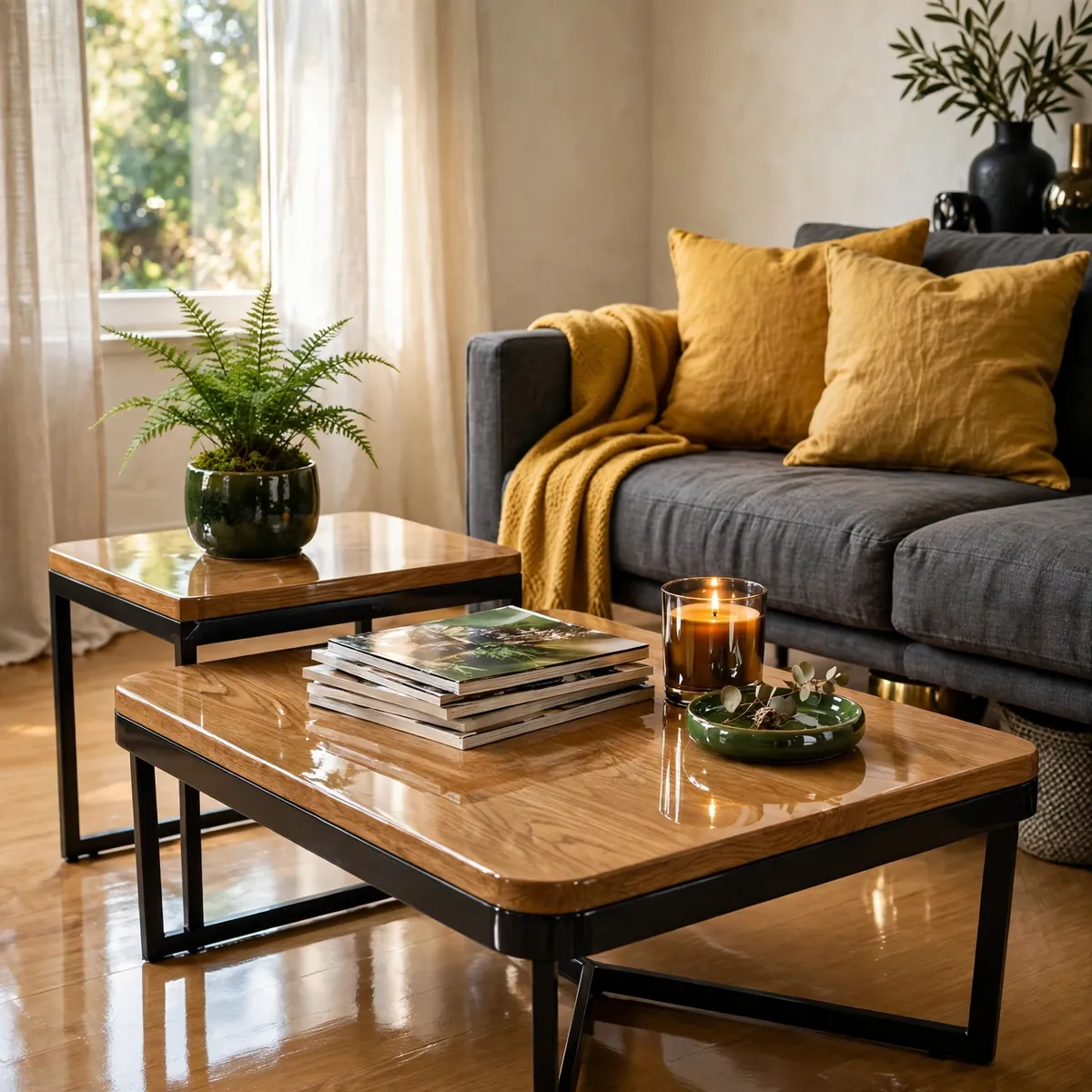
Nesting tables give you one center table most days and two or three surfaces when guests arrive. A set of two oak-and-black-metal nesting tables tucked beside a compact sofa pulls apart into a coffee surface plus a side table in seconds — flexibility small living rooms need.
Quick tips:
- Pull the smaller table out only when needed to keep daily floor space clear.
- Match the nesting set’s finish to your main furniture for cohesion.
- Round nesting sets feel softer; square ones read more architectural.
A Glass-Top Table for Small Rooms
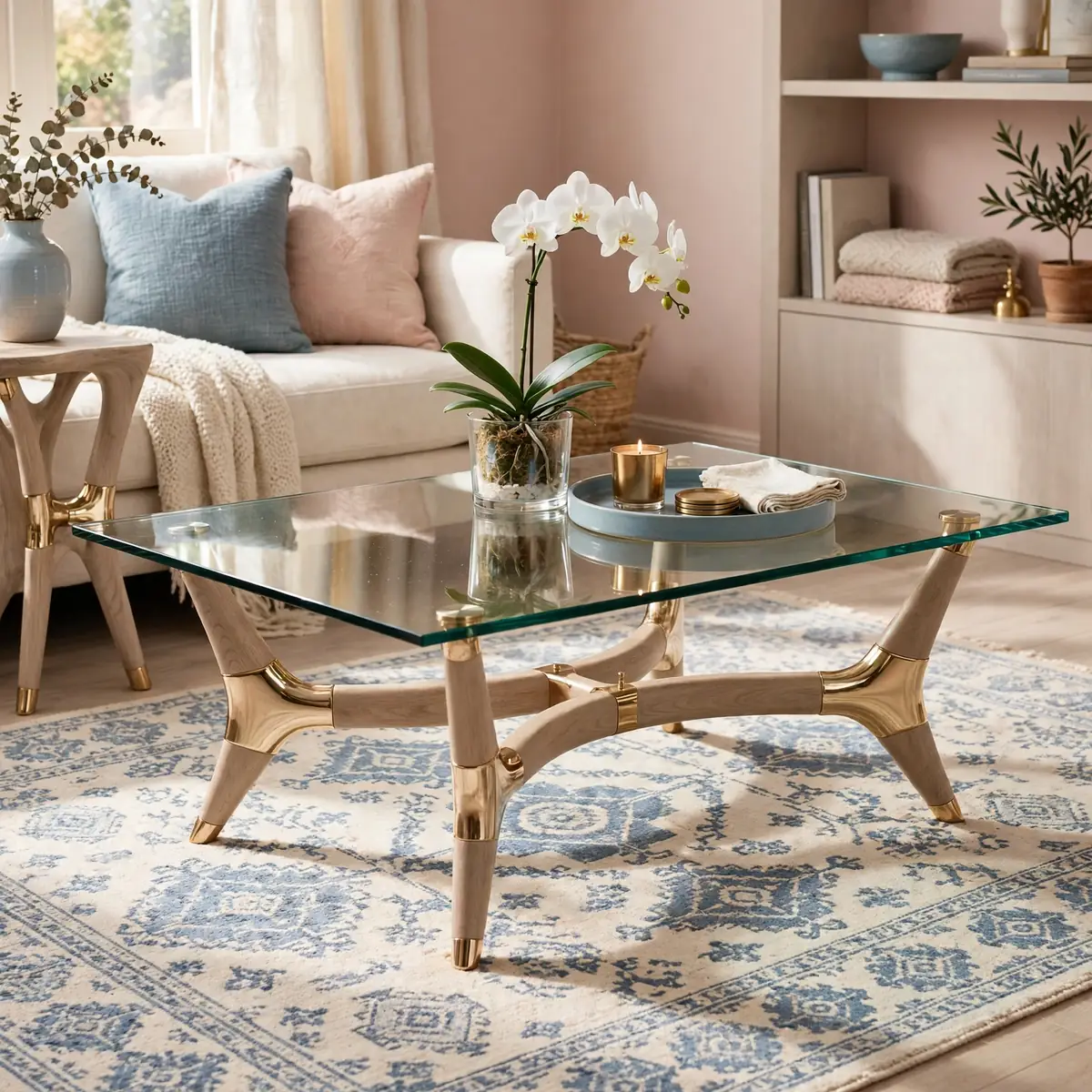
A glass-top center table visually disappears, making a small living room feel larger because sightlines pass straight through it. In a 12-by-14-foot living room with a patterned rug, a clear glass coffee table shows off the rug’s full design instead of cutting it in half.
Quick tips:
- Tempered glass is the safe choice — it is far stronger than standard glass.
- Pair glass tops with interesting bases (brass, sculptural wood) since the base becomes the design.
- Keep glass cleaner handy; fingerprints show, but the airy payoff is worth it.
A Marble-Top Center Table for Quiet Luxury
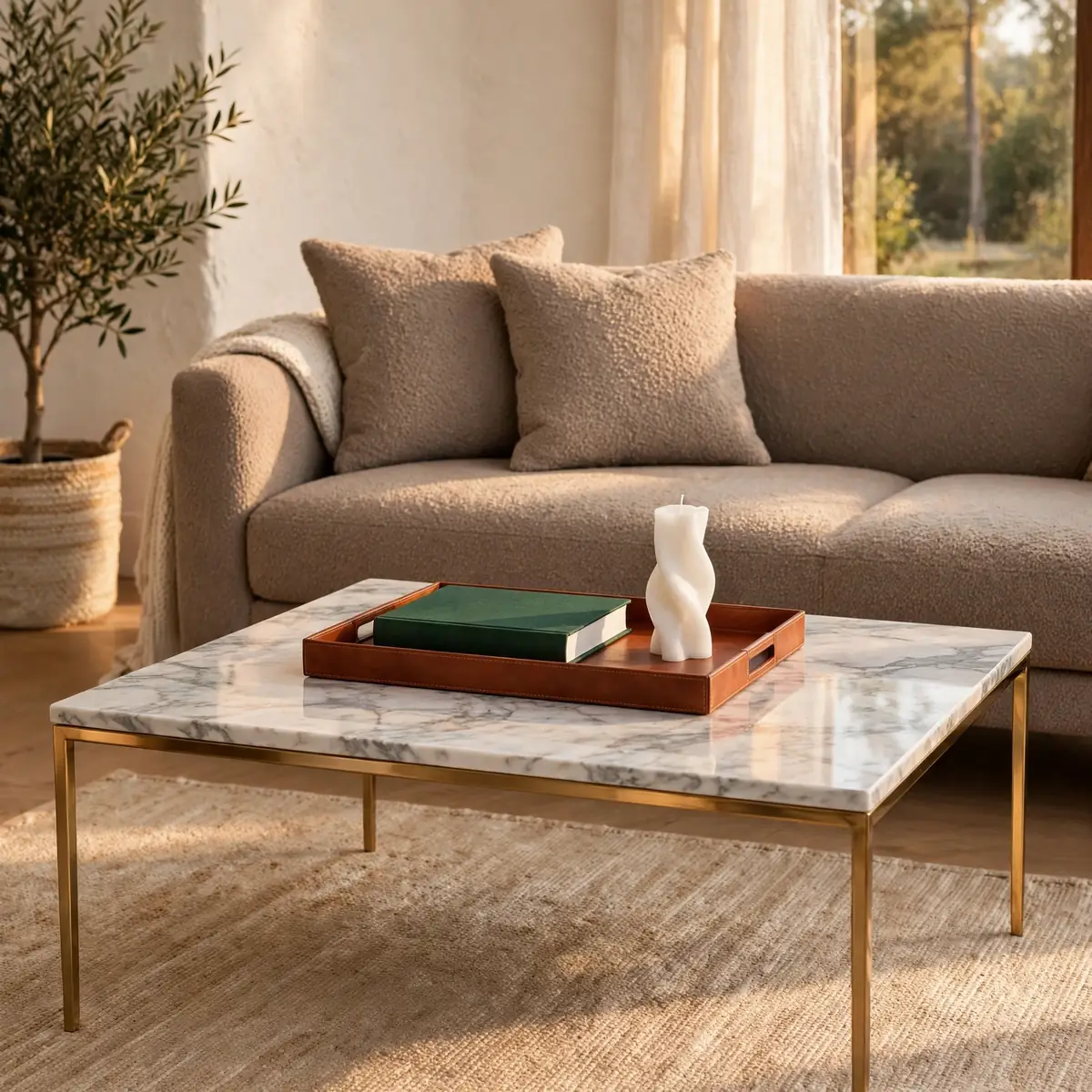
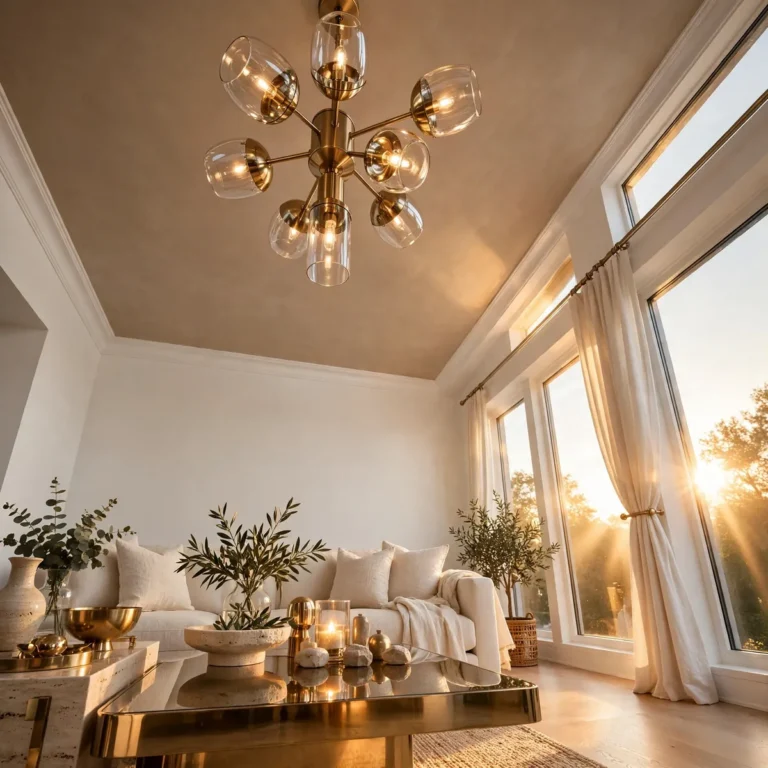
A marble-top center table brings natural veining and cool, polished weight to a living room. In a contemporary neutral room, a white Carrara-look marble coffee table with slim brass legs turns the center of the room into a quiet luxury moment without shouting.
Quick tips:
- Use coasters religiously — marble etches with acidic drinks like citrus and wine.
- Honed (matte) marble hides wear better than polished in busy households.
- Seal natural stone yearly; marble-look porcelain needs no sealing at all.
A Travertine Stone Table With Warmth
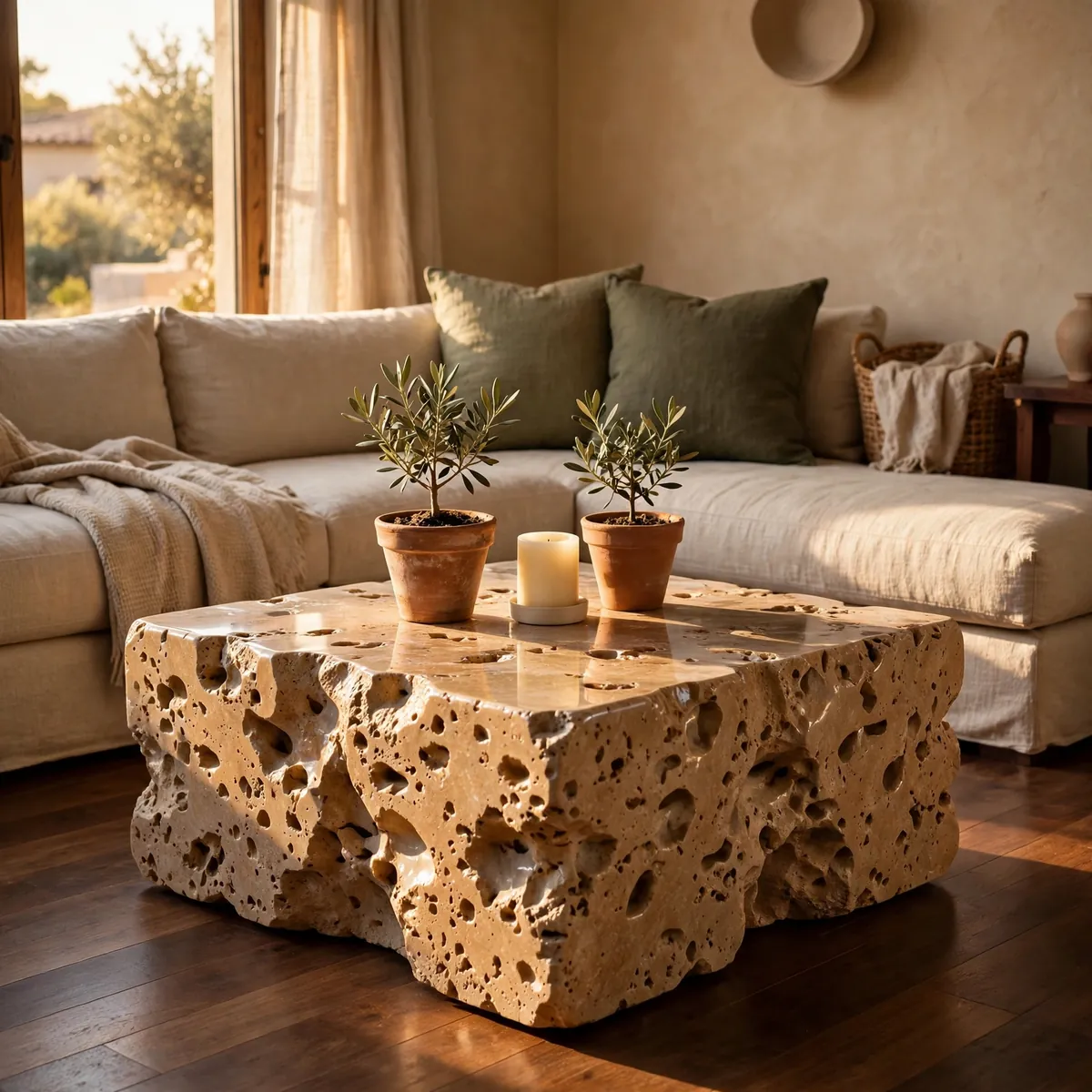
Travertine’s pitted, honey-toned surface gives a center table organic warmth that polished marble does not. A travertine block-style coffee table in a Mediterranean-inspired living room with terracotta pots and linen upholstery feels sun-baked and sculptural at once.
Quick tips:
- Embrace the pits and voids — they are the stone’s character, not flaws.
- Filled-and-honed travertine is smoother and easier to wipe clean.
- Keep the surrounding palette warm (creams, clays, woods) to echo the stone.
A Live-Edge Wood Slab Table
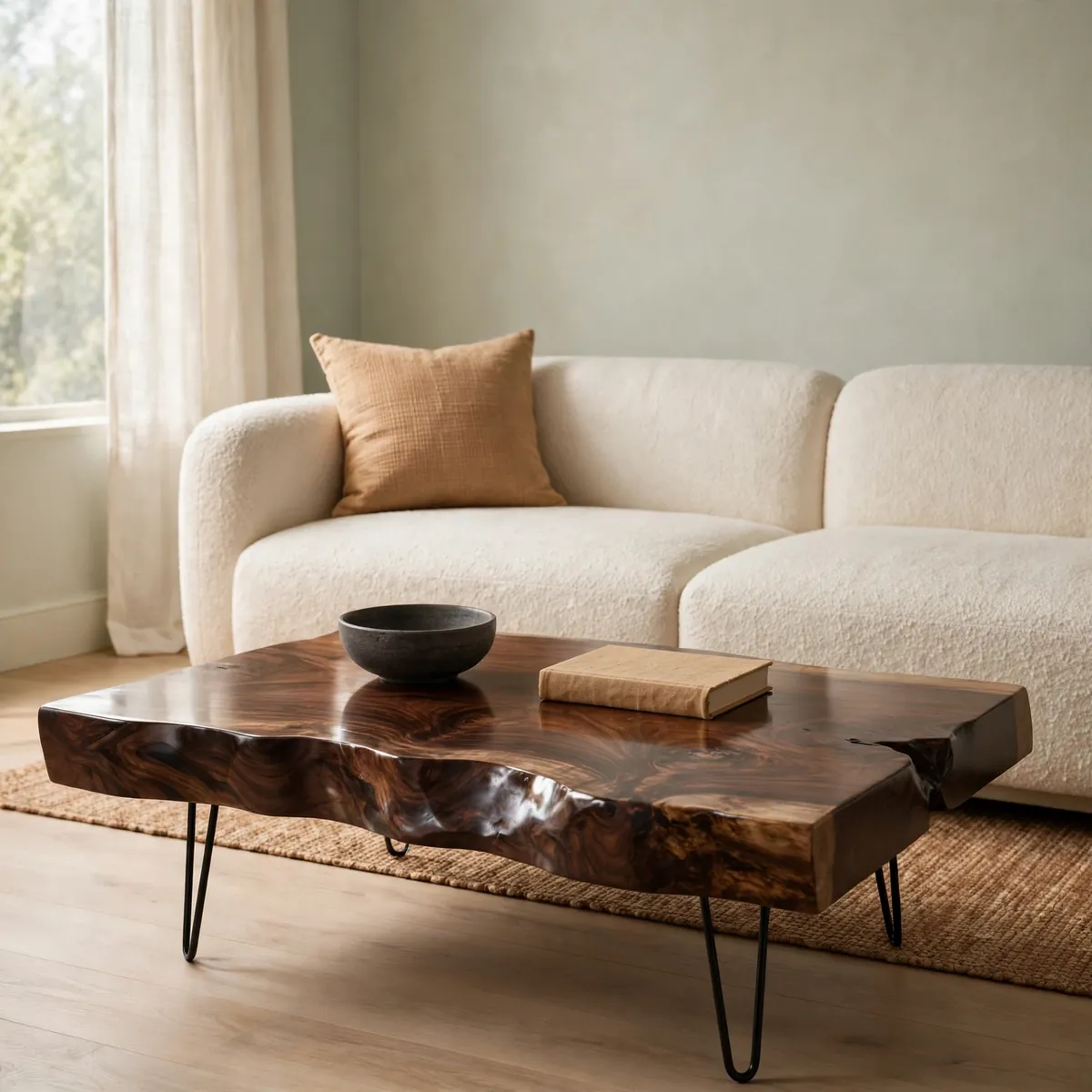
A live-edge slab — wood with its natural edge preserved — makes the center table the room’s organic artwork. This works best as the single statement in a calm room: picture a walnut live-edge slab on simple black metal legs centered in a Japandi living room with a low boucle sofa, where the wood’s grain and edge become the decoration and everything else stays quiet. Let the slab’s shape dictate styling — one low ceramic bowl and a single book are plenty on a surface this characterful.
Quick tips:
- Let the slab be the hero — style it minimally, one or two objects max.
- Check that the slab is kiln-dried and sealed to prevent cracking.
- Hairpin or simple metal legs keep the focus on the wood.
Living Room Center Table Ideas: A Soft Tufted Cocktail Ottoman
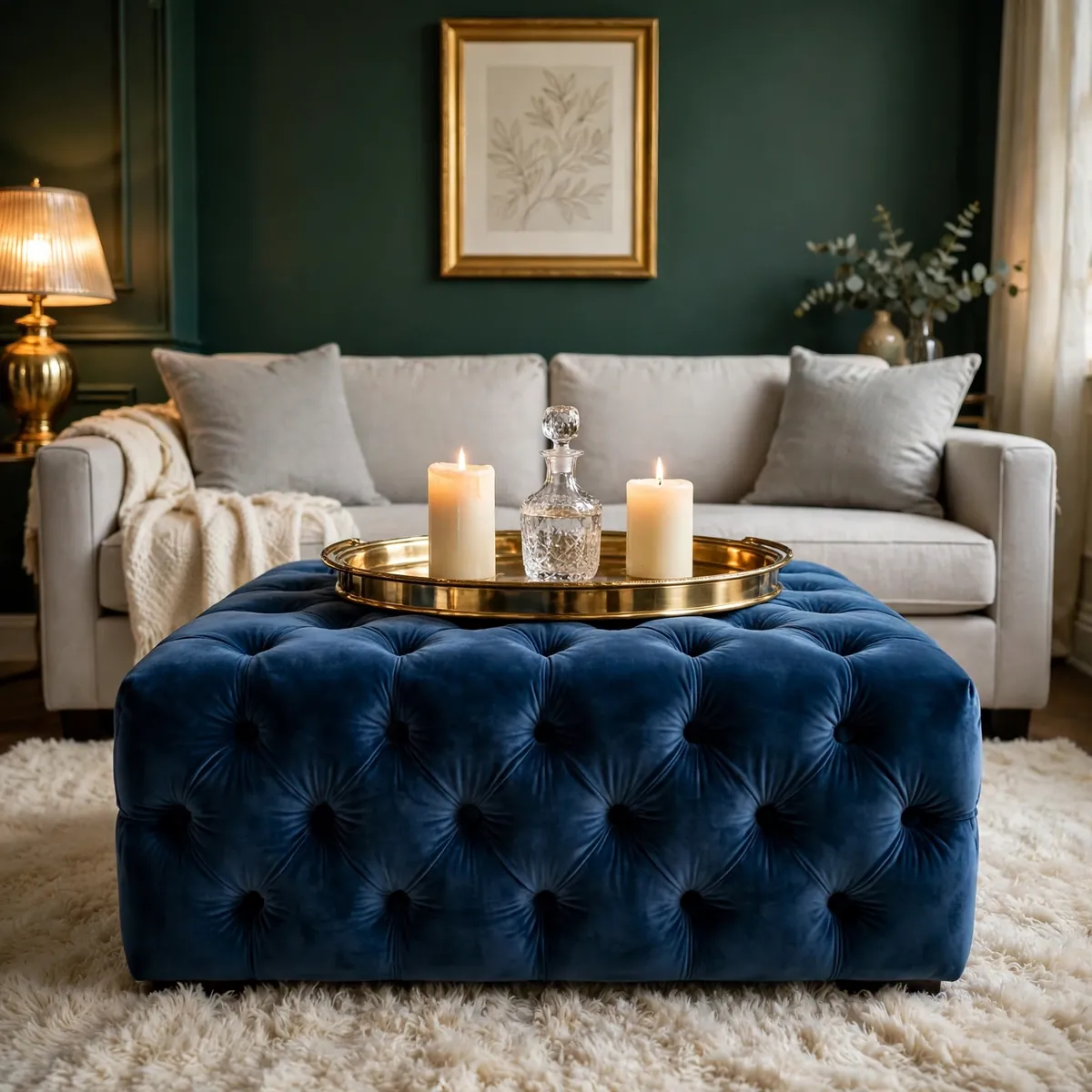
A cocktail ottoman swaps hard edges for upholstered softness, doubling as extra seating and a footrest. In a cozy family living room, a large sapphire-velvet tufted ottoman with a brass tray on top serves drinks by day and tired feet by night.
Quick tips:
- Choose high-density foam firm enough to hold a tray steady.
- Add a large tray to create a stable surface for drinks and decor.
- Performance fabrics or leather survive kids and pets far better than delicate velvet.
A Storage Ottoman That Hides the Clutter
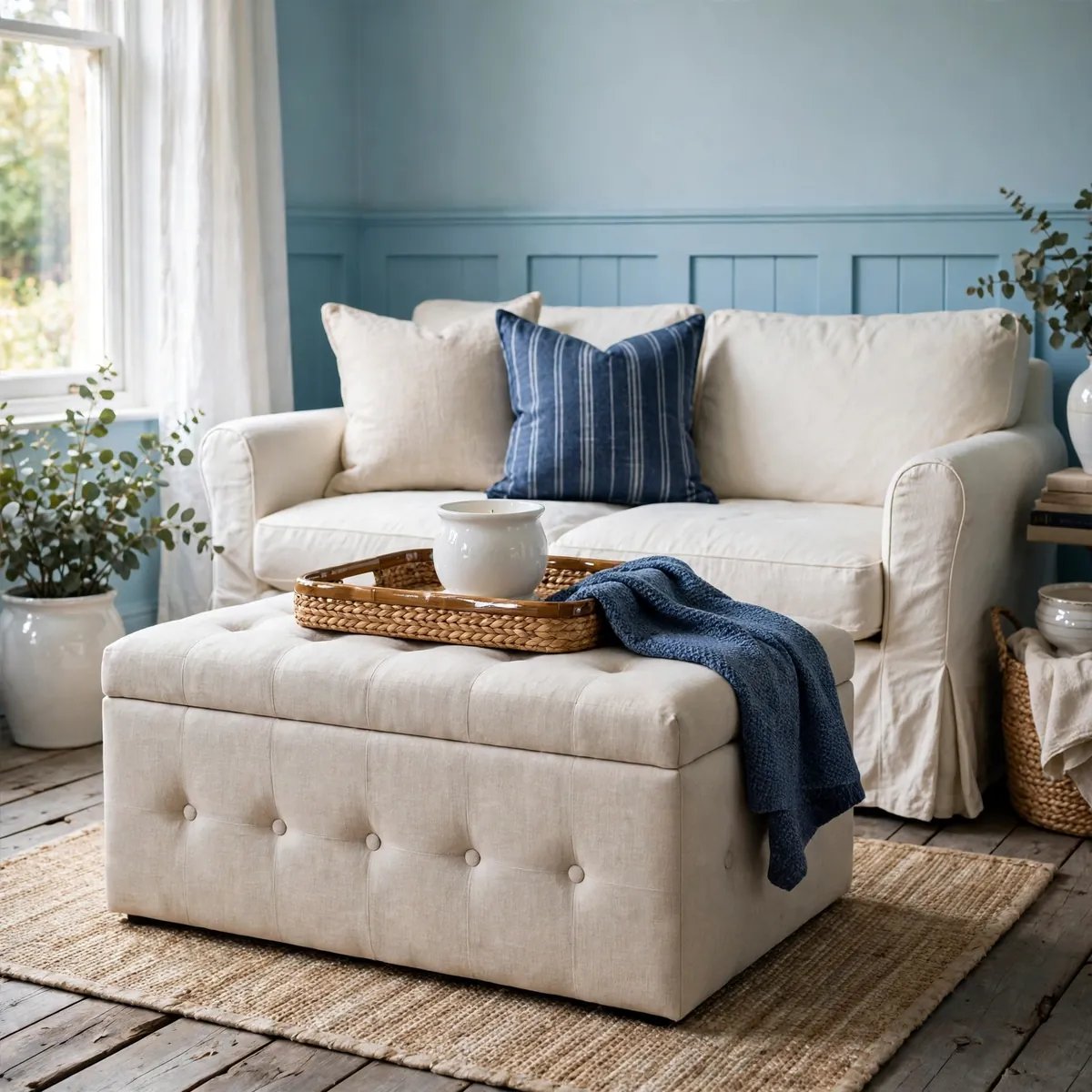
A storage ottoman as a center table hides throw blankets, remotes, and toys inside while looking like pure decor outside. In a small family living room, a linen storage ottoman swallows the board games and chargers that otherwise colonize the coffee table.
Quick tips:
- Test the lid mechanism in person — soft-close hinges prevent pinched fingers.
- Keep the top styling to a single tray so the lid stays usable.
- Measure interior depth before buying; shallow ottomans fit remotes, deep ones fit blankets.
A Lift-Top Coffee Table for Work and Dining
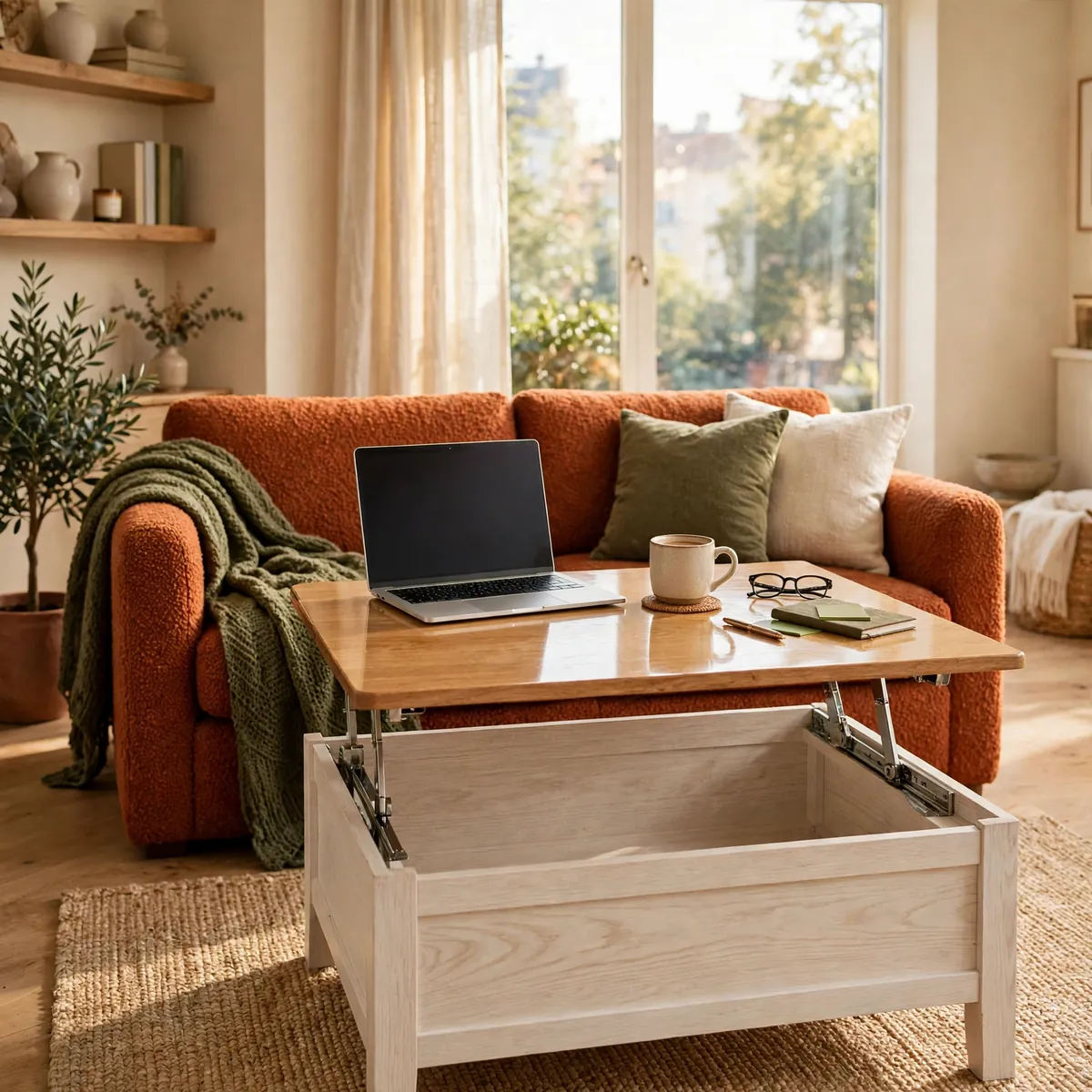
A lift-top coffee table raises its surface to dining or laptop height, turning the sofa into a workspace. In a studio apartment where the living room doubles as an office, a lift-top table in white oak goes from coffee surface to comfortable typing height in one motion.
Quick tips:
- Check the lifted height against your sofa seat — 24–26 inches suits most sofas.
- Look for a mechanism that locks firmly; wobble ruins the experience.
- The hidden compartment is ideal for laptops, chargers, and notebooks.
A Two-Tier Coffee Table for Layered Styling
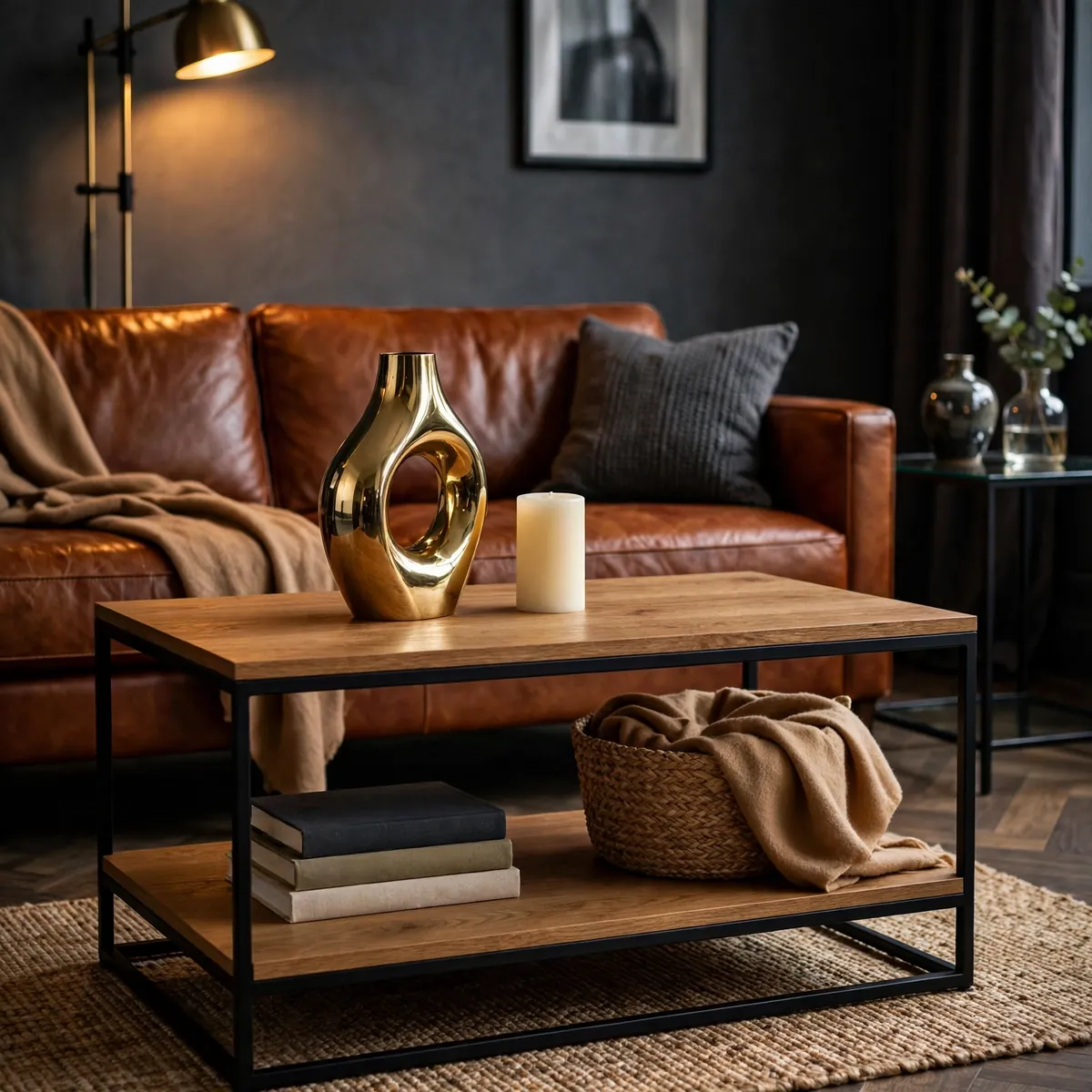
A two-tier coffee table gives stylists two surfaces: the top for the hero arrangement, the lower tier for books and baskets. On a black metal-and-oak two-tier table, the top holds a sculptural vase and candle while the lower shelf stacks design books and a woven basket for throws.
Quick tips:
- Style the lower tier more simply than the top — it reads as background.
- Baskets on the lower tier corral clutter beautifully.
- Keep the lower shelf dusted; it is at pet-hair height in most homes.
An Acrylic “Invisible” Table
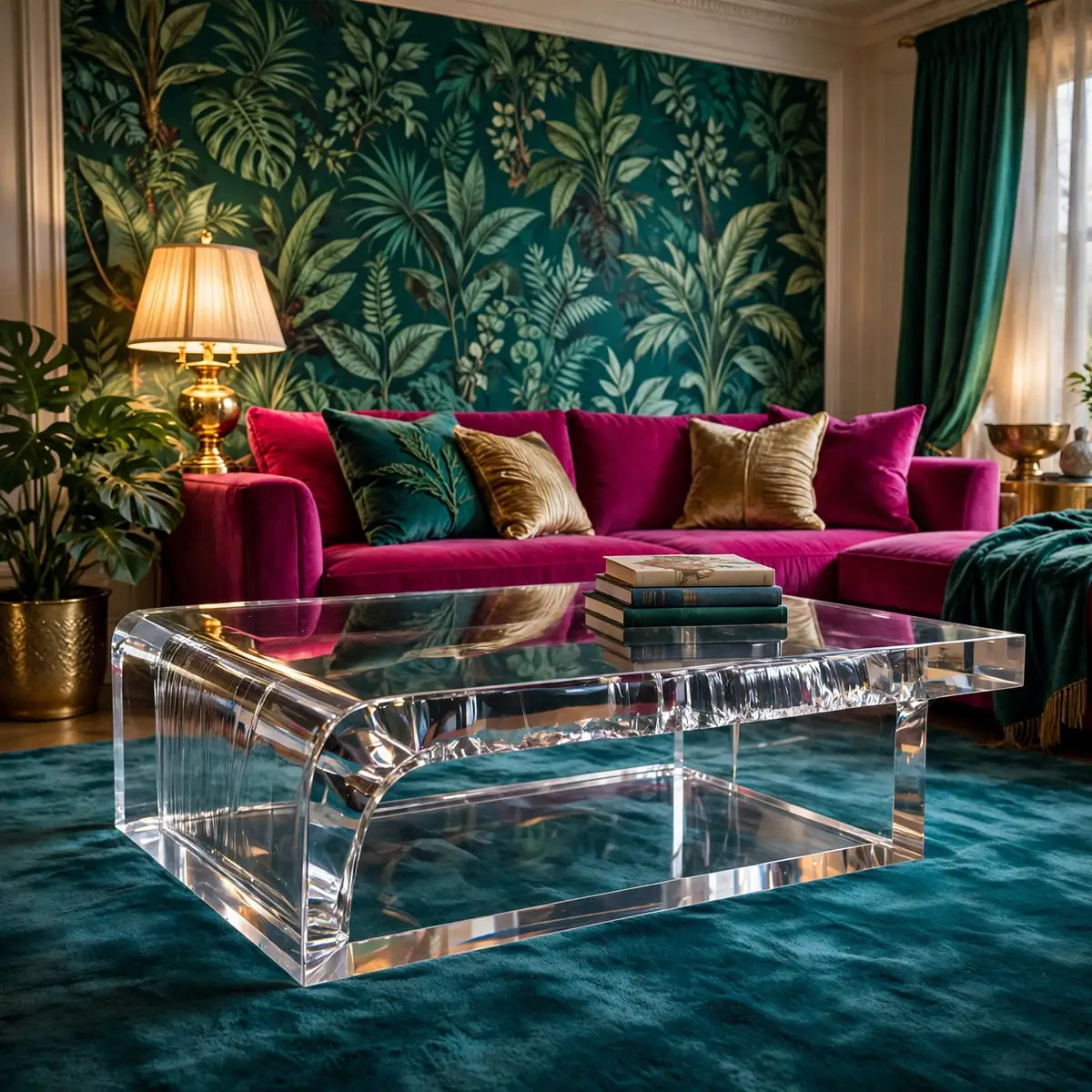
A clear acrylic center table is the minimalist’s trick for keeping a small or heavily decorated room feeling open. In a maximalist living room with bold wallpaper and layered textiles, a waterfall-edge acrylic coffee table holds its own functionally while visually vanishing.
Quick tips:
- Acrylic scratches more easily than glass — lift, don’t drag, objects across it.
- Clean with a damp microfiber cloth, never paper towels or ammonia cleaners.
- A thicker slab (at least 1 inch) looks far more premium than thin sheets.
A Drum Table in the Center
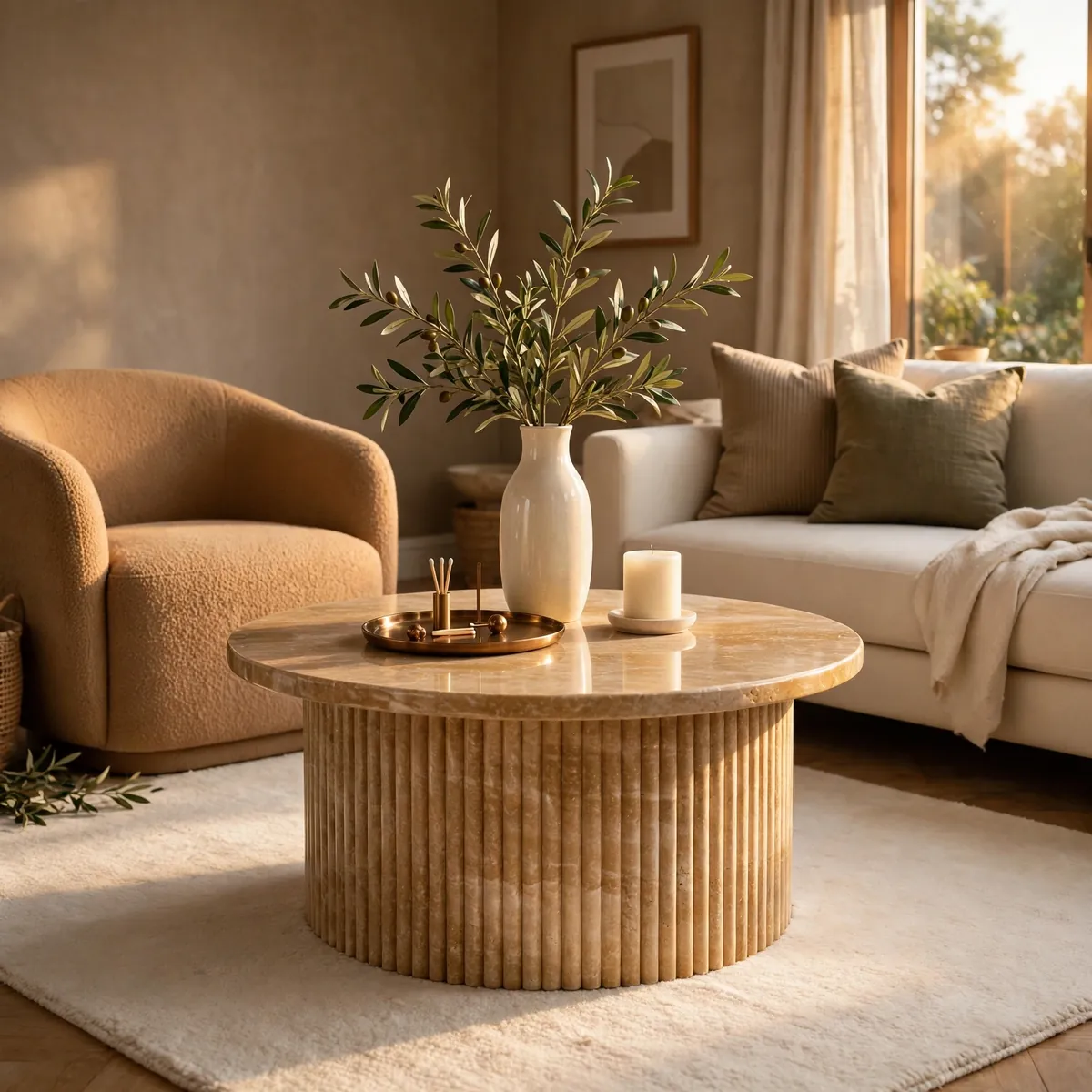
A drum table — a short cylinder, often in metal, wood, or stone — brings sculptural roundness to the middle of the room. A fluted travertine drum table in a modern living room reads as a piece of sculpture that happens to hold coffee.
Quick tips:
- Drum tables suit smaller seating areas where a long table would overwhelm.
- Style the round top with a triangular arrangement: tray, vase, candle.
- Weighted drums are very stable — a plus in homes with toddlers.
A Vintage Trunk as a Center Table
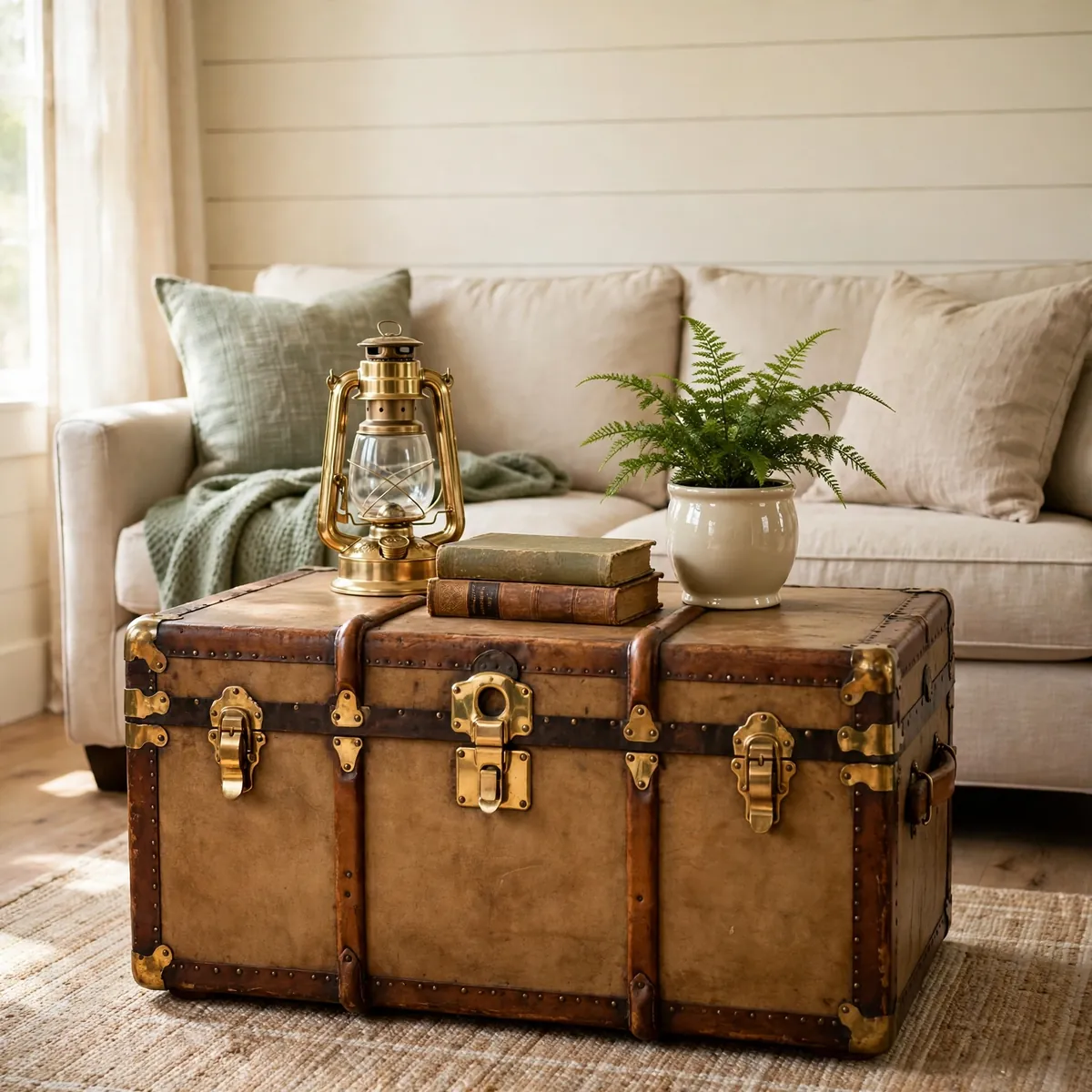
A vintage trunk as a center table adds history, storage, and one-of-a-kind character in a single piece. A weathered leather-and-wood steamer trunk centered before a farmhouse sofa, topped with a stack of books and a small plant, tells a story no flat-pack table can.
Quick tips:
- Check trunk height — many are taller than standard; 16–18 inches is ideal.
- Line the interior with cedar or fabric if storing textiles.
- Add small furniture glides underneath to protect floors and make cleaning easier.
A Rattan or Wicker Coffee Table
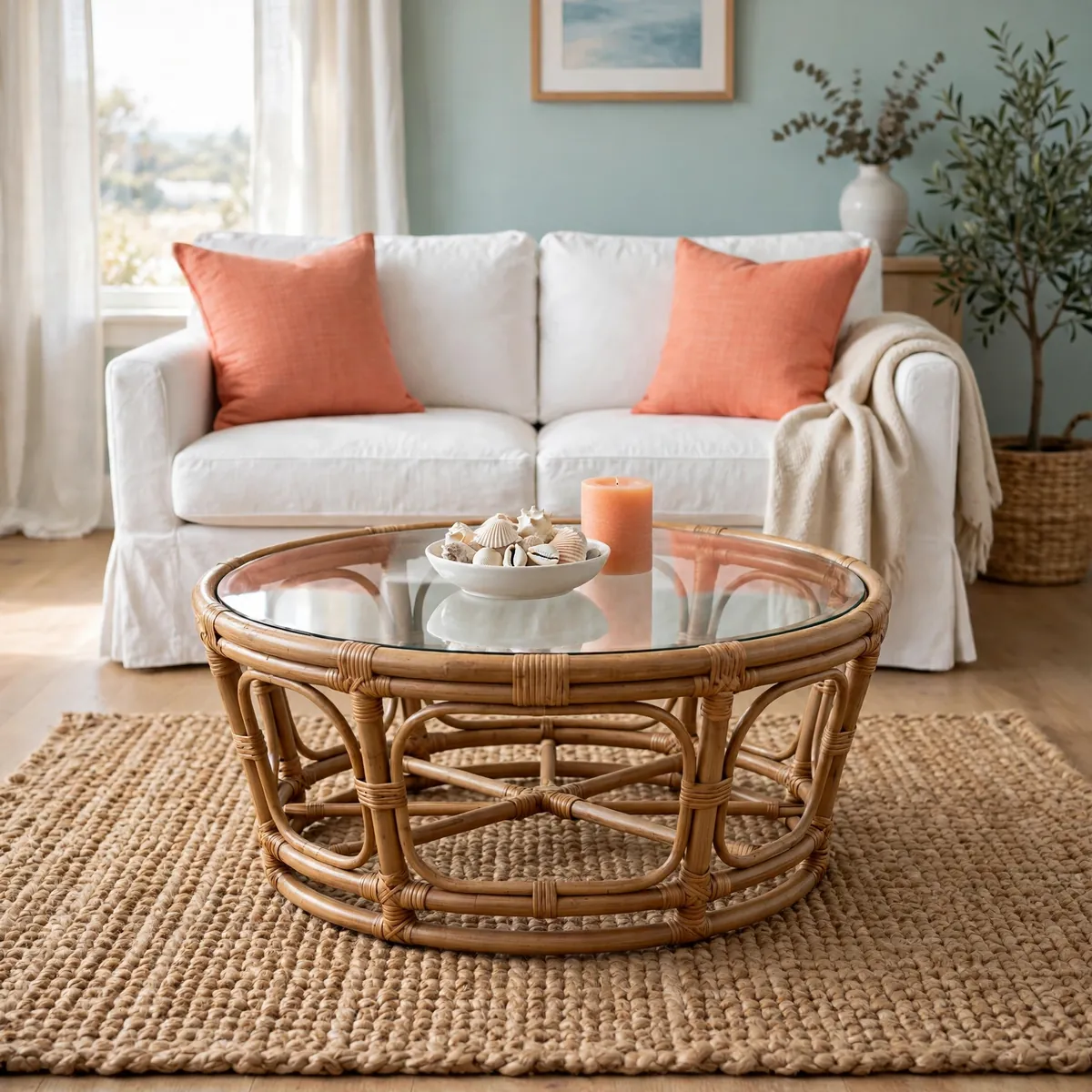
Rattan and wicker center tables bring breezy, natural texture that lightens a room instantly. In a coastal-style living room with white slipcovers and a jute rug, a round rattan coffee table with a glass top insert keeps the look airy while giving a wipeable surface.
Quick tips:
- A glass top insert makes wicker tables practical for drinks.
- Keep rattan out of prolonged direct sun to prevent drying and brittleness.
- Dust the weave regularly — it traps more dust than smooth surfaces.
An Upholstered Bench Instead of a Table
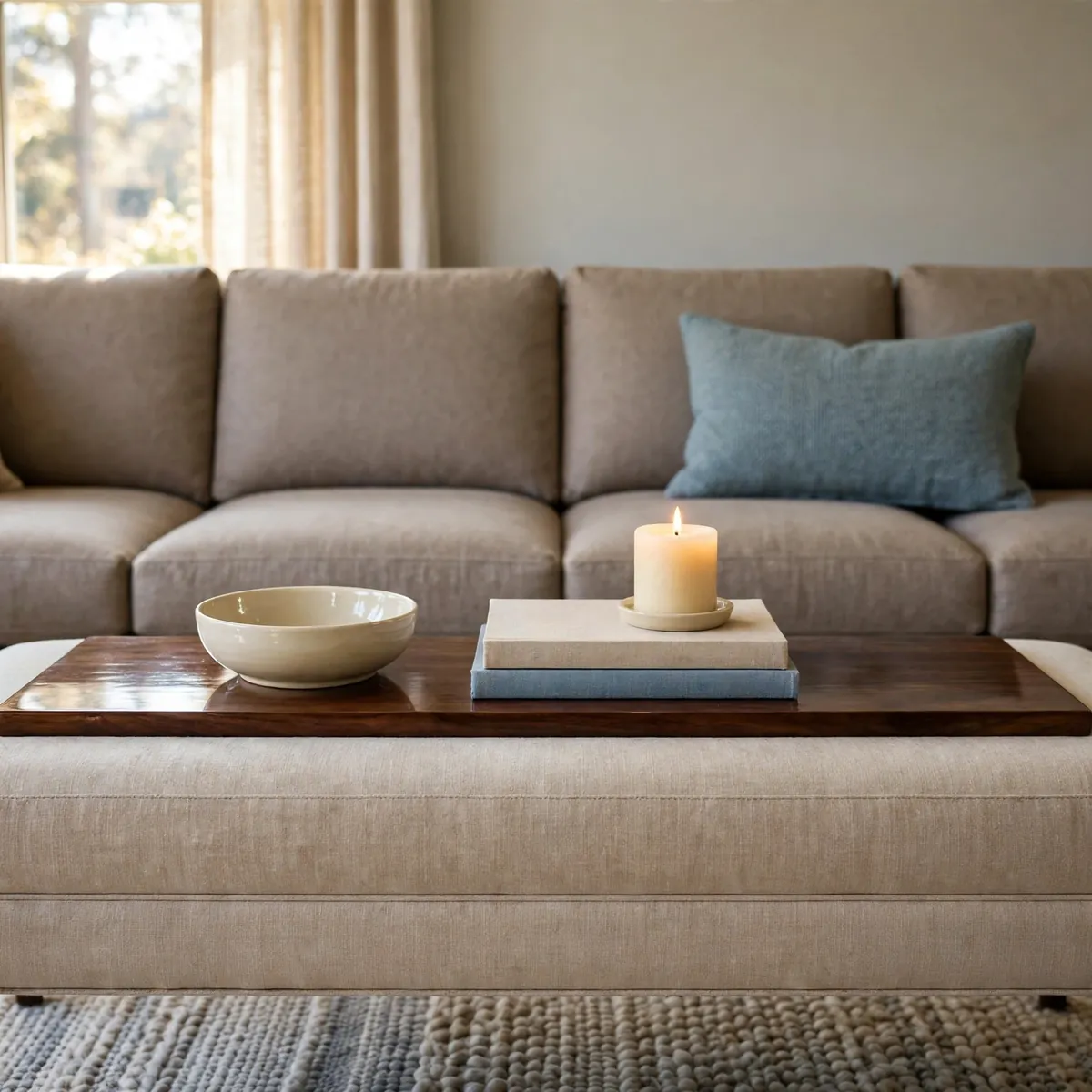
An upholstered bench in place of a coffee table offers soft seating, a footrest, and a styling surface all at once. A long oatmeal-linen bench before a four-seat sofa, dressed with a runner tray, books, and a low bowl, feels tailored and doubles as overflow seating for guests.
Quick tips:
- Choose a bench 2–4 inches lower than standard table height for comfortable perching.
- A runner or tray down the center defines the “table” zone on the bench.
- Stain-resistant fabric is non-negotiable this close to drinks.
A Metal-Frame Industrial Table
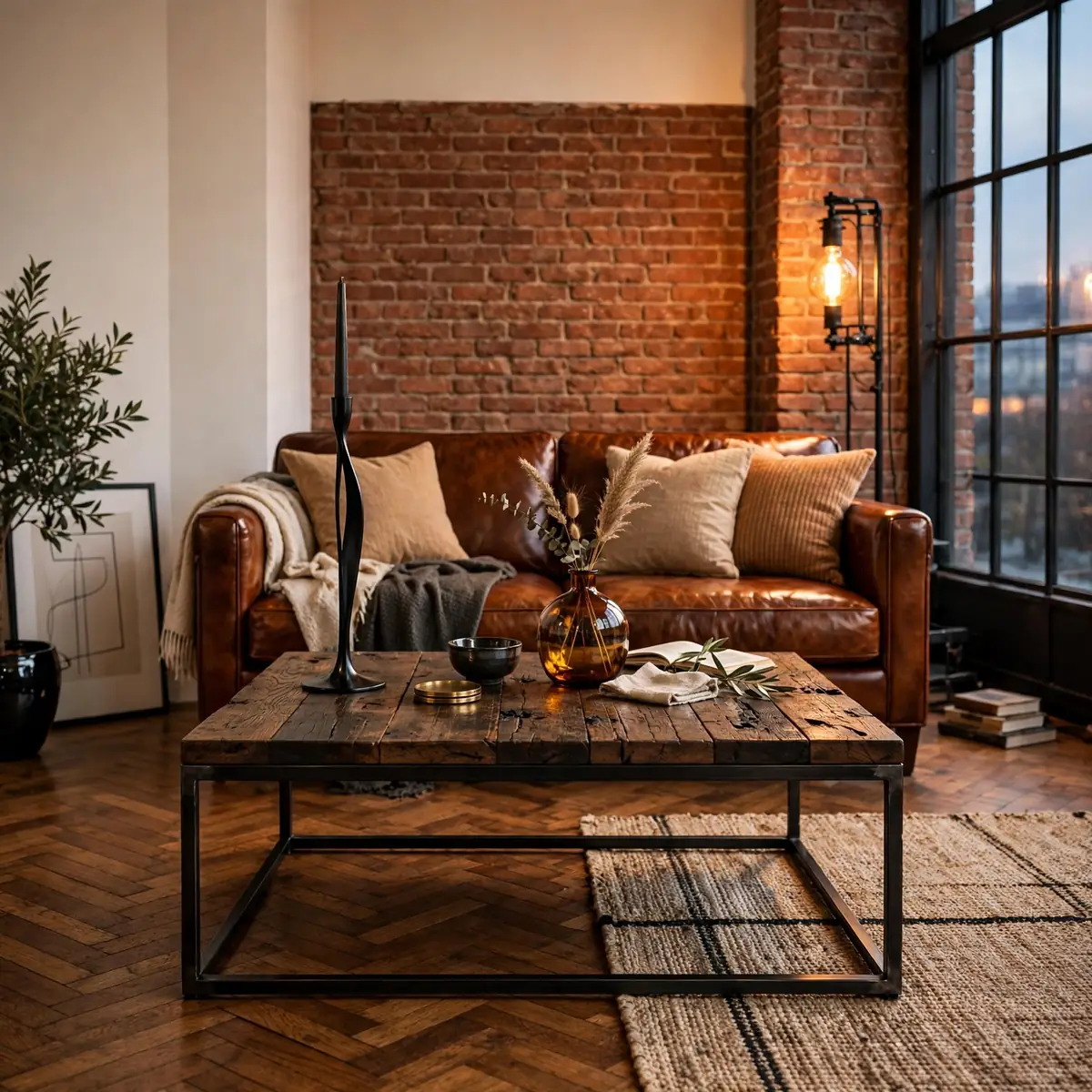
A metal-frame center table with a wood or glass top brings industrial edge and visual lightness. In a loft-style living room with exposed brick, a blackened-steel frame table with a reclaimed wood top echoes the architecture without heaviness.
Quick tips:
- Powder-coated finishes resist chips far better than plain painted metal.
- Slim metal frames keep small rooms feeling open.
- Felt pads under metal feet protect wood floors from scratches.
A Pair of C-Tables Flanking the Sofa
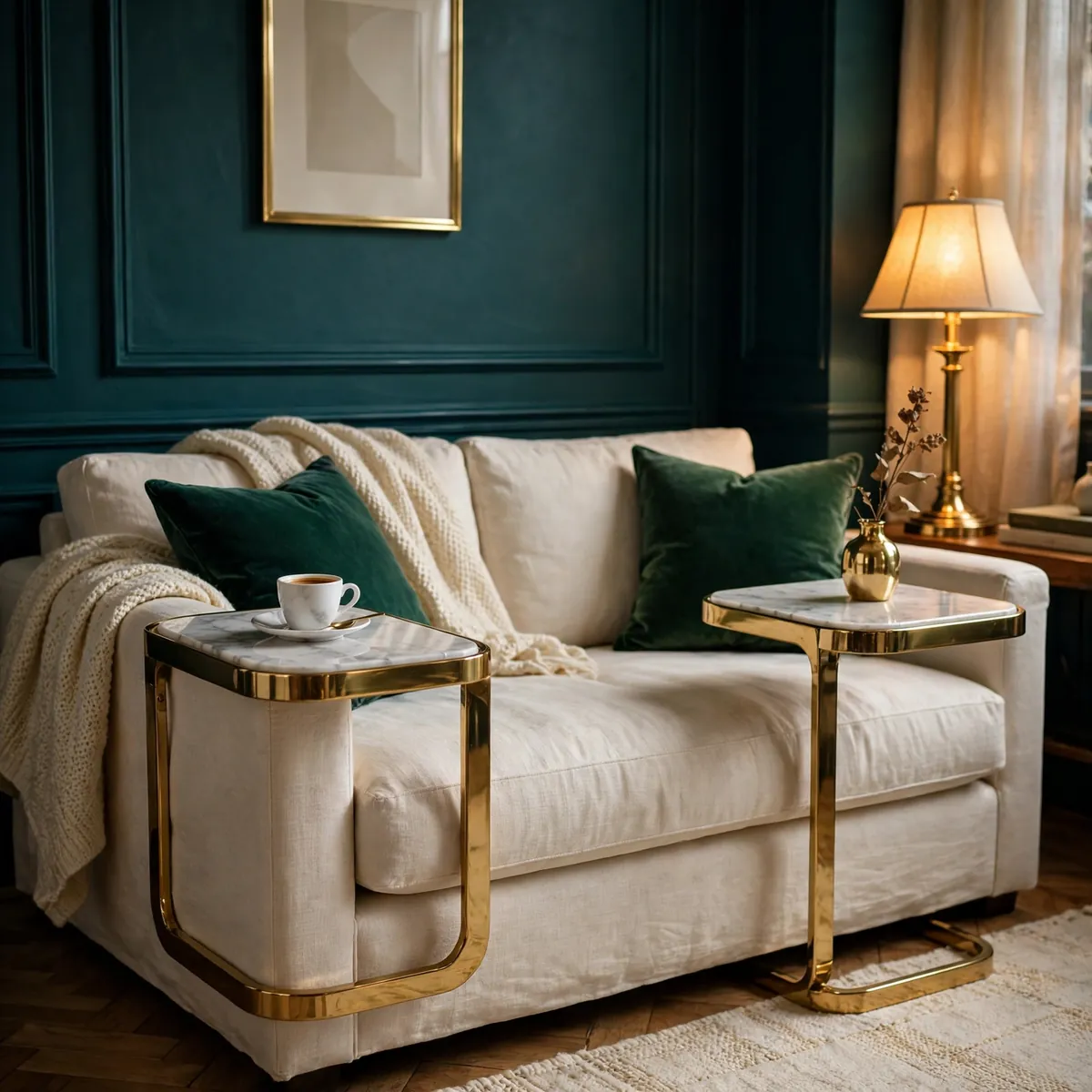
C-tables — small tables whose tops cantilever over the sofa seat — replace one big center table with flexible perches. In a narrow living room where a full coffee table blocks the walkway, two marble-and-brass C-tables slide over each sofa arm, giving everyone a drink spot with zero floor footprint.
Quick tips:
- Check the C-table’s clearance height fits over your sofa arm.
- Heavier bases prevent tipping when loaded with a full mug.
- They also work brilliantly beside accent chairs as mini side tables.
A Floor Cushion Cluster for Casual Living
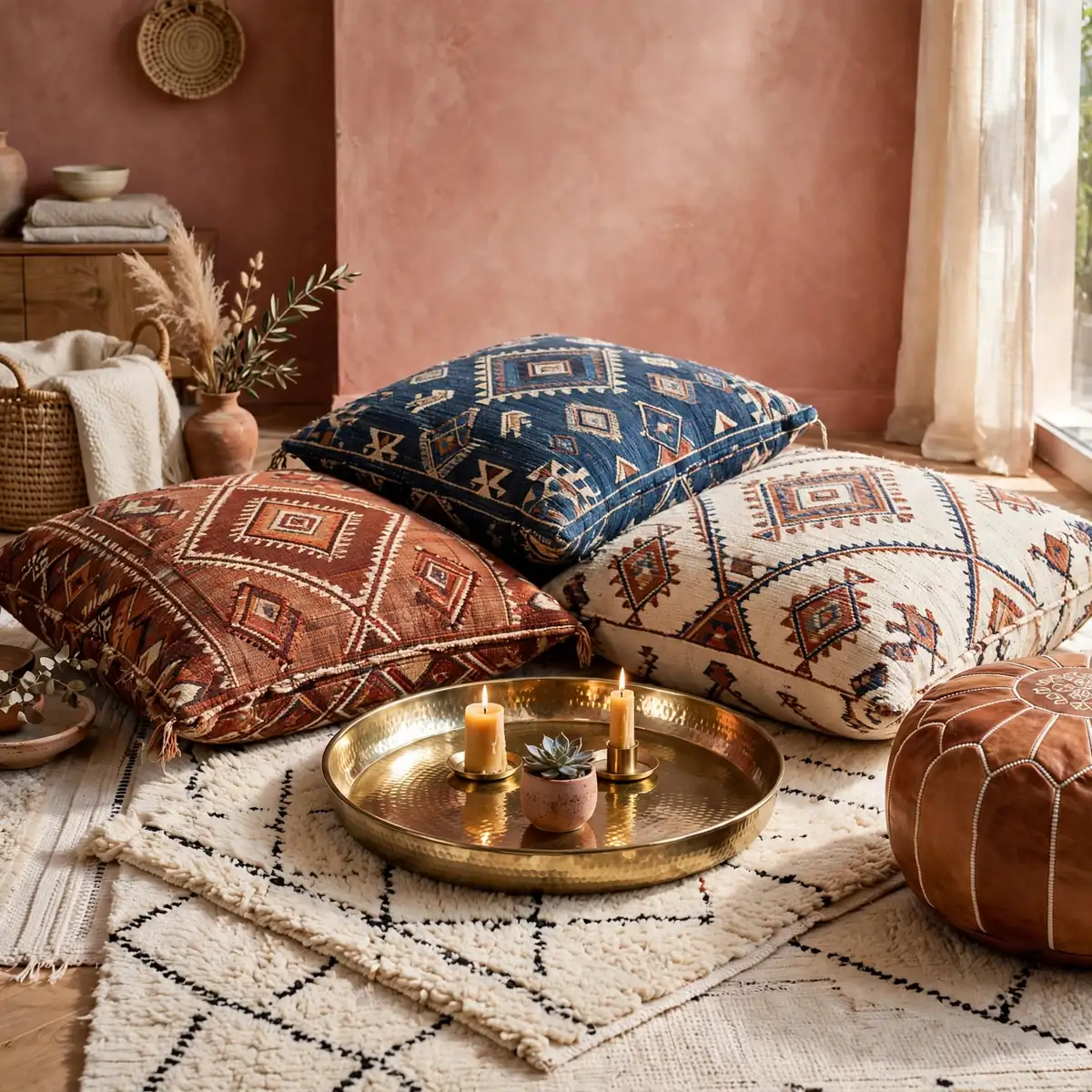
For truly casual, kid-friendly living rooms, a cluster of large floor cushions can replace a center table entirely. In a boho family room, three oversized kilim-covered floor cushions around a low round tray create a flexible lounge zone that rearranges in seconds.
Quick tips:
- Choose washable covers — floor-level textiles take the most abuse.
- Anchor the cluster on a rug so cushions don’t migrate across hard floors.
- Keep one low tray in the middle as the shared “table” surface.
Style on a Base of Stacked Books
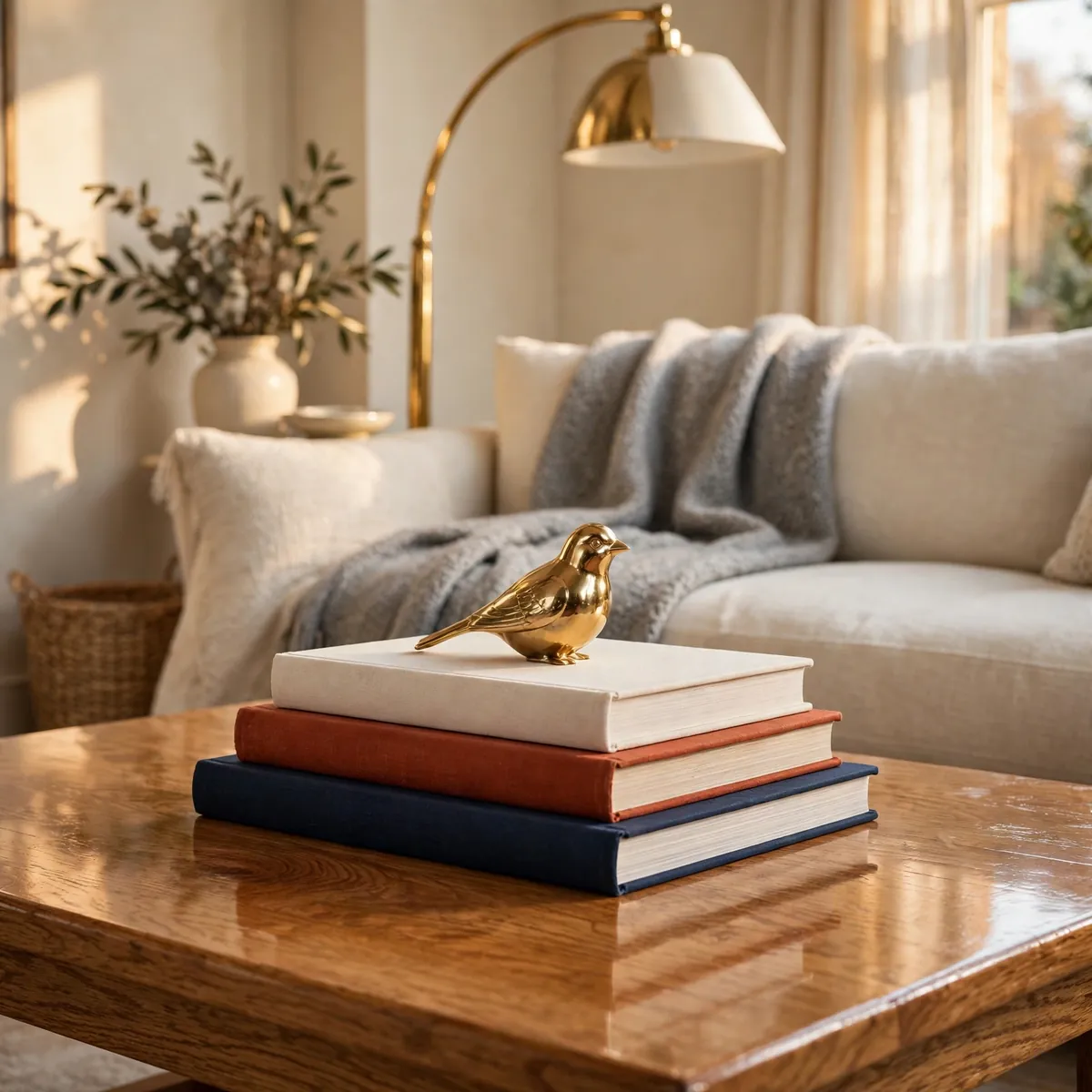
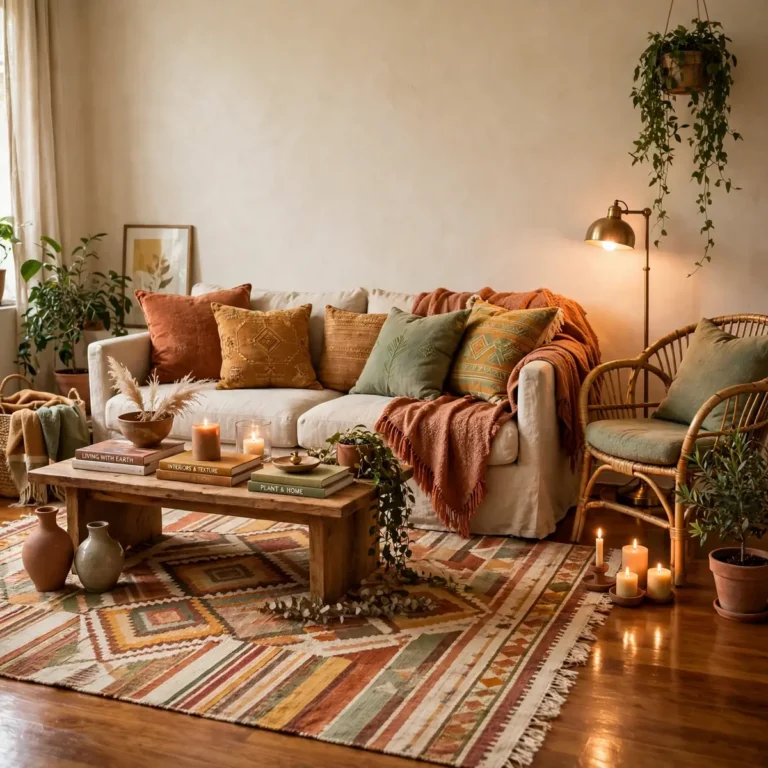
A stack of two or three coffee table books is the designer’s favorite styling base — it adds height, color, and personality in one move. On a simple oak coffee table, a stack of a photography book, a design monograph, and a travel book, topped with a small brass object, builds an instant vignette.
Quick tips:
- Stack largest to smallest, 2–4 books, spines aligned or artfully offset.
- Choose books you genuinely like — guests will open them.
- Top the stack with one small object: a candle, a stone, a tiny plant.
The Tray-First Styling Method
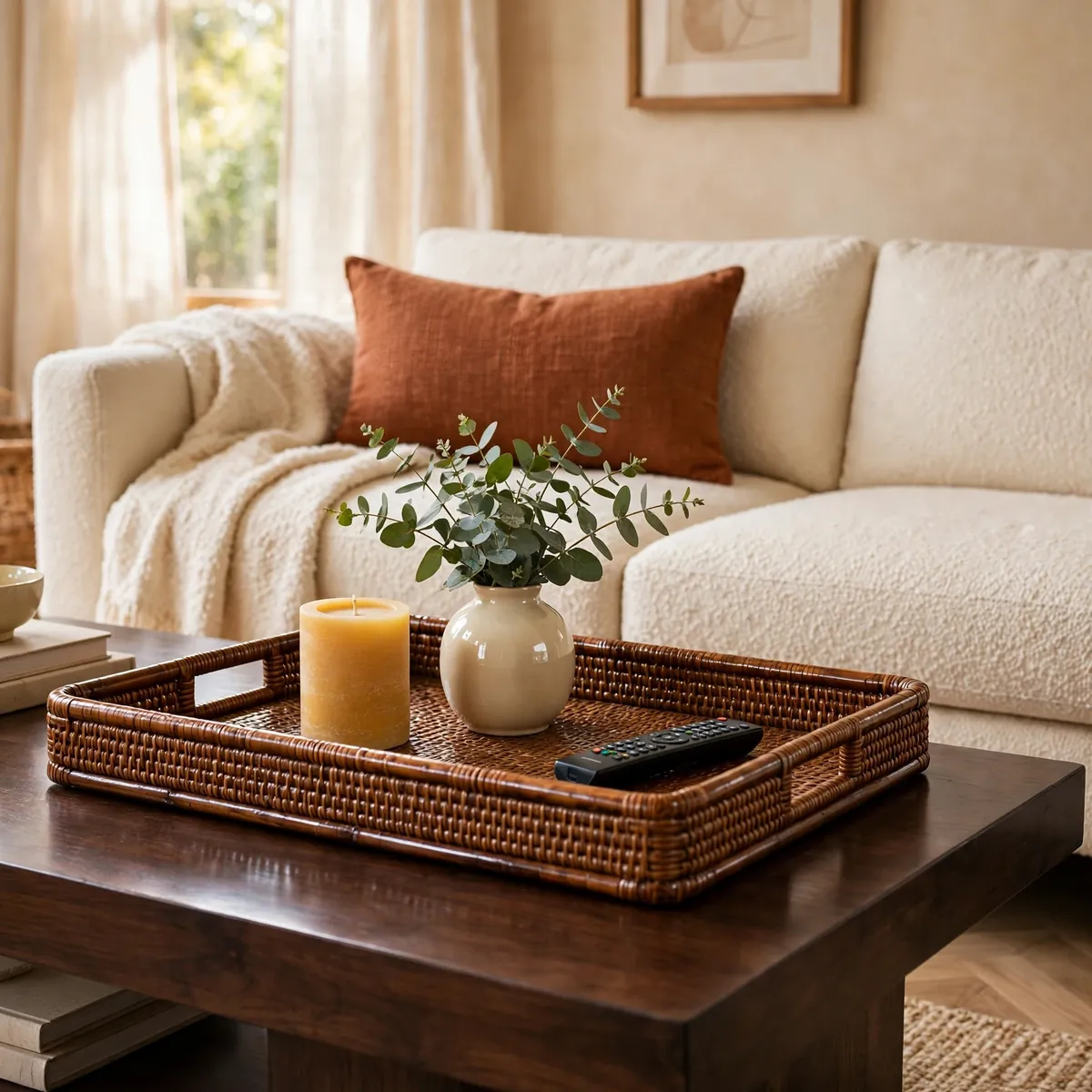
Starting with a tray creates a defined zone that makes any arrangement look intentional instead of scattered. On a large rectangular coffee table, an oversized rattan tray corrals a candle, a small vase of eucalyptus, and the remote controls into one curated composition.
Quick tips:
- Size the tray to about one-third of the table’s surface.
- Contrast materials: a wood tray on glass, a metal tray on wood.
- A tray also makes clearing the table for game night a one-lift job.
One Sculptural Vase as the Hero
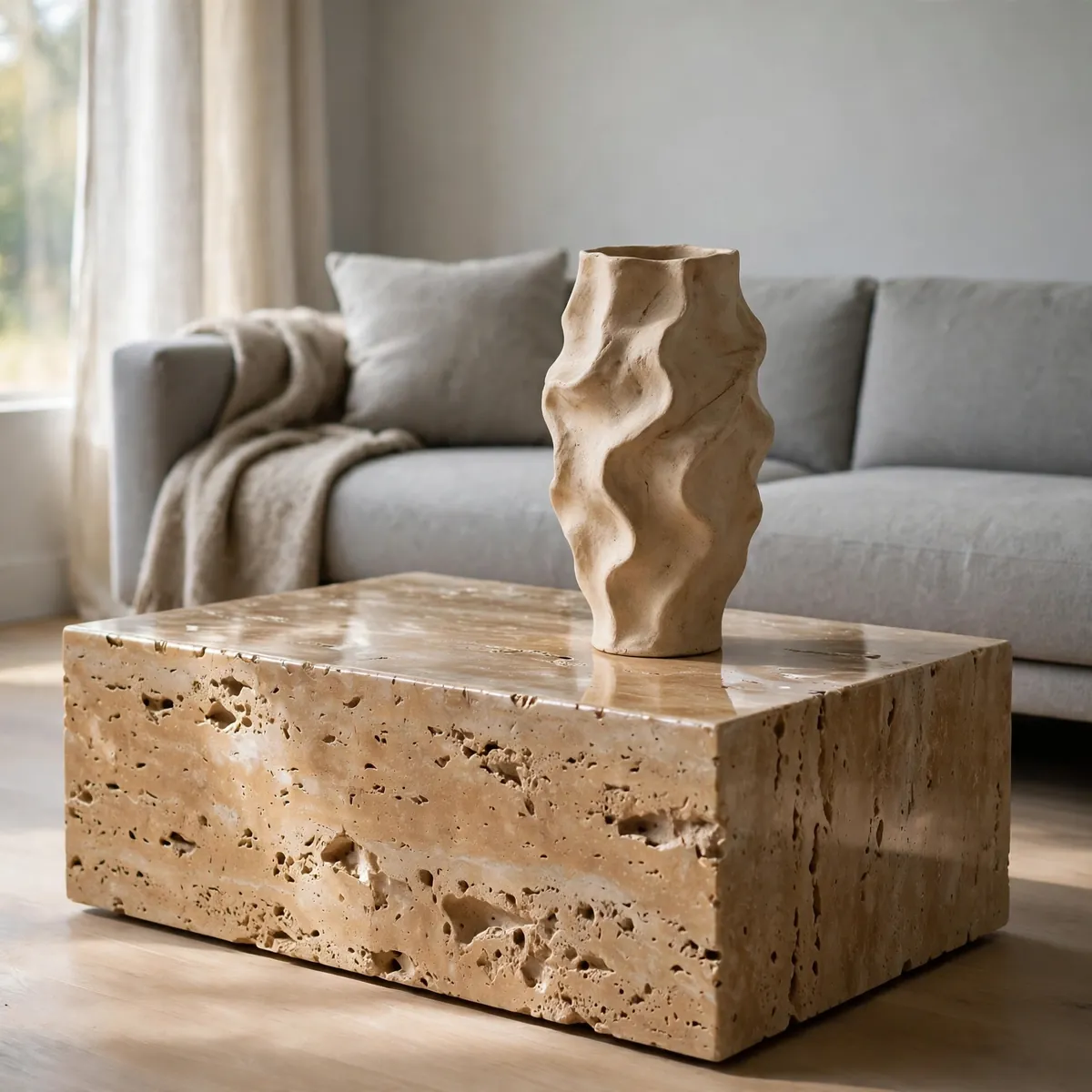
Sometimes one sculptural vase — empty — is all a center table needs. On a travertine coffee table in a minimal living room, a single tall ceramic vessel with an organic, hand-thrown shape holds the entire composition with nothing else competing.
Quick tips:
- Let the vase sit slightly off-center for a natural, unforced feel.
- Focus on shape, texture, and finish rather than size alone.
- An empty statement vase also works seasonally — add branches in winter, leave bare in summer.
A Low Floral Arrangement That Doesn’t Block Talk
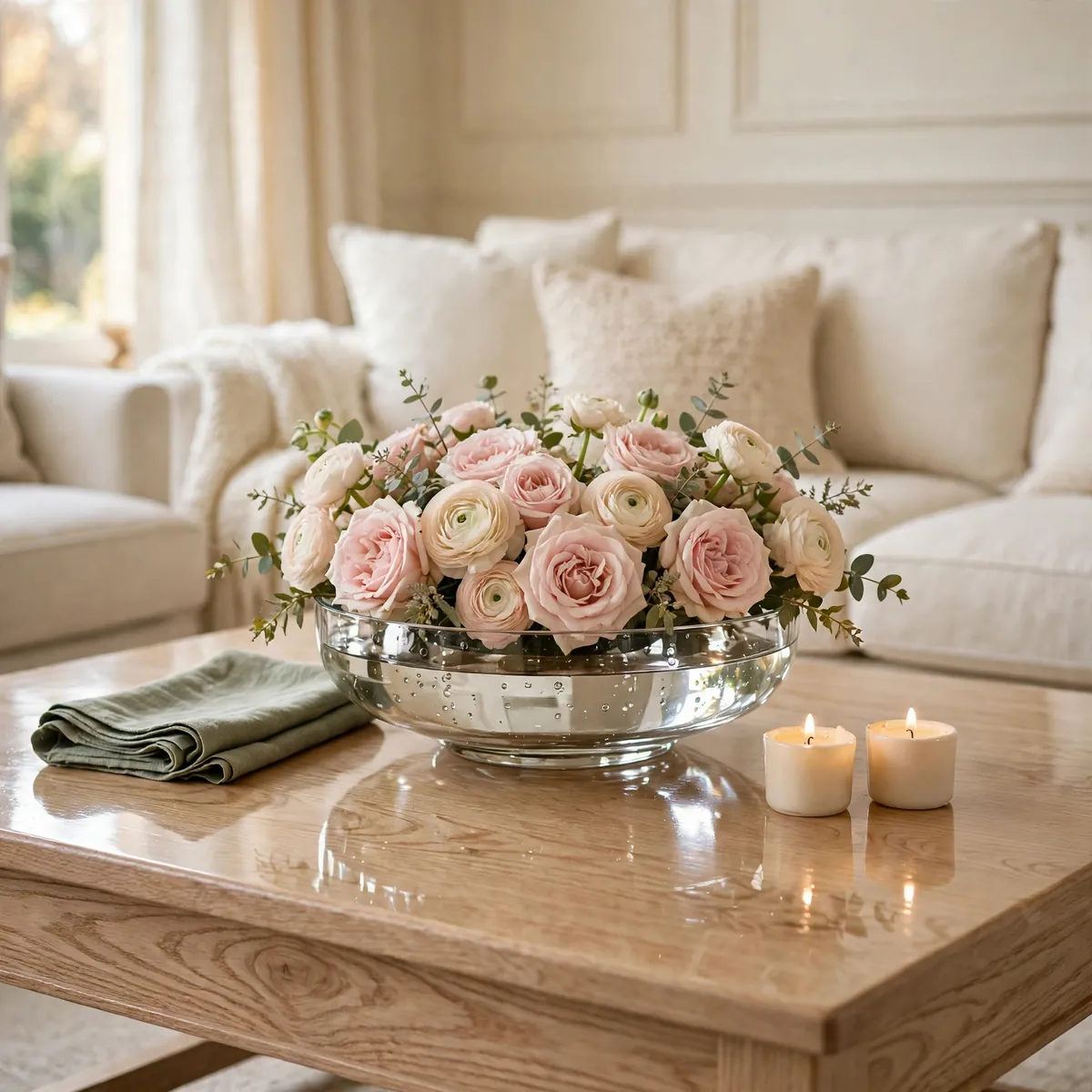
Fresh flowers bring life to a center table, but the arrangement must stay low enough for conversation across it. A wide, low bowl of garden roses and ranunculus, stems trimmed short, adds color and scent at a height that never blocks eye contact.
Quick tips:
- Keep arrangements under 12 inches tall on a standard coffee table.
- Trim stems shorter than you think — low always looks better here.
- Refresh water every two days and re-trim stems to double vase life.
A Candle Trio at Mixed Heights
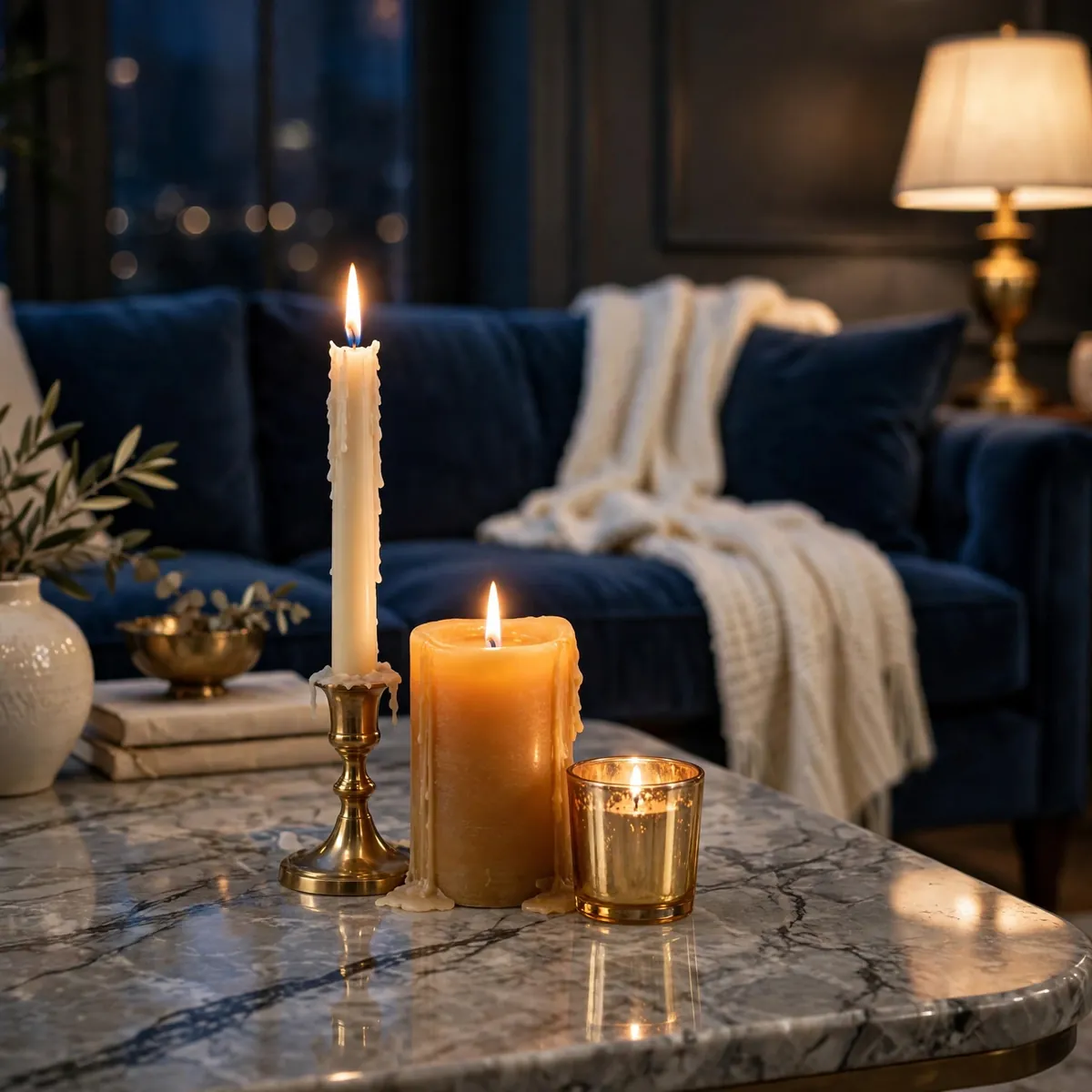
Candles at three different heights create the movement and warmth flat styling lacks. On a marble coffee table, a tall taper in a brass holder, a medium pillar, and a low votive cluster together into a glow that works from afternoon through evening.
Quick tips:
- Vary heights by at least 3–4 inches between pieces for visible rhythm.
- Group in odd numbers — threes read as designed, pairs as placeholders.
- Unscented pillars for the table; save strong scents for single accent candles.
The Seasonal Swap Refresh
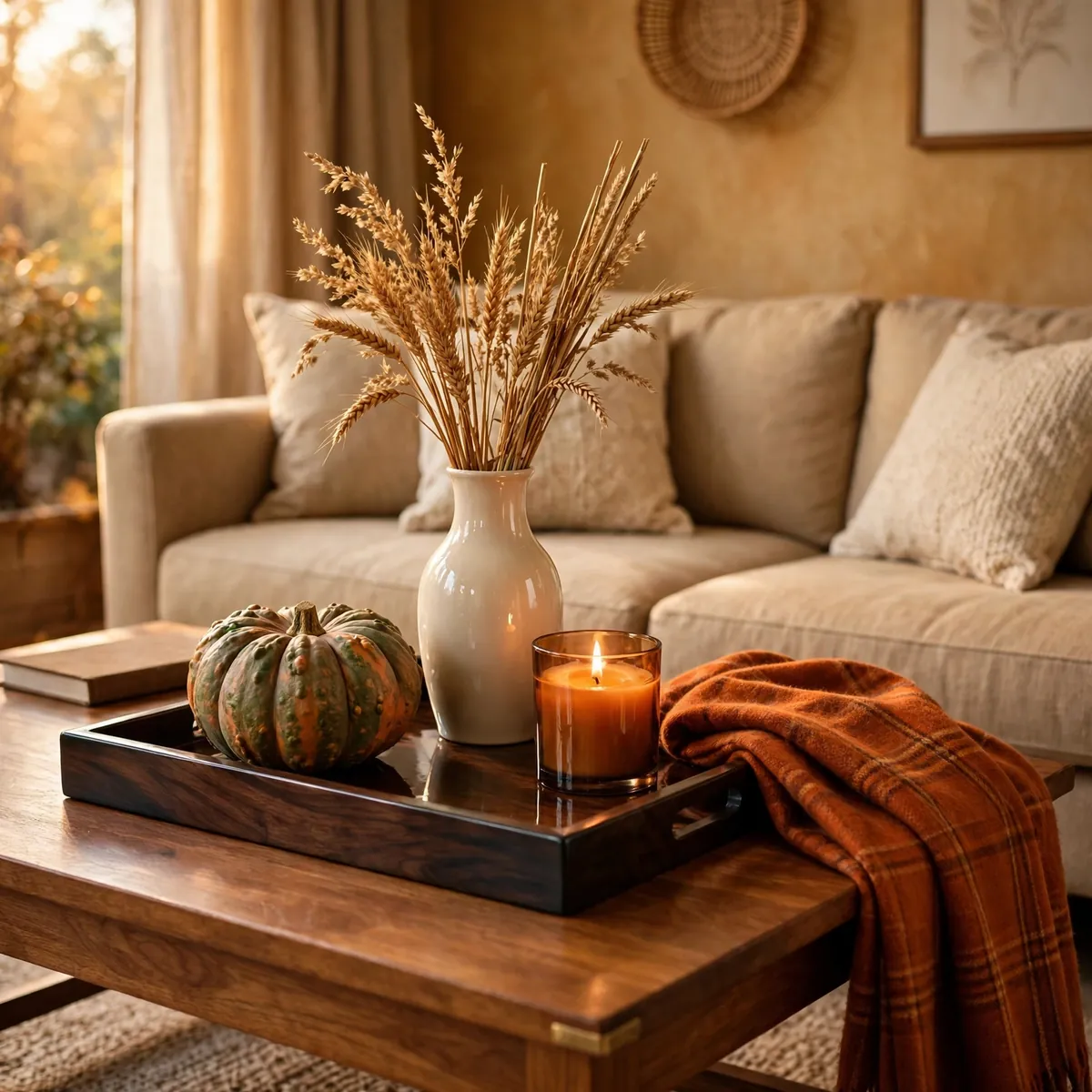
Swapping a few center table pieces with the seasons keeps the living room feeling fresh for almost no cost. In autumn, a wooden tray styled with a small pumpkin, dried wheat stems in a vase, and an amber candle replaces the summer shell-and-coral arrangement — same table, entirely new mood.
Quick tips:
- Keep a small storage box of seasonal accents to rotate in and out.
- Change only 2–3 items; the tray and books can stay year-round.
- Natural seasonal elements (branches, pinecones, fresh blooms) cost the least and look the best.
FAQs
What size coffee table should I get for my living room?
Choose a table about two-thirds the length of your sofa, with a height within 1–2 inches of the seat height (typically 16–18 inches). Leave 12–18 inches between the table and the sofa, and at least 30 inches of walkway around the other sides.
How far should a center table be from the sofa?
12–18 inches is the sweet spot: close enough to set down a drink without standing, far enough to walk past and stretch your legs. In tight rooms, err toward 12; in spacious rooms, 18 keeps proportions relaxed.
What can I use instead of a coffee table?
Cocktail or storage ottomans, nesting tables, a pair of C-tables, an upholstered bench, a vintage trunk, or even a cluster of floor cushions with a central tray all work. Match the alternative to your needs — storage, flexibility, softness, or pure style.
How do I style a center table without it looking cluttered?
Start with a tray to define one zone, then apply the rule of three: one tall item, one horizontal item, one sculptural item. Leave at least a third of the surface empty so the table stays usable, and corral small essentials like remotes inside the tray or a lidded box.
Should the center table match the other furniture?
It should coordinate, not match exactly. Repeat one finish or tone from the room — the wood of the floor, the metal of the light fixture — while letting the table’s shape or material add contrast. A perfectly matched set usually looks flat.
Conclusion
The right center table does quiet, essential work: it anchors the seating, holds daily life, and gives the room a styled focal point. Choose the shape and material for your space first — size it to the sofa, leave room to move — then style it with a tray and the rule of three. Start with one or two ideas here, live with them, and adjust; when the table feels right, the whole living room quietly follows.