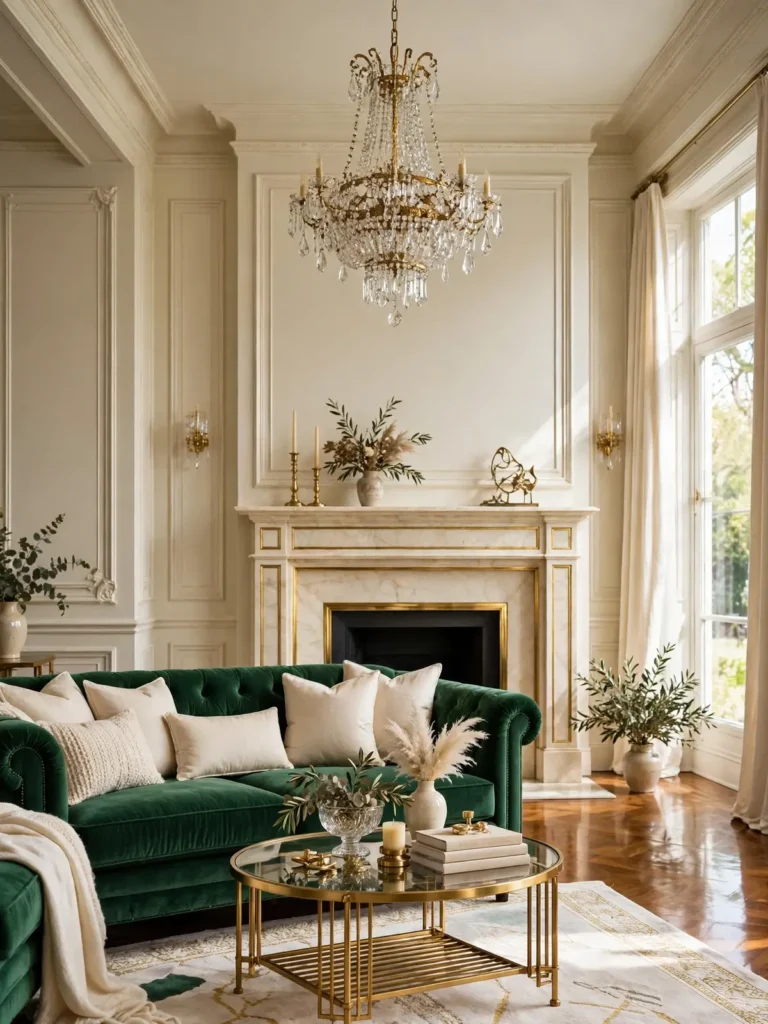
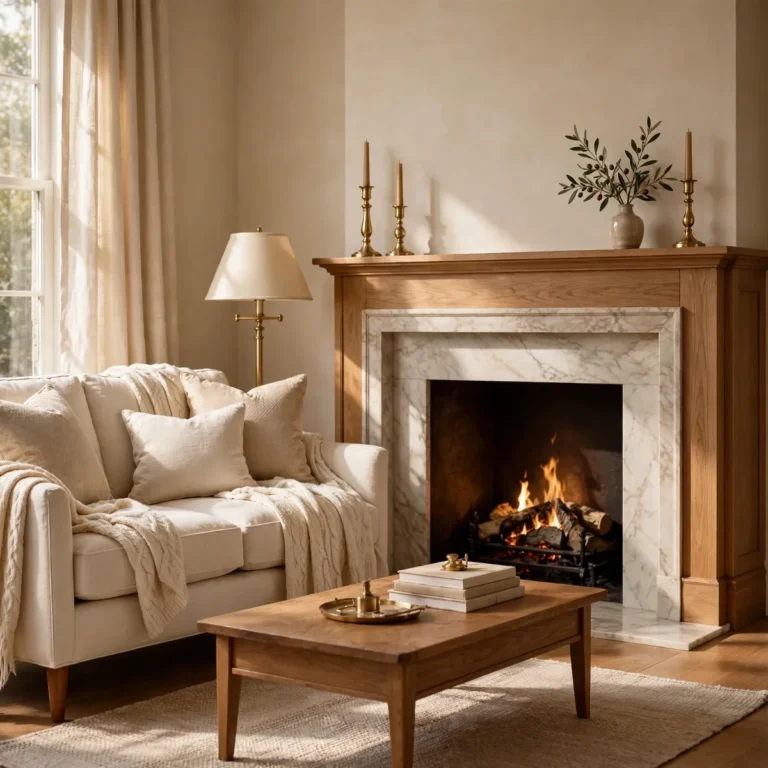
25 Small Space Living Room Ideas That Save Every Inch and Make Your Room Feel Twice as Big
A space-saving-design guide to a bigger-feeling living room, with 25 built-ins, multifunctional pieces, fold-away furniture, vertical storage ideas, and visual tricks — each with a concrete example and quick tips.
Small space living room ideas work best when every piece earns its floor space twice, through hidden storage, a fold-away mechanism, or a visual trick that makes the walls feel farther apart. The smartest small rooms are not emptier rooms, they are better-engineered rooms, where a wall becomes storage, a table disappears when dinner ends, and light and mirrors do the enlarging for you. This guide gives you 25 space-saving design moves you can copy, each with a concrete example.
Start with the biggest win first, usually the storage wall or the fold-away piece that frees the most floor, then add the visual tricks that make that freed floor look even larger. If your room still feels visually busy once the storage is sorted, our minimalist living room ideas show how a calmer palette and fewer silhouettes can stretch the same square footage further.
Key Takeaways
What is the single best space-saving move for a small living room?
A floor-to-ceiling built-in storage wall, because it swallows books, media, and clutter into one flush plane and frees every other wall and the floor.
Which furniture should do double duty first?
The coffee table and the sofa, since a lift-top storage table and a sleeper or storage-chaise sofa replace three separate pieces without adding footprint.
How do fold-away pieces actually help day to day?
They return floor space on demand, so a desk, dining table, or guest bed exists only for the hours you use it and vanishes the rest of the time.
Do mirrors and light really make a room feel bigger?
Yes, when placed with intent — a mirror opposite a window doubles daylight, and wall-mounted light frees the floor that lamps used to occupy.
Where should I start if I can only afford one change?
Start vertical, with tall shelving or an over-door bridge, because wall height is free space you already own and it costs the least to claim.
| Problem | Best mechanism | Floor saved | Effort level |
|---|---|---|---|
| Clutter everywhere, no storage | Built-in storage wall | High — clears floor and surfaces | Medium to high — joinery |
| No guest bed or home office | Fold-away Murphy bed or wall desk | High — whole piece disappears | Medium — wall fixing |
| Coffee table chaos | Lift-top storage table or storage ottoman | Medium — hides clutter inside | Low — swap one piece |
| Dead corners and gaps | Tall tower or pull-out slim cabinet | Medium — uses wasted inches | Low to medium |
| Room feels dark and boxed in | Mirrors, glass, ceiling-height curtains | Visual — feels larger, same footprint | Low |
| Door swing eats a wall | Pocket or sliding door | Medium — reclaims swing arc | Medium to high |
A Floor-to-Ceiling Built-In Storage Wall That Swallows the Clutter
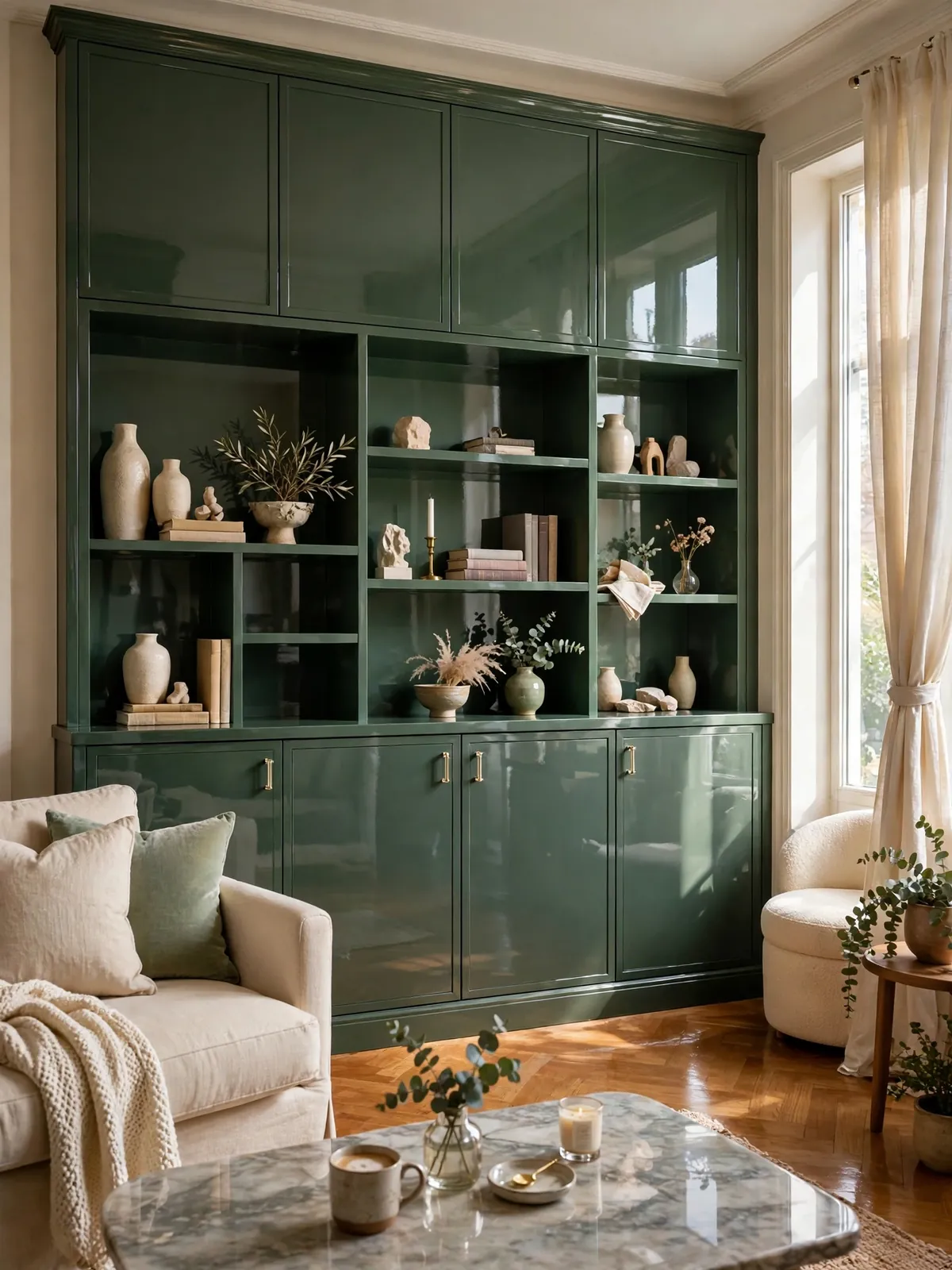
Picture a deep sage green built-in wall running floor to ceiling, with closed cabinets below for games and cables and two open niches above for a brass lamp and a ceramic vase. Because the joinery sits flush with the wall, the room gains a full wall of storage without losing a single step of floor.
Quick tips:
- Keep lower cabinets closed so clutter stays invisible.
- Leave two open niches so the wall does not look like a wardrobe.
- Paint the built-in the wall colour to make it recede visually.
A Fold-Away Murphy Bed Cabinet That Turns the Room Into a Guest Room
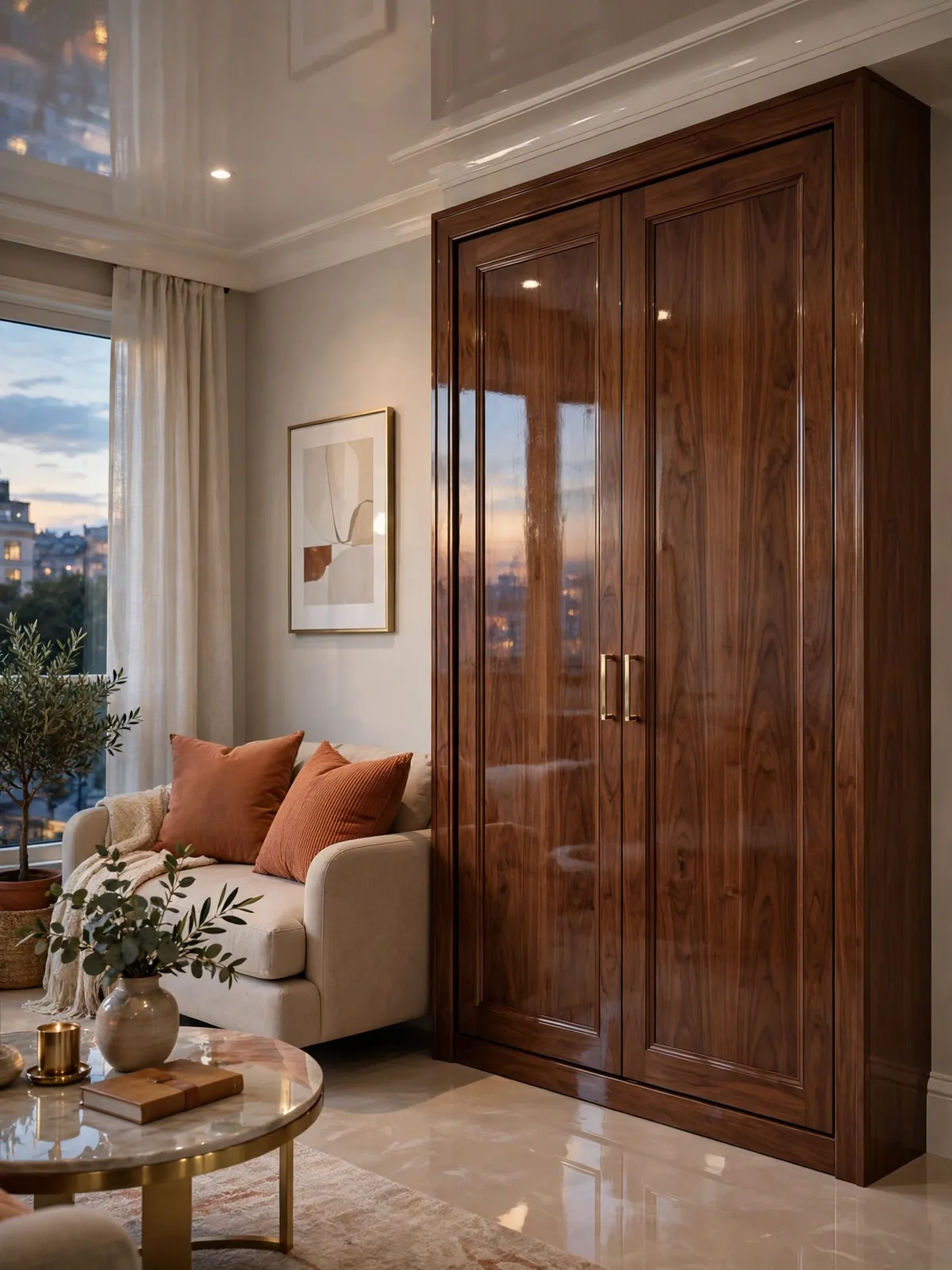
Imagine a walnut cabinet that looks like a wardrobe by day and folds down into a double bed at night, with a terracotta throw already folded on the sofa beside it. The sofa stays put, the bed appears only for guests, and the living room never has to give up its daytime job.
Quick tips:
- Choose a mechanism with assisted lift so one person can open it.
- Fix the cabinet into wall studs, never just plasterboard.
- Keep bedding inside the cabinet so setup takes two minutes.
A Lift-Top Storage Coffee Table That Hides Everything and Raises to Work
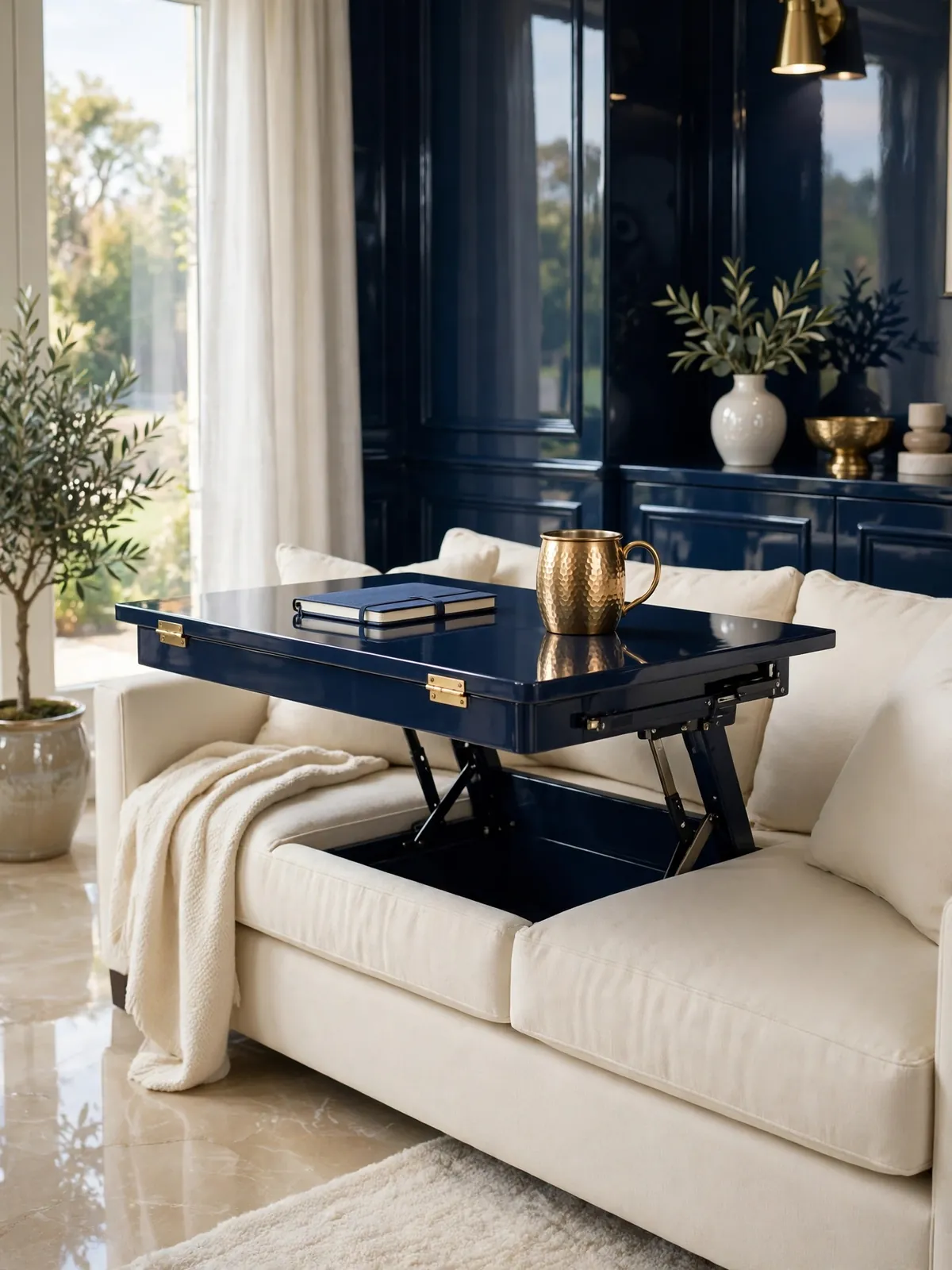
A navy blue lift-top coffee table is the hardest-working piece a small living room can own, because it solves three problems inside one footprint. Closed, it is a normal table with a deep hidden compartment for remotes, chargers, and board games. Lifted, its top rises to laptop height, so the sofa becomes a proper workspace without a desk taking over the room. The navy lacquer finish also anchors a cream sofa, giving the seating zone a centre that looks deliberate rather than improvised. Choose a model with a soft-close hinge and a divided tray insert, and the inside stays as tidy as the outside looks.
Quick tips:
- Pick a divided tray so small items do not slide around inside.
- Test the lifted height against your sofa seat before buying.
- Keep the tabletop clear except for one tray and one book.
A Storage Ottoman Trio That Seats Guests and Swallows Blankets
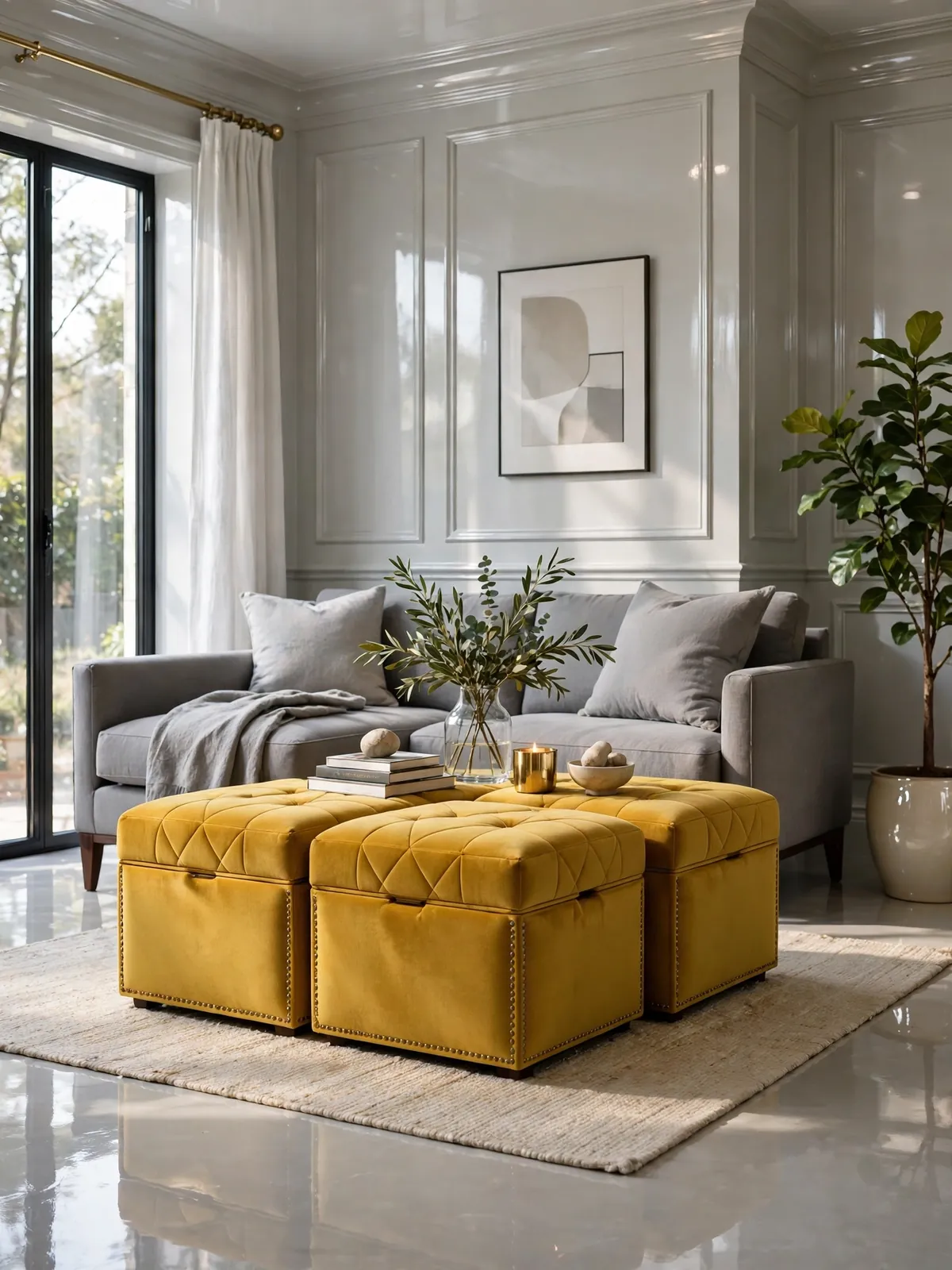
Group three mustard yellow storage ottomans together as a coffee table, and each one opens to hold a folded blanket, a charger, or a stack of magazines. When guests arrive, the trio splits into extra seats, then pushes back together again without a single extra piece of furniture entering the room.
Quick tips:
- Choose ottomans with firm lids so a tray sits level on top.
- Keep one ottoman empty for quick tidy-ups before guests arrive.
- Match the ottoman colour to one cushion for a planned look.
A Fold-Down Wall Desk That Vanishes After Work
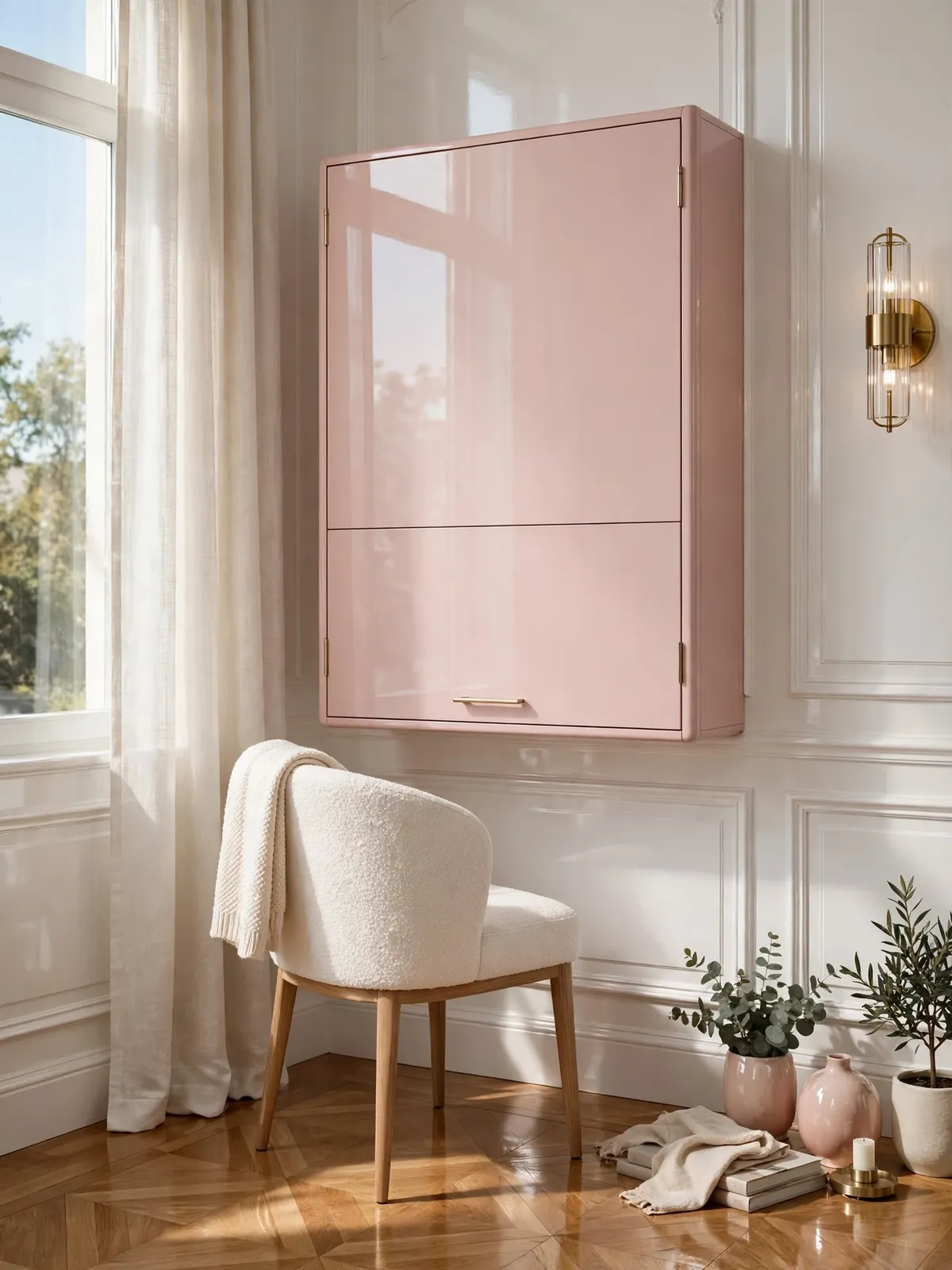
Mount a blush pink fold-down desk on the wall, and it opens into a proper workspace with a laptop shelf and a pen ledge, then folds flat into a slim cabinet at six o clock. The chair tucks underneath a side table, so the corner returns to being a reading spot the moment work ends.
Quick tips:
- Mount the desk at elbow height when seated, not standing height.
- Add a magnetic strip inside for notes and small metal clips.
- Keep the laptop charger plugged inside the cabinet.
A Floating Media Wall That Frees the Floor Under the TV
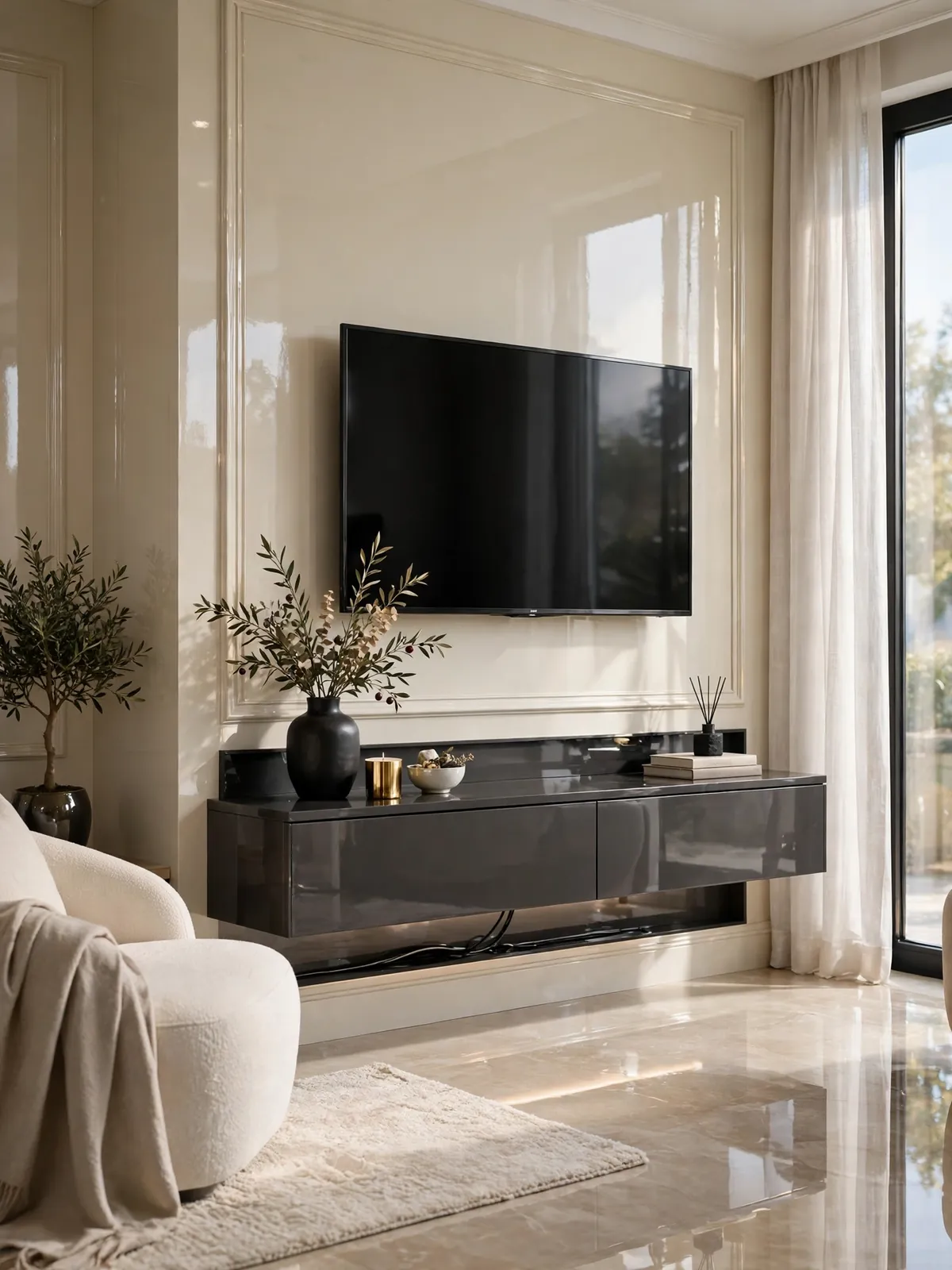
Fix the television to the wall above a charcoal floating console, and the floor beneath stays completely open, which makes the whole wall feel lighter and the room easier to clean. Cables run through a slim trunking channel behind the console, so the media wall reads as one clean plane instead of a tangle of wires.
Quick tips:
- Hide the router inside the floating console with ventilation holes.
- Keep the console 30 centimetres shorter than the TV width.
- Run cables through trunking painted the wall colour.
A Built-In Window Seat With Drawers Underneath for Blankets and Books
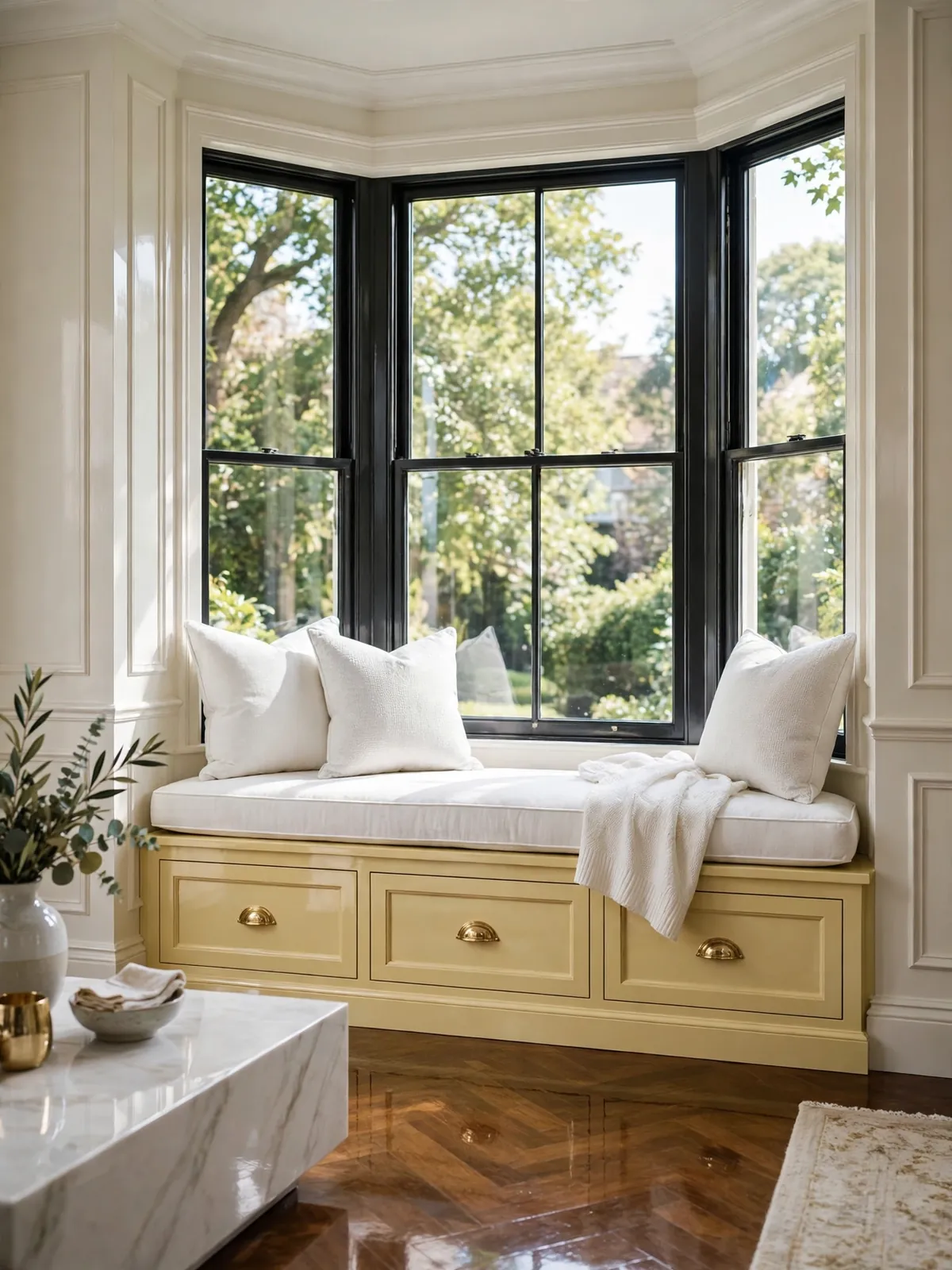
Build a butter yellow window seat into the bay, with two deep drawers underneath holding blankets, board games, and a stack of paperbacks. The seat itself becomes the room’s favourite perch, while the dead space beneath the window finally earns its keep.
Quick tips:
- Fit drawers on full-extension runners so nothing hides at the back.
- Add a thick seat pad so the seat is comfortable for long sits.
- Store heavy items low so the drawers glide easily.
Nesting Side Tables That Tuck Away Until You Need Them
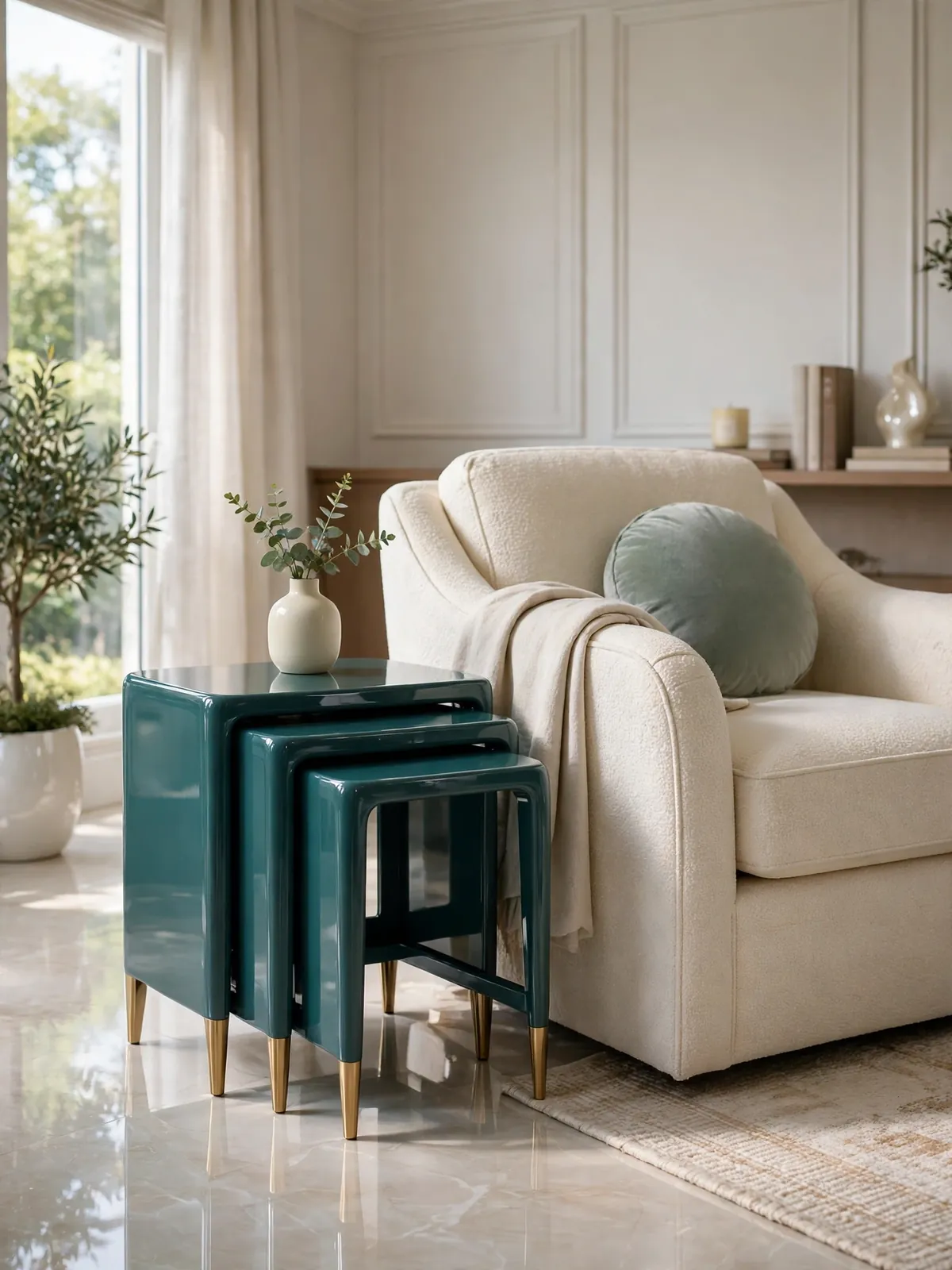
Slide three teal nesting tables under each other beside an armchair, and one small footprint holds three surfaces that pull out for drinks, books, and a laptop. When the room needs floor space again, the tables stack back into a single slim silhouette in seconds.
Quick tips:
- Choose tables that differ in height by a few centimetres for easy nesting.
- Keep the smallest table free for a guest drink.
- Pick a wipe-clean top so drinks leave no rings.
A Corner Banquette Bench With Hidden Storage Under the Seat
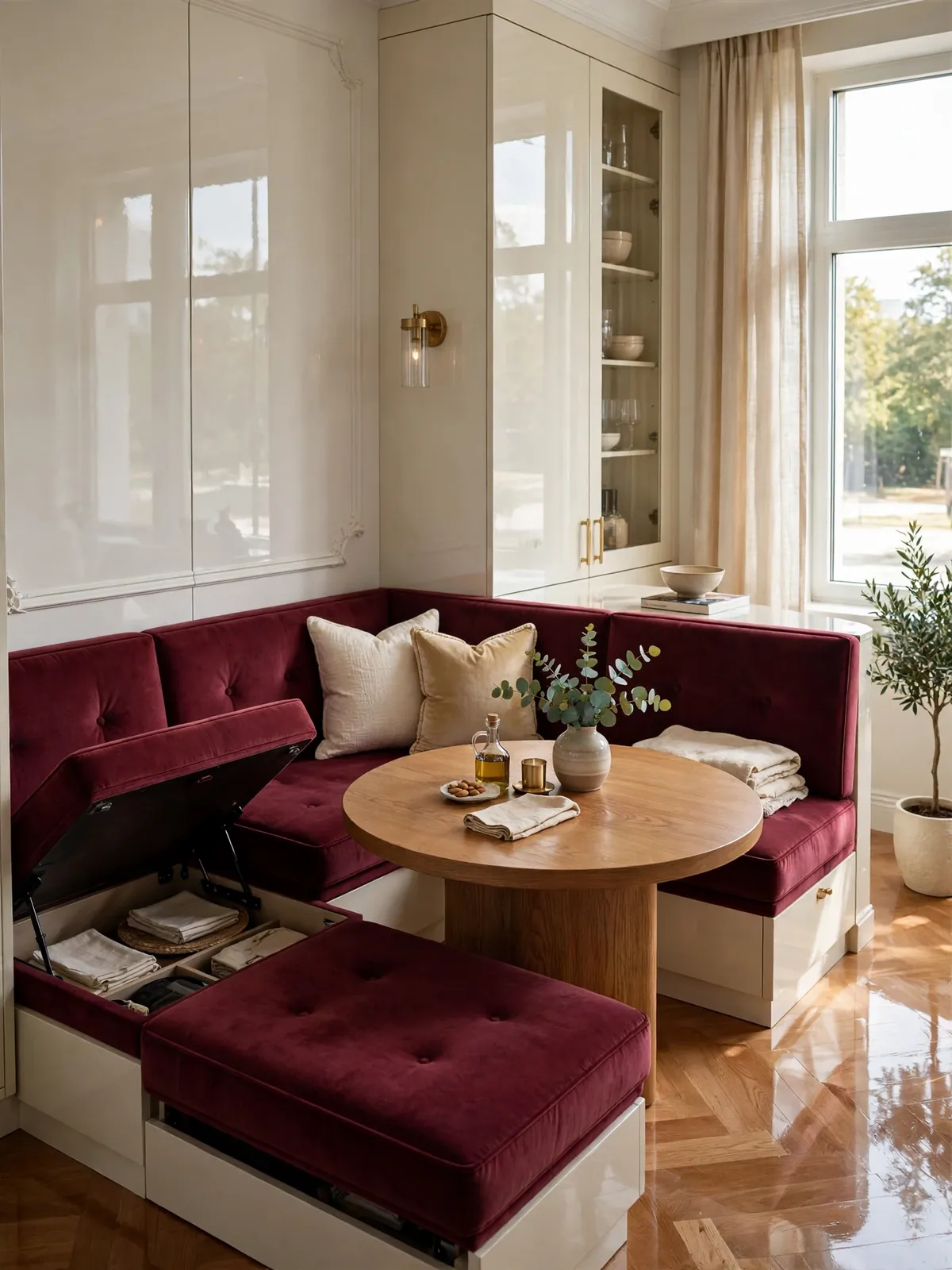
Fit a burgundy banquette bench into a dead corner, with lift-up seats hiding winter throws and rarely used tableware, and pair it with a round oak pedestal table. The corner that once held nothing now seats three people, and the pedestal base leaves legroom that four-legged tables steal.
Quick tips:
- Use gas struts so the lift-up seats stay open hands-free.
- Choose a pedestal table base to maximise legroom.
- Add a slim cushion back so sitters lean comfortably.
A Pocket Door That Gives You Back the Whole Swing Arc
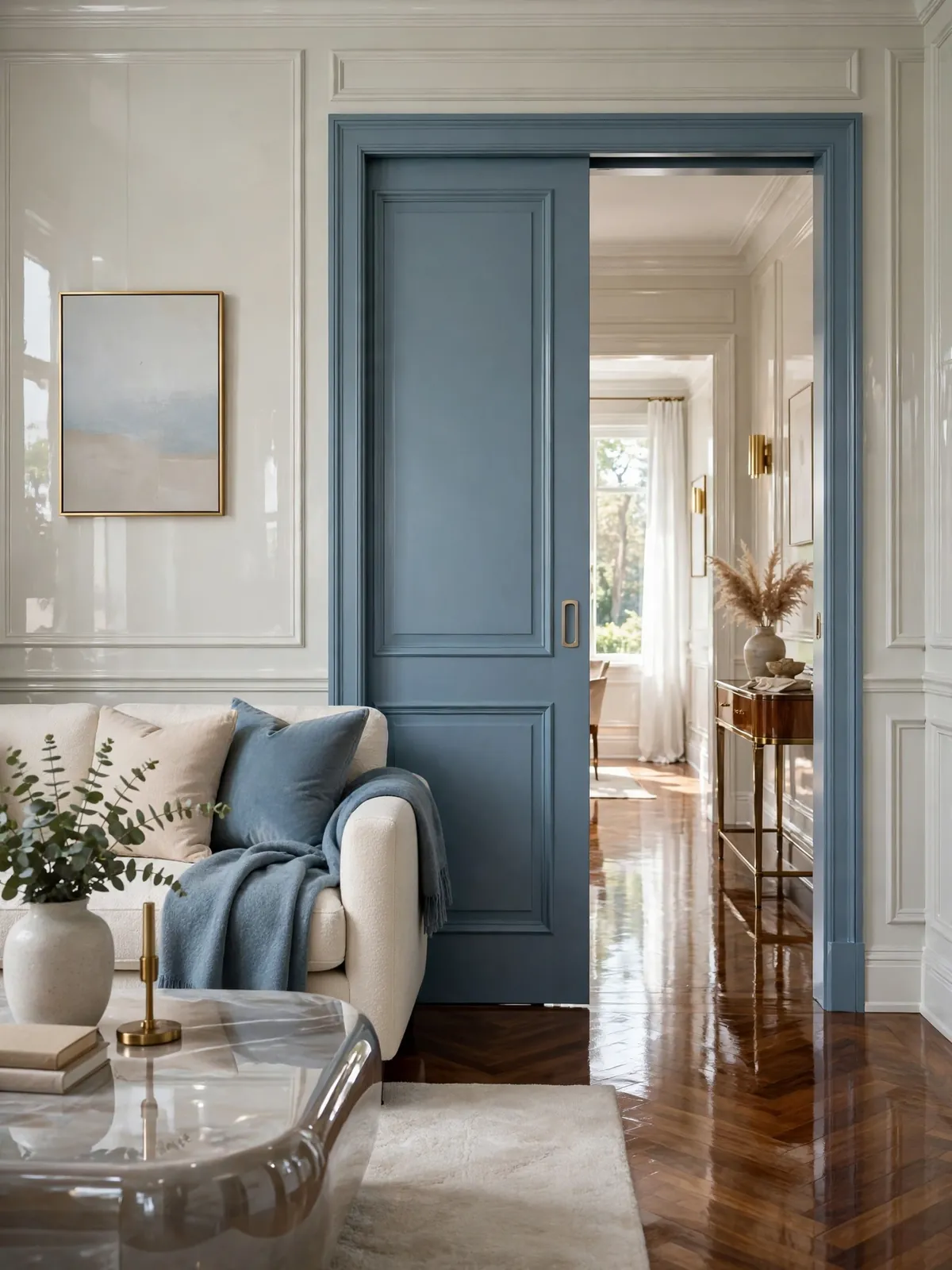
Replace a hinged door with a dusty blue pocket door that slides into the wall, and the arc of floor the old door needed to swing through becomes usable space overnight. That reclaimed arc fits a bookshelf, a chair, or simply clear walking room that the room never had before.
Quick tips:
- Check the wall cavity is free of pipes before choosing a pocket door.
- Fit a soft-close runner so the door never slams.
- Keep the door track clean so it glides silently.
A Full Mirrored Wall Panel That Doubles Daylight and Depth
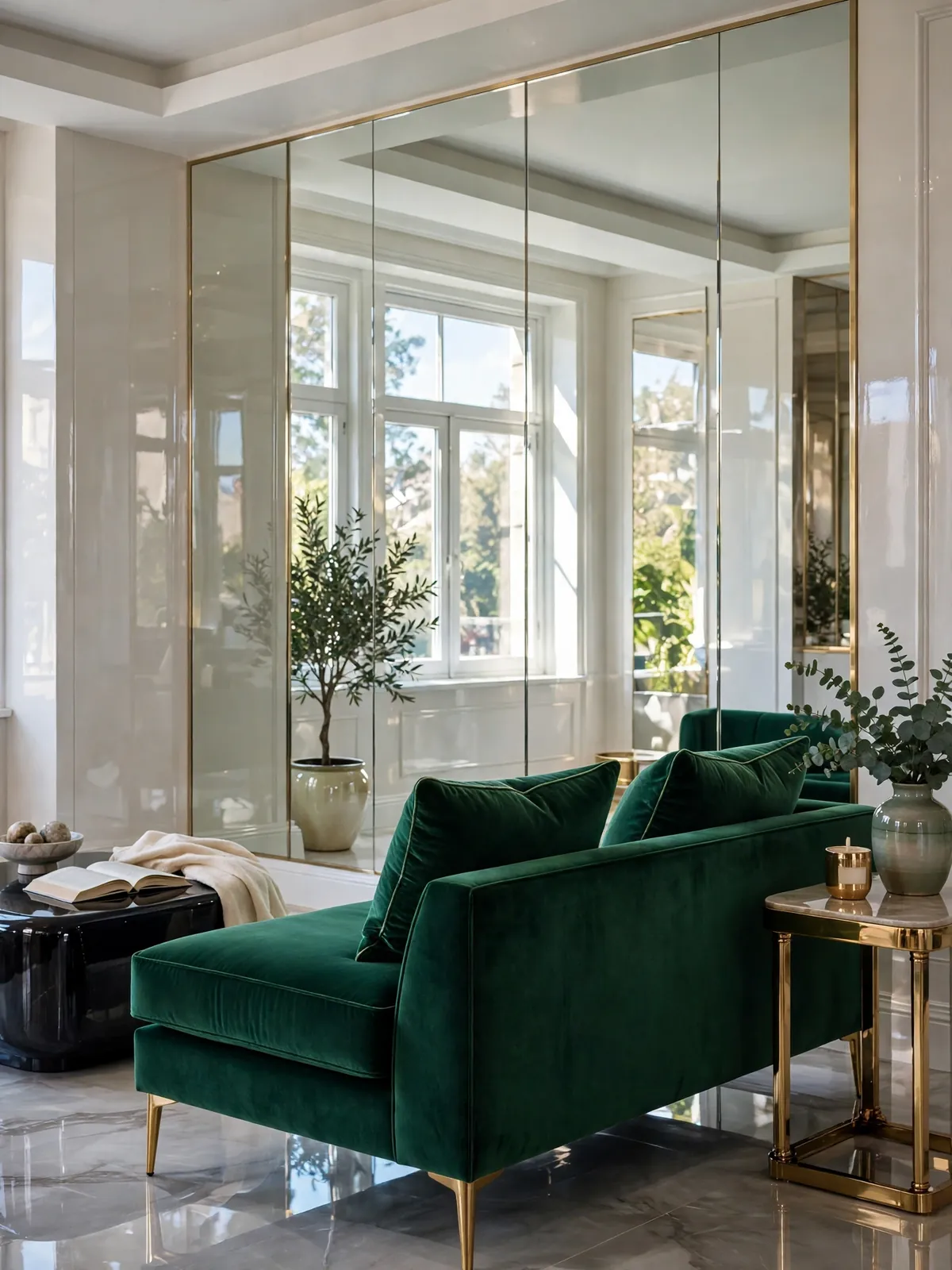
Cover one wall with a full mirrored panel opposite the window, and an emerald green sofa doubles in reflection while daylight bounces twice as far into the room. The mirror works best when it reflects the window or a plant, not a television, so position it to catch the brightest view.
Quick tips:
- Place the mirror opposite the window for maximum daylight bounce.
- Use one large panel rather than many small mirrors for a calmer effect.
- Clean the panel weekly so reflections stay crisp, not smeared.
Glass and Acrylic Pieces That Keep Sightlines Open
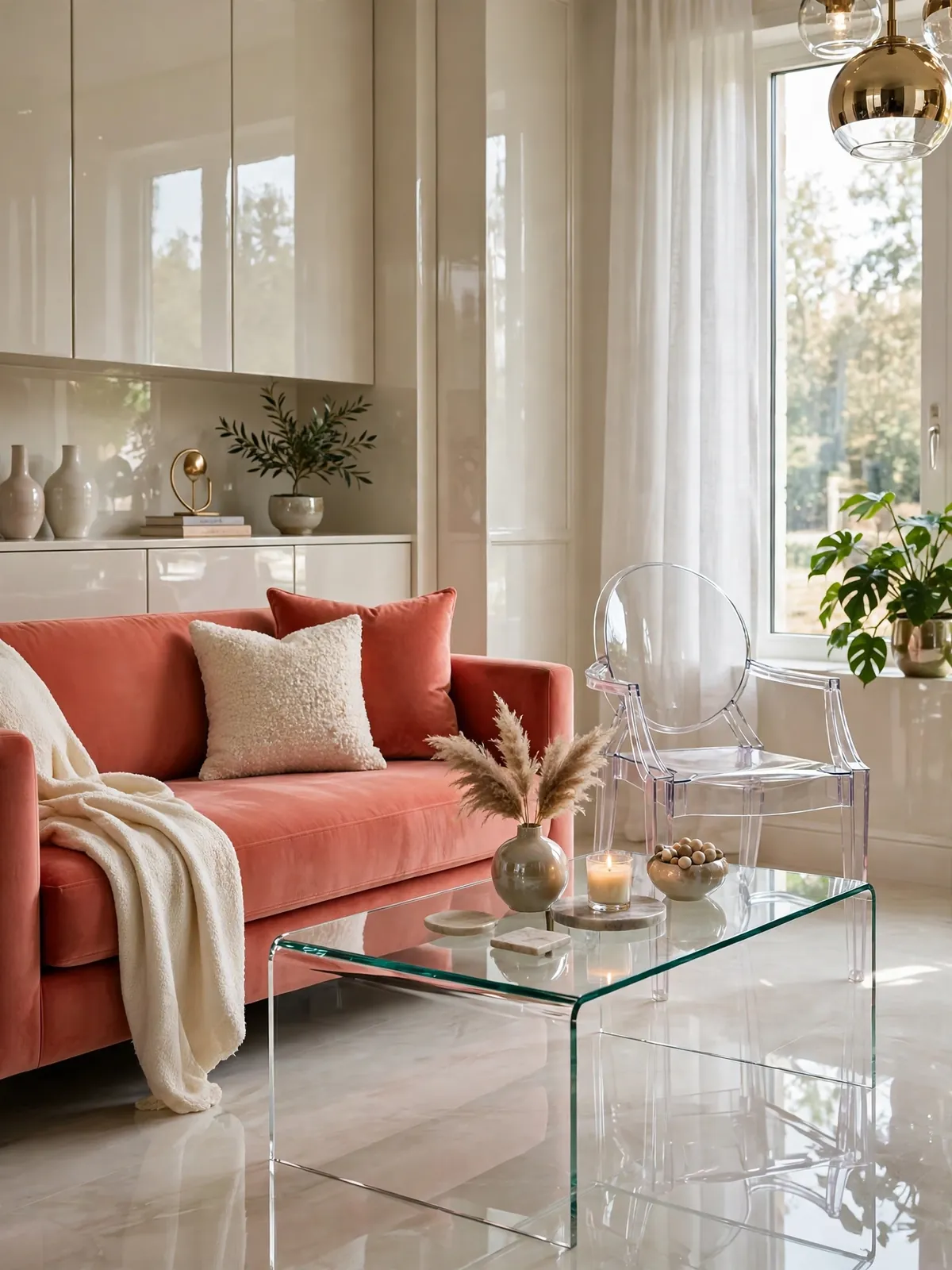
Swap a solid wood coffee table for a clear glass one beside a coral sofa, and add one acrylic side chair that almost disappears against the wall. Transparent pieces hold drinks and seat guests while letting the eye travel straight through them, so the floor reads as continuous.
Quick tips:
- Use tempered glass for safety on table tops.
- Keep acrylic chairs smudge-free with a microfibre cloth.
- Pair one transparent piece with solid ones so the room still feels grounded.
A Tall Narrow Shelving Tower That Claims a Dead Corner
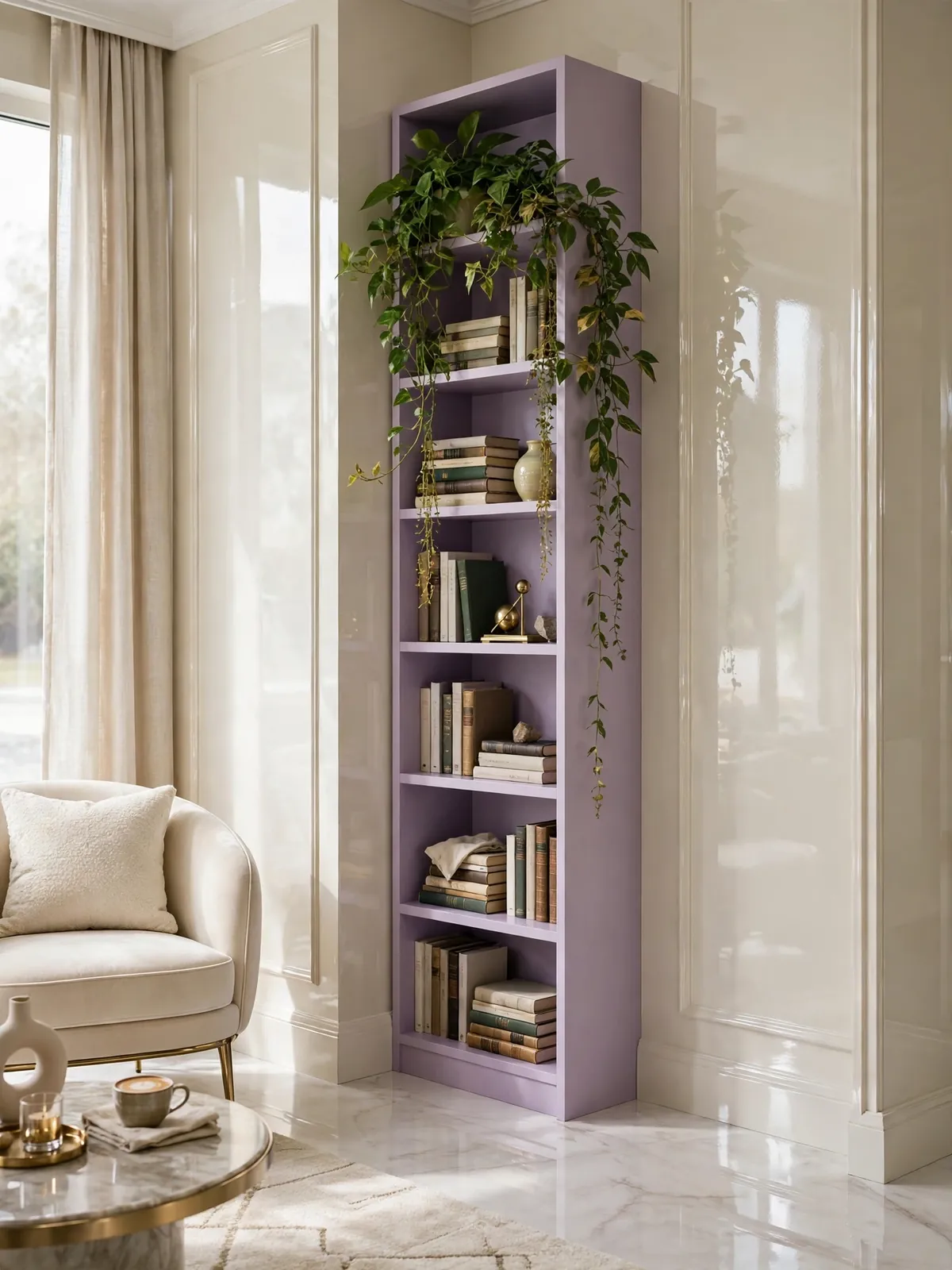
Stand a tall, narrow lavender shelving tower in the dead corner by the door, and books, a trailing plant, and a small speaker climb the wall instead of spreading across the floor. A tower only 30 centimetres deep holds a surprising amount, because it uses height the room was already wasting.
Quick tips:
- Anchor tall towers to the wall so they cannot tip.
- Put heavy books low and light objects high.
- Leave one shelf empty so the tower looks styled, not stuffed.
A Convertible Sleeper Sofa With a Storage Chaise for Bedding
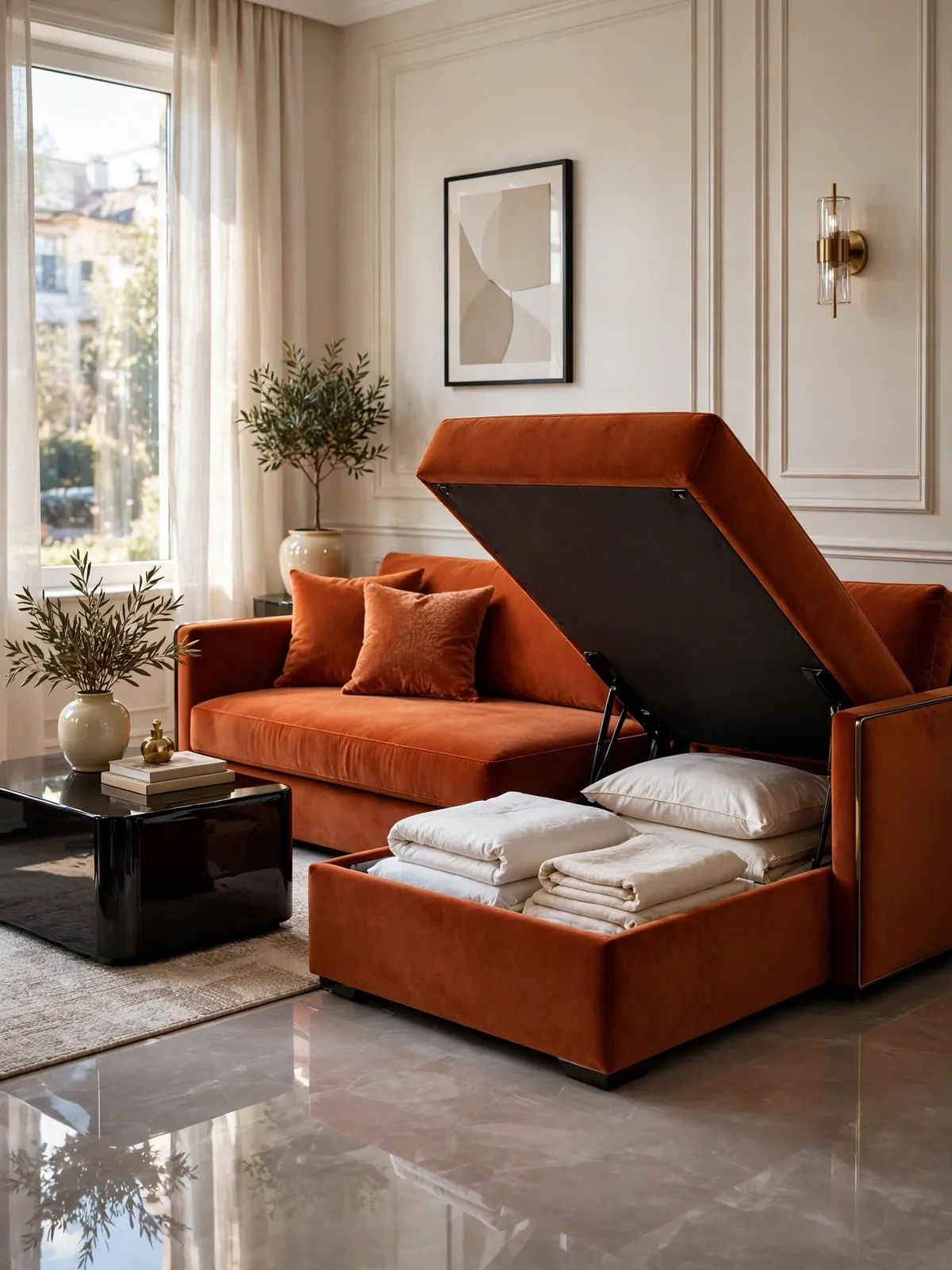
Choose a rust orange sleeper sofa whose chaise lifts to store the duvet and pillows, so the guest bed and its bedding live inside the sofa itself. By day it seats three in comfort, and by night it unfolds into a proper bed without a single extra cupboard being opened.
Quick tips:
- Test the fold mechanism in the shop before buying.
- Choose a mattress thickness that still folds flat.
- Keep a fitted sheet inside the chaise so guests are ready fast.
A Fold-Down Wall Dining Table for Two That Folds Flat
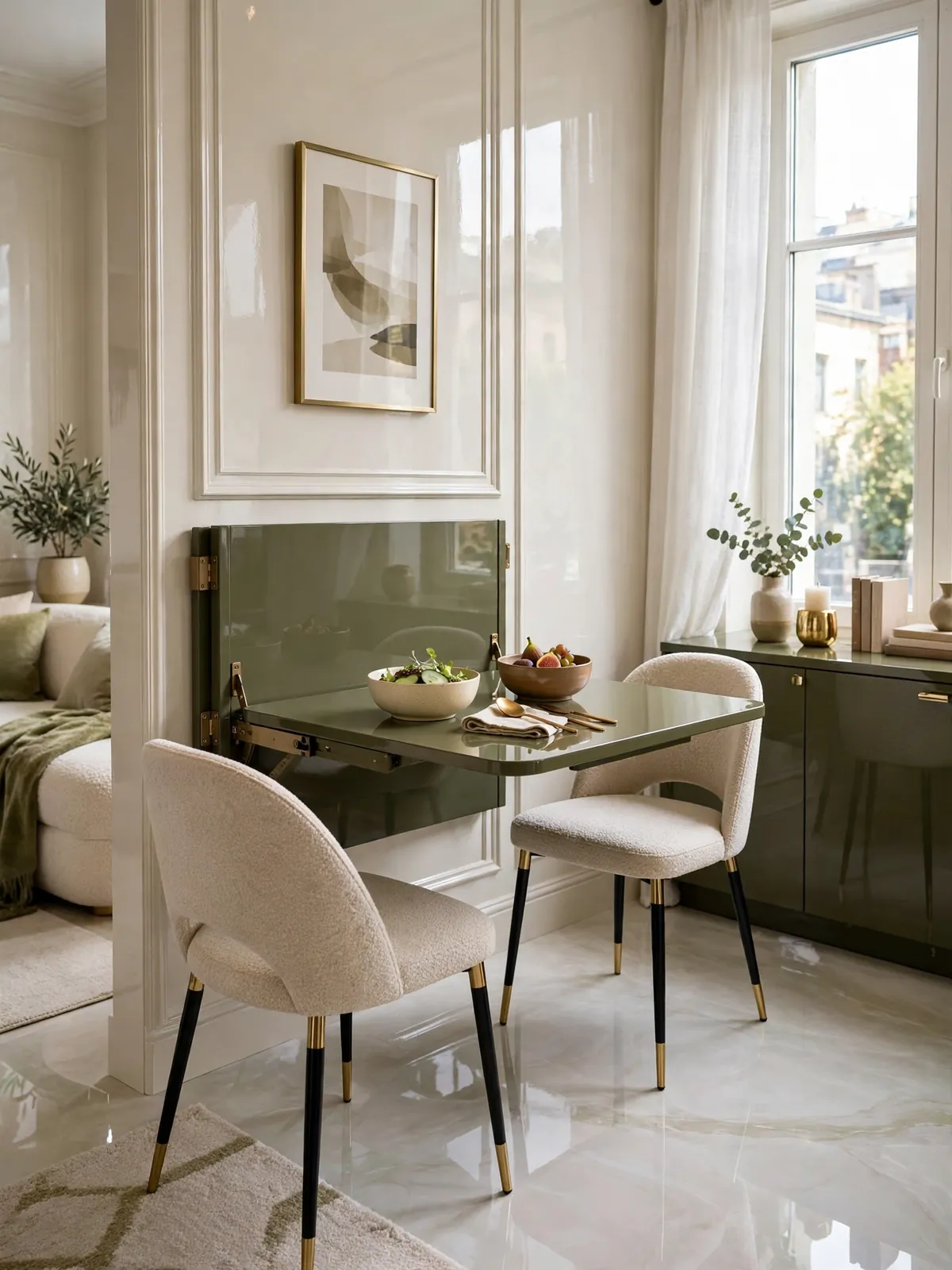
Fix an olive green fold-down table to the wall, and it drops down for dinner for two with ceramic bowls and a small vase, then folds flat against the wall when the meal ends. Two folding chairs hang on wall hooks beside it, so the whole dining set occupies almost no floor when not in use.
Quick tips:
- Fix the table into studs and test it with a full dinner load.
- Hang folding chairs on matching wall hooks nearby.
- Add a small wall shelf above for condiments and candles.
A Modular Storage Sectional That Reconfigures Around the Room
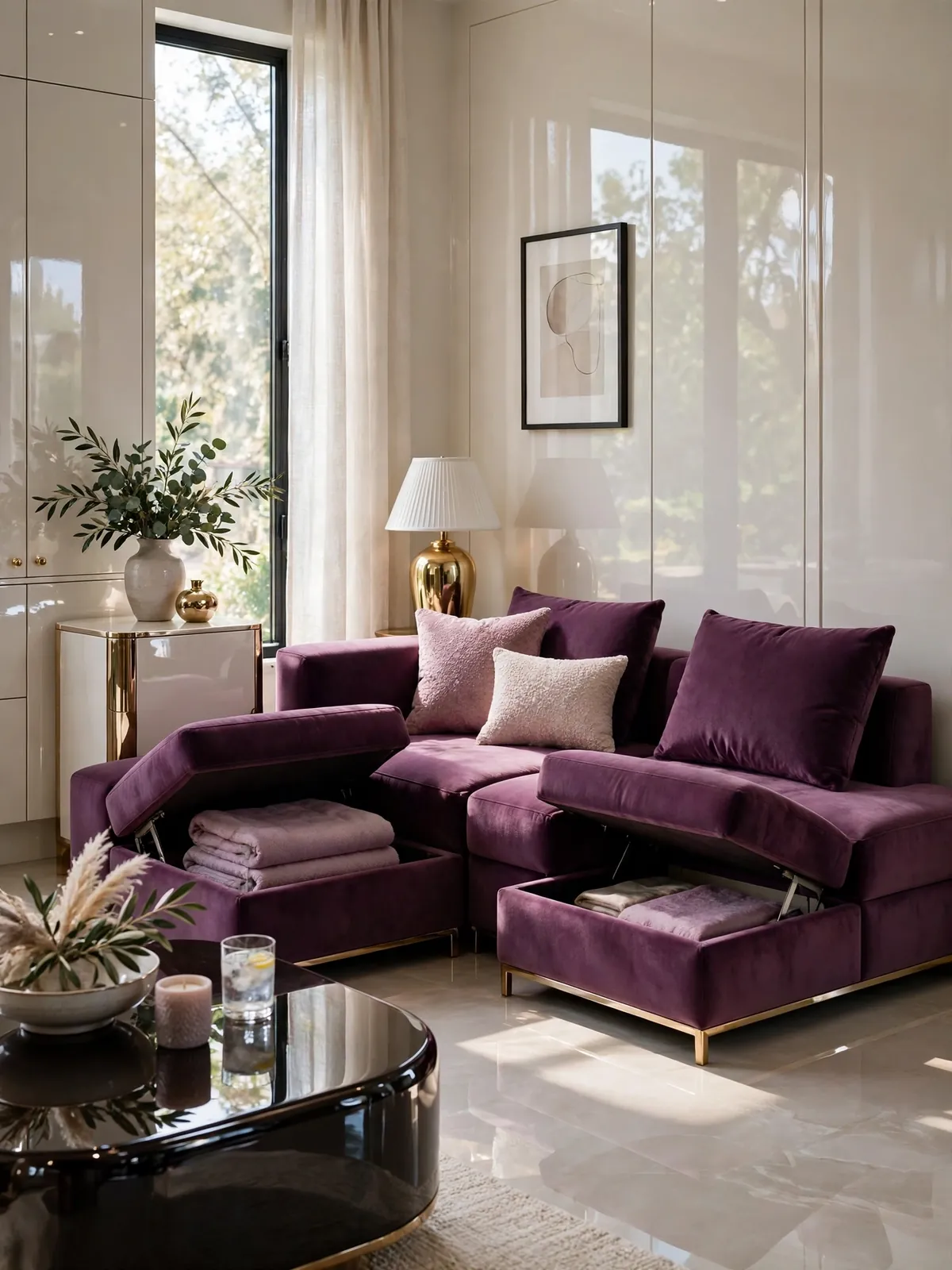
Build a plum modular sectional from separate storage seats, and the same pieces form a corner sofa for film night or split into a sofa and two chairs for guests. Each base hides blankets and chargers, so reconfiguring the room never means finding a new home for clutter.
Quick tips:
- Buy clips that lock modules together so they do not drift apart.
- Keep one module free of storage for a quick seat swap.
- Measure doorways before ordering wide modular bases.
Recessed Wall Niches That Add Shelves Without Stealing an Inch
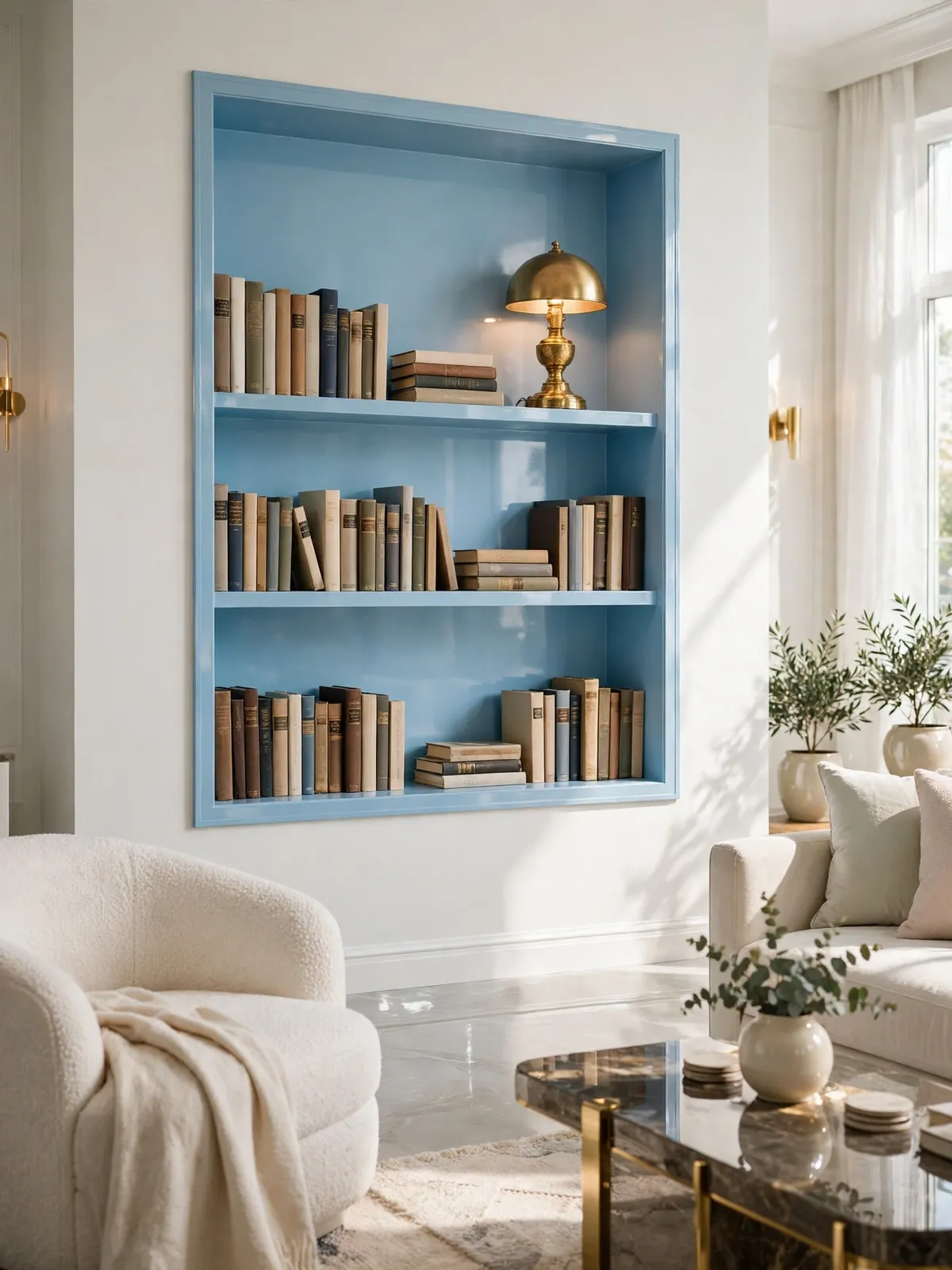
Cut recessed niches into the wall between studs, paint them sky blue, and fit slim shelves for books and a brass lamp that would otherwise need a bookcase. Because the shelves sit inside the wall cavity, they add storage while the floor footprint stays exactly zero.
Quick tips:
- Check for wiring and pipes before cutting any wall cavity.
- Add a small LED strip inside deep niches for evening glow.
- Keep niche shelves shallow so objects do not jut into the room.
An Over-Door Storage Bridge That Uses the Space Above the Door
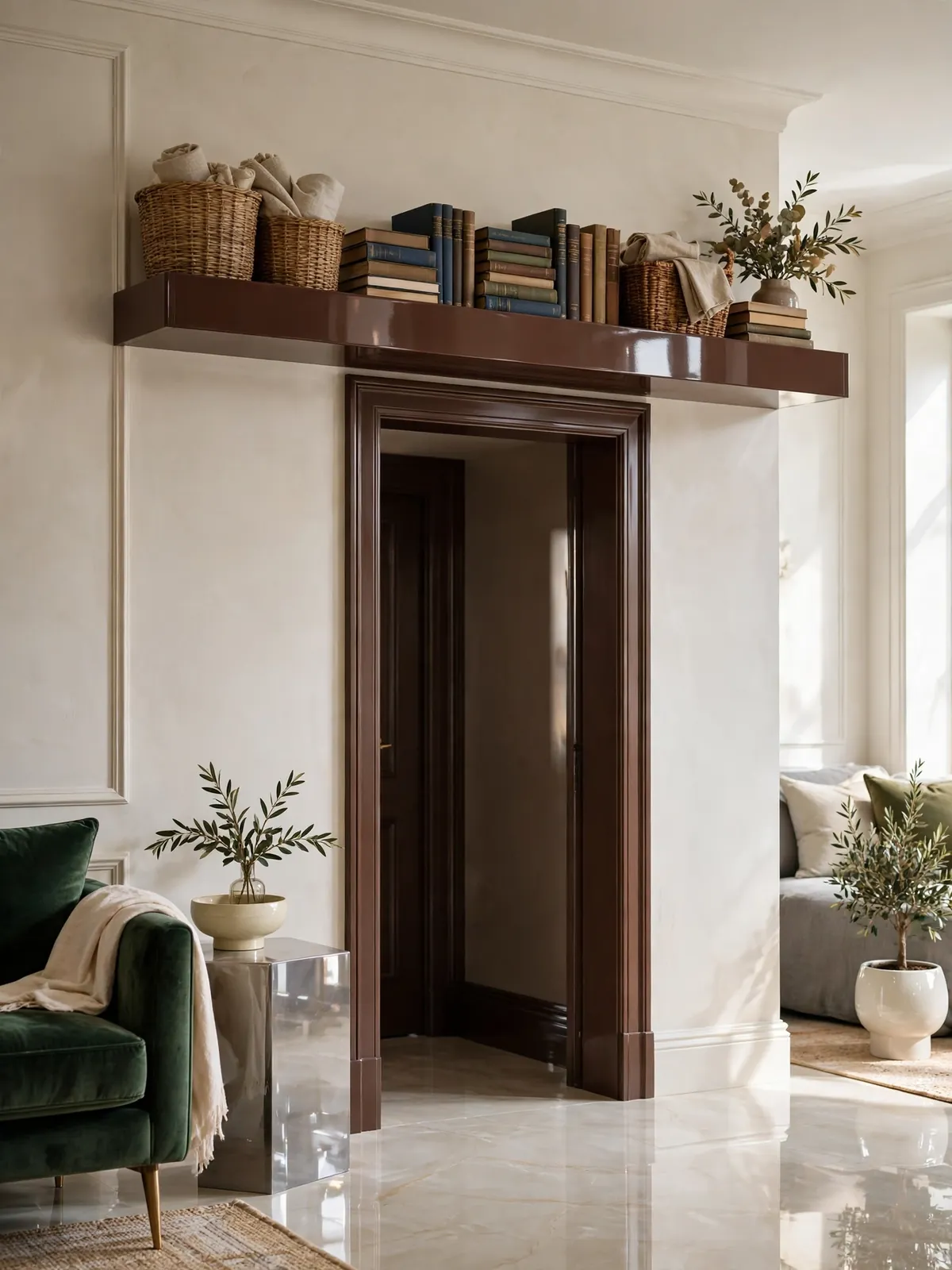
Fit a chocolate brown storage bridge above the doorway, with woven baskets holding board games and a row of books, and the strip of wall everyone ignores becomes a full shelf. The bridge works because it uses head-height space that no furniture could ever occupy anyway.
Quick tips:
- Keep the bridge deep enough for baskets but clear of head height.
- Label baskets so stored items are found without a ladder.
- Anchor the bridge into studs on both sides of the door.
A Slim Sofa-Back Console With Hidden Charging and Storage
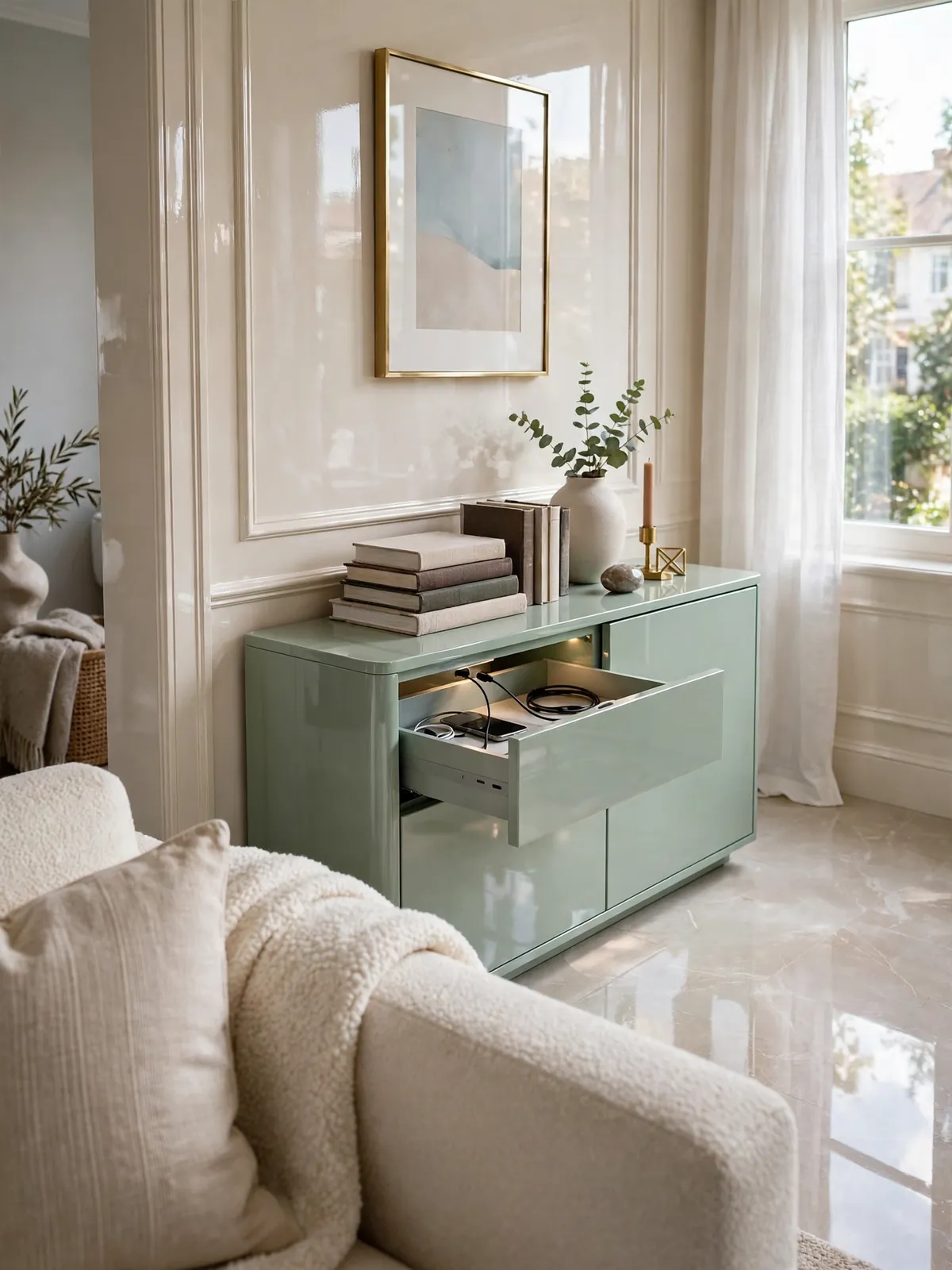
Slide a slim mint green console behind the sofa, with a hidden drawer holding chargers, remotes, and a notebook, and the dead gap behind the sofa becomes a working shelf. The console top holds a lamp and a book, so the sofa back gains a finished edge instead of a dusty void.
Quick tips:
- Keep the console depth under 25 centimetres so it stays slim.
- Add a cable hole so chargers stay hidden but reachable.
- Match the console height to the sofa back for a clean line.
An Extendable Console Table That Grows Into a Dining Table
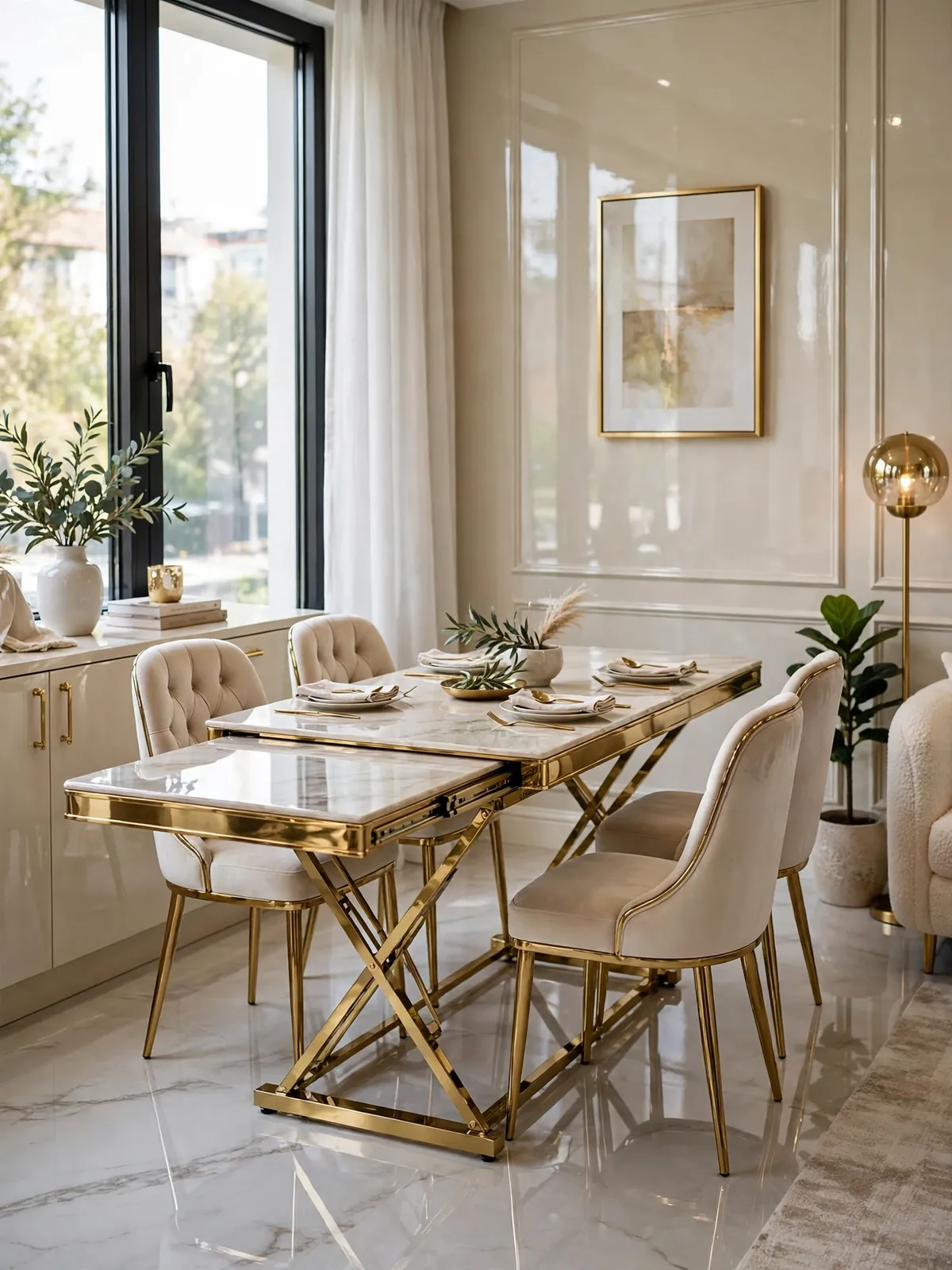
Keep a gold-accented console table against the wall for everyday use, then pull its leaves out to full dining length when four guests arrive for dinner. The table lives as a hallway-slim console for most of the week and becomes a proper dining table only on the evenings it is needed.
Quick tips:
- Store the extension leaves inside the table frame itself.
- Test the extended table with four chairs before guests arrive.
- Use felt pads so the extended top does not scratch the floor.
Wall Sconces and Recessed Lights That Free the Floor From Lamps
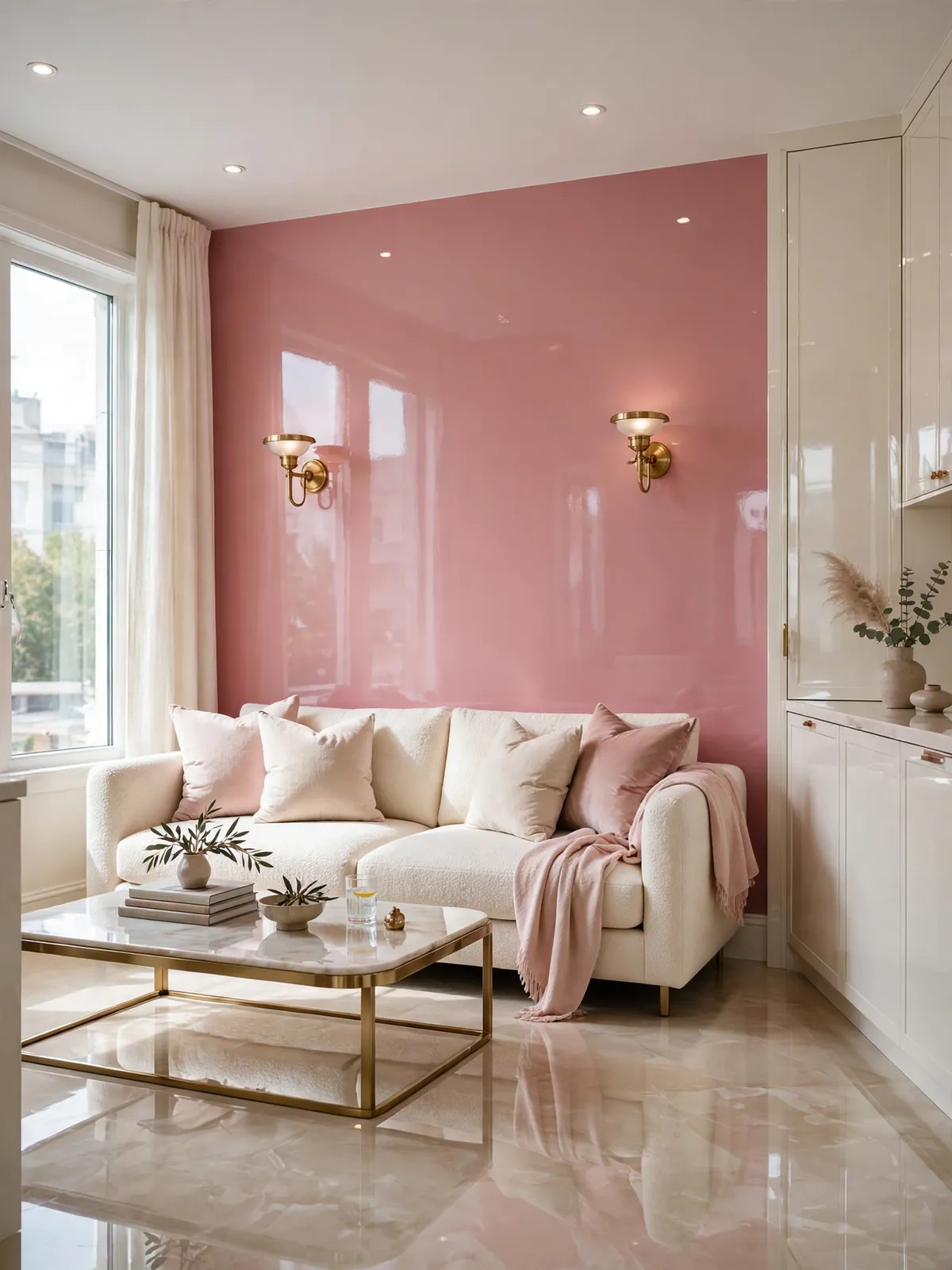
Replace two floor lamps with brass wall sconces on a rose pink wall and recessed ceiling lights overhead, and the floor space both lamps occupied becomes open walking room. Wall light also washes the wall evenly, which flatters the room far better than a single bright lamp in a corner.
Quick tips:
- Put sconces on a dimmer for evening control.
- Aim recessed lights at walls, not straight down at seats.
- Keep sconce height at eye level when seated for soft glow.
Ceiling-Height Curtains That Stretch the Walls Upward
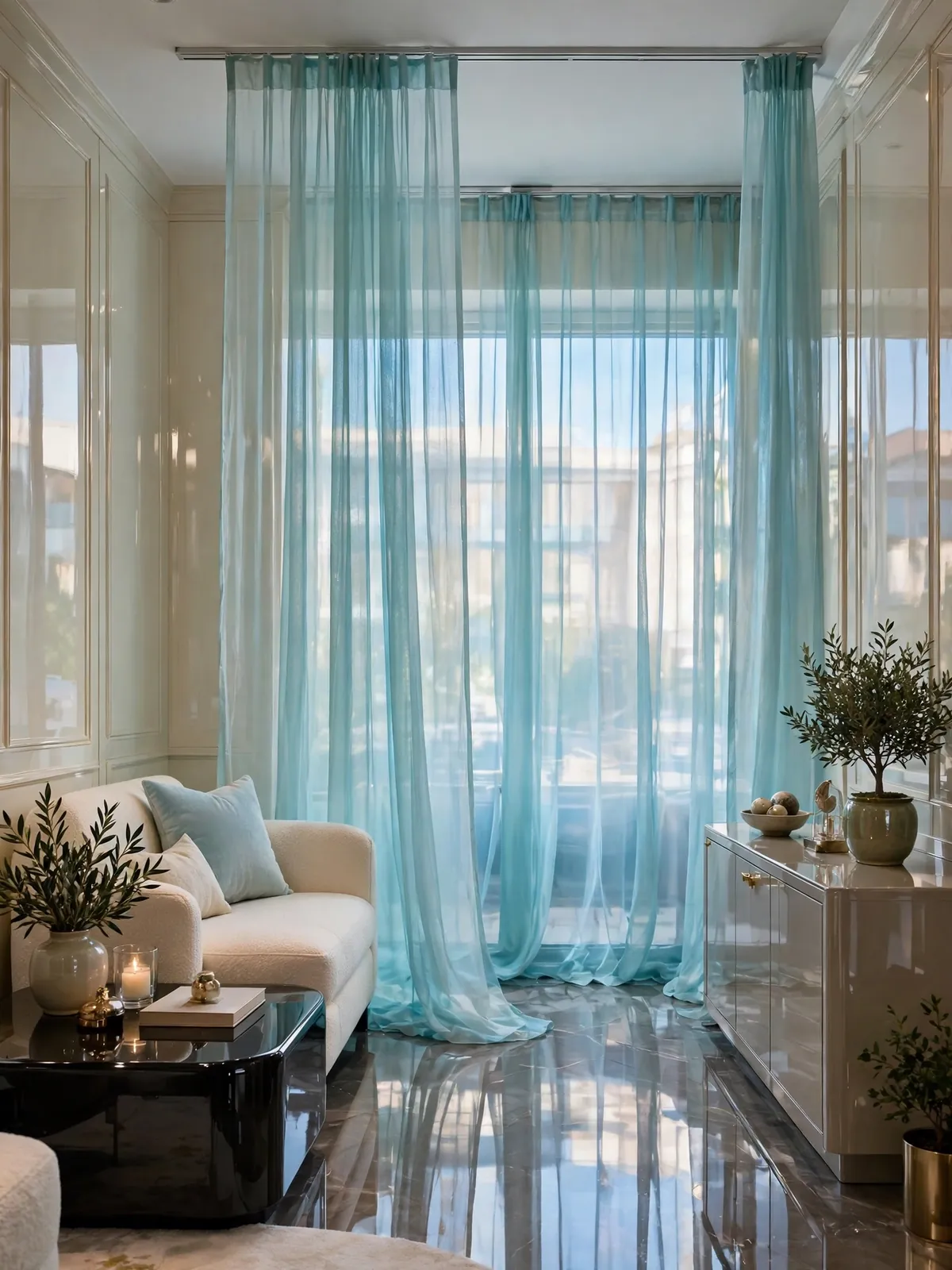
Hang aqua sheer curtains from a ceiling track all the way to the floor, and a standard window suddenly reads as a full-height opening that pulls the eye upward. The extra length costs nothing in floor space, yet the room feels taller the moment the curtains go up.
Quick tips:
- Mount the track at the ceiling, not just above the window frame.
- Let curtains kiss the floor rather than puddle and trip feet.
- Choose sheers so daylight still passes through in daytime.
One Continuous Colour Across Walls, Trim, and Floor for a Bigger Sightline
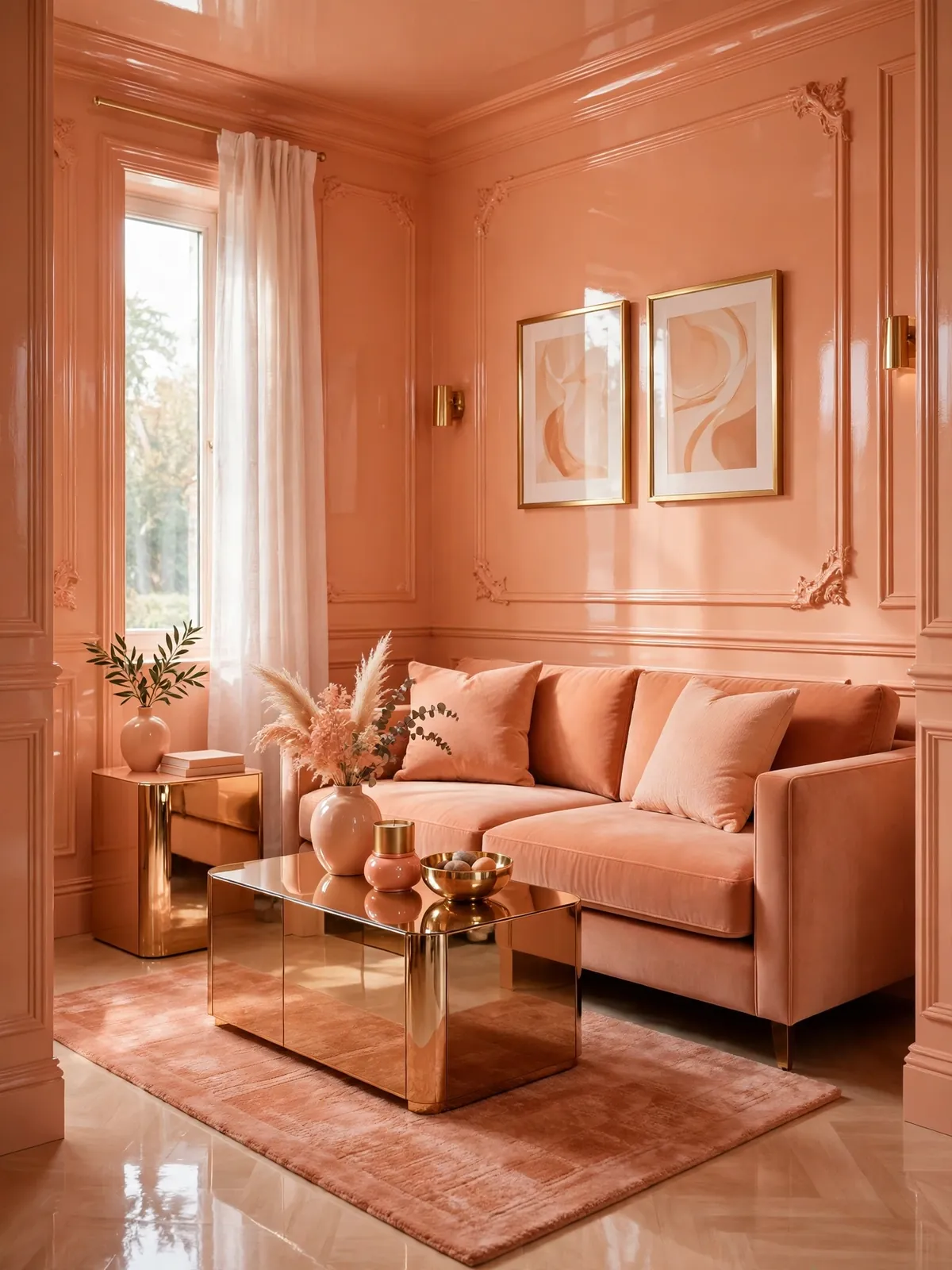
Paint walls, trim, and shelving in one warm peach tone, and the boundaries between surfaces blur so the eye travels without stopping at every edge. The room does not gain a centimetre, yet it feels larger because nothing interrupts the sightline from door to window.
Quick tips:
- Use the same colour in different finishes for subtle depth.
- Keep the sofa within two tones of the wall colour.
- Add one contrasting cushion so the room does not feel flat.
Low-Profile Leggy Furniture That Shows More Floor
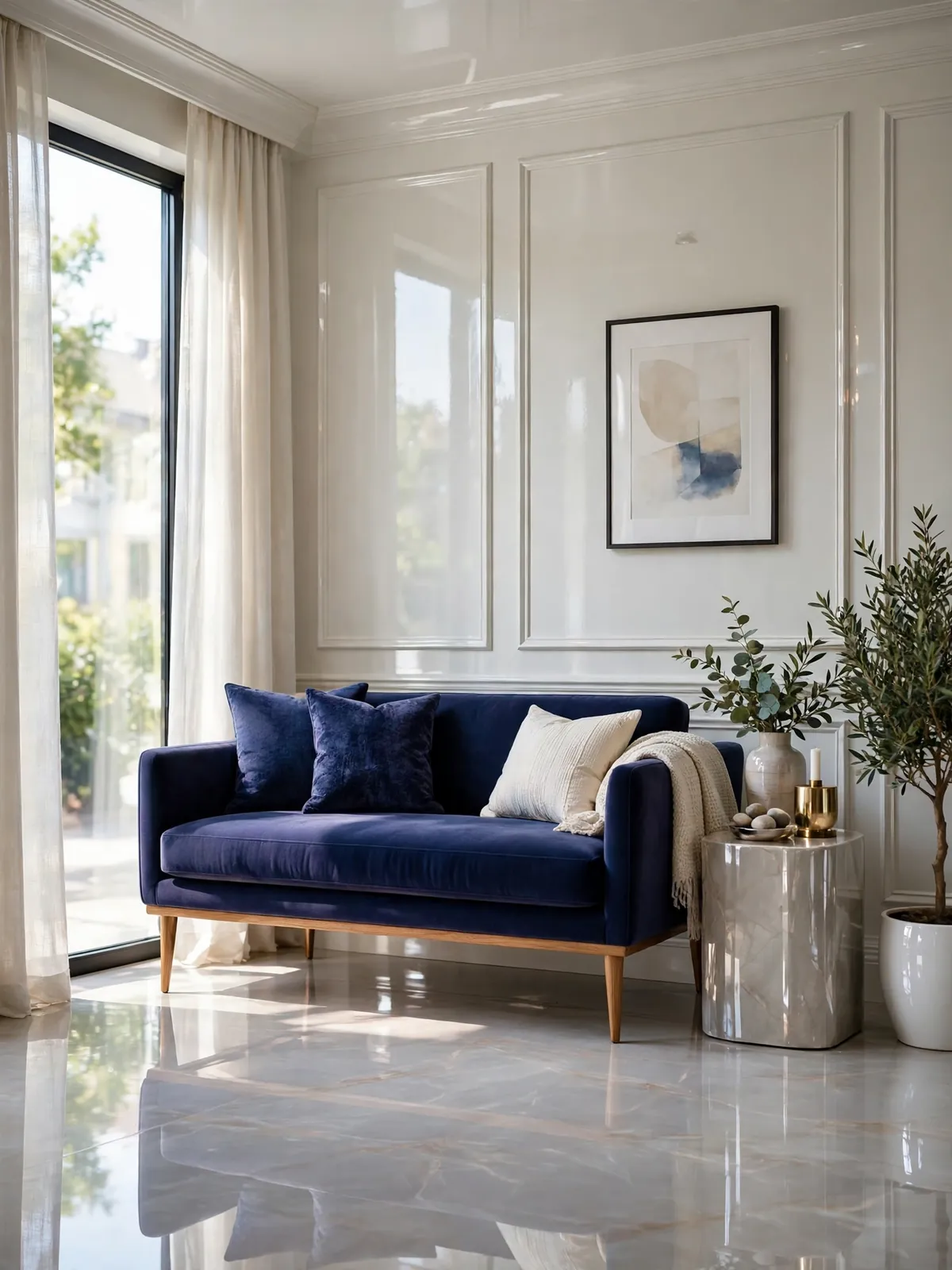
Choose a low indigo sofa on tall tapered legs, and the open floor visible beneath it tricks the eye into reading a larger room. Raised legs also make cleaning easier, since a vacuum glides under the sofa instead of stopping at a solid base.
Quick tips:
- Pick legs at least 12 centimetres tall for a visible floor gap.
- Keep the floor under leggy pieces clear of cables.
- Match leg wood to one other furniture piece for cohesion.
A Slim Pull-Out Tower Cabinet That Fits the Gap Nobody Uses
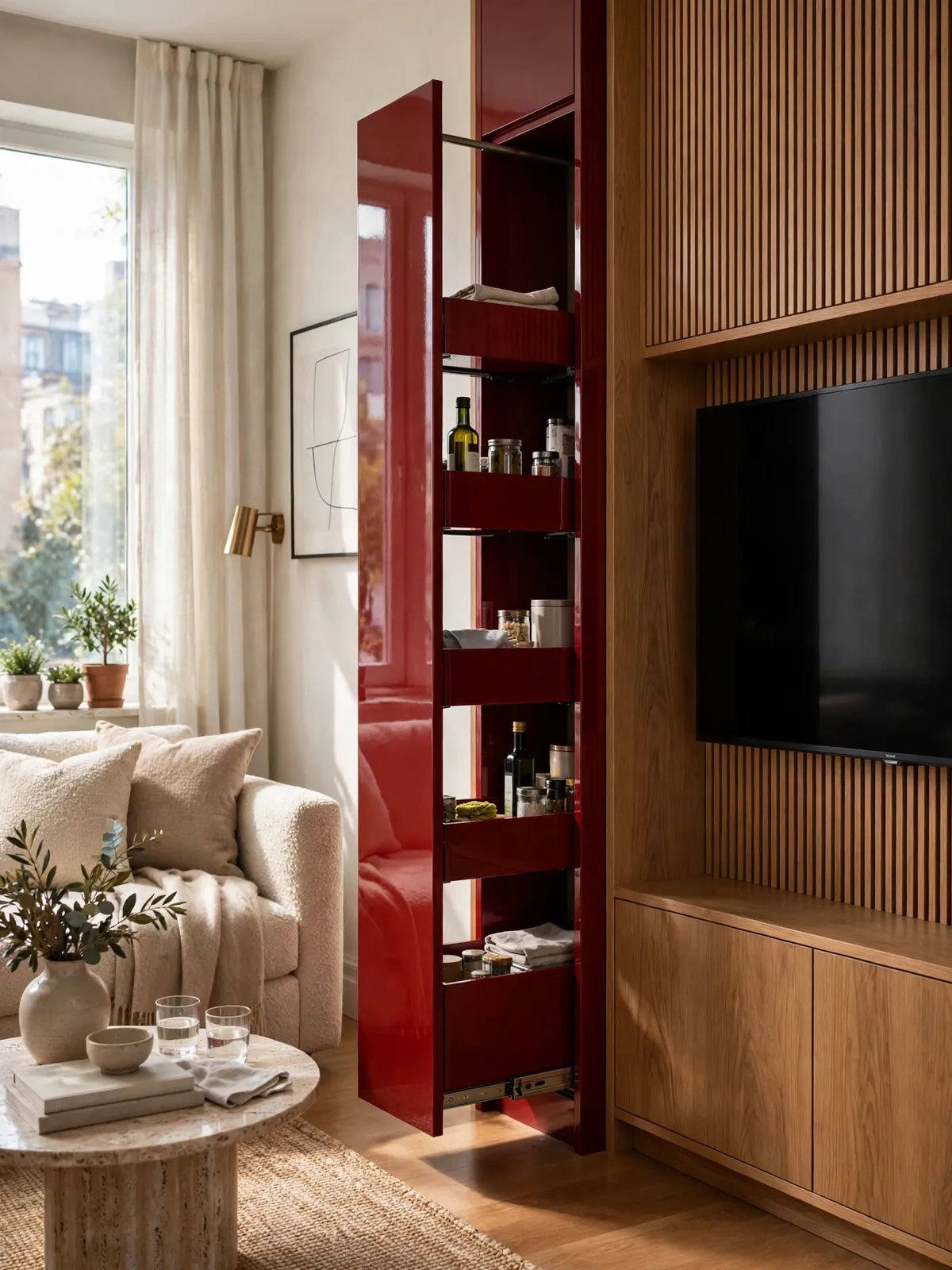
Slide a cherry red pull-out tower cabinet into the narrow gap beside the television wall, and that wasted strip of space becomes vertical storage for DVDs, games, and chargers on rolling shelves. The tower pulls out with one hand and pushes back flush, so the gap works hard without ever looking like storage.
Quick tips:
- Measure the gap twice before ordering a pull-out tower.
- Choose smooth rolling runners so the tower glides with one hand.
- Put the most-used items at hand height inside the tower.
FAQs
How do I make a small living room feel bigger without knocking down walls?
Use space-saving design instead of construction: a built-in storage wall clears clutter, mirrors and ceiling-height curtains stretch the room visually, and leggy or glass furniture keeps sightlines open. Together these moves make the same footprint feel larger without changing a single wall.
What is the best multifunctional furniture for a small living room?
A lift-top storage coffee table and a sleeper sofa with a storage chaise give the highest return, because they combine a table, workspace, storage box, seating, and guest bed into two footprints. Add nesting tables and a fold-down wall desk, and most daily jobs are covered by pieces that disappear or transform.
Are built-ins worth the cost in a small living room?
Yes, when they replace several freestanding pieces, because one flush storage wall holds what a bookcase, a media unit, and three boxes used to hold, while returning the floor those pieces occupied. Start with one wall or one window seat, and build the rest only after living with the first change for a month.
How can I add a home office to a small living room without losing the room?
Use a fold-down wall desk or a lift-top coffee table, both of which provide a real work surface for working hours and vanish or revert to living-room furniture afterwards. Keep the work chair lightweight or folding, and store office supplies inside the desk or table so no office clutter stays visible overnight.
Do mirrors really work, or are they just a decorating cliché?
Mirrors work when they reflect something worth doubling, such as a window, a plant, or a bright wall, and when they are large enough to read as architecture rather than decoration. A full mirrored panel opposite a window genuinely doubles daylight and depth, while a small mirror hung at random height adds little.
Conclusion
Space-saving design is not about owning less, it is about making every wall, gap, and piece of furniture work twice as hard. Start with one built-in or fold-away win, add a mirror or a vertical tower, and let the freed floor change how the whole room feels. Pick the mechanism that solves your biggest daily frustration first, and the rest of the room will follow.