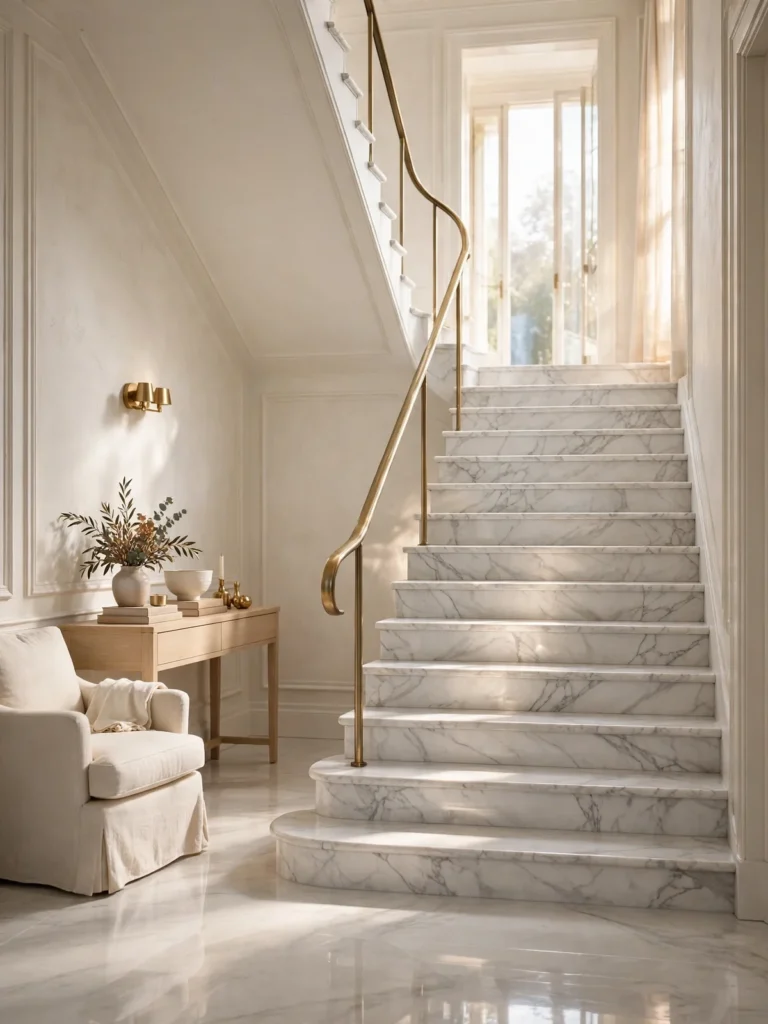
25 Exterior Staircase Ideas That Make Your Outdoor Steps Weatherproof and Beautiful
A weather-first design system for outdoor stairs — 25 exterior staircase ideas covering stone, concrete, timber, and metal steps for gardens, terraces, decks, pools, and front entries, each with a concrete example and quick tips.
Exterior staircase ideas work best when the weather leads the design, not the other way around. Stone, concrete, and powder-coated metal survive rain, sun, and frost far better than untreated timber, and the details that matter most outdoors are grip underfoot, drainage that keeps water off the treads, and lighting that guides every step after dark. This guide gives you 25 concrete ways to build that kind of stair, so every idea names a real material, place, or finish you can picture outside your own home.
Start with the material and the water path — choose a surface that grips when wet, then give rain somewhere to go — and the styling will last instead of peeling after one winter. If you want the inside to feel as considered as the outside, our living room ideas carry the same layered, welcoming thinking indoors, so the front steps and the first room you enter feel like one home.
Key Takeaways
What is the best material for an exterior staircase?
Natural stone and sealed concrete last longest in all weather, powder-coated metal suits modern homes, and treated hardwood works for decks and boardwalks if it is oiled and maintained yearly.
How do I stop exterior steps from getting slippery when wet?
Use textured or flamed stone, grooved timber, anti-slip nosing strips, and a slight forward fall on each tread so water runs off instead of pooling.
How should water drain from an exterior staircase?
Give each tread a slight slope away from the house, add a drainage channel at the base, and keep soil and planting clear of the lowest step so water never sits against it.
What lighting works best on outdoor stairs?
Low-level step lights, lanterns on posts, and warm LED strips under nosings — all rated for outdoor use — so every tread is visible without harsh glare.
Can exterior stairs look stylish and still survive winter?
Yes — choose frost-proof stone or concrete, seal the surface, pick railings that will not rust, and keep a salt-safe de-icer on hand so ice never forces a slip.
| Material | Best for | Weather strength | Upkeep |
|---|---|---|---|
| Natural stone | Front entry, garden steps | Excellent, ages beautifully | Seal yearly |
| Sealed concrete | Modern entries, terraces | Excellent, frost-resistant | Reseal every few years |
| Powder-coated metal | Modern decks, pool stairs | Very good, rust-resistant | Wash and check coating yearly |
| Treated hardwood | Decks, coastal boardwalks | Good with yearly oiling | Oil yearly, check for rot |
| Brick | Traditional entries, garden paths | Very good, classic look | Repoint joints as needed |
| Porcelain pavers | Terraces, pool surrounds | Excellent, stain-resistant | Sweep and wash only |
Exterior Staircase Ideas for Curb Appeal Start With Wide Natural Stone Steps
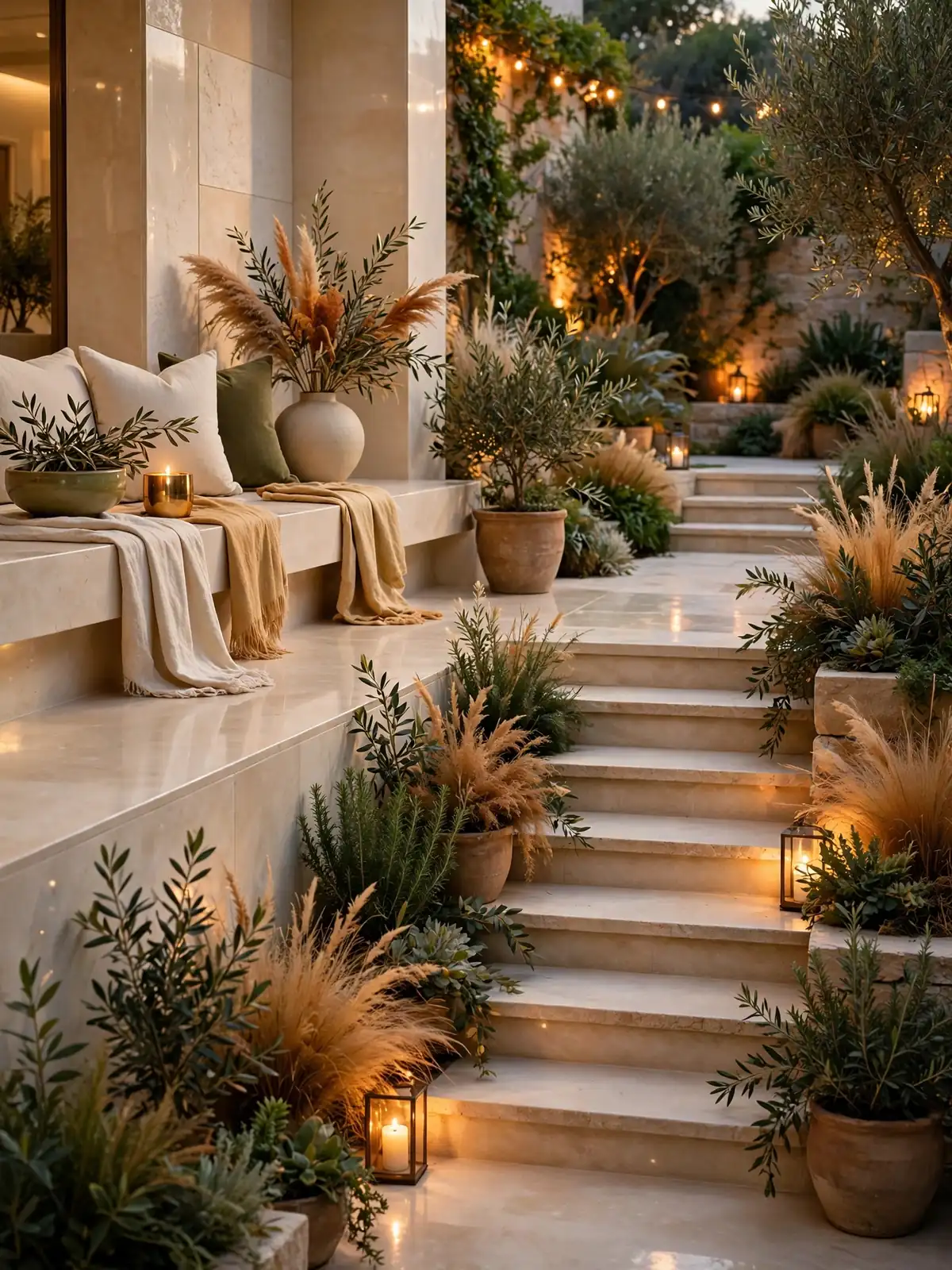
Lay wide limestone steps with a flamed, non-slip finish, flank them with sage green planting, and the front entry feels established and welcoming from the street. The wider the treads, the more luxurious the climb feels — and the safer it is when carrying bags in the rain.
Quick tips:
- Choose a flamed or textured stone finish for grip.
- Make treads at least 30 cm deep for comfortable footing.
- Seal stone yearly to stop water stains.
Slim Black Metal Railings That Modernise Brick or Stone Steps
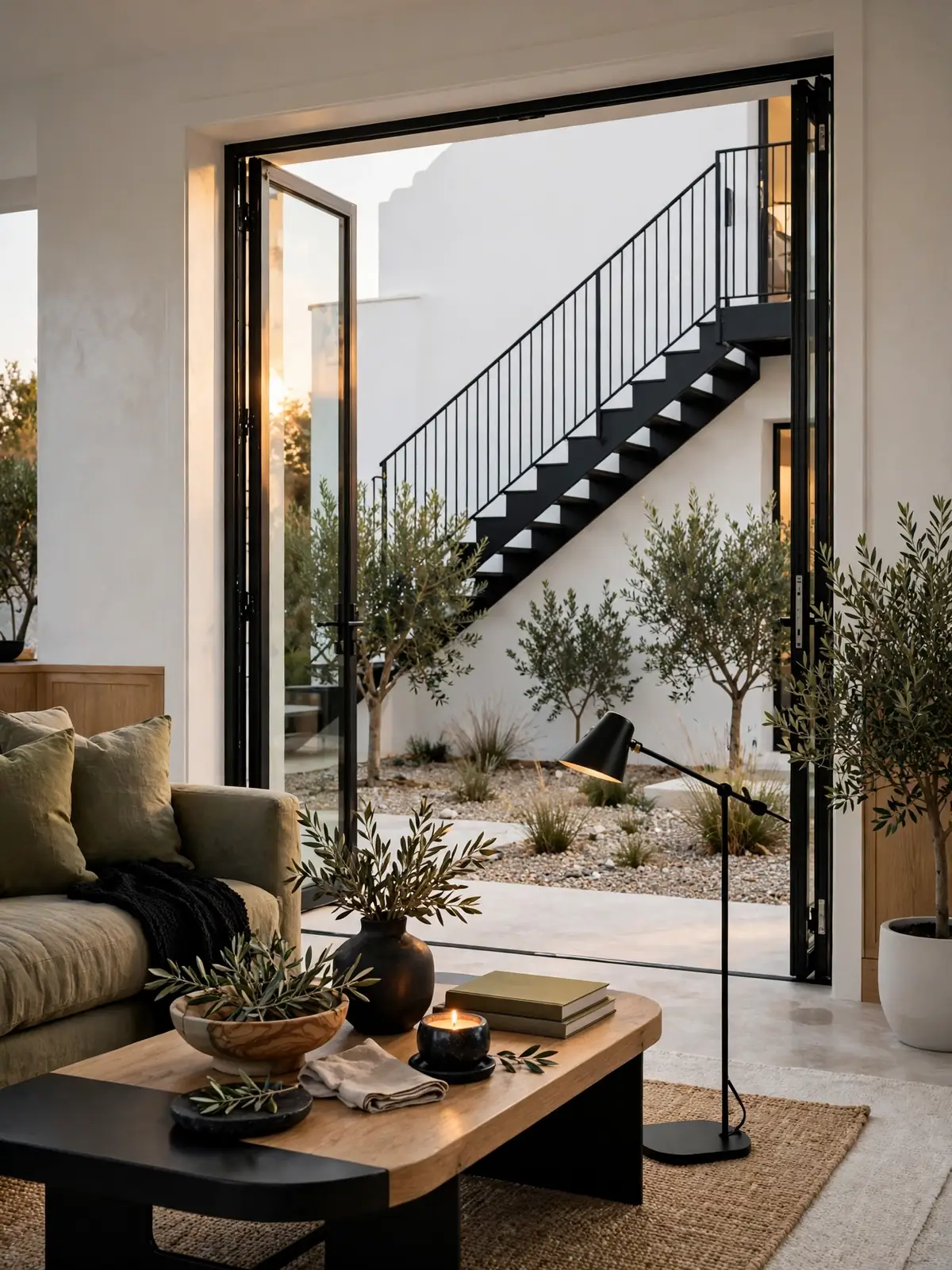
Fit slim black metal railings along terracotta brick steps against a white facade, and an ordinary staircase turns crisp and modern overnight. The dark lines define the entry path without blocking light or views, which is exactly why they suit small front gardens so well.
Quick tips:
- Choose powder-coated steel so the finish resists rust.
- Keep railing posts slim for a light, modern look.
- Check fixings yearly for any movement.
Layered Landscaping That Frames the Staircase Like a Garden Path
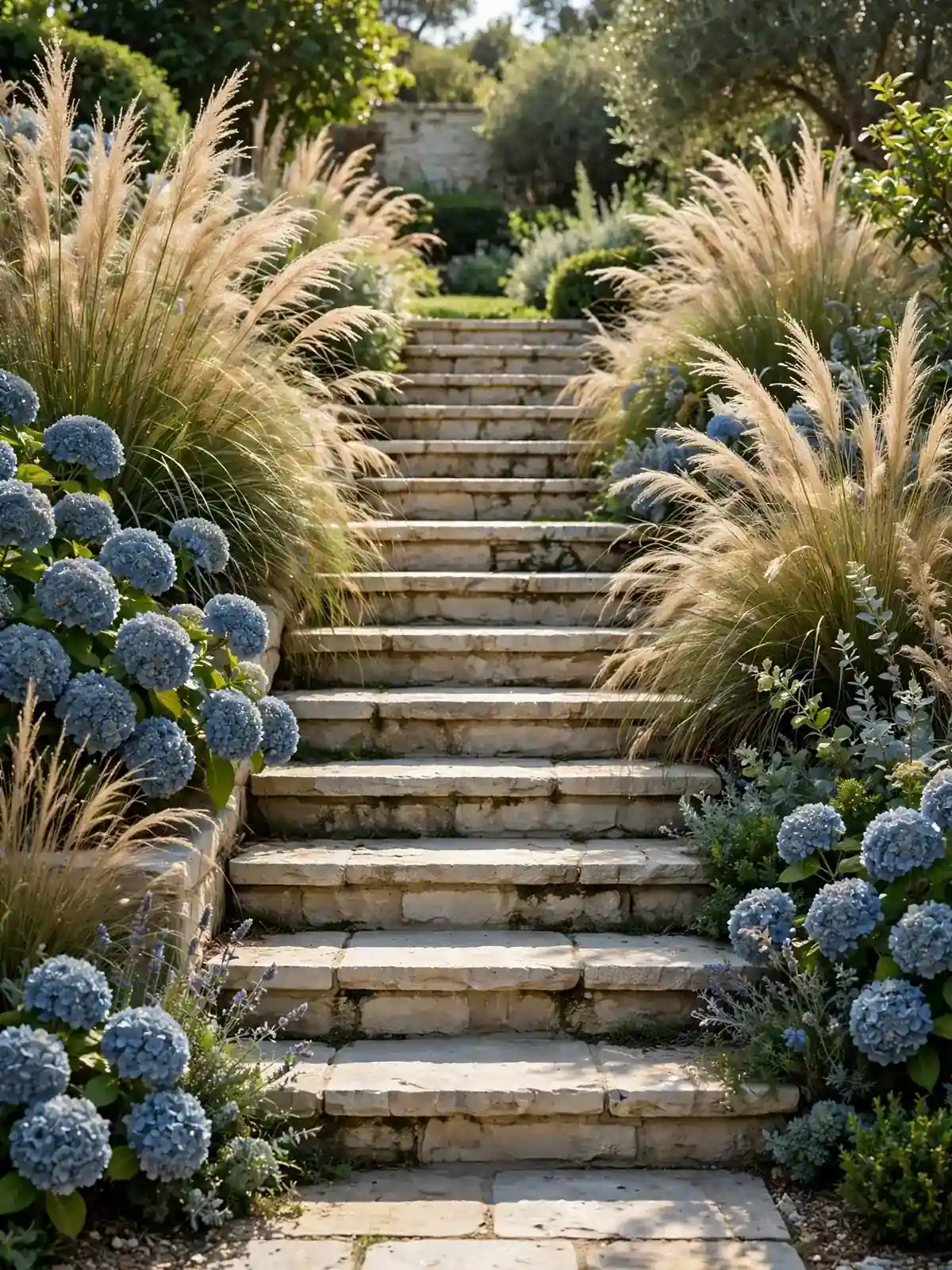
Frame the staircase with layered planting — ornamental grasses at the back, dusty blue hydrangeas in the middle, and low ground cover at the edges — and the steps feel grown into the garden rather than bolted onto it. Picture the planting spilling softly over the lowest two treads so the stone meets the soil instead of a hard edge. Mix evergreen shrubs with seasonal flowers so the staircase stays attractive through winter, when bare stems would otherwise leave it looking stark. Keep the planting clear of the handrail and the walking line, because a beautiful stair that brushes your shoulders on every climb quickly stops feeling beautiful. Add low garden lights tucked into the planting so the steps glow from the sides at dusk, guiding visitors upward through the greenery. The result is a staircase that reads as part of the landscape, not an interruption of it, and it costs far less than rebuilding the steps themselves.
Quick tips:
- Mix evergreens with seasonal flowers for year-round interest.
- Keep planting clear of the handrail and walking line.
- Tuck low lights into the planting for evening guidance.
Lantern Lighting on Posts That Guides Guests After Dark
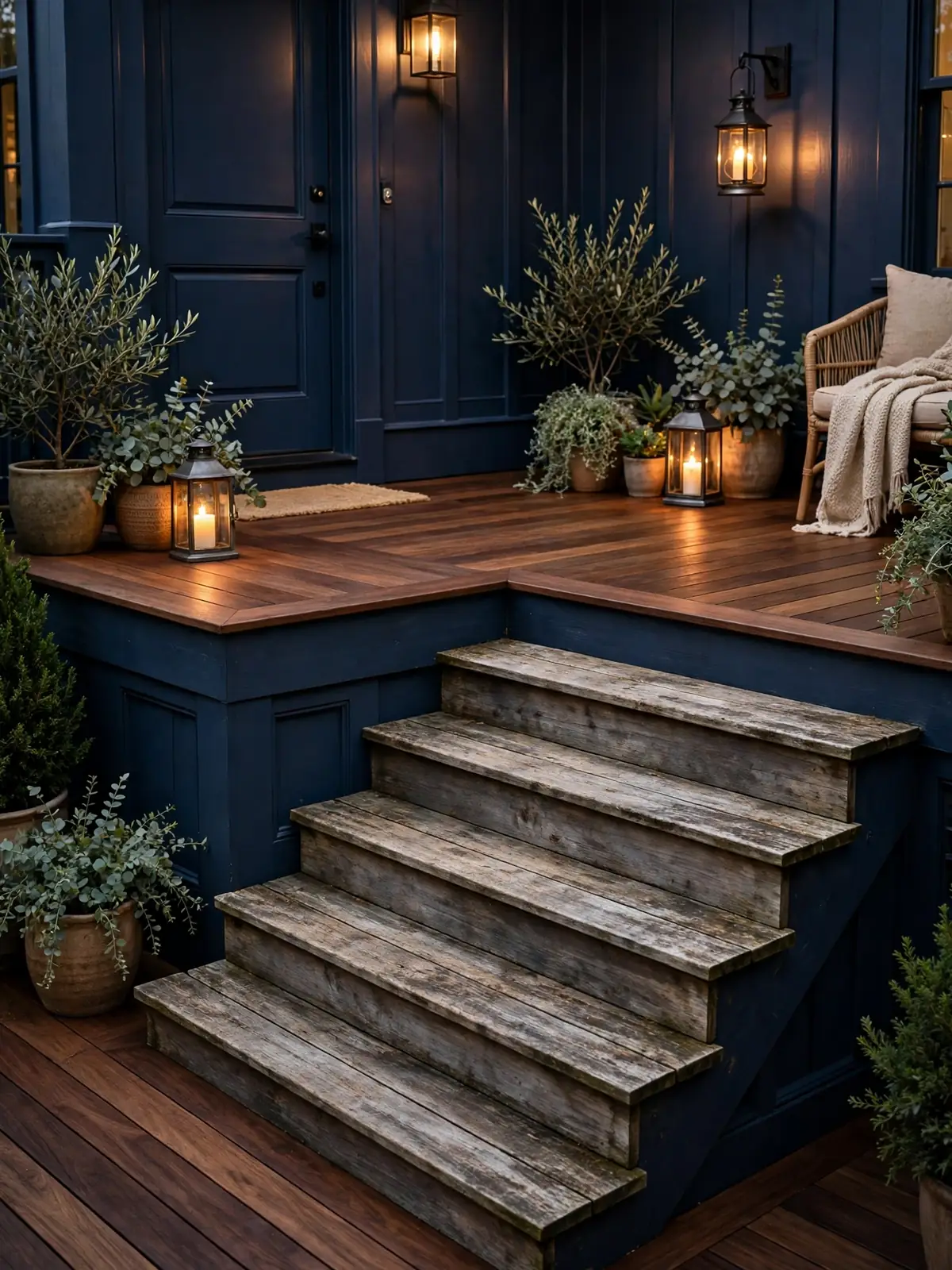
Set lantern fixtures on short stone posts at the top and bottom landings, and the staircase glows with a warm, welcoming light that floodlights can never match. Lanterns guide the eye upward step by step, so guests feel invited rather than interrogated by glare.
Quick tips:
- Use warm LED bulbs rated for outdoor use.
- Place lanterns at landings, not mid-flight.
- Put the lights on a dusk sensor so they switch on themselves.
Grand Curved Entry Steps in Stone for a Sense of Arrival
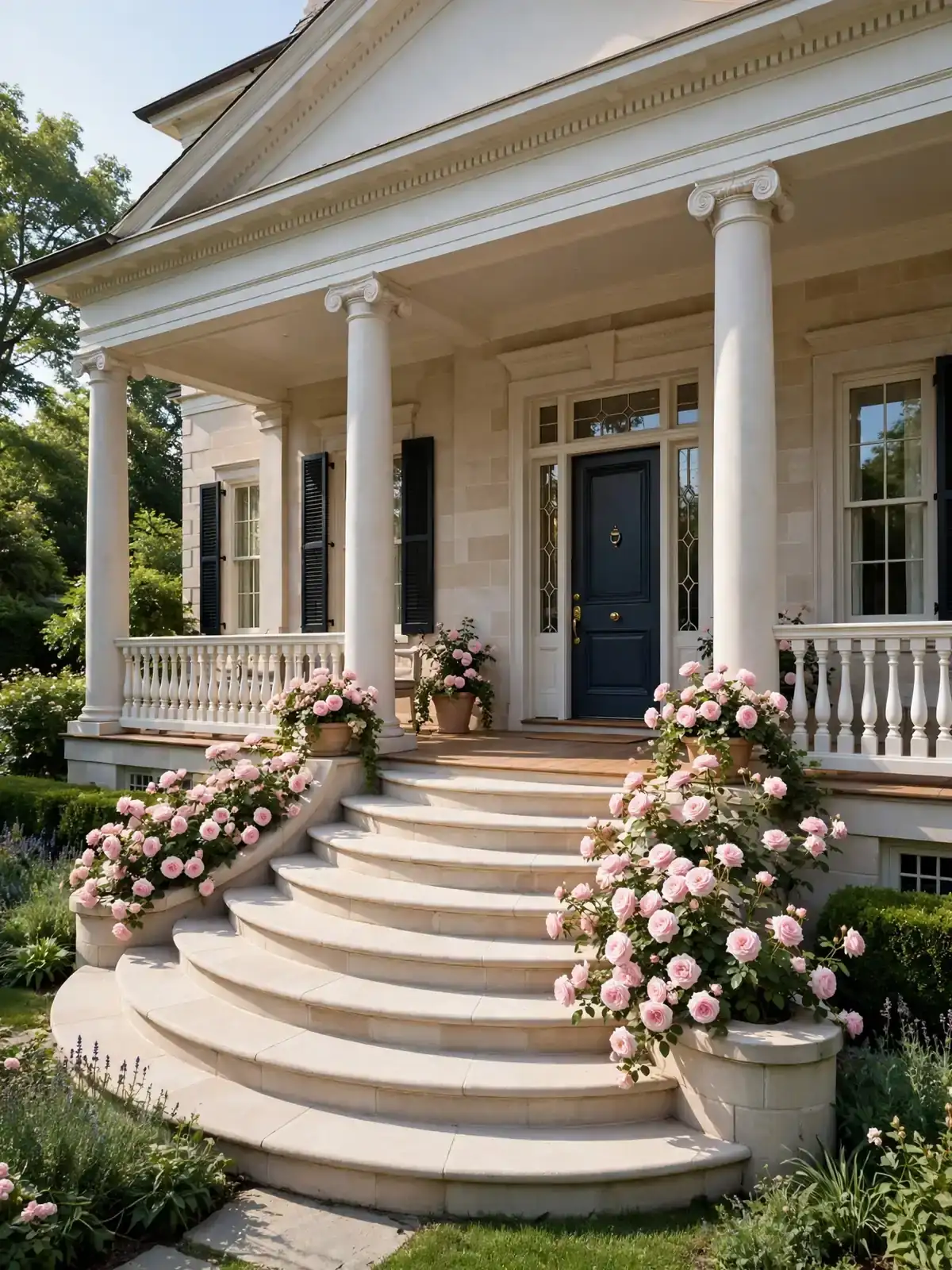
Build wide curved limestone steps that fan out toward the path, flank them with blush pink roses, and the front of the house gains a sense of arrival that straight steps never give. Curved steps slow the eye and the footstep, which makes even a modest house feel grand.
Quick tips:
- Keep the curve gentle so the steps stay easy to climb.
- Use one stone throughout for a unified look.
- Add a drainage channel at the base of the curve.
Oversized Planters That Anchor the Top and Bottom Landings
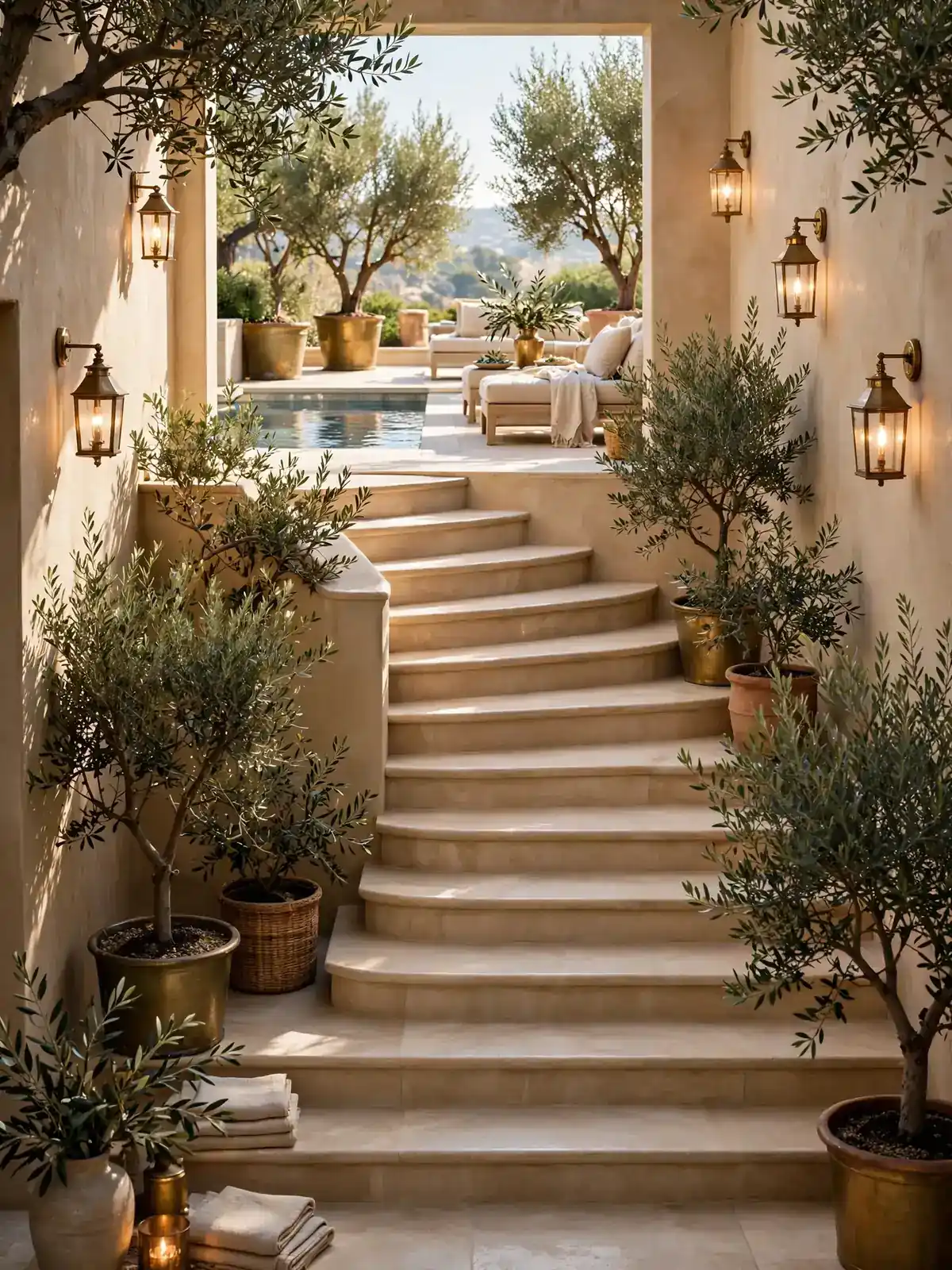
Place matching oversized terracotta planters with olive trees on the top and bottom landings, and a plain staircase instantly looks intentional and balanced. Swap the planting with the seasons — spring bulbs, summer geraniums, autumn grasses — without ever changing the staircase itself.
Quick tips:
- Use matching planters for symmetry and balance.
- Choose frost-proof pots so winter cannot crack them.
- Add drainage holes and pot feet so roots never sit in water.
A Coastal Boardwalk Staircase in Weathered Timber
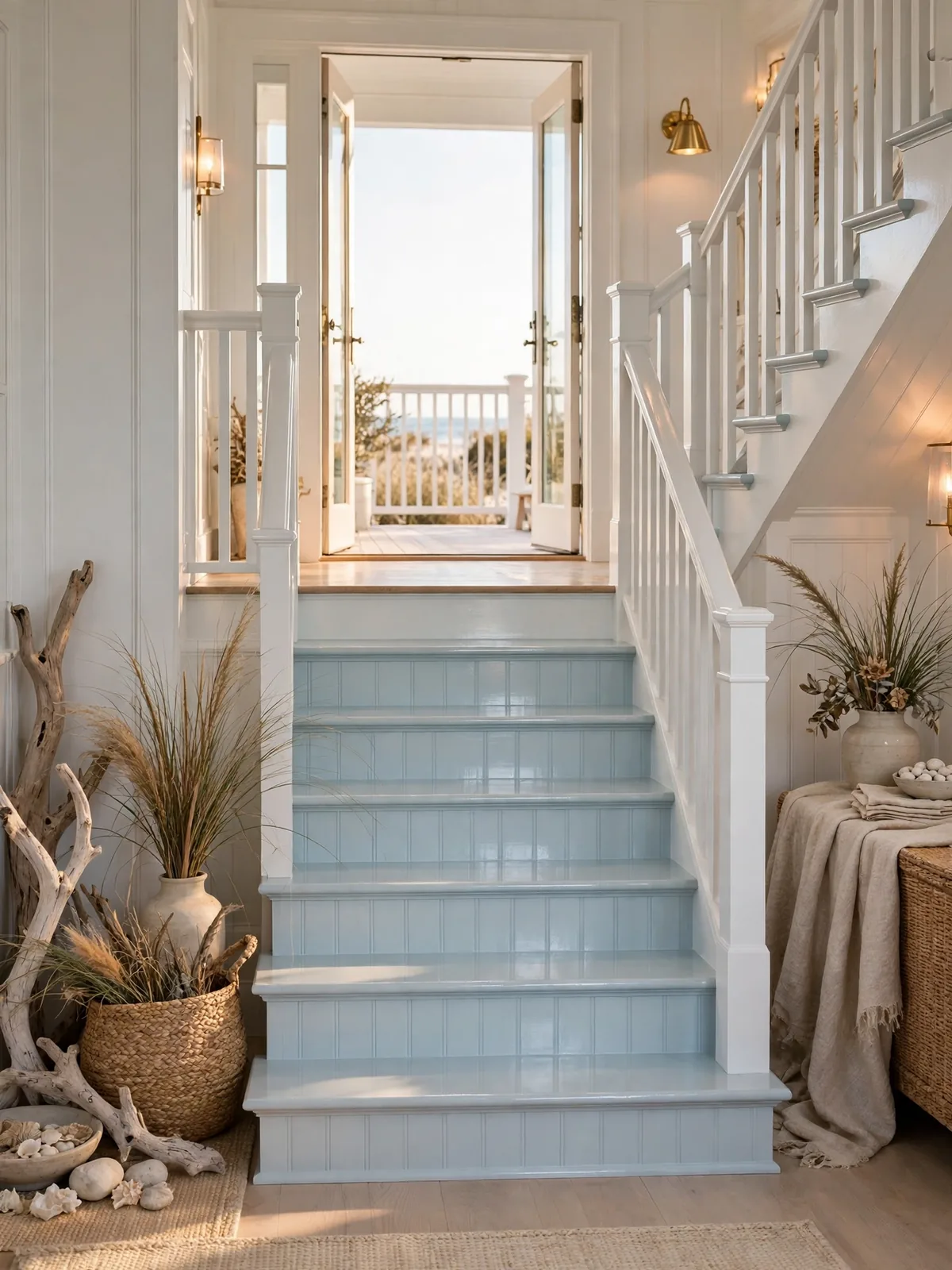
Build a boardwalk staircase from treated timber with cable railings, let the wood weather to a soft silver-grey, and a coastal home gains steps that look like they belong to the beach. Allow the patina to develop naturally — it is the finish that makes boardwalk stairs feel effortless rather than new.
Quick tips:
- Use marine-grade treated timber for coastal air.
- Oil the timber yearly to slow splitting.
- Keep cable railings taut with a yearly tension check.
Cable Railings That Keep the View Open on a Terrace Stair
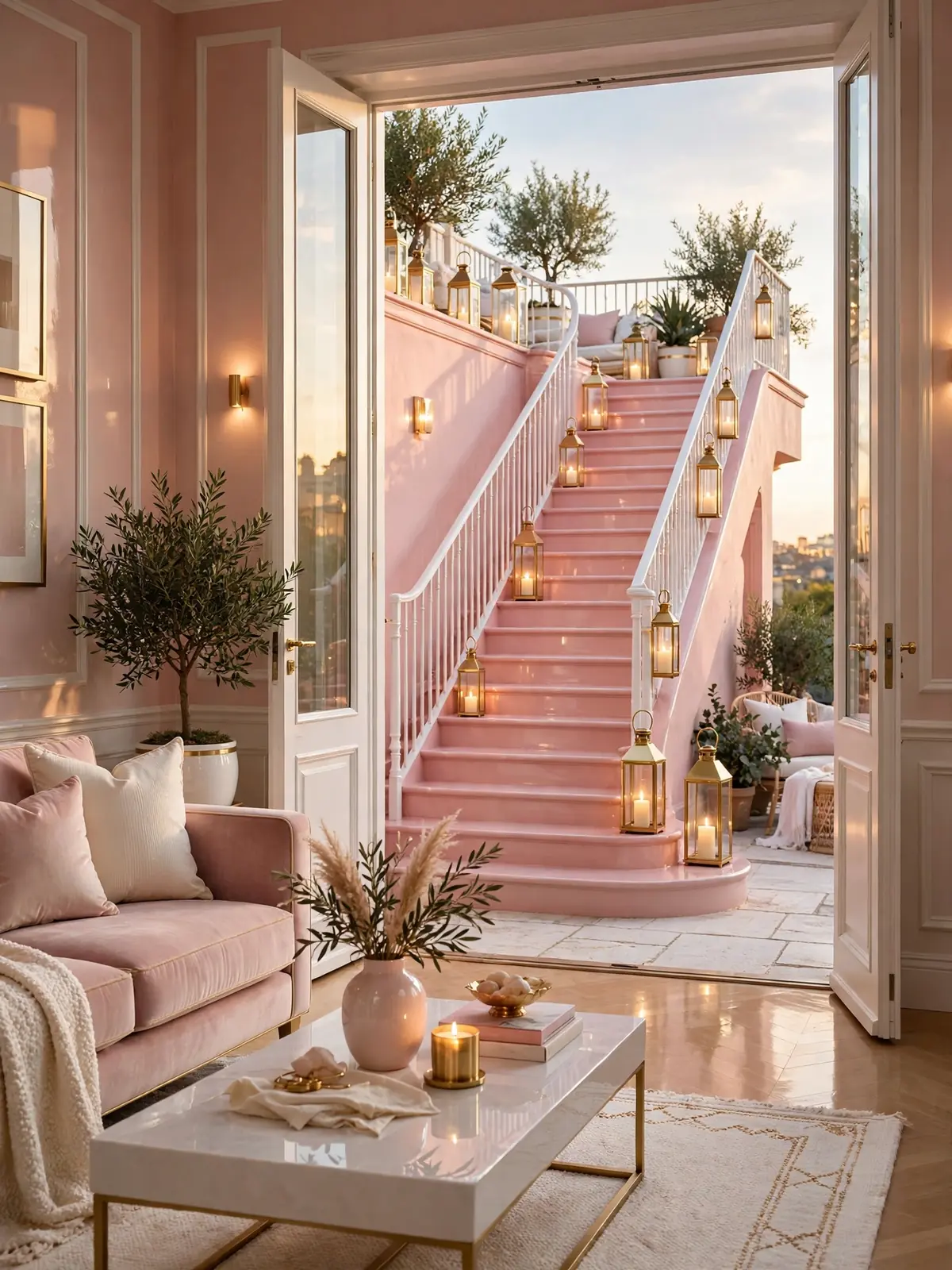
Run thin stainless cable railings along a pale grey terrace staircase, and the sea view stays open while the stair stays safe. Cables suit modern terraces because they disappear at a distance, leaving the view and the steps to do the talking.
Quick tips:
- Use marine-grade stainless cable near salt air.
- Space cables closely enough that a child cannot slip through.
- Tension the cables yearly so they never sag.
Decorative Tile Risers That Turn Garden Steps Into Art
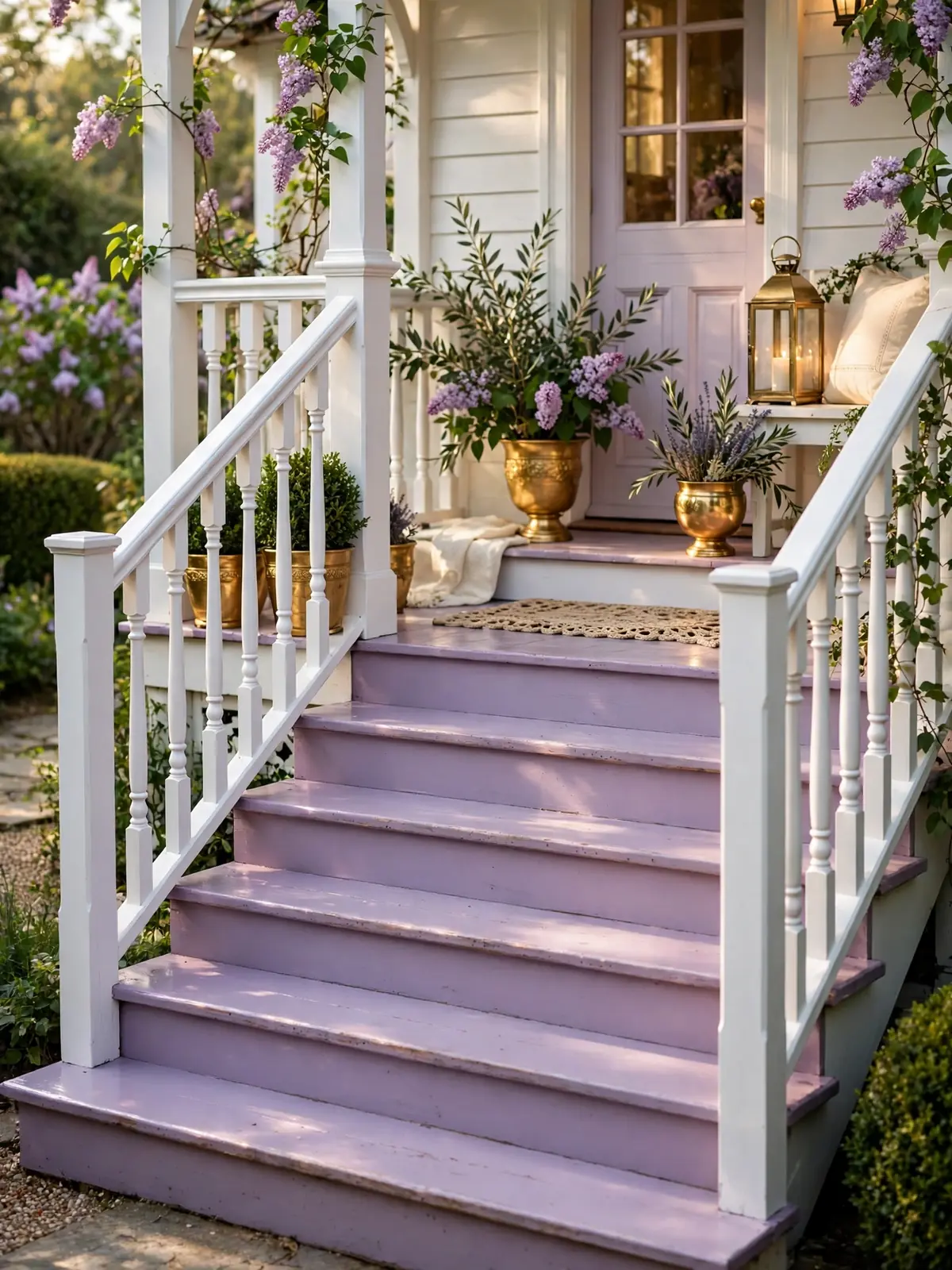
Tile the risers with a repeating cobalt and white Mediterranean pattern while keeping the treads plain stone, and ordinary garden steps become a piece of courtyard art. Limit the pattern to the risers so the walking surface stays calm and safe underfoot.
Quick tips:
- Use frost-proof outdoor tile on risers only.
- Keep treads plain and textured for grip.
- Seal tile grout against rain and frost.
Contrasting Step Edges for Safety and Style in One Move
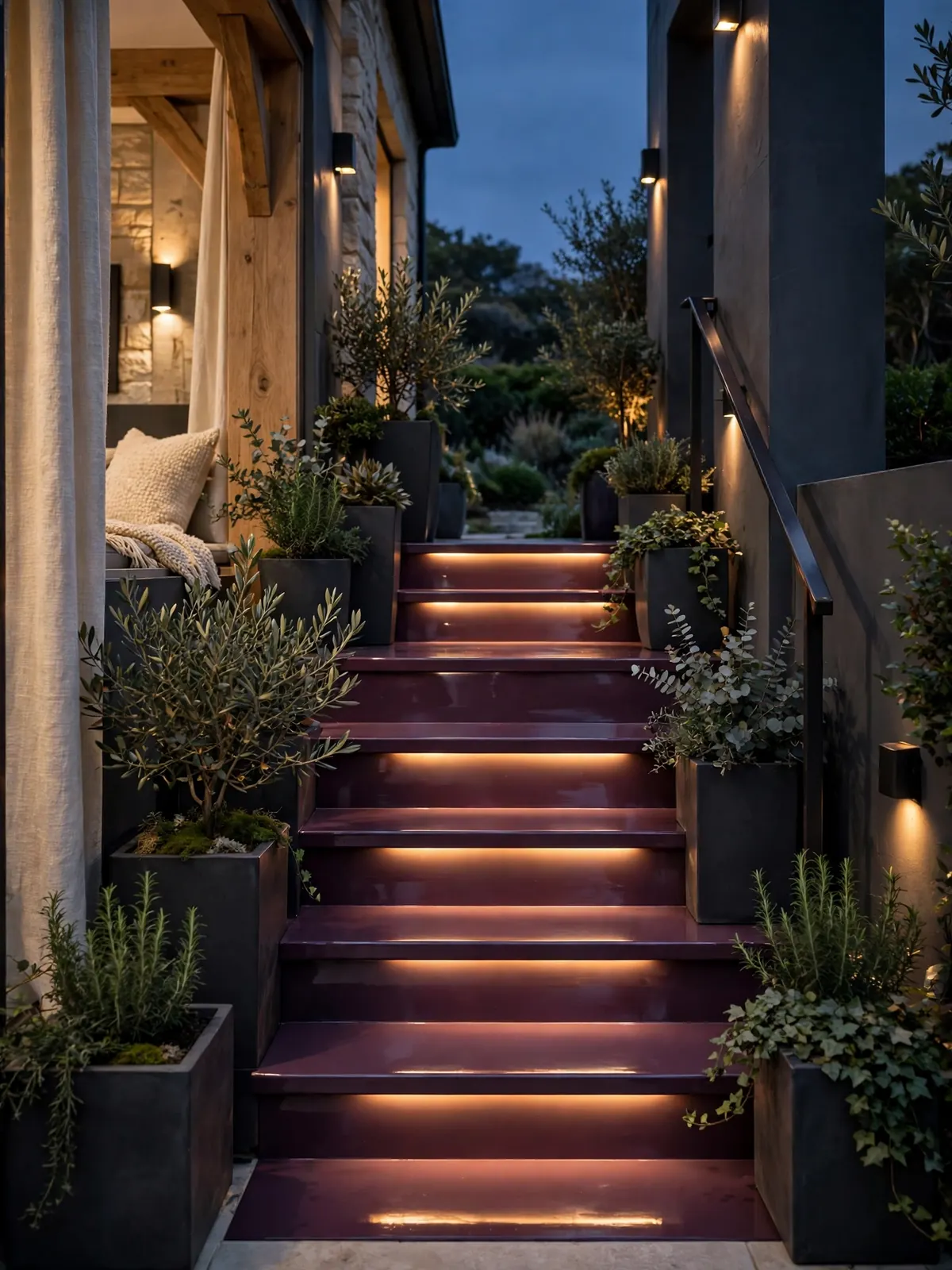
Give pale concrete steps a charcoal nosing edge, and each tread becomes easy to see in low light while the staircase gains a sharp, modern line. The contrast is a safety feature first and a style feature second — which is why it works on every kind of outdoor stair.
Quick tips:
- Keep the contrast visible but not garish.
- Use anti-slip nosing strips for extra grip.
- Repaint or replace nosings when they wear thin.
A Mediterranean Staircase With Stucco, Stone, and Wrought Iron
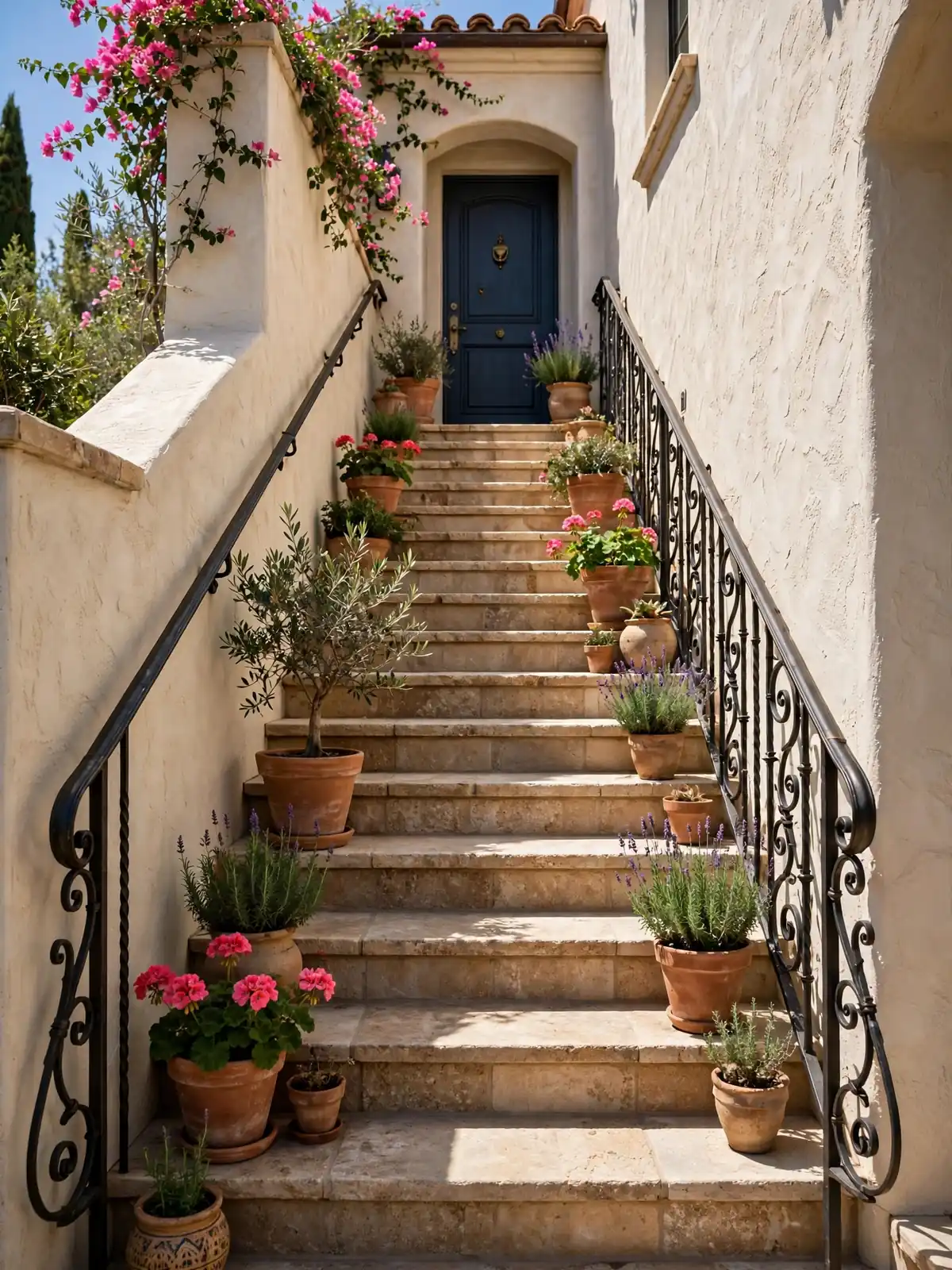
Combine textured stucco walls, warm stone treads, and wrought-iron railings, then add terracotta pots overflowing with greenery, and the staircase feels like a courtyard in southern Europe. Slight irregularities in the stucco and stone only add to the charm — this is a style that should never look machine-perfect.
Quick tips:
- Seal stucco so rain cannot soak in.
- Choose rust-resistant wrought iron or a protective coating.
- Let trailing plants soften the stucco edges.
Poured Concrete Steps With a Board-Formed Texture
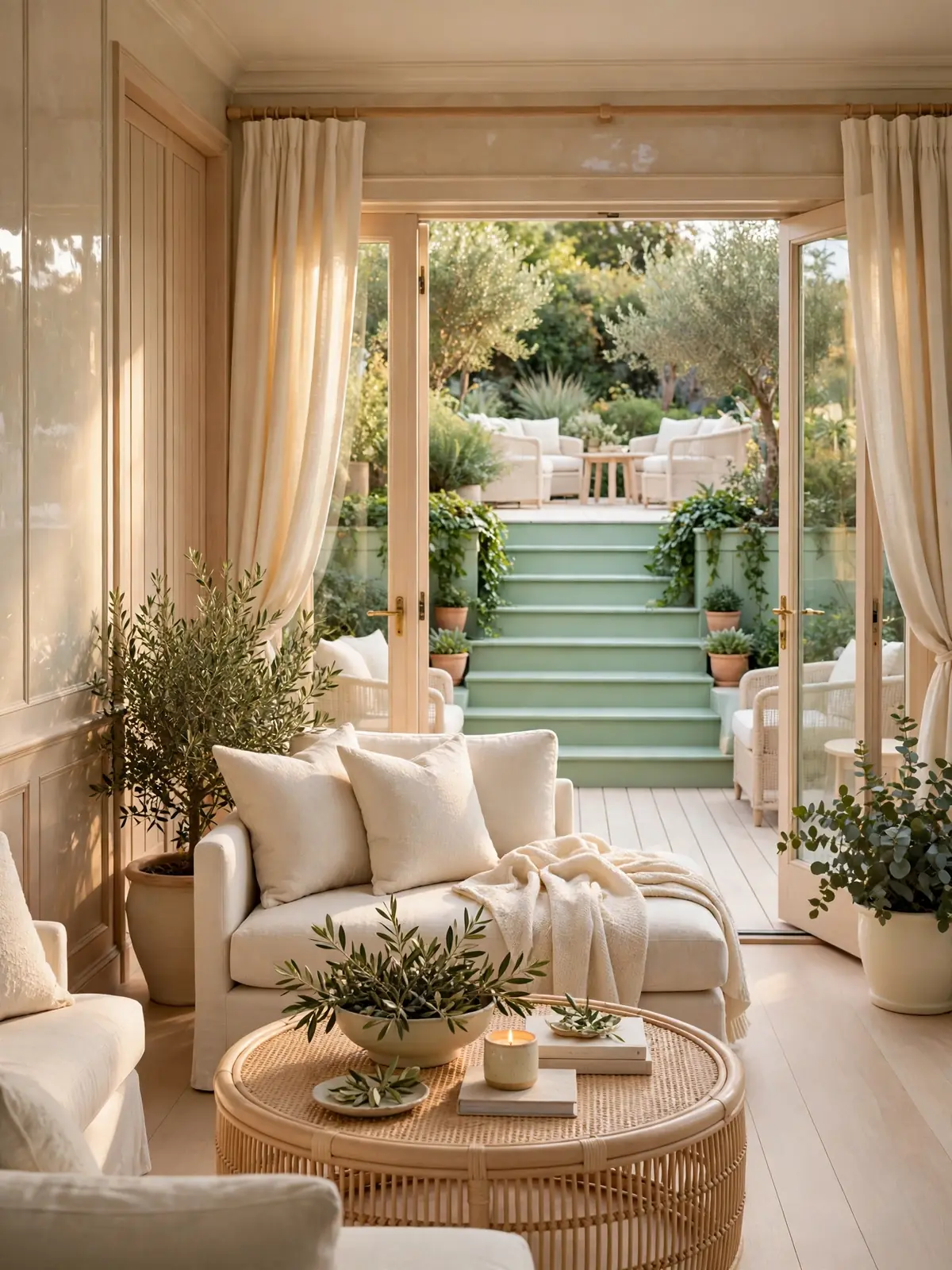
Pour concrete steps using board-formed shuttering, and the finished treads carry the grain of timber in a material that will outlast it by decades. The wood texture also gives the surface natural grip, which matters on a stair that faces rain and frost every winter.
Quick tips:
- Seal concrete to stop freeze-thaw cracking.
- Slope each tread slightly forward for drainage.
- Keep the texture consistent across all treads.
Brick Garden Steps That Age Gracefully Into the Landscape
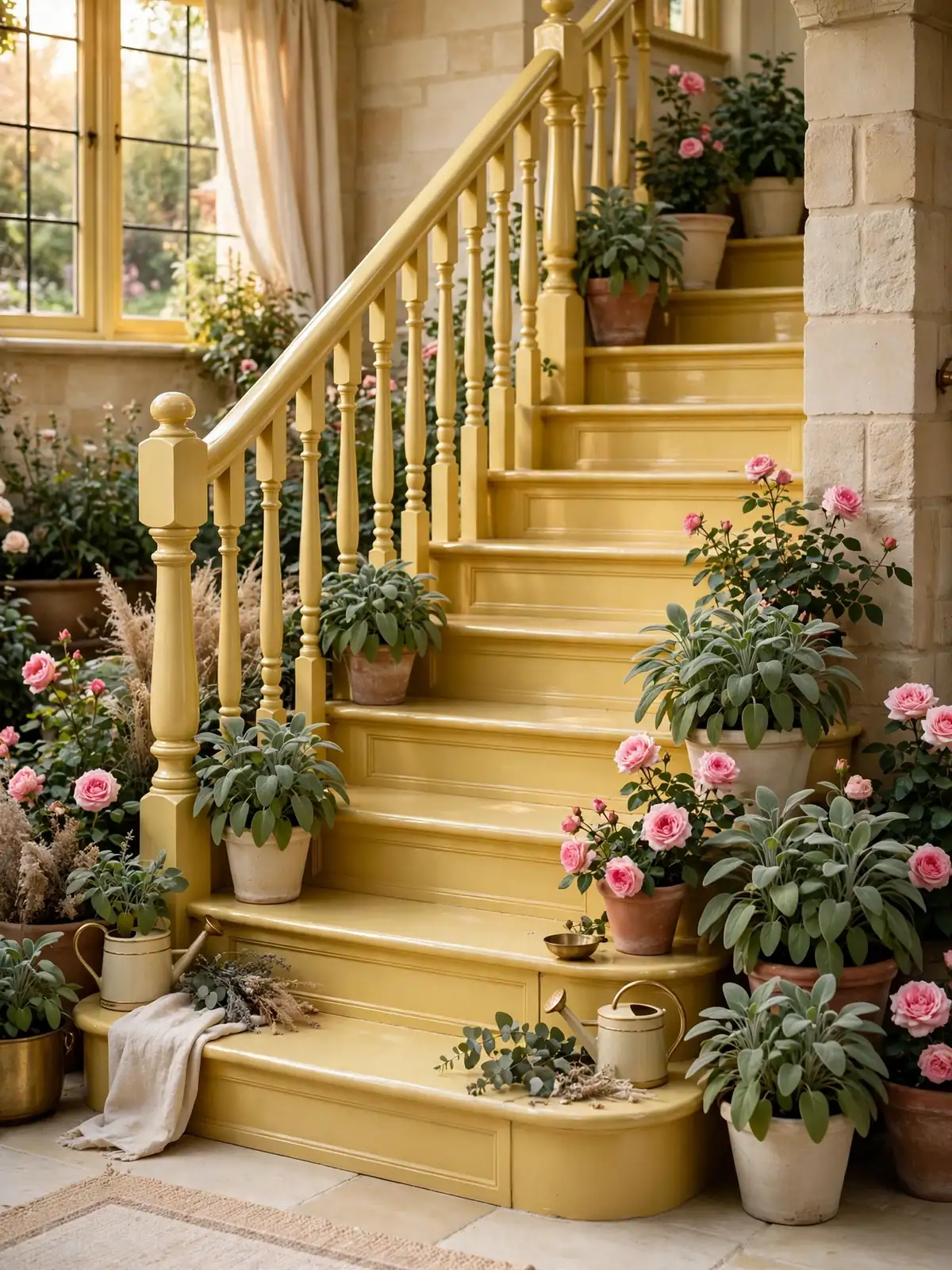
Lay brick garden steps with a slightly rough, sanded finish and let moss soften the edges, and the staircase ages into the cottage garden like it has always been there. Brick suits traditional homes because it matches the house, the path, and the garden wall in one material.
Quick tips:
- Use frost-resistant engineering brick for steps.
- Repoint joints before winter to stop water damage.
- Brush moss off treads regularly so they stay grippy.
Granite Block Steps for a Bold, Permanent Garden Stair
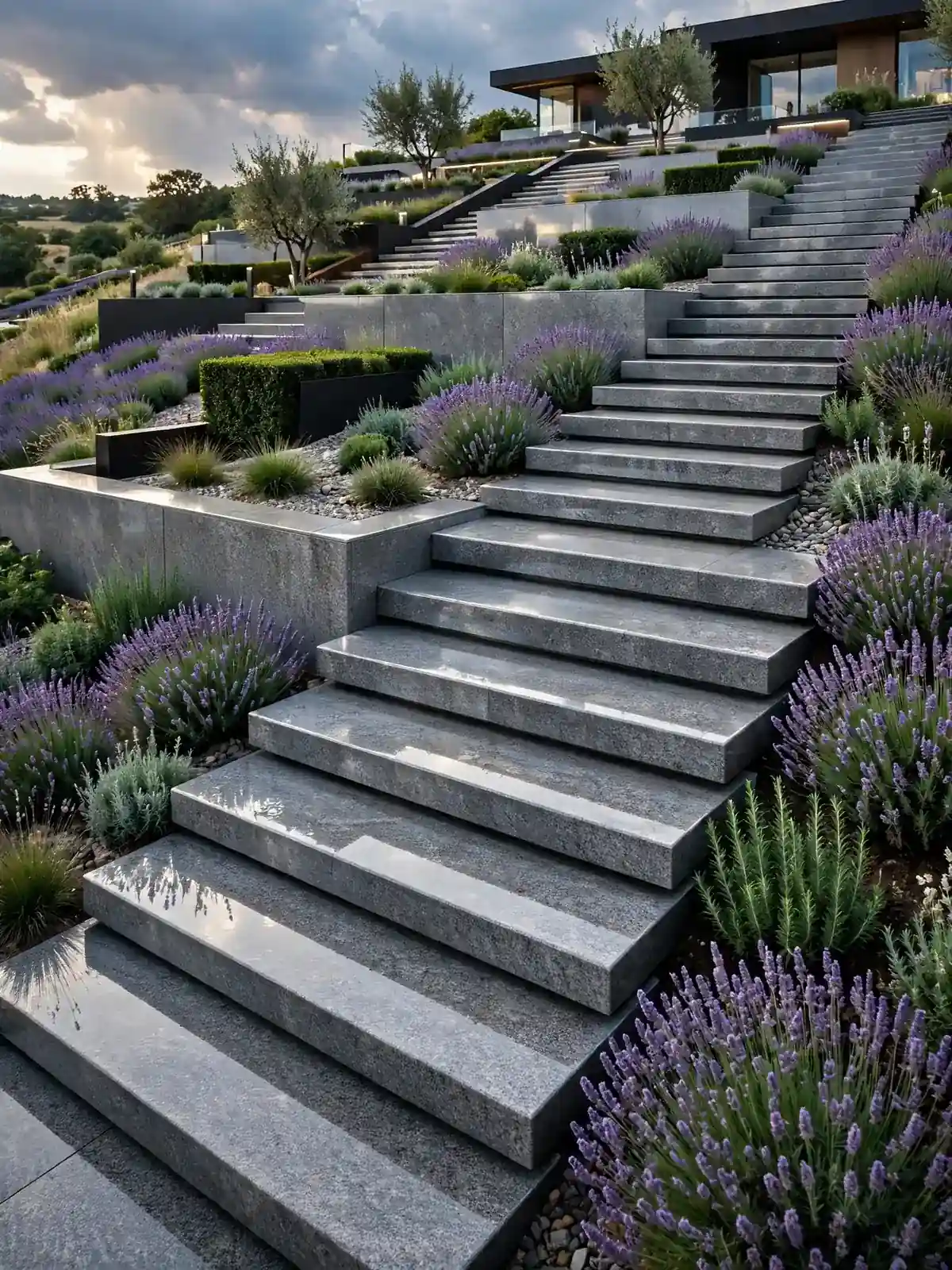
Set massive granite blocks as steps down a sloped garden, flank them with lavender, and the staircase becomes a piece of landscape architecture. Granite needs almost no maintenance, shrugs off frost, and looks better every year as the planting grows around it.
Quick tips:
- Bed each block on compacted gravel for stability.
- Keep the riser height even across all blocks.
- Plant lavender or thyme beside the blocks for scent.
Timber Deck Stairs With Grooved Treads and a Wide Landing
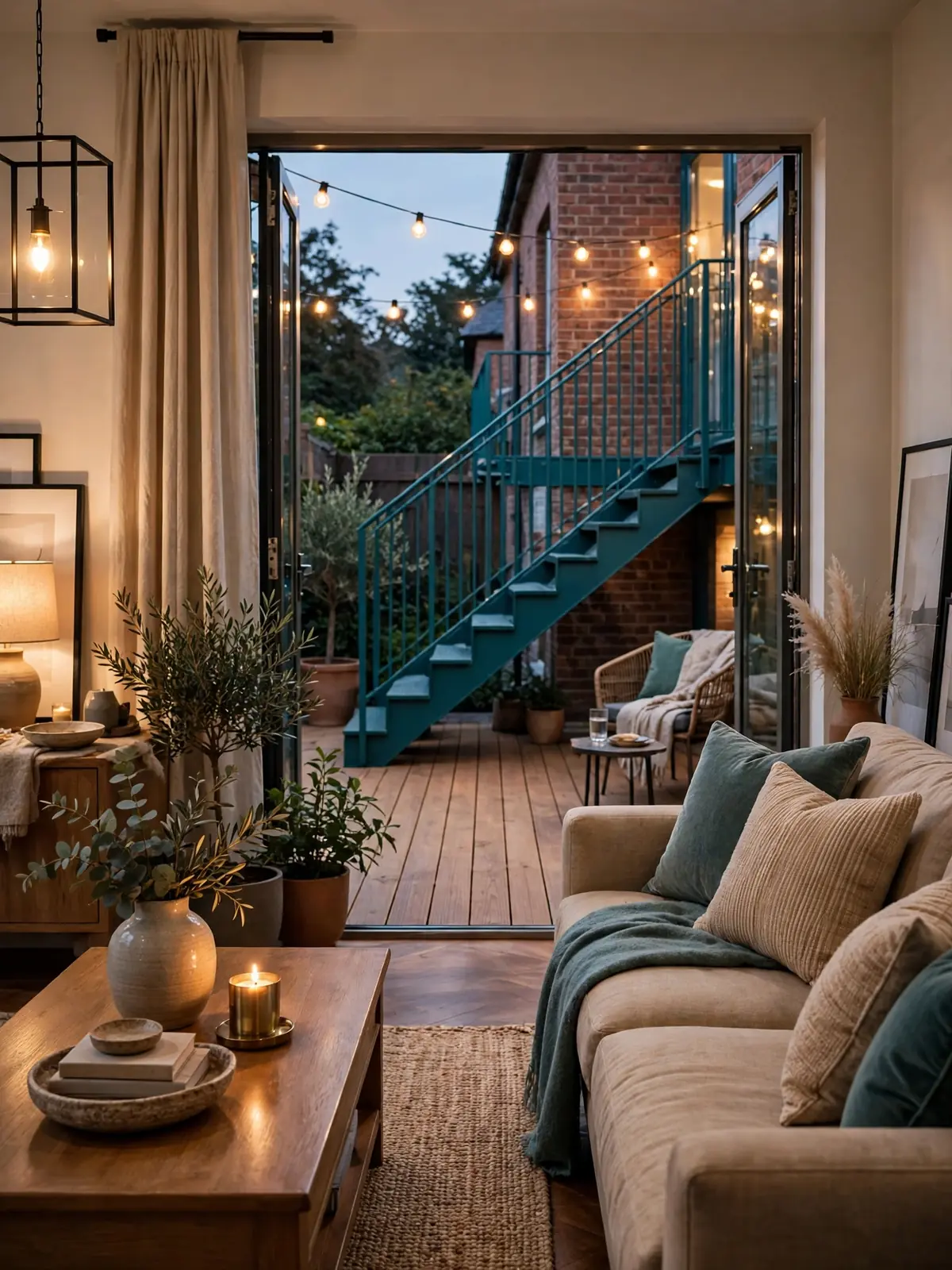
Build deck stairs from grooved hardwood with a wide landing halfway down, dress the deck with teal cushions, and the steps become part of the outdoor living room rather than an afterthought. Grooves channel rainwater away, so the treads dry fast and stay grippy after a shower.
Quick tips:
- Choose grooved or ribbed decking boards for treads.
- Oil hardwood decking yearly to stop greying and splitting.
- Keep a gap between boards so water drains through.
Pool-Side Steps in Non-Slip Porcelain Pavers
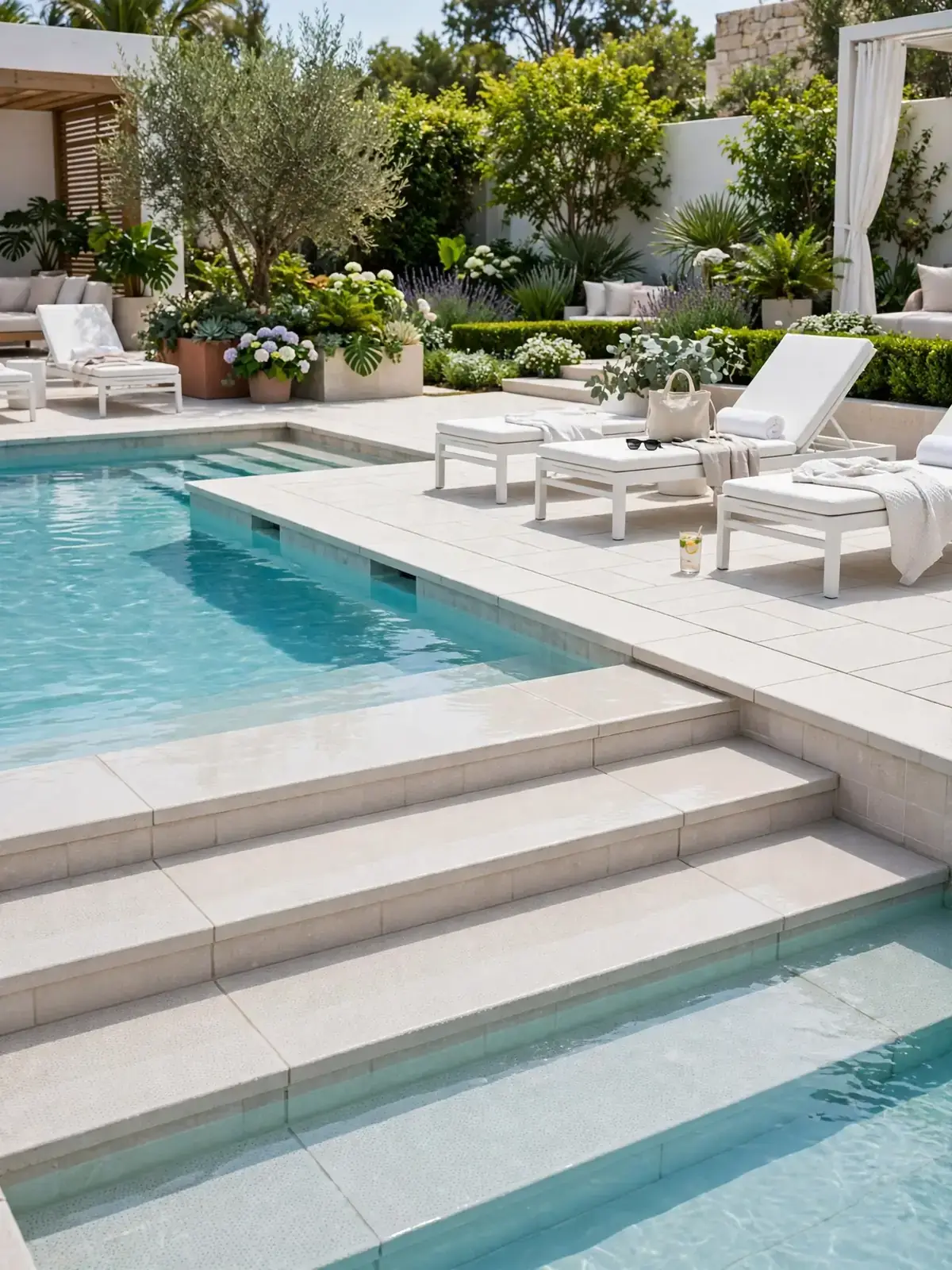
Pave the pool steps in pale non-slip porcelain with a textured finish, and wet feet find grip instead of a slide, even on the hottest day. Porcelain resists chlorine and sun fading, so the steps stay pale and clean while the water sparkles beside them.
Quick tips:
- Choose pavers rated for wet barefoot use.
- Keep the step colour pale so hot sun does not burn feet.
- Rinse the steps weekly to stop chlorine build-up.
A Drainage Channel at the Base That Keeps Steps Dry

Set a slim drainage channel across the base of the staircase, and rainwater runs away from the lowest step instead of pooling against it. It is the least glamorous idea on this list and the one that saves the most money, because standing water is what cracks stone and rots timber.
Quick tips:
- Clear the channel of leaves every autumn.
- Slope the ground away from the lowest step.
- Match the channel grate to the step material.
LED Strips Hidden Under Each Nosing for Night-Time Safety
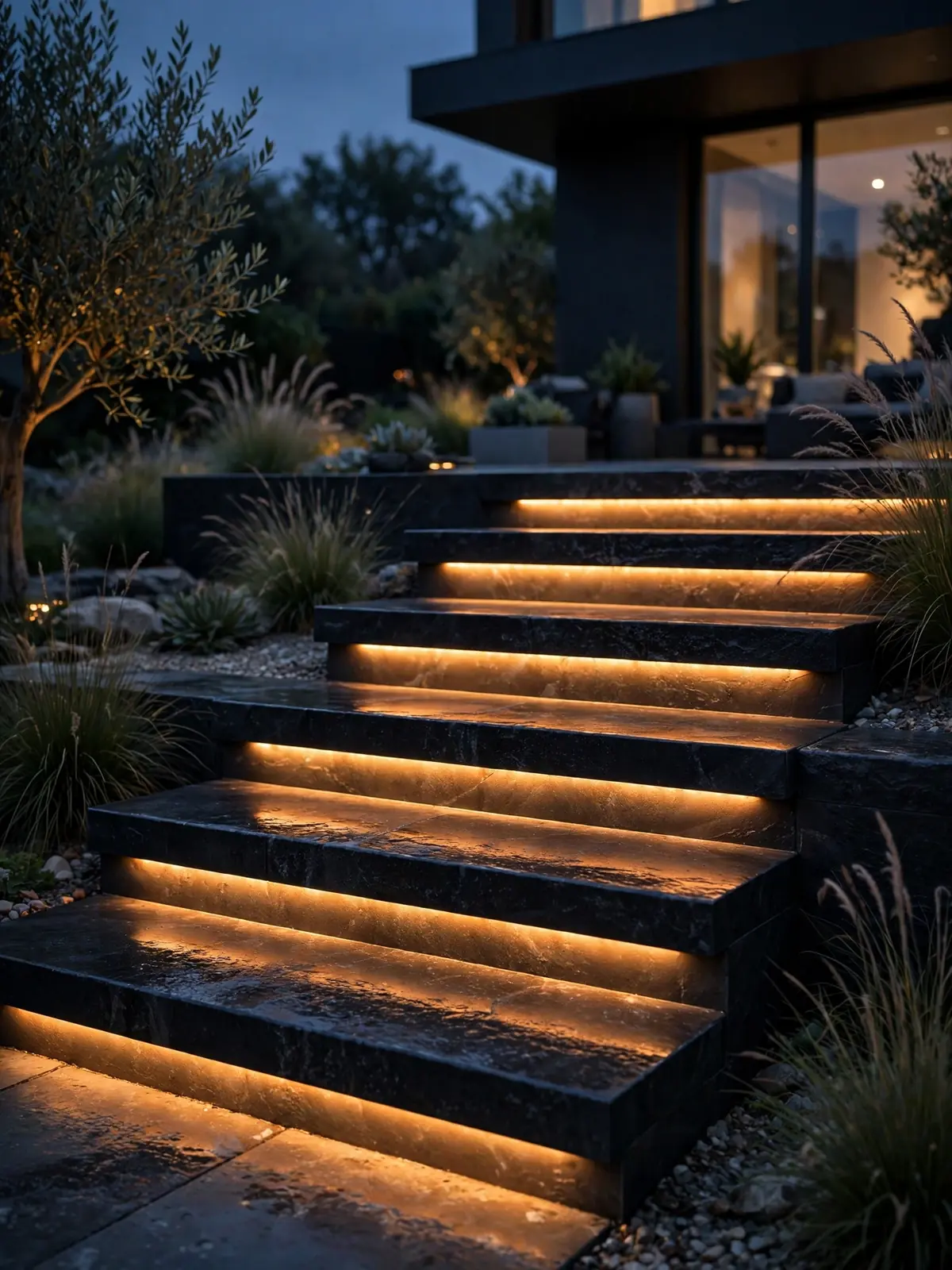
Hide warm LED strips under the nosing of every tread, and the staircase lights itself step by step at dusk without a single visible fixture. The glow marks each edge clearly, so the stair is as safe at midnight as it is at noon — and it looks like a design feature, not a safety add-on.
Quick tips:
- Use IP-rated outdoor LED strips only.
- Choose warm white for a welcoming glow.
- Wire the strips to a dusk sensor or timer.
A Pergola Over the Stair Landing for Shade and Shelter
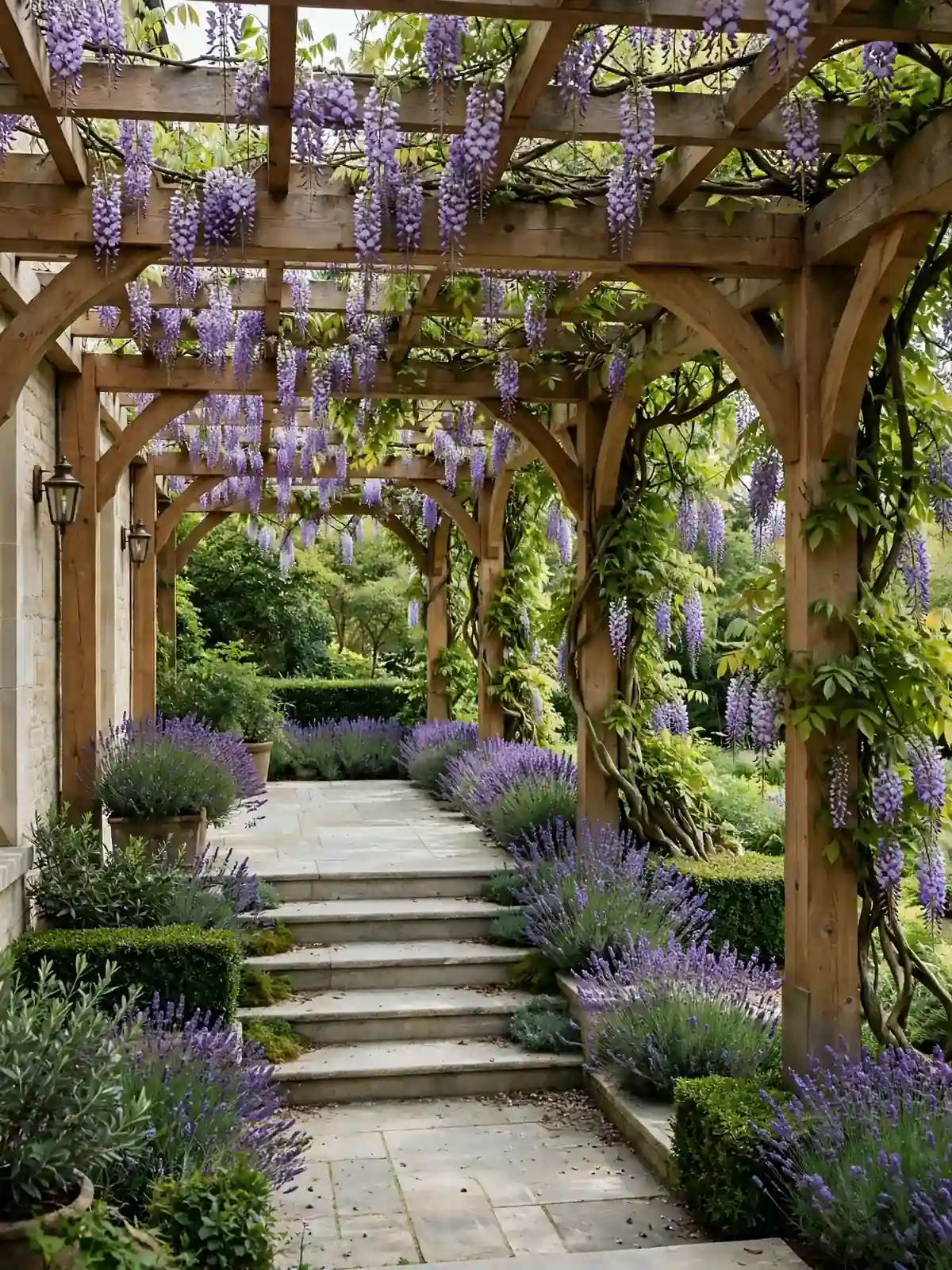
Build a slim timber pergola over the top landing and train wisteria across it, and the staircase gains shade in summer and a little shelter from rain. A pergola turns a landing into a destination — a place to pause with a coffee before heading down to the garden.
Quick tips:
- Keep the pergola slim so it never darkens the stair.
- Train climbers away from the handrail.
- Treat the timber yearly against weather.
Frost-Proof Porcelain Steps on a Raised Terrace
Pave a raised terrace staircase in large-format frost-proof porcelain, add charcoal planters and a cream outdoor sofa at the top, and the terrace feels like an extra room that happens to be outside. Porcelain will not crack in a freeze, stain from a spilled drink, or fade in strong sun.
Quick tips:
- Choose large-format tiles to reduce grout lines.
- Use a flexible outdoor adhesive for freeze-thaw movement.
- Keep a mat at the top landing for muddy shoes.
A Handrail in Warm Timber on a Stone Stair for a Soft Touch
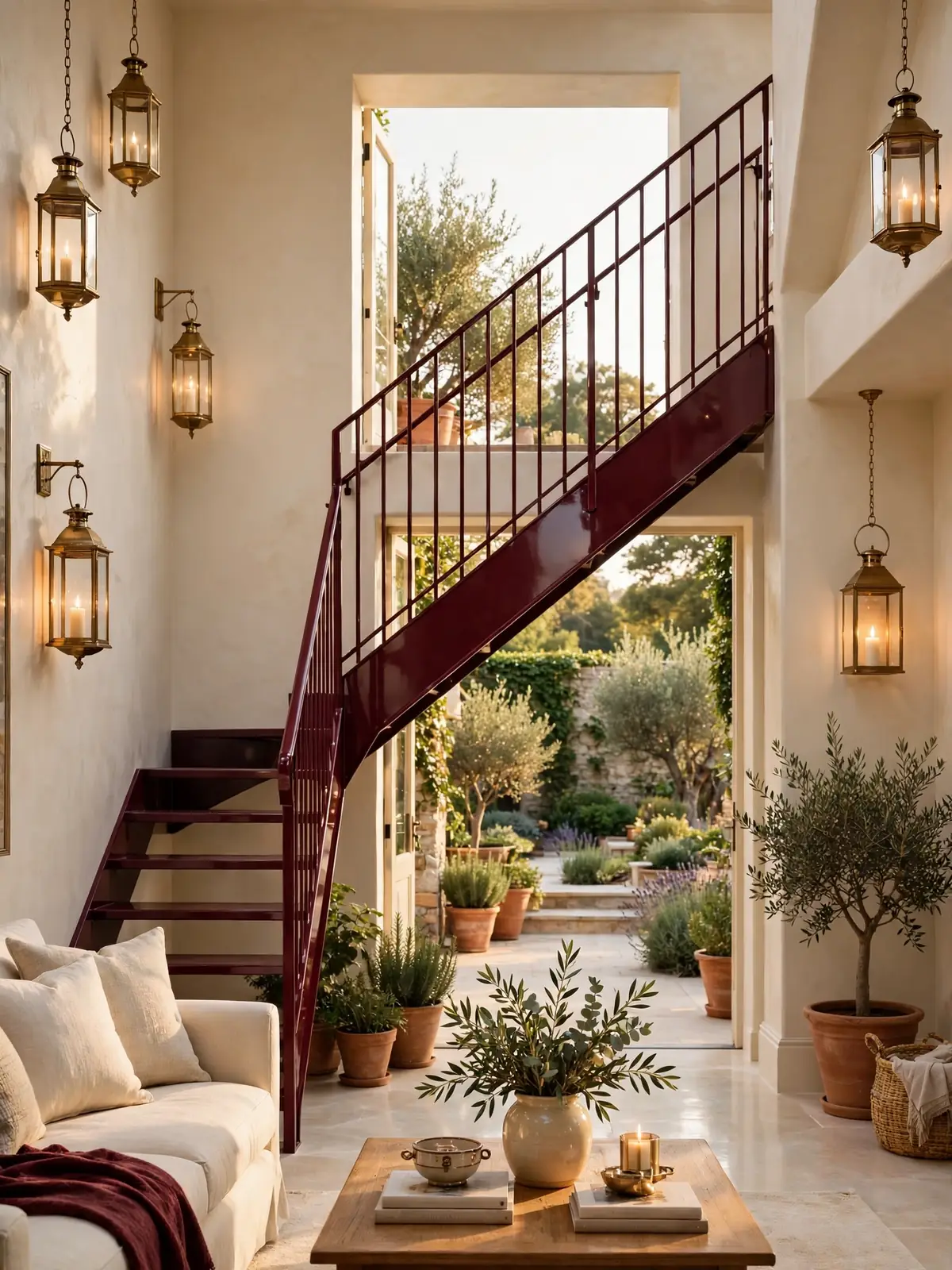
Fit a warm iroko timber handrail on black steel brackets along a grey stone staircase, and cold stone gains a warm, inviting touch under the hand. Timber rails feel better than metal on a frosty morning, and they soften the hardest-looking stair in the garden.
Quick tips:
- Choose a dense hardwood like iroko or teak for outdoors.
- Oil the rail twice a year to keep it smooth.
- Round the rail edges so it feels good to grip.
Gravel-Lined Garden Steps With Timber Risers
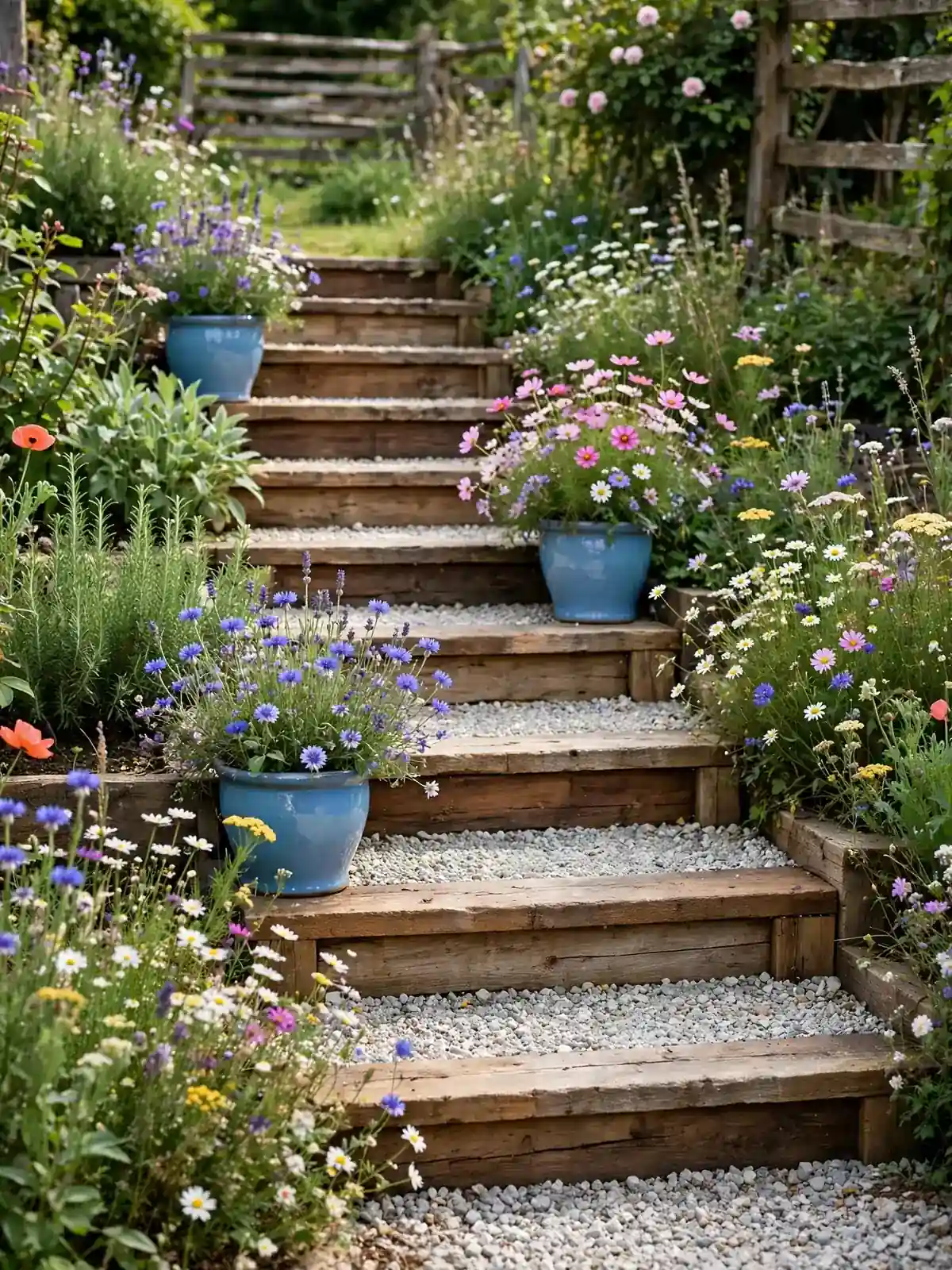
Set timber risers into a slope and fill each tread with compacted gravel, and the garden gains informal steps that drain instantly and cost very little. Gravel steps suit wildflower gardens because they look natural, and rain simply disappears through the stones instead of pooling.
Quick tips:
- Compact the gravel firmly so it does not shift underfoot.
- Use rot-resistant timber for the risers.
- Top up the gravel every spring.
A Frosted-Glass Windbreak Beside the Terrace Stair

Fit a frosted-glass windbreak beside a pale stone terrace staircase, and the city view stays soft and bright while the stair is sheltered from the worst of the wind. Frosted glass suits exposed terraces because it blocks gusts without blocking daylight, turning a windy terrace into a usable outdoor room.
Quick tips:
- Use toughened laminated glass rated for outdoor use.
- Leave a gap at the base so rainwater drains away.
- Clean the glass monthly so the light stays bright.
Heated Step Mats for a Frost-Free Winter Stair
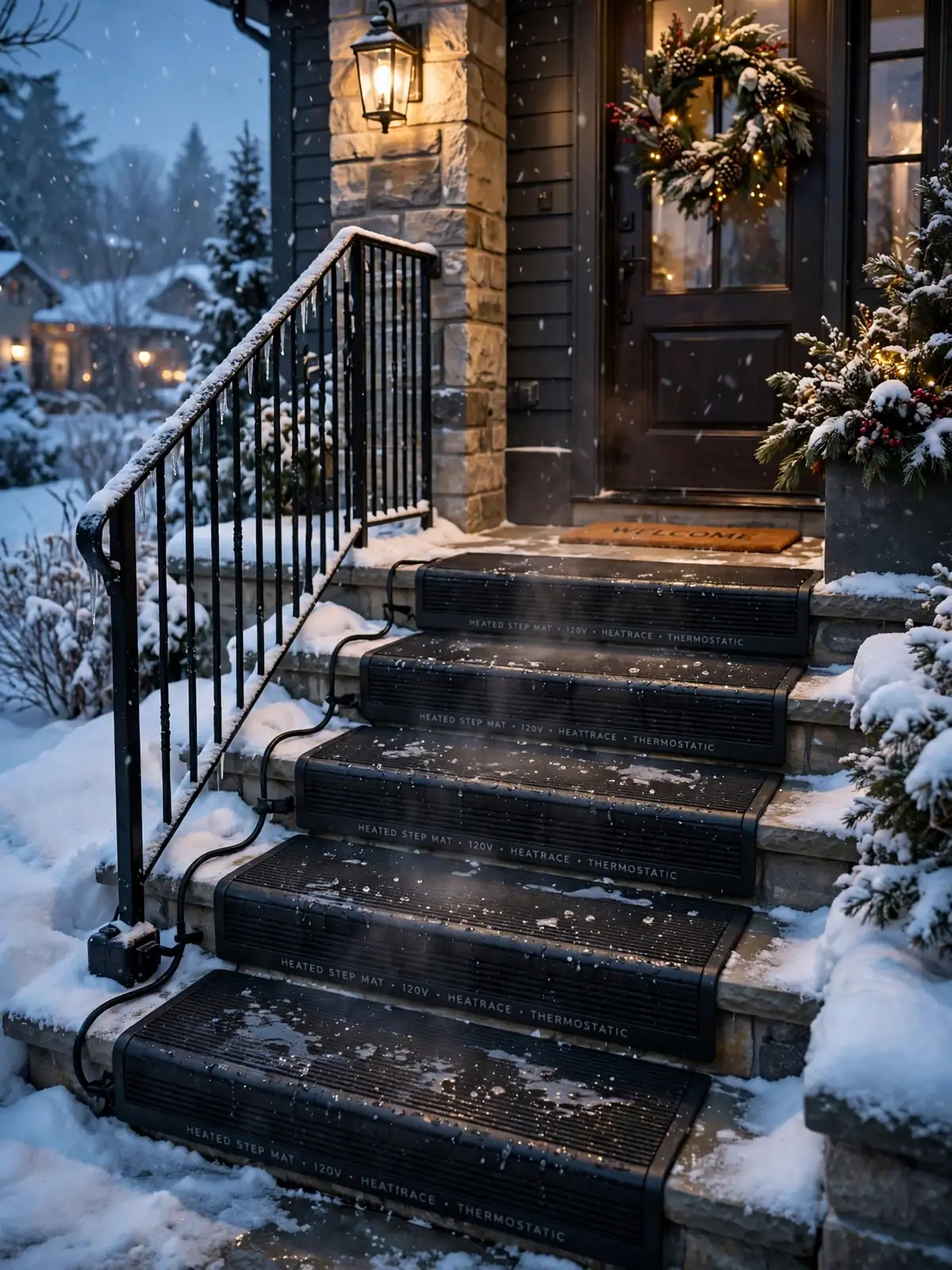
Lay heated step mats on the treads of a front-entry staircase, and snow melts on contact so the steps stay clear through the coldest week of winter. Mats switch on with a sensor or a timer, and they cost far less than a full heated-step system while keeping the stair safe every frosty morning.
Quick tips:
- Choose mats rated for your local winter temperatures.
- Plug them into a weatherproof outdoor socket.
- Store the mats flat in summer so they keep their shape.
A Front-Entry Stair With a Covered Porch Landing Above It
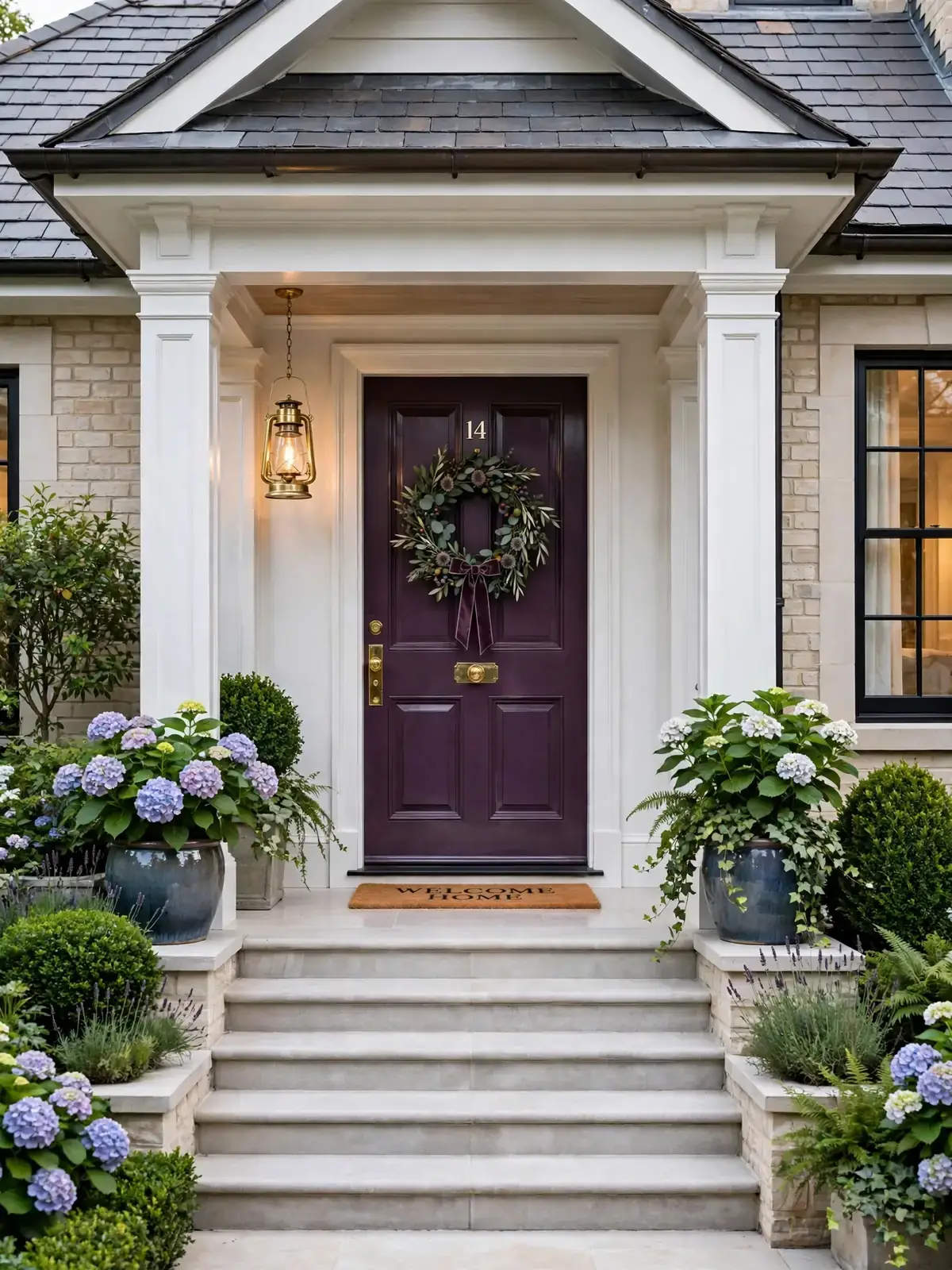
Shelter the top of the front-entry staircase under a small pitched porch roof, hang a brass lantern beside a plum front door, and visitors arrive dry even in heavy rain. A covered landing protects the top treads from the worst weather, which is where ice and wear do the most damage.
Quick tips:
- Size the porch roof to cover the top two treads.
- Add guttering so roof water never falls on the steps.
- Keep the lantern warm-toned for a welcoming glow.
FAQs
What is the best material for exterior stairs in a wet climate?
Natural stone and sealed concrete handle constant rain best, because they do not rot, warp, or rust. Choose a textured finish for grip, seal the surface yearly, and give every tread a slight forward slope so water runs off.
How do I stop my exterior staircase from getting slippery?
Use textured stone, grooved timber, or anti-slip nosing strips, and keep the treads free of moss, algae, and fallen leaves. A drainage channel at the base and a slight slope on each tread stop water pooling, which is what makes steps treacherous.
Do exterior stairs need a handrail?
Yes, in most places a handrail is required once a staircase rises above a certain height, and it is always a good idea for safety. Choose a material that suits the weather — powder-coated metal, dense hardwood, or stainless cable — and check the fixings yearly.
How do I light an exterior staircase safely?
Use low-level step lights, lanterns on posts, or LED strips hidden under the nosings, all rated for outdoor use and wired to a dusk sensor or timer. Warm light marks each tread clearly without the harsh glare of a floodlight.
Can I build exterior stairs myself?
Simple garden steps in gravel, timber, or brick are a realistic weekend project, but tall, curved, or structural staircases — and any stair that supports a terrace or deck — should be designed and built by a professional, because the foundations and drainage have to be right.
Conclusion
Exterior stairs earn their beauty by surviving the weather — choose a material that grips when wet, give rain a clear path away from every tread, and light each step so the stair is safe after dark. Pick the idea that fits your space, whether that is wide stone steps, a timber deck stair, or a pool-side porcelain flight, and let the material and the drainage lead the styling. Done this way, an outdoor staircase stays beautiful through rain, sun, and frost for years.