25 Concrete Staircase Ideas That Are Anything But Cold and Grey
Concrete stairs don’t have to feel industrial or unfinished. Here are 25 ways to finish, pair, and style them — from mirror polishes to warm stains — so they suit any home.
Concrete staircase ideas have moved far beyond the raw grey flight in a warehouse conversion. Polished to a soft sheen, stained warm, or paired with oak and brass, concrete stairs can feel calm, luxurious, and completely at home in a family house. The material itself is the easy part — it’s honest, hardwearing, and lasts decades. The design decisions are what make it sing.
The key shift is to stop treating concrete as a background material and start treating it as a finish in its own right, like stone or timber. That means choosing the surface deliberately — polished, honed, stained, or textured — and then dressing it with the right railing, lighting, and wall treatment so the stair reads as designed, not leftover.
The wall running alongside does half the visual work: a limewash, timber cladding, or soft plaster finish warms up grey steps instantly, and browsing accent wall ideas for staircases is a good way to find a treatment that makes concrete feel intentional rather than industrial.
Polish to a Soft Honed Sheen, Not a Mirror
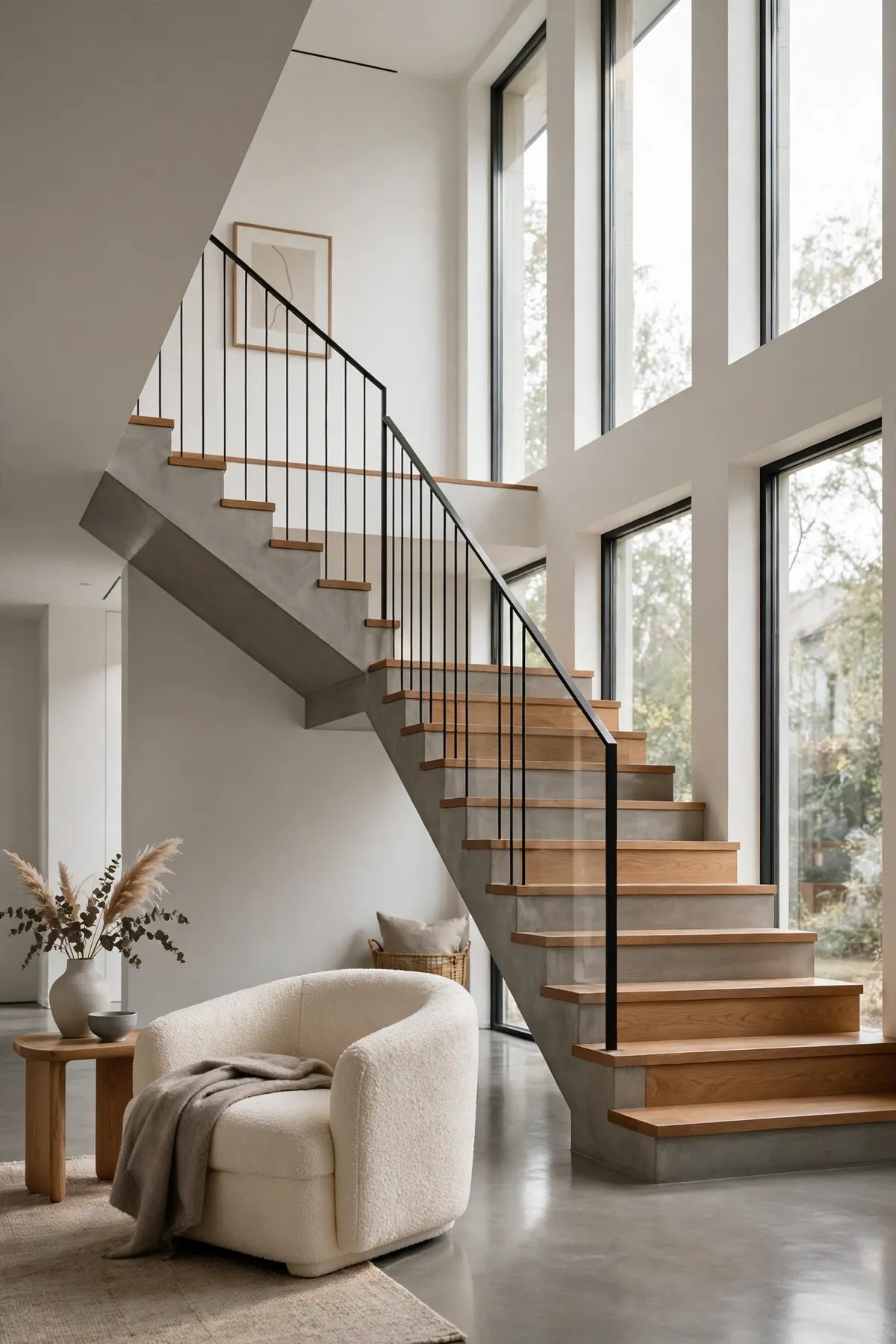
A honed finish — polished enough to feel smooth and reflect light gently, but not so glossy it looks like a showroom floor — is the most livable concrete stair finish. It resists staining better than raw concrete, feels good under bare feet, and doesn’t show every footprint the way a mirror polish does. Ask the polisher for a mid-level grind and a penetrating sealer rather than a topical gloss.
- A honed finish hides daily wear better than high-gloss.
- Always seal — polished concrete still stains without protection.
- Add anti-slip nosing strips; even honed concrete is slick when wet.
Stain It Warm With a Reactive Acid Stain
Reactive acid stains don’t paint concrete — they chemically alter its color, producing mottled, variegated tones in caramel, walnut, and bronze that look like natural stone. Because the color lives inside the concrete rather than on top of it, it won’t chip or peel. The mottling is unpredictable, which is exactly the point: no two stained staircases look alike.
- Test the stain on a hidden tread or sample slab first.
- Neutralize and seal properly — skipping this step causes problems later.
- Mottling varies, so embrace it rather than fighting for uniformity.
Explore These Concrete Staircase Ideas With Board-Formed Texture

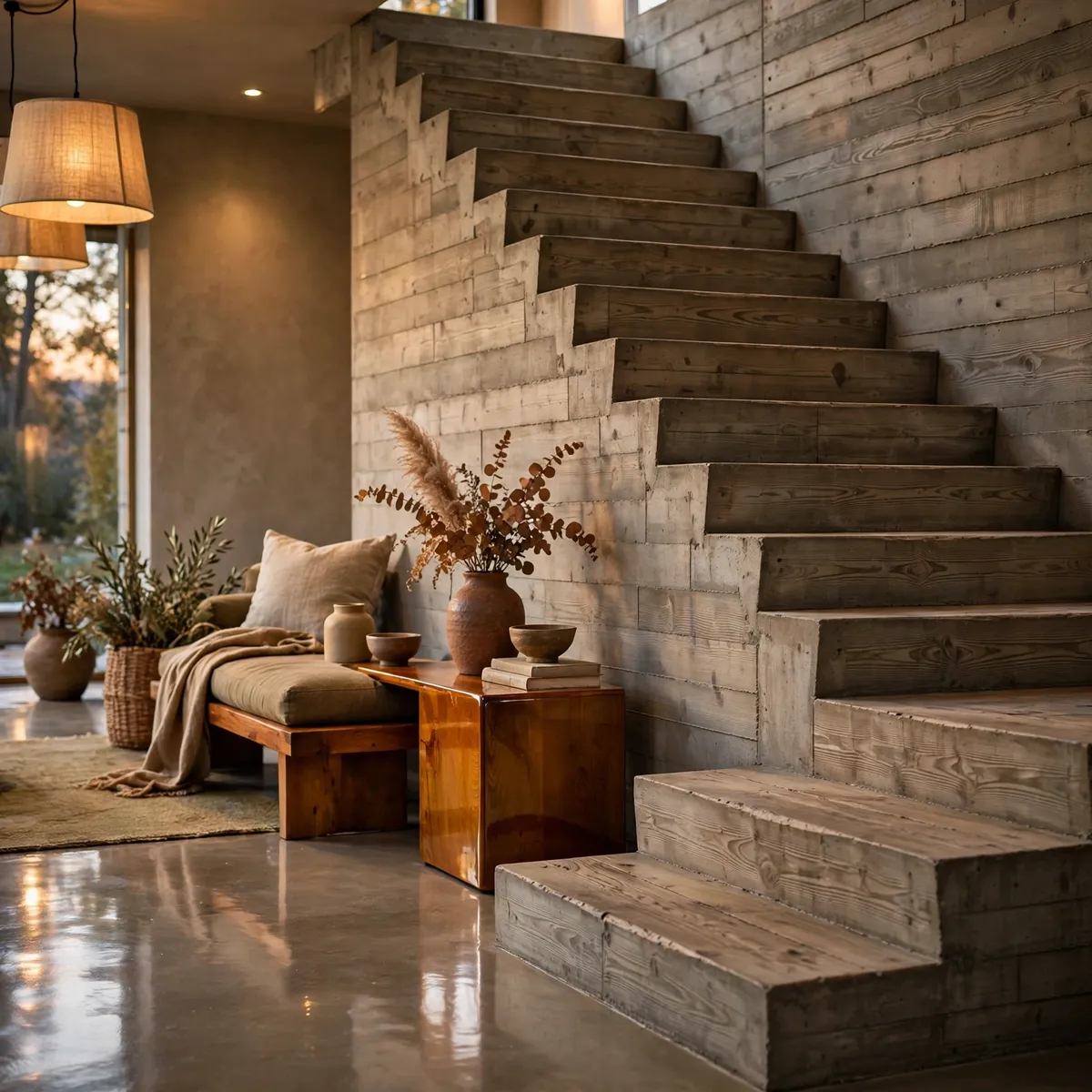
Casting concrete against rough timber boards leaves the wood’s grain and plank lines imprinted in the surface — a finish architects love for its handcrafted, almost geological feel. On a staircase, board-formed risers and stringers add enormous texture without any applied decoration. It suits rustic-modern and Scandinavian homes where natural materials do the talking.
- Board-forming is decided at the casting stage — it can’t be added later.
- Seal the texture so dust doesn’t settle into the grain lines.
- Pair with simple railings so the texture stays the star.
Cap the Treads in Thick Oak
Fitting solid oak tread caps over a concrete stair base gives you concrete’s solidity with timber’s warmth underfoot — the combination most homeowners actually want to live with. The oak softens both the look and the acoustics, and it can be refinished years later while the concrete beneath lasts indefinitely. A small shadow gap between the oak and the concrete riser keeps the junction crisp.
- Use engineered oak caps to reduce movement and cupping.
- A 10mm shadow gap between cap and riser looks sharp.
- Finish oak with hardwax oil for a natural, repairable surface.
Pair With a Blackened Steel Railing

Blackened steel — steel treated to a deep, matte charcoal finish — is concrete’s natural partner. The dark line of the railing traces the stair’s geometry crisply against the pale steps, and the pairing feels architectural without tipping into cold industrial territory. Keep the railing design simple: flat bar or slim round profiles let the concrete do the talking.
- Blackened finishes need occasional waxing to prevent rust bloom.
- Slim profiles suit concrete better than chunky ones.
- Match the steel tone to door hardware for cohesion.
Soften With a Wool Runner
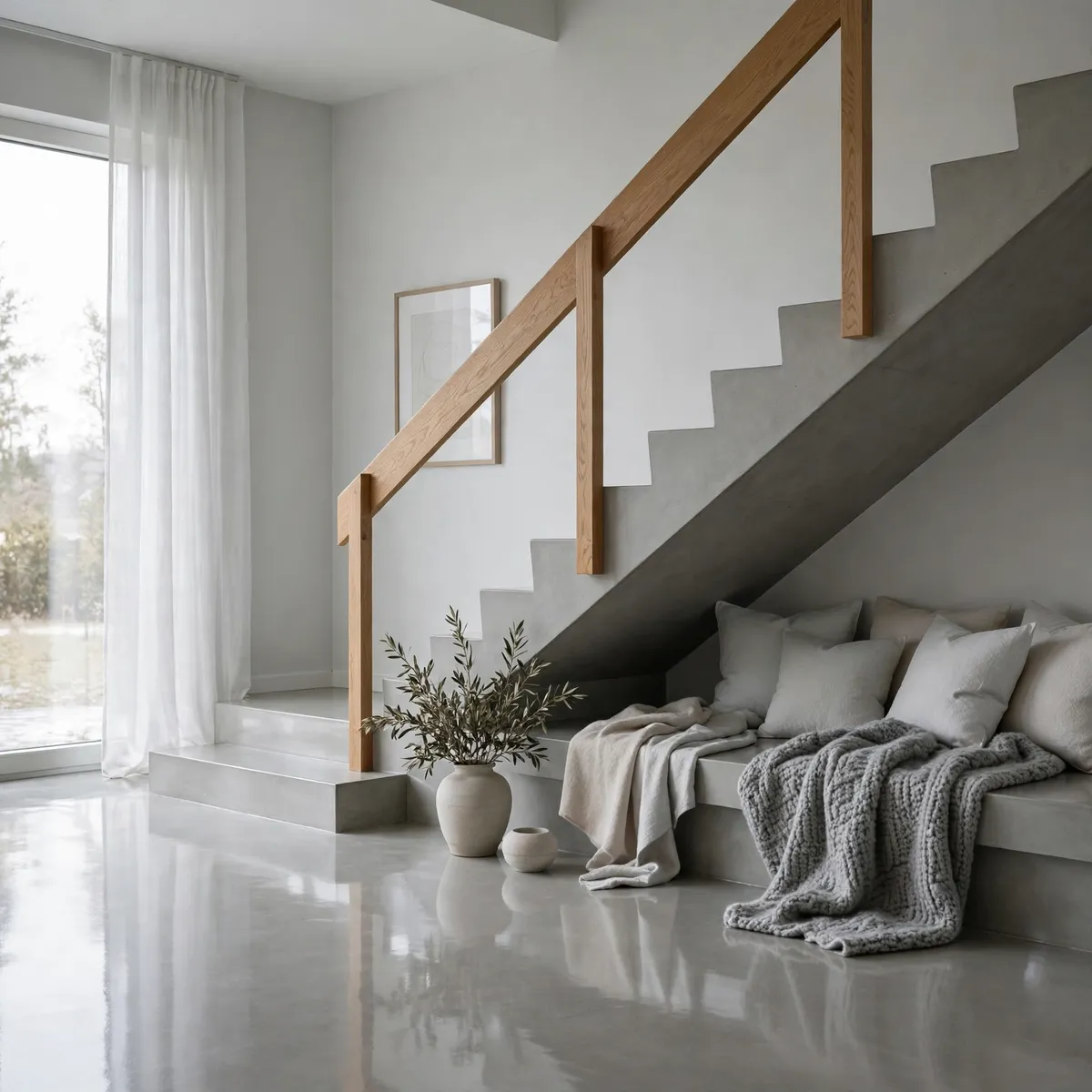
A flat-weave wool runner down a concrete flight solves the two complaints people have about concrete stairs: cold feet and echoing footsteps. Wool is naturally hardwearing and its texture contrasts beautifully with smooth concrete. Because concrete treads are often deeper than timber ones, have the runner made to measure so it sits centered with equal concrete margins showing.
- Flat-weave wool wears best and stays thin underfoot.
- Use a proper stair-rod or adhesive fixing — runners creep on concrete.
- Equal margins of exposed concrete frame the runner neatly.
Wash the Wall in Limewash
The wall beside a concrete staircase sets its mood, and limewash — with its soft, cloudy movement — warms up grey steps in a way flat paint never does. A warm white or pale clay limewash keeps the palette calm while adding the texture concrete itself lacks. It’s also breathable, which suits the solid masonry construction concrete stairs usually sit within.
- Apply limewash in crisscross strokes for the classic cloudy effect.
- Warm whites flatter concrete better than cool ones.
- Seal high-touch areas since limewash marks easily.
Let It Float With Hidden Steel Supports
Concrete treads cantilevered from a hidden steel structure in the wall appear to float — a jaw-dropping effect that makes a heavy material feel weightless. Each tread is a solid concrete block, usually with a steel armature cast inside, fixed back into the wall’s structure. This is serious engineering and serious money, but as a single architectural gesture it’s hard to beat.
- Requires a structural engineer and a reinforced supporting wall.
- Keep the wall finish simple so the floating effect reads clearly.
- Under-tread lighting amplifies the floating illusion at night.
Add Warmth With Recessed Tread Lighting
Recessed LED channels set into the riser or under each tread nosing wash warm light across the concrete, revealing its texture and making every step edge visible after dark. On grey concrete, 2700K light reads as candle-warm and completely changes the stair’s evening character. Plan the wiring before the concrete is cast or finished — retrofitting into cured concrete is expensive and messy.
- 2700K warm white flatters grey concrete best.
- Plan all wiring before casting or final finishing.
- Put step lights on a motion sensor for night-time safety.
Contrast With a Timber Slatted Screen
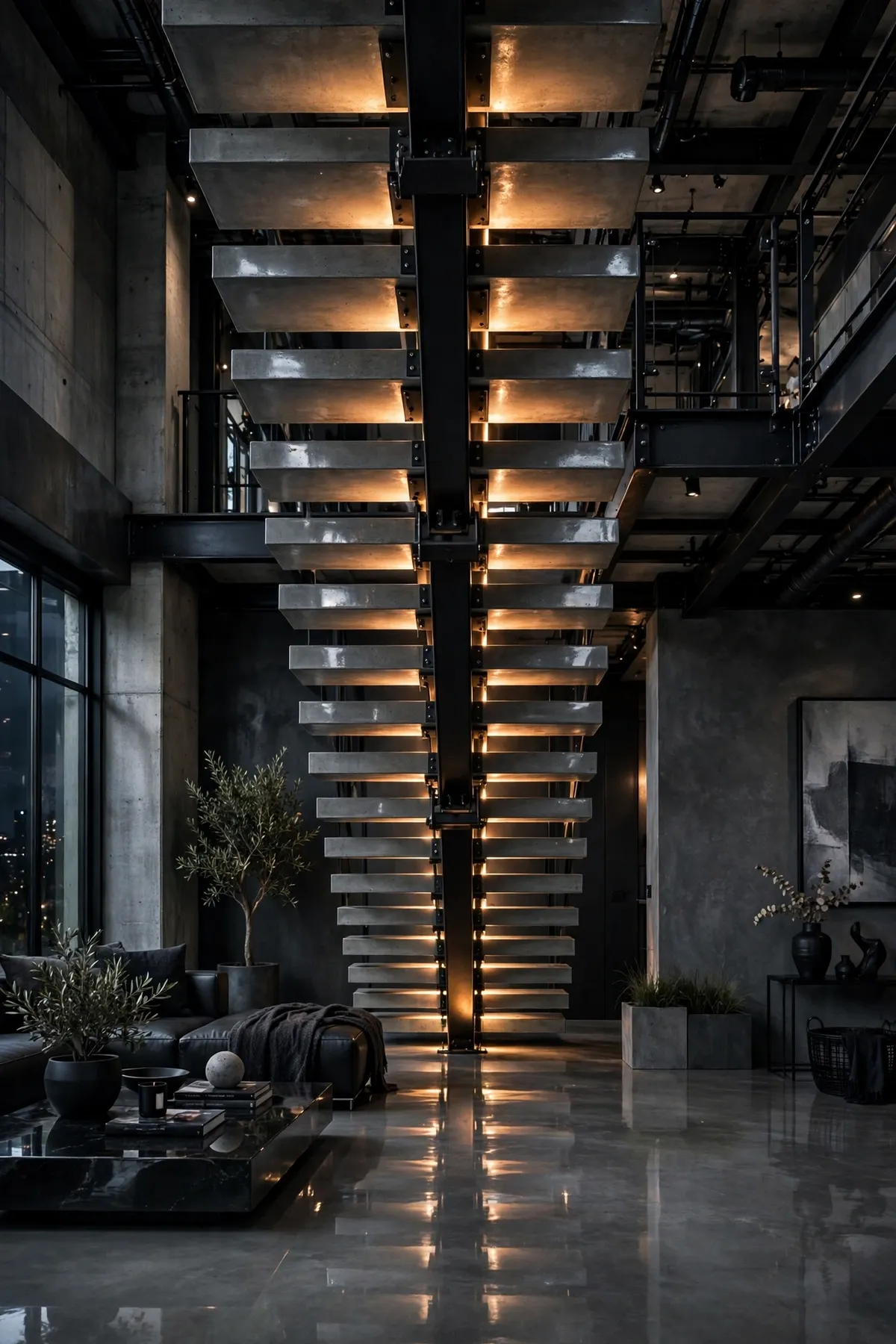
A floor-to-ceiling timber slat screen running alongside a concrete staircase is one of the most effective warm-modern combinations there is. The vertical battens filter light into stripes, partially screen the stair from the living space, and their honey tones play beautifully against cool grey. Oak, ash, or thermo-treated pine all work — pick the tone that matches your flooring.
- Space battens evenly with a consistent gap for a calm rhythm.
- Pre-finish battens before installation.
- Match the timber tone to nearby flooring for flow.
Keep Edges Raw and Honest
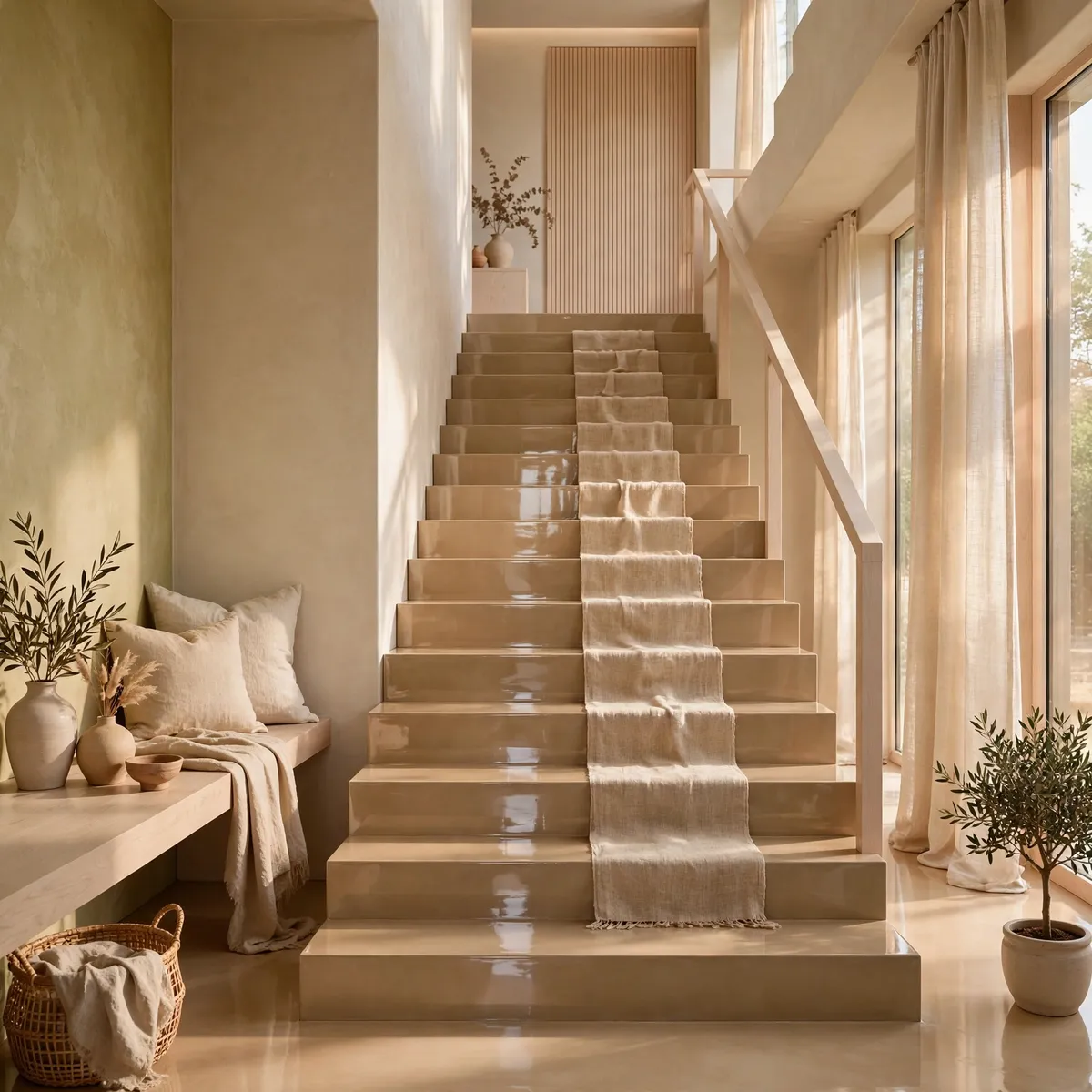
Not every concrete stair needs polishing. Leaving the cast edges visible — with their subtle formwork lines and tiny air pockets — celebrates the material’s honest character and suits industrial, brutalist, and warehouse-style interiors. The key is intentionality: raw concrete looks deliberate when the rest of the space is considered, and neglected when it isn’t. Seal it, light it well, and it reads as a choice.
- Seal raw concrete — it stains easily without protection.
- Good lighting is essential; raw concrete goes flat in poor light.
- Keep surrounding finishes refined so the rawness reads as intentional.
Inlay Brass Strips Into the Treads
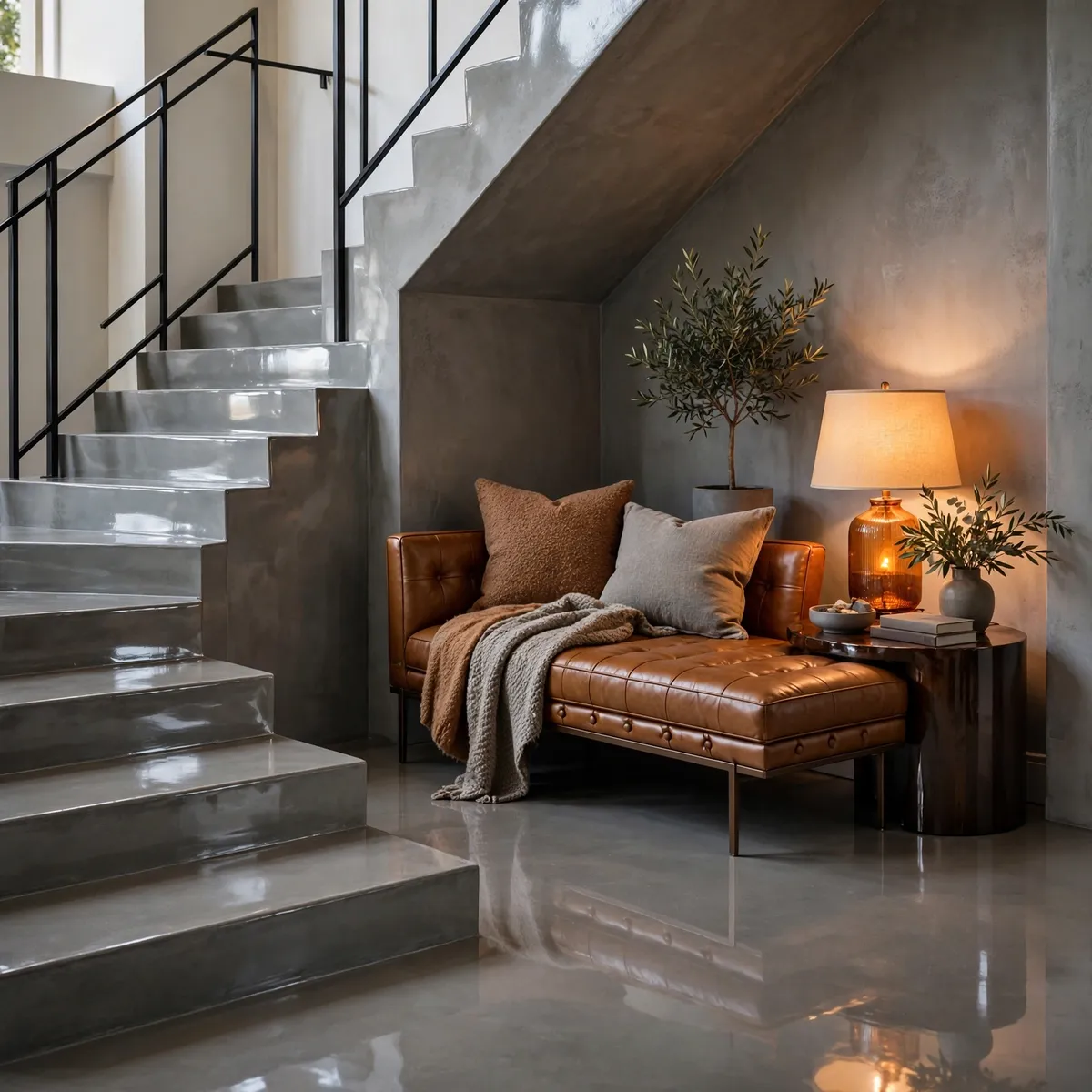
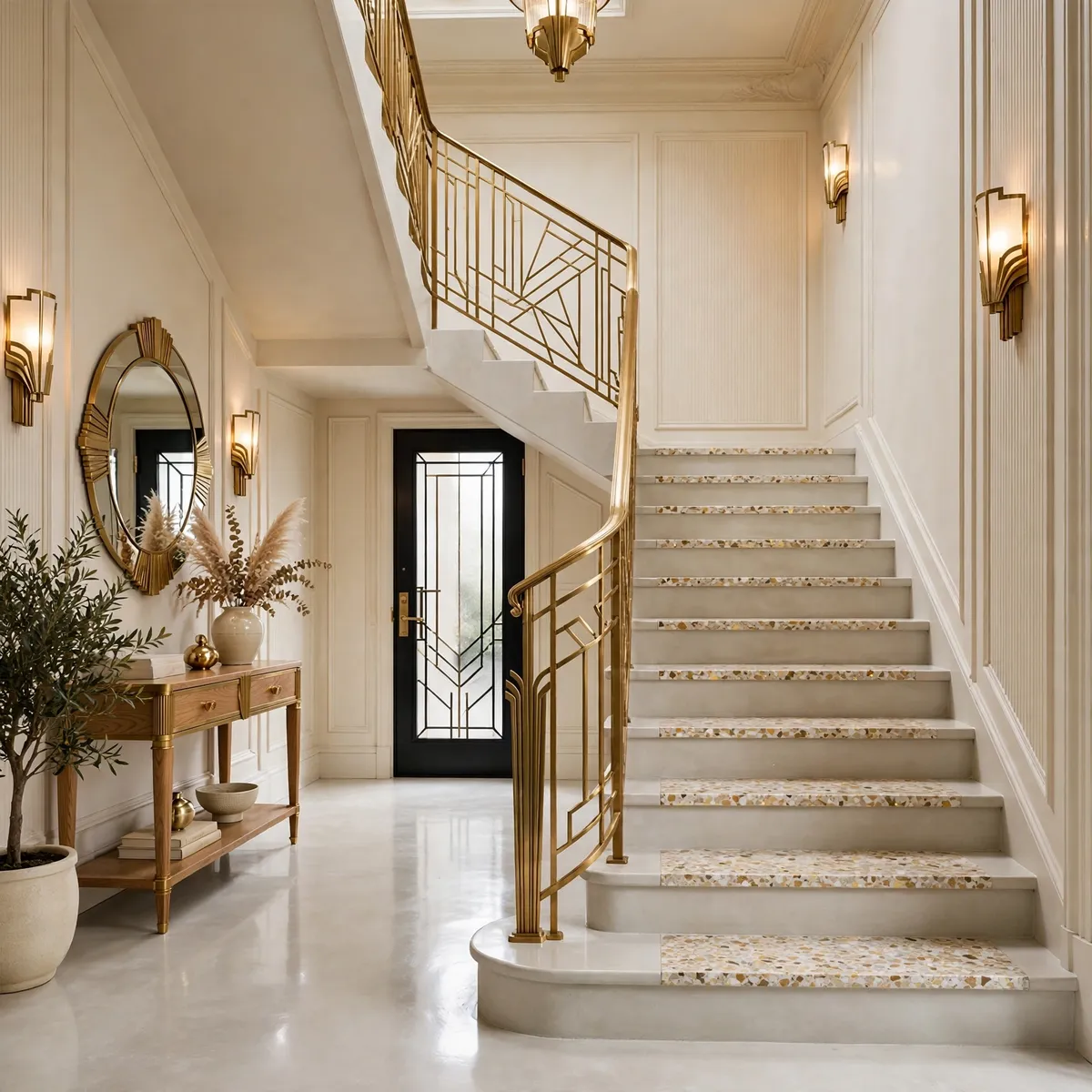
Thin brass strips inlaid flush into concrete treads — running across the width near the nosing or tracing the stair’s edge — add a jewelry-like detail that catches light beautifully. The warm metal against cool grey is a classic luxury pairing, and the strips double as a visual guide to each step edge. Have them set during casting or routed in later by a stone fabricator.
- Set inlays flush to avoid a trip edge.
- Unlacquered brass will patinate; lacquered stays bright.
- Keep the inlay design simple — one line per tread is enough.
Curve the Concrete for a Sculptural Flight
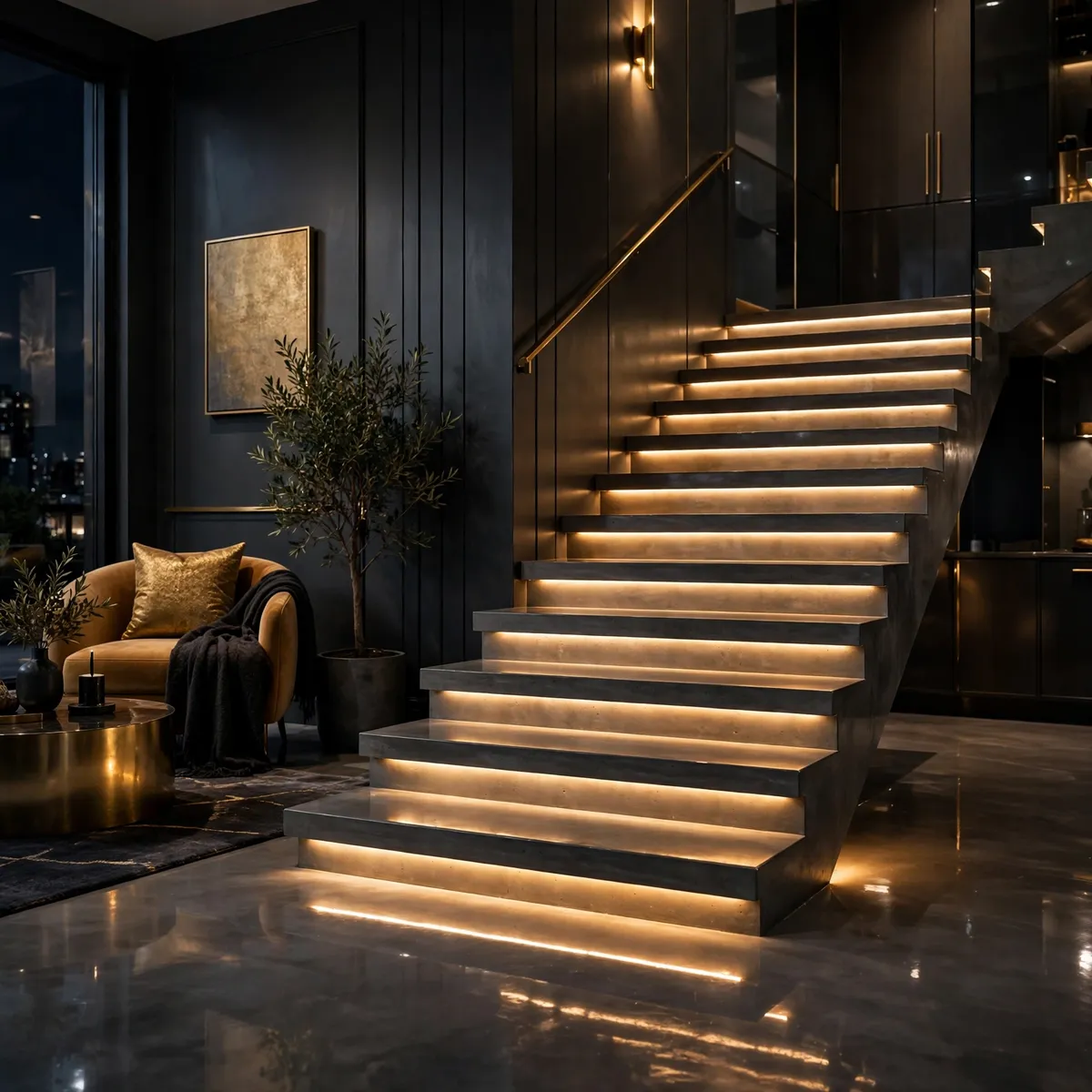
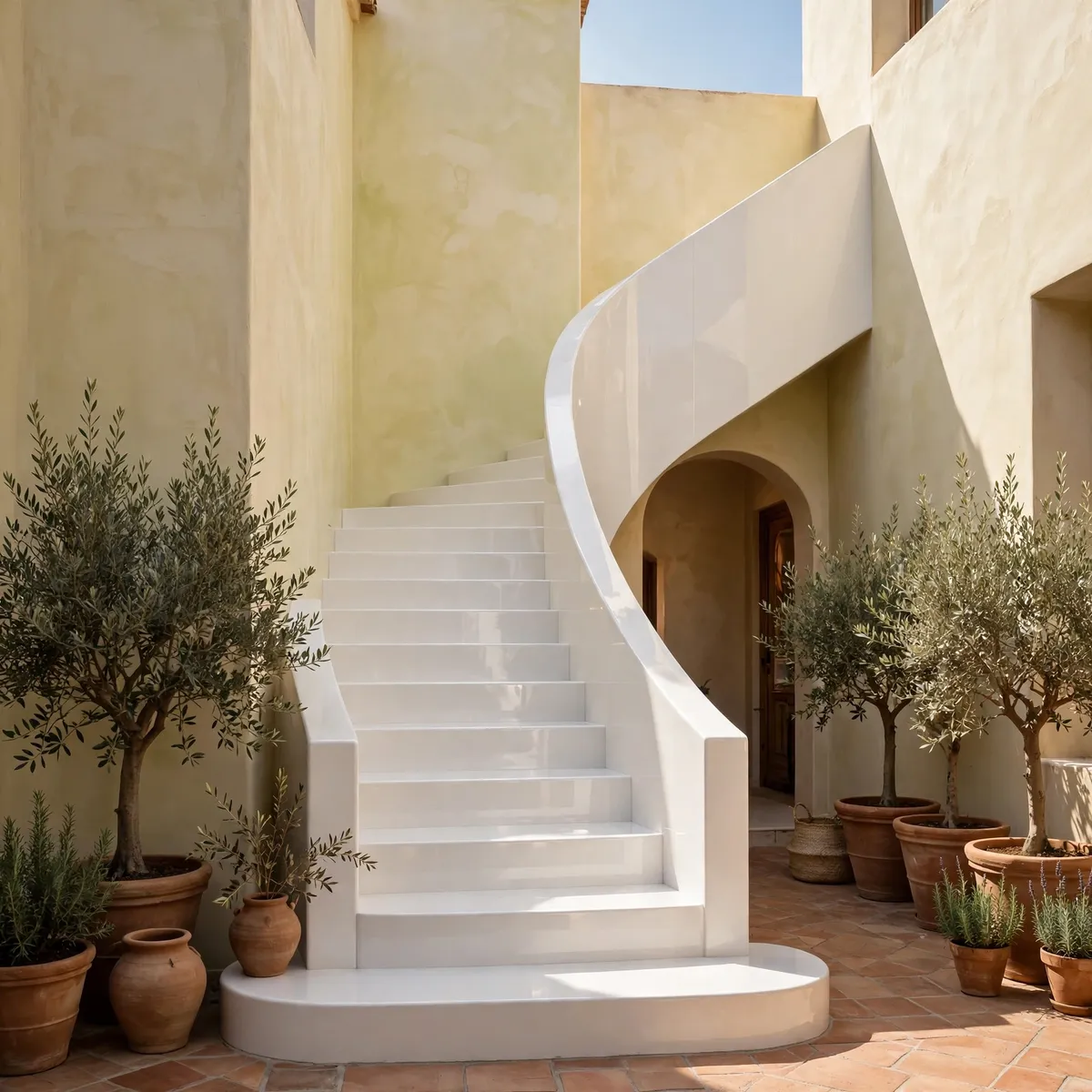
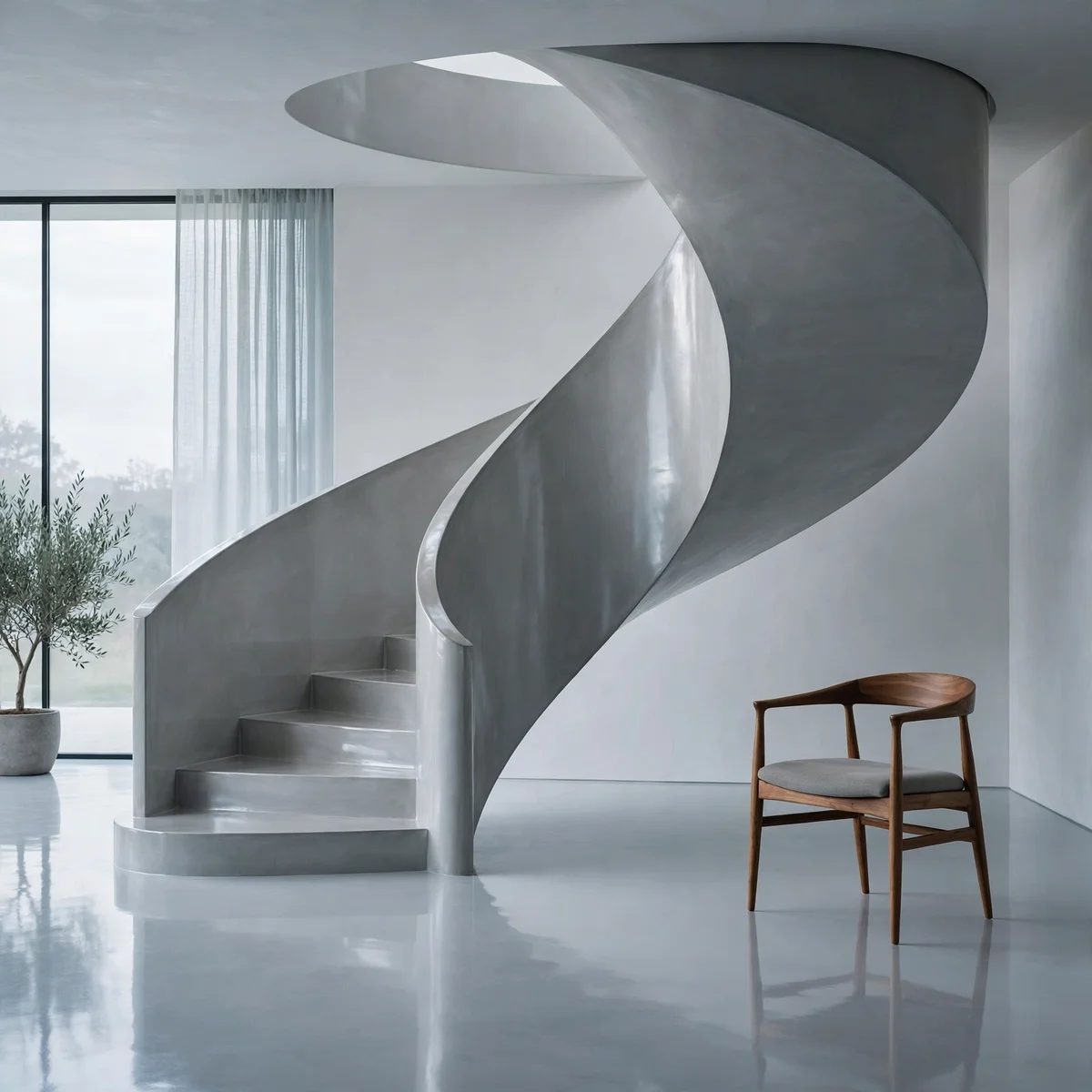
A curved concrete staircase — cast in place following a sweeping plan — is architecture at its most sculptural. The continuous ribbon of concrete needs no decoration; its shape is the decoration. Curved formwork is specialist work and the cost reflects it, but in a double-height space a curved concrete stair becomes the building’s signature. Keep railings minimal so nothing interrupts the flow.
- Curved formwork is specialist work — budget accordingly.
- Minimal railings let the concrete curve speak.
- A skylight above makes the curve glow through the day.
Dress It With Trailing Plants

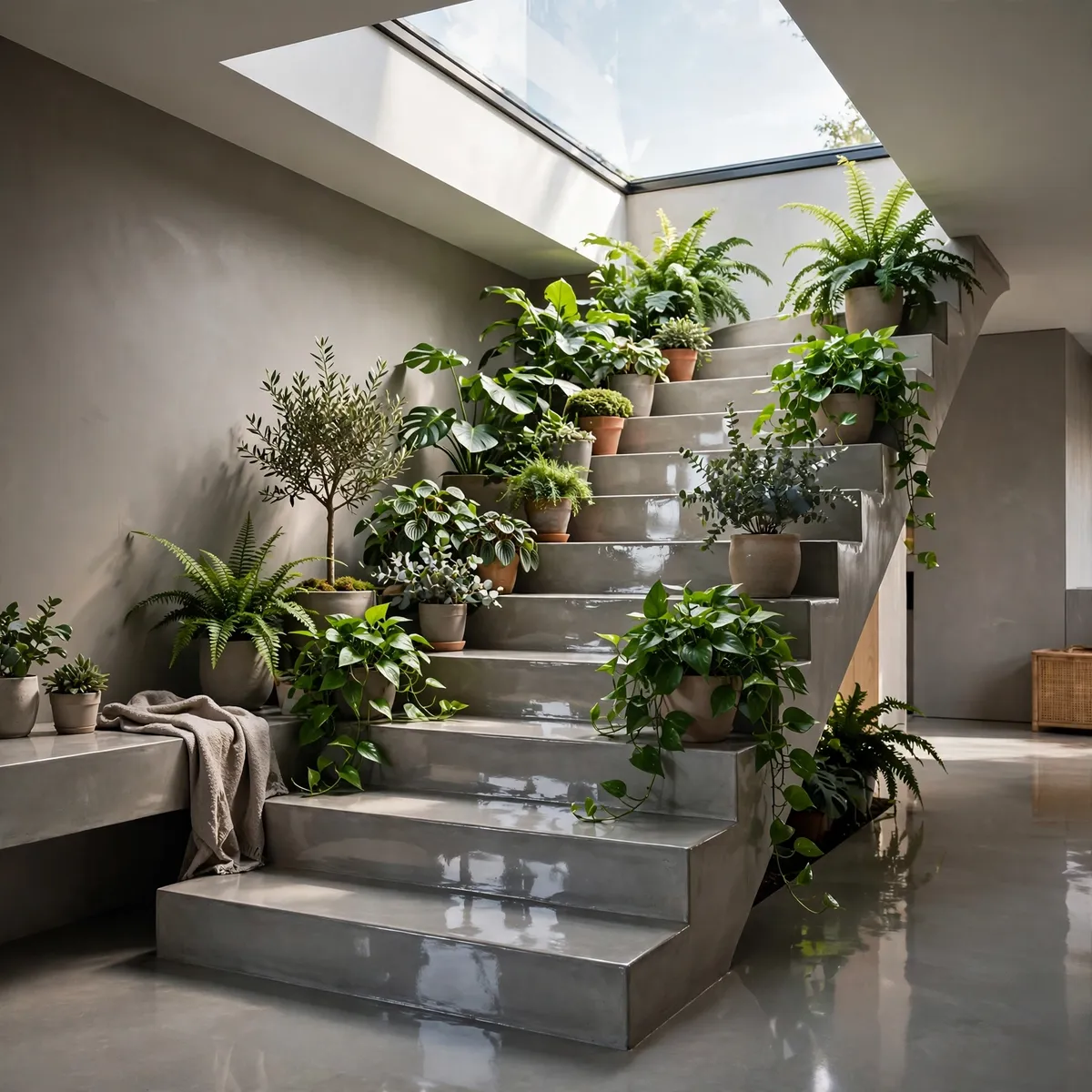
Concrete’s cool neutrality is the perfect backdrop for greenery. Trailing pothos or philodendron spilling from planters on the landing, a large olive or fig in a pot at the stair base, and small pots on wide treads soften every hard edge. Plants also do practical work here — they add the color and life that grey concrete lacks, and they thrive in the bright stairwells concrete stairs often occupy.
- Use heavy, stable pots — stairwells are high-traffic zones.
- Trailing plants soften hard edges best.
- Check light levels; most stairwells suit medium-light plants.
Finish With a Matte Penetrating Sealer
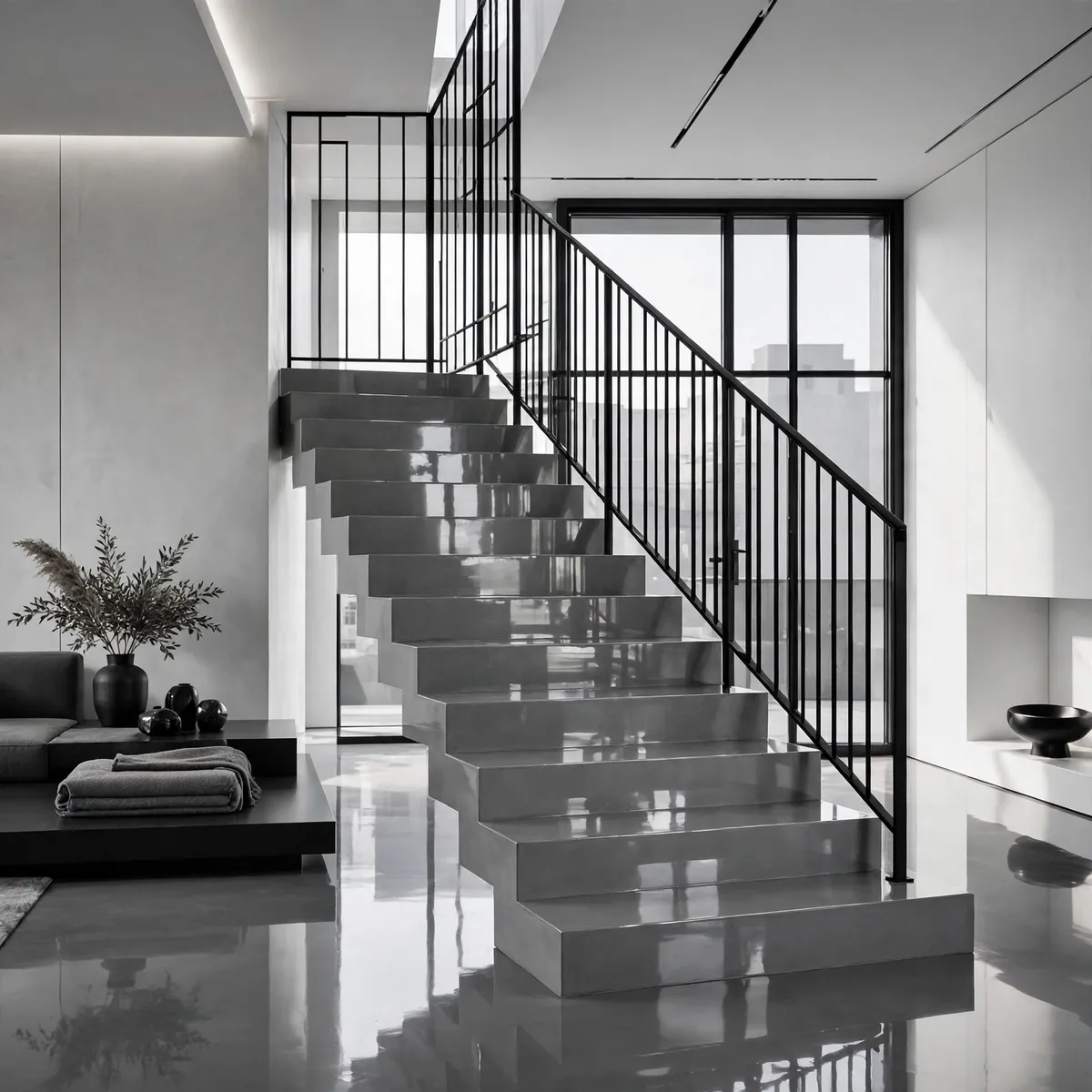
If you love concrete’s natural look but not its vulnerability, a matte penetrating sealer is the answer. It soaks in rather than sitting on the surface, so there’s no shine, no peel, and no change to the feel underfoot — just invisible protection against stains, water, and wear. It’s the finish for purists who want concrete to look like concrete, only better behaved.
- Penetrating sealers don’t change the look — that’s the point.
- Reapply every few years in high-traffic homes.
- Test on a spare sample to confirm no darkening.
Pair With Frameless Glass for Lightness
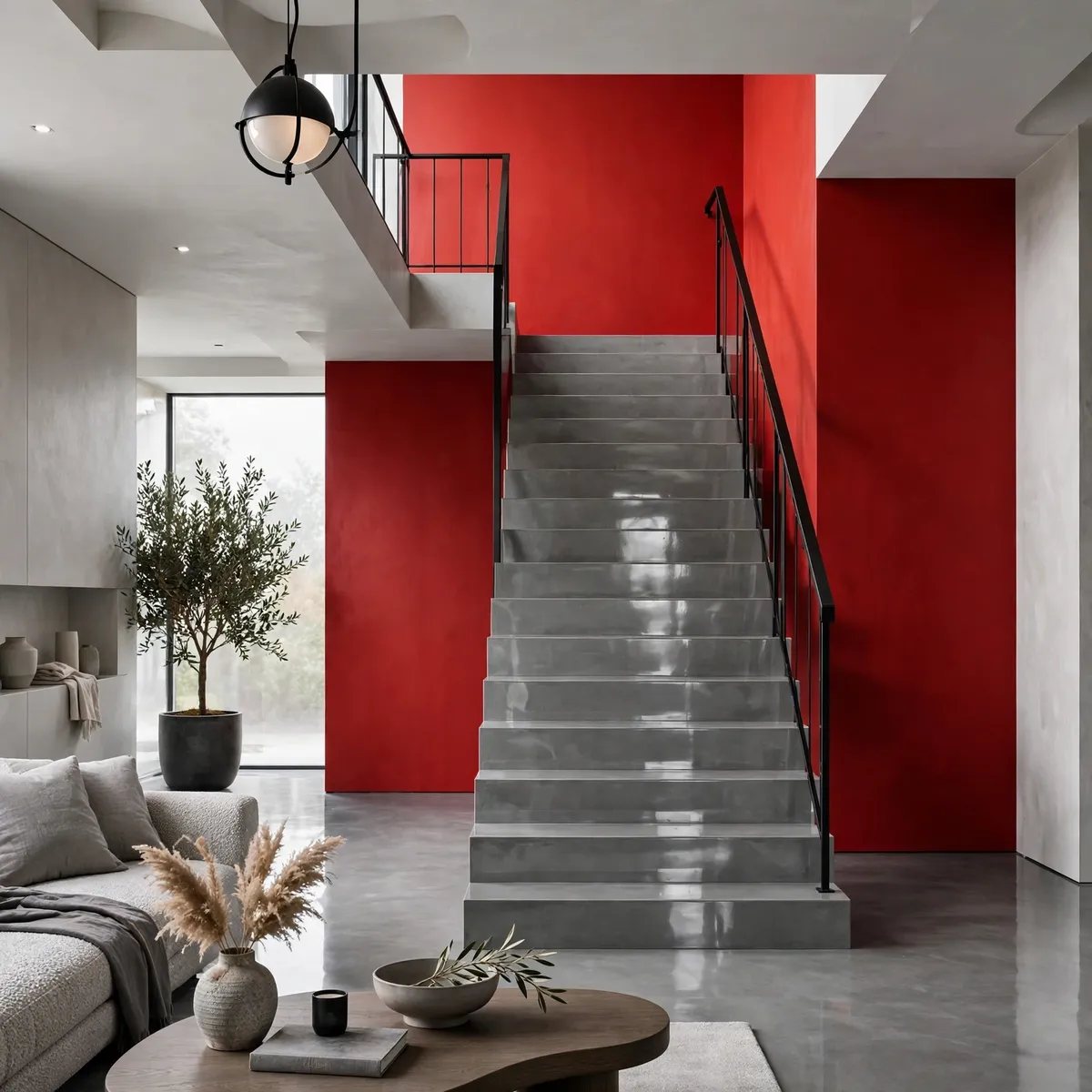
Frameless glass balustrades are the antidote to concrete’s visual weight. Clear laminated panels keep sightlines open so a solid concrete flight feels light and contemporary, and they disappear against bright walls. The pairing is a modern classic for a reason: heavy steps, invisible railing, nothing else needed. Budget for regular glass cleaning — it shows every mark against pale concrete.
- Laminated glass is the safe choice for balustrades.
- A slim metal handrail cap improves grip comfort.
- Plan panel fixings before the concrete is finished.
Add a Contrasting Stone Nosing
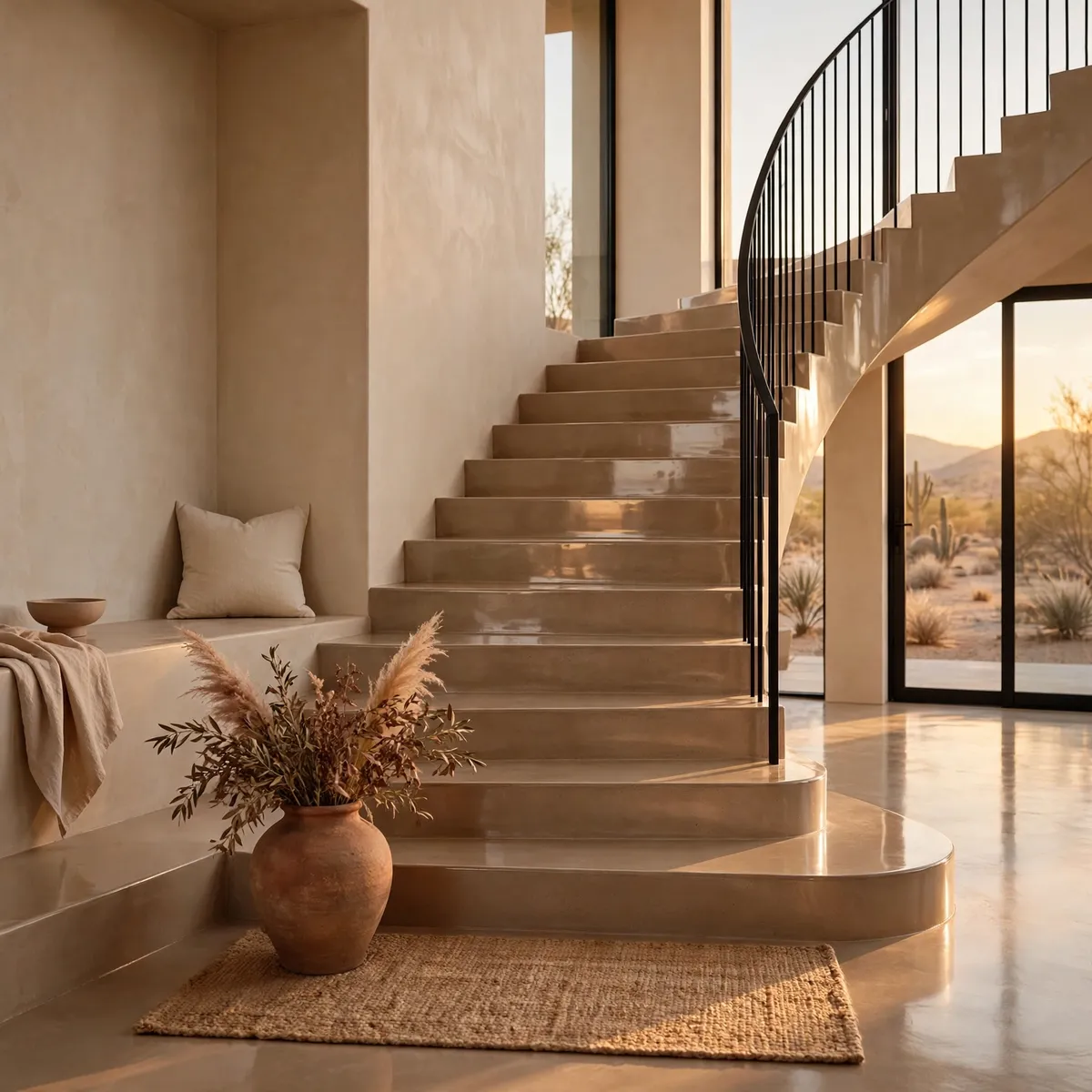
Fitting a contrasting nosing — dark basalt on pale concrete, or pale limestone on charcoal stairs — defines each step edge crisply while adding a crafted detail. Stone nosings also take the brunt of foot traffic, protecting the concrete arris from chipping. It’s a small move that reads as bespoke, especially when the nosing stone echoes a kitchen worktop or fireplace elsewhere in the home.
- Choose a hard stone — nosings take the most wear.
- Echo the stone elsewhere in the home for cohesion.
- Ensure the nosing is flush to avoid a lip.
Keep the Palette Warm With Terracotta Accents

Grey concrete and terracotta are a natural pairing — the warm clay tones pull the stair out of industrial territory and into Mediterranean warmth. A terracotta-tiled landing, clay pots on the steps, or a burnt-orange runner all do the job. This is the easiest way to warm up an existing grey concrete stair without touching the concrete itself.
- Terracotta pots and textiles are the lowest-commitment route.
- A terracotta landing tile grounds the whole flight.
- Keep concrete tones cool-grey so the warmth contrast reads.
Build Storage Into the Solid Base

A solid concrete staircase usually sits on — or contains — a substantial void, and there’s no reason to waste it. Push-to-open cupboard doors set flush into the stair’s side create seamless storage for shoes, cleaning supplies, or seasonal decor. Because the doors sit in the concrete face, they read as pure architecture until opened. Plan door positions before casting; cutting into cured concrete is nobody’s idea of fun.
- Plan door and drawer positions before the concrete is cast.
- Push-to-open fronts keep the face seamless.
- Ventilate enclosed voids to prevent damp.
Light It From Above With a Linear Pendant
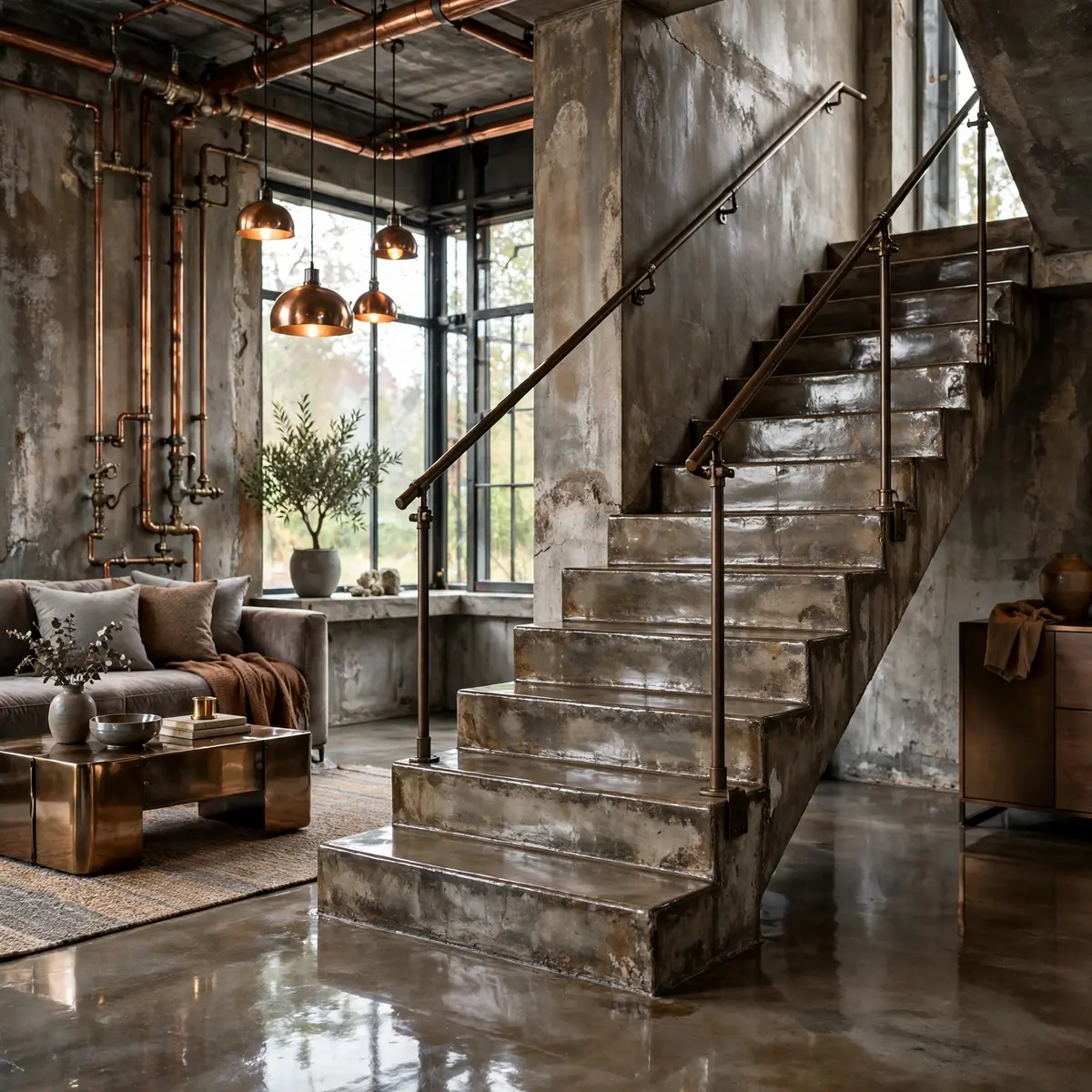
A long linear pendant hung parallel to the stair’s slope throws even light down the whole flight and emphasizes the stair’s diagonal geometry. On concrete, where texture is the main event, directional light from above rakes across the surface and reveals every subtle variation. Hang it high enough to clear heads on the upper flight and choose a dimmable fitting for evening mood.
- Hang parallel to the stair slope for even coverage.
- Dimmable fittings let the stair shift from task to mood lighting.
- Check head clearance on both flights before fixing heights.
Try a Microcement Overlay on Existing Stairs
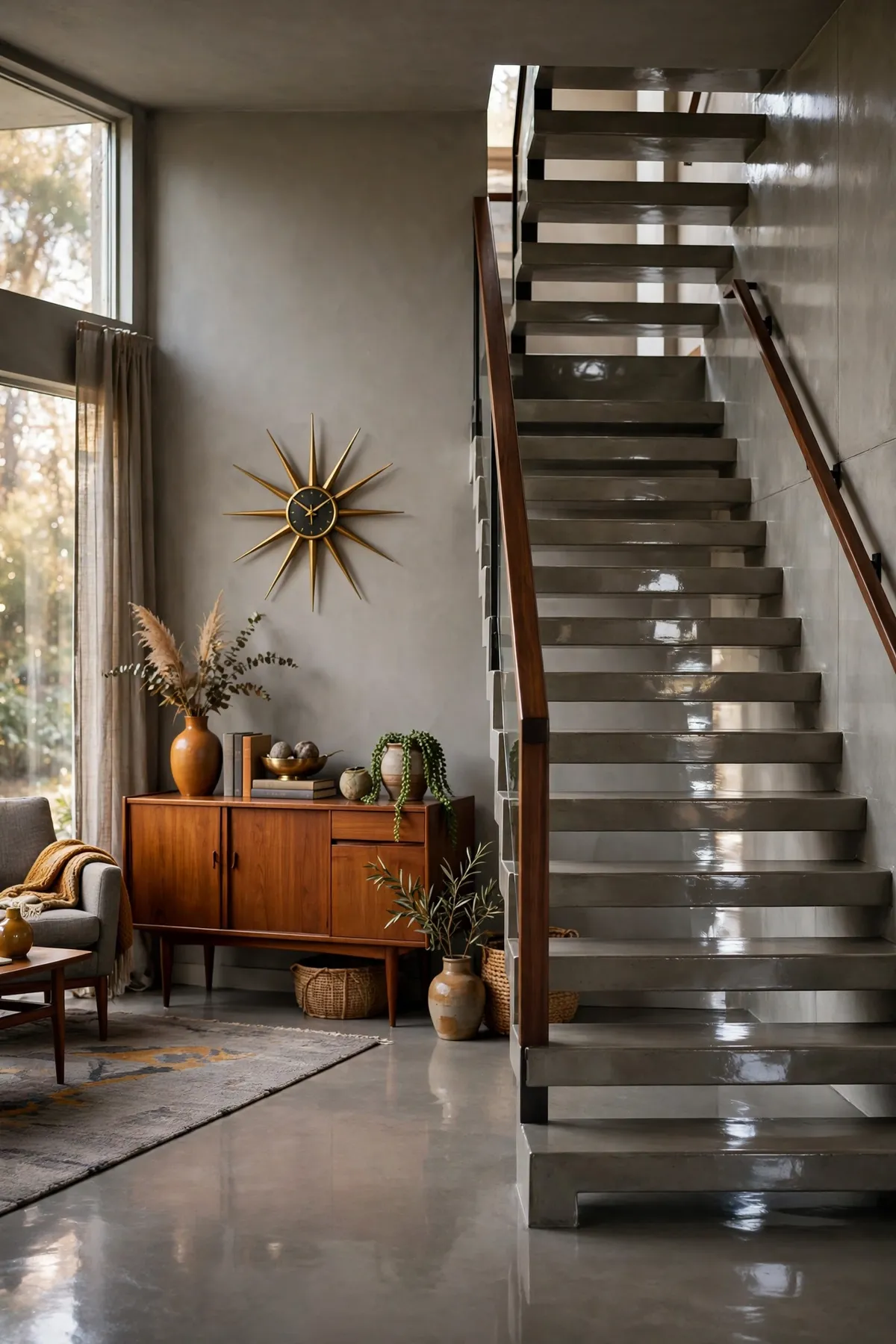
Already have tired timber or tiled stairs? A microcement overlay — a thin, troweled cement coating just a few millimeters thick — gives you the concrete look without demolishing anything. It’s applied over the existing steps, sealed, and finished like polished concrete. It’s not structural concrete, so it won’t suit every substrate, but for a cosmetic transformation it’s remarkably effective.
- The substrate must be sound — microcement won’t fix movement.
- Hire an applicator experienced with stairs specifically.
- Seal thoroughly; thin overlays mark easily unsealed.
Ground It With a Dark Stained Landing Floor
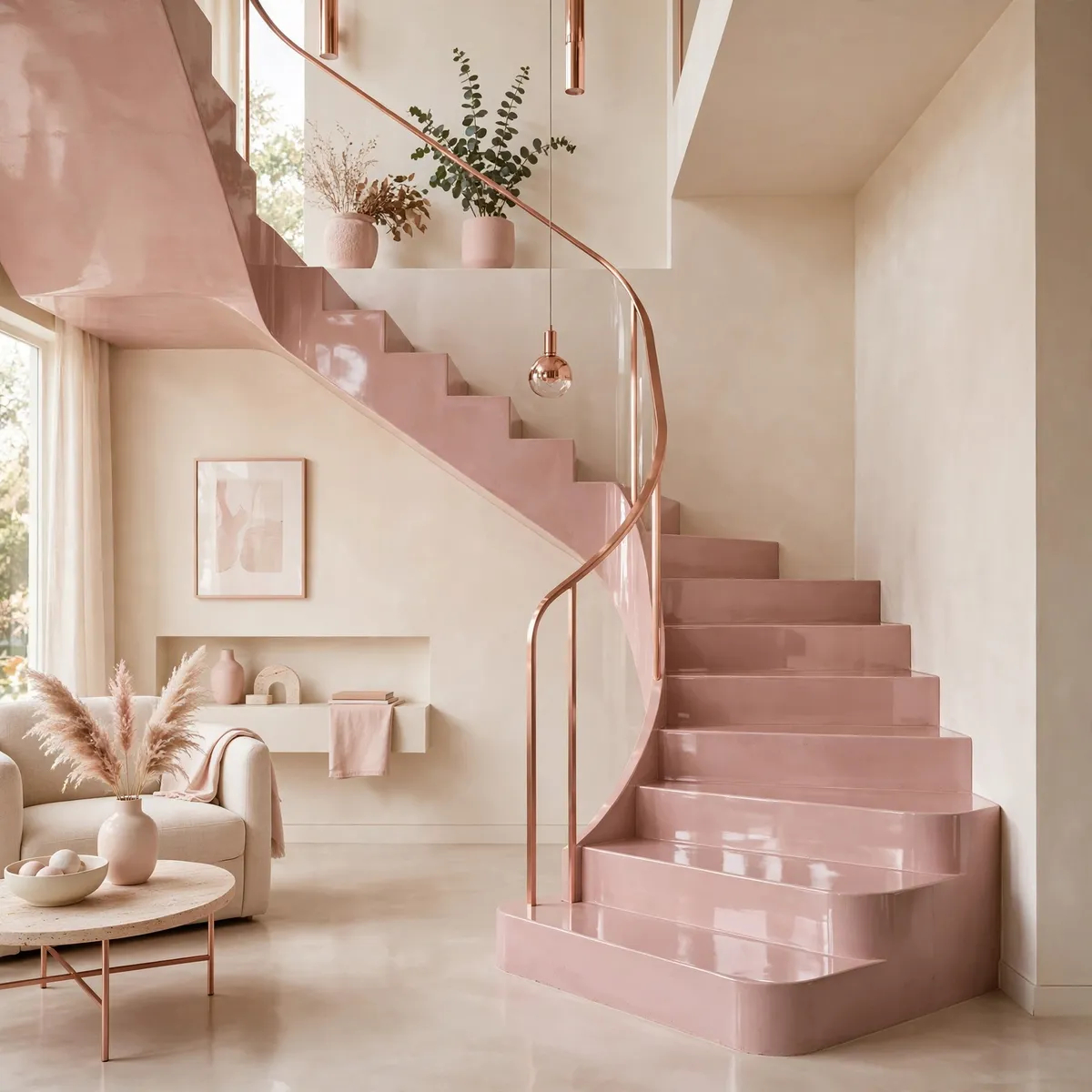
Running a dark-stained timber floor into the landings at the top and bottom of a concrete flight creates a beautiful tonal sandwich: dark wood, pale concrete, dark wood. The contrast makes the concrete read lighter and more deliberate, and the timber landings are warmer underfoot where people pause. Keep the stain consistent on both landings so the stair feels bookended.
- Use the same stain on both landings for symmetry.
- Dark landings hide the dirt that collects at stair entries.
- A flush threshold detail keeps the junction crisp.
Add Art to the Concrete Wall Beside

A bare concrete stair wall is a gallery waiting to happen. Large-scale art — one oversized canvas or a tight grid of prints — gives the eye somewhere to rest against all that grey, and the neutral concrete makes colors sing. Because concrete walls need specialist fixings, plan your hanging points early and use proper masonry anchors rather than hoping adhesive hooks will hold.
- One oversized piece suits concrete better than many small ones.
- Use proper masonry anchors — adhesive hooks fail on concrete.
- Picture lights make art glow against matte concrete.
Soften Acoustics With Upholstered Wall Panels
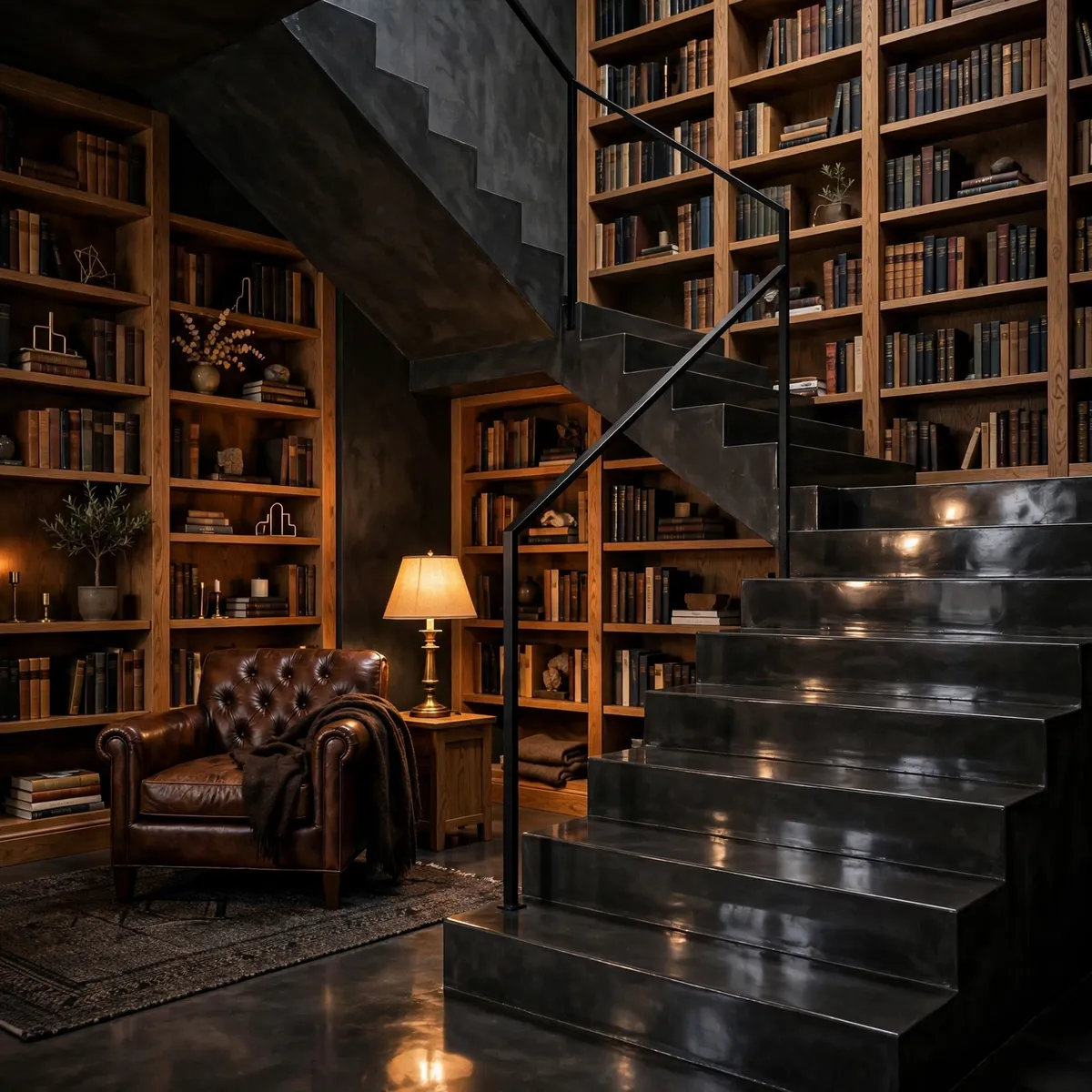
Concrete stairwells echo — it’s physics, and no amount of styling fixes it without soft surfaces. Upholstered wall panels in a natural linen or wool, fitted to the wall alongside the flight, absorb sound while adding tailored texture. They turn a noisy echo chamber into a calm, quiet stairwell and look intentional rather than acoustic-treatment obvious.
- Fabric panels need professional fitting for crisp edges.
- Natural fibers suit concrete’s honest material palette.
- Panels also protect walls from scuffs in narrow stairwells.
Seal the Deal With a Concrete-Friendly Cleaning Routine
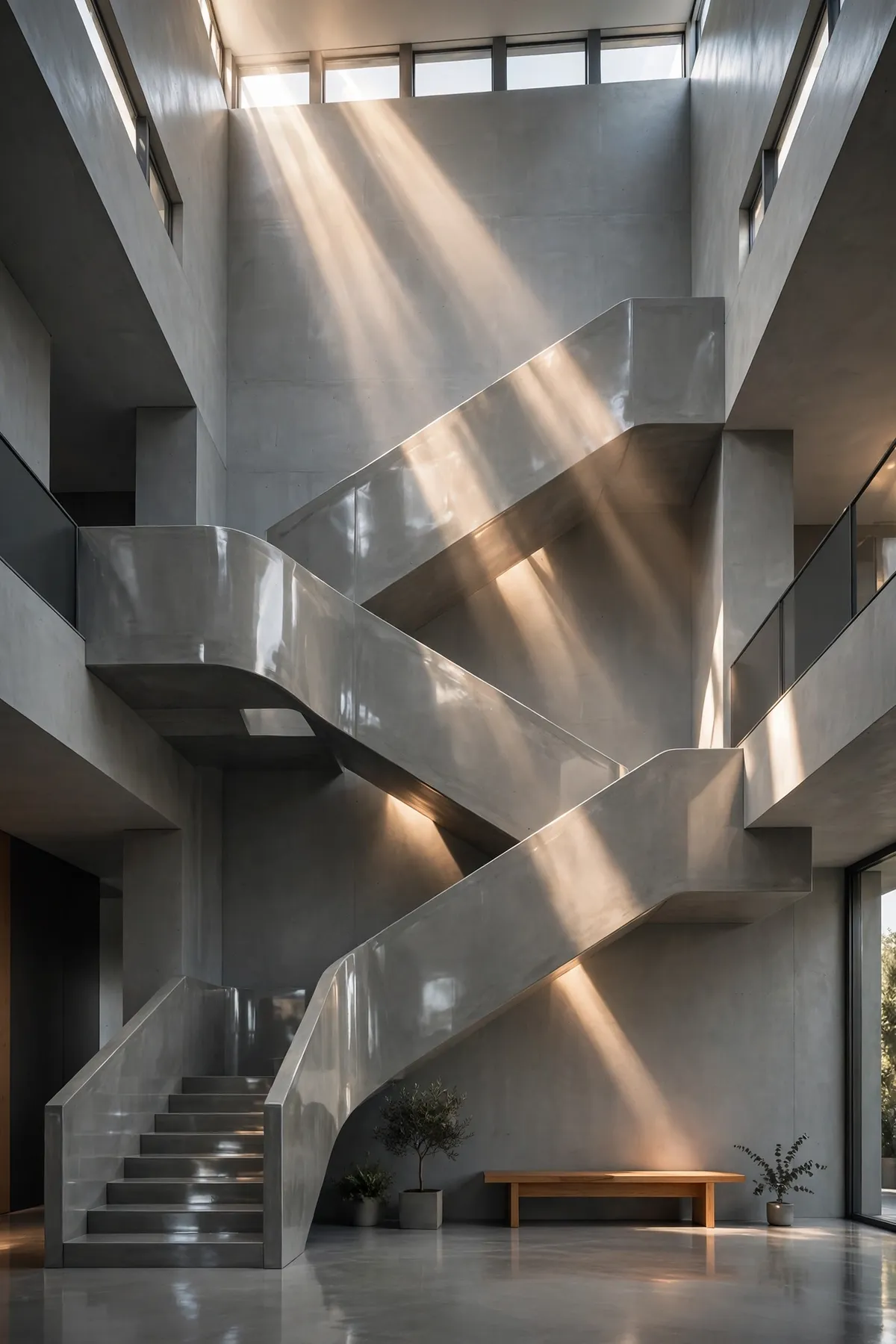
The least glamorous idea on this list is also the one that protects all the others: concrete stairs only stay beautiful with the right maintenance. pH-neutral cleaner, a soft mop, prompt wipe-ups of anything acidic like wine or citrus, and a sealer top-up every couple of years will keep the finish looking new for decades. Harsh bleach or vinegar-based cleaners etch the surface and dull the finish — keep them far away.
- Use pH-neutral cleaners only — no vinegar, no bleach.
- Wipe acidic spills immediately to prevent etching.
- Top up the sealer every two to three years.
FAQs
Is a concrete staircase cold to live with?
Bare concrete feels cool underfoot, but finishes change the experience completely — timber tread caps, wool runners, and underfloor-style heating on landings all warm it up. Staining and sealing also make the surface feel less stark visually, which affects how cold it feels.
How do you maintain concrete stairs?
Sweep regularly, mop with a pH-neutral cleaner, wipe up acidic spills like wine or citrus promptly, and top up the sealer every two to three years. Avoid bleach and vinegar-based cleaners, which etch the surface.
Can you put concrete stairs in a timber-frame house?
Usually yes, but weight is the issue — concrete stairs are heavy and need proper structural support. A structural engineer should confirm the floors and foundations can take the load before you commit to the design.
Conclusion
Concrete stairs ask for one thing above all: a deliberate finish. Raw, polished, stained, capped in oak, or washed in warm light — the material will follow your lead. Choose the surface that suits how you live, pair it with warmth in the railing and the walls, and maintain the sealer, and a concrete staircase will outlast every trend while quietly anchoring the whole house.