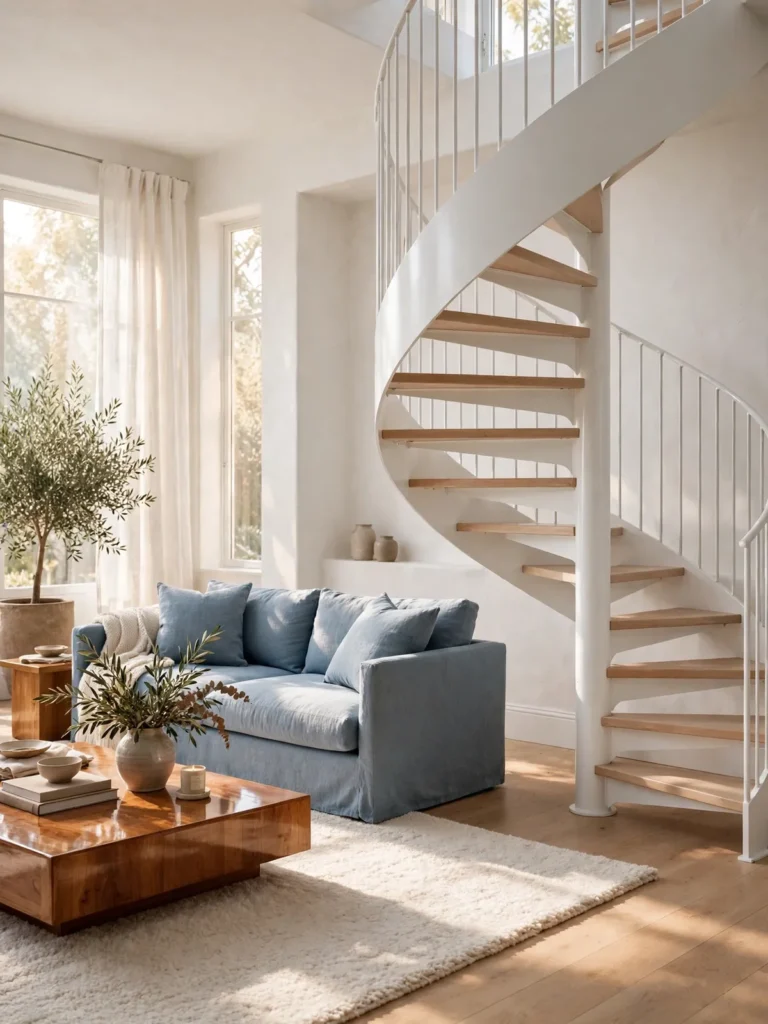
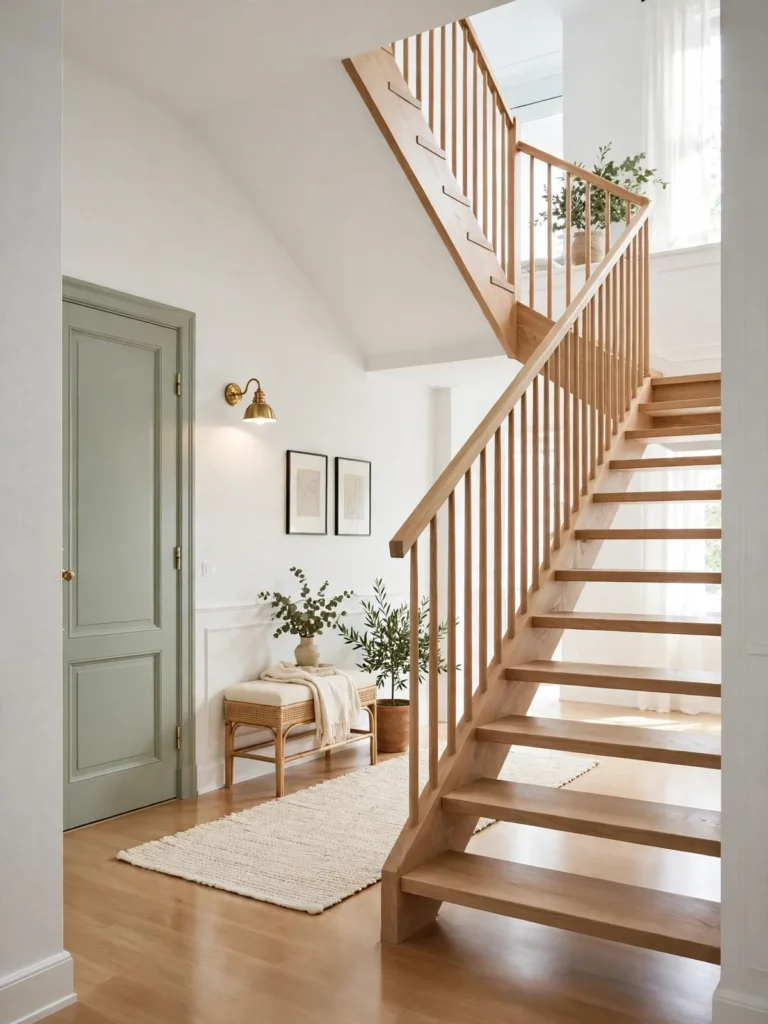
25 Farmhouse Staircase Ideas That Make Your Entryway Feel Warm, Rustic, and Wonderfully Lived-In
A rustic design guide for farmhouse staircases — 25 ideas in reclaimed wood, shiplap, barn doors, and black metal, each with a concrete example and quick styling tips.
Farmhouse staircase ideas work best when the staircase feels like it has always belonged to the house. Reclaimed wood, shiplap, black metal, and vintage finds build a stairway that feels warm, honest, and a little nostalgic, while soft textiles keep it comfortable underfoot. This guide gives you 25 concrete ways to build that look, so every idea names a real material, object, or finish you can picture on your own stairs.
Start with the biggest surfaces — treads, risers, and the stair wall — then let smaller layers of wood, metal, and woven texture do the rest, and the entryway will feel finished rather than decorated. If you want the same warmth carried through the ground floor, our modern farmhouse living room ideas pair beautifully with these rustic stairs, adding softness without losing the country character.
Key Takeaways
What makes a staircase look farmhouse?
Natural materials doing the talking — reclaimed or weathered wood, shiplap or plank walls, black metal details, and soft woven textiles, all in warm, muted colours.
What colour should I paint farmhouse stairs?
Warm white or cream on the risers with natural wood treads is the classic farmhouse pairing, with black metal or brass details for contrast.
How do I make a farmhouse staircase cosy on a budget?
Paint the risers, add a woven runner, swap the light for a lantern-style pendant, and style the landing with a vintage find — four cheap changes with a big effect.
Can a farmhouse staircase work in a small home?
Yes — pale walls, a slim runner, and a single statement light keep a small stairway feeling open, while the wood and texture add the farmhouse warmth.
How do I stop a farmhouse staircase from looking cluttered?
Choose three materials at most — wood, black metal, and one textile — and leave some empty wall, so each rustic detail can be seen.
| Finish | Best pieces | Feels like | Add this accent |
|---|---|---|---|
| Reclaimed barn wood | Treads, handrail, newel | Storied, rustic, warm | Sage cushions |
| Weathered oak | Treads, bench, shelving | Honest, aged, natural | Terracotta ceramics |
| Warm white paint | Risers, balusters, trim | Bright, airy, classic | Dusty blue textiles |
| Black metal | Balusters, brackets, lights | Crisp, defined, timeless | Mustard wool throw |
| Natural pine | Treads, panelling, ladder | Simple, country, fresh | Buttermilk yellow |
| Distressed cream | Risers, sign, bench | Vintage, soft, nostalgic | Blush linen |
Farmhouse Staircase Ideas Start With a Shiplap Stair Wall
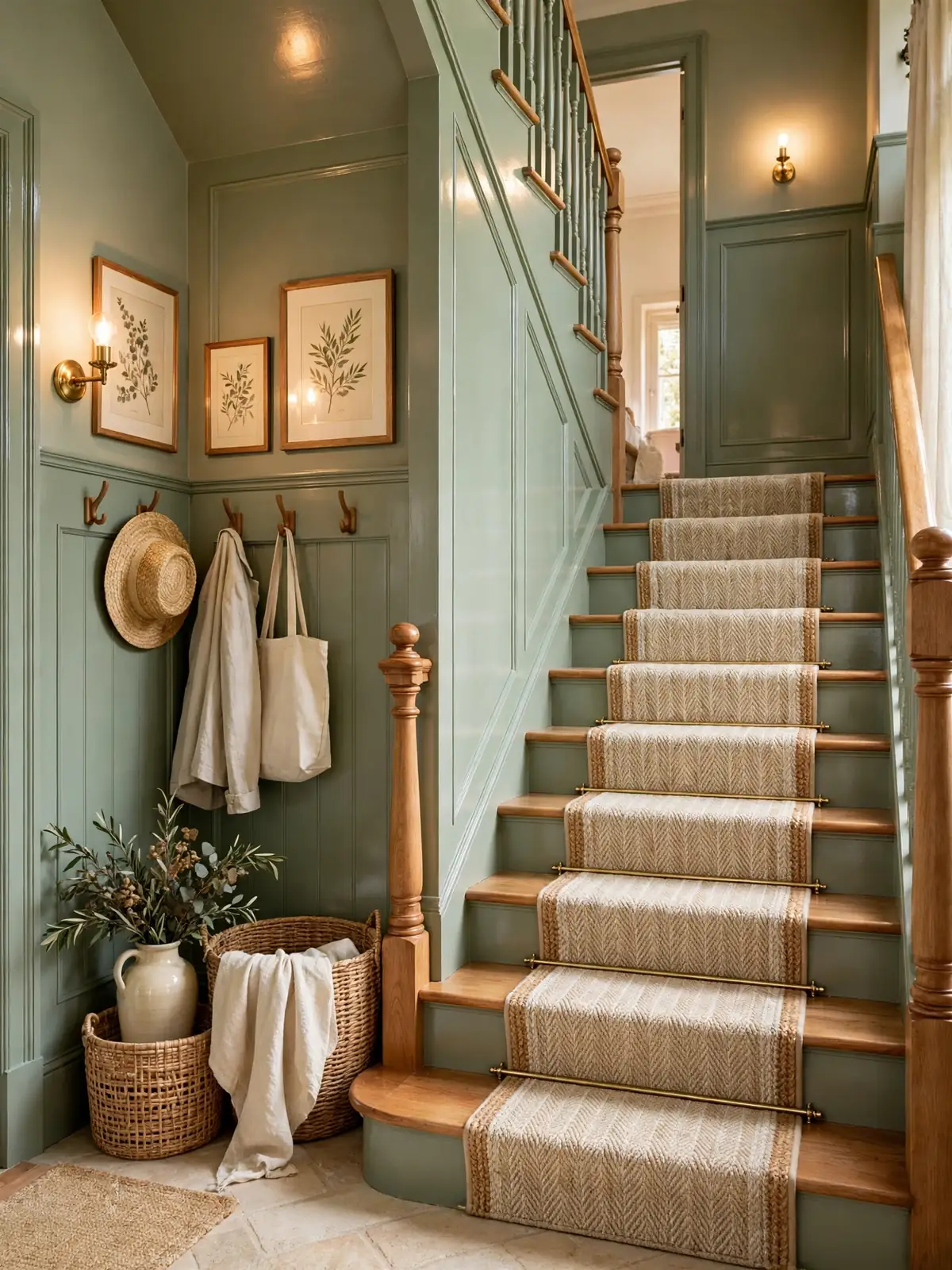
Picture a warm white shiplap wall running the full height of your staircase, its horizontal planks catching the light on every step, with oak treads and a sage green runner softening the climb. Shiplap is the fastest way to make a plain stair wall feel farmhouse, because the texture alone tells the story before a single decoration goes up.
Quick tips:
- Paint shiplap warm white, not stark white, for softness.
- Run planks horizontally for a classic farmhouse look.
- Keep the runner narrow so the shiplap stays visible.
Reclaimed Barn-Wood Treads With Visible Knots and Grain
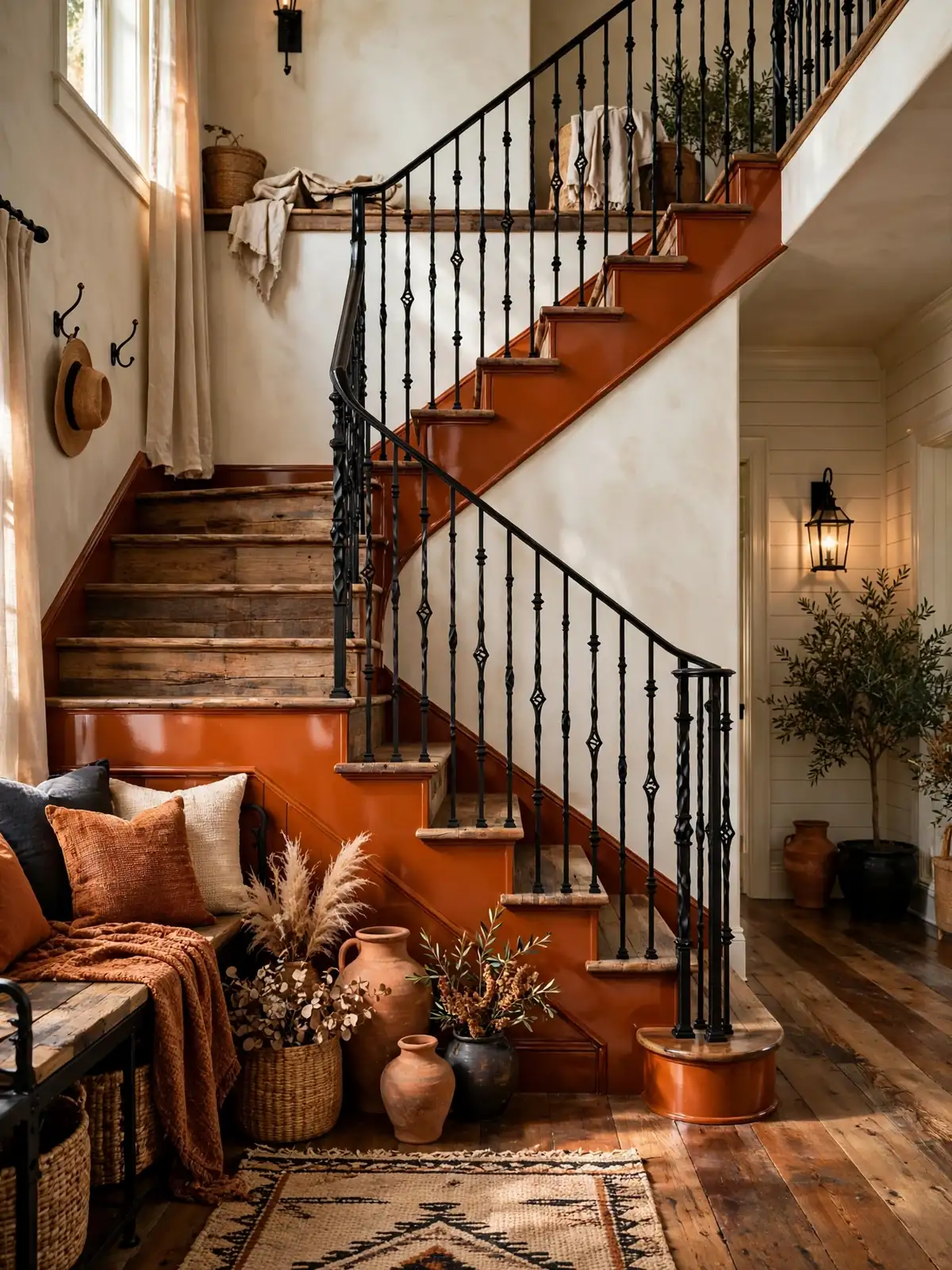
Fit reclaimed barn-wood treads with visible knots and grain, and every step tells a story no new timber can match. Pair them with cream risers and a terracotta vase on the landing, and the staircase feels like it was salvaged from a farmhouse a century old.
Quick tips:
- Seal reclaimed wood with a matte finish to keep it rustic.
- Check every tread for splinters before fitting.
- Repeat the barn wood once more in a newel or shelf.
A Chunky Timber Newel Post That Anchors the Whole Staircase
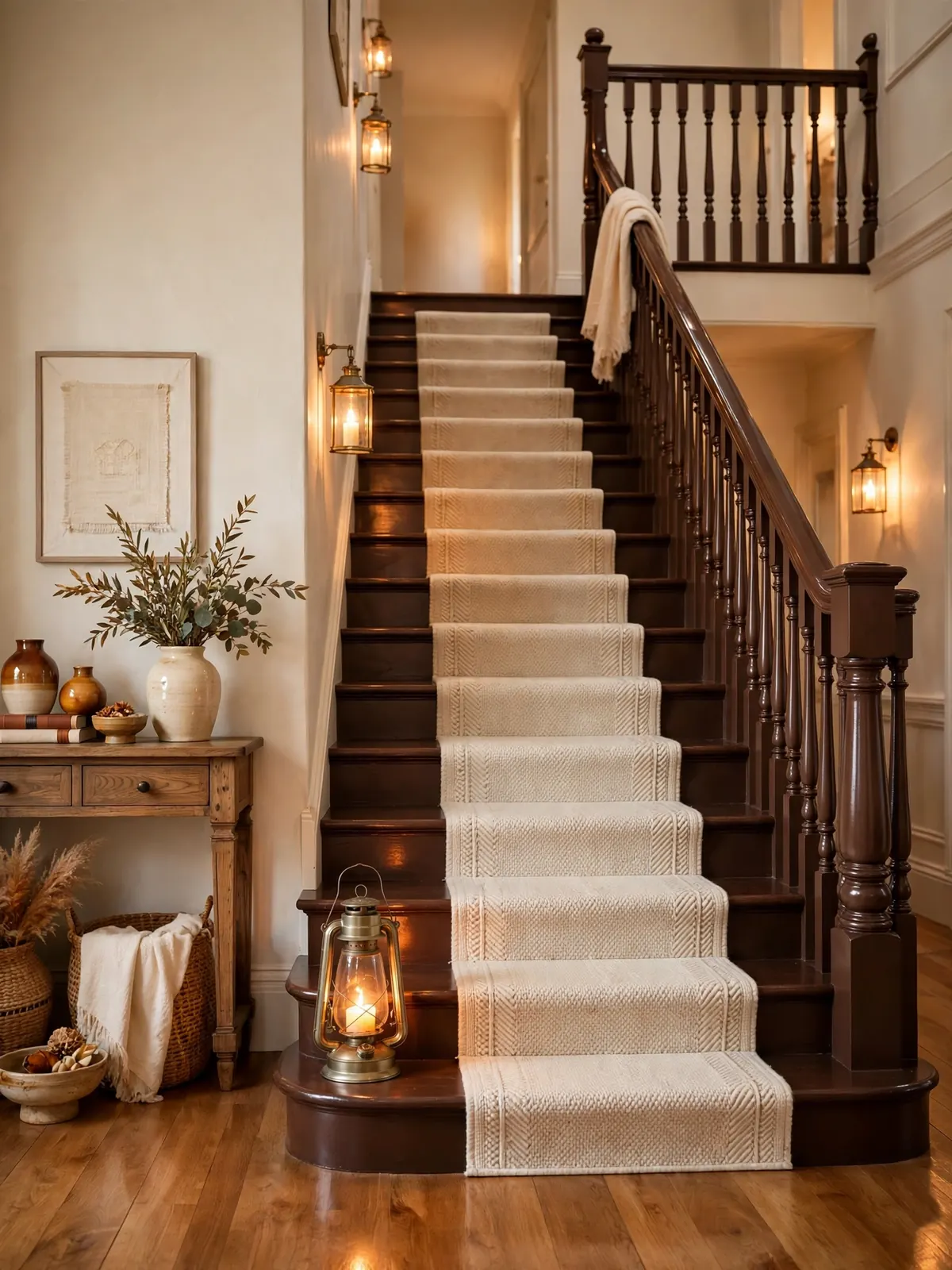
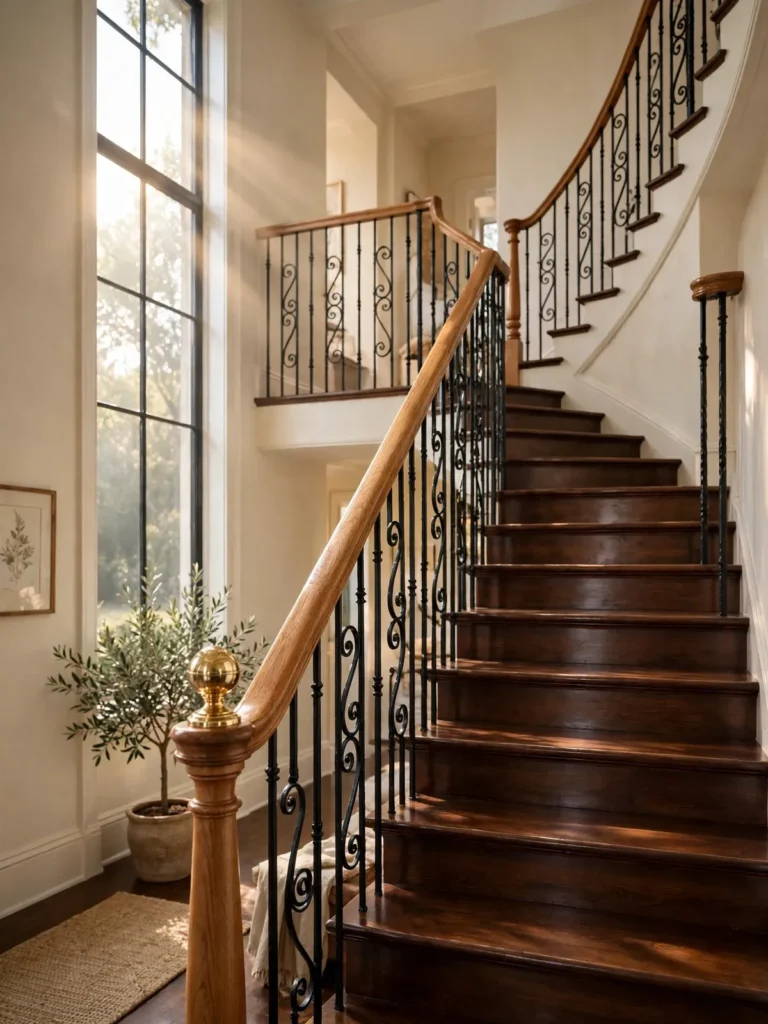
Replace a thin newel post with a chunky timber one, and the whole staircase gains weight and presence in a single change. A solid post with visible grain feels handcrafted, and it gives the handrail something honest to end on. Top it with a simple ball or a flat cap in the same timber, and pair it with a navy blue runner and a brass lantern on the landing so the post sits inside a complete farmhouse picture rather than standing alone. Choose timber with knots and colour variation, because a perfect, uniform post looks factory-made and loses the farmhouse charm entirely. Finish the post with a matte oil rather than a high gloss, and the wood keeps its soft, lived-in glow for years.
Quick tips:
- Choose a post at least twice as thick as the balusters.
- Keep the cap simple — a ball or flat top, not ornate carving.
- Oil the timber matte so the grain stays visible.
Cream-Painted Balusters Paired With a Dark Wood Handrail
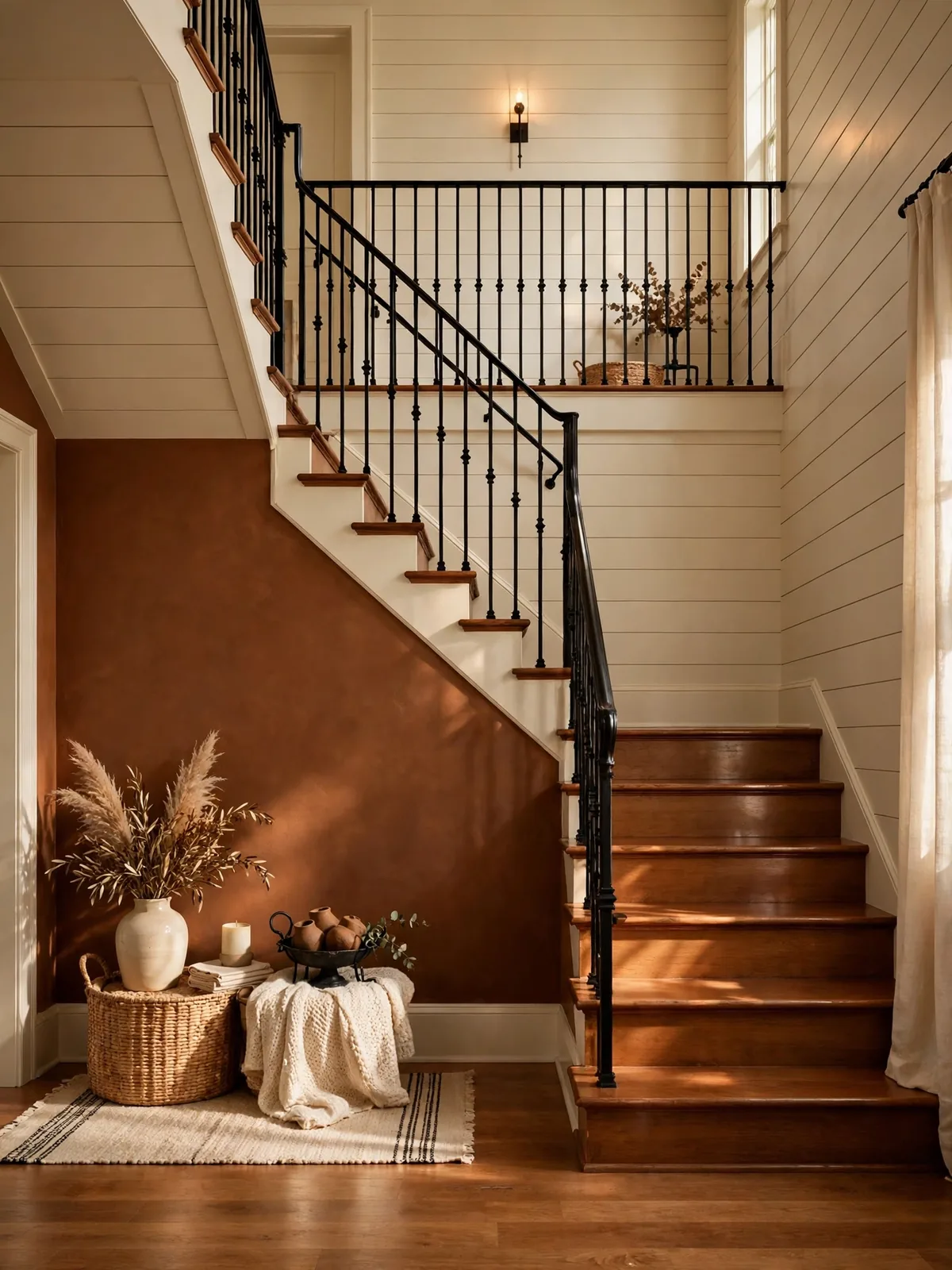
Paint the balusters cream and keep the handrail dark walnut, and the staircase gains the classic farmhouse contrast that makes both colours look richer. A charcoal rug at the base grounds the pale balusters, so the whole stairway feels balanced rather than washed out.
Quick tips:
- Paint balusters before fitting them for a clean finish.
- Keep the handrail unpainted so the wood grain shows.
- Repeat the walnut once more in a landing bench or frame.
A Woven Jute Runner That Softens Every Step
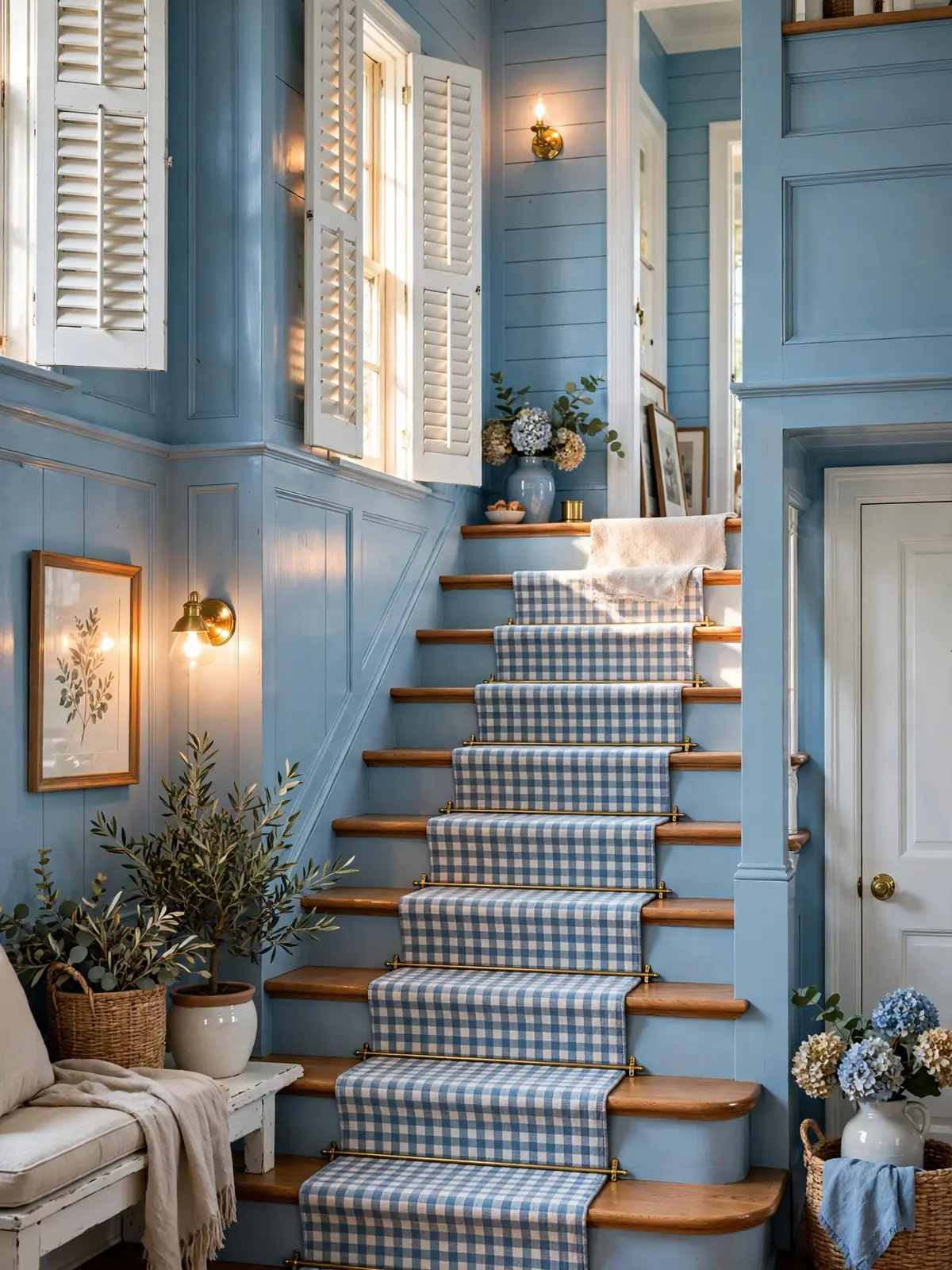
Lay a woven jute runner down the centre of pine treads, and the staircase feels softer underfoot and quieter to climb. Add dusty blue cushions on a landing bench nearby, and the natural jute gains a cool, calm contrast that keeps the hallway from feeling too brown.
Quick tips:
- Fix the runner with rods or grip tape so it never slips.
- Choose a runner narrower than the treads for a framed look.
- Shake the runner outside weekly to keep dust down.
A Barn Door That Hides the Under-Stair Pantry
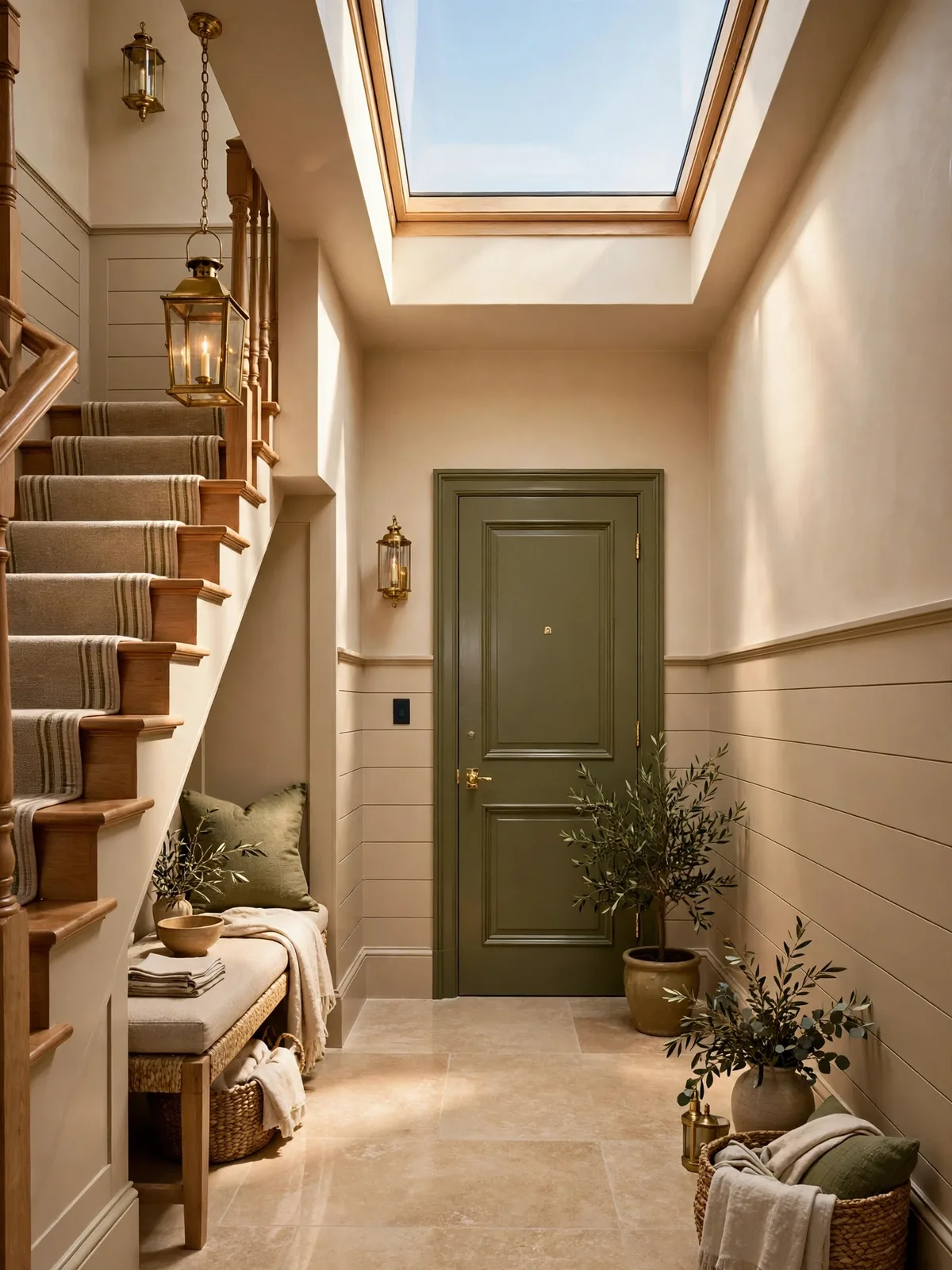
Hang a sliding barn door across the under-stair space, and the awkward triangle beneath the stairs becomes a hidden pantry with real farmhouse character. Paint the pantry interior mustard yellow so opening the door feels like a small surprise, and keep the door itself in natural wood with black metal hardware.
Quick tips:
- Use slim-profile barn doors so they do not crowd the hallway.
- Add shelves inside the pantry before fitting the door.
- Keep the sliding track level so the door glides smoothly.
A Vintage Lantern and Milk Can Styled on the Stair Landing
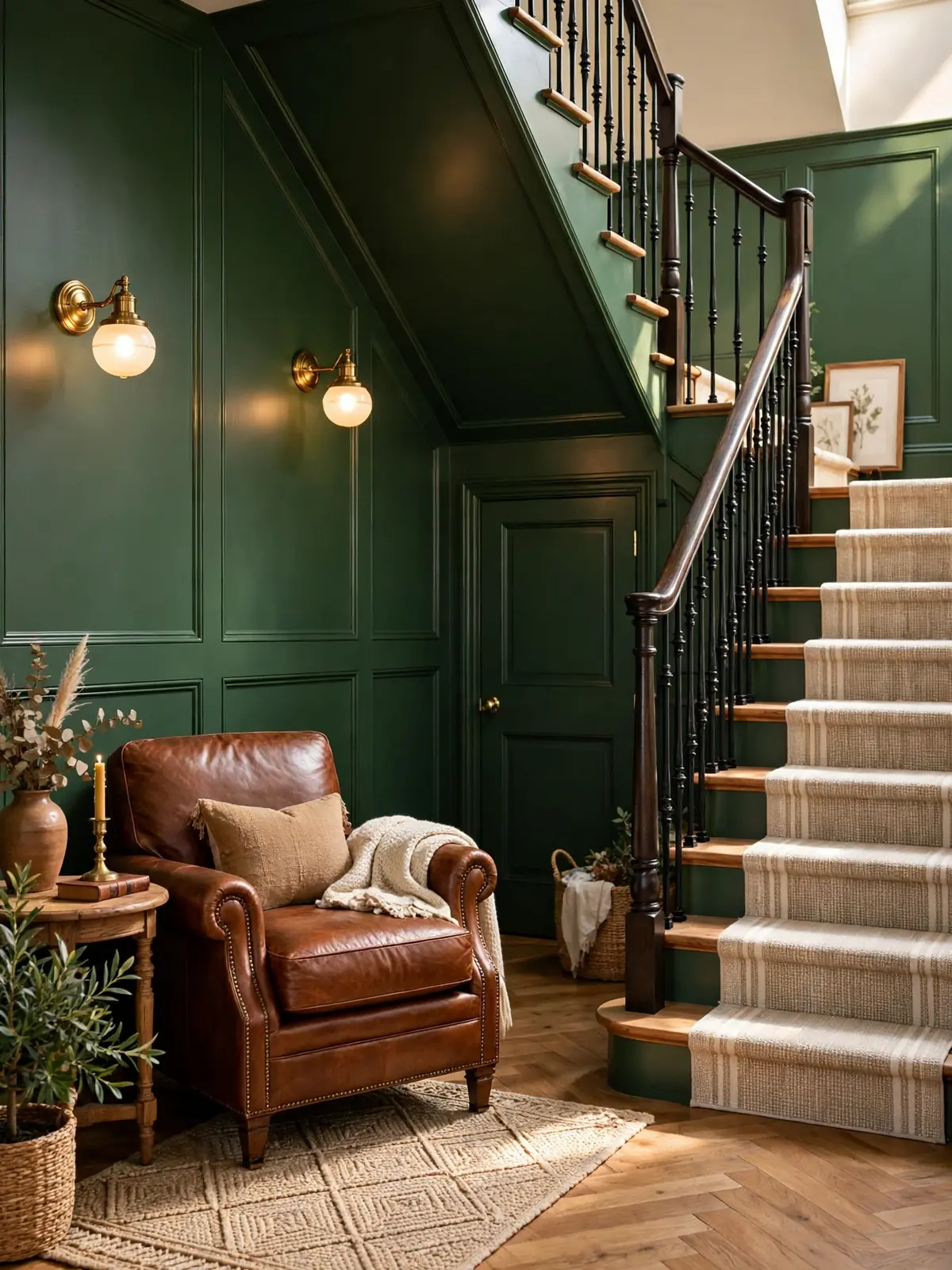
Set a vintage lantern and an old milk can on the stair landing, with a sprig of forest green foliage in the can, and the landing becomes a small farmhouse vignette instead of an empty corner. The lantern’s aged metal and the can’s worn paint carry the history that new decor cannot fake.
Quick tips:
- Keep landing styling to two or three objects at most.
- Use a battery candle inside a vintage lantern for safety.
- Change the foliage seasonally for a fresh look.
Pressed-Flower Frames Climbing the Stair Wall in Wooden Frames
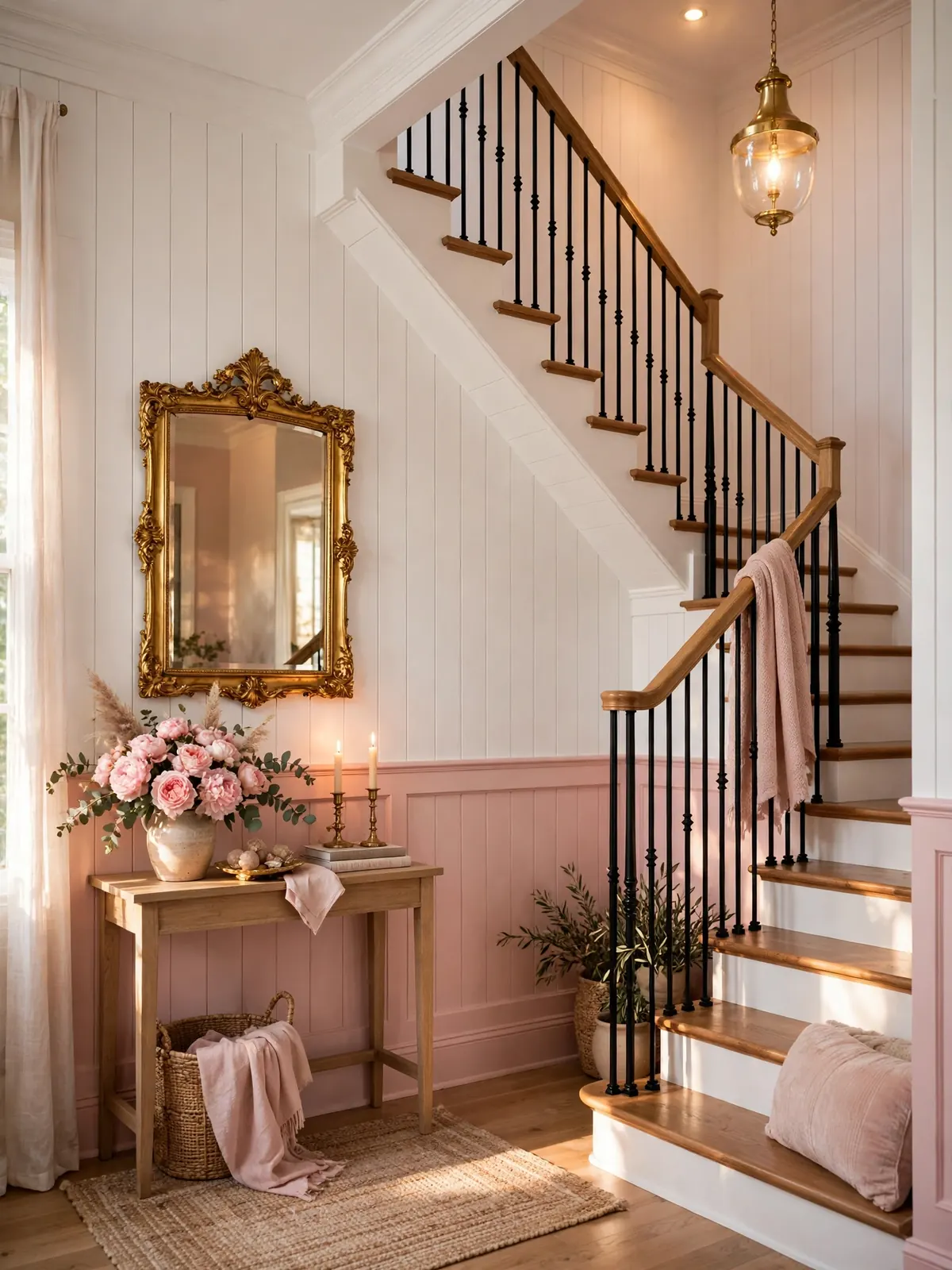
Hang pressed-flower frames in simple wooden frames up the stair wall, stepping them with the slope of the stairs, and the wall becomes a gentle, personal gallery. Blush pink accents in the flowers soften the wood, and the frames cost almost nothing to make from garden cuttings.
Quick tips:
- Step the frames with the stair slope for a natural rhythm.
- Keep frame finishes the same for a calm look.
- Press flowers between books for two weeks before framing.
A Bench With Woven Baskets Tucked Under the Stairs
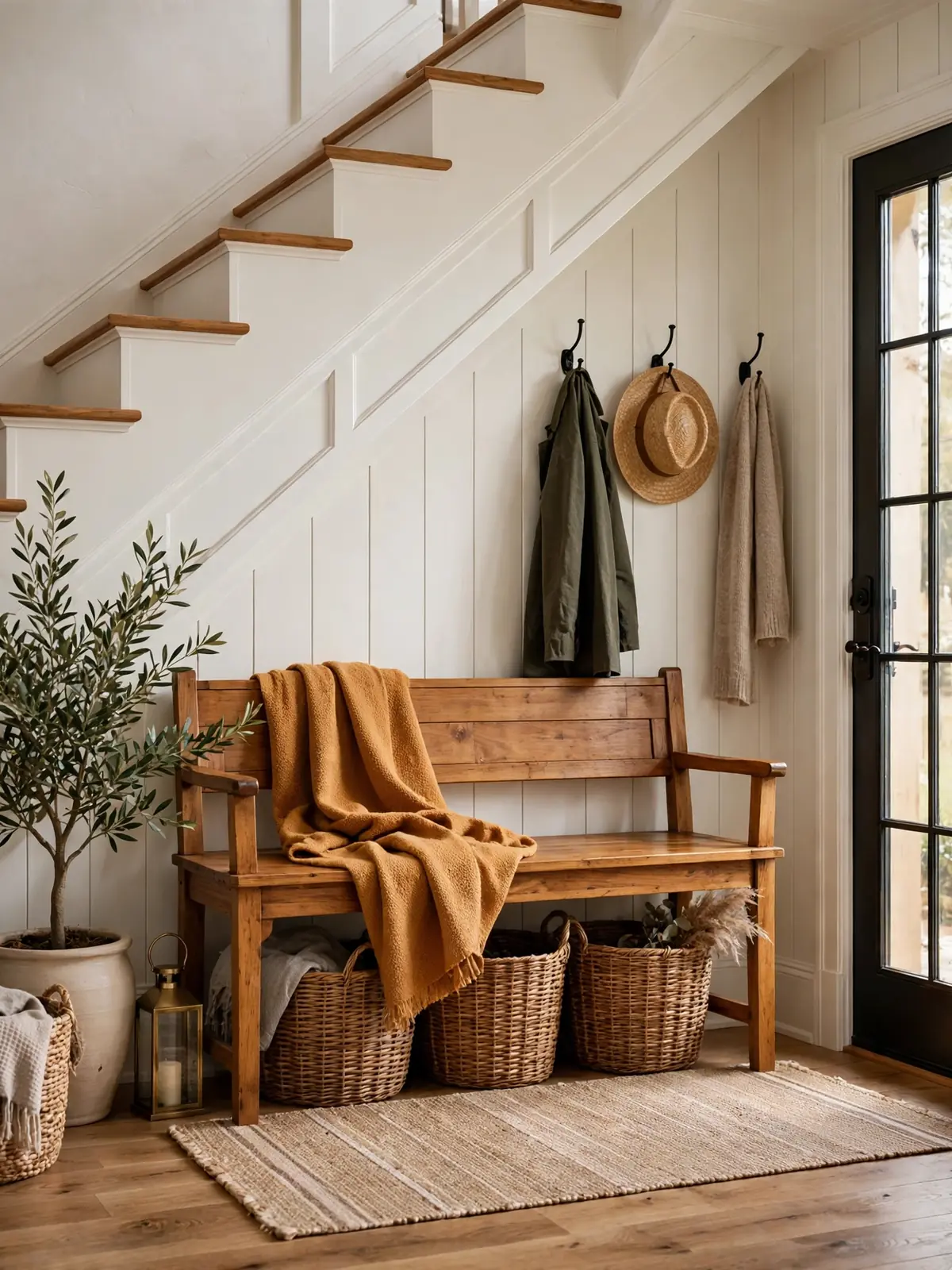
Tuck a wooden bench with woven baskets underneath it into the space beneath the stairs, and the hallway gains a shoe-stop and a storage spot in one move. Drape an ochre throw over the bench, and the under-stair corner feels styled rather than stuffed.
Quick tips:
- Measure the under-stair height before buying the bench.
- Use baskets that slide out easily for daily use.
- Keep the bench clear of the stair’s walking line.
A Vertical Plank Wall That Runs the Full Height of the Stairs
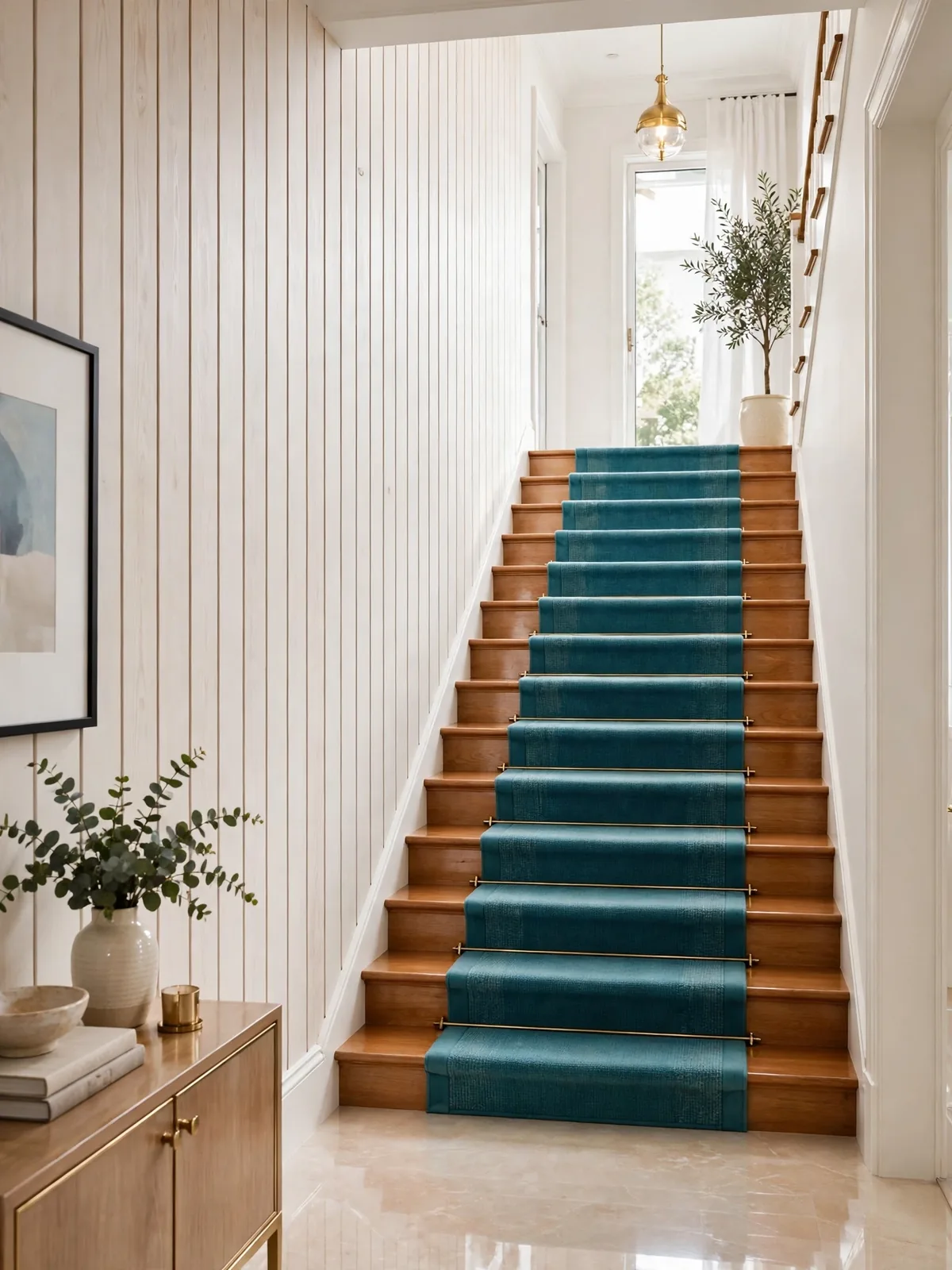
Fit vertical planks up the full height of the stair wall in warm white, and a narrow hallway gains height and texture at once. Add a teal runner on the treads so the pale wall has a cool counterpoint, and the whole stairway feels taller than it is.
Quick tips:
- Run planks floor to ceiling for the full height effect.
- Paint planks and trim the same shade for cohesion.
- Keep the runner simple so the planks stay the star.
A Wrought-Iron Candle Chandelier Glowing Above the Stairwell
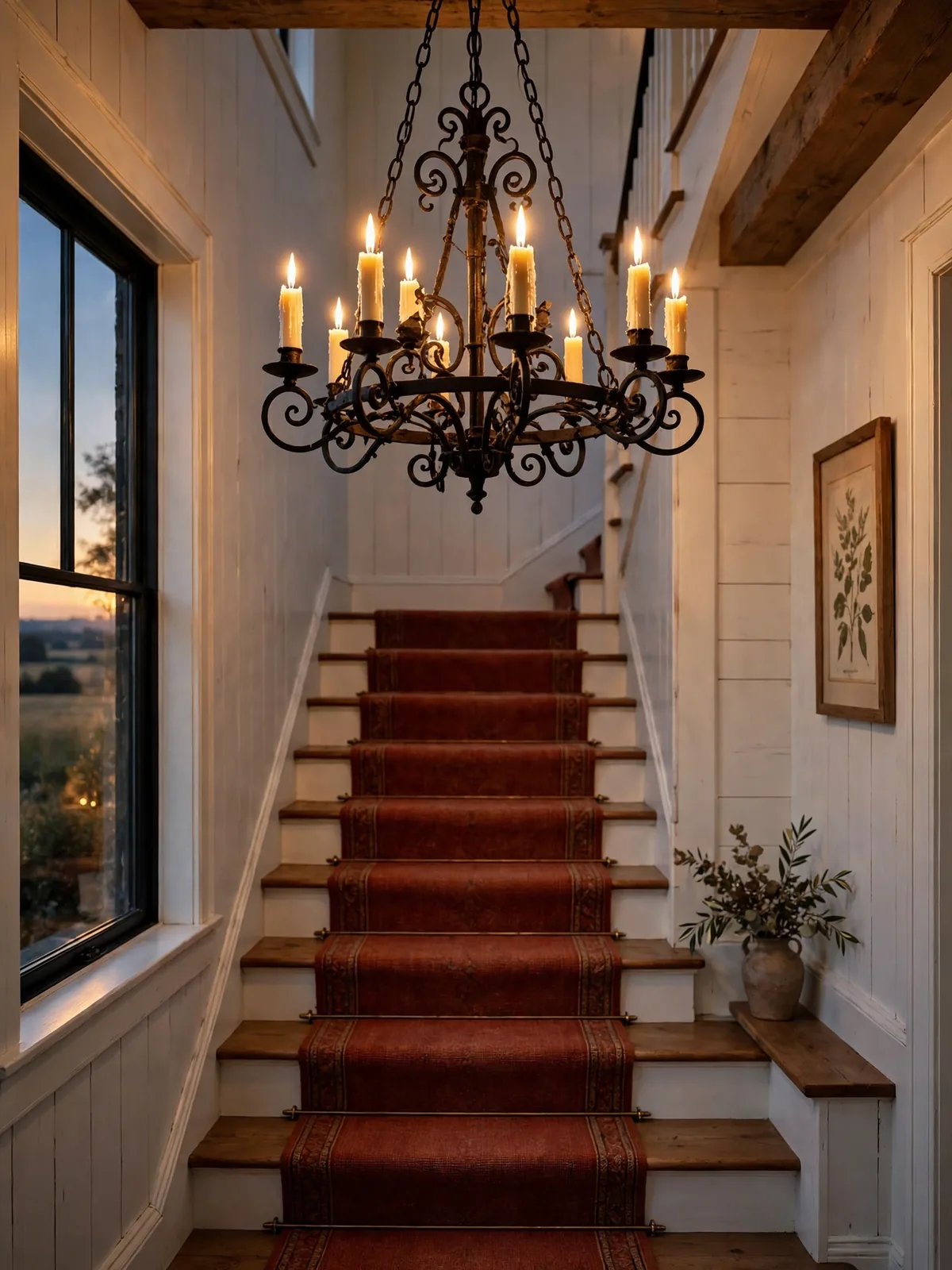
Hang a wrought-iron candle chandelier above the stairwell, and the whole stairway glows like candlelight in the evening. A rust red runner below picks up the warmth of the iron, and the chandelier turns a plain stairwell into the most atmospheric spot in the house.
Quick tips:
- Use warm LED candles inside for safety and long life.
- Hang the chandelier high enough to clear tall heads.
- Dim it in the evening for a soft, flickering glow.
Hand-Scraped Treads With Cream Risers for a Lived-In Look
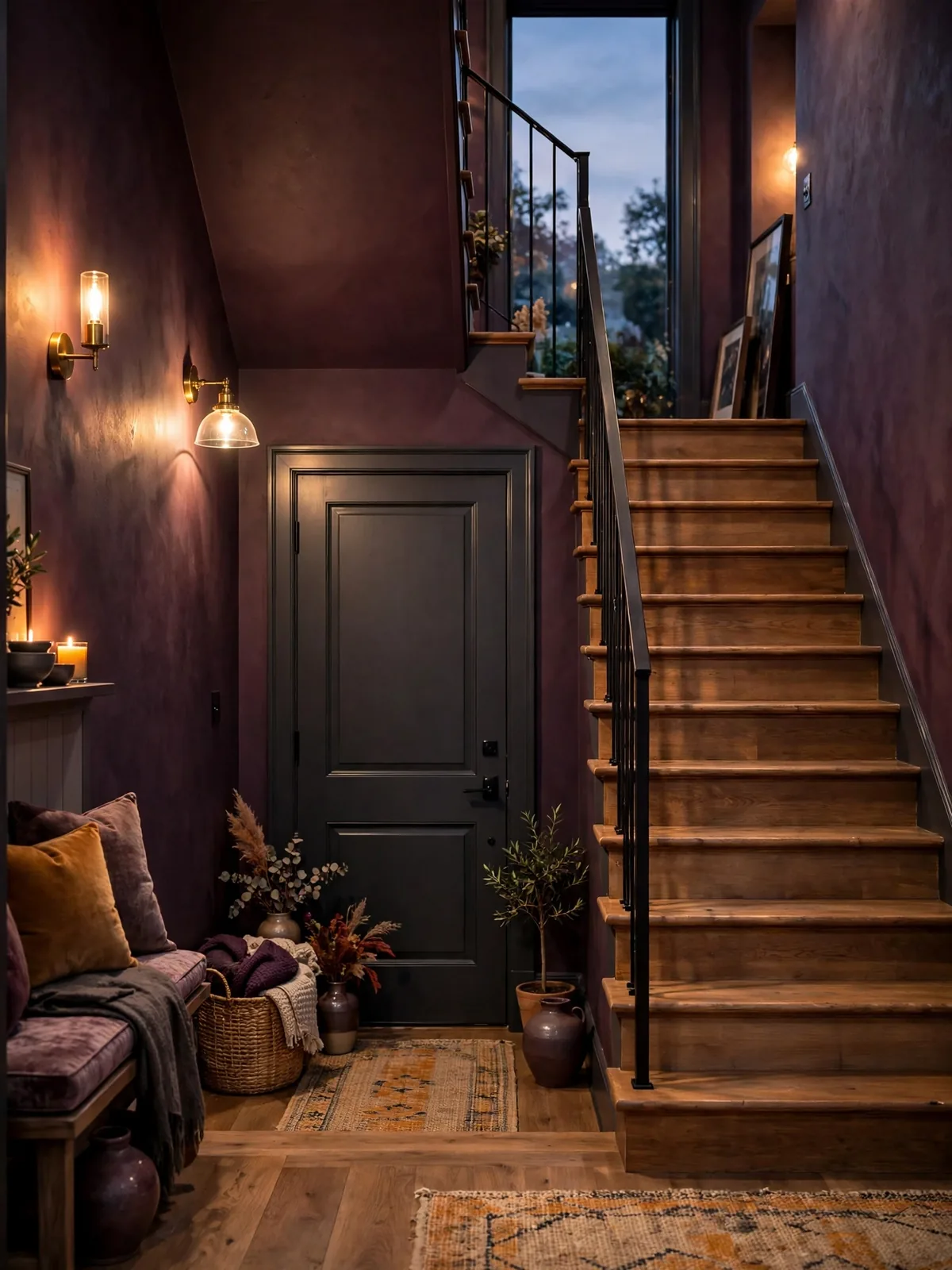
Choose hand-scraped oak treads with cream risers, and the staircase looks like it has been walked on lovingly for decades. Add plum cushions on a landing chair nearby, and the warm wood gains a rich, soft contrast that keeps the hallway feeling cosy rather than bare.
Quick tips:
- Ask for a matte seal so scraped texture stays visible.
- Keep risers cream, not white, to match the aged wood.
- Touch up scuffs with matching oil, not paint.
A Grain-Sack Striped Runner for a Classic Country Look
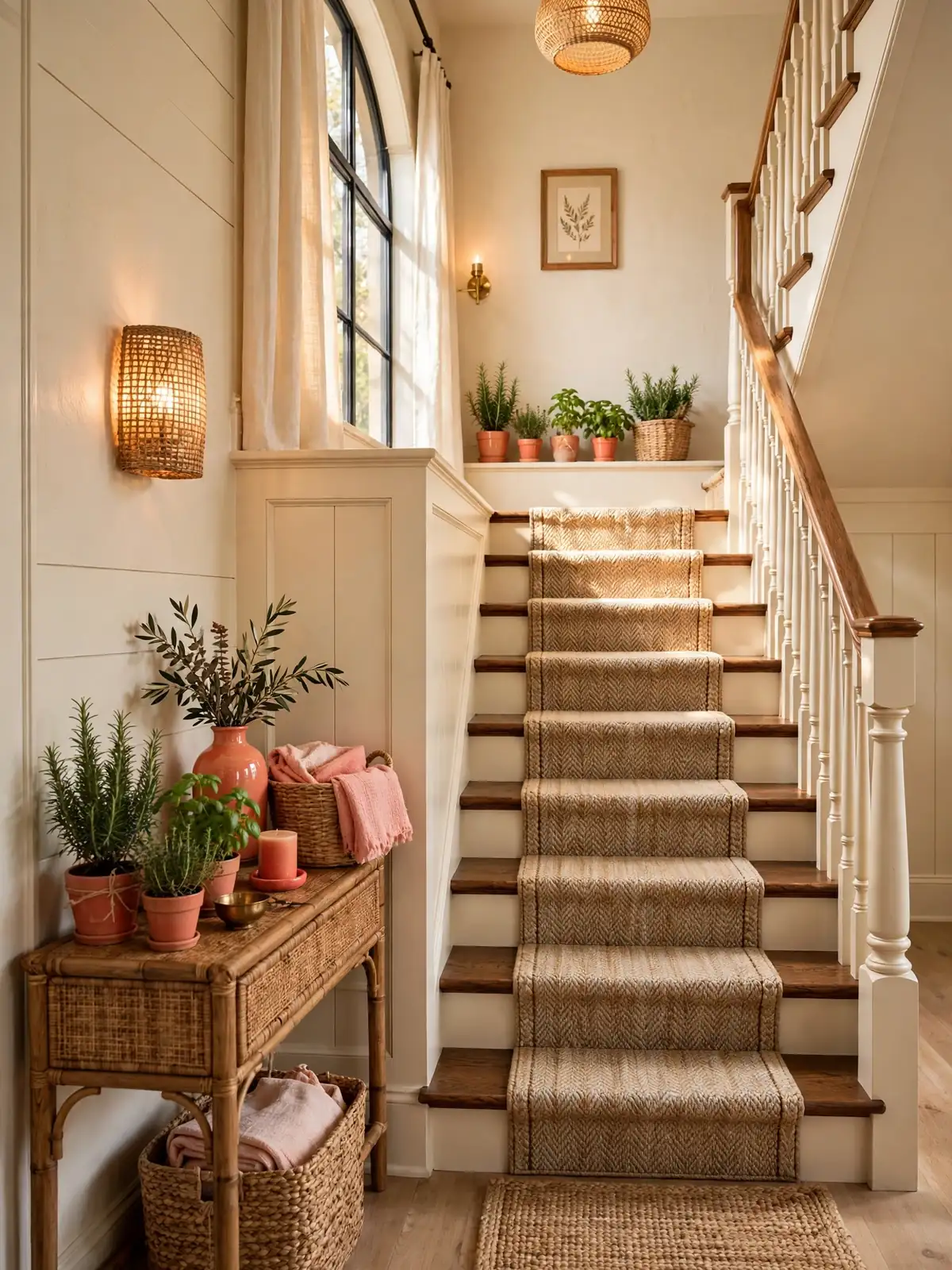
Lay a grain-sack striped runner down the stairs, and the farmhouse look is instant — those simple stripes are the most recognisable country textile there is. Pair it with olive green walls, and the runner’s cream and charcoal stripes feel fresh rather than old-fashioned.
Quick tips:
- Choose a washable runner for a busy family hallway.
- Centre the runner so the stripe lines stay even.
- Keep the wall colour muted so the stripes lead.
An Open-Shelf Nook Under the Stairs for Cookbooks and Crockery
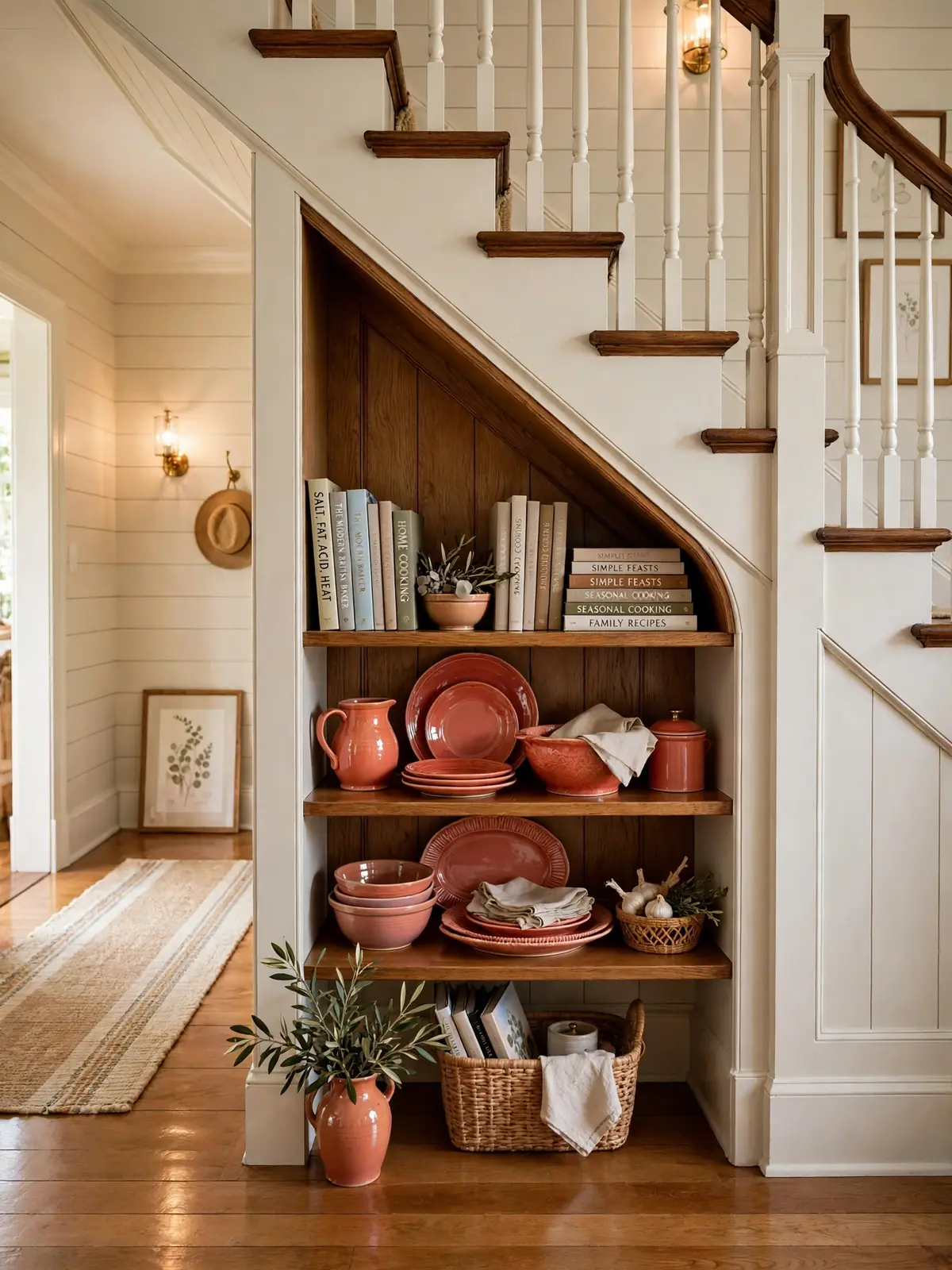
Build open shelves into the under-stair nook for cookbooks and coral crockery, and the dead space beneath the stairs becomes the most charming storage in the house. The coral crockery adds a warm jolt of colour against the wood, and the shelves keep everyday items within easy reach of the kitchen.
Quick tips:
- Measure shelf depth so books and plates sit safely.
- Keep the lowest shelf for heavier items.
- Leave one shelf half-empty so the nook breathes.
A Black Metal Wall Sconce That Warms the Stairwell at Night
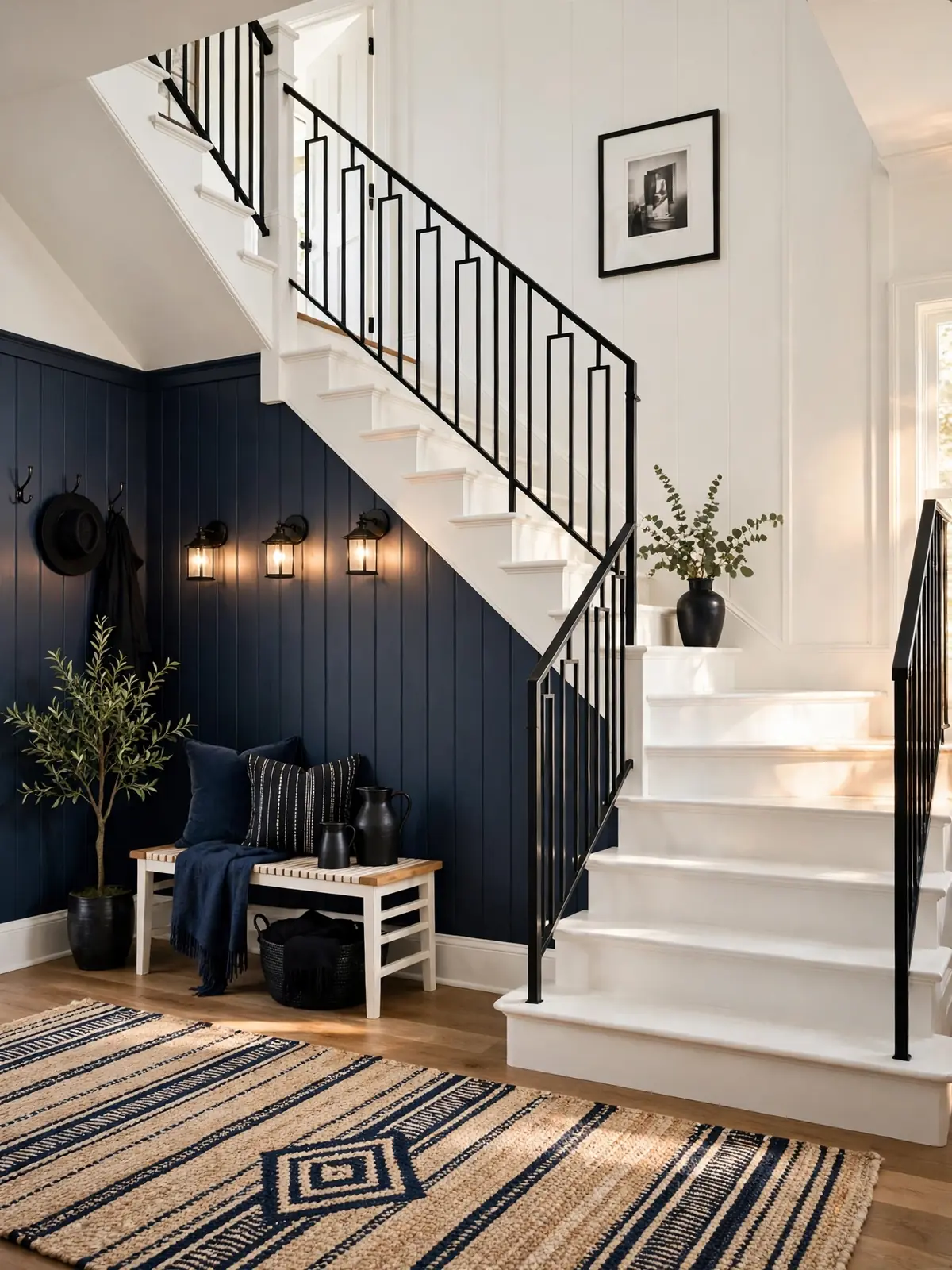
Fit a black metal wall sconce halfway up the stairwell, and the climb feels warm and safe after dark without a single overhead light. A lavender runner below softens the black metal, and the sconce’s warm glow makes the wood treads look richer at night.
Quick tips:
- Place the sconce at handrail height for the best light.
- Use warm bulbs — cool light kills the farmhouse feel.
- Add a dimmer so the sconce doubles as a night light.
A Wicker Basket at the Base of the Stairs for Shoes and Throws
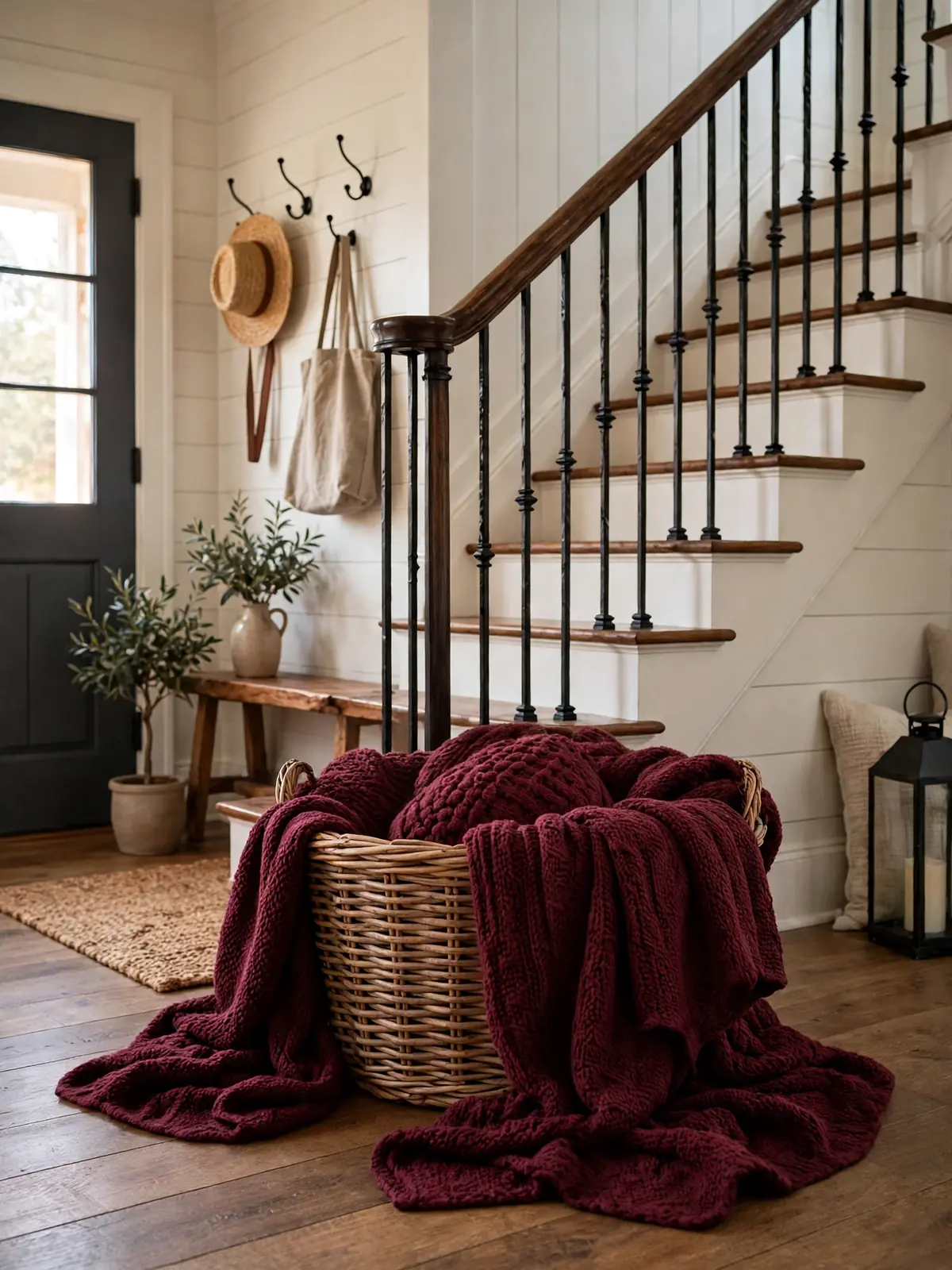
Set a large wicker basket at the base of the stairs for shoes and burgundy throws, and the hallway stays tidy without a single piece of fitted storage. The basket is the easiest farmhouse storage there is — move it, fill it, empty it, and it still looks right.
Quick tips:
- Choose a basket with handles for easy carrying.
- Keep one basket for shoes and one for throws.
- Line the basket so muddy shoes do not mark the floor.
A Hand-Painted Wooden Plaque With Your Family Name on the Landing
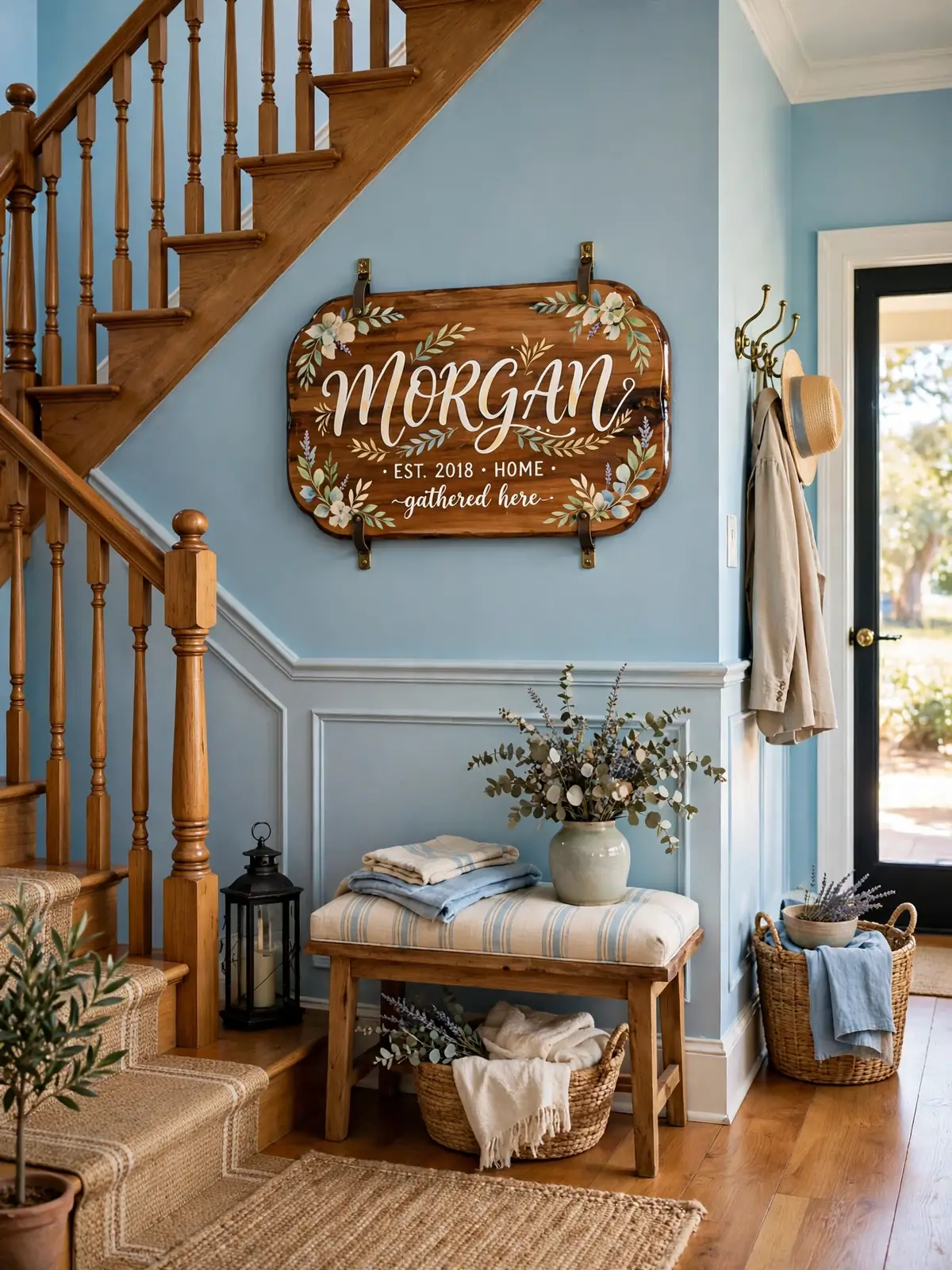
Hang a hand-painted wooden plaque with your family name on the landing, against sky blue walls, and the staircase becomes personal in a way no shop-bought sign can match. The plaque is the kind of detail guests notice and remember, because it could only belong to this house.
Quick tips:
- Keep the lettering simple and easy to read.
- Centre the plaque at eye level on the landing wall.
- Seal painted wood so the lettering lasts.
Weathered Oak Treads With a Matte, Lived-In Finish
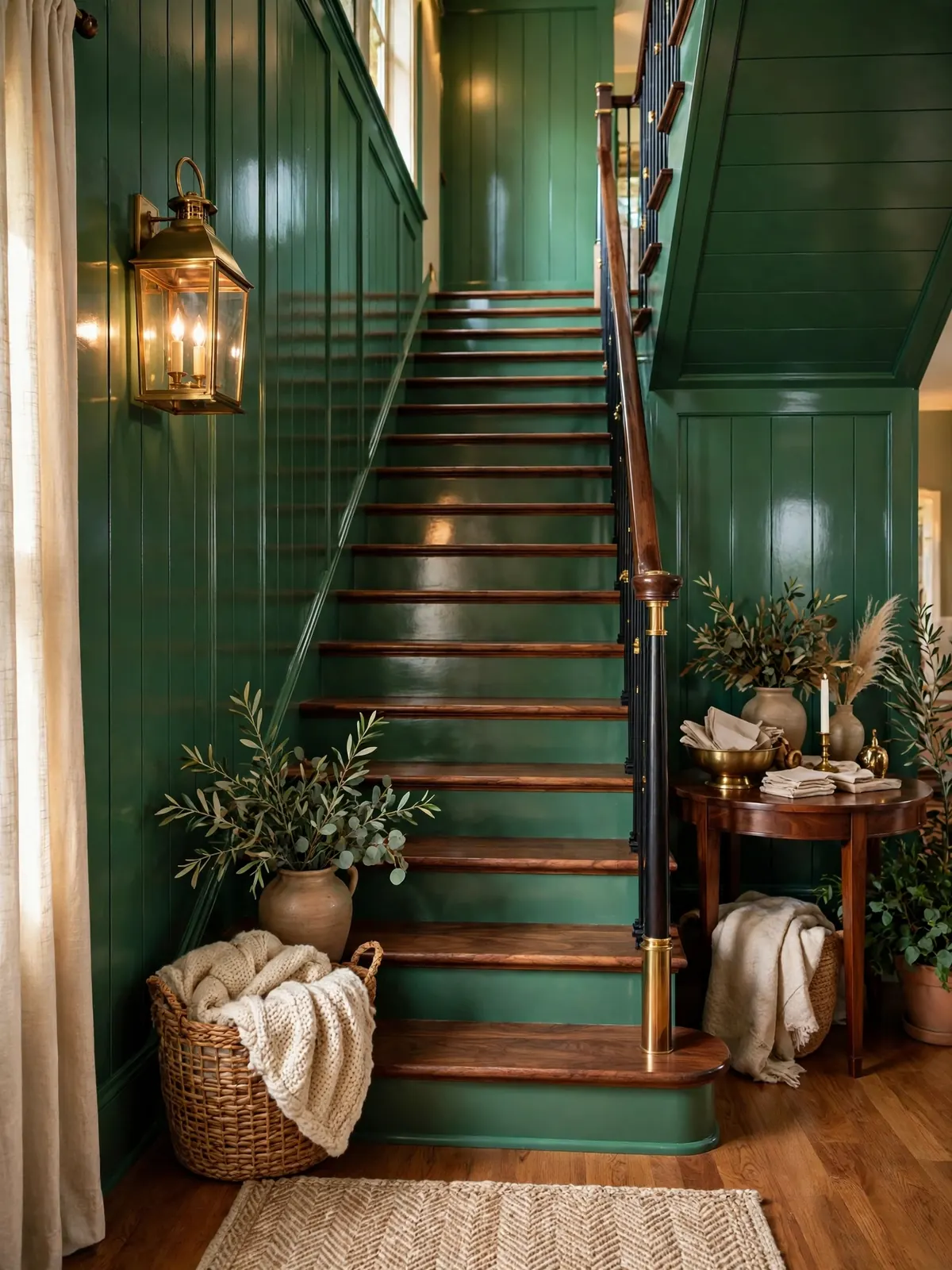
Choose weathered oak treads with a matte, lived-in finish, and the staircase looks honest and grounded from the first day. Add an emerald green runner down the centre, and the grey-brown oak gains a rich, deep contrast that feels both rustic and refined.
Quick tips:
- Avoid gloss finishes on weathered oak — matte is the look.
- Clean oak treads with a damp cloth, never harsh chemicals.
- Repeat the oak once more in a picture frame or shelf.
A Wall of Peg Hooks Beside the Stairs for Coats and Hats
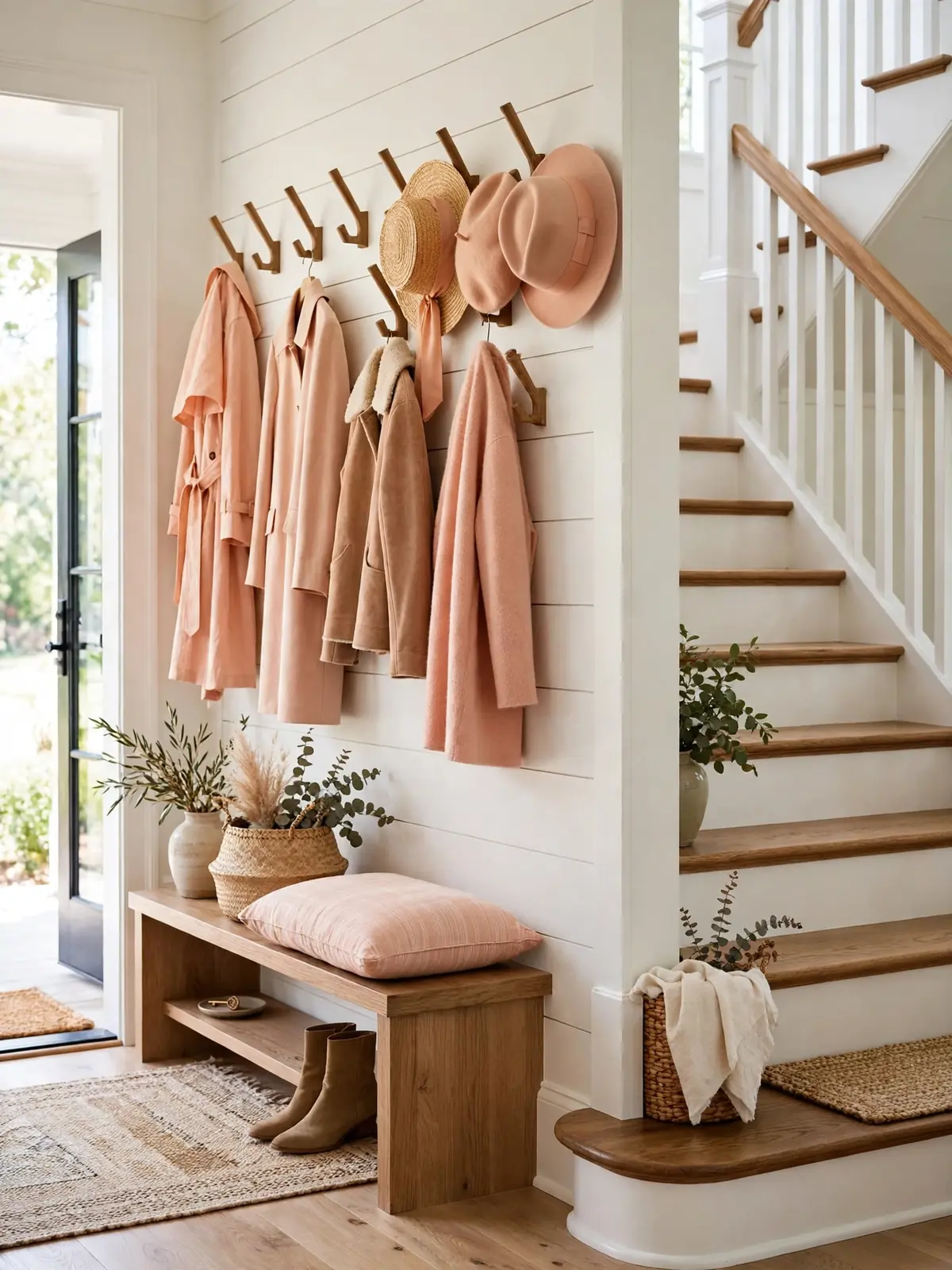
Fit a row of wooden peg hooks beside the stairs for coats and hats, with peach coats hanging on them, and the hallway works harder without any furniture at all. Peg hooks are the farmhouse answer to a coat cupboard — simple, visible, and always within reach.
Quick tips:
- Space pegs wide enough for bulky winter coats.
- Fix pegs into studs so they hold real weight.
- Keep the bottom row low enough for children’s coats.
A Quilt Draped Over the Banister for a Soft Country Touch
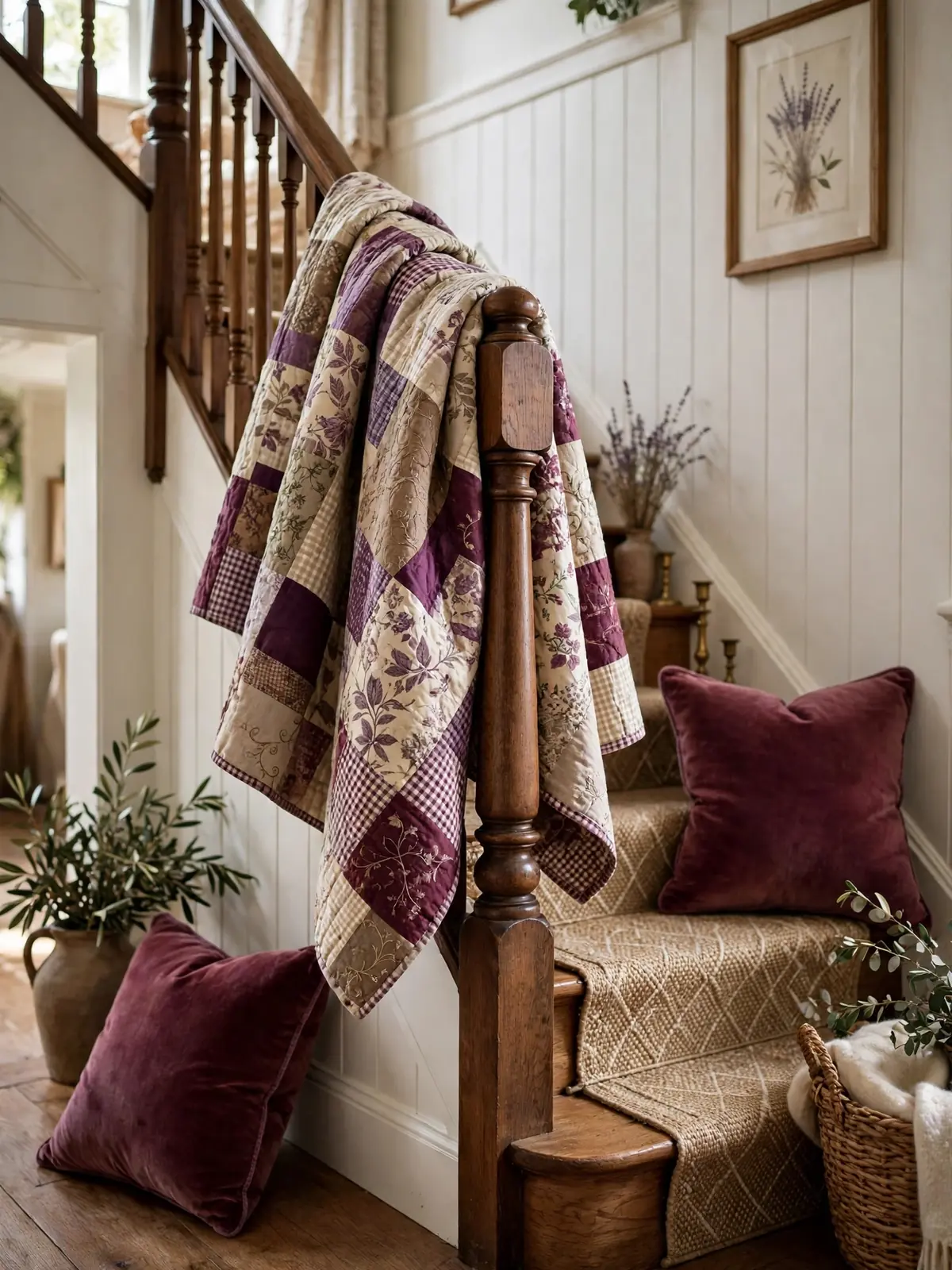
Drape a patchwork quilt over the banister, with aubergine cushions on a chair nearby, and the staircase gains a soft, handmade layer that no shop-bought throw can match. The quilt is both decoration and practical — fold it over the banister in the day, and it is there to wrap up in on a cold evening.
Quick tips:
- Choose a quilt in colours that match the hallway.
- Fold it neatly so it looks styled, not dumped.
- Wash the quilt gently and air-dry it flat.
A Buttermilk-Yellow Stair Hall That Feels Like Morning Light
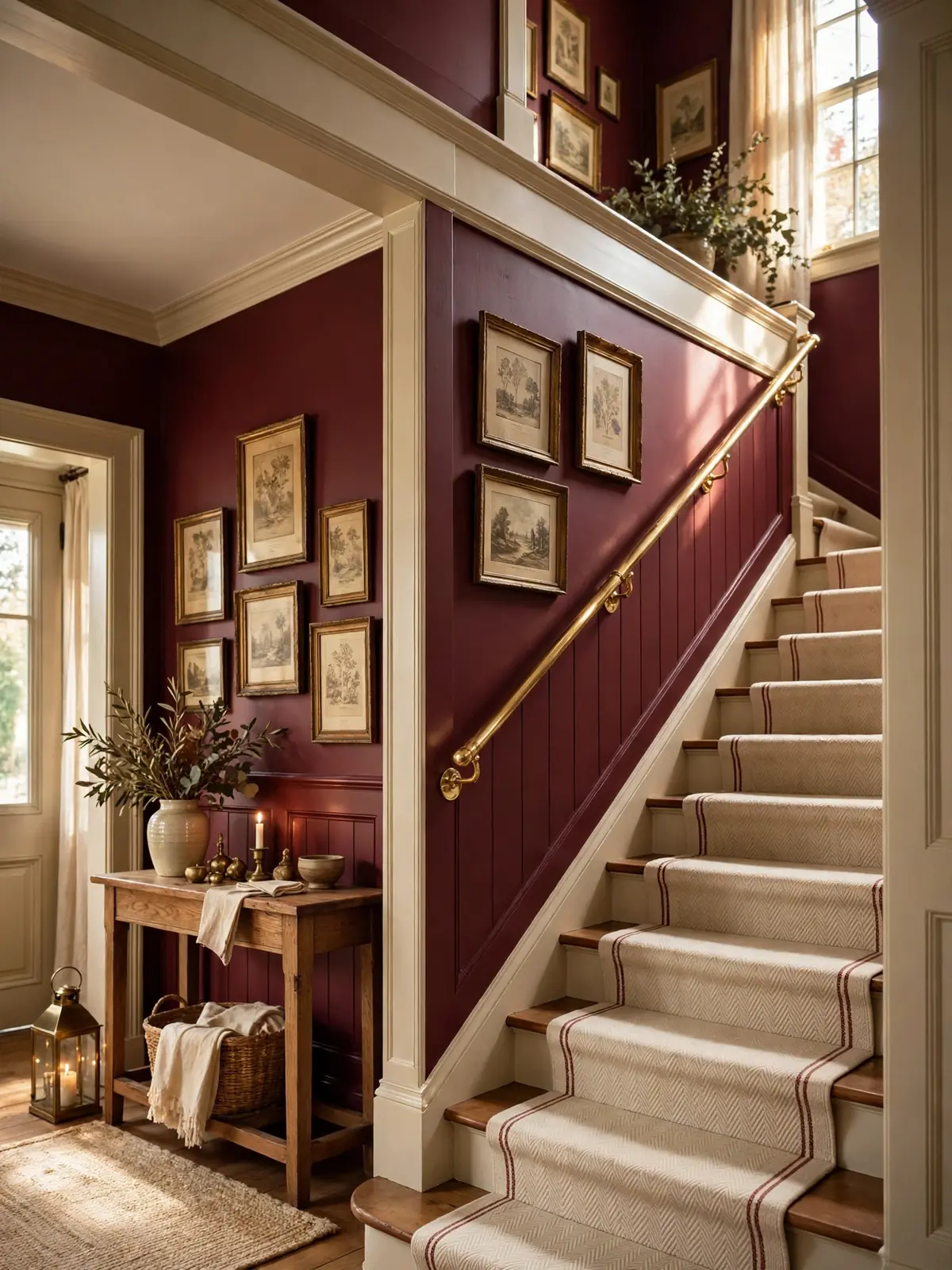
Paint the stair hall buttermilk yellow with white trim and a lilac runner, and the whole hallway feels like morning light, even on a grey day. Yellow is the warmest farmhouse wall colour, and it makes the wood treads and white balusters glow rather than compete.
Quick tips:
- Test yellow swatches in the hallway’s real light first.
- Keep trim white for a clean, fresh edge.
- Use the same yellow on the landing for a continuous feel.
A Vintage Wooden Ladder Leaning Beside the Stairs as Decor
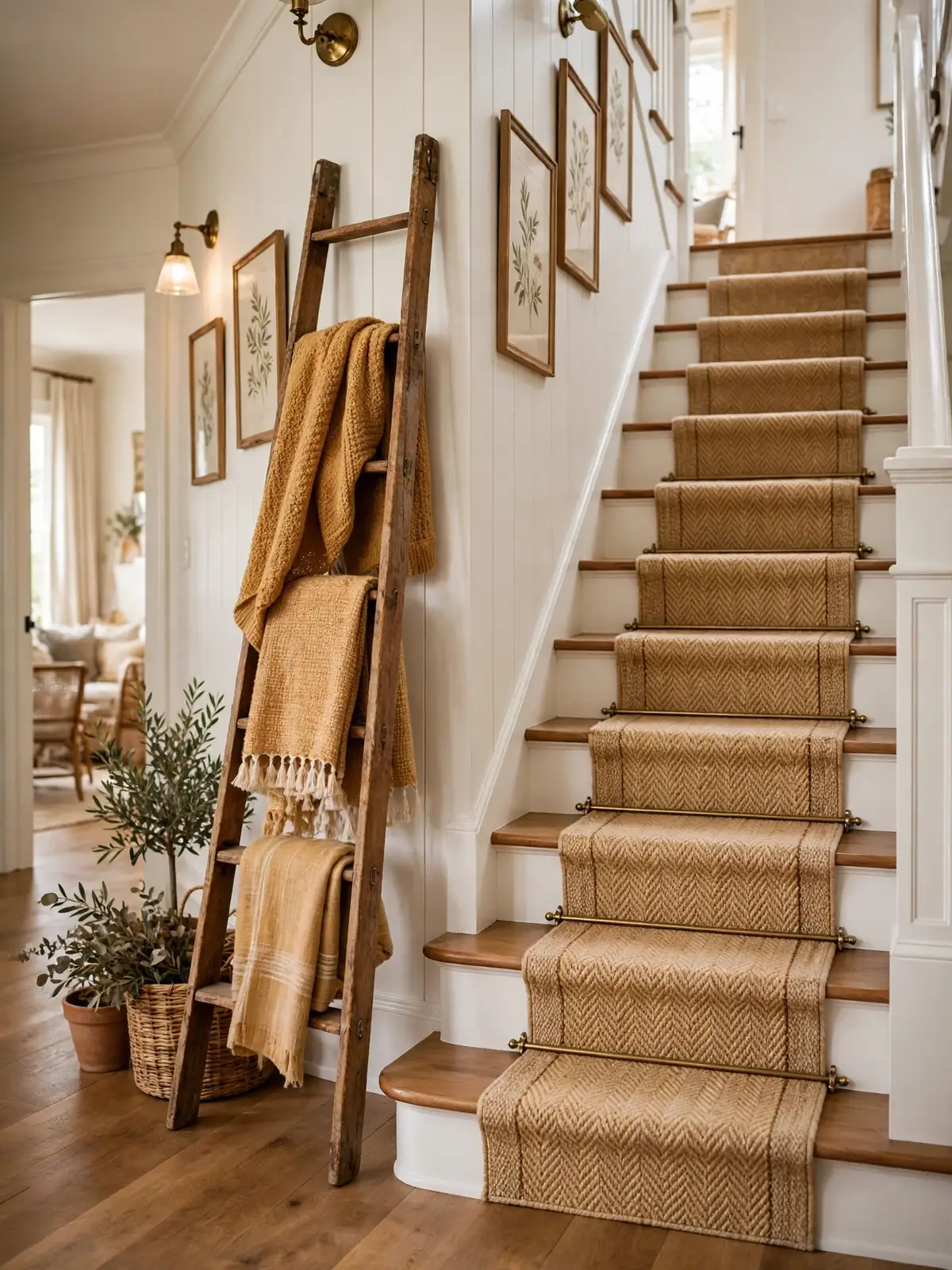
Lean a vintage wooden ladder beside the stairs with honey-toned throws draped over its rungs, and an empty stretch of wall becomes a farmhouse feature. The ladder is also useful — hang throws, scarves, or a wreath from it, and it earns its place twice over.
Quick tips:
- Secure the ladder to the wall so it cannot slip.
- Keep the top rung below head height on the stairs.
- Change what hangs on it with the seasons.
A Copper Kettle and Ceramic Vase Display on the Stair Landing
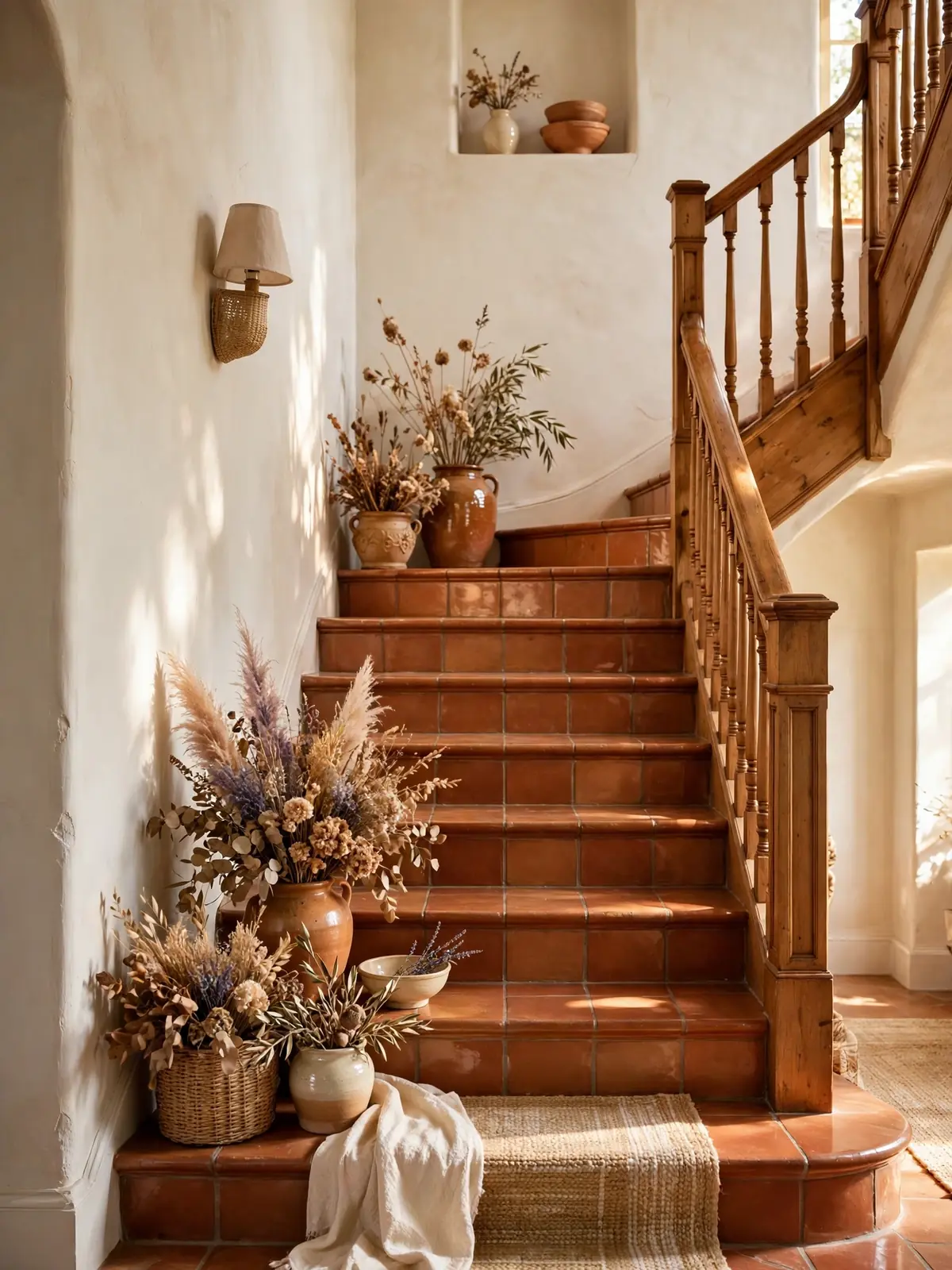
Style the stair landing with a copper kettle and a ceramic vase against slate blue walls, and the landing becomes a small still life that guests pause to look at. Copper warms up the blue wall beautifully, and the vase adds a soft, handmade contrast to the kettle’s shine.
Quick tips:
- Polish copper occasionally to keep its warm glow.
- Keep the display to two or three objects.
- Place heavier items at the back of the landing shelf.
A Chunky Knit Throw and Cushion on the Landing Bench
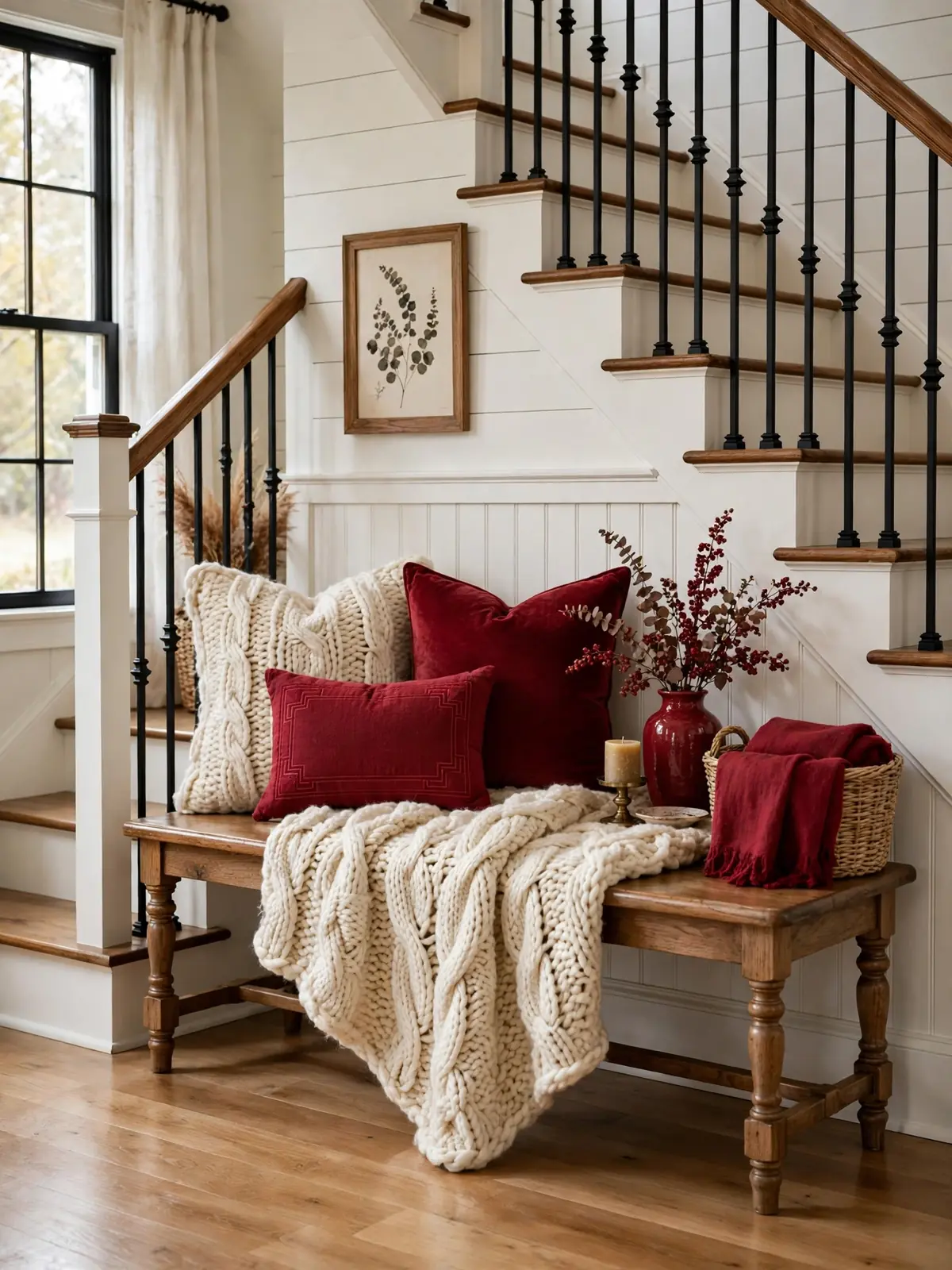
Dress the landing bench with a chunky cream knit throw and a cushion, with crimson accents in a small rug nearby, and the landing becomes a place to sit and pause rather than just pass through. The knit texture is what makes the bench feel inviting — it says someone actually sits here.
Quick tips:
- Choose washable knit for a bench that gets daily use.
- Keep the cushion in a colour that matches the runner.
- Fold the throw over the bench arm for a styled finish.
A Plain Pine Staircase Left Bare So the Wood Speaks for Itself
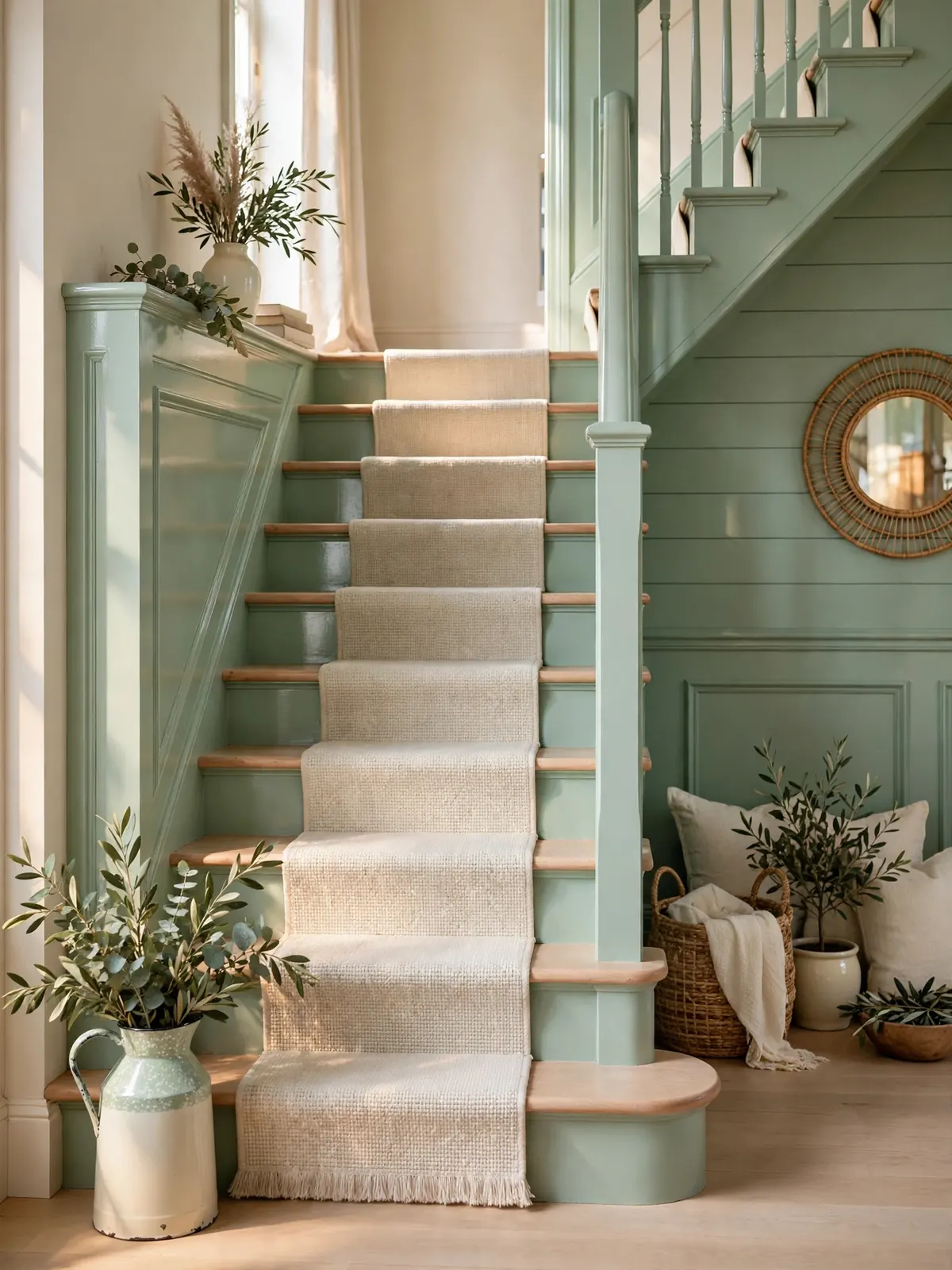
Leave a plain pine staircase bare — no runner, no paint, just the natural grain — and the wood speaks for itself. A simple cream rug at the base is all the softness it needs, and the restraint is what makes this the most confident farmhouse staircase of all.
Quick tips:
- Seal bare pine with matte oil to protect it.
- Keep the hallway styling minimal so the wood leads.
- Add one small plant on the landing for a living touch.
FAQs
How do I make my staircase look farmhouse on a budget?
Paint the risers warm white, add a woven runner, swap the light for a lantern-style pendant, and style the landing with a vintage find. Those four changes cost little and transform the whole stairway.
What is the best wood for a farmhouse staircase?
Reclaimed barn wood and weathered oak are the most authentic choices, with natural pine a good budget option. Choose wood with visible grain and knots — perfect, uniform timber looks factory-made, not farmhouse.
Should farmhouse stairs have a runner?
A runner is not essential, but it adds softness, quiet, and grip, and it is the easiest way to bring colour and pattern onto the stairs. Choose jute, wool, or a grain-sack stripe for the most authentic farmhouse feel.
What colour walls suit a farmhouse staircase?
Warm white, cream, buttermilk yellow, sage green, and muted dusty blue all suit farmhouse stairs. Choose a colour with a warm undertone so the wood treads look richer, and test it in the hallway’s real light first.
Can I mix black metal with farmhouse wood?
Yes — black metal is a classic farmhouse partner for wood. Slim black balusters, brackets, and light fittings give the warm wood crisp definition, and the contrast is what makes both materials look better.
Conclusion
A farmhouse staircase works when the materials feel honest and the layers feel lived-in — start with reclaimed or weathered wood, add shiplap or plank texture to the wall, and finish with black metal details and soft woven textiles. Pick the idea that fits your hallway first, whether that is a shiplap wall, a chunky timber newel, or a simple grain-sack runner, and let that single layer lead the rest. Done this way, a farmhouse staircase never feels decorated — it feels like it has always been part of the house.