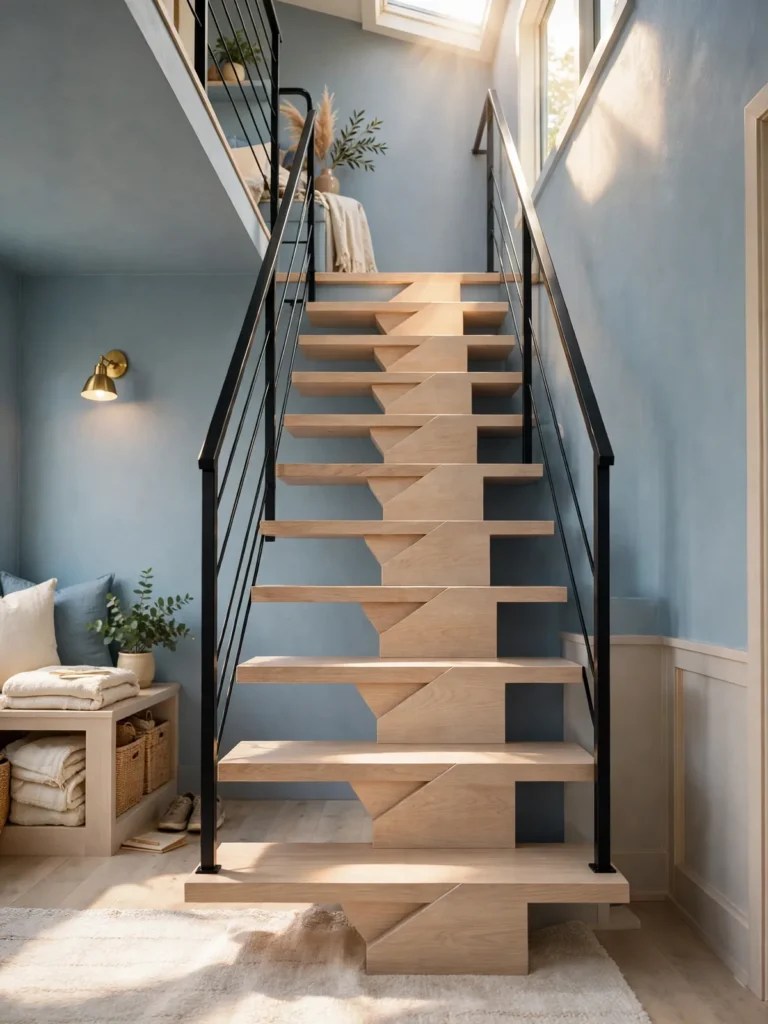
24 Stunning Staircase Window Designs Ideas That Flood Your Stairwell With Beautiful Light
A staircase window is where the magic happens: it pulls in light, frames views and adds drama to a space most homes ignore. These 24 staircase window designs ideas cover arched, bay, clerestory, picture, stained glass and floor-to-ceiling windows, plus seating, lighting and planting, so you can find a window design that suits your stair, your view and your home.
Staircase window designs ideas are the answer to the dark, forgotten stairwell, because a window on the stair does more than any railing or paint colour can: it pulls in daylight, frames a view, and turns a passage into a place. The right window makes a narrow stair feel wide, a tall stair feel dramatic, and a plain stair feel designed.
If you want the stair to glow after dark as well as by day, these staircase pendant lighting ideas show how hanging lights layer beautifully with window light on a stair. The 24 ideas below cover every window shape and style — arched, bay, clerestory, picture, stained glass, black-framed and floor-to-ceiling — plus window seats, planters and lighting, so you can choose a design that fits your stair and your view.
Key Takeaways
Where is the best place to put a window on a staircase?
On the landing or at the top of the stair, where the window can light the whole flight and frame a view you see as you climb. A large picture window on the mid-landing turns the landing into a pause point, while a tall window at the top of the stair washes light down the whole flight. Avoid placing a window where it faces directly into a neighbour’s home if privacy matters.
What window shape suits a staircase best?
Tall, vertical windows suit stairs best, because they follow the stair’s upward movement. Arched windows add elegance, clerestory windows add light without losing privacy, and a large picture window suits a landing with a good view. Avoid small, square windows on a tall stair wall — they look lost and add very little light.
Can I add a window to an existing staircase?
Often yes, but it depends on the wall structure. A new window in a load-bearing wall needs a structural engineer and building approval, while a window in a non-load-bearing wall is a simpler job for a builder. Always check the wall type and local building rules before cutting an opening, and consider a skylight or a sun tunnel if a new wall window is not possible.
How do I keep a staircase window private?
Use clerestory windows set high near the ceiling, frosted or patterned glass, or a sheer blind that filters light without blocking it. Stained glass also adds privacy while throwing coloured light onto the stair. Avoid heavy curtains on a stair window — they block the light the window was added for.
What is the best window treatment for a staircase window?
Keep it minimal. A slim roller blind, a sheer linen panel or a simple frosted finish suits a stair window best, because the point of the window is light. If the window faces the sun, a light-filtering blind prevents glare on the steps, which matters for safety as well as comfort.
A Large Picture Window on the Landing
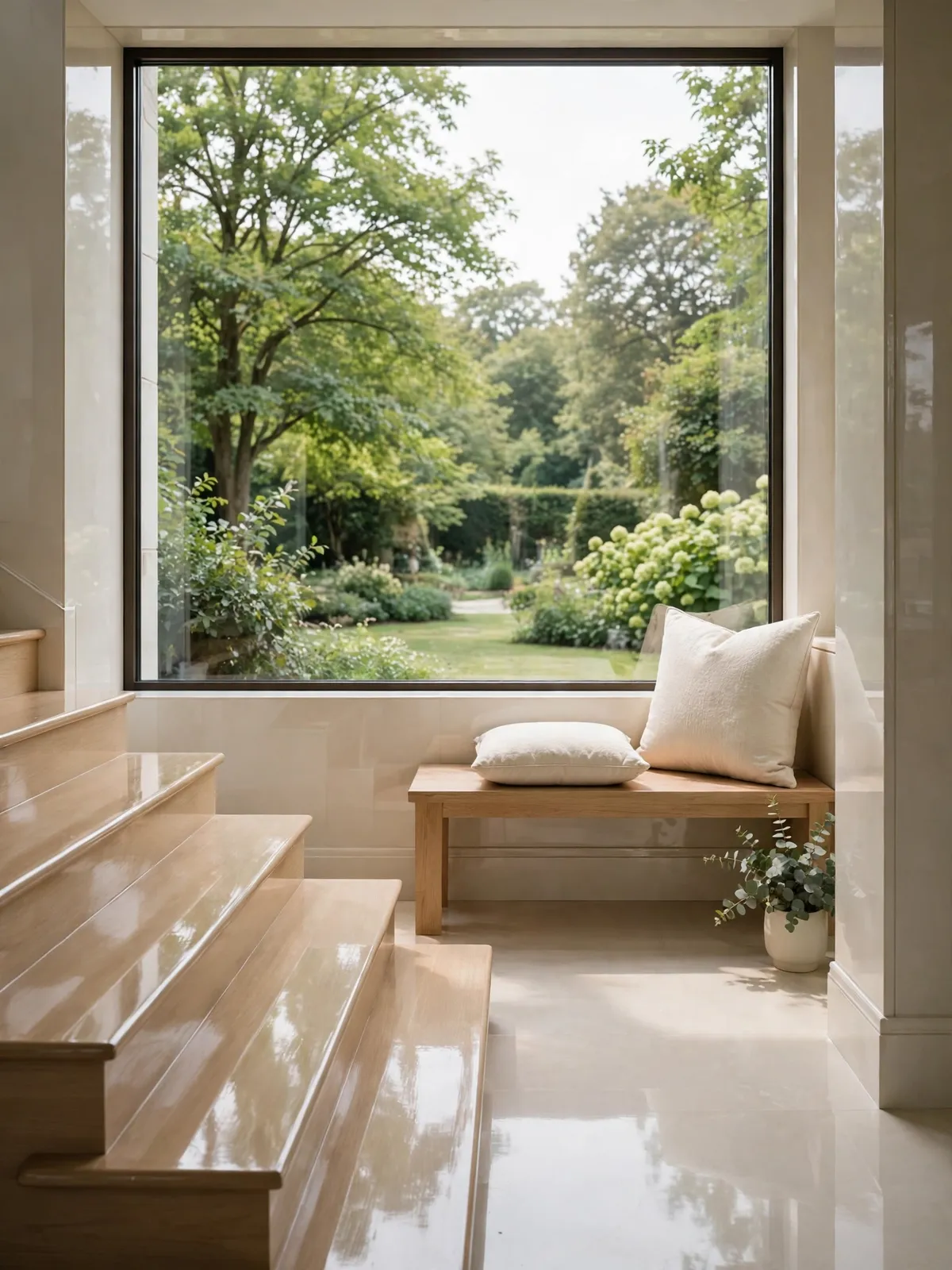
A large picture window on the landing turns the pause point of a stair into a moment, because the wide view becomes the feature you look at as you climb. Here, a wide picture window with a slim black frame fills the mid-landing wall, framing a garden view above pale oak treads, each 950 mm wide, with a cream cushion on a small wooden bench below. The window makes the landing a place to stop rather than pass through, and the garden becomes part of the home’s interior.
Quick tips:
- Keep the window trim minimal so the view stays the star.
- Choose thin black frames for contrast against pale walls.
- Add a small bench below the window for a pause point.
- Layer planting outside so the view is worth framing.
A Dramatic Arched Window Above the Stair
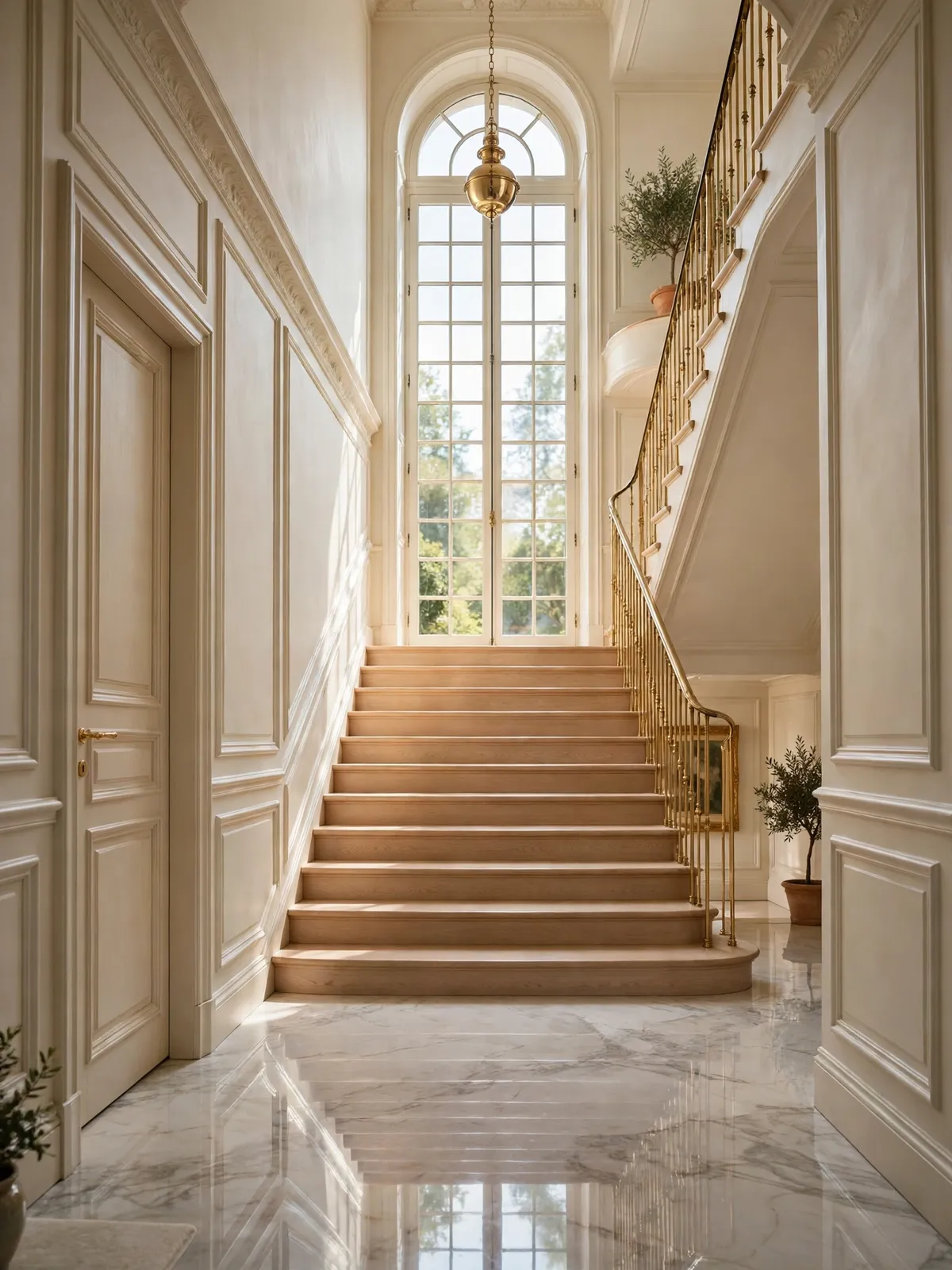
A dramatic arched window above the stair changes everything, because the curve softens the stair’s sharp angles and adds instant elegance. Here, a tall arched window with a slim stone surround rises at the top of the stair, flooding pale oak treads, each 950 mm wide, with daylight, while a small brass pendant hangs in front of it. The arch becomes the focal point of the whole stairwell, the simple stairs stay quiet so the window shines, and the home gains a subtle European charm.
Quick tips:
- Pair an arched window with simple stairs so it stays the focus.
- Keep the frame slim and the trim minimal.
- Add a small pendant in front for evening drama.
- Choose clear glass so the arch shape reads cleanly.
Clerestory Windows Along the Upper Stair Wall
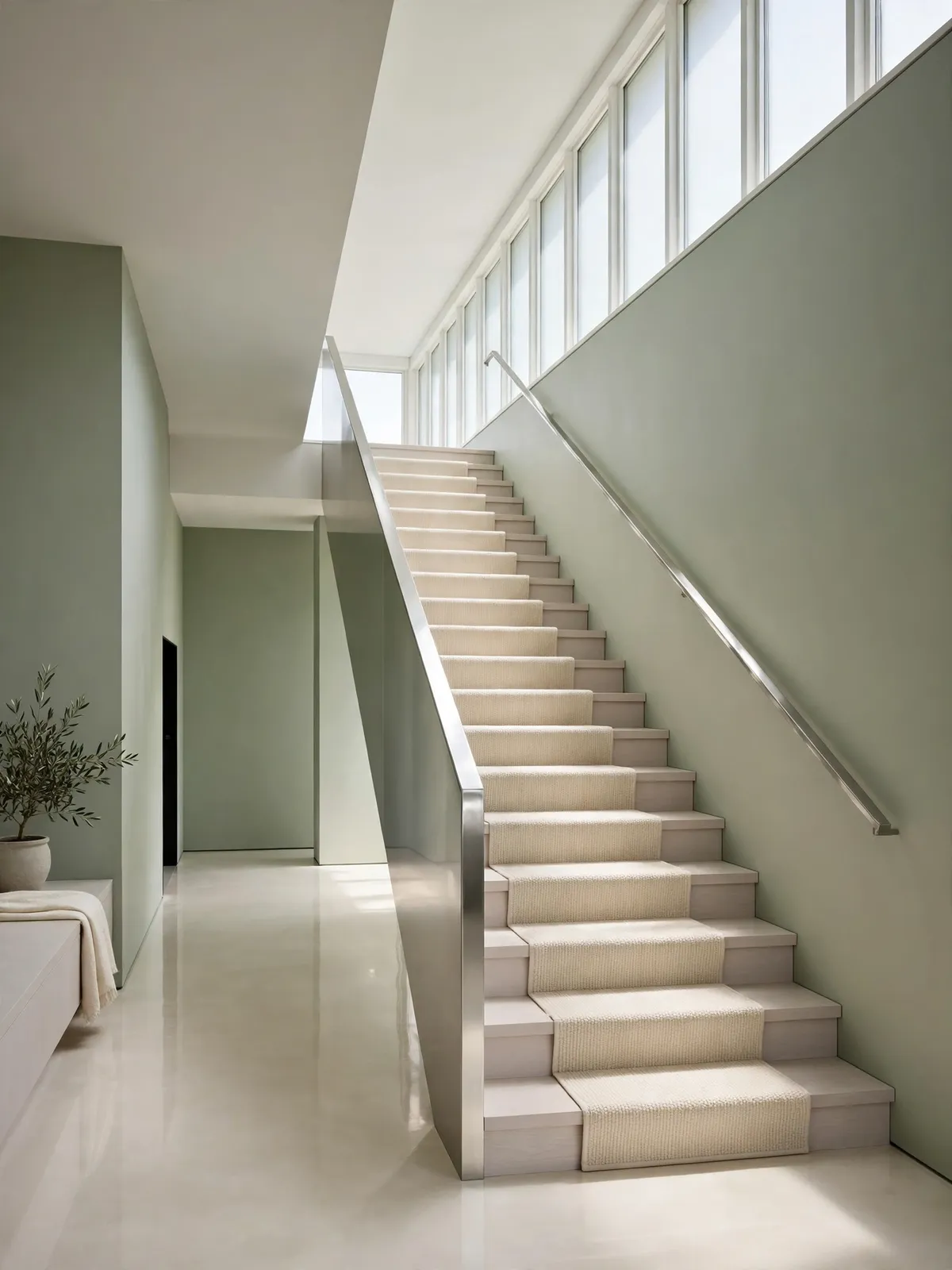
Clerestory windows along the upper stair wall are underrated, because they pour in natural light without sacrificing any privacy. Here, a row of high windows sits near the ceiling above pale ash treads, each 900 mm wide, washing soft sage-green walls with daylight while the lower wall stays clean and unbroken. The stair feels bright without exposing the interior, the high windows suit homes close to neighbours, and the whole stairwell gains a calm, minimalist glow.
Quick tips:
- Place clerestory windows high, near the ceiling line.
- Keep the lower wall clean so the light stays the feature.
- Choose clear glass for maximum daylight.
- Add a dimmer to any stair lighting for evening balance.
Stained Glass Panels for a Vintage Feel
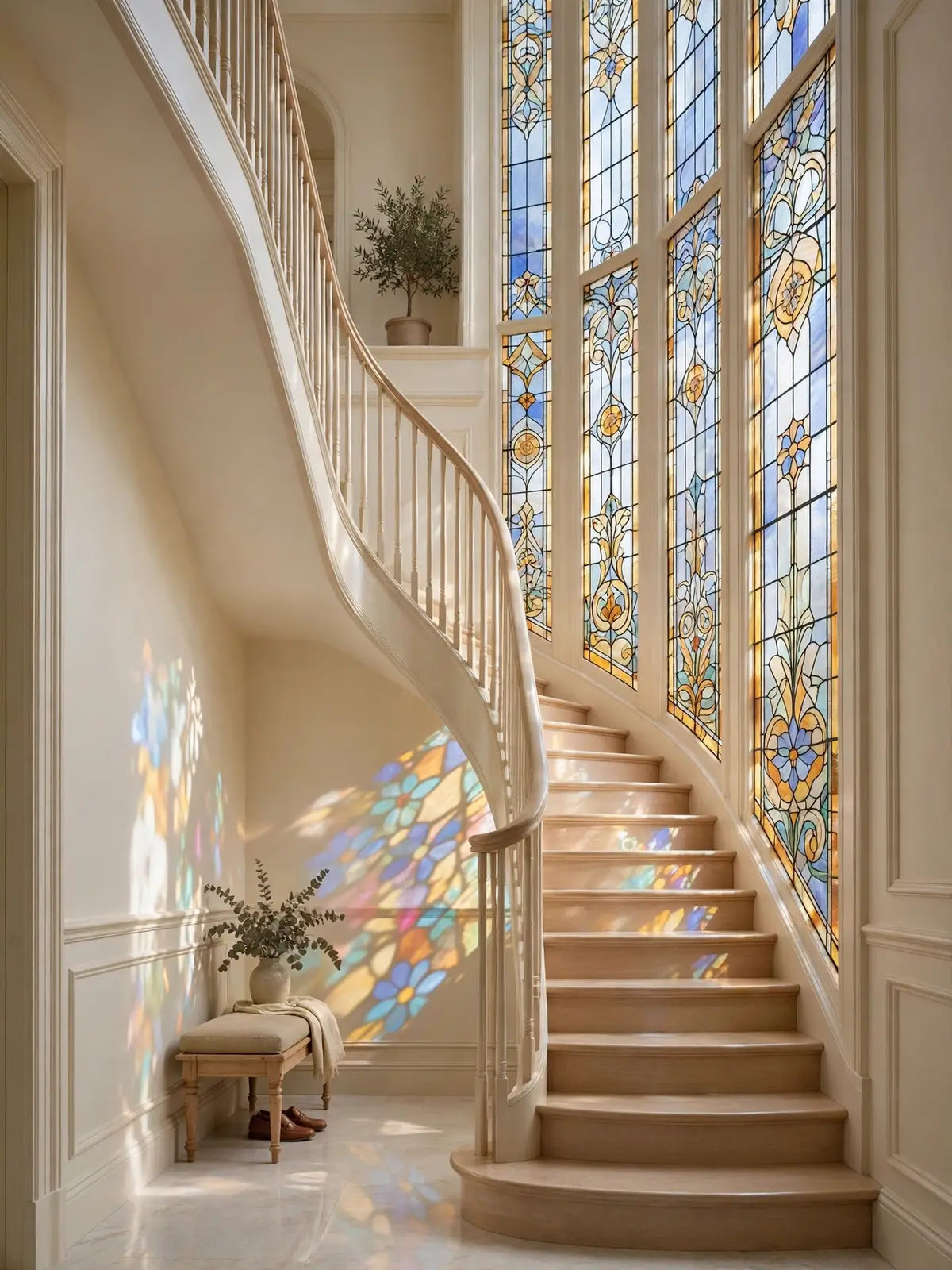
Stained glass panels give a staircase window a vintage feel, because the coloured glass catches sunlight and throws soft colour onto the walls as you climb. Here, a stained glass window in soft blues, ambers and greens sits above pale oak treads, each 950 mm wide, casting gentle coloured patterns on the cream stair wall. The window suits traditional homes and older properties beautifully, and the coloured light changes the mood of the stair throughout the day.
Quick tips:
- Choose soft blues and ambers for a calm coloured light.
- Keep the surrounding walls pale so the colours show.
- Use stained glass on a stair that gets direct sun.
- Have stained glass fitted by a specialist glazier.
Black Metal-Framed Windows for Industrial Contrast
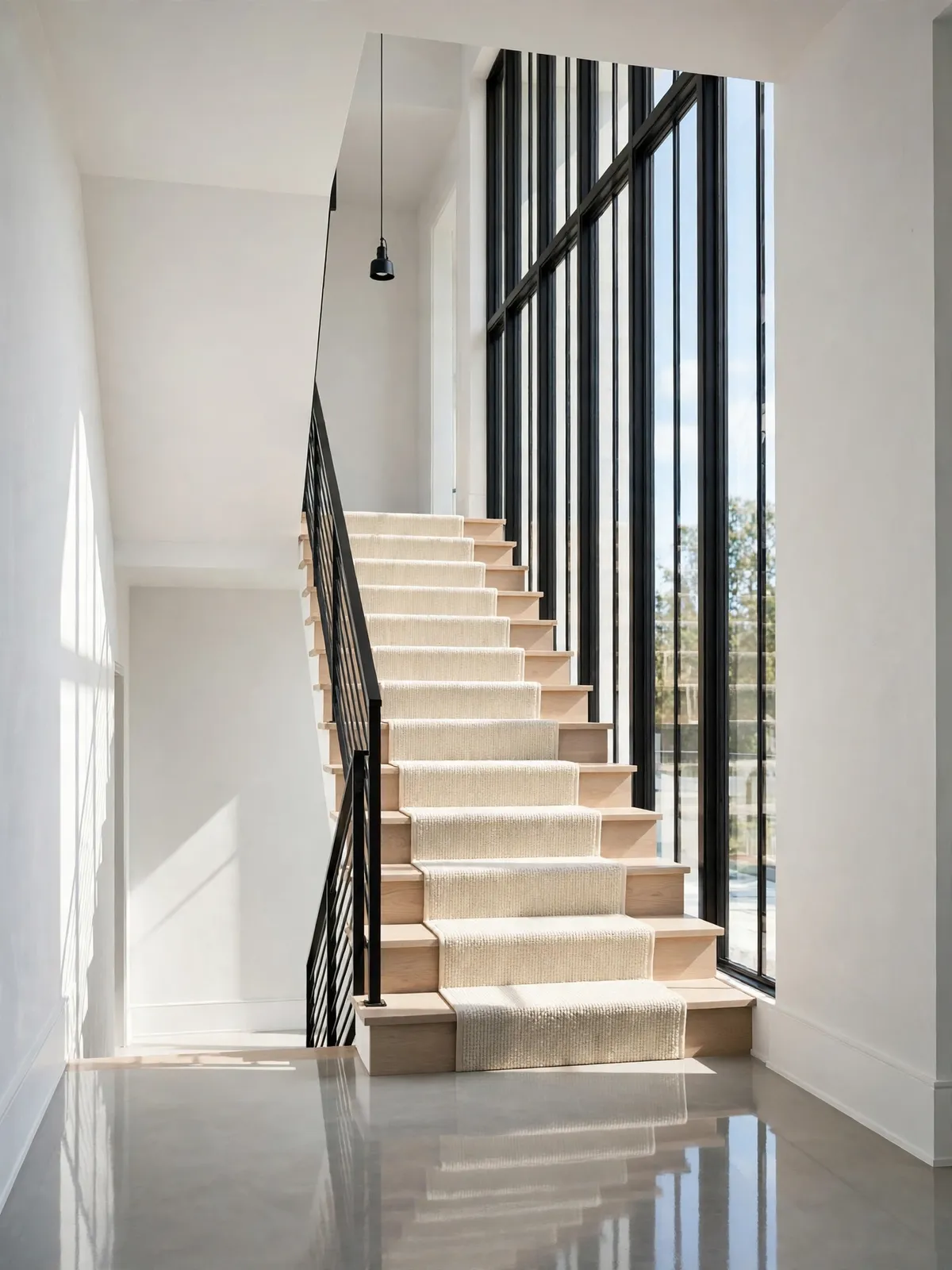
Black metal-framed windows give a staircase structure and contrast, because the slim black lines read as crisp architecture against white walls. Here, a run of slim black-framed windows lines the stair wall beside pale oak treads, each 950 mm wide, with a cream runner softening the steps and a small black pendant above the landing. The windows suit modern farmhouse and industrial homes, they frame the view in clean grids, and the stair gains a tailored, graphic quality.
Quick tips:
- Keep the black frames slim so the stair does not feel heavy.
- Pair black frames with white walls for contrast.
- Use the same black tone on the handrail for cohesion.
- Choose slim grids, not chunky ones, in smaller stairs.
A Bay Window Seat at the Stair Landing
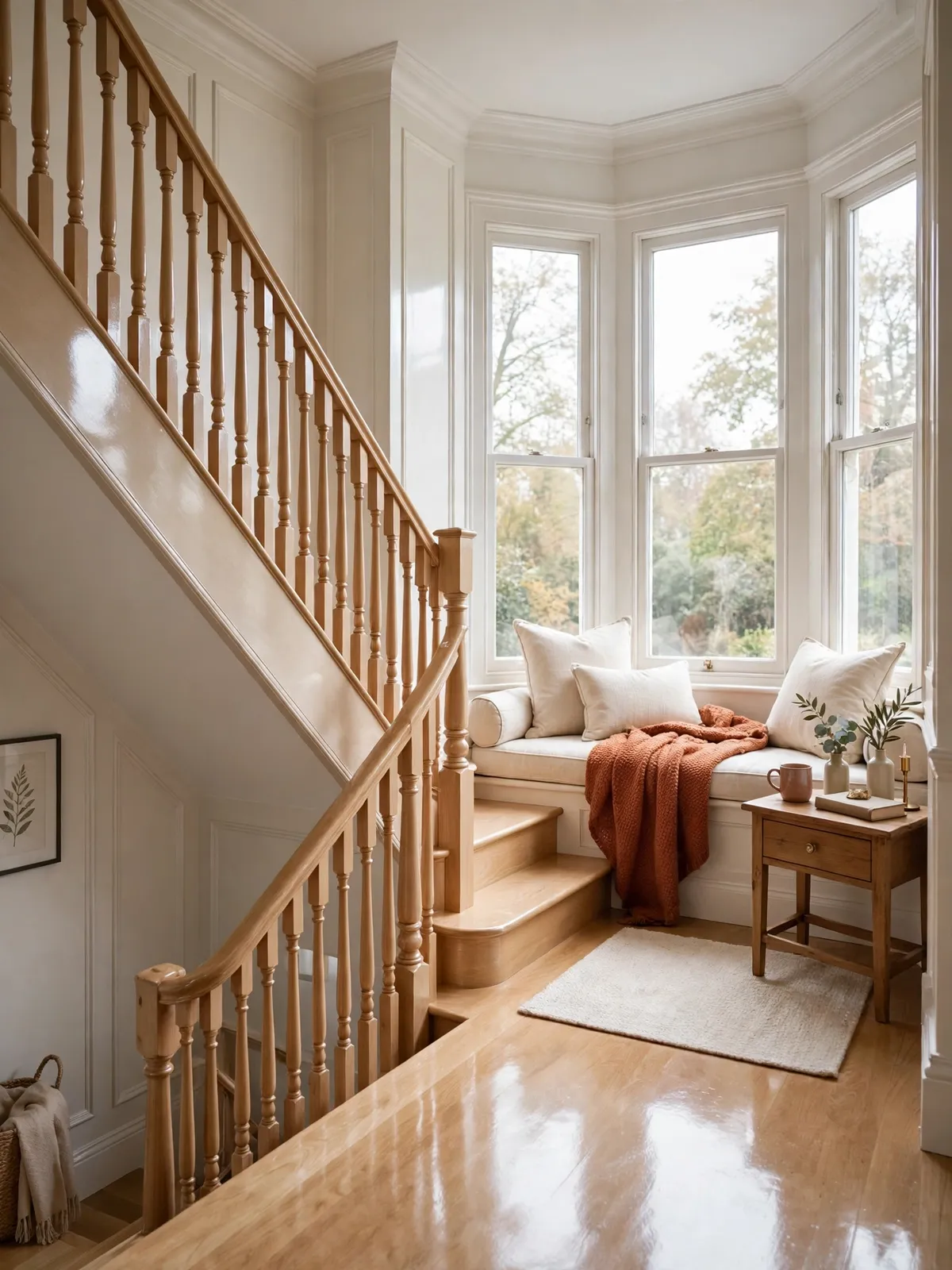
A bay window seat at the stair landing turns the stair into an experience, because a cushioned bench in a bay window is a place to sit, read and pause. Here, a small bay window with a cushioned seat in cream and a terracotta throw sits on the landing beside pale oak treads, each 950 mm wide, with a small wooden side table holding a book. The landing stops being transitional and becomes a tiny retreat, and the stair gains a moment of comfort that guests always remember.
Quick tips:
- Keep the bay seat cushion at least 100 mm thick.
- Add a throw and one cushion for comfort.
- Choose a small side table that fits the landing.
- Keep the window seat clear of clutter.
Integrated LED Lighting Around the Window Frame
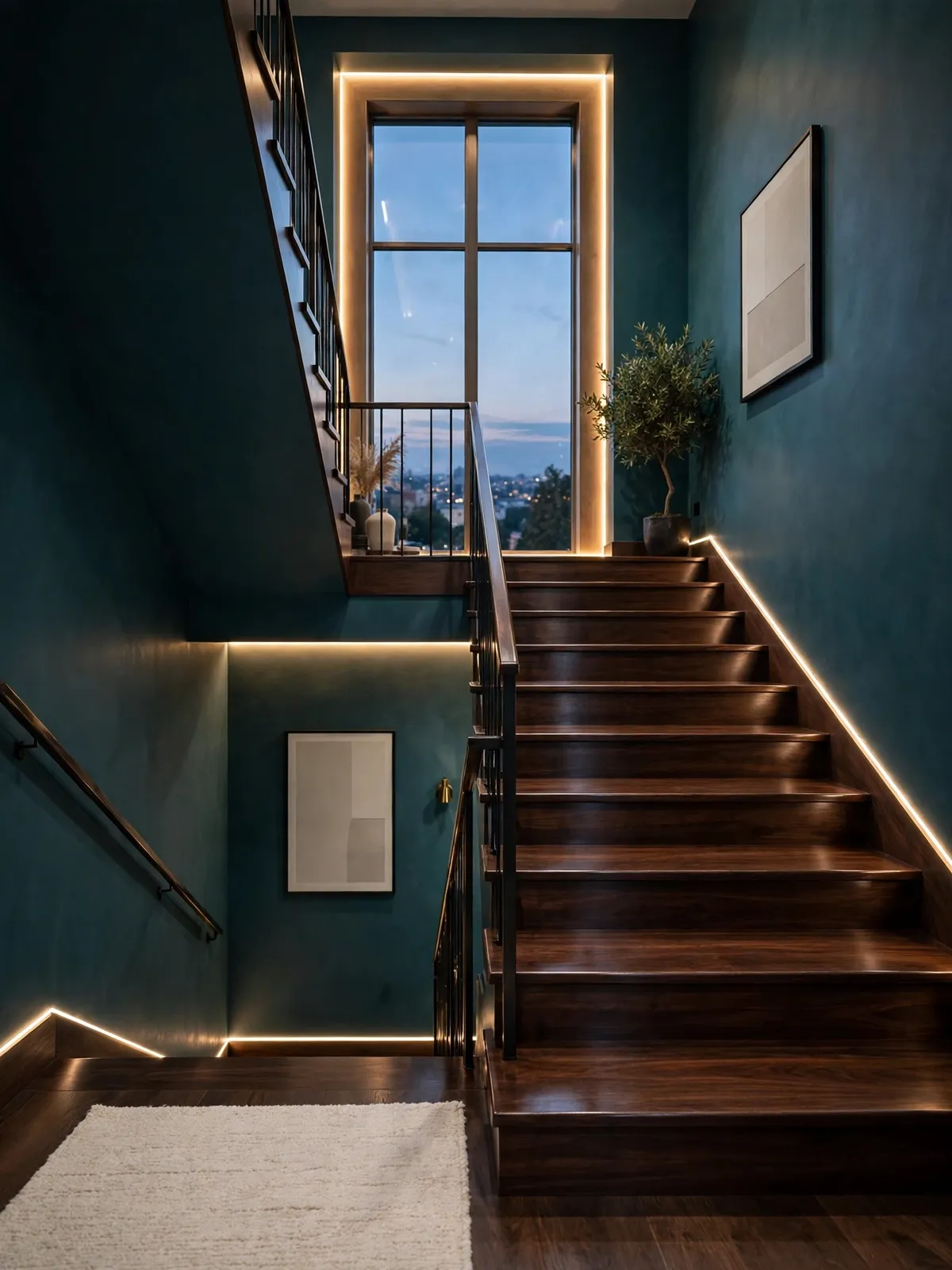
Integrated LED lighting around the window frame makes a staircase window glow after dark, because the concealed strips turn the window into a ribbon of light. Here, warm LED strips, 2700K, are set into a slim channel around a tall window frame beside dark walnut treads, each 1 metre wide, with deep teal walls and a cream rug below. By day the window is a source of daylight; by night it glows softly, the stair feels safer, and the whole stairwell reads as luxurious and intentional.
Quick tips:
- Choose warm white LEDs, about 2700K, for a cosy glow.
- Hide the strips in a channel so only the light shows.
- Put the LEDs on a dimmer for evening control.
- Plan the lighting during renovation, not after.
Frosted Geometric Patterns for a Contemporary Look
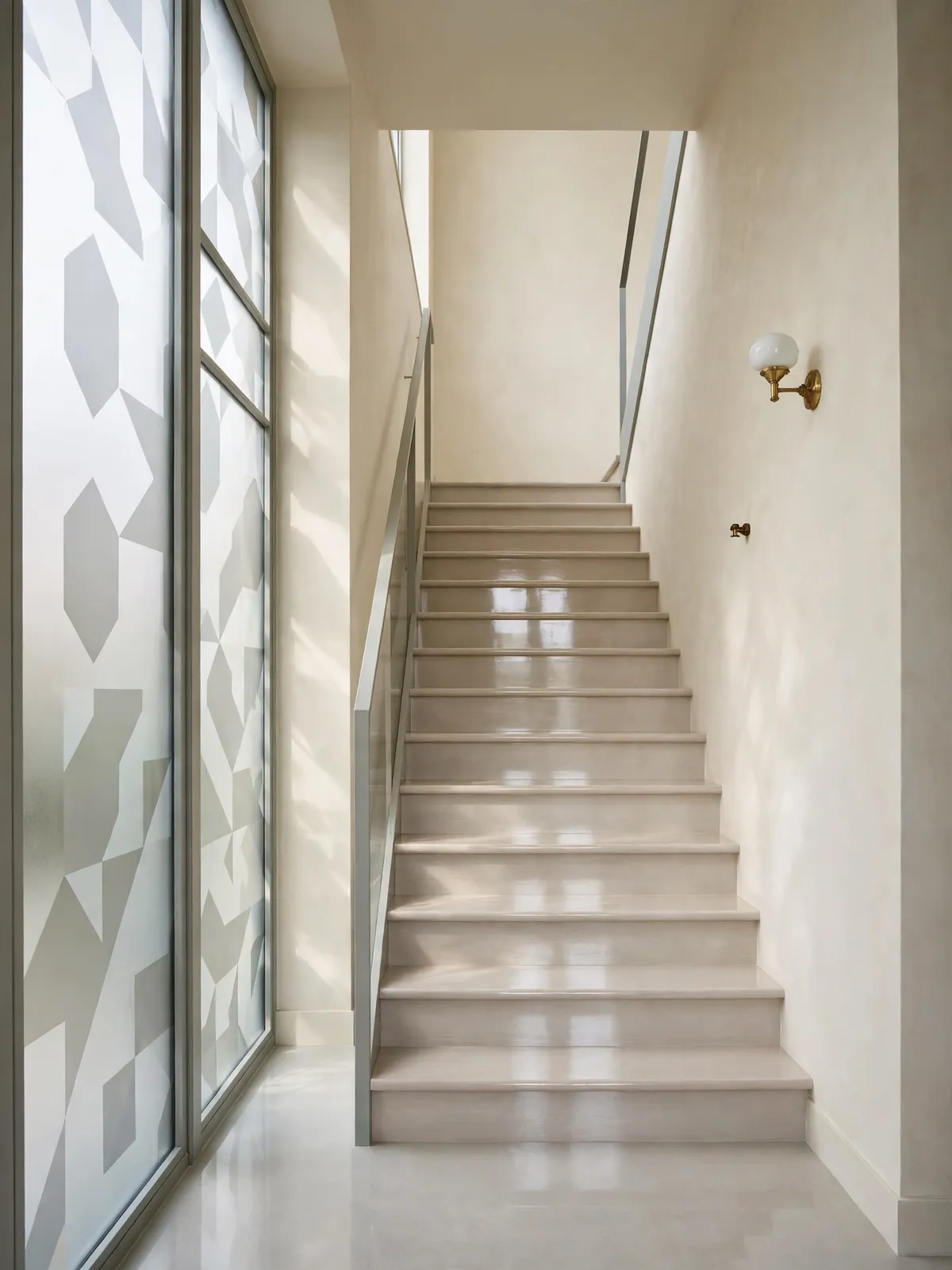
Frosted geometric patterns take a staircase window up a notch, because the patterned frosting adds visual texture and privacy without blocking the light. Here, a tall window with frosted chevrons and lines in soft grey sits beside pale ash treads, each 900 mm wide, with a small brass sconce warming the wall. The pattern suits urban homes, it keeps the stair private from neighbours, and the window feels like a piece of art rather than a plain pane of glass.
Quick tips:
- Choose geometric patterns such as lines or chevrons.
- Keep the frosting light so daylight still floods in.
- Pair frosted glass with a slim black or brass frame.
- Use frosted film for an easy, removable option.
Sliding Glass Panels for Indoor-Outdoor Flow
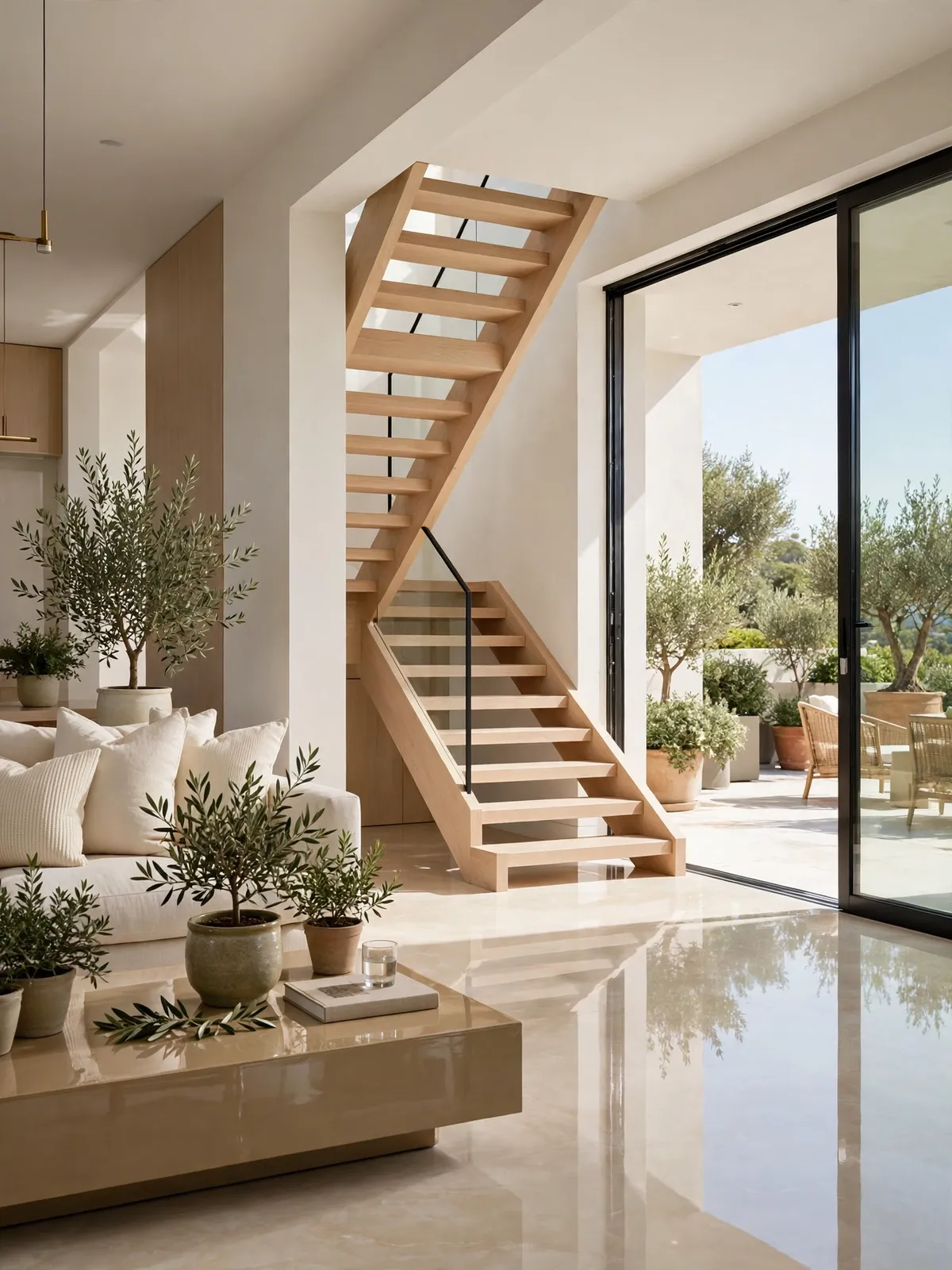
Sliding glass panels beside a staircase create indoor-outdoor flow, because the panels open the stair to a balcony or terrace and let air and conversation move across levels. Here, tall sliding glass panels run beside pale oak treads, each 1 metre wide, opening onto a terrace with olive-green plants, while cream cushions on a bench below keep the stair welcoming. The stair becomes part of the entertaining space rather than just a passage, and the home feels connected and alive.
Quick tips:
- Use proper railings and secure locks for safety.
- Choose panels that slide smoothly and seal well.
- Keep the stair clear of furniture near the panels.
- Add a slim blind for privacy when the panels are closed.
Wooden Window Frames for Warmth
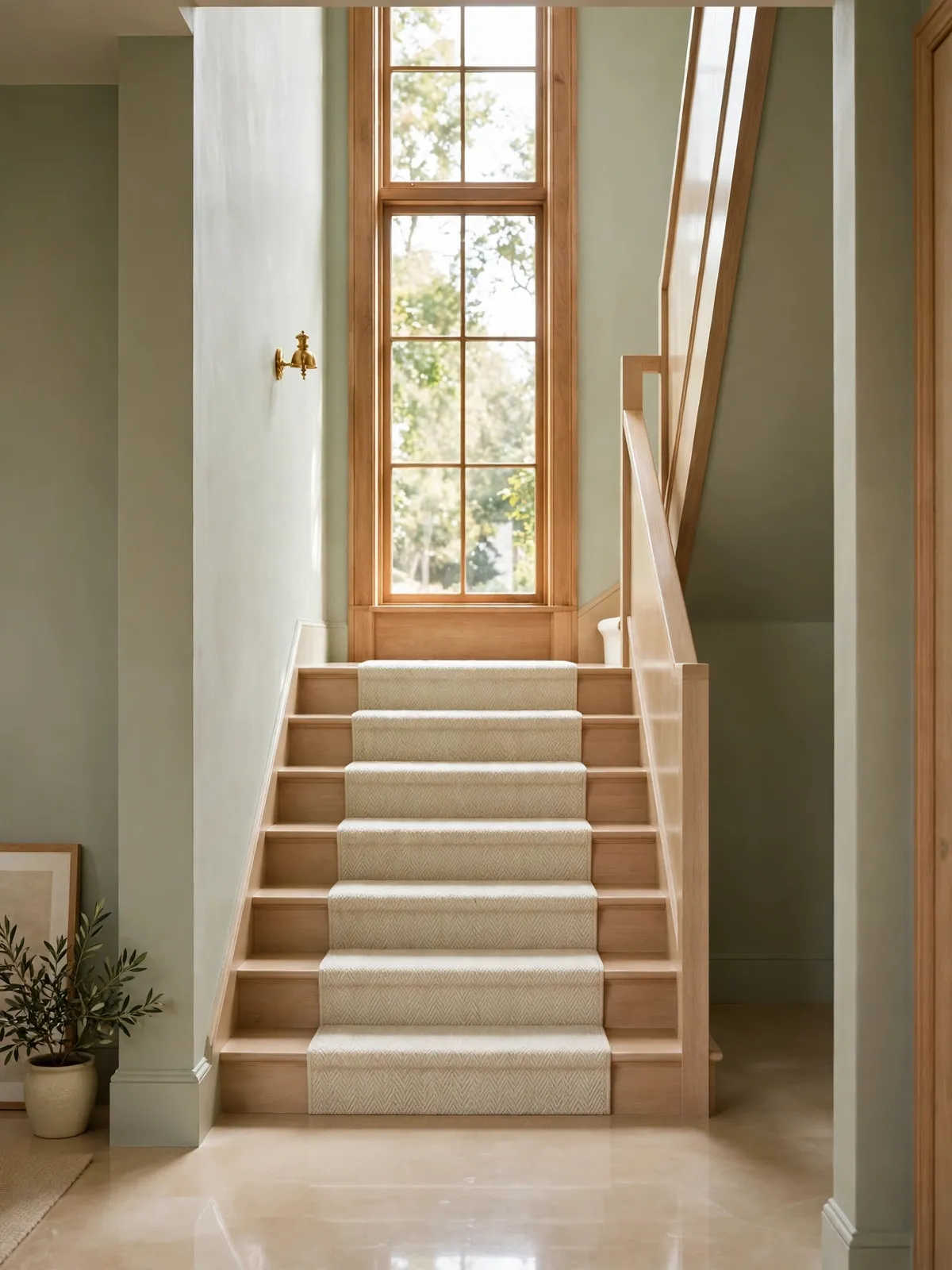
Wooden window frames add warmth to a staircase that feels cold or stark, because oak, teak or walnut soften the architecture instantly. Here, a tall window with warm oak frames sits beside pale oak treads, each 950 mm wide, on soft sage walls, with a cream runner and a small brass lamp on the landing. The timber ties in beautifully with the wooden treads, the stair feels organic and grounded, and the wood ages gracefully over time.
Quick tips:
- Choose oak for warmth, walnut for drama, ash for lightness.
- Match the frame timber to the treads for unity.
- Oil the frames yearly to keep the wood healthy.
- Pair wooden frames with soft sage or cream walls.
Symmetrical Twin Windows Beside the Stair
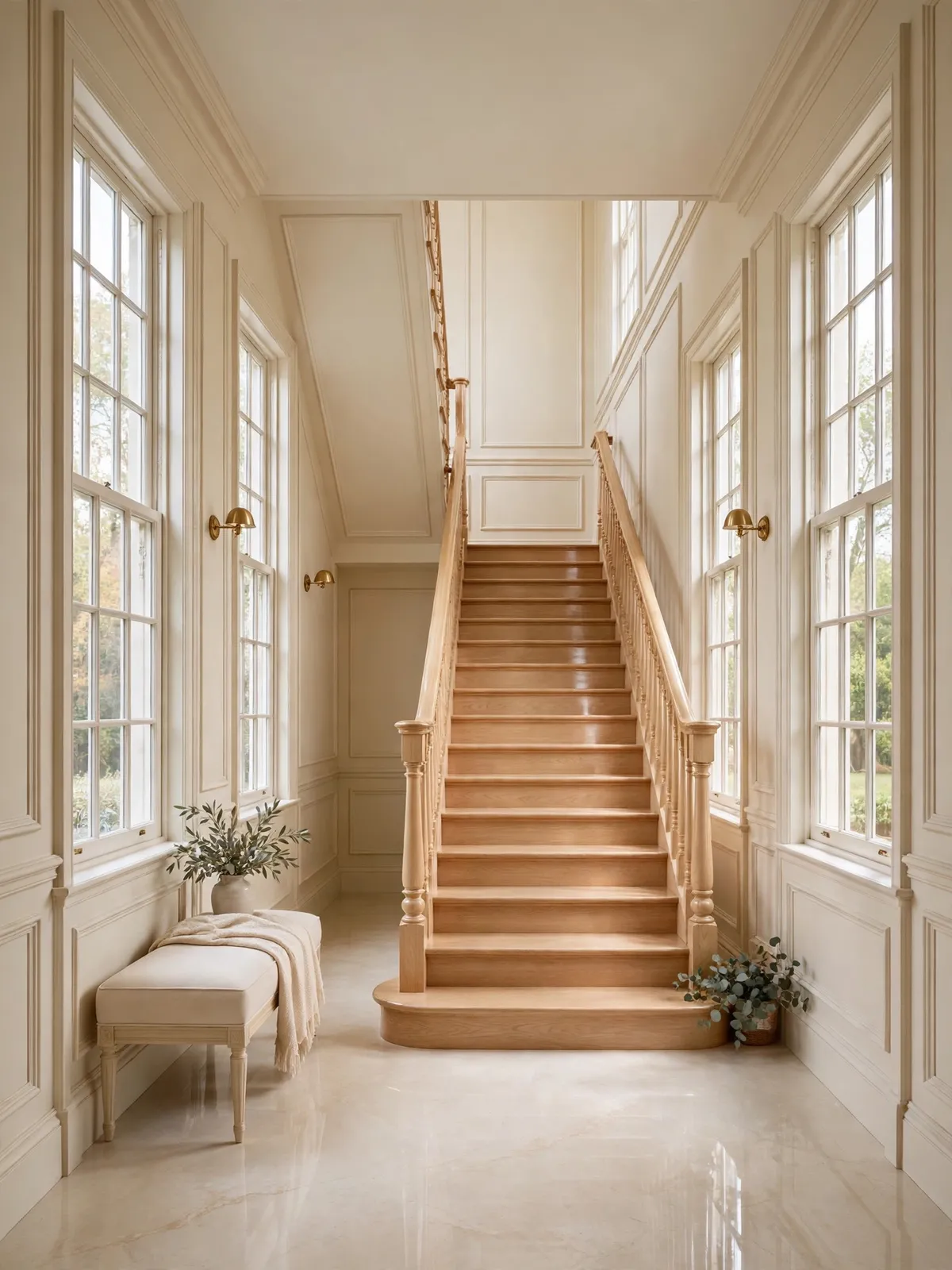
Symmetrical twin windows bring balance and calm to a staircase, because identical windows on either side of the stair create order. Here, two tall windows with matching cream trim sit symmetrically beside pale oak treads, each 950 mm wide, with a cream bench at the base and small brass sconces between them. The symmetry soothes the eye, the paired windows double the light, and the stair gains a formal, classic quality that suits traditional homes beautifully.
Quick tips:
- Keep both windows the same height and trim.
- Use consistent frame finishes on both windows.
- Place sconces symmetrically between the windows.
- Avoid offsetting the windows awkwardly.
A Statement Chandelier Hung in Front of the Window
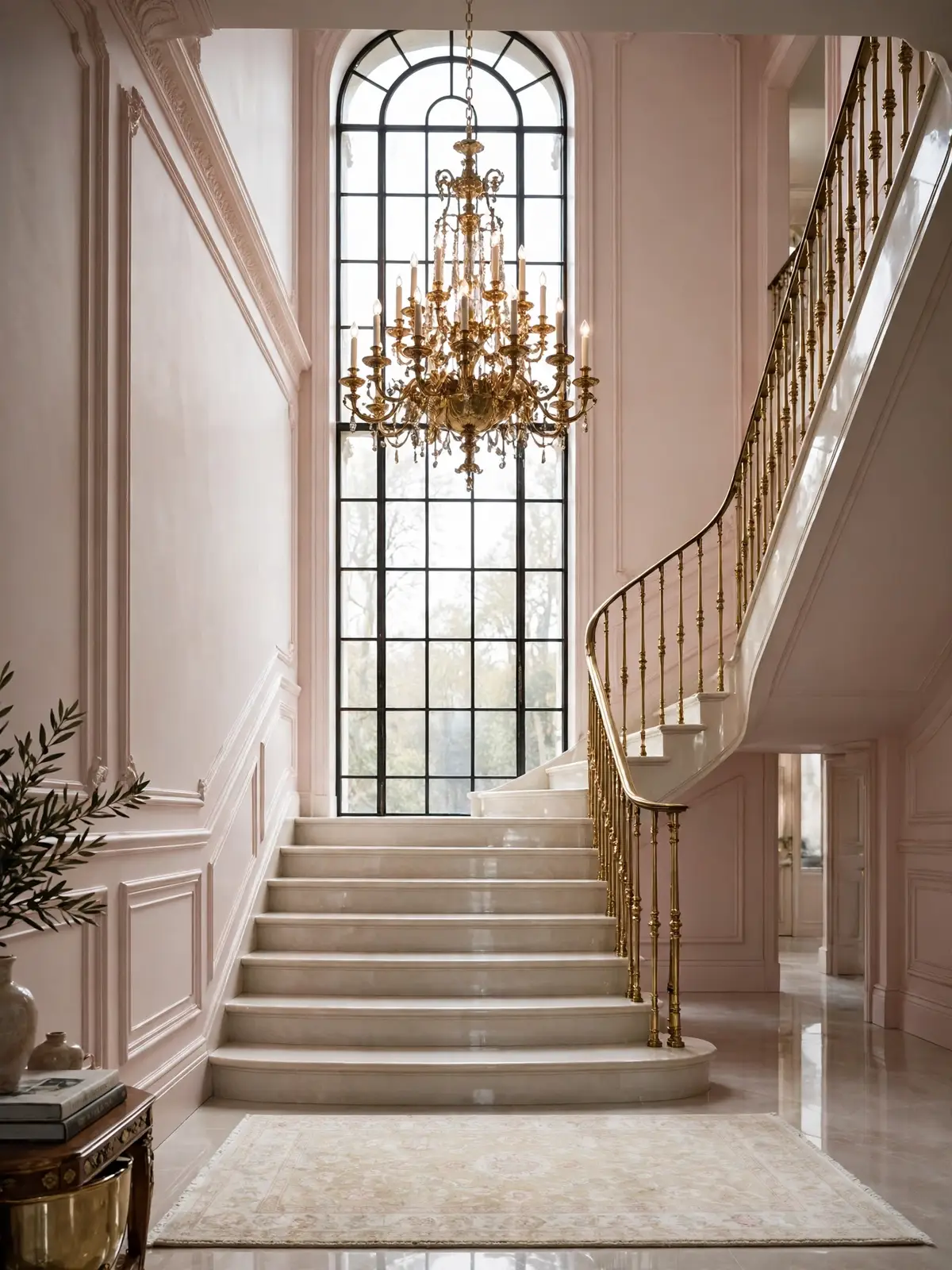
A statement chandelier hung in front of a staircase window creates a vertical showpiece, because the natural light by day and the sparkle by night layer together beautifully. Here, a large brass chandelier hangs in front of a tall window beside pale stone treads, each 1 metre wide, on soft blush-pink walls, with a cream rug below. The combination draws the eye upward, guests always look up, and the stair becomes the most dramatic space in the house.
Quick tips:
- Size the chandelier to the window — not too small, not too large.
- Hang it so it does not block the view from the landing.
- Choose warm bulbs for a soft evening glow.
- Have a professional fit the chandelier securely.
Built-In Planters Below the Window
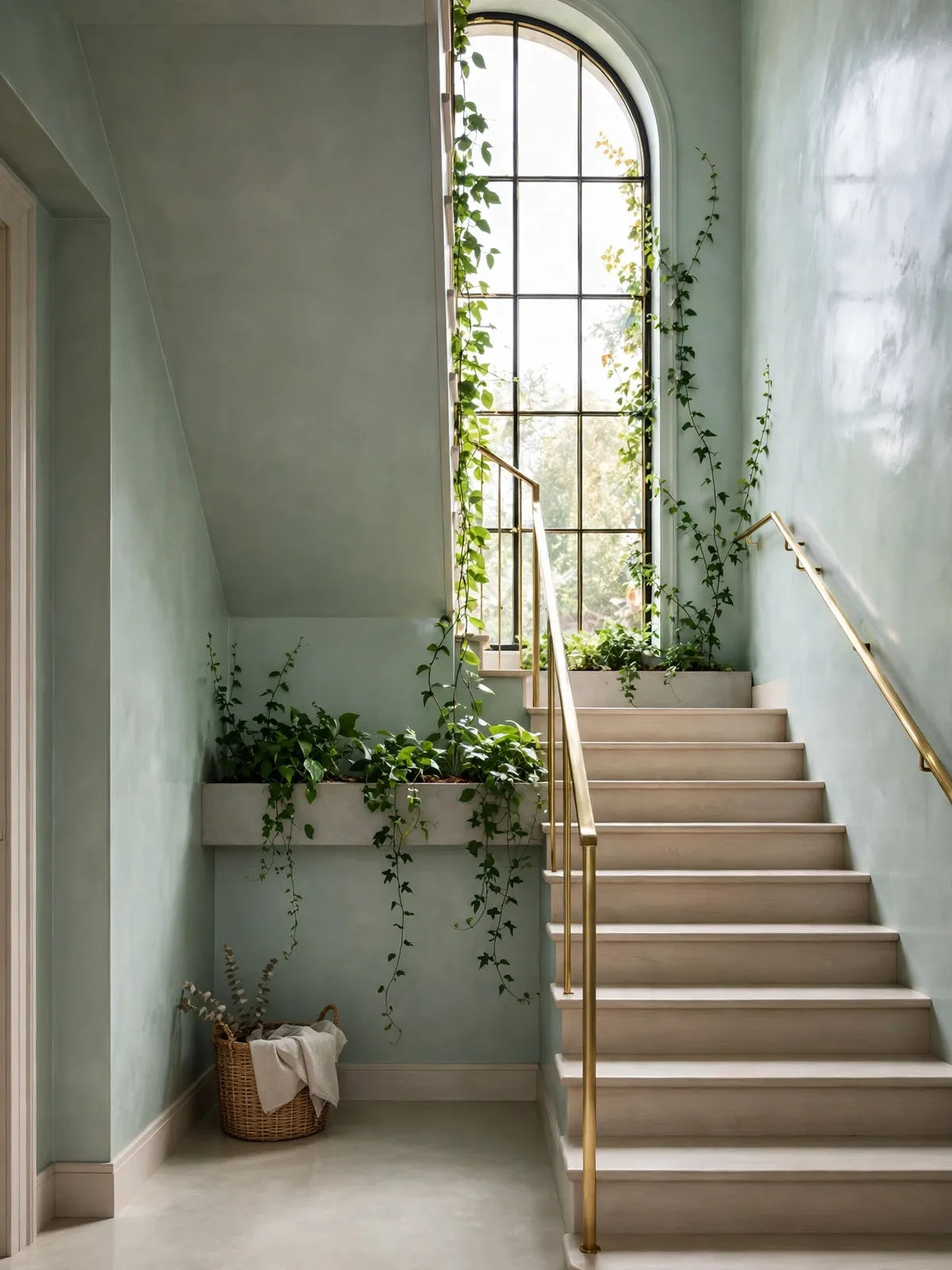
Built-in planters below a staircase window let greenery climb toward the light, because plants and windows are natural partners. Here, a built-in planter runs beneath a tall vertical window beside pale driftwood treads, each 850 mm wide, with climbing plants reaching up the soft seafoam wall and a woven basket at the base. The plants soften the hard architectural lines, the stair feels alive, and the window becomes the centre of a small indoor garden.
Quick tips:
- Choose low-maintenance plants that love bright light.
- Use freestanding tall planters if built-ins are not possible.
- Water carefully — drips stain stair walls quickly.
- Keep the planter slim so the stair stays clear.
A Floor-to-Ceiling Glass Wall Beside the Stair
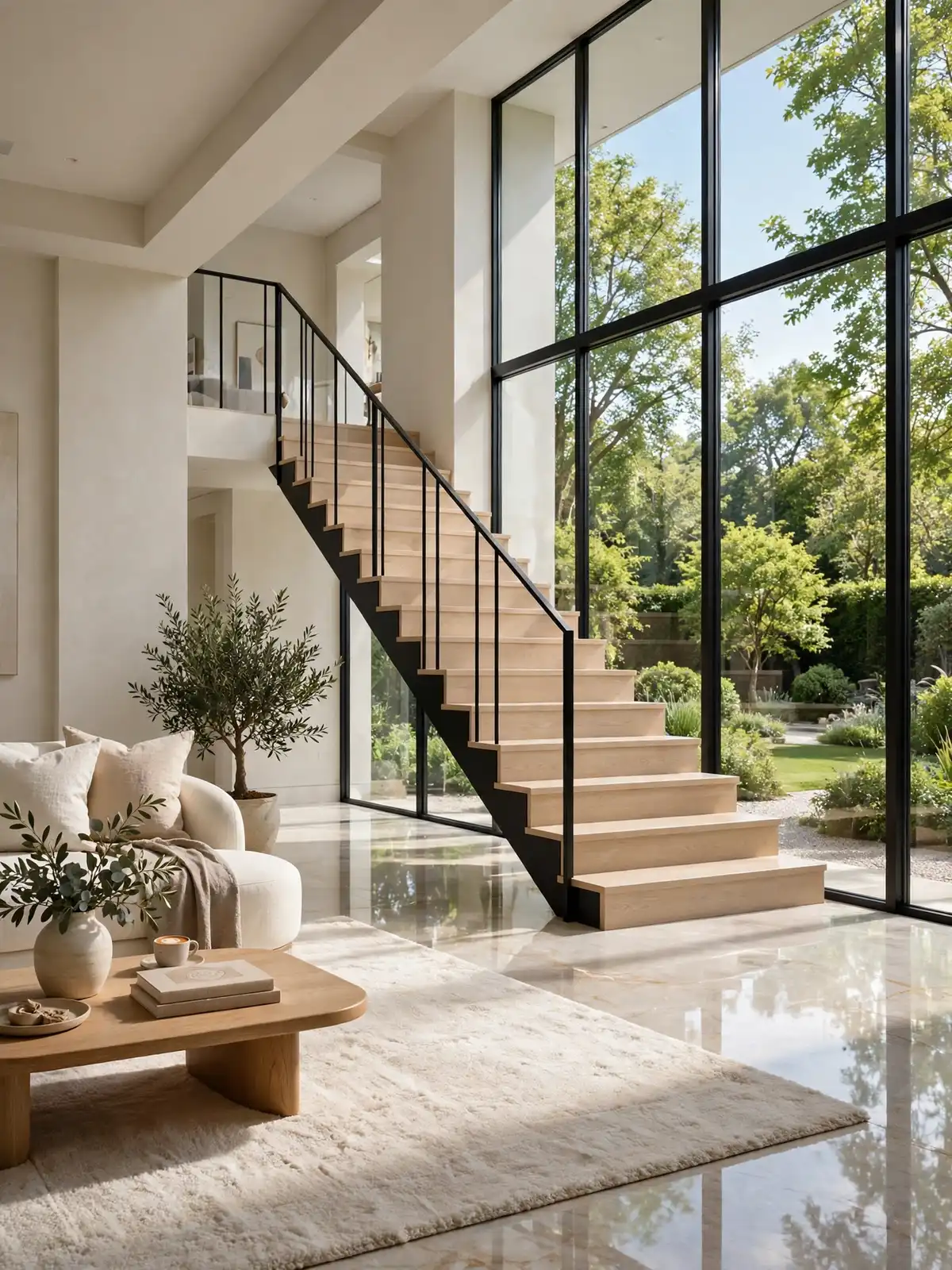
A floor-to-ceiling glass wall beside the stair is the most dramatic staircase window design, because the whole stair becomes a glass pavilion with the garden as its backdrop. Here, a full-height glass wall runs beside pale oak treads, each 1 metre wide, with a slim black metal handrail and a cream rug below. The stair feels weightless, daylight floods the whole flight, and the boundary between inside and outside disappears completely.
Quick tips:
- Use toughened safety glass for a full-height wall.
- Keep the handrail slim so the glass stays the feature.
- Add a light-filtering blind for sunny afternoons.
- Clean the glass weekly for a clear view.
A Small Round Window on the Stair Wall
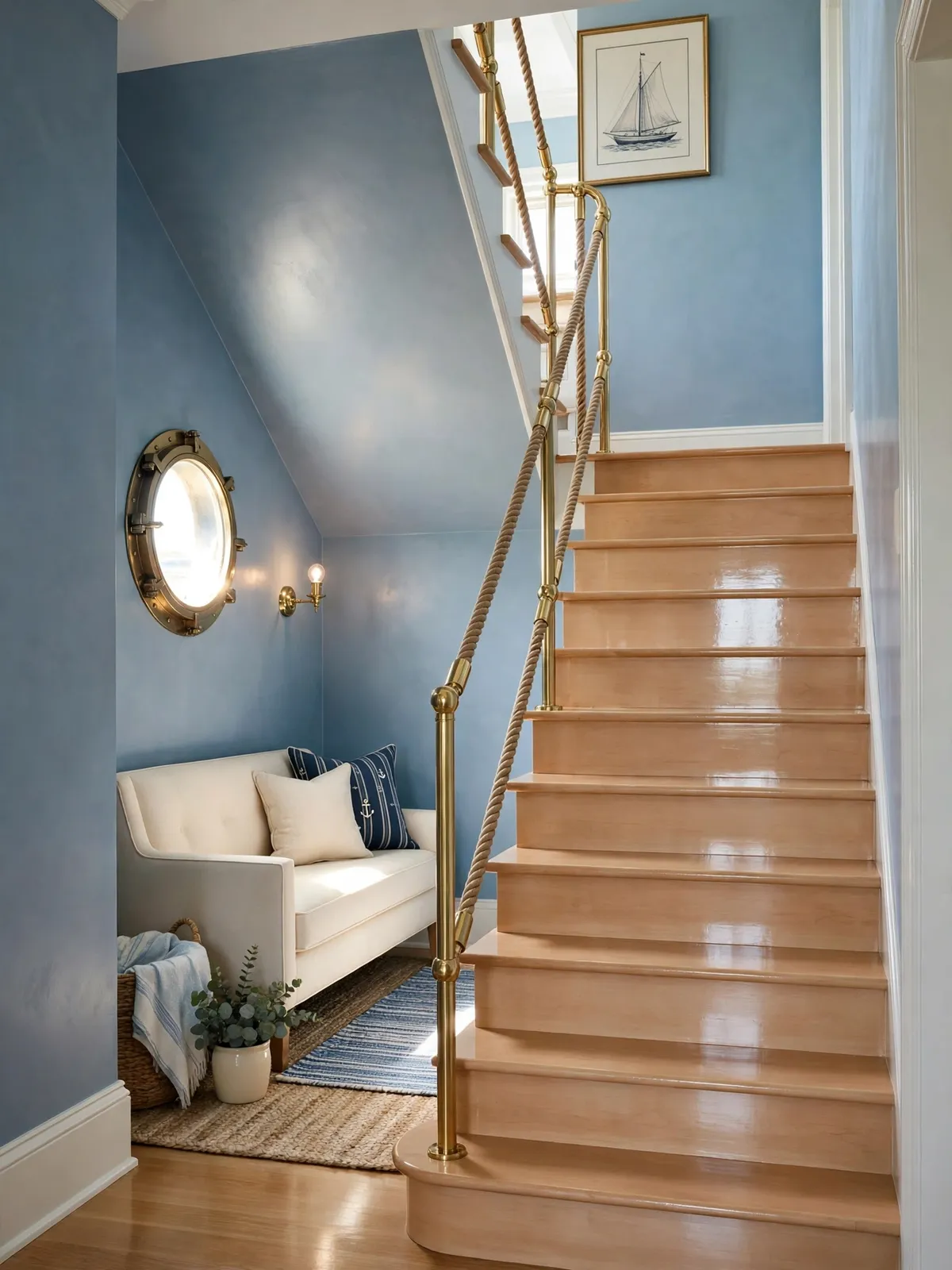
A small round window adds charm to a staircase wall, because the circular shape contrasts beautifully with the stair’s straight lines. Here, a round window with a slim brass frame sits on a soft dusty-blue wall beside pale maple treads, each 900 mm wide, with a cream bench at the base and a small brass sconce. The porthole shape feels nautical and playful, it brings a focused pool of light to the stair, and the wall gains a feature that guests always notice.
Quick tips:
- Choose a round window at least 600 mm wide for impact.
- Match the frame to a sconce or handrail nearby.
- Keep the surrounding wall plain so the circle shines.
- Use clear glass so the round shape reads cleanly.
A Skylight Above the Stairwell
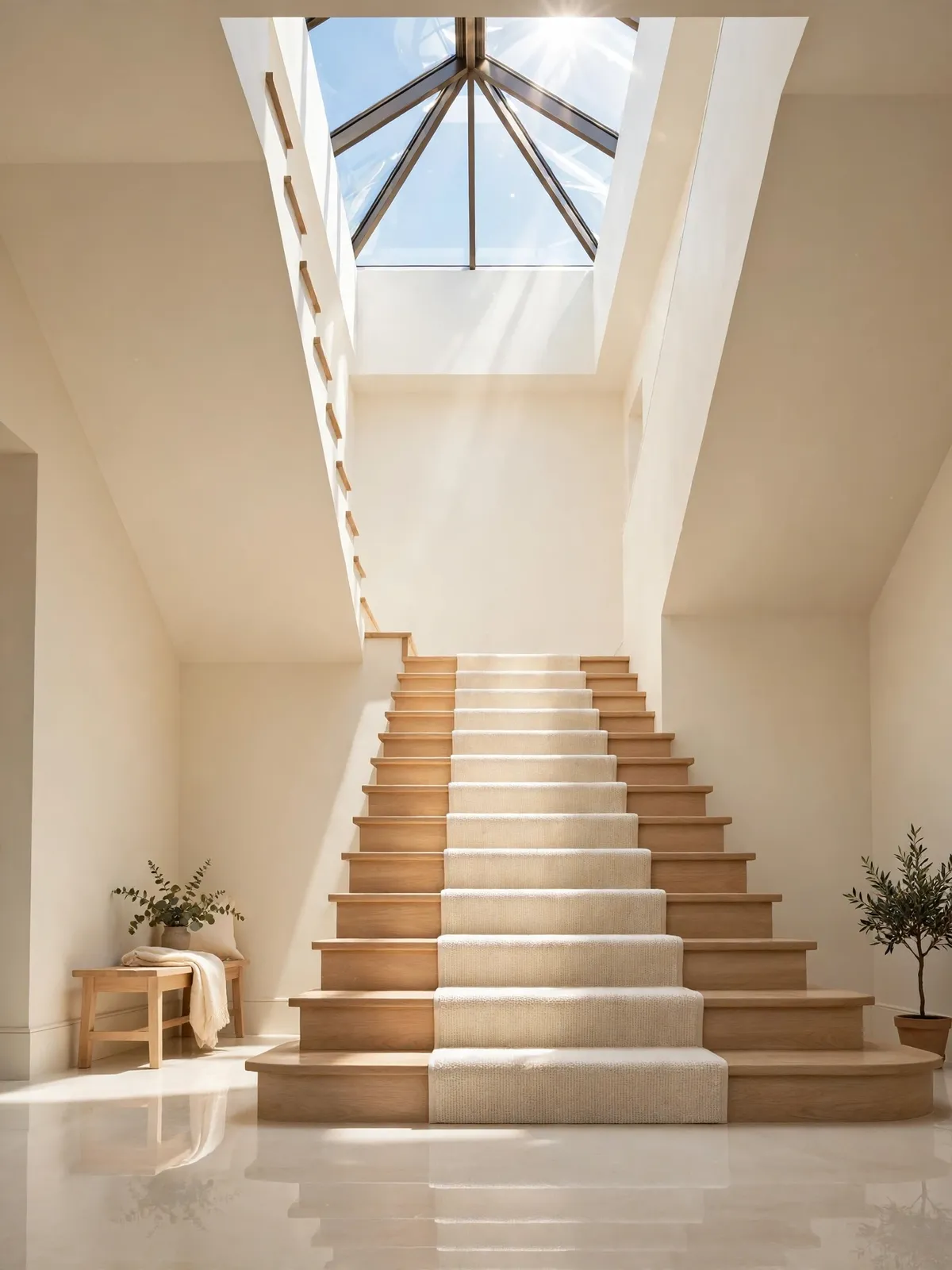
A skylight above the stairwell floods the stair with light from above, because the opening sits directly over the flight where a wall window cannot reach. Here, a large skylight pours daylight down onto pale oak treads, each 950 mm wide, with soft cream walls and a cream runner softening the steps. The light changes throughout the day, the stair feels taller and brighter, and a dark interior stair becomes one of the lightest spaces in the house.
Quick tips:
- Choose a skylight with a blind for hot summer days.
- Have it fitted by a roofing specialist.
- Keep the stair walls pale so the light bounces.
- Add a small pendant below for evening light.
A Window Seat With Storage Underneath
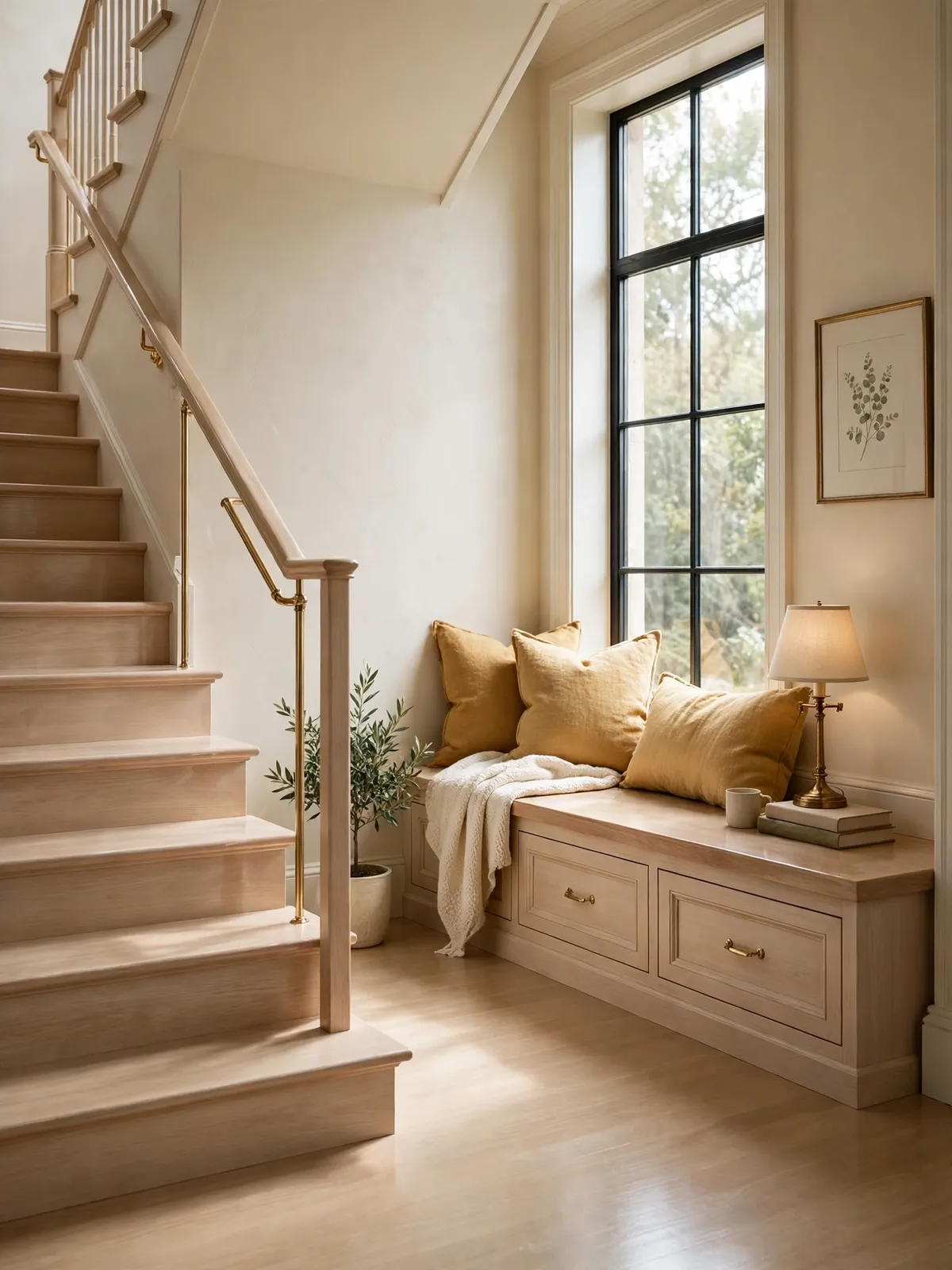
A window seat with storage underneath makes a staircase landing work twice as hard, because the bench is both a place to sit and a place to hide shoes, books and seasonal clutter. Here, a cushioned window seat in soft mustard sits on the landing beside pale oak treads, each 950 mm wide, with slim drawers below and a small brass lamp on the sill. The landing becomes useful as well as beautiful, and the stair gains a practical feature that the whole family uses daily.
Quick tips:
- Build drawers under the seat for shoes and books.
- Choose a cushion at least 100 mm thick for comfort.
- Keep the seat depth around 450 mm for sitting.
- Add a small lamp for evening reading.
A Grid Window That Echoes the Stair Rhythm
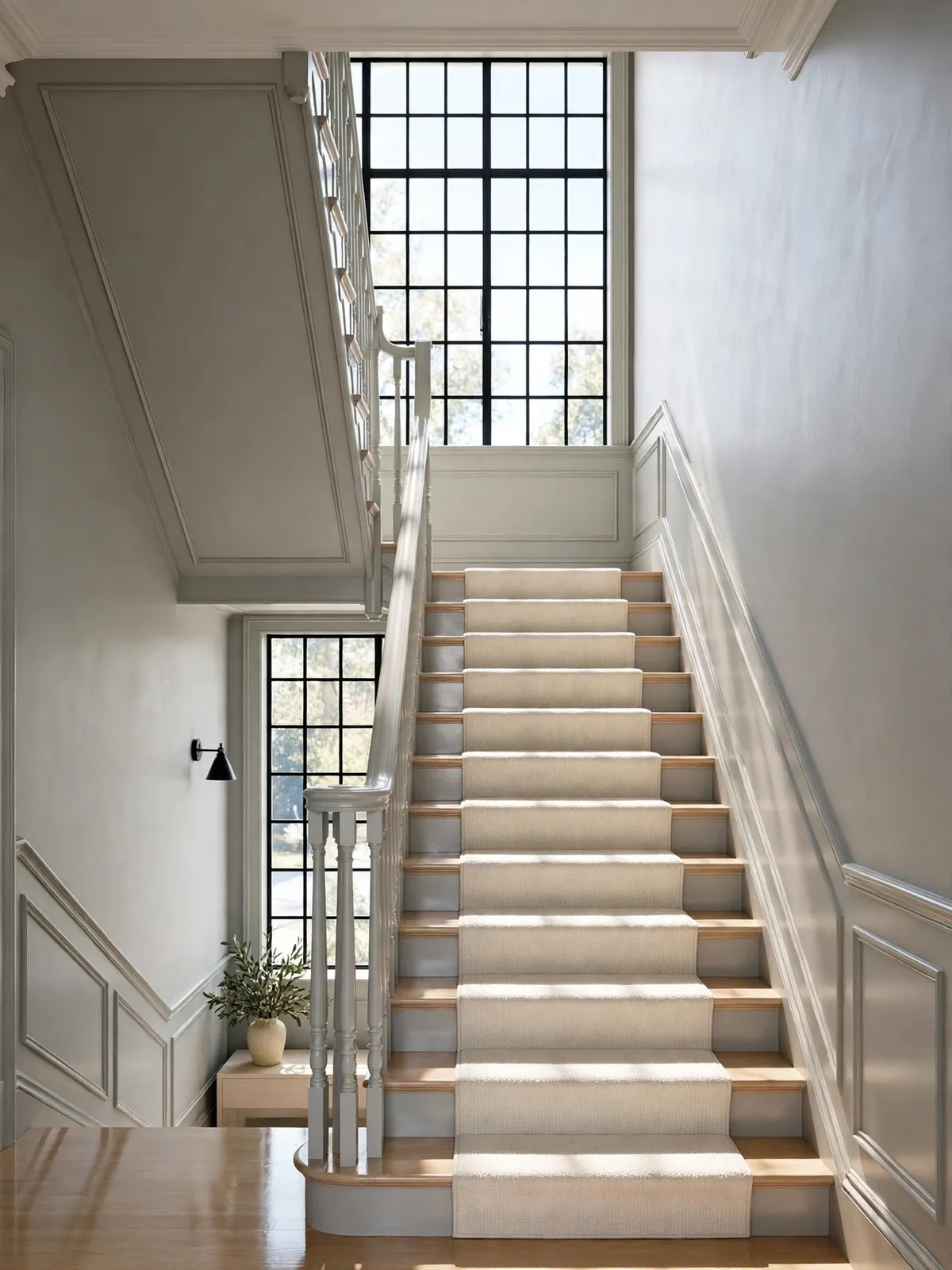
A grid window echoes the rhythm of a staircase, because the repeated small panes mirror the repeated treads. Here, a tall grid window with slim black muntins sits beside pale ash treads, each 900 mm wide, on soft grey walls, with a cream rug at the base and a small black sconce. The grid adds structure and character, the small panes break the view into framed pictures, and the stair gains a classic, tailored quality that suits both traditional and modern homes.
Quick tips:
- Keep the grid panes evenly sized for a tidy look.
- Match the muntin colour to the handrail for cohesion.
- Choose clear glass so the grid does not block light.
- Use a grid window where the view is worth framing in pieces.
A Corner Window That Wraps the Stair
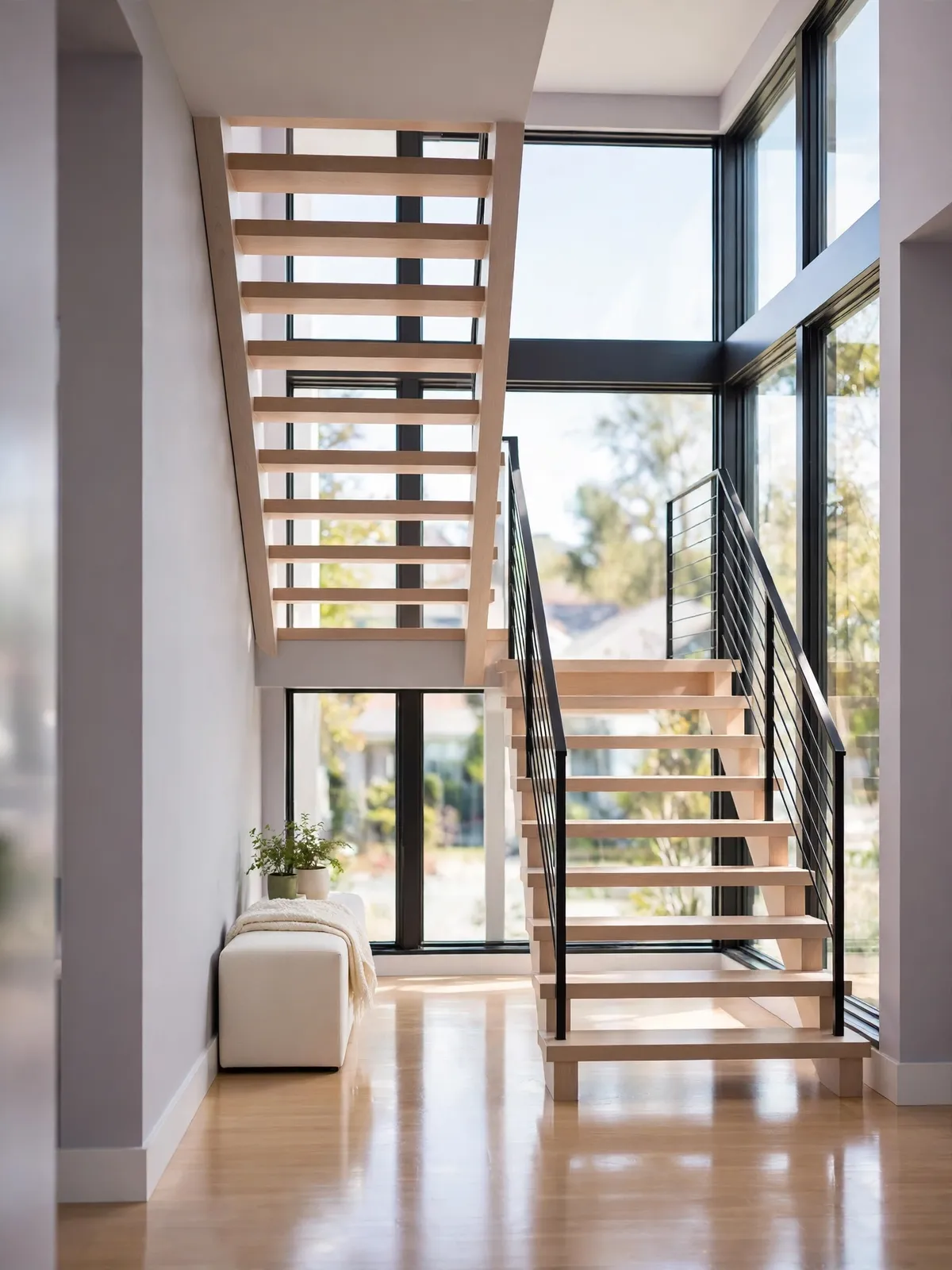
A corner window that wraps the stair brings panoramic light to the flight, because glass on two walls catches the sun from two directions. Here, a corner window with slim frames wraps the landing beside pale oak treads, each 950 mm wide, on soft lilac-grey walls, with a cream bench and a small green plant below. The stair feels open and panoramic, the light changes throughout the day, and the corner becomes the brightest, most loved spot on the stair.
Quick tips:
- Use slim frames so the corner stays light.
- Keep the surrounding walls pale to bounce the light.
- Add a sheer blind for privacy and glare control.
- Have a corner window fitted by a glazing specialist.
A Transom Window Above the Stair Door
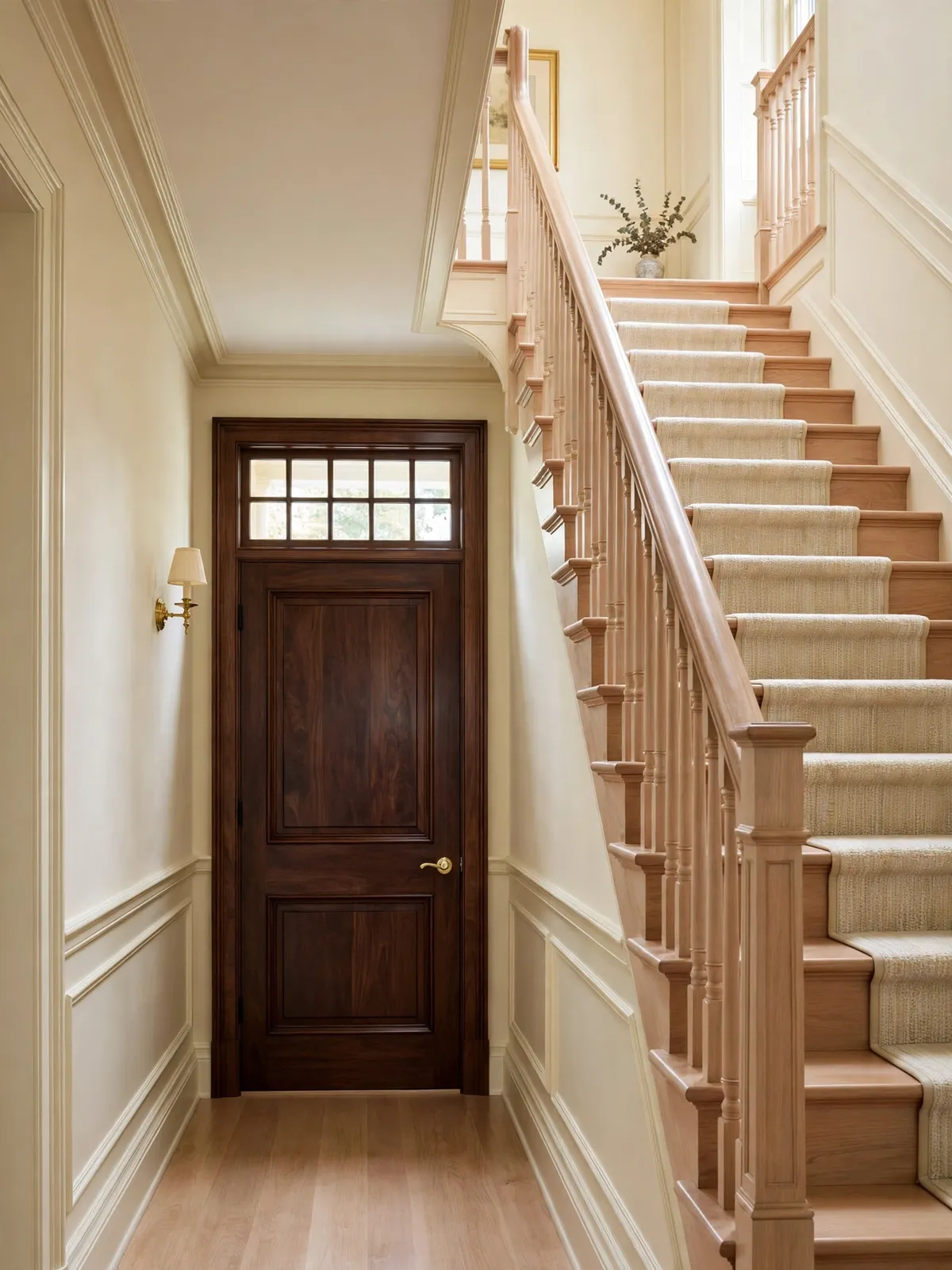
A transom window above the stair door borrows light from the next room, because the small window over the door lets daylight flow into a stair that has no outside wall. Here, a transom window with a slim brass frame sits above a dark walnut door beside pale oak treads, each 950 mm wide, on soft cream walls. The borrowed light makes the stair feel brighter, the door gains an elegant detail, and an interior stair that would otherwise be dark gains a soft, natural glow.
Quick tips:
- Choose clear or lightly frosted glass for the transom.
- Match the transom frame to the door handle.
- Keep the door colour dark for contrast.
- Use a transom where a wall window is not possible.
Sheer Linen Panels That Soften the Light
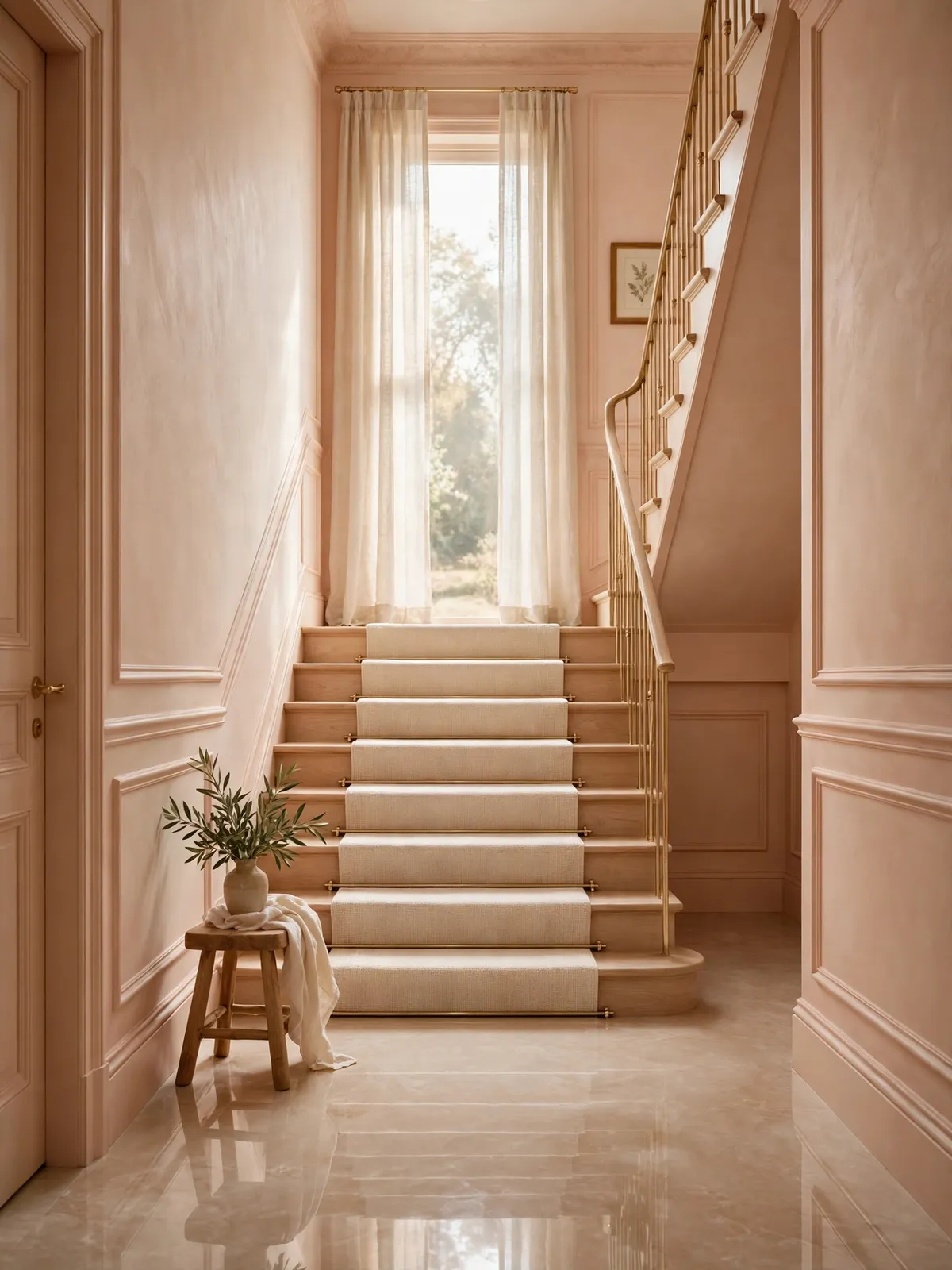
Sheer linen panels soften the light from a staircase window, because the fabric filters harsh sun into a gentle glow without blocking the view. Here, sheer linen panels in soft cream hang beside a tall window on a soft peach wall, filtering daylight onto pale oak treads, each 950 mm wide, with a cream runner and a small wooden stool below. The stair feels softer and more romantic, the glare on the steps disappears, and the window gains a tailored, finished look.
Quick tips:
- Choose sheer linen in cream or soft white.
- Hang panels from a slim rod for a clean finish.
- Keep the panels long, pooling slightly at the sill.
- Wash linen panels regularly — stair dust settles fast.
A Dormer Window Over a Half-Landing
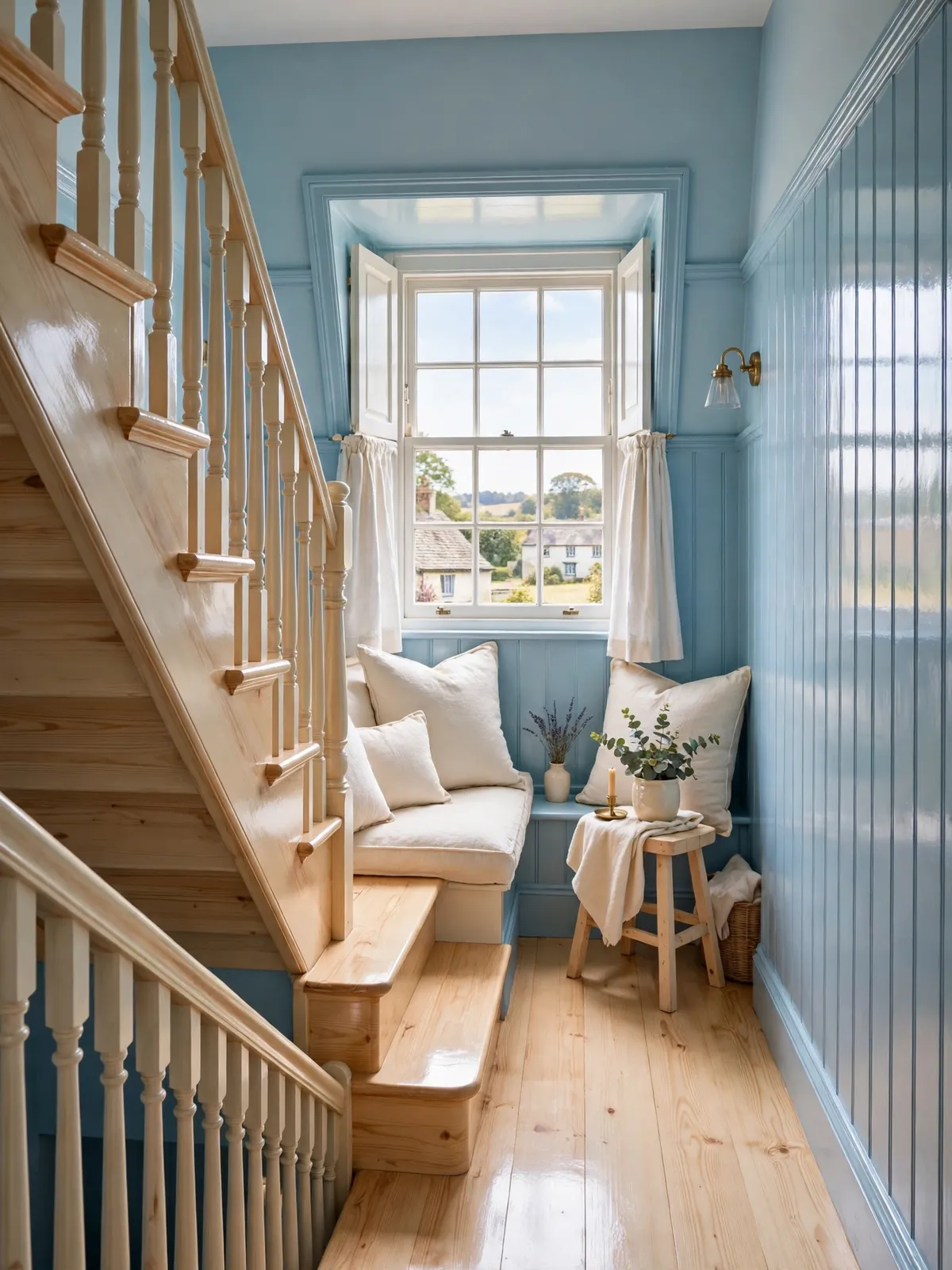
A dormer window over a half-landing brings light and headroom to a stair tucked under a roof, because the dormer pushes the window out and up. Here, a small dormer window with a cream frame sits over the half-landing beside pale pine treads, each 950 mm wide, on soft sky-blue walls, with cream cushions on a small bench below. The dormer makes the landing feel like a room rather than a cupboard, it adds a view where there was none, and the stair gains a charming cottage character.
Quick tips:
- Size the dormer to the landing, not the whole roof.
- Keep the frame cream for a fresh cottage look.
- Add a small bench below for a pause point.
- Have a dormer fitted by a roofing specialist.
A Slim Vertical Slot Window Beside the Stair
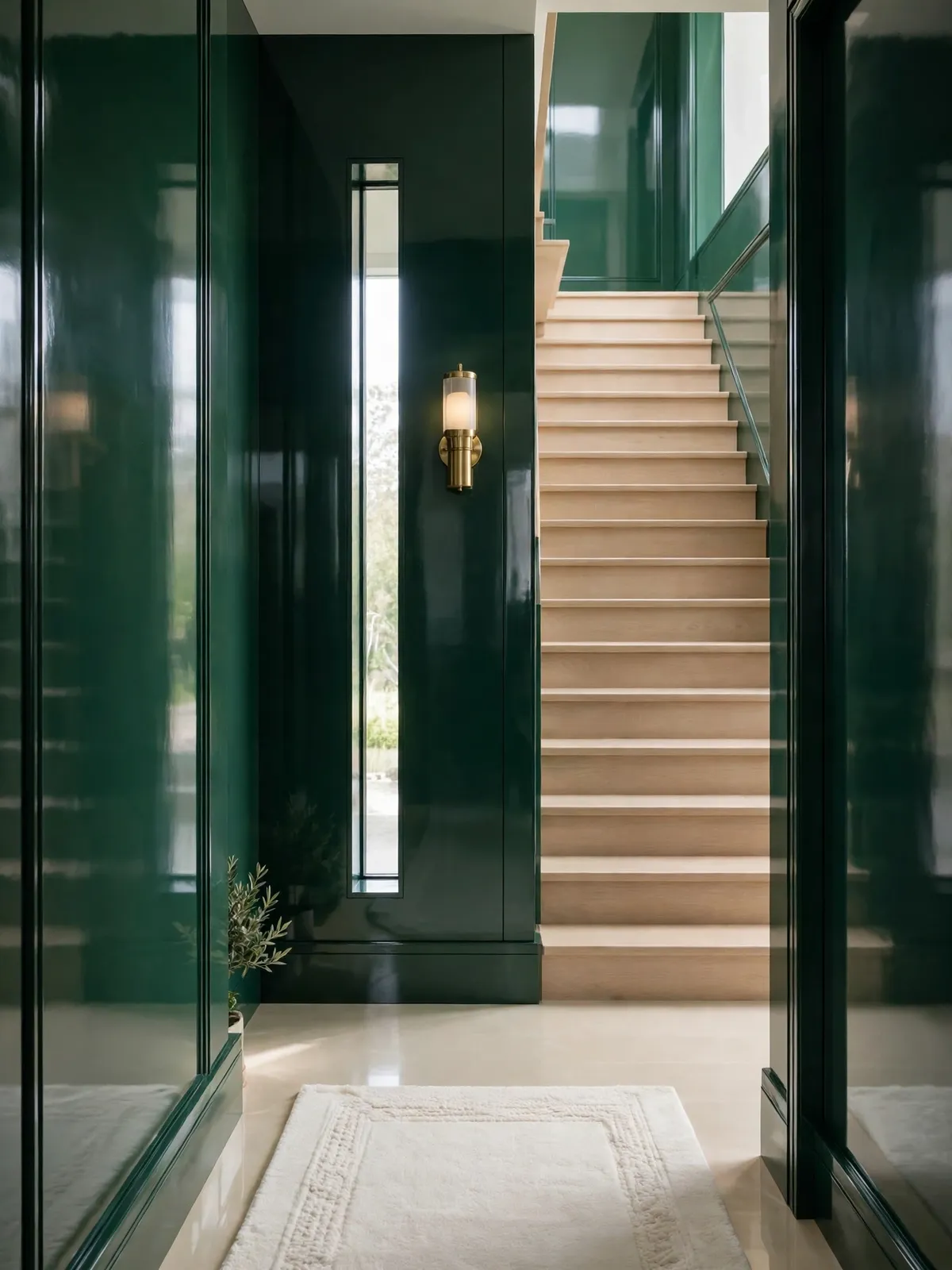
A slim vertical slot window is the sleekest staircase window design, because the narrow slit of glass follows the stair’s upward line like a line of light. Here, a tall slot window, 300 mm wide, runs up a deep emerald wall beside pale oak treads, each 950 mm wide, with a brass sconce warming the wall and a cream rug below. The slot brings a surprising amount of light for its size, it suits modern homes beautifully, and the stair gains a graphic, architectural detail.
Quick tips:
- Make the slot at least 2 metres tall for real light.
- Keep the frame slim and the glass clear.
- Pair a slot window with a deep wall colour for contrast.
- Add a sconce nearby for evening warmth.
Staircase Window Designs Ideas That Frame the View Like Art
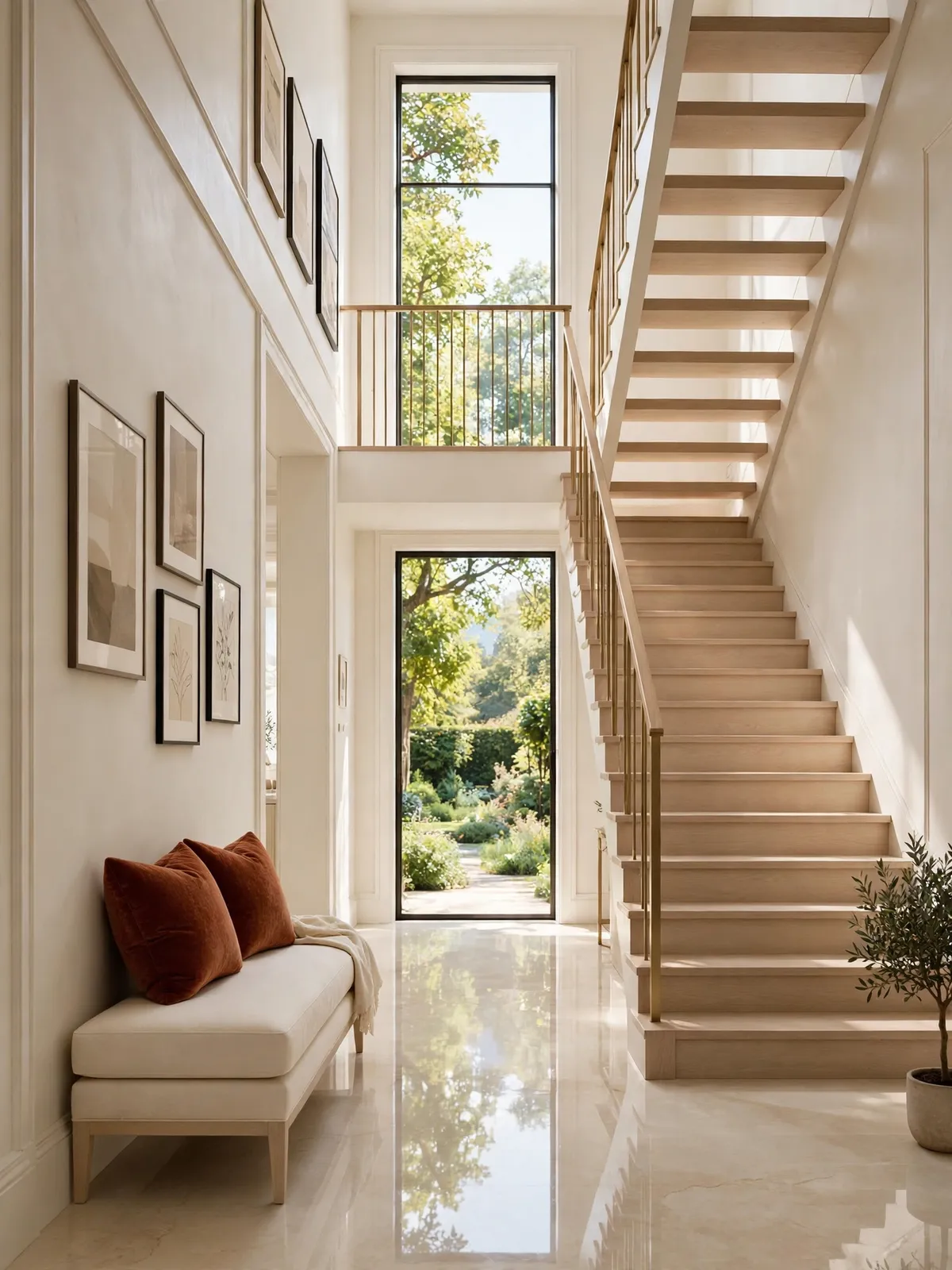
The last of these staircase window designs ideas is the simplest principle behind them all: frame the view like art, because a staircase window is a picture that changes with the seasons. Here, a tall window with a slim dark frame holds a garden view like a canvas on a soft warm white wall beside pale oak treads, each 950 mm wide, with deep rust cushions on a bench at the base. The window needs no curtains, no pattern, no decoration — just a clean frame, a good view, and the patience to let the light and the garden do the work.
Quick tips:
- Choose the view first, then size the window to it.
- Keep the frame slim and dark for a gallery effect.
- Leave the window uncurtained if privacy allows.
- Plant outside the window so the view improves yearly.
FAQs
How big should a staircase window be?
As big as the wall and the structure allow. A tall window at least 1.2 metres high makes a real difference to a stairwell, while a small window under 600 mm wide adds very little light. On a landing, a picture window 1.5 metres wide or more turns the landing into a feature; on a flight, a tall vertical window that follows the stair line works best.
Do staircase windows need planning permission?
It depends on where you live and what you change. A new window in an existing wall usually needs building approval but not full planning permission, while a dormer or a window on a side wall facing a neighbour may need permission. Always check local building rules and speak to your local authority before cutting an opening.
How do I stop a staircase window from overheating the stair?
Use light-filtering blinds, low-emissivity glass, or a sheer linen panel to cut glare and heat without blocking light. South-facing stair windows benefit most from a blind or a solar film. Avoid dark curtains, which absorb heat and block the daylight the window was added for.
What glass is safest for a staircase window?
Toughened or laminated safety glass is the safest choice, especially for low windows near the treads or full-height glass walls. Toughened glass breaks into small blunt pieces, while laminated glass holds together even if it cracks. Always use safety glass where a window sits within reach of the stair.
Can I add a window seat to an existing staircase window?
Yes, if the landing is deep enough. A window seat needs about 450 mm of depth and a sill height of around 450 to 500 mm to sit comfortably. Build the seat into the landing, add storage drawers underneath, and keep the seat clear of the flight itself so the stair stays safe to walk.
Conclusion
A staircase window is where the magic happens: it pulls in light, frames a view, and turns a forgotten passage into a place. Whether you choose a large picture window on the landing, a dramatic arched window, high clerestory windows, stained glass, black metal frames, a bay window seat or simply a tall window that frames the garden like art, the best staircase window design is the one that suits your stair, your view and the way your family lives. Start with the light — where it comes from, when it arrives, and what it falls on — then choose the window shape that serves it, and your stair will become the brightest, most loved space in the house.