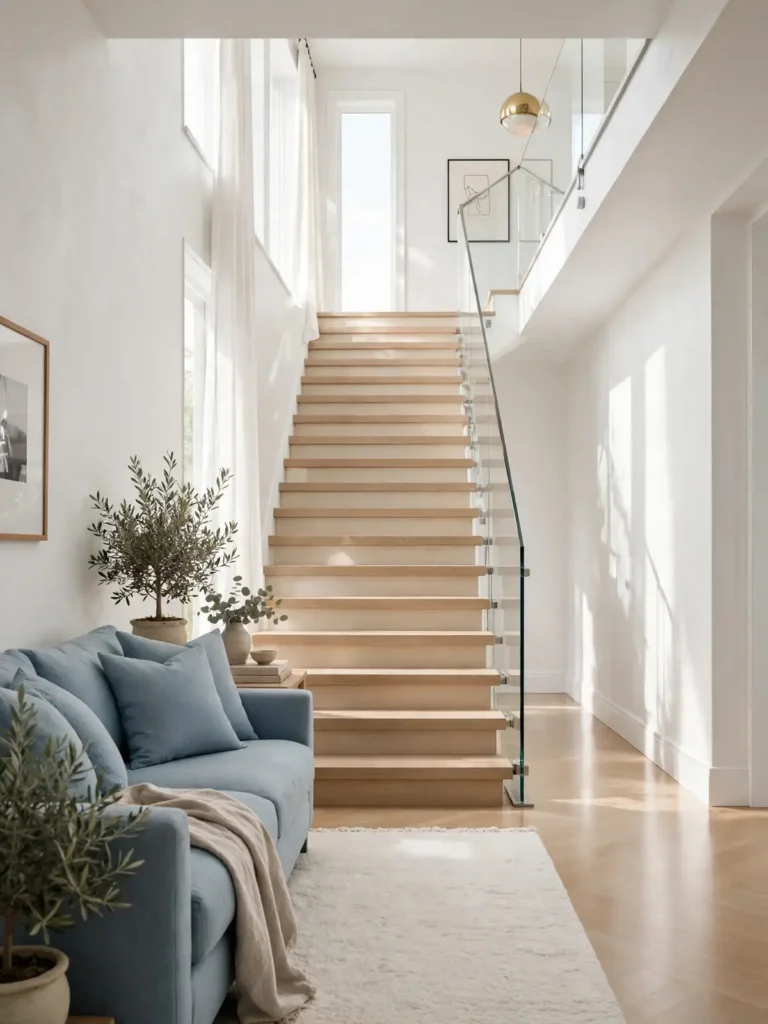
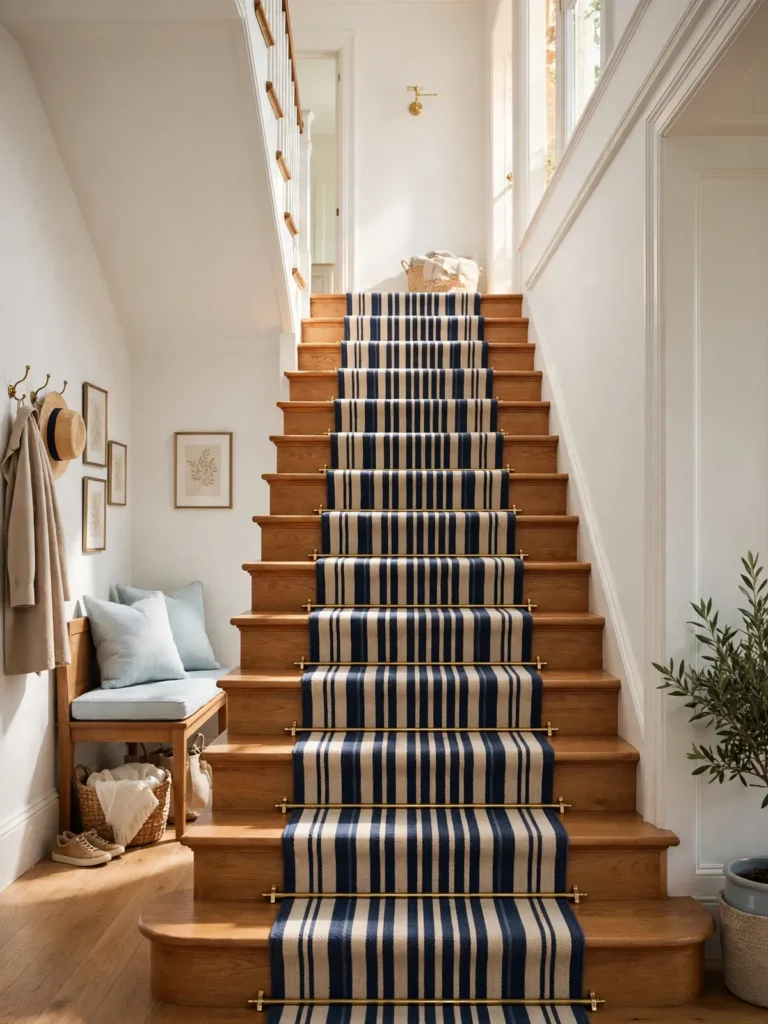
24 Stunning Wood Staircase Ideas That Let Beautiful Timber Steal the Show
A wood staircase is decided by its timber long before it is decided by its style. These 24 wood staircase ideas walk through species, grain, finishes and construction — from natural white oak and dark walnut to reclaimed barn timber and steam-bent curves — so you can choose wood that suits your home, your budget and the way your family actually uses the stairs.
Wood staircase ideas start with one decision that shapes everything else: which timber, and how it is finished. The species sets the colour and grain, the finish sets the sheen and the maintenance, and the construction — open risers, closed stringers, a steel spine or a solid timber carriage — sets how the stair feels underfoot and how it reads in the room. Get the timber right and the style almost takes care of itself, because oak, walnut, ash and cherry each carry their own character.
If you are choosing the stair itself — its shape, layout and railing — alongside the timber, these staircase design ideas show how structure and material work together. The 24 ideas below are organised by species, finish and build, so you can compare timbers side by side and pick the one that fits your floors, your light and your budget.
Key Takeaways
What is the best wood for a staircase?
White oak is the best all-round choice for most homes because it is hard, stable, pale enough to stain in any direction, and its grain stays calm under a clear finish. Walnut suits dark, dramatic stairs; ash suits pale Scandinavian stairs; hickory suits busy family homes because it is one of the hardest domestic timbers. The best wood is the one that matches your floor tone, your household traffic and the finish you are willing to maintain.
What is the difference between solid wood and engineered wood stair treads?
Solid wood treads are cut from a single piece of timber, so they can be sanded and refinished many times over decades. Engineered treads have a real hardwood veneer over a stable plywood or MDF core, so they resist cupping and movement in homes with underfloor heating or changing humidity, but they can only be refinished once or twice. For a forever stair, solid wood wins; for a heated or humid home, engineered is the safer build.
Should stair treads match the floor?
Stair treads do not have to match the floor exactly, but they should sit in the same colour family or deliberately contrast with it. Matching the species and stain makes the stair read as a continuation of the floor and the home feel larger. A deliberate contrast — dark walnut treads over pale oak floors, for example — makes the stair a feature. The mistake is a near-match: two woods that are almost the same tone but not quite, which reads as an accident.
What finish is best for wood stairs?
A hardwearing matte or satin polyurethane is the most practical finish for a busy staircase because it resists scuffs and can be spot-repaired. Hardwax oil gives a softer, more natural feel and is easy to patch, but it needs re-oiling every year or two. Lacquer looks immaculate on show stairs with light traffic but shows wear fastest on the tread edges. Choose the finish for the traffic the stair actually gets, not the look you want on day one.
How thick should wood stair treads be?
Wood stair treads are usually 40 mm (about 1.5 inches) thick for a solid, premium feel, and they should never be thinner than 25 mm on a standard closed-stringer stair. Thicker treads — 50 to 60 mm — suit open-riser and cantilevered designs, where the tread edge is fully visible and the timber itself is the design. Thin treads flex, creak and look cheap; thick treads feel solid underfoot and age far better.
Natural White Oak Treads With a Clear Matte Finish
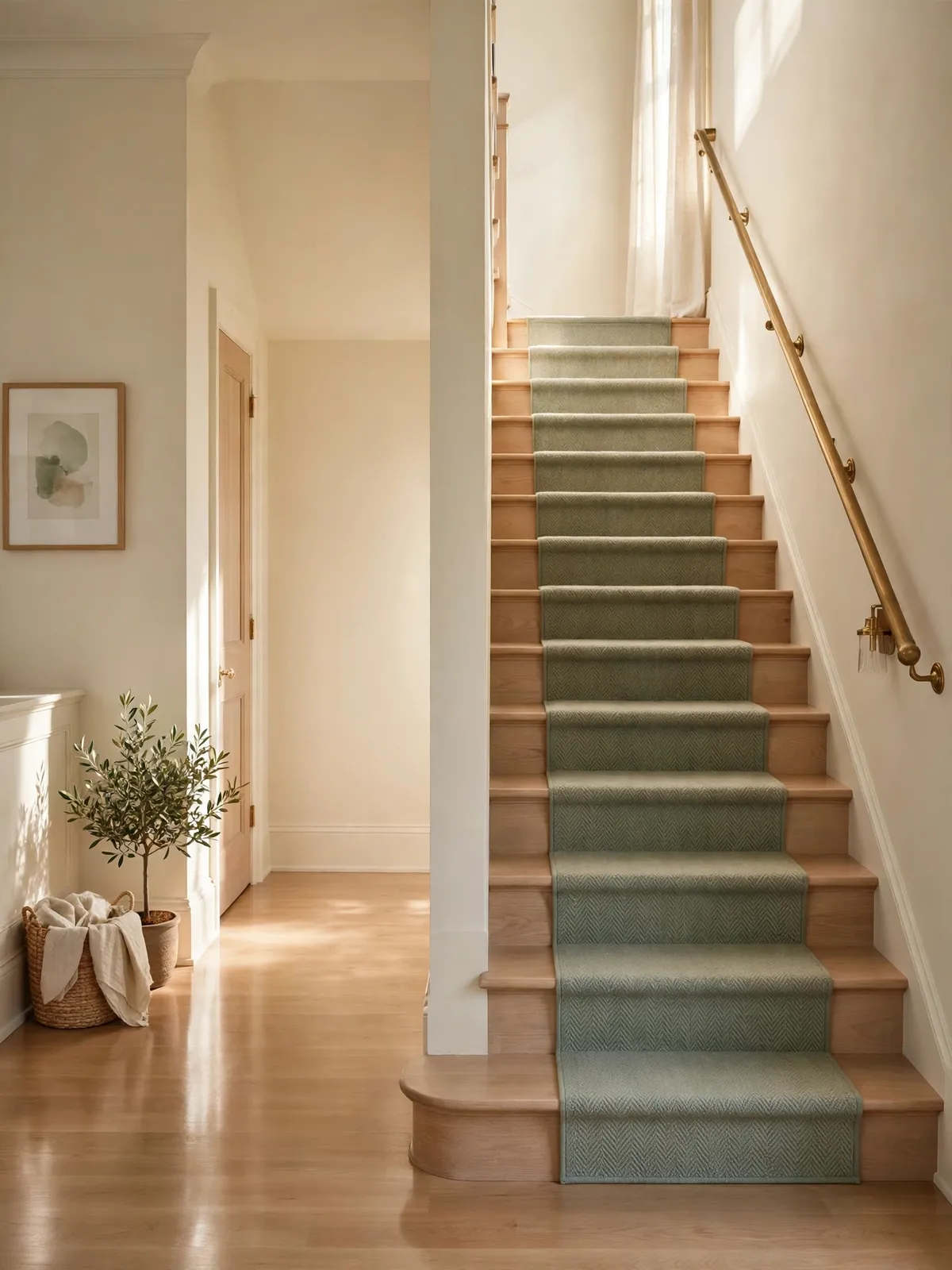
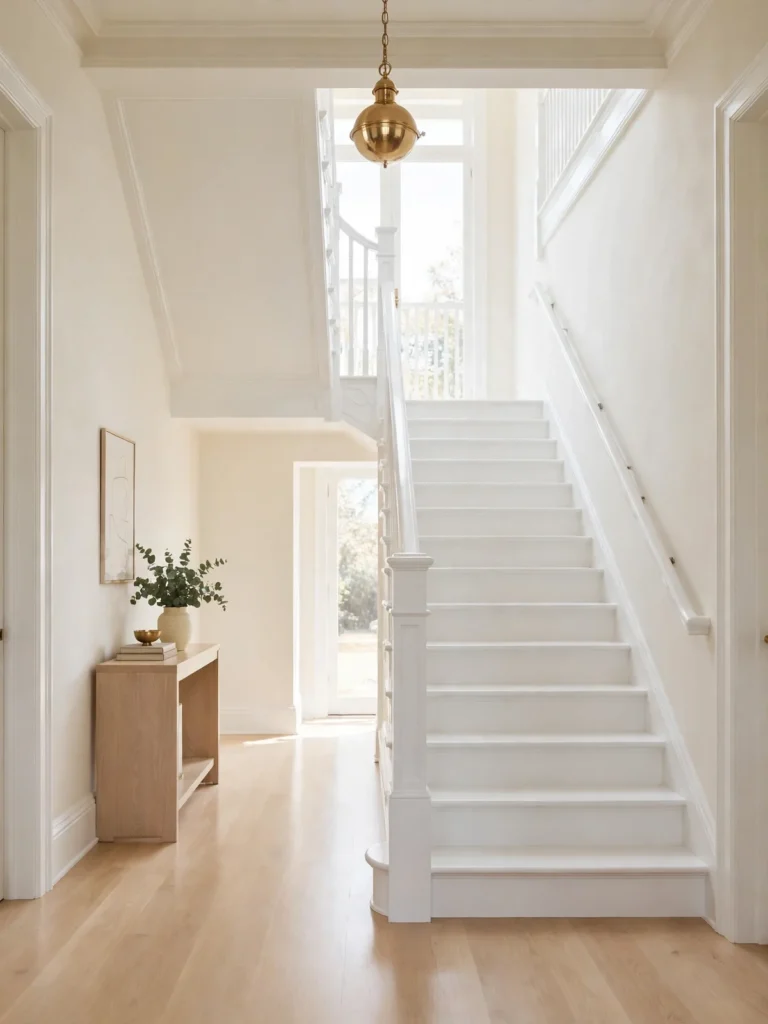
Natural white oak with a clear matte finish is the starting point for most wood staircase ideas, because it shows the timber honestly — no stain hiding the grain, no gloss fighting the light. White oak is hard, stable and pale enough to sit happily beside almost any floor, and a matte finish keeps it looking like wood rather than plastic. The grain is straight and calm, the colour is warm without turning yellow, and the stair ages gracefully because scuffs blend into the matte surface instead of flashing against a shine. The weakness is that pale oak shows dark marks from shoes and pets, so a good topcoat matters, and it costs more than red oak or pine — but for a stair you walk every day, the upgrade pays for itself in how long the finish lasts.
Quick tips:
- Choose a matte or satin topcoat — gloss shows every scuff.
- Ask for rift-sawn boards if you want the calmest grain.
- Seal the end grain well — it drinks finish and darkens.
- Keep a small pot of the same finish for edge touch-ups.
Dark Walnut Staircase With Light Walls
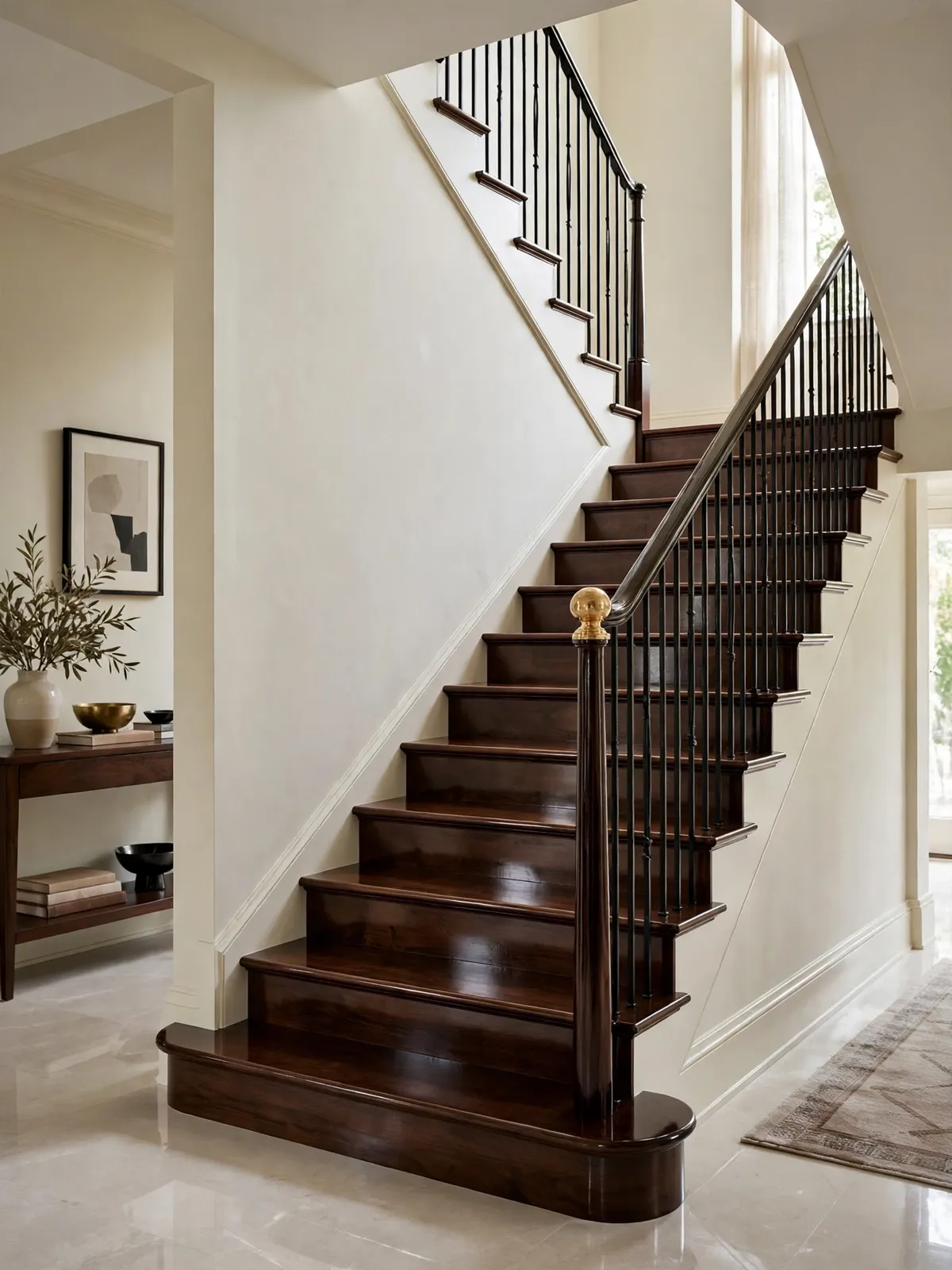
A dark walnut staircase against light walls is the most dramatic species-led choice, because walnut’s deep chocolate tone and flowing grain need no decoration at all — the wood is the feature. Walnut is a premium hardwood, moderately hard and beautifully figured, and it looks extraordinary against crisp white or pale ivory plaster, where the contrast does all the work. This is the stair for homes that want a focal point at the entry, and it pairs naturally with brass, black metal and pale stone. The weakness is cost and light: walnut is one of the most expensive domestic species, it darkens further with age and sunlight, and in a narrow, dark hallway it can feel heavy — so give it pale walls and generous light, and it will carry the whole room.
Quick tips:
- Pair walnut with pale walls so the timber stays the star.
- Use brass or black metal details — chrome fights walnut’s warmth.
- Expect the colour to deepen over the first year.
- Budget for walnut early — it is a premium species.
Light Ash for a Scandinavian Timber Stair
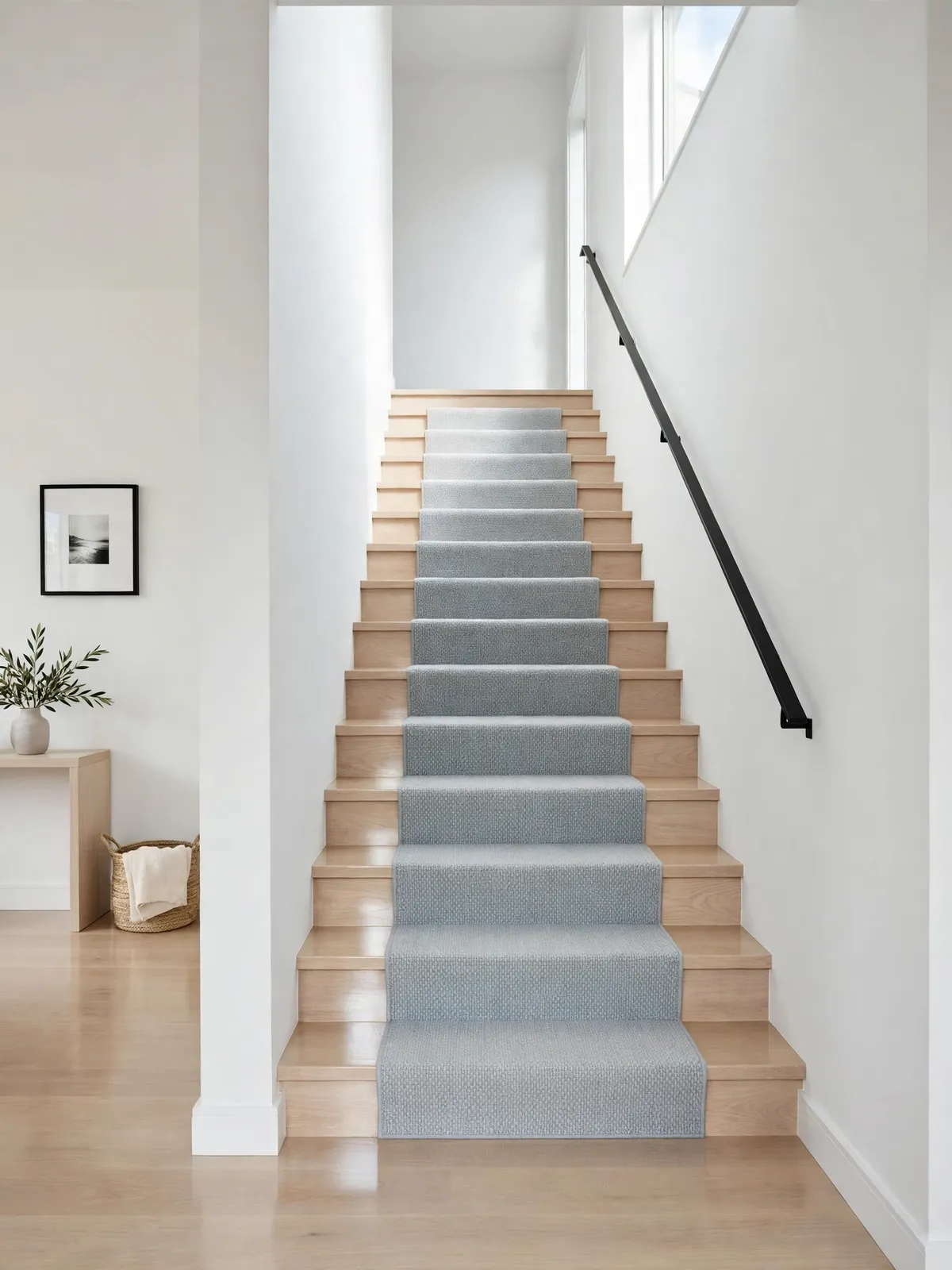
Light ash is the timber behind the Scandinavian stair look, because its pale blonde colour and bold, open grain feel fresh without feeling cold. Ash is hard and springy — it was once the wood of tool handles and sports equipment — so it takes daily traffic well, and its pale tone bounces light around small hallways. It stains evenly, which makes it a good choice if you want a pale grey or whitewashed finish later, and it pairs beautifully with white walls, black metal and soft textiles. The weakness is that ash shows dirt and dark scuffs more than a mid-tone wood, and its strong grain can look busy in a very small stair — so keep the finish pale and the surrounding palette quiet, and let the timber do the talking.
Quick tips:
- Keep the finish pale — ash is at its best unstained.
- Pair it with white walls and one black accent.
- Choose a satin oil finish for a soft, natural feel.
- Wipe the treads weekly — pale wood shows marks fast.
Rich Mahogany for a Traditional Staircase
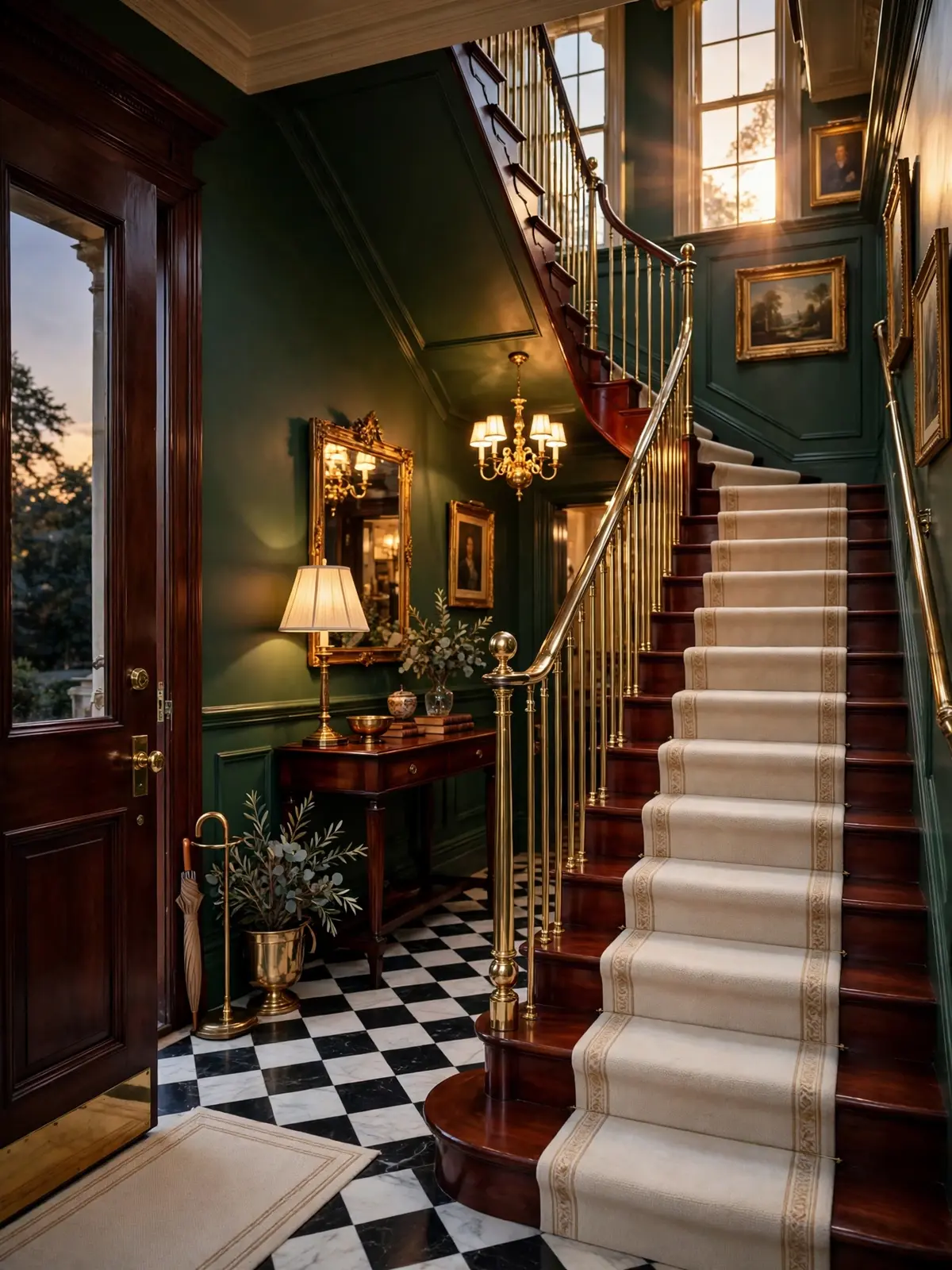
Mahogany is the traditional timber staircase species, because its deep reddish-brown colour, fine grain and natural lustre have dressed grand hallways for centuries. A mahogany stair suits period homes, panelled walls and classic furniture, and it takes a high polish that no pale wood can match — the treads glow rather than shine. It is stable, works cleanly, and holds carved detail beautifully, which is why it pairs so well with turned balusters and a sculptural newel post. The weakness is that genuine mahogany is expensive and increasingly regulated, so most modern stairs use sapele or another mahogany substitute — and its red tone can clash with orange-toned floors, so check the two woods side by side in daylight before committing.
Quick tips:
- Check the species — sapele is the common modern substitute.
- Pair mahogany with deep green or navy walls, not orange floors.
- A high polish suits mahogany; matte flattens its lustre.
- Keep the balusters classic — turned wood or brass.
Hickory With Bold Grain Variation
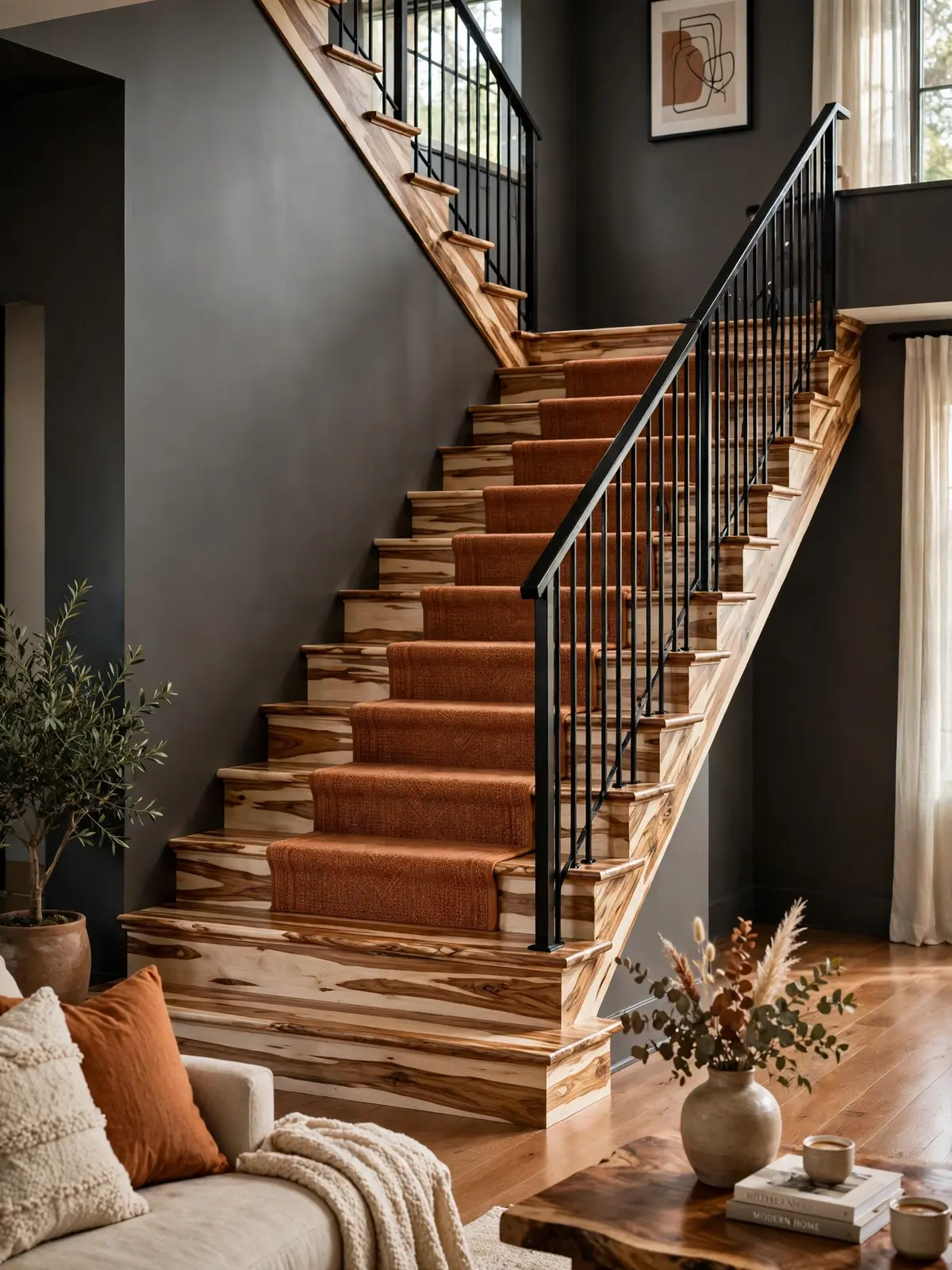
Hickory is the hardest-wearing domestic timber you can put on a staircase, and its wild grain variation — cream, tan and warm brown streaks in a single board — makes every tread look different. That variation is the whole point: a hickory stair never looks flat or factory-made, and its hardness shrugs off heels, claws and dropped toys that would dent softer woods. It suits rustic-modern homes, farmhouse styles and busy family hallways where the stair takes a beating. The weakness is exactly that variation — if you want a calm, uniform stair, hickory will frustrate you — and it is harder to cut and stain evenly, so it needs a joiner who knows the species and a stain test on offcuts before the whole stair is finished.
Quick tips:
- Embrace the variation — do not try to stain hickory uniform.
- Test the stain on offcuts first; hickory takes colour unevenly.
- Use it in busy family homes where hardness matters.
- Keep the walls simple so the grain is the feature.
Cherry Wood That Deepens With Age
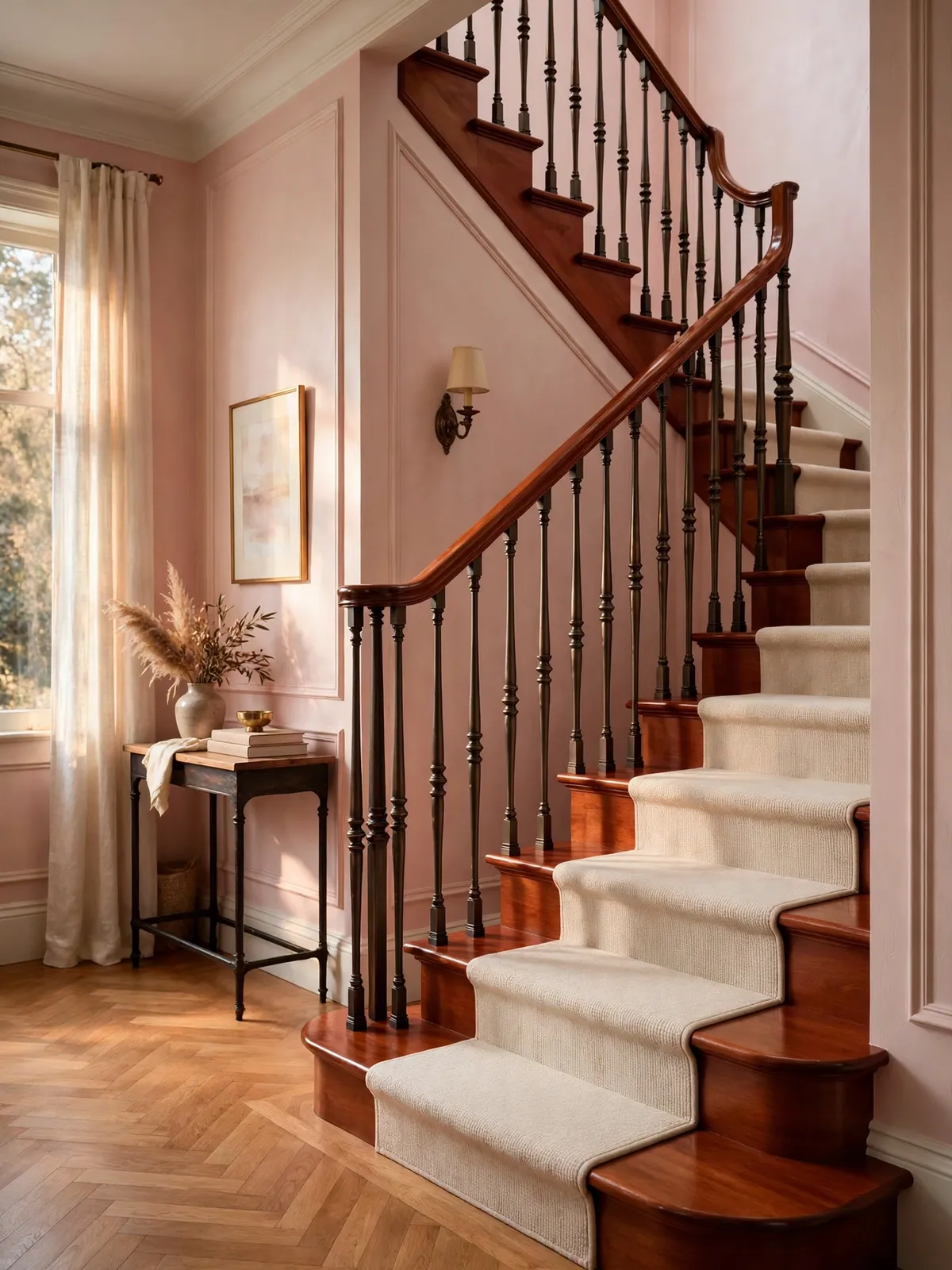
Cherry wood is the patient person’s timber, because it starts a soft honey pink and deepens over months and years into a rich reddish brown — the staircase literally matures with the house. Cherry is smooth-grained, moderately hard and easy to work, which makes it a favourite for fine joinery and curved handrails, and its warm tone flatters both traditional and transitional homes. A cherry stair feels refined rather than showy, and it pairs beautifully with cream, blush and deep bronze. The weakness is sunlight: cherry darkens fastest where the sun hits it, so a stair beside a big window can develop uneven colour unless the treads are finished evenly and the room’s light is managed — and cherry dents more easily than oak, so it suits adult households better than rough-and-tumble family traffic.
Quick tips:
- Expect the colour to deepen — buy it for the colour it will become.
- Keep sunlight even across the treads to avoid patchy darkening.
- Use a clear finish so the ageing shows beautifully.
- Choose cherry for quieter households — it dents more easily than oak.
Reclaimed Barn Timber Treads
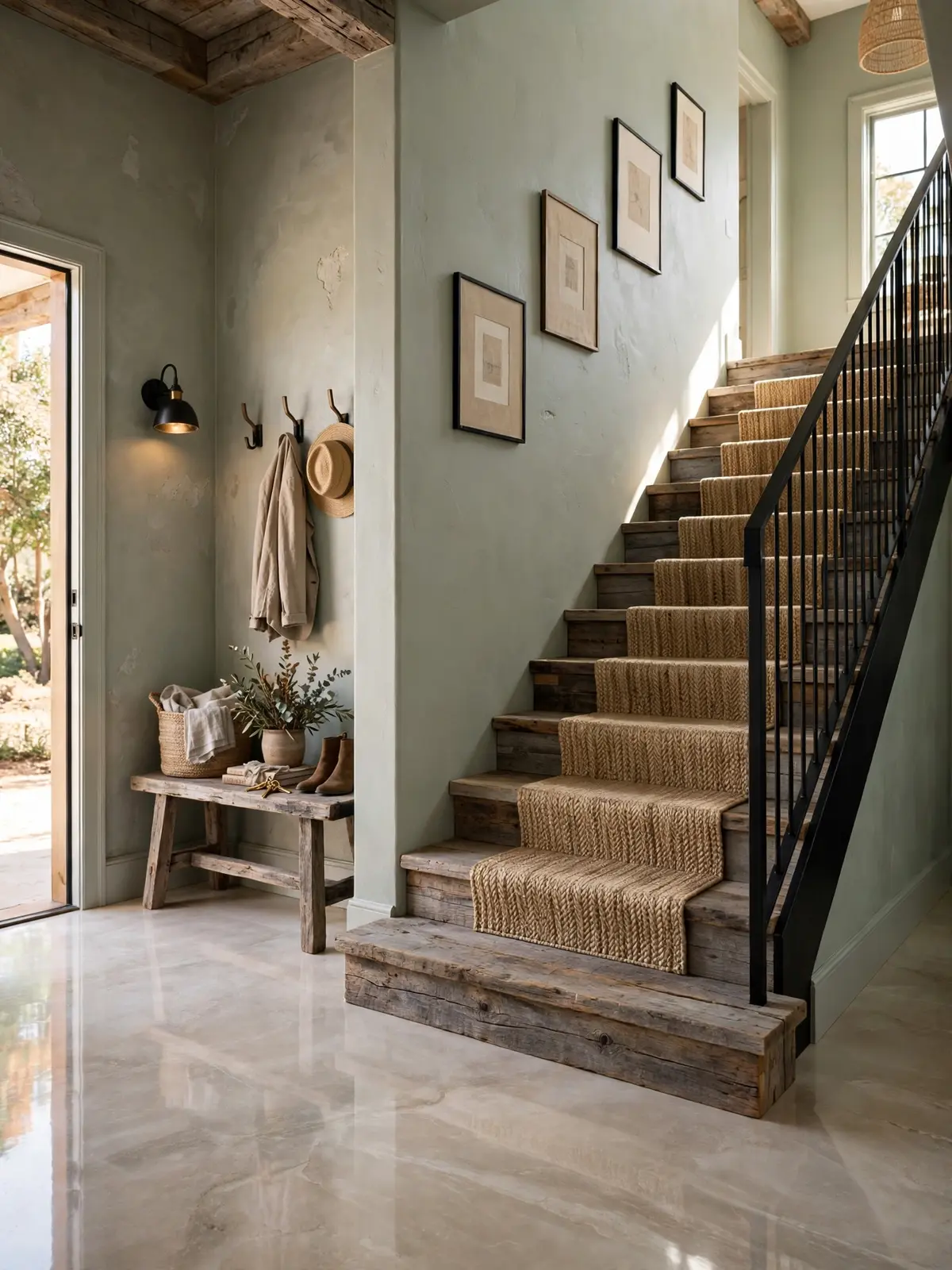
Reclaimed barn timber turns a staircase into a piece of history, because every tread carries nail holes, saw marks and a weathered patina that new wood cannot fake. Old barn beams and floorboards — usually oak, pine or chestnut — are dense, stable and full of character, and a reclaimed stair suits farmhouse, industrial and eclectic homes where a perfect finish would look out of place. The timber is also a sustainable choice, giving old wood a second life instead of sending it to landfill. The weakness is preparation: reclaimed wood must be de-nailed, kiln-dried, tested and planed before it can be a stair tread, and no two treads will match — so buy from a reputable reclaimer, budget for the prep work, and accept that variation is the price of authenticity.
Quick tips:
- Buy kiln-dried reclaimed timber — air-dried boards move.
- Check every board is de-nailed and metal-detected.
- Seal the surface well — old timber is porous.
- Let the treads vary; uniformity defeats the point.
Rift-Sawn White Oak for a Seamless Grain
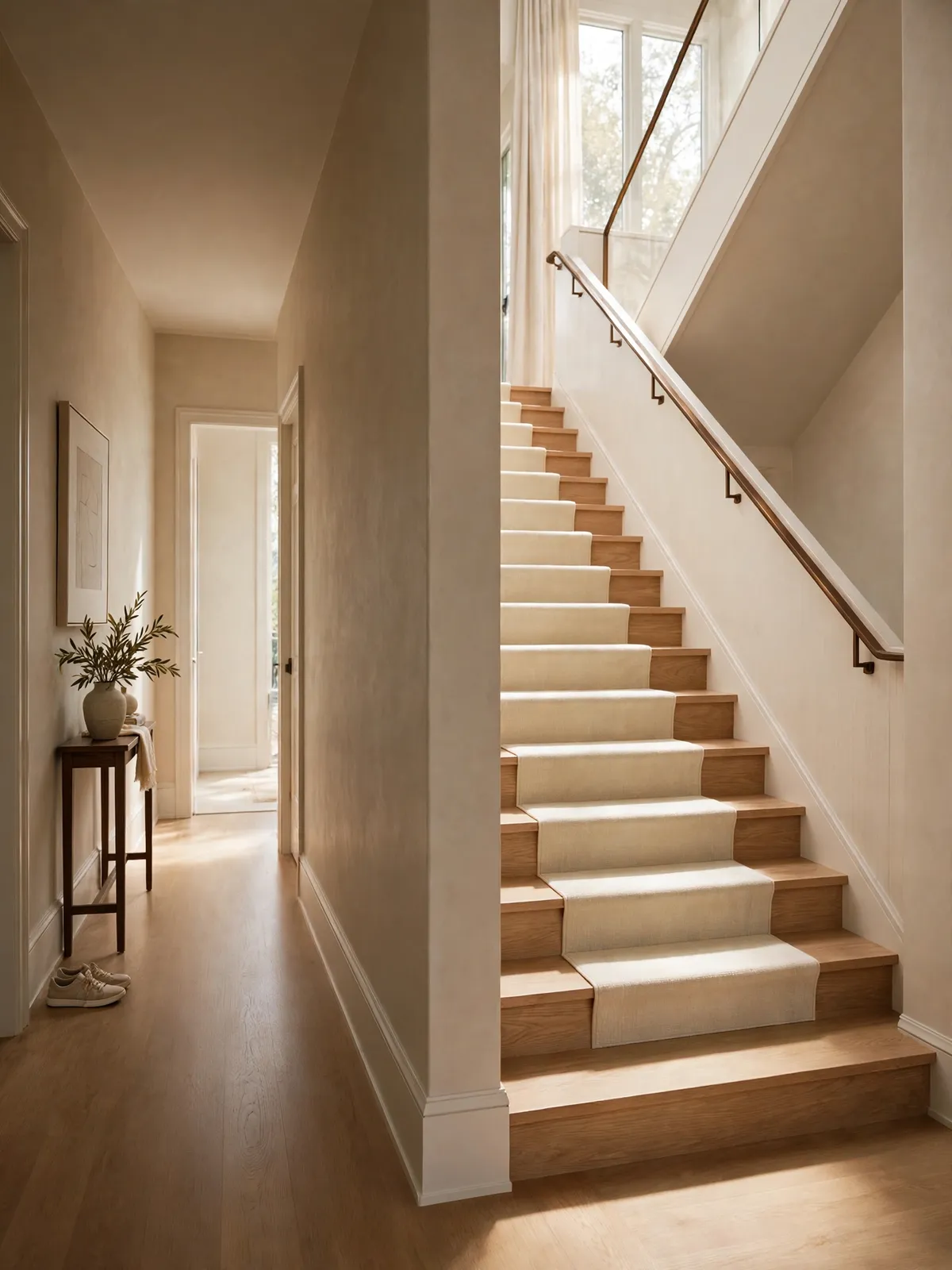
Rift-sawn white oak is the quiet luxury of timber stairs, because the way the log is cut produces straight, parallel grain with almost no cathedral pattern — the treads look calm, seamless and expensive. Standard plain-sawn oak shows bold grain arches that can look busy across twelve treads; rift-sawn oak reads as one continuous surface, which is why architects specify it for modern and minimalist homes. It costs more and wastes more of the log, so the price is higher, but the visual payoff is a stair that looks designed rather than assembled. The weakness is availability — not every supplier stocks rift-sawn oak in stair lengths — and the calm grain shows dust and footprints more readily, so it suits homes that are cleaned often and styled simply.
Quick tips:
- Ask your supplier specifically for rift-sawn, not plain-sawn.
- Order extra length — rift-sawn yields fewer long boards.
- Keep the finish clear and matte to show the grain.
- Style the stair simply; the timber is the design.
Ebonized Oak Treads With Brass Inlay
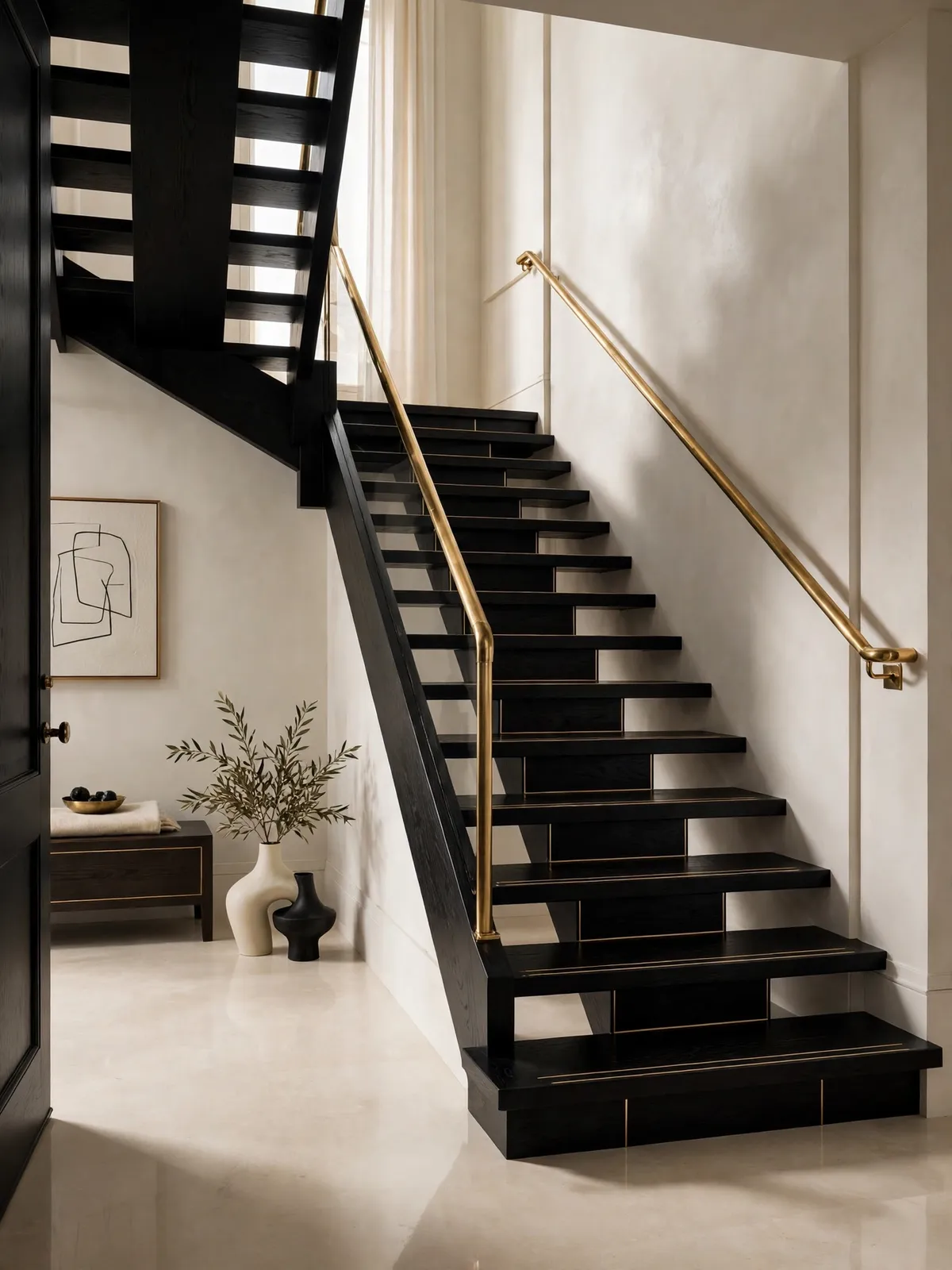
Ebonized oak — oak stained or chemically blackened until it is nearly black — gives you the drama of a dark stair with the grain and hardness of oak underneath. A thin brass inlay strip along each tread nosing turns the black timber into jewellery, catching the light on every step and stopping the stair from reading as a solid black mass. This is a bold, modern, luxurious look that suits monochrome homes, art-led interiors and entries that need a statement. The weakness is maintenance and dust: black treads show every footprint, hair and speck of dust, and the ebonizing process must be even or the colour goes patchy — so it needs a specialist finisher, a regular wipe-down routine, and a household that accepts the upkeep in exchange for the drama.
Quick tips:
- Use a specialist finisher — ebonizing must be perfectly even.
- Add brass inlay at the nosing for light and definition.
- Keep a microfibre cloth handy; black shows everything.
- Pair with ivory walls so the stair stays the focal point.
Two-Tone Timber: Dark Treads, Pale Risers
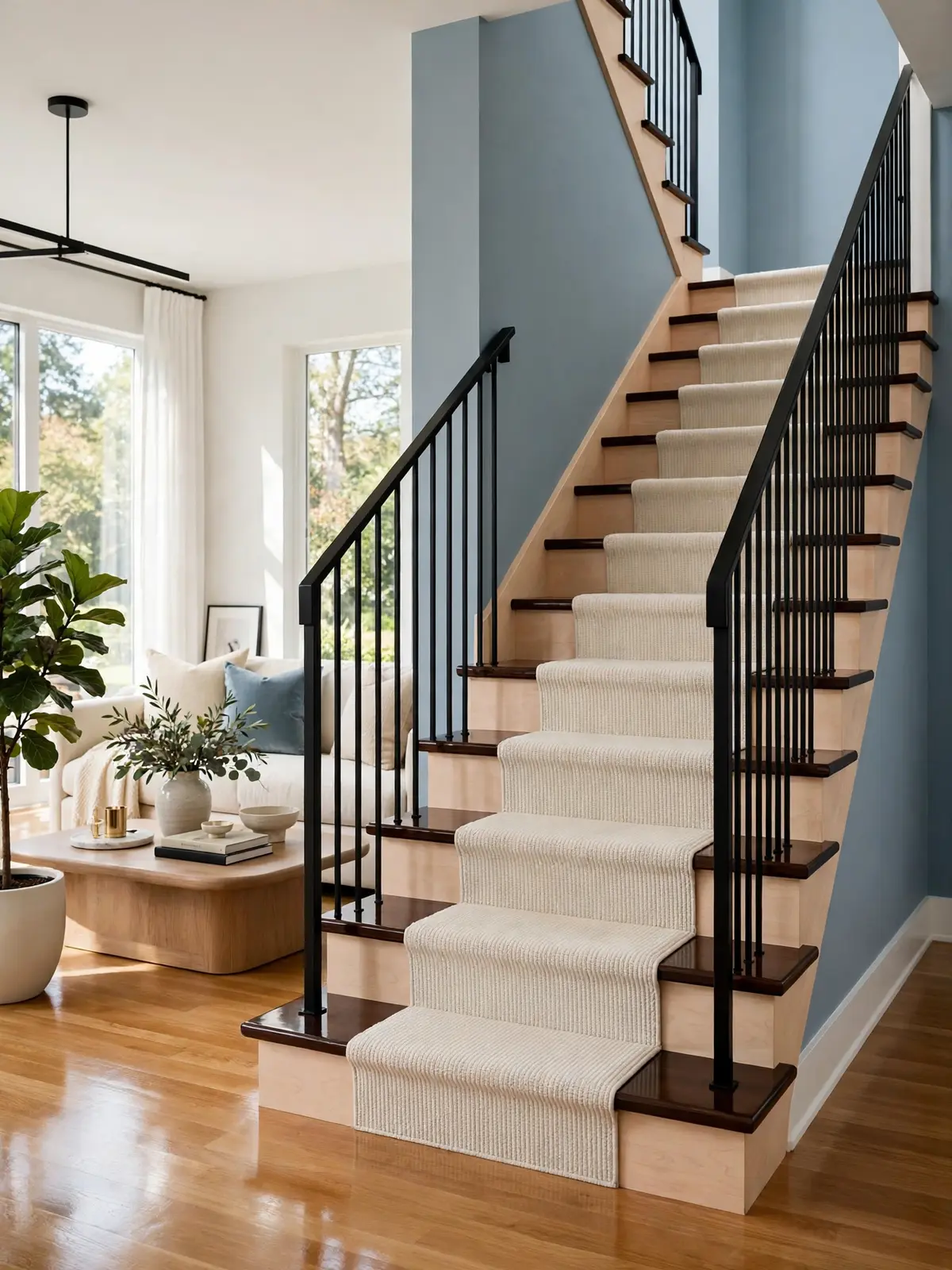
Two-tone timber — dark treads against pale risers — is the simplest way to make a wood staircase look designed, because the contrast defines every step and stops the stair from blending into one brown mass. Dark walnut treads with pale maple or painted risers is the classic pairing, but the same idea works with smoked oak treads and ash risers, or cherry treads with cream risers. The contrast also helps safety, making each tread edge easier to read, and it lets you use an expensive species only where it shows — the treads — while the risers take a cheaper timber. The weakness is balance: the 70/30 rule matters, with one tone clearly dominant, and a near-match between the two woods looks like a mistake rather than a choice — so pick tones far enough apart to read as deliberate.
Quick tips:
- Keep one tone dominant — roughly 70/30, not 50/50.
- Spend on the treads; the risers can be a cheaper timber.
- Test both tones together in daylight before finishing.
- Use the contrast to make tread edges easy to read.
End-Grain Timber Treads
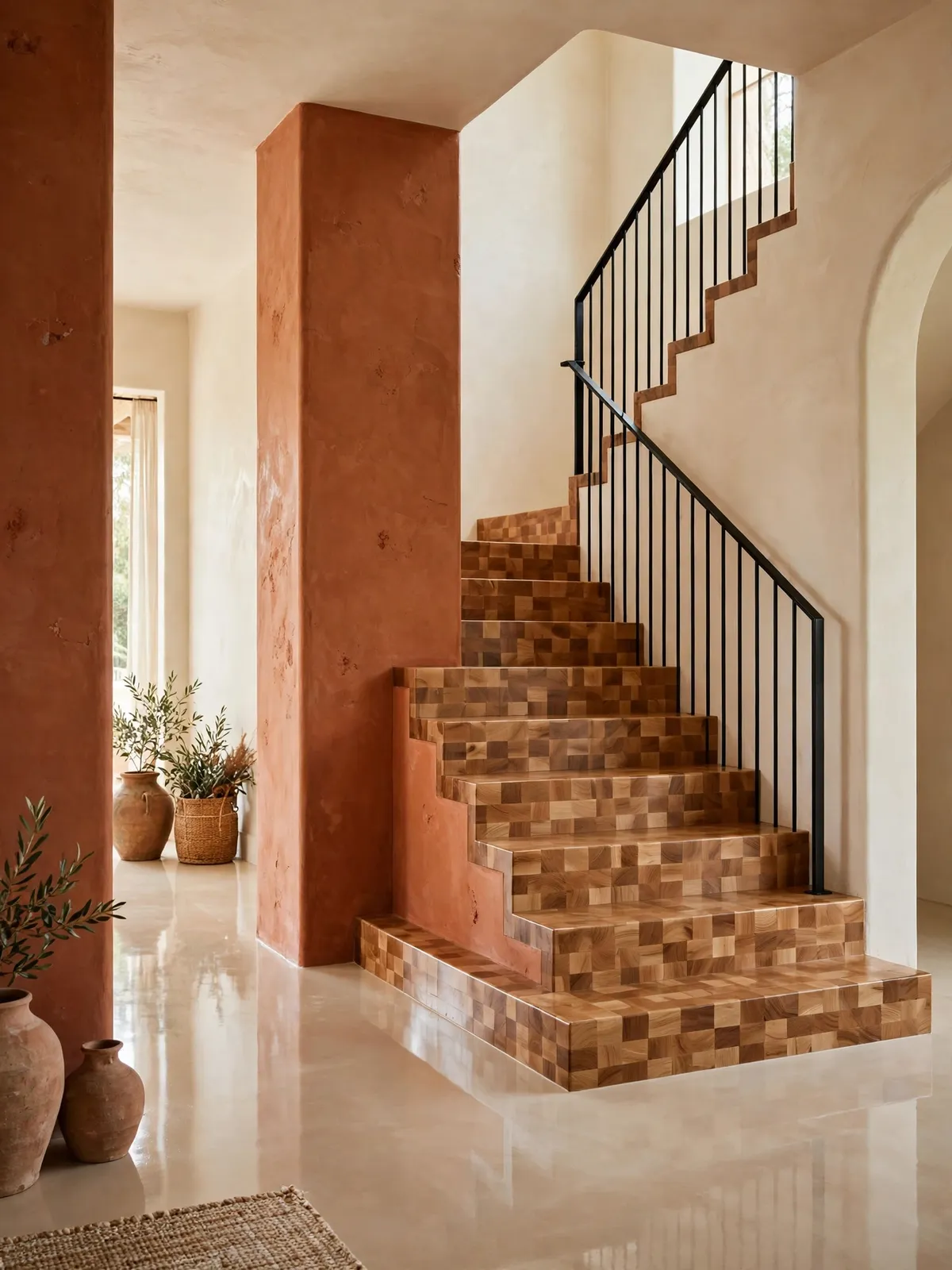
End-grain treads — blocks of timber laid so the cut end faces up, like a butcher’s block — turn the staircase into a piece of craftsmanship, because the grain rings and block joints create a pattern no flat board can copy. End grain is also extremely hard-wearing: the fibres stand upright, so heels and claws compress them rather than denting across them, which is why butcher’s blocks last for decades. This is a specialist, artisan look that suits craft-led homes, kitchens that open onto the stair, and anyone who wants a stair guests ask about. The weakness is cost and movement: end-grain blocks must be glued and sealed with care or they shift with humidity, and the build is labour-intensive — so it needs a joiner experienced with the technique and a finish that seals every joint.
Quick tips:
- Hire a joiner experienced with end-grain construction.
- Seal every joint — end grain drinks moisture.
- Expect a higher price; the labour is the cost.
- Keep the surrounding palette warm and simple.
Curved Timber Staircase in Steam-Bent Oak
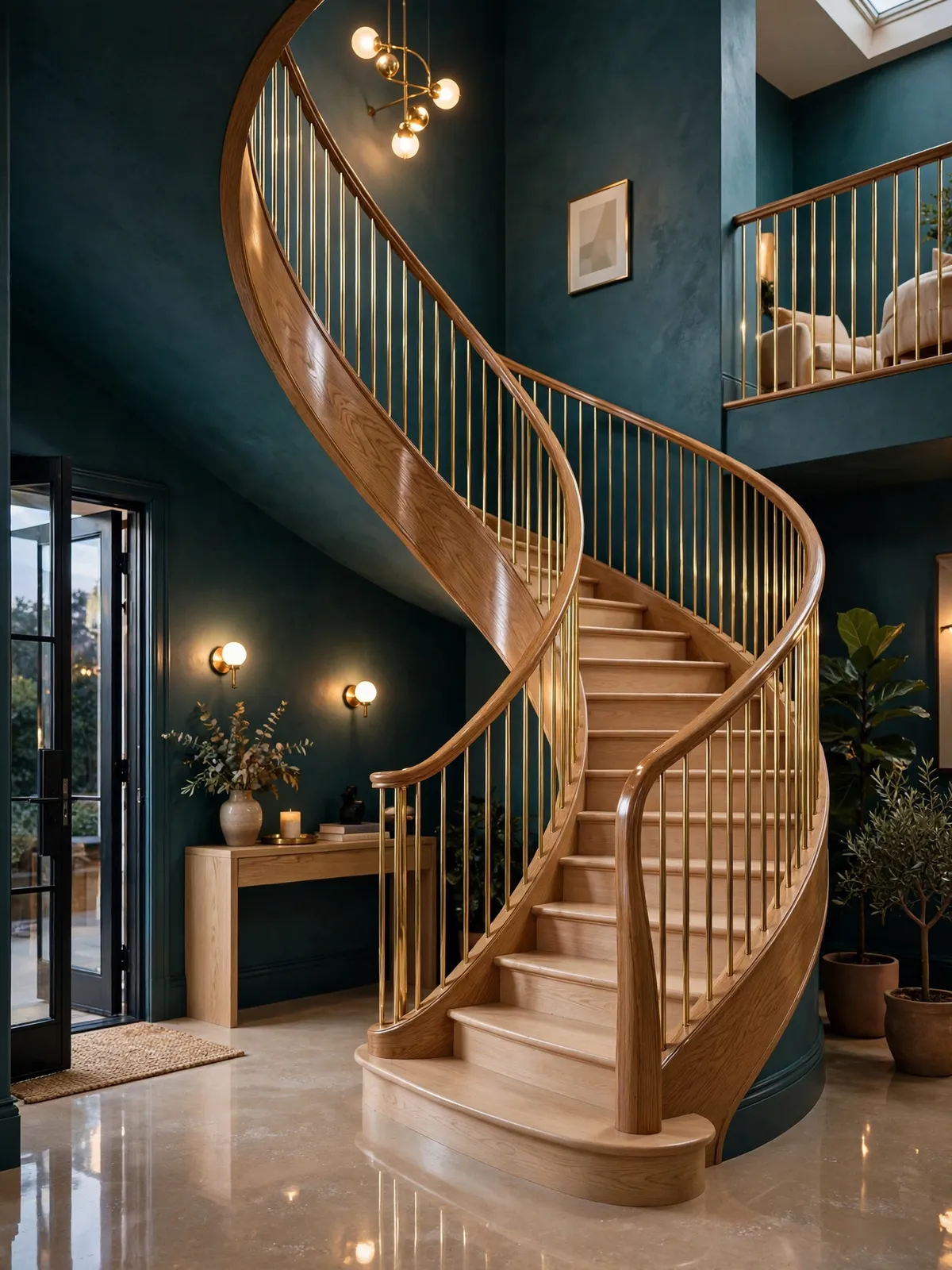
A curved timber staircase in steam-bent oak is the most sculptural wood staircase idea, because the handrail and stringer are bent from solid oak in a steam box, following a continuous curve with no joints to break the line. The result is a stair that flows like furniture, softening the architecture of the whole room and turning the entry into a gallery. Oak bends well, holds its shape once set, and takes a finish beautifully, which is why it is the species of choice for curved work. The weakness is that this is the most expensive timber stair to build — steam-bending is a specialist craft, the lead time is long, and a curved stair eats floor space — so it belongs in a home with room to show it off and a budget that treats the stair as architecture, not just access.
Quick tips:
- Budget for a specialist — steam-bending is not general joinery.
- Allow a long lead time; curved work cannot be rushed.
- Give the stair space — a curve needs room to breathe.
- Keep the balusters slim so the curve stays visible.
Cantilevered Timber Treads on a Steel Spine
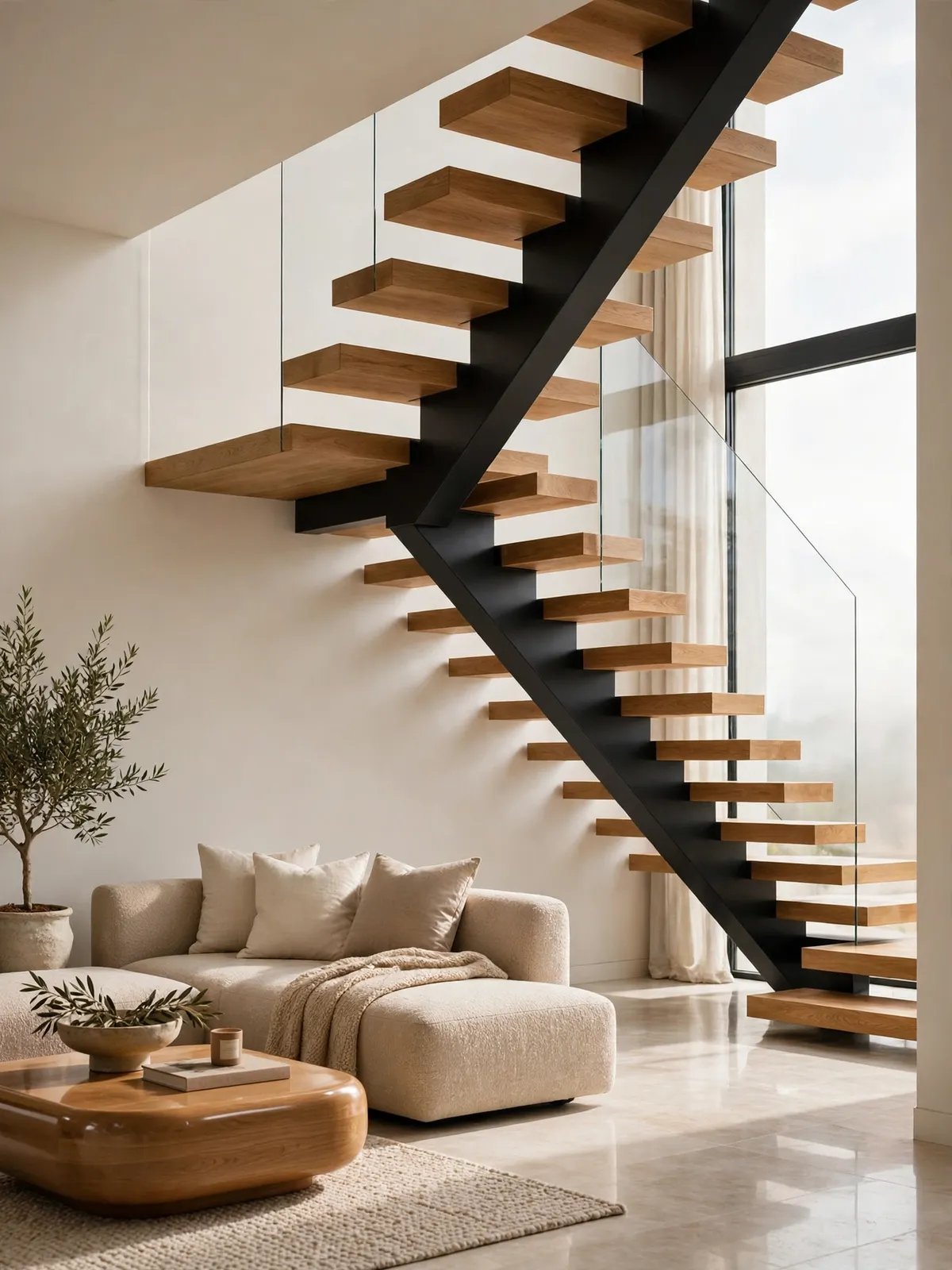
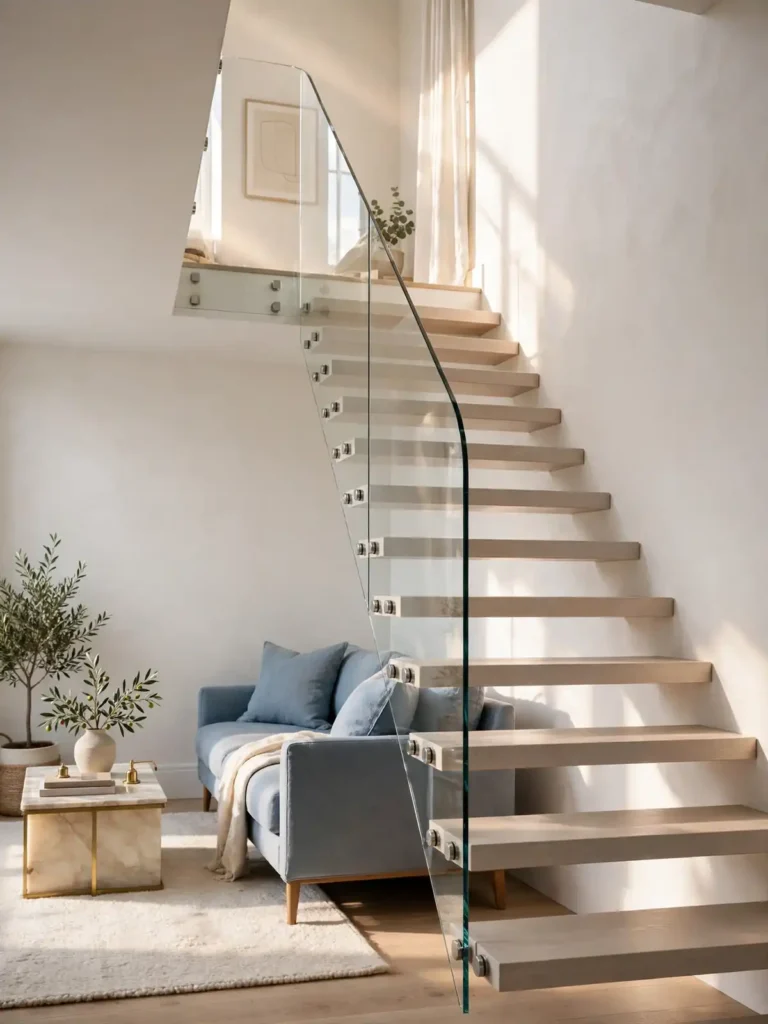
Cantilevered timber treads on a steel spine are the modern way to make wood float, because each thick oak tread is fixed to a hidden or exposed steel spine and appears to hover with no stringer and no riser. The timber does all the visual work while the steel does the structural work, and the open gaps between treads let light pass through the stair, which makes small rooms feel larger. Thick treads — 50 to 60 mm — are essential here, because the edge is fully visible and thin timber would look flimsy. The weakness is engineering and cost: the steel spine must be designed by a structural engineer, the fixings must be precise, and open risers are not ideal for homes with small children or pets — so this is a design-led choice for adult households with a proper engineering budget.
Quick tips:
- Use 50–60 mm thick treads — thin timber looks flimsy here.
- Get a structural engineer to design the steel spine.
- Add a glass panel if you have small children.
- Keep the wall behind the stair pale so the treads stand out.
Timber and Glass: Solid Wood Treads, Frameless Glass Balustrade
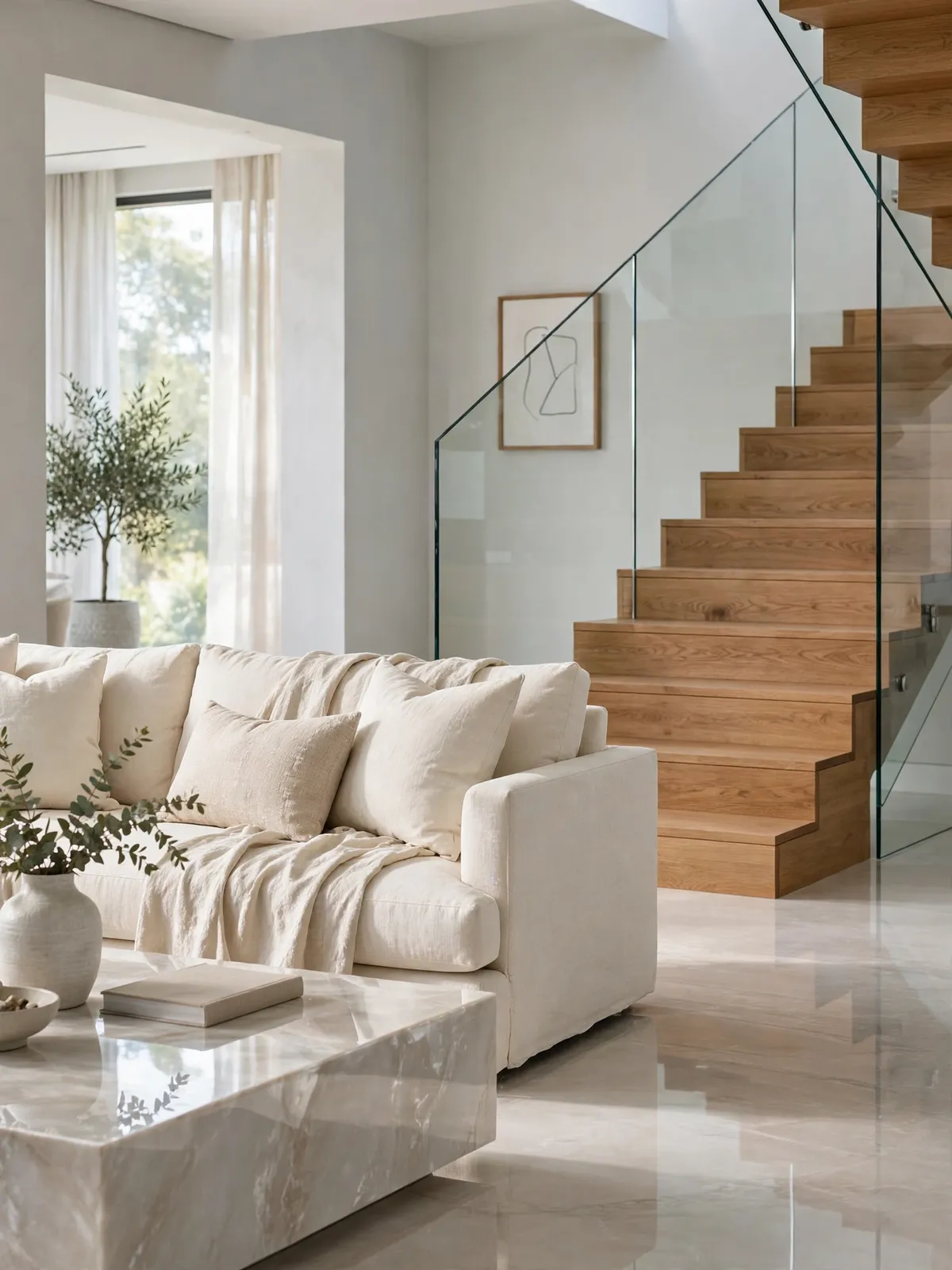
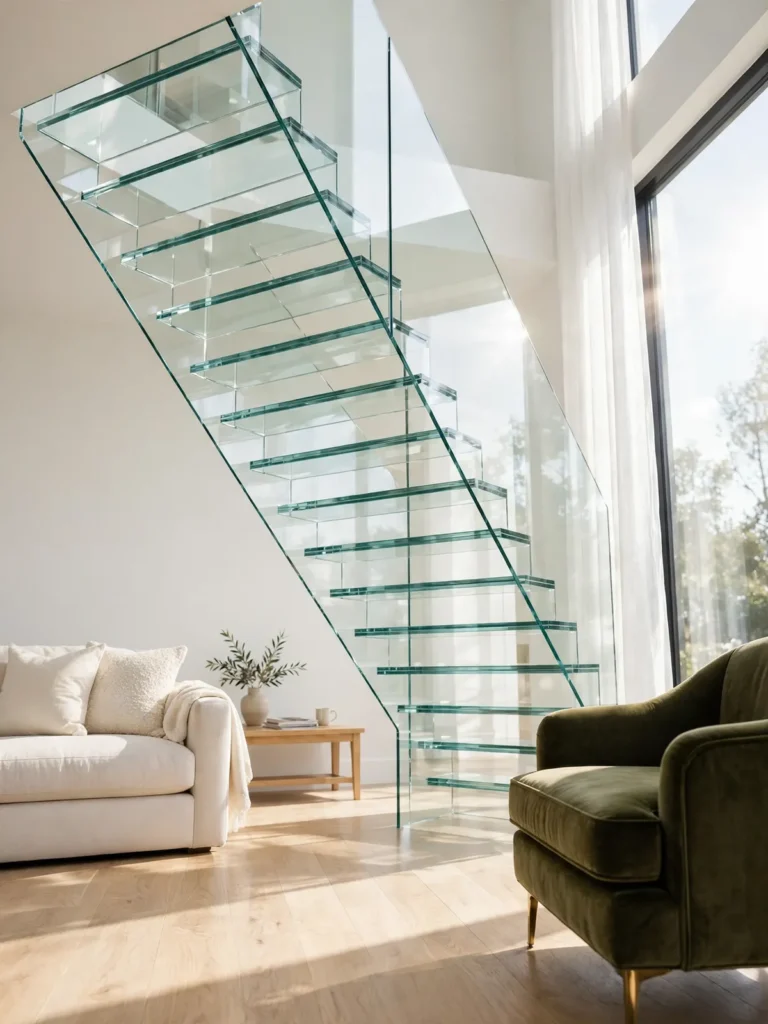
Solid wood treads with a frameless glass balustrade give you the warmth of timber and the openness of glass in one stair, because the wood grounds the design while the glass disappears and lets the light through. This pairing suits modern homes, open-plan living and stairs that sit in the middle of a room rather than against a wall, where a solid balustrade would block the view. The timber can be any species, but oak and walnut both look superb against clear glass, and the glass panels are fixed with discreet metal channels or clamps that keep the look clean. The weakness is cleaning — glass shows fingerprints and dust, especially at hand height — and the panels must be toughened safety glass fitted by a specialist, which adds cost and means the stair cannot be a casual DIY job.
Quick tips:
- Use toughened safety glass, fitted by a specialist.
- Keep the glass fixings minimal — channels beat chunky clamps.
- Wipe the panels weekly; glass shows every mark.
- Choose a mid-tone timber so the stair still reads as wood.
Open-Riser Timber Stair With Chunky Treads
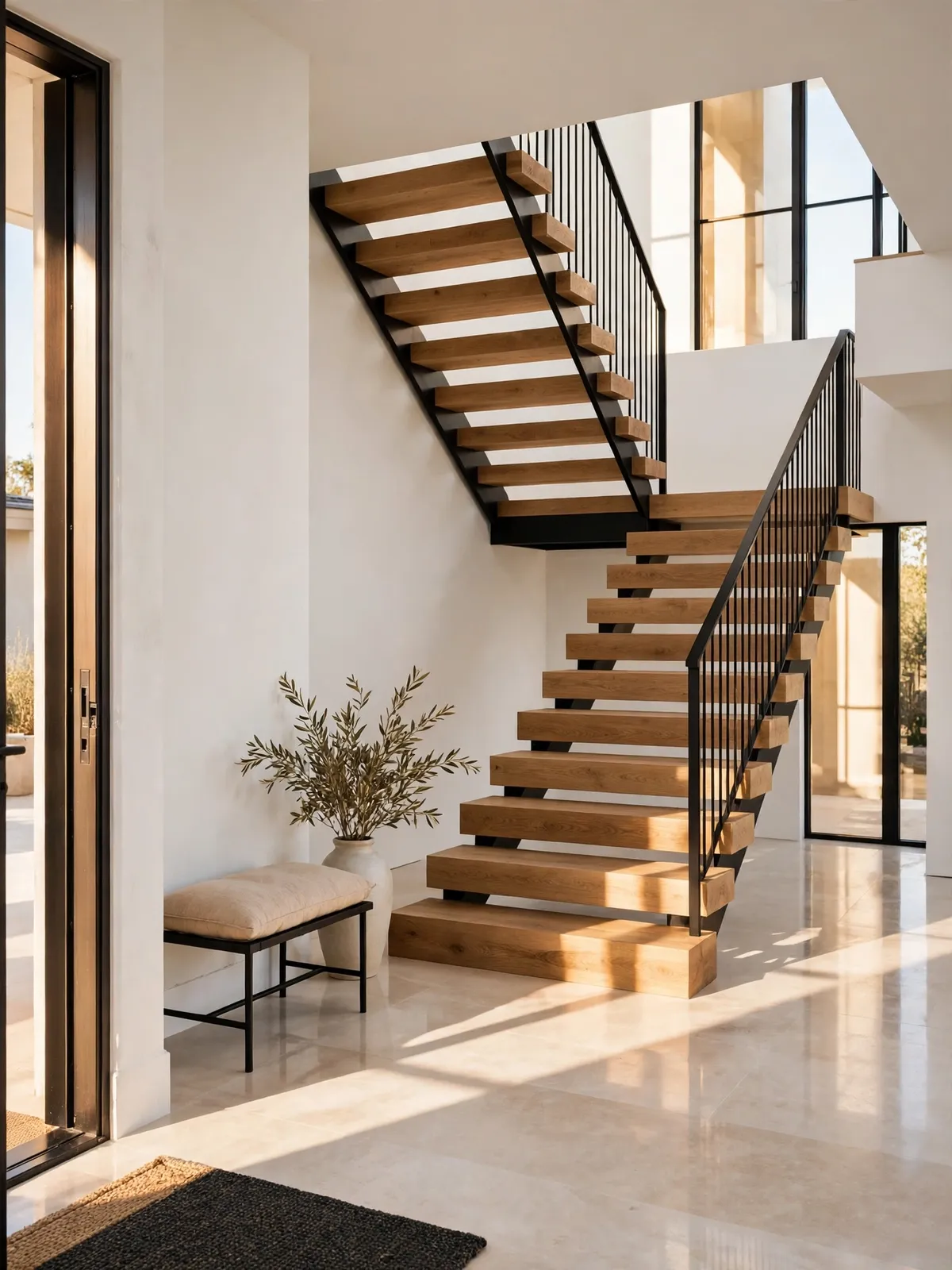
An open-riser timber stair with chunky treads is the most architectural way to use wood, because removing the risers leaves each thick tread visible as a separate sculptural slab, and the stair reads as a piece of furniture rather than a building element. The chunky edge — 50 mm or more — is essential: it gives the tread presence, casts a shadow line, and makes the stair feel solid despite the gaps. This design suits modern homes, double-height spaces and entries where light matters, and it works best in oak or ash, whose pale tones keep the stair feeling light. The weakness is safety and draughts: open risers are not suitable for toddlers, and the gaps let sound and air pass between floors — so check local building rules on riser gaps and think about who will actually use the stair before choosing it.
Quick tips:
- Use treads at least 50 mm thick for a solid look.
- Check local rules on maximum open-riser gaps.
- Avoid open risers if you have toddlers.
- Pair with a slim handrail so the treads stay the focus.
Timber Handrail in a Contrasting Species
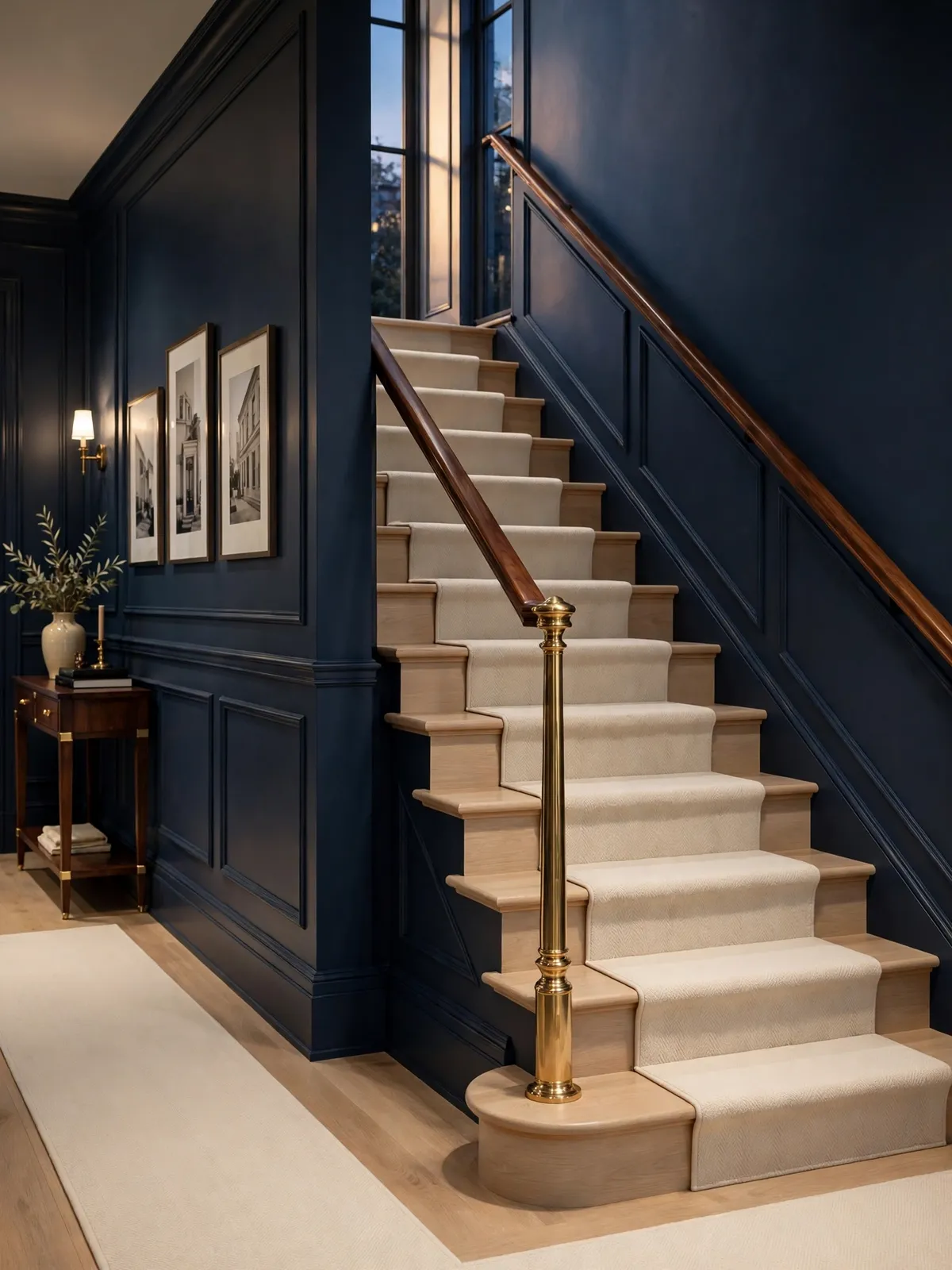
A handrail in a contrasting species is the smallest timber decision with the biggest visual payoff, because the rail is the part of the stair you actually touch, and a dark walnut rail over pale oak treads frames the whole staircase like a picture. The contrast draws the eye along the line of the stair, adds a tailored, furniture-like quality, and lets you introduce a premium species — walnut, cherry or mahogany — in a small, affordable quantity while the treads stay in a cheaper timber. It works in traditional and modern homes alike, and it is one of the easiest upgrades on an existing stair, since the rail can be replaced without touching the treads. The weakness is proportion: the rail must be chunky enough to read as a deliberate contrast, and the two species must be far enough apart in tone — a mid-brown rail over mid-brown treads just looks mismatched.
Quick tips:
- Make the rail dark enough to read as a deliberate contrast.
- Keep the rail profile chunky — slim rails disappear.
- Match the newel post to the rail, not the treads.
- This is an easy upgrade on an existing stair.
Whitewashed Pine for a Coastal Timber Stair
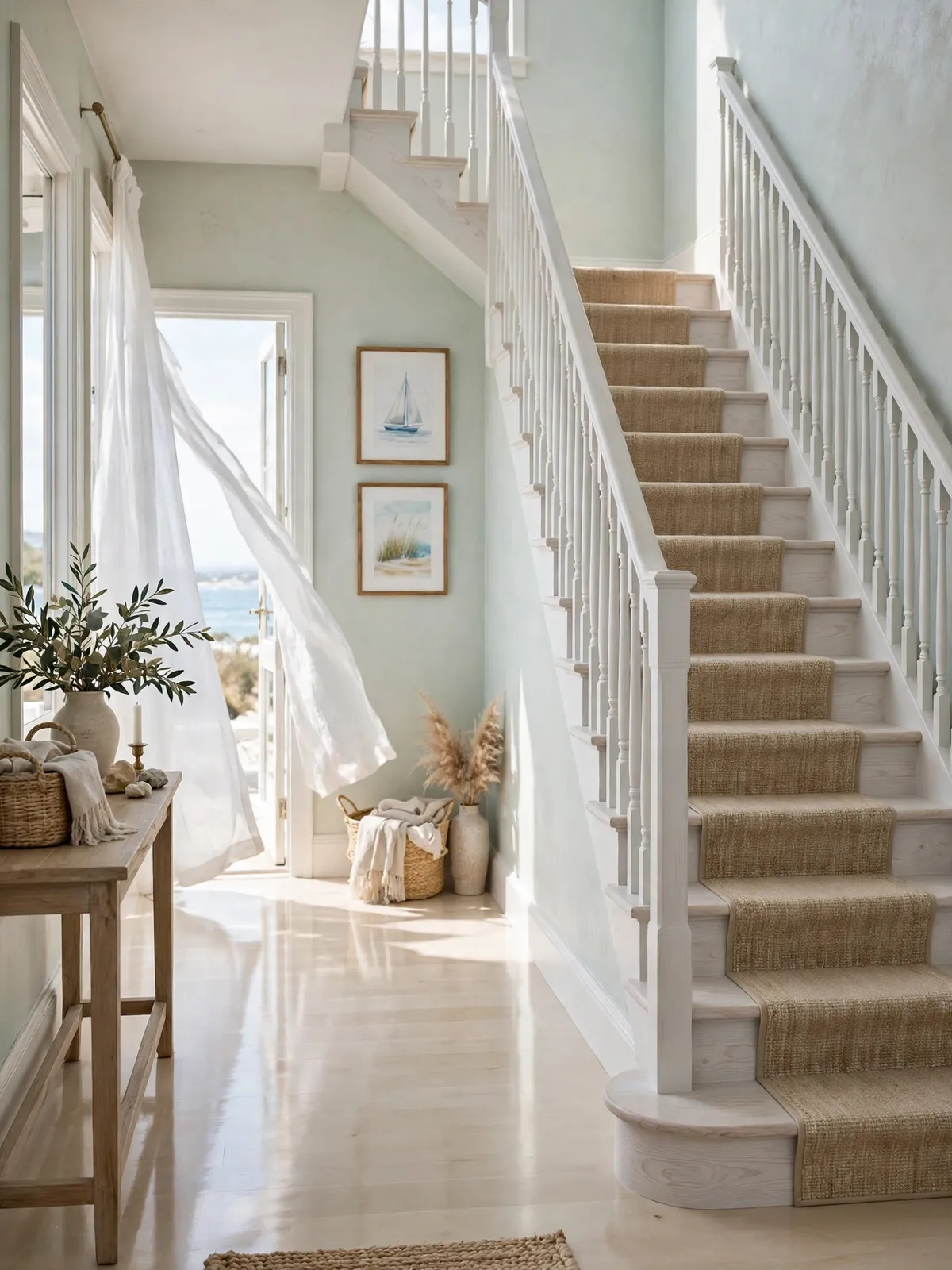
Whitewashed pine is the coastal answer to wood staircase ideas, because the whitewash softens the pine’s warm tone while leaving the grain visible, giving you the look of weathered driftwood without the cost of reclaimed timber. Pine is a softwood, so it is affordable and easy to work, and a whitewash or lime finish keeps the stair light and airy in beach houses, cottages and bright family homes. It pairs naturally with seafoam, sand and white, and it suits homes where the stair should feel relaxed rather than formal. The weakness is softness: pine dents easily under heels and furniture, so it needs a hard topcoat and a household that accepts marks as part of the look — and the whitewash must be sealed well, or it greys unevenly in sunny spots.
Quick tips:
- Seal the whitewash well — unsealed lime finishes grey unevenly.
- Add a hard topcoat; pine dents easily.
- Pair with seafoam, sand and white for a coastal feel.
- Accept some marks — they suit the relaxed look.
Smoked Oak With a Grey-Brown Finish
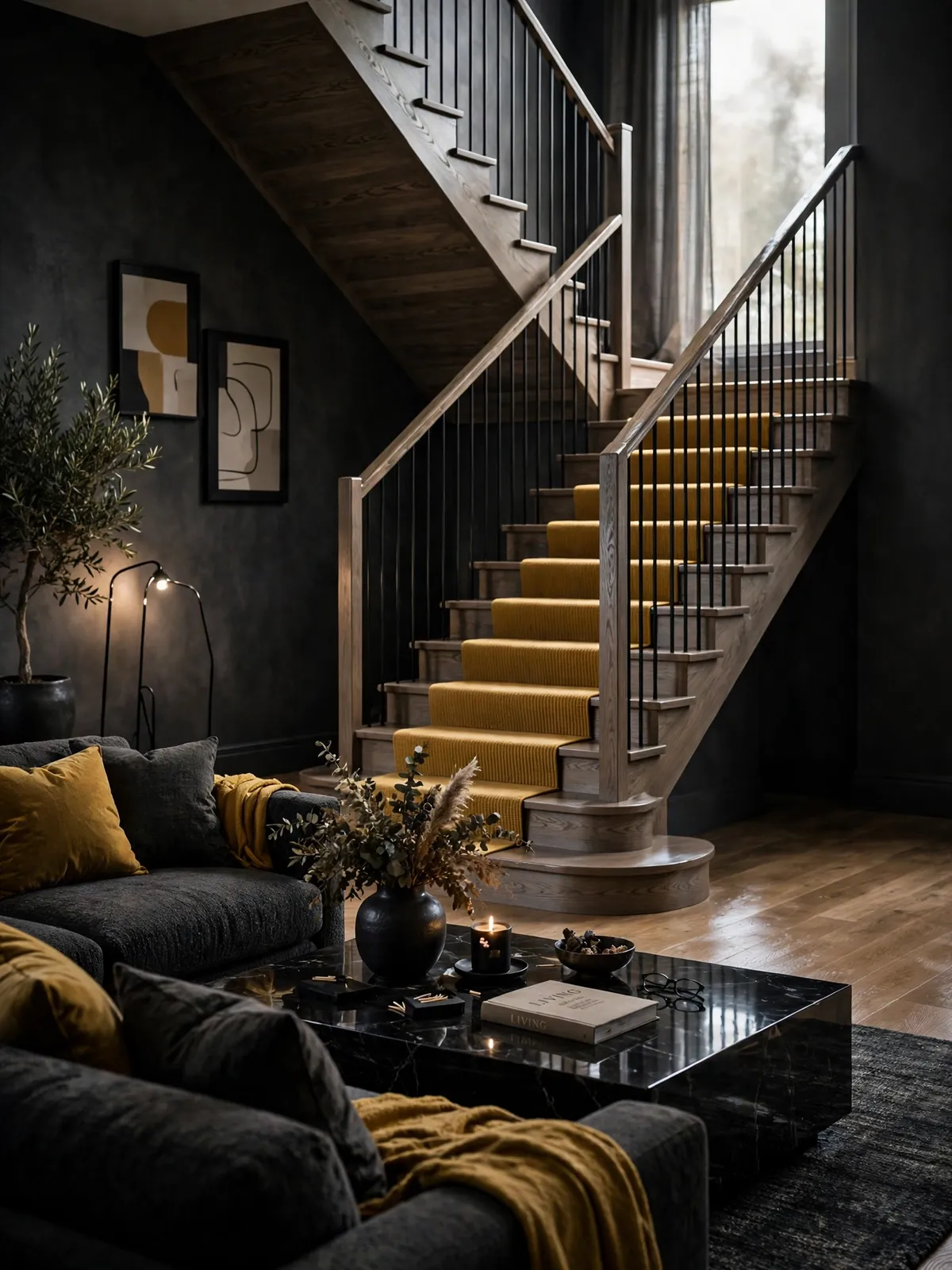
Smoked oak — oak that has been fumed with ammonia so its tannins turn a deep grey-brown — is the contemporary alternative to stained dark wood, because the colour goes through the timber rather than sitting on top of it, so wear and scratches do not reveal pale wood underneath. The result is a cool, grey-brown stair with visible grain that suits modern, industrial and monochrome homes, and pairs beautifully with charcoal walls, black metal and one warm accent such as mustard or rust. It is more expensive than stained oak and the colour varies between batches, so order all the timber from one lot. The weakness is that smoked oak can look flat in a dark hallway, so it needs good lighting and a pale or contrasting wall nearby to give it definition — and the fuming process is a specialist job, not a DIY stain.
Quick tips:
- Order all timber from one lot — smoked colour varies.
- Give the stair good light; smoked oak looks flat in the dark.
- Pair with one warm accent to stop the grey feeling cold.
- Use a specialist supplier — fuming is not a DIY stain.
Timber Staircase With a Matching Timber Storage Wall
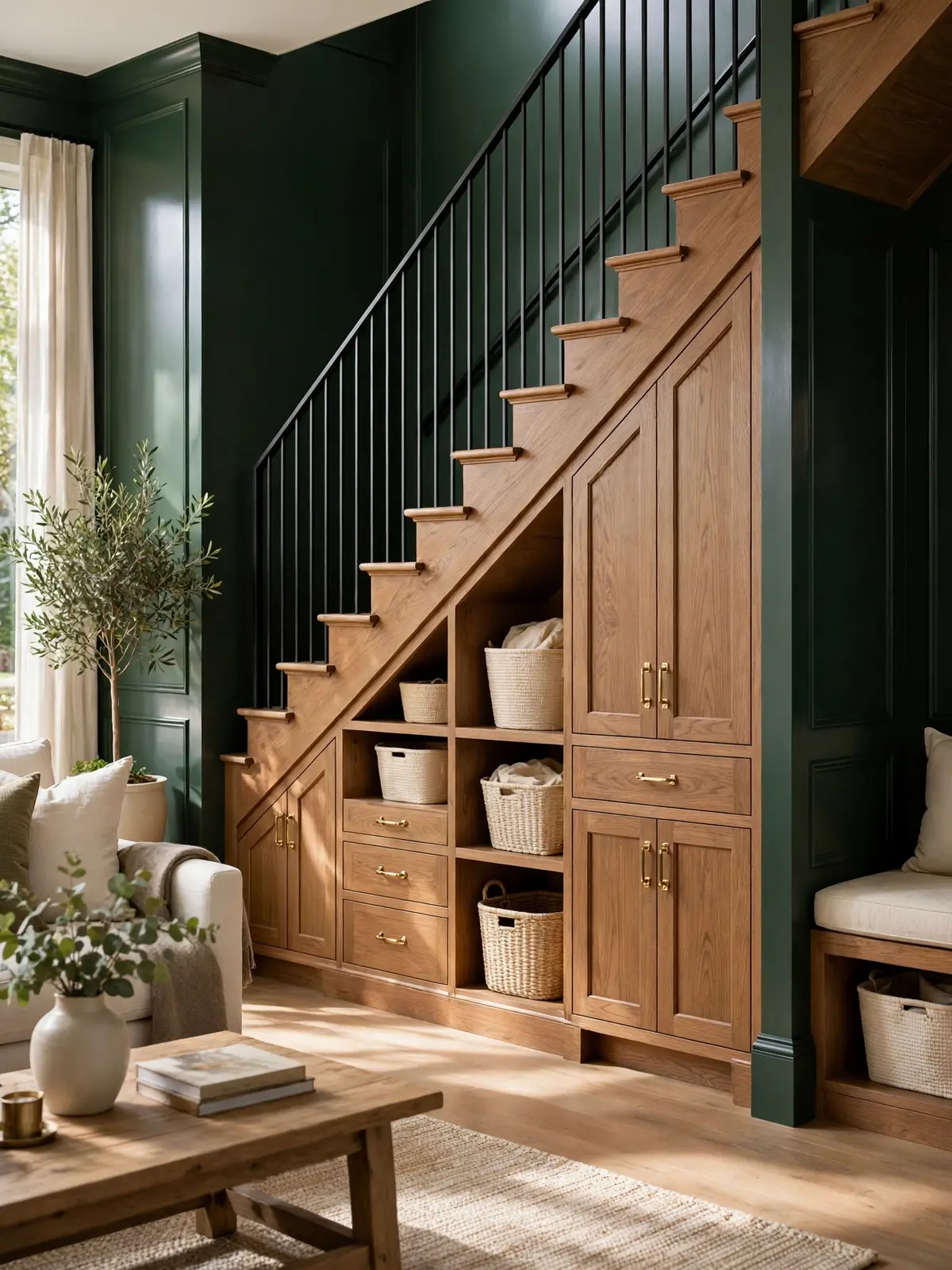
A timber staircase with a matching storage wall underneath is the most cohesive use of wood, because the same oak that forms the treads continues into drawers, cupboards and shelves beneath the stair, making the whole structure read as one piece of joinery. This is where timber-led design pays off most visibly: the grain flows from stair to storage, the room feels calm and intentional, and the awkward triangle under the stairs becomes useful space instead of a cupboard. It suits family homes, entries and living rooms where storage is always short, and it works best when the joiner templates the slope on site. The weakness is cost — built-in joinery in matching timber is a significant investment — and the storage must be planned around the slope, with deep drawers where the stair is high and shallow shelves where it is low, or the space is wasted.
Quick tips:
- Use the same timber and finish for stair and storage.
- Plan deep drawers high, shallow shelves low.
- Template the slope on site — no two stairs are straight.
- Add lighting inside the storage so nothing hides.
Live-Edge Timber Treads
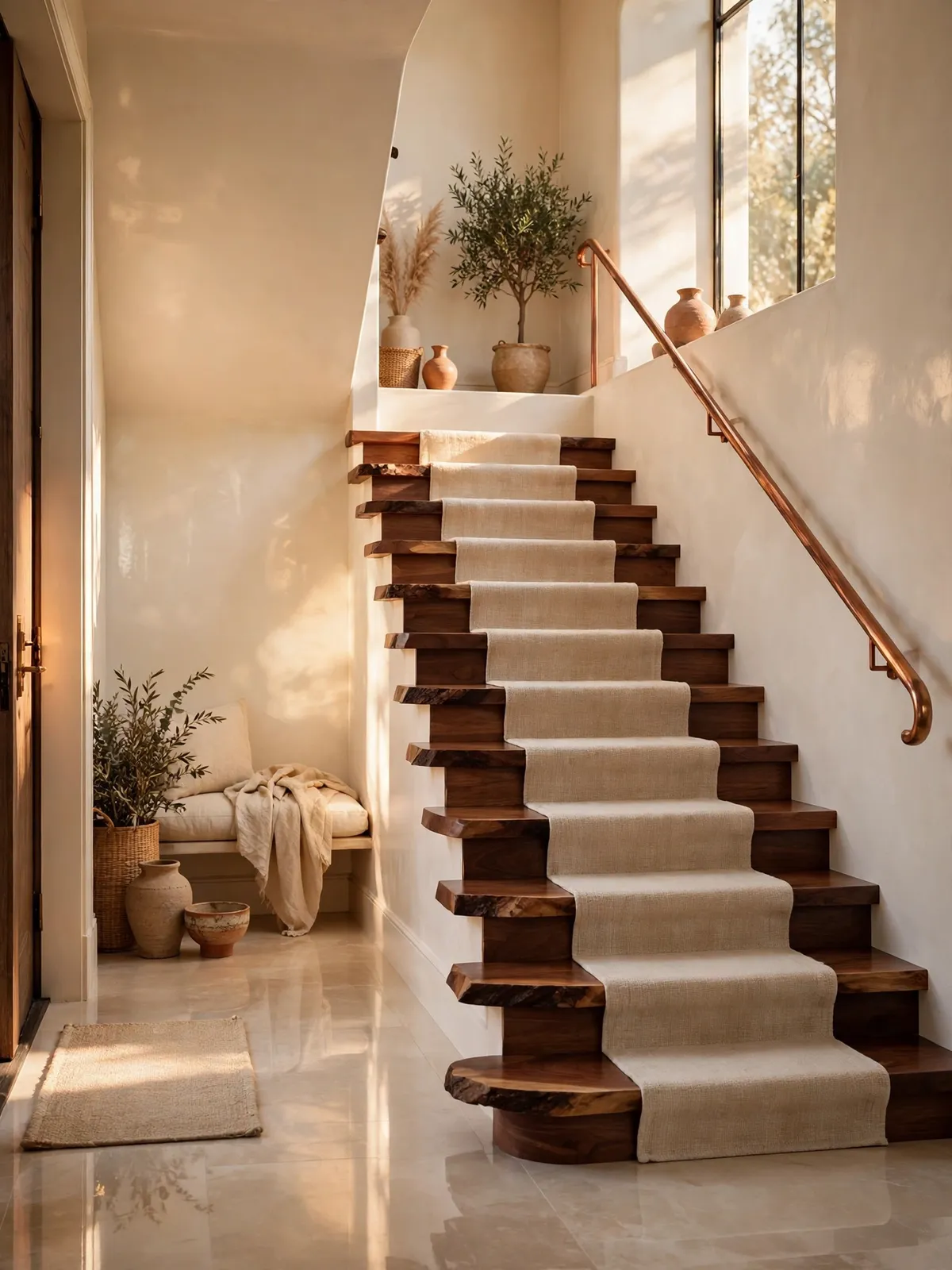
Live-edge treads — slabs of walnut or oak with one natural, wavy edge left as the tree grew it — turn a staircase into a piece of nature, because no two edges are alike and the organic line softens the geometry of the stair. The effect is strongest on a floating or open-riser stair, where the live edge is visible from below as well as above, and it suits artisan, eclectic and nature-led homes where a perfect straight edge would feel too formal. Walnut is the classic choice, its dark tone and flowing grain suiting the organic edge, but oak works too. The weakness is practical: live edges must be stabilised, filled and sealed or they split and catch, the treads are expensive because each slab is unique, and the wavy edge can snag clothing — so choose this for a show stair in an adult household, not the main family route.
Quick tips:
- Stabilise and seal the live edge — raw edges split.
- Use it on a floating or open-riser stair so the edge shows.
- Budget per slab — every tread is unique.
- Keep the rest of the stair simple so the edge is the star.
Parquet-Effect Timber Risers
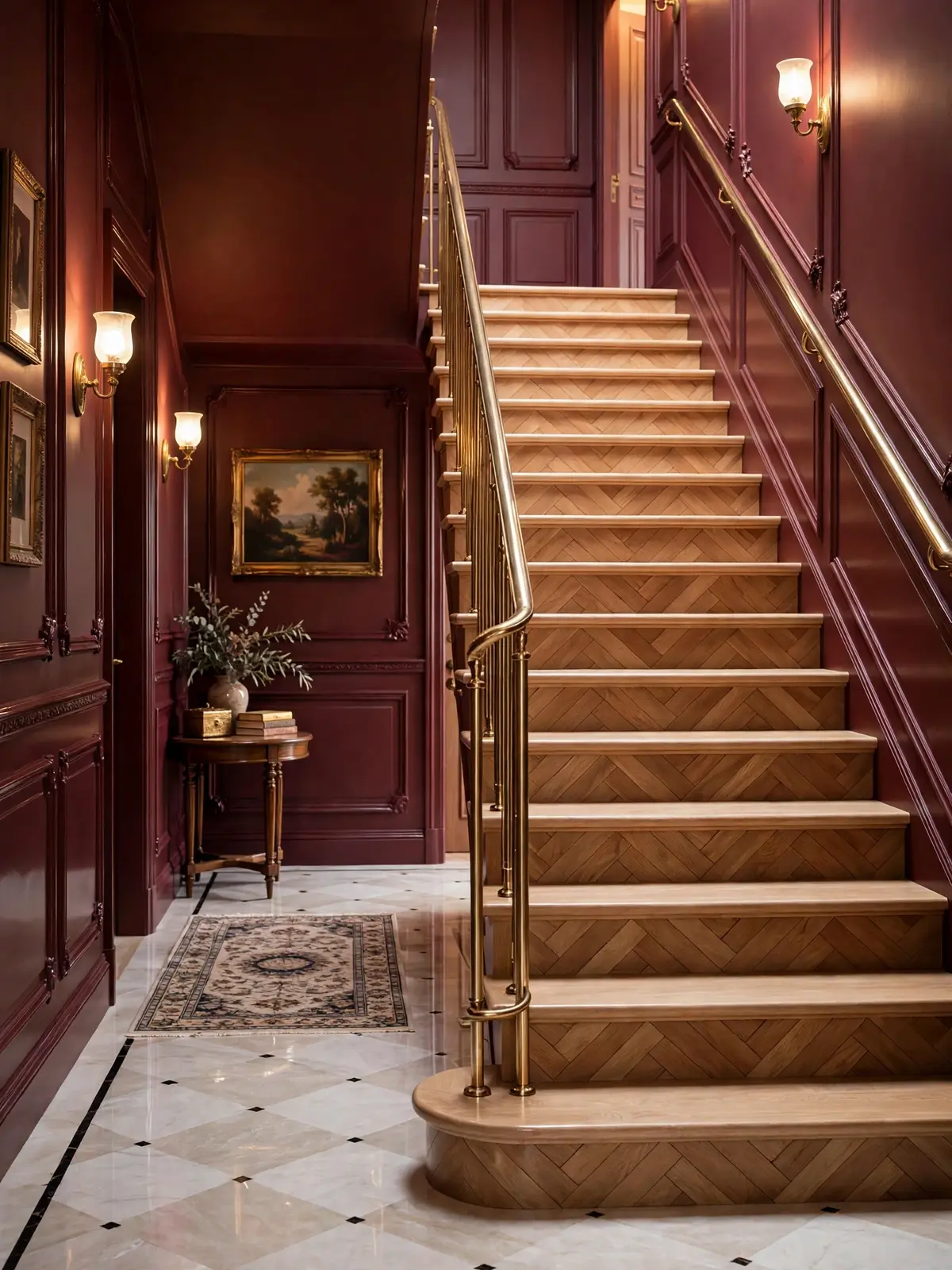
Parquet-effect risers — herringbone or chevron timber laid across each riser — bring the craft of a parquet floor onto the staircase, because the small angled blocks create pattern and rhythm where a plain riser would disappear. The treads stay in plain oak or walnut so the stair does not become busy, while the risers carry the pattern, and the effect is at its best in traditional and transitional homes with panelled walls and classic furniture. It is a joinery-led detail that reads as expensive even on a modest stair, because the cutting and fitting are visibly skilled. The weakness is labour: every riser must be cut and fitted individually, which adds cost and time, and the pattern must be laid out carefully or the herringbone will drift out of line as it climbs — so this is a job for a specialist joiner, not a first DIY project.
Quick tips:
- Keep the treads plain so the risers carry the pattern.
- Hire a specialist joiner — parquet risers are fiddly.
- Dry-lay the pattern before fixing anything.
- Match the riser timber to the tread species.
Timber Stair With Integrated LED Under-Tread Lighting
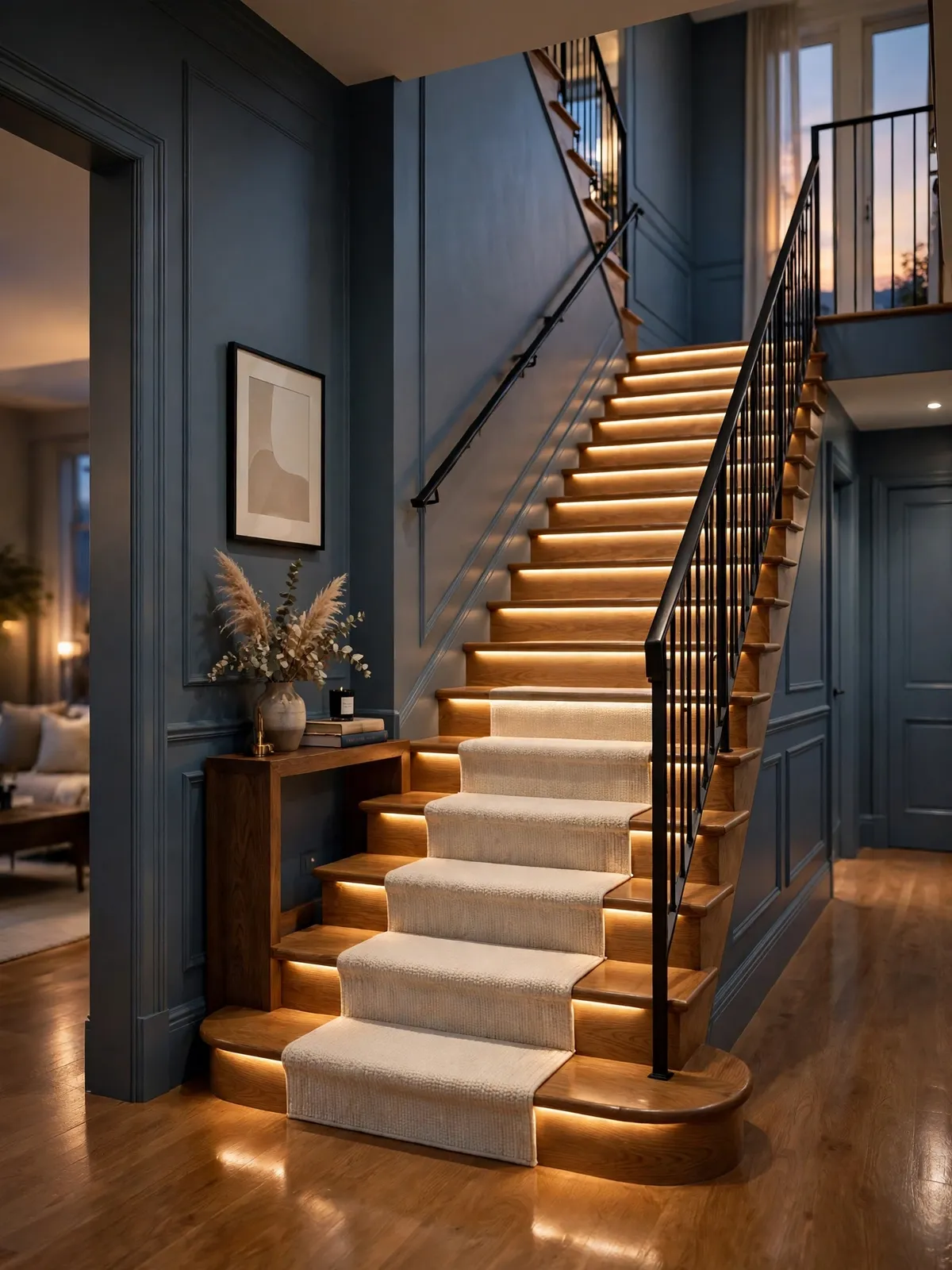
Integrated LED lighting under each timber tread is the modern finish that makes wood glow, because a warm strip tucked beneath the nosing washes light down the riser and turns the stair into a lantern after dark. The timber stays the star — the light simply shows off its grain and colour — while the stair becomes safer at night and the hallway gains atmosphere without a single visible fitting. Warm white light, around 2700K, flatters wood best; cool white makes oak look grey and clinical. The weakness is planning: the LED strips, drivers and wiring must be fitted before the treads go in, and the strips need a channel or diffuser or they read as a harsh line — so plan the lighting with the joiner and electrician together, and choose dimmable strips so the stair can be bright for safety and soft for mood.
Quick tips:
- Use warm white LEDs (around 2700K) — cool white greys the wood.
- Fit the strips before the treads go in, not after.
- Use a diffuser channel so the light is a wash, not a line.
- Make the strips dimmable for safety and mood.
Bamboo Staircase: A Sustainable Timber Alternative
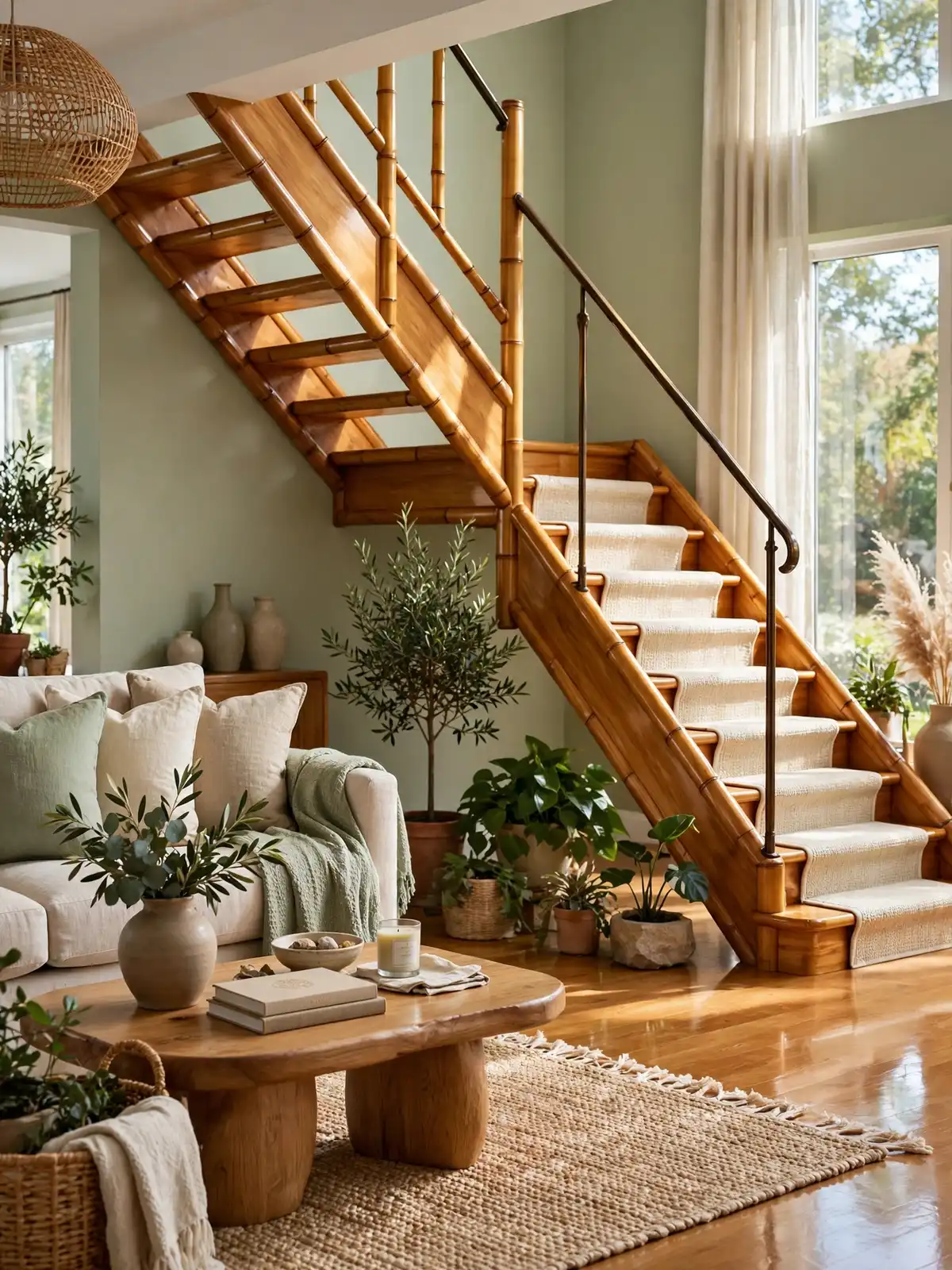
Bamboo is the sustainable alternative to hardwood stairs, because it grows to full height in a few years rather than decades, and strand-woven bamboo is harder than oak — it takes family traffic, heels and claws without denting. The look is warm and honey-toned with a fine, linear grain that suits modern and eco-conscious homes, and it pairs well with sage, cream and natural textiles. Bamboo treads are made from compressed strips, so they are stable and consistent, and they cost less than walnut or cherry while offering similar hardness. The weakness is that bamboo is a grass, not a wood, so it must be properly sealed against moisture, and its colour can vary between batches — so buy from one lot, seal the end grain carefully, and avoid it in damp hallways unless the finish is fully waterproof.
Quick tips:
- Choose strand-woven bamboo — it is harder than oak.
- Buy from one lot; bamboo colour varies between batches.
- Seal the end grain well against moisture.
- Pair with sage and cream for a fresh, natural look.
Wood Staircase Ideas That Let the Timber Lead the Whole Design
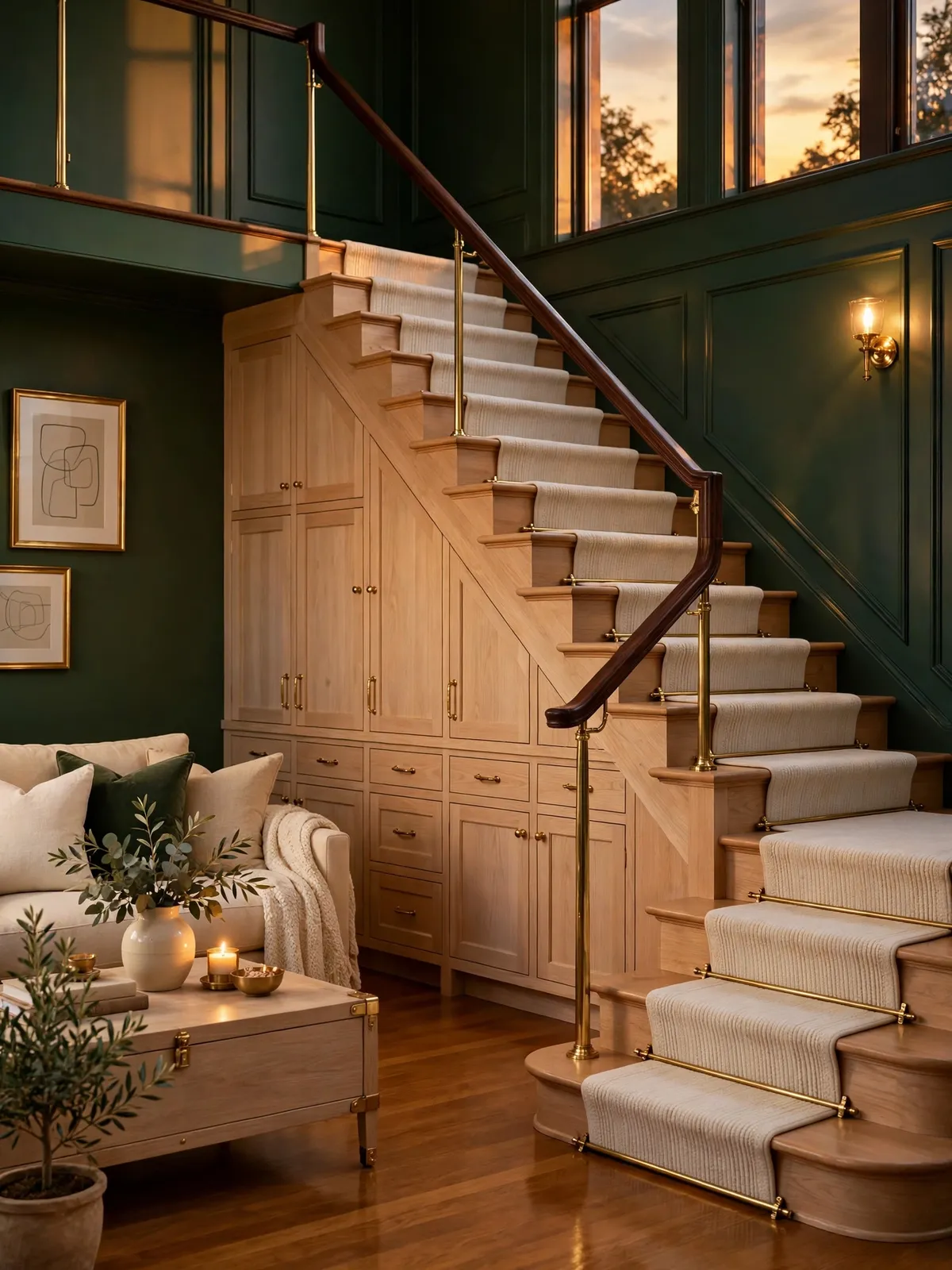
The last of these wood staircase ideas is the principle behind them all: when the timber leads, the design follows. A stair that pairs pale oak treads with a dark walnut handrail and a matching oak storage wall underneath shows how species, finish and construction work as one decision — the oak keeps the stair light, the walnut frames it, and the storage wall makes the timber feel intentional rather than decorative. That combination is the real lesson of a timber-led stair. Choose the species for the traffic and the light, choose the finish for the maintenance you will actually do, and let the construction show the wood off — thick treads, honest grain, and details that celebrate the material. Get the timber right, and the staircase stops being a route between floors and becomes the best-designed piece of furniture in the house.
Quick tips:
- Let the species decide the style, not the other way round.
- Pair one pale timber with one dark timber for balance.
- Match the storage to the stair for a built-in look.
- Choose the finish for the maintenance you will actually do.
FAQs
Which wood is hardest wearing for a staircase?
Hickory and strand-woven bamboo are the hardest-wearing options, followed by white oak. Hickory is the hardest domestic timber commonly used for stairs, and it suits busy family homes with children and pets. White oak is the best balance of hardness, stability and looks for most households, while cherry and pine dent more easily and suit quieter homes.
Can I put wood stairs over existing carpeted stairs?
Yes, in most cases the carpet and underlay can be removed and timber treads fitted over the existing stair structure, as long as the structure is sound and level. The treads usually need to be scribed to the walls, and the riser heights must stay even — building rules limit how much riser heights can vary. A joiner should inspect the stair first, because a wobbly or uneven structure will show through the timber.
How do I keep wood stairs from becoming slippery?
Choose a matte or satin finish rather than high gloss, keep the treads clean and dry, and consider a stair runner down the centre for grip. A runner in wool or sisal adds traction and softens noise, and it can be fitted with stair rods for a tailored look. Avoid wax-based polishes on stair treads — they make the surface dangerously slick.
How much does a wood staircase cost?
A simple timber re-clad of an existing stair — new treads, risers and handrail in oak or ash — is the most affordable route. A full new timber staircase costs more, and a curved, cantilevered or live-edge stair costs the most because of the specialist labour. Always get a quote that separates timber, joinery, finishing and balustrade, so you can see where the money goes and where you can save.
Does a wood staircase need a handrail on both sides?
Building rules usually require a handrail on at least one side of a stair, and on both sides where the stair is wide or open on both sides. The exact rules vary by country and by the width of the stair, so check local building regulations before finalising the design. A handrail is also a safety essential for children and older family members, whatever the minimum rule says.
Conclusion
A wood staircase is decided by its timber long before it is decided by its style. Whether you choose pale white oak with a clear matte finish, dark walnut against light walls, light ash for a Scandinavian feel, hard-wearing hickory for a busy family home, reclaimed barn timber for character, or a curved steam-bent oak stair as a piece of architecture, the species, the finish and the construction are what make the stair work. Compare timbers in daylight, test the finish on offcuts, plan the lighting before the treads go in, and let the wood lead — the staircase will reward you every time you walk up it.