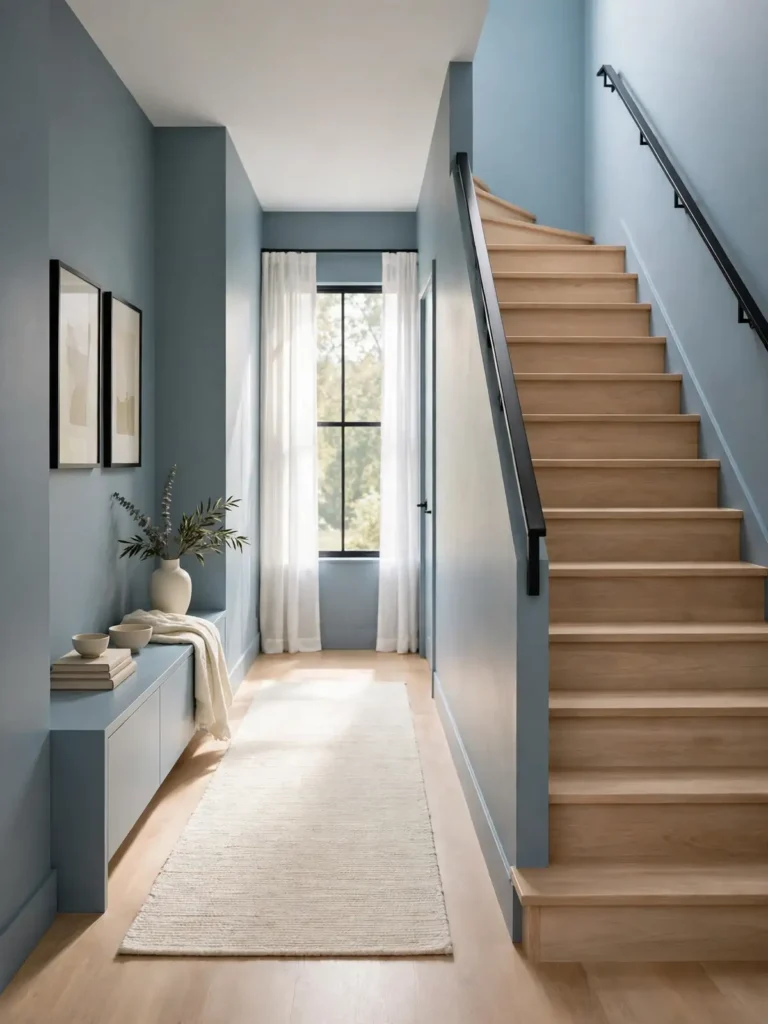
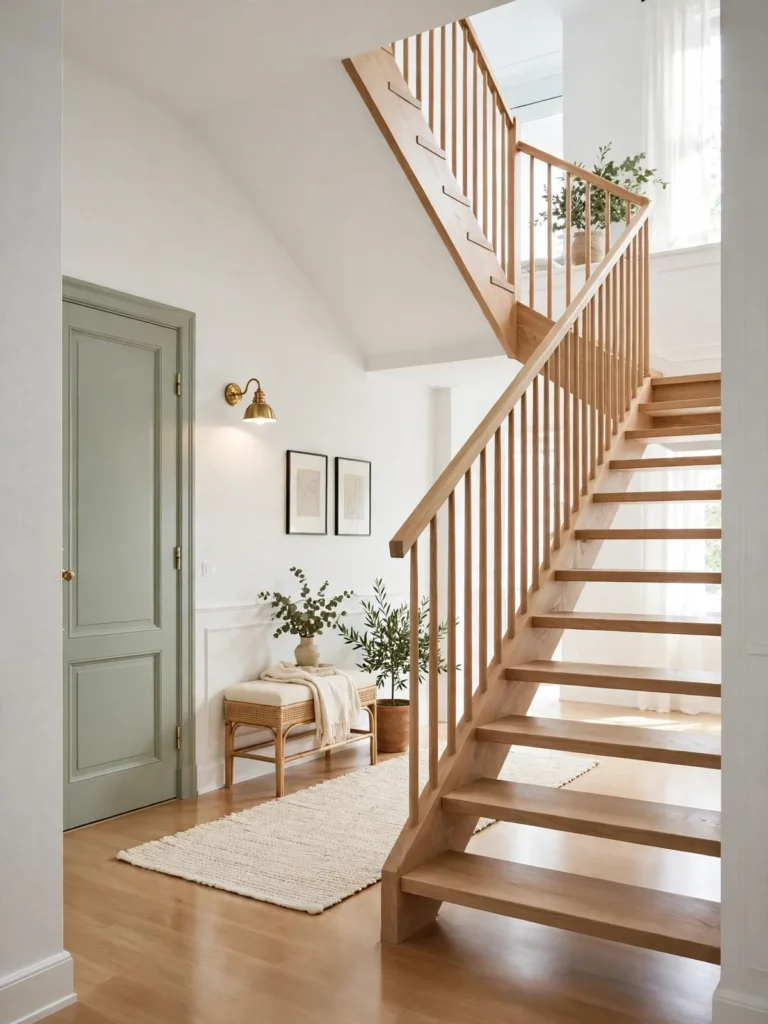
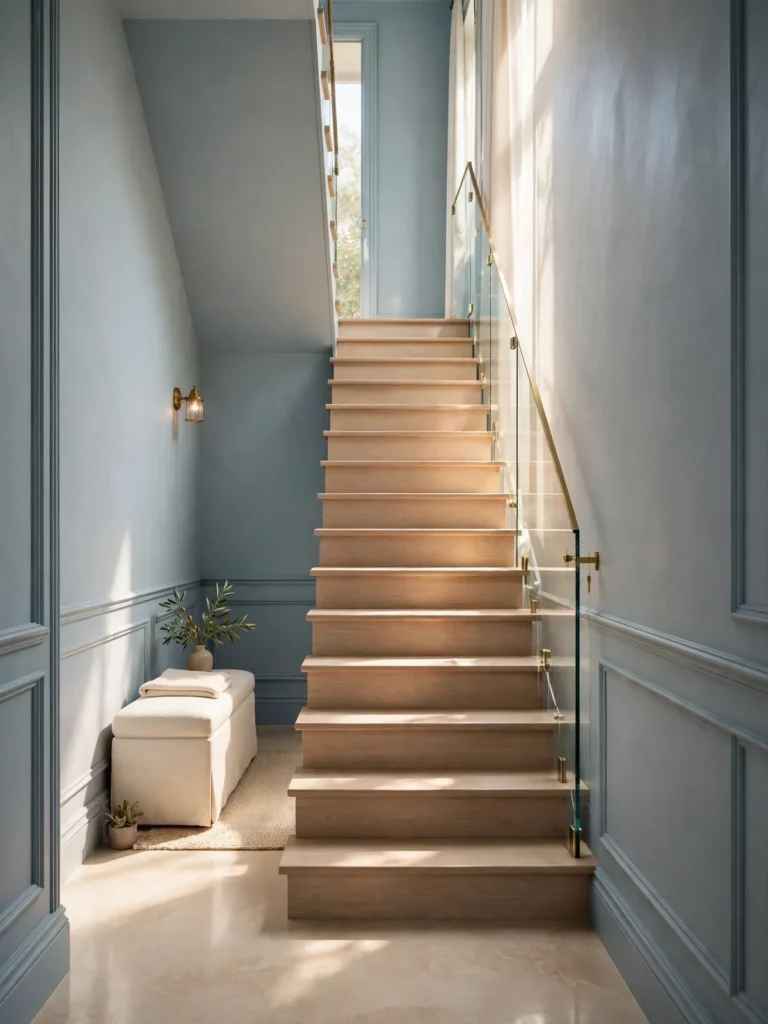
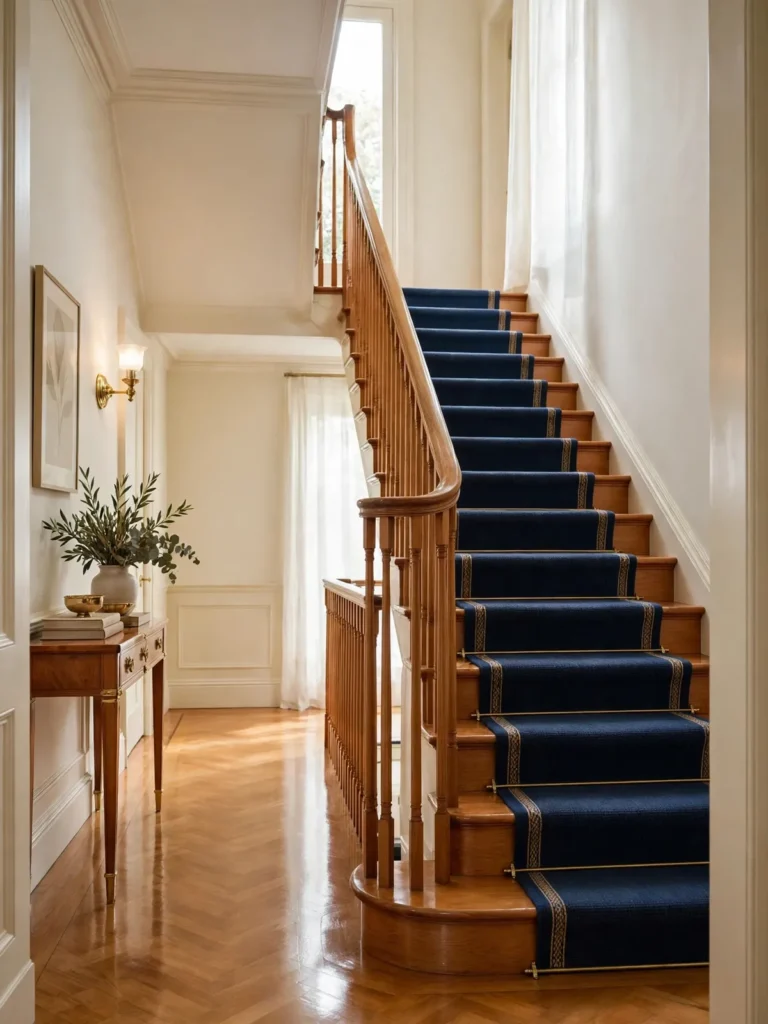
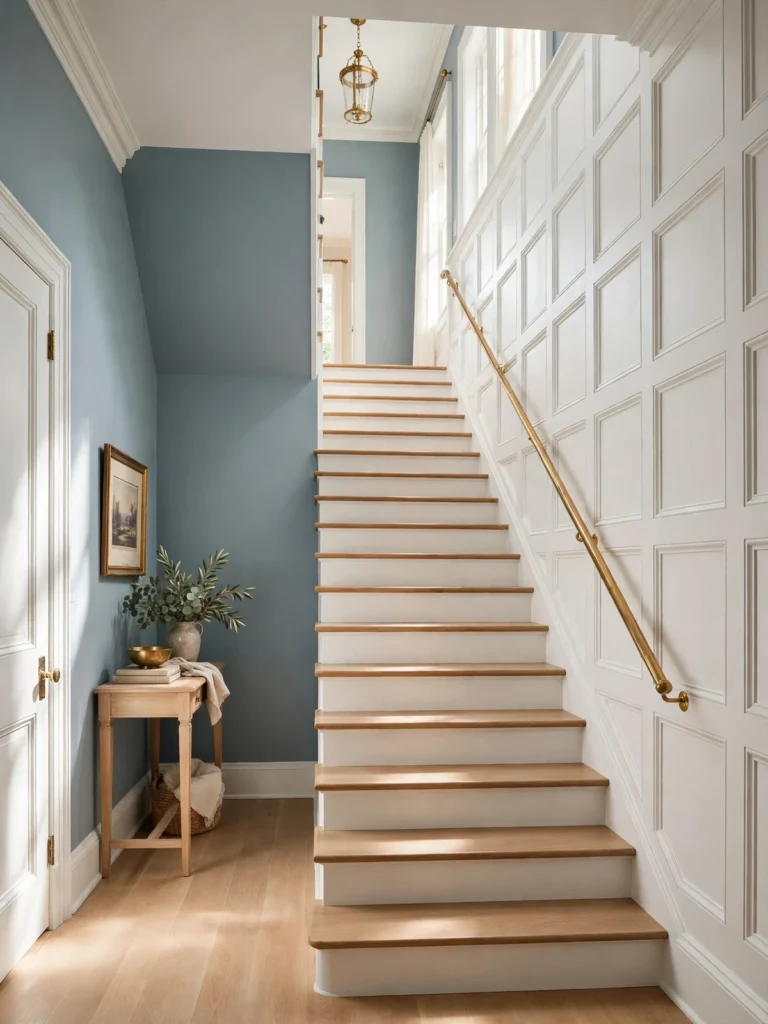
25 Stunning Small Space Staircase Ideas That Instantly Make a Tiny Home Feel Bigger, Brighter and More Stylish
A small space staircase does far more than connect two floors — it decides whether a compact home feels cramped or clever. These 25 ideas show how floating treads, spiral flights, hidden storage, glass balustrades and slim steel can save floor space, carry light through a tiny home, and turn a tight stair into a stylish feature.
A small space staircase is a stair designed to fit a compact home without wasting floor space — using a straight or spiral flight, floating treads, alternating steps, or built-in storage under and inside the stair instead of a wide, boxed-in flight. The best small space staircase feels light and clever: it lets daylight travel between floors, keeps sightlines open across the room, and turns every centimetre under the stair into useful storage.
For a tighter take on the same space-saving idea, these narrow staircase ideas cover slim flights, steep pitches and hallway stairs in more detail. The 25 ideas below cover the whole stair — its shape, its materials, its storage, its lighting, and the space around it — so you can choose a design that suits a tiny flat, a narrow hallway, or a compact family home.
Key Takeaways
What is the best small space staircase for a tiny home?
A straight flight with open risers, a spiral stair, or alternating treads — all three save floor space compared with a wide boxed-in stair. Glass balustrades and pale timber keep the stair feeling open, while storage drawers under the treads make every centimetre work.
Does a small space staircase suit a family home?
Yes, when it uses sturdy treads, a secure handrail, non-slip finishes and good lighting. A straight flight with storage drawers suits families best; alternating treads and steep spirals suit adults and older children, and a closed riser adds safety for toddlers and pets.
How much floor space does a small space staircase need?
A straight flight needs roughly 3 to 4 square metres, a spiral stair fits in a circle about 1.4 to 1.8 metres across, and a winder or L-shaped flight can tuck into a corner. Exact sizes depend on the floor-to-floor height and local building rules.
What materials work best in a small space staircase?
Pale ash or blonde maple treads, slim matte black steel, clear or frosted glass, polished concrete and light plaster. Pale materials and glass reflect light, so the stair feels bigger than it is, while warm timber keeps steel and glass from feeling cold.
How do you add storage to a small space staircase?
Build drawers into the risers, shelves into the wall beside the flight, a cupboard or desk under the stair, and a bench on the landing. Every step can hold shoes, books or bedding, so the stair works as furniture as well as a route upstairs.
A Small Space Staircase in Pale Ash With Floating Treads
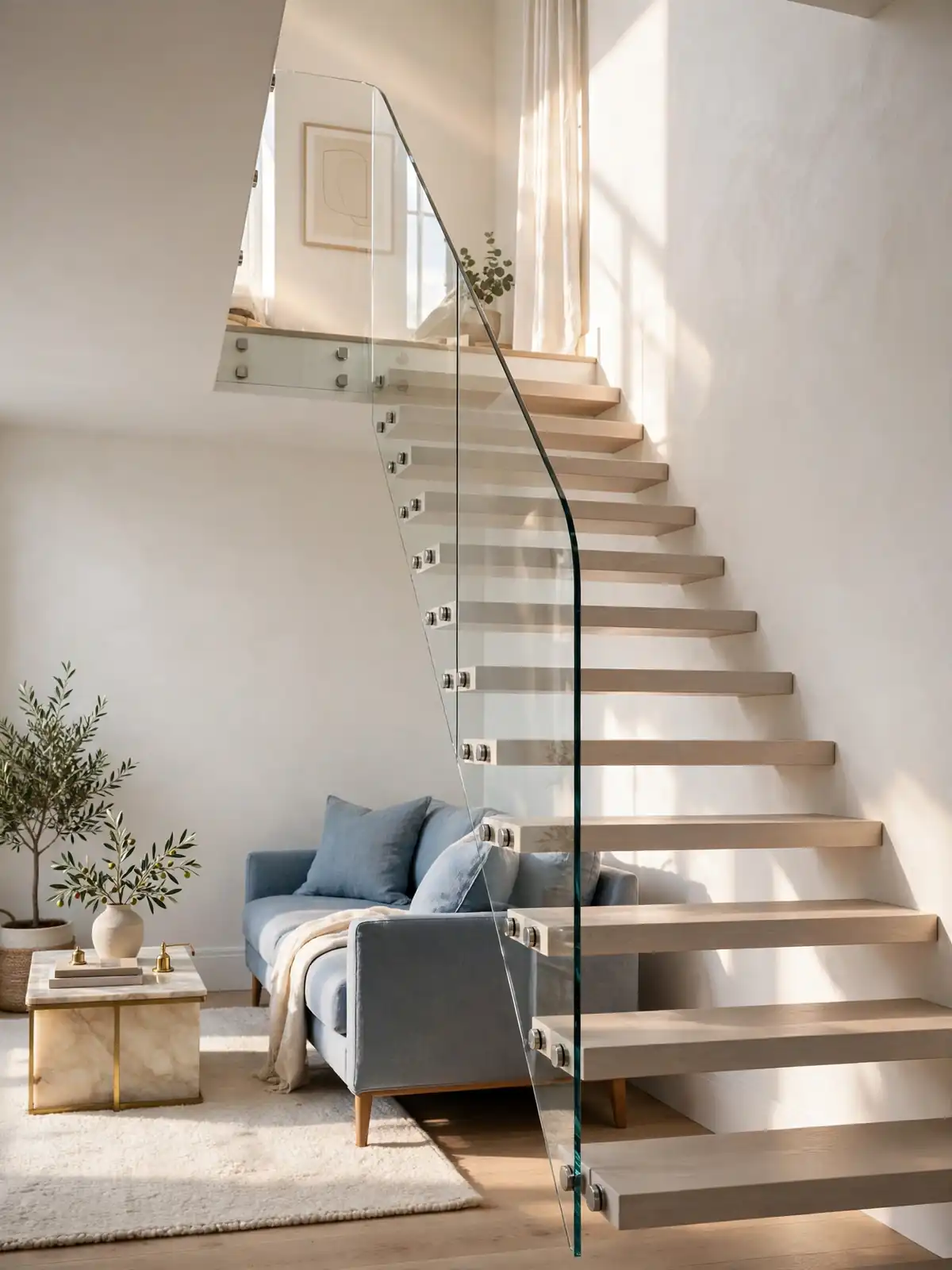
A floating stair is the simplest way to make a small space staircase feel bigger, because the gaps between the treads let light and air pass straight through. In one compact living room, pale ash treads, each 800 mm wide and 280 mm deep, are fixed to a hidden steel spine, so they appear to float above the floor with 175 mm gaps between them. A clear glass balustrade on slim steel clamps keeps the flight open to the room, while a dusty-blue linen sofa and an ivory wool rug below keep the palette soft.
Quick tips:
- Choose pale ash so floating treads stay light and warm.
- Use a hidden steel spine for a clean, floating look.
- Keep the wall beside the stair plain white so the treads stand out.
- Add a slim steel handrail on the glass for confidence on the climb.
A Small Space Staircase With a Spiral Flight in Matte Black Steel
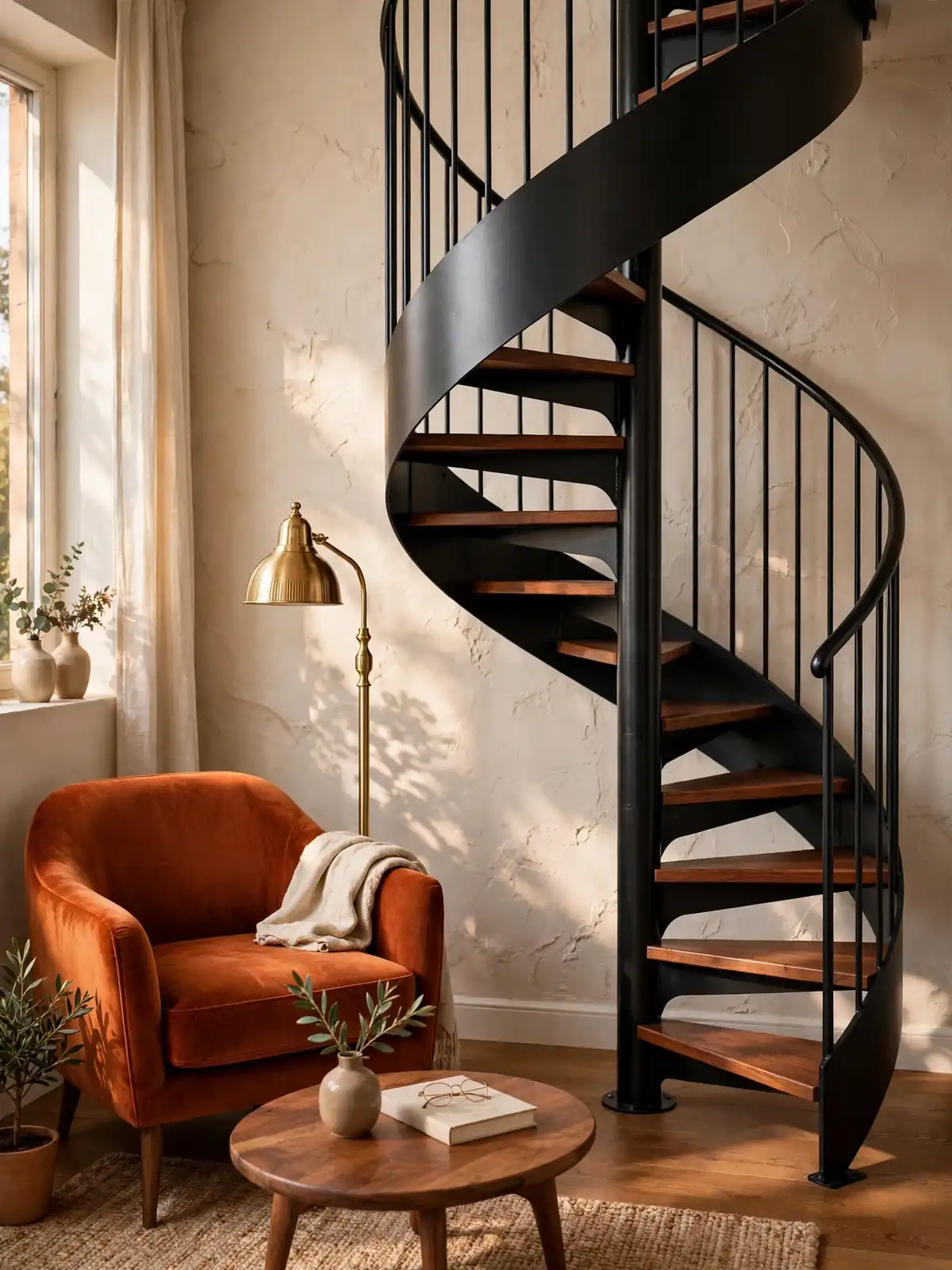
A spiral stair fits in a circle barely wider than a dining table, which makes it one of the cleverest choices for a small space staircase. Here, a spiral flight 1.5 metres across rises around a central steel pole, with warm walnut treads, each 40 mm thick, fanning out from the centre, and a slim matte black steel handrail curving above them. A burnt-orange velvet armchair below echoes the walnut tone, while a brass floor lamp adds a soft evening glow.
Quick tips:
- Keep the spiral diameter around 1.5 metres for a comfortable climb.
- Pair black steel with warm walnut so the stair never feels cold.
- Use a continuous handrail that follows the spiral smoothly.
- Match the steel tone to window frames or light fittings nearby.
A Small Space Staircase With Storage Drawers Built Into Every Riser
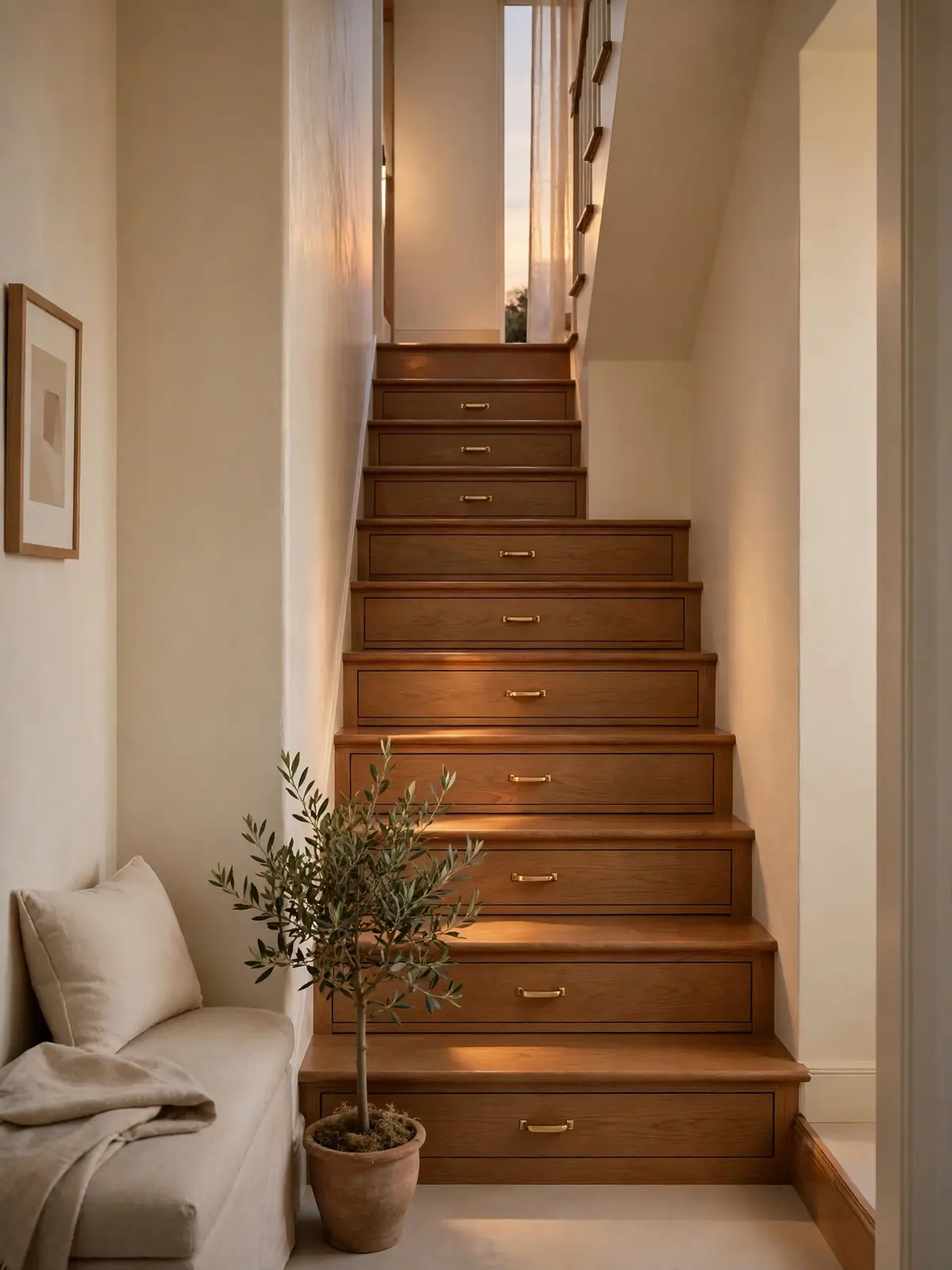
Storage drawers built into the risers turn a small space staircase into a chest of drawers you climb. On this stair, warm oak treads, each 850 mm wide and 280 mm deep, sit above deep pull-out drawers, each 200 mm high, that hold shoes, scarves, bedding and books — one drawer per step, with slim brass handles. A soft beige linen bench sits at the base, a small olive tree in a clay pot adds life, and the cream walls catch the evening light.
Quick tips:
- Make each drawer at least 200 mm high so it holds real items.
- Use slim brass handles for a neat, finished look.
- Label the drawers inside so the family finds things fast.
- Keep the handrail slim so the drawers stay the feature.
A Small Space Staircase With Frosted Glass Panels in a Narrow Hallway
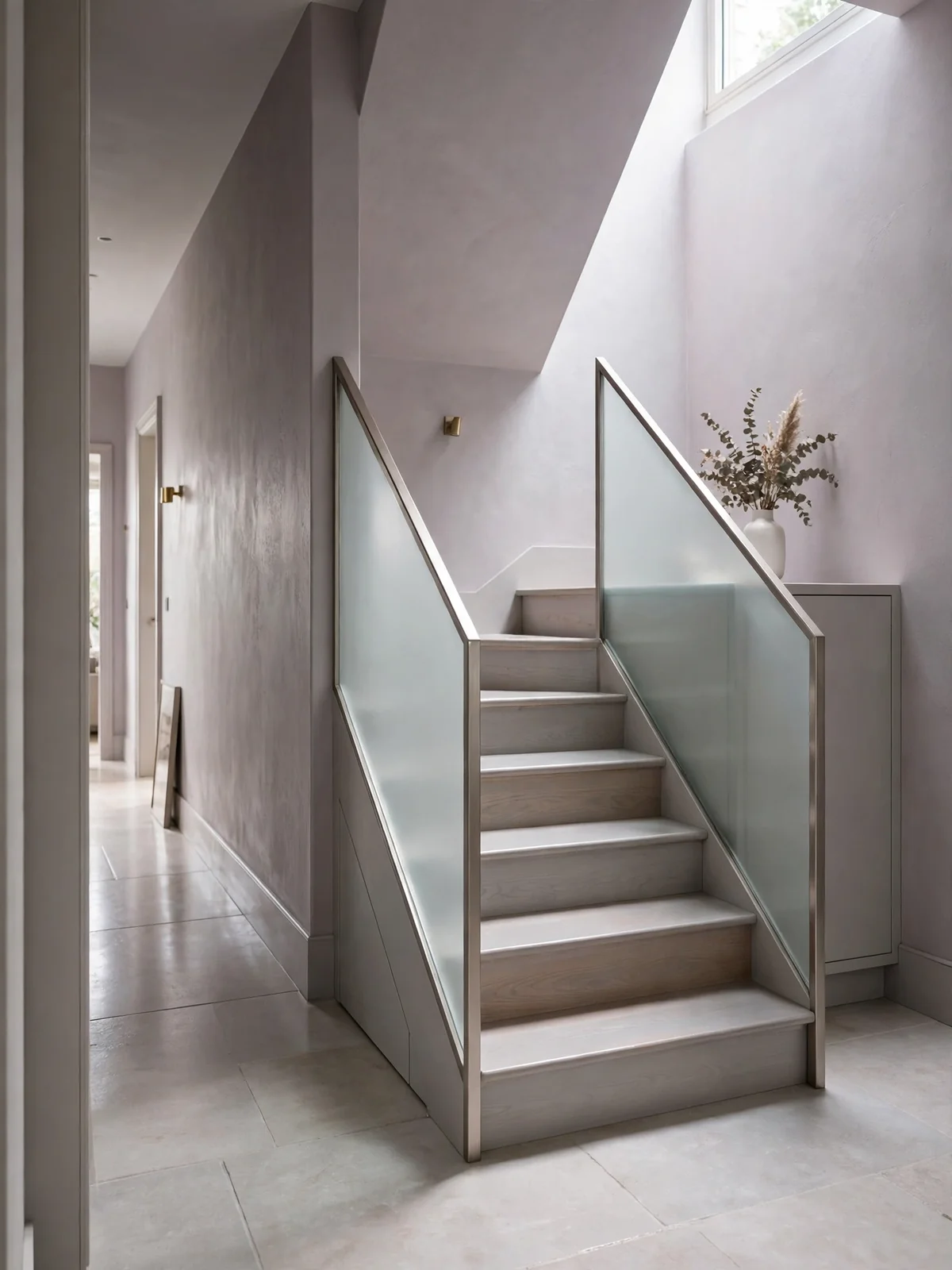
Frosted glass gives a small space staircase privacy without blocking the light, which matters most in a narrow hallway. Here, 12 mm thick frosted glass panels run along a straight flight with pale grey oak treads, each 800 mm wide, diffusing daylight into a soft glow while hiding the view of feet and clutter from the room below. Soft lilac-grey walls and a white ceramic vase on the landing keep the palette calm, and the pale stone floor reflects the diffused light gently through the hallway.
Quick tips:
- Choose lightly frosted glass so light still passes through softly.
- Use slim steel channels to hold the panels without bulky frames.
- Keep the wall colour pale so the frosted glow shows at its best.
- Wipe the panels with a microfibre cloth to keep them streak-free.
A Small Space Staircase in Polished Concrete With a Slim Steel Spine
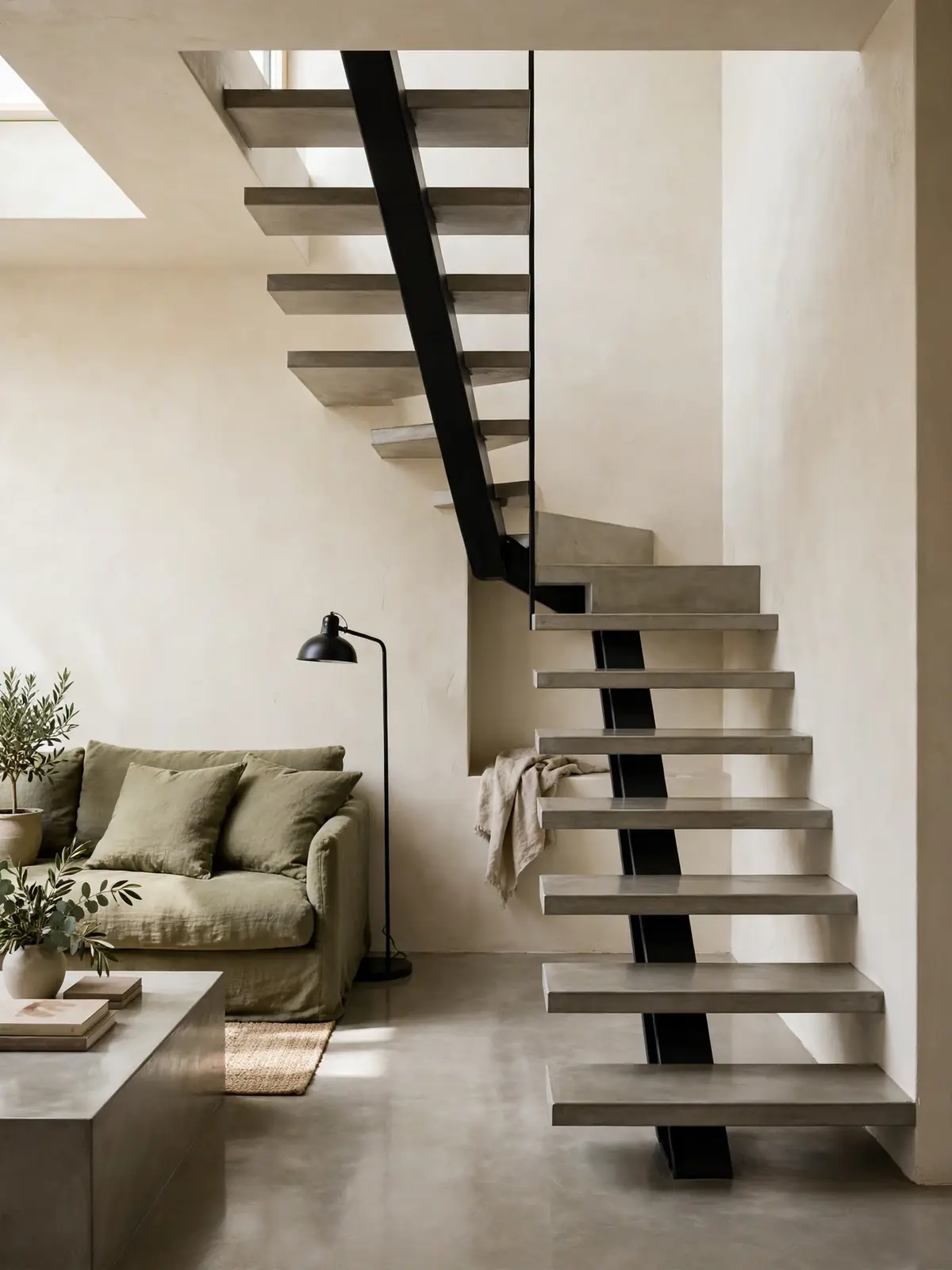
A polished concrete stair on a slim steel spine looks solid yet takes up almost no visual space, which is ideal for a compact room. In this home, a straight concrete stair is cast in one smooth pour, each tread 850 mm wide, supported by a single slim black steel spine running down the centre, with no balustrade on the wall side. An olive-green linen sofa and cream plaster walls soften the concrete, while a black metal floor lamp adds a crisp edge.
Quick tips:
- Seal polished concrete well so it stays smooth and easy to clean.
- Keep the steel spine slim and central for a floating look.
- Keep the wall palette soft so the concrete never feels stark.
- Add a slim steel handrail for a clean, modern line.
A Small Space Staircase With Alternating Treads in Pale Oak
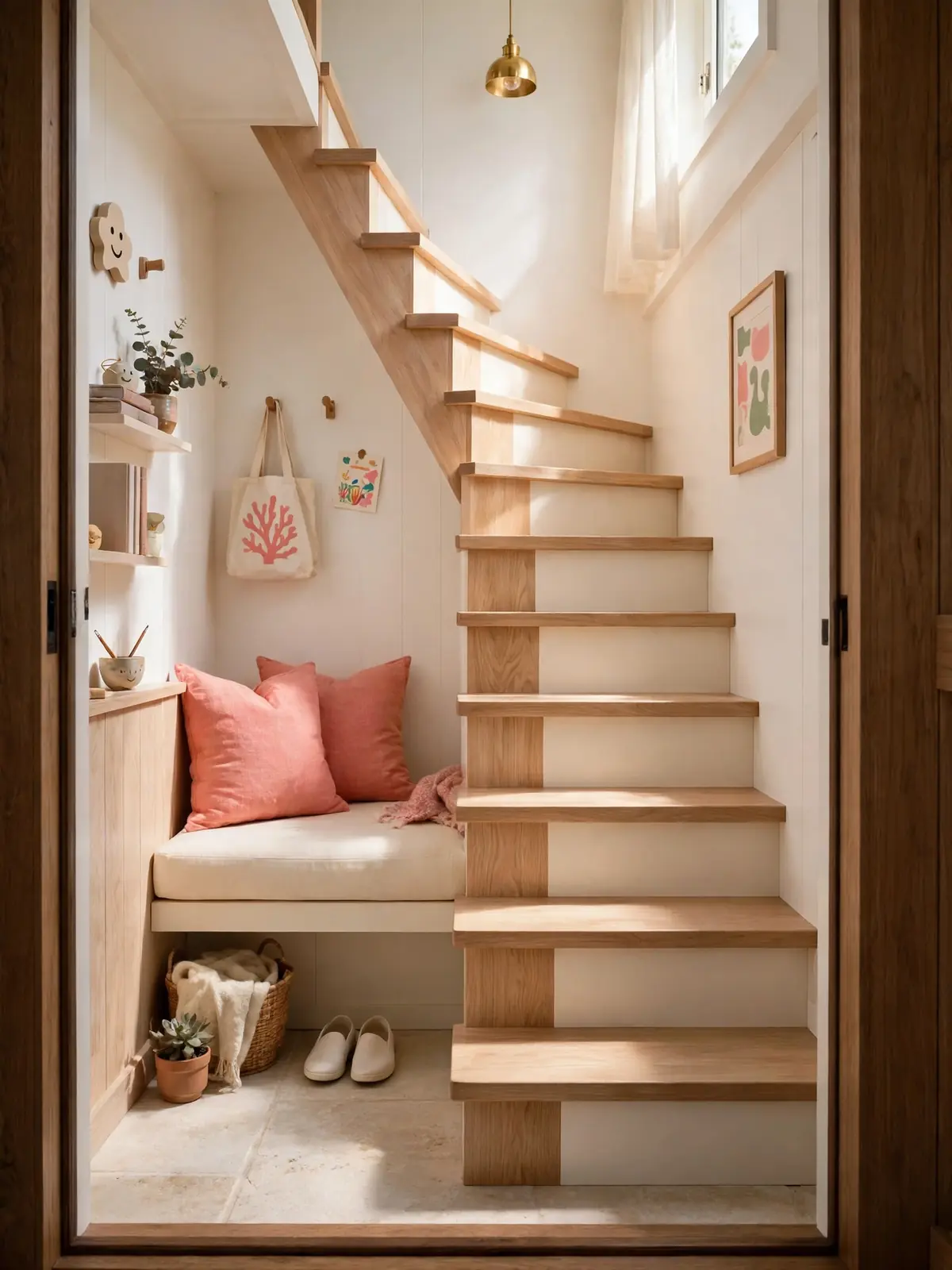
Alternating treads — each step wide on one side only, left then right — let a small space staircase climb steeply in half the floor space of a normal flight. Here, pale oak alternating treads, each 800 mm wide and 250 mm deep on the wide side, rise at a steep pitch with a slim black steel handrail above. Coral-pink cushions on a cream bench below add a cheerful accent, a small brass pendant light glows above the landing, and the pale stone floor keeps the whole entry bright and calm.
Quick tips:
- Keep the wide side of each tread at least 250 mm deep for a safe foothold.
- Use a handrail on both sides if the pitch is steep.
- Pair pale oak with one bright accent, like coral cushions.
- Add one brass fitting to warm the steel and oak.
A Small Space Staircase Beside a Terracotta Plaster Wall in a Tiny Flat
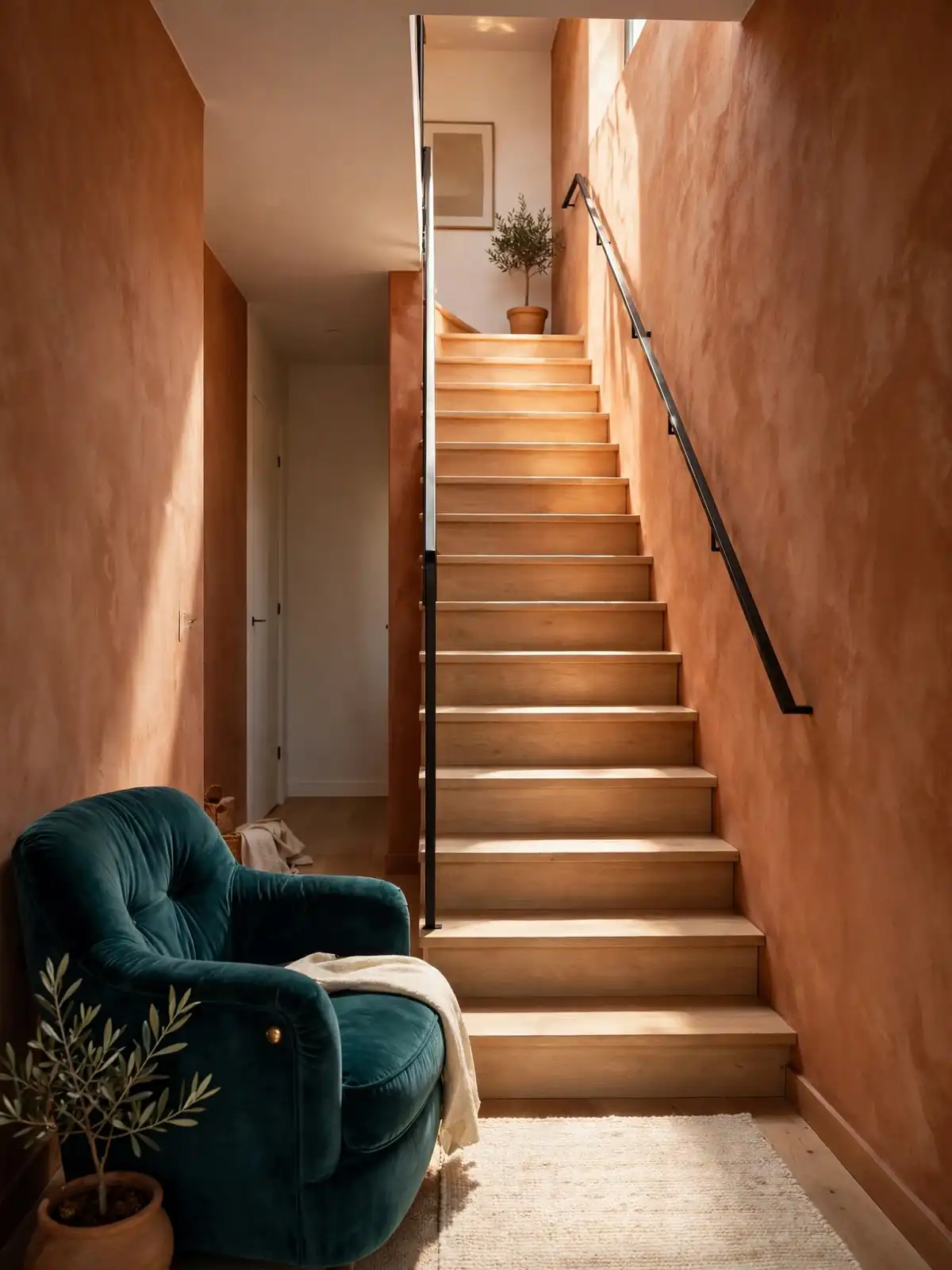
A terracotta plaster wall gives a small space staircase a warm, earthy backdrop that makes pale timber glow without taking up any floor space. On this stair, pale oak treads, each 800 mm wide and 280 mm deep, run beside a hand-finished terracotta wall, with a slim black steel handrail fixed to the plaster. A deep teal velvet chair at the base adds a rich contrast, while a cream rug softens the floor. The golden light from a nearby window warms the terracotta even further in the afternoon.
Quick tips:
- Keep the plaster finish matte so the terracotta reads as soft, not shiny.
- Pair terracotta with pale oak, not dark timber, for balance.
- Add one deep teal or green accent to contrast the warm wall.
- Use a slim black handrail so it does not compete with the colour.
A Small Space Staircase With a Slim Brass Inlay on a Compact Flight
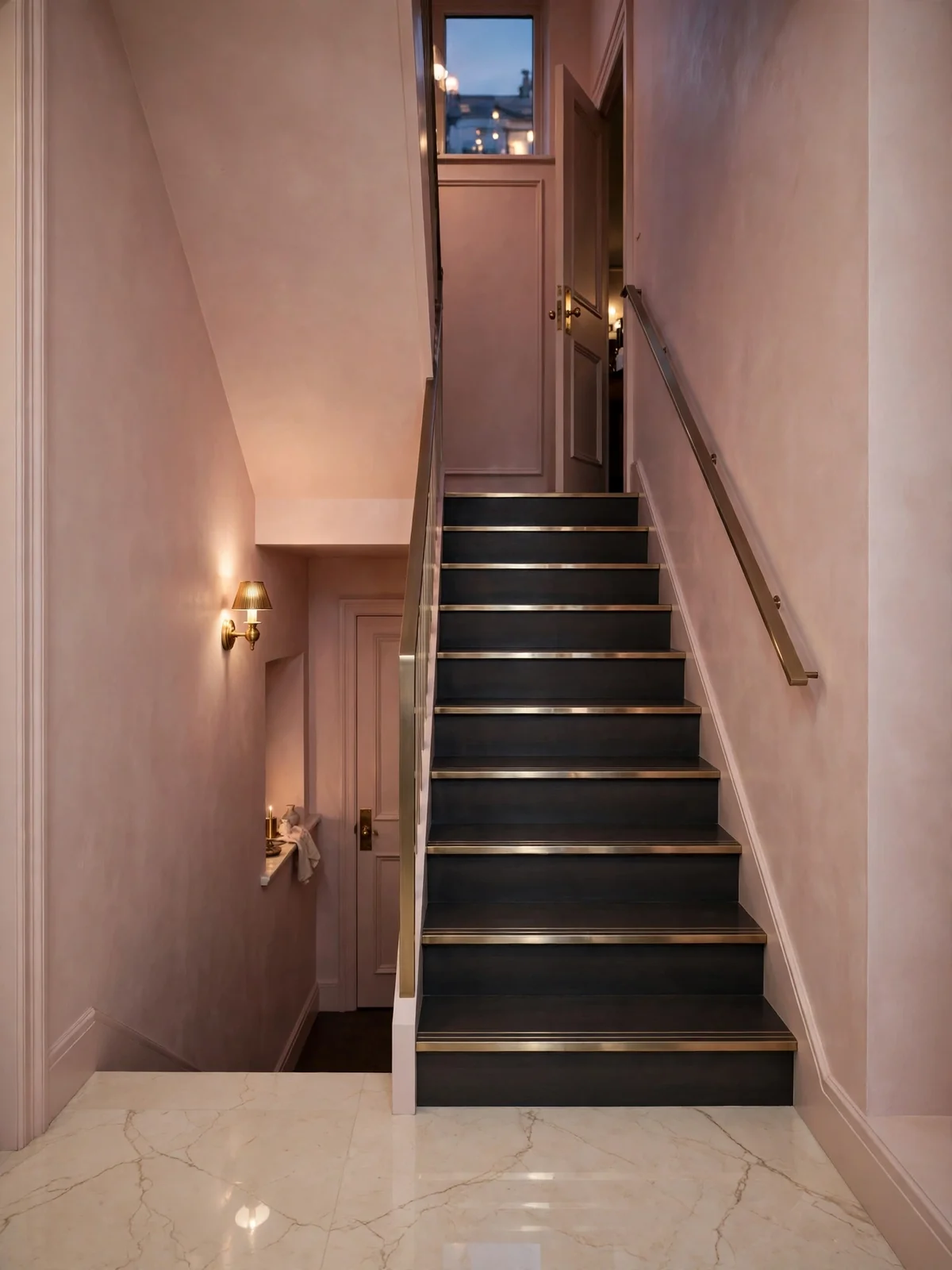
A thin brass line on the edge of every tread turns a compact stair into a piece of jewellery without adding a centimetre of width. Here, dark charcoal treads, each 850 mm wide, carry a 10 mm wide brushed-brass inlay strip along the nosing, catching the light on every step. Blush-pink walls and a cream marble floor keep the palette soft, while a small brass wall sconce on the landing echoes the inlay. The brass glows gently in the evening and guides the eye upward.
Quick tips:
- Use brushed brass, not polished, for a softer, modern shine.
- Keep the inlay strip slim — about 10 mm — so it reads as a fine line.
- Pair dark treads with pale walls so the brass stands out.
- Match the brass tone to a sconce or mirror nearby.
A Small Space Staircase With a Pull-Out Desk Under the Flight
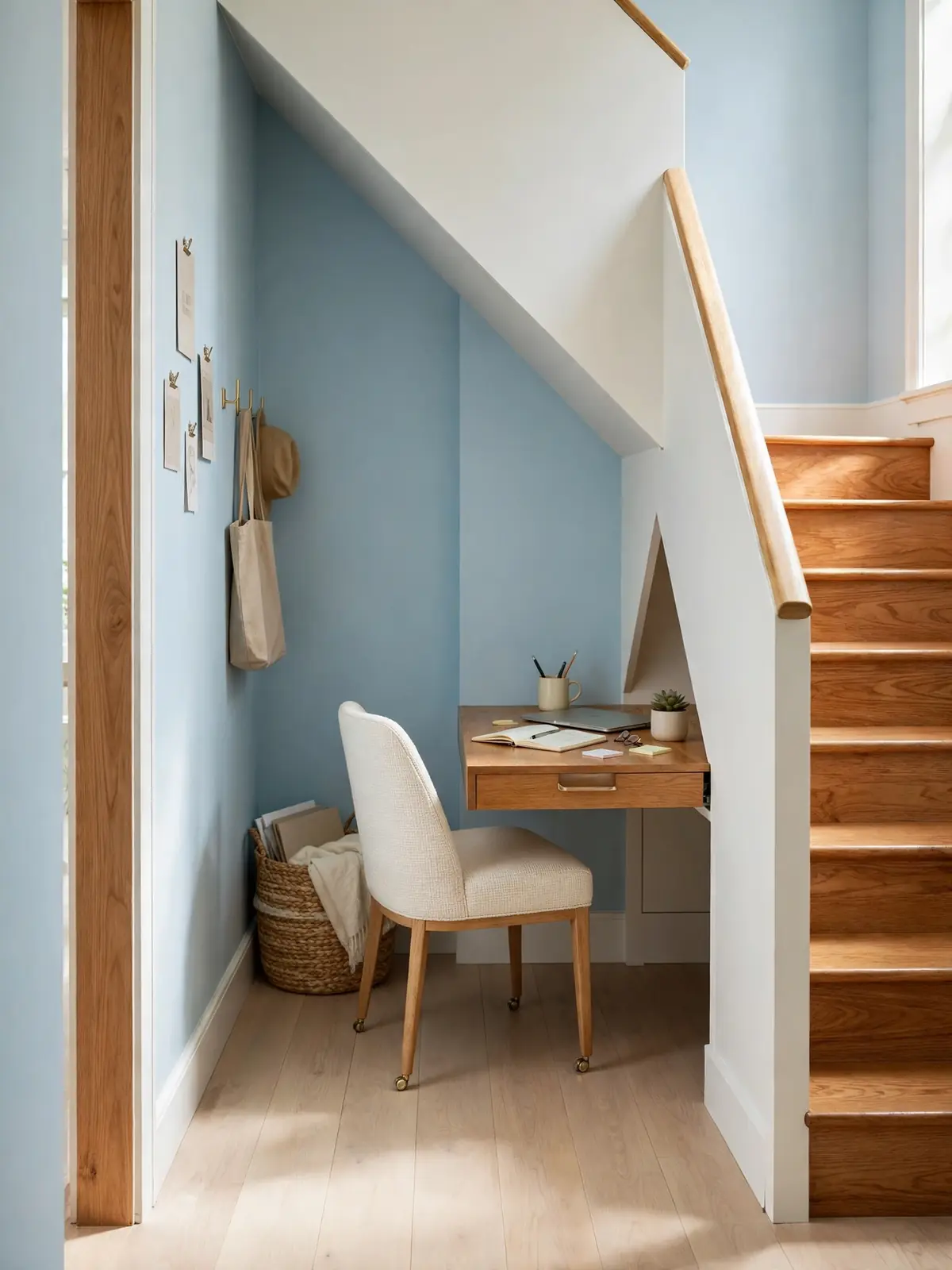
The triangle under a small space staircase is the perfect size for a desk, and a pull-out design keeps it hidden when work is done. Beneath this stair, warm oak treads, each 850 mm wide, rise above a pull-out desk, 600 mm deep, that slides out on smooth runners with a cream desk chair tucked beneath it. Soft sky-blue walls and a pale wood floor keep the corner bright, while a woven basket holds papers and cables out of sight.
Quick tips:
- Make the desk at least 600 mm deep so it is comfortable to work at.
- Use smooth runners so the desk slides out easily.
- Keep the chair slim so it tucks fully beneath the desk.
- Add a small wall light above the desk for evening work.
A Small Space Staircase With a Full-Height Window at the Top Landing
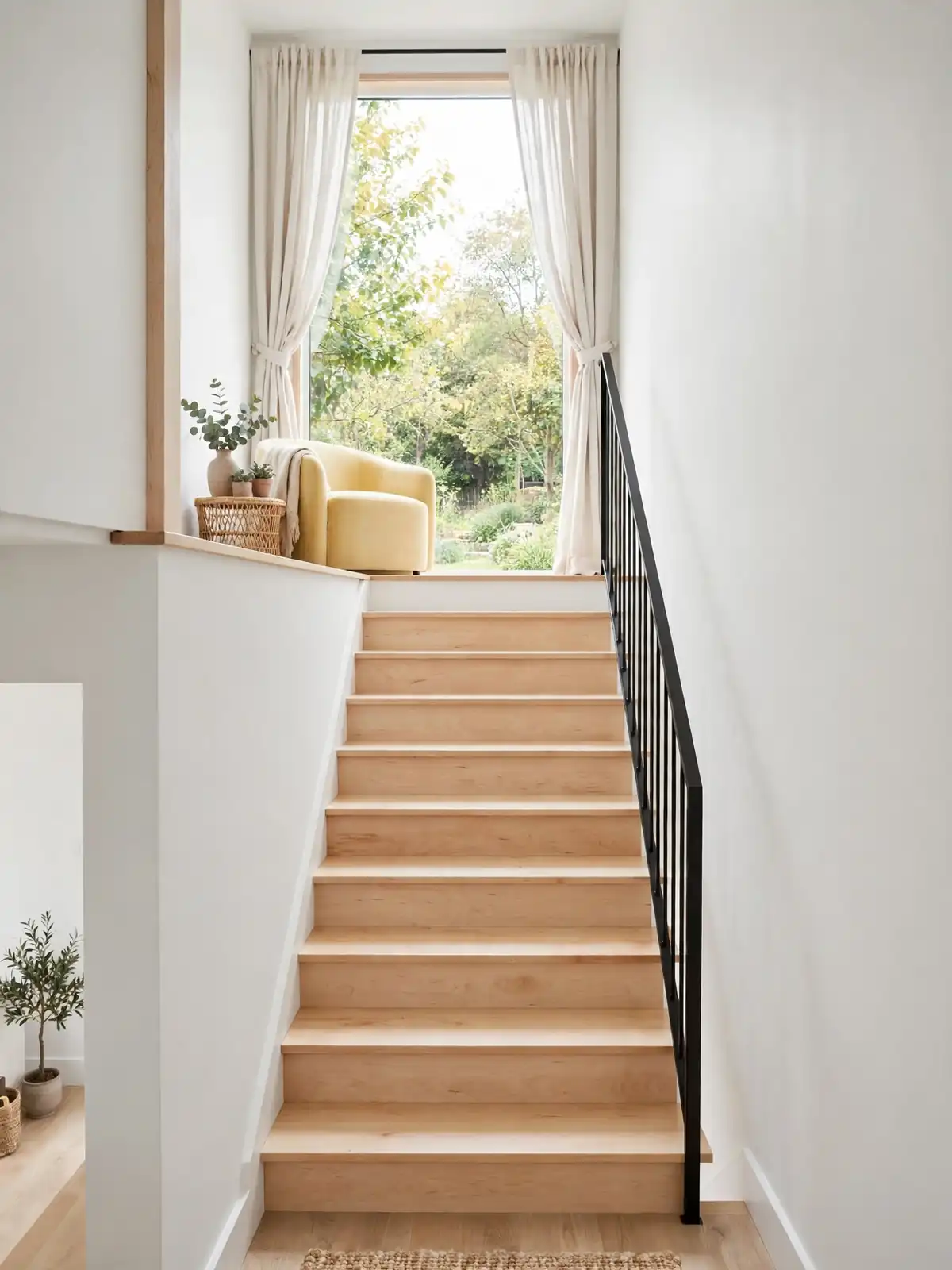
A full-height window at the top landing is the single most transformative thing you can do to a small space staircase, because daylight that enters at the top does not stop at the landing — it washes down every pale maple tread, bounces off white plaster, and reaches the hallway below, so a stair that once felt like a dark, cramped corridor becomes the brightest route in the house. In this home, the window is 2.4 metres tall and 1.1 metres wide, set into the wall at the top landing beside pale maple treads, each 850 mm wide, with a slim steel handrail and a clear glass panel on the open side. A soft butter-yellow armchair sits on the landing, catching the morning sun, while pale linen curtains frame the window without blocking it, and the green garden beyond becomes a living picture at the top of every climb. The stair feels less like a passage and more like a destination, and because the window is tall rather than wide, it keeps the wall’s clean modern lines while still flooding the stairwell with light from dawn until dusk — the one change that makes a compact home feel twice as big.
Quick tips:
- Make the landing window full-height so light reaches every tread.
- Use pale maple treads to bounce the window light further down.
- Choose sheer linen curtains that filter light without blocking it.
- Keep the landing clear so the window stays the focal point.
A Small Space Staircase in Smoked Oak Against a Deep Green Wall
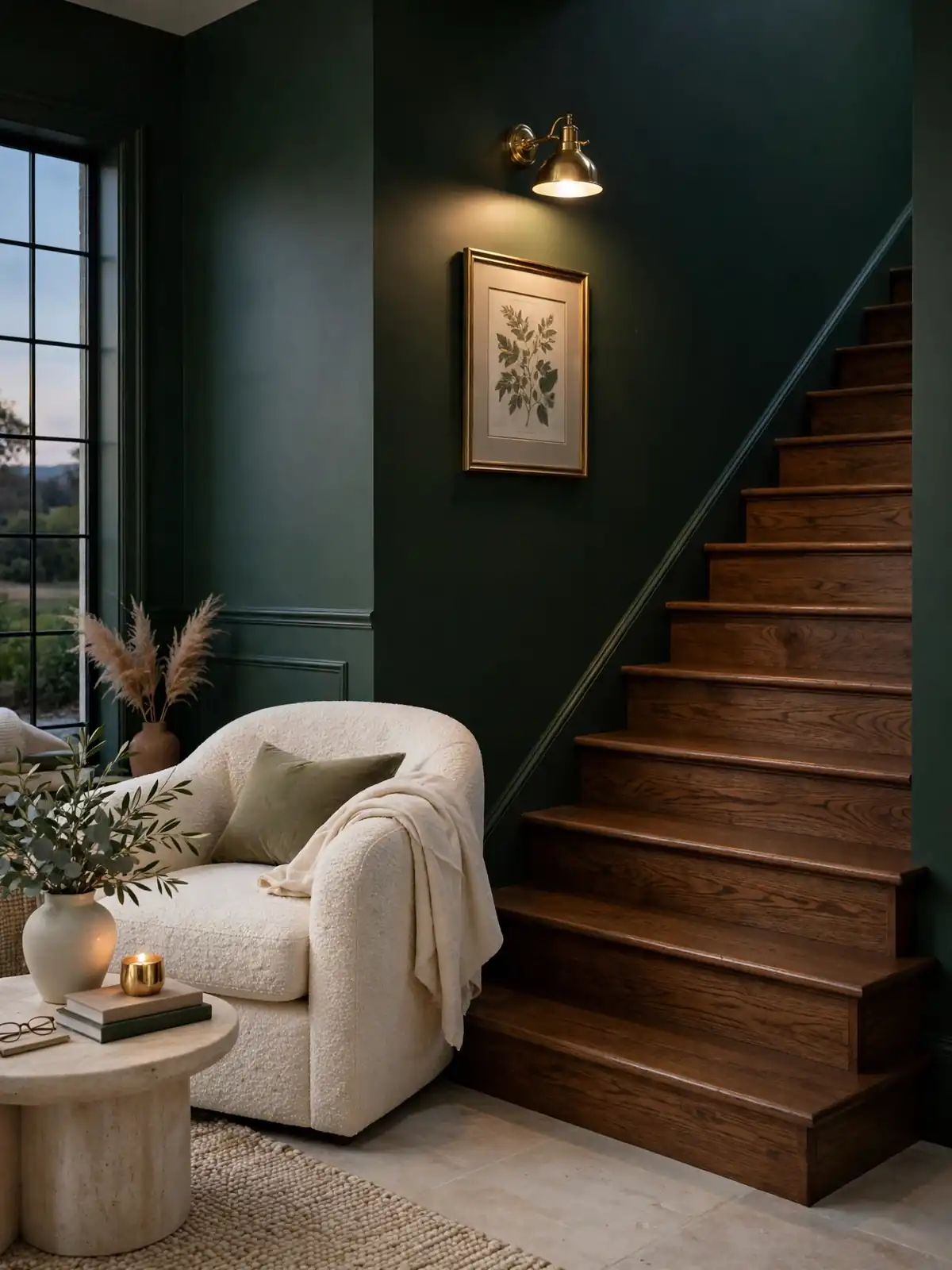
Smoked oak and deep green make a small space staircase feel rich and calm, like a quiet library stair in a tiny home. Here, smoked oak treads, each 850 mm wide with a soft matte finish, run beside a deep forest-green wall, with a slim brass handrail and a cream boucle armchair below. A brass picture light above the landing warms the green in the evening, while the pale stone floor keeps the room from feeling dark. The stair feels dramatic, yet completely liveable.
Quick tips:
- Choose smoked oak for depth without the harshness of black.
- Keep the green wall to one side only, with the rest pale.
- Add brass fittings to warm the deep green.
- Use a matte tread finish to avoid glare in low light.
A Small Space Staircase With a Slim Jute Runner Down the Centre
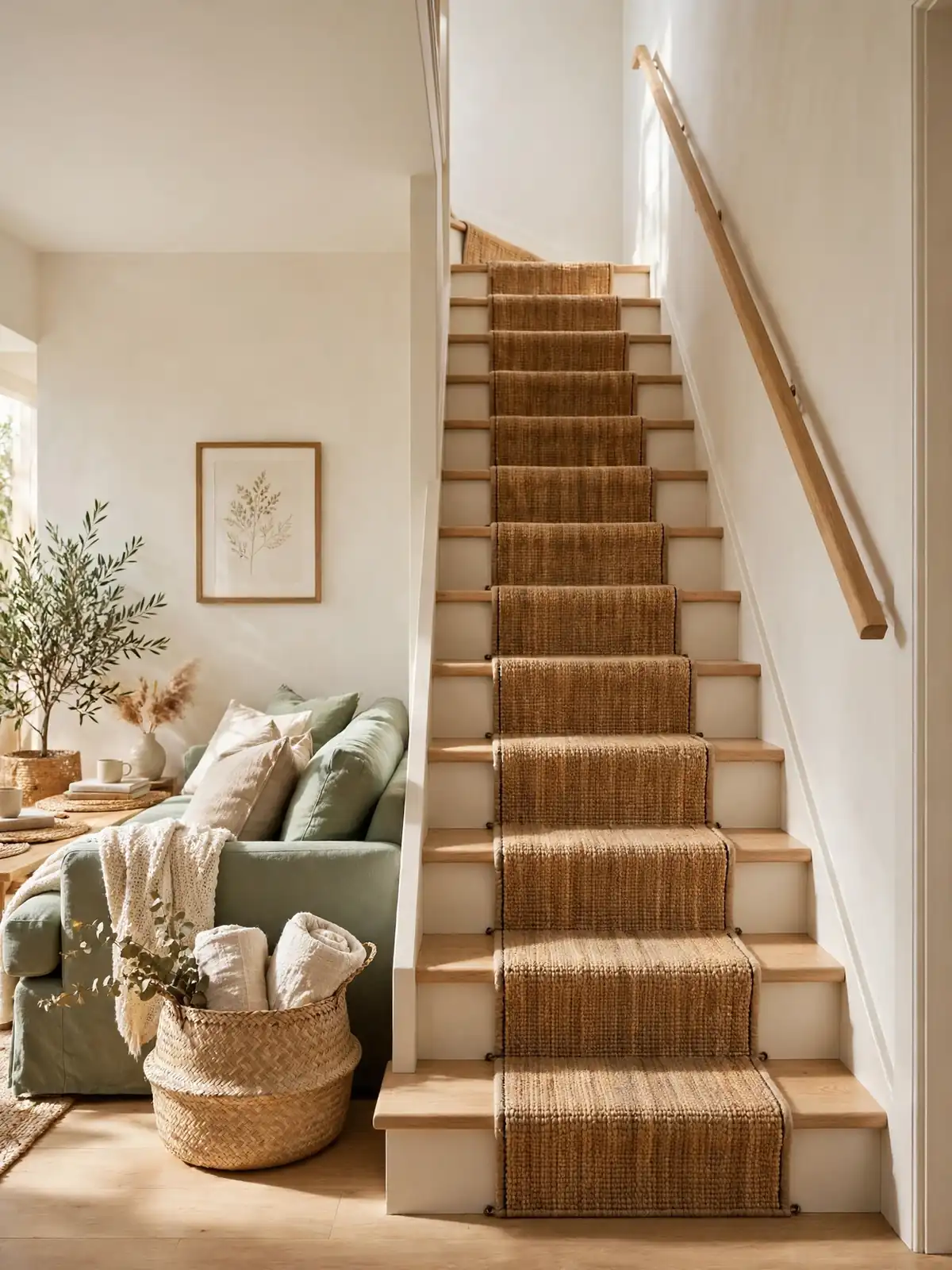
A jute runner down the centre of a small space staircase adds texture and grip while keeping the timber visible on both sides. In this home, a 500 mm wide natural jute runner, held by slim brass rods, runs down the centre of pale oak treads, each 850 mm wide, leaving a strip of warm timber showing on either side. A soft sage-green sofa and a woven seagrass basket nearby complete the relaxed palette, while cream walls keep the hallway bright. The runner softens every footstep and makes the stair feel quieter.
Quick tips:
- Keep the runner narrow — about 500 mm — so timber shows on both sides.
- Use brass stair rods to hold the runner neatly in place.
- Choose natural jute for texture, not a patterned carpet.
- Vacuum the runner weekly to keep the fibres clean and flat.
A Small Space Staircase With Open Shelves Built Into the Stair Wall
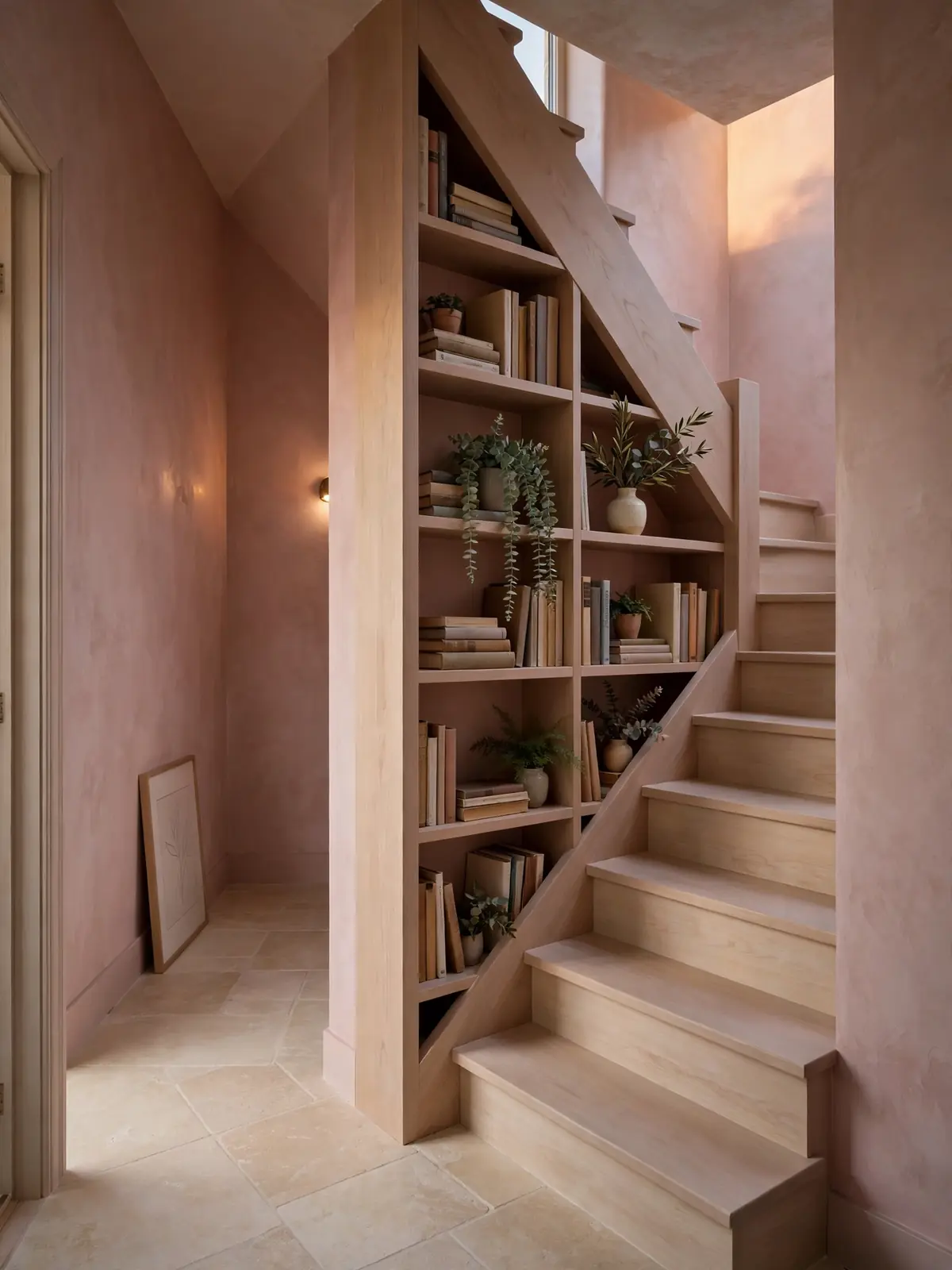
Open shelves in the stair wall turn the dead space beside a small space staircase into a library. Along this stair, three open timber shelves, each 400 mm wide and 250 mm deep, are built into the wall following the angle of the flight, each holding a small stack of books and a potted plant lit by a tiny warm light. Pale ash treads, each 850 mm wide, and soft dusty-rose walls keep the palette gentle, while the cream stone floor reflects the shelf lights softly in the evening.
Quick tips:
- Space shelves evenly, following the angle of the stair.
- Use warm recessed lights above each shelf for a soft glow.
- Keep the books and plants small — one or two items per shelf.
- Build the shelves in the same timber as the treads for a unified look.
A Small Space Staircase With a Wall-Mounted Handrail and No Balustrade
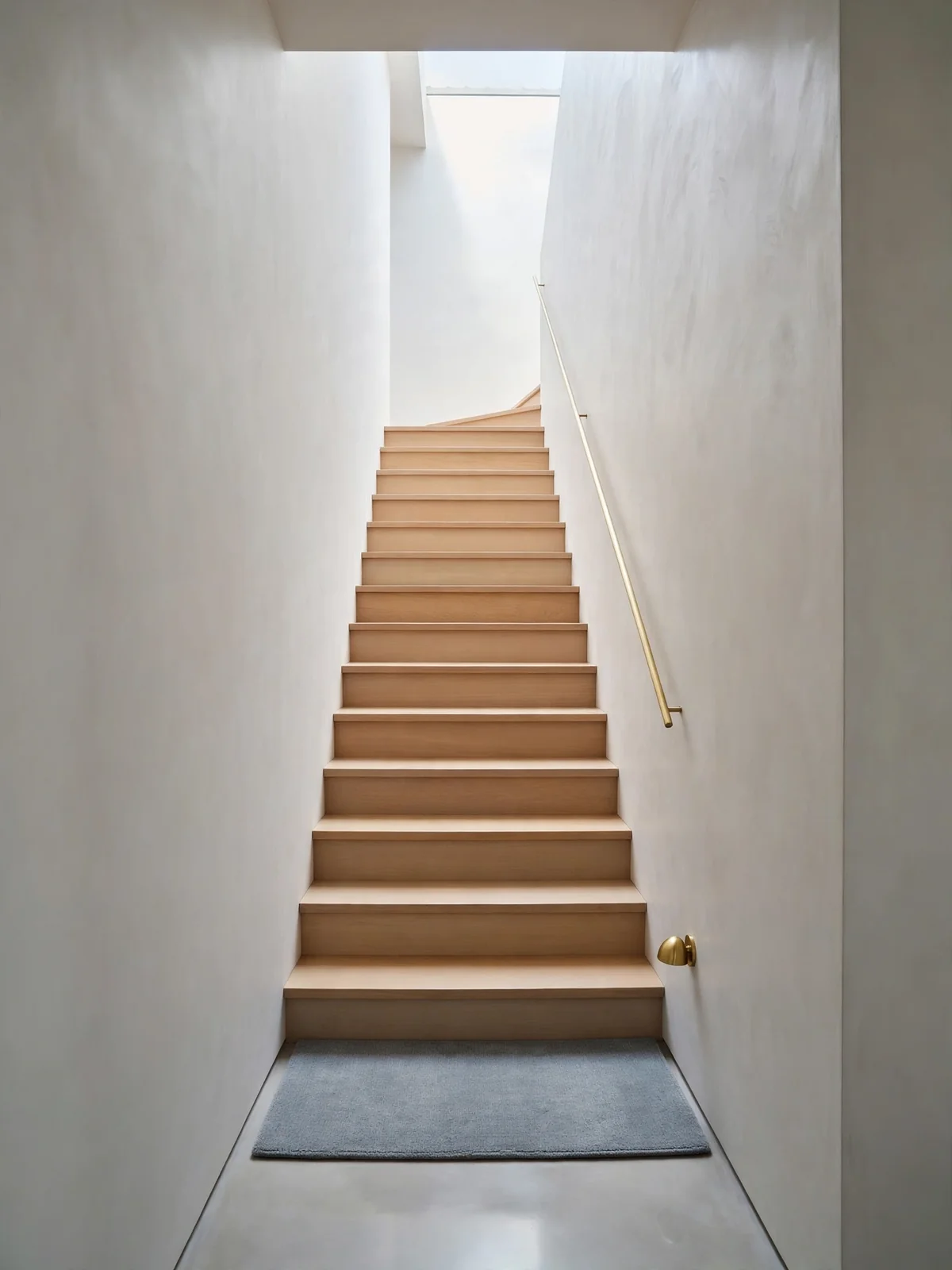
Skipping the balustrade and using only a wall-mounted handrail is the most space-saving choice of all for a small space staircase — nothing projects into the room. On this stair, light beech treads, each 850 mm wide, rise against a smooth white plaster wall, with a slim 40 mm diameter steel handrail fixed to the wall on discreet brackets. A soft grey-blue rug at the base and a small brass wall light add quiet warmth, while the white wall stays completely clean and unbroken.
Quick tips:
- Keep the handrail slim — about 40 mm in diameter — for a light look.
- Fix it on discreet brackets so the wall stays clean.
- Use a smooth plaster finish so the wall reads as one clean surface.
- Add one warm wall light so the handrail is easy to find at night.
A Small Space Staircase in Blonde Maple With Matte White Risers
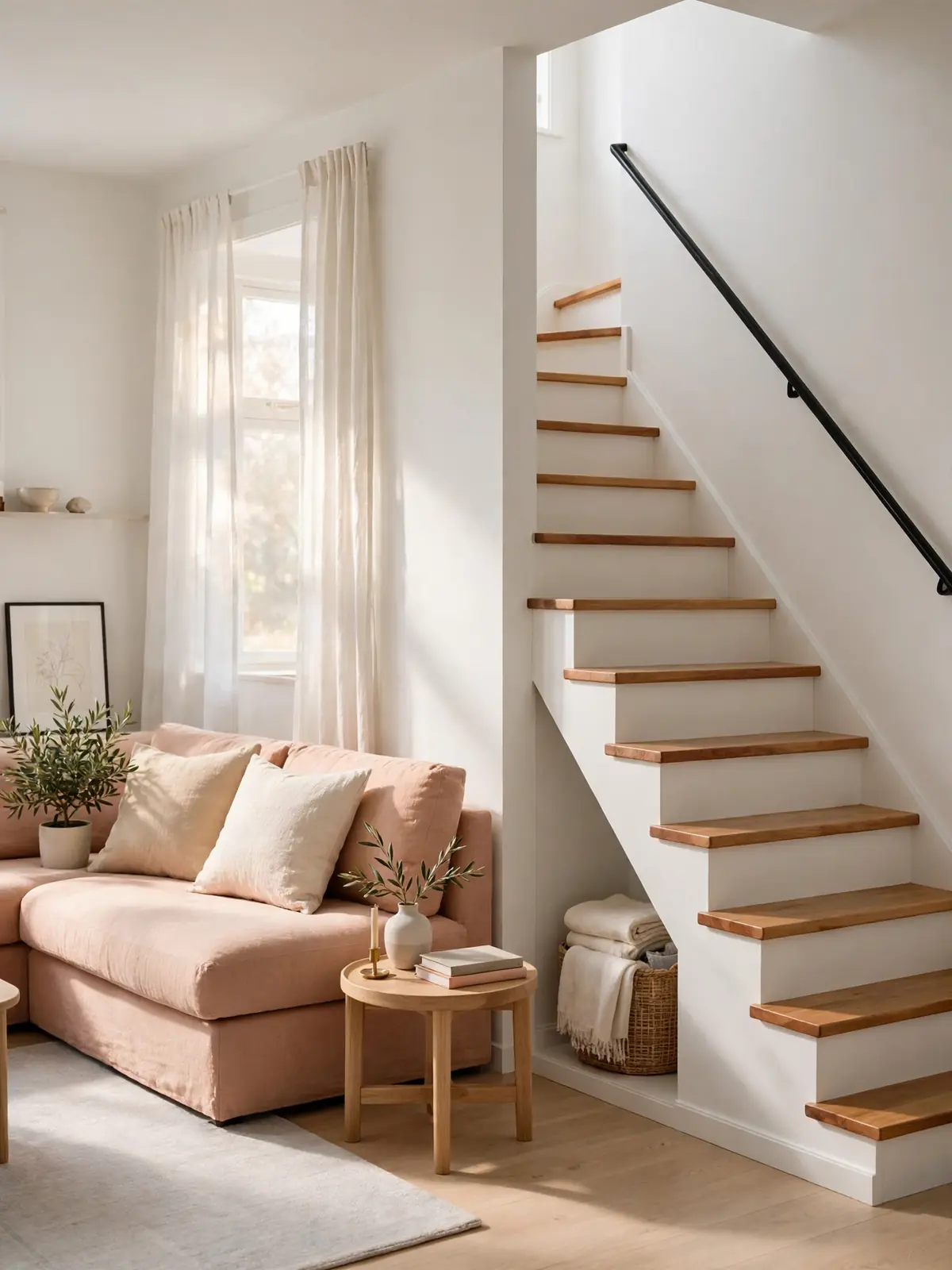
Blonde maple treads with matte white risers make a small space staircase feel fresh and Scandinavian, because the pale timber glows against the crisp white. Here, 40 mm thick blonde maple treads, each 850 mm wide, sit on matte white risers, 175 mm high, with a slim white steel balustrade and a pale timber handrail. A soft peach linen sofa and a pale grey rug below keep the room warm, while morning light falls across the maple and makes the whole stair shine softly.
Quick tips:
- Choose blonde maple for the palest, freshest timber look.
- Keep risers matte white so the maple treads stand out.
- Pair the stair with soft peach or pale grey furnishings.
- Use a pale timber handrail to match the treads.
A Small Space Staircase With a Winder Turn and a Window Seat
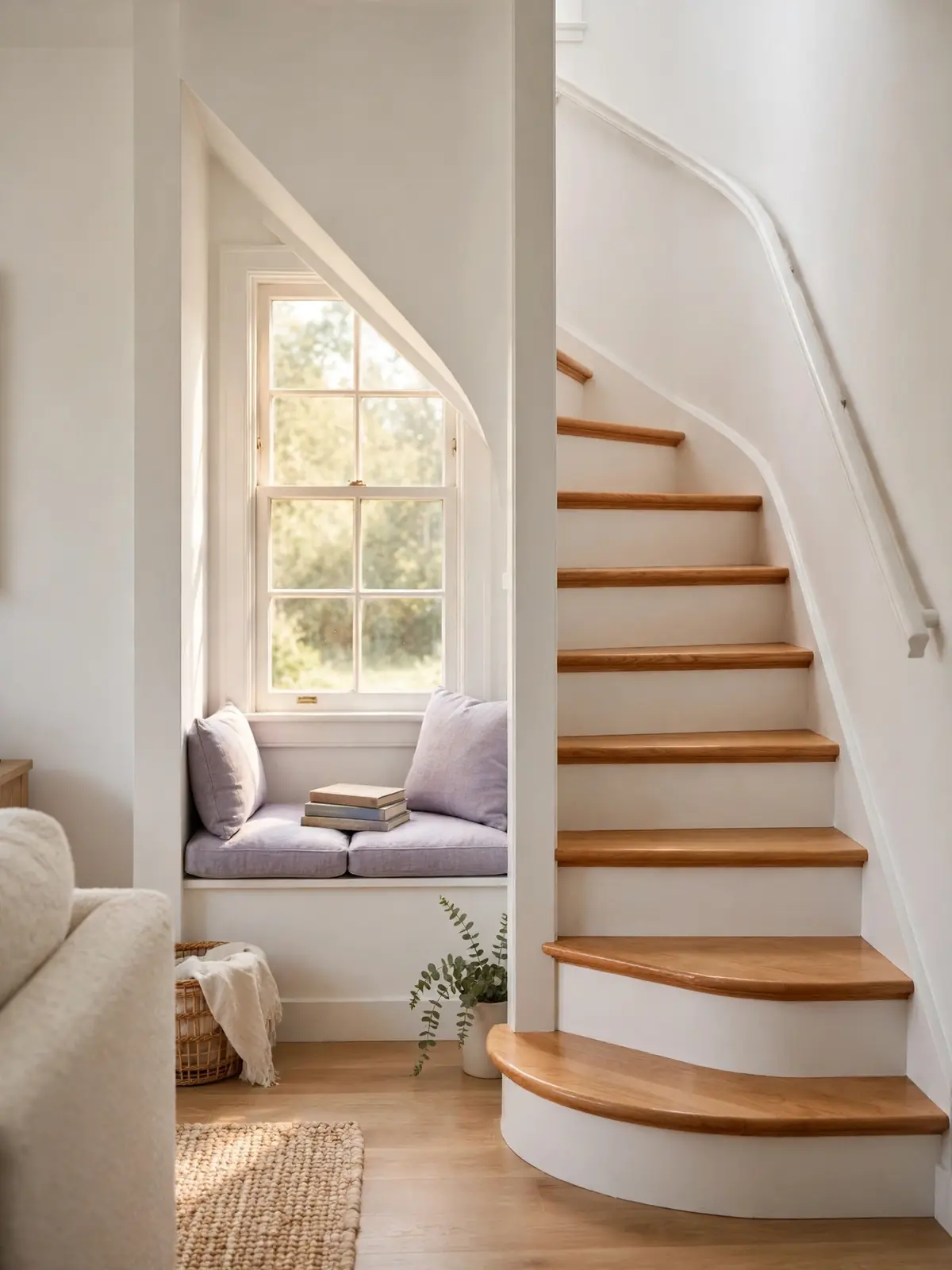
A winder turn — fan-shaped treads that turn the stair in its own footprint — saves the space a landing would need, and a window seat on the turn makes the climb a place to pause. In this home, three winder treads turn the flight 90 degrees in a corner, with a built-in window seat, 500 mm deep, dressed in soft lavender cushions and a small stack of books. Pale oak treads, each 850 mm wide, rise on either side, while white walls and warm daylight keep the space bright.
Quick tips:
- Make the window seat at least 500 mm deep so it is comfortable to sit on.
- Use washable cushion covers for a family window seat.
- Keep the winder treads wide on the outer edge for a safe foothold.
- Choose pale oak treads so the turn feels open, not boxed in.
A Small Space Staircase With a Mustard Accent Wall at the Turn
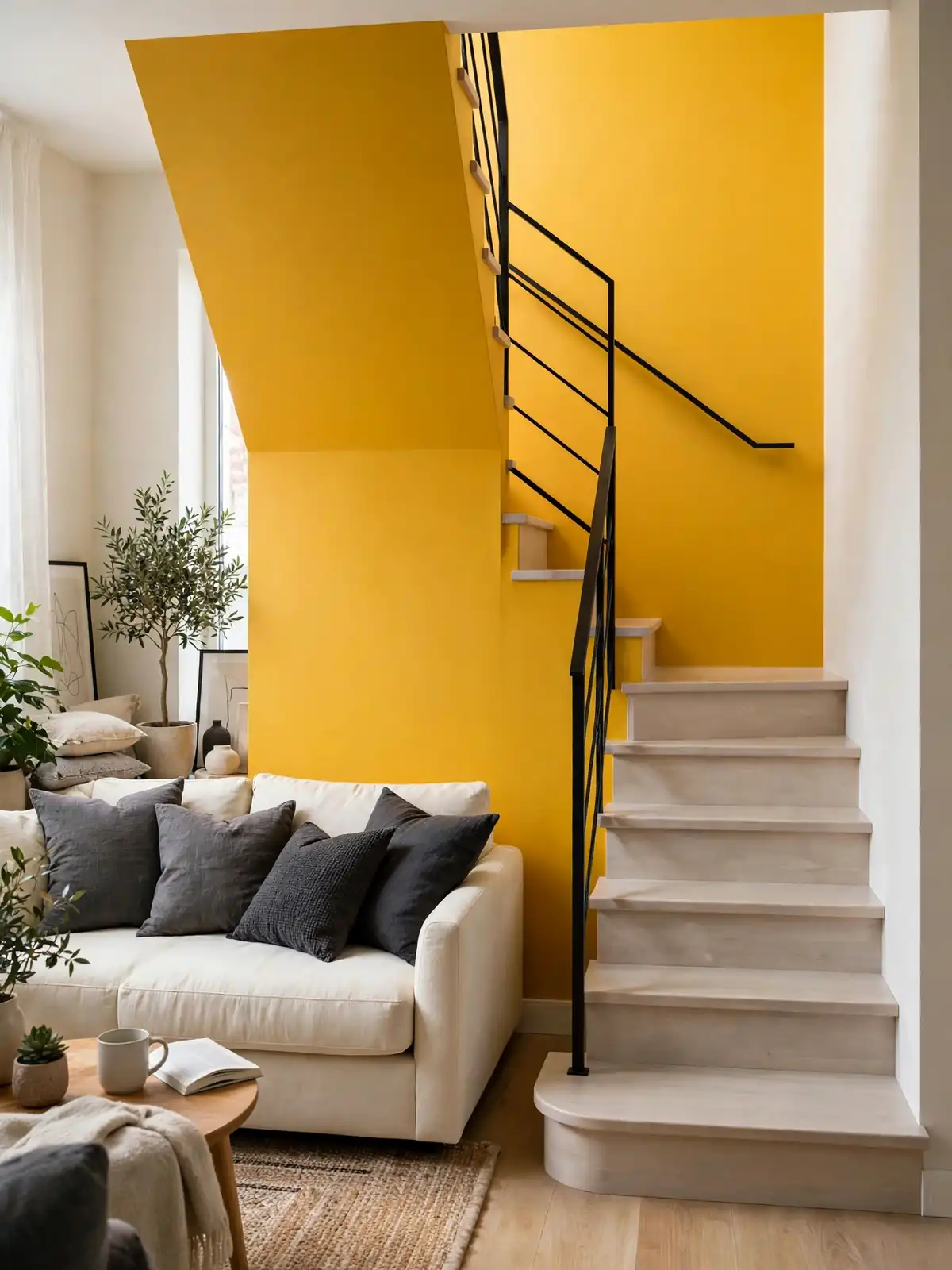
A mustard accent wall at the turn of a stair adds one bold, joyful moment to an otherwise calm compact home — and paint costs no floor space at all. Here, the wall at the landing turn is painted a warm mustard yellow, while pale ash treads, each 850 mm wide, and a slim black steel handrail keep the stair itself clean and simple. A cream sofa and charcoal cushions below pick up the contrast, and daylight from a nearby window makes the mustard glow.
Quick tips:
- Paint only the turn wall mustard, keeping the rest pale.
- Pair mustard with pale ash and black steel for balance.
- Add one charcoal cushion to ground the bright wall.
- Keep the landing clear so the mustard wall stays the feature.
A Small Space Staircase With a Slim Black Handrail and a Pale Stone Floor
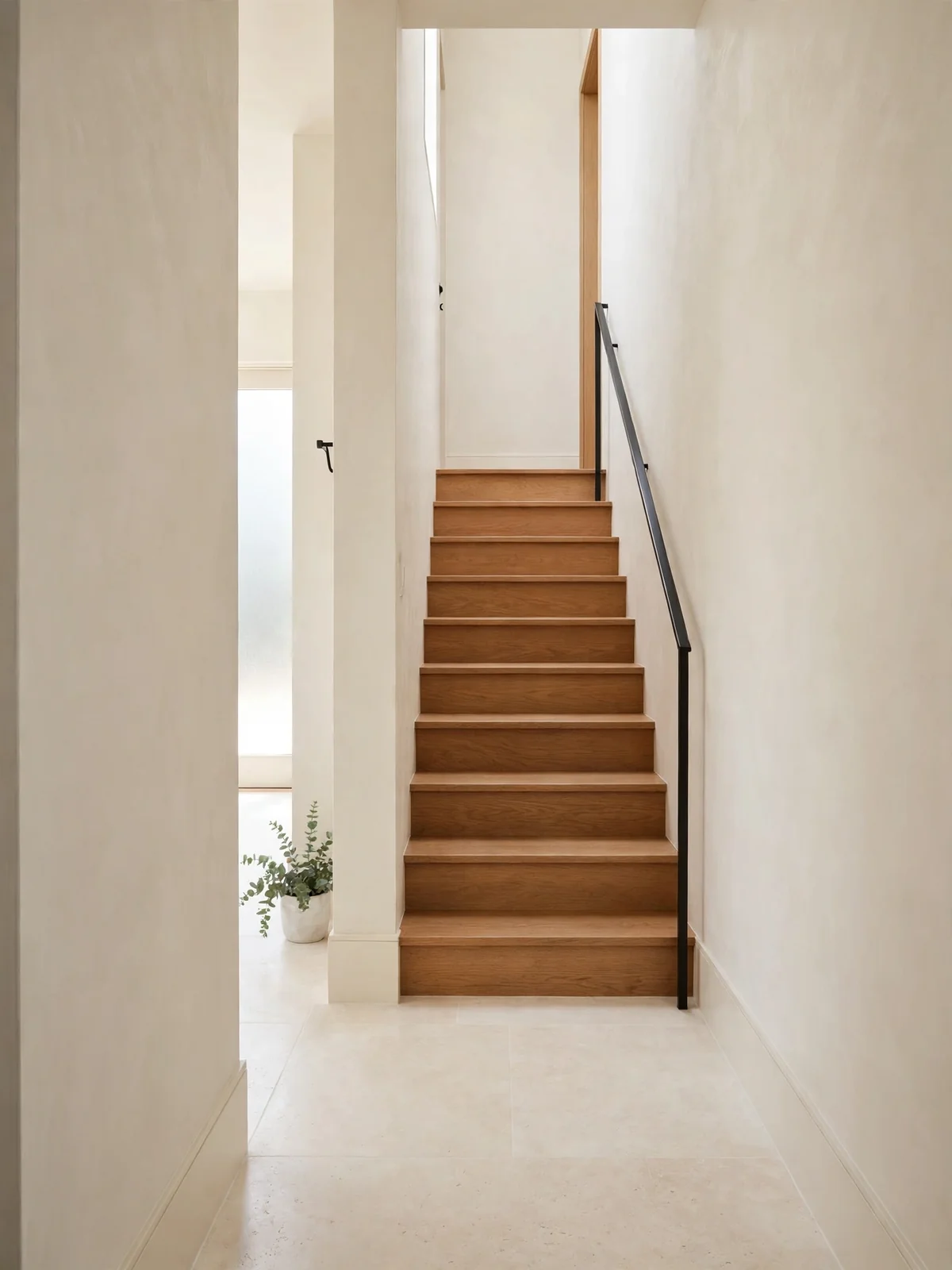
A slim black handrail against pale stone is a study in contrast — dark line, light floor, warm timber in between — and it needs no extra width at all. On this stair, warm oak treads, each 850 mm wide, sit above a pale limestone floor, with a 40 mm diameter matte black steel handrail running the full length of the flight on slim posts. Soft ivory walls and a small green plant in a white pot keep the hallway fresh, while daylight reflects off the limestone and up the treads.
Quick tips:
- Keep the handrail slim — about 40 mm in diameter — for a light look.
- Choose pale limestone so the black handrail stands out cleanly.
- Use warm oak treads to soften the black-and-stone contrast.
- Keep the floor free of rugs so the stone reflects the light.
A Small Space Staircase With a Plant Ledge Along the Balustrade
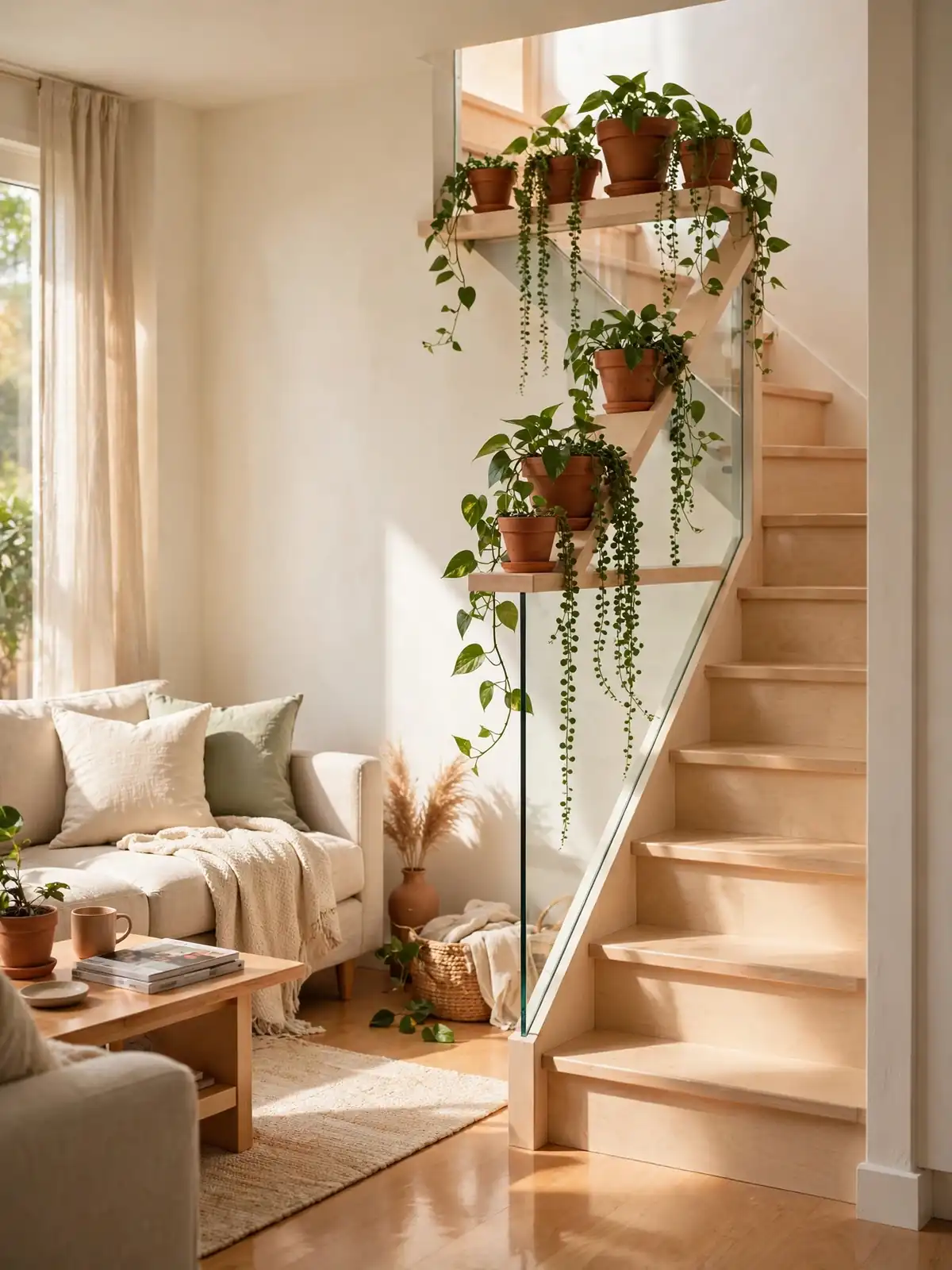
A plant ledge along the balustrade brings greenery into the climb without taking a centimetre of floor space. Here, a slim pale timber ledge, 150 mm deep, runs along the top of a clear glass balustrade beside pale birch treads, each 850 mm wide, holding small terracotta pots with trailing green plants that spill gently toward the floor below. Soft cream walls and warm morning light keep the room bright, while the plants soften the glass and timber.
Quick tips:
- Keep the ledge slim — about 150 mm deep — so it does not block the light.
- Choose trailing plants that spill softly, not tall plants that block the view.
- Use terracotta pots for warmth against pale timber.
- Water the plants with a small can to avoid spills on the treads.
A Small Space Staircase in Sage Green Steel With Cream Treads
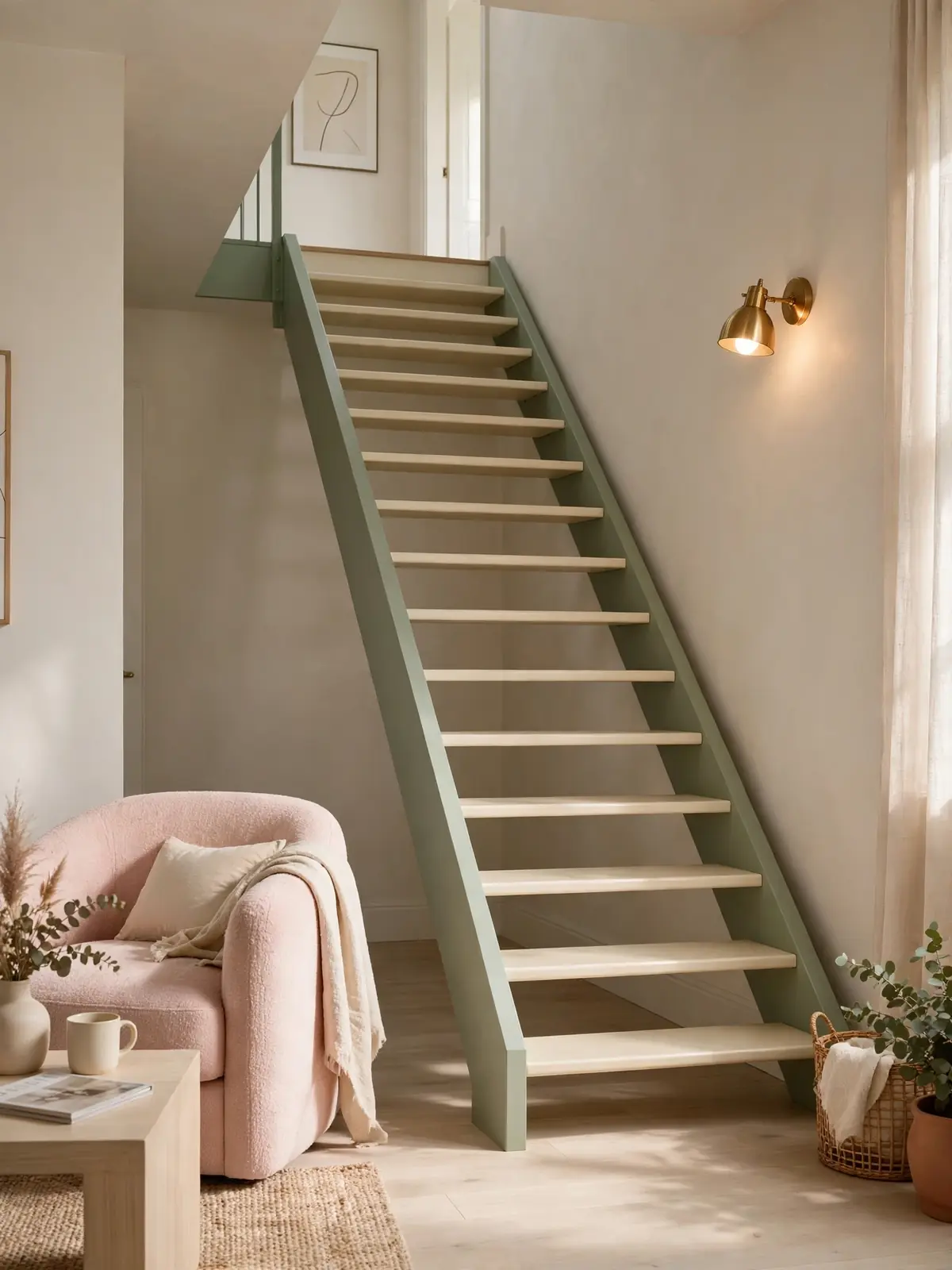
Sage green steel is a softer alternative to black — modern, but gentle — and a slim steel stringer takes up far less room than a solid timber one. On this stair, a sage green powder-coated steel stringer and slim sage posts support cream treads, each 850 mm wide, with a slim sage handrail above. A soft blush-pink armchair below adds a warm contrast, while a brass wall light glows softly in the afternoon.
Quick tips:
- Choose sage green in a matte powder coat for a soft, modern finish.
- Pair sage steel with cream treads so the stair stays bright.
- Add one blush or warm pink accent to contrast the green.
- Match the steel tone to a cushion or plant pot nearby.
A Small Space Staircase With Mirrored Risers That Double the Light
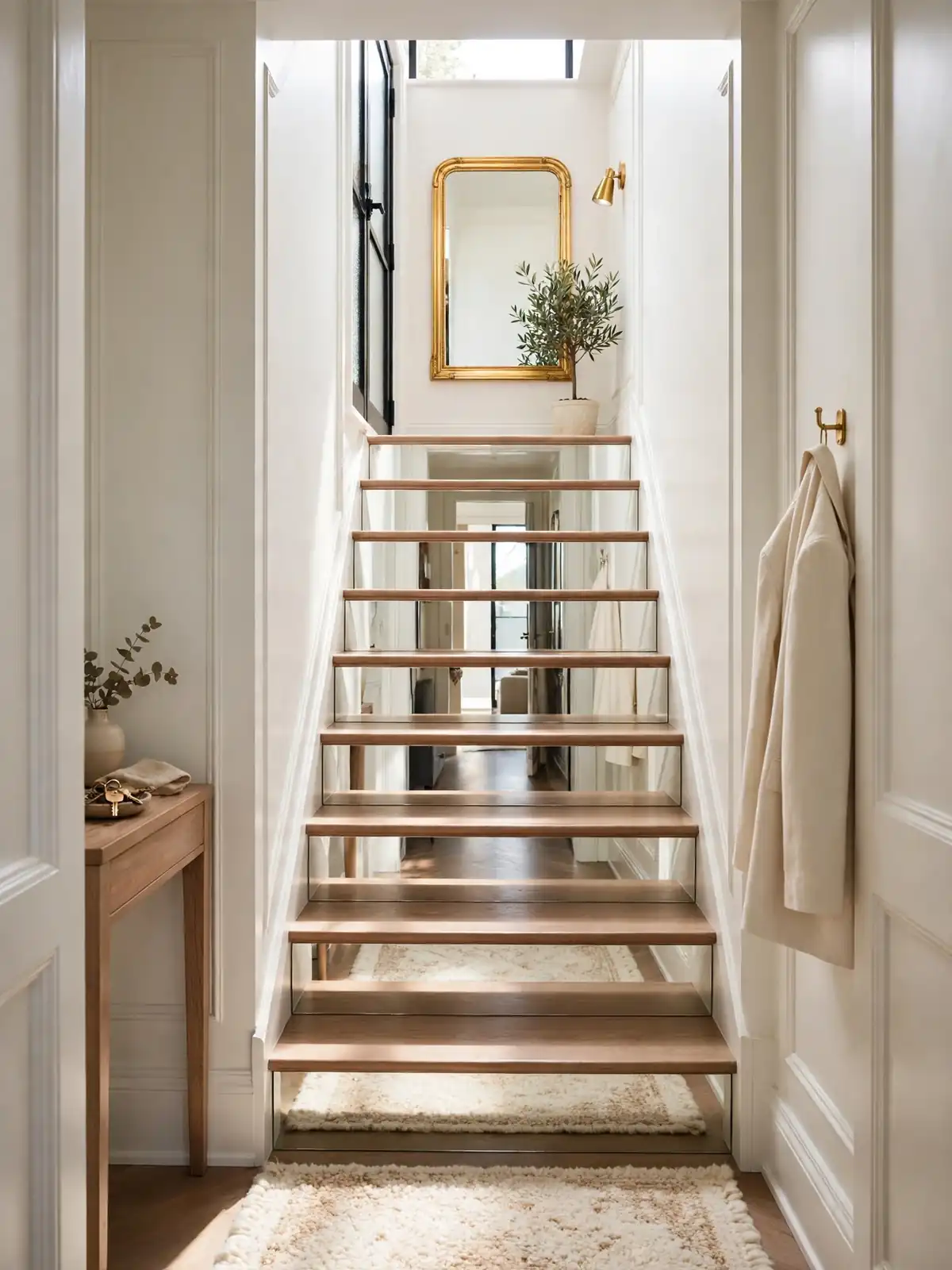
Mirrored risers reflect the room back onto the stair, so a small space staircase seems to disappear into light and the hallway feels twice as wide. Here, pale walnut treads, each 850 mm wide, sit on mirrored risers, 175 mm high, that catch the daylight from the entry window and bounce it across the hallway. Soft white walls and a gold-framed mirror on the landing add to the glow, while a cream rug at the base softens the floor.
Quick tips:
- Use mirrored risers only on a straight flight for the cleanest reflection.
- Pair mirrors with pale walnut, not dark timber, for a bright result.
- Keep the walls white so the mirrors reflect light, not clutter.
- Wipe the risers weekly to keep the reflections clear.
A Small Space Staircase Beside a Warm Cork Feature Wall
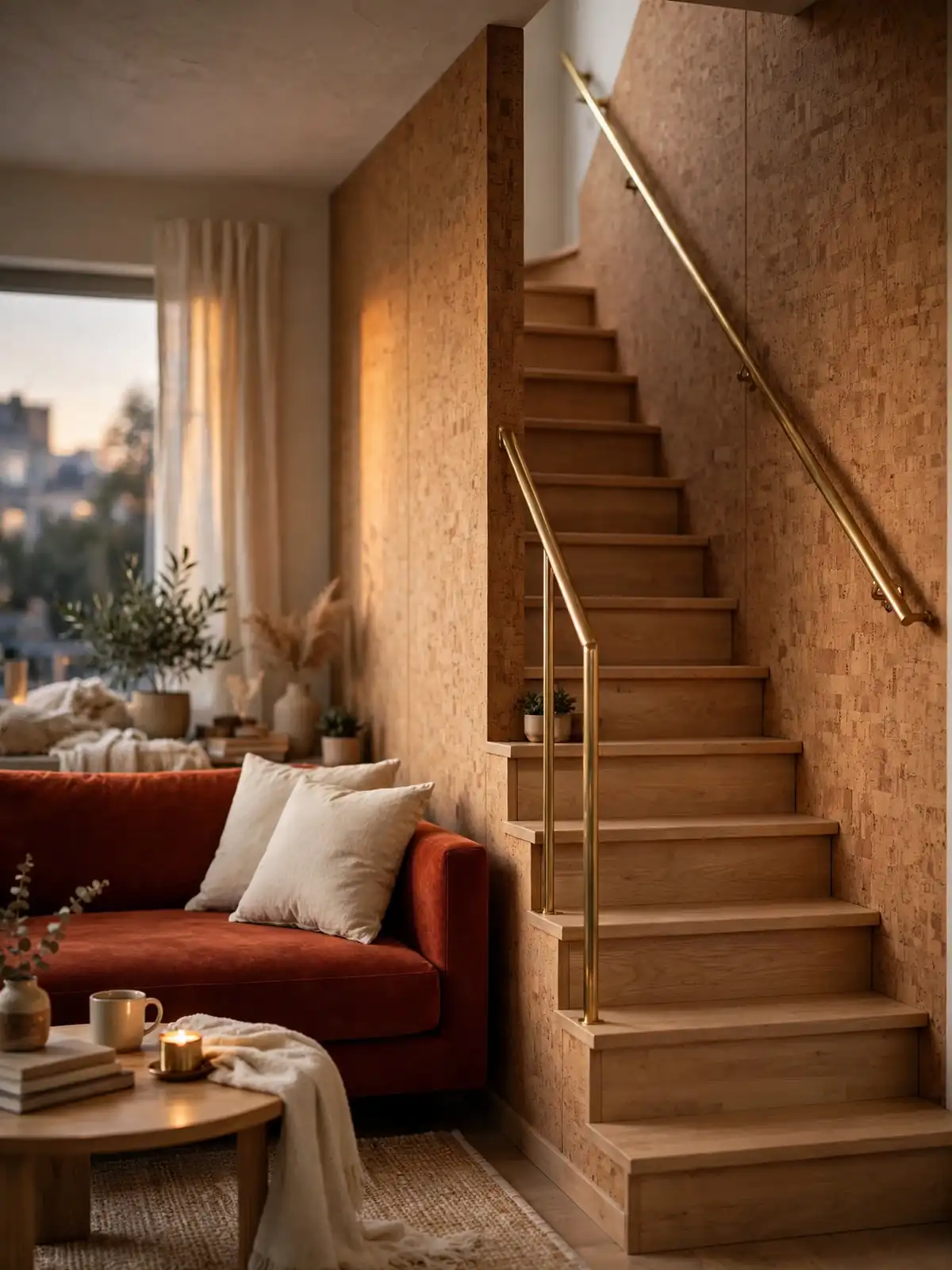
Cork is warm, quiet and tactile — a surprising but beautiful wall beside a small space staircase, and it costs no floor space at all. On this stair, pale oak treads, each 850 mm wide, run beside a full-height natural cork wall, with a slim brass handrail fixed to the cork. A deep rust-red sofa and cream cushions below pick up the cork’s warm tones, while soft evening light makes the wall glow gently. The cork also softens sound, so the stair feels quieter underfoot.
Quick tips:
- Seal the cork wall so it stays clean and easy to dust.
- Pair cork with pale oak for a warm, natural palette.
- Add a brass handrail to lift the cork’s earthy tone.
- Keep the sofa colour warm — rust, ochre or deep red — to match the wall.
A Small Space Staircase With a Landing Turned Into a Mini Home Office
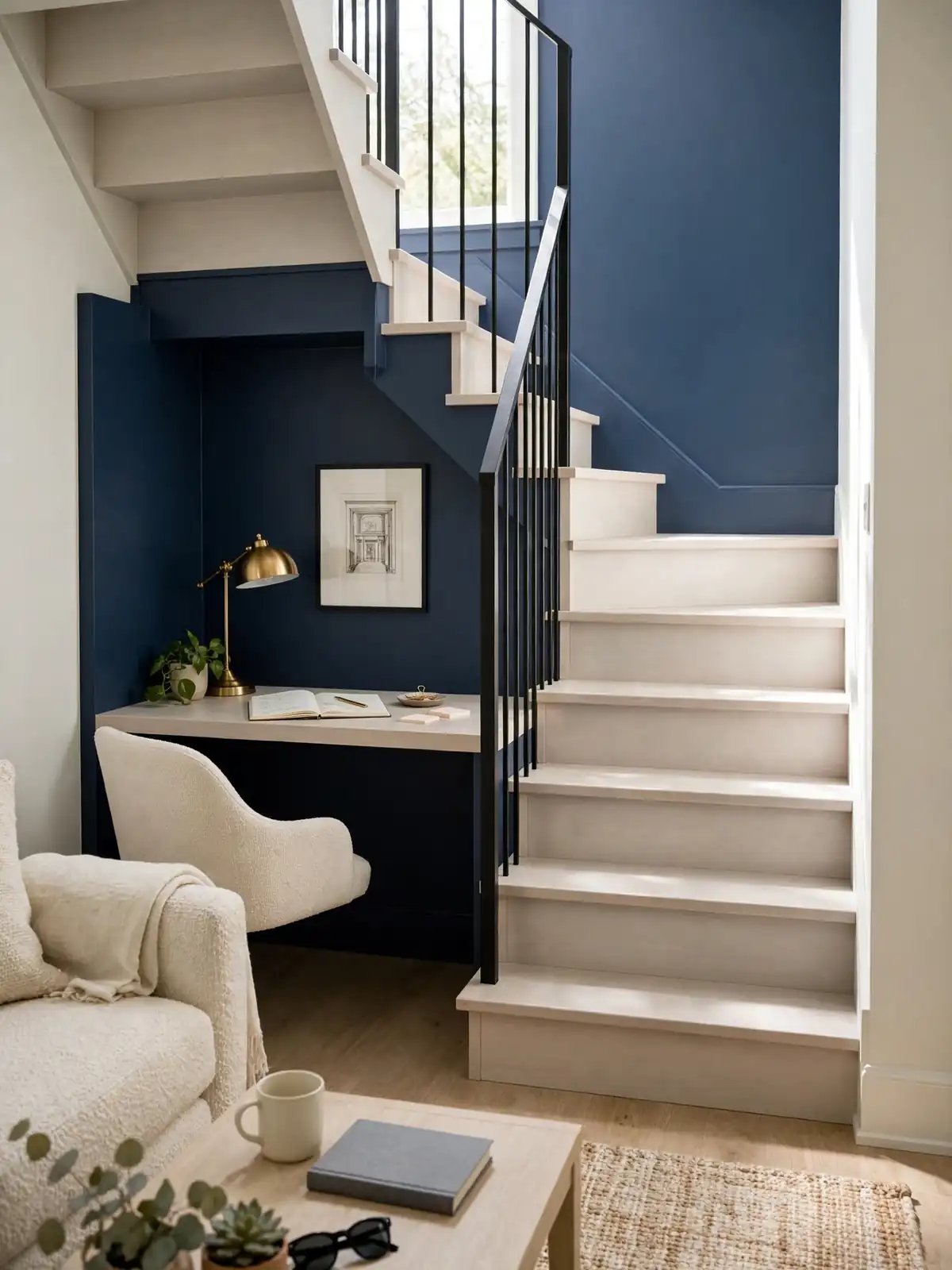
A landing can do more than turn the stair — in a small home it can become a whole office. Here, the landing is 1.2 metres deep, with a slim oak desk surface, 500 mm deep, built into its edge, a cream desk chair tucked beneath, and a brass desk lamp glowing softly. Pale ash treads, each 850 mm wide, rise on either side, while navy-blue walls make the pale landing stand out. It is a quiet workspace that borrows daylight from the stairwell and needs no extra room at all.
Quick tips:
- Make the landing at least 1.2 metres deep so the desk feels usable.
- Build the desk in the same oak as the treads for a unified look.
- Add a brass lamp for focused evening work.
- Keep the chair slim so it tucks fully beneath the desk.
A Small Space Staircase With a Slim Oak Newel and a Paper Lantern Above
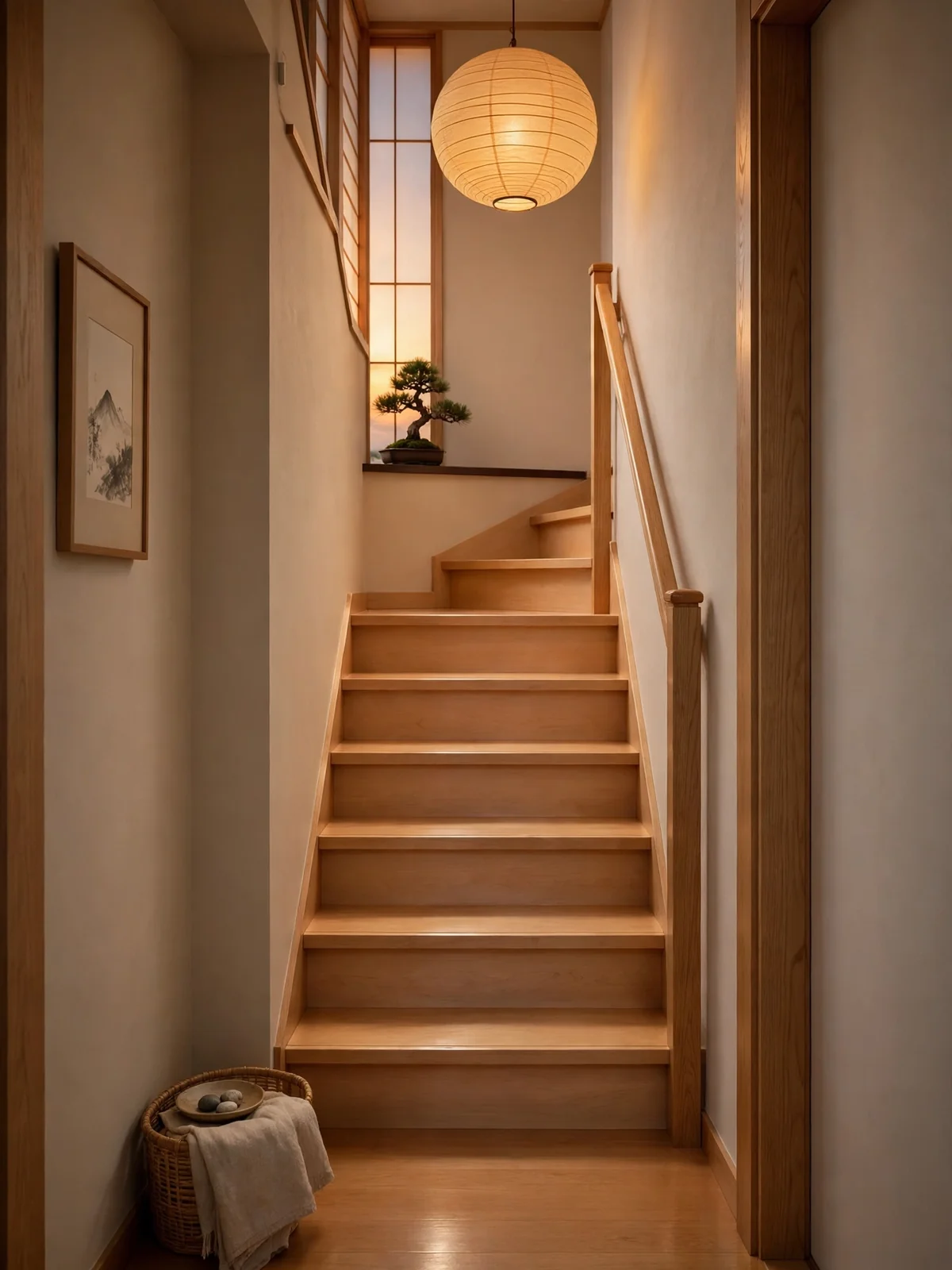
A slim oak newel and a paper lantern give a small space staircase a calm, Japanese-inspired warmth without adding bulk. On this stair, pale maple treads, each 850 mm wide, rise beside a slim oak newel post, 80 mm square, at the base, while a large paper lantern, 600 mm wide, hangs above the landing and glows warmly in the evening. Soft beige walls and a small bonsai on the landing complete the quiet palette, and the lantern’s diffused light falls softly across every tread.
Quick tips:
- Keep the newel slim — about 80 mm square — for a light, modern look.
- Hang the lantern above the landing, not the middle of the flight.
- Choose a warm bulb so the lantern glows softly, not starkly.
- Add one living detail, like a bonsai, on the landing.
A Small Space Staircase That Links a Mezzanine Sleeping Loft to the Living Room
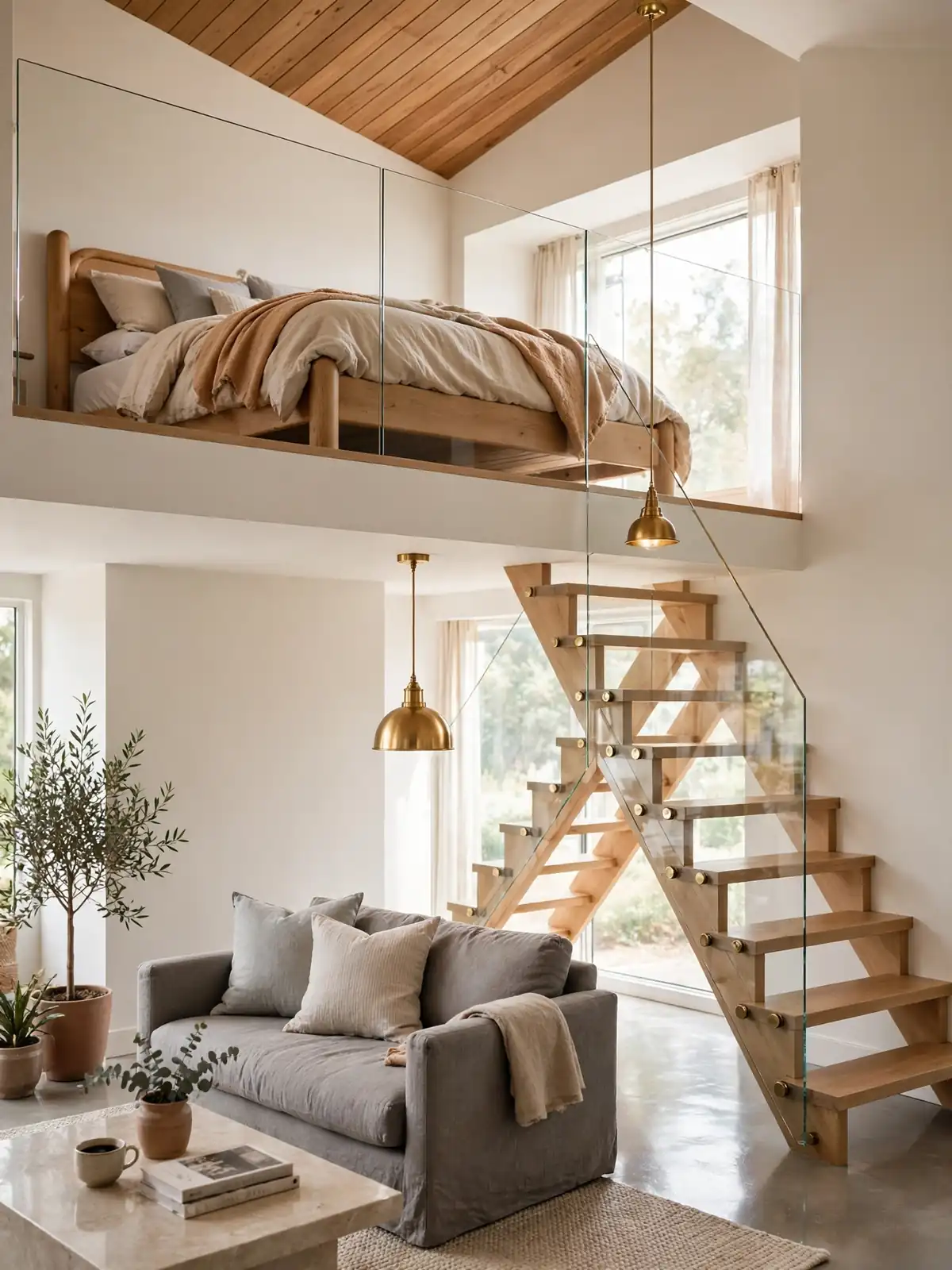
A stair to a mezzanine sleeping loft connects rest and living without a wall between them, which is how a tiny home gains a whole extra room. In this compact home, a small space staircase with pale oak treads, each 850 mm wide, and a clear glass balustrade rises from the living room to a mezzanine loft, where a warm timber bed and a brass pendant light sit above a soft grey sofa below. Daylight from the living room windows travels up the glass to the loft, so the sleeping space feels bright and the living room feels taller.
Quick tips:
- Use clear glass on the mezzanine side so light reaches the loft.
- Match the bed timber to the stair treads for a unified look.
- Keep the mezzanine railing slim so the living room stays open.
- Add a brass pendant above the bed for warm evening light.
FAQs
How much does a small space staircase cost?
Costs vary widely with materials, shape and size. A simple straight stair with pale ash treads and a steel balustrade is usually the most affordable small space option, while a spiral stair, cantilevered floating treads, or a stair with built-in storage drawers costs more because of the engineering and custom joinery. Always get at least two detailed quotes that include the handrail, lighting and finishing, not just the treads.
Are open risers safe in a small space staircase?
Open risers are safe for most adults and older children when the gaps are kept small and the treads are deep and non-slip. For toddlers, pets, or anyone unsteady on stairs, a closed riser, a frosted glass panel, or a low balustrade adds safety without losing the open, space-saving look. Building rules in your area may also set a maximum gap size, so check before you build.
Can a small space staircase work in a traditional home?
Yes, if the stair is paired with classic materials. Warm walnut treads, a slim brass handrail, a soft neutral wall and traditional furniture keep the stair feeling at home in a period house, while floating treads or a glass balustrade quietly add light without changing the character of the rooms. The key is to keep one warm, traditional material in the mix.
What is the best railing for a small space staircase?
There is no single best railing — it depends on the look and the light you want. Clear glass keeps the stair most open, a wall-mounted handrail takes up no room at all, cable railings give a clean industrial edge, and slim steel posts feel crisp and architectural. Choose the railing after the treads, so the two materials balance each other.
Does a small space staircase need a lot of maintenance?
Most small space stairs are low maintenance. Glass and mirrored risers need a weekly wipe, timber treads need resealing every few years, and steel or brass fixings need an occasional polish. Polished concrete and cork are among the easiest to keep clean, while white-painted stairs show scuffs sooner and need a touch-up now and then.
Conclusion
A small space staircase is not just a way to move between floors — it is a way to let light, air and clever storage flow through a compact home. Whether you choose floating treads in pale ash, a spiral flight in black steel, storage drawers in every riser, alternating treads, a pull-out desk, or a mezzanine stair that links two levels, the best small space staircase is the one that suits the rooms around it. Keep the palette light, the sightlines open, and the space under and beside the stair intentional, and your stair will make every room it touches feel brighter, larger and more welcoming.