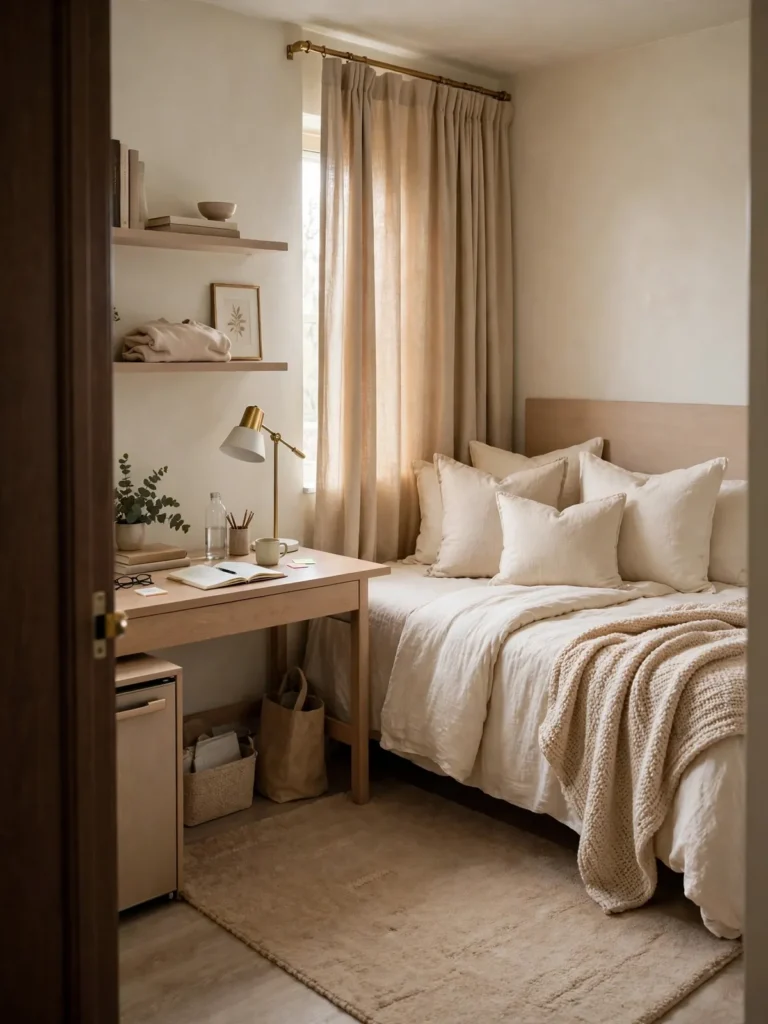
18 Clever Sliding Wardrobe Design Ideas for a Sleek, Organised Bedroom
A sliding wardrobe design can change a bedroom completely, because it saves the floor space a swinging door wastes and turns a plain wall into a sleek, built-in feature. These 18 sliding wardrobe design ideas cover mirrors, wood, two-tone doors, fluted panels, loft storage and corner builds, each with a concrete example to help you plan yours.
A sliding wardrobe design works because the doors glide instead of swinging, so you gain back the floor space a hinged door needs and the bedroom instantly feels calmer and more spacious. The best sliding wardrobe design starts with three decisions: the door finish, the interior layout, and the track quality — get those right and even a small bedroom gains a full wall of organised storage that looks built in.
If your bedroom needs a wider wardrobe plan as well as sliding doors, these bedroom wardrobe designs ideas show how to plan the whole storage wall. Every idea below includes a concrete example with real materials, colours and fixtures, so you can match the design to your room size, your budget and the way you actually dress each morning.
Key Takeaways
What is the best sliding wardrobe design for a small bedroom?
The best sliding wardrobe design for a small bedroom is a full-height mirrored door with a wall-to-wall build, because the mirror doubles the sense of space and the wall-to-wall fit wastes no centimetre. Add loft storage above for suitcases and seasonal bedding, and keep the interior to hanging space plus two drawers so nothing is wasted.
Are sliding wardrobes better than hinged wardrobes?
Sliding wardrobes are better than hinged wardrobes when floor space is tight, because the doors never swing into the room and you can place the bed or a bench closer to the wardrobe. Hinged doors win only when you need to open the whole wardrobe at once or want deep drawers on every shelf, so choose sliding for small and busy bedrooms.
How much does a sliding wardrobe design cost?
A sliding wardrobe design costs least in a standard laminate finish with a simple two-door track, and most in a floor-to-ceiling build with mirrored or fluted glass panels, soft-close tracks and a fitted interior. Mirrors, mixed materials and custom interiors add the most cost, so spend on the track and the interior first and keep the door finish simple if the budget is tight.
What interior layout works best inside a sliding wardrobe?
The best interior layout inside a sliding wardrobe gives hanging space about two-thirds of the width, with shelves on one side and two or three drawers below. Keep everyday clothes at eye level, store off-season pieces in the loft or on the top shelf, and leave one open shelf for bags and folded knitwear so the wardrobe stays easy to use.
What is the biggest sliding wardrobe design mistake?
The biggest sliding wardrobe design mistake is choosing cheap tracks and thin doors, because doors that stick, wobble or jump their track make the whole wardrobe feel broken within a year. Spend on a smooth, soft-close track and solid door frames, measure the opening twice, and leave a small gap at the top for the track to run free.
Sliding Wardrobe Design Finishes at a Glance
| Sliding wardrobe design finish | Best for | Look | Budget level |
|---|---|---|---|
| Full mirror | Small, dark bedrooms | Bright, spacious, modern | Medium |
| Walnut laminate | Warm, neutral bedrooms | Rich, classic, inviting | Low to medium |
| Mirror and wood mix | Rooms needing light without glare | Balanced, custom, calm | Medium |
| Fluted matte panels | Modern rooms that feel too plain | Textured, refined, designer | Medium to high |
| Matte black | Bold, dramatic bedrooms | Deep, sophisticated, striking | Medium to high |
Full-Height Mirrored Sliding Wardrobe Design
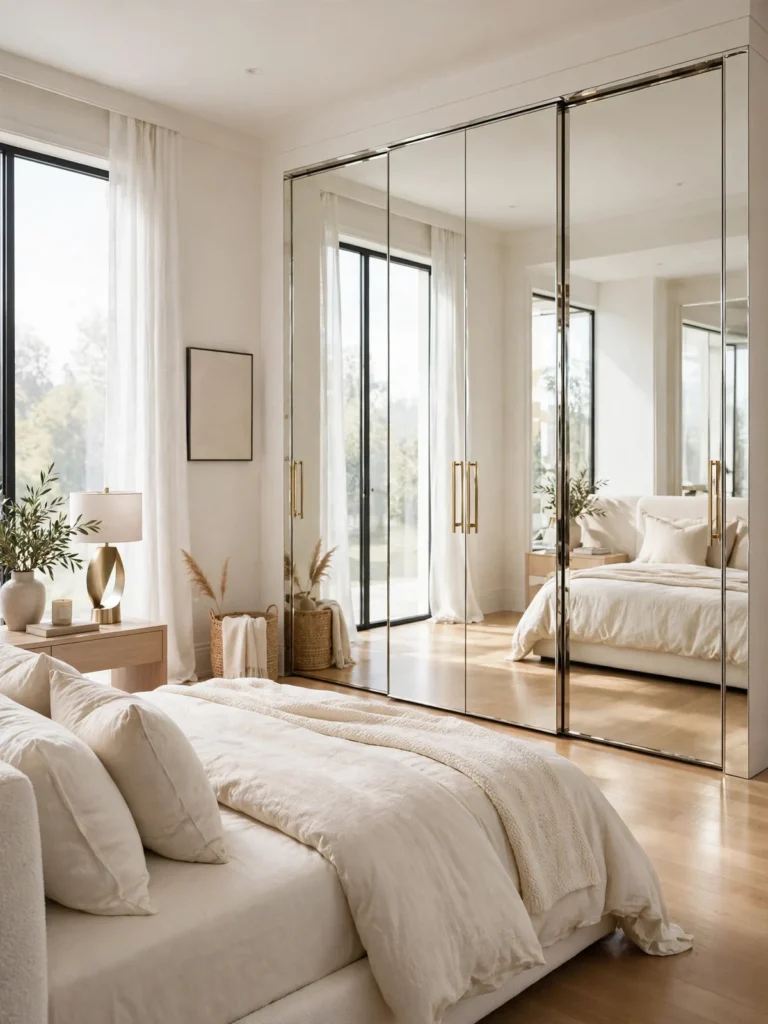
A full-height mirrored sliding wardrobe design is the fastest way to make a small bedroom feel twice as large, because the mirror bounces daylight around the room and removes the need for a separate dressing mirror. Here, floor-to-ceiling mirrored doors run along one wall, reflecting cream bedding and a light oak floor. The design suits small and dark bedrooms best, and it works overtime on dressing days. The weakness is fingerprints and dust: mirrors show every mark, so keep a microfibre cloth nearby and choose a mirror with a slim aluminium frame that hides smudges at the edges.
Quick tips:
- Run the mirror floor to ceiling for the tallest feel.
- Choose a slim aluminium frame to keep the look clean.
- Keep a microfibre cloth in the nearest drawer.
- Angle the bed so the mirror reflects the window, not the bed.
Warm Walnut Laminate Sliding Wardrobe Design
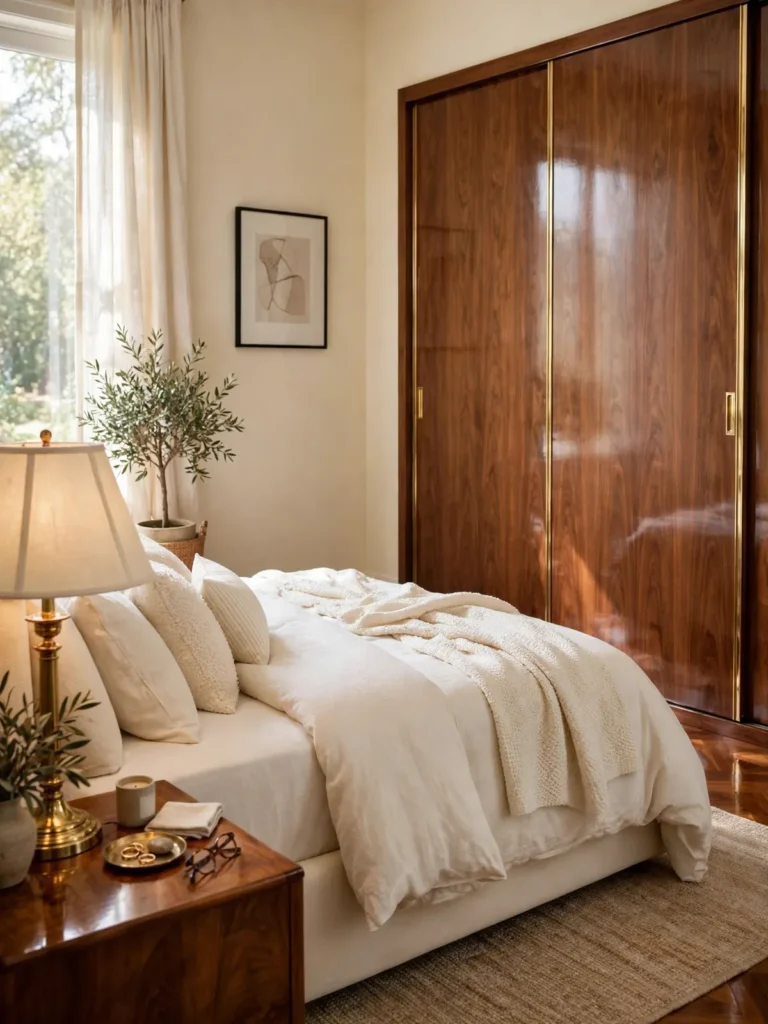
Warm walnut laminate brings instant richness to a sliding wardrobe design, because the deep brown grain reads like real wood without the cost or the maintenance. Here, walnut laminate doors sit against ivory bedding, cream walls and a brass lamp. The design suits neutral bedrooms that need warmth, and it makes the wardrobe feel like furniture rather than a storage wall. The weakness is darkness in a small room: walnut absorbs light, so pair it with pale walls and a light rug to keep the room bright.
Quick tips:
- Run the wood grain vertically to make doors look taller.
- Pair walnut with ivory bedding and cream walls.
- Choose a matte laminate to avoid glare.
- Add brass handles for a warm, finished look.
Mix Mirror and Wood Panels in One Sliding Wardrobe Design
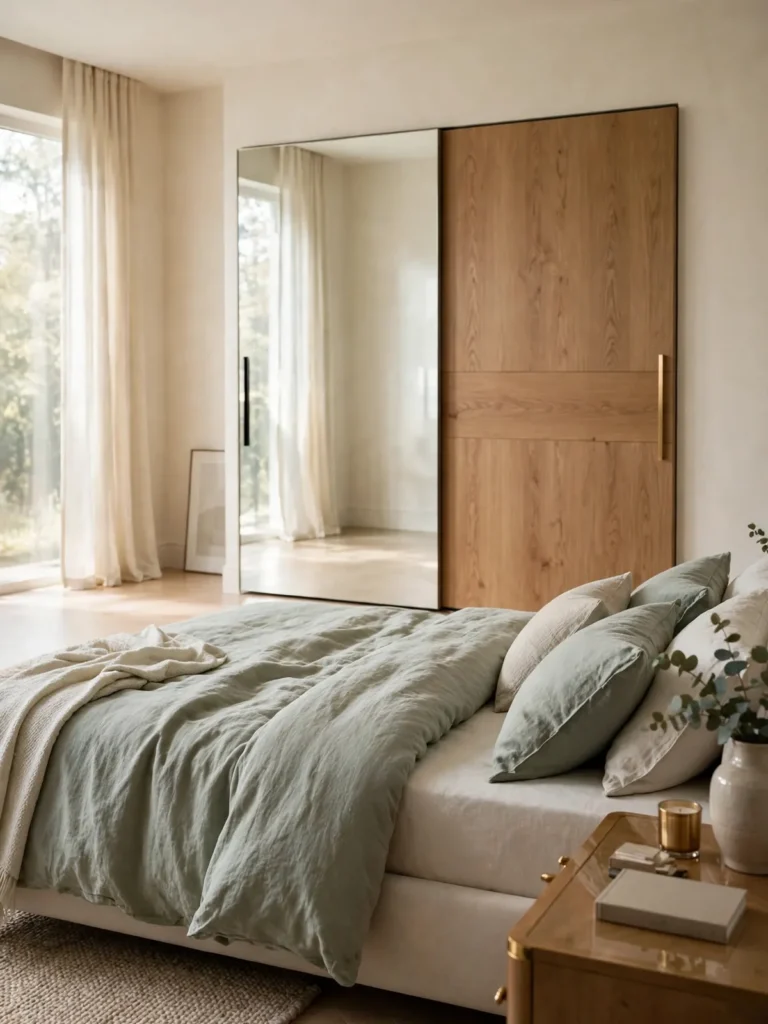
Mixing one mirrored panel with one wood panel gives you the brightness of a mirror without a whole wall of reflection, and it is one of the easiest ways to make a sliding wardrobe design look custom. Here, a clear mirror panel sits beside a pale oak panel, over soft sage bedding and a light wood floor. The design suits bedrooms that need light but not glare, and the wood grounds the mirror beautifully. The weakness is balance: two mirrors and one wood panel can look lopsided, so keep the split even — one of each on a two-door wardrobe.
Quick tips:
- Keep the split even: one mirror, one wood panel.
- Match the wood to the floor or the bed frame.
- Use the mirror panel nearest the window.
- Keep the frame finish the same on both doors.
Add Loft Storage Above the Sliding Wardrobe
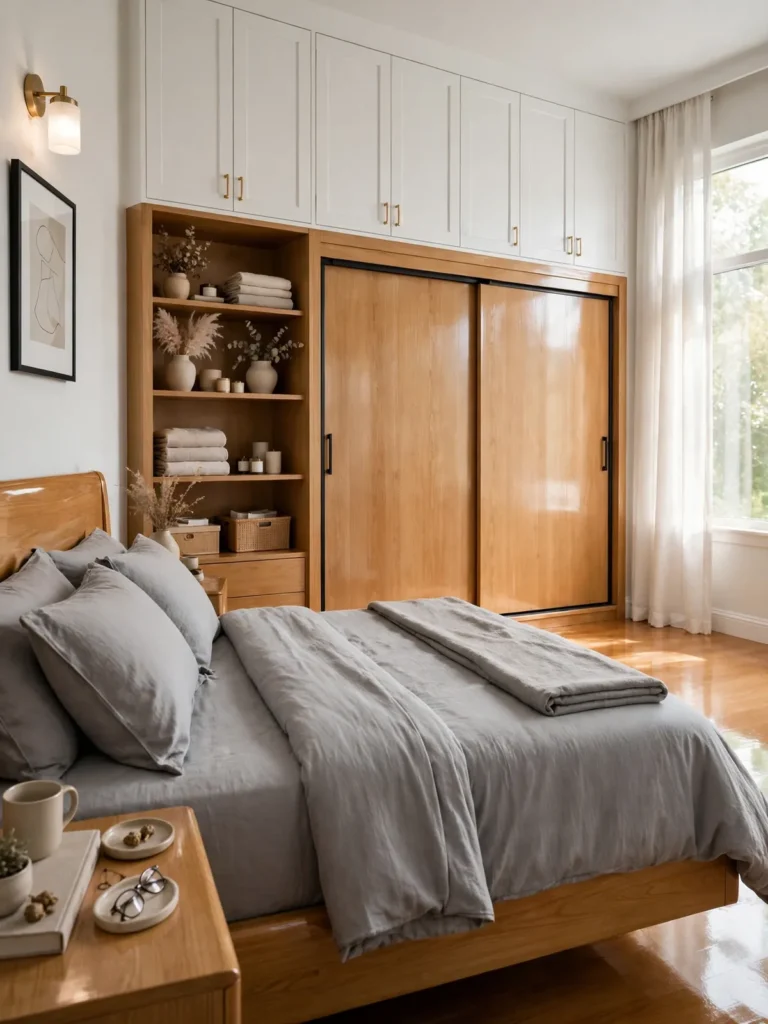
Loft storage above a sliding wardrobe is the smartest space trick in a small home, because the dead space near the ceiling becomes a home for suitcases, winter blankets and things you do not need every day. Here, white overhead cupboards sit above the sliding doors, over soft grey bedding and light oak furniture. The design suits apartments and small bedrooms most of all, and labelled boxes keep it usable. The weakness is reach: loft cupboards need a small step stool, so store only seasonal items up there and keep everyday pieces at eye level.
Quick tips:
- Store seasonal bedding and suitcases in the loft.
- Use labelled boxes so nothing gets lost.
- Keep a small step stool nearby.
- Match the loft doors to the wardrobe finish.
Two-Tone Sliding Wardrobe Design
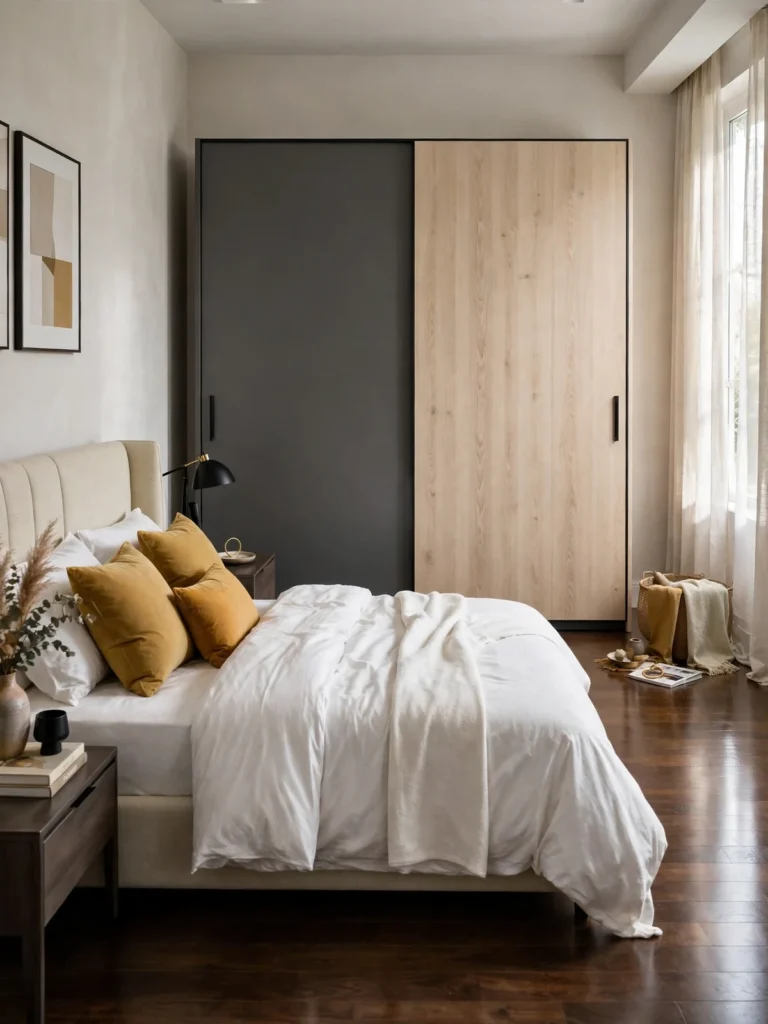
A two-tone sliding wardrobe design breaks up a big flat wall of doors and adds instant personality, because two colours layered together look custom rather than flat-pack. Here, charcoal grey doors sit beside pale oak panels, against white bedding, mustard cushions and a dark wood floor. The design suits plain bedrooms that need one bold feature, and it costs little more than a single-colour build. The weakness is clashing tones: two colours with no shared undertone fight each other, so pick a warm pair or a cool pair, never one of each.
Quick tips:
- Pair charcoal with walnut, or white with oak.
- Keep the darker tone on the lower half if unsure.
- Repeat one tone in the bedding or cushions.
- Keep the frame colour the same on both doors.
Fluted Vertical Groove Panels on a Sliding Wardrobe Design
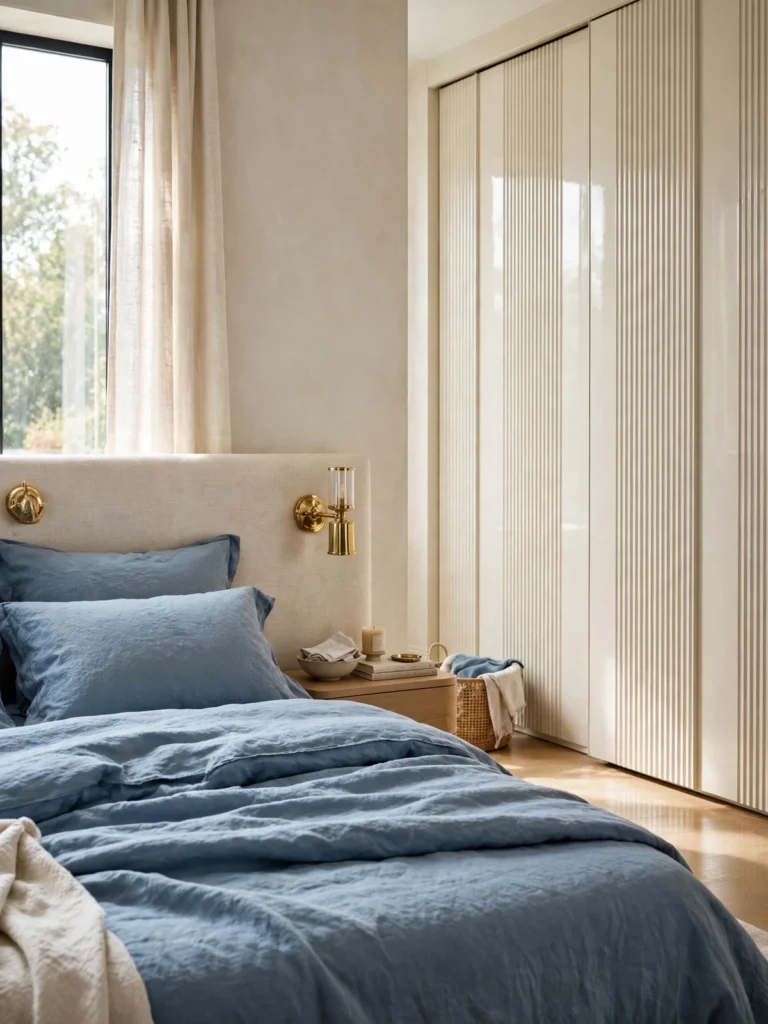
Fluted vertical grooves turn flat wardrobe doors into something far more luxurious, because the slim ribs catch light and shadow and add depth without any colour or pattern. Here, ribbed cream panels run floor to ceiling, beside dusty blue bedding, brass sconces and a light wood floor. The design suits modern bedrooms that feel too plain, and it photographs beautifully. The weakness is dust in the grooves: ribs collect it, so wipe the doors with a dry cloth weekly and avoid a gloss finish that shows every mark.
Quick tips:
- Keep grooves slim and evenly spaced for a clean finish.
- Choose a matte or satin finish to hide dust.
- Pair fluted doors with plain walls so they stay the star.
- Use vertical grooves to make the room feel taller.
Wall-to-Wall Sliding Wardrobe Design
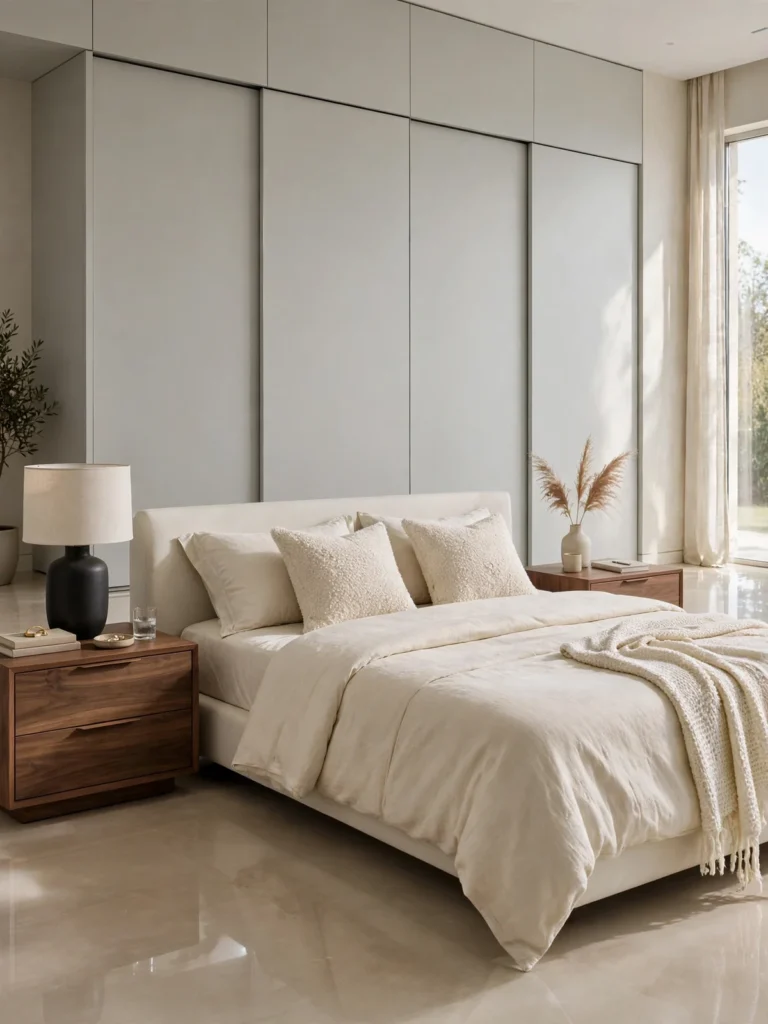
A wall-to-wall sliding wardrobe design always looks expensive, because it stretches from one side of the room to the other and reads as built in rather than bought. Here, pale grey matte doors fill the whole wall, with cream bedding and walnut nightstands in front. The design suits master bedrooms where symmetry matters, and it eliminates awkward gaps that collect dust. The weakness is measuring: a wall that is even slightly out of square leaves a visible gap, so measure at three heights and let the fitter scribe the filler panels to the wall.
Quick tips:
- Measure the wall at three heights before ordering.
- Align the wardrobe with the bed and nightstands.
- Use filler panels to hide uneven walls.
- Keep the doors plain so the scale does the talking.
Open Side Shelving Beside the Sliding Wardrobe
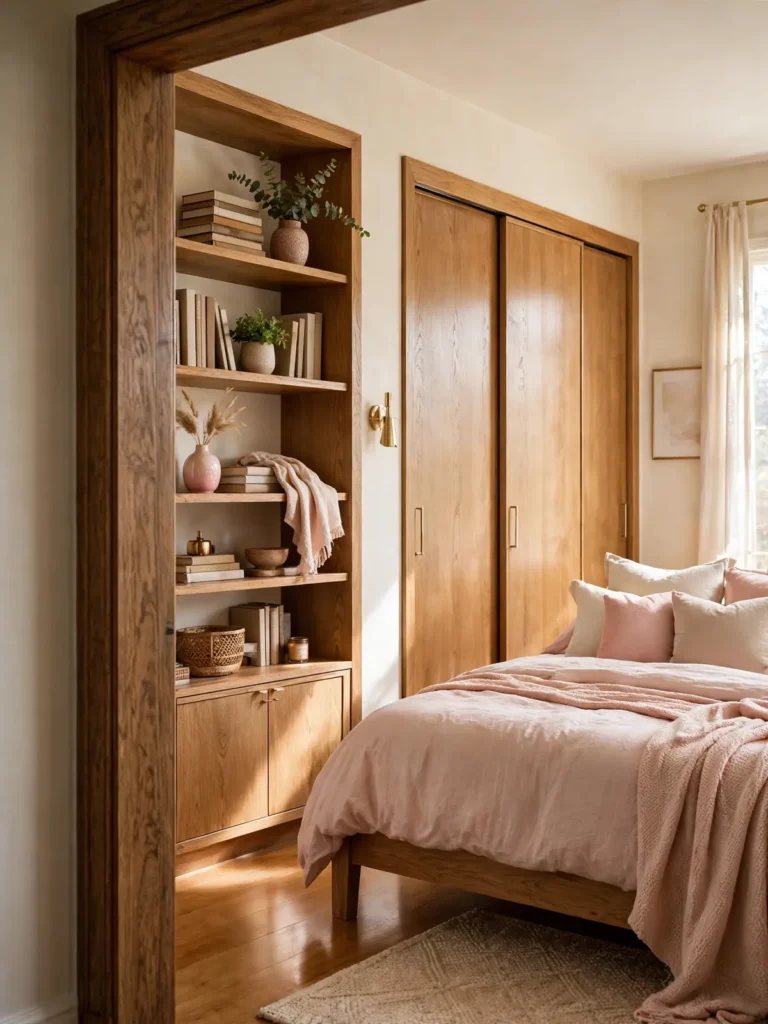
Open side shelving beside a sliding wardrobe breaks up the solid block of doors and gives books, plants and favourite objects a home, so the wardrobe feels integrated with the room instead of dropped into it. Here, oak shelves hold books, a small plant and a ceramic vase beside soft blush bedding and cream walls. The design suits bedrooms with a spare half-metre beside the wardrobe, and it softens the whole wall. The weakness is clutter: shelves packed edge to edge look like a storage unit, so leave empty space between objects and keep the shelf count to two or three.
Quick tips:
- Limit open shelves to two or three levels.
- Mix books, a plant and one decorative object.
- Leave empty space between items for a calm look.
- Match the shelf wood to the wardrobe finish.
Sliding Wardrobe Design Built Around the Bed Wall
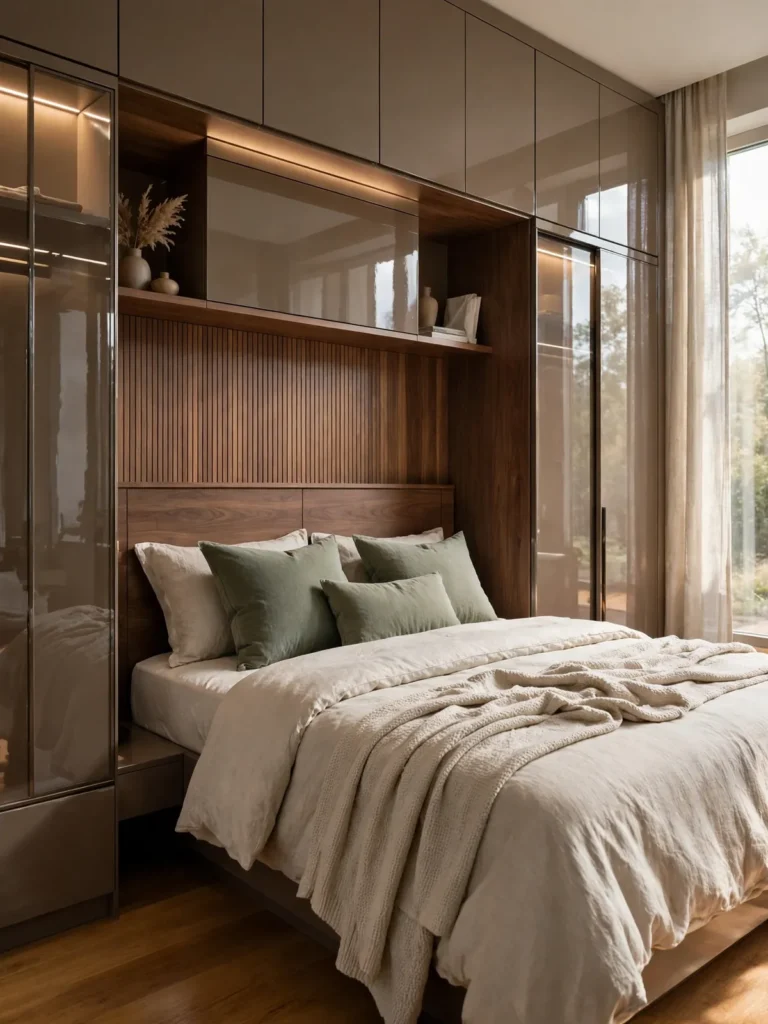
Building a sliding wardrobe design around the bed wall is one of the cleverest layouts there is, because wardrobe units on both sides of the headboard create a built-in frame for the bed and free the side walls completely. Here, sliding units flank a walnut headboard, with soft oatmeal bedding and sage cushions between them. The design suits bedrooms with a wide headboard wall, and it makes the room feel thoughtfully designed rather than furniture-filled. The weakness is access: the units beside the bed are harder to reach, so use them for off-season clothes and keep everyday pieces in the main run.
Quick tips:
- Use the bedside units for off-season storage.
- Keep the headboard wall clear of clutter.
- Match the wardrobe finish to the headboard.
- Leave breathing room between bed and doors.
Slim Brass Handles on a Sliding Wardrobe Design
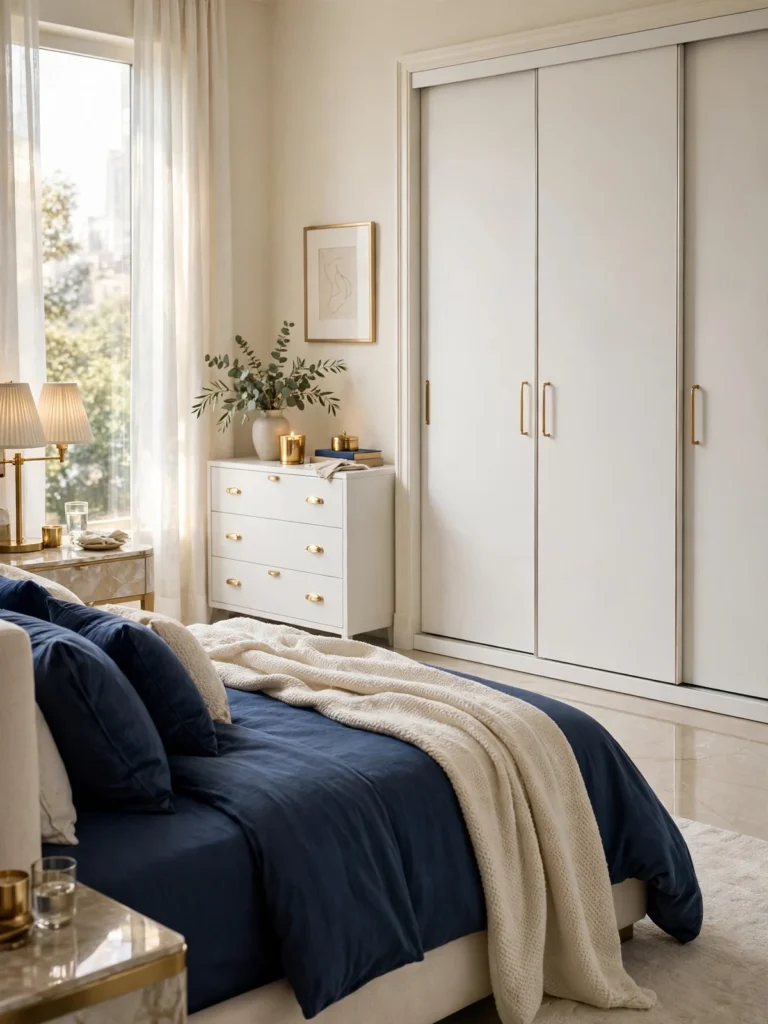
Slim brass handles are the smallest detail with the biggest payoff on a sliding wardrobe design, because a thin champagne-gold pull turns even plain matte doors into something quietly luxurious. Here, brass pulls sit on matte white doors, against navy bedding and cream walls. The design suits any wardrobe that feels too plain, and it costs very little. The weakness is scale: oversized handles make sliding doors look bulky and catch on clothes, so keep the pulls slim, recessed or edge-mounted.
Quick tips:
- Keep handles slim and recessed for sliding doors.
- Brass warms white doors; black suits grey doors.
- Match the handle finish to the lamp or mirror frame.
- Test the grip before fitting a full set.
Fabric-Finish Laminate Sliding Wardrobe Design
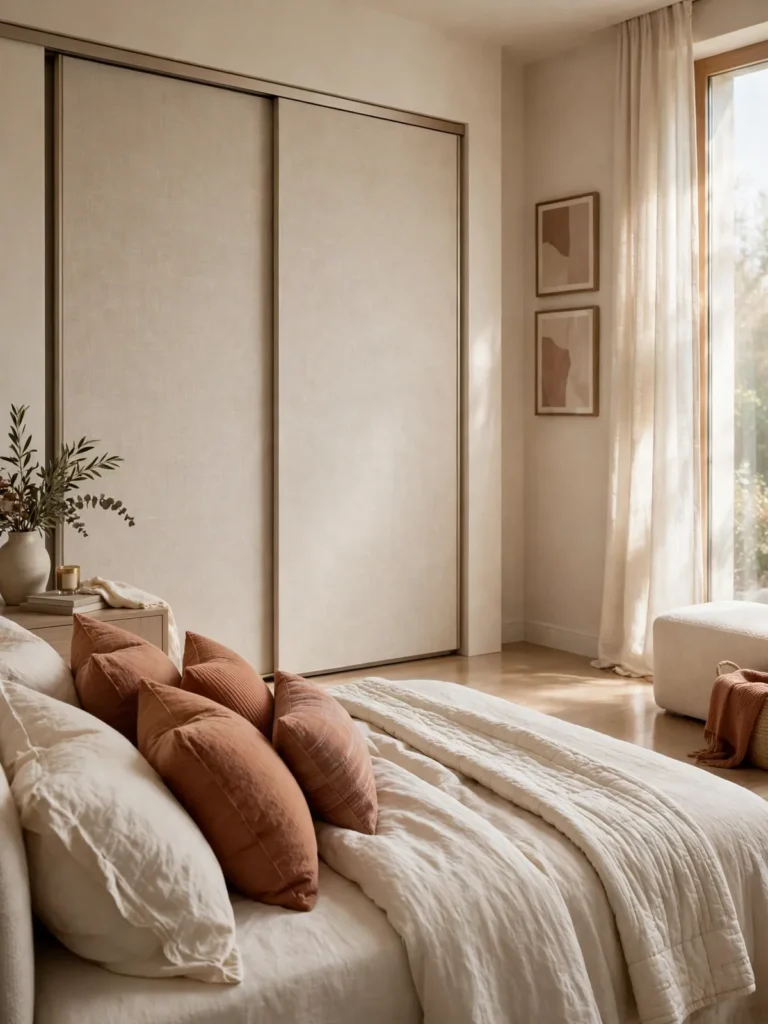
Fabric-finish laminate gives a sliding wardrobe design the softness of cloth with the durability of a hard surface, because linen-inspired beige or woven grey finishes add texture while shrugging off marks. Here, linen-look beige doors sit beside terracotta cushions, cream bedding and a light wood floor. The design suits bedrooms that need warmth without wood, and it layers beautifully with real textiles. The weakness is cleaning: textured laminate holds dust more than smooth doors, so wipe it with a dry microfibre cloth and avoid wet cleaning.
Quick tips:
- Choose linen beige, woven grey or suede-look taupe.
- Pair fabric finishes with real linen bedding.
- Wipe with a dry microfibre cloth, not a wet one.
- Keep the palette soft so the texture stays the star.
Soft Pastel Panels in a Sliding Wardrobe Design
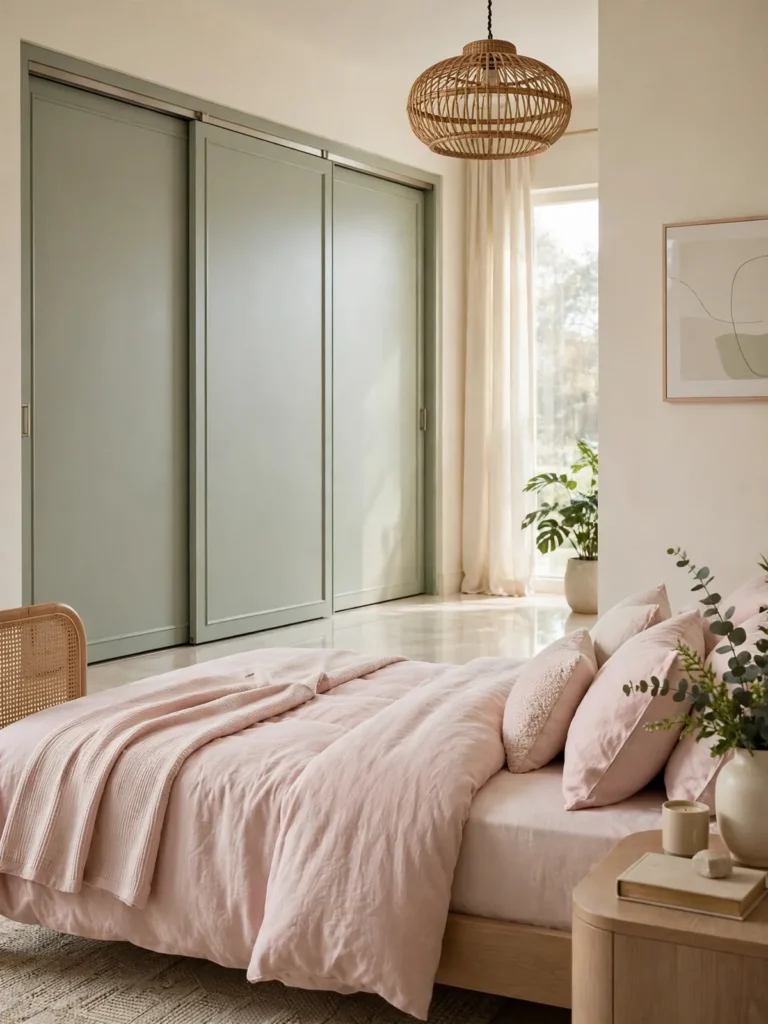
Soft pastel panels make a sliding wardrobe design feel calm and a little unexpected, because muted sage, dusty pink or pale blue doors bring colour without shouting. Here, sage green doors sit against blush bedding, cream walls and a rattan pendant. The design suits cosy, soft modern bedrooms, and it works beautifully in a guest room or a nursery that will grow up. The weakness is matching: pastel doors clash with strong primary colours elsewhere, so keep the rest of the room pale and let the wardrobe carry the colour.
Quick tips:
- Pick one pastel and keep the rest of the room pale.
- Sage suits green bedding; dusty pink suits cream.
- Use a satin finish so the colour stays soft.
- Repeat the pastel in one cushion or throw.
Corner Sliding Wardrobe Design for Awkward Layouts
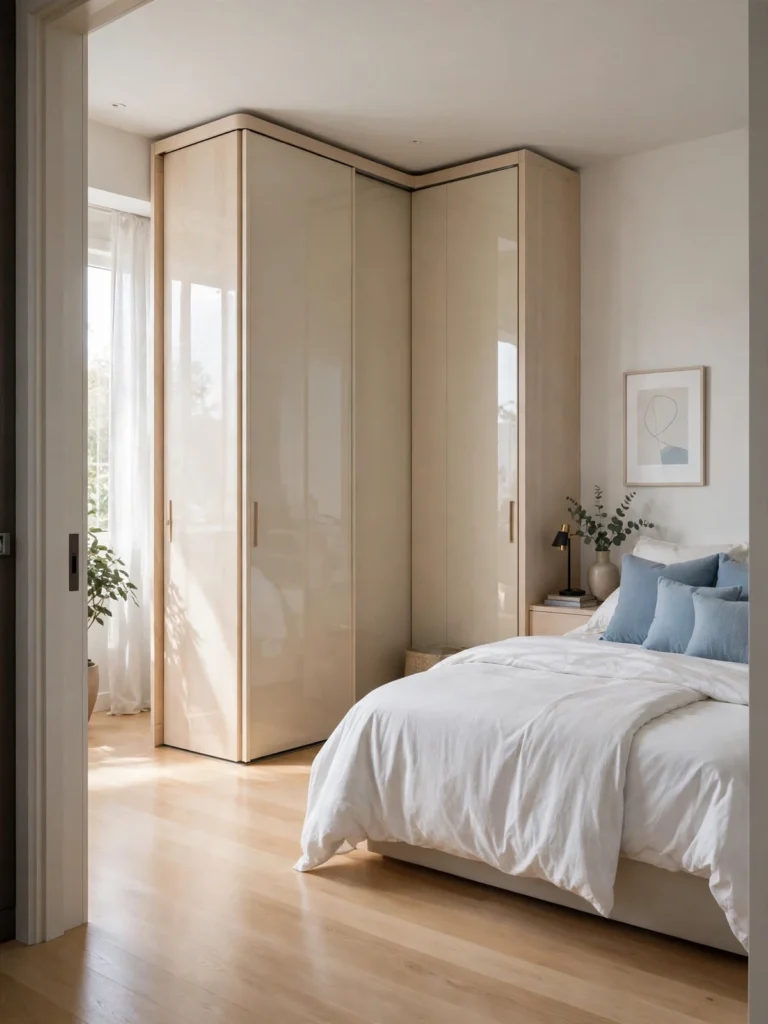
Corner spaces are the most wasted square metres in a bedroom, and a corner sliding wardrobe design turns an awkward L-shaped corner into the deepest storage in the room. Here, pale oak doors wrap around the corner, beside white bedding, soft blue cushions and a light wood floor. The design suits L-shaped rooms and compact apartments, and the corner depth holds bulky items like suitcases and winter coats. The weakness is access: the deepest corner is hard to reach, so fit a pull-out rail or a carousel inside and store only bulky, rarely used pieces there.
Quick tips:
- Fit a pull-out rail in the deep corner section.
- Store bulky, rarely used items in the corner.
- Keep everyday clothes on the straight run.
- Match the corner doors to the main wardrobe.
Geometric Panel Sliding Wardrobe Design
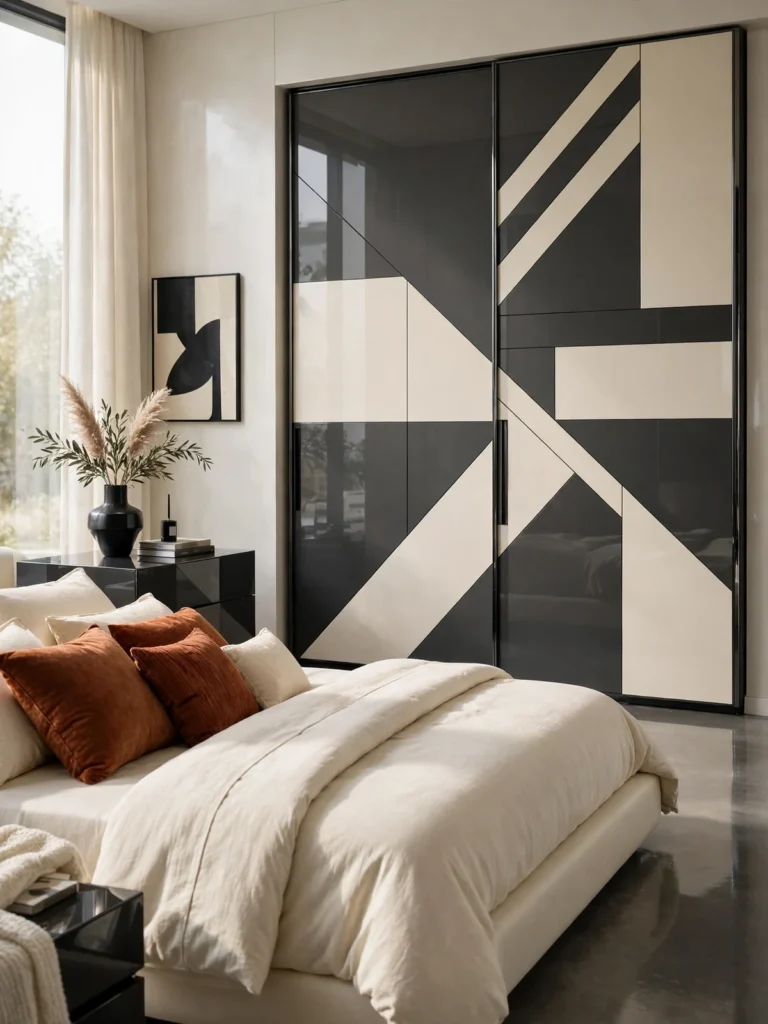
If plain doors feel too safe, geometric panels give a sliding wardrobe design instant drama, because diagonal lines and rectangular blocks create visual interest without any colour at all. Here, charcoal and cream doors carry a clean geometric pattern, against rust cushions and cream bedding. The design suits modern bedrooms that need one statement wall, and it reads as designer-made. The weakness is overdoing it: a busy pattern on every door overwhelms the room, so keep the geometry on the wardrobe only and the rest of the room plain.
Quick tips:
- Keep the pattern to the wardrobe doors only.
- Pair geometric doors with plain bedding and walls.
- Choose two tones, never three, for the pattern.
- Align the pattern lines across both doors.
Matte Black Sliding Wardrobe Design
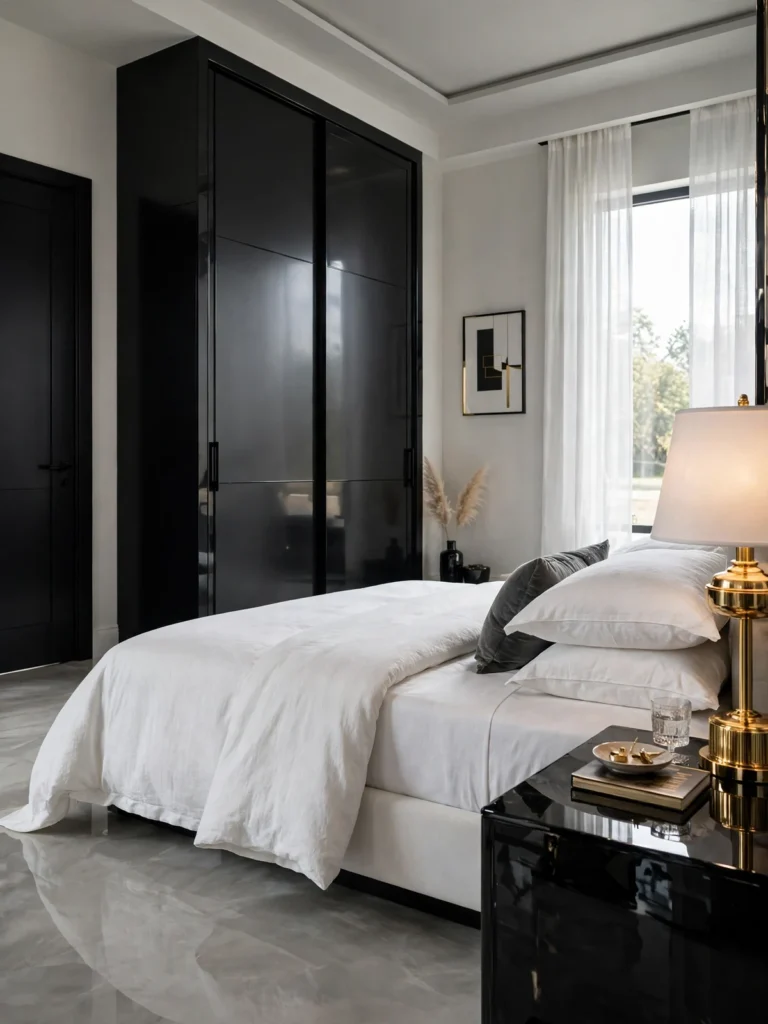
A matte black sliding wardrobe design is dramatic in the best way, because the deep black doors create depth, sophistication and a strong focal point that anchors the whole bedroom. Here, black doors sit against white bedding, a gold lamp and pale grey walls. The design suits large bedrooms with good daylight, and it pairs beautifully with brass and pale linen. The weakness is dust and fingerprints: black shows both, so choose a fingerprint-resistant matte finish and wipe the doors weekly.
Quick tips:
- Choose a fingerprint-resistant matte black finish.
- Pair black doors with white bedding and gold accents.
- Keep the walls pale so the room stays bright.
- Wipe the doors weekly to keep them looking new.
Mixed-Material Sliding Wardrobe Design
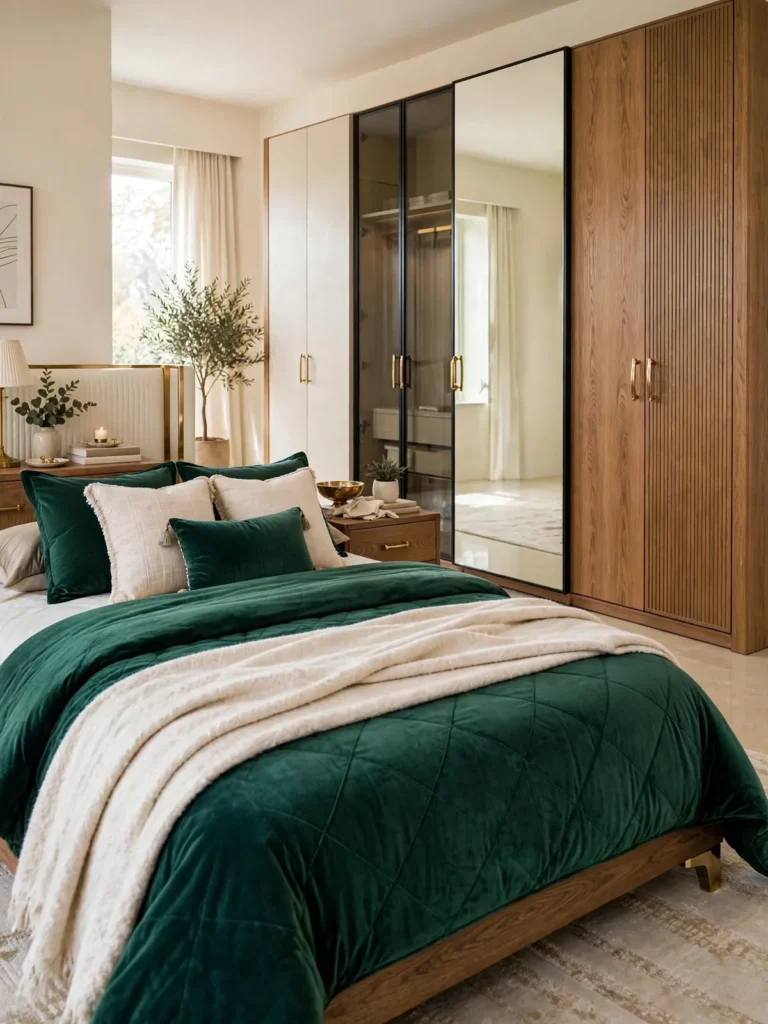
The most elevated sliding wardrobe design mixes materials, because wood, mirror, glass and matte laminate layered in one build mimic bespoke designer cabinetry and feel deeply personal. Here, oak, mirror and smoked glass panels combine on one wardrobe, beside emerald bedding, cream walls and brass details. The design suits homeowners who want a one-off look, and it makes even a budget wardrobe look expensive. The weakness is chaos: four materials with no plan look accidental, so repeat each material at least twice and keep one dominant finish across most of the doors.
Quick tips:
- Keep one dominant finish across most doors.
- Repeat each material at least twice.
- Limit the mix to three materials plus one metal.
- Let the mirror panel sit nearest the window.
Cane-Insert Sliding Wardrobe Design
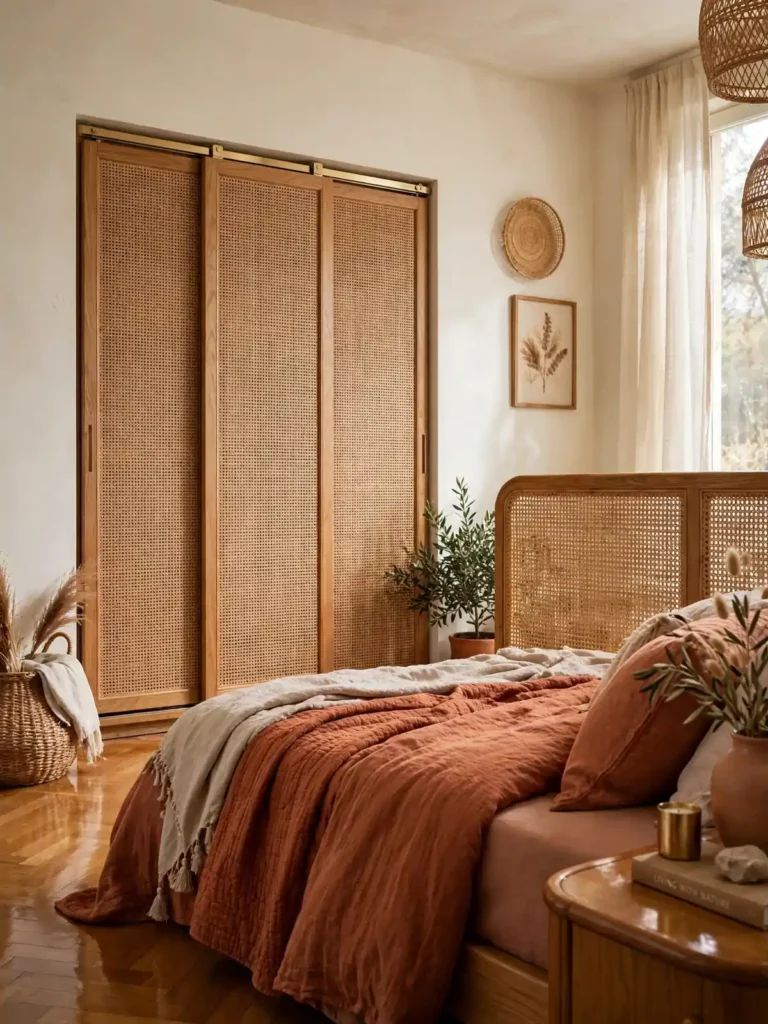
Cane inserts bring beautiful natural charm to a sliding wardrobe design, because rattan webbing softens the modern structure of sliding doors and adds a handmade, earthy character. Here, cane panels in oak frames sit beside terracotta bedding, cream walls and a woven basket. The design suits boho, tropical and earthy bedrooms, and the open weave lets the wardrobe breathe. The weakness is privacy: cane is semi-transparent, so fit a solid backing panel or a linen liner behind the webbing if you do not want the contents on show.
Quick tips:
- Fit a linen liner behind cane panels for privacy.
- Pair cane with oak frames and warm textiles.
- Keep the rest of the room natural and earthy.
- Dust the webbing gently with a soft brush.
Sliding Wardrobe Design That Pulls the Bedroom Together
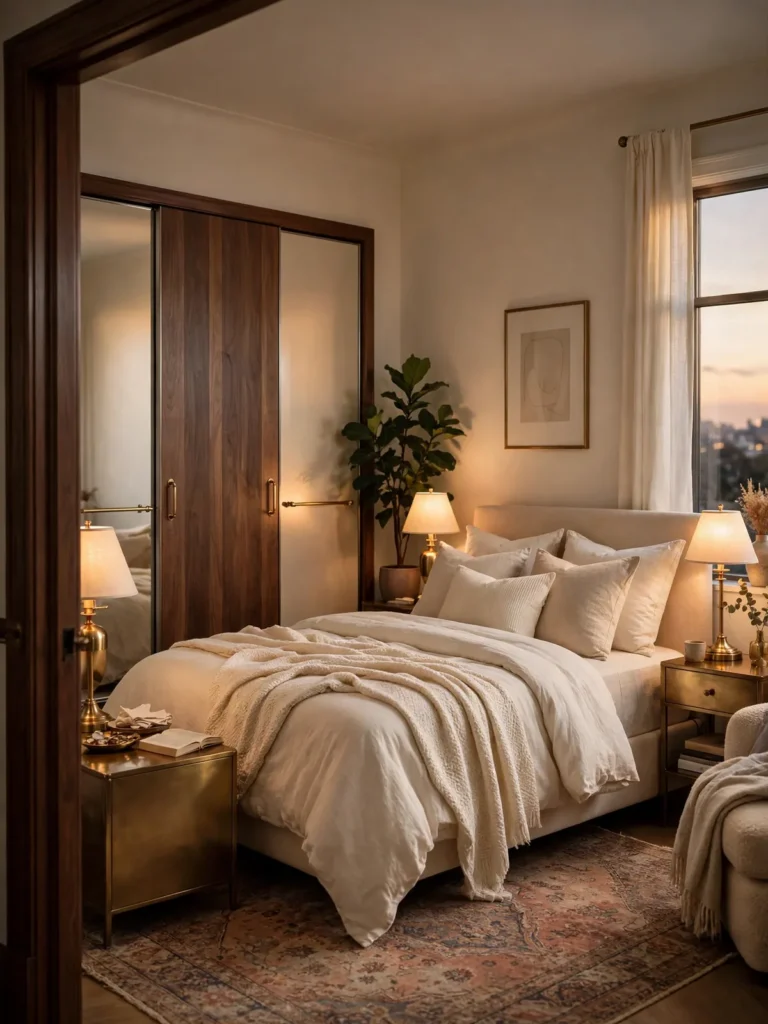
The last of these sliding wardrobe design ideas is the principle behind them all, and it is worth stating plainly because it is the difference between a wardrobe that looks good in a photograph and one that works beautifully every single morning: a great sliding wardrobe design is not one expensive feature, it is the layering of the right decisions — mirrored doors that double the light and the sense of space, a warm walnut or oak finish that makes the wall feel like furniture, loft storage that swallows suitcases and seasonal bedding, a two-tone or fluted door that adds personality without clutter, slim brass handles that quietly signal quality, and a smooth soft-close track that makes the doors glide instead of grind — working together so that nothing shouts and everything belongs, and the room rewards the owner too, because a wardrobe built on one clear finish and a planned interior is easy to live with, easy to tidy and easy to refresh with a new handle or a different cushion, even in a small room, even on a modest budget, and even when you change only one thing at a time. Here, a cream and brass bedroom pulls it together — mirrored and walnut sliding doors, brass handles, layered bedding, a vintage rug, brass lamps and a leafy green plant — and nothing in the room is there by accident. The lesson is to spend on the track and the interior first, choose one finish and let it lead, and measure twice before you order, because a sliding wardrobe built in that order stays beautiful and useful for years, and it gives you room to evolve, swapping a pastel panel for a fluted one or a cane insert for a mirror, without ever rebuilding the wall. Pick the three ideas from this list that solve your biggest problem first, add one luxury that makes you smile, and your bedroom stops being the room with the awkward wardrobe and becomes the sleekest room in the house.
Quick tips:
- Spend on the track and interior before the finish.
- Choose one finish and let it lead every choice.
- Measure twice at three heights before ordering.
- Refresh handles and liners to update the wardrobe without rebuilding.
FAQs
Is a sliding wardrobe design good for a small bedroom?
A sliding wardrobe design is ideal for a small bedroom, because the doors glide instead of swinging and you gain back the floor space a hinged door needs. Choose full-height mirrored doors and a wall-to-wall build for the biggest sense of space, and keep the interior to hanging space plus two drawers so nothing is wasted.
How wide should a sliding wardrobe be?
A sliding wardrobe should be as wide as the wall allows, because a wall-to-wall build wastes no space and looks built in. Allow at least 60 centimetres of depth inside for hangers to fit comfortably, and leave a small gap at the top for the track to run free — your fitter will measure the exact opening at three heights.
What is the best finish for sliding wardrobe doors?
The best finish for sliding wardrobe doors depends on the room: mirror brightens small, dark bedrooms, walnut laminate warms neutral rooms, fluted matte panels suit modern rooms that feel too plain, and matte black makes a bold statement in large, bright bedrooms. Pick one finish, repeat its tone in the bedding or hardware, and the wardrobe looks intentional.
Do sliding wardrobe doors need a lot of maintenance?
Sliding wardrobe doors need very little maintenance if the track is good quality: vacuum the track channel every few months, wipe the doors with a microfibre cloth, and check the rollers once a year. Cheap tracks stick and wobble, so spend on a smooth, soft-close track at the start and the doors will glide for years.
Can I fit a sliding wardrobe design in a rented home?
You can fit a sliding wardrobe design in a rented home with a freestanding sliding-door wardrobe, which needs no wall fixing and moves with you. Choose a standard size in a neutral laminate, keep the doors light so they glide easily, and add a freestanding mirror beside it if the doors are not mirrored.
Conclusion
A sliding wardrobe design does not need a renovation — it needs the right doors, the right interior and the right track. The 18 ideas above show that mirrored doors, walnut laminates, fluted panels, loft storage, corner builds and mixed materials can turn a plain bedroom wall into sleek, organised storage that makes the whole room feel bigger. Spend on the track and the interior first, choose one finish and let it lead, and measure twice before you order. Do that, and your sliding wardrobe stays beautiful and useful for years, with nothing more than a new handle or a fresh liner to keep it feeling new.