25 Circular Staircase Ideas That Save Space and Steal the Show
A curved staircase is the single most sculptural thing you can add to a home. Here are 25 practical, beautiful ways to design one — from space-saving spirals to grand helical curves.
Circular staircase ideas come in two very different flavors: tight spiral staircases that save precious floor space, and wide, sweeping helical curves that become the architectural centerpiece of a home. Both solve the same problem — getting between floors without a long, room-eating straight run — but they ask for different budgets, footprints, and design decisions.
The biggest mistake people make is falling in love with a curve before measuring the footprint. A spiral needs only a circle of floor roughly five to six feet across, while a grand curved stair wants a generous landing and open sightlines. Get the space planning right first, then let the fun part — materials, railings, lighting — follow.
Before you settle on a layout, it helps to think about the wall your staircase will hug, because the wall finish changes how the whole curve reads — a textured or painted stair wall can make even a modest spiral feel like a deliberate design moment staircase accent wall ideas that pulls the entire entryway together.
Choose a Spiral Kit Staircase for the Smallest Footprint
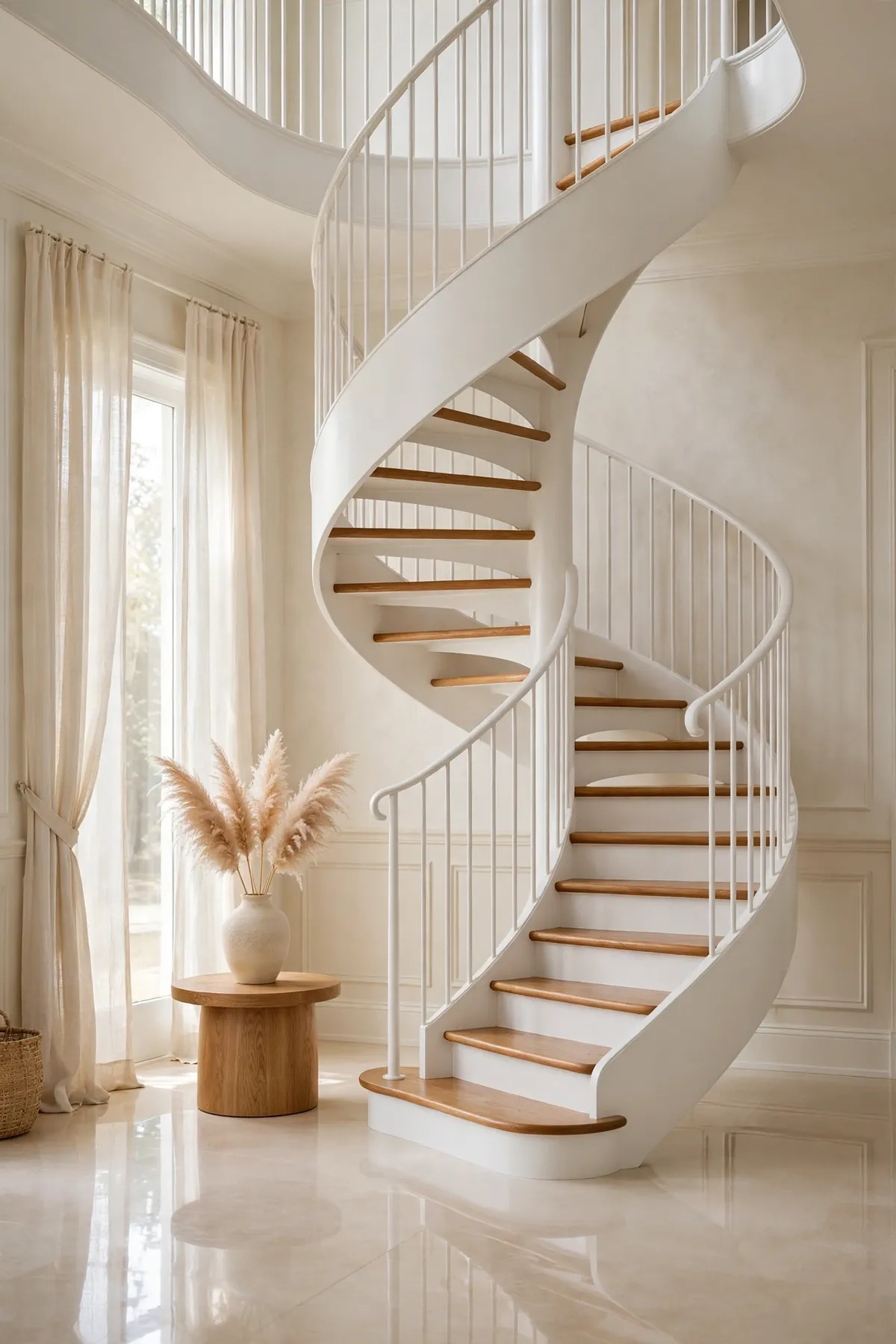
If your floor plan is tight, a made-to-measure spiral kit is the most practical way to get upstairs. These arrive as a central pole, wedge-shaped treads, and a curved handrail that bolts together on site, and they fit into a circle of floor roughly five to six feet wide. They are a favorite for loft apartments, garden offices above garages, and access to rooftop terraces where a straight flight simply will not fit.
- Measure headroom at the tightest turn before ordering — the pole side is where heads bump.
- Choose treads at least 26 inches deep at the walking line so feet feel secure.
- Confirm your local building code on spiral tread width and riser height before you commit.
Go Grand With a True Helical Curve
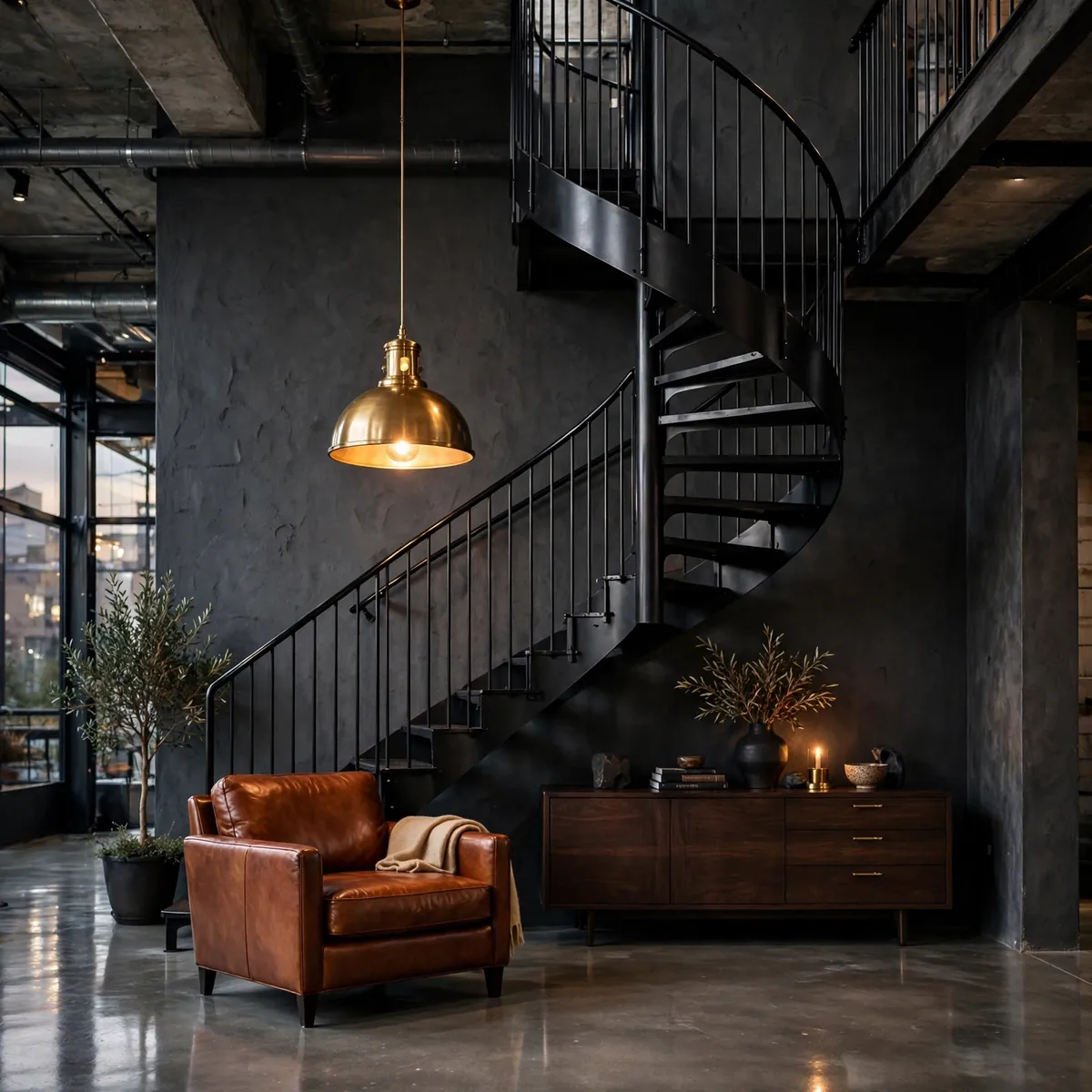
A helical staircase has no central pole — the treads curve continuously and the structure hides inside the stringers or the wall. It reads as one sweeping ribbon of material and feels far more luxurious than a tight spiral, which is why you see them in grand entryways and open-plan homes. It costs significantly more and needs generous floor space, but as a single architectural gesture, nothing beats it.
- Leave clear sightlines from the front door so the curve is visible on entry.
- Keep furniture at least three feet from the open edge to preserve the floating look.
- Use a specialist stair builder, not a general carpenter, for structural accuracy.
Try These Circular Staircase Ideas With a Cast-Iron Victorian Spiral
Cast-iron spiral stairs have been around since the Victorian era, and original salvaged ones still turn up in reclamation yards. With ornate pierced treads and a slender central newel, they bring instant character to cottages, townhouses, and period conversions. Have any salvaged ironwork inspected and re-coated by a metal specialist before installation, since old castings can hide fatigue cracks.
- Pair ornate iron with plain walls so the detail doesn’t fight the room.
- Add rubber nosing strips to pierced metal treads for grip.
- Check weight: cast iron is heavy and may need a reinforced floor fixing.
Wrap Oak Treads Around a Steel Spine
A popular modern combination is thick oak treads cantilevered from a single central steel spine that snakes upward. The wood brings warmth underfoot while the dark steel reads as a clean sculptural line. This setup suits contemporary homes where you want the staircase to feel crafted rather than industrial, and the open risers keep light moving through the plan.
- Ask for treads at least 2 inches thick so the cantilever looks solid, not flimsy.
- Seal oak with hardwax oil for a natural feel that still resists wear.
- Keep the steel spine matte to avoid a glossy industrial shine.
Let the Handrail Flow in One Continuous Ribbon
On a curved staircase the handrail matters more than anywhere else in the house, because your eye follows it the whole way up. A single unbroken ribbon of wood or metal — bent or laminated to follow the curve — feels intentional and expensive. Avoid segmented rails with visible joints at every tread; they chop the curve into steps and cheapen the effect instantly.
- Laminated timber rails bend smoothly and can be stained to match treads.
- Metal rails can be rolled to radius by a specialist fabricator.
- Walk the stair before the rail is fixed and mark the most comfortable grip height.
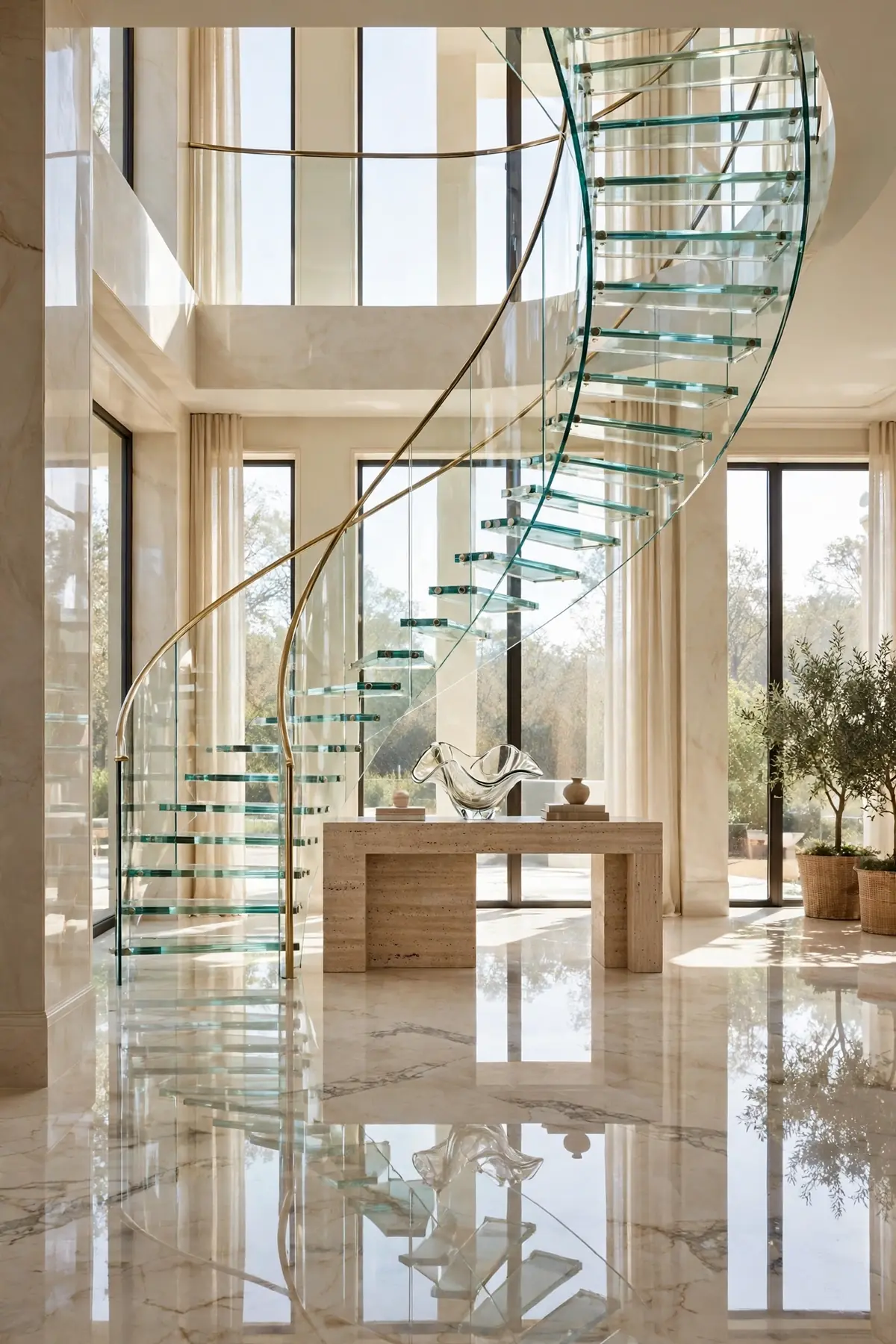
Keep It Open With a Curved Glass Balustrade

Frameless or slim-framed curved glass panels let a circular staircase read as pure shape with nothing blocking the view. Laminated safety glass is cut to the curve in panels, and it works beautifully where the stair sits near windows or in a double-height space. It does show fingerprints and dust, so it suits households that don’t mind a quick weekly wipe-down.
- Use laminated, not toughened-only, glass so it stays in place if damaged.
- Slim metal handrail caps on glass feel better in the hand than bare glass edges.
- Plan panel joints so they land at consistent points around the curve.
Tuck a Spiral Into a Window Bay
A curved staircase placed inside a rounded window bay or a curved corner of the house is one of the smartest space moves in renovation. The architecture already curves, so the stair settles in like it was always meant to be there, and the glazing wraps daylight around every tread. Bay placements work especially well for access to a new loft conversion where headroom over a straight flight would fail.
- Add a heat-reflective blind on south-facing curved glass to control glare.
- Keep the railing slim so the window view stays the hero.
- Check that the bay structure can take the stair’s fixing loads.
Light the Treads From Beneath for Night Safety

Recessed LED strips under each tread nosing do two jobs on a circular stair: they make every step edge visible after dark, which matters because spiral treads narrow toward the pole, and they turn the whole staircase into a soft glowing sculpture. Warm white light around 2700K keeps it cozy; cool white can feel like an office corridor. Put the circuit on a motion sensor or a timer so it isn’t burning all night.
- Choose 2700K warm white for a residential feel.
- Run wiring before treads are fixed — retrofitting is messy.
- Fit a dimmer so the glow can drop to a nightlight level.
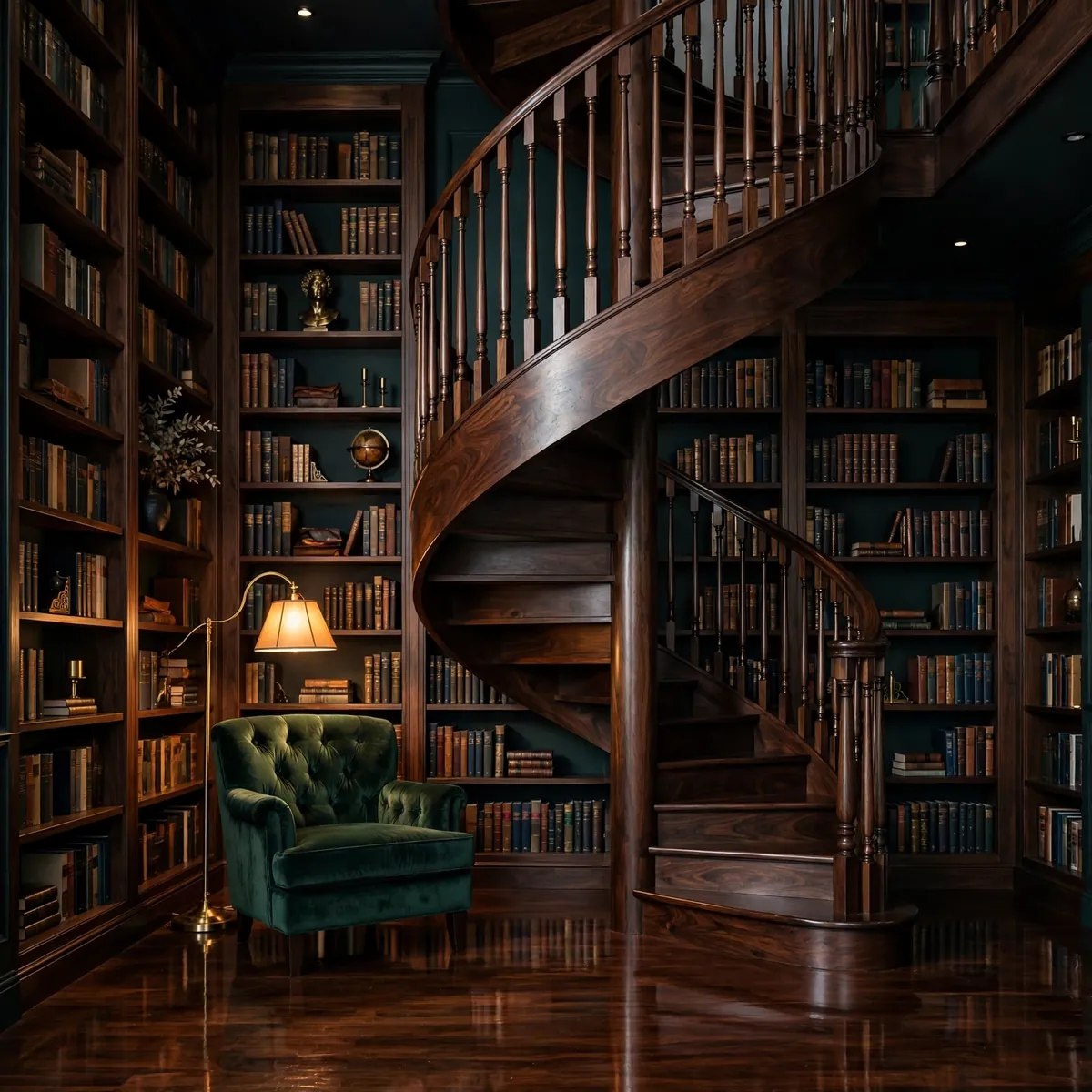
Build a Curved Bookshelf Wall Alongside
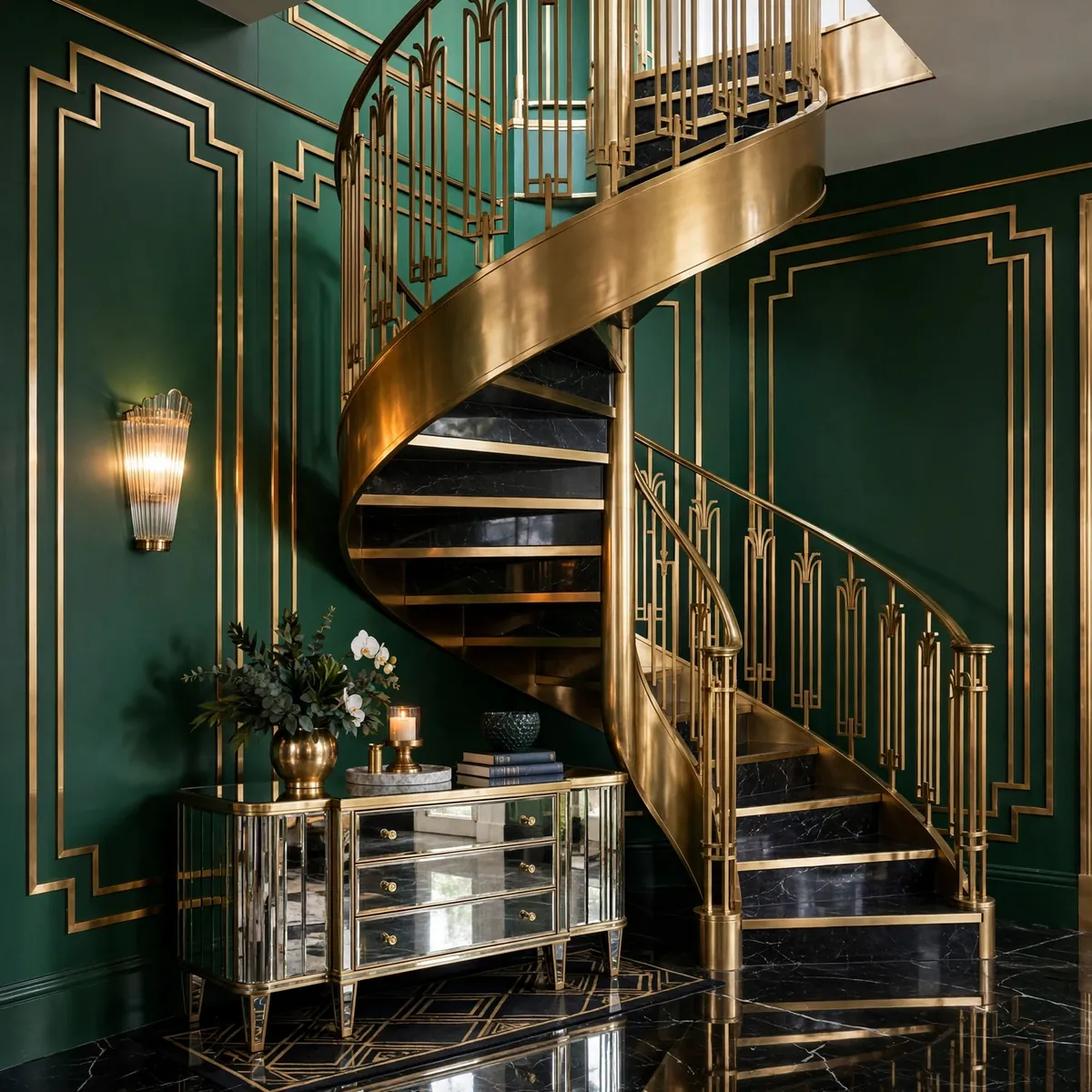
The wall that follows a circular staircase is awkward to furnish but perfect for shallow built-in shelving that steps up with the stair. Books, ceramics, and framed prints arranged along the climb turn dead wall into a library moment. Keep shelves no deeper than eight inches so nobody’s shoulder catches them on the way up, and anchor everything into studs or masonry.
- Vary shelf heights to follow the stair’s pitch naturally.
- Leave the lowest two shelves for heavier books to keep the unit stable.
- Add a picture light or two so the display reads at night.
Use the Hollow Core as a Reading Seat
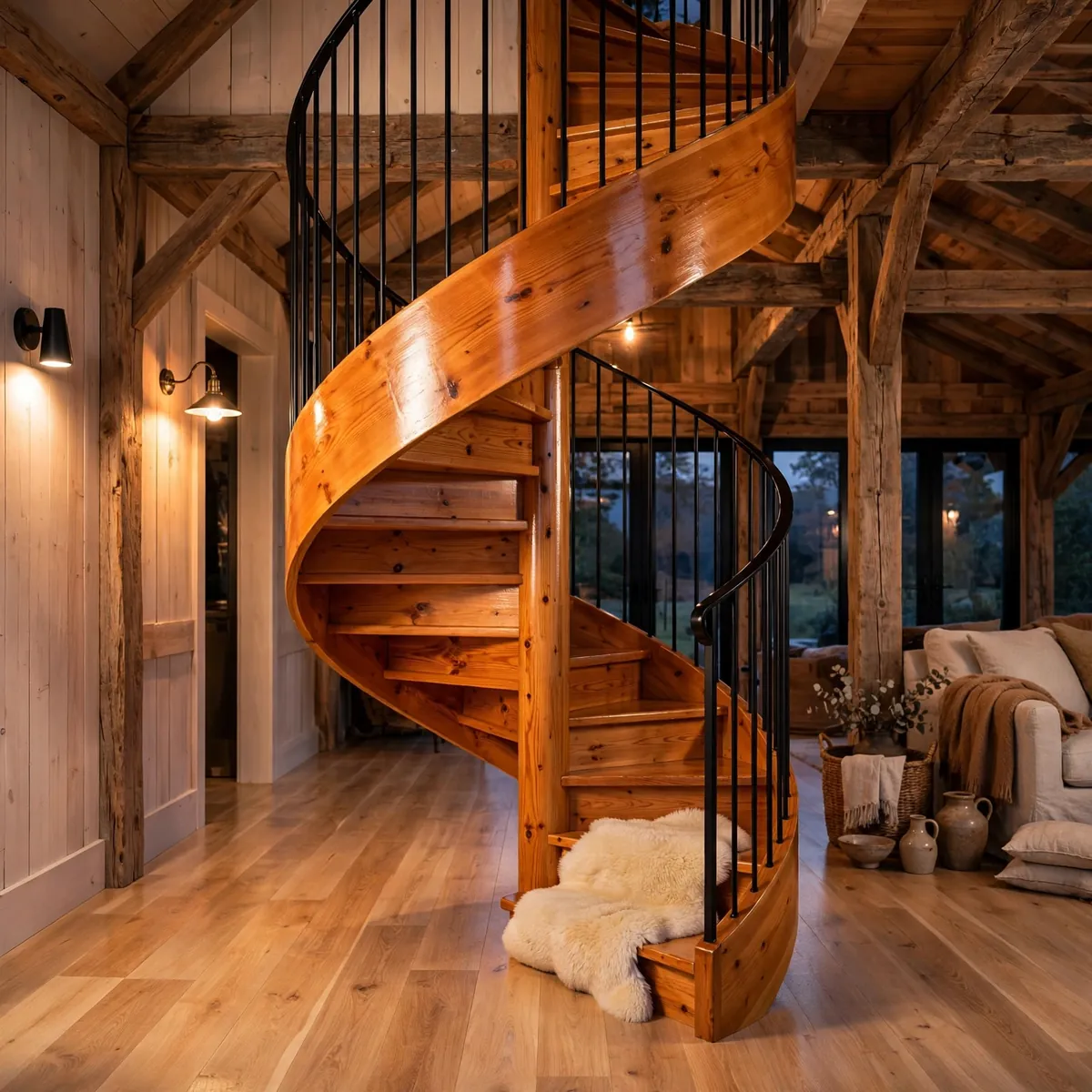
A wide spiral or helical stair often leaves a hollow center at ground level — space most people ignore. A curved built-in bench with a cushion and a wall-mounted reading light turns it into the coziest seat in the house, especially in a family living room. It works best when the stair is open on the inner side so the nook gets borrowed light from the room.
- Keep seat depth around 20 inches for comfortable lounging.
- Add a small bookshelf or magazine slot in the bench base.
- Choose a washable cushion cover — stairwells collect dust.
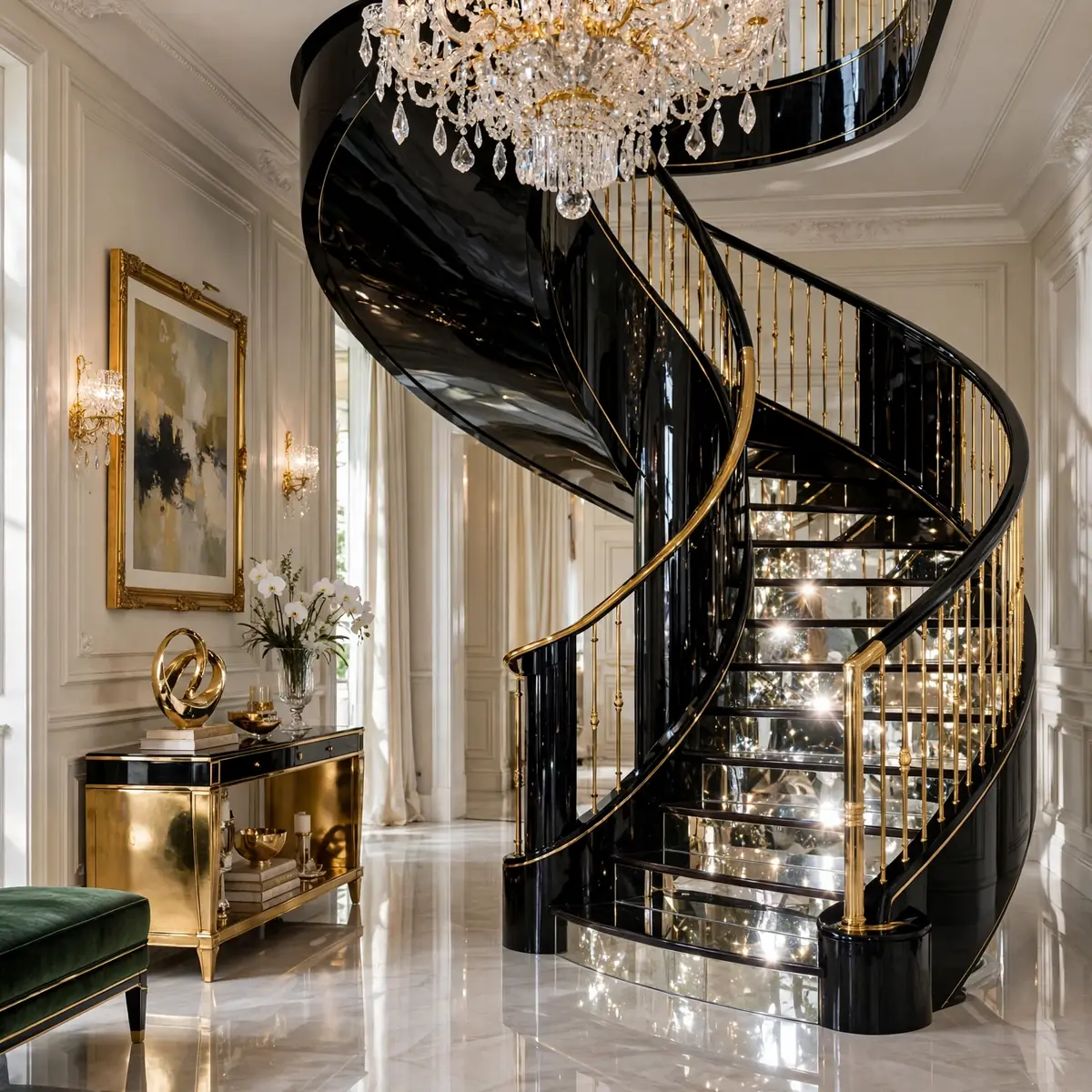
Go All Black for Graphic Drama
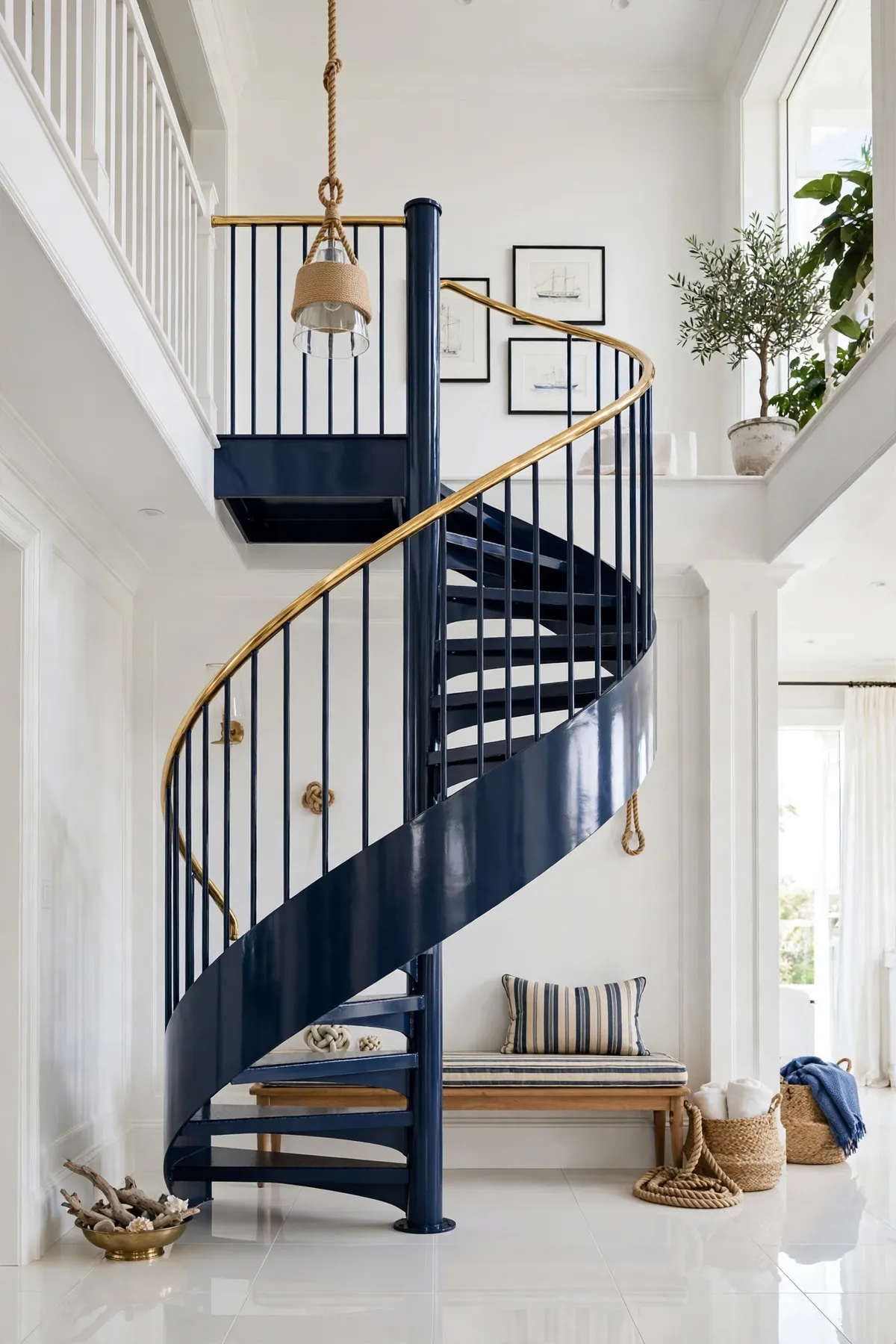
An all-black circular staircase — black steel, black-stained treads, black rail — reads as a bold graphic gesture, especially against white or pale walls. It suits confident modern interiors and photography beautifully. The trade-off is visibility: on dark stairs, step edges can blur together, so add subtle tread lighting or pale nosing strips to keep every step readable.
- Use matte black, not gloss, to avoid harsh reflections.
- Add warm lighting to stop the stair feeling cold.
- Pale walls behind make the silhouette pop.
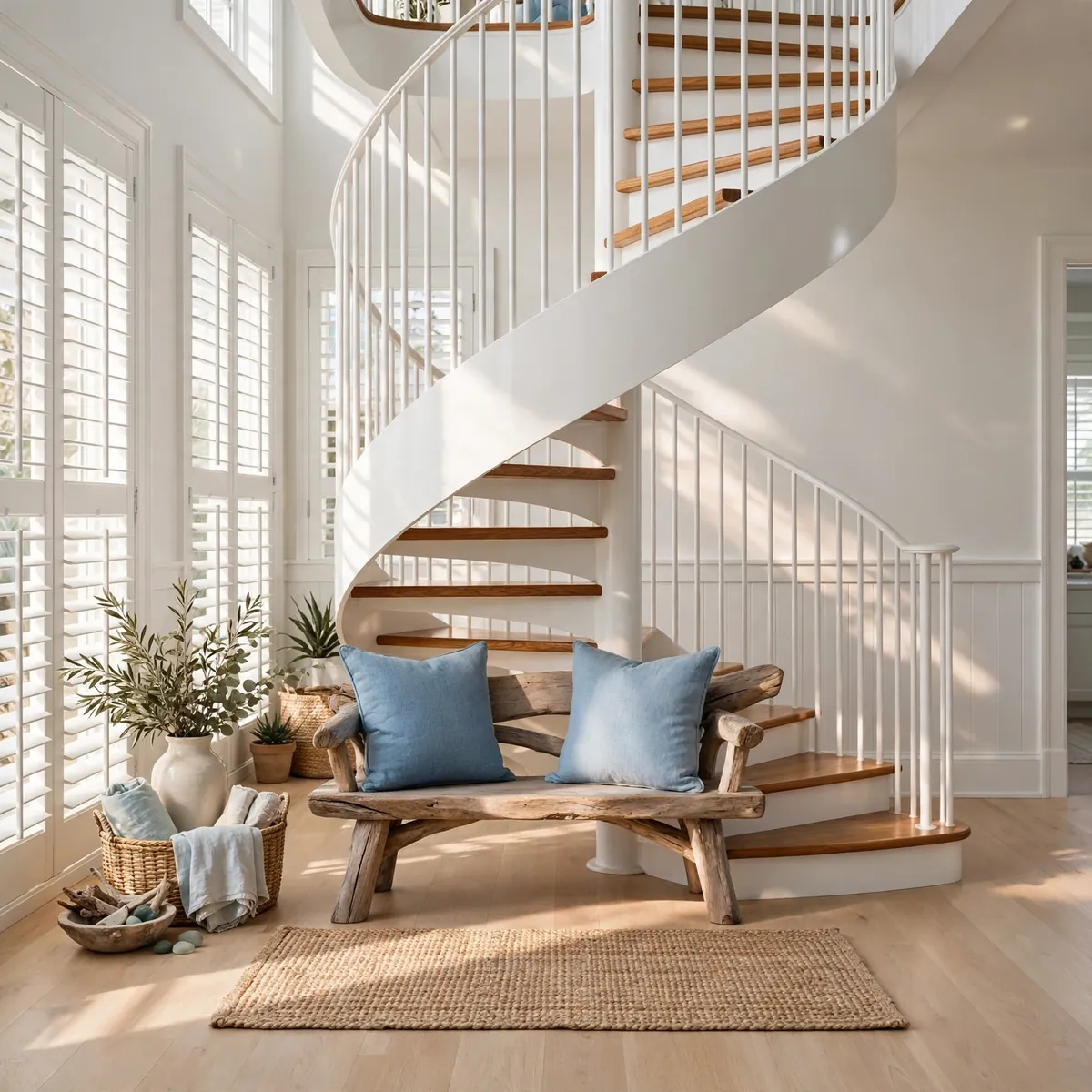
Keep It Pale With Whitewashed Timber
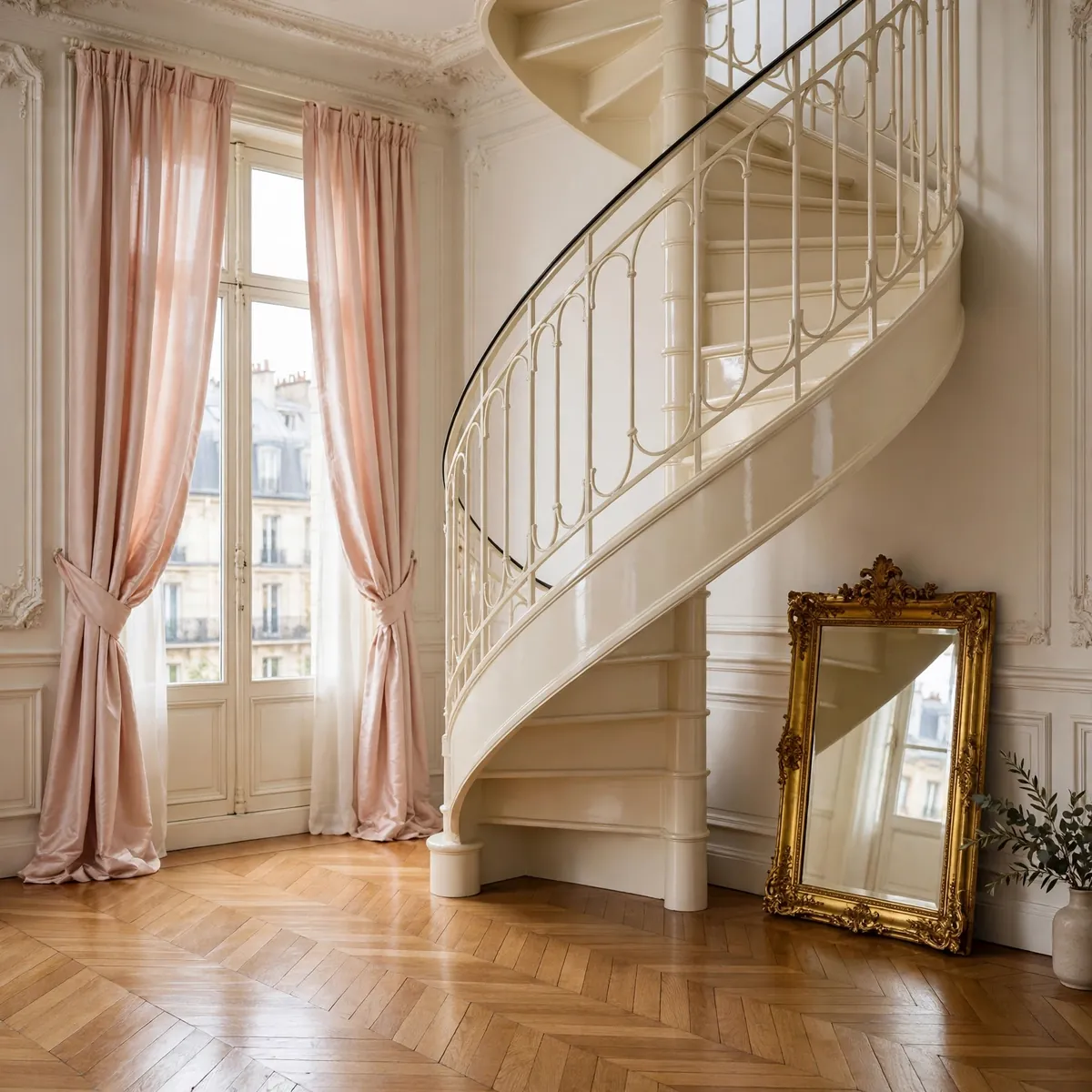
At the opposite end of the mood scale, a whitewashed or pale-painted spiral feels light and Scandinavian. Pale finishes bounce daylight around the stairwell, which is a real advantage in narrow terraced houses where the stair sits in the middle of the plan. Whitewashed timber shows scuffs sooner than dark finishes, so pick a durable satin paint and keep a touch-up pot handy.
- Satin or eggshell paint wipes clean better than flat matte.
- Whitewash lets wood grain show through for added texture.
- Add a natural jute runner if bare pale treads feel slippery.
Run a Runner Up the Spiral
Carpet runners aren’t just for straight stairs — a flexible runner can be fitted tread by tread up a spiral, softening footsteps and adding grip on hard treads. Because each tread is wedge-shaped, the runner is cut in sections and joined, so this is a job for a stair-carpet specialist rather than a DIY roll-out. A low-pile, patterned runner also hides the dust that collects on stair edges.
- Hire a fitter experienced with winders and spirals.
- Low-pile carpet wears better and shows less crushing.
- Brass stair rods add a classic finishing touch.
Make the Central Pole a Feature Column

Instead of hiding the central pole of a spiral stair, turn it into the design feature: clad it in timber, wrap it in brass, or paint it a bold accent color that ties into the room. Some homeowners hang a pendant light from the pole’s top or let a climbing plant wind gently around its base. A dressed-up pole makes a budget kit stair look like a custom piece.
- Timber cladding warms up a plain steel pole instantly.
- Keep climbing plants trimmed so they never snag hands or sleeves.
- A bold pole color works best when echoed elsewhere in the room.
Install a Child-Safe Gate That Follows the Curve
Spiral stairs and toddlers are a nerve-wracking combination, and standard baby gates don’t fit curved openings. Curved or angle-mount gates exist that clamp to the newel and the first balusters, and a retractable mesh gate can span the awkward wedge-shaped gap at the base. Fit the gate before you need it — measure the opening angle and buy the gate to match, not the other way around.
- Angle-mount gates suit the wedge shape at a spiral’s base.
- Check the gate’s maximum angle rating before buying.
- Teach older children the “pole side is narrow” rule for safe climbing.
Let Daylight Pour Through a Skylight Above
A skylight directly over a circular staircase is transformative. Sunlight tracks around the curve through the day, throwing moving shadows across the treads, and the stairwell becomes the brightest, most uplifting part of the house. In loft conversions this is often easy to achieve since the roof is right above. Add an opening vent option and you also get a natural chimney for ventilating warm air out of the upper floor.
- An opening skylight doubles as ventilation for the stairwell.
- Consider a solar blind for summer afternoons.
- Position the stair so the light shaft doesn’t blind someone descending.
Choose Winder Treads Instead of a Full Spiral
If a full 360-degree spiral feels too tight but you still want a curve, winder treads — wedge-shaped steps that turn a corner in 90 or 180 degrees — give you a gentler, more comfortable climb. They eat more floor space than a true spiral but far less than a straight flight with a landing, and they’re easier for older knees and for carrying laundry baskets. Many building codes also treat winders more leniently than spirals.
- Keep the narrow end of each winder at least 4 inches wide.
- A 180-degree turn suits hallways; 90 degrees suits L-shaped plans.
- Consistent going depth at the walking line keeps the rhythm comfortable.
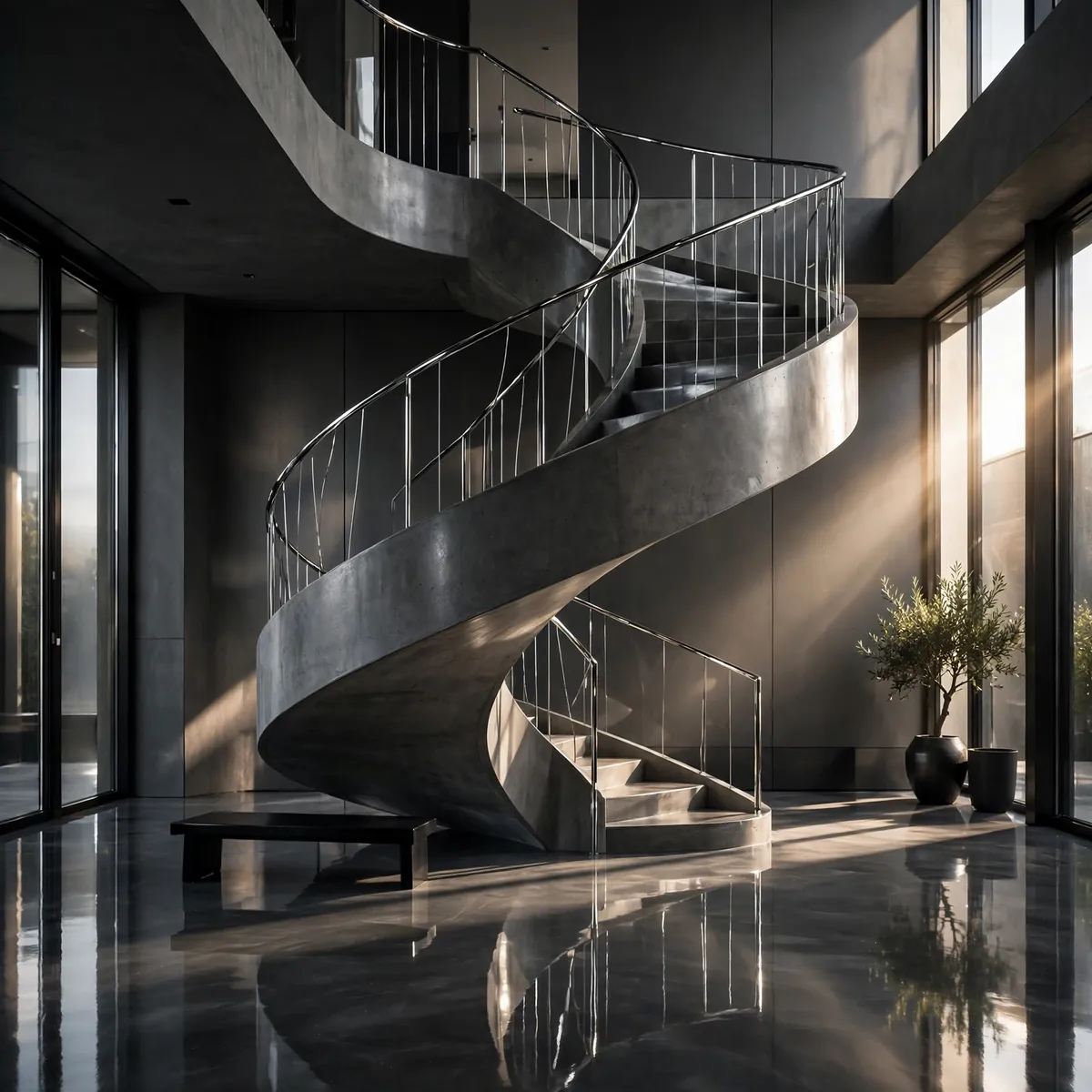
Pair Concrete Treads With a Curved Plan
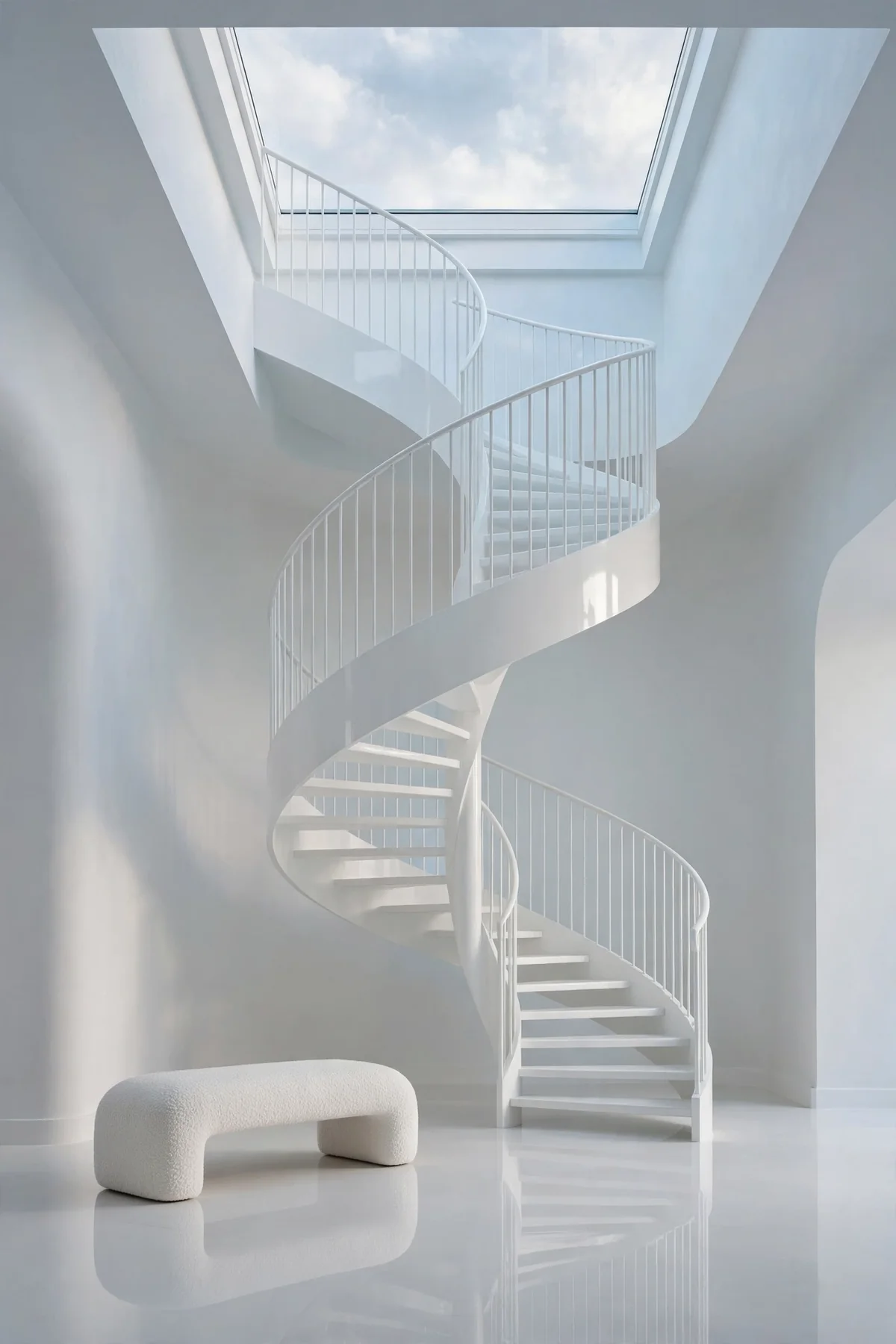
A spiral or curved stair cast in concrete feels monumental — cool, solid, and permanent. Polished concrete treads on a curved plan look spectacular in modern and industrial homes, and the material’s thermal mass keeps the stairwell temperature stable. Concrete spirals are heavy and usually need to be cast in place or craned in as precast sections, so structural advice comes before aesthetics here.
- Seal polished concrete to prevent staining from shoes and spills.
- Add anti-slip nosing — polished concrete is slick when wet.
- Budget for a structural engineer, not just a stair supplier.
Add a Sculptural Pendant Down the Center

The open core of a circular staircase is the perfect drop zone for a long sculptural pendant or a cluster of small pendants at staggered heights. Light falls through the middle of the stair, illuminating every tread edge and turning the void into a glowing column. Hang it from the ceiling above the top of the stair so it reads from both floors, and size it generously — a timid pendant gets lost in a double-height void.
- Stagger multiple pendants for a more artful composition.
- Use a winch or pulley fixing for easy bulb changes at height.
- Keep the lowest pendant above head height on the upper landing.
Frame the Curve With Vertical Timber Battens
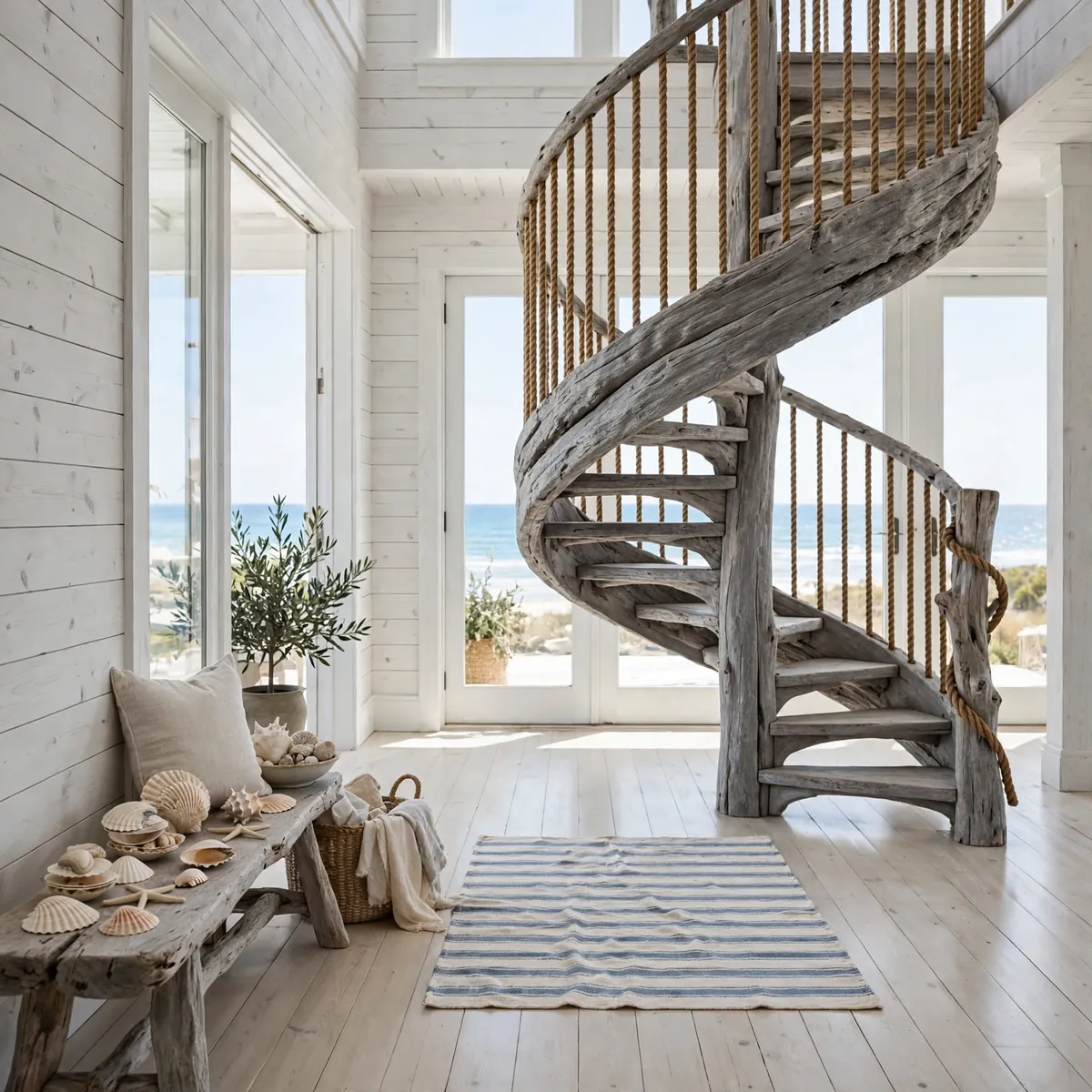
Vertical timber battens fixed to the wall behind a spiral stair create a beautiful rhythm that echoes the stair’s upward movement. The battens add texture and warmth, partially screen the stair from the room for a sense of privacy, and hide uneven wall surfaces common in stairwells. Spacing the battens with small gaps lets light filter through for a soft striped effect in the afternoon.
- Pre-finish battens before fixing to avoid drips on the wall.
- Consistent spacing matters — use a spacer block during install.
- Oak or ash battens suit warm interiors; painted pine suits cooler schemes.
Take the Spiral Outdoors to a Roof Terrace
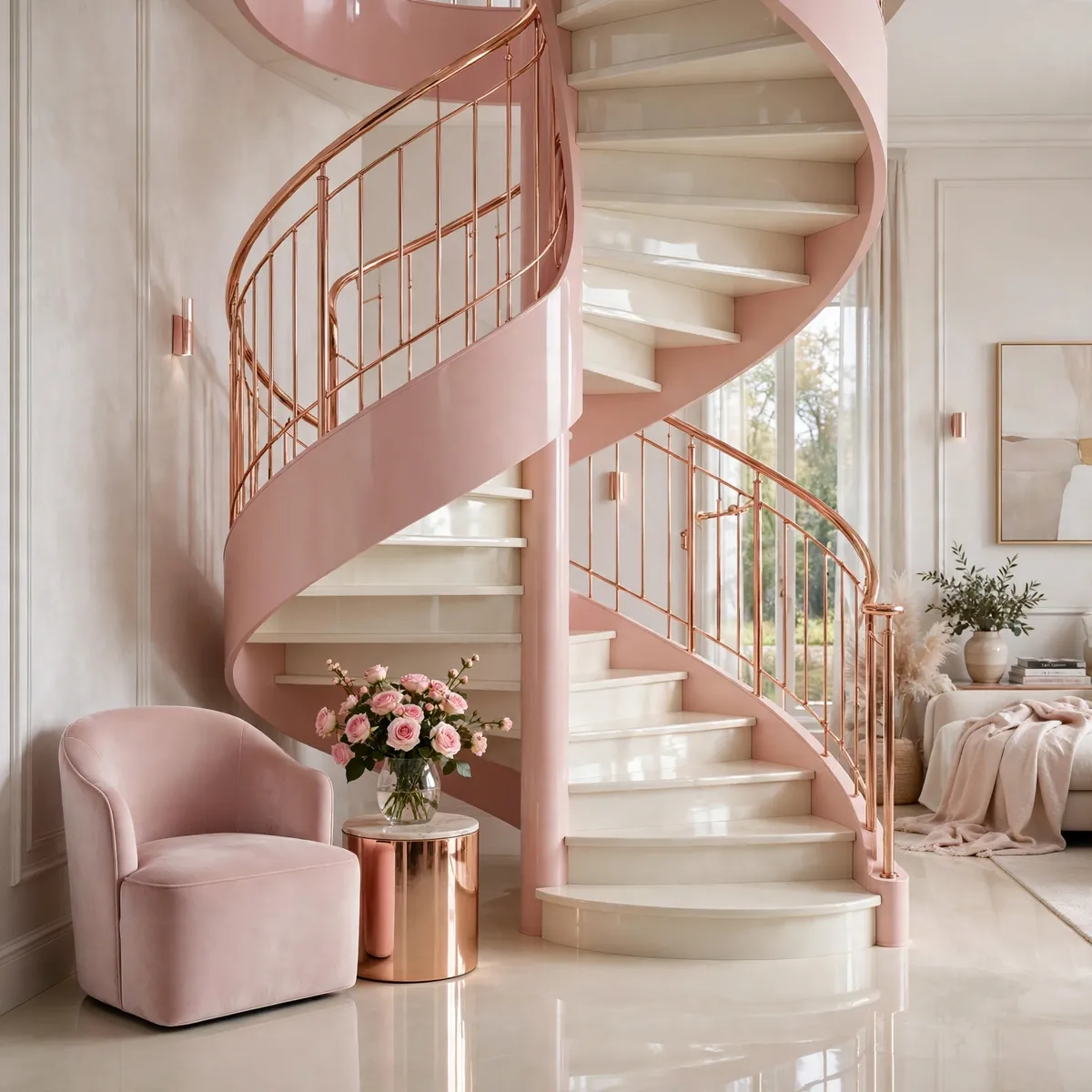
External spiral staircases in galvanized steel are a brilliant way to reach a roof terrace, deck, or garden studio without sacrificing interior floor space. Galvanized or powder-coated steel handles weather, and the small footprint means the stair can tuck into a side return or courtyard corner. Plan for grip: open metal treads get slippery in rain and frost, so specify serrated or mesh treads and a secure handrail both sides.
- Galvanized steel resists rust far longer than painted mild steel.
- Serrated treads are essential for wet-weather grip.
- Check planning rules — external stairs can affect neighbors’ privacy.
Soften the Base With a Round Rug
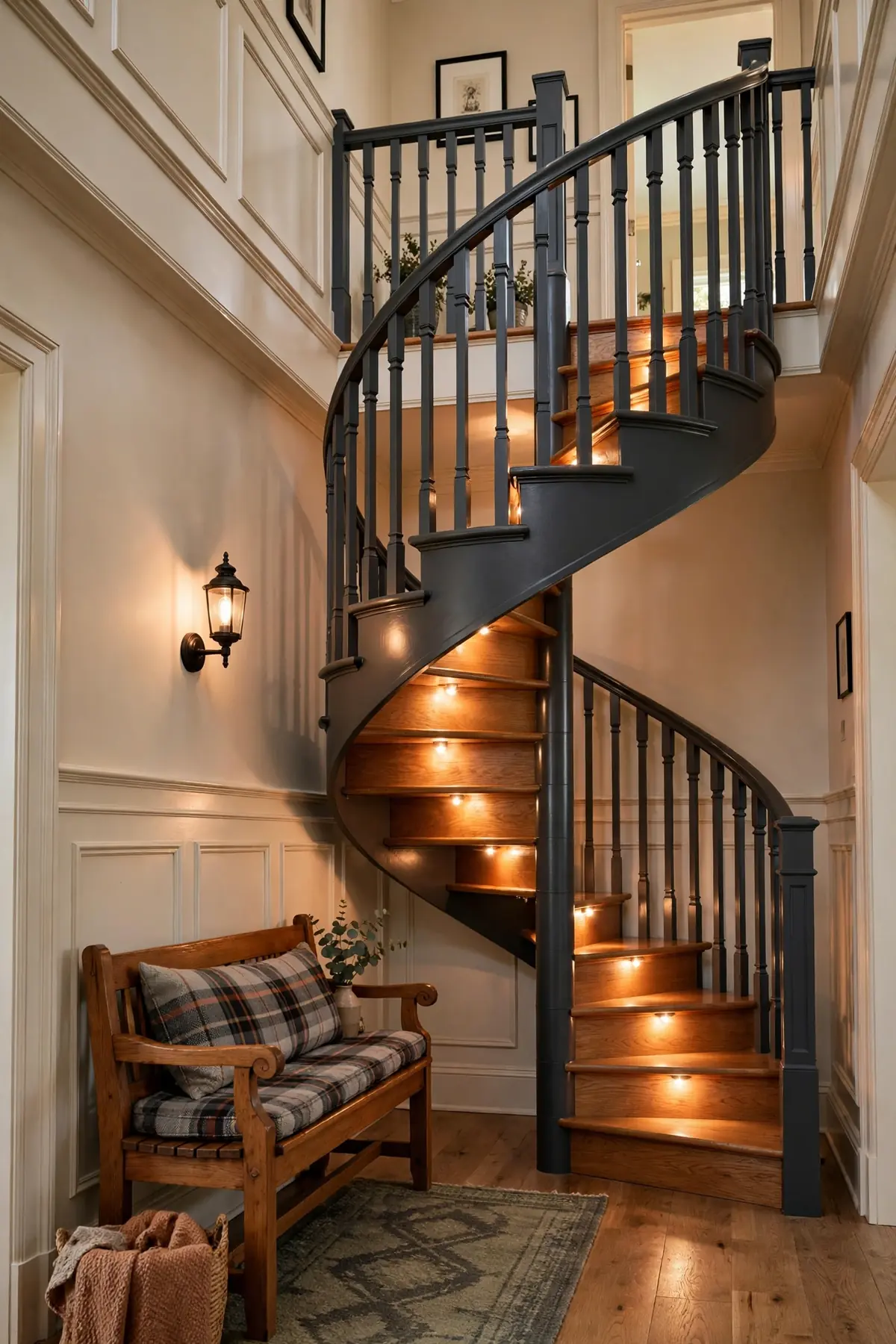
A round rug placed at the foot of a circular staircase does more than decorate — it visually anchors the curve, marks the entry point to the stair, and softens the first step down onto hard flooring. Choose a rug diameter close to the stair’s footprint so the geometry feels intentional. Low-pile, washable rugs work best since stair bases see heavy foot traffic and tracked-in dirt.
- Match rug diameter roughly to the stair’s footprint.
- Use a non-slip rug pad on hard floors.
- Washable rugs survive the dirt zone at a stair base.
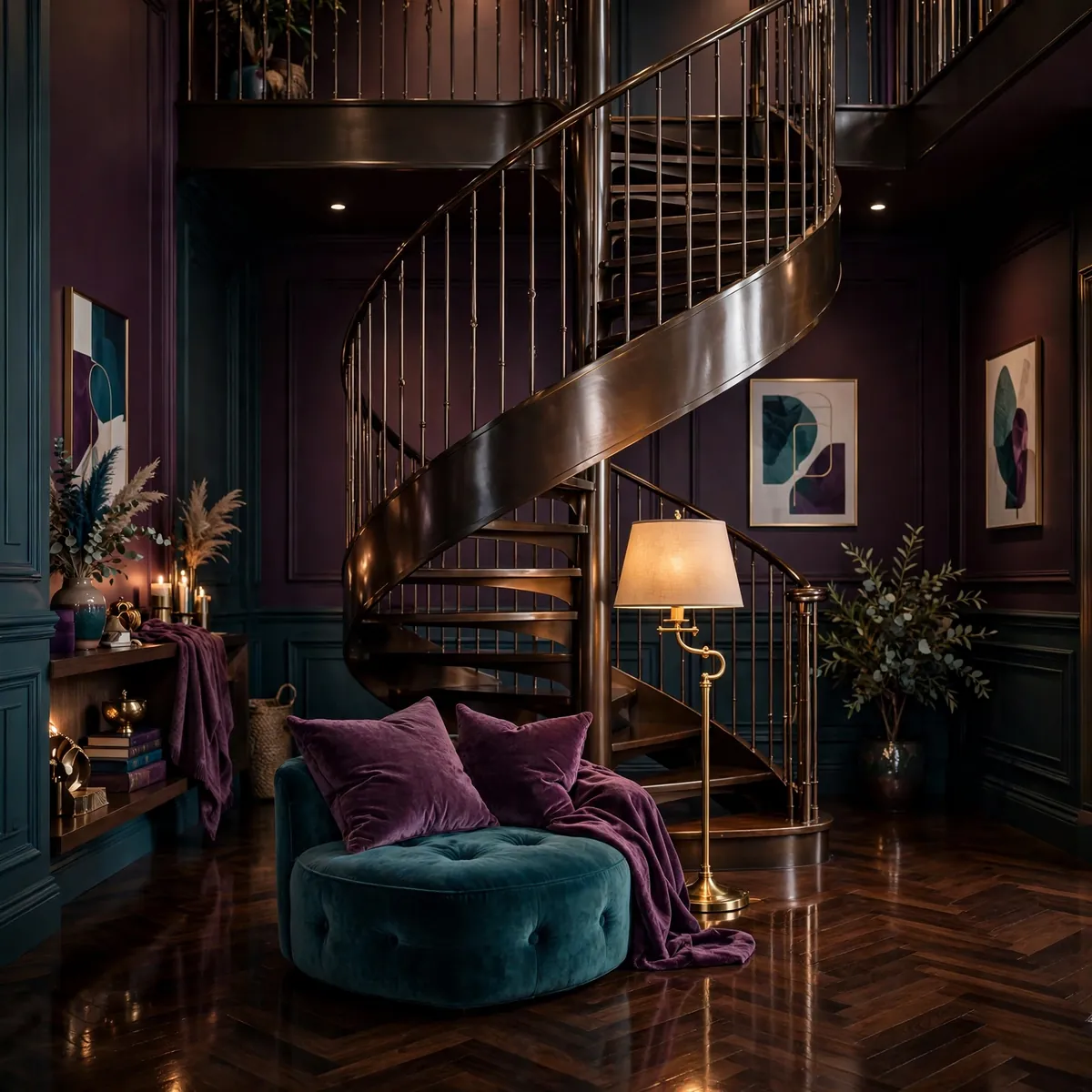
Mix Brass Details Into a Timber Spiral
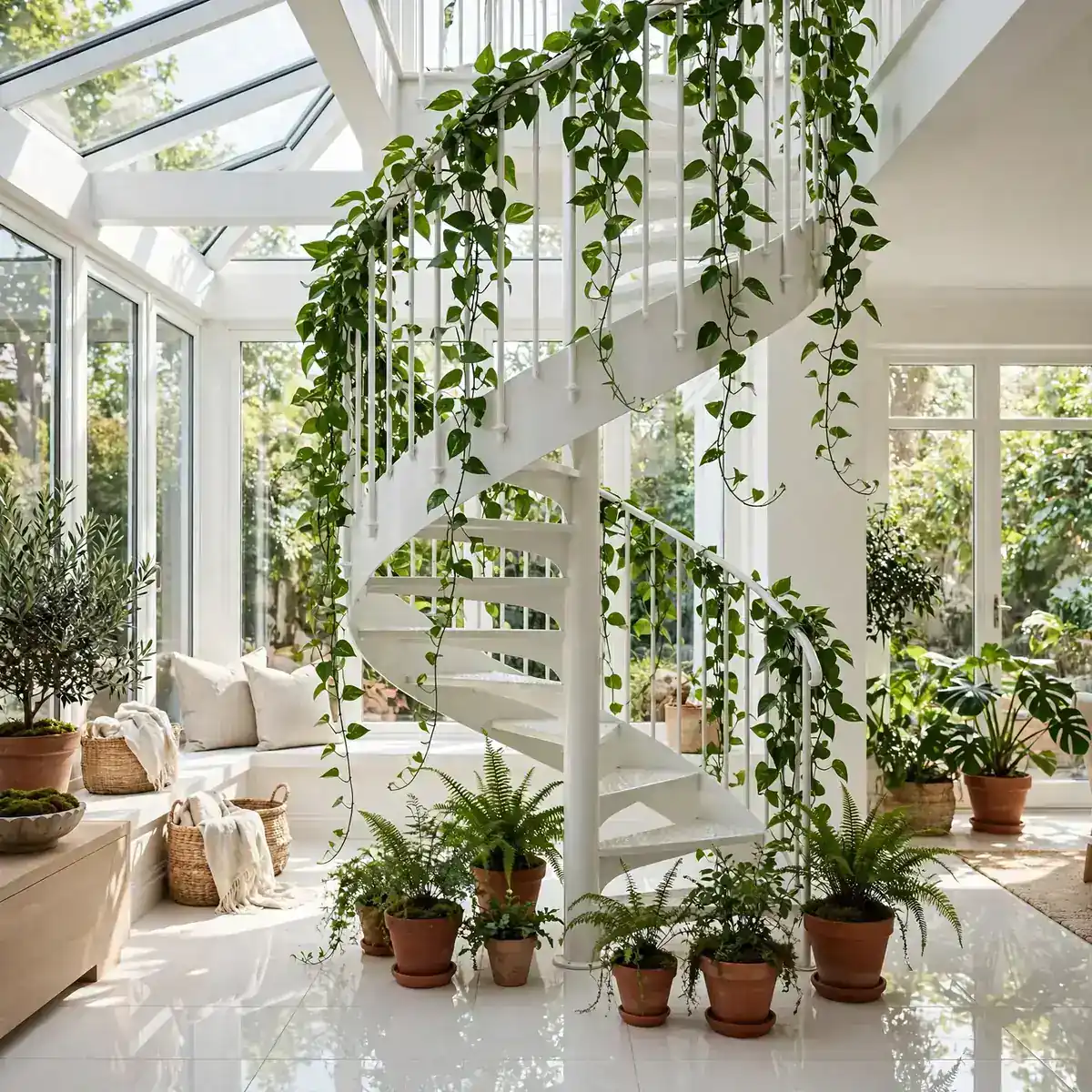
Brass is the jewelry of staircase design. On a timber spiral, brass handrail brackets, tread nosing strips, and a brass-capped newel add a warm metallic glint that catches light as you climb. The combination of honey-toned wood and aged brass leans classic and works beautifully in traditional and transitional homes. Keep brass finishes consistent — mixing polished and antique brass in one stair looks accidental.
- Unlacquered brass develops a rich patina; lacquered stays shiny.
- Brass nosing strips protect tread edges and add grip.
- Echo the brass in nearby door hardware for cohesion.
Plan Storage Into the Stair’s Dead Zones
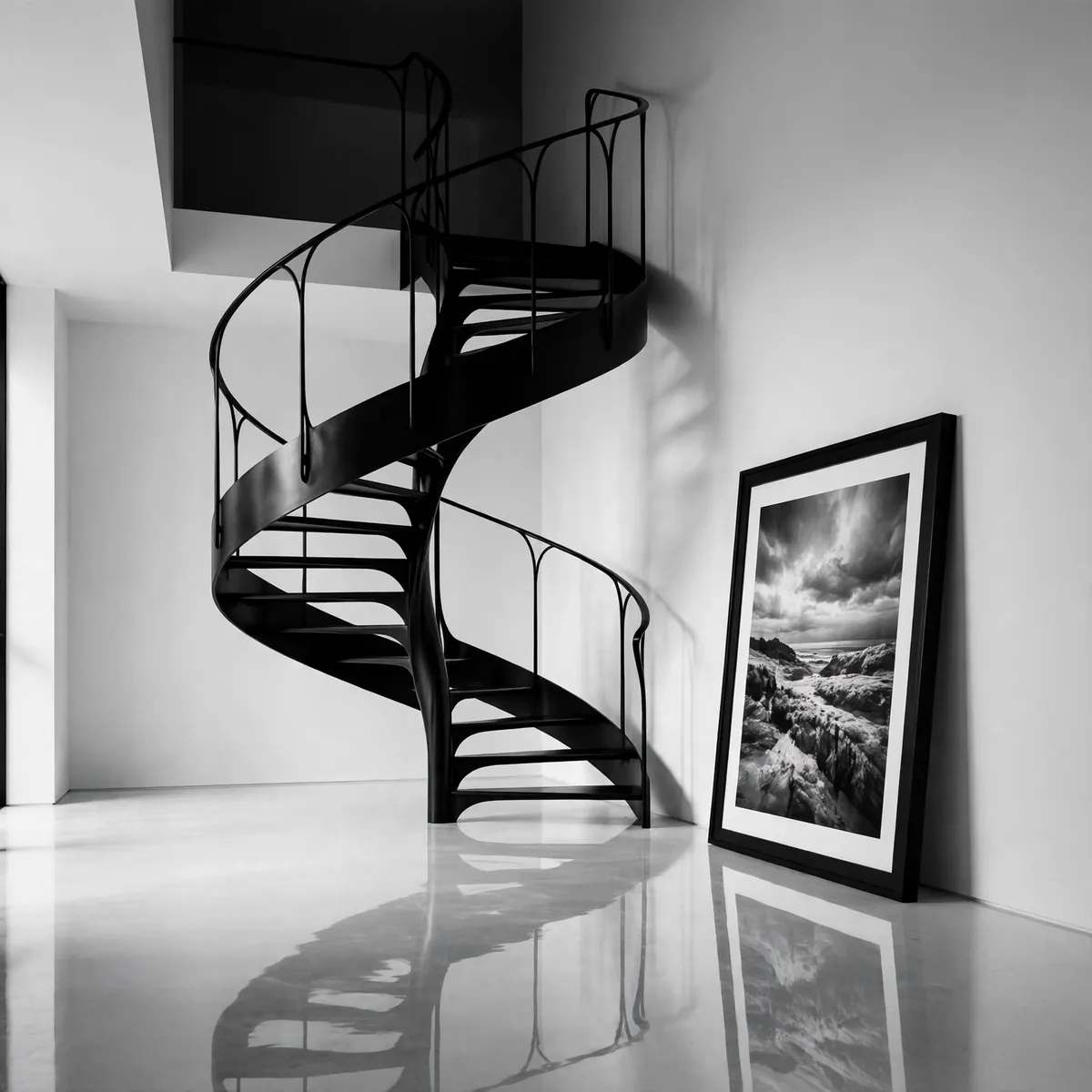
The wedge-shaped spaces under the outer edge of a spiral stair are awkward but usable. Shallow pull-out drawers, a slim shoe cabinet, or a hidden cupboard for cleaning supplies can all be built into the dead zones without affecting the stair’s structure. This is genuinely useful in small homes where the spiral was chosen to save space in the first place — every square foot should work twice.
- Keep storage clear of the walking line and headroom zone.
- Push-to-open fronts avoid handles that catch clothing.
- Ventilate any enclosed cupboard to prevent mustiness.
Finish With a Statement Newel at the Entry
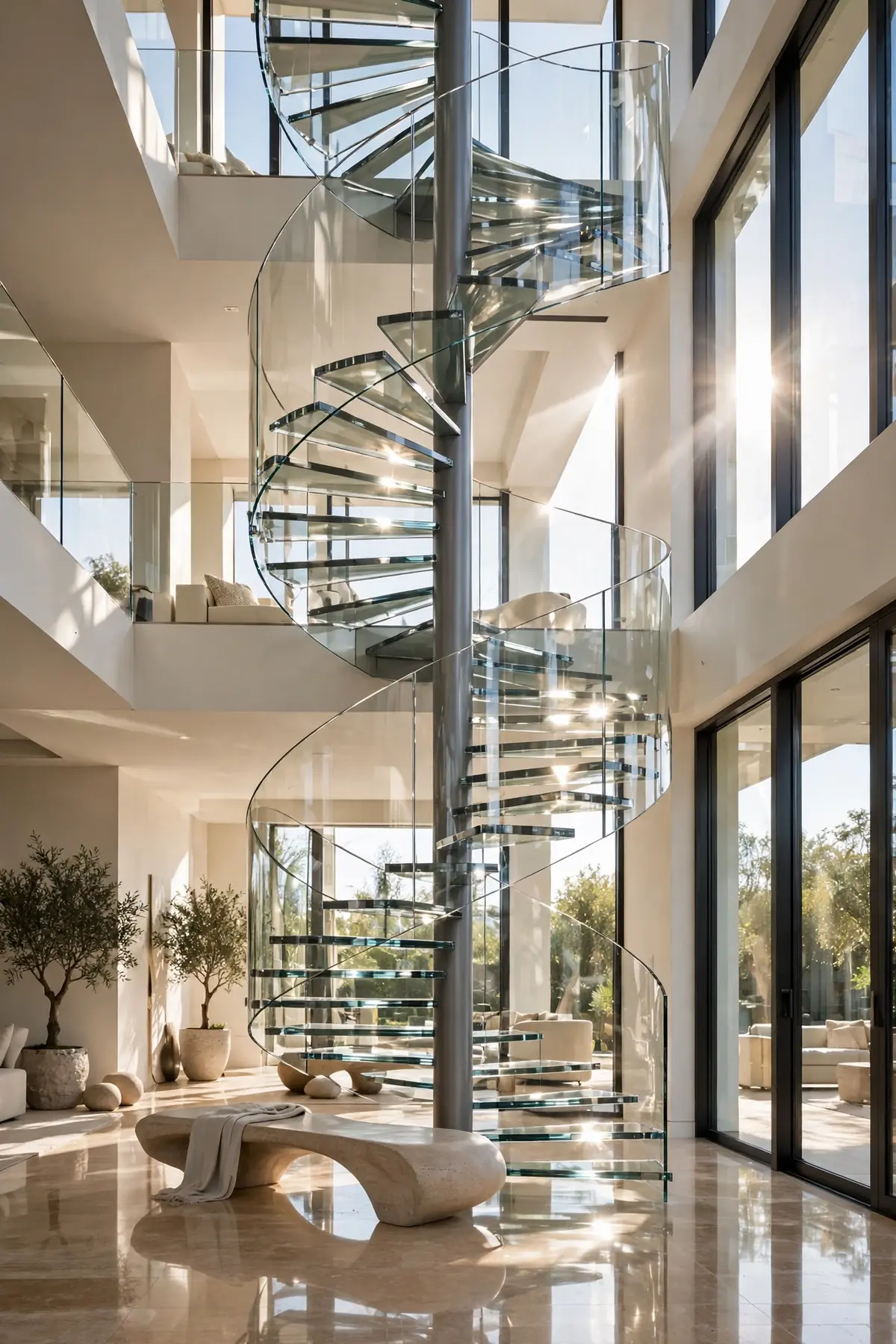
The newel post where a circular staircase meets the ground floor is the handshake of the whole design — it’s the first thing a hand touches and the first detail a guest notices. A turned timber newel, a brass sphere, or a sculptural stone base sets the tone for everything above. Don’t leave it as a cut-off pole end; this one detail is worth commissioning properly even on a modest stair.
- A newel cap in a contrasting material draws the eye.
- Make sure the newel is structural, not just decorative cladding.
- Match its finish to the handrail for a unified look.
FAQs
How much floor space does a circular staircase need?
A compact spiral staircase fits into a circle roughly five to six feet across, while a grand helical curve needs a much larger open area with clear sightlines. Always measure headroom at the tightest turn and check local building codes on tread width before ordering.
Are spiral staircases safe for everyday use?
They are safe when built to code with consistent riser heights, adequate tread depth at the walking line, and a secure handrail. They are less comfortable than straight stairs for carrying bulky items, and the narrow pole side needs care, so good lighting on every step edge helps a lot.
Are circular staircases more expensive than straight stairs?
Generally yes. A kit spiral can be comparable to a basic straight flight, but custom helical stairs with curved glass or stone are specialist work and cost several times more. Structural engineering and specialist installation add to the budget.
Conclusion
A circular staircase is never just a way upstairs — it’s the one piece of architecture guests remember. Whether you choose a compact kit spiral that disappears into a corner or a sweeping helical curve that anchors the whole house, the decisions that matter most are the unglamorous ones: footprint, headroom, building code, and lighting. Get those right, and the curve will take care of the drama all by itself.