25 Curved Staircase Ideas for a Show-Stopping Stair
The staircase is the architecture. Here are 25 ways to design the curve itself — materials, railings, lighting built into the stair, and the details that make every climb feel considered.
A curved staircase is the rare home feature that is both sculpture and structure, and these curved staircase ideas are all about the stair itself — its shape, its materials, its railing, and the lighting built into it. Not the room around it. The treads you step on, the rail your hand finds, the way the whole thing bends through the house.
Whether you are planning a new build, remodeling an existing stair, or just collecting inspiration for someday, the ideas below cover every layer of staircase design, from the structural form down to the nosing on each tread. Start with the shape and materials; the details take care of themselves once those are right.
It also helps to think about what the stair wall will carry, since the climb is prime real estate for art — a well-planned staircase gallery wall that follows the curve keeps the architecture personal without cluttering it.
Start With a Wide, Generous Sweep

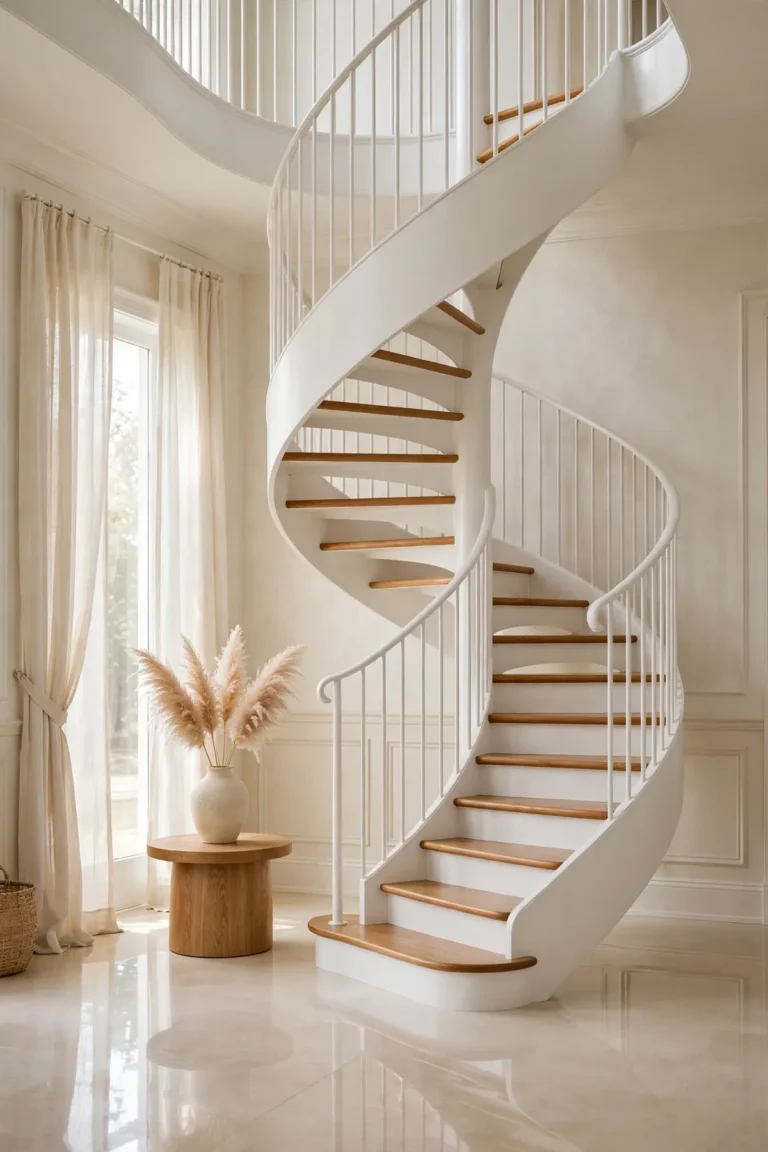
The grandest curved staircases share one trait: width. A wide, generous sweep feels architectural rather than decorative, and it changes how the whole stair is experienced — two people can pass comfortably, and the curve reads as a gesture rather than a squeeze. If you have the footprint, let the stair open up at the base with a flared first few treads. That flare is the classic move for a reason: it announces the stair before you even step on it.
- Keep the curve gradual — a wide arc reads grander than a tight spiral.
- Flare the bottom two or three treads wider than the rest for a welcoming base.
- Plan furniture placement around the stair early; a wide curve claims floor space.
Float the Curve on Hidden Steel
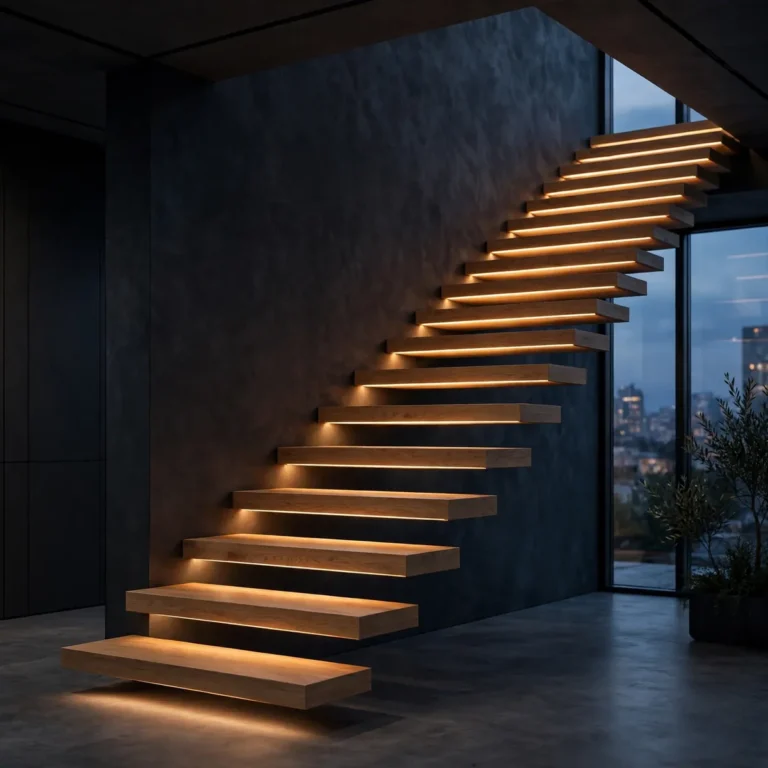
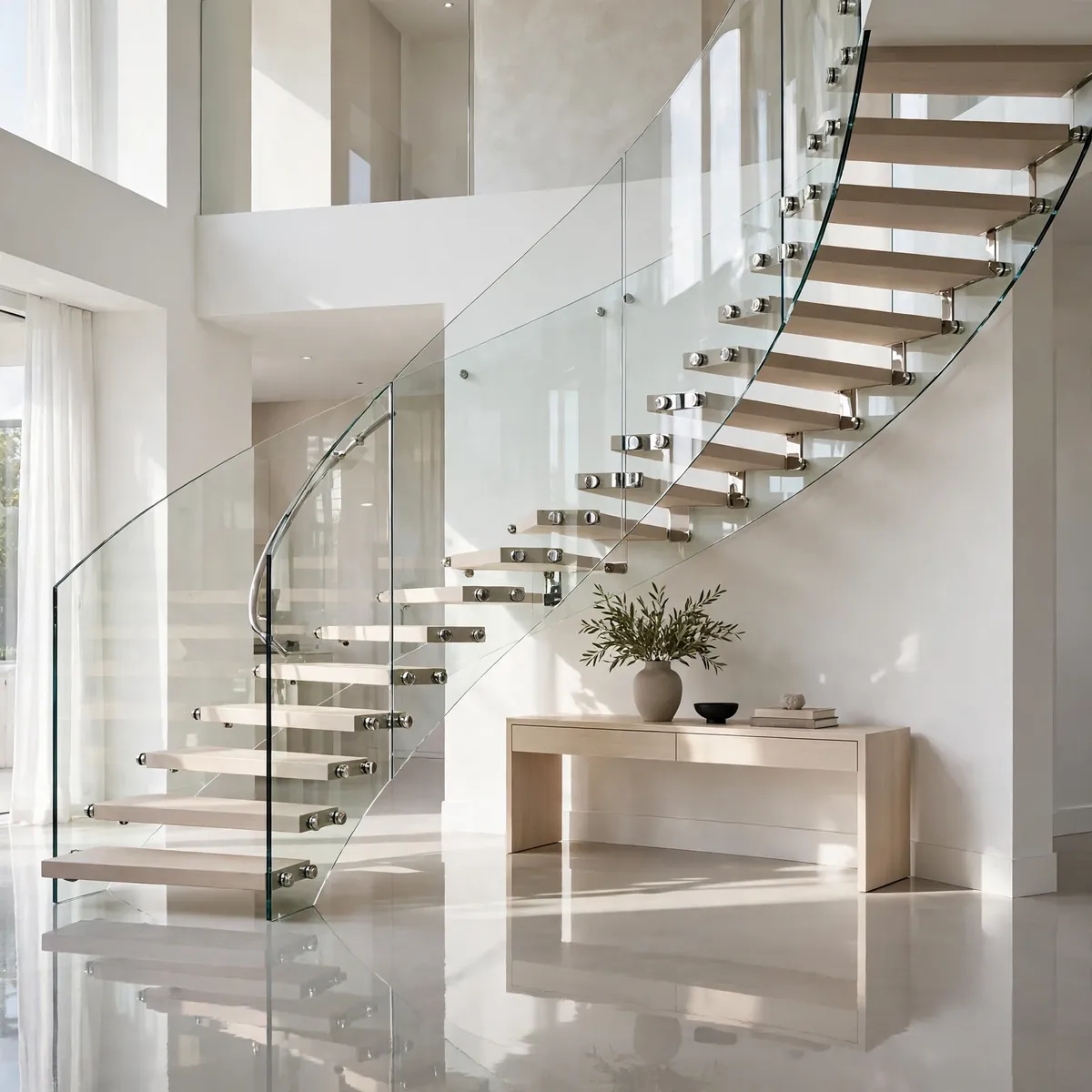
A floating curved staircase — treads cantilevered from a hidden steel spine with open risers — brings modern lightness to the traditional curve. The shape stays soft and sweeping while the construction disappears, so the stair feels like it bends through the air. This is a structural commitment that needs an engineer and a skilled fabricator, but the result is the closest a staircase gets to magic. Pair it with a glass balustrade to keep the floating illusion complete.
- Budget for engineering and fabrication early; this is not a standard stair package.
- Choose tread materials with stiffness — thick wood or stone over thin composites.
- Check local code on open risers before falling in love with the look.
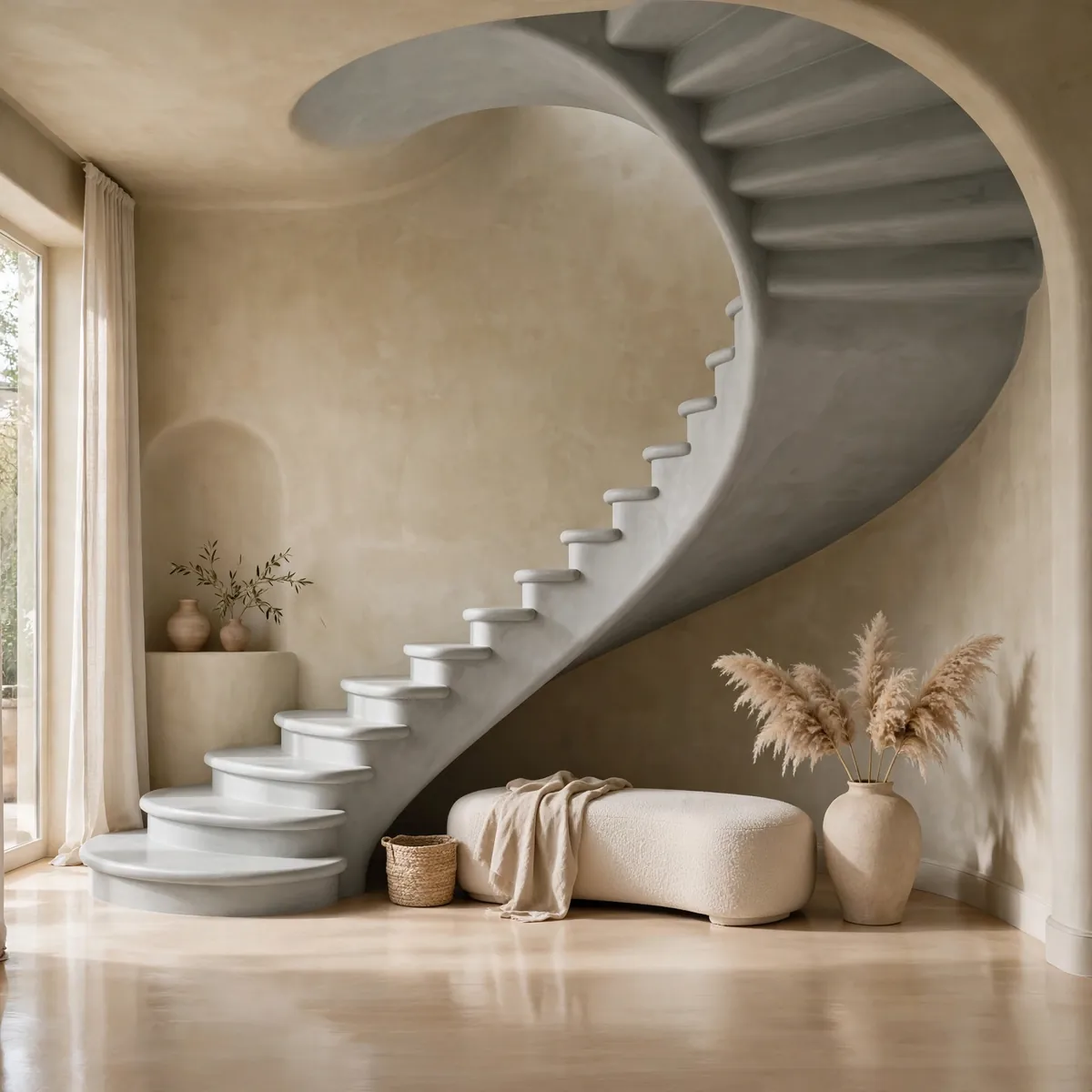
Carve It From Plaster for a Sculptural Feel
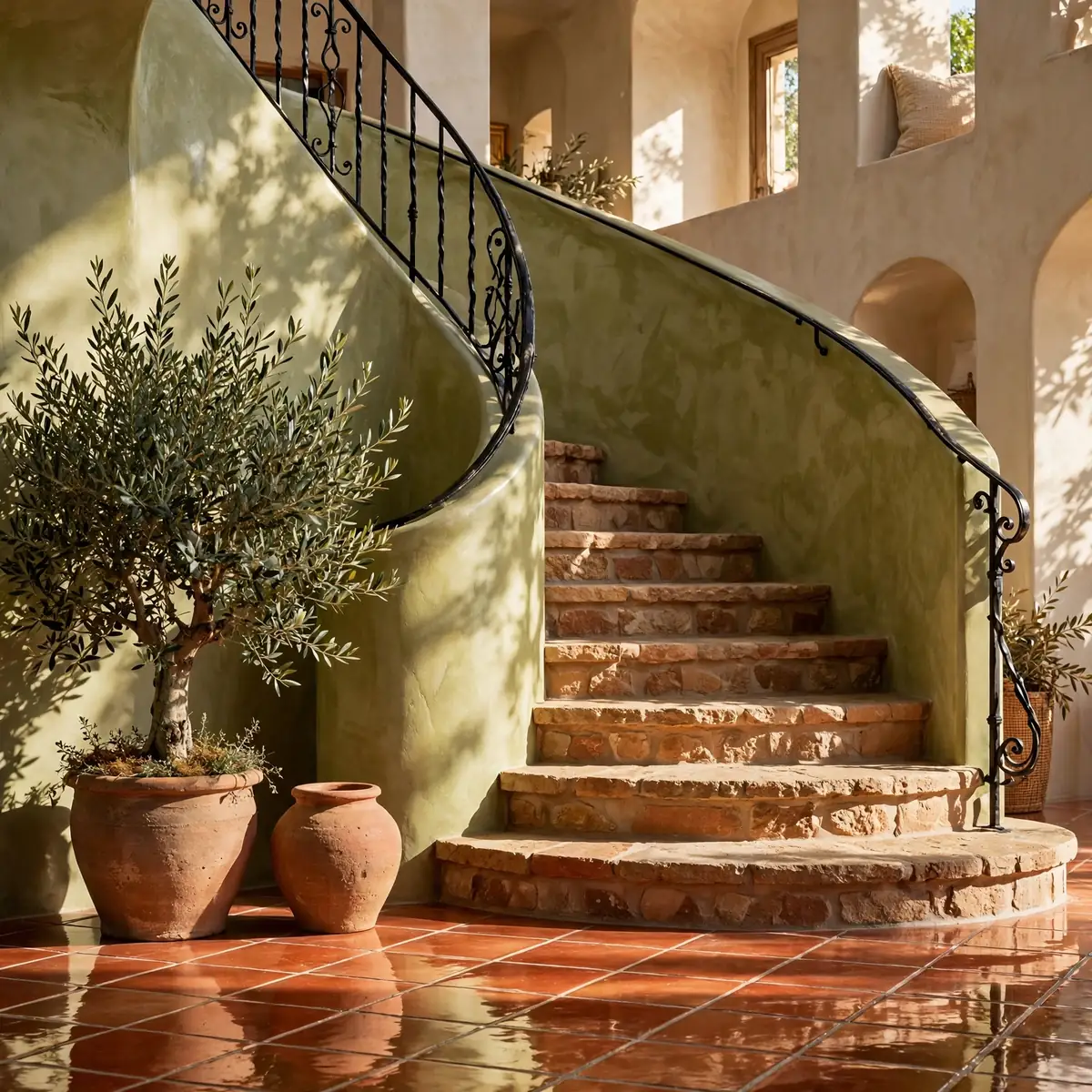
A plaster-finished curved staircase looks less built and more carved, as if the stair was shaped out of the wall itself. Lime plaster or microcement over the structure softens every edge and gives the surface a hand-troweled variation that paint can never match. The effect is quiet luxury — organic, calm, and completely at home in Mediterranean, coastal, or earthy modern interiors. Keep the railing minimal or skip it where code allows so nothing interrupts the sculptural line.
- Seal plaster treads properly; raw plaster is not a wearing surface on its own.
- Pair with a simple wood handrail for warmth against the mineral surface.
- Accept slight imperfections — they are the point of a hand-finished stair.
Wrap the Whole Stair in Solid Wood
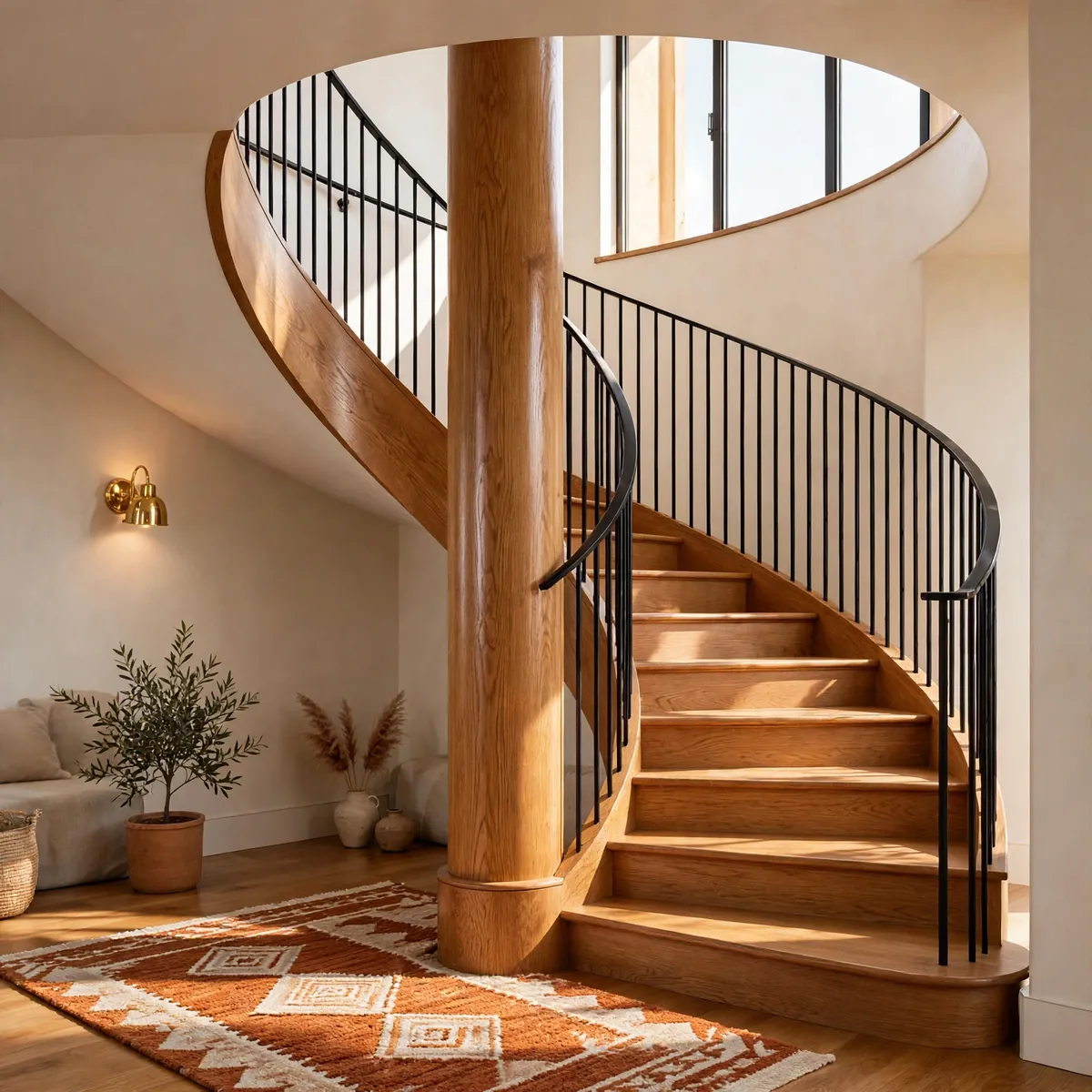
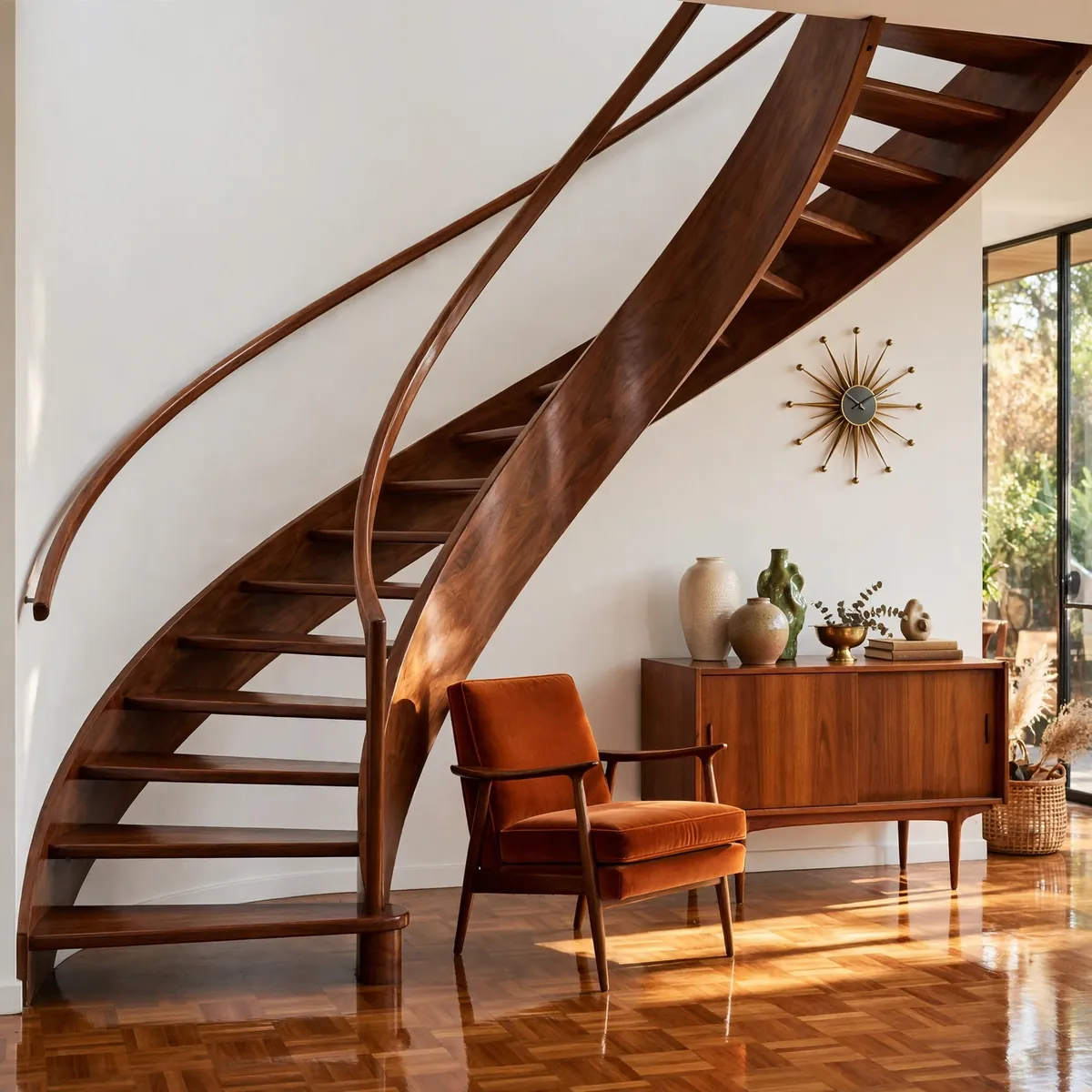
There is a reason wood and curves have been paired for centuries: wood bends, visually and literally, and a staircase wrapped entirely in timber feels warm and intentional. Treads, risers, and a handrail bent to follow the arc in oak or walnut create a continuous ribbon of grain that draws the eye upward. Choose boards with visible grain and let the stair be the wood moment of the house — it ages beautifully and never looks trendy.
- Oak and walnut take a curved handrail bend best; ask your stair builder what they recommend.
- Use a matte or satin finish on treads — high gloss shows every scuff.
- Expect some creaking; it is part of a real wood stair’s character.
Cut the Treads From Stone
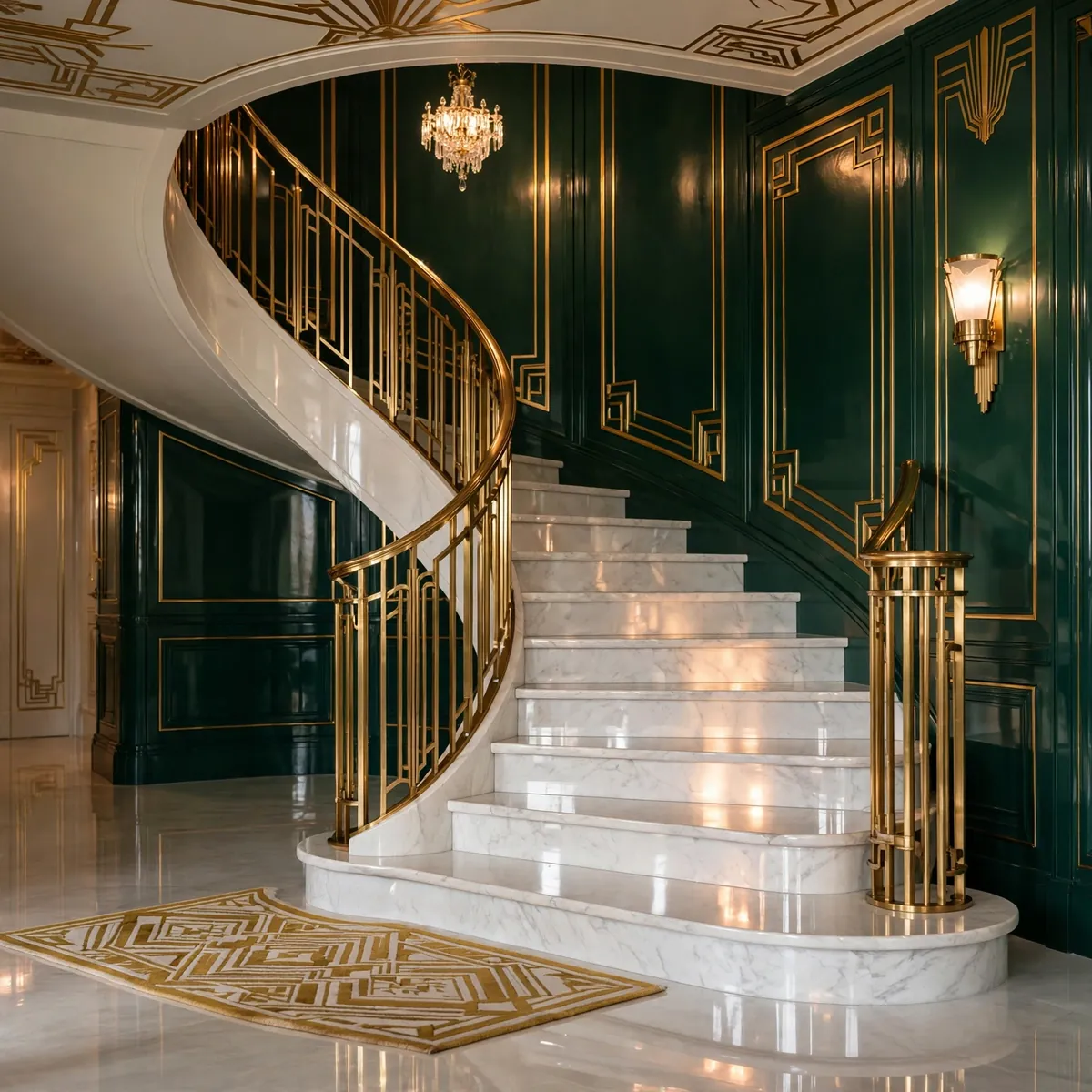
Stone treads give a curved staircase permanence — marble, limestone, or travertine cut to follow the arc feels like it has been there for a hundred years. The curve softens stone’s natural formality, and a honed finish keeps it from feeling slippery or overly polished. This is an investment, but stone outlasts every trend cycle and suits the stair’s role as the home’s architectural centerpiece. Keep the railing understated so the material does the talking.
- Choose honed over polished for grip and a softer look.
- Seal stone treads annually in high-traffic homes.
- Pair with a slim metal railing so the heavy material stays visually light.
Pour It in Polished Concrete
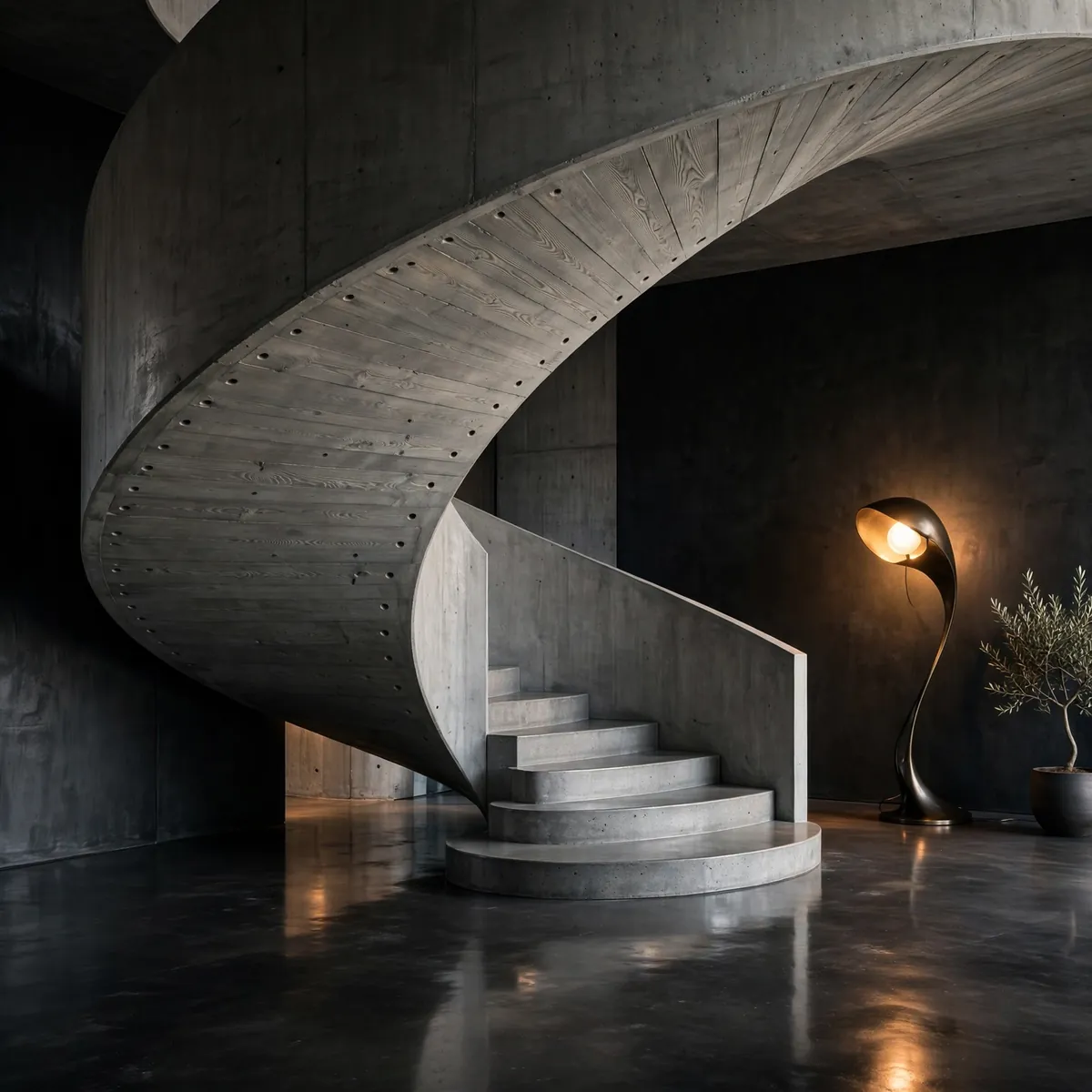
A curved staircase in polished concrete is modernism at its most confident — one continuous poured form, seamless from tread to riser to stringer. The material’s cool gray makes the curve’s geometry the entire story, and it pairs beautifully with glass, black steel, or warm wood accents that keep it from feeling cold. Concrete needs expert formwork on a curve, so this is a pro-only build, but the monolithic result is unmistakable.
- Hire a contractor with curved concrete experience — the formwork is the whole job.
- Add a matte sealer to control dusting and staining.
- Warm it up with a wood handrail or a runner to balance the cool surface.
Run Frameless Glass Panels Along the Bend
A frameless glass balustrade lets a curved staircase read as pure form — no spindles, no visual interruption, just the sweep of the stair itself. Curved glass panels are custom-made to follow the arc, and the result keeps sightlines open through the whole stairwell, which is a gift in smaller or darker homes. Use low-iron glass to avoid the green tint of standard panels, and keep the base channel minimal so the glass appears to float.
- Specify low-iron glass for a truly clear look.
- Plan for regular cleaning — glass shows every handprint near the handrail.
- Check that your local code accepts the panel height and loading you plan.
Bend Wrought Iron Into Scrollwork
Wrought iron and curved staircases are a classic pairing because the metal can be forged to follow the arc exactly, scrollwork and all. Hand-forged balusters turn the railing into ornament — the stair becomes jewelry for the house. Keep the surrounding palette light so the dark metalwork stands out, and let the iron be the one elaborate element; everything else in the stair should stay quiet. This is the choice for traditional, French-inspired, or grand transitional homes.
- Commission the ironwork from a smith who has done curved stairs before.
- Keep walls and treads simple so the scrollwork stays the star.
- A matte black finish is timeless; bronze reads warmer and more custom.
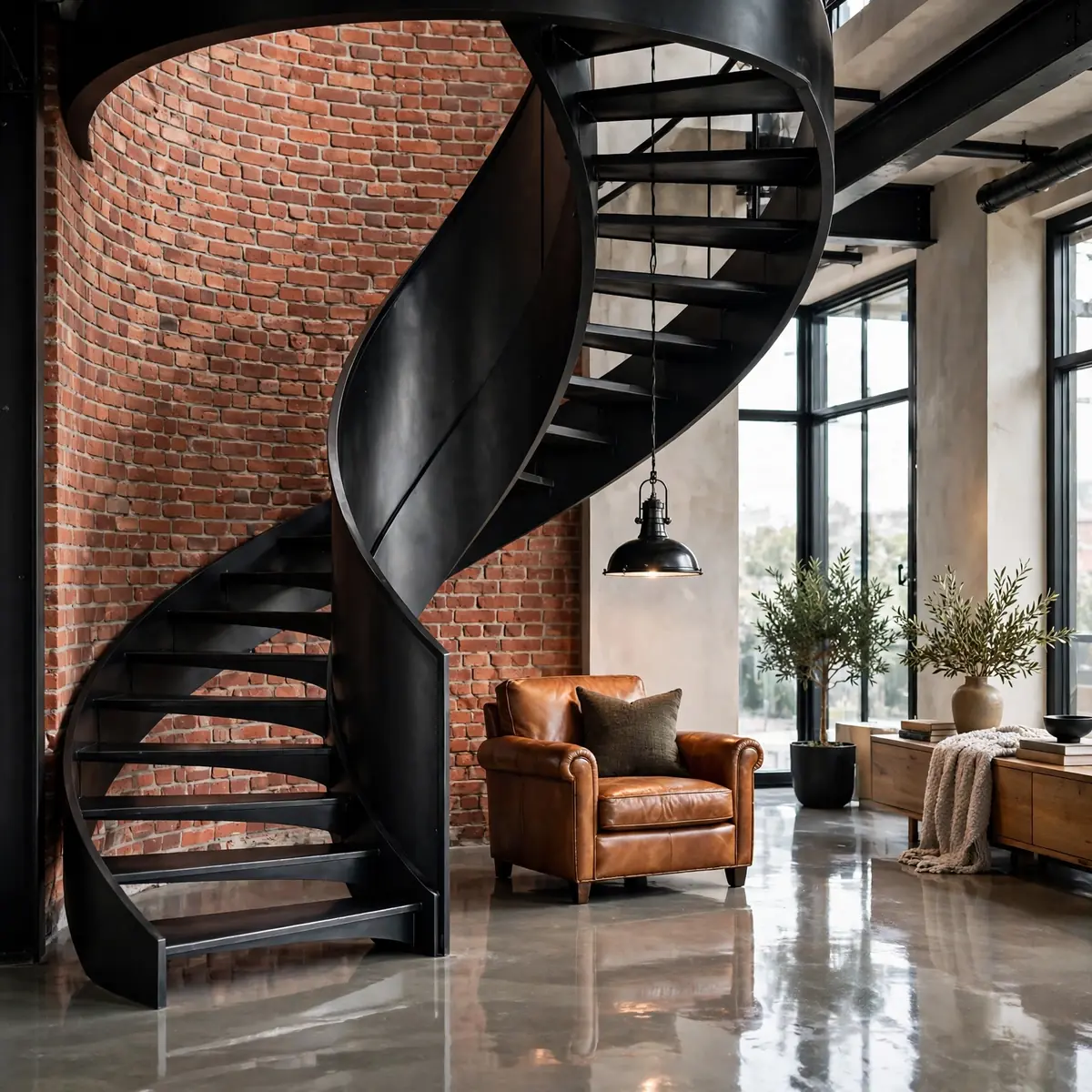
Keep It Minimal With Slim Black Spindles
If scrollwork is not your language, slim black metal spindles give a curved stair a crisp, contemporary line without hiding the curve. The thin verticals create rhythm as they follow the arc, and the dark color outlines the stair’s shape against light walls like a drawing. It is one of the most cost-effective ways to modernize an existing curved staircase, since the structure stays and only the balustrade changes.
- Space spindles evenly along the curve — uneven gaps are very visible on an arc.
- Powder-coated steel resists chips better than painted wood.
- Pair with a wood handrail to keep the look from feeling industrial.
Make the Handrail the Star
On a curved staircase, the handrail is the one element your body touches every day, so making it beautiful pays off constantly. A handrail bent from a single piece of walnut, wrapped in leather, or cast in bronze turns a functional requirement into the stair’s signature. Keep the balustrade beneath it simple — when the rail is the star, everything else should be the supporting cast. Run your hand along samples before choosing; the feel matters as much as the look.
- Leather-wrapped rails develop a rich patina but need occasional conditioning.
- A continuous rail with no joints feels noticeably more luxurious.
- Match the rail’s finish to something else in the home for cohesion.
Hide LED Strips Under Every Tread
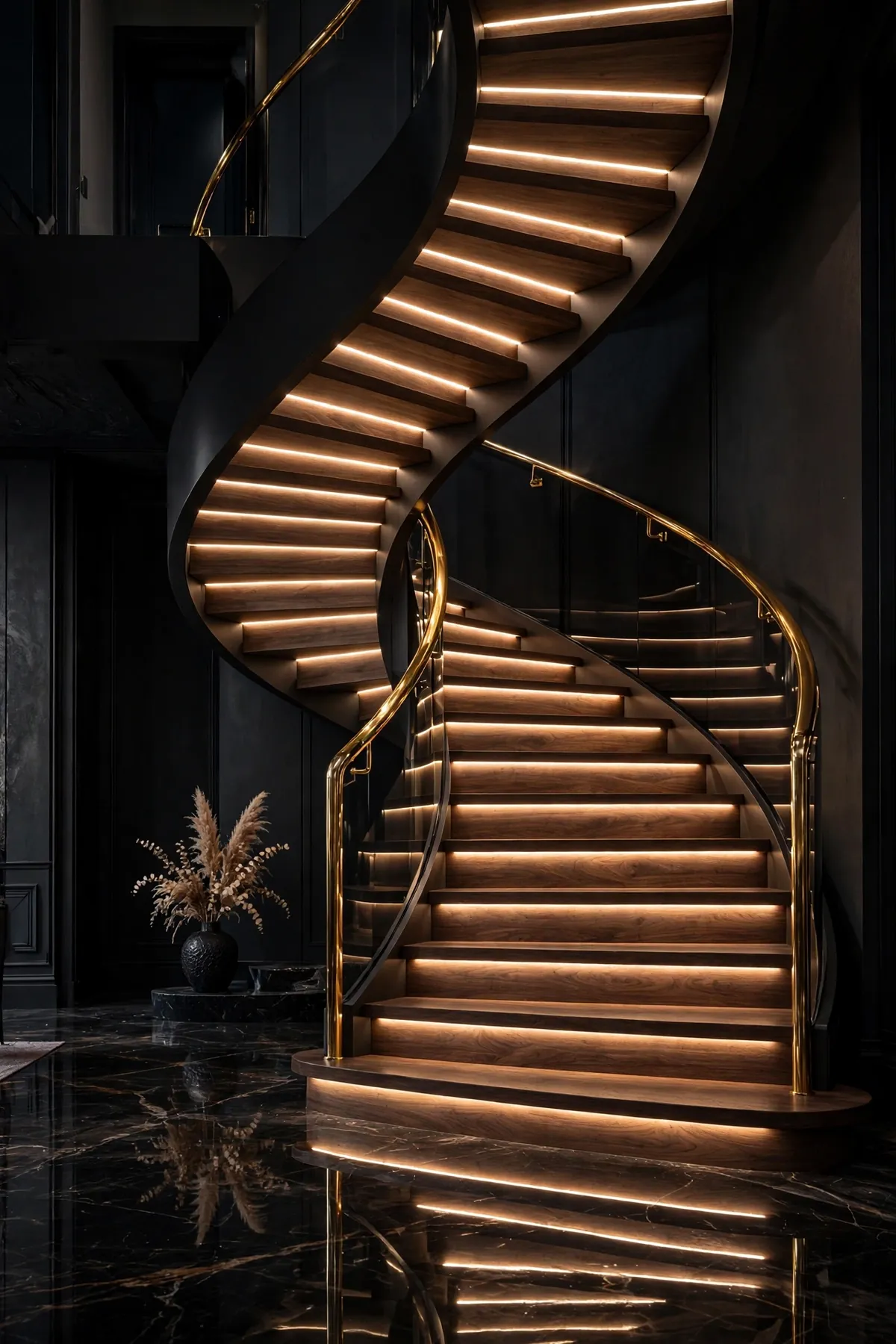
LED strips tucked under each tread make a curved staircase glow from within at night — the curve appears to float, and every step is visible without a single harsh overhead. It is as practical as it is beautiful: safe nighttime navigation with zero glare. Choose warm white light, hide the drivers and wiring during construction, and put the whole run on a dimmer or motion sensor so the stair lights itself when someone approaches after dark.
- Warm white (2700K) flatters wood and stone; cool white feels clinical.
- Recess the strip so the diodes themselves are never visible from above or below.
- Wire to a motion sensor for hallways used at night.
Wash the Stair Wall With Recessed Lights
While tread LEDs light the steps, recessed wall washers light the architecture — a row of small downlights grazing the wall alongside the curve emphasizes the stair’s geometry after dark. The light rakes across plaster, paneling, or art and turns the whole stairwell into a gallery. Space them evenly along the climb and keep the beam angle wide enough that the light washes rather than spots. This pairs beautifully with tread lighting for a fully layered stairwell.
- Aim for even spacing that follows the stair’s pitch, not the ceiling grid.
- Use adjustable trims so each light can be aimed after installation.
- Dim wall washers lower than tread lights — they are atmosphere, not task light.
Fit a Custom Runner to the Curve
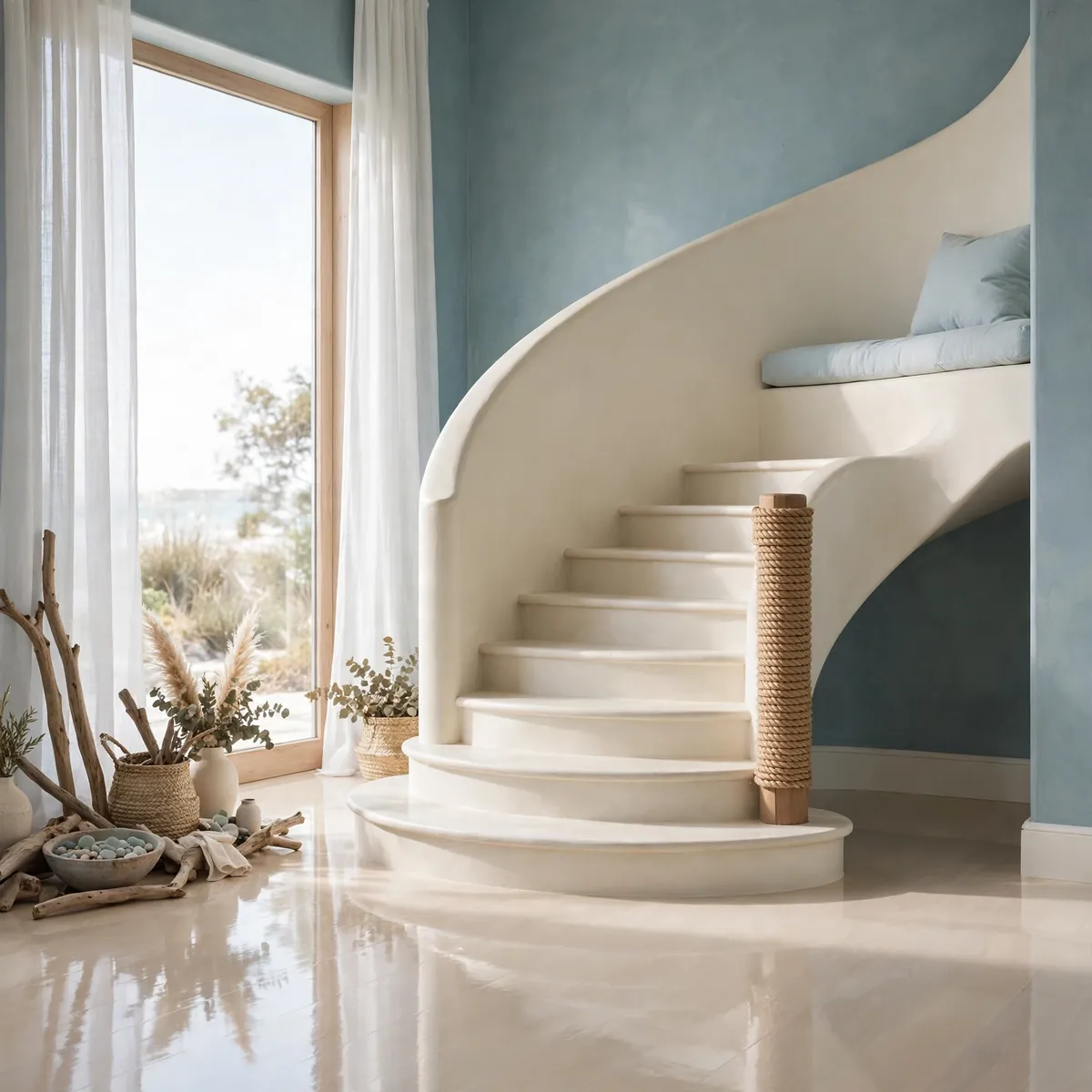
A runner on a curved staircase has to be cut and bound to follow the bend — it is custom work, but the payoff is a stair that feels quieter, softer, and safer underfoot. The runner also introduces pattern and color to the stair’s center while leaving the tread edges exposed, which frames the curve beautifully. Choose a low-pile weave that bends without buckling, and have it installed by someone who templates curved stairs for a living.
- Wool runners wear best and handle the curve’s shaping well.
- Leave equal tread margins on both sides for a tailored look.
- Add a proper underlay to cut noise and keep the runner from shifting.
Play Two Tones Against Each Other
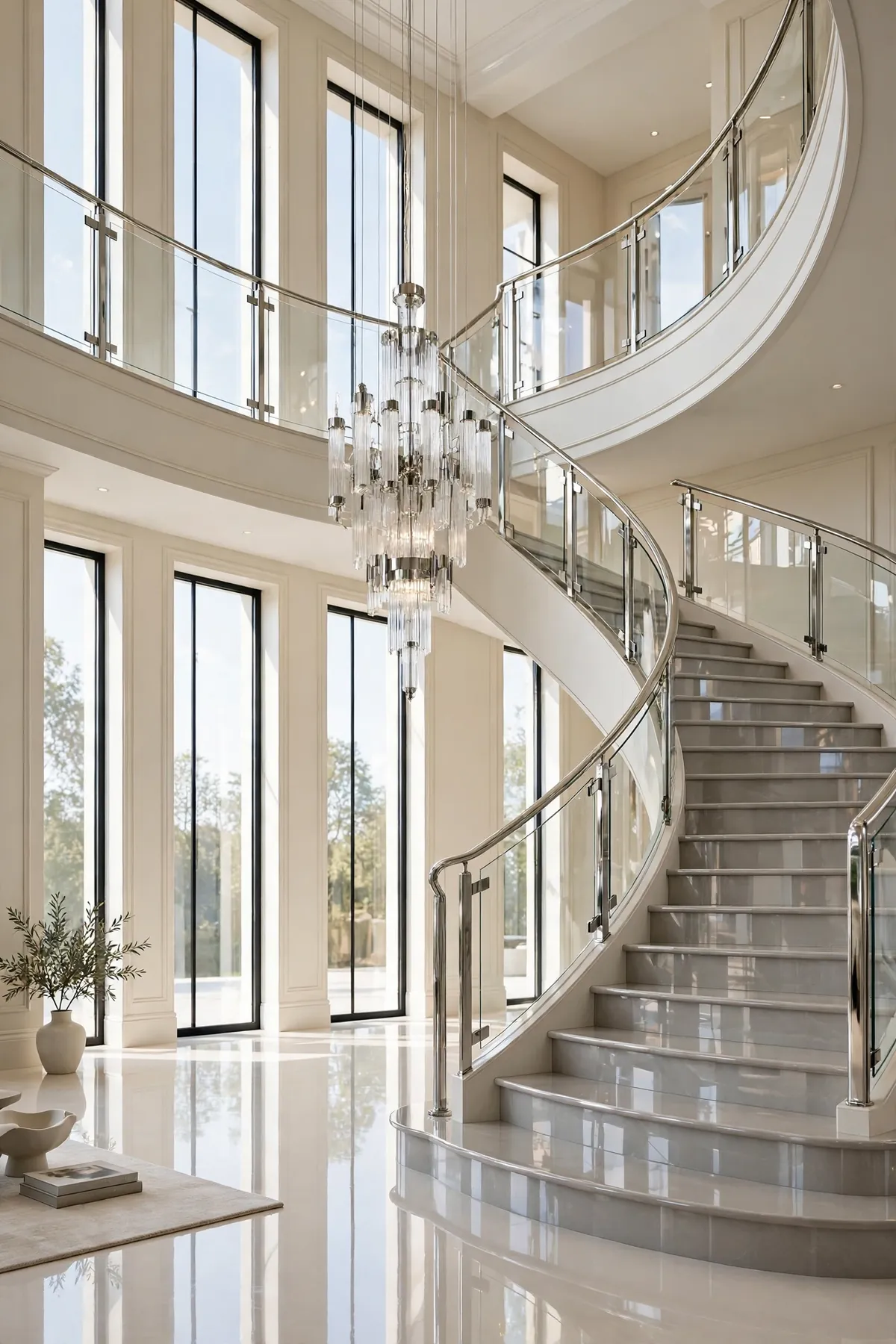
A two-tone curved staircase — dark treads against light risers, or a stained handrail against painted balusters — makes the curve more legible because the eye follows the color change around the bend. The contrast adds dimension without adding ornament, which suits the stair’s already-strong shape. Keep both tones in the same undertone family so the pairing feels deliberate; a warm wood tread with a cool gray riser usually fights rather than harmonizes.
- Test both colors on the actual stair in daylight before committing.
- Use satin on treads and matte on risers for subtle sheen variation.
- Let the darker tone sit on the tread, where it grounds each step.
Paint the Railing a Bold Color
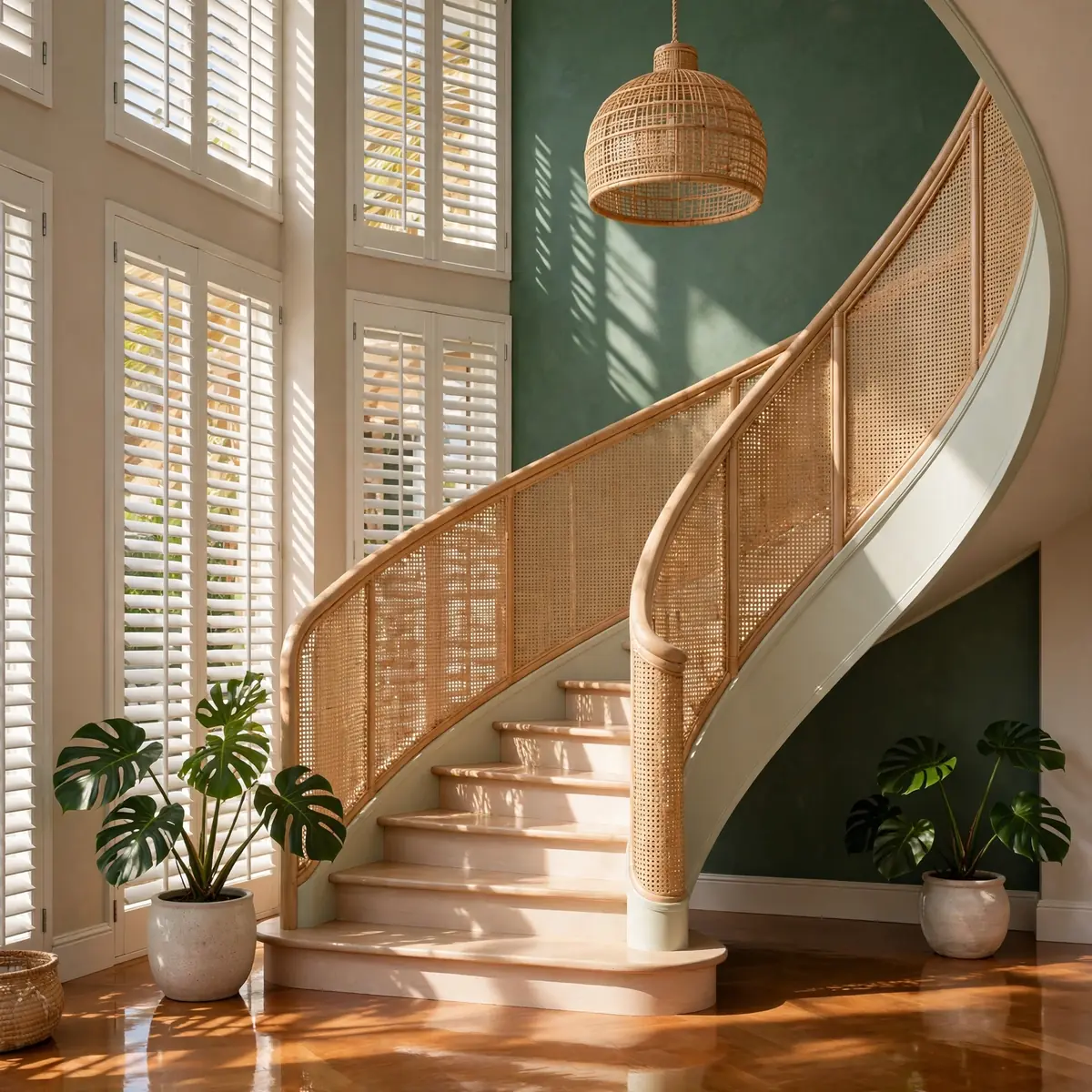
Painting just the railing of a curved staircase — deep green, inky navy, matte black — outlines the entire curve in one continuous line of color. It is the highest-impact, lowest-cost change you can make to an existing stair, and it works because the curve itself does the design work; the color simply traces it. Keep treads and walls neutral so the railing line stays the clear protagonist of the stairwell.
- Use a durable enamel made for handrails — hands are hard on paint.
- Sample the color on the rail itself; it reads differently than on a wall.
- Repeat the color once elsewhere nearby, like a door or a piece of furniture, for cohesion.
Turn to Classic Balusters and Newels for Tradition
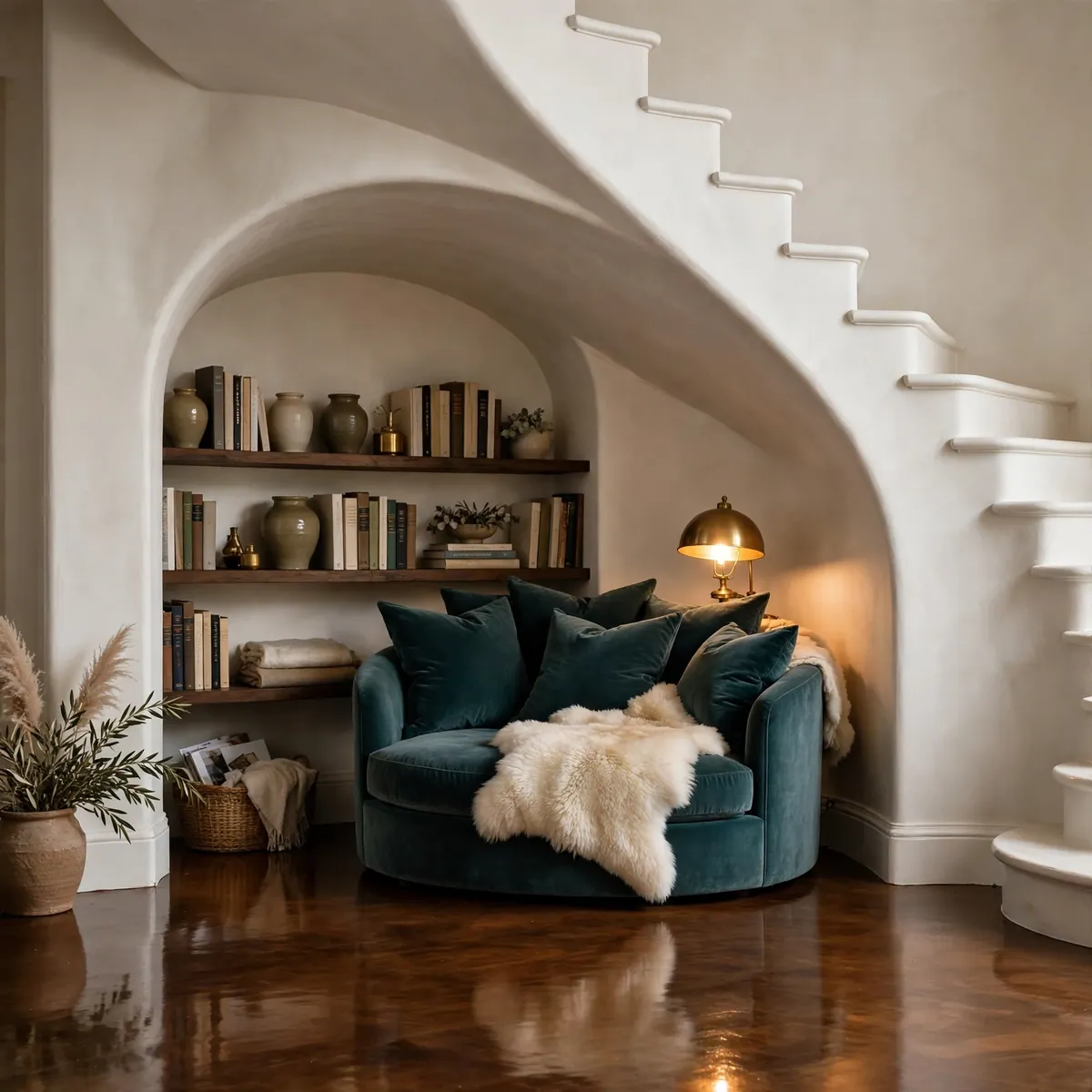
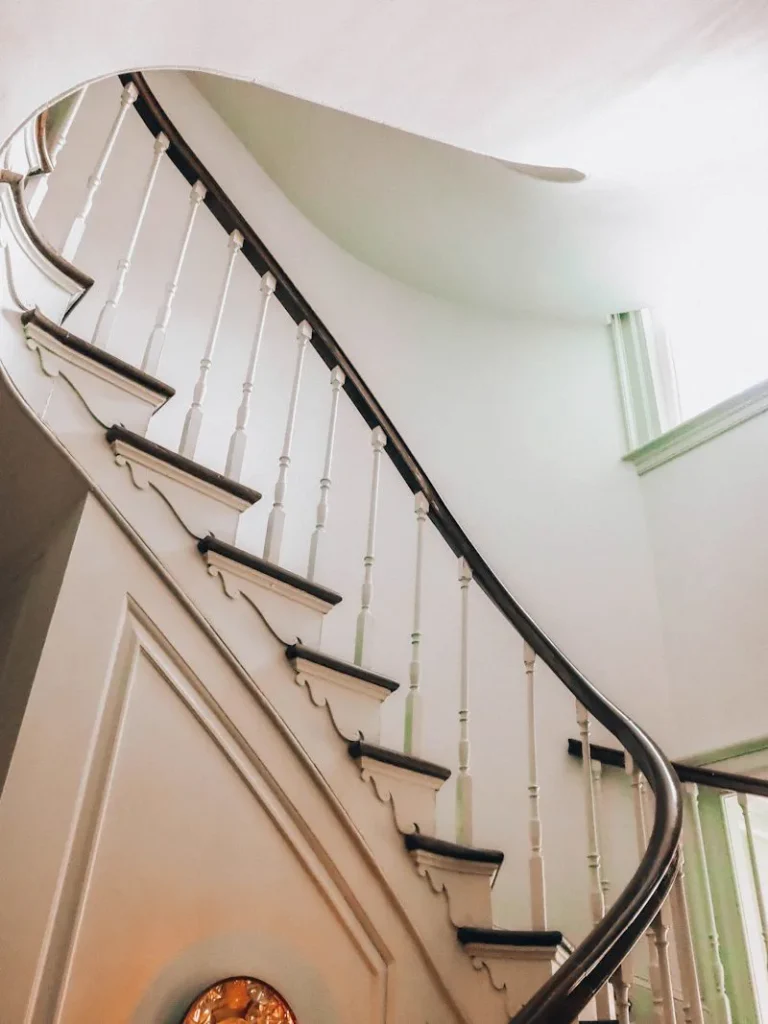
Curves are not only modern. Turned wood balusters, substantial newel posts, and a shaped handrail give a curved staircase a traditional soul — the kind of stair that belongs in a historic renovation or a classic new build. The curve softens the formality of the turned details, so the result feels gracious rather than stiff. Stain the woodwork to match the home’s other millwork and the stair will look like it was always there.
- Keep baluster profiles consistent — mixing turned and square reads as a mistake.
- Make the starting newel substantial; it anchors the whole composition.
- A clear finish shows off the turning work better than paint.
Layer Wood, Metal, and Glass Together
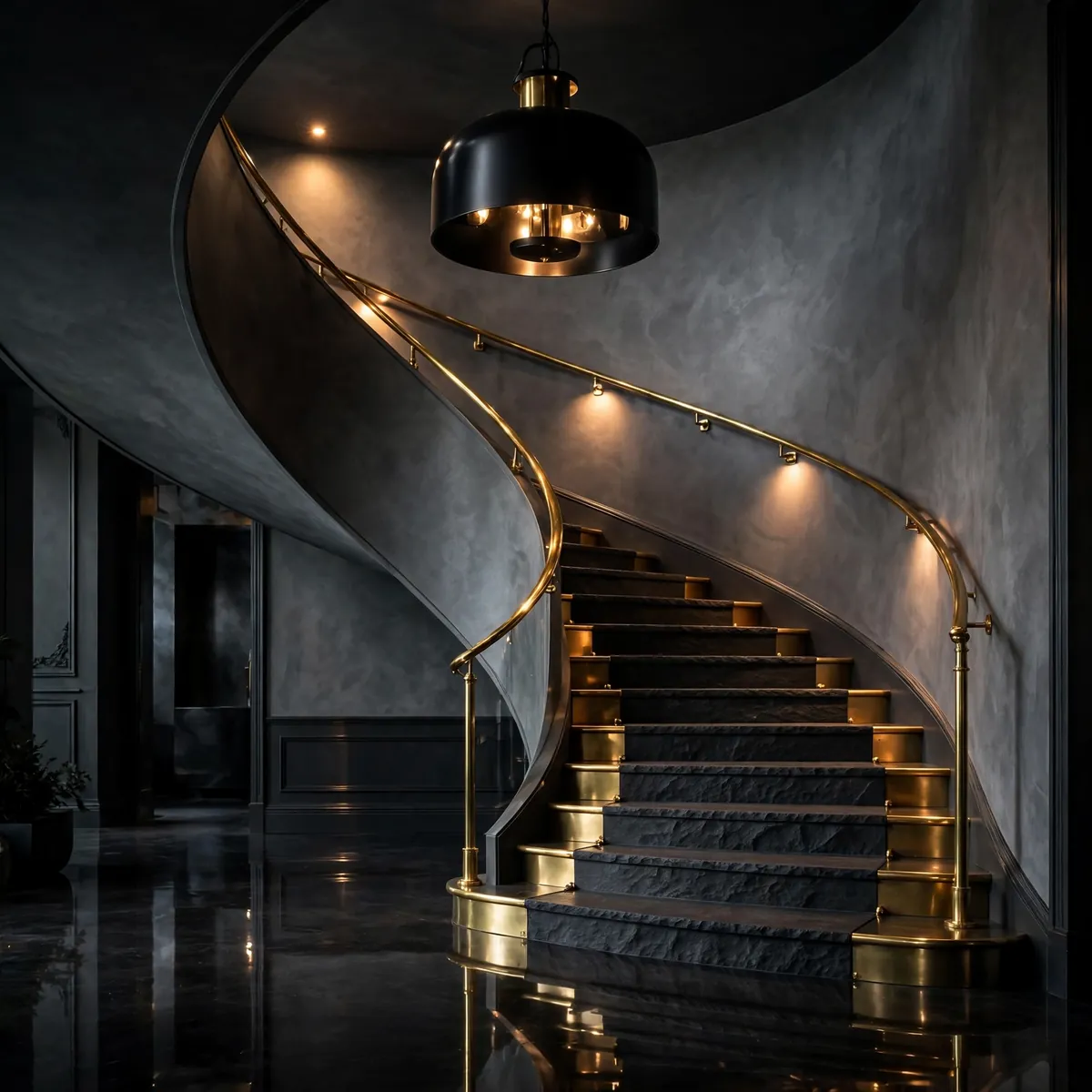
The most interesting curved staircases rarely use one material — they layer them. Wood treads for warmth, a black steel stringer for structure, glass panels to keep it open: each material highlights the curve differently, and the combination feels collected rather than decorated. The discipline is in the editing — three materials, each with a clear job, and one dominant so the stair does not turn into a sample board. When the mix is right, the stair feels rich without a single ornamental detail.
- Assign each material a role: structure, surface, or transparency.
- Keep metal finishes consistent — one black, one brass, never both.
- Let one material dominate at least sixty percent of the stair.
Tighten the Curve for a Small Footprint
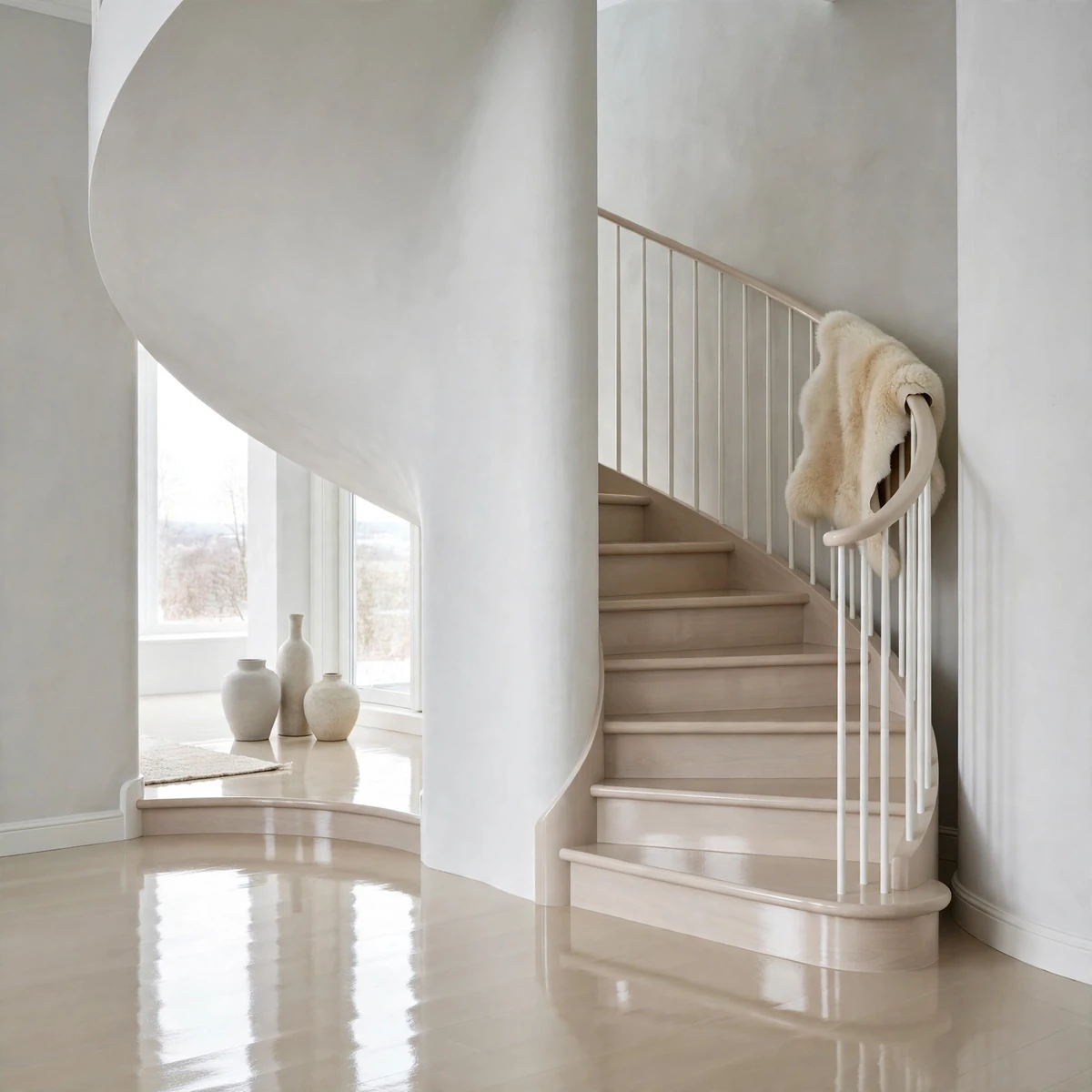
Not every home has room for a grand sweep, and a tighter curved stair — closer to a spiral in spirit but gentler in practice — delivers the drama in a fraction of the floor space. The key is proportion: keep risers at a comfortable height, treads deep enough at the walking line, and the handrail continuous and sturdy, since tight curves get more hand traffic. Done well, a compact curve feels intimate and sculptural rather than cramped.
- Check code minimums for tread depth at the walking line before designing.
- A central open well keeps a tight curve from feeling like a tunnel.
- Lighter materials and open risers make compact stairs feel larger.
Keep the Bend Gentle and Quiet
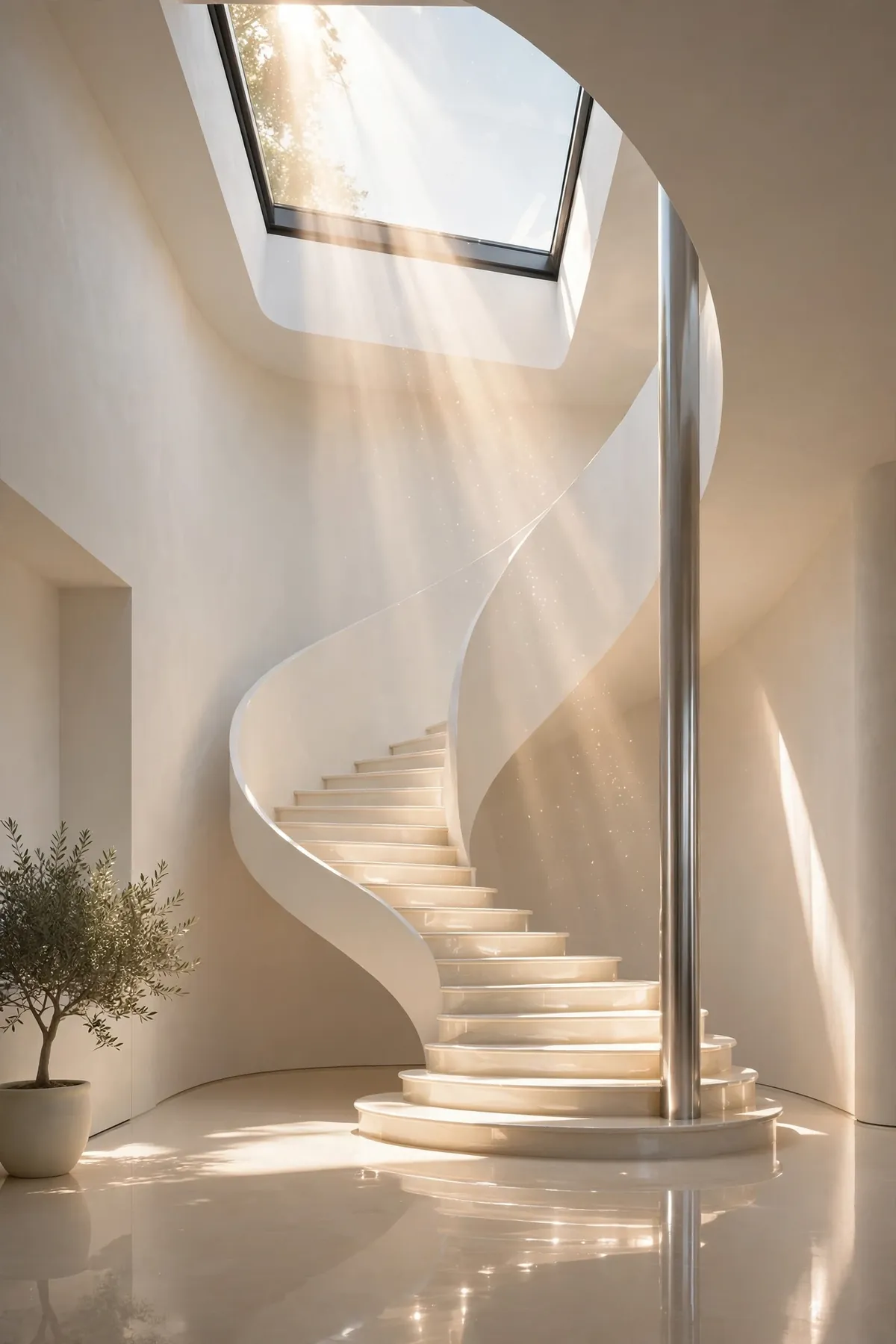
Not every curved staircase needs drama. A gentle, barely-there bend — just enough arc to soften the climb — brings a quiet elegance that suits restrained interiors. The curve whispers instead of announcing itself, and the stair reads as refined rather than showy. This approach works beautifully in homes where the architecture is calm overall; the stair agrees with the house instead of arguing with it. Finish it simply and let the geometry do the quiet work.
- Keep detailing minimal so the subtle curve stays visible.
- A single material throughout emphasizes the gentle geometry.
- Soft, even lighting flatters a quiet curve better than dramatic spots.
What curved staircase ideas get right about dividing open-plan rooms
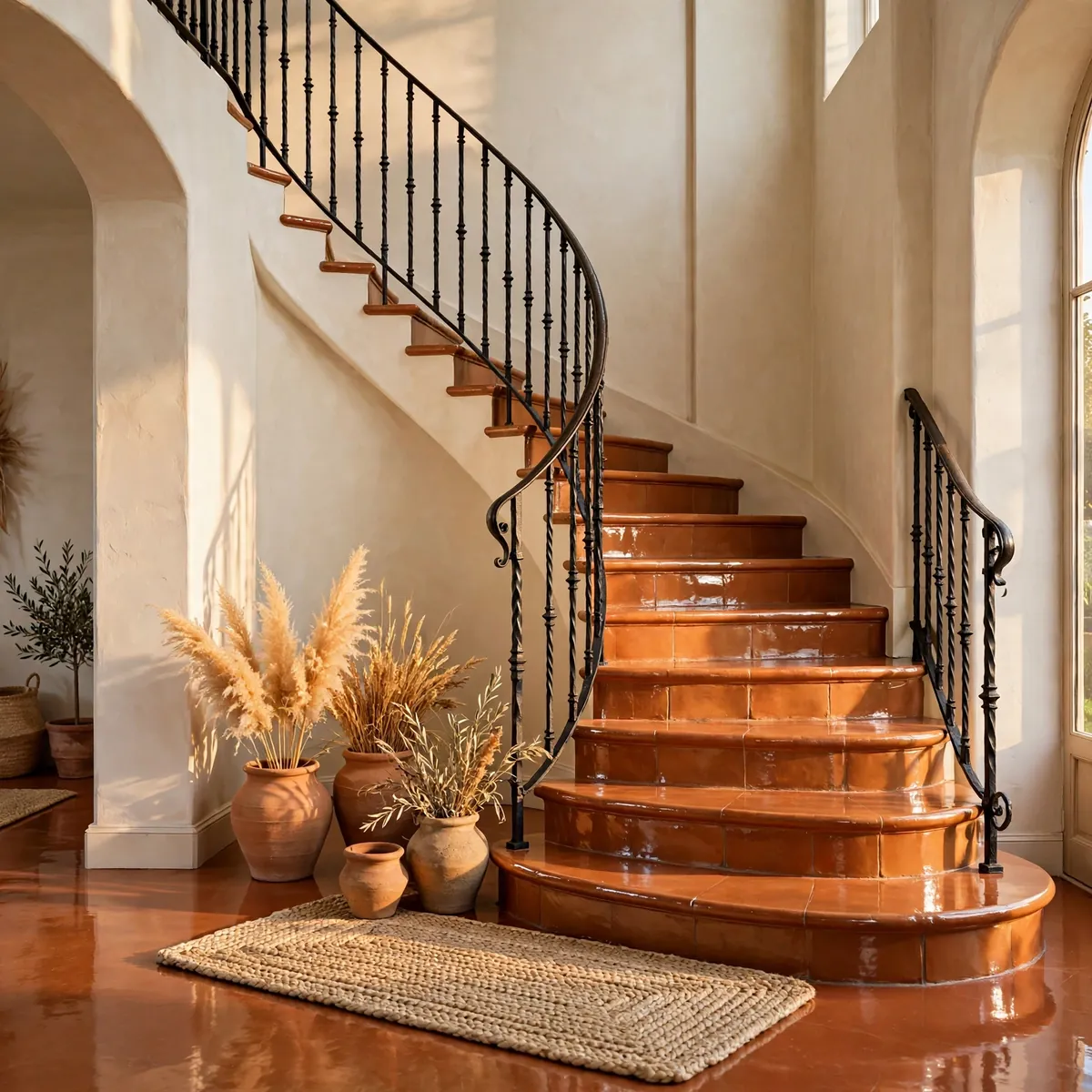
In an open-plan home, a curved staircase can do the job of a wall without any of the enclosure. Positioned between living and dining zones, the stair’s mass and movement create a natural boundary — you feel the separation as you move around it, but light and sightlines flow straight through. This works best when the stair is finished on all visible sides, since it will be seen from every angle, and when the curve is generous enough to read as architecture rather than obstacle.
- Finish the stair’s underside and back — a divider gets viewed from all sides.
- Keep the zone on each side visually distinct so the division reads clearly.
- Avoid tall railings here; they rebuild the wall you just removed.
Detail the Nosing for a Finished Edge
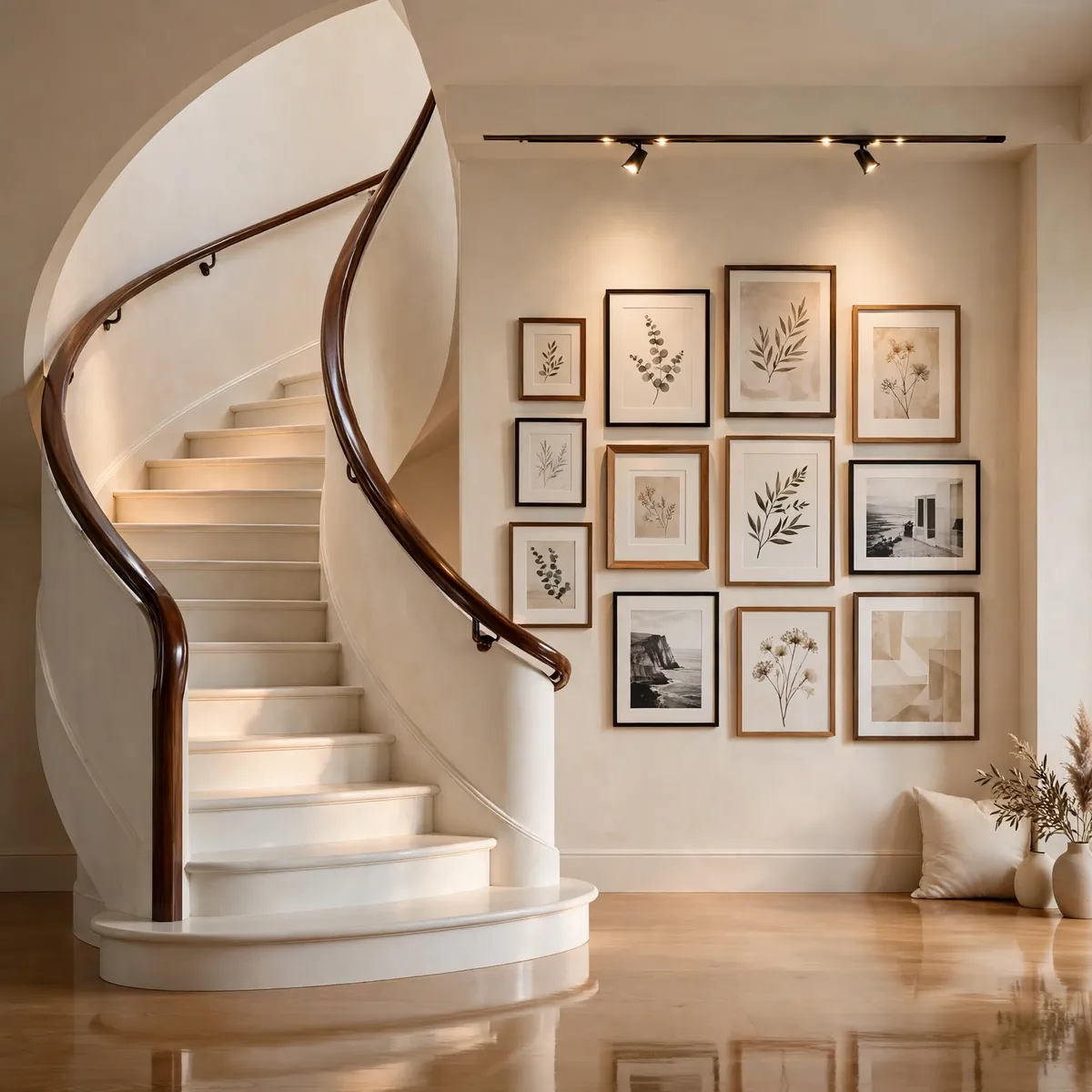
The nosing — the front edge of each tread — is a small detail with an outsized effect on how a curved staircase looks up close. A softly rounded bullnose profile catches light along the curve and feels good underfoot, while a crisp square edge reads more contemporary. On a curve, the nosing line is one of the longest continuous lines in the house, so getting its profile and finish right matters more than most people expect. It is also where wear shows first, so choose the profile your household can live with.
- Bullnose suits traditional and transitional stairs; square suits modern.
- Carry the same nosing profile across every tread — consistency is everything.
- A slightly darker stain on the nosing can define each step beautifully.
Open the Risers for an Airier Climb
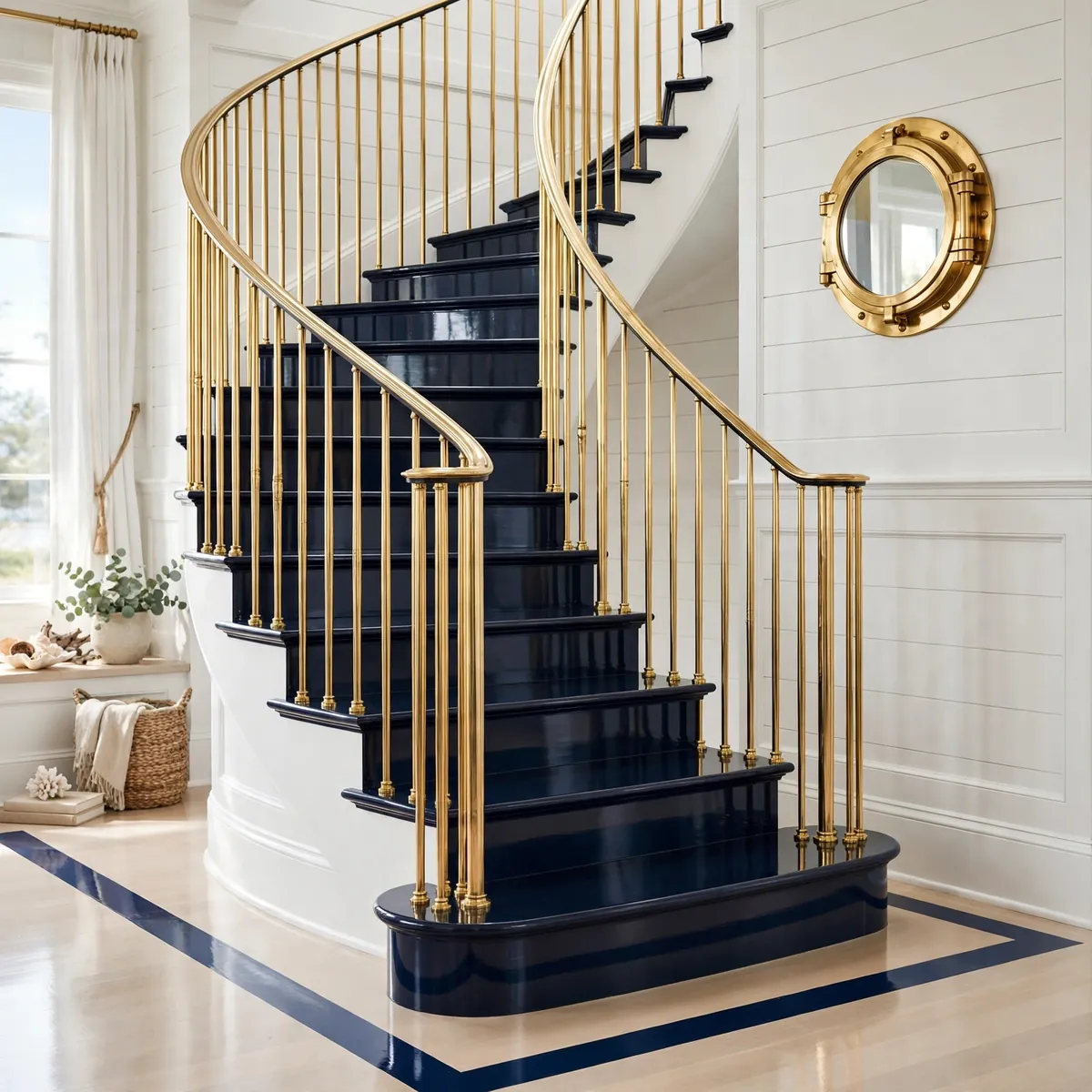
Removing the risers so light passes between the treads makes a curved staircase feel weightless — the curve becomes a ribbon rather than a mass. Open risers suit modern interiors and smaller stairwells especially well, since they keep sightlines and daylight moving through the stair. The trade-off is practical: open risers are noisier, less private, and not ideal for small children or anyone uneasy with heights. Know your household before you commit to the airy look.
- Confirm open risers meet local code — many jurisdictions limit the gap.
- Thicker treads look intentional with open risers; thin ones can look flimsy.
- Add tread lighting to compensate for the shadows open risers create at night.
Run Horizontal Slats Around the Arc
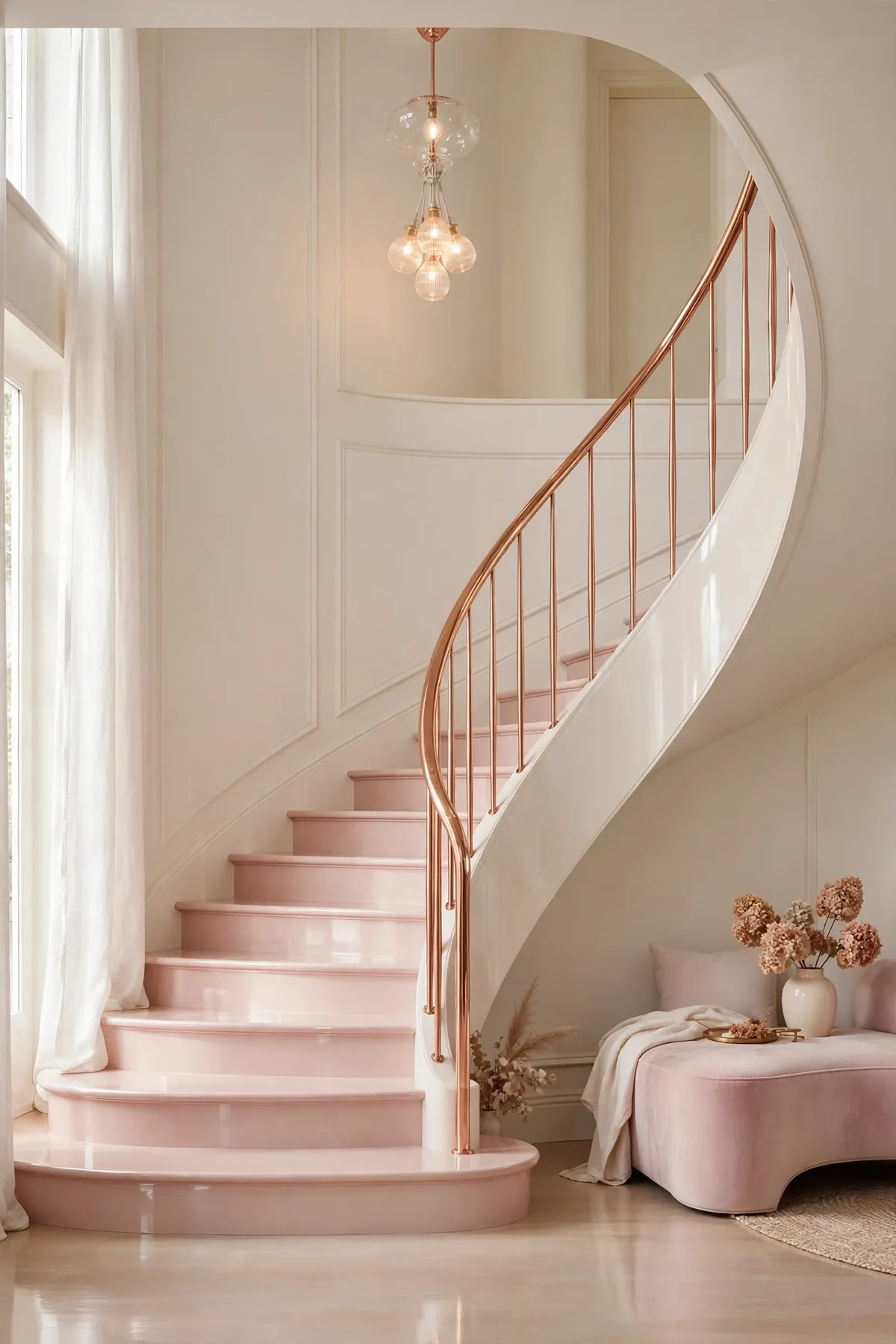
Instead of vertical balusters, a curved staircase can carry horizontal rails or slats that flow with the bend like contour lines on a map. The horizontals emphasize the stair’s movement in a way verticals never do, and the look is distinctly modern — warm wood slats for organic softness, or black metal for graphic punch. This balustrade needs careful engineering on a curve, since every slat must bend or segment precisely, but the result is one of the most striking railing options available.
- Wood slats need steam-bending or segmented joinery — budget accordingly.
- Keep gaps code-compliant; horizontal rails tempt climbing in homes with kids.
- A wood handrail caps metal slats beautifully and warms the whole assembly.
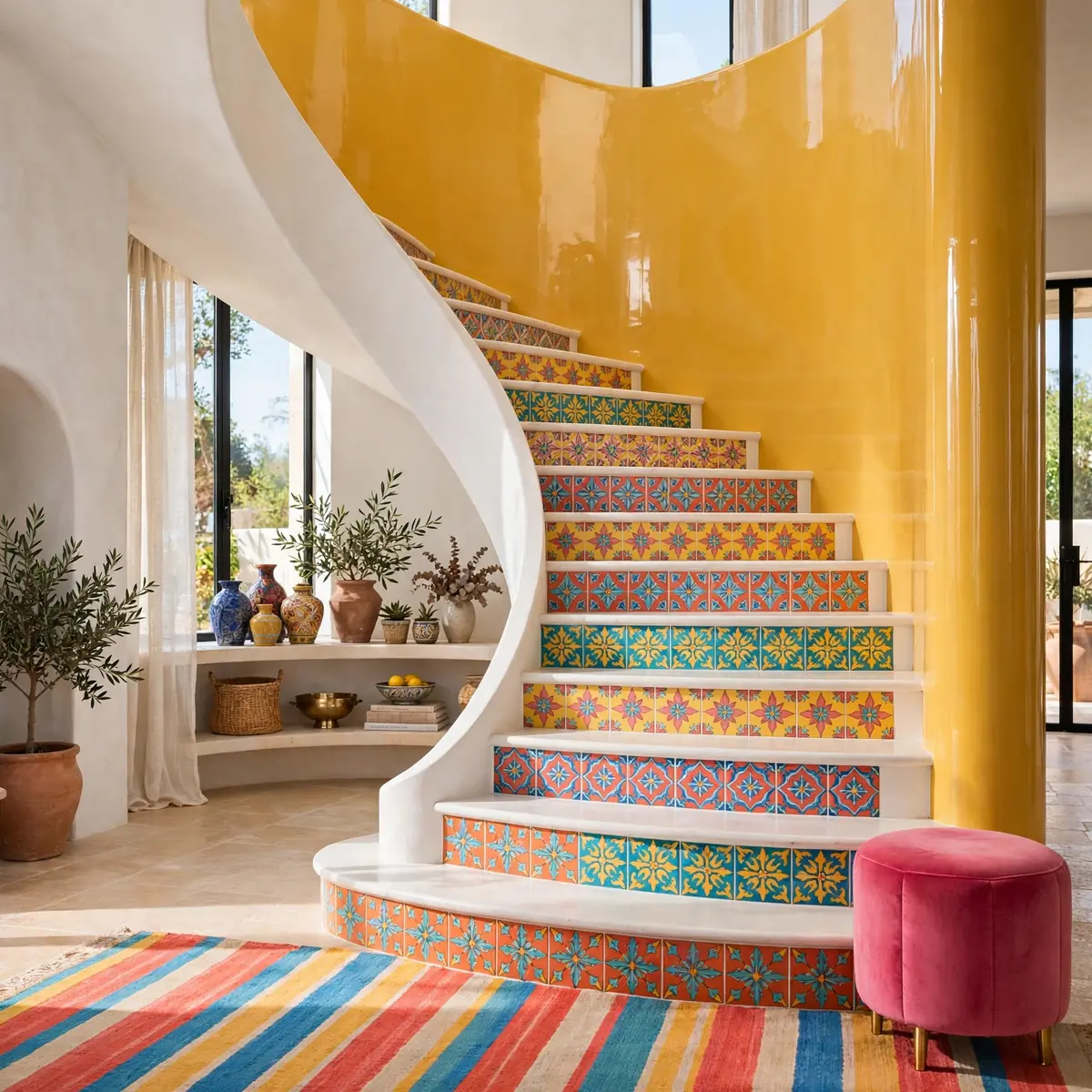
Color-Drench the Entire Staircase
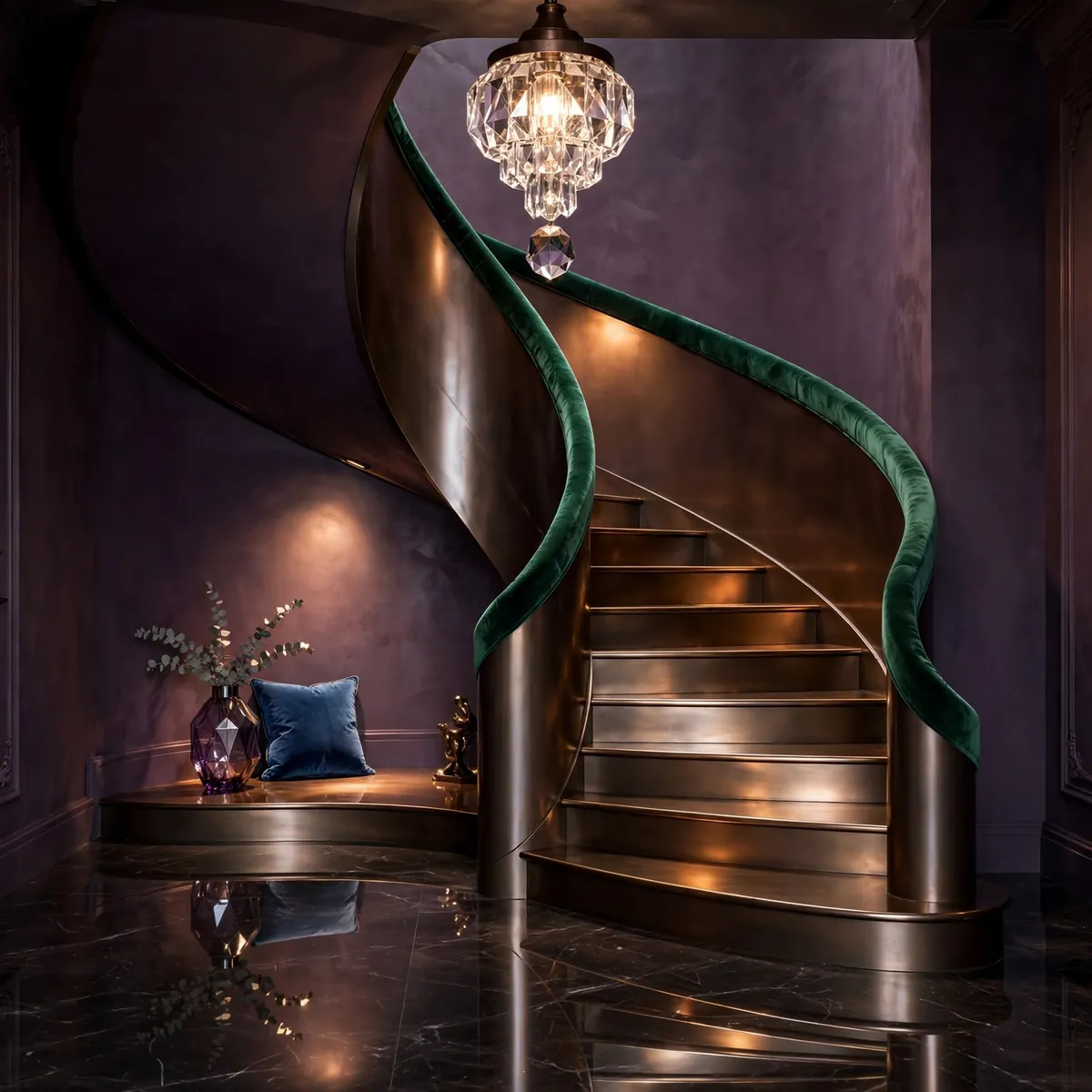
Painting the whole curved staircase — treads, risers, stringer, balustrade — in a single saturated color turns the stair into a sculptural object. The uniform color erases material boundaries so only the form remains, and the curve becomes pure geometry. Deep green, inky blue, or warm charcoal all work; the key is committing fully, because a half-painted stair just looks unfinished. This is a bold move, but on a curved stair the shape carries the color beautifully.
- Use scrubbable, high-durability paint — a stair takes more abuse than a wall.
- Keep surrounding walls neutral so the stair holds the spotlight alone.
- Test the color in the stairwell’s actual light; enclosed stairs run dark.
Give the Landing Its Own Design Moment
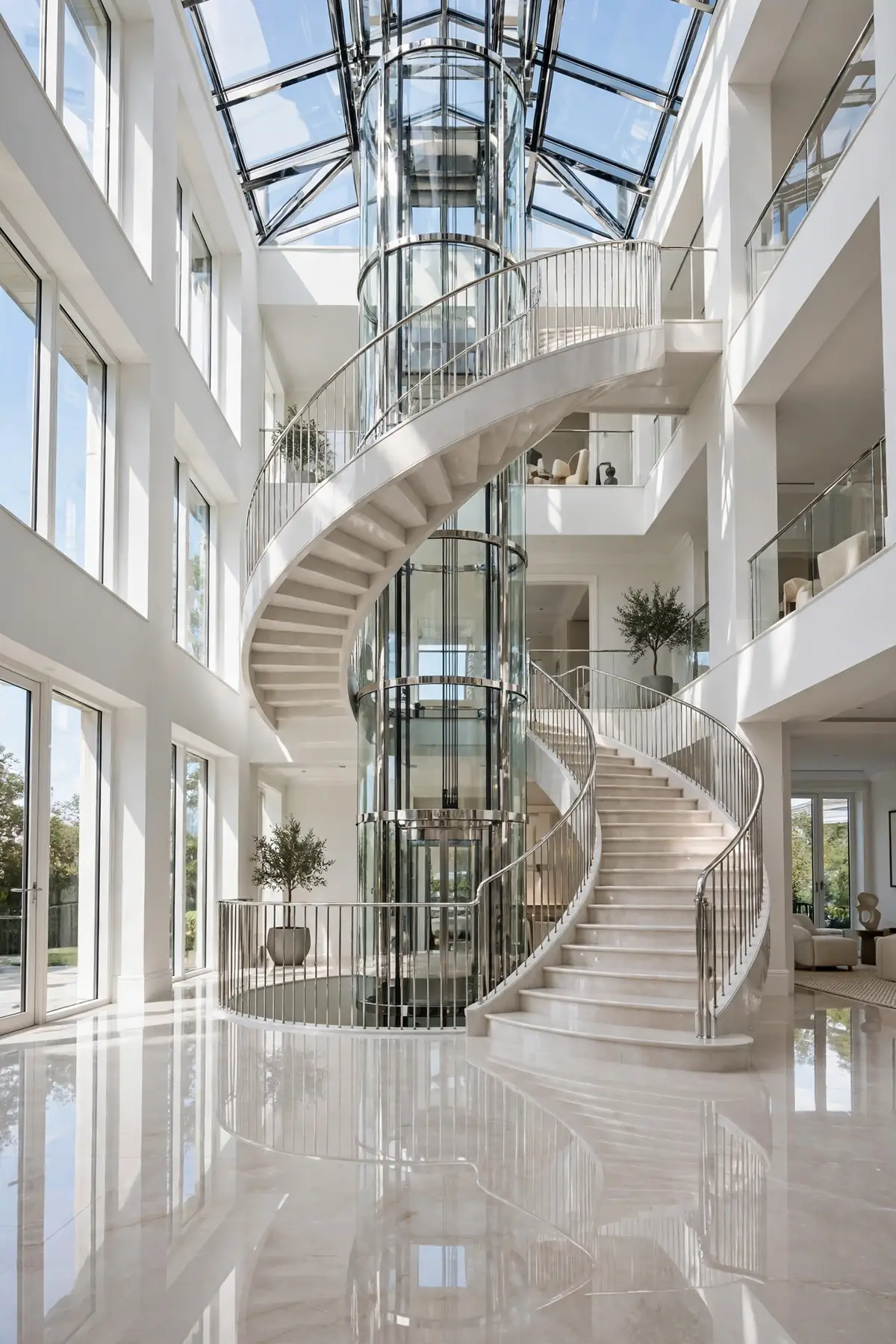
The landing where a curved staircase turns or arrives deserves the same attention as the stair itself. A landing is a pause in the climb — the perfect place for a window seat with a view, a single sculptural chair, or a piece of art lit like it matters. Because the curve naturally slows movement, people actually stop on landings, which makes them ideal for the one personal touch the rest of the stair does not need. Design the landing as a destination, not a leftover, and the whole staircase journey improves.
- A window on the landing is the best natural focal point — furnish around it.
- Keep landing decor minimal; it is a pause, not a room.
- Light the landing separately so it glows as a waypoint at night.
FAQs
Are curved staircases more expensive than straight ones?
Yes, generally — the curved stringers, bent handrails, and custom balustrades all require specialist fabrication rather than standard stair parts. A simple curved stair can cost roughly twice a straight one, with sculptural materials like stone or concrete adding more.
What railing is safest on a curved staircase?
Any railing that is continuous, graspable, and code-height works — the curve itself does not make a stair less safe. Glass panels, slim metal spindles, and traditional balusters all pass code when installed correctly; the key is a handrail you can grip comfortably along the whole climb.
Can you add a runner to a curved staircase?
Yes, but it must be custom-cut and bound to follow the bend — off-the-shelf runners will not sit right on a curve. A stair installer templates each tread, so expect a longer lead time and higher cost than a straight-stair runner.
Conclusion
A curved staircase earns its place in a home one detail at a time — the material underfoot, the rail in your hand, the light that finds the curve after dark. Start with the form and the materials, because those are the hardest to change, then layer in lighting and the railing that suits how you live. However you finish it, a well-designed curve never really goes out of style; it just keeps bending beautifully through the years.