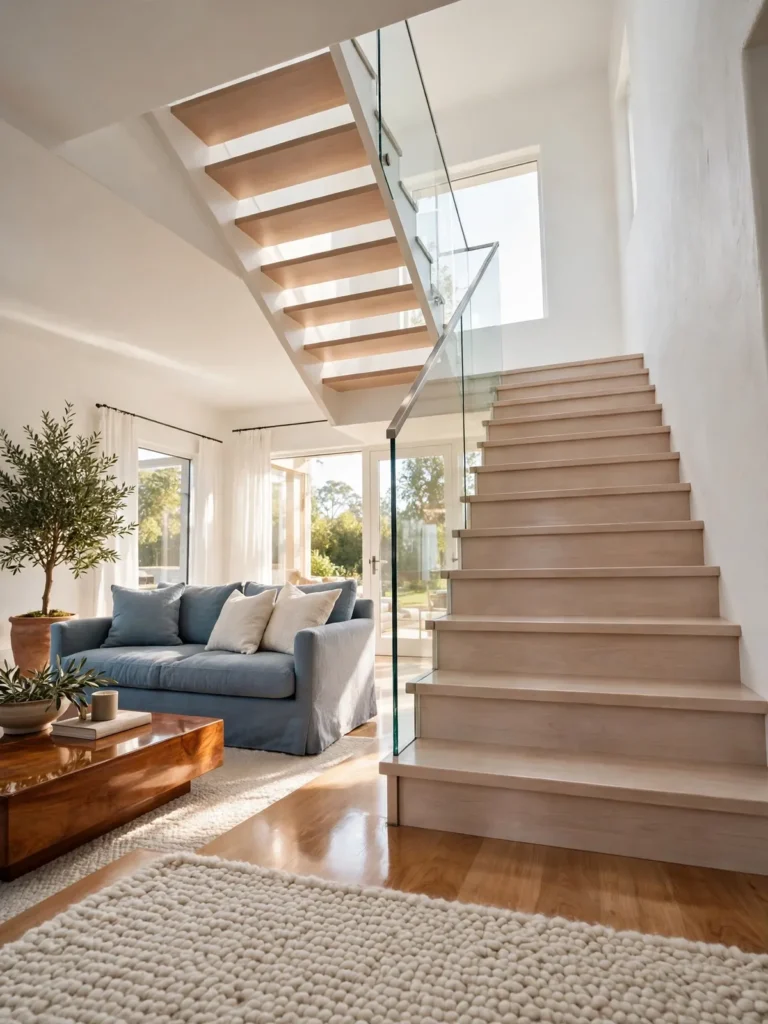
25 Stunning Small Staircase Ideas That Make a Tiny Hall Feel Bright, Bigger and Beautiful
A small staircase does not have to feel small. These 25 ideas show how pale timber, slim steel, clear glass, painted risers, clever storage and soft light can make a compact stair in a cottage, a narrow hall or a tiny home feel bright, open and calm.
A small staircase is a compact stair designed for a tight footprint — usually a straight flight or a short L-shaped turn with treads around 800–900 mm wide, slim railings, open risers or painted finishes that keep the hallway feeling light instead of boxed in. The best small staircase wastes nothing: it borrows daylight from a nearby window, uses pale timber or white paint to bounce light around, and turns the space beneath it into storage, a seat or a shelf.
For a close cousin of the same compact thinking, these narrow staircase ideas explore slim flights, tight turns and space-saving details in even more detail. The 25 ideas below cover the whole compact stair — its shape, its materials, its lighting, and the space around it — so you can choose a design that suits a cottage, a narrow hallway, or a small family home.
Key Takeaways
What is a small staircase?
A small staircase is a compact stair built for a tight footprint, usually with treads 800–900 mm wide, a straight flight or a short L-shaped turn, and slim railings or open risers that keep a narrow hallway feeling light instead of boxed in.
How can a small staircase make a hallway feel bigger?
Pale timber or white paint, open risers, a clear glass balustrade and a slim steel handrail all let light and sightlines pass through, so a narrow hall feels wider, brighter and less closed in than a solid, dark stair would.
What is the best material for a small staircase?
Pale oak, ash or pine, painted white or soft grey timber, slim matte black steel, clear or frosted glass, and warm brass details. Pale, light-reflecting materials suit a compact stair best, while one warm timber or soft colour keeps it from feeling cold.
Can a small staircase have storage underneath?
Yes — the space beneath a small staircase is ideal for a coat cupboard, shoe drawers, a pantry, open shelves or a small reading nook. Built-in storage turns dead space into the most useful spot in a small home.
Is a small staircase safe for a family home?
Yes, when it uses sturdy treads, a secure handrail, non-slip finishes and good lighting. A closed riser, a slim balustrade or a frosted glass panel adds safety for toddlers and pets, while a runner down the centre adds grip and softens footsteps.
A Straight Small Staircase in Pale Oak With a Clear Glass Balustrade
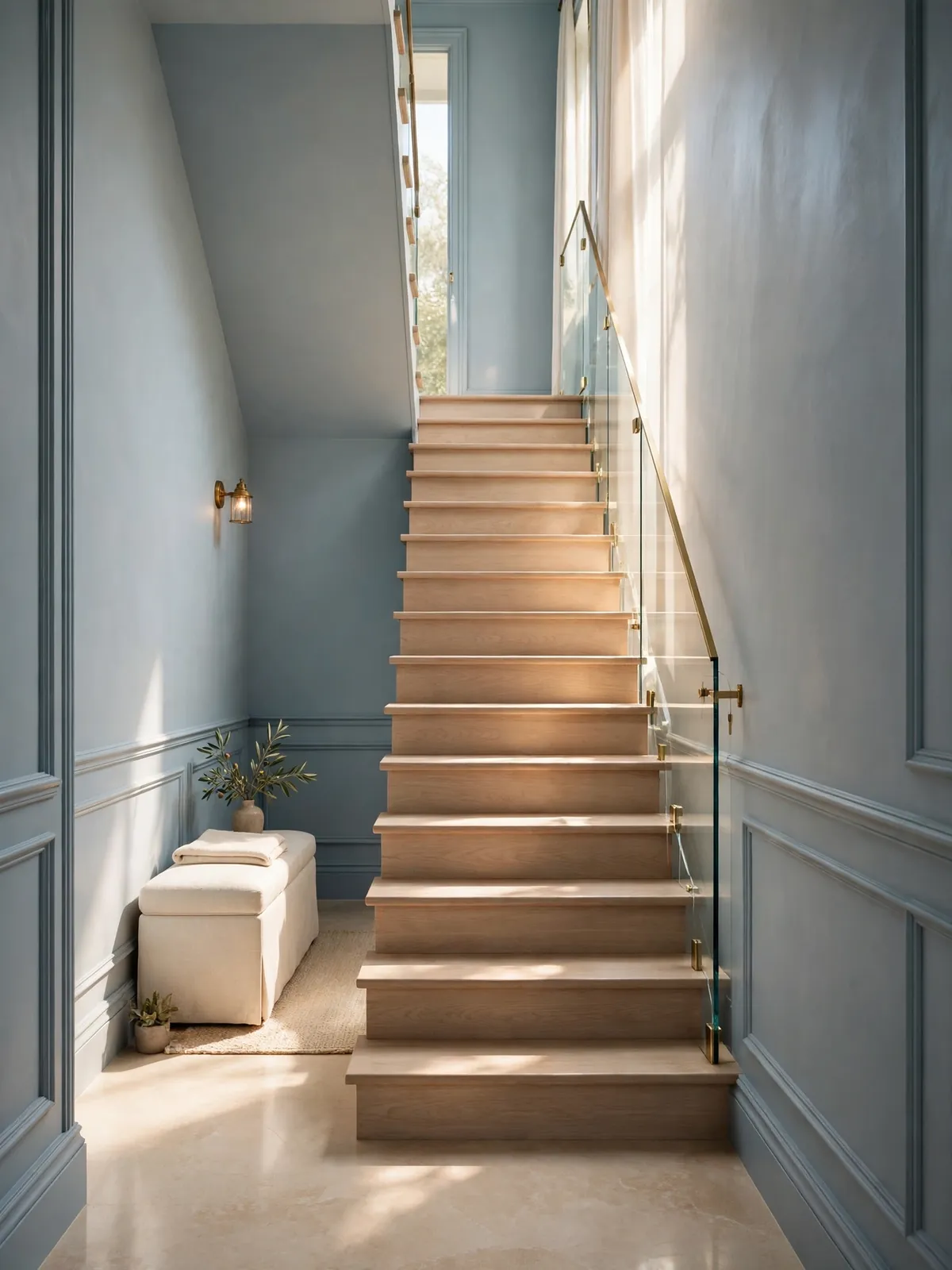
A straight flight is the simplest small staircase of all, and its honesty is its charm. In one narrow hallway, pale oak treads, each 850 mm wide and 270 mm deep, rise in a single straight run with 175 mm risers, while a clear glass balustrade on slim steel clamps keeps the whole flight open to the hall. Soft dusty-blue walls and a cream linen bench at the base keep the palette gentle, and daylight falls straight through the glass and across the pale floor.
Quick tips:
- Choose pale oak so a straight flight stays light and warm.
- Use low-iron glass so the balustrade stays crystal clear.
- Keep the wall beside the stair a soft colour so the treads stand out.
- Add a slim steel handrail on the glass for confidence on the climb.
A Small Staircase With an L-Shaped Turn and Winder Treads in a Cottage
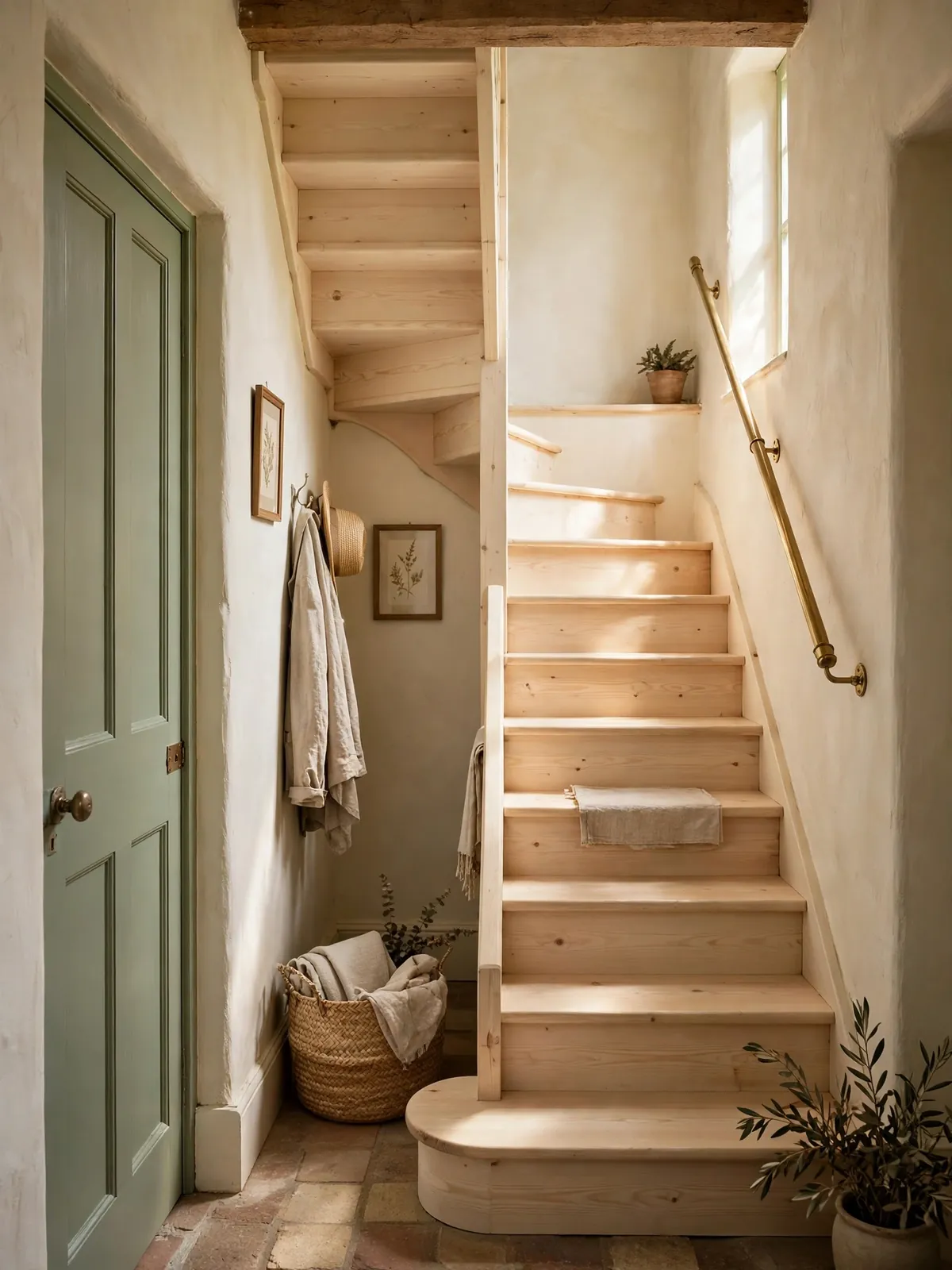
An L-shaped turn with winder treads lets a small staircase change direction without a landing, so it fits into a cottage corner that a straight flight never could. Here, pale pine treads, each 850 mm wide, fan around a tight turn, with the widest part of each winder giving a comfortable footfall, while cream plaster walls and a sage-green painted door keep the hallway calm. A woven seagrass basket at the base holds scarves and hats, and the afternoon light falls gently across the pine.
Quick tips:
- Keep winder treads wide on the outer edge for a safe footfall.
- Paint the door a soft sage to add colour without clutter.
- Use a slim timber handrail that follows the turn smoothly.
- Keep the landing turn free of furniture so the stair stays easy to use.
A Small Staircase With a Coat Cupboard Tucked Beneath It
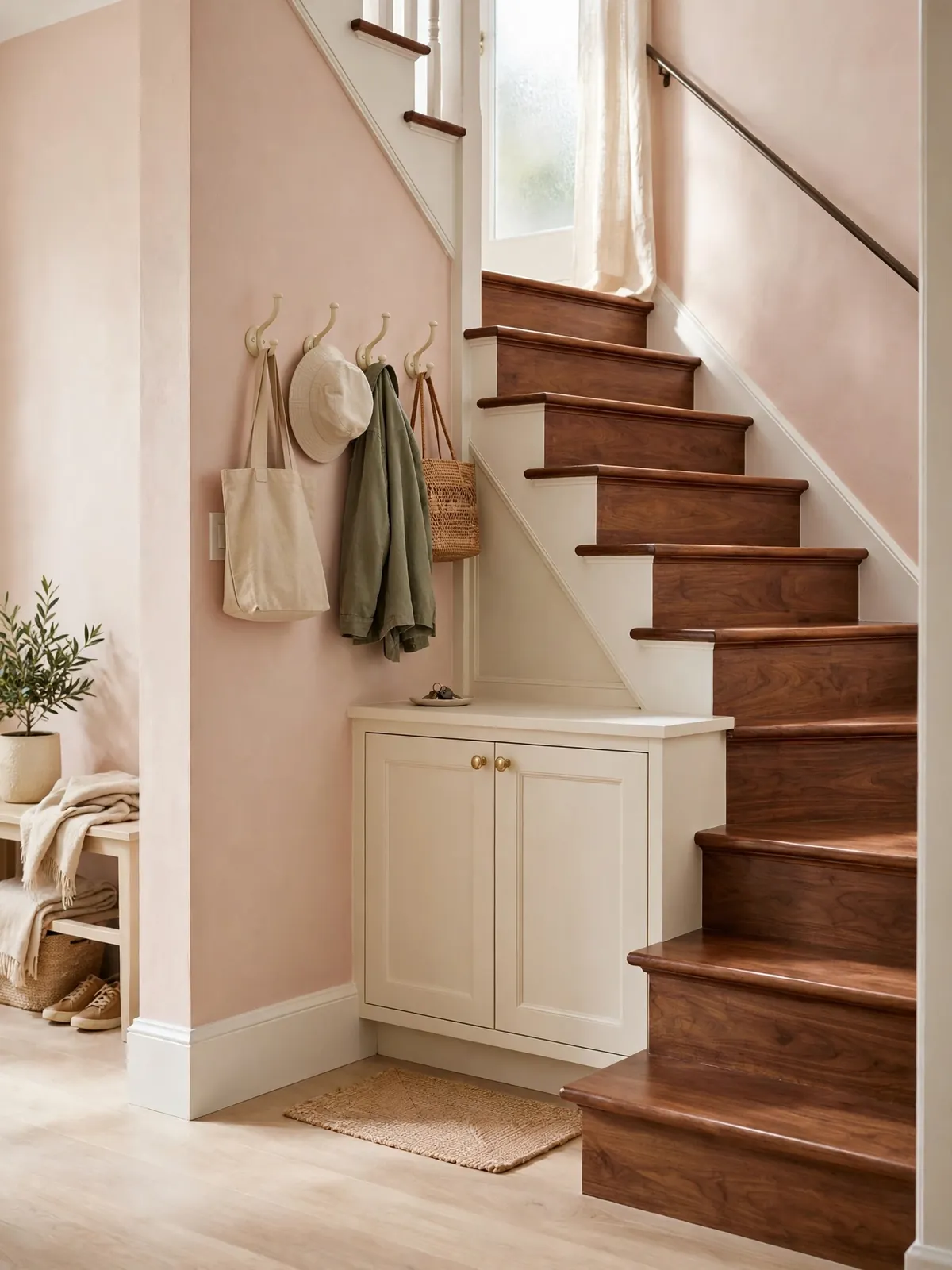
A coat cupboard beneath the flight turns the dead space under a small staircase into the most useful spot in the hallway. On this stair, warm walnut treads, each 850 mm wide, rise above a cupboard with two panelled doors, 1.1 metres wide, holding coats, shoes and school bags on hooks and a low shelf. Soft blush-pink walls and a pale wood floor keep the hallway bright, while cream coat hooks on the wall beside the stair take the overflow.
Quick tips:
- Make the cupboard doors panelled to match the stair’s style.
- Add a low shelf inside for shoes and boots.
- Paint the cupboard the same colour as the wall for a seamless look.
- Keep a hook rail beside the stair for daily coats.
A Compact Dog-Leg Small Staircase With a Half Landing
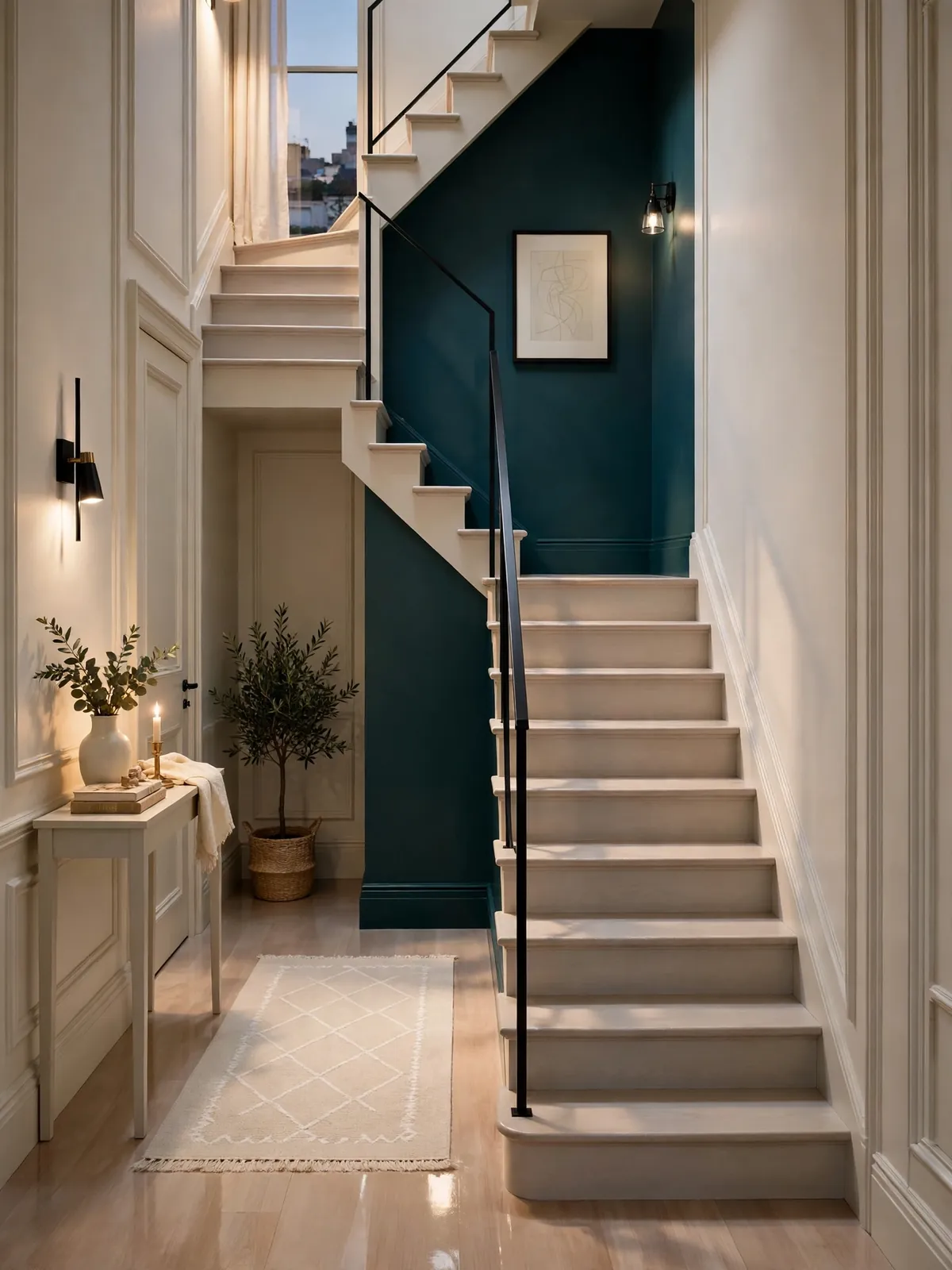
A dog-leg stair folds back on itself with a half landing, so a small staircase climbs a full floor in half the hallway length. In this townhouse, pale ash treads, each 850 mm wide, rise in two short flights around a half landing 900 mm square, with a deep teal painted wall on the landing adding one rich moment of colour. A cream rug at the base softens the floor, and a slim black steel handrail runs both flights. The turn makes the climb feel shorter and safer.
Quick tips:
- Make the half landing at least 900 mm square for a comfortable turn.
- Paint the landing wall one bold colour for a focal point.
- Keep both flights the same width so the stair feels balanced.
- Use a continuous handrail around the turn for safety.
A Slim Spiral Small Staircase in a Corner
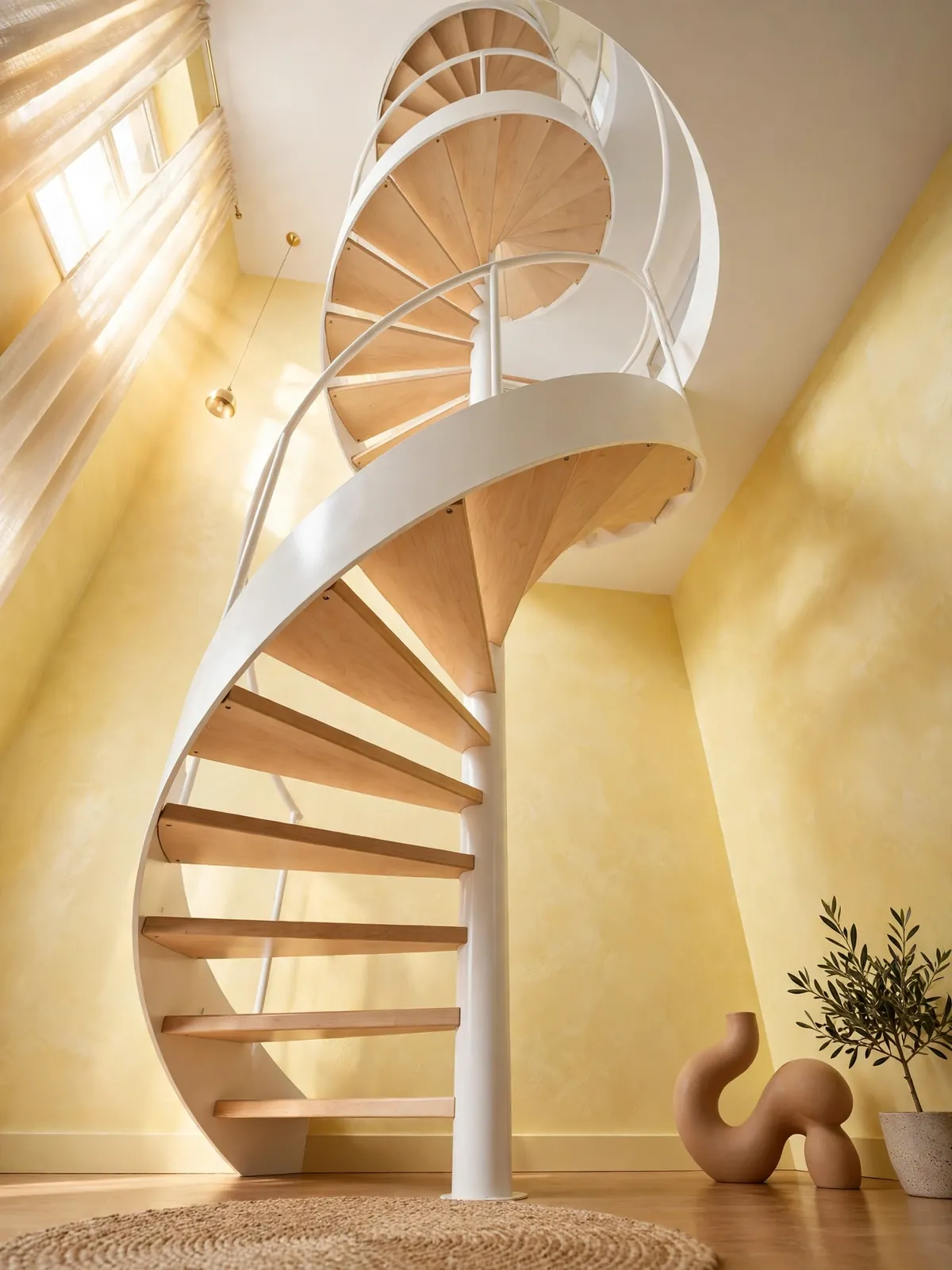
A slim spiral stair needs only a circle about 1.4 metres across, so it is one of the smallest staircases a home can have. Here, pale birch treads wind around a white steel centre pole, each tread 600 mm deep at the outer edge, with a slim white steel handrail following the curve. Soft butter-yellow walls and a small round jute rug below keep the corner cheerful, while a tiny brass pendant light glows above the stair. The spiral becomes a sculpture in the room, not just a way upstairs.
Quick tips:
- Keep the spiral diameter around 1.4 metres for a comfortable climb.
- Choose pale birch so the spiral stays light and bright.
- Add a small pendant light above the centre pole for evening use.
- Keep the floor beneath clear so the spiral reads as a feature.
A Small Staircase With Wall-Hung Floating Treads
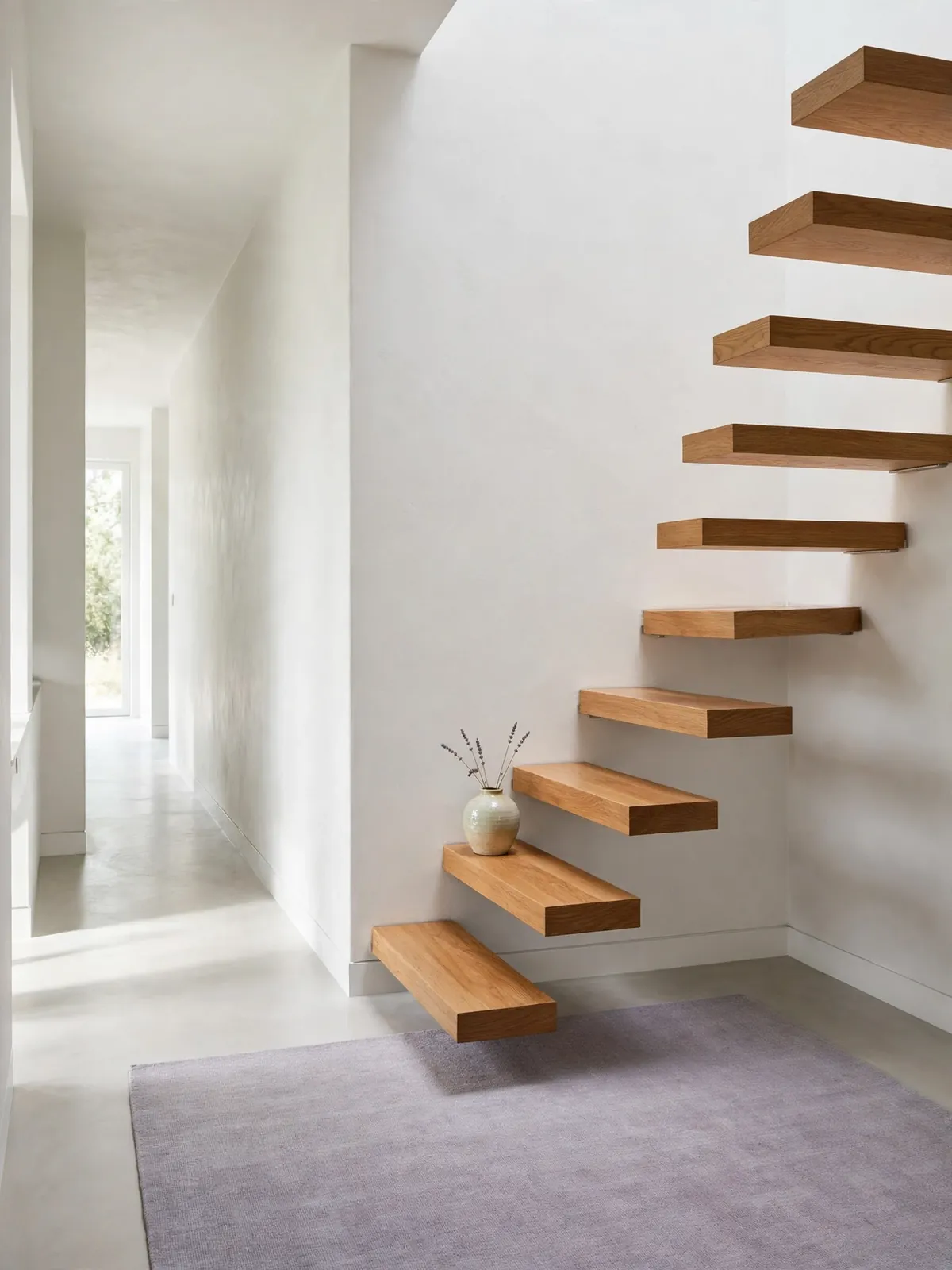
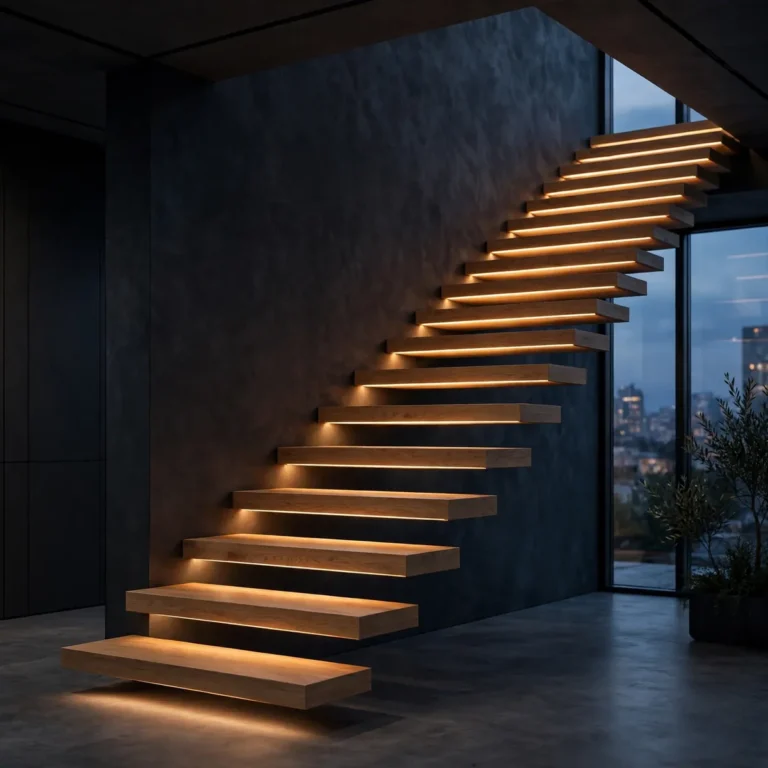
Floating treads fixed to the wall make a small staircase feel almost weightless, because light passes beneath every step. On this stair, thick oak treads, each 850 mm wide and 60 mm thick, are bolted into a hidden steel plate in the wall, with no stringer and no balustrade on the open side, just a slim steel handrail on the wall. A soft lavender-grey rug at the base and a small ceramic vase on the lowest tread add quiet colour, while white plaster walls keep the hallway bright and clean.
Quick tips:
- Use thick treads — about 60 mm — so floating steps feel solid.
- Fix treads to a steel plate hidden in the wall for strength.
- Keep the wall white so the floating effect shows at its best.
- Add a slim wall handrail for confidence on open treads.
A White-Painted Small Staircase With a Striped Runner
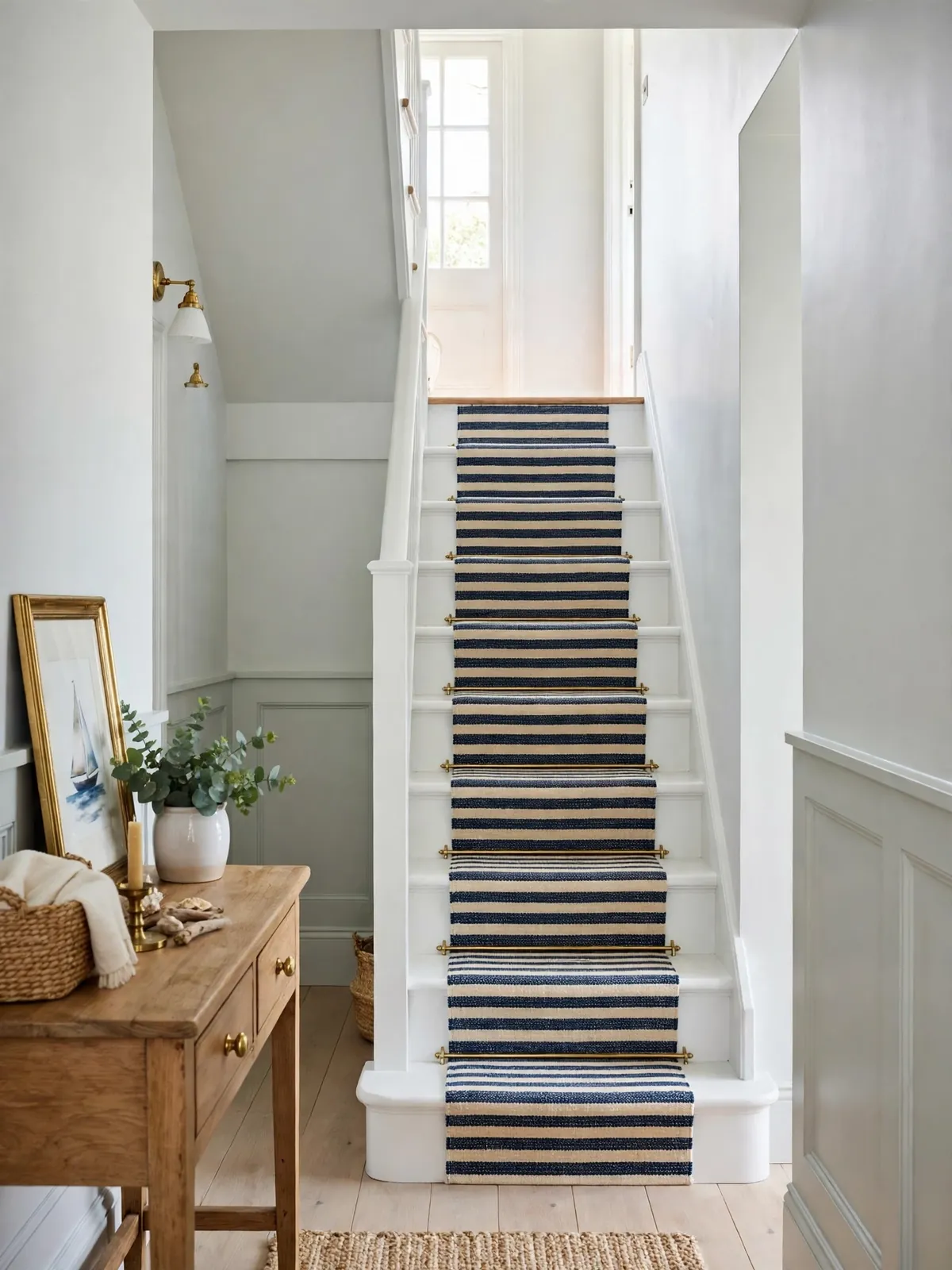
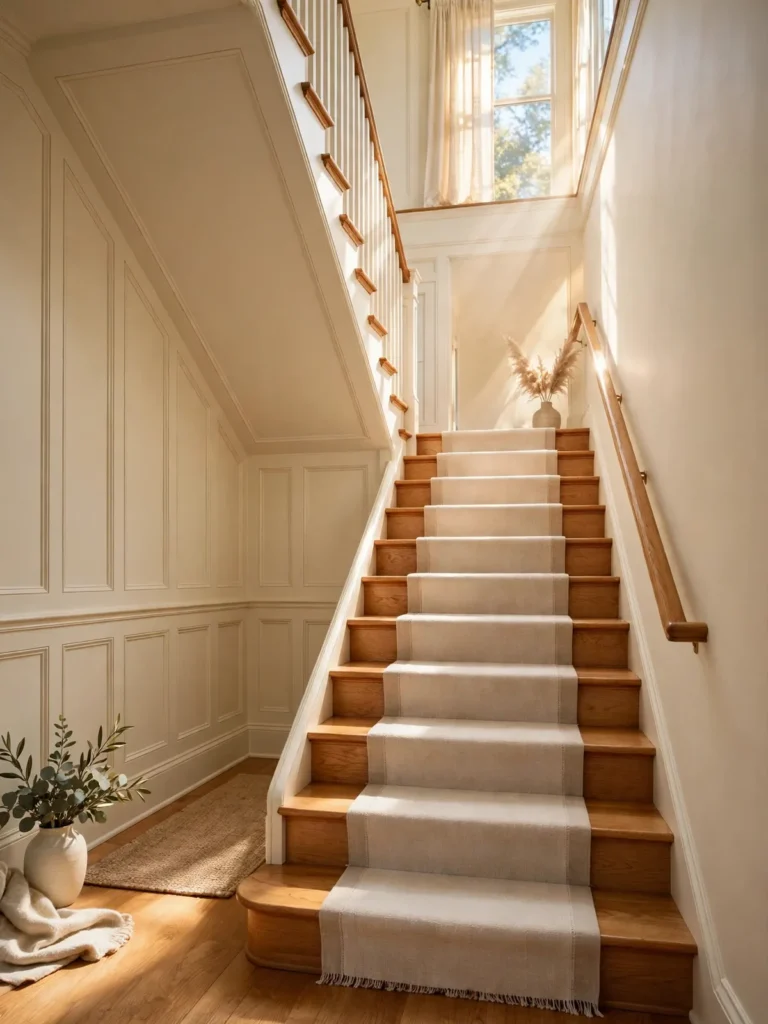
A white-painted stair with a striped runner is the classic cottage small staircase — bright, practical and full of charm. Here, the whole stair is painted soft white, with a navy-and-cream striped runner, 650 mm wide, held by slim brass stair rods down the centre of treads 850 mm wide. Pale grey walls and a small wooden console table at the base keep the hallway calm, while a brass picture frame adds a warm glint. The runner softens every footstep and adds grip on painted timber.
Quick tips:
- Paint the stair soft white, not stark white, for a warm finish.
- Choose a striped runner for a classic cottage look.
- Use brass stair rods to hold the runner neatly in place.
- Keep the runner narrow so white timber shows on both sides.
A Small Staircase With a Bookcase Wall Running Beside It
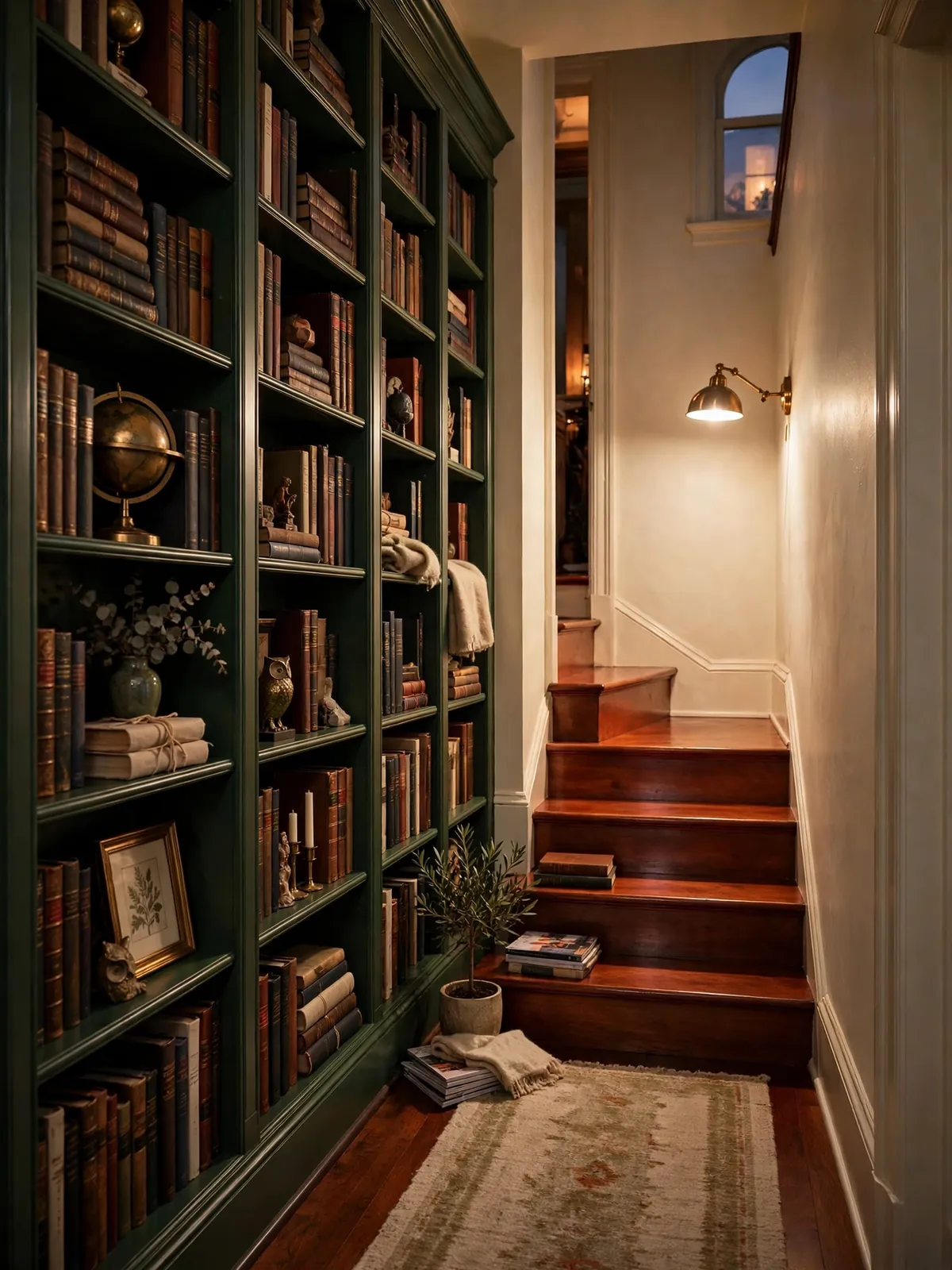
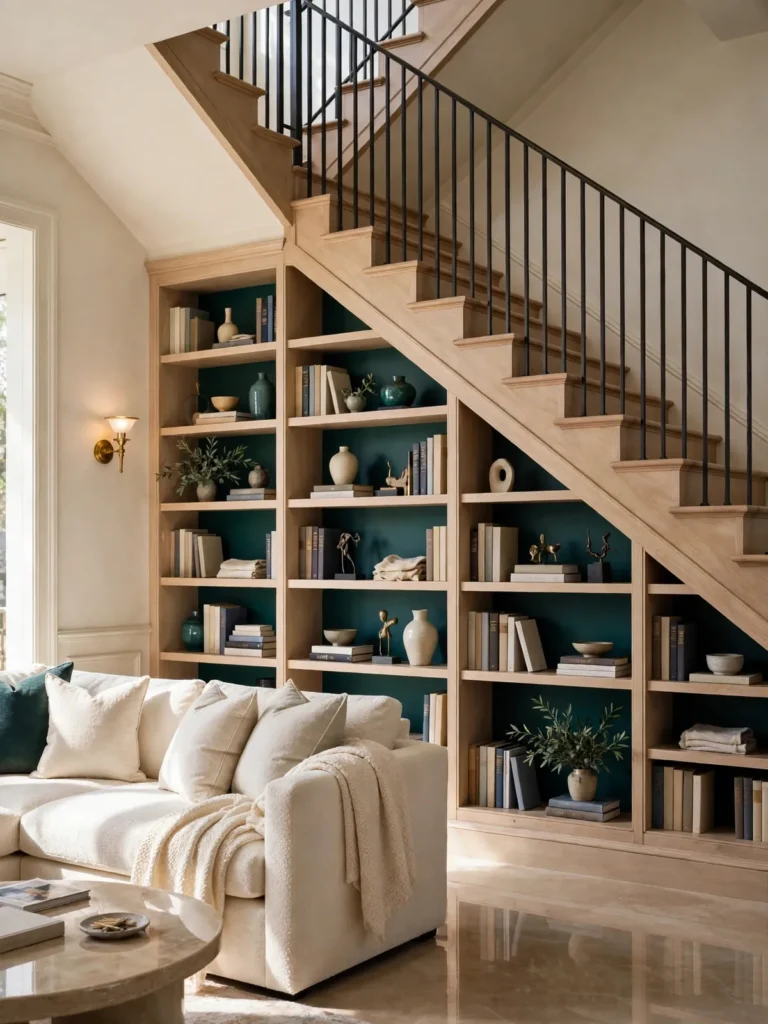
A bookcase wall beside the stair turns the climb into a library walk. Along this small staircase, a full-height bookcase, painted deep forest green, follows the angle of the flight, holding books, small plants and framed prints on shelves that step up with the treads. Warm cherrywood treads, each 850 mm wide, contrast beautifully with the green, while cream walls and a small brass reading light keep the hallway warm. The stair feels like a destination, not just a passage.
Quick tips:
- Paint the bookcase one deep colour so it reads as a feature wall.
- Step the shelves to follow the angle of the stair.
- Mix books with small plants and prints so the shelves feel lived in.
- Add a brass reading light halfway up for evening browsing.
A Small Staircase With a Reading Nook on the Landing
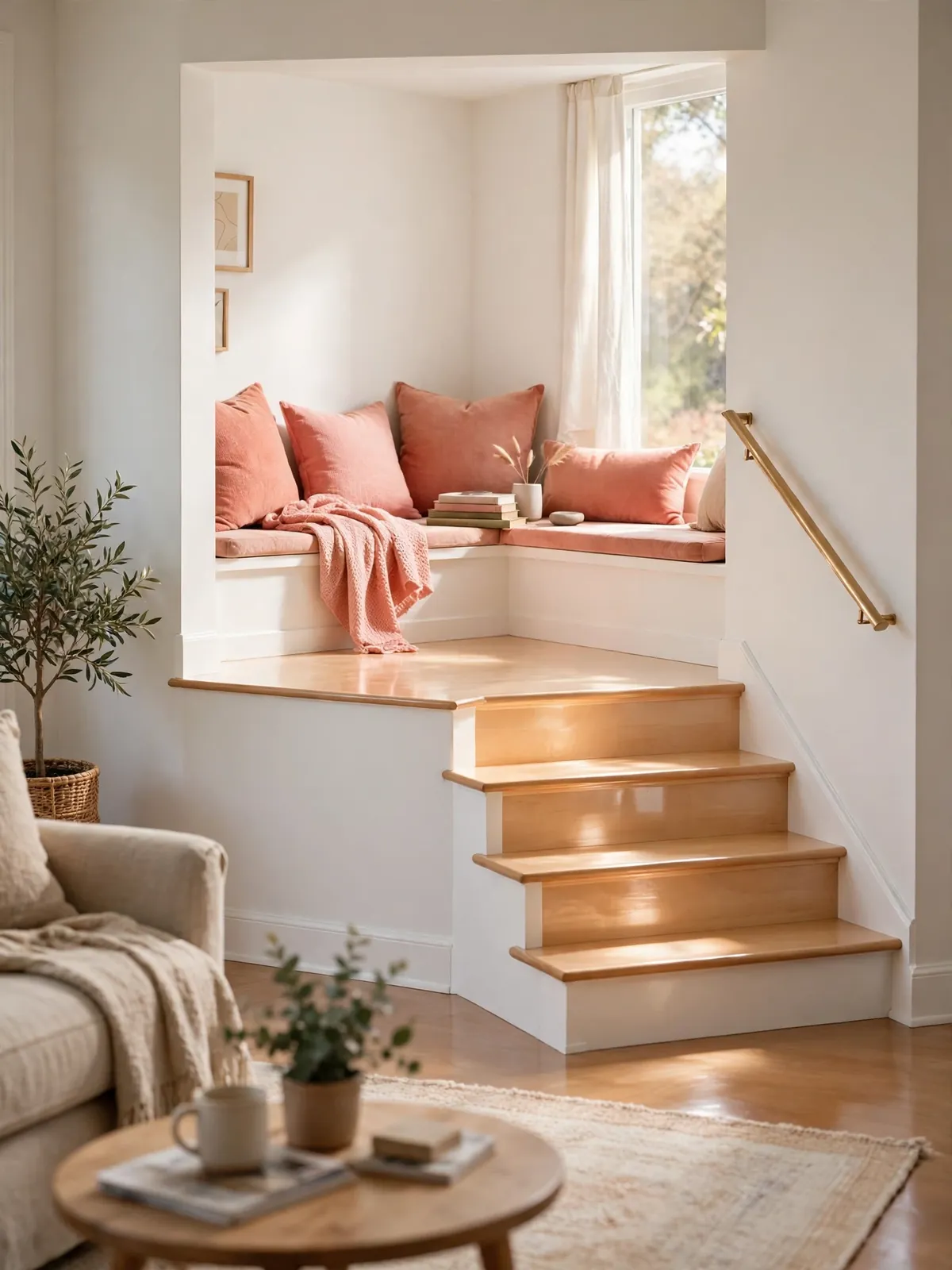
A reading nook on the landing turns a pause in the climb into the best seat in the house. On this stair, the landing is 1.1 metres square, with a built-in bench, 450 mm deep, dressed in soft coral-pink cushions and a small stack of books, while pale maple treads, each 850 mm wide, rise on either side. White walls and warm daylight keep the space bright, and a small window beside the nook gives a view over the garden. Children read there in the afternoon, and adults pause there with a coffee.
Quick tips:
- Make the landing at least 1.1 metres square so the nook feels generous.
- Use washable cushion covers for a family reading nook.
- Keep a small stack of books on the bench as an invitation to sit.
- Choose pale maple treads so the landing feels open, not boxed in.
A Small Staircase With a Window Seat Tucked Under the Flight
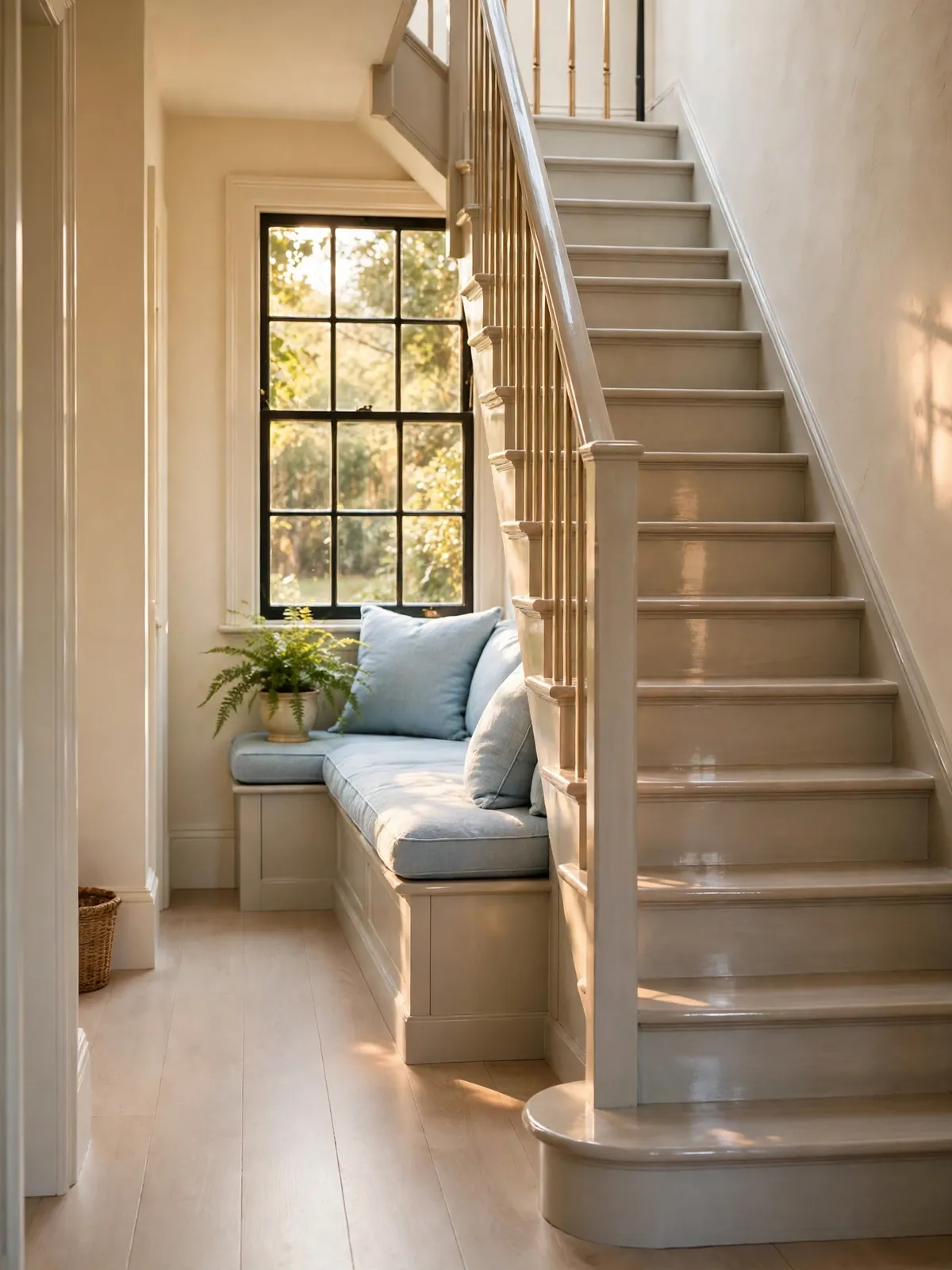
A window seat tucked beneath the flight is one of the cleverest uses of the space under a small staircase, and it works because the tallest part of the stairwell sits exactly where the seat needs headroom, while the low end of the flight becomes a shelf for books and baskets, so a corner that would otherwise hold nothing becomes a sunny place to sit, read, or watch the garden. In this cottage, the seat is 1.2 metres long and 500 mm deep, built into the wall beneath pale ash treads, each 850 mm wide, with soft sky-blue cushions and a small potted fern on the sill above. Cream walls catch the golden light from the window, and the low end of the flight holds a row of woven baskets for shoes and toys. The seat is deep enough for two children to curl up with a book, and the window above it means the nook is always the brightest spot in the hallway, even on a grey afternoon. It is a small staircase that gives back more space than it takes, and the hallway feels larger for it, because the seat replaces a chair that would otherwise crowd the floor.
Quick tips:
- Build the seat at least 500 mm deep so it is comfortable to sit on.
- Use washable cushion covers for a window seat in a hallway.
- Keep the low end of the flight for baskets and storage.
- Choose pale ash treads so the seat area stays bright.
A Small Staircase in Smoked Oak With a Slim Black Steel Stringer
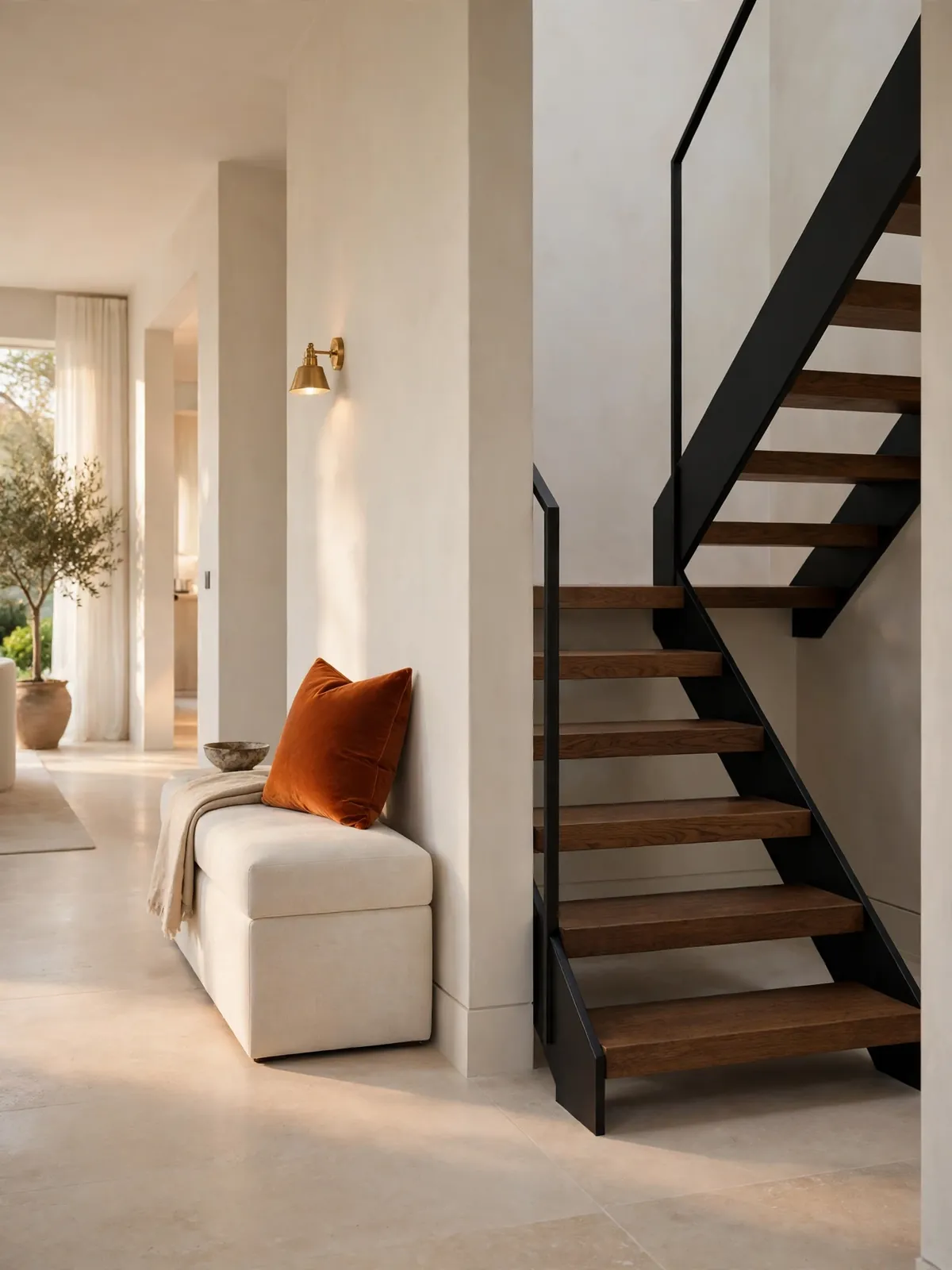
Smoked oak and slim black steel make a small staircase feel rich without making it feel heavy. Here, smoked oak treads, each 850 mm wide with a soft matte finish, sit on a single slim black steel stringer, 12 mm thick, with a slim black handrail above. A burnt-orange velvet cushion on a cream bench below echoes the oak tone, while a small brass wall sconce warms the pale stone floor in the afternoon. The steel line anchors the stair without closing it in.
Quick tips:
- Keep the steel stringer slim — about 12 mm — for a crisp, light edge.
- Pair smoked oak with a warm cushion colour for balance.
- Use a matte tread finish to avoid glare in a narrow hall.
- Match the steel tone to window frames or light fittings nearby.
A Small Staircase With Open Risers and a Skylight Above
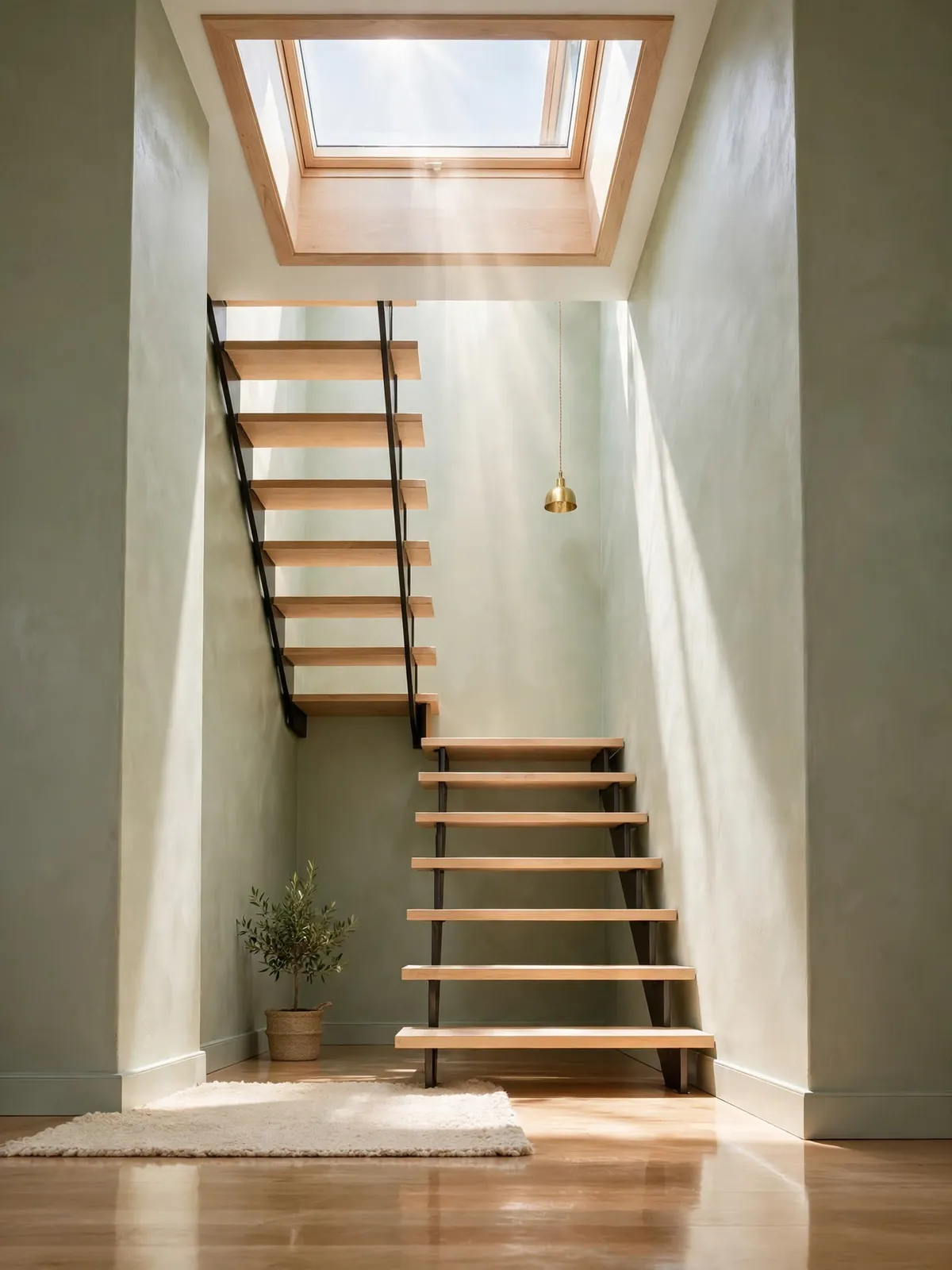
Open risers and a skylight together turn a small staircase into a light shaft. In this home, pale beech treads, each 850 mm wide, rise with open risers beneath a skylight 1 metre square, so daylight falls straight down the flight and bounces off the pale timber onto the hallway floor. Soft sage-green walls and a cream rug below keep the palette calm, while a small brass pendant light glows in the evening when the skylight goes dark. The stair feels taller than it is, because the light draws the eye upward.
Quick tips:
- Keep riser gaps small and treads deep for safety on open risers.
- Choose pale beech so the skylight light bounces further down.
- Use a skylight at least 1 metre square for a real shaft of light.
- Add a pendant light for evenings when the skylight is dark.
A Small Staircase With a Gallery Wall Climbing Beside It
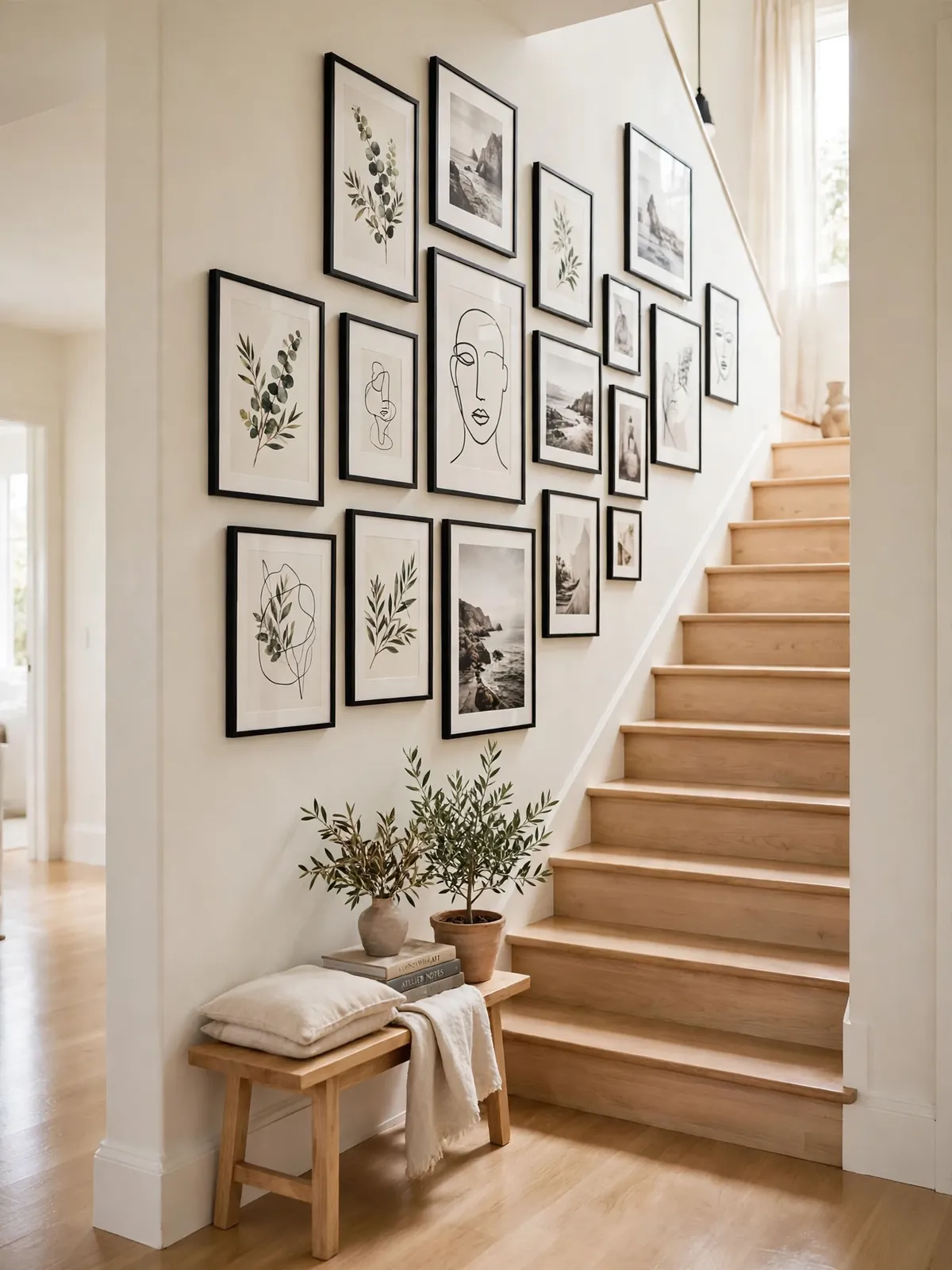
A gallery wall climbing beside the stair turns a narrow hallway into a personal exhibition. Along this small staircase, framed prints in slim black frames step up the ivory wall in rhythm with the pale oak treads, each 850 mm wide, mixing family photos, landscapes and small sketches. A small wooden bench at the base gives a place to pause and look, while soft daylight from a nearby window lights the frames gently. The stair feels personal, not plain, and the wall that would otherwise be blank becomes the best-loved spot in the home.
Quick tips:
- Step the frames to follow the angle of the stair.
- Use slim black frames for a clean, consistent look.
- Mix photos and prints so the wall feels personal.
- Keep the frames small so they suit a narrow hallway.
A Small Staircase With a Patterned Carpet Runner in Warm Tones
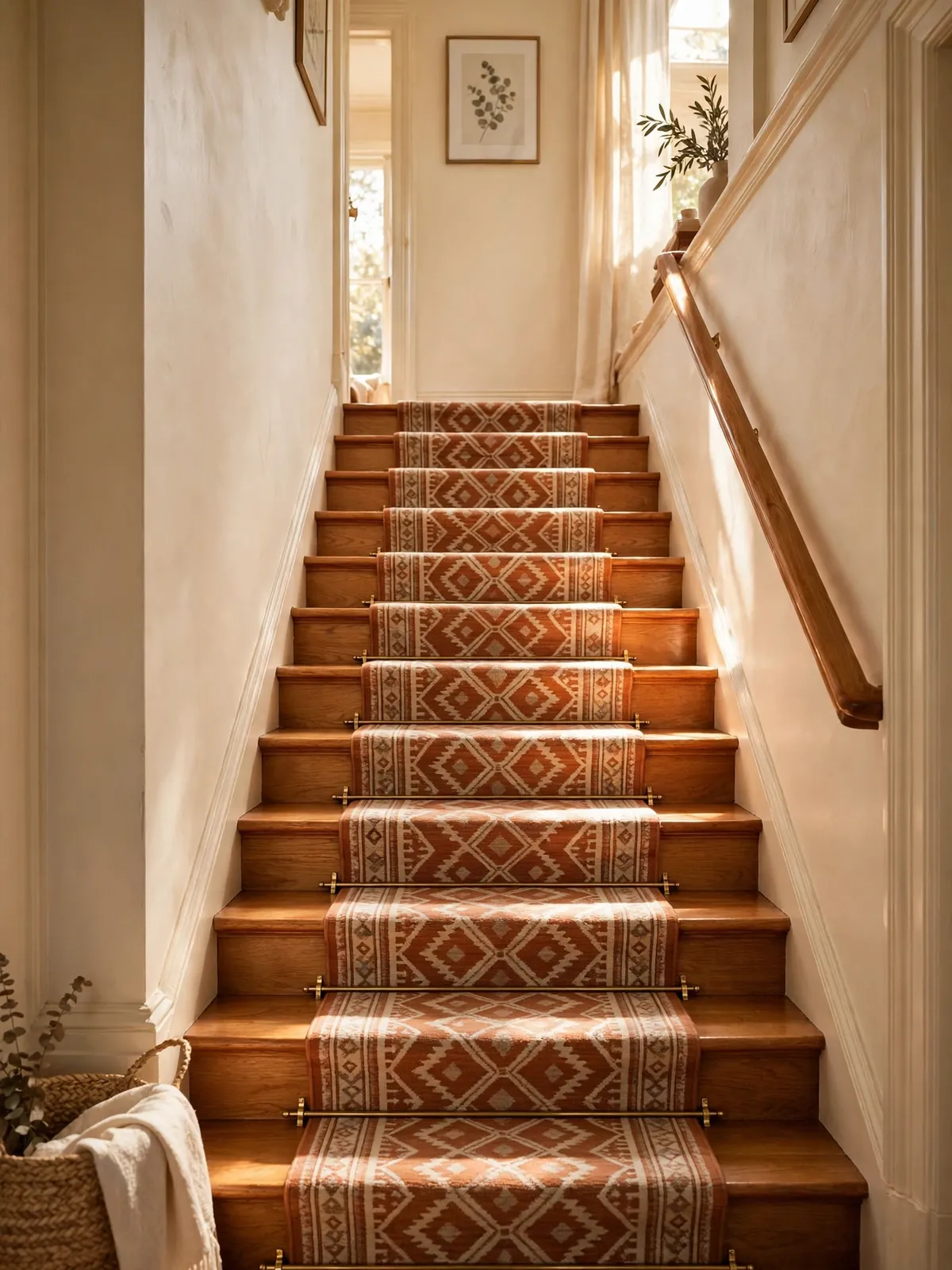
A patterned runner in warm tones makes a small staircase feel cosy and lived in, like a favourite rug that happens to climb. Here, a terracotta-and-cream patterned runner, 650 mm wide, runs down the centre of honey-toned oak treads, each 850 mm wide, held by slim brass stair rods. Soft cream walls keep the hallway bright, while a woven basket at the base holds slippers and scarves. The pattern hides wear and adds warmth to every step, and the brass rods catch the afternoon light.
Quick tips:
- Choose a warm pattern that hides wear on a busy stair.
- Keep the runner narrow so honey oak shows on both sides.
- Use brass stair rods to hold the runner neatly in place.
- Vacuum the runner weekly to keep the pattern crisp.
A Small Staircase in Painted Pine With Beadboard Walls
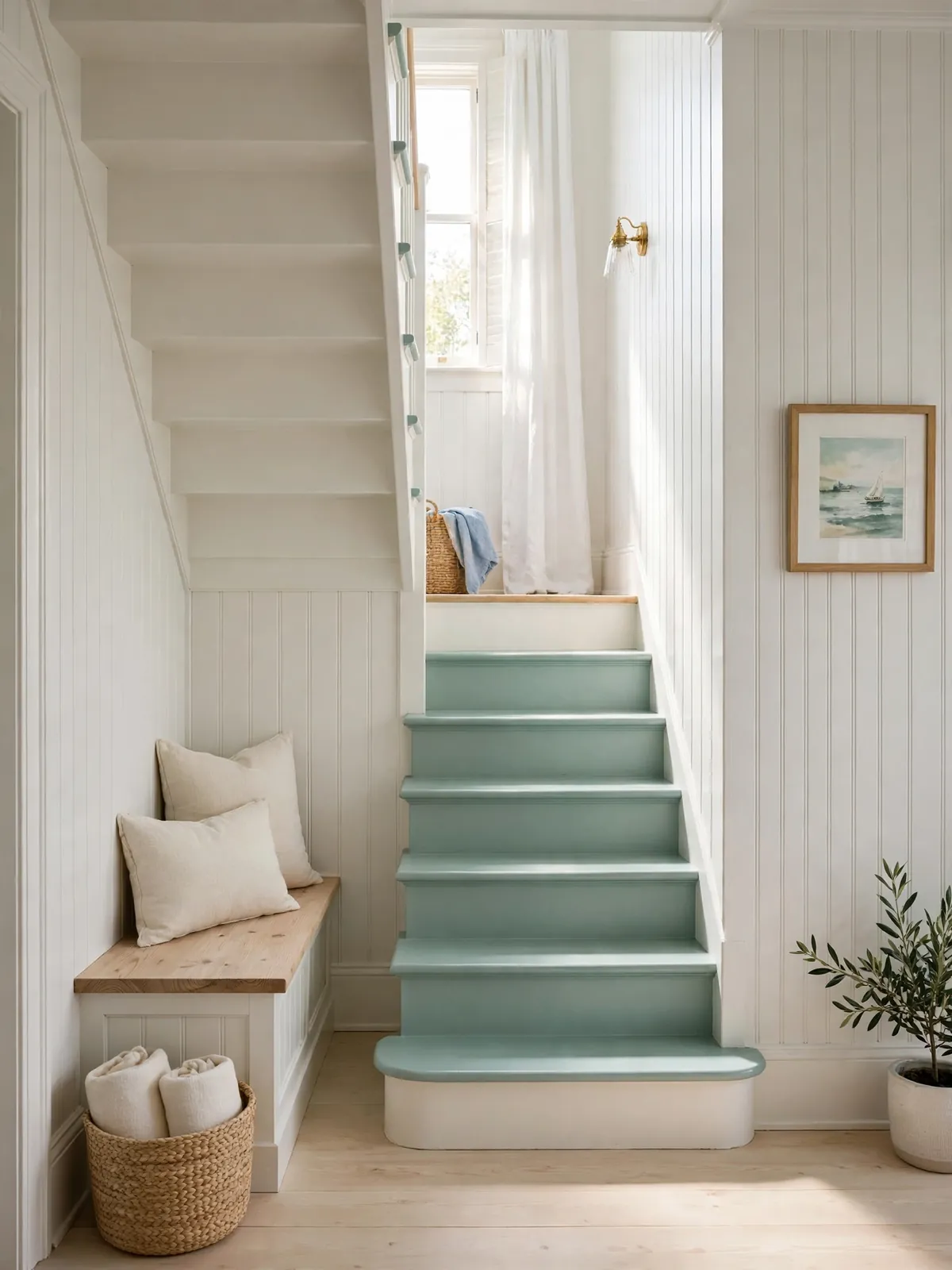
Painted pine and beadboard are the classic cottage small staircase, and a soft colour on the risers keeps it from feeling plain. In this cottage, the stair is painted soft white, with seafoam-green painted risers, 175 mm high, and pale pine treads, each 850 mm wide, while white beadboard lines the wall beside the flight. Cream linen cushions on a small bench at the base add softness, and the pale wood floor keeps the hallway bright. The stair feels fresh, coastal and completely at home in a small cottage.
Quick tips:
- Paint risers a soft colour like seafoam for a gentle accent.
- Use beadboard on the stair wall for cottage character.
- Keep the bench cushions cream so the riser colour stands out.
- Choose a durable paint finish for a busy family stair.
A Small Staircase With LED Lights Under Every Tread
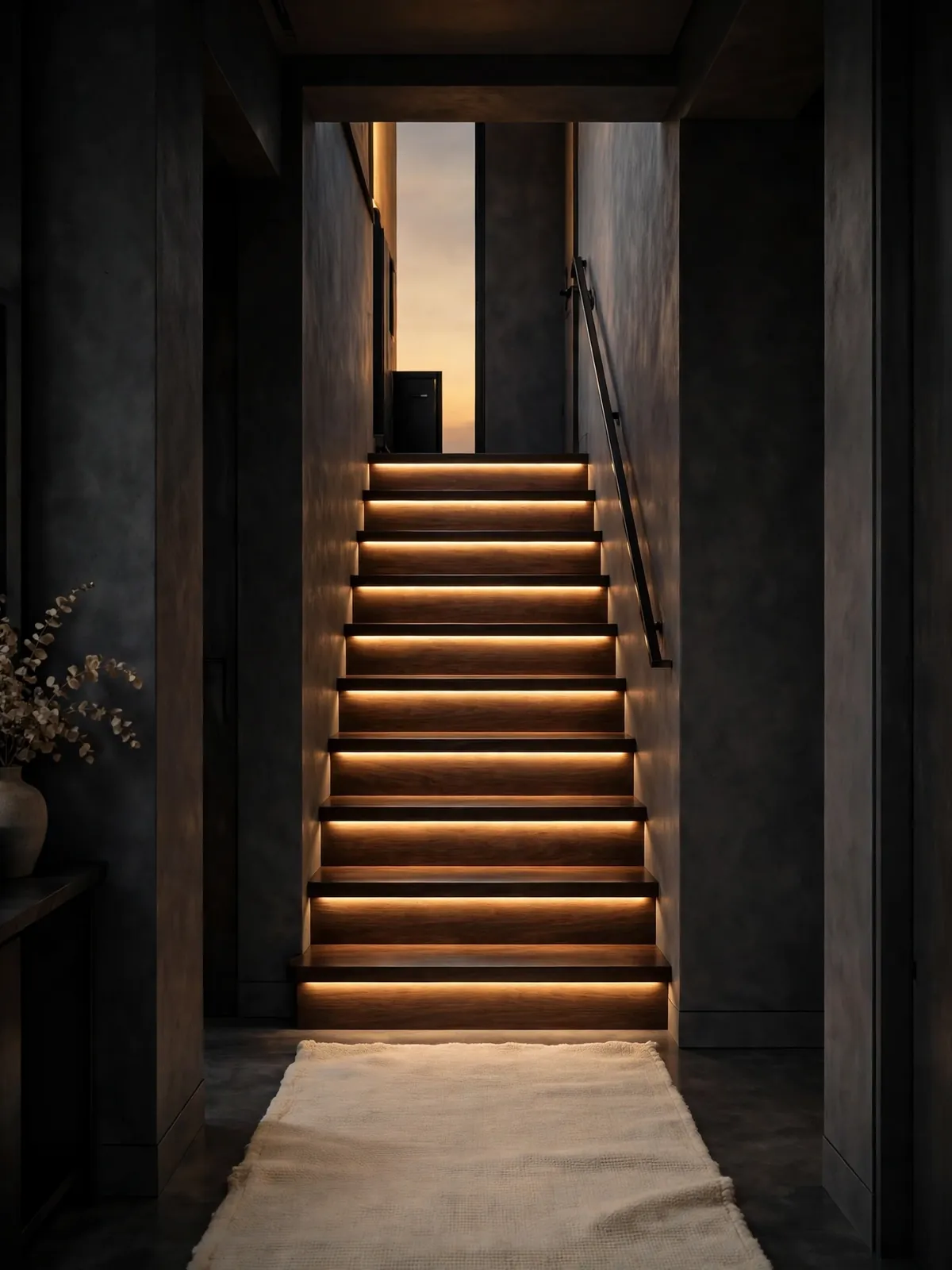
LED lights under every tread turn a small staircase into a glowing ribbon after dark. Here, warm LED strips, hidden beneath the nosing of dark walnut treads, each 850 mm wide, wash soft light down each riser, so the whole flight glows gently in the evening. Soft charcoal walls make the glow stand out, while a cream rug at the base and a slim steel handrail keep the hallway elegant. The lights also make the stair safer at night, because every step is clearly lit.
Quick tips:
- Use warm white LEDs, not cool white, for a soft glow.
- Hide the strips beneath the tread nosing for a clean look.
- Add a motion sensor so the lights switch on as you approach.
- Pair dark walnut with pale walls so the glow shows at its best.
A Small Staircase With a Pantry Under the Flight
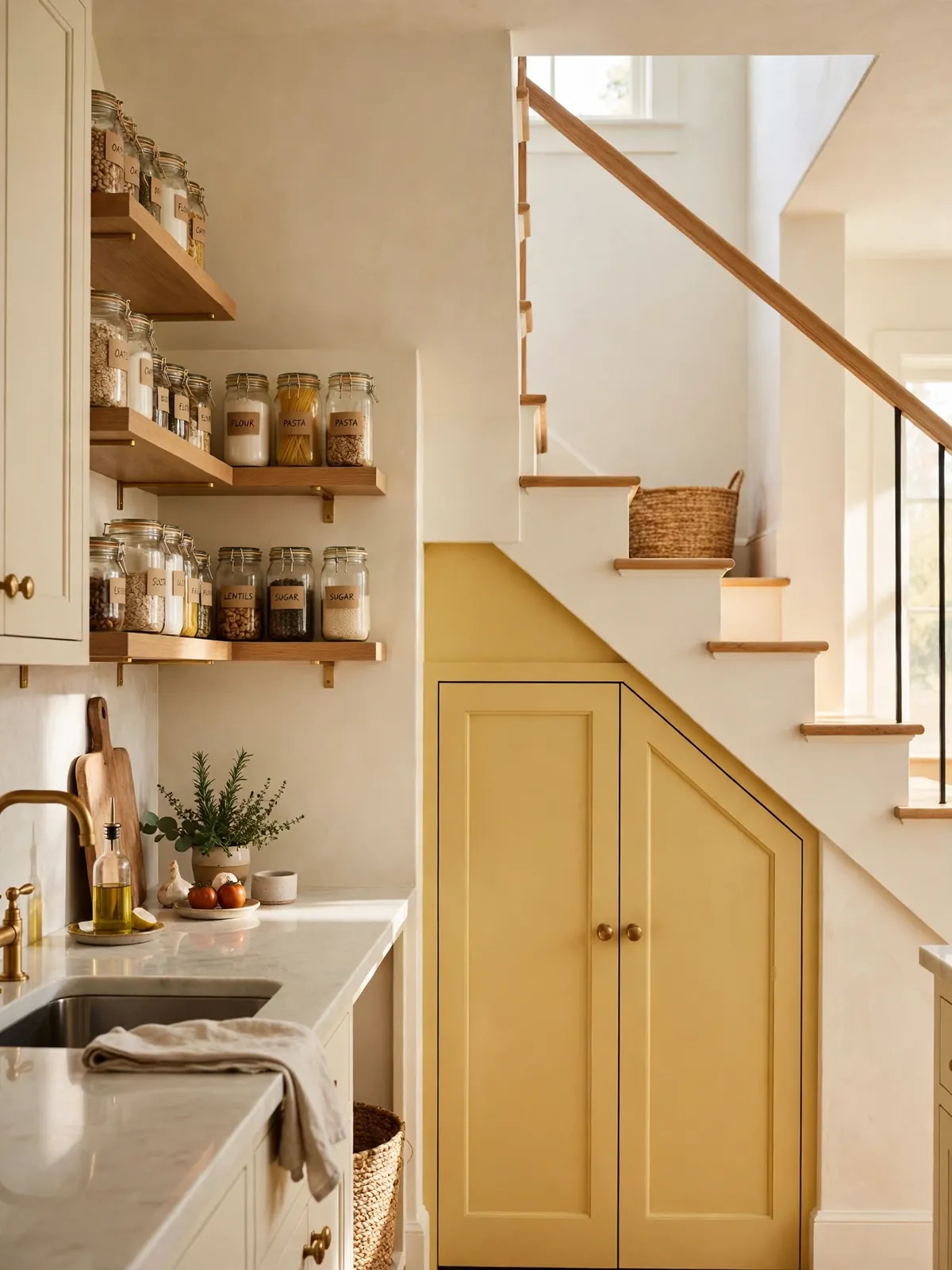
A pantry under the flight is a gift for a small kitchen, because it borrows space the stair already owns. On this stair, pale maple treads, each 850 mm wide, rise above a pantry with mustard-yellow painted doors, 1.2 metres wide, holding glass jars, tins and dry goods on deep shelves, with a few open shelves beside the doors for everyday jars. Cream walls and warm daylight keep the kitchen bright, and the mustard doors add a cheerful note that ties the stair to the kitchen. The pantry holds a week’s shopping in space that would otherwise be empty.
Quick tips:
- Make pantry shelves deep — at least 400 mm — for jars and tins.
- Paint the doors a cheerful colour to link the stair to the kitchen.
- Add open shelves beside the doors for everyday items.
- Keep the floor beneath clear so the pantry doors open fully.
A Small Staircase With Storage Drawers Built Into the Risers
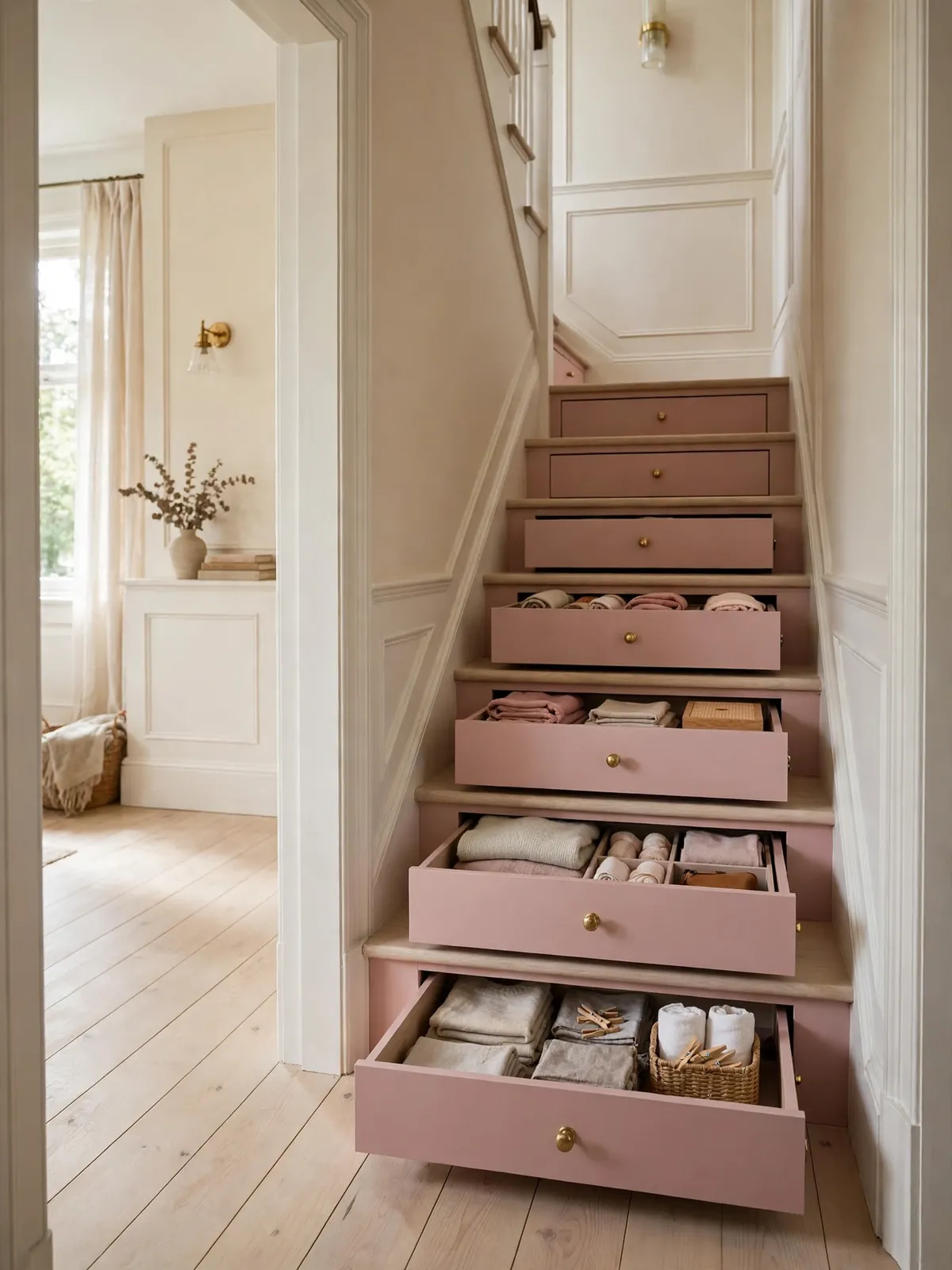
Storage drawers built into the risers turn every step of a small staircase into a cupboard. On this stair, the bottom six risers are deep pull-out drawers, each 850 mm wide, with soft dusty-rose painted fronts and small brass knobs, holding shoes, hats, gloves and dog leads. Pale ash treads and cream walls keep the hallway bright, while the pale wood floor reflects the daylight. The drawers are deep enough for a pair of boots, and the stair looks like an ordinary stair until you pull one open.
Quick tips:
- Use soft-close drawer runners so the drawers shut quietly.
- Paint drawer fronts a soft colour to make the storage a feature.
- Keep the bottom drawers for shoes and the top ones for lighter items.
- Add small brass knobs for a polished, finished look.
A Small Staircase Beside a Beadboard Wall in a Coastal Cottage
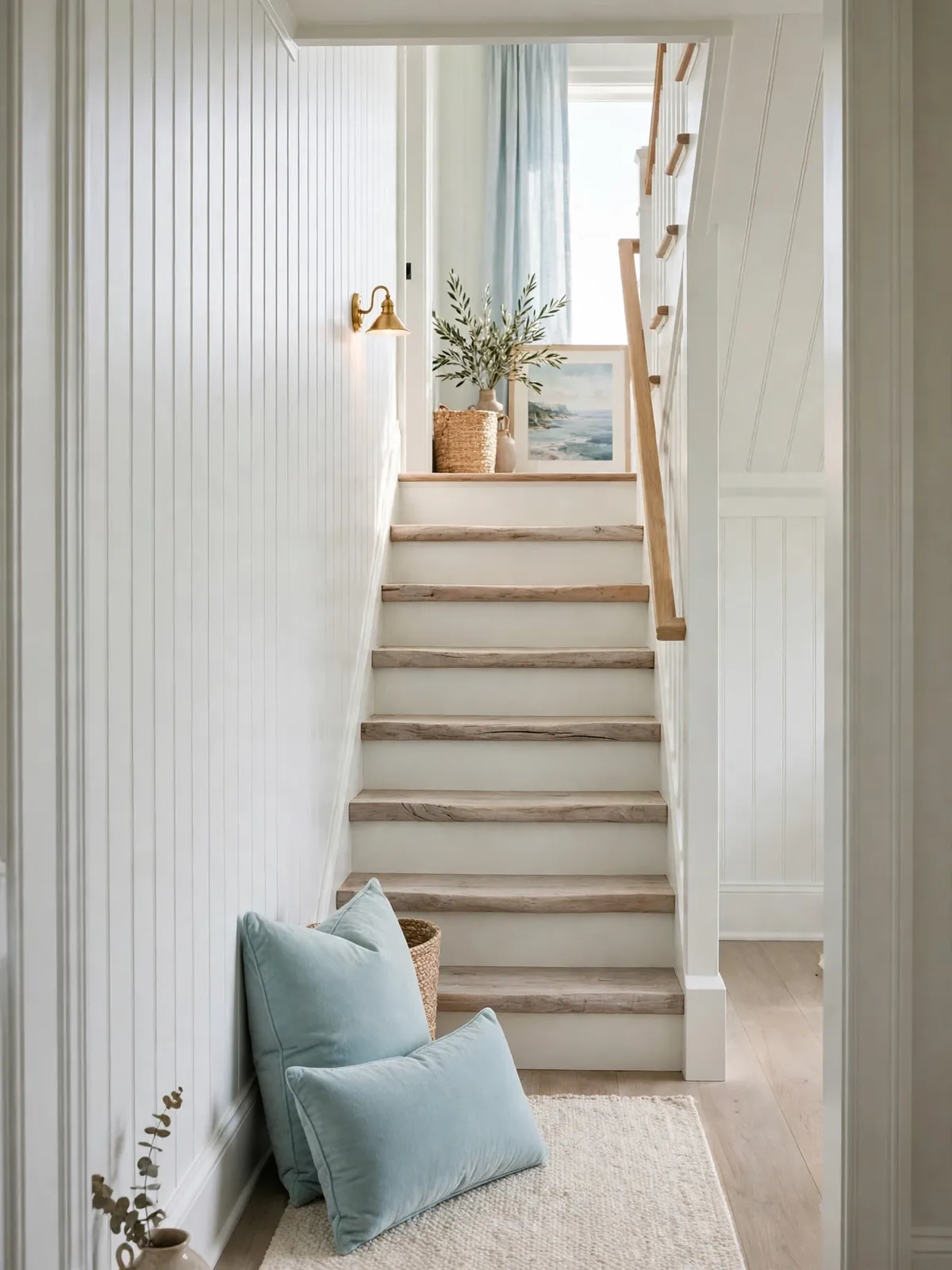
A beadboard wall and driftwood treads give a small staircase a breezy coastal feel, even miles from the sea. Here, pale driftwood treads, each 850 mm wide, rise beside a white beadboard wall, with soft aqua-blue cushions on a small bench at the base and a cream rug softening the floor. A small brass wall light glows in the evening, while gentle daylight from a nearby window keeps the hallway bright. The stair feels like a beach cottage stair — light, fresh and relaxed.
Quick tips:
- Choose driftwood tones for a soft, weathered look.
- Keep the beadboard white so the aqua accents stand out.
- Add one brass fitting to warm the coastal palette.
- Use a cream rug to soften the floor at the base.
A Small Staircase Rising Beside a Compact Kitchen
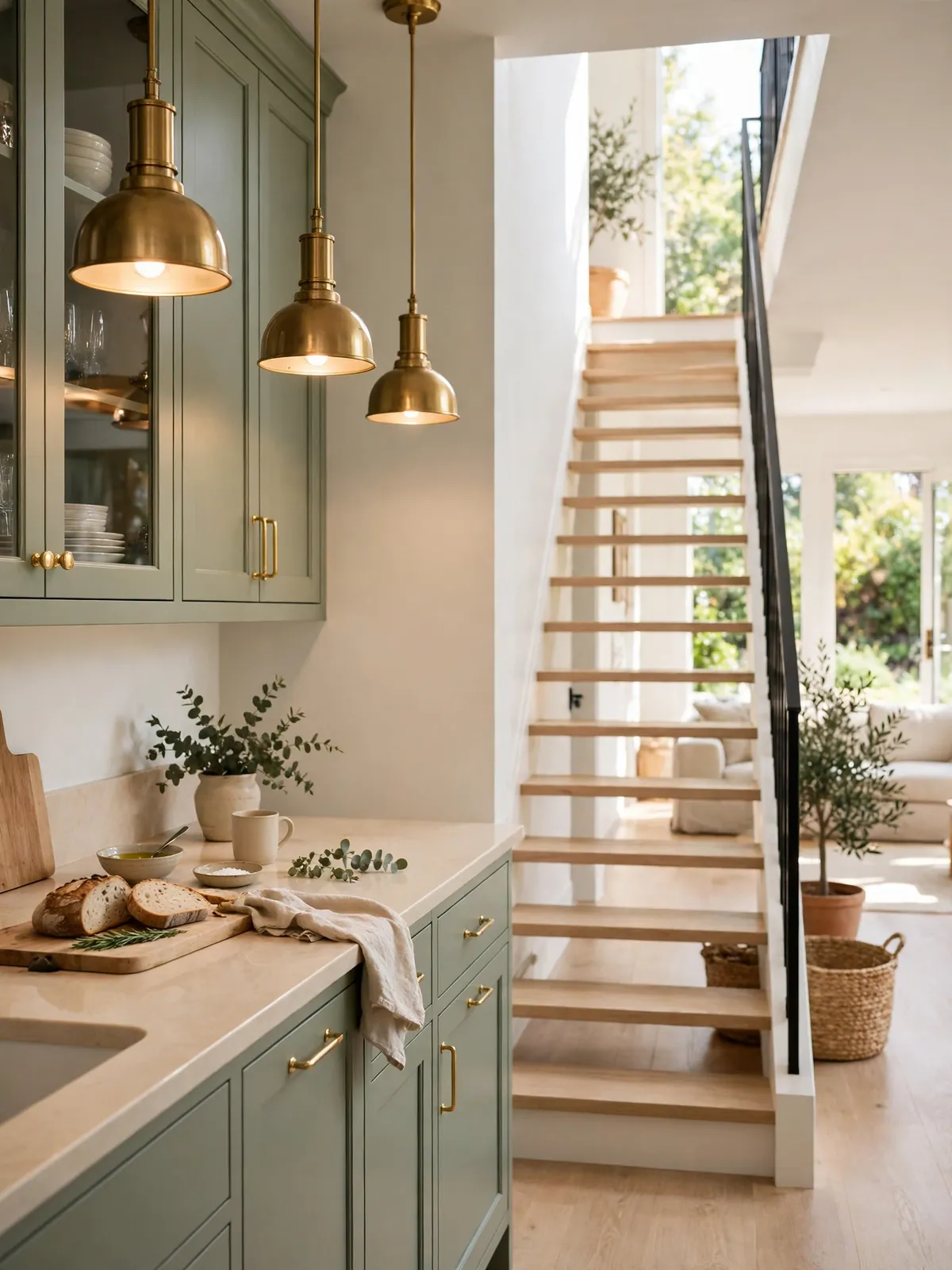
A small staircase beside a compact kitchen shares light, colour and space with the room it touches. In this open-plan home, pale oak treads, each 850 mm wide, rise beside sage-green kitchen cabinets, with a cream worktop and brass pendant lights tying the two spaces together. The stair’s slim steel handrail matches the kitchen’s brass fittings, and warm daylight from the kitchen window falls across the treads. The kitchen feels larger because the stair is open, and the stair feels like part of the kitchen, not an afterthought.
Quick tips:
- Match the stair timber to the kitchen worktop or floor.
- Use open risers so kitchen light reaches the stair.
- Paint kitchen cabinets a soft colour that suits the stair.
- Keep the handrail slim so it does not divide the two spaces.
A Small Staircase With a Slim Brass Handrail and Pale Stone Floor
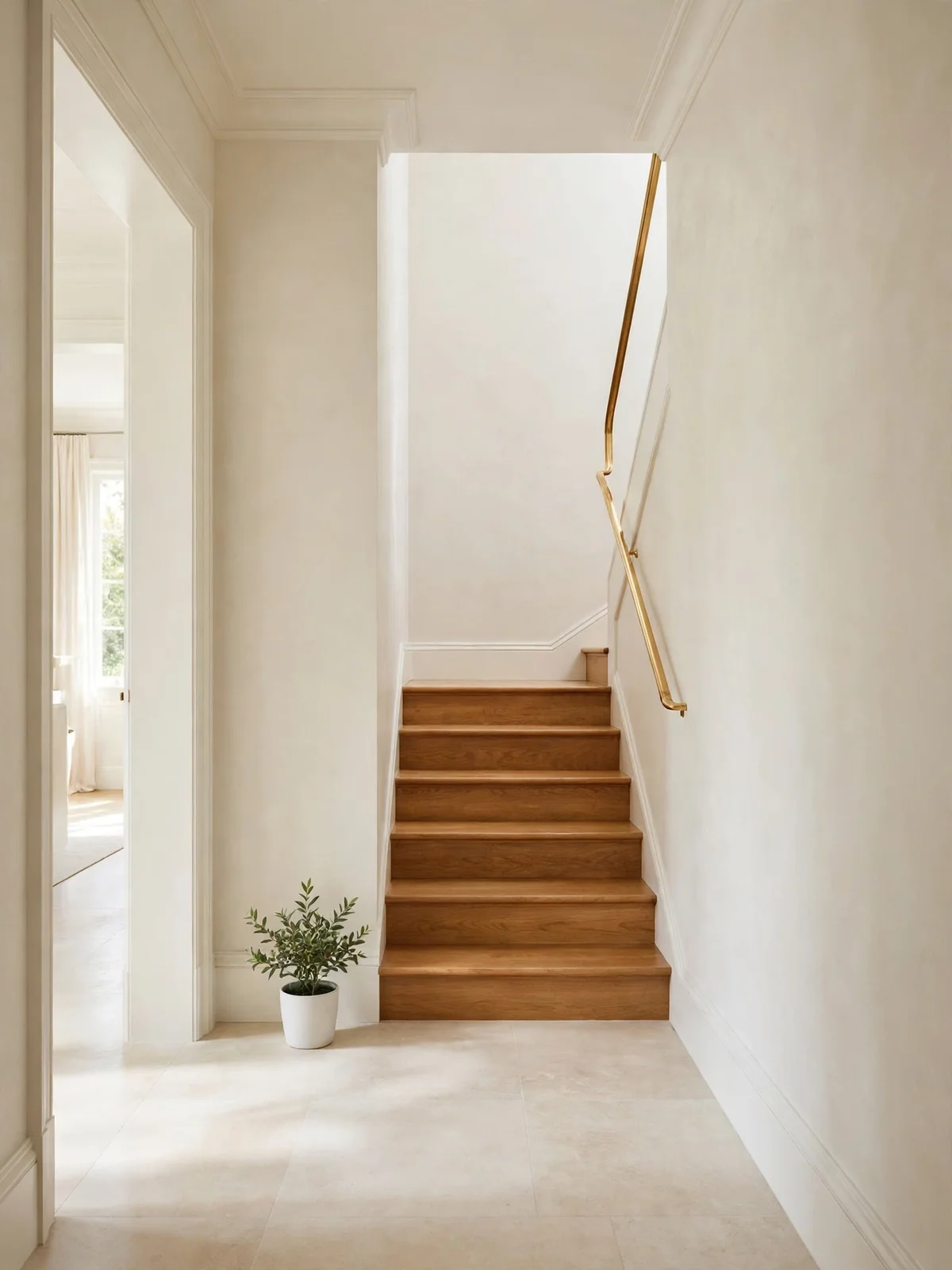
A slim brass handrail against pale stone is a study in contrast — warm metal, light floor, honey timber in between. On this stair, warm honey oak treads, each 850 mm wide, sit above a pale limestone floor, with a 40 mm diameter brushed brass handrail running the full length of the flight on slim posts. Soft ivory walls and a small green plant in a white pot keep the hallway fresh, while daylight reflects off the limestone and up the treads. The brass line draws the eye upward without closing the stair in.
Quick tips:
- Keep the handrail slim — about 40 mm in diameter — for a light look.
- Choose brushed brass, not polished, for a softer shine.
- Use warm honey oak treads to soften the brass-and-stone contrast.
- Keep the floor free of rugs so the stone reflects the light.
A Small Staircase With a Bench at the Base for Shoes and Bags
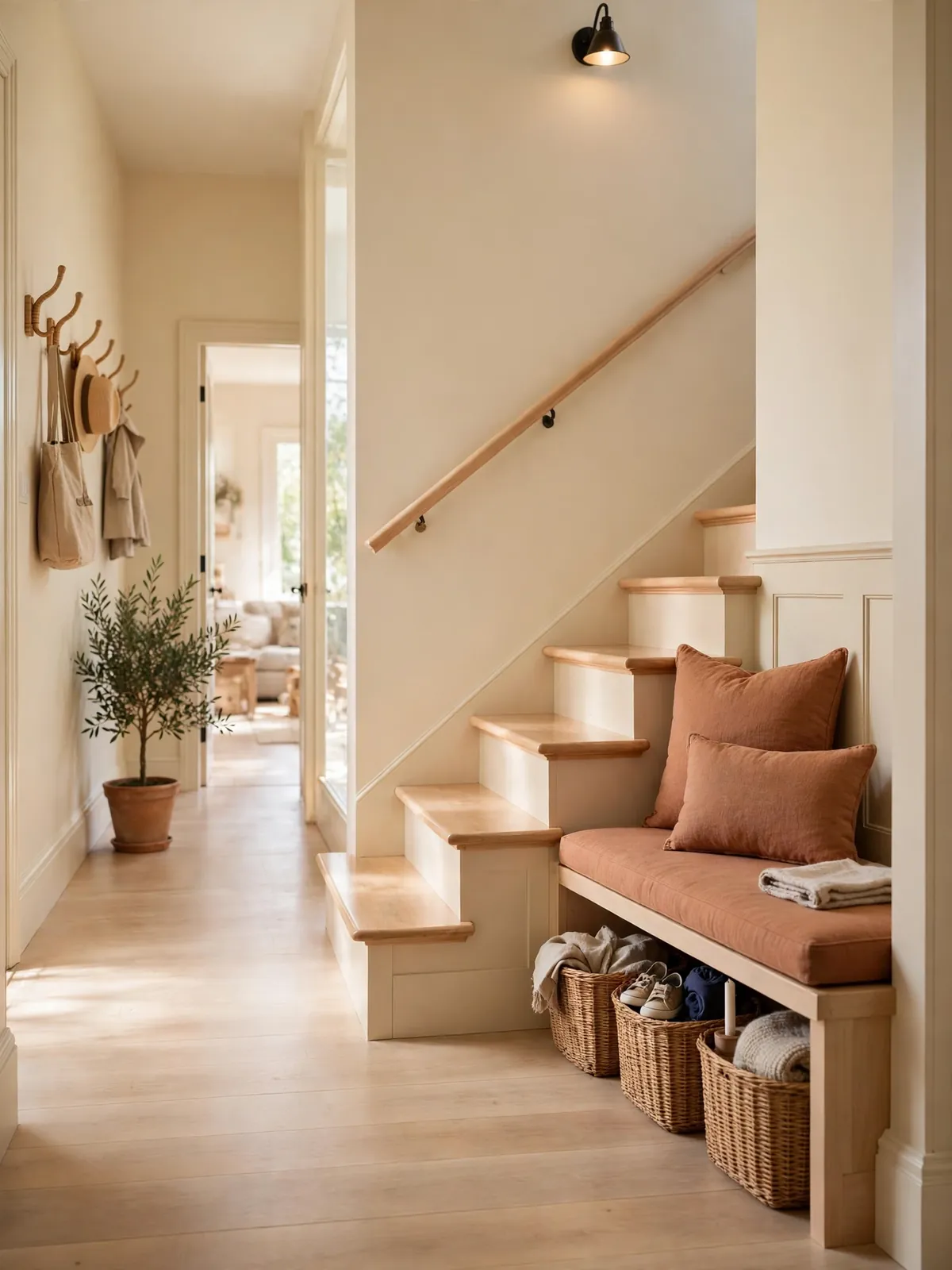
A bench at the base of a small staircase gives the whole family a place to sit, tie a shoe, or drop a bag. On this stair, a built-in bench, 1.1 metres long and 450 mm deep, sits at the foot of pale beech treads, each 850 mm wide, dressed with soft terracotta cushions, while woven baskets below hold shoes and school bags. Cream walls and a pale wood floor keep the hallway bright, and the bench means the hallway never feels cluttered, because everything has a place.
Quick tips:
- Make the bench at least 1.1 metres long so two people can sit.
- Build the bench in the same timber as the treads for a unified look.
- Add washable cushion covers for a family hallway.
- Keep baskets below the bench so the hallway stays tidy.
A Small Staircase in Pale Grey-Blue for a Coastal Cottage
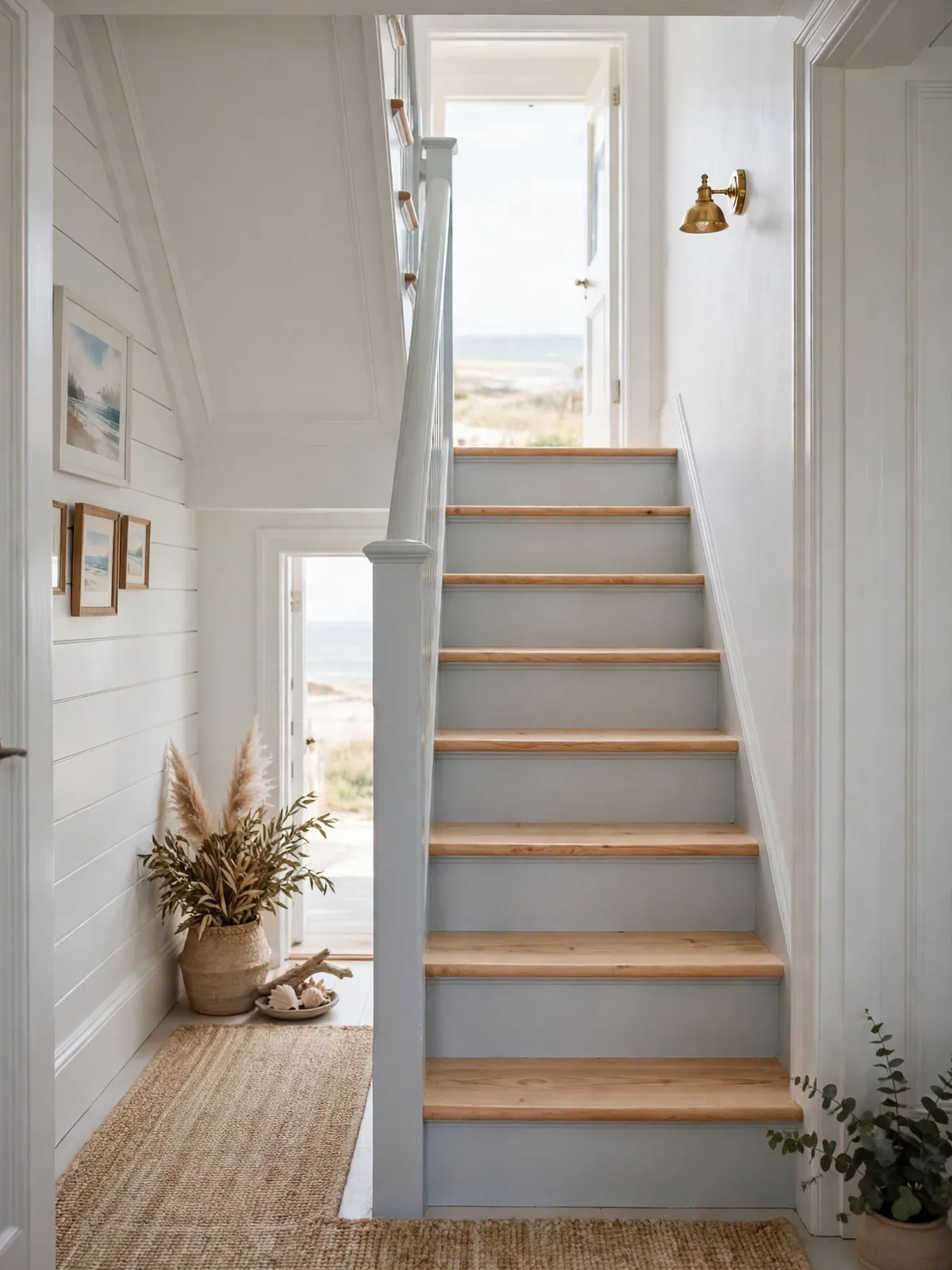
A pale grey-blue painted stair brings the calm of the coast into a small cottage hallway. Here, the stair is painted soft grey-blue, with pale pine treads, each 850 mm wide, left natural for warmth, while white walls and a soft sand-coloured rug keep the hallway bright. A small brass wall light glows in the evening, and daylight from a nearby window makes the blue feel soft, not cold. The stair feels serene, like a quiet morning by the sea.
Quick tips:
- Paint the stair a pale grey-blue, not a dark blue, for a calm finish.
- Leave the treads natural pine for warmth against the paint.
- Pair the blue with sand and cream for a coastal palette.
- Add one brass fitting to warm the cool blue.
A Small Staircase With Open Shelving Beneath the Flight
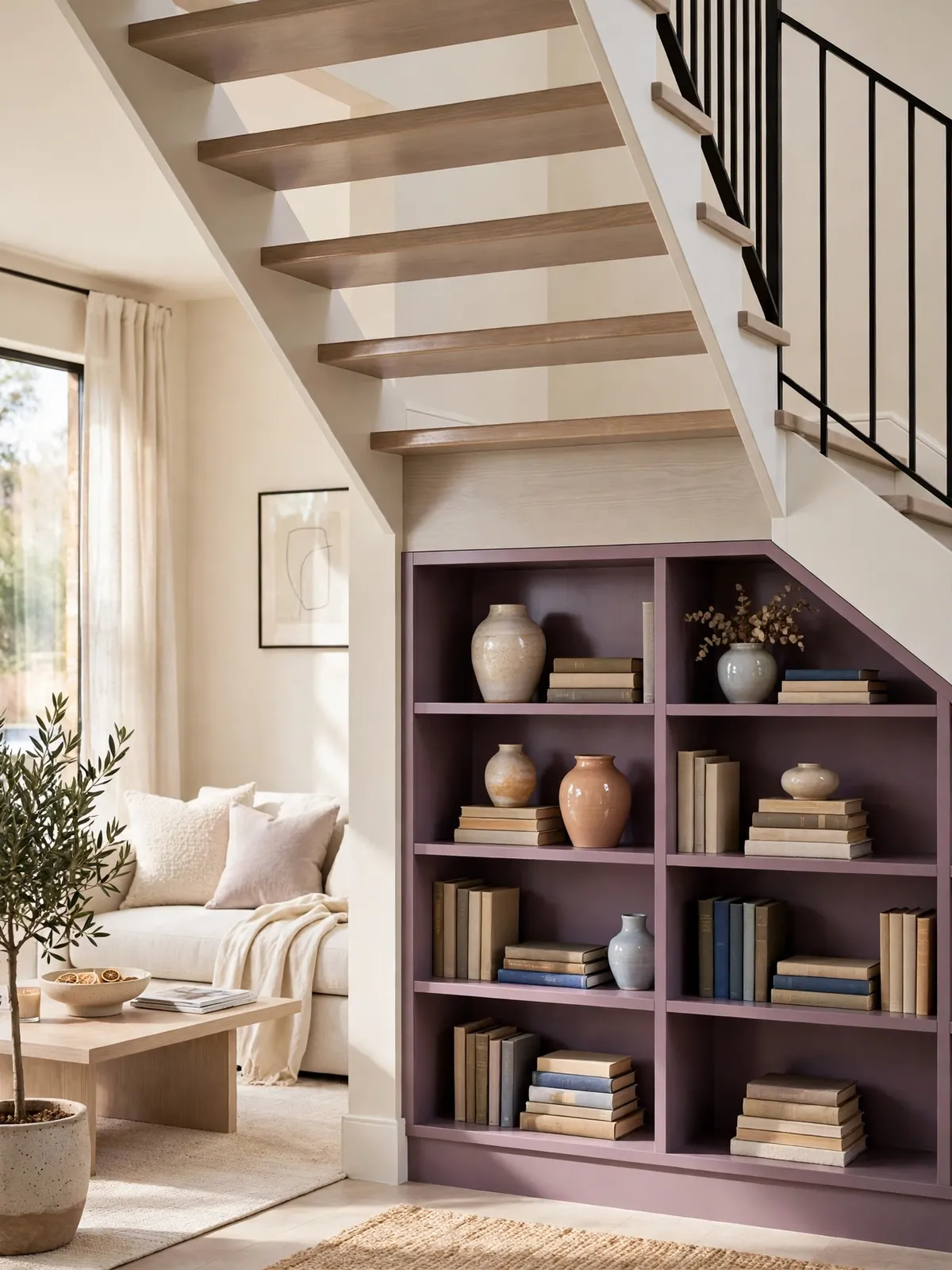
Open shelving beneath the flight turns the space under a small staircase into a display that steps up with the stair. Here, shelves painted soft plum-purple follow the angle of the flight beneath pale ash treads, each 850 mm wide, holding books, ceramic vases and small plants that step up in rhythm with the treads. Cream walls keep the room bright, while warm daylight from a nearby window lights the shelves gently. The stair feels designed, not just built, and the shelves hold a whole library in space that would otherwise be empty.
Quick tips:
- Paint the shelves one soft colour so they read as a feature.
- Step the shelves to follow the angle of the stair.
- Mix books with vases and plants so the shelves feel curated.
- Keep the shelves shallow — about 250 mm — so they do not crowd the room.
A Small Staircase Linking a Loft Bedroom to the Living Room
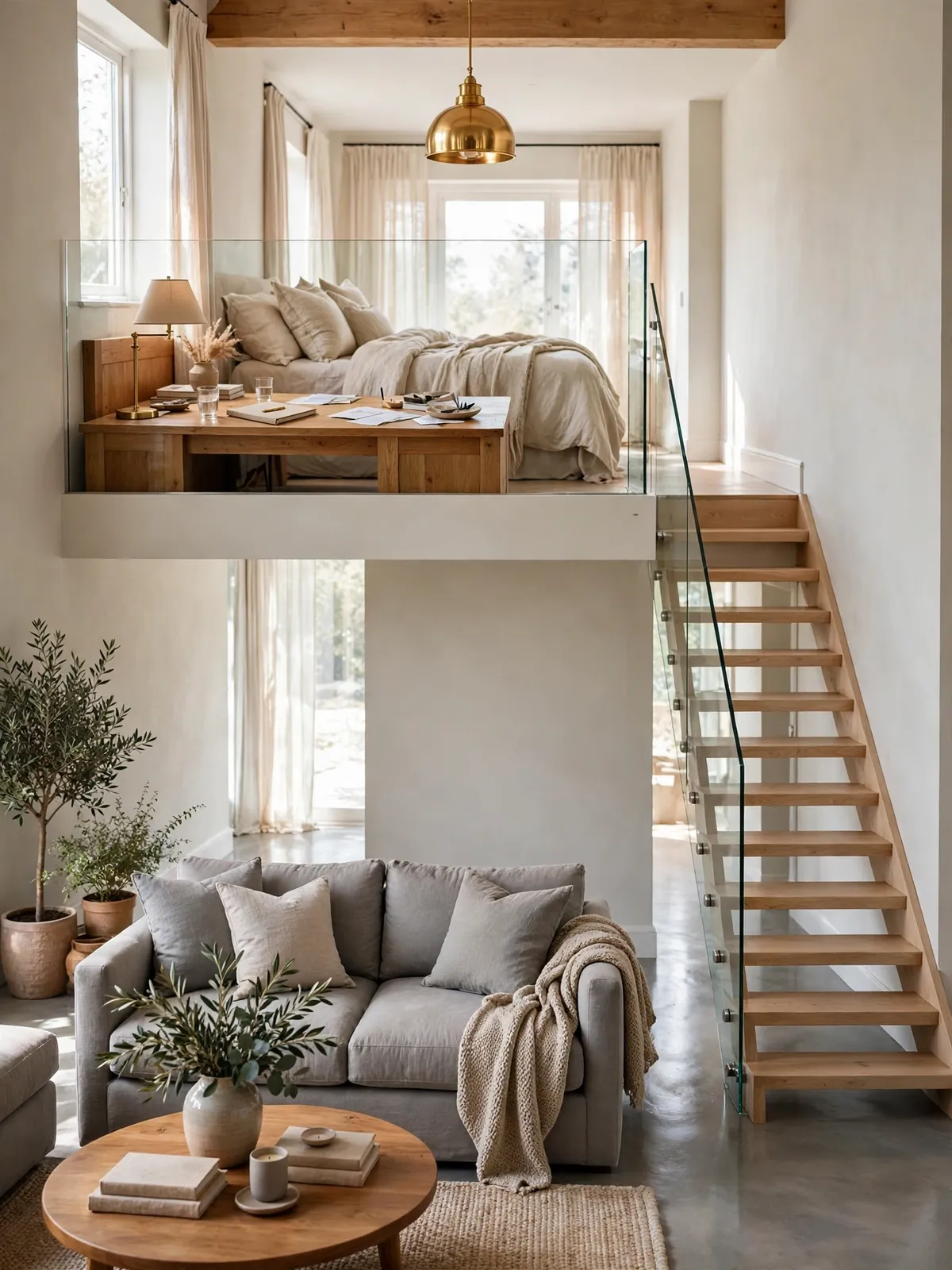
A stair to a loft bedroom connects sleeping and living without a wall between them. In this open-plan home, a small staircase with pale oak treads, each 850 mm wide, and a clear glass balustrade rises from the living room to a loft bedroom, where a warm timber desk and a brass pendant light sit above a soft grey sofa below. Daylight from the living room windows travels up the glass to the loft, so the bedroom feels bright and the living room feels taller. The stair is the link that makes both levels feel like one room.
Quick tips:
- Use clear glass on the loft side so light reaches the bedroom.
- Match the desk timber to the stair treads for a unified look.
- Keep the loft railing slim so the living room stays open.
- Add a brass pendant above the desk for warm evening light.
FAQs
How wide should a small staircase be?
Most small staircases use treads 800–900 mm wide, which is comfortable for one person and fits a narrow hallway or a cottage. Building rules in your area may set a minimum width, usually around 800 mm, so check before you build. A narrower stair saves space but feels cramped, while a wider one needs more hallway length.
Can a small staircase fit in a cottage?
Yes — a small staircase is ideal for a cottage, because a straight flight, an L-shaped turn with winder treads, or a slim spiral all fit into a tight footprint. Painted pine, beadboard walls, a striped runner and pale timber keep the stair feeling bright and in keeping with a cottage, while storage beneath the flight makes the most of every centimetre.
What is the best way to make a small staircase feel bigger?
Use pale timber or white paint, open risers, a clear glass balustrade and a slim handrail so light and sightlines pass through. Add a skylight or a window at the top landing if you can, keep the wall beside the stair pale, and avoid heavy balusters or dark, closed-in finishes that box the stair in.
Is a spiral staircase a good small staircase?
A slim spiral staircase is one of the smallest options, needing only a circle about 1.4 metres across, and it makes a beautiful feature in a corner. It suits a loft, a studio or a reading room best, because the treads are narrower at the centre and the climb is steeper than a straight flight, so it is less ideal as the main stair for a family home.
How do I add storage to a small staircase?
Use the space beneath the flight for a coat cupboard, a pantry, open shelves or a window seat, or build drawers into the risers themselves. Even a bench at the base with baskets below adds useful storage, and a bookcase wall beside the stair turns the climb into a library without taking any extra floor space.
Conclusion
A small staircase is not a compromise — it is a chance to make a compact home feel brighter, calmer and more cleverly planned. Whether you choose a straight flight in pale oak, an L-shaped turn with winder treads, a slim spiral in a corner, floating treads, a window seat beneath the flight, or drawers built into the risers, the best small staircase is the one that suits the rooms around it. Keep the palette pale, the sightlines open, and the space under and beside the stair intentional, and your stair will make every room it touches feel bigger, brighter and more welcoming.