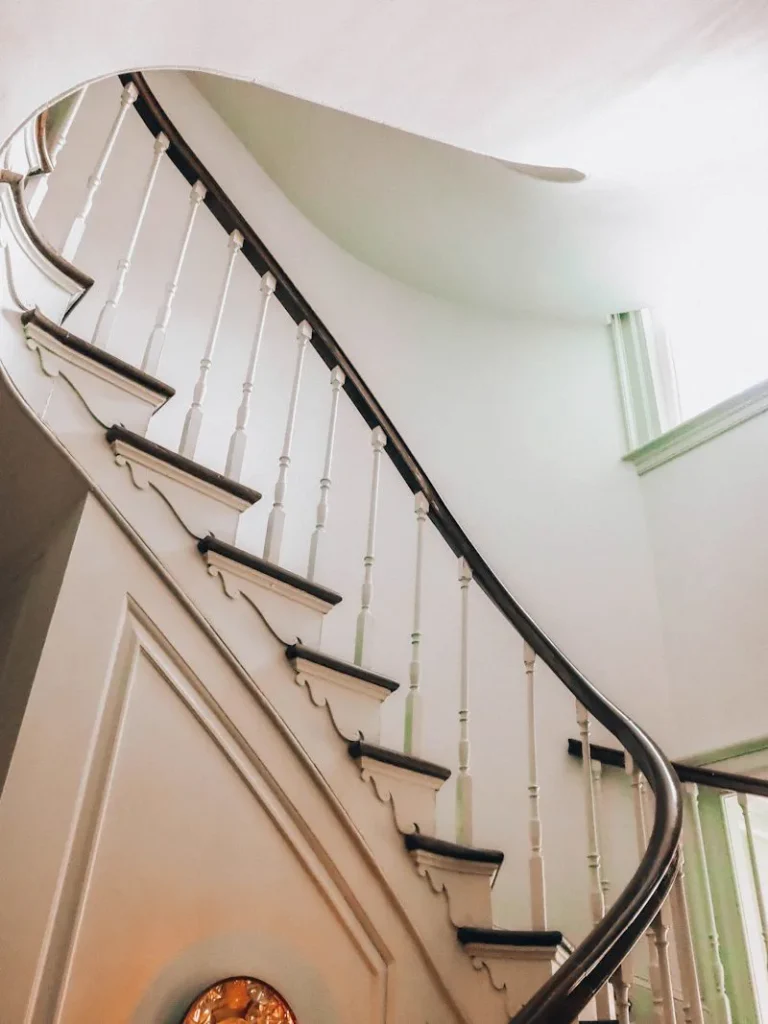
Dark Staircase Ideas: 25 Ways to Make Your Stairs the Boldest Part of the House
Black paint, dark wood, moody lighting — 25 dark staircase ideas that turn plain stairs into a bold, dramatic design moment.
Dark staircase ideas start with one decision: how much drama do you actually want? A black staircase can feel like a boutique hotel moment or a gloomy tunnel — the difference is contrast, lighting, and what you pair it with. The good news: dark stairs work in almost any home, from farmhouses to modern new-builds, as long as the surrounding light and color balance the depth.
If you love high contrast but aren’t sure about going fully dark, these black and white staircase looks show how to balance deep tones with crisp light ones before you commit.
Go All-In: One Inky Black From Treads to Handrail
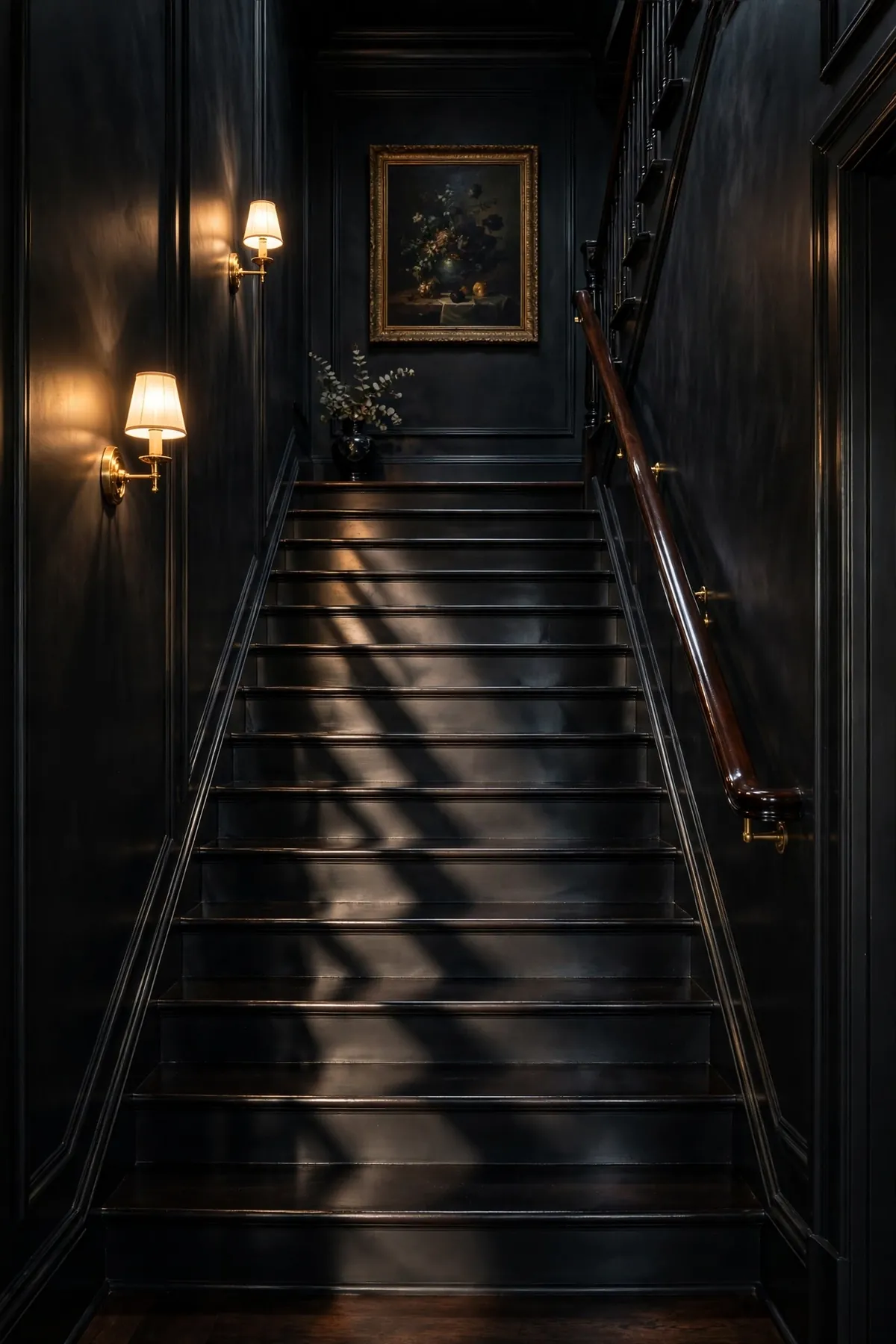
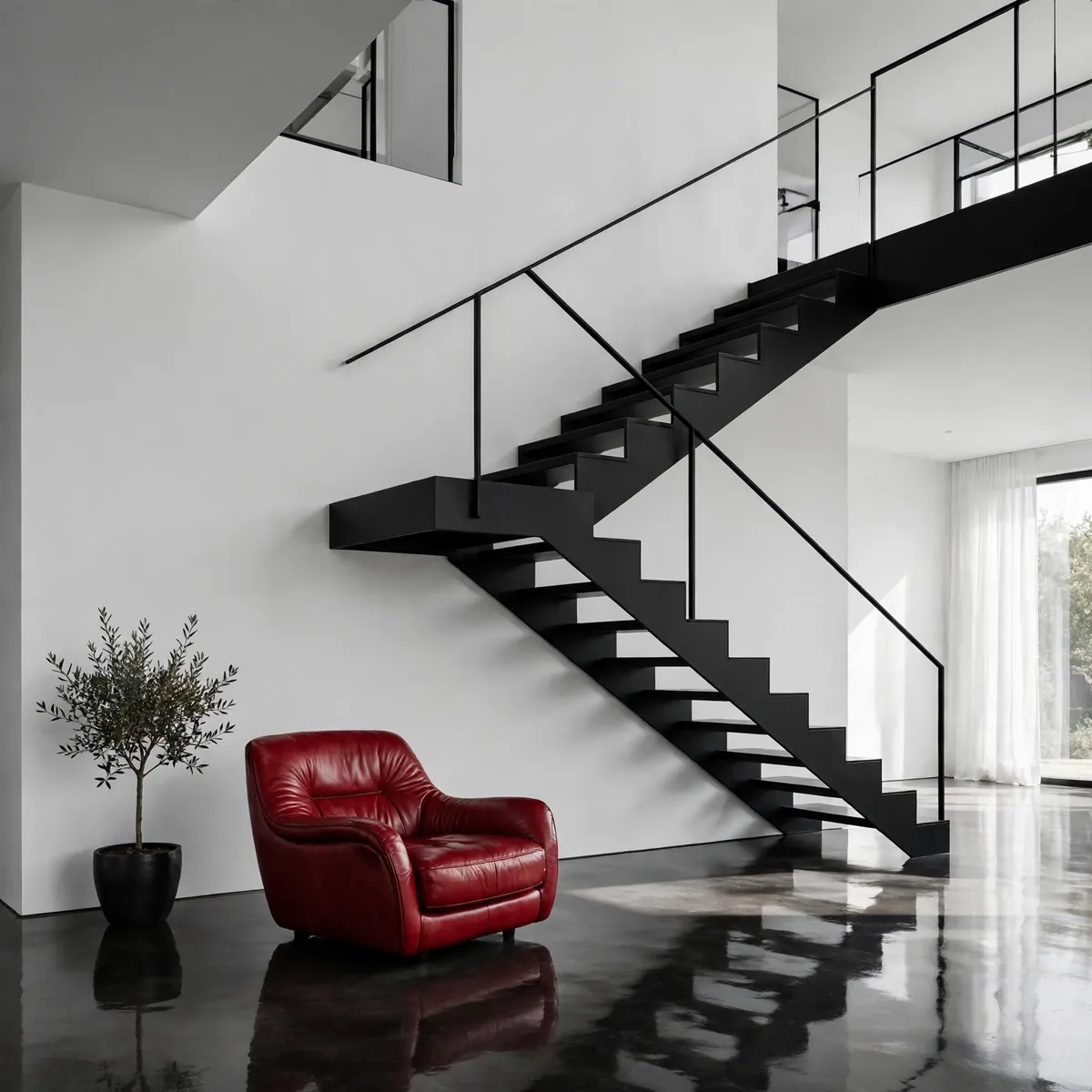
Painting every part of the staircase — treads, risers, stringer, balusters, and handrail — in a single deep black is the fastest way to make builder-grade stairs look custom. Use a durable satin or semi-gloss on the treads (they take foot traffic) and matte everywhere else; the mix of sheens keeps it rich instead of flat. It reads especially well against white or warm-neutral walls, where the dark shape becomes a sculptural line through the house.
- Test the black in your stairwell’s actual light before committing — north-facing halls read cooler.
- Use a bonding primer on varnished wood so the paint grips properly.
- Keep one warm light source nearby so the black looks velvety, not chalky.
Dark Staircase Ideas That Work in Small, Windowless Hallways
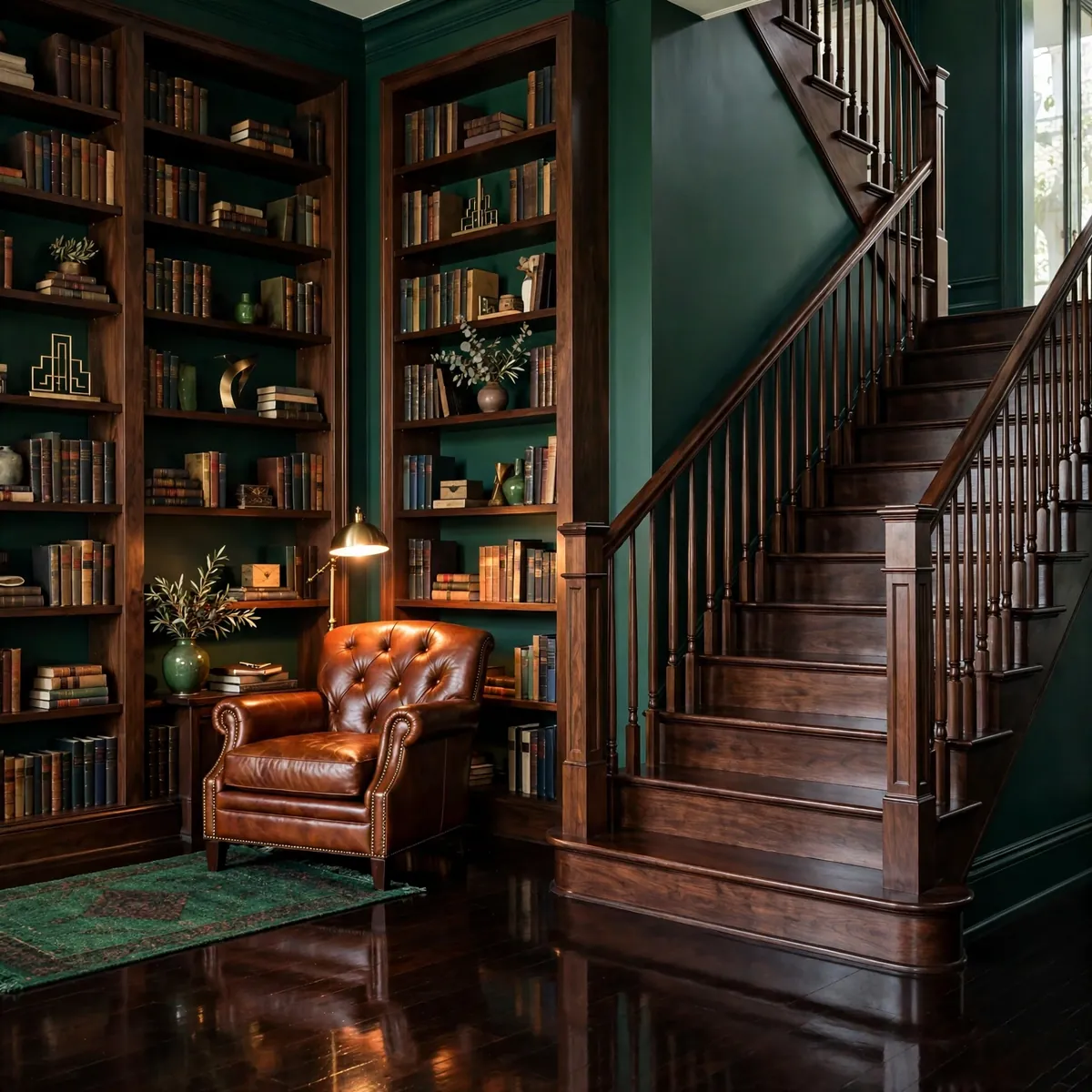
Small, windowless hallways are where people fear dark stairs most, but they’re actually where dark paint earns its keep: black recedes, so walls and stair edges visually step back instead of crowding you, and a dark staircase in a tight hall reads as one continuous shadow line rather than a stack of fussy details. The conditions that make it work are simple — paint the walls a light warm white or pale greige so the dark stairs pop forward, add one bright ceiling light plus a warm runner light or wall sconce at the turn, and keep the handrail and balusters the same dark tone so there’s no visual chatter. What you want to avoid is mixing mid-tone wood, white risers, black rail, and beige walls all at once, because in a small space every extra tone reads as clutter; two tones total, one dark and one light, is the whole formula. Done this way, a narrow hall with dark stairs feels intentional and gallery-like instead of cramped, and guests notice the confidence of the choice before they notice the size of the space.
- Two tones maximum in a small hall — one dark, one light.
- Put the brightest light at the top of the stairs, not the bottom.
- A light-colored runner keeps dark treads from feeling heavy underfoot.
Deep Espresso Treads Against Crisp White Risers
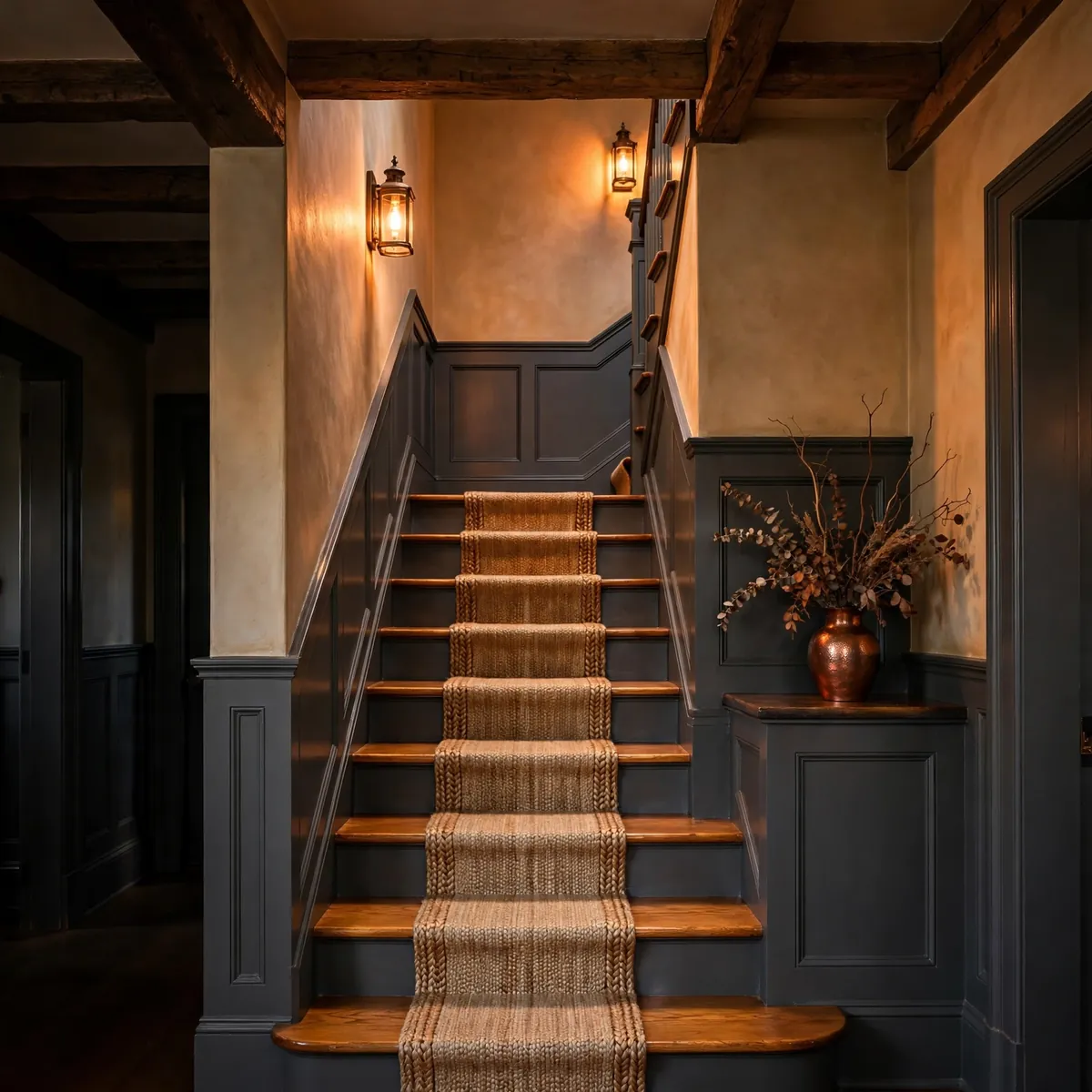
If full black feels like too much, stain just the treads a deep espresso or dark walnut and paint the risers bright white. The contrast outlines every step, which looks sharp and actually makes the staircase easier to read underfoot. It’s a classic for a reason — it suits traditional, farmhouse, and transitional homes equally.
- Match the espresso tone to your floors, or go deliberately darker for contrast.
- White risers show scuffs — keep a touch-up pen handy.
- A clear matte topcoat protects stained treads from wear.
Midnight Navy Paint for Drama That Isn’t Black
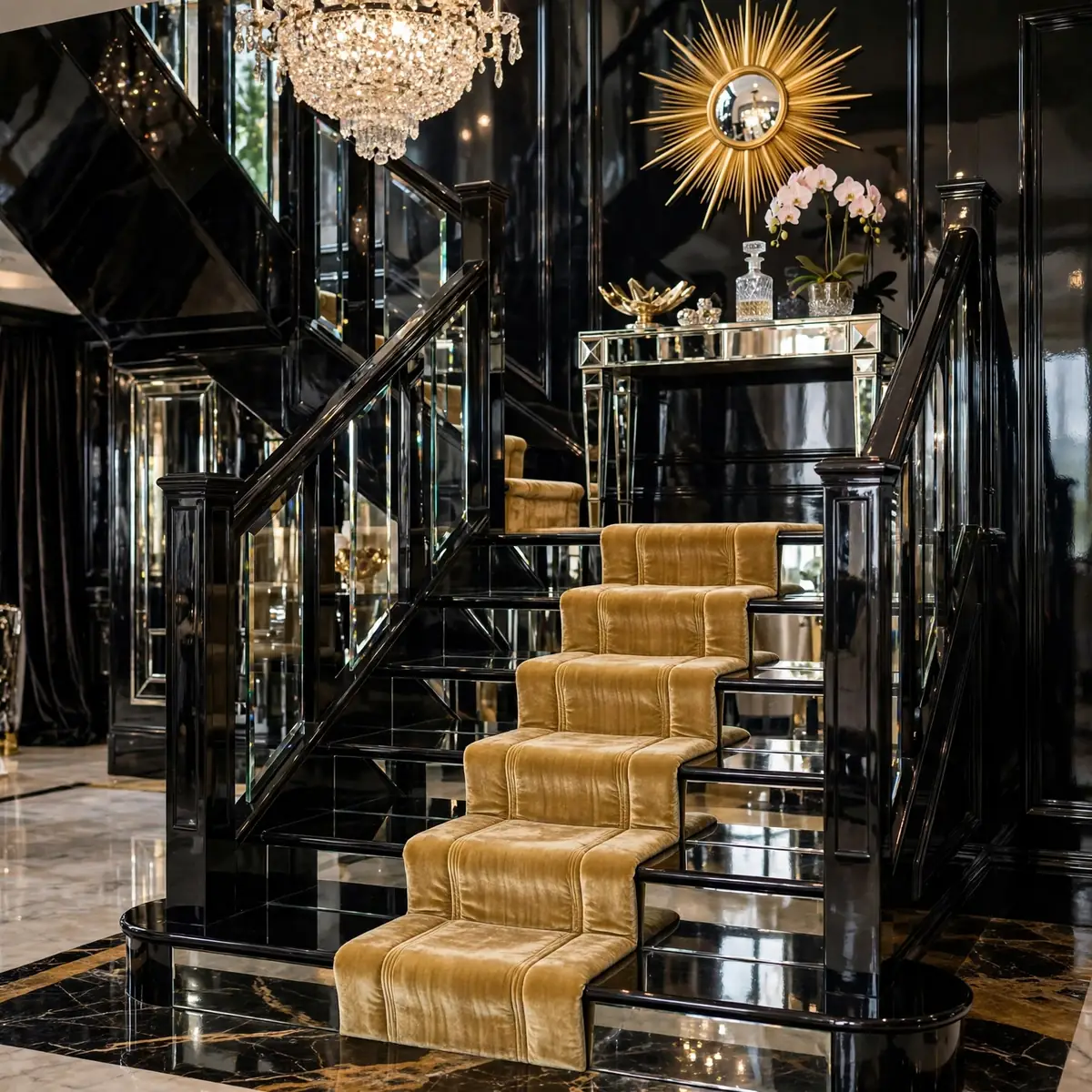
Navy gives you the moodiness of black with a little more personality. A deep ink-navy staircase looks incredible with brass or gold hardware, warm wood floors, and creamy white walls. In daylight it reads almost black; at night under warm bulbs it glows blue-black and rich.
- Pair navy stairs with warm metals, not chrome, for the richest effect.
- Test at night — some navies go purple under cool bulbs.
- Keep adjoining walls warm white so the blue doesn’t feel cold.
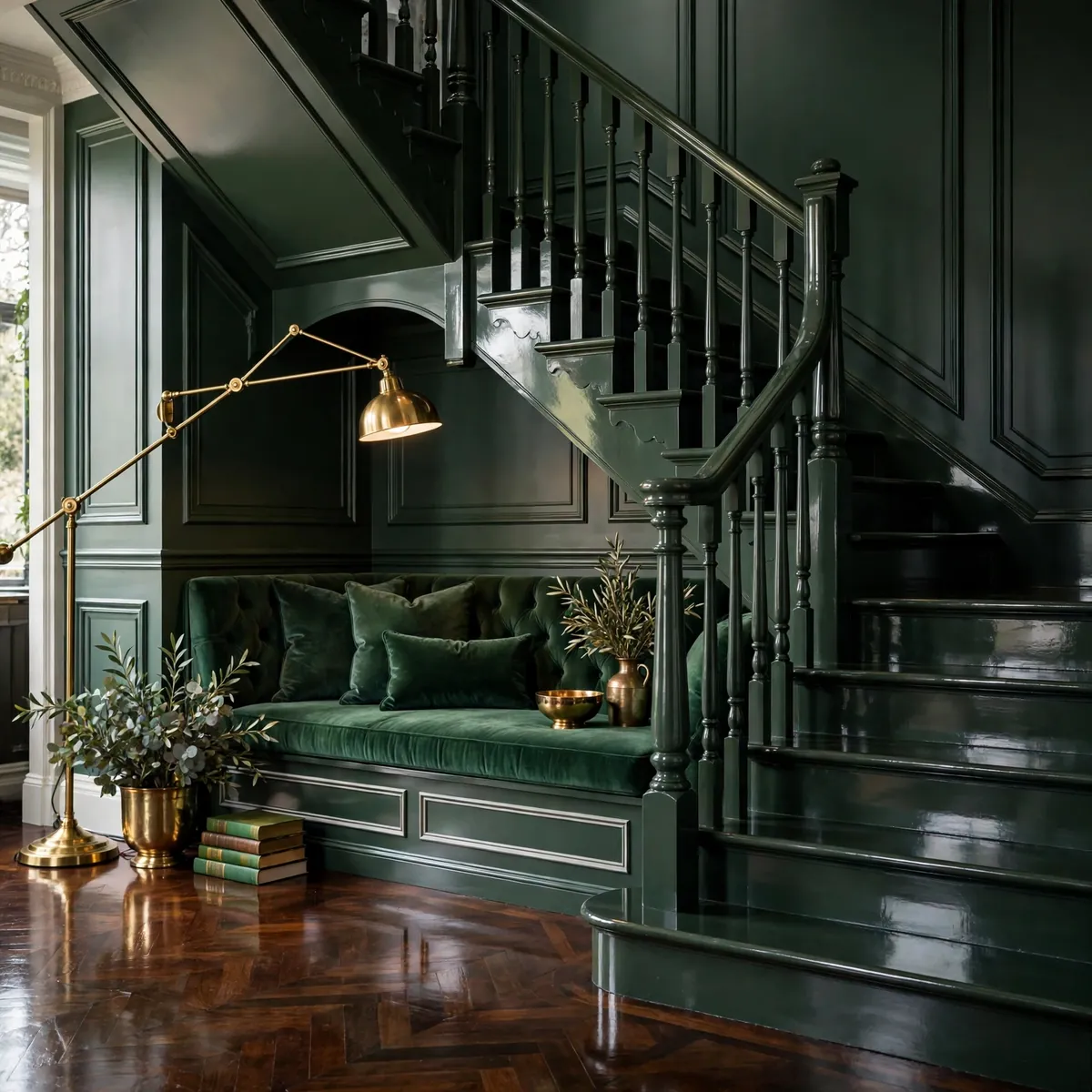
Hunter Green Stairs With Warm Brass Rods
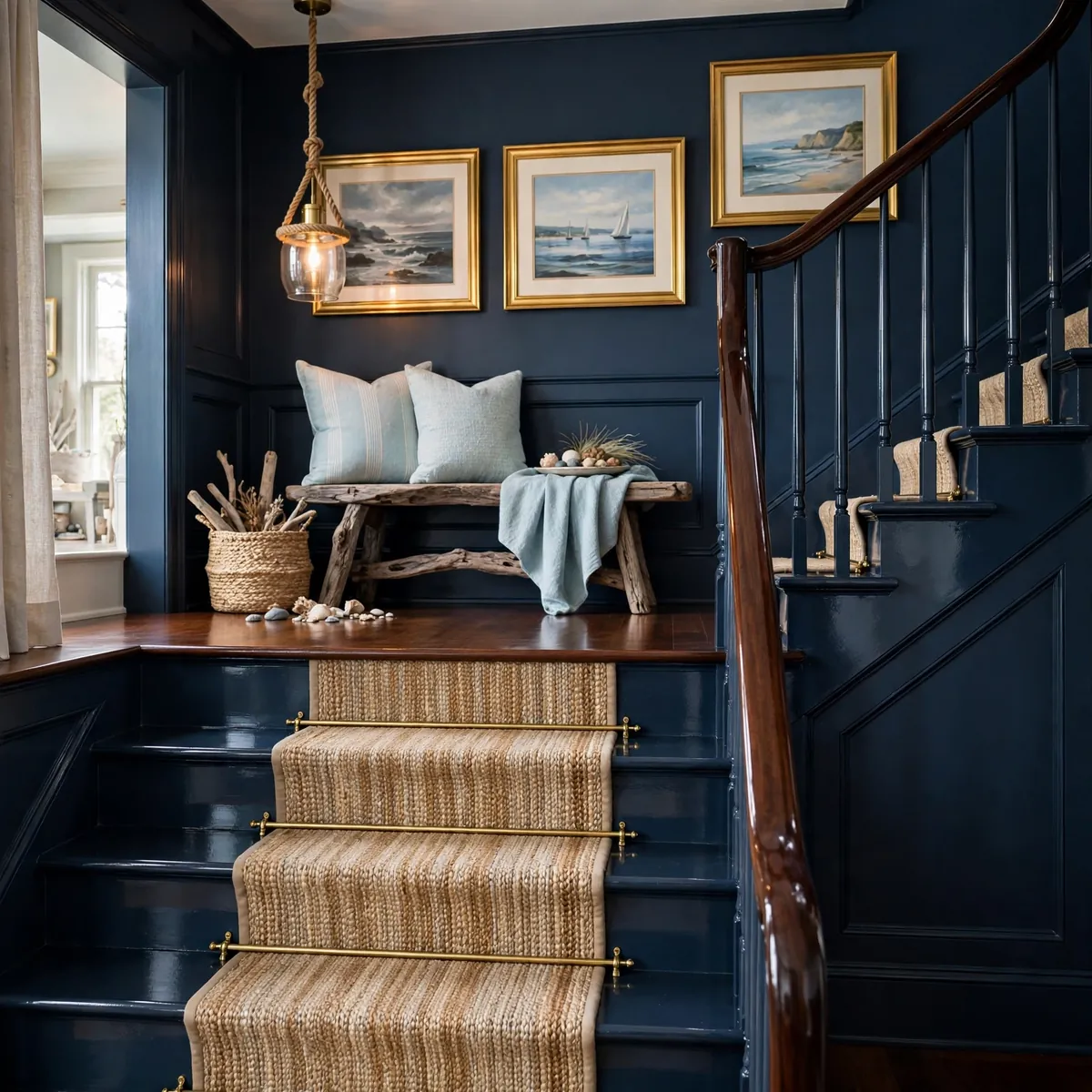
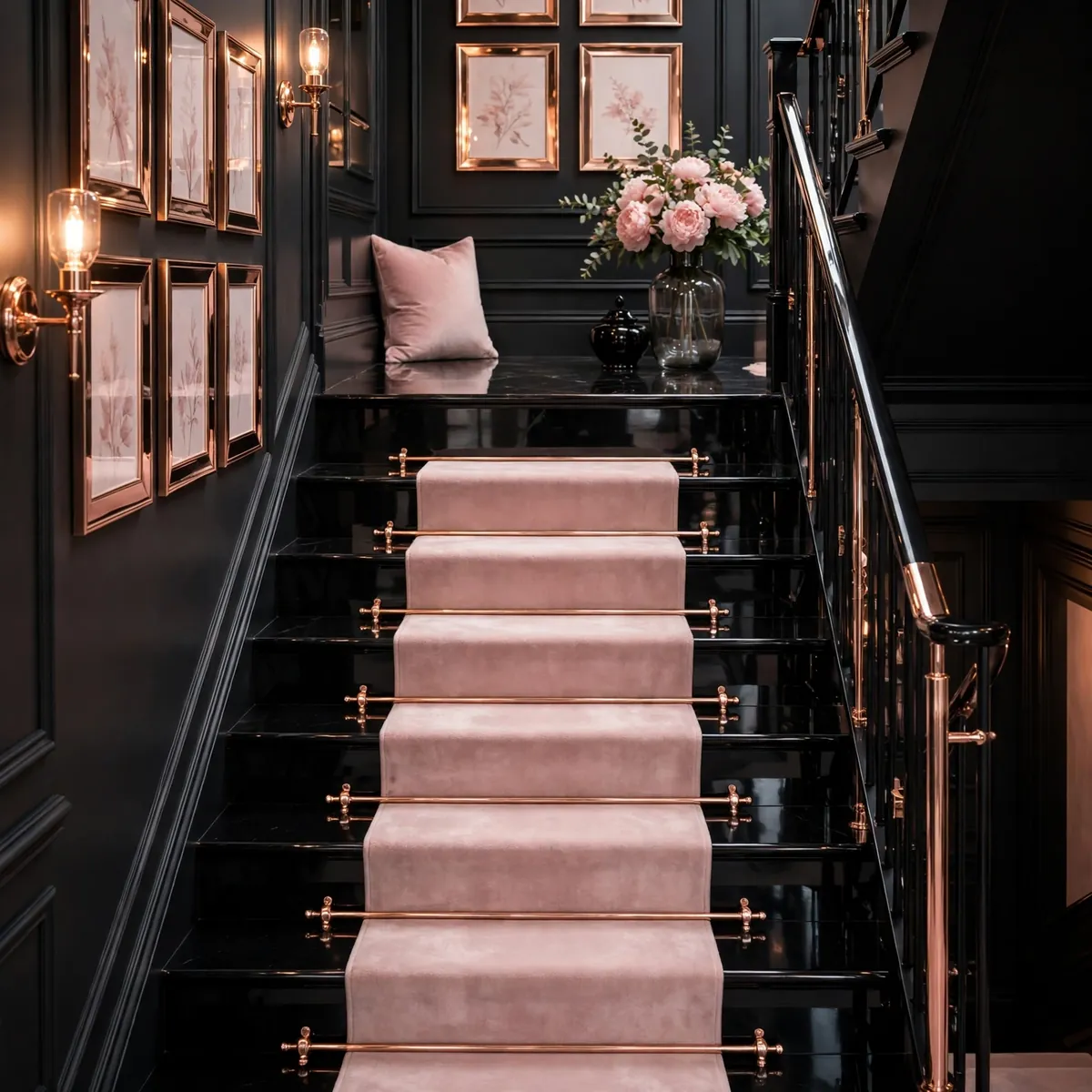
Deep hunter or forest green is the dark color that still feels alive. Paint the staircase green, lay a neutral runner, and hold it with brass stair rods — the combination feels like an old English manor hallway, even in a new build. It pairs beautifully with natural wood, leather, and plants.
- Choose a green with brown undertones for warmth, blue undertones for drama.
- Brass rods are decorative — fit the runner properly first.
- Echo the green in one nearby element, like a door or bench cushion.
Charcoal Limewash Walls Around a Black Stair
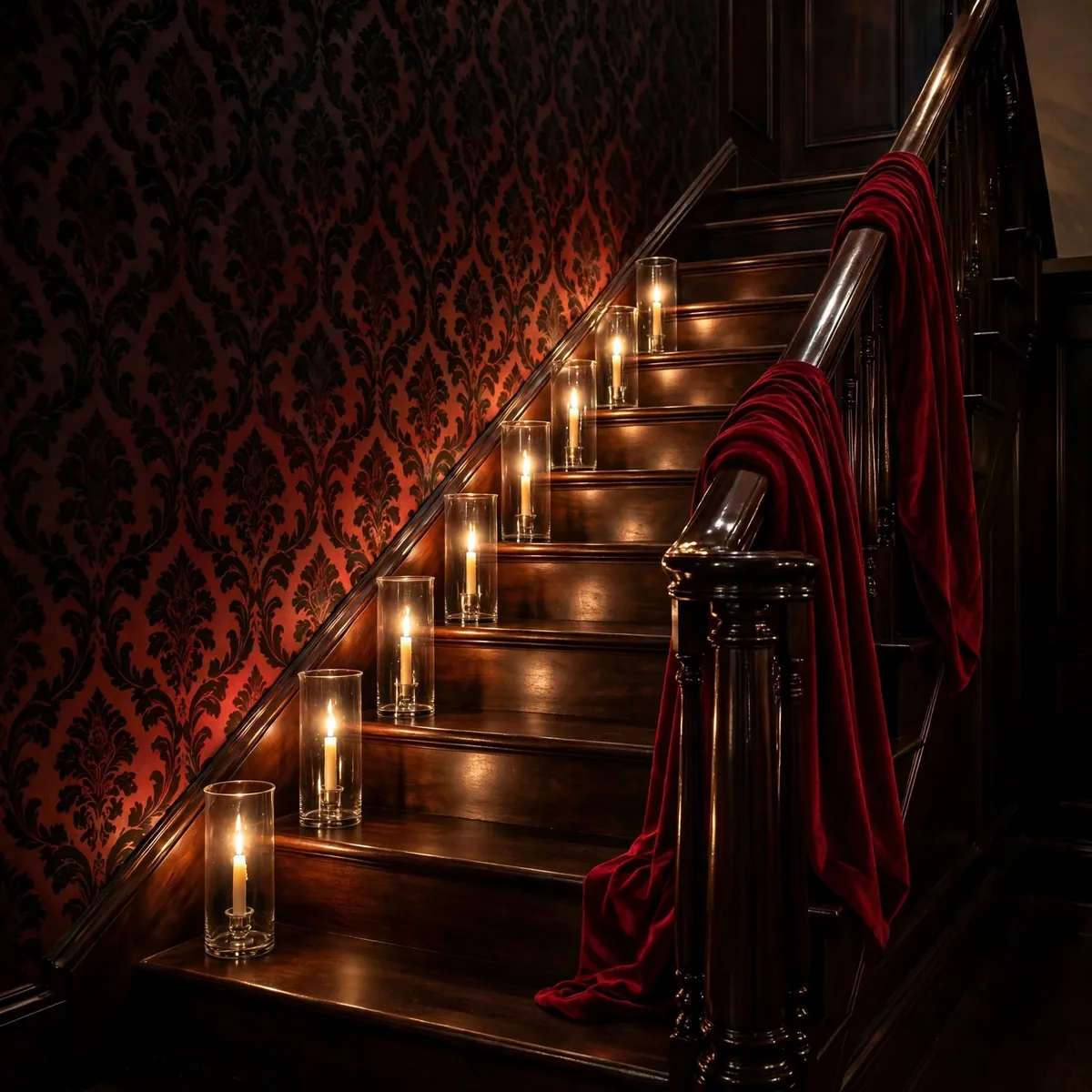
Instead of painting the stairs dark, flip it: keep the stairs simple and limewash the stairwell walls in a soft charcoal. Limewash gives flat walls a cloudy, mineral movement that regular paint can’t, and the texture catches light beautifully as you climb. It makes even a plain straight staircase feel like it belongs in a design magazine.
- Limewash needs a mineral primer on previously painted walls.
- Apply in loose crisscross strokes — perfection ruins the effect.
- Seal it if the stairwell gets a lot of hand contact.
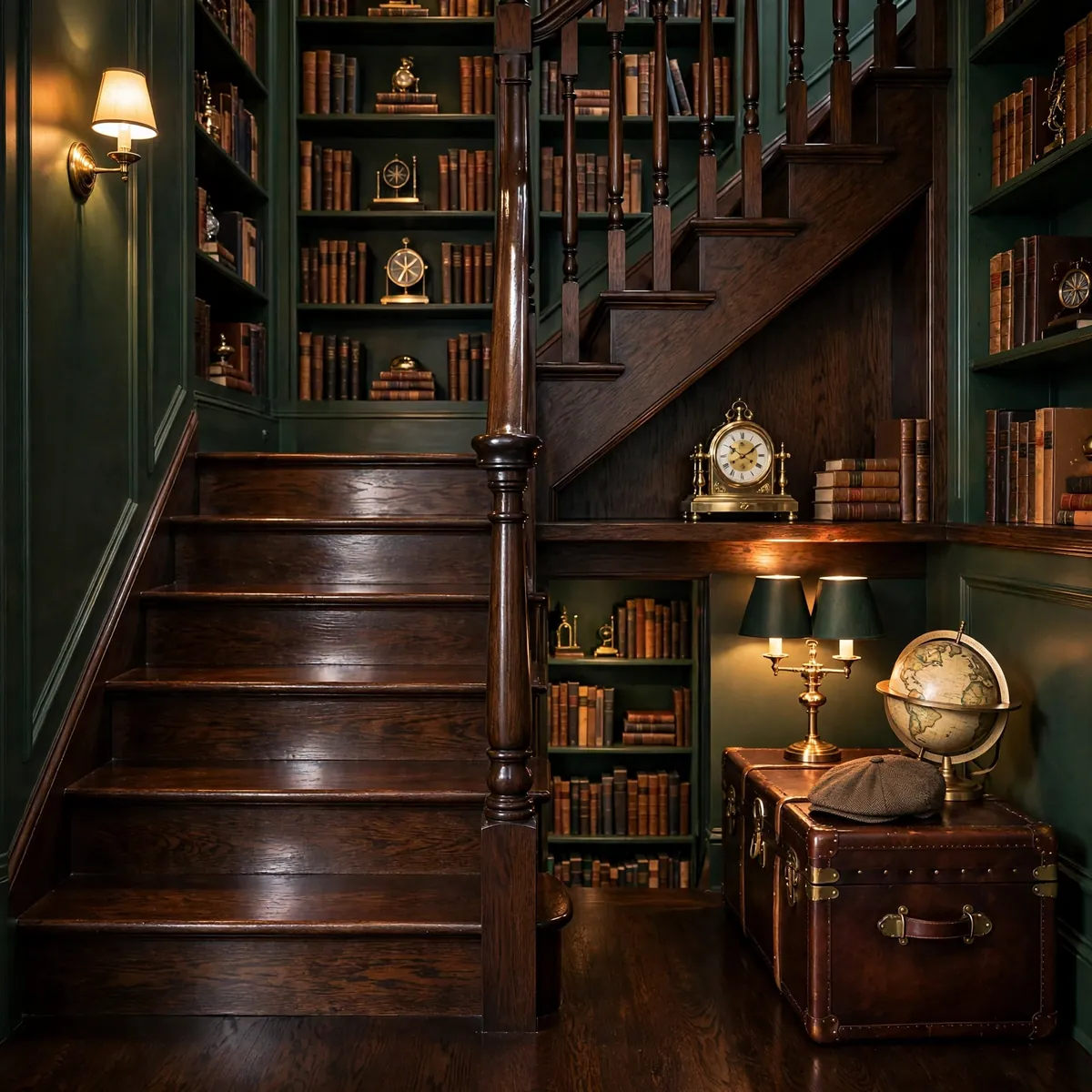
Black Treads, Natural Oak Handrail

A chunky oak handrail running along black-painted balusters and treads is one of the most balanced dark-staircase looks there is. The wood brings warmth exactly where your hand lands, so the staircase feels crafted rather than stark. This pairing works in modern, Scandinavian, and rustic homes alike.
- Oil the oak handrail instead of varnishing for a natural feel.
- Keep the oak tone consistent with nearby floors or furniture.
- The handrail is a focal point — choose one with a comfortable, generous profile.
A Dark Runner Down the Middle of Pale Wood
The lowest-commitment dark staircase idea: lay a dark runner — charcoal, espresso, or deep navy — down the center of light wood stairs. You get the grounding effect of dark color with zero paint, plus softness and quieter footsteps. It’s also the easiest to reverse if you change your mind.
- Measure twice — the runner should leave equal wood showing on both sides.
- Use a proper stair-rod or staple installation, not just grip tape.
- Low-pile weaves last longest on stairs.
Charcoal Patterned Runner With Brass Stair Rods
Take the dark runner further with a subtle pattern — a charcoal trellis, a faded Persian motif, or thin stripes — and brass rods at each step. Pattern hides wear and crumbs far better than solid dark fabric, which matters on the most-used path in the house. The brass adds a jewelry-like glint against the dark weave.
- Small-scale patterns read best on narrow stairs.
- Match rod finish to your door handles for cohesion.
- Vacuum with a handheld — full-size vacuums fight stair treads.
Slim Black Metal Balusters With Walnut Treads
Swap chunky wood spindles for slim black metal balusters and pair them with dark walnut treads. The thin verticals make the staircase feel taller and more open, while the walnut keeps it warm. It’s a straightforward update that reads modern without going full industrial.
- Keep baluster spacing to code — usually under 4 inches apart.
- Powder-coated black resists chips better than painted.
- Walnut-look stain on oak treads gets you close on a budget.
Smoked Glass Panels Instead of Spindles
Smoked or tinted glass balustrades give you darkness without any visual weight. Light passes through, so the stairwell stays bright, but the grey-bronze tint adds a smoky, sophisticated layer. It suits contemporary homes and pairs well with dark treads or stone.
- Use toughened safety glass installed by a professional.
- Smoked glass shows fingerprints — keep a microfiber cloth handy.
- Pair with a dark metal handrail to frame the panels.
Gloss-Black Newel Posts as Jewelry
If painting the whole staircase feels like too much, paint just the newel posts in high-gloss black. They become sculptural punctuation marks at the bottom and turns of the stairs — like jewelry against a neutral staircase. It’s a one-weekend project with outsized impact.
- High-gloss shows every flaw — sand and prime carefully.
- Limit gloss to the newels; keep everything else matte or satin.
- A classic ball or square newel shape suits gloss best.
LED Strips Under Each Tread
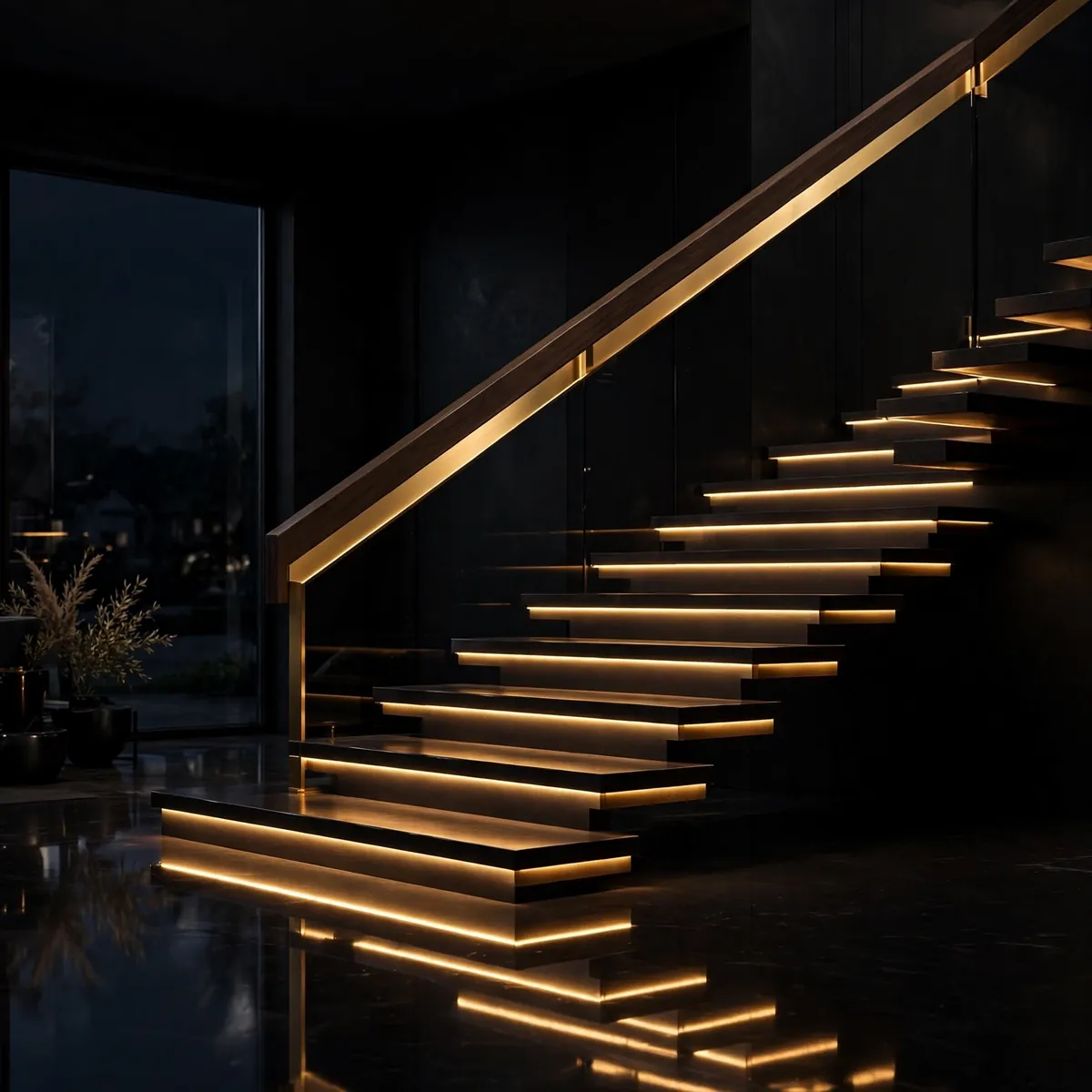
Warm LED strips tucked under the lip of each tread make dark stairs glow from within and solve the biggest worry about dark staircases: safety at night. The light outlines every step, so dark treads stay easy to navigate after dark. On a dimmer, it doubles as the most atmospheric hallway lighting in the house.
- Choose warm white (2700K) — cool white looks clinical on dark wood.
- Put them on a motion sensor for nighttime trips.
- Hide the driver in a nearby closet or under the stairs.
Brass Sconces Marching Up the Stairwell
A row of small brass sconces climbing the wall alongside dark stairs does two jobs: it lights each step warmly and it turns the wall into a rhythm of glowing points. Against black or navy paint, brass light pools look like candlelight. Space them evenly — one per two or three steps.
- Hardwired sconces beat plug-ins for a clean look.
- Match the brass tone across all fixtures.
- Put them on a dimmer for evening mood.
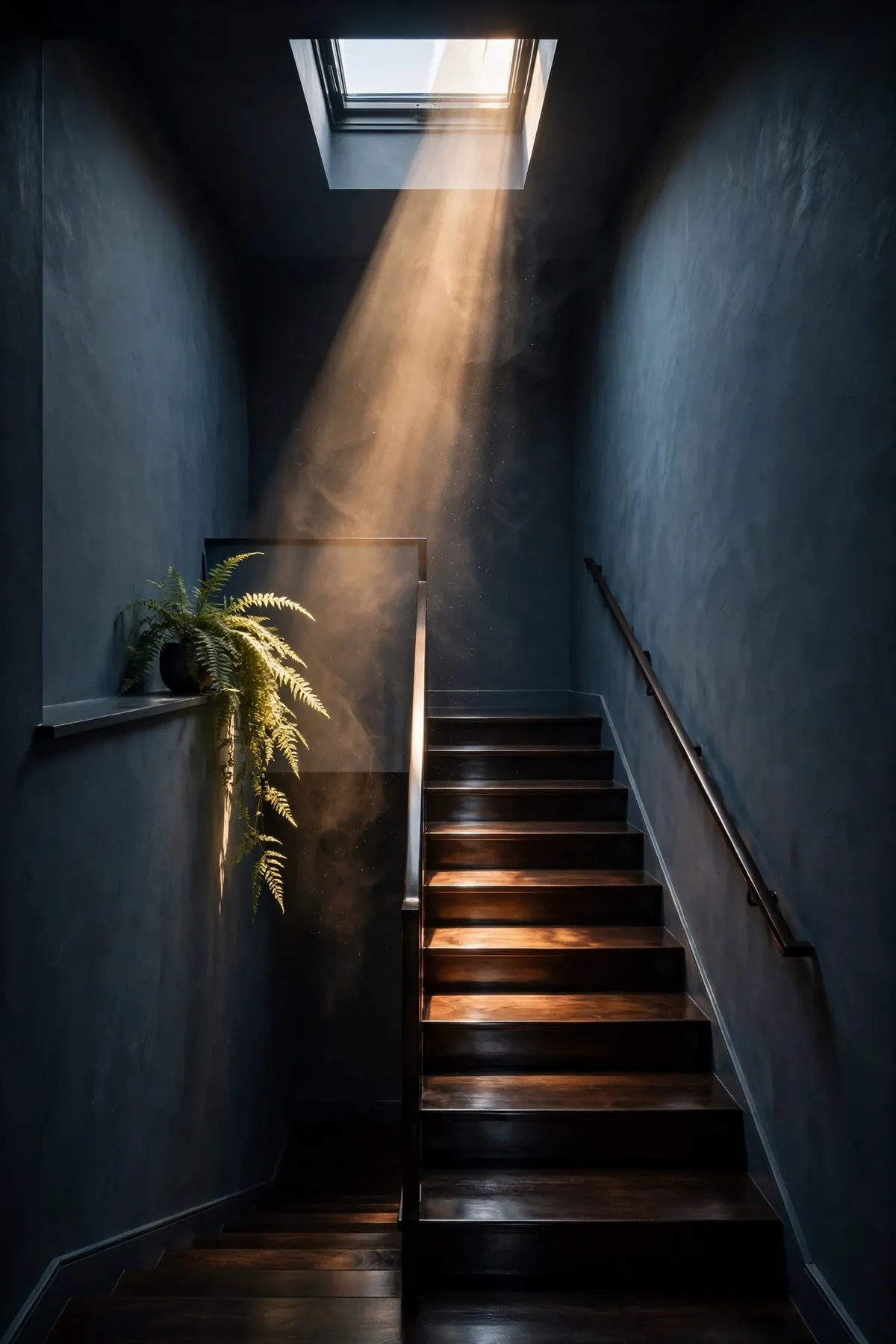
Dark Treads Under a Skylight’s Wash of Light
Dark stairs under a skylight get the best of both worlds — the drama of deep color with a shaft of daylight washing over it. The contrast shifts through the day, so the staircase never looks the same twice. If you’re renovating, a skylight above the stairwell is worth more than any paint color.
- Position the skylight to wash the wall, not blind climbers.
- Dark treads hide the dust skylights reveal on light floors.
- Add a blind for summer heat control.
Dark Wainscoting Below, Pale Plaster Above
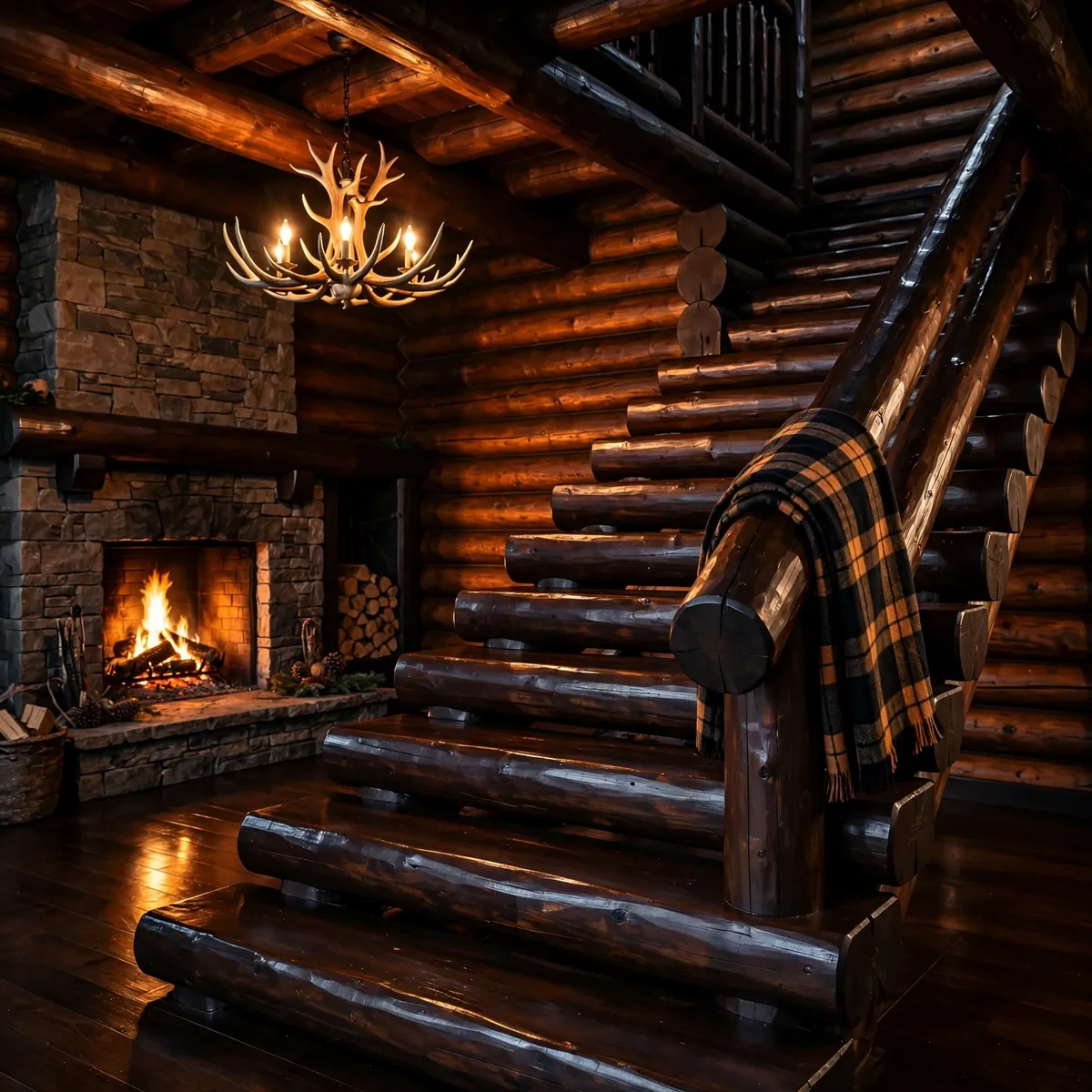
Run wainscoting or beadboard up the stairwell wall to handrail height, paint it ink black or deep green, and keep the wall above pale. You get the dark-staircase mood at eye level where it matters, while the upper wall keeps the space feeling tall and airy. The horizontal break also follows the stair angle nicely.
- Cap the wainscoting with a slim chair rail for a finished edge.
- Carry the same treatment onto the landing for continuity.
- This suits traditional and cottage homes especially well.
Paint the Stringer and Skirting a Matching Ink Black
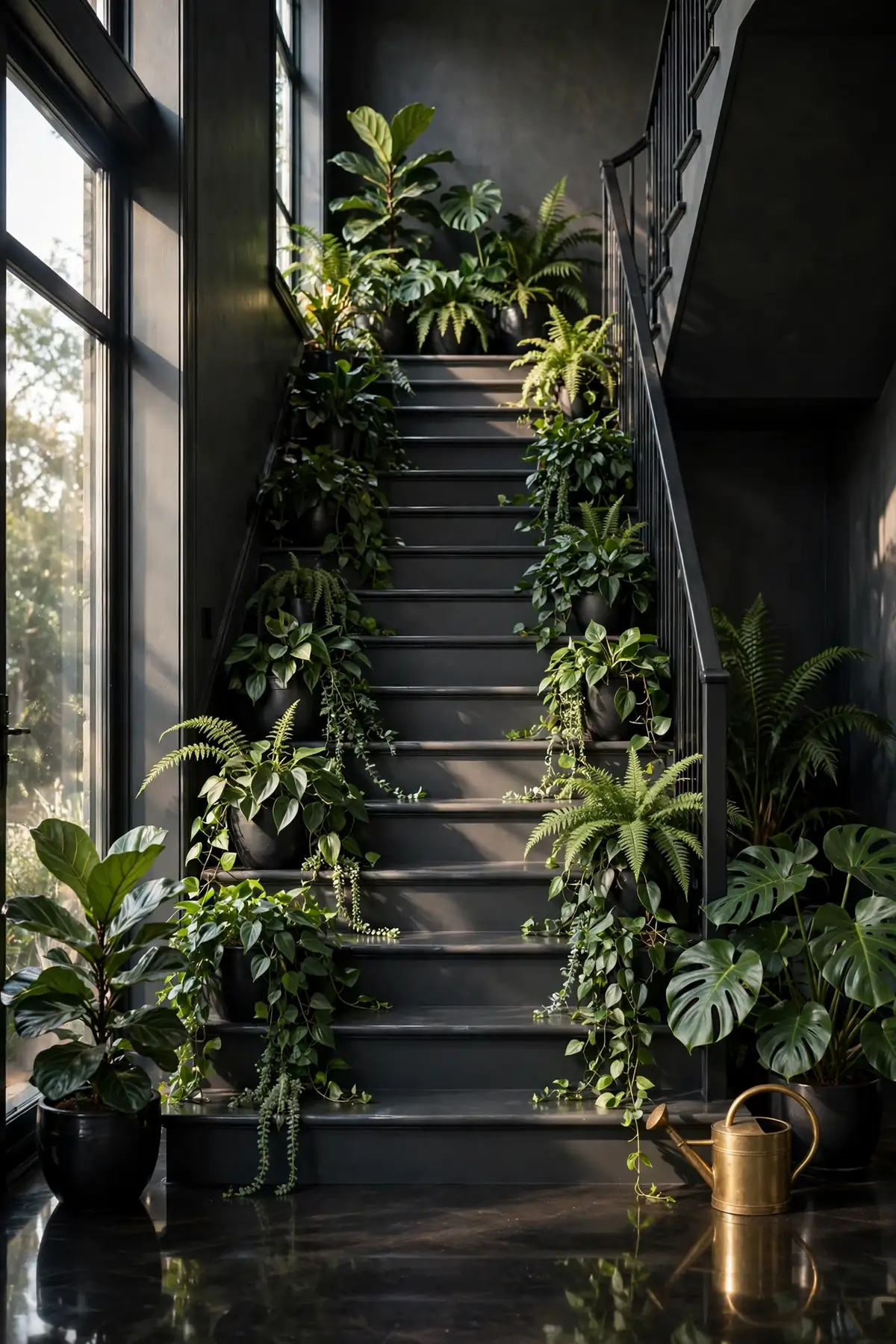
The stringer — the diagonal board running along the side of the stairs — and the skirting board are the frame of your staircase. Painting them ink black, even when the treads stay wood, outlines the whole staircase like a bold drawing. It’s a subtle move from across the room and a striking one up close.
- Use the same black on both for one continuous line.
- Satin finish wipes clean along skirting.
- This works with any tread color, light or dark.
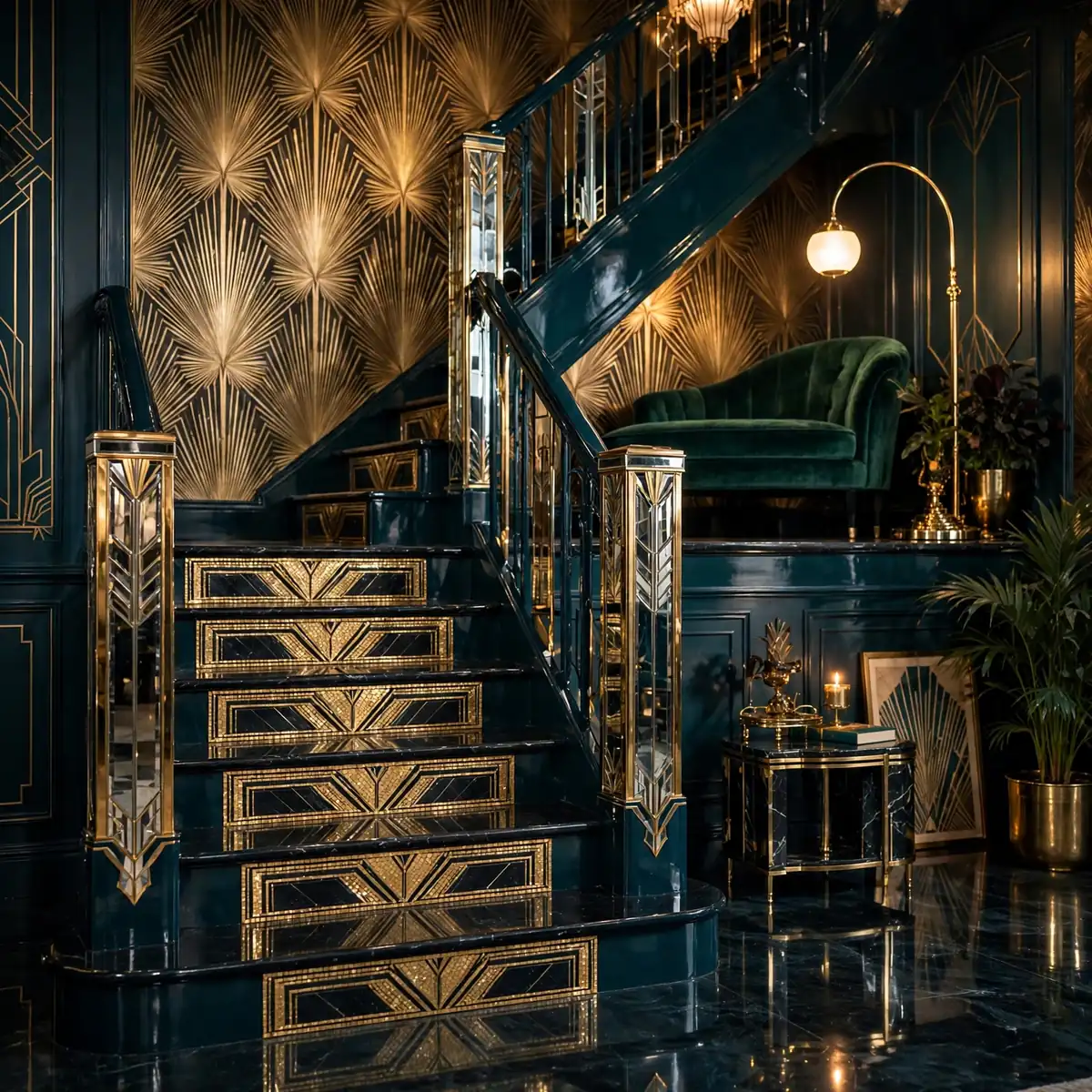
Dark Patterned Tiles on the Risers
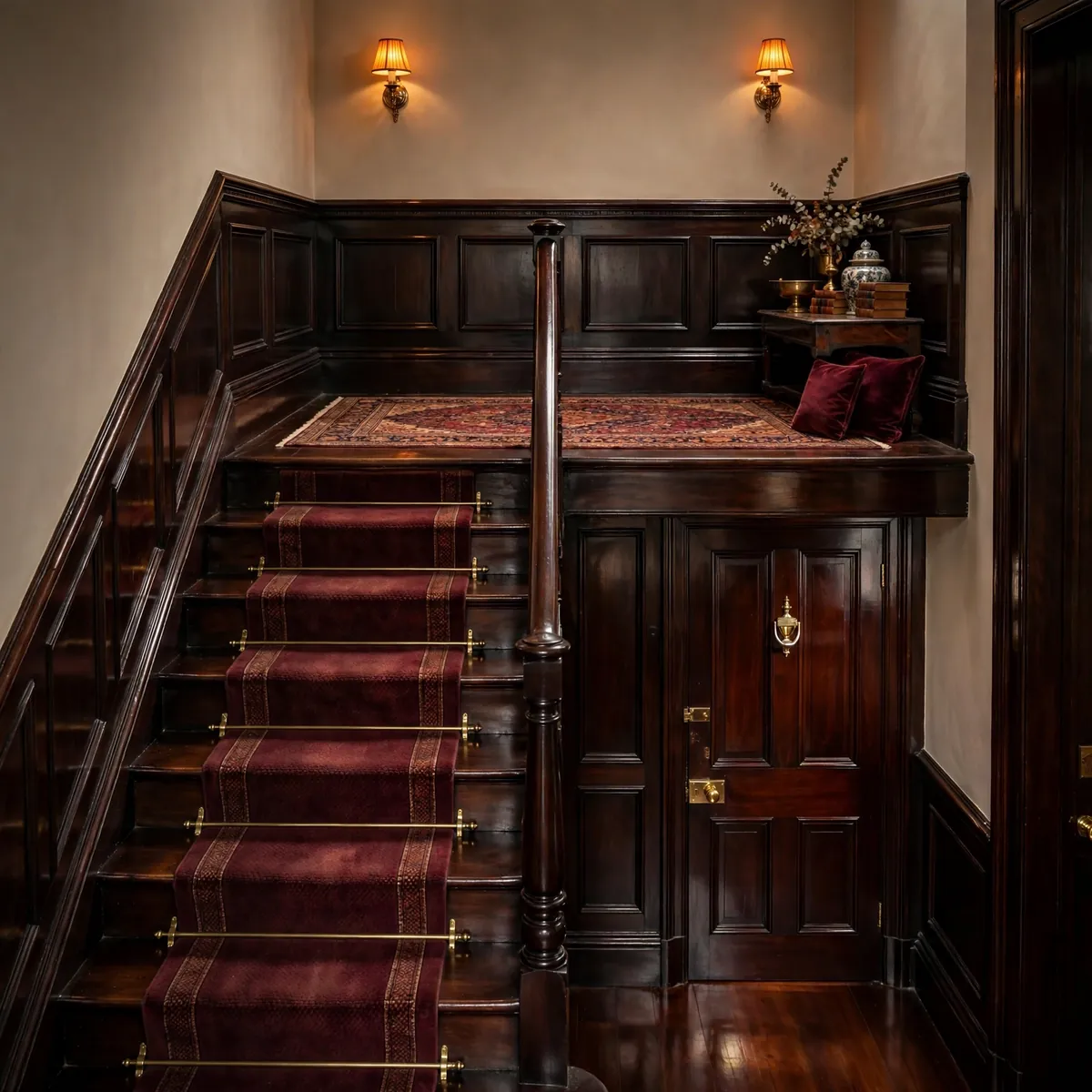
Tile the risers — the vertical face of each step — in a dark patterned tile while keeping treads wood or neutral. Every step becomes a small framed artwork, and the pattern draws the eye upward. Encaustic-look or Moroccan-inspired patterns in charcoal, navy, and cream are the sweet spot.
- Peel-and-stick tiles are a renter-friendly trial run.
- Keep treads simple so the risers stay the star.
- Seal grout lines if you use real tile.
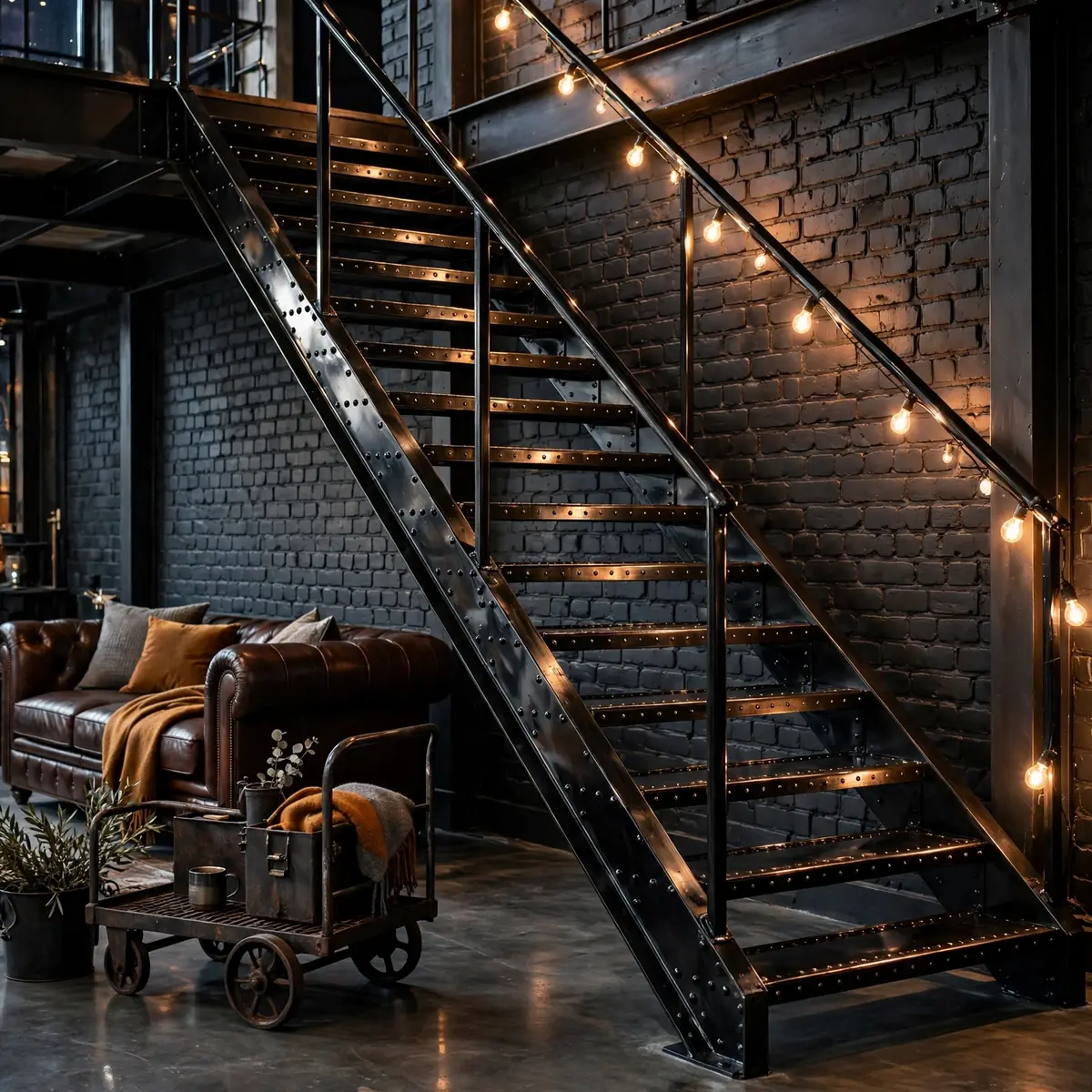
Black Stairs Against Exposed Brick
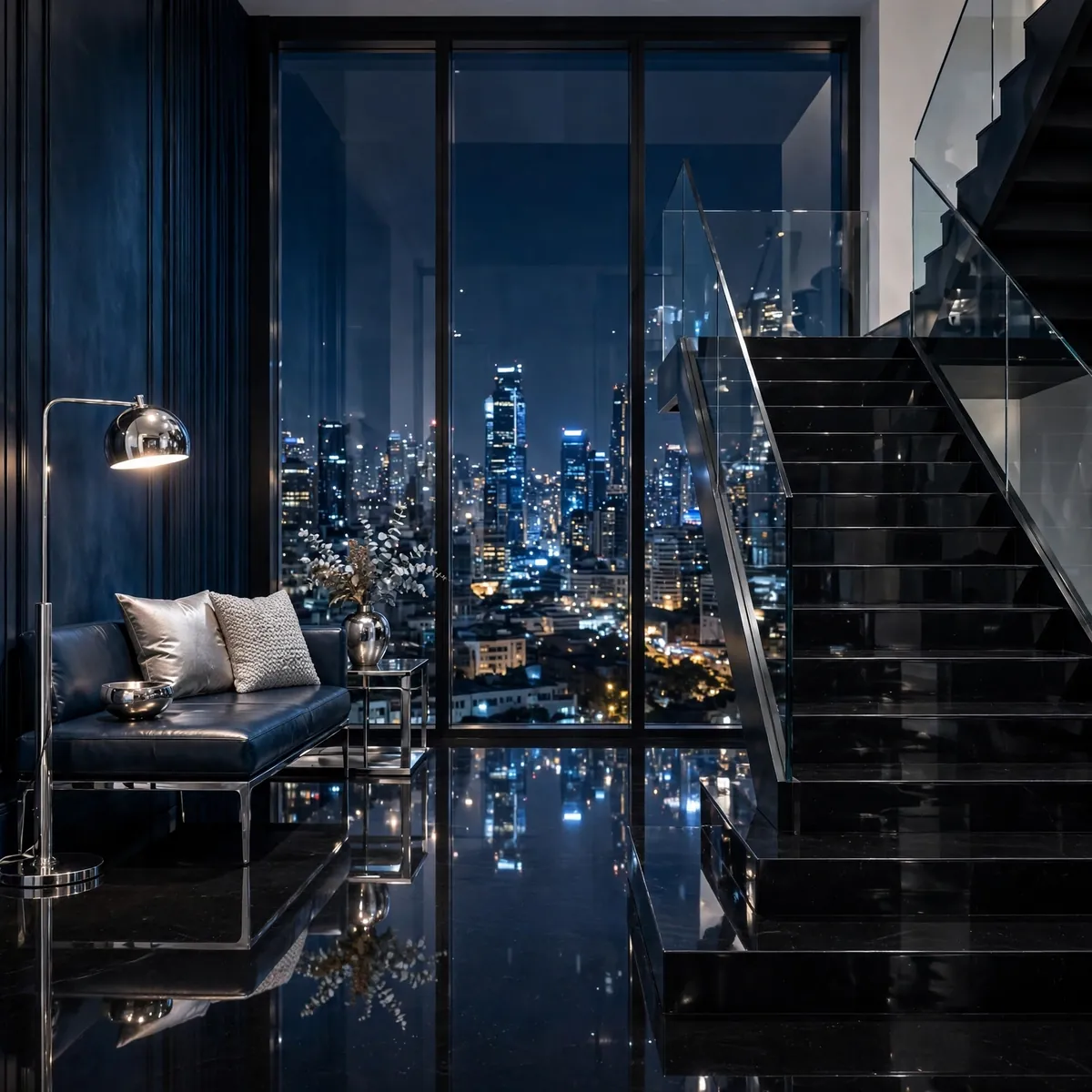
Black-painted stairs climbing past an exposed brick wall is a combination that always works — the rough, warm texture of brick keeps the black from feeling cold, and the black makes the brick look richer. It suits lofts, converted spaces, and anyone borrowing a little industrial edge.
- Seal raw brick to control dust in a high-traffic stairwell.
- Warm lighting makes brick glow against black.
- Keep the railing simple — the wall is the texture here.
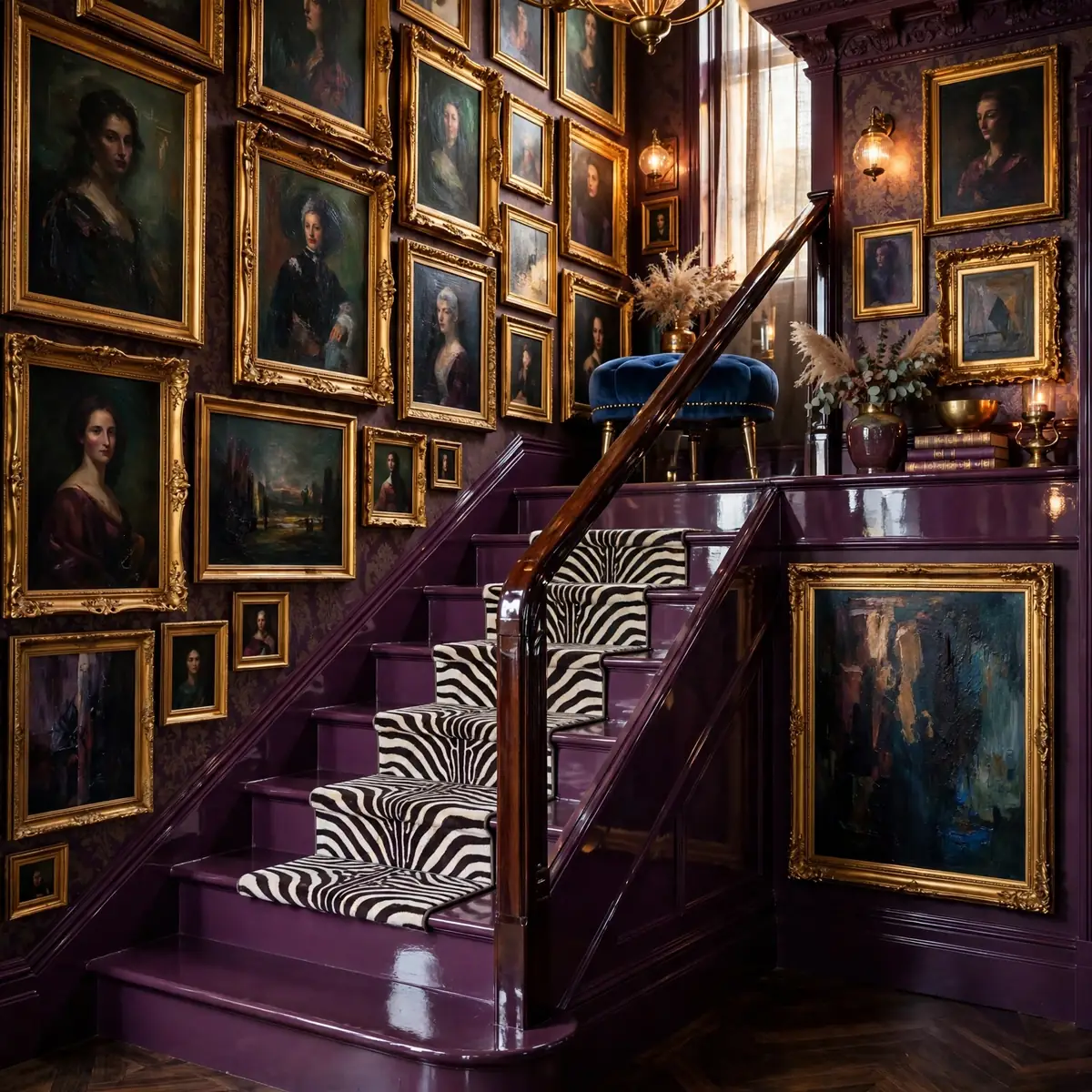
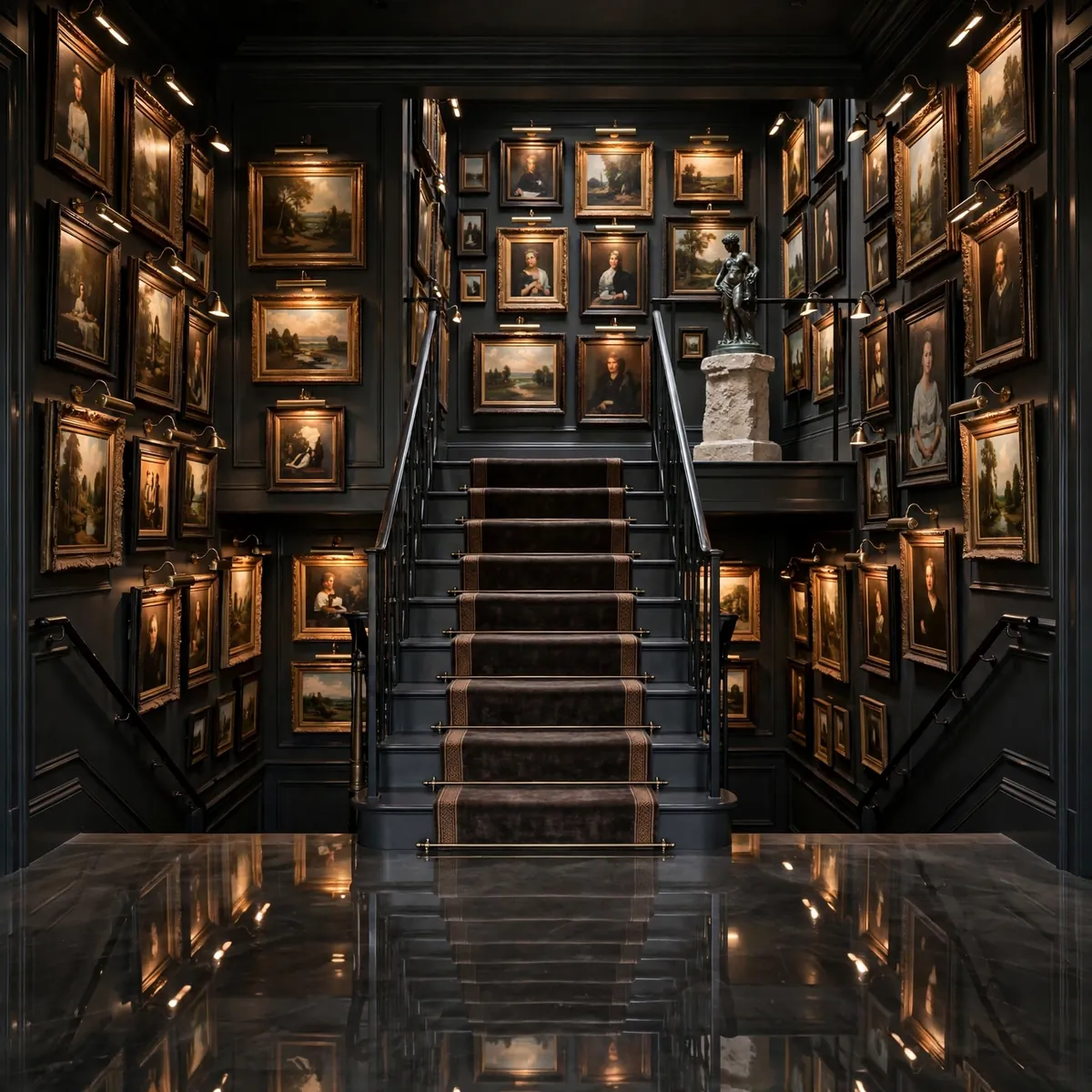
Ink-Black Back Wall With Gold-Framed Art
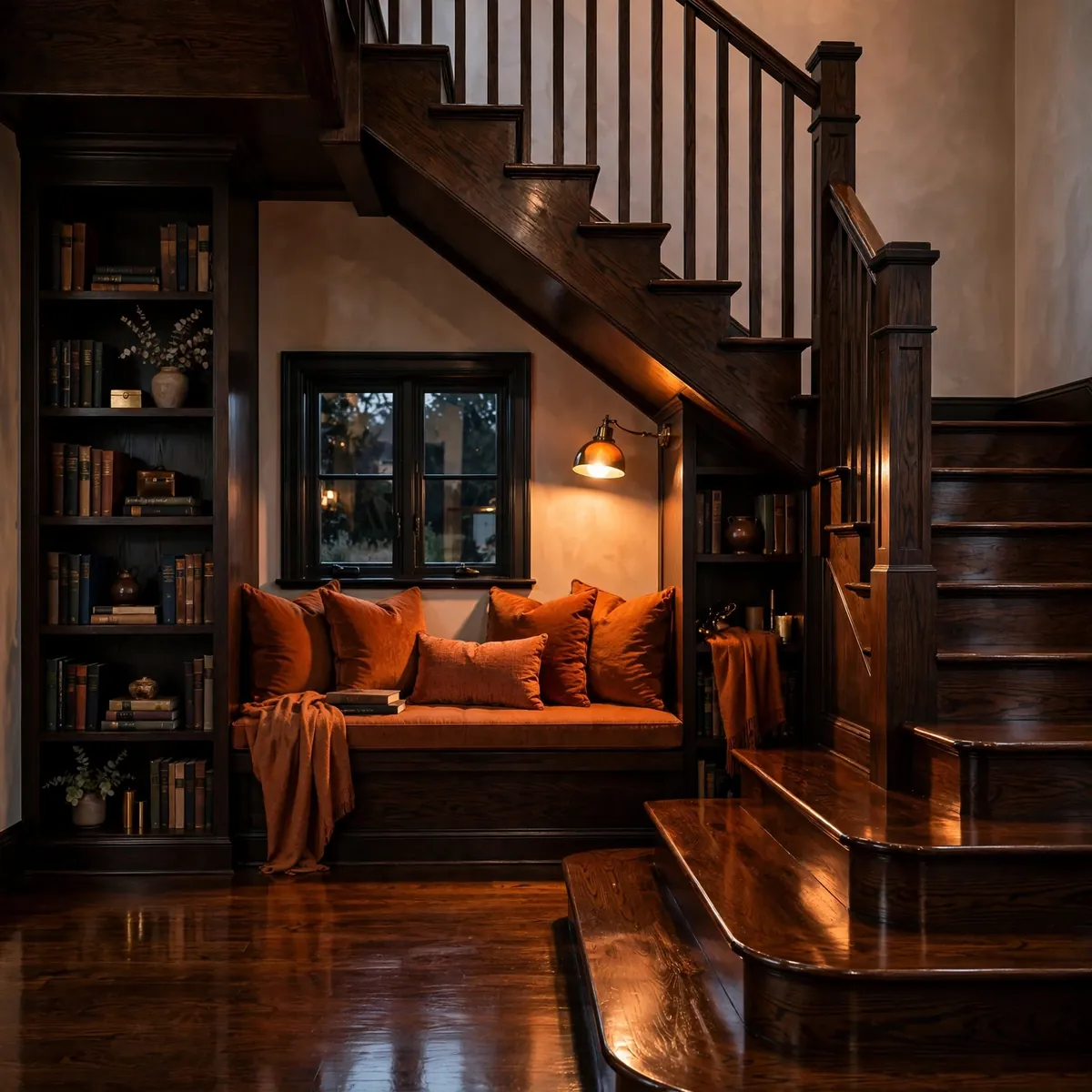
Paint the wall at the stair turn — or the wall the stairs run against — ink black, then hang art in thin gold or brass frames. The dark wall makes every frame pop like a gallery, and the gold keeps it warm and luxe. Even simple prints look expensive against black.
- One large piece beats many small ones on a black wall.
- Gold frames plus black wall plus warm light is the full formula.
- Keep frame styles consistent for a curated feel.
One Oversized Mirror in a Black Frame
A single oversized mirror with a slim black frame, hung where the stairs turn, bounces light back into a dark stairwell and doubles the sense of space. It breaks up long runs of dark paint without introducing a new color. Angle it to catch a window or a light fixture for the best effect.
- Hang the center at standing eye level on the landing.
- A leaning floor mirror works if wall space is tight.
- A black frame ties it to the dark staircase palette.
Two-Tone Stairs That Fade Dark to Light Upward

Paint the bottom steps the darkest and lighten the tone step by step as you climb — charcoal at the base fading to soft grey at the top. It’s an ombré staircase, and it’s more subtle in person than it sounds: from the hallway you read one continuous gradient rather than individual colors. Test your gradient on card first, because the jump between tones needs to be even.
- Mix all your tones from one base color for a smooth fade.
- Label paint pots by step number as you go.
- Satin finish throughout keeps the gradient cohesive.
Black Steel Stringers With Concrete Treads
For a modern or industrial home, black steel stringers with concrete or dark-stained wood treads make the staircase look engineered — in a good way. The open risers keep it airy despite the dark materials, and the raw textures age well. This is a renovation-level project, but the result is a genuine architectural feature.
- Open risers have code rules — check before you plan.
- Concrete treads need sealing against stains.
- Pair with minimal railings so the structure shows.
Moody Botanical Wallpaper in the Stairwell
A dark botanical or chinoiserie wallpaper on the stairwell wall — deep green leaves on near-black, for example — brings pattern and depth without painting a single step. It turns the climb into a walk through a moody garden. Keep the stairs themselves simple so the wallpaper carries the drama.
- Paste-the-wall papers are easiest on tall stairwell drops.
- A dark background hides seams better than light.
- One wallpapered wall is enough — keep the rest plain.
Dark Stairs, Living Plants, Warm Bulbs
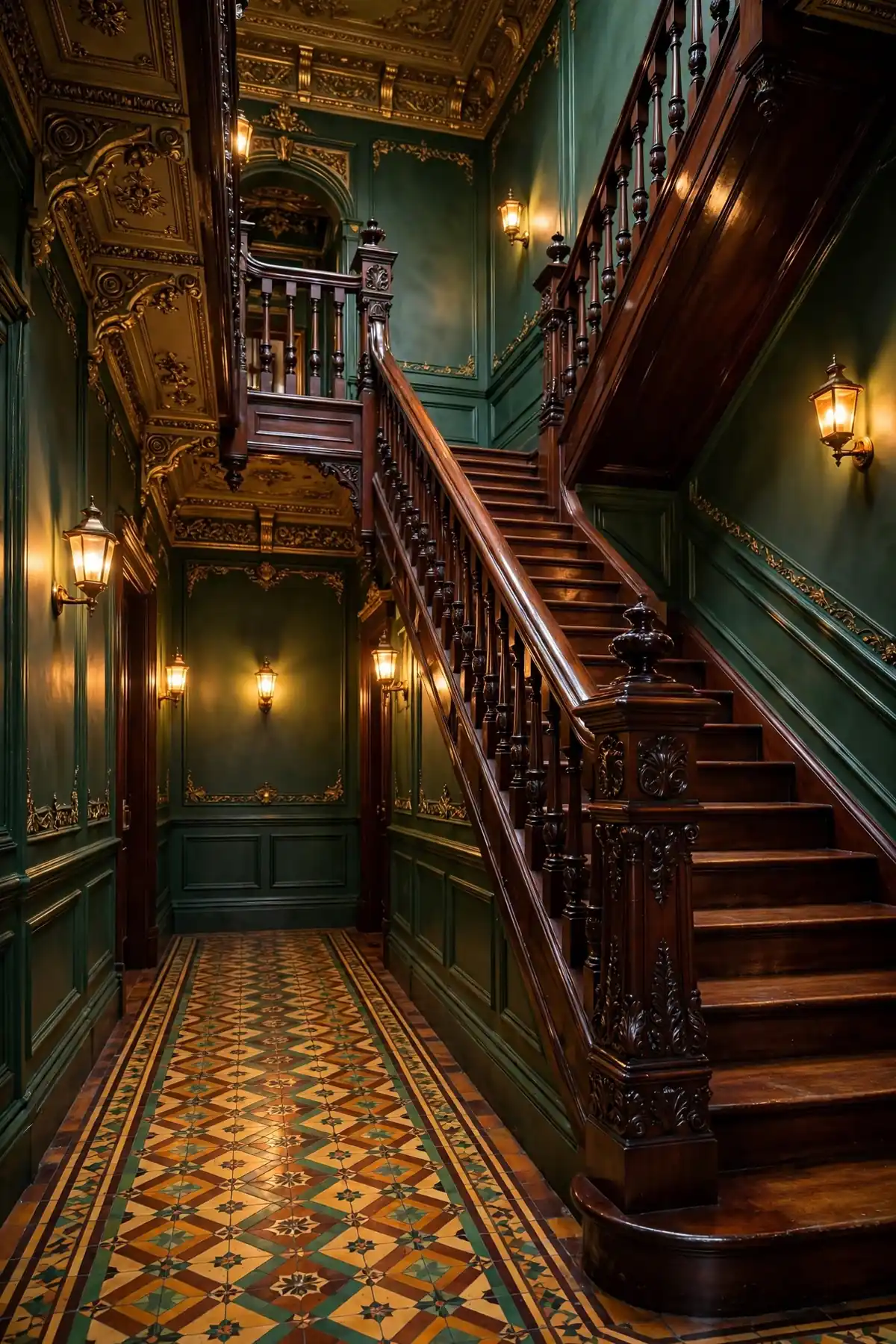
The simplest dark-staircase formula of all: keep the stairs dark, add trailing plants on the windowsill or landing, and swap every bulb for warm white. Green leaves against black paint is one of the freshest contrasts in interiors, and warm light stops dark colors from feeling flat. No renovation, no painter — just styling.
- Pothos and philodendron trail beautifully and tolerate low light.
- Warm 2700K bulbs everywhere in a dark stairwell.
- Group plants in odd numbers for a natural look.
FAQs
Will a dark staircase make my hallway feel smaller?
Not if you balance it. Dark stairs against light walls actually recede, and the contrast makes the staircase read as one clean shape. The real space-killer is mixing too many mid-tones — keep it to one dark and one light.
What paint finish is best for dark stairs?
Satin or semi-gloss on treads and handrails for durability, matte or eggshell on risers and balusters to hide imperfections. Dark colors show flaws more, so prep and primer matter more than the topcoat brand.
Are dark stairs harder to keep clean?
Dark treads hide dust better than white ones but show lint and pet hair more. A dark patterned runner is the practical middle ground — it hides both.
Conclusion
Dark staircases work because contrast is honest — deep color against light walls, warm light against cool paint, rough texture against smooth finish. You don’t need all 25 ideas; you need one confident move, done well. Start with the change that scares you a little — that’s usually the right one — and let the stairs become the part of the house guests ask about.