25 Living Room Decor Ideas for a Stylish, Cozy Refresh
Stylish, cozy living room decor ideas — decorative refreshes with layered textiles, warm lighting, wall art, and simple styling swaps that make your space feel inviting.
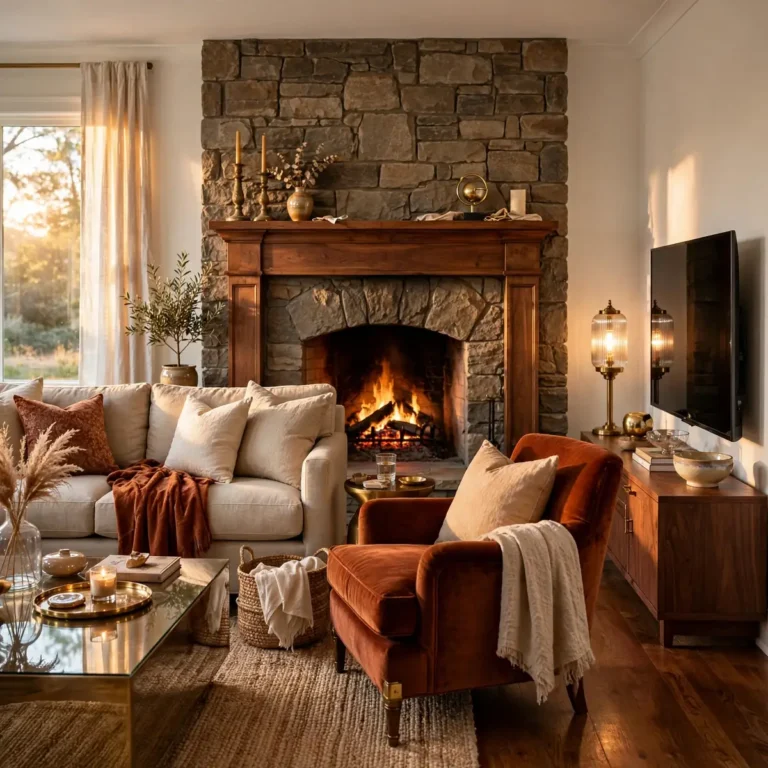
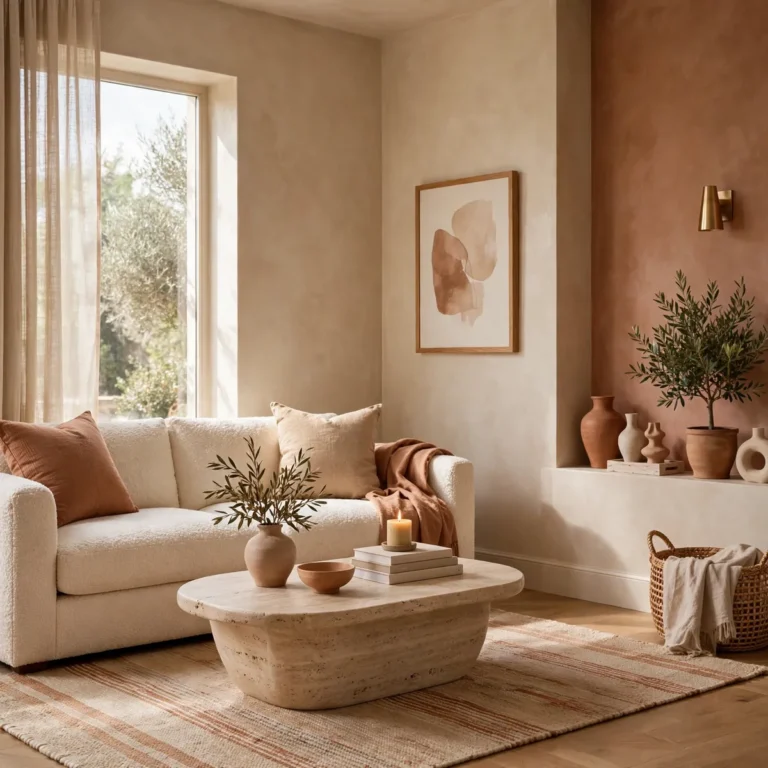
These living room decor ideas are all about the refresh — the decorative layer of textiles, lighting, wall art, and styling that makes a room feel stylish, cozy, and inviting without touching the furniture layout or calling a contractor. The honest answer is that most living rooms don’t need new furniture to feel new; they need warmer light, softer textiles, and a few intentional styling moments. A chunky throw draped over the sofa arm, one rug that’s actually big enough, artwork hung at the right height, and a coffee table styled like someone lives there will transform the room more than any single big purchase.
Work through these ideas one surface at a time — start with the textiles, then the walls, then the light — and the room will start feeling finished instead of “almost there.” And when you’re ready to think beyond surfaces, these living room decor tips will help you carry the same thoughtful styling into the rest of the room.
Key Takeaways
What is the fastest way to refresh a living room without buying furniture?
Refresh the textiles first — swap pillow covers, drape a throw, and layer the rug. Textiles change the room’s color story and texture in an afternoon.
How do I make my living room feel cozy but still stylish?
Layer warm lighting (lamps, sconces, candles) with soft textures (knits, linen, velvet). Cozy comes from light and texture, not from clutter.
What is the single biggest living room decor mistake?
A rug that is too small. Size the rug so the front legs of the sofa and chairs sit on it, and the whole seating area will feel connected.
How can I decorate my living room on a budget?
Shop your own home first, then thrift one vintage piece, swap pillow covers instead of buying new pillows, and rearrange before you buy anything.
Where should I start decorating a blank living room?
Start with the largest textile (the rug), then the walls (art or a mirror), then the lighting. Decorate from biggest surface to smallest detail.
| Refresh idea | Typical budget | Time needed | Biggest impact |
|---|---|---|---|
| Textile swap (pillows, throws) | Low | 1–2 hours | Instant color and texture change |
| Oversized area rug | Medium | 1 afternoon | Grounds the whole seating area |
| Gallery wall or oversized art | Low–medium | Half a day | Fills the largest blank surface |
| Layered lighting (lamps, sconces) | Low–medium | 1–2 hours | Transforms evening mood |
| Coffee table and shelf styling | Low | 1 hour | Makes the room feel finished |
| Vintage accent piece | Low | 1 thrifting trip | Adds character no new item can |
Living Room Decor Ideas That Begin With Layered Neutrals
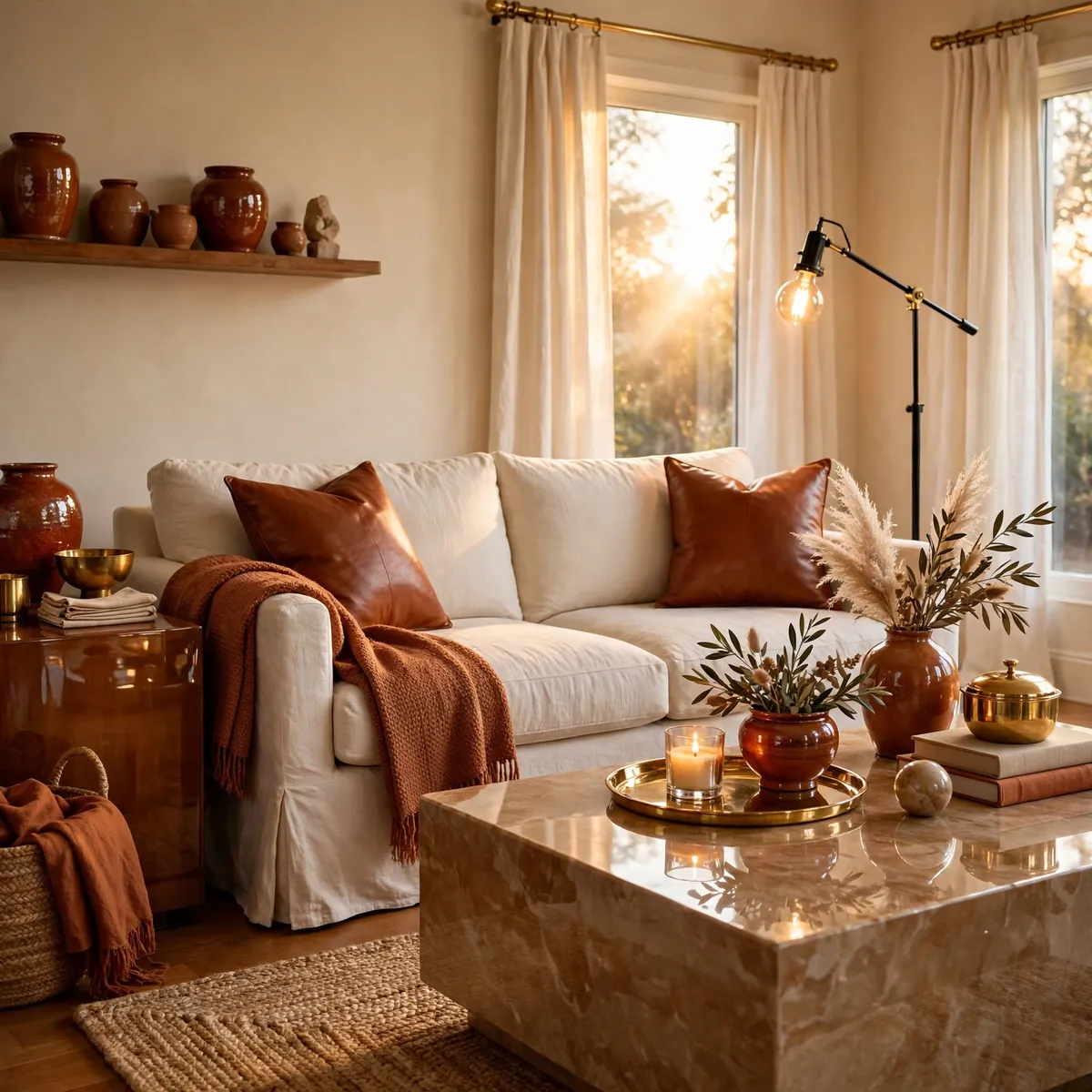
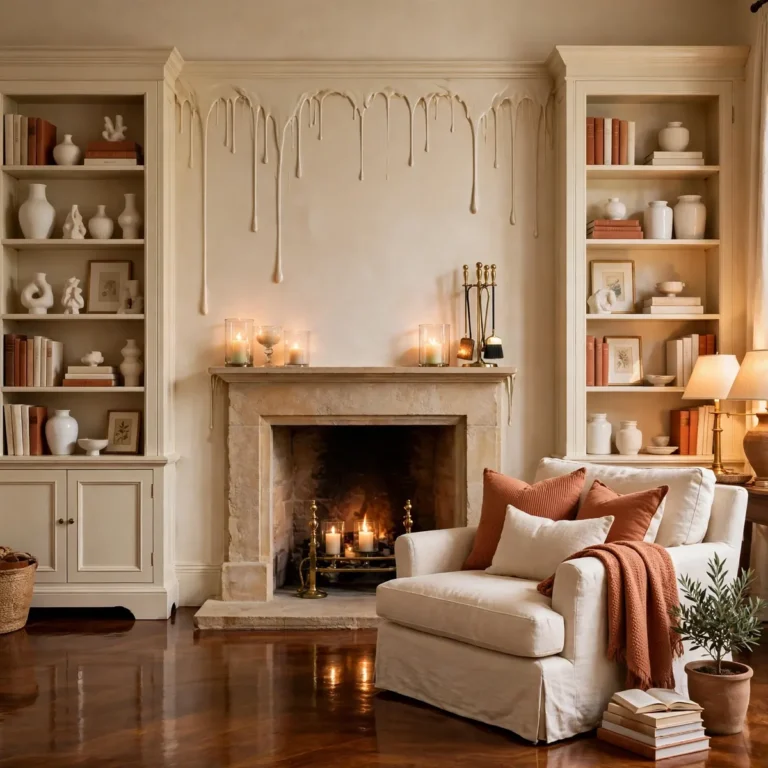
A collected, calming living room starts with a layered neutral base rather than one flat beige. Warm whites, oat, sand, and soft stone layered across the sofa, rug, and curtains create depth without color, and every later accent — a rust pillow, a black frame, a green plant — reads stronger against them. The concrete example: an ivory slipcovered sofa, a jute rug, and warm-white linen curtains, then two cognac leather pillows and a black metal floor lamp to give the neutrals something to play against. The result feels curated over years, not decorated in a weekend, because tonal layering is what collected rooms actually look like.
Quick tips:
- Quick tips:
- Mix warm neutrals (oat, sand, warm white) rather than cool grays for coziness.
- Repeat each neutral at least twice so the palette feels intentional.
- Let one dark accent (black, espresso, deep green) anchor the light layers.
Swap In Mixed-Texture Throw Pillows
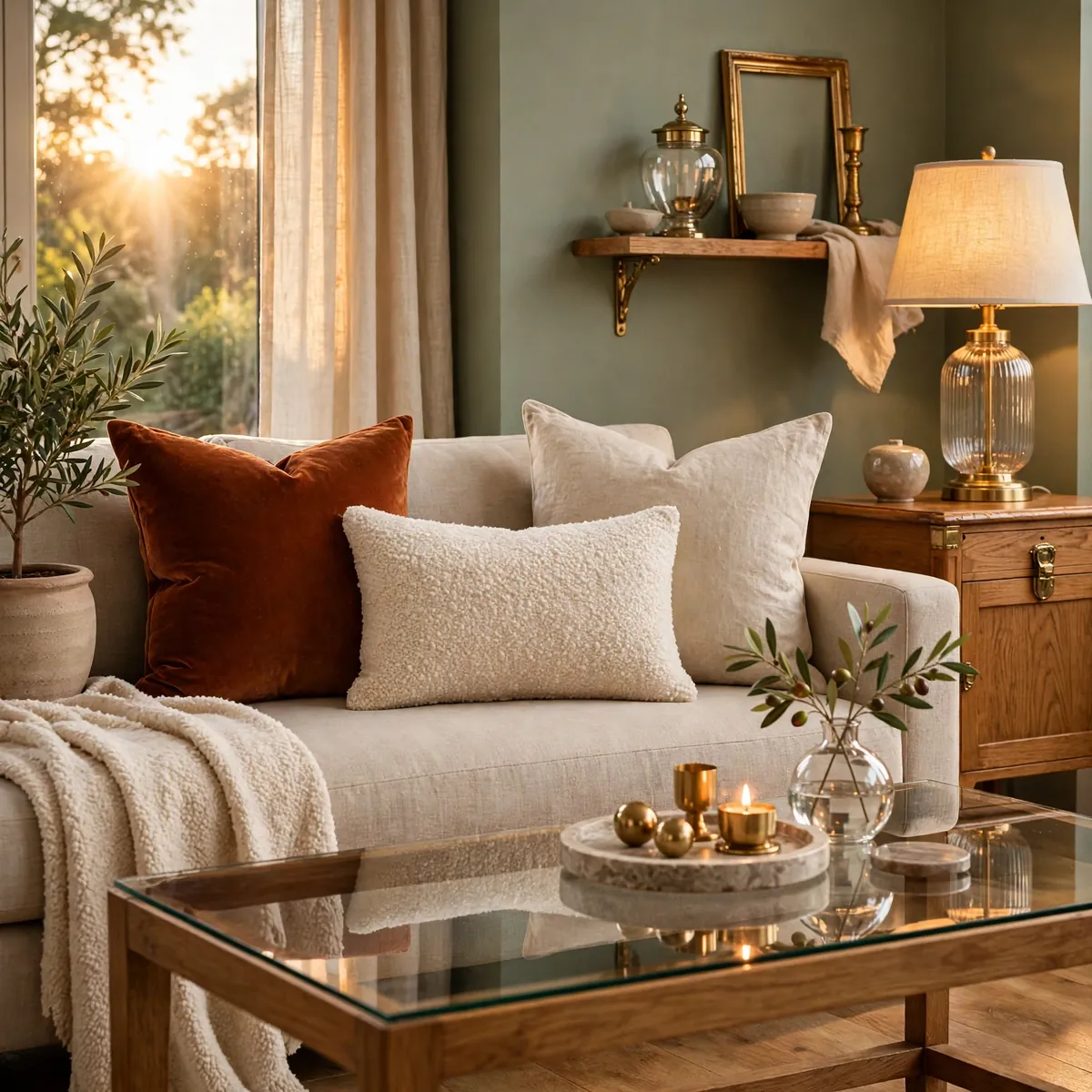
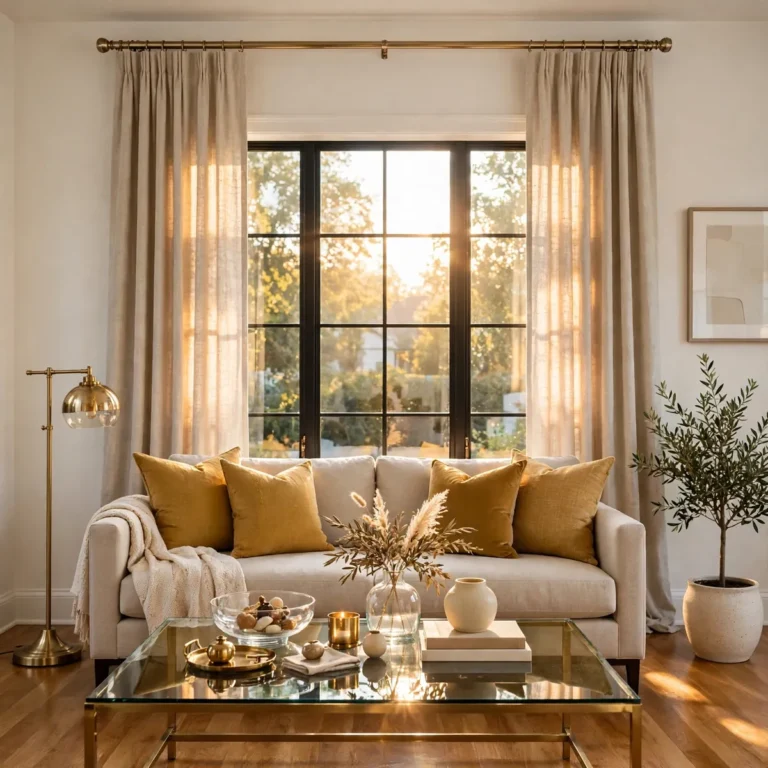
Throw pillows are the cheapest way to change a sofa’s entire personality, and texture does more work than pattern. A velvet pillow, a nubby bouclé one, and a washed-linen one in the same color family make a neutral sofa look expensive, while three flat polyester pillows in a bold print make it look tired. The concrete example: on a beige sofa, layer one rust velvet 20-inch square, one cream bouclé lumbar, and one oatmeal linen 18-inch square — three textures, one warm family, zero clash. Swap just the covers seasonally (linen for summer, velvet for winter) and the sofa reinvents itself twice a year.
Quick tips:
- Quick tips:
- Choose texture over pattern when the sofa is already patterned.
- Use odd numbers: three or five pillows per sofa, never matched pairs only.
- Swap covers, not inserts, to refresh the look for a fraction of the cost.
Drape a Chunky Knit Throw Like You Mean It
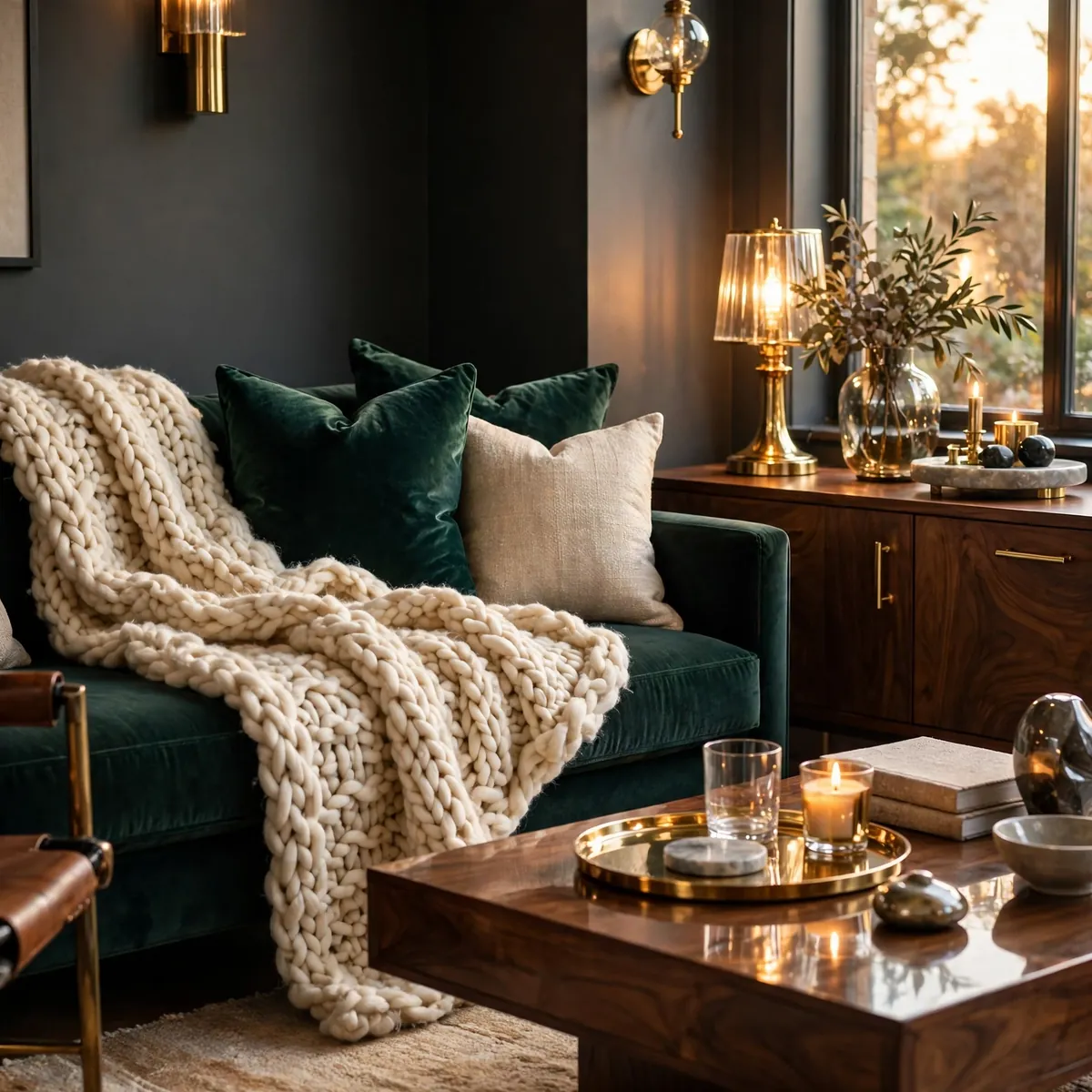
A throw blanket only looks cozy when it looks used, not folded like a hotel display. A chunky knit throw in cream or oatmeal, draped diagonally across one sofa arm or casually pooled on a chaise, adds instant softness and signals that the room is for living in. The concrete example: a hand-knit-look throw in undyed wool, folded once lengthwise and laid across the left arm of the sofa with one end trailing onto the seat cushion — it takes ten seconds and photographs like a styling session. Keep it to two or three blanket textures in the whole room so the sofa reads layered, not chaotic.
Quick tips:
- Quick tips:
- Drape, don’t fold: casual placement reads cozier than crisp folds.
- Stick to 2–3 blanket textures per room to avoid visual chaos.
- Choose washable knits if the sofa gets daily use.
Anchor Everything With One Oversized Area Rug
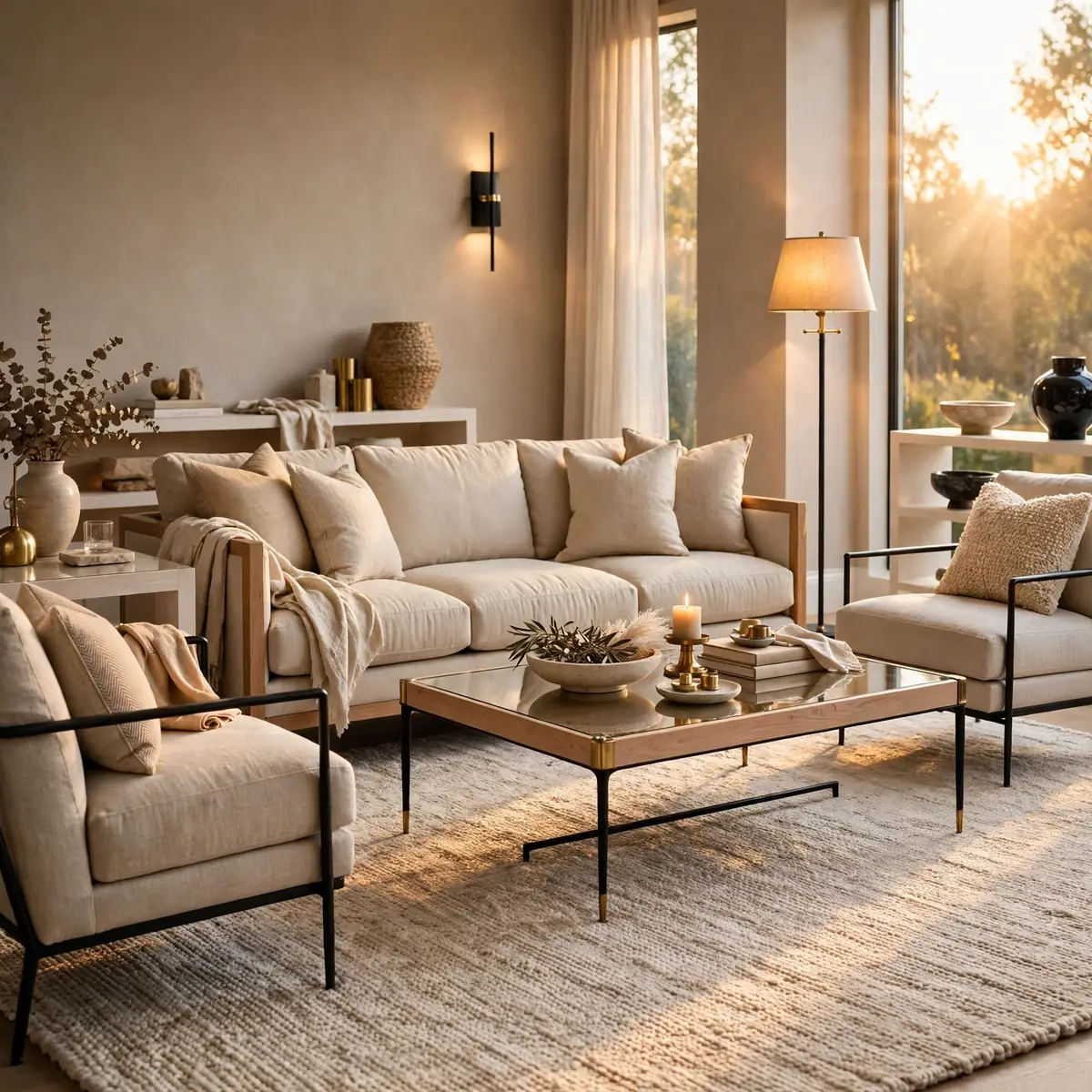
The area rug is the foundation every other decor decision sits on, and the most common mistake is buying one that’s too small. A rug that fits only the coffee table makes the seating look scattered; a rug that reaches under the front legs of the sofa and chairs pulls everything into one intentional zone. The concrete example: in a standard 12-by-15 living room, an 8-by-10 rug under a three-seat sofa and two chairs, with all front legs on the rug and the coffee table centered — suddenly the furniture reads as one conversation area instead of separate pieces. Choose a pattern or texture with some contrast against the sofa so the rug earns its visual weight.
Quick tips:
- Quick tips:
- Size up: front legs of all seating on the rug is the minimum.
- In open plans, let the rug define where the living room begins.
- A low-pile or flatweave rug keeps doors and furniture legs moving freely.
Layer a Patterned Rug Over a Neutral Base
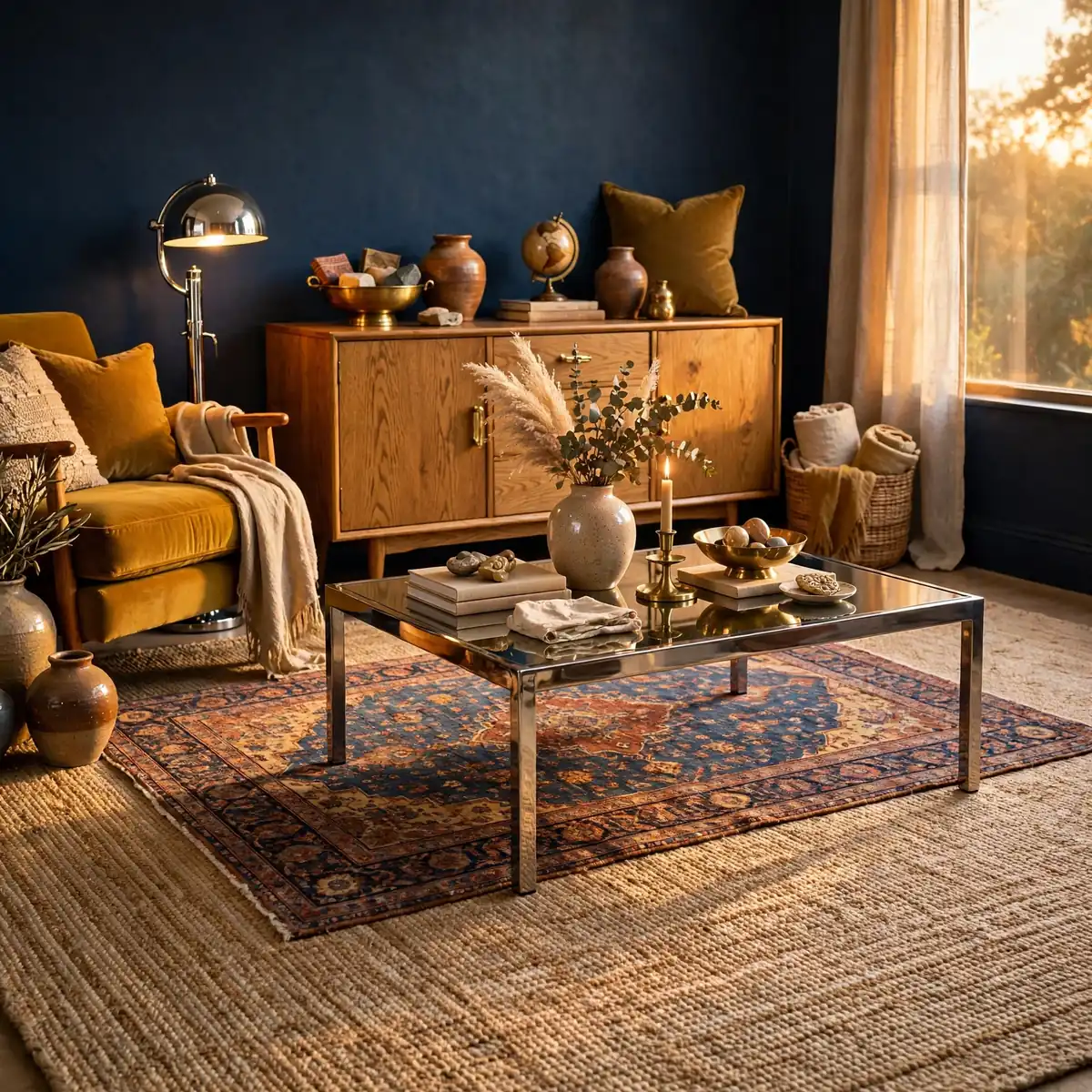
Rug layering gives you the richness of a statement rug at a fraction of the price and commitment. A large, flat, inexpensive neutral base — jute or a low-pile natural weave — with a smaller patterned rug angled on top creates a collected, traveled look that one rug alone rarely achieves. The concrete example: a 9-by-12 natural jute rug with a 5-by-7 vintage-style Persian rug laid slightly off-center on top, coffee table centered on the smaller rug. The base must be big enough to anchor the furniture and the top rug must sit fully on the base, never half-on and half-off the floor.
Quick tips:
- Quick tips:
- Keep the base rug flat and neutral so the top layer can shine.
- Angle the top rug slightly for a relaxed, collected feel.
- Use a rug pad under both layers to prevent slipping.
Build a Salon Gallery Wall Above the Sofa
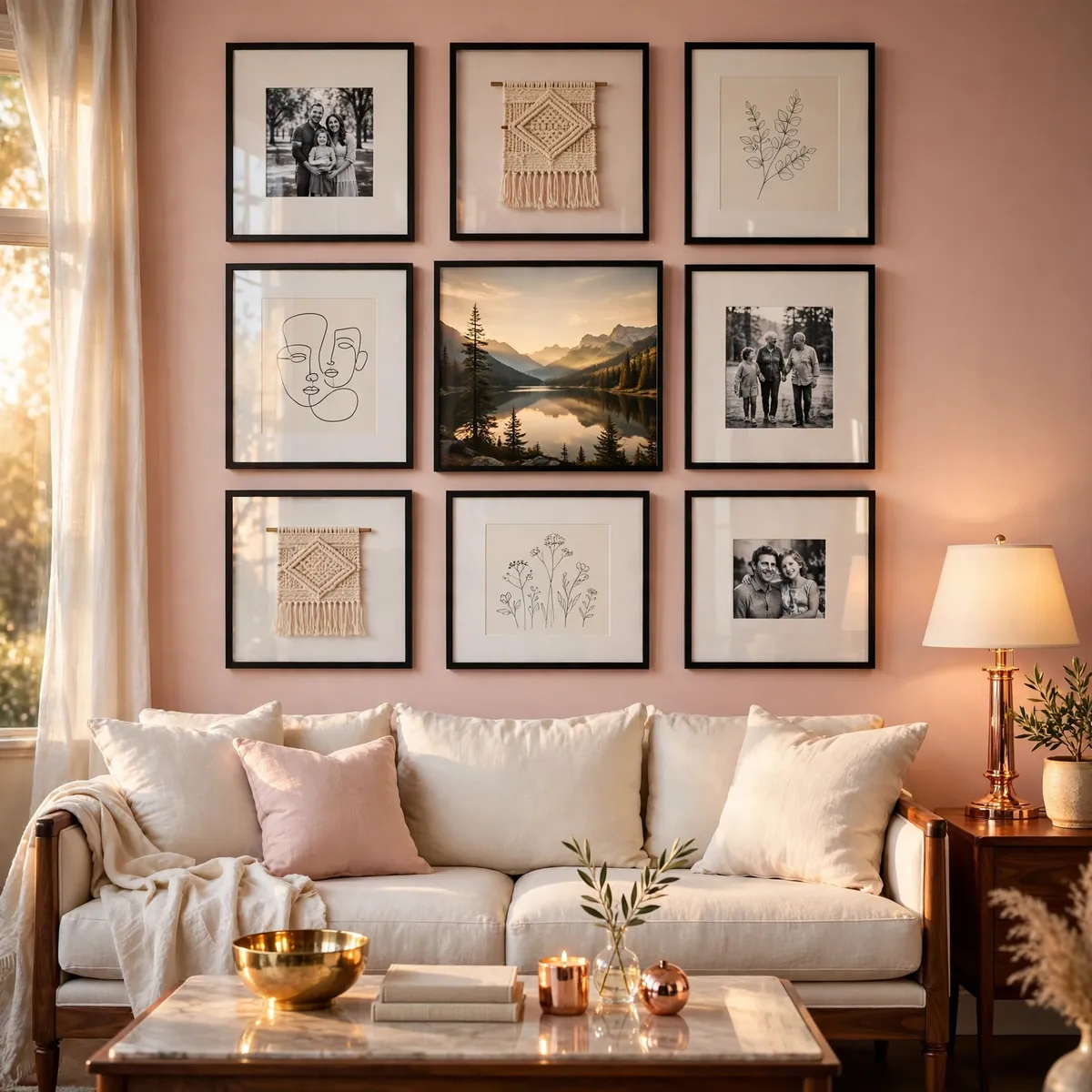
A gallery wall turns the biggest blank surface in the room into the room’s personality. The trick is treating the arrangement as one single composition: lay the frames on the floor first, keep two to three inches between them, and build outward from the largest piece. The concrete example: above a 7-foot sofa, a grid of nine frames — one 16-by-20 landscape print as the anchor, surrounded by 8-by-10 family photos, a small textile wall hanging, and two line-art prints, all in matching thin black frames. Consistent frames unify wildly different art, which is what makes salon walls look curated instead of cluttered.
Quick tips:
- Quick tips:
- Lay the arrangement on the floor and photograph it before hanging.
- Keep spacing consistent (2–3 inches) for a calm, gallery feel.
- Match the frames, vary the art — not the other way around.
Let One Oversized Artwork Carry the Wall
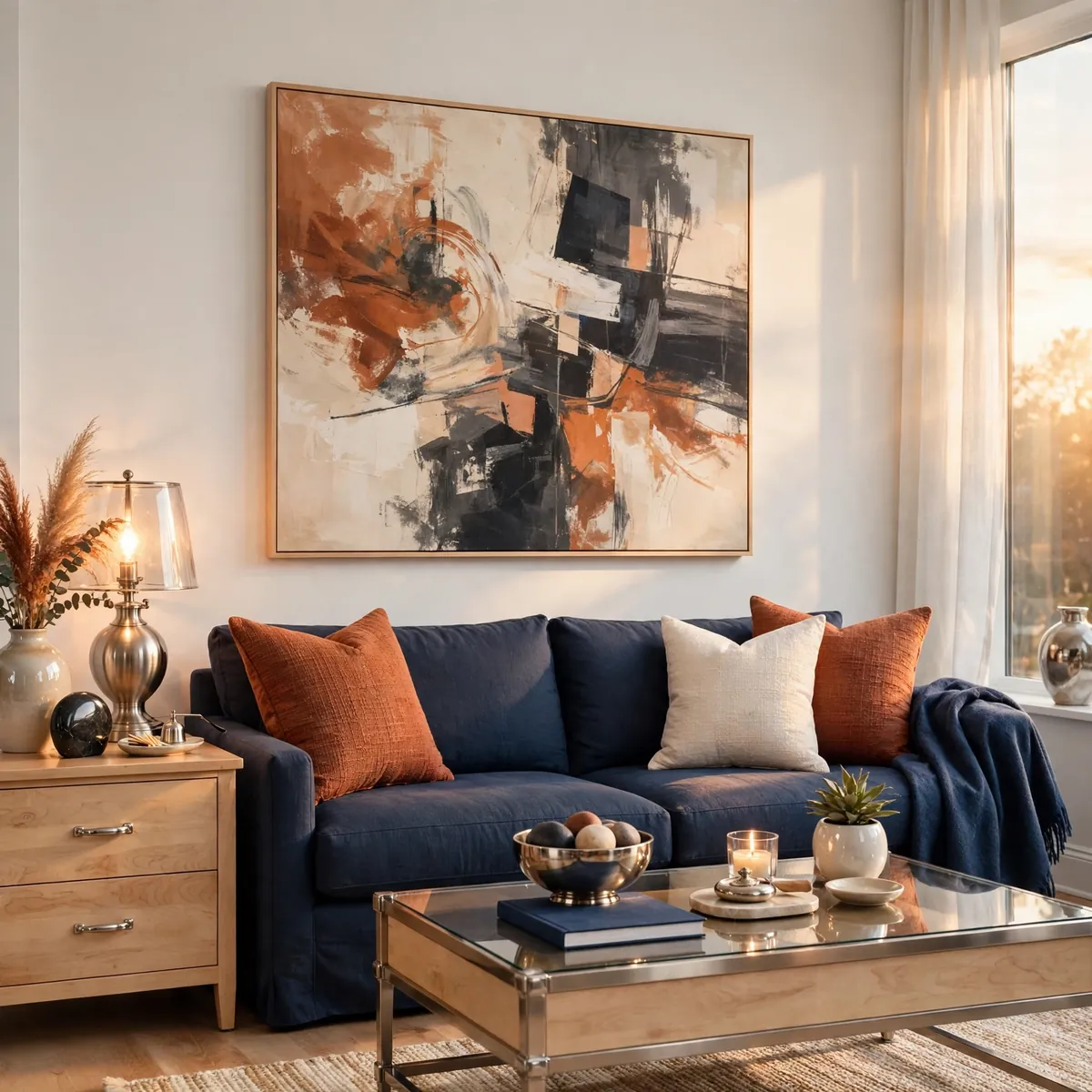
When a gallery wall feels like too much commitment, one oversized piece of art does the same job with a single decision. Large-scale art — roughly two-thirds the width of the sofa below it — gives the room a focal point and a color story in one move. The concrete example: a 48-by-36 abstract canvas in warm terracotta, cream, and charcoal hung 6 to 8 inches above the sofa back, with the rust tone echoed in two throw pillows. The room’s palette suddenly has a source, and every small decor choice gets easier because the art already made the color decisions.
Quick tips:
- Quick tips:
- Size art to about two-thirds the width of the furniture below it.
- Hang it 6–10 inches above the sofa back, centered on the piece.
- Pull one or two accent colors from the art into pillows or throws.
Lean an Arched Mirror to Bounce the Light
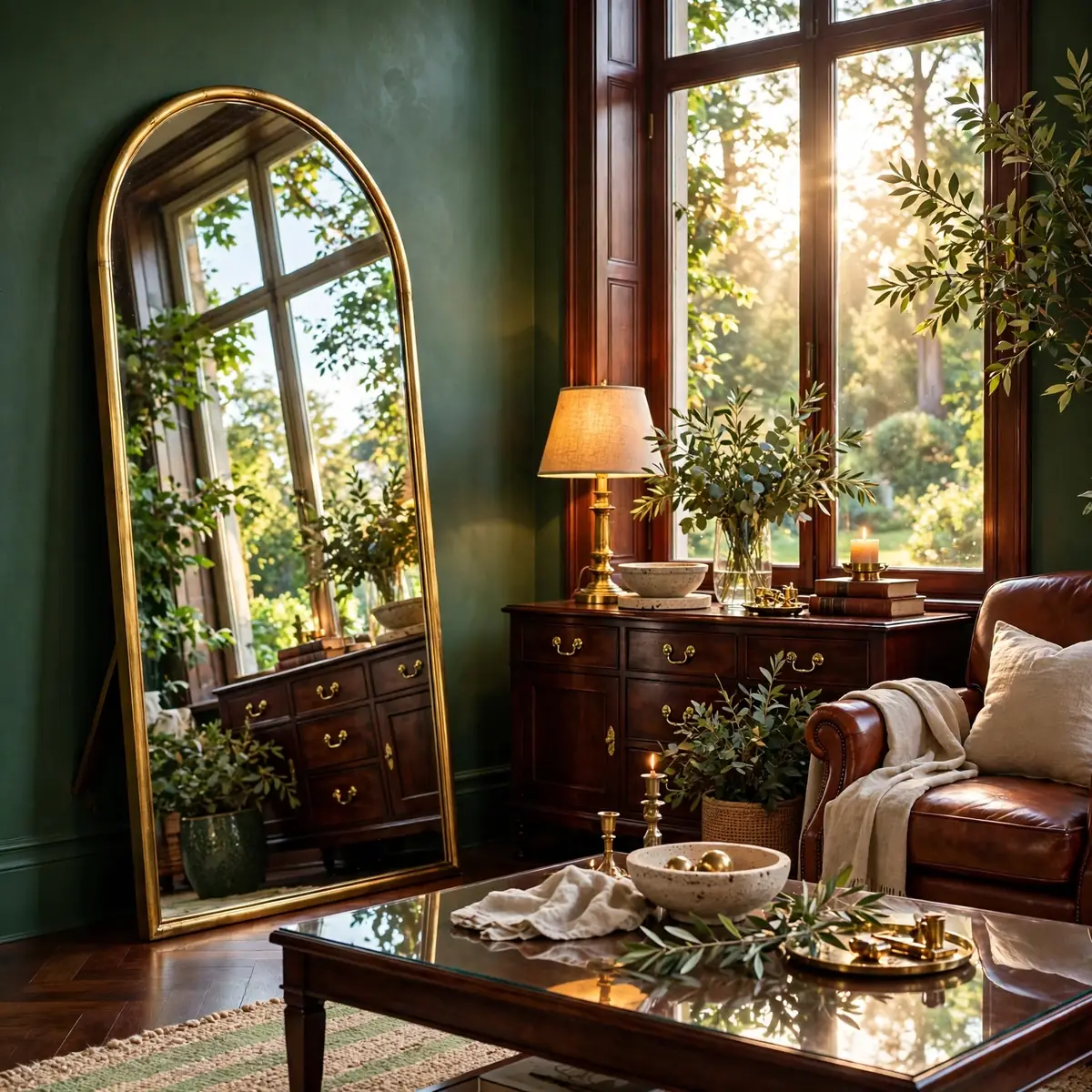
A full-length arched mirror leaned against the wall does three jobs at once: it bounces daylight deeper into the room, doubles the sense of space, and adds an architectural curve that softens all the room’s hard rectangles. The concrete example: a 70-inch brass-framed arched mirror leaned (not hung) in the corner beside the window, angled slightly so it reflects the window light and the greenery opposite rather than a blank wall or clutter. Leaning is renter-friendly and lets you adjust the angle until the reflection shows something beautiful.
Quick tips:
- Quick tips:
- Angle the mirror to reflect a window, art, or plants — never clutter.
- Lean rather than hang for easy repositioning and renter-friendly setup.
- A slim frame keeps the mirror feeling light, not bulky.
Style a Coffee Table Vignette in Threes
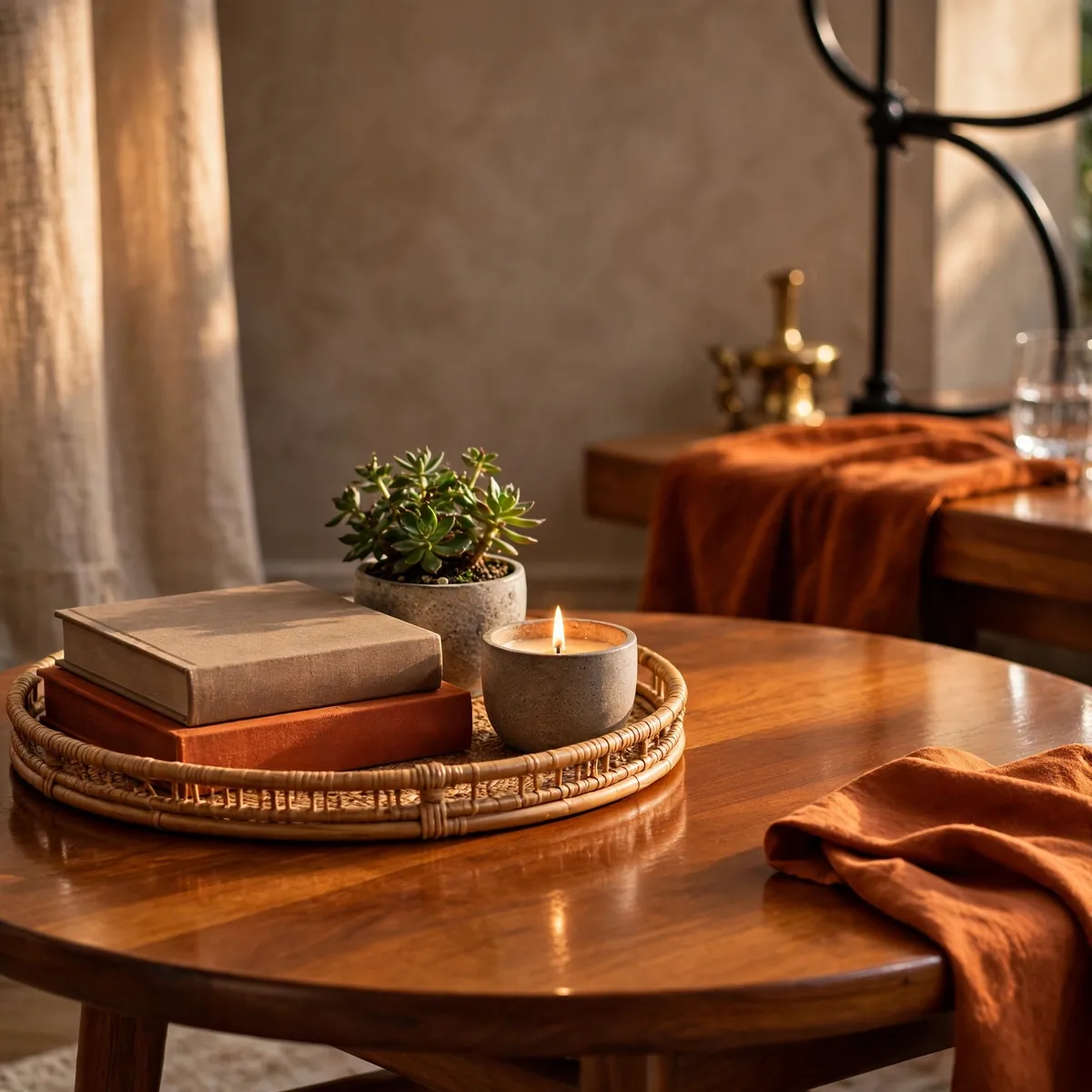
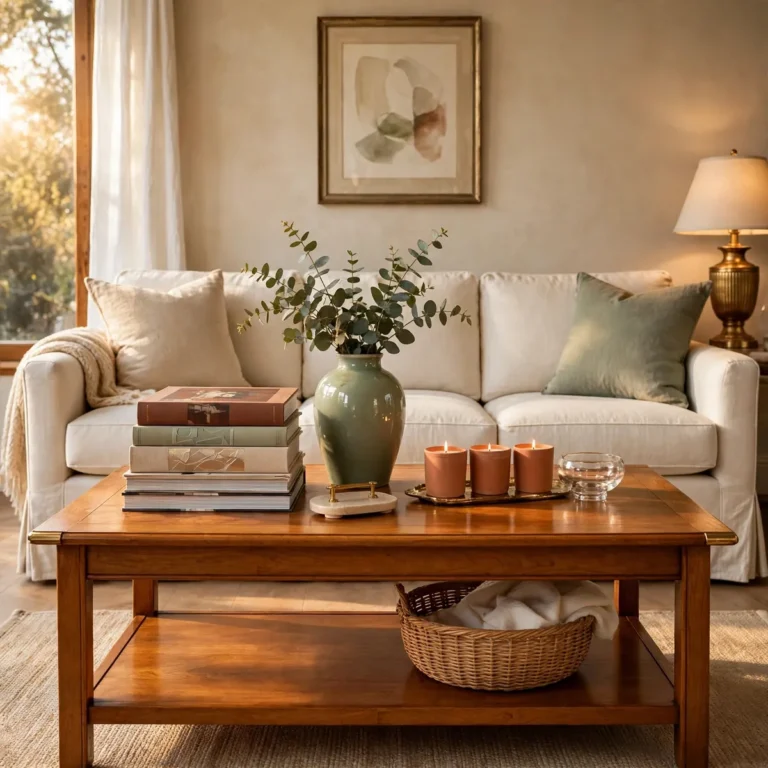
A styled coffee table looks intentional when it follows a simple formula: something tall, something flat, something personal — grouped on a tray so the arrangement reads as one vignette. The tray is the secret; it corrals the objects, protects the table surface, and makes the whole thing liftable when you need the space. The concrete example: a round rattan tray holding a stack of two design books, a small potted succulent, and a candle in a stoneware holder, with the remote tucked in a lidded box at the tray’s edge. Leave a third of the table surface empty so there’s still room for actual living — mugs, feet, a laptop.
Quick tips:
- Quick tips:
- Group objects on a tray so the vignette reads as one unit.
- Vary heights: tall, medium, and low objects together.
- Leave empty surface space for daily use — styled, not staged.
Give Bookshelves Breathing Room
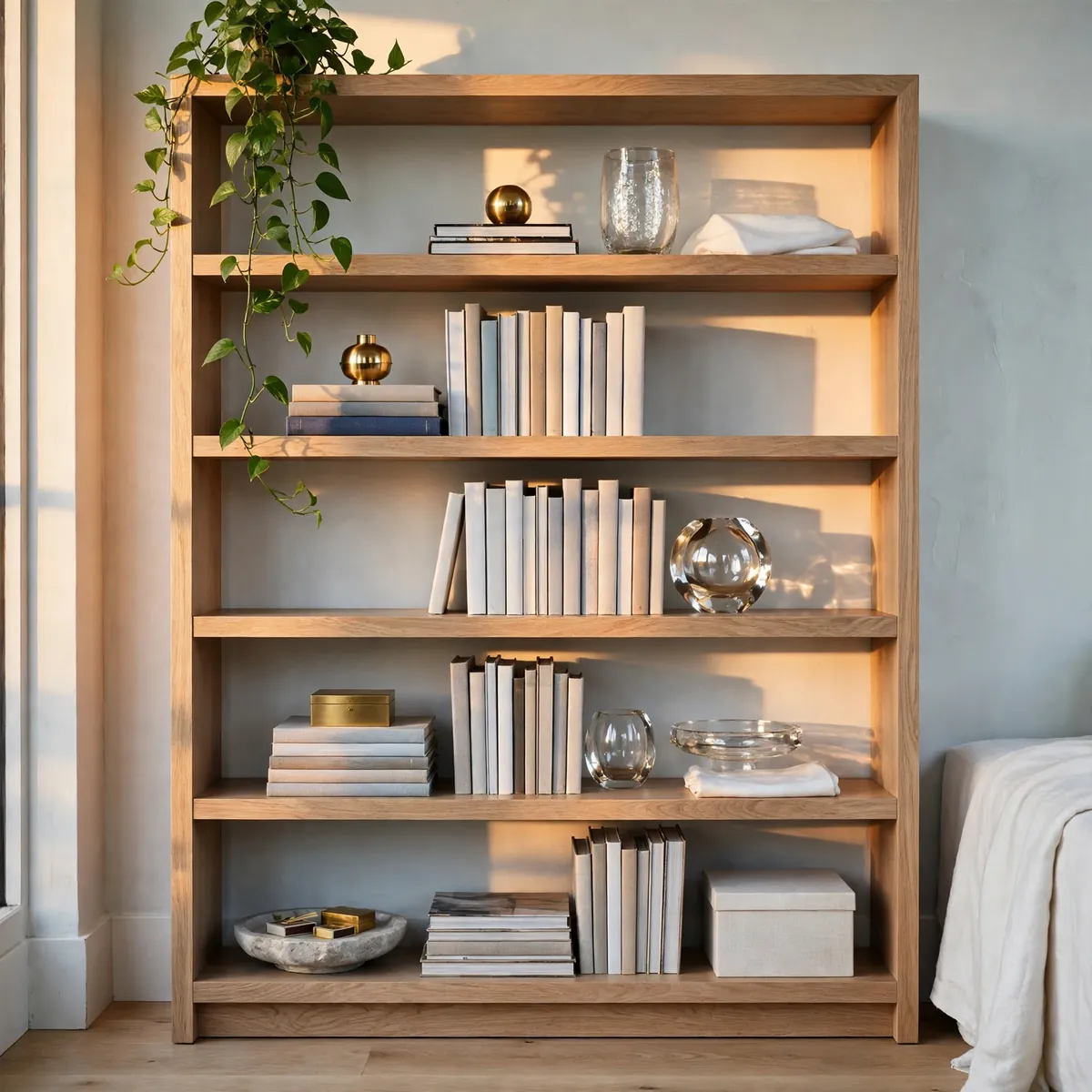
Bookshelves look styled when roughly a third of each shelf is empty. Negative space lets the eye rest and makes the objects you do display look chosen rather than stored. Mix vertical book rows with horizontal stacks, and use the horizontal stacks as platforms for a candle or small plant. The concrete example: on a five-shelf bookcase, dedicate the middle shelf to a horizontal stack of four art books topped with a small brass object, flank the stacks with upright novels, and leave the top shelf nearly empty except one trailing pothos. Step back three feet after every few objects — balance reveals itself at a distance.
Quick tips:
- Quick tips:
- Aim for about one-third empty space on every shelf.
- Use horizontal book stacks as risers for small objects.
- Style in odd numbers: three or five objects per grouping.
Place a Tall Olive Tree in the Empty Corner
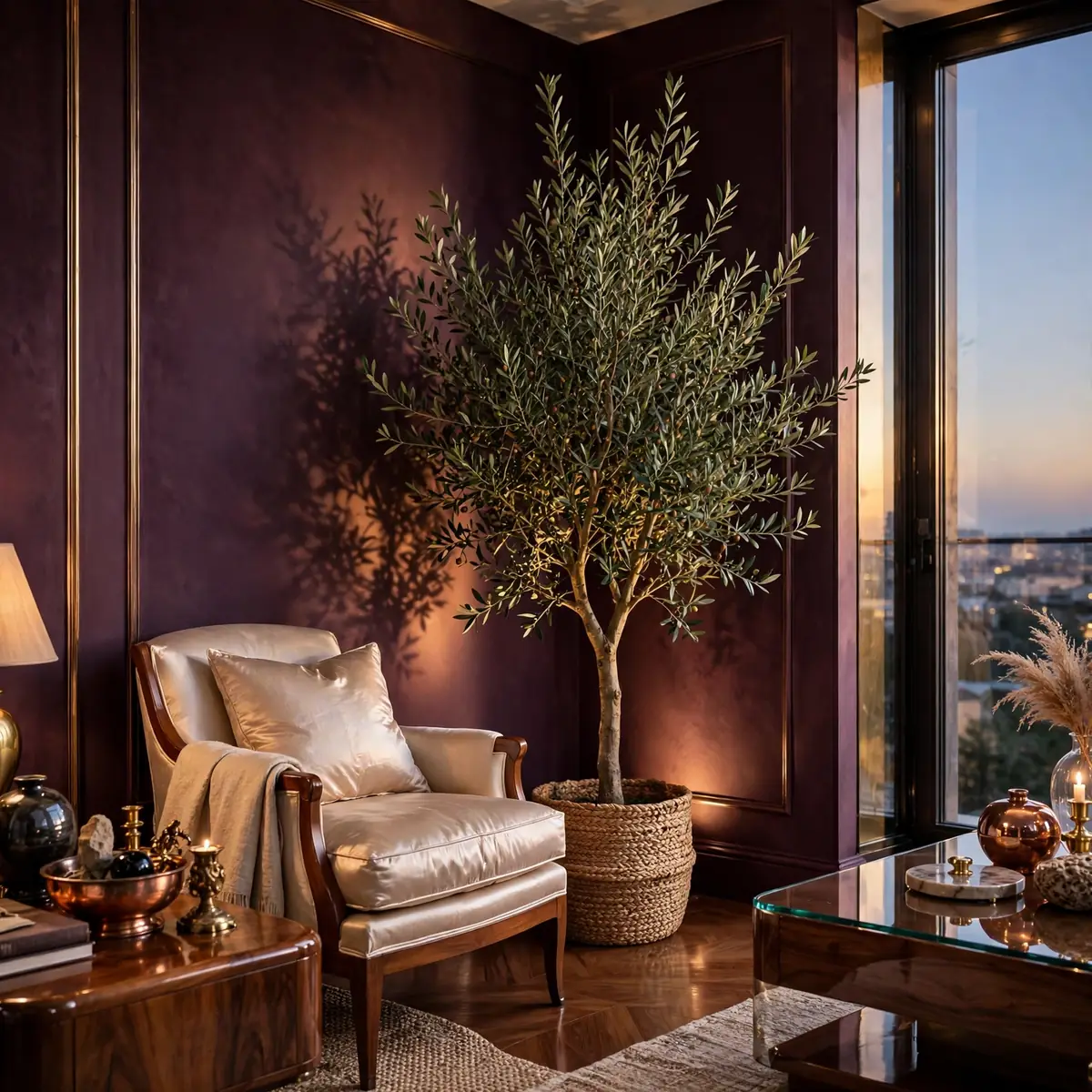
Every living room has one dead corner, and a tall plant is the fastest way to bring it to life. An olive tree — or a fiddle-leaf fig if your light is strong — adds organic height that draws the eye upward and softens the corner where the walls meet. The concrete example: a 6-foot olive tree in a woven seagrass basket placed in the corner beside the reading chair, with a small up-light or nearby floor lamp so the foliage casts soft shadows at night. One large plant always looks more designed than five small ones scattered around, and the basket hides the plastic nursery pot completely.
Quick tips:
- Quick tips:
- Choose one large plant over several small ones for bigger impact.
- Hide nursery pots inside woven baskets or ceramic planters.
- Match the plant to your actual light — olive trees want bright light.
Fill a Handmade Vase With Dried Botanicals
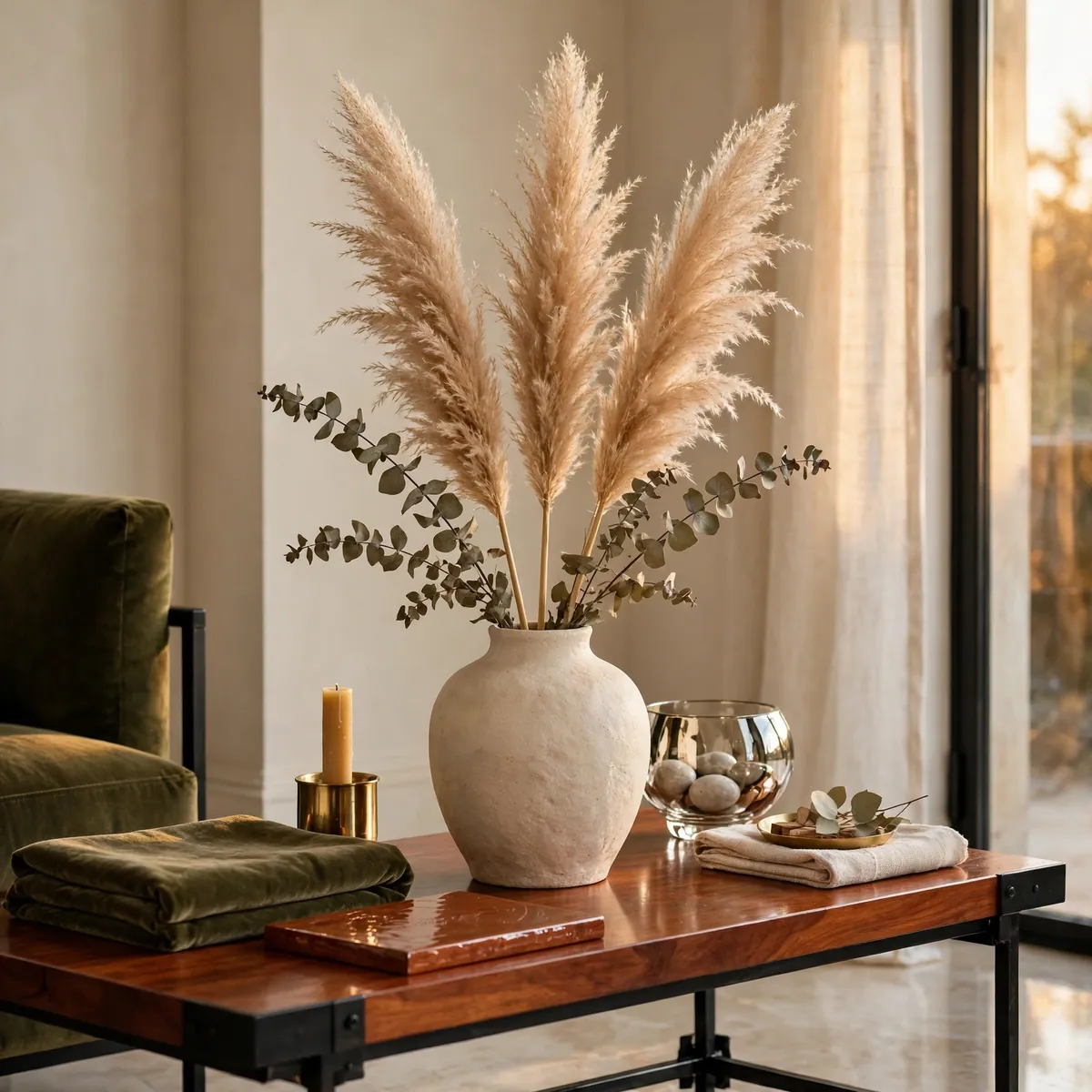
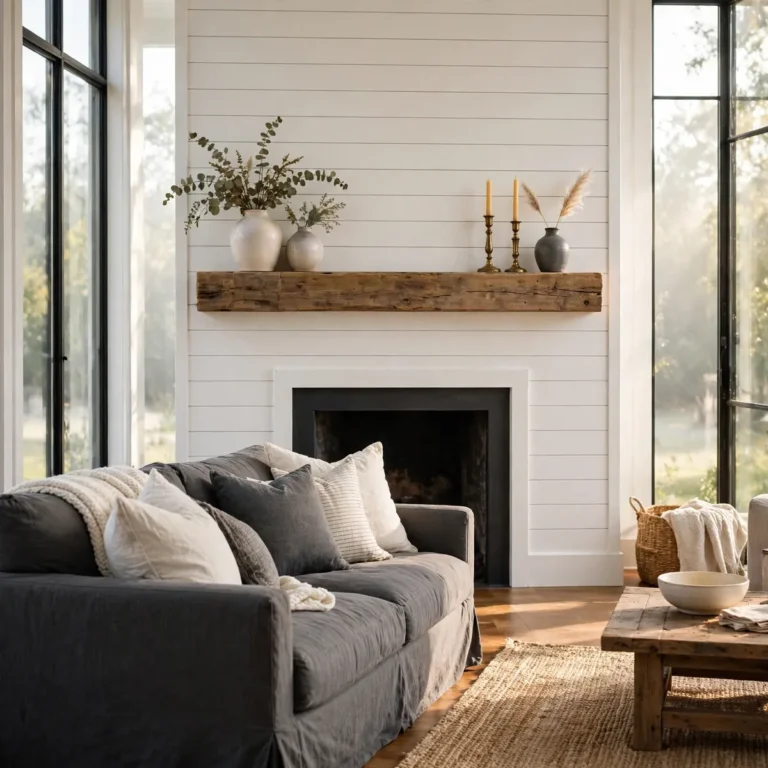
Dried botanicals give you the softness of flowers with none of the maintenance or weekly cost. Pampas plumes, dried eucalyptus, or bunny tails in a handmade ceramic or stoneware vase add height, texture, and a natural element to consoles, side tables, and mantels. The concrete example: three tall pampas stems and two dried eucalyptus sprigs in a matte cream stoneware vase on the entry console, stems trimmed so the arrangement stands about twice the vase’s height. Keep dried stems out of direct sun to slow fading, and give the vase a quick dusting when you dust the shelf.
Quick tips:
- Quick tips:
- Trim stems so the arrangement is about twice the vase height.
- Mix one feathery stem with one structured stem for balance.
- Keep dried arrangements out of strong direct sunlight.
Add Plug-In Sconces Beside Your Artwork
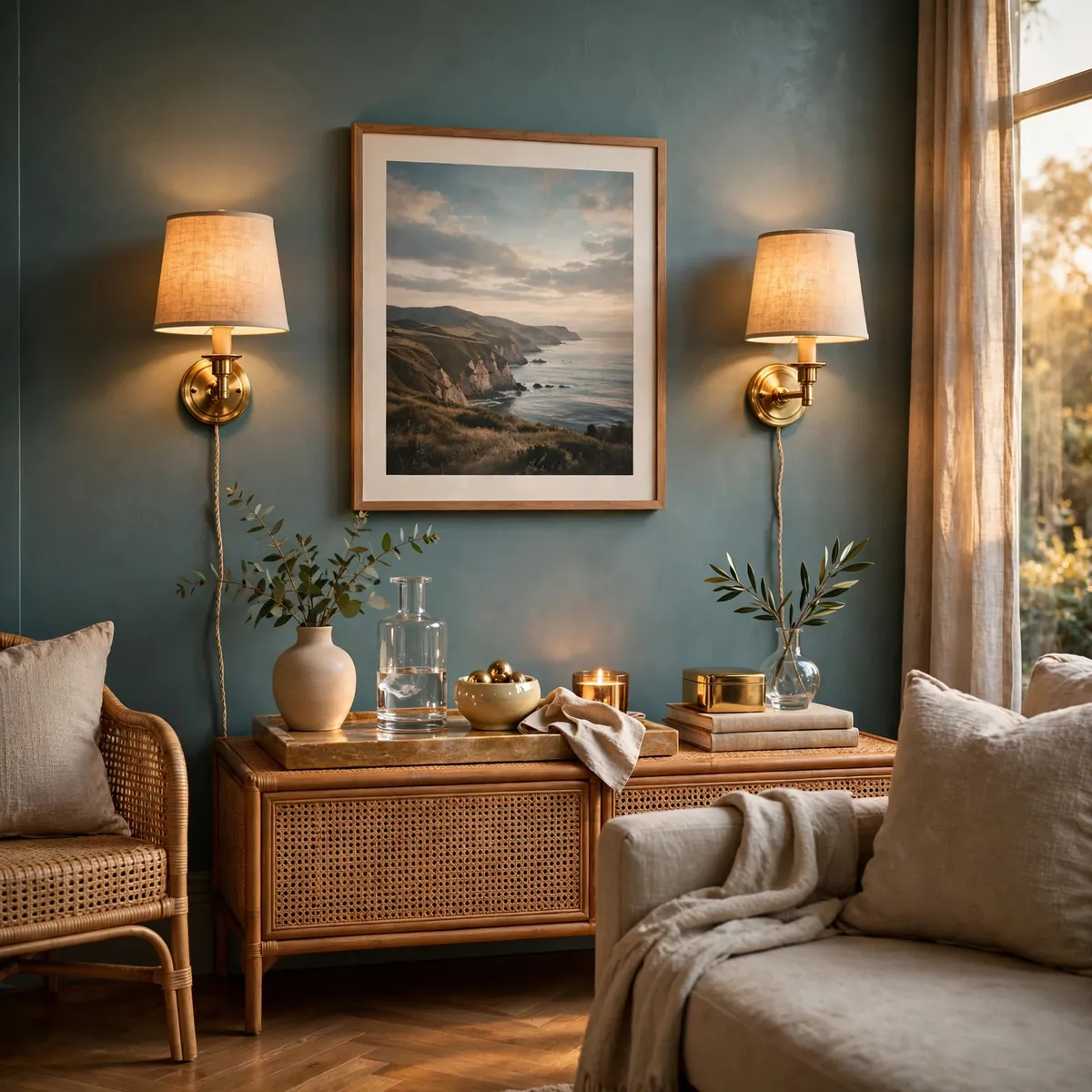
Wall sconces add the kind of flattering eye-level light that makes a living room feel layered and expensive, and plug-in versions need no electrician. Flanking a piece of art or a mirror with two plug-in sconces turns a flat wall into a designed moment. The concrete example: two brass plug-in sconces with linen shades mounted 60 inches from the floor on either side of a 36-inch-wide landscape print, cords tucked behind the sofa and run to the nearest outlet with a cord cover. Warm 2700K bulbs make the art glow softly at night and the whole wall feels like a boutique hotel.
Quick tips:
- Quick tips:
- Mount sconces at about eye level (around 60 inches) for flattering light.
- Use plug-in styles with cord covers for a renter-friendly install.
- Choose warm 2700K bulbs for a cozy evening glow.
Curve an Arc Floor Lamp Over the Reading Chair
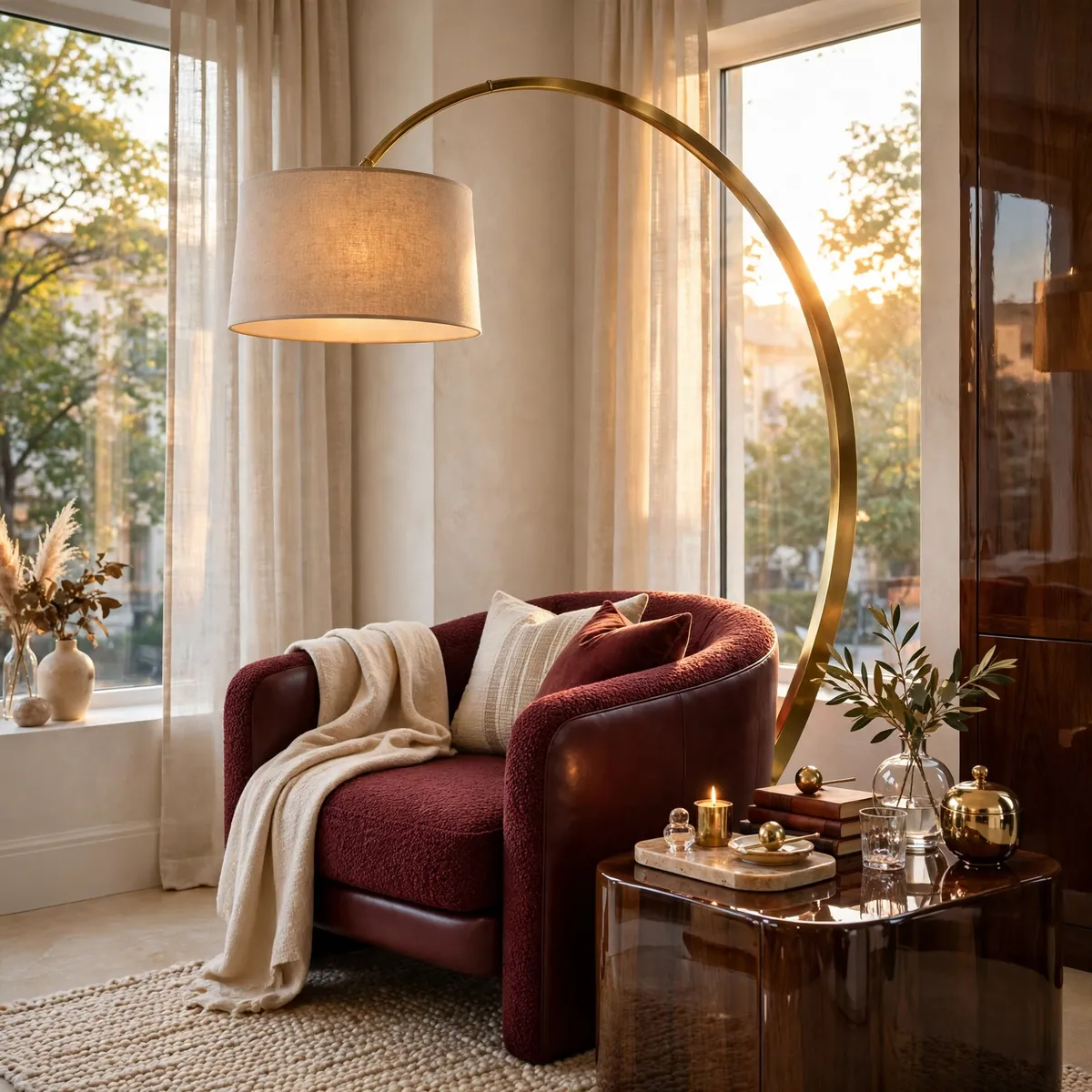
An arc floor lamp solves two problems at once: it brings overhead-style light to a seating spot with no ceiling fixture, and its curve adds a sculptural line that breaks up the room’s rectangles. Positioned over a reading chair, it creates a defined, inviting corner that practically asks to be sat in. The concrete example: a brushed-brass arc lamp with a linen drum shade arcing over a boucle accent chair and small side table in the window corner, the shade hanging about 5 feet off the floor so light pools over the chair without glaring. The base slides discreetly behind the chair, so the lamp reads as floating light.
Quick tips:
- Quick tips:
- Hang the shade high enough to clear heads but low enough to pool light.
- Slide the base behind furniture so the arc appears to float.
- Pair the lamp with a side table to complete the reading corner.
Pair Warm-Glowing Table Lamps on the Side Tables
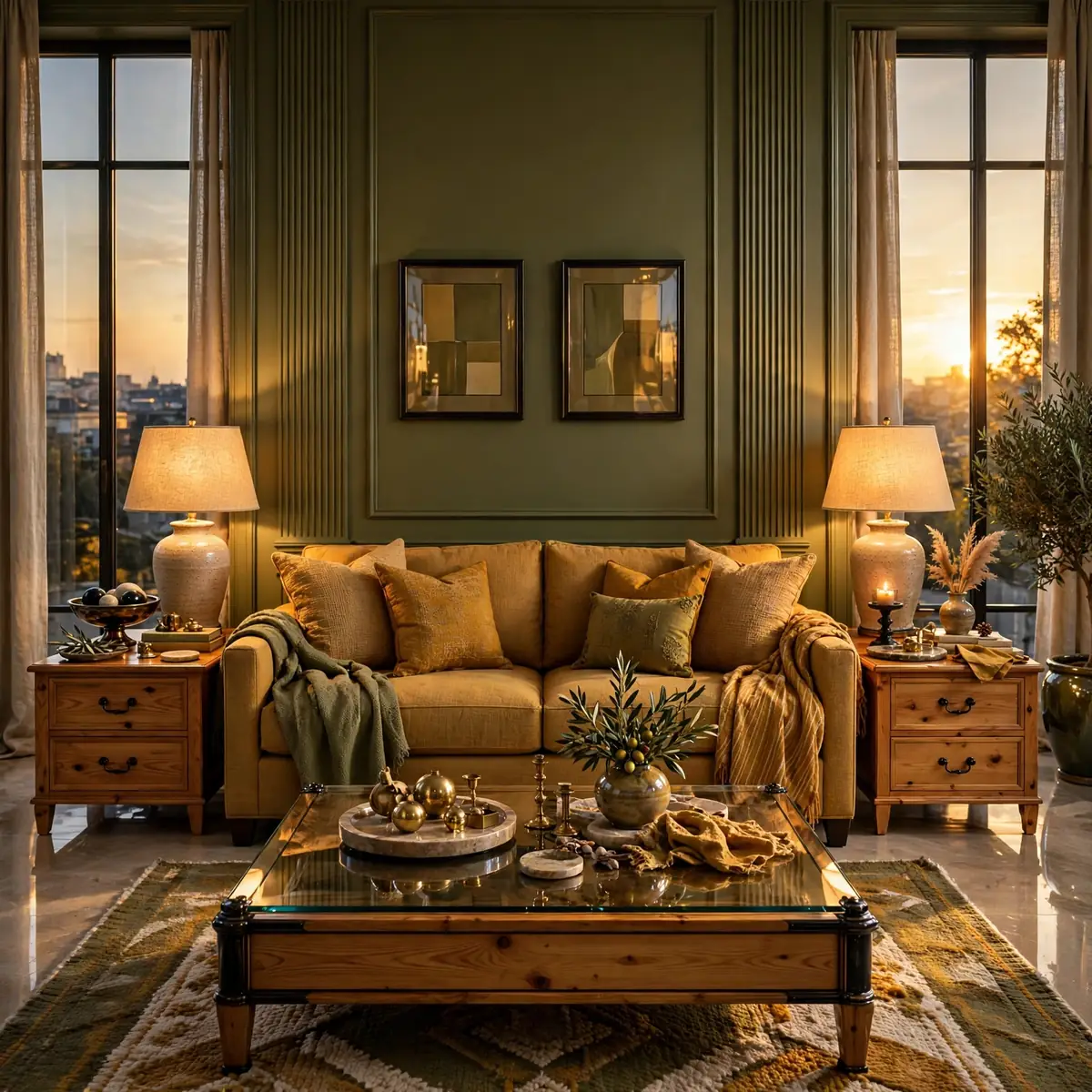
Matching table lamps on either side of the sofa are the quickest route to a pulled-together, symmetrical look — and warm bulbs do more for coziness than any decor object. Lamps at sofa-arm height cast flattering light exactly where people sit, which overhead lighting never does. The concrete example: two ceramic table lamps with oatmeal linen shades on the side tables flanking a three-seat sofa, both fitted with warm 2700K LED bulbs and set on a timer to switch on at dusk. The room greets you with a glow every evening, and the matching pair gives the whole seating wall a sense of order.
Quick tips:
- Quick tips:
- Match lamp height to roughly the sofa arm height or slightly above.
- Use warm 2700K bulbs and put lamps on timers for automatic evening glow.
- Linen or fabric shades diffuse light more softly than glass.
Cluster Candles on the Mantel for Evening Glow
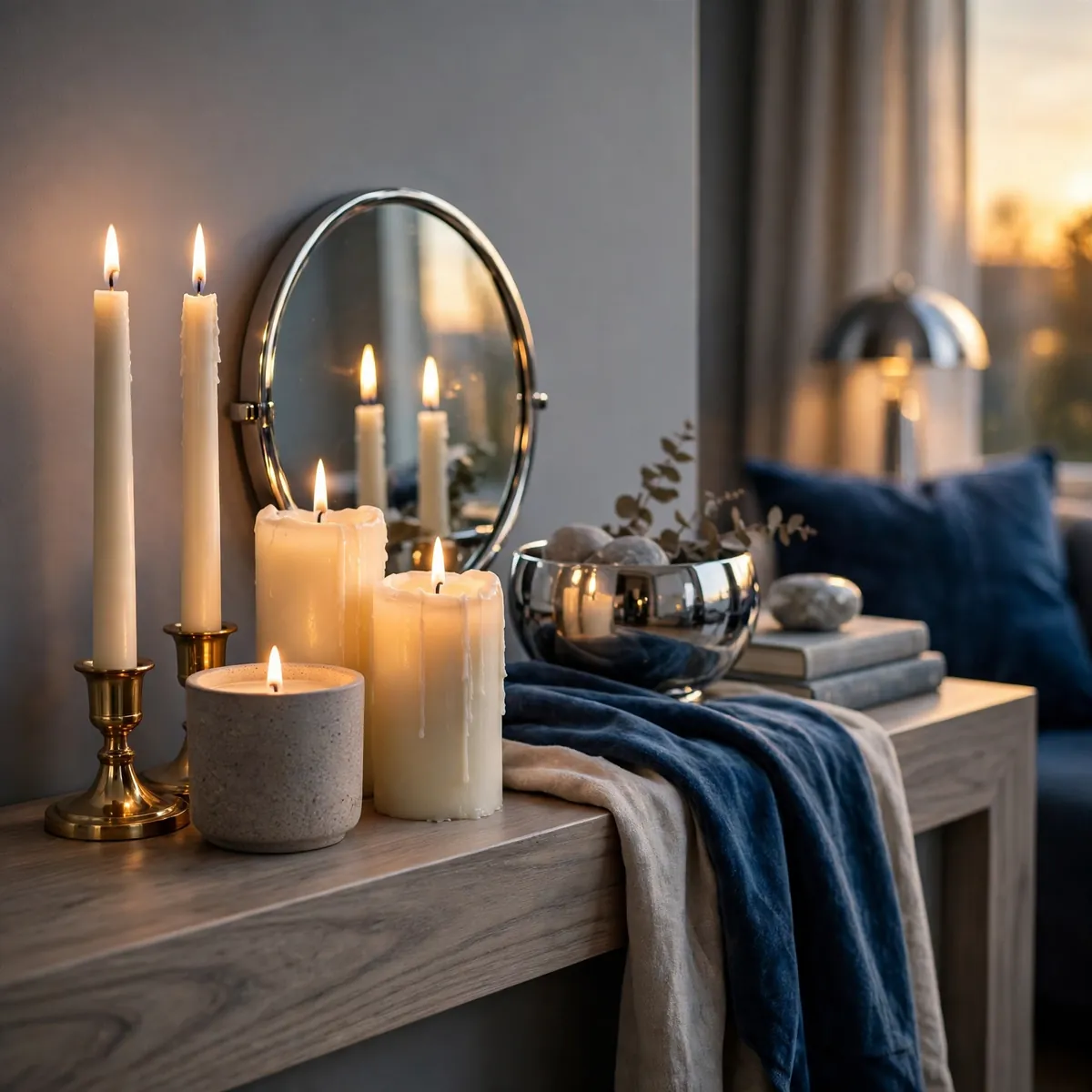
Candlelight is the cheapest luxury in home decor — a cluster of candles at varying heights turns a mantel, console, or coffee table into an evening focal point. Grouping matters: odd numbers in mixed heights look styled, while a single candle looks forgotten. The concrete example: five candles on the mantel — two tall ivory tapers in brass holders, two medium pillar candles, and one short scented candle in stoneware — clustered at one end rather than spread across the whole mantel, with a small mirror behind them to double the flicker. Flameless LED candles with timers give the same glow with zero fire worry.
Quick tips:
- Quick tips:
- Group candles in odd numbers at mixed heights for a styled look.
- Cluster at one end of the mantel instead of spreading them out.
- Use LED candles on timers for glow without the fire risk.
Hunt Down One Vintage Piece With Patina
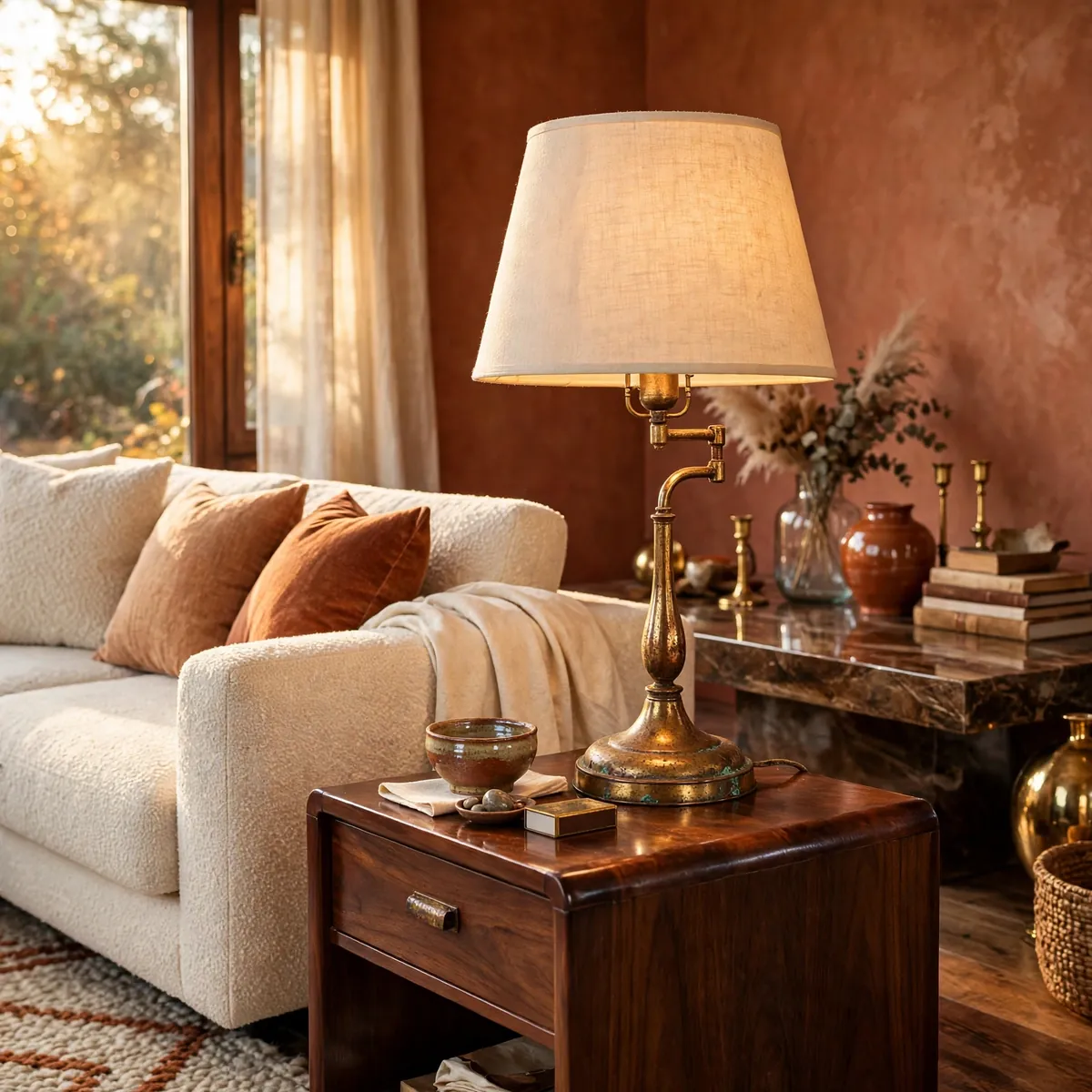
A single vintage piece gives a room the soul that all-new furniture can’t manufacture. Patina — the worn brass, the aged wood, the slightly imperfect glaze — reads as history, and one aged object makes everything around it look more collected. The concrete example: a mid-century brass table lamp with a slightly mottled finish found at a flea market, rewired and fitted with a new linen shade, placed on the side table next to a modern linen sofa. The old-meets-new contrast is the entire trick: the lamp’s age makes the new sofa look curated instead of catalog-bought.
Quick tips:
- Quick tips:
- Choose one vintage piece per room so it reads as special, not cluttered.
- Rewire old lamps and fit new shades for safety and a fresh look.
- Let patina show — don’t over-restore the character away.
Park an Oversized Woven Basket for Throws
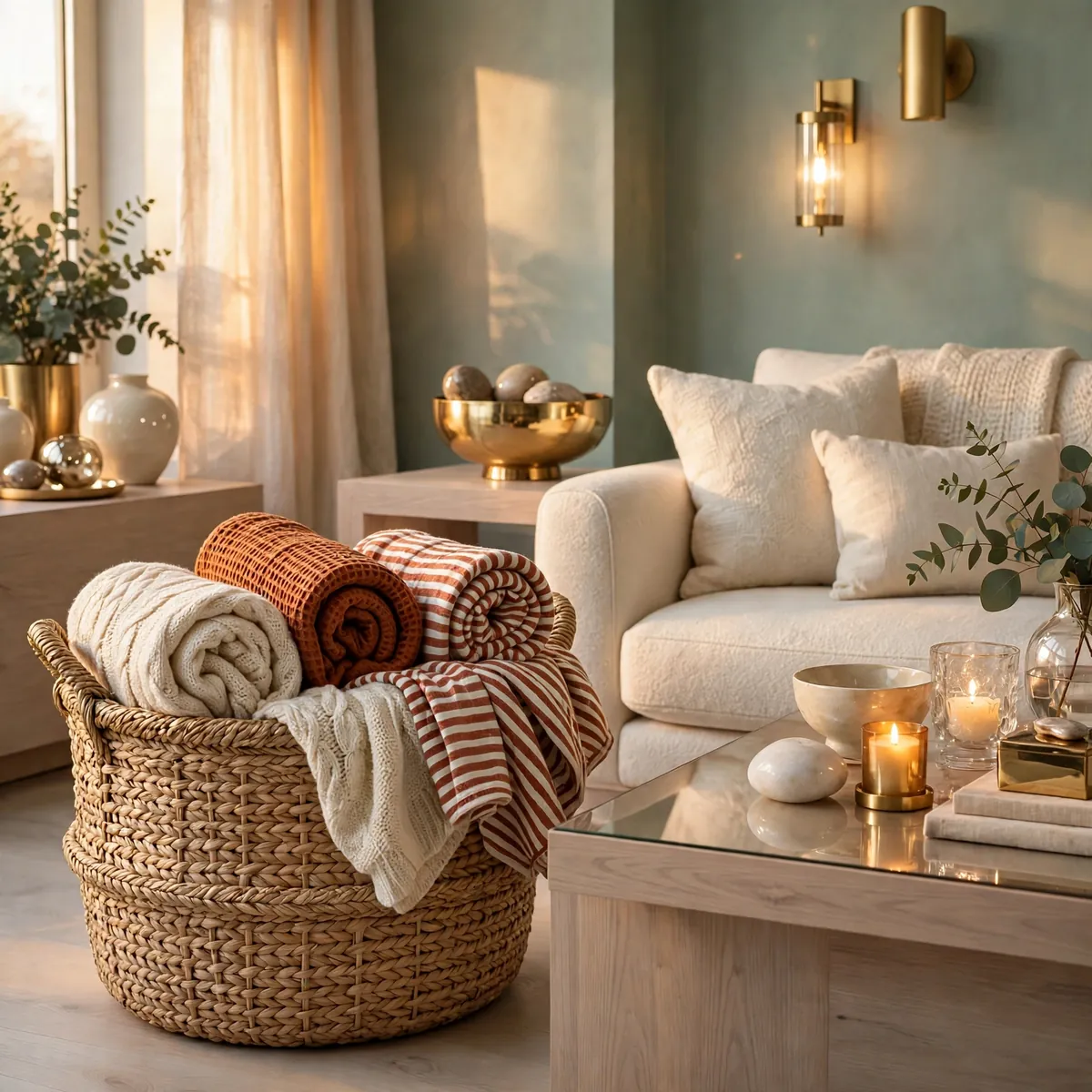
An oversized woven basket is decor that works for a living — it holds the throw blankets, the kids’ toys, or the firewood while adding natural texture to the room. Baskets soften rooms full of hard furniture edges and their organic weave warms up modern spaces instantly. The concrete example: a 24-inch seagrass basket beside the sofa, rolled with three throws (a cream knit, a rust waffle weave, and a striped cotton), positioned where it’s reachable from the seat — beautiful when full, sculptural when half-empty. Choose a basket tall enough to stand on its own and sturdy enough to survive daily grabbing.
Quick tips:
- Quick tips:
- Size the basket to the blankets: 20–24 inches handles three throws.
- Roll throws instead of folding for a fuller, styled look.
- Place it within arm’s reach of the main seat for real use.
Group Ceramic Vases on the Console
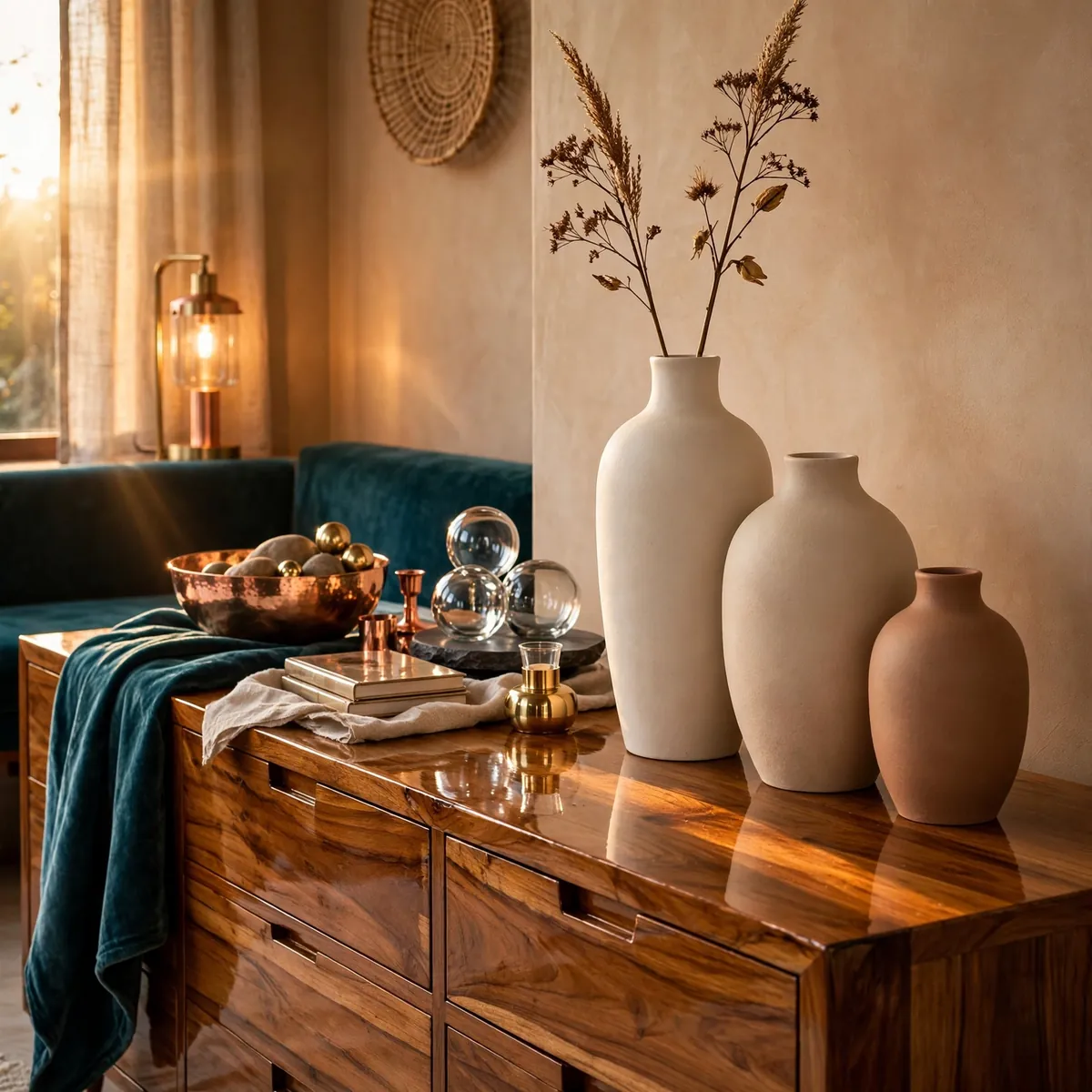
A cluster of ceramic vases in varied heights turns a console table from a flat surface into a sculptural moment. The trick is unifying them: same material or color family, different shapes and sizes, grouped in odd numbers so the eye reads them as one composition. The concrete example: three matte stoneware vases — 14, 10, and 7 inches tall — in cream, sand, and clay tones grouped at the left end of the entry console, the tallest holding two dried stems while the others stand empty. Empty vases are fine; the shapes themselves are the decor.
Quick tips:
- Quick tips:
- Unify by material or color family, vary the shapes and heights.
- Group in odd numbers (three or five) for a natural composition.
- Leave some vases empty — the forms are decoration enough.
Corral the Ottoman With a Wood Tray
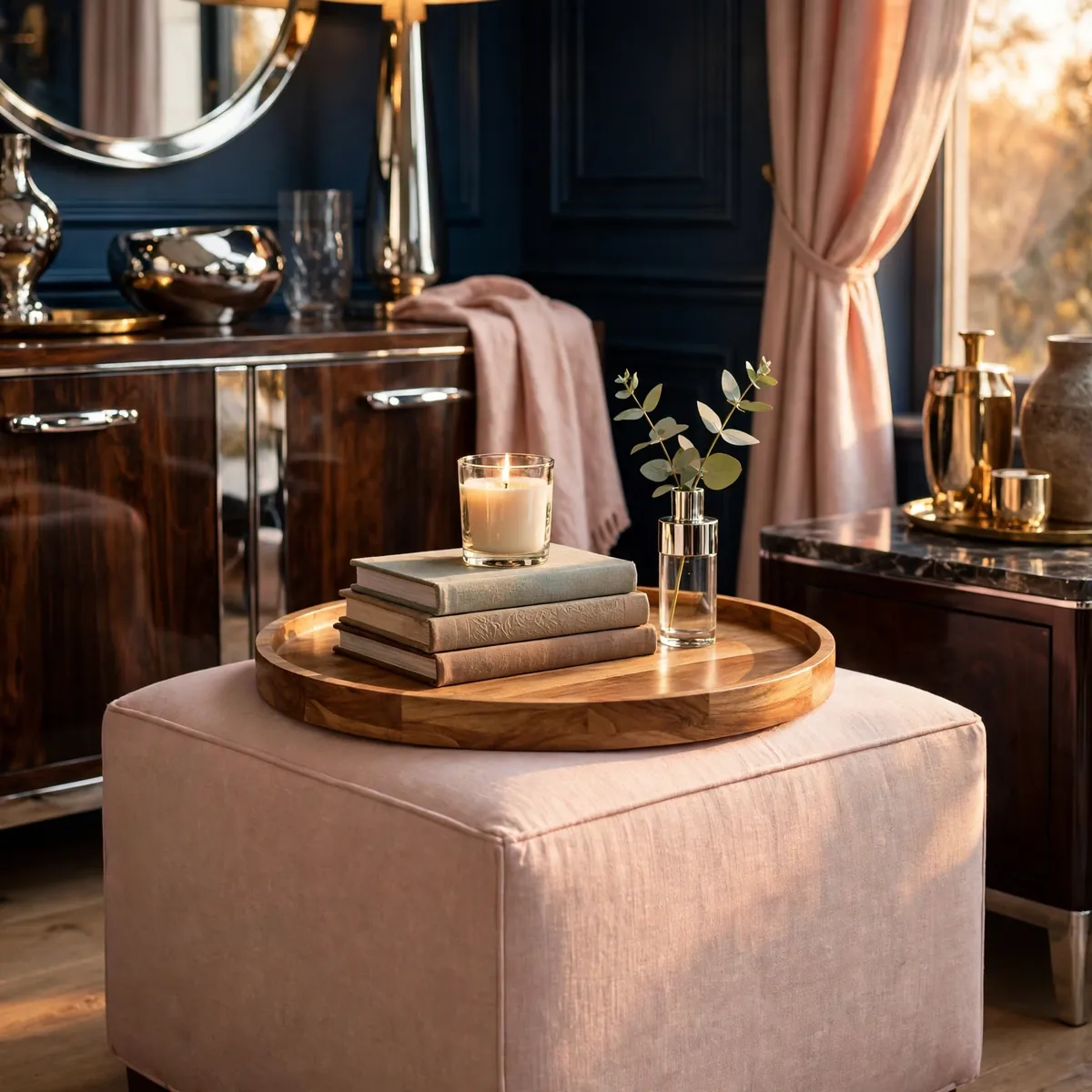
A large tray on an ottoman or coffee table instantly upgrades both pieces: the ottoman becomes a usable surface and the tray turns scattered objects into a styled arrangement. Wood trays add warmth that balances upholstered softness. The concrete example: a 20-inch round acacia wood tray on a square linen ottoman, holding a small stack of coffee-table books, a candle, and a bud vase with one eucalyptus sprig — the ottoman now works as a footrest, extra seat, and serving surface depending on the moment. Size the tray to cover about two-thirds of the ottoman top so there’s still soft space to put feet up.
Quick tips:
- Quick tips:
- Size the tray to about two-thirds of the ottoman or table top.
- Wood warms up rooms with lots of upholstery and metal.
- Keep the tray arrangement liftable so the surface stays usable.
Frame the TV With Floating Shelves
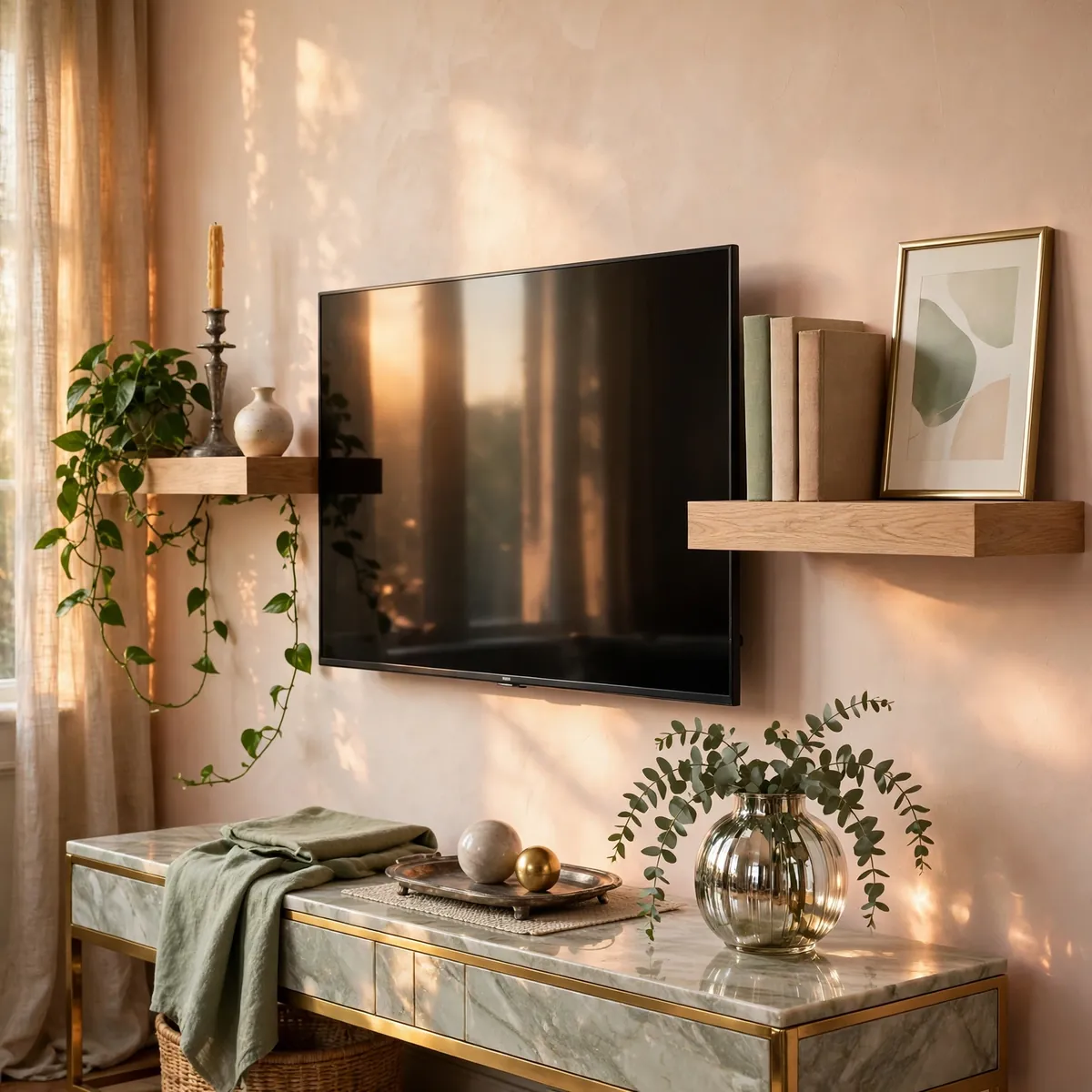
A bare TV wall reads as unfinished, but the fix doesn’t require hiding the screen — framing it with decor makes the black rectangle feel like part of the design. Floating shelves on one or both sides of the TV hold art, books, and plants that draw the eye around the screen instead of straight to it. The concrete example: two 36-inch oak floating shelves flanking a 55-inch TV, styled with a leaning art print, a trailing pothos, three upright books, and a small ceramic object — the TV becomes one element in a styled wall rather than a floating black hole. Paint the wall behind the TV a slightly deeper tone than the rest of the room and the screen recedes even further.
Quick tips:
- Quick tips:
- Style shelves on both sides for balance, or one side for asymmetry.
- Keep shelf styling light so it doesn’t compete with the screen.
- A slightly darker wall behind the TV helps the screen blend in.
Hang Floor-to-Ceiling Curtains in a Warm Weave
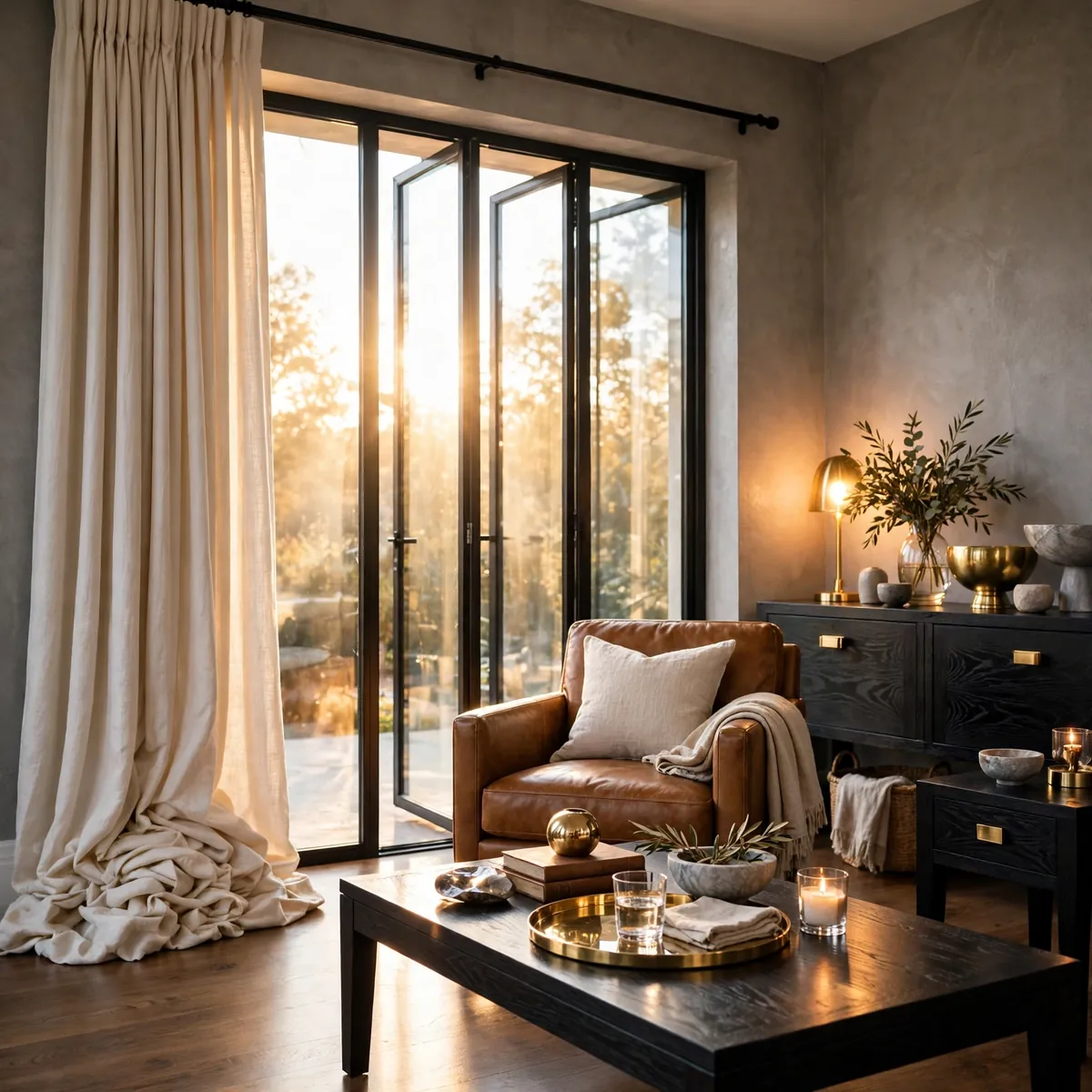
Curtains hung from just below the ceiling to the floor make windows look taller, ceilings feel higher, and the whole room more finished — it’s the single most transformative textile move after the rug. A warm weave like washed linen or a subtle slub cotton softens daylight and adds texture even when the curtains stay open. The concrete example: ivory washed-linen curtain panels on a matte black rod mounted 4 inches below the ceiling and extending 8 inches beyond each side of the window frame, panels just kissing the floor. When open, the panels stack off the glass so light pours in; when closed, the room feels wrapped and cozy.
Quick tips:
- Quick tips:
- Mount the rod 4–6 inches below the ceiling, never just above the frame.
- Extend the rod 6–8 inches past each side so open panels clear the glass.
- Let panels just kiss the floor — puddling collects dust.
Soften Daylight With Sheer Linen Panels
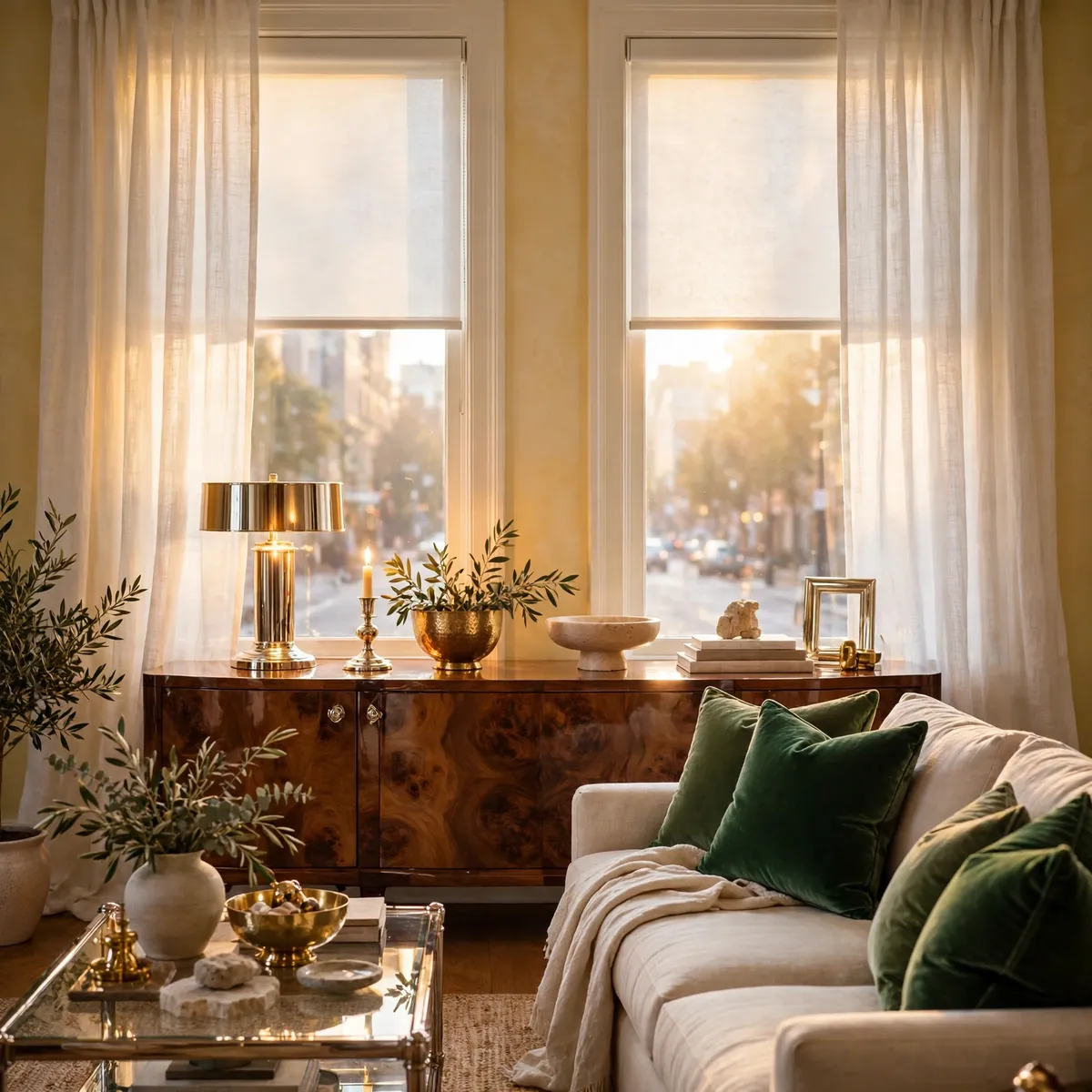
Sheer linen panels filter harsh daylight into a soft glow that flatters everything in the room — skin, textiles, art — while keeping the view and the brightness. They’re the daytime counterpart to heavier drapes and work beautifully layered in front of blinds or shades for privacy. The concrete example: white sheer linen panels on the living room’s street-facing windows, layered over simple roller shades — by day the sheers diffuse the sun into a gentle haze, by night the shades drop for full privacy. The linen’s natural slub adds texture even in a nearly transparent fabric.
Quick tips:
- Quick tips:
- Layer sheers over blinds or shades for day softness plus night privacy.
- Choose natural linen for texture; polyester sheers can look flat.
- Wash sheers regularly — they show dust faster than opaque fabrics.
Rotate Textiles With the Seasons
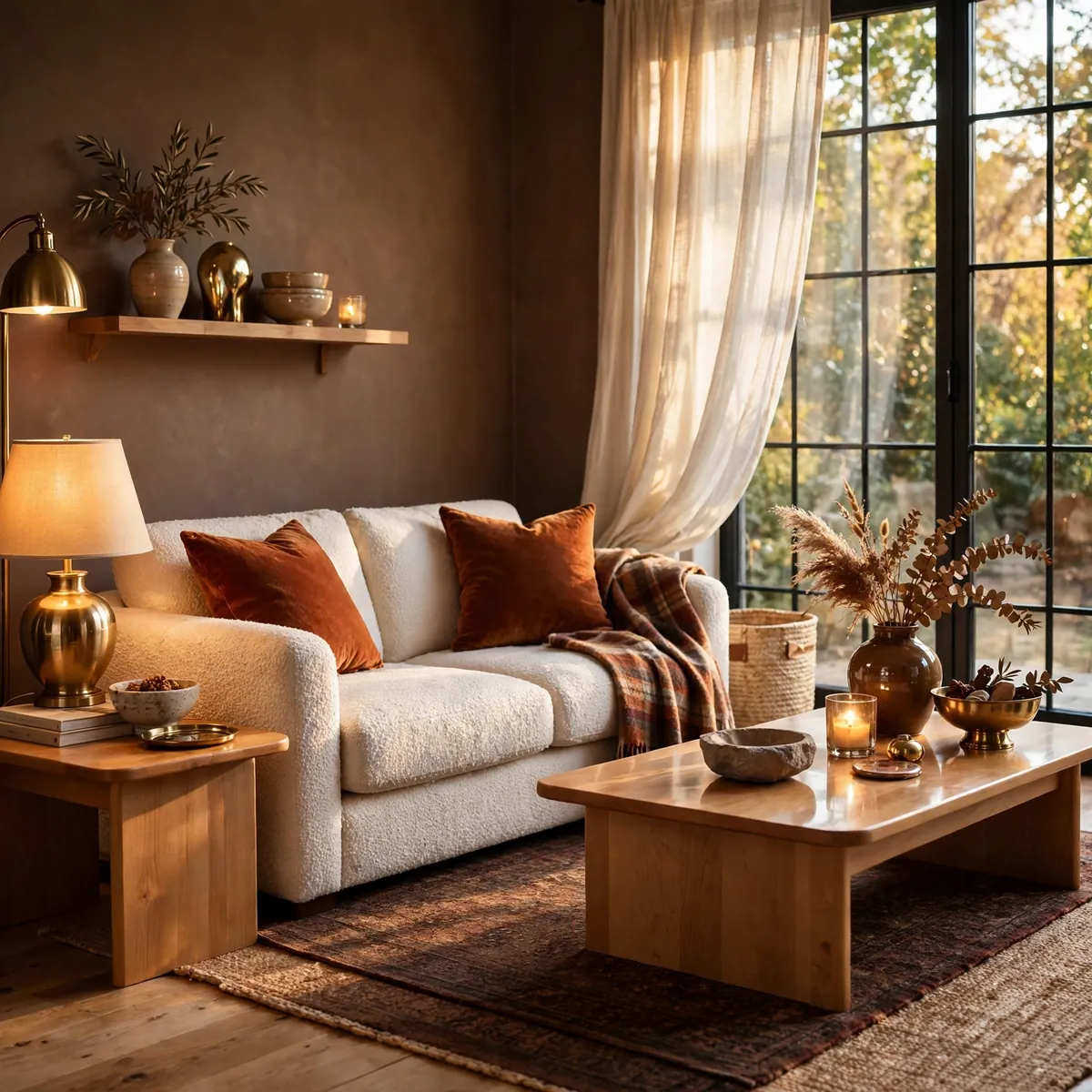
The easiest whole-room refresh costs nothing if you store one seasonal set of textiles. Swapping pillow covers and throws twice a year — airy linen and cotton for warm months, velvet and chunky knits for cold ones — makes the room feel current without buying anything new. The concrete example: each October, pack the summer’s white linen pillow covers and lightweight cotton throw into a labeled storage bin and bring out rust velvet covers, a plaid wool throw, and a deeper-toned rug layer — the room shifts from breezy to cocooning in one afternoon. Store off-season textiles in breathable cotton bags, not plastic, to keep them fresh.
Quick tips:
- Quick tips:
- Keep one full seasonal textile set stored and labeled for easy swaps.
- Swap pillow covers and throws, not pillows and blankets, to save space.
- Store off-season textiles in breathable bags, not sealed plastic.
Frame One Travel Print as Personal Art
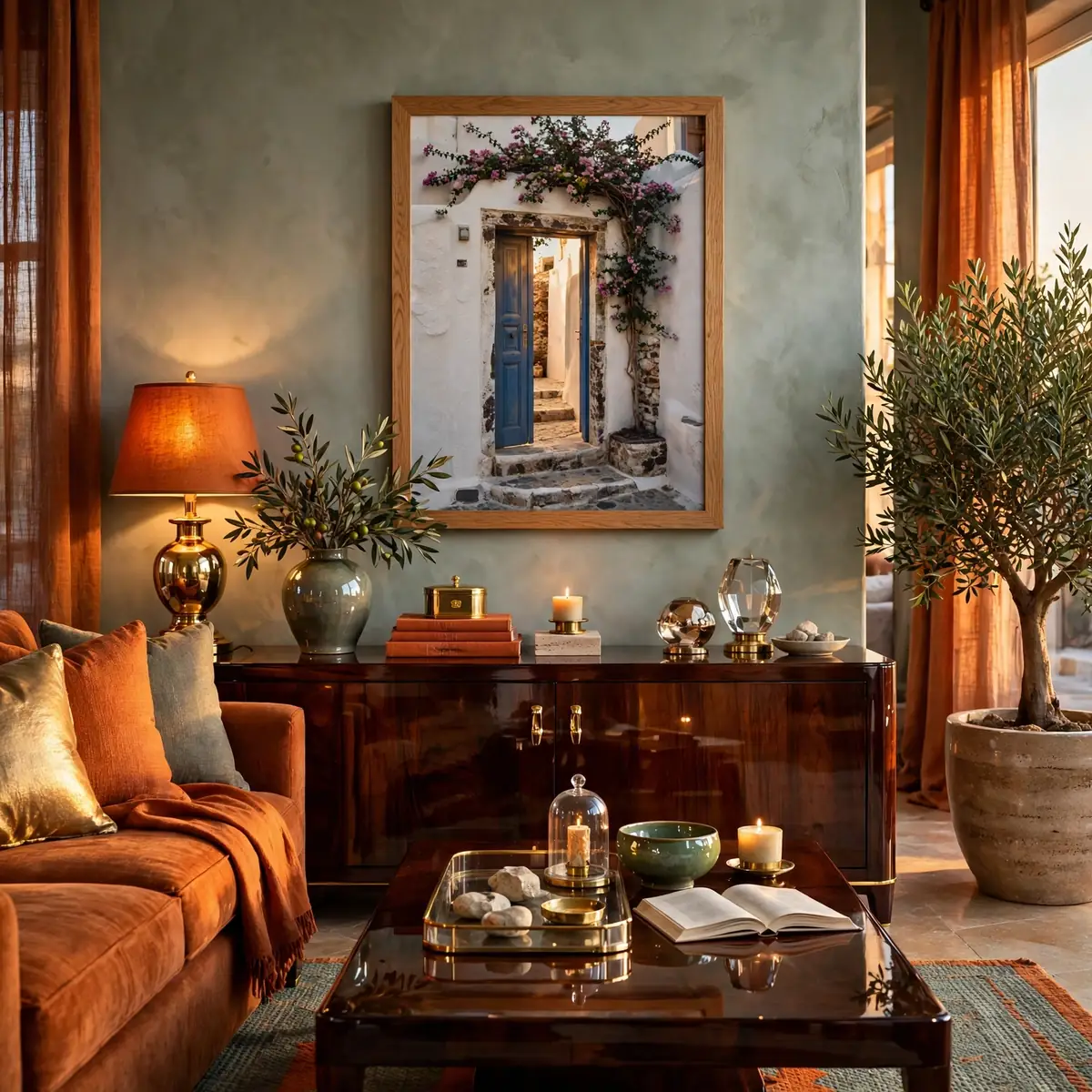
Personal art — a framed photo from a favorite trip, a market print bought on vacation, a map of a meaningful city — gives a room the one thing no store can sell: your story. One well-framed personal piece among store-bought decor makes the whole room feel authentic. The concrete example: a 16-by-20 photograph of a Santorini doorway from a honeymoon trip, printed in warm tones and framed in a simple oak frame, hung in the hallway-facing wall of the living room where guests naturally see it. The personal piece becomes a conversation starter, and the room stops feeling like a showroom.
Quick tips:
- Quick tips:
- Print travel photos large (16-by-20 or bigger) for real wall presence.
- Use simple frames so the memory, not the frame, is the focus.
- Hang personal art where guests will naturally see and ask about it.
FAQs
How can I decorate my living room on a budget?
Start with what costs nothing: rearrange the furniture, shop your own home for pieces to repurpose, and declutter every surface. Then spend small where it shows most — new pillow covers, a thrifted vintage lamp, and warm light bulbs transform a room for very little. Paint is the next best value: one accent wall or even just the wall behind the TV changes the whole feel for the price of a can of paint and a brush.
What is the easiest way to refresh a living room without buying new furniture?
Refresh the textiles. Swap pillow covers, drape a new throw, and make sure the rug is large enough to anchor the seating — textiles control the room’s color and texture more than any furniture piece. Then fix the lighting: swap cool bulbs for warm 2700K ones and add a lamp or candles. These two moves alone make most living rooms feel completely different.
How many throw pillows should be on a living room sofa?
Three to five pillows on a standard three-seat sofa is the sweet spot: enough to look styled, not so many you have to move a pile to sit down. Use odd numbers and mix three textures — for example velvet, bouclé, and linen — in one color family. On a loveseat, three is plenty; on a sectional, five spread across the corners works well.
How do I make my living room look expensive on a budget?
Expensive-looking rooms share a few traits that cost little: consistent frames on the gallery wall, textiles in a tight color family, warm layered lighting instead of one overhead fixture, and one vintage or handmade piece with visible character. Declutter ruthlessly — visual calm reads as luxury. Match your curtain panels, hide cords, and keep surfaces styled but not crowded.
What color decor goes with a beige or gray sofa?
A neutral sofa is a blank canvas, so choose a direction: warm (rust, cognac, mustard, terracotta) for coziness, or cool (sage, dusty blue, charcoal) for calm. Pick two accent colors plus one metallic and repeat each at least three times around the room — in pillows, art, a throw, and small objects. The repetition is what makes the accents look intentional rather than random.
Conclusion
A stylish, inviting living room is built from small, deliberate decor decisions — the textiles you layer, the light you warm, the walls you style, the objects you choose to keep in sight. None of these 25 ideas requires a remodel or a big budget; they require attention. Pick the one that addresses your room’s weakest spot, whether that’s a too-small rug, flat lighting, or bare walls, and start there. Rooms that feel truly finished are rarely decorated all at once — they evolve one thoughtful layer at a time, and every layer makes the room more yours.