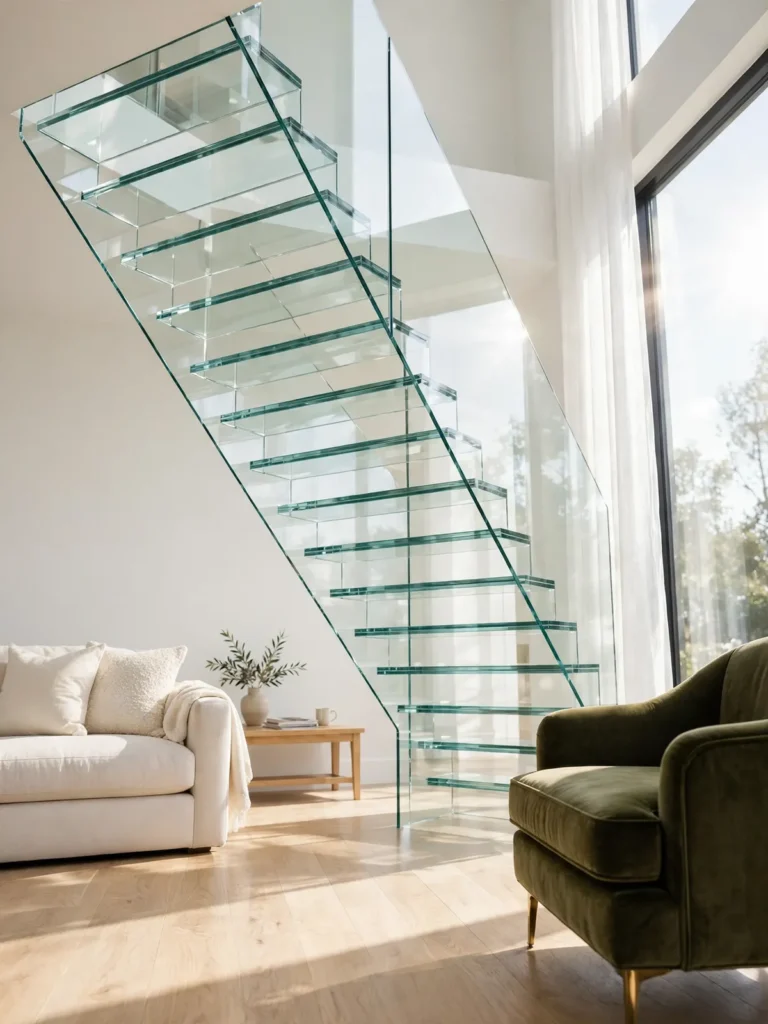
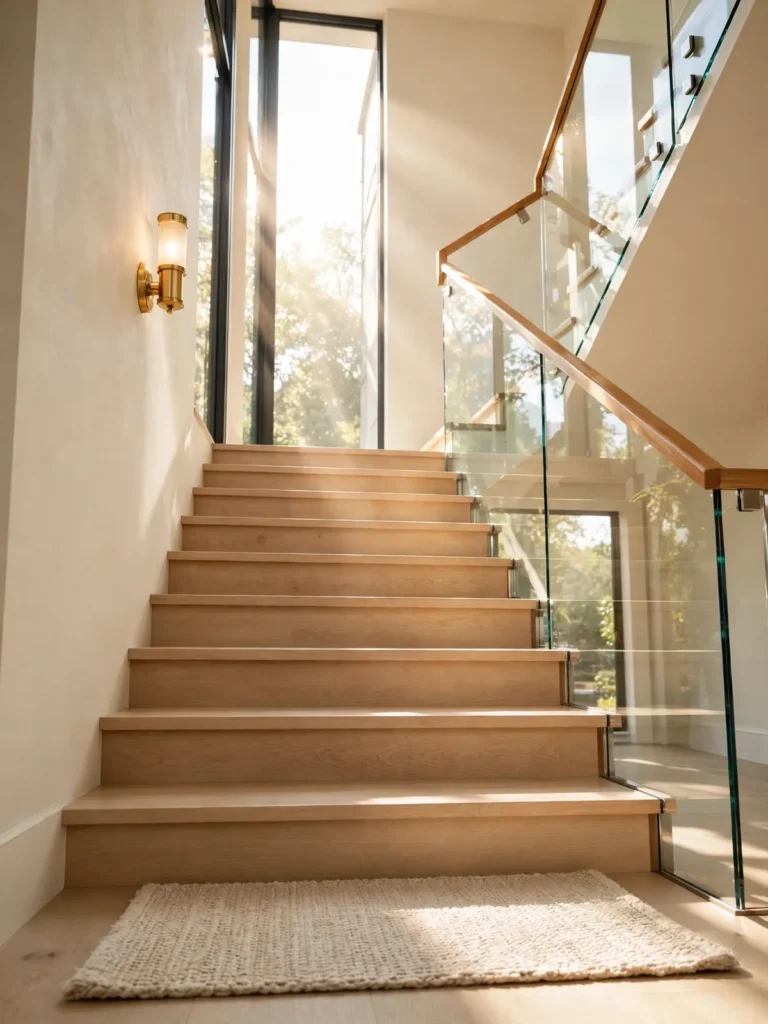
25 Stunning Glass Staircase Ideas That Make Your Home Feel Bright, Open and Luxurious
A glass staircase does more than connect two floors — it opens up the whole home. These 25 ideas show how clear, frosted and tinted glass pairs with wood, stone, brass and light to make hallways brighter, rooms feel larger, and everyday movement feel calm and luxurious.
A glass staircase transforms a home by letting light travel freely between floors instead of stopping at a solid wall or closed balustrade. The result is a hallway that feels wider, a living room that feels connected to the floor above, and a stair that reads as part of the room rather than a barrier inside it. Clear panels keep sightlines open, frosted or tinted glass softens the look, and warm wood, stone or brass keeps the glass from feeling cold.
If you love the airy feel of a double-height stair, these duplex staircase ideas show the same open, light-led approach on a larger scale. The ideas below focus on the whole staircase — its shape, its setting, and the rooms around it — so you can choose a look that suits a compact entry, a bright loft, or a calm family home.
Key Takeaways
What makes a glass staircase feel so open?
Clear glass panels let light and sightlines pass through, so the stair does not block the room. The floor below and the landing above stay visually connected.
Does a glass staircase suit a small home?
Yes — it is one of the best choices for a compact home, because it avoids the heavy, boxed-in feeling of a solid balustrade and makes a narrow hallway feel wider.
What materials pair best with glass on a staircase?
Warm oak or walnut treads, white marble, matte black steel, brass details and pale plaster all soften glass beautifully while keeping the look modern.
Is a glass staircase practical for a family home?
Yes, when it uses tempered glass, a secure handrail and easy-clean panels. Fingerprints show more than on wood, so a quick wipe keeps it looking clear.
Where should a glass staircase sit in the home?
Near a window, beside an open-plan living area, or in an entryway where its transparency can carry daylight deep into the home.
Floor-to-Ceiling Glass Railings for a Staircase That Almost Disappears
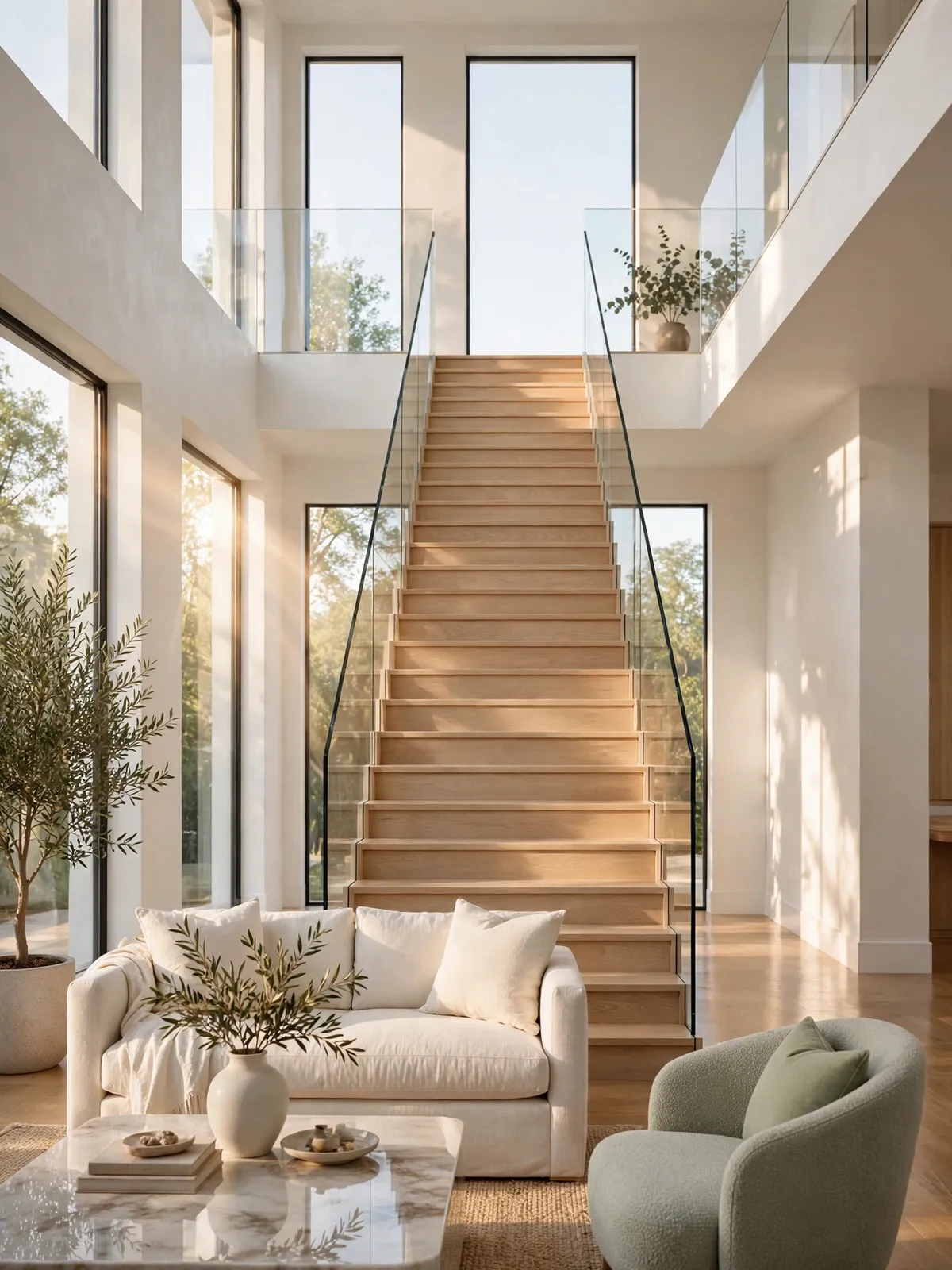
A straight flight with floor-to-ceiling glass panels turns the stair into a quiet, almost invisible line through the room. In one open-plan home, 12 mm clear glass panels run from the first tread to the ceiling beside a 1.1-metre-wide oak stair, with slim brushed-steel clamps holding each panel and no visible posts. The pale oak treads, each 280 mm deep, warm the glass, while the white walls and a low ivory sofa keep the focus on the light moving through. From the sofa, you can see straight through the stair to the garden door beyond.
Quick tips:
- Keep the glass completely clear — no tint — for the most invisible effect.
- Use pale wood treads so the stair still feels warm and grounded.
- Hide fixings in slim steel channels for a clean, frameless finish.
- Wipe panels weekly with a glass cloth to keep them truly clear.
Warm Wooden Treads Paired With Clear Glass Panels
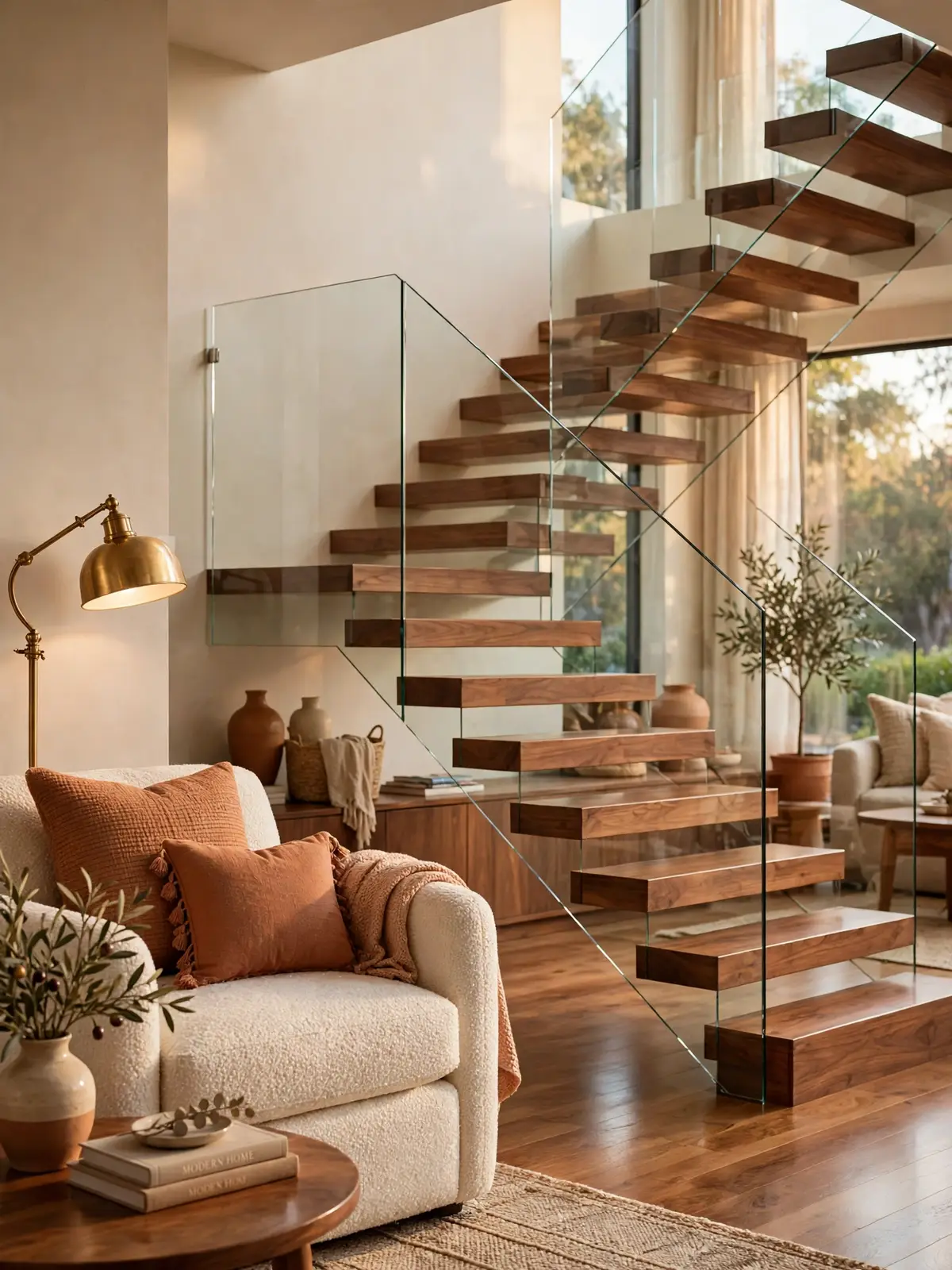
Warm wood and clear glass are a natural pair: the wood adds warmth, the glass keeps the stair light. Picture a straight stair with 40 mm thick walnut treads, each 900 mm wide, set against clear glass panels held by small brushed-nickel brackets. Below, a cream boucle armchair and a terracotta cushion echo the walnut tone, while a brass floor lamp adds a soft glow in the evening. The grain of the walnut is the decoration — no extra pattern is needed.
Quick tips:
- Choose walnut or warm oak for the richest contrast with clear glass.
- Match the tread tone to a timber sideboard or coffee table nearby.
- Keep the wall behind the stair pale so the wood stands out.
- Seal the treads well so they stay glossy and easy to clean.
Frosted Glass Stair Risers That Glow When Backlit
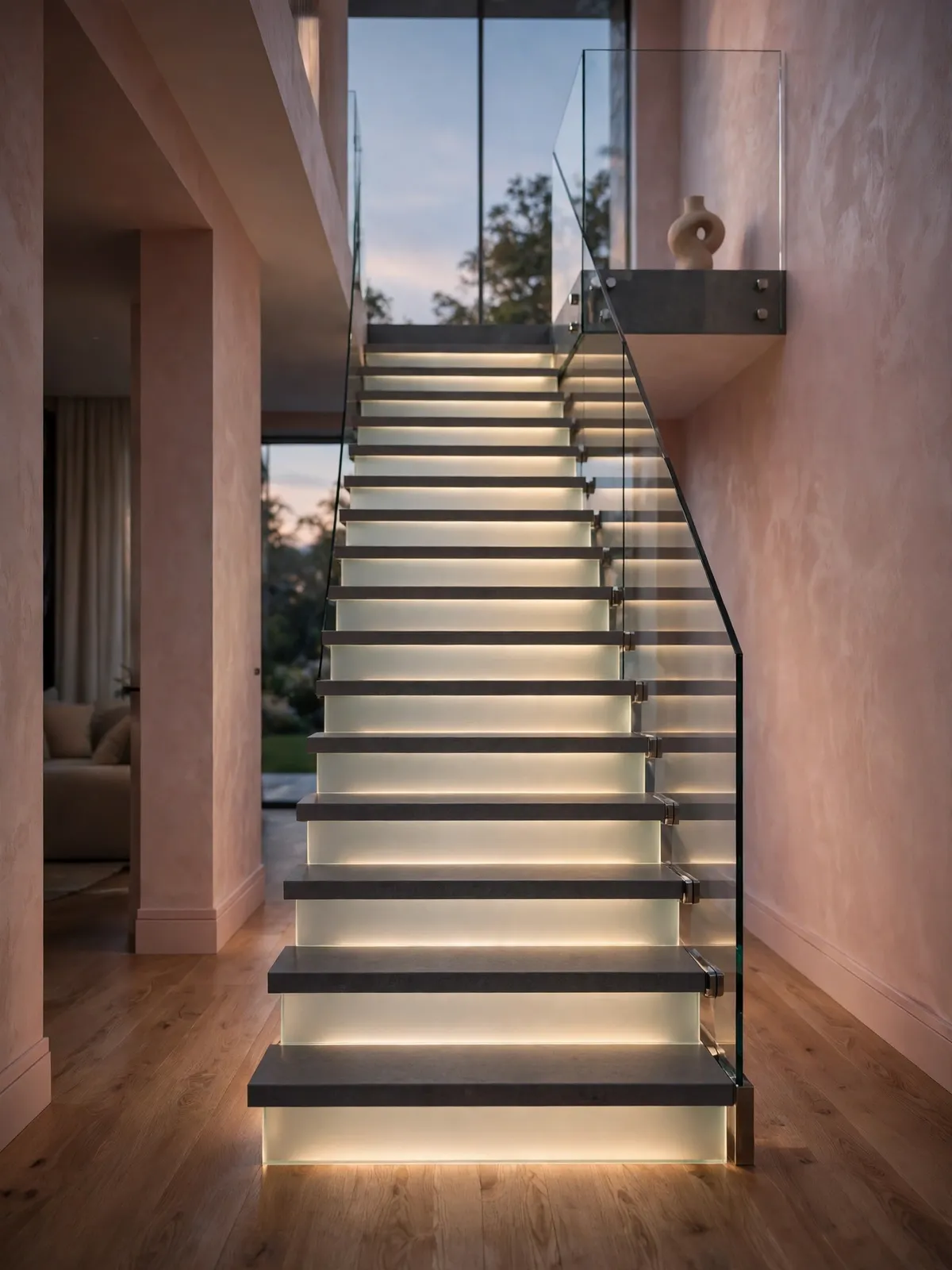
Frosted glass risers give privacy and glow at the same time. On this stair, each 180 mm high riser is made from frosted glass with a warm-white LED strip hidden behind it, so the whole flight glows gently after dark. The treads are charcoal-grey stone, 1 metre wide, and the wall beside the stair is painted a soft blush pink that catches the glow. It feels like a lantern built into the stair — bright enough to guide you at night, soft enough for a bedroom hallway.
Quick tips:
- Use warm-white LEDs, not cool white, for a soft evening glow.
- Put the lights on a dimmer so the glow can stay subtle.
- Pair frosted risers with dark treads for the strongest contrast.
- Keep the landing clear so the glow is the focal point.
Glass and Concrete Together for a Modern Loft Feel
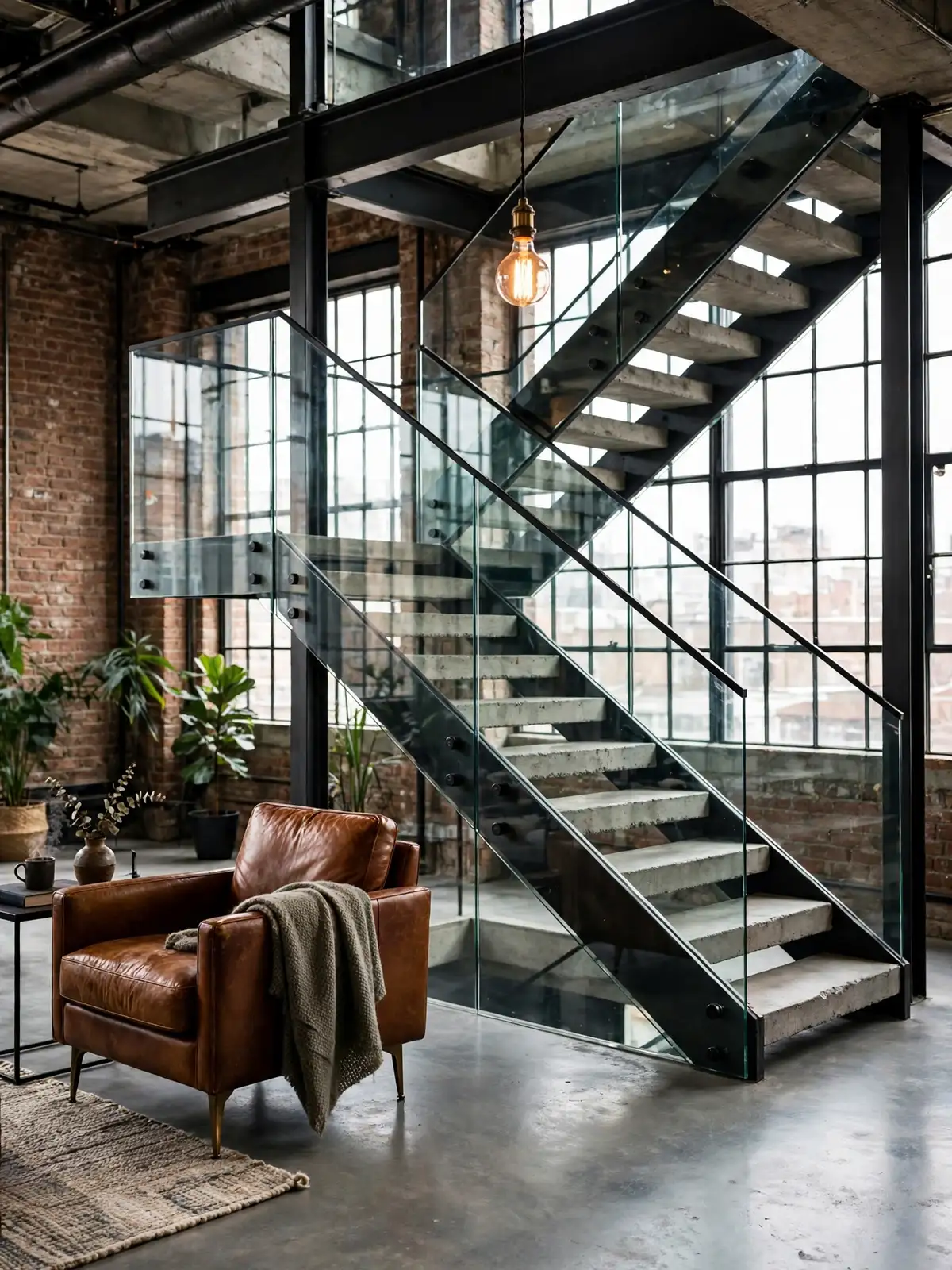
Glass softens concrete, and concrete grounds glass — together they suit a loft perfectly. Here, a straight flight of polished concrete treads, each 1 metre wide with a smooth, sealed finish, is edged with clear glass panels fixed into slim black steel channels. The exposed brick wall behind the stair adds texture, a cognac leather chair adds warmth, and a black steel-framed window floods the concrete with daylight. The stair feels solid and airy at once.
Quick tips:
- Seal concrete treads so they stay smooth and dust-free.
- Use black steel channels to tie the glass to loft-style windows.
- Add one warm material, like leather or timber, to soften the concrete.
- Keep the floor the same polished concrete for a seamless look.
A Glass Balustrade Beside Open Risers for Maximum Airiness
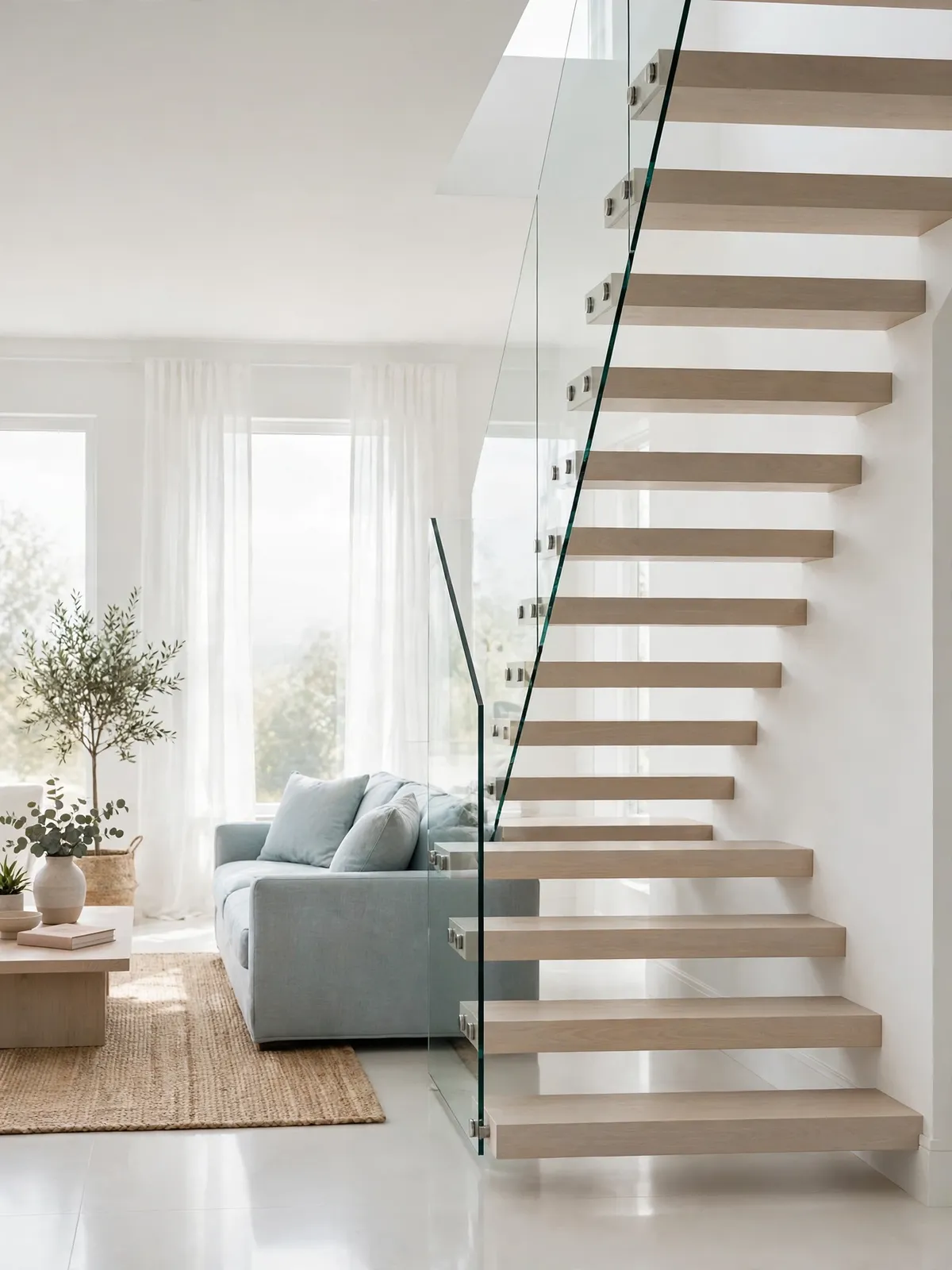
Open risers with a glass balustrade are the airiest combination of all, because light passes both through the sides and between the treads. In this living room, light ash treads, each 260 mm deep and 950 mm wide, appear to float with 180 mm gaps between them, while a single clear glass panel runs the full length of the stair. A pale blue-grey sofa and a woven jute rug underneath keep the palette calm, and sheer white curtains soften the daylight without blocking it.
Quick tips:
- Keep the space under the stair open so light flows through the gaps.
- Choose pale treads to make the floating effect stronger.
- Add a slim handrail on the wall side for extra confidence.
- Avoid heavy furniture directly under open risers.
A Glass Staircase That Greets Guests in the Entryway Foyer
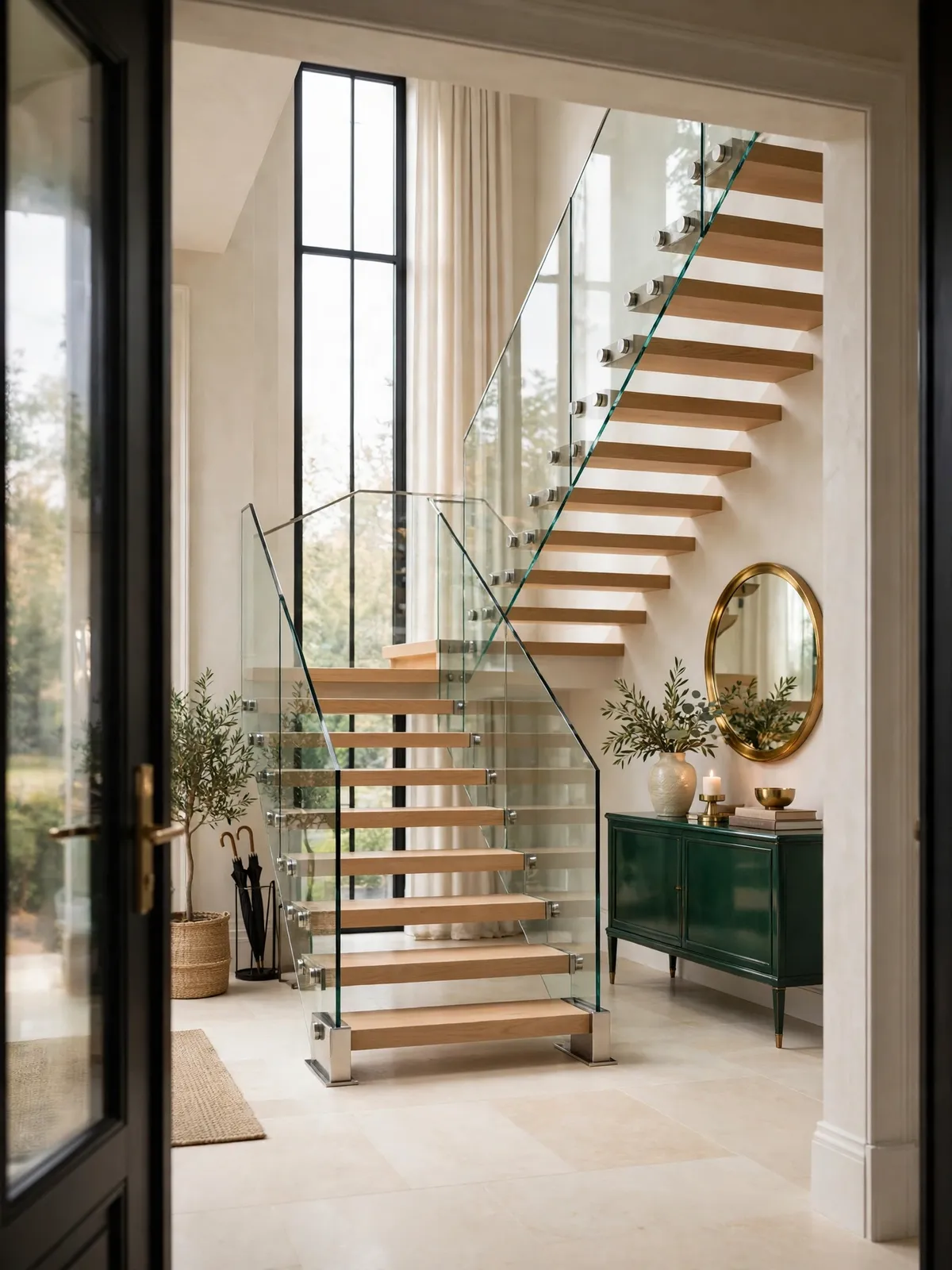
A glass stair in the foyer makes the first impression light and generous. In this entryway, a 1.2-metre-wide straight stair with white oak treads and clear glass panels rises beside a deep emerald-green console table, a large round brass mirror, and a cream stone floor. Guests see through the stair to the living room beyond, so the foyer never feels like a closed box. A single vase of white lilies on the console adds a fresh, welcoming note.
Quick tips:
- Centre the stair on the front-door sightline for the best first impression.
- Use a console and mirror in a rich tone to anchor the pale glass.
- Keep the foyer floor light so it reflects daylight from the stair.
- Leave the stair wall uncluttered so the glass stays the feature.
A Glass Staircase With a Single Central Glass Spine
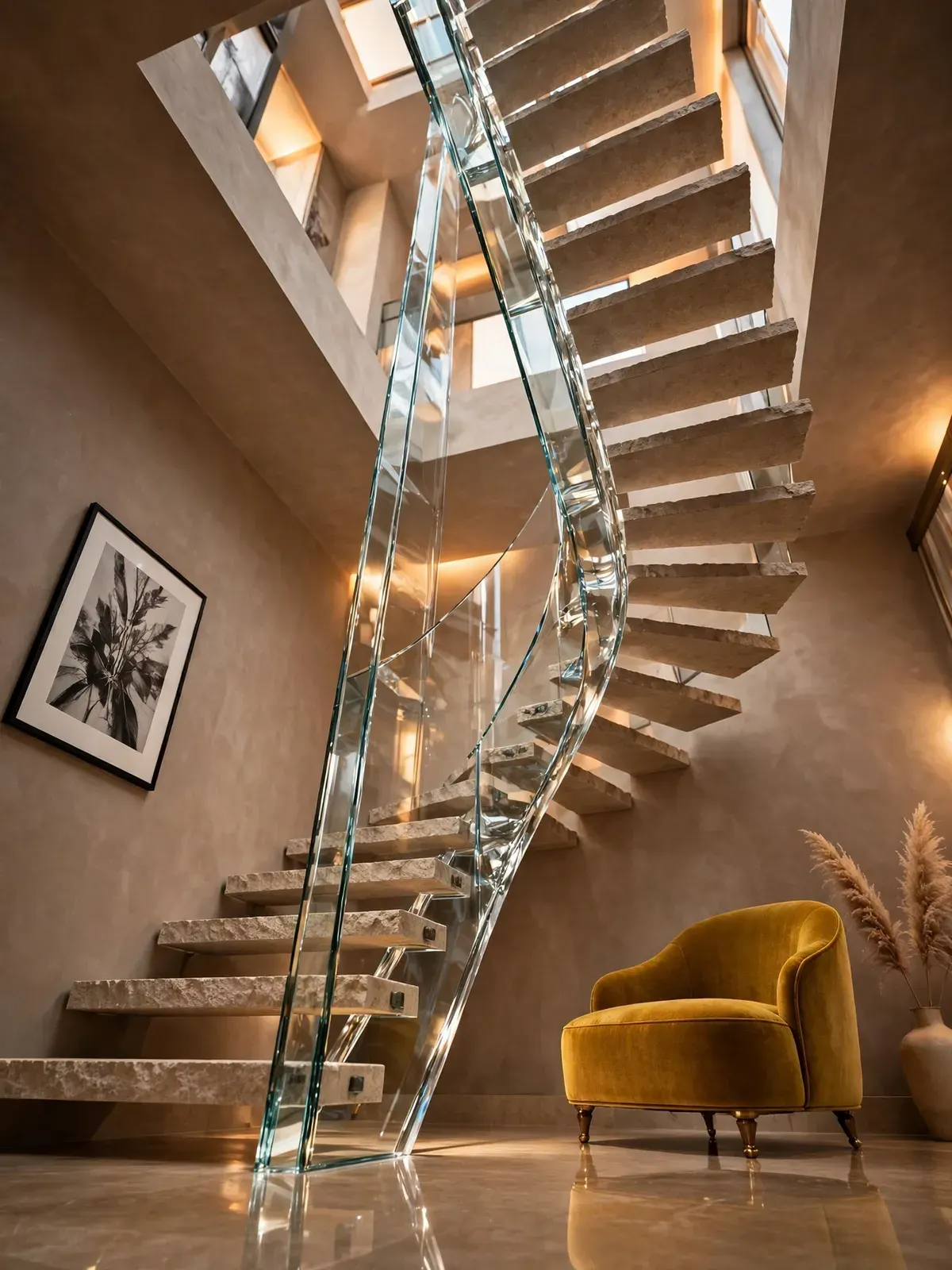
A central glass spine turns the stair into sculpture. Here, one thick central panel of clear glass, 19 mm thick, supports floating pale stone treads that extend 450 mm on each side, with no side balustrade at all — just the spine and a slim wall rail. The warm taupe walls and a mustard-yellow velvet chair below make the pale stone and glass feel warm, while a black-and-white art print on the landing adds a graphic finish. It is a bold look that still feels light because the centre is transparent.
Quick tips:
- Keep treads pale so the glass spine stays visible.
- Add a slim wall handrail for safety on a spine-only stair.
- Use one strong accent colour below the stair to balance the drama.
- Keep the landing art simple so it does not compete with the spine.
A Bold Feature Wall Behind the Glass Staircase
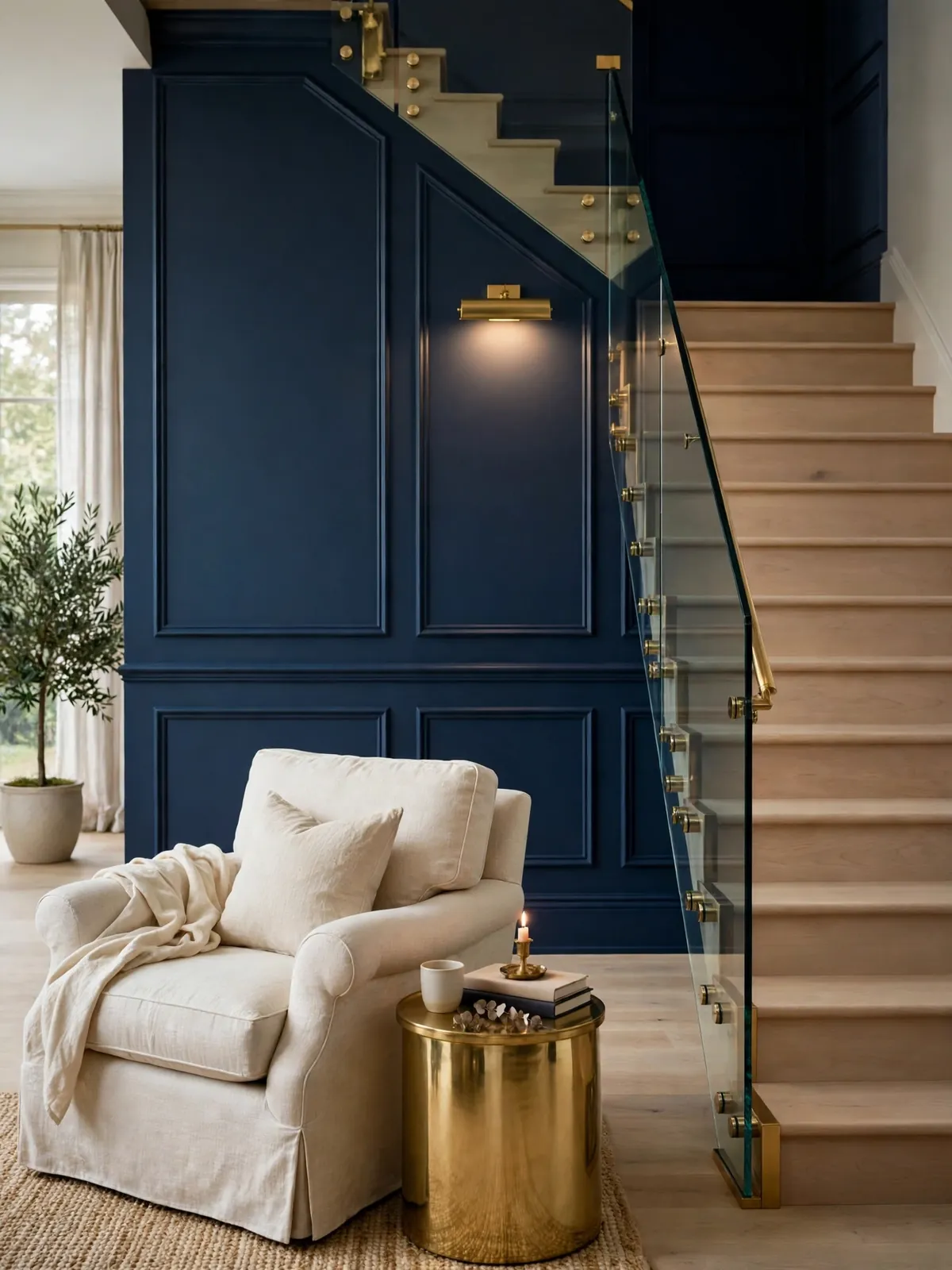
A bold wall behind clear glass makes both elements stronger — the wall gains depth, the glass gains contrast. This stair sits against a deep navy-blue panelled wall, with pale maple treads, each 900 mm wide, and clear glass panels that let the navy show through. A gold picture light above the stair and a cream linen armchair nearby soften the drama, while polished brass details pick up the warmth of the maple. The stair becomes a frame for the wall, and the wall becomes a backdrop for the stair.
Quick tips:
- Choose one bold wall colour and keep the rest of the room pale.
- Use pale treads so they stand out against a dark wall.
- Add warm metallic lighting to keep a dark wall feeling cosy.
- Keep art on the feature wall minimal — the panels are the pattern.
Tempered Glass Chosen for Safety Without Losing the Look
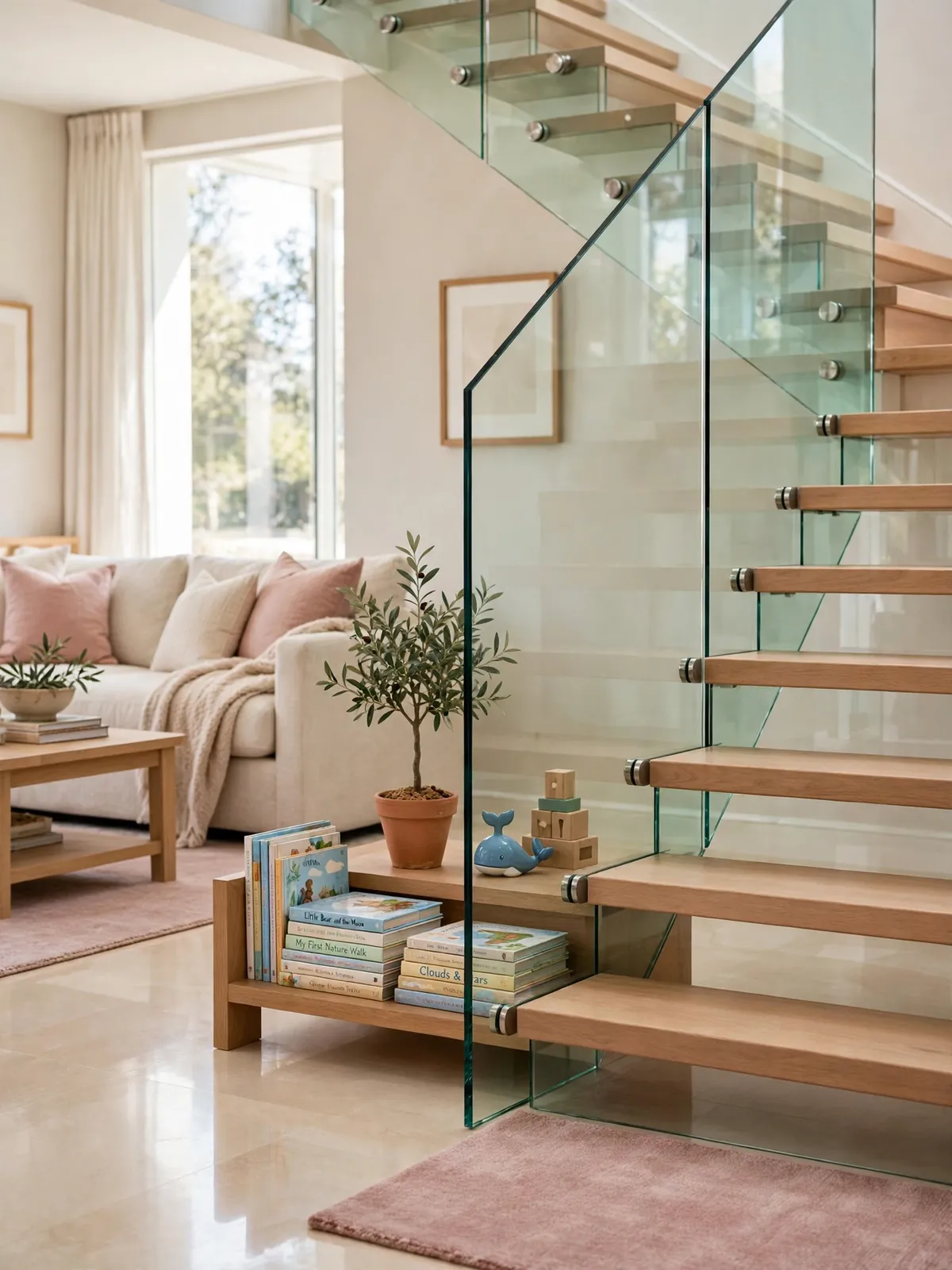
Tempered glass gives a family stair strength without changing its clear, open look. In this home, 12 mm tempered glass panels with softly rounded top edges run beside light oak treads, each 1 metre wide, with a slim oak handrail on top for a comfortable grip. A dusty-rose rug at the base softens the landing, a small olive tree adds life, and a low shelf of children’s books shows the stair belongs in a real family living room. The glass looks delicate, but it is built to be strong and safe.
Quick tips:
- Choose tempered glass with polished, rounded edges.
- Add a timber handrail on top of the glass for a warm grip.
- Keep the landing rug low-pile so it does not catch feet.
- Check fixings regularly to keep panels secure and steady.
Tinted Glass Panels That Add Colour Depth Without Blocking Light
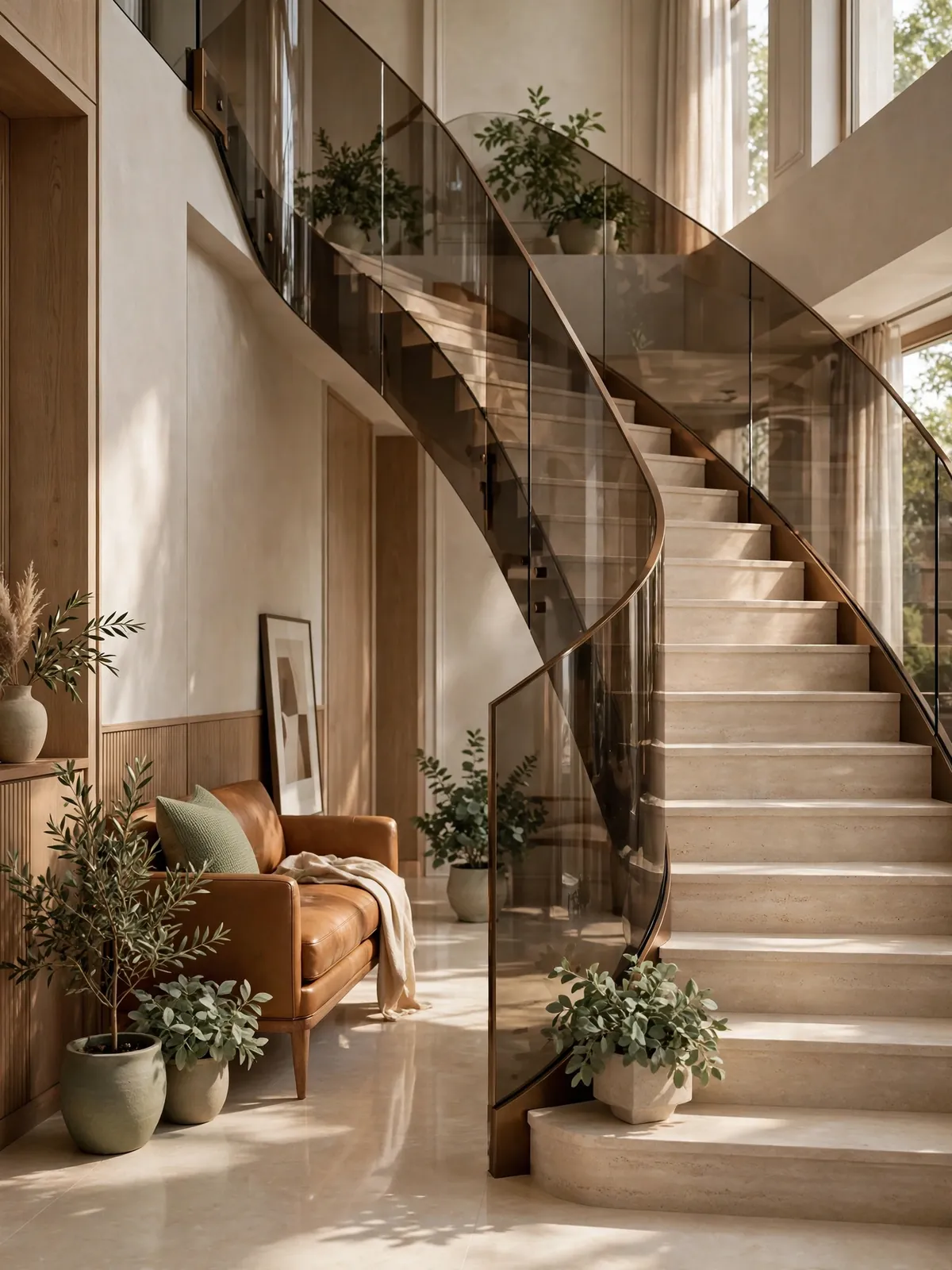
Tinted glass adds colour without closing off light. This stair uses smoky-bronze tinted panels, just dark enough to add depth, beside pale travertine treads, each 280 mm deep, with a warm caramel leather bench at the base and soft sage-green plants nearby. Daylight still passes through the bronze tint, casting a warm, honeyed glow on the travertine. It feels richer than clear glass, but just as open.
Quick tips:
- Choose a light tint — bronze, grey or green — so light still passes through.
- Pair tinted glass with pale stone treads for the best glow.
- Keep the wall colour warm to match the tint.
- Test a sample panel in daylight before committing to the tint.
Matte Black Treads Contrasted With Ultra-Clear Glass
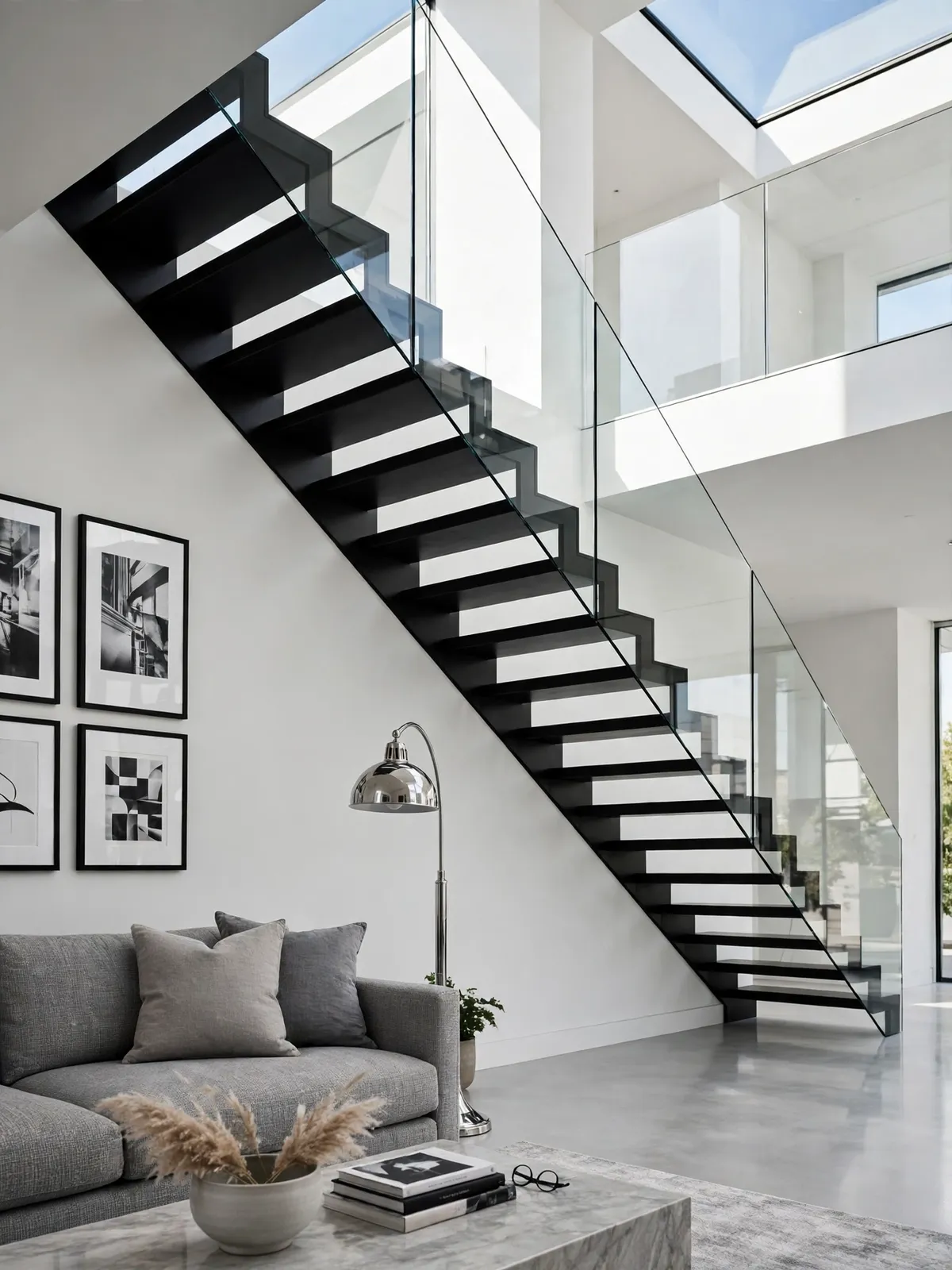
Matte black treads against ultra-clear glass create a sharp, graphic contrast. Here, 1-metre-wide matte black steel treads with a soft, non-slip finish are edged with low-iron glass panels — glass made without the usual green tint, so it looks almost invisible. The white walls, a soft grey sofa and a chrome floor lamp keep the room calm, while a monochrome art print on the landing echoes the black-and-white palette. The stair reads as a series of clean black lines floating in light.
Quick tips:
- Use low-iron glass for the clearest, least green finish.
- Keep walls and soft furnishings pale to balance black treads.
- Add one chrome or silver accent to echo the glass edges.
- Choose a matte tread finish to avoid glare and slipping.
A Double-Height Window That Frames the Glass Staircase
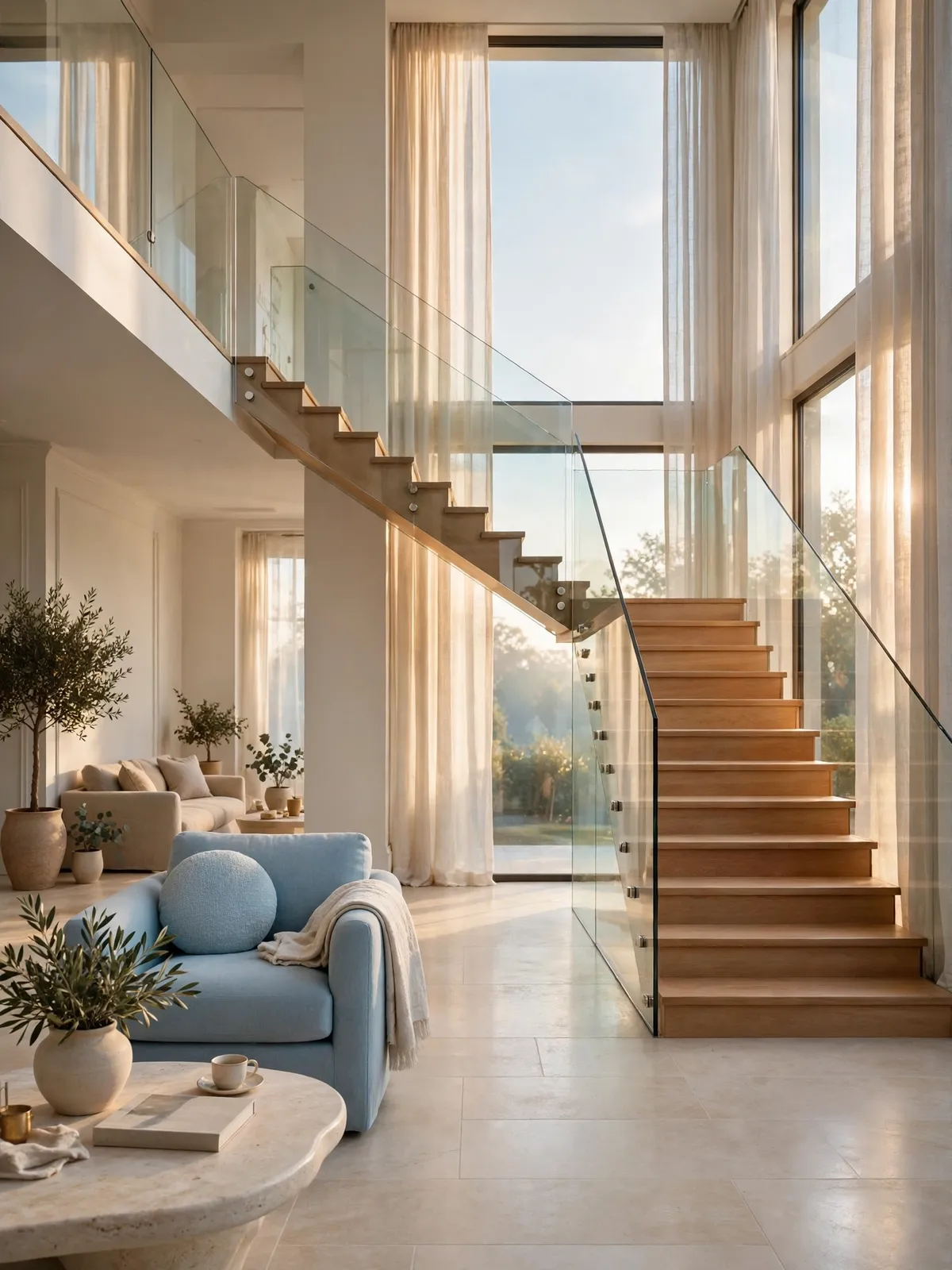
A double-height window turns a glass stair into a light-filled centrepiece. In this home, a 5-metre-tall window with sheer linen curtains runs beside a straight glass stair with warm beech treads, each 950 mm wide, and clear panels that disappear against the daylight. A soft sky-blue armchair and a pale stone floor pick up the cool morning light, while the sheer curtains soften the sun without blocking it. Morning light falls straight through the stair and across the floor.
Quick tips:
- Use sheer linen, not heavy curtains, on a double-height window.
- Align the stair with the window so light falls through the glass.
- Choose warm wood treads to balance cool window light.
- Keep the window sill clear so nothing blocks the view through the stair.
Brass Details That Add Subtle Glam to a Glass Staircase
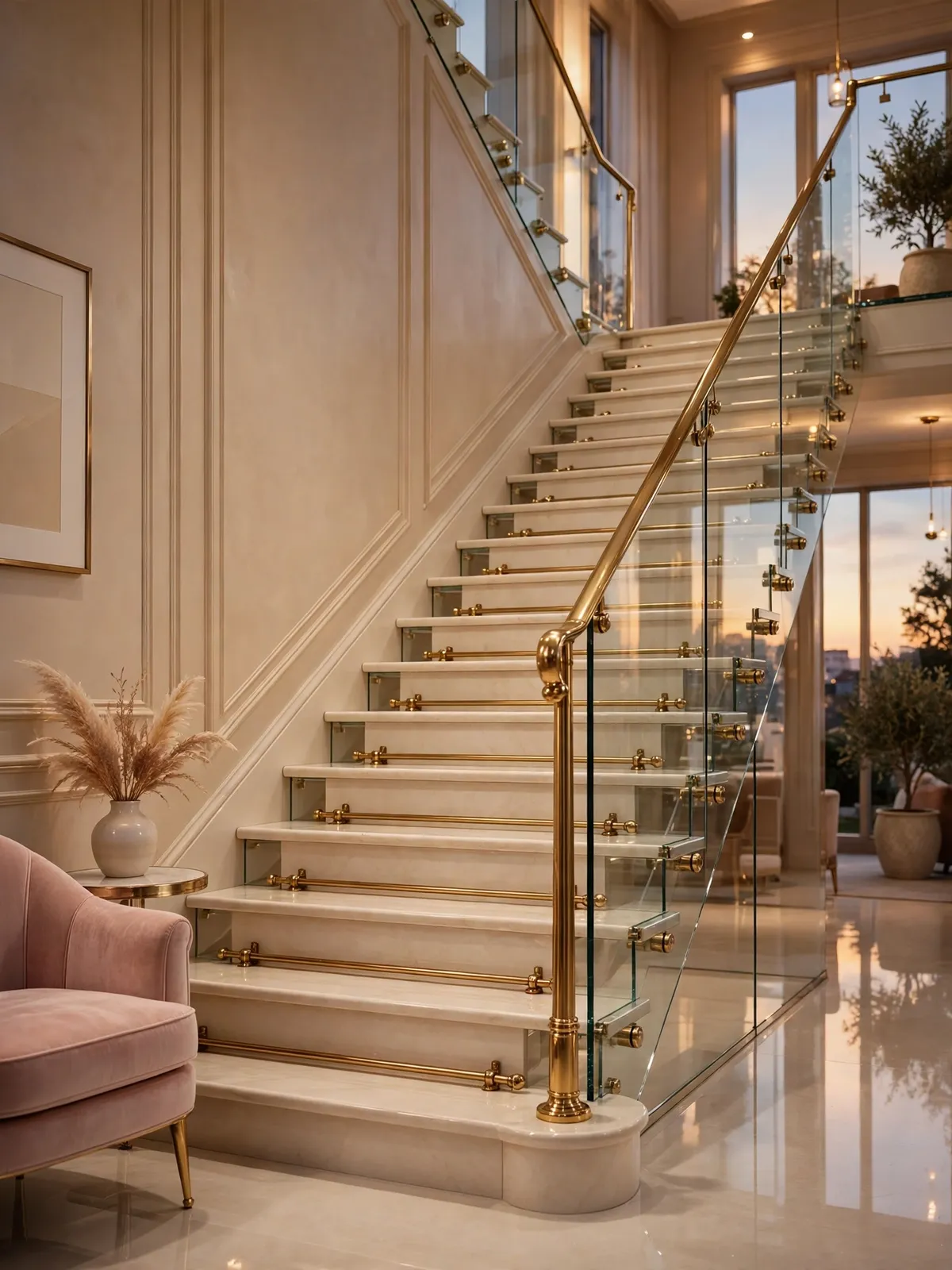
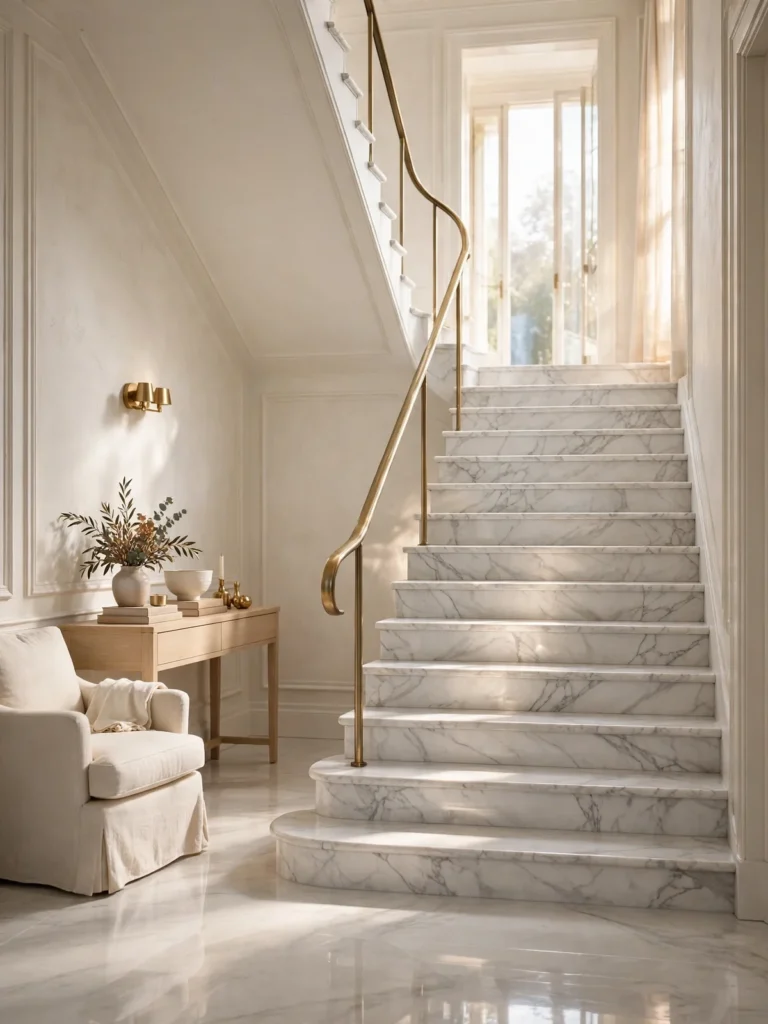
Brass is the quiet glamour that glass needs — just enough shine, never too much. On this stair, cream marble treads, each 900 mm wide, are edged with clear glass panels topped by a slim brushed-brass handrail, with small brass clamps holding each panel. The champagne-coloured walls and a blush-pink velvet chair add warmth, while the brass catches the evening light and glows softly. It feels luxurious without feeling formal.
Quick tips:
- Use brushed brass, not polished, for a softer, modern shine.
- Keep brass to the handrail and fixings — let the glass stay the star.
- Pair brass with cream marble or pale wood for warmth.
- Match the brass tone to a lamp or mirror nearby.
Art Displayed Beneath a Glass Staircase for a Gallery Feel
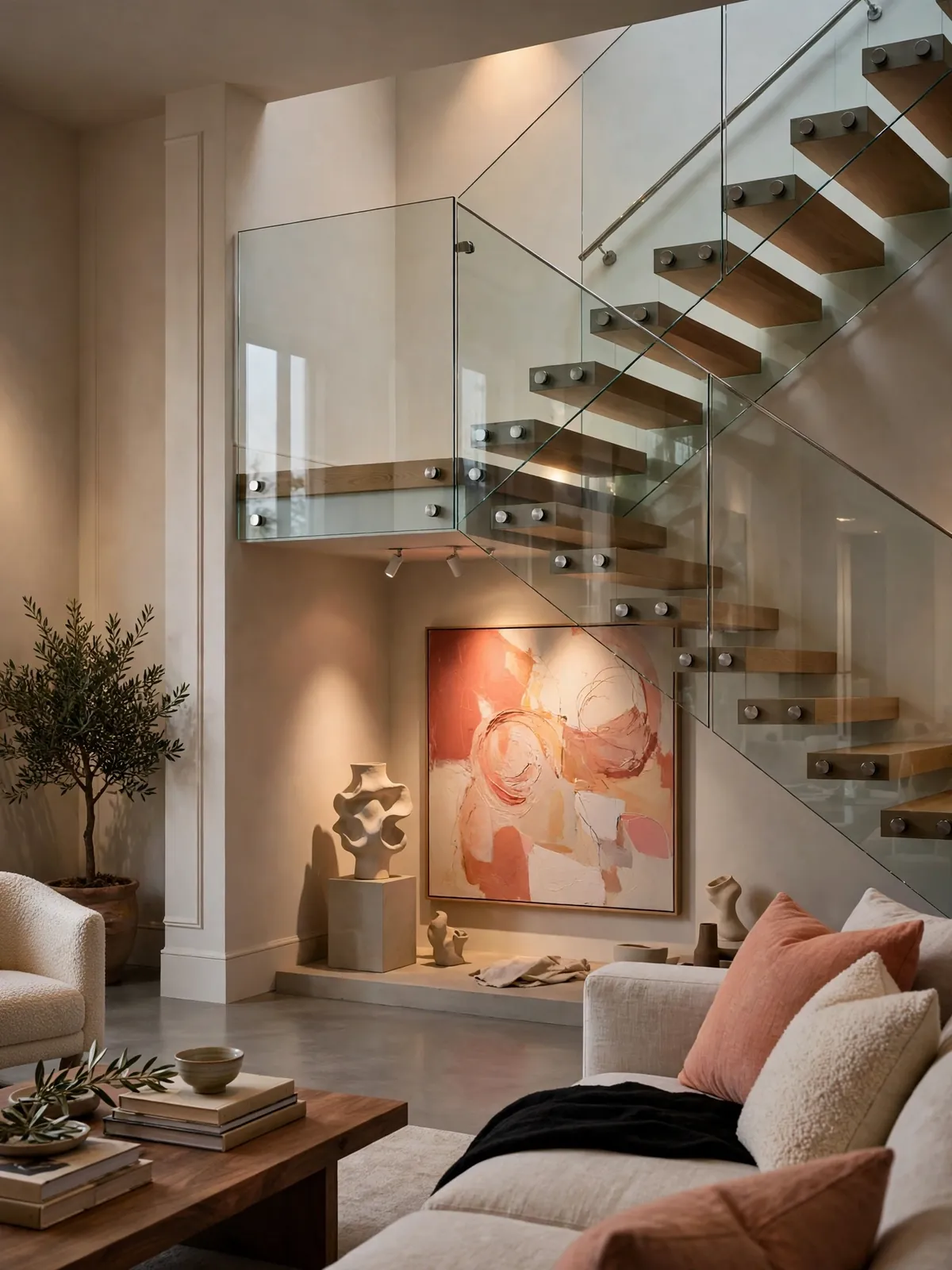
The open space beneath a glass stair is a natural gallery — light passes through, and art stays visible. Under this stair, a large abstract painting in coral and cream, 1.2 metres wide, hangs on the white wall, with a sculptural ceramic vase on a low plinth beside it. The white oak treads and clear glass above let warm spotlights fall evenly on the art, while the polished concrete floor keeps the look gallery-clean. Walking past feels like walking through a small private exhibition.
Quick tips:
- Hang one large artwork, not many small ones, under the stair.
- Use warm spotlights to make the art glow through the glass.
- Keep the floor clear so the gallery space feels intentional.
- Choose art colours that echo a cushion or rug nearby.
A Slim Handrail Set Into the Wall Beside the Glass
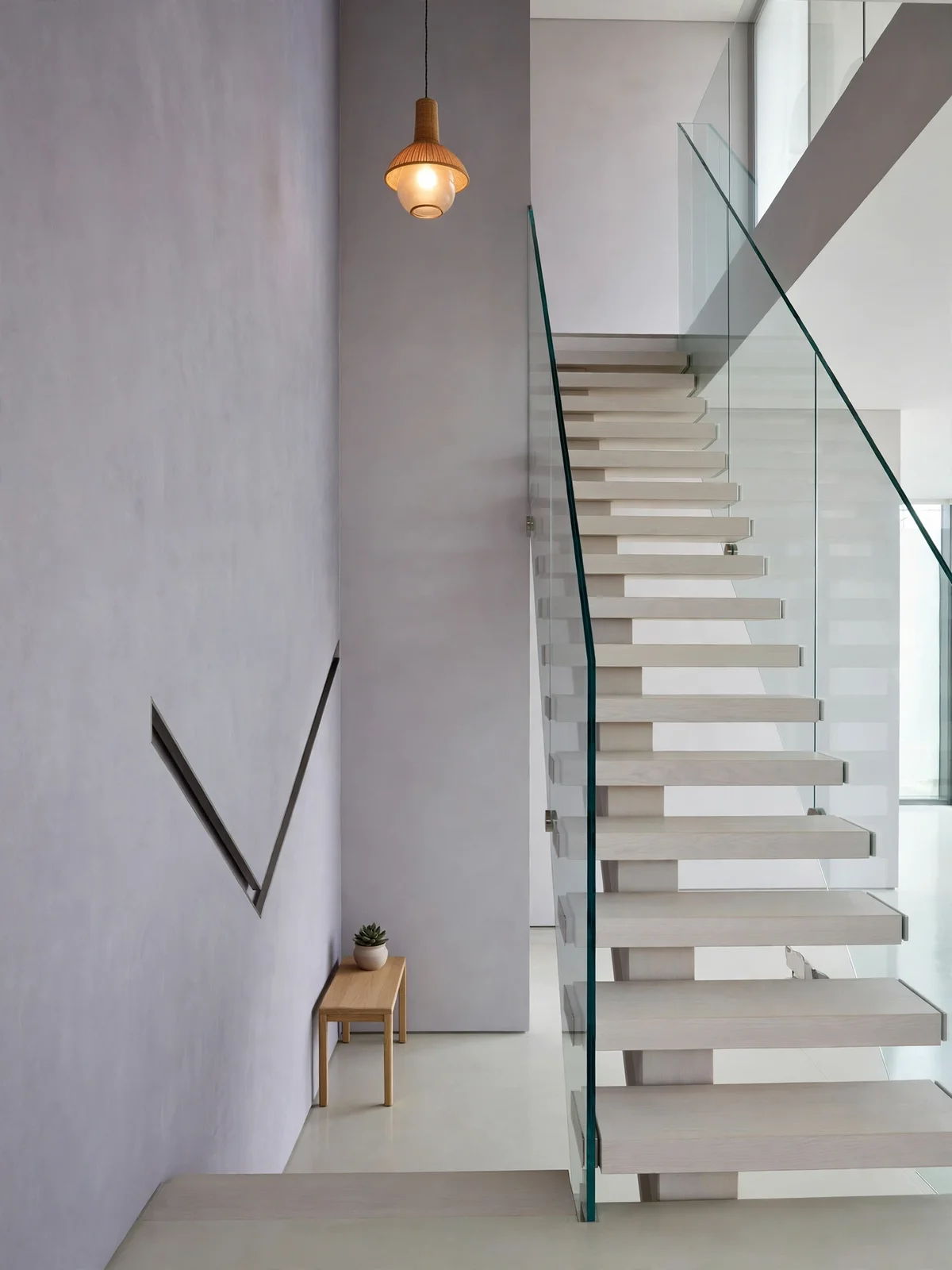
A slim wall handrail gives support without adding visual weight beside the glass. On this stair, a 40 mm diameter brushed-steel rail is set into a shallow recess in the soft lavender-grey wall, running parallel to the clear glass balustrade on the open side. The pale ash treads, each 280 mm deep, stay light and simple, while a small wooden bench at the base and a warm pendant light add quiet comfort. The rail is there when you need it and almost invisible when you do not.
Quick tips:
- Recess the rail slightly so it sits flush with the wall.
- Choose a rail finish that matches the glass fixings.
- Keep the wall colour soft so the rail reads as a clean line.
- Test the rail height — about 900 mm above the tread nosing feels natural.
Glass That Connects an Indoor Stair to an Outdoor Terrace
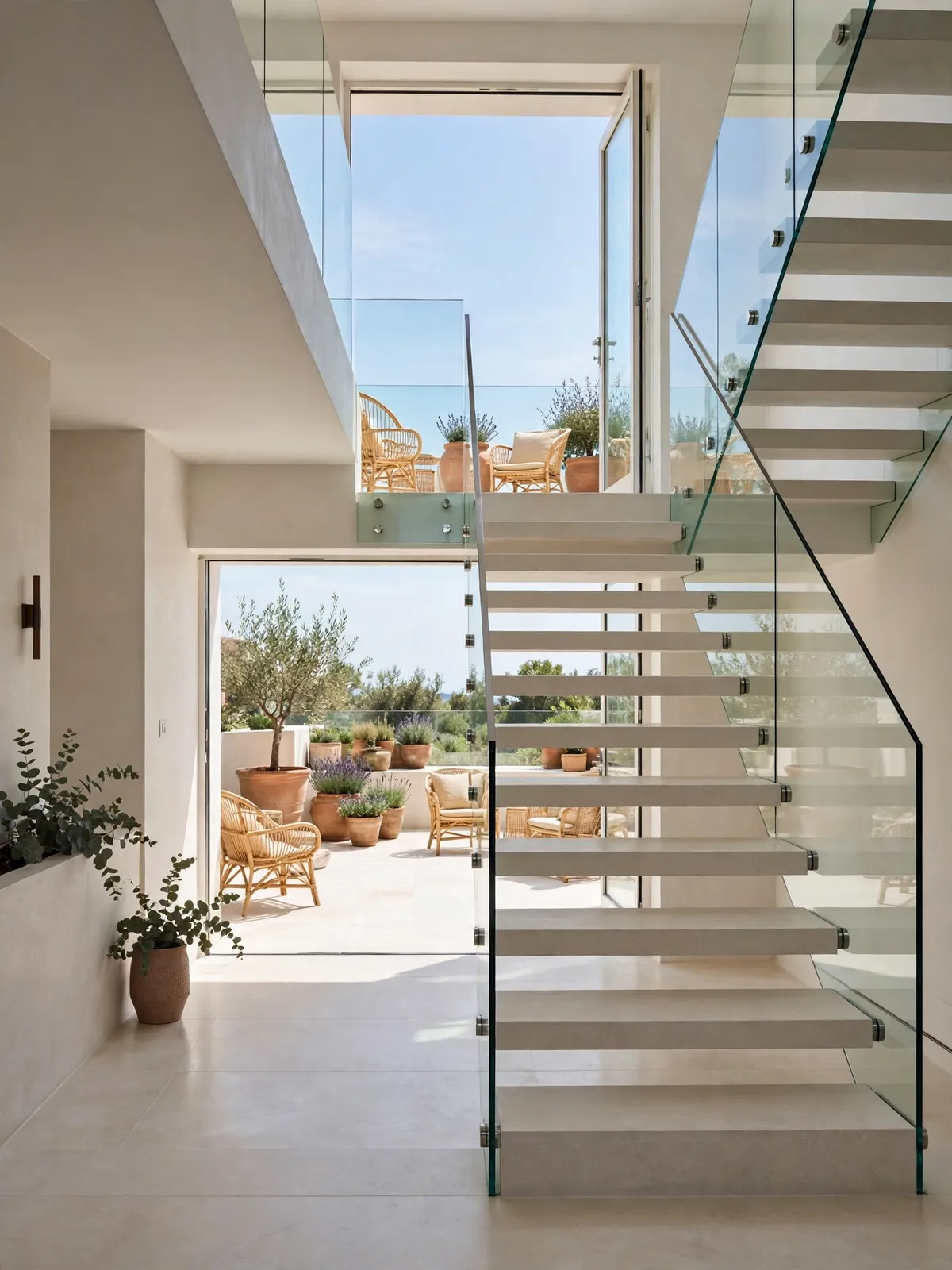
Glass makes the step from indoors to outdoors feel seamless. This stair, with pale limestone treads and clear glass panels, rises directly toward a full-height glass door that opens onto a sunny terrace with rattan chairs and terracotta pots. From the living room, you can see through the stair, through the door, and out to the sky — the garden feels like another room. The limestone treads echo the terrace paving, tying inside and outside together.
Quick tips:
- Match indoor tread stone to the terrace paving for continuity.
- Use the same clear glass inside and on the terrace door.
- Keep the terrace furniture light so the view stays open.
- Add a washable runner at the door for wet feet in summer.
A Glass Staircase With a White Marble Feature Wall
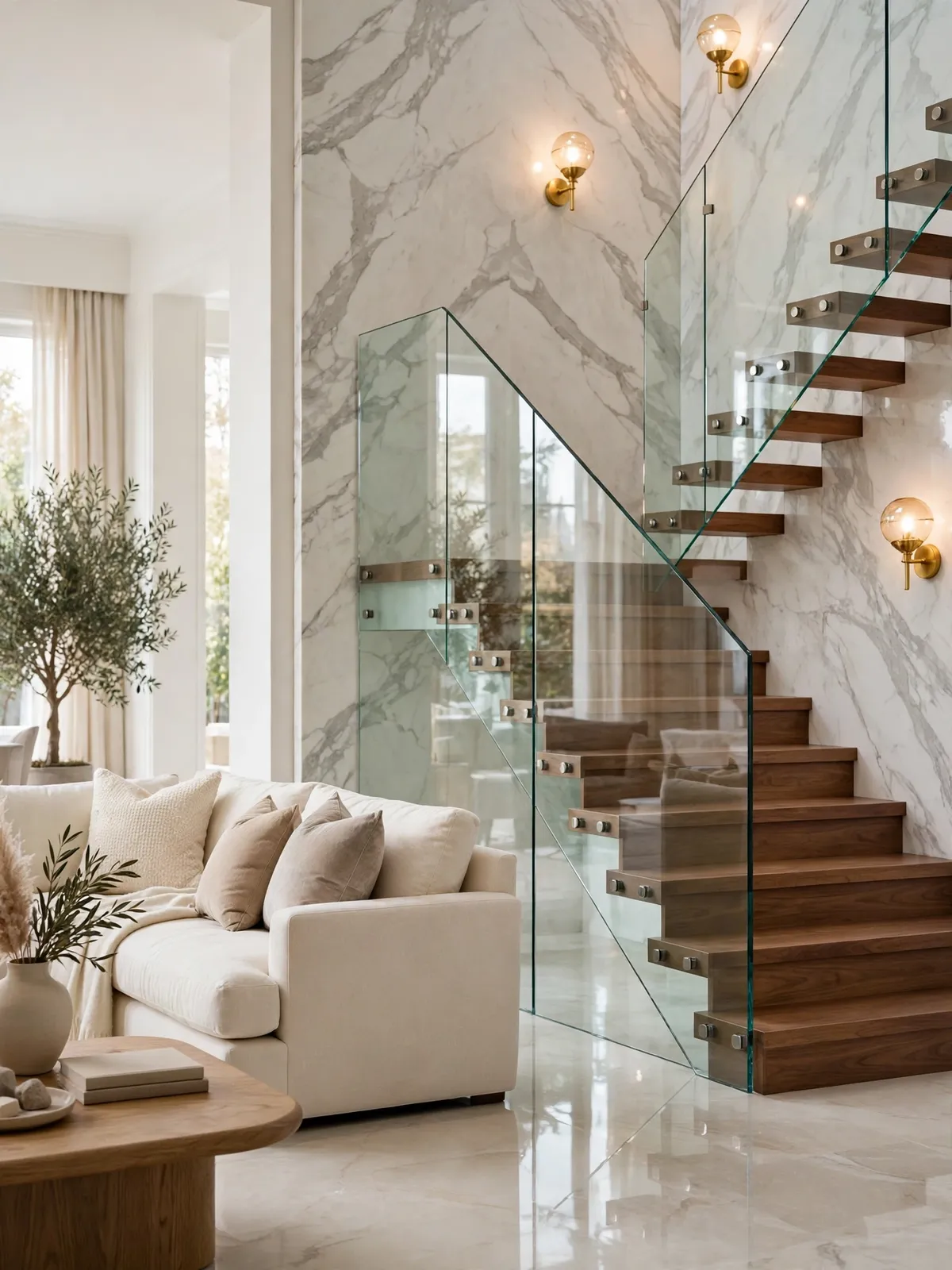
White marble and glass are a classic luxury pairing — both pale, both reflective, both calm. Here, a full-height white marble wall with soft grey veining runs beside a straight glass stair with warm walnut treads, each 1 metre wide. Gold wall sconces on the marble add a warm glow, a cream sofa opposite keeps the room soft, and the polished marble floor reflects the daylight from the stair. The stair feels like part of a calm, hotel-like living room.
Quick tips:
- Choose marble with soft, fine veining so it does not overwhelm the glass.
- Use warm wood treads to keep white marble feeling cosy.
- Add gold lighting to warm up the cool marble and glass.
- Keep the marble wall free of clutter so the veining shows.
A Glass Staircase Lit by a Row of Pendant Lights
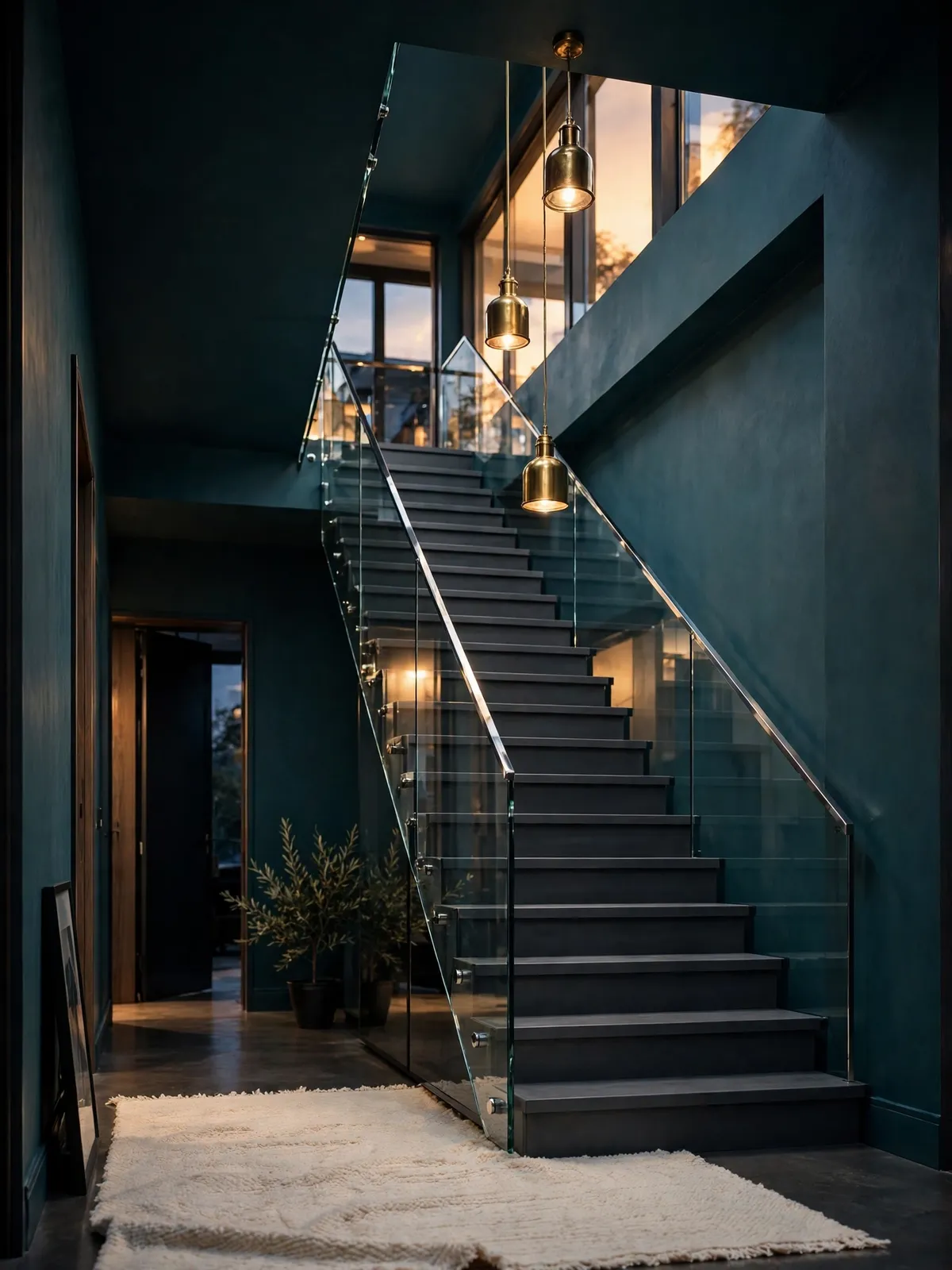
A row of pendant lights turns a glass stair into an evening feature. Three brass pendants, hung at staggered heights above a straight stair with charcoal treads and clear glass panels, cast warm pools of light down the flight. The deep teal wall behind the stair makes the brass glow richer, while a cream rug at the base softens the landing. In the evening, the glass catches the light and the whole stair shimmers gently.
Quick tips:
- Hang pendants at staggered heights for a natural, flowing look.
- Use warm bulbs so the light feels cosy, not stark.
- Keep the pendant shades simple so they do not block the glass.
- Put the pendants on a dimmer for soft evening light.
A Glass Staircase With a Reading Nook Tucked Underneath
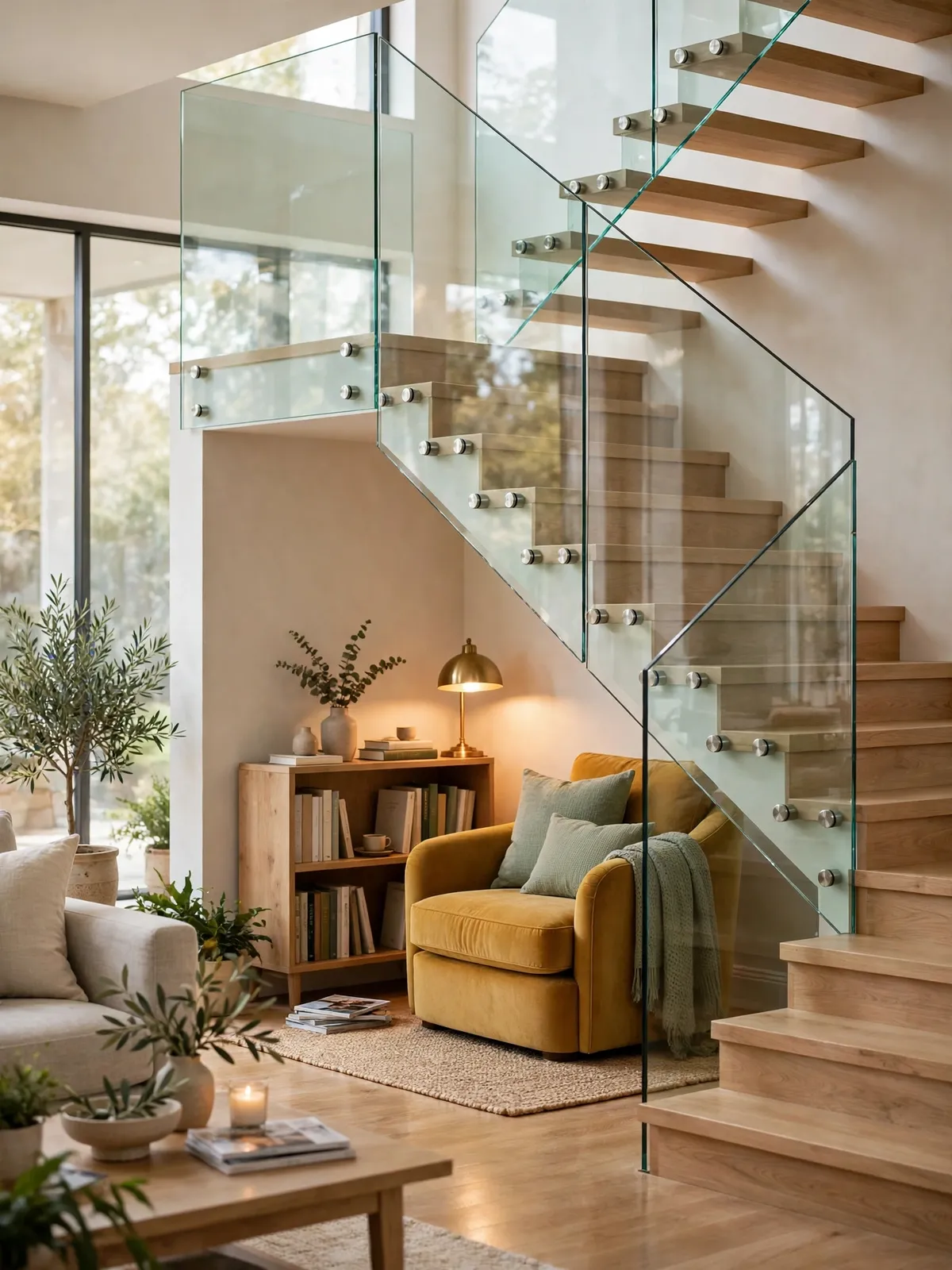
Because glass lets light through, the space under the stair stays bright enough for reading. Under this stair, a mustard armchair with sage-green cushions sits beside a small wooden bookshelf, with a warm reading lamp and a soft throw. The light oak treads and clear glass above filter daylight down into the nook, so it never feels dark or closed in. It is a quiet corner that feels private, yet still connected to the living room.
Quick tips:
- Choose a compact armchair that fits neatly under the stair slope.
- Add a small bookshelf or basket for books within arm’s reach.
- Use a warm lamp for evening reading in the nook.
- Keep the nook palette warm so it feels cosy under the glass.
A Glass Staircase in a Coastal Home With Pale Timber and Linen
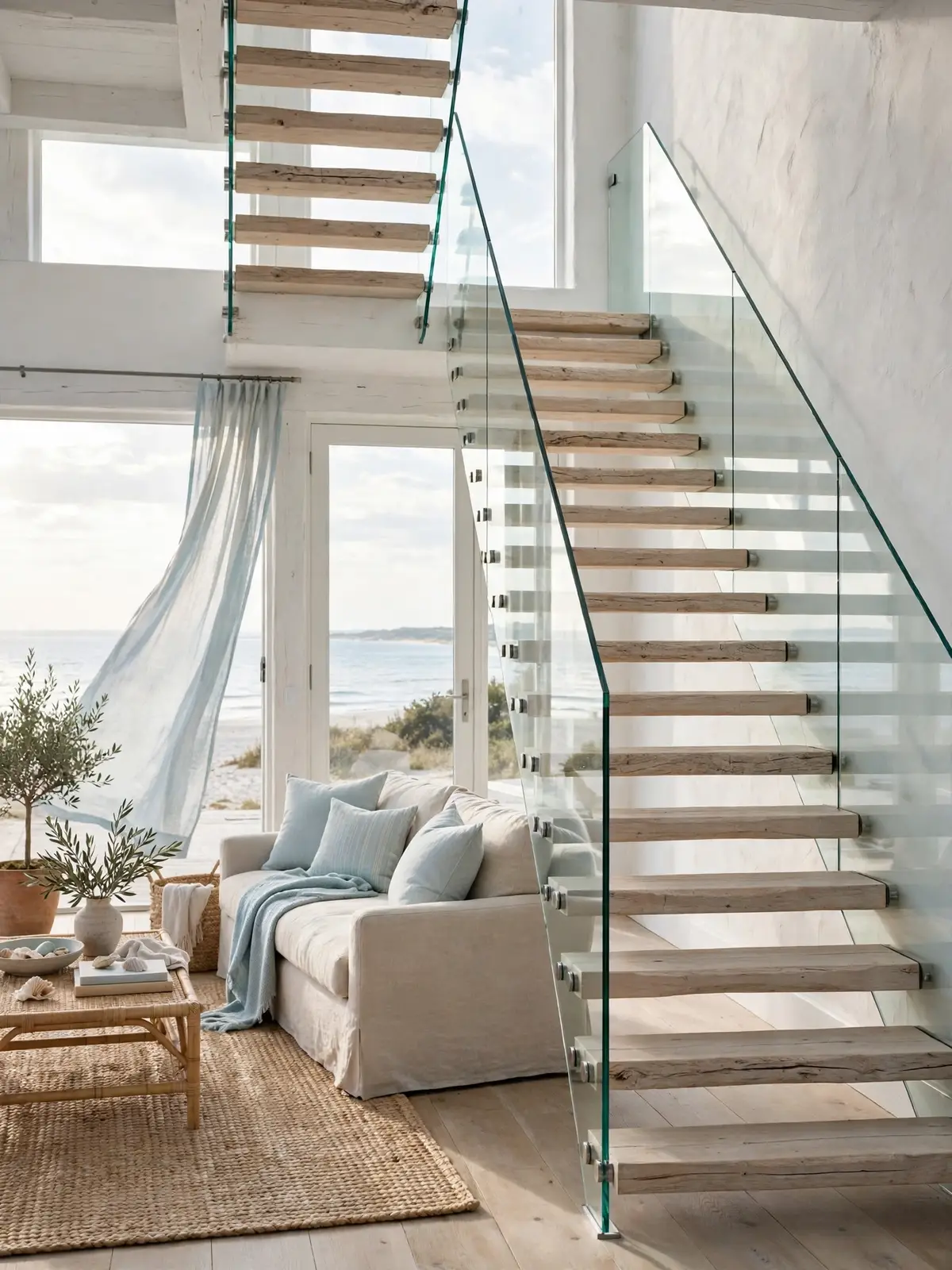
A glass stair suits a coastal home because it keeps the sea light moving through the house. In this beach house, pale driftwood treads, each 950 mm wide, pair with clear glass panels and whitewashed walls, while a natural linen sofa, a woven seagrass rug and pale blue cushions complete the coastal palette. Daylight from the sea-facing windows passes straight through the stair, so the hallway feels as bright as the living room. The whole home feels like one breezy, open space.
Quick tips:
- Use pale, weathered timber for a relaxed coastal feel.
- Keep walls whitewashed so sea light bounces through the glass.
- Add linen and seagrass textures to soften the glass.
- Choose pale blue accents to echo the sea without overdoing the theme.
A Glass Staircase With a Velvet Runner on the Landing Only
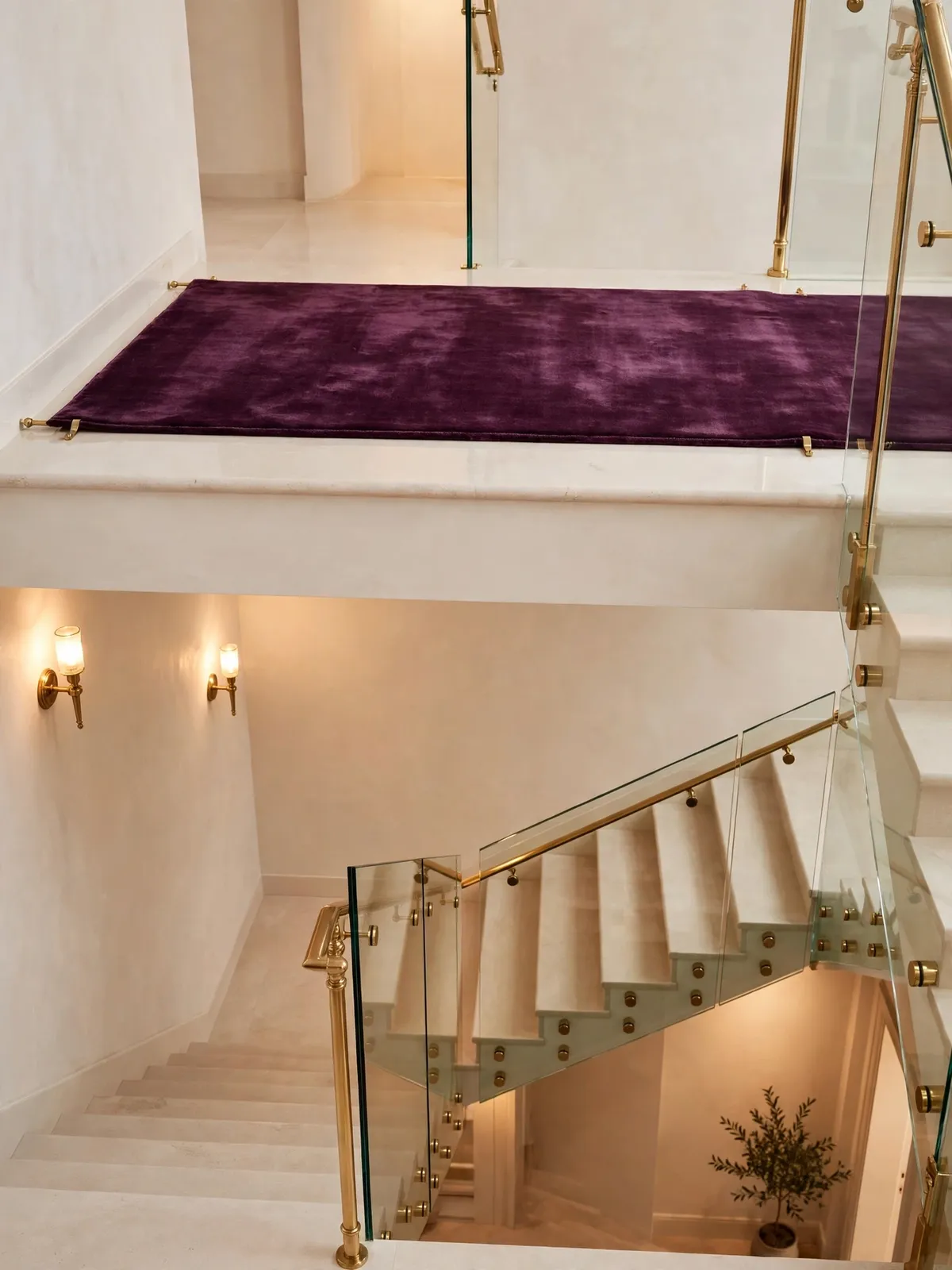
A velvet runner on the landing only adds softness without hiding the glass stair. Here, the straight flight keeps its pale stone treads bare and clear, while the landing at the top is dressed with a deep plum velvet runner, 1.2 metres wide, held by slim brass stair rods. The ivory walls and warm lighting make the plum feel rich, not heavy, and the bare glass flight below keeps the stair light. It is a small touch of luxury exactly where your feet land.
Quick tips:
- Keep the runner to the landing so the glass flight stays visible.
- Choose a deep jewel tone — plum, emerald or navy — for impact.
- Use brass rods to hold the runner neatly in place.
- Pick a low-pile velvet that is easy to vacuum and clean.
A Glass Staircase That Mirrors the Kitchen Island Opposite
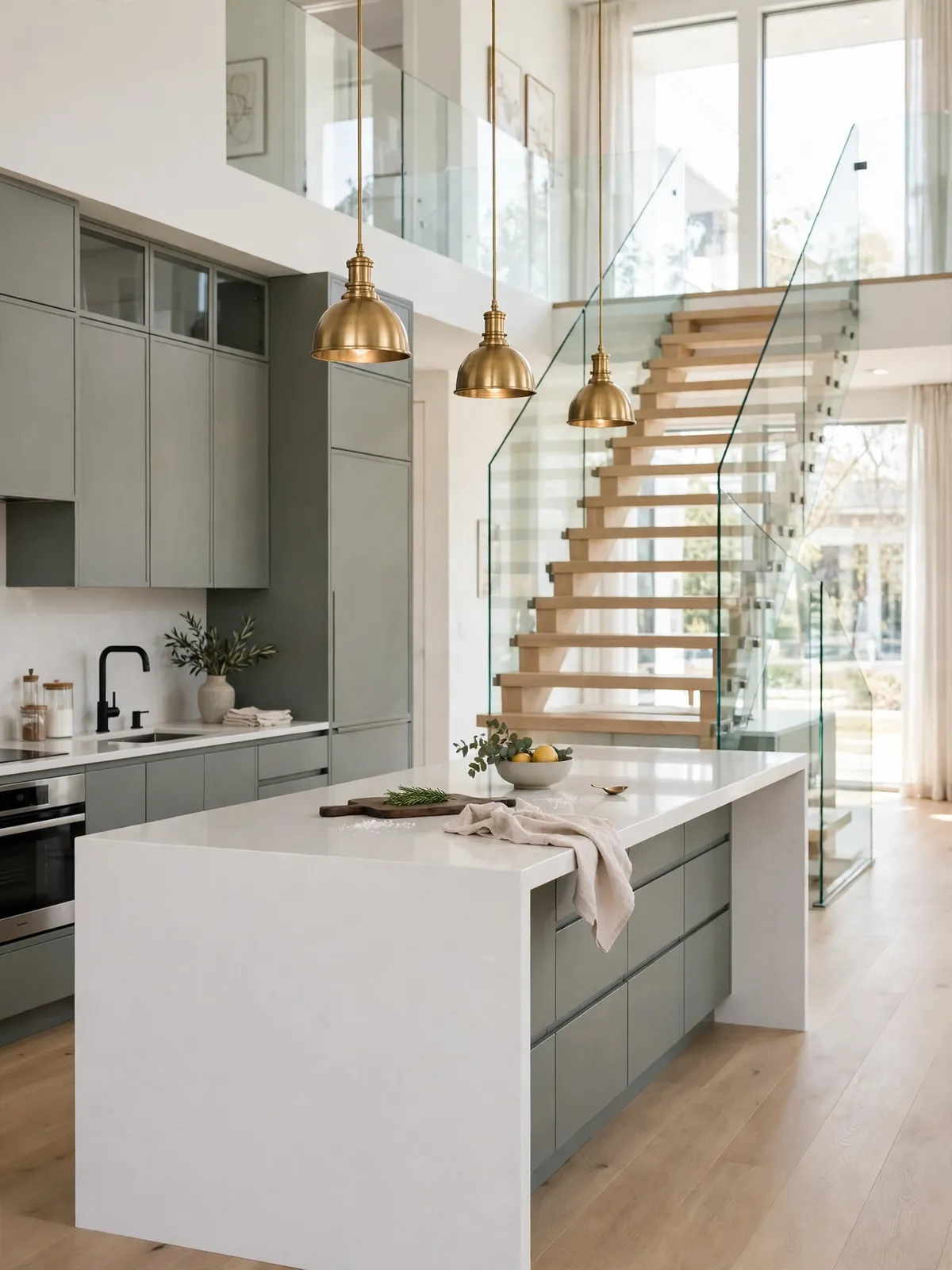
When the stair mirrors the kitchen island opposite, the open-plan room feels designed as one space. In this home, a glass stair with pale oak treads and clear panels faces a white quartz kitchen island with a waterfall edge, 2.4 metres long, while soft grey-green cabinets and brass pendant lights tie the two sides together. The glass lets you see the island from the stair and the stair from the island, so cooking, climbing and chatting all happen in one bright, connected room.
Quick tips:
- Match the stair tread tone to the island stools or kitchen timber.
- Keep the island and stair in the same pale, reflective palette.
- Use the same brass finish on pendants and stair fixings.
- Leave the sightline between stair and island clear.
A Glass Staircase With a Built-In Display Shelf Along the Wall
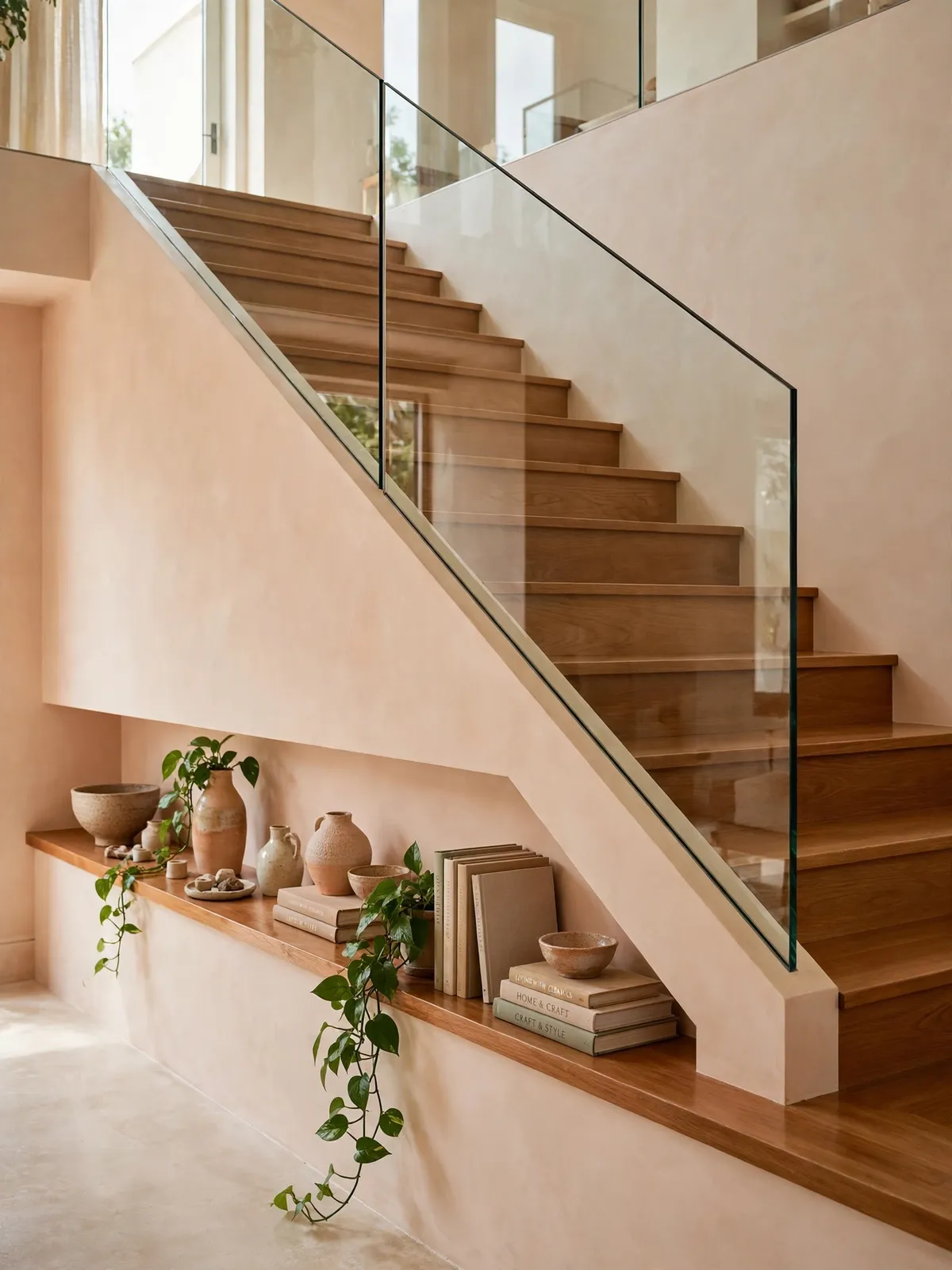
A built-in shelf along the wall turns the stair wall into a display, while the glass keeps it light. Here, a slim oak shelf, 200 mm deep, runs the full length of the stair wall at hand height, holding handmade pottery, small books and a trailing green plant. The warm oak treads and clear glass panels let daylight fall across the shelf, so the ceramics glow softly. The stair feels personal — a home, not a showroom.
Quick tips:
- Keep the shelf slim so it does not narrow the stair.
- Display a few favourite pieces, not a crowded row.
- Use the same timber for shelf and treads for a unified look.
- Add one trailing plant to soften the straight shelf line.
A Glass Staircase Framed by Indoor Plants and Greenery
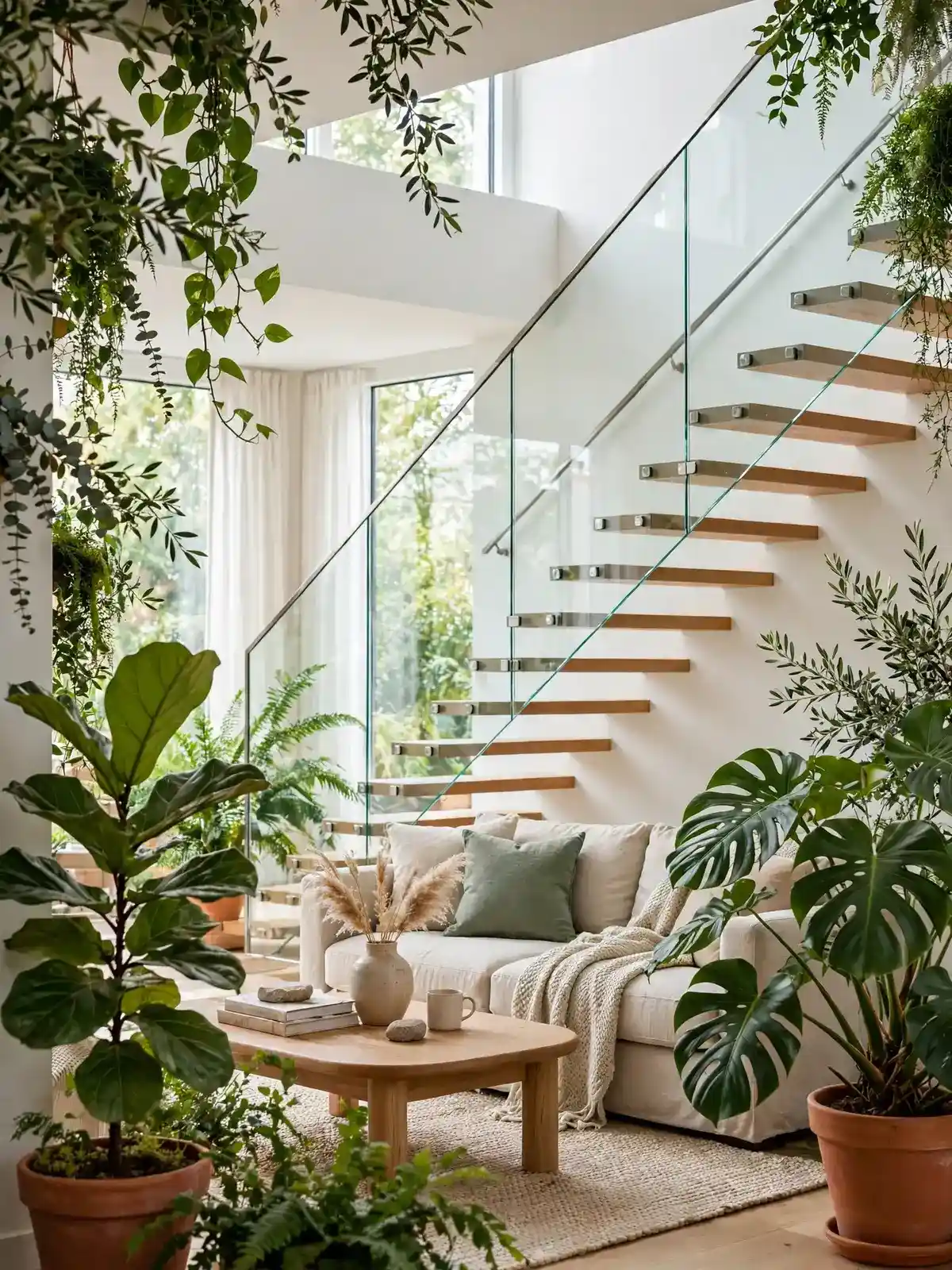
Plants soften glass beautifully, and glass lets the plants get the light they need. This stair, with light beech treads and clear panels, is framed by a large monstera and a fiddle-leaf fig in terracotta pots at the base, with smaller trailing plants on the landing. White walls keep the green vivid, and daylight through the glass falls across the leaves. The stair feels alive — a garden path through the middle of the home.
Quick tips:
- Place large plants at the base, not on the treads, for safety.
- Choose terracotta pots to warm up the glass and pale wood.
- Keep the landing clear except for one small trailing plant.
- Wipe leaves and glass together so both stay bright.
A Glass Staircase That Turns a Dark Hallway Into the Brightest Room
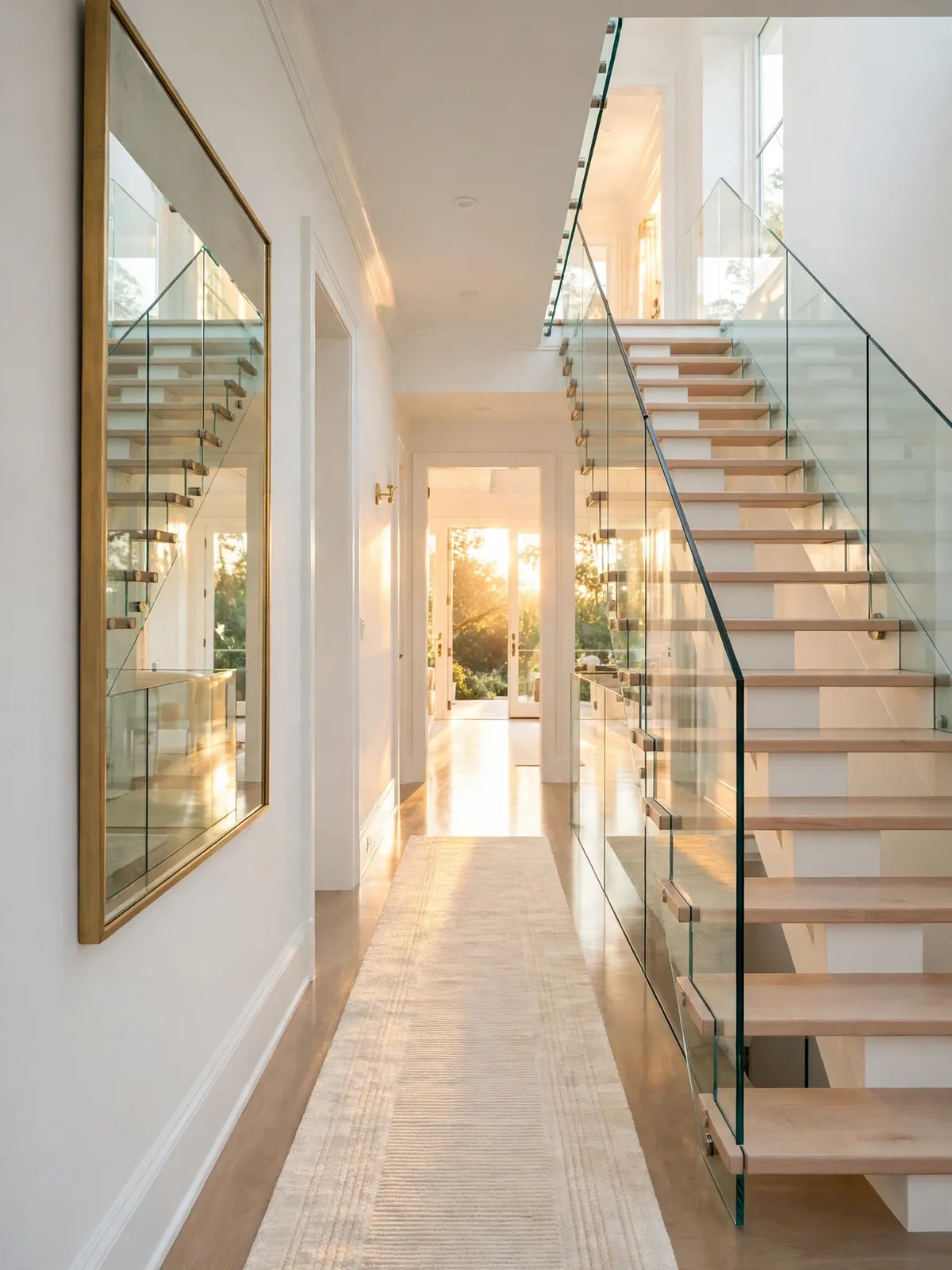
A dark hallway is where a glass stair makes the biggest difference. In this home, a narrow hallway with only one small window was opened up with a straight glass stair — pale maple treads, clear panels, white walls, and a large mirror opposite the stair to bounce the light further. A cream runner softens the floor, and the golden light from the landing window now travels down the glass and across the whole hallway. What was once the darkest room is now the brightest.
Quick tips:
- Paint the hallway white so it reflects every bit of light.
- Add a large mirror opposite the stair to double the brightness.
- Choose the palest treads you love for the most light.
- Keep the hallway free of tall furniture that could block the glass.
FAQs
How do I keep a glass staircase clean?
Wipe the panels with a microfibre cloth and a little glass cleaner once a week, and the glass will stay clear. A quick daily wipe of handprints on the handrail area is enough in a busy family home, and avoiding harsh sprays keeps the fixings and seals in good condition.
Does a glass staircase make a home feel cold?
It can feel cool if everything around it is white and grey, but warm wood treads, a soft rug, brass details or a warm wall colour balance it easily. The glass itself does not make the room colder — it simply lets light through, and the materials around it set the mood.
Can a glass staircase work in a traditional home?
Yes, if the glass is paired with classic materials. Warm oak treads, a timber handrail, a soft neutral wall and traditional furniture keep the stair feeling at home in a period house, while the glass quietly adds light without changing the character of the rooms.
Is a glass staircase noisy?
Glass can reflect sound more than a carpeted stair, so a rug at the base, soft furnishings nearby, and a runner on the landing help soften footsteps and voices. In an open-plan home, those soft touches are usually enough to keep the stair feeling calm.
What is the best glass for a staircase?
Tempered glass is the usual choice because it is strong, safe, and clear. Low-iron glass looks the clearest, with almost no green tint, while a light bronze or grey tint adds warmth and depth if you want colour without losing light.
Conclusion
A glass staircase is not just a way to move between floors — it is a way to let light, air and connection flow through the whole home. Whether you choose clear panels with warm wood, frosted risers that glow at night, brass details for a touch of glamour, or plants and art to make the stair feel personal, the best glass staircase is the one that suits the rooms around it. Keep the palette warm, the sightlines open, and the space under and beside the stair intentional, and your stair will make every room it touches feel brighter, larger and more welcoming.