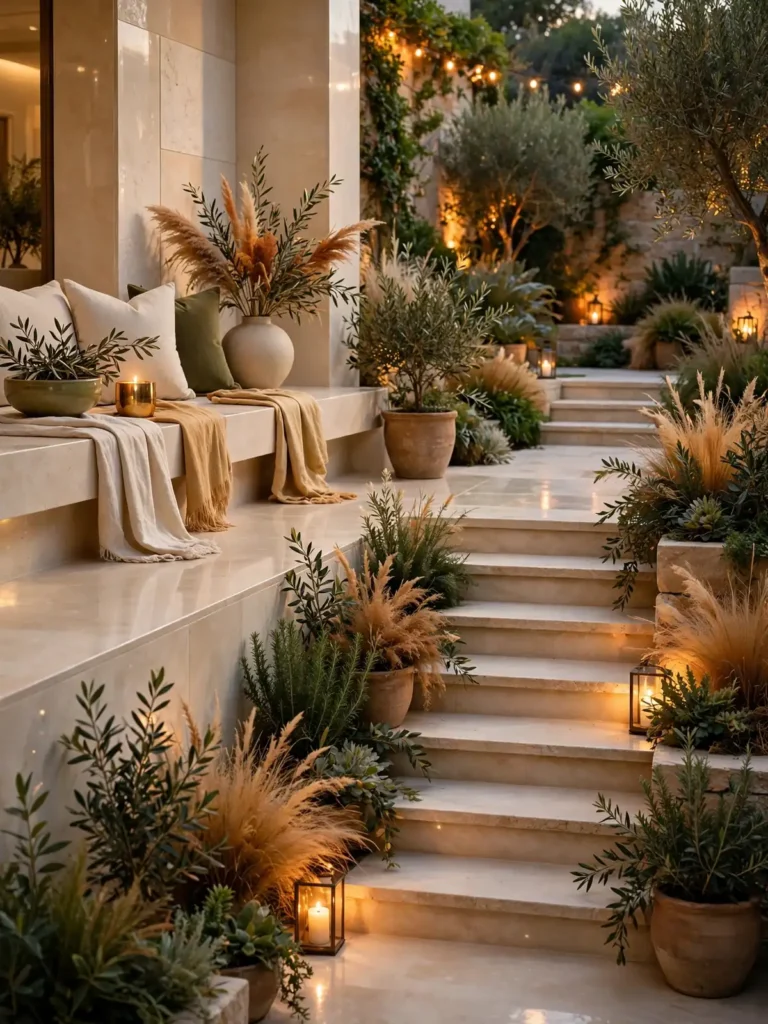
25 Stunning Outdoor Staircase Ideas That Instantly Make Your Garden Look Expensive and Welcoming
An outdoor staircase does far more than connect two levels of your garden — it sets the tone for the whole property. These 25 ideas show how limestone, cedar, steel, travertine and mosaic tile can turn steep slopes, front entries and patio levels into calm, polished and luxurious outdoor features.
An outdoor staircase is a weatherproof set of steps built for the garden — stone, timber, concrete, steel or brick — that connects a front entry, a patio, a deck or a sloped lawn to the next level of your home. The best outdoor staircase feels like part of the landscape: it uses materials that age gracefully outside, keeps treads wide and non-slip, and pairs the climb with planting, lighting or a handrail that suits the house.
If you love that polished, high-end feeling outside, these luxury staircase ideas show the same grand approach indoors, where marble, brass and glass create a matching sense of occasion. The 25 ideas below cover the whole outdoor stair — its materials, its shape, its lighting, and the planting around it — so you can choose a design that suits a steep hillside, a small front garden, or a wide patio that deserves a grand entrance.
Key Takeaways
What is an outdoor staircase?
An outdoor staircase is a set of weatherproof steps — stone, timber, concrete, steel or brick — that connects two levels outside the home, such as a front entry, a patio, a deck or a sloped garden, built to stay safe and beautiful in rain, frost and sun.
What materials last longest for an outdoor staircase?
Natural stone, granite, brick, porcelain and galvanised or powder-coated steel last longest outdoors. Timber works beautifully too when it is a naturally durable species such as cedar or ipe, or pressure-treated and sealed.
How do you make an outdoor staircase safe?
Use wide, deep treads with a non-slip finish, keep risers even at about 150–180 mm, add a handrail on at least one side, light every tread after dark, and keep the steps clear of wet leaves and moss.
Does an outdoor staircase suit a small garden?
Yes — a compact straight flight, a spiral stair or a few wide low steps can connect levels in a small garden without taking over the space, especially when the treads match the patio stone and planting softens the edges.
How much does an outdoor staircase cost?
Costs vary widely with material, length and groundwork. A short timber or brick flight is usually the most affordable, while a long stone stair with retaining walls, lighting and a steel handrail costs far more because of the groundwork and custom metalwork.
A Grand Outdoor Staircase in Pale Limestone With Low Planters
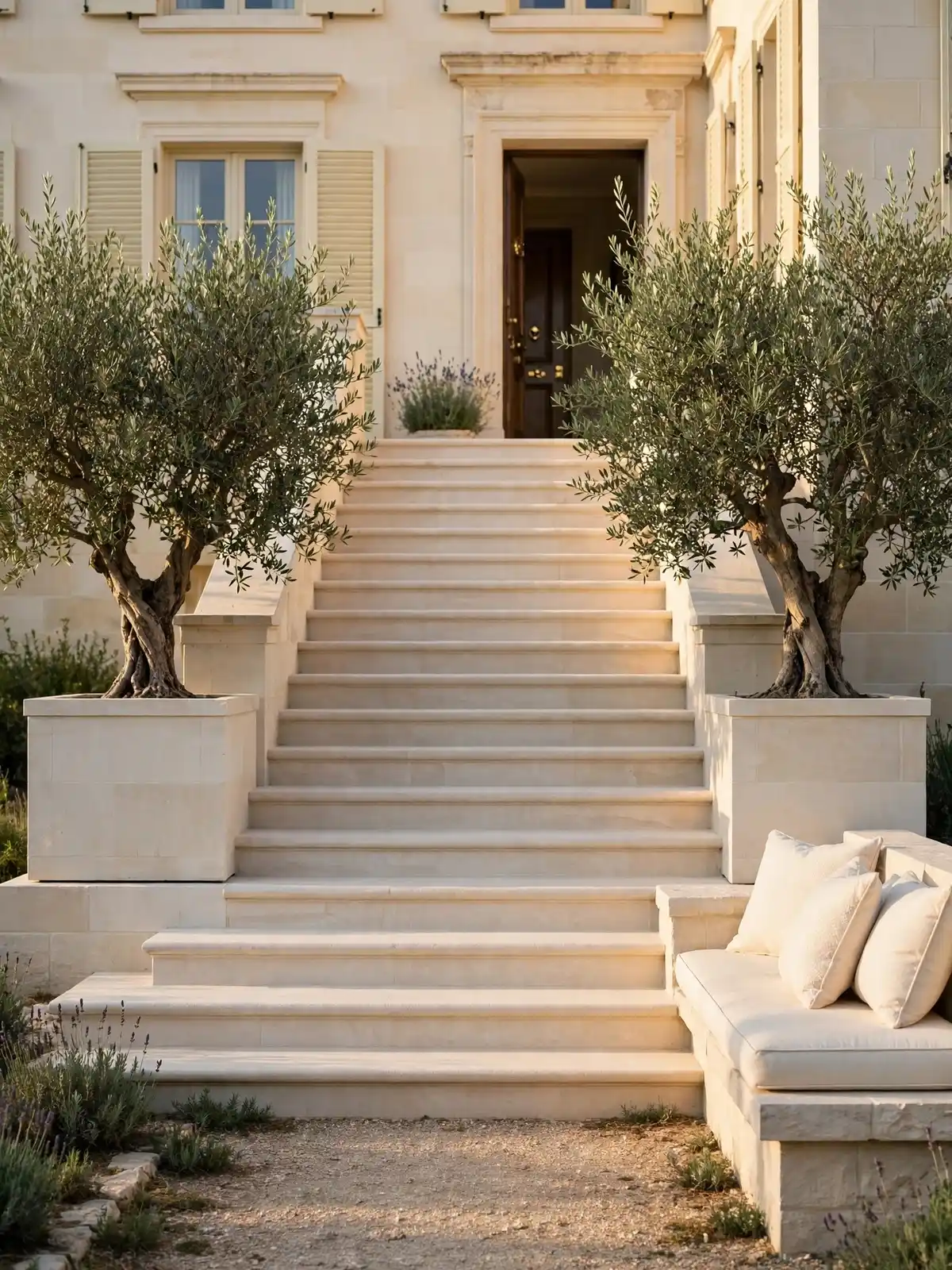
A grand outdoor staircase in pale limestone makes the whole front of a house feel calm and expensive, because the wide, low steps invite you in instead of rushing you up. In this front garden, six limestone treads, each 1.8 metres wide, 350 mm deep and 150 mm high, rise gently to the front door, with square stone planters holding small olive trees on both sides and a cream stone bench with ivory cushions to one side. The limestone is honed, not polished, so it stays grippy underfoot even after rain, and the pale stone glows softly in the afternoon sun. It is the kind of entrance that makes visitors slow down and look up at the house.
Quick tips:
- Choose honed limestone so the treads stay non-slip when wet.
- Keep risers low, about 150 mm, for a relaxed, grand feeling.
- Flank the steps with matching planters so the stair feels framed.
- Use one small tree, like an olive, on each side for symmetry.
Floating Concrete Treads Across a Sloped Garden
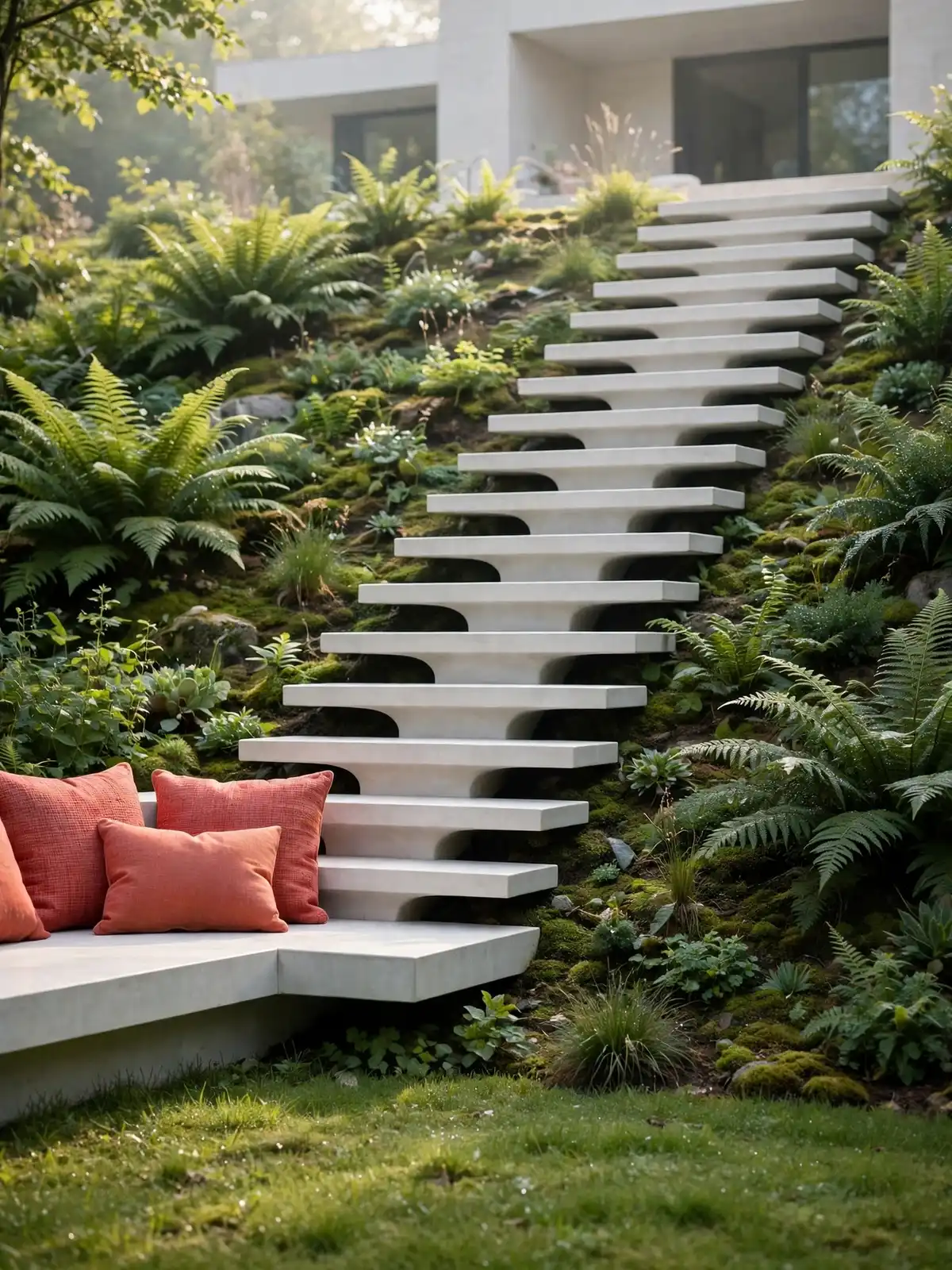
Floating concrete treads turn a steep garden slope into a sculptural path, because each step appears to hover above the planting below. Here, twelve pale concrete treads, each 1.2 metres wide and 300 mm deep, are set into a steel frame buried in the slope, with 180 mm gaps between them and dark green ferns spilling over the edges. A low bench with coral-red outdoor cushions sits at the top landing, giving walkers a place to pause and look back down the garden. The concrete is sealed against frost and moss, so it stays pale and clean through winter.
Quick tips:
- Seal concrete treads so frost and moss cannot stain them.
- Keep the gaps between floating treads even for a clean rhythm.
- Plant low ferns at the edges so the stair feels part of the garden.
- Add a bench at the top landing as a natural pause point.
Warm Cedar Steps Down to a Fire Pit
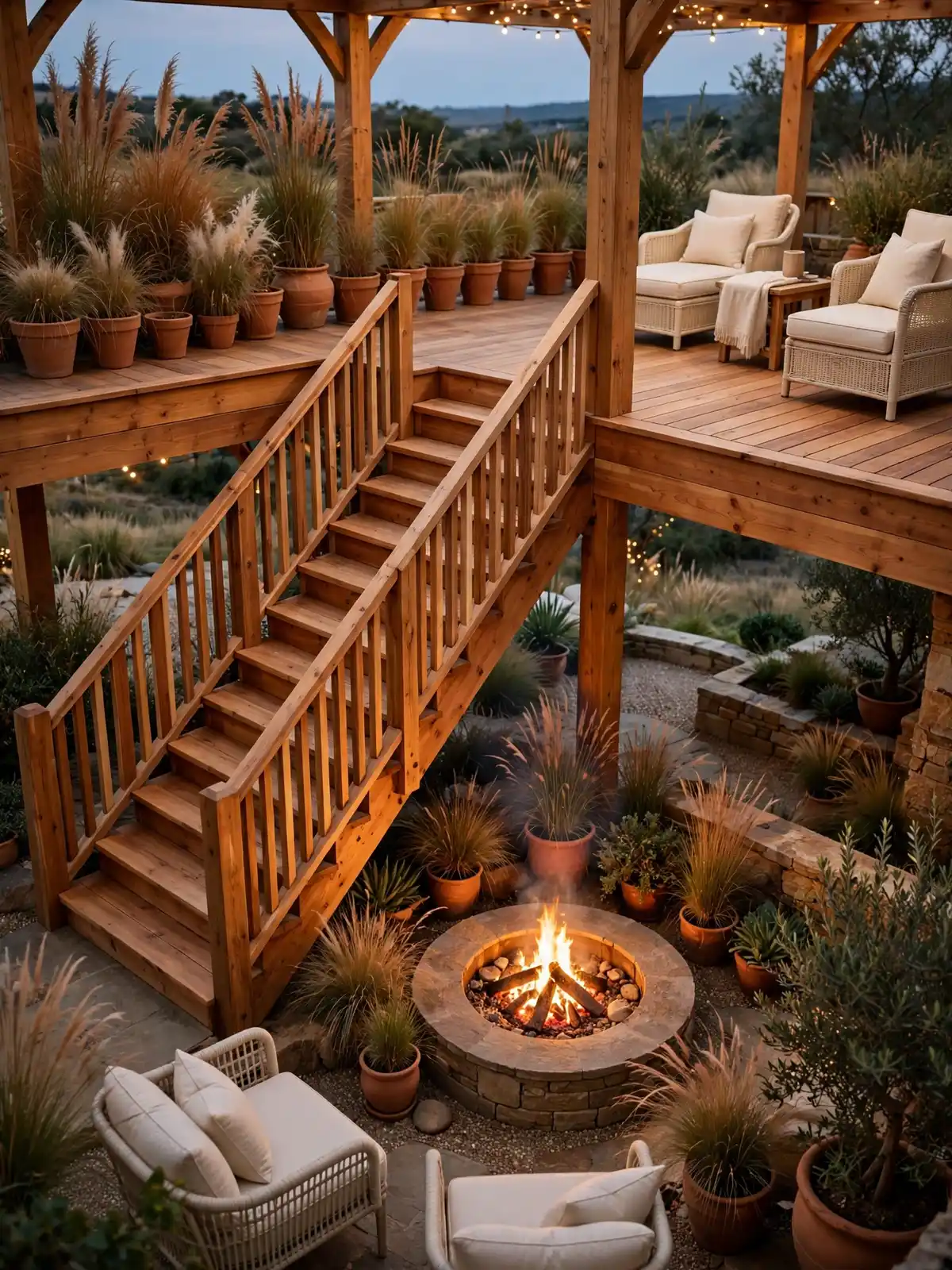
Warm cedar steps make the walk down to a fire pit feel like part of the evening, not just a route to it. On this stair, eight cedar treads, each 1.1 metres wide and 280 mm deep, descend from the patio to a round stone fire pit, with terracotta pots of ornamental grasses on either side and cream outdoor chairs waiting below. The cedar is naturally weather-resistant and smells faintly sweet in warm weather, and a slim cedar handrail on one side keeps the descent steady after dark. As the fire glows, the timber catches the light and the whole corner of the garden feels warm and gathered.
Quick tips:
- Choose cedar or another naturally durable timber for outdoor steps.
- Add a slim handrail on one side for evening use near a fire.
- Flank the steps with terracotta pots so the palette stays warm.
- Keep the tread surface lightly grooved so it grips in damp weather.
A Brick Outdoor Staircase With Wrought-Iron Railings
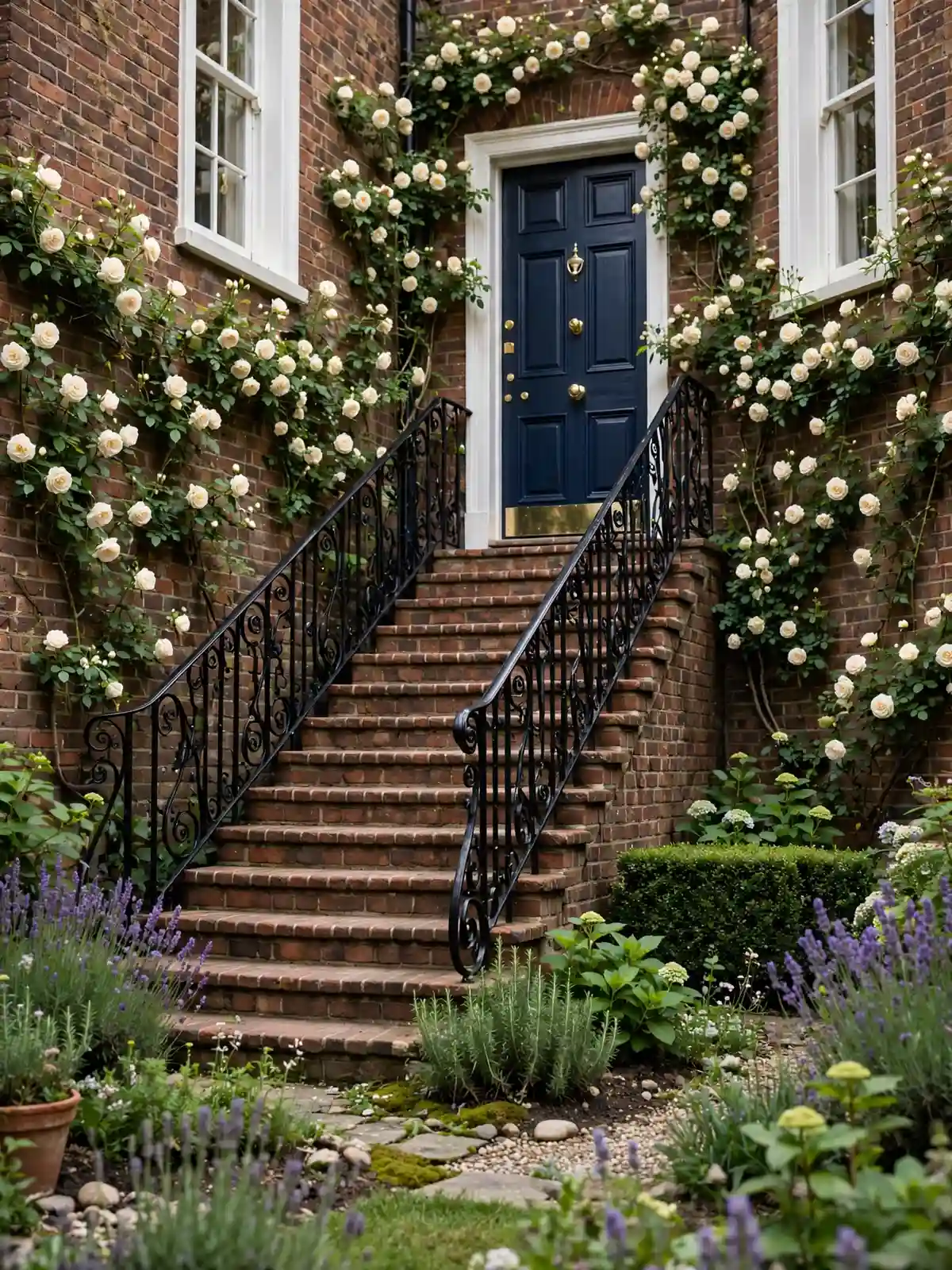
A brick outdoor staircase with wrought-iron railings gives a house a timeless, established feeling, because brick only looks better as it ages. Here, seven brick steps, each 1.4 metres wide with a 150 mm riser, rise to a deep navy-blue front door, with slender black wrought-iron railings curving gently on both sides and cream climbing roses softening the wall beside them. The bricks are a warm red-brown with pale mortar, and the treads are finished with a slightly darker brick nosing so each step edge is easy to see. It suits colonial, farmhouse and cottage-style homes perfectly.
Quick tips:
- Use a darker brick nosing so each step edge is easy to see.
- Choose wrought iron with a simple curve, not ornate scrollwork, for a modern-classic look.
- Plant climbing roses beside the stair to soften the brick.
- Repoint the mortar every few years to keep the stair solid.
Slate Steps With Brass Inlay Lighting
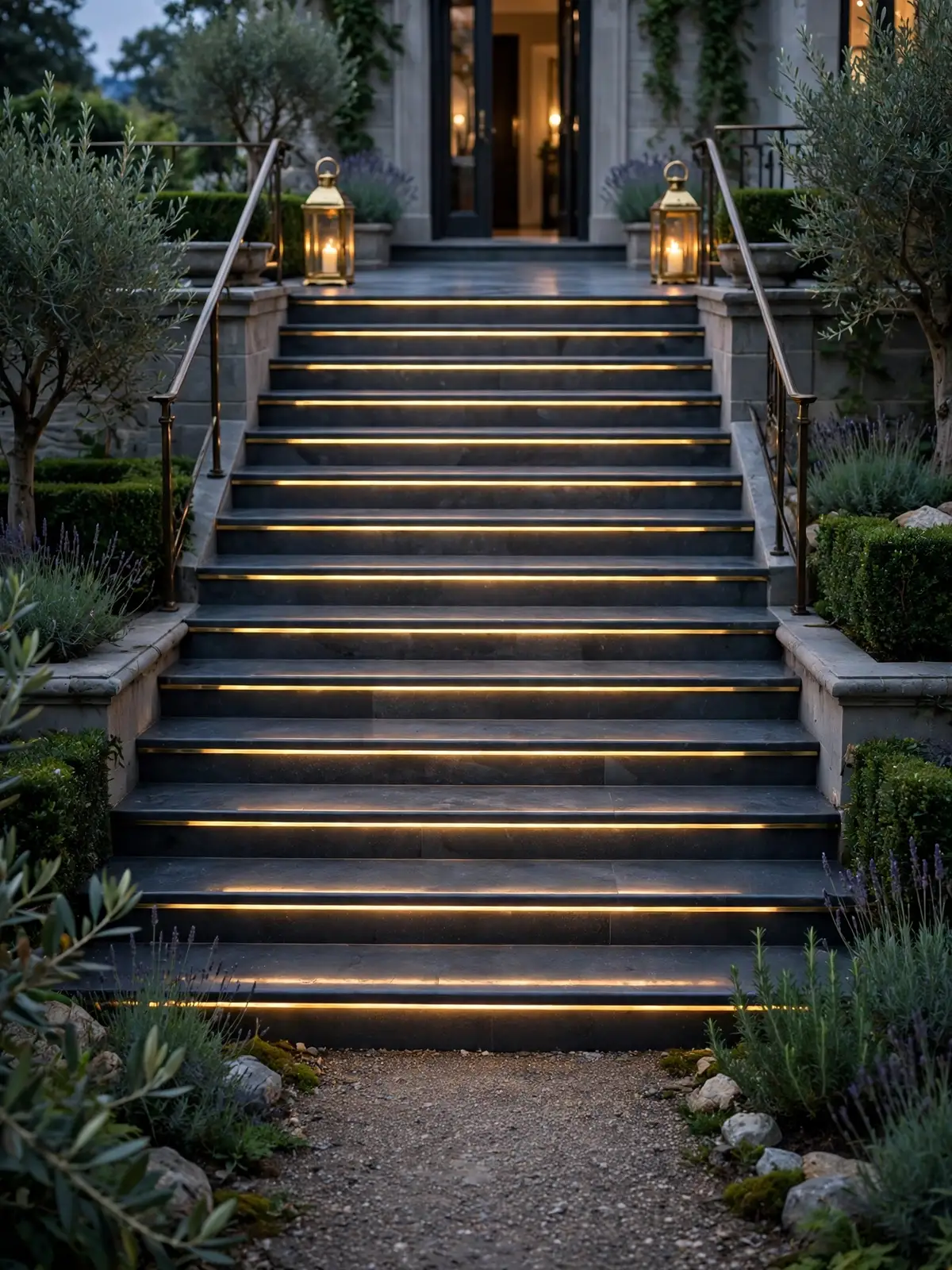
Slate steps with brass inlay lighting turn an ordinary garden stair into an evening feature, because the dark stone makes the warm brass glow. On this stair, nine dark grey slate treads, each 1 metre wide and 300 mm deep, are edged with a thin 10 mm brass strip set into the stone, with warm LED light washing down from the strip onto the tread below. Gold lanterns sit on the top landing, and the slate’s natural riven texture grips well even in rain. By day the brass reads as a fine, expensive detail; after dark the whole flight glows like a quiet lantern in the garden.
Quick tips:
- Choose riven slate for natural grip in wet weather.
- Keep brass inlays thin, about 10 mm, so they read as jewellery, not trim.
- Use warm-white LEDs so the brass glows gold, not yellow.
- Seal the slate once a year to keep its colour deep.
A White Painted Concrete Spiral to a Rooftop Terrace
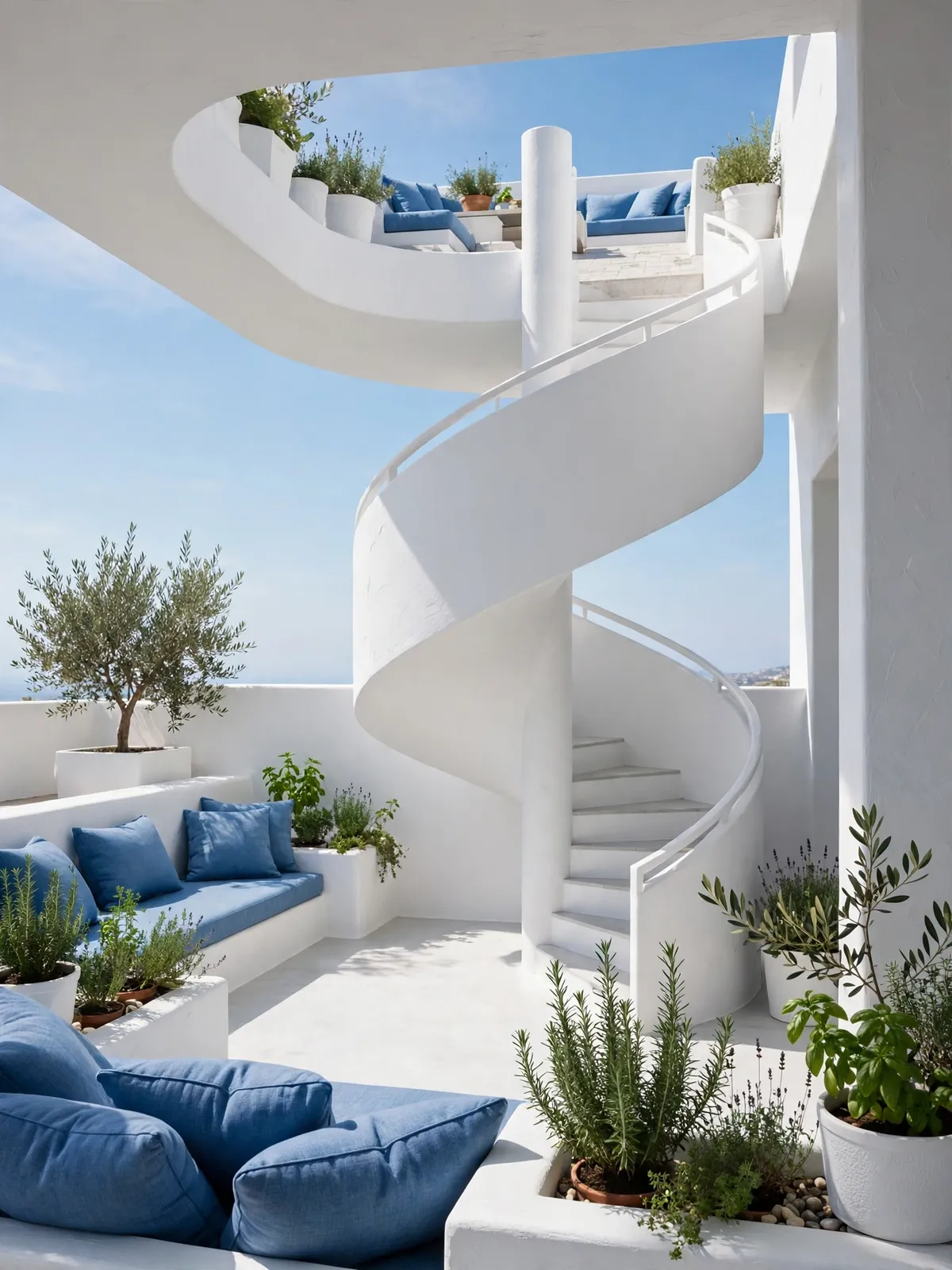
A white painted concrete spiral stair makes a rooftop terrace feel reachable and glamorous, because the curve draws the eye upward to the sky. This stair winds around a slim white steel centre pole, with concrete treads, each 800 mm wide at the outer edge, painted a crisp white and sealed against weather, rising to a terrace dressed with azure-blue outdoor cushions and white planters of green herbs. The white reflects the midday sun so the stair never feels hot or dark, and the spiral takes up barely 2 metres of floor space on the patio below. It is a small footprint with a big, holiday feeling.
Quick tips:
- Seal painted concrete well so rain cannot lift the paint.
- Keep the centre pole slim and white for a clean spiral.
- Dress the terrace in one strong accent colour, like azure blue.
- Add a handrail that follows the curve for confidence on a spiral.
Travertine Steps Down to a Pool Deck
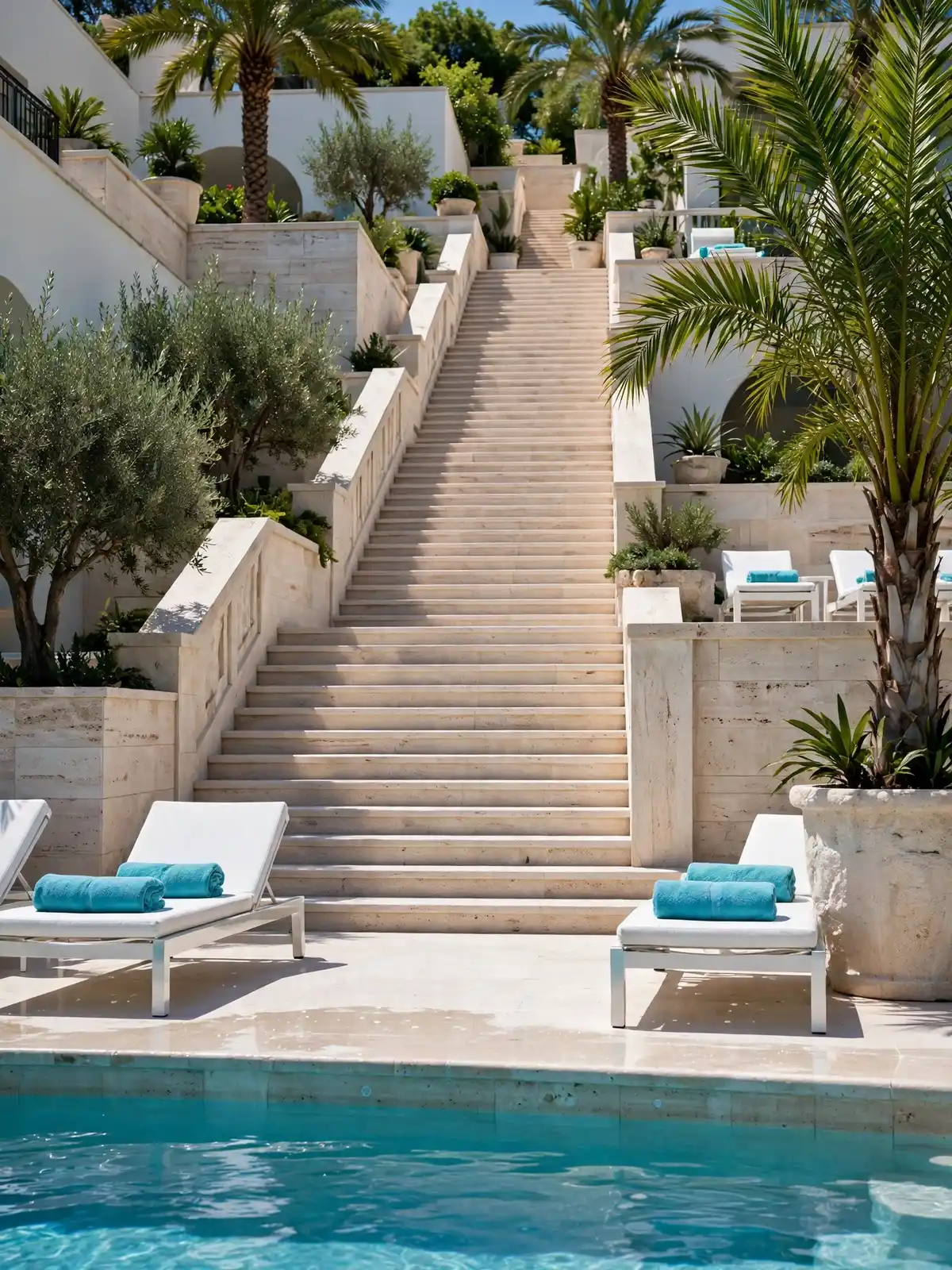
Travertine steps down to a pool deck feel like a resort, because the pale, warm stone stays cool under bare feet even in strong sun. Here, five wide travertine treads, each 2 metres wide and 400 mm deep, descend from the house terrace to the pool, with white loungers and turquoise towels waiting at the bottom and a tall palm in a stone pot marking the turn. The travertine is tumbled, so its surface is soft and non-slip even when splashed, and the pale cream tone makes the turquoise water look even brighter. It is a stair built for slow summer afternoons.
Quick tips:
- Choose tumbled travertine so wet feet never slip.
- Keep treads wide, about 400 mm deep, for a relaxed resort pace.
- Match the stone pot to the treads for a unified look.
- Rinse the steps weekly in pool season to stop chlorine staining.
A Steel and Ipe Wood Outdoor Staircase to a Raised Deck
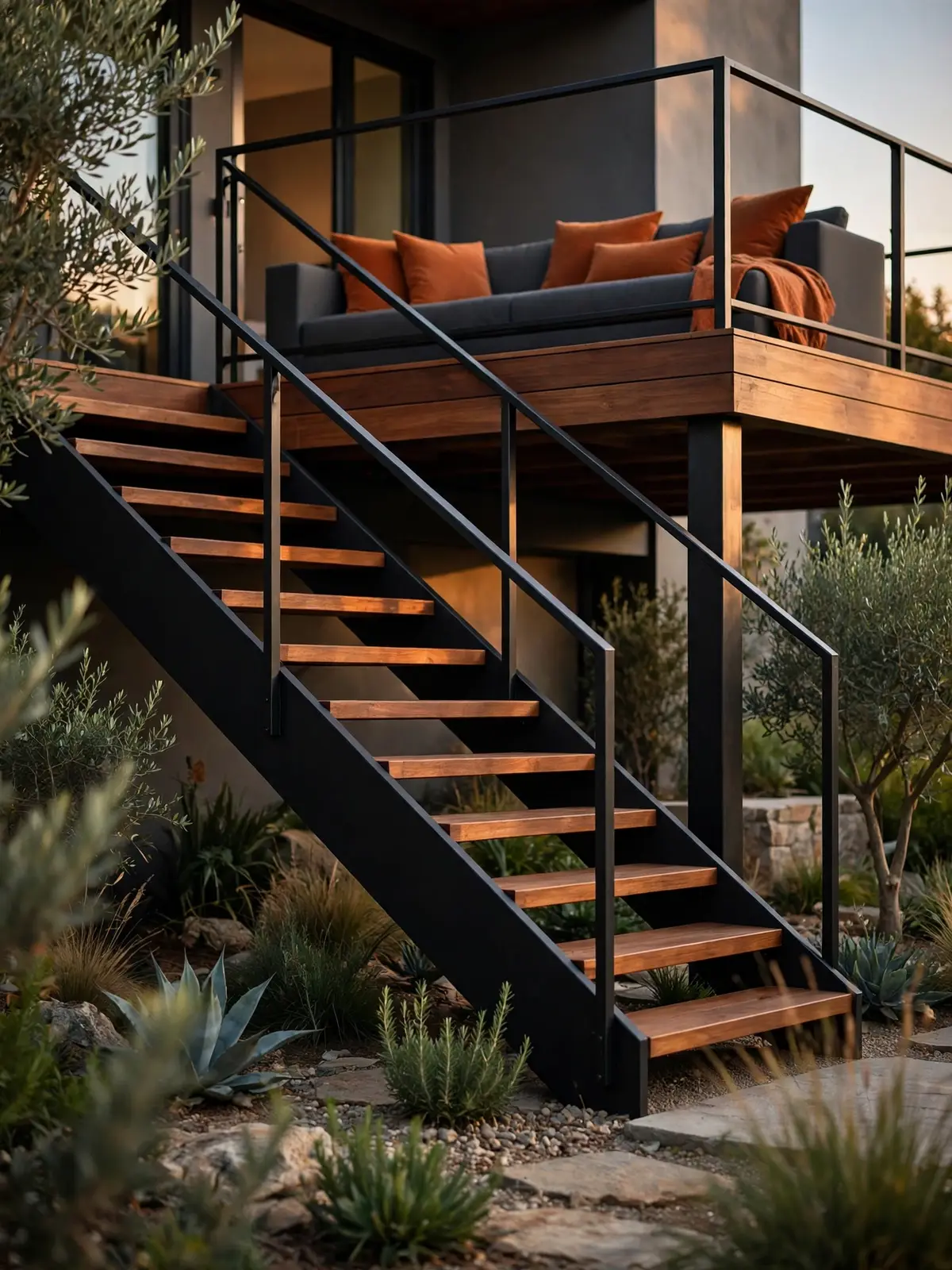
Black steel and ipe wood make an outdoor staircase feel bold and contemporary, because the dark frame makes the rich timber glow. This stair uses a matte black steel stringer on each side, with ipe wood treads, each 1.1 metres wide and 280 mm deep, oiled to a deep chocolate brown, rising to a raised deck with a charcoal-grey outdoor sofa and burnt-orange cushions. Ipe is one of the hardest, most weatherproof timbers available, so the treads stay solid for decades with just an annual oiling, and the steel is powder-coated to resist rust. The contrast of black and warm brown reads as expensive from the garden gate.
Quick tips:
- Oil ipe treads once a year to keep their deep colour.
- Powder-coat steel stringers so they resist rust outdoors.
- Pair dark steel with one warm accent, like burnt orange, nearby.
- Keep the tread gaps small so small feet and paws stay safe.
A Curved Granite Outdoor Staircase in a Front Garden
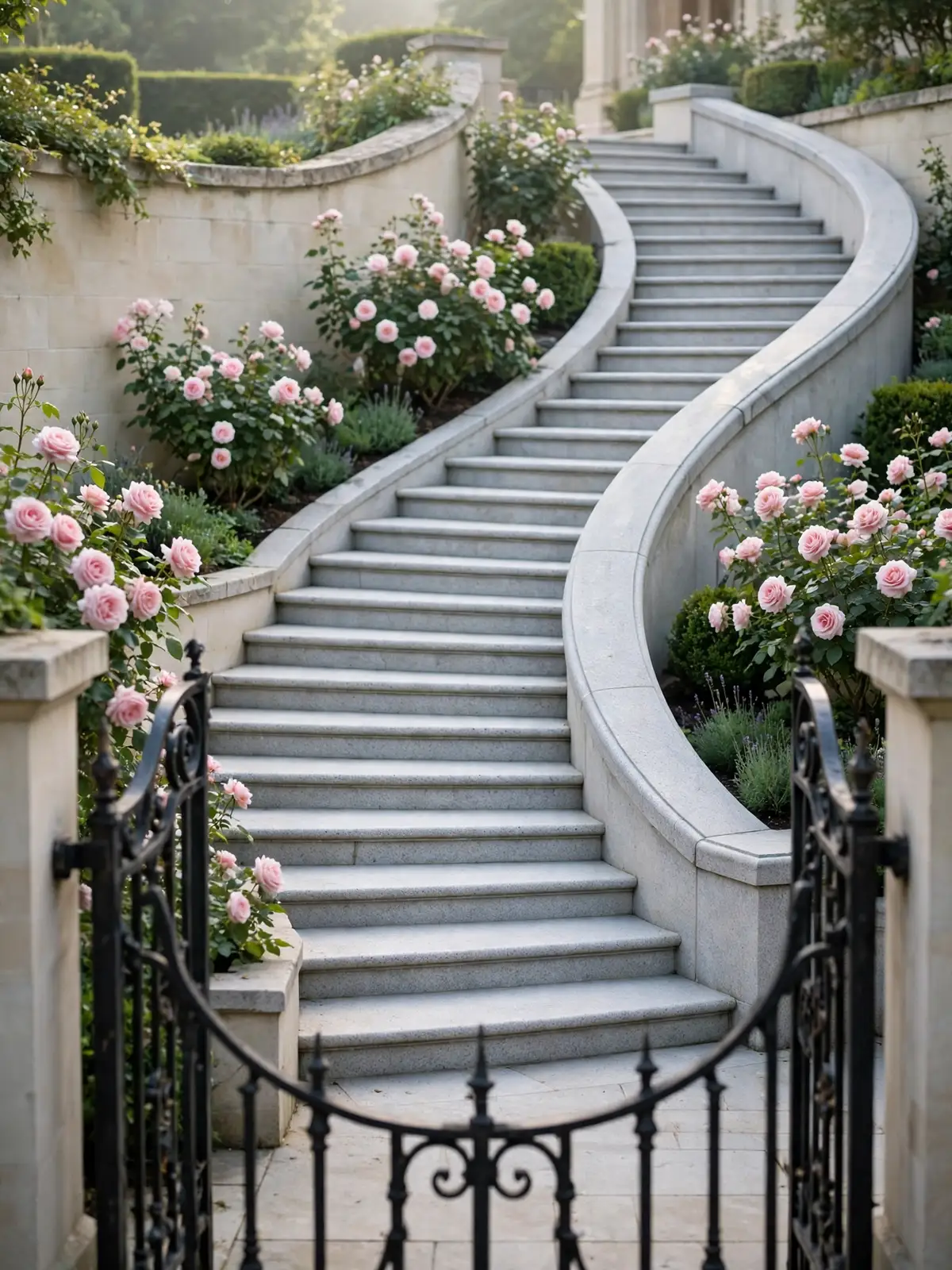
A curved granite stair softens a front garden and makes the approach to the house feel generous, because the sweep guides you in instead of marching you straight up. On this stair, pale grey granite treads, each 1.5 metres wide at the outer edge and 300 mm deep, curve gently around a low cream stone wall, with blush-pink roses planted in low beds along both sides. Granite is almost indestructible outdoors — it shrugs off frost, rain and foot traffic — and its fine grain catches the morning light without glare. The curve means you see the front door gradually, which makes the arrival feel considered and calm.
Quick tips:
- Keep the curve gentle so the stair stays easy to climb.
- Plant low roses along the curve so the stone feels softened.
- Choose pale granite so the stair glows in morning light.
- Add a low stone wall on the outer curve as a natural handrail height.
Mosaic Tile Risers on a Patio Outdoor Staircase
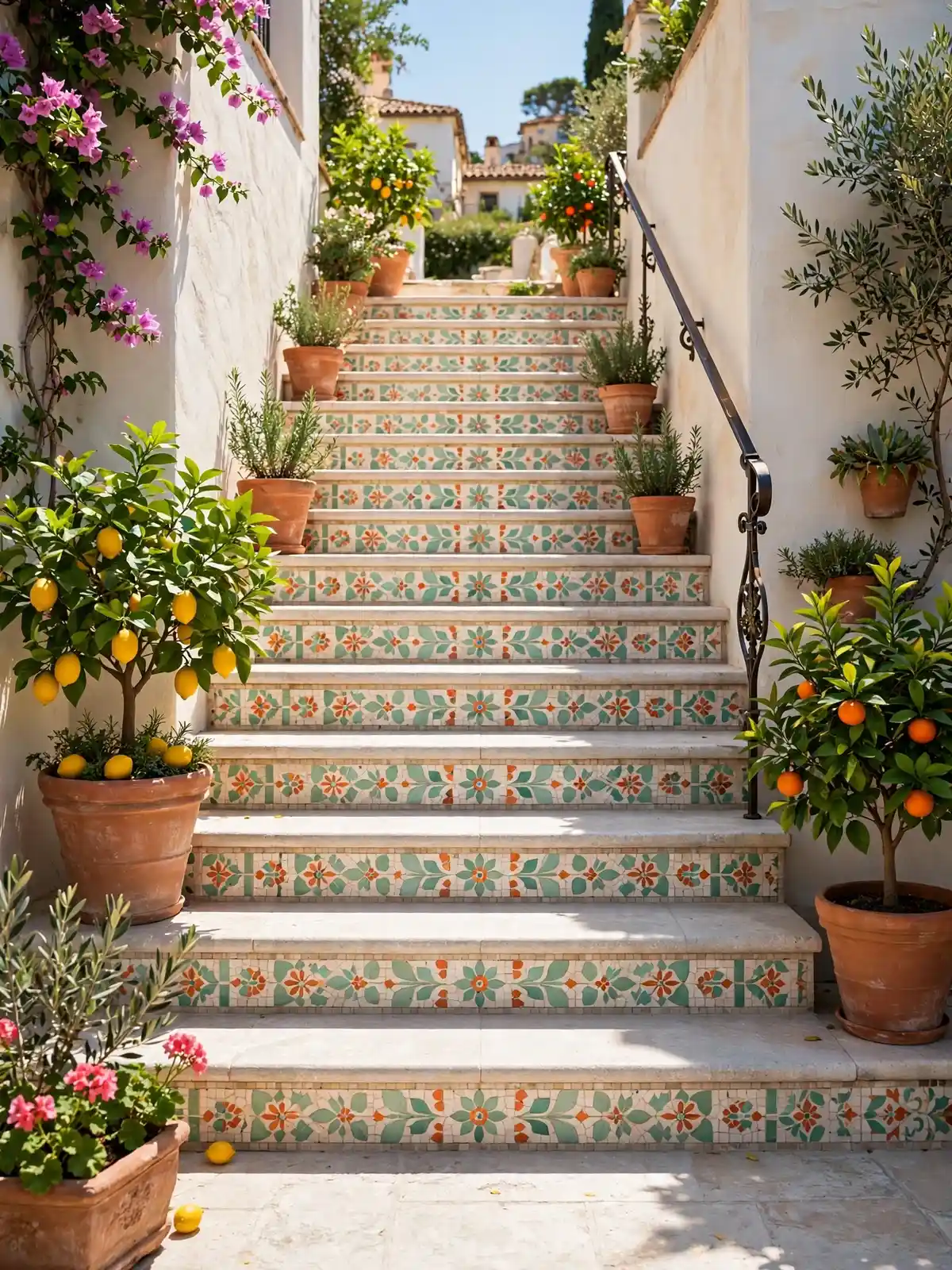
Mosaic tile risers turn a plain patio stair into the most photographed corner of the garden, because the pattern does all the talking while the treads stay practical. Here, six steps use pale stone treads, each 1.3 metres wide, with hand-painted mosaic risers in mint green, coral and cream in a repeating geometric pattern, flanked by terracotta pots holding small citrus trees. The tiles are outdoor-rated and frost-proof, so the colours stay bright through winter, and the pale stone treads stay cool and non-slip underfoot. It is a small stair with a big personality, perfect for Mediterranean and coastal homes.
Quick tips:
- Use outdoor-rated, frost-proof tiles on risers, never indoor tile.
- Keep treads pale stone so the mosaic stays the star.
- Repeat one pattern, not many, for a calm, collected look.
- Seal the tile grout so rain and dirt cannot stain it.
Reclaimed Oak Sleepers on a Woodland Hillside
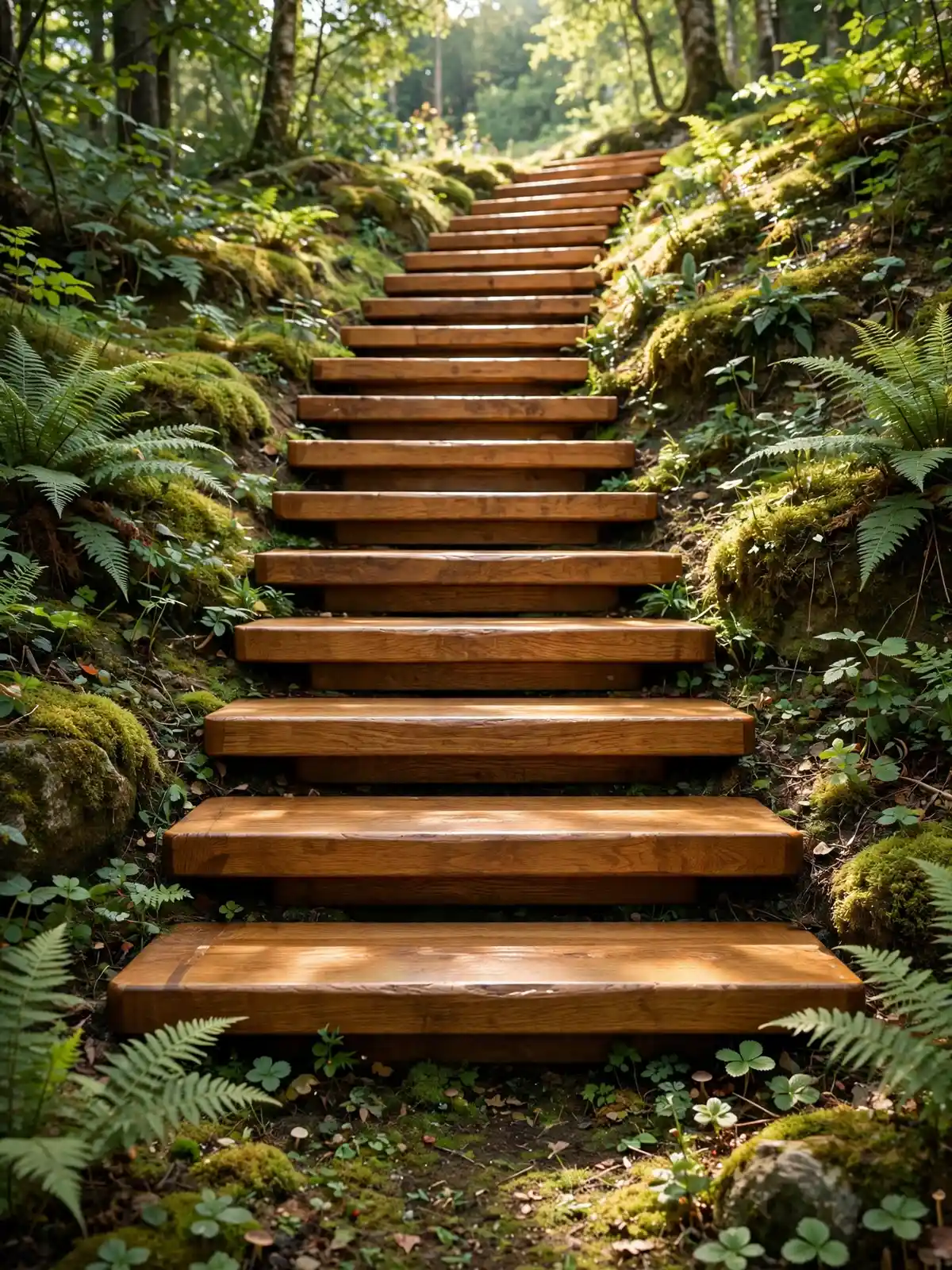
Reclaimed oak sleepers make a hillside stair feel as if it has always belonged to the woodland, because the weathered timber blends with the trees around it. On this slope, fourteen oak sleepers, each 1.2 metres wide and 250 mm deep, are set into the earth as wide, low steps, with sage-green ferns and soft moss spilling over the edges and dappled light falling through the canopy above. The oak is dense and naturally durable, so the steps stay solid for years, and the wide treads give walkers a sure footing on a slope that would otherwise be hard to climb. It is the most natural-looking stair in this whole list.
Quick tips:
- Bed sleepers into compacted gravel so they cannot shift.
- Keep treads wide and low on a slope for a comfortable climb.
- Let ferns and moss soften the edges, but trim them off the walking surface.
- Check reclaimed timber for rot before installing it.
A Glass-Railed Outdoor Staircase to a Modern Deck
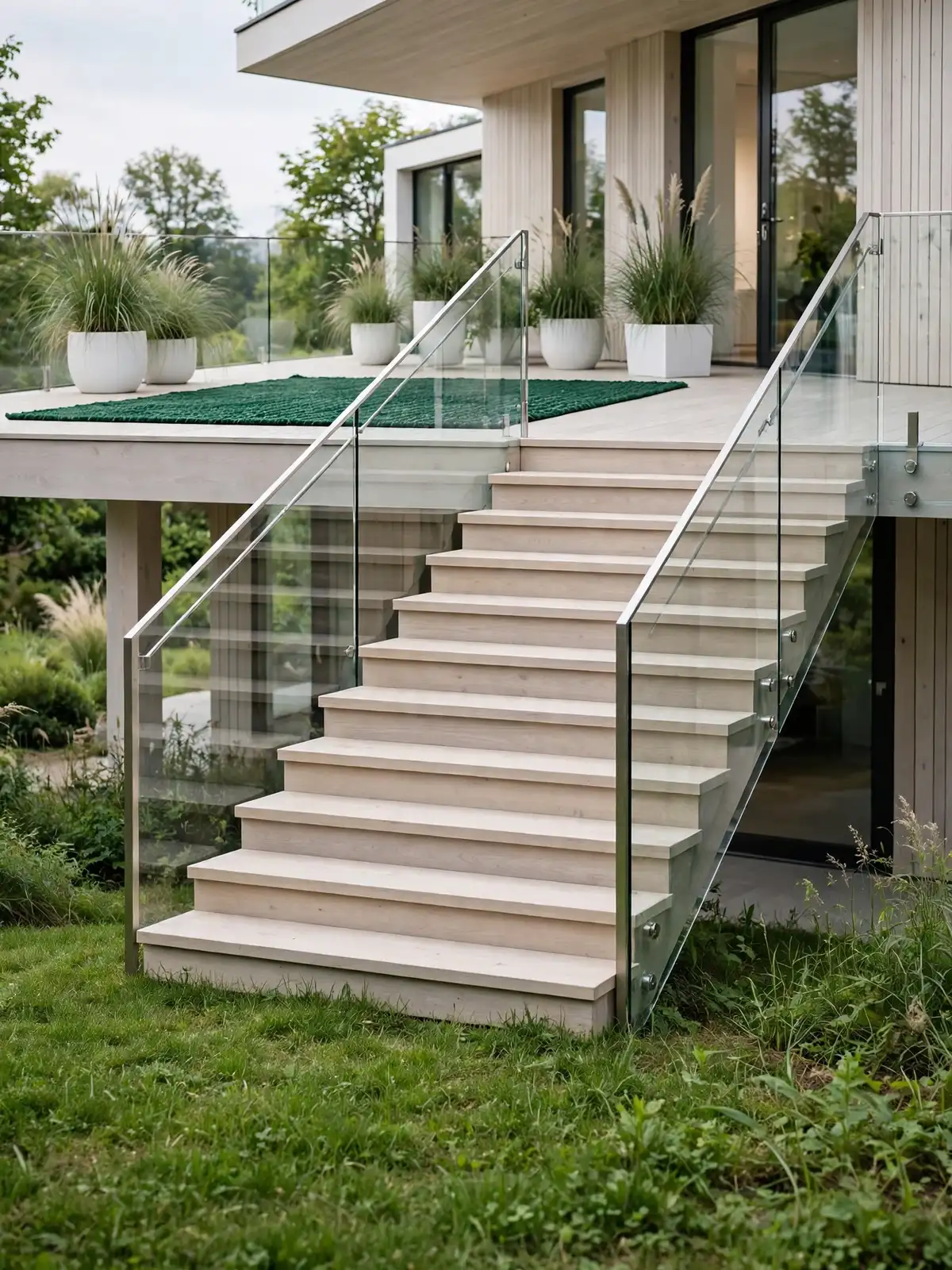
Clear glass railings make an outdoor staircase feel almost invisible, so the garden view stays uninterrupted from the deck. This stair uses pale ash wood treads, each 1 metre wide, with frameless glass panels held by slim stainless-steel clamps on the open side, rising to a deck dressed with an emerald-green outdoor rug and white planters of ornamental grasses. The glass is tempered and outdoor-rated, so it is strong and safe, and it lets light and views pass straight through the stair. From the lawn, the deck looks as if it floats above the garden.
Quick tips:
- Use tempered, outdoor-rated glass panels for safety.
- Clean the glass monthly so it stays clear and bright.
- Pair glass with pale timber treads to keep the look light.
- Keep one strong colour, like emerald green, on the deck to anchor the stair.
Stone Steps Flanked by Lavender
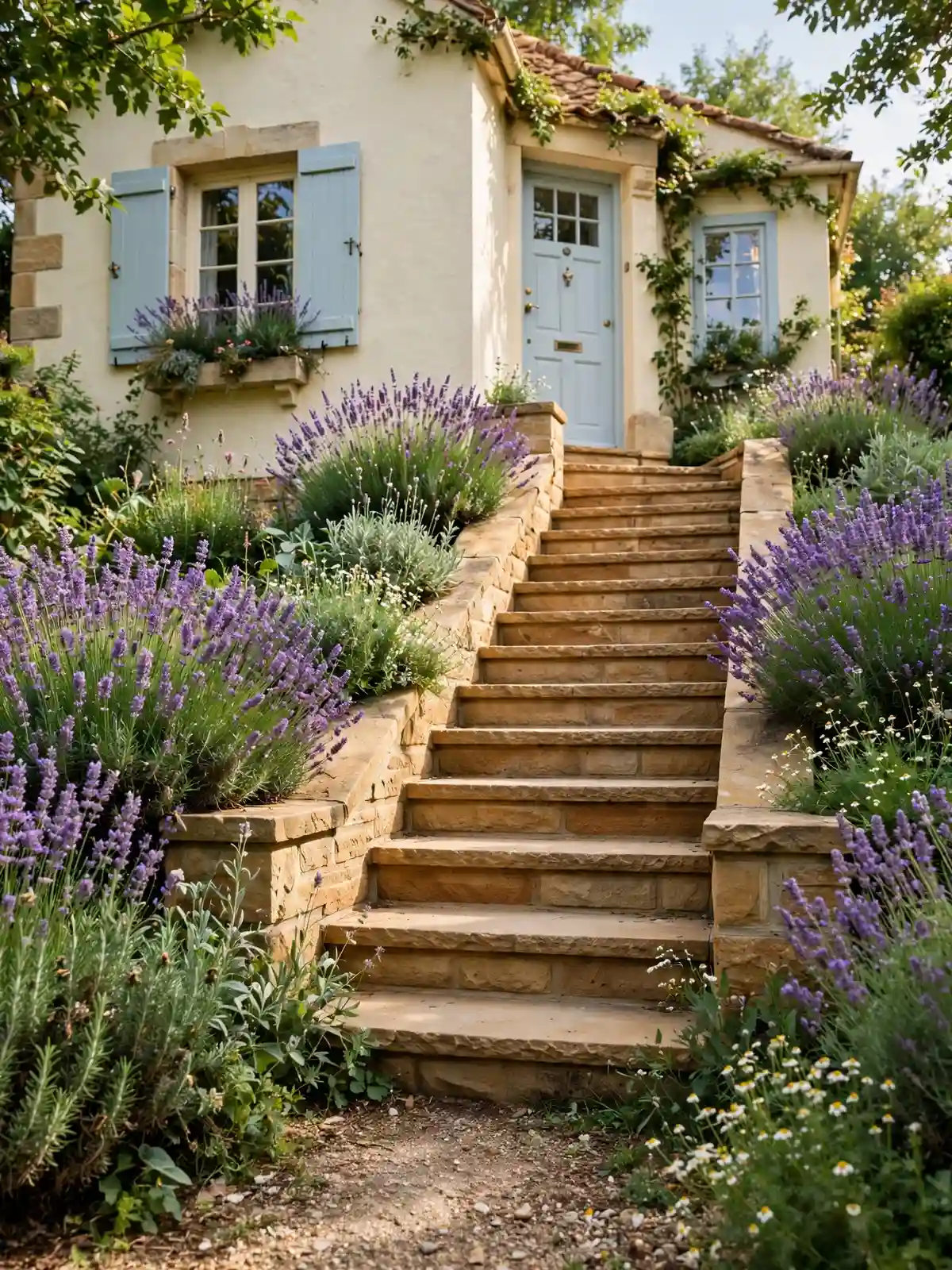
Stone steps flanked by lavender are the most fragrant outdoor staircase you can build, because every climb brushes past the flowers. Here, eight warm sandstone treads, each 1.2 metres wide and 320 mm deep, rise to a cottage with a pale blue front door, with dense rows of purple lavender planted along both edges so the scent rises as you climb. Sandstone is warm underfoot and naturally non-slip, and the lavender needs almost no watering once established, so the stair looks after itself through summer. Bees visit the flowers all day, and the whole entry feels alive.
Quick tips:
- Plant lavender 300 mm back from the tread edge so it never blocks footing.
- Choose sandstone for warmth and natural grip.
- Trim lavender lightly after flowering to keep it compact.
- Match the front door colour to a tone in the stone or flowers.
Cantilevered Concrete Steps From a Garage Level
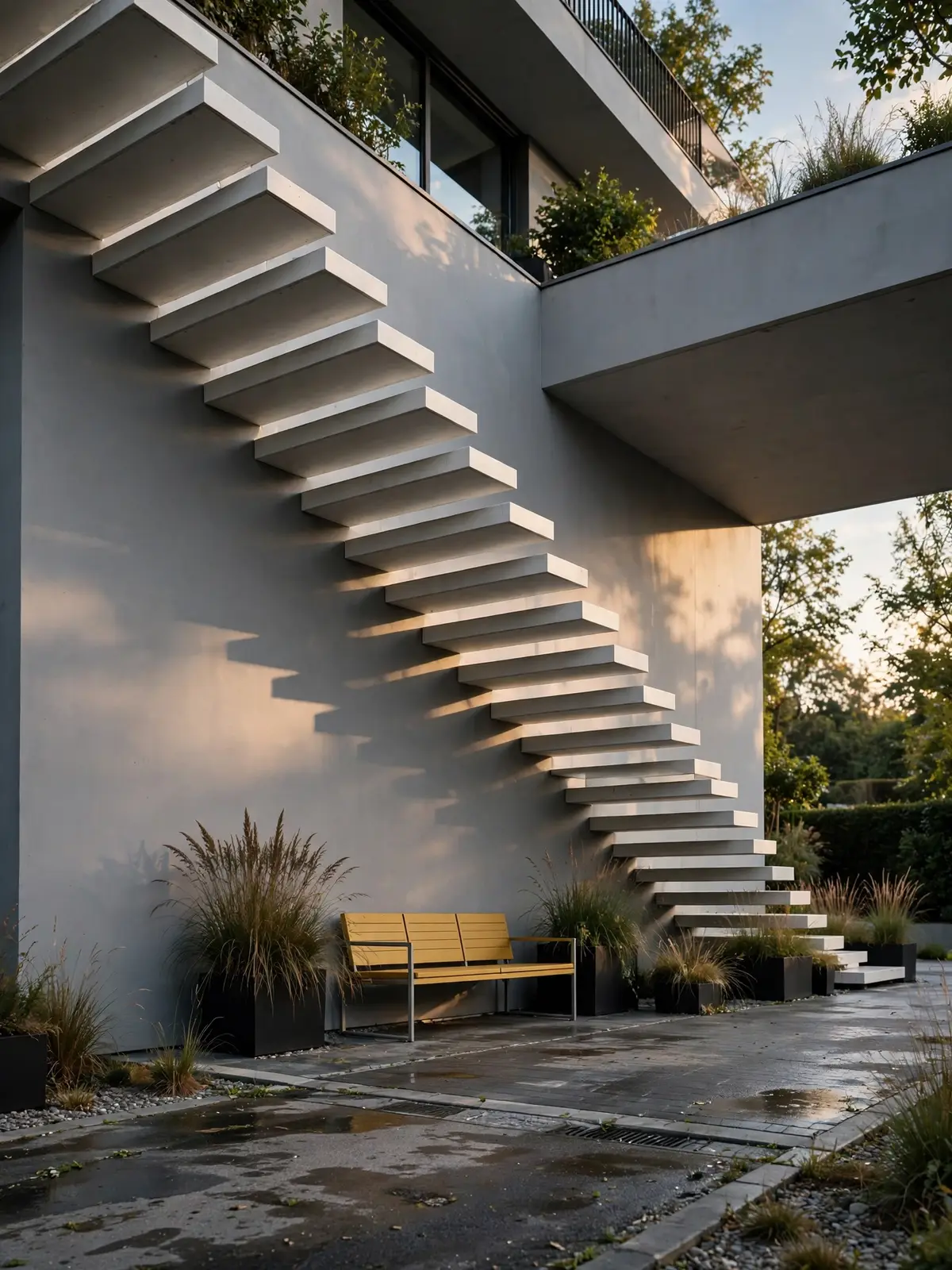
Cantilevered concrete treads project straight from a wall with no visible support, so the stair reads as pure sculpture against the house. On this design, ten pale concrete treads, each 1 metre wide and projecting 900 mm from a smooth grey rendered wall, rise from the garage level to the front terrace, with a mustard-yellow outdoor bench below and black planters of ornamental grasses marking the base. A slim steel handrail runs along the wall side, and the concrete is sealed against rain and frost. It is a dramatic, architectural stair that suits a modern house perfectly.
Quick tips:
- Engineer cantilevered treads properly — they need steel reinforcement inside the wall.
- Add a wall handrail for safety on a balustrade-free stair.
- Keep the wall smooth and pale so the treads stand out.
- Use one bold accent, like mustard yellow, below the stair.
A Wrought-Iron Spiral to a Balcony Garden
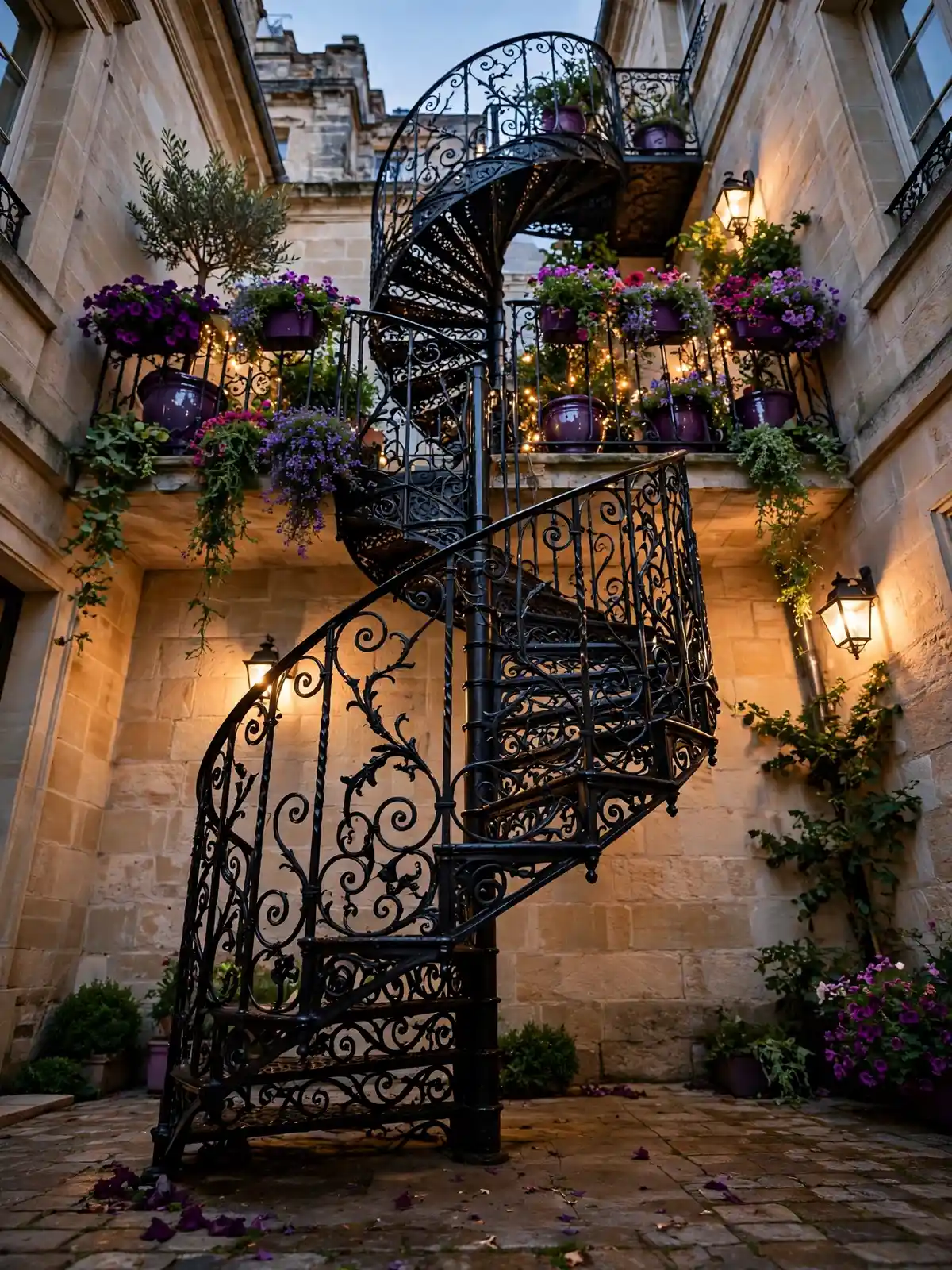
A wrought-iron spiral stair turns a small courtyard into a romantic European scene, because the curve and the ironwork feel like they belong to an old city balcony. This stair winds around a slim black iron centre pole, with iron treads, each 700 mm wide at the outer edge, finished with a non-slip tread plate, rising to a balcony garden dressed with plum-purple planters of trailing flowers against a cream stone wall. The iron is powder-coated black so it resists rust, and the spiral takes up barely 1.6 metres of courtyard space. In the evening, the balcony above glows and the stair becomes the prettiest thing in the courtyard.
Quick tips:
- Powder-coat wrought iron so it resists rust outdoors.
- Use non-slip tread plates on iron steps for wet weather.
- Dress the balcony in one rich colour, like plum purple, for romance.
- Keep the courtyard below clear so the spiral stays the feature.
Terracotta-Tiled Steps to a Courtyard
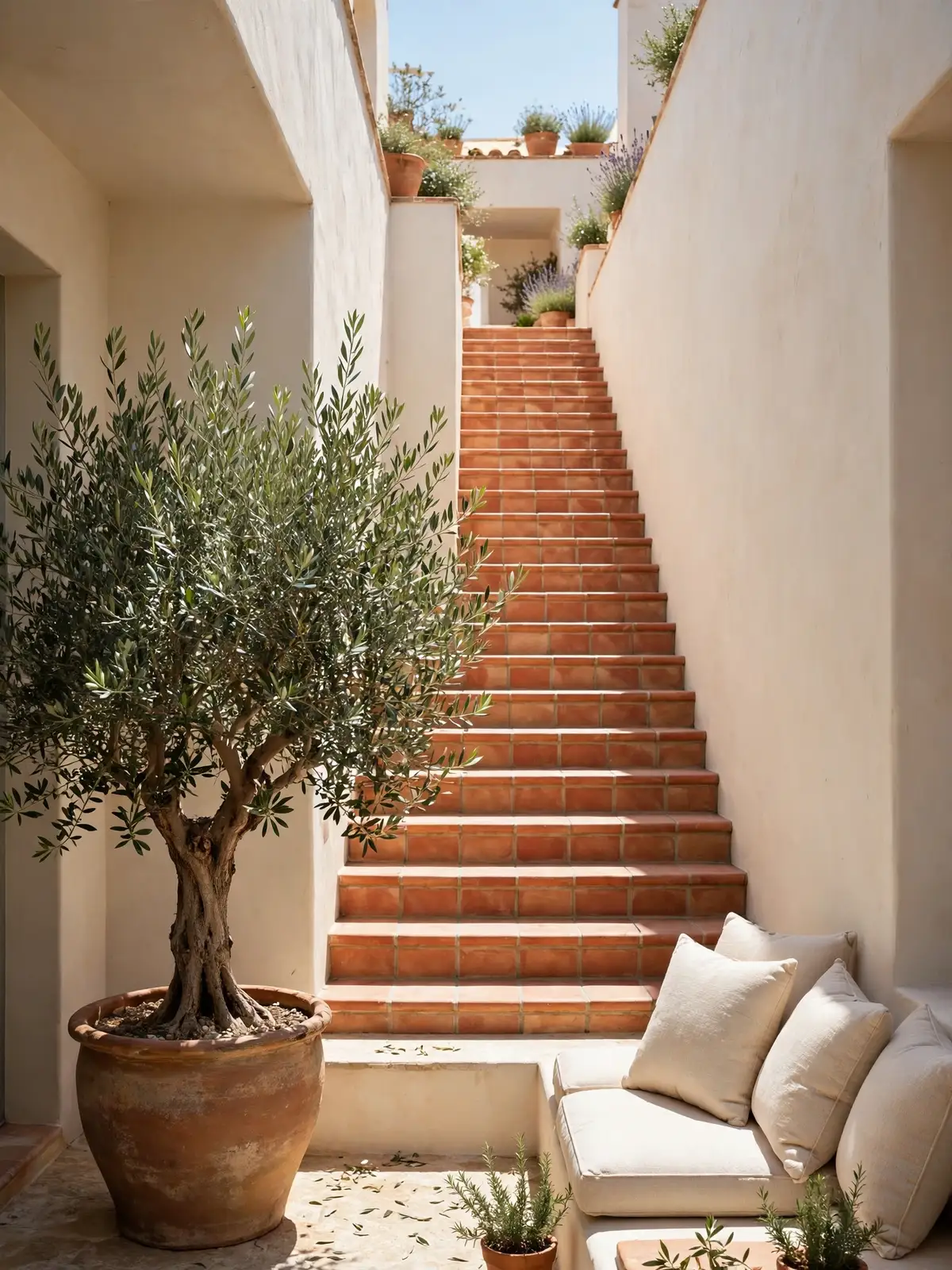
Terracotta-tiled steps make a courtyard stair feel sun-drenched even on a cloudy day, because the warm clay colour holds the heat of the sun. Here, seven steps with terracotta tiled treads, each 1.2 metres wide and 300 mm deep, rise between cream plaster walls to a sunny courtyard, where cream outdoor cushions and a large potted olive tree wait. The tiles are frost-proof and lightly textured, so they grip well in rain, and their warm orange-brown tone pairs beautifully with cream plaster and green olive leaves. It is a stair that belongs in a Mediterranean garden, and it brings that feeling anywhere.
Quick tips:
- Use frost-proof terracotta tiles, never indoor terracotta, outdoors.
- Pair terracotta with cream plaster for a classic Mediterranean look.
- Choose lightly textured tiles so wet feet stay safe.
- Add one olive tree at the top to complete the scene.
Gabion Stone Walls Alongside Garden Steps
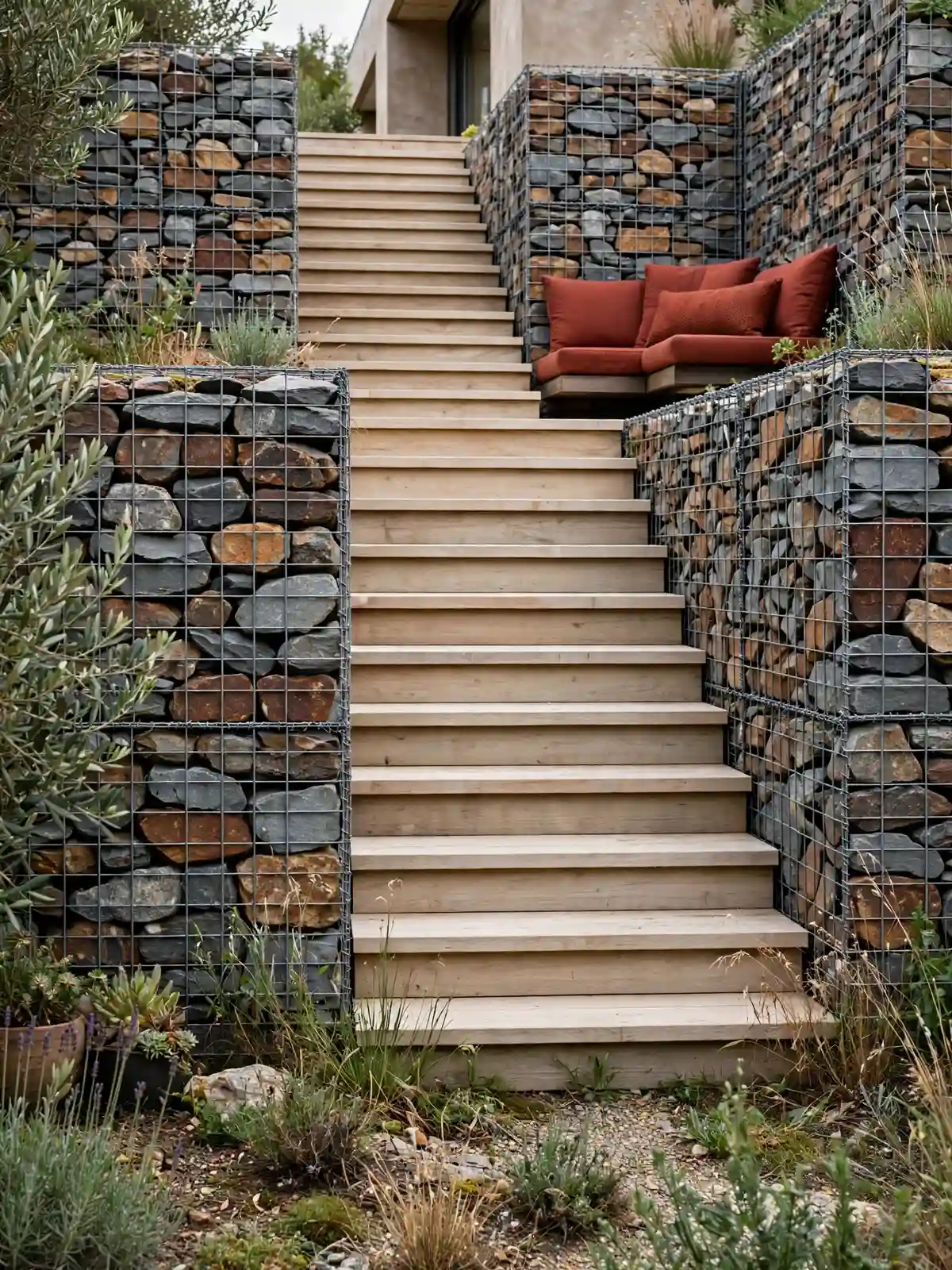
Gabion stone walls — wire cages filled with stone — give a garden stair a rugged, contemporary edge while holding back the slope behind it. On this stair, ten pale timber treads, each 1.1 metres wide, climb between two gabion walls, each 600 mm high and filled with a mix of grey and rust-coloured stones, with a bench dressed in rust-red outdoor cushions at the top landing. The walls do double duty: they retain the earth on a steep slope and they give the stair a strong, architectural frame. Over time, small plants seed themselves into the gaps between the stones, softening the whole structure.
Quick tips:
- Fill gabions with local stone so the walls match the garden.
- Keep the walls low, about 600 mm, so they read as a frame, not a fortress.
- Pair rugged stone walls with warm timber treads for balance.
- Let small plants seed into the gaps, but pull out anything woody.
Wide Steps That Double as Garden Seating
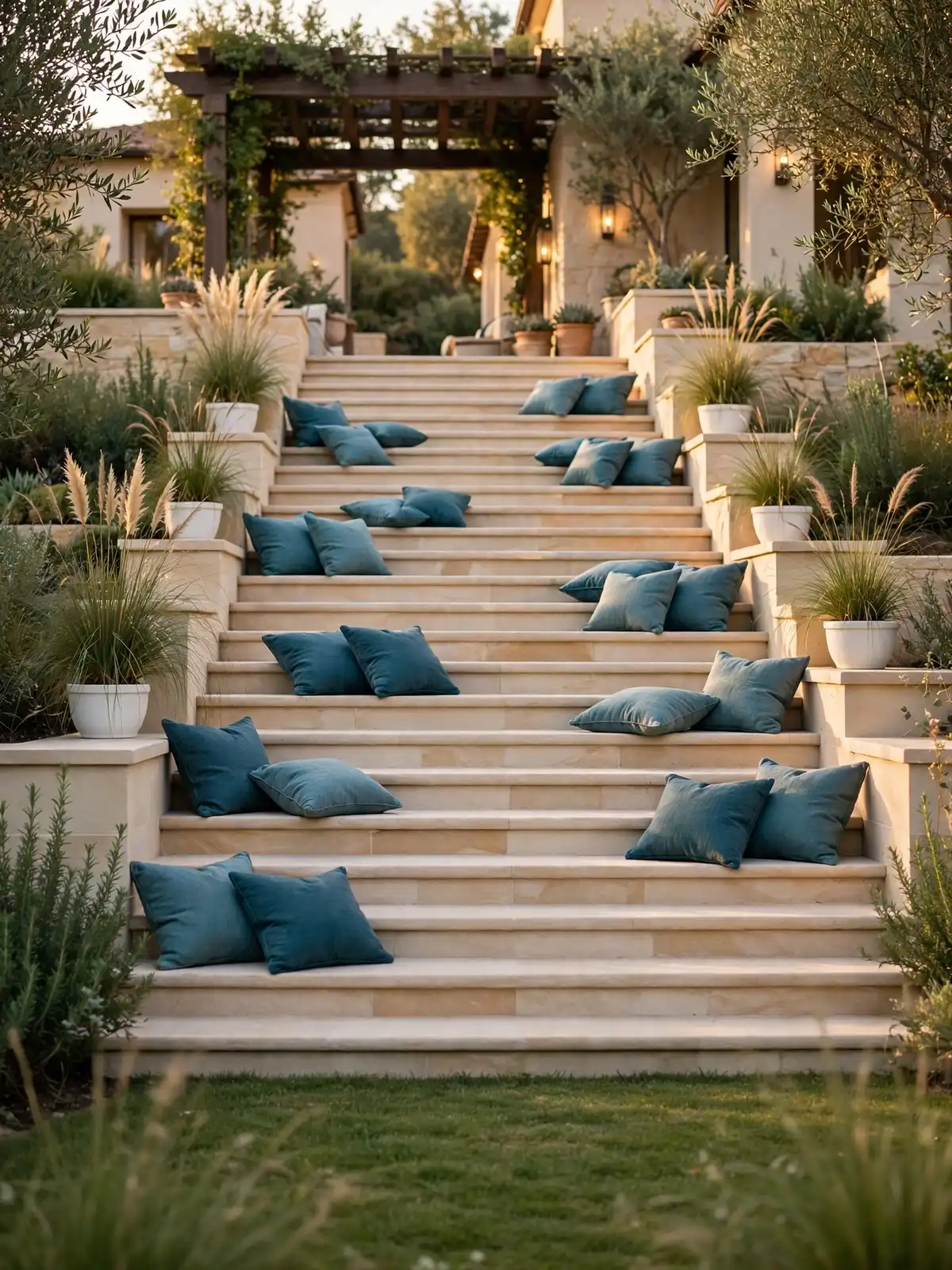
Wide steps that double as seating turn a garden stair into the best seat in the house, because the whole flight becomes a place to gather. Here, four very wide pale sandstone steps, each 2.4 metres wide and 450 mm deep, descend from the terrace to the lawn, dressed with teal-blue outdoor cushions and flanked by white planters of ornamental grasses. The steps are low — just 150 mm each — so sitting on them feels natural, and the sandstone stays warm in the evening sun. On summer nights, the family gathers here with drinks, and the stair becomes a terrace, a seat and a viewpoint all at once.
Quick tips:
- Make seating steps at least 450 mm deep so sitting feels comfortable.
- Keep risers low, about 150 mm, for easy sitting and climbing.
- Dress the steps with outdoor cushions in one strong colour.
- Choose sandstone or another warm stone that holds evening heat.
Timber Deck Stairs With Built-In Planters
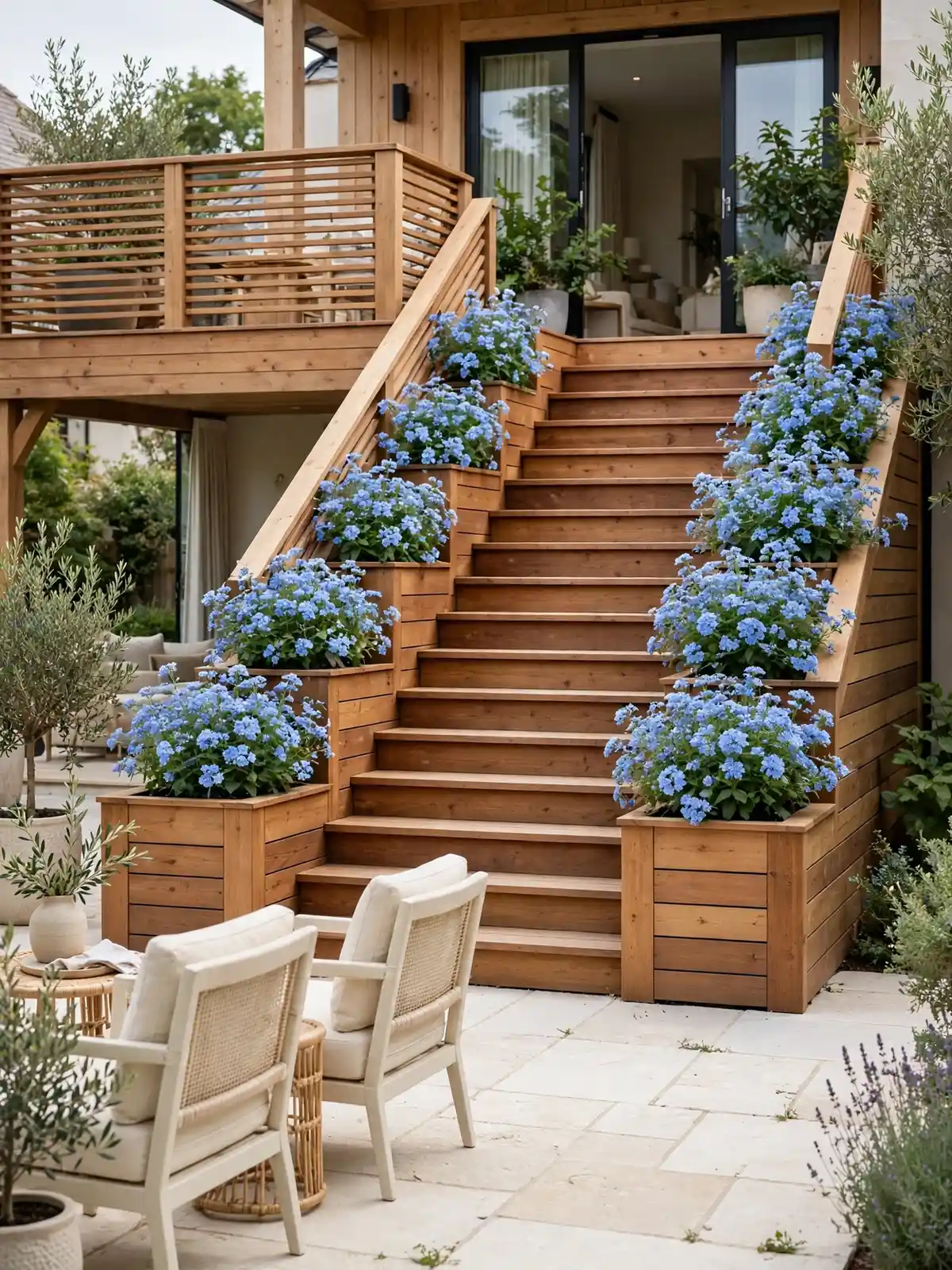
Built-in planters turn a timber deck stair into a garden feature, because the flowers climb with you. On this stair, eight warm timber treads, each 1.2 metres wide, rise from a pale stone patio to a deck, with built-in planter boxes running along both sides, planted with sky-blue flowers and trailing green foliage, and cream outdoor chairs waiting at the top. The timber is pressure-treated and stained a warm honey brown, and the planters are lined so water cannot rot the wood. Every step is framed by colour, and the stair feels alive from spring to autumn.
Quick tips:
- Line built-in planters so water cannot rot the timber.
- Choose trailing plants so the flowers spill softly over the edges.
- Stain deck timber a warm honey brown for a welcoming look.
- Keep the planter height below the handrail so the stair stays safe.
Porcelain Steps With Anti-Slip Finish to a Hot Tub
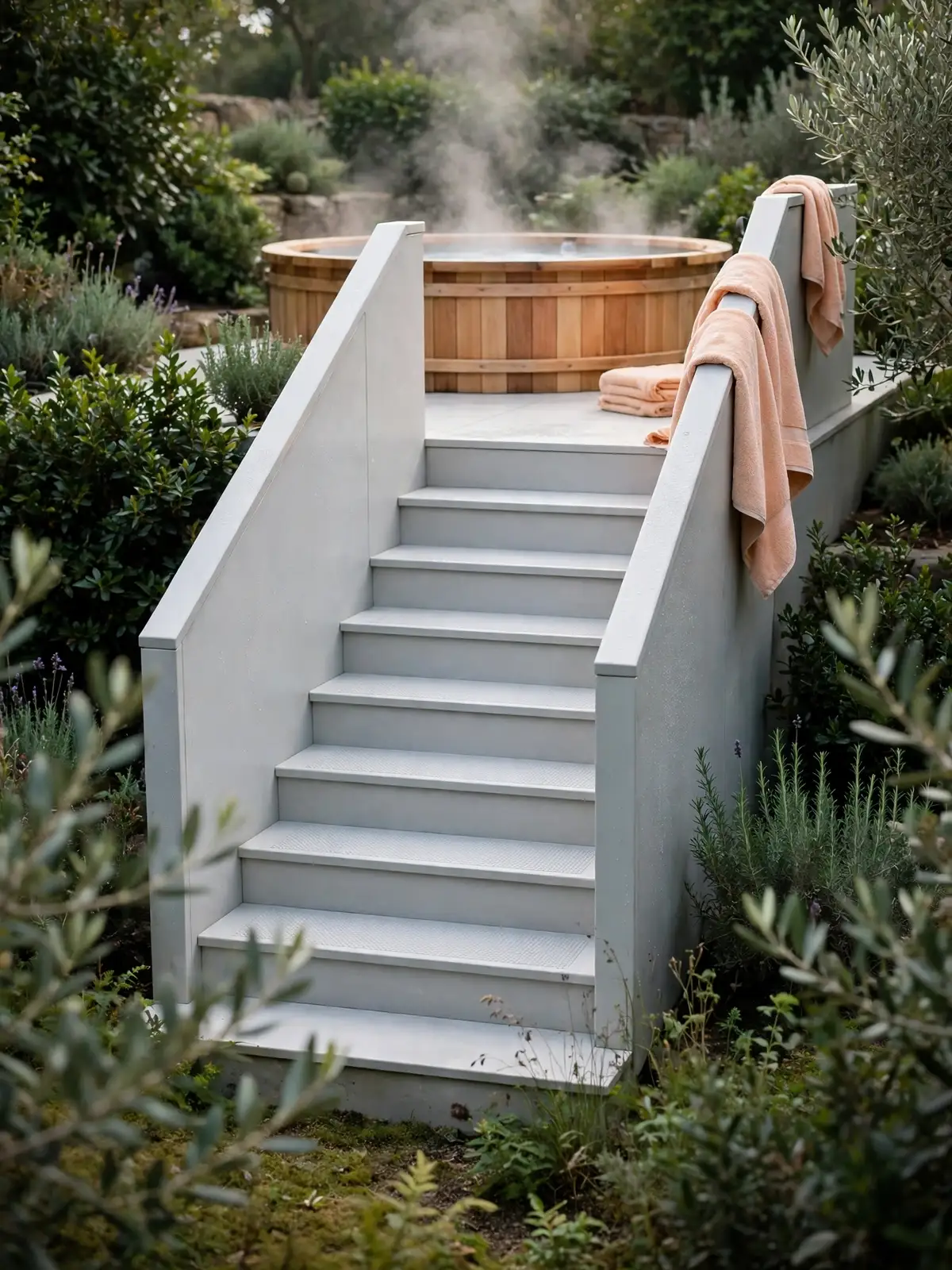
Porcelain steps with an anti-slip finish are the safest, smartest choice for a hot tub stair, because wet feet are guaranteed and the surface must grip every time. Here, four pale grey porcelain treads, each 1 metre wide and 350 mm deep, with a rated anti-slip texture, rise to a wooden hot tub, with peach-coloured outdoor towels folded nearby and dark green shrubs screening the corner. Porcelain does not absorb water, so it never stains, never grows moss and never needs sealing, and the pale grey tone keeps the spa corner feeling calm and clean. Steam rises from the tub, and the steps feel as considered as the tub itself.
Quick tips:
- Choose porcelain with a rated anti-slip finish, never polished tile, outdoors.
- Keep hot tub steps wide and low for safe, barefoot climbing.
- Add a handrail on at least one side for wet feet.
- Rinse porcelain steps after use to stop chlorine or salt build-up.
Natural Boulders as Garden Steps
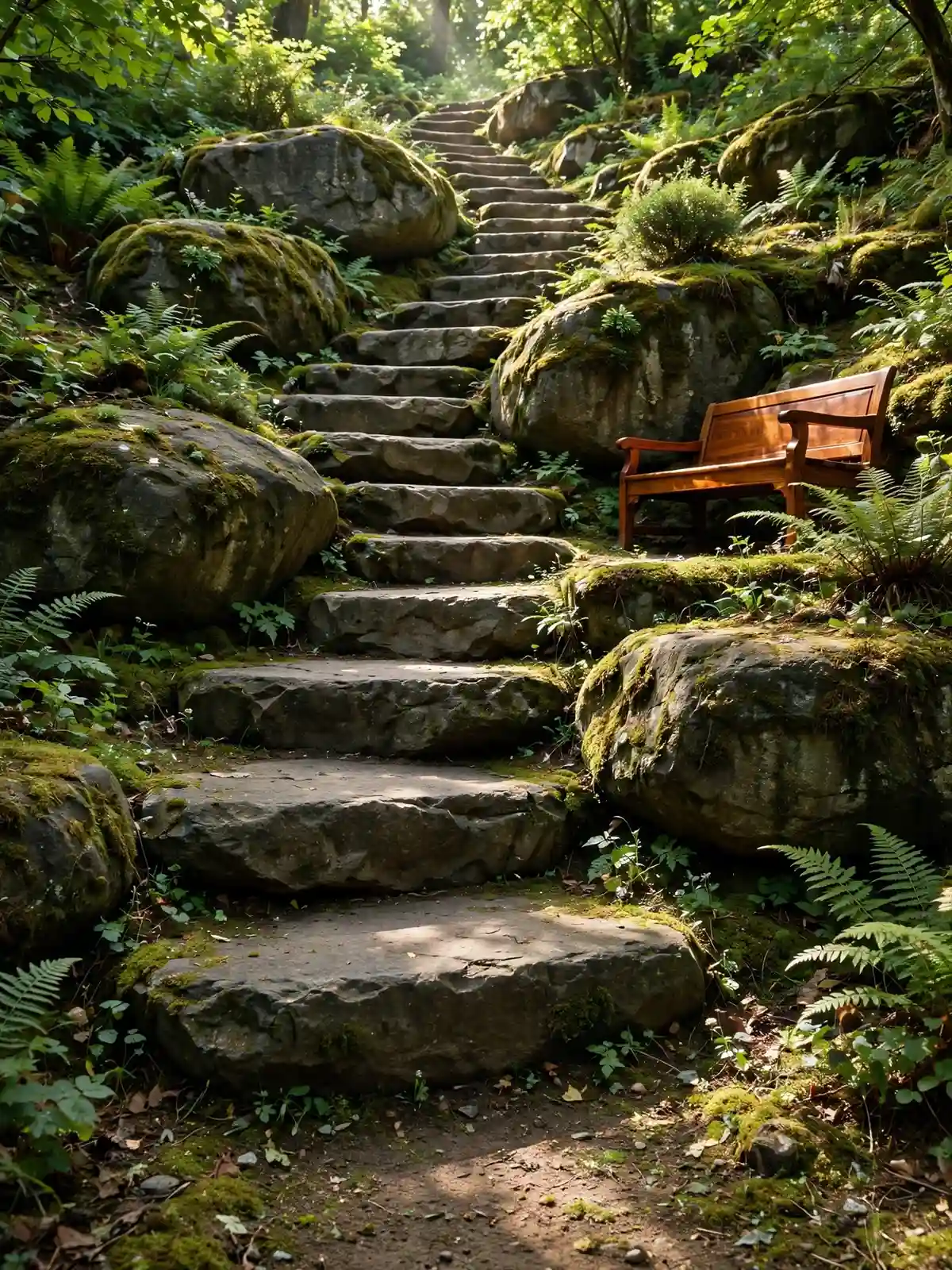
Natural boulders make the most organic outdoor staircase of all, because each step is a stone the landscape already offered. On this hillside, nine large flat-topped boulders, each roughly 1 metre wide and 300 mm deep, are set into the slope as steps, with fern-green ground cover and soft moss filling the gaps and a warm wooden bench at the top landing. The boulders are chosen for flat, stable tops and set on compacted gravel so they never rock underfoot, and their grey-brown tones blend with the soil and planting. Walking up them feels like walking up a woodland path, not a built stair.
Quick tips:
- Choose boulders with flat, stable tops for safe footing.
- Bed each boulder on compacted gravel so it cannot rock.
- Fill gaps with low ground cover, not tall plants, so footing stays clear.
- Add a bench at the top as a reward for the climb.
A Black Steel Outdoor Staircase to a Rooftop Garden
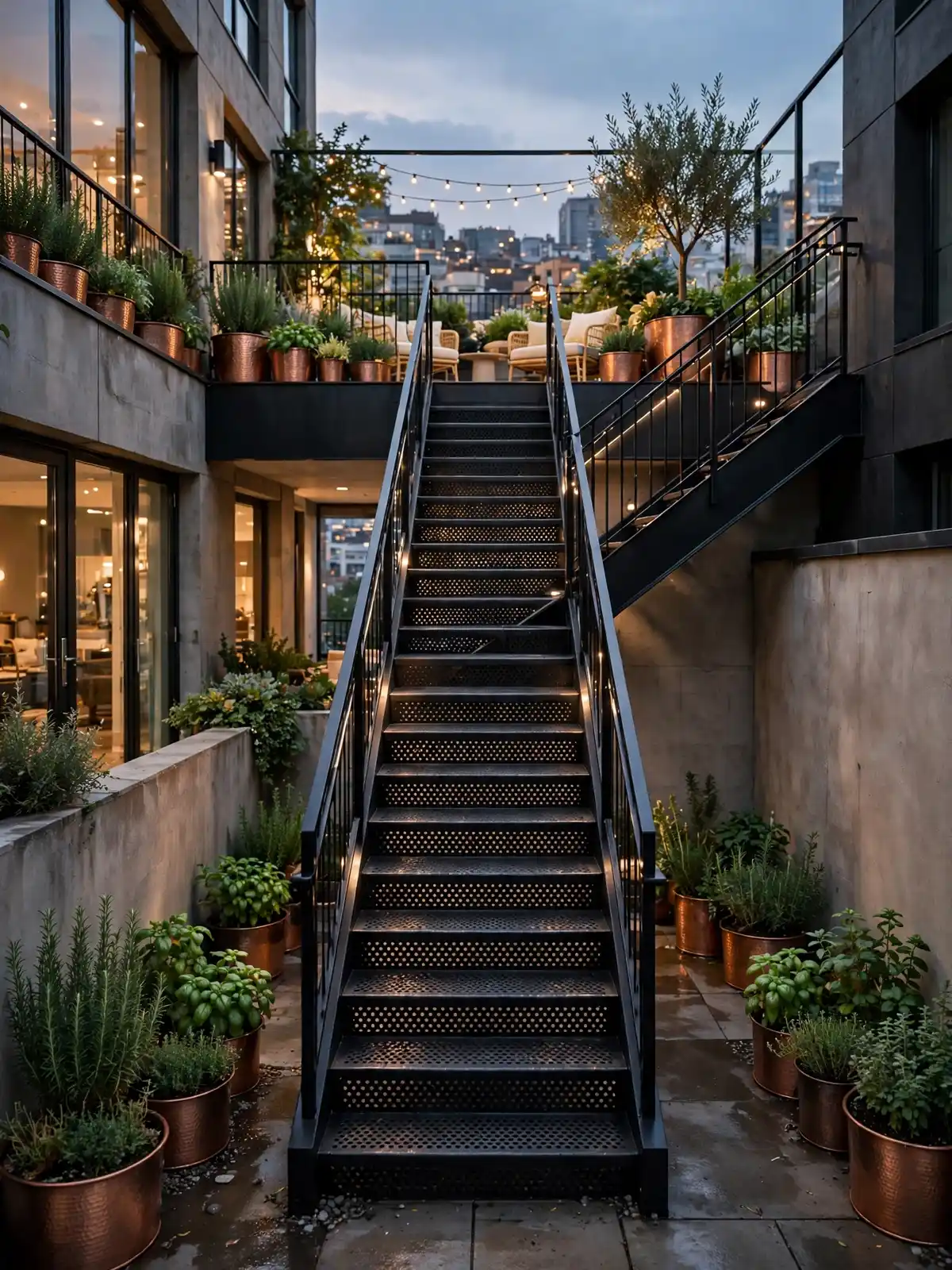
A black steel stair to a rooftop garden makes a city home feel like a penthouse, because the industrial frame contrasts beautifully with soft planting above. This stair uses matte black steel stringers with perforated steel treads, each 1 metre wide, that let rain drain straight through, rising to a rooftop garden dressed with copper planters of herbs and cream outdoor chairs. The perforated treads grip well in rain and never hold puddles, and the steel is galvanised and powder-coated so it lasts for decades outdoors. From the courtyard below, the black frame reads as a strong, graphic line against the sky.
Quick tips:
- Use perforated steel treads so rain drains through, never pools.
- Galvanise and powder-coat steel for long outdoor life.
- Pair black steel with warm copper planters for contrast.
- Add a handrail on both sides for a tall rooftop climb.
Steps With a Rill Water Channel Running Beside Them
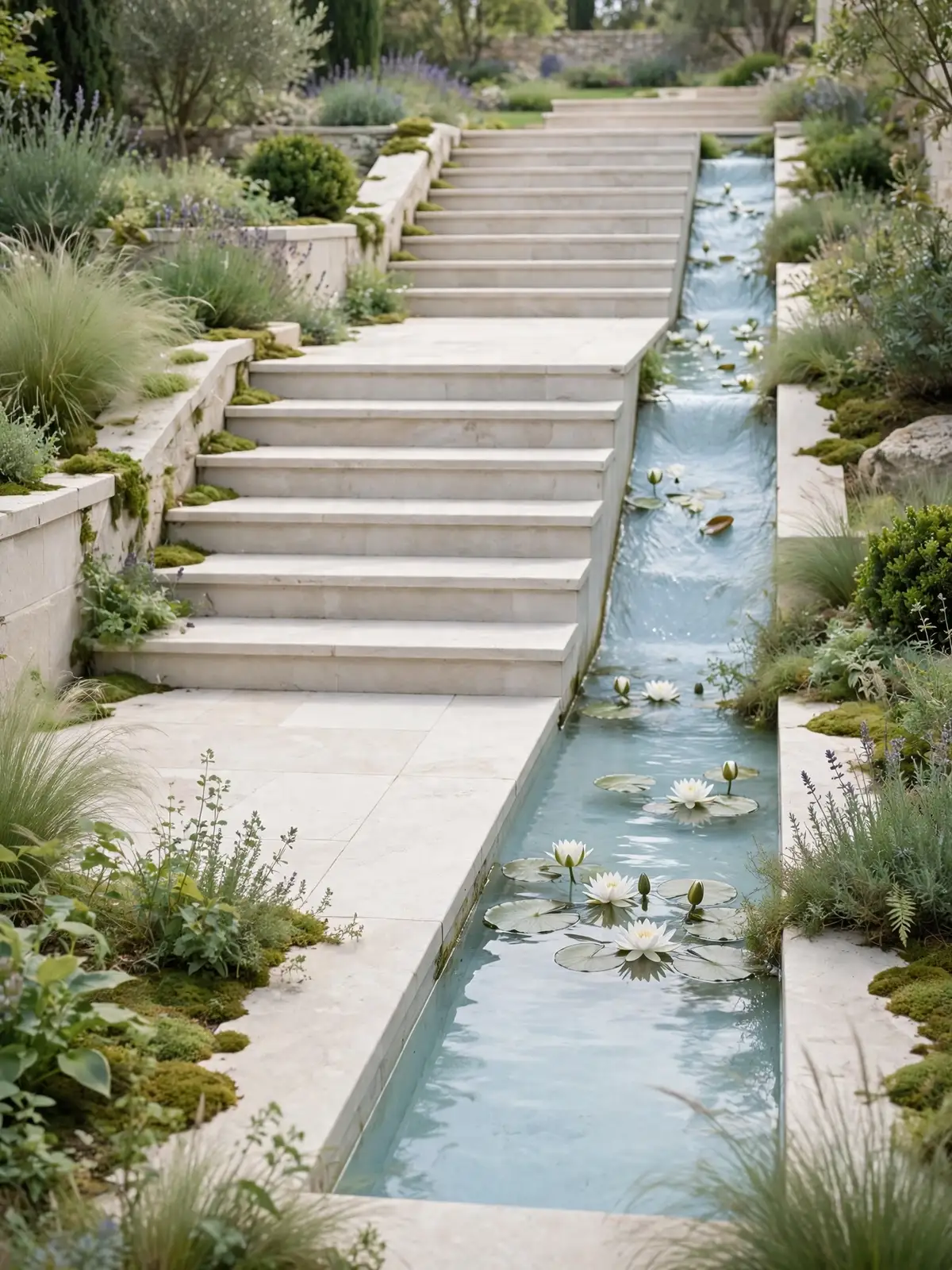
A narrow rill — a shallow water channel — running beside a garden stair adds movement and sound to every climb, because the water draws the eye and the ear upward. Here, ten pale stone treads, each 1.2 metres wide, climb beside a 300 mm wide rill of pale blue water, with white water lilies floating at the top pool and soft green grasses lining the edges. The water is recirculated by a small hidden pump, so it stays clear and gentle, and the pale stone stays cool and non-slip. It is the calmest stair in the garden, and the sound of water makes the whole climb feel slower and more peaceful.
Quick tips:
- Keep the rill narrow, about 300 mm, so it reads as a detail, not a stream.
- Use a small recirculating pump so the water stays clear.
- Choose pale stone treads so the water colour shows brightly.
- Plant soft grasses, not tall shrubs, along the rill edge.
A Pergola-Covered Outdoor Staircase to a Terrace
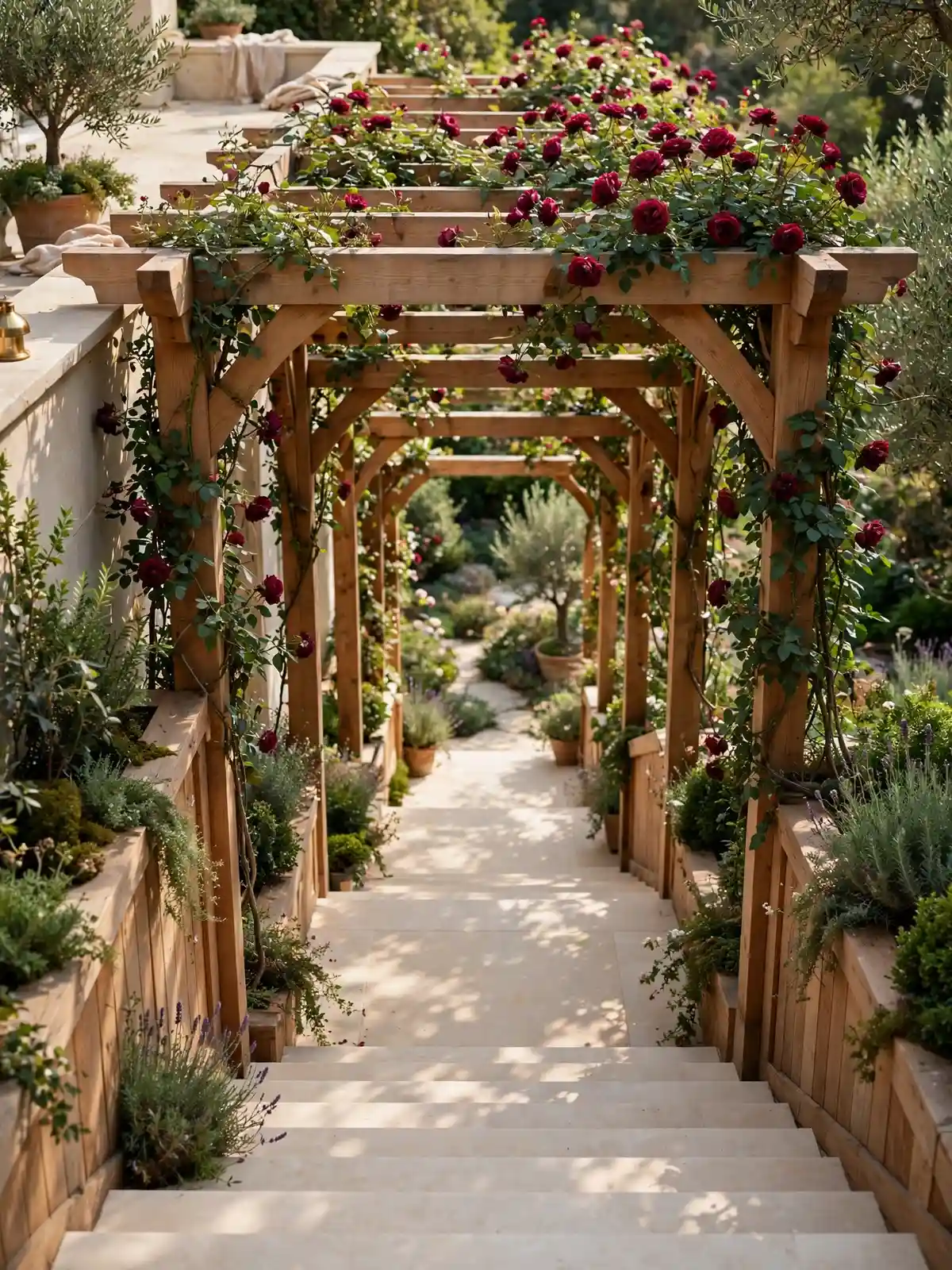
A pergola over an outdoor staircase turns the climb into a garden room, because the timber frame and climbing roses shade every step. On this stair, nine cream stone treads, each 1.1 metres wide, rise beneath a warm timber pergola, with burgundy climbing roses trained across the beams and soft dappled light falling through the leaves onto the stone. The pergola posts are set into the ground beside the stair, so the structure never touches the treads, and the roses flower from late spring into autumn. Walking up feels like passing through a tunnel of flowers, and the terrace at the top feels like a destination.
Quick tips:
- Set pergola posts beside the stair, never on the treads.
- Train climbing roses across the beams for shade and scent.
- Choose cream stone treads so dappled light shows softly.
- Prune the roses yearly so they never block the handrail.
A Front-Entry Outdoor Staircase That Makes the Whole House Look Welcoming
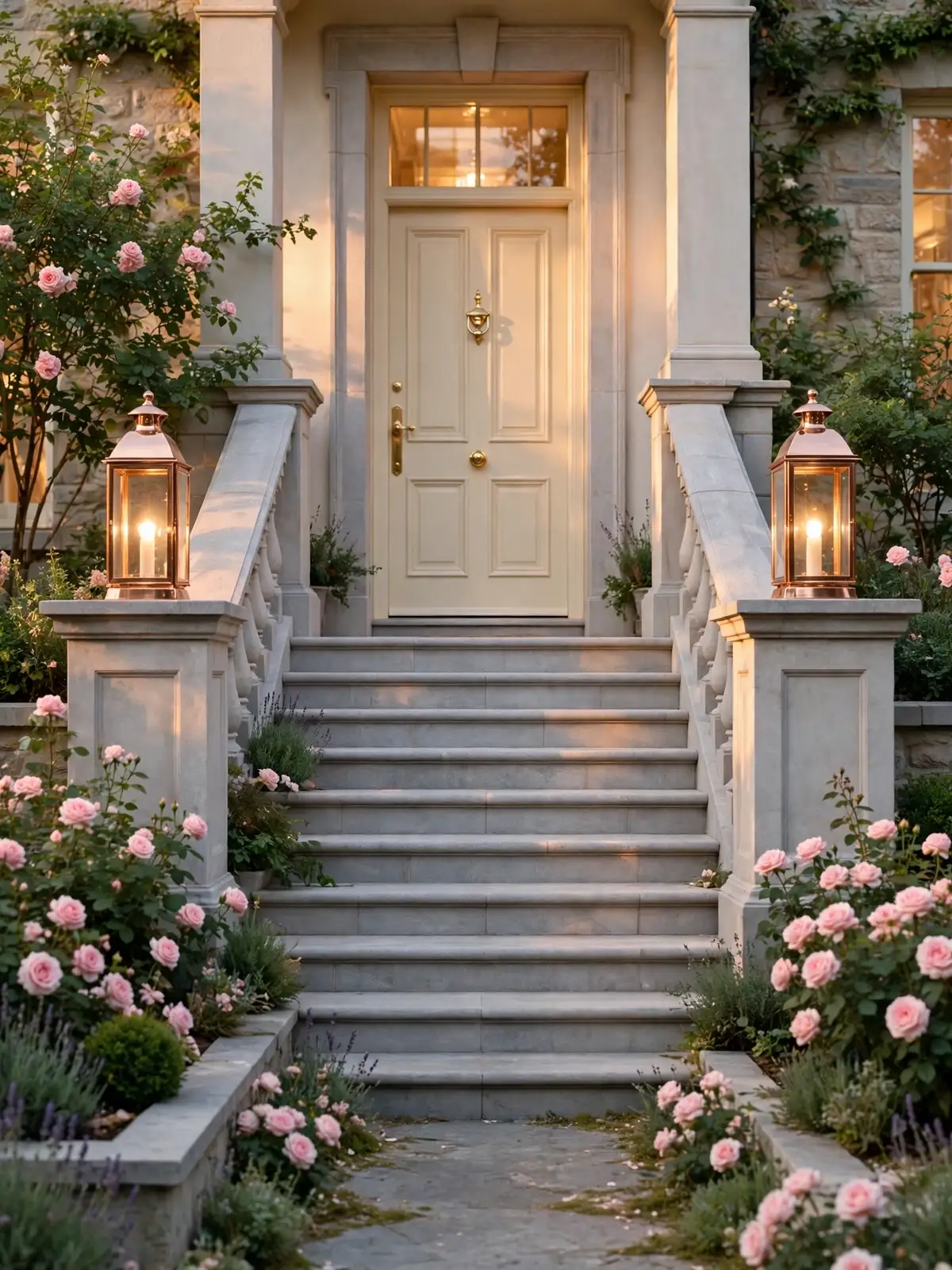
The most welcoming outdoor staircase of all is the one at the front door, because it is the first thing every visitor touches. Here, five pale grey stone treads, each 1.6 metres wide and 350 mm deep, rise to a cream front door, with rose-gold lanterns on slim posts at each side and soft pink roses planted in low beds along the edges. The stone is honed for grip, the lanterns glow warmly after dark, and the wide treads give visitors room to pause, knock and be greeted. It is a small stair — just five steps — but it makes the whole house feel open, cared for and welcoming before anyone steps inside.
Quick tips:
- Keep the front stair wide, at least 1.6 metres, for a generous welcome.
- Add a lantern on each side so the entry glows after dark.
- Plant low roses along the edges for colour and scent.
- Choose honed stone so the treads grip in all weather.
FAQs
How wide should an outdoor staircase be?
A comfortable outdoor staircase is at least 1 metre wide for a garden path and 1.2 to 1.6 metres wide for a front entry, so two people can pass each other easily. Wider treads, around 300 to 350 mm deep, feel more relaxed outdoors than the narrow treads used inside, and they give wet or muddy boots a sure footing.
What is the best non-slip surface for outdoor steps?
Riven slate, tumbled travertine, honed limestone, textured porcelain and grooved timber all grip well when wet. Avoid polished stone or polished tile outdoors, because they become dangerously slippery in rain. Whatever material you choose, keep the steps clear of wet leaves and moss, which are the most common cause of slips.
Do outdoor staircases need a handrail?
A handrail is strongly recommended on any outdoor stair with more than a few steps, and it is required by building rules in many areas, especially for front entries and raised decks. One handrail is usually enough on a short, wide stair, while a long or steep stair needs a rail on both sides for safety.
How do you light an outdoor staircase?
Warm-white LED strips under each tread nosing, small recessed lights in the risers, or lanterns on posts at each side all work well. Keep the light warm, around 2700K to 3000K, and make sure every tread edge is visible after dark. Solar lights are the easiest to install, but wired LEDs are brighter and more reliable.
Can you build an outdoor staircase on a steep slope?
Yes, and a steep slope is where an outdoor staircase earns its keep. Break a long climb into shorter flights with wide landings, use retaining walls to hold back the earth, and choose a material that suits the slope — boulders and sleepers for a natural look, stone and concrete for a formal one. Always get the groundwork right first, because a stair is only as solid as the slope it stands on.
Conclusion
An outdoor staircase is not just a way to move between levels — it is the way your garden welcomes people in, the way a steep slope becomes a pleasure to climb, and the way a plain patio becomes a place worth lingering on. Whether you choose pale limestone at the front door, warm cedar down to a fire pit, black steel to a rooftop garden, or a quiet rill of water beside stone steps, the best outdoor staircase is the one that suits the house, the slope and the way you live outside. Keep the treads wide and non-slip, the lighting warm, the planting close, and the materials honest, and your stair will make every level of your garden feel brighter, safer and more welcoming.